
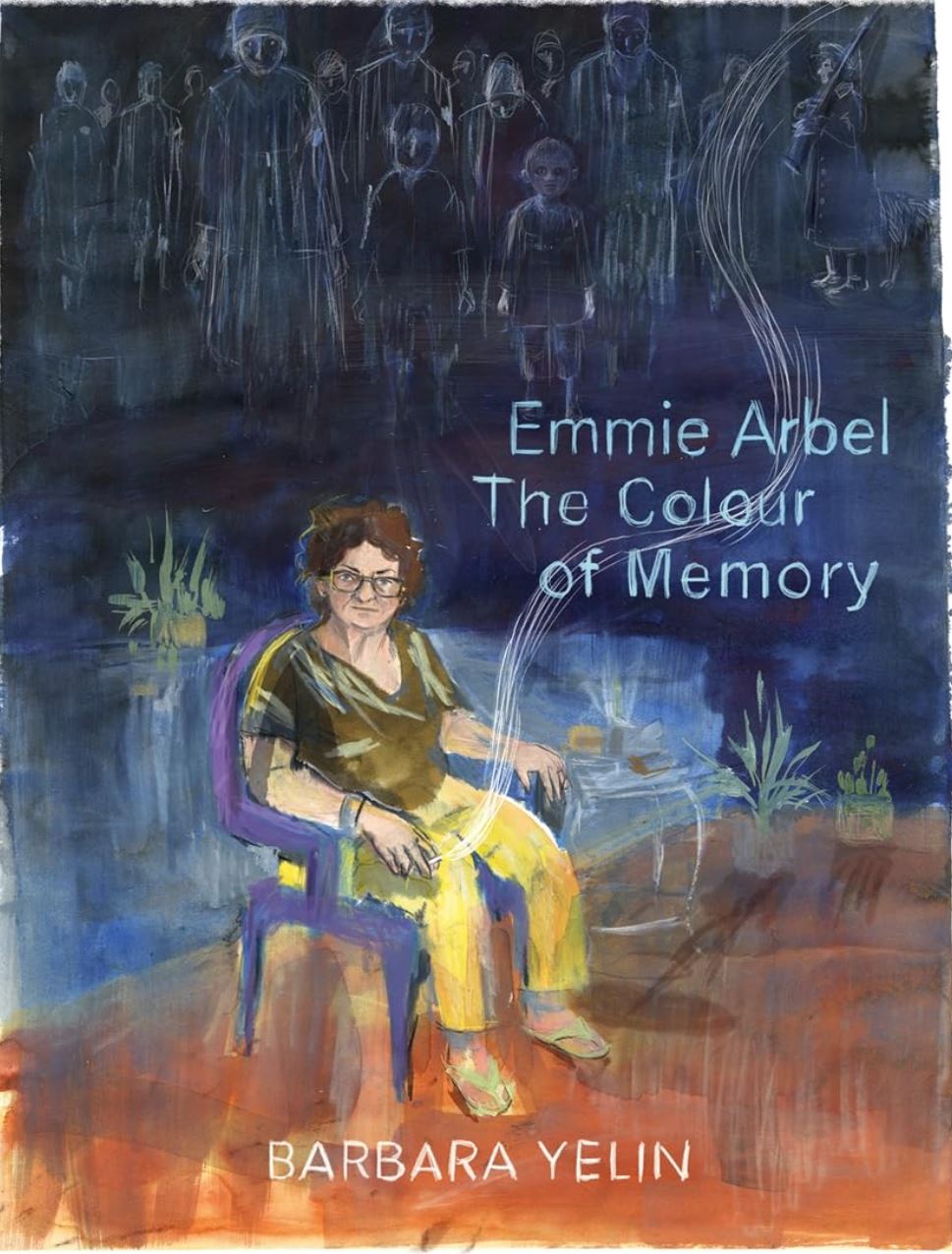
By Barbara Yelin: translated by Helge R. Dascher & edited by Charlotte Schallié and Alexander Korb (SelfMadeHero)
ISBN: 978-1-91422-442-3 (HB)
With the world once again on the brink of extinction and hate, and what looks to me and so many others like actual clinical madness gripping every pious yet greedy soul alive, what better time than right now to explore the memories and postwar experiences of a Shoah survivor?
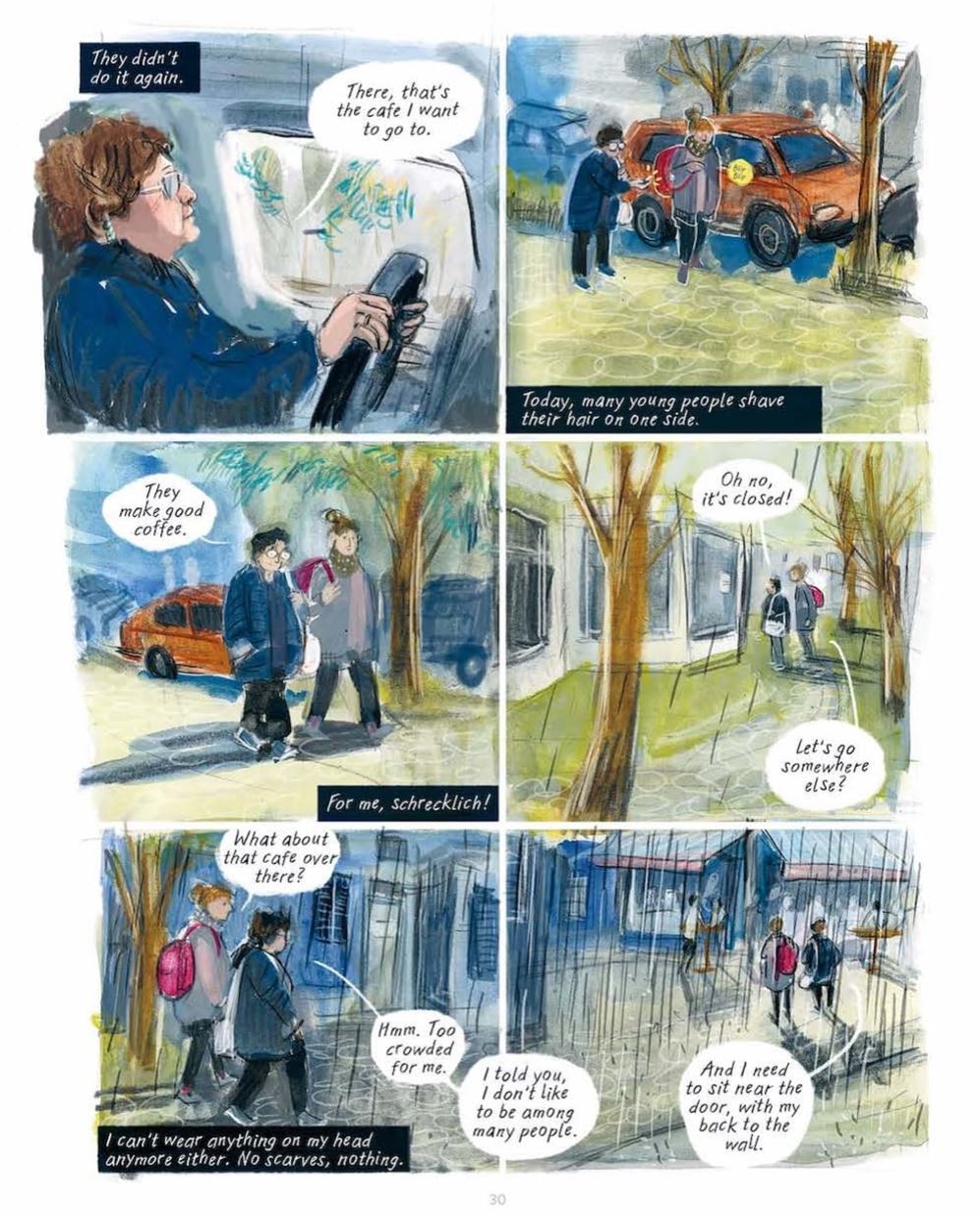
Released in February (and produced thanks to the assistance of the Survivor-Centred Visual Narratives Project, funded by the Social Sciences and Humanities Research Council of Canada) this epic tome is an engrossing expansion of 2022’s visual essay in But I Live: Three Stories of Child Survivors of the Holocaust. Through gentle conversations and via thoughtful consideration it pictorially processes the memories of a remarkable, and remarkably tight-lipped, woman who survived the last breakout of extermination madness in the 1930s and 1940s, She kept on living against crushing odds and circumstances, making a life for herself and with her remaining family. Of course, that was only the beginning of the story. Here, in beautiful languid episodes framed in mood-altering hues and tones, is some of what she did once the actual shooting had stopped…
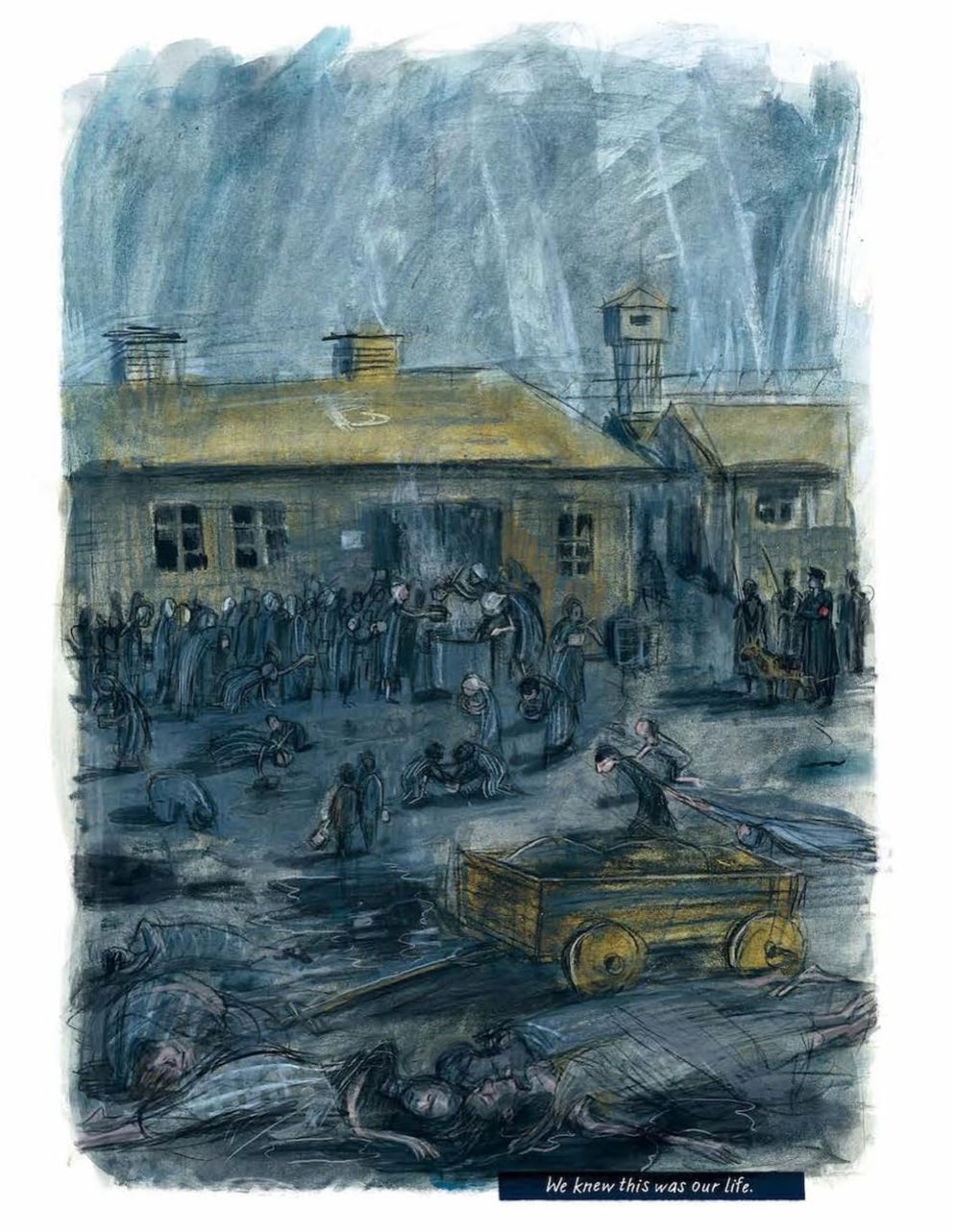
One of three acknowledged survivors of a Dutch family handed over to Nazis when they conquered Holland, a four-year old girl and her mother were despatched to Eastern European death camps. Seven-year old Emmie Arbel was finally orphaned at Ravensbruck and Bergen-Belsen, but “saved” by the Allies when the camp was liberated. Clerically decreed a Displaced Person, she was soon reunited with her brothers, but suffered appalling betrayal, sexual abuse, illness-induced isolation and benign neglect from those entrusted with her care and rearing. Even being bounced across newly-liberated Europe before being bundled off to new homeland Israel only reinforced the conviction that Promised Lands came with conditions and were not for everybody…
Deeply traumatized, but fortified by selective recall and an indomitable poker face, Emmie grew up and turned inward, living life at a distance until making friends with a German artist and storyteller who wanted to show a different truth…
As much about getting a reluctant hostile witness to open up and share sights and scares of the life lived, The Colour of Memories unfolds in slices and snippets: a deft, non-linear, emotionally turbulent potpourri sparked by recollection, rather than chronologically steered or directed. This softly shocking, wandering ramble shows how the mass-produced, institutionalised terrors of war and pogrom were only prelude to the rest of Emmie Arbel’s life, and that the bad times were not over just because no one was actively trying to kill her…
The tale is as much about a growing friendship and mutually acceptable narrative, with graphic novelist Barbara Yelin injecting much of her process into the compelling mix. Born in 1977 Munich, Yelin studied illustration at Hamburg University of Applied Sciences before breaking into France’s Bande Dessinée market in 2004 with Le Visiteur. Successive works include Le Retard; Gift; Riekes Notizen (in daily newspaper Frankfurter Rundschau); The Summer of Her Life and, in 2016, Eisner Award-nominated graphic novel Irmina.
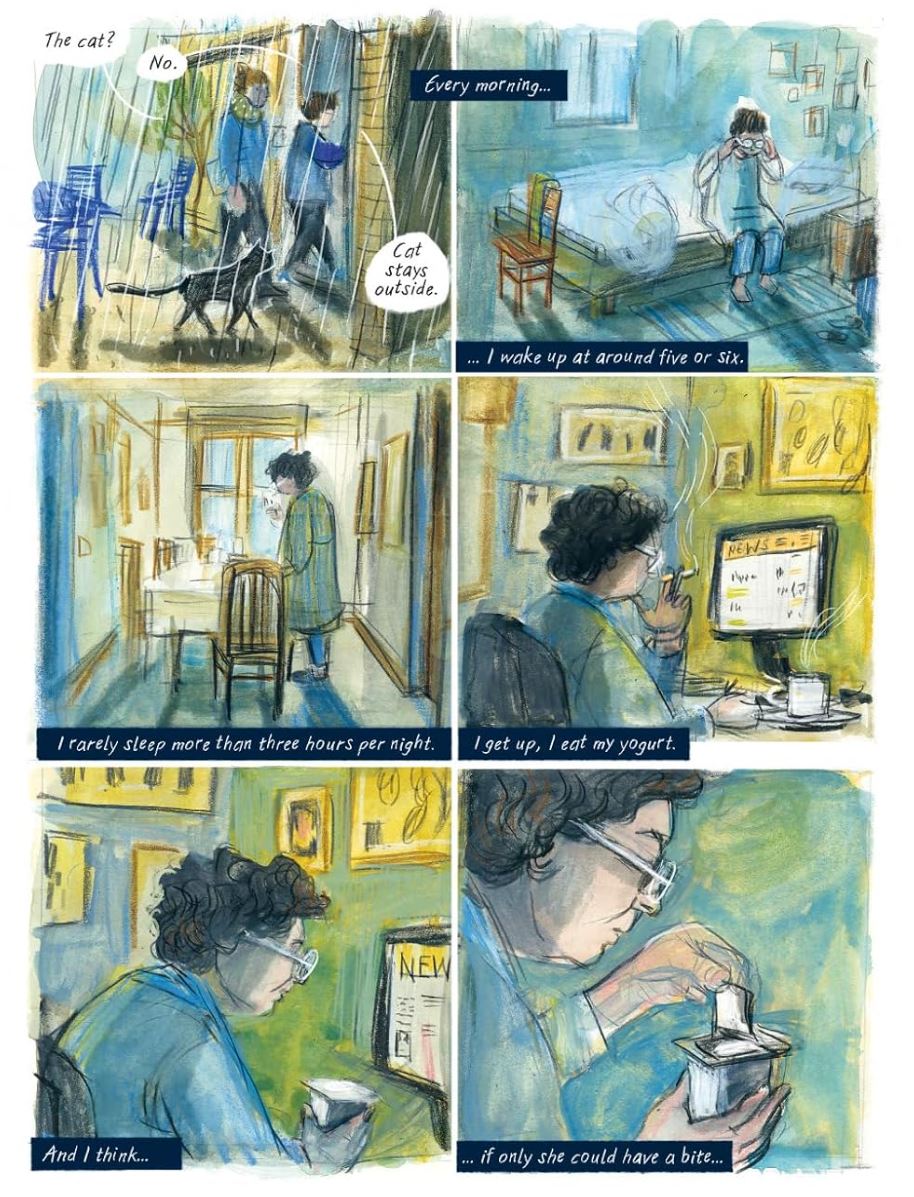
A feast of revelatory growth and paean to adaptability, this dossier on survival comes with supplemental materials including a list of ‘The People in This Book’; a ‘Glossary of Hebrew Words’; a timeline ‘About Emmie Arbel’; documentarian Yelin’s incisive afterword and process deconstruction ‘This is Her Story’ and Alexander Korb & Dienke Hondius’ statement of intent ‘The Aftermath of Survival: Emmie Arbel’s Experiences After the Holocaust’. These are supported by photos, maps, diagrams and closing addendum ‘Wartime and Postwar Routes of the Arbel Family’ before editors Charlotte Schallié & Korb’s ethical dilemmas and the solutions needed to facilitate a non-harmful processing of the unthinkable are discussed in essay ‘About this Book’.
Text and images © Barbara Yelin and Reprodukt. All Rights Reserved.
Today in 1843 pioneering Brazilian cartoonist and comics artist Angelo Agostini was born and we lost French cartoonist comic star Jean Cézard (Arthur le fantôme justicier) in 1977, legendary Lee Elias (Green Arrow, Beyond Mars, The Rook, Luke Cage) in 1998 and the magnificent Alfredo Alcala (Voltar, Batman, Man-Thing, Planet of the Apes, Swamp Thing, Arak, Son of Thunder, Kong the Untamed, Conan) in 2000.