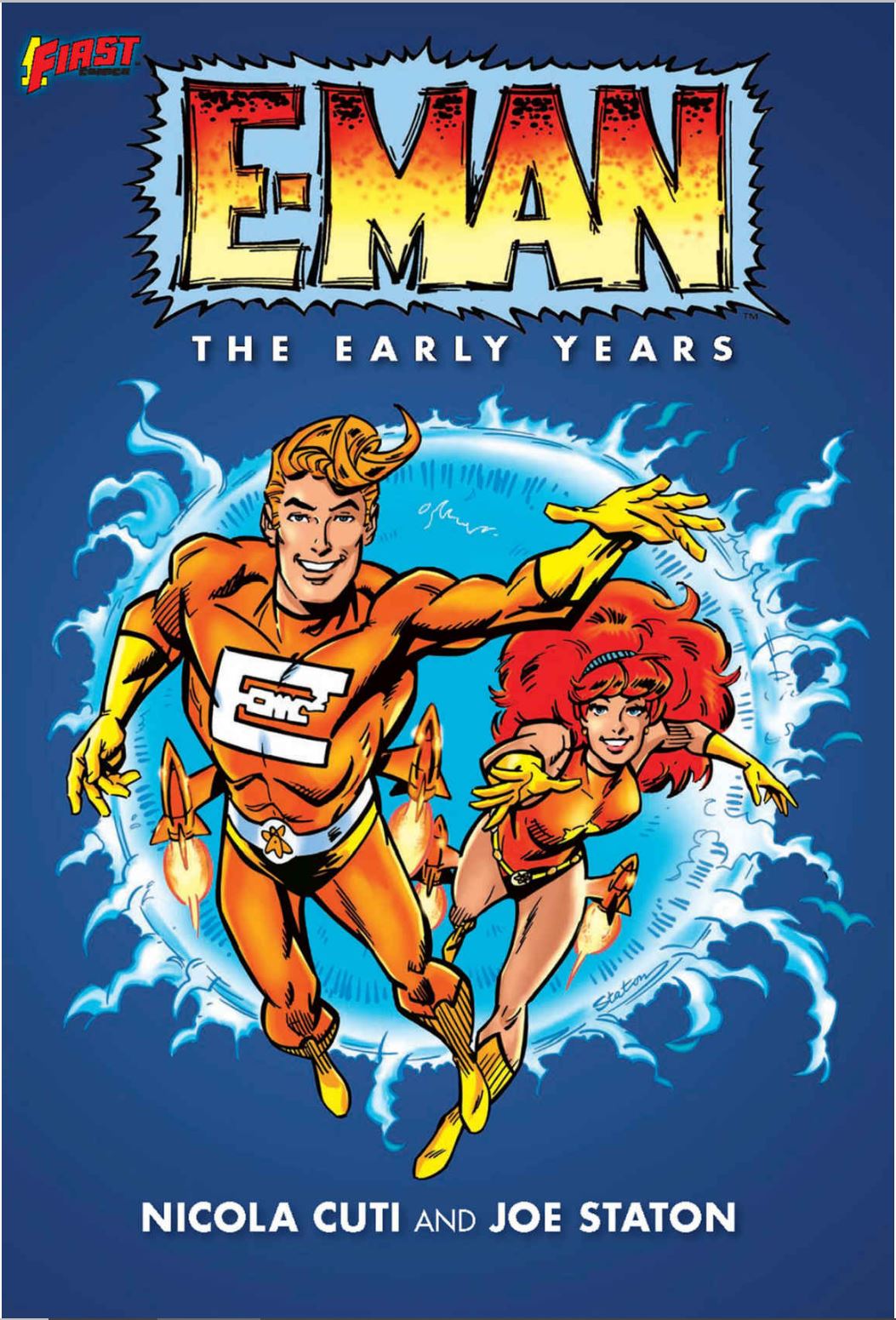
E-Man – The Early Years


By Nicola Cuti & Joe Staton & various (First Comics Inc.)
ISBN: 978-1-61855-000-2 (TPB/Digital edition)

In 1973, superheroes were in a severe decline and the few surviving publishers in the industry were making most of their money from genre fare like war, westerns, kids cartoon and licensed titles (if they could secure them) and particularly horror stories. Such was certainly the case at Charlton Comics: a self-confessed “little company” which nevertheless always punched above its weight.

That was particularly true in terms of talent discovery, with the likes of Dick Giordano, Sam Glanzman, Steve Ditko, Roy Thomas, Denny O’Neil, Jim Aparo, Sam Grainger, Sanho Kim, Wayne Howard, Tom Sutton, Don Newton, Mike Zeck, Roger Stern, Roger Slifer, Bob Layton and John Byrne making a mark there before moving onwards and upwards.

Another major discovery was ultra-versatile cartoonist Joe Staton. He was quickly becoming a fan favourite and shared an off-kilter sense of humour with a Charlton sub-editor who moonlighted as a writer of horror and fantasy for the company’s anthologies…

Nicola “Nick” Cuti (Moonchild, Cannon, Sally Forth, Creepy, Moonie the Starbabe, The Creeper, Spanner’s Galaxy, Captain Cosmos, Starflake the Cosmic Sprite) was born on October 29th 1944. Since then, he’s been an “Underground Comix” cartoonist, animator, film maker, magazine illustrator, movie backdrop designer, novelist, editor and comics scripter.

Between 1972 and 1976 he was assistant to award-winning cartoonist – and Charlton’s general editor – George Wildman (Popeye) who wanted to test the murky waters with a new superhero. He tapped Cuti to write something a bit different and used the experimental vehicle to try-out a succession of features at the back: crafted by creators like Sutton (The Knight), Ditko (Killjoy, Liberty Belle) and Byrne (Rog-2000). Cuti wrote many of them too…

Born January 19th 1948, Joe Staton (Primus, Wheelie and the Chopper Bunch, The Six Million Dollar Man, Space 1999, The Avengers, The Incredible Hulk, Deadly Hands of Kung Fu, Silver Surfer, Green Lantern Corps, Guy Gardner, Legion of Super-Heroes, Millennium, All Star Comics, Power Girl, Metal Men, Doom Patrol, Plastic Man, Mike Danger and more) is a writer and incredibly versatile artist/inker who has been an integral part of American comic books since the early 1970s.

He has worked for dozens of companies, co-creating The Huntress, Killowog, The New Guardians and The Omega Men and in later years made kids comics his metier. During a spectacular run on licensed classic Scooby Doo, he and series scripter Mike Curtis (Casper the Friendly Ghost, Richie Rich, Shanda the Panda) discovered a mutual love for Dick Tracy and – mostly for their own amusement – created tribute strip Major Crime Squad.

That led to them being invited to handle the prestigious Dick Tracy strip (from 2011 to October 2021) but throughout that epic and varied career, Staton regularly re-partnered with Cuti on further adventures of his first triumph…

A pioneering masterpiece of superhero whimsy, E-Man tells the convoluted love story of a alien lifeform and a wonderfully capable and smart earth girl, and the weird life they make for themselves. It all began in 1973 (Happy Golden Anniversary!) in a 10-issue run that was barely noticed by the readership but which affected how many future comics creators remade the medium.

This cheerful and charming collection gathers the E-Man moments from that initial run and includes technically unpublished tales from said run, plus covers and other material from the hero’s revival as part of the Independents Publishing revolution of the 1980s.

We begin with a brace of Introductions as ‘Finding the Right Words for Joe, Nick and Alec Tronn’ by Jon B. Cooke and ‘E-Man: His Beginnings’ by Cuti contextually set the scene for an extraordinary meeting…

Cover-dated October 1973, “Collector’s Item! First Edition!!” E-Man #1 starts at ‘The Beginning’ revealing how, millions of years ago, a star exploded and released a packet of energy that had spontaneous sentience, immense curiosity and no knowledge at all. The bundle of wonder floated across the galaxies seeking intelligence but encountering none until arriving near our world just as a star-ship from Sirius attempts to attain orbit around Pluto.

Infiltrating the vessel, the energy being converts into matter, duplicating one of the robots serving the giant Brain commanding the mission and overhears how the warlike cyborg is here to test an experimental ultra-weapon on the frozen target. Sadly, curiosity proves fatal and the sudden weight increase sends the ship careening out of control and ultimately into the atmosphere of the blue-green planet third out from the sun…

Some time later, college student Katrinka Colchnzski is just finishing her evening job. She is a tough, brilliant, capable and proudly independent: paying for her degree as burlesque dancer Nova Kane when one of the lightbulbs in her dressing room begs her for help.

Freeing the energy creature and quickly striking up a friendship with the naïve, affably clueless being – who has unselfconsciously turned into a real stud-muffin by human standards – she is abruptly drawn into a world of insane danger when her landlord tries to kill her. It transpires that in ‘The Brain and the Bomb’ the super cerebral invader has also survived the crash and is vengefully testing hate-gas on the inhabitants…

Without hesitation Nova and the stranger seek out and stop the plot…

These tales were originally quite quirkily coloured by Wendy Fiore and are reconstructed here by Matt Webb, who also shades the cover to Original E-Man #1: a reprint series released by First Comics in October 1985 to supplement their revival of the hero. That book also revisited the second escapade of guileless alien visitor Alec Tronn as first seen in E-Man #2’s ‘The Entropy Twins’ (December 1973). Here, the Brain from Sirius unleashes a second super-weapon against E-Man and Nova: an artificially-bred loving couple who can casually manipulate the forces of order and chaos.

Stalking and befriending the childlike hero and his charming cohabitator, Michael and Juno cause catastrophic accidents which almost kill Nova, only to learn that her special friend Alec is as vengeful as any child when the things he loves are threatened…

An unused cover from 1974 accompanies article ‘The Energy and Paper Crisis’, explaining how a global power shortage both inspired and derailed a comic response. The upshot was that the story intended for the fourth issue ended up in #3, and the third followed after. The chronological anomaly is corrected here with E-Man #4 going first.

Cover-dated August 1974, ‘City in the Sand’ sees the odd couple in Egypt with exotic dancer Nova showing belly dancers how it’s done at night and pursuing her archaeological studies during the day. With Alec in tow, she unearths an ancient mystery and – thanks to E-Man – functional time machine: propelling them back millennia to uncover a link between the pharaohs and a lost colony of aliens afflicted with mad militarism and a sinister plague…

December 1985’s cover of Original E-Man and Michael Mauser #3 precedes June 1974’s E-Man #3, wherein ‘The Energy Crisis!’ blacking out America and the world leads oil baron Samuel Boar to unleash a robotic Battery to kidnap useless, over-abundant humans and turn them into a new fuel source.

When Nova vanishes, E-Man stops powering up hospitals to go looking for her. He is unaware that Nova had already engaged seedy private eye Michael – “don’t call me Mickey” – Mauser to find her fellow dancer Rosie Rhedd after she was sucked into a brick wall…

The sordid shamus became a fixture and even won his own series in Vengeance Squad….

The invasion of Boar’s citadel and clash with ‘The Battery’ is fast and furious and leads to the villain’s capture but would have shocking consequences in the fullness of time…

The tale ends with a direct plea to readers to protect the environment and “save the Earth!”. It’s a shame more kids didn’t buy this comic back then and avoid the mess we’re all in now…

Staton had been growing in skill and confidence and by this story had taken to adding what we now call easter eggs to his art. Backgrounds, minor characters and especially posters and newspapers provided a rich source of added whimsy, commentary and fun. They are a sheer delight to this day…

The Original E-Man #2 cover from October 1985 leads into November 1974’s #5 as ‘The City Swallower’ sees a day at the beach devolve into a transdimensional excursion. When Alec follows a hippy mermaid (based on contemporary and legendary fandom icon Heidi Saha) back to her realm he’s just in time to spearhead a war against a beast that consumed helpless conurbations, after which January 1986’s Original E-Man and Michael Mauser #4 cover leads to monster madness in E-Man #6.

‘Wunder-world’ – cover-dated January 1975 – sees an old enemy resurface when Alec and Nova visit a theme park, using robots, movie horrors, war machines and psychological warfare to attack the unlikely couple…

A full, illustrated list of ‘E-Man and Nova – Other Appearances’ is followed by #7’s ‘TV Man’ (March 1975) as another old enemy uses the airwaves and super-science to turn the energy- man into Nova’s worst nightmares and Mauser reappears to save the day. It’s followed by Original E-Man and Michael Mauser #5’s cover (February 1986) and heralds a really big change…

With #8’s full-length epic ‘The Inner Sun’ (May 1975) the creators brilliantly exploit the capricious, functionally implausible nature of comics books to deliver a superb slice of nonsense that begins when a giant jungle girl attacks New York. When she then busts into Mauser’s office…

Her trail leads to Samuel Boar and a primeval world under the North Pole…

Unless I’ve already convinced you to seek this book out, be warned that there’s a major spoiler ahead. Stop here if you’re going to read the actual stories. Or not. It’s your choice.

By the time E-Man gets there though, the villain has kidnapped Nova and triggered a disaster that kills her. It’s not anything to worry about as – through typically miraculous circumstances – she reconstitutes herself with the same powers as boyfriend Alec and begins her own crime crushing career…

March 1986’s cover to Original E-Man and Michael Mauser #6 is accompanied by text feature ‘Other Appearances by Michael Mauser’ before E-Man #9 (July 1975) unleashes ‘The Genius Plant’ which is foreshadow by brief ‘Prologue! History of E-Man and Nova’

Accompanied by new cast member Teddy – a reformed evil koala – the hot couple stumble into a plot by a cabal of scientists to hyper-enhance their intellects and rule the world. After they foil that, one final cover – Original E-Man and Michael Mauser #7 (April 1986) – segues into E-Man #10 (September 1975) as Nova meets the first girl Alec met when he landed on Earth. Although initially jealous, after meeting Maisy-June Bragg, she’s with her beau all the way when what appear to be unnatural forces reduce the gentle rural bombshell into ‘The Witch of Hog Hollow’ who really needs her old “genie” to save her…

E-Man was simultaneously Charlton’s worst selling retail title but its best via direct subscription, which kept it going long after Wildman should have killed it, but at last the axe fell. When it died, there were a couple of tales still in the pipeline which eventually saw print in the company’s in-house fanzine – which was edited by Bob Layton.

Coloured by Webb, Staton’s cover for Charlton Bullseye #2 (1975) and Charlton Bullseye #4 (March/April 1976) here precede ‘…And Why the Sea is Boiling Hot’ (colour by Webb & Michael Watkins) wherein the energy-beings investigate missing shipping and discover that a ghost galleon is actually an alien artefact.

One final story – starring Nova Kane – details a stunning truth. When that exploding sun detonated way back when, it spawned more than one sentient energy-being – and courtesy of FIRST COMICS INC. – Alec’s opposite number ‘Vamfire’ finally arrives on Earth in a scary yarn coloured by Alex Wald. This frenzied female aspect is a ravenous power leech but Nova and E-Man soon find a way to dispel her “hanger-pangs”…

Biographies of Nicola Cuti and Joe Staton close this archive of sheer escapist delight: capping a glorious revisitation of sharper, smarter, funnier days in comics. However it’s not too late to tune in and get turned on to E-Man and Nova.
© 1973-1974 Charlton Comics, reprinted in Original E-Man and Mauser #1-7 © 1985-1986, First Comics, Inc. All new material © 2011, Joe Staton/First Comics, Inc.). All Rights Reserved.
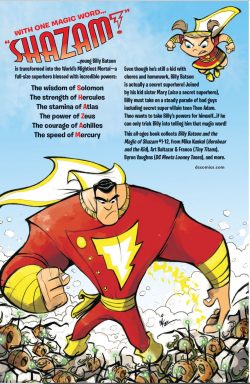
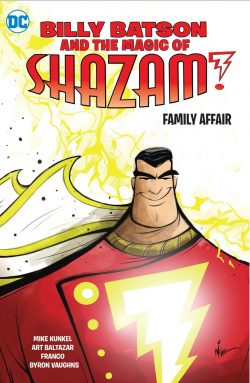
Billy Batson and the Magic of Shazam!: Family Affair


By Mike Kunkel, Art Baltazar, Franco, Byron Vaughns, Ken Branch & Stephen DeStefano & various (DC Comics)
ISBN: 978-1-49650-290-2 (HB/Digital edition)

After the runaway success of Jeff Smith’s magnificent reinvention of the original Captain Marvel (Shazam! The Monster Society of Evil ) it was simply a matter of time before that iteration won its own title in the monthly marketplace. What was a stroke of sheer genius was to place the new Billy Batson and the Magic of Shazam! under the bright and shiny aegis of the company’s young reader imprint – in what used to be the Cartoon Network spin-off section.

This collection re-presents the first dozen issues, spanning cover-dates September 2008 through March 2010 and opens on a most familiar world, slightly askew of the mainstream DC Universe. These frantically ebullient and utterly contagious tales of the orphan Batson and his obnoxious, hyperactive little sister Mary – both gifted by an ancient mage with the powers of the gods – could play out in wild and woolly semi-isolation hampered by nothing except page count…

Billy Batson is a homeless kid with a murky past and a glorious destiny. One night he followed a mysterious figure into an abandoned subway station and met the wizard Shazam. The ancient guardian of good granted him the ability to turn into an adult superhero called Captain Marvel.

Gifted with the wisdom of Solomon, strength of Hercules, stamina of Atlas, power of Zeus, courage of Achilles and speed of Mercury, the lad was despatched into the world to do good: a noble if perhaps immature boy in a super man’s body.

Accompanied by talking tiger-spirit Mr. Tawky Tawny, Billy tracked down his missing little sister, but whilst battling evil genius Dr. Sivana (US Attorney General and would-be ruler of the universe) he impetuously caused a ripple in the world’s magical fabric through which monsters and ancient perils now occasionally slip through. Currently, the reunited orphans are trying to live relatively normal lives, but finding the going a little tough…

Firstly, without adults around, Billy often has to masquerade as his own dad and when he’s not at school he’s the breadwinner, earning a living as a boy-reporter at radio/TV station WHIZ. Moreover, little Mary also has access to (most of) the Power of Shazam, and she’s a lot smarter than he is in using it… as well as a real pain in Billy’s neck.

Animator and storyteller Mike Kunkel, inspired creator of the simply lovely Herobear and the Kid, leads off this collection: writing, drawing and colouring a breakneck, riotous romp over the first four issues reintroducing the new Marvel Family to any new readers and, by virtue of that pesky rift in the cosmic curtain, recreating the Captain’s greatest foe: Black Adam. In case you’re wondering, Steve Wands did the lettering…

The villain was once the mightiest man alive but was banished for abusing Shazam’s gift. However, after the damage to reality Billy caused, he’s back but nowhere near the Man he was…

This time the evil predecessor of the World’s Mightiest Mortal is a powerless but truly vile brat: a schoolboy bully who returns to Earth after millennia in limbo, ready to cause great mischief – but he cannot remember the magic word that activates his evil adult self…

This hilarious tale has just the right amount of dark underpinning, as the atrocious little thug stalks Billy and Mary, trying to wheedle and eventually torture the secret syllables from them. When – inevitably – Black Adam regains his mystic might and subsequently liberates the petrified Seven Deadly Evils of Mankind from their imprisonment on the wizard’s Rock of Eternity, the stage is set for a classic confrontation.

Along the way to that climactic clash there’s oodles of sheer hilarity as Billy’s troubles are magnified by increasing demands on his time by overzealous teachers and Principal Strikta wanting to conference with his “dad”, whilst his journalistic partner and mentor Ms. Fidelity seems romantically attracted to his older body – which is still piloted by Billy’s pre-teen mind…

It’s no comfort at all that Mary is still thinking up better and cleverer ways to use the powers they share and that she might be the Wizard’s favourite, but the real problem is Theo Adam

The returned terror might be stuck in his child form, but when he joins Billy in class, it soon becomes clear that the bully is sticking painfully close just in case one of the emergencies he’s orchestrated allows him to overhear Billy shouting out that word…

Inevitably all Billy’s worries come true and Black Adam regains his powers, leading the resurrected Seven Deadly Evils against humanity. Happily, although outpowered, out-fought and at his lowest moment, Billy comes up with a plan…

Pitched perfectly at the young reader, with equal parts danger, comedy, sibling rivalry and the regular outwitting of adults, this first storyline screams along with a brilliantly clever feel-good finish, perfectly setting up the next all-action comedic challenge…

From issue #5 (September 2009) writing team Art Baltazar & Franco (Franco Aureliani) – collectively responsible for the incomparably compulsive madness of Tiny Titans and Superman Family – took over the legend-spinning, and artists Byron Vaughns & Ken Branch limn the first bombastic tale as convict Doctor Sivana unleashes a stolen atomic automaton against the two kids he hates most in the world in ‘Mr Who? Mr. Atom!’.

The destructive giant robot rampage was simply a ploy to cover his escape from prison. Although the mighty marvels overcome the onslaught thanks to input from its creator, Billy has a bigger problem to solve. He has a tremendous crush on Ms. Fidelity but she barely notices him whenever his heroic alter ego is around and even when he’s not…

‘To Be King’ then pits the champions of Fawcett City against primordial super-caveman King Kull: a physical and mental giant trying to reconquer the planet he ruled in millennia past. Older fans of gentle fantasy will be enthralled and delighted here by the singular art of Stephen DeStefano, who won hearts and minds with his illustration of Bob Rozakis’ seminal series Hero Hotline and ’Mazing Man – both painfully, criminally overdue for graphic novel collections of their own…

The King’s defeat is singular and shocking, but the young warriors are unaware that Sivana has again benefitted from their actions and is now weaponizing Kull’s remains…

Encroaching disaster is everywhere. At the Rock of Eternity, Shazam is helpless to prevent the Seven Evils from slowly awakening again and senses another hidden enemy in play. Calling on long-sidelined shapeshifting tiger totem Mr. Tawky Tawny, he inadvertently tips off evil genius Sivana and leads him to the Batson’s home. The wicked misfit even captures the tiger-man and uses him to power a newer, deadlier Mr. Atom in the Byron Vaughns illustrated ‘Deception Reception’

With (the original) Captain Marvel on the ropes, ‘Come Together!’ sees Sivana press his attack, deploying enslaved Kull to back up his killer bot, before being again outsmarted by Mary Marvel whose grasp of physics saves the day and the tiger…

Another classic villain is revived as Shazam’s observations of Earth hone in on a deadly arsonist just as Billy begins acting strangely …like a jerk or perhaps pubescent schoolboy…

As Mary talks things over with recuperating houseguest Tawky-Tawny, they realise they haven’t seen Billy for some time, only his increasingly obnoxious adult alter ego. The crisis comes to head in ‘Fire Fire Everywhere!’ as the hero appallingly overreacts to the firebug, employing excessive force and accidentally creating an Arson Fiend

‘The Legacy of Mr. Banjo!’ also channels a Golden Age bad guy as Billy and Mary stumble into a bank robbery perpetrated by Axe, the teenage son of the Axis agent and using his mystic music to mesmerise mortals into parting with their money. Although Billy is wilful enough to shrug off the spell it takes a pep talk from Ms. Fidelity to give him the edge needed to free Mary and stop Axe…

One good thing about the clash is that Billy is clearheaded now and realises he must not say his magic word ever again…

With Mary and Tawky-Tawny in tow, Billy heads for Shazam’s citadel and  proper diagnosis. The result is the freeing of an evil duplicate in ‘Mirror Mirror’, but the stupendous battle between hero and reflection is just a prelude to the final clash as the fight exposes the long-hidden secret villain in ‘Mr. Mind Over Matter!’ and Billy and his sister must stop both the wicked worm and its Monster Society of Evil with brains not brawn…

Billy Batson and the Magic of Shazam!: Family Affair is ideal for bringing kids into comics: funny, thrilling, stylishly illustrated and perfectly in tune with what young minds want to see. Moreover, with another major motion picture adaptation set to premiere in March, it’s a timely moment to get reacquainted with the Big Red Cheese …and the Little Babybel…

Incorporating a full cover gallery and a Kunkel variant, plus a key code for those pages written in the ‘Monster Society of Evil Code’ this is an addictive treat for all readers who can still revel in the power of pure wonderment and still glory in an unbridled capacity for joy.
© 2008, 2009, 2020 DC Comics. All Rights Reserved.

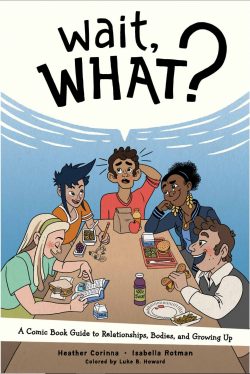
Wait, What? – A Comic Book Guide to Relationships, Bodies, and Growing Up


By Heather Corinna, Isabella Rotman, Luke B. Howard & various (Limerence Press)
ISBN: 978-1-62010-659-4 (PB) eISBN: 978-1-62010-660-0

Comic strips have long been acknowledged as an incredibly powerful tool to educate, rendering tricky or complex issues easily accessible. They also have an irresistible capacity to affect and change behaviour and have thus been used for centuries by politicians, religions, the military and commercial concerns to modify how we live our lives. Call it visual nudge-theory…

Here’s a splendid example of the art form using those great powers for good.

Sometimes it looks like the entire world’s political and moral leaders are seeking to re-mystify the most basic human experience by obfuscating all knowledge of it – leaving our most vulnerable at the mercy of their own basic instincts, wicked exploitation, cruel misinformation and simple ignorance. So if school, church and parental guardians can’t deliver, where can the new and confused go to learn about sexual interactions?

The Comic Book Guide to Relationships, Bodies, and Growing Up begins with an introductory message from Scarleteen – a sex and relationships information, education and support organisation/resource aimed at young people. As official consultants on this project, they start the ball rolling with ‘sex ed for the real world’, detailing the work and purpose of the project and other places the confused or cautious might seek advice and help.

Like many other Limerence publications, this one uses strips, games, puzzles, debate and tutorials – delivered via an engagingly diverse cartoon cast – to explore a variety of potential situations, share vital information (that my generation got from a succession of embarrassed and unwilling teachers despite what our parents thought or said) and proffer advice on where to obtain more.

The publisher’s sequence of informational comics and books has an admirable record of confronting uncomfortable issues with taste, sensitivity and breezy forthrightness: offering solutions or starting points as well as awareness and solidarity. Crucially here, that comes wrapped up in a blanket of reassurance and accepting non-judgement. The message is that every one of us is different and brings something unique to the table…

‘So Who’s at the Lunch Table?’ introduces Rico, Malia, Max, Sam and Alexis: generalised teen spokes-people representing a variety of races, backgrounds, ambitions and sexualities. There is also a narrative usher to authorially move things along …the sublimely neutral Weird Platypus

The mess and muddle around Sex is systematically tackled, beginning with an assault on the myth of timing and physical development in ‘Due Dates’: explaining biology, emotional maturity and even consent and opportunity, whilst contributing numerous anecdotes and opinions in ‘What Do You Think and Where Are You At?’

The carefully manufactured war between media, self-aspiration and everyday life is deconstructed in ‘IRL: in real life’ confirming that “the way things are in media are not necessarily how they ACTUALLY ARE”, after which we gain great graphic and factual clarity in ‘What is Puberty?’

The chapter details the basic ‘Stages of Puberty’, initially concentrating on ‘For Every Body’ before affording specialist data with ‘If You’ve got a Vagina’ and ‘If You’ve got a Penis’

‘You’re a Man/Woman Now!’ then busts some fallacies on the subject to reveal ‘These Things Don’t Actually Mean Very Much About Growing Up’

The next topic opens with overview ‘Ohhh Yeah, Real Mature!’: asking the gang ‘What Does Maturity Mean to You?’ before plunging into the charged subject of ‘Masturbation!’

Expanding into lesson and anecdotal discourse, we learn ‘Masturbation is Healthy – and nothing to be ashamed of’ and sensibly enquire ‘Why Do People Masturbate’ before tackling an increasingly serious problem in ‘Weird Genitals!: Worried Your genitals look weird? Feeling like other people’s do???’

This section is augmented by ‘A Whole Bunch of Genitals’ in a gallery display plus a join-the-dots activity page cheekily page proving ‘Genitals come in all sorts of different sizes, shapes and colors’

The major issue of Difference is laid out and explained in ‘Boys vs. Girls’, covering every aspect of possible confusion and contention via sports or toys to genderised colours, cunningly rationalised by a series of non-binary paper-dolls and clothing outfits with gender-fluid Max guiding us in making declarations and identifications…

A seemingly overwhelming youthful hurdle is cut down to size in ‘What is a Crush?’ with hapless cisgendered heterosexual Rico pointing out some pitfalls, assisted by his tablemates answering the question ‘Have You Ever Had a Crush?’ and ‘Do You Really want to Be Someone’s Partner, Girlfriend or Boyfriend?’ Whilst exploring ‘Promises and Dating’ and negotiating a bewildering maze entitled ‘As If There Was Only One Path!’ we learn how to end relationships kindly and safely in ‘It’s Okay To Go’

The mysteries and challenges of informed choice are explored in ‘By Invitation Only’ – reinforced by a ‘Consent Word Search’ – before we move on to the bit every parent always freaks out over…

What defines intimacy and sexual behaviour is debated and explored in ‘It’s Not Sex, It’s Just Messing Around’, pictorially questioning ‘Why Do People Have Sex Together’, ‘So What’s the Difference between Sex and “Messing Around”’ and gaming out ‘If it Wasn’t a Choice’

Graphs and statistics are deployed for ‘How Do You Know When You’re Ready for Sex Stuff’, backing up the cartoon wisdom of vox-pop ‘When Do You Think You Will Be Ready for Sex Stuff’ and pivotal enquiry ‘Why is Sex Such a Big Deal?’: only pausing to ask ‘Are You… Gay? Straight? Both? Neither?’ and if it even matters…

A ‘Sexual Orientation Crossword’ – with handy ‘Sexual Orientation Word Bank’ – introduces a new (and increasingly toxically contentious contemporary topic) in ‘Sexual Identity Isn’t a Lifelong Commitment’, with pictured points of view culminating in a space for readers to verbalise their own thoughts, after which the end approaches as we ponder ‘What Does it Mean to be a Virgin?’

Here Malia, Rico and Sam deconstruct the term from widely differing starting points, whilst ‘I Hate That Word!’ examines the infinitely loaded term’s accusatory and demeaning contexts before unleashing ‘A Note About Double Standards’

When beginning or even just anticipating a sexual life, support is crucial and a trustworthy network is a must if it’s possible at all. ‘Assemble Your Superteam!’ offers some sage advice on how in ‘Your Sidekick’, ‘Your Parental Figure’, ‘Your Mentor’ and ‘Your League’. The process is reinforced by another Wordsearch – ‘Find all the people you could maybe talk to!’ – before neatly segueing into ‘Know Your Community Resources!’ and affirming questionnaire ‘Who is on your Superteam?’

The cerebral sex session ceases with ‘In Conclusion: What is One Last Thing You Want to Leave Everyone With?’, supplemented by ‘Dear You’: a direct message from the creators that endeth the lessons…

Cartoonist Isabella Rotman (A Quick & Easy Guide to Consent, Bodies, and Growing Up; Not on My Watch: The Bystanders Handbook for the Prevention of Sexual Violence; You’re So Sexy When You Aren’t Transmitting STIs) and New Orleans colourist Luke Howard have crafted a cogent and compelling primer covering the irrefutable basics for a wide and varied range of potential users, with the facts and messaging scripted by author, educator and youth advocate Heather Corinna (S.E.X.: The All-You-Need-To-Know Sexuality Guide to Get You Through Your Teens and Twenties; Our Bodies Ourselves).

Identifying as Queer and disabled, Corinna is the founder, designer and director of Scarleteen and Rotman became the organisation’s artist in residence in 2013.

A comprehensive ‘Glossary’ of pertinent terms opens a section of codicils including ‘I Can’t Keep Up With the Slang!’ – an advisory on changing trends in talk about sex; ‘Puzzle Solutions’; creators bios and appreciation ‘We are so grateful for:’ after which ‘More Cool Things!’ offers a bibliography and listings of other resources online, organisational and other for kids and adults to further explore…

This book is a bright and breezy primer covering the irrefutable basics on beginning one’s sexual life and confirming a gender that most suits each individual. By sharing facts and honest opinions it may hopefully help readers safely navigate all manner of relationship and explore the spectrum of experiences that should be available us all…
Wait, What? – A Comic Book Guide to Relationships, Bodies, and Growing Up is ™ & © 2019 Heather Corinna and Isabella Rotman. All rights reserved.

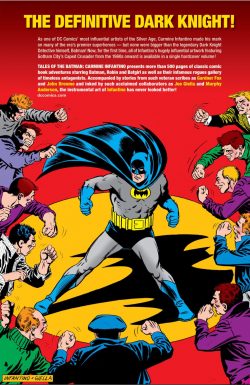
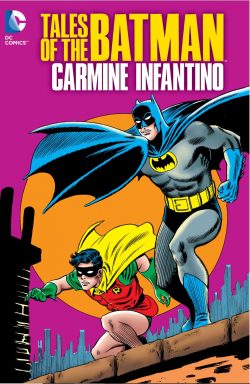
Tales of the Batman: Carmine Infantino


By Carmine Infantino, Gardner Fox, John Broome, Cary Bates, Gerry Conway, Don Kraar, Mike Barr, Geoff Johns & various (DC Comics)
ISBN: 978-1-4012-4755-3 (HB/Digital edition)

Born on May 24th 1925, Carmine Michael Infantino was one of the greatest comic artists America ever produced: a multi-award-winning innovator who was there when comic books were born, reshaped the industry in the Silver Age and was still making fans when he died in 2013.

As an illustrator he co-created and initially visualised Black Canary, Detective Chimp, Pow-Wow Smith, the Silver Age Flash, Elongated Man, Deadman, Batgirl, Dial H for Hero and Human Target and revitalised characters such as Adam Strange and Batman. He worked for numerous companies, and at Marvel ushered in a new age by illustrating the licensed Star Wars comic book whilst working on titles and characters such as The Avengers, Daredevil, Ms. Marvel, Nova, Star-Lord and Spider-Woman

His work on two separate iterations of the Batman newspaper strip is fondly remembered and whilst acting as Art Director and Publisher of National DC, he oversaw the most critically acclaimed period in the company’s history, ushering in the “relevancy” era and poaching Jack Kirby from Marvel to create the Fourth World, Kamandi, The Demon and others…

Very much – and repeatedly – the right man at the right time and place, Infantino shaped American comic book history like few others, and this bumper compendium comprehensively covers his contributions to the lore of Batman: collecting the stunning covers from Detective Comics #327-347, 349, 351-371, 500 and Batman #166-175, 181, 183-185, 188-192, 194-199 plus the Bat-Saga stories he drew for Detective #327, 329, 331, 333, 335, 337, 339, 341, 343, 345, 347, 349, 351, 353, 357, 359, 361, 363, 366-367, 369, and 500.

Also included are the contents of The Brave and the Bold #172, 183, 190, 194 and DC Comics Presents: Batman #1: an artistic association cumulatively spanning May 1964 to September 2004.

I’m assuming everybody here loves comics and that we’ve all had the same unpleasant experience of trying to justify that passion to somebody. Excluding your partner (who is actually right – the living room floor is not the place to leave your $£#!D*&$£! funnybooks) even today, many people have an entrenched and erroneous view of strip art, resulting in a frustrating and futile time as you tried to dissuade them from that opinion.

If so, this collection might be the book you want next time that confrontation occurs. It offers breathtaking examples of the prolific association of one the industry’s greatest illustrators with possibly the artform’s greatest creation.

Many of these “Light Knight” sagas stem from a period which saw the Dynamic Duo deftly reshaped for global Stardom – and subsequent fearful castigation from fans – as the template for the Batman TV show of the 1960s. It should be noted, however, that the producers and researchers took their creative impetus from stories of the era preceding the “New Look Batman” – as well as the original l940s movie serial…

So, what happened?

By the end of 1963, editor Julius Schwartz had spectacularly revived much of National/DC’s line – and the entire industry – with his modernisation of the superhero, and was then asked to work his magic with the creatively stalled and nigh-moribund Caped Crusaders.

Bringing his usual team of top-notch creators with him, Schwartz stripped down and back to the core-concept, downplaying aliens, outlandish villains and daft transformation tales to bring a cool modern take on combatting criminals. He even oversaw a streamlining and rationalisation of the art style itself.

The most apparent innovation was a yellow circle around the Bat-symbol, but far more importantly, the stories also changed. A subtle aura of genuine menace re-entered the comfortable and absurdly abstract world of Gotham City.

Infantino was key to the changeover that reshaped a legend – but this was while still pencilling Silver Age superstar The Flash – so, despite generating the majority of covers, Infantino’s interior art was limited to alternate issues of Detective Comics with the lion’s share of narrative handled by Bob Kane’s then-uncredited deputies Sheldon Moldoff, Joe Giella, Chic Stone & others, plus occasional guest artists such as Gil Kane…

Punctuated throughout by his chronologically sequenced covers, Infantino’s part in the storytelling revolution began then and kicks off here with Detective #327 – written by John Broome and inked by Joe Giella at the very peak of their own creative powers.

‘The Mystery of the Menacing Mask!’ is a cunning “Howdunnit?”, long on action and moody peril, as discovery of a criminal “underground railroad” leads Gotham Gangbusters Batman and Robin to a common thug seemingly able to control them with his thoughts…

‘Castle with Wall-To-Wall Danger!’ (Detective #329 with Broome and Giella in their respective roles) follows: a captivating international thriller with the heroes braving a deadly death-trap in Swinging England in pursuit of a dastardly thief.

A rare full-length story in #331 co-starred Elongated Man Ralph Dibny. He was Detective Comics’ new back-up feature: a costumed sleuth blending the charm of Nick (The Thin Man) Charles with the outré heroic antics of Plastic Man.

The ‘Museum of Mixed-Up Men’ (Broome & Infantino) united the eclectic enigma-solvers against a super-scientific felon, whilst in #333 Batman & Robin fought a faux goddess and genuine telepaths in the ‘Hunters of the Elephants’ Graveyard!’, written by Gardner Fox and inked by Giella.

The same team revealed the ‘Trail of the Talking Mask!’ in #335, giving the Dynamic Duo an opportunity to reinforce their sci-fi credentials in a classy high-tech thriller guest-starring private detective Hugh Rankin (of “Mystery Analysts of Gotham City” fame) before ‘The Deep-Freeze Menace!’ (Detective #337 delivered a fearsome fantasy chiller pitting Batman against a super-powered caveman encased in ice for 50,000 years…

DC’s inexplicable (but deeply cool) long-running love-affair with gorillas resulted in a cracking doom-fable as ‘Batman Battles the Living Beast-Bomb!’ (#339) highlighted the hero’s physical prowess in a duel of wits and muscles against a sinister, super-intelligent simian.

Up until this time the New Look Batman was forging his more realistic path, as the TV series was still in pre-production. The Batman TV show (premiering on January 12th 1966 and running for three seasons of 120 episodes in total) aired twice weekly for its first two seasons, resulting in vast amount of Bat-awareness, no end of spin-offs and merchandise – including a movie – and the overkill phenomenon of “Batmania”.

No matter how much we might squeal and foam about it, a huge portion of this planet’s population Batman will always regard that “Zap! Biff! Pow!”  buffoonish costumed boy scout as The Real Deal…

Regrettably this means that the comic stories published during that period have been similarly excoriated and maligned by most Bat-fans ever since. It is true that some tales were crafted with overtones of the “camp” comedy fad – presumably to accommodate newer readers seduced by the arch silliness and coy irony of the show – but no editor of Schwartz’s calibre would ever deviate far from the characterisation that had sustained Batman for nearly 30 years, or the then-recent re-launch which had revitalised the character sufficiently for television to take an interest at all.

Nor would such brilliant writers as John Broome, Bill Finger, Gardner Fox and Robert Kanigher ever produce work which didn’t resonate on all the Batman’s intricate levels just for a quick laugh or cheap thrill. The artists tasked with sustaining the visual intensity included Infantino, Moldoff, Stone, Giella, Murphy Anderson and Sid Greene, with covers from Gil Kane and Joe Kubert supplementing Infantino’s stunning, trend-setting, fine-line masterpieces.

Most of the tales here reflect those gentler times and editorial policy of focusing on Batman’s reputation as “The World’s Greatest Detective”, so colourful, psychotic costumed super-villains are in a minority, but there are first appearances for a number of exotic foes who would become regular menaces for the Dynamic Duo in years to come.

Broome & Infantino detailed the screen-inspired, comedically-catastrophic campaign of ‘The Joker’s Comedy Capers!’ in #341, with the mayhem and mystery continuing in Detective Comics #343 (September 1965) with ‘The Secret War of the Phantom General!’: a tense thriller pitting our hard-pressed heroes against a hidden army of gangsters and Nazi war criminals.

Detective #345 brought forth a terrifying and tragic new villain in ‘The Blockbuster Invasion of Gotham City!’ (scripted by Fox), as a monstrous giant with the mind of a child and the raw, physical power of a tank is driven to destructive madness at sight of Batman and only placated by the sight of Bruce Wayne

‘The Strange Death of Batman!’ (Fox, in Detective #347) fired the opening shot of habitual B-list villain the Bouncer in a bizarre experimental yarn which has to be seen to be believed, whereas it’s business as usual when monstrous, microcephalic man-brute returns in ‘The Blockbuster Breaks Loose!’: a blistering, action-fuelled thriller from Fox, Infantino & Giella first seen in Detective #349. This tale sports a cover by Infantino’s colleague Joe Kubert whilst also hinting at the return of a long-forgotten foe…

Detective #351 premiered game-show host turned felonious impresario Arthur Brown in a twisty, puzzle-packed battle of wits detailing ‘The Cluemaster’s Topsy-Turvy Crimes!’ (Fox, Infantino & Sid Greene) after which the action accelerates as ‘The Weather Wizard’s Triple-Treasure Thefts!’ (Fox/Giella in #353) bring a torrent of trouble to Gotham and the Dynamic Duo battle in spectacular opposition to the Flash’s meteorological arch-enemy. This was one of the earliest times a Silver Age DC villain moved out of his usual haunts…

Detective #357 then delivers a clever secret identity saving puzzler when – apparently – ‘Bruce Wayne Unmasks Batman!’ (Broome, Infantino & Giella) as a prelude to big changes in the Batman mythos…

After three seasons (perhaps two and a half would be more accurate) the Batman show ended in March, 1968. It had clocked up 120 episodes since the US premiere. The era ended but the series had instilled an undeniable effect on the world, the comics industry and – crucially – on the characters and history of its four-colour inspiration. Most notable was a whole new caped crusader who would become an integral part of the DC universe.

The comic book premiere of that aforementioned character came in ‘The Million Dollar Debut of Batgirl’ (Detective Comics#359, cover-dated January 1967). Fox provided art team supreme Infantino & Greene a ripping yarn to introduce Barbara Gordon (mousy librarian and daughter of the Police Commissioner) into the superhero limelight. Thus, by the time the third season began on September 14th, 1967, she was well-established among comics fans at least…

A different Batgirl – Betty Kane (teenaged niece of the 1950s Batwoman) – was already a nearly-forgotten comics fixture, but for reasons far too complex and irrelevant to mention, she was conveniently ignored to make room for a new, empowered woman in the fresh and fashionable tradition of Emma Peel, Honey West and the Girl From U.N.C.L.E.

“Babs” was considered pretty hot too, which is always a plus for television…

Whereas she fought The Penguin on the small screen, her print origin features the no less ludicrous but at least visually forbidding Killer Moth in a clever yarn that still stands up today.

Editor Schwartz always preferred to play-up mysteries and crime conundrums in Detective Comics and #361’s ‘The Dynamic Duo’s Double-Deathtrap!’ was one of Fox’s best, especially as drawn by the now increasingly over-stretched Infantino & Greene. The plot involves Cold War spies and a maker of theatrical and stage paraphernalia; I shall reveal no more to keep you guessing when you read it…

Detective #363 was a full co-starring vehicle as the Dynamic Duo challenged the new Batgirl to deduce Batman’s secret identity whilst tracking down enigmatic Mr. Brains in ‘The True-False Face of Batman!’, leading to a taut suspense thriller stretching across Detective #366 & 367 – an almost unheard-of event in those cautiously reader-friendly days…

As devised by Fox, Infantino & Greene, ‘The Round Robin Death Threats’ involves a diabolical murder-plot threatening to destroy Gotham’s worthiest citizens, with the tension peaking and drama concluding in high style with ‘Where There’s a Will… There’s a Slay!’: a dark and deadly denouement barely marred by that dreadful title…

It was just a symptom of the times – as is Detective #369 (November 1967) – which somewhat reinforces boyhood prejudices about icky girls in otherwise classy thriller ‘Batgirl Breaks Up the Dynamic Duo!’

Here, Robin seemingly abandons Batman for a vivaciously curvaceous new partner, and the best of clandestine reasons, ignominiously signalling – other than for the occasional cover – the end of Infantino’s tenure as a bat-illustrator.

His next Bat-contribution came in anniversary landmark Detective Comics #500 (March 1981): part of a huge creative jam-session specifically examining the legend of the immortal hero in ‘What Happens When a Batman Dies?’

Scripted by Cary Bates and inked by Bob Smith, this extracted chapter from a greater saga co-stars restless revenant Deadman as the Gotham Guardian hovers in a coma between this world and the next, yet still manages to find a way to save himself…

The cover is another collaborative effort with Dick Giordano, José Luis García-López, Joe Kubert & Tom Yeates all joining forces.

What follows is a quartet of tales from The Brave and the Bold, with Jim Aparo providing covers whilst Infantino handled interior art. Issue #172 (March 1981, inked by Steve Mitchell) paired the Caped Crimebuster with Firestorm in Gerry Conway scripted ‘Darkness and Dark Fire’, with the World’s Greatest Detective seeking to solve the mystery of the Nuclear Man’s periodic mental blackouts, after which #183 (February 1982, written by Don Krarr and inked by Mike DeCarlo) sees the crimebuster allied with The Riddler to prevent ‘The Death of Batman!’

Scripter Mike Barr & inker Sal Trapani worked with Infantino on B&B #190 (September 1982) and #194, January 1993), respectively challenging the Dark Knight to visit planet Rann and find ‘Who Killed Adam Strange?’ before subsequently working with the Flash against Doctor Double-X and the Rainbow Raider when they ‘Trade Heroes – And Win!’

One final Infantino fling comes from DC Comics Presents: Batman #1 (September 2004), courtesy of writer Geoff Johns, with inks by Giella and a retro cover from Ryan Hughes, as ‘Batman of Two Worlds’ gets real metaphysical with narrative boundaries as the modern Batman and Robin investigate murder on the set of the 1960s Batman TV show in a bizarrely engaging romp with a mystery villain to expose…

The visual cavalcade then ends on a nostalgic high with ‘Batman and Robin Retail poster’ – AKA the front cover of this titanic tome – possibly the most iconic bat-image of the entire era.

Whether you tend towards the anodyne light-heartedness of Then, the socially acceptable psychopathy of assorted movie franchises or actually just like the comic book character, if you can make a potential convert sit down, shut up and actually read these wonderful adventures for all (reasonable) ages, you might find that the old adage “Quality will out” still holds true. And if you’re actually a fan who hasn’t read this classic stuff and revelled in the astounding timeless art, you have an absolute treat in store…
© 1964, 1965, 1966, 1967, 1981, 1982, 1983, 2004, 2014 DC Comics. All Rights Reserved.

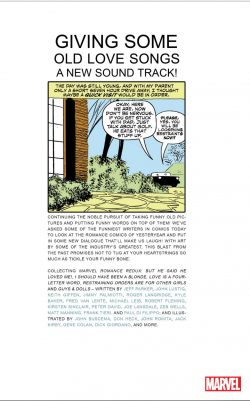
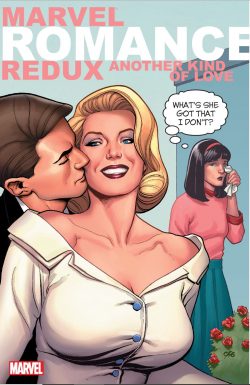
Marvel Romance Redux: Another Kind of Love


By Jeff Parker, Roger Langridge, John Lustig, Jimmy Palmiotti, Keith Giffen, Zeb Wells, Frank Tieri, Michael Lieb, Joe R. Lansdale, Paul Di Fillipo, Peter David, Robert Loren Fleming, Fred Van Lente, Kyle Baker & Kirsten Sinclair, Matthew K. Manning illustrated by Jack Kirby, John Romita, John Buscema, Don Heck, Dick Giordano, Vince Colletta, Gene Colan, Jim Mooney, Bill Everett, Jim Starlin, Jack Abel, Frank Giacoia, Al Hartley, Sol Brodsky various (Marvel)
ISBN: 978-0-7851-2090-2 (TPB/Digital edition)

Trust me: when – if! – you get to my age, Love is Funny.

For years romance comics were a comfortably profitable, solid staple of Marvel – and almost every other publishing house. It’s also a truism that girls are pickier than boys – just look at your own track record with the opposite sex or gender of your predisposition (and yes, I know that’s a cheap shot, but it’s also hard to contest!) – so most of those titles, whilst extremely limited in the stories they offered, were generally graced with some of the best artwork the industry could offer.

Those love-starved chicks might be content to absorb the same old perpetually regurgitated characters and plot pablum but they definitely, defiantly wanted it all to look the best it possibly could…

Having accepted that the art for comics aimed at females has always been of a higher standard and observed that many of Marvel’s greatest illustrators have secretly toiled in the tear-sodden Hearts and Flowers mines, the wisely cynical Editorial heads at The House of Ideas released an archival edition of the best of the bunch in 2006 – just in time for St. Valentine’s day! – as Marvel Romance.

Thanks, I’m sure, to prodding from younger, and disreputable quarters, they then re-released some of that select compilation and other material, realising that even though the tales might appear dull, dated, sexist and largely objectionable to Modern Misses; with a hefty dose of irreverence, a touch of tongue-in-cheek and a heaping helping of digital Tippex, much of that fallow folderol could be profitably retuned and recycled for modern-day shallow crowd of callow youths.

Moreover, if you tap some of the funniest and most imaginatively warped scribes working in the industry you might even make that mushy stuff accessible to jaded, worldly-wise, nihilistic, existentialist, and oh-so-lonely post-Generation X voidoids who think love is for cissies…

Thus in 2006, Marvel Romance Redux was to blame for five issues of raucous and occasionally ribald mockery that took the hallowed love comic book (often via the selfsame selections seen in Marvel Romance) to new depths, resulting in this deliciously offbeat confection a year later. Behind new covers by Keith Giffen, Pond Scum & Christina Strain, Amanda Conner & Jimmy Palmiotti, Greg Land, Kyle Baker and Frank Cho, 21st century sentiment met timeless 1950s, 1960s and 1970s artwork in a bizarre but highly successful marriage…

The first issue was subtitled But I Thought He Loved Me and opened with ‘President Stripper’ (rescripted by Jeff Parker from ‘I Do My Thing… No Matter Whom it Hurts’) by Johns Buscema & Romita Sr.: revealing how a daring Go-Go dancer heartbreakingly fails to find happiness using her daring moves and raunchy routines to run America.

Roger Langridge then twists the words of ‘I Mustn’t Love You, My Darling!’ (illustrated by Dick Giordano & Vince Colletta) into a tragic cautionary tale of a tattooed temptress who must cover up the fact that ‘I Was Inked by Sparky Hackworth!’

‘The Summer Must End’ originally by Stan Lee, Jack Kirby & Colletta becomes – courtesy of John Lustig – the sordid saga of a savage sexy relationship-wrecker in ‘I Was a Beach Blanket Barbarian!’ whilst Jimmy Palmiotti retains the title of Kirby’s ‘If Your Heart I Break…’ but shifts the cause for the end of the affair to the unpalatable fact that hunky beddable Matt is a hopeless comic book geek…

The first issue then closed with ‘Hit or Miss’ as Giffen massages Lee, Gene Colan & Jim Mooney’s bittersweet yarn ‘The Boy Who Got Away’ into a war of words and weapons between rival – but so hot! – assassins…

Guys & Dolls opens with ‘The Dinner Demon’ as Parker repurposes diner love story ‘One Day a Week’ (Jim Starlin & Jack Abel) into a creepy tale of greed and Satanism, before Lustig pushes the already outrageous ‘Please Don’t Let Me Be …a Spinster!’ (Don Heck & Colletta) into a modern parable of a girl who knows money makes the world go around in ‘Love Ain’t Cheap… Especially at these Prices!’

Sixties college affair ‘Formula for Love!’ by Jean Thomas, Colan & Bill Everett seamlessly evolved into a yarn of faux feminism and dangerous psychobabble thanks to Zeb Wells, whilst Palmiotti also kept the original title of Lee, Buscema & Romita Sr.’s ‘I Love Him… But He’s Hers!’ but happily messed with our heads in an account of petty jealousy and government conspiracies…

‘Love Isn’t in the Cards for Me’ from Lee, Buscema & Frank Giacoia became, under Frank Tieri, ‘A (Former Child) Star is Born!’ and showed just what a poor ambitious girl would endure to secure a man with money…

Love is a Four-Letter Word started with the magically surreal ‘Hot Alien Love’ (Jeff Parker making over Lee & Buscema & Colletta’s ‘Another Kind of Love’) as Gail – a dedicated agent of Homeworld Security – falls for the kinky tricks of an extraterrestrial Casanova, before Michael Lieb & Giffen introduced ‘Buffy Willow, Agent of A.D.D.’ (formerly ‘He Never Said a Word’ by Colan) as possibly Freedom and Democracy’s most inept honey-trap, and Joe R. Lansdale refitted Kirby & Colletta’s ‘By Love Betrayed’ into ‘Mice and Money’ wherein a hunky guy finally broke up gal-pals with the strangest tastes imaginable…

‘Love Me, Love my Clones!’ was originally ‘Jilted!’ by Jean Thomas, Heck & Romita) until Paul Di Fillipo added his own ideas on buying the ideal bespoke companion, whilst Peter David converted ‘Someday He’ll Come Along’ by Heck & Colletta into the death-affirming ‘They Said I was… Insane! … and “They” were right.

Robert Loren Fleming opened Restraining Orders are for Other Girls with the utterly hilarious ‘Too Smart to Date!’ (originally ‘The Dream World of Doris Wilson’ by Kirby & Al Hartley), after which ‘Callie Crandall: Co-Ed Campus Undercover Cutie’ laid out her Federally-mandated lures for radicals and subversives as Lieb overhauled Giordano & Colletta’s ‘50s filler ‘No Dates for the Dance’.

The art team was one of the most prolific of the period and Fred Van Lente turned their ‘The Only Man for Me’ into ‘Psycho for You’ which showed the upside of stalking and celebrity religious cults, whilst Kyle Baker performed similar duties on their ‘A Teenager Can also Love’, turning simple romance into psychedelic horror in ‘My Magical Centaur!’

Kirsten Sinclair then wrapped it all up by upgrading Kirby & Colletta’s ‘Give Me Back My Heart!’ into a fable of crime and obsession in ‘Give Me Back My Heart! (Dame Mi Carozan)’

I Should Have Been a Blonde devoted much of its content to adapting a full length tale of Marvel’s secret star Patsy Walker (of Patsy & Hedy and numerous spin-off titles most Marvel Zombies refuse to acknowledge the existence of). Under the sinister influence of Peter David, ‘Patsy’s Secret Boyfriend’ by Lee & Sol Brodsky became the uproariously self-censorious and rudely self-referential ‘Patsy Loves Satan’, sublimely supplemented by ‘Hedy’s Uncomfortable Fanmail’ and ‘Patsy Walker’s Battlesuits!’

Also included to balance the passionate madness was ‘The Language of Love’, wherein Matthew K. Manning converted Giordano & Colletta’s ‘The Last Good-By’ into a good old-fashioned laugh at immigrants’ expense, before Lustig wraps it all up by turning Gary Friedrich, Colan & Giordano’s ‘As Time Goes By’ into a bizarro tale of superstar possession as a pretty film fan became ‘The Girl With Bogart’s Brain!’

Yes, it’s pretty much a one-trick pony but it is an endlessly amusing one and the tendency towards wry comics-insider gags is far outweighed by the plethora of absurd, surreal, sly outlandish and wickedly risqué spoofs and devastating one-liners.

Moreover, the wickedly recycled art is still stunning…

Daft, pretty and compellingly witty, this is a lovely antidote to the wave of mawkish sentiment doled out in motion picture RomComs and a welcome rare chance to see some of the industry’s greatest graphic talents’ most sidelined artistic triumphs.
© 2020 MARVEL.

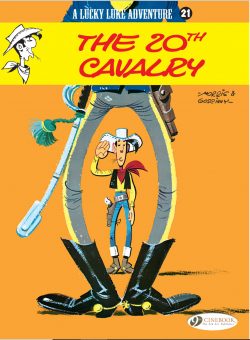
Lucky Luke volume 21 The 20th Cavalry


By Morris & Goscinny, translated by Jerome Saincantin (Cinebook)
ISBN: 978-1-84918-016-0 (PB Album/Digital edition)

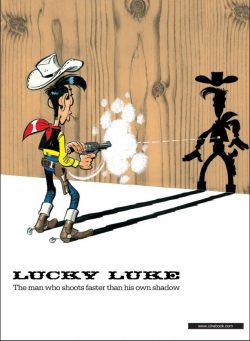
Doughty, dashing and dependable cowboy “good guy” Lucky Luke is a rangy, implacably even-tempered do-gooder able to “draw faster than his own shadow”. He amiably ambles around the mythic Old West, having light-hearted adventures on his petulant and somewhat sarcastic wonder-horse Jolly Jumper.

The taciturn trailblazer regularly interacts with historical and legendary figures as well as even odder fictional folk in tales drawn from key themes of classic cowboy films – as well as some uniquely European notions, and interpretations…

Over decades, his exploits have made him one of the top-ranking comic characters in the world, generating upwards of 85 individual albums (excluding the many spin-off series) with sales totalling in excess of 300 million in 30 languages thus far. That renown has led to a mountain of merchandise, aforementioned tie-in series like Kid Lucky and Ran-Tan-Plan), plus toys, computer games, animated cartoons, a plethora of TV shows and live-action movies and even commemorative exhibitions.

No theme park yet, but you never know…

The brainchild of Belgian animator, illustrator and cartoonist Maurice de Bévère (“Morris”) and first officially seen in Le Journal de Spirou’s seasonal Annual L’Almanach Spirou 1947, Luke sprang to laconic life in 1946, before inevitably ambling into his first weekly adventure ‘Arizona 1880’ on December 7th 1946.

Working solo until 1955, Morris produced nine albums of affectionate sagebrush spoofery before teaming with old pal and fellow trans-American tourist Rene Goscinny. When Rene became his regular wordsmith, Luke attained dizzying, legendary, heights starting with Des rails sur la Prairie (Rails on the Prairie) which began serialisation on August 25th 1955. In 1967, the six-gun straight-shooter switched sides, joining Goscinny’s own magazine Pilote for La Diligence (The Stagecoach).

Goscinny co-created 45 albums with Morris before his untimely death, whereupon Morris soldiered on both singly and with other collaborators. He died in 2001, having drawn fully 70 adventures, plus numerous sidebar sagebrush sagas crafted with Achdé, Laurent Gerra, Benacquista & Pennac, Xavier Fauche, Jean Léturgie, Jacques Pessis and more, all taking their own shot at the venerable vigilante…

Lucky Luke has history in Britain too, having first pseudonymously amused and enthralled young readers during the late 1950s, syndicated to weekly anthology Film Fun. He later rode back into comics-town in 1967 for comedy paper Giggle, using nom de plume Buck Bingo.

Morris & Goscinny’s 18th coproduction, Le Vingtième (or Le 20ème) de cavalerie was originally serialised in Le Journal de Spirou #1356-1377 before becoming the 27th album release in 1965. It’s a wickedly barbed spoof of Hollywood’s output (especially John Ford’s Cavalry Trilogy) in regard to Western soldiering and its often decidedly one-sided view of the US’s Indian wars. If you’re a fan of those flicks, you’ll see caricatures of plenty of favourite stars such as Randolph Scott and Victor McClaglen…

The plot is one you’ll know – by cultural osmosis – if not actual repeated viewings as, deep in Wyoming territory, Chief Yellow Dog’s recent treaty signing with representatives has led to confusion, hostility and potential bloodshed. The stated commitments involved white settlers passing through unmolested in return for not killing all the buffalo, but that’s suddenly stopped happening, leaving Fort Cheyenne’s garrison and particularly commander Colonel McStraggle in dire straits and quite a quandary…

With settlers prevented from crossing Indian land, tensions are mounting and in Washington DC the movers and shakers once again request the aid of a seasoned, unbiased and seemingly infallible troubleshooter…

By-the-book warrior Colonel McStraggle is proud of his achievements with the 20th Cavalry regiment, but is also a stickler for protocol and the “Army way”. He is not keen on the new “scout” foisted upon him, but is even less happy with the appalling progress of his son Grover – a lowly trooper who must prove his worthiness on a daily – if not hourly – basis with dear old dad micromanaging every moment…

Along with a typically quotidian cast including savvy Chinese laundryman Ming Foo, a fanatical old Irish sergeant and a Greek chorus of complaining soldiers who have seen it all before, more unusual if temporary occupants of Fort Cheyenne include stranded and obnoxious hat maker Jeremiah Bowler

Tempers are simmering everywhere, but the biggest problem Lucky can see is that somebody is supplying the Indians with guns and booze. When he visits the angry natives and meets proudly villainous deserter Derek Flood, our hero realises that just stopping the renegade won’t end the crisis. The old leader is even being pushed into war by his own braves and fellow/rival chiefs Crazy Coyote of the Sioux and Sick Eagle of the Arapaho.

The real problem is that – apart from McStraggle and Yellow Dog – everyone apparently wants a fight and won’t back down until they get one…

When the two leaders finally agree to parley, the ceremony is sabotaged and the Chief arrested over Lucky’s protests.

Now it’s time for the time-honoured siege of the fort, and desperate ride for reinforcements and horrendous slaughter unless Luke can change the script in time…

A deliciously wry and loving homage to classical western cinema, The 20th Cavalry revels in its classic set-piece slapstick and witty wordplay: poking gentle fun at the fundamental components of the genre and successfully blending tradition with action to deliver a major victory for fun…

Here is another wildly entertaining all-ages confection by unparalleled comics masters, affording an enticing glimpse into a unique genre for today’s readers who might well have missed the romantic allure of an all-pervasive Wild West that never was…
© Dargaud Editeur Paris 1971 by Goscinny & Morris. © Lucky Comics. English translation © 2009 Cinebook Ltd.

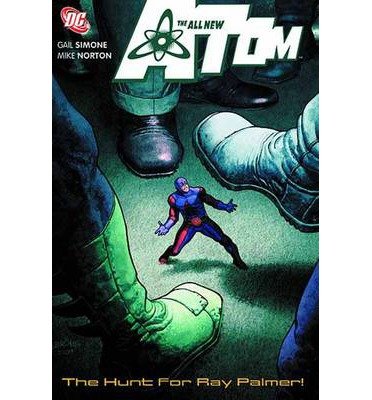
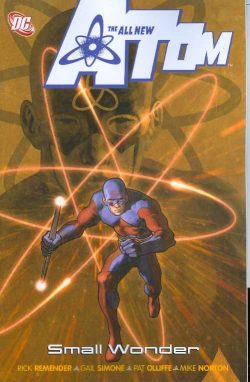
The All-New Atom volumes 3 & 4: The Hunt for Ray Palmer & Small Wonder


By Gail Simone, Rick Remender, Mike Norton, Pat Oliffe, Dan Green & Trevor Scott & various (DC Comics)
ISBN: 978-1-4012-1782-2 (TPB Hunt) 978-1-4012-1996-3 (TPB Wonder)

After the events of Identity Crisis and 52, superhero physicist Professor Ray Palmer disappeared, leaving his world behind him. But life goes on, and his teaching chair at Ivy University was offered to a young prodigy from Hong Kong. The neophyte just happened to be Palmer’s pen-friend and confidante: privy to his predecessor’s secrets ever since he was a child.

Dr. Ryan Choi unwillingly inherited his predecessor’s super-hero career as well – under some rather suspicious circumstances – battling super-villains, monsters and seemingly random chronal catastrophes that are making Ivy Town a viper’s nest of bizarre occurrences.

With this third volume (collecting issues #12-16 of All-New Atom) the so-likable legacy hero joins an eccentric team of heroes to track down his missing mentor in a story-arc that coincided with events of unfolding mega-crossover Countdown to Final Crisis

Written by the brilliant Gail Simone and illustrated by Mike Norton, Dan Green & Trevor Scott, the The Hunt for Ray Palmer starts with ‘Never Too Small to Hit the Big Time’ as size-shifting homicidal maniac Dwarfstar returns, swiftly followed by a procession of Palmer’s oddly unique Rogues’ Gallery.

Temporal anomalies are devastating the city and Choi’s only chance to sort it all is the creepily coincidental alliance offered by infamous “time-thief” Chronos

‘Second Genesis’ finds Choi and the wily villain lost in the South American jungles, encountering the tiny alien barbarians Palmer once lived with (see Sword of the Atom link please) before the new Tiny Titan links up with Donna Troy, Jason Todd and the Monitor – all major protagonists in the aforementioned Countdown to Final Crisis.

Choi joins forces in their search of the entire multiverse, with a first stop in ‘Heavens to Bitsy’ taking them from the super-scientific civilisation located on the bottom of Choi’s pet dog (not his underside, but the bit by the tail…) and from there to the post-existence paradise where all dead superheroes go. The manic manoeuvring features classy and clever cameos from a host of departed DC stars…

However, nothing is as it seems and by the time the new “challengers of the unknown” reach neutral ground and a rendezvous with Green Lantern Kyle Rayner, it’s clear that something or someone is sabotaging them. ‘Loss Leader’ sees Choi abruptly yanked from the quest and returned to Earth to save Ivy Town from the effects of the swifty escalating and accelerating time-storm one: of the funniest and grossest hero exploits ever recorded – or as Choi puts it, Ewwww’

The book concludes on a hilariously action-packed high note with ‘Forward! Into the Past!’ as further hints on the identity of the mastermind behind the All-New Atom’s troubles are revealed when Ivy Town takes a reality-warping, mind-bending trip back into the Summer of Love.

Ghosts, aliens, monsters, naff villains and Hippies abound, and there’s a guest-shot for those clearly inadequate guardians of the Time Stream, the Linear Men

This fun-filled frantic frolic is a joyous return to clever, light-hearted adventure of the Good Old days (whenever they were) and these collected tales are everything a jaded superhero fan needs to clear the palate and revive flagging interests.


The All-New Atom volume 4: Small Wonder sees the adventures of the legacy Tiny Titan come to an abrupt halt with this final collection of mind-bending, time-busting yarns, collecting issues #17, 18 and 20-25 but sadly and inexplicably omitting #19 – a rather tasty subterranean thriller fill-in from Keith Champagne & Jerry Ordway.

Whether the switch from gleefully, wistfully whimsical scripter Gail Simone to darker, more hard-edged Rick Remender indicated the series was failing or perhaps actually caused its eventual demise is a matter of speculation – but it was probably neither and just another example of rapidly changing popular taste shredding sales below a viable cut off point…

Following the events of publishing events Identity Crisis and 52, size-changing part-time superhero Professor Ray Palmer vanished, leaving his world behind him. But life went on regardless, and his position at Ivy University was offered to a young prodigy from Hong Kong: Palmer’s confidante and someone privy to his predecessor’s secrets since childhood. Ryan Choi inherited his Palmer’s super-hero identity too – under rather suspicious circumstances.

The kid battled super-villains, monsters and seemingly random chronal catastrophes that were making Ivy Town a viper’s nest of bizarre occurrences and nexus of improbability.

Gail Simone started proceedings with 2-parter ‘The Atom and the Amazon’ illustrated by Mike Norton, Andy Smith, Trevor Scott & Keith Champagne: a bravura blend of action, adventure and surreal comedy wherein expanding villainess Giganta sexually harasses the junior professor into a date whilst the mysterious forces and agencies infesting Ivy Town jockey for position before an impending emergent crisis…

Things come to a head when Federal Department of Metahuman Affairs agent Diana Prince steps in and asks Choi to wear a wire on his assignation…

When a creep with a detachable brain provokes a confrontation, Wonder Woman steps in and events spiral out of control until Ryan uses a brilliant seldom-seen ploy to calm things down. Sadly, the pacification is only temporary, as the brain-thing incites the entire city to attack the heroes, before The Atom saves the day …and is rewarded by the most outrageous offer he has ever heard…

Simone ended her run with ‘A Few Small Affairs’ wherein the sinister mastermind behind so many of Choi’s problems traps the diminishing hero in a perfect prison: a paradisiacal hallucination…

Meanwhile in consensus reality, demons, monsters and aliens rampage through Ivy Town…

To see how he stops that mess you’ll need to get this book, but that’s not the end of the affair. That comes in epic encounter ‘Inside Out’ by Rick Remender, Pat Olliffe & John Stanisci, pitting the out-of-his-depth Tiny Titan against truly horrendous odds and seemingly insurmountable hazards.

In ‘The Positive Aspects of Negative Thinking’, Choi learns that his explorations of the micro-cosmos have infected him with a virus and unleashed a monstrous carnivore on the city that only he can deal with. ‘How to Disappear Completely’ then leaves him shocked and reeling when the beast devours his best friend Panda.

Consumed with a need to make amends, Choi is utterly unaware that arch-enemies Chronos and Dwarfstar are preparing to attack, and is horrified and derailed to discover that the micro-monster has since disintegrated dozens of citizens. Meanwhile, his bodily infection is causing him to uncontrollably shrink in violently painful spasms…

Donning a high-tech containment suit, Choi struggles on in ‘Strange New World’: becoming lost in the Microverse before joyfully discovering that the townsfolk “consumed” by the monster were in fact simply reduced to sub-atomic proportions and entrapped in an extremely hostile new universe.

That elation is tempered however when he realises that time passes much faster there, and if the horrors inhabiting the place don’t eat them first, they will all die of old age before he can save them…

Guest-starring time-displaced hero Booster Gold, ‘Forecast Fascist Future’ focuses on Chronos and his partner in time-crime, a mysterious lady from Choi’s past, before the myriad plot-threads of the series converge and Ray Palmer returns to save the day: revealing some shocking truths to – and about – his successor in ‘Time’, a gripping conclusion to a bold epic and conclusive proof that the Tiny Titans should have been awarded more time to continue their adventures…

Alas they didn’t and the series passed away, but at least lovers of fun, fantastic fantasy Fights ‘n’ Tights fiction have these volumes to enjoy, if they can find them. Let’s all hope that DC get around to rereleasing all of them digitally ASAP…
© 2007, 2008 DC Comics. All Rights Reserved.

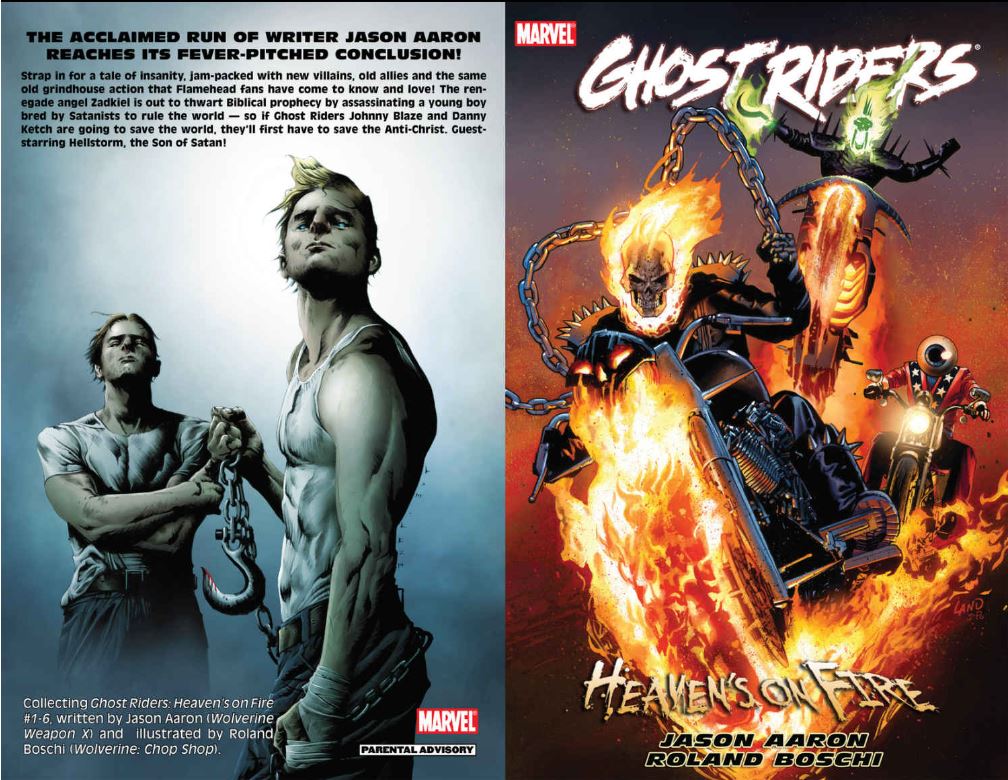
Ghost Riders: Heaven’s on Fire


By Jason Aaron, Roland Boschi, Dan Brown & various (Marvel)
ISBN: 978-0-7851-4235-5 (TPB/Digital edition)

Following a downturn in superhero comics sales, the early 1970’s saw Marvel shift focus from straight costumed crusaders to supernatural and/or horror characters, with one of the most adaptable and enduring proving to be a flaming-skulled vigilante dubbed The Ghost Rider.

Carnival stunt-cyclist Johnny Blaze had sold his soul to the devil in an attempt to save his foster-father from cancer. As is always the way of such things Satan – or arch-deceiver Mephisto as he actually was – followed the letter, but not spirit, of the contract and Crash Simpson died anyway.

When the Demon Lord came for Blaze, only the love of an innocent soul saved the bad-boy biker from eternal pain and damnation. Temporarily thwarted, the devil afflicted Johnny with a condition making his body burn with the fires of Hell every time the sun went down as the lost soul periodically became the unwilling, unknowing host for outcast and exiled demon Zarathos – the Spirit of Vengeance.

After years of travail and turmoil Blaze was (temporarily) freed of the demon’s curse and seemingly retired from the hero’s life. As Blaze briefly escaped his pre-destined doom, a tragic boy named Danny Ketch assumed the role of Zarathos’ host and prison by a route most circuitous and tragic…

Over the years a grim truth emerged: Johnny and Danny were actually half-brothers and both the Higher Realms and Infernal Regions had big plans for them. Moreover, the power of the Ghost Rider had always been a weapon of Heaven, not a curse from Hell…

This riotous, rollercoaster grindhouse supernatural thriller collects the 6-issue miniseries Ghost Riders: Heaven’s on Fire (from August 2009 – February 2010) by Jason Aaron & Roland Boschi, and featuring a host of fan-favourite villains, a variety of previous fire-headed hosts, a gaggle of grim guest-stars and assorted Spirits of Vengeance in a bombastic, Hell-for-Leathers romp which neatly concluded a long-running and unresolved saga.

It begins when usurper Archangel Zadkiel – thanks to his unwitting dupe Danny – finally achieves his appalling ambition. Ousting God, the devil becomes the new Supreme Power of the universe, but the sinister Seraph has not reckoned on a motley crew of sinners and worse, led by Blaze, who are utterly resolved to stop Him…

With covers and variants by Jae Lee, Phil Jimenez, Das Pastoras, Dustin Weaver, Greg Land and Christian Nauck, the dark drama begins when Zadkiel’s angels raid a satanic fertility lab and slaughter all its infants and children. The victims were all prospective Antichrists, but one escaped…

When Hellstorm – a fully grown, naturally conceived Son of Satan – arrives, he finds himself in a peculiar position. Having spent his entire rebellious unnatural life battling his sire, Daimon Hellstrom has no desire to aid the Evil One’s schemes, but must act since, by his murderous acts, Zadkiel is actually trying to unmake Biblical Prophecy.

God always intended for an Apocalypse to conclude His Divine Plan, but the usurper’s coup is actually beyond all concept of right and wrong. Thus the die is cast and Hellstorm must – albeit reluctantly – locate the last Earthborn heir of Hell and ‘Save the Antichrist, Save the World’

Simultaneously, Blaze, accompanied by mystic Caretaker agent/combat nun Sister Sara, is tracking Zadkiel’s angelic agents, determined to find a door to Heaven and confront the renegade face to face. They also want to kill Johnny’s brother Danny, whose pig-headed hubris has led to Zadkiel replacing God and occupying the Vault of Heaven…

When the bikers wipe out a brace of boastful rear-guard Cherubim and learn of The Plan, they immediately change tactic, joining the hunt for missing Anton Satan (AKA Kid Blackheart) to save him from the wrath of the Pretender God…

Oblivious to the threat, Anton is exactly where you’d expect an Antichrist to be: making millions as the youngest executive at a Wall Street Hedge Fund. However, his cruel, calm arrogance is soon shaken when a Seraphic Assassin bursts in only to be eradicated by occult terrorist Jaine Cutter and her “Breathing Gun”: another player determined to restore the biblically-scheduled Armageddon.

Cutter has severely underestimated Zadkiel’s determination and sense of proportion, and drags the protesting Hell-brat straight into an angelic ambush, as far across the country someone gathers a small army of Ghost Rider villains. They already have the Orb, Blackout and The Deacon on board…

With tormenting demons replacing his lost arms, Master Pandemonium is a living doorway to Hell, but even he has no idea what true suffering is until Danny Ketch kicks his door in, looking for the shortest route to the Big Bad Boss of Gehenna…

Three days later in New York, Hellstorm explosively saves Cutter and Anton from the ruthless Flight of Angels. The self-serving kid bolts, but runs right into the newly-returned Ketch. Blaze and Sister Sara arrive moments later and all parties very reluctantly agree to suspend hostilities for a team-up in ‘Are You There, Devil? It’s Me, Danny.’

The anti-Ghost Rider Squad is growing too. Freshly signed up are Zadkiel’s own flame-headed fanatic Kowalski – AKA Vengeance – plus Scarecrow, Madcap, motorised maniac Big Wheel and a savagely sentient steam-shovel called Trull

Thanks to Pandemonium, Ketch has met the Devil and struck a deal. In return for preserving the last extant Antichrist from Zadkiel’s forces, Satan will provide the brothers with access to Heaven and give them a shot at restoring the previously incumbent Deity…

After brutally working out their operational differences in time-honoured fashion, Johnny and Danny at last unite just as ‘The Brothers Ghost Rider’ are bushwhacked by Big Wheel and Trull (an alien mind-force which can possess any mechanical contrivance: tractor, bulldozer, chainsaw, etc…

The catastrophic clash brings the boys to a temple which is a gateway to the Eternal Realm, but thanks to Blackout they miss their chance to use it…

Meanwhile, in a hidden location the secret sacred order of Gun Nuns prepare for their last battle…

‘Here Comes Hell’ starts in the Jasper County Sheriff’s holding cell where Scarecrow and Madcap have just slaughtered all other occupants. Outside, Hellstorm, Sara, Jaine and obnoxious Anton enter the too-quiet town, seeking safety and a useable satanic sanctuary to stash the kid in.

Zadkiel’s converts are waiting for them and a deadly duel ensues. In the melee, Anton shows his true colours: attacking Sara and allying with Master Pandemonium even as Vengeance and the Orb lead an army of killer angels, demons and zombie bikers against primed-for-martyrdom Gun Nuns protecting a fully operational highway to Heaven…

‘Sole Reigning Holds the Tyranny of Heaven’ sees triumphant, power-drunk Zadkiel remodelling Paradise to his own gory tastes and fitfully rewriting snippets of Creation when the Ghost Riders storm in through the nun’s gate…

Meanwhile on Earth, more blockbusting battles break out as Hellstorm and Cutter suspend their truce and renew their personal vendetta. Elsewhere, Kid Blackheart brutally uncovers Sister Sara’s impossible hidden destiny as a living portal to Heaven, and uses her to transport battalions of demons to conquer Kingdom Come…

The occult overdrive rockets to a cataclysmic conclusion as Zadkiel personally smashes the invading Spirits of Vengeance in ‘If You Can’t Lower Heaven, Raise Hell’. With the streets of Heaven knee-deep in blood, even a pep talk from his own dead wife and kids cannot keep Blaze battling against the new Omniscience, but when the Legions of Hell attack and Danny incites all previously expired Ghost Riders to rise, Johnny sees one last chance to make things right…

Fast, frantic, irreverent, satirically funny, violently gratuitous and clearly not afraid to be daft when necessary, this is a fabulously barmy, two-fisted eldritch escapade that will reward any fans of raucous road thrillers, magical monstrosity tours and Marvel’s monster continuity.
© 2009, 2010, 2012 Marvel Characters, Inc. All rights reserved.

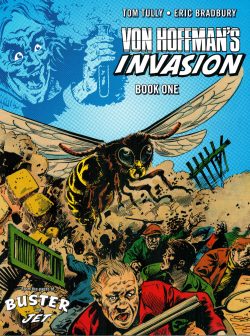
Von Hoffman’s Invasion Book One


By Tom Tully & Eric Bradbury (Rebellion Studios)
ISBN: 978-1-78108-626-1 (TPB/Digital edition)

In the sixties and seventies the British liked their comics characters weird, wild, utterly amoral, flagrantly inept and invariably corrupt to the core. These days it’s a requirement we only demand from and venerate in our politicians and public servants.

One thing we have adored above all other things is a great, properly flamboyant villain…

British comics have always enjoyed a strange, extended love affair with what can only be described as “unconventional” (for which feel free to substitute “weird” or “creepy”) heroes. So many stars and putative role models of our serials and strips have been outrageous or just plain “off”: self-righteous voyeurs-vigilantes like Jason Hyde, deranged vigilante geniuses like Eric Dolmann, self-absorbed outsiders like Robot Archie, arrogant, morally ambivalent former criminals like The Spider or outright racist supermen such as Captain Hurricane

We also made much of (barely) reformed criminals like Charlie Peace and sinister masterminds in the manner of The Dwarf, Black Max, Dr. Mesmer, Grimly Feendish, The Snake and this particular Menace to Society…

Until the 1980s, UK periodicals exclusively employed an anthological model: offering variety of genre, theme and character on a weekly – or sometimes fortnightly – basis. Humour comics were leavened by action-heroes, whilst adventure papers always carried some palate-cleansing gag-strips and stars. Buster offered the best of all worlds.

Running 1902 issues from May 28th 1960 to 4th January 2000, it delicately balanced drama, mystery, action and comedy, with its earliest days – thanks to absorbing Radio Fun and Film Fun – heavily dosed with celebrity-licensed material starring media mavens like Charlie Drake, Bruce Forsyth and Benny Hill backing up the eponymous cover star billed as “the son of (newspaper strip icon) Andy Capp”.

Buster became the final resting place of many, many companion papers in its lifetime, including The Big One, Giggle, Cor!, Monster Fun, Jackpot, School Fun, Nipper, Oink!,

Whizzer & Chips and Jet, so its cumulative content was wide, wild and usually wacky…

Jet debuted in 1971 but only lasted 22 weeks at a time when our indigenous periodicals industry struggled to cope with spiralling costs and mass importation of brash, flashy, full-colour comics from America.

A product of the editorial policy described as “Hatch, Match and Dispatch”, similar to US try-out comics, it involved launching whole titles with new features to catch reader attention and mercilessly culling them and harvesting the most popular features into established, proven sellers like Lion, Tiger, Valiant or Buster.

Jet was dedicated to adventure features but also carried humour strips. Only three (out of 14 contenders) survived amalgamation, but for The Kids of Stalag 41 the reprieve was a short one. Long-term, only Ken Reid’s immortal Face Ache and a mad masterpiece of weird science called Von Hoffman’s Invasion proved worthy of our attention. The arcane antagonist and enemy of the people even scored the cover spot of issue #1…

British comics in the 1960s and 1970s were a phantasmagorical playground of bizarre wonders. Recognisably heroic protagonists appeared in war, western and gradually declining crime serials, whilst the most memorable momentum devolved to a hybrid, bastardized mixture of fantasy, horror and science fiction themes to spawn unique stars of a graphic pantheon unlike any other…

Another stunning salvo of baby boomer nostalgia courtesy of Rebellion’s Treasury of British Comics strand, this initial collection of Von Hoffman’s Invasion gathers all the material from Jet, spanning May 1st to September 25th 1971 and its continuation in Buster running from October 2nd to February 5th 1972. The home front weird war eventually concluded on October 21st of that year, thanks I’m sure to the sheer quality of its creators, who were undoubtedly drawn away for newer – and potentially more successful – escapades…

I’m sure I don’t need to remind you that this was the mid-Sixties, so racial depictions like the half-sized sumo wrestler-bot last cited were perpetrated “in fun”, and not fairness or good taste…

Von Hoffman’s Invasion was a classic example of the many-stranded uncanny menace genre young Brits thrived upon, blending elements of war stories with super science, seeing evil geniuses thwarted by bold kids and plucky Everymen. It all seemed so incredibly credible thanks to the efforts of two of our industry’s greatest talents…

This inexplicably compelling blend of marauding monster, unjustifiable revenge and scary invasion was scripted by impossibly prolific Glasgow-born Tom Tully. His astoundingly broad output of classic delights included Roy of the Rovers, Heros the Spartan, Dan Dare, Master of the Marsh, The Leopard from Lime Street, Janus Stark, Mytek the Mighty, The Wild Wonders, Nipper, Adam Eterno, The Mind of Wolfie Smith, Johnny Red, Harlem Heroes, Mean Arena, Inferno, The Robo Machines, Football Family Robinson, Buster’s Ghost and many more.

His collaborative co-creator here worked on many of those sagas. The incredibly gripping moody comic art of Eric Bradbury had begun gracing newsagents’ shelves in 1949 in Knockout. Frequently working with studio mate Mike Western, Bradbury drew strips like Our Ernie, Blossom, Lucky Logan, Buffalo Bill, No Hiding Place, The Black Crow and Biggles. He was an “in-demand” illustrator who worked into the 1990s on landmark strips like The Avenger, Cursitor Doom, Phantom Force 5, Maxwell Hawke, Joe Two Beans, Mytek the Mighty, Death Squad, Doomlord, Darkie’s Mob, Crazy Keller, Hook Jaw, The Sarge, Invasion, Invasion 1984, The Mean Arena, The Fists of Jimmy Chang, The Dracula Files, Rogue Trooper, Future Shocks, Tharg the Mighty and so much more…

From the start, Tully & Bradbury delivered intense, claustrophobic tension-drenched, action-packed episodic adventures, opening here with the release after 25 years of a war criminal who was still a fanatical Nazi and faithful servant of the Third Reich.

Doktor von Hoffman had been constructing mechanised moister terror-weapons as WWII ended, and the destruction of his robot centipede tipped him over the edge.

He went to jail sworn to destroy the British, but the only thing he had learned upon his release in 1970 was that biology was more effective than engineering…

In his old lab on the outskirts of Berlin, he created an enlarging chemical that also made those subjected to it slaves to his commands. On reaching the French coast he used it to turn an eel into a colossal animal torpedo and rode it to England, dallying only to sink a cross channel ferry. On beaching in Cornwall, he started his petty campaign of revenge by using the growth gas (concealed in the battered umbrella all evil geniuses carry) to magnify a crab to the size of a house and destroy a fishing village, reinforcing the walking tank with a deadly giant wasp. With local police fearfully outmatched the RAF finally get involved, scoring a rather pyrrhic victory at the cost of an attack helicopter…

Still at large, utterly unsuspected but also deeply paranoid, Von Hoffman continues randomly unleashing destructive colossi – such as giant toads, pigeons, roving dogs and assorted insects – culled from English country gardens until he encounters Barry and Joey Drake. When they are attacked by monsters in the cottage at Little Upton, the young brothers discover one of the serums their scientist dad is working on reverses the effects of the mad doctor’s gas…

It happens when the madman briefly transforms their good dog Major into a marauding beast and an old bottle in the shed saves them and their faithful four-legged friend…

Armed with a solution and plenty of X2FO4, the lads go after the maniac and clash just as Herr Doktor unleashes a massive mole on (or rather under) a British army base. Interrupting a top secret tank test, Von Hoffman ups the ante with a horde of rampaging woodlice that results in a blistering battle between ancient armour and modern ordnance.

It all goes very badly for mankind until Barry and Joey find a way to deploy their dad’s solution…

Thwarted but undaunted, the crazed war criminal then invades a monkey sanctuary where things get really hairy when bad-tempered, behaviourally-challenged chimp Charlie gets a dose of growth gas and goes on a very cinematic rampage…

When that all goes wrong, the boys actually capture the villain, but his umbrella and some rapidly enhanced woodworm serve to extricate Von Hoffman for another assault on Albion: this time augmented by a rampaging rabbit that thumps the army hard. Meanwhile in London, the government is finding it harder and harder to keep a lid on the chaos happening out in the provinces…

The cover-up gets its biggest bashing when aided by a super stag beetle, the Doktor plans to strike a shattering blow to British morale; attacking the nation’s soul by disrupting football’s “Global Cup Final”: a grudge match between England and Germany…

Cue enhanced ants, budgerigars, rats, hedgehogs and spiders, the abduction of England’s captain and the debut of absolutely indescribable pedigreed dog breeder/footy fan Cynthia Fulbright whose help – along with the boys’ serum-filled water pistols – saves the day and cinch the cup for England….

Foiled again and almost out of growth gas, Von Hoffman is on the back foot now, but strikes again with an enlarged coypu that enables to restock his chemical larder by attacking Weldale Research Laboratories whilst building up his forces via the facilities stock of squid and octopi, sparking another battle with the army. Although driven off, the madman is not disheartened: after all, now he has fresh hope, fresh resources and best of all a small army of giant birds and mechanical dinosaurs!

To Be Continued…

Closing this titanic tome is a tempting teaser extract for similarly themed star Black Max so enjoy that too….

Completely bonkers but utterly engaging, this brilliantly wry romp is sheer addictive nostalgia for my generation, but the stories also hold up against anything made for today’s marketplace. Buy it for the kids and read it too. This is a big, bold glorious tale, and brace yourself for even better yet to come…
© 1971, 1972, 2018 Rebellion Publishing Ltd. All rights reserved.

Mighty Marvel Masterworks The Avengers volume 2: The Old Order Changeth


By Stan Lee, Larry Lieber, Larry Ivie, Don Heck, Jack Kirby, Dick Ayers, Chic Stone, Mike Esposito, Wallace Wood & various (MARVEL)
ISBN: 978-1-3029-4613-5 (PB/Digital edition)

Probably Marvel’s biggest global franchise success, The Avengers celebrate their 60th anniversary in 2023, so let’s again acknowledge that landmark event and offer a promise of more of the same…

These stories are timeless and have been gathered many times before but here we’re enjoying an example of The Mighty Marvel Masterworks line: designed with economy in mind and newcomers as target audience. These books are far cheaper, on lower quality paper and smaller – like a paperback novel. Your eyesight might be failing and your hands too big and shaky, but at 152 x 227mm, they’re perfect for kids. If you opt for the digital editions, that’s no issue at all.

After a period of meteoric expansion, in 1963 the burgeoning Marvel Universe was finally ready to emulate the successful DC concept that had cemented the legitimacy of the Silver Age of American comics. The notion of putting a bunch of all-star eggs in one basket had made the Justice League of America a winner and subsequently inspired the moribund Atlas outfit – primarily Stan Lee, Jack Kirby & Steve Ditko – into conceiving “super-characters” of their own. The result – way back in 1961 – was the Fantastic Four

After 18 months, the fledgling House of Ideas had generated a small successful stable of costumed leading men (but still only 2 sidekick women!), allowing Lee & Kirby to at last assemble a select handful of them into an all-star squad, moulded into a force for justice and soaring sales…

Cover dated September 1963, and on sale from Early July, The Avengers #1 launched as part of an expansion package which also included Sgt. Fury and his Howling Commandos and The X-Men. This sequel edition collects The Avengers #11-20 (cover-dates December 1964 to September 1965): a stellar sequence of groundbreaking tales no lover of superhero stories can do without…

The tense action resumes with the team supreme of Iron Man, Thor, Captain America, Ant-Man & the Wasp still together after numerous attempts to destroy them or shatter their unity. An eagerly anticipated meeting delighted fans when #11 declared ‘The Mighty Avengers Meet Spider-Man!’: a clever and classy cross-fertilising tale from Lee and Don Heck, inked by Chic Stone. It features the return of the time-bending tyrant Kang the Conqueror, who attempts to destroy the team by insinuating a robotic duplicate of the outcast arachnid within their serried ranks. It’s accompanied by Heck’s Marvel Master Work Pin-up of ‘Kang!’ and preceded a cracking end-of-the-world thriller with guest-villains Mole Man and the Red Ghost, doing their very best to avoid another clash with the Fantastic Four.

This was another potent Marvel innovation, as – according to established funnybook rules – bad guys stuck to their own nemeses and didn’t clash outside their own backyards…

Inked by Dick Ayers, ‘This Hostage Earth!’ is a welcome return to grand adventure with lesser lights Giant-Man and the Wasp taking rare lead roles, but is trumped by a rousing gangster thriller of a sort seldom seen outside the pages of Spider-Man or Daredevil. The saga premiered Marvel universe Mafia analogue The Maggia and another major menace in #13’s ‘The Castle of Count Nefaria!’

After crushingly failing in his scheme to frame the Avengers, Nefaria’s caper ends on a tragic cliffhanger as Janet Van Dyne is left gunshot and dying, leading to a peak in melodramatic tension in #14 – scripted by Larry Ivie (as Paul Laiken) & Larry Lieber over Stan’s plot – as the traumatised team scour the globe for the only surgeon who can save her.

‘Even Avengers Can Die!’ – although of course she doesn’t – resolves into an epic alien invasion tale with overtones of This Island Earth, with Kirby stepping in to lay out the saga for Heck & Stone to illustrate. This only whets the appetite for the classic climactic confrontation that follows one month later as the costumed champions finally deal with the Masters of Evil and Captain America at last avenges the death of his dead partner Bucky.

‘Now, by My Hand, Shall Die a Villain!’ in #15 (laid-out by Kirby, pencilled by Heck and inked by Mike Esposito) features the final, fatal confrontation between Cap and Baron Zemo in the heart of the Amazon, whilst the other Avengers and the war-criminal’s cohort of masked menaces (Enchantress, Executioner, Black Knight and The Melter) battle once more on the streets of New York City…

It all ends as ‘The Old Order Changeth!’ (broken down by Kirby before being finished by Ayers) presages a dramatic change in concept for the series; presumably because, as Lee increasingly wrote to the company’s unique strengths – tight continuity and strongly individualistic characterisation – he found juggling individual stars in their own titles as well as a combined team episode every month was just incompatible if not impossible…

As Cap and substitute sidekick Rick Jones fight their way back to civilisation, the Avengers institute changes. The big-name stars retire and are replaced by three erstwhile villains: Hawkeye, Quicksilver and The Scarlet Witch.

Eventually, led by perennial old soldier Captain America, this relatively powerless group with no outside titles to divide the attention (the Sentinel of Liberty did have a regular feature in Tales of Suspense but at that time it featured adventures set during WWII) evolved into another squabbling family of flawed, self-examining neurotics, enduring extended sub-plots and constant action as valiant underdogs; a formula readers of the time could not get enough of and which still works today…

Acting on advice from the departing Iron Man, the neophytes seek to recruit The Hulk to add raw power to the team, only to be ambushed by Mole Man in #17’s ‘Four Against the Minotaur!’ (Lee, Heck & Ayers), after which they fall foul of a dastardly “commie” plot ‘When the Commissar Commands!’ – necessitating a quick trip to thinly-disguised Viet Nam analogue Sin-Cong to unwittingly battle a bombastic android…

These relatively low-key tales are followed by an ever-improving run of mini-masterpieces, the first of which wraps up this compilation with a 2-part gem providing Hawkeye’s origin and introducing a roguish hero/villain.

‘The Coming of the Swordsman!’ introduces a dissolute, disreputable swashbuckler – with just a hint of deeply-buried flawed nobility – who attempts to force his way onto the highly respectable team to avoid outstanding international arrest warrants. His immediate and total rejection leads to him becoming an unwilling pawn of a far greater menace after being kidnapped by A-list would-be world despot The Mandarin.

The conclusion comes in the superb ‘Vengeance is Ours!’ – sublimely inked by the one-&-only Wally Wood – wherein the constantly-bickering Avengers finally pull together as a supernaturally efficient, all-conquering team…

These are immortal tales that defined the early Marvel experience and are still a joy no fan should deny themselves or their kids. How can you survive without them?
© 2022 MARVEL.