Irmina


By Barbara Yelin; translated by Michael Waaler (SelfMadeHero)
ISBN: 978-1-914224-13-3 (TPB/Digital edition)

Award-winning German illustrator, cartoonist and comics maker Barbara Yelin (Le Visiteur, Le Retard, Gift, Riekes Notizen, Spring, Gigaguhl und das Riesen-Glück, Tagebuch eines Zwangsarbeiters, But I Live: Three Stories of Child Survivors of the Holocaust) was born in 1977 and studied illustration in Hamburg before scoring her earliest successes in the French Bande Dessinées market.

She favours fact-based human interest stories and biographical tales. When Yelin found letters and diaries revealed unknown aspects of her own grandmother’s closeted past, she was inspired to dramatize the history: crafting an exploration of race and identity; forensically dissecting the notion of compromise, allure of self-deception, force of social pressure and weight of personal responsibility. The graphic novel won great acclaim and led to her being celebrated as Best German Graphic Novelist 2016 at the Erlangen comics festival.

First released in English that year, the tale of Irmina is now available in a paperback edition and offers timely and still uncomfortable insights into a problem that has never really gone away…

It begins in ‘Part One: London’ as in 1934, Irmina von Behdinger skirts the fringes of English society. Dour and a bit dowdy, she is extremely forthright and outspoken as she pursues a dream. Seeking education and a profession, she studies at a commercial school for young women: learning to be a typist. Dragged to a party for useless snobs and swells, she again feels a like a target and communal object of amusement for the so-cavalier In-Crowd until she meets Barbadian law student Howard Green.

Mistaking him for a waiter when he’s actually one of the first black students at Oxford, she finds they have lots in common…

A close, covert and frequently strained relationship develops as they trade life stories that are far from commonplace and compare experiences of being outsiders in a hidebound culture constrained by class, race and constant disdainful judgement by distant, graciously hostile and forever exclusive British society. As the odd couple get to know each other better, it transpires that neither was particularly well-suited to life in their own homelands either…

For instance, the new rulers of a resurgent Germany encourage women to eschew learning and self-reliance in favour of motherhood and the building of a stronger Fatherland through service to their men and the state. All she wants is to be her own woman and see faraway places like the sunny West Indies that spawned such a complex paradox as Howard…

Further complicating her life – which she sees as separate from the greater world – are newspaper reports from Germany which her “host parents” and everyone else around her somehow feel are connected to her. It’s as if they hold the exchange student responsible for the acts of all her countrymen. The defence that these are not “her Germans” means nothing…

Of course, it’s not much better in England, as Howard learns when he and Irmina stumble into a “Blackshirt” rally in Hyde Park. The encounter with the British fascist movement prompts a move and Irmina becomes the companion of an émigré countess from Germany: an old suffragette who has made the Empire her homeland and now works with the Labour Party to improve the lives of the poor, disenfranchised and female…

Despite being ferociously gripped by her ideal of an independent, autonomous existence, Irmina cannot escape the labels and assumptions piled upon her. Howard too is feeling the pressure as his exams loom. Both are caught up in the chaotic tides of the times and as the global political situation calcifies and crystalises, they part and she is compelled to return home and adapt to a new Normal in ‘Part Two: Berlin’

Having finally achieved her long-desired independence, Irmina in 1935 is far from secure or happy. Behind on rent, underpaid in her government secretarial/translator’s position at the Ministry of War and a constant target for lecherous men in uniform or administrators taking the credit for her work, she persists because of a promise of an official transfer to London. The promise is never fulfilled and the pedestrian chore of staying ahead, making no waves and endless stream of bureaucratic form-filling that comprises her life gradually wears the ambitious isolationist dreamer down.

Even the occasional social flurry – like a party held by her cousin – only serves to highlight that she is not a proper German anymore, tainted as she is by her time amongst the decadent British…

Moreover, her sense of being “othered” kicks into overdrive after meeting up-and-coming architect Gregor Meinrich, who has embraced the new national philosophy with the frenzy of a zealot. As promises fail to be met and national pride swells, Irmina endures perpetual disappointment and, as her chances to leave Germany dwindle, she withdraws from life, slavishly passing each successive day. The drear existence culminates in marriage to SS officer Gregor and the shattering boredom of a dutiful hausfrau…

Sidelining and abandoning her few friends, Irmina becomes a ghost of her former self as all around her ordinary people are caught up in a new zeitgeist: embracing pride and a toxic ideology. By the time her son is born, Germany is officially at war and Gregor is gone all the time. Now she doesn’t even have his borrowed dreams and ambitions to sustain her and as the war proceeds her beliefs and hopes and all human decency are similarly whittled away…

The story climaxes in ‘Part Three: Barbados’ as in 1983, stand-offish school secretary Irmina Meinrich contemplates her imminent retirement. Her life is carefully and scrupulously devoid of all emotional extravagance and foolish, pointless joy or hope: everything is simply making time with the least effort until death claims her. Then one night she receives a letter from Barbados. His Excellency Governor General Sir Howard Green is hoping to carry out a promise he had made to a young exchange student in 1934…

Delivered in moody muted colours and rendered in expressionistic soft tones and childlike simplified lines, Yelin’s exploration of extraordinary people in catastrophic times is uncomfortable, distressing and challenging, but is all the more powerful and topical for that.

Counterpointed by Dr. Kolb’s stringent exploration of everyday life in Nazi Germany and enquiring just how an entire nation seemingly surrendered to its collective dark side, this is a timeless and compelling treatise on aspiration and personal integrity as affected by extreme circumstance and unrelenting peer pressure.
Potent, powerful, moving and memorable, this is a true romance tale well told and impossible to forget. © 2014 Barbara Yelin & Reprodukt. All rights reserved.

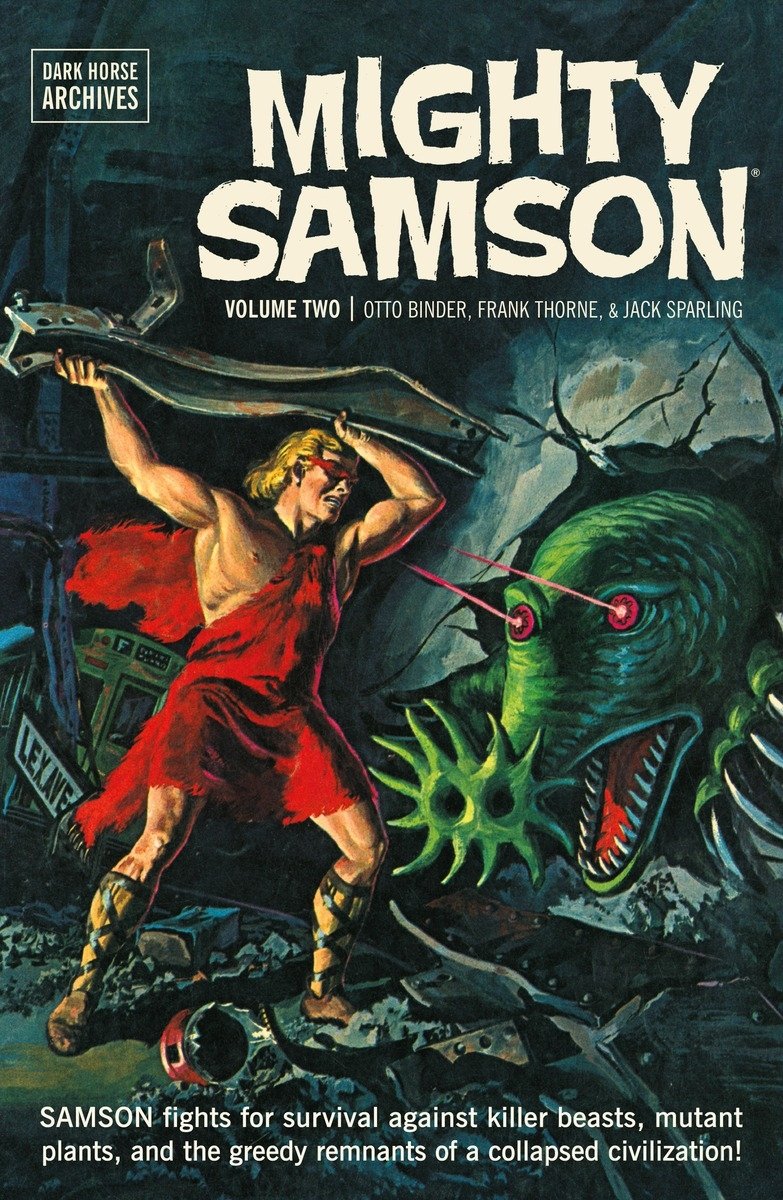
Mighty Samson Archives volume 2


By Otto Binder, Frank Thorne, Jack Sparling, Morris Gollub, George Wilson, Joe Certa, Mike Sekowsky, George Roussos & various (Dark Horse Comics)
ISBN: 978-1-59582-659-6 (HB)

These days all the attention in comics circles goes to big-hitters and headline-grabbing ground-breakers, but once upon a time, when funnybooks were cheap as well as plentiful, a kid (whatever their age) could afford to follow the pack and still find time and room to enjoy quirky outliers: B through Z listers, oddly off-kilter concepts and champions falling far short of the accepted parameters of standard super-types…

A classic example of that exuberant freedom of expression was the relatively angst-free dystopian tomorrow of Mighty Samson, who had a sporadic yet extended comics career of 32 issues spanning 1964 to 1982.

Although set in the aftermath of an atomic Armageddon, the story of the survivors was a blend of updated myth, pioneer adventure and superhero shtick, liberally leavened with variations of those incredible creatures and sci fi monsters the industry thrived on back then.

Comics colossus Dell/Gold Key/Whitman had one of the most complicated publishing set-ups in history, but that didn’t matter one iota to kids of all ages who consumed their vastly varied product. Based in Racine, Wisconsin, Whitman had been a crucial component of monolithic Western Publishing and Lithography Company since 1915: drawing upon huge commercial resources and industry connections that came with editorial offices on both coasts. They even boasted a subsidiary printing plant in Poughkeepsie, New York.

Another connection was with fellow Western subsidiary K.K. Publications (named for licensing legend Kay Kamen who facilitated extremely lucrative “license to print money” merchandising deals for Walt Disney Studios between 1933 and 1949). From 1938, the affiliated companies’ comic book output was released under a partnership deal with a “pulps” periodical publisher under the umbrella imprint Dell Comics – and again those creative staff and commercial contacts fed into the line-up of the Big Little, Little Golden and Golden Press books for younger children. This partnership ended in 1962 and Western had to swiftly reinvent its comics division as Gold Key.

Western had been a major player since comics’ earliest days, blending a vast tranche of licensed titles – including newspaper strips (like Nancy and Sluggo, Tarzan and The Lone Ranger), TV tie-in and Disney titles with in-house originations such as Turok, Son of Stone, Brain Boy and Kona: Monarch of Monster Isle.

Dell and Western split just as a comic book resurgence triggered a host of new titles and companies, and a superhero boom. Independent of Dell, new outfit Gold Key launched original adventure titles including Dr. Solar, Man of the Atom; Magnus – Robot Fighter; M.A.R.S. Patrol Total War; Space Family Robinson and many more.

As a publisher, Gold Key never really “got” the melodramatic, frequently mock-heroic Sturm und Drang of the Silver Age superhero boom – although for many of us, the understated functionality of classics like Magnus and Doctor Solar or crime-fighting iterations of classic movie monsters Dracula, Frankenstein and Werewolf were utterly irresistible. The sheer off-the-wall lunacy of features like Neutro or Dr. Spektor I will reserve for a future occasion…

This second splendid full-colour hardback compilation – printed on a reassuringly sturdy and comforting grainy old-school pulp stock rather than glossy paper – gathers Mighty Samson #7-14 spanning September 1966 to May 1968, and begins with a heady appreciation by Paul Tobin (Plants vs Zombies, The Witcher, Angry Birds, Spider-Man, Bandette) in his reminiscent Foreword…

The post-dystopian wonder warrior had been anonymously created by industry giants Otto Binder & Frank Thorne in 1964. Binder was the quintessential jobbing writer. He and his brother Earl were early fans of science fiction, making their first professional sale to Amazing Stories in 1930. As “Eando Binder” their pulp-fiction and novels output continued well into the 1970s, with Otto rightly famed for his creation of primal robotic hero Adam Link.

From 1939 onwards, Otto was also a prolific comic book scripter, most beloved and revered for the invention and perfection of a humorous blend of spectacular action, self-deprecating humour and gentle whimsy as characterised by the Fawcett Captain Marvel line of titles (and later in DC’s Superman’s Pal Jimmy Olsen). Binder was also constantly employed by many other publishers and amongst his most memorable inventions and innovations are Timely’s Young Allies, Mr. Mind, Brainiac, Krypto the Super Dog and the Legion of Super-Heroes.

In his later life, he moved into editing, producing factual science books and writing for NASA.

Frank Thorne (June 16th 1930 – March 7th 2021) was one of the most individualistic talents in American comics and the series co-creator’s last issue opens this volume. He began his comics career drawing romance stories for Standard Comics beside legendary draughtsman Alex Toth before graduating to better-paid newspaper strips like Perry Mason for King Features Syndicate. For Dell/Gold Key he drew Flash Gordon, Jungle Jim and The Green Hornet, as well as the first few years of this seminal sci-fi classic.

A DC he did compelling work on Tomahawk and Son of Tomahawk before being hired by Roy Thomas at Marvel to illustrate his belated breakthrough strip Red Sonja. Forever-after connected with feisty, earthy, highly sexualised women, in 1978 Thorne created outrageously bawdy (some say vulgar) swordswoman Ghita of Alizarr for Warren’s adult science fantasy anthology 1984/1994 as well as such adult satirical strips as Moonshine McJugs for Playboy and Danger Rangerette for National Lampoon.

Thorne won a National Cartoonists Award for comic books, an Inkpot Award and a Playboy Editorial Award, but was still a fairly by-the-book illustrator at the time of this collection’s content. In fact, it was on Mighty Samson that he opened up and found his own unique artistic vision: one which would carry him to the forefront of stylists with the satirical and erotic works of his later years.

That’s meat for other reviews, but here he and replacement artist Jack Sparling translate Binder’s imaginings into a beguiling otherworld of action, adventure and drama suitable for most kids of all ages and a milieu perfectly in tune with any Kids TV channel today…

Mighty Samson #1 (July 1964) introduced the bombed-out metropolis of N’Yark: a dismal dangerous region where human primitives clung to the ruins, scattered into rival tribes all striving daily against mutated plants and monsters as well as less easily identified blends somewhere in between…

One day when a toddler was grabbed by a predatory plant he casually tore the terror apart with his podgy little hands. Years passed and the child grew tall and clean-limbed, and it was clear that he too was a mutant: immensely strong, incredibly fast and improbably durable…

Impassioned by his mother’s dying words – “protect the weak from the powerful, the good from the evil” – Samson became the champion of his people; battling beasts and monsters imperilling the city. Sadly, those struggles were not without cost, and when he killed an immense Liobear, it cost the young hero his right eye…

The clash proved a turning point for Samson since his wounds were dressed by a stranger named Sharmaine. She and her father Mindor were voluntary outcasts in the city: shunning contact with superstitious tribes whilst gathering lost secrets of science…

They toiled constantly to bring humanity out of its second stone age and, fired with inspiration, Samson joined their self-appointed mission: defending them from all threats as they carry out their work.

Every issue was augmented by mesmerising painted covers by master illustrators Morris Gollub or George Wilson. These covers were initially reproduced text-free on the back of each issue and probably graced many a kid’s bedroom wall way back when. You get those too, but I’d suggest scanners rather than scissors this time around…

The comics were ad free and inner side of those covers generally held monochrome single-page features supplementing the story with historical context, and the factoids. Sadly many are uncredited but when I know who, so will you…

The Altered World odyssey resumes with #7, cover-dated September 1966. ‘World of Darkness’ saw Thorne off in fine style as shattered skyscrapers in N’Yark began sinking into the ground. Investigating the trackless regions under the city, Samson and his allies encounter many horrific beings before mistakenly accusing the subsurface Undermen of waging war on the light-loving Uppermen like themselves. Before long, however, ‘The Enemy Below’ (with artistic assistance from Mike Sekowsky & George Roussos) is identified as being a threat of a wholly bestial and relentless nature, forcing an alliance and only ended by Mindor’s knowledge of pre-disaster atomic weapons…

The inner covers detail ‘The Underground World’ of 1960s subways, escalators and tunnels and hidden service structures ‘Beneath the City’ before #8 signalled a change of vision.

Drawn by Joe Certa, factual-teaser ‘The Magnetic Pole’ led and fed into Binder’s ‘The Migration Mystery’ and concluding chapter ‘The Mental Battle’ as our heroes – and every other human in N’Yark – are seized by a telepathic force pulling them northwards. Aware but unable to resist, Samson and his friends spend months gravitating towards a mineral formation (a “mental North Pole”) in the arctic: helping many others of the thousands of humans caught in the grip, before at last devising a solution that will allow them all to return home.

This tale signalled the debut of another veteran illustrator who would make the title his own.

John Edmond “Jack” Sparling (June 21st 1916-February 15th 1997) was born in Winnipeg, Manitoba but migrated young to the USA. After studying in New Orleans and at the Corcoran School of Art, he left a cartooning gig at the New Orleans Item-Tribune to create the Hap Hopper, Washington Correspondent strip for United Features Syndicate (1940) superseded in 1943 by Claire Voyant.

That strip ended in 1948 and thereafter Sparling concentrated on comic books, becoming a wandering regular whose work appeared in Classics Illustrated, Dell/Gold Key, Marvel, DC, Charlton and others on strips like Robin Hood, Captain America, Tiger Girl, Space Man, Neuro, Secret Six, Eclipso, The Day after Doomsday, Challengers of The Unknown, Unknown Soldier and more.

Ideally suited for short story and humorous fare, he worked continuously for Gold Key’s horror anthologies and was a key player when DC revived its House of Secrets and House of Mystery titles (co-creating with Bob Haney undying horror-host Cain in HoM #175).

Sparling was particularly adept on licensed properties, illustrating Bomba, Family Affair, Six Million Dollar Man, Bionic Woman, Welcome Back, Kotter, Adam-12, Microbots, The Outer Limits ad nauseum…

With monsters so popular, the company also debuted the Gold Key Club Comic Monster Art page: inviting readers to create their own creepy critters and send them in for publication. The first examples were dreamed up in-house but for later issues, the beasts and bogles came courtesy of the kids. A scattering of them add loony lustre to this book at intermittent moments…

Another new feature began in the following issue. Illustrated by Sparling, ‘Mighty Samson Mutant Monsters’ offered an ongoing bestiary of horrors as seen in Mindor’s notes, beginning with ‘Stone-Throwing Cactus’ and ‘Lightning Beast’

Bracketed by fact-features ‘Guide Tour of Washington D.C.’ and ‘Washington D.C.’, #9 (cover-dated March 1967) sees the valiant trio back home long enough to discover a fully automated, still-operational bullet train connected to the nation’s former Capital. Sadly, the astounding delights of pre-collapse culture and technology leads to war with ‘The Renegade Robot’, once they debark in DC…

That’s just in time for old enemy Queen Terra of Jerz to suborn an atom-powered Secret Service mechanical bodyguard…

Ordering ‘The Metal Hercules’ to crush and enslave Samson, Terra finds the robot too much for her but still not tough enough to stop the mutant: a dilemma that drives the automaton totally off the rails…

The issue ends with another Mighty Samson Mutant Monsters moment sharing the unnatural history profile of the ‘Net-Casting Spider’

Mighty Samson #10 opens with more of the same – the ‘Heavy-Matter Eagle’ – before a wave of desperate refugees disrupting N’Yark sends the scientific investigators off exploring formerly isolated Staten Island. The lost colony has become a bizarre dichotomy: with humans living in relative luxury in fully automated skyscrapers but unwilling to go below the first three storeys which has become a vast morass on interlinked monster-filled jungle. It was a paradise until Samson’s enemy Kull invaded, driving the soft tribes-folk away, but the ‘Terror in Tallplace Town’ ends as soon as Samson puts his foot down to oust the treacherous ‘King for a Day’

More readers’ creations segue into #11, where Mighty Samson Mutant Monster ‘Lightning-Bolt Eel’ leads into a tale of unchecked capitalism as new trader Hulko the Swapper begins price gouging both farmers in the hinterlands and N’Yark’s scavengers who until recently, bartered amicably and honestly their edible produce for the city’s salvaged raw materials like scrap iron and reclaimed tinned luxury goods. The process involved shipping goods through wild territory of the Bronx and Long Island: terra incognita festooned with terrifying carnivorous forests infested with ‘The Swamp Rats’ and even worse perils.

When the profiteer pushes too hard, Samson takes action, reclaiming the concrete pathways of the ancients and providing a smooth “Broadway” for entrepreneurs and small businesses. Hulko and his shipping protectionists are understandably unhappy with the new arrangement, but their sabotage attempts to invoke ‘Terror on the Tradeway’ have no effect on giant hero’s policy of free enterprise…

Queen Terra returns in #12 operating a reclaimed, restored and fully-armed US Coast Guard cutter, leading ‘The River Raiders’ bombarding the shore-dwelling tribes of Manhattan island and demanding to be made their empress. Happily, Samson Sharmaine and Mindor are also au fait with naval salvage and ‘The Battle of N’Yark Bay’ swiftly sinks the queen’s schemes… despite the intervention of a few aroused sea beasts formerly asleep in the deep…

The quest for security is synonymous with the search for food and power sources. In #13 Mindor meets another historical detective skilled in the ways of pre-collapse technologists, but ‘The Prophet of Zomzu’ exploits his knowledge of electricity for another kind of power. Thanks to our brawny hero, cruel science despot Merlyn the Magic Maker is the loser in ‘The Wizard’s Showdown’: liberating a tribe of gullible pawns from a ruthless master…

This second sojourn in a broken tomorrow ends with Mighty Samson #14 (May 1968) as a Mighty Samson Mutant Monster briefing on ‘Rooted Sea Serpents’ segues into a chilling and contemporary fable as fisherfolk on the island of N’Yark are threatened by the ‘Menace from Nowhere’. This is a toxic gooey mass carried by the river, polluting their waters and killing the birds and fish they hunt, as well as infuriating all the monsters in the bay.

When Mindor determines the threat is millions of tons of crude oil being forced upriver, the trio voyage south to Florida and find an abandoned automated drilling rig has recently malfunctioned, constantly pouring black poison into the Gulf Stream.

The atomically-powered station is a danger to everything but when Samson shuts it down, he finds himself trapped ‘Between Beasts and Machines’ and joins post-apocalypse Tuaregs of the trackless Miami desert to destroy the unchecked depredations of automated city Technopolis: a robot metropolis of unimaginable treasures guarded by dinosaurs!

Closing with more Gold Key Club Readers Page monsters and full creator biographies, this mighty tome might be short on logic but absolutely revels in fabulous imagination and non-stop action. These sublime yarns typify a lost era’s devotion to fantastic fun: no-nonsense, brain-boggling yarns at once self-contained, episodic, exciting, enticing and deceptively witty.

Bizarre, brilliantly off-kilter and outrageously bombastic, Binder’s myth of a rationalist Hercules battling atom-spawned Titans and devils offers stunning spectacle and thrill-a-minute wonderment from start to finish. Captivatingly limned by Thorne and Sparling, these lost gems from an era when fun was paramount and entertainment a mandatory requirement are comics the way they were and perhaps might be again…
Mighty Samson ® Volume Two ™ & © 2010 Random House, Inc. Under license to Classic Media LCC. All rights reserved. All other material, unless otherwise specified, © 2010 Dark Horse Comics, Inc. All rights reserved.

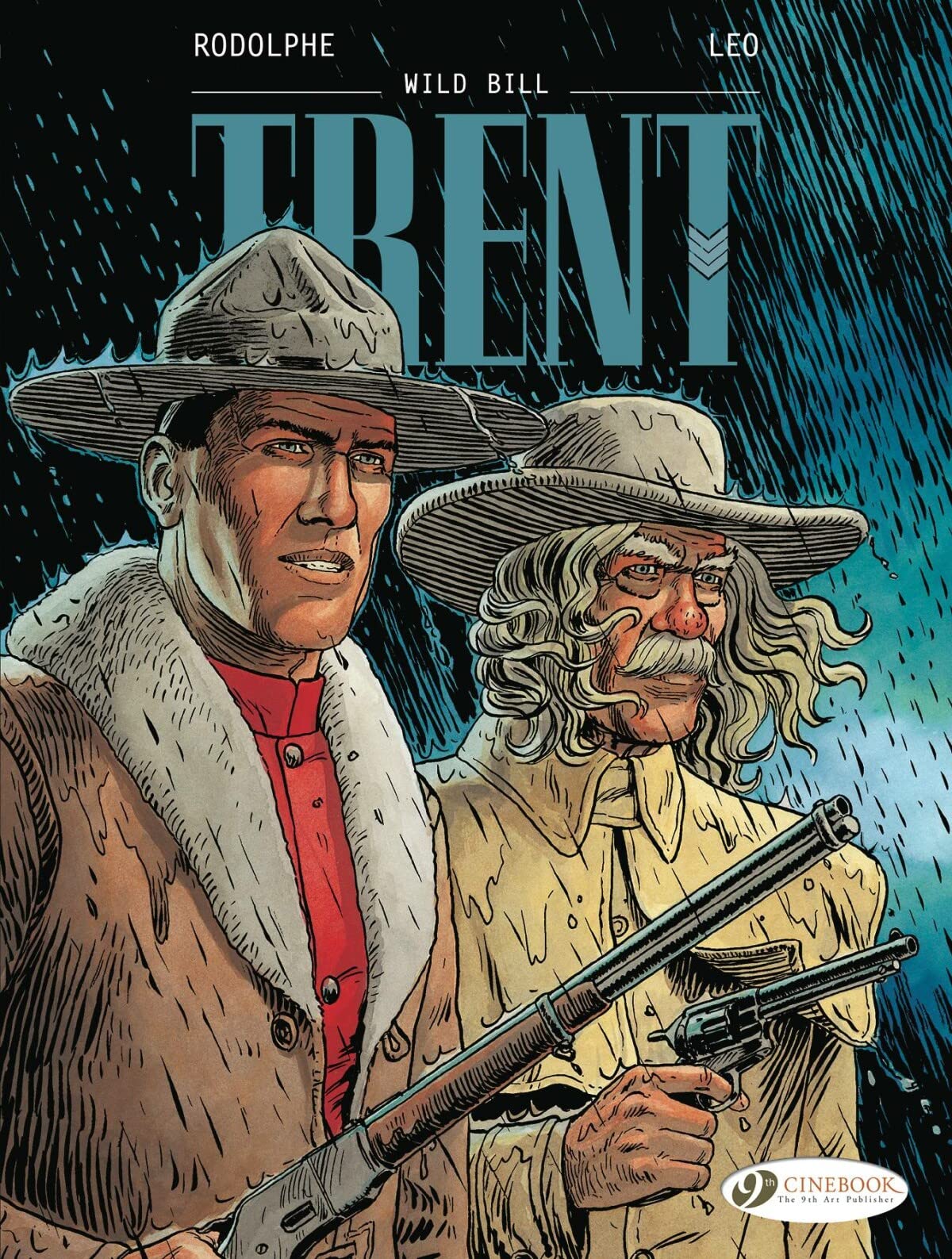
Trent volume 5: Wild Bill


By Rodolphe & Léo, coloured by Marie-Paule Alluard, translated by Jerome Saincantin (Cinebook)
ISBN: 978-1-84918-395-6 (Album PB/Digital edition)

Continental audiences adore the mythologised American experience, whether in Big Sky Wild Westerns or later eras of crime-riddled, gangster-fuelled dramas. They also have a vested historical interest in the northernmost parts of the New World, and it has resulted in some pretty cool graphic extravaganzas if comics are your entertainment drug of choice…

Born in Rio de Janeiro on December 13th 1944, “Léo” is Brazilian artist and storyteller Luiz Eduardo de Oliveira Filho. After attaining a degree in mechanical engineering from Puerto Alegre in 1968, he was a government employee for three years, until forced to flee the country because of his political views.

While a military dictatorship ran Brazil, he lived in Chile and Argentina before illegally returning to his homeland in 1974. He worked as a designer and graphic artist in Sao Paulo whilst creating his first comics art for O Bicho magazine, and in 1981 migrated to Paris to pursue a career in Bande Dessinée. He found work with Pilote and L’Echo des Savanes as well as more advertising and graphics fare, until a big break came when Jean-Claude Forest invited him to draw stories for Okapi.

This led to regular illustration work for Bayard Presse, and in 1988 Léo began his association with scripter/scenarist Rodolphe D. Jacquette – AKA Rodolphe. The prolific, celebrated writing partner had been a giant of comics since the 1970s: a Literature graduate who left teaching and running libraries to create poetry, criticism, novels, biographies, children’s stories and music journalism.

After meeting Jacques Lob in 1975, Jacquette expanded his portfolio: writing for many strip artists in magazines ranging from Pilote and Circus to à Suivre and Métal Hurlant. Amongst his most successful endeavours are Raffini (with author Ferrandez) and L’Autre Monde (with Florence Magnin), but his triumphs in all genres and age ranges are too numerous to list here.

In 1991 “Rodolph” began working with Léo on a period adventure of the “far north”. Taciturn, introspective, bleakly philosophical and pitilessly driven, Royal Canadian Mounted Police sergeant Philip Trent premiered in L’Homme Mort, forging a lonely path through the 19th century Dominion. He starred in eight tempestuous, hard-bitten, love-benighted albums between then and 2000 and the creative collaboration sparked later fantasy classic Kenya and its spin-offs Centaurus and Porte de Brazenac.

Cast very much in the classic mould perfected by Jack London and John Buchan, Trent is a man of few words, deep thoughts and unyielding principles who gets the job done whilst stifling the emotional turmoil boiling deep within him: the very embodiment of the phrase “still waters run deep”…

As Wild Bill, this fifth saga comes from 1996, offering a much lighter and more playful yarn that also sees genuine progress in the extended, diffident path to love of the stoic Mountie and his always unobtainable objet d’amour

Years previously, during an arduous criminal pursuit, he had met and saved Agnes St. Yves – but tragically not her beloved brother – and was given a clear invitation from her: one that he never acted upon. Eventually, he made a heartfelt decision and travelled all the way to Providence with marriage in mind, only to learn that Agnes had stopped waiting and wed someone else.

More time elapsed and they met again when her husband was killed during an horrific murder spree at isolated railway outpost White Pass. The ball was again in Trent’s court and once more he fumbled it through timidity, indecision and inaction: retreating into duty and using work as an excuse to evade commitment and the risk of rejection…

That situation changes in this cheeky cheery episode which begins with the recurrent dream of aging but still deadly gunfighter Wild Bill Turkey – a ridiculous soubriquet the legendary shootist adopted as part of his self-manufactured but well-earned reputation as a gunslinger par excellence.

In his sunset years, Bill is feted and celebrated everywhere but cannot escape recurring visions of a glory-hungry man in black gunning him down…

The oldster is boisterously enjoying his fame in Kildare, Alberta when Sergeant Trent rides in, escorting a prisoner to Winnipeg. The local police chief, a slack and dissolute man who’d rather carouse than work, suggests Trent himself lock up his charge in the town cells, rather than interrupt hard-earned drinking time.

Despite the obvious benefits of celebrity, Bill is preparing to retire: loudly proclaiming to all and sundry in the saloon that he’s engaged to be imminently married and standing free drinks for all. When Trent frustratedly heads for the police station, his duties are further disrupted by a stranger who offers him a truly phenomenal amount of money to let the young armed robber go free…

After kicking the tempter out, Trent spends an uncomfortable night pondering why someone prisoner Arthur Caldwell claims not to know has so boldly attempted to circumvent justice and the law, and departs at first light. It’s not just duty that drives him, though: Trent recently received a letter from Agnes who wants to see him. It came from Winnipeg…

Their dreary trek is interrupted by bad weather and as the heavens open, Mountie and miscreant take shelter in a dilapidated building in the middle of nowhere. That’s when the stranger and a half dozen hired guns besiege them.

Happily, Wild Bill’s fiancée Clementine is also waiting in Winnipeg and the gunman is riding the same trail there. He swiftly drives off the assailants and shares the bushwacked travellers’ refuge until the rains end…

With the same destination before them, all three travel together and gunslinger and lawman discover they have much in common. The old man is in utter earnest about hanging up his guns and settling down, but cannot shed the premonition that he will perish at the hands of the Man in Black before his new life can begin…

Meanwhile, far away in the lap of luxury, a powerful man takes further steps to ensure a huge embarrassment and potential threat to his plans never reaches civilisation…

All schemes and plans converge on and culminate in the township of Tootney, where a hired assassin (dressed in black) awaits someone he’s longed to duel for years. Fate seems to have marked the aging legend’s cards, and all his pep talks to Trent about love and second chances seem hollow when Wild Bill lies dying in the dust, but there’s a major surprise in store for the outraged and bereft Mountie and redemption of sorts for young Caldwell after the survivors get to their destination…

Most importantly, however, Trent meets Agnes and their stumbling, fumbling relationship enjoys a major step forward…

Another beguilingly introspective voyage of internal discovery, where environment and locales are as much lead characters as hero and villain, Wild Bill delivers action, conspiracy, suspense and poignant romantic drama in a compelling, light-hearted concoction which will delight any fan of widescreen cinematic crime fiction or charming western romance.
Original edition © Dargaud Editeur Paris 1996 by Rodolphe & Leo. All rights reserved. English translation © 2017 Cinebook Ltd.

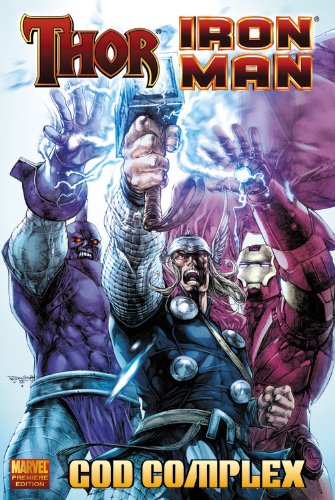
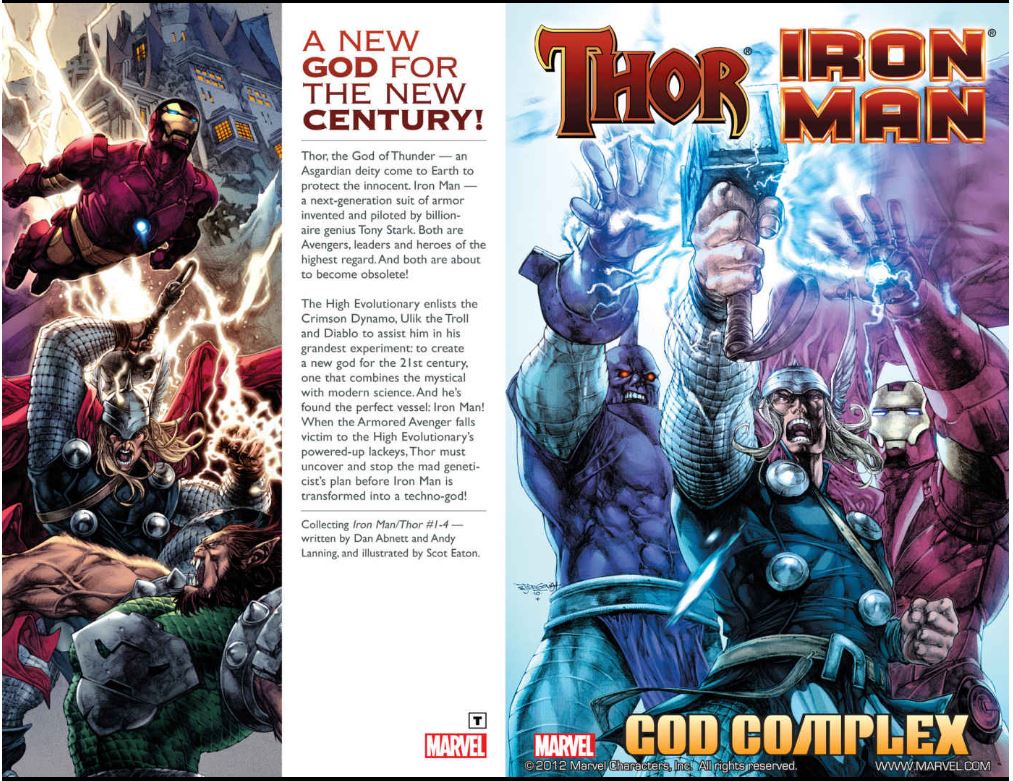
Thor/Iron Man: God Complex (AKA Iron Man/Thor: God Complex


By Dan Abnett, Andy Lanning, Scot Eaton, Jaime Mendoza, Jeff Huet, Lorenzo Ruggiero & Veronica Gandini (Marvel)
ISBN: 978-0-7851-5161-6 (HB), 978-0-7851-5162-3 (TPB/Digital edition)

Two of Marvel’s oldest stars and perennial fan favourites – the Norse God of Thunder and Armoured Avenger – have in their long and chequered careers been the staunchest of allies, fiercely squabbling brothers-in-arms and latterly sworn foes.

In this short, sweet and fabulously straight-shooting traditional team-up, however, past grudges are largely forgotten when old foes return with a formidable new master on a fantastic crusade to forever change the world.

Gathering a bombastic 4-issue miniseries from 2010 entitled Iron Man/Thor: God Complex (but presumably switching ranking name positions due to a movie popularity moment), this modern fable opens with a horrific assault by a brooding brute on mystic miscreant Baron Mordo, resulting in the theft of the evil magician’s mightiest talisman. Simultaneously, the latest ultra-high tech orbital weapons platform of avaricious armaments magnate Moses Magnum is destroyed and its key systems stolen by a mysterious armoured figure…

In Oklahoma the rubble that was once eternal Asgard (for full details see Siege and Siege: Dark Avengers) is being slowly checked and cleared by American emergency teams and latter-day Norse Gods… until the weary responders free a very excitable and ticked-off dragon. Happily, recently reunited Avengers Thor and Iron Man are there to restrain the irked fire-drake until the beast’s owner Volstagg can calm his poor pet down…

With the infernal rampage suppressed, the work is then interrupted by Steve Rogers – former Captain America and current Chief of National Security – who dispatches the Armoured Avenger to Russia to investigate a runaway Particle Accelerator…

It’s a trap and Iron Man is attacked by the latest upgrade of the Crimson Dynamo just as back in Oklahoma, Thor is ambushed by ultimate troll Ulik, tasked with retrieving the formidable, unstoppable Asgardian war-armour dubbed the Destroyer.

Although more than a match for their old enemies, the heroes are surprised and subsequently defeated by hidden adversary Diablo and a former ally: the High Evolutionary.

The latter – an obsessive human geneticist who evolved animals into New Men before turning himself into a cosmic deity – has long dreamed of creating his own gods and now, allied with the malign immortal alchemist, has embarked on his latest experiment: to marry science to sorcery and produce a new supreme being: the one true God of the 21st Century…

For raw material, his willing subordinates have been gathering magical artefacts and the most cutting-edge technological components. The last thing needed was a suitable human Petri-dish and vessel. Brilliant, bold Tony Stark ideally qualifies on all counts…

However, even as the Evolutionary begins Iron Man’s enforced apotheosis, the hero counterattacks, whilst bruised but unbowed Thor and an unlikely ally hunt for the villains who stole the Destroyer, tracking the sinister god-makers to their unlikely lair. The consequent catastrophic clash looks set to end in victory for the heroes when the demonic Diablo turns the Avengers against each other with his mystic potions…

Even as the triumphant High Evolutionary begins the longed-for final transformation, Diablo finally shows his true colours: hijacking the metamorphosis, just as he’d always intended, transcending his merely human villainy to become an omnipotent modern God of Evil…

Unsurprisingly, even with the ambitions of centuries at last fulfilled, Diablo has not reckoned on the unfailing courage and determination of heroes or the anger of a master of science frustrated and betrayed…

Splendidly spectacular and visually stunning, this blistering action-epic concludes with one of the best and certainly most literal Deus ex Machina moments ever seen in comics: one to leave lovers of the genre breathless in wonder and appreciation.

This tumultuous tome also includes text features from movie tie-in Thor Spotlight, including ‘Abnett/Lanning on Iron Man/Thor: a DnA Q&A’ conducted by Jess Harold; the comedic ‘Iron Man/Thor: Behind the Scenes’; a look at ‘Classic Thor/Iron Man Team-Ups’ from Dana Perkins and a fabulous sneak-peak at Scot Eaton’s many Design Sketches for Crimson Dynamo, Mordo’s Amulet, Ulik and his upgrades and the all-important Cloaking Circuit…

Impossibly recapturing and even improving upon those hallowed, traditionally clear-cut, uncomplicated cataclysmic cosmic conflicts of yore, scripters Abnett & Lanning, penciller Eaton, inkers Jaime Mendoza, Jeff Huet & Lorenzo Ruggiero and colourist Veronica Gandini all splendidly collaborate here: making God Complex a pure joy that will delight fans and readers old and new.
© 2010, 2011 Marvel Characters, Inc. All rights reserved.

Showcase Presents Superman Family volume 2


By Otto Binder, Jerry Coleman, Alvin Schwartz, Leo Dorfman, Robert Bernstein, Bill Finger, Curt Swan, Wayne Boring, Kurt Schaffenberger, Dick Sprang, Al Plastino & various (DC Comics)
ISBN: 978-1-84576-812-4 (TPB)

In America during the 1950s and early 1960s being different was a bad thing. Conformity was sacrosanct, even in comic books, and everybody and thing was meant to keep to its assigned and intended role.

For the Superman family and extended cast that meant a highly strictured code of conduct and parameters: Daily Planet Editor Perry White was a stern, shouty elder statesman with a heart of gold, Cub Reporter Jimmy Olsen was a brave and impulsive, unseasoned fool with a heart of gold – and plucky News-hen Lois Lane was nosy, impetuous and unscrupulous in her obsession to marry Superman, although she too was – deep down – another possessor of an Auric aorta. They were – of course – uniformly white and the Anglo-est of Saxons…

Yet somehow even with these mandates in place, talented writers and artists assigned to detail their wholesomely uncanny exploits managed to craft tales both beguiling and breathtakingly memorable – and usually as funny as they were exciting as seen in this second cunningly combined chronologically complete compendium. Here, collected in marvellous monochrome, are the affably all-ages tales from Superman’s Pal Jimmy Olsen #23-34 (September 1957-January 1959), Lois’s second try-out issue originally seen in Showcase #10 (September/October 1957) and #1-7 of her subsequent solo series Superman’s Girl Friend Lois Lane (March/April 1958-February 1959).

We commence with the Man of Steel’s Go-To Guy in three tales comprising issue #23 of his solo title: illustrated as almost always by the wonderful Curt Swan & Ray Burnley. ‘Jimmy Olsen’s Two Super-Pals’ was the first of three scripts by irrepressible Otto Binder, describing how our lad gains an other-dimensional Genie as another faithful Super-Friend. Of course with sinister radium bandits plaguing Metropolis there’s more to the cosmic companion than meets the eye…

Next comes ‘Jimmy Olsen, the Bearded Boy’ wherein boastful hubris and a magic potion inflict runaway whiskers on many Daily Planet staffers – even Clark Kent – prompting a flurry of face-saving secret feats from the identity conscious Man of Tomorrow.

As Jimmy’s series progressed, one of the most popular plot-themes (and most fondly remembered and referenced today by surviving Baby-Boomer fans) was the unlucky lad’s appalling talent for being warped, mutated and physically manipulated by fate, aliens, magic, mad science and even his friends …a fate which frequently befell Lois too, although Jimmy got far fewer marriage proposals (but not NONE!) from aliens, murderers of monsters…

The boy’s bits briefly conclude with ‘The Adventures of Private Olsen’, wherein the Cub Reporter is assigned to write articles on Army life and – with Superman’s assistance – teaches a nasty and unscrupulous drill sergeant a much-needed lesson…

When Lois Lane – arguably the oldest supporting character/star in the Superman mythology if not entire DC universe – finally received her own shot at a solo title, it was very much on the terms of the times. I must shamefacedly admit to a deep, nostalgic affection for her bright and breezy, fantastically fun adventures, but as a free-thinking, (nominally) adult liberal of the 21st century I’m often simultaneously shocked these days at the jollified, patronising, patriarchally misogynistic attitudes underpinning so many of the stories.

Yes, I’m fully aware that the series was intended for young readers at a time when “dizzy dames” like Lucille Ball or Doris Day played up to the popular American gestalt stereotype of Woman as jealous minx, silly goose, diffident wife and brood-hungry nester, but to ask kids to seriously accept that intelligent, courageous, ambitious, ethical and highly capable women would drop everything they’d worked hard for to lie, cheat, inveigle, manipulate and entrap a man just so that they could cook pot-roast and change super-diapers is plain crazy and tantamount to child abuse. They’re great, great comics but still… whooo… gah… splutter… I’m just saying…

Cover-dated September/October 1957 and illustrated by Wayne Boring & Stan Kaye, Showcase #10 was the second and final test appearance for what became  Superman’s Girl Friend Lois Lane, opening with scripter Binder’sThe Jilting of Superman’, wherein the Action Ace almost falls for a most ancient ploy as Lois pretends to marry another man to make the Kryptonian clod realise what she means to him…

Written by Jerry Coleman, ‘The Sightless Lois Lane’ tells how a nuclear accident temporarily blinds the journalist, and how her sudden, unexpected recovery almost exposes Clark Kent’s secret when he callously changes to Superman in front of his “sightless” friend, after which Binder delightfully details the contents of ‘The Forbidden Box from Krypton’. Exhumed by a Smallville archaeologist, this hoard houses devices originally packed by Superman’s birth father Jor-El and intended to aid the infant Superbaby on Earth. Of course, when Lois opens the chest all she sees is a way to become as powerful as the Man of Steel. Before long, she’s addicted to being a super-champion in her own right…

Scant months later, the mercurial journo had her own title, clearly offering exactly what the reading public wanted…

Jimmy Olsen #24 featured another trio of top tales from Binder, Swan & Burnley beginning with ‘The Superman Hall of Trophies’ which finds a Kryptonite-paralysed Metropolis Marvel trapped in a museum and rescued by the brave boy reporter. ‘The Gorilla Reporter!’ sees the poor kid briefly brain-swapped with a mighty (confused) Great Ape before – as so often before – Superman must audaciously divert attention from his exposure-threatened alter ego by convincing the world at large that Jimmy is ‘The Luckiest Boy in the World’…

Issue #25 – by Binder, Swan & Burnley – features ‘The Secret of the Superman Dummies’ wherein a trip to a magic show results in Jimmy being inescapably handcuffed to the last man in the world Superman dares to approach, after which ‘The Second Superboy’ reveals how poor Jimmy is accidentally rocketed to an alien world where he gains incredible abilities courtesy of resident absent-minded genius Professor Potter. The Day There Was No Jimmy Olsen’ then offers a tantalising hoax and mystery which ends with an unexpected promotion for the pluckily ingenious boy…

Jimmy began #26 subject to inexplicable bouts of deadly mass fluctuations and improbably became ‘The World’s “Heavyweight” Champ’ before – as newly appointed ‘Jimmy Olsen, Foreign Correspondent’ – uncovering a sinister scheme to defraud the Ruritanian Kingdom of Hoxana. Back home again though, he has to again undergo a well-intentioned con from his best pal after seeing Clark flying and subsequently – inadvertently – himself becoming ‘The Birdboy of Metropolis’…

Superman’s Girlfriend Lois Lane #1 (March/April #1958) at last arrived, sporting three stunning yarns illustrated by sleek, slick comedically-inclined illustrator Kurt Schaffenberger, whose distinctive art-style would become synonymous with the woman reporter. Everything kicked off with ‘The Bombshell of the Boulevards’ (scripted by Leo Dorfman) wherein she dons a blonde wig to deceitfully secure a Hollywood interview and provokes a death-duel between rival enflamed suitors. Of course, it’s only another scheme by Superman and Jimmy to teach her a lesson in journalistic ethics. It’s a good thing reporters are so much less unscrupulous these days…

During this Silver Age period, with Superman a solid gold sensation of the newly ascendant television medium, many stories were draped in the wholesome trappings of Tinseltown – even more so than most of celebrity-obsessed America. It didn’t hurt that chief editor Whitney Ellsworth was a part-time screenwriter, script editor and producer, as well as National DC’s Hollywood point man.

Otto Binder then reunited with old Captain Marvel collaborator Schaffenberger for ‘Lois Lane, Super-Chef’ as she disastrously tries to master home cooking in another scheme to get the Man of Steel to propose, whilst in ‘The Witch of Metropolis’ a science assignment goes horrifically awry, transforming her into a wizened old hag every time the sun sets…

All courtesy of Binder, Swan & Burnley, SPJO #27 opens with ‘The Boy from Mars’ wherein the cub reporter gets his own lesson in integrity after trying to create a circulation-boosting hoax, and a refresher course on the perils of pride and over-confidence after messing up ‘A Date with Miss Metropolis’ before the issue ends in a riotous battle with his own evil duplicate after Professor Potter accidentally creates ‘The Outlaw Jimmy Olsen’

Ever so slowly a more mature tone was developing in the kid’s adventures. In #28’s ‘The Spendthrift and the Miser’ an alien gift from Superman triggers wildly manic mood swings whilst an accidental time-trip incredibly reveals that Jimmy is destined to become ‘The Boy who Killed Superman’ after which in ‘The Human Skyscraper’, another botched Potter product enlarges the kid to monumental, city-endangering size.

Over in the second Lois Lane comic book she is apparently appalled to uncover ‘Superman’s Secret Sweetheart’ (uncredited here but possibly Bill Finger?), but is in fact on her very best mettle and helping a bullied college girl fight back against her mean sorority sisters.

The Binder recounts how Tinseltown improbably calls and the reporter becomes – eventually – an extremely high maintenance actress in ‘Lois Lane in Hollywood’

‘Superman’s Forbidden Room’ closes proceedings with a cruel hoax played on her well-publicised infatuation, but this time it isn’t the Man of Steel doing the fooling and the stakes have never been higher than in this moody thriller illustrated by Boring & Kaye and probably written by Jerry Coleman.

In Jimmy Olsen #29 the usually adept reporter suffers a monumental writer’s block whilst working on a novel, but ‘The Superman Book that Couldn’t be Finished’ eventually is …with a little hands-on Kryptonian help. Jimmy Olsen’s Super-Pet’ then sees the cub reporter adopted by super-hound Krypto in his twilight years: an act that is instrumental in rejuvenating the Dog of Steel for a new generation.

The issue ends with ‘The Amazing Spectacles of Doctor X’: a clever thriller seeing Jimmy appropriate goggles which can see the future and glimpsing something he wishes he hadn’t!

Crafted by Binder & Schaffenberger, The Rainbow Superman’ opens Lois Lane #3 portraying the “News-hen” at her very worst as a cosmic accident makes the Man of Tomorrow an ambulatory spectrum and she sets about seeking to see if Clark also glows, whilst ‘The Man who was Clark Kent’s Double’ (scripted by Coleman, as is the final tale here) breaks her heart after she again proves too nosy for her own good.

‘Lois Lane and the Babe of Steel’ then delivers a terrifying glimpse of her dreams come true when Superman trades temporal places with his toddler self, causing all manner of problems for the capable bachelorette…

In JO #30, ‘The Son of Superman’ – by Binder, Swan & Burnley – jerks our tears as an attempt by the Kryptonian to adopt the boy reporter goes tragically wrong, after which the creators prove equally adept at concocting mystery and tension when criminals scheme to destroy Jimmy by making him ‘The Cub who Cried Wolf’.

‘Superman’s Greatest Enemy’ – with Dick Sprang standing in for Swan – then discloses how the naive lad falls for a crook’s scam but has enough smarts to turn the tables at the end…

Binder & Schaffenberger open SGFLL #4 with a well-meaning Jimmy using hypnotism to get Clark to propose to Lois, utterly unaware who he is actually using these gimmicks on, and catastrophically leading to ‘The Super-Courtship of Lois Lane’

Times have changed, but when Coleman scripted ‘Lois Lane, Working Girl’ he was simply referring to her being challenged to undertake a job in manual labour, so shame on you. Alvin Schwartz then crafts a canny conundrum in ‘Annie Oakley Gets her (Super)man’ for Boring & Kaye to illustrate, when a riding accident out West causes Lois to believe she is the legendary sharpshooter whilst hunting some very nasty gangsters with very real guns…

Jimmy Olsen #31 highlights the now mythic tale of ‘The E-L-A-S-T-I-C Lad’ (Binder, Swan & Burnley) wherein Superman is ultimately responsible for the reporter gaining stretching powers. He should have known better than to leave a chest of alien artefacts with the nosy, accident-prone kid…

The Mad Hatter of Metropolis’ sees the simple power of suggestion convince the kid that he can imitate the feats of famous folks simply by donning their characteristic chapeaus,  before ‘The Boy who Hoaxed Superman’ has him attempt to secure a pay raise by pretending to leave for the future. Sadly, it doesn’t work, and everybody seems to prefer the replacement Perry hired who is, of course, Jimmy in disguise…

For #32 Professor Potter’s latest chemical concoction makes Jimmy look like Pinocchio but does compensate by giving him ‘The Super Nose for News’, whilst an uncanny concatenation of crazy circumstances turns the sensibly staid Man of Tomorrow into ‘The Rock ‘n’ Roll Superman’ every time the kid reporter – masquerading as a pop star – twangs his old guitar. Then, Alvin Schwartz scripts The Jimmy Olsen from Jupiter’, revealing how aliens mutate the cub reporter into one of their scaly selves: complete with extremely useful mind-reading abilities, much to Superman’s dismay…

Robert Bernstein & Schaffenberger’s ‘Superman’s Greatest Sacrifice’ leads in Lois Lane #5, as the journalist meets her millionaire double and seemingly loses her beloved sort-of lover to the rich witch, whilst in ‘The Girl of 100 Costumes’ the canny lass employs a myriad of new looks to catch his attention, in an uncredited story drawn by Al Plastino.

It was back to silly, disquieting (and fat-shaming) usual for Binder & Schaffenberger’s ‘The Fattest Girl in Metropolis’ as a plant growth ray “accidentally” super-sizes the valiant but vain reporter. Imagine her reaction when Lois learns Superman has deliberately expanded her dimensions… for good and solid reasons, of course…

Binder, Swan & Burnley were in sparkling form in JO #33, starting with ‘Legends that Came to Life’, wherein a nuclear accident animates the strangest foes from fairy tales and only Jimmy, but not his mighty mentor, can save the day, after which ‘The Lady-Killer from Metropolis’ offers a classic case of boyish arrogance and girlish gossip which leads to the boy reporter briefly becoming the sexiest thing in Hollywood. The horror and hilarity is capped by ‘The Human Flame-Thrower!’ as Potter’s latest experiment leaves Jimmy with the worst case of high-octane halitosis in history…

Coleman, Boring & Kaye opened LL #6 with ‘The Amazing Superman Junior’ as yet another attempt to teach Lois a lesson backfires on the pompous Man of Steel and she brings in a mysterious kid to show the Kryptonian what it feels like…

This is followed by a brace of tales by Bill Finger & Schaffenberger, starting with ‘Lois Lane… Convict!’ which seemingly sees the reporter take a bribe from gangster Baldy Pate and pay a terrible price, whilst in ‘Lieutenant Lois Lane, U.S. Army’ she and Clark join the military for a story only to have Lois’ (temporary) rank turn her into a man-hating bully. Surely some mistake, no…?

‘Superman’s Pal of Steel’  by Binder, Swan & Burnley, begins the last Jimmy Olsen issue in this marvellous monochrome collection, as another secret identity-preserving scheme takes a bizarre turn after the boy reporter genuinely gains an incredible power. Alvin Schwartz then fills ‘The Underworld Journal’ which see our kid inherit his own newspaper …and swiftly go off the journalistic rails.

Finally for the boy, Potter’s newest invention turns Jimmy’s clunky old kit into ‘The Most Amazing Camera in the World’ (Binder, Swan & Burnley) – and a deadly danger to Superman’s greatest secret…

Superman’s Girlfriend Lois Lane #7 ends this volume with three more mixed-message masterpieces. beginning with ‘Lois Lane’s Kiss of Death’ (by Bernstein & Schaffenberger), wherein a canny conman tries to fool the reporter into botching her biggest crime exposés. Schwartz then has Lois use hypnotism to wash her heroic obsession out of her mind in ‘When Lois Lane Forgot Superman’.

Illustrated by Boring & Kaye, the tale takes an unlikely turn when she turns her passionate, unfulfilled attentions on poor Clark, after which Lana Lang fully enters the Man of Steel’s modern mythology. When Lois took in the destitute, down-at-heel lass who once held the Boy of Steel’s heart, she seemingly allowed her to also become ‘The Girl who Stole Superman’ in a tense and clever tale from Coleman & Schaffenberger…

These spun-off, support series were highly popular, top-selling titles for more than two decades: blending action, adventure, broad, wacky comedy, fantasy and science fiction in the gently addictive whimsical manner that Binder and Schaffenberger had perfected at Fawcett Comics on the magnificent Marvel Family.

As well as containing some of the most delightful episodes of the jovial, pre angst-anointed, cosmically catastrophic DC, these fun, thrilling and yes, occasionally deeply moving, all-ages stories also perfectly depict the changing mores and tastes which reshaped comics from the safe 1950s to the seditious, rebellious 1970s, all the while keeping to the prime directive of the industry – keep them entertained and keep them wanting more…

I certainly do…
© 1957, 1958, 1959, 2008 DC Comics. All Rights Reserved.

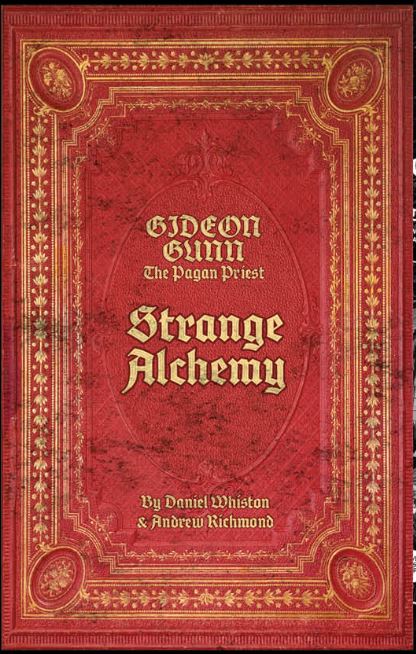
The Adventures of Gideon Gunn – The Pagan Priest #1: Strange Alchemy


By Daniel Whiston & Andrew Richmond (Richmond Press)

Like so many others, I started out in the publishing biz making minicomics, collaborating on fanzines and concocting stripzines with fellow starry-eyed weirdoes, outcasts and addicts. Seeing the raw stuff of creativity in hand-crafted paper pamphlets – or better yet in professionally printed packages which put the dreamers’ money where their mouths are – still gets me going in ways which endanger my tired old heart.

Ah, the lost joys of copydex, spray mount and cowgum…

These days, in terms of quality and at first glance, there’s very little to distinguish between self-published material and major events from big brands – except maybe movie contracts and a subtle whiff of sheer fun-filled exuberance you just can’t find once telling stories becomes your day job…

With that in mind, here’s a delightful treat sent to me last year and which only just arrived. Still, better late than never, and I’m certain comics this good will always find an appreciative audience… and maybe a movie contract…

As I’ve frequently demonstrated, British comics have always enjoyed odd and/or deeply flawed heroes. To be fair, that quirky affinity doesn’t just apply to paper wonders such as Cursitor Doom, Adam Eterno, Flame o’ the Forest and The Spellbinder – or even Warrior’s Father Shandor – but also to many stars of books, radio, television and films…

There’s a definite nod to that last one in the three tales gathered here: detailing in short sharp vignettes the sacred cause of a conflicted but supremely pragmatic warrior against evil – Holy Heathen Gideon Gunn – the Pagan Priest. A working priest in 18th century Somerset, Gunn takes the eternal war against sin to uncanny extremes…

Reverend Gunn is also a true believer in pagan gods and combines the devotional power of two vastly opposing faiths with the latest in science and weapons technology to hold back the forces of darkness assaulting his flock. This mostly manifests as the rising of primordial goddess Sulis and attendant and subsequent depredations of vampires, warlocks, zombies, mechanical myrmidons, homunculi, the mad natural philosopher whose discoveries inspired Victor Frankenstein, and even the corrupt and debased aristocracy smugly ruling the United Kingdom at this time…

It transpires that all manner of wicked things are seeking to control the unleashed forces of the “Deep Dark Waters”…

Action-packed, tongue-in-cheek and blending faux found documentation with superb art pastiching the feel of its filmic antecedents, these adventures revel in the sheer joy of a tirelessly dedicated hero, devotional vigilante and Man of Gods fighting the Good Fight with every weapon he can lay his hands on…

This first issue also includes an annotated map of ‘Wyrd Bath’ for the clarification and edification of readers…

Cunningly channelling the tone of cult and classic British historical horror tales (like Witchfinder General and The Blood on Satan’s Claw or Hammer Films’ Dracula and Frankenstein franchises), Gideon Gunn delivers fearsome fun in self-contained monochrome episodes reminiscent of early 2000 AD or Scream.

Scripter Daniel Whiston (Neroy Sphinx, Judge Dredd Megazine, FutureQuake) and illustrator Andrew Richmond (Aces Weekly, The77, Octobriana, Blazer!) are having a great deal of fun – and so will you…

™ & © 2022 Daniel Whiston and Andrew Richmond. All rights reserved.

Available from Gideon Gunn – Andrew Richmond (andrewrichmondart.com)

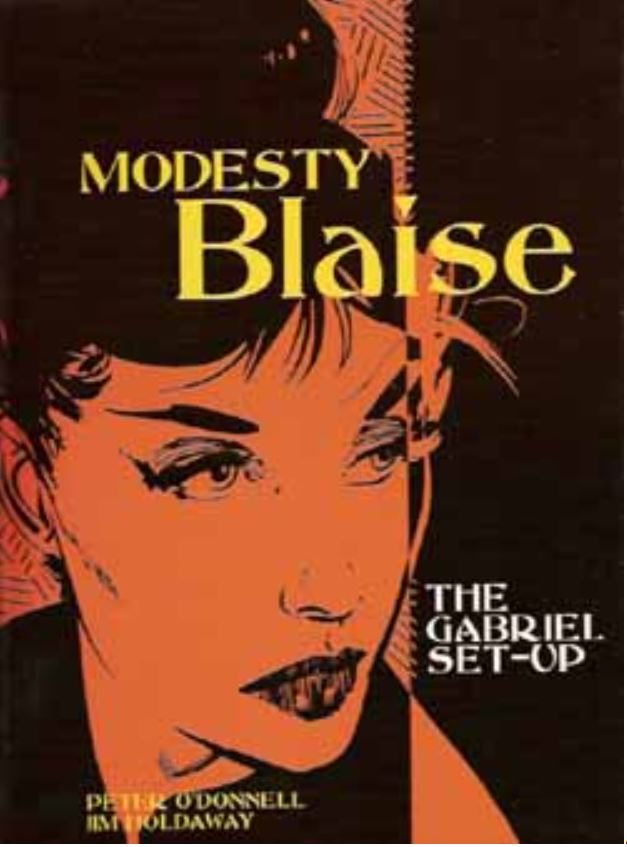
Modesty Blaise: The Gabriel Set Up


By Peter O’Donnell and Jim Holdaway (Titan Books)
ISBN: 987-1-84023-658-2 (2007) 978-0-90761-037-3 (1985)

The year 1963 was a big one for the world of entertainment. Go look it up.

Comics and strips particularly enjoyed an explosive renaissance and here we’re saying “well done!” to one of the most astounding characters in fiction: one long overdue for another moment to shine. Happy anniversary Modesty (and Willie)!

Infallible super-criminals Modesty Blaise and her lethally charming, compulsively platonic, equally adept partner Willie Garvin gained fearsome reputations whilst heading underworld gang The Network. Then, at the height of their power, they retired young, rich and still healthy. With honour intact and their hands relatively clean, they cut themselves off completely from careers where they made all the money they would ever need and far too many enemies: a situation exacerbated by their heartfelt and – for their professions – controversial conviction that killing was only ever to be used as a last resort.

When devious British Spymaster Sir Gerald Tarrant sought them out, they were slowly dying of boredom in England. That wily old bird offered them a chance to have fun, get back into harness and do a bit of good in the world. They jumped at his offer and began cleaning up the dregs of society in their own unique manner. The self-appointed crusade took decades…

From that tenuous beginning in ‘La Machine (the first tale in this collected volume) the dynamic duo went on to crush the world’s vilest villains and most macabre monsters in a perpetual succession of tense suspense and inspirational action that lasted for more than half a century.

The inseparable associates debuted in The Evening Standard on 13th May 1963 and, over the passing decades, went on to star in some of the world’s most memorable crime fiction, all in approximately three panels a day.

Creators Peter O’Donnell & Jim Holdaway (who had previously collaborated on Romeo Brown – another lost strip classic equally as deserving of its own archive albums) crafted a timeless treasure trove of brilliant pictorial escapades until the illustrator’s tragic early death in 1970, whereupon Spanish artist Enric Badia Romero (and occasionally John Burns, Neville Colvin & Pat Wright) assumed the art reins, taking the partners-in-peril to even greater heights.

Holdaway’s version has been cited as a key artistic influence by many comic artists.

The series was syndicated world-wide and Modesty starred in numerous prose novels; short-story collections; several films; a TV series pilot; a radio play; an original American graphic novel from DC; an audio serial on BBC Radio 4 as well as nearly 100 comic adventures.

The strip’s conclusion came in 11th April 2001 edition of The Evening Standard. Many papers around the world immediately began running reprints and further new capers were conceived, but British newspaper readers never saw them. We’re still waiting…

The pair’s astounding exploits comprise a broad blend of hip adventuring, glamorous lifestyle and cool capers: a melange of international espionage, crime, intrigue and even – now and again – plausibly intriguing sci fi or supernaturally-tinged horror genre fare, with ever-unflappable Modesty and Willie the canny, deadly, yet all-too-fallibly human defenders of the helpless and avengers of the wronged…

We have UK publisher Titan Books to thank for collecting the saga of Britain’s Greatest Action Hero (Women’s Division), although they haven’t done so for a while now…

Fist seen in 1985, this initial volume introduced Modesty and her right-hand man, retired super-criminals now bored out of their brains. Enter stiff, by the book spook Sir Gerald Tarrant, head of a nebulous British spy organization who recruits her by offering her excitement and a chance to get some real evil sods. From that tenuous beginning in ‘La Machine– where the reinvigorated duo dismantle a global assassination enterprise, the focus moves on to ‘The Long Leveras our stars seek to save a Hungarian defector who has been inexplicably abducted by his former bosses.

The drama concludes with the ‘Gabriel Set-up as the purely platonic power couple scotch a sinister scheme by a criminal mesmerist…

Also included in this monochrome masterwork are ‘In the Beginning – a strip produced in 1966 as an origin and introduction to bring newly subscribing newspapers up to speed on the characters – plus text features ‘Blaise of Glory (part 1)’ by Mike Patterson and ‘Girl Walking’ by O’Donnell himself.

The tales are stylish and engaging spy/crime/thriller fare in the vein of Ian Fleming’s Bond stories (the comic version of which Titan also reprinted) and art fans especially should absorb Holdaway’s beautiful crisp line work, with each panel being something of a masterclass in pacing, composition and plain good, old-fashioned drawing.

The beauty of Modesty Blaise is not simply the timeless excellence of the stories and the captivating wonder of the illustration, but that material such as this can’t fail to attract a broader readership to the medium. Its content could hold its own against the best offerings of television and film. All we have to do is keep the stuff in print…
© 2004-2017 Associated Newspapers/Solo Syndication.

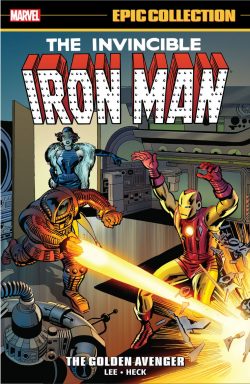
The Invincible Iron Man Epic Collection volume 1: The Golden Avenger 1963-1965


By Stan Lee, Larry Lieber, Robert Bernstein, Don Rico, Al Hartley, Don Heck, Jack Kirby, Steve Ditko & various (Marvel)
ISBN: 978-0-7851-8863-6 (TPB/Digital edition)

There are a number of ways to interpret the creation and early years of Tony Stark, glamorous millionaire industrialist and inventor – when not operating in his armoured alter-ego of Iron Man.

Created in the immediate aftermath of the Cuban Missile Crisis and at a time when “Red-baiting” and “Commie-bashing” were American national obsessions, the emergence of a brilliant new Thomas Edison using Yankee ingenuity and invention to safeguard and better the World seemed inevitable. Combine the then-all-pervasive belief that technology could solve any problem with the universal imagery of noble knights battling tangible and easily recognisable Evil and the proposition almost becomes a certainty.

Of course, it might simply be that we kids thought it both great fun and very, very cool…

This fabulous full-colour compendium of the Steel Shod Sentinel’s early days reprints all his adventures, feature pages and pin-ups from Tales of Suspense #39 (cover-dated March 1963) through #72 (December 1965), revisiting the dawn of Marvel’s rise to ascendancy.

This period would see the much-diminished and almost bankrupt comics colossus begin challenging DC Comics’ position of dominance, but not quite become the darlings of the student counter-culture. In these tales, Stark is still very much a gung-ho patriotic armaments manufacturer, and not the enlightened capitalist liberal dissenter he would become…

Scripted by Larry Lieber (over brother Stan Lee’s plot) and illustrated by the criminally unappreciated Don Heck, ToS #39 reveals how and why ‘Iron Man is Born!’, with engineering and electronics genius Stark field-testing his latest inventions in Viet Nam before being wounded by a landmine.

Captured by Viet Cong commander Wong-Chu, Stark is told that if he creates weapons for the Reds he will be operated on to remove the metal shrapnel in his chest that will kill him within seven days.

Knowing that Commies can’t be trusted, Stark and aged Professor Yinsen – another captive scientist – build a mobile iron lung to keep his heart beating. They also equip this suit of armour with all the weapons their ingenuity can covertly construct whilst being observed by their captors. Naturally, they succeed and defeat the local tyrant, but not without a tragic sacrifice.

From the next issue, Iron Man’s superhero career is taken as a given, and he has already achieved fame for largely off-camera exploits. Lee continues to plot but Robert Bernstein replaces Lieber as scripter for issues #40-46 and Jack Kirby pencils for Heck. ‘Iron Man versus Gargantus!’ follows the young Marvel pattern by pitting the hero against aliens – albeit via their robotic giant caveman intermediary – in a delightfully rollicking romp.

‘The Stronghold of Doctor Strange!’ (Lee, Bernstein, Kirby & Dick Ayers) features a gloriously spectacular confrontation with a wizard of Science (not Lee & Steve Ditko’s later Mystic Master), after which Heck returns to full art for the espionage and impostors thriller ‘Trapped by the Red Barbarian’.

Kirby & Heck team again for science-fantasy invasion romp ‘Kala, Queen of the Netherworld!’, but Heck goes it alone when Iron Man time-travels to ancient Egypt to rescue the fabled and fabulous Cleopatra from ‘The Mad Pharaoh!’.

New regular cast members proper – bodyguard “Happy” Hogan and secretary Virginia “Pepper” Potts – and the first true supervillain then arrive as the Steel Sentinel must withstand ‘The Icy Fingers of Jack Frost!’ before facing (and converting to Democracy) his Soviet counterpart ‘The Crimson Dynamo!’

Tales of Suspense #47 presaged big changes. Lee wrote ‘Iron Man Battles the Melter!’, and Heck inked the unique pencils of Steve Ditko in a grudge match between Stark and a disgraced corporate rival, but the big event came with the next issue’s ‘The Mysterious Mr. Doll!’

Here Lee, Ditko & Ayers scrapped the old, cool-but-clunky golden boiler-plate suit for a sleek, gleaming, form-fitting red-and-gold upgrade to aid the defeat of a sadistic mystic blackmailer using witchcraft to get ahead. The new suit would – with minor variations – become the symbol and trademark of the character for decades to come.

Paul Reinman inked Ditko on Lee’s crossover/sales pitch for the new X-Men comic book when ‘Iron Man Meets the Angel!’, before the series finally found its feet with Tales of Suspense #50.

Heck became regular penciller and occasional inker as Lee delivered the Armoured Avenger’s first major menace and perpetual nemesis in ‘The Hands of the Mandarin!’: a modern-day Fu Manchu derivative who terrifies the Red Chinese so much that they manipulate him into attacking America, with the hope that one threat will fatally wound the other. The Mandarin would become Iron Man’s greatest foe.

Our ferrous hero made short work of criminal contortionist ‘The Sinister Scarecrow’, and also the Red spy who appropriated a leftover Russian armour-suit and declared ‘The Crimson Dynamo Strikes Again!’ scripted, as was the next issue – by the enigmatic “N. Kurok” who was in truth Golden Age veteran Don Rico). The issue also premiered a far more dangerous threat in the slinky shape of Soviet Femme Fatale The Black Widow.

With ToS #53 she became a headliner as ‘The Black Widow Strikes Again!’: stealing Stark’s new anti-gravity ray but ultimately thwarted in her sabotage mission, after which ‘The Mandarin’s Revenge!’ began a 2-part tale of kidnap and coercion that concluded by disproving in #55 that ‘No One Escapes the Mandarin!’

It’s followed by a “Special Bonus Featurette” by Lee & Heck, revealing ‘All About Iron Man’ detailing how the suit works and even ‘More Info about Iron Man!’ including a ‘Pepper Potts Pin-Up Page’

‘The Uncanny Unicorn!’ promptly attacked, only to fare no better in the end, his power-horn proving pointless in the end, but segueing neatly into another Soviet sortie as Black Widow resurfaced to beguile a budding superhero. ‘Hawkeye, The Marksman!’ was gulled into attacking the Golden Avenger in #57 during his debut moment: briefly making him the company’s latest and most dashing misunderstood malefactor.

Another landmark occurred with the next issue. Formerly, Iron Man had monopolised Tales of Suspense but ‘In Mortal Combat with Captain America!’ (inked by Ayers) depicted an all-out battle between the Avengers teammates resulting from a clever substitution by evil impersonator The Chameleon. It was a tasty primer for the next issue when Cap would begin his own solo adventures, splitting the monthly comic into an anthology featuring Marvel’s top two patriotic paladins.

Iron Man’s initial half-length outing in #59 was against technological terror ‘The Black Knight!’, and as a result of the blistering clash, Stark was rendered unable to remove his own armour without triggering a heart attack: a situation that hadn’t occurred since the initial injury. Up until this time he had led a relatively normal life by simply wearing the heartbeat regulating breast-plate under his clothes. The introduction of such soap-opera sub-plots were a necessity of the shorter page counts, as were continued stories, but this seeming disadvantage worked to improve both the writing and the sales.

With Stark’s “disappearance”, Iron Man was ‘Suspected of Murder!’, a tale that saw the return of Hawkeye and Black Widow, leading directly into an attack from China and ‘The Death of Tony Stark!’ (complete with a bonus pin-up of ‘The Golden Avenger Iron Man’). The sinister ambusher then provided ‘The Origin of the Mandarin!’ before being beaten by Stark’s ingenuity once again.

After that extended epic, a change of pace occurred as short complete exploits returned. The first was #63’s industrial sabotage thriller ‘Somewhere Lurks the Phantom!’ (by Lee Heck & Ayers), followed by the somewhat self-explanatory ‘Hawkeye and the New Black Widow Strike Again!’ (inked by Chic Stone and with the Soviet agent abruptly transformed from fur-clad seductress into a gadget-laden costumed villain), after which ‘When Titans Clash!’ sees a burglar steal the new armour, forcing Stark to defeat his greatest invention with his old suit (inked by new regular Mike Esposito as “Mickey DeMeo”).

Mike stuck around to see subsea tyrant Attuma as the threat du jour in ‘If I Fail, a World is Lost!’ and crime-lord Count Nefaria uses dreams as a weapon in ‘Where Walk the Villains!’, returning in the next issue to attack Stark with hallucinations in ‘If a Man be Mad!’: a rather weak tale introducing Stark’s ne’er-do-well cousin Morgan. It was written by Al Hartley with Heck & Esposito in top form as always.

Issues #69-71 form another continued saga: a one of the best of this early period. Inked by Vince Colletta, ‘If I Must Die, Let It Be with Honor!’ sees Iron Man forced to duel a new Russian opponent called Titanium Man in a globally-televised contest both national super-powers see as a vital propaganda coup. The governments are naturally quite oblivious of the cost to the participants and their friends…

DeMeo inks ‘Fight On! For a World is Watching!’ which amplifies the intrigue and tension as the Soviets, caught cheating, pile on the pressure to at least kill America’s champion if they can’t score a publicity win, before final chapter ‘What Price Victory?’ affords a rousing, emotional conclusion of triumph and tragedy made magnificent by the super-glossy inking of troubled artistic genius Wally Wood.

That would have been the ideal place to end the volume but there’s one more episode included here: ToS #72 – by Lee, Heck & Demeo – deals with the aftermath of victory as, whilst the fickle public fête Iron Man, his best friend lies dying, and a spiteful ex-lover hires diabolical super-genius the Mad Thinker to destroy Stark and his company forever.

‘Hoorah for the Conquering Hero!’ closes the book on a pensive down-note, somewhat leavened by bonus features including a house ad promoting two new titles out the same month – Tales of Suspense #39 and Amazing Spider-Man #1 – and another plugging all the heroes extant as of May 1963. That one also announced the company rebrand as “Marvel Comics Group”.

We close with a selection of pre-correction original art covers and pages: 8 wondrous treats by Kirby, Heck Wood, Colletta & Ayers.

The sheer quality of this compendium is undeniable. From broad comedy and simple action to dark cynicism and relentless battle, Marvel Comics grew up with this deeply contemporary series.

Iron Man developed amidst the growing political awareness of the Viet Nam Generation who were the comic’s maturing readership. Wedded as it was to the American Industrial-Military Complex, with a hero – originally the government’s wide-eyed golden boy – gradually becoming attuned to his country/s growing divisions, it was, as much as Spider-Man, a bellwether of the times. That it remains such a thrilling romp of classic superhero fun is a lasting tribute to the talents of all those superb creators that worked it.
© 2020 MARVEL.

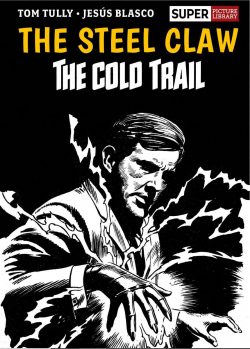
The Steel Claw: The Cold Trail (Super Picture Library)


By Tom Tully & Jesús Blasco & various (Rebellion)
ISBN: 978-1-78618-659-1 (HB/Digital edition)

Another stunning salvo of graphic wonderment from Rebellion’s Treasury of British Comics strand, The Steel Claw: The Cold Trail is a sublimely engaging yarn celebrating an all-but-forgotten sub-strand of the 1960s comics experience.

Until the 1980s, comics in the UK were based on an anthological model, offering variety of genre, theme and character on a weekly – or sometimes fortnightly – basis. Humorous periodicals like DC Thomson’s The Beano were leavened by thrillers like the Q-Bikes, Billy the Cat or General Jumbo whilst rival publisher Amalgamated Press/Fleetway/IPCs comedy comics such as Whizzer and Chips always offered a thriller or two like Wonder Car or Pursuit of the Puzzler.

Similarly, adventure papers like Lion or Valiant always included gag strips such as The Nutts, Grimly Feendish, Mowser and a wealth of similar quick laugh treats. And yes, DCT installed equivalents in The Wizard, Victor, Hotspur and the rest…

Both companies also produced Seasonal Specials, hardcover Annuals and digest-sized anthology publications. DCT still publishes Commando Picture Library and used to sell romance, school dramas and a modern science fiction title (Starblazer) to match their London competitors’ successful paperback book titles.

Those ubiquitous delights included Super Picture Library, War Picture Library, Air Ace Picture Library and Action Picture Library.

These were half-sized, 64-page monochrome booklets with glossy soft-paper covers, but between 1967 and 1968 – at the height of the sixties Spy and Superhero booms – were supplemented by a deluxe, card-cover, 132-page version: The Fleetway Super Library.

As well as the always-popular war option of “Front Line” (starring by turn Maddock’s Marauders or Top-Sergeant Ironside), this line offered a “Secret Agent Series” – alternating cool espionage operatives Johnny Nero and Barracuda – and the “Stupendous” (formerly and briefly “Fantastic”) series which delivered lengthy complete sagas starring either The Spider or The Steel Claw.

These extra exploits came twice a month and ran 13 tales for each, with this spiffy hardback tome replaying the fifth release as crafted by the regular strip creative team of Tom Tully & Jesús Blasco …

British comics had a strange and extended love affair with what can only be described as “unconventional” (for which feel free to substitute “creepy”) heroes. So many of the stars and potential role models of our serials and strips were just plain “off”: self-righteous, moody voyeurs-turned vigilantes like Jason Hyde, sinister masterminds like The Dwarf, deranged geniuses like Eric Dolmann, jingoistic, racist supermen like Captain Hurricane and more often than not (barely) reformed criminals or menaces like Charlie Peace, the morally ambivalent Spider or The Steel Claw

One of the most fondly-remembered British strips of all time is the eerily beautiful Steel Claw: created by Ken Bulmer & Blasco for the debut issue of weekly anthology Valiant. From 1962 to 1973, the stunningly gifted Blasco and his small studio of family members (plus occasional fill-in guest illustrators) thrilled the nation’s children, illustrating the angst-filled adventures of scientist, adventurer, secret agent and even costumed superhero Louis Crandell.

The majority of the character’s caseload was actually scripted by prolific and versatile comics writer Tom Tully (Roy of the Rovers, Heros the Spartan, Dan Dare, House of Dolmann, Janus Stark, Mytek the Mighty, The Wild Wonders, Nipper, Adam Eterno, Johnny Red, Harlem Heroes, Mean Arena, Football Family Robinson and many more).

He followed the precepts of H.G. Wells’ original unseen adversary which had been laid out by science fiction novelist Bulmer, presenting some modern spin on Victorian classic The Invisible Man.

In the 1960s, however, our protagonist acted with evil intent as soon as he fell out of sight of his fellow humans, but not through innate poor character, but because of wild technology accidentally unleashed…

The thrills of the writing are engrossing enough, but the real star of this feature is the artwork: captivating classicist drawing, moody staging and the sheer pristine beauty of all participants making this an absolute pleasure to look at.

Born in Barcelona in 1919, Jesús Monterde Blasco began his phenomenal career in 1935, drawing for Mickey magazine. Barely known now in the English-speaking world, his vastly varied output included Cuto, Anita Diminuta, Los Tres Inseperables, Los Guerilleros, Paul Foran, Tom Berry, Tex Willer, Tallafero, Capitán Trueno and Une Bible en Bande Dessinée for continental and South American audiences. His many UK strips include the lush and lavish Buffalo Bill, sci-fi chiller The Indestructible Man, Billy the Kid and the first Invasion! serial (2000 AD from #1, 1977). He died in October 1995.

What has gone before: Louis Crandell was an embittered man, presumably due to having lost his right hand in a lab accident. After his recovery and its replacement with an articulated steel prosthetic, he returned to work as assistant to venerable boffin Professor Barringer, who was attempting to create a germ-destroying ray.

When that device exploded, Crandell received a monumental electric shock and was bathed in radiation. Rather than killing him, the incident rendered him totally transparent whilst changing his body chemistry. Although he couldn’t stay unseen forever, the bodily mutation permanently affected him, and subsequent electric shocks caused all but his metal hand to disappear.

These were simpler times and there was far less SCIENCE around so please – Kids Of All Ages – do not try this at home!

Whether venal at heart or temporarily deranged, Crandell went on a rampage of terror, even attempting to blow up New York City before finally coming to his senses. Throughout Crandell’s outrages, guilt-fuelled Barringer was in pursuit, resolved to save or stop his former friend…

After he was caught and cured, the invisible man was so globally well known that he was framed by his own therapist. Whilst treating Crandell, Dr. Deutz was also traumatically exposed to Barringer’s ray but instead of invisibility, he gained the power to transform into a bestial ape-man and turned to crime for thrills. He malevolently placed the blame for his own spectacular robberies and assaults on his notorious patient…

On the run but innocent this time, Crandell was saved by the intervention of Barringer’s niece Terry Gray. After weeks of beast-triggered catastrophe and panic in the streets, the Steel Claw was vindicated and proved himself a hero. Despite that, a quiet life was clearly beyond the unseen celebrity, and while seeking anonymity in the Bahamas, he was embroiled in a modern-day pirate’s attempt to hijack an undersea super-weapon and plunder cruise ships…

A wilful recluse, Crandell underwent a gradual shift from victim to reluctant hero: accepting his powers and an elite if danger-ridden role at the fringe of society after he was recruited by a wing of British Intelligence dubbed “Shadow Squad”. The first thing the spooks did was to fake his death and publicly proclaim the Steel Claw was gone forever…

With them, Crandell foiled a deranged super-genius intent on eradicating human life and fought off an alien invasion for which see The Steel Claw: Reign of the Brain).

Crafted at the height of superspy media frenzy ‘The Steel Claw and the Cold Trail’ opens with a bored and idle Crandell taking stock of an improved metal hand and new abilities in first chapter ‘Hot Property’: fine tuning the new prosthesis before he’s given a crucial new mission.

For obvious operational reasons, Britain’s top four atomic scientists have never been allowed to occupy the same space at the same time. Now, however, they must convene in person for a crucial conference, and Shadow One wants Crandell to handle security, over the gents’ protests that he’s not qualified for this sort of mission…

His misgivings prove fatally correct when despite all precautions, the quartet are attacked and killed: frozen into blocks of ice by an assailant and method unknown to science. Thanks to his new ability to generate electrical shocks and magnetic waves, Crandell spectacularly chases and corners the assassin, but both the killer and his bizarre ray-gun are destroyed in the process…

Furious, frustrated and embittered, Crandell is placed on administrative leave and left to stew but he’s soon recalled in chapter 2 as ‘Deep Freeze’ reveals that three of the frozen corpses have been stolen. With the fourth about to be buried imminently, the super-agent heads for the funeral and arrives just in time to interrupt more distinctively-garbed assassins attacking the cortege and swiping the remains.

Employing his invisibility, Crandell tracks the villains to a cargo ship and sneaks aboard, but is eventually captured. To his amazement he learns that the scientists are still alive and that a cunning and cruel turncoat plans to defrost and sell them to a hostile power…

Left to die in the ship’s freezer, The Steel Claw soon ingeniously escapes and – anticipating by decades the movie Die Hard – methodically picks off the mercenary contingent. When the ship returns to dock, only the top traitor escapes…

The plot explodes into all-out action in ‘Slow Thaw’ as, rather than fleeing or hiding, the villain attempts one last bold assault to recapture his valuable cold cargo, resulting in a death duel with his invisible nemesis…

More than any other comics character, the Steel Claw was a barometer for reading fashions. Starting out as a Quatermass-style science fiction cautionary tale, the strip mimicked the trends of the greater world, evolving into a James Bond-style strip with Crandell eventually augmented by outrageous gadgets – and latterly, a masked and costumed super-doer after TV-triggered “Batmania” gripped the nation and the world. When that bubble burst, he resorted to becoming a freelance adventurer, combating eerie menaces and vicious criminals.

This is sheer addictive nostalgia for my generation, but the stories also hold up against anything made for today’s marketplace. Buy it for the kids and read it too; this is a glorious book, and steel yourself for even better yet to come…
© 1967, 2023 Rebellion Publishing IP Ltd. All rights reserved.

Gomer Goof volume 5: Goofball Season


By Franquin & Delporte, translated by Jerome Saincantin (Cinebook)
ISBN: 978-1-84918-462-5 (PB Album/Digital edition)

Like so much in Franco-Belgian comics, it started with Le Journal de Spirou. The magazine debuted on April 2nd 1938, with its engaging lead strip created by Rob-Vel (François Robert Velter). In 1943, publishing house Dupuis purchased all rights to the comic and its titular star, after which comic-strip prodigy Joseph Gillain (Jijé) took the helm for the redheaded kid’s exploits. Ultimately the publisher, and editorial office would become characters in their own periodicals…

In 1946 Jijé’s assistant André Franquin was handed creative control of the Spirou strip. He gradually switched from short gag vignettes to extended adventure serials, introducing a broad, engaging cast of regulars and in 1952 created phenomenally popular wonder-beast The Marsupilami. Debuting in Spirou et les héritiers, this critter grew into a spin-off star of screen, plush toy stores, console games and albums in his own right. Franquin continued crafting increasingly fantastic tales and absorbing Spirou sagas until his resignation in 1969.

Franquin was born in Etterbeek, Belgium on January 3rd 1924. Drawing from an early age, the lad only began formal art training at École Saint-Luc in 1943. When the war forced the school’s closure a year later, he worked at Compagnie Belge d’Animation in Brussels, where he met Maurice de Bévére (AKA Lucky Luke creator “Morris”), Pierre Culliford (“Peyo”, of The Smurfs and Benny Breakiron) and Eddy Paape (Valhardi, Luc Orient). All but Peyo signed on with Dupuis in 1945.

Franquin began as a jobbing cartoonist and illustrator, producing covers for Le Moustique and scouting magazine Plein Jeu. During those early days, Franquin and Morris were tutored by Jijé: the chief illustrator at LJdS. He transformed them – and fellow newbie Willy Maltaite (AKA “Will” – Tif et Tondu, Isabelle, Le jardin des désirs) – into a smoothly functioning creative bullpen known as La bande des quatre or “Gang of Four”. They would revolutionise Franco-Belgian comics with their prolific and engaging “Marcinelle school” style of graphic storytelling…

Jijé handed Franquin all responsibilities for the flagship strip part-way through Spirou et la maison préfabriqué (#427, June 20th 1946) and eager office junior ran with it for two decades; enlarging the feature’s scope and horizons until it became purely his own. Almost weekly, fans met startling new characters like comrade/rival Fantasio or crackpot inventor and Merlin of mushroom mechanics the Count of Champignac

Spirou & Fantasio were reimagined as a globetrotting journalist team: visiting exotic places, exposing crimes, exploring the fantastic and clashing with a coterie of bizarre and exotic arch-enemies.

Throughout all that revolutionary reinvention, Fantasio was still a full-fledged reporter for Le Journal de Spirou and had to frequently pop back to the Dupuis office. Sadly, lurking there – or was it just in the artist’s head? – was an accident-prone, smugly big-headed office junior in charge of minor jobs and dogs-bodying. Franquin dubbed him Gaston Lagaffe

There’s a long history of fictitiously personalising those mysterious back room creatives and all the arcane processes they indulge in to make our favourite comics, whether it’s Stan Lee’s Marvel Bullpen or DC Thomson’s lugubrious “Mr. Editor” and underlings at The Beano and Dandy. Let me assure you that it’s a truly international practise and the occasional asides on text pages featuring well-meaning foul-up/office gofer Gaston (who debuted in #985, cover-dated February 28th 1957) grew to be one of the most popular components of the comic, whether as short illustrated strips or in faux editorial reports in text-feature form.

On a strictly personal note, I still think current English designation Gomer Goof (this name comes from an earlier, abortive attempt to introduce the character to American audiences) is unwarranted. The quintessentially Franco-Belgian tone and humour doesn’t translate particularly well (la gaffe translates as “blunder” not “idiot”) and the connotation contributes nothing here. When he surprisingly appeared in a 1970s UK Thunderbirds annual as part of an earlier syndication attempt, Gaston was rechristened Cranky Franky. Perhaps they should have kept that one or, best of all, his original designation…

In terms of actual schtick and delivery, older readers might recognise beats of Benny Hill and Jacques Tati in timeless elements of all-consuming, grandiose self-delusion, and spot recurring situations from Some Mothers Do Have ’Em or Mr Bean. It’s all sublimely set up surreal slapstick, paralysing puns, infernal ingenuity and warped invention, with pomposity lampooned, slovenly sloth celebrated and no good deed going noticed, rewarded or unpunished…

As previously stated, Gomer makes his living (let’s not dignify or mis-categorise what he does as “work”) at the Spirou editorial offices: occasionally reporting to go-getting journalist Fantasio, when not complicating the lives of office manager Léon Prunelle and other staffers. He generally ignores the minor design jobs like paste-up, “gofer-ing” and office maintenance he’s paid to handle as well as editing readers’ letters… the official reason why fan requests and suggestions are never answered…

Gomer is lazy, peckish, opinionated, ever-ravenous, impetuous, underfed, forgetful and eternally hungry, with his most manic moments all stemming from “inventing” labour-saving follies, cutting work corners (often load-bearing walls) and stashing or illicitly consuming contraband food in the office…

This causes constant clashes with his co-workers and his smugly superior attitude comfortably extends to police officer Longsnoot and fireman Captain Morwater. However, the office oaf remains eternally easy-going and incorrigible. Only two questions are really important here: why does Fantasio keep giving him one last chance, and what can gentle, beguiling, flighty, impressionable, utterly lovelorn secretary Miss Jeanne possibly see in the self-opinionated idiot?

This 8th collection of strips culled from the pages ofLe Journal de Spirou was originally released in 1970 as Gaston – Lagaffe nous gâte and became Cinebook’s fifth translated tome. It contains more short cartoon tales and rapid-fire all-Franquin comics gags in single-page bursts, with additional mirth contributed by frequent comic confrère Yvan Delporte – Spirou’s editor-in-chief from 1955-1968 and constant ideas man for not only the Goof, but also Idées noires, Isabelle, The Smurfs and many more.

In this instance that partnership includes a brace of comedic text “reports” from the comic magazine’s editorial page in an emphatic and outlandish Look behind the scenes: detailing in two parts ‘The Wonderful World of the Goofophone’ in two revelatory instalments offering insight into the remarkable instrument/atrocity weapon. His devastating musical contraption – also known as the truly terrifying Brontosaurophone – again disrupts commerce, glass, flora, fauna, the environment and most other organic life in earshot…

The techno-nonsense resumes with a chilling and literally shocking advance in scarecrow development, interspersed with the inventor’s crippling intermittent bouts of ailments, bugs and occupational sloth and ennui, only held at bay by another war over parking tickets with officer Longsnoot. The motorised monstrosity Gomer calls his car is an appallingly decrepit and dilapidated Fiat 509 auto(barely)mobile. It is desperately in need of his many well-meant attempts to counter its lethal road pollution emissions. It’s also the main reason he always has the sniffles or wears some kind of bandage, plaster or splint…

Here, Miss Jeanne is further beguiled by Gomer’s solution to broken zips, but less sanguine at his innovations in broaching walnuts: a repeating theme that over weeks shakes buildings, wrecks bowling balls and derails public transport…

Even when she finally gets the big fool alone in the country, all he can think of is playing his infernal musical howitzer. The results would make any sane man question the inventor’s green credentials and ability to hear in human ranges…

There’s a greater role for neighbouring architects/engineers Gutsy & Irongrip who briefly and painfully experience the power of the Goof after he mistakenly misses the door to the Spirou offices. They would probably have paid a fortune for the phenomenal hyper-elastic building material that emerged from his latest home bakery sessions…

More fruitless attempts to sort the mag’s mail and park his beloved car fall foul of air pollution, poor weather and wandering attention: only confirming that cars, chemistry sets and snow do not belong together. Moreover, his unceasing efforts to modernise and automate the office and studio (despite violent resistance and panicked pleas) still fall short of his own high standards and expectations.

The world is simply not ready for the kind of doors, telephones, executive toys, and entertainment systems his febrile mind can conceive of…

All that brainwork naturally exhausts a fellow and many instances here show how a brief nap might be misunderstood as sheer laziness. It’s just like his many well-meaning attempts to mollify ever-outraged financier De Mesmaeker (in-joke analogue of fellow creator Jidéhem – AKA Jean De Mesmaeker): the explosively irate businessman whose ever-failing efforts to get his contracts signed somehow render him a constant and unfortunate victim of the Goof’s particular brand of misfortune…

At least birds and beasts love Gomer, although being followed by a flock of massed avians, a herd of horses and the giant fly he created does upset those around him. Perhaps it’s his quest to invent a completely natural-scented air freshener?

Whatever the cause – or short-term effects –  nothing can long deter the young wonder from his dream of making the world a different – if not actually “better” – place.

This volume ends with a controversial cartoon that raised the ire of The French National Natural Gas Distribution Company/Gaz de France when first seen in the seventies. The corporations PR team had taken legal umbrage to some of Franquin’s satires and demanded redress in print. He complied, but in a way that only inspired even more cartoon calumny and commentary…

Far better enjoyed than précised or described, these strips allowed Franquin to flex whimsical muscles and even subversively sneak in some satirical support for his beliefs in pacifism and environmentalism. However, at their core the gags remain supreme examples of all-ages comedy: wholesome, barbed, daft and incrementally funnier with every re-reading.

Have you started Goofing off yet?
© Dupuis, Dargaud-Lombard s.a. 2009 by Franquin. All rights reserved. English translation © 2019 Cinebook Ltd.