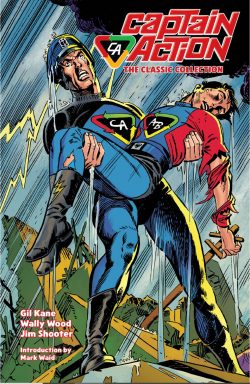
Captain Action: Classic Collection


By Gil Kane, Wally Wood, Jim Shooter & various (IDW)
ISBN: 978-1- (TPB) eISBN: 978-1-64936-046-5

These days comics are about kids of varying ages looking back. So too are toys, and baby boomers like me are particularly prone to the fabled golden age and certain “must-have” items – whether we ever actually owned them or not. An added bonus comes if those toys made it to comics and vice versa…

Back then, the ultimate acme for so many of us in the UK was – no, not the Johnny Seven multi-gun, or Man from U.N.C.L.E. briefcase – but the Captain Action nine-heroes-in-1 doll (sorry, Action Figure)… 

Once upon a time comics were considered the nigh-exlusive domain of children, with many scrupulously-policed genres and subdivisions catering to particular and stratified arenas such as fact, fantasy, adventure and humour. They were even further codified by age and gender.

A particular and popular recurring theme was tapping into the guaranteed and hopefully mutual sales boost offered by licensing and cross-marketing. West Coast outfit Dell/Gold Key had early on specialised in out-industry licensing deals and adaptations…

Many titles depended on a media celebrity like Howdy Doody, Charlie Chaplin or Mickey Mouse and in America that eventually spread to the marketing of products also aimed at kids… such as sweets, cartoons and toys…

By the end of that era, comics for kids were almost exclusively released as a minor strand of a major maketing strategy. That comics like Thundercats, Micronauts, Transformers, Rom and G.I. Joe were actually good and entertaining on strictly strip terms was a happy coincidence and thanks solely to the diligent pride and efforts of the creators involved. Sadly, it also led to publishers intensifying efforts to add a toy component to their own properties. Hands up anyone out there who owns a Spider-mobile, Batboat or Supermobile…

For DC, that trend really began in 1968. Although the company – known as National Periodical Publications back then – had long benefitted from creating comics adventures of movie stars like Bob Hope, Jerry Lewis or Dale Evans and shows such as Gang Busters, A Date with Judy and Mr. District Attorney, they had stayed away from the toy biz – unless you count two issues of Showcase (#53 & 54 Novenber/December 1964 and January/February 1965) that unofficially tied-in to Hasbro’s release of the first G.I. Joe line.

Then, just as costumed superheroes boomed, peaked and began an inexorable die-back, an old connection resurfaced…

In 1964 inventor and promotions wizard Stan Weston devised a way to sell dolls to boys: a dilemma that had stumped toymakers for centuries. He devised an articulated mannequin that would represent all branches of the military and could be aurmented by add-on uniforms and equipment. He called it an “action-figure” and sold the notion to Hasbro, who marketed it with great and lasting success as G.I. Joe (in Britain it was rebranded Action Man).

With his remuneration, Weston – whose promotions company Leisure Concepts had secured representation rights to DC, Marvel and King Features characters – devised a similar boys toy figure designed to ride the then-current global superhero wave triggered by the Batman TV show. “Captain Magic” was not only a superhero in his own right but could also transform into other superheroes via costumes and masks purchased seperately…

Released in waves, these alter egos included Superman, Batman, Aquaman, Spider-Man, Captain America, Sgt. Fury, The Phantom, 2 different Lone Rangers, Tonto, Steve Canyon, Flash Gordon, Buck Rogers and the Green Hornet.

Weston sold this concept to Hasbro’s rival Ideal Toy Company who went all-out in producing and marketing the range. It launched in 1966, redesignated Captain Action

A huge success, an expansion line in 1967 introduced a kid sidekick, pet panther, villains, an Action-Cave, secret lairs, a super car and lots of other paraphenalia. Latterly, distaff partner Lady Action was joined by doll versions (“Super Queens”) of Wonder Woman, Mera, Supergirl and Batgirl

The line was an early casualty of the downturn in superheroes and discontinued in 1968. It has, however, cemented itself in popular memory, with the core character returning on many occasions. He now enjoys a new marketing company seeking to rebuild the brand, Since 2005, Catain Action Enterprises have been testing the waters and some of their efforts can bee seen as ads and addenda throughout the book…

However, back at the height if the craze that DC link led to Editor in Chief Mort Weisinger commissioning a comic book tie-in. It turned out to be one of the most lovely, powerful, experimental and maturely sophisticated titles of the era and – finally – all the legal loopholes have been circumvented so you can see it at last …or if you’re truly blessed, once again…

Weisinger tapped his youngest writer – teenager Jim Shooter – and teamed him with veterans on the potentially colossal project. Miracle-working editor Julie Schwartz was in charge, and Wally Wood started the ball rolling artistically, but the real revelation came after replacement penciller Gil Kane took over the writing…

Born Eli Katz and a pre-WWII infant immigrant from Latvia, Kane was one of the pivotal players in the development of the American comics industry, and indeed of the art form itself. Working as an artist, and an increasingly more effective and influential one, he drew for many companies from the 1940s onwards, tackling superheroes, crime, action, war, mystery, romance, animal heroes (Streak and Rex the Wonder Dog!), movie adaptations and, most importantly perhaps, Westerns and Science Fiction tales.

In the late 1950s he became one of Schwartz’s key artists in regenerating and rebooting the superhero concept. Yet by 1968, at the top of his profession, this relentlessly revolutionary and creative man felt so confined by the juvenile strictures of the industry that he struck out on bold new ventures that jettisoned the editorial and format bondage of comic books for new visions and media.

His Name Is Savage was an adult-oriented black & white magazine about a cold and ruthless super-spy in the James Bond/Matt Helm/Man Called Flint mould; co-written by friend and collaborator Archie Goodwin. It was very much a precursor in tone, treatment and subject matter of many of today’s adventure titles.

His other venture, Blackmark (1971, and also with Goodwin), not only ushered in the comic book age of Sword and Sorcery, but also became one of medium’s first Graphic Novels. Technically, as the series was commissioned by fantasy publisher Ballantine as eight volumes, it was also envisioned as America’s first comic Limited Series.

Before them, though, there was Captain Action

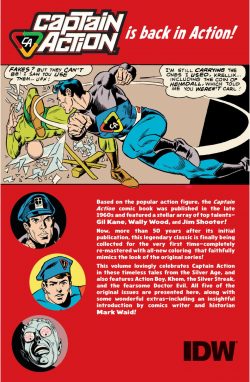
Edited by Schwartz with covers by Irv Novick, Wood, Kane & Dick Giordano, the entire DC run is collected here, preceded by a fulsome and informative Introduction from Mark Waid.

Unable to play with the toy’s major attraction – multiple super-personalities – Shooter & Wood instead went with classical drama for issue #1’s ‘Origin of Captain Action!’: revealing how archaeologist Clive Arno and his assistant Krellik uncover a chest of coins left in antiquity by incredible superbeings remembered by humanity as gods.

These coins allow the holder to access the incredible powers of countless deities, but the temptation proves too much for the scheming assistant.

However, when he tries to steal them, an ancient failsafe painfully prevents him…

Driven away, the scoundrel is then found by the coin vindictively created by primal God of Evil Chernobog: one which imparts astounding magical abilities and feeds his hatred. As Arno designs a costumed identity to help the world via the coins, Krellik spies on and steals his thunder, resolved to taint the project before it even begins…

Returning to America, Arno learns ‘Where the Action is’ from his son Carl, as Krellik plunders museums dressed in Arno’s proposed uniform. A swift chase then results in a cataclysmic clash and brief cameo by Superman

Trailing his enemy, the true Captain cannot stop Krellik obtaining more deadly artefacts of the lost gods. As the first issue ends he is savagely beaten and apparently defeated before he’s even started …

With Kane pencilling Shooter’s script and Wood inking, the saga concludes in #2 as ‘The Battle Begins!’ with the victorious villain repeatedly failing to appropriate the power coins: stymied by the remarkably astute and valiant Action Boy. When Krellik’s frustration boils over and he starts wrecking the city, our recently returned hero goes all out and at last overcomes in ‘Captain Action’s Reactions!’ Kane was eager to stretch his creative muscles in a period of great change and challenge and Schwartz was happy to oblige…

Although already distressingly high in drama and calamity, the series went into overdrive with #3 as the toy company’s preferred archfoe debuted. A blue skinned humanoid with an exposed brain. Dr Evil was fleshed out as Kane wrote and pencilled ‘…And Evil This Way Comes!’, revealing how a catastrophic earthquake in San Francisco caused hundreds of deaths and triggered an evolutionary aberration in the laboratory of Dr. Stefan Tracy…

The Nobel Laureate was also Arno’s father-in-law and both were united in grief over the death of his daughter (and Arno’s wife) Kathryn. They also shared an abiding love for Carl Arno.

All that seemed over when Tracy was elevated to the status of a futureman resolved to similarly improve mankind, no matter how many perished in the process…

The most telling consequence of the quake is the loss of all but a handful of power coins. Action Boy is given the superspeed inducing Mercury artefact, whilst his dad keeps the tokens of Zeus, Hercules and Heimdall (rationalising why the Captain needs cool tools like his supercar the Silver Streak), and they deploy to save lives in the aftershocks.

They are hindered and countered by Tracy/Dr. Evil: using his devices to amplify the natural disaster. His deed almost kills his grandson, until a fast-fading final shred of humanity hampers his deeds and hold back his damning hand…

The act is his last as a human being and allows the Captain a desperate chance to drive him away…

From this issue on a letters page – Action Line – was included, and they are reprinted from here on.

Kane went even more deeply into mature themes with #4 as ‘Evil at Dead World’s End!’, sees the hyper-evolved savant drawn across the universe to a dying planet peopled with beings just like him. Well, not quite: these beings are at the end of existence on a dying planet, worn out by eons and resolutely awaiting death. Dr. Evil refuses to let them go, inspiring their brief rejection of well-earned rest with the promise of a fresh young world: Earth. To offset his son-in-law’s interference, the mind master distracts the hero with a trio of rampaging monsters and cruel resurrection of dead Kathryn. The alluring spectre then implores her husband to forsake life and join her in the beyond…

The high impact dramas were far from what any kid might expect, and the series closed on an even more shocking premise as ‘A Mind Divided’ revealed a nation torn apart by a racist demagogue inciting insurrection and racial purity: a campaign polarising America’s youth and encapsulated in a single father’s descent into madness. Captain Action might be able to rescue victims, stop bombers, break up riots and beat uniformed thugs but saving a twisted soul from self-inflicted tragedy was beyond even the reach of gods…

Now, rush out and buy the Captain Action Parachute Mortar, kids…

The comics material closes with text and letters page Action Line and a reader competition – ‘The Two Faces of Dr. Evil’ – before even more avarice-inspiring found-features fill out the Captain Action Gallery.

The comics stories preceding this section were packed with ads for old and new Cap merch in the gaps originally filled by DC comics releases (some contemporarily crafted by Michael Polis) for dolls/action figures, toys, accessories, costumes, “Captain Action Action Facts!”, card & board games, choco bars, breakfast cereal, freezer pops and vintage comic book house ads and TV promos for the franchise.

Here however are full-page delights such as paintings of Captain Action; toy ads from the comics for Action Boy, Dr. Evil. Lady Action and pages from the Captain Action Yellow Book by Murphy Anderson, Kurt Schaffenberger, & Chic Stone, plus astondingly lovely original art pages and pencil art by Kane & Wood.

Although Captain Action couldn’t sustain a readership or toy-buying clientele, DC would dabble again and again with related topics (like Alex Toth & Neal Adams’s sublime Hot Wheels comic in 1970, MASK, Masters of the Universe, and DC in-house properties Mego Superheroes and Kenner’s Super Powers action figures) and publishing properities now make a large paart of every successful comics company…

The 1960s was the era when all the assorted facets of “cool-for-kids” finally started to coalesce into a comprehensive assault on our minds and our parents’ pockets. TV, movies, comics, bubble-gum cards and toys all began concertedly feeding off each other, building a unified and combined fantasy-land no kid could resist. That nostalgic force has never been more wonderfully expressed than in the stories in this book and you would be mad to miss it.
Captain Action: Classic Collection © & ™ 2022 Captain Action Enterprises, LLC. All rights reserved.
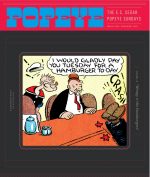
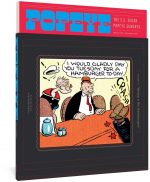
Popeye volume 2: Wimpy and His Hamburgers (The E.C. Segar Popeye Sundays)


By Elzie Crisler Segar with Kevin Huizenga & various (Fantagraphics Books)
ISBN: 978-1- 68396-668-5 (TPB/digital edition)

Popeye embarked in the Thimble Theatre comic feature with the instalment for January 17th 1929. The strip was an unassuming vehicle that had launched on 19th December 1919: one of many newspaper cartoon funnies to parody, burlesque and mimic the era’s silent movie serials. Its more successful forebears included C.W. Kahles’ Hairbreadth Harry or Ed Wheelan’s Midget Movies/Minute Movies – which Thimble Theatre replaced in media mogul William Randolph Hearsts’ papers.

All the above-cited strips employed a repertory company of characters playing out generic adventures based on those expressive cinema antics. Thimble Theatre’s cast included Nana and Cole Oyl, their gawky, excessively excitable daughter Olive, diminutive-but-pushy son Castor and Olive’s sappy, would-be beau Horace Hamgravy.

The series ticked along nicely for a decade: competent, unassuming and always entertaining, with Castor and Ham Gravy (as he became) tumbling through get-rich-quick schemes, frenzied, fear-free adventures and gag situations until September 10th 1928, when explorer uncle Lubry Kent Oyl gave Castor a spoil from his latest exploration of Africa.

It was the most fabulous of all birds – a hand-reared Whiffle Hen – and was the start of something truly groundbreaking…

Whiffle Hens are troublesome, incredibly rare and possessed of fantastic powers, but after months of inspired hokum and slapstick shenanigans, Castor was inclined to keep Bernice – for that was the hen’s name – as a series of increasingly peculiar circumstances brought him into contention with ruthless Mr. Fadewell, world’s greatest gambler and king of the gaming resort dubbed ‘Dice Island’.

Bernice clearly affected and inspired writer/artist E.C. Segar, because his strip increasingly became a playground of frantic, compelling action and comedy during this period…

When Castor and Ham discovered that everybody wanted the Whiffle Hen because she could bestow infallible good luck, they sailed for Dice Island to win every penny from its lavish casinos. Big sister Olive wanted to come along, but the boys planned to leave her behind once their vessel was ready to sail. It was 16th January 1929…

The next day, in the 108th episode of the saga, a bluff, brusquely irascible, ignorant, itinerant and exceeding ugly one-eyed old sailor was hired by the pathetic pair to man the boat they had rented, and the world was introduced to one of the most iconic and memorable characters ever conceived.

By sheer surly willpower, Popeye won readers hearts and minds: his no-nonsense, grumbling simplicity and dubious appeal enchanting the public until, by the end of the tale, the walk-on had taken up full residency. He would eventually make Thimble Theatre his own…

The Sailor Man affably steamed onto the full-colour Sunday Pages forming the meat of this curated collection covering March 6th 1932-November 26th 1933. This paperback prize is the second of four that will contain Segar’s entire Sunday canon: designed for swanky slipcases. Spiffy as that sounds, the wondrous stories are also available in digital editions if you want to think of ecology or mitigate the age and frailty of your spinach-deprived “muskles”…

Elzie Crisler Segar was born in Chester, Illinois on 8th December 1894, son of a handyman. Elzie’s early life was filled with the solid, earnest blue-collar jobs that typified his generation of cartoonists. The younger Segar worked as a decorator and house-painter, and played drums accompanying vaudeville acts at the local theatre and – when the town got a movie house – he played for the silent films. This allowed him to absorb the staging, timing and narrative tricks from close observation of the screen, and would become his greatest assets as a cartoonist. It was whilst working as the film projectionist, aged 18, he decided to draw for his living, and tell his own stories.

Like so many from that “can-do” era, Segar studied art via mail: in this case W.L. Evans’ cartooning correspondence course out of Cleveland, Ohio – from where Jerry Siegel & Joe Shuster would launch Superman upon the world. Segar gravitated to Chicago and was “discovered” by Richard F. Outcault (The Yellow Kid, Buster Brown), arguably the inventor of newspaper comics.

Outcault introduced Segar around at the prestigious Chicago Herald and soon – still wet behind the ears – Segar’s first strip Charley Chaplin’s Comedy Capers debuted on 12th March 1916. Two years, Elzie married Myrtle Johnson and moved to Hearst’s Chicago Evening American to create Looping the Loop. Managing Editor William Curley saw a big future for Segar and promptly packed the newlyweds off to the Manhattan headquarters of the mighty King Features Syndicate.

Within a year Segar was producing Thimble Theatre for the New York Journal. In 1924, Segar created a second daily strip. The 5:15 was a surreal domestic comedy featuring weedy commuter/would-be inventor John Sappo …and his formidable, indomitable wife Myrtle (!).

A born storyteller, Segar had from the start an advantage even his beloved cinema couldn’t match. His brilliant ear for dialogue and accent shone out from his admittedly average melodrama adventure plots, adding lustre to stories and gags he always felt he hadn’t drawn well enough. After a decade or so – and just as cinema caught up with the introduction of “talkies” – he finally discovered a character whose unique sound and individual vocalisations blended with a fantastic, enthralling nature to create a literal superstar.

Incoherent, plug-ugly and stingingly sarcastic, Popeye shambled on stage midway through Dice Island’ and once his very minor part played out, simply refused to leave. Within a year he was a regular. As circulation skyrocketed, he became the star.

In the less than 10 years Segar worked with his iconic sailor-man (January 1929 until the artist’s untimely death on 13th October 1938), the auteur constructed an incredible meta-world of fabulous lands and lost locales, where unique characters undertook fantastic voyages spawned or overcame astounding scenarios and experienced big, unforgettable thrills as well as the small human dramas we’re all subject to.

This was a saga both extraordinary and mundane, which could be hilarious or terrifying – frequently at the same time. For every trip to the rip-roaring Wild West or lost kingdom, there was a brawl between squabbling neighbours, spats between friends or disagreements between sweethearts – any and all usually settled with mightily-swung fists.

Popeye is the first Superman of comics, but he was not a comfortable hero to idolise. A brute who thought with his fists, lacking all respect for authority, he was uneducated, short-tempered and – whenever hot tomatoes batted their eyelashes (or thereabouts) at him – fickle: a worrisome gambling troublemaker who wasn’t welcome in polite society… and wouldn’t want to be.

The mighty marine marvel is the ultimate working-class hero: raw and rough-hewn, practical, with an innate and unshakable sense of what’s fair and what’s not, a joker who wants kids to be themselves – but not necessarily “good” – and someone who takes no guff from anybody. Always ready to defend the weak and with absolutely no pretensions or aspirations to rise above his fellows, he was and will always be “the best of us”…

This current tranche of reprinted classics concentrates on the astounding full-page Sunday outings (here encompassing March 6th 1932 to November 1933, but sadly omits the absurdist Sappo toppers. You’ll need to track down Fantagraphics’ hardback tabloid collections from a decade ago to see those whacky shenanigans…

Since many papers only carried dailies or Sundays, but only occasionally both, a system of differentiated storylines developed early in American publishing, and when Popeye finally made his belated sabbath day move, he was already a well-developed character.

Ham and Castor had been the stars since Thimble Theatre’s Sundays since the ancillary feature began on January 25, 1925; they all but vanished once the mighty matelot stormed that stronghold. From then on, Segar concentrated on gag-based extended dramatic serials Mondays to Saturdays, leaving family-friendly japes for Sundays: an arena perfect for the Popeye-Olive Oyl modern romance to unfold. With this second volume, however, we get to play with Segar’s second greatest character creation: morally maladjusted master moocher J Wellington Wimpy

Preceding the vintage views, this tome offers a lovely laudatory comic strip deconstruction, demystification and appreciation in ‘“Segar’s Wimpy” – An Introduction by Kevin Huizenga’. The experimental fabulist (Glen Ganges in The River At Night, Comix Skool USA, Riverside Companion) probes everything from how different illustrators handle the human dustbin to how Wimpy’s eyes are drawn…

When the wondrous weekend instalments began last volume, we saw Ham Gravy gradually edged out of romancing Olive. From there onwards, done-in-one gag instalments outlined an unlikely but enduring romance which blossomed (withered, bloomed, withered some more, hit cold snaps and early harvests – you get the idea…) as Olive alternately pursued her man and dumped him for better prospects.

To be fair, Popeye always vacillated between ignoring her and moving mountains to impress her. Since she always kept her options open, he spent a lot of time fighting off – quite literally – her other gentlemen callers. A mercurial creature, the militantly maidenly Miss Oyl spent as long trying to stop her beau’s battles (a tricky proposition as he spent time ashore as an extremely successful “sprize fighter”) as civilise her man, yet would mercilessly batter any flighty floozy who cast cow eyes at her devil-may-care suitor…

In those formative episodes, Castor became Popeye’s manager and we revelled in how originally-philanthropic millionaire Mr. Kilph moved from eager backer to demented arch enemy paying any price to see Popeye pummelled. The sailors’ opponents included husky two-fisted Bearcat, Mr. Spar, Kid Sledge, Joe Barnacle, Kid Smack, Kid Jolt, The Bullet, Johnny Brawn, an actual giant dubbed Tinearo and even trained gorilla Kid Klutch.

None were tough enough and Kilph got crazier and crazier…

History repeated itself when a lazy and audaciously corrupt ring referee was introduced as a passing bit player. The unnamed, unprincipled scoundrel kept resurfacing and swiping more of the limelight: graduating from minor moments in extended, trenchant, scathingly witty sequences about boxing and human nature to speaking – and cadging – roles…

Among so many timeless supporting characters, mega moocher J. Wellington Wimpy stands out as the complete antithesis of feisty big-hearted Popeye, but unlike any other nemesis I can think of, this black mirror is not an “emeny” of the hero, but his best – maybe only – friend…

As previously stipulated, the engaging Mr. Micawber-like coward, moocher and conman debuted on 3rd May 1931 as an unnamed referee officiating a bombastic month-long bout against Tinearo. He struck a chord with Segar who made him a (usually unwelcome) fixture. Eternally, infernally ravenous and always soliciting (probably on principle) bribes of any magnitude, we only learned the crook’s name in the May 24th instalment. The erudite rogue uttered the first of many immortal catchphrases a month later.

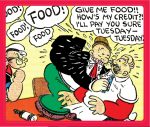
That was June 21st – but “I would gladly pay you Tuesday for a hamburger today” like most phrases everybody knows, actually started as “Cook me up a hamburger, I’ll pay you Thursday”. It was closely followed by my personal mantra “lets you and him fight”…

Now with a new volume and another year, we open with more of the same. The romantic combat between Olive, Popeye and a string of rival suitors continues, resulting in the sailor winning a male beauty contest (by force of arms), and brutally despatching a procession of potential boyfriends.

As hot-&-cold Olive warms to the moocher, there’s more of Wimpy’s ineffable wisdom on show, as he reinvents himself as the final arbiter of (strictly negotiable) judgement…

Whether it’s her beaux or who’s hardest hit by government policies – sailors like Popeye or restaurant owners like Rough-House – Wimpy has opinions he’s happy to share… for a price.

Mr. Kilph turns up again, arranging a bout between Popeye and his new million-dollar robot, but even with Wimpy officiating, the sailor comes up trumps. The moocher briefly becomes our matelot’s best pal, but blows it by putting the moves on Olive after tasting her cooking…

Another aspect of Popeye’s complex character is highlighted in an extended sequence running from May 29th  through July 17th1932, one that secured his place in reader’s hearts.

The sailor was a rough-hewn orphan who loved to gamble and fight. He was proudly not smart and superhumanly powerful, but he was a big-hearted man with an innate sense of decency who hated injustice – even if he couldn’t pronounce it.

When starving waif Mary Ann tries to sell him a flower, Popeye impetuously adopts her, inadvertently taking her from the brutal couple who use her in a begging racket.

Before long the kid is beloved of his entire circle – even Olive – and to support her, Popeye takes on another prize fight: this time with savage Kid Panther and his unscrupulous manager Gimbler

He grows to truly love her and there’s a genuine sense of happy tragedy when he locates her real and exceedingly wealthy parents. Naturally Popeye gives her up…

That such a rambunctious, action-packed comedy adventure serial could so easily turn an audience into sobbing, sentimental pantywaists is a measure of just how great a spellbinder Segar was. Although rowdy, slapstick cartoon violence remained at a premium – family values were different then – Segar’s worldly, socially- probing satire and Popeye’s beguiling (but relative) innocence and lack of experience keeps the entire affair in hilarious perspective whilst confirming him as an unlikely and lovable innocent, albeit one eternally at odds with cops and rich folk…

Following weeks of one-off gags – like Olive improbably winning a beauty contest and a succession of hilarious Wimpy episodes (such as cannily exposing himself to score burgers from embarrassed customers and ongoing problems with sleep-eating) – a triptych of plot strands opens as Miss Oyl engages a psychiatrist to cure Popeye of fighting, even as the sailor discovers Wimpy has such an affinity with lower life forms that he can be used to lure all the flies and sundry other bugs from Rough-House’s diner…

The third strand has further-reaching repercussions. Popeye has been teaching kids to fight and avoid spankings which has understandably sparked a riot of rebellion, bad behaviour and bad eating habits. Now, distraught parents need Popeye to set things right again…

Naturally it goes too far once the hero-worshipping kids start using the sailor-man as a source of alt-fact schooling too…

We constantly see softer sides of the sailor-man as he repeatedly gives away most of what he earns – to widows and “orphinks” – and exposes his crusading core with numerous assaults on bullies, animal abusers and romantic rivals, but when the war of nerves and resources between Wimpy and Rough-House inevitably escalates, Popeye implausibly finds himself as “the responsible adult”.

That means being referee in a brutal and ridiculous grudge match settled in the ring, with all proceeds going to providing poor kids with spinach. The bout naturally settles nothing but does have unintended consequences when the moocher is suddenly reunited with his estranged mother after 15 years…

Tough men are all suckers for a sob story and even Rough-House foolishly amplifies the importance and regard people supposedly feel for the now-homeless little old lady’s larcenous prodigal. It’s a move the moocher can’t help but exploit…

As the Sunday Pages followed a decidedly domestic but rowdily riotous path, the section was increasing given over to – or more correctly, appropriated – by the insidiously oleaginous Wimpy: an ever hungry, intellectually stimulating, casually charming and usually triumphant conman profiting in all his mendicant missions.

Whilst still continuing Popeye’s pugilistic shenanigans , the action of the Sunday strips moved away from him hitting quite so much to alternately being outwitted by the unctuous moocher or saving him from the vengeance of the furious diner-owner and passionately loathing fellow customer George W. Geezil. The soup-slurping cove began as an ethnic Jewish stereotype, but like all Segar’s characters swiftly developed beyond his (now so offensive) comedic archetype into a unique person with his own story… and another funny accent. Geezil was the chief and most vocal advocate for murdering the insatiable sponger…

Wimpy was incorrigible and unstoppable – he even became a rival suitor for Olive Oyl’s unappealingly scrawny favours – and his development owes a huge debt to his creator’s love and admiration of comedian W.C. Fields.

A mercurial force of nature, the unflappable mendicant is the perfect foil for common-man-but-imperfect-hero Popeye. Where the sailor is heart and spirit, unquestioning morality and self-sacrifice, indomitable defiance, brute force and no smarts at all, Wimpy is intellect and self-serving greed, freed from all ethical restraint or consideration, and gloriously devoid of impulse-control.

Wimpy literally took candy from babies and food from the mouths of starving children, yet somehow Segar made us love him. He is Popeye’s other half: weld them together and you have an heroic ideal… (and yes, those stories are all true: Britain’s Wimpy burger bar chain was built from the remnants of a 1950s international merchandising scheme seeking to put a J Wellington Wimpy-themed restaurant in every town and city).

The gags and exploits of the two forces of human nature build riotously in 1933, ever-more funny and increasingly outrageous.

Having driven Rough-House into a nervous collapse, plundered farms, zoos and the aquarium and committed criminal impersonation and actual fraud, Wimpy then relentlessly targets the cook’s business partner Mr. Soppy: bleeding him dry as visiting royalty Prince Wellington of Nazilia

Even being run out of town and beaten so badly that he’s repeatedly hospitalised can’t stop his crafty contortions. He does, however, discover a useful talent: musical gifts that all but enslave his audiences…

Eventually, the master beggar triumphs over all and gets to eat his fill… and must deal with the consequences of his locust-like consumption…

Popeye seems unable to stop him. Half the time he’s helpless with laughter at the moocher’s antics, and when not. there are his major prize fights with 500lb wrestler Squeezo Crushinski and human dinosaur Bullo Oxheart. Naturally Wimpy is referee for both those clashes of the titans and makes out like a bandit…

The only real pause to the seeming dominance of the schemer is when he falls for new diner waitress Lucy Brown. She’s currently spending all her time with manly stud Popeye, but a quiet word with Olive Oyl should have cleared Wimpy’s path.

Should have, but didn’t, and in truth results in Popeye and Olive opening their own eatery in competition with Rough-House, leading to a ruthless cutthroat culinary cold war with the polite parasite reaping the spoils…

The laugh-out-loud antics seem impossible to top, and maybe Segar knew that. He was getting the stand-alone gag-stuff out of his system: clearing the decks and setting the scene for a really big change….

These tales are as vibrant and compelling now as they’ve ever been and comprise a world classic of graphic literature that only a handful of creators have ever matched. Within weeks (or for us, next volume) the Thimble Theatre Sunday page changed forever. In a bold move, the dailies blood-and-thunder adventure serial epics traded places with the Sunday format: transferred to the Technicolor “family pages” splendour where all stops might be pulled out…

Segar famously considered himself an inferior draughtsman – most of the world disagreed and still does – but his ability to weave a yarn was unquestioned, and grew to astounding and epic proportions in these strips. Week after week he was creating the syllabary and graphic lexicon of a brand-new art-form: inventing narrative tricks and beats that generations of artists and writers would use in their own cartoon creations. Despite some astounding successors in the drawing seat, no one has ever bettered Segar’s Popeye.

Popeye is fast approaching his centenary and well deserves his place as a world icon. How many comics characters are still enjoying new adventures 94 years after their first? These volumes are the perfect way to celebrate the genius and mastery of E.C. Segar and his brilliantly flawed superman. These are tales you’ll treasure for the rest of your life and superb books you must not miss…
Popeye volume 2: Wimpy and His Hamburgers is copyright © 2022 King Features Syndicate, Inc./™Hearst Holdings, Inc. This edition © 2022 Fantagraphics Books Inc. Segar comic strips provided by Bill Blackbeard and his San Francisco Academy of Comic Art. “Segar’s Wimpy” © 2022 Kevin Huizenga. All rights reserved.
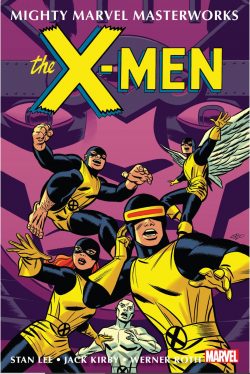
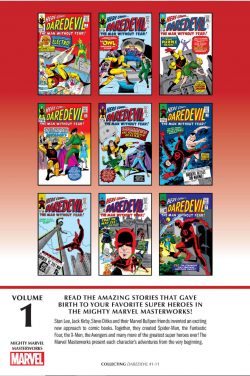
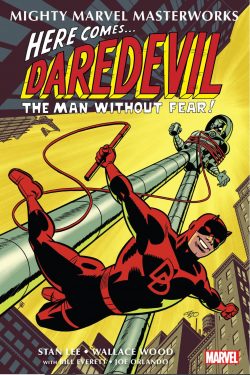
Mighty Marvel Masterworks Daredevil volume 1


By Stan Lee, Bill Everett, Joe Orlando, Wally Wood, Bob Powell & various (MARVEL)
ISBN: 978-1-3029-3440-8 (PB/Digital edition)

As the remnants of Atlas Comics grew in popularity in the early 1960s it slowly replaced its broad variety of genre titles with more and more super-heroes. The recovering powerhouse that was to become Marvel was still hampered by a crippling distribution deal that limited the company to 16 titles (curtailing their output until 1968), so each new untried book would have to fill the revenue-generating slot (however small) of an existing title.

Moreover, as costumed characters were selling, each new similarly-themed title would limit the breadth of the monster, western, war, humour or girls’ comics that had been the outfit’s recent bread and butter. It was putting a lot of eggs in one basket, and superheroes had failed twice before for Stan Lee.

So in retrospect the visual variety of the first few issues of Daredevil, the Man Without Fear seemed a risky venture indeed. Yes, the artists were all talented, seasoned veterans, but not to the young kids who were the audience. Most importantly, they just weren’t Jack Kirby or Steve Ditko, and new features need consistency and continuity…

Still, Lee and his rotating line-up of artists plugged on, concocting some extremely engaging tales until the latest Marvel Sensation found his feet, and the fascinating transition of moody masked avenger to wisecracking Scarlet Swashbuckler can be enjoyed in this collection gathering the first 11 issues (spanning April 1964 to December 1965): an effervescent package of thrills and spills which begins with ‘The Origin of Daredevil’

This much-retold tale recounts how young Matthew Murdock grew up in the slums of New York City, raised alone by his father: washed-up second-rate prize-fighter Battling Jack Murdock.

Determined that his boy will be something, the father extracts a solemn promise from Matt that he will never fight. Mocked by other kids who sarcastically dub him “Daredevil”, the kid abides by his vow, but secretly trains his body to physical perfection.

One day, he saves a blind man from being hit by a speeding truck, only to be struck in the face by its radioactive cargo. His sight is burned away forever, but his other senses are super-humanly enhanced and he gains a sixth, “radar-sense”.

He tells no-one, not even his dad.

The senior Murdock is in dire straits. As his career declined, he signed with The Fixer, knowing full well what the corrupt promoter expected from his fighters. Somehow, the pug’s star started to shine again and his downward spiral reversed itself. Unaware that he was being set up, Battlin’ Jack got a shot at the Big Time, but when ordered to take a dive, he refused. Winning was the proudest moment of his life. When his bullet-riddled corpse was found, the cops had suspicions but no proof…

Heartbroken, Matt graduated college with a law degree and set up in business with his room-mate FranklinFogg” Nelson. They hired a quiet young secretary named Karen Page and, with his life on track, young Matt now had time to solve his father’s murder…

His promise stopped him from fighting, but what if Matt became “someone else”?

Scripted by Lee and moodily illustrated by the legendary Bill Everett (with the assistance of Ditko), this is a rather formulaic and nonsensical yarn but is astonishingly engaging visually. The oft-told tale looked a little dated even at the time, but hinted at magic yet to come…

Plot-wise, the second issue fares little better as Joe Orlando & Vince Colletta assume the art chores for ‘The Evil Menace of Electro!’: a saga wisely exploiting the celebrity of guest-stars The Fantastic Four and featuring a second-hand Spider-Man villain.

The FF consult lawyer Matt Murdock just as the electrical outlaw tries to break into their building and before long Daredevil is spectacularly and relentlessly dealing with the voltaic villain. DD #3 finally offers the sightless swashbuckler a super-foe of his own when he meets and trounces crooked corporate raider ‘The Owl, Ominous Overlord of Crime!’

Daredevil #4 was a turning point, and possibly just in time. ‘Killgrave, the Unbelievable Purple Man!’ finally gave some distinctive character to the big stiff as he strove to overcome a villain who could exert total control over anyone who saw him. Although Orlando & Colletta’s uncomfortable, sedate and over-fussy illustration remained for one last episode, Lee finally got a handle on the hero; just in time for a magician-in-waiting to elevate the series to spectacular heights.

With #5, Wally Wood assumed the art chores and his lush, lavish work brought power, grace and beauty to the series. At last the costumed combat acrobat seemed to spring and dance across the rooftops and pages. Wood’s contribution to the plotting didn’t hurt either. He actually got a cover plug on his first issue.

In ‘The Mysterious Masked Matador!’ a cool, no-nonsense hero who looked commanding and could handle anything started fighting hard and fast. The series began advancing the moribund romantic sub-plot – Foggy adores Karen, who only has eyes for Matt, who loves her, but won’t let her “waste” her life on a blind man – and actually started making sense and progress.

Most importantly, the action scenes were intoxicating…

Although a bullfighter who used his skills for crime is frankly daft, the sublime drawing and sleek inking makes it all utterly convincing, and breathtakingly battle sequence is augmented by a Wood ‘Marvel Masterwork Pin-up of “DD”’ signalling a grand change in fortune…

The wonderment intensified in the following issue as the bold bravo was  ‘Trapped by the Fellowship of Fear!’: a minor classic as the Man Without Fear must defeat not only the super-powered Ox and Eel (two more recycled villains) but also his own threat-specific foe Mr. Fear – who could instil terror and panic in victims, courtesy of his ghastly gas gun.

The improvements led to a major change in Daredevil #7: a true landmark and to my mind one of the Top Ten Marvel Tales of all time.

Here Lee & Wood concocted an indisputable masterpiece as ‘In Mortal Combat with… Sub-Mariner!’ sees Prince Namor of Atlantis travel to the surface world to have his day in court. Resolved to sue all Mankind, he hires Nelson & Murdock and submits to being arrested, but discovers too late that his warlord Krang has usurped the throne in his absence. The tempestuous monarch will not languish in a cell when the kingdom is threatened, so he fights his way to freedom and the sea.

This saga shows Murdock the lawyer to be a brilliant orator, whilst his hopelessly one-sided battle against one of the strongest beings on the planet shows the dauntless courage of DD and true nobility of the Sub-Mariner.

Most notably, and with no fanfare at all, Wood replaced the original yellow-&-black “wrestler’s costume” with the iconic and beautiful all-red outfit we know today. As one pithy commentator stated, “the original costume looked as if it had been designed by a blind man”…

Augmented by another pin-up – in actuality a rejected cover for the tale – this issue proved beyond doubt the potential of Daredevil and promised even better to come…

Another all-new villain debuted in #8; a gripping industrial espionage thriller, ‘The Stiltman Cometh!’ pits the ace acrobat against a thieving, murderous masked miscreant towering above the skyscrapers, after which Golden Age Great Bob Powell came aboard as penciller to Wood’s layouts and inks with #9’s That He May See!’

Relentlessly badgered by Karen, Matt finally agrees to see an eye-specialist who might cure his blindness, but his visit to the European principality of Lictenbad quickly embroils the adventurer in a plot to conquer the world by a Ruritanian maniac with twin knights-in-armour and killer robot fixations…

Wood was clearly chafing after a year on the book and looking to stretch himself. Thus he also scripted the series’ first continued story ‘While the City Sleeps!’: a sophisticated political thriller and complex crime caper which first saw Foggy run for District Attorney of New York, even as a mysterious mastermind known as The Organizer created an animal-powered gang comprising Bird-Man, Frog-Man, Cat-Man and Ape-Man to terrorise the city.

With Powell now on layouts and pencils with Wood as finisher, Lee was left to dialogue the concluding chapter (which also proudly proclaimed the title’s advancement to a monthly schedule) ‘A Time to Unmask!’ as Daredevil pulled out all the stops to confound a devious power-grab scheme which saw the villains defeated, but only at great personal cost to Nelson & Murdock…

Offering covers from Everett, Jack Kirby, Colletta, Wood and Powell and closing with a rousing house ad by Wood, this sleek, economical, kid-friendly Mighty Marvel Masterworks compendium offers a few bumpy false starts before blossoming into a truly magnificent example of Marvel’s miraculously compelling formula for success: smart stories, human characters and magnificent illustration.

If you’ve not read these tales before I strongly urge you to rectify that error as soon as superhumanly possible…
© 2022 MARVEL.

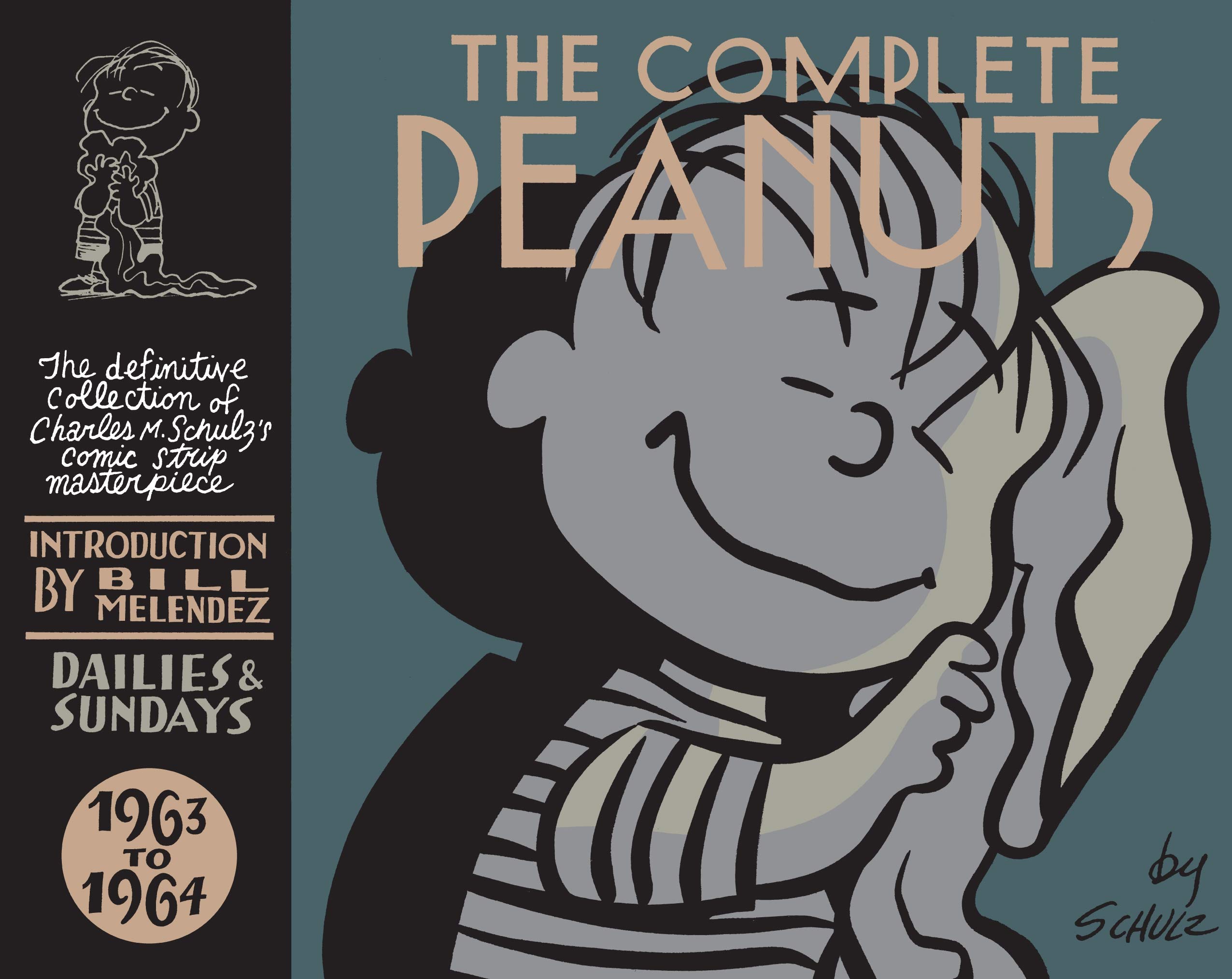
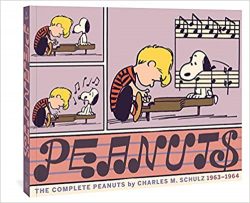
The Complete Peanuts volume 7: 1963-1964


By Charles M. Schulz (Fantagraphics Books/Canongate Books UK)
ISBN: 978-1-56097-723-0 (HB) 978-1683960058 (US PB) 978-1847678140 (UK HB)

Peanuts is unequivocally the most important comic strip in the history of graphic narrative. It is also the most deeply personal. Cartoonist Charles M Schulz crafted his moodily hilarious, hysterically introspective, shockingly philosophical surreal epic for half a century: 17,897 strips from October 2nd 1950 to February 13th 2000. He died from the complications of cancer the day before his last strip was published…

At its height, the strip ran in 2,600 newspapers, translated into 21 languages in 75 countries. Many of those venues are still running perpetual reprints, as they have ever since his death. In his lifetime, book collections, a merchandising mountain and television spin-offs had made the publicity-shy artist a billionaire.

None of that really matters. Peanuts – a title Schulz loathed, but one the syndicate forced upon him – changed the way comics strips were received and perceived: proving cartoon comedy could have edges and nuance as well as pratfalls and punchlines.

Following animator Bill Melendez’s Foreword – relating how he became the TV arm of the Peanuts phenomenon – the timeless episodes of play, peril, psychoanalysis and personal recrimination resume as ever in marvellous monochrome, with more character introductions, plot advancements and the creation of even more traditions we all revere to this day…

As ever our focus is quintessential inspirational loser Charlie Brown who, with increasingly fanciful, high-maintenance mutt Snoopy, remain largely at odds with a bombastic, mercurial supporting cast, all hanging out doing what at first sight seems to be Kids Stuff.

As always, daily gags centre on playing, musical moments, pranks, interpersonal alignments and a seasonal selection of sports, all leavened by agonising teasing, aroused and crushed hopes, the making of baffled observations and occasionally acting a bit too much like grown-ups.

However, with this tome, the themes and tropes that define the series (especially in the wake of those animated TV specials) become mantra-like yet endlessly variable. A consistent theme is Charlie Brown’s inability to fly a kite, and here the never-ending war with wind, gravity and landscape reaches absurdist proportions…

Mean girl Violet, prodigy Schroeder, self-taught psychoanalyst and world dictator-in-waiting Lucy van Pelt, her brilliantly off-kilter little brother Linus and dirt-magnet Pig-Pen” are fixtures honed to generate joke-routines and gag-sequences around their own foibles, but some early characters – like Shermy and Patty – gradually disappear as new attention-attracting players join the mob. Here that’s thoroughly modern lad “5” and his forward-looking non-conformist family “the 95472s”…

At least Charlie Brown’s existential crisis/responsibility vector/little sister Sally has settled into being just another trigger for relentless self-excoriation. As she grows, pesters librarians, forms opinions and propounds steadfastly authoritarian views, he is increasingly relegated to being her dumber, yet always protective, big brother…

Resigned – almost – to life as an eternal loser singled out by cruel and capricious fate, the Boy Brown is helpless meat in the clutches of openly sadistic Lucy. When not playfully sabotaging his efforts to kick a football, she monetises her spiteful verve via a 5¢ walk-in psychoanalysis booth: ensuring that whether at play, in sports, flying that kite or just brooding, the round-headed kid truly endures the character-building trials of the damned…

At least she’s consistent and equally mean to all. Over these two years, her campaign to curb that weird beagle and cure her brother of his comfort blanket addiction reaches astounding heights and appalling depths – such as when she wins a school science fair by exhibiting Linus as a psychological case study.

This volume opens and closes with many strips riffing on snow, and with Lucy constantly and consistently sucking all the joy out of the white wonder stuff…

Her family ally in the Blanket War is Grandma, but that never-pictured elder’s efforts to decouple Linus from the fabric comforter that sustains him in the worst of times are becoming easier to counter, even as Snoopy’s schemes to swipe the shroud become more elaborate and effective…

Lucy also finds time to master skipping and train others in the wonders of her “jump rope”, but ultimately her unflinchingly high standards lead to accusations of “crabbiness”. The prodigy cannot, however, master the intricacies of kicking a football herself, to the woe of all around her…

Perpetually sabotaged, and facing abuse from every female in his life, Charlie Brown endures fresh hell in the form of smug, attention-seeking Frieda, who demands constant approval for her “naturally curly hair” and champions the cause of shallow good looks over substance. Even noble Snoopy is threatened, as she drags – literally – her boneless, functionally inert but still essentially Feline cat Faron into places where cats just don’t belong. When not annoying the ever-hungry, entertainment-starved beagle, Frieda constantly cajoles the unconventional hound into chasing rabbits like a real dog!

Endless heartbreak ensues once Charlie Brown foolishly lets slip his closet romantic aspirations regarding the “little red-haired girl”: a fascination outrageously exploited by others whenever the boy doesn’t simply sabotage himself…

With great effect, Schulz began assiduously celebrating more calendar occasions as perennial events in the feature: adding Mothers and Fathers’ Days, the Fourth of July and National Dog Week strips to established yearly milestones like Christmas, St. Valentine’s Day, Easter, Halloween/Great Pumpkin Day and Beethoven’s Birthday.

Other notable events include persistent scholastic prevarications and a futile quest to attain that one elusive baseball bubble-gum card for Charlie’s set (Joe Shlabotnik, if you have a spare…), and the gang’s epic and sustained attempt to clean Snoopy’s labyrinthine multistorey doghouse.

At this time, the beagle was growing into the true star of the show, with his primary quest for more and better food playing out against an increasingly baroque inner life, wild encounters with birds, dance marathons, philosophical ruminations, and evermore popular catchphrases. Here, that sense of untrammelled whimsy leads to drama and rabies shots for Snoopy…

Sports injuries play a major role too, with baseball manager/pitcher Charlie Brown benched by “Little Leaguers elbow”, leading to a winning streak for the team. The event also spawns a late diagnosis of “eraserophagia” (nervous chewing of school pencil rubbers). At least the gang gamely rally round, with Linus becoming a lauded sporting superstar of the pitcher’s mound, whilst all and sundry are happy to scream at Charlie whenever he puts a pencil anywhere near his mouth…

The bizarre beagle magnified his strange interior development in all ways. Other than an extended Cold War duel for possession of the cherished comfort blanket, the manic mutt adapted to that darn cat and sundry rabbits but still made time to philosophise, eat, dance like a dervish, stand on his head, converse with falling leaves, play with sprinklers, befriend and battle birds, eat more, stoically brave the elements and discover the potent power of placards and marches…

The Sunday page had debuted on January 6th 1952: a standard half-page slot offering more measured fare than regular 4-panel dailies. Thwarted ambition, sporting failures, explosive frustration – much of it kite-related – and Snoopy’s inner life became the segment’s signature denouements as these weekend wonders afforded Schulz room to be at his most visually imaginative, whimsical and weird…

Particular moments to relish this time involve an increasingly defined, sharply-cornered romantic triangle involving Lucy, Schroeder and Beethoven; Charlie Brown’s backyard camping excursions; copious “pencil-pal” communications; poor penmanship; the power of television and decline of comic books; Lucy’s invention of “immoral” sporting tactics; an outbreak of tree-climbing in advance of the regular autumnal leaf collapse; horrendous rainfall; the growth of avian protest marches; Linus’ mural of the Story of Civilisation and eventual run for School President (with Charlie Brown as Veep!) and a new feature declaring what “Happiness Is…” at the start of each Sunday strip…

To wrap it all up, Gary Groth celebrates and deconstructs the man and his work in ‘Charles M. Schulz: 1922 to 2000’, preceded by a copious ‘Index’ offering instant access to favourite scenes you’d like to see again…

Readily available in hardcover, paperback and digital editions, this volume guarantees total enjoyment: comedy gold and social glue metamorphosing into an epic of spellbinding graphic mastery that still adds joy to billions of lives, and continues to make new fans and devotees long after its maker’s passing.
The Complete Peanuts © 2007, United Features Syndicate, Ltd. 2014 Peanuts Worldwide, LLC. The Foreword is © 2006, Bill Melendez. “Charles M. Schulz: 1922 to 2000” © 2007 Gary Groth. All rights reserved.

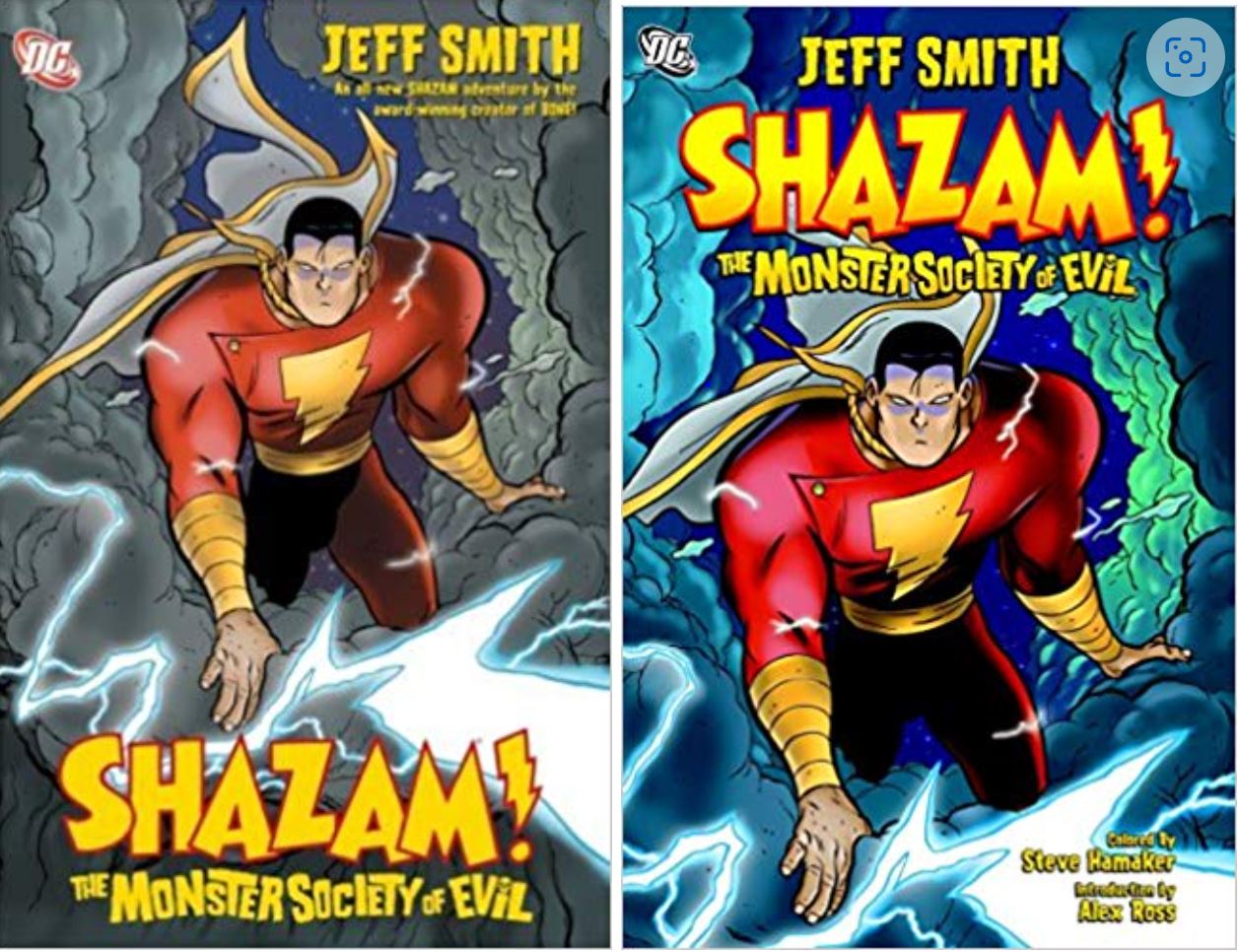
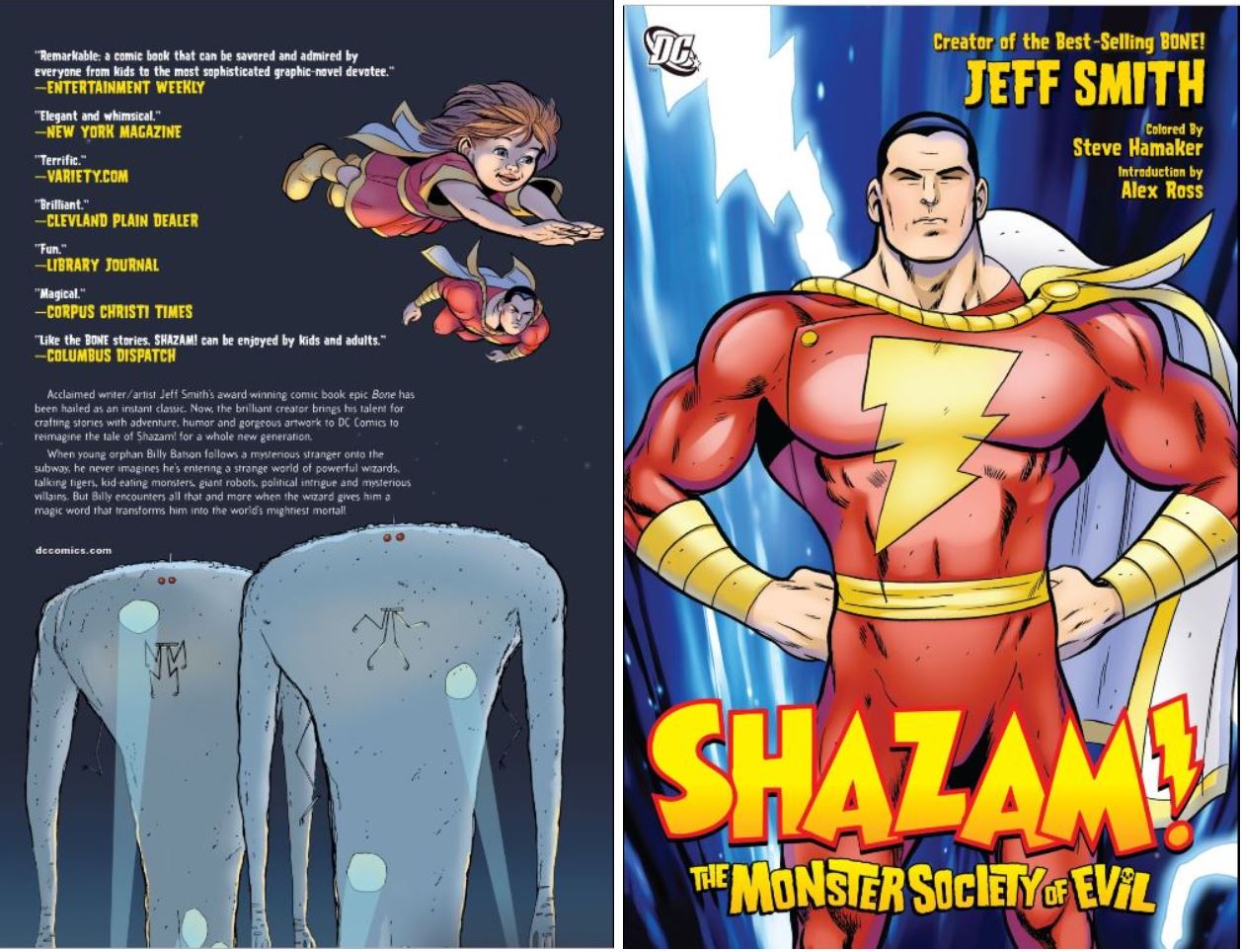
Shazam!: The Monster Society of Evil


By Jeff Smith, coloured by Steve Hamaker (DC Comics)
ISBN: 978-1-4012-1466-1 (HB) 978-1-4012-0974-2 (TPB/Digital edition)

With the long awaited Shazam movie sequel flashing imminently into view, I’m seizing the opportunity to plug a few of better books old and new starring “the Big Red Cheese”. As far as all-ages material goes, modern superhero comics don’t get better than this…

In a tale originally published as a 4-issue prestige format miniseries in 2007, Jeff Smith (Bone, RASL, Little Mouse Gets Ready, Tüki: Save the Humans) came the closest yet to recapturing the naive yet knowing charm that made the original Captain Marvel – AKA the World’s Mightiest Innocent – far and away the most successful super-character of the Golden Age. Moreover, this epic yet accessible reworking still stands as of one of his greatest adventures…

So, with the latest screen interpretation set to bust all the blocks, it’s well past time to take one more look at the glorious beast – especially as its still available in assorted physical and digital formats.

Following an adulatory Introduction from Alex Ross, the trip back to our communal childhoods kicks off with a scene of appalling deprivation and terror…

Billy Batson is a little homeless boy with a murky past and a glorious destiny. One night, he follows a mysterious figure into an abandoned subway station and meets the wizard Shazam, who gives him the ability to turn into a full-grown superhero called Captain Marvel. Gifted with the wisdom of Solomon, the strength of Hercules, the stamina of Atlas, the power of Zeus, the courage of Achilles and the speed of Mercury, the lad is sent into the world to do good.

Accompanied by verbose tiger-spirit Mr. Tawky Tawny, Billy sets out to find a little sister he never knew he had, and even parlays himself into a job as a source for TV reporter Helen Fidelity

He sets to, fighting evils big and small, but at his heart he’s still just a kid. Thus, when Billy impetuously causes a ripple in the world’s magical fabric, it causes cosmic conniptions that endanger the universe. So, after he finally tracks down his little sister, he accidentally shares (some of) his powers with her and suffers the ignominy of having her be better at the job than he is…

The neophyte champion also encounters evil genius Dr. Sivanna, US Attorney General and would-be ruler of the universe, and the deadly and hideous minions of the mysterious Mr. Mind, whose Monster Society of Evil is dedicated to wiping out humanity! Can he make amends and save the day… Maybe, if Mary Marvel helps…

The original saga this gem is loosely based on ran from 1943-1946 in Captain Marvel Adventures #22-46: a boldly ambitious and captivating chapter-play in the manner of popular movie serials of the day, and still regarded as one of the most memorable achievements of Golden Age comicbooks.

It’s fairly safe to say that this reworking will stay in people’s hearts and minds for a good long time, too. It certainly spawned an excellent spin-off series which I’ll be covering soon, just to cash in on the movie…

Jeff Smith accomplished the impossible here. He (re)created a superhero tale for all ages and returned some part of the genre to the children for whom it was originally intended. Shazam! The Monster Society of Evil is exciting, spectacular, moving and unselfconscious: revelling in the power of its own roots and the audience’s unbridled capacity for joy.

If you can track down the hardback volume, it’s stuffed with added features. The dust jacket opens into a truly magical double-sided poster, there are sketch and script pages for the reader with industry aspirations, biographies and historical sections, a lavishly illustrated production journal, puzzles and even a modern version of the secret code used as a circulation builder in the 1940s. Most importantly though, and irrespective of what iteration you get, it is the mesmerising quality of the story and artwork that you’ll remember, forever.

Words are cheap and I’ve used enough: now you do yourself a big favour and get this truly magical, utterly marvellous book.
© 2009 DC Comics. All Rights Reserved.

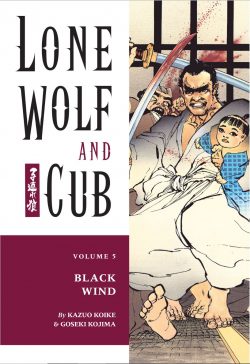
Lone Wolf volume 5: Black Wind


By Kazuo Koike & Goseki Kojima, translated by Dana Lewis (Dark Horse Manga)
ISBN: 978-1-56971-506-8 (TPB/digital edition)

Best known in the West as Lone Wolf and Cub, the vast Samurai saga created by Kazuo Koike & Goseki Kojima is without doubt a global classic of comics literature. An example of the popular Chanbara or “sword-fighting” genre of print and screen, Kozure Okami was first serialised in Weekly Manga Action from September 1970 until April 1976. It was an immense and overwhelming Seinen (“Men’s manga”) hit…

The tales prompted thematic companion series Kubikiri Asa (Samurai Executioner) which ran from 1972-1976, but the major draw – at home and, increasingly, abroad – was always the nomadic wanderings of doomed noble Ōgami Ittō and his solemn, silent child.

Revered and influential, Kozure Okami was followed after years of supplication by fans and editors by sequel Shin Lone Wolf & Cub (illustrated by Hideki Mori) and even spawned – through Koike’s indirect participation – science fiction homage Lone Wolf 2100 by Mike Kennedy & Francisco Ruiz Velasco…

The original saga has been successfully adapted to most other media, spawning movies, plays, TV series (plural), games and merchandise. The property is infamously still in Hollywood pre-production…

The several thousand pages of enthralling, exotic, intoxicating narrative art produced by these legendary creators eventually filled 28 collected volumes, beguiling generations of readers in Japan and, inevitably, the world. More importantly, their philosophically nihilistic odyssey – with its timeless themes and iconic visuals – has influenced hordes of other creators. The many manga, comics and movies these stories have inspired around the globe are impossible to count. Frank Miller, who illustrated the cover of this edition, referenced the series in Daredevil, his dystopian opus Ronin, The Dark Knight Returns and Sin City. Max Allan Collins’ Road to Perdition is a proudly unashamed tribute to the masterpiece of vengeance-fiction.

Stan Sakai has superbly spoofed, pastiched and celebrated the wanderer’s path in his own epic Usagi Yojimbo, and even children’s cartoon shows such as Samurai Jack are direct descendants of this astounding achievement of graphic narrative. The material has become part of a shared world culture.

In the West, we first saw the translated tales in 1987, as 45 Prestige Format editions from First Comics. That innovative trailblazer foundered before getting even a third of the way through the vast canon, after which Dark Horse Comics acquired the rights, systematically reprinting and translating the entire epic into 28 tankōbon-style editions of around 300 pages each. Once the entire epic was translated – between September 2000-December 2002 – it was all placed online through the Dark Horse Digital project.

Following cautionary warning ‘A Note to Readers’ – on stylistic interpretation – this moodily morbid monochrome collection truly gets underway, keeping many terms and concepts western readers may find unfamiliar. Therefore this edition offers at the close a Glossary providing detailed context on the term used in the stories…

Set in the era of the Tokugawa Shogunate, the saga concerns a foredoomed wandering killer who was once the Shōgun’s official executioner the Kōgi Kaishakunin: capable of cleaving a man in half with one stroke. An eminent individual of esteemed imperial standing, elevated social position and impeccable honour, Ōgami Ittō lost it all and now roams feudal Japan as a doomed soul hellbent for the dire, demon-haunted underworld of Meifumadō.

When the noble’s wife was murdered and his clan dishonoured thanks to the machinations of the treacherous, politically ambitious Yagyū Clan, the Emperor ordered Ogami to commit suicide. Instead he rebelled, choosing to be a despised Ronin (masterless samurai) assassin, pledged to revenge himself until all his betrayers were dead …or Hell claimed him.

His 3-year-old son, Daigorō, also chose the path of destruction and thus they together tread across the grimly evocative landscapes of Japan, one step ahead of doom, with death behind and before them…

Unflinching formula informs early episodes: the acceptance of a commission to kill an impossible target necessitates forging a cunning plan where relentless determination leads to inevitable success. Throughout each episode plot is underscored with bleak philosophical musings alternately informed by Buddhist teachings in conjunction with or in opposition to the unflinching personal honour code of Bushido…

That tactic is eschewed for a simple commission in opening tale ‘Trail Markers’ as Yagyū leaders plot how to remove the wanderer without incurring the severe penalties built into the social caste system. The disgraced ronin is protected by his own lowly status and a promise of truce unless he returns to Edo but has still found ways to frustrate clan ambitions. The situation has already cost dozens of proud warriors who foolishly sought out the Lone Wolf. And now the Emperor wants to investigate Yagyū activities…

With pressure mounting, schemers Yagyū-Sama and Ozunu agree to orchestrate a duel between Ōgami and infallible swordsman Yagyū Gunbei-Sama

Using the wolf’s own complex graphic signalling system, the ploy unfolds, luring the assassin to a certain shrine where instead of another commission, he meets the man he supposedly cannot defeat: the one who should have been the Shōgun’s executioner in his stead.

Now as they face off, Gunbei relives the haughty error that cost him the exalted position of Kōgi Kaishakunin and learns to his eternal but brief regret that whilst he might be as good as he ever was, his opponent has grown even better. Moreover, Yagyū spies watching also take note and make more plans…

At this time bounty hunting was commonplace and ‘Executioner’s Hill’ sees the terrifying but currently unemployed Zodiac Gang use their deserved notoriety to terrorise a village whilst looking for fresh prey. Tragically for them, they recognise the “wolf with baby carriage” and overconfidently assume numerical advantage, a strategic geographical position, their own skills and Daigorō as a hostage will be sufficient to bag the biggest prize of their lives…

They were wrong.

When not expediting commissions the father and son vanished into the unnoticed common population invisible to the nobility. A moment of peace and therapeutically hard but honest work is abruptly curtailed when – whilst toiling to plant rice in paddies beside simple but happy villagers – the able-bodied stranger is pressganged by the local lord to build levees in advance of an expected flood…

Like a ‘Black Wind’ (one unexpected and out of season) the act has unforeseen consequences as the aristocrats – incensed by a highborn man demeaning himself (and all nobles) by digging in the dirt beside commoners – deploy warriors to avenge the shameful act and instead fall like harvested crops…

Every role in Japanese society was strictly proscribed and formalised. Certain executed persons were suitable candidates for O-Tomeshi when headless corpses would be used to test and sanctify swords. The swordsmen capable of holding the post were reputed to be as proficient with the sword as the Kōgi Kaishakunin…

As the investigation of the Yagyū’s role in Ōgami Ittō’s disgrace proceeds, the honourable Yamada Asaemon is ordered by shogunate Wakadoshiryori officials to look into the affair. However, ‘Decapitator Asaemon’ is disquieted by the final codicil of his mission: whatever the truth, the shameful behaviour of the Lone Wolf must end with his death…

The court is alive with intrigue and even before he has found his target, Yamada Asaemon is being hunted by Ura-Yagyū assassins…

Their sinister trap catches only one man of honour…

This medieval masterpiece closes with another convoluted tale of duty sullied as ‘The Guns of Sakai’ finds Inoue Geki – commander of Ōsaka castle’s rifle detachment – covertly hiring the nomadic assassin to kill one of the gunsmiths in his employ after discovering Shichirōbei has been making firearms for the rival Western Han.

The job is no simple affair. Somehow the well-set and protected traitor has exposed every spy set on his trail and the dutiful commander is desperate. He’s also not being completely straight with the Lone Wolf, but Ōgami is well aware of the fact and has a plan and ulterior aim of his own: possession of the experimental supergun he knows the master smith and his acolytes have perfected…

Set in a fiercely uncompromising world of tyranny, intrigue, privilege and misogyny, these episodes are unflinching and explicit in their treatment of violence – especially sexual violence – although this collection has the dubious distinction of being rape-free. Still plenty of slaughter though, and an astounding body-count…

Whichever English transliteration you prefer – Wolf and Baby Carriage is what I was first introduced to – Kazuo Koike & Goseki Kojima’s grandiose, thought-provoking, hell-bent Samurai tragedy is one of those too-rare breakthrough classics of global comics literature. A breathtaking tour de force, these are comics you must not miss.
Art & story © 1995, 2001 Kazuo Koike & Goseki Kojima. Cover art © 2001 Frank Miller. All other material © 2001 Dark Horse Comics, Inc. All rights reserved.
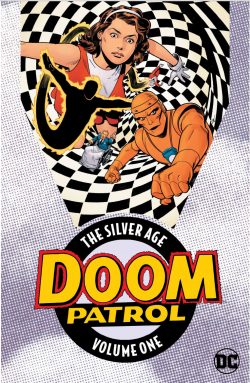
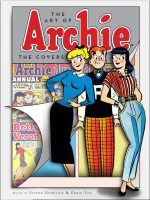
The Art of Archie: The Covers


By various, edited by Victor Gorelick & Craig Yoe (Archie Books)
ISBN: 978-1-936975-79-2 (HB/Digital edition)

For most of us, comics mean buff men and women in capes and tights hitting each other, lobbing trees about, or stark, nihilistic genre thrillers aimed at an extremely mature and sophisticated readership of confirmed fans – and indeed that has been the prolific norm for nearly twenty years.

However, over the decades since 1933 when comic books were invented, other forms of sequential illustrated fiction genres have held their own. One that has maintained a unique position over the years – although almost now completely transferred to television – is the teen-comedy genre begun by and synonymous with a carrot topped, homely (at first just plain ugly) kid named Archie Andrews.

MLJ were a small outfit which jumped wholeheartedly onto the superhero bandwagon following the debut of Superman. In November 1939 they launched Blue Ribbon Comics, promptly following with Top-Notch and Pep Comics. The content was the accepted blend of costumed heroes, two-fisted adventure strips and one-off gags. Pep made history with its lead feature The Shield – the industry’s first superhero clad in the American flag – but generally MLJ were followers not innovators.

That all changed at the end of 1941. Even while profiting from the Fights ‘n’ Tights phalanx, Maurice Coyne, Louis Silberkleit and John Goldwater (hence MLJ) spotted a gap in their blossoming market and in December the action strips were joined by a wholesome, ordinary hero; an “average teen” who had invitingly human-scaled adventures that might happen to the readers, but with the laughs, good times, romance and slapstick heavily emphasised.

Pep Comics #22 introduced a gap-toothed, freckle-faced, red-headed goof showing off to the pretty blonde next door. Taking his lead from the popular Andy Hardy movies starring Mickey Rooney, Goldwater developed the concept of a youthful everyman, tasking writer Vic Bloom & artist Bob Montana with the job of making it work.

So effective and all-pervasive was the impact and comforting message the new kid offered to the boys “over there” and those left behind on the Home Front that Archie and the wholesome image of familiar, beloved, secure Americana he and the Riverdale gang represented, one could consider them the greatest and most effective Patriotic/Propaganda weapon in comics history…

It all started with an innocuous 6-page tale entitled ‘Archie’ which introduced the future star and pretty girl-next-door Betty Cooper. Archie’s unconventional best friend and confidante Forsythe P. “Jughead” Jones also debuted in that first story, as did the small-town utopia they lived in.

The premise was an instant and ever-growing hit. In 1942 the feature graduated to its own title. Archie Comics #1 was the company’s first non-anthology magazine and began an inexorable transformation of the entire company. With the introduction of rich, raven-haired Veronica Lodge, all the pieces were in play for the industry’s second Phenomenon (Superman being the first).

By May 1946 the kids had taken over and, retiring its costumed champions years before the end of the Golden Age, MLJ rebranded, renamed itself Archie Comics, and became to all intents and purposes a publisher of family comedies. This overwhelming success, like the Man of Tomorrow’s, forced a change in the content of every other publisher’s titles and led to a multi-media industry including a newspaper strip, TV, movies, pop-songs and even a chain of restaurants. Intermittently the costumed cut-ups have returned on occasion but Archie Comics now seems content to specialise in what they do uniquely best…

Our eponymous high-schooler is a good-hearted lad lacking common sense and Betty – pretty, sensible, devoted girl next door, with all that entails – loves the ridiculous redhead. Ronnie is spoiled, exotic and glamorous and only settles for our boy if there’s nobody better around. She might actually love him too, though. Archie, of course, can’t decide who or what he wants…

This never-tawdry eternal triangle has been the basis of seventy years of charmingly raucous, gently preposterous, frenetic, chiding and even heart-rending comedy encompassing everything from surreal wit to frantic slapstick, as the kids and an increasing cast of friends grew into an American institution.

Adapting seamlessly to every trend and fad, perfectly in tone with and mirroring the growth of teen culture, the host of writers and artists who have crafted the stories over the decades have made the archetypal characters of Riverdale a benchmark for youth and a visual barometer of growing up American.

Archie’s unconventional best friend Jughead is Mercutio to Archie’s Romeo: providing rationality and a reader’s voice, as well as being a powerful catalyst of events in his own right. There’s even a likeably reprehensible Tybalt figure in the crafty form of Reggie Mantle – who first popped up to cause mischief in Jackpot Comics #5 (Spring 1942).

This beguiling triangle edifice (plus annexe and outhouse) has been the rock-solid foundation for eight decades of comics magic. …and the concept seems eternally self-renewing and self-perpetuating…

Archie has thrived by constantly reinventing its core characters, seamlessly adapting to the changing world outside the bright, flimsy pages, shamelessly co-opting youth, pop culture and fashion trends into its infallible mix of slapstick and young romance.

Each and every social revolution has been painlessly assimilated into the mix with the editors tastefully confronting a number of social issues affecting the young in a manner both even-handed and tasteful over the years.

The cast is always growing and the constant addition of new characters such as African-American Chuck (an aspiring cartoonist), his girlfriend Nancy, fashion-diva Ginger, Hispanic couple Frankie & Maria and a host of others like spoiled wild-child home-wrecker-in-waiting Cheryl Blossom, and Kevin Keller, an openly gay young man and clear-headed advocate, capably tackling and dismantling the last major taboo in mainstream comics.

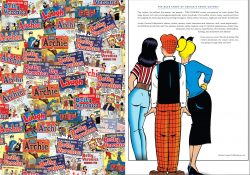
A major component of the company’s success has been the superbly enticing artwork and especially the unmistakable impact afforded via the assorted titles’ captivating covers.

This spectacular compilation (a companion and sequel to 2010s Betty & Veronica collection) traces the history and evolution of the wholesome phenomenon through many incredible examples from every decade. Augmented by scads of original art, fine art and commercial recreations, printer’s proofs and a host of other rare examples and graphic surprises no fan of the medium could possibly resist, this huge hardback (312 x 235mm) and digital delight re-presents hundreds of funny, charming, intriguing and occasionally controversial images as well as background and biographies on the many talented artists responsible for creating them.

Moreover, also included are many original artworks – gleaned from the private collections of fans – scripts, sketches, gag-roughs, production ephemera from the initial art-to-finished-cover process, plus an extensive, educational introductory commentary section stuffed with fascinating reminiscences and behind-the-scenes anecdotes.

The picture parade begins with some thoughts from the brains behind the fun as ‘It’s a Gift’ by Publisher/Co-CEO Jon Goldwater and ‘You Can Judge a Book by its Cover!’ by Editor-in-Chief/Co-President Victor Gorelick. Then ‘On the Covers’ issues guidance from cartoonist, Comics Historian and perpetrator Craig Yoe before taking us to the 1940s where ‘In the Beginning…’ details the story of Archie with relevant covers and the first of a recurring feature highlighting how later generations of artists have recycled and reinterpreted classic designs.

‘A Matchless Cover’ leads into the first Artist Profile – ‘Bob Montana’ – incorporating a wealth of cracking Golden Age images in ‘Who’s on First!’ before chapters dedicated to specific themes and motifs commence with a celebration of beach scenes ‘In the Swim’, after which artist ‘Bill Vigoda’ steps out from behind his easel and into the spotlight.

‘Deja Vu All Over Again’ further explores the recapitulation of certain cover ideas before ‘Rock ‘n’ Roll!’ examines decades of pop music and “guest” stars such as the Beatles, whilst ‘Archie’s Mechanically Inclined’ probes a short-lived dalliance with an early form of home DIY magazines.

The life of veteran illustrator ‘Al Fagaly’ leads into a selection of ‘Fan Faves’ ancient and modern before the biography of ‘Harry Sahle’ segues neatly into a selection of cheerleading covers in ‘Let’s Hear It for The Boy!’

It wasn’t long after the birth of modern pop music that the Riverdale gang formed their own band and ‘Ladies and Gentlemen, The Archies!’ focuses on those ever-evolving musical prodigies with scenes from the Swinging Sixties to the turbulent Rap-ridden 21st century, after which the history ‘Joe Edwards’ leads into a barrage of smoochy snogging scenes in ‘XOXOXO!’

Always a keen follower of fads and fashions. the Archie crowd embraced many popular trends and ‘Monster Bash!’ concentrates on kids’ love of horror and recurring periods of supernatural thrills, after which a bio of ‘Dan Parent’ leads unerringly to more ‘Celebrity Spotting!’ with covers featuring the likes of George Takei, Michael Jackson, Simon Cowell, J-Lo, Kiss, the casts of Glee and Twilight, and even President Barack Obama. all eagerly appearing amongst so very many others.

‘Art for Archie’s Sake’ dwells on the myriad expressions of junior painting and sculpture and, after the life story of the sublimely gifted ‘Harry Lucey’, ‘The Time Archie was Pinked Out!’ details the thinking behind the signature logo colour schemes used in the company’s pre-computer days.

‘Life with Archie’s a Beach!’ takes another look at the rise of teenage sand and surf culture through the medium of beautifully rendered, scantily clad boys and girls, whilst – after the lowdown on writer/artist ‘Fernando Ruiz’ ‘Dance! Dance! Dance!’ follows those crazy kids from Jitterbug to Frug, Twisting through Disco and ever onwards…

‘The Happiest of Holidays’ highlights the horde of magical Christmas covers Archie, Betty and Ronnie have starred on whilst ‘Rhyme Time’ reveals the odd tradition of poetry spouting sessions that have been used to get fans interested and keep them amused.

A history of the inimitable ‘Samm Schwartz’ precedes a look at classroom moments in ‘Readin’, Writin’, an’ Archie – with a separate section on organised games entitled ‘Good Sports!’ – after which the life of legendary art star ‘Dan DeCarlo’ neatly leads to another selection of fad-based fun as ‘That’s Just Super!’ recalls the Sixties costumed hero craze, as well as a few other forays into Fights ‘n’ Tights fantasy…

‘Let’s Get this Party Started’ features covers with strips rather than single images and is followed by a biography of ‘Bob Bolling’ before ‘A Little Goes a Long Way!’ concentrates on the assorted iterations of pre-teen Little Archie comics. This is then capped by the eye-popping enigma of teen taste as visualised in the many outfits over changing decades revealing ‘A Passion for Fashion’

‘Come as You Aren’t’ is devoted to the theme of fancy dress parties after which the modern appetite for variant covers is celebrated in ‘Alternate Realities’ (with stunning examples from Fiona Staples, Tim Seeley and Walter Simonson amongst others) all wrapped up by the gen on artistic mainstay ‘Bob White’.

The entire kit and caboodle then concludes with an assortment of surreal, mindblowing covers defying categorisation or explanation in ‘And Now, For Something Completely Different’, proving that comics are still the only true home of untrammelled imagination: featuring scenes that literally have to be seen to be believed…

Enchanting, breathtaking graphic wonderment, fun-fuelled family entertainment and enticing pop art masterpieces, these unforgettable cartoon confections truly express the joyous spirit of intoxicating youthful vitality which changed the comic industry forever and comprise an essential example of artistic excellence no lover of narrative art should miss.

Spanning the entire history of American comicbooks and featuring vintage images, landmark material and up-to-the-minute modern masterpieces, this is a terrific tome for anybody interested in the history of comics, eternally evergreen light laughs and the acceptable happy face of the American Dream.
™ & © 2013 Archie Comics Publications, Inc. All rights reserved. All covers previously published and copyrighted by Archie Comic Publication, Inc. (or its predecessors) in magazine form in 1941-2013.

Bluecoats: The Dirty Five


By Willy Lambil & Raoul Cauvin, translated by Jerome Saincantin (Cinebook)
ISBN: 978-1-80044-004-3 (Album PB/Digital edition)

Devised by Louis “Salvé” Salvérius & Raoul Cauvin – who scripted the first 64 volumes until retirement in 2020 – Les Tuniques Bleues (or Dutch co-incarnation De Blauwbloezen) debuted at the end of the 1960s: created to replace Lucky Luke when that laconic maverick defected from weekly anthology Le Journal de Spirou to rival publication Pilote.

From its first sallies, the substitute strip swiftly became hugely popular: one of the most popular bande dessinée series in Europe. In case you were wondering, it is now scribed by Jose-Luis Munuera and the BeKa writing partnership…

Salvé was a cartoonist of the Gallic big-foot/big-nose humour school, and after his sudden death in 1972, successor Willy “Lambil” Lambillotte gradually adopted a more realistic – but still overtly comedic – tone and manner. Lambil is Belgian, born in 1936 and, after studying Fine Art in college, joined publishing giant Dupuis in 1952 as a letterer.

Born in 1938, scripter Cauvin was also Belgian and – before entering Dupuis’ animation department in 1960 – studied Lithography. He soon discovered his true calling was comedy and began a glittering, prolific writing career at Le Journal de Spirou.

In addition, he scripted dozens of long-running, award winning series including Cédric, Les Femmes en Blanc and Agent 212: more than 240 separate albums. Les Tuniques Bleues alone has over 15 million copies of its 66 (and counting) album sequence. Cauvin died on August 19th 2021, but his vast legacy of barbed laughter remains.

Here, designated The Bluecoats, our long-suffering protagonists are Sergeant Cornelius Chesterfield and Corporal Blutch; worthy, honest fools in the manner of Laurel & Hardy: hapless, ill-starred US cavalrymen defending America during the War Between the States.

The original format offered single-page gags set around an Indian-plagued Wild West fort, but from second volume Du Nord au Sud the sad-sack soldiers were situated back East, fighting in the American Civil War.

All subsequent adventures – despite often ranging far beyond the traditional environs of the sundered USA and taking in a lot of genuine and thoroughly researched history – are set within the timeframe of the Secession conflict.

Blutch is your run-of-the-mill, whinging little-man-in-the street: work-shy, mouthy, devious and ferociously critical of the army and its inept orchestrators and commanders. Ducking, diving, deserting whenever he can, he’s you or me – except at his core he’s smart, principled and even heroic… if no easier option is available.

Chesterfield is a big, burly professional fighting man; a proud career soldier of the 22nd Cavalry who passionately believes in patriotism and the esprit-de-corps of the Military. He is brave, never shirking his duty and hungry to be a medal-wearing hero. He also loves his cynical little troll of a pal. They quarrel like a married couple, fight like brothers but simply cannot agree on the point and purpose of the horrendous war they are trapped in: a situation that once more stretches their friendship to breaking point in this cunningly conceived instalment.

Coloured by Vittorio Leonardo, Les cinq salopards was originally serialised in Le Journal de Spirou (#2357-2368) before collection into another mega-selling album in 1984: the 33rd European release. In 2020 it was Cinebook’s 14th translated Bluecoats volume.

The Dirty Five offers a lighter touch and more adventuresome fare with the underlying horror salved by a farce-driven mission that degenerates into ridiculously surreal black comedy.

As is so often the case, the Union forces are stalemated with no advance possible. Even the 22nd Cavalry – still under the ruthless leadership of utterly deranged, apparently invulnerable Gentleman maniac Captain Stark – are helpless; reduced after countless pointless assaults to a force of three: Stark himself, Sergeant Chesterfield and poor treacherous Blutch…

With no end in sight and the infantrymen stuck in dugouts, dodging enemy artillery fire, boredom and idiotic orders, the ordinary foot soldiers are infuriatingly idle, forcing the commandeering general into a frenzy of inspiration…

What’s needed is one last push and if they have no cavalry, then volunteers must be found to repopulate the 22nd. Thus, the eager sergeant and appalled corporal are sent out amongst the civilian population to recruit a force of daring horsemen to turn the tide…

The mission has brought the pals to the edge of murder. They are at odds from the start, with the Sergeant proudly keen to recruit new warriors and convinced they will all be happy to die for their country, whilst Blutch is determined not to be the cause of more pointless deaths and maimings…

By the time they leave nearby Frogtown, they are at each other’s throats, mostly thanks to Blutch having frittered away the bribe fund of recruiting cash and “losing” all the enlistment papers signed by the suckers Chesterfield bamboozled with flowery speeches and cheap booze…

The mission is a complete fiasco but takes a decidedly dark turn when they meet a prison guard escorting a group of criminals to their executions. Chesterfield believes it’s the perfect solution to their problem and soon the still-squabbling squaddies are touring Greenbush State Prison looking for a few bad men…

There are plenty, but the job is no done deal. The first convict – a deserter – chooses to stay and be hanged than go back to serve under Stark…

In the end only, five doomed men ostensibly sign up to serve their country, but it soon becomes clear they might not be completely sincere. That’s not Chesterfield’s concern. He knows he’s done his duty once the felons are delivered to the General.

Blutch has more nuanced worries. Apart from the sheer insanity of letting loose – and even arming – religious serial killer Reverend Osgood, obsessive horse thief/cannibal Shorty Fink, karate killer Yang and the murderously psychopathic duo of blind knife thrower Rupert and his lethal human targeting system Abel there’s the purely practical problems of getting the killer quintet back to the front lines: a mammoth task that takes all the soldiers’ individual ingenuity and ultimately unity and teamwork to accomplish.

Of course, once the Bluecoats complete their mission and the Five officially join the 22nd, the real problems begin, not just for the Northern regiments but also for the Confederate forces so defiantly opposing them…

Combining searing satire with stunning slapstick, The Dirty Five mordantly manipulates the traditions of war stories to manifest a beguiling message about the sheer stupidity of war and crushing cruelty of obsessions equally effective in deprogramming younger, less world-weary audiences and even us old lags who have seen it all.

These stories weaponise humour, making occasional moments of shocking verity doubly powerful and hard-hitting. Funny, thrilling, beautifully realised and eminently readable, Bluecoats is the best kind of war-story and Western appealing to the best, not worst, of the human spirit.
© Dupuis 1984 by Lambil & Cauvin. All rights reserved. English translation © 2020 Cinebook Ltd.

Mighty Marvel Masterworks The X-Men volume 2: Where Walks the Juggernauts


By Stan Lee & Jack Kirby, Alex Toth, Werner Roth & various (MARVEL)
ISBN: 978-1-3029-4619-7 (TPB/Digital edition)

These stories are timeless and have been gathered many times so here’s my now-standard advisory on format.

The Mighty Marvel Masterworks line is designed with economy in mind. Classic tales of Marvel – such as birthday boys and girl on show today – have been an archival book staple since the 1990s, but always in lavish, expensive hardback collectors’ editions. The new tomes cited here are far cheaper, on lower quality paper and are smaller, about the dimensions of a paperback book. Your eyesight might be failing and your hands too big and shaky, but at 152 x 227mm, they’re perfect for kids. If you opt for the digital editions, that’s no issue at all…

Way back in 1963 things really took off for the budding Marvel Comics as Stan Lee & Jack Kirby expanded their meagre line of action titles: putting a bunch of relatively new super-heroes (including hot-off-the-presses Iron Man) together as The Avengers; launching a decidedly different war comic in Sgt. Fury and his Howling Commandos and creating a group of alienated heroic teenagers united to fight a rather specific, previously unperceived threat to humanity. Those halcyon days are revisited in this splendid trade paperback/eBook compilation, gathering from May 1965 to April 1966, the contents of X-Men #11-19.

Way back in the summer of 1963, the premiere issue had introduced Cyclops – Scott Summers, IcemanBobby Drake, AngelWarren Worthington III and The Beast AKA Henry “Hank” McCoy: extremely special students of Professor Charles Xavier. He was a brilliant, charismatic and wheelchair-bound telepath dedicated to brokering peace and integration between the masses of humanity and the emergent off-shoot race: human mutants called Homo Superior. The story saw the students welcome newest classmate Jean Grey, who would be codenamed Marvel Girl. She possessed the ability to move objects with her mind.

No sooner has the Professor explained their mission than an actual Evil Mutant – Magneto – singlehandedly took over American missile base Cape Citadel. A seemingly unbeatable threat, the master of magnetism was nonetheless driven off in under 15 minutes by the young heroes on their first combat mission…

These days, young heroes are ten-a-penny, but it should be noted that these kids were among Marvel’s first juvenile super-doers (unless you count Spider-Man or Human Torch Johnny Storm) since the end of the Golden Age, so it’s perhaps unsurprising that in early tales the youngsters regularly benefitted from a little adult supervision, such as is the case in the landmark tale that opens this book and ended an era…

After spectacular starts on most of Marvel’s Superhero titles (as well as western and war revamps), Jack Kirby’s increasing workload compelled him to cut back to laying out most of these lesser lights. Captain America still offered nostalgic fun through astounding action whilst Thor and Fantastic Four evolved into perfect playgrounds and full-time monthly preoccupations for his burgeoning imagination, but illustrating most of Marvel’s covers and creating a House style for the new Age of Superheroes was unforgiving and all-consuming…

The last series to be surrendered was the still-bimonthly X-Men wherein an outcast tribe of mutants worked diligently and clandestinely to foster peace and integration between the unwary masses of humanity and the gradually-emergent “coming race”. The King’s departure in #11 also marked a major turning point. Drenched in irony, ‘The Triumph of Magneto!’ (scripted by Stan Lee & inked by Chic stone) sees our heroes and The Brotherhood of Evil Mutants (Mastermind, The Toad, Quicksilver and The Scarlet Witch) both seeking a fantastically powered being dubbed The Stranger.

None are aware of his true identity, nature or purpose, but when the Master of Magnetism finds him first, it spells the end of his long war with the X-Men…

With Magneto gone and the Brotherhood broken, Kirby relinquished pencilling to other hands, thereafter providing loose layouts and design only. Alex Toth & Vince Colletta proved a quirky, uncomfortable mix for #12’s tense drama ‘The Origin of Professor X!’: opening a 2-part saga introducing Xavier’s bully half-brother Cain Marko. It also told how the simplistic thug was mystically transformation into an unstoppable human engine of destruction.

The story concludes with ‘Where Walks the Juggernaut!’: a compelling, tension-drenched, all-action tale guest-starring Johnny Storm, and notable for the introduction of penciller Werner Roth (using the name Jay Gavin). He would be associated with the mutants for the next half decade. His inker for this first outing was the infallible Joe Sinnott.

Roth was an unsung veteran of the industry, working for the company in the 1950s on star features like Apache Kid and the inexplicably durable Kid Colt, Outlaw, as well as Mandrake the Magician for King Features Comics and Man from U.N.C.L.E. for Gold Key. As with many pseudonymous creators of the period, it was his DC commitments (mostly romance stories) which compelled him to disguise his moonlighting until Marvel grew big enough to offer him full-time work.

From issue #14 – still laid out by Kirby & inked by Colletta – ‘Among Us Stalk the Sentinels!’ celebrated the team’s inevitable elevation to monthly publication in the first episode of a 3-chapter epic introducing anthropologist Bolivar Trask, whose solution to the threat of Mutant Domination was super-robots that would protect humanity at all costs. Sadly, they mechanoids’ definition of “protect” varied wildly from their creator’s, but what can you expect when a social scientist dabbles in high-energy physics and engineering?

The X-Men took the battle to the Sentinels’ secret base but became ‘Prisoners of the Mysterious Master Mold!’ before beating their ferrous foes with ‘The Supreme Sacrifice!’

Veteran Dick Ayers joined as inker from #15: his clean line blending perfectly with Roth’s smoothly classicist pencils. They remained a team for years, adding vital continuity to this quirky but never top-selling series.

X-Men #17 dealt with the aftermath of the battle – the last time the US Army and government openly approved of the team’s efforts – and the sedate but brooding nature of ‘…And None Shall Survive!’ enabled the story to generate a genuine air of apprehension as safe haven and citadel the Xavier Mansion is taken over by an old foe who picks them off one by one until only the youngest remains to battle alone in climactic conclusion ‘If Iceman Should Fail..!’

With Roth fully laying out his own stories, ‘Lo! Now Shall Appear… The Mimic!’ in #19 was Lee’s last script: the pithy, semi-tragic tale of a troubled teen possessing the ability to copy the skills, powers and abilities of anyone in close proximity, but not the emotional maturity to handle his power. The writing reins were turned over to Roy Thomas in #20.

X-Men was never one of young Marvel’s top titles but it found a devout and dedicated following as the frantic, freakish energy of Kirby’s heroic dynamism comfortably transited into the slick, sleek attractiveness of Roth and the fierce tension of hunted, haunted juvenile outsiders settled into a pastiche of college and school scenarios so familiar to the students who were the series’ main audience, but that’s the meat of the next volume…

Supplemented by covers from Kirby, Stone, Frank Giacoia, Sinnott, Wally Wood, Dick Ayers & Roth, the extras here comprise the art for a 1965 X-Men T-shirt by Kirby & Stone and a copious gallery of original art pages – by Kirby & Stone, Toth & Colletta &Roth & Ayers – plus a compelling contemporary house ad from August 1965 picturing all 13 Marvel Masterpieces on sale that month!

These quirky tales are a million miles removed from the angst-ridden, breast-beating, cripplingly convoluted X-brand of today’s Marvel, and in so many ways are all the better for it. Superbly rendered, highly readable adventures are never unwelcome or out of favour, and it should be remembered that everything here informs so very much of the mutant monolith. These are stories for dedicated fans and rawest converts. Everyone should have this book.
© 2022 MARVEL.

Doom Patrol: Silver Age volume 1


By Arnold Drake, Bob Haney, Bruno Premiani, Bob Brown & various (DC Comics)
ISBN: 978-1-4012-8111-3 (TPB/Digital edition)

1963 was the year when traditionally cautious comic book publishers finally realised that superheroes were back in a big way and began reviving and/or creating a host of costumed characters to battle outrageous menaces and dastardly villains.

Thus it was that the powers-that-be at National Comics decided that venerable adventure-mystery anthology title My Greatest Adventure would dip its toe in the waters with a radical take on the fad. Still, infamous for cautious publishing, they introduced a startling squad of champions with its thematic roots still firmly planted in the B-movie monster films of the era that had not-so-subtly informed the parent comic.

No traditional team of masked adventurers, this cast comprised a robot, a mummy and an occasional 50-foot woman, who joined forces with and were guided by a vivid, brusque, domineering, crippled mad scientist to fight injustice in a whole new way…

Covering June 1963 to May 1965, this stunning compilation collects the earliest exploits of the “Fabulous Freaks”, gathered from My Greatest Adventure #80-85 and thereafter issues #86-95 of the rapidly renamed title, once overwhelming reader response compelled editor Murray Boltinoff to change it to the Doom Patrol.

These dramas were especially enhanced and elevated by the drawing skills of Italian cartoonist and classicist artist Giordano Bruno Premiani, whose highly detailed, subtly humanistic illustration made even the strangest situation dauntingly authentic and grittily believable.

Eponymous premier tale ‘The Doom Patrol’ was co-scripted by Arnold Drake and Bob Haney, depicting how a mysterious wheelchair-bound scientist summons three outcasts to his home through the promise of changing their miserable lives forever…

Competitive car racer and professional daredevil Cliff Steele had died in a horrific pile up, but his undamaged brain had been transplanted into a fantastic mechanical body. Test pilot Larry Trainor had been trapped in an experimental stratospheric plane and become permanently irradiated by stratospheric radiation, with the dubious benefit of gaining a semi-sentient energy avatar which would escape his body to perform incredible feats for up to a minute at a time. To pass safely amongst men Trainor had to constantly wrap himself in unique radiation-proof bandages…

Former movie star Rita Farr was exposed to mysterious gases which gave her the terrifying, unpredictable and, at first, uncontrolled ability to shrink or grow to incredible sizes.

The outcasts were brought together by brilliant but enigmatic Renaissance Man The Chief, who sought to mould the solitary misfits into a force for good. He quickly proved his point when a mad bomber attempted to blow up the city docks. The surly savant directed the trio of strangers in defusing it and no sooner had the misfits realised their true worth than they were on their first mission…

Second chapter ‘The Challenge of the Timeless Commander’, sees an implausibly ancient despot seeking to seize a fallen alien vessel: intent on turning its extraterrestrial secrets into weapons of world conquest, culminating in ‘The Deadly Duel with General Immortus’ which saw the Doom Patrol defeat the old devil and thereafter dedicate their lives to saving humanity from all threats.

My Greatest Adventure #81 featured ‘The Nightmare Maker’, combining everyday disaster response – saving a damaged submarine – with a nationwide plague of monsters. Stuck at base, The Chief monitors missions by means of a TV camera attached to Robotman/Steele’s chest, and quickly deduces the uncanny secret of the beasts and their war criminal creator Josef Kreutz

Solely scripted by Drake, a devious espionage ploy outs the Chief – or at least his image, if not name – in #82’s ‘Three Against the Earth!’, leading the team to believe Rita is a traitor. When the cabal of millionaires actually behind the scheme are exposed as an alien advance guard who assumed the wheelchair-bound leader to be a rival invader, the inevitable showdown nearly costs Cliff what remains of his life…

In #83, ‘The Night Negative Man Went Berserk!’ spotlights the living mummy as a radio astronomy experiment interrupts the Negative Man’s return to Trainor’s body: pitching the pilot into a coma and sending the ebony energy being on a global spree of destruction. Calamity piles upon calamity when crooks steal the military equipment constructed to destroy the radio-energy creature and only desperate improvisation by Cliff and Rita allows avatar and host to reunite…

Issue #84 heralded ‘The Return of General Immortus’ as ancient Babylonian artefacts lead the squad to the eternal malefactor, only to have the wily warrior turn the tables and take control of Robotman. Even though his comrades soon save him, Immortus escapes with the greatest treasures of all time…

My Greatest Adventure #85 was the last issue, featuring ‘The Furies from 4,000 Miles Below’: monstrous subterranean horrors fuelled by nuclear forces. Despite having tricked Elasti-Girl into resuming her Hollywood career, the paternalistic heroes are pretty grateful when she turns up to save them all from radioactive incineration…

An unqualified success, the comic book transformed seamlessly into The Doom Patrol with #86 and celebrated by introducing ‘The Brotherhood of Evil’: an assemblage of international terrorist super-criminals led by French genius-in-a-jar The Brain. He was backed up by his greatest creation, a super-intelligent talking gorilla dubbed Monsieur Mallah.

The diametrically opposed teams first cross swords after brotherhood applicant Mr. Morden steals Rog, a giant robot the Chief constructed for the US military…

DP #87 revealed ‘The Terrible Secret of Negative Man’ after Brotherhood femme fatale Madame Rouge attempts to seduce Larry. When the Brain’s unstoppable mechanical army invades the city, Trainor is forced to remove his bandages and allow his lethal radiations to disrupt their transmissions…

An occasional series of short solo adventures kicked off in this issue with ‘Robotman Fights Alone’. Here Cliff is dispatched to a Pacific island in search of an escaped killer, only to walk into a devastating series of WWII Japanese booby-traps…

All mysteries surrounding the team’s leader are finally revealed in issue #88 with ‘The Incredible Origin of the Chief’: a blistering drama telling how brilliant but impoverished student Niles Caulder suddenly received unlimited funding from an anonymous patron interested in his researches on extending life.

Curiosity drove Caulder to track down his benefactor and he was horrified to discover the money came from the head of a criminal syndicate who claimed to be eons old…

Immortus had long ago consumed a potion which extended his life and wanted the student to recreate it since the years were finally catching up. To insure Caulder’s full cooperation, the General had a bomb inserted in the researcher’s chest and powered by his heartbeat…

After building a robot surgeon, Caulder tricked Immortus into shooting him, determined to thwart the monster at all costs. Once clinically dead, his Ra-2 doctor-bot removed the now-inert explosive and revived the bold scientist. Tragically, the trusty mechanoid had been too slow and Caulder lost the use of his legs forever…

Undaunted, ‘The Man Who Lived Twice’ destroyed all his research and went into hiding for years, with Immortus utterly unaware that Caulder had actually succeeded in the task which had stymied history’s greatest doctors and biologists…

Now, under the alias of super-thief The Baron, Immortus captures the Doom Patrol and demands a final confrontation with the Chief. Luckily, the wheelchair-locked inventor is not only a biologist and robotics genius but also adept at constructing concealed weapons…

In DP #89 the team tackle a duplicitous scientist who devises a means to transform himself into ‘The Animal-Vegetable-Mineral Menace’ before ‘The Private War of Elasti-Girl’ finds the Maid of Many Sizes using unsuspected detective skills to track down a missing soldier and reunite him with his adopted son.

‘The Enemy within the Doom Patrol’ sees shape-shifting Madame Rouge infiltrate the team and turn them against each other whilst issue #91 introduces multi-millionaire Steve Dayton.

Used to getting whatever he wants, he creates a superhero persona solely to woo and wed Rita Farr. With such ambiguous motivations ‘Mento – the Man who Split the Doom Patrol’ was a radical character for the times, but at least his psycho-kinetic helmet proved a big help in defeating the plastic robots of grotesque alien invader Garguax

DP #92 tasks the team with a temporal terrorist in ‘The Sinister Secret of Dr. Tyme’ and features abrasive Mento again saving the day, after which ‘Showdown on Nightmare Road’ in #93 features The Brain’s latest monstrous scheme. This results in the evil genius being transplanted inside Robotman’s skull whilst poor Cliff is dumped into a horrific beast, until the Chief out-plays the French Fiend at his own game…

Creature-feature veteran Bob Brown stepped in to illustrate #94’s lead tale ‘The Nightmare Fighters’ as an eastern mystic’s uncanny abilities are swiftly debunked by solid American science. Premiani returned to render back-up solo-feature ‘The Chief …Stands Alone’ wherein Caulder eschews his deputies’ aid to bring down bird-themed villain The Claw with a mixture of wit, nerve and weaponised wheelchair.

This initial outing concludes with The Chief’s disastrous effort to cure Rita and Larry (DP #95), resulting in switched powers and the ‘Menace of the Turnabout Heroes’, so naturally that would be the very moment the Animal-Vegetable-Mineral Man picks for a return bout…

Although as kids we all happily suspended disbelief and bought into the fanciful antics of the myriad masked heroes available, somehow the exploits of the Doom Patrol – and their surprisingly synchronistic Marvel counterparts The X-Men (freaks, outcasts, wheelchair geniuses, both debuting in the summer of 1963 – so happy shared 60th folks!) – always seemed just a bit more “real” and plausible than the usual caped and costumed crowd.

With the edge of time and experience on my side it’s obvious just how incredibly mature and hardcore Drake, Haney & Premian’s take on superheroes actually was. These superbly engaging, frantically fun and breathtakingly beautiful tales should rightfully rank amongst the finest Fights ‘n’ Tights tales ever told. Moreover, you should definitely own them, so go do that now.
© 1963, 1964, 1965, 2018 DC Comics, Inc. All Rights Reserved.