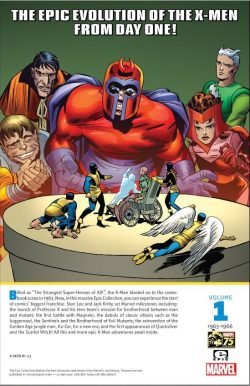
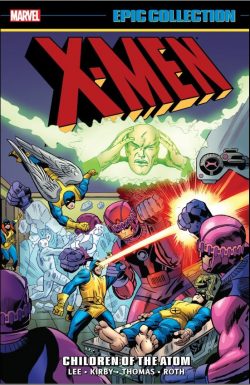
X-Men Epic Collection volume 1 1963-1966: Children of the Atom


By Stan Lee & Jack Kirby, Roy Thomas, Werner Roth, Alex Toth & various (Marvel)
ISBN: 978-0-7851-8904-6 (TPB)

In 1963 things really took off for the budding Marvel Comics as Stan Lee & Jack Kirby expanded their diminutive line of action titles, putting a bunch of relatively new super-heroes (including hot-off-the-presses Iron Man) together as the Avengers; launching a decidedly different war comic in Sgt. Fury and his Howling Commandos and creating a group of alienated heroic teenagers who gathered together to fight a rather specific, previously unperceived threat to humanity.

Those halcyon days are revisited in this splendid trade paperback and eBook compilation: gathering from September 1963 to August 1966, the contents of X-Men#1-23.

Issue #1 introduced Cyclops, Iceman, Angel and the Beast: very special students of Professor Charles Xavier, a wheelchair-bound telepath dedicated to brokering peace and integration between the masses of humanity and the emergent off-shoot race of mutants dubbed Homo Superior. The story opens as the students welcome their newest classmate, Jean Grey, aka Marvel Girl, a beautiful young woman with the ability to move objects with her mind.

No sooner has the Professor explained their mission than an actual Evil Mutant, Magneto, single-handedly takes over American missile base Cape Citadel. A seemingly unbeatable threat, the master of magnetism is nonetheless driven off – in under 15 minutes – by the young heroes on their first mission …

It doesn’t sound like much, but the gritty dynamic power of Kirby’s art, solidly inked by veteran Paul Reinman, imparted a raw energy to the tale which carried the bi-monthly book irresistibly forward. With issue #2, a Federal connection was established in the form of FBI Special Agent Fred Duncan, who requested the teen team’s assistance in capturing a mutant who threatened to steal US military secrets in ‘No One Can Stop the Vanisher!’.

These days, young heroes are ten-a-penny, but it should be noted that these kids were Marvel’s first juvenile super-doers since the end of the Golden Age, so it’s perhaps unsurprising that in this tale of a terrifying teleporter the outmatched youngsters needed a little adult supervision…

Issue #3’s ‘Beware of the Blob!’ displays a rare lapse of judgement as proselytising Professor X invites a sideshow freak into the team only to be rebuffed by the felonious mutant. Impervious to mortal harm, The Blob incites his carnival cronies to attack the hidden heroes before they can come after him, and once again it’s up to teacher to save the day…

With X-Men #4 (March 1964) a thematic sea-change occurs as Magneto returns at the head of ‘The Brotherhood of Evil Mutants!’ Intent on conquering a South American country and establishing a political powerbase, he ruthlessly dominates Mastermind, Toad, Quicksilver and the Scarlet Witch, who are very much his unwilling thralls in the bombastic struggle that follows. From then on, the callow champions-in-training are the hunted prey of many malevolent mutants.

‘Trapped: One X-Man!’ in issue #5 sees early results in that secret war as Angel is abducted to Magneto’s orbiting satellite base Asteroid M, and only a desperate battle at the edge of space eventually saves him…

‘Sub-Mariner Joins the Evil Mutants!’ is a self-explanatory tale of gripping intensity elevated to magical levels of artistic quality as superb Chic Stone replaced Reinman as inker for the rest of Kirby’s tenure. The issue also incorporates a stunning ‘Special Pin-up page’ starring “Cyclops”.

Genuine narrative progress is made in ‘The Return of the Blob!’ as their mentor leaves on a secret mission, but not before appointing Cyclops acting team leader. Comedy relief is provided as Lee & Kirby introduce Beast and Iceman to the Beatnik-inspired “youth scene” whilst the high action quotient is maintained courtesy of a troubled teaming of the Blob and Magneto’s malign brood…

Another and very different invulnerable mutant debuted in ‘Unus the Untouchable!’: a wrestler with an invisible force field who attempts to enlist in the Brotherhood by offering to bring them an X-Man. Also notable is the first real incident of “anti-mutant hysteria” after a mob attacks Beast: a theme that would become the cornerstone of the X-Men mythos and the delights include a ‘Special Pin-up page’ featuring ‘The Beast’.

X-Men #9 (January 1965) is the first true masterpiece of this celebrated title. ‘Enter, the Avengers!’ reunites the mutants with Professor X in the wilds of Balkan Europe, as deadly Lucifer seeks to destroy Earth with a super-bomb, subsequently manipulating the teens into an all-out battle with the awesome Avengers. This month’s extra treat is a ‘Marvel Masterwork Pin-up’ of ‘Marvel Girl’

This is still a perfect Marvel comic story today, as is its follow-up ‘The Coming of Ka-Zar!’: a wild excursion to Antarctica, featuring the discovery of the Antediluvian Savage Land and the modern incarnation of one of Marvel/Timely’s oldest heroes (Kazar the Great was a pulp Tarzan knock-off who translated to the comics page, originating in October/November 1939’s Marvel Comics #1).

Dinosaurs, lost cities, spectacular locations, mystery and all-out action: it doesn’t get better than this…

After spectacular starts on most of Marvel’s Superhero titles (as well as western and war revamps), Kirby’s increasing workload compelled him to cut back to simply laying out most of these lesser lights whilst Thor and Fantastic Four evolved into perfect playgrounds and full-time monthly preoccupations for his burgeoning imagination. The last series he surrendered was the still-bimonthly X-Men wherein an outcast tribe of mutants worked diligently and clandestinely to foster peace and integration between the unwary masses of humanity and the gradually-emergent “coming race” of Homo Superior.

The King’s departure in #11 was marked by a major turning point. ‘The Triumph of Magneto!’ sees our heroes and the Brotherhood of Evil Mutants both seeking a fantastically powered being dubbed The Stranger. None are aware of his true identity, nature or purpose, but when the Master of Magnetism finds him first, it spells the end of his war with the X-Men…

With Magneto gone and the Brotherhood broken, Kirby relinquished pencilling to other hands, providing loose layouts and design only. Alex Toth & Vince Colletta proved an uncomfortable mix for #12′s tense drama ‘The Origin of Professor X!’ it opened a 2-part saga introducing Xavier’s half-brother Cain Marko and revealed that simplistic thug’s mystic transformation into an unstoppable human engine of destruction.

The story concludes with ‘Where Walks the Juggernaut’: a compelling, tension-drenched tale guest-starring the Human Torch, and most notable for the introduction of penciller Werner Roth (using the name Jay Gavin). He would be associated with the mutants for the next half decade. His inker for this first outing was the infallible Joe Sinnott.

Roth was an unsung veteran of the industry, working for the company in the 1950s on such star features as Apache Kid and the inexplicably durable Kid Colt, Outlaw, as well as Mandrake the Magician for King Features Comics and Man from U.N.C.L.E. for Gold Key. As with many pseudonymous creators of the period, it was his DC commitments (mostly romance stories) which forced him to disguise his moonlighting until Marvel grew big enough to offer him full-time work.

From issue #14 and inked by Colletta, ‘Among us Stalk the Sentinels!’ celebrated the team’s inevitable elevation to monthly publication with the first episode of a 3-chapter epic introducing anthropologist Bolivar Trask, whose solution to the threat of Mutant Domination was super-robots that would protect humanity at all costs. Sadly, their definition of “protect” varied wildly from their creator’s, but what can you expect when a social scientist dabbles in high-energy physics and engineering?

The X-Men took the battle to the Sentinels’ secret base but became ‘Prisoners of the Mysterious Master Mold!’ before wrapping up their ferrous foes with ‘The Supreme Sacrifice!’

Veteran Dick Ayers joined as inker from #15: his clean line blending perfectly with Roth’s clean, classicist pencils. They remained a team for years, adding vital continuity to this quirky but never top-selling series.

X-Men #17 dealt with the aftermath of the battle – the last time the US Army and government openly approved of the team’s efforts – and the sedate but brooding nature of ‘…And None Shall Survive!’ enabled the story to generate a genuine air of apprehension as Xavier Mansion is taken over by an old foe who picks them off one by one until only the youngest remains to battle alone in climactic conclusion ‘If Iceman Should Fail..!’

‘Lo! Now Shall Appear… The Mimic!’ in #19 was Lee’s last script: the pithy tale of a troubled teen possessing the ability to copy the skills, powers and abilities of anyone in close proximity. The writing reins were turned over to Roy Thomas in #20, who promptly jumped in guns blazing with ‘I, Lucifer…’: an alien invasion yarn starring Xavier’s arch-nemesis as well as Unus the Untouchable and the Blob. Most importantly, it revealed in passing how Professor X lost the use of his legs.

With canny concluding chapter ‘From Whence Comes Dominus?’, Thomas & Roth completely made the series their own, blending juvenile high spirits, classy superhero action and torrid soap opera with beautiful drawing and stirring adventure.

At this time Marvel Comics had a vast and growing following among older teens and college kids, and the youthful Thomas spoke and wrote as they did. Coupled with his easy delight in large casts, this would increasingly make X-Men a most welcoming read for any educated adolescent …like you or me…

As suggested already, X-Men was never one of young Marvel’s top titles but it found a devout and dedicated following, with the frantic, freakish energy of Kirby’s heroic dynamism comfortably transiting into the slick, sleek attractiveness of Roth as the fierce tension of hunted, haunted juvenile outsider settled into a pastiche of college and school scenarios so familiar to the students who were the series’ main audience.

The action pauses here with a crafty 2-parter resurrecting veteran Avengers villain Count Nefaria who employs illusion-casting technology and a band of other heroes’ second-string foes (Unicorn, Porcupine, Plantman, Scarecrow and the Eel, if you’re wondering) to hold Washington DC hostage and frame the X-Men for the entire scheme.

‘Divided… We Fall!’ and ‘To Save a City!’ comprise a fast-paced, old-fashioned Goodies vs. Baddies battle with a decided sting in the tail. Moreover, the tale concludes with Marvel Girl yanked off the team as her parents insist she furthers her education by leaving the Xavier School to attend New York’s Metro University…

To Be Continued…

Supplemented by a copious gallery of original art pages – by Kirby, Reinman, Roth & Ayers – a wealth of evocative house ads and an unseen never used alternate cover by Kirby & Stone, these quirky tales are a million miles removed from the angst-ridden, breast-beating, cripplingly convoluted X-brand of today’s Marvel and, in many ways are all the better for it. Superbly rendered, highly readable adventures are never unwelcome or out of favour, and it should be remembered that everything here informs so very much of the mutant monolith. These are stories for dedicated fans and rawest converts. Everyone should have this book.
© 2019 MARVEL.


The Garden


By Sean Michael Wilson & Fumio Obata (Liminal 11)
ISBN: 978-1-912634-16-3 (HB)

We’re all locked up in our own heads as much as in our homes these days, and constantly in search of solutions to ease anxiety however we can. Please allow me then – in timely fashion and most serendipitously – to get in an early plug for this forthcoming sublime gem laced with helpful suggestions on healing mindfulness.

Not only is the message calming and helpful – and delivered in beguiling imagery guaranteed to reset your outraged Alpha Waves – but it also guarantees a solidly entertaining read while helping to moderate your hunger for physical relaxation and contemplative rejuvenation.

Until recently equally at home in Britain and Japan, Scottish author Seán Michael Wilson (Breaking the Ten, The Story of Lee) was inspired to write The Garden after being asked by a comics newcomer if there were any about gardening. After taking a beat and realising the range of subjects covered in graphic novels was quite limited – and getting smaller – the writer, educator and dedicated Humanist – who has previous form on cerebral topics and non-mainstream graphic narratives – decided to create one himself…

Wilson originally took a degree in psychology, with a postgraduate diploma in clinical hypnotherapy before transferring to the Ninth Art. In comic form, besides more traditional fare, he has co-crafted political and philosophical tracts such as Goodbye God – An Illustrated Examination of Science Vs. Religion and Portraits of Violence – An Illustrated History of Radical Thinking and adapted many Western and Eastern literary classics such as Wuthering Heights, Sweeney Todd, Book of Five Rings and Tao Te Ching. This is a man with wide interests who has learned how to kick back and slow down…

His collaborator here is equally distinguished with similar antecedents. Author, educator, artist and animator Fumio Obata (Just So Happens, DC Thompson, Internazionale) was born in Tokyo in 1975, before moving to the UK at age 16. His BA Illustration degree from Glasgow School of Art was compounded with a Masters in Communication Design from the Royal College of Art before he began pursuing a comics career in Britain and Europe.

In this gloriously welcoming hardback, the classic tale of early success leading to burn-out and transformative healing through new purpose follows formerly high-flying financier Joanna who spectacularly and very publicly suffers an emotional meltdown.

Recovering in her house, a conversation with sister Samantha sets her on a path to a new life that begins with a trip to Japan and a course in creating traditional Zen designs at the Garden Institute of Kyoto.

Once there, Joanna learns that it’s not actually all about her at all…

Filled with delightful human moments and a broad cast of appetising characters, Joanna’s learning curve is a marvellously tempting invitation to combine our personal urban nightmare with a more bucolic experience that Williams was a appeal to the suppressed nature lover in us all, and the life-changing challenge even comes with an appealing Poem of the Garden to start your own verdant rebirth…

Calm, contemplative and mentally refreshing, The Garden is a seed of surprise just waiting for you to plant it…
© 2020 Sean Michael Wilson & Fumio Obata. All rights reserved.
The Garden is scheduled for release on May 21st 2020 and is available for pre-order now.

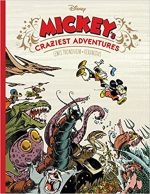
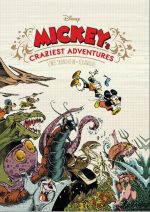
Mickey’s Craziest Adventures


By Lewis Trondheim & Keramidas, with Brigitte Findakly: translated by Ivanka Hahnenberger & David Gerstein (IDW)
ISBN: 978-1-63140-694-2 (HB) eISBN 978-1-68406-124-2

In his ninety years of existence, Walt Disney’s heroic everyman Mickey Mouse has tackled his fair share of weirdos and super freaks in tales crafted by creators from every corner of the world. A true global phenomenon, the little wonder has staunchly overcome all odds, and he’s always done so as the prototypical nice guy beloved by all. Mickey might have been born in the USA, but he belongs to all humanity now and thus some of his very best comics adventures come from countries like Denmark, Holland, Italy and France. This translation of a saga by Lewis Trondheim & Keramidas ranks right up at the top of the list…

With over 100 books bearing his pen-name (his secret identity is actually Laurent Chabosy), writer/artist/editor/animator and educator Lewis Trondheim is one of Europe’s most prolific comics creators: illustrating his own work, overseeing cartoons adaptations of previous successes such as La Mouche (The Fly) and Kaput and Zösky or editing the younger-readers book series Shampooing for Dargaud.

His most famous tales are such global hits as Les Formidables Aventures de Lapinot (seen in English as The Spiffy Adventures of McConey), the Donjon series of nested fantasy epics (co created with Joann Sfar and translated as conjoined sagas Dungeon: Parade, Dungeon: Monstres and Dungeon: the Early Years), comedy fable Ralph Azham and an utterly beguiling cartoon diaries sequence entitled Little Nothings.

In his spare time – and when not girdling the globe from convention to symposium to festival – the dourly shy and neurotically introspective savant wrote for satirical magazine Psikopat and provided scripts for many of the continent’s most popular artists such as Fabrice Parme (Le Roi Catastrophe, Vénézia), Manu Larcenet (Les Cosmonautes du futur), José Parrondo (Allez Raconte and Papa Raconte) and Thierry Robin (Petit Père Noël).

Ostensibly retired but still going strong, Trondheim is a cartoonist of uncanny wit, outrageous imagination, piercing perspicacity, comforting affability and self-deprecating empathy who prefers to scrupulously control what is known and said about him…

Nicolas Kerimidas (Donjon Monstres, L’Atelier Mastodonte, Donald’s Happiest Adventures) is a French cartoonist hailing from Grenoble who studied animation at the Gobelins School. He worked at Walt Disney Animation France’s Montreuil Studious for almost a decade before switching to comics as illustrator of Didier Crisse’s Luuna. He branched out and carried on, scripting his own stuff as well as being a much sought-after artist for others…

Patterned on Gold Key’s fabulous 1950-1960s run of anthological Walt Disney’s Comics and Stories, Mickey’s Craziest Adventures purports to be a restored – but tragically incomplete – compilation of a lost serial that ran in those vintage comics, “rediscovered” by the author and artist. The overwhelmingly successful conceit of this little gem – available in hardback and digital formats – is that we all love comics and can’t resist the mystery of an unread one we’ve never heard of…

After opening with essay ‘A Forgotten Treasure’ the yarn jerks into high gear once the “found” pages appear, starting with ‘Chapter 2’ as Mickey gives Donald Duck a lift to Uncle Scrooge‘s Money Bin. On arrival, they witness the entire kaboodle swiped via Gyro Gearloose‘s shrinking ray before being perilously diminished themselves!

Hot pursuit takes our heroes into a primeval world of (comparatively) giant insects and backyard jungles, but the game is afoot and even stranger hazards await them as they pursue the mystery bandits…

With cameos from most of Duckburg and Mouseton’s pantheon of major and minor stars and veteran villains such as Pegleg Pete and the Beagle Boys, this pell-mell romp across the world also encompasses monsters, cavemen, outer space perils and even the gods themselves, to create an unmissable delight for both aged aficionados like you and me and the newest generation of fans.

Frantic, frenzied fun for one and all. You know you have to have it!
© 2016 Disney Enterprises, Inc. All rights reserved.

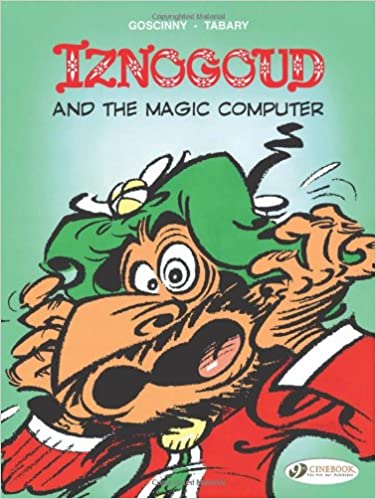
Iznogoud and the Magic Computer (volume 4)


By Goscinny & Tabary translated by Anthea Bell & Derek Hockridge (Cinebook)
ISBN: 978-1-905460-79-3 (PB Album)

How are you coping with voluntary incarceration? If you’re feeling a little frustrated, why not chill out with a good book – instantly available via digital purchasing and still accessible if you go the physical delivery route as a spiffy paperback tome – and see what real frustration looks like and costs…

During his too-short lifetime (1926-1977) René Goscinny was one of the most prolific, most read writers of comic strips the world has ever seen.

He still is.

Among his most popular comic collaborations are Lucky Luke, Le Petit Nicolas and, of course, Asterix the Gaul. There are so many others, too such as this timeless classic…

Scant years after the Suez crisis, the French returned to the deserts when Goscinny teamed with sublimely gifted Swede Jean Tabary (1930-2011) who numbered Richard et Charlie, Grabadu et Gabaliouchtou, Totoche, Corinne et Jeannot and Valentin le Vagabond amongst his other hit strips.

Together they produced imbecilic Arabian (im)potentate Haroun el-Poussah. However, it was the strip’s villainous foil, power-hungry vizier Iznogoud who stole the show – possibly the conniving little weasel’s only successful scheme.

Les Aventures du Calife Haroun el Poussah was created for Record, with the first instalment appearing in 1962 in the January 15th issue. A minor hit, it latterly jumped ship to Pilote – a magazine created and edited by Goscinny – where it was refashioned into a starring vehicle for the devious little rat-bag who had increasingly hogged all the laughs and limelight.

Like all great storytelling, Iznogoud works on two levels: for younger readers as a comedic romp with sneaky baddies coming a cropper, and as a pun-filled, witty satire for older, wiser heads, much like its more famous cousin Asterix. Happily, it’s also translated here by master translators Anthea Bell & Derek Hockridge who made the indomitable little Gaul so very palatable to the English tongue. Best of all, the deliciously malicious whimsy is always heavily-laden with manic absurdity and brilliantly applied creative anachronism to keep the plots bizarrely fresh and inventive.

Our insidious anti-hero is Grand Vizier to affable, generous, easy-going Haroun Al Plassid, Caliph of Ancient Baghdad, but the sneaky little toad has loftier ambitions, or as he is always shouting “I want to be Caliph instead of the Caliph!”…

The revamped series launched in Pilote in 1968, quickly becoming a huge European hit, with 29 albums so far (with 14 translated into English to date). The series has been carried on by Tabary’s children Stéphane, Muriel and Nicolas, in his own solo comic, and has spun-off into a game, TV cartoon show and live action movie.

Goscinny died in 1977, having completed a dozen book’s worth of wonderment and Tabary assumed the scripting as well as the superbly stylish illustration, moving to book-length complete tales, rather than the compilations of short punchy stories that typified their collaborations.

This fourth Cinebook album was the sixth French album (released in 1970 as L’ordinateur magique) and features a clenched and grasping fistful of short, sharp salutary tales beginning – after a handy catch-up profile page – with ‘A Calculated Risk’, wherein the cunning conniver, desperate to forestall a pact between the Caliph and mighty military neighbour Sultan Pullmankar, hires forward-thinking I-Bee’Em and his ponderous problem-solving “computer” to stop the signing of the treaty. The big grey box might be brilliant, but it’s agonisingly slow in reaching its infallible conclusions…

Things then get hilariously surreal after Iznogoud and his long-suffering, bumbling assistant Wa’at Alahf discover a mystic crossroads that can lead unwary travellers onto an unending, pointless journey from which they can neither escape nor return. Dashing back to Baghdad to lure the Caliph onto ‘The Road to Nowhere’, our wicked wayfarers eventually realise that they’ve been stuck on it all along…

Eventually reality resumes and back home and itching to take over, the Vile Vizier then seeks to employ the tragic gifts of lonely hermit Ghoudas Gho’ld: a direct descendent of legendary King Midas in ‘The Golden Handshake’. All Iznogoud has to do to remove the Caliph is get the accursed involuntary metal-maker back to the palace without him touching anything. Easy, no? No…

There’s more tacit skulduggery afoot in ‘The Caliph’s Sceptre’ when Iznogoud hires a master thief to sneak him into the high-security vault where the Staff of Office is cached. If he can prevent the Caliph from presenting it to the people in the annual reaffirmation of worthiness to rule ceremony, the Vizier can legally assume control of the country. Of course, it doesn’t quite play out that way…

This fine kettle of funny fish concludes with ‘The Mysterious Ointment’ as fabled explorer Notsobad the Sailor returns to the port of Basrah. Having forgotten to bring the undetectable Occidental poisons he promised the Vizier, the wily voyager palms him off with a tube of “Schpouk toothpaste’.

Assured the container holds a lethal and undetectable toxin, Iznogoud embarks on an eccentrically convoluted campaign to convince the Caliph and the court that cleaning one’s choppers is the latest and most beneficial of scientific advancements. Care to guess how well that goes?

Snappy, fast-paced hi-jinks and gloriously agonising pun-ishing badinage abound in this mirthfully infectious series which is a household name in France where “Iznogoud” is common parlance for a certain type of politician: over-ambitious, unscrupulous – and often of diminutive stature.

When first released here in the 1970s, these tales made little impression, but hopefully have finally found an appreciative audience among today’s more internationally aware, politically jaded comics-and-cartoon savvy Kids Of All Ages…
© 1970 Dargaud Editeur Paris by Goscinny & Tabary. All rights reserved.

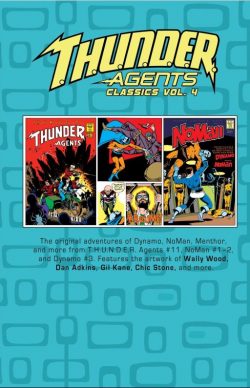
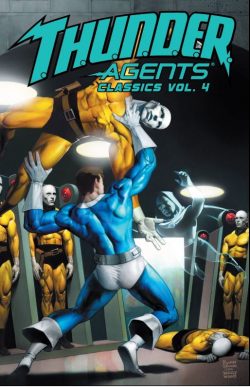
T.H.U.N.D.E.R. Agents Classics volume 4


By Wally Wood, Steve Skeates, Ralph Reese, Dan Adkins, Ogden Whitney, Chic Stone Mike Sekowsky, George Tuska, John Giunta, Frank Giacoia & various (IDW)
ISBN: 978-1-63140-084-1(TPB) eISBN: 978-1-62302-611-0

The meteoric lifespan and output of Tower Comics is one of the key creative moments in American comicbook history. The brief, bombastic saga of The Higher United Nations Defense Enforcement Reserves was a benchmark of quality and sheer bravura fun for fans of both the then-still-reawakening superhero genre and that era’s spy-chic obsession.

In the early 1960s, the Bond movie franchise was going from strength to strength, with blazing action and heady glamour utterly transforming the formerly low-key espionage genre. The buzz was infectious: soon Men like Flint and Matt Helm were carving out their own piece of the action as television shanghaied the entire bandwagon with Danger Man and the irresistible Man from U.N.C.L.E. – premiering in September 1964 – bringing the whole shtick inescapably into living rooms across the planet.

Archie Comics editor Harry Shorten was commissioned to create a line of characters for a new distribution-chain funded publishing outfit – Tower Comics. He brought in creative maverick Wally Wood, who sensibly called on some of the biggest names in the industry to produce material in the broad range of genres the company demanded (there was magnificent anthology war-comic Fight the Enemy and wholesome youth-comedy Tippy Teen as well as T.H.U.N.D.E.R. Agents and its spin-offs Undersea Agent, Dynamo and NoMan).

Samm Schwartz & Dan DeCarlo handled the funny stuff – which outlasted everything else – whilst Wood, Larry Ivie, Len Brown, Bill Pearson, Steve Skeates, Dan Adkins, Russ Jones, Gil Kane and Ralph Reese contributed scripts for themselves and the industry’s other top talents to illustrate on the interlinked adventure series.

With a ravenous appetite for super-spies and costumed heroes growing in comic-book popularity and amongst the general public, the idea of blending the two concepts seemed inescapable…

T.H.U.N.D.E.R. Agents #1 appeared with no fanfare or pre-publicity on newsstands in August 1965 (with a cover off-sale date of November). Better yet, all Tower titles were in the beloved-but-rarely-seen 80-page Giant format, offering a huge amount of irresistible action and drama in every issue.

All that being said, these tales would not be so revered if they hadn’t been so superbly crafted. As well as Wood, the art accompanying the compelling, subtly more mature stories was by some of the greatest talents in comics: Reed Crandall, Gil Kane, George Tuska, Mike Sekowsky, Dick Ayers, Joe Orlando, Frank Giacoia, John Giunta, Steve Ditko and others.

This fourth fabulous compilation compiles and collates T.H.U.N.D.E.R. Agents #11, Dynamo #3 and includes both issues of second spin-off No-Man – all originally released between November 1966 and March 1967 – with the incomparably cool concept and characters going from strength to strength and a spirit of eccentric experimentation and raucous low comedy slipping in to sweeten the pot…

For those who came in late: When brilliant Professor Emil Jennings was attacked by the forces of the mysterious Warlord, the savant perished. Happily, UN troops salvaged some of his greatest inventions, including a belt that increased the density of the wearer’s body until it became as hard as steel, a cloak of invisibility and a brain-amplifier helmet…

The prototypes were divided between several agents to create a unit of super-operatives to counter increasingly bold attacks of multiple global terror threats such as the aforementioned Warlord.

First chosen was affable, honest but far from brilliant file clerk Len Brown who was, to everyone’s surprise, assigned the belt and codename Dynamo. T.H.U.N.D.E.R. Agent NoMan was once decrepit Dr. Anthony Dunn who chose to have his mind transferred into an android body and was then gifted with the invisibility cape. If his artificial body was destroyed Dunn’s consciousness could transfer to another android body. As long as he had a spare ready, he could never die…

Indomitable operative Guy Gilbert of crack Mission: Impossible style T.H.U.N.D.E.R. Squad was asked to beta-test an experimental super-speed suit. As gung-ho Lightning, he was proud to do so, even if every activation of the hyper-acceleration gimmick shortened his life-span…

After the death of telepathic agent Menthor, T.H.U.N.D.E.R. bigwigs created a new – flying – agent. Worryingly, the only operative capable of piloting the heavily-armed aerial warsuit was unscrupulous former mercenary Craig Lawson. Although ruthlessly effective, his attitude continues to give cause for concern …

The super-science spookshow resumes – in both paperback and digital formats – with the November 1966 debut issue of a second spin-off title. NoMan #1 was another sterling selection of superspy sagas with most of the writer credits once again an unresolved secret lost to posterity…

However, we know Gil Kane & Paul Reinman tackled the art for ‘Fingers of Fate’ as a robbery spree seems to implicate famed personages and celebrities in crimes they could not have committed. The trail of the real culprits leads the android agent to India to scotch a scheme to discredit global fingerprinting databases…

John Giunta illustrates ‘Secret in the Sky’ as NoMan battles criminal genius The Gnome after the diminutive demon seizes control of the world’s weather, after which Lightning foils ‘The Warp Wizard’s Master Plan’ (scripted by Steve Skeates with art from Chic Stone), when the teleporting bandit devises a seemingly unbeatable new weapon…

Subtly entrancing art veteran Ogden Whitney limns NoMan as the android agent is ‘Trapped in the Past’ by aliens and remains to render the tragedy of ‘The Good Subterranean’ who tried to reform despite a wave of human intolerance…

Next up is T.H.U.N.D.E.R. Agents #11 (March 1967) which opens with the team’s top agent in big trouble and replaced by a deadly duplicate. ‘The Death of Dynamo’ (art by Dan Adkins & Wood) sees criminal society S.P.I.D.E.R. almost succeed but for one crucial oversight…

Steve Skeates, Mike Sekowsky & Frank Giacoia the detail ‘Lightning vs The Vortex’, pitting T.H.U.N.D.E.R.’s super-speedster against a wily crook with the – stolen – power to create tornados before immortal android NoMan escapes ‘The Trap’ set by telepathic tyrant The King and saves Humanity from mental enslavement in a terse thriller by Skeates & Giunta.

Drama gives way to sly whimsy in ‘Understudy for Dynamo’ (illustrated by Stone) wherein T.H.U.N.D.E.R. Agent Dan Atkins – AKA Dynamite – is tapped to wear the power-inducing Thunderbelt until Dynamo recovers from exhaustion and pneumonia. Sadly, the substitute is keen but not so able…

The anthological exploits conclude with another quirky outing for winged wonder Raven written and illustrated by legendary craftsman Manny Stallman. ‘The Case of Jacob Einhorn’ finds robot-obsessed Mayven the Poet hired to kill a celebrated Nazi-hunter before he can expose escaped war criminals to the UN. Determined to stop her is a former mercenary who can still learn a few things about being a hero…

A star from the get-go, Dynamo quickly won his own giant-sized solo title. With a March 1967 cover-date, issue #3 kicked off with the husky hero spectacularly battling an alien invasion inside T.H.U.N.D.E.R. HQ that quickly escalates to endanger the entire city. Illustrated by Stone, Wood & Adkins, ‘The Unseen Enemy’ is a potent blockbuster yarn that promises an unmissable return match…

Ralph Reese scripted hilarious romp ‘Bad Day for Leonard Brown’ for Stone to draw as the simplistic hunky he-man hero falls foul of regular girlfriend Alice, sultry fellow agents Diana Dawn and Kitten Kane as well as steely sex siren Iron Maiden all whilst diligently trying to keep a new laser weapon out of the hands of diabolical demagogue Demo…

Stone sticks around to limn Dynamo’s battle against middle eastern despot Phyllis Tyne, as the strongman is forced to reprise ‘The Feats of Samson’ after which Paul Reinman renders a sham marriage to T.H.U.N.D.E.R. Agent Kitten which exposes S.P.I.D.E.R.’s high crimes in the oil industry and leads to ‘Honeymoon or High Noon?’

The issue ends with another lighthearted romp for Wally Wood’s cartoon alter ego as wily Agent William “Weed” Wylie tries to quell a South American revolution sponsored by rival cabals S.P.I.D.E.R. and Red Star. Drawn by George Tuska, ‘Weed Vs T.H.U.N.D.E.R.’ results in the scrawny pragmatist punching way above his weight when the villains co-opt the super-agents with mindbending gases…

This volume closes with the contents of NoMan #2 (March 1967) as Whitney illustrates ‘Dynamo vs NoMan’ – wherein Spider technologist Doctor Cyber usurps control of the Invisible Agent’s legion of android bodies – and follow-up thrill ‘The Weird Case of the Kiss of Death’ as a reincarnated Egyptian queen sustains her immortal life by consuming life force. Not, however, one enclosed in a plastic body…

Skeates & Stone then detail how battle-wounded Lightning loses his memory of a hidden S.P.I.D.E.R. stronghold in ‘The Web Tightens’ before Whitney returns for ‘Target NoMan’ as hidden organisation Reconquer schemes to resurrect the most evil man in history, before the espionage excitement pauses with Skeates & Whitney’s ‘A Quick Change of Mind’. Here a madman pillages scientists’ mentalities in pursuit of the ultimate weapon, only to fail thanks to the ultimate secret agent…

With stories all shaded in favour of fast pace, sparse dialogue, explosive action and big breathtaking visuals, T.H.U.N.D.E.R. Agents was decades ahead of its time and certainly informed everything in Fights ‘n’ Tights comics which came after it. These are truly timeless comic classics which improve with every reading, so do yourself a favour and add these landmark super-sagas to your collection.
T.H.U.N.D.E.R. Agents Classics volume 4 © 2014 Radiant Assets, LLC. All rights reserved.

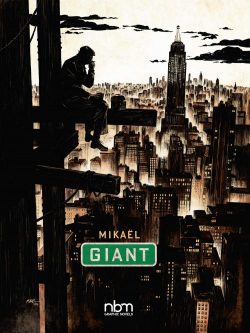
Giant


By Mikaël, translated by Matt Maden (NBM)
ISBN: 978-1-68112-253-3 (HB) eISBN: 978-1-68112-254-0

As a purported land of promises and untapped opportunity, America has always fascinated storytellers – especially comics-creators – from the “Old World” of Europe: an inclination and interest that has frequently delivered potent and rewarding results. This continentally-published yarn – by self-taught, multi-disciplined, multi award-winning French-born Québécois auteur Mikaël (Junior l’Aventurier, Rapa Nui, Promise) was first released by Dargaud in 2018 as two European albums and now breaks into English via a monolithically oversized hardback (229 x 305mm) edition that gets the entire story done-in-one.

Everything about this stylish Depression-era drama is big and powerfully mythic. In March 1932, with poverty wracking the nation and the world, and Herbert Hoover dreading the upcoming Presidential election, immigrants and natives flock to Manhattan and the bustling, dangerous construction site that will one day be Rockerfeller Center. Casualties are high as we focus on the Irish contingent rushing daily into the skies to rivet and weld a concrete and steel colossus into New York City’s ever-changing skyline.

The story unfolds through the eyes of fresh-off-the-boat new recruit Dan Shackleton who joins the crew after the death of “high-steel” man Ryan Murphy. Dan is a garrulous, easy-going son-of-the-sod, but even he has difficulty befriending the taciturn, thoughtful, barely-human behemoth everyone calls Giant. A formidable worker, Giant lives in a grubby flop-house and keeps to himself, but affable Dan persists and eventually the big man almost-imperceptibly thaws – at least enough that Shackleton becomes unwitting witness to a strange ritual…

Hiding a tragic secret that dates back to the recent Irish War of Independence, the Big Man is a solitary creature of fiercely controlled passions who keeps his every opinion to himself. A dutiful worker, Giant was given the task of informing Murphy’s widow in Ireland when he died. Instead, he began impersonating the dead man in a string of letters containing the bulk of his own carefully-hoarded wages and savings. Over months, a bizarre one-sided relationship develops that metastasizes into a full-blown crisis after the silent bruiser falls foul of organised crime. When the letters and money stop, Mary Ann Murphy and her children take ship for America to be reunited with her beloved husband. As the wounded colossus recuperates, he has no idea of the troubles that are heading his way…

Tapping into a wealth of powerful socially-crusading movies that have immortalised pre-WWII America and packed with period detail and mythology, pungent political commentary, a broad cast of moving characters and timeless drama, this is a human-scaled tale playing out amongst mighty edifices – both human and architectural – with warmth, passion, humour and beguiling humanity.

Supplemented with an Introduction by Jean-Louis Tripp and a stunning selection of production sketches, covers and other art, Giant is a stunning saga of uncommon folk in perilous times and one no lover of grand stories could possibly resist.
© 2018 Dargaud-Benelux. © 2020 NBM for the English Translation. All rights reserved.

Giant is scheduled for UK release April 23rd 2020 and is available for pre-order now.
Most NBM books are also available in digital formats. For more information and other great reads go to NBM Publishing at nbmpub.com.

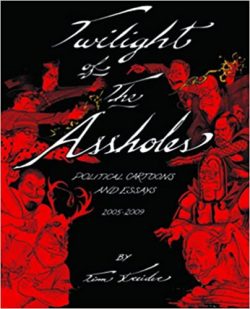
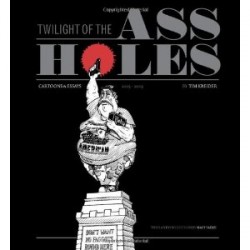
Twilight of the Assholes – The Chronicles of the Era of Darkness 2005-2009 (Book 2)


By Tim Kreider (Fantagraphics Books)
ISBN: 978-1-60699-398-9 (PB)

This book is intended to make adults laugh and think. If the title isn’t clue enough, please be warned that these pages contain nudity, sexual imagery, intentionally insulting images of political figures and rational opinions clothed in harsh language and thought-provoking political comedy. Some people think the author didn’t go far enough, but hey…
If that sort of thing offends you or you believe that blasphemy is a sin and/or a crime, read no further and don’t buy this book. The rest of us will just have to manage without you.

The opening years of the 21st century were plagued with horrors and disasters exacerbated by a hideous global proliferation of lying, greedy, venal, demented and just plain stupid rulers leading governments who finally elevated politicians to that phylum of useless tools and pimples on the butt of humanity once only occupied by lawyers and faith healers. Since then, bankers, astrologers, “influencers”, doorstep evangelists, celebrity gossip columnists and all types of psychics joined their rarefied ranks and I’m thinking I need to cut down on coffee or reassess my critical parameters…

With the benefit of a decade’s distance it’s clear that we didn’t learn anything and have only devolved into even worse as a species – if only in selecting people to guide and be in charge of us…

I can’t currently bring myself to laugh at the current crop of imbeciles-in-charge as we all collectively watch the bravest and noblest amongst us be daily betrayed, fobbed off and cheated of the money, tools and support they need to save lives in hospitals across the planet. All I can do is look back at when some folk – me especially – believed we could never do any worse in choosing leaders. Looks like were wrong then and now I’m looking for another hit of graphic retaliation and indulgent graphic stress-release…

If you require similar, this old paperback is readily available in digital formats. Trust me, only the names have changed: the assholery remains the same…

When George Dubya Bush acceded to the throne of America there were a lot of apologetic liberals and whooping goons. There was also essayist and cartoonist Ted Kreider.

Born in 1967 and raised on comicbooks whilst actually paying attention in school, Kreider is an erudite and passionate man with thoughtfully reasoned opinions on politics, religion and the human condition among the many other things. He is also an extremely gifted writer and cartoonist who began self-publishing in 1994.

By 1997 The Baltimore City Paper had picked up his deliciously polemical panel strip-with-accompanying essay ‘The Pain – When Will it End?’ and they were closely followed by the Jackson Planet Weekly, Illinois’ Indy in Bloomington-Normal, The New York Press, The Stranger, Philadelphia Weekly plus other independent and alternative papers. In September 2000 Kreider began releasing the material as a webcomic.

Although at the time a self-confessed left-leaning Democrat, that never stopped him punishing his own camp’s many gaffes, goofs, lies, embarrassments and ideological idiocies. Like our own Gerald Scarfe and Steve Bell with Margaret Thatcher and Tony Blair/em>, Kreider was lucky enough (if you discount elevated blood-pressure, maxed-out sense of disbelief and perpetually outraged moral compass) to have been given the gift of a perfect incumbent target in the Bush administration of 2000-2008 and the right-wing anti-intellectual, Christian-fundamentalist crusade/pogrom that brought them to power and still remains to blight he world – fully as much as every other dogmatic, monied special interests group does…

Along the way, Kreider also managed to incense other churches and faiths from Catholics to Moslems, all manner of bigot from racists to homophobes and outrage proponents of all those other aspects of modern US society that makes all us non-Americans nervous and giggly in equal measure.

Subtitled ‘Volume II of the Chronicles of the Era of Darkness 2004-2009’ and this weighty and hilariously biting collection of gags and commentaries covers the – to Kreider especially – incomprehensible re-election and second term of the Republican Saviour and his dark apostles Cheney, Rumsfeld, Rove, Rice and the rest, whilst still finding room and Reasonable Cause to pictorially pummel Chinese expansion, assorted religions’ definitions of life and attitudes to sex, aspects and definitions of Freedom, geopolitics and Big Oil.
Under his excoriating lens also fell Intelligent Design, the new Russian Empire, Secret Fantasies of the rich and statesmanlike, Crackpot Theories and all sorts of Science: from the author’s spirited defence of Pluto’s planet-hood to Human-Animal Hybrids, Parallel Universes and new roles for the Giant Squid…

With stunning examples of the cartoonist’s eternal roles as social conscience, intellectual champion, puncturer of pomposity and lampooning last bastion of grace under oppressive political pressure, Kreider boldly kicked the shins of the smug over-class and stamped on the toes of all the entrenched whited sepulchres and obnoxiously applied shibboleths that made him annoyed and ashamed of huge swathes of his fellow Americans. Not that Britain or any other colonial power has any moral high ground to sneer down from…

The collected work covers the period November 4th 2004 to October 29th 2009 and includes the shocked rapture of a Democratic win and the nation’s first non-white president – and ends with a shaky dawning suspicion that all politicians might just be the same. Same as it ever was…

Particularly effective sallies to relive include ‘Jesus vs. Jeezus’, ‘The Conservative Christian’s Guide to Compassion’, ‘I “heart” Saddam’, ‘The War on Christmas’, ‘Americans vs. ‘Muricans’, ‘What is Freedom?’, ‘Me & George, We Got Problems’, ‘Silver Linings of the Holocaust’, ‘What You Can Do to Fight the War on Sex’, ‘Everything I Know I Learned from the Bush Administration’, ‘Secret Vices of the Liberals’, ‘Republican Sex Toys’, ‘God: Republican or Democrat?’, ‘After All the Money’s Gone’, ‘We Even Yet?’ and the 5-part ‘Contributions of the World’s Religions’ but there’s guaranteed to be something to shock or offend everybody here – you might even be compelled to think for yourself and question a little bit more…

Forensic, withering humour and viciously necessary satire tellingly rendered combined with savage yet personable, winningly intimate reportage make this one of the best cartoon coshes ever applied to the politics of this century, and I mourn with honest grief the fact that Kreider has left the current Republican administration alone all this time…

I look forward with desperation – if not hope – to more from him in light of confirmation that people didn’t get less stupid, rulers never change their spots and religions have all amped up dictating what their followers can think or feel…

You have to laugh, don’t you…?
Cartoons and text © 2011 Tim Kreider. All rights reserved.

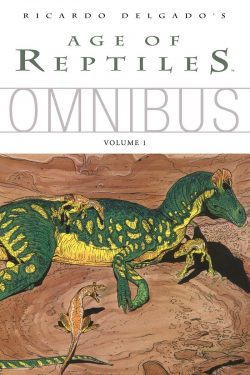
An Age of Reptiles Omnibus volume 1


By Ricardo Delgado with colours by James Sinclair & Jim Campbell (Dark Horse)
ISBN: 978-1-59582-683-1 (TPB)

As we’re confronted with the prospect of our own extinction-level event – yes, that’s hyperbole, but tell that to the scared millions who can’t actually envisage a world without themselves in it – let’s enjoy ourselves whenever and however we can. For me that’s comics, so let’s look at a classic paperback tome now available in digital editions…

There’s an irresistible, nigh-visceral appeal to dinosaurs. Most of us variously – and too often haphazardly – over-evolved apes seem to be irresistibly drawn to all forms of education and entertainment featuring monster lizards of our primordial past.

Designed as a purely visual experience, this hypnotically beguiling series of sequences from Ricardo Delgado still represents one of the most honestly enchanting brushes with prehistory ever imagined. Age of Reptiles opens a window onto distant eons of saurian dominance and – completely devoid of sound or text – provides a profound, pantomimic silent movie that focuses on a number of everyday experiences which simply have to be exactly how it was, way back then…

Crafted by one of the most respected concept and storyboard men in Hollywood (with credits for Men in Black, The Incredibles, WALL-E, X-Men Origins: Wolverine, The Matrix and much more) these dino-dramas and sauro-sagas offer – even in comics – a unique reading experience that must be seen to be believed, which is why I’m forgoing my usual laborious forensic descriptive blather in favour of a more general appreciation…

The tales originally appeared as a sequence of miniseries between 1993 and 2010 before being subsequently collected as individual compilations. In 2011 this titanic tome, part of Dark Horse’s excellent and economical Omnibus line, gathered the material into one handy Brachiosaur-sized book to treasure forever.

Following the expansive praise of Animator, Director and Producer Genndy Tartarkovsky in his Foreword, the original introductions to initial outing ‘Tribal Warfare’ (from Ray Harryhausen, Burne Hogarth and John Landis) precede a fantastic extended clash between a pack – or perhaps more properly clan – of Deinonychus and a particularly irate opportunistic and undeterrable Tyrannosaur.

The savage struggle, literally red in tooth and claw, takes both sides to the very edge of extinction…

As in all these tales, the astoundingly rendered and realised scenery and environment are as much leading characters in the drama as any meat and muscle protagonists. Moreover, all the other opportunistic scavengers and hangers-on that prowl the peripheries of the war, are ever-eager to take momentary advantage of what seems more a mutual quest for vengeance than a simple battle for survival…

That theme is further explored in ‘The Hunt’ (with then-Disney chief Thomas Schumacher offering his observations in the attendant introduction) wherein the eat-or-be-eaten travails of a mother Allosaurus end only after she dies defending her baby. The culprits are a determined and scarily-organised pack of Ceratosaurs who latterly expend a lot of energy trying to consume the carnosaur’s kid amidst scenes of staggering geographical beauty and terrifying magnificence.

Their failure leads to the beast’s eventual return and a bloody evening of the score. Think of it as Bambi with really big teeth and no hankies required…

The theme of unrelenting and ruthless species rivalry and competition is downplayed or at least diverted for the final episode. ‘The Journey’, with introduction and appreciation by educator and illustrator Ann Field, concentrates on an epic migration across the barren surface of the world as millions of assorted saurians undertake a prodigious and arduous trek to more welcoming feeding and spawning grounds. Because that’s how life works, they are dogged every step of the way by flying, swimming and remorselessly running creatures looking for their next tasty meal…

Supplementing the feral beauty of these astonishing adventures is a full Cover Gallery from the assorted original miniseries and earlier book compilations; Delgado’s fulsome and effulgent Essays on his influences (‘Ray Harryhausen and the Seventh Voyage to the Drive-In’, ‘Desi Arnaz and the Eighth Wonder of the World’, ‘Real Dinosaurs: the Art of Charles R. Knight’ and ‘Zen and ZdenÄ›k Burian’) plus a fabulous, copious and – if you think you’re an artist – envy-invoking Sketchbook section, with everything from quick motion studies to full colour preliminary pieces for the final artwork..

Although occasionally resorting to a judicious amount of creative anachronism and historical overlap, Delgado has an unquestioned love for his subject, a sublime feel for spectacle and an unmatchable gift for pace and narrative progression. Coupled to the deft hand which imbues the vast range and cast of big lizards with instantly recognisable individual looks and characters, this always ensures that the reader knows exactly who is doing what. There’s even room for some unexpectedly but most welcome rough-love humour in these brilliantly simple forthright, primal dramas…
© 1993, 1994, 1996, 1997, 2009, 2010, 2011 Ricardo Delgado. All rights reserved.

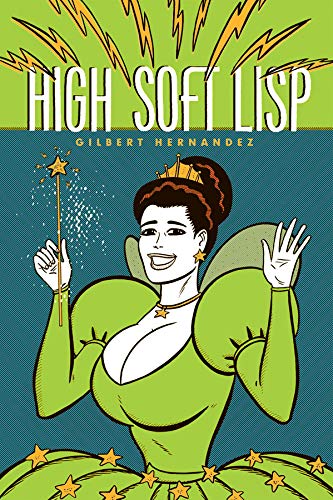
High Soft Lisp


By Gilbert Hernandez (Fantagraphics Books)
ISBN: 978-1-60699-318-7 (TPB)

Please pay attention: this book contains stories and images of an adult nature, specifically designed for adult consumption employing the kind of coarse, vulgar language most kids are fluent in by the age of ten. If reading about such things is likely to offend you, please stop now and go away. Tomorrow I’ll write about something with violence and explosions, so come back then.

In addition to being part of the graphic and literary revolution that is Love and Rockets (where his astonishingly compulsive tales of Palomar and the later stories of those characters collected as Luba gained such critical acclaim), Gilbert Hernandez has produced compelling stand-alone tales such as Sloth, Grip and Girl Crazy. They are all marked by his bold, simplified line artwork and a mature, sensitive use of the literary techniques of Magical Realist writers Carlos Fuentes and Gabriel García Márquez: techniques which he has added to and made his own.

Love and Rockets is an anthology comics publication featuring slick, intriguing, sci-fi-ish larks, heart-warming, terrifying, gut-wrenching soap-opera fantasy and bold experimental comic narratives that pretty much defy classification. The synthesistic Hernandez Bros still captivate with incredible stories that sample a thousand influences conceptual and actual – everything from Archie Comics and alternative music to German Expressionism and luchadors.

Palomar was the conceptual and cultural playground “Beto” created for extended serial Heartbreak Soup: a dirt-poor Latin-American village with a vibrant, funny and fantastically quotidian cast. Everything from life death, adultery, magic, serial killing and especially gossip could happen in Palomar’s meta-fictional environs – and did – as the artist explored his own post-punk influences: comics, music, drugs, comics, strong women, gangs, sex, family and comics, and all in a style somehow informed by everything from Tarzan comics to Saturday morning cartoons and The Lucy Show.

Happily, Beto returns to Palomar constantly, usually with tales involving the formidable matriarch Luba, who ran the village’s bath house, acted as Mayor (and sometimes police chief) as well as adding regularly and copiously to the general population. Her children, brought up with no acknowledged fathers in sight, are Maricela, Guadalupe, Doralis, Casimira, Socorro, Joselito and Concepcion.

Luba eventually migrated to the USA and reunited with her half-sisters Petra and – the star of this volume – Rosalba “Fritz” Martinez. This collection was compiled from assorted material that first appeared in Love and Rockets volume II and Luba’s Comics and Stories, with some new pages and many others redrawn and rewritten.

Fritz is a terrifyingly complex creature. She is a psychiatrist and therapist, former B-Movie actress, occasional belly dancer, persistent drunk, ardent gun-fetishist, as well as a sexually aggressive and manipulative serial spouse. Beautiful, enticingly damaged, with a possibly-intentional speech impediment, she sashays from crisis to triumph and back again, and this moving, shocking, funny chronicle uses the rambling recollections of one of her past husbands – motivational speaker Mark Herrera – to follow her life from High School punkette outsider through her various career and family ups and downs…

Under the umbrella title of ‘Dumb Solitaire’, what purports to be the memoir of Senor Herrera reveals in scathing depth the troubled life of the woman he cannot stay away from in an uncompromising and sexually explicit “documentary” which pulls no punches, makes no judgements and yet still manages to come off as a feel-good tale.

Available in physical and digital formats, High Soft Lisp is the most intriguing depiction of feminine power and behaviour since Flaubert’s Madame Bovary – and probably just as controversial – with the added advantage of intoxicating drawing adding shades of meaning that mere text just cannot impart.

Very funny, very moving, remarkable and unmissable: no mature fan of the medium should deprive themselves of this treat.
© 2010 Gilbert Hernandez. All Rights Reserved.

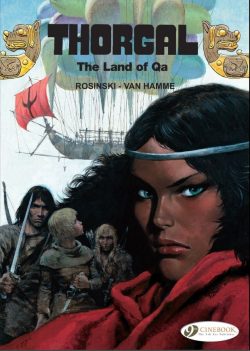
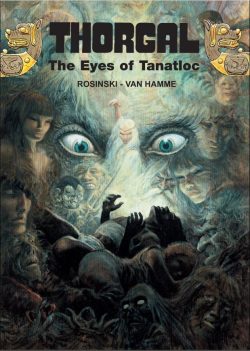
Thorgal volume 5: The Land of Qa/The Eyes of Tanatloc


By Rosiński & Van Hamme, translated by Luke Spear (Cinebook)
ISBN: 978-1-905460-80-9 (Album PB)

One of the very best and most celebrated fantasy adventure series ever created, Thorgal deftly accomplishes the seemingly impossible: pleasing critics and selling in vast quantities.

The prototypical Game of Thrones saga debuted in iconic weekly Le Journal de Tintin in 1977 with album compilations beginning three years later. The far-reaching, expansive generational saga has won a monolithic international following in numerous languages and dozens of countries, generating a flotilla of spin-off series, and thus naturally has found a strong presence in the field of global gaming.

In story-terms, Thorgal offers the best of all weird worlds, with an ostensibly historical setting of bold Viking adventure seamlessly incorporating science fiction elements, magic, horrendous beasts, social satire, political intrigue, soap opera, Atlantean legends and mythically mystical literary standbys such as gods, monsters and devils.

Created by Belgian writer Jean Van Hamme (Domino, XIII, Largo Winch, Blake and Mortimer) and Polish illustrator Grzegorz Rosiński (Kapitan Żbik, Pilot Śmigłowca, Hans, The Revenge of Count Skarbek), the feature grew unstoppably over decades. The creative duo co-completed 29 albums between 1980 and 2006 when Van Hamme moved on. Scripting duties fell to Yves Sente who collaborated on a further five collections until 2013.

In 2016, Xavier Dorison wrote one and in 2018 Yann (Yannick Le Pennetier) another, after which the latter remained as scripter whilst RosiÅ„ski took a break with Fred Vigaux illustrating 2019’s L’Ermite de Skellingar: the 37th tome in the sequence…

By the time Van Hamme departed, the canon had grown to cover not only the life of the titular hero and his psionically-gifted son Jolan, but also other indomitable family and cast members through a number of spin-offs (Kriss de Valnor, Louve, La Jeunesse de Thorgal), gathered under the umbrella title Les Mondes de Thorgal – with each eventually winning their own series of solo albums.

In 1985, American publisher Donning released a brief but superb series of oversized hardcover book translations but Thorgal never really found an English-speaking audience until Cinebook began its own iteration in 2007.

What Has Gone Before: As a baby Thorgal was recovered from a ferocious storm at sea and raised by Northern Viking chief Leif Haraldson. Nobody could possibly know the fortunate foundling had survived an interstellar incident which destroyed a starship full of super-scientific aliens…

Growing to manhood, the strange boy was eventually forced out of his adopted land by ambitious Gandalf the Mad who feared the young warrior threatened his own claim to the throne. For his entire childhood, Thorgal had been inseparable from Gandalf’s daughter Aaricia and, as soon as they were able, they fled together from the poisonous atmosphere to live free from her father’s lethal jealousy and obsessive terror of losing his throne…

Danger was always close but after many appalling hardships, the lovers and their new son finally found a measure of cautious tranquillity by occupying a small island where they could thrive in safety…

The original series wanders back and forth through the hero’s life and Cinebook’s fifth double-album edition (comprising 10th epic Le pays Qâ and sequel saga #11 Les Yeux de Tanatloc from 1986, and available in both paperback and digital formats) reveals how Thorgal Aegirsson’s dreams of a life of splendid and secure isolation are forever ended by an old enemy…

The Land of Qa opens in the deepest winter as Thorgal and Aaricia’s island home is invaded by a band of mercenaries. The warrior and his wife are hosting new friends Argun Tree Foot and his tempestuous nephew Tjall the Fiery but the idyllic holiday ends in rage and humiliation as vicious pirates abduct the aged armourer and Jolan.

Before the enraged father can head after them, he is intercepted by a former acquaintance: ruthless thief Kriss of Valinor. She has taken a profitable commission and ensured Thorgal’s assistance despite their past animosities and potential objections. Gloatingly enjoying the upper hand, Kriss even acquiesces when Aaricia forcefully insists on coming with them…

The situation escalates into madness when Kriss’ allies/clients arrive, sailing a boat through the winter skies, held aloft by a series of vast balloons. Jolan and Tree Foot are already far out at sea, in a more conventional vessel, but their ultimate destination is anything but familiar…

Aboard the sky-ship, Thorgal and his companions, having been rendered unconscious by alien technology, are given a subliminal history lesson by a high priest of the distant Land of Qa – a region resembling pre-Columbian Central America. Since his own memories of his alien origins have been suppressed, the astounding tale of two warring men of godlike power who elevated savage primitives into warriors able to subjugate a continent means nothing to Thorgal…

He has no conception that he is the son of one of those pale deities and grandson of the other. All he knows is that he must steal the magic mask of one of them for the other, and his despised partner-in-crime Kriss cannot be trusted…

The mission seems doomed from the start. As Jolan and Tree Foot are unceremoniously marooned in a strange, arid land by their captors, far away and high above them the sky-ship is ambushed by enemy vessels. The horrific skirmish leaves Thorgal, Aaricia, Tjall and Kriss stranded in wild jungles miles from their target-destination: the imperial city of Mayaxatl and the almighty Ogatai who is their destined victim…

Compounding the crisis, Jolan and Tree Foot have also discovered a lost city. Xinjin is the capital of Ogatai’s puissant alien enemy, and holds secrets that somehow trigger strangely familial intuitions in Thorgal’s psychically precocious son…

And in the lush jungles, the father too experiences unwelcome premonitions and vague memories of people he has never met…
The saga continues – but does not conclude – in The Eyes of Tanatloc as the distanced and separated family works to reunite, driven by unknown and inexpressible forces. After endlessly battling horrific beasts, enduring and defeating deadly swamps and the perils of their own motivations, Thorgal’s party finally escapes the green hell and begins their assault on Mayaxatl. It has left them all exhausted and changed…

All the while, in Xinjin, dying Tanatloc has been subtly training little Jolan, trying to explain to his wary descendent the nature of the powers they share and their unearthly origins. The tutelage is sadly wasted, as high priest Variay subverts and derails his God’s efforts for his own reasons and with the intention of installing the boy as the new god-king of Xinjin…

To be Concluded…

A rousing generational fantasy epic, Thorgal is every fantasy fan’s ideal dream of unending adventure: by turns ingenious, expansive, fierce, funny, phenomenally gripping and incredibly complex. this cunningly crafted, astonishingly addictive tale offers a keen insight into the character of a true, if exceedingly reluctant, hero and the waves he makes in a fabulous forgotten world. What fanatical fantasy aficionado could possibly resist such barbaric blandishments?
Original editions © Rosiński & Van Hamme 1986, Les Editions du Lombard (Dargaud-Lombard SA). English translation © 2009 Cinebook Ltd.