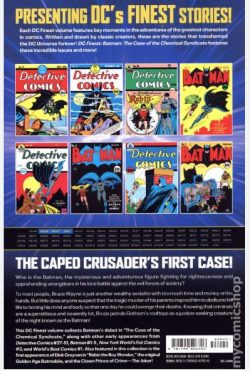
Showcase Presents Robin The Boy Wonder


By E. Nelson Bridwell, Ed Hamilton, John Broome, Leo Dorfman, Gardner F. Fox, Cary Bates, Mike Friedrich, Frank Robbins, Denny O’Neil, Bob Haney, Elliot Maggin, Bob Rozakis, Ross Andru, Curt Swan, Sheldon Moldoff, Pete Costanza, Chic Stone, Gil Kane, Irv Novick, Murphy Anderson, Dick Dillin, Rich Buckler, Bob Brown, Mike Grell, A. Martinez Al Milgrom & various (DC Comics)
ISBN: 978-1-4012-1676-4 (TPB)

This book includes Discriminatory Content produced in less enlightened times.

As previously mentioned, there are a lot of comics anniversaries occurring in this otherwise dreadful year. The ultimate and original sidekick is probably the most significant of DC’s representatives, and indeed there have been a few intriguing collections released to celebrate the occasion. This one, however, is probably the best but remains criminally out of print, if not utterly unavailable…

Robin the Boy Wonder debuted in Detective Comics #38 (cover dated April 1940 and on sale from March 6th). Co-created by Bob Kane, Bill Finger & Jerry Robinson, he was a juvenile circus acrobat whose parents were murdered by a mob boss. The story of how Batman took the orphaned Dick Grayson under his scalloped wing and trained him to fight crime has been told, retold and revised many times over the decades and still regularly undergoes tweaking to this day.

Grayson fought beside Batman until 1970 when, as an indicator of those turbulent times, he flew the nest, becoming a Teen Wonder college student. His creation as a junior hero for younger readers to identify with has inspired an incomprehensible number of costumed sidekicks and kid crusaders, and Grayson continued in similar innovative vein for the older, more worldly-wise readership of America’s increasingly rebellious youth culture.

The first Robin even had his own solo series in Star Spangled Comics from 1947 to 1952, a solo spot in the back of Detective Comics from the end of the 1960s – a position he alternated and shared with Batgirl – and a starring feature in anthology comic Batman Family. During the 1980s he led the New Teen Titans, initially in his original costumed identity but eventually in the reinvented guise of Nightwing, all while re-establishing a (somewhat turbulent) working relationship with his masked mentor.

This broad ranging easy on the eye monochrome compilation covers the period from Julie Schwartz’s captivating reinvigoration of the Dynamic Duo in 1964 until 1975 with Robin-related stories and material from Batman #184, 192, 202, 213, 227, 229-231, 234-236, 239-242, 244-246, 248-250, 252, 254 and portions of 217; Detective Comics #342, 386, 390-391, 394-395, 398-403, 445, 447, 450-251; World’s Finest Comics #141, 147, 195, 200; Superman’s Pal Jimmy Olsen #91, 111, 130 and Justice League of America #91-92.

The wonderment begins with the lead story from Batman #213 (July-August 1969) – a 30th Anniversary reprint Giant – which featured an all-new retelling of ‘The Origin of Robin’ courtesy of E. Nelson Bridwell, Ross Andru & Mike Esposito, perfectly reinterpreting that epochal event for the Vietnam generation. After that, the tales proceed in (more or less) chronological order, covering episodes where Robin took centre-stage.

First up is ‘The Olsen-Robin Team versus… the Superman-Batman Team!’ (from World’s Finest #141, May 1964, by Edmond Hamilton, Curt Swan & George Klein). In a stirring blend of science fiction thriller and crime caper, the underappreciated sidekicks fake their own deaths to undertake a secret mission even their adult partners must remain unaware of – for the very best of reasons of course. A sequel from WF #147 (February 1965) delivers an engaging drama of youth-in-revolt as ‘The New Terrific Team!’ quit their assistant roles to strike out on their disgruntled own. Naturally there’s a perfectly reasonable – if incredible – reason here, too…

Detective Comics #342 (August 1965) featured ‘The Midnight Raid of the Robin Gang!’ by John Broome, Sheldon Moldoff & Joe Giella, wherein the Boy Wonder joins a youthful gang of costumed criminals, after which Superman’s Pal Jimmy Olsen #91 (March 1966) delivers ‘The Dragon Delinquent!’ (Leo Dorfman & Pete Costanza) as Robin and the cub reporter, unknown to each other, both infiltrate the same biker gang with potentially fatal consequences.

‘The Boy Wonder’s Boo-Boo Patrol!’ – originally a back-up in Batman #184 (September 1966, Gardner Fox, Chic Stone & Sid Greene), shows the daring lad’s star-potential in a clever tale of thespian skulduggery and classic conundrum solving, before ‘Dick Grayson’s Secret Guardian!’ (Batman #192, June 1967, Fox, Moldoff & Giella) depicts his physical prowess in one of comic books’ first instances of the exo-skeletal augmentation gimmick.

‘Jimmy Olsen, Boy Wonder!’ (SPJO #111, June 1968, by Cary Bates & Costanza) finds the reporter trying to prove his covert skills by convincing the Gotham Guardian that he was actually Robin, whilst that same month in Batman #203 the genuine article tackles the ‘Menace of the Motorcycle Marauders!’ (Mike Friedrich, Stone & Giella) consequently learning a salutary lesson in the price of responsibility…

Cover-dated April 1969, Detective Comics #386 featured the Boy Wonder’s first solo back-up in what was to become his semi-regular spot for years. ‘The Teen-Age Gap!’ (as described by Friedrich, Andru & Esposito) depicts a High School Barn Dance which only narrowly escapes becoming a riot thanks to his diligent intervention, after which Gil Kane & Murphy Anderson assume the art-chores with #390’s ‘Countdown to Chaos!’ (August 1969), bringing the series stunningly alive. Friedrich concocted a canny tale of corruption and kidnapping leading to a paralysing city ‘Strike!’ for the Caped kid to spectacularly expose and foil in the following issue.

Batman #217 (December 1969) was a landmark in the character’s long history as Dick leaves home to attend Hudson University. Only the pertinent portion from ‘One Bullet Too Many!’ by Frank Robbins, Irv Novick & Dick Giordano is included here, closely followed by ‘Strike… Whilst the Campus is Hot’ (Detective #394 from the same month, by Robbins, Kane & Anderson) as the callow freshman stumbles into a campus riot organised by criminals and radical activists, forcing the now Teen Wonder to ‘Drop Out… or Drop Dead!‘ to stop the seditious scheme…

Detective #398-399 (April & May 1970) ran a 2-part spy-thriller with Vince Colletta replacing Anderson as inker. ‘Moon-Struck’ has lunar rock samples borrowed from NASA apparently causing a plague among Hudson’s students until Robin exposes a Soviet scheme to sabotage the Space Program in ‘Panic by Moonglow’. The 400th anniversary issue (June 1970) finally teamed the Teen Wonder with his alternating back-up star in ‘A Burial For Batgirl!’ (Denny O’Neil, Kane & Colletta): a college-based murder mystery which again heavily references the political and social unrest then plaguing US campuses, but which still finds space to be smart and action-packed as well as topical, before chilling conclusion ‘Midnight is the Dying Hour!’ wraps up the saga.

Never afraid to repeat a good idea, Superman’s Pal Jimmy Olsen #130 (July 1970) sees Bob Haney & Murphy Anderson detail the exploits of ‘Olsen the Teen Wonder!’ as the boy reporter again apes Batman’s buddy – this time to infiltrate an underworld newspaper – whilst World’s Finest #195 (August 1970) finds Jimmy & Robin targeted for murder by the Mafia in ‘Dig Now, Die Later!’ by Haney, Andru & Esposito. Simultaneously in DC #402 ‘My Place in the Sun’ (Friedrich, Kane & Colletta), embroils Grayson and fellow Teen Titan Roy Speedy Harper in a crisis of social conscience, before our scarce-bearded hero wraps up his Detective run with corking crime-busting caper ‘Break-Out’ in the September issue.

Robin’s romps transferred to the back of Batman, beginning with #227 (December 1970) and ‘Help Me – I Think I’m Dead!’ (Friedrich, Novick & Esposito) as ecological awareness and penny-pinching Big Business catastrophically collide on the campus, beginning an extended epic seeing the Teen Thunderbolt explore communes, alternative cultures and the burgeoning spiritual New Age fads of the day. Inked by Frank Giacoia ‘Temperature Boiling… and Rising!’ (#229, February 1971) continues the politically-charged drama, albeit uncomfortably interrupted by a trenchant fantasy team-up with Superman sparked when the Man of Steel attempts to halt a violent campus clash between students and National Guard.

Crafted by Friedrich, Dick Dillin & Giella, ‘Prisoners of the Immortal World!’ (WFC #200, February 1971), has brothers on opposite sides of the teen scene abducted with Robin & Superman to a distant planet where undying vampiric aliens wage eternal war on each other. A return to more pedestrian perils in Batman #230 (March 1971) sees ‘Danger Comes A-Looking!’ for our young hero in the form of a gang of right-wing, anti-protester jocks and a deluded friend who prefers bombs to brotherhood, courtesy of Friedrich, Novick & Dick Giordano. ‘Wiped Out!’ (#231, May 1971) then offers an eye-popping end to the jock gang whilst #234 sees a clever road-trip tale in ‘Vengeance for a Cop!’, when a campus guard is gunned down forcing Robin to track the only suspect to a commune. ‘The Outcast Society’ has its own unique system of justice, but eventually the shooter is apprehended in the cataclysmic ‘Rain Fire!’ (#235 & 236 respectively).

The Collective experience blooms into psychedelic and psionic strangeness in #239 as ‘Soul-Pit’ (illustrated by new penciller Rich Buckler) finds Grayson’s would-be girlfriend, “Jesus-freaks” and runaway kids all sucked into a telepathic duel between a father and son, played out in the ‘Theatre of the Mind!’ before exposing the ‘Secret of the Psychic Siren!’ and culminating in a lethal clash with a clandestine cult in ‘Death-Point!’ (Batman#242, June 1972). After that eerie epic we slip back a year to peruse the Teen Wonder’s participation in one of the hallowed JLA/JSA summer team-ups, beginning in Justice League of America #91 (August 1971) and ‘Earth… the Monster-Maker!’, as Supermen, Flashes, Green Lanterns, Atoms and a brace of Hawkmen from two separate Realities simultaneously and ineffectually battle an alien boy and his symbiotically-linked dog (sort of) on almost identical planets a universe apart. There’s still time to painfully patronise the Robins of both until ‘Solomon Grundy… the One and Only!’ gives everyone a brutal but ultimately life-saving lesson on acceptance, togetherness, youthful optimism and lateral thinking…

Elliot Maggin, Novick & Giordano then set ‘The Teen-Age Trap!’ (Batman#244, September 1972), with Grayson mentoring troubled kids – and finding plenty of troublemakers his own age – whilst ‘Who Stole the Gift from Nowhere!’ is a delightful old-fashioned change-of-pace mystery yarn. However, ‘How Many Ways Can a Robin Die?’ by Robbins, Novick, Dillin & Giordano (Batman #246, December 1972) is actually a Dark Knight story with Teen Wonder helpless hostage throughout, whereas #248 opens another run of solo stories with ‘The Immortals of Usen Castle’ (Maggin, Novick & Frank McLaughlin) wherein another deprived-kids day trip turns into an episode of Scooby-Doo, Where are You? The ‘Case of the Kidnapped Crusader!’ (pencilled by Bob Brown) then puts the Student Centurion on the trail of an abducted consumer advocate and ‘Return of the Flying Grayson!’ (Maggin, Novick & McLaughlin from #250) painfully reminds the hero of his Circus past after tracking down pop-art thieves.

Batman #252 (October 1973) sees Maggin, Dillin & Giordano’s light-hearted pairing of Robin with a Danny Kaye pastiche for charming romp ‘The King from Canarsie!’, before ‘The Phenomenal Memory of Luke Graham!’ (#254 January/February 1974 and inked by Anderson) causes nothing but trouble for the hero, his college professors and a gang of robbers…

It was a year before the Teen Wonder’s solo sallies resumed with ‘The Touchdown Trap’ in Detective Comics #445 as new scripter Bob Rozakis and artist Mike Grell catapulted our hero into a 50-year-old college football feud that refused to die, whilst ‘The Puzzle of the Pyramids’ (#447 and illustrated by A. Martinez & Mazzaroli) offers another clever crime conundrum. This eccentrically eclectic monochrome compendium concludes with an action-packed, chase-heavy human drama by Al Milgrom & Terry Austin as ‘The Parking Lot Bandit!’ & ‘The Parking Lot Bandit Strikes Again!’ (DC #450-451, August & September 1975), giving the titanic teen one last chance to strike a bit of terror into the hearts of evil-doers…

These stories span a turbulent and chaotic period for comic books: perfectly encapsulating and describing the vicissitudes of the superhero genre’s premier juvenile lead: complex yet uncomplicated adventures drenched in charm and wit, moody tales of rebellion and self-discovery, and rollercoaster, all-fun romps. Action is always paramount, and angst-free satisfaction is pretty much guaranteed. These cracking yarns are something no fan of old-fashioned Fights ‘n’ Tights fiction should miss.
© 1964-1975, 2008 DC Comics. All Rights Reserved.

Today in 1922, Belgian auteur Marc Sleen was born. We still haven’t seen English versions of his Nero yet, but have slavishly and repeatedly begged you all to tune in to the oeuvre of Ronald Searle, who left us all far less today in 2011.

The Rise and Fall of the Trigan Empire volume 1


By Mike Butterworth & Don Lawrence & various (Rebellion Studios)
ISBN: 978-1-78108-755-8 (TPB/Digital edition)

This book includes Discriminatory Content produced in less enlightened times.

For British – and Dutch – readers of a certain age and prone to debilitating nostalgia, The Trigan Empire (or The Rise and Fall of the Trigan Empire to give it its ponderous full title) was only ever about two things: boyish wish-fulfilment and staggeringly beautiful art.

The strip was created by Senior Group Editor Leonard Matthews and given to the editor of Sun and Comet to develop and continue. A trained artist, Mike Butterworth became writer of many historical strips such as Buffalo Bill, Max Bravo, the Happy Hussar, Battler Britton and Billy the Kid – and latterly a crime and gothic romance novelist with more than 20 books to his pen names.

Based in equal part on cinematic Sword & Sandal/Biblical epics and the space age fascination of a planet counting down to a moonshot, for the saga Butterworth combined his love of the past, a contemporary comics trend for science fiction and that long-established movie genre of manly blockbusters to construct a vast sprawling serial of heroic expansionism, two-fisted warriors, wild beasts, deadly monsters and even occasionally the odd woman.

The other primary influence on the series was the fantasy fiction of Edgar Rice Burroughs (especially John Carter of Mars and Pellucidar) but without his concentration on strong and/or blatantly sexy women – usually as prizes for his heroes to save. In the formative days of the Trigan Empire, ladies dressed decorously, minded their manners and were dutiful wives or nurses… unless they were evil, vindictive or conniving…

The compellingly addictive, all-action thematic precursor to Warhammer, Civilisation and Warcraft might have been a short run venture had it not been for the art. The primary illustrator was Don Lawrence (Marvelman, Wells Fargo, Billy the Kid, Karl the Viking, Fireball XL5, Maroc the Mighty, Olac the Gladiator, The Adventures of Tarzan, adult comedy strip Carrie and his multi-volume Dutch magnum opus Storm), who painted each weekly instalment.

Initially he used watercolours before switching to quicker-drying gouaches, rendered in a formal, hyper-realistic style that still left room for stylistic caricature and wild fantasy, and one that made each lush backdrop and magnificent cityscape a pure treasure. Other, later artists included Ron Embleton, Miguel Quesada, Philip Cork, Gerry Wood and Oliver “Zack” Frey, as the strip notched up 854 weekly instalments, beginning in September 1965 and only ending in 1982. Along the way, it had also appeared in Annuals and Specials and become a sensation in translated syndication across Europe.

Even after it ended – and, thanks to these collections, it has recently resumed! – the adventure continued: in reprint form, appearing in the UK in Vulcan and across the world; in two Dutch radio plays; collected editions sold in numerous languages; a proposed US TV show and numerous collected editions from 1973 onwards. Surely someone must have a movie option in process: if only Kirk Douglas, Burt Lancaster and Tony Curtis were still around, we could completely close the creative circle…

Lawrence (17th November 1928 – 29th December 2003) inspired a host of artists such as Brian Bolland and Dave Gibbons, but as he worked into the 1990s, his eyesight was increasingly hindered by cataracts and he took on and trained apprentices such as Chris Weston and Liam Sharp (who offers his own potent reminiscences in the Introduction to this first archival volume from Rebellion Studios’ Treasury of British Comics). Sharp collaborated with the venerable artist on his last Storm stories…

Inescapably mired in powerful nostalgia, but also standing up remarkably well on its own merits, this first collected volume re-presents the series from its enigmatic opening in high-end tabloid weekly magazine Ranger, combining comics with a large selection of factual features. The fantasy soon began to steal the show and was the most noteworthy offering for the entirety of the publication’s 40 week run, spanning 18th September 1965 to 18th June 1966. It then carried over – with a few other choice strips – into Look and Learn, beginning with #232: remaining until the magazine closed with #1049 (April 1982).

Ranger had been a glossy, photogravure blend of traditional comic anthology strips and educational magazine, and when it folded, the only publication able to continue The Trigan Empire in its full grandeur was Look and Learn

One of our most missed publishing traditions is the educational comic. From science, history and engineering features in the legendary Eagle to a small explosion of factual and socially responsible boys and girls papers in the late 1950s to the heady go-getting heydays of the 1960s & 1970s, Britons always enjoyed a healthy sub-culture of comics that informed, instructed and revealed – and that’s not even counting all the pure sports comics!

Amongst many others Speed & Power, Treasure, World of Wonder, Tell Me Why, and Look and Learn spent decades making things clear, illuminating understanding and bringing the marvels of the changing world to our childish but avid attentions with wit, style and – thanks to the quality of the illustrators involved – astonishing beauty. Look and Learn launched on 20th January 1962: brainchild of Fleetway Publications’ then Director of Juvenile Publications Leonard Matthews. The project was executed by editor David Stone (almost instantly replaced by John Sanders), sub-editor Freddie Lidstone and Art Director Jack Parker.

For 20 years it delighted children, and was one of the country’s most popular children’s weeklies. Naturally there were many spin-off tomes such as The Look and Learn Book of 1001 Questions and Answers, Look and Learn Book of Wonders of Nature, Look and Learn Book of Pets and Look and Learn Young Scientist as well as utterly engrossing Christmas treat tradition The Look and Learn Book and – in 1973 – The Look and Learn Book of the Trigan Empire: the serial’s very first hardback compilation.

Strangely, many, many kids learned stuff they didn’t think they cared about simply because it filled out the rest of that comic that carried the Trigan Empire…

In this tome we review 25th June1966 through 17th May 1968, encompassing Ranger #1-40 and Look and Learn #232-331: subdivided for your convenience into 13 chapter plays of what we oldsters absorbed as one continuous unfolding procession of wonder…

Depicted with sublime conviction and sly wit, it begins with ‘Victory for the Trigans’ (18th September 1965 – 29th January 1966) as fishermen in the Florida swamps witness a spaceship crash. All aboard are dead, and after, the global news cycle wearies of the story, the craft is reduced to a sideshow attraction whilst scholars meticulously investigate its technology, dead voyagers and a huge set of journals written in an indecipherable language. No one succeeds and eventually, no one cares…

All except student Richard Peter Haddon, who spends the next half century looking for the key and – at age 70 – cracks the code, subsequently translating the history of a mighty race of aliens so very like earthmen…

From then on the scene switches to distant twin-sunned world Elekton, where numerous kingdoms and empires-in-waiting jostle for dominance. In many ways it’s like Earth a few thousand years before the birth of Christ… except for all the monsters, skycraft and ray guns…

In the wilds and wastes between the nations of Loka, Tharv, Davelli and Cato, brutish far-ranging tribes of nomadic Vorg hunt and clash and live brief free lives, until three brothers decide existence could be so much more…

Driven, compelling and charismatic, notional leader Trigo has a dream and convinces his siblings Brag and Klud to ask their people to cease following roving herds of beasts and settle by a river where five hills meet. Before long they have raised a city and begun the march to empire. Of course, all those defiant libertarians were initially resistant to becoming civilised, but that ended after the more advanced Lokans began hunting them for sport from their flying ships…

By the time Loka’s King Zorth finally gets around to conquering Tharv and formally annexing the lands of Vorg in his plan to become global dictator, Trigo has begun building his city and invited refugees from Tharv to join him. Amongst the many displaced survivors of Lokan atrocity is Peric – an architect and philosopher generally acclaimed as the smartest man alive. He is cared for by his daughter Salvia. Both will play major roles in the foundation of the Trigan Empire…

When Zorth at last turns to consolidation by taking Vorg, his air, sea and land forces are met by an unbeatable wall of death and history is rewritten. It comes at great cost, most notably to Trigo as victory is almost snatched from him when brother Klud attempts to murder him, seize power and betray their people to the Lokans…

With an empire established, one translated book ends, and Professor Haddon’s life’s work moves on to what we’ll call ‘Crash in the Jungle’ (5th February – 19th February 1966), introducing young warrior/pilot Janno. The son of Brag, he is childless Trigo’s nephew and heir apparent: enjoying many dynamic adventures as an imperial troubleshooter whilst being groomed for rule. Here, still wet behind the ears, the lad crashes in the plush rainforests of Daveli, befriends Keren – son of a formerly antagonistic aboriginal chieftain – and facilitates their alliance with the ever-expanding Trigan Empire. When Janno returns to pilot training, Keren is beside him and will be his constant companion in all further exploits…

Planetary chaos erupts next as ‘The Falling Moon’ (26th February – 28th May 1966) reshapes Elekton’s political map. When Gallas impacts sister moon Seres, the cosmic collision sends the satellite smashing into Loka where – forewarned – Zorth seeks to relocate his power base and entire populace by seeking sanctuary in Trigo’s city. Once admitted and welcomed, the Lokans bite the hand that shelters them by seizing the city. Valiant Brag manages to save wounded Trigo, but they are captured and enslaved by desert raiders of the Citadel…

As Janno and Keren escape to mount a futile resistance to the Lokans, slave worker Trigo foils an assassination and earns the gratitude of the Citadel king, who lends him a band of warriors to retake his own city. When they link up with Janno & Keren, Zorth’s defeat and doom are assured…

Time moves differently on Elekton and many events seem telescoped, but as the strip jumps to a new home, continuity manifests in ‘The Invaders from Gallas’ (4th June – 18th June) in Ranger before continuing in Look and Learn #232-237 from 25th June to 30th July 1966. As the fallen moon cools, aliens dwelling inside emerge to attempt the conquest of their new world via their mind control techniques. With the Trigans crazed and killing each other, only a deaf man holds the key to their survival…

Look and Learn #238-242 (6th August – 3rd September 1966) featured ‘The Land of No Return’ – which sees Janno accidentally sent along the River of Death (a rather cheeky “tribute” to Burroughs’ Mars stories), debunking an insidious religious belief that had for millennia curtailed life for Elekton’s elderly whilst ending a cult of elder-abusing slavers…

‘The Revolt of the Lokans’ (L&L #243-255, 10th September – 3rd December 1966) returns to the exiled former-conquerors who poisoned and deranged Trigo before retaking his city. Thankfully, Keren and Peric find a way to restore order to the city and its ruler, after which #256-264 (10th December 1966 – 4th February 1967) detail ‘War with Hericon’ as Trigo marries Lady Ursa, sister of King Kassar: ruler of the aloof, distant empire (a visual melange of Earth’s Persian and Byzantine kingdoms).

The diplomatic love match is soured by a single sinister malcontent when Yenni – a vengeful criminal outcast of both Hericon and Trigan – foments racial unrest in both realms and lets human nature do its worst…

Janno & Keren took the lead again in ‘Revolution in Zabriz’ (#265-273, 4th February – 8th April 1967), when despatched to survey a distant mountain outpost only to uncover a plot by its governor. He uses captive labour to finance a coup to oust Uncle Trigo and take over the empire, after which ‘The Lokan Invasion’ (L&L #274-279, 15th April – 20th May) sees the brothers-in-arms stumble into a devious scheme by chemist Vannu to destroy the Trigans by contaminating their water with amnesia-inducing potions…

Vengeful retaliation is once more the pivotal factor as ‘The Revenge of Darak’ (#280-290, 27th May – 5th August) reveals how Trigan’s greatest pilot betrays his emperor and is punished with slavery in the mines. After a year, he escapes and uses his insider knowledge to drive a wedge between Trigo and Brag, poison Peric and embroil Hericon in war. Thankfully, brotherly love trumps hurt feelings and justice conquers all…

A taste of horror comes with ‘The Alien Invasion’ L&L #291-297 (13th August – 23rd September) as energy beings land on Elekton. Able to possess organic brains, the intruders work their way up the planet’s food chain until Keren, Kassar and Trigo are fully dominated, but the cerebral tyrants have not reckoned on Peric’s wit or Janno’s cunning…

The first major role for a woman comes in ‘The Reign of Thara’ (L&L #298-316, 30th September 1967 – 3rd February 1968) as the royal family is ousted by deceit and a secret society of soldiers instals the daughter of Klud in Trigo’s place. Vain, haughty and imperious, she is intended to be a puppet of secret manipulators, but proves to possess too much pride and backbone to allow the empire to fall to mismanagement and enemy incursions. Happily, the actual Royal Family have survived their well-planned dooms and returned, leading an army of liberated slaves and a fleet of pirates sworn to Trigo’s service…

During the campaign, Kern & Janno befriend a rural bumpkin, obsessed with flying, and clownish Roffa becomes their third “musketeer”, playing a major role in the concluding tale here.

Spanning Look & Learn #317-331 (10th February – 17th  May 1968), ‘The Invasion of Bolus’ sees the trio captured by rogue scientist Thulla and pressganged into joining his mission to build a ship and conquer Elekton’s inhabited moon. Unable to defy or escape, they become unwilling members in his army, before defecting to the super-advanced but pacifistic Bolans. At least the lads left a warning before lift-off: one that – eventually – reaches Trigo & Peric.

As the Trigans rush to construct a rescue vessel, Thulla brutally seizes the moon people’s city and commences the second part of his plan: building a colossal ray cannon to destroy all life on Elekton. As Trigo’s ship takes off – too late to stop devasting blasts from Bolus – Janno & Keren are forced to desperate measures to save their people from the murderous madman…

Incorporating a tantalising teaser for the next volume and creator biographies, this spectacular visual triumph is a monument to British Comics creativity: one that simultaneously pushes memory buttons for old folk whilst offering a light but beautiful straightforward space opera epic readily accessible to the curious and genre inquisitive alike.

Is that you or someone you know?
The Rise and Fall of the Trigan Empire is ™ Rebellion Publishing IP Ltd. © 1965, 1966, 1967 & 2019 Rebellion Publishing IP Ltd. All Rights Reserved.

Literally born yesterday in 1928 Stanley Lieber – AKA Stan Lee – did a whole lot and appears many times in this blog. You should go look. In 1967 groundbreaking Acme Novelty Library cartoonist Chris Ware arrived, followed two years later by sound fella P.J. Holden (2000 AD, Judge Dredd, Warhammer) who we last covered in Bad Magic – A Skullduggery Pleasant Graphic Novel.

However, TODAY in 1946, Milton Caniff’s last Terry and the Pirates episode appeared. Whilst he rose to even greater heights with Steve Canyon, George Wunder carried Terry, Pat & Co. until 1973.

In 1963 Dave McKean was born, but otherwise today is one for the “loss” column, with Raeburn van Buren dying in 1987, Disney artist Tony Strobl in 1991, Barbarella creator Jean-Claude Forest in 1998 and wonderful Don Lawrence in 2003. As always you can search our engine or find one of your own preference for more…

The Treasury of British Comics Annual 2026


By Stephen Brotherstone, Dave Lawrence, Scott Goodall, David Roach, Chris Lowder, Keith Richardson, Suyi Davies Okungbowa, James Tomlinson, Ned Hartley, Peter Milligan, Willie Paterson, Martin Baxendale, Edison Neo, Ken Reid, Horatio Altuna, Steve White, Jesús Redondo, Henrik Salhström, Solano Lopez, Eric Bradbury, Carlos Cruz, Francisco Fuentes Man, Juan Arancio, Mervyn Johnston, Frank Langford, Ian Kennedy, Vanyo, Bret Parson, Josep Gual, Staz Johnson, James Harren & various (Rebellion Studios)
Digital only eISBN: 978-1-83786-721-9; 978-1-83786-727-1 (Webshop Exclusive)

This book includes Discriminatory Content produced in less enlightened times.

Win’s Christmas Gift Recommendation: True Brit Comics Class… 9/10

Ooh, look! One more!

Just like the bumper seasonal hardbacks they celebrate, Treasury of British Comics Annuals blend old classics with all-new material, and although this year’s selection probably won’t last you all through 2026, it is packed with wonderful yarns that you will certainly read over and again. Combining original modern material with strips from Jag Annual 1971; Smash! November 16th 1968; Monster Fun July 5th 1975; Boy’s World February 19th – October 3rd 1964; The Birthday Book For Boys 1972; Misty February 24th 1979; Whizzer & Chips December 20th 1980; Action May 1st 1976; Wildcat Holiday Special 1989; Battle Action Force November 1st 1986; Valiant Annual 1969; Action Annual 1977; Buster December 28th 1991; Wham! Annual 1972 and Monster Fun October 2024, and kicks off with a strange team up tale fresh off the drawing/key boards of Stephen Brotherstone, Dave Lawrence & Henrik Salhström. It was lettered – like all the new material here – by Jonathan Stevenson.

‘Helmet Head & El Mestizo: “On the First day of Christmas…” ’ pairs the aging mercenary with the robot sheriff to save a frontier town – and that aforementioned ROBOT SHERIFF! – from ruthless scavengers, after which a classic tale of murderous child soldiers sees the ‘Mouse Patrol’ (by an unidentified writer and the incredible Eric Bradbury from Jag Annual 1971) still looking for their POW dads on the battlefields of North Africa in 1942. This time the three lads (Blackie Knight, Ginger Nobb & Cyril North) and their chimp chum Cleo ride their stolen tank into a Nazi super weapon test and gleefully turn it on the astounded Afrika Corps!

Presented as Original Art Archive Scans published in Smash! November 16th 1968, ‘A Short Cut Home!’ is limned by Francisco Fuentes Man and details how a nasty Earthman outsmarts himself after blackmailing gentle – but clever – aliens, after which Monster Fun July 5th 1975 supplies a Ken Reid comedy classic scripted by a mystery gagster. ‘Martha’s Monster Make-Up’ allows her to mould faces like putty and, here, get rid of a really obnoxious family guest…

Very much a main attraction, full-colour painted serial ‘John Brody and the Green Men’ ran in Boy’s World from February 19th to October 3rd 1964. Crafted by Willie Paterson & Frank Langford this is an epic African adventure in the manner of She and other fantasy movies, following the eponymous troubleshooter into a fantastic submerged kingdom and civil war against devilish priests, bloodyhanded tyrants a and a lot of undersea beasties…

It’s followed by Ned Hartley, Steve White & Stevenson’s new parody yarn ‘Imagine if Gums Was Published in Action…’ which speaks for itself – albeit rather messily – prior to Tom Tully & Ian Kennedy revealing how colour-changing ‘Kid Chameleon’ (The Birthday Book For Boys 1972) continues searching for his parents’ assassin. If not for those reptiles who had raised him in the Kalahari desert, he would have no chance…

Author unknown & Josep Gual reveal the monster-hunting surprise two girls unleash on ‘The Island’ (from Misty February 24th 1979) after which school spoof ‘Strange Hill’ (by another unknown & Martin Baxendale from Whizzer & Chips December 20th 1980) neatly shuffles us into an all-new yarn from David & Emily Roach pitting stellar sorcery savants in ‘Vanessa From Venus vs. Spellbinder’.

Thanks to another Original Art Archive Scan we get to see superspy ‘Dredger’ (by Chris Lowder & Horatio Altuna from Action May 1st 1976) settle with a KGB hit squad in all his mean, messy glory prior to James Tomlinson & Jesús Redondo Román detail why the undead don’t like space travel. ‘The Wildcat Complete: Vampire!’ was originally seen in Wildcat Holiday Special 1989, and our seasonal session adopts a rather bleak note for ‘The Fighting MaGees’ (Peter Milligan & Solano Lopez from Battle Action Force November 1st 1986) as brothers Jack and Micky endure the hell of the Gallipoli landings and are forever changed…

From Valiant Annual 1969 Carlos Cruz González and that unknown writer provide a vivid adventure for a certain inventor and his robot assistants as ‘The House of Dolmann’ face plundering pop sensations The Spectrums whilst Juan Arancio’s Original Art Archive Scans for Action Annual 1977 pit white explorers against a jungle packed with ‘The Wild Ones’

Mervyn Johnston’s ‘Captain Crucial’ clashes with a very busy Kris Kringle courtesy of Buster December 28th 1991, whilst anonymous & Vanyo detail how ordinary folk finished off ‘The Loch Tregar Terror’ (Wham! Annual 1972). One last new yarn by Suyi Davies Okungbowa, Edison Neo & Barbara Nosenzo reintroduces hairy giant robot ‘Mytek the Mighty’ in a show of brute strength and authorial foreboding before we close the fun & games with a vegan bloodbath triggered by Keith Richardson & Brett Parson’s ‘Count Carrot’ – as previously predigested in Monster Fun October 2024…

That’s all you get here, but remember this is a book you still can buy and receive instantly. The internet probably has others. You should check that out in a bit…
© 1964, 1967, 1968, 1970, 1971, 1975, 1976, 1979, 1980, 1986, 1989, 1991, 2024, 2025 Rebellion Publishing IP Ltd. All Rights Reserved.

The Beano Book 1971


By David Sutherland, Malcolm Judge, Paddy Brennan, Ronald Spencer, Bob McGrath, Robert Nixon, Gordon Bell, Jim Petrie, many & various (DC Thomson & Co., Ltd.)
ISBN: 978-0-8511-6031-3 (HB)

This book includes Discriminatory Content produced in less enlightened times.

For many British fans Christmas means The Beano Book (although Scots worldwide have a pretty fair claim that the season belongs to them with collections of The Broons and Oor Wullie making every December 25th magical) and I’m highlighting this particular edition as another epitome of my personal holiday memories. As usual my knowledge of the creators involved is woefully inadequate but I’m going to hazard a few guesses in the hope that someone with better knowledge will correct me when I err.

In this little cracker are a number of David Sutherland’s Biffo the Bear strips as well as his Bash Street Kids and even a smashing action-adventure of boy super-hero Billy the Cat (I wonder if the editors distributed strips to artists in alphabetical order?). There are whirlwind tales of “fastest boy on Earth” Billy Whizz drawn by Malcolm Judge. Paddy Brennan worked as a dramatic artist for decades on General Jumbo (the heroic boy who radio-controlled an army of robot toys) and the Q-Bikes: a team of young adventurers with technologically advanced push-bikes. In this tome they trade in two wheels for four, to become the Q-Karts for an Australian adventure, whilst the aforementioned General captures a team of safecrackers in his home town.

These annuals were traditionally produced in the wonderful “half-colour” that many British publishers employed to keep costs down while adding a bit of pizazz. This was done by printing sections of the books with only two plates, such as blue/Cyan and red/Magenta. The versatility and palette range this provided was astounding. Even now this technique screams “Holidays” to me and my rapidly dwindling contemporaries.

Some Dennis the Menace strips are possibly drawn by original creator Davy Law, but are most likely the work of his style-chameleon replacement David Sutherland. They all feature his charismatic then-new co-star ‘Gnasher’ too. Woefully dated, culturally suspect but astoundingly funny, the Little Plum strips are by Ronald Spencer, I think, as are The Nibblers: an anarchic gang – and weren’t they all in The Beano? – of mice.

The 3 Bears segments are by Bob McGrath whilst Lord Snooty (one of the longest running strips in the comic’s history – a record only recently overtaken by Dennis) is the work of Robert Nixon, as is the Roger the Dodger Family Album section. There are short romps with Pups Parade (AKA the Bash Street Pups – the unlovely pets of those unlovely kids) by Gordon Bell, and exemplar of Girl Power Minnie the Minx gets her own 16-page mini-book in this annual – and who could stop her? – courtesy of the wonderful Jim Petrie, but I’ll admit to being totally stumped by Swinging Jungle Jim: a frantic boy-Tarzan strip that has sunk without trace since those faraway times.

Topped off with activity and gag-pages, this is a tremendously fun book, and even in the absence of legendary creators such as Dudley Watkins, Leo Baxendale or Ken Reid, and with a small but noticeable decline in the mayhem and anarchy quotas, there’s still so much merriment on offer I can’t believe this book is 55 years old. If ever anything needed to be issued as commemorative collections, it’s DC Thomson annuals. Perhaps as the company pursues digital reprints volumes we could anticipate entire Annual re-releases?…

Divorcing the sheer quality of this brilliant book from nostalgia is a healthy exercise, but I’m perfectly happy to simply wallow – even today – in the magical emotions this ‘almost-colourful’ annual still stirs. It’s a good solid laugh-&-thrill-packed read from a magical time (I was in my final year of primary school and a beloved, spoiled and precocious little snot with not a care in the world), and turning those stiffened two-colour pages remains an unmatchable Christmas experience.
© 1970 DC Thomson & Co., Ltd.

Marvel Comic Annual 1969


By Stan Lee, Larry Lieber, Jack Kirby, Steve Ditko, John Romita, Bill Everett, Don Heck, Chic Stone, Dick Ayers, Mick Anglo Studios & various (World Distributors, Ltd.)
No ISBN ASIN: B001G8UJME

This book includes Discriminatory Content produced in less enlightened times.

When Stan Lee rejuvenated the US comic-book industry in the early 1960s, his biggest advantage wasn’t the small but superb talent pool available, but rather a canny sense of marketing and promotion. DC, Dell/Gold Key and Charlton all had limited overseas licenses (usually in dedicated black-and-white anthologies like the much beloved Alan Class Comics such as Suspense) but Lee – or his business managers – went further, sanctioning Marvel’s revolutionary early efforts in regular British weeklies like Pow!, Wham!, Smash! and even the venerable Eagle. There were two wholly Marvel-ised papers, Fantastic! & Terrific! which ran from 1967 to 1968. These featured a plethora of key Marvel properties, and, appearing every seven days, soon exhausted the back catalogue of the company.

After years being a guest in other publications Marvel finally secured their own UK Annuals through World Distributors’ publishing arm and packaged courtesy of jobbing comics content outfit Mick Anglo Studios. This sparkling collection is one of the very best. Completely absent are the text pieces, quizzes and game pages that filled out British Christmas books, replaced with cover-to-cover superhero action mimicking the emergent House of Ideas at the very peak of their creative powers. It even includes a few almost Golden Age classics. Moreover it’s in full colour throughout – almost unheard of at the time.

A closer look by Marvel scholars would ascertain that all of the strips published here were actually taken from the wonderful 25¢ giants (Marvel Tales, Marvel Collector’s Item Classics and Marvel Superheroes) released during the preceding year, perfectly portioned out to fit into a book intended for a primarily new and young audience.

Behind the delightful painted cover the enchantment commences with a John Romita drawn Captain America tale from 1954, as the Sentinel of Liberty & Bucky lay waste to a scurvy gang of Red Chinese dope smugglers in ‘Cargo of Death’, followed by a spectacular Thor saga from Lee, Jack Kirby & Chic Stone as the Thunder God tackled ‘The Cobra and Mr. Hyde’, complete with cameo from the mighty Avengers.

The first of two Hulk shorts comes next, another Commie-busting classic with sci-fi overtones. Lee, Kirby & Dick Ayers’s ‘The Gladiator from Outer Space’ is a terrific all-action mini-blockbuster, perfectly complimented by Lee & Steve Ditko’s sinister crime shocker wherein Spider-Man is trapped between ‘The Goblin and the Gangsters!’

Unsung genius Bill Everett provided a brace of sublime Sub-Mariner tales, both from the fabulous 1950s. The secret origin saga ‘Wings on his Feet’ is the first and undeniable best of these, his magical line-work wonderfully enhanced by a bold colour palette and the crisp white paper stock of this comfortingly sturdy tome.

He’s followed by a masterful clash of titans as ‘Iron Man Faces Hawkeye the Marksman’ (Lee & Don Heck) before ‘The Hulk Triumphant’ (concluding chapter of the very first appearance wherein the Green Goliath ends the menace of Soviet mutation The Gargoyle)/ The book then closes with another enthralling Everett Sub-Mariner epic as the Prince of Atlantis defeats mad scientists and monsters ‘On a Mission of Vengeance!’

These oft-reprinted tales have never looked better than on the 96 reassuringly stout pages here: bold heroes and dastardly villains running riot and forever changing the sensibilities of a staid nation’s unsuspecting children. Magic, utterly Marvellous Magic!
© 1969 Perfect Film & Chemical Corporation, Marvel Comics Group. All rights reserved.

Today is pretty auspicious for births! In 1893 Robert Ripley (Ripley’s Believe It or Not!) was whelped, as was Red Ryder co-creator Stephen Slesinger in 1907, whilst Tarzan maestro and educational powerhouse Burne Hogarth showed up in 1911. Two years after that, Elliot Caplin (The Heart of Juliet Jones & Abbie an’ Slats) joined the party, whilst in 1920 Letterer Joe Rosen who lettered all the other Marvel classic stories was born.

Season’s Greetings, Boys, Girls and especially those Still Thinking About It!

The Treasury of British Comics Annual 2024


By Simon Furman, Tom Tully, Alec Worley, Alf Wallace, Leo Baxendale, Pat Mills, Mike Brown, Kek-W, Walter Thorburn, E. George Cowan, Derek Cribbling, Leo Baxendale, Ken Armstrong, Mike Collins, David Roach, Enric Badia Romero, Dave Gibbons, Garry Leach, Ken Reid, Brian Bolland, Joe Colquhoun, Steve Dillon, DaNi, Cam Kennedy, Brian Lewis, Mike Western, Staz Johnson, Tom Paterson, Carlos Guirado, Juan Arancio, Henry Flint & various (Rebellion Studios)
Digital only eISBN: 978-1-83786-025-8 (Kindle); 978-183786-133-0 (Webshop Exclusive)

This book includes Discriminatory Content produced in less enlightened times.

Win’s Christmas Gift Recommendation: True Brit Comics Class… 8/10

As I’ve repeated ad infinitum, British comics always enjoyed an extended love affair with unconventional (for which feel free to substitute “weird” or “creepy”) heroes. Many stars and notional role models in our strips might have been outrageous or just plain “off”, but we also handled traditional stuff in a more appropriate manner… one less likely to have outraged parents and censorious moral stickybeaks gunning for editors and publishers

Until the 1980s, UK periodicals employed an anthological model, offering a large variety of genre, theme and characters. Humour comics like The Beano were leavened by action-adventures like The Q-Bikes or General Jumbo whilst dramatic fare papers like Lion, Eagle, Hotspur or Valiant always offered palate-cleansing gagsters… and there was no reason to rock that boat in end-of-year bumper annuals

Prior to game-changers Action, Misty and 2000AD, British comics fell into fairly ironclad categories. Back then, you had genial and/or fantastic preschool fantasy; a large selection of licensed entertainment properties; action; adventure; war; school dramas, sports and conventional comedy strands. Closer examination would confirm there was always a subversive merging, mixing undertone, especially in such antihero series as Dennis the Menace or our rather strained interpretation of superheroes. Just check out The Spider, Kelly’s Eye or early Steel Claw stories…

The glory days of Christmas Annuals have ended but thanks to Rebellion and their superb Treasury of British Comics project, a touch of that grand legacy has been delighting old and new readers with modern versions of the good old days for a few years now. A little slice of the future of nostalgia comes with a limited Hardback edition and general-release digital compilations of seasonal comics fun and thrills. Moreover – just like the bonanza hardbacks they celebrate – these Annuals are a blend of all-new material and old classics.

In this first release from November 2023 the recovered, remastered delights stem from Smash! April 2nd – May 14th 1966; Wham! Annual 1966: Wham! November 25th 1967 and January 15th 1968; Lion & Valiant Holiday Extra 1969; Pow! Annual 1971; Buster Book of Scary Stories 1975; Action Summer Special 1976; Valiant Book of Mystery & Magic 1976; Action Annual 1979; Battle Holiday Special 1979; Misty Annual 1980; Starlord Annual 1982; Scream! May 12th 1984 and Monster Fun Halloween Spooktacular 2021 and opens with a modern-day team up clash by Simon Furman, Mike Collins & David Roach, coloured by Gary Caldwell and lettered by Annie Parkhouse.

‘The Spider Vs The Leopard from Lime Street’ pits the wild and wary misunderstood heroes against each other until time-bending true malign manipulators The Infernal Gadgeteer and Dr Mysterioso are exposed and expelled, after which true evil genius Leo Baxendale depicts in full colour how ‘Grimly Feendish’ staged his own Great Train Robbery in Wham! November 25th 1967.

Reproduced from actual artboards as “Original Art Archive Scans – with erasings, white out and all…” and as seen in weekly Smash! from April 2nd – May 14th 1966, ‘Moon Madness’ was written by Alf Wallace and illustrated by Brian Lewis, and revealed how a Russian lunar mission resulted in a bizarre jigsaw monster terrorising Britain…

Another multi-hued Baxendale ‘Grimly Feendish’ (from Wham! January 15th 1968) depicting another banditry bungle segues into a sci fi classic from an unknown author and Garry Leach as seen in Starlord Annual 1982 wherein an all-consuming bio-terror on a cargo freighter demands the expert attention of ‘The Exterminator’, after which an equally anonymous yarn from The Buster Book of Scary Stories 1975 limned by Dave Gibbons sees a keen trainee aviator used by ‘The Ghost Pilot’ to save a person on peril and pay off a debt…

Wham! Annual 1966 provided a wry extended ‘Frankie Stein’ tale by Walter Thorburn & Ken Reid regarding the excesses of the tabloid press before Tom Tully & Brian Bolland detail the terrors and rewards of modern sport sensation ‘Spinball’ as originally covered in Action Annual 1979, prior to another new tale as ‘Black Beth’ faces arcane peril from tarot terrors courtesy of Alec Worley, DaNi & Oz Osbourne. Pat Mills, Derek Cribbling & Joe Colquhoun keep up the mystic menace with a craven cartoonist’s cautionary tale and fate as ‘The Final Victim’ as seen in the Valiant Book of Mystery & Magic 1976 prior to Misty Annual 1980, an unknown author and Carlos Guirado exposing a young heiress to ancient heirloom ‘The Hand of Vengeance!’

Supernatural mystery continues with Furman, Steve Dillon & Jay Cobb’s ‘Beware the Werewolf!’ from Scream! May 12th 1984 before the scene shifts to true horror as Cam Kennedy and the Unknown Scripter deliver a lost episode of ‘Charleys’ War’ first found in Battle Holiday Special 1979, prior to time-travelling ‘Robot Archie’ and pals facing pirates in the Caribbean thanks to E. George Cowan & Mike Western and Lion & Valiant Holiday Extra 1969

‘Esper Commandos’ was published in Pow! Annual 1971, limned by future Modesty Blaise and Axa illustrator Enric Badia Romero and reappears here as another smudges ‘n’ all “Original Art Archive Scan”. It features a future and fascinating psionic super-squad as they infiltrate and eliminate the Britain’s future enemies, and precedes a full colour origin for one of UK comics’ strangest stars. Thanks to Ken Armstrong & Juan Arancio in Action Summer Special 1976,‘Great White Death’ revealed how Shark superstar Hookjaw got his bloody start…

One last original yarn – by Kek-W, Staz Johnson, Barbara Nosnzo & Simon Bowland – maintains the tone but transfers time and place to Leningrad in 1944 for saucy savage combat fable ‘Gustav of the Bearmacht’ before Monster Fun Halloween Spooktacular 2021 revives ‘Gah! The Gobblin’ Goblin’ and his astounding appetite thanks to Keith Richardson, Tom Paterson & Bowland.

Daft, thrilling, beautifully rendered, devastatingly nostalgic and truly fun, these are all you need to complete your Crimbo celebrations and since we’re all messing about with electrons and what-nots, if you want YOU CAN GET IT IMMEDIATELY THANKS TO DIGITAL RUDOLF THE RED BUTTON REINDEER AND THEM INTERWEB TUBES!!

The same applies to the follow up tome…
© 1966, 1967, 1968, 1969, 1971, 1975, 1976, 1979, 1980, 1982, 1984, 2021 & 2023 Rebellion Publishing IP Ltd. All Rights Reserved.

The Treasury of British Comics Annual 2025


By Paul Grist, Simon Furman, Leo Baxendale, Ian Rimmer, Donne Avenell, Tom Tully, Alec Worley, Steve Moore, John Smith, Simon Williams, John M. Burns, Mike Collins, Carlos Ezquerra, Mick McMahon, Mike Western, Frank Langford, Massimo Belardinelli, Anna Morozova, Ian Kennedy, Eric Bradbury, David Roach, Emily Roach, Andreas Butzbach & various (Rebellion Studios)
eISBN: 978-1-83786-498-0 (general edition); 978-183786-501-7 (Webshop Exclusive)

This book includes Discriminatory Content produced in less enlightened times.

Win’s Christmas Gift Recommendation: More True Brit Comics Class… 8/10

What you read up above is just as true for this second Annual Endeavour which emerged at the end of 2024. This time around, the new contributions are augmented by material from Tiger February 13th – May 8th 1965; Wham! February 27th 1965; Lion Annual 1972; The Buster Book of Scary Stories 1975; Valiant 21st August -16th October 1976; Valiant Annual 1976; Battle Annual 1979; Dan Dare Annual 1980; Action Annual 1982; Scream! Holiday Special 1985 and 2000 AD Presents Action!

Kicking things off is a full-colour, all new rematch /grudge match as Paul Grist, Simon Willams, colourist Jason Cardy & letterer Leila Jess detail one more mighty mess up in ‘Robot Archie Vs The Sludge’ prior to that uncredited writer and Carlos Ezquerra revealing how battle-savvy rebel ‘Major Easy’ ferrets out traitors in Nazi-occupied Greec as seen in Battle Annual 1979.

Long ago Scream! Holiday Special 1985 pointed out the problems with ‘New Neighbours’ courtesy of Ian Rimmer & Mike Western whilst anonymous & Mick McMahon expose the domestic stresses of ‘3000 AD The Traveller’, as first debated in Dan Dare Annual 1980 (which is apparently still a 2000 AD Production)…

Leo Baxendale’s anarchic spoof ‘Eagle Eye, Junior Spy – Doomsday School’ (Wham! February 27th 1965) segues into dark and dangerous (no really) football strip ‘Stryker’ (by Tom Tully & Ian Kennedy and running in Valiant 21st August to 16th October 1976) as really good player joins a naff team to discover how his brother died following an ugly on-pitch incident…

John Smith & John M. Burns were on fine form in 2000 AD Presents Action! as ‘Doctor Sin: The Strange Case of the Wyndham Demon’ sees the mystic troubleshooter drawn to a dark and deadly case of diabolical incursions after which Simon Furman, Mike Collins & letterer SquakeZz deliver an all-original adventure as ‘Kelly’s Eye Vs The White Eyes’ sees mystic ghost-breaker Cursitor Doom call in the invulnerable hero to end a threat to the entire multiverse caused by environmental mucking about…

There’s more of the same, if a little earlier set, as anonymous & Frank Langford detail how animal experiments turn a lab chimp into a threat to all humanity after taking over ‘Gorilla Island’ as seen in Tiger from February 13th to May 8th 1965 – predating Planet of the Apes by three years! – after which possibly the same scripter (who can tell?) & Ian Kennedy cover how immortal time traveller ‘Adam Eterno’ exposes a slave-taker at Camelot’s Round Table, as seen in Valiant Annual 1976.

Donne Avenell & Massimo Belardinelli tell a tale of feudal Caped Crusader/Dark (green) Knight) ‘Flame O’ the Forest’ wherein the masked Saxon battles Norman injustice and oppression in a short romp from Lion Annual 1972 before final new addition ‘Black Beth: Vultures of Azotir’ sees Alec Worley, Anna Morozova, & Ozwald reaffirm the Warrior Sorceress’ undying battle against evil magic and wicked people, before Steve Moore & Eric Bradbury close the Christmas curtain with The Knight From Nowhere’: one last bout of sword-waving sagas and supernatural vengeance as originally seen The Buster Book of Scary Stories 1975

And that’s another pretty package of festive future-of-nostalgia fun done. Crucially, all these digital delights could be all yours right now, if not sooner…

Admit it. You’re tempted, right? And don’t YOU deserve some seasonal fun and thrills too?
© 1965, 1972, 1975, 1976, 1979, 1980, 1982, 1985, 1992 & 2024 Rebellion Publishing IP Ltd. All Rights Reserved.

Today in 1946 Vittorio Giardino was born. We just did his Max Fridman stuff so no help from here, just go scrolling. In 1947 Dutch wonder boy Joost Swarte was born and in 1959 Jean Roba’s Boule et Bill began in Le Journal de Spirou, and 10 years later Scottish writer Mark Millar was born.

On the downside, though, in 1986 today was Gardner F. Fox’s last day on Earth-1 and in 1992 Smurf-meister Peyo passed away leaving all far less blue…

New Gods by Jack Kirby


By Jack Kirby, Mike Royer, Vince Colletta, Don Heck, D. Bruce Berry, Greg Theakston, Mike Thibodeaux & various (DC Comics)
ISBN: 978-1-4012-8169-4 (TPB/Digital edition)

This book includes Discriminatory Content produced in less enlightened times.

Win’s Christmas Gift Recommendation: Monumental Masterpieces… 9/10

Today in 1970 American comic books changed forever. On December 1st newsstands saw Superman meet the counterculture head on courtesy of Jack Kirby in a title like no other ever before. It was only one crucial component part of a bold experiment that quite honestly failed, but still undid and remade everything. That was Forever People #1 and it was followed on December 22nd with New Gods #1, as the world just kept on changing…

When Jack Kirby returned to the home of Superman in 1970 he brought with him one of the most powerful concepts in comic book history. The epic grandeur of his Fourth World saga grafted a complete new mythology onto and over the existing DC universe and blew the developing minds of a generation of readers. If only there had been a few more of them…

Starting in Superman’s Pal Jimmy Olsen, where he revived his 1940s kid-team The Newsboy Legion, introduced large-scale cloning in the form of The Project and hinted that the city’s gangsters had extraterrestrial connections, Kirby moved on to a main course beginning with The Forever People, intersecting where appropriate with New Gods and Mister Miracle to form an interlinked triptych of finite-length titles that together presented an epic mosaic. Those three groundbreaking titles collectively introduced rival races of gods, dark and light, risen from the ashes of a previous Armageddon to battle forever… and then their conflict spreads to Earth…

Kirby’s concepts, as always, fired and inspired contemporaries and successors. Gods of Apokolips & New Genesis became a crucial keystone of DC continuity and integral foundation of that entire fictional universe, surviving the numerous revisions and retcons which periodically bedevil long-lived comics fans. Many major talents dabbled with the concept over decades and a host of titles have come and gone starring Kirby’s creations. That’s happening now even as I type this…

As previously stated, the herald of all this innovation had been Superman’s Pal Jimmy Olsen, which Kirby had used to lay groundwork since taking it over with #133. There readers first met Darkseid, Intergang, The Evil Project and so much more, but it was also used as an emotional setup for a fascinating notion that had seldom if ever previously troubled the mighty, generally satisfied and well situated Man of Tomorrow…

After The Forever People #1, crossovers with DC mainstays were dropped in favour of a tense new normal. Those kids were Kirby’s way of depicting how conflict affected peripheral players and dragged them in and down, but the next and most important component was seeing the seasoned soldiers do their work. New Gods would focus on the war itself…

Cover-dated February/March 1971 and on sale 55 years ago today, the premiere issue infamously opened with an ‘Epilogue’ and closed with a ‘Prologue’ as Kirby & inker Vince Colletta declared that ‘Orion Fights for Earth!’

We learned that (relatively) soon after creation began gods were born, lived and died – primarily by warring with each other. When the Old Gods died in a cosmos-shaking conflagration their perfect primal world was sundered. When the chaos cooled the fragments had congealed into two new but lesser planets: the dark vicious globe of Apokolips and gleaming noble orb New Genesis. Over millennia another generation of superior beings of might and majesty populated the spinning spheres, but sadly, a tragic trait New Gods shared with their progenitors was a capacity for destruction and taste for conflict. Denizens of both worlds always and inevitably find new ways to end each other’s immortal lives.

The tale proper begins on joyous, spiritual New Genesis years after the latest all-out war with Apokolips ceased. Mighty Orion arrives in paradisical Supertown where divine patriarch Highfather communes with cosmic mystery The Source. The metaphysical conduit despatches the turbulent, ever-anxious wolf in their fold to the antithetical diabolical hell-world, only to find despot Darkseid gone and – against all treaties – captive humans from Earth being “examined” for signs of the tyrant’s dream. For both races the basic tool is Mother Box: sentient circuitry connected to The Source and a lifelong cyber-symbiotic companion, able to communicate, advise and manipulate the physical world.

The lord of Apokolips wants to do away with all that and rule everything personally. Furthermore he has decided this means controlling an irresistible, intangible ultimate weapon. The “Anti-Life Equation” is a cheat code for totalitarianism: the instant negation of choice and free will, and anyone using it would command all that lives. Darkseid’s obsessive search for it had led him to Earth and now he had kidnapped a cross-section of humans to test his extraction methodology. That he is gone and his realm is governed by Mass Control Units means the Evil One has found his key to success…

After batting his way into the world, against Parademons, Darkseid’s Dog Cavalry and assorted terror weapons, Orion frees the mortals before New Genesis God of Knowledge Metron delivers advice and a message. Thus after outwitting and outfighting vile brute Kalibak the Cruel the peaceful God of War uses a matter-transmitting Boom Tube to return them all to Earth…

However, Darkseid and his elite warrior caste are waiting for him. They have already infiltrated Earth through its criminal class and begun testing humanity in search of the unique mind holding the Equation. Apparently, a sufficient amount of instilled terror should shake it loose…

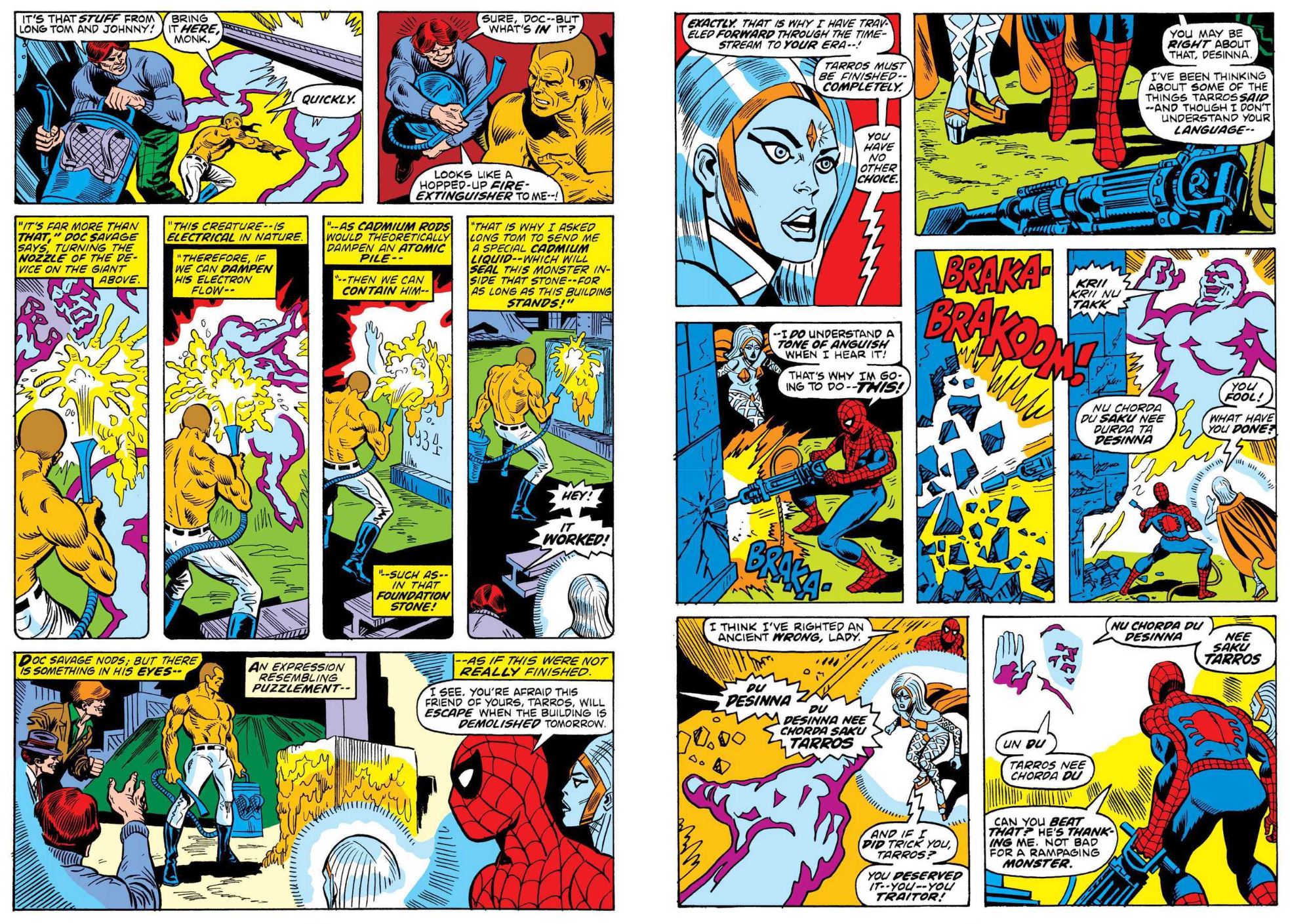
‘O’ Deadly Darkseid!’ then confirms that there are no civilians in war as – after fighting off a savage ambush on arrival and confronting Darkseid himself – Orion drafts the shaken, rescued hostages as his point men and intel unit. Private eye Dave Lincoln, secretary Claudia Shane, aging insurance salesman Victor Lanza and student Harvey Lockman are scared but resolved to help their world however possible, even as the transplanted tyrant sees his forces scattered all over Earth, applying a range of schemes to make humanity scream and shatter and give up that equation.

As New Genesis’ comrades volunteer for the fight on this isolated island Earth, the call to arms comes in Lincoln’s backyard as God of Depravity DeSaad triggers his gigantic Fear Machine and feeds off the paralysing horror it generates. However, thanks to sentient miracle computer Mother Box, his innate personal power and the blockbusting Astro-Force Orion commands, the initial skirmish is easily won…

Dwelling in spaces far beyond the physical and mundane, New Gods are subject to forces beyond mortal understanding. One of them is the embodiment of cessation who personally calls for each of them as they perish. NG #3 opens with glorious, jovial innocent God of Illumination Lightray barely escaping his moment with the great shadow (again thanks to coldly methodical Metron) as ‘Death is the Black Racer!’ finds the spirit derailed and deposited on Earth.

Throughout the overlapping clashes and conflicts there is undeniable indications that even the gods are being moved and shaped by even greater forces that have larger plans in motion. Thus the macabre soul collector inexplicably nests within the immobile form of paralysed Vietnam veteran Willie Walker, and – apparently inadvertently – derails a plot by Apokolips-backed mob Intergang to destroy all communications in Metropolis and create even more chaos and panic…

Orion’s shattering counterattacks segue straight into issue #4 as New Genesis suffers its first casualty. In response, ‘The O’Ryan Gang and the Deep Six!’ sees him and his reluctant human allies tracking down an Intergang device that frustrates and negates Mother Boxes before stumbling into a staggering and diabolical plan to render Earth’s oceans off limits to humanity…

With Mike Royer replacing Colletta as inker, ‘Spawn’ sees Orion captive of six subsea Apokolyptians who warp sea life and grow an unstoppable marine mutant monster. Meanwhile, Kalibak arrives in Metropolis hungry for vengeance and bloodletting. The various players and cosmic factions are angling towards a catastrophic confrontation, but in Metropolis at least, some of the poor endangered mortals are seeking to take charge of their own destinies…

At this juncture, DC comic books expanded to 52 pages and as well as Golden Age reprints, “Kirby’s Korner” ran short background vignettes of upcoming characters and cosmic guest stars. Here, inked by Colletta, ‘The Young Gods of Supertown Introducing Fastbak!’ focuses on Supertown, where a rowdy juvenile speed freak constantly tests himself and the patience of peacekeeping Monitors but finds there are some things even his miraculous tech cannot outrace…

Cover-dated January 1972, New Gods #6 launched ‘The Glory Boat!’ a complex and tragic morality tale and metaphor for fractured Vietnam era society wherein father and his peace-nik son clashed over duty and morality in war time as Lightray joins Orion to destroy or subvert the colossal horror devised by the Deep Six leading to a shocking secret exposed concerning the increasing out-of-control Orion…

Before that though, New Gods #7 finally revealed how it all began for the heirs of those first gods. When the primal Godworld sundered into gleaming New Genesis and sulphurous Apokolips the beings who eventually populated them were constant foes and rivals. After untold eons of sniping and acrimony, however, a young prince of the dark world sought to overthrow his mother and seize power. However, when ambitious Darkseid engineered a fresh war with New Genesis it started with the inadvertent murder of Avia, wife of New Genesis leader Izaya the Inheritor. As a result the conflict grew without let-up or rules, Darkseid and his bellicose uncle Steppenwolf had underestimated the ingenuity and ferocity of the Light Gods and the resulting conflict almost destroyed both worlds as the ancient enemies harnessed all the destructive capabilities of the universe.

Teleporting tanks, energy-generators, bio-toxic agents and genetic monsters wreaked havoc at ground level in personal combat, but entire solar systems also died. The planetary opposites were in peril of extinction as escalating science – and emotionless even-handed researcher Metron – found increasingly catastrophic ways to destroy. Gravity-bombs, sun-sized lasers and precision-aimed asteroids almost ended all factions forever. Mercifully, war-weary visionary Izaya found solace in the mystical Source, and badly rattled Darkseid agreed to a hastily-brokered truce before the gods once more extinguished themselves.

A pause in fighting was agreed, allowing both sides to regroup and, in the case of New Genesis at least, seek other paths. To seal ‘The Pact!’ Darkseid and newly renamed Highfather traded their young sons as hostages to the tenuous peace process…

Kirby & Royer’s staggering cosmic spectacle is accompanied by another history lesson as backup feature ‘The Young Gods of Supertown! Vykin the Black!’ finds the Forever People’s science-nerd neatly expunging one monstrous results of the last war’s bio-bombs beneath the savaged crust of New Genesis after which NG #8 returns to the present and increasing resistance by one Metropolis cop to the foreign super-conflict imported to his turf. ‘The Death Wish of Terrible Turpin!’ sees Orion coming to terms with Lightray learning that he the son of Darkseid even as his despised half-brother Kalibak rips the city apart in a deadly deranged display of wounded honour demanding satisfaction…

When Orion brutally reacts to the challenge, nobody expected the doughty earthman to settle the issue for them…

The issue closes with another peep at the past in self-explanatory clash ‘The Young Gods of Supertown: Fastbak Returns in Beat the Black Racer!!’ whilst in New Gods #9, Kirby exposes a darker side to the Good Gods as ‘The Bug!’ details how they ruthlessly deal with “lesser beings” infesting New Genesis since the last war. However, as seen through the eyes of insectoid colony scout Forager, the pests are a sentient species with their own culture and imperatives. Unfortunately it’s one easily manipulated by Darkseid’s flunky Mantis who Boom Tubes them all to Metropolis in search of newer, safer conquests in concluding chapter

‘Earth – the Doomed Dominion!’ Here, Orion & Lighray barely repel a mass colonisation only to discover a shocking secret about Forager…

The Fourth World was a huge risk and massive gamble for an industry and company that was a watchword for conservatism. It was probably incredibly tough for editors and publishers to stop themselves interfering, and they often didn’t. With numbers low, and spooky stories proliferating everywhere, Kirby was pressured to drop the weird stuff and concentrate on old standards. Despite promises of support and complete autonomy, the King had already surrendered much to get his dream rolling. Crushing deadlines and ridiculous expected monthly page counts were one thing, but management had no understanding of what he was planning and promotion was non-existent. Thus, inevitably the series and its interlinked companions failed to find sufficient sales to keep on until the planned conclusion. Nobody in comics argued with numbers so New Gods #11 was the last, with the core title cancelled before Kirby could complete his grand experiment.

The King did however, go out in style as ‘Darkseid and Sons!’ saw Kalibak and Orion battle to the death, with the Black Racer in attendance as a hidden enemy tipped the scales against the war god… until the least expected player of all incongruously rebalanced the scales and ensured the death of another major actor in the grand design…

…And that was that. New Gods and Forever People were axed although Mister Miracle carried on with a sharp change of emphasis until it too passed on. Eventually time and tastes brought sequels and, at long last, Kirby’s return to craft a proper ending… of sorts. As explained in The King Returns! the growth of an independent comics industry and dedicated system of retail stores in the 1980s sparked a wave of fan-favourite reprints in expensive formats. In 1984 The New Gods miniseries reprinted the 11 issues from 1971-1972 and concluded with the long-delayed, all-new conclusion. All concerned admitted it wasn’t what Kirby had intended at the time and was very much the product of the older wiser, creator but ‘Even Gods Must Die!’ (inked by Bruce D. Berry) spectacularly and bombastically wrapped up the saga whilst setting the scene for a new chapter. If you were a fan of any of the non-Kirby revivals of the intervening years though, there was nothing for you. This was all Jack…

Moreover, the conclusion led to a re-energised new beginning as ‘The Hunger Dogs’ by Kirby, Berry, Royer & Grek Theakston, aided by Bill Wray & Tony Dispoto, expanded the saga with a true epic in the format Kirby had always predicted would come: book-length pictorial tomes…

 Released in March 1985 as DC Graphic Novel #5, wildly experimental, deeply philosophical, potently profound parable The Hunger Dogs explored the consequences of power lost and repercussions as fascism inevitably collapses. Set on Apokolips in the aftermath of a failed prophecy (that Darkseid would die at the hands of his son in the pits of the world’s gigantic slum sector Armagetto) it traces the efforts of eternal rebel dreamer Himon and his daughter Bekka in the face of the Dark Lord’s seeming total triumph.

With victory in the eternal conflict assured thanks to New Genesis traitor Esak, Darkseid is utterly unprepared when the gutter trash “Lowlies” who blindly worship, fear and despise him rise in revolt. Led by a most unsuspected mercilessly charismatic leader, the pitiful Hunger Dogs at the base of Darkseid’s pyramid of oppression prove too much for the despot and the entire universe shifts under his quaking boots…

This handy compendium also offers bonus material including pinups of ‘Lightray!’ & ‘Kalibak the Cruel!’ from NG #4, before the ‘Mother Box Files’ gather a dozen pertinent Kirby characters as revisited by himself, Theakston and Terry Austin from assorted editions of the DC Who’s Who fact files. Here a tremendous group treatment of The New Gods and New Genesis are complimented by solo entries for Black Racer, Darkseid, the Deep Six, Forager, Highfather, Kalibak, Lightray, Metron, Orion and Steppenwolf and supported by the covers and new art from that 1984 prestige reprint New Gods series, by Kirby, Mike Thibodeaux, Royer & Berry.

Closing the wonderment are more delights in ‘The Art of Jack Kirby’, including hand-coloured original designs for Orion, Lightray, Mantis & Mister Miracle; Concept Drawings of the New Gods, plus a selection of stunning pencilled pages from the original run and long-awaited continuation and conclusion.

What more do you need to know?
© 1970, 1971, 1972, 1973, 1984, 1985, 1986, 2018 DC Comics. All Rights Reserved.

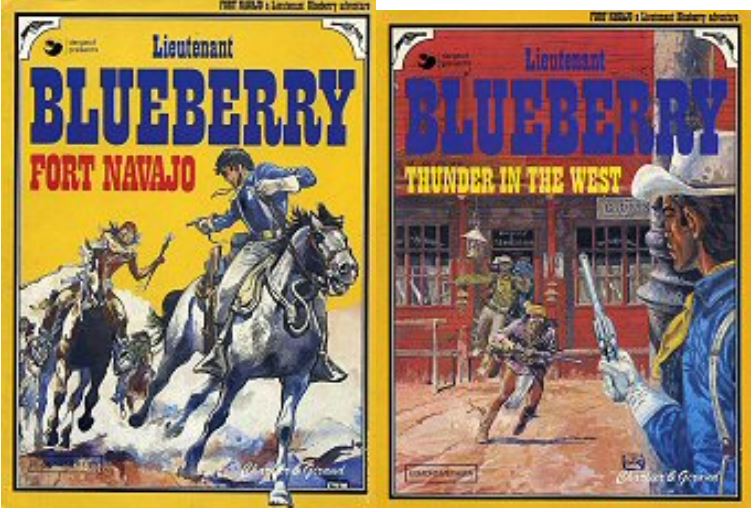
Today in 1908, Italian Gian Luigi Bonelli was born; he created Tex Willer. We can’t offer the original, but perhaps a taste can be gleaned from Tex: The Lonesome Rider?

In 1951 Black Lightning and The Champions creator Tony Isabella was born, with Bill (Elementals; Fables) creator Willingham arriving five years later.
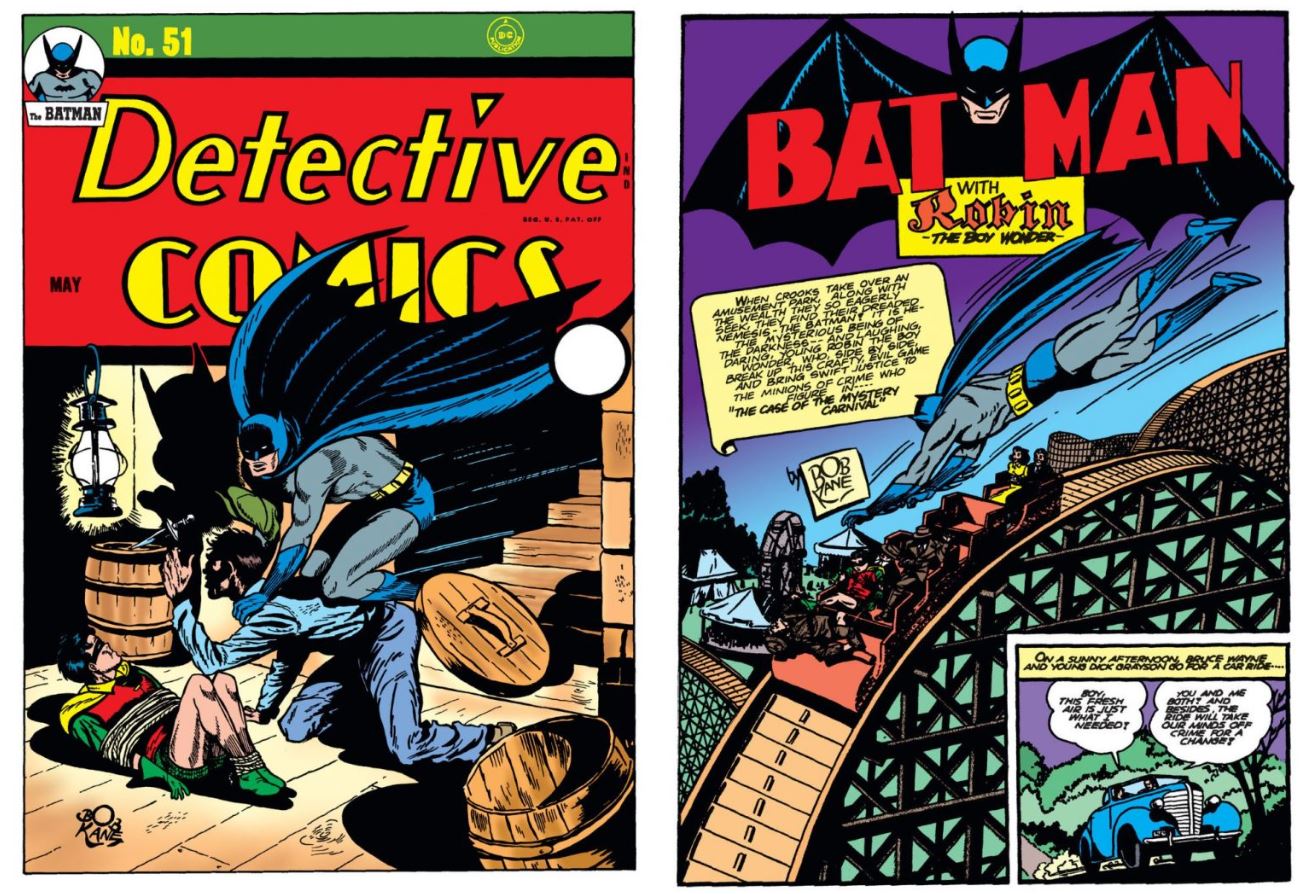
In 1974 Welsh-born Canuck Adrian Dingle died, with nobody then appreciating that his creation of Canadian woman superhero Nelvana of the Northern Lights in Triumph-Adventure Comics #1 (August 1941) actually predates the debut of Wonder Woman. Where’s her movie franchise then, eh?

Conan the Barbarian Epic Collection volume 1: The Coming of Conan (1970-1972)


By Roy Thomas & Barry Windsor-Smith with John Jakes, Gil Kane, Dan Adkins, Sal Buscema, Frank Giacoia, Tom Palmer, Tom Sutton, “Diverse Hands”, Marie Severin, John Romita Sr. & various (MARVEL)
ISBN: 978-1-3029-2555-0 (TPB/Digital edition)

This book includes Discriminatory Content produced in less enlightened times.

Win’s Christmas Gift Recommendation: Because We Believe in Blockbusters… 9/10

During the 1970’s the US comic book industry opened up after more than 15 years of cautiously calcified publishing practises that had come about as a reaction to censorious oversight of its self- inflicted Comics Code Authority. This body was created to keep the publishers’ product wholesome after the industry suffered their very own McCarthy-style Witch-hunt during the 1950s.

One of the first genres revisited was Horror/Mystery comics and from that sprang pulp masterpiece Conan the Cimmerian, via a tale in anthology Chamber of Darkness #4, whose hero bore no little thematic resemblance to the Barbarian. It was written by Roy Thomas and drawn by Barry (Windsor-) Smith, a recent Marvel find, and one who was gradually breaking out of the company’s all-encompassing Jack Kirby house-style.

Despite some early teething problems – including being cancelled and reinstated in the same month – the comic book adventures of Robert E. Howard’s brawny warrior became as big a success as the revived prose paperbacks which had heralded a world flowering in tales of fantasy and the supernatural.

After decades away, the brawny brute recently eventually to the aegis of Marvel. Designated “the Original Marvel Years” (due to the character’s sojourn with other publishers/intellectual properties rights holders), this bombastic tome of groundbreaking action fantasy yarns re-presents the contents of Conan the Barbarian #1-13 plus that trailblazing short story, cumulatively spanning cover-dates April 1970 to January 1972. Digitally remastered and available as a trade paperback or eBook, these are the absorbing arcane adventures that sparked a revolution in comics and a franchising empire in my youth, and are certainly good enough to do so again. They are also astonishingly readable…

The drama begins most fittingly after a glimpse at a classic map of ‘The Hyborean Age of Conan’ plus an accompanying quote I’m sure every devoted acolyte already knows by heart, after which that precursor romp sets the scene.

Set in modern America, ‘The Sword and the Sorcerers!’ primes the pump with the tale of a successful writer who foolishly decides to kill off his most beloved character Starr the Slayer: a barbarian so beloved that he has taken on a life of his own and is determined to do whatever is necessary to keep it…

After that we are catapulted back in time approximately 12,000 years into a forgotten age of terrors and wonders as scripter Thomas broadly follows Howard’s life path for young Conan of Cimmeria, beginning with the still teenaged warrior’s meeting with a clairvoyant wizard who predicts a regal destiny in ‘The Coming of Conan’ (inked by Dan Adkins), through brief but brutal enslavement in ‘The Lair of the Beastmen’ (Sal Buscema finishes), before experiencing a minor Ragnarok and witnessing ‘The Twilight of the Grim Grey God!’

An aura of lyrical cynicism grows to balance the wealth of mystical menaces and brooding horror as the wanderer becomes a professional thief and judge of human foibles in ‘The Tower of the Elephant’. Conan’s softer side is revealed in CtB #5 after meeting bewitching ‘Zukala’s Daughter’ (Frank Giacoia inks) and liberating a wizard-plagued town. Buscema returned for ‘Devil Wings over Shadizar’, wherein the warrior lad tackles a welter of antediluvian terrors, with both Adkins & Sal B applying their pens and brushes to expose ‘The Lurker Within’ – based on Howard’s magnificent chiller The God in the Bowl – after which tomb raider Conan crushes zombies and dinosaurs in ‘The Keepers of the Crypt’ (inked by Toms Palmer & Sutton)…

Thomas’s avowed plan was to closely follow Conan’s established literary career from all-but-boyhood to his eventual crowning as King of Aquilonia, adding to and adapting Howard’s prose works and that of his posthumous collaborators on the way. This agenda led to some of the best, freshest comics of the decade. The results of (not-yet-Windsor-) Smith’s search for his own graphic style led to unanimous acclaim and many awards for the creative duo.

By issue #9 the character had taken the comics world by storm and any threat of cancelation was long gone. ‘The Garden of Fear’ – adapted by Thomas & Smith, with inks by Sal B from Howard’s short story – features a spectacular battle with a primordial survivor in a lost valley before the wanderer returns to big city life, and learns too late to ‘Beware the Wrath of Anu!’

This god-slaying bout is mere prelude to another classic Howard adaptation, ‘Rogues in the House’: an early masterpiece of action and intrigue benefitting from a temporary doubling in page count.

‘Dweller in the Dark’ is an all-original yarn of monsters and maidens, notable because artist Smith inked his own pencils, and indications of his detailed fine-line illustrative style can be seen for the first time. An added bonus in that issue was a short back-up yarn by Thomas & Gil Kane with “Diverse Hands” called in to ink ‘The Blood of the Dragon!’: telling of a very different Hyborian hero getting what he deserves…

Fantasy author John Jakes plotted the final tale in this initial outing as ‘Web of the Spider-God’ offers a sardonic drama of the desert with the surly Cimmerian battling thirst, tyranny. pompous priests and a big, big bug in a riotous romp finished off by Thomas, Smith & Buscema.

Adding value to the treasury is a vast bonus section which includes pencilled cover art (used and unused); Thomas’ original script breakdowns as annotated by the artist; extracts from Marvelmania (the company’s first in-house fanzine); unused illustrations, house ads and Marvel bulletin items; cover roughs, concepts and finished art by Marie Severin & Gil Kane; Jakes’ plot synopsis and many pages of original art from the tales collected herein.

Also on show are cover galleries of the Marvel Books reprint paperback line and the Conan Classic comics series – all by Windsor-Smith – plus even before-&-after alterations demanded by the Comics Code Authority on the still contentious and controversial title.

These re-mastered epics are a superb way to enjoy some of US comics’ most influential and enjoyable blockbuster moments. They should have a place carved out on your bookshelf.
© 2020 Conan Properties International, LLC (“CPI”).

Herrrrge’s AdVentures of TinnnnTinn! (well, some of them) were largely drawn by Bob deMoor, who was born today in 1925, as was the wonderful Michael Zulli in 1952. Have you read The Puma Blues: The Complete Collection in One Volume?

In 1982 today, mangaka Katsuhiro Otomo saw the first episode of his astounding Akira epic published.

Dan Dare: The 2000 A.D. Years volume 1


By Pat Mills, Gerry Finley-Day, Steve Moore, Ken Armstrong, Kelvin Gosnell, Garry Leach, Dave Gibbons, Brian Bolland, Massimo Belardinelli, Ian Kennedy, Bill Nuttall, Jack Potter, Peter Knight, John Aldrich, J. Swain, Tony Jacobs, Tom Frame & various (Rebellion)
ISBN: 978-1-78108 349-9 (Album HB/Digital edition)

This book includes Discriminatory Content produced in less enlightened times.

Win’s Christmas Gift Recommendation: Pure & Superhero Sensationalism… 9/10

If you’ll permit a personal question: How old are you?

The answer will pretty much determine your reaction to this book…

Launching on April 14th 1950 and running until April 26th 1969, Eagle was the most influential comic of post-war Britain, and possibly in our nation’s history. It was the brainchild of a Southport vicar, the Reverend Marcus Morris, who was increasingly concerned about the detrimental effects of American comic books on British children and wanted a good, solid, middle-class Christian antidote.

A huge number of soon-to-be prominent creative figures worked on the weekly, and although “Pilot of the Future” Dan Dare is rightly revered as the star, the other strips were almost as popular at the time, with many rivalling the lead in quality and entertainment value according to the mores and developing tastes of that hope-filled, luxury-rationed, fresh-faced generation.

At its peak, the original Eagle sold close to a million copies a week, but inevitably, changing tastes and a game of “musical owners” killed the title. In 1960, Hulton sold out to Odhams, who became Longacre Press. A year later they were bought by The Daily Mirror Group who evolved into IPC. In cost cutting exercises many later issues carried cheap(er) Marvel Comics reprints rather than British-originated material. It took time, but those Yankee Cultural Incursionists won out in the end. In 1969, with the April 26th issue Eagle was subsumed into cheap ‘n’ cheerful iron clad anthology Lion, eventually disappearing altogether. Successive generations have revived the title, but not the success. Never as popular, a revived second iteration ran from 27th March 1982 to January 1994 (having switched from weekly to monthly release in May 1991). Naturally when Eagle enjoyed its Second Coming the Pilot of the Future returned to his true home…

So as we celebrate 75 years of post-empire adventuresome wonderment, let’s just be clear on one thing. It’s Dan & Digby we all recall most fondly but we’ll take what we can get…

There’s precious little that I can say about Dan Dare that hasn’t been said before and better. What I will say is that everything you’ve heard is true. Vintage strips by Frank Hampson and his team of dedicated artists are a high point in world, let alone British comics, ranking beside Tintin, Asterix, Tetsuwan Atomu, Lone Wolf & Cub and the best of Kirby, Adams, Toth, Noel Sickles, Milt Caniff, Roy Crane, Carl Barks and Elzie Segar. If you don’t like this stuff, there’s probably nothing any of us can do to change your mind, and all we can do is hope you never breed…
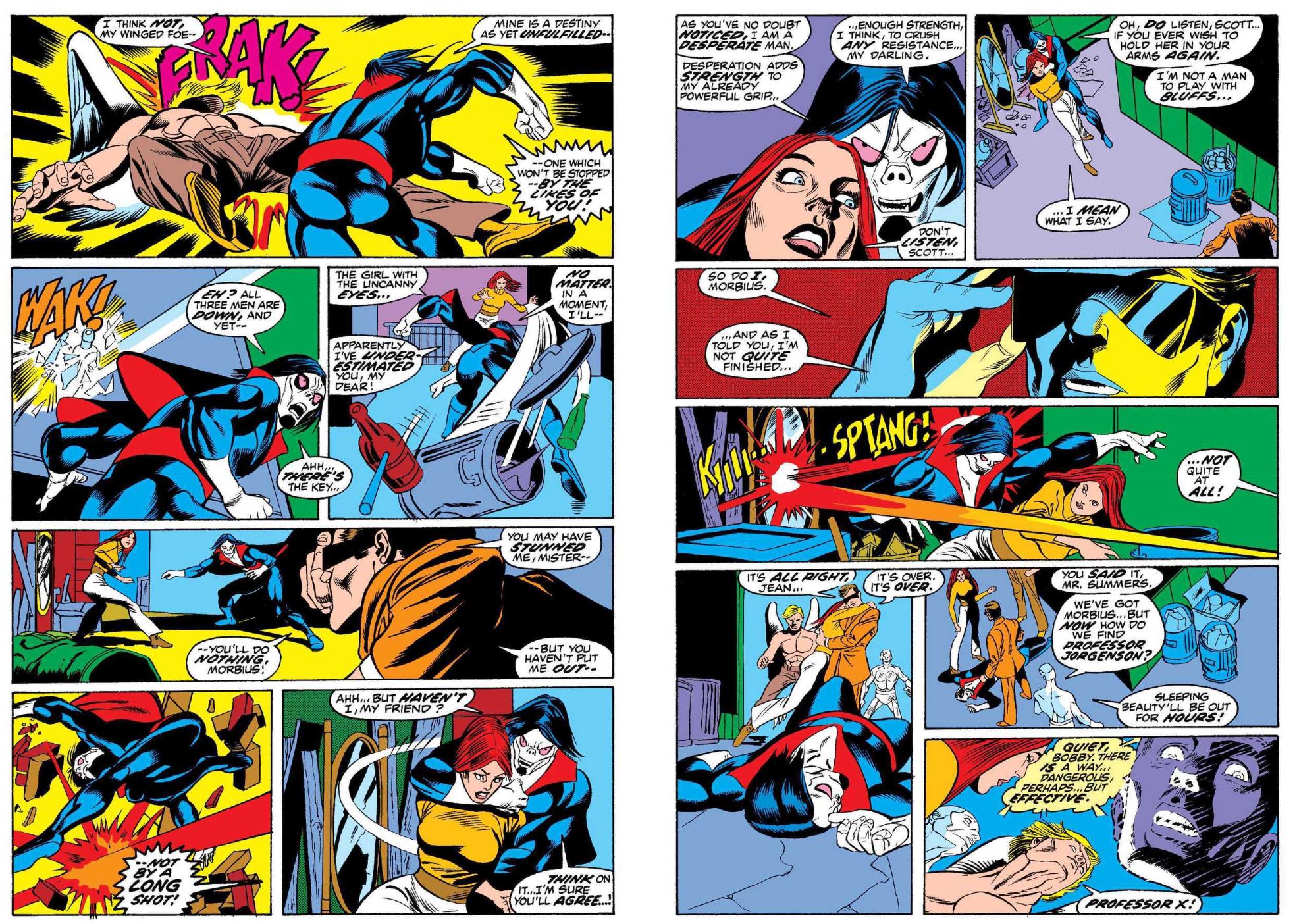
Breakneck pace, truly astonishing high concepts underpinned by hard science balanced with nonstop action leavened with wholesome music hall larks and some of the most beautiful and powerful art ever to grace a comic page makes Hampson’s hero immortal and as much a magical experience now as it was in 1950. Many companies have kept the legend alive in curated collections over the decades, so go read this 2018 Titan edition combining material from three of their 2004-2009 hardback collections.
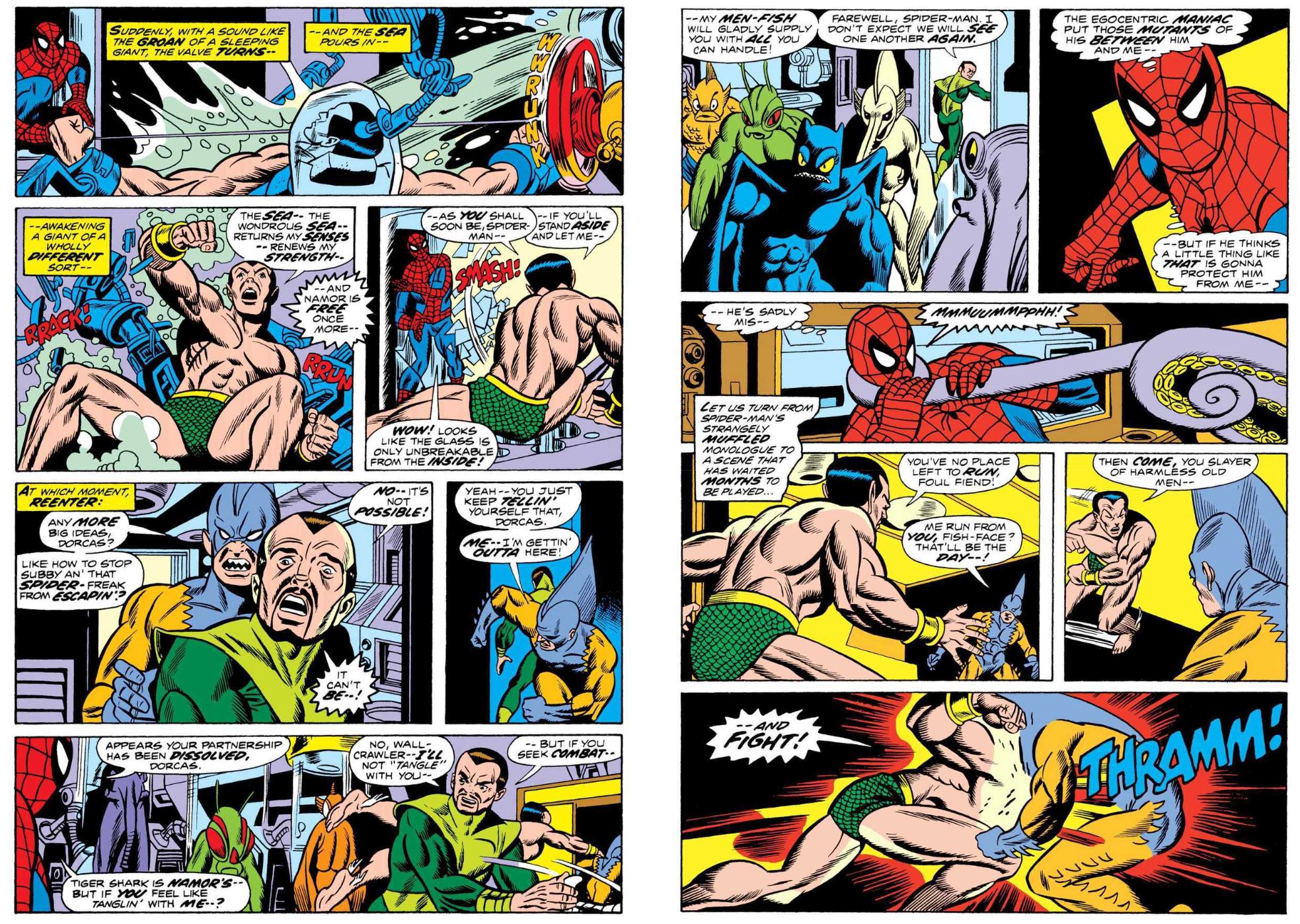
Now, though, we’re not taking about that guy, but seeing how he was regenerated and modified for a far different Britian under a different kind of cosh…

A wellspring of unleashed and unruly creativity, Britain’s last great comic sensation could be described as a combination of the other two, combining the futuristic milieu and thrills of Dan Dare and Eagle with the terrifying anarchy and irreverent absurdity of Dennis the Menace and his rowdy pals in Beano. In February 1977, with Britain not feeling so great a science-fiction weekly anthology was launched. The creative and editorial staff had high hopes and aspirations for 2000 A.D. but the guys paying them were simply content to ride out the movie-inspired boom and ready to cancel after the first six months to a year. They were ready for decades, but sales never dipped enough for that axe to fall, no matter what those art and story boys perpetrated…

The trendy ultra-dystopian atmosphere that had led to the creation of Mega-City One’s finest was also used to flavour the revival of the comic’s intended big gun and prime property. And his constant evolution as seen here in the weekly material from 2000 A.D. #1-23 and 28-51, plus additional action from 2000 A.D. Summer Special 1977, 2000 A.D. Sci-Fi Special 1978, 2000 A.D. Annual 1978 & Dan Dare Annual 1979.

‘Introduction – This was our Dan Dare’ by Garth Ennis recounts the Hows and some Whys of the resurrection and radicalization from steadfast pilot to “Space Hyper-Hero”. The serial episodes #1-11 (scripted by Ken Armstrong, Pat Mills & Kelvin Gosnell, with Massimo Belardinelli illustrating and letterers Bill Nuttall, Jack Potter & Peter Knight) opened in 2177 AD as freighter Sirius is ferried to a space museum. When it is suddenly destroyed by an inimical alien force emerging from Jupiter’s Red Spot, the sole survivor is its career-spacer captain Dan Dare

The disaster brings the hardworking, diligent officer into conflict with SASA (Solar, Astronautical and Space Administration) penpusher the Solar Fleet Controller based in Lunaciti who charges Dare with negligence and tries to court martial him. After all, everyone knows there’s no life on Jupiter…

Refusing to back down, Dare explosively escapes and goes on the run, stowing away on Jupiter-bound cruiser Odyssey…

Each episode began on the prized centre spread, offering artists intriguing layout options and full colour in the otherwise monochrome periodical and here every instalment is reinforced with text feature ‘Dan Dare – My Part in his Revival’ (parts 1-9 as provided by Pat Mills to fanzine Spaceship Away).

Unfolding at breakneck pace, the tale sees him gradually win over sceptical Martian martinet and ship Captain Mr. Monday just as the hostile force attacks again, hurling appalling biological units against the aghast crew. A total convert now, Monday puts all his resources into discovering who and what is behind the attacks, leading to a brain-busting away mission into the red spot and surface of supermassive world where vile invaders The Biogs are set to test the resistance of solar system races and if their potential worthiness to become fuel for them…

The result is staggering stellar warfare with the bio-beasts eventually repelled by Dare’s resistance and an astounding sacrifice by Monday…

Scene set and scenario established, the serial kicked into even higher gear when Steve Moore assumed scripting chores for ‘Hollow World’ (#12-23, illustrated by Belardinelli and lettered by Peter Knight, John Aldrich, Nuttall, J. Swain, Tony Jacob & Tom Frame). This time working spacer Dare ships out on freighter Titan 1 C., only to have the vessel captured as they escape the Milky Way galaxy and end up inside a planet inside a red sun inside the Magellanic cloud…

The culprits are the barbaric Skath and their monstrous piratical mutant ruler The Two of Verath. However the biggest shock is that they are grudgingly served by Dare’s ancient enemy The Mekon, now reduced to toiling for his own survival. The little goblin is astounded to discover how his supposedly long-dead enemy is still around and so different looking (and so will you be!) but happily sets to torturing Dare and the crew for answers.

Inevitably Dare escapes and the old enemies renew their personal war, but it’s an unequal contest as the Mekon betrays The Two, seizes control of the Skath and unleashes hell and banditry against humanity and its allies…

Although Dan and his surviving crew escape back home, they are disbelieved by SASA officialdom. The war that follows is catastrophic and results in further betrayal and death across the universe…

Gerry-Finley-Day took over with 2000 AD #28 as Dave Gibbons & Brian Bolland introduced a new supporting cast in ‘Legion’ (#283). Now an acknowledged troubleshooter and problem solver, Dare is asked by SASA to find out why so many colonists have vanished in the region dubbed “the Lost Worlds”. Accepting the commission, Dare’s first stop is rag-tag satellite Topsoil to brutally and cunningly “recruit” the most violent scum in space: fight-crazed bruisers like Great Bear, hired killers like Hit-Man and lethal survivors like cashiered pilot Polanski

Packed aboard a deadly flying space fortress, the appalling unappealing argonauts dive into danger, pitting the crew against space bugs, malignant dust devils, seductive space sirens, vampires and cosmic slavers as they methodically catalogue what killed all those colonists across a region of the void that simply does not love mankind…

Casualties were high and the sentient terrors of ‘Greenworld’ (#34-35) cost them plenty, but did provide one new volunteer – a “monkey” dubbed Haley Junior – in advance of lengthy epic ‘Star Slayer’ (#36-51). This found the searchers clashing with an intergalactic empire of savage marauders, liberating slaves on a dozen worlds and ultimately overthrowing the terrifying Dark Lord. In the course of that cosmic quest Dan Dare scored the front cover spot every week – just like he had in the old days of the readers’ dads…

Although the mission pauses here, a section of Bonus Strips follows, supported throughout the book by numerous classic cutaway diagrams of Dare’s vehicles by Gibbons. Sadly a lot of credits have been lost, as with the untitled first tale, taken from 2000 AD Summer Special 1977 wherein Dare and his crew are hurled into an antimatter dimension by invaders seeking to make Earth fuel for a journey home, after which Belardinelli limns anonymous full colour clash with the devil ‘Dan Dare and the Curse of Mytax’ (2000 AD Annual 1978) as the spaceman outwits a meddling vicious godling who can warp reality.

From 2000 AD Sci-Fi Special 1978, ‘Visco’ – written and painted in grey-tones by Garry Leach (& lettered by John Aldrich) – finds Dare traversing Mars’ icy Uchronian wastes and stumbling across a lethal science project that bends minds and breaks existence… until he demonstrates what old-fashioned willpower can do…

The last two tales come from The Dan Dare Annual 1979 and begin with an untitled proper romp by writer unknown, fabulously painted by legendary illustrator Ian Kennedy.

Set on the Fortress exploring The Lost Worlds, here Dare and crew come to the aid of a planet invaded by evil invaders in the biggest starship ever encountered, and prove yet again that it’s not about size, but what you do with it…

The strip wonders close with a monochrome and anonymous treat revealing just what happened to the Pilot of the Future in his last original era clash with the Mekon. ‘Dan Dare: The 2000 A.D. Origin’ traces that final battle through to the aftermath as Earth sought to preserve something of its greatest hero, and what happened next… or at least eventually…

This initial collection then concludes with a stunning cover gallery and biographies.

Epic, bombastic and eternally gratifying, this a treat three generations (at least) can get stuck into, highlighting what made Britain Great in the least obnoxious way anyone could imagine. Come get some!
© 1977, 1978, 1979, 2015, Rebellion/AS. All Rights Reserved.

Believe it or don’t, today in 1918 cartoonist Robert Ripley debuted his fact-panel Ripley’s Believe or Not. One year later Elzie Segar launched Thimble Theatre. Boy, dem wuz the days, huh?

Here in 1952 Leo Baxendale debuted Minnie the Minx in The Beano.

Less celebratory though, in 2001 we lost arch teen cartoonist Dan DeCarlo and in 2006 Golden Age Superman, Batman and Starman illustrator Jack Burnley.