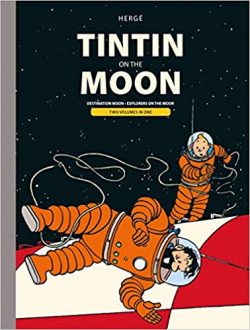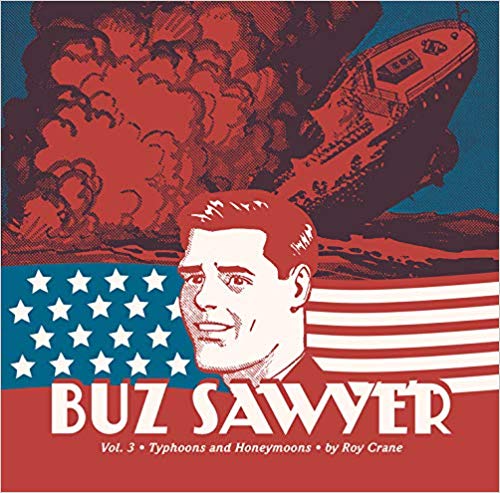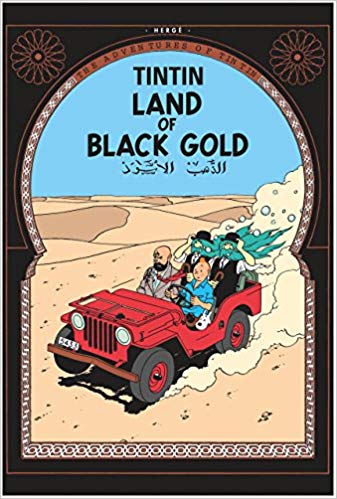
Tintin in the Land of the Soviets


By Hergé (Egmont)
ISBN: 978-1-40521-477-3 (HB)                    978-1-40526-651-2 (PB)

Georges Prosper Remi, known all over the world as Hergé, created a true masterpiece of graphic literature with his many tales of a plucky boy reporter and his entourage of iconic associates. Singly, and later with assistants including Edgar P. Jacobs, Bob de Moor and the Hergé Studio, Hergé completed 23 splendid volumes (originally produced in brief instalments for a variety of periodicals) that have grown beyond their popular culture roots and attained the status of High Art.

Like Charles Dickens with the Mystery of Edwin Drood, Hergé died while working, so final outing Tintin and Alph-Art remains a volume without a conclusion, but still a fascinating examination – and a pictorial memorial of how the artist worked.

It’s only fair though, to ascribe a substantial proportion of credit to the many translators whose diligent contributions have enabled the series to be understood and beloved in 38 languages. The subtle, canny, witty and slyly funny English versions are the work of Leslie Lonsdale-Cooper & Michael Turner.

On leaving school in 1925, Remi worked for Catholic newspaper Le XXe Siécle where he seems to have fallen under the influence of its Svengali-like editor Abbot Norbert Wallez. The following year, the young artist (himself a dedicated boy scout) produced his first strip series – The Adventures of Totor – for the monthly Boy Scouts of Belgium magazine and by 1928 was in charge of producing the contents of Le XXe Siécle’s children’s weekly supplement Le Petit Vingtiéme.

He was unhappily illustrating The Adventures of Flup, Nénesse, Poussette and Cochonette (written by the staff sports reporter) when Abbot Wallez urged Remi to create a new adventure series. Perhaps a young reporter who would travel the world, doing good whilst displaying solid Catholic values and virtues? And also, perhaps highlight and expose some the Faith’s greatest enemies and threats…?

Having recently discovered the word balloon in imported newspaper strips, Remi decided to incorporate this simple yet effective innovation into his own work. He would produce a strip that was modern and action-packed. Beginning on January 10th 1929, Tintin in the Land of the Soviets appeared in weekly instalments in Le Petit Vingtiéme, eventually running until May 8th 1930.

The boy-hero – a combination of Ideal Good Scout and Remi’s own brother Paul (a soldier in the Belgian Army) – would be accompanied by his dog Milou (Snowy to us Brits) and report back all the inequities from the “Godless Russias”.

The strip’s prime conceit was that Tintin was an actual foreign correspondent for Le Petit Vingtiéme…

Arriving in Russia, the dog and his boy are constantly subjected to a series of attacks and tricks in a vain scheme by the Soviets to prevent the truth of their failed economic progress, specious popular feeling and wicked global aspirations being revealed to the Free World.

In a manic, breathless progression of fights, chases, slapstick accidents and futile attempts to bribe and corrupt him – or worse –  a hint of Tintin as a capable, decent and resourceful hero can be seen to gel on every progressive page as he thwarts the plots of the Bolsheviks and Moscow’s ubiquitous Secret Police…

Week by week, page by page, Tintin “gets away clean” in all manner of fast and flashy machines – all lovingly rendered in a stylised, meta-realistic manner not yet used for the human characters. This is a clear forerunner of Hergé’s Ligne Claire drawing style which develops rapidly as the plucky lad makes his way back across Europe to a rapturous welcome in Belgium, and with every kilometre covered, the personalities of the characters move beyond action-ciphers towards the more fully realised universal boy-hero we all know today.

The strip itself is very much a work-in-progress, primitive both in narrative and artistic execution. But amidst the simplified line, hairsbreadth chases and grossly simplistic anti-communistic polemic there is something… an intriguing hint of things to come.

Rendered in sleek monochrome, Tintin in the Land of the Soviets, was one of the last adventures to be published in English and is still available in both hardback and paperback editions.

Although possibly still a little controversial (and not ideal for the stated target market of eight years old and up), this is a highly readable, joyously thrilling, exuberant and deeply informative romp for any fan of the comic strip medium.

Tintin in the Land of the Soviets: artwork © 1999 Editions Casterman, Paris& Tournai.
Text ©1999, 2007Casterman/Moulinsart. All Rights Reserved.

Garth: The Women of Galba


By Jim Edgar & Frank Bellamy (Titan Books)
ISBN: 978-0-90761-049-6

It’s a big anniversary for Britain’s greatest comic strip adventurer this summer, but other than a few old collections and the online reprints, nobody seems much moved to celebrate the event or revive a genuine original of cartoon entertainment. Here however, with our eyes firmly set on great comics of every era and at least one and a half feet firmly planted in the past, we’re not going to let him slip by without any fanfare at all…

Garth was created in response to America’s publishing phenomenon Superman and debuted in the Daily Mirror on Saturday, July 24th 1943, the creation of Steve Dowling and BBC producer Gordon Boshell. His comic strip page mates at that time were regular features Buck Ryan, Belinda Blue Eyes, Just Jake and the irrepressible, morale-boosting glamour-puss Jane.

A blond giant and physical marvel, Garth washed up on an island shore and into the arms of a pretty girl, Gala, with no memory of who he was, just in time to save the entire populace from a tyrant. Boshell never actually wrote the series, so Dowling, who was also producing the successful family strip The Ruggles, scripted Garth until a writer could be found.

Successful candidate Don Freeman dumped the amnesia plot in ‘The Seven Ages of Garth’ (which ran from September 18th 1944 to January 20th 1946); introducing studious jack-of-all-scientific trades Professor Lumiere whose psychological experiments regressed the hero back through his past lives.

In sequel tale ‘The Saga of Garth’ (January 22nd 1946-July 20th 1946) his origin was finally revealed. Found floating in a coracle off the Shetlands, baby Garth was adopted by a kindly old couple and grew to vigorous manhood. On reaching maturity he returned to the seas as a Navy Captain until he was torpedoed off Tibet in 1943.

Freeman continued as writer until 1952 and was briefly replaced by script editor Hugh McClelland until Peter O’Donnell took over in 1953. O’Donnell wrote 28 adventures before resigning in 1966 to devote more time to his own Modesty Blaise feature. His place was taken by Jim Edgar; who also scripted western strips Matt Marriott, Wes Slade and Gun Law.

In 1968 Dowling retired and his assistant John Allard took over the drawing until a permanent artist could be found. Allard had completed ten tales when Frank Bellamy came on board with the 13th daily episode of ‘Sundance’ (reprinted in Garth: The Cloud of Balthus). Allard remained as background artist and general assistant until Bellamy took full control during ‘The Orb of Trimandias’.

Professor Lumiere had discovered something about his patient which gave this strip its unique and distinctive appeal – even before the fantastic artwork of Bellamy elevated it to dizzying heights of graphic brilliance: Garth was blessed – or cursed – with an involuntary ability to travel through time and experience past and future lives.

This concept gave the strip infinite potential for exotic storylines and fantastic exploits, pushing it beyond its humble origins as a US mystery-man knock-off.

This second (1985) Titan Books collection of the Frank Bellamy era spans the period from 7th September 1972 to 25th October 1973 with the artist at the absolute peak of his powers. It opens here with eerie chiller ‘The People of the Abyss’ wherein Garth and sub-sea explorer Ed Neilson are captured by staggeringly beautiful naked women who drag their bathyscaphe to a city at the bottom of the Pacific. These undersea houris are at war with horrendous aquatic monstrosities and urgently need outside assistance, but even that incredible situation is merely the prelude to a tragic love affair with Cold War implications…

Next up is eponymous space-opera romp ‘The Women of Galba’ wherein an alien tyrant learns to rue the day he abducted a giant Earthman to fight and die as a gladiator. Exotic locations, spectacular action and oodles more astonishingly beautiful females make this an unforgettable adventure…

‘Ghost Town’ is a western tale, and a very special one. When Garth, vacationing in Colorado, rides into abandoned mining outpost “Gopherville”, he is irresistibly drawn back to a past life as Marshal Tom Barratt who lived, loved and died when the town was a hotspot of vice and easily purloined money. When Bellamy died suddenly in 1976 this tale – long acknowledged as his personal favourite – was rerun until Martin Asbury was ready to take over the strip.

The final adventure re-presented here – ‘The Mask of Atacama’ – sees Garth and Lumiere in Mexico City. Whilst sleeping the blonde colossus is visited by the spirit of beautiful Princess Atacama who escorts him through time to the vanished Aztec city of Tenochtitlan where, as the Sun God Axatl, Garth attempts to save their civilisation from the voraciously marauding Conquistadores of Hernan Cortés. Tragically, neither he nor the Princess have reckoned on the jealousy of the Sun Priests and their High Priestess Tiahuaca…

Adding extra value to this volume are a draft synopsis and actual scripts for ‘The Women of Galba’, liberally illustrated, of course. There has never been a better comic adventure strip than Garth as drawn by Bellamy, combining action, suspense, glamour, mystery and the uncanny in a seamless blend of graphic wonderment. In recent years, Titan Books has published a superb line of classic British strips and comics and I’m praying that with Modesty Blaise and James Bond now completed, they’ll return to Garth (and while I’m dreaming, Jeff Hawke too) on the understanding that it’s up to us to make sure that this time the books find a grateful, appreciative and vast audience…
© 1985 Mirror Group Newspapers/Syndication International. All Rights Reserved.

Buck Danny volume 1: Night of the Serpent


By Francis Bergése, colours by Frédéric Bergése; translated by Jerome Saincantin (Cinebook)
ISBN: 987-1-905460-85-4

Buck Danny premiered in Le Journal de Spirou in January 1947 and continues soaring across the Wild Blue Yonder to this day. The strip describes the improbably long yet historically significant career of the eponymous Navy pilot and his wing-men Sonny Tuckson and Jerry Tumbler. It is one of the world’s last aviation strips and a series which has always closely wedded itself to current affairs, from the Korean War to Afghanistan, the Balkans to Iran. With the current bellicose undercurrent informing or perhaps tainting America’s influence around the world, it’s interesting to imagine what tales might be told during the current administration…

The dauntless US Naval Aviator was created by Georges Troisfontaines whilst he was director of Belgian publisher World Press Agency and depicted by Victor Hubinon before being handed to the multi-talented scripter Jean-Michel Charlier, who was then working as a junior artist.

Charlier’s fascination with human-scale drama and rugged realism had been first seen in such “true-war” strips as L’Agonie du Bismark (The Agony of the Bismarck – published in Spirou in 1946).

With fellow master-storytellers Albert Uderzo & René Goscinny, Charlier formed Édifrance Agency, which promoted and specialised in communication arts and comics strips. Charlier and Goscinny were editors of the magazine Pistolin (1955 to 1958) and went on to create Pilote in 1959 but Charlier (whose greatest narrative triumph is iconic Western Blueberry, created in 1963 with Jean Giraud/Moebius) continued to script Buck Danny and did so until his death.

On his passing artistic collaborator Francis Bergése (who first replaced Hubinon in 1978) took complete charge of the adventures of the All-American Air Ace, on occasion working with other creators such as Jacques de Douhet.

Like so many artists involved in aviation storytelling, Bergése (born in 1941) started young with both drawing and flying. He qualified as a pilot whilst still a teenager, enlisted in the French Army and was a reconnaissance flyer by his twenties.

At age 23 he began selling strips to L’Étoile and JT Jeunes (1963-1966), after which he produced his first aviation strip Jacques Renne for Zorro. This was followed by Amigo, Ajax, Cap 7, Les 3 Cascadeurs, Les 3 A, Michel dans la Course and many more.

Bergése worked as a jobbing artist on comedies, pastiches and WWII strips until 1983 when he won the coveted job of illustrating globally syndicated Buck Danny with 41st yarn Apocalypse Mission’.

He even found time in the 1990s to produce a few episodes of the European interpretation of British icon Biggles before finally retiring in 2008, passing on the reins to illustrators Fabrice Lamy & Francis Winis and scripter Frédéric Zumbiehl.

Thus far – with Zumbiehl & Gil Formosa now at the helm – the franchise has notched up 55 albums…

Like all the Danny tales this premier edition is astonishingly authentic and still worrisomely topical: a breezily compelling action thriller originally published in 2000 as Buck Danny #49: La nuit du serpent – with colouring by Frédéric Bergése (I’m assuming that’s his son, but I’m not certain) blending mind-boggling detail and technical veracity with good old-fashioned blockbuster adventure.

At Kunsan Airbase, South Korea, a veteran American pilot goes on dawn border patrol only to be hit by an uncanny light which blinds him and seems to negate all his F-16’s guidance systems. Despite his best efforts, the jet crashes in the De-Militarized Zone and the North Koreans claim a flagrant breaking of the truce and a huge publicity coup.

Strangely though, the downed Colonel Maxwell is still missing. The Communists don’t have him and the pilot’s tracking devices indicate he’s still out there somewhere: lost in the No Man’s Land between North and South.

The mighty US military swings into action, determined to rescue their pilot, clean up the mess and deny the Reds either a tangible or political victory. Buck, Tumbler and Tuckson are at a Paris air show when they get the call and are soon en route to Korea for a last-ditch, face-saving mission.

However, as the trio prepare to join the covert rescue mission, evidence emerges which casts doubt on the authenticity of the alleged super-weapon. Meanwhile Maxwell has stumbled into a fantastic secret beneath the DMZ…

Fast-paced, brimming with tension and spectacular action, this is a classically designed thriller which effortlessly plunges the reader into a delightfully dizzying riot of intrigue, mystery and suspense before its captivating conclusion.

Suitable for older kids and the adventurous of all ages, the Adventures of Buck Danny comprise one endlessly enthralling tour of duty no comics fan or armchair adrenaline-junkie can afford to miss.

Bon chance, mes braves…
© Dupuis, 2000 by Bergése. English translation © 2009 Cinebook Ltd. All Rights Reserved.

Smilin’ Jack: The Classic Aviator


By Zack Mosley (Classic Comic Strips)
No ISBN

Here’s another forgotten birthday boy seriously in need of an archival revival…

Modern comics evolved from newspaper comic strips. These pictorial features were – until relatively recently – hugely popular with the public and highly valued by publishers who used them as an irresistible weapon to guarantee and increase circulation and profits.

It’s virtually impossible for us to understand the overwhelming power of the comic strip in America from the Great Depression to the end of World War II. With no social media or television, broadcast radio far from universal and movie shows at best a weekly treat for most poor or middle-income folk, household entertainment was mostly derived from the comic sections of daily and especially Sunday Newspapers.

“The Funnies” were the most common and an almost communal recreation for millions who were well served by a fantastic variety and incredible quality.

From the very start humour was paramount – hence the terms “Funnies” and “Comics” – and from these gag and stunt beginnings came mutants and hybrids like Roy Crane’s Wash Tubbs. Comedic when it began in 1924, it gradually moved from mock-heroics to light-action and became a full-blown, rip-roaring adventure series with the introduction of prototype swashbuckler Captain Easy in 1929.

From there it wasn’t such a leap to full-on blockbusters like Tarzan (which began on January 7th 1929) and Buck Rogers (the same day); both were adaptations of pre-existing prose properties, but the majority of drama strips that followed were original productions.

The tidal-wave began in the early 1930s when an explosion of action and drama strips (tastefully tailored for a family audience and fondly recalled as “Thud and Blunder” yarns) were launched with astounding frequency and rapidity. Not only strips but entire genres were created in that decade which still impact on not just today’s comicbooks but all our popular fiction. Still most common, however, were general feel-good humour strips with an occasional child-oriented fantasy.

Arguably the most popular of the new adventure genres was the Aviator serial. With air speed, distance and endurance records bring broken every day, travelling air-circuses barnstorming across rural America and real-life heroes such as Charles Lindbergh and Amelia Earhart plastered all over the front pages and in movie newsreels, it wasn’t difficult to grasp the potential of comics-pages analogues.

The first was Tailspin Tommy – by Glenn Chaffin & Hal Forrest – the story of boy pilot Tommy Tompkins. It ran from May 21st 1928 (almost exactly one year after Lindbergh’s epic flight in the Spirit of St. Louis) until 1942, and was swiftly followed by both Lester J Maitland & Dick Calkins Skyroads and John Terry’s Scorchy Smith (see Scorchy Smith: Partners in Danger) 1930 -1961. Close on their high-flying heels came such late-arriving classics as Flyin’ Jenny, Buz Sawyer and even Steve Canyon.

Zack Mosley was an enterprising young cartoonist who assisted Calkins on both Skyroads and the legendary Buck Rogers in the 25th Century. He was also a keenly dedicated pilot and flying enthusiast, and when he heard that Captain Joe Patterson (influential editor of the Chicago Tribune) was taking lessons, Zack swiftly pitched a series to the kingmaker of comic strips.

On the Wing debuted as a Sunday page on October 1st 1933, but the name never gelled and with the December 31st episode the series was more snappily re-titled Smilin’ Jack. Apparently, Moseley was surreptitiously known as “Smiling Zack” around the Tribune office…

The page steadily gained interest and syndication subscribers and, on June 15th 1936, was augmented by a monochrome daily strip.

Jack Martin was a nervous student pilot, and the series originally played safe by vacillating between comedy and hairsbreadth thrills as he and his fellow sky novices and unqualified pilots learned the ropes. Never a top-tier series, Smilin’ Jack nevertheless always delivered terrific entertainment to the masses, moving and morphing with the times into a romance, war-feature, crime thriller (complete with Dick Tracy style villains) and even a family soap opera.

More importantly, the strip progressed in real time and when it closed on 1st April 1973, Jack was a twice-married air veteran with a grown son and a full cast of romantic dalliances in tow. It wasn’t lack of popularity that ended it either. At 67 years of age, Mosley wanted to spend his final years in the air, not crouched over a drawing board…

This fabulous (and shamefully scarce) collection gathers a delightful selection of rousing romps, beginning with that name-changing first episode from December 31st 1933, before concentrating on some classic sequences from the roaring thirties.

Meet here or be reintroduced to Jack, comedy foil Rufus Jimpson (a hillbilly mechanic), eye-candy air hostess and love interest Dixie Lee (subject of an extended romantic triangle), Latin spitfire (the curvy sort, not the fighter plane kind) Bonita Caliente and numerous spies, thugs, imbecilic passengers, South American revolutionaries and even a foreign Legion of the Skies with an eerily prescient stiff-necked Prussian flyer named Von Bosch whose type would soon be plastered all over the strips and comic books after WWII broke out…

This kind of strip is, I suspect and fear, an acquired taste today like Preston Sturges, Billy Wilder or George Cukor films, requiring the contribution of a little bit of intellectual and historical concentration from the reader, but the effort is absolutely worth it, and if this kind of stuff is good enough for the likes of George Lucas and Steven Spielberg it’s perfectly good enough for you and me…

A grand adventure and one you should undertake at your leisure…
© 1989, 2009 Chicago Tribune Syndicate. All Rights Reserved. (I’m going on best evidence here: if somebody else actually owns the rights now, let me know and I’ll happily amend the entry).

Roy Crane’s Captain Easy, Soldier of Fortune: The Complete Sunday Newspaper Strips volume 1


By Roy Crane (Fantagraphics Books)
ISBN: 978-1-60699-161-9

Amongst the many cartoon and comics anniversaries this year there are household names still with us (albeit in exceedingly altered forms) and tragically masterpieces of the form that have faded from popular memory, even though their influence remains in every panel we might peruse…

Modern comics evolved from newspaper gag and comic strips. These pictorial features were, until relatively recently, utterly ubiquitous and hugely popular with the public and highly prized by publishers who used them as an irresistible sales weapon to guarantee and increase circulation and profits.

It’s virtually impossible for us to today to understand the overwhelming power of the comic strip in America (and the wider world) from the Great Depression to the end of World War II. With no television, broadcast radio far from universal, and movie shows at best a weekly treat for most folk, household entertainment was mostly derived from the strip sections of daily and especially Sunday Newspapers. “The Funnies” were the most common recreation for millions who were well served by a fantastic variety and incredible quality of adventures and exploits.

From the very start humour was paramount; hence the terms “Funnies” and “Comics”, and from these gag and stunt beginnings – a blend of silent movie slapstick, outrageous fantasy and the vaudeville shows – evolved a thoroughly entertaining mutant hybrid: Roy Crane’s Wash Tubbs.

Debuting on April 21st 1924, Washington Tubbs II was a comedic gag-a-day vehicle not much different from family favourite Harold Teen (by Crane’s friend and contemporary Carl Ed).

When it premiered in 1924, Tubbs was a diminutive and ambitious young shop-clerk, but gradually the strip moved into mock-heroics, then through cosy, non-confrontational action, only to become a full-blown, light-hearted, rip-roaring adventure series with the introduction of ancestral he-man and prototype moody swashbuckler Captain Easy in the landmark episode for 6th May, 1929.

As the tales became evermore exotic and thrill-packed, the globe-trotting little dynamo clearly needed a sidekick who could believably handle the strenuous combat side of things, and thus – in the middle of a European-set war yarn – Wash liberated a mysterious fellow American from a jail cell and history was made.

Before long the mismatched pair were travelling companions, hunting treasure, fighting thugs and rescuing a bevy of startlingly comely maidens in distress…

The bluff, two-fisted, surly, comprehensively capable, utterly dependable, down-on-his-luck “Southern Gen’leman” was something not seen before in comics: a raw, square-jawed hunk played completely straight rather than as the buffoon or music hall foil of such classic serials as Hairsbreadth Harry or Desperate Desmond.

Moreover, Crane’s seductively simple blend of cartoon exuberance and design was a far more accessible and powerful medium for action story-telling than the somewhat static illustrative style favoured by artists like Hal Foster: just beginning to make waves on the groundbreaking new Tarzan Sunday page.

Tubbs and Easy were as exotic and thrilling as the Ape-Man, but rattled along like the surreal and tempestuous Popeye, full of vim, vigour and vinegar, as attested to by a close look at the early work of the would-be cartoonists who followed the strip with avid intensity: Floyd Gottfredson, Milton Caniff, Jack Kirby, Will Eisner and especially young Joe Shuster…

After a couple of abortive attempts starring his little hero, Crane bowed to the inevitable and created instead a full-colour Sunday page dedicated to his increasingly popular hero-for-hire.

Captain Easy debuted on 30th July 1933 (happy 85th Cap!), in wild and woolly escapades set before his first fateful rendezvous with Tubbs.

This first sublime archival volume begins with the soldier of fortune undertaking a mercenary mission for the Chinese government to spy on the city of ‘Gungshi.’ In the heyday of popular exploration and aviator exploits, the bold solo flight over the Himalayas to Chinese Turkestan was stirring enough but when Easy then infiltrates a hidden citadel it heralded the beginning of a rollercoaster romp with sword-wielding Mongols, sultry houris, helpless dancing girls, fabulous beasts and wicked bandits. The heady, intoxicating dramatic brew captivated entire families across the planet, week after addictive week…

With an entire page and vibrant colours to play with, Crane’s imagination ran wild and his fabulous visual concoctions achieved a timeless immediacy that made each page a unified piece of sequential art.

The effect and influence of Crane’s pages can be seen in so many strips since; especially the works of near-contemporaries such as Hergé and giants-in-waiting like Charles Schulz.

These pages were a clearly as much of joy to create as to read. In fact, the cited reason for Crane surrendering the Sunday strip to his assistant Les Turner in 1937 was the controlling NEA Syndicate abruptly demanding that all its strips be henceforward produced in a rigid panel-structure to facilitate them being cut up and re-pasted as local editors dictated.

Crane just walked away, concentrating on the daily feature. In 1943 he left the Syndicate to create the aviation adventure strip Buz Sawyer.

At the end of the initial blockbuster epic Easy is a hero to the people of Gungshi, if not the aristocracy, who plot to oust him via the subtlest of means. The second adventure ‘The Slave Girl’ opened on 21st January 1934, depicting the occidental hero bankrupted in saving the beautiful Rose Petal from the auction block: a chivalrous gesture leading to war with the rival city of Kashno, and a brutally hilarious encounter with South Sea pirates…

In an era where ethnic stereotyping and casual racism were commonplace and acceptable – if not actually mandatory – the introduction of a vile and unscrupulous Yank as the exploitative villain was and remains a surprising delight.

Rambling Jack is every inch the greedy “ugly American” of later, more informed decades, and by contrasting Easy’s wholesome quest to make his fortune with the venal explorer’s rapacious ruthlessness, Crane makes a telling point for the folks back home. It also makes for great reading as Chinese bandits also enter the fray, determined to plunder both cities and everybody in their path…

With the help of a lost British aviator Easy is finally victorious, but on returning to his Chinese employers he spots something whilst flying over the Himalayas that radically alters his plans…

‘The Sunken City’ is an early masterpiece of comics fiction, with Easy recruiting comedy stooge ‘Arry Pippy, a demobbed cockney British Army cook, to help him explore a drowned city lost for centuries in a hidden inland sea, and one he had he had spotted from the air only through sheer chance.

However, simply to get there the pair must trek through wild jungles, survive blowpipe-wielding cannibals and the greatest threat our valiant rogue has ever faced…

If I’ve given the impression that this has all been grim-‘n’-gritty turmoil and tension thus far, please forgive me: Roy Crane was an utterly irrepressible gag-man and his enchanting chapter-play serial abounds with breezy light-hearted banter, hilarious situations and outright farce – a sure-fire formula modern cinema directors plunder to this day.

Easy is the Indiana Jones, Flynn (the Librarian) Carsen and Jack (Romancing the Stone) Cotton of his day and inarguably blazed the trail for all of them.

Using a deep-sea diver’s suit, Easy and ‘Arry explore the piscine wonders and submerged grandeur of the lost city, encountering some of the most magical and fanciful sea beasts ever recorded in comics before literally striking gold. Typically, when the cannibals attack those dredged up treasures are lost and Easy finds himself captive and betrothed to the most hideous witch-hag imaginable…

Risking everything the desperate treasure-seekers make a break for it only to re-encounter ‘The Pirates’ (April 14th – July 7th 1935), but before they get too far the husband-hungry sorceress and her faithful cannibals come after him, leading to a brutal, murderous conclusion…

After years in the Orient Easy and Pippy then succumb to a hankering for less dangerous company and make their way to Constantinople and Europe, but trouble is never far from the mercenary and in ‘The Princess’ (14th July – December 1st 1935), the Captain’s gentlemanly instincts compel him to rescue a beautiful woman from the unwelcome attentions of munitions magnate Count Heyloff, a gesture that embroils our hero in a manufactured war between two minor nations.

This tale addressed the contemporary American sentiment that another world conflict was brewing and it’s obvious that Crane’s opinion was the deeply held common conviction that the whole international unrest was the result of rich men’s greedy manipulations…

Dark, bittersweet and painfully foreboding, this yarn sees Easy become the focus of Heyloff’s vengeance, and the sum total air force for the tiny underdog nation of Nikkateena in their bitter struggle for survival against the equally-duped country of Woopsydasia.

Crane kept the combat chronicle light but on occasion his true feelings showed through in some of the most trenchant anti-war art ever seen.

This superb hardback and colossal initial collection is the perfect means of discovering or rediscovering Crane’s rip-snorting, pulse-pounding, exotically racy adventure trailblazer. The huge pages in this volume (almost 14½ by 10½ inches, or 210 x 140 mm for the younger, metric crowd) also contain a fascinating and informative introductory biography of Crane by historian Jeet Heer; a glowing testimonial from Charles “Peanuts” Schulz; contemporary promotional material, extra drawings and sketches plus a fascinating feature explaining how pages were coloured in those long-ago days before computers…

This is primal comics storytelling of the very highest quality: unforgettable, spectacular and utterly irresistible. These tales rank alongside the best of Hergé, Tezuka and Kirby, and led inexorably to the greatest creations of all of them. Now that you have the chance to experience the strips that inspired the giants of our art form, how can you possibly resist?
Captain Easy Strips © 2010 United Features Syndicate, Inc. This edition © 2010 Fantagraphics Books, all other material © the respective copyright holders. All rights reserved.

Viking Glory: The Viking Prince


By Lee Marrs & Bo Hampton (DC Comics)
ISBN-13: 978-1-56389-007-9

During the rather anodyne mid-1950s, when superheroes were in a seemingly inescapable trough, comicbook companies looked to different forms of leading men for their action heroes.

In 1955 writer/editor Robert Kanigher created a traditional adventure comic entitled The Brave and the Bold that featured historical strips. The Golden Gladiator – illustrated by Russ Heath – was set in the declining days of Imperial Rome. Courtesy of illustrator Irv Novick, the Silent Knight fought injustice in post-Norman Invasion Britain and the already-legendary Joe Kubert drew the astounding exploits of a valiant young Norseman dubbed the Viking Prince.

This last strip appeared in all but one issue (#6), eventually taking over the entire comic, until the burgeoning superhero boom saw B&B metamorphose into a try-out title with its 25th issue.

Those fanciful, practically “Hollywoodish” Viking sagas were among some of the finest adventure comics of all time and they’re long overdue for a definitive collection of their own, since the character of Jon has long been a fan-favourite, intermittently returning in DC’s war titles and often guest-starring in such varied venues as Sgt. Rock and even Justice League of America.

This beautiful, vital and enchanting tale was released to very little fanfare in 1991, but remains a worthy sequel to those early strips and also long overdue for revival and re-issue…

Scripter Lee Marrs took all the advances in our historical knowledge since the 1950s and blended them with the timeless basics of a Classical Edda to entrancing effect. Amidst a culture vibrantly brought to full life by her words and Bo Hampton’s awesome skill with a paintbrush, she has grasped a passionate but reserved old archetype and remade him as a fiery young hero of devastating charm, full of all the boisterous vigour of his mythic race, and confronted him with his worst nightmare.

In 10th century Scandinavia, Jon Rolloson – heir to Jarl Rollo of Gallund – is a perfect Northman’s son; fast, tough, fearless and irresistible to all the maids of the village. But the greatest horror of his sixteen years has finally come for him: an arranged marriage for political advantage. He must leave his home and the Viking life to wed a “Civilised” Princess. His joyous days are all done…

But Princess Asa of Hedeby is a young beauty every inch his match in vigour and vitality, and as composed and smart as he is coarse and oafish. Unfortunately, somebody is stealthily trying to thwart the match, even though Jon’s boorishness is enough to give both fathers cause to reconsider, and only the Viking Prince’s rash vow to recover a lost rune treasure and slay a fearsome dragon preserves the bargain. The wedding will proceed… Now all he has to do is find and kill Ansgar, the vilest of all Fire-Wyrms, and not die in the process…

As well as being a superb writer Marrs is an underground cartoonist, animator and computer artist who has assisted Hal Foster on that other sword-wielding epic Prince Valiant, and her grasp of human character and especially comedy elevates this classic tale of romantic endeavour into a multi-faceted gem of captivating quality. Bo Hampton has created some of the best drawn or painted comics in the medium (such as Swamp Thing, Batman: Legends of the Dark Knight, Batman: Castle of the Bat, 3 Devils, The Once and Future Tarzan), and this book is probably still the very best of them.

One of the most accomplished and enjoyable historical romances ever produced in comic form, Viking Glory deserves to be on every fan’s bookshelf. Let’s hope that it’s on DC’s shortlist for a swift re-release.
© 1991 DC Comics. All Rights Reserved.
Challengers of the Unknown by Jack Kirby


By Jack Kirby, France “Ed” Herron, Dave Wood, Roz Kirby, George Klein, Bruno Premiani, Marvin Stein & Wally Wood (DC Comics)
ISBN: 978-1-4012-7719-2

The Challengers of the Unknown were a bridging concept between the fashionably all-American human trouble-shooters who monopolised comicbooks for most of the 1950s and the costumed mystery men who would soon return to take over the industry.

As superheroes began to return in 1956 here was a super-team – the first of the Silver Age – with no powers, the most basic and utilitarian of uniforms and the most dubious of motives… Suicide by Mystery.

Yet they were a huge hit and struck a chord that lasted for more than a decade before they finally died… only to rise again and yet again. The idea of them was stirring enough, but their initial execution made their success all but inevitable.

Jack Kirby was – and remains – the most important single influence in the history of American comics. There are quite rightly millions of words written (such as Paul Kupperberg’s enthusiastic Introduction and John Morrow’s pithy Afterword in this superb Trade Paperback and eBook compilation) about what the man has done and meant, and you should read those if you are at all interested in our medium.

I’m going to add a few words to that superabundance in this review of one of his best and most influential projects which, like so many others, he perfectly constructed before moving on, leaving highly competent but never quite as inspired talents to build upon.

When the comics industry suffered a witch-hunt-caused collapse in the mid-50’s, Kirby returned briefly to DC Comics where he produced tales of suspense and science fiction for the company’s line of mystery anthologies and revitalised Green Arrow (then simply a back-up strip in Adventure Comics) whilst creating the newspaper strip Sky Masters of the Space Force.

He also re-packaged for Showcase (a try-out title that launched the careers of many DC mainstays) an original super-team concept that had been kicking around in his head since he and long-time collaborator Joe Simon had closed their innovative but unfortunately ill-timed Prize/Essankay/Mainline Comics ventures.

After years of working for others Simon & Kirby had finally established their own publishing company, producing comics with a much more sophisticated audience in mind, only to find themselves in a sales downturn and awash in public hysteria generated by an anti-comicbook pogrom spearheaded by US Senator Estes Kefauver and pop psychologist Dr. Frederic Wertham.

Simon quit the business for advertising, but Kirby soldiered on, taking his skills and ideas to a number of safer, if more conservative and less experimental, companies.

The Challengers were four ordinary mortals; explorers and adventurers who walked away unscathed from a terrible plane crash. Already obviously what we’d now call “adrenaline junkies”, pilot Ace Morgan, diver Prof Haley, acrobat and mountaineer Red Ryan and wrestler Rocky Davis summarily decided that since they were all living on borrowed time, they would dedicate what remained of their lives to testing themselves and fate. They would risk their lives for Knowledge and, naturally, Justice.

The series launched with ‘The Secrets of the Sorcerer’s Box!’ in Showcase #6 (cover-dated January/February 1957 – so it was on spinner-racks and news-stands in time for Christmas 1956).

Kirby and scripter Dave Wood, plus inkers Marvin Stein and Jack’s wife Roz, crafted a creepily spectacular epic wherein the freshly introduced doom-chasers were hired by the duplicitous magician Morelian to open an ancient container holding otherworldly secrets and powers.

This initial story roars along with all the tension and wonder of the B-movie thrillers it emulates and Jack’s awesome drawing resonates with power and dynamism, which grew even greater for the sequel: a science fiction drama instigated after an alliance of leftover Nazi technologists and contemporary American criminality unleashes a terrible robotic monster.

‘Ultivac is Loose!’ (Showcase #7, March/April 1957) introduced a necessary standard appendage of the times and the B-movie genre in the form of brave, capable, brilliant and beautiful-when-she-took-her-labcoat-off boffin Dr. June Robbins, who became the no-nonsense, ultra-capable (if unofficial) fifth Challenger at a time when most funnybook females had returned to a subsidiary status in that so-conventional, repressive era.

The uncanny exploits then paused for a sales audit and the team didn’t reappear until Showcase #11 (November/December 1957) as The Flash and Lois Lane got their respective shots at the big time. When the Challengers returned it was in alien invasion epic ‘The Day the Earth Blew Up’.

Uniquely engaging comics realist Bruno Premiani (a former associate and employee from Kirby’s Prize Comics days) came aboard to ink a taut doomsday chiller that keeps readers on the edge of their seats even today, and by the time of their last Showcase issue (#12, January /February 1958) the Questing Quartet were preparing to move into their own title.

‘The Menace of the Ancient Vials’ was defused by the usual blend of daredevil heroics and inspired ingenuity (with the wonderful inking of George Klein adding subtle clarity to the tale of an international criminal who steals an ancient weapons cache that threatens the entire world if misused), but the biggest buzz would come two months later with the first issue of their own magazine.

Challengers of the Unknown #1 (May 1958) was written and drawn by Kirby, with Stein on inks and presented two complete stories plus an iconic introductory page that would become almost a signature logo for the team. ‘The Man Who Tampered with Infinity’ pitted the heroes against a renegade scientist whose cavalier dabbling loosed dreadful monsters from the beyond onto our defenceless planet, before the team were actually abducted by aliens in ‘The Human Pets’ and had to win their freedom and a rapid rocket-ship (sphere actually) ride home…

The same creators were responsible for both stories in the second issue. ‘The Traitorous Challenger’ is a monster mystery, with June returning to sabotage a mission in the Australian Outback for the very best reasons, after which ‘The Monster Maker’ finds the team seemingly helpless against super-criminal Roc who can conjure and animate solid objects out of his thoughts.

Issue #3 features ‘Secret of the Sorcerer’s Mirror’ with Roz Kirby & Marvin Stein again inking The King’s mesmerising pencils, as the fantastic foursome pursue a band of criminals whose magic looking-glass can locate deadly ancient weapons, but undoubtedly the most intriguing tale for fans and historians of the medium is ‘The Menace of the Invincible Challenger’ wherein team strongman Rocky Davis is rocketed into space only to crash back to Earth with strange, uncanny powers.

For years the obvious similarities of this group – and especially this adventure – to the origin of Marvel’s Fantastic Four (#1 was released in November 1961) have fuelled fan speculation. In all honesty I simply don’t care. They’re both similar but different and equally enjoyable so read both. In fact, read them all.

With #4 the series became artistically immaculate as the sheer brilliance of Wally Wood’s inking elevated the illustration to unparalleled heights. The scintillant sheen and limpid depth of Woody’s brushwork fostered an abiding authenticity in even the most outrageous of Kirby’s designs and the result is – even now – simply breathtaking.

‘The Wizard of Time’ is a full-length masterpiece of the art form and opens with a series of bizarre robberies that lead the team to a scientist with a time-machine. By visiting oracles of the past rogue researcher Darius Tiko has divined a path to the far future. When he gets there, he intends to rob it blind, but the Challengers deftly find a way to follow and foil him…

‘The Riddle of the Star-Stone’ (#5) is a full-length contemporary thriller, wherein an archaeologist’s assistant uncovers an alien tablet bestowing various super-powers when different gems are inserted into it. The exotic locales and non-stop action are intoxicating, but Kirby’s solid characterisation and ingenious writing are what make this such a compelling read.

Scripter Dave Wood returned for #6’s first story. ‘Captives of the Space Circus’ sees the boys shanghied from Earth to perform in a interplanetary travelling carnival, but the evil ringmaster is promptly outfoxed and the team returns for France “Ed” Herron’s mystic saga ‘The Sorceress of Forbidden Valley’, wherein June becomes an amnesiac puppet in a power struggle between a fugitive gangster and a ruthless feudal potentate.

Issue #7 is another daring double-feature both scripted by Herron. First up is relatively straightforward alien-safari tale ‘The Beasts from Planet 9’, but it’s followed by a much more intriguing yarn on the ‘Isle of No Return’ as the lads face a super-scientific bandit whose shrinking ray leaves them all mouse-sized.

Concluding Kirby issue #8 (July 1959) offers a magnificent finale to a superb run as The King & Wally Wood went out in stunning style with a brace of gripping thrillers – both of which introduced menaces who would return to bedevil the team in future tales.

‘The Man Who Stole the Future’ by Dave Wood, Kirby and the unrelated Wally Wood, introduces Drabny – an evil mastermind who steals mystic artefacts and conquers a small nation before the team dethrones him. Although this is a tale of spectacular battles and uncharacteristic, if welcome, comedy, the real gem here is space opera tour-de-force ‘Prisoners of the Robot Planet’, (probably) written by Kirby & Herron. Petitioned by a desperate alien, the Challs travel to his distant world to liberate the population from bondage to their own robotic servants, who have risen in revolt under the command of the fearsome autonomous automaton, Kra…

These are classic adventures, told in a classical manner. Kirby developed a brilliantly feasible concept with which to work and heroically archetypical characters. He then tapped into an astounding blend of genres to display their talents and courage in unforgettable exploits that informed and affected every team comic that followed – and certainly influenced his successive landmark triumphs with Stan Lee.

But then Jack was gone…

The Challengers would follow the Kirby model until cancellation in 1970, but due to a dispute with Editor Jack Schiff the writer/artist resigned at the height of his powers. The Kirby magic was impossible to match, but as with all The King’s creations, every element was in place for the successors to run with. Challengers of the Unknown #9 (September 1959) saw an increase in the fantasy elements favoured by Schiff, and perhaps an easing of the subtle tension that marked previous issues (Comics Historians take note: the Challs were bitching, bickering and snarling at each other years before Marvel’s Cosmic Quartet ever boarded that fateful rocket-ship).

But that’s meat for another book and review…

Challengers of the Unknown is sheer escapist wonderment, and no fan of the medium should miss the graphic exploits of these perfect adventurers in that ideal setting of not-so-long-ago in a simpler, better galaxy than ours.
© 1957, 1958, 1959, 2003, 2017 DC Comics. All Rights Reserved

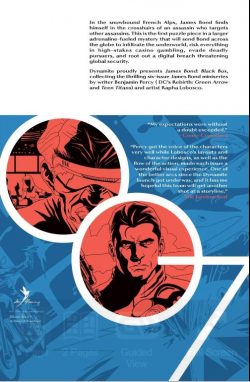
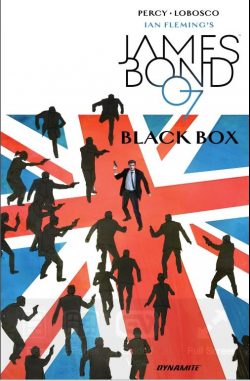
James Bondâ„¢ volume 2: Eidolon


By Warren Ellis, Jason Masters, Guy Major & Simon Bowland (Dynamite Entertainment)
ISBN: 978-1-5241-0272-2

Win’s Christmas Gift Recommendation: Stunning Blockbuster Fun… 9/10

James Bond is the ultimate secret agent. You all know that and have – thanks to the multi-media empire that has grown up around Ian Fleming’s masterful creation – your own vision of what he looks like and what he does. This is one of the better ones and as much worthy of your attention as any movie, game or novel.

There are also some exceedingly enjoyable comicbook and newspaper strip versions detailing the further exploits of Agent 007 which have never really found the appreciation they rightly deserve. This collection is just one of the most recent, compiling the second six issues of the James Bond comicbook series from licensing specialists Dynamite Entertainment.

Thanks to uber-action scribe Warren Ellis, it’s one of the best Bond adventures ever seen…

Dumping decades of gaudy paraphernalia that’s grown around the brand, Ellis, illustrator Jason Masters, colourist Guy Major and letterer Simon Bowland have opted for a stripped-down, pared-back, no-nonsense iteration that means nothing but business.

The shocking saga opens with Britain’s Powers-that-Be still working to close the Double-O department, and labouring under a Home Office ruling depriving Bond and other agents of their weapons whilst on British soil.

Despite fighting hard, M is losing this battle…

Meanwhile in Los Angeles, Bond’s latest mission is interrupted by old comrade Felix Leiter.

The CIA operative has a friendly warning for his old pal. The supposedly-routine mission to extract a mole whose cover has been blown has acquired hidden ramifications…

Later, as Bond scoops up blithely unaware Cadence Birdwhistle, enraged Turkish security forces are only seconds behind and a savage battle ensues. Barely getting out alive, Bond notices the heavies are sporting CIA-issue guns…

Cadence is baffled. Her field is forensic accounting and whatever the cloaked financial pipeline she recently uncovered in the Turkish Consulate’s finances is, it should not justify the murderous response she and Bond have barely survived. It’s just some illegal money transfers to an account in Britain. An account dubbed “Eidolon”…

After a brief period of lying low, Bond and Birdwhistle head for LAX only to be attacked by a CIA hit team. By the time the refugees reach Britain, the bodies have been discovered and Bond is in trouble with the boss. Again…

When another band of assassins attack before they even exit Heathrow Airport carpark, it’s clear that whatever Cadence uncovered is something far from conventional and by no means inconsequential…

The clear-up afterwards confirms it. Thus far the unknown assailants have involved three countries and utilised agents, tactics and weapons from the Turkish Secret Police, CIA and now the British SAS and SBS. The conspiracy – whatever it is – has its claws in the very heart of the international security community…

As MI5 officiously insert themselves into MI6’s investigation and claim jurisdiction, Bond and M realise there is no one they can trust, even as Birdwhistle uses Q branch’s technology and computer specialists to crack the dark money trail. The breadcrumbs lead to a secret, subterranean arms dump long believed to be a secret service myth and yet another cataclysmic shooting war…

Illegally armed by Q, Bond’s investigation deep beneath British soil suddenly exposes an uncanny and unexpected secret army of the disenfranchised at the heart of the nation’s ruling elite, sponsored by SPECTRE to rise if the covert organisation ever fell. Now long-dormant terror cells have embarked on a horrific “Death or Glory” mission to excise the British intelligence hierarchy and strike a shattering blow against the seat of democracy…

The end when it inevitably comes is deadly, up close and extremely personal…

With a gallery of gripping covers by Dom Reardon, this sleekly sinister paranoid plot is fast, furious, brutally bellicose and potently ferocious: another witty, superbly smart and impeccably stylish perfect James Bond thriller.

Bond Will Return and you should be ready…
© 2017 Ian Fleming Publications, Ltd. James Bond and 007 are ™ Danjaq LLC, used under license by Ian Fleming Publications, Ltd. All rights reserved.

Mega Robo Bros volume 2: Mega Robo Rumble


By Neill Cameron with Abby Bulmer & Lisa Murphy (David Fickling Books)
ISBN: 978-1-910989-81-4

Win’s Christmas Gift Recommendation: The Future of Fun… 9/10

After far too long an interval, the second sterling all-ages outing for Neill (Tamsin of the Deep, How to Make Awesome Comics, Pirates of Pangea) Cameron’s marvellous metal and plastic paladins return to share more of their awesome adventures and growing pains!

It’s the Future!

In a London much cooler than ours Alex and his younger brother Freddie are (mostly) typical kids: boisterous, fractious, always arguing, but devoted to each other and not too bothered that they’re adopted. It’s no big deal for them that they were constructed by the mysterious Dr. Roboticus (before he vanished from all human knowledge) and are considered by those in the know as the most powerful robots on Earth.

They recently became super-secret agents too, but almost the entire world knows that…

It’s enough for the digital duo that Mum and Dad love them, even though the boys are a bit more of a handful than most kids. They live as normal a life as possible; going to school, making friends, putting up with bullies and hating homework: it’s all part of the Mega Robo Routine combining boring lessons, fun with friends, playing games, watching TV and training in the covert combat caverns under RAID HQ…

When occasion demands, the lads undertake missions for bossy Baroness Farooq, head of government agency R.A.I.D. (Robotics Analysis Intelligence and Defence). They think it’s because they are infinitely smarter and more powerful than the Destroyer Mechs and other man-made minions she employs…

However, although Dad may be just your average old guy it’s recently become clear that Mum is a bit extraordinary herself and, as renowned boffin Dr. Nita Sharma, harbours some surprising secrets of her own…

All the same, life in the Sharma household is pretty normal. Freddie is insufferably exuberant and over-confident whilst Alex is at the age when self-doubt and anxiety begin to manifest. Of course, their parents’ other robot rescues can be a bit of a trial.

Baby triceratops Trikey with his dog-programming is ok, but French-speaking deranged ape Monsieur Gorilla can be mighty confusing whilst gloomily annoying, existentialist aquatic fowl Stupid Philosophy Penguin constantly quoting dead philosophers all the time makes most people rapidly consider self-harm or manic mayhem …

Culled from the pages of fabulous UK weekly comic The Phoenix, this fistful of fun kicks off with ‘Chapter 1: Mega Robo Schooldays’ as Alex gets a hard time from classmates Mira and Taia. They used to be best friends, but with all his extra-curricular activities the girls are feeling a bit neglected. Alex’s guilt turns to something far worse on Monday at Oak Hill Primary School after a heated football match leads bully Jamal to make a startling accusation. But actually, how do we know if Alex is a Boy or a Girl…?

Deeply shaken the startled hero naturally asks Mum, and she’s never been more grateful for a sudden sneaky Surprise Giant Robot Attack…

In ‘Chapter 2: Mega Robo Underground’ Alex and Freddie are called in by Baroness Farooq, and jet over to Aldgate Tube Station to battle a colossal driller-droid. Further investigation leads the lads and a R.A.I.D. science team deep, deep into the abandoned transport tunnels beneath the city.

Here they encounter an army of rejected and rebuilt robots all undertaking the bizarre agenda of a crazy bag-lady calling herself “The Caretaker”. When she abruptly loses control of her precious charges, all Hell breaks loose. After a massive fight, she escapes to an even more secret lair and an ongoing repair project with hidden ramifications that will have dire consequences for the bombastic boys and the entire world…

Freddie gets to see Mum’s stern side when she takes him – kicking and screaming – clothes shopping in ‘Chapter 3: Mega Robo Weekend’ after which shameful incident ‘Chapter 4: Mega Robo Celebrities’ zooms in on the price of fame when Prettiest Girl in School Jamila finally notices Alex.

With his shiny head all turned around, he’s in no mood for Freddie’s jealous response: candid home videos posted on VuTube. He’s even less chuffed when the postings go mega-viral but cheers up when Freddie’s celebrity bubble inevitably implodes in a most unfortunate manner…

Wrapping up with a spectacular big finish, ‘Chapter 5: Mega Robo Expo’ finds the kids – and their surprisingly famous mum – as guests of a massive Robot Show. After taking down obnoxious, fame-craving mech-makers Team Robotix in a gladiatorial contest, the lads think the action portion of the entertainment has ended, but then the Caretaker’s darkest secret bursts in with mass-murder in mind…

The huge rampaging robot quickly reinforces all humanity’s fears and anxieties about sentient mechanicals, but as the Mega Robo Bros drive the belligerent Wolfram off, Alex realises with alarm that Mum knows far more about the rogue – and her own “sons” – than she’s letting on…

To Be Continued…

Crafted by Cameron and his doughty colouring assistants Abby Bulmer & Lisa Murphy (Tamsin of the Deep, How to Make Awesome Comics, Pirates of Pangea), this is another exceedingly engaging romp which rockets along like anti-gravity rollercoaster, blending mirth with warmth, wit and incredible verve. Alex and Freddy are utterly authentic boys, irrespective of their artificial origins, and their antics strike exactly the right balance of future shock, family fun and bombastic superhero action to capture readers’ hearts and minds. What a movie this would make!

Unmissable excitement for kids of all ages and vintage, this is a true “must-have” item.
Text and illustrations © Neill Cameron 2016. All rights reserved.

And while we’re talking perfect X-Mas gifts, why not pick up Mega Robo Bros volume 1 and enjoy the whole superb saga to date?

Edgar Rice Burroughs’ Tarzan: The Jesse Marsh Years Omnibus volume 1


By Gaylord DuBois & Jesse Marsh with Robert P. Thompson (Dark Horse Books)
ISBN: 978-1-50670-224-7                  eISBN: 978-1-63008-760-9

Win’s Christmas Gift Recommendation: Epic, Eternal Adventure… 9/10

I don’t know an awful lot about Jesse Marsh, other than that he was born on 27th July 1907 and died far too young: on April 28th 1966 from diabetic complications at the height of a TV Tarzan revival he was in some part responsible for. What I do know, however, is that to my unformed, pre-fanboy, kid’s mentality, his drawings were somehow better than most of the other artists and that every other kid who read comics in my school disagreed with me.

There’s a phrase we used to use at 2000AD that summed it up: “Artist’s artist”, which usually meant someone whose fan-mail divided equally into fanatical raves and bile-filled hate-mail. It seems there are some makers of comic strips that many readers simply don’t get.

It isn’t about the basic principles or artistic quality or even anything tangible – although you’ll hear some cracking justifications: “I don’t like his feet” (presumably the way he draws them) and “it just creeps me out” being my two favourites…

I simply got Jesse Marsh.

He was another Disney animator (beginning in 1939) who in 1945 moved sideways to become a full-time comics illustrator for the studio’s comicbook licensee Whitman Publishing. He never looked back and became the go-to guy for other ERB adaptations such as John Carter of Mars.

Situated on the West Coast, their Dell and Gold Key imprints rivalled DC and Marvel at the height of their powers, and they famously never capitulated to the wave of anti-comics hysteria that resulted in the crippling self-censorship of the 1950s. No Dell Comics ever displayed a Comics Code Authority symbol on the cover – they never needed to…

Marsh jobbed around the adapted movie properties – mostly on westerns like Gene Autry – until 1948 when Dell introduced the first all-new Tarzan comicbook. A newspaper strip had run since 1929 and all previous funnybook releases had featured expurgated reprints of those adventures. This changed with Dell Four Color Comic #134 (February 1947) which featured a lengthy, captivating tale of the Ape-Man scripted by Robert P. Thompson, who wrote both the Tarzan radio show and the aforementioned syndicated strip.

‘Tarzan and the Devil Ogre’ is very much in the Burroughs tradition: the sometime John Clayton AKA Lord Greystoke and his friend Paul D’Arnot aid a young woman in rescuing her lost father from a hidden tribe ruled over by a monster, an engrossing yarn made magical by the simple, underplayed magic of a heavy brush line and absolutely unmatched design sense.

Marsh was unique in the way he positioned characters in space, using primitivist forms and hidden shapes to augment his backgrounds, and as the man was a fanatical researcher, his trees, rocks, and constructions were 100% accurate. His animals and natives, especially the children and women, were all distinct and recognisable – not the blacked-up stock figures in grass skirts even the greatest artists too often resorted to.

He also knew when to draw big and draw small: the internal dynamism of his work is spellbinding.

His Africa became mine, and of course the try-out comicbook was an instant hit. Marsh and Thompson’s Tarzan returned with two tales in Dell Four Color Comic #161, cover-dated August 1947. This was a remarkable feat: Four Colour was a catch-all title showcasing in rotation literally hundreds of different licensed properties, often as many as ten separate issues per month. So rapid a return engagement meant pretty solid sales figures…

In ‘The Fires of Tohr’ (adapted by Thompson from an unsold radio script), Tarzan and D’Arnot rescue a stranded professor and his niece as they search for a fabulous lost city, only to fall foul of the crazed queen of that ancient race, whilst in follow-up tale ‘Tarzan and the Black Panther’ the Lord of the Jungle crushes a modern slave trader who thinks himself beyond the reach of justice.

Within six months the bimonthly Tarzan #1 was released (January-February 1948), a swan-song for Thompson, but another unforgettable classic for Marsh – and the first of an unbroken run that would last until 1965: over 150 consecutive issues. In ‘Tarzan and the White Savages of Vari’ Greystoke rescued a lost prospector from a mountain kingdom of Neanderthals and the issue also featured the first of many pictorial glossaries, Tarzan’s Ape-English Dictionary, giving generations of youngsters another language to keep secrets in…

‘Tarzan and the Captives of Thunder Valley’ (Tarzan #2, March-April 1948) introduced a few more recurring characters such as Manu the monkey and noble great ape Gufta in the first of many tales written by Gaylord DuBois.

The Editor and prolific scripter (Lone Ranger, Lost in Space, Turok, Son of Stone, Brothers of the Spear and many more) would be Marsh’s creative collaborator for the next 19 years.

The story detailed how the Lord of the Jungle goes to the aid of an English boy searching for his father, a scientist specialising in radioactive ores. A sinister plot is duly uncovered that threatens to destabilise the entire world and concludes in a spectacular climax worthy of a Bond movie.

Issue #3 introduces Greystoke’s African family. In ‘Tarzan and the Dwarfs of Didona’ Jane is left to mind the store when Boy – later called Korak – plays with baboons and gets lost on an island in the Great Lake. Threatened with blood sacrifice by aggressive white pygmies, the dauntless lad can only wait for rescue – and a severe chastising…

In issue #4, (July-August 1948), ‘Tarzan and the Lone Hunter’ plunges the reader deeply into the fantastic worlds of Edgar Rice Burroughs as old friend Om-At the cat man from the lost land of Pal-Ul-Don (introduced in 8th novel Tarzan the Terrible) comes looking for his stolen mate and accidentally embroils the Ape-Man and his brood in a deadly battle with a megalomaniacal witch-doctor…

Two months later ‘Tarzan and the Men of Greed’ clashes in #5, as American gangsters unite with Arab slaver Hassan to steal Atlantean gold hidden in the vaults of the lost city of Opar. Their first move is to take Jane and Boy hostage, but they quickly learn that Clayton’s greatest asset is not his mighty limbs or bestial allies, but a cunning, devious brain…

Issue #6 returns to the primeval region of dinosaurs in ‘Tarzan and the Outlaws of Pal-Ul-Don’. The Jungle Lord and Boy are drawn beyond the Great Thorn Desert after beast-men abduct Jane and their quest soon sees Tarzan embroiled in a brutal civil war shaking that savage land…

More dinosaur delights are on offer in ‘Tarzan in the Valley of Monsters’ (#7) which sees an unsanctioned hot air balloon excursion dump Boy and his Waziri playmate Dombie in a secret valley infested with giant lizards and other antediluvian menaces. When Tarzan and Dombie’s dad Muviro fly after them in a plane, catastrophe ensues and the humans are forced into an arduous trek home across terrifying vistas and through lethal natural hazards…

Morris Gollub began illuminating the covers with #8 as ‘Tarzan and the White Pygmies’ finds the Greystoke, Muviro, Boy and Dombie still stranded far from home. As they laboriously traverse an immense mountain range, they are befriended by diminutive albino warriors and save their undiscovered city of Lipona from an invasion of predatory vultures…

In #9 our heroes resurface in Pal-Ul-Don where ‘Tarzan and the Men of A-Lur’ unite to save a bastion of civilisation from brutal insurrection whereas issue #10 provides two shorter, complete tales. Safely back in his home range ‘Tarzan and the Treasure of the Bolgani’ finds the erstwhile English Lord aiding Muviro after a band of city-dwelling gorillas abduct his fellow tribesmen. Then, Boy ignores adult warnings to mind his manners with the volatile monkeys and ends up in painful distress as ‘The Baboon’s King’…

The Ape-Man makes new friends in #11 as ‘Tarzan and the Sable Lion’ sees him domesticate a magnificent feline predator before joining wandering warrior Buto in saving his captured tribe from the marauding slavers of Abou Ben Ephraim. ‘Tarzan and the Price of Peace’ in #12 then relates how the displaced English peer plays matchmaker, helping lovesick Kolu secure a bride-price for his beloved Leelah. Of course, the rich chief she was promised to has objections and many armed servants determined to make trouble…

Tarzan #13 (January-February 1950) opens a new era as a run of photo-covers – starring then-current movie Ape-Man Lex Barker – begins. Inside, ‘Tarzan and the Knight of Lyonesse’ has the heroic stalwart ally with Hal Hogarth, a knight errant of lost Crusader colony Carmel, founded 900 years previously by the followers of Richard the Lionheart.

The man out of time is on a quest to beard the Saracens for the honour of a fair lady and needs all the help he can get when the beastly revenants of Opar ambush him…

Balancing the high drama ‘Tarzan and the Ape-Hunter’ sees Greystoke dealing harshly with a ruthless trapper attempting to capture specimens of rare wildlife, whilst in #14 a return to the Valley of Monsters leads to another encounter with living history with ‘Tarzan and the Lost Legion’ detailing the discovery of an unknown Roman outpost, complete with its own power-crazed Imperator…

Backing up the epic ‘Tarzan and the Flying Chief’ adds light humour as a bullying native headman absconds with a small plane he cannot pilot and learns a most life-altering lesson…

‘Tarzan and the Cave Men’ is the lead in #15, revealing how a leisurely trip to Opar drops Tarzan into a plot by gigantic troglodytes to kidnap sublime Queen La, supplemented by ‘Tarzan and the Hunter’s Reward’ in which the Jungle Lord comes to the aid of another maiden being sold off in unwanted marriage.

This stunning paperback (and digital) compilation concludes with #16 (July-August 1950) ‘Tarzan and the Beasts in Armor’ as the wandering Lord revisits old ally Om-At and teaches Boy the finer points of training a triceratops, just as white outworlders attempt to conquer the primeval region. Then the marvels draw to a close as the indefatigable adventurer adds a colossal antelope to his collection of livestock and ends a nasty outbreak of human sacrifice in ‘Tarzan and the Giant Eland’.

Scattered throughout the fantastic fiction are educational features, back-cover pin-ups and information pages such as ‘Tarzan’s Friends’, ‘Jungle Animals’, ‘Tarzan’s Ape-English Dictionary’ and ‘Jungle World’, offering charming sidebars into the world of Edgar Rice Burroughs’ greatest creation.

Although these are tales from a far-off, simpler time they have lost none of their passion, inclusivity and charm, whilst the artistic virtuosity of Jesse Marsh looks better than ever. Perhaps this time a few more people will “get” him…
Edgar Rice Burroughs® Tarzan®: The Jesse Marsh Years Omnibus volume 1 © 1947, 1948, 1949, 1950, 2009 2017, Edgar Rice Burroughs Inc. Tarzan ® Edgar Rice Burroughs Inc. All rights reserved.