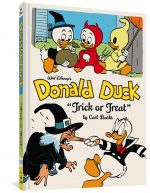
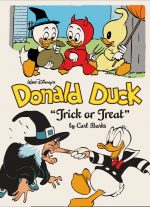
Walt’ Disney’s Donald Duck by Carl Barks volume 13: Trick or Treat


By Carl Barks & various (Fantagraphics Books)
ISBN: 978-1-60699-874-8 (HB/Digital edition)

Win’s Christmas Gift Recommendation: The Utter Acme of All-Ages Entertainment… 10/10

Donald Duck ranks among a small group of fictional characters to have transcended the bounds of reality and become – like Sherlock Holmes, Tarzan, Popeye and James Bond -meta-real. As such, his origins are complex and convoluted. His official birthday is June 9th 1934: a dancing, nautically-themed bit-player in the Silly Symphony cartoon short The Wise Little Hen.

The animated cartoon was adapted by Ted Osborne & Al Taliaferro for the Silly Symphonies Sunday newspaper strip and thus classified by historians as Donald’s official debut in Disney comics. Controversially, he was also reported to have originated in The Adventures of Mickey Mouse strip which began 1931. Thus the Duck has more “birthdays” than he knows what to do with, which presumably explains why he’s such a bad-tempered cuss.

Visually, Donald Fauntleroy Duck was largely the result of animator Dick Lundy’s efforts, and, with partner-in-fun Mickey Mouse, is one of TV Guide’s 50 Greatest Cartoon Characters of All Time. The Duck has his own star on the Hollywood walk of fame and has appeared in more films than any other Disney player.

Throughout the 1930s, his screen career grew from background and supporting roles via a team act with Mickey and Goofy to a series of solo cartoons which began with 1937’s Don Donald. That one also introduced love interest Daisy Duck and the irrepressible nephews Huey, Louie and Dewey…

By 1938 Donald was officially more popular than corporate icon Mickey Mouse, and even more so after his national service as a propaganda warrior in a series of animated morale boosters and information features during WWII. The merely magnificent Der Fuehrer’s Face garnered the 1942 Academy Award for Animated Short Film…

Crucially for our purposes, Donald is also planet Earth’s most-published non-superhero comics character, and has been blessed with some of the greatest writers and illustrators ever to punch a keyboard or pick up a pen or brush. A publishing phenomenon and megastar across Europe – particularly Italy, Germany, the Netherlands, Greece, Sweden, Denmark, Norway, Finland and Iceland – Donald (& Co) have spawned countless original stories and many immortal characters. Sales are stratospheric across all age groups there and in upwards of 45 other countries they export to. Japan’s manga publishers have their own iteration too…

The aforementioned Silly Symphonies adaptation and Mickey strip guest shots were trumped in 1937 when Italian publisher Mondadori launched an 18-page comic book story crafted by Federico Pedrocchi. It was quickly followed by a regular serial in Britain’s Mickey Mouse Weekly (a comic produced under license by Willbank Publications/Odhams Press that ran from 8th February 1936 to 28th December 1957).

Issue #67 (May 15th 1937) premiered Donald and Donna – a prototype Daisy Duck girlfriend – drawn by William A. Ward. Running for 15 weeks, it was followed by Donald and Mac before ultimately settling as Donald Duck – a fixture until the magazine folded. The feature inspired similar Disney-themed publications across Europe, with Donald regularly appearing beside company mascot Mickey…

In the USA, a daily Donald Duck newspaper strip launched on February 2nd 1938, with a colour Sunday strip added in 1939. Writer Ted Karp joined Taliaferro in expanding the duck cast and history: adding a signature automobile, pet dog Bolivar, goofy cousin Gus Goose, grandmother Elvira Coot whilst expanding the roles of both Donna and Daisy…

In 1942, his comic book life began with October cover-dated Dell Four Color Comics Series II #9: AKA Donald Duck Finds Pirate Gold. It was conceived by Homer Brightman & Harry Reeves, scripted by Karp with the illustration by Disney Studios employees Carl Barks & Jack Hannah. That was the moment everything changed…

Carl Barks was born in Merrill, Oregon in 1901, and raised in rural areas of the West during some of the leanest times in American history. He tried his hand at many jobs before settling into the profession that chose him. His early life is well-documented elsewhere if you need detail, but briefly, Barks was a cartoonist, then an animator before quitting the Studio in 1942 to work in the new-fangled field of comic books.

From then until his retirement in the mid-1960s (he officially downed tools in 1966 but was cajoled into scripting stories well into 1968), Barks operated in self-imposed seclusion: writing, drawing and devising a vast array of adventure comedies, gags, yarns and covers that gelled into a Duck Universe of memorable and highly bankable characters like Gladstone Gander (1948), Gyro Gearloose (1952), Magica De Spell (1961) and the nefarious Beagle Boys (1951) to supplement the Studio’s stable of cartoon actors.

His greatest creation was undoubtedly crusty, energetic, paternalistic, money-mad giga-gazillionaire Scrooge McDuck: the World’s wealthiest winged nonagenarian and frequent spur/gadfly and reluctant sugar daddy to the adventuresome youngsters…

Whilst producing all that landmark material Barks was also just a working guy, generating cover art, illustrating other people’s scripts when asked, adding stories to a burgeoning international canon of Duck Lore. Only after Gladstone Publishing began re-packaging Barks material in the 1980s, did he discover the well-earned appreciation he never imagined existed. Media Historian Leonard Maltin called Barks “the most popular and widely read artist/writer in the world”…

So potent were Barks’ creations that they fed back into Disney’s overarching animation output, despite all his brilliant comic work being for Dell/Gold Key and not the studio. The greatest tribute was undoubtedly animated series Duck Tales, based on his classic Uncle Scrooge adventures.

Barks was a fan of wholesome action, unsolved mysteries and epics of exploration, and this led to him perfecting the art and technique of the blockbuster tale: blending wit, history, plucky bravado and sheer wide-eyed wonder into rollicking rollercoaster romps that utterly captivated readers of every age and vintage. Without the Barks expeditions there would never have been an Indiana Jones…

During his working life Barks was utterly unaware that his work – uncredited due to company policy, as was all Disney’s comics output – had been recognised by a rabid and discerning public as “the Good Duck Artist”. When some of his most dedicated fans finally tracked him down, belated celebrity began.

In 2013, Fantagraphics Books began chronologically collecting Barks’ Duck stuff in curated archival volumes, tracing his output year-by-year in hardback tomes and digital editions that finally did justice to the quiet creator. These will eventually comprise the Complete Carl Barks Disney Library. Physical copies are sturdy and luxurious albums – 193 x 260 mm – to grace any bookshelf, with volume 13 here resurrecting works spanning May 1952-November 1953 which includes a wealth of material from a landmark spooky seasonal release…

Everything here is written and drawn by Barks, but these comics inclusions come from a quite distant and very different time, so please be aware that – despite his diligent research and sensitive storytelling – some modern readers might be upset by occasionally outdated depictions and characterisations originally and innocently intended to generate thrills and laughs…

I should also not that the contents are not re-presented in strictly chronological order, but honestly do you really care as long they’re good?

It begins eponymously with ‘Trick or Treat’, which was the lead story in Donald Duck #26. Cover-dated November 1952, it was an unofficial Halloween special that proved quite controversial in its own way.

The story was an adaptation of a current cinema release, and Barks’ faithful interpretation of what was clearly acceptable to moviegoers surprisingly fell foul of his comics editor, who had him cut, excise and redraw much of the saga to make it less scary and more palatable. The full story of the story and its repercussions for the artist are discussed in the text sections of this collection and both Bark’s versions of ‘Trick or Treat’ are re-presented here so readers can judge for themselves…

The tale as Barks intended opens with a witch flying over a spooky old graveyard. Hazel is up for mischief and finds plenty when she teams up with Donald’s nephews who are seeking candied loot in the time-honoured tradition. However, when Donald meanly refuses to play along, it sparks a war of pranks, that escalates into a mystical duel that unleashes a most animated parade of ghosts and terrifying multi-limbed magical monster Smorgasdbord…

From the same issue ‘Hobblin’ Goblins’ sees The Nephews embroiled in inventor Gyro Gearloose’s latest crisis, with his highly dubious “Goblin Foiler” setting them on a catastrophic path of zany stunts to save Halloween whilst all the other kids are having fun with pumpkins and fancy dress, after which ‘A Prank Above’ sees the canny Junior Woodchucks actually outsmarted in their tricking by a crafty antiques dealer…

Barks was as adept with single-image and quick-fire gag vignettes as epic adventures: easily blending humour with drama and charm with action and captivating ideas. This book sees many of his best. At this time, Barks’ main gig was covers and mid-length (10 page) Donald yarns in flagship monthly anthology Walt Disney’s Comics and Stories. The following duck tales come from WDC&S #145 through #158 (October 1952-November 1953): a sequence of rapid fire romps that begin with ‘The Hypno-Gun’, as the Loco parentis confiscates an annoying toy and manages to self-delude himself into a “mesmerised” state. Believing himself tough and forceful, he’s easy prey for Uncle Scrooge, who makes him his bad debt collector…

WDC&S ##146 (November 1952) then reveals the story of scenic town ‘Omelet’ as Donald explains to Daisy how he once dabbled in chicken rearing – with outlandishly catastrophic consequences for the entire area…

This surreal disaster saga was purportedly based on Barks’ own recent attempts to make a little extra cash through some backyard farming, but I doubt similar origins sparked the tale that follows as super-lucky Gladstone Gander becomes an undeserving recipient of a social program run by Daisy. The worst part is that Donald is burdened with helping his smarmy cousin in ‘A Charitable Chore’…

Christmas hit hard in WDC&S 148 (cover-dated January 1953) as ultra-organised Donald sorted everything early only to find he’d forgotten to arrange his own seasonal feast. Determined not to do without he resolves to fool Uncle Scrooge to pay for it in ‘Turkey with All the Schemings’ but has not factored in his opponent’s mean nature and determination to save a penny…

A month later ‘Flip Decision’ saw Donald fall for a flim-flam man’s hokum and begin making every life decision on the basis of a coin-toss, whilst ‘My Lucky Valentine’ follows Donald’s heroic exploits as mailman in a major blizzard. His valiant record is only threatened once he realises his last delivery a romantic missive from Gladstone Gander to Daisy…

Issue #151 celebrated another seasonal highpoint as Donald is shortlisted for Grand Marshal of the forthcoming big parade. With Gladstone as the only other contender much politicking chicanery and bribery ensues but when he shockingly wins ‘The Easter Election’, Donald realises too late that no one can beat his rival’s supernatural fortune…

The May 1953 WDC&S (#152) is a vicious lampoon of gameshows as Donald tries many manic stunts to get on one and make a thousand bucks, even as the Nephews badger, pester and eventually provide a potential solution to his money worries by adopting ‘The Talking Dog’…

A big fishing contest descends into chaos when Donald switches to bait created by Gyro. In ‘Worm Weary’, the entire angling community is outraged and terrified by Don’s powerfully programmed and cooperative wrigglers who dive in and extract all the fish without human intervention, and soon our star is facing a fishy lynch mob…

Working as a realtor, Donald alienates everyone by seeking to sell an old pile currently used by the Nephews as a clubhouse in ‘Much Ado About Quackly Hall’, after which Scrooge adapts the Parable of the Talents to his succession planning and tests Donald, Gladstone and Huey, Dewey & Louie to determine who will eventually inherit and safeguard his money in ‘Some Heir Over the Rainbow’

The Brittle Master series is the name fans use to describe an occasionally-occurring group of stories wherein the perennially self-sabotaging, fiery-tempered and eternally put-upon everyman Duck displayed an astounding excellence in some unique skill, winning the approval and veneration of all and sundry – only to have his own smug hubris bring about ultimate humiliation and downfall.

It began with this tale from Walt Disney Comics & Stories #156 (September 1953) which showed Donald as ‘The Master Rainmaker’: a crop-dusting pilot and cloud-sculpting artiste delivering nigh-magical service to farmers and event-organisers. However, increasingly outrageous requests from his adoring public and his own bellicose nature lead Donald inevitably to disaster when jealousy over Gladstone’s monopoly of Daisy leads to the weather wizard’s accidental creation of a full-blown, devastating ice-storm.

A quirky change of pace came in the October issue where ‘The Money Stairs’ pitted Donald’s youth, fitness and determination against Scrooge’s limitless wealth in an escalating series of physical tasks that seemed too much to believe before #158 (November 1953) pauses the run for now with a manic moment as the boys build an apiary in the backyard that soon shuts down all of Duckburg in ‘Bee Bumbles’…

We end as we began with another strip from that contentious Halloween issue – DD #26 – as Barks successfully recycles a very old gag with Donald trying to scare Daisy in ‘Frightful Face’…

The comics are augmented by a sublime ‘Carl Barks Cover Gallery’ proving the Master’s gift for visual one-liners with a selection of frontages from Four Color (volume II) 394 & 450, Donald Duck #26-30 and Walt Disney Comics & Stories #145-158.

The visual verve over, we move on to validation with ‘Story Notes’ offering context and commentary for each Duck tale here, including the background battle of ‘Trick or Treat’ which is re-visited by Jared Gardner and expanded upon in ‘The Cutting Room Floor’, after which Donald Ault details ‘Carl Barks: Life Among the Ducks’.

‘Contributors’ introduces the commentators Ault, Alberto Beccatini, James Robert Cowles, R, Fiore, Craig Fischer, Gardner, Leonardo Gori, Thad Komorowski, Rich Kreiner, Bill Mason, Stefano Priarone and Francesco “Frank” Stajano and why they’re saying all those nice and informative things. We close as ever with an examination of provenance as ‘Where Did These Duck Stories First Appear?’ clarify the rather byzantine publishing schedules of Dell Comics and the chronology of this collection’s treats. No tricks, honest!

Carl Barks was one of the greatest exponents of comic art the world has ever seen, with almost all his work featuring Disney’s Duck characters: reaching and affecting untold billions across the world. You might be late to the party but don’t be scared: it’s never too late to climb aboard the Barks Express.
Walt Disney’s Donald Duck Trick or Treat © 2015 Disney Enterprises, Inc. All contents © 2015 Disney Enterprises, Inc. unless otherwise noted. All rights reserved.
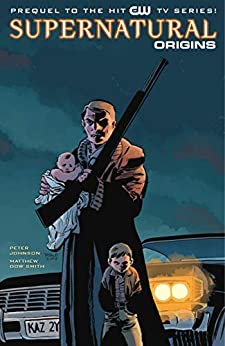

Supernatural: Origins & Supernatural: The Dogs of Edinburgh


Supernatural: Origins
By Peter Johnson, Geoff Johns, Matthew Don Smith & various (DC/WildStorm)
ISBN: 978-1-4012-1701-3 (TPB/Digital edition) 978-1-84576-754-7 (TPB Titan Books edition)

Supernatural: The Dogs of Edinburgh
By Brian Wood, Grant Bond, Matthew Don Smith & various (DC Entertainment)
ISBN: 978-1-4012-3506-2 (TPB/Digital edition)

Comics have always enjoyed a long, successful affiliation and nigh-symbiotic relationship with television, but in these days when even the ubiquitous goggle-box business is paralysed and endangered by on-demand streaming, too many channels and far too much choice, the numbers and types of program that migrate to funnybooks is increasingly limited.

Excluding kids’ animation shows, cult fantasy adventure series now predominate in this dwindling arena and one of the best to make that transition to the printed page was the epic monster-fighting saga of two brothers literally on the road to Hell as they tracked down unnatural horrors, mystical malignancies and all the unexplainable things that treat humanity as fair game and delicious delicacies…

Over 15 seasons of 327 episodes and spanning from September 13th 2005 to November 19th, 2020, TV series Supernatural followed Sam and Dean Winchester whose lives were forever changed when a yellow-eyed demon killed their mother. The horrific event drove distraught John Winchester into a life of eternal wandering: stalking and killing impossible beasts and horrors he now knew lurked in every shadow.

Years later, rumours still abound that the show will return… soon!

After growing up from a baby on the road to hell, Sam got out of the life and tried to live a normal existence before being dragged back when his surly, alienated brother called to say that their dad had gone missing. It happened right about the time Sam’s girlfriend was killed by a fiery demon…

If you’re looking for a spooky, rowdy, funny binge watch, go no further. Moreover, as we do comics here and the series was rapidly picked up for a spinoff funnybook series, you could also enjoy some printed scary stories…

Supernatural: Origins is an impressive official prequel to the epic show, following the dysfunctional Winchester family in the days, months and years after the boys’ mother floated up into the air and spontaneously combusted. It left their father with unanswerable questions, a hunger for vengeance and two rather unnatural kids to raise…

After Mary’s death, John packs toddler Dean and baby Sam into his car and goes into a spin of booze and bar-fights, until he meets palm-reader Missouri Mosley. The prognosticator offers veiled answers and a glimpse into a world of mumbo-jumbo which is proven to be savagely real when an unseen thing kills Mary’s best friend Julie. She was babysitting the traumatised boys at the time of her demise, and lodged in her ghastly remains was a huge, rune-carved fang from no creature ever born on Earth…

Armed only with hints into the true nature of the world, the former marine begins a quest for the tooth’s owner and in Tempe, Arizona meets prickly, reclusive scholar Fletcher Gable. He identifies it as belonging to a Black Shuck… a Hellhound…

Sending the senior Winchester on to a reported sighting of such in California, the savant offers a further gift: a blank journal to record the notes, photos, clippings, drawings, thoughts and experiences that will inevitably occur and need reporting now that father and sons are irrevocably set on their particular road to Perdition…

The wise man and his latest student are both painfully unaware that Winchester is himself being hunted…

When Mary’s formidable brother Jacob comes looking for the boys and fearing the worst (although he has no idea of what the can worst actually be), he too is embroiled in the quest – to his eternal regret – and only the arrival of the mysterious shadower saves John from becoming the latest casualty of the hellhound…

‘Hunter’ – more job description than name – helps Winchester clear up the mess and cover up the evidence before introducing the now-doubly bereaved and shell-shocked single parent to the full horror of the hidden world of the Supernatural. It’s 1983 and all Hell’s breaking loose…

Winchester becomes part of an amorphous hidden association of loners known as Hunters: mortals who’ve lost loved ones, seen the truth and had the guts to look for payback. Partnered with his brusque and enigmatic mentor, John Winchester is still looking for a golden eyed demon and a hellhound with a missing fang as he tackles his first monster – a leaping carnivore known as a “Heeler” with Hunter and another clean-up man named Ichi.

Sadly, by the time the trio return to the grimly unique bar called Harvell’s Roadhouse – where Sam & Dean have been waiting under the lethally efficient care of waitress Ellen – John is a full-blooded monster killer. Good thing too, as Ichi isn’t friendly or human anymore…

Thus begins a perilous pattern: John and Hunter dumping the kids on someone oblivious or horribly in on the secret for a few days as they take care of business. That journal rapidly fills up with accounts of incredible horror…

Winchester learns fast and, after meeting a resurrected priest who grants him a few precious, tainted moments with Mary’s spirit, he and his extremely hands-on senior partner revisit Fletcher Gable with useful intel on the rune-carved fang. Before long they’re headed to one of the spookiest locations in America and an appalling gauntlet of terrors, a confrontation with the hellhound and its master, inevitable betrayal and an explanation for all that the bereaved father and his sons have endured…

Dotted with moving, telling “flashbacks” – like the moment in 1991 when independent, lethally dangerous Dean has enough and tries to run away, abandoning dad and little brother to an interminable legion of monsters – this initial chronicle also includes a short tale of the boys by Geoff Johns, Phil Hester & colourist JD Mettler.

‘Speak No Evil’ harks back to a day in 1989 when taciturn Sam asked his big brother just how their mother died. He might even have received an answer if a demon hadn’t smashed through the motel window just then, locked in a death grip with their father…

This rip-snorting, tense and moody thriller lives up to the demands of the dedicated TV following and still fulfils all that’s demanded of a horror comic for readers who haven’t tracked the torturous trail of the Winchesters, and this chilling compendium even offers in-process views of covers by Tim Sale, plus pin-ups, working drawings and sketches by series illustrator Matthew Dow Smith.


Supernatural: The Dogs of Edinburgh compiles volume 4 #1-6 from 2011, and was written by Brian Wood (DMZ, X-Men, Northlanders, Moon Knight), with art from Grant Bond (Revere, The Clockwork Girl) & Matthew Don Smith. It examines a different piece of the past and sees Sam returning to Scotland after years away.

Back then, he was no killer of killers but a student on a research grant from Stamford University. His journey of discovery to Edinburgh University was initially educational, but immensely brightened by meeting mysterious lass Emma – “of the Isles” – who seemed interested in exactly the same arcane nonsense he was. She was also really pretty…

It turned out that Emma was a Breaker – the Scottish equivalent of Hunters – and as they grew closer she showed him the mystic highlights of the ancient city. He found himself falling, but was also increasingly aware that Emma wasn’t like other girls…

Meeting ghosts and battling an immortal who ran with feral city demon-dogs and controlled numerous crime rackets, they got too close, ended a monster menace together and inevitably parted…

As opening arc ‘The Dogs of Edinburgh’ gives way to present-day sequel ‘Emma of the Isles’, Sam examines a stash of notes, photos and a plane ticket. After all this time Emma has sent them to him and now he’s heading back to Scotland…

The mystery trek leads him to a remote village on the coast and a reserved room at the Clachan Inn. There he reads decades of clippings about drowned girls, but finds no sign of Emma. By the time she finally makes contact, the Hunter has deduced what’s behind the countless deaths, if not why, and the ghastly dreams he’s been experiencing are starting to form a pattern..

A charming legend becomes ghastly truth after he is attacked by nocturnal predators and saved by Emma, who gradually shares the truth of her origins but not her plan to end an eternal cycle of death and procreation. All they have to do is survive a determined assault by an entire tribe of “Selkies”…

This time, however, Sam is no unseasoned kid. He’s a trained hunter, with a lethally-skilled brother who will drop everything and cross an ocean to save his family. All Sam has to do is stay alive and hope to divine what Emma really is and what she really wants…

With covers by Dustin Nguyen and a tranche of concept art by Grant Bond, this twisted romance is a powerful seasonal mystery yarn to delight fright fans and another example of the eerie adventures that made Supernatural such an undying delight.

Punchy, powerful and spookily addictive… get them before they get you…
© 2008 Warner Bros Entertainment, Inc. All Rights Reserved. Supernatural and all characters, distinctive likenesses and related elements are © Warner Bros Entertainment, Inc.
© 2012 Warner Bros. Television Entertainment, Inc. All Rights Reserved. Supernatural and all characters, distinctive likenesses and related elements are © 2011, 2012 Warner Bros. Entertainment, Inc.

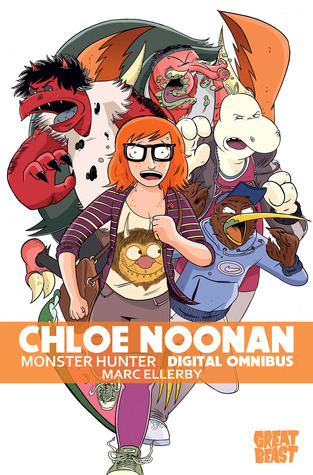
Chloe Noonan: Monster Hunter Digital Omnibus


By Mark Ellerby, with additional colours by Adam Cadwell (Great Beast Books)
ISBN: 978-1-78845-285-4 (Digest HB)

When the TV show Buffy the Vampire Slayer debuted, its mix of sassy teen culture, wry humour, scary adventure, soap opera group dynamics and supremely quotable zingers utterly revolutionised popular entertainment – but not as much as the kick-ass star who proved once and for all that girls could be action heroes.

In the wake of the phenomenon, cartoonist Marc Ellerby (Love the Way You Love, Phonogram: The Singles Club, Ellerbisms, Rick and Morty, Regular Show, Doctor Who) deployed the sarcastic whimsical contrariness we Brits are so grievously afflicted with and belatedly devised a wry riposte to the saga of the mystically superpowered American “Chosen One” and her dedicated team of troubleshooters…

Between 2009 and 2014, Ellerby self-published five issues (and a few extra bits) of Chloe Noonan: Monster Hunter – the sublimely daft exploits of a plucky, determined and utterly normal girl who splits her time between going to college and holding back the malign forces of darkness lurking all around us.

In 2012, the majority of these Kitchen Sink/School Daze/Eldritch Exploits were coloured and gathered in a Digital Omnibus. Here you can comfortably enjoy a jolly jump back in time and space to see how the nuts and bolts of saving humanity works with hilarious hits from Chloe Noonan #1-4, Chloe Noonan Halloween Special 2012, Chloe Noonan Christmas Special 2012 and material from Paper Science #5 and Solipsistic Pop #2-3.

The preternatural perils are preceded by ‘Just a quick word! An introduction from the author’ wherein we learn the origins of the feature and how and why it was remastered, before we finally meet the snarky, sarky, brittle “plain Jane” B-lister who’s nobody’s first choice to save the world…

As well as benefitting from added colour, these terror tales have been chronologically adjusted so keep your wits about you as Chapter 1/ Chloe Noonan #1 takes us to a chip shop in Raven Dale where two students are chatting. Chloe is reluctantly revealing she’s in a band to ingenuous hottie Zoe Fox, when the dowdy, meek-seeming redhead gets an urgent call. For reasons she cannot understand, Noonan suddenly breaks protocol – and her oath of secrecy – and invites Zoe to come along as she tackles a rampaging monster. Her duty is onerous, unpaid and voluntary, so they have to take the bus…

It’s a long ride, made truly interminable by having to disabuse her new friend of ridiculous TV-fuelled notions of the job’s glamour, innate magic powers and skill with ancient weaponry, but eventually they locate the beastly Dahgul. It is not willing to come along quietly…

Forced to consult irascible mentor Professor Lemon Barley, the increasingly pissed off Chloe resorts to her favourite solution – nets and really big bombs – but is then stuck babysitting the beast while she plays a gig with the band…

Issue #2 opened with an inconclusive clash against drunken lobster-horror Pinchy, before another tedious day at Raven’s Dale College commences. Watching guys – especially cute but gormless Doug Stonebridge – hitting on Zoe does nothing to lift her mood, especially after her new self-elected BFF blurts out Cloonan’s monster-hunting sideline. More grief about her failures from Barley follows, and the absolute end comes when Pinchy – AKA Skaldjur – invades the college looking for girls, booze and a rematch and sparking a riot. Chloe might be merely human – and not very fit – but the brute has turned up just when she really needed to hit something and gets just what he deserves…

She’s barely regained her composure when the top secret clean-up crew show up, delivering pat disinformation and trying to impress pretty little Zoe…

Chapter 3 comes from Paper Science #5: a brief encounter with band nerds and ice creams, before Chloe Noonan #3 reveals how bandmate Zach pilfers arcane lore from Chloe’s bag and enhances the latest gig by summoning arcane armageddon in the form of an awakened Kraken…

Thankfully, a full-on angry rant seems to be Chloe’s private superpower…

A brace of shorts from Solipsistic Pop #3 and #2 reveals how Chloe & Zoe deal with a gang of monster-seeming Chavs and annoying girl band Pozzy Pops before chapter 7 presents the full-length fun of Chloe Noonan #4 with the “Nooners”, Zoe and Doug spending an unpleasant night clubbing, only to find that even supernal haunts crave a good time, cheap drinks and ear-splitting beats. However, when Chloe tries to lay down the law, she gets an unlikely schooling in monster politics…

Chloe Noonan #3 delivers the next instalment as drunken Doug falls foul of supernatural Chavs (think Devil-Moomins) in a deserted playground, and Zoe drags her “Nooners” out of a well-earned sleep to save his undeserving ass after which ‘Trick or Treat’ (from Chloe Noonan Halloween Special 2012) sees awestruck Zoe dressing up as her hero for a spot of fancy-dress, door-to-door begging on October 31st. Of course, prowling darkened streets with a happier, prettier, sexier version of herself is everything Chloe dreaded it would be, and she’s in no mood to dick about when the real monsters turn up to celebrate “their” special day…

Wrapping up the spooky selection is the Chloe Noonan Christmas Special 2012 with the surly supernaturalist and Professor Barley dutifully and pointlessly hunting an unknown antagonist and enduring ‘A Very Noony Christmas’ whilst everybody else is getting outrageously inebriated at a major college party…

Accompanying the morose mirth is a ‘Cover Gallery’ (fronts and backs!) including a spiffy art print; a selection of ‘Fan Art’ by Will Kirkby, Tom Humberstone, Liz Prince and Luke Pearson and a fulsome (29 pages) and fascinating dip into the author’s ‘Annotated Sketchbook’ as well as a ‘Biography’ of the creator.

Fun, funny, fiercely foolish and fabulously entertaining, this ancient arcane artefact is as fresh and festive as it ever was. Forget the Chosen One and just choose Chloe Noonan.
™ & © 2009-2012, 2020 Marc Ellerby. All rights reserved.
Walt Disney’s Donald Duck and the Ghost of the Grotto


By Carl Barks (Fantagraphics Books)
ISBN: 978-1-60699-779-6 (TPB/Digital edition)

Win’s Christmas Gift Recommendation: The Utter Acme of All-Ages Entertainment… 10/10

Carl Barks was born in Merrill, Oregon in 1901. He grew up in rural areas of the West during some of the leanest times in American history. He tried his hand at many jobs before settling into the profession that chose him. His early life is well-documented elsewhere if you need detail, but briefly, Barks worked as an animator at Disney’s studio before quitting in 1942 to work in the new-fangled field of comic books.

With cartoon studio partner Jack Hannah (another occasional strip illustrator) Barks adapted a Bob Karp script for an animated short into the comic book Donald Duck Finds Pirate Gold. Published as Dell Four Color Comics Series II #9 in October of that year – and although not his first published comics work – it was the story that shaped the rest of Barks’ career.

From then until his first official retirement in the mid-1960s, Barks worked in self-imposed seclusion, writing and drawing and devising a vast array of adventure comedies, gags, yarns and covers that gelled into a Duck Universe of memorable, highly bankable characters. These included Gladstone Gander (1948), Gyro Gearloose (1952), Magica De Spell (1961) and the nefarious Beagle Boys (1951), all supplementing Disney’s stable of cartoon actors. His greatest creation was undoubtedly curmudgeonly, energetic, paternalistic, money-mad giga-gazillionaire Scrooge McDuck: the World’s wealthiest winged nonagenarian…

Although producing all that landmark material Barks was just a working guy, generating cover art, illustrating other people’s scripts when asked and contributing stories to the burgeoning canon of Duck Lore. Only after Gladstone Publishing began re-packaging Barks material – and a selection of other Disney strips – in the 1980s, did he discover the well-earned appreciation he never imagined existed…

So potent were his creations that they inevitably fed back into Disney’s animation output itself, even though his brilliant comic work was done for licensing company Dell/Gold Key, and not directly for the studio. The greatest tribute was undoubtedly the animated series Duck Tales: heavily based on his works.

Barks was a fan of wholesome action, unsolved mysteries, rationality-based fantasy and epics of exploration. This led to him perfecting the art and technique of the blockbuster quest tale: blending wit, history, plucky bravado and wide-eyed wonder into rollicking rollercoaster romps to utterly captivate readers of every type and vintage. Without the Barks expeditions, there would never have been Indiana Jones…

Throughout his working life Barks was blissfully unaware that his work (uncredited by official policy like all Disney’s cartoon and comic book output) had been singled out by a rabid and discerning public as being by “the Good Duck Artist”. When some of his most dedicated fans finally tracked him down, his belated celebrity began.

In 2013 Fantagraphics Books began collecting Barks’ Duck Stuff in wonderful, carefully curated archival volumes, tracing his output year-by-year in hardback tomes and digital editions that finally do justice to the quiet creator. These will eventually comprise the Complete Carl Barks Disney Library. The publisher also placed some of the most engaging (How to choose? How to choose?) in three accessible landscape paperback collections. At 185 by 140 mm, they are the perfect size to introduce kids to the master’s masterpieces. They’re all available in digital formats, and this particular tome has a spooky Halloween vibe to further entice you…

The majority of inclusions here come from 1947, so please be aware that – despite Bark’s diligent research and careful, sensitive storytelling – modern readers might be upset by some depictions crafted over seven decades ago…

It begins eponymously on a nautical note: ‘Donald Duck and the Ghost of the Grotto’ is an early masterpiece originating in Four Color #159 (August 1947), with Donald and the rowdy, know-it-all nephews who live with him currently residing in the West Indies, running a kelp boat and harvesting seaweed from the abundant oceans. Here, Huey, Dewey and Louie are the sensible ones in a risky, get-rich-quick venture. Although prime catalysts of comedic chaos in other situations when the mallard miser was around, in Barks’ comics the devilishly downy ducklings’ usual assigned roles were as smartly sensible, precocious and a just a bit snotty kid-counterfoils to their “unca”, whose inescapably irascible nature caused him to act like an overgrown brat most of the time. Nevertheless, all too often the kids fell into temptation, reverted to type and fell prey to a perpetual temptation to raise a ruckus…

When a freak accident temporarily strands them on an isolated reef, Donald and the lads discover a long-lost, shipwrecked galleon, encounter an ongoing abduction mystery dating back centuries, battle genuine monsters, confound a particularly persistent phantom and win and lose again a fabulous treasure in a  thrilling romp and supremely beguiling mystery that has never dated…

Originally from Four Color #147 (May), ‘If the Hat Fits’ is an 7-panel gag split over two of these landscape pages, detailing chapeau japery, and precedes ‘Fashion in Flight’ (FC#178, December), exposing hot-headed Donald’s views on car culture.

Thanks to the nephews and some imprudent bee-keeping, a potty scheme to make more cash becomes another painful and humiliating experience as the bellicose bird tries growing blooms commercially in his garden in ‘Donald’s Posy Patch’ (Walt Disney’s Comics and Stories #80, May 1947), after which ‘Turn for the Worse’ (Four Color #178 again) reveals just how annoying – and violent – people looking for directions can become…

From the same issue, ‘Machine Mixup’ sees kitchen confusion for Donald as he experiences the downside of modern white goods, before ‘Donald Mines his Own Business’ (WDC&S #81 June) finds the loco parent-ish duck and his boys prospecting in New Mexico. It’s barely moments before they all fall foul of America’s post-war arms rush and missile-race, with devastating and spectacular consequences…

From FC #189 (June 1948) ‘Bird Watching’ exposes the hidden perils of the gentle hobby before  superstition is painfully debunked in ‘Horseshoe Luck’. The fluffy fun finally finishes with an epic farrago – first seen in WDC&S #86 (January 1947) – as telling tale exposes the rise and fall of ‘Fireman Donald’ whose smug hubris ultimately deprives him of a job he’s actually good at!

Carl Barks’ efforts are readily accessible through a number of publications and outlets and every one of his stories is a treasure beyond price. If you’re new to his work and have never experienced his captivating magic, Walt Disney’s Donald Duck and the Ghost of the Grotto is a perfect introduction. No matter what your age or temperament, you can discover “the Hans Christian Andersen of Comics” simply by applying yourself and your credit cards to any search engine.

Always remember, a fan’s got to do what a fan’s got to do and treasure is out there just waiting to be unearthed…
© 2014 Disney Enterprises, Inc. All rights reserved.

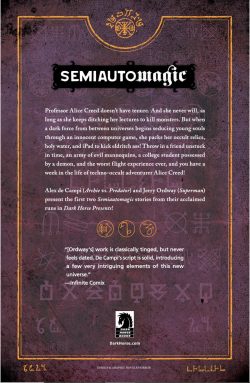
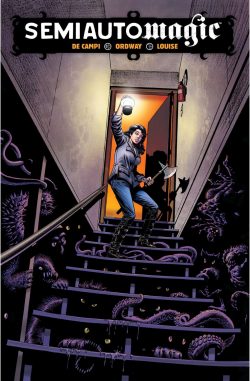
Semiautomagic volume 1


By Alex De Campi & Jerry Ordway, coloured by Marissa Louise (Dark Horse Books)
ISBN: 978-1-50670-001-4 (TPB) eISBN: 978-1-63008-668-8

In an industry/art form that has become over-reliant on vast interlocking storylines, requiring an encyclopaedic knowledge of a million other yarns and the tacit consent to sign up for another million episodes before reaching any kind of narrative payoff, the occasional short, sharp, intensely stand-alone tale is as welcome and vital as a reliable torch in a haunted house.

Just such a salutary singleton (thus far: there’s plenty of scope for more adventures!) was this solid action-horror outing that first appeared in 2014 in Dark Horse Presents volume 3 #4-9 and #13-17.

A no-nonsense, straightforward battle of earthly mage against ancient uncanny abomination, the series was devised (and lettered) by novelist, film director, columnist and comics creator Alex De Campi (Smoke, Kat & Mouse, Agent Boo, Archie vs Predator, Bad Girls, No Mercy, MADI, Bad Karma) and illustrated by certified comics giant Jerry Ordway (All-Star Squadron, Fantastic Four, Crisis on Infinite Earths, Adventures of Superman, The Power of Shazam!, WildStar, T.H.U.N.D.E.R. Agents, The Avengers) and introduces enigmatic-woman-with-a-past Alice Creed.

An untenured professor at New Haven, her classes attract all the cool kids, but she has a bad reputation and appalling attendance record. Her students never know when she will turn up to teach, because she consults on police cases. Not ordinary ones, though: Professor Creed gets a call whenever science and reason go out the window…

Her best friend is teaching assistant Archie Rollins: a constant helpmeet and dutiful substitute for her classes. He’s also her housekeeper and is not local – by at least a dozen dimensions…

This morning, as Archie pacifies another disappointed bunch of teens who wanted to experience the mystic “rock star” sharing the unseen secrets of existence, Creed is far away in Bridgeport, attending another uncategorizable case stumping the cops…

Having established that magic always comes at a cruelly high cost, ‘Semiautomagic: The Bomb That Will Bring Us Together’ follows her as the Prof uncovers a case of possession resembling an old case. This time, a kid’s soul has been sucked into the void, via his computer, and a little blood magic determines he’s only one of thousands to have fallen victim to a demonic computer game…

After a ghostly visitation and a touch of divination, Alice heads for Las Cruces, New Mexico tooled up and wearing her other hat: that of merciless monster killer…

Her flight is far from peaceful or uneventful, but overcoming all eldritch resistance, she’s soon bargaining with the local supernal forces for permission to work in their territory, discovering her current quarry has been poaching on their turf with no care regarding the rules and laws governing the magical world.

Creed is cautious and polite, but determined. She knows her place and mission in the ancient hierarchy and considers the huge number of people she couldn’t save as her greatest burden. Here, that attitude leads her an abandoned atomic test town and army of reanimated plastic dummies where she discovers all the magically-abducted games-playing kids just as the vile entity seeking access to Earth orchestrates one last nuclear detonation…

Surviving thermonuclear destruction thanks to her arcane gifts, Creed is then betrayed by one she trusted and forced to confront the extra-dimensional Traveller manipulating the awful events. The invader is exultantly triumphant… until Creed forcefully and fatally reminds it of the Hierarchy already established on this world and the next…

Her mass exorcism also sends most of the abducted souls back to their bodies at a terrible cost, but in the excitement and stress of the ritual, Alice misses something…

A year later – or ten days in-continuity – ‘Semiautomagic: Throne of Blood’ takes up the tale as the drained monster hunter returns to academia, blithely unaware that her oversight has come looking for her and is now attending her classes…

By the time she notices, the sweet and sexy “transfer student” Mark Van Scuyer has charmed his way into the lives of Creed’s class, but her own rules and spectral “Board of Advisors” won’t let her kill him. She has to writhe and burn in frustration until he does something to contravene the laws. She doesn’t have long to wait…

When the beast begins his predations by arcanely assaulting favourite student Chloe and feeding on her pain, the act unleashes a wave of staggering horror and rapacious evil as Mark gathers strength from attacks on the populace. When he targets the misery of the local hospital, Creed knows what she must do and will not be stopped…

Old-fashioned duels between Good and Evil featuring a kick-ass protagonist with almost as much emotional baggage as arcane weaponry, this is a superb done-in-one magical monstery tour to delight old time horror buffs seeking something a little bit new in the grand old manner. The saga is supplemented by ‘Semiautomagic: Behind the Scenes’ sharing Ordway’s roughs, pencil art, cover sketches and more, before tantalising glimpses of De Campi’s Grindhouse comics close the curtain on this fear fest.

Semiautomagic is a perfect B-Movie horror comic: stark, inventive, rollercoaster-paced and rendered with exhilarating bravura. This thundering, down-and-dirty fable grips like a vice and hits like a hammer, and in Professor Alice Creed comics have another weird warrior to join the ranks of Doctors Fate, Strange, Voodoo, Doom, Drew, Mirage and all the rest.
© 2014, 2015, 2016 Alex de Campi and Jerry Ordway. All rights reserved.

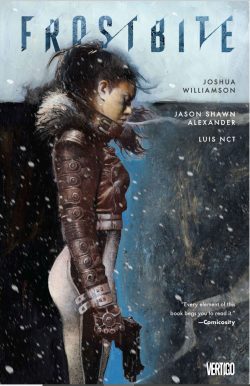
Frostbite


By Joshua Williamson, Jason Shawn Alexander, Luis NCT, Steve Wands & various (DC Comics)
ISBN: 978-1-4012-7134-3 (HB/Digital edition)

As you have probably noticed, Earth as we know it is doomed. It’s a tragedy of staggering proportions and a telling indictment of the suicidal greed and indifference afflicting so many humans. Ironically this fact does fuel an immense and growing genre of armageddon fiction…

Here’s a – brace yourselves! – truly chilling, utterly gripping yarn from writer Joshua Williamson (The Flash, Infinite Frontier, Justice League vs Suicide Squad, Birthright. Deathbed), illustrator Jason Shawn Alexander (Killadephia, Marvel Zombies, Empty Zone, Batman), colour-artist Luis NCT and letterer Steve Wands that superbly captures all the grim foreboding of the Last Days whilst still dangling cruel hopes of possible survival.

If you’re one of that strange breed of modern knight errant who just can’t stomach a woman – and a black one, too! – in the role as Last Action Hero, you won’t like this superb science-gone-bad, doom-watched dystopian drama, so you’ll want to go play somewhere else for validation…

Once upon a time, six scientists sought to save the world from destruction and humanity from itself. As inexorable climate change turned Earth into an uninhabitable tinderbox, they did something wondrous with cold fusion and eradicated the searing heat build-up.

However, as we all know, no good deed ever goes unpunished and their miraculous solution unleashed a new ice age that brought civilisation to its knees and human beings to the edge of extinction.

In the aftermath, as pockets of mankind sought to stay warm and eat on a desolate ice-ball world, it was revealed that the temperature inversion had brought another – even more terrifying – tribulation: a bizarre disease that slowly turned living creatures into ice. Terrified humans began isolating themselves in smaller groups, making pariahs of strangers, abhorring the blue stigma and dreading the inescapable death sentence that was “Frostbite”…

America 57 years after big freeze is an icy wind-wracked wilderness, with meagre population pockets occupying what used to be mega-cities. It’s a world of barter, exploitation and quick violence, with heating devices and drugs as the prime transferable resources. Criminals have scrambled to the top of the heap and dictate the way things are. Everyone is terrified that fraternisation also brings the cold contagion…

In Mexico City, freelance cargo-shippers Keaton and her partner Chuck Barlow accept a commission to transport a father and his daughter to what used to be Alcatraz Island. Both prospective passengers are science doctors and display obvious signs of great wealth, but broke as she is, Keaton can’t shake her suspicions of something bad in play…

Henry Bonham and his brilliant child Victoria clearly have the resources to travel in style and comfort, but instead want the secrecy of a lumbering tractor like Barlow’s pride-&-joy Icebreaker. Keaton would be even more upset if she knew who they were and who was chasing them…

When those pursuers attack, the Bonhams are separated and Keaton, on learning Henry’s secret, kills him herself. Only afterwards does she discover that it wasn’t him the pursuers wanted, but Victoria. The junior scientist has developed a cure for frostbite and is now the most valuable thing on earth…

Furious, guilt-ridden, repentant, hopeful and slowly dying, Keaton resolves to get the daughter to the Alcatraz lab before she expires, no matter who or what stands in their way. As she grows ever closer to her trek buddy, the hardest part is not confessing what she’s done and what’s she’s becoming. Although built on mutual lies, there’s a painfully doomed relationship growing that might be even more important to Keaton than saving the world or her own life…

Their voyage across the frozen south overflows with violent clashes as relentless pursuit constantly results in explosive violence, with Keaton’s prowess and ingenuity significantly reducing the numbers of humans in existence every time they are caught or intercepted.

Soon however, their only foe is Keaton’s secret and when that’s exposed, everything changes forever…

Fast-paced, smart, action-packed and tension-taut, Frostbite is a picture perfect action adventure with a flawed but indomitable hero in the same unstoppable yet fragile mould as Ripley or Sarah Connor.

Graced by a magnificent cover gallery by Alexander & NCT, this is the kind of chill affirmative action we should all enjoy.
© 2016, 2017 Joshua Williamson and Jason Shawn Alexander. All Rights Reserved.

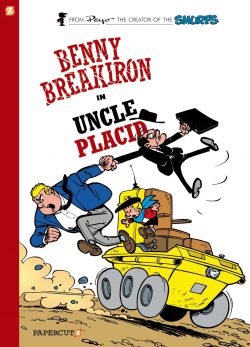
Benny Breakiron volume 4: Uncle Placid


By Peyo & Gos with backgrounds by François Walthéry: translated by Joe Johnson (Papercutz/NBM)
ISBN: 978-1-59707-717-0 (HB Album/Digital edition)

Let’s just clear up something here. Although they are both magnificent producers of comics past and present – and either singly or in collaboration – Belgium and France are not “the same”. Shared cultural mores and language, interlinked history and adjacent geographies have may have generated superficial similarities but the inventors of international icons Tintin and Asterix have always been as much defined by their unique views as mutual visions. All of which is my blathering brain-fodder to introduce a Belgian “superhero” today and a very different French one tomorrow…

In 1928, Pierre Culliford was born in Belgium to a family of British origin dwelling in the Schaerbeek district of Brussels. An admirer of the works of Hergé and the American comics licensed to Le Journal de Mickey, Robinson and Hurrah!, the lad honed his own artistic skills but the war and family bereavement forced him to forgo further education and get a job…

After working as a cinema projectionist, in 1945 Culliford joined C.B.A. animation studios, where he met future comics megastars André Franquin, Maurice De Bevere – who would become Morris – and Eddy Paape. When the studio closed, Pierre briefly studied at the Brussels Academy of Fine Arts before moving full-time into graphic advertising. In his spare time, he began submitting strips to the burgeoning post-war comics publishers.

His first sale was in April 1946. Pied-Tendre was a tale of American Indians that landed in Riquet, the comics supplement to the daily L’Occident newspaper. Further sales to other venues followed and in 1952 his knight Johan found a permanent spot in Le Journal de Spirou. Retitled Johan et Pirlout, the strip prospered and in 1958 introduced a strange bunch of blue woodland gnomes into the ongoing tale. They were called Les Schtroumpfs.

Culliford – by now using the nom de plume Peyo – would gradually turn those adorable little mites (known to most of the world as The Smurfs) into an all-encompassing global empire, but before being sucked onto that relentless treadmill, he found time to create a few other noteworthy strips such as the titanic tyke on view here today.

In December 1960, Benoît Brisefer – AKA Benedict Ironbreaker and/or (in Dutch) Steven Sterk – debuted in Le Journal de Spirou #1183. With some sly tips of the hat to Siegel & Shuster’s Superman – and Superboy – these wryly bucolic adventures celebrated a small boy with superhuman strength, speed, durability and vitality living in a generally quiet and unassuming little Belgian town.

Quiet, well-mannered, gentle and a bit lonely, Benny just happens to be the mightiest boy on Earth: able to crush steel or stone in his tiny hands, leap huge distances and run faster than a racing car. He is also generally immune to all physical harm, but his fatal and peculiarly ubiquitous weakness is that his astounding strength deserts him whenever he catches the slightest hint of a cold…

Most kids avoid him. It’s hard to make friends or play games when the merest kick pops a football like a balloon or a shrug can topple trees…

Benny seldom seeks to conceal his abilities – in fact he informs anyone who will listen – but other than startled crooks and bad guys, somehow no adults ever believe or catch on. They usually think he’s telling fibs or boasting and whenever he attempts to prove his claims, the unlucky lad gets another dose of galloping sniffles…

Well-past-it Brits of my vintage might remember him from weekly comics in the 1960’s. As Tammy Tuff – The Strongest Boy on Earth – and latterly as Benny Breakiron or Steven Strong, our beret-wearing champion appeared in Giggle and other periodicals from 1967 onwards.

With Peyo’s little blue cash-cows taking up ever larger amounts of his concentration and time, other members of his studio assumed greater responsibilities for Benoît/Benny. Years passed and Will (Willy Maltaite), Gos (Roland Goossens), Yvan Delporte, François Walthéry and Albert Blesteau all pitched in, with Jean Roba crafting many eye-catching Spirou covers, but by 1978 the demands of the Smurfs were all-consuming and all the studio’s other strips were retired.

You can’t keep a good super-junior down, though, and after Peyo’s death in 1992, his son Thierry Culliford and cartoonist Pascal Garray revived the strip, adding six more volumes to the eight generated by Peyo and his team between 1960 and 1978.

Thanks to the efforts of US publisher Papercutz, the first four (promised fifth release Bodoni Circus still languishes in limbo, but we can always hope…) gloriously genteel, outrageously engaging power fantasies are available to English-language readers. This yarn was originally collected in 1968 as 4th album Tonton Placide, with Peyo, co-writer Walthéry & co-artist Gos tapping into the global spy trend with marvellous aplomb.

It begins in sedate Vivejoie-la-Grande, where the sweet kid goes about his well-meaning, somewhat solitary life: doing good deeds in secret (like quietly popping a piano up to the fifth floor of an apartment block whilst weary delivery men are having a refreshing bevvy in a bar), respecting his elders and being as good a boy as he can…

At school, Prize Day closes and we learn that Benny’s true weakness is maths, although he did win a Good Conduct award and came top in Gym. The happily liberated kids trade tales of the holidays ahead of them and the titanic tyke reveals he’s spending his vacation with his uncle who works for P.O.O.T. Benny explains that his temporary guardian is a civil servant at the Department of “Protection Of Officials Travelling”… an actual armed bodyguard…

Disembarking later at a rural train station, the boy is greeted a by boisterous hulking blonde Adonis and quickly settles into a perfect country idyl, but the rest is ruined the next morning – initially by Uncle Placid’s workout and machine gun practise – but soon after by an urgent visit from the operative’s boss. The colonel needs a capable escort for the Finance Minister of the Principality of Fürengrootsbadenschtein when he collects his nation’s currency printing plates.

It’s such a simple, risk-free job that the Colonel even suggests the bodyguard could bring his current “babysitting assignment” along for the ride. Nobody has any inkling that a ruthless gang know of the potentially lucrative transfer and has begun a complex operation to secure the means of printing their own money…

Dutiful Placid reluctantly agrees, bringing the eager lad along to his Central Bank rendezvous with prickly, obnoxious Minister Mr. Chnik and straight into a complex ambush! With the adults all gassed by a disguised cleaning lady, Benny is completely unobserved when he foils the robbery by plucking her and an observation helicopter out of the sky and wrecking her sportscar-driving backup team.

Listening in from his secret lair, the sinister mastermind behind the plot cannot understand what he’s hearing…

By the time Benny brings the plates back to the bank, everybody is blearily regaining consciousness. As usual, nobody believes his story – or his polite claims that he’s really strong for his size – but the job is reassessed as highly risky. A police convoy is despatched, but the immediacy of the crisis means the little boy has to stay with Placid – which is fine with Benny…

As the plates, Mr. Chnik, Placid and Benny set out on a fraught drive to the Principality, they are dogged by cautious observers: career criminals who are having their own problems acclimatising to modern innovations like guns and shoes that double as radio communicators and tracking devices. Their reticence and ineptitude does nothing for the Boss’ manners or patience…

The covert reconnaissance leads to a massive, spectacular multi-vehicle highway ambush, and Placid cannot understand how they all survive the barrage of bullets and car crash. He does not believe it was Benny’s incredible intervention or that the kid subsequently clobbered a small army of thugs and armoured ATVs…

Now on high alert, Placid opts for subterfuge, taking his charges undercover and getting ever closer to Fürengrootsbadenschtein by commercial plane, trains and automobiles. At every stage, progress is stymied by the Boss and his ubiquitous operatives, with the villains winnowed down by the incredible – unseen – actions of the weird kid in the black beret…

Ultimately, however, the mastermind succeeds in capturing his targets, only to meet his match at his moment of triumph when Benny at last loses his temper…

A masterpiece of timing and breakneck pace, and deliciously informed by the 1960s pop culture espionage fad, Uncle Placid delivers daft delights via bombastic bouts of uproarious slapstick comedy action. A superbly stirring spoof with echoes of classic comedies such as Carry on Spying, The Intelligence Men or The Spy with a Cold Nose, it displays the wonder boy’s resolute dynamism, helpful nature and need to be a good citizen: blending deft wit with hilarious stunts. Here is another fabulously winning fantasy of childhood agency and validation, offering a distinctly Old-World spin to the notion of superheroes by providing adventure and chortles for all.
© Peyo™ 2014 – licensed through Lafig Belgium. English translation © 2014 by Papercutz All rights reserved.

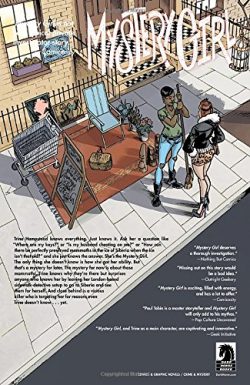
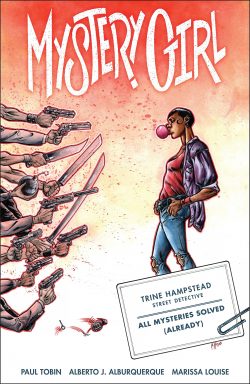
Mystery Girl


By Paul Tobin, Alberto J. Albuquerque, Marissa Louise & Marshall Dillon (Dark Horse Books)
ISBN: 978-1-61655-959-5 (TPB/Digital edition)

There are many fabulous smartly entertaining stand-alone comics collections on the market these days, offering readers a single done-in-one hit of graphic entertainment without the grief of buying into massive back-history or infinite cross-continuity.

One of the best I’ve ever seen compiles a fierce, frenetic and funny 4-issue miniseries from 2015, starring the most infallible detective of all time. No sequel yet, but I live in hope, which is a rather apposite thing to say here…

As crafted by American author Paul Tobin (Marvel Adventures Spider-Man, Plants vs. Zombies, Bandette, Colder) and Spanish artist Alberto Jimenez Albuquerque (Les Fugitifs de l’Ombre, Letter 44, Generation X, Wakanda Forever) – with colours by Marissa Louise and letters from Marshall Dillon – this slim, sleek, slick yarn simply screams for more enigmas to be excitingly unravelled by this sleuthing star in waiting.

Like any ancient city, London has its fair share of unique characters and unsolved mysteries, but that’s never the case whenever Trine Dorothy Hampstead sets up her “office” on the pavements and begins chatting…

The effusive, ebullient young woman has an incredible gift. She knows the answer to any question she’s asked. Instantly and infallibly. “Where are my keys?” “Did Dad leave a will?” “Where is my missing son’s body…?”

All inquiries get an instant response and every answer is correct!

Trine is a local celebrity in her community, not only for the fact that she’s never judgemental or exploits her gift, but also because everyone knows there’s only one mystery the poor lass can’t solve: how she got her uncanny power…

Trine has an immense taste for life at full throttle and abiding desire to help those in need: regularly consulting with local private eye Alfie and aiding her perpetually sceptical boyfriend Ken Bloke – a Metropolitan police constable – in his work, even though he refuses to believe in her gift…

Her already extraordinary life takes a big step into the unknown when ancient DNA specialist Jovie Ghislain comes to Trine with a fascinating query. The biologist had been researching a 1930’s expedition to the wild Sakha region of Siberia. In the notes of the fabled Weimar-Steinberg trek, the explorers detailed how they uncovered a frozen mammoth carcass so perfectly preserved that the meat was still fresh and edible. Their records are tragically incomplete and Ghislain – desperate to secure viable DNA from the deceased giant – wants to know where the rest of the body is now…

The answer is not immediately forthcoming. In fact, Trine refuses to say anything unless she can join Jovie’s new expedition to personally show the scientists where it is.

Trine thrives on new experiences and this time her gift pays a huge dividend. As preparations are made, she shrugs off all questions from friends and acquaintances, but does confide in her pet budgie Candide. The reason that mammoth meat was so fresh is obvious. It hadn’t been dead long. Now she’s off to see its kin in the only place on earth where the mighty beasts still live…

Sadly, the original expedition – and its journals – are also the subject of a search by wealthy and far less friendly folk. However, when a mystery billionaire commissions a psychopathic hitman to find and secure all the original journals and stop the new expedition, even deadly Linford is taken with Trine. Foregoing his usual callous efficiency, the murdering mercenary takes his time, insinuating himself into the life of all her friends. It’s all working out just fine until the Mystery Girl is asked about her pal’s latest boyfriend and suddenly “knows” all about the new beau – including his actual profession.

Miss Hampstead’s plan to deal with him is shockingly effective, but doesn’t go nearly far enough…

Believing the coast clear, Trine and Jovie head for the Arctic Circle, blissfully unaware that their trail is being dogged by Linford’s sinister paymaster or that the killer himself is down, but not out. Instead, he has devised a cunning method to turn his opponent’s gift against her…

Even so, the obsessive hitman has underestimated Trine’s power, ingenuity and ruthless resolve. However when finesse fails, he can always fall back on overwhelming firepower and direct action…

With the steadfast explorers nearing their frozen El Dorado, the bad guys make their move, revealing what’s actually behind all the death and destruction. Now it no longer matters if Trine is asked the right question or not…

As the ghastly truth of the Weimar-Steinberg expedition is exposed, their heirs and inheritors prove willing to commit mass murder to keep the bloody secret covered up. Happily, Trine asks herself a different question and a life-saving solution pops into her head…

Fast-paced, spectacularly action-packed, witty and superbly balanced as hero and villain play cat-&-mouse around the world, Mystery Girl is funny, imaginative and savagely uncompromising: a superb introduction to a potent and engaging new female character who seems destined for greatness.

Also included are satisfyingly informative bonus features including a copious and heavily annotated Sketchbook section with commentary from Tobin & Albuquerque; concept to finished art examples; cover roughs: designs and unused cover art, all revealing the masses of effort that went into making this such a treat.

Don’t ask why you weren’t in at the beginning of her climb to stardom: get Mystery Girl and become someone with (some of) the answers…
Mystery Girl ™ & © 2015, 2016 Paul Tobin and Alberto J. Albuquerque. Mystery Girl and all prominently featured characters are trademarks of Paul Tobin and Alberto J. Albuquerque.

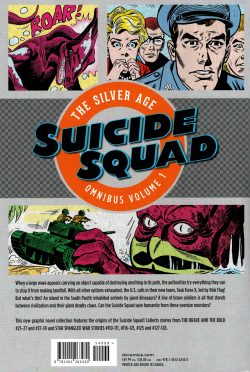
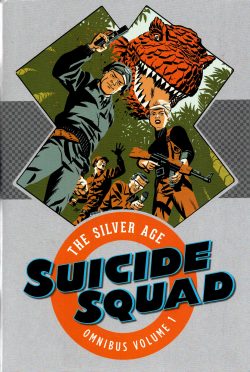
Suicide Squad: The Silver Age


By Robert Kanigher, Howard Liss, Ross Andru & Mike Esposito, Gene Colan, Joe Kubert & various (DC Comics)
ISBN: 978-1-4012-6343-0 (HB) 978-1 4012 7516 7 (TPB)

The War that Time Forgot was a strange series which saw paratroopers and tanks of the “Question Mark Patrol” dropped on Mystery Island from whence no American soldiers ever returned. Assorted crack GIs discovered why when the operation was suddenly overrun by pterosaurs, tyrannosaurs and worse…

However, the combat-&-carnosaur creation was actually a spin-off of an earlier concept which hadn’t quite caught on with the comics-buying public. That wasn’t a problem for Writer/Editor Kanigher: a man well-versed in judicious recycling and reinvention…

Back in 1955 he had devised and written anthology adventure comic The Brave and the Bold which featured short complete tales starring a variety of period heroes: a format mirroring that era’s filmic fascination with historical dramas.

Issue #1 led with Roman swords-&-sandals epic Golden Gladiator, medieval mystery-man The Silent Knight and Joe Kubert’ Viking Prince. Soon the Gladiator was side-lined by the company’s iteration of Robin Hood, but the high adventure theme carried the title until the end of the decade when the burgeoning superhero revival saw B&B transform into a try-out vehicle in the manner of the astounding successful Showcase. Used to launch enterprising concepts and characters such as Cave Carson, Strange Sports Stories, Hawkman and the epochal Justice League of America, the title began test runs s with #25 (August/September 1959) with the fate-tempting Suicide Squad – code-named Task Force X by the US government to investigate uncanny mysteries and tackle unnatural threats.

The scary tales were all illustrated by Kanigher’s go-to team for fantastic fantasy (Ross Andru & Mike Esposito) and they clearly revelled at the chance to cut loose and show what they could do outside the staid whimsy of Wonder Woman or gritty realism of the war titles they usually handled…

The Brave and the Bold #25 introduced a quartet of merely human specialists – air ace war hero Colonel Rick Flag, combat medic Karin Grace and big-brained boffins Hugh Evans and Jess Price – all officially convened into a unit whose purpose was to tackle threats beyond conventional comprehension such as the interstellar phenomenon dubbed ‘The Three Waves of Doom!’

The quartet were built on a very shaky premise. All three men loved Karin. She only loved Rick (who wouldn’t?), but agreed to conceal her inclinations and sublimate her passions so Hugh and Jess would stay on the team of scientific death-cheaters…

In their first published exploit, a cloud from outer space impacted Earth and created a super-heated tsunami which threated to broil America. With dashing derring-do, the troubleshooters quenched the ambulatory heat wave only to have it spawn a colossal alien dragon emanating super-cold rays that might trigger a new ice age…

The only solution was to banish the beast back into space on a handy rocket headed for the sun, but tragically, the ship had to be piloted…

Having heroically ended the invader, the team were back two months later as B&B #26 opened with an immediate continuation. ‘The Sun Curse’ saw our stranded astronauts struggling – in scenes eerily prescient and reminiscent of the Apollo 13 crisis a decade later – to return their ship to Earth. Uncannily, the trip bathes them in radiation which causes them to shrink to insect size…

Back on terra firma but now imperilled by everything around them, the team nonetheless manages to scuttle a proposed attack by a hostile totalitarian nation before regaining their regular stature…

A second, shorter tale finds the quartet enjoying some downtime in Paris before the Metro is wrecked by an awakened dinosaur. Of course, our tough tourists are ready and able to stop the ‘Serpent in the Subway!’

In an entertainment era dominated by monsters and aliens, with superheroes still only tentatively resurfacing, Task Force X were at the forefront of beastie-battles. Their third and final try-out issue found them facing evolutionary nightmare as a scientist vanished and the region around his lab was suddenly besieged by gigantic insects and a colossal reptilian humanoid the team dubbed ‘The Creature of Ghost Lake!’ (December 1959/January 1960). They readily destroyed the monster but never found the professor…

A rare failure for those excitingly experimental days, the Suicide Squad vanished after that triple try-out run, only to resurface months later for a second bite of the cherry. The Brave and the Bold #37 (August/September 1961) opened with Karin displaying heretofore unsuspected psychic gifts and predicting an alien ‘Raid of the Dinosaurs!’ which pitted the group against hyper-intelligent saurians whilst ‘Threat of the Giant Eye!’ focussed on the retrieval of a downed military plane and lost super-weapon. That mission brought the Squad to an island of mythological mien where a living monocular monolith hunted people…

In #38 (October/November 1961) the team tackled the ‘Master of the Dinosaurs’ – an alien using Pteranodons to hunt like an Earthling employs falcons – after which the fabulous four fell afoul of extra-dimensional would-be conquerors but still had enough presence of mind and determination to defeat the ‘Menace of the Mirage People!’

B&B #39 (December 1961/January 1962) called “time!” on Task Force X after ‘Prisoners of the Dinosaur Zoo!’ saw the team uncover an ancient extraterrestrial ark caching antediluvian flora and fauna, and a ‘Rain of Fire!’ found them crushing a macabre criminal entombing crime-busters in liquid metal. That was it for the Squad until 1986 when a new iteration of the concept was launched in the wake of Crisis on Infinite Earths.

Or was it? Superhero fans are notoriously clannish and insular so they might not have noticed how one creative powerhouse refused to take “no thanks” for an answer…

Robert Kanigher (1915-2002) was one of the most distinctive authorial voices in American comics, blending rugged realism with fantastic fantasy in his signature war comics, westerns, horror stories, superhero titles such as Wonder Woman, Lois Lane, Teen Titans, Hawkman, Metal Men, Batman and other genres too numerous to cover here. He also scripted ‘Mystery of the Human Thunderbolt’ – the very first story of the Silver Age. This introduced Barry Allen AKA the Flash to hero-hungry kids in 1956.

Kanigher sold his first stories and poetry in 1932 and wrote for the theatre, film and radio before joining the Fox Features shop where he created The Bouncer, Steel Sterling and The Web whilst also providing scripts for Blue Beetle and the original Captain Marvel.

In 1945, he settled at All-American Comics as both writer and editor, staying on when the company amalgamated with National Comics to become the forerunner of today’s DC. He wrote the original Flash and Hawkman, created Black Canary and Lady Cop, plus many memorable villainous femme fatales like Harlequin and Rose and Thorn. This last he reconstructed during the relevancy era of the early 1970s into a schizophrenic crime-busting female superhero.

When mystery-men faded out at the end of the 1940s, Kanigher easily switched to espionage, adventure, westerns and war stories, becoming in 1952 writer/editor of the company’s combat titles: All-American War Stories, Star Spangled War Stories and Our Amy at War.

He created Our Fighting Forces in 1954 and added G.I. Combat to his burgeoning portfolio when Quality Comics sold their line of titles to DC in 1956, all the while helming Wonder Woman, Johnny Thunder, Rex the Wonder Dog, Silent Knight, Sea Devils, The Viking Prince and a host of others.

Among his numerous game-changing war series were Sgt. Rock, Enemy Ace, the Haunted Tank and The Losers as well as the visually addictive, irresistibly astonishing “Dogfaces and Dinosaurs” dramas sampled and filling out the back of this stunning collection…

Kanigher was a restlessly creative writer and even used the uncanny but formulaic adventure arena of The War that Time Forgot as a personal laboratory for his series concepts. The Flying Boots, G.I. Robot and many other teams and characters first appeared in the manic Pacific hellhole with wall-to-wall danger. Indisputably the big beasts were the stars, but occasionally (extra)ordinary G.I .Joes made enough of an impression to secure return engagements, too…

The War that Time Forgot debuted in Star Spangled War Stories #90 (April-May 1960), running until #137 (May 1968). It skipped only three issues: #91, 93 and #126 (the last of which starred the United States Marine Corps simian Sergeant Gorilla – look it up: I’m neither kidding nor being metaphorical…).

Simply too good a concept to ignore, this seamless, shameless blend of Sir Arthur Conan Doyle’s Lost World and Edgar Rice Burroughs’ Caprona stories – known alternatively as the Caspak Trilogy or The Land That Time Forgot – provided everything baby-boomer boys could dream of: giant lizards, humongous insects, fantastic adventures and two-fisted heroes with lots of guns. The only thing mostly missing was cave-girls in fur bikinis…

In the summer of 1963, a fresh Suicide Squad debuted in Star Spangled War Stories #110 to investigate a ‘Tunnel of Terror’ into the lost land of giant monsters: this time though, a giant albino gorilla decided that us mammals should stick together…

The huge hairy beast was also the star of ‘Return of the Dinosaur Killer!’ in #111 as the unnamed Squad leader and a wily boffin (visually based on Kanigher’s office associate Julie Schwartz) struggled to survive on a reptile-ridden tropical atoll…

SSWS #116 (August/September 1964) depicted a duo of dedicated soldiers facing ice-bound beasts in ‘The Suicide Squad!’ – the big difference being that Morgan and Mace were more determined to kill each other than accomplish their mission…

‘Medal for a Dinosaur!’ in #117 bowed to the inevitable: introducing a (relatively) friendly and extremely cute baby pterodactyl to balance out Mace & Morgan’s barely suppressed animosity, after which ‘The Plane-Eater!’ in #118 saw the army odd couple adrift in the Pacific and in deep danger until the leather-winged little guy turned up once more…

The Suicide Squad were getting equal billing by the time of #119’s ‘Gun Duel on Dinosaur Hill!’ (February/March 1965), as yet another band of men-without-hope battled saurian horrors – and each other – to the death, after which seemingly unkillable Morgan & Mace returned with Dino, the flying ptero-tot, who found a new companion in handy hominid Caveboy before the whole unlikely ensemble struggled to survive against increasingly outlandish creatures in ‘The Tank Eater!’…

Issue #121 presented a diving drama when a UDT (Underwater Demolitions Team) frogman won his Suicide Squad rep as a formidable fighter and ‘The Killer of Dinosaur Alley!’ Increasingly now, G.I. hardware and ordnance trumped bulk, fang and claw…

Undisputed master of gritty fantasy art Joe Kubert added his pencil-and-brush magic to a tense, manic thriller featuring the return of the G.I. Robot in stunning battle bonanza ‘Titbit for a Tyrannosaurus!’ in #125 (February/March 1965), after which Andru & Esposito covered another Suicide Squad sea-saga in #127: ‘The Monster Who Sank a Navy!’

This eclectic collection tumultuously terminates in scripter Howard Liss and visual veteran Gene Colan’s masterfully crafted, moving human drama from #128 which was astoundingly improved by the inclusion of ravening reptiles in ‘The Million Dollar Medal!’

Throughout this calamitous compilation of dark dilemmas, light-hearted romps and battle blockbusters, the emphasis is always on foibles and fallibility; with human heroes unable to put aside grudges, swallow pride or forgive trespasses even amidst the strangest and most terrifying moments of their lives. This edgy humanity informs and elevates even the daftest of these wonderfully imaginative adventure yarns.

Classy, intense, insanely addictive and Just Plain Fun, the original Suicide Squad offers a kind of easy, no-commitment entertainment seldom seen these days and is a deliciously guilty pleasure for one and all. Surely, this is a movie we would all watch…
© 1959, 1960, 1961, 1962, 1963, 1964, 1965, 1966, 2016 DC Comics. All Rights Reserved.

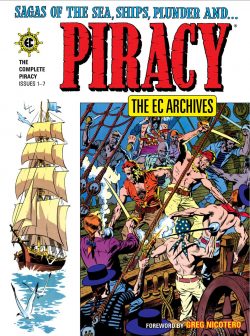
Piracy: The Complete Series 1-7 (The EC Archives Library)


By Irv Werstein, Carl Wessler, Jack Oleck, Reed Crandall, Wally Wood, Graham Ingels, George Evans, Jack Davis, Bernie Krigstein, Al Williamson, Angelo Torres & various (Dark Horse Books)
ISBN: 978-1-50670-700-6 (HB) eISBN 978-1-50670-967-3

Haa-Haaarr! It be International Talk Like a Pirate Day and we backseat buccaneers be cunning coves ‘oo prefers to sneak up on a fellow when they most expects it, especially since precious pearls like these graphical beauties never go stale… 

Legendary imprint EC Comics began in 1944 when comic book pioneer Max Gaines sold the superhero properties of his All-American Comics company to half-sister National/DC. The Inventor of Comic Books only retained Picture Stories from the Bible. His plan was to produce Educational Comics, with schools and church groups being his major target market. He latterly augmented his core title with Picture Stories from American History, Picture Stories from Science and Picture Stories from World History. Sadly, the worthy venture was already struggling when Gaines died in a boating accident in 1947.

His son William was dragged out of college and hurled into the family business where – with much support and encouragement from unsung hero Sol Cohen (who held Dad’s company together until the initially unwilling Bill abandoned his dreams of a career in chemistry) he transformed the ailing enterprise into Entertaining Comics…

After some tentative false starts and abortive experiments, Gaines and his multi-talented associate Al Feldstein settled into a bold, impressive publishing strategy, utilising the most gifted illustrators in the field to tell a “New Trend” of stories for an older and more discerning readership.

Between 1950 and 1954, EC was the most innovative, influential comics publisher in America, dominating the newly reinvigorated genres of crime, horror, war and science fiction. Moreover, under the auspices of writer, artist and editor Harvey Kurtzman, the company introduced an entirely new beast: the satirical comic book…

Kurtzman was hired to supplement the workforce on EC’s horror titles but wasn’t a fan of that genre, suggesting instead a new action-adventure title. The result was Two-Fisted Tales which began with #18 as an anthology of rip-snorting, stand-alone he-man dramas. With America deep into a military “police action” in Korea, the title quickly became a dedicated war comic, rapidly augmented by a second, Frontline Combat.

Also written and edited by Kurtzman, who assiduously laid-out and meticulously designed every story, it made for great entertainment and a unifying authorial voice but was frequently a cause of friction with his many artists. In keeping with the spirit of Gaines’ “New Trend”, these war stories were never bombastic, jingoistic fantasies for glory-hungry little boys, but rather subtly subversive examinations of the cost of conflict which highlighted the madness, futility and senseless, pointless waste of it all…

When the McCarthy-era anti-comics witch hunt of the 1950s crushed the industry and gutted EC’s output by effectively outlawing horror, crime, gore, political commentary and social criticism, Gaines & Feldstein retrenched: releasing experimental titles under the umbrella of a “New Direction”.

Kurtzman’s Mad – which had defined a whole new genre, bequeathing unto Americans Popular Satire – was reconfigured into a monochrome magazine, safely distancing the outrageously brilliant comedic publication from the fall-out caused by the socio-political witch-hunt which eventually killed EC’s other titles…

Denied a soapbox to address social ills, Gaines’ new books concentrated on intrigue, adventure and drama, informed by fresh modern fascinations: either intellectual or mass entertainment fads. Despite still featuring stunningly beautiful artwork and thoughtful writing, New Direction titles couldn’t find an audience and died within a year.

Impact, Extra!, Aces High and Valor all reflected themes of contemporary film and TV, whilst Psychoanalysis and M.D. targeted mature audiences through the growing TV phenomenon of medical drama. Incredible Science Fiction bridged the transition from old vogue to new line-up whilst also tapping movie trends. Another fad paying off big on screen had already been seen in previous Kurtzman’s adventure titles… sea-going sagas from different points in history…

Piracy set sail in the Fall of 1954 (#1 was cover dated October/November) and ran for seven bi-monthly issues before being scuttled at the end of 1955. This volume of Dark Horse’s EC Archives gathers them all, re-presenting some of the most gorgeous art of the era – or ever – but with scripts apparently curtailed by the newly-instituted Comics Code Authority and Gaines’ own sense of financial survival.

And yes, Watchmen fans, these are the stories Alan Moore & Dave Gibbons were referencing in that sub-strand of their dystopian masterpiece…

One last thing to remember: although it’s called Piracy, the series embraced all aspects of nautical fiction, from wars, whaling and the slave trade right up to contemporary commercial affairs: mixing flamboyant sea sagas with deeper, more complex and even socially crusading maritime topics intended to equate with literary highlights like CM Forester’s Hornblower yarns, Herman Melville’s classic text and even more modern fare by Jack London or Ernest Hemingway.

Before getting underway, the fraught history of the company is outlined in Grant Geissman’s informative Introduction, offering keen insights into those times and the gifted creators involved, after which Film Producer Greg Nicotero’s Foreword provides insight into Bill Gaines’ pioneering stand against censorship…

Sadly, despite diligent efforts by researchers and historians, many of these tales still have no writing credit, but that barely affects  their power to enthral as we open with a stunning Wally Wood cover. Piracy #1 opens with editorial welcome ‘Scuttlebutt’ before Reed Crandall and an author unknown detail the rise and fall of ‘The Privateer’ with patriotic Englishman Captain Ballard James gradually succumbing to temptation. Originally and exclusively targeting Spanish vessels, his battles eventually turn to personal profit not his country’s survival before he suffers a grisly, ironic comeuppance…

This collection also includes rousing house ads by EC’s finest and a particularly stirring one from Wood precedes his tale ‘The Mutineers’, with murderous marine martinet Cap’n Mathew Bollard finally driving his long-suffering crew into desperate retaliation and desertion during the last voyage of the clipper Lorna J in 1854…

Al Williamson & Angelo Torres formed a sublime artistic partnership at EC and their captivating versality is displayed in ‘Harpooned’. Also set in 1854 (for which thank the ever-beguiling concept of “only 100 years ago…”), it details how whaling bark Eben Dodge was lost due to the growing tensions between the envious first mate and a dedicated captain who assumed his only foe was the giant sea beasts they hunted together…

Prose parable ‘The Challenge’ (regarding a sea captain with an obsessive grudge against storms) and a Jack Davis-limned ad lead to the master cartoonist’s first full contribution, as ‘Shanghaied’ shares a long-anticipated reunion between a lifelong mariner and the criminal procurer who drugged and sold him into sea service a dozen years previously…

Cover-dated December 1954/January 1955, Piracy #2 opens with a Crandall cover and lead story ‘Sea Food’, wherein pirate Benjamin Medford’s ruthless predations are ended by cruel misfortune, British Naval firepower and brutal, bestial karma. Davis then returns to explore the eastern concept of ‘Kismet’ after a slave-ship’s first mate betrays his skipper and learns a lasting lesson about duty and honour…

‘Loblolly Boy’ is an historical text feature concerning tricks played on first-timers and junior seamen, after which Williamson & Torres render a modern tale of penny-pinching, deep sea treasure hunters in ‘The Shell Game’, backed up by prose piece ‘The Dive’ about a trainee’s last dry run…

The issue closes with Wood’s ‘A Fitting End’, scripted by Carl Wessler and detailing how Edmund Drummond, Master of His Majesty’s Ship Sea Gull, allows his own innate cruelty and sense of superiority to provoke shipboard unrest even as his subordinate Jack Roark discovers an unsuspected piratical family connection…

Crandall retains the cover and lead position for #3 with a compelling tale of the buccaneer who sought higher status and position than mighty ‘Blackbeard’, before ‘Scuttlebutt’ returns in the form of a letters page.

Wessler & Bernie Krigstein (one of comics’ most innovative illustrators and a commercial and gallery artist) then unite for a psychological war drama in the style of Frontline Combat as ‘U-Boat’ reveals the lethal outcome of a battle of wills between a German submarine commander and his fanatical Nazi political officer. Text tale ‘The Beast’ exposes romantic rivalry between tuna fishermen, preceding George Evans’ debut in ‘Mouse Trap’ as a 19th century sailor plucked from the seas expiates his guilt and shares his role in the ghastly fate of lost ship The Sea Spray…

Wessler & Graham Ingels then close the issue with the saga of an abolitionist white man shanghaied to serve aboard a ‘Slave Ship’ and the pact he made with its “human cargo”…

Behind Piracy #4’s Crandall cover and more ‘Scuttlebutt’ letters, that dean of realism rendered the brutal tale of Cap’n Satan – Terror of the Spanish Main. This savage, satirical yarn of the ‘Pirate Master’ details his humble origins, appalling deeds and ultimate downfall …matrimony!

‘The King’s Buccaneer’ recounts in prose the career of privateer Sir Henry Morgan, after which Wessler & Evans use the war of 1812 to frame the salutary saga of a stubborn young American midshipman who wants everything done ‘By the Book’, no matter how impractical… or suicidal…

A brace of house-ads for the entire New Direction Line segues into Ingels illustrated mystery ‘The Sheba’ with a young sea captain taking to the bitter end his vendetta against a sailing ship he believes wants to kill him. Krigstein then realises revolutionary France for us as aristocratic rival siblings in the King’s navy ruthlessly vie for prominence and position until the events of 1789 engulf them both with lethal results in ‘Inheritance’…

Krigstein’s cover for #5 (June/July 1955) precedes Crandall’s gorgeous re-examination of US patriotic icon ‘Jean Lafitte’, before another missives-packed ‘Scuttlebutt’ leads to Wessler & Ingels’ ‘Rag Doll’, wherein a sullen brute on an 1810 four-master repels a pirate raid almost singlehandedly, simply to reclaim the childhood totem hiding his darkest secret and greatest shame…

Jack Oleck scripts Krigstein on ‘Salvage’ as ruthless seaborne profiteers learn a nasty lesson about humanity, after which snippets of sea-based new stories are recycled in prose piece ‘Breakers on the Shore’, prior to Evans closing the issue with ‘The Keg’: a sinister yet uplifting saga of survival…

Krigstein’s stunning cover for penultimate issue #6 segues into Crandall’s chilling 17th century-set saga of plunder, murder and brain-shattering guilt as a drunken derelict details how he is cursed by treasures ‘Fit for a King’. Scuttlebutt letters lead to Wessler & Evans’ account of a junior officer deranged by denial of promotion and what he does to become ‘The Skipper’ before Ingels limns the story of a merciless seal trapper who destroys an arctic village’s food supply and is driven ‘Fur Crazy’…

Sir Francis Drake’s prose biography ‘Sailor for Queen Bess’ precedes Davis’ tale of South Pacific schooner master Jonathan Wade whose favourite disciplinary tactic is casting men adrift in an open boat. His inevitable breakdown leads to justice when he too is lost in ‘Solitary’…

Evans drafted the iconic last cover and Crandall told his final tale here as warring corsair captains Kemp and Valdez became ‘Partners’ in piracy just long enough to get really, truly rich… before inevitably betraying each other.

Text tale ‘Prologue’ follows a trainee submariner’s last test exercise before Wessler & Krigstein visit 1777’s New England, where a British fleet determined to take Saratoga is lured to destruction ‘Up the River’ by a terrain-savvy farmer.

Incessantly harassed by his literal fishwife spouse, a weary, poverty-stricken fishing boat skipper does a selfless good deed and is blessed with ‘John’s Reward’ in a wry, domestic drama drawn by Ingels, after which more postal praise in ‘Scuttlebutt’ leads to one final foray from Evans as ‘Temptation’ finds venerable Captain Dover and his young chief officer aboard a Charleston packet boat. Of course, a once-in-lifetime cargo of $2 million in gold and jewels would turn most heads and suspicion quickly leads to a bad life choice…

Every page here has been restored from the masterful colour guides of original colourist Marie Severin, resulting – with modern reproduction techniques – in a sequence of graphic poems of unsurpassed beauty, whilst original house ads and commercial pages from the period tantalise in a way no others could, completing a nostalgic experience unlike any other.

The New Direction was a last hurrah for the kind of literate, mature comics Gaines wanted to publish. When they failed, he concentrated on Mad magazine and satire’s gain was American comics’ loss. Now you can vicariously relive those times and trends, and I strongly suggest that whether you are an aged EC Fan-Addict or nervous newbie, this is a book no aficionado can afford to miss. Why not dig deep and secure these timeless treasures, Me Hearties?
THE EC ARCHIVES: PIRACY® & © 1954, 1955, 2019 William M. Gaines Agent, Inc. All rights reserved. Introduction © 2019 Grant Geissman.