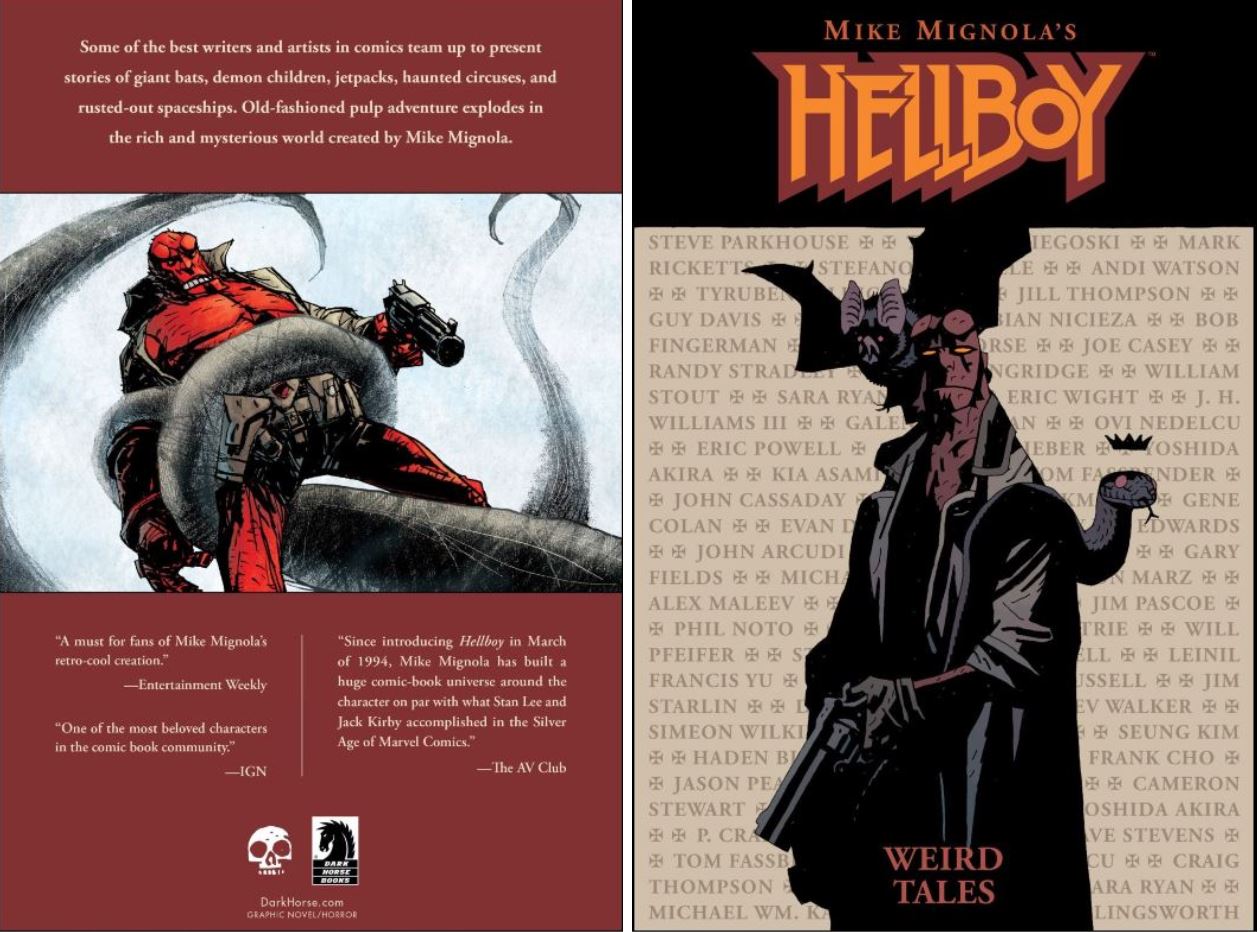
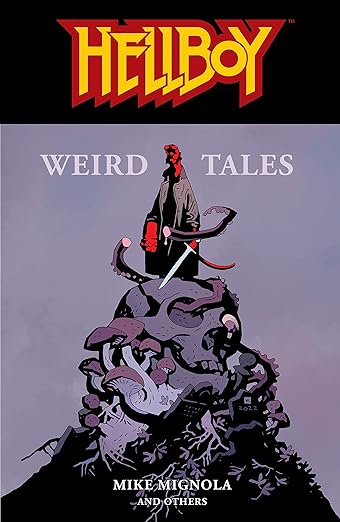
Hellboy: Weird Tales


By Mike Mignola, Fabian Nicieza, John Cassaday, Eric Powell, Tom Sniegoski, Tommy Lee Edwards, Randy Stradley, Joe Casey, Sara Ryan, Ron Marz, J. H. Williams III, Jim Pascoe & Tom Fassbender, Will Pfeifer, John Arcudi, Matt Hollingsworth, Jill Thompson, Alex Maleev, Jason Pearson, Scott Morse, Akira Yoshida & Kia Asamiya, Doug Petrie, Bob Fingerman, Evan Dorkin, Andi Watson, Mark Ricketts, Kev Walker, Craig Thompson, Guy Davis, Stefano Raffaele, Ovi Nedelcu, Seung Kim, Steve Parkhouse, Steve Lieber, Jim Starlin, P. Craig Russell, Simeon Wilkins, Gene Colan, Roger Langridge, Eric Wright, Dave Stewart, Clem Robins & various (Dark Horse Books)
ISBN: 978-1-61655-510-8 (HB) eISBN: 978-1-63008-121-8 (digital) 978-1506733845 (2022 Omnibus TPB)

This book includes Discriminatory Content produced in less enlightened times. It also has Discriminatory Content included for comedic and satirical effect.

After the establishment of the comic book direct market system, there was a huge outburst of independent publishers in America and, as with all booms, a lot of them went bust. Some few, however, were more than flash-in-the-pans and grew to become major players in the new world order.

Arguably, the most successful was Dark Horse Comics who fully embraced the shocking new concept of creator ownership (amongst other radical ideas). This concept – and professional outlook and attitude – drew many big-name creators to the new company and in 1994 Frank Miller & John Byrne formally instituted sub-imprint Legend for those projects major creators wanted to produce their own way and at their own pace. Over the next four years the brand counted Mike Mignola, Art Adams, Mike Allred, Paul Chadwick, Dave Gibbons and Geof Darrow amongst its ranks; generating superbly entertaining and groundbreaking series and concepts. Unquestionably the most impressive, popular and long-lived was Mignola’s supernatural thriller Hellboy.

The hulking monster-hunter debuted in San Diego Comic-Con Comics #2 (August 1993) before formally launching in 4-issue miniseries Seed of Destruction (with Byrne scripting Mignola’s plot & art). Colourist Mark Chiarello added layers of mood with his understated hues. Once the fans saw what was on offer there was no going back…

What You Need to Know: on December 23rd 1944 American Patriotic Superhero Torch of Liberty and a squad of US Rangers intercepted and – almost – foiled a satanic ceremony predicted by Allied parapsychologist Professors Trevor Bruttenholm and Malcolm Frost. They were working in conjunction with influential medium Lady Cynthia Eden-Jones. Those stalwarts were waiting at a ruined church in East Bromwich, England when a demon baby with a huge stone right hand appeared in a fireball. The startled soldiers took the infernal yet seemingly innocent waif into custody.

Far, far further north, off the Scottish Coast on Tarmagant Island, a cabal of Nazi Sorcerers roundly berated ancient wizard Grigori Rasputin whose Project Ragna Rok ritual seemed to have failed. The Russian was unfazed. Events were unfolding as he wished…

Five decades later, the baby had grown into a mighty warrior engaging in a never-ending secret war: the world’s most successful paranormal investigator. Bruttenholm spent years lovingly raising the weird foundling whilst forming an organisation to destroy unnatural threats and supernatural monsters – The Bureau for Paranormal Research and Defense. “Hellboy” quickly became its lead agent.

As the decades of his career unfolded, Hellboy gleaned tantalising snatches of his origins, hints that he was an infernal creature of dark portent: born a demonic messiah, somehow destined to destroy the world and bring back ancient powers of evil. It is a fate he despises and utterly rejects, even though the universe keeps inexorably and relentlessly moving him towards it.

Hellboy earned the status of ‘actual legend’ in the comics world, starting as the particular vision of a single creator and, by judicious selection of assistants and deputies, cementing a solid take on the character in the hearts of the public. That’s just how it worked for Superman, Batman and Spider-Man (except for the whole “owning the fruits of your own labours” thing) and a big part of the same phenomenon was the eagerness of fellow creators to play in the same universe. Just how that and this collection came about is detailed in Editor Scott Allie’s Introduction preceding a blazing welter of strange and bizarre entertainment…

Originally an 8-part comics series wherein a star-studded cast of creators tell their own stories in their own varied styles under the watchful supervision of the big cheese himself in his unique infernal playground, Hellboy’s Weird Tales was gathered into a 2-volume set in 2004. This luxurious hardback and digital reissue originated in 2014, supplementing the original miniseries with back-up stories from Hellboy: The Wild Hunt #2-4.

Dramas that add to the canon nestle alongside bizarre and humorous vignettes that simply live for the moment and begin with ‘How Koschei Became Deathless’ crafted by Mignola, Guy Davis, Dave Stewart & Clem Robins. The filler from Hellboy: The Wild Hunt #2 & 3 details the valiant trials of a noble warrior and the bad bargain he made, after which a crafty man turns the tables on the world’s wickedest witch in ‘Baba Yaga’s Feast’ (H:TWH #4).

The mother of monsters returns in Fabian Nicieza & Stefano Raffaele’s ‘The Children of the Black Mound’ wherein a future soviet dictator has his own youthful, life-altering encounter with the queen of magic.

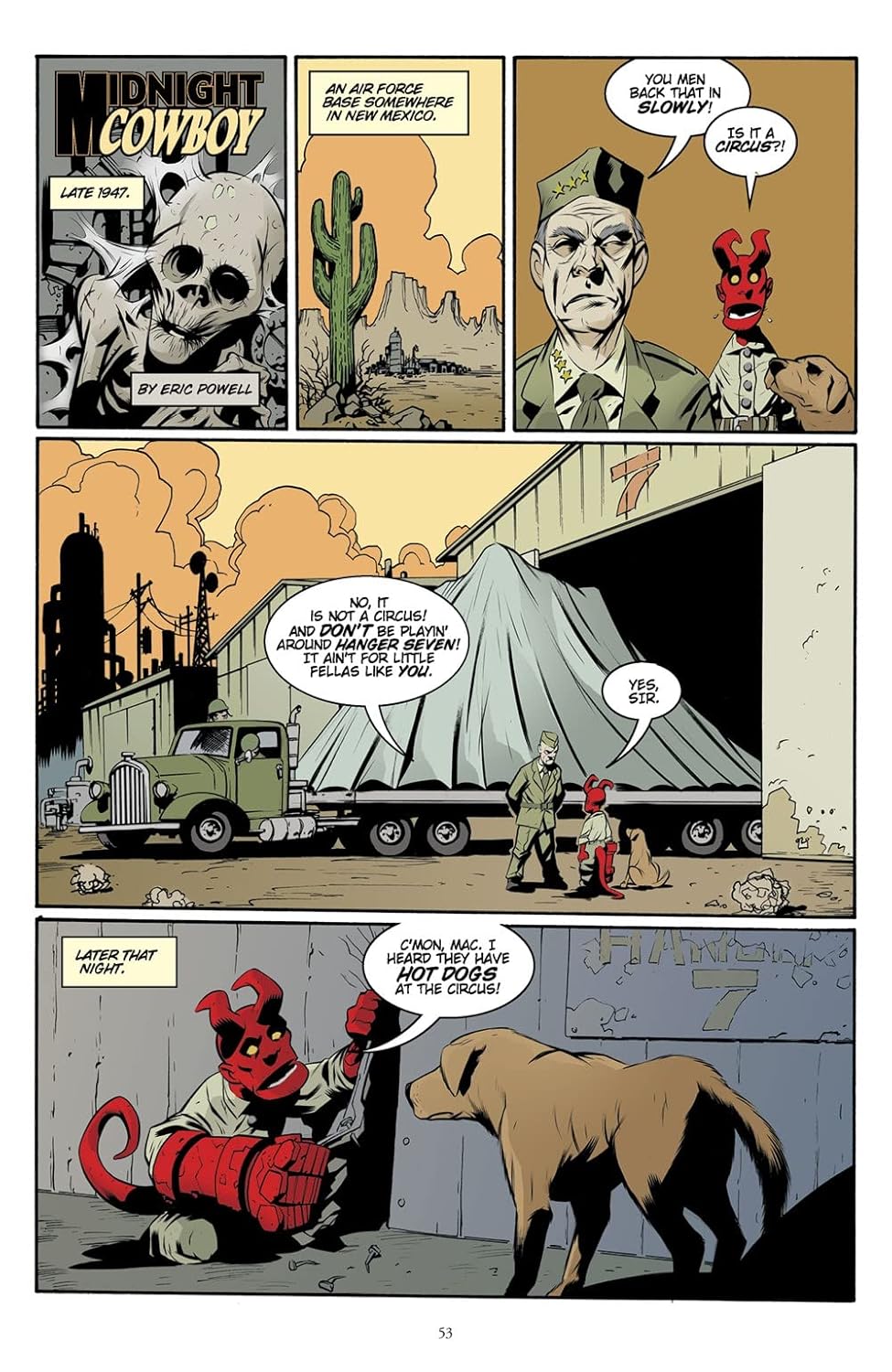
John Cassaday spoofs classic newspaper strips with rollicking pulp science hero in ‘Lobster Johnson: Action Detective Adventure’ after which Nazi-bashing nonsense, Eric Powell explores Hellboy’s childhood and early monster-mashing in ‘Midnight Cowboy’ whilst Tom Sniegoski & Ovi Nedelcu raise our spirits with an older ghostbuster failing to tackle a playful posse of spooks in ‘Haunted’

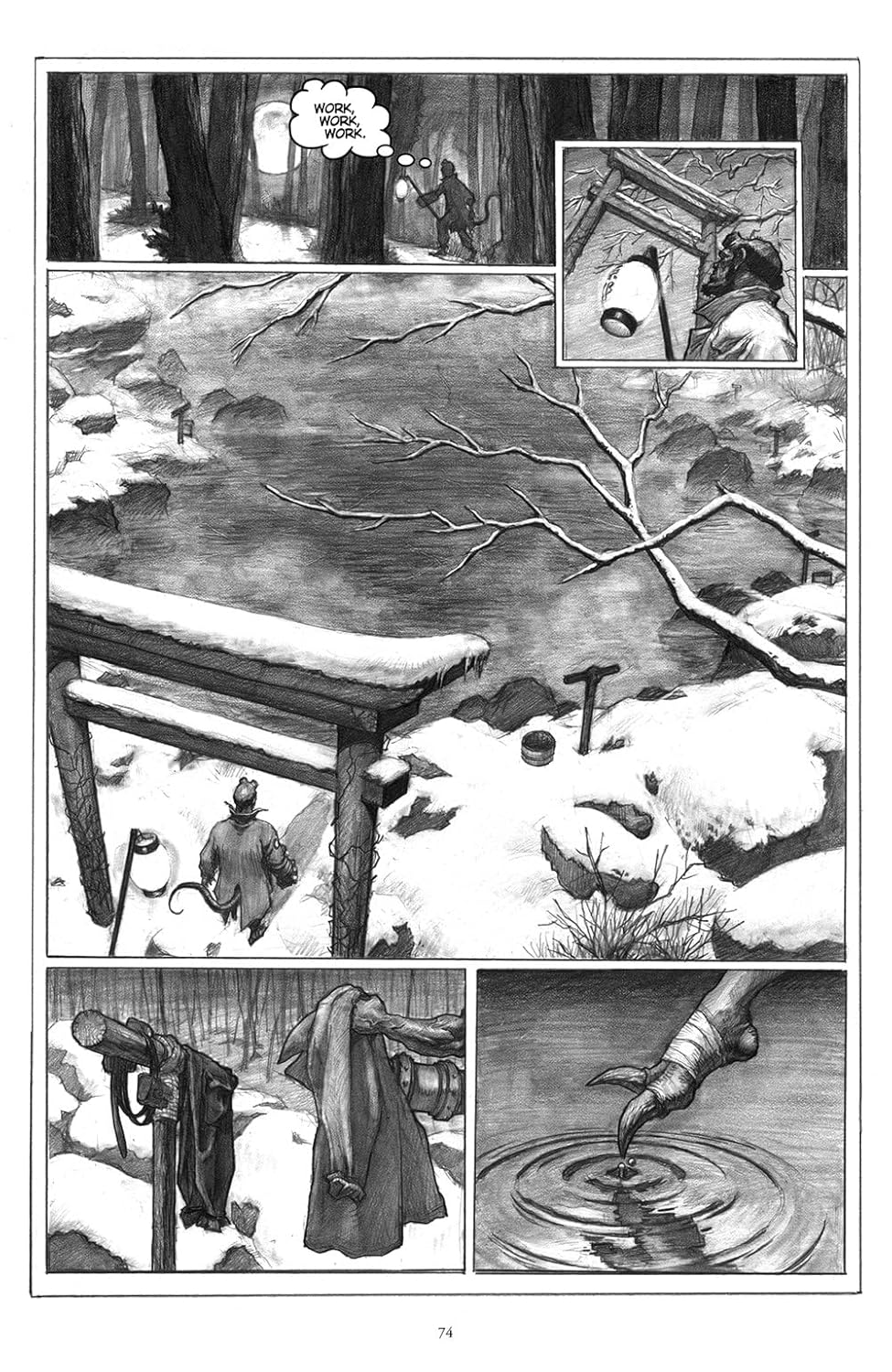
A classical doomed East/West war romance ghost tragedy is settled by Tommy Lee Edwards & Don Cameron in ‘A Love Story’, setting a scene for more Japanese myth busting in Randy Stradley & Seung Kim’s ‘Hot’ wherein the B.P.R.D. star clashes with an unhappy Tengu (water spirit) inhabiting a mountain hot spring…

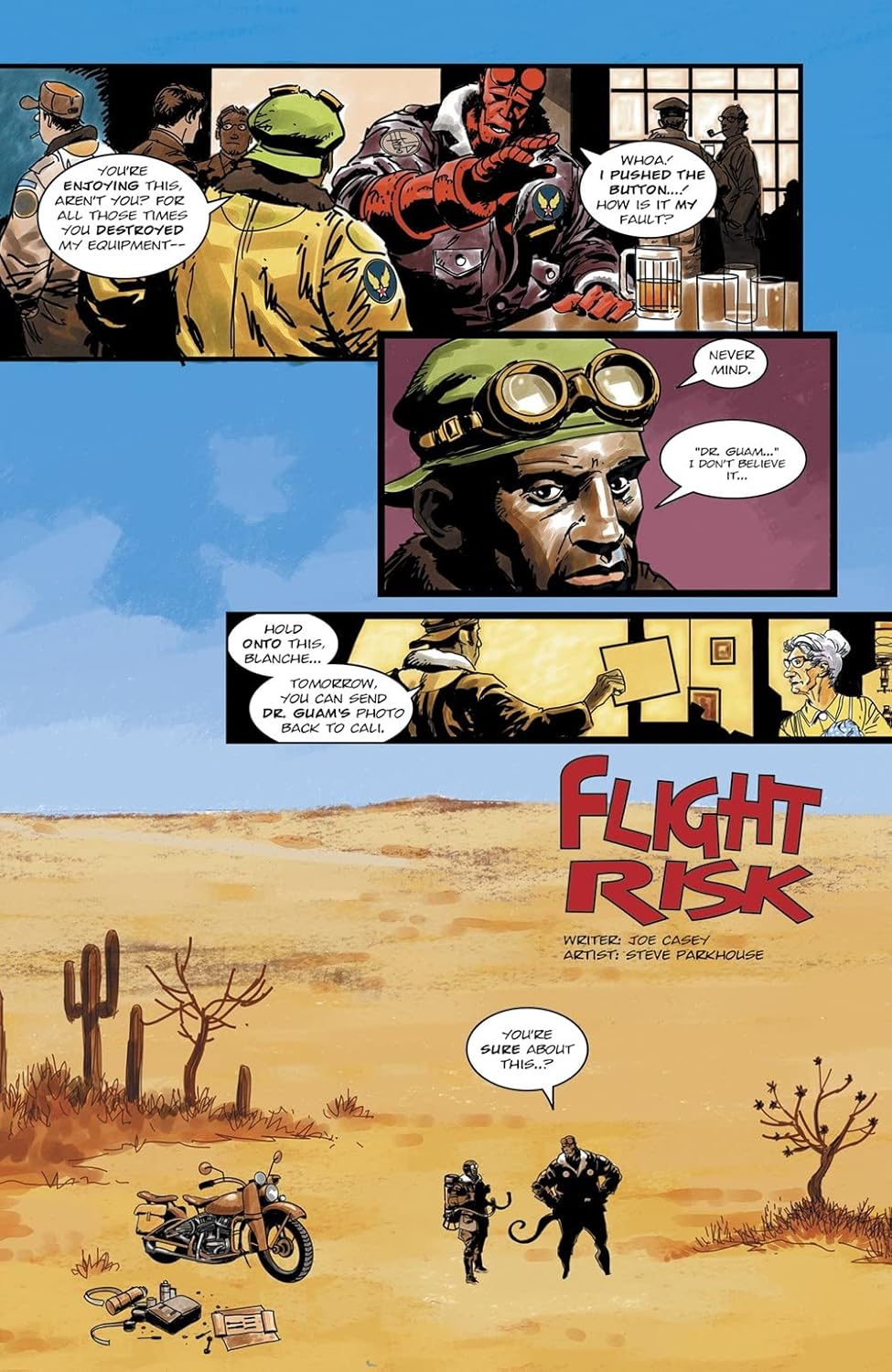
Joe Casey & Steve Parkhouse celebrate the glory days of test pilots and the right stuff in ‘Flight Risk’ when Hellboy is involved in a competition to see who’s got the best jetpack, after which ‘Family Story’ (Sara Ryan & Steve Lieber) sees him acting as counsellor to the mum and dad of a rather diabolical kid, before we slip into all-out arcane action to retrieve a time bending artefact from a Guatemalan temple in ‘Shattered’ by Ron Marz & Jim Starlin.

A stakeout with an over-amorous fellow agent leads to unanticipated consequences in J. H. Williams III’s ‘Love is Scarier than Death’, whilst Will Pfeifer & P. Craig Russell’s dalliance with an undying theatre troupe traps our hellish hero in a ‘Command Performance’ and the entertainment motif continues in John Cassaday’s ‘Big-Top-Hell-Boy’ as the B.P.R.D. try to exorcise a mass-murderous circus in Germany before Hellboy and aquatic investigator Abe Sapien battle zombies in the ‘Theatre of the Dead’ courtesy of scripters Jim Pascoe & Tom Fassbender, as illustrated by Simeon Wilkins.

Thanks to John Arcudi & Roger Langridge, the undersea avenger sort of stars in comedic daydream ‘Abe Sapien: Star of the B.P.R.D.’, after which Jill Thompson takes ‘Fifteen Minutes’ to offer us the other side’s view of the eternal struggle, whilst Matt Hollingsworth & Alex Maleev show us the struggle against evil starts before we’re even legally alive in ‘Still Born’. Indomitable psychic Firestarter Liz Sherman acknowledges personal loss and the dreadful cost of the job in Jason Pearson’s ‘The Dread Within’ before Scott Morse conjures up a calmer moment for Hellboy in ‘Cool Your Head’ and Akira Yoshida & Kia Asamiya return us to ghost-riddled Japan for an unconventional duel with childish spirits in ‘Toy Soldier’

Bob Fingerman’s ‘Downtime’ pits the cream of the B.P.R.D. against the vexatious thing inhabiting the office vending machine, after which Doug Petrie & Gene Colan follow Liz and Abe on a typical ‘Friday’, even as artificial hero Roger the Homunculus foolishly seeks ‘Professional Help’ during a devious demonic assault (as recorded by Evan Dorkin). Andi Watson tackles Hellboy’s infernal heritage and possible future during a social function where he is – as always – the ‘Party Pooper’, after which team leader/psychologist Kate Corrigan endures an acrimonious reunion with her dead-but-still-dreadful mother in ‘Curse of the Haunted Dolly’ (Mark Ricketts & Eric Wright), whilst Kev Walker pits bodiless spirit Johann Krauss against a thing from outer space in ‘Long Distance Caller’.

The narrative portion of this stellar fear & fun fest rightly focuses on Hellboy himself as Craig Thompson takes the weird warrior on an extended tour of the underworld in ‘My Vacation in Hell’ and there’s still a wealth of wonder to enjoy with Mike Mignola’s Hellboy Weird Tales Gallery offering a selection of potent images by Cameron Stewart, Maleev, Dave Stevens with Dave Stewart, Steve Purcell, William Stout, Leinil Francis Yu, Phil Noto, Gary Fields with Michelle Madsen, J. H. Williams III, Rick Cortes with Anjin, Galen Showman with Michelle Madsen, Ben Templesmith, Frank Cho with Dave Stewart, Michael Wm. Kaluta, Lee Bermejo with Dave Stewart and Scott Morse.

Baroque, grandiose, scary, hilarious and even deeply moving, these vignettes alternate suspenseful slow-boil tension with explosive catharsis, and trenchant absurdity, proving Hellboy to be a fully rounded character who can mix apocalyptic revelation with astounding adventure to enthral horror addicts and action junkies alike or enthral jaded fun-lovers in search of a momentary chuckle. This is a classic compendium of dark delights you simply must have.

™ & © 2003, 2009, 2014 Mike Mignola. Weird Tales is ® Weird Tales, Ltd.

Today in 1932 Francis Burr Opper’s landmark strip And Her Name Was Maud ended. If only someone would release a definitive archive I certainly review it!

Also today, the amazing and astounding Otto Binder died in 1974. He wrote everything from Superman to Captain Marvel to Mighty Samson so go seek him out too for a grand old time…

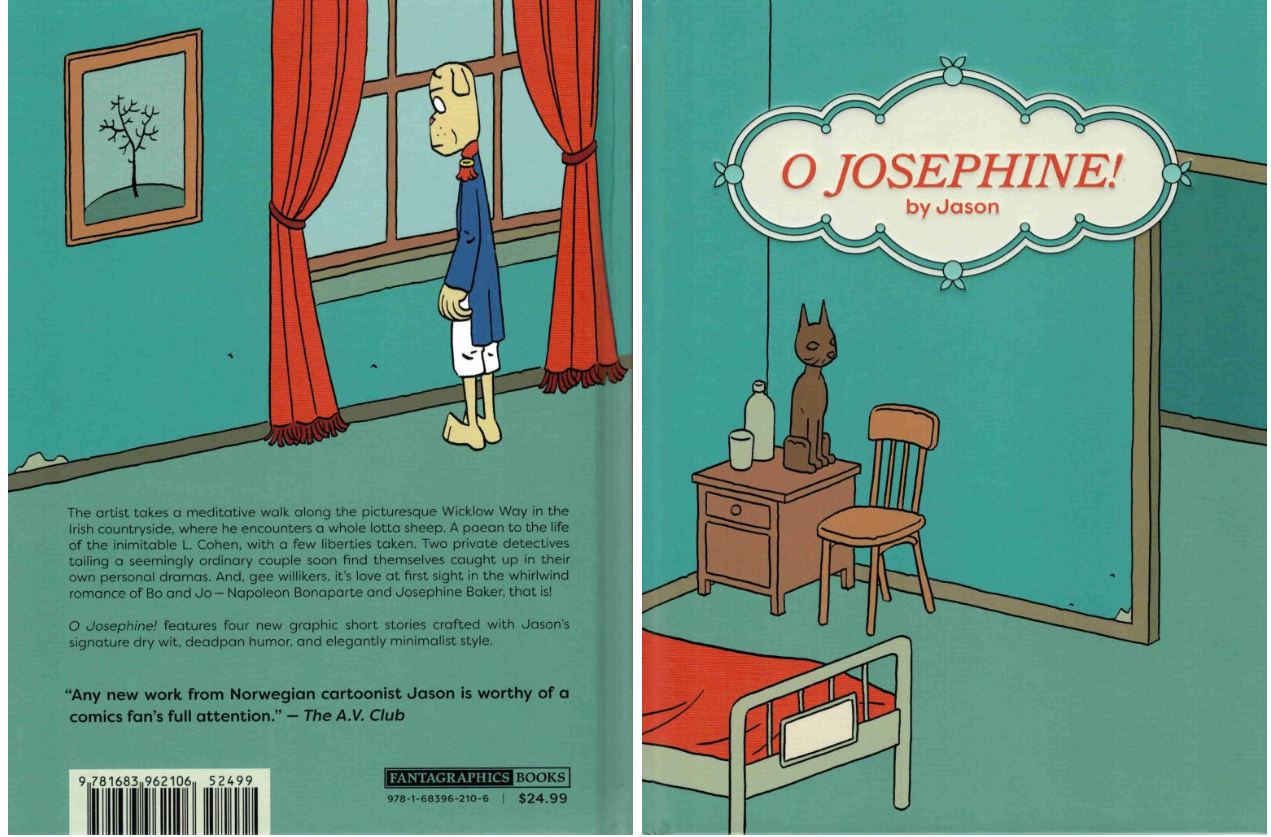
O Josephine!


By Jason (Fantagraphics Books)
ISBN: 978-1-68396-210-6 (HB/digital edition)

This book includes Discriminatory Content included for dramatic, comedic and ironic effect.

Born in 1965 in Molde, Norway, John Arne Sæterøy is known globally by his enigmatic, utilitarian nom de plume Jason. The shy & retiring auteur started on the path to international cartoon superstardom in 1995, once first graphic novel Lomma full ay regn (Pocket Full of Rain) won Norway’s biggest comics prize: the Sproing Award.

From 1987 he had contributed to alternate/indie magazine KonK while studying graphic design and illustration at Oslo’s Art Academy. From there he went on to Norway’s National School of Arts and, after graduating in 1994, founded his own comic book Mjau Mjau. Constantly refining his style into a potent form of meaning-mined anthropomorphic minimalism, Jason cites Lewis Trondheim, Jim Woodring & Tex Avery as primary influences. Moving to Copenhagen Jason worked at Studio Gimle alongside Ole Comoll Christensen (Excreta, Mar Mysteriet Surn/Mayday Mysteries, Den Anden Praesident, Det Tredje Ojet) & Peter Snejbjerg (Den skjulte protocol/The Hidden Protocol, World War X, Tarzan, Books of Magic, Starman, Batman: Detective 27).

His efforts were internationally noticed, making waves in France, The Netherlands, Slovenia, Spain, Germany and other Scandinavian countries as well as the Americas. He won another Sproing in 2001 – for self-published series Mjau Mjau – and in 2002 turned nigh-exclusively to producing graphic novels. He won even more major awards.

Jason’s breadth of interest is wide and deep: comics, movies, animated cartoons, music, literature and pulp fiction all feature equally with no sense of rank or hierarchy. This puckish and egalitarian mixing and matching of inspirational sources always and inevitably produces picture-treatises well worth a reader’s time. Over a succession of tales Jason built and constantly re-employed a repertory company of stock characters to explore deceptively simplistic milieux based on classic archetypes distilled from movies, childhood entertainments, historical and literary favourites. These all role-play in deliciously absurd and surreal sagas centred on his preferred themes of relationships and loneliness. Latterly, Jason returned to such “found” players as he built his own highly esoteric universe, and even has a whole bizarre bunch of them “team-up” or clash…

As always, visual/verbal bon mots unfold in beguiling, sparse-dialogued, or even as here silently pantomimic progressions, with compellingly formal page layouts rendered in a pared back stripped-down interpretation of Hergé’s Claire Ligne style: solid blacks, and thick outlines dominating settings of seductive monochrome simplicity augmented by a beguiling palette of stark pastels and muted primary colours.

The majority of his tales brim with bleak isolation, swamped by a signature surreality: largely populated with cinematically-inspired, darkly comic, charmingly macabre animal people ruminating on those inescapable concerns whilst re-enacting bizarrely cast, bestial movie tributes.

A master of short-form illustrated tales, many Jason yarns were released as snappy little albums perfect for later inclusion in longer anthology collections like this one which gathers a quartet of his very best.

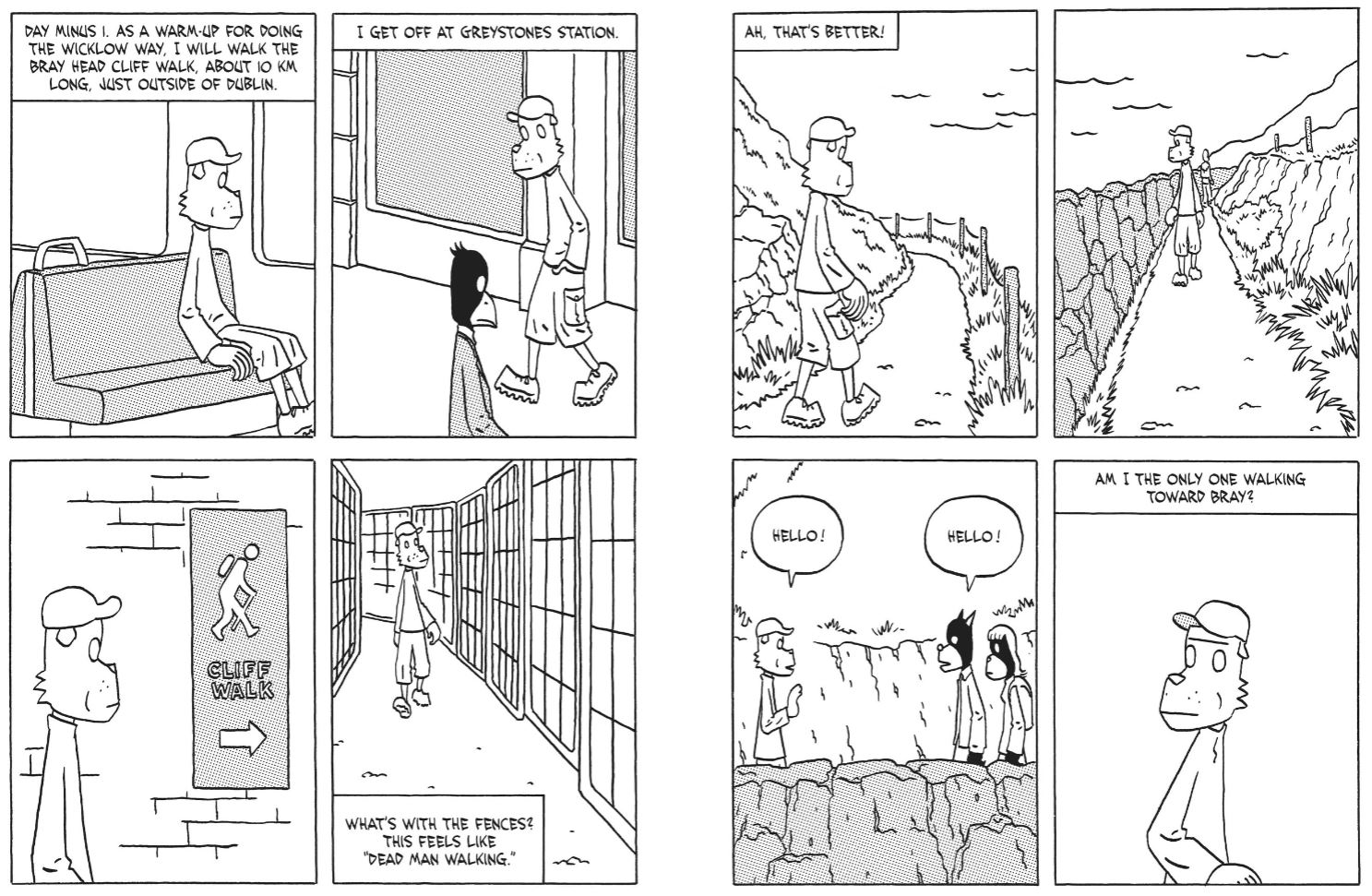
Here the stream of subtle wonderment opens with a suitably understated autobiographical jaunt to the land of Erin and an uneventful but truly mind-blowing progression along ‘The Wicklow Way’. The vacation hikes might be scenic and uneventful, but you’re never alone as long as you’re stuck inside your own head…

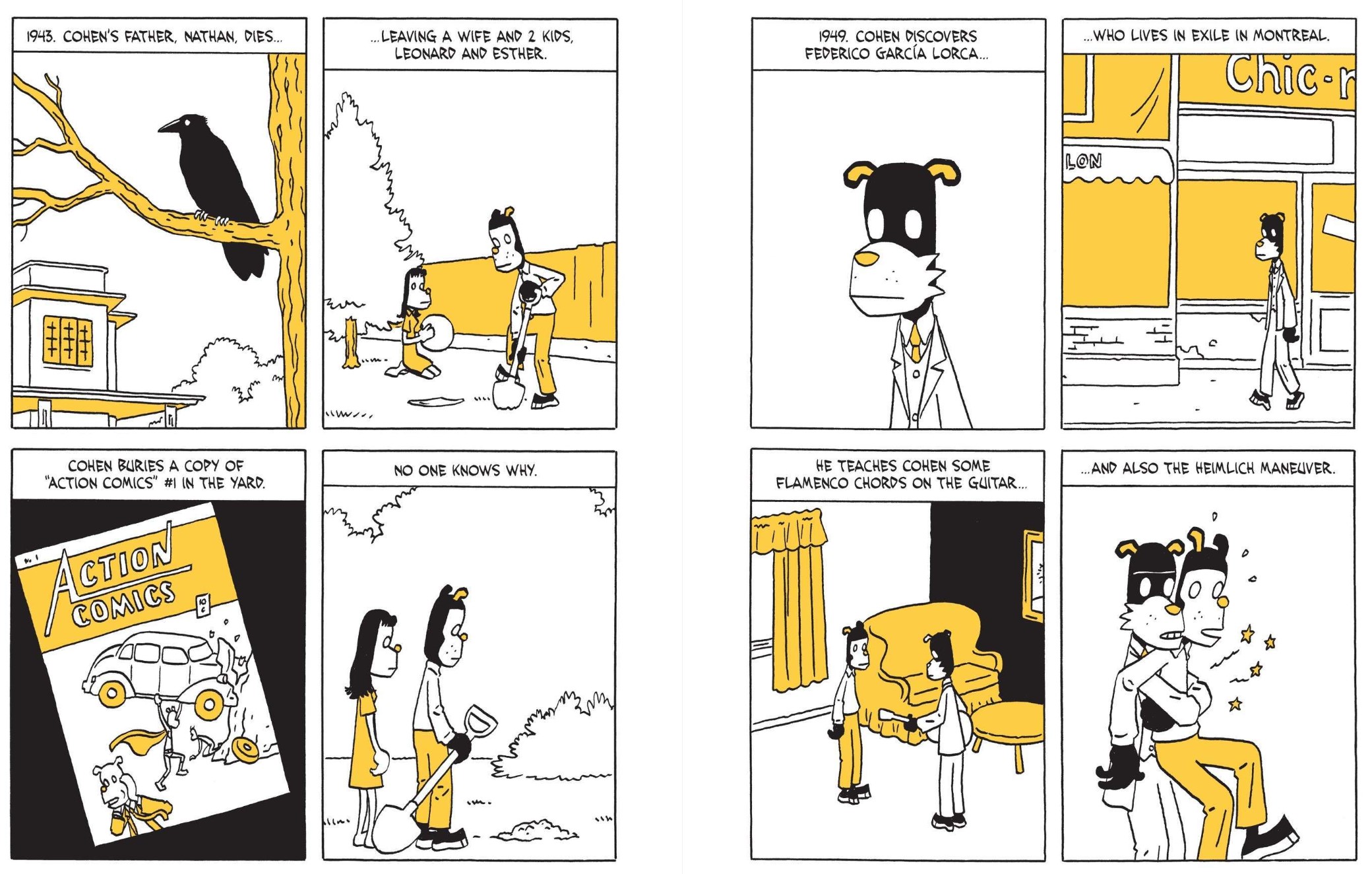
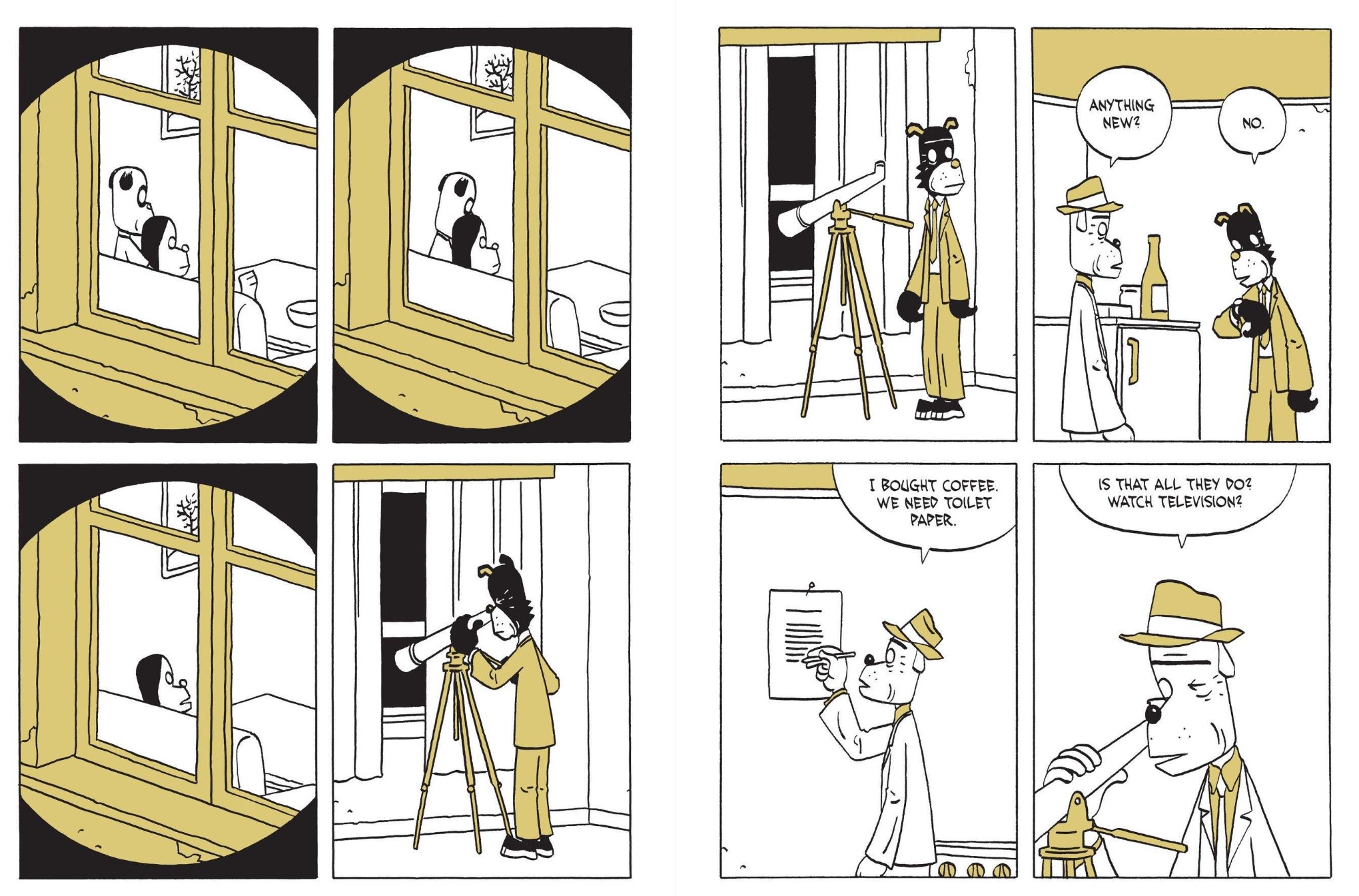
With the addition of a jaundiced inky outlook (and employing “yellow journalism” of the most literal kind) ‘L. Cohen: A Life’ then outlines the experiences and times of the poet, musician and philosopher, with a strong emphasis on whimsical inaccuracy and factual one-upmanship, whilst cinematic classicism underpins ‘The Diamonds’ wherein a pair of softened and barely-boiled detectives lose all objectivity after their scrupulous surveillance of a simple family affects their own hidden lives…

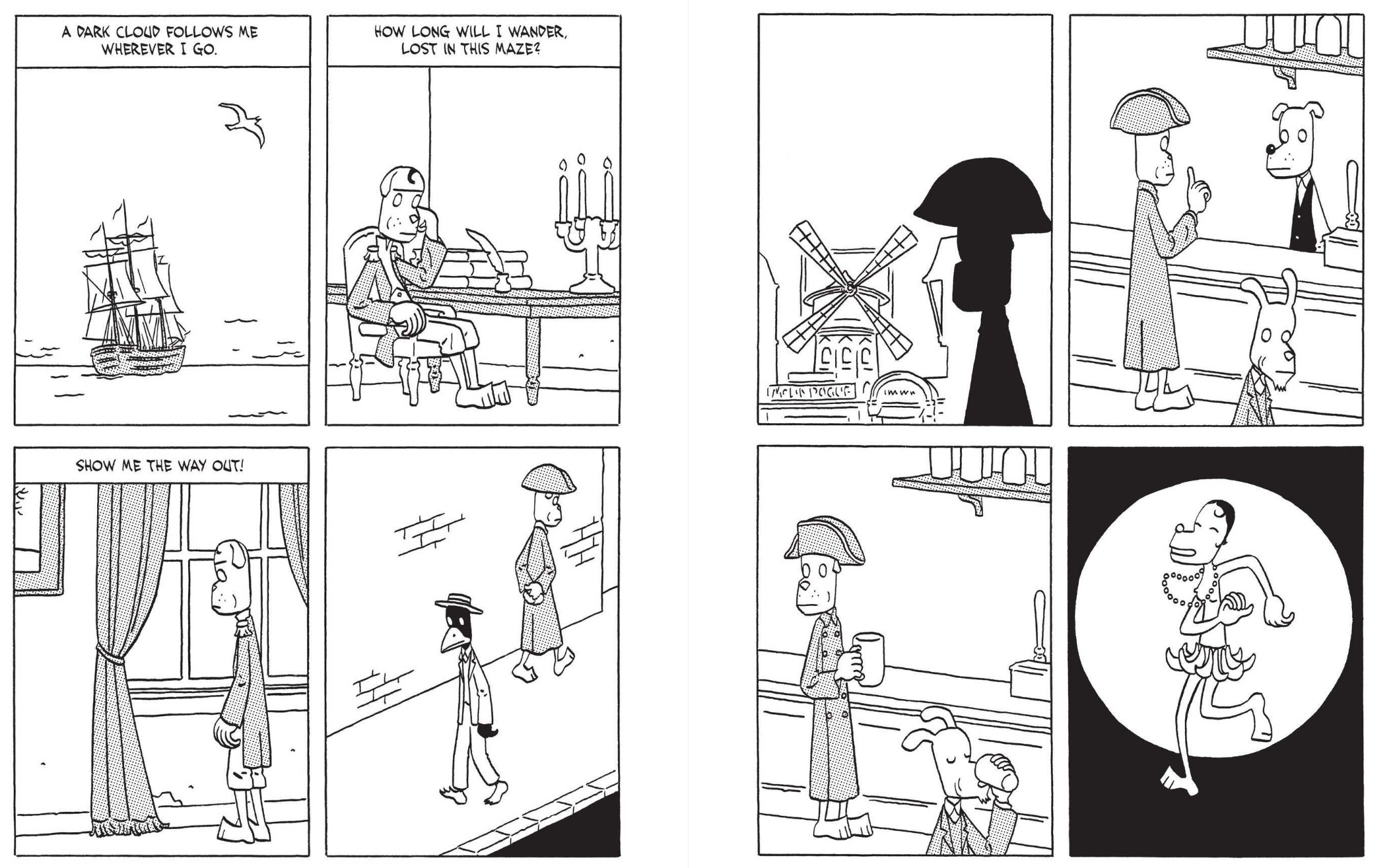
The low-key dramatics slip back into monochrome and into the twilight zone after weary world traveller Napoleon Bonaparte returns to Paris and falls head over shiny heels for infamous exotic dancer Josephine Baker. As with all doomed romances, the path to happiness is rocky, dangerous, and potentially insurmountable, but… c’est l’amour!

These comic tales are strictly for adults but allow us all to look at the world through wide-open childish eyes, exploring love, loss, life, death, boredom and all aspects of relationship politics without ever descending into mawkishness or simple, easy buffoonery. His buffoonery is always slick and deftly designed for maximum effect.

Jason remains a taste instantly acquired: a creator any true fan of the medium should move to the top of their “Must-Have” list.
All characters, stories, and artwork © 2019 Jason. This edition © Fantagraphics Books, Inc. All rights reserved.

Today in 1913 comics legend Joe Simon was born. I’m sure you’ve read all those great books he & Jack Kirby co-created, but if you haven’t, why not try The Sandman by Joe Simon and Jack Kirby?

In 1957 French comics genius Edmond-François Calvo died. You can not until you read his masterwork La Bête Est Mort which we reviewed as The Beast is Dead: World War II Among the Animals and will probably do again real soon.

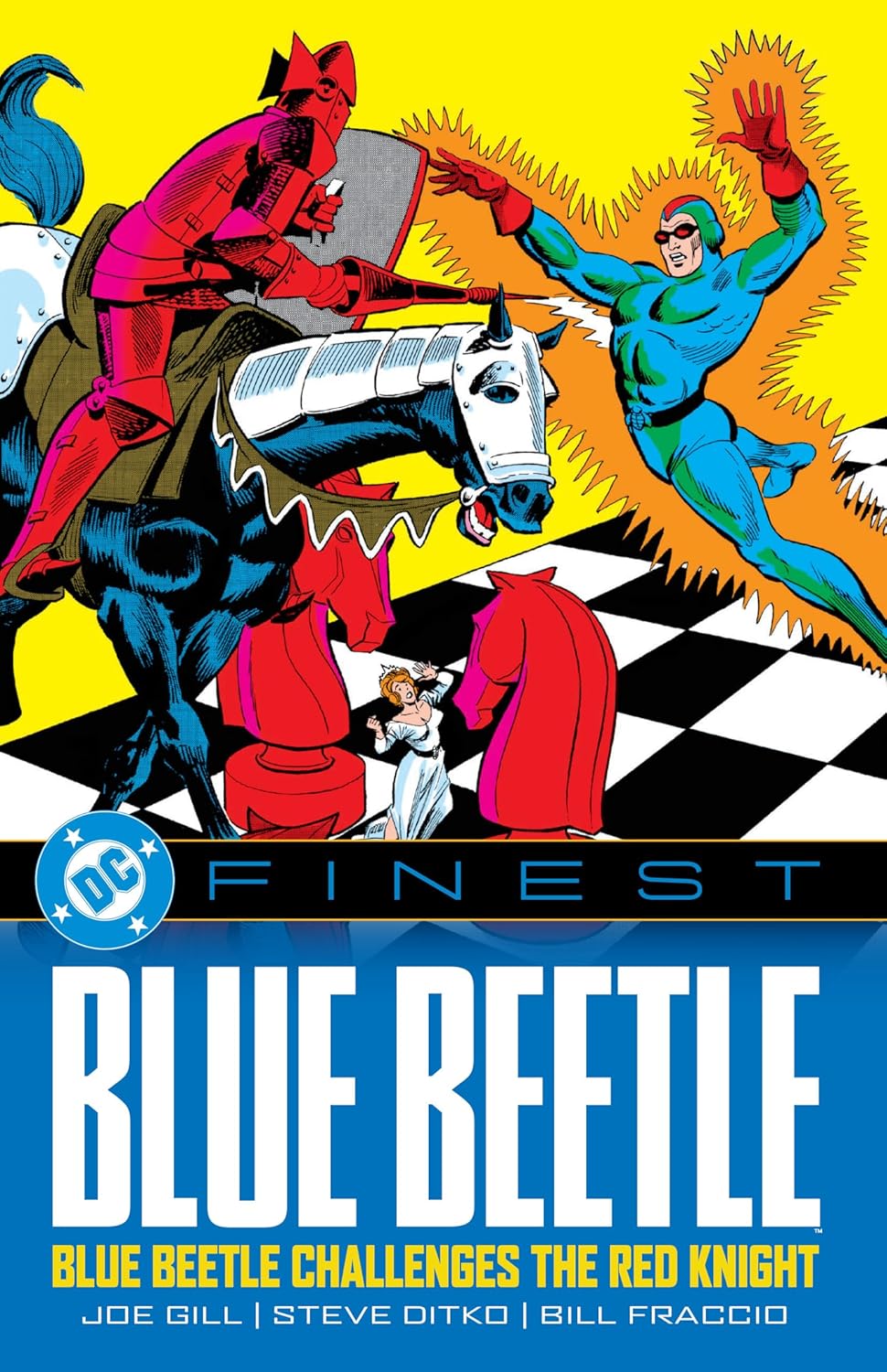
DC Finest Blue Beetle – Blue Beetle Challenges The Red Knight


By Joe Gill, Roy Thomas, Gary Friedrich, Benjamin Smith, Bill Fraccio, Tony Tallarico, Dick Giordano, Steve Ditko, Dan Reed & Bob McLeod, Albert Val, Bill Black & various (DC Comics)
ISBN: 978-1-79950-248-7 (TPB)

This book includes Discriminatory Content produced in less enlightened times

This absorbing yet inarguably eccentric DC Finest compilation offers some of the rarest material ever aquired by the company and probably owes its existence solely to the screen success of the ever-changing titular star. I honestly never expected to see such seminal material in a modern collection and I hope the dated nature of the material finds an appreciative audience and rewards DC for their boldness… 

Sadly as ever, it’s not yet available digitally, but we live in hope…

The Blue Beetle premiered in Mystery Men Comics #1, released by Fox Comics and cover-dated August 1939. The pulp-inspired star was created by Charles Nicholas and possibly initially scripted by Will Eisner. “Charles Nicholas” was a shared pseudonym used by Chuck Cuidera (Blackhawk), Jack Kirby (everything) and Charles Wojtkowski (Blonde Phantom, Young Allies, Nyoka, Iron Corporal) with the last one generally attributed with actually inventing our remarkably resilient Azure Adventurer.

A mystery man in every sense of the term, the Cobalt Crimecrusher was inexplicably popular from the start: translating his comics venues into merchandise, a radio show and even a newspaper comic strip. Constantly acquired and traded by numerous publishers, BB survived the extinction of most of them: blithely undergoing many revisions to his origins and powers. By the mid-1950s he had ended up at Charlton Comics, appearing sporadically in a few long-inventoried tales before seemingly fading away. However, that was only until the early 1960s superhero resurgence when Joe Gill, Bill Fraccio, Tony Tallarico and, latterly, neophyte scripter/devoted Golden Age acolyte Roy Thomas revised and revived the character. It led to a unique 10-issue run spanning June 1964 to March 1966 (technically, two separate 5-issue runs), but you’ll see that it wasn’t quite that simple…

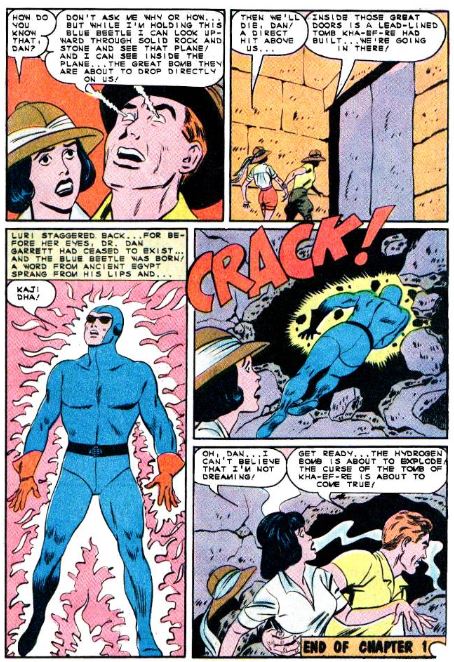
Pulling together many disparate strands from previous incarnations, former cop and valiant troubleshooter Dan Garrett was reshaped into an archaeologist gifted with a mysterious, magical ancient Egyptian scarab. This trinket would transform him into a lightning-throwing, super-sensed flying superman whenever he touched the scarab and uttered trigger phrase “Khaji Dha!”

After another brief sojourn in comic book limbo, Garrett resurfaced when Steve Ditko took on the concept, tweaking it to construct a fresh retooled hero for the gadget-conscious, superhero-savvy society perfect to continually confront a crimeridden culture.

Ditko accepted and acknowledged but sagely set aside all that prior history to utterly recreate a hero he could understand. Ted Kord is an earnest and proudly decent young scientist with a secret tragedy in his past, which Ditko and scripter Gary Friedrich sagely forbore revealing in deference to intrigue and action. The result was a taut, captivating noir thriller that opened the neopgyte’s azure casebook – which we’ll get to in the fullness of time…

Here, though, we open with the venerable veteran bursting back onto newstands courtesy of Gill, Fraccio, & Tallarico.

Cover-dated June 1964 the revival began in Blue Beetle (vol. 1, #1) with the disinterrment of ‘The Giant Mummy Who Was Not Dead’ as prominent visitor Dr. Dan Garrett and comely local egyptologist Professor Luri Hoshid fall foul of a rapidly changing political crisis whilst excavating an ancient site. The tomb of Kha-Ef-Re holds untold discoveries but resident strongman-with-despotic-aspirations – and a private nuclear arsenal – General Amenhotep may well end their dig out of sheer spite. Threatened but perservering, the duo unearth vile Kha-Ef-Re’s remains and a fantastic blue scarab that seemingly acts as a means of imprisoning his mummy.

On touching the gem, Garrett experiences an astounding vision as another ancient Egyptian – “The Great Pharoah” – reveals the scarab is a portal to fantastic power to be used in the service of good…

Transformed, Garrett immediately gets a chance to test it as a nuclear strike by Amenhotep’s forces awakens the mummy which grows to fantastic size and rampages across the nation. Thankfully the powers and abilities of The Blue Beetle are sufficient to defeat and re-entomb the monster and deal with the military maniac who thought to exploit him…

Relentlessly formulaic but somehow ly kitsch and bizarrely appealing, the stage was set for a succession of the same as BB #2’s ‘Hot War in the Arctic’ finds Garrett and sexy accomplice du jour Captain Elaine Norr (USAF) investigating peril in the far north. Here they clash with Red Chinese forces building secret airbases as well as cavemen, lost Goths, extinct big beasts and even dinosaurs from the sanctuary of a lost land… until more hastily applied atomics trigger a disaster…

Alien invasion was the theme of the third adventure as supersonic transport and possibly even the space program were threatened by a man who talked to lightning. ‘Mr. Thunderbolt and the Superstar’ led to a sustained war of nerves and powers narrowly won for humanity before a traditional supervillain arrived in the bright green form of ‘The Praying Mantis-Man’. Aided by Mexican entymologist firecracker Juanita Rivera, Garrett and his alter ego barely survive the efforts of self-mutating chlorophyl addict Hunter Mann to replace humanity with giant bugs. The macabre yarn is supplemented by a pinup of the Cobalt Crusader by Pat Masulli, before #5 finds Gill, Fracchio & Tallarico disclosing how and why ‘Blue Beetle Challenges the Red Knight’

This eerie yarn sees Garrett come to the aid of his friend Lewis Coll after the astrophysicist returns from a space mission strangely altered. Now obsessive and cruel, Coll shuns his fiancee Regina White and transforms himself into a invulnerable crimson armoured tyrant seeking to destroy all aircraft. So tough is his opposition that Blue Beetle must seek aid from the The Great Pharoah himself to end the threat…

The series went on a brief hiatus and returned with a new numbering system as, cover-dated July 1965, Blue Beetle #50 pitted the hero against ‘The Scorpion’ as villainous Mister Crabb sought to control the oil industry with thugs and giant robots, whilst in # 51 deranged incel Dr. Jeremiah Clugg sought to offset his self-perceived physical flaws and failings with women by placing his personality and mentality inside a super-srobot dubbed ‘Mentor the Magnificent’. Unable to reason, the Beetle had to quell his increasing instability with force…

Gill & Tallarico handled #52 as ‘Magno, the Man Who Shakes the World’ finds disgraced anthropologist Louis Forte targeting Garrett for revenge that escalates into shattering the entire planet as tectonic terrorist Magno-Man, after which Praying Mantis-Man returns to bedevil humanity in ‘The People Theives’, with the mantid maniac snatching humans as lab fodder until the Azure Avenger steps in and stomps him…

The last hurrah of the old guard saw aspiring junior Roy Thomas script for Fracchio & Tallarico a deft return to Egypt in final foray (Blue Beetle #54 February/March 1966) as Garrett and Luri Hoshid reunite after her latest find is co-opted by a rival who knows its true power. Sadly even Professor Philipps is unaware of the full force and malign sentience of ‘The Eye of Horus’ Soon the ancient device is enslaving and transforming humans in its quest for dominance, but the Great Pharoah has a plan to aid his new agent defeat it. All the hero has to do is visit the gods in the Land of the Dead and return with a certain weapon…

Despite it being the height of superhero madness in popular culture, Blue Beetle folded then and was left fallow until the end of the year. As stated above, he returned much changed in the back of Captain Atom (#83 November 1966) with Charlton Comics’ biggest gun in the process of his own refit and renewal again courtesy of Ditko.

The remodelling of the Atomic Ace left room for expansion and experimentation so Ditko plunged right in, introducing an acrobatic, technologically armed swashbuckler taking care of business without any extraneous exposition or explanation… and using one of the oldest names in the business.

Here ‘The New Blue Beetle’ displays his modus operandi by stopping a vicious crime-spree by the Killer Koke Gang. The untitled yarn has all classic elements of a Ditko masterpiece: outlandish, intense fight scenes, compact, claustrophobic yet dynamic layouts, innovative gimmickry and a clear-cut battle between Right and Wrong. It’s one of the very best introductory stories of a new hero anywhere in comics – and it’s only 7 pages long…

With a definite feeling of no safety or status quo, next instalment ‘Wanted for Murder’ – scripted by Mike Friedrich with full art from Ditko – pits the new kid against a mysterious Masked Marauder who has invaded ghis own home. However, the real kicker is a bombshell revelation that Homicide Detective Fisher, investigating the disappearance of Garrett, suspects a possible connection to Kord…

Next in the imaginatively entitled ‘Blue Beetle Fights a Submarine’ the vigour and vitality of the hero is again undeniable as a mid-air hijack is foiled before a spy sub and giant killer octopus are given short shrift by the indomitable rookie crusader. Then CA #86 sees the return of ‘The Masked Marauder’ as the cobalt crimebuster confronts a ruthless scientist/industrial spy he’s convinced he has battled before…

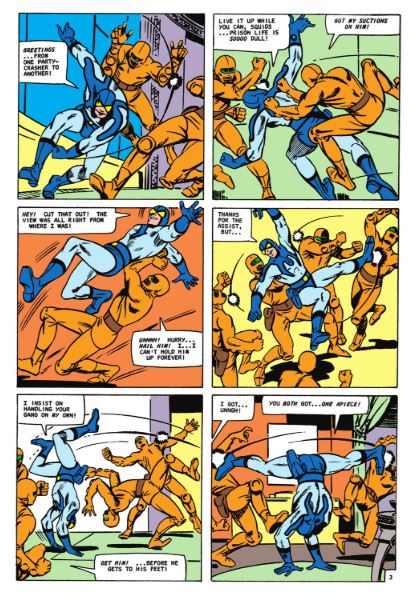
This is all preamble to the main event as – cover-dated June 1967 – Blue Beetle (volume 2) #1 launched.with lead tale ‘Blue Beetle Bugs the Squids’; an all-Ditko masterpiece (even scripting it as “D.C. Glanzman”) with the hero in astounding action against a deadly gang of bandits. ‘Blue Beetle… Bugs the Squids’ is crammed with the eccentric vitality that made Amazing Spider-Man such a monster hit, with justice-dispensing joie de vivre balanced by the moody, claustrophobic introduction of Ditko’s most challenging mainstream superhero creation. Sadly, you’ll need a different book to meet this version of The Question

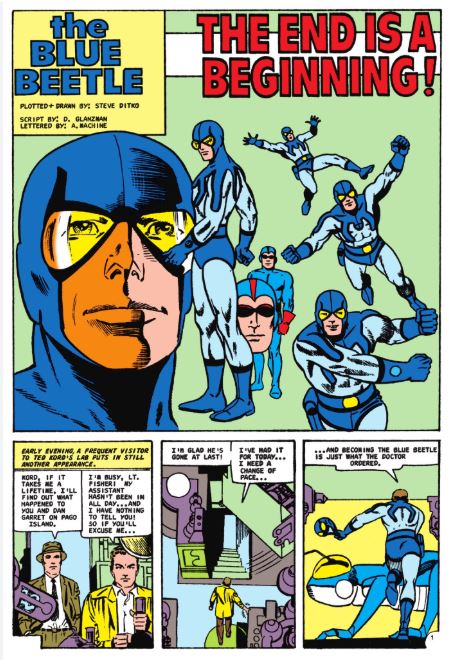
Another all-Ditko affair, Blue Beetle #2 shows the master at his peak. ‘The End is a Beginning!’ at last reveals the origin of the hero as well as the fate of Dan Garrett, and even advances Kord’s relationship with his long-suffering ever-pining assistant Tracey. #3 is another superbly satisfying read, as the troubled warrior routs malevolent, picturesque thugs ‘The Madmen’ in a sharp parable about paranoia and misperception.

Blue Beetle #4 is visually the best of the bunch as Kord follows a somehow-returned Garrett to an Asian backwater in pursuit of lost treasure and a death cult. ‘The Men of the Mask’ is pure strip poetry and bombastic action, cunningly counterbalanced by final outing ‘Blue Beetle Faces the Destroyer of Heroes’ (Blue Beetle #5). It remains a decidedly quirky tale featuring a notional team-up of the azure avenger and The Question wherein a frustrated artist defaces heroic and uplifting paintings and statues. Ditko’s committed if reactionary views of youth culture, which so worried Stan Lee, are fully on view in this charged, absorbing tale…

The Ditko Beetle was sublime but short-lived: an early casualty when the Sixties Superhero boom reversed and horror again ruled the newsstands, Charlton’s “Action Hero” experiment was gone by the close of 1968, preceding a long line of costumed champions into limbo and clearing the decks for a horror renaissance.

Time passed and reading tastes changed again. After the cosmos-consuming Crisis on Infinite Earths re-sculpted DC’s universes in 1986, a host of stars and even second stringers got floor-up rebuilds to fit them for a tougher, uncompromising, straight-shooting, no-nonsense New American readership of the Reagan era. In the intervening years, DC had pursued an old policy: gobbling up the characters and properties of defunct publishers. A handful of Charlton buy-outs had already appeared in Crisis, and now Captain Atom, The Question and two separate Blue Beetles seamlessly slotted into the new DCU, ahead of the rest of the lost contingent…

Before that moment though, there was a final flurry of the old guard.

This collection ends with the rare one-off Charlton Bullseye #1 (June 1981), released as Charlton was finally winding down its business. Written by Bejamin Smith and illustrated by Dan Reed, Albert Val & Bill Black ‘The Enigma’ sees Blue Beetle and The Question officially meet for the first time as someone they just don’t know targets them both for vengeance and assassination. He doesn’t succeed this time but does get away and threaten to return…

With covers by Fraccio, Frank McLaughlin, Vince Colletta, Masulli, Dick Giordano, Tallarico, Ditko, Rocke Mastroserio, Reed & Bob McLeod this a book that is both sublime and ridiculous, but one any lover of Fights ‘n’ Tights fiction just must have.
© 1964, 1965, 1966, 1967, 1968, 1969, 1981, 2025 DC Comics. All Rights Reserved.

Today in 1913 utterly unique UK cartoonist and raconteur Bill Tidy was born. We last bowed before T’ Mastuh with our coverage of The Fosdyke Saga volume 1. In 1949 Jim Starlin entered this world, and you can check out the bajillions he’s created since by using our search box. Ditto for Matt Wagner, who is so much more than just Grendel, Mage, Batman and Sandman Mystery Theatre. He joined us right about…. NOW! back in 1961.

Secret of San Saba: A Tale of Phantoms and Greed in the Spanish Southwest


By Jack Jackson (Kitchen Sink Press)
ISBN: 978-0-87816-080-8 (HB) 978-0-87816-081-5 (Album TPB)

This book includes Discriminatory Content produced in less enlightened times. This book also includes Discriminatory Content included for dramatic effect.

I’m reading most of my graphic novels digitally these days, and it’s clear how much superb classic material – especially genre works with war and western themes – still isn’t much of a priority to content providers yet.

You try tracking down Sam Glanzman’s The Haunted Tank or Joe Kubert Sgt. Rock compilations, or even a relatively well-exposed screen property like Jonah Hex (other than the admittedly superb Justin Grey/Jimmy Palmiotti books of recent vintage) and see what joy you get…

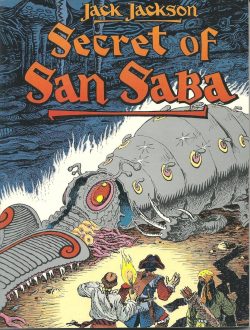
One of the most cruelly digitally excluded omissions is this stunningly impressive western horror mash-up from the inimitable Jack Jackson, still tragically only available in the original oversized (277 x 201 mm) monochrome softcover and hardback album editions, as originally published by Kitchen Sink as part of their Death Rattle Series.

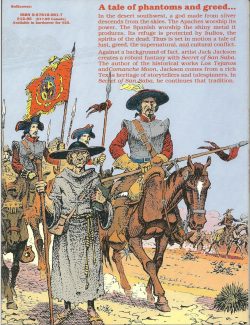
Known as ‘Jaxon’ since his Underground Commix heyday, Jackson’s infectious fascination with the history of Texas is a signature of much of his work even from the earliest days. Here he expertly combines a love of historical documentary with the fabulous Lovecraftian horrors of the cosmic void, resulting in a breathtaking and wonderful period supernatural thriller, skillfully woven into the fabric and lore of the Southwest desert lands…

When a silvery entity crashes to Earth in a blazing fireball, it galvanises the fading dreams of Xotl, a young Faraone warrior who has lost faith in his gods.

As years pass, native worship of the fearsomely fulgent power exhibited by the star-fallen thing grows, and when the mighty Apaches conquer the Faraone, the twice-defeated tribe turn to the newly arrived Europeans for help. This is a tragic, fatal mistake, albeit revealed too late… after the tribe finds that Priests and Colonists might speak of God but only truly worship wealth…

Crucially, when the newcomers learn of the Cosmic Slug that fell from the stars, all they can see is the overwhelming wealth its silver mantle represents…

The decades-long battle between Apaches and Missionaries to control the slimy silver wellspring makes for a powerful – if cynical – tale; one full of the intoxicating artistry, spellbinding storytelling, and the mesmerising aura of authenticity that is Jackson’s most telling narrative tool. It’s all based on the ancient Texas stories and legends of ‘Blanco’ and ‘Negro Bultos’ (supernatural treasure mounds): a most fantastic story which should be, has to be true, if only because Jackson has drawn it. Moreover, it has inexplicably dropped out of print and has never been picked up for a movie. That alone is something really strange and sinister…

Superbly compelling, this is a must-read item for any serious fan of both comics and horror fiction, so let’s have it back and out in every format possible, pretty please?
© 1989 Jack Jackson. All rights reserved.

Today in 1897 Enid Blyton’s Noddy illustrator was born. Sadly we’ve got nothing on Dutch master Harmsen van der Beek so you’ll need to buy one of the books if you can. We can however recommend a bunch of stuff by Harvey Pekar, who was born today in 1939: gems like American Splendor: The Life and Times of Harvey Pekar. Contemporary graphic novelist James Sturm was born today in 1965; he authored The Golem’s Mighty Swing and other stuff like The Revival, Fantastic Four: Unstable Molecules and Hundreds of Feet Below Daylight which I’ll get around to one day.

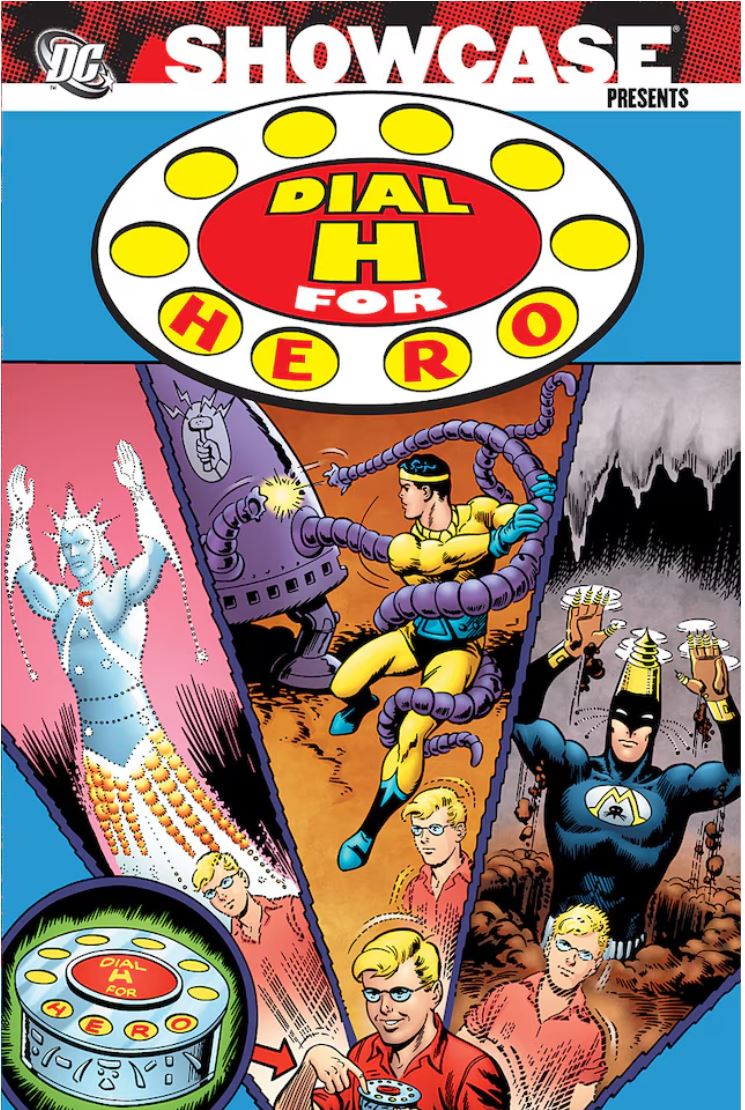
Showcase Presents Dial H for Hero


By Dave Wood, Jim Mooney, George Roussos, Frank Springer, Sal Trapani, Jack Sparling & various (DC Comics)
ISBN: 978-1-4012-2648-0 (TPB)

This book includes Discriminatory Content produced in less enlightened times.

In the mid-Sixties the entire world went crazy for costumed crusaders and every comic book publisher (and some who weren’t) frantically sought new ways to repackage an extremely exciting yet intrinsically limited concept. Perhaps its ultimate expression – for Americans at least as UK comics were always skewing the curves – came with the creation of a teen-aged everyman champion who battled crime and disaster in his little town with the aid of a fantastic wonder-tool…

This slim monochrome paperback compendium collects the entire eclectic run from House of Mystery (#156, January 1966 to #173, March-April 1968), after which the title vanished for a few months, only to re-emerge as DC’s first new anthological supernatural mystery title and next big publishing sensation…

Created by Dave Wood & Jim Mooney, Dial H For Hero detailed the incredible adventures of lonely boy genius Robby Reed who lived with his grandfather in idyllic Littleville: a genial small town where nothing ever happened…

Born in Arlington, Massachusetts on September 5th 1926, Dave Silva worked prodigiously in comics as Dave Wood, as did his brothers Bob Wood and Dick Wood. Their father was a doctor who blotted his copybook so badly that the family had their surname legally changed sometime after 1932.

Dave’s brothers got into making comics early – founding a studio shop with Charles (Airboy, Crime Does Not Pay, The Little Wise Guys) Biro – and Dave joined them before his war service as an army reporter in 1944. He returned and blossomed into a go-to writer in many genres. His prolific output really began in the post-superhero days of AUS comic books and includes such seminal classics – often with artistic legends Jack Kirby and Wally (no-relation) Wood) – as Challengers of the Unknown and seminal Space Race newspaper strip Sky Masters. A skilled jobbing writer, Wood frequently and closely collaborated with brother Dick. They bounced around the industry, scripting mystery, war, science fiction and he-man adventure yarns. Amongst his/their vast credits are stints on Danger Trail, Our Army at War, most Superman family titles, Batman, Detective Comics, World’s Finest Comics, Green Arrow, Rex the Wonder Dog, Tomahawk, Blackhawk, Martian Manhunter and so many more. As well as Dial H For Hero Dave Wood created bizarre sleeper hit Animal Man and the esoteric but fondly regarded Ultra, the Multi-Alien. He was Bob Kane’s ghost writer and co-created eccentric villains Mister Zero/Mr Freeze, Doctor Double X and the Terrible Trio/The Fox, the Shark and the Vulture. He died far, far too young on July 7th 1974

The majority of the illustration was left to capable, unflappable, slick James Noel Mooney. He started his comics career in 1940, aged 21, working for the Eisner & Eiger production shop, and at Fiction House on The Moth, Camilla, Suicide Smith and other B-features. By the end of that year he was a mainstay of Timely Comic’s vast funny animal/animated cartoon tie-in department.

In 1946, he migrated to National/DC to ghost Batman for Bob Kane & Dick Sprang. He stayed until 1968, a regular on a host of key features including Superman, Superboy, Legion of Super-Heroes, World’s Finest Comics and Tommy Tomorrow, as well as many genre short stories for the company’s assorted anthology titles like Tales of the Unexpected and House of Mystery. He famously drew Supergirl from her series debut in Action Comics #253 to #373. He returned to Marvel in the late 1960s, delivering stellar runs on Spider-Man, Marvel Team-up, Omega the Unknown, Man-Thing, Ghost Rider and a host of other features including early adults-only feature Pussycat as both penciller and inker. Prior to that move he was illustrating Dial H For Hero; the only original DC feature he co-created.

Big things were clearly expected of the new feature, which was parachuted in as lead and cover feature, demoting the venerable Martian Manhunter J’onn J’onzz to a back-up role at the rear of each issue. Cover dated January 1966 (and on sale from November 18th 1965) House of Mystery #156 kicked off the strange adventures with an untitled tale that opens in an attack on the local chemical works by super-scientific criminal organisation Thunderbolt. This occurs just as young Robby and his pals are playing in the hills above the site. As they flee, the plucky kid is caught in a landslide and falls into an ancient cave where lies hidden an obviously alien artefact… that looks like an outlandish rotary telephone dial. If these words mean nothing to you, feel free to investigate on-line…

After finding his way out of the cavern Robby becomes obsessed with the device and spends all his time attempting to translate the arcane hieroglyphs on it. Eventually he determines that they are instructions to dial the dial symbols which roughly translate to “H”, “E”, “R” and “O”…

Ever curious, Robby complies and is suddenly transformed into a colossal super-powered Giantboy, just in time to save a crashing airliner and quash another Thunderbolt raid. On returning home, he simply reverses the dialling process and goes to bed…

These were and still are perfect wish-fulfilment stories: uncluttered, uncomplicated yarns concealing no grand messages or themes: just straight entertainment expertly undertaken by experienced and gifted craftsmen who knew how to reach their young-at-heart audiences. After all, what right minded child wouldn’t rush out and DO GOOD if they got superpowers?

Thus, no-one is surprised at the ease with which Robby adapts to his new situation. When Thunderbolt strikes again next morning Robby grabs his dial but is startled to become a different hero – high-energy being The Cometeer. Streaking to the rescue Robby is overcome by the raider’s super weapon and forced dial back into being a boy again. Undeterred, he later tries again and as The Mole finally tracks the villains to their base and crushes them. The leader escapes, however, to become the series’ only returning villain…

Mr. Thunder was back in the next issue as Robby became The Human, Bullet, bestial energy-being Super-Charge and eerie alien Radar-Sonar Man to combat ‘The Marauders from Thunderbolt Island’ after which criminal scientist Daffy Dagan steals the H-Dial after defeating the boy’s next temporary alter ego Quake-Master. Dagan becomes a horrifying multi-powered monster when he learns to ‘Dial… V… For Villain’ but after the defeated hero takes back the artefact, Robby redials into techno-warrior The Squid and belatedly saves the day. Clearly the Mystery in House of… was related to where the Dial came from, what its unknown parameters were and especially who or what Robby would transform into next…

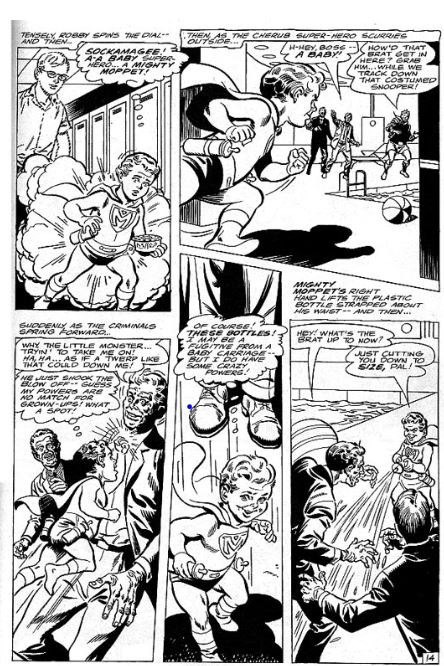
HoM #159 pitted The Human Starfish, Hypno-Man and super-powered toddler Mighty Moppet (wielding weaponised baby bottles) in single combats with a shape-shifting bandit gang dubbed ‘The Clay-Creep Clan’ whilst ‘The Wizard of Light’ played with the format by introducing a potential love-interest for Robby in his best friend’s cousin Suzy. It also saw the return of Giant-Boy, introduction of sugar-based sentinel of justice King Candy and the lad’s only transformation into an already established hero – Golden Age legend Plastic Man.

Cynical me suspects the move was a tester to see if the Pliable Paladin – who had been an inert resource since the company had bought out original publisher Quality Comics in 1956 – was ripe for a relaunch in the new, superhero-hungry environment.

DC’s Plastic Man #1 was released five months later…

House of Mystery #161 featured awesome ancient Egyptian menace ‘The Mummy with Six Heads’ who proved too much for Robby as Magneto (same powers but so very not a certain Marvel villain) and Hornet-Man, but not intangible avenger Shadow-Man who eventually triumphed, whilst in the next issue ‘The Monster-Maker of Littleville’ is proved by Mr. Echo and Future-Man to be less mad scientist than greedy entrepreneur. Then, ‘Baron Bug and his Insect Army’ almost ends Robby’s clandestine career when the boy turns into two heroes at once. However, even though celestial twins Castor and Pollux are overmatched, animated slinky-toy King Coil proves sufficient to stamp out the Baron’s giant mini-beasts. Human wave Zip Tide, living star Super Nova and Robby the Super-Robot are then increasingly hard-pressed to stop the rampages of ‘Dr. Cyclops – the Villain with the Doomsday Stare’, but eventually overcome the outrageous odds – and oddness…

Things got decidedly peculiar in #165 when a clearly malfunctioning H-Dial called up ‘The Freak Super-Heroes’Whoozis, Whatsis and Howzis – to battle Dr. Rigoro Mortis and his artificial thug Super-Hood in a bizarrely captivating romp with what looks like some unacknowledged inking assistance from veteran brush-meister George Roussos (who popped in a couple more times until Mooney’s departure).

Suzy became a fixture and moved into the house next door with ‘The King of the Curses!’ He found his schemes to plunder the city thwarted by The Yankee-Doodle Kid and Chief Mighty Arrow, a war-bonneted “Indian brave” on a winged horse, before in HoM #167, ‘The Fantastic Rainbow Raider’ easily defeated Balloon Boy and Muscle Man but had no defence against returning Radar-Sonar Man. Next ‘The Marauding Moon Man’ easily overmatched Robby as The Hoopster, but had no defence when another glitch turned old incarnations The Mole and Cometeer into a single heroic composite imaginatively christened Mole-Cometeer. The biggest shock of all came when ‘The Terrible Toymaster’ defeats Robby – AKA Velocity Kid – and Suzy cajoles the fallen hero into dialling her into the scintillating Gem Girl to finish the mission.

Of course, as it was the 1960s, plucky Suzy didn’t quite manage on her own, but after Robby transforms into psionically potent Astro, Man of Space they soon closed the case – and toybox – for good. This one was all Mooney and so was the next, which turned out to be the artist’s last hurrah with the Kid of a Thousand Capes. ‘Thunderbolt’s Secret Weapon’ saw the crooks cartel seek to steal a supercomputer, only to be stopped dead by Baron Buzz-Saw, Don Juan (and his magic sword!) and the imposing Sphinx-Man. With House of Mystery #171 a radical new look emerged, as well as a darker tone. The writing was clearly on the wall for exuberant, angst-free adventurers…

‘The Micro-Monsters!’ was illustrated by Frank Springer and saw Robby dial up King Viking – Super Norseman, Go-Go (a fab hipster who utilised the incredible powers of popular disco dances… and how long have I waited to type that line?) and multi-powered Whirl-I-Gig to defeat bio-terrorist Doc Morhar and his belligerent invaders from a sub-atomic dimension. Springer also drew ‘The Monsters from the H-Dial’, wherein the again on-the-fritz gear simultaneously turns Reed’s friend Jim into assorted ravening horrors every time Robby dials up. Luckily the unnamed animated Pendulum, Chief Mighty Arrow and the Human Solar Mirror our hero successively turns into prove just enough to stop the beasts until the canny boy can apply his trusty screwdriver to the incredible artefact once again.

In those distant days series ended abruptly, without fanfare and often in the middle of something… and such was the fate of Robby Reed. HoM #173, by Wood & Sal Trapani, saw the lad solve a mystery in ‘The Revolt of the H-Dial’, wherein the process reshapes him into water-breathing Gill-Man and a literal Icicle Man: beings not only unsuitable for life on Earth but also compelled to commit crimes. Happily by the time Robby dials into Strata Man he’s deduced what outside force is affecting his dangerously double-edged device…

And that was that. The series was gone, the market was again abandoning Fights ‘n’ Tights fantasy and on the immediate horizon lay a host of war, western, barbarian and horror comics…

Exciting, fun, inspirational, imaginatively engaging and silly in equal amounts (heck, even I couldn’t resist a jibe or too and I genuinely revere these daft, nostalgia-soaked gems), Dial H For Hero has been re-imagined many times since these innocent odysseys first ran, but never with the clear-cut, unsophisticated, welcoming charm displayed here.

This was Ben-10 (remember him?) for your granddad’s generation and perhaps your kid’s delectation: and only if they’re at just that certain age. Certainly you’re too grown up to enjoy these glorious classics. Surely you couldn’t be that lucky; could you?
© 1966, 1967, 1968, 2010 DC Comics. All rights reserved.

Today in 1950 comics iconoclast and creative pioneer Howard Chaykin was born. You should track down American Flagg! and his interpretation of The Shadow but don’t miss Ironwolf: Fires of the Revolution. One year later international comics legend Enki Bilal did likewise, before going on to create masterpieces such as Century’s End: The Black Order Brigade & The Hunting Party.

Fantastic Four Marvel Masterworks volume


By Doug Moench & Bill Sienkiewicz, John Byrne, Roger Stern, Joe Sinnott, Al Milgrom, George Pérez, Tom Sutton, Jerome Moore, Chic Stone, Jon D’Agostino, Mike Esposito, Pablo Marcos, Frank Giacoia, George Roussos, Jim Novak, Irving Watanabe & various (MARVEL)
ISBN: 978-1-3029-1027-3 (TPB/Digital edition)

This book includes Discriminatory Content produced in less enlightened times.

For Marvel everything started with The Fantastic Four.

Monolithic modern Marvel truly began with eccentric monster ‘n’ alien filled adventures of a compact superteam as much squabbling family as coolly capable costumed champions. All that Modern Marvel is, company and brand, stems from that quirky quartet and the inspired, inspirational, groundbreaking efforts of Stan Lee & Jack Kirby…

Cautiously bi-monthly and cover-dated November 1961, Fantastic Four #1 – by Stan, Jack, George Klein and/or Christopher Rule – was raw and crude even by the ailing publisher’s standards; but it seethed with rough, passionate, uncontrolled excitement. Thrill-hungry kids pounced on its dynamic storytelling and caught a wave of change beginning to build in America. It and every succeeding issue changed comics a little bit more… and forever. As revealed in that premier issue, maverick scientist Reed Richards, fiancée Sue Storm, close friend Ben Grimm and Sue’s bratty teen brother survived an ill-starred private spaceshot after cosmic rays penetrated their ship’s inadequate shielding.

All were permanently mutated: Richards’ body became elastic, diffident Sue became (even more) invisible, Johnny Storm burst into living flame and tragic Ben shockingly devolved into a shambling, rocky freak. After the initial revulsion and trauma passed, they solemnly agreed to use their abilities to benefit mankind. Throughout the 1960s The Fantastic Four was indisputably the key title and most consistently groundbreaking series of Marvel’s ever-unfolding web of cosmic creation: a forge for new concepts and characters.

Kirby was approaching his creative peak: unleashing his vast imagination on plot after spectacular plot, and intense, incredible new characters whilst Lee scripted some of the most passionate superhero sagas ever seen. Both were on an unstoppable roll, at the height of their powers and full of the confidence only success brings, with The King particularly eager to see how far the genre and the medium could be pushed… which is rather ironic since it was the company’s reticence to give the artist more creative freedom that led to Kirby’s moving to National/DC in the 1970s.

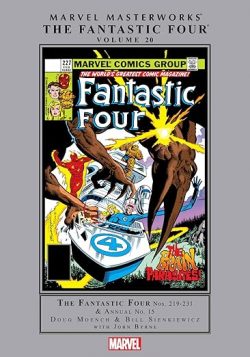
Without Kirby’s soaring imagination the rollercoaster of mindbending High Concepts lost out to traditional tales of characters in conflict, with soap opera leanings and supervillain-heavy Fights ‘n’ Tights forays abounding. With Lee & Kirby long gone but their mark very much still stamped onto every page of the still-prestigious title, this full-colour luxury compendium collects Fantastic Four #219-231 and Annual #15, spanning June 1980-June 1981, wherein editor Jim Salicrup sanctioned a bold new look and direction for the Hallowed team. The call for and upshot of all that is discussed by incoming writer Doug Moench who recalls fan-fright paralysis and jumping in full throttle in his Introduction ‘The Big-Kid Stuff Cold Turkey Fail’ prior to a distinctly spookily toned and frequently supernaturally themed change of pace commencing.

What You Should Know: After being rejuvenated and repowered in an extended space-spanning saga, the Family FF are getting used to being back on earth even with supervillains all over the place. Now Read On…

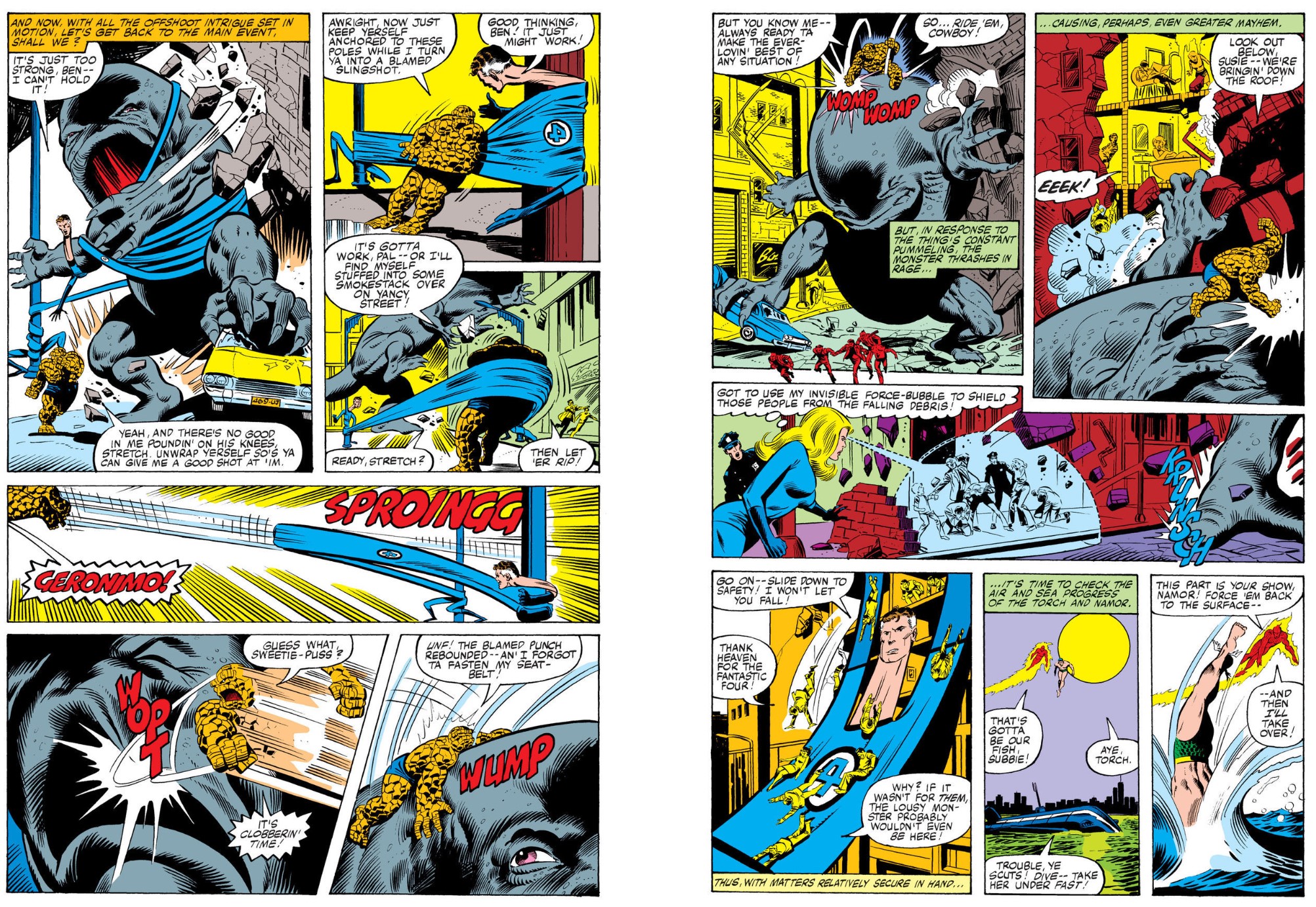
Penciller John Byrne, having served out his first term of duty on the series he was to soon make his alone was officially and ostensibly only temporarily replaced for FF #219. Ably augmented by Joe Sinnott, stalwart “Guest-Team” Doug Moench & Bill Sienkiewicz were parachuted in for monster mash-up ‘Leviathans’, on the back of huge success and acclaim for their vigilante thriller Moon Knight, bringing with them a whole new look and sensibility, as well as far faster pace to the stories.

Here, modern day pirate Cap’n Barracuda steal the fabled Horn of Proteus from Atlantis and unleashes a wave of giant monsters on New York City. Thankfully, this is a subject the mighty Sub-Mariner and Mr. Fantastic can agree on and their combined forces are soon stomping beasties and taking names (like Giganto!) to restore order and stop a piratical plunder ploy without peer…

Byrne was back writing & pencilling in #220 as ‘…And the Lights Went Out All Over the World!’ sees the Avengers call in Reed and his team when all of Earth suffers a catastrophic power-outage. Science! soon sends the explorers to the arctic where they encounter an astounding and unbelievable obelisk being constructed by beings of utterly alien appearance…

The story includes an updated origin for the quartet and guest shot for Canada’s finest (that’s Vindicator of Alpha Flight in case you were wondering) and the issue halts with a pinup/possible rejected cover by inker Sinnott (the Torch battling a flaming Skrull) before #221’s concluding chapter ‘Tower of Glass… Dreams of Glass!’ – after the usual misconceptions and rash clashes reveal three aliens shipwrecked for half a million years who just need their myriad mobile mechanisms to reverse the planet’s magnetic poles so that they can return home at last. Thankfully, Reed has a less end of human civilisation-y solution that leaves everyone involved happy and safe…

Now officially the latest regular creative team, Moench & Sienkiewicz return to prep for Halloween in FF #222’s ‘The Possession of Franklin Richards!’ as the kid is targeted from beyond the unknown by the exiled soul of Nicholas Scratch, son of Agatha Harkness and the kind of warlock who gives witchcraft a bad name. Having made the boy his conduit back to reality, Scratch terrorises and tortures his hated enemies, who with Doctor Strange unavailable, must call on the dubious gifts of self-doubting failed horror hero Gabriel the Devil Hunter and his sexy morally ambiguous familiar Desadia (as mostly seen in the Marvel monochrome magazine line such as Haunt of Horror and Monsters Unleashed).

Apparently acquiescing, the team agree to liberate the dead diabolist’s minions of magical cult Salem’s Seven in ‘That a Child May Live…’ but their instant assaults on humanity are an acceptable risk and consequence in a long plan that sets the worlds to rights for all but the defeated devil…

Fantastic Four Annual #15 swiftly follows, wherein Moench & George Pérez, abetted by Chic Stone, Jon D’Agostino & Mike Esposito, renew hostilities between the FF and the Skrull empire when the shapeshifters target Reed’s latest energy-casting breakthrough in ‘Time for the Prime Ten!’ Infiltrating the Baxter Building, negating his teammates and almost banishing Mr. Fantastic to the tender mercies of Annihilus in the Negative Zone, the sneaky killers are actually seeking to end their millennial war against stellar rivals The Kree, but have underestimated Reed’s brilliance, his team’s tenacity and the sheer power and cosmic awareness of Earth-loving Kree Exile Captain Mar-Vell…

A back-up tale by Moench & Tom Sutton takes us to recently liberated Latveria for the opening of proposed series ‘The Return of Doctor Doom!’ with only episode ‘The Power of the People!’ showing how restored monarch King Zorba failing to live up to his democratic promise and discovering how excessive taxation really upsets subjects, at around the same moment crazed and catatonic Victor von Doom goes missing from the most secure dungeon in Doomstadt…

Sadly, the impending crisis never materialised and was only addressed by John Byrne in Fantastic Four #247…

Over in FF #224 & 225, fresh calamity unfolds in Moench, Sienkiewicz & Pablo Marcos’ ‘The Darkfield Illumination’ as an eerie radioactive red mist blankets Manhattan and plays hob with the team’s powers. Tracing the cloud’s origin point to an icy dome in the Arctic, the FF discover a lost colony of technologically advanced Vikings utterly dependent upon a mutated immortal giant. ‘The Blind God’s Tears’ supply heat, light, food materials from the outside world and immortality, but now Korgon is dying and demands the explorers save him and the people who worship him…

Always eager to help, the team strive hard and succeed in saving the God, only to see him betrayed by his most trusted ally. As Korgon rages madly in response, the situation escalates as Thor arrives to investigate Viking worshippers who have abandoned their true god for a false one…

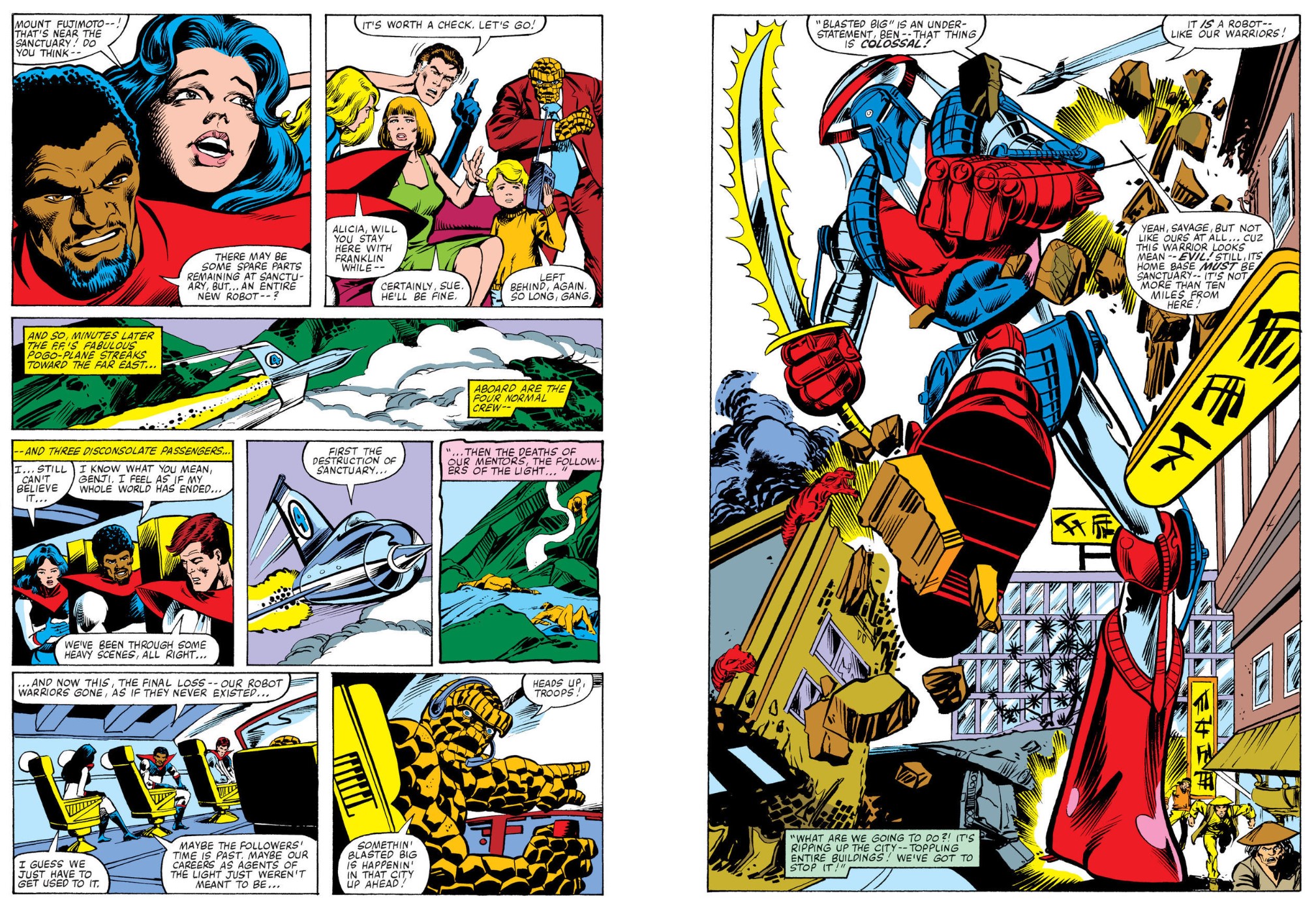
Bruce Patterson joins Marcos inking Sienkiewicz as Moench takes the opportunity to bring closure to fans of his old Shogun Warriors series next. In their own title the former pilots of monster-fighting mega-mecha Dangard Ace, Raydeen and Combatra had been recruited by an ancient order to defend humanity, but had ultimately retired when their machines were destroyed. That epic sacrifice had come when evil enemy Maur-Kon had targeted the Fantastic Four and attempted to kill Reed.

Now a new giant mecha rampages and robs and the teams reunite with Ilongo Savage, Richard Carson and Genji Odashu aiding the battle against ‘The Samurai Destroyer’ and the unworthy soul exploiting its power for profit….

Movie-toned terror in the heartland follows as a meteor crashes in rural Pennsylvania resort Lost Lake just as the FF head out to the Boonies for a break. Their encounter with ‘The Brain Parasites’ infesting hosts and reverting them to earlier evolutionary forms is by-the-books horror fun from Moench, Sienkiewicz & Patterson, and readily fixed by little Franklin’s unreliable mental powers. This sets the scene for the next issue where further tests by professional head shrinkers and brain benders only unleash uncontrollable chaos, possessing bystanders and an adult super-powered version of the lad. Thankfully loving parents and uncles allow Franklin to exorcise his deadly ‘Ego-Spawn’ (Sinnott inks)…

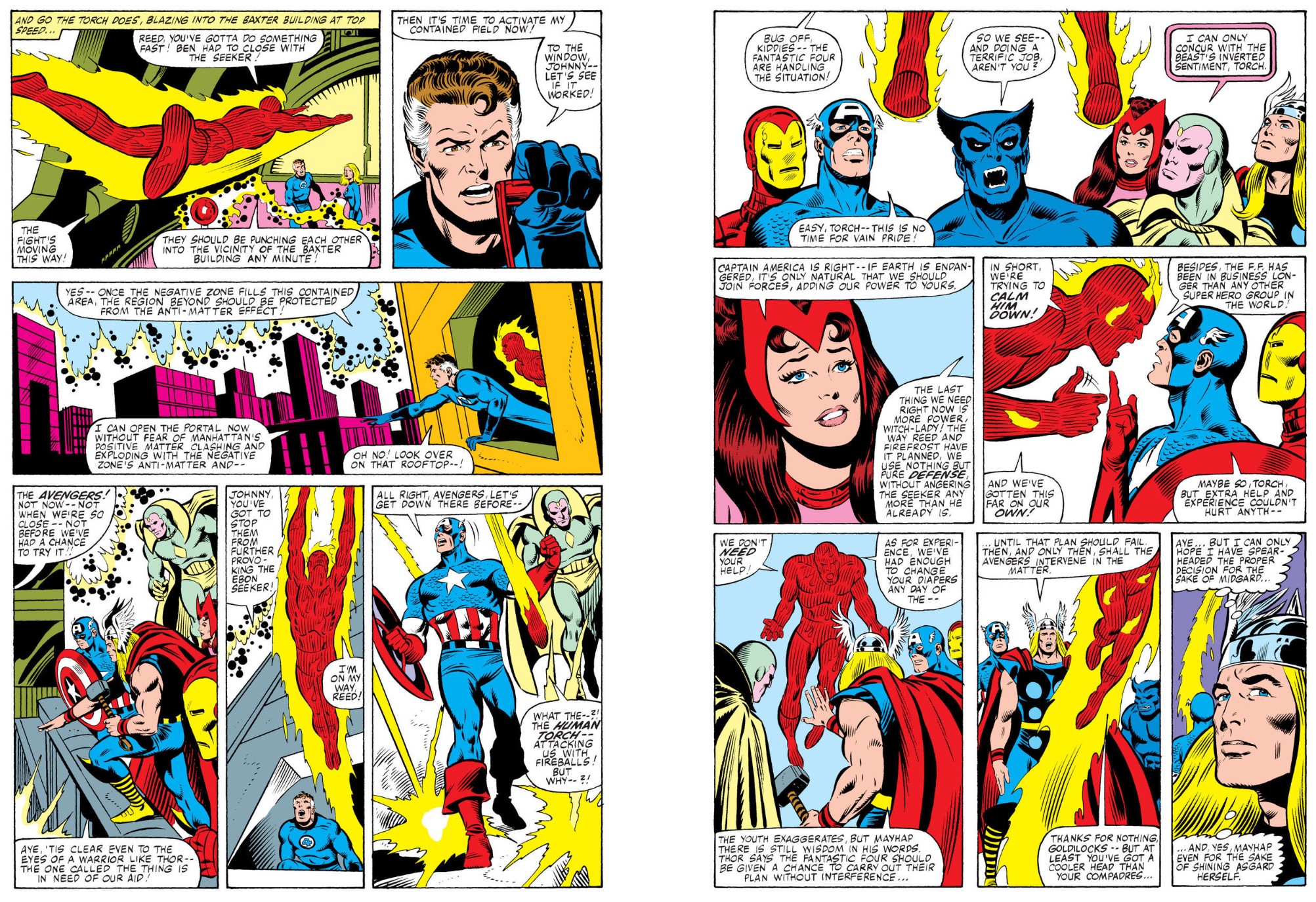
The experiment in alternative tale-telling ends on a 3-part saga that opens with #229’s ‘The Thing From the Black Hole’. After it homes in on Reed’s latest invention, Earth soon totters on the edge of destruction as a living, sentient singularity made of antimatter disrupts physical laws. Desperate Richards makes contact with its cosmic equivalent and uncovers a tale of love lost in service to scientific exploration. The mobile extinction event was once a sentient being whose love for a fellow astronaut turned them both into creatures of uncanny forces. Thankfully ‘Firefrost and the Ebon Seeker’ reach an understanding that saves the world, but as a consequence a section of Manhattan – including the Baxter Building – is marooned inside the Negative Zone.

With panic amongst the hordes of abducted New Yorkers barely suppressed, the FF search for a solution ‘In All the Gathered Gloom!’ (by Moench & Roger Stern with art from Sienkienwisz, Jerome Moore, Sinnott, & Frank Giacoia) even as new antimatter menace Stygorr zeroes in on the intruding enclave. The last thing the FF need is bullying big business plutocrat Lew Shiner telling everyone his money puts him in charge. After his posturing triggers a riot, tragedy is guaranteed, and the heroes barely beat the alien invader in time to return everyone surviving back home…

With covers by Sienkienwicz, Byrne Sinnott & Bob McLeod, the extras here include a Sinnott Thing pinup from FF #219, Sienkievich’s rejected cover-turned-pinup as printed in #224 original art pages/covers inked by Marcos, Bruce Patterson, Sinnott, and original colour-guides painted by George Roussos.

Although never quite returning to the stratospheric heights of the Kirby era, this truly different collection represents a closing of the First Act for the “World’s Greatest Comics Magazine”, and palate cleansing preparation for the second groundbreaking run by an inspired John Byrne. These extremely capable efforts are probably most welcome to dedicated superhero fans and continuity freaks like me, but will still thrill and delight casual browsers looking for an undemanding slice of graphic narrative excitement – especially if this time the movie continues to deliver on its promise…
© 2018 Marvel Characters, Inc. All rights reserved.

To Be Continued…

Today in 1918 artist John Forte was born. He’s most fondly remembered for costumed charm, as best seen in Legion of Super-Heroes: The Silver Age volume 1 . We don’t have nearly enough collected material for UK visionary comics stalwart Ron Embleton who was born today in 1930. If you think you’re old enough, you could look at Oh, Wicked Wanda!.

Indomitable weekly anthology Valiant began its stellar 712 issue run today in 1962. Inside was the magnificent Steel Claw whom we comprehensively covered in The Steel Claw: Invisible Man. Yes. Well done, the modern invisible man could be seen from the start…

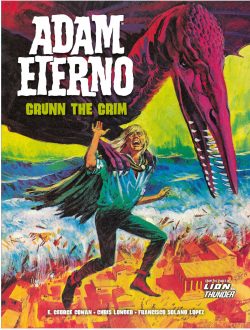
Adam Eterno book 2: Grunn the Grim


By E. George Cowan, Chris Lowder, Tom Tully, Francisco Solano López, John Catchpole, Eric Bradbury, with Jack Le Grand, Geoff Kemp, Tom Kerr & various (Rebellion)
ISBN: 978-1-83786-470-6 (TPB/Digital edition) 978-1-83786-480-5 (Exclusive edition)

This book includes Discriminatory Content produced in less enlightened times.

Win’s Christmas Gift Recommendation: History in the Unmaking… 9/10

British comics had a strange and extended love affair with what can only be described as “unconventional” (for which feel free to substitute “creepy”) heroes. So many of the stars and potential role models of our serials and strips were just plain “off”: self-righteous, moody voyeurs-turned vigilantes like Jason Hyde, sinister masterminds like The Dwarf, deranged geniuses like Eric Dolmann, so many reformed criminals like The Spider or just outright racist supermen like Captain Hurricane

… And don’t get me started on our legion of lethally anarchic comedy icons or that our most successful symbol of justice is the Eagle-bedecked jack-booted poster boy for a fascist state. Perhaps that explains why these days we can’t even imagine or envision what a proper leader looks like and keep on electing clowns, crooks and oblivious privileged simpletons…

All joking aside, British comics are unlike any other kind and simply have to be seen to be believed and enjoyed. One of the most revered stars of the medium has finally begun to be collected in archival editions, and perfectly encapsulates our odd relationship with heroism, villainy and particularly the murky grey area bridging them…

Until the 1980s, comics in the UK were based on an anthological model, offering variety of genre, theme and character on a weekly – or sometimes fortnightly – basis. Humorous periodicals like The Beano were leavened by thrillers like Billy the Cat or General Jumbo and adventure papers like Lion or Valiant always included gag strips such as The Nutts, Grimly Feendish, Mowser and a wealth of similar quick laugh treats. Thunder and Jet were amongst the last of this fading model. Fleetway particularly was shifting to themed anthologies like Shoot, Action and Battle, whilst venerable veterans like Lion, Valiant and Buster hung on and stayed fresh by absorbing failing titles.

Thunder ran for 22 weeks before being absorbed by a stronger title to become Lion & Thunder. The merger/acquisition brought Black Max, The Steel Commando, The Spooks of Saint Luke’s and Adam Eterno to the new combined roster. With Steel Commando, time travelling tramp Adam would survive and thrive, as the periodical later merged into Valiant & Lion (June 1974) until the ultimate end in 1976. He also appeared in numerous Annuals and Specials thereafter.

Eterno was initially devised by Thunder assistant editor Chris Lowder – AKA “Jack Adrian” – and editor Jack Le Grand, with top flight artist Tom Kerr (Monty Carstairs, Rip Kerrigan, Kelly’s Eye, Charlie Peace, Captain Hurricane, Steel Claw, Kraken, Mary-Jo, Tara King/The Avengers, Billy’s Boots) initially designing and visualising the frankly spooky antihero. He also drew the scene-setting first episode. The feature was scripted by equally adept and astoundingly prolific old hand Tom Tully (Roy of the Rovers, Heros the Spartan, Janus Stark, The Wild Wonders, Dan Dare, Johnny Red, The Leopard from Lime Street), who only finally left it in 1976. Kerr, Donne Avenell, Scott Goddall &Ted Cowan would also write subsequent adventures. In fact, Tully might have scripted some of the material in this collection including the first instalment here: a handy recap/catchup limned by Francisco Solano López (and his family studio) that swiftly shifts to a gripping tale of “Conquistadore” atrocity…

Thanks to spotty record keeping, like so much in life and comics, it’s all a big mystery…

Gathering episodes from weekly Lion & Thunder spanning March 20th through August 28th 1971, plus pertinent material from Lion & Thunder Holiday Special 1971 & 1972, the chronal calamities and dark doings resume following Chris Lowder’s informative flashback essay ‘A Writer’s Trip Through Time’.

What you need to know: Delivered in stark, moody monochrome, the saga tales of tragic immortal chronal castaway Adam Eterno began life in the 16th century. He was an ambitious apprentice and less than sterling moral character, indentured to alchemist Erasmus Hemlock. When Adam’s master perfected an immortality serum, the headstrong, impatient acolyte sampled the potion against the sage’s express command. This precipitated the ancient’s death and a fiery conflagration that gutted the house. Hemlock’s last act was to curse his faithless student to live forever and “wander the world through the labyrinths of time”. Surcease would come from a mortal blow struck by a weapon of gold…

The curse was truly effective and as centuries passed, Adam became a recluse: his never-changing appearance driving him away from superstitious mortals and perpetually denying him simple contact with humanity. He fought in all of Britain’s wars, but hard-earned combat comradeships always ended whenever a seemingly fatal blow or wound left him unharmed…

Everything changed and the second part of the alchemist’s curse came true in 1970 when the traumatised, barely sane 421-year-old tramp staggered into a bullion robbery. He was shot by the thieves who rapidly realised that their victim was invulnerable, and attempted to use him in a raid on the Bank of England. When that went sideways too, Adam was struck by a fully-gold-plated limousine of a speeding millionaire…

The impact would be fatal for any other being, but for Adam Eterno it was the beginning of redemption as the shock hurled him into the timestream to land over and again in different eras…

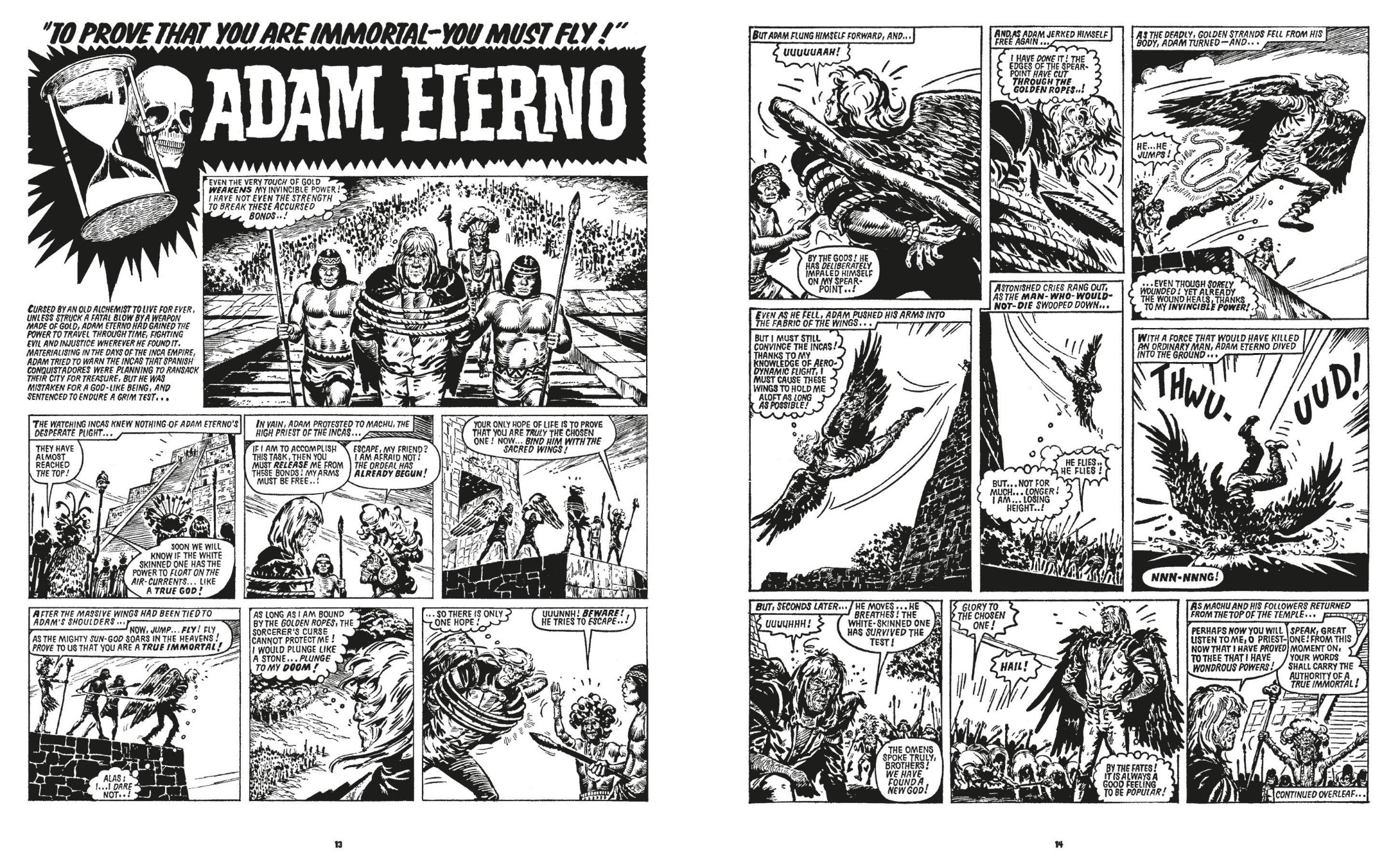
The drama continues in that opening recap as Adam drops out of the timestream and is immediately cut down and hurled into quicksand by rapacious Spaniard Don Morto and his pitiless mercenarios, seeking the Incas fabled City of Gold. Dragging himself out of the mire, soon Adam is sought out by an Inca shaman and undergoes outrageous trials (many involving bonds and weapons of gold!) to become their champion in defeating the merciless invaders and liberating hostage king Tazuma Capa

The resistance is long and bloody but ultimately triumphal after Eterno introduces and mass-produces a weapon from the future that turns the tables on the armour, powder and shot of the invaders…

The bittersweet victory – after all, the traveller already knows more invaders will follow and ultimately succeed – sees Adam returned to chronal limbo only to rematerialise for the first time in the far future: a totalitarian dictatorship policed by brutes and thugs in armour of gold led by a monstrous tyrant: Grunn the Grim. The extended war to liberate tomorrow ends successfully but with the wanderer again returned to falling through eras, with the first hints that the penitent troubleshooter is not randomly drawn to rising manifestations of evil and crossroad moments of menace…

The latest stopover is Dark Ages Eastern Europe where a struggle for the throne sees an evil yet trusted relative seeking to usurp Duke Ctharmis of Carathia, after abducting the prince and true heir. Now as a local wild-child terrorises the populace, and packs of (were?)wolves congregate everywhere, a tatty stranger arrives and starts making trouble. Nobody knows Adam has been recruited by local wizard Mageis to set destiny aright and end the schemes of wicked Baron Draxa, before being deposited in far more familiar territory: England during the Civil War…

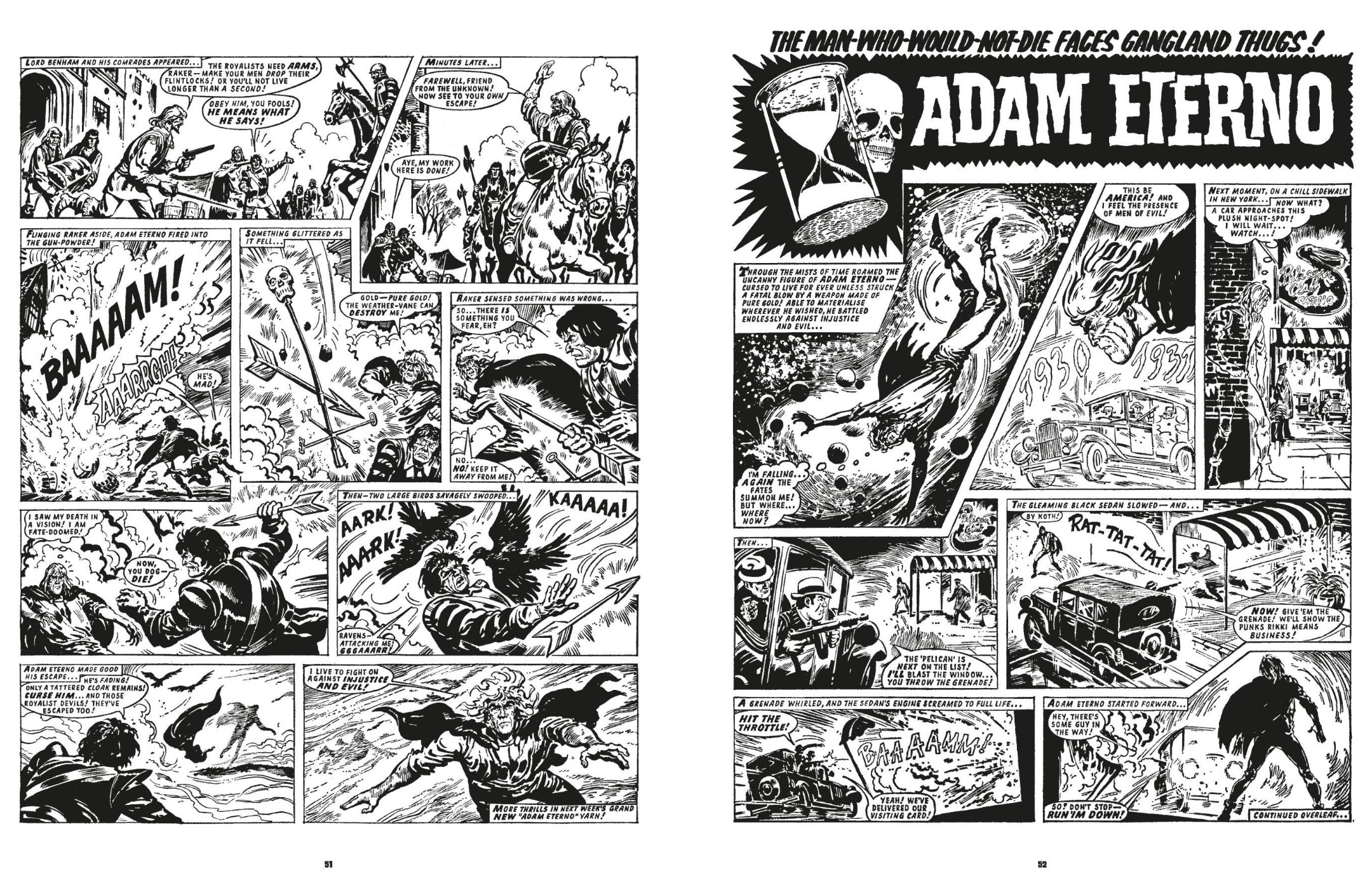
Obsessive anti-royalist Captain Raker ravages the locality searching for Lord Benham and the funds he holds in the King’s name. His brutal acts draw the immortal man into the pointless conflict, despite persistent, prophetic visions of doom hampering the antihero… until a final face-to-face duel ends matters and catapults Adam into the New World and a new kind of wickedness. In 1920s New York City, money not power motivates mobster Rikki Delgano, but his tactics are just as cruel and just as ineffectual against an enemy who will not die…

The crook’s hash soon settled, Eterno next appears in the skies over London amidst a storm of ack-ack fire and Luftwaffe planes. Furious and fighting mad, the traveller captures a Nazi bomber and follows the raiders back to their base, delivering a deadly dose of “how do you like it?” before ghosting on to land in the wild west and exonerate unjustly accused drifter the Durango Kid when both are charged with stagecoach robbery. Dodging gunplay and lynchings, Apache tortures and worse, Adam deftly exposes the real bandit before moving on to save all of humanity…

Lost in the early years of the stone age over 35,000 years before his own birth, Eterno roams amidst mammoths, neanderthals and dawn men, but must battle beast men armed with ray guns to foil a plan by alien colonisers. They seek to eradicate emerging humankind and take the world for their own, but Adam is greatly aided by prescient sage Kathon-the-Wise, who seems to see all his past and future secrets… and bears a remarkable resemblance to so many other wizards and mages the nomad of the ages has met…

After a cataclysmic pitched battle, humanity is saved and the spacers defeated, but there’s no rest for the (gradually redeeming) wicked and Eterno lands in shark-filled waters just in time to become the latest target of pirate lord Blackbeard. On foiling that felon, the winds of time waft him to a Viking raid in Anglo-Saxon England where pitiless reiver Geflin One-Eye seems set on taking the kingdom, unless some brave soul can retrieve the fabled Gold Sword of Wulfric from the abbey where it lies and lead the counterattack. Obviously, Adam is not keen on getting that close to his metal nemesis but if the situation demands it…

Bombastic, blood-soaked, inspirational and creepier than you’d imagine possible or permissible in a kids’ comic. the exploits of Adam Eterno are dark delights impossible to put down, so it’s fortunate that there are two more longer complete yarns still to come here.

Taken from Lion & Thunder Holiday Special 1971, the first sadly uncredited yarn (as regards the writer at least) was illuminated by veteran comics illustrator John Catchpole. He was the first to draw Kelly’s Eye – in 1962 for Knock-Out – and limned The Shadow of the Snake & sequel serial Master of Menace between 1972-1974 in Lion where he was part of a rotating team crafting Adam Eterno. As well as Annuals material like Black Bedlam (1975) he inked Jack (Charlie Peace) Pamby on The Potters from Poole Street in Valiant (1976) and was also a book illustrator.

Here all that skill and aplomb is used to detail a moody Victorian mystery as the immortal nomad helps the last of the Calcott line locate a lost family fortune and avoid murder by a monster…

Wrapping up proceedings on a true high (and also lacking a writer credit) the 1972 Adam Eterno special tale was illustrated by the magnificent and prolific Eric Bradbury (1921-2001) began in 1949 in Knockout.

Frequently working with studio mate Mike Western, Bradbury drew strips like Our Ernie, Blossom, Lucky Logan, Buffalo Bill, No Hiding Place, The Black Crow and Biggles. He was an “in-demand” illustrator well into the 1990s, on landmark strips such as The Avenger, Cursitor Doom, Phantom Force 5, Maxwell Hawke, Joe Two Beans, Mytek the Mighty, Death Squad, Doomlord, Darkie’s Mob, Crazy Keller, Hook Jaw, The Sarge, Invasion 1984, Invasion (the unrelated 2000 AD strip), Mean Arena, The Fists of Jimmy Chang, The Dracula Files, Rogue Trooper, Future Shocks, Tharg the Mighty and much more…

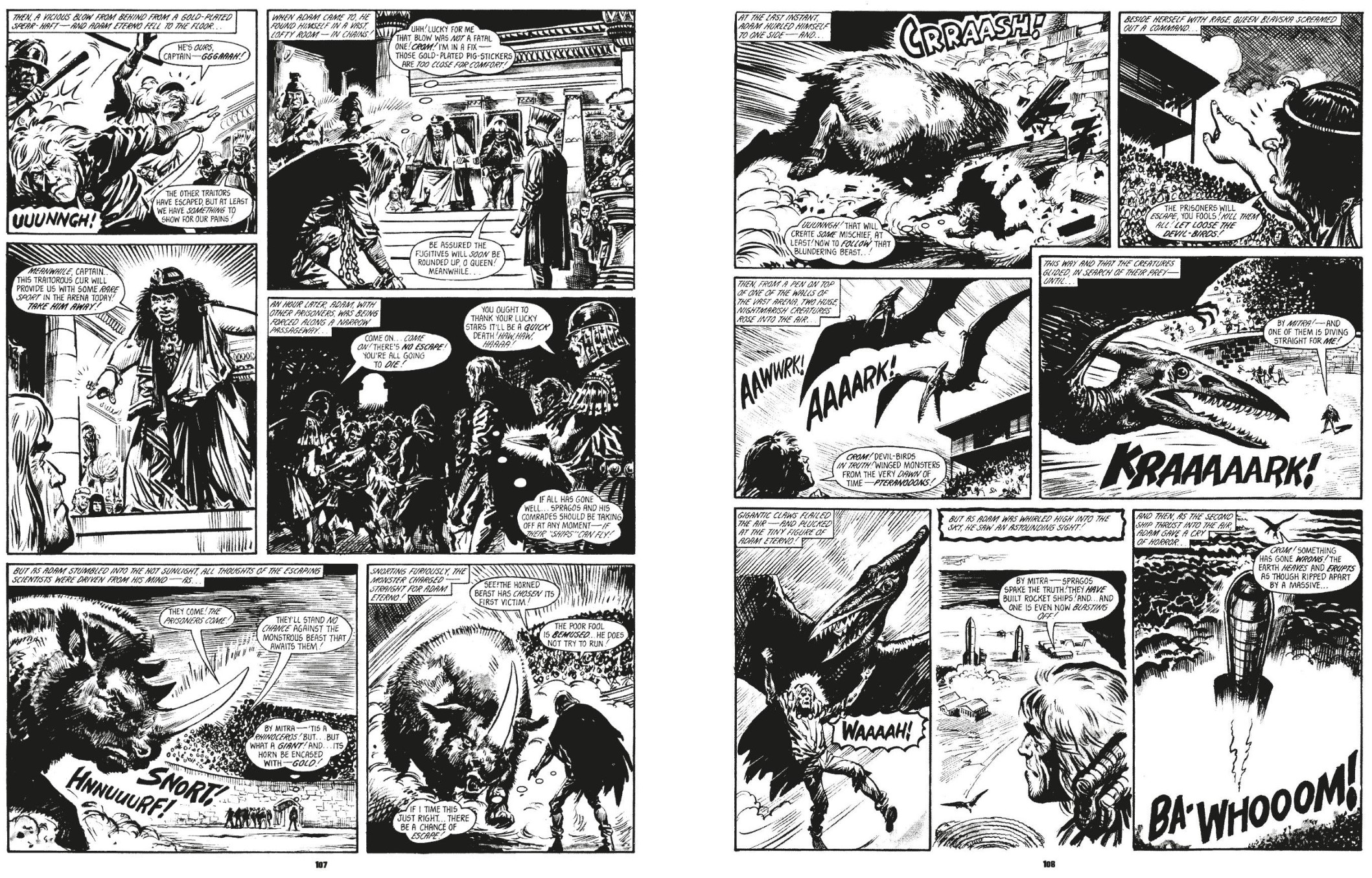
All that imagination and experience are seen here, when Adam appears in ancient Atlantis: a dinosaur-infested paragon of human ingenuity and political depravity where a tyrannical queen and audacious space shot lead to the destruction of Earth’s first human civilisation…

Closing with biographies on the creators featured herein and ads for other British lost wonders Adam Eterno – Grunn the Grim is enthralling astonishment awaiting your gaze: a riotously rewarding rollercoaster ride to delight readers who like their protagonists dark and conflicted and their history in bite-sized bursts.
© 1971, 1972, & 2025 Rebellion Publishing IP Ltd. All Rights Reserved.

Today in 1952 the last weekly instalment of Will Eisner’s Spirit Comics Section was published, whilst in 1974 the final Shiver and Shake entertained diehard UK readers.

In 1994, comics and animation giant Doug Wildey went to the final roundup. Remembered for Tarzan, The Saint newspaper strip and Jonny Quest, he’d prefer you read his elegiac westerns like Doug Wildey’s Rio: The Complete Saga.

Vixen: Return of the Lion


By G. Willow Wilson & CAFU, with Bit, Josh Middleton & various (DC Comics)
ISBN: 978-1-4012-2512-4 (TPB)

This book includes Discriminatory Content produced in less enlightened times.

Welcome to Black History Month UK 2025. The theme this year is “Standing Firm in Power and Pride” and nobody ever accused us of being subtle…

In 1978 fashion model Mari Jiwe McCabe nearly became the first black woman to star in her own American comic book. Sadly, the infamous “DC Implosion” of that year saw the Vixen series cancelled before release. She eventually premiered three years later in Action Comics #521’s ‘The Deadly Rampage of the Lady Fox’ (by creator Gerry Conway and Superman mainstays Curt Swan & Frank Chiaramonte) and thereafter remained, lurking around the DC Universe until she joined a re-booted JLA (latterly dubbed “JLA Detroit”) in Justice League of America Annual #2.

A classic team-player, over intervening decades working within assorted JLA rosters, Suicide Squad, Ultramarine Corps, Checkmate and the Birds of Prey, Vixen’s origin has changed a lot less than most. It even remained mostly un-meddled-with when she made the jump to TV as part of the DC Legends of Tomorrow show.

Mari Jiwe comes from a line of warriors blessed by animist Trickster god Kwaku Anansi. The mythical creator of all stories claims to have designed her abilities – and those of fellow bestial hero Animal Man – allowing Vixen, through use of an arcane artefact dubbed the Tantu Totem, to channel the attributes and signature abilities of every animal that has ever lived.

As a child in M’Changa Province, Zambesi, Mari’s mother was killed by poachers and her missionary father murdered by his own brother over possession of the Totem. To thwart her uncle, the orphan moved to America, eventually becoming a fashion model to provide funding and cover for her mission of revenge…

At first a reluctant superhero, Vixen became one of the most effective crusaders on the international scene and was a key member of the Justice League (the one just before the New 52 Reboot). Previously, when her powers began to malfunction she was forced to confront Anansi himself (for which tales see Justice League of America: Sanctuary and Justice League of America: Second Coming).

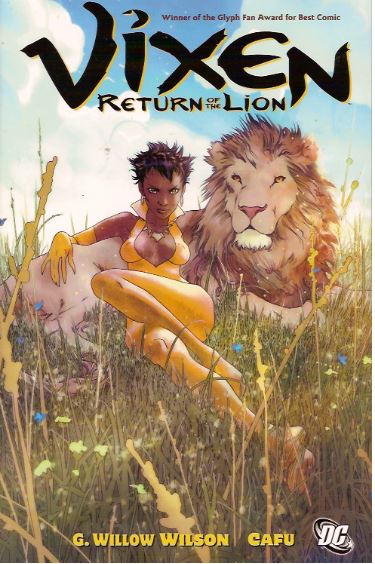
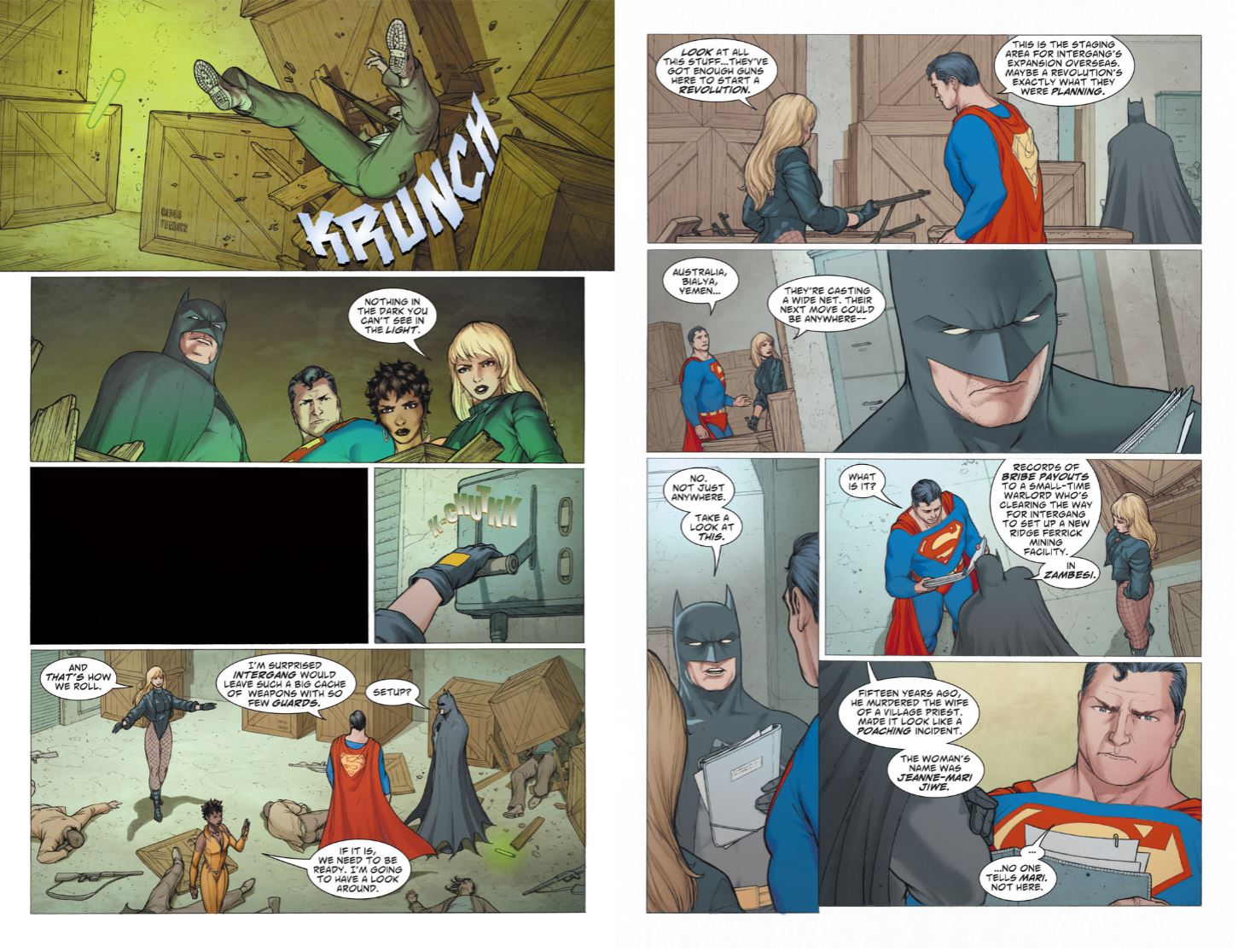
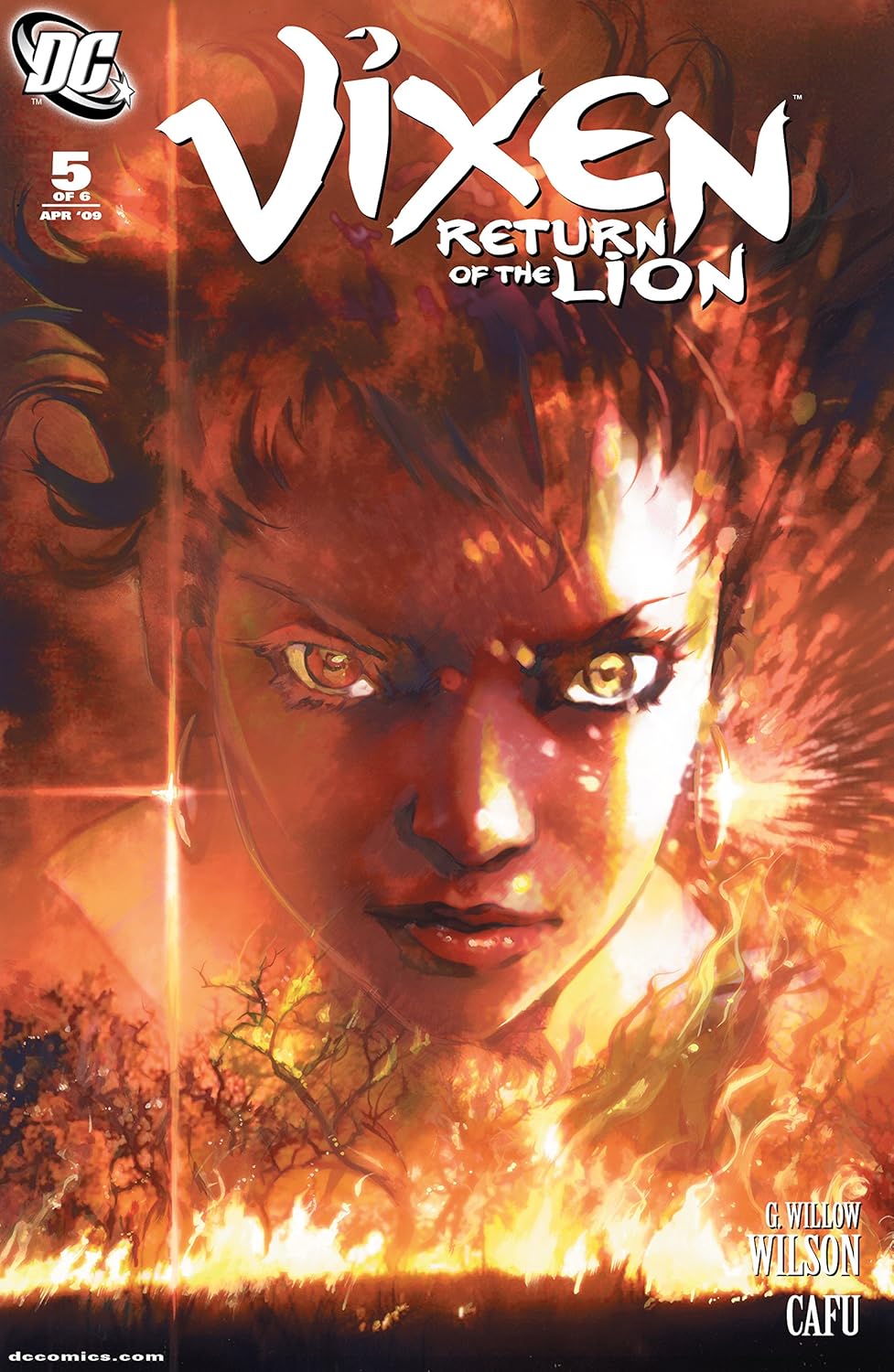
Scripted by author, essayist, journalist and comics scribe G. Willow Wilson (Cairo, Air, Ms. Marvel, Wonder Woman) and illustrated by Carlos Alberto Fernandez Urbano AKA CAFU (Action Comics, T.H.U.N.D.E.R. Agents, Imperium, Unity), Vixen: Return of the Lion was originally seen as a 5-part miniseries in 2009. We open here with ‘Predators’ wherein a League operation uncovers a plot by techno-thugs Intergang to fund a revolution in troubled African nation Zambesi.

Amongst impounded files is a record “proving” that 15 years earlier, Vixen’s mother was actually killed by Aku Kwesi, a local warlord working with the American criminal organisation. When Mari learns this truth, not even Superman can stop her from heading straight to her old village to find the man responsible. Africa is not America, however, and the lawless settlement has no time for a woman who does not know her place – even if she does have superpowers. When Kwesi appears, Vixen’s abilities are useless against him and she escapes with her life only because the warlord’s lieutenant Sia intervenes…

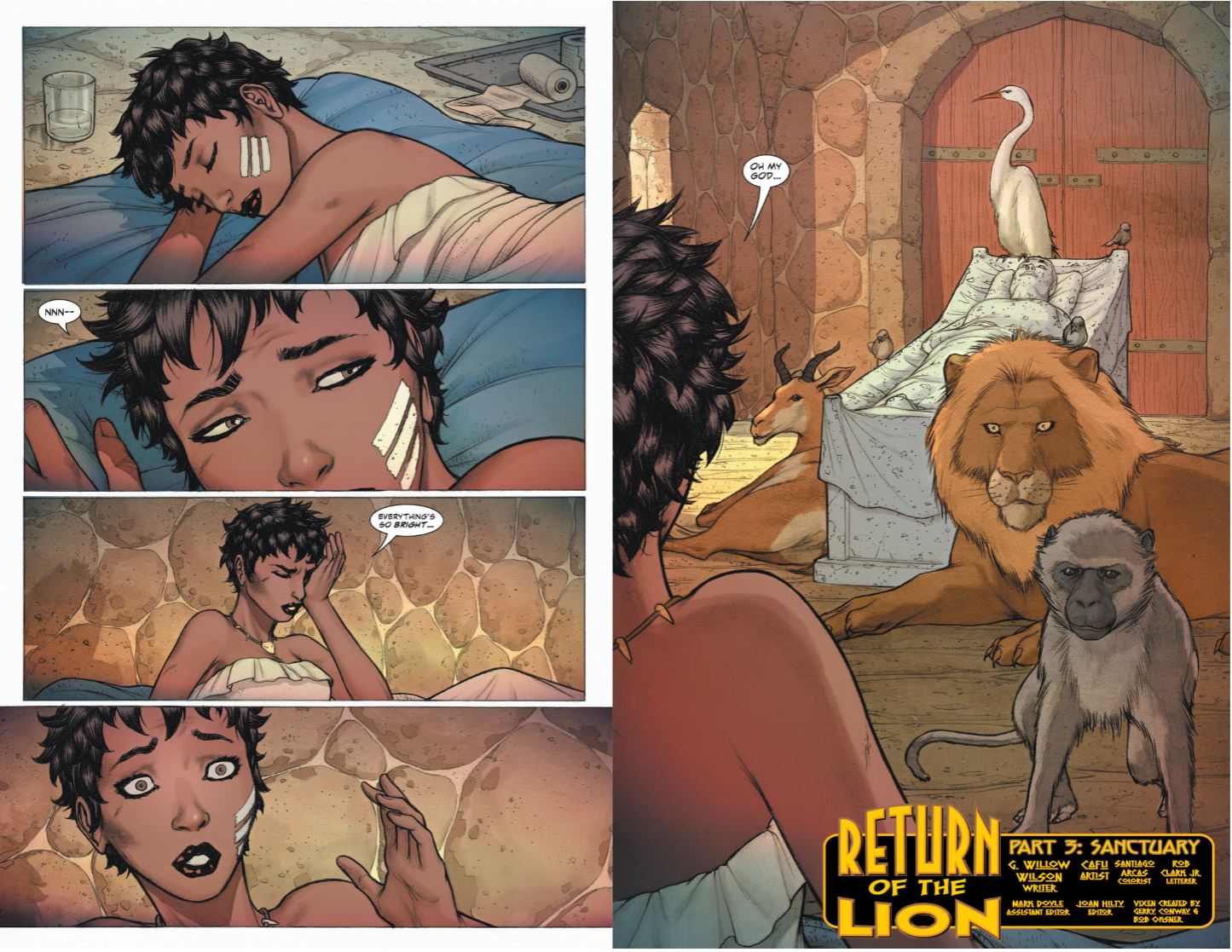
In ‘Prey’, broken, gravely wounded Mari is dumped in the veldt by Sia and staggers her way across the war-ravaged plain, battling beasts and hallucinating – or maybe meeting real ghosts – until she is attacked by a young lion and rescued by a holy man.

Alarmed at Vixen’s disappearance and further discoveries connecting Kwesi to Intergang, the JLA mobilise in ‘Sanctuary’ as lost Vixen slowly recuperates in a place where the constant conflicts of fang & claw survival are suspended. Here, saintly Brother Tabo offers Mari new perspective and greater understanding of her abilities. Her JLA colleagues, meanwhile, have exposed Intergang’s infiltration but fallen to a power even Superman could not resist…

As the League struggles against overwhelming odds, ‘Risen’ sees a transcendent Vixen flying to the rescue, and picking up some unexpected allies before facing her greatest challenge in shocking conclusion ‘Idols’, wherein more hidden truths are revealed and a greater mystery begins to unfold…

Featuring a gallery of stunning covers by Josh Middleton, this is an exceptional and moodily exotic piece of Fights ‘n’ Tights fluff to delight devotees of the genre and casual readers alike, and one long overdue for re-release and inclusion in the growing library of environmentally-beneficial digital comics and books. This gem isn’t even available digitally and that’s just a crime against comics consuming nature…
© 2006, 2009 DC Comics. All Rights Reserved.

Today in 1940 was the birthday of groundbreaking comics auteur Richard Corben, creator of Den, although we rather liked his Haunt of Horror: Lovecraft. It also marks the first appearance of Zack Mosely’s Smilin’ Jack newspaper strip, and the passing of Golden Age great Bob Powell, who we most recently lauded via Bob Powell’s Complete Cave Girl.

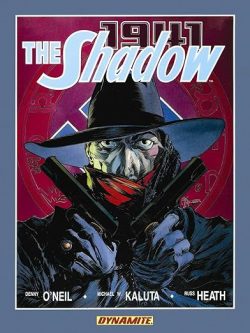
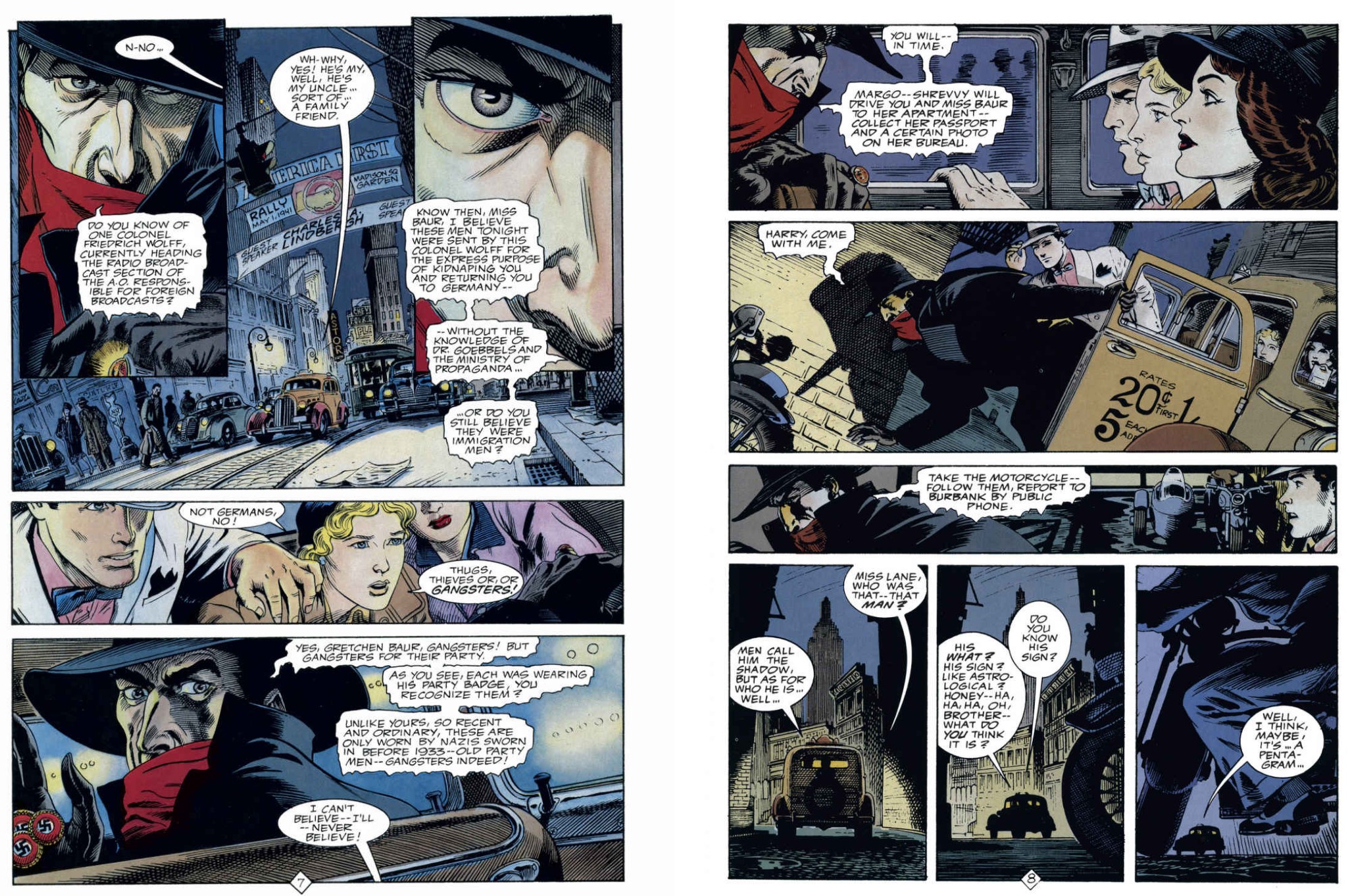
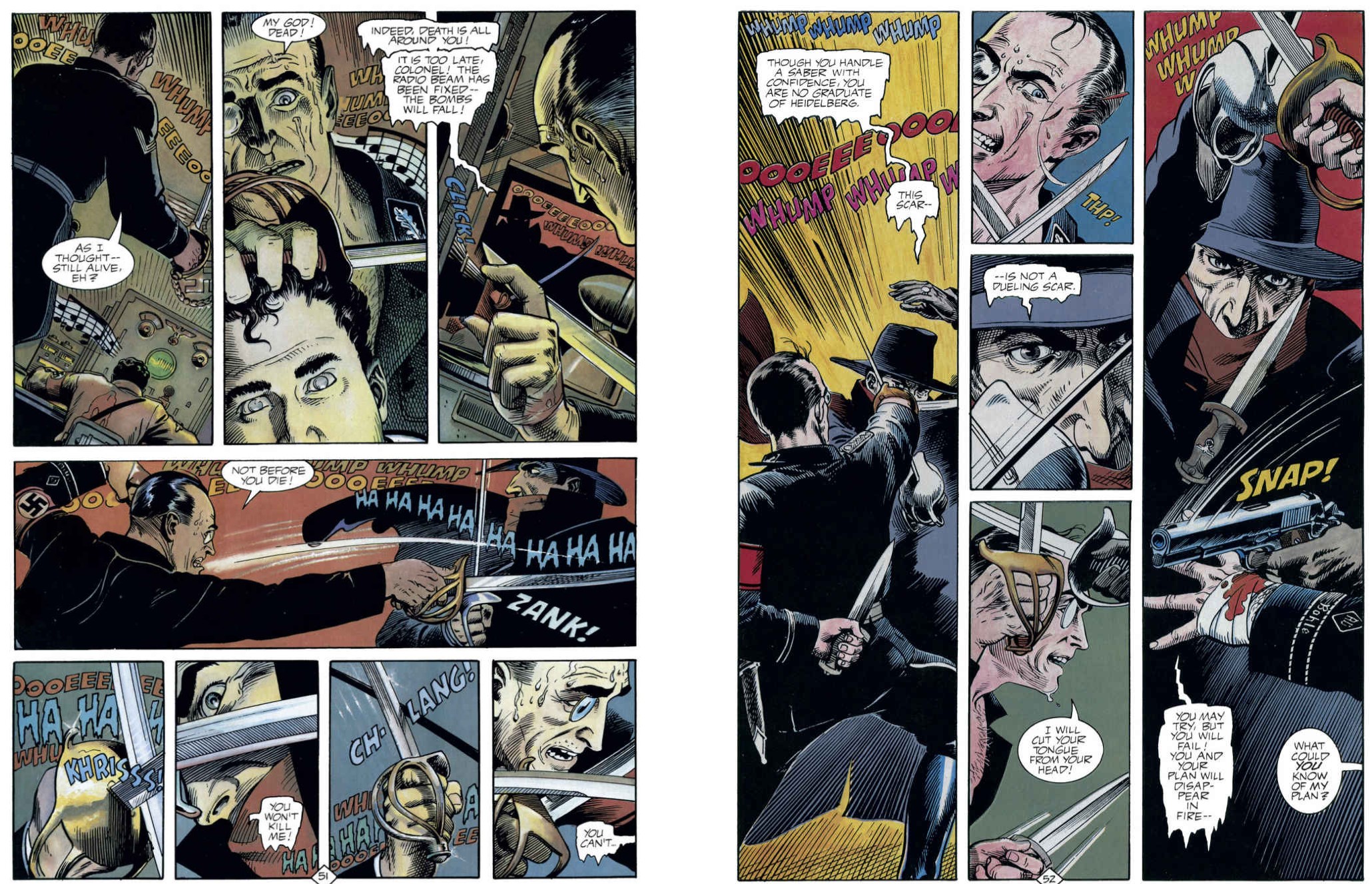
The Shadow 1941: Hitler’s Astrologer


By Dennis O’Neil, Michael William Kaluta & Russ Heath with Mike Kelleher, Mark Chiarello, Nick Jainschigg, John Wellington, Phil Felix & various (Dynamite Entertainment)
ISBN: 978-1-60690-429-9 (HB/Digital edition)

This book includes Discriminatory Content included for dramatic effect.

Russ Heath would have been 99 years old today: a master comics craftsman so few have ever heard of. I don’t think there’s even a definitive collection or a signature title to his name. He did his job masterfully and always moved on, and remains almost practically unknown. The pages of Sgt Rock original art I own are among my most treasured possessions, and every baby boomer who read US comics knew his work because of this and others like it.

Russell Heath Jr. was born in New York City on September 29th 1926 and raised in New Jersey. Influenced by cowboy artist Will James and others, Heath was self-taught and fiercely diligent, demanding authenticity of himself in all his work. This helped him break into comic books while still at High School (episodes of naval strip Hammerhead Hawley for Captain Aero Comics beginning with vol. 2, #2 in September 1942).

Eager to serve his country, Heath left Montclair High School early in 1945 for the Air Force. Whilst in the military he contributed cartoons to the Camp newspaper before shipping out. When peace broke out, he worked briefly as an ad agency gofer until in 1947 he landed a regular job with Timely Comics. Now married, Heath started working from home, drawing Kid Colt and Two Gun Kid, offerings for the dwindling superhero market and sundry horror stories and covers. He hit an early peak in the 1950s, with a wealth of western and horror features as well as co-creating Marvel Boy, limning Venus and The Human Torch during the abortive attempt to revive superheroes in 1953, whilst mostly crafting crime and romance tales,

He branched out: trying his hand on EC’s Mad and Frontline Combat, 3D comics for St. John’s and earned a reputation for gritty veracity in war and straight adventure stories (such as Robin Hood and Golden Gladiator for DC’s The Brave and the Bold). Heath started contributing to DC’s war line in early 1954, with strips in Our Army at War #23 and Star Spangled War Stories #22. It was good fit and he spent the next 15 years working with writer/editor Robert Kanigher, with whom he co-created The Haunted Tank, Losers and Sea Devils. All along he remained a stalwart of anthological compact combat yarns, but increasingly guested on and eventually took over full time illustrating prestigious Sgt. Rock.

Infamously and unjustly, many of his panels were co-opted by pop artist Roy Lichtenstein as the basis of his paintings (specifically Whaam!, Blam, Okay Hot-Shot, Okay!, and Brattata). Heath’s other contributions to American pop culture include those iconic ads for toy soldiers and a stint on Harvey Kurtzman and Will Elder’s ubiquitous Playboy satire strip Little Annie Fanny. Later landmarks include launching a new Lone Ranger newspaper strip with Cary Bates in 1981, and illustrating Michael Fleisher’s infamous Death of Jonah Hex story. Eventually he moved into animation and out to the west coast, but remained in contact with his comics roots, providing occasional returns on titles such as Planet of the Vampires, Mister Miracle, Ka-Zar, The Punisher, Shadowmasters, G.I. Joe and Immortal Iron Fist among others. Having been awarded almost every award going, Heath was in semi-retirement when he died on the 23rd August 2018.

Despite adoring all that apparently unhip war and western stuff, we’re being contrary as ever and highlighting something a little different, but as it’s a special occasion you might want to also track down Hearts and Minds: A Vietnam War Story please link to 29th August 2018. Not our review, the actual book. It’s a Lost Treasure…

Here and now though let’s pop back to the early 1930s, when The Shadow gave thrill-starved Americans their measured doses of extraordinary excitement via cheaply produced pulp periodical novels and over the mood-drenched airwaves via his own radio show. Like comics once upon a time, “Pulps” were published in every style and genre in their hundreds every month, ranging from the truly excellent to the pitifully dire, but for exotic or esoteric adventure-lovers there were two stars who outshone all others. The Superman of his day was Doc Savage, whilst the premier dark, relentless creature of the night dispensing terrifying grim justice was the putative hero featured here…

Radio series Detective Story Hour (based on stand-alone yarns from Street & Smith publication Detective Story Magazine) used a spooky-toned narrator (variously Orson Welles, James LaCurto or Frank Readick Jr.) to introduce each tale. He was dubbed “the Shadow” and from the very start on July 31st 1930 was more popular than the stories he related. The Shadow rapidly evolved into a hands-on hero, solving instead of sharing mysteries and, on April 1st 1931, started starring in his own printed adventures. These were written by astonishingly prolific Walter Gibson under house pseudonym Maxwell Grant. On September 26th 1937 the radio show officially became The Shadow with the eerie mantra “Who knows what evil lurks in the hearts of Men? The Shadow knows!” unforgettably ringing out over the airwaves.

Over the next 18 years 325 novels were published, usually at two a month. The creepy crusader spawned comic books, movies, a newspaper strip and all the merchandising paraphernalia you’d expect of a smash-hit superstar brand. The pulp series officially ended in 1949, although Gibson and others added to the canon during the 1960s when a pulp/fantasy revival gripped the world, generating reprinted classic yarns and a run of new stories as paperback novels. There are also new yarns turning up to this day…

In graphic terms The Shadow was a major player. His national newspaper strip by Vernon Greene launched on June 17th 1940, and when comic books really took off, the Man of Mystery had a four-colour title; running March 1940 to September 1949. Thanks to Robert Bernstein, Jerry Siegel, John Rosenberger & Paul Reinman, Archie Comics published a controversial contemporary reworking in 1964-1965 for their Radio/Mighty Comics imprint.

In 1973 DC acquired rights to produce a captivating, brief but definitive series of classic comics unlike any other superhero title then on the stands. DC periodically revived the venerable vigilante and after the runaway success of Crisis on Infinite Earths, The Dark Knight Returns and Watchman, Howard Chaykin was allowed to utterly overhaul the vintage feature for an audience finally recognised as grown-up enough to handle more sophisticated fare. This led to further, adult-oriented iterations and one cracking outing from Marvel before Dark Horse assumed the license of the quintessential grim avenger for the latter half of the 1990s and beyond.

Dynamite Entertainment secured that option in 2011 and, whilst reissuing much of those earlier efforts, began a series of new monthly Shadow comics. A year after Chaykin and DC catapulted The Shadow into the grim ‘n’ grungy contemporary consumer arena, the dream-team that had first returned him to comics prominence reunited for a larger-than-life grand romp, ably abetted by the inking skills of master artist Russ Heath.

In the early 1970s Denny O’Neil & Michael Kaluta had produced a superb series of adventures (collected as The Private Files of the Shadow plee link to January 19th 2009), set in the mad scientist/spy/gangster-ridden ‘thirties. When they reunited to produce a Marvel Graphic novel, expectations were high, and in many ways that complex, devious yarn was the final chapter of that astounding graphic procession. Dynamite’s 2013 re-release of Hitler’s Astrologer saw the entire affair re-mastered by Mike Kelleher, finally doing justice to the colouring of Mark Chiarello, Nick Jainschigg and John Wellington – as well as letterer Phil Felix – which had not fared well under Marvel’s production processes of that earlier time.

On Easter Sunday 1941 a beautiful woman is pursued through the teeming crowds of Times Square theatre-goers by sinister thugs until rescued in the nick of time by agents of The Shadow. She is Gretchen Baur, personally despatched to America by Josef Goebbels to gather astrological data for the Reich’s Ministry of Propaganda. However, now the confused fräulein cannot understand why agents of her own government have tried to abduct her… until The Shadow reveals that she is an unwitting pawn in a deadly battle for supremacy within the Nazi Party. It all revolves around her father, Der Führer’s personal astrologer…

And thus begins a tense, intricate conspiracy thriller ranging from the bloody streets of New York through the shell-pocked skies of Europe to the very steps of Hitler’s palace in Berlin, as a desperate plan to subvert the course of the war comes up hard against a twisted, thwarted love and a decades-long hunt for vengeance…

Deliciously deranged and suitably Wagnerian in style, this action-packed mystery drama exudes period charm. Nobody has ever realised The Shadow and his cohorts as well as Kaluta, whilst Russ Heath’s sleek mastery adds weight and volume to the cataclysmic proceedings.

This sinister saga of the man in the black slouch hat with the girasol ring is another superb addition to the annals of the original Dark Knight, and one no one addicted to action and mystery should miss.

The Shadow ® & © 2013 Advance Magazine Publishers Inc. ® ™ & © Conde Nast. All Rights Reserved.

Today in 1916 was born Britain’s master of mordant wit Carl Giles. Last time we shared a laugh with him was Giles: the Collection 2014, whilst in 1947 underground legend Greg Irons first checked in. Our proudest moment is reviewing his outrageous The Wyf of Bath (The Wife of Bath) please link to March 9th 2018. Good luck finding that, but his other stuff is darn good too!

In 1988 utterly urbane arcane cartoonist Charles Addams went to his – or at least somebody’s – grave. You can check him out just by scrolling back to yesterday

DC Finest: The Spectre – The Wrath of the Spectre


By Gardner F. Fox, Bob Haney, Mike Friedrich, Steve Skeates, Dennis J. O’Neil, Mark Hanerfeld, Jack Miller, Michael L. Fleisher, Paul Kupperberg, Mike W. Barr, Roy Thomas, Murphy Anderson, Carmine Infantino, Ross Andru & Mike Esposito, Neal Adams, Jerry Grandenetti, Jack Sparling, Bernie Wrightson, José Delbo, Jim Aparo, Frank Thorne, Ernie Chan, Michael R. Adams, Rick Hoberg, Jerry Ordway, Richard Howell, Larry Houston, Gerald Forton & various (DC Comics)
ISBN: 978-1-4012-3417-1 (TPB)

This book includes Discriminatory Content produced in less enlightened times

This stunning compilation is another long-awaited full colour chronolgically curated compilation delivering “affordably priced, large- paperback collections” highlighting DC’s past glories. Sadly, none are yet available digitally, as were the last decade’s Bronze, Silver and Golden Age collections, but we live in hope…

Win’s Christmas Gift Recommendation: Sublime Seasonal Spookfest for Comics Addicts… 10/10

Created by Jerry Siegel & Bernard Baily in 1940 and debuting via a 2-part origin epic in More Fun Comics #52 & 53, The Spectre is one of the oldest characters in DC’s vast character stable. Crucially, just like Siegel’s other iconic creation, the Ghostly Guardian soon began suffering from a basic design flaw: he was just too darn powerful. However, unlike Superman this relentless champion of justice is already dead, so he can’t really be logically or dramatically imperilled. Moreover, in those far off early days that wasn’t nearly as important as sheer spectacle: forcibly grabbing the reader’s utter attention and keeping it stoked to a fantastic fever pitch.

Starting as a virtually omnipotent phantom, the Astral Avenger evolved over various revivals, refits and reboots into a tormented mortal soul bonded inescapably to the actual embodiment of the biblical Wrath of God…

The story is a genuinely gruesome one: police detective Jim Corrigan is callously executed by gangsters before being called back to the land of the living. Commanded to fight crime and evil by a glowing light and disembodied voice, he was indisputably the most formidable hero of the Golden Age. He has been revamped many times, and in the 1990s was revealed to be God’s own Spirit of Vengeance wedded to a human conscience. When Corrigan was finally laid to rest, Hal (Green Lantern) Jordan and murdered Gotham City cop Crispus Allen replaced him as the mitigating conscience of the unstoppable, easily irked force of Divine Retribution. Last time I looked, Corrigan had the job again…

However, the true start of that radically revitalised career began in the superhero-saturated mid-1960s when, hot on the heels of feverish fan-interest in the alternate world of the Justice Society of America and Earth-2 (where all their WWII heroes retroactively resided), DC began trying out solo revivals of 1940’s characters, as a counterpoint to such wildly successful Silver Age reconfigurations as Flash, Green Lantern, Atom and Hawkman

This colossal compilation documents the almighty Man of Darkness’ resurrection in the Swinging Sixties, his landmark reinterpretation in the horror-soaked, brutalised 1970s and even finds room for some later appearances before the character was fully de-powered and retrofitted for the post-Crisis on Infinite Earths DC Universe. As such, this Spectre-acular tome of terror (660 subtly sinister peril-packed pages!) re-presents material from Showcase #60, 61 & 64; team-up tales from The Brave and the Bold #72, 75, 116, 180 & 199; The Spectre #1-10; lead strips from Adventure Comics #431-440: a tryptich serial from horror-anthology Ghosts #97-99 and a wartime-set saga from JSA retro hit All-Star Squadron #27-28: cumulatively channelling January/February 1966 to December 1983.

Back in the Sixties DC had attempted a number of Earth-2 team-iterations (Starman & Black Canary – with Wildcat – in The Brave and the Bold #61-62, whilst Showcase #55 & 56 spotlighted Doctor Fate & Hourman, with a cameo from the original Green Lantern), but inspirational editor Julie Schwartz & scripter Gardner F. Fox only finally achieved their ambition to relaunch a Golden Age hero into his own title with the revival of the Ghostly Guardian in Showcase. It had been hard going and perhaps ultimately happened only thanks to a growing general public taste for supernatural stories…

After three full length appearances and many guest-shots, The Spectre won his own solo series at the end of 1967, just as the superhero craze went into steep decline, but arguably Showcase #60 (cover-dated January/February 1966 but actually on sale from Novenember 25th 1965) anticipated the rise of supernatural comics by re-introducing Corrigan and his phantom passenger in ‘War That Shook the Universe’ by Earth-2 team supreme Fox & illustrator Murphy Anderson. This spectacular saga reveals why the Heroic Haunt had vanished two decades previously, leaving fundamentally human (but dead) Corrigan to pursue his war against evil on merely mortal terms – until a chance encounter with a psychic investigator frees the spirit buried deep within him. A diligent search reveals that, 20 years previously, a supernal astral invader broke into the Earth plane and possessed a mortal, but was so inimical to our laws of reality that both it and the Grim Ghost were locked into their meat shells until now…

Thus began a truly Spectre-acular (feel free to groan, but that’s what they called it back then) clash with devilish diabolical Azmodus that spans all creation and blew the minds of us gobsmacked kids…

Showcase #61 (March/April) upped the ante as even more satanic Shathan the Eternal subsequently insinuates himself into our realm from ‘Beyond the Sinister Barrier’: stealing mortal men’s shadows until he is powerful enough to conquer the physical universe. This time The Spectre treats us to an exploration of the universe’s creation before narrowly defeating the source of all evil…

The Sentinel Spirit paused before re-manifesting in Showcase #64 (September/October 1966) for a marginally more mundane but no less thrilling case after ‘The Ghost of Ace Chance’ takes up residence in Jim’s body. By this time, it was established that ghosts need a mortal anchor to recharge their ectoplasmic “batteries”, with this unscrupulous crooked gambler determined to inhabit the best frame available…

Try-out run concluded, the editors sat back and waited for sales figures to dictate the next move. When they proved inconclusive, Schwartz orchestrated a concerted publicity campaign to further promote Earth-2’s Ethereal Adventurer. Thus The Brave and the Bold #72 (June/ July 1967) saw the Sentinel Spook clash with Earth-1’s Scarlet Speedster in ‘Phantom Flash, Cosmic Traitor’ (by Bob Haney, Carmine Infantino & Charles “Chuck” Cuidera). This sinister saga sees the mortal meteor arcanely transformed into a sinister spirit-force and power-focus for expired but unquiet American aviator Luther Jarvis who returns from his death in 1918 to wreak vengeance on the survivors of his squadron – until the Spectre intervenes…

Due to the vagaries of comic book scheduling, B&B #75 (December 1967/January 1968) appeared at around the same time as The Spectre #1, although the latter had a cover-date of November/December 1967. In this edition it follows the debut of the haunted hero in his own title…

‘The Sinister Lives of Captain Skull’, by Fox & Anderson, divulges how the botched assassination of American Ambassador Joseph Clanton and an experimental surgical procedure allows one of the diplomat’s earlier incarnations to seize control of his body and, armed with mysterious eldritch energies, run amok on Earth. These “megacyclic energy” abilities enable the revenant to harm and potentially destroy the Grim Ghost, compelling the Spectre to pursue the piratical Skull through a line of previous lives until he can find their source and purge the peril from all time and space. Meanwhile over in the Batman team-up tale – scripted by Haney and limned by Ross Andru & Mike Esposito – Ghostly Guardian joins Dark Knight to liberate Earth-One Gotham City’s Chinatown from ‘The Grasp of Shahn-Zi!’: an ancient oriental sorcerer determined to prolong his reign of terror at the expense of an entire community and through the sacrifice of an innocent child, after which the Astral Avenger proceeded on Earth-Two in his own title…

With #2 (January/February 1968) artistic iconoclast Neal Adams came aboard for Fox-scripted mystery ‘Die Spectre – Again’ wherein crooked magician Dirk Rawley accidentally manifests his etheric self and severely tests both Corrigan and his phantom lodger as they seek to end the double-menace’s string of crimes, mundane and magical. At this time, the first inklings of a distinct separation and individual identities began. The two halves of the formerly sole soul of Corrigan were beginning to disagree and even squabble…

Neophyte scripter Mike Friedrich joined Adams for #3’s ‘Menace of the Mystic Mastermind’ wherein pugilistic paragon Wildcat faces the inevitable prospect of age and infirmity even as an inconceivable force from another universe possesses petty thug Sad Jack Dold, turning him into a nigh-unstoppable force of cosmic chaos.

Next, ‘Stop that Kid… Before He Wrecks the World’ was written & illustrated by Adams with a similar trans-universal malignity deliberately empowering a young boy as a prelude to its ultimate conquest, whilst #5’s ‘The Spectre Means Death?’ (all Adams again) appears to show the Astral Adept transformed into a pariah and deadly menace to society, until Corrigan’s investigations uncover emotion-controlling villain Psycho Pirate at the root of the Heroic Haunt’s problems…

Despite the incredible talent and effort lavished upon it, The Spectre simply wasn’t finding a big enough audience. Adams left for superhero glory elsewhere and a hint of changing tastes emerged as veteran horror comics illustrator Jerry Grandenetti came aboard. Issue #6 (September/October 1968) saw his eccentric, manic cartooning adding raw wildness to the returning Fox’s moody thriller ‘Pilgrims of Peril!’ Anderson also re-enlisted, applying a solid ink grounding to the story of a sinister quartet of phantom Puritans who invade the slums of Gateway City, driving out the poor and hopeless as they hunt long-lost arcane treasures. These would allow demon lord Nawor of Giempo access to Earth unless Spectre can win his unlife or death duel with the trans-dimensional horror…

As the back of #7 was dedicated to a solo strip starring Hourman (not included here), The Spectre saga here – by Fox, Grandenetti & Anderson – was a half-length tale following the drastic steps necessary to convince the soul of bank-robber Frankie Barron to move on. As he was killed during a heist, the astral form of aversion therapy used to cure ‘The Ghost That Haunted Money!’ proves not only ectoplasmically effective but outrageously entertaining…

Issue #8 (January/February 1969) was scripted by Steve Skeates and began a last-ditch and obviously desperate attempt to turn The Spectre into something the new wave of anthology horror readers would buy.

As a twisted, time-lost apprentice wizard struggles to return to Earth after murdering his master and stealing cosmic might from the void, on our mundane plane an exhausted Ghostly Guardian neglects his duties and is taken to task by his celestial creator. As a reminder of his error, the Penitent Phantasm is burdened by a fluctuating weakness – which would change without warning – to keep him honest and earnest. What a moment then, for desperate disciple Narkran to return, determined to secure an elevated god-like existence by securing ‘The Parchment of Power Perilous!’

The Spectre #9 completed the transition, opening with an untitled short from Friedrich (illustrated by Grandenetti & Bill Draut) finding the Man of Darkness again overstepping his bounds by executing a criminal. This prompts Corrigan to refuse the weary wraith the shelter of his reinvigorating form and when the Grim Ghost then assaults his own host form, the Heavenly Voice punishes the spirit by chaining him to the dreadful Journal of Judgment: demanding he atone by investigating the lives inscribed therein in a trial designed to teach him again the value of mercy.

The now anthologised issue continued with ‘Abraca-Doom!’ (Dennis J. O’Neil & Bernie Wrightson) as The Spectre attempts to stop a greedy carnival conjurer signing a contract with the Devil, whilst ‘Shadow Show’ – by Mark Hanerfeld & Jack Sparling – details the fate of a cheap mugger who thinks he can outrun the consequences of a capital crime. The Spectre gave up the ghost, folding with #10 (May/June 1969), but not before a quartet of tantalising tales shows what might have been. ‘Footsteps of Disaster’ (Friedrich, Grandenetti & George Roussos) follow a man from cradle to early grave, revealing the true wages of sin, whilst ‘Hit and Run’ (Steve Skeates & Jose Delbo) proves again that the Spirit of Judgment is not infallible and even human scum might be redeemed. Jacks Miller & Sparling asked ‘How Much Can a Guy Take?’ with a shoeshine boy pushed almost too far by an arrogant mobster before the series closed with a cunning murder mystery involving what appeared to be a killer ventriloquist’s doll in Miller, Grandenetti & Roussos’ ‘Will the Real Killer Please Rise?’ With that the Astral Avenger returned to comic book limbo for nearly half a decade until changing tastes and another liberalising of the Comics Code saw him arise as lead feature in Adventure Comics #431 (January/February 1974) for a shocking run of macabre, ultra-violent tales from Michael L. Fleisher, Jim Aparo and friends

‘The Wrath of… The Spectre’ offered a far more stark, unforgiving take on the Sentinel Spirit; reflecting the increasingly violent tone of the times. Here, a gang of murderous thieves slaughter the crew of a security truck and are tracked down by a harsh, uncompromising police lieutenant named Corrigan. When the bandits are exposed, the cop unleashes a horrific green and white apparition from his body which inflicts ghastly punishments horrendously fitting their crimes.

With art continuity (and no, I’m not sure what that means either) from Russell Carley, the draconian encounters continue in #432 as in ‘The Anguish of… The Spectre’ assassins murder millionaire Adrian Sterling and Corrigan meets the victim’s daughter. Although the now-infallible Wrathful Wraith soon exposes and excises the culprits, the dead detective has to reveal his true nature to grieving Gwen. Moreover, Corrigan begins to feel the stirring of impossible, unattainable yearnings…

Adventure #433 exposed ‘The Swami and… The Spectre’ with Gwen seeking spiritual guidance from a ruthless charlatan who promptly pays an appalling price when he finally encounters an actual ghost, whilst #434’s ‘The Nightmare Dummies and… The Spectre’ (with additional pencils by Frank Thorne), reveals a plague of department store mannequins running wild in a killing spree at the behest of a crazed artisan who believes in magic – but cannot imagine the cost of his dabbling. AC #435 introduces journalist Earl Crawford who tracks ghastly fallout of the vengeful spirit’s anti-crime campaign in ‘The Man Who Stalked The Spectre!’ Of course, once he sees the ghost in grisly action, Crawford realises the impossibility of publishing this scoop…

Adventure #436 finds Crawford still trying to sell his implausible story as ‘The Gasmen and… The Spectre’ sets the Spectral Slaughterman on the trail of a gang who kill everyone at a car show as a simple demonstration of intent before blackmailing the city. Their gorily inescapable fate only puts Crawford closer to exposing Corrigan…

Meanwhile elsewhere, Haney & Aparo reunite Batman, Detective Corrigan and a far kinder Spectre for Brave and the Bold #116’s ‘Grasp of the Killer Cult’, as the heroes hunt WWII veterans targetted by the spirits of dead Kali worshippers on a murder spree to generate enough arcane energy to resurrect their goddess, before Adventure #437’s ‘The Human Bombs and… The Spectre’ (pencilled by Ernie Chan with Aparo inks) sees a kidnapper abduct prominent persons – including Gwen – to further a mad scheme to amass untold wealth… until the Astral Avenger ends both financial aspirations and deadly depredations forever.

Despite critical acclaim – and popular controversy – the weird writing was on the wall for the grimmest ghost ever and AC #438 heralded the beginning of the end in Fleischer, Chan & Aparo’s ‘The Spectre Haunts the Museum of Fear’. Here a deranged taxidermist turns people into unique dioramas until the original spirit of vengeance intervenes. The end was in sight again for the Savage Shade and #439’s ‘The Voice that Doomed… The Spectre’ (all Aparo art) turns the wheel of death full circle, as the Heavenly Presence who created him allows Corrigan to fully live again so that he can marry Gwen. Sadly, it’s only to have the joyous hero succumb to ‘The Second Death of The… Spectre’ in the next, last issue (#440, July/ August 1975) before tragically resuming his never-ending mission. This milestone serial set a stunning new tone and style for the Ghostly Guardian which has informed each iteration ever since…

By the early 1980s, the latest horror boom had exhausted itself and DC’s anthology comics were disappearing. As part of the effort to keep them alive, Ghosts featured a 3-part serial starring “Ghost-Breaker” and inveterate sceptic Dr. Terry 13 who at last encounters ‘The Spectre’ in issue #97 (February 1981, by Paul Kupperberg, Michael R. Adams & Tex Blaisdell). Here, terrorists invade a high society séance and are summarily dispatched by the inhuman poetic justice of a freshly-manifested Astral Avenger. Resolved to destroy the sadistic revenant vigilante, recently converted true beliver Dr. 13 returns in #98 when‘The Haunted House and The Spectre’ finds the Ghost-Breaker interviewing Earl Crawford and subsequently discovering the long-sought killer of his own father. Before 13 can act, however, the Spectre appears to hijack his justifiable retribution…
The drama ends in Ghosts #99 as ‘Death… and The Spectre’ (inked by Tony DeZuñiga) sees scientist and spirit locked in one final furious confrontation. Then more team-up classics from Brave and the Bold follow, beginning with ‘The Scepter of the Dragon God’ (by Fleisher & Aparo from #180, November 1980). Although Chinese wizard Wa’an-Zen steals enough mystic artefacts to conquer Earth and destroy The Spectre, he gravely underestimates the skill and bravery of merely mortal Batman, before #199’s ‘The Body-napping of Jim Corrigan’ (June 1983 by Mike W. Barr, Andru & Rick Hoberg), depicts the undead investigator baffled by the abduction and disappearance of his mortal host. Even though he cannot trace his own body, the Spectre knows where the World’s Greatest Detective hangs out…

This staggering compendium of supernatural thrillers concludes with a two-part saga from revivalist treat All-Star Squadron #27 & 28 as Roy Thomas, Jerry Ordway, Richard Howell, Larry Houston & Gerald Forton take us back to embattled 1942 where America’s greatest superheroes strive against the last outbreak of fascist tendencies.

Here the Golden Age Superman, Batman and Robin join Doctor Fate, Tarantula, Firebrand, The Atom, Hawkman, Phantom Lady, Amazing Man, Commander Steel, Dr. Mid-nite, Starman, Sandman, Flash, The Guardian, Johnny Thunder, Green Lantern, Johnny Quick, Liberty Belle and Wonder Woman go in search of a missing ghostly Guardian only to learn ‘A Spectre is Hanting the Multiverse!’ with the mightiest being in creation enslaved to pan-dimensional tyrant Kulak, High Priest of Brztal and facilitating a long-anticipated scheme to eradicate Earth, it’s no small mercy that humanity has other uncanny defenders – such as Sargon the Sorceror – to call upon…

Although an incongruously superhero-heavy tale to end on this compilation covers much of the darlest corners of DC legend and fable. With covers by Anderson, Infantino, Jack Adler, Adams, Grandenetti, Nick Cardy, Aparo, Tatjana Wood, George Tuska, Anthony Tollin & Jerry Ordway, and ranging from fabulously fantastical to darkly, violently enthralling, these comic masterpieces perfectly encapsulate the way superheroes changed over a brief 20-year span, but remain throughout some of the most beguiling and exciting tales of the company’s canon. If you love comic books you’d be crazy to ignore this one.
© 1966, 1967, 1968, 1969, 1974, 1975, 1981, 1983, 2012 DC Comics. All Rights Reserved.

On this day in 1867 strip pioneer Winsor McCay was born. Check out Daydreams and Nightmares – The Fantastic Visions of Winsor McCay for more.

Today in 1938 Belgian giant Raoul Cauvin was born. Bluecoats volume 18: Duel in the Channel was the last book of his we covered, whilst in 1946, the first issue of Le Journal de Tintin went on sale. Stuff from there like Blake and Mortimer is all over this site. Just use the search box and see…