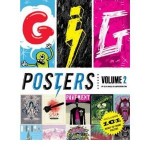
Gig Posters volume 2: Rock Show Art of the 21st Century


By Clay Hayes (Quirk)
ISBN: 978-1-59474-543-0

Although a little on the fringe of what we usually look at here, this superb and humongous (282 by 356mm) full-colour art-book thumped onto my in-tray recently and I will admit to being rather blown away by the contents. I make no apologies but happily stress for nit-pickers that since Now Read This is dedicated to plugging stories told through or in conjunction with graphic art – and even typography – Gig Posters volume 2 contains some of the most impressive, varied and arresting modern images I’ve seen in quite a while…

GigPosters.com began in 2001 as an on-line historical vault for music art where browsers could view a vast resource of music related design, concert posters and contemporary nostalgia. It quickly became The Place for jobbing artists, designers, printer-makers and performing artists from around the globe to showcase their talents. In 2009 a giant book containing 700 of the very best images with 101 of those as full-page, ready to frame/hang/nail/blu-tack or otherwise affix to your personal vertical spaces was released. Naturally the book was a tremendous success and this spectacular sequel followed in 2011…

Within these immense pages are works by Adam Pobiak, Alan Hynes, Alana Bailey, Altieri Art, the Ames Bros, Anville, AS Printing Press, Atzgerei, Baker Prints, Blackheart Studios, Ben Wilson, Broken Press, The Bubble Process, The Bungaloo, Chicken Billy, Clint Wilson, Clinton Reno, The Comet Substance, Concepción Studios, Craig Horky, Craig Updergrove, David V, D’Andrea, Dead Meat, Dirty Donny Gillies, DKNG, Doe Eyed, Doublenaut, Douze Studio Dresden, Dr. Alderete, Droid, Empire Press, Erick Montes, Frida Clements, Ghost-Town Studio, Graham Pilling, Gunsho, The Half and Half, Hatch Show Print, Hyp Inc, Idiot or Genius?, Insurgentarts, Iron Canvas Studios,

Iskra Print Collective, Isle of Printing, Ivan Minsloff, James Flames, Jeral Tidwell, Jeremy Wilson, Jim Mazza, Joe Whyte, John Howard, Johnny Sampson, Justin Santora, Kill Hatsumomo Prints, Kunny van der Ploeg, Landland, Madpixel Art and Design, Mara Piccione, Mark McCormick, Mark Sgarbossa, Marq Spusta, Matt Terich, Maximum Fluoride Killustration, Mike Saputo, Mike Weihs, Mile 44, Nat Damm, Nerl Says Design, Nick DuPey, Petting Zoo Prints and Collectables, Pfahlert Creative Labs, Punchgut, R. Black, Rich Kelly, Robbie Fuct, Ryan Duggan, Scott Campbell, Scraped Knee Studios, Scrawled Design, Shawn K. Knight, The Silent Giants, Small Horse Studio, Sonnenzimmer, Spike Press, Standard Deluxe, Inc., Standard Design, Status Serigraph, Subject Matter Studio, Switchopen Illustrations, T-Bone & Aljax Production and Design, Tim Huesken, Tom Bagley, Traci Edwards, Two Arms, Inc., Two Rabbits Studios, Tyler Stout, Uglybogus, Us & Them, Weapons of Mass Design, Weathermaker Press and Will Ruocco.

The acts promoted and commemorated in these stunning pictures range from household names (well, in my household anyway) to local phenomenons and up-and comers: Green Day, Queens of the Stone Age, Arcade Fire, Flight of the Conchords, Rage Against the Machine, Ra Ra Riot, Norah Jones, Slayer, Sonic Youth, Devotchka, Bonny Prince Billy, Cake, Linkin Park, Ween, Death Cab for Cutie, Marianne Faithful, Wu- Tang Clan, Helmet, Duran Duran, Yob and many, many more…

Since 1977and the Punk Revolution, music and comic art have continually fed off each other and many of the images in here will seem like old friends to fanboys and art lovers. Many of them will inevitably inspire new comic images…

© 2011 Clay Hayes and Gigposters.com. All rights reserved. All artwork courtesy and copyright of individual designers or design studios.

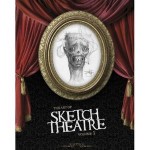
The Art of Sketch Theatre volume 1


By various (Baby Tattoo Books)
ISBN: 978-1-61404-003-3

“Sketch Theatre exists for one express purpose – to expose you to the myriad career opportunities available for creative individuals. Whether you’re interested in comics, tattooing, painting, illustration, graphic design, fashion, animation, creating films or making music, there are more opportunities for artists today than there have ever been in history.

Through Sketch Theatre, we hope to inspire you to the realisation that if you are an artist, that it is more than ok – it is a gift that holds no shame in being fulfilled.”

Sketch Theatre is an online forum and showcase where creators post works plus those so-crucial intervening stages of development for the inspiration, encouragement and edification of others touched by the hunger to make art and this superb oversized hardback compilation offers four pages each to 57 of the many contributors who are part of the experiment.

The philosophies and efforts of the many painters, illustrators, animators, games designers, film industry Creatives and other less definable professional imaginers combine to form a stunning and beguiling catalogue of fantasy and facility that is both breathtaking and powerfully galvanising.

This staggeringly impressive collection and celebration of modernist imagery, craft, skill and imagination blends a broad array of artistic techniques and styles with the iconography and memories of cartoons, comics, television, toys, movies, street culture, music, body art and a million other unforgettable creative delights into a high gloss, stunningly lavish exploration of modern culture.

The sketches, designs and finished works here range from the horrific and bizarre to the disturbingly lovely and the creators responsible are understandably proud of their work…

Contained in this first volume are the efforts of Aaron Sims, Aimée Kuester, Alex Alvarez, Alvin Lee, Amy Botello, Ana Bagayan, Apricot Mantle, Axel #13, Brandi Milne, Brian Smith, Cameron Davis, Charles Hu, Chet Zar, Chris Ryniak, Christian Lorenz-Scheurer, The Chung!!, Corey Miller, Daphne Yap, Dave Dorman, Dave Hill, Fred Harper, Gene Guynn, Greg “Craola” Simkins, Gris Grimly, Jeff McMillan, Jessica Ward, Jon Beinart, Jon Schnepp, Jordu Schell, Kali Fontecchio, Lola, Luke Chueh, Mark Gabbana, Mari Inukai, Marshall Vandruff, Meats Meier, Michael Broom, Michael Hussar, Miss Mindy, Molly Crabapple, Munk One, Nat Jones, Nate Frizzell, Nick Baxter, Nicholas Villareal, Rick O’Brien, Ron English, S. Fisher Williams, Sam Shearon, Shawn Barber, Steven Daily, Sze Jones, Tara McPherson, Terryl Whitlatch, Tom Baxa, Travis Louie and Wayne Barlowe.

These astonishingly compelling confections (skewed heavily towards the scary, phantasmagorical and chillingly seductive) are presented in a deluxe, wonderfully large (305x229mm) 240-page tome format in eye-popping colour and this exquisite compendium is a fabulous goad for anybody who’s ever regretted growing up, putting away their toys and pencils a little too soon or recently felt the guilty sting of unrequited unadulterated artistic frustration…

All artworks © 2011 by their respective artists; their respective representative(s) and/or their respective copyright/trademark holders. All rights reserved.
For more see sketchtheatre.com

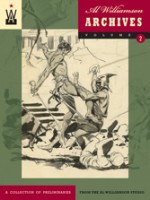
Al Williamson Archives volume 2


By Al Williamson with an introduction by Victor Williamson (Flesk)
ISBN: 978-1-933865-34-8

Al Williamson was one of the greatest draughtsmen ever to grace the pages of comicbooks and newspaper comics sections. He was born in 1931 in New York City, after which his family relocated to Bogotá, Columbia just as the Golden Age of syndicated adventure strips began.

The lad’s passion for “the Comics” – especially Alex Raymond’s Flash Gordon and Jungle Jim – was broadened as he devoured imported and translated US material as well as the best that Europe and Latin America could provide in such anthology magazines as Paquin and Pif Paf. When he was twelve the Williamsons returned to America and, after finishing school, the artistic prodigy found work in the industry that had always obsessed him.

In the early 1950s he became a star of E.C. Comics’ science fiction titles beside kindred spirits Joe Orlando, Wally Wood, Roy G. Krenkel, Frank Frazetta and Angelo Torres, and drew Westerns Kid Colt and Ringo Kid for Atlas/Marvel. During the industry’s darkest days he found new fame and fans producing newspaper strips, first by assisting John Prentice on Rip Kirby – another masterpiece originally created by Alex Raymond – and from 1967 with Secret Agent Corrigan.

As comicbooks recovered in the 1960s Williamson drew Flash Gordon for King Comics and worked on mystery tales and westerns for DC whilst drawing Corrigan, later becoming the go-to guy for blockbuster sci-fi film adaptations with his stunning interpretations of Blade Runner and Star Wars.

His stunning poetic realism, sophisticated compositions, classicist design and fantastic naturalism graced many varied tales, but in later years he became almost exclusively a star inker over pencillers as varied as John Romita Jr., Larry Stroman, Rick Leonardi, Mark Bright, José Delbo and a host of others on everything from Transformers to Spider-Man 2099, Daredevil to Spider-Girl and his magical brushes and pens embellished many of Marvel’s Graphic Novel productions such as The Inhumans or Cloak and Dagger/Predator and Prey.

Al Williamson passed away in June 2010.

After a memory-soaked celebratory introduction from his son Victor, this second oversized (305x229mm) 64 page collection features more sketches, working drawings, doodles, unlinked pages, model sheets, unused and unfinished pages as well as a few completed but unseen treasures from one of the stellar creators of our art form.

In assorted media and forms from quick line sketches in ink, broad brush and tonal studies, full pencils and finished illustrations, Williamson displays his mastery in magical pictures ranging from intoxicating fantasy and barbarian women, valiant sword-wielding warriors, wondrous dinosaurs, Cowboys and Indians, rockets and robots, sports heroes, period drama scenes, cosmic adventurers, beasts and monsters, aliens, action sequences, beguiling nudes and glamour studies, his delicious trademark cute lizards, and so much more.

Standout and extra-inspiration pieces include a fabulous page of the Rocketeer, a Reef Ryan pulp page, many 1960s Flash Gordon sketches, more glorious John Carter of Mars illustrations and a few hard-boiled crime scenes…

The beautifully intimate glimpses of a master at work, with full colour reproduction capturing every nuance of Williamsons’ gorgeous pencil strokes, make this a book a vital primer for anybody dreaming of drawing for a living and the astounding breadth and scope of work presented here make me itch to pick up my pencil and draw, draw, draw some more myself.

Enticing, revealing, rewarding and incredibly inspirational, no lover of wonder or art lover can fail to be galvanised by this superb portfolio of excellence.

© 2011 The Estate of Al Williamson. Introduction © 2011 Victor Williamson. Rocketeer illustration © 1984 The Rocketeer Trust. All Rights Reserved.

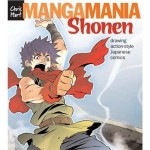
Manga Mania Shonen – Drawing Action-Style Japanese Comics


By Chris Hart (Sixth&Spring)
ISBN: 978-1-933027-69-2

Even though the global craze for Japanese comics and cartoons seems to have partially abated the popularity of Manga and Anime style storytelling is pretty much unquenchable, and with Annual Gift-Giving Season rapidly bearing down on us it might be worthwhile to take a look at one of the better “How-to” reference volumes still available to the budding exponent of Japanese comic making.

I actually found this copy whilst browsing the shelves of my local library so your creative impulses might not even have to wait ’till December comes…

Manga Mania Shonen is the part of an extensive series of art-instruction books by prolific graphic guru Chris Hart which includes manga titles such as a Beginner’s Guides and more specialised tomes devoted to Girl Power, Bishoujo, Occult and Horror, Romance and many others as well as other art “genres” such as Wizards Witches and Warlocks or Drawing The New Adventure Cartoons…

This perky volume focuses on the Shonen or action story characters: lavishly illustrated from stick-figure first concept to fully inked and coloured final work, and opens with a section on Shonen Basics: Drawing the Head, generically broken down further into Action Boy, Teen Enemy, Girl With Crush and Dark Beauty with attention paid to Drawing Eyes For Action Characters, Young Teen Boy, Young Teen Girl, Bishie Boy, Bishijo Girl, Male Villain and Female Villain before rounding off with Craaaazy Eyes!, Intense Expressions and Shading Faces.

Swiftly following is Shonen Basics: Drawing the Body divided into Brave Fighter Kid, Powerful Foe, The Hero’s Girl, Alluring Nemesis, Younger Vs. Older Teens, The Fighting Team, The Character Lineup and Action Tattoos whilst Action! provides timeless, educative and extremely useful truths on Action and Balance, Do’s and Don’ts for Drawing Action, defined as Classic Run (side vs. ¾ view), Fast and Furious Run, The Big Windup and the Big Punch, The Punch and Making Contact; examines Forced Perspective through Flying Kick, Standing Kick and Leaping Forward; depicts Extreme Fight Scenes via Running Start and Impact (both with side and ¾ views) and concludes with a variety of Panel Designs For Action Comics, featuring a four-panel page redrawn numerous ways for different effects.

Samurai Characters and how to construct them follows with model sheet “turnarounds” (the drawing rotated through five positions – Front, ¾ front, side, ¾ rear and Rear views) for a Samurai Boy, plus Girl Samurai, Bad Samurai!, Street Warrior and Evil Samurai Grandmaster as well as sidebars on Uncommon Weapons and Samurai Fantasy Fighters.

Fighter Girls is divided into Flying Ninja, Spy Girl, Sharpshooter, Evil Enchantress, Fantasy Fighter and Karate Girl, Supporting Characters into Teen Punk, Evil Kid, Yakuza, Knife Fighter, Big Buddy, The Blockhead, Motorcycle Rider, The Cursed Hand, Sci-Fi Fighter, Costume Makes the Character and The Dramatic Trench Coat after which Monsters and Creepy Creatures covers such popular standards as Rock Monster, Devil Creature, Ogre, Monsters with Special Powers, Monster Fighter! and such Animal-Based Spirits and Demons as Tiger Girl, Scorpion Boy, Wolf Demon and Bear Spirit.

The final chapter checks out Battle-Ready Robots with Drawing the Robot’s Head, Round-Type Robot, Classic Colossal Robot, Elegant but Deadly Robot and Hyper-Mechanized Robot before Robots and Their Human Pals – sectioned off as A Boy and His Robot, Female Robot, All-Firepower Robot, Villainous Robot and The Mecha Team – finishes up the drawing lessons. The book concludes with a very basic four-page introduction to Sketching a Sequential Story.

By applying a “Time-and-Motion”, mechanistically deconstructive approach Hart has isolated those cool facets ardent newcomers always fixate upon and has perfectly described how to become fully facile in their use. After that, it’s up to the neophyte storyteller to progress at their own pace and inclination…

The whole book is pretty much the equivalent of a set of manga “cheat-sheets” detailing how to produce generic action actors, but as I can certainly attest after years of teaching comics-production, scripting and art to kids from age 4 to 60+, that’s most often the initial alluring spark which can kick off the drive to practise, improve and eventually find a uniquely personal creative path…

Created specifically for the American sector of the global marketplace and targeting younger fans, there’s no time spent here on the harder, less fun and downright laborious aspects such as constructing a plot, shaping narrative, designing believable backgrounds, building scenarios, page composition and copy/balloon placement, and the slavish pigeon-holing of the manga/anime phenomenon into basic construction-line “models” may annoy more advanced students, but if the goal is simply to inspire interested parties into making their own people and stories this book does the job affably and enthusiastically…

© 2008 Star Fire, LCC. All rights reserved.

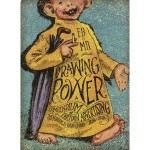
Drawing Power: A Compendium of Cartoon Advertising volume 1


By many and various, edited by Rick Marschall & Warren Bernhard (Fantagraphics Books & Marschall Books)
ISBN: 978-1-60699-399-6

From its earliest inception cartooning has been used to sell: initially ideas or values but eventually products themselves. In newspapers, magazines and especially comicbooks the sheer power of narrative with its ability to create emotional affinities has been linked to the creation of unforgettable images and characters. When those stories affect the daily lives of generations of readers the force that they can apply in a commercial arena is almost irresistible…

Popular culture historian Rick Marschall and biographer/researcher Warren Bernhard have compiled here a captivating potted history of the rise of the art of commercial cartooning in an increasingly advertising-aware America (…and make a strong argument that one could not have thrived without the other) whilst providing a glorious panoply of staggeringly evocative, nostalgic and enduring picture-poems which shaped the habits of a nation. This volume covers the birth of the medium until the outbreak of World War II – which will be tackled in a subsequent book.

After Marschall’s compelling and intoxicating discourse on the growth of the twin industries in ‘Cartoons and the Selling of America’ the individual chapters of copiously illustrated memorabilia commence with ‘The Origins of Cartoon Advertising’ featuring truly magical art from the likes of Joseph Keppler, Thomas Nast, Frederick Burr Opper, Clare Victor “Dwig” Dwiggins, Winsor McCay and others for Beef Tea, Steinway pianos, insurance, wines, “electric” cigarettes, washing powder, sausages, entertainments and political rallies after which the legendary R.F. Outcault stars in the first Portfolio Section.

The creator of Hogan’s Alley, The Yellow Kid, Buster Brown and so many others was the first cartoonist to cut out the commercial middleman and directly market his skills as a pioneering advertising executive with his own agency in 1907 and this 10-page gallery is stuffed with his incredible inventions and innovations.

‘Cartoon Ads Go to War’ celebrates the patriotic fervour engendered by masters of brush and pen such as Ralph Barton, Rose (“Kewpies”) O’Neill, Charles Dana Gibson, McCay again, John T. McCutcheon and many more with the attendant Portfolio piece dedicated to ‘Sheet Music’ illustrations from Homer Davenport, Outcault, McCay, George McManus, Russell Patterson, Rube Goldberg and more, illustrating a growing trend – the licensing of established strip characters and stars to “endorse” and sell products.

‘The Jazz Era’ spotlights a graphic Golden Age both for advertising and newspaper strip merchandising: everything from promotional postcards to personalised calendars, decoder rings and assorted premium statuettes. Here the portfolio features illustrated blotters (absolutely vital in an era when most transactions where inscribed using fountain pens) starring such cartoon heavyweights as Mutt and Jeff, Bull of the Woods, They’ll Do It Every Time, Krazy Kat, Mickey Mouse and Donald Duck, Bringing Up Father, the Gumps and William Heath Robinson.

Another portfolio covers the left-wing cartoonists who openly thrived in the USA in the days before Communism became a dirty word and Liberal Tendencies a hanging offence. Contributors include Otto ‘the Little King’ Soglow, Art Young, Syd Hoff AKA “A. Redfield”, Herbert Johnson, Charles Sykes, John Held Jr., after which the ‘Tobacco’ industry gets its own section with terrifyingly effective contributions from Outcault’s Yellow Kid, Martin Branner’s Winnie Winkle, Bud Fisher’s Mutt and Jeff plus original strips from Frank Godwin, Ann “Fish” Septon, James Pinkney, Winsor McCay, Nicholas Afonsky and others.

The depression era is dissected in ‘Hard Times and Good Times’ concentrating on food, nutrition and making ends meet in strips drawn by Ludwig Bemelman, Opper and others whilst the Portfolio concentrates on ‘Baseball’ with strips starring celebrities such as Babe Ruth and Dizzy Dean – by a variety of unnamed artists – promoting the benefits of everything from grape nuts to cigarettes.

After which another selection of strip promotions and premiums highlights school supplies from Buck Rogers, comic masks from Wrigley’s gum, star buttons, Popeye transfers and more.

A ‘Celebrities’ Portfolio focuses on the selling power of tennis ace Big Bill Tilden, western stars Tom Mix and Andy Devine, movie comedians Jimmy Durante, Joe E. Brown and many more whose stars have faded with time.

Theodore Geisel gets an entire section to himself under his cartoon alter ego of Dr. Seuss and ‘Cartoonists as Pitchmen’ examines the phenomenon of artists as celebrities with Peter Arno, James Montgomery Flagg, Rube Goldberg, Sidney “The Gumps” Smith, Ham Fisher and others plugging a variety of goods and services after which Tom Heintjes recounts the story of the cartoonists ad agency ‘Johnstone and Cushing’, with illustrations from such employees as William Sakren, Creig Flessel, Albert Dorne, Austin Briggs, Lou Fine, Stan Drake and more.

This magnificent and beautiful collection concludes with an examination of perhaps the most effective cartoon advertising symbol ever created. ‘Mr. Coffee Nerves’ was designed to sell a vile-tasting, caffeine-free ersatz coffee named Poston – which it successfully did for 40 years – probably due to the entertaining scripts and superb art of artists such as Noel Sickles and Milton Caniff…

Stuffed with astounding images, fascinating lost ephemera and mouth-watering photos of toys and trinkets no fan could resist, this colossal collection is a beautiful piece of cartoon Americana that will delight and tantalise all who read it… and the best is yet to come.
This edition ©2011 Fantagraphics Books and Marschall Books. All text ©2011 Rick Marschall except ‘Johnstone and Cushing’ ©Tom Heintjes. All Rights Reserved.

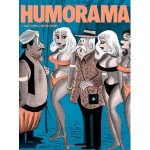
The Pin-up Art of Humorama


By various, edited by Alex Chun & designed by Jacob Covey (Fantagraphics Books)
ISBN: 978-1-56097-959-3

You’ve all done it; laughed at something you know you shouldn’t have and for us utterly reconstructed modern men – and, let’s face it, women too – sometimes a sexually, racially or otherwise politically incorrect joke or scene in an old movie or TV clip. You know it’s wrong, you know it’s wicked but dammit! – funny just is…

Once upon a time when we were all trapped in our cruel and unthinking hidebound world of stereotypes and pre-judgements, there was a thriving market for staggeringly coy smutty books, naughty cartoon joke periodicals and girly magazines for men.

Women read other things and we never enquired. It’s the only sensible example of “Don’t Ask, Don’t Tell” that I can think of…

After volumes of Pin-ups from specific comics stars (Dan DeCarlo, Bill Wenzell, Jack Cole, Bill Ward) this anthology celebration gathers the Rest of the Best from the prolific Humorama pulp-digest division. They provided saucy gags and male-oriented mirth from 1938 to the mid 1980s – when hardcore porn ended all the tamer men’s mag markets – ubiquitous little throwaway digests with titles such as Gaze, Jest, Stare, Joker, Zip, Breezy, Cartoon Comedy Parade and Romp, packed with photos of saucy vixens like Tina Louise, Sophia Loren, Betty Page, Irish (Sheena of the Jungle) McCalla, Julie (Catwoman) Newmar and her cheesecake ilk – and oodles of deliciously daring cartoons.

The company was part of the Goodman publishing empire which included Atlas/Marvel Comics and reached its pulchritudinous peak during the 1950s when Editor Abe Goodman was the biggest buyer of cartoons on Earth.

Once the sexual revolution began, however, the oddly innocent, clandestine “men only” craft atmosphere was lost to increasing in-your-face frankness and a steady decline into vulgar X-rated smut as good old-fashioned raciness and stolen illicit glimpses became the meat of TV and cinema.

After an illustrated foreword by Howard Chaykin and a comprehensive history from Editor Alex Chun the parade of risqué gags – populated by the kind of girls that made Mad Men such a hit and Marilyn Monroe immortal – works its wiles, stretches its intellects and stuns its willing prey in a glorious panoply of old-fashioned fun and frolics. These racy renditions are superbly rendered in colour, monochrome and all points in between – ink and wash, conté-crayon, pen and even photo-montages, and this tome even finds space to squeeze in a few amazing house ads.

From amongst the memorable proponents you’ve already heard of are gags by Ward, Wenzell, Jefferson MacHamer, Dan DeCarlo, Vic Martin, Kurt Schaffenberger (AKA Schaff), Louis Priscilla, Niso “Kremos” Ramponi, Bill Hoest, George Crenshaw, Michael Berry, Stan Goldberg, Jim Mooney, Dave Berg and Basil Wolverton, but there are so many others by unsung pencil-pushers equally deserving of your attention.

This charmingly innocent compendium of Lush Ladies, Willing Wantons, Savvy Sirens, Naive Nymphs (always stunningly beautiful women) collects more than 200 or so rude cartoons from a time when boys thought girls didn’t actually like sex – when in fact they just didn’t like us or the way we did it.

Technically, this isn’t a graphic novel or trade collection, it’s a picture book – but an absolutely stunning one, collecting some of the best and most guiltily funny illustrations ever produced: a beguiling remembrance of a different time and the sexual mores of an entirely alien generation which nevertheless presents an enticing, intoxicating treat for art lovers and, I’m afraid to admit, many hearty laughs. This is work which is still utterly addictive and the book is an honest-to-gosh treasure beyond compare.

© 2011 Fantagraphics Books. Foreword © 2011 Howard Chaykin. Introduction © 2011 Alex Chun. All rights reserved.

Al Williamson Archives volume 1


By Al Williamson with an introduction by Angelo Torres (Flesk)
ISBN: 978-1-933865-29-4

Al Williamson is one of the greatest draughtsmen ever to grace the pages of comicbooks and newspaper comics sections. He was born in 1931 before his family moved from New York City to Bogota Columbia at the height of the Golden Age of syndicated adventure strips.

The lad’s passion for strips – especially Alex Raymond’s Flash Gordon and Jungle Jim – was broadened as he devoured imported and translated US material as well as the best that Europe and Latin America could provide in such anthology magazines as Paquin and Pif Paf. Aged 12 Williamson returned to America and, after finishing school, found work in the industry that had always obsessed him.

In the early 1950s he became a star of E.C. Comics’ science fiction titles, beside kindred spirits Joe Orlando, Wally Wood, Roy G. Krenkel, Frank Frazetta and Angelo Torres, and drew Westerns Kid Colt and Ringo Kid for Atlas/Marvel. During the business’ darkest days he gravitated to newspaper strips, assisting John Prentice on Rip Kirby – another masterpiece originally created by Alex Raymond.

When comicbooks gradually recovered, Williamson drew Flash Gordon for King Comics and worked on mystery tales and westerns for DC whilst drawing such globally distributed newspaper features as Secret Agent Corrigan plus groundbreaking film adaptations of Bladerunner and Star Wars.

His stunning poetic realism, sophisticated compositions and fantastic naturalism graced many varied tales, but in later years he became almost exclusively a star inker over pencillers as varied as John Romita Jr., Larry Stroman, Rick Leonardi, Mark Bright, José Delbo and a host of others on everything from Transformers to Spider-Man 2099, Daredevil to Spider-Girl.

Al Williamson passed away in June 2010.

Flesk Publications is an outfit specialising in art books and the tomes dedicated to the greats of our industry include volumes on sequential narrative and fantasy illustration starring Steve Rude, Mark Shultz, James Bama, Gary Gianni, Franklin Booth, William Stout and Joseph Clement Coll. The guiding light behind the company is devoted and passionate art lover John Fleskes.

This initial oversized (305 x 232mm) 64 page collection of sketches, working drawings, unused and unfinished pages from one of the stellar creators of our art form stars captivating heroines, lusty barbarians, space heroes, beasts, aliens and so many wonderful dinosaurs, but also presents lesser known western scenes, science fiction tech, character sketches, duels, action sequences, nudes and glamour studies, unfinished pages from Xenozoic tales and John Carter of Mars, religious scenes and delicious unseen excerpts from Rip Kirby, as well as a glimpse into Williamson’s creative process.

The beautifully intimate glimpses of a master at work, with full colour reproduction capturing every nuance of Williamsons’ gorgeous pencil strokes, make this a book a vital primer for anybody dreaming of drawing for a living and the stirring lavish material revealed here will enthral and entice every fan of wondrous worlds and fantastic forgotten realms.

© 2010 Al Williamson. All Rights Reserved.

Krampus: the Devil of Christmas


By various, edited by Monte Beauchamp (Last Gasp)
ISBN: 978-0-86719-747-1

With Easter upon us it’s clearly time to start thinking about Christmas and this delightfully engrossing hardback celebration from artist, historian and designer Monte Beauchamp (a welcome expansion on his 2004 book The Devil in Design) focuses on a lost aspect of the Season of Good Will.

For decades Monte Beauchamp’s iconic, innovative narrative and graphic arts magazine Blab! highlighted the best and most groundbreaking trends and trendsetters in cartooning and other popular creative fields. Initially published through the auspices of the much-missed Dennis Kitchen’s Kitchen Sink Press it moved first to Fantagraphics and exists as the snazzy hardback annual Blabworld from Last Gasp. Here however he looks back not forward to revel in the lost exuberance and dark creativity of a host of anonymous artists whose seasonal imaginings spiced up the Winter Solstice for generations of kids…

In Western Europe, particularly the German-speaking countries but also as far afield as Northern Italy and the Balkans, St Nicholas used to travel out with gifts for good children accompanied by a goat-headed, satanic servant. Fur-covered, furtive, chain-bedecked, sinister and all-knowing, the beast-man with a foot long tongue and one cloven hoof, wielded a birch switch to thrash the unruly and a large sack to carry off disobedient children.

The Krampus became a fixture of winter life in Austria, Switzerland and the German Principalities, with his own special feast-day (December 5th – just before St. Nikolaus’ Day), parades, festivals and ceremonial child-scaring events. Back then we really knew how to reward the naughty and the nice…

This spectacular tome celebrates the thrilling dark edge of the Christmas experience as depicted through the medium of the full-colour postcards that were a vital facet of life in Europe from 1869 to the outbreak of World War I.

However, even with fascinating histories of the character and the art-form related in ‘Greetings From Krampus’, ‘Festival of the Krampus’ and ‘Postal Beginnings’ the true wonder and joy of this collection is the glorious cacophony of paintings, prints, drawings collages – and even a few primitive photographic forays – depicting the delicious scariness of the legendary deterrent as he terrified boys and girls, explored the new-fangled temptations of airplanes and automobiles and regularly monitored the more mature wickednesses of courting couples…

A feast of imagination and tradition ranging from the wry, sardonic and archly knowing to the outright disturbing and genuinely scary this magical artbook is a treasure not just for Christmas but for life…

© 2010 Monte Beauchamp. All rights reserved.

Metropolis


By Thea von Harbou, illustrated by Michael W. Kaluta (Donning/Starblaze)
ISBN: 0-89865-519-6

People who work in comics adore their earliest influences, and will spout for hours about them. Not only did they initially fire the young imagination and spark the drive to create but they always provide the creative yardstick by which a writer or artist measures their own achievements and worth. Books, comics, posters, even gum cards (which mysteriously mutated into “Trading Cards” in the 1990s) all fed the colossal hungry Art-sponge which was the developing brain of the kids who make comics.

But by the 1970s an odd phenomenon was increasingly apparent. It became clear that new talent coming into the industry was increasingly aware only of comic-books as a source of pictorial fuel. The great illustrators and storytellers who had inspired the likes of Howard Chaykin, Bernie Wrightson, Mike Kaluta, P. Craig Russell, Charles Vess, Mike Grell, and a host of other top professionals were virtually unknown to many youngsters and aspirants. I suspect the reason for this was the decline of illustrated fiction in magazines – and general magazines in general.

Photographs became a cheaper option than artwork in the late 1960s and as a broad rule populations read less and less each year from that time onwards.

In the late 1980s publisher Donning created a line of oversized deluxe editions reprinting “lost” prose classics of fantasy, illustrated by major comics talents who felt an affinity for the selected texts. Charles Vess illustrated Shakespeare’s A Midsummer Night’s Dream, P. Craig Russell created magic for The Thief of Bagdad and Mike Grell depicted the word’s greatest archer in The Merry Adventures of Robin Hood of Great Renown in Nottinghamshire.

Arch period stylist Mike Kaluta worked on something a little more exotic; illustrating the original film scenario (a broad shooting script used by movie-makers in the days before dialogue) written by Thea von Harbou after her husband returned from a trip to America.

Herr “von Harbou” was German expressionist genius Fritz Lang, and his account of his fevered impressions, responses and reminiscences became the ultimate social futurist fiction film Metropolis – possibly the most stirring, visually rich and influential movie of the silent era – and officially the most expensive film ever made during the pre-talkies era.

If you haven’t seen the film… Do. Go now, a new re-re-restored version was released in 2010 – the most complete yet. I’ll wait…

The plot – in simple terms – concerns the battle between proletarian workers and the rich, educated elite of a colossal city where workers toil in hellish, conformist subterranean regiments to provide a paradise for the bosses and managers who live like gods in the lofty clouds above.

It would be the perfect life for Freder, son of the grand architect Joh Fredersen, except for the fact that he has become besotted with Maria, an activist girl from the depths. The boy will move Heaven and Earth to have her love him. He even abandons his luxuries to become a worker near her…

Distraught Fredersen renews his tempestuous relationship with the crazed science-wizard Rotwang, once ally and rival for the love of the seductive woman Hel.

Rotwang offers his aid but it is a double-edged sword. He kidnaps Maria and constructs an incredible robotic replacement of her, to derail her passive crusade and exact his own long-deferred revenge…

This “novelisation” – for want of a better word – is as engrossing as the film in many ways but the story is elevated by the incredible illustrations produced by Kaluta -5 full page artworks in evocative chalk-and-pastel colour, two incredible double-page spreads in black line plus 32 assorted monochrome half-frames and full pages rendered in black & white line, grey-tones, charcoal, chalk monotones and pastel tints – an absolute banquet for lovers of art deco in particular and immaculate drawing in general.

Whilst no substitute for the filmic experience, this magnificent book is a spectacular combination of art and story that is the perfect companion to that so-influential fantasy masterpiece beloved by generations of youngsters.
© 1988 by the Donning Company/publishers. Art © 1988 Michael W. Kaluta. All rights reserved.

Blabworld #1


By various, edited by Monte Beauchamp (Last Gasp)
ISBN: 978-0-86719-746-4

For decades Monte Beauchamp’s iconic and innovative narrative and graphic arts magazine Blab! has highlighted the best and most groundbreaking trends and trendsetters in cartooning and other popular creative fields. Initially published through the auspices of the much missed Dennis Kitchen’s Kitchen Sink Press it moved over to Fantagraphics and now it has resurfaced, reformed in a snazzy hardback annual format from Last Gasp.

As ever there is an eclectic and eye-popping mix of strips, articles and features on show and Blabworld #1 opens with a gloriously enchanting sequence of paintings describing everything you wanted to know about ‘Slime Moulds’ crafted by Geoffrey Grahn, after which Kari Laine McCluskey enchants and disturbs with a series of toy and doll photomontages entitled ‘Colloidion’.

Greg Clarke delivers a droll and dry assault on the obsessive ownership mentality with ‘The Neurotic Art Collector’, Bill North examines youth’s most popular graphic symbol in ‘Skull!’ – an article tracing the use of the memento mori in popular publishing with loads of cool covers to ogle and covet – and Nora Krug relates in unique cartoon manner ‘Quicksand: The Tumultuous Life of Isabelle Eberhardt’, before cover artist Shag delivers another magically hip gag on the consumer society.

The major central portion of this volume is devoted to magnificent artworks in a variety of media from a stellar collection of artists grouped together under the umbrella theme of ‘Artpocalypse’:

Ron English contributed ‘The Creation of Evolution’, Ryan Heshka depicted ‘The Rapture’, Owen Smith showed ‘Fin’ and Jean-Pierre Roy revealed ‘No Secrets Left From Us.’ ‘Beyond the Fence’ came via Martin Wittfooth, Kathleen Lolly showed ‘Knowledge Dies Too’ and Andy Kehoe painted ‘When the Last Leaf Falls’. Andrea Dezso contributed ‘Strangely Normal’, Natalia Fabia ‘Hooker in the Apocalypse’, Karen Barbour ‘Lamentations Over the Merciless Void’, Edel Rodriguez ‘Farewell to Grace’ and Fred Stonehouse ‘Dream of St. John’.

‘Well-Matched Lovers’ by Marc Burckhardt is followed by Femke Hiemstra’s ‘Hayano & Koheu’, Calef Brown’s ‘Endtime Tigerbird’, Larry Day’s ‘Rapture in Birdville’ and underground commix legend Spain Rodriguez delivers a glimpse of ‘2012’.

Lowbrow art virtuoso Mark Ryden displays his ‘End of the World’, Yoko D’Holbachie contributes ‘Final Farewell’, Gary Basemen ‘Another Average Day’, Alex Gross ‘Jozaikai (Purgatory)’, Sue Coe ‘Revenge of the Swine’, Sofia Arnold ‘Smoke Cave’ and Gary Taxali illuminates both ‘End World’ and ‘Rapture’.

‘Armageddon Flub’ by Travis Lampe, John Pound predicts ‘All Things Must Fall’, Kris Kuksi conducts ‘An Opera for the Apocalypse’ and Ryan Heshka returns to deliver a ‘Flaming End’ (as well as the mesmerising back cover).

Michael Noland reveals the ‘Revelation Roaches’, Teresa James collects ‘Weapons of Divine Power’, and Tom Huck a ‘Pile O’ Poon’ before Joe Sorren wraps it all up with ‘The Secret Collapse of Miss Lorraine’.

After the art show Sergio Ruzzier takes up the comic strip baton with a mercurial watercolour saga entitled ‘The Life of an Artist’, designer Steven Heller explores the hypnotic cover art of R. Crumb in ‘Covering Weirdo’ whilst James Lowe relates the astounding history of ‘Propaganda Caricature Art of World War II’ in ‘Axe the Axis!’ before Mark Landman amuses and offends with the story of ‘Fetal Elvis’ Art Empire’.

Steven Guarnaccia adapts Julia Moores poem ‘Lament on the Death of Willie’, Mark Todd details the sordid horror of ‘The Dreaded Mothman of West Virginia’ and ‘Ballpoint Bravura: Drawings by CJ Pyle’ spotlights the incredible dexterity and imagination of the rock drummer turned graphic craftsman with superstar Peter Kuper dramatically closing out this first fantastic happening with his appropriately apocalyptic strip ‘Four Horsemen’

There has never been a more vibrant and exciting time for lavish imaginative art and cutting edge graphic narrative and this superb catalogue of marvels is sure to become a watchword for what to watch out for.

© 2010 by the respective creators and contributors. All rights reserved.