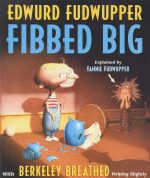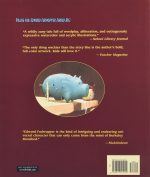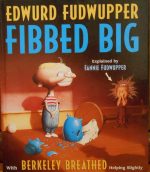
Edwurd Fudwupper FIBBED BIG – Explained by Fannie Fudwupper with Berkeley Breathed Helping Slightly


By Berkeley Breathed (Little, Brown & Co./Storyopolis)
ISBN: 978-0-316-14291-5 (HB) 978-0-316-14425-4 (Album PB)

I’ve been watching The News and getting upset by politicians’ obnoxiously blatant disregard for probity and dearth of ethical standards, not just in my own bankrupt-in-every-aspect Britain, but everywhere else too – except maybe New Zealand (Nice One, Jacinda).

As is always the case in such circumstances, I turned to comics and cartoons for solace and found this. Please read, enjoy and act according to the dictates of your conscience, if you have one…

Please Note: any similarity to other malign, malformed, bribe-fattened, emotionally stunted, eternally misbehaving overprivileged schoolboys currently serving at the Nation’s expense is just the way things are these days…

Throughout the 1980s and for half of the 1990s, Berke Breathed dominated the newspaper strip scene with agonisingly funny, edgy-yet-surreal political fantasy Bloom County and, latterly, Sunday-only spin-off Outland. They are all fully available digitally – so don’t wait for my reviews, just get them now!

At the top of his game and swamped with awards like Pulitzers, Breathed retired to concentrate on books like Red Ranger Came Calling, Mars Needs Moms! or Flawed Dogs: The Year End Leftovers at the Piddleton “Last-Chance” Dog Pound and sequel Flawed Dogs: The Shocking Raid on Westminster. They rank among the best America has ever produced. Get them too.

His first foray into the field was 1991’s A Wish for Wings That Work: a Christmas parable featuring his signature character, and the most charmingly human one. Between 2003 and 2008, Breathed revived Opus as a Sunday strip, before eventually capitulating to his career-long antipathy for the manic deadline pressures of newspaper production and often-insane, convoluted contradictions of editorial censorship.

It seemed his ludicrous yet appealing cast of misfits – all deadly exponents of irony and common sense residing in the heartland of American conservatism – were gone for good, until the internet provided a platform for Breathed to resume his role as a gadfly commentator on his own terms. Since 2015, Bloom County has mocked, exposed and shamed capitalism, celebrities, consumerism, popular culture, politicians, religious leaders and people who act like idiots. Donald Trump figures prominently and often, but that might just be coincidence…

These later efforts, unconstrained by syndicate pressures to not offend advertisers, are also available as book collections. You’ll want those too, and be delighted to learn that all Breathed’s Bloom County work is available in digital formats – fully annotated to address the history gap if you didn’t live through events such as Iran-Gate, Live-Aid, Star Wars (both cinematic and military versions), assorted cults and televangelists experiencing less than divine retribution and sundry other tea-cup storms that make us Baby Boomers so rude and defensive…

Not quite as renowned, but every inch as crucial to your enjoyment, is the lost gem on display today: a paean to the power of principles and effects of honesty, all wrapped up in a children’s book about a mean kid with no moral compass…

As previously stated, after the all-too-brief, glittering outing as a syndicated strip cartoonist and socio-political commentator (usually the very same hallowed function) Breathed left strips to create children’s picture books.

He lost none of his perception, wit or imagination, and actually got better as an artist. Even so, he never quite abandoned his entrancing cast of characters and always maintained the gently excoriating, crusading passion and inherent bittersweet invective which underscored those earlier narratives.

Moreover, he couldn’t ignore that morally uplifting component of his work that so upset hypocrites, liars, greedy people and others who let us all down while carping on about being unfairly judged and how we don’t really understand complex issues. Trust me, we – and Breathed – understand perfectly…

This crushingly captivating cartoon catechism ruminates on the cost and worth of family and idiocy of arrogant aggrandizement and self-congratulatory self-importance. It is lensed through the fabled truism of the Boy Who Cried Wolf, as little sister Fannie complains again about her idiot brother…

Edwurd Fudwupper tells lies because he wants to, because he can and because of the chaotic consequences his dissembling causes. The only thing he isn’t, is convincing. Always in trouble, he narrowly and perpetually weasels out of instant retribution due to his facility for fibs, but now Fannie recalls the day when that stopped working…

After a couple of whoppers lead to the disappearance of a neighbour and destruction of beloved family property, Edwurd’s automatic response of lying big and compounding nonsense with bigger balderdash sparks community calamity, mass military deployment and imminent alien invasion. As the Earth stands still in the moment before utter disaster, a small voice speaks out…

Delivered in sharp and lyrical rhyme like a weaponised Dr. Seuss story, and with lush lavish illustrations painted in the stunningly grotesque exaggeration beloved of Ralph Steadman and Terry Gilliam cartoons, this is a book to trigger personal reflection, audit consciences and promote better behaviour, but it will make grown citizens howl and children sit up and pay attention. It’s also deliciously funny. You’ll laugh, you’ll cry, you’ll think hard before calling in sick or blaming the dog – or opposition or asylum seekers – for eating your homework…
© 2000 Berkeley Breathed. All rights reserved.

2120


By George Wylesol (Avery Hill Publishing)
ISBN: 978-1-910395-65-3 (TPB)

Baltimore-based George Wylesol (Internet Crusader; Ghosts, Etc.) is a cartoonist with lots to say and intriguing ways of doing so. Past works have channelled his avowed fascinations – old computer kit/livery; anxiety; iconography; the nostalgic power of commercial branding and signage and a general interest in plebian Days Gone By – into chilling affirmations of his faith in the narrative power of milieu and environment as opposed to characters.

That remains the case in his latest retro-modernist extravaganza… a canny revival of a brief fad stillborn on the way to today’s computer game world; explored through a salutary experience befalling a rather bland service engineer…

Once upon a time (way back in the 1980s) books and graphic novels experimented with an interactive approach: constructing stories where readers could opt to proceed in a linear manner, whilst being encouraged to jump ahead or back, by following suggestions at certain decision points of the narrative. Depending on which one a reader followed, the story could travel in numerous directions and outcomes were many and varied…

The fad faded as technology surpassed physical print restrictions and now most games offer even more variety and immersion, but the process was and still is a powerful device for storytelling and point-making, if you know the trick of it.

Wylesol does, and in 2120 skillfully manipulates the form to create a chilling and potent suspense saga. The set-up is simple. Forty-something computer repairman Wade Duffy is booked to service a machine at 2120 Macmillan Drive: an isolated building in a vacant lot.

The place seems deserted and decommissioned, but after gaining entry, Wade dutifully proceeds through countless empty rooms and corridors – far more than seems possible for a facility of its size. The place seems to go down too many levels, and as he seeks endlessly for the broken computer he is determined to repair, his responsible work attitude gradually erodes under tidal waves of suspicion, uncertainty and nervous tension.

The place is just not right…

Too many rooms, odd sights and sounds, bizarre detritus, scraps and remnants indicating rapid abandonment… and his solitary, endless examinations and futile explorations only tip further into paranoia once he finally finds other occupants and his mind starts doubting him…

I first read the book without making any choices. I’m not saying you should, but if you do, let your mind build a story of its own then reread as often as you want, using the page directions to reshape the events and outcomes and see how that changes the momentous “Big Reveal” hidden within.

Genuinely disturbing in the manner of the best psychological dramas, with plenty of scary moments and distressingly eerie characters, the coldly diagrammatical illustration and workplace bright colour palette adds immensely to the overall aura of unease.

A compelling and compulsive experience, seamlessly wedding sensory evocation to carefully neutralised visual input, like the subject matter itself, this book is not what it seems and should not be missed.
© George Wylesol 2019. All rights reserved.

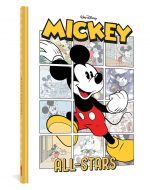
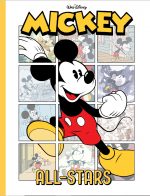
Mickey All-Stars (The Disney Masters Collection)


By Giorgio Cavazzano & Joris Chamberlain and many & various: translated by David Gerstein & Jonathan H. Gray (Fantagraphics Books)
ISBN: 978-1-68396-369-1 (HB) eISBN 978-1-68396-422-3

Created by Walt Disney and Ub Iwerks, Mickey Mouse was first seen – if not heard – in the silent cartoon Plane Crazy. The animated short fared poorly in a May 1928 test screening and was promptly shelved.

It’s why most people who care cite Steamboat Willie – the fourth completed Mickey feature – as the official debut of the mascot mouse and his co-star and occasional paramour Minnie Mouse since it was the first to be nationally distributed, as well as the first animated feature with synchronised sound. The film’s astounding success led to the subsequent rapid release of its fully completed predecessors Plane Crazy, The Gallopin’ Gaucho and The Barn Dance, once they too had been given new-fangled soundtracks.

From those rather timid and tenuous beginnings grew an immense fantasy empire, but film was not the only way Disney conquered hearts and minds. With Mickey a certified, solid gold screen sensation, the mighty mouse was considered a hot property ripe for full media exploitation and he quickly invaded America’s most powerful and pervasive entertainment medium: comic strips…

In close to a century of existence, Walt Disney’s anthropomorphic everyman Mickey Mouse has tackled his fair share of weirdos and super freaks in tales crafted by gifted creators from every corner of the world. A true global phenomenon, the little wonder staunchly overcame all odds and pushed every boundary, and he’s always done so as the prototypical nice guy beloved by all.

He might have been born in the USA, but the Mouse belongs to all humanity now. Mickey has always been and is still a really big deal in Europe and thus, when his 90th anniversary loomed, a comics movement grew to celebrate the event in a uniquely comic strip way.

Invitations went out to creators with a connection to Disney endeavours from countries like Denmark, Germany, Holland, Italy, Belgium, France and more. The rules were simple: each auteur or team would have a single page to do as they liked to, for and with Mickey and all his Disney pals, with the only proviso that each exploit must begin and end with the Mouse passing through a door. The whole affair would be framed by an opening and closing page from illustrator Giorgio Cavazzano and scenarist Joris Chamberlain…

The result is a stunning joyous and often wholesomely spooky rollercoaster ride through the minds of top flight artists all channelling their own memories, feelings and childhood responses to the potent narrative legacy of Mickey & Friends: a tumbling, capacious, infinitely varied journey of rediscovery and graphic virtuosity that is thrilling, beautiful and supremely satisfying.

This translation comes with an explanatory Foreword laying out the rules far better than I just did and ends with ‘The All-Star Lineup’ offering full and informative mini biographies of all concerned responsible for each page.

They are – in order of appearance – Flix, Dav, Keramidas, Fabrice Parme, Alfred, Brüno, Batem & Nicholas Pothier, Federico Bertolucci & Frédéric Brrémaud, Silvio Camboni & Denis-Pierre Filippi, Thierry Martin, Guillaume Bouzard, José Luis Munuera, Alexis Nesme, Fabrizio Petrossi, Jean-Philippe Peyraud, Pirus, Massimo Fecchi, Boris Mirroir, Godi, Florence Cestac, Éric Hérenguel, Marc Lechuga, Cèsar Ferioli, Tebo, Clarke, Dab’s, Pieter De Pootere, Antonio Lapone, Ulf K, Pascal Regmauld, Johan Pilet & Pothier, Mathilde Domecq, Nicolas Juncker, Jean-Christophe & Pothier, Mike Peraza, Arnaud Poitevin & Chamberlain, Olivier Supiot, Éric Cartier, Zanzim, Marco Rota, Paco Rodriguez, Sascha Wüsterfeld, and the aforementioned Giorgio Cavazzano & Joris Chamberlain.

Frantic, frenzied fun for one and all. Everything you could dream of and so much more…

© 2021 Disney Enterprises, Inc. All rights reserved.

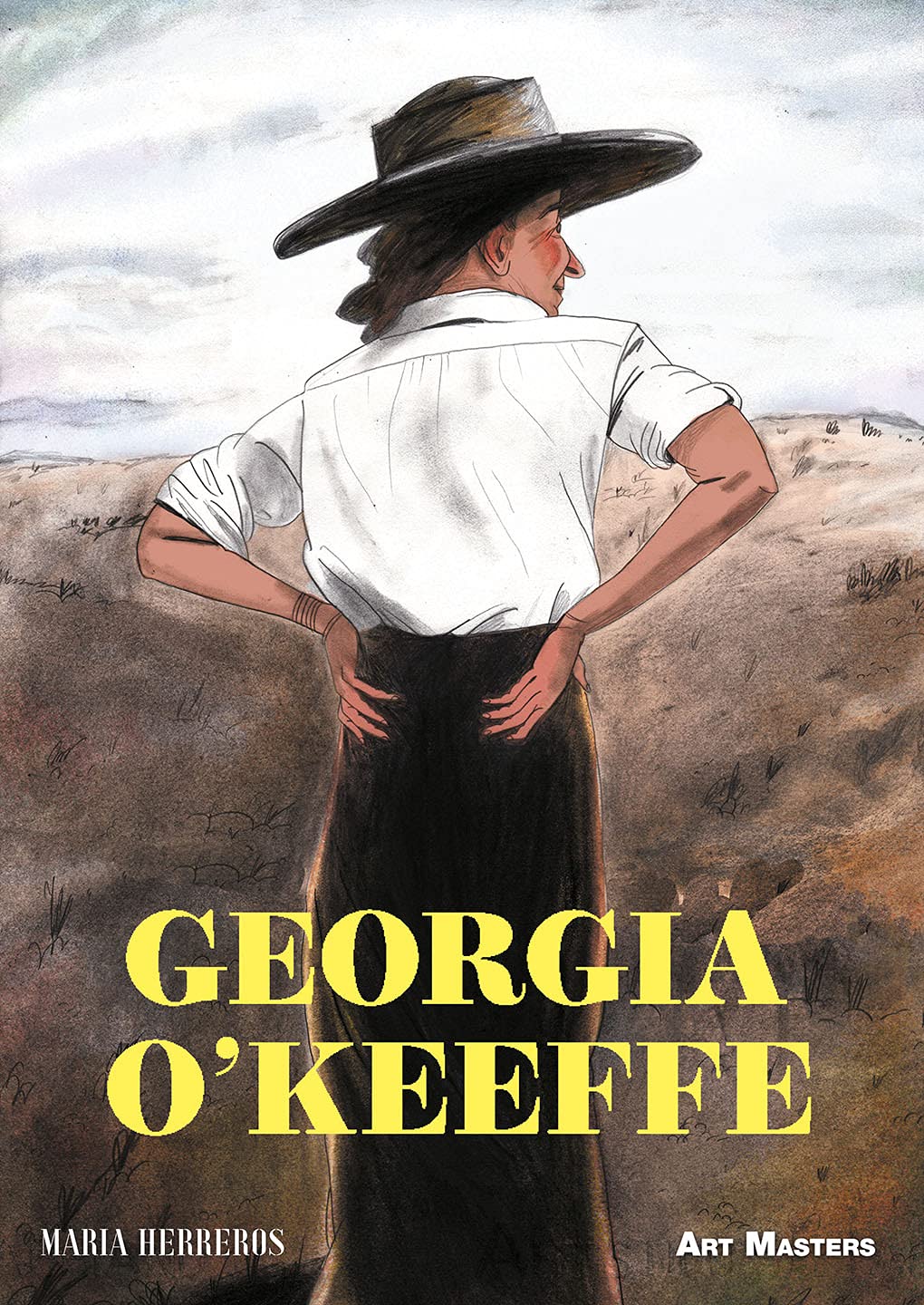
Georgia O’Keeffe


By María Herreros; translated by Lawrence Schimel (SelfMadeHero)
ISBN: 978-1-914224-05-8 (TPB/Digital edition)

Georgia Totto O’Keeffe entered the world in Sun Prairie, Wisconsin on November 15th 1887, second of seven children born to a dairy farmer turned (failed) construction entrepreneur. Seized and overwhelmed by the artistic impulse before the age of ten, she overcame financial hardship to secure an impressive traditional artistic education which she promptly rejected in favour of finding her own path.

From 1917 and her first exhibition, to her death in 1986, she made art her way, most famously with series of paintings of flowers, buildings and ultimately desert scenes which became a catalyst of taste and part of global artistic culture. She is regarded as America’s first abstract artist and has been called The Mother of American Modernism.

Innocently controversial from the start, O’Keeffe increasingly sought to understand colour and shape via stark cityscapes and florid blossoms but had to endure censure and gossip over nude photos exhibited by her patron Alfred Stieglitz, and the indignity of having her flower paintings mansplained by critics – even female ones – who continuously likened them to female sexual organs.

Bored with saying ‘They’re just flowers’ and self-important fools, she began a gradual, years-long process of quitting metropolitan civilisation for peace, contentment and endless inspiration under the big skies and vivid deserts of New Mexico.

Over a decades-long career. O’Keefe garnered international acclaim and many awards. These included an honorary Doctor of Fine Arts degree from the College of William and Mary (1938); election to the American Academy of Arts and Letters and a fellowship of the American Academy of Arts and Sciences(1966); receiving the M. Carey Thomas Award from Bryn Mawr College (1971) and another honorary degree (from Harvard in 1973) as well as the Presidential Medal of Freedom (1977), The National Medal of Arts (1985) and – in 1993 – posthumous induction into the National Women’s Hall of Fame.

As you’d expect of a determined, driven professional woman of that period in that country, making extremely successful headway in a predominantly male preserve, her personal life was something of a trainwreck, but this compelling examination chooses to downplay those aspects.

Sensibly side-lining the more sensationalised moments of O’Keefe’s past in favour of tracing her accomplishments and victories, graphic biographer Mar­a Herreros has employed her painterly, primitivistic narrative style which liberally samples O’Keeffe’s copious canon of letters and idiosyncratic writings to bring us inside the head of a profoundly visual and arguably obsessive being.

Based in Madrid, but born in Valencia in 1983, Herreros is a modern multidisciplinary artist. She studied at the University of Fine Arts, San Carlos and since 2011 has combined high level commercial commissions with gallery shows, book collaborations and comics such as Viva la Dolce Vita, Marilyn tena once dedos en los pies, and Paris sera toujours Paris. Her personal works explore human emotion, societal evolution and the concepts of beauty and normative states.

Although remaining primarily positive and inquisitive here, Herreros touches on O’Keeffe’s mental ill health issues, her Svengali-like attachment (later marriage) to older, already-married Fine Art photographer/gallery owner Stieglitz and her end-of-life companion John Bruce “Juan” Hamilton – both notorious age-inappropriate public scandals that Georgia casually, magnificently, ignored.

Via communications with Georgia’s close female friends and Stieglitz, Herreros takes us inside the painter’s mind, revealing the creative process and progress in navigating society, the public and the poison chalice of simply having to exhibit art to survive, while emphasising making the images she wanted to in places she truly loved which became her greatest joy and solitary citadels.

Less a biography than a carefully crafted appreciation and appraisal of a career and legacy by a fellow fully emancipated, self-determining female creator, Georgia O’Keeffe is a compelling and beguiling glimpse into the forces that shape art and artists.
Text and illustrations © 2021 by Mar­a Herreros. All rights reserved. Published by agreement with Astiberri Ediciones and Fundacian Coleccian Thyssen-Bornemisza English translation © 2021 SelfMadeHero.

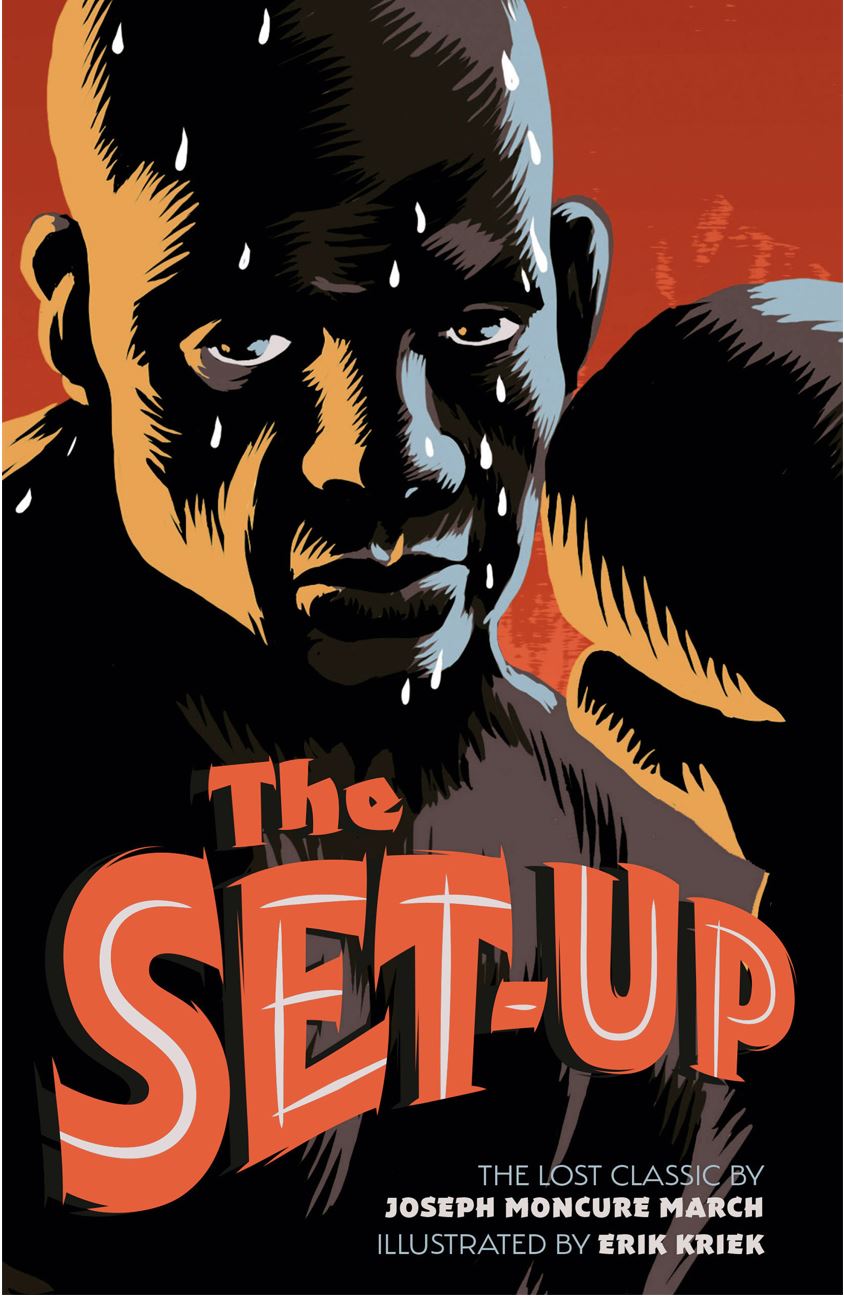
The Set-Up


By
Joseph Moncure March illustrated by Erik Kriek (Korero Press)
ISBN: 978-1-91274-008-6 (HB) eISBN: 978-1-91274-012-3 

I’ve never understood boxing as a sport. Where I come from, you don’t hit people for money or fame but because you don’t like them, have a grievance with them or because they’re a member of the Tory Cabinet. I suppose that’ s pretty much the same thing these days. 

However, it’s an indisputable fact that for billons of humans over thousands of years, pugilism in its various forms has captivated, enthralled and on rare occasion, enhanced the lives of those both participating and spectating.  

Entire sub-cultures have embraced the Fight Game and it has in return elevated a few (some actual combatants, but a far greater number of managers, promoters and – disturbingly – “owners” of society’s officially sanctioned domestic gladiators) to positions of wealth and power. Many love to watch and many more are irresistibly drawn to compete…  

Despite – or more likely because of – modern rules and legal oversight the industry is apparently not as flagrantly in the pockets of crime bosses as in its early golden years, but once upon a time in the mid-20th century Boxing matches were the great leveller: drawing hoods and heroes, media stars and mobster scum, intellectuals and imbeciles… 

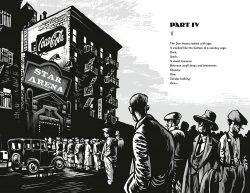
In 1928, white Jazz Age poet and essayist Joseph Moncure March wrote a highly successful and influential long-form poem about boxing that stripped away much of the glamour by focussing on the criminality and poverty-driven desperation that underpinned it.  

March was a war veteran, a college protégé of Robert Frost and first managing editor of The New Yorker, and infamous for his other poem. Bawdy, antisocial, deliberatively provocative and shocking, The Wild Party took three years to find a publisher. The Set-Up was similarly divisive and influential. You can find all you need to know about the odes and their author in Masha Thorpe’s brilliantly informative and erudite Introduction which combines appraisal and appreciation with history lesson in a critical biography of the pioneering poet. It also candidly discusses the major bone of contention this uncompromising revival will  stir up: Race.   

Protagonist Pansy Jones is an ex-con, over the hill fighter: an old Negro grateful for one final chance at a payoff against a younger, fitter, tougher opponent. It’s his last bout and he wants to go out with pride and dignity. Sadly, the match is fixed, but his crooked promoters have opted not to tell him and kept his portion of the pay-off for themselves… 

It sounds cliched now, but that’s because the printed poem was a monster hit during the Depression Era, spawning countless swipes and a popular but utterly bowdlerised 1947 noir film adaptation which omitted the uncompromising elements of commonplace bigotry the saga wallows in.  

Although in 1947 the author strenuously protested the replacement of Pansy with a white fighter, when The Set-Up was rereleased in 1968, March himself “de-nationalized” the tale, removing the brooding racial tensions and character that carried the original. 

What we have here now is the restored original text which wallows in grime, crime and poverty with fully-realized, universally grotesque, sordid and unsavoury characters all taking their piece of the action from desperate men pummelling each other for other people’s callous gratification… 
The tale is told in relentless rhyme and pitiless beats presaging modern Hip Hop culture: brutal, bleak, repetitive; glorifying another kind of gang culture and clinging to the notion of a last chance to win if you are man enough. This is dawn-era storytelling with classical themes delivered as primordial Rap in its purest, most primal form: drenched with aggression, hostility, nihilism, misogyny, explicit but accepted racism and, always, frustrated hope. 

March eschews conventional stanzas for explosive couplets, displaying verbal virtuosity and building scene-setting mood through a driving beat and mesmerising rhythm. Visually they are delivered in this edition like blows, laid in typographic blasts in clinches with starkly effective illustration cunningly informed by the works of graphic genius Will Eisner. 

The art is astounding, crafted by a modern master with his head firmly set towards past times. 

Amsterdam-born Erik Kriek (In the Pines – 5 Murder Ballads; silent superhero spoof Gutsman; Little Andy Roid; Welcome to Creek Country; Mika, the Little Bear That Didn’t Want to Go To Sleep) is a graduate of the Rietveld Academy for Art and Design and an in-demand illustrator of books – such as Holland’s Tolkien and Harry Potter editions – magazines, apparel, skateboards, ad infinitum.  

As well as being a musical historian and afficionado, he can turn his hand to many visual styles and graphic disciplines. Gutsman was reconceived as a soundless mime ballet in 2006 and his collection of Lovecraft adaptations Het onzienbare, en andere verhalen H. P. Lovecraft has been republished in many languages… 

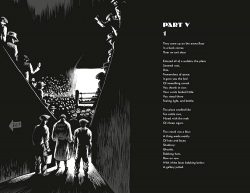
Here he again extends his artistic range and demonstrates chiaroscuric virtuosity and versatility in the resurrection of a landmark of American poetry and precursor of noir sensibilities that has, in its own way, also reshaped the landscape of modern popular culture. You already know the story from a hundred other sources, so I’m not saying more, but I will share a few interior pages… 

Restored and beautifully augmented by stunning potent imagery, The Set-Up is a found classic addressing issues we still all struggle with and is a contest you must see.
© 2022 Korero Press Ltd. All rights reserved. 

The Set -Up will be published on April 21st 2022 and is available for pre-order now. 

Green Eggs and Maakies


By Tony Millionaire (Fantagraphics Books)
ISBN: 978-1-60699-618-8 (HB/Digital edition)

As a career and lifestyle, cartooning has far more than its share of individuals with a unique perspective on life. Ronald Searle, Charles Addams, George Herriman, Gerald Scarfe, Rick Geary, Steve Bell, Berke Breathed, Ralph Steadman, Bill Watterson, Matt Groening, Gary Larson – the list is potentially endless.

Perhaps it’s the power to create entire carefully curated and scrupulously sculptured worlds coupled with the constant catharsis of vented spleen that so colours their work – whether they paint or draw – or maybe it’s simply the crucible of constant deadlines that makes their efforts so addictive and effective.

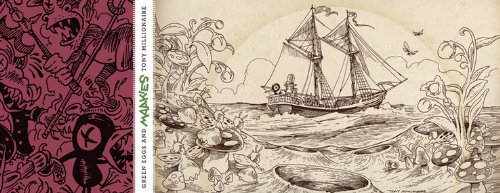
Tony Millionaire loves to draw and does it very, very well: referencing classical art, vintage children’s book illustration and an eclectic mix of pioneering comic strip draughtsmen like George McManus, Rudolph Dirks, Cliff Sterrett, Frank Willard, Harold Gray, Elzie Segar and that George Herriman guy. These influences, styles and sensibilities he seamlessly blends with the vision of European engravings masters from the “legitimate” side of the pictorial storytelling racket. The result is eye-popping…

Born Scott Richardson, he especially cites Johnny (Raggedy Ann and Andy) Gruelle and English illustrator Ernest H. Shepard (The Wind in the Willows, Winnie the Pooh) as formative influences.

He has a variety of graphical strings to his bow – such as his own coterie of books for children like the superbly stirring Billy Hazelnuts and Sock Monkey series; animation triumphs and the brilliant if disturbing weekly strip Maakies – which recounts the riotously vulgar and absurdly surreal adventures of Irish monkey Uncle Gabby and fellow dissolute über-alcoholic/nautical adventurer Drinky Crow.

They are abetted but never aided by a peculiarly twisted, off-kilter cast of reprobates, antagonists and confrontational well-wishers such as Drunken Cop, old Wachtel, The Captain’s Daughter and avian Aunt Phoebe whilst constantly opposed by nefarious Gallic crocodile The Frenchman. Or not. Sometimes. It depends…

Launching in February 1994 in The New York Press, the strip is now widely syndicated in US alternative newspapers such as LA Weekly and The Stranger and globally in comics magazines like Linus and Rocky. There was even an animated series on Adult Swim.

Since continuity usually plays second fiddle to the avalanche of inventive ideas and outré action the strips can be read in almost any order, and the debauched drunkenness, manic ultra-violence in the manner of the best Tom & Jerry or Itchy & Scratchy cartoons, acerbic view of sexuality and deep core of existentialist angst still finds a welcome with Slackers, Laggards, the un-Christian and all those scurrilous lost Generations since X… and everyone addicted to bad taste tomfoolery. This lovely lush landscape collection from 2013 compiles two years of impossibly wonderful weirdness and plumbs new depths of daft depravity proving clearly time cannot wither his infinitely grotesque variety one little bit…

In the grand tradition of the earliest US newspaper cartoon features, each episode comes with a linked mini-strip running across the foot of the strip – although often that link is quite hard to ascertain. Nominally and notionally based in a naval setting of rousing rip-roaring 19th century sea-faring situations, replete with maritime monsters and stunning vistas, the dark-and-bitter comical instalments vary from staggeringly rude and crude through absolutely hysterical to conceptually impenetrable.

Be warned: Millionaire’s gags are utterly unfettered by bounds of taste or simplistic acquiescence to wholesome fun-squelching decency.

He often promotes his other creative endeavours on Maakies pages and digresses into autobiography and personal rants, brings in guest creators to mess with his toys and even invites the readership to contribute: ideas, pictures, objects of communal interest – especially any tattoos his dedicated readership can be enticed/bothered to submit. This penetratingly incisive, witty and often poignant cartoon arena is his playground and if you don’t like it, leave… but quietly please, ’cause there’s a hangover going on here most days…

Green Eggs and Maakies offers, in starkly indisputable monochrome, more of the wonderful same with such spit-take, eye-watering, drinks-coming-out-of-your-nose moments as how mermaids and ugly fish are created, fun with snakes, the thoughts of ‘Real Ladies of the Dog Park’; arguably the best Superman fart joke ever, and so much more, scraped like barnacles from the edges of all time and space and history.

Moreover, in a positive frenzy of public-spirited beneficence, this book features ‘Maakies Womb Portraits’; returning visits of ‘Dr. Dubel, Helicopter Faith Healer’; easily absorbed lessons on ‘How to Drink’; scatological marriage proposals, a running commentary on ‘Married Days’ and general sex advice; revelations of ‘The Accidental Sobrietist’; secrets of such self-surgical procedures as removing impacted belly hair or how to conduct an auto-splenectomy; an ode to ‘The Robust Human Liver’ and more bright ideas from ‘The Universal Moon Genius’.

All the timeless favourite themes Millionaire specialises in are on show, and the usual variations of sordid sexual encounters, ghastly interspecies progeny, assorted single entendres, bodily function faux pas and gory death-scenes share space with some of literature’s greatest poets and sots – who never knew what hit them…

There are even a few continued tales starring ‘Noah’s Ark’, barbarian dwarf ‘Klaus Santa, son of Kleas, son of Wachtel’ and two sets of cut-out, colour-and-keep Christmas tree ornaments to make any seasonal pine a domestic no-go zone…

If you’re not easily upset this is a spectacularly funny and rewarding strip, one of the most constantly creative and entertaining in existence today, and if you can thrive on gorge-rousing gags and mind-bending rumination this is an experience you simply cannot deny yourself.

If you’re still not a fan, Green Eggs and Maakies is the perfect opportunity to become one, and if you’re already converted it’s an ideal gift for them that isn’t…
© 2013 Tony Millionaire. All rights reserved.

The Dynamite Art of John Cassaday


By John Cassaday, with Brett Matthews, Nick Barrucci, Scott Dunbier, Dean White, Laura Martin, Francesco Francavilla, Marcelo Pinto, Ivan Nunes, José Villarrubia, June Chung, Tony Aviña & various (Dynamite Entertainment)
ISBN: 978-1524109363 (HB)

Win’s Christmas Gift Recommendation: Intoxicating Imagery and Timeless Heroic Poses… 9/10

It can’t be Christmas without an art book or two. Here’s one of the very best of the last decade…

Born Texan in 1971, Oklahoma-raised John Cassady is a multi-award winning comics artist, actor and TV director who has become legendary for his depictions of Ghost, Captain America, The Astonishing X-Men, Planetary, Desperadoes, I Am Legion and Star Wars. His particularly iconic, stridently symbolist use of imagery has made his work globally known and admired, and his art and imagery have featured in many animated films and poster books.

Cassady is self-taught and has a superb eye for landscape and location. It underpins a primal understanding of the body language of evil and heroism and his deep affection for the classic groundbreakers of our somewhat simplistic genre: combining to inform the astounding visuals in this mammoth hardback (234 x 307 mm) or digital catalogue of comic and fantasy masterpieces.

In 2006 Cassady began a long and fruitful association with Dynamite Entertainment, limning covers for a vast pantheon of stars comprising generational household names and the best of new concepts, and they’re all gathered here for you to ogle…

Following context and potted history from Dynamite Publisher Nick Barrucci’s Introduction and a Foreword by comics everyman Scott Dunbier, the Gallery of Graphic Wonders opens with 100+ pages of ‘The Lone Ranger’ and includes commentary by scripters Brett Matthews and Mark Russell and editor Joe Rybandt, augmenting pencil roughs, sketches and those astounding covers (including colour variants). Throughout, Cassaday’s own colour work is bolstered by contributions from Dean White, Laura Martin, Francesco Francavilla, Marcelo Pinto, Ivan Nunes, José Villarrubia, June Chung and Tony Aviña.

Garth Ennis’ war anthology ‘Battlefields’ boasted some of Cassaday’s most engaging images, and those paintings are here supplemented by designs, working sketches and colour variants as are Project Superpowers spinoff ‘The Death-Defying ‘Devil”, and vintage stars‘Buck Rogers’ and ‘Sherlock Holmes’.

‘The Complete Dracula’ boasts iconoclastic covers and commentary from co-writer Leah Moore before a return to pulp fictioneers offers additional character studies and designs for a staggering swathe of bombastic eyecatchers gracing the many series and crossover team-ups featuring ‘The Green Hornet’, ‘The Shadow’, ‘The Spider’ and ‘Doc Savage’.

Then‘Grand Passion’, and ‘Ian Fleming’s James Bond’ artworks bring us to a selection of ‘Other Covers’ including ‘Red Sonja’, ‘The Boys’, ‘Zorro’, ‘Blackbeard: Legend of the Pyrate King’, ‘The Complete Alice in Wonderland’, ‘Project Superpowers Chapter 2’, ‘Peter Cannon: Thunderbolt’, ‘Wil Eisner’s The Spirit’, ‘Kiss’, ‘John Wick’ and ‘Battlestar Galactica vs Battlestar Galactica’, and they are all beautiful and unforgettable…

There are many books – both academic and/or instructional – designed to inculcate a love of comics whilst offering tips, secrets and an education in how to make your own sequential narratives.

There are far more intended to foster and further the apparently innate and universal desire to simply make art and do so proficiently and well, but here the emphasis is on promoting the artist’s sheer unassailable visual excitement and his treatment of a lexicon of legends. This book will delight everyone who wants to see a master in his element and showing that nobody does it better…
All properties © 2020 their respective rights holders. All rights reserved.

Comics Ad Men


By Many & various, written and compiled by Steven Brower (Fantagraphics Underground Press)
ISBN: 978-1-68396-307-3 (TPB)

Win’s Christmas Gift Recommendation: A Catalogue of Cartoon Nostalgia… 8/10

From its earliest inception, cartooning has been used to sell: initially ideas or values but inevitably actual products too. In newspapers, magazines and especially comic books the sheer power of narrative – with its ability to create emotional affinities – has been linked to the creation of unforgettable images and characters. When those stories affect the daily lives of generations of readers, the force that they can apply in a commercial arena is almost irresistible…

Any ad exec worth their salt knows instinctively how to catch and hold public attention so as comics developed its star characters and top creators became invaluable resources and many accounts rose and fell on the force of celebrity Brand spokes-doodles rendered by the best artists around – often the very cartoonists creating strips and comic books. Ultimately, many of comics’ greatest were seduced away from the harsh deadlines of strips for the better-paid environs of the marketing moguls. That’s where this delightful collation from design wizard, Creative Director, Educator, art lover and comics afficionado Steven Brower (From Shadow to Light: The Life and Art of Mort Meskin; Golden Age Western Comics; Astounding, Mysterious, Weird and True: The Pulp Art of Comic Book Artists) comes in: a fascinating picture-packed directory of top comics creators leasing their talents to sell stuff…

It’s a guaranteed nostalgia-fest: I know of many – including star industry folk and Plain Old me – who have bought assorted Golden Age comics just because they carry CC Beck Captain Tootsie ad pages or Twinkies shills concocted and populated by Marvel and DC’s top guns…

Delivering an effusive and erudite essay and lecture on the history and development of the phenomenon – liberally accompanied by dozens of captivating illustration examples – Brower makes a compelling case for further study and successfully jingles the heartstrings of comics devotees with a delicious roster of astoundingly impressive artists clandestinely operating in the real world of commerce. Did you know that Golden Age Green Lantern originator Martin Nodell also created the Pillsbury Doughboy? You do now, and so much more can be yours to bemuse your chums…

The big draw is a carefully curated and stunning Gallery of historical examples comprising star turns and their famous creations. Here Sydney Smith co-opts The Gumps to sell “Funy Frostys”, E.C. Segar’s Popeye crew tout Mazda Lamp lightbulbs and Al Capp’s Li’l Abner recommends Cream of Wheat.

The parade of stars continues with Mel Graf (Secret Agent X-9; Captain Easy), Frank Robbins (Jonny Hazard; Batman, The Invaders), Vic Herman (Little Dot; Elsie the Cow), Clifford McBride (Napoleon and Uncle Elby), Sheldon Moldoff (Hawkman; Batman), Basil Wolverton (Spacehawk; Powerhouse Pepper; Mad), Noel Sickles (Scorchy Smith) and  Jacob Landau (Military Comics; Captain America).

Some artists’ styles were perfect for changing times and were in high demand. Otto Soglow (The Little King) and Dik Browne (Hagar the Horrible; Hi and Lois) were highly sought after with Browne being represented here by solo strips and in collaboration with Gill Fox (Torchy; Hi and Lois) and Roland Coe (The Little Scouts), VIP – AKA Virgil Partch – (Big George), Bill Williams (Henry Aldrich; Millie the Model), Hank Ketcham (Dennis the Menace – the American one), Marvin Stein (Justice Traps the Guilty; Young Love) and Paul Fung (Dumb Dora).

There were even agencies repping many illustrators, and a copious sampling of Young & Rubicam and Johnstone & Cushing alumni precede beguiling work from Stan Drake (The Heart of Juliet Jones; Blondie; Kelly Green), Lou Fine (Doll Man; The Ray; The Spirit; Black Condor), Creig Flessel (The Sandman, Detective Comics; Pep Morgan; Superboy), Jack Betts (Britannia Mews), Bob Bugg (The New Neighbors; Popular Comics), Kelly Freas (assorted covers), Alex Kotzky (Blackhawk; Apartment 3-G), George Roussos (Air Wave; Batman; Crypt of Terror; Fantastic Four) and Tom Scheuer (Flash Gordon; My Love Story).

Neal Adams (Batman; X-Men; Ben Casey) actually set up his own agency Continuity Associates, employing many contemporaries such as Dick Ayers (Human Torch, Ghost Rider; Sgt. Fury  and his Howling Commandos) and talented newcomers but there was always a demand for older veterans like Mort Meskin (Sheena; Johnny Quick; Vigilante; Mark Merlin), Joe Simon (Captain America; The Fly; Fighting American; Boy Commandos) and Wallace Wood (T.H.U.N.D.E.R. Agents; Daredevil; Weird Science; Mad; Witzend), all seen here in a wealth of amazing art.

Wrapping up the with a final push of superb selling points are briefs filled by Ken Penders (Sonic the Hedgehog), some Twinkies moments courtesy of John Romita Snr. (Amazing Spider-Man) and Ross Andru & Mike Esposito (Wonder Woman; The War that Time Forgot; The Metal Men; Amazing Spider-Man), a drinks campaign designed to reach modern youth featuring Daniel Clowes (Lloyd Llewellyn; Eightball; Ghost World; Patience) and an abundance of superb stuff from the mightily prolific Jack Davis (Mad; Frontline Combat; Rawhide Kid).

Available in paperback or instantly gratifying digital editions and stuffed with astounding images, fascinating lost ephemera and mouth-watering bouts of nostalgia, Comics Ad Men is an absolute visual delight no fan of pop culture, comics or narrative illustration will be able to resist.
© 2019 Steven Brower and Fantagraphics Books. All art and trademarks © & ™ & their respective copyright and trademark holders. Essay © Steven Brower. All rights reserved.

Pulling Weeds from a Cactus Garden – Life is Full of Pricks


By Nathalie Tierce (Indigo Raven)
ISBN: 978-1-73783-260-7 (PB) eISBN: 978-1-734174-4-1

Win’s Christmas Gift Recommendation: Particularly Pointed Party Favours for all those Imminent, Inescapable Get-togethers… 8/10

The marriage of image and text is a venerable, potent and astoundingly evocative discipline that can simultaneously tickle like a feather, cut like a scalpel and hit like a steam-hammer. Moreover, repeated visits to a particular piece of work can even generate different responses depending on the recipient’s mood.

If you’re a multi-talented artist like Nathalie Tierce, who’s excelled in film and stage production for everyone from the BBC to Disney and Tim Burton to Martin Scorsese; music performance design for Andrew Lloyd Webber and the Rolling Stones; gallery art; painted commissions and latterly, graphic narratives such as Fairy Tale Remnants, challenges must be a hard thing to find.

Thankfully, human-watching is frequently its own reward, resulting in books like this slim, enthrallingly revelatory paperback (or digital digest) which forensically dissects human nature: exploring modern times and unchanging human nature through a lens of Lockdown and via the immortal truths of folklore as expressed in Aesop’s Fables.

On show in this handy art boutique are stunning paintings in a range of media, but all rendered in the bizarrely baroque classical manner of Breughel or Bosch, albeit blended with the quixotic energy of cartoon satirists Gerald Scarfe and Ralph Steadman.

Each condemnatory visual judgement is deftly wedded to moving, querulous and frankly often quite terrifying epigrams capturing contemporary crisis points of isolation, confusion, despondency and simple surrender to fate: summarised in fractured haikus and weaponised odes such as ‘Lost in a Supermarket’, ‘Domestic Bliss’, ‘Thoughts on the Outside’,‘Destiny Guides Our Fortunes’, ‘Say No Meore’, ‘The Lamb and the Wolf’, ‘Clown Adrift’, ‘Plucked Grumpy Chicken’,‘Speeding Back to the Comfort of Hell’, ‘Tragic Circus’ and more.

Blending wicked whimsy with everyday paranoia and neighbourly competitiveness, Pulling Weeds from a Cactus Garden is a mature delight for all students of human nature with a sharp eye and unforgiving temperament – and surely, isn’t that all of us?
© 2021 Indigo Raven. © 2021 Nathalie Tierce. All rights reserved.

There’s a HAIR in My Dirt! – A Worm’s Story


By Gary Larson, coloured by Nick Bell (Little, Brown and Co/HarperCollins)
ISBNs: 978-0-31664-519-5 (HB) 978-0060932749 (PB)

We may not be rocket scientists but all cartoonists tend to lurk at the sharp end of the IQ bell curve – and then there’s Gary Larson. He could be a rocket scientist if he wanted to. Happily though, his inclinations tend towards natural history, Jazz and Life Sciences.

And making people laugh in a truthful, thinking kind of way…

Larson was born in 1950 and raised in Washington State. After school and college (also Washington State where he got a degree in communications), he bummed around and got a job in a music store – which he hated. During a self-imposed sabbatical he evolved into a cartoonist by submitting to Pacific Search Magazine) in Seattle, who astonished him by accepting and paying for his six drawings. Bemused and emboldened, Larson kept on doodling and in 1979 The Seattle Times began publishing his strip Nature’s Way. When The San Francisco Chronicle picked up the gag feature, they renamed it The Far Side

From 1980 on, the Chronicle Syndicate peddled the strip with huge success. The Far Side became a global phenomenon and Larson’s bizarre, skewed and bitingly surreal strip – starring nature Smug in Tooth and Claw – almost took over the world. With 23 collections (over 45 million copies sold), two animated movies, calendars, greetings cards and assorted merchandise seemingly everywhere, the smartypants scribbler was at the top of his game when he retired the feature on January 1st 1995.

After fifteen years at the top, Larson wanted to quit while he was ahead. He still did the occasional promo piece or illustration but increasingly devoted his time to ecological causes and charities such as Conservation International. He is still passionately crusading for environmental reform – hell, even a slim simple common sense will do – and other issues affecting us all. Happily, on July 7th this year, he began releasing new material online: just go to the Far Side website and check out “New Stuff”…

Of course, even back in the 1990s, he couldn’t stop drawing or thinking or, indeed, teaching even if officially off the clock. In 1998 he crafted this stunningly smart and cool children’s book for concerned and nervous adults. It was a huge hit and is more relevant now than ever…

There’s a HAIR in My Dirt! brilliantly, mordantly tells a parable within a fable and serves up a marvellously meaningful message for us to absorb and ingest whilst simultaneously making us laugh like loons and worry like warts.

One day underground, a little worm having dinner with his folks finds something unnatural and icky in his meal and starts bemoaning the lowly status and general crappiness of his annelidic existence (look it up, I’m showing off and making a comedic point too…).

To counter this outburst of whingeing, Father Worm offers up a salutary tale to put things into their proper perspective…

Thus begins the tragic tale of Harriet, a beautiful human maiden living – she believed – at one with the whole world. Dwelling in the woods, she was enraptured with the bountiful Magic of Nature and on one particularly frolicsome day encountered cute squirrels, lovely flowers, icky bugs, happy birds, playful deer, tortoises and every kind of creature… and completely missed the point about all of them…

Masterfully mimicking an acerbic fairytale teller, Larson delivers an astoundingly astute and unforgettable ecology lesson, equally effective in educating young and old alike about Nature’s true nature – and yet still miraculous wonders – whilst maintaining a monolithic amount of outrageous comic hilarity.

This sublime illustrated yarn became a New York Times Best Seller on its release and still serves as a fabulous reminder of what really clever people can achieve even if they don’t do rocket science…

There’s a HAIR in My Dirt! is one of the smartest, funniest and most enticingly educational kid’s books ever created and should be on every school curriculum. Since it isn’t, perhaps it’s best if you picked one up for the house…?
© 1998 FarWorks, Inc. All rights reserved.