
War Stories volume 1


By Garth Ennis, David Lloyd, Chris Weston, Gary Erskine, John Higgins & Dave Gibbons & various (Avatar Press)
ISBN 978-1-59291-238-4 (TPB)

Garth Ennis is a devout aficionado of the British combat comics, strip and stories he read as a lad. He’s also a major writer of mature-audience fiction with a distinct voice and two discrete senses of humour. In 2004, he demonstrated this lifelong affection for the past and his unique viewpoint in an occasional series of WWII one-shots for DC’s Vertigo imprint. The tales were graced by an impressive cast of illustrators assembled to produce some of their finest work.

The first four of these were collected a few years later in War Stories from Vertigo/DC and again in 2015 via Avatar Press in both trade paperback and digital editions. They remain a true highpoint in the history of combat comics, with this edition closed by Ennis’ Afterword, detailing the historical events that formed the basis of these astounding fictionalised encounters, plus a bibliography of sources used to craft them.

Kicking off the Big Show and limned by Chris Weston & Gary Erskine, “Johann’s Tiger” charts the retreat of a Panzer crew from both the Russians and their own Nazi Field Police, with their guilt-wracked commander urgently seeking Americans he can safely surrender to…

Set in 1944 and illustrated by John Higgins, the next mini saga sees raw English posh boy Second Lieutenant Ross join a combat unit of Ulstermen slogging their way through the supposedly “cushy” part of the war – namely the 20-month campaign to re-take Italy. It’s no picnic and mental health is not a priority, especially with the Nazis and booby traps and disparaging remarks in Parliament by Lady Astor who apparently deems their slow, bloody demise the work of “The D-Day Dodgers”…

Dave Gibbons illuminates a thoroughly unconventional take on boots-on-the-ground America’s contribution in “The Screaming Eagles”, wherein a squad of weary G.I.s take an unsanctioned – and thoroughly debauched – furlough in a palatial chateau only recently abandoned by Nazi top brass. With time to decompress, minds turn to pleasure and peace, but the war isn’t that far away…

David Lloyd then closes this volume (the first of two) with the moody and moving “Nightingale”: Ennis’ painfully powerful tale of dishonour and redemption featuring a British Destroyer on escort duty and the sorry fate of those who chase death in the name of duty…

These are not tales for children. Due to Ennis’s immense skill as a scripter and his innate understanding of ordinary people in extraordinary circumstances these stories strike home, and strike hard whether the author is aiming for gallows humour or lambasting Establishments always happy to send fodder to slaughter.

The visuals, from a brave band of Britain’s finest artists, are equally uncompromising: offering dangerous visions nobody should ever see except as a warning or in a nightmare. This is not glorious. This is madness made to stop future insanity and honour the lost.

These are the realest of people. This is war as I fear it actually is, and it makes bloody good reading.
© 2015 Avatar Press. Afterword © 2015 Garth Ennis. WAR STORY: JOHANN’S TIGER © 2015 Garth Ennis & Chris Weston. WAR STORY: D-DAY DODGERS © 2015 Garth Ennis & John Higgins. WAR STORY: SCREAMING EAGLES © 2015 Garth Ennis & Dave Gibbons. WAR STORY: NIGHTINGALE © 2015 Garth Ennis & David Lloyd.
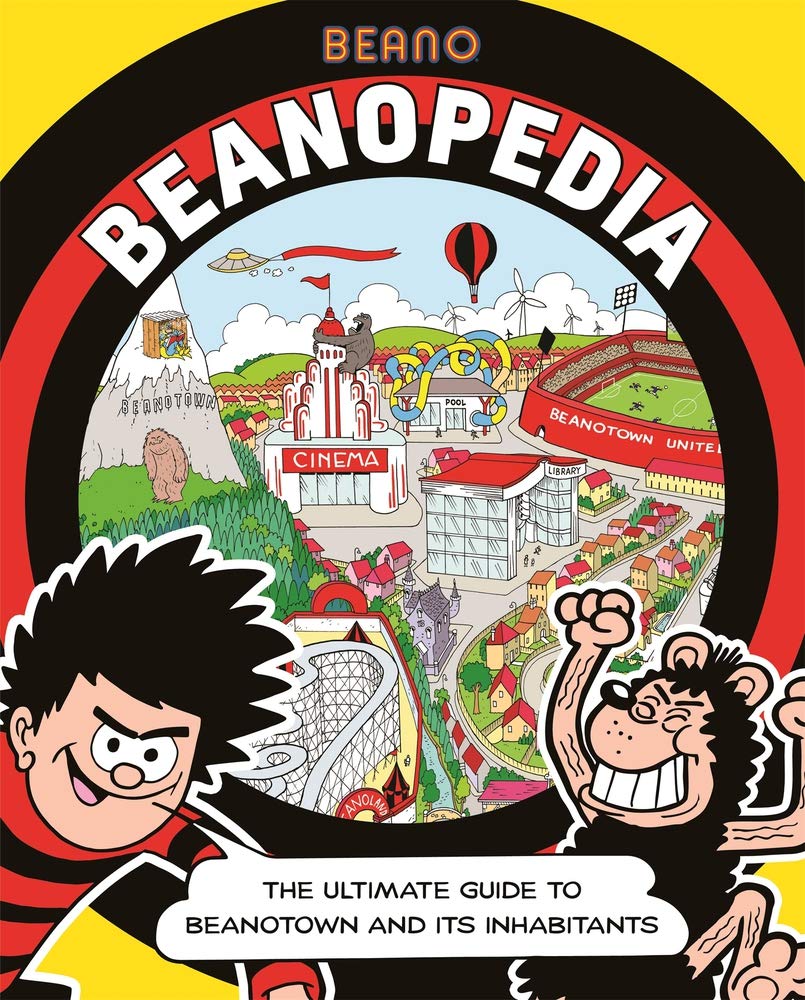
Beano: Beanopedia


By Rachel Elliot, Hannah Baldwin, Rob Ward & various (Studio Press Books/D.C. Thomson)
ISBN: 978-1-7874-1-705-2 (HB)

Premiering on December 4th 1937, The Dandy broke the mould of traditional British comics’ antecedents by using word balloons and captions rather than narrative blocks of text under the sequential picture frames. A huge success, it was followed eight months later by The Beano – which launched on July 30th 1938. Together they utterly revolutionised the way children’s publications looked and, most importantly, how they were read.

Over the decades the “terrible twins” spawned a bevy of unforgettable and beloved household names who delighted countless avid and devoted readers, and the unmissable end of year celebrations were graced with bumper bonanzas of the comics’ weekly stars in extended stories in magnificent hardback annuals.

As WWII progressed, rationing of paper and ink forced the “children’s papers” into an alternating fortnightly schedule: on September 6th 1941, only The Dandy was published. A week later just The Beano appeared. The rascally rapscallions only returned to normal weekly editions on 30th July 1949. Although The Dandy closed up in 2012, The Beano has soldiered on, amusing generations of glad gigglers and fuelling a minor industry in TV adaptations, toys, games, food, apparel, “how to” books and so much more.

August 28, 2019 saw the landmark 4,000th issue and it’s still going strong. That’s a lot of years and countless pranks, japes, dodges, menacings and all, so last year this cheery tome was released: a vibrant dossier of pertinent info on the current status and occupants of kids’ comedy Ground Zero…

Aimed at the younger end of the market and offering all the facts and pictures any devotee could dream of, this slight-but-detailed tour around Beanotown offers tips and hints, insiders’ insights and intimate introductions to all the funny folk living there.

The indispensable hardback guide opens with a welcoming ‘Visitors’ Guide’ hosted by Dennis the Menace and cunning canine collaborator Gnasher, detailing the top nine points of civic pride and interest, backed up by vivid advice on ‘How to get here (and how to leave)’, ‘Weird ways to travel’, ‘How to completely escape’ and ‘How to find your way around’…

A major portion of this guide features the lowdown on the town’s most notable inhabitants rendered as brief text, fact files, descriptive key quotes and a game. Of course, the first subjects are ‘The Menace Family’: Dennis, baby sister Bea, parents, Gran, pets and pesky archenemies, all supplemented by ‘Dennis’ Most Impressive Pranks’ and (cousin) ‘Minnie’s Most Magnificent Minxes’.

Minnie the Minx then similarly introduces her lot in ‘The Makepeace Family’, before a broad barrage of pages covers ‘The Bash Street Kids’ individually and collectively, with sections on the war-weary staff, ‘The Bash Street Pups’, the history of ‘Bash Street School’ and its ancestor institution ‘Horrible Hall’ and tips on ‘How to rule Bash Street School’…

Posh, privileged foes of all fun ‘The Brown Family’ are examined next from sneaky Walter to his greedy, ambitious parents Wilbur and Muriel, after which shorter files give us the facts on lesser stars ‘Peter “Pieface” Shepard’, sporty ‘JJ’, ‘Billy Whizz’, ‘Betty and the Yeti’ and wheelchair wonder/girl gadget-boffin ‘Rubidium von Screwtop (Rubi)’.

Secret philanthropist and truly-decent rich kid ‘Lord Snooty’ has survived relatively unscathed since the comic’s earliest days and his profile neatly segues into the home set-up of Roger the Dodger in ‘The Dawson Family’ files and the kids’ garage band ‘The Dinmakers’, after which (relatively) recent arrivals ‘Dangerous Dan’ and ‘Tricky Dicky’ precede a large section on ‘Eric Wimp (Bananaman)’ which includes a rundown on ‘Bananaman’s Fiendish Foes’.

Unlucky lad ‘Calamity James’ is followed by the Numskulls ‘Lurking Unseen’ lead to a self-help section detailing ‘How to be a Top Beanotown Resident’ and sharing ‘Beanotown Friendship’ rituals, leading to a rundown of ‘Beanotown’s History’, ‘Where to Go’, ‘What to Do’ and graphic lectures on ‘Sport and Leisure’ with a few helpful scenes to visit, after which‘Wildlife’ sets a thrilling agenda and ‘Baby Minder’ suggests individuals every parent should have on speed dial…

Moving on to the end of our tour, ‘Beanotown’s Secrets’ lists unmissable sites you might have overlooked while ‘Perfect Pranks’ suggest some anarchic homework for later, rounded up lists of ‘Where Not to Go for Help’ and ‘Where to Go for Help’.

And because it’s not a proper day out without one, this lovely tome concludes with a ‘Beanotown Quiz’ immediately followed by the ‘Answers’…

Slick, sleek, jolly and amazingly compelling, this is a perfect delight to bolster any kid’s introduction or re-submersion in a truly British icon.
A Beano Studios Product © D.C. Thomson Ltd 2020

“The Beano” ® © and associated characters ™© D.C. Thomson & Co., Ltd 2007. All Rights Reserved.

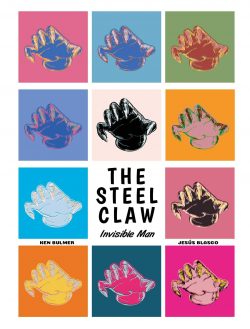
The Steel Claw: Invisible Man


By Ken Bulmer & Jesús Blasco (Rebellion)
ISBN: 978-1-78108-906-4 (TPB)

One of the most fondly-remembered British strips of all time is the startlingly beautiful Steel Claw. From 1962 to 1973the stunningly gifted Jesús Blasco and his small studio of family members thrilled the nation’s children, illustrating the angst-filled adventures of scientist, adventurer, secret agent and even costumed superhero Louis Crandell.

The majority of the character’s career was scripted by comic veteran Tom Tully, but initially follows the premise of HG Wells’ original unseen adversary as prolific science fiction novelist Ken Bulmer devises a modern spin on the Invisible Man…

Another stunning salvo of baby boomer nostalgia from Rebellion’s Treasury of British Comics strand, this first collection is available in paperback and digital editions. The Steel Claw: Invisible Man gathers material from timeless weekly anthology Valiant, spanning 6th October 1962 to 21st September 1963 and stories from the Valiant Annual 1965 and 1966.

Following an Introduction from Paul Grist, the tense drama begins with our eventual hero debuting as a rather surly assistant to the venerable Professor Barringer, working to create a germ-destroying ray.

Crandell is an embittered man, possibly due to having lost his right hand in a lab accident. After his recovery and itsreplacement with a steel prosthetic he is back at work when the prof’s device explodes. Crandell receives a monumental electric shock and is bathed in radiation from the ray-device which, rather than killing him, renders him totally transparent. Although he doesn’t stay unseen forever, this bodily mutation is permanent. Electric shocks cause all but his metal hand to disappear.

Kids of all ages, do not try this at home!

Whether venal at heart or temporarily deranged, Crandell goes on a rampage of terror against society and destruction of property throughout Britain which culminates in an attempt to blow up New York City before he finally coming to his senses. Throughout Crandell’s outrages, Barringer is in guilt-fuelled pursuit, determined to save or stop his former friend…

The second adventure channels another classic (The Strange Case of Dr Jekyll and Mr Hyde), intriguingly pitting the Claw against his therapist, who – in an attempt to treat him – is also traumatically exposed to Barringer’s ray. Instead of permanent invisibility, Dr. Deutz develops the ability to transform himself into a bestial ape-man who malevolently turns to crime and frames Crandell for a series of spectacular robberies and rampages.

On the run and innocent for once, Crandell is saved by the intervention of Barringer’s niece Terry Gray. After weeks of beast-triggered catastrophe and panic in the streets, the Steel Claw is vindicated and proved a hero… of sorts…

Bulmer’s next tale changes location to the Bahamas as our star shifts from outlaw to hero. While recuperating on an inventor-friends yacht, Crandell is accidentally embroiled in a modern-day pirate’s attempt to hijack an undersea super-weapon system…

After would-be bullion bandit Sharkey and his nefarious gang steal the device and use it to capture a submarine, their convoluted scheme to rob an ocean liner falters when a steel fisted ghost starts picking them off one by one…

More than any other comics character, the Steel Claw was a barometer for reading fashions. Starting out as a Quatermass style science fiction cautionary tale, the strip mimicked the trends of the greater world, becoming a James Bond-style super-spy strip with Crandall eventually tricked out with outrageous gadgets, and latterly, a masked and costumed super-doer when TV-show-triggered “Batmania” gripped the nation and the world. When that bubble burst, he resorted to becoming a freelance adventurer, combating eerie menaces and vicious criminals. Before we head too far down that path however, his contributions to Valiant Annuals 1965 and 1966 (released Autumn 1964 and 1965 respectively) afford rather more constrained thrills and chills as Crandell defeats a gang using an electricity-supressing gadget to rob a blacked-out London and one year later aid the Metropolitan police force corral a bunch of apparently invisible bandits dubbed the Phantom Raiders…

The thrills of the writing are engrossing enough, but the real star of this feature is the artwork. Blasco’s captivating classicist drawing, his moody staging and the sheer beauty of his subjects make this an absolute pleasure to look at. Buy it for the kids and read it too; this is a glorious book, and brace yourself for even better yet to come …
© 1962, 1963, 1965, 1966 & 2021 Rebellion Publishing IP Ltd. All Rights Reserved.

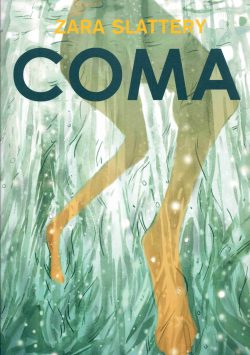
Coma


By Zara Slattery (Myriad Editions)
ISBN: 978-1-912408-66-5 (PB) eISBN: 978-1-912408-78-8

Since the pandemic struck, everyone’s notion of what terror looks and feels like has fundamentally changed. That has never been more apparent than in recent medical dramas and attains even more horrific poignancy when the story being told is true.

That’s certainly the case in this astounding autobiographical inner excursion from cartoonist, illustrator and educator Zara Slattery, who barely survived an inexplicable and escalating medical crisis in 2013 that forever changed her life and those of her husband and children.

As she battled for her life in the Intensive Care Unit of Brighton hospital – spending 15 days in a coma and months after in recovery – her overwhelmed man Dan and their kids began recording events in diaries. This was at the suggestion of the nurse in charge, whose own medical notes append the saga: written in ICU to update the critical patient of what was occurring for when – or if – she woke up…

All those disparate records were used by Slattery to craft an interlocking narrative of how life went on around her and act as a grounding touchstone for the other portions of this book. These sections are wildly delirious and hallucinogenic trials experienced by the comatose artist who recalls ceaseless, terrifying, guilt-&-shame flavoured trials and phantasms, possibly triggered by exterior events unconsciously absorbed as she lay dying…

Broken into day chapters spanning ‘Wednesday 22nd May’ to ‘Saturday 8th June’, the intimate excursion details how as Zara slowly succumbs to agonising infection; how Dan adapts to being a sole parent to children too smart to fool for long, and how a host of friends and relatives desperately rally round to wait out the crisis, retreating into comforting routine, platitudes and endless hope…

It’s easy – and painfully correct – to declare that a graphic narrative this intensely personal attains universal poignancy in these days of plague, but even if the last two years never happened, Coma would still be an incredible blend of prosaic everyday coping, paean to nurturing support and horrific hell-bound rollercoaster ride.

Its interweaving of matter-of-fact necessities with the blistering shock of comatose fever dreams powerfully unpicks cruel modern myths – such as any ailment can be defeated if the “victim” fights hard enough, or notions of “unfair” or “undeserved” illness – and focuses attention on where it belongs: on patients, suffering friends and despondent family helplessly watching from the side-lines and indomitable medical professionals prove themselves the world’s real heroes.

Mesmerising, compelling and potently understated, this pictorial memoir is unlike any graphic novel you’ve ever seen, but you know the cure for that, right?
© Zara Slattery 2021. All rights reserved.

Coma is schedule for release on May 13th 2021 and is available for pre-order now.

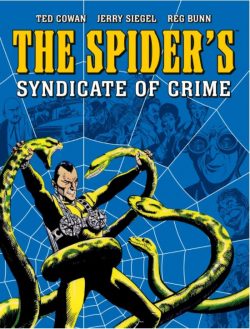
The Spider’s Syndicate of Crime


By Ted Cowan, Jerry Siegel & Reg Bunn (Rebellion)
ISBN 978-1-78108-905-7 (TPB)

I find myself in a genuine quandary here. When you set up to review something you need to always keep a weather eye on your critical criteria. The biggest danger when looking at certain comic collections is to make sure to remove the nostalgia-tinted spectacles of the excitable, uncritical scruffy little kid who adored and devoured the source material every week in the long ago and long-missed.

However, after thoroughly scrutinising myself – no pleasant task, I assure you – I can honestly say that not only are the adventures of the macabre and malevolent Spider as engrossing and enjoyable as I remember but also will provide the newest and most contemporary reader with a huge hit of superb artwork, compelling, caper-style cops ‘n’ robbers fantasy and thrill-a-minute adventure. After all, the strip usually ran two (later three) pages per episode, so a lot had to happen in pretty short order.

Part of Rebellion’s Treasury of British Comics strand and available in paperback and digital editions, The Spider’s Syndicate of Crime is the opening salvo of what I hope is many welcome returnees. It gathers material from peerless weekly anthology Lion spanning June 26th 1965 to June 18th 1966 and that year’s Lion Annual which for laborious reasons is designated 1967.

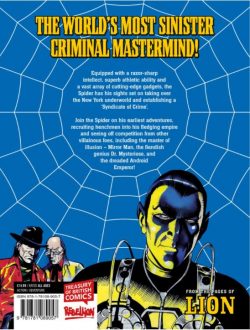
What’s it all about? The Spider is a mysterious super-scientist whose goal is to be the greatest criminal of all time. As conceived by writer/editor Ted Cowan – who among many other venerable triumphs, also scripted Ginger Nutt, Paddy Payne, Adam Eterno, and created the much-revered Robot Archie strip – the flamboyantly wicked narcissist begins his public career by recruiting a crime specialists safecracker Roy Ordini and evil inventor Professor Pelham before attempting a massive gem-theft from a thinly veiled New York’s World Fair. It also introduces Gilmore and Trask, the two crack detectives cursed with the task of capturing the arachnid arch-villain.

A major factor in the eerily eccentric strip’s success and reason for the reverence with which it is held is the captivating – not to say downright creepy – artwork of William Reginald Bunn. His intensely hatched line-work is perfect for the towering establishing shots and chases, and nobody ever drew moodier webbing or more believable weird weapons and monsters.

Bunn was an absolute master of his field art whose work in comics – spanning 1949 to his death in 1971 – such as Robin Hood, Buck Jones, Black Hood, Captain Kid and Clip McCord – was much beloved. Once the industry found him, he was never without work. He died on the job and is still much missed.

Also scripted by Cowan, second adventure ‘The Return of the Spider’ sets the tone for the rest of the strip’s run as the unbelievably colossal vanity of the Spider is assaulted by a pretender to his title. The Mirror Man is a swaggering arrogant super-criminal who uses incredible optical illusions to carry out his crimes, and the Spider must crush him to keep the number one most wanted spot – and to satisfy his own vanity.

The pitifully outmatched Gilmore and Trask return to chase the Spider but must settle for his defeated rival after weeks of devious plotting, bold banditry and spectacular serialized thrills and chills.

“Dr. Mysterioso” is the first adventure by Jerry Siegel, who was forced to look elsewhere for work after an infamous falling out with DC Comics over the rights to the Man of Steel.

The aforementioned criminal scientist of the title here is another contender for the Spider’s crown and their extended battle – broken on repeated occasions by a crafty subplot wherein the mastermind’s treacherous, newly-expanded gang of thugs seek to abscond with his stockpiled loot whenever he appears to have been killed – is a retro/camp masterpiece of arcane dialogue, insane devices and rollercoaster antics.

By the time of the final serialised saga herein contained – ‘The Spider v. The Android Emperor’ – the page count was up to 4: packed with fabulous fantasy and increasingly surreal exploits as the Arachnid Archvillain battles the super science of a monster-making maniac who might have survived the sinking of Atlantis but somehow gets his fun from baiting and tormenting the self-styled king of crime. Big mistake…

The book concludes with a short yarn from the 1967 Lion Annual. ‘Cobra Island’ gives the artist a chance to show off his skills with brushes and washes as the piece was originally printed in the double-tone format (in this case black and red on white) which was a hallmark of British annuals.

It finds the mighty Spider and Pelham drawn to an exotic island where plantation workers are falling under the spell of a demonic lizard being… but all is not as it seems and the very real danger is more prosaic than paranormal…

Also offering an introduction from Paul Grist and full creator biographies, this initial collection confirms that the King is back at last and should find a home in every kid’s heart and mind, no matter how young they might be, or threaten to remain.

Bizarre, baroque and often simply bonkers, The Spider proves that although crime does not pay, it always provides a huge amount of white-knuckle fun…
© 1965, 1966, 1967 & 2021 Rebellion Publishing IP Ltd. All Rights Reserved.

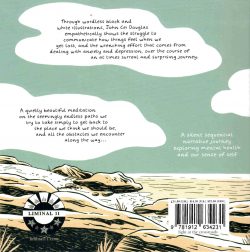
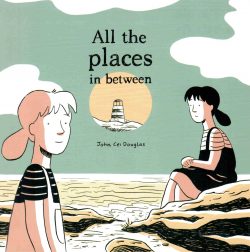
All the Places in Between


By John Cei Douglas (Liminal 11)
ISBN: 978-1-912634-23-1 (PB)

We’re all been locked up in our own heads as much as in our homes recently, constantly in search of solutions to ease anxiety, however we can. Here then – in timely fashion and most serendipitously – is a sublime gem in the conceptual mould of Tove Janson, laced with oblique yet helpful ruminations on healing mindfulness and enjoyed as a voyage of genuine inner discovery.

Not only is the message calming and helpful – and delivered in beguiling imagery guaranteed to restore your weary disposition – but it also guarantees a solidly entertaining mystery journey helping to moderate your hunger for physical travel and fresh experience.

Crafted in dreamy, silent passages, All the Places in Between follows a pensive girl by a barren seashore as she fretfully, nervously but determinedly passes from ‘All the places we’ve been’ to ‘All the places we’re going’

On the way she meets her exact opposite and is cast ‘adrift’: occupying ‘the lighthouse’ before finding civilisation drowned and devastated. Time drags ‘between’ before isolation draws her to ‘the city’ where she finds ‘a companion’ to care for. Eventually that temporary relationship sunders, ‘buried’ in the wreckage of the world and dwarfed by insurmountable chasms and a ‘tsunami’ that brings resolution of sorts as ‘the lighthouse returns’, prompting a revelatory resolution in ‘space’…

Not a book to summarise, but definitely one to look at and wonder, John Cei Douglas’ oneiric ramble is a calming and enticing trip we can all benefit and draw comfort from.

Filled with delightful human moments.
© 2020 John Cei Douglas. All rights reserved.

All the Places in Between is scheduled for release on April 29th 2021 and is available for pre-order now.

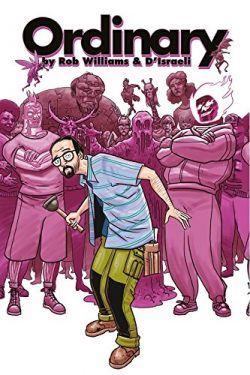
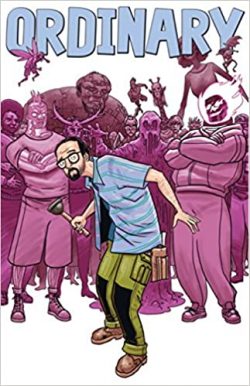
Ordinary


By Rob Williams & D’Israeli (Titan Comics)
ISBN: 978-1-78276-009-2 (HB)

Admit it. We’ve all wondered – and both comics and movies have explored at length and in various tones and styles – a particularly thorny contemporary question: what happens if everybody wakes up with superpowers?

Collecting a rather witty riff on that quandary, this wickedly charming little fable from Rob Williams & Matt “D’Israeli” Brooker – first seen in Judge Dredd Megazine #340-345 at the end of 2013, then as a Titan Comics miniseries and here gathered into one scintillating colour hardback or digital tome – takes the big question a step further by positing that on that day of astounding ascension everybody becomes a modern Prometheus but you…

After an effusive Introduction from Warren Ellis the strange tale of off-the-books plumber and inept gambler Michael Fisher begins one apparently typical morning as he wakes up in Queens, NYC. He’s late for another call-out and stumbling almost unthinkingly straight into a great big bunch of complete insanity…

Narrowly escaping a thorough thumping from Samoan thugs he owes cash to, the harried divorcee arrives at his latest job just in time to see the elderly client rapidly de-age to squelchy nothingness and short-tempered boss Brian turn into a talking bear.

Metamorphic madness is everywhere. Giants, flaming men and snotty dragons are popping up every second, but all Michael can think of is calling his ex, Sarah to see if their son Josh is okay.

As freaked-out military rapidly fail to control the situation, the truth slowly dawns. Not just New Yorkers but all of humanity has, in the space of an instant, become a race of shapeshifters, superhumans and worse.

Everyone except Michael…

As madness and panic grips the world, Mike naturally heads for a bar. When Brian joins him they watch the President’s emergency news conference. It would have gone much better if someone had been able to tell PotUS that his new power is broadcasting his actual thoughts in little cartoon thought balloons above his head…

When TV news shows Josh’s school is on fire, Brian urges Michael to get across the river and find his boy, but the now-empowered Samoans almost catch him and it takes low cunning, a Midas touch and a cosmically aware cabbie to save the day…

With chaos and carnage ravaging the nation, deep in the Pentagon the President is visibly losing it as his fundamentalist Vice-President stridently argues that the power proliferation is a Heaven-sent blessing intended to help the Land of the Free smite all the world’s unbelievers.

Scottish Genomics Professor and resident scientific expert Dr. Tara McDonald has a more reasoned argument. The situation is a literal plague and uncontrolled super-abilities will destroy mankind unless a cure is quickly found. Already, America’s enemies are gathering and nations all over Earth are marshalling their burgeoning meta-resources to settle age-old scores and eradicate contemporary rivals.

However, before McDonald can even postulate a remedy, they have to find someone immune to the catastrophic contagion…

Against all his normal instincts and incredible odds – which comprise both transformees and the increasingly hard-pressed, savagely dictatorial remnants of the civil authorities – Michael has made his way into Manhattan even as in Washington, McDonald’s best efforts have yielded pitiful results.

Things really go south after a nuke detonates in Afghanistan and the Veep seizes command. The rabid Christian doesn’t want a cure and when the only man in existence without uncanny abilities becomes a minor media celebrity by rescuing his son from a New York school, the acting Commander-in-Chief’s zealots are only one of a number of ruthless factions instantly targeting unfortunate Mr. Fisher…

Now it’s a race against time as deadly opponents from warring and friendly nations alike contend to control the unluckiest, most useless man in the world, with the fate of humanity in the balance. Fate and science, however, have teamed up to deliver a big surprise for everybody…

Augmenting this thought-provoking package is a gallery of guest pinups from Edmund Bagwell, Ben Oliver, Laurence Campbell, Brian Ching & Michael Atiyeh, Brendan McCarthy, Neil Googe, Dom Reardon, Henry Flint, Alison Sampson & Ruth Redmond, James Harren, Ale Aragon, Mark Buckingham & D’Israeli, plus a little learned discourse – stuffed with the illustrator’s behind-the-scenes sketches and working drawings – on ‘Ordinary Science’ from Evolutionary Biologist and comics fan JV Chamary (PhD)…

Devilishly clever, cruelly passionate, potently humane and devastatingly funny, this sharp treatise on the true meaning of power politics offers a uniquely British spin on the eternal fantastic flight of idle fantasy and will delight all lovers of the genre with a world-weary eye to the way life really works…
Ordinary is ™ and © 2014 Rob Williams and Matt Brooker. All rights reserved.

The Black Project


By Gareth Brookes (Myriad Editions)
ISBN: 978-1-908434-20-3 (PB)

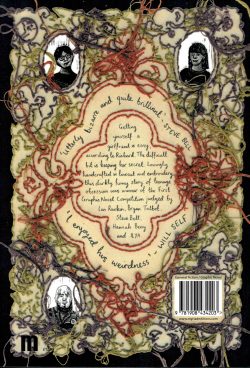
As I eagerly await Gareth Brookes’ imminent latest release, let’s look at his first award-winning work: one that set the scene not just for his trademark versatility of style and artistic weapons of choice, but also the uniquely skewed mindset that finds the extraordinary in everyday life and those weird things called people…

Brookes is a capital-A artist, printmaker, textile creator and educator who learned his craft(s) at the Royal College of Art and who has subsequently appeared in ArtReview; Kus; The British Library’s Comics Unmasked exhibition and numerous classrooms and lecture theatres as inspirational teacher.

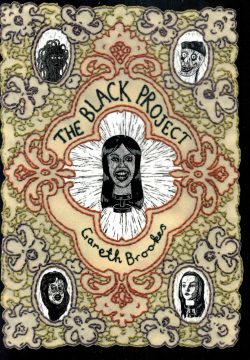
He began literally crafting comics in 2015 with an astounding, disturbing and hilarious epic entitled The Black Project. In essence it’s a paean to uncomfortable, outsider British youth: the ones shunned and ignored by those who overachieve in class, look like gods on the sports field and have great hair and no trouble talking to girls or the right boys. If you’re old enough, try humming “David Watts” (either The Kinks or The Jam versions) while reading this and you won’t go far wrong…

It’s the 1990’s and schoolboy Richard is at that difficult age. Status, social pressure, shifting relationships are all acting on a bizarrely changing body, but at least he’s not overly worried about proving his burgeoning manhood. According to him, getting a prestige-enhancing girlfriend is simple. All you need is time, peace and quiet and the right components…

Sadly, once Richard has completed his amatory endeavours, there’s the small matter of keeping her secret from his few – rather unpleasant – friends, assorted adults in his family circle, teachers and overly-fussing mother. He may not be able to express why, but the clever lad instinctively knows nobody will understand what he’s done, or why…

Inevitably, disaster strikes and “Laura” is lost to him, but Richard is not daunted. He simply adjusts, regroups and starts the laborious creative process again. And again and…

Darkly hilarious and outrageously clever, powerfully mired in the minutiae of English suburban nostalgia and peppered with twisty subplots and red herrings, The Black Project is rendered with mastery in stark monochrome imagery, generated by deftly-chiselled lino cuts and pieces of painstakingly-sewn embroidery. It’s like nothing you’ve ever seen and equally unique in terms of narrative.

Supplemented by a revelatory Q&A Afterword delving deep into the methodology and inspiration for the book, this is a graphic triumph no fan of the medium or lover of dark fiction should be without.
© Gareth Brookes 2013. All rights reserved.

No Country


By Patrice Aggs & Joe Brady (David Fickling Books)
ISBN: 978-1-78845-183-3 (PB)

This is the scariest book I’ve read in decades.

That’s an odd thing to say about a collection of strips from a wholesome children’s comic like The Phoenix, but true nonetheless, so I’ll qualify that statement by adding that it’s beautifully illustrated by Patrice Aggs with a complete absence of gore, supernatural terror or zombies of any kind, casting its chilling pall thanks to a subtle, understated script by Joe Brady, who convincingly speculates on the current global and national political situation…

Just imagine a Britain where the Prime Minister ignores the law, suspends Parliament and rules by ministerial fiat. Consider curfews and lockdowns, shortages in the shops and direct monitoring and control of what teachers can say and do. Further ponder on what happens when strident, impassioned protestors organise into militant groups and start systematically and violently resisting daily interventions and oppressions doled out by an ever more heavy-handed police force and too-readily deployed army…

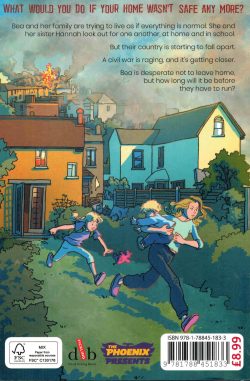
No Country is set in Britain and follows middle schooler Bea, her little brother Dom and frequently bossy older sister Hannah as they daily adapt to a draconian new reality. Their dad used to work as a local councillor, but now looks after the kids and spends his downtime in quiet secret meetings with other adults with worried faces…

Mum has been gone for a while now, but still talks to them via the internet whenever there’s enough electricity. She’s in another country somewhere, trying to get exit visas and paperwork so the family can be reunited… somewhere safe.

Daily tensions ratchet up when the long-declared Martial Law edict is shockingly enforced by new army divisions who occupy the town and “requisition” everything not nailed down. Hannah just got her first boyfriend and is acting really weird, especially after he reveals he’s part of the patriotic rebel front called the Free Kingdom – the other side in a rapidly escalating, ideologically fanatical civil war, ripping sedate stuffy Britain apart.

As hunger grows, home raids and “searches” intensify and friends and teachers start disappearing, Mum finally contacts them that the documents are ready and the family must act immediately. Tragically, not everyone is there to get the message but there’s no time to wait. This is the moment to run…

To Be Continued…

A superb and gripping exploration of the refugee crisis with the comfy, cosy UK all-too-convincingly substituting for Syria, Venezuela, Afghanistan, South Sudan and Myanmar (please feel free to look up why I chose those countries). This is a brilliant introduction to real world problems any kid can grasp and be moved by, in exactly the same way books like Animal Farm, A Kestrel for a Knave, Ring of Bright Water or Lord of the Flies ushered in a new, transformational understanding for generations of youngsters.
Illustrations © Patrice Aggs 2021. Text © Joe Brady. rights reserved.

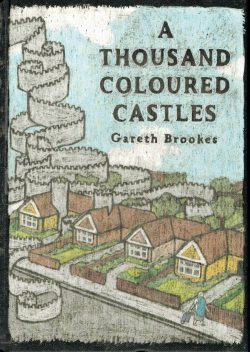
A Thousand Coloured Castles


By Gareth Brookes (Myriad Editions)
ISBN: 978-0-993563-30-0 (HB)

The world is filled with amazing women passing largely unnoticed by the loud, shouty males with their hands on the tillers of history and the media, but seldom the kettle or shopping bags. This amazing tale is broadly based on one of them…

It comes to us from an equally intriguing source. Gareth Brookes is a capital-A Artist, printmaker, textile creator and educator who began literally crafting comics in 2015 with his astounding and disturbing epic (and forthcoming review) The Black Project.

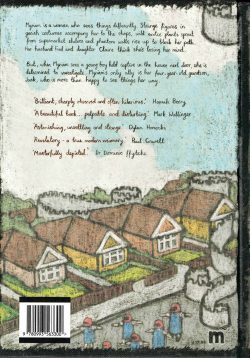
With A Thousand Coloured Castles, RCA graduate Brookes sealed a growing reputation for challenging and rewarding graphic narratives of the artisanal kind. Brookes is a deep and slyly humorous thinker with his roots in the Littlest of Englands and a skewed eye to storytelling. This captivating hardback tome was created solely from dark wit and wax crayons, resulting in a truly tactile and absurdly otherworldly viewing experience…

Myriam is in her declining years: married to a set-in-his-ways old know-it-all curmudgeon, as seen in most traditionally happy families and captured on paper by Raymond Briggs and TV sitcoms by Richard Wilson.

Fred spends most of his time complaining about everything, which is why it takes a very long time for him to notice that Myriam’s eyesight is fading. It takes even longer for him to grasp that she’s increasingly subject to wild, abstract and utterly convincing hallucinations: vivid visions and shapes that baffle and bewilder even as they light up her drab, interminable existence.

Of more concern to Fred is the wife’s increasing fascination with the overgrown, unkempt back garden next door. He’s happy to moan about it in private but doesn’t want to engage in potential suburban hostilities with the woman living there.

Myriam, however, keeps seeing a strange bedraggled little boy trapped there, even though everybody knows that’s not possible. All except her toddler grandson Jack, who’s always happy to see things her way…

And thus unfolds a multi-layered observation of social norms and aberrant behaviours, supposition and expectation, declining faculties and domestic evil that is truly magical to behold and impossible to predict.

Despite her condition, Myriam proves that she knows what’s what and what’s right as events spiral to an inevitable conclusion and answers are shockingly forthcoming…

Gentle, genteel and utterly beguiling, this is a masterpiece of British fantasy understatement with a potent underpinning of quietly desperate lives truly lived…
© Gareth Brookes 2017. All rights reserved.