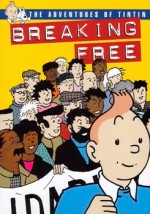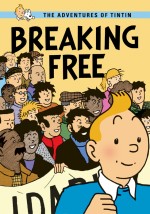
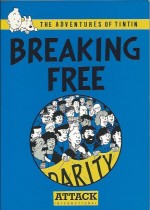
The Adventures of Tintin – Breaking Free


By J. Daniels (Attack International/Freedom Press)
ISBNs: 0-9514261-0-9,      978-0-9514261-0-4,        978-1-90449-117-0 (Freedom Press)

“Freedom of the Press is only guaranteed to those who own one” – Abbott Joseph Liebling

Politics is always composed of and used by firebrands and coldly calculating grandees, but that’s the only guiding maxim you can trust. Most other people don’t give a toss until it affects them in the pocket and, no matter to what end of the political spectrum one belongs, the greatest enemy of the impassioned ideologue is apathy. This forces activists and visionaries to ever-more devious and imaginative stunts and tactics…

Crafted by the enigmatically anonymous J. Daniels and concocted and released by the anarchist faction Attack International in 1988, The Adventures of Tintin – Breaking Free is a perfect exercise in the use of Détournement (“turning expressions of the capitalist system and its media culture against itself”), using mimicry, mockery, parody and satire to counter the seductive subversion of the Monied Interests of the status quo.

It also reads rather well as social documentary and human drama, for all its earnest worthiness and fiercely dogmatic posturing…

The gimmick is this: the comforting cosy style and iconic images of Hergé’s immortal adventurers are removed into our pedestrian oppressive, corrupt world and co-opted to incite a revolution in thinking and action…

In Chapter 1, ‘We’ve Had Enough!’ has unemployed hothead, petty thief and disenfranchised youthful dole-queue outcast Tintin visit his uncle on the run-down-and-dying council estate where the once-vital man and his wife Mary now live on the breadline. The boy needs money and The Captain suggests a labouring job with him on the new building site. Although there’s work to be had, tensions are high there: dangerous working conditions, shoddy management practices and subsistence wages for the desperate men crafting luxury flats for more of the rich and gentrified types steadily pushing real people out of the community…

Another alienated faction joins the swell of discontent when squatters break in to the flat next door and the Captain helps them sort out the utilities. Everybody knows the council is letting the estate die of neglect so that the corrupt councillors can sell it off, so the lesbian activists are welcomed as fellow fighters against the powers that be.

Tensions mount as the National Front recruit in broad daylight, skinheads carry out racist attacks and yuppie winebars push out good old-fashioned working-men’s pubs. Soon Tintin is striking back whenever he can: vandalising posh cars and pickpocketing rich poseurs. All proper men need is jobs, beer, football and a decent life, but the boy soon has his eyes opened – if not his opinions changed – when he is made painfully aware of how even those lower class paragons treat their women…

Events come to a head when a worker dies on the building site and the supervisor is more concerned about lost time; even suggesting poor Joe Hill was drunk and not the hapless victim of negligent, non-existent safety procedures…

‘One Out, All Out!’ sees a wildcat strike seeking compensation for Joe’s widow escalate into a national furore after trade union officials strike a shady deal with the property developers and the incensed workers reject their useless official action for measures that will actually work.

Soon bosses and unions are conspiring together to break the unsanctioned, unofficial action as the ordinary people rally around the strikers, providing food, money and – most important of all – encouragement.

Soon the authorities resort to their tried and true dirty tactics: picket-breaking riot squads, undercover agent provocateurs, intelligence-led targeted arrests of “ringleaders” and general, brutal intimidation.

Scab labour is harshly dealt with in ‘Let’s Get Organised’ as the hard-working, underappreciated women increasingly take up the challenge. The movement is growing in strength and national support. Soon other cities are in revolt too, and The Captain is becoming an unwilling and unlikely figurehead. Tintin, ever impatient, finds like-minded hotheads and secretly begins a campaign of literally explosive sabotage…

It all culminates in ‘Getting Serious’ as everything kicks into overdrive when the Captain endures a punishment beating from unidentified thugs and his family is similarly threatened. Scared but undeterred, the old salt carries on, and planning for a national march continues unabated. With reports coming in of similar movements inPoland,Yugoslavia and other Warsaw Pact countries (the Soviet Empire was still very much in existence and continually crushing workers’ freedoms at this time) the local groundswell becomes a national expression of solidarity and the underclass consolidates under a mass rallying call to arms…

When the riot squads are again deployed it all turns ugly and the events go global, but in the aftermath The Captain has been “disappeared” or, as the authorities would have it, been “arrested for conspiracy”.

With half a million people on the streets of the city, the powers-that-be move to full military response but it’s too late…

The later edition, published by Freedom Press in 2011, also includes the infamous early adventures of this extremely alternative Tintin (as first seen in polemical pamphlet The Scum in 1986) from the scallywag’s days sorting out Rupert Murdoch from the picket line at Wapping during the legendary Printer’s Strike…

Passionate and fiercely idealistic, the initial release of Breaking Free unsurprisingly unleashed a storm of howling protest from the establishment, Tory Press and tabloid papers (especially News International) and by all accounts even Prime Minister Thatcher was “utterly revolted”.

Of course that only meant that the little guys had won: achieving a degree of publicity and notoriety such puny, powerless underdogs could only have dreamed of but never afforded by any traditional means of disseminating their message…

More a deliciously tempting dream than a serious clarion call to end social injustice, this is a wickedly barbed and superbly well-intentioned piece, lovingly capturing the sublime Ligne Claire style and utterly redirecting its immense facility to inform and beguile…

First released in April 1988 by Attack International. This book proudly proclaims that no copyright has been invoked unless capitalists want to poach it…

Apes of Wrath


By Steve Bell (Methuen in association with The Guardian)
ISBN: 978-0-41377-450-7

For as long as we’ve had printing in this country we’ve had gadfly artists commentating on society and its iniquities, and visually haranguing the powerful, pompous, privileged and just plain perfidious through swingeing satire and cunning cartoons.

Even after many centuries of savage satirical Masters, we’re still throwing up brilliant firebrands and cruelly artistic geniuses whose political acumen, societal consciences and staggering graphic gifts irresistibly combine to make the powerful, unscrupulous and hypocritically venal sweat a bit in their own self-important juices whilst making we mere rabble of hoi-polloi and avowed plebs chuckle and smirk at their revealed discomforts…

Probably the most effective and dedicated of the modern crop of cartoonist champions of the underclass (or “the public” as I call them) is Steve Bell, who has been skewering the Great and the not-so Good since 1977.

Born in Walthamstow in 1951, raised in Sloughand North Yorkshireand educated at Teeside College of Art, the Universities of Leeds and later Exeter(where he obtained a teaching qualification from St. Luke’s Campus), he abandoned education for freelance art as both comics artist (the Gremlins in Jackpot) and cartoonist.

His strident, polemical strips ‘Maggie’s Farm’ (Time Out and City Limits) and ‘Lord God Almighty’ in The Leveller led to a commission from The Clash for the album Sandanista! and eventually his own regular feature ‘If…’ which began in national newspaper The Guardian in 1981 and is still going hard and strong…

It’s a controversial maxim of political cartooning that you’re only as good as the times you’re in and the targets on offer, but if so either Bell has been born into the End of Days or he’s particularly blessed in having a perpetually renewing procession of perfectly risible prime lampooning targets – or maybe that should be “suspects”…

After lambasting a succession of utterly ghastly Tory leaders and their appalling acolytes at home, and rabid Rightist rulers abroad for years, blow me if a global swing to the left didn’t seemingly leave Bell with nothing to shoot at. However it all soon proved to be a false alarm which offered a new American C-i-C with his own on-board, self-destructive arsenal of gaffes and a covert continuation of Conservative idiocy ideology at home with the election of Labour’s Saviour Tony Blair.

And then in 2000, the Nicedaysmerca and birthplace of Freem even found itself another Bush to hide in front of…

Collecting and repurposing comical cutlass-slashes, surgically sardonic scalpel-cuts, a riot of rapier-like witticisms and, when nothing else will do, the occasional bludgeon with the blunt-end of a cartoon cudgel, this crushingly hilarious  full-colour  – and often off-colour – compendium collects Guardian cartoons from 1988, 1991 and 1998-2004, tracing the rise of the Bush Dynasty in war and profit peace, without ever underplaying the key role played by dogged Little Britain in assuring a nice steady pace on the road to mutually-assured Armageddon…

The grand conceit of this savage little hardcover treat is that we get to peek beneath the hem of great men in a time of turrble crisis where Freeman Moxy were threatened and only the Curge of our leaders kept us all from  being wiped out by Slamic Fananimalism and Terrrsts. Moreover we get to hear it all in the humble words of George Dubya Bush as he recounts his role in countering the crisis…

Featuring 110 wickedly manic graphic salvoes against just about everybody and a few utterly damning moral condemnations as only arch cartoonists can concoct them, Apes of Wrath captures the true spirit of those troubled times with such standout pictorialised diatribes as ‘Bigtime for Bonzo’, ‘Electile Dysfunction’, ‘Al Who’da??’, ‘The Age of Irony is Dead…’, ‘Corporate Responsibility’, ‘The Humanitarian Thrust Continues’ and so many more…

Thoughtfully containing a comprehensive glossary of frequently-used terms such as “Morl Curge” (What you need to be a wurl class wurl leader), “Cladral damage” (What happens to pain in the ass innocent bystanders that don’t keep their heads down) and “Diplocrap” (talking to forners) which will help us all speak Presidentially and understand the complexity of high level negotiation, this chronicle of catastrophe is a perfectly guided missile of agonised, mordant mirth that no as-yet free-thinking individual should miss, especially as elections just keep on happening…
Text © 2004 Steve Bell. Illustrations © 1988, 1991, 1998, 1999, 2000, 2001, 2002, 2003, 2004 Steve Bell. All rights reserved.

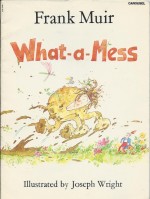
What-a-Mess


By Frank Muir & Joseph Wright (Carousel, Picture Corgi)
ISBNs: 0-552-52105-I (Carousel)      978-0-55252-105-5 (Corgi)

Once a hugely popular franchise, the subtly superb and wryly fantastic adventures of What-a-Mess have all but disappeared from today’s library lists and Athenaeum book-shelves. Written by Frank Muir and illustrated by Joseph Wright, the gloriously engaging, dolorously delightful yarns starred a philosophically trenchant, galumphing great ugly-duckling dog and spawned 22 further books, in assorted styles and formats, as well as two seasons (48 episodes in total between 1990 and 1995) of a successful trans-Atlantic TV cartoon series.

Joseph Wright is still a brilliant but enigmatic jobbing illustrator who generally keeps to himself and lets his wonderfully manic art do his talking for him. He is most well known these days as the provider of hilariously gory perfectly perfidious pictures for the Little Dracula series of books by Martin Waddell – a task he toiled at from 1986 onwards and which again resulted in a fondly remembered American cartoon series.

Frank Herbert Muir was born on February 5th 1920 inRamsgate,Kent and spent the next 77 years of his life becoming a British entertainment legend. His formative years were spent in his grandmother’s pub, before moving toLondon.

Despite possessing an astounding vocabulary, phenomenally disciplined, cultured diction and a plummy, posh voice, Muir was educated atChathamHouseGrammar SchoolandLeytonCountyHigh Schoolfor Boys, not the public-school system he so miraculously mimicked. He proudly and often averred “I was educated in E10, notEton”…

During WWII he served as a photographic technician in the Royal Air Force and when demobbed began writing radio scripts for comedians Jimmy Edwards and Dick Bentley. This led to his teaming with life-long writing partner Denis Norden, and their creation of the venerable comedy show Take it from Here reinvented the Funny Business. Their first major innovation was the invention of iconic sitcom family The Glums, and the team quickly became a keystone and shaper of British humour (…for instance, they originally coined the much-beloved phrase “Infamy, Infamy, they’ve all got it in for me”) so when Edwards moved over to the new-fangled television medium Muir & Norden went with him…

Scriptwriter, satirist, scholar, author, performer, star of Radio and Television, Muir was also the BBC’s Assistant Head of Light Entertainment during the 1960s and followed up by becoming London Weekend Television’s first Head of Entertainment in 1969, and worked constantly and brilliantly in his many careers until his death on January 2nd 1998. Ten months later, he and Norden were joint recipients of their last of so many honours: the Writers’ Guild of Great Britain Writer of the Year Award for 1998.

Muir and his family shared their home with a succession of Burmese cats and Afghan Hounds, and these latter were the inspiration for the simply magical picture book story featured here.

Prince Amir of Kinjan was a very clumsy and confused puppy. Excitable, inquisitive, rash and so very careless, the long-nosed, long-legged, pot-bellied pooch always hurtled from here to there, rolling in things, overturning objects and generally causing a sticky calamity all over the place.

There were always things trapped in, nastily glued to or even growing on him – and usually a small yellow duck stuck to the crusted fringe on his head. Even his serene, gracious and long-suffering mother so often said “What-a-Mess!” that the mucky moppet actually believed that it was his name…

No wonder the dire doggy was so confused and pondered – whenever he wasn’t rushing about, tearing furniture or eating something he shouldn’t – over what kind of beast he actually was…

This resplendent riot of frolicsome folderol then follows the scruffy scamp as he searches in the house, garden and pond for his true identity and a meaning to his life. Using observation, logical deduction and rationalist reasoning, the daft beast notes his definite physical similarities to a big fat bee, an expensive haute couture hat and a goldfish, earning the consequent ire of assorted humans, a compost heap, gravity and merciless, short-tempered ducks …

Even when, at the end of a particularly trying day – for all concerned – the pooped pup slinks home to mother and she tells him what he truly is, Prince Amir still gets a firm hold of the wrong end of the stick…

A lost classic of very clever kids’ comedy, Muir’s tale rattles along, combining delectable irony with empathy and surreal slapstick whilst Wright’s astonishingly busy illustrations convey pathos and naifish enthusiasm and idiocy with glib ease. Moreover every colourful conception is additionally crammed with deliciously bizarre background detail: madcap marginals, surreal sidebars and outrageous off-focus action involving a host of animals and far less natural characters…

Bright, brash, beautiful and brilliant, these books are a sublime treat and long overdue for a fresh release in today’s wonder-starved world.
Text © 1977 Frank Muir. Illustrations © 1977 Joseph Wright.

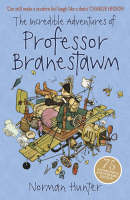
The Incredible Adventures of Professor Branestawm


By Norman Hunter, illustrated by W. Heath Robinson (Puffin/Red Fox and others)
ISBNs: PSS33 (1969 Puffin edition)             978-1-86230-736-0 (Red Fox 2008)

Although I’m pushing a number of comic-based kids books this week I’d be utterly remiss if I didn’t also include at least one example of the venerably traditional illustrated novel which used to be the happily inescapable staple of bedtime for generations. This particular example is particularly memorable, not simply because it’s a timeless masterpiece of purely English wit and surreal invention, but also because most editions are blessed with a wealth of stunning pictures by an absolute master of absurdist cartooning and wry, dry wit.

Norman George Lorimer Hunter was born on November 23rd, 1899in Sydenham; a decade after that part of Kentbecame part of the ever-expanding Countyof London. He started work as an advertising copywriter and moved into book writing soon after with Simplified Conjuring for All: a collection of new tricks needing no special skill or apparatus for their performance with suitable patter, Advertising Through the Press: a guide to press publicity and New and Easy Magic: a further series of novel magical experiments needing no special skill or apparatus for their performance with suitable patter published between 1923 and 1925.

He was working as a stage magician in Bournemouthduring the early 1930s when he first began concocting the genially explosive exploits of the absolute archetypical absent-minded boffin for radio broadcasts. The tales were read by the inimitable Ajax – to whom the first volume is dedicated – as part of the BBC Home Service’s Children’s Hour.

In 1933 The Incredible Adventures of Professor Branestawm was published in hardback with 76 enthrallingly intricate illustrations by W. Heath Robinson to great success, prompting the sequel Professor Branestawm’s Treasure Hunt (illustrated by James Arnold & George Worsley Adamson) four years later.

During WWII Hunter moved back to Londonand in 1949 emigrated to South Africawhere he worked outside the fiction biz until his retirement. He returned to Britainin 1970, following the release of Thames Television’s Professor Branestawm TV series which adapted many of the short stories from the original books in the summer of 1969.

Following the show Hunter resumed writing: another 11 Branestawn tomes between 1970-1983, plus a selection of supplemental books including Professor Branestawm’s Dictionary (1973), …Compendium of Conundrums, Riddles, Puzzles, Brain Twiddlers and Dotty Descriptions (1975), …Do-it-yourself Handbook (1976) and many magic-related volumes.

Norman Hunter died in 1995.

William Heath Robinson was born on May 31st 1872 into something of an artistic dynasty. His father Thomas was chief staff artist for Penny Illustrated Paper. His older brothers Thomas and Charles were also illustrators of note.

After schooling William tried unsuccessfully to become a watercolour landscape-artist before returning to the family trade and in 1902 produced the fairy story ‘Uncle Lubin’ before contributing regularly to The Tatler, Bystander, Sketch, Strand and London Opinion. During this period he developed the humorous whimsy and penchant for eccentric, archaic-looking mechanical devices that made him a household name.

During the Great War he uniquely avoided the Jingoistic stance and fervour of his fellow artists, preferring instead to satirise the absurdity of conflict itself with volumes of cartoons such as The Saintly Hun. Then, after a 20-year career of phenomenal success and creativity in cartooning, illustration and particularly advertising, he found himself forced to do it again in World War Two.

He died on13th September 1944.

Perhaps inspired by the Branestawm commission, Heath Robinson’s 1934 collection Absurdities hilariously describes the frail resilience of the human condition in the Machine Age and particularly how the English deal with it all. They are also some of his funniest strips and panels. Much too little of his charming and detailed illustrative wit is in print today, a situation that cries out for Arts Council Funding or Lottery money, perhaps more than any other injustice in the sadly neglected field of cartooning and Popular Arts.

The first inspirational Professor Branestawm storybook introduces the dotty, big-domed, scatterbrained savant as a ramshackle cove with five pairs of spectacles – which he generally wears all at once – and his clothes held together with safety pins …probably because the many explosions he creates always blow his buttons off.

The wise buffoon spends most of his days thinking high thoughts and devising odd devices in his “Inventory” whilst his mundane requirements are taken care of by dotty, devoted, frequently frightened or flustered housekeeper Mrs. Flittersnoop. Branestawm’s best chum is the gruff Colonel Dedshott of the Catapult Cavaliers, although said old soldier seldom knows what the scientist is talking about…

The over-educated inspirationalist and his motley crew first appeared in ‘The Professor Invents a Machine’ which saw the debut of an arcane device that moved so quickly that Branestawm and Dedshott were carried a week into the past and accidentally undid a revolution in Squiglatania – and ended up upsetting everybody on both sides of the argument.

In ‘The Wild Waste-Paper’ Mrs. Flittersnoop’s incessant tidying up caused a spill of the Professor’s new Elixir of Vitality and the consequent enlargement and animation of a basket full of furiously angry bills, clingy postcards and discarded envelopes, whilst in

‘The Professor Borrows a Book’ the absent-minded mentor mislaid a reference tome and had to borrow another from the local library.

A house full of books is the worst place to lose one, and when the second one went walkies Branestawm had to borrow a third or pay the fine on the second. By the time he’d finished the Professor had checked out fourteen copies and was killing himself covertly transporting it from library to library…

When his stuff-stuffed house was raided by ‘Burglars!’ the shocked and horrified thinker was driven to concoct the ultimate security system. It was the perfect device to defend an Englishman’s Castle – unless he was the type who regularly forgot his keys and that he had installed an anti-burglar machine…

When he lost a day because he hadn’t noticed his chronometer had stopped, the Professor invented a new sort of timepiece that never needed winding. Even the local horologist wanted one.

Sadly the meandering mentalist had forgotten to add a what-not to stop them striking more than twelve and as the beastly things inexorably added one peal every hour soon there were more dings than could fit in any fifty-nine minutes. ‘The Screaming Clocks’ quickly became most unwelcome and eventually an actually menace to life and limb…

The Professor often thought so hard that he ceased all motion. Whilst visiting ‘The Fair at Pagwell Green’ Mrs. Flittersnoop and Colonel Dedshott mistook a waxwork of the famously brilliant bumbler for the real thing and brought “him” home to finish his pondering in private. Sadly the carnival waxworks owner alternatively believed he had a wax statue that had learned to talk…

‘The Professor Sends an Invitation’ saw the savant ask Dedshott to tea but forget to include the laboriously scripted card. By means most arcane and convoluted, the doughty old warrior received an ink-smudged blotter in an addressed envelope and mobilised to solve a baffling cipher. Of course his first port-of-call had to be his clever scientific friend – who had subsequently forgotten all about upcoming culinary events…

‘The Professor Studies Spring Cleaning’ found Branestawm applying his prodigious intellect and inventive acumen to the seasonal tradition that so vexed Mrs. Flittersnoop before inevitably finding a way to make things worse. He thus constructed a house-engine that emptied and cleaned itself. Of course it couldn’t really tell the difference between sofa, couch cupboard or housekeeper…

‘The Too-Many Professors’ appeared when the affable artificer invented a solution which brought pictures to life. Flittersnoop was guardedly impressed when illustrations of apples and chocolates became edibly real but utterly aghast when a 3-dimensional cat and elephant began crashing about in the parlour.

So it was pretty inevitable that the foul-smelling concoction would be spilled all over the photograph albums…

In a case of creativity feeding on itself, ‘The Professor Does a Broadcast’ relates how the brilliant old duffer was asked to give a lecture on the Wireless (no, not about radio, but for it…). Unaccustomed as he was to public speaking, the tongue-tied boffin had Dedshott rehearse and drill him until he could recite the whole speech in eleven minutes. Of course the scheduled programme was supposed to last half an hour…

A grand Fancy Dress Ball resulted in two eccentric pillars of Pagwell Society wittily masquerading as each other. Naturally ‘Colonel Branestawm and Professor Dedshott’ were a great success but when the Countess of Pagwell‘s pearls were purloined whilst the old duffers changed back to their regular attire nobody noticed the difference or believed them…

‘The Professor Moves House’ found the inventor forced to rent larger premises because he had filled up the old one with his contraptions. However Branestawm’s attempts to rationalise the Moving Men’s work patterns proved that even he didn’t know everything. At least the disastrous ‘Pancake Day at Great Pagwell’ rescued his reputation when his magnificent automatic Pancake-Making Machine furiously fed a multitude of friends and civic dignitaries. The Mayor liked it so much he purchased it to lay all the municipality’s pavements…

This gloriously enchanting initial outing ends with ‘Professor Branestawm’s Holiday’ as the old brain-bonce finally acquiesced to his housekeeper’s urgent urgings and went for a vacation to the seaside. Keen on swotting up on all things jellyfish the savant set off but forgot to check in at his boarding house, prompting a desperate search by Dedshott, Flittersnoop and the authorities.

Things were further complicated by a Pierrot Show which boasted the best Professor Branestawn impersonator inBritain: so good in fact that even the delinquent dodderer’s best friends could not tell the difference.

With the performer locked up in a sanatorium claiming he wasn’t a Professor, it was a lucky thing the one-and-only scatty scholar was unable to discern the difference between a lecture hall and a seaside show-tent…

As I’ve already mentioned, these astonishingly accessible yarns were originally written for radio and thus abound with rhythmic cadences and onomatopoeic sound effects that just scream to be enjoyed out loud. This eternally fresh children’s classic, augmented by 76 of Heath-Robinson’s most memorable character caricatures and insane implements, offer some of the earliest and most enduring example of spiffing techno-babble and fabulous faux-physics – not to mention impressive iterations of the divine Pathetic Fallacy in all its outrageous glory – and no child should have to grow up without visiting and revisiting the immortal, improbable Pagwell Pioneer.

In 2008 a 75th Anniversary edition of The Incredible Adventures of Professor Branestawm was released by Red Fox but you’re just a likely to find this uproarious ubiquitous marvel in libraries, second-hand shops or even jumble sales – so by all means do…
© 1933 Norman Hunter. All rights reserved.

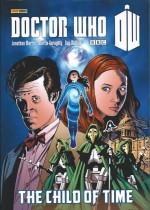
Doctor Who Graphic Novels volume 14: The Child of Time


By Jonathan Morris, Mike Collins, David A. Roach, Roger Langridge, Martin Geraghty, Dan McDaid, Rob Davis, Geraint Ford, Adrian Salmon, & James Offredi (Panini Books)
ISBN: 978-1-84653-460-7

Win’s Christmas Gift Recommendation: scintillating, superior sci fi for the bigger kids cluttering up the house and waiting for the TV Specials to start … 8/10

Doctor Who launched on television in the first episode of ‘An Unearthly Child’ on November 23rd 1963. Less than a year later, his decades-long run in TV Comic began with issue #674 and the premier instalment of ‘The Klepton Parasites’. On 11th October 1979 (although adhering to the US off-sale cover-dating system so it says 17th) Marvel’s UK subsidiary launched Doctor Who Weekly, which became a monthly magazine in September 1980 (#44) and has been with us under various names ever since.

All of which only goes to prove that the Time Lord is a comic hero with an impressive pedigree…

Panini is in the ongoing process of collecting every strip from its archive in a uniform series of over-sized graphic albums, each concentrating on a particular incarnation of the deathless wanderer. This particular one gathers stories short and long which, taken together comprise a two-year extended epic. From Doctor Who Magazine (or DWM) #421-441 (originally published between 2010-2011), this run features the strip debut of the Matt Smith incarnation of the far-flung, far-out Time Lord as well as his foremost companion Amy Pond.

None of which is relevant if all you want is a darn good read. All the creators involved have managed the ultimate task of any comics-creator – to produce engaging, thrilling, fun stories which can be equally enjoyed by the merest beginner and the most slavishly dedicated – and opinionated – fans imaginable.

With all tales written by Jonathan Morris (plus, according to the author, liberal input from editors Scott Gray & Tom Spilsbury), coloured by James Offredi and lettered by Roger Langridge, the drama kicks off in ‘Supernature’ (illustrated by Mike Collins & David A. Roach, from DWM #421-423, May-July 2010).

Arriving on a jungle paradise world The Doctor and Amy quickly discover Earthling colonists in the midst of a terrifying plague…

The humans – all convicts press-ganged and abandoned to turn the planet into a suitable home – are being transformed into uncanny mutant beasts, and even the Time Lord and his new companion are monsterised before the crisis is solved. However when they depart they take part of the problem with them…

A rare but very welcome art job for regular letterer Langridge results in a bizarre and wonderful spoof on ‘Planet Bollywood!’ when warring factions of an ancient empire – and a romantic leading man – all struggle to possess a sexy humanoid device which compels listeners to break out in song and dance routines, after which a trip to Tokyo found fresh horror in the metamorphosis of innocent – if educationally lacking – children into a deadly fifth column…

‘The Golden Ones’ (#425-428, by Martin Geraghty & Roach) is a grand old-fashioned blockbuster invasion saga with a huge body-count, valiant armed resistance by dedicated UNIT soldiers, a classic villain’s return, a brilliant scientific solution and a slew of subtle clues to the greater saga unfolding. Just who is that strange little girl who keeps popping up everywhen?

From #429 comes the literary fantasy-homage ‘The Professor, the Queen and the Bookshop’ (Rob Davis & Geraint Ford) wherein our heroes meet a reclusive writer and evacuee children Amy – and hubby-to-be Rory – encounter a strange man in an infinite shop which can travel anywhere…

It’s back to Paris in 1858 for Dan McDaid’s ‘The Screams of Death’ as aspiring but hopeless singer Cosette is taken under the wing of impresario Monsieur Valdemar and develops a voice that could shake the Opera House to its foundations. Of course, the Svengali-like Fugitive from the Future had far grander plans for his many captive songbirds until Mam’selle Pond and M’sieu le Docteur turned up to foil a mad scheme to rewrite history…

The over-arching epic takes a big step forward in #432’s ‘Do Not Go Gentle into that Good Night’ (featuring a welcome full-art outing for the splendid David Roach) as the Tardis turns up in an old people’s home staffed by robots, haunted by children and plagued by a vanishing roster of residents, whilst Adrian Salmon gets his freak on in the trippy terror-tale ‘Forever Dreaming’ (#433-434) as Amy is apparently trapped in a 1960’s seaside town with a dark secret, a phantom octopus and a host of psychedelic icons who really should be dead…

The saga swings into full acceleration with ‘Apotheosis’ (DWM #435-437 and limned by McDaid) as the Doctor and Amy land aboard a derelict space station and walk into the closing act of a galaxy-spanning war between humanity and their scheduled replacements: the awesome autonomous androids of Galatea.

Aboard the station, a cadre of warrior Space Nuns are seeking an ultimate weapon to tip the scales of the conflict, but with lethal sanitation robots everywhere and rogue time-distortion fields making each step a potential death-march, the hunt is hard-going. With everybody – even the Time Lord – hyper-aging at vastly different rates, when the Tardis then mutates into something impossible, the stage is set for a spectacular threat to all of creation to be born…

Of course, first the Machiavellian, monstrously manipulative and atrociously amoral creature calling herself Chiyoko must carry out a number of crucial appointments in Eternity to ensure the existence and consolidate the celestial dominance of ‘The Child of Time’ (with art from Geraghty & Roach from (DWM #438-441 August -November 2011).

Two years’ worth of cleverly-concocted mystery and imagination are then wrapped up in a staggering, creatively-anachronistic display of temporal hocus-pocus by scripter Morris as The Doctor, Amy and allies Alan Turing and the Bronte Sisters ward off the unmaking of time, the end of humanity and eradication of all life in the universe before the tragic finale and a happy ever after of sorts…

Dedicated fans can also enjoy a treasure-trove of background information in the 25-page  text Commentary section at the back, comprising chapter-by-chapter background, history and insights from the author and each of the illustrators, supplemented by happy horde of sketches, roughs, designs, production art and even excised material from all concerned.

We’ve all have our private joys and hidden passions. Sometimes they overlap and magic is made. This is another superb set of supremely satisfying comic strips, starring an absolute Pillar of the British Fantasy pantheon.

If you’re a fan of only one, The Child of Time should certainly spark your hunger for the other. This is a fabulous book for casual readers, a fine shelf addition for devotees of the show, the ideal opportunity to cross-promote our particular art-form and the perfect present for the Telly Addict haunting your house…

All Doctor Who material © BBCtv. Doctor Who logo © BBC 2012. Tardis image © BBC 1963. Doctor Who, Tardis and all logos are trade marks of the British Broadcasting Corporation and are used under licence by BBC Worldwide. Published 2012 by Panini Publishing, Ltd. All rights reserved.

The Crazy World of Golf


By Mike Scott (Exley)
ISBN: 978-1-85015-356-6

With so much time on my hands these days I’m considering taking up a hobby to while away the tedious hours. So, rather than using the internet or asking a friend, I’ve started consulting old cartoon compilations in search of sage advice and scintillating suggestions and here’s what’s turned up on the top of the pile…

One of a delightful range of themed collections issued by transatlantic publishing outfit Exley in both English and American editions (including The Crazy World of Cats, the Greens, the Handyman, Hospitals, Gardening, Marriage, Sex and many others as well as real, proper sports such as Rugby, Cricket and Sailing) this winning monochrome landscape tome is the work of Mike Scott, who I’m appalled and ashamed to say I can find no biographical information on.

Even my trusty Dictionary of British Cartoonists and Caricaturists omits him and in this instance the internet has not been my friend. I’m not certain that he’s British-based or even a bloke at all, despite a delightfully authentic line in UK fashions, trivia and frustration-fuelled attitude – but his keen observation, surreal invention and loosely manic drawing style lend themselves perfectly to synthesising and encapsulating the passion and insanity of this all-weather subject which fascinates and absorbs so many normally rational folk…

Cartooning has been magnificently served over the centuries by masters of form, line, wash and most importantly sharp ideas, repeatedly poking our funny bones whilst pricking our pomposities and fascinations, and nothing says more about us than the sinister lure and apparently obsessive grip of hitting balls with sticks – especially if you have to dress up funny, learn bewildering rules and terms and buy lots and lots of over-priced drinks for strangers to properly enjoy it…

Within the pages of the Crazy World of Golf the confirmed couch-potato reader will learn the horrors and joys of fashionably appropriate attire, the “Japanese Way”, how to handle the always-bracing weather, the problem with those unfortunates who don’t play and how extraterrestrials view our bizarre practices…

There are plenty of gags considering and exploring the effects upon local flora and fauna, clubhouse politics, the misunderstanding spouse, women drivers (that’s a pun, but not a good one), golf throughout history, some useful free tips, terminology explained and many moments of sheer mind-warping whimsy. There’s even a plethora of pages proving that God loves the game, if not the players…

These kinds of cartoon collections are perennial charity shop or jumble-sale fare and if you ever chance upon an item of potential artistic amusement in such a place, do yourself a favour, help out a good cause and have a cheap laugh. It might be the start of a fresh phase in your life, courtesy of another unsung master of mirth.

As for me and my hobbies… no, probably not golf…

© 1985 Mike Scott. All rights reserved.

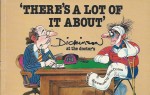
‘There’s a Lot of it About’


By Geoffrey Dickinson (Columbus Books)
ISBN: 978-0-86287-253-3

Since we’re well into the snot and sniffles season I thought I’d cheer myself up with this handy handbook of ailments and medical mis-practice from one of Britain’s best and most influential cartoonists Geoffrey Dickinson, a veteran mainstay of Punch, Time, The Financial Times and many others. This is probably his best collection of gags but his second opinion on medical matters ‘Probably Just a Virus’ is almost as good but a lot harder to find these days…

British cartooning has been magnificently served over the centuries by masters of form, line, wash and most importantly clever ideas, repeatedly poking our funny bones, pricking our pomposities and feeding our fascinations, and nothing says more about us than our rocky relationship with the beloved yet dreaded agents of the National Health Service.

Award-winning cartoonist Geoffrey Samuel Dickinson was born on May 5th 1933 inLiverpool and studied at Southport School Art (1950-1953) before graduating to the Royal Academy Schools. Set on a career as a landscape painter he taught art in Croyden, atTavistockBoysSchool and theSelhurstGrammar School until 1967.

To supplement his income he freelanced as a graphic designer and animator for the BBC and began selling gags to Punch as early as 1963.

In 1966 his famous cover for the April 15th issue of Time Magazine was deemed to have officially launched “the Swinging Sixties” and London as the capital city of cool, and a year later he took a staff position with Punch as Deputy Art Editor under the legendary Bill Hewison, but still found time to freelance, working for Reader’s Digest, Which?, Esquire, Highlife, Hallmark Cards and many more.

In 1984 Dickinsonleft the humour standard to take up a position at the Financial Times, drawing cartoons for the daily and producing illustration material for the weekend supplement. He died far too young in 1988.

Within the pages of ‘There’s a Lot of it About’ – and following a pithy introduction from much-missed master of acerbic wit Alan Coren – the fit, the fat, the festering and the foolish will all learn the truth about the health of the nation in such chapters of chilling encounters and dodgy diagnoses as ‘The Waiting-Room’, ‘In the Surgery’ and ‘Sharp Practice’, before meeting stroppy secretaries, seen-it-all sawbones and formidably starched matrons as well as the puling punks, cadaverous clerks and clerics, cocky kids, goofy old gaffers, loony little old ladies, brusque businessmen and other tedious time-wasters all abusing valuable visiting hours ‘On the Touchline’, ‘At the Barbers’ and ‘At the Dentist’…

Moreover, as well as warning of ‘Student Doctors’, ‘Showbiz Doctors’ and the ‘Bogus Doctor’, we follow fully-rounded physicians into their private lives ‘On Holiday’, ‘At the Wheel’, in the garden with ‘Doctor Greenfinger’, at the ‘Doctor’s Wedding’, over ‘The Festive Season’ and on ‘The Morning After’, before examining doctors in love undergoing ‘Affairs of the Heart’…

These kinds of cartoon collections were once ubiquitous best-sellers available everywhere, but these days are perennial library and jumble sale fare – in fact I actually found this brilliant cure-all for the blues at a Hospital charity shop – but if you ever see a Dickinson (or indeed, any cartoon collection) in such a place, do yourself a favour, help out a good cause and have a healthy horse-laugh with these all-but-forgotten masters of illustrative mirth.

They’re really good for what ails you…
© 1985 Geoffrey Dickinson. 1933-1988

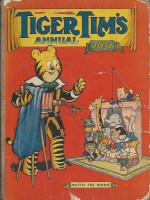
Tiger Tim Annual 1951


By various (the Amalgamated Press)
No ISBN

Feeling particularly nostalgic and wistful over the sad news about The Dandy’s imminent departure/transfiguration from the realm of newsprint, I’m going to look at a book from the era ofBritain’s comics heyday.

Normally I’d review graphic novels and trade paperback collections with a view to the reader and potential purchaser hopefully becoming a fan or even addict of the picture-strip medium. Here though, I’m simply applying modern critical sensibilities to one of the landmark items and indeed, an entire genre of pictorial edification which seems forever lost; permanently removed from the contemporary cultural scene.

If, however, you’re lucky enough to stumble across a copy or indeed any similar vintage volume, I hope my words convince you to acquire it. As ever, my real purpose and sinister scheme is to create a groundswell or even a little ripple in the entertainment ether, since I’m back on my high and wide horse about the paucity of classic vintage strips, stories and comics material available to the young and older readers of the 21st century.

So much magical material is out there in print limbo. Great writing and art is rotting in boxes and attics or the archives of publishing houses, when it needs to be back in the hands of happy punters once again. On one level the tastes of the public have never been more catholic than today and a sampling of our popular heritage will always appeal to some part of the mass consumer base.

Let’s make copyright owners aware that there’s money to be made – not loads, admittedly, but some – from these slices of our childhood, and modern technology has never been more adept at capturing, preserving and disseminating these lost and disintegrating classics…

yourgrandadscomics.org – if we build it, they will come…

Tiger Tim’s Annual 1951 was released by The Amalgamated Press in 1950 (the dating was year-forward on these colourful, bumper, hard-backed premium editions so the book would have been released in the Autumn intended as a Christmas staple) with the 1948 London Games (if not Sir Ludwig Guttman’s largely unknown International Wheelchair Games – which grew into the Paralympics of today) an already fading memory. The people’s thoughts were already turning to the upcoming Festival of Britain and the perennial rumours that rationing would be eased – if not ended.

For kids, radio, comics and being outside in the fresh air were the order of the day. DC Thomson’s exuberant and anarchic stable of titles were still the favourites, although new high class entry the Eagle was increasingly dictating the way things should and could be done.

Although far less open to change, Alfred Harmsworth’s Amalgamated Press was the other prolific powerhouse purveyor of children’s papers, with a pedigree that stretched back to the end of the 19th century and a stranglehold on syndicated and licensed characters (especially film and radio stars) which kept well-intentioned, nostalgic parents coming back for more…

Their undisputed super-star was the phenomenally popular Tiger Tim and his gang of chums The Bruin Boys (Jumbo Elephant, Willie Ostrich, Georgie Giraffe, Bobby Bruin, Jacko Monkey, Joey Parrot, Porkyboy Pig and Fido Pup) who all spent their days learning to be civilised at Mrs Bruin’s Boarding School, originally rendered by Julius Stafford Baker but eventually to grow into a multi-artist enterprise encompassing many of the country’s greatest – if uncelebrated – artists.

Tim had first appeared in Harmsworth’s Daily Mirror in 1904, and graduated in 1909 to the weekly Playbox supplement for children in ‘The World and His Wife’.

The Rainbow weekly colour comic began in February 1914 and Tim was the cover feature until its demise in 1956. In 1919 Tiger Tim’s Weekly (née Tales) also launched and he had been the star of his own annual since 1921 (first one dated 1922 – got it now?). At a time when merchandising deals for children’s features were in their infancy,

the characters were so popular that Britains – the toy soldier manufacturers – launched a line of lead figures to sell alongside their more militaristic and farm animal fare.

In this twilight years album, the line-up as ever includes not only the anthropomorphic Tim and Co. (with five strip prose stories and a magical double page cartoon spread) but also a number of general features (prose and strip), fact pieces and many puzzles and games for its young readership to keep the nippers engrossed – and quiet – for hours…

One more thing and an admittedly shameful one: when this book was released, our views of other races and cultures ranged from the patronisingly parochial to the outrageously insular to the smugly intolerable and unforgivable.

As with every aspect of British – Hell, all “White Culture” – there was an implicit assumption of racial superiority – notwithstanding the fact that every empire is built on multi-nationality; and even within living memory WWII could not have been won by white warriors alone.

Which brings us head-on into the arena of ethnic stereotyping. All I can say is what I always do: the times were different. Mercifully we’ve moved beyond the obvious institutionalised iniquities of casual racism and sexism and are much more tolerant today (unless you’re obese, gay, a smoker, a liberal, or childless and happy about it), but if antiquated attitudes and caricaturing might offend you, don’t read old comics – it’s your choice and your loss.

Moreover, the class and even regional differences underpinning this entire era are far more dangerous – just look at Sexton Blake and Tinker or middleclass educated Dan Dare and his canny, competent but ultimately comedic “Ee baih gum, sidekick” Digby…

Historic portrayals and inclusions of other races have always and will always be controversial and potentially offensive from our contemporary standpoint, and we have thankfully moved on since those ignorant times. It’s not really even an excuse to say, at least in our post-war comics, that baddies were mostly our own kind and differently-hued cultures were generally friendly, noble savages not trying to eat us…

Nor will this diversion ameliorate the shock of an illustrated song at the back of this particular book: I’m saying nothing now but By Crikey you’ll know when we get to it…

This 1950’s annual begins in traditional manner: following a stunning painted frontispiece for an adventure story at the back, Tim’s terrors kick off proceedings with ‘The Fancy Dress Show’ – a prose romp wherein the mischievous scholars are themselves pranked.

All the strips in the Annual are of the traditional “block-&-pic” sort with a progression of beautifully rendered drawings in panels accompanied by a paragraph of typeset words, and the ‘Lazy Prince’ delightfully depicts the tale of a Baker’s boy who trades places with the bored heir to the throne after which bear-cub ‘Mickey Mischief’ got into hot water and other ingredients in the kitchen…

Illustrated poem ‘Runaway Oranges’ is followed by ‘The Best Sort of Capstick’, a story of a poorly-dressed Prince, rounded off by half-page strip ‘Funny Dobbin’ after which the partially-coloured portion of the book opens with a quartet of pixie-like lads and their pet pig in the strip ‘The Brownie Boys and Old King Cole’.

After an illustrated spread featuring the Bruin Boys and the other stars of the book at ‘The School Play’ and ‘The Tree-Top Tuck-Shop Man’ (illustrated by the magnificent S.J. Cash), three little piggies got ‘In a Tangle’ and F. L. Cromptoy(?) depicted the toy cinema story ‘Half-Price day for Dollies’ before it was back to prose for ‘Plucky Frank Saves the Old Windmill’.

Herbert Foxwell was the star illustrator on Tim’s adventures and he probably also limned the prose piece ‘Striped Paint – a Father Christmas Mystery’ after which the anonymous strip ‘A Message from Castle Grim’ found young Robin Hood rescuing ten-year old Maid Marian from a dungeon whilst ‘Flippy to the Rescue’ described the fate of a talking plane who proved he wasn’t too old to fly.

The half-page strip ‘Clever Spot’ is followed by a stylish retelling of ‘There Was an Old Woman (Who Lived in a Shoe)’ and the picture strip ‘Sunshade Ships’ with ingenious kittens The Tibbles helping out after a flood before the ‘Bruin Boy Band’ leads to a lot of noise about who ate all the pies…

Games and puzzles were a big part of the Annual experience and ‘Dolly’s Birthday’ combines strip-thrills and compelling conundrums in one, after which the text drama ‘Enter Two Professors’ features impostors and high jinks at Deepwell School.

‘Fairy Folk Tree’ is another illustrated rhyme courtesy of M. Newhouse whilst ‘The Brownie Boys of Dr. Acorn’s School’ tried to re-enact the events of the Cat and the Fiddle with the usual outcome after which puzzle-strip ‘The Lost Princess’ combined epic adventure with a series of tests for the readers and ‘Comical Crackers’ found Tiger Tim and Chums swapping a few japes and Christmas games of their own.

‘A Short Poem about a Long Dog’ is followed by a glorious animal excursion in ‘The Regatta’ by Cowell, whilst text-wise Peter the Page got into big trouble with ‘The Wizard’s Hat’ and mean Mr. Miggley-Moley learned too late the benefits of sharing ‘A House Underground’ in a truly splendid two-colour strip.

Professor Snook became ‘The Stay-at-Home Explorer’ in a rhyming saga, and fear of the dark unnecessarily afflicted ‘The Brownie Boys of Dr. Acorn’s School’ before Tim and the Boys went on holiday in ‘Hurrah for the Seaside!’ and ‘Puzzle Pantomimes’ led into a bold rescue mission for a little girl in the strip ‘Molly’s Redskin Chum’.

King Dandy was compelled to extreme measures to remove unwelcome familial squatter Count Crunch in the text tale ‘Camping Out!’– hilariously illustrated by R. Payton – before those three piggies returned to transform their homemade aeroplane into a ‘Flying Clothes Line’.

There was old-fashioned pirate peril for young Jack Ready when the valiant “Ship’s Powder-monkey” was aided by a furry-tailed young gallant on ‘Monkey Island’ whilst, after ‘A Funny “Tail” of Christmas Eve’, the Chinese lad Ting-a-Ling learned the power of ‘The Magic Ring’, a prose tale capped off with a two-panel strip about Old Mother Hubbard‘s dog.

‘Tubby Enjoys a Joke as much as a Feast’ revelled in the hoary delights of japes and food parcels from home, after which ‘The Brownie Boys of Dr. Acorn’s School’ were lost in a nautical dream and the cleverest and greediest of the Bruin Boys stunned everybody by admitting ‘Porky Likes Work!’

‘Funny Jokes on Parade’ is followed by a strip concerning a poor working lad and a ‘Lucky Book’ after which impoverished King Popcorn regrets ‘The Royal Spring-Clean’ but still reaps a happy reward.

The book proper ends with that illustrated sing-along page so brace yourself and remember “context is everything” for ‘All Aboard for Darkietown’ before dashing on to the closing letter from the feline star in ‘Greetings to all from Tiger Tim’ and an ad for Rainbow and Playbox. The back cover is also an advert – for Cadbury’s Bourneville Cocoa – cunningly disguised as a maze for the kids to solve.

Children’s staples such as detective mysteries, school stories, sea-faring adventures, westerns past and present with studied additions to myths, fairy-tales and pantomime stories were always the bread and butter of these books, all trauma-free yarns meant to thrill while creating a love of reading.

What they considered age-appropriate children’s content might raise a few eyebrows these days. Popular fiction from a populist publisher will always embody some underlying assumptions unpalatable to some modern readers, but good taste was always a watchword when producing work for younger children, and some interactions between white children and other races is a little utopian, perhaps. The more insidious problem as I’ve already suggested arises from the accepted class-structures in some of the stories and the woefully un-PC sexism throughout.

None of this detracts one jot from the sheer creative power of the artists involved, and all we can hope for is that the reader uses judgement and perspective when viewing or revisiting material this old. Just remember Thomas Jefferson kept slaves, it’s only been unacceptable to beat your wife since the 1980’s, and in some areas even today people who die in police custody apparently only have themselves to blame…

So before I go off on another one or get on to another government watch list, let’s return to the subject at hand and say that despite all the restrictions and codicils this is a beautiful piece of children’s entertainment in the time-honoured fashion of Enid Blyton, Dodie Smith and Arthur Ransome, with lovely illustrations that would make any artist weep with envy.

You and your kids deserve the chance to see it for yourself.
© 1950 The Amalgamated Press.
Which I’m assuming is now part of IPC Ltd., so © 2012 IPC Ltd.

Judge Dredd: the Complete Case Files 01


By John Wagner, Pat Mills, Carlos Ezquerra, Ian Gibson, Mike McMahon, Brian Bolland & various (Rebellion)
ISBN: 978-1-90426-579-0

Britain’s last great comic icon could be described as a combination of the other two, combining the futuristic milieu and thrills of Dan Dare with the terrifying anarchy and irreverent absurdity of Dennis the Menace. He’s also well on the way to becoming the longest-lasting adventure character in our admittedly meagre comics stable, having been continually published every week since February 1977 when he first appeared in the second issue of science-fiction anthology 2000AD – and now that the Dandy’s slated for cancellation, veterans Korky the Cat and Desperate Dan might one day be overtaken in the comedy stakes too…

However with at least 52 2000AD strips a year, annuals, specials, a newspaper strip (in the Daily Star and later The Metro), the Judge Dredd Megazine, numerous reprinted classic comics collections and even two rather appalling DC Comics spin-off titles, that adds up to a phenomenal amount of material, most of which is still happily in print.

Bolland by his own admission was an uneconomically slow artist and much of his Dredd work appeared as weekly portions of large epics with other artists handling other episodes,

Judicial Briefing: Dredd and his dystopian ultra-metropolis of Mega-City One – originally it was to be a 21st century New York – were created by a very talented committee including Pat Mills, Kelvin Gosnell, Carlos Ezquerra, Mike McMahon and others, but with the major contribution coming from legendary writer John Wagner, who has written the largest portion of the canon under his own and several pseudonyms.

Joe Dredd is a fanatically dedicated Judge in the super-city, where hundreds of millions of citizens idle away their days in a world where robots are cheaper and more efficient than humans, and jobs are both beloved pastime and treasured commodity. Boredom has reached epidemic proportions and almost everybody is just one askance glance away mental meltdown. Judges are peacekeepers who maintain order at all costs: investigating, taking action and trying all crimes and disturbances to the hard-won equilibrium of the constantly boiling melting pot. Justice is always immediate…

Dredd’s world is a polluted and precarious Future (In)Tense with all the key analogues for successful science fiction (as ever a social looking-glass for the times it’s created in) situated and sharply attuned to a Cold War Consumer Civilisation. The planet is divided into political camps with post-nuclear holocaust America locked in a slow death-struggle with the Sov Judges of the old Eastern Communist blocs. The Eastern lawmen are militaristic, oppressive and totalitarian – and that’s by the US Judges’ standards – so just imagine what they’re actually like…

They are necessary fascists in a world permanently on the edge of catastrophe, and sadly, what far too many readers never realise is that the strip is a gigantic satirical black comedy with oodles of outrageous, vicarious cathartic action.

Such was not the case when the super-cop debuted in 2000AD Prog (that’s issue number to you) #2 (March 5th 1977), stuck at the back of the new weekly comic in a tale finally scripted after much intensive re-hashing by Peter Harris and illustrated by Mike McMahon & Carlos Ezquerra.

The blazing, humourless, no-nonsense (all that would happily come later) action yarn introduced the bike-riding Sentinel of Order in the tale of brutal bandit Whitey whose savage crime spree was ended with ferocious efficiency before the thug was sentenced to Devil’s Island – a high-rise artificial plateau surrounded by the City’s constant stream of lethal, never-ending, high-speed traffic…

In Prog 3 he investigated The New You in a cunning thriller by Kelvin Gosnell & McMahon wherein a crafty crook tried to escape justice by popping into his local face-changing shop, whilst #4 saw the first appearance of the outcast mutants in The Brotherhood of Darkness (Malcolm Shaw & McMahon) when the ghastly pariahs invaded the megalopolis in search of slaves.

The first hints of humour began in Prog 5’s Krong by Shaw & Ezquerra, with the introduction of Dredd’s Italian cleaner Maria, wherein deranged horror film fan and hologram salesman Kevin O’Neill – yes it’s an in-joke – unleashed a giant mechanical gorilla on the city. The issue was the first of many to cover-feature old Stone Face…

Frankenstein 2 pitted Dredd against an audacious medical mastermind hijacking citizens to keep his rich aging clients in fresh, young organs, after which #7 saw ruthless reprobate Ringo’s gang of muggers flaunting their criminality in the very shadow of The Statue of Judgement until Dredd lowered the boom on them…

Charles Herring & Massimo Belardinelli produced the Antique Car Heist in #8, which first indicated that the super-cop’s face was hideously disfigured, when the Judge tracked down a murderous thief who stole an ancient petrol-burning vehicle, after which co-creator John Wagner returned in Prog 9 to begin his staggering run of tales with Robots, illustrated by veteran British science fiction artist Ron Turner, which set the scene for an ambitious mini-saga in #10-17. The gripping vignette was set at the Robot of the Year Show, and revealed the callous cruelty indulged in by citizens upon their mechanical slaves as a by-product of a violent blackmail threat by a disabled maniac in a mechanical-super chair…

Those casual injustices paved the way for Robot Wars (alternately illustrated over the weeks by Ezquerra, Turner, McMahon & Ian Gibson) wherein carpenter-robot Call-Me-Kenneth experienced a mechanical mind meltdown and became a human-hating steel Spartacus, leading a bloody revolution against the fleshy oppressors. The slaughter was widespread and terrible before the Judges regained control, helped in no small part by loyal, lisping Vending droid Walter the Wobot, who became at the epic’s end Dredd’s second live-in comedy foil…

With order restored a sequence of self-contained stories firmed up the vision of the crazed city. In Prog 18 Wagner & McMahon introduced the menace of mind-bending Brainblooms cultivated by a little old lady career criminal, Gerry Finley-Day & John Cooper described the galvanising effect of the Muggers Moon on Mega-City 1’s criminal class whilst Dredd demonstrated the inadvisability of being an uncooperative witness…

Wagner & McMahon introduced Dredd’s bizarre paid informant Max Normal in #20, whose latest tip ended the profitable career of The Comic Pusher, Finley-Day & Turner turned in a workmanlike thriller as the super-cop tackled a seasoned killer with a deadly new weapon in The Solar Sniper and Wagner & Gibson showed the draconian steps Dredd was prepared to take to bring in mutant assassin Mr Buzzz.

Prog 23 launched into all-out ironic satire mode with Finley-Day & McMahon’s Smoker’s Crime when Dredd trailed a killer with a bad nicotine habit to a noxious City Smokatorium, after which Malcolm Shaw, McMahon & Ezquerra revealed the uncanny secret of The Wreath Murders in #24. The next issue began the feature’s long tradition of spoofing TV and media fashions when Wagner & Gibson concocted a lethal illegal game show in You Bet Your Life whilst #26 exposed the sordid illusory joys and dangers of the Dream Palace (McMahon) and #27-28 offered some crucial background on the Judges themselves when Dredd visited The Academy of Law (Wagner & Gibson) to give Cadet Judge Giant his final practical exam. Of course for Dredd there were no half measures or easy going and the novice barely survived his graduation…

With the concluding part in #28, Dredd moved to second spot in 2000AD (behind brutally jingoistic thriller Invasion) and the next issue saw Pat Mills & Gibson tackle robot racism as Klan-analogue The Neon Knights brutalised the reformed and broken artificial citizenry until the Juggernaut Judge crushed them.

Mills then offered tantalising hints on Dredd’s origins in The Return of Rico! (McMahon) when a bitter criminal resurfaced after twenty years on the penal colony of Titan, looking for vengeance upon the Judge who had sentenced him. From his earliest days as a fresh-faced rookie, Joe Dredd had no time for corrupt lawmen – even if one were his own clone-brother…

Whitey escaped from Devil’s Island (Finley-Day & Gibson) in Prog 31, thanks to a cobbled-together device that turned off weather control, but didn’t get far before Dredd sent him back, whilst the fully automated skyscraper resort Komputel (Robert Flynn & McMahon) became a multi-story murder factory that only the City’s greatest Judge could counter before Wagner (frequently using the pseudonym John Howard) took sole control for a series of  savage whacky escapades beginning with #33’s Walter’s Secret Job (Gibson) as the besotted droid was discovered moonlighting as a cabbie to buy pwesents for his beloved master.

McMahon and Gibson illustrated the two-part tale of Mutie the Pig: a flamboyant criminal who was also a bent Judge, and performed the same tag-team effort for The Troggies, a debased colony of ancient humans living under the city and preying on unwary citizens…

Something of a bogie man for wayward kids and exhausted parents, Dredd did himself no favours in Prog 38 when he burst in on Billy Jones (Gibson) and revealed a massive espionage plot utilising toys as surveillance tools, and tackled The Ape Gang in #39 (19th November 1977 and drawn by McMahon), seamlessly graduating to the lead spot whilst shutting down a turf war between augmented, educated, criminal anthropoids in the unruly district dubbed “the Jungle”…

The Mega-City 5000 was an illegal and murderously bloody street race the Judges were determined to shut down, but the gripping action-illustration of the Bill Ward drawn first chapter was sadly overshadowed by hyper-realist rising star Brian Bolland, who began his legendary association with Dredd by concluding the mini-epic in blistering, captivating style in Prog 41.

From out of nowhere in a bold change of pace, Dredd was then seconded to the Moon for a six-month tour of duty in #42 to oversee the rambunctious, nigh-lawless colony set up by the unified efforts of three US Mega-Cities there. The place was as bonkers as Mega-City One and a good deal less civilised – a true Final Frontier town…

The extended epic began with Luna-1 by Wagner & Gibson, with Dredd and stowaway Walter almost shot down en route in a mysterious missile attack and then targeted by a suicide bomb robot before they could even unpack.

‘Showdown on Luna-1’ introduced permanent Deputy-Marshal Judge Tex from Texas-City whose jaded, laissez-faire attitudes got a good shaking up as Dredd demonstrated he was one lawman who wasn’t gong to coast by for the duration of his term in office. Hitting the dusty mean streets, Dredd began to clean up the wild boys in his town by outdrawing a mechanical Robo-Slinger and uncovering another assassination ploy. It seemed that reclusive mega-billionaire Mr. Moonie had a problem with the latest law on his lunar turf…

Whilst dispensing aggravating administrative edicts like a frustrated Solomon, Dredd chafed to hit the streets and do some real work in #44’s McMahon-limned ‘Red Christmas’. An opportunity arose when arrogant axe-murderer Geek Gorgon abducted Walter and demanded a showdown he lived to regret, whilst ’22nd Century Futsie!’ (Gibson) saw Moonie Fabrications clerk Arthur Goodworthy crack under the strain of over-work and go on a destructive binge with Dredd compelled to protect the Future-shocked father’s family from Moonie’s over-zealous security goons.

The plotline at last concluded in Prog 46 with ‘Meet Mr. Moonie’ (Gibson) as Dredd and Walter confronted the manipulative manufacturer and uncovered his horrific secret. The feature moved to the prestigious middle spot with this episode, allowing the artists to really open up and exploit the colour centre-spread, none more so than Bolland as seen in #47’s Land Race as Dredd officiated over a frantic scramble by colonists to secure newly opened plots of habitable territory. Of course there’s always someone who doesn’t want to share…

Ian Gibson then illustrated 2-part drama ‘The Oxygen Desert’ in #48-49, wherein veteran moon-rat Wild Butch Carmody defeats Dredd using his superior knowledge of the airless wastes beyond the airtight domes. Broken, the Judge quits and slides into despondency but all is not as it seems…

Prog 50 saw the debut of single-page comedy supplement Walter the Wobot: Fwiend of Dwedd – but more of that later – whilst the long-suffering Justice found himself knee-boot-deep in an international interplanetary crisis when ‘The First Lunar Olympics’ (Bolland) against a rival lunar colony controlled by the Machiavellian Judges of the Sov-Cities bloc escalated into assassination and a murderous politically-fuelled land grab. The issue was settled in ostensibly civilised manner with strictly controlled ‘War Games’ yet there was still a grievously high body-count by the time the moon-dust settled… This vicious swipe at contemporary sport’s politicisation was and still is bloody, brutal and bitingly funny…

Bolland also illustrated the sardonic saga of ruthless bandits who were up for a lethal laugh in #52’s The Face-Change Crimes, using morphing tech to change their appearances and rob at will until Dredd beat them at their own game, before Wagner & Gibson crafted a four-part mini-epic (Progs 53-56) wherein motor fanatic Dave Paton’s cybernetic, child-like pride-and-joy blew a fuse and terrorised the domed territory, slaughtering humans and even infiltrating Dredd’s own quarters before the Judge finally stopped Elvis, The Killer Car.

Bolland stunningly limned the savagely mordant saga of a gang of killer bandits who hijacked the moon’s air before themselves falling foul of The Oxygen Board in #57, but only managed the first two pages of 58’s Full Earth Crimes leaving Mike McMahon to complete the tale of regularly occurring chaos in the streets whenever the Big Blue Marble dominated the black sky above…

It was a fine and frantic note to end on as with ‘Return to Mega-City’ Dredd rotated back Earthside and business as unusual. Readers were probably baffled as to why the returned cop utterly ignored a plethora of crime and misdemeanours, but Wagner & McMahon provided the logical and perfect answer in a brilliant, action-packed set-up for the madcap dramas to come.

This first Case Files chronicle nominally concludes with Wagner & McMahon’s Firebug from Prog 60 as the ultimate lawgiver dealt with a crazed arsonist literally setting the city ablaze and discovered a venal motive to the apparent madness, but there’s still a wealth of superb bonus material to enjoy before we end this initial outing.

Kicking off proceedings and illustrated by Ezquerra is the controversial First Dredd strip which was bounced from 2000AD #1 and vigorously reworked – a fascinating glimpse of what the series might have been, followed by the first Walter the Wobot: Fwiend of Dwedd stwips (sowwy – couldn’t wesist!) from 2000AD Progs 50-58.

Scripted by Joe Collins, these madcap comedy shorts were an antidote to the savage and brutal action strips in the comic and served to set the scene for Dredd’s later full-on satirical lampoonery.

Tap Dancer was illustrated by Ian Gibson and dealt with an embarrassing plumbing emergency whilst Shoot Pool! (Gibson) saw the Wobot again taking the Judge’s instructions far too literally…

Brian Bolland came aboard to give full rein to his own outrageous sense of the absurd with the 5-part tale of Walter’s Brother, a bizarre tale of evil twins, a cunning frame-up and mugging that inevitably resulted in us learning all we ever needed to know about the insipidly faithful and annoying rust-bucket. Dredd then had to rescue the plastic poltroon from becoming a prate of the airwaves in Radio Walter before the star-struck servant found his 15 seconds of fame as the winner of rigged quiz-show Masterbrain, and this big, big book concludes with a trio of Dredd covers from Progs 10, 44 and 59, courtesy of artists Ezquerra, Kev O’Neill and McMahon.

Always mesmerising and beautifully drawn, these short punchy stories starring Britain’s most successful and iconic modern comics character are the constantly evolving narrative bedrock from which all the later successes of the Mirthless Moral Myrmidon derive. More importantly, they timeless classics that no real comic fan can ignore – and just for a change something that you can easily get your hungry hands on. Even my local library has copies of this masterpiece of British literature and popular culture…

© 1977, 1978, 2006 Rebellion A/S. All rights reserved. Judge Dredd & 2000AD are ® &™ Rebellion A/S.

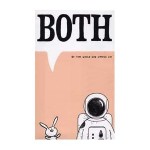
Both


By Tom Gauld & Simone Lia (Bloomsbury)
ISBN: 978-1-77046-065-2

Tom Gauld is a Scottish cartoonist whose works have appeared in Time Out and the Guardian. He has illustrated such children’s classics as Ted Hughes’ The Iron Man and his own books include Guardians of the Kingdom, 3 Very Small Comics, Robots, Monsters etc., Hunter and Painter and The Gigantic Robot.

At the prestigious RCA he met fellow genetically-predisposed scribbler Simone Lia – author of Please God, Find me a Husband! and Fluffy (a Bunny in Denial), kids books Billy Bean’s Dream, Follow the Line, Red’s Great Chase and Little Giant and she produced the strips ‘Sausage and Carrots for The DFC and ‘Lucie’ for Phoenix Comic as well as the Guardian and Independent.

Clearly comics kindred spirits, Gauld and Lia formed Cabanon Press in 2001and began self-publishing quirky, artily surreal strips and features. Their first two publications enigmatically entitled First and Second were collected in 2002 as Both and serve as a shining example of the kind of uniquely authorial/literary cartoon creativity and wonderment British pen-jockeys excel at.

Likened to the works of Edward Gorey, their studied, intense tirades, animorphic escapades and meanderingly perambulatory excursions are more Stream of subtly steered Consciousness than plotted stories: eerily mundane progressions mesmerisingly manufactured and  rendered in a number of styles to evoke response if not elicit understanding.

Which is a long-winded and poncey way of saying: “This stuff is great! You’ve got to see this…”

Within these digest sized, hard-backed monochrome pages you will encounter a talking table lamp, sensitive sentient food, quarrelsome knights, and socially inept and incompatible astronauts, and discover the human tragedy of contracting ‘Road Leg’.

There are of course bunnies, big bugs, sheep, steamrollers, the frustrations of ‘Outside’, love poems, comedy feet and a belligerent, outraged sweetcorn kernel, plus vignettes like ‘I’m in Love’ before the low-key domestic serial ‘End of Season Finale’ introduces off-duty Mexican Wrestlers, as well as political insight from the ‘Bread and Bhagi Show’ and psychological thrills courtesy of ‘Monkey Nut and Harrowed Marrow’. There are, however, no ducks…

Some comics pretty much defy description and codification – and a good thing too.

The purest form of graphic narrative creates connections with the reader that occur on a visceral, pre-literate level, visually meshing together on a page to produce something which makes feelings – if not necessarily sense.

When creators can access that pictorially responsive area of our brains as well as these two by ricocheting around the peripheries of the art form with such hilariously enticing and bizarrely bemusing concoctions, all serious fans and readers should sit up and take notice.

No more hints: go find this fabulously funny book now.

© 2003 Tom Gauld and Simone Lia. All rights reserved.
You can see more of their work at www.tomgauld.com and simonelia.com