Adrift on a Painted Sea


By Sue Bird and Tim Bird (Avery Hill Publishing)
ISBN: 978-1-910395-82-0 (TPB)

A child – every child’s – late life obsession to understand their parents and find similarities and differences in the lives each generation has led. What we remember and how we frame such recollections afflicts all of us. It also becomes increasingly important as we get older, a truism that washes all through this elegiac and ruminatory collation where comics storyteller Tim Bird details his response to finding the lost (more actually forgotten and mis-recalled) paintings of his recently deceased mother Sue.

Contemporary found facts just don’t jibe with his own childhood memories and he cannot resist finding what the truth actually is…

What Tim irrefutably knows is that when not running a house, being a wife and rearing two kids, Sue Bird was a talented and compulsive artist, who from childhood created for the sheer joy of it. She loved the sea, shores and marine life, nature studies and still life painting. As a kid she even won competitions and her artworks toured in shows.

Or did they?

Mum created passionately and privately, and never tried to sell her work. After her death during the Covid pandemic, Tim uncovers some paintings and drawings – and a few scraps of newspapers squirreled away. Whilst still coming to terms with the awful restrictions that made her passing so cruel and unfair, he is increasingly gripped with his own passion: a hunger to know what’s what and what happened…

Using the recovered bounty of her dozens of paintings and by talking to anyone still alive who knew her, Tim reevaluates his own past and relationship with Sue Bird, using her artworks as markers and chapter posts for a new sort of artistic statement. Moreover, as he seeks to unravel and reconfigure his fudged and muddy impressions of their times together, other shared milestone moments re-emerge: Northumberland beaches no one else enjoyed, listening to the Shipping Forecast and just sharing a drive to make things…

Using his comics as a skeleton and her paintings as meat on those bones, Bird applies his reshaped consciousness to the past and as his quest brings him closer to his own young family, engineers those feelings and discoveries into a visual eulogy to her and the power of memory, loss, and – always and forever – family.
© Tim Bird 2024.

Win’s Christmas Gift Recommendation: Because Some Cannot Be Forgotten… 9/10

Adrift on a Painted Sea is published on 1st October 2024 and is available for pre-order now.

The Phoenix Presents: The Pirates of Pangaea Book 1


By Daniel Hartwell & Neill Cameron (David Fickling Books)
ISBN: 978-1-910200-08-7 (TPB)

Why are pirates so mean? I don’t know, they just AARRRR

Moreover, nobody tells pirates they can only have one day to be themselves, so here’s more buccaneer-bootied bravado and bombast with a little lizardly allure tipped in too…

The Phoenix has been the saving grace of British kids’ comics since 2012, regaling readers with anthology comics for girls, boys and all points between, offering humour, adventure, quizzes, puzzles and educational material in a joyous parade of cartoon fun and fantasy.

Although best known for its comedy stylings, it’s always been pretty strong in its action and mystery yarns…

Crafted by Daniel Hartwell (Urban Beasts) and Neill Cameron (Mo-Bot High, How to Make Awesome Comics), by far the most engaging thriller so far featured is a sublime combination of rip-roaring endeavour and enticing fantasy blending canny corsairs, boldly brilliant kids, suspenseful swashbuckling escapades and gloriously gigantic dinosaurs.

The alternate-history lesson begins with 12-year old Sophie Delacourt voyaging out from England in 1717 to join her Uncle Silas, newly appointed Governor of the lost land of Pangaea.

The colossal continent is reputed the oldest landmass on Earth and a place primarily inhabited by stupendous reptiles of land and air. Master Bosun William takes a paternal interest in the girl, explaining the wondrous nature of the place, but nothing prepares her for the shock of a colossal “long-neck” diving under their vessel and lifting it bodily into the air.

The interior of Pangaea is a vast shifting ocean of long grass afflicted and infested with fast, deadly predators no man afoot could survive or escape, so all ships are picked up out of blue Caribbean waters then carried upon Brobdingnagian beasts’ backs between the rocky high points and plateaux where puny humanity has built its dwellings and settlements.

The big beasts are kept docile and compliant by administration of a herb dubbed “Snuff” and piloted by a skilful class of inland mariners known as “Snuffmen”

Sophie has never seen anything so wonderful in her life but, as Snuffman John guides the magnificent Bessie and her formerly-seagoing burden towards the Governor’s capital city, the amazed lass catches sight of an ever-present peril besetting this latest outpost of empire.

Through the shifting verdure hails a pirate vessel strapped atop a terrifying black Land Leviathan and soon the voyagers are fighting for their lives in an ‘Ambush on Pangaea’.

Sophie is locked in her cabin as the ferocious freebooters’ devastating attack pillages the outmatched victim-vessel. After insanely cruel Captain Brookes cries victory and makes the crew walk the plank to their deaths, she is the only survivor…

The second chapter opens with the Governor’s niece imprisoned on Brookes’ land-ship, a potential goldmine in ransom for a rapacious maniac. Furiously defiant, Sophie is slowly befriended by the brute’s cabin boy Timothy Kelsey. This lad is the tormented last survivor of a previous foray, having witnessed the murder of his mentor and master Dr. Shaw: a naturalist come to the lost land to catalogue the ‘Indigenous Fauna of the Pangaean Land-Mass’.

After experiencing Brookes’ cruelty, Sophie agrees to assist Timothy’s desperate plan for escape but as they make their move to fly off on the ship’s captive “Great Wing” lizard, they stumble over the first mate. Ten Gun Jones is also engaged in fleeing on the “Razor Beak”, but the din of their stumbling over each other rouses the ship and the three are forced to flee together into the night amidst a hail of musket fire…

Soon the trio are hopelessly ‘Lost in the Sea of Green’ as their gravely wounded pterosaur expires just shy of a high-projecting stony pinnacle. With deadly “Land Sharks” and “Belly Rippers” closing in, all hope seems lost until an even deadlier beast pounces. The “Tyrant” makes short work of the circling velociraptors, but its ravening hunger remains unsated. Only sheer terror carries the fugitives to relative safety – a rocky islet where, frantically scaling the igneous tower with the horror snapping at their heels, they tumble into a cave and find themselves inside an abandoned pirate lair…

The dusty den holds weapons, lamps, water, liquor and even brontosaur jerky: everything needful to outwait the roaring giant outside, but after a sleepless night with Ten Gun less than forthcoming about why he was deserting, Sophie conceives a dangerous idea.

Feeding the monster chunks of dried meat liberally doused in Snuff found in a barrel, in an act of seeming madness Sophie drops onto the horror’s head and soon has it – her, actually – acting like a very dangerous steed…

The fearless child then explains how an elderly servant in England taught her the secrets of horse-whispering before christening her scaly new pet “Cornflower”. Timothy is elated that they can use the Tyrant to safely cross the lethal Sea of Green to civilisation, but Jones has other plans…

The enigmatic seadog’s guarded directions soon bring them to an active volcano – in truth the neutral port used as safe-haven by all pirates plying the grassy deeps. In a tavern the children learn the ‘Secrets of Raptor Rock’ and are introduced to bombastic Captain Ford, who had planted Ten Gun in Brookes’ crew to secretly secure the second half of a disputed treasure map. With both pieces in hand the privateer immediately sets to emerald sea, but Ten Gun insists on bringing Sophie and Tim along. They have barely left the rock before Cornflower breaks out of her pen and doggedly follows…

The children are put to work and Sophie befriends Iwakian Snuffman Tak: a native Pangaean who steers the buccaneers’ bombastic brontosaur Gertrude, before the exploratory voyage comes to a sudden stop after crossing the eerie “Longnecks Graveyard” and approaches the fantastic plateau known in legend as “The Forbidden Isle”…

An expeditionary party is soon driving inland to an ancient temple in ‘Quest for the Golden Skull’ but upon entering, the greedy raiders are astounded to discover the priceless artefact they’re hunting is not a gilded human head but actually a full-size tyrant’s skull cast in precious metal. That’s when ferocious native defenders – the Kron Iwakia – ambush the party, driving them back to the relative safety of Gertrude. Sadly, the rapidly retreating reivers have no idea of what’s happened in the meantime. Young Kelsey, resentful of being enslaved again, has – more by accident than design – blown up the ship and stampeded Gertrude off into the Sea of Green, just as maniacal Captain Brookes arrives intent on reclaiming his map and slaughtering everyone…

Even though the enraged Iwakians vanished when the ship started burning, Ford’s rattled crew are no match for the nautical newcomers and things look bleak and bloody. Sophie and Kelsey desperately retreat to the temple, chased by Brookes’ men with death seemingly imminent until, from nowhere, Cornflower arrives and eagerly despatches the pursuing pirates. This draws the Kron Iwakia from concealment to guide Cornflower and the kids to their destination. The wilderness warriors worship Tyrant lizards and, after a strange ceremony, deem Sophie and her reptile holy. That’s when Tim realises the Golden Skull is not a mere ornament but battle armour for a tyrannosaur Chosen One…

With the Iwakians in close support, the valiant children return to the ongoing pirate war to settle a number of old scores before taking control of their own destinies…

Superbly engaging and utterly enthralling, this astounding all-action romp is a riotous delight of astonishing adventure: a fabulous first compilation that also includes many maps and crucial fact pages on assorted dinosaurs from Dr. Shaw’s ‘Indigenous Fauna of the Pangaean Land-Mass’: specifically ‘Sauropoda’, ‘Pterosauria’, ‘Dromaeosauridae’ and ‘Tyrannosauridae’, all scrupulously crafted, corrected and annotated by erstwhile cabin boy and greatest living expert Timothy Kelsey…

Bright, breezy furious fun for the entire family, so don’t miss this unburied treasure…
Text © Daniel Hartwell 2015. Illustrations © Neill Cameron 2015. All rights reserved.

Oor Wullie & The Broons: Cooking Up Laughs!


By Robert Duncan Low, Dudley D. Watkins, Ken H. Harrison & various (DC Thomson)
ISBN: 978-0-84535-614-9 (HB)

This book includes Discriminatory Content produced in less enlightened times.

August 24th is National Waffle Day so here I am burbling at you again and hoping this Crimbo I’ll get a day-diary with less distracting factoids…

Published eternally in perfect tandem, The Broons and Oor Wullie are two of the longest-running newspaper strips in British history, having appeared continuously in Scottish national newspaper The Sunday Post since their dual debuts in the March 8th 1936 edition. Both boisterous boy and gregariously engaging inner city clan were co-created by writer/Editor Robert Duncan Low (1895-1980) in conjunction with Dudley Dexter Watkins (1907-1969); DC Thomson’s greatest – and signature – artist. Three years later the first strips were collected in reprint editions as special Seasonal Annuals; alternating stars and years right up to the present day and remaining best-sellers every single time.

The shape and structure of British kids cartoon reading owes a massive debt to R.D. Low who was probably DC Thomson’s greatest creative find. He started at the Scottish publishing monolith as a journalist, rising to the post of Managing Editor of Children’s Publications where – between 1921 and 1933 – he conceived and launched the company’s “Big Five” story-papers for boys. Those rip-roaring illustrated prose periodicals comprised Adventure, The Rover, The Wizard, The Skipper and The Hotspur.

In 1936 his next brilliant idea resulted in The Fun Section: an 8-page pull-out supplement for The Sunday Post consisting primarily of comic strips. The illustrated accessory launched on 8th March and from the very outset The Broons and Oor Wullie – both laudably limned by the incomparable Watkins – were its incontestable star turns…

Low’s shrewdest move was to devise both strips as domestic comedies played out in the charismatic Scottish idiom and broad homespun vernacular. Ably supported by such features as Chic Gordon’s Auchentogle, Allan Morley’s Nero and Zero, Nosey Parker and other comics pioneers, they laid the groundwork for the company’s next great leap, which came in December 1937 when Low launched DC Thomson’s first weekly pictorial comic.

The Dandy was followed by The Beano in 1938 and early-reading title The Magic Comic a year after that. War-time paper shortages and rationing sadly curtailed this strip periodical revolution, and it was 1953 before the next wave of cartoon caper picture-papers. To supplement Beano & Dandy, the ball started rolling again with The Topper, followed by a host of new titles like Beezer and Sparky.

Low’s greatest advantage was always his prolific illustrator, whose style, more than any other, shaped the look of DCT’s comics output until and even beyond the bombastic advent of Leo Baxendale who shook things up in the mid-1950s. Hailing from Manchester and Nottingham, Watkins was an artistic prodigy. He entered Glasgow College of Art in 1924 and before long was advised to get a job at Dundee-based DCT, where a 6-month trial illustrating boys’ stories led to comic strip specials and some original cartoon creations.

Percy Vere and His Trying Tricks and Wandering Willie, The Wily Explorer made him a dead cert for both lead strips in the Fun Section and, without missing a beat, in 1937 Dudley D. added The Dandy’s sagebrush superman Desperate Dan to his weekly workload, and The Beano‘s placidly and seditiously outrageous Lord Snooty seven months later.

Watkins soldiered on in unassailable magnificence for decades, drawing some of the most lavishly lifelike and winningly hilarious strips in illustration history. He died at his drawing board on August 20th 1969. For all those astonishingly productive years he had unflaggingly drawn a full captivating page each of Oor Wullie and The Broons every week.

His loss was a colossal blow to the company and Thomson’s top brass preferred to reprint old Watkins episodes in both newspaper and Annuals for seven years before replacement artists were agreed upon. Dandy reran his old Desperate Dan stories for twice that length of time.

An undeniable, rock-solid facet of Scots popular culture from the very start, the first Broons Annual (technically Bi-Annual) appeared in 1939, alternating with a first Oor Wullie book a year after (thanks to those wartime paper restrictions, no annuals at all were published between 1943 – 1946) and for millions of readers no year can truly end without them.

Every kid who grew up reading comics has their own personal nostalgia-filled nirvana, and DC Thomson have always sagely left that choice to us whilst striving to keep all eras alive with carefully-tooled collectors’ albums like this substantial (225 x 300 mm) hardback Gift Book. Bright and breezy, the compilation focuses on the characters’ relationship with food – particularly Scotland’s unique and evocative cuisine – through festive occasions, seasonal celebrations and in everyday contexts: especially in comedic situations as comfort or consolation or even hard-won prizes. It’s also jam-packed with some of the best-written, most impressively drawn strips ever conceived: superbly timeless examples of cartoon storytelling at its best.

Moreover, rather than chronological arcs tracing particularly bleak and fraught beginnings in British history through years of growth, exploration and cultural change, we’re treated to a splendid pick-&-mix protocol: a surprise on every turn of a page with Low & Watkins ably succeeded by Tom Lavery, Peter Davidson, Robert Nixon, Ken H. Harrison, Iain Reid, Tom Morton, Dave Donaldson, Morris Heggie and more.

So What’s the Set Up?: the Brown family dwell together in a tenement flat at 10 Glebe Street in timelessly metafictional Scottish industrial everytown Auchentogle (sometimes called Auchenshoogle and soundly based on Glasgow’s working class Auchenshuggle district). As such it’s an ideal setting to tell gags in, relate events and crystalise the deepest, most reassuring cultural archetypes for sentimental Scots wherever in the world they might actually be residing. And naturally, such a region is the perfect sounding board to portray all the social, cultural and economic changes that came after the war…

Adamant, unswerving cornerstone of the family feature is long-suffering, ever-understanding culinary commander-in-chief Maw Broon, who puts up with cantankerous, cheap, know-it-all Paw and their battalion of stay-at-home kids. These comprise hunky Joe, freakishly tall beanpole Hen (Henry), sturdy Daphne, gorgeous Maggie, brainy Horace, mischievous twins Eck and the unnamed “ither ane” plus a wee toddling lassie referred to only as “The Bairn”.

Not officially in residence yet always hanging around is sly, patriarchal bewhiskered buffoon Granpaw: a comedic gadfly who spends more time at Glebe Street than his own cottage, constantly trying to impart his decades of out-of-date, hard-earned experience to the kiddies… but do they listen?

Offering regular breaks from inner-city turmoil whilst simultaneously sentimentalising, spoofing and memorialising more traditional times, the clan constantly adjourn to their “But ‘n’ Ben” (a dilapidated rustic cottage in the Highlands) to fall foul of weather, the countryside and all its denizens: fish, fowl, farm-grown, temporary and touristic…

As previously stated, Oor Wullie also launched on March 8th 1936 with his own collected Annual assemblages unfailingly appearing in the even years. His operating premise is sublimely simply and eternally fresh: an overly-imaginative, impetuous scruff with a weakness for mischief, talent for finding trouble and no hope of ever avoiding parental or adult retribution when appropriate shares what just happened…

Wullie – AKA William MacCallum – is the archetypal good-hearted rascal with too much time on his hands. He can usually be found sitting on an upturned bucket at the start and finish of his page-a-week exploits. The regular supporting cast includes Ma and Pa, local beat-Bobby P.C. Murdoch, assorted teachers and sundry other interfering adults who either lavish gifts or inflict opprobrium upon the little pest and his pals Fat Boab, Soapy Joe Soutar, Wee Eck and others. As a grudging sign of changing times, in later years he’s been caught in the company of sensible wise-beyond-their-years schoolgirls like Rosie and Elizabeth

A compilation in monochrome – with some full-colour pages – Cooking Up Laughs! was released in 2016 as part of the admirable drive to keep early material available to fans: a lavishly sturdy hardback (still readily available through internet vendors) offering a tasty and tantalising selection curated with an emphasis on the eating habits of the stars; well, these northern stars at least….

Eating has always been a perennial and fundamental aspect of both strips (don’t get me started on the sociological value and importance of food in communal/tribal settings: I’ve been to college twice and did all the reading they told me to!), and the topic even generated a spin-off line of Maw Broon Cook Books

Divided by colour cover or title-pages from previous Annuals, the endless escapades of the strip stars comprise the happily standard fare: kids outsmarting older folk to score sweets and prohibited provender; pompous male adults making galling goofs and gaffes when cooking; family frolics and festival events: rules of rationing and home-grown garden gifts; etiquette outrages: potent penalties for gorging; stolen candies, Christmas revels, how to drink Tea and even some full-colour puzzle pages to digest…

Also on show are Scots-specific treats and techniques such as Clootie Dumpling disasters; the mysteries of Fruit; the makings of “a Piece”; fabled Fish Suppers and the miracle of Cheps; how to present Crofter’s Porridge; the marvel of Mince ‘n’ Tatties; better things to do with Neeps; dieting dos and don’ts and every manner of sweet or savoury sampling of succulence and sinfulness…

With snobs to deflate, bullies to crush, duels to fight, chips to scoff, games to win and rowdy animals (from cats to coos) to escape, the eternally affable humour and gently self-deprecating, inclusive frolics make these superbly crafted strips an endlessly entertaining, superbly nostalgic treat.

Packed with all-ages fun, rambunctious homespun hilarity and deliriously domestic warmth, these examples of comedic certainty and convivial celebration are a sure cure for post-modern glums and Bank Holiday blues… and you can’t really have a happy holiday without that, can you?
© D.C. Thomson & Co., Ltd. 2016.

Robot Archie and the Time Machine


By E. George Cowan, Ted Kearon, Mike Western & various (Rebellion Studios)
ISBN: 978-1-83786-169-9 (HB/Digital edition)

This book includes Discriminatory Content produced during less enlightened times.

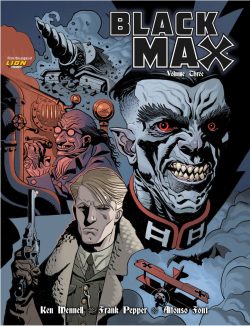
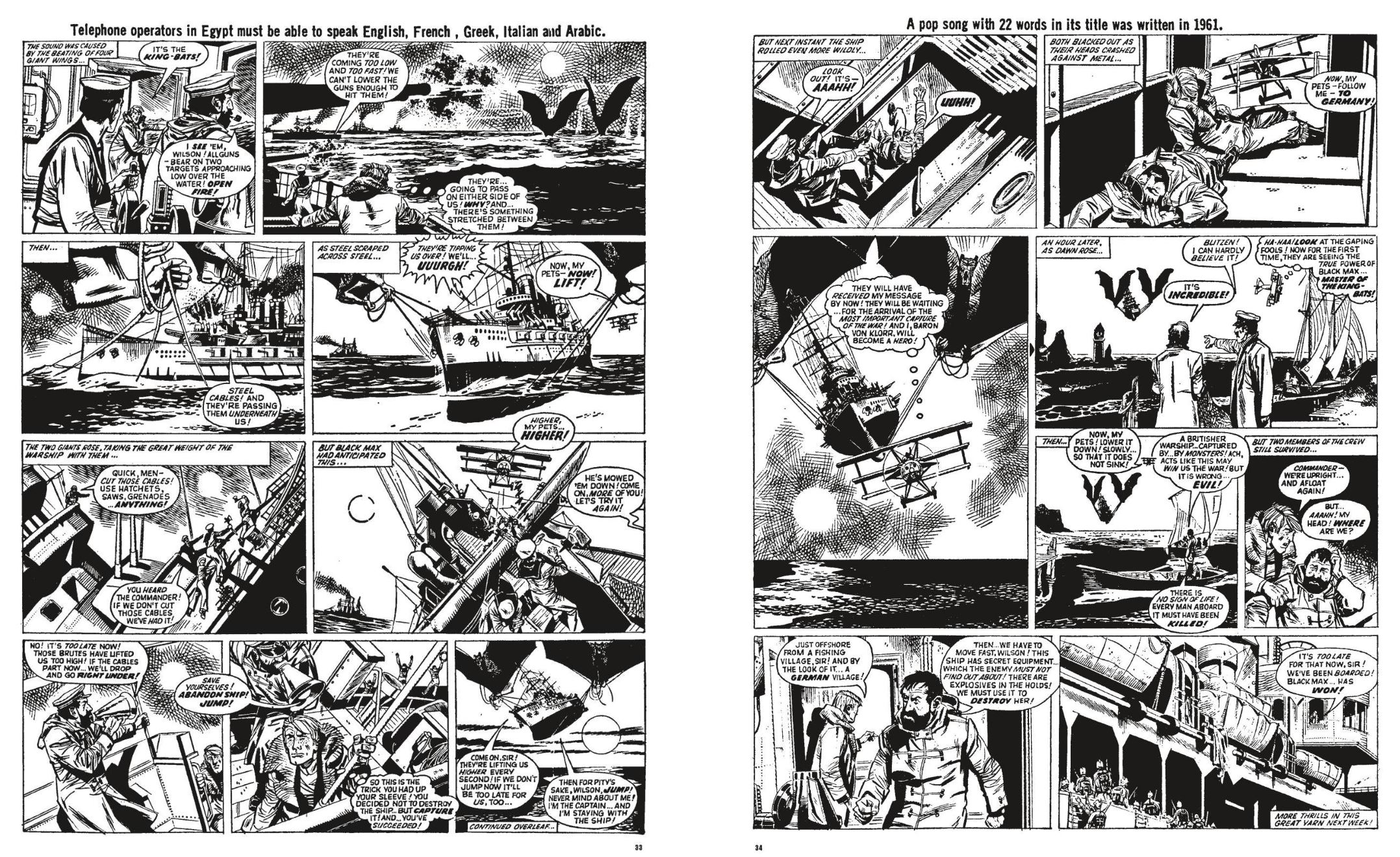
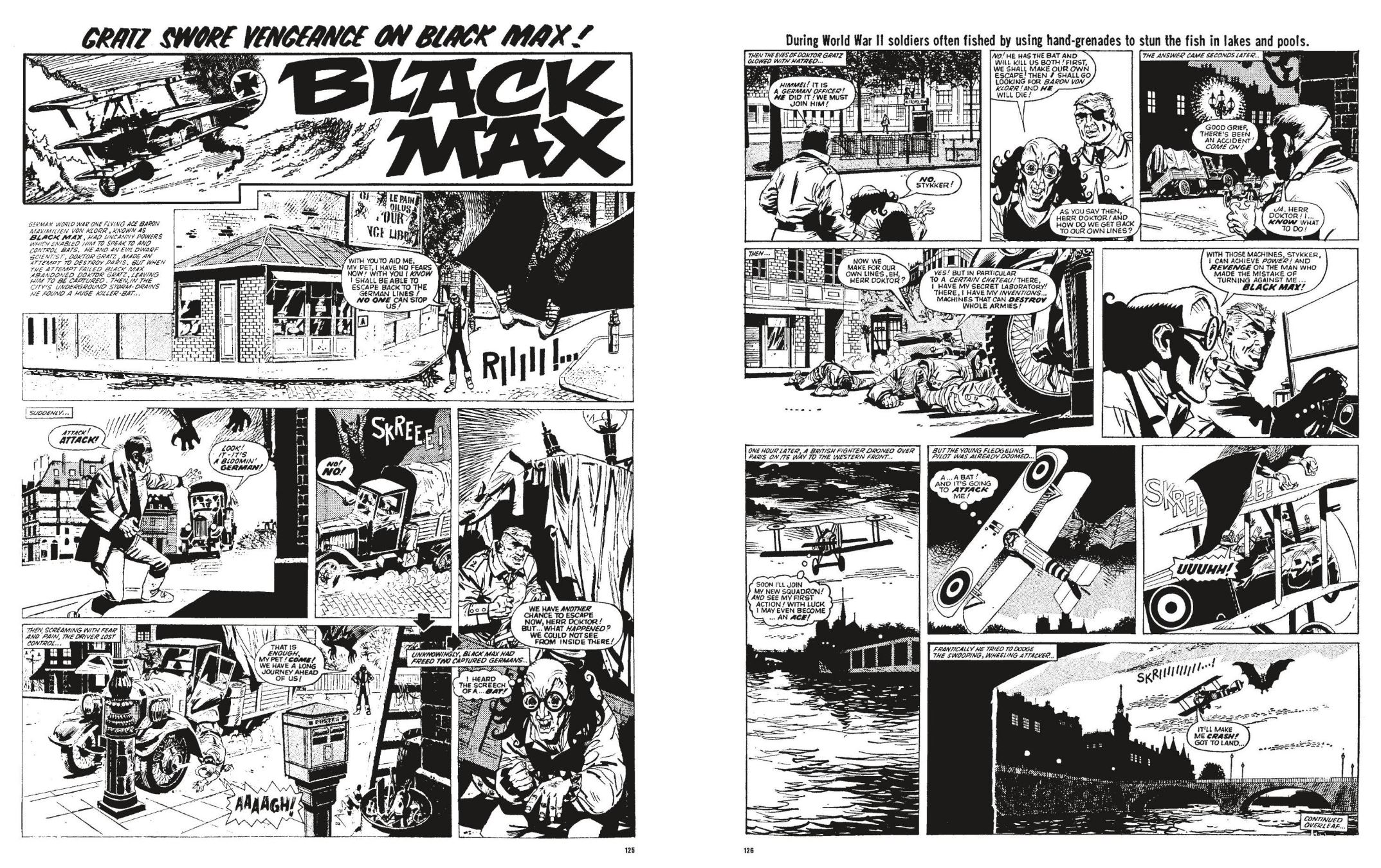
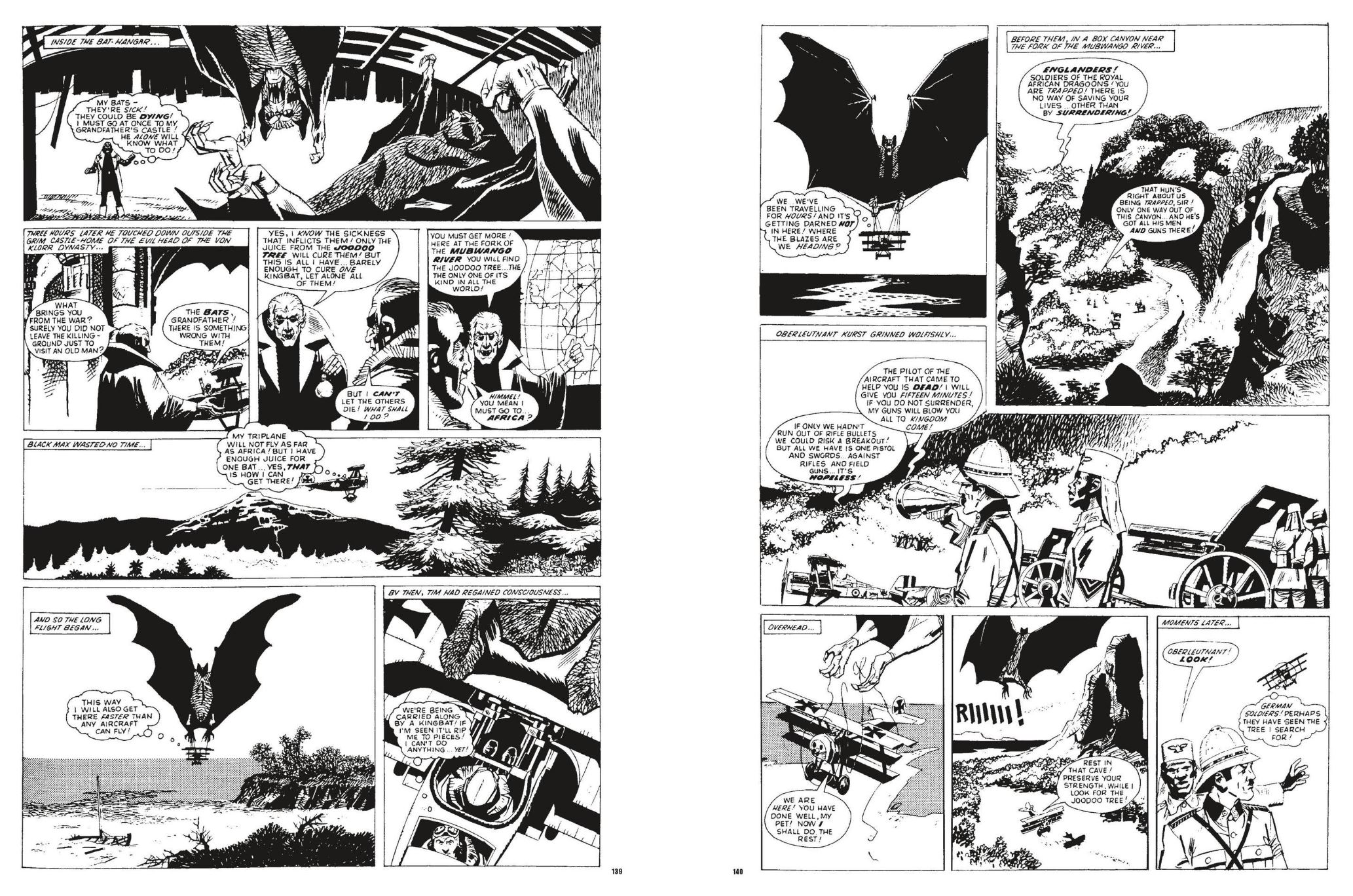
British comics have always enjoyed an extended love affair with what can only be described as “unconventional” (for which feel free to substitute “weird” or “creepy”) heroes. So many stars and notional role models of our serials and strips have been outrageous or just plain “off”: self-righteous voyeur/vigilantes like Jason Hyde, sinister masterminds in the manner of The Dwarf or Black Max, arrogant former criminals like The Spider or outright racist overmen such as fearsome white ideologue Captain Hurricane

Joking aside, British comics are unlike any other kind: having to be seen to be believed and always enjoying – especially when “homaging” such uniquely American fare as costumed crimefighters – a touch of insouciant rebelliousness…

Until the 1980s, UK periodicals employed an anthological model, offering variety of genre, theme and character on a weekly – sometimes fortnightly – basis. Humour comics like The Beano were leavened by action-heroes like The Q-Bikes or General Jumbo whilst adventure papers like Smash, The Eagle, Hotspur or Valiant always offered palate-cleansing gagsters like The Cloak, Grimly Feendish, Mowser and sundry other titter-treats.

At first glance, prior to the advent of game changers Action and 2000AD, British comics seemingly fell into fairly ironclad categories. Back then, you had genial and/or fantastic preschool fantasy; a large selection of licensed entertainment properties; action; adventure; war; school dramas, sports and straight comedy strands. Closer examination would confirm there was always a subversive merging, mixing undertone, especially in such antihero series as Dennis the Menace or our rather strained interpretation of superheroes. Just check out The Phantom Viking, Kelly’s Eye or early Steel Claw stories

After post-war austerity, the 1950s ushered in a revolution for British comics. With printing and paper restrictions gone, a steady stream of titles emerged from companies new and old, aimed at the many different levels of childish attainment from pre-school to young adult. When Hulton Press launched The Eagle in April 1950, the very concept of what weeklies could be changed forever. That oversized prestige package with photogravure colour was exorbitantly expensive, however, and when venerable London-based publishing powerhouse Amalgamated Press retaliated, it was a far more economical affair.

I’m assuming AP only waited so long before the first issue of Lion launched (cover-dated February 23rd 1952) to see if their flashy rival periodical was going to last. Lion – just like The Eagle – was a mix of prose stories, features and comic strips and even offered its own cover-featured space-farer in Captain Condor – Space Ship Pilot. Initially edited by Reg Eves, the title ran 1156 weekly issues until 18th May 1974 when it merged with sister-title Valiant. Along the way – in the tradition of British publishing which subsumed weaker-selling titles to keep popular strips going – Lion absorbed Sun (1959) and Champion (1966) before going on to swallow The Eagle in April 1969: soon after merging with Thunder (1971). In its capacity as one of the country’s most popular and enduring adventure comics, the last vestiges of Lion only vanished in 1976 during Valiant’s amalgamation with Battle Picture Weekly.

Despite that demise, there were 30 Lion Annuals between 1953 and 1982, all benefitting from the UK’s lucrative Christmas market, combining a variety of original strips with topical and historical prose adventures; sports, science/general interest features; short humour strips and – increasingly from the 1970s – reformatted reprints from IPC/Fleetway’s back catalogue.

The Jungle Robot debuted in Lion’s first issue, created by incredible prolific E. George Cowan (Ginger Nutt, The Spider, Saber, King of the Jungle, Smokeman/UFO Agent, Nick Jolly the Flying Highwayman, Paddy Payne, Girls’ Crystal Libraries) and drawn by Alan Philpott (The Deathless Men/V for Vengeance, A Classic in Pictures, Rebels of Ancient Rome, War/Super Detective/Cowboy Comics & Picture Libraries, Look-In, Klanky). It enthralled readers for a couple of months before abruptly vanishing with the August 9th issue.

Other than an appearance in the 1955 Lion Annual that was it until January 19th 1957 when the mechanical marvel was revived and revised by Cowan & A. Forbes before veteran artist Ernest “Ted” Kearon (Spot the Clue with Zip Nolan, The Day the World Drowned, Steel Commando and DC Thomson’s Morgyn the Mighty) signed on in 1958 and soldiered on for most of the next 17-ish years. On his return the mighty mouthed mechanoid became one of the most popular and well-remembered heroes of the British scene and was successfully syndicated all across Europe and around the world. Hopefully this compilation of later material will be soon supplemented by earlier annals in the fullness of time…

Reprinting stories from Lion between 20th April 1968 to 11th January 1969 plus yarns from Lion & Valiant Special 1969 and Lion Summer Special 1970 the saga returns and -following a fulsome reminiscence and Introduction by John Reppion – the latterday ongoing adventures of explorers and troubleshooters Ted Ritchie, Ken Dale and arrogant, smug, self-absorbed yet innately paternally benevolent super-robot Robot Archie resume and take an outrageous turn…

The former Jungle Robot was once the greatest achievement of Ted’s inventor uncle Professor C. R. Ritchie: battling monsters & aliens, foiling crooks and battling disasters, but in ‘Robot Archie’s Time Machine’ – by Cowan & Kearon and running from 20th April to 29th June 1968 – the boastful ‘bot discovers the wonders and perils of spacetime after the boys inherit The Castle, a colossal inhabitable two-storey faux chess piece which can take them anywhere in history and even into the future…

The first tempestuous test drive dumps them in the 14th century and into a minor peasants’ revolt as cruel, ambitious tyrant Hugo the Black Wolf terrorises his bit of Britain, and sees the armoured interloper and his pitiful retinue as a mighty rival knight and squires. Soon the visitors are battling injustice and beloved of the peasantry, but also risking accusations of sorcery with Archie’s many electromechanical add-ons (magnets, extendible claws, jet pack etc.) and incredible strength and durability adding to his lustrous legend… as a warlock!

Hugo despatched, the voyagers seek their own time and home but a technical hitch sees them overshoot by nearly a 100 years in second saga ‘Robot Archie and the Superons’ (6th July to 2nd November 1968). Obviously influenced by TV series/movie adaptation Doctor Who: Dalek Invasion Earth 2150 AD, the extended epic finds the trio in a London resembling a rain forest and overrun with wild animals, where the surviving dregs of humanity are hunted by invading aliens inside an infinite army of mechas ranging from tiny to gigantic …until Archie and Co organise a resistance and repel the rapacious robotic rogues…

Final weekly serial ‘Robot Archie – Time Traveller’ sees the garrulous gadget admitting he cannot control The Castle as another attempt to return to 1968 deposits them all in 18th century England where the big guy is mistaken for a heroic and popular highwayman battling corrupt and unjust magistrate Sir Jeremiah Creefe, who uses The Law and the King’s Soldiery to scourge London Town and line his own coffers in the days before Christmas. But not for long; once Archie sets his mechanical mind to it…

A section of ‘Extras’ kicks off with a brace of short complete tales from the Lion & Valiant Special 1969 and Lion Summer Special 1970 respectively. The first sees the time-tossed trio fetch up on a desert island just as bunch of pirates is bury their ill-gotten gains. Sadly, Blackbeard’s pistol balls briefly blow one of Archie’s fuses and only sheer luck and attacking Spaniards save the heroes from the plank…

This romp is illustrated by magnificent Mike Western who also closes this book with a half-dozen full-colour covers, but before that one last jaunt takes the team all the way back to who knows when and a lost isle of dinosaurs, cavemen and exploding volcanoes: a breathless rollercoaster ride by an artist unknown to me…

Now part of Rebellion Publishing’s line of British Comics Classics, Robot Archie is an icon of UK fantasy long overdue for revival. I hope not much time passes before we see all the old stories back again…
© 1968, 1969 & 2024 Rebellion Publishing IP Ltd. All Rights Reserved.

Night of The Devil – War Picture Library volume 3


By Hugo Pratt, Tom Tully, Gordon Sowman & various (Rebellion Studios/Treasury of British Comics)
ISBN: 978-1-78108-903-3 (HB/Digital Edition)

This book includes Discriminatory Content produced in less enlightened times.

Born in Rimini, Ugo Eugenio Prat, AKA Hugo Pratt (June 15th 1927 – August 20th 1995) wandered the world in early life, whilst becoming one of its paramount comics creators. His enthralling graphic inventions since Ace of Spades (in 1945 whilst still studying at the Venice Academy of Fine Arts) were many and varied. His signature character – based in large part on his own exotic formative years – is mercurial soldier (perhaps sailor is more accurate) of fortune Corto Maltese.

Pratt was a consummate storyteller with a unique voice and a stark expressionistic graphic style that should not work, but so wonderfully does: combining pared-down, relentlessly modernistic narrative style with memorable characters, always complex whilst bordering on the archetypical. After working in Argentinean and (from 1959) English comics like top gun Battler Briton, and on combat stories for extremely popular digest novels in assorted series such as War Picture Library, Battle Picture Library, War at Sea Picture Library and others – Pratt returned to and settled in Italy, and later France. In 1967, with Florenzo Ivaldi he produced a number of series for monthly comic Sgt. Kirk.

In addition to the Western lead star, he created pirate feature Capitan Cormorand, detective feature Lucky Star O’Hara, and a moody South Seas saga called Una Ballata del Mare Salato (A Ballad of the Salty Sea). When it folded in 1970, Pratt remodelled one of Una Ballata’s characters for French weekly, Pif Gadget before eventually settling in with the new guy at legendary Belgian periodical Le Journal de Tintin. Corto Maltese proved as much a Wild Rover in reality as in his historic and eventful career…

In Britain Pratt found rich thematic pickings in the ubiquitous mini-books like Super Picture Library, Air Ace Picture Library, Action Picture Library and Thriller Picture Library: half-sized, 64-page monochrome booklets with glossy soft-paper covers containing lengthy complete stories of 1-3 panels per page. These yarns were regularly recycled and reformatted, but the supernaturally-tinged stories gathered here – from Battle Picture Library #62 (June 1962) and War Picture Library #91 (March 1961) – have only appeared once… until now…

Resurrected and repackaged by Rebellion Studios for their Treasury of British Comics imprint, Night of the Devil is a brooding blend of mystery, revenge and supernatural doom scripted by astoundingly prolific long-serving Glasgow-born Tom Tully. His canon of classic delights include Roy of the Rovers, Heros the Spartan, Dan Dare, The Leopard from Lime Street, Adam Eterno, Janus Stark, Mytek the Mighty, Master of the Marsh, The Wild Wonders, Nipper, The Mind of Wolfie Smith, Johnny Red, Harlem Heroes, Mean Arena, Inferno, Football Family Robinson, Buster’s Ghost and countless more.

He’s supported here by co-writer/unsung company stalwart Gordon Sowman who toiled during the 1950s & 1960s on Picture Library publications and weekly features as well as writing numerous Sexton Blake Library novels under the nom du crime Desmond Reid. He might even have written the sadly uncredited second jungle combat tale here…

A fulsome and informative Foreword from Chloe Maveal shares some more astounding real life adventures of Pratt and traces his celebrated career before we step into creepy comics combat mode with ‘Night of the Devil’ (BPL #62)…

Deep in Burma’s jungles a seven-man British Army platoon races to blow up the bridge at Taigu and slow the inexorable advance of Japanese forces. However ‘The Lieutenant’ in command is untested, arrogant and vainglorious, only seeing the task as a means to secure promotion and praise.

Ignoring the advice of tested veterans such as Lance Corporal Paddy Price and Sergeant Matt Brind, smugly superior Lieutenant Robert Salter pushes his team mercilessly and makes one costly mistake after another. When his recklessness causes his scout’s death and makes them a pinpoint target of the enemy, the remaining squad snatch a few hours’ sleep before pressing on and taking refuge in an ancient edifice far from their planned route home. ‘The Temple’ is pre-Buddhist, eerily magnificent and occupied by a single native priest dedicated to the worship of ancient Phya Yomaraj. That doesn’t save him when Salter panics and opens fire with a machine gun…

As the cleric dies vowing doom to all, the gunfire alerts the enemy outside and triggers ‘The Siege’ which gradually but spectacularly winnows the team down. Tensions aren’t eased any when Private Don Evans finds a tourist guide and mordantly reads out the history of the arcane temple and its god who is “king of the devils” and ruthless with all transgressors…

Salter is descending into madness but still hopeful of escape, triumph and glory. Despatching the Sarge and Price to complete the mission and blow up ‘The Bridge’ simply to distract encroaching waves of Japanese soldiers, he then betrays them to save his own skin. As his end approaches, Salter experiences ‘The Awakening’, but as he shakes sleep from his head and readies his team to resume the mission to Taigu something occurs and he realises it was no dream but a horrific prophecy…

A powerful psychological thriller breaking the rules of kids’ combat comics, Night of the Devil is subtly subversive, straightforwardly told and startlingly compelling, far from the bread & butter war stories that sustained British readers for decades.

Pure horror overtones are dialled down in follow-up ‘The Bayonet Jungle’. Far less overtly spooky in delivery, this catalogue of jungle warfare originated in War Picture Library #91 (March 1961) with Pratt limning a more traditional episode, albeit one similarly steeped in psychological angst. It begins as a hard-pressed, cut-off British unit in Burma is disturbed and conflicted by new replacement Jack Green. Although a capable soldier, many of his new comrades believe him a jinx because twice he has been the ‘Sole Survivor’ of in-country patrols. Minor events seem to constantly confirm those fears and superstitious squaddie Jenkins can’t stop speculating aloud despite every effort of solid soldiers Sergeant Freeman and Major Webb…

With mail drops and supply runs failing, snipers, air raids and ‘Jungle Ambush’ bedevilling the embattled survivors, the last thing they need is demoralising accidents too, but only after a Burman native working for the Japanese infiltrates the unit and leads them into an ambush at the ‘Village of Treachery’ is rationality is restored with the ‘Test of Courage’ in fighting their way out inspiring the spooked warriors to battle towards reinforcements, turn the tables on the enemy and score an explosive victory…

What happens next is powerful, exhilarating and exactly what you’d expect from a kids’ comic crafted to sell in the heyday of UK war films commemorating the conflict their parents lived through.

At the end are the original full-colour painted covers by superb Pino Dell’Orco as first seen on Battle Picture Library #62 (June 1962 ‘Night of the Devil’) and War Picture Library #91 (March 1961 ‘The Bayonet Jungle’).

Potent, powerful, genre-blending and oddly cathartic, these are brilliant examples of the British Comics experience – and if you’re a connoisseur of graphic thrills and dramatic tension – utterly unmissable.
© 1961, 1962, 2021 Rebellion Publishing IP Ltd. All rights reserved.

Charley’s War – The Definitive Collection volume 2: Brothers in Arms


By Pat Mills & Joe Colquhoun & various (Rebellion)
ISBN: 978-1-78108-620-9 (TPB/Digital edition)

This book includes Discriminatory Content included for dramatic effect. If any incidence of such slurs, epithets, terms, behaviours or treatments might offend you, you really should not be reading this book or – arguably – maybe you need it more than most.

The Great War officially started today in 1914. I can’t tell you how glad I am that we got all that jingoism, racism, seductive superiority, addictive violence and nationalistic avarice out of our collective systems back then. It’s a much calmer, nicer world now, right?

Meanwhile, here’s more of the best story – bar none in any medium – to translate those appalling, internationally insane, diplomatically deranged and pointlessly self-destructive days into scenarios we can accept if not understand: evocatively and emotionally depicting not only the mud and mire and military madness and mass mortality of that conflict, but also shared with the young and impressionable its impact on the poor and the mighty who survived into the totally different world that came after. You must read it and the other two collected volumes. Message ends.

When Pat Mills & Joe Colquhoun began their tale of a patriotic working-class kid who broke the rules to proudly fight for his country just in time for the disastrous Somme campaign, I suspect they had, as always, the best of authorial intentions but no real idea that this time they were making comics history.

The landmark feature was originally published in British anthology Battle (AKA Battle Picture Weekly, Battle Action, etc.). A surprise hit, the serial proper launched in #200, eventually running from January 1979 to October 1986, recounting in heartrending harrowing detail, and with amazing maturity and passion for a Boys’ Periodical, the life of an East End teenager in the British Army reinforcements setting out to fight the Hun in 1916.

The strip contingent in this second stunning collection covers episodes #87-176/1st November 1980 through 10th July 1982 and comprises one of the most powerful and influential characterisations of the oh-so-ironic “war to end all wars”. Lovingly researched, lavishly limned and staggeringly authentic, the stories touch upon many diverse aspects of the conflict and even reveal the effects on the Home Front, all delivered with a devastatingly understated dry sense of horror and cruel injustice, albeit constantly leavened with gallows humour as trenchant as that legendarily “enjoyed” by the poor trench-bound “Tommies” of the time.

In the previous book “the Story of a Soldier in World War One” followed 16-year-old London Bus Company worker Charley Bourne who lied about his age to illegally go “over there” only to discover unending, enduring horrors on the muddy, blood-soaked battlefield of The Somme. He also experienced the callous ineptitude of upper-class idiots running the war and believing their own men utterly expendable.

Military life was alternately hard and unremittingly dull – except for brief bursts of manic aggression and strategic stupidity which ended so many lives. Closely following the recorded course of the war, Mills & Colquhoun placed young Charley in the Westshire Regiment and added a rapidly changing cast constantly whittled away by various modes of combat attrition.

The weekly hellscapes showed lesser known, far from glorious sides of the conflict readers in the 1980s had never seen in any other war comic. Each episode was punctuated by a narrative device of the simple lad’s letters to his family in “Blighty” whilst also cleverly utilising reproductions of cartoons and postcards of the period.

With Boer War veteran Ole Bill Tozer as his mentor, Charley narrowly survived shelling, mudslides, digging details, gas attacks, the Trench Cat, rats, snipers, smug stupidity of commanding officers – although there are examples of good “brasshats” too – and the far too often insane absurdity of a modern soldier’s life.

On July 1st 1916 The Battle of the Somme began and Charley and his comrades were ordered “over the top”: expected to walk steadily into mortars and machine gun fire of entrenched German defenders. When his commanding officer was unable to stand the stupidity and ordered them to charge at a run, it saved the squad but ultimately led to Lt. Thomas being executed by firing squad. Charley and former musical hall ventriloquist Weeper Watkins refused to shoot him and were extensively punished by sadistic military policeman Sergeant “the Beast” Bacon over and over again…

When Charley and his crooked brother-in-law Oliver Crawleigh were caught in the first tank battle in history and the dreadful German response, chancer Oiley” offered to pay Charley to either protect him or wound him in some minor way that would get safely back to Britain. When Charley refused, Oiley misused a tank to earn his “Blighty” passage home…

As previously stated, Charley’s War closely follows key events, using them as a skeleton to hang specific incidents upon, but this was not the strip’s only innovation. Highly detailed research concentrated more on character development than fighting – although there’s much shocking action – and declared to the readership (which at time of publication was categorically assumed to be boys aged 9-13) that “our side” was as monstrous and stupid as “the Boche.” Mills also fully exercised his own political and creative agendas on the series and was constantly amazed at what he got away with and what seeming trivialities his editors pulled him up on (more fully expanded upon in the author’s informative ‘Strip Commentary’ which concludes this edition)…

No longer a fresh-faced innocent but a weary, battle-scarred veteran, Charley and the strip marched beyond the cataclysmic Somme Campaign into the conflict’s most bloody events. Charley was wounded again and sent home, albeit via torturous routes involving amnesia and U-Boat warfare. Mills & Colquhoun delivered acerbic social criticism as the recuperating lad experienced fresh horrors when the troop ship carrying him and Bill Tozer was torpedoed…

When the perilous North Sea odyssey at last brought Charley back to Silvertown in London’s West Ham, it was in the wake of a real-world catastrophic disaster wherein 50 tons of TNT detonated at a munitions factory, killing 70 workers and injuring a further 400.

No longer comfortable around civilians and with no stomach for the jingoistic nonsense of the stay-at-homes or the lies of boastful “war-hero” Oiley, Charley hangs out in pubs with the Sarge but is caught up in enemy air raids (giving the creators room to explore the enemy side of the conflict via the zealous actions of devoted family man Kapitan Heinrich von Bergmann who leads a squadron of Zeppelins in night sorties against the hated English)…

London was under constant threat, not just from increasingly common aerial bombing raids which provoked mindless panic and destruction at the very heart of the British Empire, but also profiteering British industrialists and greedy munitions magnates who cared more for profit than the safety of their workers or even the victory of their homeland…

During one raid Charley realised his mum was still in the local works as her boss refused to sound air raid evacuation alarms because he had profits and contracts to consider. Charley’s view of the land he was fighting for barely survived his valiant efforts to save his mum and took an even bigger hit when an unscrupulous army recruiter (earning bonuses for every volunteer signed up) attempted to entrap his underaged but conflict-obsessed little brother Wilf Bourne

This magnificent (mostly) monochrome mega-compilation resumes the saga, opening in March 1917 with another devilish deviation: the testimony of a charismatic deserter. ‘Blue’s War’ was an experimental story within a story with the strip’s titular character reduced to an avid and appalled listener…

Through eerie blacked-out bombed London Streets Red Caps (military police) hunt deserters, led by a pitiless, fanatical dying-of-wounds officer dubbed The Drag Man. He is most interested in a desperate character called Blue. The knife-wielding fugitive encounters Charley by breaking into the Bourne house. Blue is actually looking for Oiley: a cowardly spiv and petty criminal, inexplicably married to Charley’s sister Dolly. When the crook appears Charley learns the cowardly shirker has graduated from thievery and looting to selling passage abroad and fake papers to absconders from the military…

Disgusted with Oiley and his thuggish stooge Snips Parsons but unwilling to force anyone back into the war, Charley agrees to say nothing and instead asks the charismatic stranger the hows & whys of his situation. In return he hears a staggering tale of combat, cruelty, bravery and army ineptitude.

Blue is an Englishman who joined the French Foreign Legion before serving with the French Army, surviving through the hell of Verdun (longest battle of the WWI, lasting from February 21st to December 18th 1916). The astonishing revelations of this forgotten siege commandeer the strip as episodes of Blue’s War describe Verdun’s many and varied horrors as related by a true outsider hero and British rebel (and based on real-world “Monocled Mutineer” Percy Toplis).

The unfolding flashback account is counterpointed by Blue’s – and now Charley’s – tense and dramatic flight from the Drag Man and his brutal minions across the East End and culminates in the rebel’s escape and Bourne’s grudging return to the Western Front. Just before that though, Charley scuppers Oiley’s latest scam – defrauding bereaved soldiers’ mothers via a fake spiritualist – and exposes another thread of bigotry regarding munitions workers like his poor old mum, reaffirming how then and now the feature was one of the most sophisticated and adult dramas ever seen in fiction, let alone the pages of a kids’ war comic.

Mills & Colquhoun’s comic strip condemnation of the Great War (and war-mongering and profiteering in general) slips into sardonic high gear as the recuperating boy-soldier settles his affairs in London before returning to the terrifying trenches and insane warlords on both sides of No-Man’s Land….

In April 1917 he is a veteran of the front, posted to the Salient before the Third Battle of Ypres and caught up in daily skirmishes, sudden deaths, more arrant stupidity and a simmering feud as fellow early volunteers Grogan and Zippo ruthlessly bully newly conscripted troops like college graduate “Scholar” for being cowardly slackers forced to do their duty. Bourne’s efforts to stay alive and do his job become more difficult when arrogant old enemy and ruthless aristocrat Captain Snell – who thinks the war a terrific lark – returns as commanding officer and appoints Charley his manservant/dogsbody…

Snell constantly undermines and crushes the spirit of the riffraff cannon fodder under his command and loves making their lives intolerable, a practise mirrored by increasingly out-of-control Grogan. When he finally flips and dies, his pal Zippo holds Charley responsible…

By May the infantry are marching in scorching heat and the creators wallow in bizarre historical accuracy and intriguing gallows humour, capitalising on the lengthy build-up of troops which forced a long period of tedious inactivity upon the already bored soldiery. Life in the trenches was always hard and unremittingly dull: a fact reiterated here by such insanity as a cricket match played out whilst shells rain down, Tommies destroying their own equipment and a dozen other daily insanities of the military mind exposed with devastating effect.

As the Third Battle of Ypres soggily unfolds in August and the build-up to the Battle of Passchendaele intensifies, Snell’s unit is posted to an engineering detail short of manpower. Bourne and his pals endure backbreaking toils as “clay-kickers”, risking cave-ins, flood, gas, explosions and Germans above them digging into their tunnels. This push will complete a year-long project undermining a vast ridge of solid rock that is the enemy artillery emplacement on the Messine Ridge. If they don’t die, Charley and co. will pack the explosives for the biggest manmade explosion the world has ever experienced…

In the build-up to that astounding detonation almost everyone dies, but at least Snell also goes to his infernal reward, with the pitiful survivors despatched to “The Bullring” at Etaples: a brutal retraining centre testing the lower ranks to their limits whilst cossetting commissioned officers. It brings Charley into murderous contact with an organised band of deserters – the Sandbaggers – and reunites him with many lost comrades, whilst in England Oiley gets his revenge by facilitating war-mad Wilf Bourne’s enlistment years before he is legally able to. The older Bourne will spend agonised months trying to find out what happened to Wilf…

The mounting tensions, barbarous treatment and institutionalised class injustice at Etaples leads to a British army mutiny (all but written out of our historical record ever since) in September, before triggering the most shameful moments of Charley’s life when he is forced to join another firing squad…

The mutiny goes on for days, emptying stockades and allowing the settling of many old scores, but Charley’s war is even more complicated after meeting the Sandbaggers’ leader who he recognises as someone he never thought to see again. Bourne is even more astonished by the Army’s capitulation to the mutineers’ terms, and totally unprepared for inevitable retaliations. In response he transfers to the most dangerous job in the army to expiate his guilt…

To Be Concluded…

Lifted to dizzying heights of excellence by the phenomenal artwork of Joe Colquhoun – much of it in colour as the strip alternated between the prized cover spot and almost as prestigious centre-spread slot – these are masterpiece of subversive outrage within the greater marvel that is Charley’s War. Included in this volume are a full cover gallery and restored colour sections (reproduced in monochrome for earlier collections but vibrantly hued here to vivid effect) plus Mills’ amazingly informative chapter notes and commentary on the episodes.

This is a highpoint and benchmark in the narrative examination of the Great War in any artistic medium and exists as a shining example of how good “Children’s Comics” can be. It is also one of the most powerful pieces of fiction ever produced for readers of any age. I know of no anti-war story that is as gripping, as engaging and as engrossing, no strip that so successfully transcends its mass-market origins and popular culture roots to become a landmark of fictive brilliance. I’d bribe Ministers to get these wonderful books onto the National Curriculum. We can only thank our lucky stars no Hollywood hack has made it a “blockbuster” inescapably undercutting the tangibility of the “heroes” whilst debasing the message. There is nothing quite like it and you are diminished by not reading it.
© 1979, 1980, 1981, 1982, 1983, 1984, 1985 & 2018 Rebellion Publishing Ltd. All rights reserved. Charley’s War is ™ & © Rebellion Publishing Ltd. All rights reserved.

The Scrapbook of Life and Death


By J. Webster Sharp (Avery Hill Publishing)
ISBN: 978-1-910395-84-4 (TPB)

This book includes Discriminatory Content cited from historical sources and included for dramatic effect. If any incidence of such slurs, epithets, terms, behaviours or treatments might offend you, you really should not be reading this book or – arguably – maybe you need it more than most.

I don’t generally give full-on serious warnings about books, usually depending on my standard jolly and avuncular old git “watch yourself” waffle to dissuade those just looking for a hobbyhorse to dog whistle at. Here, however, is an incredibly bold but potentially deeply upsetting work of graphic literature both fiendishly fascinating and disturbingly distressing which truly needs the reader to pay attention whilst proceeding with caution…

George Cecil Ives (1st October 1867 – 4th June 1950) was an English poet, writer, pioneering penologist/criminologist, cricketer and homosexual law reform campaigner. Born in Frankfurt and living most of his life in in High Society… and Lewisham… he was also a dedicated amateur archivist. Between to 1892 – when he began college – and 1949, Ives compulsively clipped-&-saved newspaper articles that eventually filled 45 big scrapbooks. his archive material exclusively focused on “unusual and interesting” items such as murders, punishments, physical freaks, plots, melodramas, theories of crime & punishment, transvestism, homosexuality and the psychology of gender.

And cricket scores.

Ives was a lifelong covert warrior in the battle to decriminalise homosexuality and normalise sexual variance (differences?). In 1897 he founded The Order of Chaeronea (a secret society of gay people culled from upper echelons of the ruling classes) and in 1914 cofounded The British Society for the Study of Sex Psychology. He was deeply invested in the study of punishment and prisons and visited many whilst compiling his vast catalogue of human oddity, eccentricity and depravity.

According to some sources the minor writer and prominent society figure was also the model for E. W. Hornung’s gentleman thief A.J. Raffles

Here his library of vintage articles has been cherry-picked and applied to spur the incredible imagination of celebrated cartoonist J. Webster-Sharp (Fondant/Human Furnishings, Pretty Flavours, Sea Widow, Jade and her Schizophrenia), inspiring a chilling panoply of shock: a beautifully rendered catalogue of Body Horror icons, strangely compelling horrific moments of abstracted and mutated organs, mutilations, fetishism, bizarre puzzles and upsetting revelations absolutely not for the squeamish.

Webster’s book is divided into straightforward sequences of interpretative illustrations and strips generated by her responses to reading The George Ives collection. The former portraitist turned confirmed comics creator in May 2021, and uses graphic narrative as a means of therapeutic self-help. This tome offers a second section of images and tableaux revisiting the archive material in a more direct and free-wheeling manner. The resulting barrage of unsettling experiences expand upon and imply how visualising those vintage snippets impacted her own mental state and health: a brave and honest examination of psyche and self not all of us would ever consider sharing with an unknown, anonymous and potentially hostile audience…

These untitled psychosexual images and psychedelically surreal variations more deeply explore and potently depict human/animal bodies of varying ages, mythological monsters and more modernsmilestones of terror like clowns, operating theatres and autopsies and are followed by a return to basics as the comics counselling session concludes with a gallery of original prose newspaper articles and clippings, all re-rendered with chilling calligraphic expertise. They include such elucidating extra detail as ‘Youth fascinated by handkerchiefs – Detective and “This Mormon Business”, ‘A Portsmouth scare – Mother frightened by stories of man who slashes at children’s boots and ‘Death Chair for “Nice Old Man” – His country home a charnel house. 100 children killed in 20 years.’

Confronting taboos with surgical skill, an anatomist’s understanding and a detective’s passion, the auteur has crafted here an emotional experience both enticingly lovely and yet intrinsically profane, but one I fervently wish every reader could look at with open, unprejudiced eyes. The plan here is to inform not deter but of course, the choice is yours…
© J. Webster-Sharp. 2024. All rights reserved.

The Scrapbook of Life and Death is scheduled for release on September 3rd 2024 and is available for pre-order now.

If you’re London based/adjacent – or just a fan with time on your hands – there’s a launch party for an exclusive The Scrapbook of Life and Death bookplate edition on September 5th June at Gosh! Comics, 1 Berwick, London, W1F 0DR from 7-9 pm.

Retro Classics: The Victor Presents: Alf Tupper – The Tough of the Track


By various anonymous and Peter Sutherland (Retro Classics/DC Thomson)
No ISBN, digital only edition

If you grew up British any time after 1960 and read our comics you probably cast your eye occasionally – if not indeed fanatically – over DC Thompson’s venerable “Boys’ Paper” The Victor. For over 100 years the Dundee-based company has been a mainstay of British reading entertainment with its strong editorial stance informing and influencing a huge number of household names over the decades.

Post-WWII, Victor was very much the company’s flagship title for action/adventure and featured amongst its grittily realistic pantheon of stars a perpetually grimy, soot-stained, incorrigibly working-class young(ish) sportsman called Alf Tupper; forever immortalised as The Tough of the Track. Gathered here is a clever compilation of early episodes from a sublimely never-ending soap opera story (sampled from the 1960s, illustrated by Peter [Mike Fink, Spy 13, Kit Carson, Battler Britton, Super Detective Library, Cowboy Comics Library, Thriller Picture Library] Sutherland) commemorating the unique DC Thomson comics experience and offering a splendid taste of the Running Man’s gritty charms.

The main tenet of Thomson adventure philosophy was a traditional, humanistic sense of decency. Talented, determined distance runner Tupper might be a poor, rough, ill-educated working-class orphan competing – we’d call it “punching up” – in a world of hostile “Toffee-Nosed Swells”, but he strives tirelessly and excels for the sheer reward of sportsmanship, not for gain or glory.

He’s the kind of man most decent folk used to want their kids to grow up into…

Friendly, helpful, short-tempered but big-hearted (and looking a little like everyman Norman Wisdom), Alf was actually created by in 1949 by Bill Blaine before featuring in a non-stop series of prose stories in “Boys Story-Paper” The Rover. The majority of those exploits were written by Gilbert Lawford Dalton with single illustrations by Len Fullerton, Ian McKay, Fred Sturrock, Jack Gordon, George Ramsbottom, Calder Jamieson and James “Peem” Walker.

As the 1950s ended the publisher was finally accepting that their readers no longer wanted all-prose periodicals, and comic strips were the way to go. Alf was retooled as just such a pictorial headliner, transferring to The Victor where he persevered if not prospered, carrying on until the title folded. His last 20th century appearance was in 1992 for The Sunday Post: training for the impending Barcelona Olympics. However, his spirit truly was indomitable and in April 2014 Tupper came out of enforced retirement, to begin a monthly page-per-issue strip in monthly international magazine Athletics Weekly

Vulgar but decent, rowdy, earthy, barely-educated and perpetually sticking it to all those posh boys monopolising athletics, Alf was a proudly individualistic sportsman and one of the greatest natural distance runners who ever lived. He fought prejudice, discrimination, poverty and especially privilege to win races, medals and accolades. When he wasn’t training, competing or eating fish & chips (his secret weapon for success), the comic strip Alf was a welder in the northern industrial town of Greystone, originally apprenticed to shifty, shiftless Ike Smith before eventually setting up in business for himself.

Tupper was all about determination overcoming ill-fortune, adversity and even enemy action… and he just hated to be beaten. When he occasionally was, he didn’t dwell on excuses, but resolved to win the rematch…

Our True Brit sporting legend apparently had a big influence on the development of many of our actual sporting greats, such as Brendan Foster CBE, and the reason why can be seen in this carefully edited compilation of weekly episodes beginning with a race for the Greystone Harriers that ends in a fist fight with a fellow runner and Alf being kicked off the team and out of the club…

Barred from competing, Alf races along the verge of the track and beats them all…

As an apprentice welder, Alf spent lots of time in sports venues that were being refurbished and helped himself to empty tracks and unused facilities, gradually being noticed by coaches and selectors. However, every attempt to integrate him with the country’s top athletes ended in some smug elitist saying the wrong thing or even sabotaging the uppity oik; with Alf paying a working man’s penalty for it…

Further complicating Tupper’s life was his exploitative Aunty Meg, who controlled his wages, pawned his kit and prizes and generally gaslit him until he finally ran away from home – or rather the shed she rented to him…

In this brief collection, Alf’s career slowly progresses, comprising many clashes with the Greystone running elite, an on-off relationship with Olympic sporting academy Granton Hall, shoes and kit crises, high profile competitions in London, France, Belgium and beyond, hitchhiking troubles, clashes with the law and brushes with gamblers and race fixers, and dalliances with different distances and even other disciplines such as hurdles, long jump, 4X4 relay and steeplechase …and plenty of “boxing” too.

His biggest battle was against a top sports dietician who banned fish & chips and made him eat salads…

Wry and full of olde-worlde pluck, this seasoned sporting sampler is a wonderfully accessible slice of truly British nostalgia and a certain delight for every fan of classic competition and great comics.
VICTOR™ & © D.C. Thomson & Co. Associated text, characters and artwork © D.C. Thomson & Co., Ltd. All rights reserved.

Moomin: The Complete Tove Jansson Comic Strip volume 1


By Tove Jansson (Drawn & Quarterly)
ISBN: 978-1-89493-780-1 (HB/Digital edition)

Tove Marika Jansson was born into an artistic, intellectual and practically Bohemian Swedish family in Helsinki, Finland on August 9th 1914, making today her 110th anniversary, so hyvää vuosipäivää to her and all you fans…

Father Viktor was a sculptor, and mother Signe Hammarsten-Jansson enjoyed a successful career as illustrator, graphic designer and commercial artist. Tove’s brothers Lars and Per Olov became a cartoonist/writer and photographer respectively. The family and its close intellectual, eccentric circle of friends seems to have been cast rather than born, with a witty play or challenging sitcom as the piece they were all destined to act in.

After a period of intensive study from 1930-1938 (University College of Arts, Crafts and Design, Stockholm, the Graphic School of The Finnish Academy of Fine Arts and L’Ecole d’Adrien Holy and L’Ecole des Beaux-Arts, Paris), Tove became a successful exhibiting artist through the troubled period of the war.

Intensely creative in many fields, she published the first fantastic Moomins adventure in 1945: Småtrollen och den stora översvämningen (The Little Trolls and the Great Flood or more euphoniously The Moomins and the Great Flood): a whimsical epic of gentle, inclusive, accepting, understanding, bohemian, misfit trolls and their strange friends…

Always an over-achiever, from 1930 to 1953 Tove worked as an artist and cartoonist for Swedish satirical magazine Garm, achieving some measure of notoriety with an infamous political sketch of Hitler in nappies, lampooning the Appeasement policies of Chamberlain and other European leaders in the build-up to World War II. She was also a much-in-demand illustrator for many magazines and children’s books. She had been selling her comic strips as early as 1929…

Moomintroll was literally her signature character. The lumpy, big-eyed goof began life as a spindly sigil beside her signature in her political works. She called him “Snork” and claimed she had designed him in a fit of pique as a child – the ugliest thing a precocious little girl could imagine – as a response to losing an argument about Immanuel Kant with her brother.

The term “Moomin” came from maternal uncle Einar Hammarsten who attempted to stop Tove pilfering food when she visited by warning her that a Moomintroll guarded the kitchen, creeping up on trespassers and breathing cold air down their necks. Over childhood years and far beyond Snork/Moomin filled out, became timidly nicer, if a little clingy and insecure: a placid therapy-tool to counteract the grimness of the post-war world.

The Moomins and the Great Flood was relatively unsuccessful but Jansson persisted, as much for her own therapeutic benefit as any other reason, and in 1946 sequel Kometjakten (Comet in Moominland) was published. Many commentators believe this terrifying tale a skilful, compelling allegory of Nuclear destruction, and both it and third illustrated novel Trollkarlens hatt (1948, Finn Family Moomintroll or occasionally The Happy Moomins) were translated into English in 1952. Their success prompted British publishing giant Associated Press to commission a newspaper strip about her seductively sweet, sensibly surreal surrogate family.

Jansson had no prejudices about strip cartoons. Early efforts included Lunkentus (Prickinas och Fabians äventyr, 1929), Vårbrodd (Fotbollen som Flög till Himlen, 1930) and Allas Krönika (Palle och Göran gå till sjöss, 1933). And she had already successfully adapted Comet in Moominland for Swedish/Finnish paper Ny Tid. Mumintrollet och jordens undergångMoomintrolls and the End of the World – was a popular feature and Jansson readily accepted a chance to extend her message across the world.

In 1953 The London Evening News began the first of 21 Moomin sagas which captivated readers of all ages. Tove’s involvement ended in 1959: a casualty of its own success and a punishing publication schedule. So great was the pressure that she had recruited brother Lars to help. He proudly and most effectively continued the feature until its end in 1975.

Free of the strip she returned to painting, writing and her other creative pursuits, generating book illustration, plays, murals, public art, stage designs, costumes for dramas and ballets, a Moomin opera, 9 more Moomin-related picture-books and novels, as well as 13 books and short-story collections more obviously intended for grown-ups.

Her awards are too numerous to mention (literally dozens of international art and literary plaudits), but consider this: how many modern artists – let alone comics creators – get their faces on the national currency or have commemorative coins struck bearing their image?

She died on June 27th 2001… but her timorous little critters and their better, nicer world have proliferated beyond belief.

Tove could deploy slim economical line and pattern to create sublime worlds of fascination, and her dexterity made simple forms into incredibly expressive and potent symbols. In this first volume the miraculous wonderment begins with ‘Moomin and the Brigands’ as our rotund, gracious and deeply empathic hippo-esque troll-ling frets about the sheer volume of freeloading visitors literally eating him out of house and home. Too meek to cause offence and simply send them all packing, he consults his wide-boy, get-rich-quick mate Sniff, but when their increasingly eccentric eviction schemes go awry Moomin simply leaves, undertaking a beachcombing odyssey culminating with him meeting the beauteous Snorkmaiden.

When the jewellery-obsessed young lass (yes, she looks like a hippo too – but a really lovely one with long lashes and such a cute fringe!) is kidnapped by bandits, finally mild-mannered Moomin finds his inner hero…

‘Moomin and Family Life’ then reunites the prodigal Moomin with parents Moominpappa and Moominmamma – a most strange and remarkable couple. Mamma is warm and capable but overly concerned with propriety and appearances, whilst Papa spends all his time trying to rekindle his adventurous youth. Rich Aunt Jane, however, is a far more “acquired” taste.

‘Moomin on the Riviera’ finds flighty Snorkmaiden and drama-starved Moominpappa dragging the extended family and assorted friends on an epic voyage to the sunny southern land of millionaires. On arrival, the Moomins’ small-town idiosyncrasies are mistaken for so-excusable eccentricities of the filthy rich – a delightfully telling satirical comedy of manners and a plot that never gets old – as proved by the fact that the little escapade was expanded to and released as 2015’s animated movie Moomins on the Riviera

This initial incomparable volume of graphic wonderment concludes with fantastic adventure in ‘Moomin’s Desert Island’, wherein another joint family jaunt leaves the Moomins lost upon an unknown shore where ghostly ancestors roam: wrecking any vessel that might offer rescue. Sadly, the greatest peril in this knowing pastiche of Swiss Family Robinson might well be The Mymble – a serious rival for Moomintroll’s affections. Luckily, Snorkmaiden knows of some wonderfully romantic, bloodthirsty pirates who might be called upon to come to her romantic rescue…

These truly magical timeless tales for the young are laced with incisive observation and mature wit that enhances and elevates only the greatest kids’ stories into classics of literature. These volumes are an international treasure and no fan of the medium – or biped with even a hint of heart and soul – can ever be content or well-read without them.

Tove’s Moomin comic strips were originally collected in seven Scandinavian volumes before the discerning folk at Drawn & Quarterly translated them into English as a series of luxurious oversized (224 x 311 mm) hardback tomes. There some UK editions from SelfMadeHero in the twenteens and now some of these tales have returned in new paperback reprinting, with Moomin Adventures Book 1 (July 2024, ISBN: 978-1-77046-742-2) offering ‘Moomin on the Riviera’ and ‘Moomin’s Desert Island’ plus some later co-productions with Lars.

© 2006 Solo/Bulls. All Rights Reserved.

The Definitive Charley’s War volume 1: Boy Soldier


By Pat Mills & Joe Colquhoun & various (Rebellion)
ISBN: 978-1-78108-619-3 (TPB/Digital edition)

This book includes Discriminatory Content produced during less enlightened times.

On July 27th 1914, Austrian foreign Minister Berchtold had Emperor Franz Joseph sign a Declaration of War in hopes of stealing a march on the empire’s political opponents of the Triple Entente and ensure any peace proposals would be pointless. The Great War officially began the following day…

When Pat Mills & Joe Colquhoun began their tale of an impressionable lad who joins up just in time to fight in the disastrous Somme campaign, I suspect they had, as usual, the best of authorial intentions but no real idea that this time they were creating comics history. The landmark feature was originally published in British war anthology Battle (AKA Battle Picture Weekly, Battle Action, etc.). A surprise hit, the serial proper launched in #200, running from January 1979 until October of 1986.

It recounted, usually in heartrending and harrowing detail and with astounding passion for a Boys’ Periodical, the life of an East-End kid who lies about his age to enlist with the British Army reinforcements setting out to fight the Hun in 1916.

The stunning strip contingent contained within this edition – 86 weekly episodes in all – span January 6th 1979 through 25th October 1980, forming one of the most powerful and influential characterisations of the oh-so-ironic “war to end all wars” ever depicted. Lovingly researched, lavishly limned and staggeringly authentic, the saga touches upon many diverse aspects of the conflict – even the effects on the Home Front – all delivered with a devastating, sardonically understated dry sense of horror and injustice, albeit frequently leavened with gallows humour as trenchant as that legendarily “enjoyed” by the poor trench-bound “Tommies” of the time.

This magnificent (mostly) monochrome mega-compilation opens with a 4-page instalment (for much of the middle run the series came in 3-page episodes) ‘Charley’s War – the Story of a Soldier in World War One’, following 16-year-old London Bus Company worker Charley Bourne as he eagerly enlists and so-quickly graduates to unending, enduring horrors of muddy, blood-soaked battlefields, beginning with The Somme.

Military life was notoriously hard and unremittingly dull – except for brief bursts of manic aggression and strategic stupidity which ended so many lives. Closely following the recorded course of the war, Mills & Colquhoun put young Charley in the Westshire Regiment and show a rapidly changing casualty-shaped cast being constantly whittled away by various modes of combat attrition.

The weekly hellscapes show lesser-known, far-from-glorious aspects of the conflict readers in the 1970s & 1980s had never seen in any other war comic. Each strip was cunningly punctuated and elucidated by the telling narrative device of the simple lad’s letters to his family in “Blighty” whilst also cleverly utilising reproductions of cartoons and postcards from the period.

With Boer War veteran Ole Bill Tozer as his mentor, Charley narrowly survives shelling, mudslides, digging details, gas attacks, the trench cat, snipers, callous stupidity of his own commanding officers – although there are examples of good officers too – and the far-too-frequent insane absurdity of a modern soldier’s life. Slowly but irrevocably the callow, naïve boy becomes a solid, dependable warrior – albeit one with a nose for trouble and a near-divine gift for lucky escapes.

When Tozer leads a party across No-Man’s Land to capture prisoners for interrogation, new pal Ginger sustains a frankly hilarious wound in his nether regions. As a result, however, and despite the sortie establishing the inadvisability of an attack, Allied generals continue their plans for a “Big Push”. Thus, Charlie is confronted with an agonising moral dilemma when he catches a comrade trying to wound himself and get sent home before the balloon goes up. This time, grim fate intervenes before the boy soldier can make his terrible choice…

The unit’s troubles increase exponentially when arrogant, ruthless aristocrat Lieutenant Snell arrives; constantly undermining if not actively sabotaging every effort by sympathetic Lieutenant Thomas to make the riffraff cannon fodder’s lives tolerable. The self-serving toff officer takes an extremely personal dislike to Charley after the lad drops in trench mud a huge picnic hamper belonging to the rich twat…

On July 1st 1916 The Battle of the Somme begins. Like so many other unfortunates, Charley and his comrades are ordered “over the top”: expected to walk steadily into mortars and machine gun fire of entrenched German positions. Thomas, unable to stand the stupidity, cracks and commands them to charge at a run. It saves his squad but lands his men in a fully-manned German dug-out…

After ferocious fighting the lads gain a brief respite, but retreating Huns have left insidious booby-traps to entice and destroy them. Many beloved characters die before Charley, Ginger and poor shell-shocked Lonely are finally captured by “the Boche”.

As they await their fate, the traumatised veteran of 1914 reveals to Ginger and Charley the horrific events of the previous Christmas and why he so wants to die. Moreover, the sole cause of that appalling atrocity is the same Snell now commanding their own unit…

Through Charley’s signature dumb luck they escape, only to blunder into a gas attack and British Cavalry. The mounted men gallop off to meet stiff German resistance (resulting in some of the most baroque and disturbing scenes ever depicted in kids’ comics) whilst Bourne and the lads are miraculously reunited with their lost comrades. The combat carnage has not ceased, however. Awaiting orders to attack, Lt. Thomas and his embattled men are suddenly subjected to a terrific barrage. With horror the officer realises they are being shelled by their own big guns and dispatches a runner to Snell who has a functioning line to Allied HQ.

The role of messenger was the most dangerous in the army but, with no means of communication except written orders and requests, failure to get through was never acceptable. By the time Charley volunteers a dozen men have failed. With British shells still butchering British troops, Bourne resolves to test his luck as the “Thirteenth Runner”…

As previously stated, Charley’s War closely follows the war’s key events, using them as a road map or skeleton to hang specific incidents upon. This was not the strip’s sole innovation. Mills’ detailed research concentrated more on characters than fighting – although there was still plenty of heartrending action – and declared to the readership (which at time of original publication were categorically assumed to be boys between ages 9-13) that “our side” could be as monstrous as the “bad guys”.

Mills also fully exercised his own political/creative agendas in the series and was constantly amazed at what he got away with and what seeming trivialities his editors pulled him up on (more fully expanded upon in the author’s informative and detailed ‘Strip Commentary’ concluding this edition)…

With the Thirteenth Runner storyline, likable everyman Charley Bourne slowly began his descent from fresh-faced innocent to weary, battle-scarred veteran as the war reached beyond cataclysmic opening moves of the Somme Campaign into the conflict’s most bloody events. Frantically making his way to the rear positions, Charley successfully passes twelve fallen runners but only encounters more officer arrogance and Professional Soldier stupidity before the battle ends. Snell refuses to even read the message until he has finished his tea…

Helpless before aristocratic indifference, Charley angrily returns to the Front. Finding everyone apparently dead, he snaps. Reduced to a killing rage he is only dragged back to normal when Ginger, Smith Seventy and the Sarge emerge from a shattered support trench.

The lad’s joy is short-lived. Thomas is arrested for showing cowardice in the face of the enemy, and with him gone Snell commands the unit of despised disposable commoners…

Removed to the Rear to have their wounds treated, Charley and his chums meet Weeper Watkins. The former ventriloquist cries permanently. His eyes are ruined by exposure to poison gas but he is still considered fit for duty. All too soon they fall foul of sadistic military policeman Sergeant Bacon who has earned his nickname as “the Beast” over and again…

With a chance to blow off steam – like a hilarious volunteer Concert Party show – Charley and Weeper are soon in the Beast’s bad books. However, his first attempt to beat and break Bourne goes badly awry when a couple of rowdy Australian soldiers join the fray and utterly humiliate the rogue Red Cap.

Bullies are notoriously patient, however, and Bacon’s turn comes at last when Lt. Thomas is found guilty. Charley and Weeper refuse to be part of the firing squad which executes him and are punished by military tribunal, leaving them at the Beast’s non-existent mercy. Enduring savage battlefield punishments including a uniquely cruel form of crucifixion, their suffering only ends when the base is strafed by German aircraft. With sentence served and Bacon gone, Charley is soon back in the trenches, just in time for the introduction of Tank Warfare to change the world forever. A fascinating aspect of the battle is highlighted here as the strip concentrates heavily upon German reaction to the innovation. The Central Powers considered the tank an atrocity weapon in just the same way modern soldiers do chemical and biological ones.

In the build-up to the Big Push, Charley is singled out by a new replacement. Unctuous Oliver Crawleigh is a cowardly spiv and petty criminal, but he’s also married to Charley’s sister Dolly. The chancer ignobly attaches himself to the young veteran like a leech, offering to pay Charley to either protect him or wound him some minor way which will get Oiley” safely back to Britain…

The next day the British Empire’s new landships make their terrifying debut with army infantry in close support. The effect on the Germans is astounding. In a ferociously gripping extended sequence, Mills & Colquhoun take readers inside the hellish iron leviathans as outraged Huns devote their manic utmost efforts into eradicating the titanic tin terrors. The carnage is unspeakable but soon Charley, Oiley and Smith Seventy are inside one of the lumbering behemoths, reluctantly replacing the dead crew of clearly deranged tank man Wild Eyes. The modern-day Captain Ahab drags them along for the ride, seeking a madman’s redemption for the loss of his pals, the slaughter of a town and destruction of a church…

In the quiet of the weary aftermath, Oiley deliberately puts his foot under a tank to “get a Blighty” (a wound sufficiently serous to be sent home) and attempts to bribe Charley into silence. The disgusted, exhausted teenager responds in typically cathartic manner. During this lull in the fighting, events on the German side see despised commoner and Eastern Front veteran Colonel Zeiss spurn his aristocratic Junker colleagues’ outdated notions, devising a new kind of Total Warfare to punish the British for their use of mechanised murder machines…

Charley, meanwhile, is wounded and his comrades celebrate the fact that he will soon be home safely. Naturally, things are never that simple and the callous indifference of the British army’s medical contingent – especially notorious “Doctor No” who never lets a man escape his duty – means any soldier still able to pull a trigger is sent back into battle.

Bourne returns just in time to meet the first wave of Zeiss’ merciless “Judgement Troops”, who storm British lines, slaughtering everyone – including German soldiers who get in the way – in a savage, no-holds-barred assault. The “Blitzkrieg tactics” overwhelm everything in their path. Charley and his mates reel from fresh horrors: battlefield executions, flamethrowers, experimental forms of poison gas, strafing by steel javelins and brutal, uncompromising hand-to-hand combat in their own overrun trenches before the bloody battle peters out indecisively…

Zeiss is subsequently cashiered by his own appalled superiors, but knows that one day his concepts of Blitzkrieg and Total War will become the norm…

Exhausted, battle-weary Charley is again injured, losing his identification in the process and returned eventually to England as a shell-shocked amnesiac. His mother undergoes slow torture as she receives telegrams declaring her son, missing, dead, found wounded and lost again…

Mills & Colquhoun now begin a masterful sequence that broke all the rules of war comic fiction; switching emphasis to the Home Front where Charley’s family mourn his apparent death, and work in the war industries. It’s at this time that German Zeppelin raids on British cities begin. Mills’ acerbic social criticism makes powerful use of history as our recovering boy soldier experiences the trials of submarine warfare, when the troop ship carrying him and Bill Tozer back to Blighty is torpedoed…

When their perilous North Sea odyssey at last brings Charley back to Silvertown in London’s West Ham, it is in the wake of a catastrophic disaster in which 50 tons of TNT detonate at a munitions factory, killing more than 70 workers and injuring a further 400. No longer comfortable around civilians and with no stomach for jingoistic nonsense of stay-at-homes or covert criminal endeavours of boastful “war-hero” (and secret looter) Oiley, Charley hangs out in pubs with the Sarge and reconnects with old soak/Crimean War survivor Blind Bob

London is under constant threat, not just from greedy munitions magnates who care more for profit than safety of their workers or even victory for their homeland, but also increasingly common aerial bombing raids which provoke mindless panic and destruction at the very heart of the British Empire.

Focus here divides as Charley’s days are contrasted with the zealous mission of devoted family man Kapitan Heinrich von Bergmann who leads his Zeppelin squadron in a carefully calculated night sortie against the hated English. When Blind Bill is evicted from his rooms, Charley invites him to stay with the Bournes and the beggar’s incredible hearing (coupled with the area’s quaint air-raid listening devices) provides enough warning to seal Bergmann’s doom, but not before the airman has rained tons of explosive death on the capital…

During the bombing, Charley discovers his mum is still toiling in the local munitions works. The exploitative owner has decided not to sound his air raid evacuation alarm as he has profits and contracts to consider. Charley is not happy and dashes to get her out…

This stunning collection ends with a sharp jab at dubious practices of British recruitment officers (who got bonuses for every volunteer they signed up) as Charley stops his extremely little brother Wilf from making the same mistake he did, and teaches the unscrupulous recruiter a much-deserved lesson…

To Be Continued…

Charley’s War is a highpoint in the narrative examination of the Great War through any artistic medium and exists as shining example of how good “Children’s Comics” can be. It is also one of the most powerful pieces of fiction ever produced for readers of any age.

I know of no anti-war story that is as gripping, as engaging and as engrossing, no strip that so successfully transcends its mass-market, popular culture roots to become a landmark of fictive brilliance. We can only thank our lucky stars that no Hollywood hack has made it a blockbuster which would inescapably undercut the tangibility of the “heroes” whilst debasing the message. There is nothing quite like it and you are diminished by not reading it.

Included in this volume are a full cover gallery and restored colour sections (reproduced in monochrome for earlier collections but vibrantly hued here to vivid effect) and writer Mills’ wonderfully informative chapter notes and commentary on the episodes. Not just a great war comic, Charley’s War is a highpoint in narrative examination of the Great War through any artistic medium. I won’t belabour plot, script or even the riveting authentic artistic depictions. I won’t praise the wonderful quality. I simply state if you read this you will get it, and if you don’t, you won’t.

Let’s all make ensure that it’s NOT all over by Christmas!
© 1979, 1980, 1981, 1982, 1983, 1984, 1985 & 2018 Rebellion Publishing Ltd. All rights reserved. Charley’s War is ™ & © Rebellion Publishing Ltd. All rights reserved.