Hedy Lamarr: An Incredible Life


By William Roy & Sylvain Dorange, translated by Montana Kane (Humanoids/Life Drawn)
ISBN: 978-1-59465-619-4 (PB/Digital edition)

It’s been a man’s world almost from the start, and for so very long, most roles we’ve allowed for women have been ones that benefit us. Just why are so many female heroes young, pretty, buxom and nearly naked?

…And don’t even try to mansplain away why and how we Lords of Creation settle down with a housekeeper/mother who provides fringe benefits, comfort breaks and data storage. “Honey, do I like this?” “Darling, where are my…?”

Happily, despite all our most determined efforts, women keep on being independent, resolute, optimistic, free thinking and autonomous: constantly confounding male expectations and forcing us to gaslight, denigrate, diminish or bully them back into submission… or at least ominous silence…

It doesn’t always work, but at least whenever they achieve triumphant, spectacular highs and enjoy their own lives, it’s on their own terms – at least until some guy finds a way to make them regret it…

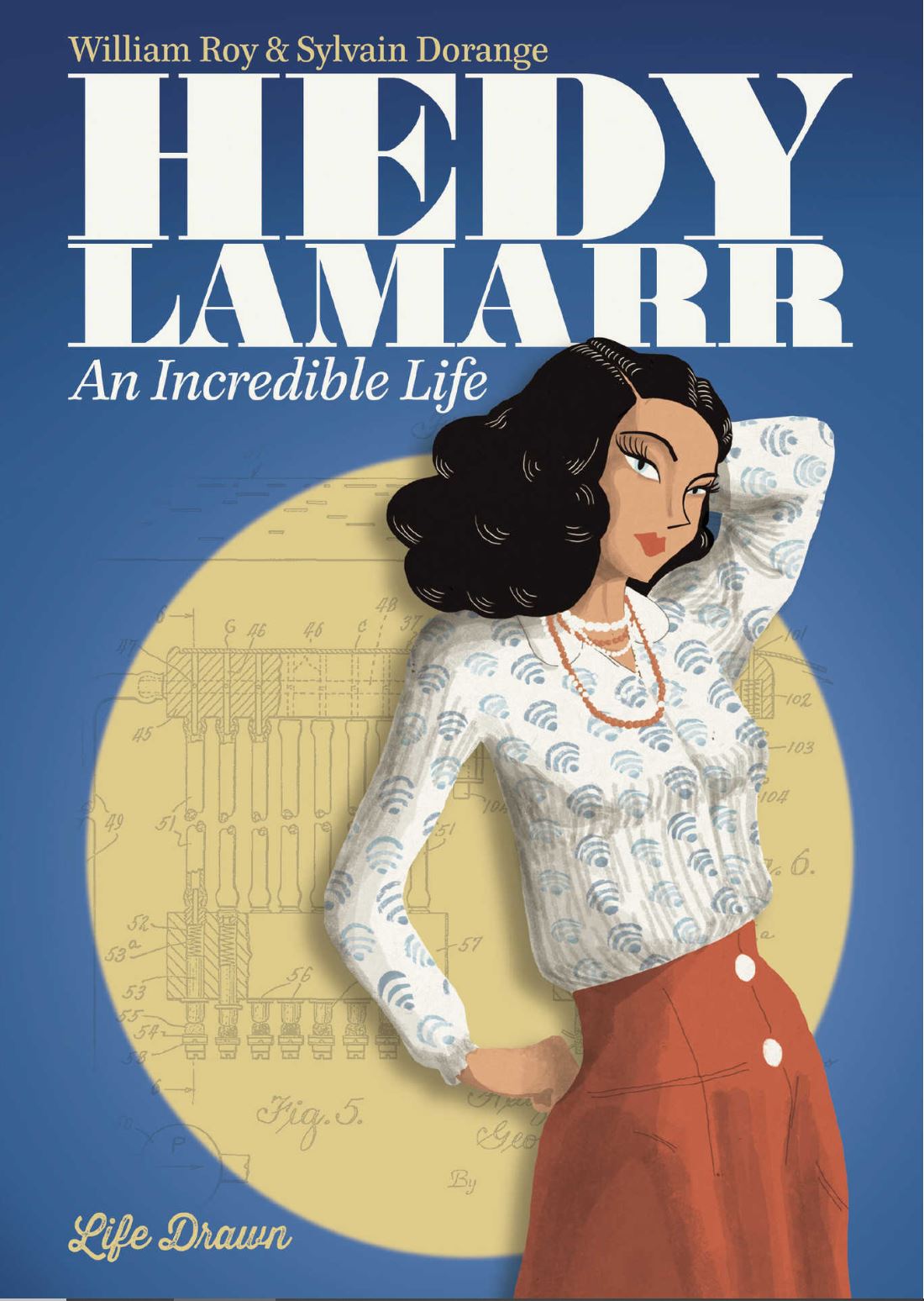
Let’s see an example of that as it happened to one of the most important human beings in modern history. Hedy Lamarr: La plus belle femme du monde was released in 2018: a superbly engaging, vividly realised passion project by writer, artist and documentarian William Roy (De Père en FIV, Freud, Le moment venu) and multi-disciplined illustrator Sylvain Dorange (For Justice: The Serge & Beate Klarsfeld Story, Gisèle Halimi – Une jeunesse tunisienne, Un conte de l’Estaque, Les Promeneurs du Temps, Psychotique). It quickly became one of the most important biographies of recent times. You can even read it in English or online…

Delivered in non-sequential snippets and clippings, it all slots together like a puzzle to show how, as a Viennese youngster, Hedwig Eva Maria Kiesler developed two life-long passions: acting and learning how things worked. The latter obsession came thanks to her beloved father Emil, a progressive, forward-looking banker who shared at every opportunity a profound love of knowledge and tinkering with his beautiful child …

Concerned by the uninvited attention their daughter’s looks were garnering, Hedwig’s parents decided to never comment on her appearance. However, as she grew from pretty child to ravishing young woman, those looks inevitably shaped her world.

As a teenager one passion dominated: so much so that the model student began taking unsanctioned truant days to pursue acting – especially in the burgeoning, high-tech film business. When her parents learned of the school absences, they granted her leeway to explore those options. Hedwig initially sought to become a script girl, but once again her beauty took her to a different destination and one moment as an “extra” opened up a whole new world…

Emil loved how she shared his fascination with how things worked, but primarily he just wanted her to be happy. Thus, Hedwig learned to roll with life’s punches – and in later life there were many – but was generally supported in her wild endeavours. She never realised how the acting lessons her father willingly paid for would lead to her becoming a notorious, global figure of infamy after a highly sexualised nude scene in 1933 drama Extase

Just as the film was being banned in Austria, neighbouring Germany welcomed a new Chancellor. Adolf Hitler would affect the girl’s life in unimaginable ways…

Retreating from celluloid to a life of stage acting, Hedwig was pursued by astoundingly rich manufacturer and businessman Friedrich “Fritz” Mantel. Dazzled by wealth, rapt attention, and honied words, she eventually married him.

Despite her Jewish ancestry, as the wife of Mussolini’s best friend and the Third Reich’s favourite arms dealer/munitions supplier, Hedwig spent the early years of Nazism cushioned from a growing horror. Hosting dinner parties for human monsters whilst incessantly, invisibly overhearing fascinating details about the new weapons hubby was pioneering quickly paled, and Mantel’s obsessive possessiveness and controlling behaviour soon made her realise the liaison was a huge mistake.

Whilst displaying his trophy wife like a prize, and bedecking her with jewels and gems, Mantel had spent a fortune buying up and destroying every print of Extase. No man would ever cast lascivious eyes on his property ever again…

Increasingly terrified, Hedwig crafted a plan and escaped her marriage, eventually landing in London in 1937. At that time American movie mogul Louis B. Mayer – supreme dictator of Metro-Goldwyn-Mayer Studios – was there to scout out sophisticated European film talent fleeing growing social unrest…

Like so many women and girls maturing in that era, Hedwig learned to be suspicious of authority and men in powerful positions: to keep her secrets to herself whenever possible. She probably always sought assured security and never believed she had it, even at the top of a wildly fluctuating showbiz career. At least inventing kept her grounded and allowed her to find an escape that was purely personal. Mayer was a lifeline, but he too came with conditions…

In 1938, Hedy Lamarr began her tenure as a Screen Goddess with the movie Algiers. Mayer had her billed as “the most beautiful woman in the world” and changed her name to evoke that of deceased silent movie star Barbara La Marr. According to this version of her story, he also never stopped urging her to enhance her bust…

A wash of films followed, of remarkably varying quality, but work, acclaim, marriage and the heady social whirl wasn’t a satisfying existence. When war came, Hedy was eager to help. It coincided with her first meeting engineering marvel/millionaire playboy Howard Hughes. He wasn’t as impressed as others by her looks, but wanted to hear all about her inventions…

Almost as notorious as any role she played, Hedy knew many men, but had few male friends. Foremost of those she did persist with was George Carl Antheil, a “piano prodigy” who had first outraged the musical establishment in 1924 with his Ballet Mechanique score.

The Dadaist work was delivered by player-pianos working in synch with airplane engines, and Antheil had meticulously cut out the player rolls of each instrument personally, in a monumental feat of pre-computer coding and programming…

Antheil was also an acclaimed and published endocrinologist who supported his family by composing Hollywood film music, and first met Hedy Lamarr during another of her fruitless, pointless searches for a safe way to embiggen her boobs…

In the course of their friendship they discussed German torpedoes and – recalling past dinner conversations amongst Nazi bigwigs – Hedy had an idea that would have shortened the war; and did change the way all humanity communicates…

Typically, Lamarr and Antheil’s un-jammable torpedo was poo-poohed and rejected by the US Navy and a congressional committee who were astonished to notice that the project had no actual Male Scientists attached to it. It’s a good thing the inventors had every bit of the work, concept and attendant programming patented…

One admiral did helpfully suggest that she could serve her country best by selling war bonds, so she did, in record-breaking amounts…

Years passed, husbands and families came and went, and Hedy’s career devolved from megastar to TV guest celebrity to self-imposed exile. In 1960 she got her star on the Hollywood Walk of Fame and six years later an autobiography she maintained she never wrote was released. It pretty much trashed what was left of her reputation.

It all turned around for her in 1996, when her son Anthony Loder was contacted by representatives of the burgeoning telecommunications industry. They really needed to speak to the inventors – and patent-holders – of a frequency-hopping system devised to protect torpedoes from being jammed. It was also the absolute best way to connect multiple electronic devices via radio waves”. We call it wi-fi these days…

This is an emphatic, empathetic dramatisation of a much-told tale and an inevitable, inescapable theme, but Hedy Lamarr: An Incredible Life shows not that resilience pays off, or that it all works out in the end, but that remarkable achievements cannot be buried or diminished…

After all, how many gullible kids tricked into getting their baps out change the entire world, all of human culture and get an asteroid and a quantum telescope named after them, let alone get awarded an anniversary goggle doodle and inducted into the National Inventor’s Hall of Fame, and are interred in a National Honorary grave?

Admit it, though, it was the bit about her baps that made you sit up and pay attention, right?

The struggle continues…
© 2018 La Boîte à Bulles. All Rights Reserved. This edition © 2018 Humanoids, Inc., Los Angeles (USA).

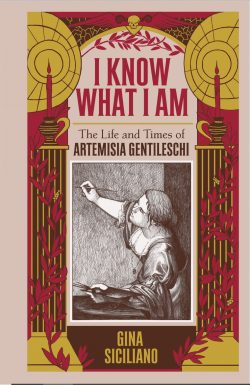
I Know What I Am: The Life and Times of Artemisia Gentileschi


By Gina Siciliano (Fantagraphics Books)
ISBN: ?978-1-68396-211-3 (HB/Digital edition)

A denizen of Seattle, Gina Siciliano studied at Pacific Northwest College of Art and has worked as a musician and bookseller whilst self-publishing highly personal comics such as Summertime. In 2019 she released her first graphic novel, a compelling and comprehensive pictorial biography and sociological reassessment of a figure who has become of late a hard-fought-over darling of art historians and feminists.

In recent years, Artemisia Gentileschi has become the desired property of many factions, all seeking to bend her life and mould her struggles and triumphs to fit their beliefs, opinions, and agendas, almost as much as kings, clerics and merchant princes sought to own her paintings whilst she was alive.

Monumental and scholarly, meticulously researched and refined from what is often too much conflicting information and assumptions, this utterly absorbing account successfully restores some humanity and a portion of muddled, day-by-day dancing to stay alive and ahead of the game desperation that must surely have preoccupied the gifted but generally powerless woman under all those layers of heaped-up symbolism…

I Know What I Am: The Life and Times of Artemisia Gentileschi is an earnest, incredibly engaging narrative built on (whenever possible) first hand quotes and primary sources, whilst also employing some reasonable speculation, extrapolation, and narrative dramatization, all delivered via ball-point pen illustration deriving from Artemisia’s own great works and other contemporary art sources.

Author’s Preface ‘Making New Worlds Out of Old Worlds’ shares Siciliano’s motivations which sparked the project whilst drawing appropriate parallels between creators as subjects of study and how renaissance Europe strangely resonates with modern #MeToo society. Think of it as “A girl artist in 21st century Seattle writes about a girl artist in 17th century Rome…”

The narrative tracks the life of professional artist Orazio Gentileschi and his extended family of jobbing artisans, paying particular – but not exclusive – attention to his daughter Artemisia. Here we see her immediate ancestors and influences: seeing her grow from anonymous assistant to celebrated painter in her own right in a society where women were property, sex objects, servants, bargaining chips or worthless.

As the 17th century opened, art – especially painting – had matchless force as currency and proof of power, with royalty and even Popes commissioning religious, classical and mythological works. There was an especial value to images incorporating beautiful – usually partially clothed – women. That Artemisia used herself as a model and sold many, many biblical scenes will provide a clue to the other recurring motif in her life; how so many men sought to possess her…

A story equal parts sordid, infuriating, shockingly unjust and ultimately just like so many others is shared in Parts I, II and III as the childhood, working life, constant betrayals and eventual passing of one of Europe’s greatest art makers is unpicked in forensic detail and with an empathy that is simply astounding. It’s not dry history here, it’s life in the raw…

Moreover, you’ll soon grasp how multifarious levels of politicking from family dynamics to the whims of kings shapes the lives of ordinary people, no matter how talented they are or of worth to the wealthy…

The compelling melodrama of Artemisia’s struggles are augmented by a ‘Reference section’ comprising a truly massive prose-&-picture section of ‘Notes’, offering context, commentary, specific factual detail plus clarification or speculation. It also expands on general points of detail brought up by the main illustrated narrative and provides candid guidance to Siciliano’s own interpretations of a life now fully co-opted by history-writers seeking to validate their own viewpoints.

Should you seek further fuel for discourse – and yes, I did deliberately avoid mentioning the infamous, attention-diverting rape (because everyone else hasn’t) – there’s a copious and colossal ‘Bibliography’ to work through on your own time.

Passionate, enlightening, emphatically empathetic and unforgettable, this is a book for all seasons and all humans wanting to learn from the past and form a fitter future.
All characters, stories, and artwork © 2019 Gina Siciliano. This edition of I Know What I Am © Fantagraphics Books, Inc. All rights reserved.

Dark Avenger: The Strange Saga of The Shadow (Will Murray Pulp History Series)


By Will Murray, illustrated by Frank Hamilton, Rick Roe, Colton Worley, Joe DeVito & various (Odyssey Publications)
ISBN: 979-8-36971-672-4 (PB/Digital edition)

In the early 1930s, just as the Great Depression hit hardest, The Shadow afforded thrill-starved Americans measured doses of extraordinary excitement via shoddily produced periodical novels and over eerily charged airwaves via an iconic radio show.

The “Pulps” were a blend of book and monthly magazine, made exceedingly cheaply and published by their hundreds in every style and genre. The results ranged from truly excellent to pitifully dire, but for exotic or esoteric adventure-lovers there were two stars who outshone all others in terms of quality and sheer imagination. The Superman of his day was Doc Savage, whilst the premier relentless creature of the night darkly dispensing grim justice was the enigmatic vigilante discussed here.

Detective Story Hour licensed and dramatised stand-alone crime yarns from Street & Smith publication Detective Story Magazine, deploying a spooky-toned narrator (variously Orson Welles, James LaCurto or Frank Readick Jr.) to introduce each tale and set the scene and mood. Think of it as just like our Jackanory, but for grown-ups and rather toned down….

The anonymous usher absolutely obsessed listeners and became known as “the Shadow”. From the very start on July 31st 1930, he was more popular than the stories he highlighted…

Dark Avenger: The Strange Saga of The Shadow is a beguiling and utterly compelling history of how the phenomenon occurred: revealing exactly how that voice evolved through sheer popular demand, smart business acumen and the writing find of a generation, to manifest as proactive character/brand The Shadow: solving instead of narrating mysteries, defending the innocent and punishing the guilty, and reshaping how the public viewed its leisure and entertainments.

Thanks to fervent and incessant demand, on April 1st 1931, the sepulchral stranger began mastering newsstands in his own adventures, mostly written by incredibly prolific and astounding gifted Walter Gibson. He was a journalist, author, historian and aficionado of stage magic and legerdemain who broke records and sired legends under the house pseudonym “Maxwell Grant”.

On September 26th 1937, the radio show was officially rebranded as The Shadow and the menacing call-&-response motto “Who knows what evil lurks in the hearts of Men? The Shadow knows!” resonated out unforgettably over the nation’s airwaves and into common cultural currency.

Over the next 18 years, 325 novels were published, usually at the rate of two a month. The uncanny crusader infested comic books, movies, newspaper strip and all the hoopla and merchandising paraphernalia you’d expect of an indisputable superstar.

The pulp series officially ended in 1949, although Gibson and others added to the canon during the 1960s when a pulp/fantasy revival gripped the world. This trend generated reprinted classic yarns and new contemporary stories in paperback novels from Belmont Books, catapulting the sinister sentinel back into print in both books and especially comics.

In graphic terms The Shadow had always been a major player. His national newspaper strip – by Gibson & Vernon Greene – launched on June 17th 1940 and, when comic books really took off, the Man of Mystery had his own four-colour title; running from March 1940 to September 1949. Stablemate Doc Savage was also present in his own solo strip…

Archie Comics published a controversial contemporary reworking in 1964-1965, crafted by Robert Bernstein, Jerry Siegel, John Rosenberger & Paul Reinman under their Radio/Mighty Comics imprint. In 1973, DC acquired the rights, producing a captivating, brief and definitive series of classic sagas unlike any other superhero comic on the stands. Thereafter, DC periodically revived the venerable vigilante and even made him an official influencer of Batman

After the triumph of Crisis on Infinite Earths, The Dark Knight Returns and Watchmen, Howard Chaykin was allowed to utterly overhaul the vintage vigilante for an audience at last acknowledged as mature enough to handle some sophisticated fare. This led to further, adult-oriented iterations and one cracking outing from Marvel, before Dark Horse assumed the license for the latter half of the 1990s and beyond.

There’s been another movie (1994) and the promise of still another, whilst Dynamite Entertainment secured the comic book option in 2011: reissuing much of those other publishers’ earlier efforts, and releasing fresh Shadow comics sagas closely adhering to the tone, timing and continuity of the pulp epoch.

In prose, new novels by the author of this mighty monograph have followed, including a fan’s dream teaming of the Man of Mystery and Man of Bronze…

Just as compelling as the stories themselves is how the Dark Avenger was born and precisely how he changed the world. This dossier details how it all came about in fascinating detail, beginning in a ‘Preface’ revealing how Will Murray’s 1970’s fanzine Duende has been retooled and remastered. Sharing the secrets and setting the scene, ‘The Men Who Cast The Shadow’ recounts precisely how The Shadow came to be: introducing the hidden men who made him and telling the tale of wonder scribe Walter Gibson.

What follows is a critical appreciation and outline of the publishing phenomenon, divided into discreet eras and tracked by cited individual issues. The formative cases are covered in ‘Phase One, 1931-1934: The Living Shadow to The Chinese Disks’, laying out how Gibson/Dent crafted fortnightly thrillers whilst building a supporting cast, core mythology, rogues gallery and new ways to enchant and confound readers.

The literary deconstruction continues with a period of confident experimentation in ‘Phase Two, 1934-1936: The Unseen Killer to Crime, Insured’, the pivotal payoffs of ‘Phase Three, 1933-1940: The Shadow Unmasks to Crime Undercover’ and confidant consolidation of ‘Phase Four, 1941-1943: The Thunder Kings to The Muggers’.

Firmly established and perhaps more risk-averse because of it, ‘Phase Five, 1943-1946: Murder By Moonlight to Malmordo’ deals with a managed decline. Wartime restrictions, substitute and auxiliary writers like Theodore Tinsley, as well as the series sheer age and ponderous back canon, augured a lack of assured spontaneity, even though the vigilante was now a cinema star too.

Another supplemental scripter signalled interim era ‘Phase Six, 1946-1948: The Blackest Mail to Reign of Terror’ as Noir-tinged, post-war attitudes and style infiltrated the established mystery detective oeuvre before the end came with a too-late return to first principles in ‘Phase Seven, 1948-1949: Jade Dragon to The Whispering Eyes’

Although the magazine was gone, certain shadows lingered in the place where he’d begun. The 325th and final issue of The Shadow was cover-dated Summer1949, but his radio crusades against crime continued until December 21st 1954. As the Sixties unfolded he was back on the airwaves again, in comics and in new tales, whilst outside America he never went away. The British Shadow magazine, for example, kept on going until 1957…

Wrapping up the investigations, ‘Epilogue’ explores those later years and discusses that Batman connection and influences, before we learn a bit more of the backroom boys. That includes illustrator Joe DeVito in ‘About the Artist’, “angel” Dave Smith in ‘About our Patron’ and Murray himself in ‘About the Author’.

If you’re addicted to classic pulp fiction but need more than just the stories, you really need to check out Will Murray. New prose stories continue the primal legends of Doc Savage – including sidebar novels starring his phenomenal kinswoman Pat Savage; The Spider; the C’thulu mythos; Sherlock Holmes; King Kong; The Green Lama; The Bat; The Avenger; The Shadow; The Destroyer (Remo Williams); and Tarzan even as his astoundingly accessible scholarly books about the characters, era and especially creators, published as the Will Murray Pulp History Series.

You’ll probably want to see – or may already enjoy – Murray’s comics too: gems like The Unbeatable Squirrel Girl (co-created with Steve Ditko), Spider-Man, Hulk, The Destroyer, Superman, Batman, Wonder Woman, Secret Six, The Spider, The Gray Seal, Ant-Man, Green Hornet, Zorro, The Phantom and many more…

When Sherlock Holmes wrote such informational tracts like this one, they were called monographs. These days we just call them unmissable.
© 2022 Will Murray. All rights reserved.

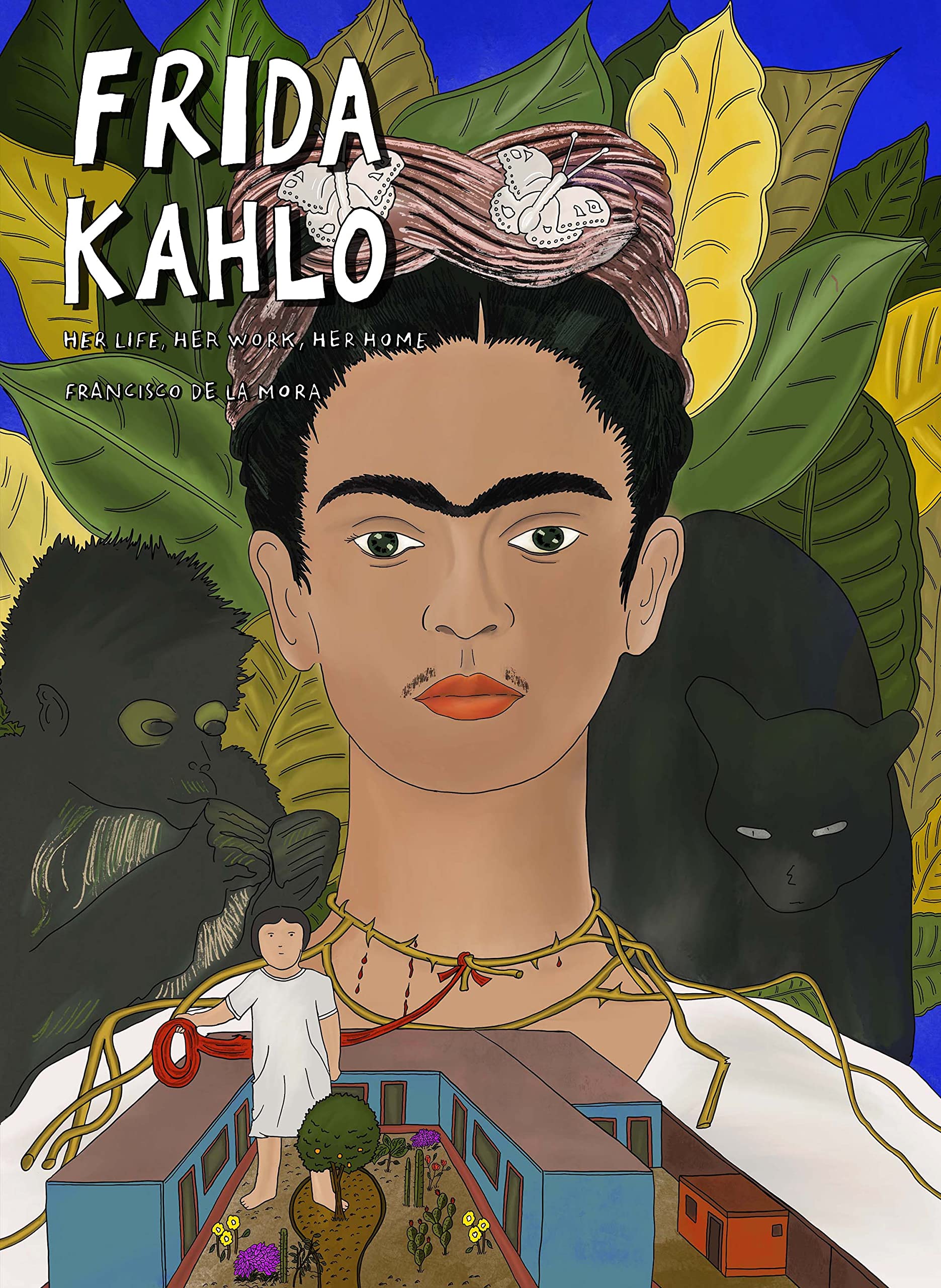
Frida Kahlo – Her Life, Her Work, Her Home


By Francisco de la Mora, translated by Lawrence Schimel (SelfMadeHero)
ISBN: 978-1-914224-10-2 (HB)

The creation and crafting of an image is infinitely variable and the response to it even more so: dependant entirely upon the mood, status, attitude and temperament of the viewer. Even that interaction is absolutely certain to shift and change from moment to moment.

The wedding of image to text is a venerable, potent and astoundingly evocative discipline that can simultaneously tickle like a feather, cut like a scalpel and hit like a steam-hammer. And again, repeated visits to a particular work will generate different reactions according to the recipient’s emotional and physical snapshot state.

The art of comics is a nigh-universal, overwhelmingly powerful medium lending itself to a host of topics and genres, but the area where it has always shone brightest is in its chimeric capacity for embracing incisive biography or autobiographical self-expression. Whether fictionalised narratives or scrupulously candid personal revelations, such forays inevitably forge the most impressive and moving connections between reader/viewer and author.

That alchemy is further enhanced when the subject under scrutiny is also fundamentally chimeric, fascinating, infinitely engaging and revelatory. Frida Kahlo was born in 1907 and died in 1954. In between those years, she lived an extraordinary life: one filled with pain, triumph, loss, silently-suffering endurance, astounding creativity and, always, passion.

She travelled the world many times over, yet barely escaped her bed for months at a time; joined with modern legends, and added immeasurably to the culture and beauty of existence. She is at once a modern deity and icon of her beloved Mexico and a universal example of the power and perseverance of female creativity and determination. Frida is an inspirational role model whose influence grows stronger every day…

Designated part of SelfMadeHero’s Art Masters imprint, Frida Kahlo – Her Life, Her Work, Her Home is a visually resplendent celebration of what made and shaped her, devised with great care by cartoonist Francisco de la Mora – who also gave the same treatment to her male counterpart and occasional husband in the award-winning companion volume Diego Rivera.

De la Mora’s other efforts include a regular monthly graphic residency in the Hackney Citizen, tales like El Infierno: Bienvenido Paisano and an 8-volume Brief History of Mexico

Here, the author uses Kahlo’s paintings as a springboard for leaping headlong into her momentous, contradictory life. Her images become a fulcrum balanced on her beloved family home Casa Azul (“the Blue House”) and her story is told in diary extracts and quotes from her biographers and the great and the good. Completed works and contemporary historical accounts reconstruct and demonstrate how a vivid and vivacious child at the centre of pivotal political events overcame a lifetime of hard knocks. Kahlo faced polio, life-altering crash injuries, untrustworthy, unfaithful men, miscarriage, constant gender iniquity and inequality, isolation and a life of constant unrelenting pain, reshaping the world of painting and restoring pride to and in her country…

Augmenting the visual odyssey is a forthright and effusive Foreword by Circe Henestrosa (Head of the School of Fashion, LaSalle College of the Arts, Singapore) preceding a range of added extras at the rear: a highly detailed and informative illustrated chronology of ‘Frida Kahlo (1907-1954)’, a full ‘Bibliography’, commentary ‘Notes’ on specifics images used in the text and a fulsome ‘Acknowledgements’ section.

Kahlo has become a household name since her death and her images and life have become common cultural currency and a symbolic especially amongst women, the socially disenfranchised, fringe dwellers, outsiders fighting against ingrained toxic masculinity and in fact anyone attuned to narratives of endurance, resistance, suffering, othering and simple common cruelty. Her life of pain has blossomed into a stunning lexicon of beauty that for many will begin by picking up this colourful but challenging chronicle of coping and comfort.
© 2023 Francisco de la Mora/Sara Afonso. Foreword © Circe Henestrosa. All rights reserved.

Frida Kahlo – Her Life, Her Work, Her Home is published on 16th March 2023 and available for pre-order now.

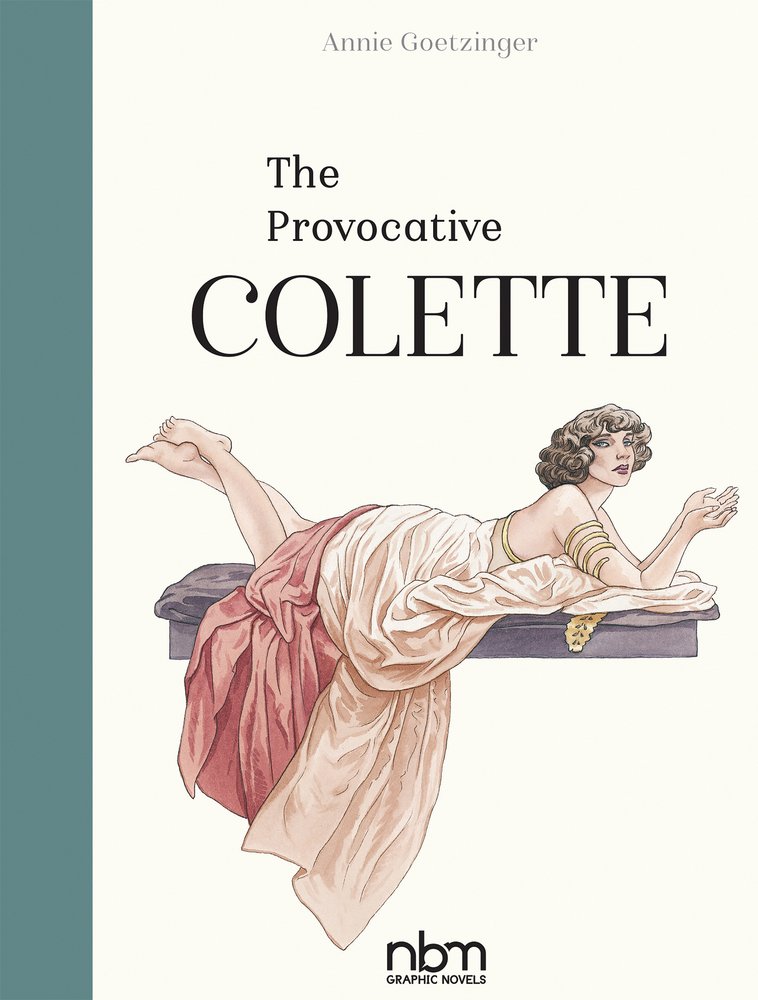
The Provocative Collette


By Annie Goetzinger, translated by Montana Kane (NBM)
ISBN: 978-1-68112-170-3 (HB)

Publisher NBM struck pure gold with their line of European-created contemporary arts histories and dramatized graphic biographies. This one is one of the very best but is tragically still only available in physical form. Hopefully that oversight will be addressed soon as it is a most enticing treat: diligently tracing the astoundingly unconventional early life of one of the most remarkable women of modern times.

Sidonie-Gabrielle Colette (January 28th 1873 – August 3rd 1954) escaped rural isolation and stagnation via an ill-considered marriage but, by sheer force of will and an astonishing gift for self-expression, rose to the first rank of French-language (and global) literature through her many novels and stories. The one you probably know best is Gigi, but you should really read a few more such as La Vagabonde or perhaps The Ripening Seed

For her efforts she was elected to the Belgian Royal Academy in 1935 and France’s Académie Goncourt a decade later. She became its President in 1949, the year after she was nominated for a Nobel Prize. Her grateful country also celebrated her as Chevalier (1920) and Grand Officer (1953) of the Légion d’honneur.

Colette’s relentless search for truths in the arena of human relationships – particularly in regard to women’s independence in a hostile and patronising patriarchal society – also led her to pursue freedom of expression through dance, drama, acting & mime, in film and as a journalist.

The fact that – for most of her early life – men controlled her money also prompted her far-reaching career path until she finally managed to win control of her own destiny and coffers…

Our drama unfolds in 1893 as 20-year-old Sidonie-Gabrielle readies herself for her wedding to prestigious and much older music journalist Henry Gauthier-Villars. The great man is celebrated nationally under his nom de plume “Willy”.

That’s also the name under which he will publish his wife’s first four, hugely successful Claudine novels whilst pocketing all the profits and attendant copyrights…

Eventually breaking free to live a life both sexually adventurous and utterly on her own terms, Colette never abandoned her trust in love or reliance on a fiercely independent spirit. And she shared what she believed about the cause of female liberty with the world through her books and her actions…

This bold, life-affirming chronicle was meticulously crafted by the superb and much-missed Annie Goetzinger (18th August1951 – 20th December 2017). Tragically it was her last in a truly stellar career. The award-winning cartoonist, designer and graphic novelist (The Girl in Dior, The Hardy Agency, Félina, Aurore, Marie Antoinette: Phantom Queen, Portraits souvenirs series) supplied here sumptuous illustration perfectly capturing the complexities and paradoxes of the Belle Epoque and the wars and social turmoil that followed. Her breezy, seductively alluring script brings to vivid life a wide variety of characters who could so easily be reduced to mere villains and martinets, but instead resonate as simply people with their own lives, desires and agendas…

The scandalous escapades are preceded by an adroit and incisive Preface from journalist and author Nathalie Crom: and bookended with informative extras such as ‘Literary References’, and full ‘Chronology’ of the author’s life, plus potted biographies of ‘Colette’s Entourage’: offering context and background on friends, family and the many notables inevitably gathered around her.

Additional material includes a suggested Further Reading and a Select Bibliography.

A minor masterpiece honouring a major force in the history and culture of our complex world, this book should be at the top of the reading list for anyone who’s thought “that’s not fair” and “why do I have to?”

The Provocative Colette is a forthright and beguiling exploration of humanity and one you should secure by any means necessary.
© DARGAUD 2017 by Goetzinger. All rights reserved. © 2018 NBM for the English translation.

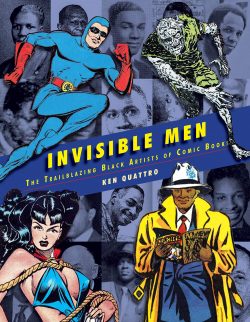
Invisible Men – The Trailblazing Black Artists of Comic Books


By Ken Quattro, and featuring material by Adolphus Barreaux Gripon, Elmer Cecil Stoner, Robert Savon Pious, Jay Paul Jackson, Owen Charles Middleton, Elton Clay Fox & George Dewey Lipscomb, Clarence Matthew Baker, Alvin Carl Hollingsworth, Ezra Clyde Jackson Alfonso Greene. Eugene Bilbrew, Orrin C. Evans, George J. Evans Jr., John H. Terrell, William H. Smith, Leonard Cooper, Calvin Levi Massey & various (IDW/Craig Yoe Books)
ISBN: 978-1-68405-586-9 (HB) eISBN: 978-1-68406-912-5

I’ve spent a lot of time here talking about “firsts” and “breakthroughs”, “role models” and changes in culture, and frankly, I’m not apologizing for any of it. We are not just the Naming ape and the Making ape, we’re also the Worshipping ape: contriving a never-ending blend of guesses, fiction and unexplained phenomena to bolster our courage, feed our hopes and explain away bewildering mysteries.

No other animal worships anything or uses supposition to build a model of the universe. Well, maybe cats do, but only in front of refrigerators. I’m still pondering that one and I’ll get back to you…

In comics we have always noted what hero and villain does what, mused on how that affects the reader and generally congratulated ourselves on how far we’ve come. What we don’t do so often is focus on how those comics are made, who did the work and how their lives were and are shaped by and impacted upon in what has always been a very hard-hearted if not actually cutthroat commercial industry.

For decades, a notion persisted that American comic books and the newspaper and magazine strips they grew out of were the sole preserve and creation of white men. It’s a blatant lie of omission fuelled by ignorance and apparent lack of interest. In recent years, as the world of word/picture stories became both an acceptable art form and cultural wellspring as valid and profitable – and high-fallutingly pompous – as movies, ballet or even jazz, it’s a belief that has been thoroughly challenged and utterly rubbished.

This superb, Award-winning collection drives a final great big stake through the notion by detailing the lives of black contributors to and workers in comics who were unnecessarily neglected and sidelined from the start. Here is a catalogue of almost universally unsung stars whitewashed out of comics history – just like in so many other areas of human endeavour over the last three centuries…

This scholarly examination details and commemorates the artists (some of whom you may have even heard of), threading and weaving them back into the full tapestry through a concise history of America’s negro culture spanning the end of slavery to the latter quarter of the last century. when the Civil Rights movement reminded white America and the wider western world that black people still dwelt amongst them and would no longer tolerate being Separate and (un)Equal…

Published under the aegis of Craig Yoe’s pioneering, tireless efforts to legitimise the world of funnybooks, Invisible Men is Compiled and written by author, essayist and historian Ken Quattro (Hoo-Hah!, The Al Williamson Reader). It shines a light on dozens of African Americans who contributed to the burgeoning comic book field. Many also had lengthy careers in a parallel but unspoken, black-only publishing industry (to which, just like the movies, made books, comics and magazines white audiences were utterly oblivious). Others were not so fortunate…

These personal histories are supported by copious examples of their work and even the other sort of stories: complete strips to read and enjoy, elevating this collection beyond mere historical tract and cultural correction whilst conveying and sharing the joyous exuberance and “anything goes mentality of Golden Age” comics entertainments…

Setting the scene is an Introduction from archaeologist, cultural anthropologist and comics fan Stanford W. Carpenter, PhD, addressing the vast, varied and deliberately buried social and racial mix that was almost uniformly subverted to a male, white, Anglo-Saxon sensibility and agenda in the natal moments of the comics industry…

Then Quattro’s essay ‘Seeing the Unseen’ scrupulously details the lousy, dangerous working world for non-white mass media artists and how the situation so-slowly altered over decades. He also bravely takes the bull by the horns in addressing the ever-shifting terminologies used to define racial (and religious) differences over decades. If even reading certain words or mercifully archaic and obsolete phrases might cause you difficulties, you’re better off stopping here and staying unenlightened. We’ll just go on without you…

The first candidate for your attention is ‘Adolphus Barreaux Gripon – Visible Man, Invisible Pioneer’ and he is the perfect example to discuss the far from clear-cut social scene of this era. Well-educated and relatively well-off, he was also called Adolphe Leslie Barreaux and was officially classified by the US Census Bureau as “mulatto”. For many that meant he was just white enough to acceptable…

He worked as a magazine illustrator, newspaper strip artist and – when comic books were born – drew those too. Here, that translates to beautiful examples of The Enchanted Stone of Time (Dell’s The Comics), Flossie Flip (a regular of the Police Gazette), Dragon’s Teeth from Champion Comics, and the legendarily salacious Sally the Sleuth (Private Detective Stories, Crime Smashers). His entry concludes with Sally saga ‘Death Bait’, as seen in Private Detective Stories volume 21, #3 from June 1949.

‘Elmer Cecil Stoner – Harlem Renaissance Man’ traced his lineage back to George and Martha Washington (before the first First Lady freed his ancestors), and became a prominent artist in Pennsylvania. His comics efforts included The Golden Age Blue Beetle, The Challenger and Phantasmo whom he created for Dell’s The Funnies. After WWII he moved into producing commercial and promotional comics as well as high profile advertising work. His major contribution here is ‘The Threat from Saturn’ as originally seen in The Blue Beetle #34, September 1944 and biographic strip ‘Rev. Ben, Fighter of Fascism’ (detailing the life of black anti-fascist preacher Ben Richardson from 1945’s The Challenger #1).

Money talks and at this juncture enforced egalitarianism. The new big thing in entertainment was exploding and publishers needed pages filled as cheaply as possible, even if they had to be written, drawn and lettered by black people or even women…

Legendary designer and Civil Rights activist ‘Robert Savon Pious – The Afrocentric Historian’ is represented by many of his most important works. However we’re focussing on his early strips The Dopes, Blue Bolt covers and Kalthar the Giant Man (Zip Comics). Also on show is informational feature ‘Facts on the Negro in World War Two’ with horror classic ‘The Ghost from Algol’ (Adventures into the Unknown #8: December 1949/January 1950). Tragically short-lived ‘Jay Paul Jackson – an Artist Apart’ is celebrated in many racy works (such as Tisha Mingo, Speed Jaxon and Home Folks) from black newspapers; patriotic cartoons and paintings and his only known comic book strip ‘Blond Garth’ (from Colossus Comics #1, March 1940).

Troubled ‘Owen Charles Middleton – Resilient Idealist’ reveals a talented creator who spent much of his as an incarcerated black man, union worker, and American political campaigner. His art entries include paintings, political advertising imagery, newspaper cartoons and comics such as Fawcett’s Spy Smasher. His complete tale is ‘Two Months in the Bush’ from Dell’s War Heroes #5 (July-September 1943).

The contrasting lives of ‘Elton Clay Fox & George Dewey Lipscomb – The Progressive and the Professor’ displays Fax’s landmark posters for the NAACP and his rousing anti-“Jim Crow” newspaper cartoons. Less well known are pioneering teen magazine Young Life, syndicated biographical panel cartoon ‘They’ll Never Die’, cover/interior illustrations from Dr. George Washington Carver, Scientist and extracts from the Classics Illustrated newspaper serial. Also on view are Susabelle and Afro Comics strips, as well as a complete Bull’s-Eye Bill episode from Target Comics (vol. 6, #3 May 1945). Lipscombe’s contribution is the script for African adventure strip ‘Simba Bwana – Lion Master!’, limned by Fax for Jack Armstrong #1 (November 1947).

If the nebulous cohort of black comics artists had a super star, it was absolutely ‘Clarence Matthew Baker – The Natural’ who lived fast, drew lots and died notoriously young. Matt Baker is famed for racy sexy adventure, but he evolved into a sublimely gifted master illustrator of subtle drama and romance. Unlike most of his contemporaries, Baker did most of his work in comic books, as seen here in covers for Phantom Lady, Seven Seas Comics, Cinderella Love and Teen-Age Temptations. Interior Tiger Girl pages complement extracts from Canteen Kate – an early, outrageous “crossdresser” challenging those hidebound male role models…

Examples of his magazine illustration work comes from Pulp Mystery Tales #6 and the Flamingo newspaper strip, but the true gold here is the complete Voodah adventure from Crown Comics #3. Cover-dated Fall 1945, it featured the first clearly, indisputably black hero in American comics: an otherwise standard jungle god type character battling white hunters and marauding natives. By issue #6, the editors had noticed what was happening and Voodah magically and without fuss turned into a far more believable white guy king of the jungle…

Baker is so darned wonderful that his chapter includes a second complete strip with the improbably pneumatic Phantom Lady polishing off ‘The Subway Slayer!’ in a wild romp from the appropriately dubbed All Top Comics #12 (July 1948)…

A pre-eminent illustrator of a later era, ‘Alvin Carl Hollingsworth – The Young Professional’ blends fascinating tales of the educational opportunities enjoyed by young black and ethnic artists (like Joe Kubert or Alex Toth) with later adult success. Many comic books ultimately benefited from New York’s forward-looking scholastic integration policies as seen in images re-presented here.

These include Hollingworth excerpts from Diary of Horror #1, Inspector Roc’s Felony Files (inked by Kubert), ‘Farewell to Love’ (True-To-Life Romances #9, 1949), and even superhero Bronze Man. Horror snippet ‘The Ripper’s Return’ precedes a selection of prospective newspaper features about black schoolteachers. Somehow, neither Dorothy Tutor or Bob Mentor caught on in the 1950s…

Hollingsworth was of Afro-Caribbean rather than African American origins and the dichotomy and tensions between the distinctly different communities makes for fascinating reading here, supplemented by later fine art, design, political, editorial and journalistic paintings and prints.

His comic book section delivers biographical tale ‘Lena Horne’ (Juke Box Comics #2, May 1948) and ‘Where Zombies Walk!’ (Witchcraft #5, December 1952/January 1953)…

Triumph and tragedy tinge the stories of ‘Ezra Clyde Jackson & Alfonso Greene – A Tale of Two Students’ who attended Manhattan’s High School of Industrial Art.

Originally Jackson paired with white veteran Maurice Whitman before going solo, in features such as The Iron Ace (Airboy Comics), ‘The Secret Seven’ (Patches Comics #1, 1945) and Classics Illustrated: Typee. His complete solo outing here is eerie chiller ‘Sentence of Death’ (Suspense Comics #9, August 1945).

As described in a heartbreaking testimony from Alex Toth, Alfonso Greene had a far harder ride and died the way so many black men still do today, but his work at least survives in strips like ‘Swimming Lessons Save a Life’ and true crime yarn ‘Bandit Patrol’ (both from New Heroic Comics #64, January 1951), ‘Boy Hero’ (life-saving black youngster Roy Marshall Jr.in New Heroic Comics #53, March 1949), and ‘Wonder Women of History: Sojourner Truth’ (Wonder Woman #13, Summer 1945).

‘Eugene Bilbrew – A Different Talent’ found his place in comics via popular music and record design, via strips like Astro Girl, The Charlie Mingus Record Club, fetish magazines and the comedic Clifford back-up strip in Will Eisner’s syndicated Spirit Section.

As previously stated, America at this time supported two separate worlds, one black and the other acceptable. Even in liberal states that championed full equality, most black folk kept to their own neighbourhoods, ran their own businesses and ran their own churches and entertainments. Inevitably, that led to comics for coloured folks thanks to ‘Orrin C. Evans, George J. Evans, Jr., John H. Terrell, William H. Smith, Leonard Cooper – At Last, The First’ who acted in concert and launched All-Negro Comics in June 1947. Closely allied to left wing political movements the output was target-specific, limited in distribution and short lived, but it proved there was room for many kinds of readership. This chapter includes formative strips from black papers – such as Adventures of Tiger Ragg by John Terrell – and describes how All-Negro Comics was born and died. On show are house ad, covers, excerpts from assorted series ‘Sugarfoot’, ‘Lion Man’ various gags and cartoons and the complete first exploit of two-fisted street tough private eye ‘Ace Harlem’

This astounding chronicle concludes with the life of breakthrough artist ‘Calvin Levi Massey – Vanguard of the Next Generation’. His later artistic endeavours advanced black culture on a rapidly-shifting world stage, but only after a relatively stellar comics career as a cartoonist. Employers included James Warren, and he was a mainstay of Atlas/Timely and a jobbing illustrator; as seen here in moments from ‘The Milton Berle Story’ (Uncle Milty #2, February 1952), and all of ‘Absent-Minded Professor’ (Horror from the Tomb #1, September 1954)…

Augmented by an affirming ‘Afterword by Ken Quattro’ and a prodigious ‘Index’, this powerful tract balances some historical scales and bestows acclaim on those unjustly excluded, by offering a sublime selection of strips and stories crafted by Invisible Men who – like women – were always there, if we’d only bothered to look…
™ & © 2020 Gussoni-Yoe Studio, Inc. All Rights Reserved.

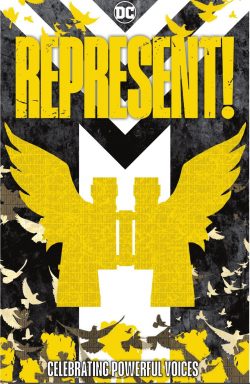
Represent!


By Christian Cooper, Jesse J. Holland, Regine Sawyer, Nadira Jamerson, Tara Roberts, Dominike “Domo” Stanton, Onyekachi Akalonu, N. Steven Harris, Justin Ellis, Frederick Joseph, Gabe Eltaeb, Dan Liburd, Keah Brown, Camrus Johnson, Alitha E. Martinez, Mark Morales, Doug Braithwaite, Eric Battle, Brittney Williams, Yancey Labat, Valentine De Landro, Travel Foreman, Keron Grant, Koi Turnbull, Don Hudson, Tony Akins, Moritat & various (DC Comics)
ISBN: 978-1-77951-419-6 (HB/Digital)

Originally published digitally in 14 chapters from September 2020 to June 2021, Represent! was – in the words of Executive Editor Marie Javins – “designed to showcase and introduce creators traditionally underrepresented in the mainstream comics book medium.” As such it was part of a greater effort by that mainstream – which contemporaneously sparked a similar project from the House of Ideas that became a string of one-shot anthologies known as Marvel Voices

Operating in conjunction with writers, artists and other creatives of colour (both In- and especially Out-Industry) allowed greater leeway and by displaying editorial willingness to address issues, themes and opinions – and even formerly entirely-ignored and marginalised sectors of society – the series was not dictated to by commercial economics and a militant fanbase addicted to continuity.

The results were admittedly mixed, but generally the freedom elevated the material to the levels of the best of adult European comics…

Here, the result is an engaging trek through history, studied observation, personal anecdote and even fantasy, with perspectives seldom – if ever – seen in your everyday funnybook. It could not possibly all be to everyone’s taste, but this weary, aged, comfortably privileged-yet broken English white boy found plenty to enjoy and much to ponder…

Exploring all aspects of the non-white American experience, from inner-imaginative landscapes and escapes to personal ideologies, each literary-leaning comics tales comes with a brief bio of the writer (sometimes that’s also the illustrator) and unless stated otherwise is lettered by the tireless Deron Bennett.

Not so Chapter 1:‘It’s a Bird’, which sees Robert Clark put words to a heartwarming tale of family and generational birdwatching written by 1990s comics creator Christian Cooper (Star Trek, The Darkhold, Excalibur and Marvel’s first openly gay writer/editor). The modern day rights activist is here supported by illustrated by Alitha E. Martinez (Heroes, World of Wakanda, Iron Man, Mighty Crusaders, Batgirl) & Emilo Lopez.

Editor, Educator, broadcaster, historian and author Jesse J. Holland (Black Panther: Who is the Black Panther?, Star Wars: The Force Awakens – Finn’s Story, The Invisibles: The Untold Story of African American Slaves in the White House) unites with British born Doug Braithwaite (Hulk, Captain America, Justice, Judge Dredd, The Punisher) & colourist Trish Mulvihill to relate a true tale. In disjointed yet carefully tailored flashbacks, a saga of endurance on a farm in rural Mississippi from 1980 to now unfolds: tracing the lives of the Hollands – a family still working land secured by ancestor and freed slave Conklin Holland in 1899…

‘Food for Thought’ comes courtesy of award-winning writer, small press publisher, essayist and journalist Regine Sawyer, with Eric Battle (Kobalt, Hardware, Batman, Wonder Woman, Spider-Man, Green Arrow, Green Lantern, Flash, Walking Dead) & Bryan Valenza rendering joyous reminiscences of a daughter shopping, cooking, talking and learning with her father in Queens, NYC, after which journalist Nadira Jamerson joins Brittney Williams (Goldie Vance, Betty & Veronica, Rugrats, Shade the Changing Girl, Lois Lane and the Friendship Challenge, Patsy Walker, A.K.A. Hellcat) & Andrew Dalhouse on the harrowing, but ultimately triumphant, journey of a black mother fighting a hostile medical system to secure an accurate diagnosis of a mystery ailment. Sometimes, all that’s necessary is to find someone to ‘Believe You’

Chapter 5 declares ‘My Granny Was a Hero’ as Tara Roberts – educator, writer, editor and fellow of both MIT’s Open Documentary Lab and the National Geographic Storytelling project – unites with Yancey Labat (DC Superhero Girls, Legion of Super-Heroes) & colourist Monica Kubina as a little girl in 1983 changes her idol from Wonder Woman to someone far closer to home after learning how her own family unwillingly “came to America” from Cameroon in 1860…

Coloured by Emilio Lopez, ‘The Lesson’ is otherwise an all-Dominike “Domo” Stanton (Moon Girl & Devil Dinosaur, Starbrand & Nightmask, Nubia & the Amazons) affair about violent high school days and one crucial path to escape, before writer/journalist Onyekachi Akalonu connects with Valentine De Landro (Bitch Planet, Marvel Knights: 4, X-Factor, Silver Surfer: Ghost Light, Black Manta) & Marissa Louise to offer social context on repressed young black lives by advocating ‘Fight Fires with Spray Cans’

Coloured by Walt Barna, Chapter 8 stands ‘In Defense of Free Speech’ as 20-year comics veteran N. Steven Harris (Aztek: The Ultimate Man, Batman: Officer Down, Deadpool, X-Force, Generation X, The Wild storm: Michael Cray, Indigo Clan) recalls a time when college lectures on black culture and experience required volunteer security teams to be heard at all…

‘Weight of the World’ – by writer/editor/media producer Justin Ellis (Problem Areas, How to Fix a Drug Scandal, The Cruelty of Nice Folks), Travel Foreman (Cla$$war, Doctor Spectrum, Immortal Iron Fist, Star Wars, Black Cat) & Rex Lokus – explores the pressures family can innocently inflict on a black kid graduating high school… and how the right librarian at the right moment can turn the page on the future…

For ‘The Flightless Bird’, prominent activist, philanthropist and bestselling author Frederick Joseph collaborates with Keron Grant (Fantastic Four, Kaboom, Son of Vulcan, Spider-Man/Doctor Octopus, New Mutants) on a tale of introspection and hope when a young man is diagnosed with a killer disease.

Gabe Eltaeb (Aquaman, Batman, Star Wars) then exposes an ‘American Mongrel’ with middle school kid Abdul learning some painful truths in 1991 as his mixed Hispanic/Iraqi heritage make him an instant and easy target during the first Iraq war. Thankfully, his grampa has seen all this before…

Celebrated sports science specialist Dan Liburd asks Koi Turnbull (Fathom, Wolverine: Dangerous Games, Superman Confidential) & Tony A?ina to join him at ‘The Water’s Edge Within Reach’; exploring the assumed limits of human aspiration and physical achievement via a career in “ironman” eventing, before journalist, actor, screenwriter and author Keah Brown (The Pretty One, Sam’s Super Seats) luxuriates in superhero excess with Don Hudson (Nick Fury/SHIELD, Forever Amber, Scalped, Curse of Brimstone) & Nick Filardi. They enquire ‘Who Hired the Kid?’: debuting a sheer escapist delight in time-travelling, monster-fighting schoolgirl adventurer “The Vet”…

The wonderment concludes by going out big with actor, director, animator and comics writer Camrus Johnson joining Tony Akins (Terminator, Star Wars, Hellblazer: Papa Midnight, Fables, Jack of Fables, House of Mystery, Wonder Woman), Moritat (Harley Quinn, The Spirit, Elephantmen, All Star Western, Hellblazer, Batman, Sheena: Queen of the Jungle, Transmetropolitan) & colourist Dee Cunniffe for ‘I’ll Catch up’. It finds the author in painful nostalgia mode, recalling how his big brother Mo used to visit in New York every summer, teaching the kid all the tricks of staying alive and protesting in a white world whilst still making his voice heard and his opinions count…

The stories are augmented by Darran Robinson’s iconic ‘Cover Gallery’ and supplemented by fascinating ‘layouts’ of various stories as crafted by Braithwaite, Harris & Akins…

Visually compelling, extremely well-executed, imaginative, purely poetic and operating with a degree of allegory seldom seen in regular comics whilst offering a wide and disparate use of the medium, Represent! is stunning, intriguing and entertaining but still feels something of a mixed bag… but then, it’s not really meant for me, is it?

If you’re like me, get it read and learn something…
© 2021 DC Comics, All Rights Reserved.

Irmina


By Barbara Yelin; translated by Michael Waaler (SelfMadeHero)
ISBN: 978-1-914224-13-3 (TPB/Digital edition)

Award-winning German illustrator, cartoonist and comics maker Barbara Yelin (Le Visiteur, Le Retard, Gift, Riekes Notizen, Spring, Gigaguhl und das Riesen-Glück, Tagebuch eines Zwangsarbeiters, But I Live: Three Stories of Child Survivors of the Holocaust) was born in 1977 and studied illustration in Hamburg before scoring her earliest successes in the French Bande Dessinées market.

She favours fact-based human interest stories and biographical tales. When Yelin found letters and diaries revealed unknown aspects of her own grandmother’s closeted past, she was inspired to dramatize the history: crafting an exploration of race and identity; forensically dissecting the notion of compromise, allure of self-deception, force of social pressure and weight of personal responsibility. The graphic novel won great acclaim and led to her being celebrated as Best German Graphic Novelist 2016 at the Erlangen comics festival.

First released in English that year, the tale of Irmina is now available in a paperback edition and offers timely and still uncomfortable insights into a problem that has never really gone away…

It begins in ‘Part One: London’ as in 1934, Irmina von Behdinger skirts the fringes of English society. Dour and a bit dowdy, she is extremely forthright and outspoken as she pursues a dream. Seeking education and a profession, she studies at a commercial school for young women: learning to be a typist. Dragged to a party for useless snobs and swells, she again feels a like a target and communal object of amusement for the so-cavalier In-Crowd until she meets Barbadian law student Howard Green.

Mistaking him for a waiter when he’s actually one of the first black students at Oxford, she finds they have lots in common…

A close, covert and frequently strained relationship develops as they trade life stories that are far from commonplace and compare experiences of being outsiders in a hidebound culture constrained by class, race and constant disdainful judgement by distant, graciously hostile and forever exclusive British society. As the odd couple get to know each other better, it transpires that neither was particularly well-suited to life in their own homelands either…

For instance, the new rulers of a resurgent Germany encourage women to eschew learning and self-reliance in favour of motherhood and the building of a stronger Fatherland through service to their men and the state. All she wants is to be her own woman and see faraway places like the sunny West Indies that spawned such a complex paradox as Howard…

Further complicating her life – which she sees as separate from the greater world – are newspaper reports from Germany which her “host parents” and everyone else around her somehow feel are connected to her. It’s as if they hold the exchange student responsible for the acts of all her countrymen. The defence that these are not “her Germans” means nothing…

Of course, it’s not much better in England, as Howard learns when he and Irmina stumble into a “Blackshirt” rally in Hyde Park. The encounter with the British fascist movement prompts a move and Irmina becomes the companion of an émigré countess from Germany: an old suffragette who has made the Empire her homeland and now works with the Labour Party to improve the lives of the poor, disenfranchised and female…

Despite being ferociously gripped by her ideal of an independent, autonomous existence, Irmina cannot escape the labels and assumptions piled upon her. Howard too is feeling the pressure as his exams loom. Both are caught up in the chaotic tides of the times and as the global political situation calcifies and crystalises, they part and she is compelled to return home and adapt to a new Normal in ‘Part Two: Berlin’

Having finally achieved her long-desired independence, Irmina in 1935 is far from secure or happy. Behind on rent, underpaid in her government secretarial/translator’s position at the Ministry of War and a constant target for lecherous men in uniform or administrators taking the credit for her work, she persists because of a promise of an official transfer to London. The promise is never fulfilled and the pedestrian chore of staying ahead, making no waves and endless stream of bureaucratic form-filling that comprises her life gradually wears the ambitious isolationist dreamer down.

Even the occasional social flurry – like a party held by her cousin – only serves to highlight that she is not a proper German anymore, tainted as she is by her time amongst the decadent British…

Moreover, her sense of being “othered” kicks into overdrive after meeting up-and-coming architect Gregor Meinrich, who has embraced the new national philosophy with the frenzy of a zealot. As promises fail to be met and national pride swells, Irmina endures perpetual disappointment and, as her chances to leave Germany dwindle, she withdraws from life, slavishly passing each successive day. The drear existence culminates in marriage to SS officer Gregor and the shattering boredom of a dutiful hausfrau…

Sidelining and abandoning her few friends, Irmina becomes a ghost of her former self as all around her ordinary people are caught up in a new zeitgeist: embracing pride and a toxic ideology. By the time her son is born, Germany is officially at war and Gregor is gone all the time. Now she doesn’t even have his borrowed dreams and ambitions to sustain her and as the war proceeds her beliefs and hopes and all human decency are similarly whittled away…

The story climaxes in ‘Part Three: Barbados’ as in 1983, stand-offish school secretary Irmina Meinrich contemplates her imminent retirement. Her life is carefully and scrupulously devoid of all emotional extravagance and foolish, pointless joy or hope: everything is simply making time with the least effort until death claims her. Then one night she receives a letter from Barbados. His Excellency Governor General Sir Howard Green is hoping to carry out a promise he had made to a young exchange student in 1934…

Delivered in moody muted colours and rendered in expressionistic soft tones and childlike simplified lines, Yelin’s exploration of extraordinary people in catastrophic times is uncomfortable, distressing and challenging, but is all the more powerful and topical for that.

Counterpointed by Dr. Kolb’s stringent exploration of everyday life in Nazi Germany and enquiring just how an entire nation seemingly surrendered to its collective dark side, this is a timeless and compelling treatise on aspiration and personal integrity as affected by extreme circumstance and unrelenting peer pressure.
Potent, powerful, moving and memorable, this is a true romance tale well told and impossible to forget. © 2014 Barbara Yelin & Reprodukt. All rights reserved.

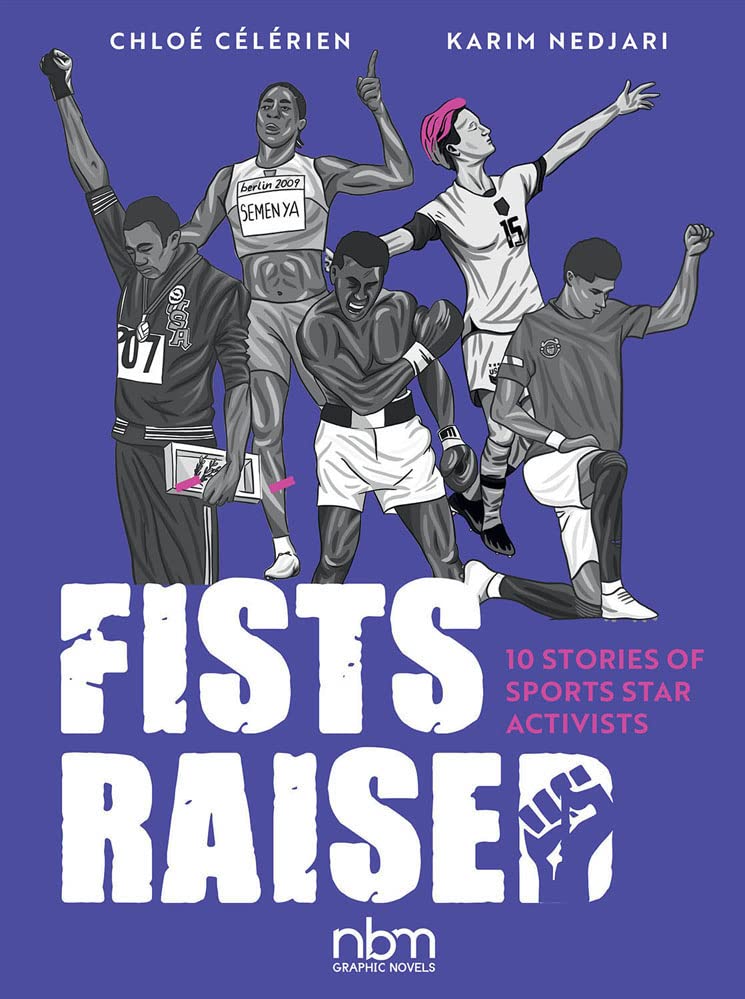
Fists Raised – 10 Stories of Sports Star Activism


By Chloé Célérien & Karim Nedjari translated by Peter Russella (NBM)
ISBN: 978-1-68112-303-5 (HB) eISBN: 978-1-68112-304-2

Having just recently endured the most nauseating and crass example of sports-washing I can think of – and I’m including the 1936 Berlin Olympics, Moscow 1980 and Los Angeles 1984 in that statement – here’s a wonderful comics counterpoint and riposte, detailing the power of sports to do good.

Sadly – and as seems quite usual now – it’s generally cases of well-meaning individuals working against the advisement and wishes of their own sporting governing bodies and governments. It’s almost as if the people running the show care more about money and power than honour, history, achievement or the fans that pay their wages…

It seems there’s nothing you can’t craft compelling comics about if you’re talented and inspired, as seen in this spellbinding celebration of sports stars weaponising their fame and glory to change the world in ways that truly matter.

Originally released au Continent in 2021 as Générations Poing Levé, quand le sport percute l’histoire, this beguiling and amusingly infuriating book blends history, biography and social commentary thanks to scripter Karim Nedjari (French pundit, journalist and CEO of Radio Monte Carlo and RMC Sport) who teams up with sports-mad cartoonist Chloé Célérien to précis the lives and careers of ten true champions.

These noteworthy stars have all used their celebrity to call out hypocrisy and injustice, fighting to better the lives of the Poor, Disenfranchised, Oppressed or otherwise Othered our rulers choose to ignore or outlaw…

Sports and public competition have always enraptured the masses: eternally viewed as a great and unifying leveller. Even the most lowly and downtrodden can derive joy from playing or participating and, for the impoverished, excellence has always offered a means of escape: a way to turn their talents into a kind of liberty and agency.

It has never, however, been enough to make players into billionaires. Even the greatest can’t make the leap from “player” to “owner”. That takes generational wealth…

Moreover, we haven’t changed much from ancient times. Women are still excluded or simply included on arbitrary male terms and there’s little difference in the status and treatment of a top footballer and a champion racehorse, a boxer or a show dog: ultimately they’re all property of an elite that runs the game and makes – and changes – the rules.

Even so, some modern-day gladiators risking themselves for the benefits granted by cunning commerce and contemporary Caesars may have personal Spartacus moments: telling the powers-that-be when, how, how much and how often they are betraying the people they smugly lord over…

That’s certainly the case in the brief biography of ‘Marcus Rashford – Big Brother to the Poor (1997, soccer, England)’. He’s a young black athlete who translated his astounding footballing triumphs into a very public war of wills with the entire British Government, and especially inept, pitifully attention-addicted prime minister Boris Johnson.

Émigré comedian Henning Wenn summed it up best when he said “We don’t do charity in Germany. We pay taxes. Charity is a failure of Government’s responsibilities…”

A grateful beneficiary of free school meals as a child, Rashford used his elevated public position to school the ruling Conservative party – who had near-unanimously voted AGAINST FEEDING STARVING CHILDREN – in a media campaign that resulted in Johnson repeatedly bowing to the footballer’s gadfly “suggestions”.

In a backward-looking Britain that has adopted the dogma that money is more important than people, the toxic policies of the Tories had never been more powerfully or effectively opposed than in this case of a working-class hero who never forgot where he came from…

‘Muhammad Ali – The Greatest (1942-2016, boxing, United States)’ recalls the career of another icon. Ali was a sporting superstar who evolved into a paragon of black liberation and human equality, and global symbol of power, endurance and dignity.

American prize fighter Cassius Marcellus Clay Jr., found his true name and purpose after years of social othering, where he was readily permitted to entertain millions of Americans, but only to eat, sleep or share space where white people said he could…

Born in Louisville, Kentucky on January 17th 1942, Clay began boxing at age 12. He won titles and acclaim and notoriety, not simply for his incredible sporting achievements but for his quick wit, cultural savvy and moral standing. Gold medal Olympian, World heavyweight champion, critic, pundit and street poet, in 1966 Clay took on the American government and paid a high personal price for refusing to fight a “white man’s war” in Vietnam.

Originally declared 4F due to dyslexia, he was abruptly re-classified and called up after becoming a voice of the Civil Rights Movement. Many still believe he was only drafted to shut him up… a tactic repeated over and over again throughout modern history.

A lifelong equal rights advocate, in 1964, the forceful Conscientious Objector had converted to Islam and formally renounced his “slave name”, adopting new appellation Muhammad Ali.

A living symbol of black pride, Ali retired from boxing in 1981 to concentrate on commercial, social, political and philanthropic works. He was declared Sportsman and Sports Personality of the (20th) Century by Sports Illustrated and the BBC respectively, and died in June 2016 from complications associated with Parkinson’s disease. Like Pelé, he changed the way the world saw colour…

Such was also the case with ‘Surya Bonaly – Black Blades (1973, figure skating, France)’: a black female skater who overcame all odds, broke records and revolutionised her sport, only to be denied its greatest awards and rewards thanks to constant gaslighting and the immovable forces of institutionalised racism. Her fight to correct those injustices for all who followed in her spectacular footsteps comprises the greater part of her entry here.

The same is true for the now largely anonymized icon whose very stance and image gave rise to the concept of sport as symbolic culture weapon.

‘Tommie Smith – The Black Clenched Fist of America (1944, track and field, United States)’ overcame poverty and entrenched bias to win gold at the 1968 Olympics, educating himself to the rank of college professor

His actions particularly outraged closet racist and antisemite and President of the Olympic Committee Avery Brundage (you should look up his sterling record…): a man whose influence tainted sport for generations from his apologist stance at the 1936 “Nazi Olympics” all the way through to the terrorist-blighted 1972 Munich games. He’s worthy of his entry if not book, but it wouldn’t be very complimentary…

How Tommie Smith willingly surrendered everything to make the political statement he believed more important than his own future, and how not just he and black teammate John Carlos (bronze medallist) but also white Australian silver medallist Peter Norman (who contributed a crucial twist to the Raised Fist incident) were punished for the visual statement is something every sports lover should be ashamed of and outraged by…

This chapter also carefully deconstructs the events and planning leading to that moment and the carefully conceived symbolic assault on the Establishment. Here we see Smith enduring decades of FBI surveillance in the aftermath. Moreover, he was designated one of ten athletes considered “a threat to America”, but ended on a triumphal high as the man who inspired Colin Kaepernick’s latterday protest, the Black Lives Matter movement and the career of Barack Obama finally received the acclaim he deserved…

Just as ingrained and unassailable was the attitude to women in sport and ‘Megan Rapinoe – An American Feminist (1985, soccer, United States)’ traces a painfully similar and oft-rerun path. Rapinoe was born to a poor white staunchly Republican family, and endured a different kind of bigotry. She and her siblings employed sport – or petty crime – to escape their stifling social problems, but Megan’s unique triumphs in soccer made her a global icon.

World Cup winner, Gold-winning Olympian, openly gay and a media megastar, she used her fame to champion pay inequality in US sport and constantly battled racial, sexual and gender bias. She was the first sports professional to support and emulate Colin Kaepernick’s stance and gesture, and proudly basked in the wrath of one-time President Donald Trump: constantly doubling down in a personal campaign to “smash the Patriarchy”, against the express wishes of much of her family. She too was celebrated and encouraged by more rational American Presidents and continues her forthright war on repressive conservatism…

‘Caster Semenya – The Woman Who Ran Too Fast (1991, track and field, South Africa)’ relates the shameful treatment of an African Olympian whose actual biology was considered aberrant and unwelcome. Targeted by (some) fellow competitors as well as international sporting authorities, the World Champion runner’s achievements and gender were constantly and repeatedly questioned. She was accused of being a man unfairly competing against women, and that man Brundage had plenty of unpleasant, unhelpful things to say on this issue too…

Her struggle for personal validation encompassed and overcame many official attempts to reclassify the sporting definitions of gender, and her later life has been dedicated to championing the rights of intersex women across the world…

‘Arthur Ashe – Humanitarian Aces (1943-1993, tennis, United States)’ was a world-shaking trailblazer who broke a monopoly. As seen above, sporting success has always been the only real weapon poor people have in a world tailored to accommodate the wealthy – usually white – and their offspring. A descendent of slaves, second class Virginian citizen Ashe shattered an age-old State colour bar preventing “his kind” playing tennis against white players. He fought hard and progressed, going on to become a global superstar: the first black man on UCLA’s team, first to play on the USA’s International (Davis Cup) team and first to win a prestigious Wimbledon tournament (where he controversially raised a Tommie Smith style fist after beating ferocious rival and Great White Hope Jimmy Connors).

Ashe was also a self-educated intellectual, a pacifist, a fashion icon and born social warrior who happily made waves. He too was classified as fodder for Vietnam, but his brother – a veteran – volunteered to take his place, leaving Arthur to continue his campaigns against injustice and intolerance, such as his early opposition to Apartheid in South Africa.

The crusader seemed born under an unlucky star: his sporting career ended early after a massive heart attack, and he survived quadruple bypass surgery to become a tennis coach who numbered John McEnroe amongst his protégés. His influence inspired many players of colour, from Yanick Noah to Venus and Serena Williams

A second heart attack led to an agonisingly slow decline and dictated the course of his last crusade. Blood used during another heart operation had been contaminated with HIV and infected Ashe with AIDS. Diagnosed in 1988 with the mystery disease then decimating gay and black communities – and whilst writing a definitive history of black sportsmen and women in America – Ashe became the spokesman for AIDS sufferers everywhere after blackmailers threatened to expose his condition.

Instead, he went public, frustrating the criminals, demystifying the modern bête noir and becoming a UN consultant on HIV/AIDS until his death in February 1993. He lived long enough to see Apartheid end and meet his idol Nelson Mandela

An unending fight for personal freedom and autonomy follows in the history of ‘Nadia Comaneci – The Dictator’s Doll (1961, gymnastics, Romania)’. Raised in the Soviet satrapy of Romania, determined sportswoman and legendary Olympic gymnast Comaneci fell under the absolute control of monstrous dictators and deranged personality cultists Nicolae and Elena Ceau?escu. Henceforth, her astounding accomplishments (first ever to achieve maximum possible scores and youngest athlete to win gold) became just like her pay, awards and prizes: property of the State as manifested in Mrs & Mrs Ceau?escu – whose many insane edicts included classifying sex education as a state secret and establishing Menstruation Police to enforce a population boom the bankrupt nation could not support…

Nadia’s abuse, struggle, flight to freedom in the West and subsequent bondage to a coercive controller is the stuff of nightmares and her eventual triumph and loving later life an utter cathartic joy.

Even for a nation that has produced many messianic footballers ‘Sócrates – Half Plato, Half Pelé (1954-2011, football, Brazil)’ is a remarkable figure. Another poor, talented and self-educated soccer star drawn from the underclasses, his struggles against addiction (“beer, cigarettes and women”) and the toxic allure of celebrity fed a fierce desire to be the best, but never affected his aims to help the people through socialism, medicine and ultimately political power. His early death might have robbed the world of a force for change, but his admirers’ and followers’ successful struggles against the Right – as manifested in dictatorial President Jair Bolsonaro – prove that his legacy ranges far beyond his sporting miracles…

Ending this potent exploration of individual achievement lifting all boats is the inspirational story of ‘Hiyori Kon – Little Miss Sumo (1997, sumo wrestling, Japan)’.

A resolute Japanese girl of lowly origin, she was early besotted by the national sport and battled two millennia of entrenched chauvinism and anti-female prejudice in a paradoxically forward-looking but hidebound society where many male and female roles are backed up by draconian laws and ironclad cultural conditioning. Even today Japan is one of the most gender-restricted societies on Earth (ranked 121st of 153 in terms of gender inequality by the World Economic Forum). The very term “feminism” equates with “hate” and “hysteria”…

Hiyori’s battles to compete as a female sumo wrestler were the stuff of legend, taking her across the country and the world as both competitor and coach for a sport growing evermore popular amongst women everywhere but in its nation of origin.

She has won medals everywhere but Japan, where the National Olympic governing body actually excluded the sport/discipline from their own (Covid-delayed) 2021 games because all events in any Olympiad must be open to male and female competitors…

Nevertheless, as part of a growing, inexorable tide of resolute women working for change, Hiyori has started a wave of reform and her crusade continues to this day…

These days a seemingly infinite variety of subjects fit under the umbrella of modern graphic novels – everything from superheroes, sci fi and the supernatural to philosophy, journalism and education. Thanks to their global reach and outlook, NBM are at the forefront of this welcome revolution, bringing a range of visions to the English-speaking table that apparently daunt most mainstream publishers here and in America.

Today’s book is a perfect case in point: a sequence of visual adaptations of some of the world’s most celebrated role models, chosen not only for their scintillating accomplishments but also the force of their convictions. The result is an utterly enticing graphic treasure, and there’s not a single tragic supervillain in sight… unless you count assorted governments, individual politicians, scurrilous administrators and business owners…

NBM’s library of graphic biographies are swiftly becoming the crucial guide to the key figures of modern history and popular culture. If you haven’t found the answers you’re seeking yet, then you’re clearly not looking in the right place…
© Hatchette Livre (Marabout) 2021. © 2022 NBM for the English translation. All rights reserved.

Fists Raised – 10 Stories of Sports Star Activism will be released on January 12th 2023 and can be pre-ordered now in both print and digital editions.

Most NBM books are also available in digital formats. For more information and other great reads see http://www.nbmpub.com/

Josephine Baker


By Catel & Bocquet, translated by Edward Gauvin (SelfMadeHero)
ISBN: 978-1-91059-329-5 (TPB/Digital edition)

Win’s Christmas Gift Recommendation: The Story of an Actual Wonder Woman… 9/10

Here’s a rather short review of an astonishingly eventful life celebrated in a superbly expansive, compellingly detailed account from two of the best graphic biographers working in the field. As I’m always implying, my Less is your More, and this is one story you’ll want to appreciate fresh and full-on, so just buy it and be done. You won’t be sorry and will have a revelatory time…

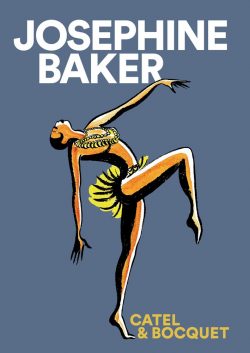
Born Freda Josephine McDonald on June 3rd 1906 in St Louis, Missouri, the black icon, free spirit and symbol of self-determination who called herself Joséphine Baker was no scholar or schemer, but used her innate gifts as a dancer and entertainer to survive horrific acts of random racist violence and ultimately escape her origins as a despised second class citizen in the land of her birth.

A forceful, irrepressible, warm-hearted optimist with colossal empathy and a relentless sense of humour, Baker’s drive and willingness to take chances carried her to the peak of European sophistication and culture: rubbing shoulders with royalty and the cream of global creative intelligentsia: everyone from Picasso and Man Ray to Le Corbusier and Hemingway, Max Reinhardt, Buñuel, Cocteau, Colette, Pirandello, Georges Simenon and so many glittering others.

She was a vedette, singer, dancer, actress, movie star, civil rights activist, paramount artistic inspiration and – during WWII – an actual spy and French resistance operative working for future President Charles de Gaulle, as well as a ferocious defender of animals and devoted mother. Above all else, she was an entertainer par excellence…

Here, Baker’s incredibly eventful life is traced from cradle to grave in black-&-white vignettes, concentrating on her achievements, family life and relationships, seen through her progress from exploitable bit player to media sensation “La Baker”: Queen of Paris in the Jazz Age.

Her astounding energy, creativity and resolve to succeed was only exceeded by her adoration of children, secret acts of charity and unfailing ability to love men who were bad for her, but her legacy was almost erased in the years after she stopped working. Countless comeback attempts and financial troubles followed.

Perhaps she was never truly in earnest but pursuing the means to a greater end. Due to her inability to have children and immense fellow feeling for the downtrodden, Josephine had turned her post war years into an incredible social experiment, gathering orphans from many devastated countries into a single loving family… her multinational, multi-ethnic Rainbow Tribe

All that achievement, accomplishment, unprofitable charity, disillusionment and ultimate abandonment by the august and wealthy in her own country (both of them!) led to Josephine fading from history until relatively recent times, but now she is being reclaimed by a world which could really benefit from her example…

Baker’s international fame led to frequent and painful attempts to reclaim her birth nation’s attention. Eventually – in 1937 – she renounced her American citizenship to become officially French. In later years she tried to help America’s fight against Segregation, but was shunned by both side of that struggle. At the end, as economic woes, life and ongoing illness plagued her final years, she found a few unexpected friends in powerful women like Brigitte Bardot and her final years were spent in Monaco, a guest of equally constrained and misused female icon Grace Kelly. Josephine Baker died on 11th April 1975.

Her public and private lives coalesce in this chronological dramatised narrative from award-winning graphic novelist Catel Muller (Ainsi soit Benoîte Groult, Adieu Kharkov, Lucie s’en soucie, Le Sang des Valentines) and crime novelist, screenwriter/biographer/comics writer José-Louis Bocquet (Métal Hurlant, Sur la ligne blanche, Mémoires de l’espion, Panzer Panik, Anton Six), who in their other collaborations have also explored the lives of Kiki de Montparnasse and Olympe de Gouges (…and we’ll get to them in the fullness of time).

Entertaining, enthralling, informative, and continually sparking explosions of aggrieved but justified outrage on Baker’s behalf, the book is supplemented by a vast supporting structure of extras, beginning with a heavily illustrated and highly informative ‘Timeline for Josephine Baker’, incorporating pivotal events in her public and private lives. It’s further augmented by ‘Biographical Notes’: 55 character portraits in prose and sketch form of the historical figures with supporting roles feature in this epic saga, plus as an essay on ‘The Rainbow Tribe’ by her son/historical consultant Jean-Claude Bouillon-Baker. Also included are a Bibliography and Filmography for further study.

If you love history, comics, justice triumphant or just great stories, you really need to set some records straight and read this book.
© Casterman 2021. All rights reserved.