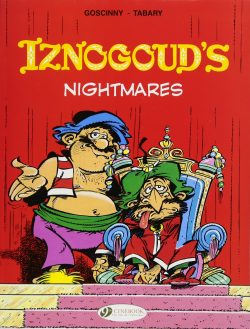
Iznogoud’s Nightmares


By Goscinny & Tabary translated by Jerome Saincantin (Cinebook)
ISBN: 978-1-84918-360-4 (Album PB)

For the greater part of his too-short lifetime (1926-1977) René Goscinny was one of – if not the – most prolific and most-read writers of comic strips the world has ever seen. He still is.

Among his most popular comic collaborations are Lucky Luke, Le Petit Nicolas and, of course, Asterix the Gaul, but there were so many others, such as the dazzling, dark deeds of a dastardly usurper whose dreams of diabolical skulduggery perpetually proved to be ultimately no more than castles in the sand…

Scant years after the Suez crisis, the French returned to those hotly contested deserts when Goscinny teamed with sublimely gifted Swedish émigré Jean Tabary (1930-2011) – who numbered Richard et Charlie, Grabadu et Gabaliouchtou, Totoche, Corinne et Jeannot and Valentin le Vagabond amongst his other hit strips – to detail the innocuous history of imbecilic Arabian (im)potentate Haroun el-Poussah.

However, it was the strip’s villainous foil, power-hungry vizier Iznogoud who stole the show – possibly the conniving little imp’s only successful coup…

According to the Foreword in this very special collection, the very notion of the series came from a throwaway moment in Les Vacances du Petit Nicolas, but – once it was fully formed and independent – Les Aventures du Calife Haroun el Poussah was created to join the roster in Record, with the first episode appearing in the January 15th 1962 issue. An assured if relatively minor hit, the strip jumped ship to Pilote – a comics periodical created and edited by Goscinny – where it was artfully refashioned into a starring vehicle for the devious little ratbag who had increasingly been hogging all the laughs and limelight.

Like all great storytelling, Iznogoud works on multiple levels: for youngsters it’s a comedic romp with adorably wicked baddies invariably hoisted on their own petards and coming a-cropper, whilst older, wiser heads can revel in pun-filled, witty satires and marvellously accessible episodic comic capers. Just like our Parliament today. That latter aspect is investigated in this collection of short episodes…

This same magic formula made its more famous cousin Asterix a monolithic global success and – just like the saga of the indomitable Gaul – the irresistibly addictive Arabian Nit was originally adapted into English by master translators Anthea Bell & Derek Hockridge, who made those Roman Follies so very palatable to British tastes. Always the deliciously malicious whimsy was heavily dosed with manic absurdity, cleverly contemporary cultural critiques and brilliantly delivered creative anachronisms which serve to keep the assorted escapades bizarrely fresh and hilariously inventive. However, like so many comics inventions, the series grew beyond its boundaries and this volume re-presents a sidebar series that began as a s statement and grew into a separate second career for the vindictive viper…

Insidious anti-hero Iznogoud is Grand Vizier to affable, easy-going Caliph of Ancient Baghdad Haroun Al Plassid, but the sneaky little toad has loftier ambitions, or – as he is always declaiming – “I want to be Caliph instead of the Caliph!”…

The retooled series launched in Pilote in 1968, quickly growing into a massive European hit, with 31 albums to date (carried on by Tabary’s children Stéphane, Muriel & Nicolas after his passing in 2011); his own solo comic; a computer game; animated film, TV cartoon show and a live-action movie.

When Goscinny died in 1977, Tabary started scripting his own sublimely stylish tales (from the 13th album onwards), gradually switching to book-length complete adventures, rather than the compilations of short, punchy vignettes which typified the collaborations.

In October, 1974, whilst the shifty shenanigans were unfolding to the delight of kids, its sandy-struck star began moonlighting: pulling double duty as a commentator and critic of real-world politics and social issues in a French newspaper. Some of the best and least dated have been resurrected here.

Published in 1979 by Editions de la Séguinière, Les Cauchemars d’Iznogoud was the 14th collection, gathering material from Le Journal du Dimanche and appears here with the usual introductory page of key characters plus an annotated text section offering political clarity and historical context. Each entry is presented as a short strip highlighting a contemporary issues seen through the wry lens of a Vile Vizier, offering a wry and raucous roster of advisory lectures with the sagacious schemer pausing his campaign to seize power from his oddly oblivious Lord and Master in favour of blessing all us proles with his wisdom and ruling acumen.

Deftly detailing how to deal with labour disputes, union demands, social unrest, unruly clergymen, domestic and foreign policy, the environment, cost-of-living crises, energy security, sporting links with pariah states, diversity, sectarianism and segregationism, and so much more, here the Caliph-in-waiting explains how to maintain a popularity and power in ancient but oh-so-contemporary Baghdad as well as the modern world…

Trust me, it’s far funnier than I’ve made it sound and all the usual magic and madness is apparent as the Vizier asks and answers questions posits potential policy in ‘If I were Minister of Labour…’, ‘If I were Minister of Energy…’ or ‘…Waste Management…’, ‘…the Interior…’, ‘…the Army…’, ‘…of Students…’, ‘…of Police…’, ‘ … the Anti-Gang Unit…’, ‘…of Negotiators…’, ‘…of Censorship…’, ‘…of the Economy…’ ‘…of Industry…’, and ‘If I were President of the Judges Union…’

Many strips are general in nature rather than addressing a specific “hot topic”, but still deliver hilariously acerbic and excoriating satirical points in bulletins like ‘If I were a Carpet Seller…’, ‘If I were Minister of Wishes…’, ‘If I dined with ordinary people…’, ‘If I were Minister of Divorce…’, ‘If I were Minister of Quality of Life…’, ‘If I spoke officialese…’ ‘ ‘If I were Minister of Compromise…’, ‘If I were Minister of Holes…’, ‘If I were Minister of Tolls…’, ‘If I were Minister of Prison Guards…’, ‘If I were the usurper…’, ‘If I were Minister of Freezing…’, ‘If I were going on holiday…’ (a popular a pressing duty of Prime ministers everywhere and one our own British bosses are world leaders in), as well as ‘If I were Secretary of Non-Smoking…’ and ‘If I were a UN Delegate…’

There is even a particularly scary sub-strand of episodes pondering – with menaces – ‘If I were your Caliph/King/Inheritor/Guess What?’

What’s truly daunting and trenchant is just how many of these strips are still painfully relevant right now, with the darker side of sport, white & greenwashing, nepotism, cronyism and even sexual politics all poked with a very sharp stick (which is, coincidentally, my suggested solution for dealing with our 21st century ruling rascals and feather-bedding incompetents) in tales such as If I were Minister of Labour…’, ‘ ‘…of Racing…’, ‘…of Football…’, or even ‘If I were the one in charge of their “happiness”…’, If I were the Impaler…’, If I were on an official visit…’ and ‘If I were Minister of Ladies of the Night…’

Although the farcical eternal battle with his own hereditary superior is surrendered to the exigencies of a topical tone, the cast of regulars and legendary locales are still happily extant here with bumbling, long-suffering henchman and strong-arm crony Wa’at Alahf’ acting as sounding board and straight man and Caliph Haroun al Plassid acting as the oblivious powers that be in a panoply of short, sharp shockers blending un-realpolitik with world weary cynicism in a pun-punctuated comedy of errors, riddled with broad slapstick and craftily convoluted conniving…

Just such witty, fast-paced hi-jinks and craftily crafted comedy set pieces have made this addictive series a household name in France where “Iznogoud is now an acceptable general term for a certain type of politician: over-ambitious, unscrupulous, sans-gravitas and frequently a little short in the height department…

When first released in Britain during the late 1970s (and again in 1996) these tales made little impression, but certainly in today’s fervid climate of fustercluckery, these brisk and brutal, wonderfully beguiling strips have found an appreciative audience among today’s more internationally aware, politically jaded comics-and-cartoon savvy Kids Of All Ages…

…And journalists and Hansard, and Polit-Wonks, and dictators and…
Original edition © 2012 IMAV éditions by Goscinny & Tabary. All rights reserved. English translation 2017 Cinebook Ltd.
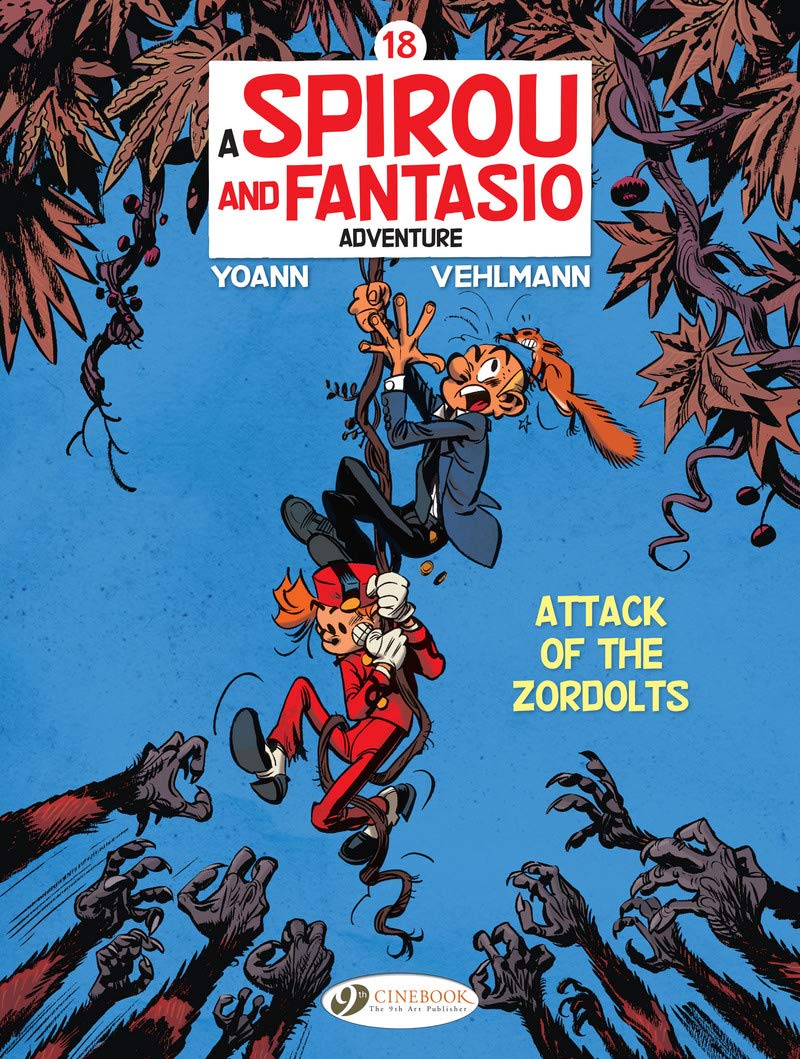
Spirou & Fantasio volume 18: Attack of the Zordolts


By Yoann & Vehlmann, designed by Fred Blanchard, colored by Hubert & translated by Jerome Saincantin (Cinebook)
ISBN: 978-1-80044-022-7 (Album PB/Digital edition)

Win’s Christmas Gift Recommendation: Manic Mirth and Mad Melodrama… 9/10

Spirou (which translates as both “squirrel” and “mischievous” in the Walloon language) was created by French cartoonist Françoise Robert Velter AKA Rob-Vel for Belgian publisher Éditions Dupuis in response to the phenomenal success of Hergé’s Tintin at rival outfit Casterman.

Soon-to-be legendary weekly comic Le Journal de Spirou launched on April 21st 1938 with a rival red-headed lad as lead feature in an anthology which bears his name to this day. The eponymous hero was a plucky bellboy/lift operator employed in the Moustique Hotel – a sly reference to the publisher’s premier periodical Le Moustique. His improbable adventures with pet squirrel Spip gradually evolved into far-reaching, surreal comedy dramas.

Spirou and his chums have spearheaded the magazine for most of its life, with a phalanx of truly impressive creators carrying on Velter’s work, beginning with his wife Blanche “Davine” Dumoulin who took over the strip when her husband enlisted in 1939. She was assisted by Belgian artist Luc Lafnet until 1943, when Dupuis purchased all rights to the property, after which comic-strip prodigy Joseph Gillain (Jijé) took the helm.

In 1946, his assistant André Franquin assumed the creative reins, gradually ditching the well-seasoned short gag vignettes in favour of epic adventure serials. He also expanded the cast, introducing a broad band of engaging regulars and eventually creating phenomenally popular magic animal Marsupilami.

Franquin was followed by Jean-Claude Fournier who updated the feature over nine stirring adventures tapping into the rebellious, relevant zeitgeist of the times: offering tales of environmental concern, nuclear energy, drug cartels and repressive regimes.

By the 1980s the series seemed outdated and lacked direction. Three different creative teams alternated on the feature, until it was overhauled and revitalised by Philippe Vandevelde (writing as Tome) and artist Jean-Richard Geurts AKA Janry. They adapted, referenced and in many ways returned to the beloved Franquin era.

Their sterling efforts revived the floundering feature’s fortunes, generating 14 wonderful albums between 1984 and1998. As the strip diversified into parallel strands (Spirou’s Childhood/Little Spirou and guest-creator specials A Spirou Story By…), the team on the core feature were succeeded by Jean-David Morvan & José-Luis Munuera. Then Yoann & Vehlmann took over the never-ending procession of amazing adventures…

Multi-award-winning French comics author Fabien Vehlman was born in 1972, began his comics career in 1996 and has been favourably likened to René Goscinny. He’s best known for Green Manor (illustrated by Denis Bodart), Seven Psychopaths with Sean Phillips, Seuls (drawn by Bruno Gazzotti and available in English as Alone), Wondertown with Benoit Feroumont and Isle of 1000,000 Graves with Jason.

He assumed the writing reins on Spirou and Fantasio in collaboration with Yoann. beginning with the book on review here – 2010’s Spirou et Fantasio – Alerte aux Zorkons.

Yoann Chivard was born in October 1971 and was drawing non-stop by the age of five. With qualifications in Plastic Arts and a degree in Communication from the Academy of Fine Arts in Angers, he became a poster and advertising artist whilst dabbling in comics. His creations include Phil Kaos and Dark Boris for British Indie publications Deadline and Inkling, Toto l’Ornithorynque, Nini Rezergoude, La Voleuse de Pere-Fauteuil, Ether Glister and Bob Marone and he has contributed to Trondheim & Sfar’s Donjon. In 2006, Yoann was the first artist to produce a Spirou et Fantasio one shot Special. It was scripted by Vehlmann…

Cinebook have been publishing Spirou & Fantasio’s exploits since 2009, alternating between the various superb reinterpretations of Franquin and earlier efforts from the great man himself. When Jijé handed Franquin all responsibilities for the strip part-way through Spirou et la maison préfabriqué (LJdS #427, June 20th 1946), the new guy ran with it for two decades; enlarging the scope and horizons until it became purely his own. Almost every week fans would meet startling new characters such as staunch comrade and rival Fantasio or crackpot inventor and Merlin of mushroom mechanics Pacôme Hégésippe Adélard Ladislas de ChampignacThe Count of Champignac

Spirou and Fantasio became globe-trotting journalists, travelling to dangerously exotic places, uncovering crimes, exploring the fantastic and clashing with a coterie of exotic arch-enemies such as Fantasio’s deranged and wicked cousin Zantafio and that maddest of scientists, Zorglub.

This old school chum and implacable rival of Champignac is an outrageous Bond movie-flavoured villain who constantly targets the Count. A brilliant engineer, his incredible machines are far less dangerous than his mesmerising mind-controlling “Zorglwave” and an apparently unshakable desire to conquer Earth and dominate the solar system from a base on the Moon…

This tale opens with the seemingly reformed plotter stealing some of Champignac’s most incredible mushroom-based miracles and triggering a massive mutational event in and around the bucolic generally placid hamlet of Champignac-in-the-Sticks.

The first Spirou and Fantasio hear of it is a desperate cell phone call from Pacôme, who has just reappeared after weeks amnesiac and missing. Driving back from a promotional tour, our heroes race across country only to find the placid region is now an armed camp, with soldiers in biohazard gear brutally decontaminating villagers.

The little valley has become a monstrous alien jungle dominated and transformed by weird and incredible plant/animal/fungus creatures, but neither they nor the military – who are keen on immediately nuking the geographical atrocity – can stop our dedicated reporters sneaking in to find their friends.

On locating the Count and his two new chums – hot Swedish science students Astrid and Lena – the lads learn that the brave new world is an accident and hideous side effect of Zorglub’s latest scheme, and that he’s sorrier than anyone at the state of the local environment.

He’s certainly keen enough on fixing the problem…

Other than the fact that everything wants to eat everything else, and that many of the human locals seem comfortable and accustomed to the changes, the main problem seems to be a rapidly proliferating and aggressive form of beast man. The jungle is now a superfast evolutionary Petri dish with everything in it part of an arms race to out-compete all rivals. These brutish bipeds have for some reason evolved immunity to Zorglub’s Zorglwave by having oodles of aggression and not enough intellect. They are ravening, unstoppable Zordolts…

Not sure what’s happening, but resolved to stop the Army bombing the village before foiling Zorglub, everybody works frantically together and succeeds in part one of the plan, but when the jests are repelled and the Zordolts stopped by Champignac’s newly-liberated dinosaur they find the villain vanished.

By the time Champignac has worked his mushroom magic in reverse and restored most of the status quo, the Master of the Z ray is long gone. If our heroes could look up high enough, they might see him well on his way to the moon with Astrid in Lena in tow and about to set his Great Masterwork in motion…

To be Continued…

Rocket-paced, action-packed, compellingly convoluted and with just the right blend of perfectly blending helter-skelter excitement and sheer daftness, Attack of the Zordolts is a terrific romp to delight devotees of easy-going adventure.

Stuffed with an astounding array of astonishing hi-tech spoofery, riotous chases and gazillions of sight gags and verbal ripostes, this exultant escapade is a fabulous fiesta of angst-free action and thrills. Readily accessible to readers of all ages and drawn with beguiling style and seductive energy and wit, this is pure cartoon gold, truly deserving of reaching the widest audience possible.

Buy it for you, get another for the kids and give copies to all your friends…
Original edition © Dupuis, 2010 by Vehlmann, Yoann, Blanchard & Hubert. All rights reserved. English translation 2021 © Cinebook Ltd.

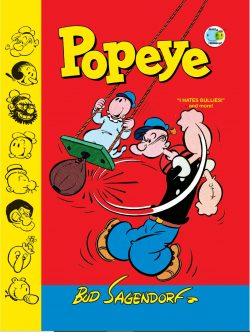
Popeye Classics volume 8: I Hates Bullies and More


By Bud Sagendorf, edited and designed by Craig Yoe (Yoe Books/IDW Publishing)
ISBN: 978-1-63140-676-8 (HB) eISBN: 978-1-68406-044-3

Win’s Christmas Gift Recommendation: Sweet & Sour Salty Sailor Celebrations… 9/10

How many cartoon classics can you think of still going after a century? Here’s one…

There are a few fictional personages to enter communal world consciousness – and fewer still from comics – but this grizzled, bluff, uneducated, visually impaired old tar with a speech impediment is possibly the most well-known of that august bunch.

Elzie Crisler Segar was born in Chester, Illinois on 8th December 1894. His father was a general handyman, and the boy’s early life was filled with the solid, dependable blue-collar jobs that typified the formative years of his generation of cartoonists. Segar was a decorator, house-painter and also played drums; accompanying vaudeville acts at the local theatre.

When the town got a movie-house, Elzie played silent films, absorbing all the staging, timing and narrative tricks from keen observation of the screen. Those lessons would become his greatest assets as a cartoonist. It was while working as the film projectionist, at age 18, that he decided to become a cartoonist and tell his own stories.

Like so many others in those hard times, he studied art via mail – W.L. Evans’ cartooning correspondence course out of Cleveland, Ohio – before gravitating to Chicago where he was “discovered” by Richard F. Outcault: regarded by most in the know today as the inventor of modern newspaper comic strips with The Yellow Kid and Buster Brown. The celebrated pioneer introduced Segar around at the prestigious Chicago Herald. Still wet behind the ears, the kid’s first strip, Charley Chaplin’s Comedy Capers, debuted on 12th March 1916.

In 1918, Segar married Myrtle Johnson and moved to William Randolph Hearst’s Chicago Evening American to create Looping the Loop, where Managing Editor William Curley foresaw a big future for Segar and promptly packed the newlyweds off to New York: HQ of the mighty King Features Syndicate. Within a year Segar was producing Thimble Theatre, (launching December 19th 1919) in the New York Journal: a smart pastiche of cinema and knock-off of movie-inspired features like Hairbreadth Harry and Midget Movies, with a repertory of stock players acting out comedies, melodramas, comedies, crime-stories, chases and especially comedies for vast daily audiences. It didn’t stay that way for long…

The core cartoon cast included parental pillars Nana & Cole Oyl; their lanky, cranky, highly-strung daughter Olive; diminutive-but-pushy son Castor and the homely ingenue’s plain and (so very) simple occasional boyfriend Horace Hamgravy (latterly, plain Ham Gravy).

Thimble Theatre had already run for a decade when, on January 17th 1929, a brusque, vulgar “sailor man” shambled into the daily ongoing saga of hapless halfwits. Nobody dreamed the giddy heights that stubbornly cantankerous walk-on would reach…

In 1924, Segar created a second daily strip. Surreal domestic comedy The 5:15 starred weedy commuter and would-be inventor John Sappo and his formidable spouse Myrtle. This strip endured – in one form or another – as a topper/footer-feature to accompany the main Sunday page throughout the author’s career, and even survived his untimely death, eventually becoming the trainee-playground of Popeye’s second great humour stylist – Bud Sagendorf.

After Segar’s premature passing in 1938, Doc Winner, Tom Sims, Ralph Stein and Bela Zambouly all took on the strip as the Fleischer Studio’s animated features brought Popeye to the entire world, albeit a slightly variant vision of the old salt of the funny pages. Sadly, none had the eccentric flair and raw inventiveness that had put Thimble Theatre at the forefront of cartoon entertainments. And then, finally, Bud arrived…

Born in 1915, Forrest “Bud” Sagendorf was barely 17 when his sister – who worked in the Santa Monica art store where Segar bought his drawing supplies – introduced the kid to the master cartoonist who became his teacher and employer as well as a father-figure. In 1958, after years on the periphery, Sagendorf finally took over the strip and all the merchandise design, becoming Popeye’s prime originator…

With Sagendorf as main man, his loose, rangy style and breezy scripts brought the strip itself back to the forefront of popularity and made reading it cool and fun all over again. Bud wrote and drew Popeye in every graphic arena for 24 years. When he died in 1994, his successor was controversial “Underground” cartoonist Bobby London.

Bud had been Segar’s assistant and apprentice, and in 1948 became exclusive writer/artist of Popeye’s comic book exploits. That venture launched in February of that year: a regular title published by America’s unassailable king of periodical licensing, Dell Comics.

On his debut, Popeye was a rude, crude brawler: a gambling, cheating, uncivilised ne’er-do-well, but was soon revered as the ultimate working-class hero. Raw and rough-hewn, he was also practical, with an innate, unshakable sense of what’s fair and what’s not: a joker who wanted kids to be themselves – but not necessarily “good”. Above all else he was someone who took no guff from anyone…

Naturally, as his popularity grew, Popeye mellowed somewhat. He was still ready to defend the weak and had absolutely no pretensions or aspirations to rise above his fellows, but the shocking sense of dangerous unpredictability and comedic anarchy he initially provided was sorely missed… except not in Sagendorf’s yarns…

Collected in this superb full-colour hardback/digital edition are Popeye #35-39, crafted by irrepressible “Bud”: collectively spanning January-March 1956 to January-March 1957.

Stunning, nigh stream-of-consciousness slapstick sagas are preceded by an effusively appreciative ‘Society of Sagendorks’ briefing by inspired aficionado, historian and publisher Craig Yoe, offering a mirthful mission statement, and enhanced by another tantalising display of ephemera and merchandise in ‘A Bud Sagendorf Scrapbook’. This time we focus on the 1980 Robert Altman movie with candid cast photos, Sagendorf illustrated tie-in magazine articles, and multi-lingual cartoon iterations.

We rejoin the ceaseless parade of laughs, surreal imagination and thrills with quarterly comic book #35, opening with a monochrome inside front cover gag concerning the latest hobby of the sailor’s ward after which ‘Thimble Theatre presents Popeye and Swee’Pea in “Wishing” or Spinach is Still King!”’, wherein the bored “infink” shambles upon an alien incursion and tricks the haughty invaders out of their irresistible, unbeatable Wish-o-Matic machine…

Soon the impressionable kid is king of the world and Popeye is forced into drastic action…

The family is afloat for follow-up bedtime tale ‘I Hates Bullies!’ as the mariner, Olive and Wimpy are lured to an exotic island and seduced into liberating its people from enslaving Boss Black Allen

Back-up feature Sappo was by now reduced to gullible foil and hapless landlord to the world’s worst lodger. Professor O.G. WotasnozzleThe Professor with the Atomic Brain would callously inflict the brunt of his genius on the poor schmuck. Here that means inventing super-fast growing redwoods but being too self-absorbed to keep the seeds out of the rain…

The issue ends with an endpaper prose fable about a scientist who regretted getting cats to chase his lab mice and a back cover gag of bath night for Swee’Pea…

Issue #36 (April-June) began with ‘King Popeye of Popilania!’ as the sailor man sets out to create the perfect country, but soon finds kinging it is a lot of work, especially if your friends are all ambitious traitors and other nations think they can push you around…

For a while things look bleak for the Popilania, until the desperate King unleashes secret weapon General Wimpy

An engaging Micawber-like coward, cad and conman, the insatiably ravenous J. Wellington Wimpy debuted in the newspaper strip on May 3rd 1931 as an unnamed, decidedly partisan referee in one of Popeye’s pugilistic bouts. Scurrilous, aggressively humble and scrupulously polite, the devious oaf struck a chord and Segar made him a fixture. Preternaturally hungry, ever-keen to solicit bribes and a cunning coiner of many immortal catchphrases – such as “I would gladly pay you Tuesday for a hamburger today” and “Let’s you and him fight” – Wimpy was the perfect foil for our straight-shooting action hero and increasingly stole the entire show… and anything else unless it was very heavy or extremely well nailed down. He proved to be the ultimate deterrent in an extended war that depended on keeping troops fed…

Popeye an’ Swee’Pea then turn the tables on villainous reprobate Poopdeck Pappy after the sailor’s crooked father fakes his own death in ‘Pappy’s Spook’, before Professor O.G. Wotasnozzle – The Atomic Brain! conjures fresh chaos with his terrifying reducing pills in advance of another text tale. ‘Canned Nuts’ details the downfall of a prudent squirrel who had a plan (but no tin-opener) in advance of a back cover gag of Popeye and Wimpy fishing…

Cover-dated July-September, Popeye #37 opens with a monochrome inside cover about Swee’Pea’s garden before main event ‘The Search for the Spinach Icebox’ sees our well-travelled hero targeted by secret society WAFPOM (World Association For Prevention Of Muscles) after he buys two million tons of the miraculous mineral rich vegetable. With attacks mounting, he needs someplace safe to store his leafy treasure and on Wimpy’s suggestion heads to Antarctica, where WAFPOM and even stranger foes are waiting…

‘Amateur Inventor!’ Sappo gives O.G. Wotasnozzle a taste of his own medicine next, before ‘The Big Sting’ heralds the end of another issue with the prose history of a bullying bee…

Issue #38 opens with a monochrome pet gag and an extended colour epic as Popeye and The Gang meet ‘The Dog Who Wore A Crown” – or – Going To the Dogs!’ A quick visit with King Blozo finds the scatty ruler absent and his dog ruling in his stead. Most annoyingly, the monarch has appointed Popeye Royal Dog Sitter. As the dutiful sailor surrenders to the inevitable, things get more complicated when the moody pooch – AKA “Birdseed” – decides Swee’Pea should be in charge…

‘Bottle Fish!’ sees the text fixture shift to the comic’s centre with the tale of a mean bully stuck behind glass, after which Wotasnozzle and Sappo both go overboard in a fishing contest augmented by weird science and the chaos concludes with another black-&-white inner cover pet prank, preceding a new year of fun and frolic as #39 (January-March 1957) feature more monochrome madness for Swee’Pea’s pooch…

The gang are rattled in lead story ‘The Mountain that Talked Back!’ as Olive’s deteriorating nerves prompt a vacation on ominously named “Thunder Island” and a badly-timed stay on a volcano in full eruption mode…

Everything changes once Popeye realise the shakes are fakes and a gang of criminals are making them patsies in a plot and our hero breaks out the spinach…

Prose parable ‘Cow?’ reveals how bovine Mildred briefly lived her dream to be a horse, after which Wotasnozzle seeks to improve communication by reinventing words in ‘What Did He Say?’ before Swee’Pea and Birdseed monopolise interior monochrome and exterior color gags with devasting effect.

Outrageous and side-splitting, these universally-appealing yarns are evergreen examples of narrative cartooning at its most surreal and inspirational. Over the last nine decades Thimble Theatre’s most successful son has delighted readers and viewers around the world. This book is simply one of many, but each is sure-fire, top-tier entertainment for all those who love lunacy, laughter, frantic fantasy and rollicking adventure. If that’s you, add this compendium of wonder to your collection.
Popeye Classics volume 8 © 2016 Gussoni-Yoe Studio, Inc. All Rights Reserved. Popeye © 2016 King Features Syndicate. ™ Heart Holdings Inc.

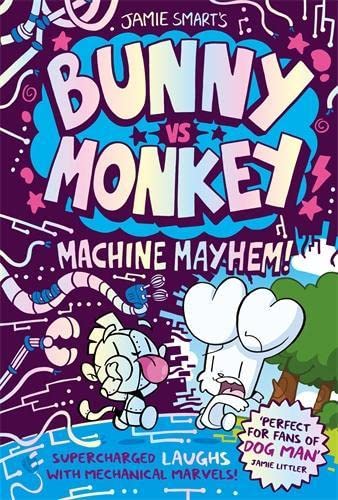
Bunny vs Monkey: Machine Mayhem!


By Jamie Smart, with Sammy Borras (David Fickling Books)
ISBN: 978-1-78845-285-4 (Digest HB)

Win’s Christmas Gift Recommendation: Madcap Mega-Meta Magnificence… 10/10

Bunny vs. Monkey has been a staple of The Phoenix since the very first issue in 2012: recounting a madcap vendetta gripping animal arch-enemies set amidst an idyllic arcadia masquerading as more-or-less mundane but critically endangered English woodlands.

Concocted with gleefully gentle mania by cartoonist, comics artist and novelist Jamie Smart (Fish Head Steve!; Looshkin; Flember), his trendsetting, mind-bending yarns have been wisely retooled as graphic albums available in remastered, double-length digest editions such as this one.

All the tail-biting tension and animal argy-bargy began yonks ago after an obnoxious little beast plopped down in the wake of a disastrous British space shot. Crashlanding in Crinkle Woods – scant miles from his launch site – lab animal Monkey believed himself the rightful owner of a strange new world, despite all efforts from reasonable, sensible, genteel, contemplative forest resident Bunny to dissuade him. For all his patience, propriety and good breeding, the laid-back lepine just could not contain the incorrigible idiot ape, who was – and is – a rude, noise-loving, chaos-creating loutish troublemaker…

Problems are exacerbated by the other unconventional Crinkle creatures, particularly a skunk called Skunky who has a mad scientist’s attitude to life and a propensity to build extremely dangerous robots and super-weapons…

Here – with artistic assistance from design deputy Sammy Borras – the war of nerves and mega-ordnances appears to be over. The unruly assortment of odd critters cluttering up the bucolic paradise had finally picked sides and the battles ended. They even seemingly forgot the ever-encroaching Hyoomanz

Following a double-page pin-up of our odd and ever-expanding cast, this magnificent hardback archive of insanity opens in the traditional manner: divided into seasonal outbursts, and starting slowly with a querulous teaser tale as the cold retreats and Spring begins in ‘D.I.Whyyyy?’

As the animals all gather to help Bunny repair his much-abused house, universal innocents Weenie squirrel and Pig Piggerton are more keen than skilled, with no idea that cheese is not a suitable substitute for wallpaper paste, plaster or cement…

Despite the subsequent collapse, times are good and very peaceful since the anarchic ape went away and Ai acts quickly to keep it that way when Bunny feels nostalgic for the old days. Sadly, somebody’s listening and brings in a ‘Makeshift Monkey!’ – until the real deal returns in ‘The Little Monkey Who Cried…’

It isn’t long before Skunky is back too and everyone’s fleeing for their lives from deadly underground tentacles, but life quickly resumes its old pattern until obsolescence rears its ugly head and cyborg gator Metal Steve is pronounced ‘Out of Warranty’ and left to wither on Skunky’s scrapheap…

Back and still bad, Monkey briefly inflicts himself on Bunny and wrecks the joint again in ‘The Housemate’ after which the mercurial monochrome megamind constructs a replacement for the gone gator and triggers a ‘Robot Rampage’ when infinitely superior mechanoid Metal E.V.E. decides to lay down her law…

Falling foul of another near-lethal prank the silly simian is scientifically resurrected and evolved in ‘Curse of the Monkey’ only to trip on his own incompetence and barely escape a fishy final fate in ‘Toilet Run!’

A close call with humans in ‘Bunny vs Monkey Jellybeans!’ precedes Weenie and Pig going on ‘A Dangerous Voyage’ as pirates, before Monkey endures his own Fantastic Voyage. Skunky is “The Most Brilliant Animal in the Woods” and convinces his erstwhile ally to shrink down and explore the inner cerebellum of brain-battered, bewildered former stuntman Action Beaver in search of ‘The Lost Memory’ of a misplaced ultimate weapon, which is what probably inspires him to make his own after entering a competition and prematurely unleashing his ‘Winning Entry’

Metal E.V.E. is forming her own plans but they have to wait a bit as she’s ‘Keepin’ Busy’ with some domestic chores in Skunky’s lab, but’s not long until Summer begins and the woods are imperilled by subterranean invasion from new menace ‘Roland T. Mole’

Hijinks in parallel dimensions herald the arrival of doomsayer ‘Skunky?’ whilst the forgotten stuntman stumbles onto his ancestral homeland in ‘Beaverville’ with catastrophic consequences even as Monkey creates unexpected carnage but precious little terror with super-cute kaiju ‘Rofl Axolotl’ before being painfully reminded how dangerous the woods can be in ‘So Beautiful’

After a brief and deceptive flirtation with ‘The Dark Arts’ the hairy halfwit returns to science and creates little golden minions, but his ‘Gloobs’ prove too smart for servitude, so he instead embraces high fashion in ‘C’est Chic!’ Utterly uncaring, Weenie and Pig go about their business until a ‘A New Friend’ almost breaks up the partnership. The swiftly-developing relationship of ‘Weenie and Winnie’ seems set to end the good old days but another robotic invasion sets the world to rights in ‘Just Checking’

A reality-altering beast threatens in ‘Wishful Thinking’ and the entire woods go all French just as aliens invade in ‘L’Honk Honk’ before Monkey and Skunky explore artisanal dining in ‘Eat Up!’ with appalling consequences for their customers, after which Ai and Monkey discover uncanny ‘Night Lights’ in the deep dark woods…

The eventful season concludes as Metal E.V.E. gets ahead by installing some crucial ‘Upgrades’ and inadvertently making contact with an unsuspected predecessor just as Autumn opens with ‘Bumblesnatch’ as the pig and squirrel enjoy some super-powers-inducing chewing gum and Crinkle Woods is catapulted into a different kind of chaos when broached by pet dog ‘Fluffy’

When ‘The Summoning’ invokes some pretty indifferent forest gods, Skunky lodges with over-accommodating Bunny who is soon sucked into unwanted adventure ‘Down Below’ and unearths E.V.E.’s brave new world and hopeless old ally as Metal Steve runs amok with nano-bots and spawns the unlikely armageddon beast ‘Pig-Kira!’

Once that menace vanishes into vapour, the mostly organic animals unite and formulate ‘Some Kind of Plan’ to fight E.V.E. – except ‘Nurse Monkey’ who’s keen to explore other lifestyles – until reenlisting in ‘Roll Up! Roll Up!’ with a barmy spinning machine which has no chance of easing their plight but will probably end their lives before she does…

The crusade pauses for Weenie’s birthday and the hunt for ‘The Best Present in the World’ but starts again when E.V.E. crashes the party with ‘Something to Say’ about the “rise of the machines” and end of all flesh…

Skunky’s obvious response is another monster, but giant mecha-hedgehog ‘Thunderball!’ is easily overcome, and as so-distractable Monkey goes wild among the fallen leaves in ‘Leaf it Alone’, the machine rise begins in ‘Nahhhhh!’ Sadly, Metal E.V.E. makes a big mistake then, spilling Monkey’s drink and kicking the conflict to an unprecedented new level…

Pausing for Weenie, Pig, Ai and Bunny to share some ‘Scary Stories’ around a night time campfire, the crisis enters a new phase when the ghost of local legend Fantastic Le Fox, manifests, even as the manic simian is captured and transformed into E.V.E.’s ‘Metal Monkey’

Le Fox is ‘An Old Friend’ resolved to help the animals survive, and his strategic advice is welcome, but the turning point comes in ‘Clash of the Robots’ as Metal Monkey and Steve duel, even as their mecha-mistress takes charge, unleashing DNA-altering microbots that put the fleshy freedom fighters to flight in ‘Uh-Oh-Nano!’

Winter sets in and hostilities suddenly cease as all concerned succumb to the temptation of chucking ‘Snowballs’ after which the end gets nigher in a wave of robotic attacks triggered by ‘Metal Mania’. Yet again everything pauses as Christmas gives the heroes a moment to unwrap ‘Presents’ but, drenched in seasonal spirit, ‘An Unlikely Hero’ dares to bring the message of the moment right to the robot queen: unwittingly changing the course of history in the woods, and leaving only some ‘Tidying Up’ to restore everything to what passes for normal in the sylvan glade…

The animal anarchy might have ended for now there’s more secrets to share thanks to detailed instructions on ‘How to Draw Metal Steve’ and ‘How to Draw Metal E.V.E.’ to wind down from all that angsty furore…

The zany zenith of absurdist adventure, Bunny vs Monkey is weird wit, brilliant invention, potent sentiment and superb cartooning all crammed into one eccentrically excellent package. These tails never fail to deliver jubilant joy for grown-ups of every vintage, even those who claim they only get it for their kids. This is the kind of comic parents beg kids to read to them. Shouldn’t that be you?
Text and illustrations © Jamie Smart 2022. All rights reserved.

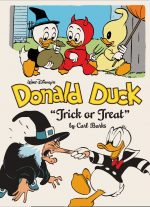
Walt’ Disney’s Donald Duck by Carl Barks volume 13: Trick or Treat


By Carl Barks & various (Fantagraphics Books)
ISBN: 978-1-60699-874-8 (HB/Digital edition)

Win’s Christmas Gift Recommendation: The Utter Acme of All-Ages Entertainment… 10/10

Donald Duck ranks among a small group of fictional characters to have transcended the bounds of reality and become – like Sherlock Holmes, Tarzan, Popeye and James Bond -meta-real. As such, his origins are complex and convoluted. His official birthday is June 9th 1934: a dancing, nautically-themed bit-player in the Silly Symphony cartoon short The Wise Little Hen.

The animated cartoon was adapted by Ted Osborne & Al Taliaferro for the Silly Symphonies Sunday newspaper strip and thus classified by historians as Donald’s official debut in Disney comics. Controversially, he was also reported to have originated in The Adventures of Mickey Mouse strip which began 1931. Thus the Duck has more “birthdays” than he knows what to do with, which presumably explains why he’s such a bad-tempered cuss.

Visually, Donald Fauntleroy Duck was largely the result of animator Dick Lundy’s efforts, and, with partner-in-fun Mickey Mouse, is one of TV Guide’s 50 Greatest Cartoon Characters of All Time. The Duck has his own star on the Hollywood walk of fame and has appeared in more films than any other Disney player.

Throughout the 1930s, his screen career grew from background and supporting roles via a team act with Mickey and Goofy to a series of solo cartoons which began with 1937’s Don Donald. That one also introduced love interest Daisy Duck and the irrepressible nephews Huey, Louie and Dewey

By 1938 Donald was officially more popular than corporate icon Mickey Mouse, and even more so after his national service as a propaganda warrior in a series of animated morale boosters and information features during WWII. The merely magnificent Der Fuehrer’s Face garnered the 1942 Academy Award for Animated Short Film

Crucially for our purposes, Donald is also planet Earth’s most-published non-superhero comics character, and has been blessed with some of the greatest writers and illustrators ever to punch a keyboard or pick up a pen or brush. A publishing phenomenon and megastar across Europe – particularly Italy, Germany, the Netherlands, Greece, Sweden, Denmark, Norway, Finland and Iceland – Donald (& Co) have spawned countless original stories and many immortal characters. Sales are stratospheric across all age groups there and in upwards of 45 other countries they export to. Japan’s manga publishers have their own iteration too…

The aforementioned Silly Symphonies adaptation and Mickey strip guest shots were trumped in 1937 when Italian publisher Mondadori launched an 18-page comic book story crafted by Federico Pedrocchi. It was quickly followed by a regular serial in Britain’s Mickey Mouse Weekly (a comic produced under license by Willbank Publications/Odhams Press that ran from 8th February 1936 to 28th December 1957).

Issue #67 (May 15th 1937) premiered Donald and Donna – a prototype Daisy Duck girlfriend – drawn by William A. Ward. Running for 15 weeks, it was followed by Donald and Mac before ultimately settling as Donald Duck – a fixture until the magazine folded. The feature inspired similar Disney-themed publications across Europe, with Donald regularly appearing beside company mascot Mickey…

In the USA, a daily Donald Duck newspaper strip launched on February 2nd 1938, with a colour Sunday strip added in 1939. Writer Ted Karp joined Taliaferro in expanding the duck cast and history: adding a signature automobile, pet dog Bolivar, goofy cousin Gus Goose, grandmother Elvira Coot whilst expanding the roles of both Donna and Daisy

In 1942, his comic book life began with October cover-dated Dell Four Color Comics Series II #9: AKA Donald Duck Finds Pirate Gold. It was conceived by Homer Brightman & Harry Reeves, scripted by Karp with the illustration by Disney Studios employees Carl Barks & Jack Hannah. That was the moment everything changed…

Carl Barks was born in Merrill, Oregon in 1901, and raised in rural areas of the West during some of the leanest times in American history. He tried his hand at many jobs before settling into the profession that chose him. His early life is well-documented elsewhere if you need detail, but briefly, Barks was a cartoonist, then an animator before quitting the Studio in 1942 to work in the new-fangled field of comic books.

From then until his retirement in the mid-1960s (he officially downed tools in 1966 but was cajoled into scripting stories well into 1968), Barks operated in self-imposed seclusion: writing, drawing and devising a vast array of adventure comedies, gags, yarns and covers that gelled into a Duck Universe of memorable and highly bankable characters like Gladstone Gander (1948), Gyro Gearloose (1952), Magica De Spell (1961) and the nefarious Beagle Boys (1951) to supplement the Studio’s stable of cartoon actors.

His greatest creation was undoubtedly crusty, energetic, paternalistic, money-mad giga-gazillionaire Scrooge McDuck: the World’s wealthiest winged nonagenarian and frequent spur/gadfly and reluctant sugar daddy to the adventuresome youngsters…

Whilst producing all that landmark material Barks was also just a working guy, generating cover art, illustrating other people’s scripts when asked, adding stories to a burgeoning international canon of Duck Lore. Only after Gladstone Publishing began re-packaging Barks material in the 1980s, did he discover the well-earned appreciation he never imagined existed. Media Historian Leonard Maltin called Barks “the most popular and widely read artist/writer in the world”…

So potent were Barks’ creations that they fed back into Disney’s overarching animation output, despite all his brilliant comic work being for Dell/Gold Key and not the studio. The greatest tribute was undoubtedly animated series Duck Tales, based on his classic Uncle Scrooge adventures.

Barks was a fan of wholesome action, unsolved mysteries and epics of exploration, and this led to him perfecting the art and technique of the blockbuster tale: blending wit, history, plucky bravado and sheer wide-eyed wonder into rollicking rollercoaster romps that utterly captivated readers of every age and vintage. Without the Barks expeditions there would never have been an Indiana Jones

During his working life Barks was utterly unaware that his work – uncredited due to company policy, as was all Disney’s comics output – had been recognised by a rabid and discerning public as “the Good Duck Artist”. When some of his most dedicated fans finally tracked him down, belated celebrity began.

In 2013, Fantagraphics Books began chronologically collecting Barks’ Duck stuff in curated archival volumes, tracing his output year-by-year in hardback tomes and digital editions that finally did justice to the quiet creator. These will eventually comprise the Complete Carl Barks Disney Library. Physical copies are sturdy and luxurious albums – 193 x 260 mm – to grace any bookshelf, with volume 13 here resurrecting works spanning May 1952-November 1953 which includes a wealth of material from a landmark spooky seasonal release…

Everything here is written and drawn by Barks, but these comics inclusions come from a quite distant and very different time, so please be aware that – despite his diligent research and sensitive storytelling – some modern readers might be upset by occasionally outdated depictions and characterisations originally and innocently intended to generate thrills and laughs…

I should also not that the contents are not re-presented in strictly chronological order, but honestly do you really care as long they’re good?

It begins eponymously with ‘Trick or Treat’, which was the lead story in Donald Duck #26. Cover-dated November 1952, it was an unofficial Halloween special that proved quite controversial in its own way.

The story was an adaptation of a current cinema release, and Barks’ faithful interpretation of what was clearly acceptable to moviegoers surprisingly fell foul of his comics editor, who had him cut, excise and redraw much of the saga to make it less scary and more palatable. The full story of the story and its repercussions for the artist are discussed in the text sections of this collection and both Bark’s versions of ‘Trick or Treat’ are re-presented here so readers can judge for themselves…

The tale as Barks intended opens with a witch flying over a spooky old graveyard. Hazel is up for mischief and finds plenty when she teams up with Donald’s nephews who are seeking candied loot in the time-honoured tradition. However, when Donald meanly refuses to play along, it sparks a war of pranks, that escalates into a mystical duel that unleashes a most animated parade of ghosts and terrifying multi-limbed magical monster Smorgasdbord…

From the same issue ‘Hobblin’ Goblins’ sees The Nephews embroiled in inventor Gyro Gearloose’s latest crisis, with his highly dubious “Goblin Foiler” setting them on a catastrophic path of zany stunts to save Halloween whilst all the other kids are having fun with pumpkins and fancy dress, after which ‘A Prank Above’ sees the canny Junior Woodchucks actually outsmarted in their tricking by a crafty antiques dealer…

Barks was as adept with single-image and quick-fire gag vignettes as epic adventures: easily blending humour with drama and charm with action and captivating ideas. This book sees many of his best. At this time, Barks’ main gig was covers and mid-length (10 page) Donald yarns in flagship monthly anthology Walt Disney’s Comics and Stories. The following duck tales come from WDC&S #145 through #158 (October 1952-November 1953): a sequence of rapid fire romps that begin with ‘The Hypno-Gun’, as the Loco parentis confiscates an annoying toy and manages to self-delude himself into a “mesmerised” state. Believing himself tough and forceful, he’s easy prey for Uncle Scrooge, who makes him his bad debt collector…

WDC&S ##146 (November 1952) then reveals the story of scenic town ‘Omelet’ as Donald explains to Daisy how he once dabbled in chicken rearing – with outlandishly catastrophic consequences for the entire area…

This surreal disaster saga was purportedly based on Barks’ own recent attempts to make a little extra cash through some backyard farming, but I doubt similar origins sparked the tale that follows as super-lucky Gladstone Gander becomes an undeserving recipient of a social program run by Daisy. The worst part is that Donald is burdened with helping his smarmy cousin in ‘A Charitable Chore’

Christmas hit hard in WDC&S 148 (cover-dated January 1953) as ultra-organised Donald sorted everything early only to find he’d forgotten to arrange his own seasonal feast. Determined not to do without he resolves to fool Uncle Scrooge to pay for it in ‘Turkey with All the Schemings’ but has not factored in his opponent’s mean nature and determination to save a penny…

A month later ‘Flip Decision’ saw Donald fall for a flim-flam man’s hokum and begin making every life decision on the basis of a coin-toss, whilst ‘My Lucky Valentine’ follows Donald’s heroic exploits as mailman in a major blizzard. His valiant record is only threatened once he realises his last delivery a romantic missive from Gladstone Gander to Daisy…

Issue #151 celebrated another seasonal highpoint as Donald is shortlisted for Grand Marshal of the forthcoming big parade. With Gladstone as the only other contender much politicking chicanery and bribery ensues but when he shockingly wins ‘The Easter Election’, Donald realises too late that no one can beat his rival’s supernatural fortune…

The May 1953 WDC&S (#152) is a vicious lampoon of gameshows as Donald tries many manic stunts to get on one and make a thousand bucks, even as the Nephews badger, pester and eventually provide a potential solution to his money worries by adopting ‘The Talking Dog’

A big fishing contest descends into chaos when Donald switches to bait created by Gyro. In ‘Worm Weary’, the entire angling community is outraged and terrified by Don’s powerfully programmed and cooperative wrigglers who dive in and extract all the fish without human intervention, and soon our star is facing a fishy lynch mob…

Working as a realtor, Donald alienates everyone by seeking to sell an old pile currently used by the Nephews as a clubhouse in ‘Much Ado About Quackly Hall’, after which Scrooge adapts the Parable of the Talents to his succession planning and tests Donald, Gladstone and Huey, Dewey & Louie to determine who will eventually inherit and safeguard his money in ‘Some Heir Over the Rainbow’

The Brittle Master series is the name fans use to describe an occasionally-occurring group of stories wherein the perennially self-sabotaging, fiery-tempered and eternally put-upon everyman Duck displayed an astounding excellence in some unique skill, winning the approval and veneration of all and sundry – only to have his own smug hubris bring about ultimate humiliation and downfall.

It began with this tale from Walt Disney Comics & Stories #156 (September 1953) which showed Donald as ‘The Master Rainmaker’: a crop-dusting pilot and cloud-sculpting artiste delivering nigh-magical service to farmers and event-organisers. However, increasingly outrageous requests from his adoring public and his own bellicose nature lead Donald inevitably to disaster when jealousy over Gladstone’s monopoly of Daisy leads to the weather wizard’s accidental creation of a full-blown, devastating ice-storm.

A quirky change of pace came in the October issue where ‘The Money Stairs’ pitted Donald’s youth, fitness and determination against Scrooge’s limitless wealth in an escalating series of physical tasks that seemed too much to believe before #158 (November 1953) pauses the run for now with a manic moment as the boys build an apiary in the backyard that soon shuts down all of Duckburg in ‘Bee Bumbles’

We end as we began with another strip from that contentious Halloween issue – DD #26 – as Barks successfully recycles a very old gag with Donald trying to scare Daisy in ‘Frightful Face’…

The comics are augmented by a sublime ‘Carl Barks Cover Gallery’ proving the Master’s gift for visual one-liners with a selection of frontages from Four Color (volume II) 394 & 450, Donald Duck #26-30 and Walt Disney Comics & Stories #145-158.

The visual verve over, we move on to validation with ‘Story Notes’ offering context and commentary for each Duck tale here, including the background battle of ‘Trick or Treat’ which is re-visited by Jared Gardner and expanded upon in ‘The Cutting Room Floor’, after which Donald Ault details ‘Carl Barks: Life Among the Ducks’.

‘Contributors’ introduces the commentators Ault, Alberto Beccatini, James Robert Cowles, R, Fiore, Craig Fischer, Gardner, Leonardo Gori, Thad Komorowski, Rich Kreiner, Bill Mason, Stefano Priarone and Francesco “Frank” Stajano and why they’re saying all those nice and informative things. We close as ever with an examination of provenance as ‘Where Did These Duck Stories First Appear?’ clarify the rather byzantine publishing schedules of Dell Comics and the chronology of this collection’s treats. No tricks, honest!

Carl Barks was one of the greatest exponents of comic art the world has ever seen, with almost all his work featuring Disney’s Duck characters: reaching and affecting untold billions across the world. You might be late to the party but don’t be scared: it’s never too late to climb aboard the Barks Express.
Walt Disney’s Donald Duck Trick or Treat © 2015 Disney Enterprises, Inc. All contents © 2015 Disney Enterprises, Inc. unless otherwise noted. All rights reserved.

Evil Emperor Penguin: Antics in Antarctica


By Laura Ellen Anderson, with Kate Brown (David Fickling Books)
ISBN: 978-1-78845-282-3 (Digest PB)

Win’s Christmas Gift Recommendation: Outrageous Acts and Brilliant Buffoonery… 8/10

In 2012 Oxford-based family publisher David Fickling Books launched an “old school” weekly comics anthology aimed at girls and boys between 6 and 12. It revelled in reviving the good old days of British picture-story entertainment intent whilst embracing the full force of modernity in its style and content. This comprised comic strips, humour, adventure, quizzes, puzzles and educational material in a joyous parade of cartoon fun and fantasy.

In the years since its premiere, the periodical has gone from strength to strength, its pantheon of superbly engaging strips generating a line of superbly engaging graphic novel compilations, the latest of which is this riotous romp starring a gloriously malign arch-wizard of scientific wickedness to delight all readers with a profound sense of mischief and unbridled imagination…

Conceived and created by illustrator and author Laura Ellen Anderson (Kittens, Snow Babies, My Brother is a Superhero, Amelia Fang!, Rainbow Grey, I Don’t Want…), these are the revived ad remastered exploits of Evil Emperor Penguin!

He lives in a colossal fortress beneath the Antarctic, working tirelessly towards total world domination, assisted by his stylish, erudite administrative lackey Number 8 and cutely fuzzy, passionately loyal Eugene. The latter is an endlessly inventive little abominable snowman clone. EEP had whipped up a batch of 250, but none of the others are quite like Eugene…

The Penguin appointed the hairy, bizarrely inventive tyke his Top Minion, but somehow never managed to instil him with the proper degree of evilness. He is, however, a dab-hand with spaghetti hoops, so it’s not a total loss…

Following a pin-up of the ‘Fridge of Evil’ and an info-packed double-page map of the Evil Underground Headquarters disclosing all you’ll need to know, an assortment of vile vignettes begins with ‘A Stitch in Time’ wherein the cape-draped malcontent megalomaniac unleashes his Evil Emperor-bot of Icy Doom at the annual World Leaders’ Picnic.

Unfortunately, due to a totally typical cock-up with the plans by oafish underlings, the titanic tin-can terror’s ice-laser eyes have somehow been replaced by instant knitting machines…

The next nasty invention doesn’t even get out of the lab before malfunctioning. ‘Have No Fear’ finds a dire device that manifests personal terrors running amok in the lab, unleashing EEP’s domineering mother and sweet Eugene’s incredible, ghastly secret phobia before the inventors can reach the Emergency Self-Destruct Button…

‘Cat-astrophe’ introduces a terrifying rival in the Word Domination stakes who infiltrates the bad bird’s base as a cute and fluffy feline pet for Number 8…

When EEP’s giant spider robot immobilises the entire Earth in its ‘World-Wide-Web’, even Evil Cat is caught off guard, and only Eugene’s incomprehensible preoccupation with shiny, sparkly unicorns prevents total disaster.

The top-hatted, moustachioed, perfidious puss then attempts amnesty in ‘The Truce’ but the fuzzy fiend is, of course, shamming friendship. The floral gift he proffers is actually a deadly animated booby-trap which is only just defeated thanks to Eugene’s inherent ineptitude.

Would-be World Dictators are not a particularly forgiving bunch and when the fuzzy tyke accidentally unleashes the full force of EEP’s Ferocious And Really Terrible machine, ‘The Stinking Truth’ is released in a Nuclear Stench Cloud and prompting the penguin peril to fire his Top Minion. EEP’s loss is Evil Cat’s gain though, and Eugene soon settles in with a Malign Master who really appreciates him.

‘Please Alight for the Domination Station’ finds them quashing the chilly Caped Fiend’s scheme to transform Britain’s seat of government into the Houses of Penguinment (which I’m pretty sure we’d all vote for this week), but a pitched battle between super-science cat and ghastly gadget bird swiftly escalates beneath London streets before Eugene’s cuteness-filled ultimate weapon sadly takes out his new boss by mistake…

As a result of that debacle, the little snowman is briefly evaporated by Evil Cat and ends up floating wistfully over Antarctica as a ‘Head in the Clouds’ even as Evil Emperor Penguin faces his greatest challenge when his little sister Ruth – she prefers “Ruth-less” – pays a visit, sees what big bro is up to and decides that she too is going to rule the world in ‘Sibling Rivalry’…

Things get even worse after Evil Cat interferes, holding Ruth-less hostage until everybody involved has foolishly forgotten that tiny turncoat Eugene is afflicted with niceness and a powerful conscience…

The exploration of  cartoon evil and daft depravity amplifies and intensifies in an epic exploit detailing ‘The Return’ when sweet-natured Eugene’s continual bodges at last force Evil Cat to fire him with extreme prejudice. Hopeless, homeless and homesick, the shaggy savant is on his last legs when he’s adopted by jolly unicorn Keith, who nurses him back to health and flies him to Antarctica just in time for them both to become embroiled in a final fateful clash between Penguin and Cat.

Naturally such devoted do-gooders can only get stuck in and engineer some marvellously magical reconciliation…

More nefarious nonsense unfolds in extended thriller-chiller ‘I Will Crèche You’ wherein EEP’s incredible De-Ageifying “Youth Juice” wreaks the now-customary havoc after insidious rival Evil Cat breaks into the citadel and everybody gets a rejuvenating soaking…

Undaunted, the Penguin of Perfidy attempts to increase his own stature with a growth ray but doesn’t consider that his top menial might wander in and accidentally become ‘Hugene’

More trouble arrives when the Barmy Bird decides to digitise and upload himself into the global data net via his Super Computer of Evil. Believing supreme power is in his feathered grasp once he becomes ultimate virus ‘X-Treme Evil’, EEP is ambushed in virtual reality by digital demon virus Trojan the Hunk. Luckily, Eugene is a dab paw with computer games and comes to his master’s rescue… sort of…

Back in the physical world once again the Emperor is next subjected to a terrifying surreal assault by feathered scavengers and finds himself ‘Pigeon Holed’

Everybody loves cute kittens, which is what Evil Cat’s cousin Debra counts on when she uses soppy Eugene to infiltrate the fortress and steal all the Spaghetti Hoops in ‘What’s New Pussycat’. With the team – even Evil Cat – trapped and helpless, they must surrender all pride and dignity and call on jolly unicorn Keith to save them…

Without their favourite food, Christmas seems drab and dreary for the entire ice-bound army but when Eugene finds ‘The One Hoop’ it unleashes a torrent of unexpected emotion to tide the Evil Emperor over, even though it ultimately leads to deprivation mania in ‘A New Hoop’

Deranged and desperate, EEP is only saved after Eugene and Number 8 track down Debra and steal back the vast cache of spaghetti tins. Good thing too, as she wasn’t planning on eating them but needed them to power her world-destroying machine…

After all that drama, ‘Eugene’s Day Off’ is an unremitting stream of great experiences for the faithful servitor, but for the Penguin Potentate – forced to put up with substandard substitute Neill – a string of catastrophic and painful disasters. Thus, it’s no surprise and a total tragedy when EEP’s top flunky is lost on a melting ’berg after watching the pretty sunset ‘On Thin Ice’

Happily, the unthinkable occurs as the cape-clad malcontent megalomaniac teams up with scintillating Keith the Unicorn to save Eugene from dire deep sea doom…

‘Pop Goes the Easel’ finds the putrid penguin planning an attack on world leaders through the medium of art, but sadly, turning his victims into paintings proves to be a double-edged sword with unexpected repercussions, especially after Eugene tries to help…

This gag-filled grimoire of bird-based bombast concludes in high style as a sinister scheme to flood the world with scented candles of distilled Ultimate Evil is thwarted once ‘Essence of Eugene’ is added to the wax mixer, resulting in a global outpouring of warm, fuzzy euphoria…

Rocket-paced, hilariously inventive, wickedly arch and utterly determined to be silly when it most counts, this tome of terror also has educational merit as it offers lessons on ‘How to Draw Eugene’. Evil Emperor Penguin: Antics in Antarctica is a captivating cascade of smart, witty funny adventure, which will delight readers of all ages.
Text and illustrations © Laura Ellen Anderson 2022. All rights reserved.

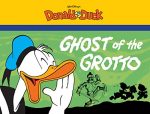
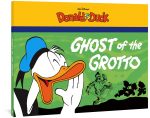
Walt Disney’s Donald Duck and the Ghost of the Grotto


By Carl Barks (Fantagraphics Books)
ISBN: 978-1-60699-779-6 (TPB/Digital edition)

Win’s Christmas Gift Recommendation: The Utter Acme of All-Ages Entertainment… 10/10

Carl Barks was born in Merrill, Oregon in 1901. He grew up in rural areas of the West during some of the leanest times in American history. He tried his hand at many jobs before settling into the profession that chose him. His early life is well-documented elsewhere if you need detail, but briefly, Barks worked as an animator at Disney’s studio before quitting in 1942 to work in the new-fangled field of comic books.

With cartoon studio partner Jack Hannah (another occasional strip illustrator) Barks adapted a Bob Karp script for an animated short into the comic book Donald Duck Finds Pirate Gold. Published as Dell Four Color Comics Series II #9 in October of that year – and although not his first published comics work – it was the story that shaped the rest of Barks’ career.

From then until his first official retirement in the mid-1960s, Barks worked in self-imposed seclusion, writing and drawing and devising a vast array of adventure comedies, gags, yarns and covers that gelled into a Duck Universe of memorable, highly bankable characters. These included Gladstone Gander (1948), Gyro Gearloose (1952), Magica De Spell (1961) and the nefarious Beagle Boys (1951), all supplementing Disney’s stable of cartoon actors. His greatest creation was undoubtedly curmudgeonly, energetic, paternalistic, money-mad giga-gazillionaire Scrooge McDuck: the World’s wealthiest winged nonagenarian…

Although producing all that landmark material Barks was just a working guy, generating cover art, illustrating other people’s scripts when asked and contributing stories to the burgeoning canon of Duck Lore. Only after Gladstone Publishing began re-packaging Barks material – and a selection of other Disney strips – in the 1980s, did he discover the well-earned appreciation he never imagined existed…

So potent were his creations that they inevitably fed back into Disney’s animation output itself, even though his brilliant comic work was done for licensing company Dell/Gold Key, and not directly for the studio. The greatest tribute was undoubtedly the animated series Duck Tales: heavily based on his works.

Barks was a fan of wholesome action, unsolved mysteries, rationality-based fantasy and epics of exploration. This led to him perfecting the art and technique of the blockbuster quest tale: blending wit, history, plucky bravado and wide-eyed wonder into rollicking rollercoaster romps to utterly captivate readers of every type and vintage. Without the Barks expeditions, there would never have been Indiana Jones

Throughout his working life Barks was blissfully unaware that his work (uncredited by official policy like all Disney’s cartoon and comic book output) had been singled out by a rabid and discerning public as being by “the Good Duck Artist”. When some of his most dedicated fans finally tracked him down, his belated celebrity began.

In 2013 Fantagraphics Books began collecting Barks’ Duck Stuff in wonderful, carefully curated archival volumes, tracing his output year-by-year in hardback tomes and digital editions that finally do justice to the quiet creator. These will eventually comprise the Complete Carl Barks Disney Library. The publisher also placed some of the most engaging (How to choose? How to choose?) in three accessible landscape paperback collections. At 185 by 140 mm, they are the perfect size to introduce kids to the master’s masterpieces. They’re all available in digital formats, and this particular tome has a spooky Halloween vibe to further entice you…

The majority of inclusions here come from 1947, so please be aware that – despite Bark’s diligent research and careful, sensitive storytelling – modern readers might be upset by some depictions crafted over seven decades ago…

It begins eponymously on a nautical note: ‘Donald Duck and the Ghost of the Grotto’ is an early masterpiece originating in Four Color #159 (August 1947), with Donald and the rowdy, know-it-all nephews who live with him currently residing in the West Indies, running a kelp boat and harvesting seaweed from the abundant oceans. Here, Huey, Dewey and Louie are the sensible ones in a risky, get-rich-quick venture. Although prime catalysts of comedic chaos in other situations when the mallard miser was around, in Barks’ comics the devilishly downy ducklings’ usual assigned roles were as smartly sensible, precocious and a just a bit snotty kid-counterfoils to their “unca”, whose inescapably irascible nature caused him to act like an overgrown brat most of the time. Nevertheless, all too often the kids fell into temptation, reverted to type and fell prey to a perpetual temptation to raise a ruckus…

When a freak accident temporarily strands them on an isolated reef, Donald and the lads discover a long-lost, shipwrecked galleon, encounter an ongoing abduction mystery dating back centuries, battle genuine monsters, confound a particularly persistent phantom and win and lose again a fabulous treasure in a  thrilling romp and supremely beguiling mystery that has never dated…

Originally from Four Color #147 (May), ‘If the Hat Fits’ is an 7-panel gag split over two of these landscape pages, detailing chapeau japery, and precedes ‘Fashion in Flight’ (FC#178, December), exposing hot-headed Donald’s views on car culture.

Thanks to the nephews and some imprudent bee-keeping, a potty scheme to make more cash becomes another painful and humiliating experience as the bellicose bird tries growing blooms commercially in his garden in ‘Donald’s Posy Patch’ (Walt Disney’s Comics and Stories #80, May 1947), after which ‘Turn for the Worse’ (Four Color #178 again) reveals just how annoying – and violent – people looking for directions can become…

From the same issue, ‘Machine Mixup’ sees kitchen confusion for Donald as he experiences the downside of modern white goods, before ‘Donald Mines his Own Business’ (WDC&S #81 June) finds the loco parent-ish duck and his boys prospecting in New Mexico. It’s barely moments before they all fall foul of America’s post-war arms rush and missile-race, with devastating and spectacular consequences…

From FC #189 (June 1948) ‘Bird Watching’ exposes the hidden perils of the gentle hobby before  superstition is painfully debunked in ‘Horseshoe Luck’. The fluffy fun finally finishes with an epic farrago – first seen in WDC&S #86 (January 1947) – as telling tale exposes the rise and fall of ‘Fireman Donald’ whose smug hubris ultimately deprives him of a job he’s actually good at!

Carl Barks’ efforts are readily accessible through a number of publications and outlets and every one of his stories is a treasure beyond price. If you’re new to his work and have never experienced his captivating magic, Walt Disney’s Donald Duck and the Ghost of the Grotto is a perfect introduction. No matter what your age or temperament, you can discover “the Hans Christian Andersen of Comics” simply by applying yourself and your credit cards to any search engine.

Always remember, a fan’s got to do what a fan’s got to do and treasure is out there just waiting to be unearthed…
© 2014 Disney Enterprises, Inc. All rights reserved.

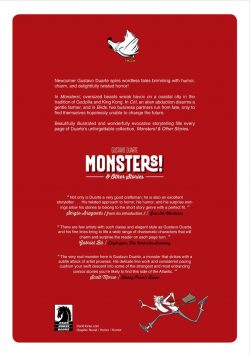
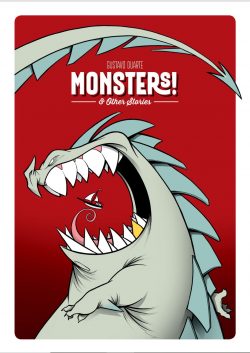
Monsters! and Other Stories


By Gustavo Duarte (Dark Horse)
ISBN: 978-1-61655-309-8 (PB) eISBN: 978-1-62115-886-8

In comics, Less Is More.

You start with pictures. They should be clearly understood. Deathless prose so often just gets in the way…

This stunning breakthrough compilation from Brazilian graphic raconteur Gustavo (Bizarro; Guardians of the Galaxy; Dear Justice League) Duarte’s earliest works is a sublime masterclass in cartoon comedy: a trio of engrossing mini-epics each hallmarked by breakneck pace, captivating atmosphere and escalating conceptual insanity, all delivered via inspired sight-gags and superb drawing.

Following an effusive Introduction extolling the virtues of pantomimic comics and the sheer wonder of silent comedy from indisputable arch-maestro Sergio Aragonés, a twisted triptych of hilarious terror tales opens with ‘Có!’ (2009).

Here is a sardonically sinister saga of alien abductions, pig husbandry and commercial chicken-rearing practises, tinged with bizarre transformations, existential confrontations and the unmitigated horror of incomprehensible extraterrestrial agendas…

Anthropomorphically unfolding next, ‘Birds’ (2011) pecks at the cutthroat business world. One ordinary day a sinister murder mystery ensues, with two avian office workers having the worst day of their lives. A tense situation swiftly degenerates into a surreal bloodbath where only Death holds true dominion…

Concluding this soundless extravaganza is bombastic battle bout ‘Monsters!’ from 2012. This is a manic celebration of Kaiju (that’s city-stomping, rampaging giant beasties to old folk like you and me) as a jaded recreational angler reels in a big catch before becoming one as a colossal lizard wades ashore to tear up the town and literally sample the night life. As the creature inevitably attracts gargantuan rivals ashore for a showdown and the human populace panic, an elderly gentleman patiently gathers ingredients for a very ancient and special potion. He’s seen this all before and has the perfect solution…

This manic, mostly monochrome tome is the acme of artistic thrills and chills, perfectly capturing the addictive wonderment of monster stories and crafted by a master of fun and thrills.

Less is More. Silence is Golden. Get this Book.
© 2009, 2011, 2012, 2014 Gustavo Duarte Publications, Inc. All rights reserved.

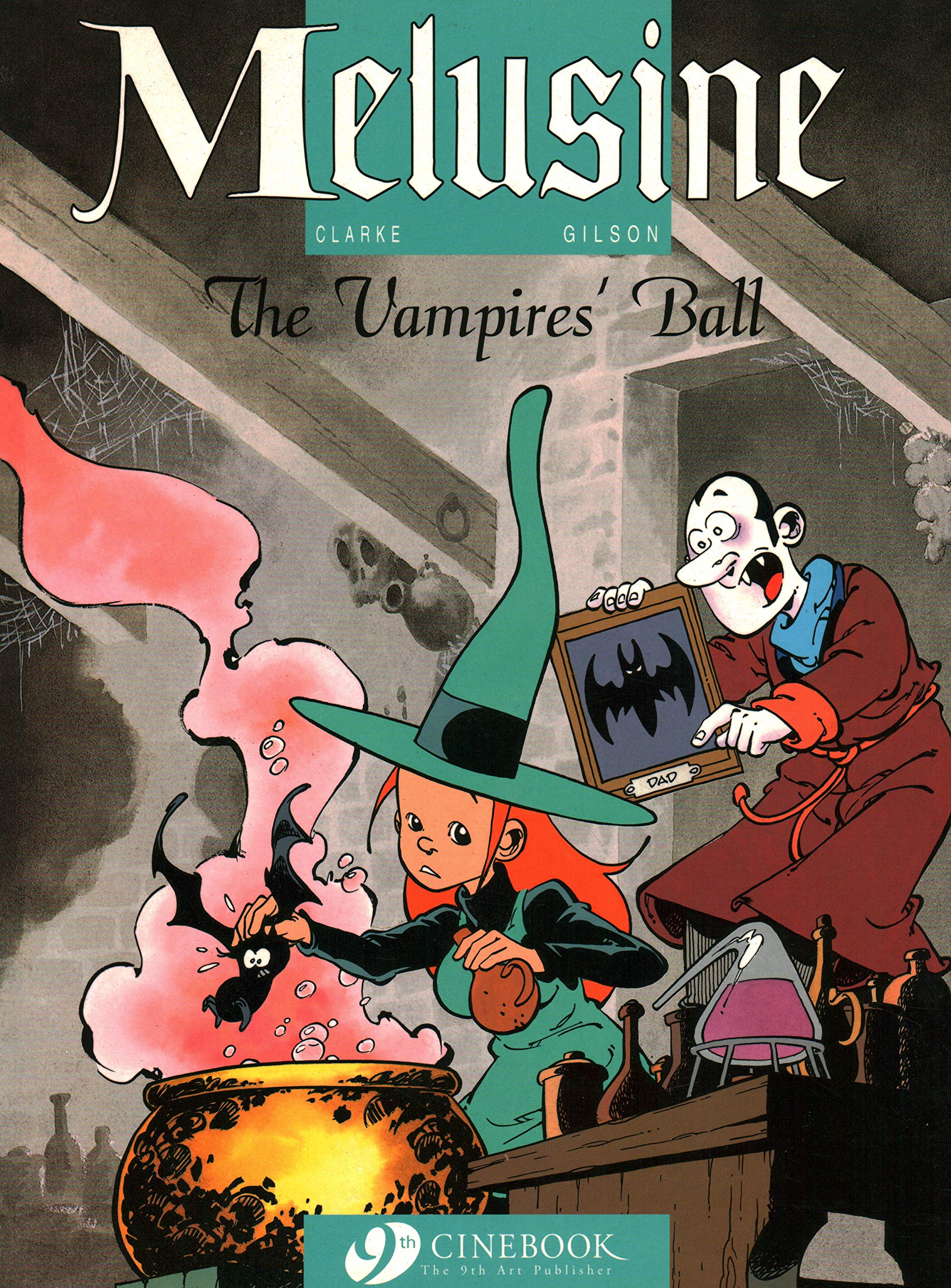
Mélusine volume 3: The Vampires Ball


By Clarke & Gilson, coloured by Cerise and translated by Jerome Saincantin (Cinebook)
ISBN: 978-1905460694 (Album PB/Digital edition)

Witches – especially cute and sassy teenage ones – have a long and distinguished pedigree in fiction. One of the most engaging first appeared in legendary Belgian magazine Le Journal de Spirou in 1992. Mélusine is actually a sprightly 119-years old and spends her days – and many nights – working as an au pair/general dogsbody to a most ungracious family of haunts and horrors inhabiting a vast monster-packed, ghost-afflicted chateau. It pays her bills whilst she diligently studies to perfect her craft at Witches’ School…

The long-lived much-loved feature is presented in every format from one-page gag strips to full-length comedy tales, all riffing wickedly on supernatural themes and detailing her rather fraught life, filled with the demands of the appallingly demanding master and mistress of the castle and even her large circle of exceedingly peculiar family and friends.

The strip was devised by writer François Gilson (Rebecca, Cactus Club, Garage Isidore) and cartoon humourist Frédéric Seron – AKA Clarke – whose many features for the all-ages LJdS and acerbic adult humour publication Fluide Glacial include Rebecca, Les Cambrioleurs, Durant les Travaux, l’Exposition Continue… and Le Miracle de la Vie.

Under pen name Valda, Seron also created Les Babysitters and as Bluttwurst Les Enquêtes de l’Inspecteur Archibaldo Massicotti, Château Montrachet, Mister President and P.38 et Bas Nylo.

A former fashion illustrator and nephew of comics veteran Pierre Seron, Clarke is one of those insufferable guys who just draws non-stop and is unremittingly funny. He also doubles up as a creator of historical and genre pieces such as Cosa Nostra, Les Histoires de France, Luna Almaden and Nocturnes – apparently he is free from the curse of having to sleep…

Collected editions began appearing annually or better from 1995, with the 27th published in 2019. Thus far five of those have transformed into English translations thanks to the fine folk at Cinebook.

Originally released on the Continent in 1996, Le bal des vampires was the second Mélusine album, setting the scene delightfully for newcomers as the majority of content is comprised of 1- or 2-page gags starring the sassy sorceress who makes excessive play with fairy tale and horror film icons, conventions and themes.

When brittle, moody Mélusine isn’t being bullied for her inept cleaning skills by the matriarchal ghost-duchess running the castle, ducking cat-eating monster Winston, dodging frisky vampire The Count or avoiding unwelcome and often hostile attentions of horny peasants and over-zealous witch-hunting priests, the domestic enchantress can usually be found practising spells or consoling and coaching inept, un-improvable and lethally unskilled classmate Cancrelune.

This sorry sorceress-in-training is a sad case: her transformation spells go awfully awry, she can’t remember incantations and her broomstick-riding makes her a menace to herself, any unfortunate observers and even the terrain and buildings around her…

At least Mel’s boyfriend is a werewolf, so he only troubles her a couple of nights each month…

This turbulent tome features the regular procession of slick sight gags and pun-ishing pranks but also features some longer jocular jaunts such as the fate of a rather rude knight in armour, a brush with what probably isn’t a poltergeist in the Library and Mel’s unfortunate experience with daunting dowager Aunt Adrezelle’s patented Elixir of Youth…

Wrapping up a barrage of ghostly gaffes, ghastly goofs and grisly goblin gaucheries is the sordid saga of the eternal elite at their most drunkenly degenerate, as poor Mélusine is not only expected to organise and cater ‘The Vampires’ Ball’ but has to stick around and handle the explosive clean-up for those especially intoxicated Nosferatus who tend to forget why the revelry has to die down before dawn…

Wry, sly, fast-paced and uproariously funny, this compendium of arcane antics is a great taste of the magic of European comics and a beguiling delight for all lovers of the cartoonist’s art. Read before bedtime and don’t eat any hairy sweets…
Original edition © Dupuis, 2000 by Clarke & Gilson. All rights reserved. English translation 2007 © Cinebook Ltd.

Benny Breakiron volume 4: Uncle Placid


By Peyo & Gos with backgrounds by François Walthéry: translated by Joe Johnson (Papercutz/NBM)
ISBN: 978-1-59707-717-0 (HB Album/Digital edition)

Let’s just clear up something here. Although they are both magnificent producers of comics past and present – and either singly or in collaboration – Belgium and France are not “the same”. Shared cultural mores and language, interlinked history and adjacent geographies have may have generated superficial similarities but the inventors of international icons Tintin and Asterix have always been as much defined by their unique views as mutual visions. All of which is my blathering brain-fodder to introduce a Belgian “superhero” today and a very different French one tomorrow…

In 1928, Pierre Culliford was born in Belgium to a family of British origin dwelling in the Schaerbeek district of Brussels. An admirer of the works of Hergé and the American comics licensed to Le Journal de Mickey, Robinson and Hurrah!, the lad honed his own artistic skills but the war and family bereavement forced him to forgo further education and get a job…

After working as a cinema projectionist, in 1945 Culliford joined C.B.A. animation studios, where he met future comics megastars André Franquin, Maurice De Bevere – who would become Morris – and Eddy Paape. When the studio closed, Pierre briefly studied at the Brussels Academy of Fine Arts before moving full-time into graphic advertising. In his spare time, he began submitting strips to the burgeoning post-war comics publishers.

His first sale was in April 1946. Pied-Tendre was a tale of American Indians that landed in Riquet, the comics supplement to the daily L’Occident newspaper. Further sales to other venues followed and in 1952 his knight Johan found a permanent spot in Le Journal de Spirou. Retitled Johan et Pirlout, the strip prospered and in 1958 introduced a strange bunch of blue woodland gnomes into the ongoing tale. They were called Les Schtroumpfs.

Culliford – by now using the nom de plume Peyo – would gradually turn those adorable little mites (known to most of the world as The Smurfs) into an all-encompassing global empire, but before being sucked onto that relentless treadmill, he found time to create a few other noteworthy strips such as the titanic tyke on view here today.

In December 1960, Benoît Brisefer – AKA Benedict Ironbreaker and/or (in Dutch) Steven Sterk – debuted in Le Journal de Spirou #1183. With some sly tips of the hat to Siegel & Shuster’s Superman – and Superboy – these wryly bucolic adventures celebrated a small boy with superhuman strength, speed, durability and vitality living in a generally quiet and unassuming little Belgian town.

Quiet, well-mannered, gentle and a bit lonely, Benny just happens to be the mightiest boy on Earth: able to crush steel or stone in his tiny hands, leap huge distances and run faster than a racing car. He is also generally immune to all physical harm, but his fatal and peculiarly ubiquitous weakness is that his astounding strength deserts him whenever he catches the slightest hint of a cold…

Most kids avoid him. It’s hard to make friends or play games when the merest kick pops a football like a balloon or a shrug can topple trees…

Benny seldom seeks to conceal his abilities – in fact he informs anyone who will listen – but other than startled crooks and bad guys, somehow no adults ever believe or catch on. They usually think he’s telling fibs or boasting and whenever he attempts to prove his claims, the unlucky lad gets another dose of galloping sniffles…

Well-past-it Brits of my vintage might remember him from weekly comics in the 1960’s. As Tammy Tuff – The Strongest Boy on Earth – and latterly as Benny Breakiron or Steven Strong, our beret-wearing champion appeared in Giggle and other periodicals from 1967 onwards.

With Peyo’s little blue cash-cows taking up ever larger amounts of his concentration and time, other members of his studio assumed greater responsibilities for Benoît/Benny. Years passed and Will (Willy Maltaite), Gos (Roland Goossens), Yvan Delporte, François Walthéry and Albert Blesteau all pitched in, with Jean Roba crafting many eye-catching Spirou covers, but by 1978 the demands of the Smurfs were all-consuming and all the studio’s other strips were retired.

You can’t keep a good super-junior down, though, and after Peyo’s death in 1992, his son Thierry Culliford and cartoonist Pascal Garray revived the strip, adding six more volumes to the eight generated by Peyo and his team between 1960 and 1978.

Thanks to the efforts of US publisher Papercutz, the first four (promised fifth release Bodoni Circus still languishes in limbo, but we can always hope…) gloriously genteel, outrageously engaging power fantasies are available to English-language readers. This yarn was originally collected in 1968 as 4th album Tonton Placide, with Peyo, co-writer Walthéry & co-artist Gos tapping into the global spy trend with marvellous aplomb.

It begins in sedate Vivejoie-la-Grande, where the sweet kid goes about his well-meaning, somewhat solitary life: doing good deeds in secret (like quietly popping a piano up to the fifth floor of an apartment block whilst weary delivery men are having a refreshing bevvy in a bar), respecting his elders and being as good a boy as he can…

At school, Prize Day closes and we learn that Benny’s true weakness is maths, although he did win a Good Conduct award and came top in Gym. The happily liberated kids trade tales of the holidays ahead of them and the titanic tyke reveals he’s spending his vacation with his uncle who works for P.O.O.T. Benny explains that his temporary guardian is a civil servant at the Department of “Protection Of Officials Travelling”… an actual armed bodyguard…

Disembarking later at a rural train station, the boy is greeted a by boisterous hulking blonde Adonis and quickly settles into a perfect country idyl, but the rest is ruined the next morning – initially by Uncle Placid’s workout and machine gun practise – but soon after by an urgent visit from the operative’s boss. The colonel needs a capable escort for the Finance Minister of the Principality of Fürengrootsbadenschtein when he collects his nation’s currency printing plates.

It’s such a simple, risk-free job that the Colonel even suggests the bodyguard could bring his current “babysitting assignment” along for the ride. Nobody has any inkling that a ruthless gang know of the potentially lucrative transfer and has begun a complex operation to secure the means of printing their own money…

Dutiful Placid reluctantly agrees, bringing the eager lad along to his Central Bank rendezvous with prickly, obnoxious Minister Mr. Chnik and straight into a complex ambush! With the adults all gassed by a disguised cleaning lady, Benny is completely unobserved when he foils the robbery by plucking her and an observation helicopter out of the sky and wrecking her sportscar-driving backup team.

Listening in from his secret lair, the sinister mastermind behind the plot cannot understand what he’s hearing…

By the time Benny brings the plates back to the bank, everybody is blearily regaining consciousness. As usual, nobody believes his story – or his polite claims that he’s really strong for his size – but the job is reassessed as highly risky. A police convoy is despatched, but the immediacy of the crisis means the little boy has to stay with Placid – which is fine with Benny…

As the plates, Mr. Chnik, Placid and Benny set out on a fraught drive to the Principality, they are dogged by cautious observers: career criminals who are having their own problems acclimatising to modern innovations like guns and shoes that double as radio communicators and tracking devices. Their reticence and ineptitude does nothing for the Boss’ manners or patience…

The covert reconnaissance leads to a massive, spectacular multi-vehicle highway ambush, and Placid cannot understand how they all survive the barrage of bullets and car crash. He does not believe it was Benny’s incredible intervention or that the kid subsequently clobbered a small army of thugs and armoured ATVs…

Now on high alert, Placid opts for subterfuge, taking his charges undercover and getting ever closer to Fürengrootsbadenschtein by commercial plane, trains and automobiles. At every stage, progress is stymied by the Boss and his ubiquitous operatives, with the villains winnowed down by the incredible – unseen – actions of the weird kid in the black beret…

Ultimately, however, the mastermind succeeds in capturing his targets, only to meet his match at his moment of triumph when Benny at last loses his temper…

A masterpiece of timing and breakneck pace, and deliciously informed by the 1960s pop culture espionage fad, Uncle Placid delivers daft delights via bombastic bouts of uproarious slapstick comedy action. A superbly stirring spoof with echoes of classic comedies such as Carry on Spying, The Intelligence Men or The Spy with a Cold Nose, it displays the wonder boy’s resolute dynamism, helpful nature and need to be a good citizen: blending deft wit with hilarious stunts. Here is another fabulously winning fantasy of childhood agency and validation, offering a distinctly Old-World spin to the notion of superheroes by providing adventure and chortles for all.
© Peyo™ 2014 – licensed through Lafig Belgium. English translation © 2014 by Papercutz All rights reserved.