
IR$ volume 1: Taxing Trails


By Vranken & Desberg, coloured by Coquelicot: translated by Luke Spear (Cinebook)
ISBN: 978-1-905460-51-9 (Album PB)

The most appetising thing about European comics (and manga too, although we only ever see the tip of that vast iceberg in English) is the sheer breadth of genres, styles and age ranges of material available.

The same used to be true of British and US comics, but creeping cultural colonisation by calcified fan-bases has slowly but surely eradicated many types of tale that might pique interest beyond the generalised ghettoes of superheroes, space opera, sexy horror and merchandised adaptations. Even crime and war comics are a rare exception these days.

Thus, finding that this quirky but exceedingly readable thriller series with a tantalising twist has finally arrived as eBooks is a welcome treat even if the Franco-Belgian original first saw print in 1999.

The unlikely champion of these sagas is a civil servant with the US government. Once upon a time these dedicate civil servants started employing super-cool and infallibly effective agents to go after the type of tax dodger far beyond the reach of the law. These days, every country should have one…

Belgian writer Stephen Desberg remains one of the bestselling comics authors in France. Son of an American lawyer (who was the distribution agent for Metro-Goldwyn Mayer) and a French mother, he was born in Brussels in 1954 and studied law at Université Libre de Bruxelles. However, he dropped out to follow a winding path into the comics biz…

Starting with plots and eventually scripts for Will (AKA Willy Maltaite) on Tif et Tondu in Le Journal de Spirou, he developed into a reliable jobbing creator on established strips for younger readers before launching his own in the Stéphane Colman illustrated Billy the Cat (a funny animal strip, not the DC Thomson superhero series).

Thereafter came 421 with Eric Maltaite, Arkel (Marc Hardy), Jimmy Tousseul (with Daniel Desorgher) and many others. During the 1980s, he gradually redirected his efforts to material for older readerships (such as The Garden of Desire), and in 1999 created this modern thriller before capping it all a year later with exuberant historical drama Le Scorpion joining his catalogue of major hits.

Bernard Vranken was an award-winning artist by the time he was fifteen and working on Le Journal de Tintin a year later. Whilst studying architecture at Saint-Luc, he took some comics courses by legendary illustrator Eddy Paape at St. Gilles and his true career path was set. Vranken was crafting short stories for A Suivre when he met Desberg, and in 1996 they collaborated for the first time on epic romance Le Sang Noir. Three years later they traded love for money and launched IR$…

The premise is simple and delicious, and this English edition doubles your money by combining the first two albums – La voie fiscal and La stratégie Hagen – into one compelling compilation.

As Taxing Trails it opens with stylish American mystery man Larry B. Max calling his new favourite chat-line girl Gloria Paradise (Larry hates complications in his life) to kill some time before heading out.

A few days previously a Swiss banker had been rather ostentatiously splurging cash on a visit to California when he ended up as a freeway statistic. However, his spending spree and sudden demise raised a few red flags…

A right place, wrong time kind of guy, Larry was decisively ending a convenience store hold-up he’d stumbled into when he got a call and soon was working his way up a deadly chain of wealthy reprobates trying to track down who had issued the contract on the banker…

Before long Max identifies the former Luc Cretier as a minor banker and major blackmailer who pushed someone too hard and paid the price. That said, the person he was putting the squeeze to is of far more interest to the tax detective.

Jewish-American Abraham Loewenstein is a rags-to-riches holocaust survivor who turned tragedy into a life of success and good works. Larry, however, has seen something the rest of the world has not, and his interview with the aged activist (as an author investigating the scandal of Jewish gold illegally held in Swiss Banks) puts him on another profitable track…

Those esteemed institutions always found some legal chicanery to deny the claims of survivors and family members who tried to attempted to retrieve their property, but recent years – due to the efforts of people like Loewenstein – have seen frustrated victims begin to win justice through court cases exposing bank practises.

Now Larry’s forensic investigation leads straight to those so-secretive Swiss Banks and a generations-long scandal regarding the illegal retention and redistribution of Jewish funds deposited whilst Hitler was rising to power.

Although the Nazis are apparently long gone, their heritage of plunder remains in those Helvetic vaults and somehow, enigmatic, untouchable multi-billionaire survivor of the Death Camps Moshe Geldhof is involved…

Larry knows he’s on to something when his car is sabotaged and less feasible accidents – such as a girl on a motorbike blasting him with a machinegun – complicate his investigation. Undaunted, he confronts Geldhof in a fancy New York restaurant and finds hot lead is the first course on the menu…

After Abraham is murdered for knowing too much, a spectacular, breakneck car chase results in Max arresting Geldhof, but for once, the infallible tax man has grossly underestimated the sheer power of money…

The story concludes in The Hagen Strategy as the scene shifts to 1943 for the incredible truth about Moshe Geldhof, as the indefatigable Max delves deeper into the history of the man who has the ear of governments, especially Israel’s…

In America, the man himself seems to be “too big to fail” but his sudden liberation only pushes Larry to greater efforts. That means heading to Bern and cultivating the attentions of Geldof’s ferociously Amazonian daughter Lenni whilst dear daddy is tangled in red tape…

No sooner has Larry broached the palatial fortress-like mansion, however, than the sinister patron turns up and the hunt is on, with a cadre of heavily armed killers at his well-shod heels…

Larry has finally gleaned the true appalling secret of the contemporary Croesus and the truth is something his government can’t cover up for him. Now he has only one possible ally in his all-or-nothing war against the money-man… and places a call to Mossad.

Sleek, lean, almost Spartan in its lithe, muscular tribute to James Bond movies, IR$ is a splendidly effective, stylishly gritty thriller series to delight fans of modern mayhem in all its literary and artistic forms.

Only death and taxes are inescapable, and Larry B. Max offers either or both in one suavely economical package…
Original edition © 1977 EDITIONS DU LOMBARD (Dargaud-Lombard) 1999-2000 by Desberg &Vrancken. English translation © 2008 Cinebook Ltd.
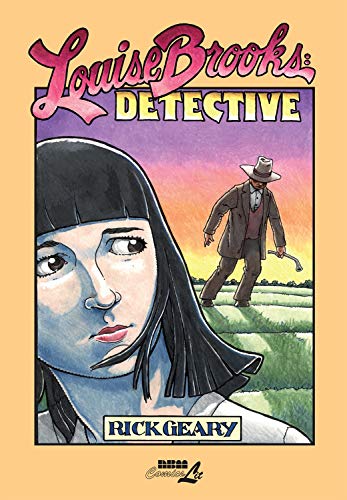

Louise Brooks: Detective


By Rick Geary (NBM/Comics/Lit)
ISBN: 978-1-56163-952-6 (HB)

Rick Geary is a unique talent not simply because of his style of drawing but especially because of his tale-telling methodology. He’s best known for crime examinations via his Treasury of Victorian Murder and Treasury of XXth Century Murder series but also worked for decades as an Underground cartoonist and freelance illustrator of strange stories, published in locales as varied as Heavy Metal, Epic Illustrated, Twisted Tales, National Lampoon, Bizarre Sex, RAW, High Times and elsewhere. He possesses a unique gift for sublimely understated storytelling: stringing together seemingly unconnected streams of narrative to compose moving, often melancholy and always beguiling yarns. He is an international treasure.

Geary has grown into a grand master and unique presence in both comics and true crime literature through those aforementioned forensic reconstructions. He has entertainingly analysed some of the most infamous murder mysteries since policing began, but here marvellously repurposes his eye for historical verity to concoct something new and truly fascinating.

A fixation with mercurial silent movie star Louise Brooks coincides with the recorded historical facts of her fall from global fame and subsequent disappearance into the American heartland. A little casual speculation, a few wry ruminations and this is the result…

In ‘Louise: An Introduction’, Geary précis’ how, for a brief flickering moment in 1927, dancer/actress Louise Brooks was the toast of global cinema: her face known from America to Zanzibar before she inexplicably declined to renew her Paramount Pictures contract, moved to Germany to star in erotic classic Pandora’s Box and began an inexorable decline into obscurity.

She returned to the US in 1930, but parts were hard to find. Returning to club dancing, she married twice and divorced both men by 1940 when, aged 33, she suddenly chucked everything and returned to the family home in Kansas…

Following a triptych of the author’s trademark maps (Central Wichita, the area south east of the city and rural Burden, Kansas in 1941-1942) the cartoon chapter-play begins with ‘Back to Wichita’ as Louise retreats to a fractious, unwelcoming Brooks household and desperately begins hunting for a job. Increasingly, however, she is drawn into the town’s only topic of conversation: the seemingly impossible “locked-room” murder of wealthy widow Edna Leach, which is like something out of a movie…

Louise strikes up an acquaintance with a mousy shop assistant at the music store, but ‘My Friend Helen’ only has two topics of conversation: her never-seen boyfriend Walden Pond and the grisly demise of Mrs. Leach…

After America enters World War II and her latest business venture fails, Louise sets upon a new career path as a writer. Such ‘A Pilgrimage’ is daunting so she seeks out a former New York playwright who has lately taken residence in nearby Burden.

Borrowing her brother’s car, she sets off one morning in June 1942, having first made plans to meet Helen and her elusive beau, but encounters ‘Unforeseen Difficulties’ and stumbles upon a deeply personal tragedy inadequately explained by ‘Helen’s Story’…

Finding herself lost in the middle of an actual murder mystery where everything is painfully real and terrifying, the performer soon realises she even has doubts about ‘The Victim’ and reluctantly takes on the unlikely role of ‘Louise Brooks, Detective’…

It’s a part she was born to play, but after nearly losing her own life putting together the disparate strands and winkling out the culprit, she says ‘Farewell, Wichita’ and heads back to New York with reinvigorated dreams and her future again filled with untapped potential…

Combining a superlative talent for laconic prose, incisive observation and meticulously detailed pictorial extrapolation with his fascination with the lethal propensities of humanity, Geary’s forensic eye has scoured police blotters, newspaper archives and history books to compile his irresistibly enthralling documentaries. Happily, all that expertise is soundly utilised for his first major fiction feature and once again he has proved bloody murder is always a black and white affair…

A superbly engaging crime conundrum available in doughty hardback and accessible digital formats, the only thing that could improve this book is a sequel…
© 2015 Rick Geary.

A Thousand Coloured Castles


By Gareth Brookes (Myriad Editions)
ISBN: 978-0-993563-30-0 (HB)

The world is filled with amazing women passing largely unnoticed by the loud, shouty males with their hands on the tillers of history and the media, but seldom the kettle or shopping bags. This amazing tale is broadly based on one of them…

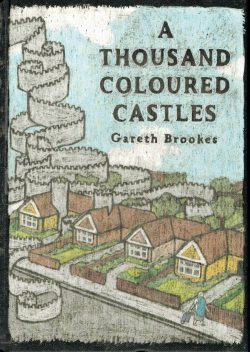
It comes to us from an equally intriguing source. Gareth Brookes is a capital-A Artist, printmaker, textile creator and educator who began literally crafting comics in 2015 with his astounding and disturbing epic (and forthcoming review) The Black Project.

With A Thousand Coloured Castles, RCA graduate Brookes sealed a growing reputation for challenging and rewarding graphic narratives of the artisanal kind. Brookes is a deep and slyly humorous thinker with his roots in the Littlest of Englands and a skewed eye to storytelling. This captivating hardback tome was created solely from dark wit and wax crayons, resulting in a truly tactile and absurdly otherworldly viewing experience…

Myriam is in her declining years: married to a set-in-his-ways old know-it-all curmudgeon, as seen in most traditionally happy families and captured on paper by Raymond Briggs and TV sitcoms by Richard Wilson.

Fred spends most of his time complaining about everything, which is why it takes a very long time for him to notice that Myriam’s eyesight is fading. It takes even longer for him to grasp that she’s increasingly subject to wild, abstract and utterly convincing hallucinations: vivid visions and shapes that baffle and bewilder even as they light up her drab, interminable existence.

Of more concern to Fred is the wife’s increasing fascination with the overgrown, unkempt back garden next door. He’s happy to moan about it in private but doesn’t want to engage in potential suburban hostilities with the woman living there.

Myriam, however, keeps seeing a strange bedraggled little boy trapped there, even though everybody knows that’s not possible. All except her toddler grandson Jack, who’s always happy to see things her way…

And thus unfolds a multi-layered observation of social norms and aberrant behaviours, supposition and expectation, declining faculties and domestic evil that is truly magical to behold and impossible to predict.

Despite her condition, Myriam proves that she knows what’s what and what’s right as events spiral to an inevitable conclusion and answers are shockingly forthcoming…

Gentle, genteel and utterly beguiling, this is a masterpiece of British fantasy understatement with a potent underpinning of quietly desperate lives truly lived…
© Gareth Brookes 2017. All rights reserved.

Sacred Heart


By Liz Suburbia (Fantagraphics Books)
ISBN: 978-1-60699-841-0

What would have happened when you were a teenager and your parents went away for the weekend?

What if they didn’t come back for four years? And what if the same thing happened to every household in your little town at the same time?

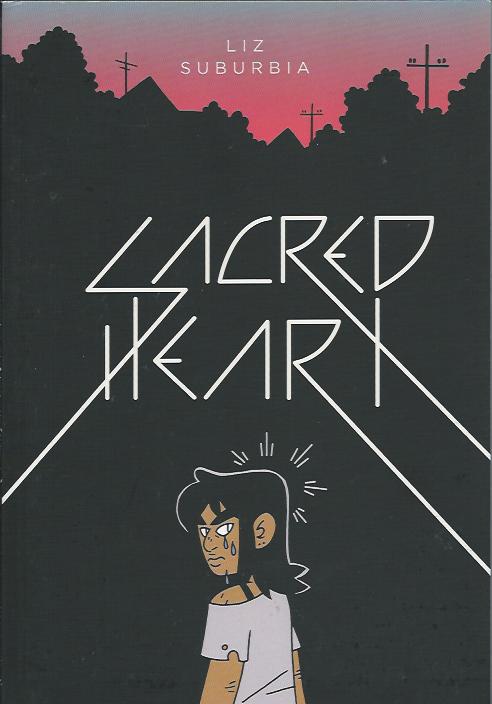
Visually, elements of Charles Burns and Johnny Ryan crackle and charm beside graphic echoes of the Hernandez Brothers in Sacred Heart: the stunning graphic novel which tackles the conundrum with perspicacity, near-feral insight, righteous anger and a great deal of sentiment-free warmth.

As much mystery thriller as “Having Come of Age” tale, the mesmerising story opens in little everytown Alexandria which at first glance seems to have gotten a little rowdy of late, but for all the late-night drinking, hot-rodding, incessant partying, lewd behaviour and hijinks is carrying on as best it can.

The older teens are looking after the little kids, school is still attended, the local store still carries provisions and life goes on pretty much as before, even though there hasn’t been a responsible adult in situ for years…

Ben Schiller cares for her rapidly maturing – and consequently increasingly difficult – little sister Empathy; her life-long nerdy punk friend Otto still works part-time at the video store – when he’s not stealing girls’ panties – and he and she still watch weird movies most evenings, trading gossip and stories about who they’re currently seeing…

Elsewhere in their unique community, local garage-band The Crotchmen are the only good thing to see of an evening and Erica‘s baby still hasn’t come.

Jocks still act like meatheads and the pretty girls still chase them whilst standoffish Ben remains involved but apart. She isn’t ignored or reviled these days as she’s devised a method of tattooing which makes her a vital component of the new society…

Recently though, some of the little kids have been acting a little weird: descending into mysticism and fortune telling whilst default storekeeper Jack Brown is claiming that soon he won’t be able to get any more booze or gas for the town’s remaining functional cars, but of course the real downer is how many of the older teens have been found murdered in the last few weeks…

The kids all apparently accept the growing “Dead Kids Club” as a part of life in their little town, but as the summer of excess rolls on towards Fall, things start to change. Firstly Ben and Otto endanger the perfect friendship by bringing sex into the equation, after which an actual adult is seen in town but escapes and Crotchmen’s lead singer joins the casualty list and is replaced with a girl.

Hulking drummer Hugo starts planning how to take his little charges and break out to freedom as the kindergarten seers all predict the end of everything is coming, but worst of all, as colossal storm clouds gather, when Ben discovers who the serial killer is, she can do nothing about it…

Compiled and cunningly rearranged from her webcomic, Liz Suburbia’s chilling yarn is potent, uncompromising yet guardedly hopeful: a glimpse at teenagers who terrify all us old farts as they deal with a dangerous world not by crumbling as we assume they will, but by rising to the challenge and accepting the responsibilities we probably wouldn’t.

Gripping, compelling, rewarding and astoundingly readable, this is a book to exult in.
Sacred Heart © 2015, Liz Surburbia. This edition © 2015 Fantagraphics Books, Inc.

Skin Deep


By Charles Burns (Fantagraphics Books/Penguin)
ISBN: 978-1-60699-167-1 (PB, Fantagraphics) 978-0-14016-543-2 (UK Penguin)

I’s nearly St. Valentine’s day, and the time for extreme efforts for little discernible reward, so here’s a classic treatise on love and affection, inexplicably unattainable in the its native English language. Worth the hunt though…

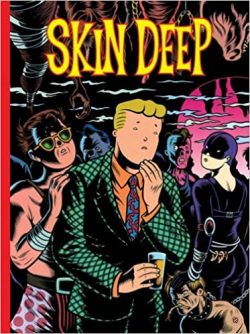
Charles Burns is a creative force with his roots firmly placed in 1950s kids’ culture (B-movies, cartoons, EC comics and especially Mad Magazine) and talented fingers in many areas of the creative media. As an illustrator, graphic designer, photographer, film-maker and especially cartoonist, his slick, precise methodology tells stories and evokes responses from a place that is dark, skewed, beautiful and overwhelmingly nostalgic.

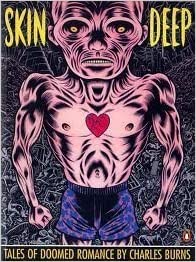
His comics work blends horror, true romance and Film Noir sensibilities with sensationalistic fascination for the grotesque and absurdist; all delivered in a slick, meticulous, heavy linear style reminiscent of woodcut prints; with huge swathes of solid black, like darkness and light suspended and perfectly balanced in a Cold War on every page.

This gigantic softcover (297mm high x 224mm wide) was the third in a series collecting all the artist’s work prior to the landmark publication of the incredible Black Hole, with the three interlinked – or rather perhaps, overlapping – stories here all originating between 1988 to1992. They were slightly revised after debuting in his Big Baby weekly strip and – in the case of ‘A Marriage Made in Hell’ – the legendary Raw Magazine. All in their own manner examine the theme of love in the modern world.

Leading off is ‘Dog-Boy’, the simple tale of a young man who has a cut-rate heart transplant and finds himself increasingly taking on the characteristics of the canine who provided his new ticker. Just because he acts a little differently, does this mean that there is no girl out there for him? This tale formed the basis of a 1991 MTV serial for the Liquid Television TV programme…

This leads to the outrageously funny and deeply unsettling ‘Burn Again’ wherein reformed televangelist Bliss Blister once more falls under the influence of his huckster father, as well as his own wife, who use him to con the religiously gullible. Unfortunately, what only Bliss knows is that God – in the form of a hideous, diabolical extraterrestrial Cyclops – is coming to end mankind’s self-inflicted woes…

The book ends with the aforementioned and intensely disturbing story-within-a-story ‘A Marriage Made in Hell’. When horny new bride Lydia finally marries her war-hero husband she regretfully discovers that he won’t consummate their union. Just what is the fantastic secret of battle-scarred veteran John Dough, and how does Lydia cope with the incredible situation she finds herself trapped in?

As well as these staggeringly dry, wry and funny tales there is also a selection from the Burns sketchbook, a look at some of those altered story-pages and a brief commentary from the artist himself.

This volume is also available as a hardback edition and was previously released as a Penguin book in 1992. You stand more chance of finding that these days, but if you’re intrigued and can read almost any European tongue, this stuff can be yours in the twinkling of a search engine. Funny old world, isn’t it?
© 1988-1992 Charles Burns. All Rights Reserved.

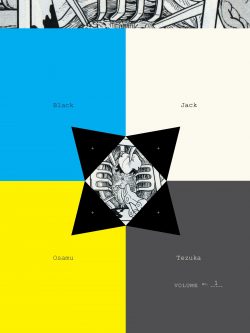
Black Jack volume 1


By Osamu Tezuka, translated by Camelia Nieh (Vertical)
ISBN: 978-1934287-27-9 (Tankōbon PB)

There aren’t many Names in comics. Lots of creators; multi-disciplined or single focussed, who have contributed to the body of the art form, but we don’t have many Global Presences whose contribution have affected generations of readers and aspirants all over the World, like a Mozart or Michelangelo or Shakespeare. There’s just Hergé and Jack Kirby and Osamu Tezuka.

Tezuka was born in Qsaka Prefecture on 3rd November 1928, and as a child suffered a severe illness that made his arms swell. The doctor who cured him inspired him to study medicine, and although Osamu began his professional drawing career while at university, he persevered with his studies and qualified as a doctor too. As he faced a career crossroads, his mother advised him to do the thing that made him happiest. He never practiced as a healer but the world was gifted with such classic cartoon masterpieces as Tetsuwan Atomu (Astro-boy), Kimba the White Lion, Buddha, Adolf and literally hundreds of other graphic narratives. Along the way Tezuka incidentally pioneered, if not created, the Japanese anime industry…

Able to speak to the hearts and minds of children and adults equally, Tezuka’s work ranges from the charming to the disturbing and even terrifying. In 1973 he turned his storyteller’s heart to the realm of medicine and created Burakku Jakku, a lone wolf surgeon living outside society’s boundaries and rules: a scarred and seemingly heartless mercenary working miracles for the right price but also a deeply human wounded soul who makes surgical magic from behind icy walls of cool indifference and casual hostility – think Silas Marner before the moppet turns up or Ebenezer Scrooge before bedtime; except Black Jack never, ever gets soft and cuddly.

These translated, collected adventures – available paperback and digital formats – begin with the frankly startling ‘Is There a Doctor?’, wherein the joyriding son of the richest man in the world is critically injured. The boy’s ruthless father forces Black Jack to perform a full body transplant on an unwilling victim… but the super-surgeon still manages to turn the tables on the vile plutocrat…

Each story is self-contained over about 20 pages, and the second – ‘The First Storm of Spring’ – tells the eerie, poignant tale of a young girl whose corneal transplant has gone strangely awry. Can the handsome boy she keeps seeing possibly be the ghostly original owner of the eye, and if so, what was he truly like?

With ‘Teratoid Cystoma’ the series solidly enters into fantasy territory whilst ramping up the medical authenticity. Tezuka chose to draw in a highly stylised, “Big-foot” manner (he was the acknowledged inventor of the Manga Big-Eyes artistic device) but with increasing dependence on surgical and anatomical veracity, his innate ability to render anatomy and organs realistically truly came to the fore.

A teratonous cystoma occurs when twins are conceived but one of the embryos fails to cohere. Undifferentiated portions of one twin, a limb or organ grows within and nourished by the other. As the surviving twin matures, the enclosed “spare parts” start to distend the body, appearing like a cyst or growth.

For the sake of narrative – and possibly to just plain freak you out – in this story a famous personage wishing total discretion requires the Ronin Doctor to remove a huge growth from her. Many Japanese have a frankly unhealthy prejudice against physical imperfection – for more search “the Hibakusha” – and this case is a much about stigma and position as wellbeing…

The mystery patient’s problem is exacerbated because whenever other surgeons have tried to operate, they have been debilitated by a telepathic assault from the growth. Overcoming incredible resistance, Black Jack succeeds, removing a fully-formed brain and nervous system. Ignoring the disgust of the patient and doctors, he then builds an artificial body for the stunted, sentient remnants; and calls her Pinoko.

‘The Face Sore’ combines Japanese legends of the Jinmenso (intelligent, garrulous tumours) with cases of disfiguring carbuncles and rashes to produce a very scary modern horror story – and by modern, I mean lacking a happy ending…

Pinoko, looking like a little girl (whether she’s a year old or eighteen is a running gag throughout the series) has meanwhile become Black Jack’s secretary/major domo and gadfly. In ‘Sometimes Like Pearls’, she opens a unique parcel addressed to him which leads to some invaluable back-story as the solitary surgeon travels to see his great teacher and learns one final lesson…

‘Confluence’ provides a little twisted romance as the medical maverick loses out on a chance at love when undertaking a radical procedure to save a young woman from uterine cancer, whilst in ‘The Painting is Dead!’ an artist caught in a nuclear test endures a full brain transplant just to be able to finish his painting condemning atomic warmongers.

‘Star, Magnitude Six’ exposes the pompous venality and arrant cronyism, not to mention entrenched stupidity, of hospitals’ hierarchical hegemonies in a tale satisfyingly reminiscent of Steve Ditko’s H series and J series of polemical objectivist parables before the ruthless outlaw surgeon meets his female counterpart in the bittersweet ‘Black Queen.’

‘U-18 Knew’ moves us into pure science fiction territory when the unlicensed doctor is hired by an American medical facility to operate on a vast medical computer that has achieved true sentience, leading to some telling questions about who – and what – defines “humanity.”

An annoying sidebar I feel compelled to add here: For many years broad, purely visual racial stereotypes were common “shorthand” in Japanese comics – and ours, and everybody else’s. They crop up here, but please remember that even at the time this story originated from, this was in no way a charged image; Tezuka’s depictions of native Japanese were just as broad and expressionistic. A simple reading of the text should dispel any notions of racism: but if you can’t get past these decades-old images, just put the book down. Don’t buy it. It’s your loss.

A heartrendingly powerful tale of determination sees a young polio victim almost fail a sponsored walk until an enigmatic stranger with a scarred face bullies, abuses and provokes him to finish. It also provides more clues to Black Jack’s past in ‘The Legs of an Ant’ before this first collection concludes with ‘Two Loves’ as a van driver deprives the greatest sushi artist in the world of his arm and his dreams when he runs him over. The lengths to which the driver goes to make amends are truly staggering… but sometimes Fate just seems to hate some people…

One thing should always be remembered when reading these stories: despite all the scientific detail, all the frighteningly accurate terminology and trappings. Black Jack isn’t medical fiction; it is an exploration of morality with medicine raised to the level of magic… or perhaps duelling.

This is a saga of personal combat, with the lone gunfighter battling hugely oppressive counter-forces (the Law, the System, himself) to win just one more victory: medicine as mythology, battles of a prescribing Ronin with a Gladstone bag.

Elements of rationalism, science-fiction, kitchen sink drama, spiritualism and even the supernatural appear in this saga of Japanese Magical Realism to rival the works of Carlos Fuentes and Gabriel García Márquez. Mostly though, these are highly addictive tales of heroism; ones that that will stay with you forever.
© 2008 by Tezuka Productions. Translation © 2008 by Camelia Nieh and Vertical, Inc. All Rights Reserved.

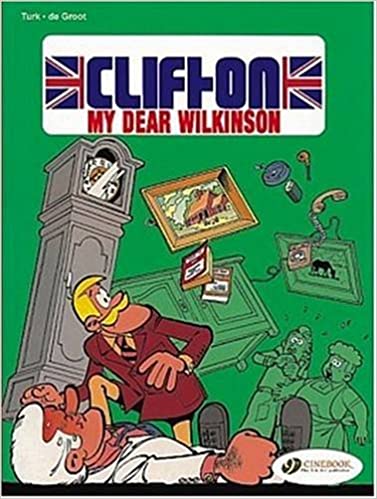
Clifton volume 1: My Dear Wilkinson


By De Groot & Turk translated by Luke Spear (Cinebook)
ISBN: 978-1-905469-06-9 (Album PB)

For some inexplicable reason most of Europe’s comics cognoscenti – especially the French and Belgians – are fascinated with us Brits. Gosh, I wonder if that’s still the case…?

Whether it’s Anglo air ace Biggles, indomitable adventurers Blake and Mortimer, the Machiavellian machinations of Green Manor or even the further travails of Long John Silver, or the amassed amateur sleuths of the Detection Club, the serried stalwarts of our Scepter’d Isles have cut a dashing swathe through the pages of the Continent’s assorted magazines and albums.

And then there’s Clifton…

Originally devised by child-friendly strip genius Raymond Macherot (Chaminou, Les croquillards, Chlorophylle, Sibylline) for Le Journal de Tintin, the doughty troubleshooter first appeared in December 1959.

After three albums worth of short strip material – compiled and released between 1959 and 1960 – Macherot left the magazine to join arch-rival Le Journal de Spirou and the eccentric comedy crime-fighter floundered until Tintin revived and repurposed him at the height of the Swinging London scene courtesy of Jo-El Azaza & Greg. These strips were subsequently collected as Les lutins diaboliques in French and De duivelse dwergen for Dutch-speakers in 1969.

He was furloughed again until the mid-1970s when writer Bob De Groot and illustrator Philippe “Turk” Liegeois revived Clifton for the long haul, producing ten tales of which this –Ce cher Wilkinson: Clifton from 1978 – was the fifth.

From 1984 onward artist Bernard Dumont AKA Bédu limned De Groot’s scripts before eventually assuming the writing chores too until the series folded in 1995. In keeping with its rather haphazard but Diehard nature, Clifton resurfaced again in 2003, crafted by De Groot and Michel Rodrigue in four further adventures; a grand total of 26 to date.

The setup is deliciously simple: pompous and irascible Colonel Sir Harold Wilberforce Clifton, ex-RAF and recently retired from MI5, has a great deal of difficulty accommodating being put out to pasture in rural Puddington. He thus takes every opportunity to get back in the saddle, occasionally assisting the Government or needy individuals as a gentleman troubleshooter.

Sadly, for Clifton – as with that other much-underappreciated national treasure Captain Mainwaring in Dad’s Army – he is keenly aware that he is usually the only truly competent man in a world full of blithering idiots…

In this initial translated adventure first seen in 2005 – and at last available in digital formats – the forceful personality is seething at home one night, reading ghost stories when a sequence of odd events culminates in both he and his nationally celebrated cook and housekeeper Miss Partridge witnessing plates of food and glasses of wine flying about and crashing to the floor.

Fortifying themselves with the remaining sherry, the staunch duo repair to their separate beds unaware that a very live presence has been spying on them and playing pranks…

The next day finds the perplexed sleuth at the town library, scanning the stacks for reports of similar phenomena and tediously regaled by one of the whippersnapper counter-staff who just happens to be an amateur and closet psychokinetic: demonstrably and smugly able to move small objects with the power of his mind…

With proof of a rather more rational explanation for recent events and an appropriate reference tome, Clifton bones up and is soon made annoyingly aware of stage performer the Great Wilkinson who is reputedly the world’s greatest exponent of the art of psychokinesis.

A quick jaunt to London in the old red sports car soon sees the former spy getting along famously with a diminutive performer who happily agrees to come down to Puddington and recce the Colonel’s troubled home. To be perfectly frank, the smiling showman is far more interested in meeting celebrated chef Miss Partridge…

A pleasant afternoon is interrupted by old associate Chief Inspector John Haig of Scotland Yard who is drowning in an uncanny mystery and desperately needful of a second opinion from MI5’s most self-congratulatory alumnus. Giant safes are going missing, seemingly plucked from buildings as if by mighty, invisible hands…

Thus proceeds a wickedly fast-paced romp with a genuine mystery tale at its comedic core. Clifton and Co fumble their way past roguish red herrings and through a labyrinthine maze of clues to the lair of a canny criminal mastermind with what seems the perfect MO. However, long before justice triumphs, the tinderbox temper of the suave sleuth is repeatedly triggered by clodhopping cops, obnoxious officials, short-fused chefs, imbecilic bystanders and a succession of young fools and old clowns all getting in the way and utterly spoiling the thrill of the chase…

Delightfully surreal, utterly accessible and doused with daft slapstick in the manner of Jacques Tati or our own Carry Onfilms (sans the saucy “slap ‘n’ tickle” stuff), this light-action epic rattles along in the grand old tradition of Will Hay, Terry-Thomas and Alistair Sim – or Wallace and Gromit and Mr Bean if you’re a callow yoof – offering readers a splendid treat and loads of timeless laughs.
Original edition © 1978 Le Lombard (Dargaud-Lombard S. A.) 1988 by De Groot & Turk. English translation © 2005 Cinebook Ltd.

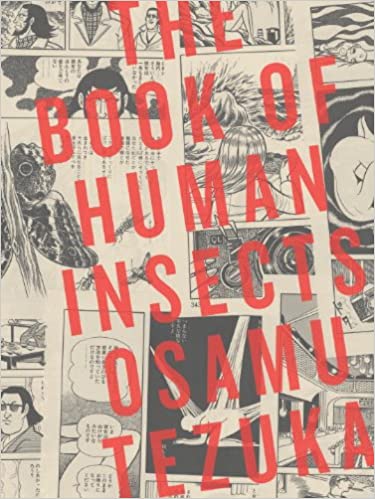
The Book of Human Insects


By Osamu Tezuka translated by Mari Morimoto (Vertical)
ISBN: 978-1-935654-20-9 (HB) 978-1935654773 (PB)

Win’s Christmas Gift Recommendation: An Ideal Chiller to Disturb these Dark and Lonely Nights… 9/10

There aren’t many Names in comics. Lots of creators; multi-disciplined or single focussed, who have contributed to the body of the art form, but we don’t have many Global Presences whose contributions have affected generations of readers and aspirants all over the World, like a Mozart or Michelangelo or Shakespeare. There’s just Hergé and Jack Kirby and Osamu Tezuka.

Tezuka was born in Osaka Prefecture on November 3rd 1928 and, as a child, suffered from a severe illness which made his arms swell. The doctor who cured him inspired the boy to study medicine, and although Osamu began his professional drawing career while still at university, he persevered with his studies and qualified as a doctor too. As he faced a career crossroads, his mother advised him to do the thing that made him happiest…

Tezuka never practiced as a healer but the world was gifted with such classic cartoon masterpieces as Tetsuwan Atomu (Astro-boy), Kimba the White Lion, Buddha, Adolf and literally hundreds of other graphic narratives. Along the way, Tezuka incidentally pioneered, if not actually created, the Japanese anime industry.

Able to speak to the hearts and minds of children and adults equally, his works range from the childishly charming to the unsettling – and even terrifying. In 1970-1971 he produced the stark and moody psycho-thriller Ningen Konchuuki for Akita Shonen’s Play Comic, detailing the inexorable rise of a truly different kind of monster for the burgeoning audiences who were growing up and demanding more mature manga fare.

This superb monochrome 364-page hardback/trade paperback and digital delight opens with ‘Spring Cicada’ as failed and broken designer Ryotaro Mizuno ponders the incredible success of golden girl Toshiko Tomura; a bright young thing who has just scooped a major literary prize for her first novel.

Across town, a broken-down derelict also toasts her success whilst in a lonely garret a girl hangs from the end of a noose…

Mizuno confronts Toshiko in her moment of triumph, telling her failed author Kageri Usuba has committed suicide. Their tense exchange is observed by muck-raking journalist Aokusa…

Convinced he’s on to something, the reporter perseveres and discovers Toshiko is a modern renaissance woman: emerging from obscurity to become a celebrated actress while still in her teens, she graduated to directing before becoming an award-winning designer. Abruptly she metamorphosed again, writing the stunning novel The Book of Human Insects. Still in her twenties, there seems to be nothing the angelic girl cannot do…

Further enquiry leads the obsessed newsman to her desolate rural home where the uncanny genius presents an entirely different, almost wanton aspect. Moreover, she keeps there a very creepy waxwork of her dead mother…

Toshiko catches the professional voyeur and agrees to an interview, but before that meeting Aokusa is accosted by shambling drop-out Hyoroku Hachisuka, a once-prominent stage-director who imparts the true story of Toshiko’s resplendent rise to fame and fortune.

Once, the universally approved-of, wholesome girl was a small, timid creature who inveigled her way into his theatre company. Once there, she attached herself like a lamprey to the star, learning her ways and mannerisms. A perfect mimic, Toshiko not only acquired the actress’s skills but also seemed to suck out her talent and inspiration. When the former star quit, Toshiko replaced her…

She performed that same slow consumption with the entire company and then turned her attentions to the director…

Moreover, the seemingly helpless waif was utterly amoral, using sex, slander and perhaps even murder to achieve her ends, which were always short-term: she had no goals or life ambitions, but merely flitted from victim to victim like a wasp seeking its next meal…

Ignoring the warning, Aosuka persists, discovering promising writer Usuba once had a room-mate named Toshiko whom she accused of plagiarising her novel…

Intriguingly, the lonely writer’s recent suicide occurred in extremely suspicious circumstances…

During a TV interview, Toshiko accidentally meets Mizuno again. Revealed as one of her earliest victims, can he possibly be the only man she ever loved?

In ‘Leafhopper’ Aosuka uncovers another of Toshiko’s secrets when he meets for the first and last time her shady associate Arikawa – a murderous anarchist who cleans ups the lovely mimic’s potential embarrassments – just as she tries to renew her relationship with the bitter and far wiser Mizuno.

Toshiko also meets war criminal and right-wing “businessman” Sesson Kabuto who immediately discerns her true nature and keeps a fascinated but wary professional distance from her…

Toshiko operates almost instinctively and according to immediate desire, but she has a terrifying capacity to clean up any potentially damaging loose-ends. After seducing Arikawa she spectacularly removes him during a political assassination and uses the affair to promote her next book…

Meanwhile Mizuno spirals further into despondency until he meets a prostitute who looks like Toshiko and finally finds redeeming true love – of a sort…

Toshiko almost overreaches her abilities when she is arrested by South Korean security forces in ‘Longhorn Beetle’ but is rescued and forced into marriage by a man every inch her ruthless, remorseless equal. This propels her to even more inspired acts of perversion and survival – which consequentially endanger the wellbeing of everybody in Japan – before ‘Katydid’ brings the unique drama to a shocking, bloody, poignant and utterly unexpected conclusion…

Murder-mystery, Greek Tragedy, trenchant melodrama, serial-killer horror story and much more, this supremely adult tale has hardly dated at all since its release and offers a chilling image of those hidden invisible predators who have supplanted vampires, witches and werewolves in the dark corners of our communal consciousness.

The beautiful maiden as lure and amoral predator possibly began with this truly disturbing tale and the story is one which will stay with readers long after the final page is turned…

“God of Manga” Osamu Tezuka died in 1989 but with ever more of his copious canon being released in English there’s plenty of brilliant material for all ages, intellects and inclinations to admire and adore, so why not start right here, right now.

Accept no imitations…
© 2011 by Tezuka Productions. Translation © 2011 by Mari Morimoto and Vertical, Inc. All rights reserved.

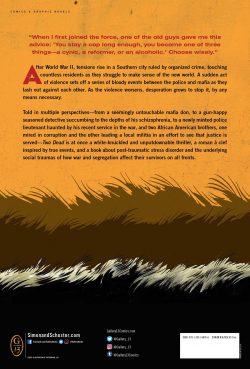
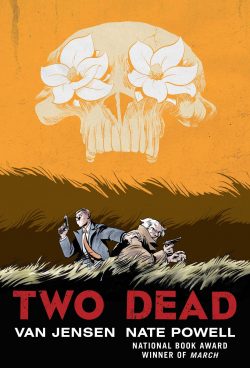
Two Dead


By Van Jensen & Nate Powell (Gallery 13/Simon & Schuster)
ISBN: 978-1-50116-895-6 (TPB)

Win’s Christmas Gift Recommendation: A Dark Winter’s Tale you must not miss… 9/10

It’s been a while since we covered a crime yarn and this new release looks like making a few well-deserved waves, so let’ go back a lifetime or two and look at events that have passed into history while regrettably remaining all too fresh, familiar and immediate… like any wound…

Before moving into screen scripting and writing comics and graphic novels such as Pinocchio, Vampire Slayer, Cryptocracy and Valkyrie Beer Delivery – as well as established properties like The Flash, Superman, Wonder Woman and James Bond, Van Jensen worked as a crime reporter for the Arkansas Democrat Gazette. It was there and while palling around with local cops that he first learned of this case. The facts never let go of him and, years later, with the stunning collaboration of multi award-winning cartoonist Nate Powell (March, Come Again, About Face, Any Empire, Swallow Me Whole, The Silence of Our Friends) the events were dramatized here as Two Dead.

Even after separating the True Crime nature of the story, this is a chilling and unforgettably potent crime noir examining institutional racism, police bias and Post Traumatic Stress Disorders through the lens of history. It’s set in Little Rock, Arkansas where recently demobbed war hero Gideon Kemp is starting his new job as a police detective. It’s October 1946 and the FBI-trained family man just wants to put his past behind him and do good.

He cannot, however, escape the pressure of a crushing and tragic mistake made during his service that still haunts him, blighting his days and nights…

From the start, the new job is a trial. Secretly enlisted by Mayor Sprick, Gideon is supposed to fight a deeply entranced organised crime presence in the town as a detective, while secretly getting the goods on his own boss. Veteran old school cop Abraham Bailey hasn’t met a problem yet that couldn’t be solved with volleys of gunfire and – despite being popular with the white voters in town – he’s becoming a problem for the powers that be.

Just how much so, and what ghosts and demons drive the ethically-challenged hardliner, neither conspirator can truly guess…

Little Rock is prosperous, growing and segregated, with a strong but hidden Klan presence. Across the poverty-ridden tracks, the coloured citizens live separate lives. Esau Davis makes ends meet here running errands and taking bets for mob chief Big Mike. He is well aware of the dangers of upsetting – or even being noticed by – white cops.

Originally the police had tried recruiting blacks into the force, but as they kept turning up dead, the authorities eventually let the program drop. Now Esau’s war hero brother Jacob tries to keep the peace in their part of town with an unpaid, unarmed volunteer militia, but they’re no match for gangsters or self-righteous police looking for easy arrests. They are especially unprepared for gun-happy Chief Bailey, who has an obsessive hatred of all criminals, likes keeping trophies of all his “justified” kills, and never met a door he couldn’t kick down or anybody who wasn’t guilty of something…

Every player is tormented by their own ghosts, but as Kemp and Bailey warily test each other out while successfully dogging the footsteps of the murderous mobster – who has his own appallingly bloody peccadillo to assuage – an uneasy trust is formed. Rather than expeditiously doing the Mayor’s bidding, by-the-book Gideon stalls and prevaricates as the war of decency against crime escalates, exposing corruption among the city’s leaders and dragging in honest Jacob, who is soon just another gun in Bailey’s relentless war.

With blood running and the death toll mounting, Gideon and Jacob are powerless to head off a brutal confrontation. It seems no one can atone or win achieve redemption here…

The ending is one you won’t forget…

Rendered by Powell in sepia and black line utilising a style gloriously reminiscent of classic Will Eisner, Two Dead is a superb and upsetting thriller, made irresistibly compelling by Jensen’s deft use of language, gift for building suspense and multiple narrative perspectives and, like all the great noir tales, revels in a world of villains with no heroes to balance them…
© 2019 by Blue Creek Creative, LLC and Nate Powell. All rights reserved.

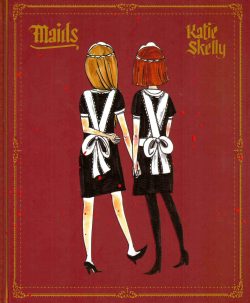
Maids


By Katie Skelly (Fantagraphics Books)
ISBN: 978-1-68396-368-4 (HB)

Sorry for the brief interruption. Disease and deadlines are things you just don’t dick with…

With Halloween pretty much on hold this year, our annual humour/horror fest has been pretty much decimated too. However, if you stretch a point, most of the recommendations over the next few days will qualify…

Illustrator Katie Skelly hails from Brooklyn by way of Bethlehem, Pennsylvania and caught the comics bug early, thanks to her newsstand owner dad. Her Barbarella inspired series Nurse, Nurse began after graduating from Syracuse University with a BA in Art History and becoming a postgrad at City College of New York.

Thanks to her inquisitive insights, striking art style and potent narrative voice, Skelly has been the subject of many gallery shows and is a star on the global lecture circuit.

Her first graphic novel – again inspired by Jean-Claude Forrest but also horror-meister director Dario Argento – was My Pretty Vampire (2017), supplanted by the collection Operation Margarine and The Agency. All her works ask uncomfortable questions about the role and permitted position of women in society as seen through exploitation genres of mass entertainment, and that’s never been more effectively seen than in this “semi-autobiographical” tome (available in present-worthy luxury hardback and accessible eBook formats) recounting the true-crime story of the Papin sisters.

History says that on February 2, 1933, former convent girls Christine and Léa (working as maids for the wealthy Lancelin family in Le Mans) one night bludgeoned and stabbed to death Madame Léonie to and her daughter Genevieve. The case was open and shut but became a Cause Célebre in France after reports of the killers’ early lives and years of service and physical abuse became public. Intellectuals championed them and the case was cited as a perfect example of the dangers of inequality and privilege…

Here, Skelly brings her own incisive interpretation to the case, and it’s a little gem that you will find hard to put down and impossible to forget…
© 2020 Katie Skelly. This edition © 2020 Fantagraphics Books, Inc. All rights reserved.