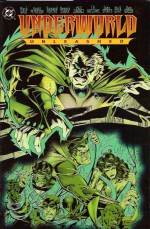
Underworld Unleashed


By Mark Waid, Howard Porter, Dennis Janke & various (DC Comics)
ISBN: 1-56389-447-5

In deference to the season here’s a brief chat about one of DC’s lesser company crossover classics. Underworld Unleashed was a DC universe-wide tale in which an ancient lord of Hell returns to offer heroes and villains whatever they desire – generally manifested as a boost in powers and a new costume – in return for their souls.

The story is more about baddies than goodies and there’s a juicy role for Flash’s Rogues Gallery – especially the Trickster, but the tale wanders too far and wide and though there are a lot of nice character moments there’s some fairly dire bits too.

Moreover the tale lacks conviction and tension, the horror and carnage really doesn’t have any lasting impact, and of course the Tempter has a nasty plan-within-a-plan, but as so often before, DC shot themselves in the foot by only selectively collecting the saga into one volume.

Whereas I can grasp the need to keep a collection manageable (the original event ran to the three issue miniseries included here, 42 assorted tie-ins over three months worth of regular titles and four one-shot Specials) I find it incomprehensible that key ancillary stories can be arbitrarily ignored.

A quartet of supplementary Specials ‘Abyss: Hell’s Sentinel’, ‘Apokolips: Dark Uprising’, ‘Batman: Devil’s Asylum’ and ‘Patterns of Fear’ added a great deal to the overarching storyline yet only the first of these (beautifully crafted by Scott Peterson, Phil Jimenez, J.H. Williams, John Stokes and Mick Gray, detailing the Golden Age Green Lantern’s rescue of the DCU’s magical champions from Hell) is included here. It is a great segment but so are the ones inexplicably omitted.

The bargain-basement Faustian bargains all end well and a kind of order is restored, but this very potentially highly enjoyable tale is unfairly truncated and we’re all the poorer for it. Hopefully somebody will get around to restoring this tale to a more comprehensible state for future editions…

Ooh, that’s the doorbell.

I’m off to throw hard candies at some kids; Happy Halloween reading…
© 1995, 1998 DC Comics. All Rights Reserved.

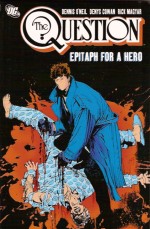
The Question Volume 3: Epitaph for a Hero


By Dennis O’Neil, Denys Cowan & Rick Magyar (DC Comics)
ISBN: 978-1-84576-996-3

In the “real” world, some solutions require careful Questions…

An ordinary man pushed to the edge by his obsessions, Vic Sage used his fists and a mask that made him look faceless to get answers (and justice) whenever normal journalistic methods failed – or whenever his own compulsive curiosity gripped him too tightly. After a few minor successes around the DC universe Sage got a TV reporting job in the town where he grew up.

This third collection (reprinting issues #13-18 of the highly regarded 1980s series) brings Sage into a thoroughly modern nightmare as he seeks to discover the foundations of patriotism, honour and glory and the roots of domestic terrorism in ‘Be All that you can Be…’ when a team operating on strict military principles carries out a series of murderous attacks on Army recruiting centres and personnel. The ace reporter tracks down the killers only to be captured and experience a harrowing example of their torturous training and a staggering example of their integrity in the concluding ‘Saving Face’.

The major portion of the Question’s adventures take place within the urban hell of Hub City, a ghastly analogue of blighted, Reagan-era Chicago, run by a merciless political machine and an utterly corrupt police force until Sage and the Question returned. His old girlfriend Myra Connelly had married the drunken puppet who is the Mayor and now as he dissolves into madness she is trying to win a mandate to run the city herself. Another unlikely champion is reformed and conflicted cop Izzy O’Toole, formerly the most corrupt lawman in “the Hub”.

‘Epitaph for a Hero’ further pushes the traditional boundaries and definitions of heroism when racist private detective Loomis McCarthy comes seeking to pool information on a spate of racially motivated murders during a tight fought election struggle between Myra and millionaire “old guard” patrician Royal Dinsmore. This startling mystery is not as cut-and-dried as it appears and presents some very unsettling facets for all concerned…

Izzy O’Toole continues his struggle for redemption in a brutal untitled confrontation with mythic underpinnings as illegal arms-dealers Butch and Sundance attempt to turn Hub into their own Hole-in-the-Wall (that was an impregnable hideout used by bandits in the old West), casting the grizzled old lawdog as a highly unlikely “Sheriff of Dodge City”.

The tale continues in ‘A Dream of Rorschach’ which tacitly acknowledges the debt owed to the groundbreaking Watchmen in the revival of the Question, as Sage reads the book and has a vision of and conversation with the iconic sociopath whilst flying to Seattle and a chilling showdown with Butch and Sundance as well as a highly suspicious and impatient Green Arrow in the concluding ‘Desperate Ground’.

Complex characters, a very mature depiction of the struggle between Good and Evil using Eastern philosophy and very human prowess to challenge crime, corruption, abuse, neglect and complacency would seem to be a recipe for heady but dull reading yet these stories and especially the mythic martial arts action delineated by Denys Cowan are gripping beyond belief and constantly challenge any and all preconceptions.

Combating Western dystopia with Eastern Thought and martial arts action is not a new concept but O’Neil’s focus on cultural and social problems rather than histrionic super-heroics make this series a truly philosophical work, and Cowan’s raw, edgy art imbues this darkly adult, powerfully sophisticated thriller with a maturity that is simply breathtaking.

The Question’s direct sales series was one of DC’s best efforts from a hugely creative period, and with a new hero wearing the faceless mask these days those tales form a perfect snapshot in comics history. Whether it fades to obscurity or becomes a popular, fabled and revered icon depends on you people: to make it the hit it always should have been all you have to do is obtain these superb trade paperback collections, and enjoy the magic…

© 1988, 2008 DC Comics. All Rights Reserved.

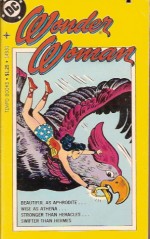
Wonder Woman


By “Charles Moulton” & HG Peter (DC Comics/Tempo Books)
ISBN: 0-448-14531-6-125

Here’s another delightful pocketful of memories in a much-missed (by me at least) format: resized strips as paperback books reprinting a selection of the best stories money could buy. Released in 1978 to capitalise on the popular TV series starring Linda Carter, this dandy little black and white paperback was part of a continuing drive by DC to get out of the down-market newsstands and place their characters regularly onto the shelves of bookstores.

Of course this was before they gave up trying to fit their major asset – visual impact – into a limited format and went the European route of albums with such spectacular results that you’re now reading one of many, many blogs dedicated to reviewing graphic novels, trade paperbacks and items of related interest.

And just in case you were wondering why periodical publishers kept trying?

At its best, a comics title could reach about a million unit sales through magazine vendor systems whilst a book – any book – had the potential of reaching four to twenty times that number…

This collection opens with a re-presentation of one of the Amazing Amazon’s earliest exploits with ‘Wonder Woman’s Lasso’ (1942), an engaging yarn of World War II in which the world’s premiere female costumed foe of injustice (written by controversial psychologist and creator William Moulton Marston) battled spies and sister Amazons to win a magical lariat that could compel and control anybody that fell within its coils.

Too much has been posited about the subtexts of bondage and subjugation in Marston’s tales – and frankly I don’t care what his intentions might have been – I’m more impressed with the skilful drama and incredible fantasy elements that are always wonderfully, intriguingly present: I mean, just where does the concept of giant battle kangaroos come from?

Moulton died in 1947 but his fellow creator, artist Harry G Peter, continued until 1958, although the heroine (one of only three costumed characters who maintained a star presence from the Golden to Silver Ages of comics: the other being Superman and Batman) found the outlandish tenor of her adventures considerably subdued under the editing and writing aegis of Robert Kanigher.

From 1955 ‘The Bird Who Revealed Wonder Woman’s Identity’ found her trying to preserve her secrets after a gabby Mynah bird overheard a revealing conversation to mimic, whilst ‘Wonder Woman’s Wedding Day’(1954) is a charming, traditional romp of wicked thugs and wily mad scientists.

Psychological warfare is the subject of 1953’s fascinating ‘The Secret Invasion’ – a plot by the nefarious Duke of Deception, whilst both ‘The Talking Tiara’ (1954) and the concluding entry ‘The Origin of the Amazon Plane’ (1955) reveal the hidden stories behind Princess Diana’s fabulous accessories in tales rife with dinosaurs, aliens, sea monsters and fantastic quests.

Wonder Woman is rightly revered as a focus of female strength, independence and empowerment, and the welcoming nostalgia and easy familiarity to these tales is a delight for all types of reader but the true value of these exploits is the incredible quality of entertainment they provide.

Although there are excellent and comprehensive collections of her earliest adventures the post-War years of the Amazon have been woefully neglected, and are long over due for some serious compilation attention. Until that time little gems like this are all we can turn to…
© 1978 DC Comics, Inc. All Rights Reserved.

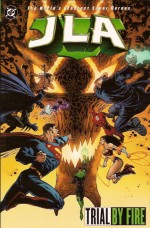
JLA: Trial By Fire NEW EXTENDED AND REVISED REVIEW


By Joe Kelly, Doug Mahnke and Tom Nguyen (DC Comics)
ISBN 1-84023-928-X

When the World’s Greatest Superheroes (see JLA: New World Order) were relaunched in 1997 the quality – and hype – were everything jaded fans could have asked for, but the glistening aura of “fresh and new” doesn’t last forever and by the time of these tales (seven years later and reprinting issues #84-89) the hard task of keeping the excitement levels stoked in a fan-base with a notoriously short attention-span was getting much harder.

Clean, clear-cut, high-concept tales had perforce given way to more involved, even convoluted storylines, and an increasing dependence on other series’ and characters’ continuity. A low point from the usually excellent Joe Kelly was this tale following the appearance of an alien telepathic presence that puts American President Lex Luthor into a brain-dead coma before assaulting the entire League.

Investigations lead to an alien incursion more than twenty thousand years ago when a monstrous presence was defeated at huge cost by a band of cavemen led by the League’s oldest foe, but it appears that the diabolical beast known as “The Burning” may not have died forever…

Going back even further in DC history it would appear that the Guardians of the Universe, immortal taskmasters of the Green Lantern Corps were involved in the creation of The Burning, and their implacable meddling may have been instrumental in the origins, rise and potential fall of one of Earth’s greatest heroes…

Plagued by cruelly debilitating visions and psychic assaults, as are a sizable portion of humanity, the heroes are desperately struggling as one of their own is possessed by the malevolent entity Fernus who is only seconds away from turning the entire world into a radioactive cinder. Can the JLA get their act together in time to prevent Armageddon? Of course they can… but not without paying a brutal, tragic price…

This is not a terrible tale: whole sections are exceptionally entertaining and the art is spectacular throughout. But it is too far-ranging and undisciplined; with so many strands to keep hold of that it loses cohesion every now and then and feels almost rushed in execution.

The JLA has a long history in all its incarnations of starting strong but losing focus, and particularly of coasting by on past glories for extended periods – and it was distressing to see such portents so soon. Luckily the New/Old Dog still had a few more tricks and a little life in it before the inevitable demise and reboot for the next generation after Final Crisis.

Worth a little of your time, but only if, and in the context of, reading the good stuff too…

© 2004 DC Comics. All right reserved.

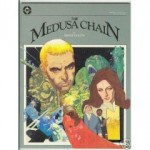
The Medusa Chain


By Ernie Colon (DC Comics)
ISBN: 0-930289-00-5

Born in Puerto Rico in 1931 Ernie Colón is a tremendously undervalued and unsung maestro of the American comics industry whose work has been seen by generations of readers. Whether as artist, writer, colourist or editor his contributions have affected the youngest of comics consumers (Monster in My Pocket, Richie Rich and Casper the Friendly Ghost for Harvey Comics and his similar work on Marvel’s Star Comics imprint) to the most sophisticated connoisseur with strips such as his startling indie thriller Manimal.

His catalogue of “straight” comic-book work includes Battlestar Galactica, Damage Control and Doom 2099 for Marvel, Grim Ghost for Atlas/Seaboard, the fabulous  Arak, Son of Thunder, Amethyst: Princess of Gemworld, the Airboy revival for Eclipse, Magnus: Robot Fighter for Valiant and so very many others.

In 2006 with long-time Harvey Comics/Star collaborator Sid Jacobson he created a graphic novel of the 9/11 Commission Report entitled The 9/11 Report: a Graphic Adaptation. In August 2008, they released a 160-page follow-up: After 9/11: America’s War on Terror. Even now he’s still hard at work on the strip SpyCat which has appeared in Weekly World News since 2005.

During the first wave of experimental creativity that gripped the 1980s comics business he released this self-generated (even lettering and colouring it himself) science fiction thriller through DC’s ambitious, oversized Graphic Novels line. Intriguing, complex and multi-layered, it is the gritty tale of Chon Adams, a star-ship officer convicted of a dreadful crime, sentenced to a lifetime of penal servitude on a deep-space space cargo ship, and how he finds a kind of fulfilment in a situation most would describe as a living hell.

Flavoured by Alfred Bester’s The Stars My Destination (commonly known now as Tiger! Tiger!) by way of noir prison/chain-gang movies like George W. Hill’s The Big House this is a fascinating tale-within-a-tale as Chon’s “crime” is gradually revealed whilst he endures and survives against unbelievable odds in the depths of infinity gaining unlikely allies and a grain of self-respect…

Graphic, uncompromising and thoroughly compelling this classy tale careens from cynical depths of human depravity to heights of glorious high fantasy with ease: a true lost gem of that boldly exploratory 1980s comics boom, and a cracking read for any older SF fan.

And the one good thing – for you – about Colon’s relative obscurity is that copies of this gem – and his later Marvel graphic novel Ax – are still readily available through internet retailers at ridiculously low prices. Definitely one you really, really want…
© 1984 DC Comics. All Rights Reserved.

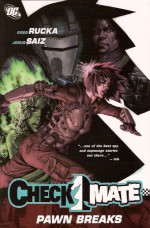
Checkmate: Pawn Breaks


By Greg Rucka, Jesus Saiz, Steve Scott & various (DC Comics)
ISBN:978-1-84576-603-0

In the aftermath of DC’s Infinite Crisis an international organisation to monitor and control meta-human affairs was developed, under the aegis of the United Nations Security Council. Originally an American agency, Checkmate had gone rogue under the telepathic influence of Maxwell Lord, and the new internationally sanctioned organisation is tasked with policing all nations, protecting them from metahuman dangers and terrorism, and also preventing “rogue” nations and regimes from weaponising their own paranormal resources.

This second tripwire-tight collection reprints issues #8-12 of the fondly remembered comic book, following as the organisation (composed of superheroes and traditional intelligence operatives) goes to absolutely outrageous lengths to place an undercover agent in the global death cult Kobra, courtesy of Greg Rucka, Jesus Saiz and Fernando Blanco.

‘Pawn 502’ is a superbly paranoid thriller with plenty of twists and turns and spellbinding action, cleverly plundering many dark and dusty corners of DC continuity for the delectation of long-term readers whilst skilfully keeping the newly initiated appraised. Crossover fans mighty like to know there’s a classy Shadowpact guest-shot included here.

Following is an intriguing tale that slips uncomfortably into the too-real world of South American death squads and rigged elections from writers Rucka, Nunzio DeFilippis and Christina Weir, pencillers Steve Scott and Cliff Richards, and inkers Nathan Messengill, Steve Bird and Art Thibert.

‘Corvahlo’ is a dark, sordid tale featuring ex-JLA-er Fire and Bat-baddie Bane which cleverly reveals that there’s a traitor in Checkmate and, as a team is sent to retrieve a witness to vote-rigging, that mystery Judas is planning to subvert or destroy the entire organisation if necessary…

This is a cool and engaging blend of genres, with the murky world of espionage coldly and logically grounding the high-flying gloss of costumed super-doers. Moody and addictive, but perhaps a little too dependent on a working knowledge of the DC universe, this is nevertheless a fabulous series of yarns for the older fan, and the spy-game milieu should guarantee a few converts from espionage devotees looking for a little something on the wild side…

© 2007 DC Comics. All Rights Reserved.

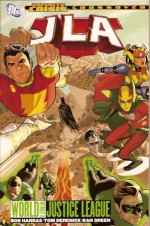
JLA: World Without a Justice League NEW REVISED AND EXTENDED REVIEW


By Bob Harras, Tom Derenick & Dan Green (DC Comics)
ISBN 1-84576-335-1

During the Identity Crisis it was revealed that not only did factions of the Justice League ignore Due Process and lobotomise (call it mind-wipe if you’re in a generous mood) some of their enemies, but when Batman objected he too had his brains scrambled by his own team-mates.

Torn apart, the League formally disbands just as the entire universe is on the verge of utter destruction. The repercussions of that betrayal poisons the relationships of these once staunch comrades, as does the revelation of an illicit affair between two of the heroes, so that when the remnants of the splintered super-hero team and a few former members more or less reunite to stop old foe the Key, they spend more time sniping at each other than dealing with the problem.

The villain has evolved from dedicated nuisance into a psionic mass-murderer, and further complicating the mess is the escape of one of the Original Seven Deadly Sins from its eternal captivity, adding to the level of destruction by inducing riots and insanity throughout the population of Gotham City. The final straw is loss of their most powerful assets halfway through the hunt as the resurrected Titan Donna Troy whisks a hastily cobbled together strike force into space to deal with the intergalactic ramifications of the Infinite Crisis.

One of the truly memorable incarnations of a venerable comics institution died with more of a whimper than a bang in this final collected story-arc (reprinting JLA #121-125) and for all the explosive action and “mano-a-mano” posturing, the result is a somewhat lacklustre postscript to a excellent series of super-hero adventures. The title was sadly lost in the huge shuffle of Infinite Crisis, and passed almost with few mourners.

Bob Harras, Tom Derenick and Dan Green did their best, but the heavy-handed shoehorning of the overweening Crisis segments destroyed the narrative flow, and any casual reader who just picks this book is just inviting a migraine if they haven’t read the other books too.

An inauspicious end to a great run, and poor use of some talented people and great characters but the “automatic rewind/reset” of Infinite Crisis and numerous ‘One Year Later’ relaunches (see 52 parts 1-4) soon made this a distant memory.

And of course, in comics, nothing stays dead for long…

© 2006 DC Comics. All Rights Reserved.

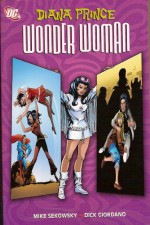
Diana Prince: Wonder Woman Volume 2


By Mike Sekowsky, Dick Giordano & various (DC Comics)
ISBN: 978-1-84576-900-0

Back for a second delicious helping of pop nostalgia and startling action is Diana Prince, erstwhile Amazon superhero, but for a brief moment a mortal woman with all the power and wit that entails – solving problems and fighting injustice with great style and incredible fashion-sense.

In 1968 superhero comics were in decline and publishers sought new ways to keep audience as tastes changed. Back then, the entire industry depended on newsstand sales, and if you weren’t popular, you died. Editor Jack Miller and Mike Sekowsky stepped up with a radical proposal and made a little bit of comic book history with the only female superhero then in the marketplace.

The superbly eccentric art of Sekowsky had been a DC mainstay for decades, and he had also scored big with fans at Gold Key with Man from Uncle and at Tower Comics’ T.H.U.N.D.E.R. Agents and war comic Fight The Enemy! His unique take on the Justice League of America had cemented its overwhelming success, and now he was stretching himself with a number of experimental, youth-market directed projects.

Tapping into the teen zeitgeist with the Easy Rider-like drama Jason’s Quest proved ultimately unsuccessful, but with the Metal Men and the hopelessly moribund Wonder Woman he had much greater impact. He would ultimately work the same magic with Supergirl.

When the Amazons were forced to leave our dimension, they took with them all their magic – including Wonder Woman’s powers and all her weapons … Now no more or less than human she decided to stay on Earth permanently, assuming her own secret identity of Diana Prince, dedicated to fighting injustice as a mortal. Blind Buddhist monk I Ching trained her as a martial artist, and she quickly became embroiled in the schemes of would-be world-conqueror Doctor Cyber. Her one true love Steve Trevor was branded a traitor and killed…

This volume (which collects issues #185-189 of her comic book, a guest shot from Superman’s Girlfriend Lois Lane #93 plus the first of two appearances in the Batman team-up vehicle Brave and the Bold #87) shows just how bold were those changes to the Amazing Amazon’s career. With young scripter Denny O’Neil moved to other projects Sekowsky took over the writing himself, surprising everyone with his savvy ear for dialogue and a refreshingly original take on the old conventions.

With apparently nothing to lose, the switch to espionage/adventurer in the fashionable footsteps of such popular TV characters as Emma Peel, The Girl from Uncle and Honey West, not to mention our own ultimate comic strip action-heroine Modesty Blaise, seemed like desperation, but clearly struck a chord with the public. Sekowsky opens this book with ‘Them!’ – one of the most original tales of the period, with few to match it written since.

Steeped heavily in the hippie counter-culture and Mod-fashion explosion, the New Wonder Woman had opened her own boutique and into it rushes a young girl seeking to escape three women who took her in and then made her their slave. Today this sort of psychological thriller is more recognisable, but in 1969 themes of bullying and peer abuse were utterly unknown in comic books, and this groundbreaking tale is uniquely informative: exploring other solutions than simply punching bad guys – although there’s enough of that so that the regular readers aren’t completely bewildered.

This is followed by ‘Morgana the Witch’, (WW #186) a spectacular flight of whimsy tapping into the then growing interest in the supernatural wherein a trio of teenaged girls with a talking frog (who was originally the boy friend of one of them) request help after accidentally summoning a powerful (and clearly bi-polar) sorceress to the 20th century.

Next is ‘The Superman-Wonder Woman Team!’ (by Robert Kanigher and Irv Novick from Superman’s Girlfriend Lois Lane #93), a less adventurous and unreconstructed yarn where the also socially evolving girl-reporter seeks to uncover the reason the ex-Amazon is making an ill-concealed play for her man, and a superbly tense thriller by Sekowsky and Giordano from Brave and the Bold #87 entitled ‘The Widow-Maker’, wherein the son of one of Batman’s foes tries to add to his tally of murders by luring the Caped Crusader into a rigged high performance car race.

The book concludes with a gripping three-part saga revealing some of I Ching’s past  and reintroducing the deadly Dr. Cyber before seamlessly transiting into an exotic Cold War thriller. In ‘Earthquaker’ and ‘Cyber’s Revenge’ Diana’s mentor is summoned by old friends to Hong Kong where he and his astonishing pupil happen upon a plan to blackmail the island with catastrophic artificial earthquakes, before attempting to smuggle an entire village out of Communist China in the delightfully epic ‘Red for Death’. The spectacle is broken up by a wonderful extra two page strip vignette ‘Crime does not Pay’ which brilliantly demonstrates the wit and economy of the medium

Comics are an art-form dictated by markets, driven by sales and influenced by fashion. For a brief moment all these factors coalesced to produce a compelling, engaging and utterly fabulous sequence of tales that are timelessly perfect and eternally fresh. And now you can read them whenever you feel the need for better times simply by opening these pages…

© 1969, 1970, 2008 DC Comics. All rights reserved.

JLA: the Tenth Circle – New Fully Revised Review


By John Byrne, Chris Claremont & Jerry Ordway (DC Comics)
ISBN 1-84023-913-1

After battling all manner of contemporary and futuristic foes the World’s Greatest Superheroes found themselves pitted against an ancient malevolence from out of Earth’s oldest nightmares in this sadly lacklustre tale from three of the industry’s biggest talents that originally ran in issues #94-99 of the monthly comic-book.

When team mystic Manitou Raven divines that a great evil has come hunting he is silenced before he can warn his comrades. As Batman and Flash follow a rash of global child disappearances Superman is defeated by a pair of rather unique kids. Comparing notes with other JLA members the heroes discover a pattern of metagenic abductions: someone or something is taking super-powered children…

Meanwhile an enthralled Man of Steel has become the slave – and lunch – of the diabolical vampire lord Crucifer, whose race of undying leeches has been secretly working to conquer the world since their initial defeat by the Amazon warriors of Themyscira thousands of years ago.

And in the background a shady group of freaks and outcasts undertakes their own plan to save the day…

The X-Men team supreme reunited for this supernatural adventure, but their old magic is sorely lacking: Byrne co-writing with Claremont and pencilling for the criminally underappreciated Jerry Ordway to ink and embellish is a far better “look” than “read”.

Comic fans love these sorts of nostalgia stunts, but sadly the results seldom live up to expectations and the result here is a competent but woefully predictable heroes versus vampires yarn that suffers greatly because it’s blatantly obvious that the whole thing is a high-profile, extended gimmick designed to kick-start Byrne’s reinvention of the Doom Patrol, and not really a JLA story at all.

Although competent enough the whole extravaganza is insubstantial and vaguely unsatisfying: Not the kind of book for a casual bystander and no certainly no way to broaden the appeal or range of the comic experience.

© 2004 DC Comics. All Rights Reserved.

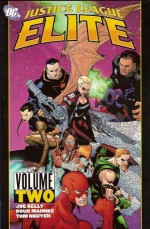
Justice League Elite volume 2


By Joe Kelly, Doug Mahnke & Tom Nguyen (DC Comics)
ISBN: 978-1-84576-632-0

Joe Kelly, Doug Mahnke & Tom Nguyen continue their examination of morality and necessity in the concluding volume of Justice League Elite (collecting issues #5-12 of the controversial series) as the assemblage of undercover heroes strives to cope with the poisonous nature of their black ops missions whilst holding on to the tattered shreds of their honour and integrity in a world so dark and seemingly beyond their control.

Multi-part saga ‘The Aftermath’ looks into the past of the energy wielding Coldcast, as the heroes infiltrate his own brother’s gang: a small-time mob of ordinary thugs with unexplained connections to alien narcotics and weaponry, whilst magician Manitou Raven makes some unwise bargains as he seeks the identity of the team-member who murdered the dictator of Changsha (in volume 1). Major Disaster succumbs to the constant pressure by going on a booze-and-drugs fuelled bender and Vera endures some very disturbing, persistent nightmares before their sting-operation brings them all into conflict with the out-of-the-loop Justice Society of America.

Parts 3 and 4 see the beginning of the end, and as is so often the case, infidelity between people who should know better starts the ball rolling. When the covert team finally meets the extraterrestrial mastermind behind the off-world contraband they discover just how hostile aliens can be, how duplicitous and self-serving humans are and, as a team mate dies, just how bad things can get…

‘Poison’ sees the guilt-ridden adulterers attempt to come to terms with their betrayal and someone finally confess to the murder that aborted the experiment before it began. Meanwhile Flash is super-quickly dying from a hideous toxin, assassin Kasumi reveals her true identity and human overseer and Naif al-Sheikh calls in the JLA Proper to end their missions for good.

The three part ‘Eve of Destruction’ finds the Elite in JLA custody, but far too late as the beast that has been possessing Vera erupts in a devastating orgy of destruction, giving the miserable failures one last spectacular chance to atone for all the harm their misguided efforts have caused in a classic, stirring epic of redemption.

Whether you like your heroes dark or shiny, this exploration of the ethics and morality of superhuman endeavour will address points you’ve never considered, and since the creators never forget that all that philosophy is “added value”, it’s all wrapped up in a tremendously rousing, intoxicating epic of superb writing and wonderful illustration. Enjoyment, Elucidation and Education: how can you resist?

© 2005, 2007 DC Comics. All Rights Reserved.