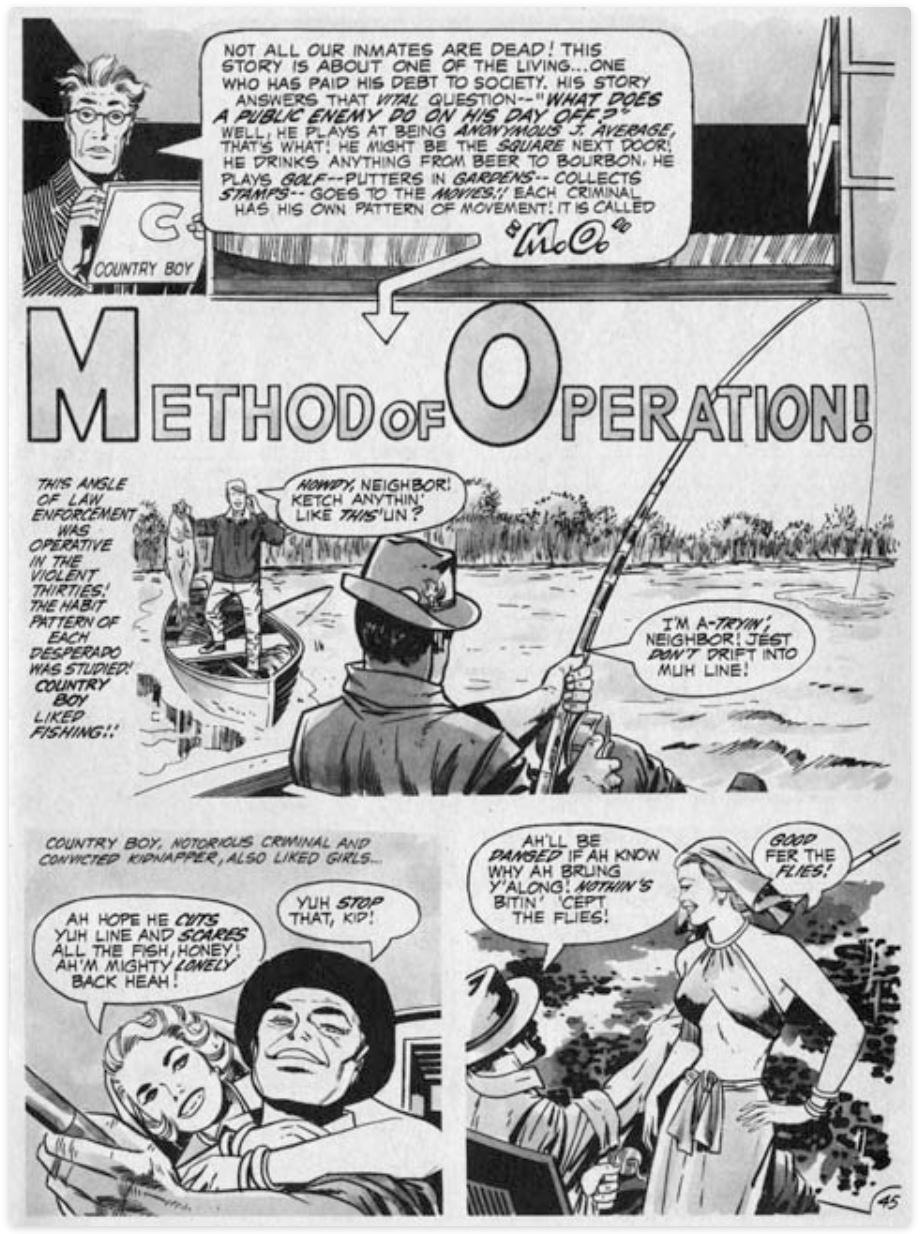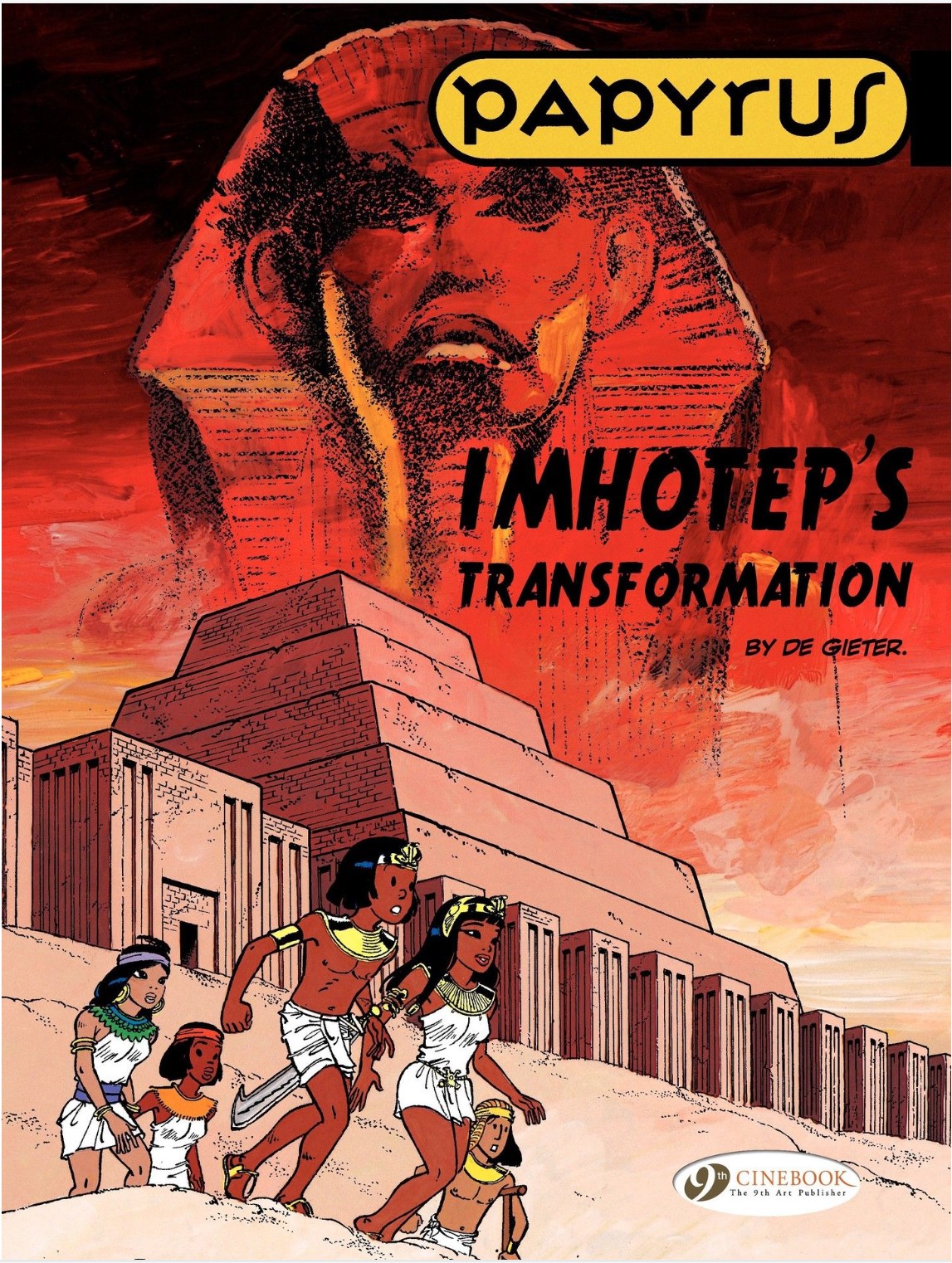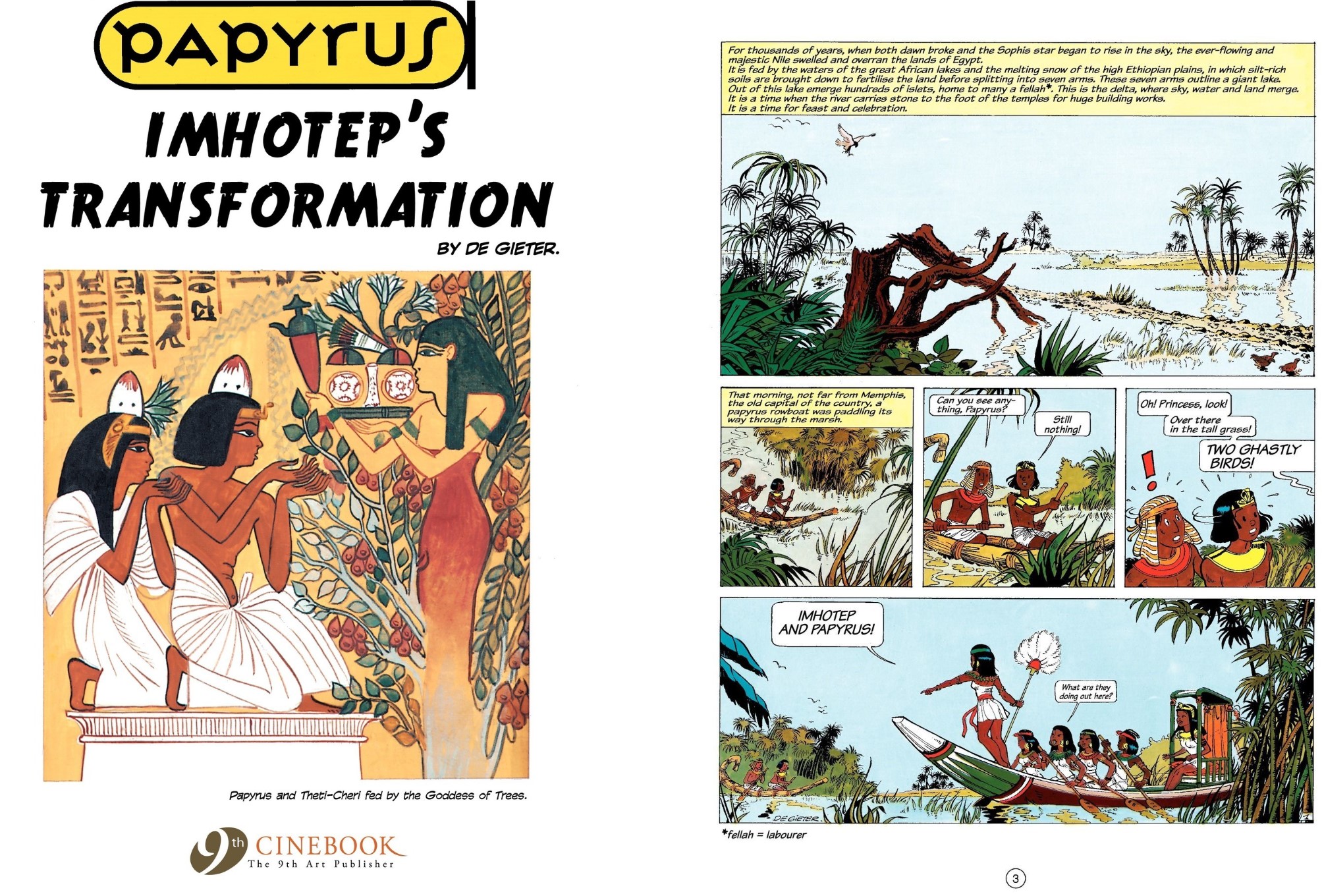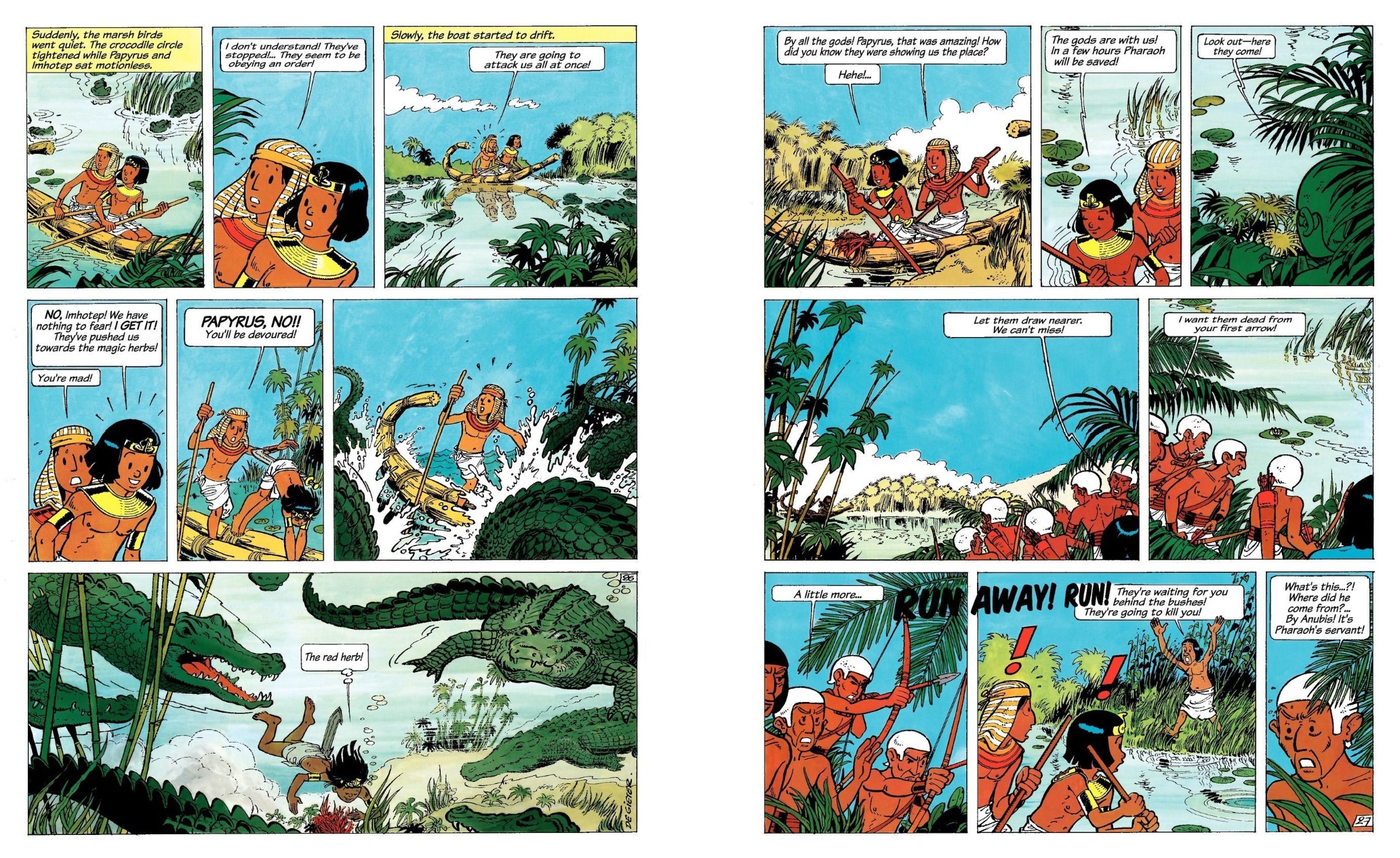
New Gods by Jack Kirby


By Jack Kirby, Mike Royer, Vince Colletta, Don Heck, D. Bruce Berry, Greg Theakston, Mike Thibodeaux & various (DC Comics)
ISBN: 978-1-4012-8169-4 (TPB/Digital edition)

This book includes Discriminatory Content produced in less enlightened times.

Win’s Christmas Gift Recommendation: Monumental Masterpieces… 9/10

Today in 1970 American comic books changed forever. On December 1st newsstands saw Superman meet the counterculture head on courtesy of Jack Kirby in a title like no other ever before. It was only one crucial component part of a bold experiment that quite honestly failed, but still undid and remade everything. That was Forever People #1 and it was followed on December 22nd with New Gods #1, as the world just kept on changing…

When Jack Kirby returned to the home of Superman in 1970 he brought with him one of the most powerful concepts in comic book history. The epic grandeur of his Fourth World saga grafted a complete new mythology onto and over the existing DC universe and blew the developing minds of a generation of readers. If only there had been a few more of them…

Starting in Superman’s Pal Jimmy Olsen, where he revived his 1940s kid-team The Newsboy Legion, introduced large-scale cloning in the form of The Project and hinted that the city’s gangsters had extraterrestrial connections, Kirby moved on to a main course beginning with The Forever People, intersecting where appropriate with New Gods and Mister Miracle to form an interlinked triptych of finite-length titles that together presented an epic mosaic. Those three groundbreaking titles collectively introduced rival races of gods, dark and light, risen from the ashes of a previous Armageddon to battle forever… and then their conflict spreads to Earth…

Kirby’s concepts, as always, fired and inspired contemporaries and successors. Gods of Apokolips & New Genesis became a crucial keystone of DC continuity and integral foundation of that entire fictional universe, surviving the numerous revisions and retcons which periodically bedevil long-lived comics fans. Many major talents dabbled with the concept over decades and a host of titles have come and gone starring Kirby’s creations. That’s happening now even as I type this…

As previously stated, the herald of all this innovation had been Superman’s Pal Jimmy Olsen, which Kirby had used to lay groundwork since taking it over with #133. There readers first met Darkseid, Intergang, The Evil Project and so much more, but it was also used as an emotional setup for a fascinating notion that had seldom if ever previously troubled the mighty, generally satisfied and well situated Man of Tomorrow…

After The Forever People #1, crossovers with DC mainstays were dropped in favour of a tense new normal. Those kids were Kirby’s way of depicting how conflict affected peripheral players and dragged them in and down, but the next and most important component was seeing the seasoned soldiers do their work. New Gods would focus on the war itself…

Cover-dated February/March 1971 and on sale 55 years ago today, the premiere issue infamously opened with an ‘Epilogue’ and closed with a ‘Prologue’ as Kirby & inker Vince Colletta declared that ‘Orion Fights for Earth!’

We learned that (relatively) soon after creation began gods were born, lived and died – primarily by warring with each other. When the Old Gods died in a cosmos-shaking conflagration their perfect primal world was sundered. When the chaos cooled the fragments had congealed into two new but lesser planets: the dark vicious globe of Apokolips and gleaming noble orb New Genesis. Over millennia another generation of superior beings of might and majesty populated the spinning spheres, but sadly, a tragic trait New Gods shared with their progenitors was a capacity for destruction and taste for conflict. Denizens of both worlds always and inevitably find new ways to end each other’s immortal lives.

The tale proper begins on joyous, spiritual New Genesis years after the latest all-out war with Apokolips ceased. Mighty Orion arrives in paradisical Supertown where divine patriarch Highfather communes with cosmic mystery The Source. The metaphysical conduit despatches the turbulent, ever-anxious wolf in their fold to the antithetical diabolical hell-world, only to find despot Darkseid gone and – against all treaties – captive humans from Earth being “examined” for signs of the tyrant’s dream. For both races the basic tool is Mother Box: sentient circuitry connected to The Source and a lifelong cyber-symbiotic companion, able to communicate, advise and manipulate the physical world.

The lord of Apokolips wants to do away with all that and rule everything personally. Furthermore he has decided this means controlling an irresistible, intangible ultimate weapon. The “Anti-Life Equation” is a cheat code for totalitarianism: the instant negation of choice and free will, and anyone using it would command all that lives. Darkseid’s obsessive search for it had led him to Earth and now he had kidnapped a cross-section of humans to test his extraction methodology. That he is gone and his realm is governed by Mass Control Units means the Evil One has found his key to success…

After batting his way into the world, against Parademons, Darkseid’s Dog Cavalry and assorted terror weapons, Orion frees the mortals before New Genesis God of Knowledge Metron delivers advice and a message. Thus after outwitting and outfighting vile brute Kalibak the Cruel the peaceful God of War uses a matter-transmitting Boom Tube to return them all to Earth…

However, Darkseid and his elite warrior caste are waiting for him. They have already infiltrated Earth through its criminal class and begun testing humanity in search of the unique mind holding the Equation. Apparently, a sufficient amount of instilled terror should shake it loose…

‘O’ Deadly Darkseid!’ then confirms that there are no civilians in war as – after fighting off a savage ambush on arrival and confronting Darkseid himself – Orion drafts the shaken, rescued hostages as his point men and intel unit. Private eye Dave Lincoln, secretary Claudia Shane, aging insurance salesman Victor Lanza and student Harvey Lockman are scared but resolved to help their world however possible, even as the transplanted tyrant sees his forces scattered all over Earth, applying a range of schemes to make humanity scream and shatter and give up that equation.

As New Genesis’ comrades volunteer for the fight on this isolated island Earth, the call to arms comes in Lincoln’s backyard as God of Depravity DeSaad triggers his gigantic Fear Machine and feeds off the paralysing horror it generates. However, thanks to sentient miracle computer Mother Box, his innate personal power and the blockbusting Astro-Force Orion commands, the initial skirmish is easily won…

Dwelling in spaces far beyond the physical and mundane, New Gods are subject to forces beyond mortal understanding. One of them is the embodiment of cessation who personally calls for each of them as they perish. NG #3 opens with glorious, jovial innocent God of Illumination Lightray barely escaping his moment with the great shadow (again thanks to coldly methodical Metron) as ‘Death is the Black Racer!’ finds the spirit derailed and deposited on Earth.

Throughout the overlapping clashes and conflicts there is undeniable indications that even the gods are being moved and shaped by even greater forces that have larger plans in motion. Thus the macabre soul collector inexplicably nests within the immobile form of paralysed Vietnam veteran Willie Walker, and – apparently inadvertently – derails a plot by Apokolips-backed mob Intergang to destroy all communications in Metropolis and create even more chaos and panic…

Orion’s shattering counterattacks segue straight into issue #4 as New Genesis suffers its first casualty. In response, ‘The O’Ryan Gang and the Deep Six!’ sees him and his reluctant human allies tracking down an Intergang device that frustrates and negates Mother Boxes before stumbling into a staggering and diabolical plan to render Earth’s oceans off limits to humanity…

With Mike Royer replacing Colletta as inker, ‘Spawn’ sees Orion captive of six subsea Apokolyptians who warp sea life and grow an unstoppable marine mutant monster. Meanwhile, Kalibak arrives in Metropolis hungry for vengeance and bloodletting. The various players and cosmic factions are angling towards a catastrophic confrontation, but in Metropolis at least, some of the poor endangered mortals are seeking to take charge of their own destinies…

At this juncture, DC comic books expanded to 52 pages and as well as Golden Age reprints, “Kirby’s Korner” ran short background vignettes of upcoming characters and cosmic guest stars. Here, inked by Colletta, ‘The Young Gods of Supertown Introducing Fastbak!’ focuses on Supertown, where a rowdy juvenile speed freak constantly tests himself and the patience of peacekeeping Monitors but finds there are some things even his miraculous tech cannot outrace…

Cover-dated January 1972, New Gods #6 launched ‘The Glory Boat!’ a complex and tragic morality tale and metaphor for fractured Vietnam era society wherein father and his peace-nik son clashed over duty and morality in war time as Lightray joins Orion to destroy or subvert the colossal horror devised by the Deep Six leading to a shocking secret exposed concerning the increasing out-of-control Orion…

Before that though, New Gods #7 finally revealed how it all began for the heirs of those first gods. When the primal Godworld sundered into gleaming New Genesis and sulphurous Apokolips the beings who eventually populated them were constant foes and rivals. After untold eons of sniping and acrimony, however, a young prince of the dark world sought to overthrow his mother and seize power. However, when ambitious Darkseid engineered a fresh war with New Genesis it started with the inadvertent murder of Avia, wife of New Genesis leader Izaya the Inheritor. As a result the conflict grew without let-up or rules, Darkseid and his bellicose uncle Steppenwolf had underestimated the ingenuity and ferocity of the Light Gods and the resulting conflict almost destroyed both worlds as the ancient enemies harnessed all the destructive capabilities of the universe.

Teleporting tanks, energy-generators, bio-toxic agents and genetic monsters wreaked havoc at ground level in personal combat, but entire solar systems also died. The planetary opposites were in peril of extinction as escalating science – and emotionless even-handed researcher Metron – found increasingly catastrophic ways to destroy. Gravity-bombs, sun-sized lasers and precision-aimed asteroids almost ended all factions forever. Mercifully, war-weary visionary Izaya found solace in the mystical Source, and badly rattled Darkseid agreed to a hastily-brokered truce before the gods once more extinguished themselves.
A pause in fighting was agreed, allowing both sides to regroup and, in the case of New Genesis at least, seek other paths. To seal ‘The Pact!’ Darkseid and newly renamed Highfather traded their young sons as hostages to the tenuous peace process…

Kirby & Royer’s staggering cosmic spectacle is accompanied by another history lesson as backup feature ‘The Young Gods of Supertown! Vykin the Black!’ finds the Forever People’s science-nerd neatly expunging one monstrous results of the last war’s bio-bombs beneath the savaged crust of New Genesis after which NG #8 returns to the present and increasing resistance by one Metropolis cop to the foreign super-conflict imported to his turf. ‘The Death Wish of Terrible Turpin!’ sees Orion coming to terms with Lightray learning that he the son of Darkseid even as his despised half-brother Kalibak rips the city apart in a deadly deranged display of wounded honour demanding satisfaction…

When Orion brutally reacts to the challenge, nobody expected the doughty earthman to settle the issue for them…

The issue closes with another peep at the past in self-explanatory clash ‘The Young Gods of Supertown: Fastbak Returns in Beat the Black Racer!!’ whilst in New Gods #9, Kirby exposes a darker side to the Good Gods as ‘The Bug!’ details how they ruthlessly deal with “lesser beings” infesting New Genesis since the last war. However, as seen through the eyes of insectoid colony scout Forager, the pests are a sentient species with their own culture and imperatives. Unfortunately it’s one easily manipulated by Darkseid’s flunky Mantis who Boom Tubes them all to Metropolis in search of newer, safer conquests in concluding chapter

‘Earth – the Doomed Dominion!’ Here, Orion & Lighray barely repel a mass colonisation only to discover a shocking secret about Forager…

The Fourth World was a huge risk and massive gamble for an industry and company that was a watchword for conservatism. It was probably incredibly tough for editors and publishers to stop themselves interfering, and they often didn’t. With numbers low, and spooky stories proliferating everywhere, Kirby was pressured to drop the weird stuff and concentrate on old standards. Despite promises of support and complete autonomy, the King had already surrendered much to get his dream rolling. Crushing deadlines and ridiculous expected monthly page counts were one thing, but management had no understanding of what he was planning and promotion was non-existent. Thus, inevitably the series and its interlinked companions failed to find sufficient sales to keep on until the planned conclusion. Nobody in comics argued with numbers so New Gods #11 was the last, with the core title cancelled before Kirby could complete his grand experiment.

The King did however, go out in style as ‘Darkseid and Sons!’ saw Kalibak and Orion battle to the death, with the Black Racer in attendance as a hidden enemy tipped the scales against the war god… until the least expected player of all incongruously rebalanced the scales and ensured the death of another major actor in the grand design…

…And that was that. New Gods and Forever People were axed although Mister Miracle carried on with a sharp change of emphasis until it too passed on. Eventually time and tastes brought sequels and, at long last, Kirby’s return to craft a proper ending… of sorts. As explained in The King Returns! the growth of an independent comics industry and dedicated system of retail stores in the 1980s sparked a wave of fan-favourite reprints in expensive formats. In 1984 The New Gods miniseries reprinted the 11 issues from 1971-1972 and concluded with the long-delayed, all-new conclusion. All concerned admitted it wasn’t what Kirby had intended at the time and was very much the product of the older wiser, creator but ‘Even Gods Must Die!’ (inked by Bruce D. Berry) spectacularly and bombastically wrapped up the saga whilst setting the scene for a new chapter. If you were a fan of any of the non-Kirby revivals of the intervening years though, there was nothing for you. This was all Jack…

Moreover, the conclusion led to a re-energised new beginning as ‘The Hunger Dogs’ by Kirby, Berry, Royer & Grek Theakston, aided by Bill Wray & Tony Dispoto, expanded the saga with a true epic in the format Kirby had always predicted would come: book-length pictorial tomes…

 Released in March 1985 as DC Graphic Novel #5, wildly experimental, deeply philosophical, potently profound parable The Hunger Dogs explored the consequences of power lost and repercussions as fascism inevitably collapses. Set on Apokolips in the aftermath of a failed prophecy (that Darkseid would die at the hands of his son in the pits of the world’s gigantic slum sector Armagetto) it traces the efforts of eternal rebel dreamer Himon and his daughter Bekka in the face of the Dark Lord’s seeming total triumph.

With victory in the eternal conflict assured thanks to New Genesis traitor Esak, Darkseid is utterly unprepared when the gutter trash “Lowlies” who blindly worship, fear and despise him rise in revolt. Led by a most unsuspected mercilessly charismatic leader, the pitiful Hunger Dogs at the base of Darkseid’s pyramid of oppression prove too much for the despot and the entire universe shifts under his quaking boots…

This handy compendium also offers bonus material including pinups of ‘Lightray!’ & ‘Kalibak the Cruel!’ from NG #4, before the ‘Mother Box Files’ gather a dozen pertinent Kirby characters as revisited by himself, Theakston and Terry Austin from assorted editions of the DC Who’s Who fact files. Here a tremendous group treatment of The New Gods and New Genesis are complimented by solo entries for Black Racer, Darkseid, the Deep Six, Forager, Highfather, Kalibak, Lightray, Metron, Orion and Steppenwolf and supported by the covers and new art from that 1984 prestige reprint New Gods series, by Kirby, Mike Thibodeaux, Royer & Berry.

Closing the wonderment are more delights in ‘The Art of Jack Kirby’, including hand-coloured original designs for Orion, Lightray, Mantis & Mister Miracle; Concept Drawings of the New Gods, plus a selection of stunning pencilled pages from the original run and long-awaited continuation and conclusion.

What more do you need to know?
© 1970, 1971, 1972, 1973, 1984, 1985, 1986, 2018 DC Comics. All Rights Reserved.

Today in 1908, Italian Gian Luigi Bonelli was born; he created Tex Willer. We can’t offer the original, but perhaps a taste can be gleaned from Tex: The Lonesome Rider?

In 1951 Black Lightning and The Champions creator Tony Isabella was born, with Bill (Elementals; Fables) creator Willingham arriving five years later.

In 1974 Welsh-born Canuck Adrian Dingle died, with nobody then appreciating that his creation of Canadian woman superhero Nelvana of the Northern Lights in Triumph-Adventure Comics #1 (August 1941) actually predates the debut of Wonder Woman. Where’s her movie franchise then, eh?

Abbie an’ Slats volumes 1 & 2


By Raeburn Van Buren, with Al Capp, Elliot Caplin & various (Ken Pierce Inc. 1983
ISBN: 978-0-912277-14-1 (vol. 1 TPB); 978-0-912277-24-6 (vol. 2 TPB)

This book includes Discriminatory Content produced in less enlightened times.

Win’s Christmas Gift Recommendation: The Literal Good Old Days… 9/10

It’s practically impossible for us today to understand the power and popularity of the comic strip in America from the Great Depression to the end of the Second World War. With no television, far from universal usage of radio, and movie shows at best a weekly treat for most people, household entertainment was mostly derived from the comic sections of daily and especially Sunday Newspapers. To consider that situation as a parallel to the modern comic scene would be like expecting those generations-distant readers to only read one out of a dozen of the numerous offerings in each and every paper or only on streaming channels.

Our treasured standard themes of adventure and horror, superheroes and merchandising tie-ins targeting kids would seem laughably limited in comparison to the sheer variety of story and genre available then.

If we tenuously compare those papers with internet providers today you might glimpse a more accurate flavour of the industry, stars and brands that blossomed at that time locally, regionally, nationally and globally. One entry from that era, created by stars, which began as what we’d probably call a soap opera, evolved into an American Classic to become one of the most fondly remembered comedy strips of all time.

Abbie an’ Slats was created by Li’l Abner creator Al Capp. He scripted it until 1945, after which he handed it over to his brother Elliot (Caplin) who wrote it until its end in 1971. It began as the story of dead-end kid Aubrey Eustace (understandably self-dubbed “Slats”), who was sent to live with spinster relative Abbie Scrapple, and became in turns a seminal prototype for soap comedy dramas; the pattern for the whole Archie Andrews phenomenon; a heart-warming melodrama, slice-of-life pot-boiler, romance strip, and – with the priceless introduction of drunken reprobate J. Pierpont “Bathless” Groggins (father of Slat’s one true love Beckie) – a timeless comedy classic.

By 1941, Groggins senior had appropriated the full colour Sunday page for his own comedic fantasist shenanigans in the grand manner of Baron Munchausen.

That’s all well and good, but what makes this strip even more special is the art.

Raeburn Van Buren (January 12th, 1891 – December 29th 1987) was a Great War veteran turned highly successful commercial illustrator. He was much in demand by such prestigious publications as The Saturday Evening Post, New Yorker, Esquire and Life as well as purely humour magazines such as Puck and Judge. When Al Capp approached him to draw the proposed strip, Van Buren initially declined, and it took all of the writer’s legendary wiles and perseverance to lure him away from his profitable freelance ways.

Eventually Van Buren capitulated and the strip debuted on July 6th 1937, with a Sunday page beginning January 15th 1939. At its height Abbie an’ Slats was syndicated in 400 papers, with the last episode was published on January 30th 1971. Van Buren, who was credited with every single page and episode, retired to Great Neck, New York.

Over the decades his spectacularly underplayed scenarios and wonderfully rendered, evocative detail – just enough for clarity, never too much to digest – and his warmly funny, human, loving characters became part of the psyche of a nation far more kind and understanding than today’s, and the fictitious town of Crabtree Corners became a pictorial synonym of small town America.

Sadly, very little of this wonderful strip has been collected as yet, but the books cited herein are still available if you look hard and so-long overdue for reprinting. Perhaps with the latest wave of strip reprints and burgeoning graphic novel market having burnt its way through all the obvious stuff to reprint, we can only hope some publisher opts for quality over brand names and brings this much neglected gem back to public gaze.

© 1937-1964 United Features Syndicate. All Rights Reserved.

In 1905, Superman, Batman, Alfred, and Liberty Belle scribe Donald Clough “Don” Cameron was born. Ten years later so was Ben Oda, who probably lettered most of them as well as half of what you’ve read since, if US comics are your thing.

In 1918 Frank Hampson was born. You don’t need me to tell why that’s commemorated here.

Heathcliff cartoonist George Gately was born in 1928, and Belgian comics wizard Jean De Mesmaeker AKA Jidéhem, popped in in 1935. None of that really makes up for losing pioneering comic book genius Sheldon Mayer in 1991. I think I’ll go re-re-re-read Sugar and Spike Archives volume 1.

Conan the Barbarian Epic Collection volume 1: The Coming of Conan (1970-1972)


By Roy Thomas & Barry Windsor-Smith with John Jakes, Gil Kane, Dan Adkins, Sal Buscema, Frank Giacoia, Tom Palmer, Tom Sutton, “Diverse Hands”, Marie Severin, John Romita Sr. & various (MARVEL)
ISBN: 978-1-3029-2555-0 (TPB/Digital edition)

This book includes Discriminatory Content produced in less enlightened times.

Win’s Christmas Gift Recommendation: Because We Believe in Blockbusters… 9/10

During the 1970’s the US comic book industry opened up after more than 15 years of cautiously calcified publishing practises that had come about as a reaction to censorious oversight of its self- inflicted Comics Code Authority. This body was created to keep the publishers’ product wholesome after the industry suffered their very own McCarthy-style Witch-hunt during the 1950s.

One of the first genres revisited was Horror/Mystery comics and from that sprang pulp masterpiece Conan the Cimmerian, via a tale in anthology Chamber of Darkness #4, whose hero bore no little thematic resemblance to the Barbarian. It was written by Roy Thomas and drawn by Barry (Windsor-) Smith, a recent Marvel find, and one who was gradually breaking out of the company’s all-encompassing Jack Kirby house-style.

Despite some early teething problems – including being cancelled and reinstated in the same month – the comic book adventures of Robert E. Howard’s brawny warrior became as big a success as the revived prose paperbacks which had heralded a world flowering in tales of fantasy and the supernatural.

After decades away, the brawny brute recently eventually to the aegis of Marvel. Designated “the Original Marvel Years” (due to the character’s sojourn with other publishers/intellectual properties rights holders), this bombastic tome of groundbreaking action fantasy yarns re-presents the contents of Conan the Barbarian #1-13 plus that trailblazing short story, cumulatively spanning cover-dates April 1970 to January 1972. Digitally remastered and available as a trade paperback or eBook, these are the absorbing arcane adventures that sparked a revolution in comics and a franchising empire in my youth, and are certainly good enough to do so again. They are also astonishingly readable…

The drama begins most fittingly after a glimpse at a classic map of ‘The Hyborean Age of Conan’ plus an accompanying quote I’m sure every devoted acolyte already knows by heart, after which that precursor romp sets the scene.

Set in modern America, ‘The Sword and the Sorcerers!’ primes the pump with the tale of a successful writer who foolishly decides to kill off his most beloved character Starr the Slayer: a barbarian so beloved that he has taken on a life of his own and is determined to do whatever is necessary to keep it…

After that we are catapulted back in time approximately 12,000 years into a forgotten age of terrors and wonders as scripter Thomas broadly follows Howard’s life path for young Conan of Cimmeria, beginning with the still teenaged warrior’s meeting with a clairvoyant wizard who predicts a regal destiny in ‘The Coming of Conan’ (inked by Dan Adkins), through brief but brutal enslavement in ‘The Lair of the Beastmen’ (Sal Buscema finishes), before experiencing a minor Ragnarok and witnessing ‘The Twilight of the Grim Grey God!’

An aura of lyrical cynicism grows to balance the wealth of mystical menaces and brooding horror as the wanderer becomes a professional thief and judge of human foibles in ‘The Tower of the Elephant’. Conan’s softer side is revealed in CtB #5 after meeting bewitching ‘Zukala’s Daughter’ (Frank Giacoia inks) and liberating a wizard-plagued town. Buscema returned for ‘Devil Wings over Shadizar’, wherein the warrior lad tackles a welter of antediluvian terrors, with both Adkins & Sal B applying their pens and brushes to expose ‘The Lurker Within’ – based on Howard’s magnificent chiller The God in the Bowl – after which tomb raider Conan crushes zombies and dinosaurs in ‘The Keepers of the Crypt’ (inked by Toms Palmer & Sutton)…

Thomas’s avowed plan was to closely follow Conan’s established literary career from all-but-boyhood to his eventual crowning as King of Aquilonia, adding to and adapting Howard’s prose works and that of his posthumous collaborators on the way. This agenda led to some of the best, freshest comics of the decade. The results of (not-yet-Windsor-) Smith’s search for his own graphic style led to unanimous acclaim and many awards for the creative duo.

By issue #9 the character had taken the comics world by storm and any threat of cancelation was long gone. ‘The Garden of Fear’ – adapted by Thomas & Smith, with inks by Sal B from Howard’s short story – features a spectacular battle with a primordial survivor in a lost valley before the wanderer returns to big city life, and learns too late to ‘Beware the Wrath of Anu!’

This god-slaying bout is mere prelude to another classic Howard adaptation, ‘Rogues in the House’: an early masterpiece of action and intrigue benefitting from a temporary doubling in page count.

‘Dweller in the Dark’ is an all-original yarn of monsters and maidens, notable because artist Smith inked his own pencils, and indications of his detailed fine-line illustrative style can be seen for the first time. An added bonus in that issue was a short back-up yarn by Thomas & Gil Kane with “Diverse Hands” called in to ink ‘The Blood of the Dragon!’: telling of a very different Hyborian hero getting what he deserves…

Fantasy author John Jakes plotted the final tale in this initial outing as ‘Web of the Spider-God’ offers a sardonic drama of the desert with the surly Cimmerian battling thirst, tyranny. pompous priests and a big, big bug in a riotous romp finished off by Thomas, Smith & Buscema.

Adding value to the treasury is a vast bonus section which includes pencilled cover art (used and unused); Thomas’ original script breakdowns as annotated by the artist; extracts from Marvelmania (the company’s first in-house fanzine); unused illustrations, house ads and Marvel bulletin items; cover roughs, concepts and finished art by Marie Severin & Gil Kane; Jakes’ plot synopsis and many pages of original art from the tales collected herein.

Also on show are cover galleries of the Marvel Books reprint paperback line and the Conan Classic comics series – all by Windsor-Smith – plus even before-&-after alterations demanded by the Comics Code Authority on the still contentious and controversial title.

These re-mastered epics are a superb way to enjoy some of US comics’ most influential and enjoyable blockbuster moments. They should have a place carved out on your bookshelf.
© 2020 Conan Properties International, LLC (“CPI”).

Herrrrge’s AdVentures of TinnnnTinn! (well, some of them) were largely drawn by Bob deMoor, who was born today in 1925, as was the wonderful Michael Zulli in 1952. Have you read The Puma Blues: The Complete Collection in One Volume?

In 1982 today, mangaka Katsuhiro Otomo saw the first episode of his astounding Akira epic published.

Zorro: Matanzas


By Don McGregor, Mike Mayhew, Sam Parsons & John Costanza (Dynamite Entertainment)
ISBN: 978-1-60690-147-2 (TPB/digital edition)

This book includes Discriminatory Content produced in less enlightened times. This book also includes Discriminatory Content included for dramatic and literary effect.

Win’s Christmas Gift Recommendation: A Hero Romp in the classic Tradition… 8/10

One the earliest masked heroes and still phenomenally popular all over the world, “El Zorro, The Fox” was originally devised by jobbing writer Johnston McCulley in 1919 for a 5-part prose serial entitled ‘The Curse of Capistrano’. The bold enigma debuted in All-Story Weekly for August 6th, running until 6th September. The part-work was subsequently published by Grossett & Dunlap in 1924 as novel The Mark of Zorro and further reissued in 1959 and 1998 by MacDonald & Co. and Tor respectively. Famously, Hollywood glitterati Douglas Fairbanks and Mary Pickford read the serial in All-Story – while on honeymoon! – and immediately optioned the romp’s first film release from their new production company/studio United Artists.

In 1920 and for years after The Mark of Zorro was a global movie sensation, and New York-based McCulley subsequently re-tailored his creation to match the so-different filmic incarnation. This Caped Crusader aptly fitted a burgeoning genre that would soon be peopled by the likes of The Shadow, Doc Savage and The Spider. Rouben Mamoulian’s 1940 filmic remake of The Mark of Zorro (yes, the one with Tyrone Power & Basil Rathbone) further ingrained the Fox into the world’s psyche and, as prose exploits continued in a variety of publications, Dell began a comic book version in 1949.

When Walt Disney Studios began a hugely popular Zorro TV show in 1957 (78 half-hour episodes and four 60 minute specials before cancellation in 1961), the ongoing comic book series was swiftly redesigned to capitalise on it. The mega-media corporation thus began a decades-long strip incarnation of “their” version of the character in various quarters of the world. This series and later iterations also resulted in comics and strips all over Europe from Disney, and Marvel in the USA.

During the 1990s, Topps Comics spearheaded Zorro’s return courtesy of Don McGregor & Mike Mayhew. It led to a short-lived newspaper strip (illustrated by Thomas Yeates) and also incidentally and memorably introducing a salacious “bad-girl” sidekick in the unwisely inappropriate and inadequately clad form of Lady Rawhide.

… And there were more movies, this time with an actual Hispanic (albeit a Spaniard) playing the lead role: Antonio Banderas, in case you were wondering…

In 2008 Dynamite Entertainment reintroduced the Fox courtesy of new yarns by Matt Wagner (patience, por favor, they’re coming soon…) and as part of the package excavated this lost yarn from the Topps iteration: an unpublished adventure by McGregor & Mayhew with colours by Sam Parsons and letters by industry veteran John Costanza.

Zorro: Mantanzas has a chequered history. Part of a longer storyline begun during the Topps Comic era of the 1990s, it was only completed in 2010 for the Dynamite run and released as 4-issue miniseries before being collected as a trade paperback/eBook. For all that, however, the lost episode offers a passionate, sophisticated portrayal of the quintessential champion risking his own security and happiness to thwart a macabre and complex villain: a struggle rendered even more appealing by the magnificent illustration of Mayhew & Parsons.

However: this is also an uncompromising view of a far different time and ethos. Some scenes of “man vs beast” interaction are explicit and arguably little more than beautifully executed animal cruelty. If such uncompromising scenes are likely to upset, please leave his book alone.

For the uninitiated: Don Diego de la Vega is the foppish son of a grand house in old California back when it was a Spanish Possession. He used the masked persona of señor Zorro to right wrongs, defend the weak and liberate the oppressed – particularly the pitifully maltreated natives and Indians. He thwarted the get-rich-quick schemes of a succession of military leaders and a colonial Governor determined to milk the populace of growing township Los Angeles for all they had.

Whenever Zorro struck he left his mark – a character-defining letter “Z” carved into walls, doors, faces and/or other body parts…

Diego has an entire support structure in place. Although in this iteration his stiff-necked Hildalgo father is unaware of his double life, the secret saviour has numerous assistants who do. The most important is “deaf-mute manservant” Bernardo and Jose of the Cocopahs – a native Indio chieftain who often acts as stableman, decoy and body double for the Masked Avenger. Diego also occasionally employs retired, reformed one-eyed pirate Bardoso to act as his spy amongst townsfolk and outlaws…

The generally-beleaguered settlement is basking in unaccustomed liberty after recent Zorro’s overthrow of the military governor, unaware that their new Regency Administrator Lucien Machete is a sadistic fiend with a nasty line in prosthetic weapons nursing a rabid grudge against Zorro… the man who made his replacement limb necessary.

The villain has struck up a friendship with Diego’s father Don Alejandro: an increasingly frustrated grandee who finds his son’s unseemly, unmanly behaviour more and more inexplicable and intolerable. Infuriatingly, Machete is not taking advantage of the familial rift as a ploy; he just likes the old man and despises his foppish son, blithely oblivious that the soft poltroon is the black-clad avenger who thwarted his previous malevolent depredations.

Zorro knows – but cannot prove – Machete’s credentials are forged and his claims to act as the Spanish King’s official representative are false. The Fox urgently seeks to expose the impostor before whatever vile plot he fosters can be completed. Thus he cannot let anything distract him…

The drama unfolds after Don Alejandro and Lucien attend the Matanza: an annual festival where young men show off their strength and manhood by ceremonially butchering cattle and other livestock in a gory display of horsemanship and bloodletting. Diego has naturally declined to participate or even attend, preferring to surreptitiously watch Machete. He is wise to do so, for the maniac has malicious plans to sabotage the event with a new addition to his arm’s arsenal…

Taking up position above the killing grounds, Zorro & Bernardo are in perfect position to observe proceedings but their keen surveillance is disrupted by a huge bear attracted to the site by the smell of blood. Its attack is devastating and leaves the secret champions battling for their lives. By the time they can again turn their attention to the Matanza, Lucien has done his dirty work: good men are dead or maimed and an horrific stampede is underway… Moreover, in the chaos, personal tragedy has struck the De La Vega household and Machete seems to be getting away with murder again, whilst El Zorro is painted as the blackest of monsters…

A simple tell well-told and lavishly illustrated, Zorro: Matanzas is packed with spectacular action and diabolical intrigue in the grand manner and incidentally offers a potted origin and discreet peek at the fabulous subterranean citadel covertly crafted by Diego & Bernardo to facilitate the Fox’s war on injustice.

Although more incident than main feature, this is a blistering romp every lover of human-scaled adventure will adore.
Zorro®: Matanzas, Volume One © 2014 Zorro Productions, Inc. All rights Reserved.

Today in 1897 Rudolph Dirks’ strip the Katzenjammer Kids began. It is right now the oldest comic strip still in syndication. In 1919, cartoon comedy superstar Dan (Archie, Sabrina the Teenaged Witch) DeCarlo was born, and one year later Airboy, Heap & Captain Britain illuminator Fred Kida turned up. So did western strip wonder Warren Tufts in 1925. He’s someone you really should see. Perhaps checking out Casey Ruggles: The Marchioness of Grofnek might start something?

Yakari and the Ghost Bear (volume 23)


By Derib & Job, coloured by Dominique and translated by Jerome Saincantin (Cinebook)
ISBN: 978-1-80044-173-6 (Album PB/Digital edition)

Win’s Christmas Gift Recommendation: The World We All Want … 9/10

In 1964 children’s magazine Le Crapaud à lunettes was founded by Swiss journalist André Jobin (25/10/1927 – 08/10/2024), who then wrote for it under the pseudonym Job. Three years later, he hired artist and fellow Swiss Francophone Claude de Ribaupierre, AKA “Derib”.

The illustrator had launched his own career as an assistant at Studio Peyo (home of Les Schtroumpfs): working on Smurfs strips for venerable weekly Le Journal de Spirou. Thereafter, together they created the splendid Adventures of the Owl Pythagore prior to striking pure comics gold a few years later with their next collaboration.

Born in Delémont, Jobin split his time between bande dessinées – 39 Yakari albums and 3 for Pythagore – and his other writing, editing and publishing briefs: an admirably restrained and outstandingly effective legacy to be proud of.

Derib – equally au fait with enticing, comically dynamic “Marcinelle” cartoon style yarns and devastatingly compelling meta-realistic action illustrated action epics – became one of the Continent’s most prolific and revered creators with such groundbreaking strips as Buddy Longway, Celui-qui-est-nà-deux-fois; Jo (first comic to deal with AIDS): Pour toi, Sandra and La Grande Saga Indienne. They haven’t been translated into English yet, but still we patiently wait in hope and anticipation…

Yakari is considered by fans and critics to be the strip which led Derib to his deserved mega-stardom. Debuting in 1969, self-contained episodes trace the eventful, nomadic life of an Oglala Lakota boy on the Great Plains, with stories set sometime after the introduction of horses (by colonising Conquistadores) but before the coming of modern Europeans. The series – which also generated two separate animated TV series and a movie – has notched up 42 albums thus far: a testament to its evergreen vitality and brilliance of its creators, even though originator Job moved on in 2016, replaced by Frenchman Joris Chamblain.

Abundant with gentle whimsy and heady compassion, Yakari’s life is a largely bucolic and happy existence: at one with nature and generally free from privation or strife. For the sake of dramatic delectation, however, the ever-changing seasons are punctuated with the odd crisis, generally resolved without fuss, fame or fanfare by a little lad who is smart and brave, and who can – thanks to a boon of his totem guide the Great Eagle – converse with all the beasts of the field and birds of the air…

In 1998, Yakari et l‘Ours fantôme became the 24th European album, but as always, content and set-up are both stunningly simple and sublimely accessible, affording new readers total enjoyment with a minimum of familiarity or foreknowledge required…

It’s high summer and life is slow, easy and comfortable. Yakari’s chores are few and there’s time to canoe on the river and catch up with old pals like the beaver Linden. Suddenly, however, a sudden glimpse of something unusual in the overgrown riverbank undergrowth intrigues the little wise man and leads to a fresh adventure and more new friends…

Tracking the strange sight, Yakari is disturbed at its abrupt disappearance and fears he’s found a ghost. Sleep that night is hard to find and in the morning he’s up early to seek the mystery, much to the annoyance of young chums Rainbow and Buffalo Seed, who are quite content to stay home and snooze more. A little consideration has convinced the beast-speaker that what he encountered was a polar bear far, far from home. It wouldn’t be his first…

Resolved to meet and greet the visitor, Yakari sets off by canoe, as his valiant pony Little Thunder is still asleep too and does not like early calls…

Gifted and schooled in many vital skills, the wilderness lad soon tracks his quarry, but a tense first encounter accidently leaves the spectral bruin fully exposed but totally unconscious. Plagued with guilt, Yakari fetches honeycombs and waits to formally apologise. On the big beast’s awakening, the boy realises this is no lost far-north denizen, but something even stranger…

Gradually warming to each other, the “ghost” explains that he is actually a Black Bear who was born with white fur. His mother called him Snowball, and he was alternatively teased and picked on or chased by vacuous impressionable females dazzled by his glamourous differences. Thus, fed up and impatient, Snowball left home, crossing the Rocky Mountains and following the river ever southwards…

Soon the adventurous pair are best pals, loafing, fishing and having fun, and when Yakari returns to camp he’s anticipating much more to come. He even puts off Rainbow and Buffalo Seed when they enquire if he found his ghost bear, but sadly, they are all unaware that someone else has overheard the conversation.

Taut Bow is a professional hunter who services many local tribes, but he has a problem. As he later proudly shows Yakari, the inveterate, infallible stalker adores white fur. He has killed and preserved the hides of countless animals all the “colour of winter”. Moreover, with what he’s overheard, the travelling butcher can finally complete his collection by adding a white bear skin to it. Of course, he will need Yakari’s help…

Unable to dissuade, defect or deter the fervent tracker, Yakari devises a devious scheme that is not without risk and involves some nasty sticky business with caves and bats, before ultimately finding a way to deflect Taut Bow’s obsessive attentions and move him on to other hunting grounds.

… And in the peaceful aftermath of a riotous night, spirit raven Venerable Beak delivers a telling lecture pointing out the duty and purpose of those animals chosen to live in white livery: one that changes Snowball’s attitude, destiny and future destinations…

Yakari is one of the most unfailingly absorbing and entertaining all-ages comics strips ever conceived. It should be in every home, right next to Tintin, Uncle Scrooge, Asterix, Calvin and Hobbes and The Moomins. It’s never too late to start reading something wonderful, so why not get back to nature as soon as you can?
Original edition © Derib + Job – Editions du Lombard (Dargaud – Lombard s. a.) – 2002. All rights reserved. English translation © 2025.

In 1904 the magnificent “Marge” (Marjorie Lyman Henderson Buell) was born. Did her childhood in any way affect or drive her cartoon classic Little Lulu? Sixteen years later Steve Canyon inheritor Dick Rockwell arrived himself followed by Wee Pals creator Morrie Turner in 1923.

In comic books, John Buscema was born in 1927 and Mary Marvel debuted in Captain Marvel Adventures #18, cover-dated December 11th 1942. Hate-filler Peter Bagge was born in 1957 and in 2011 the astounding Jerry Robinson died.
If you don’t fear foreigners you might care to celebrate Argentinian Carlos (Cybersix) Meglia’s natal arrival in 1957 and 1964’s auspicious advent of Frenchman Laurent Chabosy who becomes Lewis Trondheim to build bande dessinée magic such as Little Nothings volumes 1-4: The Curse of the Umbrella, The Prisoner Syndrome, Uneasy Happiness, My Shadow in the Distance.

Orient Gateway


By Vittorio Giardino (Catalan Communications/NBM)
ISBN: 978-0-87416-041-3 (Catalan PB Album) 978-1-56163-184-1 (NBM PB Album)

This book includes Discriminatory Content produced in less enlightened times.

Win’s Christmas Gift Recommendation: Pure Unobtainable Wonder… 9/10

It’s time again for me to whine about how and why some of humanity’s most impressive comics tales continually languish in English-language limbo as my loutish people seemingly refuse to open themselves to the wonders of the world. This time – AGAIN! – it’s a truly wonderful period spy drama you would think was the height of taste and fashion right now…

Born on Christmas Eve 1946, Vittorio Giardino was an electrician who switched careers at age 30. He initially worked for a number of comics magazines before his first collection – Pax Romana – was released in 1978. Giardino toiled, slowly but consistently, on both feature characters such as detective Sam Pezzo, saucy Winsor McKay homage Little Ego and cold-war drama Jonas Fink, as well as general fiction tales, producing 46 albums to date.

In 1982 he began relating the career of a quiet, bearded fellow recalled by the Deuxieme Bureau (the French Secret Service) to investigate the slaughter of almost every agent in the cosmopolitan paradise of Budapest.

The series ran in four parts in the magazine Orient Express before being collected as Rhapsodie HongroiseGiardino’s thirteenth book… and one in no way unlucky for him. Reluctant spy Max Fridman (transliterated as Max Friedman for the English-speaking world) was dragged back into the “Great Game” in the years of uneasy peace just before the outbreak of WWII: a metaphor for the nations of Europe. Every day and with every fresh headline that becomes more relevant than ever right now…

Over the course of ten years, the masterful Italian graphic novelist crafted two more individual tales and in 1999 added a stunning triptych of albums. The three volumes of No Pasaràn! detailed a key moment during the on-going conflict in what became Republican Spain and the dying days of the Civil War which revealed many clues into the life of the diffident and unassuming hero. Three further volumes have been added to the canon (Max Fridman: Rio de Sangre in 2002, Max Fridman: Sin ilusión in 2008, and just this year Max Fridman: I cugini Meyer) so I’m declaring they are all now long past due to be revived and revisited, and revered…

Back then though, it took three years for Giardino to resume this subtly addictive pre-war drama with follow-up La Porta d’Oriente… Orient Gateway to you and me…

Summer 1938: All espionage agencies in the world know war is coming and nothing can stop it. Frantically jockeying for the most favourable position, all are seeking any infinitesimal advantage for when the balloon goes up. Recently Soviet engineer Mr. Stern has become just such a preferred asset of far too many rival organisations, so he runs, losing himself in the teeming, mysterious city of Istanbul.

Once again diffident, canny operative Max is drawn into the murky miasma of spycraft, but now, beside exotic, bewitching Magda Witnitz, is he the only one to ask why so many dangerous people want to “acquire” Stern?

…And why are they so willing to kill for him?

Subtle, entrancing and magnificently illustrated, this is a mesmerising, slow-boil thriller with all the beguiling nostalgic panache of Casablanca or Topkapi and labyrinthine twists and turns of Tinker, Tailor, Soldier, Spy or even Slow Horses, which no fan of the genre, let alone comics aficionado, can afford to miss.

Giardino is a smart and confident writer who makes tone and nuance carry a tale and his art – a more representational derivation of Hergé’s Ligne Claire (clean line) – makes the lovingly rendered locations as much a character as any of the stylish operatives in a dark, doomed world on the brink of holocaust.

Although still largely an agent unknown in the English-speaking world, Max Friedman is one of espionage literature’s greatest characters, and Giardino’s work is like honey for the eyes and mind. This is another graphic novel every fan of comics or the Intelligence Game should know.
© 1986 Vittorio Giardino. All rights reserved.

Today in 1921 veteran Golden Age creator Charles Nicholas Wojtkoski (Blue Beetle and so much more) was born, He shares the date with cartoonist Joe Edwards whom we mostly know for Archie Comics series including Jughead, Betty & Veronica, Super Duck, Captain Sprocket and his private brainchild Li’l Jinx.

In 1929, jack of all trades Frank Spinger joined the party. He drew almost everything, but you must read The Adventures of Phoebe Zeit-Geist as well as Dazzler, Nick Fury, Friday Foster, Rex Morgan, M.D. or Secret Six

The Forever People by Jack Kirby


By Jack Kirby, Vince Colletta, Don Heck, Mike Royer, Murphy Anderson, Al Plastino & various (DC Comics)
ISBN: 978-1-77950-230-8 (TPB/Digital edition)

This book includes Discriminatory Content produced in less enlightened times.

Win’s Christmas Gift Recommendation: Monumental Masterpieces… 9/10

Today in 1970 American comic books changed forever. On December 1st newsstands saw Superman meet the counterculture head on courtesy of Jack Kirby in a title like no other ever before. Moreover it was only one crucial component part of a bold experiment that quite honestly failed, but still undid and remade everything. It was Forever People #1…

When Jack Kirby returned to the home of Superman in 1970 he brought with him one of the most powerful concepts in comic book history. The epic grandeur of his Fourth World saga grafted a complete new mythology onto and over the existing DC universe and blew the developing minds of a generation of readers. If only there had been a few more of them…

Starting in Superman’s Pal Jimmy Olsen, where he revived his 1940s kid-team The Newsboy Legion, introduced large-scale cloning in the form of The Project and hinted that the city’s gangsters had extraterrestrial connections, Kirby moved on to a main course beginning with The Forever People, intersecting where appropriate with New Gods and Mister Miracle to form an interlinked triptych of finite-length titles that together presented an epic mosaic. Those three groundbreaking titles collectively introduced rival races of gods, dark and light, risen from the ashes of a previous Armageddon to battle forever… and then their conflict spreads to Earth…

Kirby’s concepts, as always, fired and inspired contemporaries and successors. Gods of Apokolips & New Genesis became a crucial keystone of DC continuity and integral foundation of that entire fictional universe, surviving the numerous revisions and retcons which periodically bedevil long-lived comics fans. Many major talents dabbled with the concept over decades and a host of titles have come and gone starring Kirby’s creations. That’s happening now even as I type this…

As previously stated, the herald of all this innovation had been Superman’s Pal Jimmy Olsen, which Kirby had used to lay groundwork since taking it over with #133. There readers first met Darkseid, Intergang, The Evil Project and so much more, but it was also used as an emotional setup for a fascinating notion that had seldom if ever previously troubled the mighty, generally satisfied and well situated Man of Tomorrow…

The Forever People #1’s ‘In Search of a Dream!’ saw Kirby & contractually assigned inker Vince Colletta open with a spectacular and contemporarily astute UFO sighting.

Despite a promise of complete autonomy, the King had surrendered much to get his dream rolling. Crushing deadlines and ridiculous expected monthly page counts were one thing, but his choice of inkers was vetoed, and he had to compromise and accept insulting art edits drawn by regular Superman artists perennially pasted onto Superman’s trademarked face to present something DC demanded. Nevertheless, the work was everything and wonders unfolded when friends of Jimmy Olsen witnessed the arrival of a quartet of weird wild kids on the strangest bike on – or off – Earth. Because they took pictures, Clark Kent’s life changed forever.

He had just completed a bruising interview that made him question his role and purpose on Earth when Jimmsys snapshots of those weird kids offered Superman a glimpse of a place where he could be one guy among equals…

Curiosity and a painful need to find those newcomers drove the Man of Steel to find them, and brought him into first known contact with the absolute embodiment of intellectual and philosophical totalitarianism…

Darkseid was infiltrating our world, quietly seeking a unique mind concealing a metaphysical ultimate weapon. The “Anti-Life Equation” was the instant, irresistible negation of choice and free will and with it the right despot would command all that lives. Darkseid’s obsessive search for it had led him to Earth and now he had kidnapped a psychic youngster from a world called New Genesis. Her name was Beautiful Dreamer

All this Superman learned later, after being ambushed by Intergang and saved by her friends Big Bear, Vykin the Black, Serifan and Mark Moonrider. They were all from that promised land Superman had glimpsed but had abandoned Eden to “get involved” helping their friend and Earth. They called themselves Forever People…

Apparently benevolent, curious kids open to new experiences and welcoming the myriad choices the future holds, they were also trained to handle trouble. When Darkseid’s forces counterattacked and took out Superman they revealed one final trick, combining into an unbeatable enigmatic being called Infinity Man

When Darkseid ceded the day, he left a booby trap only Superman could tackle and in return the kids let him travel to Supertown on their fabled paradise planet New Genesis. However, they stressed that any decent right-thinking person’s place was here, fighting evil by facing Darkseid. For the briefest moment, need overwhelmed duty before, inevitably, the Man of Tomorrow turned back and took up the new never-ending battle…

Exuberantly enjoying their dalliance with a primitive culture, the reunited quintet joyously interact with toiling humanity, finding shelter in a mostly deserted slum with disabled kid Donnie and his aging Uncle Willie. The odd youngster’s urge to learn is sadly curtailed when Darkseid steps up his hunt for the equation. His reasoning says abject terror might shake loose the formula from whoever is afflicted with it, and to that effect he orders bug-like behemoth Mantis to declare shattering ‘Super War!’ on humanity.

Arguably marginally less powerful than the Master of Apokolips, Mantis can only be countered by Infinity Man, and the Forever People happily ask mystic computer Mother Box to perform the ritual that will call him and subtract them from existence…

After exploring isolation versus community, introducing outside negation of free will and the concept of terror as addictive sustenance (vile deputy DeSaad feasts on fear and torture), FP #3 tackle’s head-on the series’ core concepts.

‘Life vs. Anti-Life!’ explores conformity, personal freedoms, informed choices, organised bigotry and the tyranny of psychological and physical fascism as the wonder kids are tracked down by Justifiers: human zealots who have willingly surrendered individual autonomy to what appears to be a televangelist telling them what they want to hear. Defeat doubt by surrendering to Anti-Life. It is Good to kill those who are better or weaker than you…

Equipped with terrifying Apokolips weapons, Justifiers burn libraries, attack minorities and even drive the kids out of their tatty home and onto the attack, infiltrating Apokoliptian infiltrator/demagogue Glorious Godfrey’s appalling recruitment rally. Shockingly, when Infinity Man faces Darkseid, the devil defeats the mysterious angel and the traumatised kids are captured…

Forever People #4, horrifically subverts the American dream as fun theme park Happyland is revealed as ‘The Kingdom of the Damned’: a sprawling factory built to mass-produce terror by exploiting whimsy and fantasy. Here DeSaad torments countless human victims while others innocently observe nothing but toys and robots dancing and playing for their pleasure. To this set-up the captured waifs of New Genesis are added and DeSaad feeds, but they have all underestimated the power of Mother Box who seeks aid and finds it in the form of zen wrestler ‘Sonny Sumo’

With the living computer boosting his remarkable gifts, the pacifist warrior executes a one-man rescue that demonstrates the true horror of the Anti-Life Equation: a battle so fast and furious that even Darkseid is panicked and overreacts…

At this juncture DC comic books expanded to 52 pages and as well as reprints, Kirby’s Korner ran short background vignettes. The lost history of the previous war of pantheons was filled in as here when ‘The Young Gods of Supertown Introducing Lonar’ finds a wandering historian picking through cosmic rubble on New Genesis and uncovering a living, breathing remnant of that cataclysmic conflict

Cover-dated January 1971 FP #6 was inked by Mike Royer and revealed how the Master of Apokolips resorts to his personal ultimate weapon ‘The Omega Effect!!’: scattering Sumo and the triumphant New Genesisians throughout key moments of Earth’s history. All but sensitive Serifan who retreats bereft and shellshocked to their sentient Super-Cycle and a final brutal battle with Godfrey’s Justifiers…

Inked by Colletta, back-up The Young Gods of Supertown’ also focuses on the kid with cosmic cartridges as a sneaky ‘Raid from Apokolips’ ruins his and Big Bear’s meditation moment and makes them unpardonably rude in response…

Time travel travails are sorted in concluding episode ‘I’ll Find You in Yesterday!!’ as on New Genesis, Supreme Leader Highfather puts everyone back where they belong by use of almighty Alpha Bullets, and the kids find out how destiny dealt with their saviour Sonny Sumo. That’s bookended by ‘Lonar of New Genesis and his Battle-Horse Thunderer!!!’ as the survivor of the first fall meets current war god Orion

Everything Darkseid ransacks humanity’s subconscious for is found in #8 as manipulative human parasite Billion-Dollar Bates reveals he has ‘The Power!’ of the Anti-Life Equation. Every vice readily embraced, he thinks he’s evil incarnate until the Apokolips crowd show up, but Darkseid’s joy turns to ashes as the Forever People rush in and fate takes a hand that even gods cannot turn aside…

The Fourth World was a huge risk and massive gamble for an industry and company that was a watchword for conservatism. It was probably incredibly tough for editors and publishers to stop themselves interfering, and they often didn’t. With numbers low, spooky stories proliferating everywhere and popular wisdom saying character crossovers boosted sales, Kirby eventually caved to pressure and agreed to host another creator’s star in his epic. Thus Forever People #9 hosted (failed) horror hero Boston Brand, AKA Deadman who was made marginally manifest by a seance and another Cosmic Cartridge. The vengeance hunter accepted an artificial body to pursue the man who killed him in an intriguing, action-packed but ultimately ridiculous aside that began by introducing a ‘Monster in the Morgue!’ It rampaged through town before tech bandits ‘The Scavengers’ sought to steal Brand’s new “mobile home”, and drew the wrath of ghost and teen godlings. The yarn actually ended with a plug for Kirby’s forthcoming series The Demon

After that peculiar and extremely wearisome divertissement the war came for the interstellar innocents with ‘Devilance the Pursuer’. It was the last issue and at least the King had time enough to prepare a narrative pause if not proper conclusion. Simply put, Darkseid’s top killer is despatched to end the pesky brats and is unstoppable. Chased across Earth they appear doomed until the long missing Infinity Man is contacted, returning for one last hurrah that sees the Forever People vanished from the world and human ken…

And that was that. This title and New Gods were axed although Mister Miracle continued on with a definite change of emphasis until time and tastes brought sequels and, at long last, Kirby’s return to craft a proper ending… of sorts.

But that’s a tale for another day…

This handy compendium also offers bonus material including ‘Mother Box Files’ re-presenting dozens of pertinent Kirby characters as revisited by himself and others in various editions of the DC Who’s Who fact files. Here a group treatment of The Forever People augments solo entries for Beautiful Dreamer, Big Bear, DeSaad, Infinity Man, Mantis, Mark Moonrider and The Pursuer by Kirby & Greg Theakston; with Glorious Godfrey inked by Bob Smith, Serifan inked by Gary Martin and Vykin the Black inked by Karl Kesel. Augmenting them are Kirby pin-ups from the original run: the four guys in ‘The Forever People’, ‘Beautiful Dreamer versus Darkseid’ and ‘The Infinity Man’ plus a self-portrait of the King, all from FP #4 and inked by Colletta.

We close with a selection of stunning pencilled pages in ‘The Art of Jack Kirby’, what more do you need to know?
© 1970, 1971, 1972, 2020 DC Comics. All Rights Reserved.

Lucky Luke creator Morris was born today in 1923, and in 1945 Shazam/Captain Marvel spinoff Hoppy the Marvel Bunny debuted in Funny Animals Comics #1. Five years later cartoonist Gary Panter was born. I’m sure there’s no connection but just in case why not see Jimbo in Paradise.

The Sludge! – 60th Anniversary edition


By E. George Cowan, Bill Lacey, Earnest “Ted” Kearon, with Geoff Campion & various (Rebellon Studios/ treasury of British Comics)
ISBN: 978-1-83786-520-8 (HB/Digital edition)

This book includes Discriminatory Content produced in less enlightened times.

Win’s Christmas Gift Recommendation: Murkily Macabre Merriment for All… 8/10

British comics always enjoyed an extended love affair with what can only be described as “unconventional” (for which substitute “bizarre” or “creepy”) stars. So many notional role models we grew up reading were outrageous or just plain “off”: self-righteous voyeur/vigilantes like Jason Hyde, sinister foreign masterminds like The Dwarf or Black Max, affable criminals such as Charley Peace, arrogant ex-criminals like The Spider or outright racist Overmen like manic white ideologue Captain Hurricane

Prior to game changers Action, 2000AD and Misty, our comics fell into fairly ironclad categories. Back then, you had genial and/or fantastic preschool fantasy; many, many licensed entertainment properties; action; adventure; war (especially ones “We” were in or had started); school dramas; sports and straight comedy strands. Closer examination could confirm that there was always a subversive merging, mixing undertone, especially anarchic antiheroes like Dennis the Menace or our rather strained interpretation of costumed crime-busters. Just check out Phantom Viking, Kelly’s Eye or early Steel Claw stories…

Following post-war austerity, the otherwise bleak and restricted 1950s ushered in a comics revolution. With the UK’s printing and paper restrictions gone, a steady stream of titles emerged from companies new and old, aimed at different levels of childish attainment from pre-school to young adult. In April 1950, when Hulton Press launched Eagle the very concept of what weeklies could be changed. However, that oversized prestige package with luxurious photogravure colour was expensive, and beyond the reach of many kids. So, when London’s publishing powerhouse Amalgamated Press retaliated, it was with a far more economical affair. I’m assuming AP only waited so long before the first issue of Lion launched (cover-dated February 23rd 1952) to see if their flashy rival was going to last.

Just like Eagle, Lion mixed prose stories, features and comic strips. It even offered its own cover-featured interstellar-hero: Captain Condor – Space Ship Pilot. Initially edited by Reg Eves, Lion’s 1156 weekly issues ran until 18th May 1974, when it merged with sister-title Valiant. Along the way, as British comics always had, it subsumed weaker-selling titles to keep popular strips going. Like the sticky star featured here, Lion had absorbed Sun in 1959 and Champion in 1966; going on to acquire and ultimately swallow Eagle in April 1969. The result merged with Thunder in 1971. In its capacity as one of the country’s most popular and enduring adventure comics, the last vestiges of Lion finally vanished in 1976 when its devourer Valiant was amalgamated with Battle Picture Weekly.

Despite its mid-70s demise, there were 30 Lion Annuals between 1953 -1982, all targeting the lucrative Christmas market, combining a broad variety of original strips with topical and historical prose adventures; sports, science and general interest features; short humour strips and – increasingly in the 1970s – reformatted reprints from IPC/Fleetway’s vast back catalogue. Originally presenting a cosy façade of genial comedic antics or school follies, cheery cowboys, staunch soldiery and moonlighting light entertainment stars, before long there lurked behind and below the surface dark, often utterly deranged fantasy fare. These included marauding monsters and uncanny events upsetting our comfy status quo. Perhaps it was all just a national shared psychosis triggered by war, rationing, and nightly bombing; never forget that we also smugly rejoiced in NO SUCCESSFUL INVASION SINCE 1066, DAMMIT!

Over and again British oddness would combine with or react to long-standing familiarity with soft oppression, leading to sagas of overwhelming, imminent conquest and worse. With our benighted shores existentially threatened, entertainment sources responded with a procession of doughty resistors facing down doom from the deepest depths of perfidy and menace… especially as churned up by the scary results of foolish modern SCIENCE!

Thanks to economic vagaries and spiralling costs in publishing, the mid 1960s and early 1970s were particularly wild and desperate for comics: inspiring a wave of innovation most fondly remembered for more of those aforementioned darkly off-kilter heroes, beguiling monsters and charismatic villains.

The Sludge pretty much set a blueprint for all that…

Gathering serialised episodes from Lion 13th February to 12th June 1965, material from Lion Annual 1967, and Lion 20th December 1969 – 16th May 1970, this compilation delivers fantastic threats and menaces in a traditional weekly manner, as a pair of doughty white blokes lead humanity’s resistance to an uncanny doomsday scenario. As usual for the context of these times, atomic energy was the initial culprit of all those woes, never depicted with more pant-wettingly oppressive doom zeitgeist than right here…

‘The Sludge’ began its inexplicably vehement war against humanity in glamourous exotic Canada, created by prolific E. – for Edward – George Cowan (Ginger Nutt, The Spider, Saber, King of the Jungle, Smokeman/UFO Agent, Nick Jolly the Flying Highwayman, Paddy Payne, Girls’ Crystal Libraries) with the spooky dramas visually unfolding thanks to Bill Lacey (1917-2000). Back then, he was pretty much The benchmark indicator of a strip’s veracity and a gifted master of easy authenticity able to make the strangest concepts readily accessible. Lacey began his commercial art career as a technical illustrator for the Ministry of Aircraft before segueing neatly into comics.

At Amalgamated Press/ Fleetway he worked on prestigious Mickey Mouse Weekly, Look and Learn, Cowboy Comics Library, Super Detective Library, Battle Picture Weekly, Valiant and a bunch of Lion strips including Mytek the Mighty, Whirlpool of Weed, Sinister Island, Rat Pack and Rick Random, before widening his brief with DC Thomson gigs including Tasker, The Wilde Boys and Q-Bikes.

Back in Canada, an atomic test somehow leads to luxury liner Atlanta being boarded in mid-ocean by something shiny, sticky and incomprehensible. Hours later the utterly deserted off-course, radio-silent vessel smashes into Montreal harbour after neatly avoiding every tug and other maritime measure deployed to stop or at least slow her down. Among those watching are reporter Bill Hanley and cameraman Rick Slade, who notice that the colossal ship seems to be displaying cold, malignant eyes on its sticky, shiny hull…

Nobody listens at first, but eventually as sightings of a man-like mass moving across the city tie-in to inanimate objects – like cargo crates, cars, suspension bridges and air force fighter planes – moving on their own and attacking any human they can reach, Hanley & Slade -always on the thing’s trail – formulate a theory…

Sadly, facts are hard to corroborate. What they do know is that a self-propelled glowing blob makes everyday objects kill people. Also, when this “Sludge” vacates its current host, the solid object dissolves into goo and powder…

From there on it’s a frantic chase across the continent as newsmen chase monster and local authorities try something else to stop the inimical phenomenon. Eventually, Bill realises two things: it’s attracted to all power sources – electrical engines, oil refineries, atomic power stations – and has somehow made the reporters its prime targets for obliteration…

After weeks of spectacular set pieces and hairsbreadth escapes the end comes in traditional manner when the media men discover an unsuspected vulnerability and humanity exploits it to the full. Of course, this B-movie had a sequel in the works…

That came in full painted colour and Lion Annual 1967 where The Return of the Sludge’ sees the tiniest smidgeon of atomic goo gradually rebuild itself for another cataclysmic death spree, enhanced by the fact that it has developed immunity to its personal brand of Kryptonite…

Thankfully Bill & Rick are on the ball and on the case by the time it graduates from buses to an atomic submarine, so humanity can breathe easy again…

Next comes a rare UK comics team-up/crossover. You might want to check out Robot Archie and the World of the Future please link to 13th November 2025 before tackling this, but be assured there are plenty of cues to catch you up if that’s too long to wait. Running in Lion from 20th December 1969 – 31st January 1970, ‘Robot Archie vs The Sludge’ saw the periodical’s most popular, long-lived star testing his hard-wired wits and mechanical might against the undying goop with veteran artist Ernest “Ted” Kearon (Spot the Clue with Zip Nolan, The Day the World Drowned, Steel Commando, DC Thomson’s Morgyn the Mighty) signing on for Cowan’s sequel of sorts…

Robot Archie was for a very long time the greatest achievement of inventor Professor C. R. Ritchie. He gave the bragging ‘bot to nephew Ted Ritchie who, with explorer chum Ken Dale, made themselves useful all over the world wherever trouble happened. The arrogant, smug, self-absorbed yet paternally benevolent mechanoid lost pole position after the Prof left them The Castle. This inhabitable two-storey faux chess piece could take them anywhere in history and even into the future, and inevitably Archie commandeered it and got them all lost in spacetime…

Now – whenever that is – the humans finally think they’ve made it back home when the Castle materialises on a swanky island of rich people. A closer inspection reveals the owners are not home and events soon prove that they are in some kind of future theme park preserve. Worst of all, a ghastly walking mess that can animate objects and machines is right behind them and keen to kill. Moreover, the monster-mess has somehow subjugated a servant race of natives and even much of the flora and fauna wants the interlopers gone…

What follows is a bizarre death chase that culminates in Archie succumbing to the Sludge’s power before defeating the terror and escaping with his pals. But of course, it’s not over…

Returned to the relative peace and quiet of the timestream the trio stumble straight into sequel/continuation ‘Robot Archie – Return of the Sludge’ (in Lion 7th February through 16th May 1970) as scraps of the mucky monstrosity cling to the timeship and run amok when they finally return to their origin point and beloved home (a disused railway station in 196???).

The terror resumes when the sinister splodges are struck by lightning and grow exponentially. Soon Britain is under attack by the Sludge who possesses steam engines, power pylons, cranes, statues, every scary item in Milchester museum – from mummies to stuffed whales and dinosaur remains – and ultimately British Army tanks in its frantic zeal to destroy the robot it clearly hates even more than humanity.

Battling indomitably as always, the trio (and Earth) only survive thanks to another trick of fate…

Closing this spooky spectacular is a potent ‘Covers gallery’ of thrilling colour clashes courtesy of wonder man Geoff Campion, and the usual creator briefings.

For British, Commonwealth and European readers of a certain age and prone to debilitating nostalgia, the comic works gathered in this bombastic B-movie-tribute gig are an exciting, engaging, done-in-one delight that’s undemanding and rewarding; and a rare treat these days. If that appeals, this is what you want. What you really, really want…
© 1965, 1966, 1969, 1970 & 2025 Rebellion Publishing IP Ltd. All Rights reserved.

Today in 1914 Golden Age master Lou Fine was born, followed by another graphic genius in 1922 when Charles M. Schulz began day one of his formative years. That must have been useful when crafting Peanuts in later years. In 2006 superhero superstar Dave Cockrum died.

Yoko Tsuno volume 7 – The Curious Trio


By Roger Leloup (Cinebook)
ISBN: 978-1-84918-127-3 (PB Album)

This book includes Discriminatory Content produced in less enlightened times.

Win’s Christmas Gift Recommendation: Rollercoaster, Role Model Wonderment for All… 8/10

Today in 1933 master craftsman and raconteur Roger Leloup was born. Bon anniversaire and many more, mate…

On September 24th 1970, “electronics engineer” Yoko Tsuno began her troubleshooting career as an indomitable intellectual adventurer. Her debut in Le Journal de Spirou came in “Marcinelle style” 8 page short ‘Hold-up en hi-fi’, and although she is still delighting readers and making new fans today, for a while it looked as if she wasn’t going anywhere soon. Thankfully, her astonishing, astoundingly accessible exploits were revised as she quickly evolved into a paragon of peril: helming pseudo-realistic fantasies numbering amongst the most intoxicating, absorbing and broad-ranging comics thrillers ever created. Her globe-girdling mystery cases and space-&-time-spanning epics are the brainchild of Belgian maestro Roger Leloup. He launched his own solo career in 1953 whilst working as studio assistant and technical artist on Hergé’s Adventures of Tintin.

Compellingly told, sublimely imaginative and – no matter how implausible the premise of any individual yarn – always firmly grounded in hyper-authentic settings underpinned by solidly constructed, unshakably believable technology and unswerving scientific principles, Leloup’s illustrated escapades were at the vanguard of a wave of strips revolutionising European comics. Early in the journey, he switched from loose cartooning to mesmerising, nigh-photo realistic illustration that has become a series signature. The long-overdue sea-change in gender roles and stereotyping he led heralded a torrent of clever, competent, brave, formidable women taking their rightful places as heroic protagonists, not romantic lures. That consequently elevated Continental comics in the process. Such endeavours are as engaging and empowering now as they ever were, none more so than the travails of masterful Miss Tsuno.

Her first outings (oft-aforementioned, STILL unavailable Hold-up en hi-fi, and co-sequels La belle et la bête and Cap 351) were mere introductory vignettes prior to epic authenticity taking a grip in 1971 when the unflappable problem solver met valiant but lesser (male) pals Pol and Vic. Instantly hitting her stride in premier full-length saga Le trio de l’étrange (LJdS’s May 13th edition), from then on, Yoko’s efforts encompassed explosive exploits in exotic corners of our world, spy and crime capers, time-travelling jaunts and sinister deep-space sagas such as this one. There are 31 bande dessinée albums to date, with 21 translated into English thus far, albeit – and ironically – none available as digital books…

The series has a complex history in English. Comcat previously released a few adventures – sadly, poorly translated and adapted – before British-based Cinebook acquired the franchise and opened a comprehensive and entrancing sequence in 2007 with 1976’s (seventh) saga On the Edge of Life.

Translated as The Curious Trio, Le trio de l’étrange was actually the 7th chronicle released by Cinebook and opens in a busy TV studio at midnight (back when actual humans pushed, pulled and focussed the clunky paraphernalia). Young Director Vic Van Steen loses his rag with best pal Pol Paris for falling asleep on his camera. Later, still smarting from another fractious tiff, the pair walk home past a deserted construction site and witness what looks like an elegantly brilliant burglary…

The quietly flamboyant break-in is, in fact, a pre-arranged test by sleekly capable freelance Japanese electrical engineer Yoko Tsuno. She’s been hired by a major company to test their new security. After apologising for nearly ruining her trial with well-intentioned interference, the lads invite the enigmatic tech-bod to join their film crew as sound engineer on a proposed outside shoot.

The gig is to explore flooded caves for a documentary and before the week ends the new friends are hauling equipment to a spectacular cavern, keen to work out the technical details. No sooner do they begin, however, than something goes terribly wrong and the trio are dragged deep underground by irresistible, swirling waters…

From here the achingly realistic, rationalist strip takes a huge leap into the uncanny as their subterranean submersion dumps them into a huge metal-shod vault where they are seized by blue-skinned humanoids. The colossal complex is of incredible size, and the captives are bundled into a fantastic vessel which runs on rails via magnetic levitation. Driven even deeper underground, a handy translation helmet enables the only friendly-seeming stranger to explain. She is Khany and her race, the Vineans, have been sleeping deep beneath the Earth for almost half a million years.

However, since recently awakening, internecine strife has disrupted the colonists’ lives. Ambitious militaristic martinet Karpan constantly manoeuvres to seize power from vast electronic complex The Centre, which regulates the lives of the awakened colonists. The humans’ first meeting with the blustering bully does not go well. When he attempts to beat Khany, martial artist Yoko delivers a humiliating and well-deserved thrashing…

Infuriated, Karpan tries to disintegrate them but is pulled away by security forces. As the newcomers resume their voyage to The Centre, he secretly follows their magneto-carrier, resolved to destroy them. With the maglev ship hurtling to unimaginable depths, Khany introduces the humans to a stowaway – her young daughter Poky – while relating the astounding tale of the Vinean escape from planetary doom and two-million-light-year trip to Earth. Accustomed to subterranean living, on arrival the Vineans hollowed out a mountain and dug down even further.

The history lesson is interrupted by Karpan’s murderous attack, which is thwarted by Yoko’s quick thinking and her companions’ near-insane bravery…

Eventually, after another, far subtler murder attempt, the damaged magneto-carrier reaches its destination and the astonished visitors are brought before a stupendous computer to plead their case and expose Karpan’s indiscretions. The vast calculator controls every aspect of the colony’s life and will deliver judgement on the human invaders’ ultimate fate. After mind-scanning Yoko The Centre’s pronouncement is dire: the strangers must be placed in eternal hibernation…

When Pol plays his long-hidden trump card and threatens to destroy the machine with a stolen disintegrator, diplomatic Khany proposes a solution; suggesting simply waiting until they can all confront still-absent Karpan. Yoko is still deeply suspicious and not convinced Karpan is responsible for every attempt on their lives. That “night”, while Yoko rests, Poky sneaks into her habitation chamber and takes her on an illicit tour of the underside and innards of the impossibly huge complex. The jaunt verifies the engineer’s suspicions with a ghastly revelation. What they expose is a horrific threat not just to the Vineans – Karpan included – but to every human on the surface of Earth…

The eerie mystery then explodes into spectacular action and a third act finale worthy of any  Bond blockbuster as Tsuno’s dramatic duel with an incredible malign menace settles the fate of two species…

Absorbing, rocket-paced and captivatingly combining tense suspense with bombastic thrills, spills & chills, this is a terrific introduction to a world of rationalist mystery and humanist imagination with one of the most unsung female action heroes of all… and one you’ve waited far too long to meet…
Original edition © Dupuis, 1979 by Roger Leloup. All rights reserved. English translation 2012 © Cinebook Ltd.

Today in 1916 DC Golden/Silver age and newspaper strip scripter Alvin Schwartz was born, followed 11 years later by Belgian author Maurice Rosy, whose art direction made Spirou what it is.

In 1928 Don Lawrence was born. You can go look back at his Trigan Empire stuff, but why not also enjoy Maroc the Mighty like we just did…

Red Baron volumes 1- 3: The Machine Gunner’s Ball, Rain of Blood & Dungeons and Dragons


By Pierre Veys & Carlos Puerta, translated by Mark Bence (Cinebook)
ISBN:  978-1-84918-203-4 (Machine Gunner’s Ball Album PB),
978-1-84918-211-9 (Rain of Blood Album PB),
978-1-84918-252-2 (Dungeons & Dragons Album PB)

With the passage of more than a century and as those involved have all passed on, the Great War has notionally become an historical conflict. That means for many forms of media – especially film and television – it’s become demi-semi-fictional and can be employed as a useful tool to tackle other themes and tropes. It’s something comics have done for years…

There have been some astounding comics stories about the Great War. Pat Mills & Joe Colquhoun’s Charley’s War still tops the list for me – with Tardi’s It Was the War of the Trenches! & Goddamn This War! – holding hard on its heels, but the centennial conflict has generated plenty more thought-provoking sagas for us all to savour.

One particularly beautiful, strangely intriguing fictionalised fantasy – which began in 2012 as Baron rouge: Le Bal des Mitrailleuses – takes a fascinating step into the bizarre with an inspired tale in faux-autobiographic mode, as described by air ace and military man-into-myth Manfred von Richthofen. Scripted with great style and Spartan simplicity by prolific bande dessinée writer Pierre Veys (Achille Talon, Adamson, Baker Street, Boule et Bill/UK, les Chevaliers du Fiel), the drama is stunningly illustrated by advertising artist and veteran comics painter Carlos Puerta (Los Archivos de Hazel Loch, Aeróstatas, Tierra de Nadie, Eustaquio, Les Contes de la Perdition) in a staggeringly potent photo-realistic style.

The action begins with ‘Chivalry’ as the infamous Red Baron pursues his latest target through lush countryside and historical landmarks of the Front. Forcing the British Spad XIII to the fields below, the handsome Hun is just in time to see the light fade from his foe’s eyes forever.

The sight gives him indescribable, ineffable pleasure…

As he returns to the skies, Von Richthofen’s mind drifts back a decade to his time in Berlin’s Military Academy and how his expertise in the gymnasium made him a target of the rich Junker scions who clustered around spoiled, vicious Prince Friedrich. Already despised and disdained, the proud, cocky young man happily embarrassed the Prince and walked into the changing rooms fully expecting a beating…

Then, for the first time, his “power” manifested. Believing himself able to somehow read the minds of his attackers, Manfred viciously trounced them all and provoked a dread in his would-be tormentors that carried him safely to graduation. Talking the strange event over with his pal Willy, Von Richthofen deduced it is the taste of true danger that triggers his gift. He later tests the theory: heading for the worst part of town to provoke the peasants and rabble. However, he never questioned how or why such savage exercise of brutal violence made him feel so indescribably happy…

When the war began, former cavalry officer Manfred had further proof of his talent when he casually acted on a vague impulse and avoided lethal shelling from a threat he could neither see nor anticipate. Soon after, he joined the Fliegertruppen (Imperial German Flying Corps) as gunner in a two-man reconnaissance craft and learned that to the men in the trenches below, one nation’s planes were as dangerous as the other’s… and they all needed to be shot at…

Thanks to a whirling propeller, he also painfully realised he was not beyond harm: a fact that was reiterated when he and pilot Georg were suddenly attacked by a French aircraft and he found himself in his first dogfight over the scenic Belgian landscape…

To be Continued…

Red Baron volume 2: Rain of Blood
The gripping thriller daringly continues in second no-nonsense instalment Baron rouge: Pluie de sang which debuted Continentally in 2013. Here, the illuminating inner ruminations resume their fascinating, faux-autobiographic course as notionally described by the titular flier, in the established, staggeringly potent photo-realistic style.

In the first volume young military student Manfred discovered an uncanny psychic gift: when endangered he could read opponents’ intentions and counteract every attack. Immediate peril seemingly triggered his gift which he subsequently tested by heading for the worst part of town to provoke and pummel the peasants and rabble. Manfred never questioned how or why the savage exercise of brutal violence – especially killing – made him feel so good…

A cavalry officer when the conflict kicked off, he sought and always found further proof of his talent but could never convince his sole confidante, even after transferring to the Imperial German Flying Corps. The saga picks up here as Von Richthofen barely survives his first taste of sky-borne dogfighting and immediately resolves to learn how to properly fly. Never again will he trust his life to someone else’s piloting skills…

Sadly, he is very far from being a natural pilot. Only hard work and persistence allow him to qualify as a flier. Even after his first kill, he cannot stop his privileged, elitist comrades laughing at his pitiful landings…

Things start to change after he modifies his two-man Albatross C.111 so that he can fire in the direction of his flight, rather than just behind or to the sides. Now a self-propelled machine-gun, Von Richthofen returns to the skies and scores a delicious hit on a hapless British pilot. Days later his joy increases when Willy is assigned to his squadron.

Sharing the spoils of occupation life, von Richthofen relates his earliest war exploits as a cavalryman pushing east into Russia. A grisly escapade with a single Uhlan against a company of Cossacks is again greeted with tolerant disbelief, and Willy is only mildly surprised by the callous indifference Manfred displays when recalling how he hanged some monks whilst moving through Belgium to the Western Front. Now, the affronted boaster is determined to prove his powers are real, and opportunity comes when they come across enlisted men indulging in a boxing match.

Lieutenant von Richthofen orders them to let him join in: facing down hulking brute Stoph, German national champion before hostilities started. As Willy watches his slightly-built school chum easily avoid every lethal blow before slowly and methodically taking his opponent apart, he finally believes.

He also begins to feel fear…

To be Concluded…

Red Baron volume 3: Dungeons and Dragons
Launching in 2015, Baron rouge: Donjons et Dragons marches steadfastly to the finish of this fantastic fascinating, faux-tobiography related from the horseman’s mouth, in a beguiling album.

Having followed the peril-packed path to success of a psychotic psychic psycho-killer who found his niche in the Great War by perseverance and practice, and by perfecting his trade tools, found his final fate. Now a self-propelled gun, Von Richthofen mastered the skies…

The story recommences here with Manfred utterly revelling in murderously destructive excesses of his new killing proficiency. His successes bring him and wingman Willy to the attention of national hero and top air ace Oswald Boelcke, who invites him to join his new fighter squadron…

Manfred’s gory glee is only barely dimmed by the discovery that among his new comrades is old school archenemy Prince Friedrich who – complete with new coterie of sycophantic hangers-on – vows vengeance for past indiscretions…

Manfred’s gift for slaughter continues to grow, especially after being assigned a string of increasingly more efficient flying machines. However, after a close call against a calmly methodical British pilot, von Richthofen realises a way to enhance his psychic advantage in the air and paints his ships blazing scarlet to unsettle and terrify airborne opponents…

Less easily handled is Friedrich and his gang. Thanks to his gift, Manfred knows they intend to murder him and takes swift, merciless and pre-emptive action to end their threat. However, even after ruthlessly eliminating his notional comrades, the Red Baron’s problems do not end despite his daring and bravado: prompting a bravura daily performance of sang-froid seeing him triumph over every burgeoning horror and mechanical innovation of the War To End All Wars: tanks, submarines and even naval destroyers…

A net of evidence is closing around Manfred and despite his insouciance, the hunter-killer feels something is coming on the sunny morning he joins the flight to escort a Zeppelin safely home. Of course, his arrogant overconfident cockiness proves to be his ultimate downfall that day…

A sharp and shocking blend of staggering beauty and distressingly visceral violence, The Red Baron is a strange brew of traditional war story and horror yarn mixing epic combat action with enthralling suspense. The concept of the notorious knight of the clouds as psychic psycho-killer is not one many purists will be happy with, but the conceit is executed with superb conviction and the illustration is both potently authentic and gloriously lovely.

A decidedly different combat concoction: one jaded war lovers should definitely dabble with.
Original edition © Zephyr Editions 2012, 2014 by Veys & Puerta. All rights reserved. English translation 2014, 2015 © Cinebook Ltd.

Today in 1942 we lost pioneering cartoonist Billy de Beck, creator of Barney Google and Snuffy Smith. However, one year later Dave Cockrum was born, and look what he went on to do. On a less famous but equally entertaining note, in 1969 James A Owen was born and you can and should assess his classic Starchild: Awakenings.