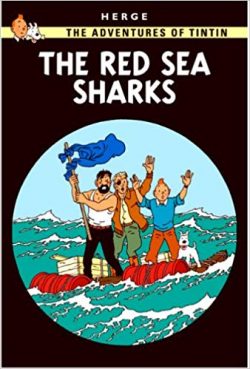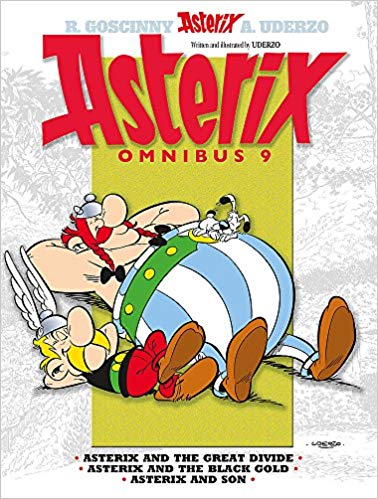
Adventures of Tintin: The Red Sea Sharks


By Hergé, Bob De Moor, Roger Leloup and others, translated by Leslie Lonsdale-Cooper & Michael Turner (Egmont UK)
ISBN: 978-1-40520-818-5 (HB) 978-140520-630-3 (TPB)

Georges Prosper Remi, known all over the world as Hergé, created a timeless masterpiece of graphic literature with his tales of a plucky boy reporter and entourage of iconic associates.

Singly, and later with assistants including Edgar P. Jacobs, Bob de Moor and other supreme stylists of the Hergé Studio, he created 23 splendid volumes (originally serialised in instalments for a variety of newspaper periodicals) which have grown beyond their pop culture roots to attain the status of High Art.

On leaving school in 1925, Remi worked for the conservative Catholic newspaper Le Vingtiéme Siécle where he fell under the influence of its Svengali-esque editor Abbot Norbert Wallez. A devoted boy scout, a year later the artist produced his first strip series The Adventures of Totor for monthly Boy Scouts of Belgium magazine. By 1928 he was in charge of producing the contents of the newspaper’s weekly children’s supplement Le Petit Vingtiéme.

While illustrating The Adventures of Flup, Nénesse, Poussette and Cochonette – written by the staff sports reporter – Wallez asked Remi to create a new adventure series. Perhaps a young reporter who roamed the world, doing good whilst displaying solid Catholic values and virtues?

The rest is history…

Some of that history is quite dark: During the Nazi Occupation of Belgium, Le Vingtiéme Siécle was closed down and Hergé was compelled to move his supremely popular strip to daily newspaper Le Soir (Brussels’ most prominent French-language periodical, and thus appropriated and controlled by the Nazis).

He diligently toiled on for the duration, but following Belgium’s liberation was accused of collaboration and even being a Nazi sympathiser. It took the intervention of Belgian Resistance war-hero Raymond Leblanc to dispel the cloud over Hergé, which he did by simply vouching for the cartoonist. Leblanc also provided cash to create a new magazine – Le Journal de Tintin – which he published and managed. The anthology comic swiftly achieved a weekly circulation in the hundreds of thousands, which allowed the artist and his team to remaster past tales: excising material dictated by the occupiers and unwillingly added to ideologically shade the war time adventures. The modernising exercise generally improved and updated the great tales, just in time for Tintin to become a global phenomenon.

With World War II over and his reputation restored, Hergé entered the most successful period of his artistic career. He had mastered his storytelling craft, possessed a dedicated audience eager for his every effort and was finally able to say exactly what he wanted in his work, free from fear or censure. Although Hergé’s later life was plagued by personal and health problems, this only seemed to enhance his storytelling abilities.

Coke en stock began initial serialisation in Le Journal de Tintin from 31st October 1956 and on completion (1st January 1958) issue was collected into album form. In 1960 it voyaged across the channel to become The Adventures of Tintin: The Red Sea Sharks: a slick, perfectly polished comedy thriller, rife with intrigue and camaraderie. Even after decades it reads as a fresh and challenging romp ideal for young and old alike.

The Red Sea Sharks has lost none of its original contemporary urgency. Produced during the turbulent times that led to the Middle Eastern Suez Crisis, it remains worryingly relevant with nations and mad millionaires carrying out proxy wars amidst the sand dunes and shipping lanes…

The yarn reintroduces Emir Ben Kalish Ezab (from Land of Black Gold) whose oil-rich country is in the throes of a civil war manufactured by the moneyed powers of the West. Fearful of the consequences, the hard-pressed potentate sends his son Abdullah to stay with Captain Haddock at rural Marlinspike Hall, unaware that the old dipsomaniac and Tintin are currently embroiled in a minor mystery involving former south American dictator General Alcazar (The Broken Ear), cheap war surplus aircraft and a hidden criminal mastermind…

As eager to escape the infernal practical jokes of the incorrigible Prince Abdullah as to solve the case, the heroic pair trace the trail of the sinister arms dealers and soon find themselves back in the Desert Kingdom of Khemed.

The Europeans are closely monitored and arrive as unwelcome intruders after the rebels defeat the Emir and drive him into hiding, thanks to their illicitly gained fighter planes. When a hidden bomb leaves Tintin’s plane wrecked in the wastelands, the indomitable pair trek overland into enemy territory before finally finding the Emir-in-hiding.

Here they learn the coup has been instigated by the Marquis di Gorgonzola, an enigmatic self-made millionaire whose vast commercial interests are supplemented by selling into slavery pilgrims undertaking the Hajj to Mecca!

Hot on the trail, the pair take ship for that holy city but are strafed by warplanes. Shooting one down they rescue the pilot, but when they and their new-found ally are rescued by Gorgonzola’s yacht, Tintin discovers that one of his oldest foes is behind it all…

This spectacular high-adventure, despite its political and moral underpinnings, is primarily an action yarn with plenty of twists and turns and a terrific feel-good climax.
The Red Sea Sharks: artwork © 1958, 1986 Editions Casterman, Paris & Tournai. Text © 1960 Egmont UK Limited. All Rights Reserved.

Iznogoud and the Day of Misrule (volume 3)


By Goscinny & Tabary, translated by Anthea Bell & Derek Hockridge (Cinebook)
ISBN: 978-1-905460-79-3 (PB album)

In his lifetime (1926-1977) René Goscinny was one of the most prolific, most read writers of comic strips the world has ever seen. Death has barely slowed him down and he still is.

Among his most popular series are Lucky Luke, Le Petit Nicolas and of course Asterix the Gaul. In 1962, scant years after the Suez crisis, the French returned to the deserts when he teamed with the superb Jean Tabary to produce imbecilic Arabian (im)potentate Haroun el-Poussah, but it was prototypical villainous foil, power-hungry vizier Iznogoud who stole the show – possibly the conniving little scrote’s only successful scheme…

Les Aventures du Calife Haroun el Poussah was created for Record with the first instalment appearing in the January 15th issue in 1962. A minor hit, the feature jumped ship to Pilote: a magazine created and edited by Goscinny where it was refashioned into a starring vehicle for the devious little rat-bag who had increasingly hogged the limelight.

Iznogoud is Grand Vizier to Haroun Al Plassid, Caliph of Ancient Baghdad, but the sneaky little toad has loftier ambitions, or as he is always shouting “I want to be Caliph instead of the Caliph!”

The revamped series started in Pilote in 1968, rapidly becoming a huge success, with 30 albums so far, a TV cartoon show and even a live action movie. When Goscinny died in 1977 Tabary assumed the scripting as well as the superbly stylish illustration, moving to book-length complete tales, rather than compilations of short punchy stories which typified their collaborations.

This third translated album – also available in digital formats) was actually the eighth French volume (released in 1972 as Le jour des fous) and offers the best of both worlds. The eponymous lead feature is a whacking great 20-page epic, disclosing the vile Vizier’s best chance to usurp the throne when a city festival dictates that for one day masters and servants swap roles.

All Iznogoud has to do is ensure that the Caliph isn’t around to reclaim his position at the end of the day: What could be simpler?

This is followed by a delightful 8-page slice of whimsy entitled ‘The Challenge’ wherein the Vizier attempts to embroil his sublime simpleton superior in a duel… with the usual insane outcome.

Thereafter, ‘The Labyrinth’ demonstrates the creators’ solid grasp of classic slapstick as an undefeatable maze proves no match for the Caliph’s incredible luck, before the book concludes with a sharp political spoof that also takes a good-natured poke at unions.

In ‘Elections in the Caliphate’ we discover that only the Caliph can vote; but when Iznogoud gets the notion that he can get a fakir or magician to make Haroun Al Plassid vote for absolutely anybody and not just himself as usual, it opens a truly chaotic can of worms – which is quite handy, since on polling day most of Baghdad traditionally goes fishing…

Like all the best storytelling, Iznogoud works on multiple levels. Much like its more famous cousin Asterix – and similarly translated on these pages by master translators Anthea Bell & Derek Hockridge who made the indomitable little Gaul so very palatable to the English tongue – for younger readers Iznogoud is a comedic romp with sneaky baddies coming a well-deserved cropper, but hides its credentials as a pun-filled, witty satire for older, wiser heads,

Here the translators’ famed skills recall the best – and least salacious – bits of the legendary Carry On films as well as some peculiarly Tommy Cooper-ish surreal, absurdity…

Snappy, fast-paced hijinks and gloriously agonising pun-ishing (see what I did there?) patter abound in this mirthfully infectious series: a household name in France where “Iznogoud” became common parlance for a certain type of politician: over-ambitious, unscrupulous – and often of diminutive stature.
© 1972 Dargaud Editeur Paris by Goscinny & Tabary. All Rights Reserved.

O Josephine!


By Jason (Fantagraphics Books)
ISBN: 978-1-68396-210-6 (HB)
Jason is secretly John Arne Saeterrøy: born in Molde, Norway in 1965 and an overnight international cartoon superstar since 1995 when his first graphic novel Lomma full ay (Pocket Full of Rain) won that year’s Sproing Award (Norway’s biggest comics prize).

He won another Sproing in 2001 for his Mjau Mjau strip and the following year turned almost exclusively to producing graphic novels. Now an established global star, he has garnered numerous major awards from such disparate locales as France, Slovakia and the USA.

Jason’s breadth of interest is capacious and deep: comics, movies, music, high literature, low life, real life and pulp fiction all feature equally with absolutely no inherent sense of hierarchy, and his puckish mixing and matching of such evergreen founts of inspiration always result in a picture-treatise well worth a reader’s time.

A master of short-form illustrated tales, many Jason yarns are released as snappy little albums which are perfect for later inclusion in longer anthology collections such as this one which gathers a quartet of the most recent and very best.

As always, the visual/verbal bon mots unfold in Jason’s beguiling, sparse-dialogued, pantomimic progressions with enchantingly formal page layouts rendered in the familiar, minimalist evolution of Hergé’s Ligne Claire style; solid blacks, thick lines and settings of seductive simplicity. That delight is augmented here by a beguiling palette ranging from stark monochrome to primary yellow duotones…

Available thus far only as a sturdily comforting hardback, the stream of subtle wonderment opens with a suitably understated autobiographical jaunt to the land of Erin and an uneventful but truly mind-blowing progression along ‘The Wicklow Way’. The vacation hikes might be scenic and uneventful, but you’re never alone as long as you’re stuck inside your own head…

With the addition of a jaundiced inky outlook (and employing “yellow journalism” of the most literal kind) ‘L. Cohen: A Life’ then outlines the life and times of the poet, musician and philosopher, with a strong emphasis on whimsical inaccuracy and factual one-upmanship…

Filmic classicism underpins ‘The Diamonds’ as a pair of barely-boiled detectives lose all objectivity as their scrupulous surveillance of a simple family affects their own hidden lives before the low key dramatics slip back into monochrome and into the twilight zone after weary world traveller Napoleon Bonaparte returns to Paris and falls head over shiny heels for infamous exotic dancer Josephine Baker. As with all doomed romances, the path to happiness is rocky, dangerous, and potentially insurmountable, but… c’est l’amour!

Jason’s comic tales are strictly for adults but allow us all to look at the world through wide-open childish eyes, exploring love, loss, life, death, boredom and all aspects of relationship politics without ever descending into mawkishness or simple, easy buffoonery. His buffoonery is always slick and deftly designed for maximum effect…

Jason remains a taste instantly acquired: a creator any true fan of the medium should move to the top of their “Must-Have” list.
All characters, stories, and artwork © 2019 Jason. This edition © Fantagraphics Books, Inc. All rights reserved.

Asterix Omnibus Volume 8 Asterix and the Great Crossing; Obelix and Co.; Asterix in Belgium


By Goscinny & Uderzo, translated by Anthea Bell & Derek Hockridge (Orion Children’s Books)
ISBN: 978-1-44400-837-1 (HB) 978-1-44400-838-8 (TPB)

One of the most popular comics features on Earth, the collected chronicles of Asterix the Gaul have been translated into more than 100 languages since his debut in 1959, with a dozen animated and live-action movies, TV series, assorted games, toys, merchandise and even a theme park outside Paris (Parc Astérix, unsurprisingly…); all stemming from his gloriously absurd exploits.

More than 325 million copies of unforgettable Asterix books have sold worldwide (not counting the five non-canonical tomes most fans also own), making his joint originators France’s best-selling international authors. There is even the tantalising yet frightening promise of a new – 38th – volume sometime this year by follow-up creative team Jean-Yves Ferri and Didier Conrad…

The diminutive, doughty, potion-powered paragon of Gallic Pride was created by two of the industry’s greatest masters, René Goscinny & Albert Uderzo, as a weekly strip in Pilote, swiftly becoming a national success and symbol. Although their inspirational collaborations ended in 1977 with the death of the prolific scripter, the creative wonderment continued until 2010 from Uderzo and assistants – albeit at a slightly reduced rate.

After nearly 15 years as a comic strip subsequently collected into compilations, in 1974 the 21st tale (Asterix and Caesar’s Gift) was the first to be published as a complete original album before being serialised. Thereafter each new release was a long anticipated, eagerly awaited treat for the strip’s countless aficionados…

The comics magic operates on multiple levels: ostensibly, younger readers revel in the action-packed, lavishly illustrated comedic romps where sneaky, bullying baddies get their just deserts, whilst we more worldly readers enthuse over the dry, pun-filled, sly satire, especially as enhanced for English speakers by the brilliantly light touch of translators Anthea Bell & Derek Hockridge, who played no small part in making the indomitable Gaul and his gallant companions so palatable to the Anglo-Saxon world. (pour moi, though, a perfectly produced physically poetic “Paf!” to the phizzog is as welcome and wondrous as any painfully potent procession of puns or sardonic satirical sideswipes…)

More than half of the canon occurs on Uderzo’s beloved Brittany coast, where, circa 50 B.C., a small village of cantankerous, proudly defiant warriors and their families resisted every effort of the Roman Empire to complete the conquest of Gaul. The land had been divided by the conquerors into the provinces of Celtica, Aquitania and Amorica, but the very tip of the last-cited just refused to be pacified…

The remaining epics take place in various legendary locales throughout the Ancient World, as the Garrulous Gallic Gentlemen visited all the fantastic lands and corners of civilisations of the era…

When the heroes were playing at home, the Romans, unable to defeat the last bastion of Gallic insouciance, futilely resorted to a policy of absolute containment. Thus, the little seaside hamlet was permanently hemmed in by the heavily fortified garrisons of Totorum, Aquarium, Laudanum and Compendium.

The Gauls don’t care: daily defying the world’s greatest military machine simply by going about their everyday affairs, protected by the magic potion of resident druid Getafix and the shrewd wits of the diminutive dynamo and his simplistic, supercharged best friend…

Firmly established as a global brand and premium French export by the mid-1960s, Asterix the Gaul continued to grow in quality as Goscinny & Uderzo toiled ever onward, crafting further fabulous sagas; building a stunning legacy of graphic excellence and storytelling gold. Moreover, following the civil unrest and nigh-revolution in French society following the Paris riots of 1968, the tales took on an increasingly acerbic tang of trenchant satire and pithy socio-political commentary…

La Grande Traversée was the 22nd saga and second original book release in France, premiering in 1975, with a British hardcover edition – Asterix and the Great Crossing – launching here the following year.

It begins with another typical village kerfuffle as to the true and relative vintage of Unhygienix the fishmonger’s wares before descending into the standard-issue, boisterous, all-comers-welcome brawl.

However, the situation is rather more serious this time as Druid Getafix needs really fresh fish for the magic potion that keeps them all free of Rome…

A merchant but not a fisherman, Unhygienix refuses to catch his own stock so Asterix and Obelix eventually volunteer to take to sea in old Geriatrix’s dilapidated skiff to replenish the wizard’s stores, even though a big storm is brewing. Sadly, our heroes aren’t fishermen either, and after losing the nets the neophyte seamen are blown far from home…

Lost at sea and starving, they encounter their old pals the Pirates, but Obelix eats all their provisions in one go and soon the mismatched mariners – and faithful mutt Dogmatix – are in even direr straits as another storm blows them ever further westward.

Just as death seems inevitable, the Gauls wash up on an island of the Empire they have never seen before. In this strange outpost the Romans have red skins, paint their faces and wear feathers in their hair. Most terrifyingly, there are no wild boar to eat, only big ugly birds that go “gobble, gobble”…

After the usual two-fisted diplomacy with the “Iberians, or perhaps Thracians?”, Asterix and Obelix settle down comfortably enough, but the situation changes when the chief decides the big paleface is going to marry his daughter. Desperately, the Gauls steal a canoe one night and strike out across the Big Water towards home but only get as far as a little islet where they’re picked up by Viking explorers Herendethelessen, Steptøånssen, NøgøødreÃ¥ssen, HÃ¥rÃ¥ldwilssen and their valiant Great Dane HuntingseÃ¥ssen, who are all jointly looking for unmapped continents…

Convinced their odd discoveries are natives of this strange New World, the Danes try to entice the oddly eager indigenes to come home with them as proof of Herendethelessen’s incredible discovery. Braving icy Atlantic seas, the dragon ship is soon back in cold, mist-enshrouded Scandinavia where gruff, dismissive Chief Ødiuscomparissen is suitably amazed and astounded…

However, when Gaulish slave Catastrofix reveals they are from his European homeland, tempers get a bit heated and another big fight breaks out…

Taking advantage of the commotion, Asterix, Obelix and Catastrofix – an actual fisherman by trade – steal a boat and head at last for home, picking up some piscine presents for Getafix en route…

This is a wittily arch but delightfully straightforward yarn, big on action and thrills, packed with knowing in-jokes and sly references to other French Western strips such as Lucky Luke and Ompa-pa (Oumpah-pah in French) as well as Shakespeare’s Hamlet, and ultimately formed the basis of the animated feature film Asterix Conquers America.

Strong, stinging satire was the foundation of the next saga. Obélix et Compagnie debuted in 1976 with English-language hardcover Obelix and Co. launching in 1978: once again dealing with frustration-wracked Julius Caesar’s attempting to end the aggravating resistance of the indomitable Gauls.

To that effect the most powerful man in the world dispatches a bold, brash go-getter from the Latin School of Economics to destroy their unity forever. Financial whiz-kid Preposterus has a plan that simply can’t fail and will incidentally pay huge dividends to the Empire.

Meanwhile, the replacing of the Totorum Garrison with fresh troops has allowed the Gauls to give Obelix a truly inspired birthday gift. After beating up the entire contingent on his own and without having to share the soldiers, the delighted big man goes back to carving and delivering Menhirs before meeting a strange young Roman.

Preposterus – a cruelly effective caricature of France’s then Prime Minister Jacques Chirac – intends to destroy the villagers by making them as greedy, lazy and corrupt as any Roman Patrician, all through the introduction of Capitalism and Market Forces…

To that end he pretends to be a Menhir buyer, willing to pay any amount for the giant stone obelisks (which have no appreciable use or worth and were normally swapped for small treats or favours), telling the big gullible oaf that money makes men important and powerful.

Without really understanding, easygoing Obelix begins accepting ever-larger sums for each standing stone, forcing himself to work harder and never stop. He doesn’t know what to do with the money but is caught up in an ever-hastening spiral of production.

Too busy to have fun hunting wild boars or play with Dogmatix, he begins hiring his equally gullible friends and neighbours: first to hunt for him and later to help sculpt Menhirs. All does is work and spend his growing mountain of cash on increasingly daft fancy clothes as he drives himself to miserable exhaustion.

Before long most of the village is caught in the escalating economic bubble, all except wily Asterix, who attempts to bring his old pal to his senses by suggesting to his friends that they set up as rival Menhir manufacturers. The little man is inadvertently helped in this by the status-obsessed village wives who push their men to become as “successful and influential” as the fat oaf…

In Totorum, the megaliths are beginning to pile up as Preposterus proceeds to exhaust all Rome’s funds purchasing Menhirs. Centurion Ignoramus is ecstatic that the plan to destroy the Gauls through cutthroat competition is working, but wants the growing mountain of shaped stones out of his camp, so Preposterous has them shipped back to Rome and starts selling them to rich trendies as indispensable fashion accessories.

The whiz-kid has nearly emptied Caesar’s coffers but his swish and intensive advertising campaign looks sets to recoup the losses with a folk-art sales boom… until sleazy Italian entrepreneur Meretricius starts selling cut-rate Rome-manufactured Menhirs and the Boom leads to a ruthless price war and inevitable Bust which almost topples the Empire…

Meanwhile, success has not made Obelix happy and he’s thinking of quitting, just as the desperate Preposterous returns and inconsiderately, immediately stops buying Menhirs. Of course, being simple peasants the Gauls don’t understand supply and demand or the finer principles of a free market: they’re just really annoyed and frustrated.

Luckily there’s lots of Romans around to help deal with their pent-up tensions…

Soon the air is cleared and the villagers have returned to their old-fashioned ways so Asterix and Getafix can laugh at news of a financial crisis wracking Rome…

This hilarious and telling parody and unashamed anti-Capitalist tract shows Goscinny & Uderzo at their absolute, satirical best, riffing on modern ideologies and dogmas whilst spoofing and lampooning the habits and tactics of greedy bosses and intransigent workers alike. Many politicians and economists have cited this tale – which is as always, stuffed with cameos and in-joke guest shots. I’m reliably informed that the beautiful page 36, which featured Preposterus explaining his ad campaign, was also the 1000th page of Asterix since his debut in 1959.

Asterix travel epics are always packed with captivating historical titbits, soupcons of healthy cynicism, singularly surreal situations and amazingly addictive but generally consequence-free action, always illustrated in a magically enticing manner. Such was certainly the case with Astérix chez les Belges, the 24th adventure and Goscinny’s last. The indefatigable writer passed away in 1977 halfway through the book’s completion. You can even commemorate the tragic event as just as Uderzo did, by drawing sullen, stormy skies for the rest of the tale he was completing: marking the moment, and incorporating one last wry shared dig at Belgian weather…

The story is a grand old romp of friendly rivalries – released in Britain in 1980 as Asterix in Belgium – and begins when a relief troop takes over the garrison of Laudanum. These soldiers are delighted to be in Amorica, because it means they are no longer fighting the Belgians. Those barbarians are even worse than the indomitable villagers in Amorica. Caesar himself has called them “the bravest of all the Gaulish Peoples”…

Perplexed by the laid-back attitude of the new occupiers, who consider their new posting a “rest cure”, Asterix and Obelix question one of the replacement Romans. They report his unbelievable news to Vitalstatistix, who is beside himself with indignation. Most of the others don’t really care, but when the furious Chief storms off for the border to see for himself, the old pals follow to keep him out of trouble…

Soon they have crossed the border and encounter the fabled warriors, led by their chiefs Beefix and Brawnix. They are indeed mighty fighters but awfully arrogant too, and soon Vitalstatistix has become so incensed with their boasting that he proposes a competition to see who can bash the most Romans and prove just who are the Bravest Gauls.

Obelix doesn’t mind: the Belgians are just like him. The only thing they like more than hitting Romans is eating and they seem to do the latter all day long…

Before long, however, there are no more Roman forts in the vicinity and the matter of honour is still unsettled. What they need is an unbiased umpire to judge who is the greatest and – fortuitously – Julius Caesar, moved to action by the terrible news from Belgium and rumours that the Amoricans (three of them at least) are also rising in revolt, has rushed to the frontier with the massed armies of the Empire…

Against such a force the squabbling cousins can only unite to force Caesar to admit who’s best…

Stuffed with sly pokes and good-natured joshing over cherished perceived national characteristics and celebrating the spectacular illustrative ability of Uderzo, this raucous, bombastic, bellicose delight delivers splendid hi-jinks and fast-paced action, and is perhaps the most jolly and accessible of these magical all-ages entertainments: a fitting tribute to the mastery of Goscinny and Uderzo.
© 1975-1979 Goscinny/Uderzo. Revised English translation © 2005 Hachette. All rights reserved.
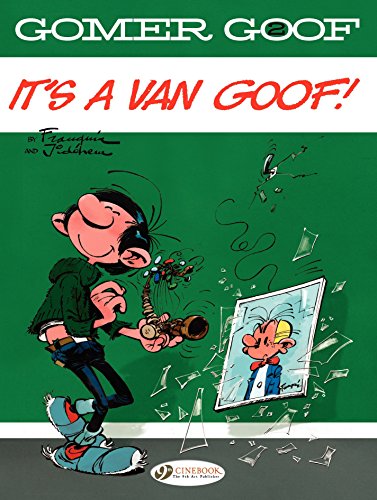
Lucky Luke Volume 2: Ghost Town


By Morris & Goscinny, translated by Luke Spear (Cinebook)
ISBN: 978-1-905460-12-0 (PB Album)

It’s hard to think of one of Europe’s most beloved and long-running comics characters being in any way controversial, but when the changing times caught up with the fastest gun in the West (“so fast he can outdraw his own shadow”) and the planet’s most laconic cowboy moved with them, the news made headlines all over the world.

Doughty yet dependable cowboy champion Lucky Luke is a rangy, good-natured do-gooder able to “draw faster than his own shadow”. He amiably roams the fabulously mythic Old West, enjoying light-hearted adventures on his rather sarcastic know-it-all wonder-horse Jolly Jumper. The taciturn nomad constantly interacts with a host of historical and legendary figures as well as even odder folk…

His unceasing exploits over 7 decades years have made him one of the best-selling comic characters in Europe – if not the world – generating upwards of 85 individual albums and sales totalling in excess of 300 million in 30 languages… so far…

That renown has led to a mountain of spin-off toys, computer games, animated cartoons, a plethora of TV shows and live-action movies and even commemorative exhibitions. No theme park yet but who knows when…?

The brainchild of Belgian animator, illustrator and cartoonist Maurice de Bévère (“Morris”) and first seen in Le Journal de Spirou‘s seasonal Annual L’Almanach Spirou 1947, Luke sprang to laconic life in 1946, before ambling into his first weekly adventure ‘Arizona 1880’ on December 7th 1946.

Working solo until 1955, Morris produced nine albums of affectionate sagebrush spoofery before teaming with old pal and fellow trans-American tourist Rene Goscinny, who became regular wordsmith as Luke attained dizzying, legendary, heights starting with Des rails sur la Prairie (Rails on the Prairie). This began serialisation in Spirou on August 25th 1955.

In 1967, the six-gun straight-shooter switched sides, joining Goscinny’s own periodical magazine Pilote with ‘La Diligence’ (The Stagecoach).

Goscinny co-created 45 albums with Morris before his untimely death, from whence Morris soldiered on both singly and with fresh collaborators.

Morris died in 2001, having drawn fully 70 adventures, plus many spin-off sagas crafted with Achdé, Laurent Gerra, Benacquista & Pennac, Xavier Fauche, Jean Léturgie, Jacques Pessis and others, all taking their own shot at the venerable vigilante…

Lucky Luke has previous in this country too, having first pseudonymously amused and enthralled British readers during the late 1950s, syndicated to weekly anthology Film Fun. He later rode back into comics-town in 1967 for comedy weekly Giggle, where he used the nom de plume Buck Bingo.

In each of these venues – as well as many attempts to follow the English-language album successes of Tintin and Asterix – Luke laconically puffed on a trademark roll-up cigarette which hung insouciantly and almost permanently from his lip. However, in 1983 Morris – amidst pained howls and muted mutterings of “political correctness gone mad” – deftly substituted a piece of straw for the much-travelled dog-end, thereby garnering for himself an official tip of the hat from the World Health Organization. For historical veracity, that tatty dog-end has been assiduously restored for this particular tale and indeed all of Cinebook’s fare – at least on the interior pages…

The Kent-based Euro-publisher is the most successful in bringing Lucky Luke to our shores and shelves, and it’s clearly no big deal for today’s readership as we’re at 74 translated books and still going strong…

Moreover, apart from that very first adventure, Lucky, to misappropriate a quote applied to the thematically simpatico Alias Smith and Jones “in all that time he never shot or killed anyone”…

Originally collected in 1965 as La Ville fantôme, the 25th adventure and Goscinny’s 16th collaboration with Morris is available in English as an oversized paperback – and digitally too as Ghost Town: the second of the Cinebook series.

It all begins as Luke rides the range and encounters tarred-and-feathered gamblers Denver Miles and Colorado Bill. Despite instantly assessing their scurrilous natures – and naturally they subsequently try to rob him – Lucky gives them assistance and a ride to the nearest outpost of civilisation.

That happens to be the deserted mining town of Gold Hill where they encounter embittered aged miner Old Powell who chases them off at gunpoint.

A little further on they reach Bingo Creek and discover the mad old coot was once the victim of a gold-salting scheme (hiding gold on worthless land and getting a sucker to buy it) but stubbornly refused to quit, convinced that somewhere in his mountain the motherlode still lies hidden…

Denver and Colorado are incorrigible crooks and after Lucky exposes their fleecing of the townsfolk the bent gamblers try to backshoot him, only to fall foul of Powell’s skill with a rifle…

Eternally grateful, Lucky determines to befriend and assist the irascible old coot, despite all his surly protests, whilst Denver and Colorado sketch out the perfect revenge by attempting to steal his mine to re-salt and sell on to some other sucker…

To this end they try to buy up the claim, have Old Powell hanged for witchcraft, frame him for cattle-rustling and even plant the stolen cash-register from the saloon in his mine. The scoundrels haven’t reckoned on the ingenuity of Lucky Luke, however…

Against the masterful wits and wicked wits of our indomitable hero the gamblers are ultimately helpless in this splendidly intoxicating blend of all-ages action, slapstick and wry cynical humour.

Although the dialogue is perhaps a bit dry in places, this is a grand old hoot in the tradition of Destry Rides again and Support Your Local Sheriff (or perhaps Paint Your Wagon,Evil Roy Slade or Cat Ballou are more your style?), superbly executed by master storytellers and offering a wonderful introduction to a unique genre for modern kids who might well have missed the romantic allure of the mythical Wild West.

And in case you’re worried, even though the interior art still has our hero chawin’ on that ol’ nicotine stick, trust me, there’s very little chance of anyone craving a quick snout, but quite a high probability that they’ll want more to binge on loads more Lucky Luke…
© Dargaud Editeur Paris 1971 by Goscinny & Morris. © Lucky Comics. English translation © 2006 Cinebook Ltd.

Adventures of Tintin: The Calculus Affair


By Hergé, Bob De Moors and others, translated by Leslie Lonsdale-Cooper & Michael Turner (Egmont UK)
ISBN: 978-1-40520-817-8 (HB) 978-1-40520-629-7 (TPB)

Georges Prosper Remi, known all over the world as Hergé, created an incontrovertible masterpiece of graphic literature with his tales of a plucky boy reporter and his entourage of iconic associates.

Singly, and later with assistants including Edgar P. Jacobs, Bob de Moor and other supreme stylists of the select Hergé Studio, he created 23 splendid volumes (originally produced in brief instalments for a variety of periodicals) that have grown beyond their popular culture roots and attained the status of High Art.

On leaving school in 1925, he worked for the conservative Catholic newspaper Le Vingtiéme Siécle where he fell under the influence of its Svengali-esque editor Abbot Norbert Wallez. A devoted boy scout, a year later Remi produced his first strip series The Adventures of Totor for monthly Boy Scouts of Belgium magazine, and by 1928 was producing the contents of the newspaper’s weekly children’s supplement Le Petit Vingtiéme.

He was illustrating The Adventures of Flup, Nénesse, Poussette and Cochonette, written by the staff sports reporter when Wallez asked Remi to create a new adventure series. Perhaps a young reporter who roamed the world, doing good whilst displaying solid Catholic values and virtues?

The rest is history…

After a troubled period during the war years, the Boy Reporter and his companions became a staple of the European childhood experience through weekly trans-national magazine Le Journal de Tintin and regular album collections. The anthology comic regularly achieved a circulation in the hundreds of thousands, allowing the artist and his team to remaster past tales and create bold new romps reflecting the tone of the times.

Although Hergé’s later life was troubled by personal problems and health issues, this only seemed to enhance his storytelling abilities. The later adventures are all sleek, polished thrillers, rife with intrigue and camaraderie; perfectly garnished with comedy set-pieces of timeless brilliance. Even after decades of working, the artist/auteur continued fresh and challenging, always seeking new arenas of drama to explore.
Hergé entered the most successful period of his artistic career. He had mastered his storytelling craft, possessed a dedicated audience eager for his every effort and was finally able to say exactly what he wanted in his work, free from fear or censure. That meant a return to observations of contemporary themes and situations, as in this effective treatise on the burgeoning Cold War…

L’Affaire Tournesol began in the Christmas issue of the Belgian edition of Le Journal de Tintin (dated December 22nd 1954) and ran uninterrupted until February 22nd 1956. The French editions ran it from February 1955, and the completed saga was collected as an album in 1956 and is notable for the introduction of three characters who would become semi-regular cast members: Jolyon Wagg, Cutts the Butcher, and recurring villain Colonel Spoons.

The Calculus Affair once again sees the zany Professor abducted from the palatial home of Captain Haddock, resulting in a dire and desperate chase through espionage-infested Europe. Our heroes are hampered in their efforts to save their friend by the introduction of the infinitely annoying and crushingly dull insurance salesman Jolyon Wagg and, more ominously, rival bands of relentless, ruthless spies.

As they doggedly pursue Calculus to Geneva, Tintin and Haddock encounter not only the insidious agents of Borduria but find that their erstwhile allies of Syldavia are also trying to make the Professor “disappear”. After frantic chases, pitched battles and assassination attempts, diplomatic duplicity defeats them, and Calculus becomes an unwilling guest of the totalitarian Bordurians, who are pleased to accept as a “gift” his new invention, which they intend to use as a weapon of mass destruction.

Temporarily stymied, Tintin and Haddock finagle their way into the country, and with the aid of Opera Diva and human tornado Bianca Castafiore, bamboozle the secret police to rescue the Professor and save the day.

Although all the elements in play are tried and trusted ingredients of the Tintin formula, the level of artistic achievement here is superb and the interplay of tense drama, slapstick comedy and breakneck action make this brooding thriller the most accomplished of Hergé’s tales. The simple fact that the contemporary Cold War fever is absent for modern readers makes no difference at all to the enjoyment of this magnificent graphic masterpiece.

The Calculus Affair: artwork © 1956, 1984 Editions Casterman, Paris & Tournai. Text © 1960 Methuen & Co Ltd/2012 Egmont UK Limited. All Rights Reserved.

The Troll King


By Kolbeinn Karlsson (Top Shelf Productions)
ISBN: 978-1-60309-061-2 (TPB)

The power of fairy tales and magical sagas has shaped human thought and psychology fully as much as science and philosophy, and as such is infinitely evergreen – especially when seen through the lens of a truly gifted artist.

Swedish artisan and imaginer Kolbeinn Karlsson was born in Uppsala in 1982, and studied at Malmö’s Kvarnby School of Comic Arts. From 2006 he began publishing mini-comics which quickly won him a far-ranging and appreciative global audience. His stylish renderings have been published throughout Europe in magazines such as Strapazin, Glömp and C’est Bon.

The Troll King (available in both paperback and digital formats) is his first book, released in 2009 and since then adapted into an animated film. It’s a superb marriage of bizarre situations and legendary fictions, illustrated in a compelling, evocative and unique style, all tied together with a superb sense of guided absurdity that no fan of narrative art of fantastic fiction could possibly resist.

It also gives the initial appearance of relating unrelated tales but that is not truly the case…

Two hairy overly-masculine hermits live together in the wilds: shunning civilisation, exercising, and secretly wishing they had a child. When they perform a rite to bind themselves together, a strange forest creature blesses their union and their greatest desire is made real…

Elsewhere, ‘Sleeping and Dreaming of Food’ a starving, hallucinating dwarf falls into the Black River and endures visions and strange transformations, even as in another elsewhere an ambulatory carrot invades an ornate indoor pool and begins to sprout uncontrollably…

And so unravels a fevered stream of peculiar pictorial encounters that demand the reader’s full attention and participation, with always that ponderous forest presence intersecting the story strands…

Blending humour with horror and salutary moral warnings with random acts of fate, The Troll King offers a truly unsettling but incredibly rewarding walk on the weird wild side thatwill haunt your dreams until you can no longer separate the surreal from the ridiculous…
© 2009 Kolbeinn Karlsson. All rights reserved.

Hungarian Rhapsody


By Vittorio Giardino (Catalan Communications)
ISBN: 978-0-87416-033-8 (TPB Album)

Born on Christmas Eve 1946, Vittorio Giardino was an electrician who switched careers at age 30. He initially worked for a number of comics magazines before his first collection – Pax Romana – was released in 1978. Giardino has toiled, slowly but consistently, on both feature characters such as the detective Sam Pezzo, saucy Winsor McKay homage Little Ego and cold-war drama Jonas Fin, as well as general fiction tales, producing over 43 albums to date.

In 1982 he began the tale of a quiet, bearded fellow recalled by the Deuxieme Bureau (the French Secret Service) to investigate the slaughter of almost every agent in the cosmopolitan paradise of Budapest. The series ran in four parts in the magazine Orient Express before being collected as Rhapsodie Hongroise Giardino’s thirteenth book and in no way unlucky for him. Reluctant spy Max Fridman (transliterated into Max Friedman for the English-speaking world), was dragged back into the “Great Game” in the years of uneasy peace just before the outbreak of World War II: a metaphor for the nations of Europe…

Over the course of ten years, the masterful Italian graphic novelist crafted two more individual tales and in 1999 added a stunning triptych of albums. The three volumes of No Pasarán! detailed a key moment during the conflict in Republican Spain and the dying days of the Civil War which revealed many clues into the life of the diffident and unassuming hero. Two further volumes have been added to the canon in 2002 and 2008, and I’m declaring they are all now long past due to be revived and revisited…

In Hungarian Rhapsody, Friedman debuts as a troubled, cautious man with a daughter he adores and a nebulous past that somehow stems from undisclosed experiences in the Spanish Civil War where he fought as a Republican in the International Brigades against Franco’s Nationalists.

He is no ideologue or man of action, but still, somehow, is convinced – call it blackmailed – to leave his idyllic home in Switzerland to investigate the plague of assassinations for his devious French taskmasters….

Friedman is a hero in the mould of John le Carré’s George Smiley: a methodical thinker and the very antithesis of such combat supermen as James Bond, Napoleon Solo or Jason Bourne. Arriving in Budapest, Friedman gently prods and pokes about, swiftly becoming the target of not just the mysterious killers, but seemingly every rabid faction in a city crammed full of spies of every type and description, from Soviet agitators to Nazi plotters.

In a city of stunning, if decadent, beauty and cultural extremes where East meets West, Friedman finds that like the spy-game itself, nobody and nothing can be trusted…

Somebody somewhere has a master-plan but who it is and what it is..?

That’s a mystery that could get even the most cautious agent killed…

Giardino is a powerfully subtle writer who lets tone and shaded nuance carry a tale, and his captivating art – a semi-representational derivation of Hergé’s “Ligne Claire” style – makes the lovingly rendered locations as much a character in this smart, gripping drama as any of the stylishly familiar operatives of a dark, doomed world on the brink of holocaust.

Although largely an agent unknown in the English-speaking world, Max Friedman is one of espionage literature’s greatest characters. Giardino’s work is like honey for the eyes and mind. Hungarian Rhapsody is a graphic novel any fan of comics or the Intelligence Game should know.

© 1986 Vittorio Giardino. All rights reserved.

Lost in Time volume 1: Labyrinths


By Jean-Claude Forest & Paul Gillon, with an introduction by Alex Toth (NBM)
ISBN: 978-0-91834-818-0 (HB)

France has had an ongoing love affair with science fiction that goes back at least to the works of Jules Verne and – depending upon your viewpoint – arguably even as far back as Cyrano de Bergerac’s posthumously published fantasy stories L’Autre Monde: ou les États et Empires de la Lune (The Other World: or the States and Empires of the Moon) and Les États et Empires du Soleil (The States and Empires of the Sun) published in 1657 and 1662. Moreover, their comic iterations have always been groundbreaking, superbly realised and deeply enjoyable.

A perfect case in point is Les Naufragés du Temps (alternately translated as either Castaways in Time or, as here, Lost in Time) created in 1964 by Jean-Claude Forest and classical master-draughtsman Paul Gillon.

Forest (1930-1998) was a Parisian and graduate of the Paris School of Design who began selling strips while still a student. His Flèche Noire (Black Arrow) led to a career illustrating for newspapers and magazines such as France-Soir, Les Nouvelles Littéraires and Fiction in the 1950s, all whilst producing the Charlie Chaplin-inspired comic series Charlot and acting as chief artist for publisher Hachette’s science fiction imprint Le Rayon Fantastique. For this last client he produced illustrations and covers on translations of imported authors A. E. Van Vogt, Jack Williamson, and others.

In 1962, Forrest created Barbarella for V-Magazine and his sexy-charged icon quickly took the country and world by storm, consequently generating an explosion of like-minded SF Bandes Dessinées features. Forest never looked back, subsequently creating Baby Cyanide and more serious tales like Hypocrite; the Verne-inspired Mysterious Planet; La Jonque Fantôme Vue de l’Orchestre and Enfants, c’est l’Hydragon qui Passe.

He also found time to script for other artists: Ici Même for Jacques Tardi, occult detective series Leonid Beaudragon for Didier Savard and, with Gillon, the subject of today’s review – a classic of both comics and science fiction inexplicably all-but-ignored by English language publishers since the 1980s. If you read French, however, all volumes are still available in print and digitally…

Paul Gillon (1926-2011) was also born in Paris but suffered from debilitating tuberculosis in early life. After his full recovery, the isolated shut-in became something of a brilliant wild child, expelled from many schools – including the prestigious Ecole des Arts Graphiques.

As a teenager he considered a career in film, theatre or fashion, but slipped almost accidentally into the world of cartooning and caricature, working freelance for such arts magazines as Samedi-Soir, France Dimanche and Gavroche.

The end of WWII created chaotic circumstances in France, subsequently spawning a whole new comics industry, and in 1947 Gillon began illustrating for the popular weekly Vaillant, both on existing adventures strips such as Wango and Lynx Blanc (both written by Roger Lécureux) and Jean Ollivier’s Le Cormoran, as well as the later spin-off Jérémie which Gillon also scripted. In 1950, he created Fils de Chine (Sons of China) with Lécureux which ran for three years.

Working in a refined and highly classicist style epitomised by the likes of global industry giants Alex Raymond, Milton Caniff and Hal Foster, Gillon also wrote and drew shorter complete pieces for titles such as 34 Camera, Femmes D’Aujourd’hui, Reves and Radar, but his big break came in September 1959 when he began illustrating a daily soap-opera strip for national newspaper France Soir.

He would render the stunningly beautiful human heartbreaks of 13, rue de l’Espoir until the end of 1972, becoming a household name in the process…

Based on the American serial The Heart of Juliet Jones and scripted by Jacques and François Gall, the feature followed the fortunes of vivacious Parisienne Françoise Morel, and unfolding daily took the heroine and the Family Morel through some of the most tumultuous years of modern European social change, in nearly 4200 strips which were naturally compiled into two collected Albums – something else which should be translated into English but probably won’t be…

Throughout that period Gillon continued in comics, producing Jérémie, working for the Disney comic Le Journal de Mickey and other magazines while trying out new venues and genres.

Les Naufrages du Temps first appeared in 1964, part of the line-up in short-lived French comic Chouchou. A decade after the periodical closed, the strip was reprinted and saga completed in France-Soir before being released as 2 bichromic (a two-coloured palette) albums from major publisher Hachette in 1974 and 1975. Two further full-colour book volumes followed in 1976.

In 1977 the saga was serialized in groundbreaking Sci-fi magazine Metal Hurlant, prompting publisher Les Humanoides Associes to re-release the four albums (L’Etoile Endormie/The Sleeping Star; La Mort Sinueuse/The Creeping Death; Labyrinthes/Labyrinths and L’Univers Cannibale/The Cannibal Universe) in colour, before continuing the series with Gillon scripting as well as illustrating until its end in 1989: a total of six further volumes.

Never idle, Gillon then created spy-thriller Les Leviathans (The Leviathans) for Les Humanoides and adult science fiction epic La Survivante (The Survivor) for L’Echo des Savanes. He also adapted literary classics such as Victor Hugo’s Notre Dame de Paris and Herman Melville’s Moby Dick and re-imagined the legend of Joan of Arc as the erotic epic Jehanne.

His later efforts included Processus de Survie (Survival Process) in 1984 and La Derniere des Salles Obscures (The Last of the Dark Rooms) in 1998. He was still creating comics well into the 21st century and remains one of France’s most honoured, celebrated and revered comics creators, so just why so few of his incredibly illustrated tales have been translated is an utter mystery to me.

One that did make the jump was Lost in Time: Labyrinths, released as a spectacular hardback by NBM in 1987 and one of the few European imports to be seen “cold” in the USA (i.e. without first running as a serial in Heavy Metal magazine). As cited above it was the third album of the French series and opened with a much-needed preamble…

So just to recap something we hadn’t actually seen: at the end of the 20th century, humanity was imperilled by “the Scourge”: a plague of extraterrestrial spores and/or a global sickness of its own negligent making.

Chris Cavallieri and Valerie Haurele were selected for a shot at survival and placed in suspended animation in individual space-capsules to preserve the best of our race and possibly reconstruct our lost glories in a newer age…

A thousand years later Chris was awakened into a bewildering but thriving multi-species civilisation in deadly danger. Earth was a derelict, plague world inhabited by mutant monsters whilst society abandoned it and grew to inhabit a hugely re-configured Solar system.

Helping the inhabitants of the patchwork “System” – ex-pat human, alien and genetically altered/hybridised animal-beings – to defeat an invasion by alien winged rats dubbed the Thrass, Chris fortuitously found Valerie’s lost capsule and revived her – but the longed-for happy reunion led to utter disaster.

Throughout their millennial slumber both ancient human lovers had dreamt of each other and a perfect meeting, but once they were together again in a furious new future, they discovered that they could not stand each other…

This tale begins after the defeated Thrass have fled the System and Valerie, rejected by Chris, has disappeared. The resurrected Ancient and his new-found true love Mara (one of the scientists who first recovered and rehabilitated Christopher) are the topic of much discussion amongst his new friends Dr. Otomoro and military cyborg Major Lisdal. Chris haunts morgues and seedy dives of the pan-cosmopolitan city of Roobo-ein-Sarra on System capital Limovan, unable to shake his destructive, obsessive fear for the fate of his millennial ex-lover…

Depressed, despondent and bitterly confused, Chris roams the exotic streets and bazaars where hordes of newly-liberated beings manically celebrate their hard-won freedom and security, unaware that he has been targeted by sinister plotters. An old “frenemy”, Morfina, accosts him and, past injuries and seductions forgotten, lures the old Earthman to the Mood Market, a vast, baroque area of bordellos run by a legendary criminal overlord. The Boar is a burly, erudite and unctuous humanoid with a Tapir’s head and plenty to hide…

(In the original this major series villain is in fact the Tapir – I’ve no idea why he was so erroneously renamed but have a sneaking suspicion that it involves European prejudices about English and American educational attainment…)

Completely off-guard, Chris succumbs to sybaritic release and is framed for the murder of a diplomat and his companion whilst out of his head. Once awake and panicked by the corpses around him, the Last Earthman accepts the extremely costly aid of the Boar to escape…

Even Christopher believes himself guilty until he discusses the affair with Mara, Lisdal and Otomoro in the cold light of day. However, even as the wool is pulled from his eyes and he realises his precarious predicament, the bamboozled human is utterly unaware that The Boar is working with compliant, vindictive Valerie, who is briefing the crime-lord on all Chris’s secrets…

When Lisdal suggests seeking help from brilliant scientific maverick Saravon Leobart, the friends are welcomed by the aged sage, but the Boar moves quickly, sending his gamin cyber-assassin Baby to quickly whisk Chris and Mara away under the pretext that the police have arrested Lisdal and Otomoro…

It’s all a colossal bluff: The Boar needs Chris to recover a deadly pre-Scourge secret weapon cached away at the time of humanity’s fall, and all the data needed to find and operate it lies buried in his Ancient subconscious. Chris is completely unaware that the thing even exists: his mind was re-programmed before his hibernation and only vengeful Valerie holds the secret of retrieving it…

Soon the Boar and his “guests” are hurtling deep into the outer system with Leobart, Morfina and Chris’ chums in hot pursuit. After a brutal clash in space, Chris and Mara are rescued but the Boar is ready and willing to retaliate. Moreover, benevolent Leobart is not all he seems…

To Be Continued…

This is a beautiful, stately and supremely authoritative adult fantasy thriller, tantalisingly teasing the reader with the promise of so much more. The second part was released in English as Lost in Time: Cannibal World in 1987, but even that only moved the saga forward without comfortably ending things. As far as I know, the only other Gillon works to make it into English are the first two volumes of The Survivor…

Mature, solid science fiction with thoroughly believable and pettily human characters confronted with fantastic situations, lots of action and loads of gratuitous nudity: how on Earth has this sublime series remained a secret French Possession for so very long? And can we please end that particular embargo soon?
© Les Humanoides Associes. © NBM 1986 for the English edition.

Asterix Omnibus volume 7: Asterix and the Soothsayer; Asterix in Corsica; Asterix and Caesar’s Gift


By Goscinny & Uderzo, translated by Anthea Bell & Derek Hockridge (Orion Books)
ISBN: 978-1-44400-835-7 (HB), 978-1-44400-836-4 (PB)

One of the most-read comics strips in the world, the collected chronicles of Asterix the Gaul have been translated into more than 100 languages since his debut in 1959, with animated and live-action movies, TV series, assorted games, toys and even a theme park outside Paris (Parc Astérix, unsurprisingly…) all stemming from his glorious exploits.

More than 325 million copies of Asterix’s many albums have sold worldwide, making his joint creators France’s bestselling international authors.

The doughty, potion-powered paragon of Gallic Insouciance was created by two grandmasters of comics: René Goscinny & Albert Uderzo. Although their inspirational collaborations ended with the death of the prolific scripter in 1977, the creative wonderment continued until relatively recently from Uderzo, assistants and ultimately his successors – albeit at a slightly reduced rate.

The wonderment works on multiple levels: ostensibly, younger readers revel in action-packed, lavishly illustrated comedic romps wherein sneaky, bullying baddies get their just deserts, whilst we more worldly readers enthuse over the dry, pun-filled, sly satire, especially as enhanced for English speakers by the brilliantly light touch of translators Anthea Bell & Derek Hockridge, who played no small part in making the indomitable Gaul and his gallant companions so palatable to the Anglo-Saxon world.

(Moi, I still rejoice in a perfectly produced “Paf!” to the phizzog as much as any painfully potent procession of puns or sardonic satirical sideswipe…)

The stories were set on Uderzo’s beloved Brittany coast, where a small village of warriors and their families resisted every effort of the Roman Empire to complete the conquest of Gaul, or alternately, anywhere in the Ancient World, circa 50 BCE, as the Gallic Gentlemen wandered the multifarious provinces of the Empire and even beyond its generally-secure borders…

When the heroes were playing at home, the Romans, unable to defeat this last bastion of Gallic insouciance, resorted to a policy of containment. Thus, the little seaside hamlet is permanently hemmed in by the heavily fortified garrisons of Totorum, Aquarium, Laudanum and Compendium.

The truculent Gauls don’t care: they daily defy the world’s greatest military machine simply by going about their everyday affairs, protected by the magic potion of resident druid Getafix and the shrewd wits of the diminutive dynamo and his simplistic, supercharged best friend…

Firmly established as a global brand and premium French export by the mid-1960s, Asterix the Gaul continued to grow in quality as Goscinny & Uderzo toiled ever onward, crafting further fabulous sagas; building a stunning legacy of graphic excellence and storytelling gold.

Le Devin was the 19th serialised epic, originally running in Pilote #652-673 throughout 1972, first translated into English album Asterix and the Soothsayer in 1975, and begins ominously whilst the village’s venerable mystic protector Getafix is away at his annual Druiding conference.

During a torrential storm, a nefarious soothsayer named Prolix turns up seeking shelter. His dark predictions instantly spread disharmony amongst the hospitable, hot-headed, painfully superstitious and credulous Gaulish stalwarts… except for level-headed, canny little Asterix.

As Prolix leaves, Chief’s wife Impedimenta sneaks after him, keen on a personal prediction, and the crafty charlatan soon discovers he’s on to a good thing and profitably cushy number…

Before long the entire village is under the soothsayer’s grimy thumb, but when he vanishes the ladies of the village accuse Asterix of driving him away.

In actuality, the unsavoury sage has been arrested by the Romans who have standing orders to deal harshly with all non-Roman prognosticators and troublemakers. Wily Prolix barters for his life with Centurion Arteriosclerosus, who sees a way to end his Indomitable Gaul problem by using the obviously fraudulent fortune-teller as a wedge to drive out the obstreperous resistors. Prolix returns to the village uttering a doom-laden pronouncement: the place has been cursed by the Gods and a pestilential stench will precede plague. Inevitable death will be their fate if they remain…

Panicked, the gullible Gauls head for the beach and take refuge on an off-shore island – all that is, except for Asterix, Obelix and chivalrous canine companion Dogmatix…

With the Romans at last in possession of the village – and all Gaul finally conquered – the bold last rebels make their plans until Getafix returns. On his arrival the three men and a dog embark on an elaborate scheme to take back their home and teach their foolish fellows a much-needed lesson.

Concocting a stunningly malodorous vapour which drives the occupiers from the village, the druid convinces the Romans that Prolix is a real soothsayer and ambitious Arteriosclerosus sees a chance to become the next Caesar. Increasingly baffled, conman Prolix begins to believe his predictions are real…

After dressing down the refugee Gauls, Getafix leads them back to their beloved homes where the incensed and wiser villagers top up on magic potion before rushing off to teach the invaders – and Prolix – a much needed lesson. On this occasion, Impedimenta and the village women accompany their men, determined to expiate their embarrassing gullibility with a little cathartic violence of their own…

This delightfully arch and acerbic attack on gullibility and superstition is a splendid and long-overdue chance to see the minor characters play to their strengths and weaknesses, with Asterix and Obelix almost relegated to walk-on parts…

First translated two years earlier in England but chronologically following on from The Soothsayer in the original French serialisations, Astérix en Corse (Pilote #687-708, in 1973) was the 20th adventure and the best-selling French-language album of the series.

Another globe-trotting yarn, it begins with the Romans of the four occupying garrisons “deploying for manoeuvres” to avoid having to deal with Gauls’ painfully exuberant celebration of the anniversary of the Battle of Gergovia. Unfortunately for Centurion Hippotamus and his men, they are delayed by the arrival of a party from Praetor Perfidius, Governor of Corsica, escorting a dangerous prisoner into exile. They are all still in Totorum when the high-spirited villagers (and many guest-star friends from previous tales) arrive, keen for a punch-up and a little annoyed that all the other Roman camps are deserted…

When the dust settles and the groans of pain subside, Asterix discovers and liberates the prisoner Boneywasawarriorwayayix and invites him back to the village for a slap-up feed. Over boar and beer, the Gauls hear how Perfidius had the popular Corsican leader exiled to prevent him revealing how the Praetor has been over-taxing the people and embezzling the gold for himself instead of sending it to Caesar in Rome.

Corsica is officially the most troublesome spot in the Empire and the exile is determined to return and expose the hated Governor, so proud, haughty Boneywasawarriorwayayix is delighted when Asterix and Obelix – with faithful canine companion Dogmatix – determine to help him sneak back to his fiercely over-fortified and contained island (most volumes of this album have a map of Corsica instead of the traditional Gaulish village, and the tiny nation contains four towns and forty-six Roman camps)…

Hilariously obtaining passage on the pirate ship of Redbeard, the voyagers soon find themselves on the island – but by no means unnoticed…

Soon the dissolute and lazy soldiery are hunting the heroes as they make their way inland to the exile’s home village to rally the populace, whilst in the city of Aleria Perfidius reckons the jig is up and prepares to flee with his ill-gotten gains…

Attempting to rally the natives, Boneywasawarriorwayayix comes up against the age-old dilemma: most Corsicans are involved in centuries-long vendettas and would much rather fight each other – at least when they’re not taking a siesta – than unite to attack the invaders. However, eventually – and almost too late – a determined band of warriors march on Aleria. Perfidius has been secretly loading his loot onto a ship, but when his soldiers discover the riches, they realise their leader is planning to abandon them to the fiercely furious Corsicans – at least if overtaxed diplomatic Asterix can keep the natives from killing each other first…

Asterix travel epics are always packed with captivating historical titbits, soupcons of healthy cynicism, singularly surreal situations and amazingly addictive but generally consequence-free action, always illustrated in a magically enticing manner.

Stuffed with sly pokes and good-natured trans-national teasing of perceived (and generally treasured) national characteristics; celebrating the terrifying power of Corsican cheeses and liberally served up with raucous hi-jinks and fast-paced action, this is another magical titbit of all-ages entertainment.

In 1974 Le Cadeau de César was the first tale to be published as a complete album prior to being serialised, with British translation Asterix and Caesar’s Gift appearing in 1977. The saga begins in Rome where two 20-year veteran legionaries drunkenly celebrate being honourably discharged. Tremensdelirious and Egganlettus eagerly look forward to being given their service reward: a parcel of land each.

Unfortunately, Tremensdelirious is overheard disparaging Caesar, but the sardonically cruel Emperor does not punish the old soldier or even withhold his pension. In fact, he gives the veteran a lovely portion of the Gaulish coast in Armorica: all he has to do is shift a few recalcitrant Gauls from their village on his new small holding…

A drunk but not a fool, the old soldier knows his fate is sealed and soon trades his dispensation to Lutetian inn-keeper Orthopaedix to settle his outstanding and prodigious bar-bill…

The first that the Indomitable Gauls know of this is when Orthopaedix, wife Angina and daughter Influenza roll up in their cart and try to take possession. After some hilarity the villagers go back about their business and the inn-keeper is left to suffer the fury of his wife at the uprooting of the family to a barbaric hovel where nobody acknowledges their claim.

No stranger to such a tongue-lashing, Chief Vitalstatistix takes pity on Orthopaedix, offering to let them stay and open an inn in the hamlet, but the standoffish villagers are angered by Angina’s superior airs and a riot breaks out on opening night…

The world-weary publican is ready to quit, but now humiliated Angina is in a status duel with Impedimenta and, determined to stay, forces Orthopaedix to challenge Vitalstatistix for the post of village Chief. As the campaign to win the support of the always-argumentative villagers intensifies, all manner of shoddy tactics, dubious lobbying and outright bribery takes place, with each party frantically trying to curry political favour from the fickle but extremely astute potential voters who know the value of their own support…

Meanwhile, simple, gentle, oafish Obelix has fallen under the spell of the lovely Influenza, and she leads him on cruelly to help out her mother’s naked ambition, leading to a clash with his best friend. Only Asterix seems aware that the discord could well be the death of the village and lead to Caesar’s ultimate triumph and before long the waters are further muddied when elderly Lothario Geriatrix declares himself a third party, splitting the potential vote even further.

The political crisis reaches boiling point when Tremensdelirious turns up, demanding his land-grant back: after all it’s illegal to sell them to Gauls, and Orthopaedix has no say in the matter…

When the ex-legionary turns violent, Asterix steps in to save the day and the old sot is driven off at sword-point. He doesn’t go far – only to the garrison of Laudanum where old comrade Egganlettus has re-enlisted – and together they blackmail Centurion Tonsillitus into attacking the Gauls to uphold Roman law and get back that “official” pension land which is every soldier’s right…

That kind of military intervention usually ends disastrously, but this time the village is hopelessly divided by political intrigue and backstabbing and even Asterix cannot unite them against their real and common foe. It seems that the Gauls must lose everything until Orthopaedix makes a supreme sacrifice to save the day…

Brittle, barbed and devilishly sharp, this outrageous political thriller and satire on modern electioneering is as pertinent and punchy as it ever was, proving once again that these Gallic graphic masterpieces are perfect comics which everyone should read over and over again.
© 1972-1974 Goscinny/Uderzo. Revised English translation © 2004 Hachette. All rights reserved.