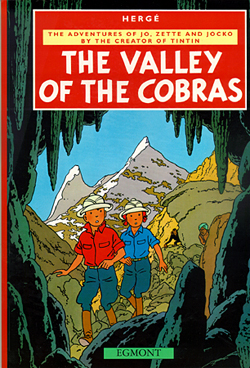
The Adventures of Jo, Zette & Jocko: The Valley of the Cobras


By Hergé, translated by Leslie Lonsdale-Cooper & Michael Turner (Egmont UK/Mammoth)
ISBN: 978-1-4052-1244-1 (HB)                    978-0-74970-385-1 (PB)

George Remi, world famous as Hergé, had a long creative connection to Catholicism. At the behest of Abbot Norbert Wallez, editor of Belgian Catholic newspaper Le XXe Siécle, he had created Tintin before moving on to such strips as the mischievous Quick and Flupke, Tim the Squirrel in the Far West’, ‘The Amiable Mr. Mops’, ‘Tom and Millie’ and ‘Popol Out West’ – all while continuing and expanding the globe-trotting adventures of the dauntless boy reporter and his faithful little dog.

In 1935, between working on serialised Tintin epics The Blue Lotus and The Broken Ear, Remi was approached by Father Courtois, director of the French weekly newspaper Coeurs Vaillants (Valiant Hearts). The paper already carried the daily exploits of Hergé’s undisputed star-turn, but Courtois also wanted a strip depicting solid family values and situations that the seemingly-orphaned and independent boy reporter was never exposed to.

He also presumably wanted something less subversive than the mischievous, trouble-making working-class boy rascals Quick and Flupke…

The proposed feature needed a set of characters typifying a decent, normal family: A working father, a housewife and mother, young boy, a sister, even a pet. Apparently inspired by a toy monkey called Jocko, Hergé devised the family Legrand.

Jacques was an engineer, and son Jo and daughter Zette were average kids; bright, brave, honest, smart and yet still playful. Mother stayed home, cooking and being rather concerned rather a lot. They had a small, feisty monkey for a pet – although I suspect as Jocko was tailless, he might have been a baby chimpanzee, which “As Any Fule Kno” is actually a species of ape.

The first adventure was a two-volume treasure: ‘The Secret Ray’ – only once published in English and consequently rarer than Hen’s teeth or monkey feathers. A ripping yarn of scientific bandits, gangsters, mad professors, robots and, regrettably, some rather ethnically unsound incidences of cannibal savages, this is very much a product of its time in too many respects.

Although Hergé came to deeply regret (and wherever possible amend) his many early uses of that era’s racial stereotyping, the island dwelling natives in Le “Manitoba” Ne Répond Plus and L’ Éruption Du Karamako (which originally ran in Coeurs Vaillants from January 19th 1936 to June 1937) will now always be controversial.

It’s a true pity that such masterful and joyous work has to be viewed with caution, read strictly in context and must be ascribed subtext and values which may never have been intended, merely because the medium is pictorial and its meaning passively acquired rather than textual, and which can therefore only be decoded by the conscious effort of reading.

I also wonder how much was a quiet, sensitive artist led by an aggressively proselytising, missionary Church’s doctrine and policy…

How much Church opposition was there to Mussolini’s invasion of Ethiopia in October 1935 for example? And don’t get me started on Nazi Germany and the Vatican…

Sorry. Rant brakes have been applied now…

The last completed adventure of the boldly capable Legrand family came out in the 1950’s, when Hergé was at the peak of his creative powers. Although he found the concept a difficult one to work with, devoid of the opportunities for satire or social commentary, the wholesome derring-do of this series still provides thrilling and funny entertainment for kids of all ages.

Whilst vacationing in the Alps, Jo and Zette inadvertently fall foul of the whimsical and capricious Maharajah of Gopal, who is infuriated that they are better skiers than he. Matters only worsen when Jo accidentally hits the Maharajah with a snowball.

The spoiled, rich bully’s appalling behaviour escalates until eventually their father Jacques administers a long overdue spanking to the middle-aged potentate which completely changes his attitude. The much friendlier Maharajah promptly commissions the engineer to construct a bridge across the fabled Valley of the Cobras that divides his mountainous kingdom.

As the family embark for the sub-continent, all are unaware that the villainous Prime Minister of Gopal has colluded with a greedy Fakir to sabotage the project…

Begun in 1939 but shelved for nearly two decades, this is still a light exuberant romp, full of thrills and packed with laughs, executed with the captivating artistry that has made Tintin a global phenomenon. This is a book any child will adore and it baffles me why it and its companion volumes are out of print. Hopefully not for long though
© 1957, 2007 Editions Casterman, Paris & Tournai. All rights reserved. English text © 1986, 2005 Egmont UK Limited. All rights reserved.

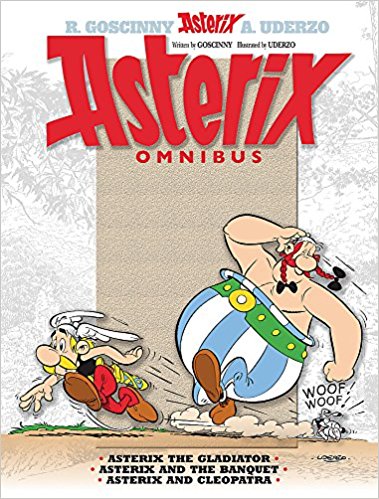
Asterix Omnibus volume 2: Asterix the Gladiator, Asterix and the Banquet, Asterix and Cleopatra


By René Goscinny & Albert Uderzo, translated by Anthea Bell & Derek Hockridge (Orion Childrens Books)
ISBN: 978-1-4440-0424-3

It’s been a painful year for lovers of comics, with many of our greatest practitioners – famous or otherwise – leaving us. I’m going to spend the remainder of the year dwelling on them and recommending examples of their work we can read to commemorate them in the best way possible… through enjoyment.

Suffolk-born Anthea Bell OBE came from prestigious stock. She was born in 1936 and translated numerous works from history books such as WG Siebald’s Austerlitz to the works of Hans Christian Andersen to fantasies such as Cornelia Funke’s Inkworld books Either singly or with Derek Hockridge, however, she found true immortality: translating thousands of pages of European comics and Bande Dessinée. She was a smart and dedicated woman and brilliantly adroit with worlds and concepts in many tongues. Her creative punning and naming techniques in the Asterix books garnered praise all over the world and many aficionados believe the strip is actually funnier in English than in any other language.

I can certainly confirm that’s the case with German…

Among her many triumphs are the aforementioned Asterix, Le Petit Nicolas, Lieutenant Blueberry and Iznogoud.

She died on 18th October 2018 and can never be replaced.

Asterix the Gaul is probably France’s greatest literary export: a wily wee warrior who resisted the iniquities, experienced the absurdities and observed the myriad wonders of Julius Caesar’s Roman Empire with brains, bravery and a magic potion which bestowed incredible strength, speed and vitality.

One of the most popular comics in the world, the chronicles have been translated into more than 100 languages; 8 animated and 3 live-action movies, assorted games and even into a theme park (Parc Astérix, near Paris). More than 325 million copies of 34 Asterix books have been sold worldwide, making Goscinny & Uderzo France’s bestselling international authors.

The diminutive, doughty hero was created as the transformative 1960s began by two of the art-form’s greatest masters, René Goscinny & Albert Uderzo and even though their perfect partnership ended in 1977 the creative wonderment still continues – albeit at a slightly reduced rate of rapidity.

When Pilote launched in 1959 was Asterix was a massive hit from the start. For a while Uderzo continued working with Charlier on Michel Tanguy, (Les Aventures de Tanguy et Laverdure), but soon after the first epic escapade was collected as Astérix le gaulois in 1961 it became clear that the series would demand most of his time – especially as the incredible Goscinny never seemed to require rest or run out of ideas (after the writer’s death the publication rate dropped from two books per year to one volume every three to five).

By 1967 the strip occupied all Uderzo’s time and attention. In 1974 the partners formed Idéfix Studios to fully exploit their inimitable creation and when Goscinny passed away three years later Uderzo was convinced to continue the adventures as writer and artist, producing a further ten volumes since then.

Like all great literary classics, the premise works on two levels: for younger readers as an action-packed comedic romp of sneaky, bullying baddies regularly getting their just deserts and as a pun-filled, sly and witty satire for older, wiser heads, enhanced here by the brilliantly light touch of the translators who played such a massive part in making the indomitable Gaul so very palatable to the English tongue.

Launched in Pilote #1 (29th October 1959, with the first page appearing a week earlier in a promotional issue #0, June 1st 1959), the stories were set on the tip of Uderzo’s beloved Brittany coast in the year 50BC, where a small village of redoubtable warriors and their families resisted every effort of the all-conquering Roman Empire to complete their conquest of Gaul. Unable to defeat these Horatian hold-outs, the Empire resorted to a policy of containment and the little seaside hamlet is perpetually hemmed in by the heavily fortified garrisons of Aquarium, Laudanum, Petibonum and Barbaorum (the latter two becoming Compendium and Totorum for us Brits).

The Gauls don’t care: they daily defy the world’s greatest military machine by just going about their everyday affairs, protected by a magic potion provided by the resident druid and the shrewd wits of a rather diminutive dynamo and his simplistic best friend…

With these volumes a key pattern was established: the adventures would henceforth – like a football match – alternate between Home and Away, with each globe-trotting escapade balanced by an epic set in and around he happily beleaguered Gaulish village (if you’re counting, home tales were odd numbered volumes and travelling exploits even-numbered…)

Asterix the Gladiator debuted in Pilote #126-168 (1963) with the canny rebel and his increasingly show-stealing pal Obelix (who had fallen into a vat of potion as a baby and was a genial, permanently superhuman, eternally hungry foil to the smart little hero) despatched to the heart of the Roman Empire on an ill-conceived mission of mercy…

When Prefect Odius Asparagus seeks to give Julius Caesar a unique gift he decides upon one of the indomitable Gauls who had been giving his occupying forces such a hard time.

Thus, he has village Bard Cacofonix abducted and bundled off to Rome. Although in two minds about losing the raucous harpist, pride wins out and the villagers mount a rescue attempt, but after thrashing the Romans again they discover that their lost comrade is already en route for the Eternal City…

Asterix and Obelix are despatched to retrieve the missing musician and hitch a ride on a Phoenician galley operated under a bold new business plan by captain/general manager Ekonomikrisis. On the way to Italy the heroes first encounter a band of pirates who would become frequent guest-stars and perennial gadflies.

The pirates were a creative in-joke between the close-knit comics community: Barbe-Rouge or Redbeard was a buccaneering strip created by Charlier & Victor Hubinon that also ran in Pilote at the time.

As Asterix and Obelix make friends among the cosmopolitan crowds of Rome, Caesar has already received his latest gift. Underwhelmed by his new Bard, the Emperor sends Cacofonix to the Circus Maximus to be thrown to the lions just as his chief of Gladiators Caius Fatuous is “talent-spotting” two incredibly tough strangers who would make ideal arena fighters…

Since it’s the best way to get to Cacofonix, our heroes join the Imperial Gladiatorial school; promptly introducing a little Gallic intransigence to the tightly disciplined proceedings. When the great day arrives, the lions get the shock of their lives and the entertainment-starved citizens of Rome “enjoy” a show they will never forget…

As always, the good-natured, comedic situations and sheer finesse of the yarn rattles along, delivering barrages of puns, oodles of insane situations and loads of low-trauma slapstick action, marvellously rendered in Uderzo’s expansive, authentic and continually improving big-foot art-style.

Asterix and the Banquet originated in Pilote #172-213 (1963), inspired by the Tour de France cycle race.

After being continually humiliated by the intractable Gauls coming and going as they please, Roman Inspector General Overanxius instigates a policy of exclusion and builds a huge wall around the little village, determined to shut them off from their country and the world. Modern world leaders might get a clue from this book, here… if they read books. Even books with pictures…

Incensed, Asterix best the smug Prefect that Gauls can go wherever they please and to prove it invites the Romans to a magnificent feast where they can sample the culinary delights of various regions. Breaking out of the stockade and through the barricades, Asterix and Obelix gather produce from as far afield as Rotomagus (Rouen), Lutetia (Paris, where they also picked up a determined little mutt who would eventually become a star cast-member), Camaracum (Cambrai) and Durocortorum (Rheims), easily evading or overcoming the assembled patrols and legions of man-hunting soldiers. However, they don’t reckon on the corrupting power of the huge – and growing – bounty on their heads and some Gauls are apparently more greedy than patriotic…

Even with Asterix held captive and all the might of the Empire ranged against them, Gaulish honour is upheld and Overanxius, after some spectacular fights, chases and close calls, eventually is made to eat his words – and a few choice Gallic morsels – in this delightful, bombastic and exceedingly clever celebration of pride and whimsy.

Asterix and Cleopatra ran from 1963-1963 in issues #215-257 and, although deriving its title from Shakespeare’s Antony and Cleopatra, is actually a broad visual spoof of the 1963 movie blockbuster Cleopatra (the original collected album cover was patterned on the film poster).

Rome is a big empire to run but Caesar always has time to spare for the fascinating Queen of Egypt – even though she can be a little overbearing at times…

When Caesar calls her people decadent, Cleopatra announces that her Egyptians will build a magnificent palace within three months to prove their continued ingenuity and vitality.

Her architect Edifis is less confidant and subcontracts the job, recruiting his old friend Getafix the Druid to help, with Asterix, Obelix and faithful pooch Dogmatix coming along to keep him out of trouble…

After another short, sharp visit with the pirates, the voyagers reach the Black Lands only to find the building site an utter shambles. Edifis’ arch rival Artifis has stirred up unrest among the labourers and consequently sabotaged the supply-chain, entombing the visitors in a deadly tourist-trap and even frames Edifis by attempting to poison the Queen.

For all these tactics the ingenious Gauls have a ready solution and the Palace construction continues apace, but when Caesar – determined not to lose face to his tempestuous paramour – sends his Legions to destroy the almost-completed complex, it’s up to the two smallest, smartest warriors to come up with a solution to save the day, the Palace and the pride of two nations…

Outrageously fast-paced and funny and magnificently illustrated by a supreme artist at the very peak of his form, Asterix and Cleopatra is one of the very best epics from a series that has nothing but brilliant hits.

This is supremely enjoyable comics storytelling and if you’re still not au fait with these Village People you must be as Crazy as the Romans ever were…
© 1964-1965 Goscinny/Uderzo. Revised English translation © 2004 Hachette. All rights reserved.

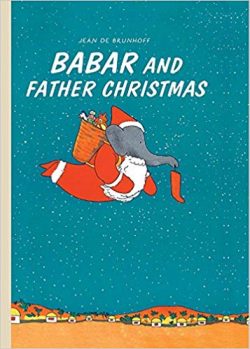
Babar and Father Christmas


By Jean de Brunhoff (Egmont)
ISBN: 978-1-4052-3822-9 (PB)                     978-1-4052-9259-7 (HB)

Win’s Christmas Gift Recommendation: All Aboard for a Splendid Santa Safari… 9/10

Babar the Elephant has been charming readers for generations and Egmont have stuck with the proud pachyderm since they revived the series in 2008.

The gentle and genteel big guy first appeared in France in 1931 where L’Histoire de Babar was an instant hit. An English-language version debuted in 1933, complete with introduction by A. A. Milne, bringing Jean de Brunhoff’s forthright and capable elephantine hero across the channel and thence across the Oceans to America and the Colonies.

By all accounts, the tale was a bedtime story his wife Cecile created for their own children. De Brunhoff wrote and painted seven adventures before his death in 1937, with two of them published posthumously. After World War II his son Laurent continued the family franchise producing ten more adventures between 1946 and 1966.

The books have in their time been controversial. Many critics regard them as being pro-colonialism, and as products of a more robust time, they could never be regarded as saccharine or anodyne, but they are sweet, alluring and irresistibly captivating.

When baby Babar is growing up in the jungle his mother is killed by white hunters. Terrified and sad, the baby flees in a panic, eventually coming to a very un-African provincial city. He meets a kind old lady there who gives him money to buy a suit. As he adapts to city-life he moves into her very large house and is educated in modern, civilised ways. But still, occasionally, he feels homesick and misses his jungle home.

After two years he meets his cousins Celeste and young Arthur wandering naked in the streets of the city and Old Lady gets them clothes too. Soon though, their mothers come to fetch them and Babar decides to return with them and show the other elephants all the wonderful things he has experienced. Buying a motor-car and filling it with clothes and presents he returns just in time, because the King of all the Elephants has eaten a bad mushroom and is dying…

The political assumptions of adults are one thing, but the most valid truth is that these are magical books for the young, illustrated in a style that is fluid, humorously detailed and splendidly memorable. Even after nearly 90 years they have the power to enthral and captivate, and that charm is leavened with an underlying realism that is still worthy of note.

In today’s recommendation (released in 1941 as Babar et le père Noël), our so-very-urbane elephant and now patient parent undertakes an arduous expedition to bring joy to his children and his people.

One day Zephir the monkey tells Babar’s children Pom, Flora and Alexander – and their ubiquitous Cousin Arthur – about the fabulous Father Christmas who brings presents to children in the world of Men.

Captivated, they decide to invite the venerable gentleman to visit them, but after a very long time with no reply, they become despondent. Devoted paternal Babar decides to seek out Father Christmas and personally invite him to the Land of the Elephants…

Produced at a time when the World desperately needed something bright, cheerful and filled with hope, this last tale from de Brunhoff is a fabulously inventive and escapist adventure brimming with simple charm and clever, enchanting artwork. Europhiles will also be delighted to discover that the North Pole is merely a forwarding address and his real home is where it’s always been – in the cold, snowy mountains of Bohemia.

Great Children’s Books are at once plentiful and scarce. There are many, but definitely never enough. This deceptively engaging series has weathered the test of time and has earned a place on your shelves and in your hearts.

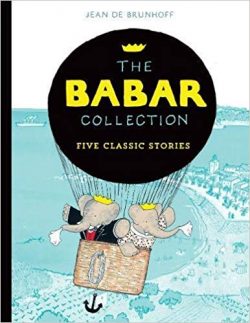
Moreover, if you’re looking for a big bold bargain you might want to pick up 2016’s The Babar Collection: Five Classic Stories which combines this seasonal gem with four other all-ages classics to astound and delight your herd.
© 2018 Edition. All Rights Reserved.

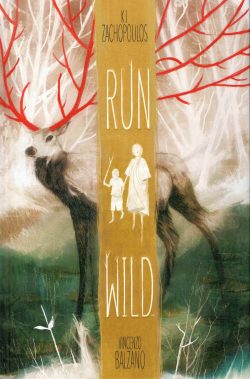
Run Wild


By K. I. Zachopoulos & Vincenzo Balzamo (Archaia)
ISBN: 978-1-68415-024-3

Win’s Christmas Gift Recommendation: A Spooky Family for a Cold Winter World… 9/10

Writer Kostas Zachopoulos’ heartfelt love affair with classic themes and genres continues in his latest collaboration with Vincenzo Balzamo (Immortal, Revenge: The Secret Origin of Emily Thorne).

Zachopoulos’ previous comics releases – Mon Alix, The Fang, Mr. Universe, Misery City – and his previous tale with Balzamo The Cloud have cumulatively and memorably tweaked and refreshed horror, crime and fantasy standards and this fresh offering should bring them the well-deserved glittering prizes found in the reading mainstream…

Run Wild is a bleak, dark, challenging and frequently frightening modern fairy tale with echoes of Alan Garner, Maurice Sendak and Ralph Steadman which subverts while combining a key core plot – the search for home and safety – with a chilling examination of what exactly constitutes humanity. A reminder to be careful what you wish for…

It’s night in the woods and scary. Flynn and Ava have just woken up and can’t find their mother. In fact, they can’t find anybody…

Sensible older sister Ava insists they leave the shack they’ve found themselves in, and search outside. She knows something is wrong with the world. Something has changed…

Flynn is close to panic. He needs to know why Mother has abandoned them. He needs to know what’s happened. He needs to know there’s no danger. But there is…

As they wander the sparkling, cold environs, they meet a giant talking fox named Beatrice who acts as their guide and guardian. She is taking them to Papa, who has all the answers – and is in fact the cause of all their woes – but the journey will be long and hard and pose many questions.

Moreover, they are all being hunted by a pack of relentless, savage beasts. Not ordinary animals: there are no more of those. These relentless pursuers used to be human. Now only Ava and Flynn remain of the old world, able to understand the reasons for how mankind changed and how to proceed from this new start.

Flynn realises his mother is out there somewhere, and hungers for reunion, but as they make their perilous way to the enigmatic Papa, Ava is increasingly despondent. She’s started to change into a beast too…

A tale of intellectual and spiritual hubris, man’s incessant meddling, overconfidence in technology and the perils of warring with our environment, Run Wild is gripping and beguiling mystery play examining our role in the world and offering stern rebukes and a hint of warning. Piling on devious sub-plots and shocking twists, Zachopoulos steers us into a maze of wonder and duplicity and never lets the tension slacken.

Available as an enticing hardback tome and in comfortably accessible digital editions, this byzantine, Cimmerian-toned, chimeric yarn is rendered in a gloriously evocative and expressionistic progression of painted pages by ever-more adept and imaginative Vincenzo Balzamo, providing a wealth of material for your next excess-fuelled nightmare…

This is unmissable stuff: so don’t.
™ and © 2018 Kostas Zachopoulos & Vincenzo Balzamo. All rights reserved.

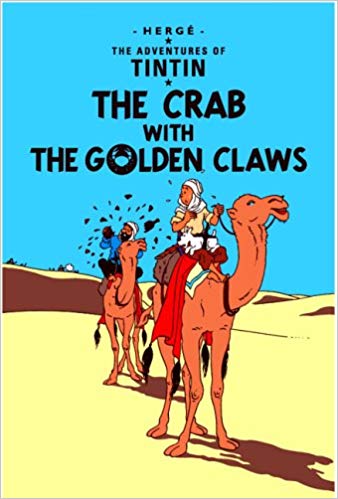
Adventures of Tintin: The Crab with the Golden Claws


By Hergé & various; translated by Leslie Lonsdale-Cooper & Michael Turner (Egmont)
ISBN: 978-1-40520-808-6 (HB)                    : 978-0-31619-876-9 (PB)

Win’s Christmas Gift Recommendation: Comics and Presents don’t get better than this… 10/10

Georges Prosper Remi – AKA Hergé – created a true masterpiece of graphic literature with his many tales of a plucky boy reporter and his entourage of iconic associates. Singly, and later with assistants including Edgar P. Jacobs, Bob de Moor and the Hergé Studio, Remi completed 23 splendid volumes (originally produced in brief instalments for a variety of periodicals) that have grown beyond their popular culture roots and attained the status of High Art.

It’s only fair, though, to ascribe a substantial proportion of credit to the many translators whose diligent contributions have enabled the series to be understood and beloved in 38 languages. The subtle, canny, witty and slyly funny English versions are the work of Leslie Lonsdale-Cooper & Michael Turner.

On leaving school in 1925, Remi worked for Catholic newspaper Le Vingtiéme Siécle where he fell under the influence of its Svengali-like editor Abbot Norbert Wallez. The following year, the young artist – a passionate and dedicated boy scout – produced his first strip series: The Adventures of Totor for the monthly Boy Scouts of Belgium magazine.

By 1928 he was in charge of producing the contents of the paper’s children’s weekly supplement Le Petit Vingtiéme and unhappily illustrating The Adventures of Flup, Nénesse, Poussette and Cochonette when Abbot Wallez urged Remi to create a new adventure series. Perhaps a young reporter who would travel the world, doing good whilst displaying solid Catholic values and virtues?

And also, perhaps, highlight and expose some the Faith’s greatest enemies and threats…?

Having recently discovered the word balloon in imported newspaper strips, Remi decided to incorporate this simple yet effective innovation into his own work.

He would produce a strip that was modern and action-packed. Beginning January 10th 1929, Tintin in the Land of the Soviets appeared in weekly instalments, running until May 8th 1930.

Accompanied by his dog Milou (Snowy to us Brits), the clean-cut, no-nonsense boy-hero – a combination of Ideal Good Scout and Remi’s own brother Paul (a soldier in the Belgian Army) – would report back all the inequities of the world, since the strip’s prime conceit was that Tintin was an actual foreign correspondent for Le Petit Vingtiéme…

The odyssey was a huge success, assuring further – albeit less politically charged and controversial – exploits to follow. At least that was the plan…

During the Nazi Occupation of Belgium, Le Petit Vingtiéme was closed down and Hergé was compelled to move the popular strip to straight daily newspaper. He diligently continued producing strips for the duration, but in the period following Belgium’s liberation was accused of being a collaborator and even a Nazi sympathiser.

It took the intervention of Resistance hero Raymond Leblanc to dispel the cloud over Hergé, which he did by simply vouching for the cartoonist and by providing the cash to create a new magazine – Le Journal de Tintin – which he published and managed. The anthology comic swiftly achieved a weekly circulation in the hundreds of thousands.

With this tale we enter the Golden Age of an iconic creator’s work. Despite being produced whilst Belgium was under the control of Nazi Occupation Forces during World War II, the qualitative leap in all aspects of Hergé’s creativity is tangible.

His homeland fell to the invaders in 1940, and Georges Remi’s brief military career was over. He was a reserve Lieutenant, working on The Land of Black Gold when he was called up, but the swift fall of Belgium meant that he was back at his drawing board before the year’s end, albeit working for a new paper on a brand-new adventure. He would not return to the unfinished ‘Black Gold’, with its highly anti-fascistic subtext, until 1949.

Initially Le Crabe aux pinces d’or featured in children’s supplement Le Soir Jeunesse, from October 17th 1940 to September 3rd 1941, when increasing paper shortages resulted in the kid’s section being axed. The strip continued in parent paper Le Soir (Belgium’s premiere French-language newspaper and a most crucial tool for the occupiers to control minds if not hearts) until conclusion on 18th October 1941: the first of six extraordinary tales of light-hearted, escapist thrills, with strong plots and deep characterisation that created a haven of delight from the daily horrors of everyday life then and remain a legacy of joyous adventure to this day.

On completion it was collected as a monochrome book in 1941 and later serialised in French newspaper Coeurs Vaillants (from June 21st 1942), before being re-released as a full colour volume in 1943. Its success sparked a flurry of reissues of earlier albums – all but Tintin in America and The Black Island, both set in countries Germany was still at war with…

This remastered edition of The Crab with the Golden Claws was modified by Studio Hergé and released in 1953: revised to accommodate the wishes of publishers in the US and UK. It opens with Snowy getting his head caught in an empty crab-meat can whilst scavenging in a trash bin. When Tintin meets the detectives Thompson and Thomson, they discuss their latest case and he sees that a vital piece of evidence is a scrap of label from a crab-meat tin – and it matches the torn label on the can he so recently extricated his bad dog from!

And so begins a superb mystery adventure as Tintin follows his lead to the sinister freighter “Karaboudjan” where he uncovers a sinister criminal enterprise and is nearly murdered before the diabolical first mate Allan (last seen in Cigars of the Pharaoh) shanghaies him.

It is whilst a prisoner that the boy reporter meets a drunken reprobate who would become his greatest companion: The ship’s inebriated Master, Captain Haddock.

Escaping together, they eventually reach the African Coast, with Haddock’s dipsomaniac antics as much a threat to the pair as the gangsters, ocean storms, and deprivation. These trials are masterpieces of comedy cartooning that have never been surpassed.

Despite all odds the heroes survive sea, sands and scoundrels to link up with the military authorities. Making their perilous way to Morocco, battling Berber desert raiders and Haddock’s ongoing hallucinations, the plucky pair – and Snowy – track down the criminals to reveal a huge opium smuggling operation. A fast-paced tour-de-force of art and action, liberally laced with primal comedy and captivating exotic locales, this is quite simply mesmerising fare.

Full of dash, as breathtaking as a rollercoaster ride and as compelling as any Indiana Jones romp, this is classic adventure to match the best of the cinema’s swashbucklers and as suspenseful as a Hitchcock thriller, balancing insane laughs with moments of genuine tension.

Clearly as the world experienced a new Dark Age, Hergé was concentrating on the next -Golden – one…

These ripping yarns for all ages are an unparalleled highpoint in the history of graphic narrative. Their constant popularity proves them to be a worthy addition to the list of world classics of literature.
The Crab with the Golden Claws: artwork © 1953, 1981 Editions Casterman, Paris & Tournai. Text © 1958 Egmont UK Limited. All Rights Reserved.

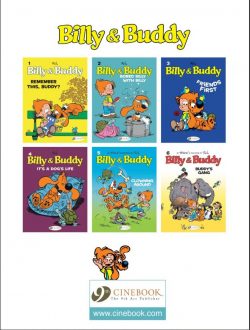
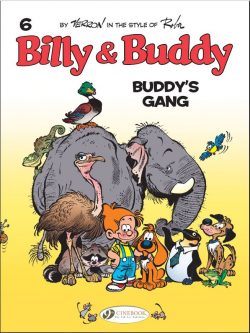
Billy and Buddy volume 6: Buddy’s Gang


By Verron, Veys, Corbeyran, Chric & Ferri; coloured by Anne-Marie Ducasse and translated by Jerome Saincantin (Cinebook)
ISBN: 978-1-84918-314-7

Win’s Christmas Gift Recommendation: Captivating Childhood Capers for Young and Old Alike… 8/10

Known as Boule et Bill in Europe (at least in the French speaking bits, that is; the Dutch and Flemish call them Bollie en Billie or perhaps Bas et Boef if readers first glimpsed them in legendary weekly Sjors), this evergreen, immensely popular cartoon saga of a dog and his boy debuted in the Christmas 1959 edition of Journal de Spirou.

The perennial fan-favourite resulted from Belgian writer-artist Jean Roba (Spirou et Fantasio, La Ribambelle) putting his head together with Maurice Rosy: the magazine’s Artistic Director and Ideas Man who had also ghosted art and/or scripts on Jerry Spring, Tif et Tondu, Bobo and Attila during a decades-long, astoundingly productive career at the legendary periodical.

Intended as a European answer to Charles Schulz’s Peanuts, Boule et Bill quickly went its own way, developing a unique style and personality and becoming Rosa’s main occupation for the next 45 years.

Roba launched Boule et Bill as a mini-récit (a 32-page, half-sized freebie insert) in the December 24th 1959 Spirou.

Like Dennis the Menace in The Beano, the strip was a huge hit from the start and for 25 years held the coveted and prestigious back-cover spot. Older British fans might also recognise the art as some early episodes – (coincidentally) retitled It’s a Dog’s Life – ran in Fleetway’s legendary anthology weekly Valiant from 1961 to 1965…

A cornerstone of European life, the strip generated a live-action movie, animated TV series, computer games, permanent art exhibitions, sculptures and even postage stamps. Like some select immortal Belgian comics stars, Bollie en Billie have been awarded a commemorative plaque and have a street named after them in Brussels….

Large format album editions began immediately, totalling 21 volumes throughout the 1960s and 1970s. These were completely redesigned and re-released in the 1980s, supplemented by a range of early-reader books for toddlers. Collections are available in 14 languages, selling in excess of 25 million copies of the 37 albums to date.

Roba crafted more than a thousand pages of gag-strips in a beguiling, idealised domestic comedy setting, all about a little lad and his exceedingly smart Cocker Spaniel, before eventually surrendering the art chores to his long-term assistant Laurent Verron in 2003.

The successor subsequently took over the scripting too, upon Roba’s death in 2006.

As Billy and Buddy, the strip had returned to British eyes in enticing Cinebook compilations from 2009 onwards: introducing to 21st century readers an endearingly bucolic late 20th century, sitcom-styled nuclear family set-up consisting of one bemused, long-suffering and short-tempered dad, a warmly compassionate but painfully flighty mum, a smart, mischievous son and a genius dog who has a penchant for finding bones, puddles and trouble.

This edition is the second translation to feature “Veron” and his team of gag-writers Veys, Corbeyran, Chric & Cucuel. The kit and paraphernalia might be marginally updated, but the warmth and humour remain timelessly faithful. Just like a pet, in fact…

Originally released in 2005, La bande à Bill was the 30th European collection, completed by Verron and his team, and even adding a soupcon of continuity (via a few returning circus cronies as seen in the previous volume): admirably resuming in the approved manner and further exploring the evergreen relationship of a dog and his boy (and tortoise) for our delight and delectation. There are a more mod-cons and a bigger role for girls such as skipping sharpie Juliet but, in essence, nothing has changed…

Delivered as a series of stand-alone rapid-fire, single-page gags with titles like ‘Of Mice and Shame’, ‘Tailspin’ and ‘Peek-a-Bone’, visual puns, quips and jests abound: confirming that the socialisation and behaviour of little Billy is measured by carefree romps with four-footed friend Buddy.

Buddy is the perfect pet for an imaginative and playful boy, although the manipulative mutt is overly fond of purloined food and ferociously protective of boy and bones and his ball.

The pesky pooch also cannot understand why everyone wants to constantly plunge him into foul-tasting soapy water, but it’s just a sacrifice he’s prepared to make to be with Billy…

Buddy also has a fondly platonic relationship with tortoise Caroline (although this autumnal and winter-themed compilation finds her again largely absent through hibernation pressures) and a suspicious knack for clearing off whenever Dad has one of his explosive emotional meltdowns over the cost of canine treats, repair bills or the Boss’ latest impositions.

The inseparable duo indulge in spats with pals, play pranks, encounter other unique pets, dodge baths, hunt and hoard bones, rummage in bins, misunderstand adults, cause accidents and cost money; with both kid and mutt equally adept at all of the above. This time, however, the capacity for chaos is radically increased as an entire menagerie of circus beasts pop up whenever it’s most comedically expedient and young Billy is becoming awkwardly, painfully aware of girls. One girl in particular, actually…

Despite the master’s passing his legacy is in safe hands. The strips remain genially paced and filled with wry wit and potent sentiment: enchantingly funny episodes which run the gamut from heart-warming to hilarious, silly to surreal and thrilling to just plain daft: a charming tribute to and lasting argument for a child for every pet and vice versa.

This is another supremely engaging family-oriented compendium of cool and clever comics no one keen on introducing youngsters to the medium should be without.
Original edition © Dargaud Benelux (Dargaud-Lombard s.a.) 2005 by Verron in the style of Roba. English translation © 2016 Cinebook Ltd.

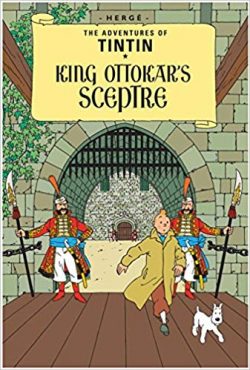
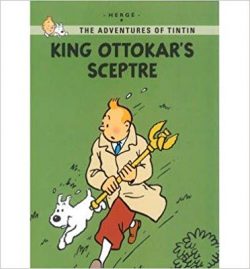
Adventures of Tintin: King Ottokar’s Sceptre


By Hergé & various; translated by Leslie Lonsdale-Cooper & Michael Turner (Egmont)
ISBN: 978-1-40520-619-8 (HB)                    : 978-0-31613-383-8 (PB)

Georges Prosper Remi – AKA Hergé – created a true masterpiece of graphic literature with his many tales of a plucky boy reporter and his entourage of iconic associates. Singly, and later with assistants including Edgar P. Jacobs, Bob de Moor and the Hergé Studio, Remi completed 23 splendid volumes (originally produced in brief instalments for a variety of periodicals) that have grown beyond their popular culture roots and attained the status of High Art.

Like Dickens with The Mystery of Edwin Drood, Hergé died in the throes of creation, and final outing Tintin and Alph-Art remains a volume without a conclusion, but still a fascinating examination and a pictorial memorial of how the artist worked.

It’s only fair, though, to ascribe a substantial proportion of credit to the many translators whose diligent contributions have enabled the series to be understood and beloved in 38 languages. The subtle, canny, witty and slyly funny English versions are the work of Leslie Lonsdale-Cooper & Michael Turner.

On leaving school in 1925, Remi worked for Catholic newspaper Le Vingtiéme Siécle where he fell under the influence of its Svengali-like editor Abbot Norbert Wallez. The following year, the young artist – a passionate and dedicated boy scout – produced his first strip series: The Adventures of Totor for the monthly Boy Scouts of Belgium magazine.

By 1928 he was in charge of producing the contents of Le XXe Siécles children’s weekly supplement Le Petit Vingtiéme and unhappily illustrating The Adventures of Flup, Nénesse, Poussette and Cochonette when Abbot Wallez urged Remi to create a new adventure series. Perhaps a young reporter who would travel the world, doing good whilst displaying solid Catholic values and virtues?

And also, perhaps, highlight and expose some the Faith’s greatest enemies and threats…?

Having recently discovered the word balloon in imported newspaper strips, Remi decided to incorporate this simple yet effective innovation into his own work.

He would produce a strip that was modern and action-packed. Beginning January 10th 1929, Tintin in the Land of the Soviets appeared in weekly instalments, running until May 8th 1930.

Accompanied by his dog Milou (Snowy to us Brits), the clean-cut, no-nonsense boy-hero – a combination of Ideal Good Scout and Remi’s own brother Paul (a soldier in the Belgian Army) – would report back all the inequities from the “Godless Russias”.

The strip’s prime conceit was that Tintin was an actual foreign correspondent for Le Petit Vingtiéme…

The odyssey was a huge success, assuring further – albeit less politically charged and controversial – exploits to follow. At least that was the plan…

Originally published as a weekly monochrome strip Le Sceptre d’Ottokar ran from August 4th 1938 to August 10th 1939. The rousing Ruritanian saga of plot and counter-plot was designed as a satirical critique of Nazi Germany’s nefarious expansionist policies, but in a remarkably short course of time real life terrifyingly caught up with fictional hijinks. Another commercial winner, the tale was promptly released in collected book form upon conclusion and Herge’s team moved straight on to new serial Land of Black Gold. That tale was curtailed by the fall of Belgium in 1940 and the closure of Le Vingtiéme Siécle. We’ll talk more about that later…

When the war ended and Tintin led a resurgence of European comics, Le Sceptre d’Ottokar, was revived, reformatted, reconditioned and rereleased in a full-colour album. It was the first book to make the jump to English editions – in 1956 – and was adapted for the small screen by Belvision Studios. Twice in fact, as Canada’s Ellipse/Nelvana crafted their own animated version in 1991.

Older British readers might have another reason to recall this tale. Many of them had an early introduction to Tintin and his dog (then called Milou, as in the French editions) when fabled comic The Eagle began running King Ottokar’s Sceptre in translated instalments on their prestigious full-colour centre section in 1951.

During the Occupation, Hergé continued producing comic strips for Le Soir and in the period following Belgium’s liberation was accused of being a collaborator and even a Nazi sympathiser.

It took the intervention of Resistance hero Raymond Leblanc to dispel the cloud over Hergé, which he did by simply vouching for the cartoonist and by providing the cash to create the magazine – Le Journal de Tintin – which he published. The anthology comic swiftly achieved a weekly circulation in the hundreds of thousands.

The story itself is pure escapist magic as a chance encounter via a park bench leads our youthful hero on a mission of utmost diplomatic importance to the European kingdom of Syldavia. This picturesque principality stood for a number of countries such as Czechoslovakia that were in the process of being subverted by Nazi insurrectionists at time of writing.

Tintin becomes a surveillance target for enemy agents and, after a number of life-threatening near misses, flies to Syldavia with his new friend. The sigillographer Professor Alembick is an expert on Seals of Office and his research trip coincides with a sacred ceremony wherein the Ruler must annually display the fabled sceptre of King Ottokar to the populace or lose his throne.

When the sceptre is stolen it takes all of Tintin’s luck and cunning to prevent an insurrection and the overthrow of the country by enemy provocateurs…

Full of dash, as breathtaking as a rollercoaster ride and as compelling as any Bond movie, this is classic adventure story-telling to match the best of the cinema’s swashbucklers and as suspenseful as a Hitchcock thriller, balancing insane laughs with moments of genuine tension.

Clearly just as the world headed into a new Dark Age, Hergé was entering a Golden one…

These ripping yarns for all ages are an unparalleled highpoint in the history of graphic narrative. Their constant popularity proves them to be a worthy addition to the list of world classics of literature.
King Ottokar’s Sceptre: artwork © 1947, 1975 Editions Casterman, Paris & Tournai. Text © 1958 Egmont UK Limited. All Rights Reserved.

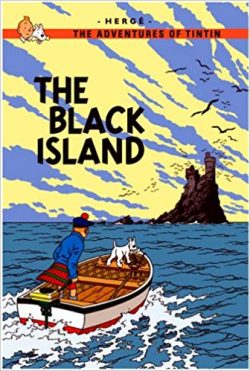
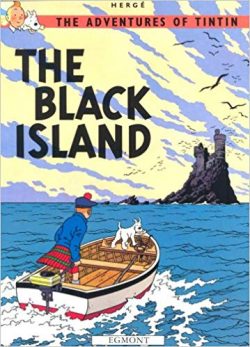
Adventures of Tintin: The Black Island


By Hergé & various; translated by Leslie Lonsdale-Cooper & Michael Turner (Egmont)
ISBN: 978-1-40520-806-2 (HB)                    : 978-1-40520-61-1 (PB)

Georges Prosper Remi – AKA Hergé – created a true masterpiece of graphic literature with his many tales of a plucky boy reporter and his entourage of iconic associates. Singly, and later with assistants including Edgar P. Jacobs, Bob de Moor and the Hergé Studio, Remi accomplished 23 splendid volumes (originally produced in brief instalments for a variety of periodicals) that have grown beyond their popular culture roots and attained the status of High Art.

Like Charles Dickens with The Mystery of Edwin Drood, Hergé died in the throes of creation, and final outing Tintin and Alph-Art remains a volume without a conclusion, but still a fascinating examination and a pictorial memorial of how the artist worked.

It’s only fair though, to ascribe a substantial proportion of credit to the many translators whose diligent contributions have enabled the series to be understood and beloved in 38 languages. The subtle, canny, witty and slyly funny English versions are the work of Leslie Lonsdale-Cooper & Michael Turner.

On leaving school in 1925, Remi worked for Catholic newspaper Le XXe Siécle where he fell under the influence of its Svengali-like editor Abbot Norbert Wallez. The following year, the young artist – a passionate and dedicated boy scout – produced his first strip series: The Adventures of Totor for the monthly Boy Scouts of Belgium magazine.

By 1928 he was in charge of producing the contents of Le XXe Siécles children’s weekly supplement Le Petit Vingtiéme and unhappily illustrating The Adventures of Flup, Nénesse, Poussette and Cochonette when Abbot Wallez urged Remi to create a new adventure series. Perhaps a young reporter who would travel the world, doing good whilst displaying solid Catholic values and virtues?

And also, perhaps, highlight and expose some the Faith’s greatest enemies and threats…?

Having recently discovered the word balloon in imported newspaper strips, Remi decided to incorporate this simple yet effective innovation into his own work.

He would produce a strip that was modern and action-packed. Beginning January 10th 1929, Tintin in the Land of the Soviets appeared in weekly instalments, running until May 8th 1930.

Accompanied by his dog Milou (Snowy to us Brits), the clean-cut, no-nonsense boy-hero – a combination of Ideal Good Scout and Remi’s own brother Paul (a soldier in the Belgian Army) – would report back all the inequities from the “Godless Russias”.

The strip’s prime conceit was that Tintin was an actual foreign correspondent for Le Petit Vingtiéme…

The odyssey was a huge success, assuring further – albeit less politically charged and controversial – exploits to follow. At least that was the plan…

Originally published as monochrome strip Le Mystère De L’Avion Gris (The Mystery of the Grey Plane) from April 15th to November 16th 1937, the stirring saga was rerun in French Catholic newspaper Coeurs Vallaint from April 17th 1938. Its doom-laden atmosphere of espionage, criminality and darkly gathering storms settling upon the Continent clearly caught the public imagination…

Later that year Éditions Casterman released the entire epic as L’ÃŽle noire in a hardback volume that Hergé hated. It was eventually re-released in 1943, reformatted, extensively redrawn and in full colour and was greeted with rapturous success and acclaim.

Further revisions came after Tintin crossed the channel into British bookstores. The Black Island required a number of alterations to suit British publisher Methuen, leading to Herge’s assistant Bob De Moor travelling to England in 1961 for an extensive and extremely productive fact-finding mission which resulted in a new revised and updated edition that appeared not only here but was again serialised in Europe.

One evening as Tintin and Snowy are enjoying a walk in the country, a small plane experiences engine trouble and ditches in a field. When the helpful reporter offers assistance, he is shot…

Visited in hospital by bumbling detectives Thompson and Thomson, the patient discovers they’re off to England to investigate the crash of an unregistered plane. Putting the meagre facts together Tintin discharges himself, and with Snowy in tow, catches the boat-train to Dover.

The young gallant is utterly unaware that he’s been targeted by sinister figures. Before journey’s end they have framed him for an assault and had him arrested. All too soon the wonder boy has escaped and is hounded across the countryside as a fugitive.

Despite the frantic pursuit, he makes it safely to England, having temporarily eluded the authorities, but is still being pursued by the murderous thugs who set him up…

He is eventually captured by the gangsters – actually German spies – and uncovers a forgery plot that circuitously leads him to the wilds of Scotland and a (visually stunning) “haunted” castle on an island in a Loch.

Undaunted, the bonny boy reporter goes undercover to investigate and discovers the gang’s base. He also finds out to his peril that the old place is guarded by a monstrous ape…

And that’s when the action really takes off…

This superb adventure, powerfully reminiscent of John Buchan’s The Thirty-Nine Steps, guarantees the cherished notion that, as always, virtue, daring and a huge helping of comedic good luck inevitably leads to a spectacular and thrilling denouement…

It’s hard to imagine that comics as marvellous as these still haven’t found their way onto everybody’s bookshelf, but if you are one of this underprivileged underclass, now is the time series to rectify that sorry situation.

The Black Island: artwork © 1956, 1984 Editions Casterman, Paris & Tournai.
Text © 1966 Egmont UK Limited. All Rights Reserved.

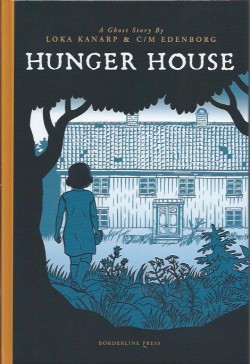
Hunger House


By Loka Kanarp & C/M Edenborg, translated by C/M Edenborg & Martin Tistedt (Borderline Press)
ISBN: 978-0-99269-724-2

If you thought “Scandi-Crime” was an impressive tweak on an old genre, you should see what our northern cousins can do with horror…

This is an imported and translated classic of supernatural suspense that went largely unremarked when it was first released in English, but it’s still one of the most powerful phantom menace tales I’ve ever seen and is long overdue for rediscovery and greater renown.

Resurrecting and refining the classical ghost story with this seductive and compellingly lavish two-colour hardback tome, husband-&-wife team Carl-Michael Edenborg and Loka Kanarp concocted a sharp, sweet and sour compote of dark desire and chilling craving in this account of a slumbering supernatural force and its irresistibly appalling allure for two troubled and unhappy girls…

Deep in the woods, a ramshackle edifice stands and waits. Closer to selfish, facile, judgemental modern civilisation, young sisters Elsa and Fredrike grow increasingly uncomfortable with their new foster parents.

Those smugly sanctimonious old poseurs are delighted with the idea and their new roles as guardians – and especially in the politely-stifled reactions of their equally shallow friends and neighbours – but really don’t seem that emotionally invested in the recently-bereft children now in their charge…

Unhappy to be the prize exhibit at a stuffy garden party, the girls soon sneak off and wander into the wilds on the edge of town. They’re heading for a strange place Elsa heard about at school. They really shouldn’t go in. All the kids say it’s haunted…

The deserted domicile is vast: a procession of bleak and empty rooms where the previous inhabitants seemingly disappeared in the middle of a smart soiree…

As the girls idly roam together, the bare boards suddenly break beneath them and Elsa falls into a darkness far deeper and longer than the mere gap between floors. The hole is bigger than the house itself and, even after climbing down on a rope, Fredrike cannot touch the bottom…

Dejectedly returning alone to her foster parents’ home she tries to explain what has happened but is cut short when calmly Elsa saunters in. The returnee is not the same as she was…

For one thing, she is cruel and mean and bullying, but the real kicker is at supper when a cutlery mishap proves the elder sister is no longer even human…

Of course, the pompous, self-opinionated adults notice nothing and later, as Fredrike cowers in bed looking at photos of happier times, the thing that looks like Elsa creeps in and offers to reveal secrets and surprises if she will return to the ruined house with her…

Author, publisher and editor Edenborg (My Cruel Fate) runs his own publishing house – Vertigo Forlag – and co-wrote Hungerhuset with graphic novelist Kanarp (another sterling alumnus of the Comics Art School of Malmö whose previous works include Pearls and Bullets and To My Friends and Enemies) to satisfy their own love of suspense-horror movies.

Their passion is our happy windfall as this sublimely seductive and truly beguiling mystery unfolds in ways both uneasily familiar and intensely original…

If being simultaneously unsettled and delightfully satiated is your particular meat, Hunger House is a dish you will never regret ordering. A disquieting terror tome worth every moment it takes to track down and acquire…
© 2014 Loka Kanarp & C/M Edenborg.

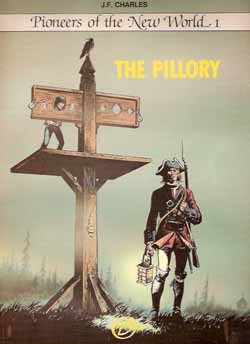
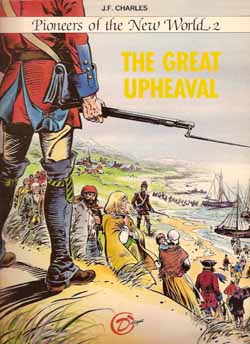
Pioneers of the New World, Book 1: The Pillory and Book 2: The Great Upheaval


By J. F. Charles (Michel Deligne Co)
ISBN: 2-87135-020-5 and 2-87135-021-3

European comics are different. Despite the notable exceptions of Tintin and Asterix, a huge number of classy and wonderful strips and characters have flown over the heads of the English-speaking public and foundered.

These tragically hard-to-find (but worth the effort) albums are from 1985, when America briefly looked elsewhere for graphic entertainment and the publisher Editions Michel Deligne rushed a rather poorly translated version of Jean-François Charles’ (AKA Bof) utterly compelling 1982 adventure serial Les Pionniers du Nouveau Monde into production.

Set in America and Canada in 1755, the saga follows the life of Parisian wastrel Benjamin Graindall, a hothead whose predilection for duelling makes France too small and far too hazardous for him. Rapidly despatched to Montreal to make his fortune and keep out of trouble, Banjamin joins his uncle at the New France Company, bitter trading rival of England’s Hudson Bay Company.

War is brewing, and feuding native tribes have allied themselves with each Imperial nation, dividing along ancient tribal lines as bitter and hate-filled as Britain and France’s. Thus, when Graindall and experienced trapper Billy the Nantese go deep inland trading furs, they find that Europe’s cold war has turned hot and bloody in the new World.

Rescuing a number of French settlers – including a beautiful aristocrat’s daughter – they make their way towards Fort Niagara, but are captured by the British whose Ox River Fort lies directly opposite the French bastion at the great falls.

As prisoners, they must ensure that their enemies do not realize that the girl Louise is in fact the daughter of Fort Niagara’s commanding officer…

This is classic adventure and historical drama in the grand tradition: sparking with intensity, brim-full of captivating authenticity and yet still entrancingly readable. Charles is a master of incredible wilderness scenes and breathtaking battle sequences, and the story (written from the 7th album with his wife Maryse), is a broad-scoped and powerful one.

Pioneers of the New World Book 2: The Great Upheaval
Further detailing how the west was won or lost (depending on your geographical standpoint), this translation of Le Grand Dérangement resumes the tempestuous history of the struggle between France and Britain in the 18th century whilst relating the story of bourgeois wastrel Benjamin Graindall, who fled Paris for Canada to make his fortune.

At the close of The Pillory Graindall and other French survivors of a massacre are being held prisoners by the British at Fort Niagara. When French forces attack to rescue Louise, Benjamin’s lover and daughter of a French General, the ensuing following the assault provides an opportunity for rescue – at least for trapper Billy the Nantese and the bewildered, bereft woman. Graindall, though, seems to have been killed by cannon-fire…

The liberated French settlers are evacuated to Montreal and Louise, pregnant with the wastrel’s child, is taken by Billy to her aunt in Greenbay on the St Lawrence River.

The war is unrelenting and by 1756 the pair are overtaken by British forces. Until this time the joint Anglo-French Nova Scotia trading company controlled the resources of the New World region of Acadia, but the British advance allows the English to dispossess the French and keep everything for themselves.

Like the Highland Clearances in Scotland (from 1725 until well into the 19th century), French settlers were forced from their lands between 1755 and 1762, literally driven into the sea. Most Acadians made their way down the coast, eventually settling in Louisiana. Forced together by hardship and circumstance, Louisa and Billy grow closer and closer when their ship is forced into safe-harbour in Boston Bay…

Benjamin survived the attack on Fort Niagara. Wounded in the first attack, he was dragged to safety by the wayward firebrand Mary Shirley. Braving the horrors of New England winters and aided by friendly Indians, they make their torturous way to New York and ultimately Albany where Benjamin is astounded to discover that his lascivious wild-child companion is actually the daughter of a wealthy and extremely powerful family.

He grudgingly becomes Mary’s stud and boy-toy, but chafes under the witless pomp and snobbery of the English gentry. At one of the interminable social soirees he accidentally maims malignant Mr. Crimbel, manager of the Hudson Bay Company, during a drunken brawl and is forced to flee.

Frustrated Mary swears bitter vengeance but Benjamin is already in Boston just as a refugee ship carrying Acadians beaches to avoid a winter storm. On the sands the three companions are finally reunited but Louise is torn as her first love and the father of her child greets his long-lost best friend… her current lover…

This powerful adventure saga of classic adventure is an historical drama in the inimitable Franco-Belgian manner, compelling and entrancing. Charles is a master of his visual craft and here natural beauty is augmented by the veracity of historical grandeur he imparts into renditions of genteel English society.

Pioneers of the New World is a minor masterpiece. Translated here are Le Pilori and Le Grand Dérangement, the merest tip of a spectacular graphic narrative iceberg. There have been 20 albums to date in French – with the latest arriving in 2015 – and I sincerely believe this magnificent adventure is long overdue for some wise publisher to revive. After all, there’s plenty to catch up on…

I’d imagine these books are practically impossible to find nowadays, and to be honest the translation and re-lettering are a little disappointing and distracting. But since so much European material is accessible these days, I’d thought I’d mention this series as being one that is crying out for a decent shot from a considerate and dedicated patron. Cross your fingers, mes braves…
© 1985 Editions Michel Deligne SA and JF Charles. All Rights Reserved.