Red Baron volume 1: The Machine Gunner’s Ball


By Pierre Veys & Carlos Puerta, translated by Mark Bence (Cinebook)
ISBN: 978-1-84918-203-4

There have been some astounding comic strips stories about the Great War. Pat Mills & Joe Colquhoun’s Charley’s War still tops the list for me – with Tardi’s It Was the War of the Trenches! and Goddamn This War! – closely following on, but the centennial conflict has generated plenty more thought-provoking sagas for us all to savour.

One particularly beautiful and strangely intriguing fictionalised fantasy – which began as Baron rouge: Le Bal des Mitrailleuses in 2012 – takes a fascinating step into the bizarre with a loosely inspired tale in faux-autobiographic mien described by air ace and military legend Manfred Von Richthofen.

Scripted with great style and Spartan simplicity by prolific bande dessinée writer Pierre Veys (Achille Talon, Adamson, Baker Street, Boule et Bill, les Chevaliers du Fiel), the drama is stunningly illustrated by advertising artist and veteran comics painter Carlos Puerta (Los Archivos de Hazel Loch, Aeróstatas, Tierra de Nadie, Eustaquio, Les Contes de la Perdition) in a staggeringly potent photo-realistic style.

The action begins with ‘Chivalry’ as the infamous Red Baron pursues his latest target through the lavish countryside and historical landmarks of the Front. Driving the British Spad to the fields below, the handsome Hun is in time to see the light fade from his foe’s eyes forever.

The sight gives him ineffable pleasure…

As he returns to the skies Von Richthofen’s mind drifts back a decade to his time in Berlin’s Military Academy and how his expertise in the gymnasium made him a target of the rich Junker scions who clustered around spoiled, vicious Prince Friedrich. Already despised, the proud and cocky young man embarrassed the Prince and walked into the changing rooms expecting a beating…

Then, for the first time, his “power” manifested. Able to somehow read the minds of his attackers, Manfred viciously trounced them all and provoked a fear in his would-be tormentors that carried him safely to graduation…

Talking the strange event over with his pal Willy, Von Richthofen deduced it was the taste of actual danger which triggered his gift and tested the theory by heading for the worst part of town to provoke the peasants and rabble.

He never questioned how or why the savage exercise of brutal violence made him feel indescribably happy…

When the war began, former cavalry officer Manfred had further proof of his talent when he casually acted on a vague impulse and avoided a lethal shelling from a threat he could neither see nor anticipate…

Soon after, he joined the Fliegertruppen (Imperial German Flying Corps) as gunner in a two-man reconnaissance craft and learned that to the men in the trenches below, one nation’s planes were as dangerous as the other’s… and they all needed to be shot at…

Thanks to a whirling propeller, he also painfully realised that he was not beyond harm: a fact that was reiterated when he and pilot Georg were suddenly attacked by a French aircraft and he found himself in his first dogfight over the scenic Belgian landscape…

A shocking blend of staggering beauty and phenomenally visceral violence, The Machine Gunner’s Ball is a strange brew of classic war story and eerie horror yarn. The concept of the semi-mythical knight of the clouds as a psychic psycho-killer is not one that many purists will be happy with, but the conceit is executed with superb conviction and the illustration is both potently authentic and gloriously lovely.

A decidedly different combat concoction and one jaded war lovers should definitely try
Original edition © Zephyr Editions 2012 by Veys & Puerta. All rights reserved. English translation 2014 © Cinebook Ltd.

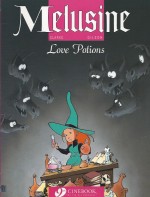
Melusine volume 4: Love Potions


By Clarke (Frédéric Seron) & Gilson, coloured by Cerise and translated by Jerome Saincantin (Cinebook)
ISBN: 978-1-84918-005-4

Like most things in life, this ideal keepsake for Love’s Labours’ Ludicrously Lost comes far too late to be the perfect St. Valentine’s Day recommendation, but let’s face it: if you want to read a comic rather than romance a paramour – imagined, potential or otherwise – there’s little hope for you anyway…

And Dark Gods forbid if you think buying one for him/her/it/they counts as a Romantic Gesture. You deserve everything you get…

Witches – especially cute and sassy teenage ones – have a long and distinguished pedigree in fiction and one of the most seductively engaging first appeared in venerable Belgian magazine Spirou in 1992.

Mélusine is actually a sprightly 119-year-old diligently studying to perfect her craft at Witches’ School. To make ends meet she spends her days – and far too many nights – working as au pair and general dogsbody to a most disgraceful family of haunts and horrors who inhabit/infest a vast, monster-packed, ghost-afflicted chateau some chronologically adrift, anachronistically awry time in the Middle-ish Ages…

The long-lived, much-loved feature is presented in every format from one-page gag strips to full-length comedy tales, all riffing wickedly on supernatural themes and detailing Mélusine’s rather fraught existence is filled with the daily indignities day-job, college studies, the appallingly trivial domestic demands of the master and mistress of the castle and even our magic maid’s large circle of exceedingly peculiar family and friends.

The strip was devised by writer François Gilson (Rebecca, Cactus Club, Garage Isidore) and cartoon humorist Frédéric Seron, AKA Clarke whose numerous features for all-ages Spirou and acerbic adult humour publication Fluide Glacial include Rebecca, Les Cambrioleurs, Durant les Travaux, l’Exposition Continue… and Le Miracle de la Vie.

Under the pseudonym Valda, Seron also created Les Babysitters and as Bluttwurst Les Enquêtes de l’Inspecteur Archibaldo Massicotti, Château Montrachet, Mister President and P.38 et Bas Nylo.

A former fashion illustrator and nephew of comics veteran Pierre Seron, Clarke is one of those insufferable guys who just draws non-stop and is unremittingly funny. He also doubles up as a creator of historical and genre pieces such as Cosa Nostra, Les Histoires de France, Luna Almaden and Nocturnes and apparently is free of the curse of having to sleep…

Collected Mélusine editions began appearing annually or better from 1995 onwards, with the 24th published in 2015 and another due this year. Thus far five of those have shape-shifted into English translations…

Originally released in 1998, Philtres d’amour was Continentally the fifth fantabulous folio of mystic Mélusine mirth and is again most welcoming: primarily comprised of one and two page gags starring the sassy sorceress which delightfully eschew continuity for the sake of new readers’ instant approbation…

As the translated title of this (fourth) Cinebook offering suggests, Love Potions devotes the majority of its content to affairs of the heart – and lower regions – and how to alchemically stack the deck in the game of romance….

When brittle, moody Melusine isn’t being bullied for her inept cleaning skills by the matriarchal ghost-duchess who runs the castle, ducking cat-eating monster Winston, dodging frisky vampire The Count or avoiding the unwelcome and often hostile attentions of horny peasants and over-zealous witch-hunting priests, our saucy sorceress can usually be found practising her spells or consoling and coaching inept, un-improvable and lethally unskilled classmate Cancrelune.

Unlike Mel, this sorry enchantress-in-training is a real basket case: her transformation spells go awfully awry, she can’t remember incantations and her broomstick-riding makes her a menace to herself, any unfortunate observers and even the terrain and buildings around her…

This tantalising tome features the usual melange of slick sight gags and pun-ishing pranks; highlighting how every bug, beast, brute and blundering mortal suffers the pangs of longing and occasionally needs a little Covenly charisma to kick romance into action…

Whether that means changing looks, attitudes or minds already firmly made up, poor harassed student Mel is bombarded with requests to give Eros a hand…

Her admittedly impatiently administered and often rather tetchy aid is pretty hit-or-miss, whether working for peasants, rabbits, tortoises or even other witches, and helping poor Cancrelune is an endless, thankless and frequently risky venture.

Moreover the master and mistress of the castle have obviously never had an ounce of romance in them, even when they were alive…

At least daunting dowager Aunt Adrezelle‘s is always around to supply the novice with advice, a wrinkly shoulder to cry on and, when necessary, a few real remedies…

This turbulent tome also includes a longer jocular jaunt exploring the dull verities of housework, anti-aging elixirs and the selfish ingratitude of property-speculators…

Wrapping up the thaumaturgical hearts-&-flowers is eponymous extended epic ‘Love Potions’ which sees Melusine’s patience pushed to the limits after another attempt by the local priest to “burn the witch” ends up with her helping the locale’s latest scourging saurian marauder find the dragon of his fiery dreams…

Wry, sly, fast-paced and uproariously funny, this compendium of arcane antics is a great taste of the magic of European comics and a beguiling delight for all lovers of the cartoonist’s art. Read before bedtime and share with your loved ones – but only after asking politely first…
Original edition © Dupuis, 1998 by Clarke & Gilson. All rights reserved. English translation 2009 © Cinebook Ltd.

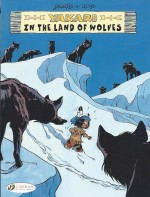
Yakari and the Wolves


By Derib & Job, coloured by Dominque and translated by Erica Jeffrey (Cinebook)
ISBN: 978-1-905460-29-8

Le Crapaud à lunettes is children’s magazine founded in 1964 by Swiss journalist André Jobin who wrote for it under the pseudonym Job. Three years later he hired fellow French-Swiss artist Claude de Ribaupierre who’d begun his own career as an assistant at Studio Peyo (home of Les Schtroumpfs), working on Smurfs strips for venerable weekly Spirou. Together they created the well-received Adventures of the Owl Pythagore before striking pure gold two years later with their next collaboration.

Launching in 1969, Yakari detailed the life of a little Sioux boy on the Great Plains; sometime between introduction of horses by the Conquistadores and the coming of modern White Men.

Stuffed with bucolic whimsy, the beguiling series celebrates the generally simple and joyous existence of noble wanderers in tune with nature and free from strife. Things are punctuated with the odd crisis but usually resolved without fame or fanfare – usually by a little lad who is smart, compassionate and valiant, and can converse with all animals…

As “Derib”, de Ribaupierre – equally excellent in both the enticing, comically dynamic “Marcinelle” cartoon style and with devastatingly compelling meta-realistic action illustration – went on to become one of the Continent’s most prolific and revered creators through such groundbreaking strips as Celui-qui-est-né-deux-fois, Jo (the first comic on AIDS ever published), Pour toi, Sandra and La Grande Saga Indienne).

Many of his stunning works over the fruitful decades have featured his beloved Western themes, built on magnificent geographical backdrops and epic landscapes, and Yakari is considered by fans and critics alike to be the feature which primed the gun. With the uncharacteristically moodily and atmospheric tale unfolding here, that transition to his more dramatic milieux has never been more evident…

Yakari au Pays des Loups was first serialised from June 1981 to April 1982 and promptly became the eighth European album, (and Cinebook’s sixth British Yakari release in 2008 and as always by being fabulously free of tight continuity, the epic encounter works perfectly read in isolation: easily accessible for young kids and/or their adult minders meeting the bold little Brave for the first time…

The tale begins as the seasons turn and winter hits the nomads. Moving camp, they return to a place one man knows too well. Three winters past he had a terrible experience and now becomes obsessed with expiating a long-carried burden of shame…

The kids are all delighted to be rambunctiously sporting in the snow, but when Yakari casually reports something he saw, Tormented Wolf rides off in a fury. The wary brave drives deeper into the snowy passes and soon finds what he dreaded: tracks of a large wolf with a limp…

Puzzled Yakari discusses the experience with many adults and his pony Little Thunder, and has real fright later when, gathering firewood, a grizzled old wolf with a limp starts eying him up…

Tormented Wolf again erupts onto the beast’s trail only to return once more, frustrated and angry. He isn’t staying, but only returned to get supplies and don his ceremonial hunting headdress. Yakari doesn’t really understand why the other grown-ups look upon his departure with pity…

That night, safe in his tent Yakari has one of his special dreams about wolves and their driven stalker. He awakes next morning to see the limping lupine’s tracks all around his tepee. Little Thunder absolutely refuses to take him into the foothills after the predator, so the lad gamely trudges off alone, even as far ahead, Tormented Wolf again replays in his head that fateful battle with a mighty opponent which left them both scarred and broken…

Far behind Yakari fearfully continues. For his entire life he has heard scary stories about wolves but when his totem Great Eagle appears with some sage words the boy begins to reassess his prejudices…

It’s a timely meeting, because as soon as the bird takes flight the limping wolf appears for a chat. “Three legs” then initiates Yakari into the secret world of the “Singing Clan” and shares their founding legend before inviting him to play with the pack’s new cubs…

He then asks the brave boy to arrange one final, fateful meeting between Tormented Wolf and the four-footed tribe he so remorselessly hunts, in the certain knowledge that this climactic confrontation will end the animosity forever…

Darker in tone than most Yakari yarns, this is also one of the most heart-warming and rewarding, with a subtle moral hiding inside a grand tale of redemption and reformation…  The evergreen exploits of the valiant little voyager who speaks with animals and enjoys a unique place in an exotic environment is an unmissable celebration of marvellously moving and enticingly entertaining adventure, honouring and eulogising an iconic culture with grace, wit, wonder and especially warmth. These gentle sagas are true landmarks of comics literature and Yakari is a strip no fan of graphic entertainment should ignore.
Original edition © LE LOMBARD (Dargaud- Lombard s.a.) 1981, by Derib + Job. English translation 2008 © Cinebook Ltd.

Yoko Tsuno volume 4: Daughter of the Wind


By Roger Leloup translated by Jerome Saincantin (Cinebook)
ISBN: 978-1-905460-94-6

Yoko Tsuno began first began gracing the pages of Spirou in September 1970 and is still going strong. As detailed by Roger Leloup, the astounding, all-action, uncannily edgy, excessively accessible exploits of the slim, slight Japanese scientific-adventurer are amongst the most intoxicating, absorbing and broad-ranging comics thrillers ever created.

Leloup’s brainchild is an expansively globe-girdling, space-&-time spanning series devised by the monumentally talented Belgian maestro after leaving his job as a studio assistant on Herge’s The Adventures of Tintin to strike out on his own.

Compellingly told, superbly imaginative but always solidly grounded in hyper-realistic settings which boast utterly authentic and unshakably believable technology and scientific principles, these illustrated epics were at the vanguard of a wave of strips featuring competent, clever and brave female protagonists which revolutionised Continental comics from the 1970s onwards.

Happily they are as timelessly engaging and potently empowering now as they ever were.

The very first stories ‘Hold-up en hi-fi’, ‘La belle et la bête’ and ‘Cap 351’ were brief introductory – and possibly beta-testing – vignettes before the superbly capable Miss Tsuno and her always awestruck and overwhelmed male comrades Pol Paris and Vic Van Steen properly hit their stride with premier extended saga Le trio de l’étrange which began in 1971 with the May 13th edition of Spirou…

In the original European serialisations, Yoko’s adventures alternated between explosive escapades in exotic corners of the world and sinister deep-space sagas with the secretive and disaster-plagued alien colonists from Vinea, but for these current English translations, the extraterrestrial endeavours have been more often than not sidelined in favour of realistically intriguing Earthly exploits.

There have been 27 European albums to date and this one was first serialised in Spirou #2081-2100 (2nd March to July 13th 1978) before emerging the following year as exotically enthralling album La Fille du vent. A sublimely understated espionage epic with solid hard-science sci fi overtones, it was chronologically the ninth album, yet due the quirks of publishing reached us Brits as Cinebook’s fourth translated tome, offering readers a long-awaited glimpse into the history of the ultra-efficient oriental enigma…

The stupendous saga opens with Yoko calming Vic and Pol as their passenger flight makes its daunting landing at Hong Kong’s Kai-Tak Airport. They have taken a rushed flight because Yoko has received a worrying communiqué about her father, sent by the eminent Chen Wu Cheng…

On arrival they are picked-up by a joint team of Chinese and Japanese intelligence operatives sharing a unique problem. Seiki Tsuno is a brilliant scientist; a geophysicist who has been working for decades to find a way to counter the horrific typhoons which regularly devastate coastal regions across the Pacific. He recently succeeded, but only after first discovering exactly how to create the catastrophic whirlwinds…

Now Yoko’s hosts inform her that her father’s financial backer Ito Kazuki has conspired with elements of the Japanese government and greedy business interests to steal the research with the intention of using the typhoon-making process as a weapon to restore Japan to its days of military glory and pre-eminence.

The elder Tsuno and Kazuki are now at war and the storms they make are wrecking the climate of the entire region. In their desperation these national agencies want Yoko to talk to her father and make him stop before it’s too late. Moreover, with all Kazuki’s resources in play, they need her to approach her dad secretly so as not to alert the enemy millionaire to the mission…

Thus this long, circuitous trip from the coast of China to Yoko’s family home, which eventually concludes with her being parachuted in from a high-altitude seaplane at night. Over strident objections from Vic and Pol, the “Daughter of the Wind” has accepted the mission, but it’s not until she’s actually plunging towards the giant statue of the Buddha and temple above her family home that Yoko act on the suspicions she’s been harbouring.

Disabling her electronic tracker, Yoko shifts orientation and lands far from her specified target site. Almost immediately her caution pays dividends as she spots armed masked men waiting around the area where she was supposed to land. Doffing her gear she quietly heads for the temple where a monk helps her avoid the faux ninjas and reach her father’s house.

There she is joyously reunited with aged Aoki: a former Imperial pilot who joined the household as a gardener and practically raised Yoko whilst her parents conducted their own, more important, adult affairs…

He reveals the truth: there is war between Kazuki and her father, but the millionaire plans to trap and use her as a bargaining chip over Seiki and ultimately achieve total control of Japan…

As Yoko radios Pol and Vic the ninjas strike and only familiarity with her father’s inventions allow her and Aoki to escape, aided by the sudden explosive appearance of her European friends. A hectic and explosive seaborne chase ensues but after Kazuki throws one of his typhoons at them Yoko and her friends are caught and taken by submarine to the mad millionaire’s near-sacrilegious undersea base whilst old Aoki is left clinging to a buoy…

Kazuki seems like a reasonable man and offers Yoko a position with his organisation – which she naturally declines – but does concede to run his TV and telecommunications equipment as he moves to his momentous endgame…

Whilst Yoko tells her incarcerated pals of her lonely neglected childhood and the tragic story of failed Kamikaze Aoki and how he came to live with her grandfather, Seiki Tsuno – who has picked up the aging gardener from the buoy – moves towards his final showdown with Kazuki: a very public duel between the madman’s typhoon-maker and his own whirlwind eradication process.

The researcher is confident of his invention’s efficacy but never expected Kazuki to cheat…

Yoko isn’t surprised at her captor’s double-dealing and when the would-be warlord is distracted by his recently created waterspout growing completely beyond his control, leads Pol and Vic in a daring escape back to her dad who has only one appalling solution to the rapidly-expanding super-storm…

Sadly it involves two pilots simultaneously flying into the typhoon with a massive explosive device and has only a remote chance of working…

Building to a thundering climax and truly tragic conclusion, this potent large-scale human drama showed both a softer side and more mature aspect of our star, confirming she was a truly multi-faceted adventurer, at home in all manner of scenarios and easily able to hold her own against the likes of James Bond, Modesty Blaise, Tintin or other genre-busting super-stars: as triumphantly capable facing spies and madmen as alien invaders, weird science or unchecked forces of nature…

As always the most effective asset in these breathtaking tales is the astonishingly authentic and staggeringly detailed draughtsmanship and storytelling, which superbly benefits from Leloup’s diligent research and meticulous attention to detail, honed through years of working on Tintin.

This is a magnificently wide-screen thriller, tense, complex and evocative, which will appeal to any fan of blockbuster action fantasy or devious derring-do.
Original edition © Dupuis, 1979 by Roger Leloup. All rights reserved. English translation 2009 © Cinebook Ltd.

Lucky Luke volume 7: Barbed Wire on the Prairie


By Morris & Goscinny, translated by Luke Spear (Cinebook)
ISBN: 978-1-905460-24-3

Lucky Luke is a good-natured, lightning-fast gunslinger who roams the fabulously mythic Old West, having light-hearted adventures with his sarcastic horse Jolly Jumper, interacting with a host of historical and legendary figures. His continued exploits over seven decades have made him one of the best-selling comic characters in Europe (over 80 collected books and more than 300 million albums in 30 languages thus far), with the usual spin-off toys, computer games, animated cartoons and a plethora of TV shows and live-action movies.

He was created in 1946 by Belgian animator, illustrator and cartoonist Maurice de Bévère (“Morris”) and was first seen the 1947 Annual (L’Almanach Spirou 1947) of Le Journal de Spirou, before launching into his first weekly adventure ‘Arizona 1880’ on December 7th 1946.

Prior to that, while working at the CBA (Compagnie Belge d’Actualitiés) cartoon studio, Morris met future comics superstars Franquin and Peyo, and joined weekly magazine Le Moustique as a caricaturist – which is probably why (to my eyes at least) his lone star hero looks uncannily like the young Robert Mitchum who graced so many memorable mid-1940s B-movie Westerns.

Morris quickly became one of la Bande des quatre or “The Gang of Four” comprising Jijé, Will and his old comrade Franquin: the leading proponents of the loose, free-wheeling artistic style known as the “Marcinelle School” which predominated in Spirou in aesthetic contention with the “Ligne Claire” style used by Hergé, EP Jacobs and other artists on Tintin magazine.

In 1948 said Gang (all but Will) visited the USA, meeting American comics creators and sightseeing. Morris stayed for six years, linking up with fellow traveller René Goscinny, scoring some work from the newly-formed EC sensation Mad and making copious notes and sketches of the swiftly vanishing Old West.

That research would resonate on every page of his life’s work.

Working solo until 1955, Morris produced another nine albums worth of affectionate sagebrush spoofery before reuniting with Goscinny, who became the hero’s regular wordsmith as Luke attained the dizzying heights of superstardom, commencing with ‘Des rails sur la Prairie’ (Rails on the Prairie), which began in Spirou on August 25th 1955.

In 1967 the six-gun straight-shooter switched sides, transferring to Goscinny’s own magazine Pilote with ‘La Diligence’ (The Stagecoach). Goscinny eventually produced 45 albums with Morris before his untimely death, from whence Morris continued both singly and with fresh collaborators.

Morris himself died in 2001 having drawn fully 70 adventures, plus some spin-off sagas crafted with Achdé, Laurent Gerra, Benacquista & Pennac, Xavier Fauche, Jean Léturgie, Jacques Pessis and others all taking a crack at the venerable franchise…

Moreover, apart from that very first adventure, Lucky (to appropriate a quote applied to the thematically simpatico TV classic Alias Smith and Jones) “in all that time… never shot or killed anyone”…

He was first seen in Britain syndicated to weekly comic Film Fun during the late 1950s and again in 1967 in Giggle where he was renamed Buck Bingo. In all these venues – as well as the numerous attempts to follow the English-language successes of Tintin and Asterix albums – Luke had a trademark cigarette hanging insouciantly from his lip. However in 1983 Morris – no doubt amidst both pained howls and muted mutterings of “political correctness gone mad” – deftly substituted a piece of straw for the much-mauled dog-end, which garnered him an official tip of the hat from the World Health Organization.

The most recent and successful attempt to bring Lucky Luke to our shores and shelves comes from Cinebook (who have rightly restored the foul weed to his lips on the interior pages, if not the covers…) and Ma Dalton was the seventh of their 58 (and counting) albums, now available both on paper and as e-books.

Chronologically the album Des barbelés sur la prairie, first appeared in 1967: Luke’s 29th chronicle and Goscinny’s 20th collaboration with Morris, offering an engagingly classic confrontation and deviously diabolically bloodless solution wherein all the laconic lawman’s legendary speed proved as nothing when battling bad men with numbers, tradition and intransigence on their side…

It all begins with a suitably mock-heroic paean to western mythology, eulogizing the role of cattle and birth of cowboys before introducing overfed, self-satisfied cattle baron Cass Casey, casually chowing down on cow meat in boisterous cow-town Cow Gulch.

The big man is blissfully unaware that salad-farmers Vernon and Annabelle Felps are currently building a home and planting their crops on the small parcel of the prairie they recently purchased. That means nothing to Casey’s men as they indifferently guide a mooing massive herd through house and garden alike…

When the vegetable man heads into town to remonstrate with the cattle king, Vernon would have killed for his impertinence but for the quiet yet lethally loaded intervention of a wanderer trying to eat his steak in peace…

Casey thinks he’s powerful enough to do whatever he wants, but within seconds he’s the only man drawing down on the legendary Lucky Luke. A little whilst the burly boss’ hand is healing, the Lone Rider is accompanying Vernon back to a home-cooked meal of tasty greens. He’s still there when vengeful Casey sends his thundering herd back to trample everything.

Not long after, Cass’ men are all trussed up, those steers are stampeding though Cow Gulch and Vernon has done the unthinkable…

As the authors brilliantly detail, back then the battle between settlers and ranchers reached obsessive fever pitch after barbed wire was invented. Despite being used to fence off legally owed property, the stuff was so contentious to free ranging cattlemen that shops stocking it would be destroyed and cowboys reacted with unimaginable fury when it was used…

The very mention of it causes local stores to shut for business but Vernon is implacable and mail-orders a few bales. In response, the coach carrying it to him is robbed and vandalised and the Felps’ house is razed to the ground… again.

Hating bullies, Luke adopts a cunning disguise and sneaks a shipment past the ever-vigilant vigilantes and before long the wide open prairie has its first enclosure…

Casey reacts in the expected manner and before long a full-fledged war is brewing.

When Luke organises and trains all the other crop-growing Settlers, Casey increases his night raids and shattering cattle stampedes.

Once Luke decides to get personally involved and bring in more wire, the Cow King calls in all the other cattle barons who congregate in town for a big dinner before taking decisive final action. The prognosis looks bleak for everybody…

And then the Western Wonder has a most intriguing notion which seems certain to end the mounting crisis in a bloodless manner and give all parties concerned an appetite for conciliation…

Fast-paced, seductive slapstick and wry cynical humour beef up this splendidly trope-heavy tribute to classic westerns: another grand old hoot in the tradition of Destry Rides Again and Cat Ballou, superbly executed by sublime storytellers and providing a wonderful introduction to a unique genre for today’s kids who might well have missed the romantic allure of an all-pervasive Wild West that never was…
© Dargaud Editeur Paris 1971 by Goscinny & Morris. © Lucky Comics. English translation © 2007, Cinebook Ltd.

In Search of Lost Time: Swann’s Way


By Marcel Proust, adapted and illustrated by Stéphane Heuet and translated by Arthur Goldhammer (Gallic Books)
ISBN: 978-1-90831-390-4

I love comics, both in form and function, and wouldn’t ever be without them. I also read the odd book or two.

Valentin Louis Georges Eugène Marcel Proust, although arguably an acquired taste, wrote what is considered by many to be one of the very best ones – actually a succession of them classed as one big one – and even though there are no uncanny monsters, rampaging robots or alien invasions and precious few fights of any sort, the incredibly bold and ambitious Stéphane Heuet has undertaken to adapt Á la recherché du temps perdu to the comics medium and has gone about it in a most satisfying manner.

Long known in English as Remembrance of Things Past, the current graphic narrative iteration produced by the adaptor and his erudite translator has plumped for the contemporary option In Search of Lost Time for its umbrella title – which is what it was called when originally translated by C. F. Scott-Moncrieff, who turned the seven volumes (3200 pages) of delicately phrased French into English between 1922 and 1931.

When Penguin’s 1995 edition was released, the complete reworking by scholars from three countries settled upon the latter as a more fitting title. Now the forthcoming pictorial volumes will also be distinguished thus and given individual titles to demarcate each singular tome.

What’s it about? In broad short form it ponders the huge social changes which occurred in France, especially the diminution of aristocracy and the advancement of the Middle Classes from the Troisième République (French Third Republic – 1870 until the Nazis installed the Vichy Government in 1940) to the fin de siècle or turn of the 20th century, as seen by one family and their rather large coterie of friends, lovers, social associates, climbers and hangers on.

It’s also about the force of memory and nostalgia and how the senses can become irresistible doorways into our pasts. It’s about a guy recalling the village where he grew up. It is a vast achievement with over 2000 characters, acknowledged as a masterpiece of the written word. You really should try it some time.

We’re talking about Heuet’s adaptation now though, and in this first volume – reissued by Gallic Books as a magnificent, oversized full colour hardback – adapts the initial tome Swann’s Way plus ancillary tales Swann in Love and Place-Names: The Name in a staggering potent, gloriously understated and phenomenally powerful Ligne Claire style which seems the very epitome of all that is French.

The collection is augmented by a compelling and beautiful map of Paris in those days, a fascinating and educational ‘Translator’s Introduction’ from esteemed scholar Arthur Goldhammer discussing underlying themes and motifs such as the effects of music, a full illustrated Glossary of terms and contextual ephemera, and a breathtakingly lovely pictorial guide to the 71 key characters introduced at this stage, courtesy of ‘The Narrator’s Family Tree’.

Also included are a non-fictive biography of the author himself and a beguiling glimpse at ‘Proust’s Family Tree’, complete with maps and views of the rural idyll which inspired the novel.

Most people know only two things about Á la recherché du temps perdu: the Narrator is never named or identified and everything kicks off when a pastry – a Madeleine – he dips in his tea as an adult triggers an avalanche of involuntary memories, taking him back to his childhood…

As the Narrator ponders how night in his bedroom opens his mind to recollection, the revelations of our story begin in ‘Combray’; a quiet hamlet his family lived in for much of his childhood…

The times were full of little incidents he barely understood. His parents were of a certain social standing. There were people they welcomed into the home, others they sought to entice there and some they actively – if politely – sought to ostracise…

One of the most intriguing was the inspirationally debonair demi-outcast Charles Swann.

Sometimes he was welcome and at other times not. He had a daughter named Gilberte who the young Narrator found oddly fascinating…

That’s all you’re getting. The whole point of these intricate revelations and interlocking relationships is unpicking them yourself, and Heuet’s methodically efficient yet light and inspired visuals make that job a sheer delight…

Accompanying the bucolic yet cosmopolitan travails and aspirations of the family is the tangential and hugely absorbing tale of Swann in Love which offers further insights into and revelations of the great man’s other life in Paris. Through an extended period it traces the over-educated sophisticate’s meeting with a fashionable demimondaine name Odette de Crécy and follows the course of their placidly tempestuous affair to a most familiar denouement where a most surprising conclusion is reached…

Ending this initial foray into literature is Place-Names: The Name, which returns to the inner landscape of the Narrator for an elegiac and stunningly beautiful celebration of childhood intrigues and obsession, couched in terms of place visited and those others merely longed-for. Simultaneously tempering and honing those early passions is a period spent in Paris where the wide-eyed boy unknowingly added to his store of precious memories through his frequent but irregular afternoon meetings with the characters of the Champs-Elysées… particularly the whimsical and unpredictable Gilberte Swann…

This is a sweet and subtle, marvellously European confection both beguiling and oddly fulfilling. The stylish, muted palette and seeming preponderance on head-shots might at first deter potential readers – Lord, I hope not – but that’s nothing to quibble over: Heuet’s skill comfortably accommodates the wide cast and will certainly entice and reward any reader prepared to persevere…

Classics Illustrated used to adapt books into comic form and they became a short-cut for school cheats who couldn’t be bothered to read great literature or were too busy to study for exams. This superb tome – and all its companion volumes – is far more than a précis in pictures; this worshipful adaptation is a companion to, not a substitute for; and thus is another brilliant example of the range of our art-form, and well worthy of your serious attention.
First published in France as Du côté de chez Swann: Édition Intégrale by Éditions Delcourt 2013. © Éditions Delcourt 2013. Translation © Arthur Goldhammer 2015. All rights reserved.

In Search of Lost Time: Swann’s Way will be released on February 1st 2016 and is available for pre-order now.

Iznogoud and the Jigsaw Turk


By Goscinny & Tabary, translated by Jerome Saincantin (Cinebook)
ISBN: 978-1-84918-209-6

For the greater part of his far-too-short lifetime René Goscinny (1926-1977) was one of the most prolific and widely-read writers of comic strips in history.

He still is.

Amongst his most popular and enduring comic collaborations are Lucky Luke, Le Petit Nicolas, Signor Spaghetti and, of course, Asterix the Gaul, but there were so many others, such as the despicably dark deeds of a dastardly usurper whose dreams of diabolical skulduggery perpetually proved to be ultimately no more than castles in the sand…

In the wake of the Suez crisis, the French returned – by way of comics, at least – to the hotly contested Arabian deserts after Goscinny teamed with hugely gifted Swedish émigré Jean Tabary (1930-2011) – who numbered Richard et Charlie, Grabadu et Gabaliouchtou, Totoche, Corinne et Jeannot and Valentin le Vagabond amongst his other hit strips – to detail the innocuous history of imbecilic Arabian (im)potentate Haroun el-Poussah.

However, as is so often the case, it was the strip’s villainous foil, power-hungry vizier Iznogoud, who stole the show… possibly the conniving little blackguard’s only successful insurrection.

Les Aventures du Calife Haroun el Poussah was created for Record; the first episode appearing in the January 15th issue of 1962. A petite hit, the feature subsequently jumped ship to Pilote – a new comics magazine created and edited by Goscinny – where it was artfully refashioned into a starring vehicle for the devious little Tuareg toe-rag who had been hogging all the laughs and limelight.

Insidious Iznogoud is Grand Vizier to Haroun Al Plassid, the affable, easy-going Caliph of Ancient Baghdad, but the sneaky little second-in-command has loftier ambitions, or as he is always declaiming “I want to be Caliph instead of the Caliph!”…

The retooled rapscallion resurfaced in Pilote in 1968, quickly becoming a massive hit, resulting in 29 albums to date, his own solo comic, a computer game, animated film, TV cartoon show and even a live-action movie.

Like all great storytelling, Iznogoud works on two levels: for youngsters it’s a comedic romp with adorably wicked baddies invariably hoisted on their own petards and coming a-cropper, whilst older, wiser heads can revel in pun-filled, witty satires and superbly surreal antics.

Following Goscinny’s death in 1977, Tabary began scripting his own tales, switching to book-length complete adventures rather than the short, snappy vignettes which typified his collaborations. Upon his own passing, Tabary’s children Stéphane, Muriel and Nicolas took over the franchise.

The deliciously malicious whimsy is always heavily dosed with manic absurdity, cleverly contemporary cultural critiques, brilliantly delivered creative anachronisms and fourth-wall busting episodes which serve to keep the assorted escapades bizarrely fresh and hilariously inventive.

La tete de turc d’Iznogoud (The Turkish Head of Iznogoud) was originally released in 1975, the 11th mirthfully malignant album compilation, offering a rather remarkable quartet of trend-setting tales with our ambitious autocrat as ever scheming to seize power from his good but gullible Lord and Master. Following the traditional preface page introducing our tawdry star and other regulars, the devious deceptions resume with the epic length saga of ‘The Jigsaw Turk’.

With Baghdad gripped in a strike by refuse collectors, a fuming Vizier visits the freshly-opened magical accessories shop of Dokodah Bey in search of something to solve his promotion-impeding problem. The proprietor is an annoyingly jolly japester who typically meets his intellectual equal in the Vizier’s foolish flunky Wa’at Alahf, but finds time between pranks to sell the surly insurgent a magic puzzle of a Turk’s head.

All one has to do is complete the 10,000 piece jigsaw, but just before adding the final tile, think of the thing you want to get rid of: he/she/it will crumble into as many fragments as the puzzle with the addition of that last component…

And thus begins a catalogue of chaos, with every moment of the weeks that follow finding the Vizier intolerably interrupted. Eventually however he finally finishes the infernal pasteboard pastime only to discover the last piece is missing. Now he has to endure an epic voyage to the faraway factory to replace the missing trigger to all his dreams coming true, but even after he secures it, Iznogoud has no idea his problems are only just beginning…

A commotion in the harbour at Basra is the opening movement in the next cacophonous composition of calamity as the Vizier and his hulking henchman buy a most unlovely mermaid trawled up by Crawdad the Sailor. The deaf, daft seadog needs to get rid of the Siren in his bathtub because ‘The Freezing Song’ she shrieks paralyzes all who hear it…

Smelling opportunity, the ambitious autocrat buys the garrulous nymph and sneaks her into the palace, but as usual there’s hitch after hitch and in the end it’s the Vizier’s stinking scheme which ends up going flat…

Next up is a tantalising oddment. ‘The Adventures of Caliph Haroun Al Plassid: The Sheik’s Potion’ looks to me like an earlier yarn of Les Aventures du Calife Haroun el Poussah from Record, recycled and remastered for the contemporary series. In it a much altered Iznogoud attempts to administer a shrinking potion to his Lordly Master but, after a furore of frantic attempts meet with ever-diminishing success, only succeeds in making himself look small…

This sublime selection ends on a superbly surreal note as the Vile Vizier consults a chronally adrift Gypsy seer and buys ‘The Magic Calendar’ which will allow its careful owner to move about in time. With such an arcane addition to his arsenal, surely his ambitions must be realised?

Of course the most important word here is “careful” and before/after/between long the impatient impotentate is lost many somewheres in time and ends up annoying a most confused cartoonist who only wants a little time to finish his latest script about that obnoxious oaf who wants to be Caliph instead of the Caliph…

Such convoluted witty, fast-paced hi-jinks and craftily crafted comedy set pieces have made this addictive series a household name in France where “Iznogoud” is common parlance for a certain kind of politician: over-ambitious, unscrupulous – and frequently insufficient in inches (or should that be centimetres?).

Desiring to become “Caliph in the Caliph’s place” is a popular condemnation in French, targeting those perceived as overly-ambitious, and since 1992 the Prix Iznogoud is awarded annually to “a personality who failed to take the Caliph’s place”.

Nominees are chosen from prominent French figures who have endured spectacular failures in any one year and been given to the likes of Édouard Balladur (1995) and Nicolas Sarkozy (1999). The jury panel is headed by politician André Santini, who gave himself one after failing to become president of Île-de-France in regional elections in 2004.

When first released in Britain during the late 1970s and 1980s (and again in 1996 as a periodical comicbook) these tales made little impression, but at last this wonderfully beguiling strip has deservedly found an appreciative audience among today’s more internationally aware, politically jaded comics-and-cartoon savvy connoisseurs…
Original edition © 2012 IMAV éditions by Goscinny – Tabary. All rights reserved. English translation © 2014 Cinebook Ltd.

I.R.$. volume 2: Blue Ice


By Vranken & Desberg, coloured by Coquelicot and translated by Luke Spear (Cinebook)
ISBN: 978-1-905460-74-8

As I’ve frequently stated before, the most appealing aspect of European comics is the sheer breadth of genres, styles and age-ranges their efforts address and the audiences support.

Thus this quirky but exceedingly readable, deviously all-action Franco-Belgian thriller-series with a tantalising twist offers a deliciously different spin on the tried-and-true trope of the driven mystery-man superspy.

The unlikely champion of these sagas is a civil servant with the US government, which once upon a time started employing super-cool, infallibly effective special agents to go after the type of tax-dodger well beyond the reach of the law. These days, perhaps every nation should have one…

Belgian writer Stephen Desberg is one of the bestselling comics author in France. He was born in Brussels in 1954, son of an American lawyer (the European distribution agent for Metro-Goldwyn Mayer) and a French mother. Stephen began studying law at Université Libre de Bruxelles but dropped out to follow a winding path into the comics biz.

He began with plots and eventually scripts for Will (Willy Maltaite) on Tif et Tondu in Spirou, growing into a reliable jobbing creator on established strips for younger readers before launching his own in the Stéphane Colman illustrated Billy the Cat (a funny animal strip, not the DC Thomson superhero series).

Thereafter came 421 with Eric Maltaite, Arkel (Marc Hardy), Jimmy Tousseul (with Daniel Desorgher) and many others. During the 1980s he gradually redirected his efforts to material for older readerships (see for example The Garden of Desire) and in 1999 he created contemporary thriller IR$, with historical drama Le Scorpion added to his catalogue of major hits a year later.

Bernard Vranken was an award winning artist by the time he was fifteen. A year later he was working for Tintin. Whilst studying architecture at Saint-Luc he took some comics courses by legendary illustrator Eddy Paape at St. Gilles and his true career-path was set. Vranken was crafting short stories for A Suivre when he met Desberg and in 1996 they collaborated for the first time on epic romance Le Sang Noir. Three years later they traded love for money and launched I.R.$.…

The premise is simple and delicious, and Cinebook’s second translated English edition from 2009 once again doubles the bang for your buck by combining the third and fourth European albums – Blue Ice and Narcocratie – into one compelling compilation.

Blue Ice (originally released in 2001) opens with stylish American bean-counter Larry B. Max relaxing in his palatial home. The quiet start offers the observant reader a few hints into Larry’s past – and motivations – before he renews his odd, long-distance, anonymous relationship with favourite chat-line girl Gloria Paradise.

Larry hates complications in his life but there’s just something about her voice and attitude…

A little later he attends a piano rehearsal and promises his little sister he’ll be there for the recital on Friday. It’s just asking for trouble…

Meanwhile downtown, three very bad men are meeting excessively violent ends and at Los Angeles airport an American passenger from Mexico triggers a wave of security alerts. Typically, though, just too late for the inattentive security staff to do more than watch him spectacularly disappear into the city leaving two dead agents behind…

Later at DEA HQ, a high level meeting of numerous Federal agencies convenes to discuss Ryan Ricks. During his tour in Vietnam Ricks began managing the money of his platoon-mates and used it to make a killing on the Stock Exchange.

Slightly wounded, he then shipped out for home and was eagerly pursued by finance houses who saw he had a unique gift for using money and making it. He settled in at a major tobacco company and started creating wealth.

They didn’t notice – or perhaps care – that Ricks was making side-deals, nor that being utterly amoral he went where the money was to be easily found: terrorist nations…

When the IRS found out he was using dirty cash to make the company more money – and making himself fabulously rich at the same time – Ryan was fired. He claimed to have no understanding of why terrorist money was bad but profits from giving people cancer was good…

Ricks was a man ahead of his time. Even before the Cold War ended he was saying that New Capitalism would be beyond any laws and consequently followed that philosophy to its logical extreme. Specialising in creating off-shore accounts, he became the world’s greatest money-launderer and devised an international network for tax evasion.

That’s when Larry Max first encountered him, but the wily finance wizard simply vanished and a swathe of alphabetised American agencies has been waiting for him to turn up ever since…

Now twelve years later he’s back in USA so scores can be settled and pride regained. Some of the bigwigs however are unconvinced. With so many major players in the Monterrey Cartel gunned down in the street, the feds would rather concentrate on a clearly-brewing turf war than some nebulous cash-converter.

Late-arriving Larry is “only” a tax collector, not a true cop, but he can’t help wondering why they all think the events are unconnected…

Consulting his own researches, Mr Max coolly exposes a traitor in the cross-agency conclave and predicts things are going to get very dramatic for the Monterrey Cartel, but is fobbed off with only two agents to assist him. Hanson‘s shadowy spook-show has access to covert satellite surveillance and phone monitoring whereas Ella Hidalgo of DEA is a stone killer everybody call “Blue Ice”.

She’s going to be useful once the lead starts flying…

Across the border the prediction has already come true. Dion Monterrey, the aged, untouchable head of the clan, has begun cleaning house, eradicating all dissent before heading to LA for the most important meeting of his life…

Aided by cutting-edge covert spy technology, the hunt for Ricks moves into high gear and it’s not long before Larry and Hildalgo are quietly closing in on their target. Then a second traitor inadvertently tips his hand too soon and the astounded IRS agent has the key piece of information he needs to complete the puzzle…

Ultimate harbinger of unfettered Free Enterprise Ricks has returned to America because he’s acting as facilitator for the deal of the ages: selling off one of world’s biggest drugs cartels…

Larry is not satisfied. The facts just don’t add up and as he ponders the mystery and sweats the details Ricks is closing the deal and Dion is ensuring there’s no one left to contest the sale…

With every party understandably edgy the final handover is set to occur on the roof of a luxury shopping mall. With the fanatical Ricks describing the way business will be conducted in the until-now inefficiently managed, under-exploited market of modern coke consumption, the good guys quietly close in. They have all grossly underestimated the guile and paranoia of their targets though and soon the entire scene is a hellish firefight of lethal proportions…

As ever, the end result is a pile of bodies, massive collateral damage and Ricks a ghost in the wind, but this time Larry is on his tail…

Without a pause for breath the story concludes in Narcocracy as Max arrives in Tijuana, just as the next move in Ricks’ grand strategy goes live: acquisition and expansion…

Before dawn breaks in the seedy hell-hole many of the proud cartel hold-outs opposing the new order are gone and the game plan is clear. It’s not a consolidation or merger Ricks and his mystery backers have in mind for the already lucrative drug trade, it’s a hostile takeover…

The only fly in the ointment is a certain white-haired American who implacably follows the money magician everywhere and is proving utterly impossible to kill…

Help comes from a most unexpected quarter as the Mexican Federal Bureau of Narcotics picks up the taxman, claiming he’s about to blow a massive sting operation. Larry keeps his thoughts to himself as meets the country’s top brass and warns them of Rick’s current ambitious activities. After all, money talks, this is a country notorious for corruption and the wizard of wealth-creation has more cash than any other crook in the world…

Soon he is partnered up with the Bureau’s top investigators and chasing his elusive quarry but even though Larry knows a trap is waiting to spring somewhere he’s not quite sure when or who’s going to. Moreover, behind all the criminal double-dealing and staggering slaughter, he can perceive the kind of chicanery that only real, Harvard-style business types are capable of. All he has to do is find out who and prove it…

Inevitably the hammer falls and bodies begin to drop and just for a moment it looks like someone’s going to miss a piano concert…

Complex, fast-paced, suspenseful and incredibly violent, this yarn is pure movie blockbuster: a sleek, lean and lithe action-fest to seduce any devotee the thriller genre.

IR$ is a splendidly effective, stylishly gritty thriller series that will delight fans of modern mayhem in all its literary and artistic forms.

Only death and taxes are inescapable, and Larry B. Max offers either or both in one suavely, economical package…
Original edition © 1977 Editions du Lombard (Le Lombard/Dargaud SA) 2001-2002 by Desberg &Vrancken. English translation 2008 © Cinebook Ltd.

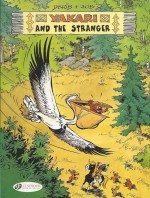
Yakari and the Stranger


By Derib & Job, coloured by Dominque and translated by Erica Jeffrey (Cinebook)
ISBN: 978-1-905460-27-4

European children’s magazine Le Crapaud à lunettes was founded in 1964 by Swiss journalist André Jobin who wrote for it under the pseudonym Job. Three years later he hired fellow French-Swiss artist Claude de Ribaupierre who’d begun his own career as an assistant at Studio Peyo (home of Les Schtroumpfs), working on Smurfs strips for venerable weekly Spirou. Together they created the well-received Adventures of the Owl Pythagore before striking pure gold two years later with their next collaboration.

Debuting in 1969, Yakari detailed the life of a little Sioux boy on the Great Plains; sometime between introduction of horses by the Conquistadores and the coming of modern White Men.

Stuffed with bucolic whimsy, the beguiling all-ages series celebrates the existence of noble wanderers in tune with nature and free of strife, punctuated with the odd crisis but generally resolved without fame or fanfare – usually by a little lad who is compassionate, smart, valiant and can converse with all animals…

As “Derib”, de Ribaupierre – equally excellent in both the enticing, comically dynamic “Marcinelle” cartoon style and also with devastatingly compelling meta-realistic action illustration – went on to become one of the Continent’s most prolific and revered creators, crafting such groundbreaking strips as Celui-qui-est-né-deux-fois, Jo (the first comic about AIDS ever published), Pour toi, Sandra and La Grande Saga Indienne). Many of his stunning works over the decades feature his beloved Western themes, built on magnificent geographical backdrops and epic landscapes, and Yakari is considered by fans and critics to be the feature which primed the gun.

With the boldly visual story under review here, the steady transition to his more epic milieux has never been more evident…

Yakari et l’Etranger was first released as a European album in 1982 and became Cinebook’s 5th Yakari volume in 2007, but that as ever won’t be a problem for chronology or continuity mavens as the tale works perfectly read in isolation: wondrously welcoming and easily accessible for young kids and/or their adult minders meeting the bold little Brave for the first time…

One day in the woods, the beavers are beginning a major construction project under the stern foremanship of Thousand Mouths, with Yakari and his faithful pony companion Little Thunder gleefully watching when a strange bird with a huge beak crash-lands in their midst. It is very large, very clumsy and has the worst cold anybody has ever seen.

In between earth-shaking sneezes the stricken visitor explains that he is a White Pelican who flew far too high and got lost, catching this awful affliction in the process…

After their usual bout of squabbling with each other the hospitable beavers offer to put him up until he gets better, but after one night of continual ear-shattering sneezes the mammals are all sleep-derived and tetchy, so Yakari smuggles the bird into his people’s encampment.

This is not an ideal solution either, but does give the little lad an idea: curing that colossal cold by treating the pelican to a night in a sweat lodge…

The camp’s sacred building is out of bounds but the weary beavers are happy to construct their own affair and, after a steamy night, the heat treatment seems to do the trick. However, before the day is out the cold returns with greater force and even bigger sneezes.

The real problem is that the stranger is weak from lack of food, but Yakari’s pals the ever-playful otters are happy to catch a few fish for him. None of them have ever seen how much a pelican can eat though, and before long the entire stream is empty even though the snuffling bird is still starving.

Moreover, a night in the open results in every animal in the forest being kept awake by thunderous sneezing…

The next morning, Yakari is confronted by a horde of frazzled creatures all demanding he get rid of the feathered nuisance. Disappointed and angry Yakari furiously storms off with his unfortunate new friend and as he and Little Thunder carry the weakened bird away, the boy brave has an inspiration; he will take his patient upriver to visit his old friend the grizzly bear.

It’s spawning season and the shallows are overflowing with salmon which the jolly colossus is delighted to share with a fellow fish aficionado. The nourishment soon works its magic and the big white bird makes a rapid and complete recovery. Soon he’s arcing through the air and determined to settle accounts.

Despite the churlish way they acted, the grateful pelican pay back the animals for the way he’s been treated. Soaring down, he scoops up a bucket-sized beak-full of fish from the stream just as the otters are about to catch one…

The solitary pelican has thanks not vengeance in mind however as he dumps enough fish to feed the whole family: a day’s worth of hunting in one minute. He’s equally generous with the beavers, giving spectacular, sky-soaring rides to each one in return for their taking him in.

His gratitude expressed the lost bird rests, but good deeds beget good deeds and sculpting genius Thousand Mouths is inspired to express his own talents with a series of statues starring the sneezing bird: a new and novel landmark which catches the eyes of a passing flock of big-beaked fishing birds who have been looking for a lost comrade…

Depicted with stunning skill and verve, incorporating just the right amount of pathos to leaven the bonhomie and dry humour, Yakari and the Stranger is a compelling fable about hospitality and friendship which demonstrates the meaning and rewards of generosity with Job’s whimsical story allowing Derib another glorious opportunity to prove his astonishing mastery of comics-staging and Earth’s natural wonders …

The evergreen exploits of the valiant little voyager who speaks with animals and enjoys a unique place in an exotic world is an unmissable celebration of marvellously moving and enticingly entertaining adventure, honouring and eulogising an iconic culture with grace, wit, wonder and especially warmth.

These gentle sagas are true landmarks of comics literature and Yakari is a strip no fan of graphic entertainment should ignore.
Original edition © Derib + Job – Editions du Lombard (Dargaud- Lombard s.a.) 2000. English translation 2007 © Cinebook Ltd.

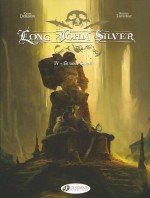
Long John Silver volume 4: Guiana-Capac


By Xavier Dorison & Mathieu Lauffray, translated by Jerome Saincantin (Cinebook) ISBN: 978-1-84918-175-4

British and European comics have always been far more comfortable with period-piece strips than our American cousins and much more imaginative when reinterpreting classical fiction for jaded comicbook audiences. The happy combination of familiar exoticism, past lives and world-changing events blended with drama, action and, most frequently, broad comedy has resulted in a uniquely narrative art form suited to beguiling readers of all ages and tastes.

Our Franco-Belgian associates in particular have made an astonishing success out of repackaging days-gone-by – generally in comedic form – but this particularly enchanting older-readers yarn forgoes broad belly-laughs whilst extending the adventures of literature’s greatest rogue into a particularly engaging realm of globe-girdling thriller with one hell of a twist.

Robert Louis Stevenson’s Treasure Island was originally serialised from 1881-1882 in Young Folks magazine as Treasure Island or, the mutiny of the Hispaniola, as pseudonymous penned by “Captain George North”.

It was collected and published as a novel in May 1883 and has not been out of print since. A landmark of world storytelling, Treasure Island has been dramatised too many times to count and adapted into all forms of art. Most significantly, the book created a metafictional megastar – albeit at best an anti-hero – as immortal as King Arthur, Robin Hood, Sherlock Holmes, Tarzan or Superman. Almost everything the public “knows” about pirates devolves from the book and its unforgettable, show-stealing one-legged antagonist…

Writer Xavier Dorison was born in Paris in 1970 and graduated business school before moving into storytelling. He works as an author, film writer, lecturer and movie script doctor. His comics works include West, Sanctuary and The Third Testament and in 2006 he began the award-winning Long John Silver in conjunction with preferred collaborator Mathieu (Prophet) Lauffray, with this last volume released in Europe in 2013.

Lauffray is also Parisian; born in 1970. He spends his days illustrating, drawing comics, crafting games and concept designing for movies. His art has graced international items as varied as Dark Horse’s Star Wars franchise, games like Alone in the Dark, the album Lyrics Verdun, February 21, 1916 – December 18, 1916, Tarzan and much more…

Their collaborative exploration of the piratical prince’s later years is a foray into far more mature arenas set decades after the affair of the Hispaniola and ranges far and wide: from foggy, oppressive England to the vast, brooding inner recesses of the Amazon and into the darker deeps beyond

What Has Gone Before: in 1785 treasure-hunting Lord Byron Hastings found the lost bastion of Guiana-Capac but needed further funds to exploit this fabulous City of Gold.

In England, his profligate and wanton wife Lady Vivian had been enjoying herself too much and was with child by a lecherous neighbour. With a baby in her belly and a husband three years gone, she was considering having Byron declared dead and undertaking a hasty remarriage…

Suddenly shattering those plans her despised brother-in-law turned up with an aged, garish tribesman named Moxtechica bearing both message and map from her long-lost husband. Prudish and cruel, Royal Naval officer Edward Hastings gleefully told the despicable scheming strumpet his brother had succeeded and demanded she sell everything – including all the treasured family possessions, manor house and lands she had brought to the marriage – to finance his return…

Byron named Edward sole Proxy and the martinet delighted in giving high-born trollop Vivian her marching orders. He even urged her to confine herself to a convent and save them all further shame and disgrace…

The Lady considered numerous retaliatory tactics before settling upon the most bold, dangerous and potentially rewarding. After announcing to the stunned Edward that she would accompany him to the Americas and reunite with her beloved husband, the fallen noblewoman sought out a certain doctor to help care of her problem…

Dr. Livesay was a decent, god-fearing soul who led a quiet, prosperous life ever since his adventures on Flint’s Island. However, it was not just her condition which brought Vivian to the physician’s door, but also persistent tales of a former acquaintance; a formidable, peg-legged rogue with a reputation for making life’s difficulties disappear…

Against his better judgement, Livesay capitulated to Vivian’s urgings and introduced her to retired sea-cook John Silver. Amidst the (alleged) ex-pirate’s inner circle of scary-looking confederates she spun the story of the Spaniard Pizarro’s discovery of a City of Gold and how, centuries later, her husband had reclaimed it.

She wanted to travel there with capable men and make those riches her own, but needed Silver and his associates to infiltrate Edward’s crew, seize the ship he’d chartered and complete the voyage under her command…

Unable to convince Vivian to desist or Silver to reject her offer, Livesay reluctantly joined them in vain hopes that he could keep the debased woman from mortal harm. Nobody was aware Silver concealed a debilitating, soon-to-be-fatal affliction as the rascal orchestrated his own hiring and thereafter packed the Neptune with suitable scoundrels – but only after compelling Lady Vivian to sign a sacrosanct Pirate’s Contract.

With each schemer believing their own plans were proceeding satisfactorily, the ship sailed, but at the last moment Silver suffered a major setback when rival rogue Paris inveigled his way onto the crew…

As the tense voyage progressed, Silver’s men, Paris’ contingent and even Hastings’ innocent hires all slowly succumbed to the sea cook’s glib tongue and bombastic tales of the Red Brotherhood.

Only Hastings’ lieutenants Dantzig and Van Horn had any inkling of the battle of wills below decks, but even that shaky détente shattered when Lady Vivian’s maid Elsie was murdered. Painfully aware that everybody aboard was gripped by gold-fever, Hastings had been ruling with a rod of iron and full naval discipline. Settling upon Jack O’Kief (Paris’ protégé, but beloved by Silver) as responsible for her death, Hastings had the boy brutally flogged.

A prolonged battle of wills followed, pushing the crew to the edge of mutiny. Hastings delayed final landfall off the tantalisingly close South American coastline and strained tempers exploded just as a colossal storm pushed the Neptune inexorably towards its foregone destination. Inevitable mutiny erupted, resulting in appalling bloodshed and a red-handed settling of many scores…

Literally above it all, old shaman Moxtechica rode out both tempests, patiently waiting to see what dawn might bring…

In the ghastly aftermath of the twin maelstroms the becalmed and battered Neptune drifted idly off-shore and survivors reeled aimlessly on her decks until Silver’s ferocious tongue-lashing brought them to life.

Now completely in charge, the old pirate makes Dantzig (the only trained pilot/navigator left) second-in-command, despite the Navy Man swearing he’ll see them all hang one day…

Boldly sailing the ship straight into the cliffs, Silver and Dantzig navigated a barely discernible channel through the stony walls and brought the Neptune into a sedate, beguiling tributary of the Amazon. With time taken to repair and recover, however, the men soon resort to their old ways. Dead are buried, some old scores settled and Jasper, a new rival to Silver’s authority, began to assert himself. Seeing the way things were going, Vivian stepped in, employing wiles and cunning…

Seducing the entire crew with her story of Emperor Viracocha and his City of Gold, she tells of how her husband claimed it and won them over by revealing how they would take it from him…

The wary mariners impatiently and so-slowly sailed up the vast river in an epic voyage through labyrinthine courses and jungle backwaters. Each time they stalled, Moxtechica was there, silently divining their route to Guiana-Capac.

This sparked growing suspicion in Vivian. Her brutal, impatient husband was never given to trusting or inspiring loyalty – even in other Englishmen – and she harboured grave doubts over the shaman’s true motives…

Those same thoughts plagued Silver and his wily shipmate Olaf as the river grew perilously shallow, especially after the voyagers discovered the foundered, rotting hulk of Hastings’ ship The Nimrod in the shallows abutting a vast overgrown, jungle-smothered city…

As Silver readied the depleted contingent to begin searching the ruins, Vivian surprised him by requesting to be put aboard Nimrod. Perhaps her husband’s ship held answers to the many questions vexing her. As she scanned his grimy journal, aboard Neptune nobody really cared that Moxtechica was missing… but they should have…

This epic conclusion commences as Vivian is taken and reunited with her husband. Lord Byron is a much altered man with a new overarching passion…

Meanwhile, at the gates of the city Silver and his small scouting party – which includes Doctor Livesay – are confronted by the gloating shaman before being set upon by gigantic iguanas. Forced to plunge deep into the sinister metropolis to save themselves, their hasty explorations uncover a map crafted by the Conquistadors. It does not depict where gold is stored but rather where the Christian warriors set huge stores of gunpowder in an attempt to destroy the infernal god-forsaken citadel…

Silver is undaunted: he came for treasure and will not be thwarted, but as the Englishmen continue their search they discover a procession of robed natives ascending to a temple and cautiously follow.

Vivian is still reeling at the changes to her husband and the disclosures he fervently shares. He evangelically recounts the story of his own voyage and reveals that he came not for gold but in search of an ancient god.

He was successful…

This was also what the Conquistadores came for, but they failed in their quest to destroy the profane entity and now its long-foretold coming is imminent. Its latest high priest then reveals it is currently feeding one-by-one on the captured crew of the Neptune, but what it really craves and requires is the baby in Vivian’s belly…

The appalled Lady reels, realising at last that the entire venture has been a Byzantine ploy to bring her to the city where the God will use the results of her sins to finally come to Earth…

Equally aghast are Silver and his party: they have stumbled upon a colossal chamber in time to see Olaf beguiled and sacrificed. Helpless to save him they swear terrible vengeance. Vivian is of the same mind as she drives a great sword through the body of her smug, uncomprehending and astounded husband…

Too furious even to plot, Silver goes on a rampage and whilst slaughtering priest-natives discovers the rest of his crew. Leaving his companions to rouse the drugged or ensorcelled shipmates and get them back to the Neptune, Silver storms on. Followed by Livesay the rogue eventually finds an inner chamber rigged with more barrels of gunpowder. It’s also packed floor to ceiling with glittering gold…

As the seamen make a valiant last stand against the enraged and innumerable warriors of Guiana-Capac, Vivian stumbles upon Silver and Livesay moments before Moxtechica find them. Knowing the value of her child to the pagan maniacs she holds her own life hostage until the pirate and doctor can get away…

As the outnumbered buccaneers sell their lives dearly across the city, Vivian is taken to the sacrificial chamber for the consummation of centuries of arcane anticipation, but inveterate villain Silver finds himself acting completely against his nature, aligning with the doctor in a most uncharacteristic manner to foil the hellish natives, frustrate a god and still claim the treasure his entire life has been dedicated to winning…

And as a man-made apocalypse descends upon the infernal city, the slightest whim of fate and steadfast determination of the unlikeliest of heroes saves a small fraction of the doomed company to tell the tale…

Suspenseful, eerily compelling, spectacularly powerful and magnificently realised, this final exploit of Long John Silver sets the seal on a modern masterpiece of adventure fiction worthy of Stevenson’s immortal adventure (and perhaps even the works of Clark Ashton Smith or H.P. Lovecraft). They might even convince a few more folks to actually read the originals.

This is unmissable stuff which could only be improved upon by bundling all four albums into one single treasure-trove volume…
© Dargaud, Paris, 2013 by Dorison & Lauffray. All rights reserved. English translation © 2013 Cinebook Ltd.