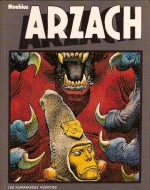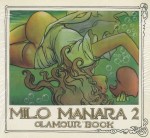
Milo Manara Glamour Books 1 & 2


Edited by Vincenzo Mollica & Antonio Vianovi (Glamour International Productions)
No ISBNs

For some folks the graphic arts collections under review here will be unacceptably violent and/or dirty. If that’s you, please stop here and come back tomorrow when there will something you’ll approve of but which will certainly offend somebody else.

Maurilio Manara was born on September 12th 1945 and grew into an intellectual, whimsical craftsman with a dazzling array of artistic skills ranging from architecture, product design, sumptuous painting and of course an elegant, refined, clear-clean line style with pen and ink. He is best known for his wry and always controversial sexually explicit material – although that’s more an indicator of our comics market and sad straitened society than any artistic obsession.

His training was in the classical arts of painting and architecture before succumbing to the lure of comics. In 1969, he started his career in sexy horror strips with the Fumetti Neri series Genius, worked on the magazine Terror and in 1971 began his adult career  illustrating Francisco Rubino’s Jolanda de Almaviva. In 1975 his first major work, a reworking of the Chinese tales of the Monkey King, was released as Lo Scimmiotto (The Ape).

By the end of the seventies he was working for Franco-Belgian markets as an A-list creator. It was while creating material for Charlie Mensuel, Pilote and L’Écho des savanes that he created his signature series HP and Giuseppe Bergman for A Suivre.

As the 80’s staggered to a close he wrote and drew, in his characteristic blend of bawdy burlesque and saucy slapstick, increasingly smart if eccentrically satirical and baroque tales during a devastatingly penetrating assault on modern media and bastardized popular culture; which were increasingly being used at that time to cloak capitalist intrusions and commercial seductions in the arts.

All of these periods are strongly represented in the books under review here. In 1984 and 1985 the Italian outfit which produced Popular Arts magazine Glamour Illustrated released a brace of fabulous art-books collecting and cataloguing the extant works of this maestro of mature modern sequential narrative (covering 1967 – 1985) which had limited distribution in Britain – despite the best efforts of specialist importer Titan Distributors – and these tomes are long past due for revision and reissuing…

These glorious compilations, 144 and 84 pages respectively (many of them full-colour high-gloss inserts), simultaneously transcribed in Italian, French and English, track the artistic development and display the incredible ability and versatility of an incomparable graphic stylist, with Milo Manara Glamour Book divided into early and ‘Unpublished Works’, ‘Black and White’ – printed pieces and extracts ranging from comics pages and panels, pin-ups, ads, illustrations, posters and covers – and concluding with erotic works dubbed ‘Nubinlove’.

The extensive central ‘Colour’ section reveals, in stunning glossy hues, his canon of covers for comics, magazines, books and records; posters, cartoons, animation model sheets and storyboards and paintings, plus many pages and extracts from his strips produced in Italy, France and America.

Milo Manara 2 Glamour Book was rushed out a year later due to immense public demand and, although finding a few delicious historical nuggets omitted from volume 1, concentrated on recently completed material, unseen sketches and draught drawings in its ‘Unpublished Works’ and ‘Black and White’ sections and included a ton of storyboards and design illustrations from the movie adaptation of his infamous sex-comedy ‘Le déclic’ both in monochrome and full colour, in a section which also displayed book, portfolio and magazine covers, calendar illustrations and advertising spreads.

Both collections also contain impressively comprehensive checklists which detail in full Manara’s vast publication record to date in their ‘Chronology’ and ‘Bibliography’ sections.

As you would expect there is a breathtaking amount of beautifully rendered flesh on display in an unrelenting series of lascivious situations but there is also a welcome glimpse into the scrupulous working practice of an artist equally renowned for his historical research and devotion to historical accuracy and authenticity… and his wickedly sly, dry sense of humour.

Milo Manara is a world class storyteller that English speakers have too long been deprived of and these beautiful books are desperately in need of updating and re-release, if only to supplement Dark Horse’s sterling efforts to popularise the Maestro through their Manara Library project…
No copyright notice so let’s assume © 1967-1986 Milo Manara. All Rights Reserved. If anybody knows better please let me know and we’ll amend the entry.

Valerian and Laureline book 3: the Land Without Stars


By Méziéres & Christin, with colours by E. Tranlé and translated by Jerome Saincantin (Cinebook)
ISBN: 978-1-84918-087-0   (Dargaud edition) 2-205-06573-4

Valérian is the most influential science fiction comics series ever drawn – and yes, that includes even Buck Rogers, Flash Gordon, Dan Dare and Judge Dredd.

Although to a large extent those venerable strips defined and later re-defined the medium itself, anybody who has seen a Star Wars movie has been exposed to doses of Jean-Claude Méziéres & Pierre Christin’s brilliant imaginings which the filmic phenomenon has shamelessly plundered for decades: everything from the character and look of alien races and cultures to the design of the Millennium Falcon and even Leia‘s Slave Girl outfit …

Simply put, more carbon-based lifeforms have experienced and marvelled at the uniquely innovative, grungy, lived-in tech realism and light-hearted swashbuckling rollercoaster romps of Méziéres & Christin than any other cartoon spacer.

The groundbreaking series followed a Franco-Belgian mini-boom in fantasy fiction triggered by Jean-Claude Forest’s 1962 creation Barbarella. Valérian: Spatio-Temporal Agent launched in the November 9th, 1967 edition of Pilote (#420) and was an instant hit. In combination with Greg & Eddy Paape’s Luc Orient and Philippe Druillet’s Lone Sloane, Valérian‘s hot public reception led to the creation of dedicated adult graphic sci-fi magazine Métal Hurlant in 1977.

Valérian and Laureline (as the series eventually became) is a light-hearted, wildly imaginative time-travelling, space-warping fantasy teeming with wry, satirical, humanist action and political commentary, starring – in the early days at least – an affable, capable, unimaginative and by-the-book cop tasked with protecting the official universal chronology by counteracting paradoxes caused by casual time-travellers.

When Valérian travelled to 11th century France in the initial tale ‘Les Mauvais Rêves (‘Bad Dreams’ and still not translated to English yet) he was rescued from doom by a fiery, capable young woman named Laureline whom he brought back to the 28th century super-citadel and administrative capital of the Terran Empire, Galaxity. The indomitable lass subsequently trained as a Spatio-Temporal operative and began accompanying him on his missions.

Every subsequent Valérian adventure until the 13th was initially serialised weekly in Pilote until the conclusion of ‘The Rage of Hypsis’ after which the mind-boggling yarns were only published as all-new complete graphic novels, until the whole spectacular saga resolved and ended in 2010.

The Land Without Stars originally ran in Pilote #570-592 (October 8th 1970 to March 11th 1971) and followed the Spatio-Temporal agents as they went about a tedious pro forma inspection of a cluster of new Terran colonies in the Ukbar star-sytem at the very edge of inter-galactic space…

However the mission soon goes awry when a wandering world is detected on a collision course with the system and Valerian, still suffering the effects of too much local alcoholic “diplomatic protocol” decides that they should investigate at close quarters…

Despite being pickled, the lead agent lands with his long-suffering assistant on the runaway planet and discovers that the celestial maverick is hollow. Moreover, a thriving ancient culture or three dwell there, utterly unaware that they are not the only beings in all of creation…

Typically however of sentient beings everywhere, two of the civilisations are locked in a millennia old war, armed and supplied by the third…

After an accident wrecks their exploratory scout ship Valerian and Laureline deduce that the constant warfare originally caused the hollow world to tumble unchecked through space and will eventually cause its complete destruction, so in short order the professional meddlers split up to infiltrate the warring nations of Malka and Valsennar.

However they are in for a surprise since both city-states are divided on gender grounds, with Malka home to prodigious warrior women who subjugate their effete and feeble males whilst the aristocratically foppish but deadly dandies of Valsennar delight in beautiful, proficient and lethally lovely ladies – but only as compliant servants…

The highly trained Galaxity operatives quickly rise in the ranks of each court – from slaves and toys to perfectly placed, trusted servants – and soon have ample opportunity to change the nature of the doomed civilisations within the collision-course world, after which the heroes even concoct a canny and cunning method of spectacularly ceasing the planet’s random perambulations; giving it a stable orbit and new lease on life…

All in a days work, naturally, although it did take a few months to sort out: still what’s time to a couple of brilliant Spatio-Temporal agents?

Happily, this mind-boggling forty-year old social and sexual satire is packed with astounding action, imaginative imagery and fantastic creatures to provide zest to a plot that has since become rather overused – sure proof of the quality of this delightful, so-often imitated original yarn – but as always the space-opera is fun-filled, witty, visually breathtaking and stunningly ingenious.  Drenched in wickedly wide-eyed wonderment, science fiction sagas have never been better than this.

Between 1981-1985 Dargaud-Canada and Dargaud-USA published a quartet of these albums in English (with a limited British imprint from Hodder-Dargaud in the UK) under the umbrella title Valerian: Spatiotemporal Agent and this tale, then called World Without Stars, was the second release, translated then by L. Mitchell.

Although this modern Cinebook release boasts improved print and colour values and a far better and more fluid translation, interested completists might also want to track down the 20th century releases for the added text features ‘Valerian: Graphic Renaissance’ by acclaimed SF author William Rotsler, the appreciation ‘In Science Fiction’s Net’ by French genre writer/illustrator Jean-Pierre Andrevon and the extensive biographies and work check-lists of creators Pierre Christin & Claude Méziéres…

© Dargaud Paris, 1972 Christin, Méziéres & Tran-Lệ. All rights reserved. English translation © 2012 Cinebook Ltd.

Asterix and the Soothsayer, Asterix in Corsica & Asterix and Caesar’s Gift


By Goscinny & Uderzo, translated by Anthea Bell & Derek Hockridge (Orion Books)
ISBNs: 978-075286-628-4, 978-0-75286-630-7 and 978-0-75286-632-1

One of the most popular comics features on Earth, the collected chronicles of Asterix the Gaul have been translated into more than 100 languages since his debut in 1959, with animated and live-action movies, TV series, assorted games, toys and even a theme park outside Paris (Parc Astérix, unsurprisingly…) all stemming from his glorious exploits.

More than 325 million copies of 34 Asterix books have sold worldwide, making his joint creators France’s bestselling international authors.

The diminutive, doughty, potion-powered paragon of Gallic Pride was created by two of the industry’s greatest masters, René Goscinny & Albert Uderzo. Although their inspirational collaborations ended in 1977 with the death of the prolific scripter, the creative wonderment continued until relatively recently from Uderzo and assistants – albeit at a slightly reduced rate.

The wonderment works on multiple levels: ostensibly, younger readers revel in the action-packed, lavishly illustrated comedic romps where sneaky, bullying baddies get their just deserts, whilst we more worldly readers enthuse over the dry, pun-filled, sly satire, especially as enhanced for English speakers by the brilliantly light touch of translators Anthea Bell & Derek Hockridge, who played no small part in making the indomitable Gaul and his gallant companions so palatable to the Anglo-Saxon world. (Moi, I still rejoice in a perfectly produced “Paf!” to the snoot as much as any painfully potent procession of puns or sardonic satirical sideswipe…)

The stories were set on Uderzo’s beloved Brittany coast, where a small village of warriors and their families resisted every effort of the Roman Empire to complete the conquest of Gaul, or alternately, anywhere in the Ancient World, circa 50BC, as the Gallic Gentlemen visited the fantastic lands and civilisations of the era…

When the heroes were playing at home, the Romans, unable to defeat this last bastion of Gallic insouciance, resorted to a policy of containment. Thus the little seaside hamlet is permanently hemmed in by the heavily fortified garrisons of Totorum, Aquarium, Laudanum and Compendium.

The Gauls don’t care: they daily defy the world’s greatest military machine simply by going about their everyday affairs, protected by the magic potion of resident druid Getafix and the shrewd wits of the rather diminutive dynamo and his simplistic, supercharged best friend…

Firmly established as a global brand and premium French export by the mid-1960s, Asterix the Gaul continued to grow in quality as Goscinny & Uderzo toiled ever onward, crafting further fabulous sagas; building a stunning legacy of graphic excellence and storytelling gold. Moreover, following the civil unrest and nigh-revolution in French society following the Paris riots of 1968, the tales began to increasingly show signs of trenchant satire and more directed social commentary…

Asterix and the Soothsayer was the 19th serialised epic, originally running in Pilote #652-673 throughout 1972, first translated into an English album in 1975, and begins ominously whilst the village’s venerable mystic protector Getafix is away at his annual Druiding conference. During a torrential storm nefarious Soothsayer named Prolix turns up seeking shelter. His dark predictions instantly spread disharmony amongst the hospitable, hot-headed, painfully superstitious and credulous Gaulish stalwarts… except for level headed and canny little Asterix.

As Prolix leaves the Chief’s wife Impedimenta sneaks after him, keen on a personal prediction and the crafty charlatan soon discovers he’s on to a good thing and profitably cushy number…

Before long the entire village is under the soothsayer’s grimy thumb, but when he vanishes the ladies of the village accuse Asterix of driving him off.

In actuality the unsavoury sage has been arrested by the Romans who have standing orders to deal harshly with all non-Roman prognosticators and troublemakers. The wily Prolix barters for his life with Centurion Arteriosclerosus, who sees a way to end his Indomitable Gaul problems by using the obviously fraudulent fortune-teller as a wedge to drive out the obstreperous resistors…

Prolix returns to the village and utters a doom-laden pronouncement: the place has been cursed by the Gods and a pestilential stench will precede plague. Inevitable death will be their fate if they remain…

Panicked, the gullible Gauls head for the beach and take refuge on an off-shore island – all that is, except for Asterix, Obelix and chivalrous canine companion Dogmatix…

With the Romans at last in possession of the village – and all Gaul finally conquered – the bold last rebels make their plans until Getafix returns. On his arrival the three men and a dog embark on an elaborate scheme to take back their home and teach their foolish fellows a much needed lesson.

Concocting a stunningly malodorous vapour which drives the occupiers from the village, the druid convinces the Romans that Prolix is a real soothsayer and ambitious Arteriosclerosus sees a chance to become the next Caesar. Even baffled conman Prolix begins to believe his predictions are real…

After dressing down the refugee Gauls, Getafix leads them back to their beloved homes where the incensed and wiser villagers top up on magic potion and rush off to teach the invaders – and Prolix – a much needed lesson. On this occasion, Impedimenta and the village women accompany their men, determined to expiate their embarrassing gullibility with a little cathartic violence of their own…

This delightfully arch and acerbic attack on gullibility and superstition is a splendid chance to see the minor characters play to their strengths and weaknesses with Asterix and Obelix almost relegated to walk-on parts…

First translated two years earlier in England but chronologically following on from The Soothsayer in the original French serialisations Asterix in Corsica (Pilote #687-708, in 1973) was the 20th adventure and the best-selling French language album of the series.

Another globe-trotting yarn, it begins with the Romans of the four occupying garrisons “deploying for manoeuvres” to avoid having to deal with Gauls’ painfully exuberant celebration of the anniversary of the Battle of Gergovia. Unfortunately for Centurion Hippotamus and his men they are delayed by the arrival of a party from Praetor Perfidius, Governor of Corsica, escorting a dangerous prisoner into exile. They are still in Totorum when the high-spirited villagers (and many guest-star friends from previous adventures) arrive keen for a punch-up and a little annoyed that all the other Roman camps are deserted…

When the dust settles and the groans of pain subside, Asterix discovers the prisoner Boneywasawarriorwayayix and invites him back to the village for a slap-up feed. Over boar and beer the Gauls hear how Perfidius had the popular Corsican leader exiled to prevent him revealing how the Praetor has been over-taxing the people and embezzling the gold for himself instead of sending to Caesar in Rome. Corsica is officially the most troublesome spot in the Empire and the exile is determined to return and expose the hated Governor, so the proud and haughty Boneywasawarriorwayayix is delighted when Asterix and Obelix – with the faithful Dogmatix – determine to help him sneak back to his fiercely over-fortified and contained island (most volumes of this album have a map of Corsica instead of the traditional Gaulish village, and the tiny nation contains four towns and forty-six Roman camps)…

Hilariously obtaining passage on the pirate ship of Redbeard the voyagers soon find themselves on the island – but not unnoticed…

Soon the dissolute and lazy soldiery are hunting the heroes as they make their way inland to the exile’s home village to rally the populace whilst in the city of Aleria Perfidius suspects the jig is up and prepares to flee with his ill-gotten gains…

Trying to rally the natives Boneywasawarriorwayayix comes up against the age-old dilemma: most Corsicans are involved in centuries long vendettas and would much rather fight each other – at least when they’re not taking a siesta – than unite to attack the invaders. However at last, a determined band of warriors marches on Aleria but almost too late. Perfidius has been secretly loading his loot onto a ship but when his soldiers discover it they realise their leader is planning to abandon then to the fierce and furious Corsicans – at least if diplomatic Asterix can manage to stop the natives killing each other first…

Asterix travel epics are always packed with captivating historical titbits, soupcons of healthy cynicism, singularly surreal situations and amazingly addictive but generally consequence-free action, always illustrated in a magically enticing manner.

Stuffed with sly pokes and good-natured trans-national teasing of perceived nationalist characteristics and celebrating the terrifying power of Corsican cheeses and liberally served up with raucous hi-jinks and fast-paced action, this is another magical titbit of all-ages entertainment.

In 1974 Asterix and Caesar’s Gift was the first tale to be published as a complete album before being serialised, with a British translation appearing in 1977. It begins in Rome where two 20-year veteran legionaries drunkenly celebrate being honourably discharged. Tremensdelirious and Egganlettus eagerly look forward to being given their service reward: a parcel of land each.

Unfortunately Tremensdelirious is overheard disparaging Caesar but the sardonically cruel leader does not punish the old soldier or even withhold his pension. In fact he gives Tremensdelirious a lovely portion of the Gaulish coast in Armorica: all he has to do is shift a few recalcitrant Gauls from their village on his new small holding…

A drunk but not a fool the old soldier knows his fate is sealed and soon trades his dispensation to Lutetian inn-keeper Orthopaedix to settle his bar-bill…

The first that the Indomitable Gauls know of this is when Orthopaedix, his wife Angina and daughter Influenza roll up in their cart and try to take possession. After some hilarity the villagers go back about their business and the inn-keeper is left to suffer the fury of his wife at the uprooting of the family to a barbaric hovel where nobody acknowledges their claim.

No stranger to such a tongue-lashing, Chief Vitalstatistix takes pity on Orthopaedix and offers to let them stay and open an inn in the hamlet, but the standoffish villagers are angered by Angina’s superior airs and a riot breaks out on opening night…

The world-weary publican is ready to quit but now the humiliated Angina is in a status duel with Impedimenta and, determined to stay, makes Orthopaedix challenge Vitalstatistix for the post of village Chief. As the campaign to win the support of the always argumentative villagers intensifies, all manner of shoddy tactics, dubious lobbying and outright bribery takes place with each party frantically trying to curry political favour from the fickle but extremely astute potential voters who know the value of their own support…

Simple, gentle oafish Obelix has fallen under the spell of the lovely Influenza, who leads him on cruelly to help out her mother’s naked ambition, leading to fight with his best friend. Only Asterix seems aware that the discord could well be the death of the village and lead to Caesar’s ultimate triumph and soon the waters are further muddied when elderly Lothario Geriatrix declares himself a third party and splits the potential vote even further.

The political crisis reaches boiling point when Tremensdelirious turns up and demands his land-grant back: after all it’s illegal to sell them to Gauls, and Orthopaedix has no say in the matter…

When the ex-legionary turns violent Asterix steps in to save the day and the old sot is driven off at sword-point. He doesn’t go far – only to the garrison of Laudanum where old comrade Egganlettus has re-enlisted – and together they blackmail Centurion Tonsillitus into attacking the Gauls to uphold Roman law and get back that “official” pension land which is every soldier’s right…

That kind of military intervention usually ends disastrously, but this time the village is hopelessly divided by political intrigue and backstabbing and even Asterix cannot unite them against their real and common foe. It seems that the Gauls must lose everything until Orthopaedix makes a supreme sacrifice to save the day…

Brittle, barbed and devilishly sharp, this outrageous political thriller and satire on modern electioneering is as pertinent and punchy as it ever was, proving once again that these Gallic graphic masterpieces are perfect comics which everyone should read over and over again.
© 1972-1974 Goscinny/Uderzo. Revised English translation © 2004 Hachette. All rights reserved.

Zora and the Hibernauts


By Fernando Fernández (Catalan Communications)
ISBN: 978-0-87416-001-7

Multi-disciplinary Spanish artist Fernando Fernández began working to help support his family at age 13 whilst still at High School. He left in 1956 and immediately began working for British and French comics publishers. In 1958 his family relocated to Argentina and whilst there he added jobs for El Gorrión, Tótem and Puño Fuerte to his ongoing European and British assignments for Valentina, Roxy and Marilyn.

In 1959 he returned to Spain and began a long association with Fleetway Publications in London, producing mostly war and girls’ romance stories.

During the mid-1960’s he began to experiment with painting and began selling book covers and illustrations to a number of clients, before again taking up comics work in 1970, creating a variety of strips (many of which found their way into US horror magazine Vampirella), the successful comedy feature ‘Mosca’ for Diario de Barcelona and educational strips for the pubshing house Afha.

Becoming increasingly experimental as the decade passed, Fernández produced ‘Cuba, 1898’ and ‘Círculos’ before in 1980 beginning his science fiction spectacular ‘Zora y los Hibernautas’ for the Spanish iteration of fantasy magazine 1984 which was eventually seen in English in Heavy Metal magazine. His later graphic spectacles include ‘Dracula’ for the Spanish iteration of Creepy, mediaeval fantasy thriller ‘La Leyenda de las Cuatro Sombras’ (working with Carlos Trillo), ‘Argón, el Salvaje’ and a number of adaptations of Isaac Asimov tales in ‘Firmado por: Isaac Asimov’ and ‘Lucky Starr – Los Océanos de Venus’.

His last comics work was ‘Zodíaco’ begun in 1989, but his increasing heart problems soon curtailed the series and he returned to painting and illustration. He passed away in August 2010, aged 70.

The stunning adult epic Zora and the Hibernauts exploits classic science fiction themes of sexual politics to explore the perceived role and character of men and women and opens, after a truly breathtaking biography and gallery section, with the first staggeringly lush chapter as, far into the future, warrior-women from the artificial moon Honeycomb (home to the censorious, draconian colony of the Sisterhood) land on the deadly and biologically inimical planet Earth searching for lost technology and other objects of interest or value.

The crew is led by the competent Zora, a space veteran who has won the love and devotion of her crew through years of sterling service. The ancient birthplace of humanity has long been quarantined: a pestilential hell-hole where radiation and disease have created unspeakable horrors, but the explorers have no idea what shocks await their first forays into the unknown landscape they call Terra-Lune…

The search goes badly and crew-women are lost to plants, beasts and things which qualify as both and neither, but Zora is intent on finding some specific unknown treasure. Meanwhile, back on Honeycomb, scientist Nylea breaks the Queen’s taboo and searches the ancient archives for proscribed information on the extinct creature once called “man”…

On Terra-Lune the invaders have broached a long-hidden chamber and found six hibernation pods from before the Earth died…

They contain frozen men and Zora, defying orders and centuries of custom, decants and revives the perfectly preserved creatures rather than destroy them, setting herself on a path that will lead to civil war and the restoration of the natural order…

She is strangely drawn to one of the men: Astronaut Commander Amon, who holds crucial knowledge of the fall of humanity and whose presence stirs the quizzical Zora in ways she doesn’t understand…

Taking her prizes back to Honeycomb where they are interviewed by Supreme Sister Rasam, Zora is ordered to keep the hibernauts in personal custody, but isn’t surprised when Nylea informs her that the queen is planning to destroy her and the men who threaten the hegemony and beliefs of the all-female, in vitro parthenogenetic culture.

Following a brutal battle, Zora, Nylea and the males take refuge on toxic Terra-Lune where they encounter another man: an incredible immortal named Rob who has survived on the poisoned planet for uncounted ages and aids the fugitives when the Sisterhood ships come hunting them…

Escaping the stalkers, the refugee band hides deep within the horror-world and inevitably Zora and Amon perpetrate an act of love not seen on Earth for millennia, after which Rob reveals the location of a fully-functioning ancient starship and offers them a means of fighting back against the tyranny of Rasam.

But whilst Rob relates the secret of his incredible longevity, on Honeycomb long-suppressed antagonisms begin to re-emerge.

Terra-Lune still holds many threats and horrors however, and whilst the outcasts battle for survival against beasts and monstrous sub-men on the debased planet, a deadly civil war erupts on the artificial satellite led by ambitious hardliner and second-in-command Sharta. By the time Zora and her followers are ready to attack Rasam, Honeycomb is in the midst of civil war…

Just when events are their most fraught, the universal implications of the struggle are revealed when a god-like timeless entity appears, disclosing Zora’s cosmic importance and that her womb now carries the first naturally conceived and developing human baby in thousand of years. Zora has been chosen by the higher powers of the universe to restore and perpetuate the human species…

The grand concepts come thick and fast in Zora and the Hibernauts and although the narrative is a little muddled in consequence, this breathtaking yarn delivers fast paced, action-packed, staggeringly beautiful and astoundingly exciting adult science fiction thrills in the tradition pulp manner. Being Spanish, however there’s a slight tinge of macho, if not subverted sexism, on display and of course, there is extensive female nudity throughout – so much so that by half-way through you won’t even notice…

If naked bald women are liable to offend you, give this as miss, but for all the normal red- blooded fans out there this is a superb tale by a master craftsman you’ll certainly want to track down and savour.

© 1981 Fernando Fernández. English edition © 1984 Catalan Communications. All rights reserved.

Spirou & Fantasio volume 3: Running Scared


By Tome & Janry, translated by Jerome Saincantin (Cinebook)
ISBN: 978-1-84918-116-7

Spirou (whose name translates as both “squirrel” and “mischievous” in the Walloon language) was created by French cartoonist François Robert Velter AKA Rob-Vel for Belgian publisher Éditions Dupuis in response to the phenomenal success of Hergé’s Tintin for rival outfit Casterman.

An eponymous magazine was launched on April 21st 1938 with the other red-headed lad as the lead in an anthology weekly comic which bears his name to this day.

He began as a plucky Bellboy/lift operator employed by the Moustique Hotel (a reference to publisher’s premier periodical Le Moustique) whose improbable adventures with his pet squirrel Spip eventually evolved into high-flying surreal comedy dramas.

Spirou and his pals have spearheaded the magazine for most of its life, where a phalanx of truly impressive creators have carried on Velter’s work, beginning with his wife Blanche “Davine” Dumoulin who took over the strip when her husband enlisted in 1939.

She was aided by Belgian artist Luc Lafnet until 1943 when Dupuis purchased all rights to the feature, after which comic-strip prodigy Joseph Gillain (“Jijé”) took over, adding current co-star Fantasio to the mix. Along the way Spirou and Fantasio became globe-trotting journalists, continuing their weekly exploits in unbroken four-colour glory.

In 1946 Jijé‘s  assistant André Franquin assumed the reins, adding a spectacular popular magic animal dubbed Marsupilami to the cast (first seen in Spirou et les héritiers in 1952 and now a spin-off star of screen, plush toy store, console games and albums all his own), crafting increasingly fantastic tales until he resigned in 1969.

He was succeeded by Jean-Claude Fournier who updated the feature over the course of nine stirring adventures that tapped into the rebellious, relevant zeitgeist of the times with tales of environmental concern, nuclear energy, drug cartels and repressive regimes.

By the 1980s the series seemed outdated and without direction: three different creative teams alternated on the serial, until it was at last revitalised by the authors of the adventure under review here: Philippe Vandevelde writing as Tome and artist Jean-Richard Geurts best known as Janry.

These last adapted and referenced the beloved Franquin era, consequently reviving the feature’s fortunes and resulting in fourteen wonderful albums between 1984 and 1998. This one from 1988, originally entitled ‘La frousse aux trousses’ or ‘Fear on the Trail’, was their eighth and the 40th collection of the evergreen adventurers.

Harking back to the Fournier years, it comprises the first of an excellent extended two-part thriller which will conclude in Cinebook’s forthcoming ‘Valley of the Exiles’ (originally released as ‘La vallée des bannis’ or ‘Valley of the Banished’ in 1989).

Since Tome & Janry’s departure both Lewis Trondheim and the team of Jean-Davide Morvan & Jose-Luis Munuera have brought the official album count to fifty (there also are a bunch of specials, spin-offs and one-shots, official and otherwise)…

Running Scared opens with a frantic chase scene as Spirou races across the city in splendid breakneck tribute to the silent movies chases of Harold Lloyd and Buster Keaton. He’s late for a conference where he will recount his many harrowing career-related escapes and show films of his numerous close shaves…

Barely making it, he’s disappointed by the reaction of the audience: those that don’t faint dead away from fear flee the theatre in horror…

It’s a huge disappointment: the daring reporter was hoping to use the profits from his lecture tour to fund his upcoming expedition to discover the fate of two explorers who vanished in 1938 whilst attempting to climb a mountain and discover the legendary “Valley of Exiles” in the mysterious Himalayan nation of Yurmaheesun-shan

Since 1950 the tiny country has been the subject of numerous invasions by rival super-powers and is a hotbed of rebellion, insurgency and civil war, but ever-undaunted Spirou and Fantasio were utterly determined to solve the ancient mystery.

Their plans are only temporarily derailed however. One of the fainters at the conference was the timid but esteemed Dr. Placebo: renowned authority on the medical condition Spasmodia Maligna and a man convinced that the only cure for the condition – prolonged, sustained and life-threatening synchronous diaphragmatic flutters (or hiccups to you and me) – is to be scared out of one’s wits.

Having seen Spirou in action Placebo wants the reporters to take his most chronic patients with them on this assignment and offers to fund the entire expedition to the war-torn jell-hole…

Over Fantasio’s cynical but sensible objection’s a deal is struck and soon the lads, Spip and five disparate, desperate hiccupping victims are sneaking across the Nepalese border where the diligent Captain Yi is tasked with keeping all foreigners – and especially western journalists – out of the country as it undergoes its pacification and re-education…

However, thanks to native translator Gorpah (a wily veteran guide who once proved invaluable to another red-headed reporter, his little white dog and a foul mouthed-sea captain) the daring band are soon deep in-country, but the invaders are quickly hot on the trail in tanks, armoured cars and attack helicopters, providing plenty of opportunities for the annoyingly obnoxious singultus flutterers to be terrified – but with little evidence of a cure…

And then just as they find their first real clue as to the location of the lost Valley of Exiles the explorers are captured by native partisans and rebels…

Even this doesn’t scare off any hiccups, nor does the daring later escape attempt masterminded by Spirou and Fantasio. As the liberated captives all pile into a lorry a huge storm breaks and the rebels give chase.

When one of their pursuer’s vehicles plunges over a cliff, the valiant fugitives frantically form a human chain to rescue the driver and in the horrendous conditions Spirou is washed away and lost in the raging torrent.

…And that’s when all the hiccupping finally stopped…

To Be Continued…

Starting in superb slapstick comedy mode and with gallons of gags throughout, Running Scared nevertheless quickly evolves into a dark-edged and cunningly shaded satirical critique of then current geo-political scandals like the Soviet invasion of Afghanistan and systematic eradication of Tibetan culture by the Chinese – which both of course still resonate in today’s world – as it unfolds an epic and utterly compelling rollercoaster of fun and thrills.

This kind of lightly-barbed, real-world adventure comedy-thriller is a sheer joy in an arena far too full of adults-only carnage, testosterone-fuelled breast-beating, teen-romance monsters or sickly sweet fantasy. Easily accessible to readers of all ages and drawn with all the beguiling style and seductive but wholesome élan which makes Asterix, Lucky Luke, The Bluecoats and Iznogoud so compelling, this is another cracking read from a long line of superb exploits, certain to be as much a household name as those series – and even that other kid with the white dog…

Original edition © Dupuis, 1988 by Tome & Janry. All rights reserved. English translation 2012 © Cinebook Ltd.

Joost Swarte’s Modern Art


By Joost Swarte, translated by Martin Beumer (Real Free Press Int. Foundation)
No ISBN:

Joost Swarte is national treasure of the Netherlands: a Dutch New Master whose too-rare forays into comic art have always produced challenging and stunning work which manage to be simultaneously forward looking and aggressively retro and nostalgic.

He has won awards and acclaim as a writer, artist, illustrator, printmaker, graphic designer, stained glass and mural creator and furniture/architectural designer.

Born on Christmas Eve 1947, Swarte grew up in Heemstede in North Holland Province, before studying Industrial Design at the Academy for Design in Eindhoven. He gravitated to the comics field in the late 1960s, becoming adept in the classical ligne laire style of illustration favoured by Belgian star artists such as Hergé, “Bob” (Robert Frans Marie) De Moor and E.P. (Edgard Félix Pierre) Jacobs, producing children’s strips for magazines such as Tante Leny Presenteert and Jippo whilst also working as a newspaper illustrator.

In 1971 he began his own magazine Modern Papier and over the years created many evocative, stylish and memorable series such as Jopo de Pojo, Katoen en Pinbal, Anton Makassar, Dr. Ben Cine, ‘De Blauwe Berbers’, ‘Caesar Soda’, ‘Toon en Toos Brodeloos’ and Niet Zo, Maar ZoPassi, Messa.

With his works translated into many foreign languages, including storming appearances in Art Spiegelman’s seminal Raw magazine, Swarte formed his own publishing house Oog & Blik in 1985 (a distinguished and prominent source of many superb books and albums) and in 1992 was the co-founder of the Haarlem Stripdagen, Holland’s International Comics Convention. In 2004 he was knighted by Queen Beatrix of the Netherlands.

He first gained international prominence in 1980 when he was a guest at the prestigious Salon International de la Bande Dessinée in Angoulême, France and from that year comes this superb celebratory collection of translated past works in a full-colour, board-backed signed and numbered edition which is as much objet d’art artefact as book.

From 1973 and scripted by “Willem”, ‘Enslaved by the Needle’ is a dark, extremely adult and fantastic Art Deco tribute to American gangster movies set in the metafictional 1930s wherein dissolute Parisian thug Fred Fallo becomes accidentally involved with the deadly Mr. Skunk – a Yankee criminal so crazy-dangerous that all the other mobs pay him to stay out of America.

Soon however, the lethal gang-lord has manipulated Fallo into sneaking him back into the USA, where the deranged mastermind begins a campaign of terror by flooding the streets with a horrifying new narcotic. As the city reels, Skunk then turns on his own confederates…

Unique style icon and bored hard-luck kid Jopo de Pojo stars in ‘Imago Moderna’ (1974, and with a clever cameo from Anton Makassar); pestered by ennui, a street missionary, subversive organisations and wicked women before being sucked into a madly paranoid midnight world whilst ‘A Second Babel’ from 1976 focuses on Nazis in Paris and a fantastic plan to build a colossal tower under the city…

Jopo de Pojo returned in ‘Une Chance sur cent Mille’ (A Chance in a Million from 1975), falling ignominiously and ineffectively into a bizarre kidnap plot whilst ‘Goodbye’ from 1977 finds inept detective Tony Priggles in well over his head investigating a string of seriously ludicrous suicides after which this beguiling tome ends with unconventional scholar Anton Makassar similarly all at sea as he tries to make his mark in the uncompromising arena of ‘Modern Art’ (1978)…

These captivatingly dark, deceptively witty and staggeringly beautiful yarns are magnificent examples of a master storyteller at his playful best and even if this particular volume is hard to find – but still well worth every effort – Joost Swarte’s work is something every mature art-lover should see.

Lucky for you then that a few other collections have been released in the last few years…
© 1973, 1974, 1975, 1976, 1978, 1980 Joost Swarte. This edition © 1980 Real Free Press Foundation. All rights reserved.

Spirou & Fantasio volume 2: In New York


By Tome & Janry, translated by Jerome Saincantin (Cinebook)
ISBN: 978-1-84918-054-2

For most English-speaking comic fans and collectors Spirou is probably Europe’s biggest secret. The character is a rough contemporary – and calculated commercial response – to Hergé’s iconic Tintin, whilst the comic he has headlined for decades is only beaten in sheer longevity and manic creativity by our own Beano and Dandy.

Conceived at Belgian Printing House by Jean Dupuis in 1936, a magazine targeting a juvenile audience debuted on April 21st 1938; neatly bracketed by DC Thomson’s The Dandy which launched on 4th December 1937 and The Beano on July 30th 1938. It was edited by Charles Dupuis (a mere tadpole, only 19 years old, himself) and took its name from the lead feature, which recounted the improbable adventures of a plucky Bellboy/lift operator employed by the Moustique Hotel (a reference to the publisher’s premier periodical Le Moustique).

Joined on June 8th 1939 by a pet squirrel, Spip (the longest running character in the strip after Spirou himself) the series was conceived by French artist Robert Velter who signed himself Rob-Vel.

A Dutch language edition Robbedoes’ debuted a few weeks later and ran more-or-less in tandem with the French parent comic until it was cancelled in 2005.

The bulk of the comic was taken up with cheap American imports – Fred Harman’s Red Ryder, William Ritt & Clarence Gray’s ‘Brick Bradford’ and Siegel & Shuster’s landmark ‘Superman’ – although home-grown product crept in too. Most prominent were ‘Tif et Tondu’ by Fernand Dineur (which ran until the1990s) and ‘L’Epervier Blue’ by Sirius (Max Mayeu) and they were soon joined by comic-strip wunderkind Joseph Gillain – “Jijé”.

Legendarily, during World War II Jijé drew the entire comic by himself, including home grown versions of banned US imports and also assumed production of the Spirou strip where he created the current co-star Fantasio).

Except for a brief period when the Nazis closed the comic down (September 1943 to October 1944 whilst the Allies liberated Belgium) Spirou and its boyish star – now a globe-trotting journalist – have continued their weekly exploits in unbroken four-colour glory.

Among the other myriad major features that began within those hallowed pages are ‘Jean Valhardi’ (by Jean Doisy & Jije), ‘Blondin et Cirage’ (Victor Hubinon), Buck Danny, ‘Jerry Spring’, ‘Les Schtroumpfs’, ‘Gaston Lagaffe’ and a certain laconic cowboy named Lucky Luke.

Spirou the character (whose name translates as both “squirrel” and “mischievous”) has starred in the magazine for most of its life, evolving under a series of creators into an urbane yet raucous fantasy/adventure hero with the accent heavily on light humour. With comrade and rival Fantasio and crackpot inventor the Count of Champignac, Spirou travels to exotic places, uncovering crimes, revealing the fantastic and garnering a coterie of exotic arch-enemies.

During the War when Velter went off to fight, his wife Blanche Dumoulin took over the strip using the name Davine, assisted by Luc Lafnet. Dupuis assumed control of and rights to the strip in 1943, assigning it to Jijé who handed it to his assistant André Franquin in 1946. It was the start of a golden age.

Among Franquin’s innovations were the villains Zorglub and Zantafio, Champignac and one of the first strong female characters in European comics, rival journalist Seccotine (renamed Cellophine in this current English translation), but his greatest creation – one he retained on his departure in 1969 – was the incredible magic animal Marsupilami (first seen in Spirou et les héritiers in 1952), now a star of screen, plush toy store, console and albums all his own.

From 1959 the writer Greg and background artist Jidéhem assisted Franquin but by 1969 the artist had reached his Spirou limit and resigned, taking his mystic yellow monkey with him. He was succeeded by Jean-Claude Fournier who updated the feature over the course of nine stirring adventures that tapped into the rebellious, relevant zeitgeist of the times with tales of environmental concern, nuclear energy, drug cartels and repressive regimes.

By the 1980s the series seemed to stall: three different creative teams alternated on the serial: Raoul Cauvin & Nic Broca, Yves Chaland and the author of the adventure under review here: Philippe Vandevelde writing as Tome and artist Jean-Richard Geurts AKA Janry. These last adapted and referenced the beloved Franquin era and revived the feature’s fortunes, producing fourteen wonderful albums between 1984 and 1998. This one, originally entitled Spirou à New-York’ from 1987, was their seventh and the 39th collection of the venerable comedy sagas.

Since their departure Lewis Trondheim and the team of Jean-Davide Morvan & Jose-Luis Munuera have brought the official album count to fifty (there also are a bunch of specials, spin-offs and one-shots, official and otherwise)…

In the Big Apple there is war between two criminal factions. The Mafia are steadily losing ground and men to the insidiously encroaching Chinese Triad of the mysterious Mandarin.

Don Vito “Lucky” Cortizone is advised that it’s due to an incredible run of bad luck and undertakes to find and “recruit” the luckiest person on Earth to turn his gang’s fortunes around…

Meanwhile in Paris Spirou and Fantasio are broke again. Starving with days until payday, they scrape just enough coins together from beneath the sofa cushions for one last frozen pizza…

The tasteless American import has a key inside which almost chokes Fantasio but also claims that they’ve won a million dollars. All they have to do is collect it in person from Lucky’s Bank in New York. Their fortunes are rapidly changing: an assignment from the unscrupulous editor of Turbine Magazine gives them airplane tickets and the promise of work covering a car-ball match in NYC – but only if they leave immediately…

Once in the Big Apple the story shifts into lavishly ludicrous high gear: Cortizone -permanently stuck under a rain cloud which follows him everywhere – hides nothing from the lads but appeals to their greed and fellow feeling to help him out of his tight spot. The implacable, insidious Chinese are beating him at every turn. It’s almost like magic…

But as his men continue to fall around him and Triad assassins keep getting closer and closer, The Don wants to carry out a few tests first – just to see how lucky Fantasio actually is…

Meanwhile, the Mandarin and his reluctant but particularly effective wizard stooge have gotten wind of the scheme and move to negate the Europeans’ influence by kidnapping Spip. And even if it doesn’t forestall their interference, at least the enigmatic mastermind will have something new and exotic to eat…

The diabolical cut-and-thrust shenanigans lead to a daring rescue mission on the Mandarin’s skyscraper citadel and an inevitably spectacular showdown in the skies over New York…

With hilarious supernatural overtones, clever criminal capers, sly digs at American movies-as-culture and daring dabblings with racial and cultural stereotypes/archetypes, all leavened with witty in-jokes, spoofs, lampoons and visual puns, this fast-paced, riotous rollercoaster romp is sheer comicbook poetry that it would be a crime to miss.

This type of thrilling mystery, weird science, light adventure and broad slapstick is a pure refreshing joy in a market far too full of adults-only carnage and testosterone-fuelled breast-beating. Easily accessible to readers of all ages and drawn with all the welcoming style and panache that makes Asterix, Lucky Luke and Iznogoud so compelling, this is another cracking read from a long line of superb exploits which should soon be as much a household name as those series – and even Tintin himself…
Original edition © Dupuis, 1987 by Tome & Janry. All rights reserved. English translation 2010 © Cinebook Ltd.

A Matter of Time


By Juan Gimenez (Catalan Communications)
ISBN: 978-0-87416-012-3, Del Rey edition (2005):  978-0-34548-314-0

Juan Antonio Giménez López was born in Mendoza, Argentina in 1943 and after studying industrial design attended the Academy of Fine Arts in Barcelona. Hugely influenced by Hugo Pratt and Francisco Solano López, Gimenez broke into the comics field with stories for Argentine magazines Record and Colomba before beginning his long association with European comics in such publications as Spain’s Zona 84, Comix International and 1994, France’s Metal Hurlant and Italy’s Lanciostory, L’Eternauta  and Skorpio, before gaining global fame with his scintillant Metabarons series produced in collaboration with Alejandro Jodorowsky.

His preferred metier is adult tales of science fiction and/or combat and Gimenez is an accredited expert on all things avionic or to do with war in the air.

In 1985 Catalan Communications collected a selection of time-travel related short stories (many of which had appeared in the American magazine Heavy Metal) usually known as the Time Paradox Tales into one glorious baroque and stunningly beautiful fantasy anthology with dark, sardonic and sublimely lyrical overtones of classic 2000AD Future Shocks or Twisted Times “sting-in-the-tale” stories…

Following a expansive and lavishly illustrated critique from Carlos Gimenez (no relation) the elegantly lush procession of exotic, eccentric eight-page excitements begins with ‘DIY’ wherein a father and son meddle with the wrong home-computer program and dad ends up a terrified touchline visitor at some of the most dangerous moments of all time and space, after which ‘Tridisex’ details the horrific fate of a couple of salacious chronal researchers who land in the right place at the right time but at the wrong size…

‘Express’ sees a dedicated time-assassin dispatched into the past to unwittingly murder himself whilst ‘Entropy’ details a tragic timeslip which causes the greatest combat aircraft of two eras to experience the closest of encounters.

‘8½’ explores the secret advantage of the fastest gunslinger of the Wild West and recounts the fate of the time-tourist who rooted for him whilst a tragic synchronicity-loop and incomprehensible paradox at last explains the great leap forward of an ancient civilisation in ‘Chronology’…

‘Residue’ takes the exercise in futility that is war to its inescapable conclusion in a lustrous four-page paean to technological advantage, bringing this magnificent artistic treat to a close on the darkest of downbeats…

Gritty, witty and ever so pretty, A Matter of Time is pure speculative gold: old-fashioned, cutting edge fantasy fun and entertainment with a satirical edge and its tongue firmly in its cheek. Perfume for the eyes so breathe deeply and jump aboard.
© 1982-1985 Juan Gimenez. English translation © 1985 Catalan Communications. All rights reserved.

Storm: The Deep World

By Don Lawrence & Saul Dunn (British European Associated Publishers)
No ISBN
Storm: The Last Fighter & Storm: The Pirates of Pandarve
By Don Lawrence & Martin Lodewijk (Titan Books)
ISBN: 978-0-90761-077-9 and 978-1-85286-083-7

Don Lawrence, one of our greatest comics artists, is rightly revered for his stunning painted artwork on the legendary British weekly strip The Trigan Empire – which was the only reason most kids read the venerable knowledge-dispensing illustrated weekly Look and Learn – but his last and greatest work is largely unknown in the country of his birth. Over the years a number of publishers have attempted to sell a mass-market English-language edition of the Dutch-published science fiction serial Storm with little success, leaving only truly dedicated fans to purchase beautiful but painfully expensive limited-edition, leather-bound, hardback deluxe collectors compendiums.

Nevertheless, to my knowledge three softcover albums were released in the 1980s and still turn up occasionally so it’s worth keeping your eyes open for a stunning fantasy treat…

The concept was first conceived by Martin Lodewijk/Vince Wernham and Laurence in 1976 as a vehicle for the character Commander Grek but declined by Dutch publisher Oberon. Reworked by science fiction author Philip Dunn (who scripted the initial episode using the pseudonym Saul Dunn) with time-lost Terran astronaut Storm as the lead, the series was far more welcome, resulting in nine albums between 1978-1982, scripted by Martin Lodewijk, Dick Matena, Kelvin Gosnell and Lawrence himself, all fondly designated as the Chronicles of Deep World.

The rejected Commander Grek tale was eventually reworked into the continuity as episode 0 and after the series was rebooted Lawrence & Lodewijk produced a further 17 tales – “The Chronicles of Pandarve” – until the artist tragically lost much of his sight and was forced to retire in 1995.

In 1987 Titan Books took up the challenge of popularising the saga – a massive hit in Germany and the Netherlands, with editions also published in French, Italian, Spanish, Portuguese, Polish, Danish, Finnish, Greek, Croatian, Serbian, Bosnian and Indonesian – but gave up after two volumes…

Storm continued throughout Europe and is still being published today with Dick Matena, Romano Molenaar & Jorg De Vos handling the art.

The first epic, The Deep World by Lawrence and Dunn, was translated and released by British European Associated Publisher in 1982 and told in stunning, luxurious, fully-painted detail the story of astronaut explorer Storm, despatched by United Nations scientists in the 21st century to fly through the mysterious Red Spot of Jupiter. Unfortunately the valiant spaceman is trapped in those cyclonic crimson winds and propelled uncounted millennia into the future.

Dazed, lost and baffled by the seeming disappearance of the Red Spot, Storm spends a year flying back to Earth and discovers a world utterly transformed. His home world has become an icy wasteland, a Snowball Earth, but his desperate investigations uncover even more incredible secrets.

The oceans are gone and civilisation – such as it is – has relocated to the ancient sea floors. As he slowly makes his way down the miles of craggy dry depths, Storm is attacked by bandits who steal his space suit and survival kit, despite his violent resistance. Now clad only in the furs of the attacker he killed, Storm follows and encounters a fantastic planet of incredible jungles and bizarre beasts ruled by barbarian warlord Ghast.

Despite looking like a primitive thug Ghast is no fool: he knows the wearer of the strange clothes must be a commodity of great value and imprisons the wanderer in his dungeons where Storm meets a red-haired beauty called Carrots (alternatively Redhair and Ember) who is part of a secret tribe of knowledge-hoarders opposed to Ghast’s rule.

When her fellows rescue Carrots they take Storm with them and their leader Kiley reveals startling familiarity with the Astronaut’s story and equipment…

Taken to the subterranean land of Tome and a lost sub-surface sea, Storm is unaware that Ghast has tracked them deep below the surface of the Deep World. When they encounter a fantastic survivor from the age of technology and learn the secret history of Earth, Ghast refuses to accept what he sees and triggers a catastrophic explosion and flood…

The Last Fighter (Lawrence & Lodewijk) took up the tale with Storm and Carrots – now permanently dubbed Ember – washed ashore in a mountainous region which was once the Bahamas, where they are captured by slavers in a travelling circus/gladiator show.

Even held by deadly living insectoid shackles the bellicose Storm is a constant problem and when he acts up too openly in front of paying customers he finds himself made one city’s champion in a contest to capture the Throne of the Gods.

If he rebels Ember will be fed to a giant monster…

Competing against a number of other champions, Storm must invade the “Palace of Death”, sit on “The Throne” and win “The Powers” for his city…

He complies and undertakes the lethal quest and discovers a huge, unexpected advantage: he is the only man alive who recognises the Palace as a crashed starship with all its deadly automatic defences activated and the throne as a captain’s command chair. Of course, that’s no real help when battling through the colossal booby-trapped corridors of the vast vessel to the off-switch, nor proof against the weapons of his rival champions or the schemes of the corrupt organisers of the contest…

After this Titan jumped immediately to the tenth tale, The Pirates of Pandarve, which saw an abrupt transition in the series as, after ages wandering the Deep World of Old Earth, Storm and Ember were suddenly catapulted into a universe of cosmic strangeness. Pandarve is a multiversal junction point where the laws of physics vary from moment to moment; a place of many worlds and planetoids with only localised gravity fields, circling an immense super-planet, all existing in a breathable atmosphere envelope instead of a special vacuum.

The pocket universe is ruled by power-mad dictator called Marduk, Theocrat of Pandarve – a man obsessed with temporal energy- whose long-range scanners detect an incredible chronal anomaly on Earth. Determined to possess the phenomenon at all costs, Marduk rips open the gateway of the multiverse and teleports Storm and the hapless collateral casualty Ember to Pandarve…

At that moment rebels attack the Theocrat’s citadel, disrupting the process and his targets materialise in space hundreds of miles above planet Pandave, shocked, terrified yet somehow still alive. Floating helplessly, the pair are rescued by an old man in a sailing boat hunting a space whale, but tragically when the monumental beast attacks Ember is lost…

When Storm and old man Rann reach his home asteroid they find a scene of devastation and the hunter’s daughter abducted by the bloodthirsty marauders of Vertiga Bas. The traumatised elder is saved from suicide by the time-lost Earthman and, believing Ember dead, they determine to pursue the pirates and rescue the stolen child.

Meanwhile, Ember has been picked up by Marduk’s men…

The searchers reach the outlaw habitat where Storm rescues Rann’s daughter in a truly unique manner, but soon falls foul of the Buccaneer city’s unique laws.

Condemned to the water-mines Storm’s last sight is of Ember, broadcast around the pocket universe as Marduk’s next bride…

The tragic hero has no idea that’s it’s all a ploy by the Theocrat to entrap the Anomaly…

In the mines Storm chafes under the trauma and pressure, his only friend the huge warrior called Nomad. With no real hope of success they begin to plan escape and revolution…

And that’s where, after a spectacular battle the magic, mayhem and majesty ends, with a freed Storm searching for his red-headed paramour in a scintillating, cliffhanging promise of more to come…

Those English-language hardback collectors editions were released way back in 2004, and now retail for astonishing amounts of money so surely it’s time for another go at a mass-market competitively priced run?

© 1982 Oberon bv – Haarlem – Netherlands – Don Lawrence/Philip Dunn.

© 1987 Oberon BV/Don Lawrence and Martin Lodewijk. UK edition © 1987 Titan Books, Ltd.

© 1987 Oberon BV/Don Lawrence and Martin Lodewijk. UK edition © 1989 Titan Books, Ltd.

Lucky Luke volume 2: Ghost Town


By Morris & Goscinny, translated by Luke Spear (CineBook)
ISBN: 978-1-905460-12-0

It’s hard to think of one of Europe’s most beloved and long-running comics characters being in any way controversial, but when the changing times caught up with the fastest gun in the West (“so fast he can outdraw his own shadow”) and the planet’s most laconic cowboy moved with them, the news made headlines all over the world.

Lucky Luke is a rangy, good-natured, lightning fast cowboy who roams the fabulously mythic Old West, having light-hearted adventures with his horse Jolly Jumper and Rantanplan (“dumbest dog in the West” and a charming spoof of cinema canine Rin-Tin-Tin), interacting with a host of historical and legendary figures of the genre.

His continued exploits over more than 66 years have made him one of the best-selling comic characters in Europe, (78 collected books and more than 300 million albums in 30 languages thus far), with spin-off games, computer games, animated cartoon and even a plethora of TV shows and live-action movies.

He was created in 1946 by Belgian animator, illustrator and cartoonist Maurice de Bévère – AKA Morris – for the 1947 Annual (L’Almanach Spirou 1947) of Le Journal de Spirou, launching into his first weekly adventure ‘Arizona 1880′ on December 7th 1946.

Before then, while working at the CBA (Compagnie Belge d’Actualitiés) cartoon studio Morris met future comics super-stars Franquin and Peyo, and worked for weekly magazine Le Moustique as a caricaturist (to my eyes Lucky Luke looks uncannily like the young Robert Mitchum who graced so many mid-1940s B-movie Westerns).

He quickly became one of “la Bande des quatre”, or Gang of Four, which comprised the creators Jijé, Will and his old comrade Franquin, and who were the leading proponents of the loose and free-wheeling artistic style known as the “Marcinelle School” which dominated Spirou in aesthetic contention with the “Ligne Claire” style used by Hergé, EP

Jacobs and other artists in Tintin Magazine.

In 1948 the Gang (all but Will) visited America, meeting US creators and sightseeing, and Morris stayed for six years, meeting René Goscinny, scoring some work from the newly-formed EC sensation Mad and making copious notes and sketches of the swiftly vanishing Old West. That research would resonate on every page of his life’s work.

Working alone until 1955 when he reunited with Goscinny, Morris produced another nine albums worth of affectionate sagebrush parody before, working in perfect unison, Luke attained the dizzying heights of superstardom, commencing with ‘Des rails sur la Prairie’ (Rails on the Prairie), which began in Spirou on August 25th 1955.

In 1967 the straight-shooter switched teams, transferring to Goscinny’s own magazine Pilote with ‘La Diligence’ (The Stagecoach). Goscinny produced 45 albums with Morris before his death, from when Morris continued both alone and with fresh collaborators.

Morris died in 2001 having drawn fully 70 adventures, plus the spin-off adventures of Rantanplan, with Achdé, Laurent Gerra, Benacquista & Pennac taking over the franchise, producing another five tales to date.

Moreover, apart from that very first adventure Lucky, to appropriate a quote applied to the thematically simpatico Alias Smith and Jones “in all that time he never shot or killed anyone”…

Lucky Luke first appeared in Britain syndicated in the weekly comic Film Fun and again in 1967 in Giggle where he was renamed Buck Bingo. In all these venues as well as the numerous attempts to follow the English-language successes of Tintin and Asterix albums from Brockhampton and Knight Books, Luke had a trademark cigarette hanging insouciantly from his lip, but in 1983 Morris – no doubt amidst both pained howls and muted mutterings of “political correctness gone mad” – substituted a piece of straw for the much-travelled dog-end, which garnered him an official tip of the hat from the World Health Organization.

The most recent attempt to bring Lucky Luke to our shores and shelves comes from Cinebook, with Ghost Town the second of the 28 (and counting) available albums, originally collected in 1965 as La Ville fantôme, the 25th adventure and Goscinny’s 16th collaboration with the artist.

As Luke rides the range he encounters two tarred-and-feathered gamblers Denver Miles and Colorado Bill. Despite instantly assessing their scurrilous natures – and of course they do try to rob him – he gives them assistance and a ride to the nearest outpost of civilisation.

That happens to be the deserted mining town of Gold Hill where they encounter an embittered old miner dubbed Old Powell who chases them off at gunpoint.

A little further on they reach Bingo Creek where they discover the mad old coot was once the victim of a gold-salting scheme (hiding gold on worthless land and getting a sucker to buy it) but stubbornly refused to quit, convinced that somewhere in his mountain the motherlode still lay hidden…

Denver and Colorado are incorrigible crooks and after Lucky exposes their fleecing of the townsfolk the bent gamblers try to backshoot him, only to fall foul of Powell’s skill with a rifle…

Eternally grateful Lucky determines to befriend and assist the irascible old coot, despite his surly protests, whilst Denver and Colorado plan the perfect revenge by attempting to steal his mine and then re-salt it before selling it to some other sucker…

To this end they try buy up the claim, have Old Powell hanged for witchcraft, frame him for cattle-rustling and even plant the stolen cash-register from the saloon in his mine.

But they haven’t reckoned on the ingenuity of Lucky Luke; a man so swift and sharp that he can outdraw his own shadow… Against the masterful wits and wicked wits of our indomitable hero the gamblers are ultimately helpless in this splendidly intoxicating blend of all-ages action, slapstick and wry cynical humour.

Although the dialogue is still a bit dry in places, this is a grand old hoot in the tradition of Destry Rides again and Support Your Local Sheriff (or perhaps Paint Your Wagon, Evil Roy Slade or Cat Ballou are more your style?) superbly executed by master storytellers and a wonderful introduction to a unique genre for modern kids who might well have missed the romantic allure of the mythical Wild West.

And in case you’re worried, even though the interior art still has our hero chawin’ on that ol’ nicotine stick, trust me, there’s very little chance of anyone craving a quick snout, but quite a high probability that they’ll want more Lucky Luke Albums…
© Dargaud Editeur Paris 1971 by Goscinny & Morris. © Lucky Comics. English translation © 2006 Cinebook Ltd.