Promethea: Book One – 20th Anniversary Deluxe Edition


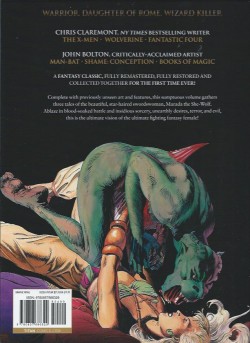
By Alan Moore, J H Williams III & Mick Gray, with Charles Vess, José Villarrubia & Jeromy Cox (America’s Best Comics)
ISBN: 978-1-40128-866-2 (HB)

After far too long away, let’s welcome back a notable addition to the canon of not-embarrassing, happily recommendable “Strong Female Characters” in hardback and digital editions that do her justice

I wonder if, when Alan Moore first conceived this series as part of his private superhero universe (now inexorably subsumed into the greater DC cosmology), he realised quite how far he would take this tale, or just how far he and long-haul collaborators J H Williams III & Mick Gray would push the boundaries of Graphic Narrative?

Ignoring the superficial resemblances to Wonder Woman – herself more archetype than property these days, but don’t tell the lawyers I said that – what’s on offer here? Promethea #1-12 are collected in this first Deluxe volume and are preceded by Moore’s introduction: ‘The Promethea Puzzle : An Adventure in Folklore’ (clipped from the first issue)…

Sophie Bangs lives in the big city, in a world of Science Heroes, multi-powered villains and real, scary monsters. She’s a smart kid, if not traditionally pretty, doing teen-age things with her best friend Stacia. She’s also a student researching a term paper on a name that has cropped up in esoteric poems, art and popular culture since the 5th century AD. Sophie seems inexplicably fascinated by and drawn to the concept of Promethea…

After interviewing the widow of the writer of a Promethea comic book, she’s attacked by a shadowy demon and rescued by the widow, who is the comic heroine she’s been researching. It transpires Promethea is a little girl taken into the Immateria, the Realm of Imagination. She became a concept.

Throughout history, she has since become real by incarnating in women who inspire art and creativity. These women – and even some men – have been able to manifest as incarnations of a Spirit of Imagination residing in the greater world of the unconscious. The Immateria is where all Gods, Stories and Ideas dwell. As the shadow-monster returns, Sophia finds her own artistic method of contacting the fable realm and becomes its latest physical incarnation…

Having discovered the metaphysical nature of Promethea Sophie begins to adjust. In real terms that means she can transform into a super-powerful flying Amazon, and perhaps join the legions of Science Heroes who protect – and frequently endanger – the world, but as her story unfolds, she begins to see just how different her version of the old story can be. Sophie is not some frustrated do-gooder suddenly flush with new-found power; she is and always has been concerned with knowing things.

Thus begins a journey of metaphysical as well as metahuman adventure. Sophie fights monsters and meets heroes, but the never-ending battle is not what this series is about. She obsessively wants to know more, and whilst various flamboyant forces array themselves against her, she is constantly seeking deeper answers for questions she never knew she had.

As various real-world forces align themselves in response to the latest resurgence of Promethea, Sophie explores the Immateria, hunting answers and examining the careers of her predecessors. When those antithetical forces attack the hospital where her new friend Barbara is slowly dying, the resultant battle with the forces of Hell reveal just how potent a weapon Promethea can be. The serious reader is advised to examine closely the running sub-plot with hero team The Five Swell Guys and psychotic serial killer The Painted Doll. As well as divertingly action-packed in an otherwise very cerebral tale, the long-running side-bar will have major repercussions in volumes to come.

Having dealt with the demon-horde, and the secret organisation that summoned them, Sophie again deviates from the expected in her dealings with infamous sorcerer Jack Faust, and has a Y2K monster battle before the volume ends with a mystical primer on the history, meaning and symbolism of The Tarot that is the closest I’ve seen the printed page get to a multi-media experience.

Moore’s sly and subversive scripting, in a superhero universe pushed to its illogical extreme, is superbly matched by artists Williams III & Gray, who increasingly raise the bar on graphic creativity and printing technology for a visual experience that is simply staggering to behold.

Adding extra lustre to the affair, Brad Meltzer offers an Afterword asking ‘Who Wants to Read a Fantasy Comic?’ and Moore’s script for issue #3 a fascinating diagnostic appointment with the creative process, augmented by Williams III’s artwork for the issue.

Promethea always had the most experimental aspirations. It will never have universal appeal, but if you are serious about comics it is an experience you owe yourself to try. And don’t be fooled. This book isn’t a lecture or a lesson, it’s a journey…
© 1999, 2000, 2001, 2009, 2019 DC Comics. All Rights Reserved.

I Love This Part


By Tillie Walden (Avery Hill)
ISBN: 978-1-91039-532-5(HB) 978-1-91039-517-2 (TPB)

Happy St. Valentines’ Day. I’m stifling my usual curmudgeonly attitudes for a while and reviewing a book that’s solidly on the side of being in love, but not so disingenuous as to tell you that it’s all hearts and flowers…

Sweet but not calorific, I Love This Part deliciously pictorializes the happy, introspective, contemplative and aspirational moments of two schoolgirls who have found each other. Shared dreams, idle conversations, disputes and landmark first steps, even fights and break-ups are seen and weathered. Novelty, timidity, apprehension, societal pressure and even some unnecessary shame come into it, but generally it’s just how young people learn to love and what that inevitably entails…

Apart from the astoundingly graceful and inviting honesty of the tale, the most engaging factor is the author’s brilliant dismissal of visual reality. These interactions are all backdropped by wild changes in dimension and perspective, abrupt shifts in location and landscape and shots of empty spaces all adding a sense of distance and whimsy to very familiar proceedings.

Tillie Walden is a great admirer of Little Nemo so fellow afficionados will feel at home even if neophytes might experience the odd sensation of disorientation and trepidation. Like being in love, I suppose…

Glorying not just in the relationships but also in the sheer joy of drawing what you feel, Texas-raised Tillie is still a relative newcomer – albeit a prolific and immensely gifted one – who has garnered heaps of acclaim and awards. Whether through her fiction or autobiographical works (frequently combined in the same stories), she always engenders a feeling of absolute wonder, combined with a fresh incisive view and measured, compelling delivery in terms of both story and character. Her artwork is a sheer delight.

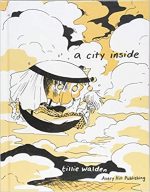
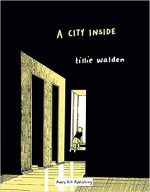
Before globally turning heads with such unforgettable tales as On a Sunbeam, A City Inside, Spinning, and Are You Listening? she followed up on her Ignatz Award-winning debut graphic novel The End of Summer with this fluffy yet barbed coming-of-age tale.

You’d have to be bereft of vision and afflicted with a heart of stone to reject this comic masterpiece – available in hardback, softcover and digital formats – which no one should miss.
© Tillie Walden 2016. All rights reserved.

Poppy! and the Lost Lagoon


By Matt Kindt & Brian Hurtt (Dark Horse Books)
ISBN: 978-1-61655-943-4 (PB) eISBN: 978-1-63008-465-3

Remember when adventure was an exclusively male preserve and icky girls weren’t allowed? No? Good, because then you can’t be persuaded to avoid books like this one and miss out on a superb, joyous treat!

Crafted by Matt Kindt (Pistolwhip, Revolver, Suicide Squad, Mind MGMT) & Brian Hurtt (The Damned, Shadow Roads, The Sixth Gun – and why haven’t I reviewed that yet?) this all-ages fantasy shares one of the incredible exploits and proves the prodigious pedigree of young Poppy Pepperton, latest globe-girdling explorer of a valiant dynasty to challenge the unknown and push back the frontiers of knowledge in search of Lost Things…

It all begins as Poppy and her aged sidekick Colt Winchester (inherited from her long-missing grandfather, the incredible explorer Pappy Pepperton and now acting as her legal guardian, if not particularly responsible adult) arrive back in New York City for yet another fractious confrontation with their extremely odd sponsor and employer.

Ramses (AKA Tut) is a millennia-old Egyptian wizard in the body of an 8-year old boy, but his capacity for fun and mischief is curtailed since he is inescapably trapped in his own apartment. The young sage provides resources and even new missions in return for vicariously sharing the adventurers’ wild life – sometimes through the eyes of his cat Krums, if he can convince his employees to include it in the entourage. He also gets to keep most of the loot they bring back…

Tonight, he grants them the latest prophecy of the Sacred Shrunken Mummy Head in his possession, catapulting our dynamic duo into a fresh and terrifying case that might just explain many of the still-unsolved mysteries of Poppy’s eccentric forebear…

Taking ship for Europe, the courageous couple begin their search for the long-lost Love Fish (as cited in Pepperton’s Incomplete Compendium of Lost Things volume 16), stirring up uncomfortable memories for Colt of the last time he visited the twin cities of Old and New Macadamia… and how he was responsible for the tragic separation of the perpetually paired passionate piscids…

Poppy only learns the appalling truth after her elderly guardian is confronted by an old flame at the Aquafica Exotica in Old Macadamia. Apparently way back then, he and Pappy Pepperton’s blundering search for a fabled Gigantipus and treatment of one of the Love Fish caused untold ecological upheaval: forcing a country-sized cephalopod to flee the lagoon and relocate elsewhere. The detrimental effects of that blunder still blighted geologically shattered Macadamia…

In a maritime excursion that took in giant turtles, subsea kingdoms, floating islands and even stranger locales, the gallants strove for ages before eventually admitting defeat. Now Poppy – armed only with her courage, “typographic memory” (unable to forget anything she’s ever read), puzzle-solving abilities and a futuristic super-ship manned by a dedicated crew – swears to set things right…

The only thing that might impact upon her success is an incomprehensibly huge monster and the aquatic civilisation currently living in the city on its head and the sinister robotic figure surreptitiously dogging her every step…

Packed with brilliant innovation and inspired settings, Poppy! blends wild whimsy with sly wit, rollicking action with subversive satire and emotional warmth with potent suspense, combining traditionally familiar quest drama with cunningly incorporated games and tests (the answers kindly included at the end) to produce a decidedly memorable addition to the ranks of Indiana Jones, Von Doogan and Lara Croft.
Poppy! ™ & © 2016 Matt Kindt & Brian Hurtt. All rights reserved.

The Wolf of Baghdad


By Carol Isaacs/The Surreal McCoy (Myriad Editions)
ISBN: 978-1-912408-55-9 (TPB) eISBN: 978-1-912408-71-9

Contemporary history is a priceless resource in creating modern narratives. It has the benefits of immediacy and relevance – even if only on a generational level – whilst combining notional familiarity (could you tell the difference between a stone axe and a rock?) with a sense of distance and exoticism. In comics, we’re currently blessed with a wealth of superb material exploring the recent past and none better than this enchanting trawl through a tragic time most of us never knew of…

Carol Isaacs is a successful musician (just ask the Indigo Girls, Sinead O’Connor or the London Klezmer Quartet) and – as The Surreal McCoy – a cartoonist whose graphic gifts are regularly on show in The New Yorker, Spectator, Private Eye, Sunday Times and The Inking Woman: 250 Years of Women Cartoon and Comic Artists in Britain. She found her latest inspiration in a two-thousand-year old secret history that’s she been party to for most of her life…

British-born of Iraqi-Jewish parents, Isaacs grew up hearing tales of her ancestors’ lives in Baghdad: part of a thriving multicultural society which had welcomed – or at least tolerated – Jews in Persia since 597 BCE.

How 150,000 Hebraic Baghdadians (a third of the city’s population in 1940) was reduced by 2016 to just 5 is revealed and eulogised in this potently evocative memoir, told in lyrical pictures and the curated words of her own family and their émigré friends, as related to her over her growing years in their comfortably suburban London home.

Those quotes and portraits spark an elegiac dream-state excursion to the wrecked, abandoned sites and places of a socially integrated and vibrantly cohesive metropolis she knows intimately and pines for ferociously, even though she has never set a single foot there…

As well as this enthralling pictorial experience, the art and narrative have been incorporated into a melancholy motion comic (slideshow with original musical accompaniment) that also demands your rapt attention.

The moving experience is supplemented by an Afterword comprising illustrate text piece ‘Deep Home’ (first seen in ‘Origin Stories’ from the anthology Strumpet) which details those childhood sessions listening to the remembrances of adult guests and family elders and is followed by ‘The Making of The Wolf of Baghdad’ which explains not only the book and show’s origins, but also clarifies the thematic premise of ‘The Wolf Myth’ which permeates the city’s intermingled cultures.

‘Other Iraqis’ then reveals some interactions with interested parties culled from Isaacs’ blog whilst crafting this book, whilst the comprehensive ‘Timeline of the Jews in Iraq’ outlines the little-known history of Persian Jews and how and why it all changed, before ‘A Carpet’s Story’ details 1950’s Operations Ezra and Nehemiah which saw 120,000 Jews airlifted to Israel.

Wrapping up the show is a page of Acknowledgements and Suggested Reading.

Simultaneously timeless and topical, The Wolf of Baghdad is less a history lesson than a lament for a lost homeland and way of life: a wistful deliberation on why bad things happen and on how words pictures and music can turn back the years and make the longed for momentarily real and true.
© Carol Isaacs (The Surreal McCoy) 2020. All rights reserved.

The Wolf of Baghdad will be published on January 30th 2020 and is available for pre-order now. Isaacs will be touring the motion-comic throughout 2020 at various venues and festivals around England. For more information please check her blog.

The End of Summer


By Tillie Walden (Avery Hill)
ISBN: 978-1-910395-26-4 (TPB)

Tillie Walden is still a relative newcomer – albeit a prolific one – who has garnered heaps of acclaim and awards. Whether through her fiction or autobiographical works (frequently both at once), she always engenders a feeling of absolute wonder, combined with a fresh incisive view and measured, compelling delivery in terms of both story and character. Her artwork is a sheer delight.

Before globally turning heads with such unforgettable tales as I Love This Part, On A Sunbeam, A City Inside, Spinning, and Are You Listening? the remarkably adept neophyte auteur began her rise with this Ignatz Award-winning debut graphic novel. Compelling and poignant, this is a family drama fantasy, chillingly reminiscent of Nordic literary classicists such as Henrik Ibsen, Astrid Lindgren or Tove Jansson, thematically toned like Brian Aldiss’ Helliconia novels whilst visually recalling Dave Sim’s Cerebus books High Society and Church & State.

Trust me, one day soon you’ll be seeing this yarn as a stage play and movie…

Even more impressive is the fact that The End of Summer was crafted in 2015 as a side-project whilst Walden was finishing her First-Year major assignment at the Center for Cartoon Studies in White River Junction, Vermont. For more information you can read James Sturm’s Introduction in this paperback collection, which also includes the story’s prequel ‘Lars and Nemo’.

Like everything Walden creates, this is a story I hesitate to describe because it’s a beguiling immersive experience that doesn’t need me spoiling it for you. Get it, read it, tell a friend…

What I will say is this: in distant place servants and staff rush to seal a colossal, cathedral-like palace. Winter is coming and the palatial bunker will be closed off for three years…

In that oppressive atmosphere, frail prince Lars and his twin sister Maja become increasingly aware of the tensions and quirks afflicting their large family.

Lars’ failing physicality has made him a quiet, introspective and fatalistic observer, whilst his dependence on Nemo – a gigantic housecat acting as companion and living wheelchair – mark him as a marginalised target for siblings Olle, Per, Nikolaus and Hedda. As time passes and the children seek ways to amuse themselves, increasingly unstable Per seems to find the oppressive isolation and vast scale of the palace as well as the disinterest and suppressed tensions of the adults incomprehensibly claustrophobic.

Before long, the dooms and disasters Lars is obsessed with start to manifest leading to tragedy and terror…

Beautifully illustrated in monochrome tones, with Brobdingnagian perspectives shaping every panel, this saga of an opulent yet cold House of Secrets, shielding a broken family from the elements but not themselves and each other, is a superb examination of humanity at its best and worst, and comes in this edition with Walden’s essay ‘TEOS: Making Of’and that aforementioned prequel tale. ‘Lars and Nemo’ details happier, sunnier earlier days when a fragile prince meets the giant kitten who will become his greatest companion…

A comic masterpiece no fan should miss.
© Tillie Walden 2016. All rights reserved.

Animal Land volume 1


By Makoto Raiku, translated and adapted by Stephen Paul (Kondansha Comics)
ISBN: 978-1-68233-202-3 (PB)

Born in Gifu on August 1974, Makoto Raiku started his manga career as an assistant to Kazuhiro Fujita before creating his own award-winning strips such as Bird Man, Newtown Heroes, Genmai Blade, and the enormously popular Konjiki no Gash!! (which hit American TV screens as Zatch Bell!!). All these were for Shogakukan’s Shōnen Sunday Super and Weekly Shōnen Sunday.

Following a legal dispute in 2008, the artist moved to rival publisher Kodansha and devised Dōbutsu no Kuni (Animal Country) which began in the October 2009 issues of Bessatsu Shonen Magazine. The series ran until February 2014, garnering the Best Children’s Manga Award and filling 14 tankōbon volumes from March 2010 onwards.

The all-ages fable follows the incredible life of a seemingly-human baby abandoned and cast adrift on a river only to wash up in the land of animals: a dog-eat-dog, literally bestial world of raw savagery where the weak always die and only the strong are able to survive.

‘Word 1: Hello, Baby’ opens proceedings with little Monoko, an orphan Tanuki (a tiny raccoon dog indigenous to Japan). Since her parents were eaten by wildcats, she’s been unable to pull her weight in the hard-pressed Tanuki community. The others spend all their time and energy rushing to store enough food for the rapidly approaching winter. It doesn’t look like Monoko’s going to make it…

Her world and existence change forever when she adopts the strange hairless monkey cub which washes up on the river bank one cold day. This is a very strange baby and Monoko insanely decides to become its new mother against all the advice of the village.

In Animal Land all creatures are at odds and cannot understand other species’ cries, but Monoko decides to risk everything – including being eaten by cats such as the fearsome Kurokagi – to steal some milk for the foundling to drink.

Despite the horrifying but successful mission the baby is cold and dying: it has no will to live and the Tanuki elders brusquely tell her to stop wasting everybody’s time and resources. Instead, desperate Monoko cuddles it with her body, sharing her warmth in a futile, lonely struggle to keep it alive one more night. When she awakes, the Tanuki discovers something miraculous and staggeringly game-changing…

The initial episode end with another huge shock: the alien infant can speak her language…

The mystery increases in second instalment ‘Word 2: Baby’s Power’ when the waif reveals that he can converse and understand the speech of all animals – even ultimate predator Kurokagi.

That useful trait leads to the discovery of the dire marauder’s tragic secret and further reshapes the nature and destiny of the savage domain, whilst third and final (for now) chapter ‘Word 3: Baby Cries Over His Name’ sees Monoko’s first maternal crisis as she finds a keepsake from the baby’s biological mother and fears her joyous new world is crumbling around her… until once more the wonder baby comes to her emotional and physical rescue…

Despite what the publishers would have you believe this isn’t just another cute kiddie-book. For starters it’s filled with scatological asides and the audience advisory is 13 and older. Moreover, despite being filled with action, adventure and slapstick/social gaffe humour in the grand manga manner, this tale is filled with scary moments, brutal situations and situations of heartbreaking poignancy. It also has a lot to say about family, community, integration, unity and understanding through plain-talking and communication.

Included in this initial monochrome volume are translator’s notes, a guide to Japanese honorifics, Omake pages (“extra” or “bonus”) of short cartoon strips and a longer piece wherein Makuto Raiku lets us in on the background of and inspiration for the strip: sharing the bittersweet story of his and wife’s best friend Riku – an abandoned, wounded puppy…

More Animal Farm than The Gruffalo or the Tiger Who Came to Tea, this is an enthralling and impressive slice of social fantasy for kids, and would make a great gift for older children getting too big for traditional kids’ stuff.

This monochrome paperback and digital volume is printed in the traditional front-to-back, right-to-left reading manner.
© 2010 Makoto Raiku. English translation © 2011 Makoto Raiku. All rights reserved.

The Rupert Treasury


By Mary Tourtel & various (Purnell Books)
ISBN: 9 78-0-36106-343-2 (HB)

Win’s Christmas Gift Recommendation: Truly British Brilliance with Universal Appeal… 9/10

As we’ve all voted to head back to the fabled sunlit uplands of our own fictitious past, I’ve opted to review an actual icon of our Island Nation, and one I think we can all agree we’d be happy to find overseeing our next five years…

There’s not a lot around these days in the comics which caters specifically for little kids, as well as their nostalgic parents and guardians whilst simultaneously introducing them to the ineluctably tactile wonders and sensorium of a high-quality comics experience. Once upon a time, there was a whole subdivision of the publishing business dedicated to enthralling and enchanting our youngest and, hopefully, brightest, but now all I can think of are The Beano and The Phoenix…

At least we still have books – old and new – to fill the gap.

Moreover, comics fans and the British in general equally adore a well-seasoned tradition and in terms of pictorial narrative and sheer beguilement there’s nothing more perfect than the hirsute national treasure Rupert.

Long before television took him, the Little Bear was part of our society’s very fabric and never more so than at Christmas when gloriously painted, comfortingly sturdy rainbow-hued Annuals found their way into innumerable stockings and the sticky hands of astounded, mesmerised children.

The ursine über-star was created by English artist and illustrator Mary Tourtel (1874-1948) and debuted in the Daily Express on November 8th 1920; the beguiling vanguard and secret weapon of a pitched circulation battle with rival papers the Daily Mirror and Daily Mail. Both papers had cartoon characters for kiddies – Teddy Tail in the Mail and the soon-to-be legendary Pip, Squeak and Wilfred in the Mirror.

Tourtel’s daily serial of the Little Lost Bear initially ran for 36 instalments and triggered a phenomenon which remains in full force to this day, albeit largely due to the diligent efforts of her successor Alfred Edmeades Bestall, MBE, who wrote and illustrated Rupert Bear from 1935 to 1965 and was responsible for the Annuals which began with the 1936 edition.

The artist originally chosen to spearhead the Express’ cartoon counterattack was already an established major player on the illustration scene – and fortuitously married to the paper’s News Editor Herbert Tourtel, who had been ordered by the owners to come up with a rival feature…

The unnamed little bear was illustrated by Mary and initially captioned by Herbert, appearing as two cartoon panels per day with a passage of text underneath. He was originally cast as a brown bear until the Express sought to cut costs and inking expenses, resulting in the iconic white pallor we all know and love today.

Soon though, early developmental “bedding-in” was accomplished and the engaging scenario was fully entrenched in the hearts and minds of readers. Young Rupert lives with extremely understanding parents in idyllically rural Nutwoodvillage: an enticing microcosm and exemplar of everything wonderful and utopian about British life. The place is populated by anthropomorphic animals and humans living together but also overlaps a lot of very strange and unworldly places full of mythical creatures and legendary folk…

A huge hit, Mary’s Rupert quickly expanded into a range of short illustrated novels; 46 by my count from the early 1920s to 1936, with a further run of 18 licensed and perpetually published by Woolworth’s after that. It’s from the former that the five tales in this splendid hardback commemoration are taken…

Tourtel’s bear was very much a product of his times and social class: smart, inquisitive, adventurous, helpful yet intrinsically privileged and therefore always labouring under a veiled threat of having his cosy world and possessions taken away by the wicked and undeserving.

Heretical as it might sound, like the unexpurgated fairy tales of Hans Christian Anderson or the Brothers Grimm, the pre-Bestall Rupert yarns all have a darker edge and worrisome undercurrent with mysterious forces casually, even capriciously targeting our innocent star. Naturally, pluck, good friends and a benevolent adult or two are always on hand to help our hero win through…

This glorious tome – still readily available through many internet vendors and originated in 1984 – gathers a quintet of typical Tourtel tales from the book editions, packing a wealth of full colour painted, duo-hued and monochrome ink-line illustrations into his enchanting pages.

Here we open with the all-colour adventure of ‘Rupert and the Robber Wolf’ from 1932, with the text, as always, delivered in a succession of rhyming couplets.

When Rupert is deprived of his new pocket watch by a burly vulpine bandit – and despite seeking the assistance of best pal Bill Badger, friendly mystic The Wise Old Goat, pixies, fauns and rural troubleshooter The Pedlar – he ends up a prisoner of the wolf.

Happily, the Old Goat and a posse of police are on hand to collar the crook and his wayward son before something really nasty occurs…

Rendered in bucolic shades of green, ‘Rupert and the Old Miser’ (first released circa 1925) finds our bear playing with a new ball which flies over a forbidding wall into a large garden. When Rupert sneaks in to retrieve his toy, he encounters a range of odd and terrified creatures all suborned to the eccentric whims of the rapacious Master Raven…

Upon the bear’s capture, the ebon enchanter declares the trespasser to be his property too and sets the poor mite to work as his latest chattel. Rupert is despondent, but help is at hand. The Little Bear’s friends have concocted a cunning plan to rescue him and when their scheme succeeds the miser meets a grisly fate chasing his fleeing new slave…

Equally verdant in its art aspects is the saga of ‘Rupert and the Enchanted Princess’ (1928) which opens with the bear snatched up by a great bird and delivered to a distant kingdom whose feudal monarch pleads with him to find his missing daughter.

Despite the scorn of the assembled knights, Rupert sets out and – with the aid of woodland creatures and a talking horse – overcomes ogres, dragons and other terrors before reversing the magic curse of three witches and returning the Princess to her doting dad…

Rendered in beautiful, clear, clean monochrome line art, ‘Rupert and the Mysterious Flight’ (1930) begins when The Prince and Princess of the Wood of Mystery send the Little Bear a fully functional aeroplane. Soon, Rupert is enjoying his maiden voyage but gets lost and alights in the Land of Kinkajous, where King Toucan – after an initial fright – sets the little daredevil a series of never-ending mystic challenges. After a number of Herculean labours are accomplished, Rupert at last regains his flying machine and makes a break for freedom and home…

The fantastic voyages conclude with the full-colour ‘Rupert and the Magic Toyman’ (1933) wherein a thrilling day enjoying a Fair and Sports Day leads to the unlucky bear being spirited away by a genial craftsman whose enticing wares mask his true nature.

The toy maker is, in fact, a wicked sorcerer and his constructions are transformed animals. One of them was even a Princess…

Undaunted, Rupert organises an escape back to Princess Belinda‘s kingdom, but the Toyman has already ensorcelled the whole place into a land of marionettes. Happily, a glimmer of hope remains and the tables can be turned if only Rupert can find and recruit the valiantly heroic Moorland Will whose hunting horn can undo the magic spell…

Beautifully realised, superbly engaging fantasies such as these are never out of style and this fabulous tome should be yours, if only as means of introducing the next generation to a truly perfect world of wonder and imagination.
© 1984 Beaverbrook Newspapers Limited. Artwork & text © 1984 Purnell Publishers Limited from original Mary Tourtel material.

Lala Albert: Seasonal Shift – Comics 2013-2019


By Lala Albert (Breakdown Press/The Library of Contemporary Comics)
ISBN: 978-1-911081-09-8 (TPB)

Win’s Christmas Gift Recommendation: Because Not All Beautiful Things are Pretty… 9/10

All right-thinking people know that graphic narrative is the most expressive and expansive medium to work in, right? The range of themes explored, stories told and varieties of delivery are pretty near infinite if created by an inspired artisan.

The act of stringing pictures and/or words together is something almost everybody has done at some stage of their lives. It’s a key step in the cognitive path of children and, for an increasing number of us, that compulsive, absorbing euphoria never goes away.

Whilst many millions acquiesce to the crushing weight of a world which stifles the liberation of creativity, turning a preponderance of makers into consumers, a privileged, determined few carry on: drawing, exploring, and in some cases, with technology’s help, producing and sharing.

That emotional and creative volatility has never been better realised than in the modern crop of storymakers, many of whom are being rightly-celebrated in collections of minicomics and collections such as this compilation of works by Brooklyn-based Lala Albert as part of the Library of Contemporary Comics, which is collecting shorter works by the best cartoonists currently working in the medium right now.

Opening with a forthright ‘Interview’ conducted by Michael DeForge, this sequence of tales, vignettes and self-publications addresses body issues, human relationships, and most especially interactions with society and the ever more imperilled environment through terse short stories, generally framed in science fictional, fantasy and horror terms of reference.

Gathered from Albert’s last six years, the raw, primitivist, questing revelations begin with ‘Morning Dew’: a self-published moment of luxurious hedonism in natural circumstances from 2019 that lapses into a glimpse at the inevitable, if improbable, consequence of plastic saturation, first seen in Future Shock #7 (2014), before ‘Starlight Local’ – part of Alien Invasion volume 3, 2013 – details the disturbing outcome of a casual hook-up during an interstellar commute…

Consumerism and self-determination get a handy heads-up when a girl orders a ‘nu device’ (Trapper Keeper volume 4, 2016) after which a new kind of surveillance society dystopia is explored and overturned in ‘R.A.T.’ (crafted for Latvia’s KuÅ¡ Comics in 2015).

These tales are delivered in a range of styles and palettes, but for me, pure stark monochrome is always a blessing, so the ferocious attitude of ‘Brainbuzz’ (Weird Magazine volume 5, 2014) only intensifies the disturbing exploration of bodily invasion undertaken here…

Masks and the mutability of personas are thoroughly, forensically questioned in kJanus”:a voyage of intense personal discovery first released by Breakdown Press UK in 2014, before a distressing fascination of what lurks under our skins is displayed in ‘Flower Pot’! courtesy of Marécage, Revue Lagon, France, 2019.

An epic of ecological combat and fairy survival is revealed in multi-chapter saga of survival ‘Wet Earth’ (Sonatina, 2017), pitting ethereal pixies against the lower ends of an uncaring food chain, before a modicum of sanity – but never safety or true security – returns via comforting self-assessment in ‘Pinhole’ (Over the Line, Sidekick Books UK, 2015). After everything, it’s always good to check back in with your own skin…

Dark but never hopeless, and always avoiding slick, glib professional sheen, these tales bore right in to the heart, asking questions we all have. Whether you find any answers truly depends on you…
All work © Lala Albert 2019. This edition © Breakdown Press 2019. All rights reserved.

Mimi and the Wolves volume 1


By Albaster Pizzo (Avery Hill Publishing)
ISBN: 978-1-91039-548-6 (HB)

Win’s Christmas Gift Recommendation: A New Fairy Tale with Plenty of Bite… 9/10

Alabaster Pizzo is an animator and cartoonist who hails from New York, but these days makes her living in Los Angeles. A graduate of the School of Visual Arts, she’s been intermittently releasing episodes of an epic anthropomorphic post-modern fantasy since 2013.

When not animating or storyboarding for major companies you or your kids are quite familiar with, she crafts her own comics such as Ralphie and Jeanie, Hellbound Lifestyle and more of the one under consideration here…

Those early Mimi minicomics – three thus far – have been lavishly compiled into a sturdy hardback monochrome tome by the astute powers-that-be of British publisher Avery Hill and comprise the opening salvo in what I trust will be a potent and lengthy allegory for personal empowerment… as all the best fairy tales are…

Preceded by a handy and informative map of the bucolic Hilly City region and a roll call of the major characters, Mimi and The Wolves Act I ‘The Dream’ opens with enigmatic, voyeuristic magician Severine chiding her attendant spirits in snow-draped forests before herbalist Mimi goes gathering plants and herbs for the constructions, concoctions and confections she makes.

Times are tough for her and partner Bobo, but they have good friends in the same boat and each other, so the treehouse they live in is all they really need…

The couple spend a lot of time helping out old farmers Cato and Ceres. Shady Island Farm is getting to be too much for them, so trading toil for food is always a welcome standby option…

Thankfully, Saffron at the general store is always ready to trade for Mimi’s creations and the farm’s dwindling produce, but the sensitive artisan is painfully aware that unrelenting strain is getting the better of her fellow workers. Tough but happily idyllic, life would be perfect for Mimi if only she wasn’t plagued by horrific dreams and terrifying nightmares…

Determined to get to the bottom of her traumas, Mimi distils a brew to provoke a lucid dream and is “rewarded” with an audience: a face to face confrontation with a seeming goddess calling herself the Holy Venus. The ethereal visitor tells her to seek out like-minded others and reveals to her a strange symbol by which she will know them…

As spring turns to summer, the image obsesses her and becomes part of her artistic output, much to the growing discomfort and increasing resentment of Bobo. Evermore distracted, Mimi forages deeper into the woods around the village and one day comes face to face with a huge wolf…

For small woodland creatures like her and Bobo, the giant predators are a constant terror, but this one is different. His name is Ergot and he is a dedicated follower of the Holy Venus. In Mimi he sees not lunch, but a fellow congregant. Before long she is invited to join his pack and share knowledge. Hungry for answers – and new experiences – the little artisan slowly falls under Ergot’s sway, and her life changes forever…

Act II ‘The Den’ was included in Best American Comics 2015 and reveals how life has treated Mimi since Bobo turned into an abusive controlling dick and she moved in with the wolves. Ergot and his mate Ivy have been sharing history and doctrine with her, but other than her former lover Mimi still maintains contact with hr other friends in Hilly City.

That circle expands when Ceres and Cato take in wandering musician Kiko, and all but implodes when Mimi finally introduces them all to Ergot. Some prejudices are hardwired and cannot be placated or ameliorated…

Life becomes even more bewildering after she meets other wolfpacks. Cobalt, Copper and Opal are friendly enough – although they have unspoken problems with Ergot – but night-dark Nero and Galena live up to every scary stereotype the city folk hold dear… and they seem to have an unsettling, unspecified interest in Mimi…

Events take a dark turn in Act III ‘The Howl’ after the revelation that constantly-observing Severine has a foreboding connection to the Holy Venus and is gradually enacting a long plan. Mimi, however, is now fully inducted into the pack, but blithely unaware that she is a highly desirable pawn in plans between rival groups who act more like cult “Families” than simple kin.

When Nero approaches her, she is so terrified that she flees back to her city friends, but soon returns to the lupine lair and agrees to attend a large gathering of packs.

And in the unnoticed background, Kiko quietly observes all…

Joining the Howl is a big mistake. Mimi is attacked by Nero and given to the Holy Venus as an offering. Although possibly an induced hallucination, in the aftermath allegiances amongst the smaller packs are now twisted and shifted. When Ergot reverts to his true nature, the Goddess makes her move and Mimi comes into her true power…

One common notion of Paradises, Edens and Utopias is that they are always under imminent threat of ending. Life in the allegorical Hilly City and evergreen woods is a rural and a small town ideal, but it’s never portrayed as immutable and stable. Amidst the cunning social echoes of Little House on the Prairie and The Waltons – as plain and simple rustic folk eke out a hard but generally rewarding life – comes an implicit awareness that things beyond the group are disrupting and potentially harmful. Dissent is bad, change is bad, we trust only ourselves are proven truisms but they don’t mean a thing if the society harbours – and hinders – a rebel who needs to find their true self…

Bewitching and enticing, this is a magical mystery tour of self-discovery that will charm and reward readers, so why not start your own quest for knowledge by joining this pack?
© Alabaster Pizzo. All rights reserved.

Noggin the Nog


By Oliver Postgate & Peter Firmin (Egmont)
Nogbad Comes Back ISBN: 978-1- 4052-8155-3
Noggin and the Dragon ISBN: 978-1- 4052-8154-6
Nogbad and the Elephants ISBN 978-1- 4052-8142-3
Noggin and the Moon Mouse ISBN: 978-1- 4052-8141-6
Noggin and the Storks ISBN: 978-1- 4052-8144-7
Noggin and the Money ISBN: 978-1- 4052-8143-0

Win’s Christmas Gift Recommendation: Wonderful Stories By and For Human People… 10/10

Baby Boomers like me consider our childhoods – no matter how personally privileged or deprived – to have been a golden age in terms of liberty, agency and especially entertainment. That’s probably due in large part to being exposed to the gentle, life-affirming fantasy worlds of these guys.

Richard Oliver Postgate was a writer puppeteer, animator and unrepentant storyteller who was born to an extremely prestigious, overachieving and drama-drenched family. He was born April 12th 1925 in Hendon Middlesex and educated at Woodstock School, Woodhouse Secondary, Dartington Hall College and Kingston College of Art.

He joined the Home Guard in 1942 but when at last called up, declared himself a Conscious Objector – just as his father did during the Great War. Court martialled and sentenced to Feltham Prison, he eventually became a land-worker growing crops. After the war Postgate worked for the Red Cross in Occupied Germany. He returned to Britain in 1948, went to Drama School and drifted from job to job.

In 1957, whilst working as a stage manager for ITV company Associated Rediffusion, he observed the appalling quality of children’s programming up close and knew he could do better for the same paltry money offered. He wrote Alexander the Mouse and convinced a Central School of Art tutor named Peter Firmin to draw the backgrounds for him.

After moving on to short-lived deaf-viewer project The Journey of Master Ho, in 1959 the creators formalised their partnership as independent studio Smallfilms. The rest is history…

When not shaping the minds of 30-years-worth of kids, Postgate continued trying to save and refine mankind. He was active in the CND movement and wrote their pamphlet The Writing on the Sky and 1981 book Thinking it Through: The Plain Man’s Guide to the Bomb.

In 1986, he created a 15-meter artwork for his latterday romantic partner Naomi Linnell’s book Illumination of the Life and Death of Thomas Beckett, repeating the exercise for the Triumphant Failure (about Christopher Columbus) and triptych A Canterbury Chronicle. You can see them if you visit the city’s Royal Museum Art Gallery and Eliot College Campus…

Working when he pleased, Postgate narrated – in that calm quiet compelling voice hardwired into the brains of millions – radio comedy and documentary shows, wrote more books such as autobiography Seeing Things, and accompanied his greatest creation Bagpuss (voted in 1999 the Most Popular Children’s Television Programme of All Time) as the stuffed cat accrued awards such as an honorary degree from the University of Kent at Canterbury.

He died – hopefully properly and rightly well-contented – in Broadstairs Kent, on December 8th 2008.

Peter Arthur Firmin was born in Harwich on 11th December 1928. Following training at Colchester School of Art and National Service in the Royal Navy, he attended Central School of Art and Design in London from 1949 to 1952. A creative man of many talents and disciplines, he then worked as a stained-glass designer, jobbing illustrator and lecturer.

Whilst teaching at Central in 1957 he was targeted by audacious, up-and-coming children’s TV writer Oliver Postgate who believed (quite rightly) that clever individuals could produce high-quality kids’ viewing at reasonable cost.

After producing backgrounds for Postgate’s Alexander the Mouse and The Journey of Master Ho, Firmin became equal partner in new venture Smallfilms, which grew in a shed at the artist’s Canterbury home. The kindred spirits initially produced hand-drawn cartoons and eventually stop motion animation episodes for series including Ivor the Engine, Pingwings, The Saga of Noggin the Nog, Pogle’s Wood/The Pogles, Bagpuss and The Clangers.

Postgate wrote, voiced and filmed whilst Firmin drew, painted, built sets and made puppets. Their spouses and friends were often dragooned if they showed useful talents such as sewing or knitting…

During those early days Firmin seemed tireless. In addition to the Smallfilms job he also devised, designed and populated other kids shows such as The Musical Box and Smalltime. In 1962 with Ivan Owen he created a fox puppet for The Three Scampies. That creation soon had his own show and career as Basil Brush…

Throughout his life, Firmin continued his cartooning and illustration career. This included writing and/or illustrating a number of books such as Basil Brush Goes Flying, The Winter Diary of a Country Rat, Nina’s Machines and Postgate’s Seeing Things – An Autobiography.

Firmin also worked as a printmaker and engraver, designer and educator. In 1994 he was asked to create a British postage stamp and produced a magnificent offering featuring Noggin and the Ice Dragon.

Even at their most productive and overworked, Postgate & Firmin always ensured there was plenty of ancillary product such as Christmas Annuals, comic strips, spin-off books, games and puzzles for their devoted young fans. One of the most charming and enduring was a series of “Starting-to-Read” books released by Kaye & Ward between 1965 and 1973. Postgate & Firmin crafted all 8 books in a kid-friendly format gently sharing the further adventures of the Nicest Norseman of Them All…

Available again in superb hardcover editions – perfect for tiny hands – the first two (Noggin the King and Noggin and the Whale, both originally released in 1965) were reviewed here; a brace of charming, gently humorous escapades starring the TV cast and beautifully illustrated in a variety of duo-toned line-&-colour with wit and subtle charm by the irrepressible Firmin. Now with the gift-giving season in full swing let’s tempt you with the splendid rest…

On the death of his father, quiet, unassuming Noggin becomes king of the northland Viking tribe known as the Nogs. He rules with understanding and wisdom – generally thanks to his advisors: wife Nooka – who hails from the far north (we’d call her an Inuit or Inuuk princess these days) – bluff old codger Thor Nogson and talking green cormorant Graculus.

Despite many fantastic adventures, Noggin prefers a quiet home life with his people and his boisterous son Knut…

Originally released in 1966, Noggin and the Dragon sees little Prince Knut and his chums pestering the royal couple to let them go on a dragon hunt. Noggin and Nooka are reluctant at first – Dragon Valley is no place for little boys and besides, the best thing to do with dragons is give them sweets and make friends – but eventually the proud parents capitulate to pester power.

To ensure things go smoothly they insist old warrior Thor Nogson goes with them, but as the unruly boys trek out into a gathering storm, no one has any idea regarding the shocking surprise in store for them all…

From the same year, Nogbad Comes Back highlights the return from exile of Noggin’s wicked usurping uncle, just in time to try and spoil the King’s annual animal and vegetable show. Living up to his name, Nogbad the Bad tries to win the glittering jewel-encrusted cup for best flora and fauna by devious cheating and, when that fails, through simple shameful theft.

Luckily, Nooka is not as forgiving and kind as her husband and has been keeping a close eye on her outlaw in-law…

The next year saw two more books: one of which was a distant precursor to one of Smallfilms’ most successful franchise creations…

Noggin and the Moon Mouse begins with Knut enacting an official ceremony at a water trough. The proceedings are utterly disrupted when a strange silver ball crashes down and a child-sized rodent-like creature emerges. Caught up in the excitement, the prince and his unruly pals give chase until Queen Nooka takes charge. After admonishing the boys, she and Noggin befriend the strange visitor (who actually comes from another world) and help him gather the odd household items he requires to return to the stars…

And yes, a few years later a peculiar band of woolly beasties began communicating with us all in their universally comprehensible penny-whistle pipings in a little show called The Clangers…

Nogbad and the Elephants proves that there are many perks to being royal. One is wonderful presents such as the gigantic gem-encrusted, long-nosed big-eared beast presented to Prince Knut by the King of Southland. Sadly, the wonderful creature is constantly unhappy and falls under the sway of crafty Nogbad who lures it away to steal its jewelled coat. Realising it’s been hoodwinked, the piteous pachyderm takes restorative action in its own unique manner, compelling Knut to make his first grown-up decision…

The last brace of tales comes from 1973, and begins with the hilarious Noggin and the Money wherein Court Inventor Olaf the Lofty suffers a setback in his dream to modernise the nation. The Nogs have been happily soldiering on using barter and trade as long as anyone can remember, so when the big thinker creates coins as currency, he thinks he’s made life easier for everybody. Thor Nogson soon learns to disagree after he’s despatched to acquire eggs for the royal breakfast and meets rather a lot of resistance to the new-fangled nonsense…

Wrapping up the fun is Noggin and the Storks which finds the King sagely dealing with a minor ecological crisis. Sooty Storks have nested on the chimneys of the town for decades, using the heat of cooking fires to warm their eggs. This year, as the birds are particularly numerous, the populace are continually being smoked out of their own homes.
Angrily, they petition Noggin to let them chase the pests away, but as king of birds as well as people, the smooth sovereign seeks another, more equitable solution. Cue Olaf the Lofty, who has an idea involving an old chalk quarry, a stand of hollow trees, masses of convoluted piping, steel sheets and tons of firewood….

Serenely bewitching, engaging and endlessly rewarding (both these books and their much-missed, multi-talented originators) the works of Postgate and Firmin shaped generations of children and parents. If you aren’t among them, do yourself a great favour and track down those DVD box sets, haunt the streaming services and buy these books. You won’t regret it for an instant…
Text © The Estate of Oliver Postgate 1965-1973. Illustrations © Peter Firmin/The Estate of Peter Firmin 1965-1973.