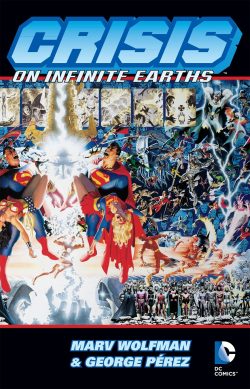
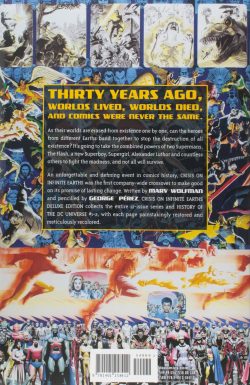
Crisis on Infinite Earths


By Marv Wolfman & George Pérez, with Jerry Ordway, Dick Giordano, Mike DeCarlo & various (DC Comics) 
ISBN: 978-1-4012-5841-2 (HB/Digital edition) 978-1-56389-750-4 (TPB) 

Once more I’m compelled to dash out another swiftly modified reprinted review to mark the passing of one of our industry and art form’s most prolific and irreplaceable master creators. George Pérez died on May 6th from the complications of pancreatic cancer. He was 67 years old.  

His triumphs as penciller, writer and an always in-demand inker made him a force to be reckoned with and earned a vast number of awards in a career spanning almost fifty years. Pérez worked for dozens of publishers large and small; self-published his own creations, redeemed and restored many moribund characters and features (like the (New) Teen Titans), Nightwing and Wonder Woman) and co-created many breakthrough characters such as The White Tiger (first Puerto Rican superhero), The Maestro, Deathstroke the Terminator, Terra, The Monitor and Anti-Monitor.  

He will be most warmly remembered for his incredible facility in portraying big teams and cataclysmic events. Pérez probably drew every DC and Marvel superhero of his era, with major runs on The Avengers, The Fantastic Four, The Justice League of America, Legion of Super-Heroes and numerous iterations of Teen Titans as well as stints on The Inhumans, X-Men, JSA, All-Star Squadron, Thunderbolts and T.H.U.N.D.E.R. Agents. He will be immortalised for the comic book series covered below. A fuller appreciation will follow as soon as I can sort it… 

In 1985 the Editorial Powers-That-Be at DC Comics were about to celebrate fifty years of publishing, and enjoying a creative upswing that had been a long time coming. A crucial part of the festivities, and purported attempt to simplify five decades of often conflicting stories, was a truly epic year-long saga that would impact every single DC title and reconstruct the entire landscape and history of the DC Universe, with an appearance – however brief – by every character the company had ever published. Easy-peasy, Huh? 

Additionally, this new start would seek to end an apparent confusion of multiple Earths with similarly named and themed heroes. This – it had been decided – was deterring (sic) new readers. Happily, since then (primarily thanks to movie rom-coms like Sliding Doors) we’ve all become well aware of string theory and parallel universes and can revel in the most basic TV show or kids cartoon proffering the concept of multiples incidences of me and you… 

Way back then, the result of those good intentions was a groundbreaking 12-part miniseries that spearheaded a vast crossover event: eventually culminating in a hefty graphic novel collection (plus latterly three companion volumes reprinting all the crossovers). 

The experiment was a huge success, both critically and commercially, and enabled the company to reinvigorate many of their most cherished properties: many of which had been in dire need or some regeneration and renewal. Many fans would argue that DC have been trying to change it back ever since… 

Plotted long in advance of launch, threads and portents appeared for months in DC’s regular titles, mostly regarding a mysterious arms-and-information broker known as The Monitor. With his beautiful assistant Lyla Michaels/Harbinger he had been gauging each and every being on Earths beyond counting with a view to saving all of Reality. At this juncture, that consisted of uncountable variations of universes existing “side-by-side”, each exhibiting differences varying from minor to monumental.  

Building on long-established continuity collaborators Marv Wolfman and George Pérez – aided and abetted by Dick Giordano, Mike DeCarlo and Jerry Ordway – began by tweaking things fans knew before taking them on a journey nobody anticipated… It transpired that at the very beginning of time an influence from the future caused Reality to fracture. Rogue Guardian of the Universe Krona obsessively sought to unravel the secret of creation and his probing cause a perfect singular universe to shatter into innumerable self-perpetuating cracked reflections of itself… 

Now, a wave of antimatter scythes through the Cosmic All, eradicating these separate universes. Before each Armageddon, a tormented immortal named Pariah materialises on an inhabited but doomed world of each Existence. As the story opens, he arrives on an Earth, as its closest dimensional neighbours are experiencing monumental geo-physical disruptions. It’s the end of the World, but The Monitor has a plan. It involves death on a mammoth scale, sacrifice beyond measure, a gathering of the best and worst beings of the surviving Earths and the remaking of time itself to deflect cosmic catastrophe and defeat the being that caused it… 

Action is tinged with tragedy as many major heroic figures – from the nondescript and forgotten to high, mighty and grand – perish valiantly, falling in apparently futile struggle to preserve some measure of life from the doomed multiverse. 

Full of plot twists and intrigue, this cosmic comicbook spectacle set the benchmark for all future crossover events, not just DC’s, and is still a qualitative high point seldom reached and never yet surpassed. As well as being a superb blockbuster in its own right and accessible to even the greenest neophyte reader, it is the foundation of all DC’s in-continuity stories since 1985, the basis of a TV phenomenon and absolutely vital reading.  

More than any other work in a truly stellar career, Crisis on Infinite Earths is the magnum opus George Pérez will be remembered for: It might not be fair, but it’s inescapably true… 
© 1985, 1986, 2001, 2008, 2015 DC Comics. All Rights Reserved. 

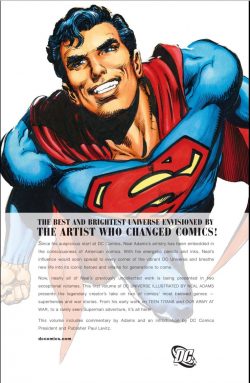
Batman: Illustrated by Neal Adams volume 1 


By Neal Adams with Bob Haney, Leo Dorfman, Cary Bates & various (DDC Comics)
ISBN: 978-1-4012-0041-1 (HC): 978-1-4012-3537-6 (2003 PB) 978-1-4012-7782-6 (2018 TPB edition)   

I’m doing this far too frequently, these days, but here’s a swiftly modified reprinted review to mark the sudden passing of one of our industry and art form’s last true titans. Neal Adams died on the 28th of April. As well as a creator and innovator who changed the entire direction of comics and sequential narrative, he was a tireless activist and advocate whose efforts secured rights for workers and creators long victimised by an unfair, stacked, system. A fuller appreciation and more comprehensive review will follow as soon as I can sort it… 

Neal Adams was born on Governors Island, New York City, on June 15th 1941. His family were career military and he grew up on bases across the world. In the late 1950s he studied at the High School of Industrial Art in Manhattan, graduating in 1959. 

As the turbulent, revolutionary 1960s began, Adams was a young illustrator who had worked in advertising and ghosted some newspaper strips whilst trying to break into comics. As he pursued a career in advertising and “real art”, he did a few comics pages for Joe Simon at Archie Comics (The Fly and that red-headed kid too) before subsequently becoming one of the youngest artists to co-create and illustrate a major licensed newspaper strip – Ben Casey (based on a popular TV medical drama series). His first attempts to find work at DC were not successful… 

That comic book fascination never faded however, and as the decade progressed, Adams drifted back to National/DC doing a few covers as inker or penciller. After “breaking in” via anthological war comics he eventually found himself at the vanguard of a revolution in pictorial storytelling… 

He made such a mark that DC chose celebrate his contributions by reprinting every piece of work Adams ever did for them in a series of commemorative collections. We’re still waiting for a definitive collection of his horror comics stories and covers, but will probably never see his sterling efforts on licensed titles such as Hot Wheels, The Adventures of Bob Hope and The Adventures of Jerry Lewis. That’s a real shame too: the display a wry facility for gag staging and small drama… 

Batman: Illustrated by Neal Adams was the first of 3 tomes available in  variety of formats and editions featuring the “Darknight Detective” – as he was dubbed back then – and featuring every cover, story and issue in original publication order. 

Here then, ‘From Me to You: An Introduction’ gives you the history of his early triumphs in the writer/artist’s own words, after which covers from Detective Comics #370 (December 1967, inking Carmine Infantino) and the all-Adams Brave and the Bold #75 (January 1968), Detective #372 (February), B&B #76 (February/March), Batman #200 and World’s Finest Comics #174 (both March) serve as tasters for the first full-length narrative… 

The iconoclastic penciller first started seriously making waves with a couple of enthralling Cape & Cowl capers beginning with World’s Finest Comics #175 (April 1968): ‘The Superman-Batman Revenge Squads!’ Scripted by Leo Dorfman and inked by long-term collaborator Dick Giordano, the story detailed how an annual – and friendly – battle of wits between the crimebusters is infiltrated by alien and Earthly criminal groups intent on killing their foes whilst they are off-guard… 

WFC #176 (June) featured a beguiling enigma in ‘The Superman-Batman Split!’ – written by fellow newcomer Cary Bates. Ostensibly just another alien mystery yarn, this twisty little gem conceals a surprise ending for all, plus guest stars Robin, Jimmy Olsen, Supergirl and Batgirl, with Adams’ hyper-dynamic realism lending an aura of solid credibility to even the most fanciful situations. 

It also ushered in an era of gritty veracity to replace previously anodyne and frequently frivolous Costumed Dramas… 

More Dynamite Covers follow: Batman #203 (July/August) leads to Brave and the Bold #79 (August/September); heralding Adams’ assumption of interior art chores and launching a groundbreaking run that rewrote the rulebook for strip illustration… 

‘The Track of the Hook’ – written by Bob Haney and inked Giordano – paired the Gotham Guardian with justice-obsessed ghost Deadman: formerly trapeze artist Boston Brand who was hunting his own killer, and whose earthy, human tragedy elevated the series’ costume theatrics into deeper, more mature realms of drama and action. At this period Adams was writing and illustrating Brand’s solo stories in Strange Adventures…  

The B&B stories matured overnight, instantly became every discerning fan’s favourite read.  

Covers for World’s Finest Comics #178-180 (September through November) segue sweetly into Brave and the Bold #80 (October/November 1968) where ‘And Hellgrammite is his Name’ finds Batman and The Creeper clashing with a monstrous, insect-themed super-hitman, again courtesy of Haney, Adams & Giordano, whilst #81 saw The Flash aid Batman against an unbeatable thug in ‘But Bork Can Hurt You!’ (inked by Giordano & Vince Colletta) before Aquaman became ‘The Sleepwalker from the Sea’ in an eerie tale of mind-control and sibling rivalry. 

Interwoven through those thrillers are the covers for World’s Finest #182 (February 1969, inking Curt Swan’s pencils), #183 (March, inking over Infantino), Batman #210 and Detective #385 (both March and all Adams). 

B&B # 83 took a radical turn (and is the only story herein without a cover since that one was limned by Irv Novick) as The Teen Titans try to save Bruce Wayne‘s latest foster-son from his own inner demons in ‘Punish Not my Evil Son!’ (Haney & Giordano) but the next team-up was one that got many fans in a real tizzy in 1969. 

First though comes the fabulous frontage for World’s Finest #185 (June 1969) after which ‘The Angel, the Rock and the Cowl’ recounts a World War II exploit where Batman and Sgt. Rock of Easy Company hunt Nazi gold together, only closing that case 25 years later. 

Try to ignore kvetching about relative ages and which Earth we’re on: you should really focus on the fact that this is a startlingly gripping tale of great intensity, beautifully realised, and one which has been criminally discounted for decades as “non-canonical”. 

Detective Comics #389 (July), and World’s Finest #186 (August and pencilled by Infantino) precede Brave and the Bold #85. Here, behind a stunning cover, is arguably the best of an incredible run of action adventures… 

‘The Senator’s Been Shot!’ unites Batman and Green Arrow in a superb multi-layered thriller of politics, corruption and cast-iron integrity, with Bruce Wayne being appointed as a stand-in for a law-maker whilst the Emerald Archer receives a radical make-over that turned him into a fiery liberal gadfly and champion of the relevancy generation: a remake that still informs his character today, both in funnybooks and on TV screens… 

Wrapping up this initial artistic extravaganza come covers for Detective Comics #391 and 392 (September & October 196), completing a delirious run of comics masterpieces no ardent art lover or fanatical Fights ‘n’ Tights aficionado can do without and confirming the unique and indisputable contribution Adams made to comics.s.
© 1967, 1968, 1969, 2003, 2018 DC Comics. All Rights Reserved. 

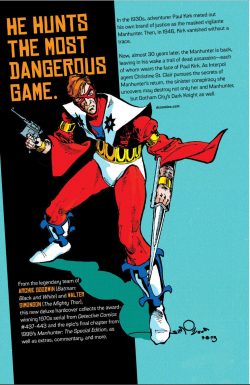
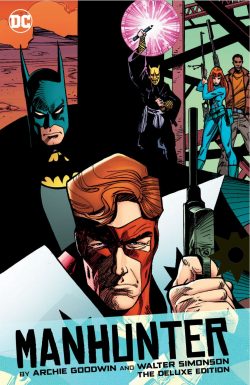
Manhunter – The Deluxe Edition 


By Archie Goodwin & Walter Simonson & various John Workman (DC Comics) 
ISBN: 978-1-77950-751-8 (HB/Digital edition) 

One of the most celebrated superhero series in comics history, Manhunter catapulted young Walt Simonson to the front ranks of creators, revolutionised the way dramatic adventures were told and still remains the most lauded back-up strip ever produced. Concocted by genial genius Archie Goodwin as a supporting back-up strip in Detective Comics (#437-443, October-November 1973 to October-November 1974) the seven episodes – a mere 68 pages – garnered six Academy of Comic Book Arts Awards during its far too brief run. 

In case you’re wondering they were: Best Writer of the Year 1973 – Archie Goodwin; Best Short Story of the Year 1973 for ‘The Himalayan Incident’; Outstanding New Talent of the Year 1973 – Walter Simonson; Best Short Story of the Year 1974 for ‘Cathedral Perilous’; Best Feature Length Story of the Year 1974 for the conclusion ‘Götterdämmerung’ and Best Writer of the Year 1974 – Archie Goodwin. 

Paul Kirk was a big game hunter and part-time costumed mystery man before and during World War II. Becoming a dirty jobs specialist for the Allies, he lost all love of life and died in a hunting accident in 1946. Decades later, he seemingly resurfaced, coming to the attention of Interpol agent Christine St. Clair. Thinking him no more than an identity thief, she soon uncovered an incredible plot by a cadre of the World’s greatest scientists who had combined over decades into an organisation to assume control of the planet once they realised that man now had the means to destroy it. 

Since the end of the WWII The Council had infiltrated all corridors of power, making huge technological advances (such as stealing the hero’s individuality by cloning him into an army of superior, rapid-healing soldiers), slowly achieving their goals with no-one the wiser. The returned Paul Kirk, however, had upset their plans and was intent on thwarting their ultimate goals… 

This slim tome reprints the much-missed Mr. Goodwin’s foreword from the 1979 black-&-white album Manhunter: the Complete Saga before gathering in one sublime collection Kirk’s entire tragic quest to regain his humanity and dignity.  

Coloured by Klaus Janson and lettered by Ben Oda, Joe Letterese, Alan Kupperberg & Annette Kawecki, it tells of St. Clair and Kirk’s first meeting in ‘The Himalayan Incident’, her realisation that all is not as it seems in ‘The Manhunter File’ and their revelatory alliance beginning with ‘The Resurrection of Paul Kirk.’ 

Now fully a part of Kirk’s crusade Christine discovered just how wide and deep the Council’s influence ran in ‘Rebellion!’ before beginning the end-game in the incredible ‘Cathedral Perilous’ and gathering one last ally in ‘To Duel the Master’… 

With all the pieces in play for a cataclysmic confrontation, events take a strange misstep as Batman stumbles into the plot, inadvertently threatening to hand the Council ultimate victory. ‘Götterdämmerung’ fully lived up to its title and wrapped up the saga of Paul Kirk with consummate flair and high emotion. It was a superb triumph and perplexing conundrum for decades to come… 

In an industry notorious for putting profit before aesthetics, the pressure to revive such a well-beloved character was enormous, but Goodwin & Simonson were adamant that unless they could come up with an idea that remained true to the spirit and conclusion of the original, Manhunter would not be seen again. 

Although the creators were as good as their word DC did weaken a few times. Kirk clones featured in the Secret Society of Super-Villains and The Power Company, but they were mere shabby exploitations of the original. Eventually, however, an idea occurred and the old conspirators concocted something feasible and didn’t debase the original conclusion. Archie provided a plot, and Walter began to prepare the strip. 

After years of valiant struggle the master plotter finally succumbed to the cancer that had been killing him. Anybody who had ever met Archie Goodwin will understand the void his death created. He was irreplaceable. 

Without a script the project seemed doomed until Simonson’s wife Louise suggested that it be drawn and run without words: a silent tribute and last hurrah for a true hero. Manhunter: the Final Chapter reunites the characters and brings the masterpiece to a solid, sound resolution. Now it really is all over… 

This Deluxe Edition offers a touching afterword – with some extremely early character sketches – by Walter and a gallery of further art treats: the cover and a pin-up from Detective Comics #443; covers from reprint editions Manhunter Special #1 (May 1984), Manhunter: The Special Edition (1999), Tales of The Batman: Archie Goodwin (2013), Manhunter: the Complete Saga (1979) and the Manhunter entry from Who’s Who #14. 

This book represents a perfect moment of creative brilliance and an undisputed zenith in comics storytelling. This is a tale no comic fan can afford to be without. 
© 1973, 1974, 1999, 2013, 2020 DC Comics. All Rights Reserved. 

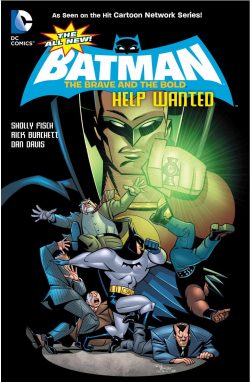
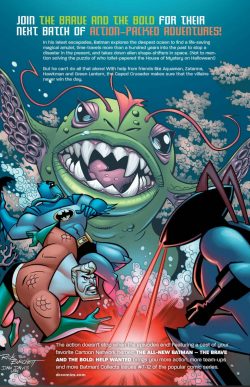
The All-New Batman: The Brave and the Bold volume 2: Help Wanted


By Sholly Fisch, Rick Burchett, Dan Davis, Dario Brizuela, Ethen Beavers & various (DC Comics)
ISBN: 978-1-4012-3524-6 (TPB/Digital edition)

The Brave and the Bold premiered in 1955 as an anthology adventure comic featuring short complete tales about a variety of period heroes: a format reflecting the era’s filmic fascination with flamboyantly fanciful historical dramas. Devised and written by Bob Kanigher, #1 led with Roman epic Golden Gladiator, feudal mystery-man The Silent Knight and Joe Kubert’s Viking Prince. Soon the Gladiator was alternated with Robin Hood, but the adventure theme carried the title until the end of the decade when the burgeoning costumed character revival saw B&B transform into a try-out vehicle like Showcase.

Used to premiere concepts and characters such as Task Force X: The Suicide Squad, Cave Carson, Hawkman and Strange Sports Stories as well as the epochal Justice League of America, the comic soldiered on until issue #50 when it found another innovative new direction which once again caught the public’s imagination. That issue paired two super heroes – Green Arrow and Martian Manhunter – in a one-off team-up. It was followed by more of the same: Aquaman with Hawkman in #51, WWII “Battle Stars” Sgt. Rock, Mme. Marie, Captain Cloud & The Haunted Tank in #52 and The Atom & Flash in #53.

The next instant union – Robin, Aqualad and Kid Flash – evolved into The Teen Titans and after Metal Men/The Atom and FlashbMartian Manhunter appeared, a new hero debuted in #57-58: Metamorpho, the Element Man.

From then it was back to the increasingly popular power pairings with #59. Although no one realised it at the time, that particular conjunction – Batman with Green Lantern – would be particularly significant….

A return engagement for the Teen Titans, issues spotlighting Earth-Two stalwarts Starman and Black Canary and Earth-One’s Wonder Woman and Supergirl soon gave way to an indication of things to come when Batman returned to duel hero/villain Eclipso in #64: an early acknowledgement of the brewing TV-induced mania mere months away.

Within two issues (following Flash/Doom Patrol and Metamorpho/Metal Men), B&B #67 saw the Caped Crusader take de facto control of the title and a lion’s share of team-ups. With the late exception of #72 and 73 (Spectre/Flash and Aquaman/Atom), it was thereafter where the Gotham Gangbuster invited the rest of DC’s heroic pantheon to come and play…

Decades later, Batman: The Animated Series – masterminded by Bruce Timm and Paul Dini in the 1990s – revolutionised the Dark Knight and subsequently led to some of the absolute best comic book adventures in his 80-year publishing history. It also led to a spin-off print title…
With constant comics iterations and tie-ins to a succession of TV animation series, Batman has remained immensely popular and a sublime introducer of kids to the magical world of the printed page. One fun-filled incarnation was Batman: The Brave and the Bold, which gloriously celebrated the team-up in both its all-ages small-screen and comicbook spin-off.

Shamelessly and superbly plundering decades of continuity arcana in a profusion of alliances between the Dark Knight and DC’s lesser creations, the show was supplemented by a cool kid’s periodical full of fun, verve and swashbuckling dash, cunningly crafted to appeal as much to the parents and grandparents as those fresh-faced neophyte kids…

This stellar trade paperback and digital collection re-presents issues #7-12 of the second series – The All-New Batman: The Brave and the Bold – in an immensely entertaining all-ages ensemble suitable for newcomers, fans and aficionados of all ages originally seen between July and December 2011. Although absolutely unnecessary to the reader’s enjoyment, a passing familiarity with the TV episodes will enhance the overall experience as will knowledge of the bizarre minutiae of 1960s and 1970s DC lore…

Scripted throughout by Sholly Fisch, and following the TV format, each tale opens with a brief prequel adventure before telling a longer tale. TA-NB:TB&TB #7 opens with the Caped Crimebuster and aforementioned 1960s Teen Titans triumphing over the Time Trapper as prelude to main feature ‘‘Shadows & Light’. Illustrated by Rich Burchett & Dan Davis, it reveals Batman’s earliest days and a momentous meeting with Gotham’s original guardian. Golden Age Green Lantern Alan Scott wanted to see what the new kid could do offered a teaching experience beside his JSA colleagues…

Aquaman leads off in ‘Under the Sea!’ but soon he and the Dark Knight are on a quest to liberate accursed ghost Captain Fear: battling mythological sea perils and sinister super bandit Black Manta.

‘3:10 to Thanagar’ co-stars Hawkman and begins with them and The Atom defeating shapeshifter Byth, with the majority of the yarn detailing how transporting him back to interplanetary jail is derailed by an armada of evil allies trying – and failing – to break him free.

‘Help Wanted’ offers a delightful and truly heartwarming deviation from standard form as a professional henchman details the tribulations of the gig economy as tenures with Toyman, Clock King and Ocean Master end early, thanks to Superman, Green Arrow, Aquaman and others. What the reformed family man will never know is how his own wife, son and Batman colluded to redeem him…

With art from Dario Brizuela, ‘Out of Time’ finds the Caped Crusader, Geo-Force and Cave Carson unearth an ancient earthquake machine under Gotham, compelling Batman to head back to 1879 to destroy it before it starts eating bedrock. The case brings him into partnership with bounty hunter Jonah Hex and into contention with immortal maniac Ra’s Al Ghul before the day and all those tomorrows are saved…

Wrapping up this jaunty journal of joint ventures, ‘Trick or Treat’ – with art by Ethen Beavers – offers a Halloween appetiser as Batman and Zatanna investigate a break-in at the House of Mystery. After freeing Cain & Abel, the heroes track clues and deal with Doctor Destiny and Mr. Mxyzptlk before deducing the only possible culprit and getting dragged into a colossal clash of mystic heroes and villains…

Despite being ostensibly aimed at TV-addicted kids, these mini-sagas are also wonderful, traditional comics thrillers no self-respecting fun-fan should miss: accessible, well-rendered yarns for the broadest range of excitement-seeking readers. This is a fabulously full-on thrill-fest confirming the seamless link between animated features and comic books. After all, it’s just adventure entertainment in the end; really unmissable entertainment…

What more do you need to know?
© 2011, 2012 DC Comics. All Rights Reserved.

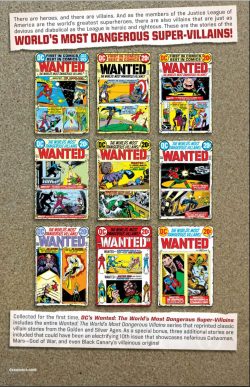
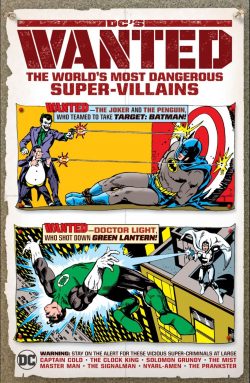
DC’s Wanted: The World’s Most Dangerous Villains


By Jerry Siegel, Bill Finger, Jack Kirby, Joe Simon, William Woolfolk, Ed Herron, John Broome, Gardner F. Fox, Alfred Bester, Don Cameron, Joe Samachson, Mort Weisinger, Ken Fitch, David Vern Reed, Sheldon Moldoff, Jack Burnley, Carmine Infantino, Gil Kane, Lee Elias, Mort Meskin, Joe Kubert, Howard Sherman, Pete Riss, Paul Reinman, Alex Kotzky, Bernard Baily, Jon Sikela, Harry G. Peter, Murphy Anderson, Nick Cardy & various (DC Comics)
ISBN: 978-1-7795-0173-8 (HB)

We talk of Gold and Silver Ages in comics and latterly for the sake of expediency have added other mineral markers like a Bronze Age, but no ever talks about the period between 1964 and 1977 as a specific and crucial time in funnybook history. But it was…

During that period, economic pressure compelled DC and Marvel to increasingly plunder their own archives and fill expensive pages in their primary product to maintain hard-won spaces on newsstands and magazine spinners. Some readers moaned about reprints. Some didn’t notice and most didn’t care. But for all those little proto-geeks like me, it was being given the keys to the greatest kingdom of all.

Once you grasped that the differently drawn stuff with clunkier buildings and cars – and more men in hats – was from the past, and not something happening “now”, it simply added to the scope and scale of what you were reading: hinting of a grand unknown past you were now party to. Moreover, the sheer quality of most twice-printed tales was astounding.

I wasn’t around for Lou Fine or Basil Wolverton or Jack Burnley the first time, but reprints made me a devotee. You young whippersnappers with your interwebs and archive collections don’t know how lucky you are.

Marvel especially made a service out of a necessity: keeping their older material in print via big packages like Marvel Collectors’ Items Classics and Marvel Tales to ensure reader awareness of their unfolding universe. Those and DC’s 80-Page Giant specials were true gateway series for comics junkies who wanted a peek at the past… particularly the mysterious and alluring “Golden Age” where all the really incredible stuff must have happened…

In 1968 DC started taking reprints seriously by creating a specific title. DC Special began a succession of themed and carefully curated issues at a time when superheroes had entered another decline. In its first run – from fall 1968 to November/December 1971 – it featured issues dedicated to the careers of Carmine Infantino and Joe Kubert, horror stories, teen comedy, western, crime, and two issues featuring Strange Sports Stories, as well as an “all-girl” superhero volume, the Viking Prince and Plastic Man. Issues #8 (Summer1970) and #14 (September/October 1972) were both entitled Wanted! The World’s Most Dangerous Villains: an unrepentant, unashamed celebration of costumed good guys thrashing costumed bad guys…

This spiffy hardback and digital collection sadly excludes those try-out experiments but does collect all the subsequent contents of the spin-off title that followed – #1-9 spanning July/August 1972 to September 1973 – and adds a tenth issue just for thrills and giggles.

It kicks off with a gloriously outré debut as #1 reintroduced ‘The Signalman of Crime’ who used signs and symbols to baffle lawmen. He came – and went – in Batman #112 (December 1957) courtesy of Bill Finger, Sheldon Moldoff & Charles Paris and is followed by a classy Green Arrow yarn from Ed Herron & Lee Elias. ‘The Crimes of the Clock King’ were first found and foiled in World’s Finest Comics (#111 July 1960). Rounding out the first sally is ‘Menace of the Giant Puppet’ by John Broome, Gil Kane & Joe Giella (Green Lantern volume 2 #1, August 1960) wherein the Emerald Gladiator faced the superscience-wielding Puppeteer.

Gold was struck in #2 as Batman #25 (October/November 1944) yielded Don Cameron, Jack Burnley & Jerry Robinson’s‘Knights of Knavery’: an epic clash which saw crime rivals The Penguin and Joker – temporarily – join forces against the Dynamic Duo, after which John Broome, Infantino & Giella detail how ‘The Trickster Strikes Back’. The air-walking felon plunders Central City until the Scarlet Speedster finally outwits him, as first seen in The Flash #121 (June 1961).

Wanted #3 provided exclusively Golden Age greatness, beginning with The Vigilante yarn from Action Comics #69 (February 1944). Devised by Joe Samachson, Mort Meskin & Joe Kubert, ‘The Little Men Who Were There!’ pitted the Prairie Troubadour against diabolical Napoleon of Crime The Dummy, after which warrior wizard Doctor Fate frustrated an invasion by ‘The Fish-Men of Nyarl-Amen’ (More Fun Comics #65 March 1941, by Gardner F. Fox & Howard Sherman) and Hawkman crushed ‘The Human Fly Bandits’ thanks to creators Broome & Kubert as seen in Flash Comics #100 (October 1948).

Original Green Lantern Alan Scott headlined in #4, replaying his epic first clash with Solomon Grundy from All-American Comics #61 (October 1944) as related by Alfred Bester & Paul Reinman in ‘Fighters Never Quit!’, whilst the follow-up featured Kid Eternity – who died before his time and was rewarded by Higher Powers with the power to summon figures from history, myth and literature to fight for justice. ‘Master Man’ came from Kid Eternity #15 (May 1949) wherein writer William Woolfolk and illustrator Pete Riss created the hero’s ultimate nemesis and set them duelling by proxy via resuurected heroes and villains…

Contemporary Green Gladiator Hal Jordan returned in #5, battling Doctor Light in Gardner F. Fox, Kane & Sid Greene’s ‘Wizard of the Light-Wave Weapons!’ (Green Lantern volume 2 #33, December 1964), before the original Tiny Titan faced ‘The Man in the Iron Mask!’ in an epic clash by Woolfolk & Alex Kotzky from Doll Man Quarterly #15 (Winter 1948).

Starman opened #6, in a grudge match against arch foe The Mist. Fox & Burnley’s ‘Finders Keepers!’ – from Adventure Comics #77, August 1942 – saw the see-through fiend use found treasure to mesmerise his victims, and is followed by a saga of Sargon the Sorcerer, battling Blue Lama as ‘The Man Who Met Himself’ (Sensation Comics #71, November 1947 by Broome & Reinman). The drama ends on a spectacular high in the Kubert-illustrated Wildcat thriller ‘The Wasp’s Nest!’ from (Sensation Comics #66, June 1947).

Wanted #7 exhumed more Gold, beginning with speedster Johnny Quick‘s duel with satanic scientist Dr. Clever who gleans the secret of hyper-velocity in ‘The Adventure of the Human Streak’ (More Fun Comics #76 February 1942 and illustrated by Mort Weisinger & Mort Meskin) after which the 1940’s Hawkman battles spectral nemesis The Gentleman Ghost in Robert Kanigher & Kubert’s ‘The Crimes That Couldn’t Have Happened!’ (Flash Comics #90, December 1947) before Ken Fitch & Bernard Baily reveal how Hourman crushes ‘Dr. Glisten’s Submarine Pirates’ as originally seen inAdventure Comics #72, March 1942.

The Silver Age Flash faces ‘The Big Freeze!’ in Broome, Infantino & Murphy Anderson’s furious fight against Captain Cold (The Flash #114 August 1960) before Fox & Sherman pit a depowered Doctor Fate against transformative terror ‘Mr. Who’ in a stirring saga from More Fun Comics #73 (November 1941).

The original run concluded with #9, which opened with Jerry Siegel & Jon Sikela’s epic and absurdist Superman clash against the diabolical Prankster who claimed to be ‘Crime’s Comedy King!’ in Action Comics #57 (February 1943) after which the adventure peaked in a classic Jack Kirby & Joe Simon Sandman thriller. First found in World’s Finest Comics #6 (Summer 1942) ‘The Adventure of the Magic Forest!’ saw the Master of Dreams and Sandy the Golden Boy crush murderous, nefarious hijacker Nightshade…

The fun continues with a virtual 10th issue compiled in recent times and prompted by a letter from Wanted #9 requesting an all-female outing. It took long enough but the wish is finally granted in ‘A Modern Take: Wanted: The World’s Most Dangerous Villains #10! which begins with a Catwoman classic.

The Sleeping Beauties of Gotham City!’ debuted in Batman #84 (June 1954), scripted by David Vern Reed and limned by Sheldon Moldoff & Stan Kaye, wherein notorious Selina Kyle subverts a beauty contest, not for vanity but for glittering profit, after which Flash Comics #86 (August 1947) provides the first adventure of ‘The Black Canary’ in a swansong for bumbling hero Johnny Thunder by Kanigher, Infantino & Giella.

Wrapping up this sublime “Wants” list is a late clash between the Amazing Amazon and war god Mars by Kanigher & Harry G. Peter. ‘The Girl Who saved Paradise Island!’ comes from Wonder Woman #36, July/August 1949 and features interplanetary conflict and the truly terrifying warriors of Infanta, so be warned…

With covers by Murphy Anderson and Nick Cardy, this tome celebrates the primal simplicity of Superhero comics: no angst, no grey areas and no continued epics, just a whole bunch of done-in-one delights for fans of history and simplicity.
© 1941, 1942, 1943, 1944, 1945, 1947, 1948, 1949, 1954, 1960, 1961, 1964, 1972, 1973, 2020 DC Comics. All Rights Reserved.

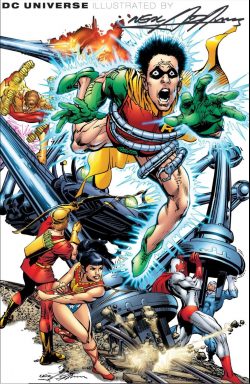
DC Universe Illustrated by Neal Adams volume 1


By Neal Adams with Dennis O’Neil, Gardner F. Fox, Robert Kanigher, Howard Liss, Hank Chapman, Len Wein, Bob Haney, Mark Evanier, Sergio Aragonés, Joe Kubert & various (DDC Comics)
No ISBN: digital only edition

As the 1960s began Neal Adams was a young illustrator who had worked in advertising and ghosted some newspaper strips whilst trying to break into comics. Whilst pursuing a career in advertising and “real art” he did a few comics pages for Archie Comics and subsequently became one of the youngest artists to co-create and illustrate major licensed newspaper strip Ben Casey (based on a popular TV medical drama series).

That comics fascination never faded, however, and Adams drifted back to National/DC, doing a few covers as inker or penciller before eventually finding himself at the vanguard of a revolution in pictorial storytelling…

He made such a mark that DC have regularly curated and reissued his work in a series of commemorative collections. This is the first of a proposed series of eBook tomes extracted from heftier physical artefacts covering the artists’ minor efforts (those not starring Batman, Deadman or “Hard-Travelling Heroes” Green Lantern/Green Arrow) in themed original publication order.

Revisiting Teen Titans #20-22 and gatherings material from Detective Comics #369; Superman #254; Justice League of America #94; Our Army At War #182, 183, 186, 240; Star Spangled War Stories #134, 144; Fanboy #5 and Amazing World of DC Comics Special Edition #1 it cumulatively embraces November 1969 through July 1999.

Following a contextualising Foreword by Paul Levitz and Adams’ thoughts in his own ‘Superheroes Foreword’ the comic dramas commence with a tale of slinky sleuth The Elongated Man who solves a bizarre theft connected to the ‘Legend of the Lovers’ Lantern’ (scripted by Gardner F. Fox from Detective Comics #369, November 1969).

We then encounter a bold triptych from Teen Titans #20-22 (March/April to June/July 1969), written by Adams and pencilled by him and Sal Amendola with inks by brush-maestro Nick Cardy – one of the all-out prettiest illustration jobs of that decade.

Completing s a long-running plot-thread of extra-dimensional invaders by endowing everything with a counterculture twist, ‘Titans Fit the Battle of Jericho’ is a spectacular rollercoaster romp deftly blending teen revolt, organised crime, anti-capitalist activism, bug-eyed monsters and cunning extraterrestrial conquerors…

Symbolic super-teens Hawk and Dove briefly join the proceedings for #21’s ‘Citadel of Fear’ (Adams & Cardy): chasing smugglers, facing evil ETs and ramping up the surly teen angst quotient whilst moving the invaders story-arc towards stunning conclusion ‘Halfway to Holocaust’ wherein the abduction of Kid Flash and Robin leads to a cross-planar climax as Wonder Girl, Speedy and a radical new ally quash the invaders forever…

Excerpts from Justice League of America #94’s ‘Where Strikes Demonfang’ – specifically pages 1, 5, 20 and 22 – tie up loose ends from the Deadman saga seen elsewhere (in Strange Adventures of the Adams Deadman collections) before a modern pin-up of ‘Ra’s al Ghul’ brings us to a delightful treat scripted by Len Wein taken from The Private Life of Clark Kent backup series.

‘The Baby Who Walked Through Walls’ comes from Superman #254 (July 1972): scripted by Len Wein and deliciously detailing how even the mighty Man of Tomorrow is no match for a toddler determined to dodge her babysitter and go exploring…

Unpublished Superman pages and thumbnails culled from ‘Amazing World of DC Comics Special Edition #1’ (February 1976) segue into a selection of public service messages starring the Caped Kryptonian – specifically ‘Justice for All Includes Children 1, 2, 6 and 7′ – and are followed by a monochrome and a full-colour v ‘9/11 Tribute’…

Self-parody changes the tone as an excerpt from Fanboy #5 (July 1999) finds Mark Evanier & Sergio Aragonés joining the master of moody in an unlikely iteration of the Daft Knight…

A ‘Batman Sketchbook’ offers preliminary doodles for Robin’s new costume, Batman roughs and Joker redesigns, culminating in finished pin-ups of all before the tone twists back to hyper-realism and a ‘War Stories Foreword’ by Neal Adams begins a chronological excursion through the artist’s combat contributions to DC canon.

All recoloured in Adam’s lush modern manner, the lean sparse sagas commence with ‘It’s My Turn to Die’ from Our Army At War #182 (July 1967), with Howard Liss scripting the tale of an officer who’s reached his emotional limit, whilst ‘Invisible Sniper’ (Liss again from OAAW #183, August 1967) tracks an embattled GI hunting an infallible enemy with a killer gimmick…

The Killing Ground’ (Star Spangled War Stories #134, August -September 1967) is a Robert Kanigher moment from The War That Time Forgot, with PT Boat survivors striving against a succession of seaborne antediluvian atrocities, after which ‘My Life for a Medal’Our Army At War #186 (November 1967, by veteran scribe Hank Chapman) – holds a shocking lesson for a glory-hungry go-getter.

A visual triumph, Joe Kubert inked hot new penciller Adams on Kanigher’s ‘Death Takes No Holiday!’ (SSWS #144, April-May 1969) as another macabre death-dealing French aviator – dressed as a skeleton – terrorised and butchered Jagdstaffel pilots at will, forcing the Kaiser’s Enemy Ace Hans von Hammer into insane action to inspire his men and cure a young flier of fear-induced madness…

War takes a weird – and socially relevant – turn as we visit the future for our concluding clash in Bob Haney’s ‘Another Time Another Place’ (Our Army At War #240, January 1972) as an elite squad meet the enemy and get a sobering surprise…

Sadly short of Adams incredible canon of covers, we wrap up with only full ‘Biographies’ as a bonus, but this beautiful book still offers a look at less often seen gems that were in many ways more informative than all the big-banner achievements of a major force in comics. Now, if only DC would sort out his horror stories and truly lost gems like Jerry Lewis, we’d all be happy…
© 1967, 1969, 1971, 1972, 1976, 1999, 2008 DC Comics. All Rights Reserved.

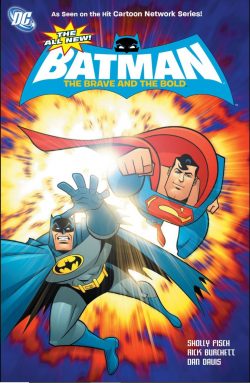
The All-New Batman: The Brave and the Bold volume 1


By Sholly Fisch, Rick Burchett, Dan Davis & various (DC Comics)
ISBN: 978-1-4012-3272-6 (TPB)

The Brave and the Bold premiered in 1955 as an anthology adventure comic featuring short complete tales about a variety of period heroes: a format reflecting the era’s filmic fascination with flamboyantly fanciful historical dramas. Devised and written by Bob Kanigher, issue #1 led with Roman epic Golden Gladiator, medieval mystery-man The Silent Knight and Joe Kubert’s Viking Prince. Soon the Gladiator was alternated with Robin Hood, but the adventure theme carried the title until the end of the decade when the burgeoning costumed character revival saw B&B transform into a try-out vehicle like Showcase.

Used to premiere concepts and characters such as Task Force X: The Suicide Squad, Cave Carson, Hawkman and Strange Sports Stories as well as the epochal Justice League of America, the comic soldiered on until issue #50 when it found another innovative new direction which once again caught the public’s imagination.

That issue paired two superheroes – Green Arrow and Martian Manhunter – in a one-off team-up, and was followed by more of the same: Aquaman and Hawkman in #51, WWII “Battle Stars” Sgt. Rock, Captain Cloud, Mme. Marie & the Haunted Tank in #52 and The Atom & Flash in #53.

The next instant union – Robin, Aqualad and Kid Flash – evolved into Teen Titans and after Metal Men/the Atom and Flash/Martian Manhunter appeared, a new hero debuted in #57-58: Metamorpho, the Element Man.

From then it was back to the increasingly popular superhero pairings with #59. Although no one realised it at the time, that particular conjunction – Batman with Green Lantern – would be particularly significant….

A return engagement for the Teen Titans, issues spotlighting Earth-Two stalwarts Starman and Black Canary and Earth-One’s Wonder Woman and Supergirl soon gave way to an indication of things to come when Batman returned to duel hero/villain Eclipso in #64: an early acknowledgement of the brewing TV-induced mania mere months away.

Within two issues (following Flash/Doom Patrol and Metamorpho/Metal Men), B&B #67 saw the Caped Crusader take de facto control of the title and a lion’s share of team-ups. With the late exception of #72 and 73 (Spectre/Flash and Aquaman/Atom), the title was henceforth a place where the Gotham Gangbuster invited the rest of DC’s heroic pantheon to come and play…

Decades later, Batman: The Animated Series – masterminded by Bruce Timm and Paul Dini in the 1990s – revolutionised the Dark Knight and subsequently led to some of the absolute best comic book adventures in his 80-year publishing history. It also led to a spin-off print title…

With constant funnybook iterations and tie-ins to a succession of TV animation series, Batman has remained immensely popular and a sublime introducer of kids to the magical world of the printed page. One fun-filled incarnation was Batman: The Brave and the Bold, which gloriously celebrated the team up in both its all-ages small-screen and comicbook spin-off.

Shamelessly and superbly plundering decades of continuity arcana in a profusion of alliances between the Dark Knight and DC’s lesser creations, the show was supplemented by a cool kid’s periodical full of fun, verve and swashbuckling dash, cunningly crafted to appeal as much to the parents and grandparents as those fresh-faced neophyte kids…

This stellar trade paperback and digital collection re-presents issues #1-6 of the second series – The All-New Batman: The Brave and the Bold – in an immensely entertaining all-ages ensemble suitable for newcomers, fans and aficionados of all ages. It was originally released between January and June 2011. Although absolutely unnecessary to the reader’s enjoyment, a passing familiarity with the TV episodes will enhance the overall experience as will knowledge of the bizarre minutiae of 1960s and 1970s DC lore…

Crafted by Sholly Fisch, Rich Burchett & Dan Davis and following the format of the TV show, each tale opens with a brief vignette/prequel adventure before telling a longer tale. TA-NB:TB&TB (last time I’m typing that!) #1 sees the Caped Crimebuster battle Joker robots  beside Black Canary before main feature ‘Bottle of the Planets’ reunites him the “World’s Finest” partner in a devious mystery set in the last outpost of Krypton: the Bottled City of Kandor…

Having successfully solved the case of vanishing super-weapons, Batman teams with talking tiger Mr. Tawky-Tawny, magical (Captain) Marvel Shazam and his gods-powered family to save Christmas in ‘That Holiday Feeling’. That involves finding, fighting and foiling the emotion-bending Psycho-Pirate whilst #3 sees Flash (two, actually) and the Dark Knight hunting Mirror Master and the Mad Hatter through a mirror dimension inhabited by all the characters from Lewis Carroll’s books. Curiouser and curiouser …

Wonder Woman headlines in #4 as irate godling Eros seeks to teach her a lesson by using his arrows to instigate a wedding in ‘The Bride and the Bold’. The ceremony between Bat and Amazon sparks a lot of interest and – thanks to jealous Talia Al Ghul – a wave of super-villain attacks and the biggest wedding party brawl of all time before order and sense are restored…

‘Man-Hunted’ find Batman and Emerald jerk Guy Gardner fractiously allied to defeat a legion of the killer robots, but diverted to other realms to save a glorious enclave of nigh-forgotten 1960s alien beasts and sidekicks like Cryll and Zook(look them up, I double-dog dare ya…) from manic main man Lobo…

Ending this excellent excursion through DC’s daftest corridors is a beguiling contest between the Dark Knight Detective and Martian Manhunter J’onn J’onzz who tests his abilities against classic observation and deduction in ‘Now You see Me…’; sadly the salutary learning experience goes slightly awry when the calamitous Clayface is accidentally exposed…

Despite being ostensibly aimed at TV-addicted kids, these mini-sagas are wonderful, traditional comics thrillers no self-respecting fun-fan should miss: accessible, splendidly rendered yarns for the broadest range of excitement-seeking readers. This is a fabulous rollercoaster ride confirming the now-seamless link between animated features and comic books. After all, it’s just adventure entertainment in the end; really unmissable entertainment…

What more do you need to know?
© 2010, 2011 DC Comics. All Rights Reserved.

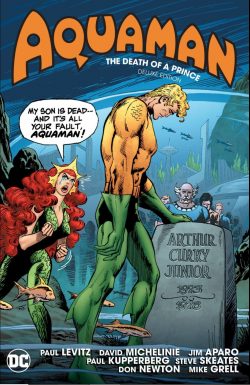
Aquaman: The Death of a Prince Deluxe Edition


By Paul Levitz, David Michelinie, Paul Kupperberg, Steve Skeates, Martin Pasko, Gerry Conway, Mike Grell, Jim Aparo, Don Newton, Carl Potts, Juan Ortiz & various (DC Comics)
ISBN: 978-1-7795-0095-3 (HB)

Aquaman is one of that hallowed handful of costumed champions to survive the superhero collapse at the end of the Golden Age. For most of that time he was a rather nondescript and genial guy who – when not rescuing fish and people from sub-sea disasters – solved maritime crimes and mysteries.

The Sea King was created by Mort Weisinger & Paul Norris, debuting in More Fun Comics #73 (November 1941) in the wake of and in response to Timely Comics’ antihero Namor the Sub-Mariner. Strictly a second stringer for most of his career, Aquaman nevertheless swam on beyond many stronger features; illustrated by Norris, Louis Cazaneuve, Charles Paris, and latterly Ramona Fradon who drew almost every adventure from 1951 to 1961.

When Showcase #4 rekindled the public’s taste for costumed crimefighters with the advent of a new Flash in 1956, National/DC updated its band of superhero survivors, especially Green Arrow and the Subsea Sentinel.

As the sixties opened, Aquaman was a back-up feature in Detective Comics and World’s Finest Comics, but made his big leap following a team up with Hawkman in Brave and the Bold # 51 and his own try-out run in Showcase #30-33. After two decades of continuous nautical service, the marine marvel was at last awarded his own comic book (cover-dated January/February 1962).

With his own title and soon featuring in groundbreaking must-see cartoon show The Superman/Aquaman Hour of Adventure, our Finned Fury seemed destined for super-stardom, but despite increasingly bold and innovative tales presented with stunning art, his title was cancelled as the decade closed. Towards the end, outrageously outlandish crime and sci fi yarns gave way to grittily hard-edged epics steered by revolutionary editor Dick Giordano and hot new talents Steve Skeates & Jim Aparo that might arguably be the first sallies of comic books’ landmark socially conscious “relevancy” period…

This compelling follow-up compilation features material released after a 3 year hiatus following cancellation in 1971. Offering potent dramas heralding a new era of costumed capers primarily from a fresh generation of creators, it gathers material from Adventure Comics #435-437, 441-455 and Aquaman volume 1 #57-63 (spanning September/October 1974 to August- September 1978) and is available in hardback and digital formats,.

Way back in Aquaman #18, (December 1964 and not included here) the marine marvel – also called Arthur Curry – met extradimensional princess Mera, who became ‘The Wife of Aquaman’ in one of the first superhero weddings of the Silver Age. Talk about instant responsibilities…

In quick-smart time along came a little Aquababy – eventually and occasionally called Arthur Jr. – and the undersea nuclear family became a given constant for years…

We open with revelatory Introduction ‘Confessions’ from scripter, editor and publisher Paul Levitz, and a fact-filled pin-up of ‘The Aquafamily’ by Gerry Conway & Jim Aparo, first seen in Adventure Comics #444. Then it’s drama all the way with #435’s ‘As the Undersea city Sleeps’ by Steve Skeates & Mike Grell, offering a quick reintroduction with the Atlantean monarch battling a mysterious subsea sleeping plague caused by old enemy Black Manta. After that, ‘The King is Dead; Long Live the King’ (#436) sees the monarch uncover a rash of robot duplicates infiltrating the city and summoning massive monsters before #437 finds Levitz & Grell setting the scene for larger events to come with Aquaman undertaking many mini-missions on ‘A Quiet Day in Atlantis’…

Cover-dated September/October 1975, Adventure Comics #441 opens extended epic “The Sea King in Exile” with ‘The Pirate who Plundered Atlantis’ by Levitz, David Michelinie and triumphantly returning Jim Aparo detailing how an invasion by modern-day undersea buccaneers is repelled by the Sea King and Mera, tragically unaware of a longer game in play…

More pieces fall into place when NATO General Horgan warns that a hijacked nuclear materials transporter is going to be sunk – over Atlantean farms – to prevent terrorists using the cargo for dirty bombs. That’s when Aquaman takes charge in ‘H is for Holocaust’ – by Levitz & Aparo – after which the Sea Lord stays topside to crush ‘The Dolphin Connection’(Levitz, Michelinie & Aparo) when old enemy The Fisherman trains cetaceans to deliver drugs to the French underworld. All the surface duty does not play well in Atlantis, however, and a grass roots (kelp roots?) political movement makes startling inroads in its demands to elect a new stay-at-home ruler…

The unthinkable happens in Adventure 444 as Levitz, Gerry Conway & Aparo show Aquaman blackmailed into stealing an Atlantean superweapon by his villainous brother Ocean Master before being smoothly ousted and replaced by new king Karshon in ‘And Death before Dishonor’…

Exiled and setting up home in the old “Aquacave”, Arthur, Mera and the toddler determine to make the best of their new life, but are soon abducted by ‘Toxxin’s Raiders’ (Michelinie & Aparo): subsea primitives who need a true champion to destroy the beast haunting their village. It’s a huge mistake all around…

The Sea Exile then learns that ‘The Manta-Ray Means Murder!’ (Levitz, Martin Pasko & Aparo) as Aqualad and Aquagirl– currently busting surface-world  smugglers – are attacked by Black Manta, simultaneously exposing a deadly plot just as their mentor arrives to lower the boom and uncover the villain is gun-running to Atlantis…

Issue 447 sees Levitz, Pasko & Aparo detail a ‘Prelude to Armageddon” as Aquaman tracks Manta’s shipments and falls foul of the Fisherman, unaware of a silent partner dictating the flow of events. Full disclosure and a classic conclusion come in ‘Crown, Crisis and Cataclysm’ (Levitz & Aparo) as master manipulator Karshon is revealed as a deadly former Green Lantern foe who turns assured victory into crushing defeat through sheer overconfidence…

Reuniting Skeates & Aparo, Adventure Comics #449 features ‘The Menace of the Marine Marauder’ as a surface science criminal usurps the Sea Sentinel’s telepathic power to control sea creatures. Plundering shipping – specifically a crucially needed vaccine – until Aquaman and Mera step up, he’s just an interlude before Michelinie & Aparo detail ‘The Watery War of the Weather Wizard’ in #450, with the Flash rogue becoming the latest larcenous loon to underestimate the King of the Seas.

…And in the background, Aqualad is lured away by a seeming madman claiming the junior sea crusader stole his son and sets out on a personal quest that will change his life forever…

Issue #451 reveals ‘The Secret of the Sinister Abyss’ as Arthur Jr. is inexplicably abducted by faithful octopus companion Topo and swiftly-pursuing Aquaman stumbles into another sea bed civilisation – the Idylists -  and a rapidly regenerating new iteration of extraterrestrial terror Starro the Conqueror.

On defeating the starfish clone, Aquaman talks to the pacifist sea-voyagers it imperilled and learns they are seeking a lost brother who can be their champion: his partner Aqualad…

Big things were happening for the Sea King as his Adventure tenure was giving way to a resurrected solo title. Issue #452’s ‘Dark Destiny, Deadly Dreams’ (Michelinie & Aparo) sees Aquaman and the Idylists confronting the occupiers of the pacifist city and discovering Black Manta is offering it as a homeland and refuge for lost and hopeless surface men…

His methods are far from altruistic and his only successful convert to water-breathing – Cal Durham – has serious doubts, but Manta won’t be deterred. and when he captures them and Aqualad, he forces them to fight each other to the death to save Arthur Jr.

It doesn’t work and the boy dies…

The tragedy catapults the hero back into his own revived comic book with Aquaman volume 1 #57 (August/September 1977) where Michelinie & Aparo’s ‘A Life for a Life’ follows his vengeful wake to a brutal – but not final – clash with Manta, hurtful estrangement from Aqualad and a new scheme involving the Fisherman and latest abductee General Horgan…

Anthological Adventure Comics #453 (September/October 1977) overlapped the renewed bi-monthly with a solo sidekick feature as Paul Kupperberg, Carl Potts & Joe Rubinstein asked ‘Aqualad, Who is Thy Father?’ Believing himself an orphan his entire life, the youthful warrior is strident in his demands to learn of the Idylist who sired him, but is setting himself up for even more betrayal and heartbreak before Aquaman #58 sees Michelinie & Aparo peer ‘Through a Past, Darkly’ to review Aquaman’s origins as the Fisherman strikes at the lighthouse where the Sea King was reared. The tale is backed up by Mera short ‘Return to Disaster’ (Kupperberg, Juan Ortiz & Vince Colletta) as the distraught mother learns her son is not quite dead and travels to her home dimension Xebel in search of a remedy but finding instead only chaos and tyranny…

Adventure Comics #454 (November/December 1977) finds Aqualad paying for ‘Sins of the Father’ as Kupperberg, Potts & Dick Giordano reveal not why but who killed his progenitor Thar, before Aquaman #59 (December 1977-January 1978) rings in a new year with ‘Prey Perilous’ by Michelinie & Aparo. Here Fisherman and The Scavenger clash over a sunken spy ship’s secrets and Aquaman endures unwanted NATO interference before justice is done, whilst in the back Mera battles dictator Leron over ‘The Kingdom of Doom’ (Kupperberg, Ortiz & Colletta).

The Adventure Comics run ends with #455 (January/February 1978) as Kupperberg, Potts & Giordano use ‘Legacy’ to give  Aqualad his answers and line up all the disparate plotlines for Aquaman #60.

Crafted by Michelinie and stunning new illustrator Don Newton (with inks by veteran John Celardo) ‘Scavenger, Ravager, Plunderer, Thief’ brings together the NATO elements and assorted supervillains as hidden mastermind and potential global overlord Kobra reveals his latest deadly scheme whilst Mera crosses ‘The Edge of Nowhere’ (Kupperberg, Ortiz & Colletta) when she learns all her efforts have been for nothing…

Issue #61 guest stars Batman and Green Lantern as Michelinie, Newton & Bob McLeod expose ‘The Armageddon Conspiracy’ as the true contents of that sunken spy ship threaten all life on Earth and Aquaman shows his real power and nature…

After a stellar run and powerful groundbreaking stories, the series abruptly ended, once again a victim of economics as comic books again endured a mass sales downturn. However, it all ended on an emotional high as Aquaman #62 sees Kupperberg, Newton & McLeod deliver ‘And the Walls Came Tumbling Down’ with bereaved Mera and Arthur savagely separating over their son’s murder and the Sea King taking out his feelings on handy wannabe supervillain Seaquake as he attempts to make his rep by tectonically trashing Atlantis. A painful reconciliation with Mera is then threatened in final issue #63 as Ocean Master strikes again, compelling Aqualad to also hastily forgive, forget and rejoin the fold for one last clash in ‘My Brother’s Keeper’ by Michelinie, Newton & David Hunt.

This a superb treasury of lost wonders, packed with stellar stories sublimely illustrated by comics masters worthy of far more attention than they’ve received. Surely, there’s no better time than now to balance those scales, adventure fans…
© 1974, 1975, 1976, 1977, 1978, 2020 DC Comics. All Rights Reserved.

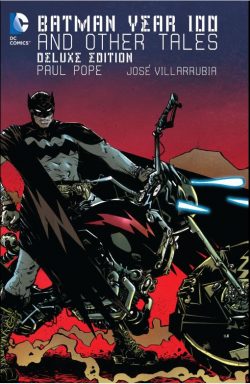
Batman Year 100 and Other Tales Deluxe Edition


By Paul Pope, with José Villarrubia, Ted McKeever, James Jean & others (DC Comics)
ISBN: 978-1-4012-5807-8 (HB)

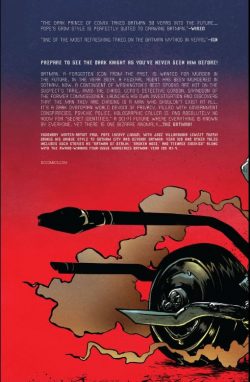
Paul Pope is one of the most individualistic comics creators in the business, both in his writing and the superbly moody drawing which usually resembles a blend of manga and European modern realism.

He was born in 1970 and straddles a lot of seemingly disparate arenas. The multi award-winning raconteur began making waves in 1995 with self-published Sci-Fi caper THB, simultaneously working for Japan’s Kodansha on the serial feature Supertrouble.

Pope is dedicated to innovation and inquiry: taking fresh looks at accepted genres with works such as One-Trick Ripoff, 100%, Escapo, Heavy Liquid, Sin Titulo or his Young Adult OGN franchise Battling Boy. He’s worked on a few DC projects over the years but none quite as high-profile or well-received as his 2006 prestige mini-series Batman: Year 100.

This collection – available in hardback and digital formats – gathers the entire saga whilst also representing a few other pertinent titbits for your delectation and delight…

In Gotham City 2039AD there’s a conspiracy brewing. It’s a dystopian, authoritarian world where the Federal Government is oppressive, ruthless and corrupt, but from out of the shadows a long-vanished threat to that iron-fisted control has resurfaced. In spite of all odds and technologies of the ultimate surveillance society, a masked vigilante is once again taking the law into his own hands…

Eschewing our contemporary obsession with spoon-fed explanations and origin stories, Pope leaps head-first into the action for this dark political thriller. We don’t need a backstory. There’s a ‘Bat-Man of Gotham’ dispensing justice with grim effectiveness. There’s a good but world-wearied cop named Gordon, helpless but undaunted in the face of a bloated and happily red-handed bureaucracy. There’s a plot to frame this mysterious vigilante for the murder of a federal agent. Ready, steady, Go!

Fast paced, gripping, eerie and passionate, this stripped-down version of the iconic Batman concept taps into the primal energy of the character seldom seen since those early days of Bob Kane, Bill Finger & Jerry Robinson. Once more, a special man who – at the end – is only human fights for good against all obstacles, and uncaring of any objections… especially the police.

For me, Guys with Suits and a Plan have always been scarier than nutters in spandex and it’s clear I’m not alone in that anxiety, as Pope’s smug, officious civil servant antagonists callously and continually cut a swathe of destruction through the city and populace they’re apparently protecting. Like so many previous Administrations in US history, the objectives seem to have obscured the intentions in Gotham 2039. With such sound-bite gems as “To save the village, we had to destroy the village” echoing in your head, follow the projected Caped Crusader and his dedicated band of associates as they clean house in the dirtiest city in a dirty world.

Following that clarion call to liberty are a small selection of graphic gems beginning with Pope’s first ever Bat tale from 1997. Accompanied by a commentary, ‘Berlin Batman’ (originally published in The Batman Chronicles #11) sees Pope and colourist Ted McKeever relate the career of a German Jewish costumed avenger plaguing the ascendant Third Reich in the dark days of 1939.

Winning the 2006 Eisner Award for Best Short Story, ‘Teenage Sidekick’, from Solo #3, sees first Robin Dick Graysonescape a chilling fate and learn a chilling lesson at the hands of both his masked mentor and the Joker, before Batman: Gotham Knights #3 (May 2000) provides a black & white memory as a neophyte Dark Knight ponders the repercussions of his first ever ‘Broken Nose’ and takes a rather petty revenge on the perpetrator…

Also included here are ancillary text pages to supplement the main story, delivered as ‘Batman: Year 100 News Archives’and as plus notes, design sketches and unused artwork

All science fiction is commentary on the present, not prognostication of tomorrows. The Heroic Ideal is about wish-fulfilment as much as aspiration and escapism. Batman: Year 100 is a moody yet gloriously madcap story honouring the history and conventions of the primal Batman by speaking to modern audiences in the same terms as the 1939 prototype did. This is a book for the generations.
© 1998, 2000, 2005, 2006, 2015 DC Comics. All Rights Reserved.
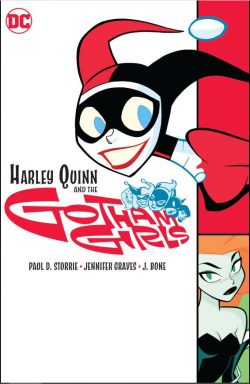
Harley Quinn and the Gotham Girls


By Paul D. Storrie, Jennifer Graves & J. Bone with Brad Rader, Rick Burchett & various (DC Comics)
ISBN: 978-1-4012-9971-2 (TPB)

Harley Quinn wasn’t supposed to be a star… or even an actual comics character. As soon became apparent, however, the manic minx always has her own astoundingly askew and off-kilter ideas on the matter… and any other topic you could name: ethics, friendship, ordnance, coffee…

Created by Paul Dini & Bruce Timm, Batman: The Animated Series aired in the US from September 5th 1992 to September 15th 1995. Ostensibly for kids, the breakthrough television cartoon revolutionised everybody’s image of the Dark Knight and immediately began feeding back into the print iteration, leading to some of the absolute best comicbook tales in the hero’s many decades of existence.

Employing a timeless visual style dubbed “Dark Deco”, the show mixed elements from all iterations of the character and, without diluting the power, tone or mood of the premise, reshaped the grim avenger and his extended team into a wholly accessible, thematically memorable form that the youngest of readers could enjoy, whilst adding shades of exuberance and panache that only the most devout and obsessive Batmaniac could possibly object to…

Harley was initially the Clown Prince of Crime’s slavishly adoring, extreme abuse-enduring assistant, as seen in Joker’s Favor (airing on September 11th 1992). She instantly captured the hearts and minds of millions of viewers and began popping up in the incredibly successful licensed comic book. Always stealing the show, she soon graduated into mainstream DC continuity. Along the circuitous way, Harley – AKA Dr. Harleen Quinzel – developed a support network of sorts in living bioweapon Poison Ivy and a bizarre love/hate relationship with some of Gotham’s other female felons…

After a brief period bopping around the DCU, she was re-imagined as part of the company’s vast post-Flashpoint major makeover: subsequently appearing all over comics as cornerstone of a new iteration of the Suicide Squad, in movies and her own adult-oriented animation series. At heart, however, she’s always been a cartoon glamour-puss, with big, bold, primal emotions and only the merest acknowledgement of how reality works…

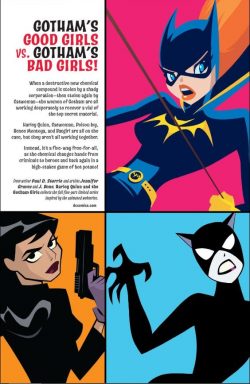
Amongst the plethora of comic books generated by the original cartoon show was a smartly sassy romp featuring those aforementioned crime cuties as well as brace of mismatched and openly antithetical law enforcers. Crafted by Paul D. Storrie, Jennifer Graves & J. Bone, 5-issue miniseries Gotham Girls was released between October 2002 and February 2003: opening with ‘Cat’s Paw’ as super-thief Selena Kyle undertakes a commission to steal something nasty from agricultural conglomerate Zehn Chemicals.

She’s still determined to open a lion sanctuary with her fee and doesn’t appreciate when the supposedly simple caper is interrupted by juvenile do-gooder Batgirl. However, as they trade kicks, punches and quips, overworked, under-appreciated and overlooked GCPD detective Renee Montoya is taking a closer look at the supposed victims and sees something dirty…

Then, as Bat and Cat ferociously but inconclusively throw down all over town, the masterminds behind the theft make their move, and it becomes clear that there’s a lot going on that needs to be properly unearthed…

‘Ivy League’ exposes murderous eco-terrorist Pamela Lillian Isley as bankroller of the heist, claiming benevolent motives to reclaim her own property from unscrupulous, world-endangering corporate creeps. However, because her bestest pal Harley is as erratic and excitable as ever, a potential Bat/Cat/Plant-girl/Dingbat alliance is thwarted by mutual mistrust and excessive, utterly unnecessary violence.

Montoya, meanwhile, is diligently following clues, interviewing greedy biologists and uncovering something at rival agri-company Kayle Corporation…

The fast-moving melee ends in leafy Robinson Park, with Batgirl holding the stolen chemicals, until ‘Harlequinade’ sees manic, attention-starved Quinn pull a martial masterstroke, delivering the bio-booty to her disturbingly abusive gal-pal and a heavy defeat to Catwoman and Batgirl. Naturally, that’s just when solid police practice explosively brings Montoya to their secret lair for ‘I Carry a Badge!’…

Brilliant deduction and a standard-issue firearm aren’t much use against super-villains and giant carnivorous vines though, so it’s a good thing Batgirl and Catwoman have both independently tracked Harley and Ivy. With action amped to maximum, good girls and bad girls clash yet again, and sides are finally drawn for the climactic conclusion, with frustrated cop and masked vigilante hero united at last and resolved to end the chaos in ‘Bat Attitude’.

Of course, that means not just Catwoman, Poison Ivy and Harley Quinn are going to jail…

A superbly riotous rollercoaster ride for kids of all ages, each chapter also deftly explores the interior life, history and motivations of successive stars – offering canny character building and definition most mature-reading tales would be proud to deliver.

Coloured by Patricia Mulvihill, lettered by Phil Felix and with additional layouts by Rick Burchett and Brad Rader, this classy, classically cops ‘n’ robbers riot plays very much like a 1940s movie chapter-play – albeit with outrageous gags, biting dialogue and a blend of black humour and bombastic action. A frantic, frenetic hoot, this is an absolute delight, well worth the price of admission and an irresistible treasure to be enjoyed over and over again.
© 2002, 2020 DC Comics. All Rights Reserved.