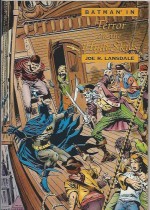
Batman: Terror of the High Skies


By Joe R. Lansdale, illustrated by Edward Hannigan & Dick Giordano (Little, Brown & Co.)
ISBN: 0-316-17765-2   ISBN-13: 978-0-316-17765-8

We parochial comics fans tend to think of our greatest assets in purely graphic narrative terms, but characters such as Superman, Spider-Man and especially Batman have long-since grown beyond their origins and are now fully modern mythological creatures who inhabit a mass of medias and even age ranges.

A case in point is this superbly rowdy, rollicking and rousing boy’s own adventure which was released in the early 1990s as part of the perennial drive to get kids reading…

Terror of the High Skies was written by the brilliant and prolific Texan Joe R. Lansdale, whose credits range from novels to screenplays and cartoons to comicbooks in genres as broad as horror, comedy, westerns, crime-thrillers, fantasy science fiction and all points in between, and he is as adept at challenging adult audiences as he is beguiling – far harder to impress – young readerships…

The tale begins as young Toby Tyler slowly adjusts to life in Gotham City after growing up in Mud Creek East Texas. One night as his parents play host to old friend – and Police Commissioner – Jim Gordon, Toby hears a cat in distress and climbs out of his bedroom window onto the roof of his building, only to find a flying galleon heaving-to and the infamous Joker capering about in the guise of a movie pirate.

Toby’s a big fan of films and keeps up to date on the news, so when the Mountebank of Mirth makes the kid walk the plank off the roof he hears some clues that will eventually lead to the Clown Prince’s defeat…

It’s also where he first meets the daring Dark Knight as Batman swoops out of the darkness to save him before confronting the Joker and his gang of plundering sky-pirates…

Already deeply involved in solving taunting card-clues to the villain’s future crimes, Batman comes close to ending the case right there, but the wily Harlequin of Hate hastily escapes and embarks on a campaign of pirate-themed plundering, unaware that the plucky Toby has deduced where and when he will strike next…

With the focus very much on the valiant boy – just as young Jim Hawkins is the narrative voice of “Treasure Island” – readers are treated to a splendid adventure as Toby is allowed to join Batman’s search for the Joker in a fantastic chase that encompasses a visit to the Batcave, meeting and rescuing his favourite horror-film actor, “stowing away” aboard the floating marauder, facing a (mechanical) sea monster and eventually foiling a spectacular scheme to unleash a wave of madness on the unsuspecting city…

Bold, fast-paced and engaging; delivered very much in the manner of Batman the Animated Series (for which Lansdale wrote a number of episodes), this delightful prose escapade is also graced with eight breathtaking full-page action-illustrations by Batman veterans Ed Hannigan & Dick Giordano and would make a perfect primer for younger fans to begin their – hopefully – life-long love affair with reading…
© 1992 DC Comics. All Rights Reserved. Published under license from DC Comics.

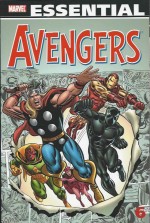
Essential Avengers volume 6


By Steve Englehart, Roy Thomas, Jim Starlin, Gerry Conway, Bob Brown,
Don Heck, Dave Cockrum, Joe Staton, Rich Buckler, John Buscema, George Tuska & various (Marvel)
ISBN: 978-0-7851-3058-1

The Avengers have always proved that putting all one’s star eggs in a single basket pays off big-time: even when all Marvel’s classic all-stars such as Thor, Captain America and Iron Man are absent, it merely allows the team’s lesser lights to shine more brightly.

Of course all the founding stars were regularly featured due to the rotating, open door policy which means that most issues includes somebody’s fave-rave – and the boldly grand-scale impressive stories and artwork are no hindrance either.

This monolithic and monumental sixth tome, collecting the ever-amazing Avengers‘ world-saving exploits (presenting in crisp, stylish monochrome the astounding contents of issues #120-140 of their monthly comic book between March 1974 and October 1975, plus Giant-Size Avengers #1-4 and crossover appearances in Captain Marvel #33 and Fantastic Four #150), saw scripter Steve Englehart examine the outer limits of Marvel history and cosmic geography as he took readers to the ends of their universe and the beginning of time…

Opening this epochal tome is ‘Death-Stars of the Zodiac!’ from Avengers #120, by Steve Englehart, Bob Brown & Don Heck, wherein terrorist astrological adversaries and super-criminal cartel Zodiac attacked again with a manic plan to eradicate everyone in Manhattan born under the sign of Gemini, with heroes Thor, Iron Man, Vision, Scarlet Witch, Swordsman and Mantis seemingly helpless to stop them.

In the blistering battle of #121’s ‘Houses Divided Cannot Stand!’, illustrated by John Buscema & Heck, even the added assistance of Captain America and the Black Panther is of little advantage and with Mantis injured the team begin to question her mysterious past, only to be lured to their seeming doom and ‘Trapped in Outer Space!’ (Brown & Mike Esposito) before at last turning the tables on their fearsome foes after the criminal Libra revealed a shocking secret…

Avengers #123, depicted by Brown & Heck, began a vast and ambitious saga with ‘Vengeance in Viet Nam – or – An Origin For Mantis!’ as Libra’s claim to be Mantis’ father (a story vigorously and violently denied by the Martial Arts Mistress) brought the team to Indo-China.

The criminal ex-mercenary declared that he left the baby Mantis with pacifistic Priests of Pama after running afoul of a local crime-lord, but the bewildered warrior-woman has no memory of such events, nor of being schooled in combat techniques by the Priests. Meanwhile the gravely wounded Swordsman has rushed to Saigon to confront his sadistic ex-boss Monsieur Khruul and save the Priests from being murdered by the gangster’s thugs… but was again too late. It is the tragic story of his wasted life…

Issue #124 found the team stumbling upon a scene of slaughter as clerics and criminals lay dead and a monstrous planet-rending alien horror awoke in ‘Beware the Star-Stalker!’ by J. Buscema & Dave Cockrum…

Mantis was forced to accept that her own memories were not real after Avengers #125, which unleashed ‘The Power of Babel!’ when a vast alien armada attacked and, in combating it, the Earth’s Mightiest Heroes were trapped out of phase with their home-world.

This blockbuster battle bonanza was a crossover, and the penultimate episode of the spectacular Thanos War Saga that had featured in Captain Marvel, Marvel Feature and Iron Man, and included in this compendium is ‘The God Himself!’ scripted by Englehart from Captain Marvel #33 (plotted and illustrated by Jim Starlin & Klaus Janson) wherein the mad Titan Thanos finally fell in combat to the valiant Kree warrior: a stunning piece of comics storytelling which stands up remarkably well here despite being seen without benefit of the preceding ten chapters…

It was back to business in #126 as in ‘All the Sights and Sounds of Death!’ (Brown & Cockrum) villains Klaw and Solarr attacked Avengers Mansion in a devious attempt to achieve vengeance for past indignities, after which Roy Thomas, Rich Buckler & Dan Adkins returned to the fold to delve into superhero history with ‘Nuklo… the Invader that Time Forgot!’ for the first quarterly edition of Giant-Size Avengers.

The stirring saga reintroduced 1940 Marvel sensation Bob Frank AKA The Whizzer in a tragic tale of desperation as the aged speedster begged the heroes’ help in rescuing his son: a radioactive mutant locked in stasis since the early 1950s. Unfortunately within the recently unearthed chrono-capsule the lad has grown into a terrifying atomic horror…

Moreover while in the throes of a stress-induced heart-attack the Whizzer let slip that he was the also the father of mutant Avengers Scarlet Witch and Quicksilver…

In Avengers #127 Sal Buscema & Joe Staton signed on as regular art team with ‘Bride and Doom!’ when the team travelled to the hidden homeland of the Inhumans for the marriage of the aforementioned Quicksilver to elemental enchantress Crystal only to stumble into a uprising of the genetic slave-race known as Alpha Primitives.

Once again the robotic giant Omega had incited the revolt but this time it was controlled by an old Avengers enemy who revealed himself in the concluding chapter of the crossover…

Fantastic Four #150 featured ‘Ultron-7: He’ll Rule the World!’ by Gerry Conway, Buckler & Joe Sinnott, in which an impossible battle of FF, Inhumans and Avengers was ended by a veritable Deus ex Machina after which, at long last ‘The Wedding of Crystal and Quicksilver’ ended events on a happy note.

But not for long: in Avengers #128’s ‘Bewitched, Bothered, and Dead!’ (Englehart, Sal Buscema & Staton) the FF‘s nanny Agatha Harkness began tutoring Wanda Frank in actual sorcery to augment her mutant power, unwittingly allowing dark mage Necrodamus access to the Mansion and their souls, whilst the increasingly troubled Mantis began making a play for the Scarlet Witch’s synthazoid boyfriend The Vision; heedless of the hurt and harm she would bring to her current lover The Swordsman…

In #129 ‘Bid Tomorrow Goodbye!’ kicked the simmering saga into high gear when Kang the Conqueror appeared, determined to possess the legendary female figure he called the Celestial Madonna.

Apparently this anonymous creature would birth the saviour of the universe, and since no records survived disclosing which of the three women in Avengers Mansion at that crucial moment she actually was, the time-reaver was determined to abduct all three and forcibly make Kang the inevitable father of the child…

This time not even the assembled Avengers could stop him and, after crushing and enslaving them, Kang made off with Wanda, Harkness and Mantis, with only the swiftly declining Swordsman free to contest him…

The tale continued into Giant-Size Avengers #2 with ‘A Blast from the Past!’ (illustrated by Cockrum) as reluctant returnee Hawkeye rushed to the team’s rescue, reuniting with old adversary Swordsman and an enigmatic entity named Rama-Tut who claimed to be Kang’s reformed future self…

Against all odds the merely mortal heroes managed to free the enslaved Avengers and rout the unrepentant Kang – but only at the cost of the Swordsman’s life…

Avengers #130’s ‘The Reality Problem!’ (Sal Buscema & Staton) found the heartbroken and much chastened Mantis joining the team in Vietnam to investigate her mysteriously clouded past, only to be drawn into pointless combat with Communist exiles Titanium Man, Radioactive Man and Crimson Dynamo, thanks to the petty manipulations of sneak thief  The Slasher…

The brief battle concluded and the trail then led to ‘A Quiet Half-hour in Saigon!’ during which the American Adventurers were again attacked by Kang who trapped them in Limbo and unleashed a Legion of the Unliving against them…

With another time-villain Immortus added to the mix, ‘Kang War II’ saw temporarily resurrected heroes and villains Wonder Man, 1940’s android Human Torch, the Monster of Frankenstein, martial arts assassin Midnight, the ghostly Flying Dutchman and Baron Zemo decimate the Avengers and the trauma and tragedy were further exacerbated as Mantis kept seeing the spectre of her deceased lover…

This absorbing thriller by Englehart, Thomas Sal Buscema & Staton segued inexorably into Giant-Size Avengers #3’s ‘…What Time Hath put Asunder!’ illustrated by Cockrum & Joe Giella, which saw Earth’s Mightiest Heroes pull victory from the ashes of defeat and receive a unique gift from one of the assembled Masters of Time…

Avengers #133 began ‘Yesterday and Beyond…’ (Englehart, S. Buscema & Staton) as the team followed Mantis to the beginnings of recorded Galactic history and the unravelling of her true past, whilst Vision was dispatched to glimpse his own obscure and complex origins; a double quest which encompassed the Kree and Skrull empires, the defeated Star-Stalker and deceased Priests of Pama and Thanos, and the telepathic Titan dubbed Moondragon, as well as a goodly portion of classic superhero history in ‘The Times That Bind!’ before #135 revealed that ‘The Torch is Passed!’ (illustrated by George Tuska & Frank Chiaramonte) and brought all the disparate elements together in Giant-Size Avengers #4.

‘…Let All Men Bring Together’ (art by Heck & Tartaglione) climaxed the long-standing romance between the Scarlet Witch and Vision and another far more cosmic union with a brace of weddings and the ultimate ascension of the Celestial Madonna – even though demonic extra-dimensional despot Dormammu did try to spoil the show…

A new era was supposed to begin in Avengers #136 but a deadline was missed and instead ‘Iron Man: DOA’ by Englehart, Tom Sutton & Mike Ploog was reprinted from Amazing Adventures #12, wherein the newly mutated and furry Hank McCoy AKA the Beast had attacked the Armoured Avenger whilst mind-controlled.

Although an excellent story in its own right, it rather gave the game away for the next issue after the painfully depleted team declared ‘We Do Seek Out New Avengers!!’ (art by Tuska & Vince Colletta) and amongst the applicants – which included Moondragon, Yellowjacket and the Wasp – was an athletic, enigmatic guy bundled up in a raincoat…

No sooner had the introductions begun than a cosmic interloper attacked, hunting for the honeymooning Witch and Vision, but the ‘Stranger in a Strange Man!’ was far from his expected level of puissance and the heroes soon smelled a rat – unfortunately not before the Wasp was gravely injured…

After all the intergalactic hyper-cosmic extravaganzas and extended epic-ing, Avengers #139 ‘Prescription: Violence!’ and #140’s ‘A Journey to the Center of the Ant’ end this volume on a comfortingly down-to-Earth scale as the malevolent Whirlwind tried to murder the bed-ridden Wasp and her devoted defender Yellowjacket succumbed to a growing affliction which doomed him to exponentially expand to his death until the refreshed, returned Vision and the bludgeoning Beast saved the day…

Roy Thomas and Steve Englehart were at the forefront of Marvel’s second generation of story-makers, brilliantly building on and consolidating the compelling creation of Stan Lee, Jack Kirby and Steve Ditko: spearheading and constructing a logical, fully functioning wonder-machine of places and events that so many others were inspired by and could add to. In this volume, between them they also showed how much more graphic narratives could become and these terrific tales are perfect examples of superhero sagas done just right.

Although not to every reader’s taste these fantastic Fights ‘n’ Tights masterpieces can still boggle the mind and take the breath away, so no lovers of Costumed Dramas can afford to ignore this superbly bombastic book.
© 1972, 1973, 1974, 2006 Marvel Characters, Inc. All Rights Reserved.

Showcase Presents Superman volume 3


By Otto Binder, Jerry Siegel, Bill Finger, Jerry Coleman, Wayne Boring, Al Plastino, Curt Swan & various (DC Comics)
ISBN: 978-1-4012-1271-1

Superman has proven to be all things to all fans over his decades of existence, and with the character currently undergoing another radical overhaul, these timeless tales of charm and joy and wholesome wit are more necessary than ever: not just as a reminder of great tales of the past but as an all-ages primer of the wonders still to come…

At the time these tales were first published The Man of Tomorrow was enjoying a youthful swell of revived interest. Television cartoons, a rampant merchandising wave thanks to the Batman-led boom in “camp” Superheroes generally, highly efficient global licensing and even a Broadway musical: all worked to keep the Last Son of Krypton a vibrant icon of modern, Space-Age America.

Although we might think of Jerry Siegel & Joe Shuster’s iconic invention as the epitome of comicbook creation the truth is that soon after his launch in Action Comics #1 Superman became a multimedia star and far more people have enjoyed the Man of Steel than have ever read him and yes, that does include the globally syndicated newspaper strip.

By the time his 20th anniversary rolled around he had been a regular on radio, starred in a series of astounding animated cartoons and two movies and just ended his first smash live-action television serial. In his future were three more (Superboy, Lois & Clark and Smallville), a stage musical, a franchise of stellar movies and an almost seamless succession of TV cartoons beginning with The New Adventures of Superman in 1966 and continuing ever since. Even Krypto got in on the small-screen act…

It’s no wonder then that the tales from this Silver Age period should be so draped in the wholesome trappings of Tinseltown – even more so than most of celebrity-obsessed America. It didn’t hurt that editor Whitney Ellsworth was a part-time screenwriter, script editor and producer as well as National/DC’s Hollywood point man. His publishing assistant Mort Weisinger, a key factor in the vast expansion of the Kryptonian mythos, also had strong ties to the cinema and television industry, beginning in 1955 when he became story-editor for the blockbusting Adventures of Superman TV show.

This third magnificent monochrome chronicle collects the contents of Action Comics #276-292, Superman #146-156 and excerpts from Superman Annuals #3-5, spanning May 1961 to October 1962; taking its content from the early 1960’s canon (when the book’s target audience would have been little kids themselves) yet showcasing a rather more sophisticated set of tales than you might expect…

The wide-eyed wonderment commences with ‘The War Between Supergirl and the Superman Emergency Squad’ by Robert Bernstein, Wayne Boring & Stan Kaye from Action #276, wherein Superman is conned into revealing his secret identity and has to resort to incredible measures to make the swindler disbelieve his eyes, after which #277 presented ‘The Conquest of Superman’ (Bill Finger, Curt Swan & John Forte); another brilliantly brooding duel against super-scientist Lex Luthor.

Superman #146 (July 1961) offered ‘The Story of Superman’s Life’ which related more secrets and recapitulated Clark Kent’s early days in a captivating résumé covering all the basics: death of Krypton, rocket-ride to Earth, early life as Superboy, death of the Kents and moving to Metropolis, all by Otto Binder & Al Plastino, by Al Plastino, whilst the closing ‘Superman’s Greatest Feats’ (Jerry Siegel & Plastino) saw the Man of Tomorrow travel into Earth’s past and seemingly succeed in preventing such tragedies as the sinking of Atlantis, slaughter of Christians in Imperial Rome, the deaths of Nathan Hale, Abraham Lincoln and Custer and even the death of Krypton’s population. Of course it was too good to be true…

Action #278 featured ‘The Super Powers of Perry White’ (Jerry Coleman, Swan & Kaye) with the senescent editor suddenly gaining super-powers and an inexplicable urge to conquer the world whilst in Superman #147 ‘The Great Mento!’, by Bernstein & Plastino, a mysterious mind-reader threatened to expose the hero’s secret identity. ‘Krypto Battles Titano’ (Siegel & Plastino) found the wandering Dog of Steel voyaging back to the Age of Dinosaurs to play and inadvertently save humanity from alien invasion alongside the Kryptonite mutated giant ape. The issue closed with ‘The Legion of Super Villains’ (by Siegel, Swan & Sheldon Moldoff) a landmark adventure and stand-out thriller featuring Lex Luthor and the adult Legion of Super-Heroes overcoming certain death with valour and ingenuity.

This was followed by Swan’s iconic cover for Superman Annual #3 (August 1961), the uncredited picture-feature Secrets of the Fortress of Solitude and the superb back-cover pin-up of the Metropolis Marvel.

The author of Action #279’s Imaginary Story ‘The Super Rivals’ is regrettably unknown but John Forte’s sleekly comfortable art happily illustrates the wild occurrence of historical heroes Samson and Hercules being brought to the 20th century by Superman to marry Lois Lane and Lana Lang, thereby keeping them out of his hair, whilst in #280 ‘Brainiac’s Super Revenge’ (Siegel, Swan & Kaye) returned that time-lost villain to our era and saw him attack the Man of Steel’s friends, only to be foiled by a guest-starring Congorilla (veteran Action hero Congo Bill who could trade consciousness with a giant Golden Gorilla)…

Imaginary Stories were conceived as a way of exploring non-continuity plots and scenarios devised at a time when editors believed that entertainment trumped consistency and knew that every comic read was somebody’s first

When Editor Mort Weisinger was expanding the Superman continuity and building the legend he knew that the each new tale was an event that added to a nigh-sacred canon: that what was written and drawn mattered to the readers. But as an ideas man he wasn’t going to let that aggregated “history” stifle a good plot situation, nor would he allow his eager yet sophisticated audience to endure clichéd deus ex machina cop-outs to mar the sheer enjoyment of a captivating concept.

The mantra known to every fan was “Not a Dream! Not a Hoax! Not a Robot!” boldly emblazoned on covers depicting scenes that couldn’t possibly be true… even if it was only a comic book.

Superman #148 opened with ‘The 20th Century Achilles’ by Edmond Hamilton, Swan & Moldoff, wherein a cunning crook devised a way to make himself immune to harm, after which ‘Mr. Mxyzptlk’s Super Mischief’ (Siegel, Swan & Moldoff) once again found the 5th dimensional pest using his magic to cause irritation after legally changing his name to something even easier to pronounce whilst the delightfully devilish ‘Superman Owes a Billion Dollars!’ written by Bernstein, saw the Caped Kryptonian face his greatest foe – a Revenue agent who diligently discovered that the hero had never paid a penny of tax in his life…

Action Comics #281 featured ‘The Man Who Saved Kal-El’s Life!’ (Bernstein & Plastino), which related the story of a humble Earth scientist who had visited Krypton and cured baby Kal-El, all wrapped up in a gripping duel with a modern crook who was able to avoid Superman’s every effort to hold him, whilst in Superman #149 ‘Lex Luthor, Hero!’, ‘Luthor’s Super-Bodyguard’ and ‘The Death of Superman’ by Siegel, Swan & Moldoff formed a brilliant extended Imaginary saga which described the insidious inventor’s ultimate victory over the Man of Steel.

Back in “real” continuity Action #282 revealed ‘Superman’s Toughest Day’ (Bill Finger & Plastino) as Clark Kent’s vacation only revealed how his alter ego never really took it easy, whilst #283 and ‘The Red Kryptonite Menace’ (Bernstein, Swan & Kaye) saw a brace of Chameleon Men from the 30th century afflict the Action Ace with incredible new powers and disabilities after exposing him to a variety of crimson K chunks.

Superman #150 opened with ‘The One Minute of Doom’ by Siegel & Plastino, which disclosed how all the survivors of Krypton – even Super-dog – commemorated the planet’s destruction, after which Bernstein & Kurt Schaffenberger’s ‘The Duel over Superman’ finally saw Lois and Lana teach the patronising Man of Tomorrow a deserved lesson about his smug masculine complacency, before Siegel, Swan & Kaye baffled readers and Action Ace alike ‘When the World Forgot Superman’ in a clever and beguiling mystery yarn

From Superman Annual #4 (January 1962) comes the stunning cover and The Origin and Powers of the Legion of Super-Heroes by Swan & George Klein after which Action #284 featured ‘The Babe of Steel’ (Bernstein, Swan & Klein) wherein Superman endured humiliation and frustration after deliberately turning himself into a toddler – but there was a deadly and vital purpose to the temporary transformation…

Superman #151 opened with the salutary story of ‘The Three Tough Teen-Agers!’ (Siegel & Plastino) wherein the hero set a trio of delinquents back on the right path, after which Bernstein, Swan & Klein’s ‘The Man Who Trained Supermen’ saw Clark Kent expose a crooked sports trainer and ‘Superman’s Greatest Secret!’ was almost revealed after battling a fire-breathing dragon which survived Krypton’s doom in a stirring tale by Siegel, Swan & Klein: probably one of the best secret identity-saving stories of the period…

Since landing on Earth, Supergirl’s existence had been a closely guarded secret, allowing her time to master her formidable abilities, which were presented to the readership monthly as a back up feature in Action Comics. However with #285 ‘The World’s Greatest Heroine!‘ finally went public in the Superman lead spot after which the Girl of Steel defeated ‘The Infinite Monster’ in her own strip, as Supergirl became the darling of the universe: openly saving the planet and finally getting the credit for it in a stirring brace of tales by Siegel & Jim Mooney.

Action #286 offered the Superman saga ‘The Jury of Super-Enemies’ (Bernstein, Swan Klein) as the Superman Revenge Squad  inflicts Red K hallucinations on the Man of Steel which torment him with visions of Luthor, Brainiac, the Legion of Super-Villains and other evil adversaries. The epic continued in Action #287, but before that Superman #152 appeared, offering a surprising battle against ‘The Robot Master’ (Siegel, Swan & Klein), the charmingly outrageous ‘Superbaby Captures the Pumpkin Gang!’ by Leo Dorfman, George Papp and ‘The TV Trap for Superman!’ a devious crime caper by Finger & Plastino which saw the hero unwittingly wired for sound and vision by a sneaky conman…

The Revenge Squad thriller then concluded in #287’s ‘Perry White’s Manhunt for Superman!’ (Bernstein, Swan & Klein) as an increasingly deluded Man of Steel battled his worst nightmares and struggled to save Earth from a genuine alien invasion.

‘The Day Superman Broke the Law!’, by Finger & Plastino, opened Superman #153 as a wily embezzler entangled the Metropolis Marvel in small-town red tape after which ‘The Secret of the Superman Stamp’ (Edmond Hamilton, Swan & Klein) saw a proposed honour for good works turned into a serious threat to the hero’s secret identity, whilst ‘The Town of Supermen’ by Siegel & Forte found the Man of Tomorrow in a western ghost town facing a deadly showdown against ten Kryptonian criminals freshly escaped from the Phantom Zone…

The growing power of the silver screen informed ‘The Man Who Exposed Superman’ (Action #288 by an unknown writer and artists Swan & Klein) when a vengeful convict originally imprisoned by Superboy attempted to expose the hero’s identity by blackmailing him on live television whilst ‘The Super-Practical Joker!’ (in #289 by Dorfman & Plastino) saw Perry White forced to hire obnoxious trust-fund brat Dexter Willis, a spoiled kid whose obsessive stunts almost exposed Superman’s day job.

‘The Underwater Pranks of Mr. Mxyzptlk’ by Hamilton, Swan & Klein led in Superman #154 as the insane sprite returned, determined to cause grief and stay for good by only working his jest whilst submerged, after which ‘Krypton’s First Superman’ (Siegel, Swan & Klein) revealed a hidden tale of baby Kal-El on the doomed world which had unsuspected psychological effects on the full-grown hero. This is followed by an example of the many public service announcements which ran in all DC’s 1960’s titles. ‘Superman Says be a Good Citizen’ was probably written by Jack Schiff and illustrated by Sheldon Moldoff.

Exposure to a Red Kryptonite comet in Action #290 led to the hero becoming ‘Half a Superman!’ in another sadly uncredited story illustrated by Swan & Klein after which

Superman Annual #5 (July 1962) offers another stunning cover and displays the planetary Flag of Krypton, whilst Superman #155 featured the two-chapter ‘Superman Under the Green Sun’ and ‘The Blind Superman’ by Finger, Wayne Boring & Kaye, as the Man of Steel was trapped on a totalitarian world where his powers were negated and he was blinded as part of the dictator’s policy to keep the populace helpless. However, even sightless, nothing could stop the hero from leading the people to victory. As if that wasn’t enough Siegel, Swan & Klein then offered the showbiz thriller ‘The Downfall of Superman!’ with a famous wrestler seemingly able to defeat the Action Ace – with a little help from some astounding guest-stars…

‘The New Superman!’ by Bernstein & Plastino (Action #291) wherein the Metropolis Marvel lost his deadly susceptibility to Kryptonite, only to have it replaced by aversions to far more commonplace minerals, whilst #292 revealed ‘When Superman Defended his Arch Enemy!’ – an anonymous thriller illustrated by Plastino – which saw the hero save Luthor from his just deserts after “murdering” alien robots

This grand excursion into comics nostalgia ends with one of the greatest Superman stories of the decade. Issue #156, October 1962, featured the novel-length saga ‘The Last Days of Superman’ by Hamilton, Swan & Klein which began with ‘Superman’s Death Sentence’ as the hero contracted the deadly Kryptonian Virus X and fell into a swift and painful decline. Confined to an isolation booth, he was visited by ‘The Super-Comrades of All Times!’ who attempted to cure and swore to carry on his noble works until a last-minute solution was discovered on ‘Superman’s Last Day of Life!’ This tense and terrifying thriller employed the entire vast and extended supporting cast that had evolved around the most popular comicbook character in the world and still enthrals and excites in a way few stories ever have…

As well as containing some of the most delightful episodes of the pre angst-drenched, cosmically catastrophic DC, these fun, thrilling, mind-boggling and yes, occasionally deeply moving all-ages stories also perfectly depict the changing mores and tastes which reshaped comics between the safely anodyne 1950s to the seditious, rebellious 1970s, all the while keeping to the prime directive of the industry – “keep them entertained and keep them wanting more”.

I know I certainly do…
© 1961, 1962, 2007 DC Comics. All Rights Reserved.

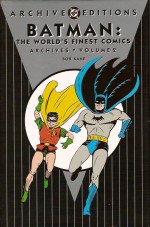
Batman: the World’s Finest Comics Archives volume 2


By Bob Kane, Bill Finger, Don Cameron, Joe Samachson, Norman Fallon, Dick Sprang, Win Mortimer, Ray Burnley, & various (DC Comics)
ISBN: 1-4012-0163-6

The creation of Superman propelled National Comics to the forefront of their fledgling industry and in 1939 the company was licensed to produce a commemorative comicbook celebrating the start of the New York World’s Fair, with the Man of Tomorrow prominently featured among the four-colour stars of the appropriately titled New York World’s Fair Comics.

A year later, following the birth of Batman and Robin, National combined Dark Knight, Boy Wonder and Man of Steel on the cover of the follow-up New York World’s Fair 1940. The spectacular 96 page anthology was a huge hit and the format was retained as the Spring 1941 World’s Best Comics #1, before finally settling on the now legendary title World’s Finest Comics from #2, beginning a stellar 45-year run which only ended as part of the massive clear-out and de-cluttering exercise that was Crisis on Infinite Earths.

Until 1954 and the swingeing axe-blows of rising print costs, the only place Superman and Batman ever met was on the stunning covers by the likes of Jack Burnley, Fred Ray and others. Between those sturdy card covers, the heroes maintained a strict non-collaboration policy…

This second glorious deluxe hardback dedicated to the Gotham Gangbusters’ early appearances reprints the Batman tales from World’s Finest Comics #17-32 (Spring 1945 – January/February 1948), in gleaming, glossy full-colour and also includes a fascinating Foreword by author and fan Bill Schelly and concludes with brief biographies of all the creators involved in these early masterpieces.

In between those text titbits there is unbridled graphic enchantment beginning with ‘Crime Goes to College’ by Bill Finger, Norman Fallon & Dick Sprang, wherein the Dynamic Duo tracked down a cracked academic determined to prove that he could make crime pay whilst ‘Specialists in Crime’ scripted by Don Cameron, pitted the heroes against a wily team who seemed to have the right man for every job they pulled…

In #19 the Joker organised ‘The League for Larceny’ (Joe Samachson, Bob Kane & Ray Burnley) to promote the finer points of criminality until Batman and Robin stepped in whilst in #20 (Winter 1946, and the last quarterly edition: from the next issue the comicbook would appear every two months) benign numismatist Mark Medalion turned out to have a very sinister other face as ‘The King of Coins’, a clever and exotic thriller from Cameron & Win Mortimer.

WF #21 (March/April 1946, illustrated by Mortimer and the uncredited writer is probably Cameron) introduced ‘Crime’s Cameraman’ Sam Garth, a keen shutterbug whose unwitting enthusiasm masked a deadly secret, whilst ‘A Tree Grows in Gotham City’ (written by Alvin Schwartz?) spoofed the infamous novel by pitting the Dynamic Duo against a gang of thugs determined to dig up an elderly oak belonging to an equally elderly gent… but why?

‘Champions Don’t Brag’ (William Woolfolk & Mortimer) focussed on Dick Grayson’s understandable desire to excel at sports: a wish constantly thwarted by the need to keep his Robin alter ego secret. When his school’s best athlete was kidnapped the fear proved justified since the abductors then tried to ransom the “Boy Wonder” they sincerely believed they had captured…!

The unknown writer of ‘The Case of the Valuable Orphans’ told a powerful tale of cruel criminality as thugs exploited carefully placed adopted children to case potential burglary jobs, whilst ‘The Famous First Crimes’ by Cameron, Mortimer & Howard Sherman in #25, found Batman and Robin helping an enterprising inventor whilst battling bandits determined to steal historical scientific breakthroughs and ‘His Highness, Prince Robin’ (by anonymous & Mortimer) saw the Boy Wonder pinch-hitting for a wayward royal absconder in a clever twist on the classic Prince and the Pauper plot.

In WF #27 ‘Me, Outlaw’ revealed the big mistake of car thief and murderer Wheels Mitchum in a tense and salutary courtroom drama by Finger & Jim Mooney, whilst ‘Crime Under Glass’ depicted the horrific and grisly murder spree of the chilling Glass Man in a taut mystery illustrated by Sprang by Fallon and #29 offered ‘The Second Chance’ to freshly released convict Joel Benson who increasingly found life out of prison temptation beyond endurance in a classy human drama by Cameron & Mortimer.

Most later Batman tales feature a giant coin in the Batcave and World’s Finest #30 is where that spectacular prop first appeared; spoils of a successful battle between the Caped Crusaders and the vicious gang of Joe Coyne and ‘The Penny Plunderers!’ (Finger, Kane & Burnley), after which ‘The Man with the X-Ray Eyes!’ (scripted by Cameron) saw the heroes struggling to save from unscrupulous thugs a tragic artist cursed with the ability to see through anything – including their masks…

This superb collection of Dark Knight Dramas ends with ‘The Man Who Could Not Die’ (Finger, Kane & Burnley from #32) a deliciously fearsome fable wherein petty gunman Joe “Lucky” Starr got a twisted horoscope reading and believed that he knew the day he would be killed. Of course, until then, he could commit any crime without possibility of harm – even if Batman and Robin interfered…

These spectacular yarns provide a perfect snapshot of the Batman’s amazing development from bleak moody avenger and vigilante agent of revenge to dedicated, sophisticated Devil-may-care Detective in timeless tales which have never lost their edge or their power to enthral and beguile, and this superbly sturdy Archive Edition is indubitably the most luxurious and satisfying of ways to enjoy them over and over again.

So why don’t you…
© 1945, 1946, 1947, 1948, 2004 DC Comics. All Rights Reserved.
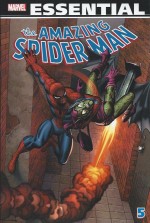
Essential Spider-Man volume 5


By Stan Lee, Roy Thomas, Gerry Conway, Gil Kane, John Romita & various (Marvel)
ISBN: 978-0-7851-1865-7

The Amazing Spider-Man was always a comic-book that matured with or perhaps just slightly ahead of its fan-base.

This fifth exceptionally economical monochrome volume of chronological web-spinning adventures sees the World’s Most Misunderstood Hero through another rocky period of transformation as the great second era of Amazing Arachnid artists moved inevitably to a close. Although the elder John Romita would remain closely connected to the Wall-Crawler’s adventures for a little time yet, these tales would be his last long run as lead illustrator on the series.

Stan Lee’s scripts were completely in tune with the times – as glimpsed by a lot of kid’s parents at least – and the burgeoning use of pure soap opera plots kept older readers glued to the series even if the bombastic battle sequences didn’t.

Thematically, there’s still a large percentage of old-fashioned crime and gangsterism and a dependence on mystery plots. The balance of costumed super-antagonists was finely balanced with thugs, hoods and mob-bosses, but these were not the individual gangs of the Ditko days.

Now Organised Crime and Mafia analogue The Maggia were the big criminal-cultural touchstone as comics caught up with modern movies and the headlines. Moreover during this period Lee finally defied Comics Code Authority mandates to tell a powerful tale of drug abuse which would (along with DC’s Green Lantern tales dealing with the same issue) force the industry’s censoring body to expunge the ludicrous dictat that comics could never mention narcotics under any circumstances…

This volume, reprinting Amazing Spider-Man #90-113, spans November 1970 to October 1972 and even includes some stunning art-in-progress and unfinished Gil Kane pages from issues #98 and 102 to edify and astound the readers, so be prepared to be utterly amazed…

Following directly on from ‘Doc Ock Lives!’ – which ended the previous Essential Edition on a cataclysmic cliffhanger – the action here opens with ‘And Death Shall Come!’ by Stan Lee, pencilled by Gil Kane & inked by John Romita Sr., wherein the multi-limbed menace ran riot in the city and Peter Parker’s attempts to stop him led to the death of a beloved cast member…

With the tragic demise, Spider-Man became a wanted fugitive and Jonah Jameson began backing “Law and Order” election hopeful Sam Bullitt in a campaign ‘To Smash the Spider!’, utterly unaware of the politician’s disreputable past, but the secret came out in #92’s ‘When Iceman Attacks’.

The ambitious demagogue convinced the youngest X-Man that Spider-Man had kidnapped Parker’s paramour Gwen Stacy but the Wondrous Wall-Crawler’s explosive battle against the mutant exposed the corrupt and explicitly racist Bullit in an all-out action extravaganza featuring some of the best action art of the decade by two of the industry’s greatest names.

Romita resumed pencilling with issue #93, which saw the return of a forgotten foe in ‘The Lady and… The Prowler!’. Hobie Brown was a super-burglar gone straight, but when he saw that the Amazing Arachnid was wanted, he too was all to ready to believe the media hype and not his old benefactor…

Amazing Spider-Man #94 (Lee, Romita & Sal Buscema) offered a new glimpse of the fabled origin of the hero as part of a dynamic dust-up with the Beetle ‘On Wings of Death!’ after which Peter headed for London to woo his estranged girlfriend Gwen, who had fled the manic violence of America.

Sadly ‘Trap for a Terrorist’ found the city under threat of destruction from radical bombers, which only Spider-Man could handle, so she returned home, never knowing Parker had come after her. Everything was forgotten in the next issue when deeply disturbed and partially amnesiac industrialist Norman Osborn remembered he was the Green Goblin and once more attacked Peter in #96’s ‘…And Now, the Goblin!’ by Lee, Kane & Romita.

Lee had long wanted to address the contemporary drugs situation in his stories but was forbidden by Comics Code strictures. When the US Department of Health, Education and Welfare approached him to tackle the issue he produced the three-part Goblin tale. When it was declined Code approval he went ahead and published it anyway…

Although the return of the madman who knew all Spider-Man’s secrets was the big fan-draw the real meat of the tale was how Osborn’s son Harry – a perfectly normal rich white kid – could be drawn into a web of addiction, abuse and toxic overdose…

Frank Giacoia began inking Kane with the second instalment ‘In the Grip of the Goblin!’ as the elder Osborn ran riot, almost killing the wall-crawler and preparing for his final deadly assault even as his son lay dying, before the saga spectacularly concluded with ‘The Goblin’s Last Gasp!’ wherein the villain’s deeply buried paternal love proved his undoing and Parker’s salvation…

Amazing Spider-Man #99 ‘A Day in the Life of…’ was an action-packed palate-cleanser with Peter and Gwen finally getting their love-life back on track, only marginally marred by a prison breakout which was easily quelled by the Arachnid Avenger, but the anniversary 100th issue ‘The Spider or the Man?’ proved to be a game-changing shocker as, determined to retire and marry, Peter attempts to destroy his powers with an untested serum.

The result was a hallucinogenic trip wherein Kane & Giacoia got to draw an all-out battle between Spidey and a host of old enemies and a waking nightmare when Peter regained consciousness and discovered he had grown four extra arms…

With #101 Roy Thomas stepped in as scripter for ‘A Monster Called… Morbius!’, as the eight-limbed Parker desperately sought a way to reverse his condition and stumbled across a murderous costumed horror who drank human blood. To make matters worse old foe The Lizard turned up, determined to kill them both…

Amongst the many things banned by the Comics Code in 1954 were horror staples vampires and werewolves, but the changing comics tastes and rising costs of the early 1970s were seeing Superhero titles dropping like flies in snowstorm. With interest in suspense and the supernatural growing, all companies were pushing to re-establish scary comics again and the covert introduction of a “Living Vampire” here led to another challenge to the CCA, the eventually revision of the horror section of the Code and the resurgent rise of supernatural heroes and titles.

For one month Marvel also experimented with double-sized comicbooks (DC’s switch to 52-page issues lasted almost a year: August 1971-June 1972 cover-dates) and Amazing Spider-Man #102 featured an immense, three-chapter blockbuster beginning with ‘Vampire at Large!’ as octo-webspinner and anthropoid reptile joined forces to hunt the bloodsucker after discovering a factor in the vampire’s saliva which could cure both part-time monsters’ respective conditions.

‘The Way it Began’ diverged from the tale to present the tragic secret origin of Nobel Prize winning biologist Michael Morbius and how be turned himself into a haunted night horror before ‘The Curse and the Cure!’ brought the tale to a blistering conclusion and restored the status quo.

Designed as another extra-long epic, ‘Walk the Savage Land!’ began in the now conventional sized #103 but was sliced in half and finished as #104 ‘The Beauty and the Brute’ in #104. When the Daily Bugle suffered a financial crisis, Jameson took Peter Parker and Gwen Stacy on a monster hunt to the Lost World under the Antarctic, encountering not only dinosaurs and cavemen but also noble savage Ka-Zar, perfidious villain Kraven the Hunter and even terrifying alien baby Gog in a fabulous pastiche and homage to Willis O’Brien’s King Kong from Thomas, Kane & Giacoia.

Capitalising on an era rife with social unrest and political protest, Stan Lee returned in #105 with ‘The Spider Slayer!’ as the New York City police put spy cameras on every rooftop and discredited technologist Spencer Smythe resurfaced with an even more formidable anti-Spider-Man robot for Jamison to set against the Wall-crawler. The story also featured the release of Harry Osborn from drug rehab and old Parker gadfly Flash Thompson came back from Vietnam, but the big shock was discovering the once beneficent Smythe had gone bonkers…

Responsible for the Police spy-eyes too, Smythe had photographed Spidey without his mask and in ‘Squash! Goes the Spider!’ (triumphantly pencilled by the returning Romita) the Professor sold out old employer Jameson, allied with criminal gangs and attempted to plunder the city. When the Amazing Arachnid tried to stop the banditry he found himself facing the ultimate Spider-Slayer before valiantly battling his way to victory in ‘Spidey Smashes Thru!’

The secret of Flash Thompson began to unravel in issue #108’s ‘Vengeance from Vietnam!’ (with Romita inking his own pencils) as the troubled war hero revealed an American war atrocity which had left a peaceful in-country village devastated, a benign mystic comatose and set a vengeful cult upon the saddened soldier’s guilt-ridden heels, which even all Spider-Man’s best efforts could not deflect or deter.

The campaign of terror was only concluded in #109 when ‘Enter: Dr. Strange!’ saw the Master of the Mystic Arts divine the truth and set things aright, after which #110’s ‘The Birth of… the Gibbon!’ found the world-weary wall-crawler battling shunned and lonely outcast Martin Blank, whose anthropoid frame and lack of friends had made his life a living hell…

The Gibbon was back a month later when Kraven brainwashed the hapless outcast ‘To Stalk a Spider!’ in a tale which saw the beginning of young Gerry Conway’s tenure on the title, whilst #112 saw another periodic crisis of faith for Peter Parker when ‘Spidey Cops Out!’ found the hero ready to chuck it all in until another nightmarish old adversary resurfaced as part of a burgeoning gang war…

We end as we began with #113 and ‘They Call the Doctor… Octopus!’ (Conway & Romita with art assistance from Tony Mortellaro and Jim Starlin) as the city is plunged into chaos when the multi-limbed madman squares off against the mysterious gang-boss Hammerhead with a rededicated but fearfully overmatched Spider-Man caught in the middle…

For the cataclysmic outcome you’ll need to see volume 6…

Despite that major qualification this is still a fantastic book about an increasingly relevant teen icon and symbol. Spider-Man at this time became a crucial part of many youngsters’ lives and did so by living a life as close to theirs as social mores and the Comics Code would allow.

Blending cultural veracity with stunning art and making a dramatic virtue of the awkwardness, confusion and sense of powerlessness that most of the readership experienced daily resulted in an irresistibly intoxicating read, delivered in addictive soap-opera instalments, but none of that would be relevant if the stories weren’t so compellingly entertaining. This intoxicating transitional book is Stan Lee’s Spider-Man at his very best and also shows the way in which the hero began to finally outgrow his (co)creator.
© 1970, 1971, 1972, 2011 Marvel Entertainment Group, Inc. All rights reserved.

Showcase Presents Legion of Super-Heroes volume 3


By Jim Shooter, E. Nelson Bridwell, Otto Binder, Curt Swan, George Klein, Pete Costanza, Jim Mooney & George Papp (DC Comics)
ISBN: 978-1-4012-2185-0

Once upon a time, in the far future, a band of super-powered kids from a multitude of worlds took inspiration from the greatest legend of all time and formed a club of heroes. One day those Children of Tomorrow came back in time and invited their inspiration to join them…

And thus began the vast and epic saga of the Legion of Super-Heroes, as first envisioned by writer Otto Binder and artist Al Plastino in early 1958, just as the revived comicbook genre of superheroes was gathering an inexorable head of steam. Since that time the fortunes and popularity of the Legion have perpetually waxed and waned, with their future history tweaked and rebooted, retconned and overwritten over and over again to comply with editorial diktat and popular whim.

This sturdy, action packed third monochrome compendium gathers a chronological parade of futuristic delights from October 1966 to May 1968, originally seen in Adventure Comics #349-368, and includes a Legion-featuring story from Superman’s Pal Jimmy Olsen #106 (October 1967).

During this period the Club of Champions finally shed the last vestiges of wholesome, imaginative, humorous and generally safe science fiction strips to become a full-on dramatic action feature starring a grittily realistic combat force in constant, galaxy-threatening peril: a compelling force of valiant warriors ready and willing to pay the ultimate price for their courage and dedication…

The main architect of the transformation was teenaged sensation Jim Shooter, whose scripts and layouts (usually finished and inked by veterans Curt Swan & George Klein) made the series accessible to a generation of fans growing up in the Future…

The tense suspense begins with Adventure Comics #349’s ‘The Rogue Legionnaire!’ (Shooter, Swan & Klein) wherein Saturn Girl, Colossal Boy, Shrinking Violet, Chameleon Boy and Brainiac 5 hunted hypnotic villain Universo through five periods of Earth’s history, aided by boy-genius Rond Vidar, a brilliant scientist with a tragic secret…

This is followed by a stellar two-parter from #350-351 scripted by E. Nelson Bridwell which restored a number of invalided and expelled members to the team. In ‘The Outcast Super-Heroes’, a cloud of Green Kryptonite particles enveloped Earth and forced Superboy and Supergirl to retire from the Legion just as demonic alien Evillo unleashed his squad of deadly metahuman minions on the universe.

The Kryptonian Cousins were mind-wiped and replaced by armoured and masked paladins Sir Prize and Miss Terious in ‘The Forgotten Legion!’ but quickly returned when a solution to the K Cloud was found.

On Evillo’s eventual defeat, the team discovered that the wicked overlord had healed the one-armed Lightning Lad and restored Bouncing Boy‘s power for his own nefarious purposes, and together with the reformed White Witch and rehabilitated Star Boy and Dream Girl the Legion’s ranks and might swelled to bursting.

That was a very good thing as the next issue saw Shooter, Swan & Klein produce one of their most stunning epics. When a colossal cosmic entity known as the Sun Eater menaced the United Planets, the Legion were hopelessly outmatched and forced to recruit the galaxy’s most dangerous criminals to help save civilisation.

However The Persuader, Emerald Empress, Mano, Tharok and Validus were untrustworthy allies at best and formed an alliance as ‘The Fatal Five!’ intending to save the galaxy only so that they could rule it…

Adventure #353 revealed how the Five seemingly sealed their own fate through arrogance and treachery and the cost of heroism was paid when ‘The Doomed Legionnaire!’ sacrificed his life to destroy the solar parasite…

Issue #354 introduced ‘The Adult Legion!’ when Superman travelled into the future to visit his grown-up comrades – discovering tantalising hints of events that would torment and beguile LSH fans for decades – before the yarn concluded with #355’s ‘The War of the Legions!’ as Brainiac 5, Cosmic Man, Element Man, Polar Man, Saturn Woman and Timber Wolf, accompanied by the most unexpected allies of all, battled the Legion of Super-Villains.

This issue also included an extra tale in ‘The Six-Legged Legionnaire!’ (by Otto Binder, Swan & Klein) wherein Superboy brought his High School sweetie Lana Lang to the 30th century, where she joined in a mission against a science-tyrant as the shape-shifting Insect Queen. Disaster soon struck though when the alien ring which facilitated her changes was lost, trapping her in a hideous bug-body…

In issue #356 Dream Girl, Mon-El, Element Lad, Brainiac 5 and Superboy were transformed into babies and became ‘The Five Legion Orphans!’: a cheeky and cunning Bridwell scripted mystery.

The repercussions and guilt of the Sun-Eater episode were explored when the survivors of that mission were apparently haunted by ‘The Ghost of Ferro Lad!’ (#357 by Shooter, Swan & Klein) whilst ‘The Hunter!’ (Shooter & George Papp) saw the heroes stalked by an insane and murderous sportsman with a unique honour code.

Adventure #359 found the once-beloved champions disbanded and on the run as ‘The Outlawed Legionnaires!’ (Shooter, Swan & Klein) thanks to the manipulations of a devious old foe, only to rousingly regroup and counter-attack in #360’s ‘The Legion Chain Gang!’

Once again a key component of United Planets Security in ‘The Unkillables!’, the superhero squad were then assigned to protect alien ambassadors the Dominators from political agitators, assassins and a hidden traitor in a tense thriller illustrated by Jim Mooney, after which ‘The Lone Wolf Legion Reporter!’ (Superman’s Pal Jimmy Olsen #106, October 1967, by Shooter & Pete Costanza) found the young newsman seconded to the 30th century to help with the club newspaper. Sadly he was far better at making news than publishing it…

Adventure Comics #362 found the team scattered across three worlds as mad scientist Mantis Morlo refused to let environmental safety interfere with his experiments in ‘The Chemoids are Coming!’, resulting in a lethally ‘Black Day for the Legion!’…

Shooter & Costanza then topped their gripping two-parter by uncovering ‘The Revolt of the Super-Pets!’ in #364, when the crafty rulers of planet Thanl attempted to seduce the animal adventurers from their rightful – subordinate – positions with sweet words and palatial new homes…

When the isolated world of Talok 8 went dark and became a militaristic threat to the UP, their planetary champion Shadow Lass led Superboy, Brainiac 5, Cosmic Boy and Karate Kid on a reconnaissance mission which resulted in the disastrous ‘Escape of the Fatal Five!’ (illustrated by Swan & Klein).

The quintet then almost conquered the UP itself and were only frustrated by the defiant, last ditch efforts of the battered heroes in the blistering conclusion ‘The Fight for the Championship of the Universe!’

In grateful thanks the Legion were gifted with a vast new HQ but before the paint was even dry a vast paramilitary force attempted to invade the slowly reconstructing planet Earth in #367’s ‘No Escape from the Circle of Death!’ (Shooter, Swan, Klein & Sheldon Moldoff), after which this volume ends on a note of political and social tension when a glamorous alien envoy attempted to suborn the downtrodden female Legionnaires in #368’s ‘The Mutiny of the Super-Heroines!’

The Legion is unquestionably one of the most beloved and bewildering creations in comicbook history and largely responsible for the growth of the groundswell movement that became American Comics Fandom.

Moreover, these scintillating and seductively addictive stories – as much as Julie Schwartz’s Justice League – fired up the interest and imaginations of a generation of young readers and underpinned the industry we all know today.

If you love comics and haven’t read this stuff, you are the poorer for it and need to enrich your future life as soon as possible.
© 1966, 1967, 1968, 2009 DC Comics. All Rights Reserved.
Showcase Presents World’s Finest volume 3


By Edmond Hamilton, Cary Bates, Jim Shooter, Leo Dorfman, Bill Finger, Curt Swan, George Klein, Sheldon Moldoff, & Al Plastino (DC Comics)
ISBN: 978-1-84856-585-2

For decades Superman and Batman were quintessential superhero partners: the “World’s Finest” team. They were friends as well as colleagues, and the pairing made sound financial sense since DC’s top heroes could cross-pollinate and cross-sell their combined readerships.

This third magnificent monochrome compendium gathers their cataclysmic collaborations from the glory days of the mid 1960’s (World’s Finest Comics #146-173, with the exception of reprint 80-Page Giant issues #161 and 170, covering December 1964 to February 1968): a period when the entire Free World went superhero gaga in response to the Batman live action and Superman animated TV shows…

A new era had already begun in World’s Finest Comics #141 when author Edmond Hamilton and artists Curt Swan & George Klein (who illustrated the bulk of the tales in this tome) ushered in a more dramatic, realistic and far less whimsical tone, and that titanic creative trio continued their rationalist run in this volume with #146’s ‘Batman, Son of Krypton!’ wherein uncovered evidence from the Bottle City of Kandor and bizarre recovered memories seemed to indicate that the Caped Crusader was in fact a de-powered, amnesiac Kryptonian. Moreover, as the heroes dug deeper Superman thought he had found the Earthman responsible for his homeworld’s destruction and became crazed with a hunger for vengeance…

Issue #147’s saw the sidekicks step up in a stirring blend of science fiction thriller and crime caper, all masquerading as an engaging drama of youth-in-revolt when ‘The New Terrific Team!’ (February 1965 Hamilton, Swan & Klein) saw Jimmy Olsen and Robin quit their underappreciated assistant roles to strike out on their disgruntled own. Naturally there was a perfectly rational, if incredible, reason…

In #148 ‘Superman and Batman – Outlaws!’ (with Sheldon Moldoff temporarily replacing Klein) saw the Cape and Cowl Crimebusters transported to another dimension where arch-villains Lex Luthor and Clayface were heroes and Dark Knight and Action Ace the ruthless hunted criminals, after which World’s Finest Comics #149 (May 1965 and also inked by Moldoff) ‘The Game of Secret Identities!’ found Superman locked into an increasingly obsessive battle of wits with Batman that seemed likely to break up the partnership and even lead to violent disaster…

‘The Super-Gamble with Doom!’ in #150 introduced manipulative alien’s Rokk and Sorban whose addictive and staggeringly spectacular wagering almost got Batman killed and Earth destroyed, whilst ‘The Infinite Evolutions of Batman and Superman!’ in #151 introduced young writer Cary Bates, who paired with Hamilton to produce a beguiling science fiction thriller with the Gotham Guardian transformed into a callous future-man and the Metropolis Marvel reduced to a savage Neanderthal….

Hamilton solo-scripted #152’s ‘The Colossal Kids!’ wherein a brace of impossibly powered brats outmatched outdid but never outwitted Batman or Superman – and of course there were old antagonists behind the challenging campaign of humiliation – after which Bates rejoined his writing mentor for a taut and dramatic “Imaginary Story” in #153.

When Editor Mort Weisinger was expanding the Superman continuity and building the legend he knew that the each new tale was an event that added to a nigh-sacred canon: that what was written and drawn mattered to the readers. But as an ideas man he wasn’t going to let that aggregated “history” stifle a good idea, nor would he allow his eager yet sophisticated audience to endure clichéd deus ex machina cop-outs to mar the sheer enjoyment of a captivating concept.

The mantra known to every baby-boomer fan was “Not a Dream! Not a Hoax! Not a Robot!” boldly emblazoned on covers depicting scenes that couldn’t possibly be true… even if it was only a comic book.

Imaginary Stories were conceived as a way of exploring non-continuity plots and scenarios devised at a time when editors believed that entertainment trumped consistency and knew that every comic read was somebody’s first – or potentially last – and ‘The Clash of Cape and Cowl!’, illustrated by as ever by Swan & Klein, posited a situation where brilliant young Bruce Wayne grew up believing Superboy had murdered his father, thereafter dedicating his life to crushing all criminals as a Bat Man and waiting for the day when he could expose Superman as a killer and sanctimonious fraud…

WF #154 ‘The Sons of Superman and Batman’ (by Hamilton) opened the doors to a far less tragic Imaginary world: one where the crime fighters finally found time to marry Lois Lane and Kathy Kane and have kids. Unfortunately the lads proved to be both a trial and initially a huge disappointment…

‘Exit Batman – Enter Nightman!’ saw the World’s Finest Team on the cusp of their 1,000th successful shared case when a new costumed crusader threatened to break up the partnership and replace the burned out Batman in a canny psychological thriller, whilst ‘The Federation of Bizarro Idiots!’ in #156 saw the well-meaning but imbecilic imperfect duplicates of Superman and Batman set up shop on Earth and end up as pawns of the duplicitous Joker, after which #157’s ‘The Abominable Brats’ – drawn with inevitable brilliance by Swan and inked by both Klein & Moldoff – featured an Imaginary Story sequel as the wayward sons of heroes returned to cause even more mischief, although once more there were other insidious influences in play…

In ‘The Invulnerable Super-Enemy!’ (#158 by Hamilton, Swan & Klein), the Olsen-Robin Team stumbled upon three Bottled Cities and inadvertently drew their mentors into a terrifying odyssey of evil which at first seemed to be the work of Brainiac but was in fact far from it, whilst ‘The Cape and Cowl Crooks!’ (WFC #159) dealt with foes possessing far mightier powers than our heroes – a major concern for young readers of the times.

To this day whenever fans gather the cry eventually echoes out, “Who’s the strongest/fastest/better dressed…?” but this canny conundrum took the theme to superbly suspenseful heights as Anti-Superman and Anti-Batman continually outwitted and outmanoeuvred the heroes, seemingly possessed of impossible knowledge of their antagonists..

Leo Dorfman debuted as scripter in#160 as the heroes struggled to discredit ‘The Fatal Forecasts of Dr. Zodiac’, a scurrilous Swami who appeared to control fate itself.

World’s Finest Comics #161 was an 80-Page Giant reprinting past tales and is not included in this collection, and jumping in with #162’s ‘Pawns of the Jousting Master!’ is another fresh scripting face in Jim Shooter, who produced an engaging time travel romp wherein Superman and Batman were defeated in combat and compelled to travel back to Camelot in a beguiling tale of King Arthur, super-powered knights and invading aliens…

‘The Duel of the Super-Duo!’ in #163 (Shooter, Swan & Klein) pitted Superman against a brainwashed Batman on a world where his mighty powers were negated and the heroes of the galaxy were imprisoned by a master manipulator, after which Dorfman produced an engaging thriller where a girl who was more powerful than Superman and smarter than Batman proved to be ‘Brainiac’s Super Brain-Child!’

Bill Finger & Al Plastino stepped in to craft WF #165’s ‘The Crown of Crime’ (March 1967) which depicted the last days of dying mega-gangster King Wolff whose plan to go out with a bang set the underworld ablaze and almost stymied both Superman and Batman, after which Shooter, Swan & Klein produced ‘The Danger of the Deadly Duo!’ in which the twentieth generation of Batman and Superman united to battle the Joker of 2967 and his uncanny ally Muto: a superb flight of fantasy that was the sequel to a brief series of stories starring Superman’s heroic descendent in a fantastic far future world

WF #167 saw Cary Bates fly solo by scripting ‘The New Superman and Batman Team!’: an Imaginary Story wherein boy scientist Lex Luthor gave himself super-powers and a Kal-El who had landed on Earth without Kryptonian abilities trained himself to become an avenging Batman after his foster-father Jonathan Kent was murdered. The Smallville Stalwarts briefly united in a crime-fighting partnership but destiny had other plans for the fore-doomed friends…

In World’s Finest Comics #142 a lowly and embittered janitor suddenly gained all the powers of the Legion of Super-Heroes and attacked the heroes out of frustration and jealousy. He was revived by Bates in #168’s ‘The Return of the Composite Superman!’ as the pawn of a truly evil villain but gloriously triumphed over his own venal nature, after which #169 featured ‘The Supergirl-Batgirl Plot’ a whimsical fantasy feast from Bates, Swan & Klein wherein the uppity lasses seemingly worked tirelessly to supplant and replace Batman and Superman before it was revealed that the Dynamic Damsels were mere pawns of an extremely duplicitous team of female felons – although a brace of old WF antagonists were actually behind the Byzantine scheme…

Issue #170 was another mammoth reprint edition, after which #171 revealed ‘The Executioner’s List!’ (script by Dorfman); an intriguing and tense murder-mystery wherein a mysterious sniper seemingly targeted the friends of Superman and Batman, whilst the stirring and hard-hitting Imaginary Story ‘Superman and Batman… Brothers!’ (WF #172 December 1967) posited a grim scenario wherein orphaned Bruce Wayne was adopted by the Kents, but could not escape a destiny of tragedy and darkness.

Written by Shooter and brilliantly interpreted by Swan & Klein, this moody thriller in many ways signalled the end of the angst-free days and the beginning of the darker, crueller and more dramatically cohesive DC universe for a less casual readership, and thereby surrendered the mythology to the increasingly devout fan-based audience.

This stunning compendium closes with World’s Finest Comics #173 and ‘The Jekyll-Hyde Heroes!’ again by Shooter, Swan & Klein, as a criminal scientist devises a way to literally transform the Cape and Cowl Crusaders into their own worst enemies…

These are gloriously clever yet uncomplicated tales whose dazzling, timeless style has returned to inform if not dictate the form for much of DC’s modern television animation – especially the fabulous Batman: the Brave and the Bold series – and the contents of this tome are a veritable feast of witty, gritty thrillers packing as much punch and wonder now as they always have.

Unmissable adventure for fans of all ages!
© 1964-1968, 2010 DC Comics. All Rights Reserved.
Batman: Blind Justice


By Sam Hamm, Denys Cowan & Dick Giordano (DC Comics)
ISBN 10: 1-56389-047-X       ISBN 10: 978-1563890475

1989 was a banner year for Batman. It was the fiftieth anniversary of the Caped Crusader and the world was about to go completely Bat-crazy for the second time in twenty-five years, so DC were pushing the boat out preparing a brand-new title to add to the Gotham Guardian’s stable of comicbooks.

Two years earlier in 1985-1986, the venerable publisher had grabbed headlines by boldly retconning their entire ponderous continuity via the groundbreaking maxi-series Crisis on Infinite Earths; ejecting the entire concept of a multiverse and re-knitting time so that there had only ever been one Earth. For readers, the planet was now a perfect place to jump on at the start: a world literally festooned with iconic heroes and villains draped in a clear and cogent backstory nobody knew yet.

Many of their greatest characters got a unique restart, with the conceit being that the characters had been around for years and the readership were simply tuning in on just another working day.

Because of the Tim Burton movie Batman’s popularity was at an intoxicating peak and, since DC was still in the throes of re-jigging the entire narrative continuity, this three-part epic (two 80-page specials bracketing a single regular issue, reprinting Detective Comics #598-600, March-May 1989) can in many ways be seen as a transitional tale in the re-imagining of the Dark Knight for the 1990s…

After an introduction by the author the saga begins with ‘The Sleep of Reason’: Bruce Wayne awakes from an uncharacteristic nightmare and walks into a perplexing and macabre murder mystery wherein a night watchman has been reduced to a sack of powdered bones and organs. Across town, plucky Jeannie Bowen has just hit Gotham, looking for her brother who simply vanished one day after leaving work at Waynetech…

The nightmares continue to plague the Batman’s alter ego as Jeannie comes up against an administrative stone wall. Her brother’s boss claims no “Roy Kane” has ever worked for the cutting-edge research firm, but when the Dark Knight barely survives an encounter with a technological monster dubbed the Bonecrusher the disparate events begin to gel together…

‘The Kindness of Strangers’ brings Bruce Wayne to Jeannie’s aid and together they pierce the corporate wall at Waynetech and discover brother Roy was indeed employed there, but his tenure and subsequent disappearance have been excised from all records.

Roy had been the assistant to the company’s paraplegic genius Kenneth Harbinger, whose groundbreaking discoveries into cybernetic replacements and enhancements had offered great hope for physical trauma patients, but the junior had simply not turned up for work one day…

Now a police sweep finds Roy amnesiac and derelict on the streets. Apparently brain-damaged, he also seems to have a psychic connection to the devastating Bonecrusher…

When the hulking brute self-destructs rather than surrender to Batman and the cops, Roy and Jeannie move into Wayne Manor and, as the billionaire begins to clean house at Waynetech, they discover that the young man has been surreptitiously fitted with a memory transceiver biochip: a cybernetic back-door which allows a mystery mastermind to possess bodies at will. Bonecrusher is not one man but a slave army of remote control killers…

Only the seemingly benign Harbinger can be behind it, but further investigations in ‘The Price of Knowledge’ reveal that he had not worked alone. Wayne’s companies have been targeted by a clandestine “Cartel” of corporate raiders intent on possessing all his wealth and technologies, but as the Batman moves in all he finds is Harbinger’s corpse…

Moreover, someone has pieced together Wayne’s eccentric lifestyle, history and expenses and had the playboy arrested as a communist spy…

Harbinger is not dead. The crippled genius has simply abandoned his broken body and taken up residence in other unsuspecting biochip recipients. Free and fit, he goes on a spree of physical excess and wilful murder whilst Bruce Wayne festers under house arrest, enforced helplessness and increasingly horrific dreams…

As the government prosecutors track down the men who individually trained the boy-orphan Wayne as he travelled across Europe and the East years ago, the case against the accused spy looks to be unshakable, especially once French manhunter Henri Ducard agrees to be a bought witness and say whatever the prosecutors wish…

However proceedings take a dark turn when Harbinger in another borrowed body and, now at odds with his former Cartel paymasters, shoots Wayne on the Courthouse steps, possibly crippling him permanently…

‘Hidden Agendas’ finds Harbinger setting up his own organisation and powerbase just as the ruthless and amoral Ducard puts together scraps of information and deduces Bruce Wayne’s real secret. However the broken and demoralised Gotham Guardian gets a new lease of life when Roy discovers the Batcave and offers to lend his bio-chipped body to the disabled crusader for use as a surrogate Batman…

Wayne refuses but Roy is persistent and the continual threat of Harbinger’s hidden new life eventually leads the desperate and debilitated detective to make the biggest mistake of his career…

‘Covert Operations’ sees a Dark Knight haunting the alleys and rooftops of Gotham after weeks of absence, prompting Ducard to fetch up at the mansion with an astonishing proposition…

‘Ulterior Motives’ sees the compelling if convoluted saga come to a shattering climax as Wayne’s mind in Roy’s body tracks down and confronts Harbinger and his platoon of augmented Bonecrushers before turning the tables on the cartel. Of course the price paid for the victory is heartbreak, tragedy death and relentless guilt…

This is amongst the very best of modern Batman yarns: dark, intense, cunning and incredibly complex; blending high-tech adventure with brooding psychological drama, doomed romance with corporate and political intrigue, all illustrated with mesmerising verve and style by Denys Cowan & Dick Giordano.

Moreover, as an anniversary event, the collected edition also includes a superb gallery of graphic appreciations from Bob Kane, Neal Adams, Kyle Baker, Norm Breyfogle, Howard Chaykin, Mike Zeck, Mike Mignola, Walt Simonson and David Mazzucchelli.

If you haven’t seen this supremely engaging tale – criminally out of print but well worth hunting down – then you don’t really know the Dark Knight yet…
© 1989, 1990, 1992 DC Comics. All Rights Reserved.
Teen Titans/Outsiders: the Insiders

New Expanded Review

By Geoff Johns, Winick & various (DC Comics)
ISBN: 978-1-84576-247-6
Once upon a time superheroes, like firemen, sat around their assorted lairs or went about their civilian pursuits until the call of duty summoned them to deal with a breaking emergency. In the increasingly sober and serious world after Crisis on Infinite Earths, that precept was challenged with a number of costumed adventurers evolving into pre-emptive strikers…

After the deaths of two Teen Titans, Arsenal convinced the heartbroken Nightwing to run a covert and pre-emptive pack of self-professed “hunters”: seeking out and taking down metahuman threats and extraordinary criminals before they could do harm …

Nominally the fourth Outsiders collection this tome is also technically a Teen Titans graphic novel, as a case involving the kids overlaps and crosses over with the covert hunters’ latest disaster as originally seen in Teen Titans #24-26 and Outsiders #24-25 and 28…

This edgy chronicle is set in the slow and ponderous build-up to DC’s Infinite Crisis crossover event with lots of long-running story-threads pulling together ready for the big bang, and the tense tale contained herein collects a shared storyline that began with ‘The Insiders Part 1’ by Geoff Johns, Matthew Clark & Art Thibert, from TT #24, wherein Superboy, who had always believed himself a clone of Superman, discovered that part of his DNA was Lex Luthor‘s – just as a deeply embedded psychological program activated, forcing him to mercilessly attack his fellow Titans.

With Wonder Girl, Cyborg, Kid Flash, Beast Boy, Raven and Speedy out of action the severely injured Robin desperately contacts the team’s mentors, but the Outsiders have a few problems of their own…

‘The Insiders Part 2’ in Outsiders #24 (by Judd Winick & Carlos D’anda) opens moments after the embattled team – Nightwing, Arsenal, Shift, Jade, Grace, Thunder and Starfire – have discovered that the innocuous Indigo (a robotic being from the future who travelled back to our time and inadvertently caused the death of Omen and Donna Troy) is in fact the deadly artificial invader Brainiac 8, with her affable cover personality finally subsumed by the cybernetic monster within. Her mission has always been to ensure the future dominance of the planet Colu by assassinating key Earth heroes and re-configuring the time-continuum, and now the time has come…

The battered heroes unite in the third chapter as Lex Luthor and the first Brainiac rendezvous with their corrupted pawns. With a wave of robotic automatons reprogrammed by the former Indigo massing to attack humanity, the Titans once more confront Superboy in a cataclysmic battle…

Despite being painfully outmatched, some vestige of their comrade still remains and they narrowly survive, whilst Brainiac 8’s conversion also seems less than total and she alternatively taunts and begs the Outsiders to kill her if they can…

The crisis culminates when Superboy at last turns on Luthor, and a heartbroken Shift finally acquiesces to his former lover’s pleas and destroys Indigo in a manner only he can…

In the aftermath a key member quits the outsiders whilst in ‘Soul Searching’ (Johns, Tony Daniel & Marlo Alquiza from Teen Titans #26) the restored Conner Kent ponders his recent actions and agonises over whether a test tube hero with the genes of the World’s Wickedest Man has any right to happiness or any spark of the Divine, before mystic Raven offers him a shred of redemption, whilst from Outsiders #28 ‘Letting it Go’ (Winick, Clark & Thibert) shows the individual survivors each commemorating their lost comrade Indigo in their own unique way

In case you’re wondering: issues #26-27 were a fill-in tale starring Batman and the original Outsiders and are neither germane nor included here…

Riotous, rocket-paced and compellingly poignant, this engaging Fights ‘n’ Tights thriller reset and repositioned both series for the cosmic shenanigans to come and, whilst not perhaps the sort of tale to tempt a casual reader, will certainly delight any devotee of Costumed Dramas.
© 2005, 2006 DC Comics. All Rights Reserved.

Avengers: The Children’s Crusade


By Allan Heinberg, Jim Cheung, Alan Davis, Olivier Coipel & various (Marvel/Panini UK)
ISBN: 978-1-84653-485-0

As the new Avengers film screens across the world, Marvel has again released a bunch of tie-in books and trade paperback collections to maximise exposure and cater to those movie fans wanting to follow up the cinematic exposure with a comics experience.

This stunning yarn is every bit as epic as any big screen extravaganza but does depend a bit too much on a thorough grounding in Avengers lore so newbies might struggle a bit with the minutiae…

Once upon a time the mutant Scarlet Witch married the android Vision and they had – through the agency of magic and Wanda’s unsuspected ability to reshape reality – twin boys. Over the course of time it was revealed that the boys were not real (for further details see Marvel Platinum: the Definitive Avengers) and as the years passed the tragedy drove the Scarlet Witch to insanity.

When Wanda tipped completely over the edge and destroyed at least three of her team-mates, the “World’s Mightiest Heroes” were shut down and rebooted in a highly publicised event known as Avengers Disassembled. Of course it was only to replace them with both The New and Young Avengers. The event also spilled over into the regular titles of current team members, and affiliated comic-books such as the Fantastic Four and Spectacular Spider-Man ran parallel but not necessarily interconnected story-arcs to accompany the Big Show.

Said Big Show consisted of the worst day in the team’s history as the Witch manipulated people and events: betraying her oldest, closest friends and causing the destruction of everything they held dear.

In the later company crossover event House of M reality was rewritten (yes, again!) when she had another breakdown and altered Earth continuity so that Magneto’s mutants ruled a society where normal humans (“sapiens”) were an acknowledged evolutionary dead-end living out their lives and destined for extinction within two generations. It took every hero on Earth and a great deal of luck to put that genie back in a bottle and in the aftermath almost no mutants were left on Earth…

Needless to say in recent time Wanda Maximoff has not been anybody’s favourite person so it’s perhaps lucky that no one on Earth seems to know her current whereabouts…

This compilation collects portions of Uncanny X-Men #526, Avengers: the Children’s Crusade #1-9 and Avengers: the Children’s Crusade – Young Avengers issue #1 (published in comicbook form from October 2011 to March 2012) which comprised the core-story for the latest relaunch of the constantly-changing grim and gritty alternate universe.

This gripping but convoluted tale opens with ‘Rebuilding’ (from X-Men #526 by author Allan Heinberg and artists Olivier Coipel & Mark Morales) as the aging Magneto, now loosely aligned with the remaining mutants in the semi-autonomous enclave “Utopia”, learns that two members of the teen superhero team Young Avengers bear an impossible similarity to the twins his daughter conjured up years ago.

Moreover, the ultra-swift Speed and sorcerous Wiccan bear an uncanny resemblance to Quicksilver and the Scarlet Witch at the same age…

Can these superhero twins possibly be his grandchildren? When he decides to investigate, X-Man and Avenger Wolverine warns the master of Magnetism to leave them alone… or else…

The story proper begins with Young Avengers Stature, Vision, Hulkling, Hawkeye, Patriot, Speed and Wiccan battling the racist terrorists Sons of the Serpent just as the elder Avengers arrive. When the child sorcerer displays a terrifying burst of power, alarm bells start ringing for Captain America, Iron Man and Ms. Marvel who have also noticed the startling similarities to their crazed and deadly former member…

In a world where the impossible happens every day and twice on Sundays, Wiccan has always suspected that Wanda was his true mother, and as the veteran heroes seek to curb his rapidly developing powers the boy mage convinces his team-mates to accompany him on a search for the missing Scarlet Witch and the true story of how and why she went bad…

Every Young Avenger has a different motive for the quest: for Speed it’s a chance to prove his annoying twin wrong, whilst Hulkling sees a chance to give his boyfriend Wiccan a sense of peace and closure. For Stature it’s the remote possibility of resurrecting the father Wanda murdered…

As the kids break out of Avenger custody they are joined by Magneto, sparking a clash with Wolverine and the rest of the “A” Team…

Bloodshed is avoided only by Wiccan transporting his friends and the Mutant Mastermind to the Balkan nation of Transia where Wanda and her brother Pietro grew up. Here they discover that Quicksilver – who blames his father and the Avengers in equal part for his beloved sister’s fate – is waiting.

…And so is Wanda herself…

Except that it’s only a carefully constructed android facsimile, but one which takes the reluctant and inimical fellow questers to the door of one the world’s most dangerous men, who has been harbouring the Scarlet Witch ever since the cataclysmic events following her magical decimation of the planet’s mutant population…

Meanwhile the Avengers have recruited Wonder Man – who was brought back from the dead by Wanda – but he proves to be an unreliable ally once he realises that the World’s Mightiest Heroes intend to kill the Witch at the first sign of trouble…

In Avengers: the Children’s Crusade – Young Avengers issue #1, illustrated by Alan Davis & Mark Farmer, founding member Iron Lad returns to finish the mission he gathered the young heroes for.

The futuristic technologist is the teen iteration of Kang the Conqueror and formed the Young Avengers to prevent himself growing into the merciless Master of Time, but as this pithy behind-the-scenes and out of continuity saga shows, history and destiny are not easily cheated…

Back in Avengers: the Children’s Crusade #5 the chaos builds and the fabric of reality itself begins to unravel as Wanda and her notional boys are reunited and discover the true nature of her powers.

All Wanda wants to do is make amends whilst the man who claims to have caused all her breakdowns is prepared to keep her at all costs. Just as the Avengers arrive, determined to save the world from their former comrade, all hell breaks loose. When Iron Lad rejoins his team in real time he changes the recent past and the situation escalates to a catastrophic crescendo when the X-Men turn up, seeking justice for all the mutants “Wanda” destroyed in her crazy days…

With the dead rising, history unmaking itself and the true villain seizing control of all creation the stage is set for a truly tragic and spectacular climax…

Bombastic and cosmically broad in scope, this impressive tale by Allan (Wonder Woman, JLA, Sex and the City, The O.C., Gilmore Girls, Grey’s Anatomy) Heinberg seeks to undo and reset key milestones of Marvel history with boldness and generally succeeds in all his goals, aided by the impressive art of Jim Cheung and inkers Mark Morales, John Livesay, David Meikis & Dexter Vimes, but although this yarn will delight long-time fans I fear casual and new readers will struggle to pick up the nuances or even follow the plot. Still, the spectacular alternate cover gallery by Cheung, Jelena Kevic-Djurdjevic, Alan Davis & Mark Farmer, Travis Charest and Art Adams will enthrall art fans and the impetus afforded by the film release will certainly draw new followers to this extremely attractive package with many small and big screen connections.

™ & © 2010, 2011, 2012 Marvel and subs. Licensed by Marvel Characters B.V. through Panini S.p.A, Italy. All Rights Reserved. A British edition published by Panini UK, Ltd.