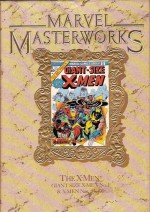
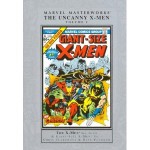
Marvel Masterworks volume 11: Giant-Size X-Men #1 and X-Men 94-100


By Len Wein, Chris Claremont, Dave Cockrum & various (Marvel)
ISBN: 0-87135-597-3

The X-Men #1 introduced Cyclops, Iceman, Angel, Marvel Girl and the Beast: very special students of Professor Charles Xavier, a wheelchair-bound telepath dedicated to brokering peace and integration between the masses of humanity and the emergent off-shoot race of mutants dubbed Homo Superior. After years of eccentric and spectacular adventures the mutant misfits disappeared at the beginning of 1970 (issue #66 cover-dated March) during a sustained downturn in costumed hero comics as mystery and all things supernatural once more gripped the world’s entertainment fields.

Although their title was revived at the end of the year as a cheap reprint vehicle, the missing mutants were reduced to guest-stars and bit-players throughout the Marvel universe and the Beast was transformed into a monster to cash in on the horror boom, until Marvel editor-in-chief Roy Thomas green-lighted a bold one-shot in 1975 as part of the company’s line of Giant-Sized specials.

This magnificent deluxe hardcover compendium recaptures the sun-bright excitement of those exuberant and pivotal early stories from Giant Size X-Men #1 and issues #94-100 of the definitely “All-New, All-Different” X-Men from May 1975, through to August 1976 when the merry mutants were still, young, fresh and delightfully under-exposed and opens with a classic mystery monster mash in ‘Second Genesis!’ as Len Wein & Dave Cockrum (the latter hot from a stint reviving DC’s equally eclectic super-team The Legion of Super-Heroes) detailed how the classic team had been lost in action, leaving Charles Xavier to scour the Earth and the Marvel Universe for a replacement team.

To old foes-turned-friends Banshee and Sunfire was added a one-shot Hulk villain dubbed the Wolverine, but most time and attention was paid to new creations Kurt Wagner, a demonic German teleporter who would be codenamed Nightcrawler, African weather “goddess” Ororo Monroe AKA Storm, Russian farmboy Peter Rasputin, who could transform into a living steel Colossus and bitter, disillusioned Apache superman John Proudstar who was cajoled into joining the makeshift squad as Thunderbird.

The second chapter of the epic introductory adventure ‘…And When There Was One!’ reintroduced the wounded team leader Cyclops who swiftly trained the team before leading them into primordial danger against the monolithic threat of ‘Krakoa… the Island That Walks Like a Man!’

Overcoming the phenomenal terror of the living mutant eco-system and rescuing the original team should have led to the next quarterly issue, but so great was the groundswell of support that the follow-up adventure was reworked into a two part for in the rapidly reconfigured reprint monthly which became a bimonthly home to the team and began the mutant madness we’re still experiencing today.

X-Men #94 (August 1975) presented ‘The Doomsmith Scenario!’, plotted by Editor Wein, scripted by Chris Claremont and with Bob McLeod inking the man-on-fire Dave Cockrum, in a canny Armageddon-countdown shocker as the newly pared-down strike-squad (minus Sunfire and recovering mutants Marvel Girl, Angel, Iceman, Havok and Lorna Dane) were dispatched by The Beast – then serving as a full-time Avenger – to stop criminal terrorist Count Nefaria from starting an atomic war.

The insidious mastermind had invaded America’s Norad citadel with a gang of artificial superhumans and accidentally turned a nuclear blackmail scheme into an inescapable holocaust before the new mutants stormed in to save the world in the epic conclusion ‘Warhunt! (inked by Sam Grainger).

However one of the valiant neophytes didn’t make it back…

X-Men #96 saw Claremont take full control of the team’s writing (albeit with some plotting input from Bill Mantlo) in ‘Night of the Demon!’ as a guilt-wracked Cyclops, blaming himself for the loss of a team-mate, accidentally unleashed a demonic antediluvian horror from earth’s dimmest prehistory for the heroes-in-training to thrash. The infernal Nagarai would return over and again to bedevil mankind, but the biggest innovation in this issue was the introduction of gun-toting biologist/housekeeper Moira MacTaggert and the first inklings of the return of implacable old adversaries…

Issue #97 began a long-running, intergalactically-widescreen plotline with ‘My Brother, My Enemy!’ as Xavier, plagued by visions of interstellar wars, tried to take a vacation, just as Havok and Lorna Dane (finally settling on the superhero nom de guerre Polaris) attacked the team, seemingly willing servants of a mysterious madman using Cyclops’ old alter ego Eric the Red.

The devastating conflict segued into a spectacular, three-part saga as the pitiless robotic Sentinels returned under the hate-filled auspices of mutantophobic Steven Lang and his mysterious backers of Project Armageddon. The action began with #98’s ‘Merry Christmas, X-Men…the Sentinels Have Returned!’ with coordinated attacks successfully capturing the semi-retired Marvel Girl, Wolverine, Banshee and Xavier, compelling Cyclops and the remaining heroes to co-opt a space shuttle and storm Lang’s orbital HQ to rescue them in ‘Deathstar Rising!‘ (inks by Frank Chiaremonte) – another phenomenal all-action episode.

After a magical pinup of the extended team by Arthur Adams (the cover of Classic X-Men #1 from 1986 if you were wondering) this first stellar, deluxe hardcover compilation concludes on an agonising cliffhanger with the 100th issue anniversary classic ‘Greater Love Hath no X-Man…’ (with Cockrum inking his own pencils) wherein the new X-Men apparently battled the original team before overturning Lang’s monstrous schemes forever.

However, their catastrophic clash had destroyed their only means of escape and, as a colossal solar flare threatened to eradicate the entire satellite, the only chance to survive meant certain death for another X-Man…

With even greater excitement and innovation to follow in succeeding issues, these superb comics thrillers revolutionised a moribund genre and led directly to today’s ubiquitous popular cultural landscape where superheroes are as common as cops, cowboys, monsters or rom-com romeos.

The immortal epics compiled here are available in numerous formats (including softcover editions of the luxurious and enticing hardback under review here), but for a selection that will survive the continual re-readings of the serious, incurable fan there’s nothing to beat the sturdy and substantial full-colour feel of these Marvellous Masterwork editions.
© 1975, 1976, 1989 Marvel Entertainment Group, Inc/Marvel Characters, Inc. All rights reserved.
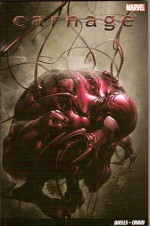
Carnage


By Zeb Wells & Clayton Crain ((Marvel/Panini UK)
ISBN: 978-1-84653-492-8

In the anything goes, desperate hurly-burly of the late 1980s and 1990s, fad-fever and spin-off madness gripped the superhero genre in America as publishers hungrily exploited every trick to bolster flagging sales. In the melee Spider-Man spawned an intractable enemy called Venom: a deranged and disgraced reporter named Eddie Brock who bonded with Peter Parker’s old costume (an semi-sentient alien parasite called the Symbiote) to become a savage, shape-changing dark-side version of the Amazing Arachnid.

Eventually the spidery adversaries reached a brooding détente and Venom became a “Lethal Protector”, dispensing a highly individualistic brand of justice everywhere but New York City.

At one stage the Symbiote went into breeding mode; creating a junior version of itself that merged with a deranged psycho-killer named Cletus Kasady (in Amazing Spider-Man #344, March 1991). Totally amoral, murderously twisted and addicted to both pain and excitement, Kasady became the terrifying metamorphic Carnage and the kill-crazy monster tore a bloody swathe through the Big Apple before an army of superheroes caught him and the equally deadly “family” of otherworldly killers Kasady had gathered around himself – as seen in the crossover epic Maximum Carnage.

Kasady swiftly became one of the most dangerous beings on Earth until he was finally killed; his remains dumped safely into high-Earth orbit.

However, “safe” is an extremely relative word…

He made his inevitable, memorable return in a five-issue miniseries which ran from October 2010 to June 2011 and now collected in this dark and impressive tome which describes how ruthless media mogul Michael Hall allows his greed, arrogance and imagined rivalry with inventive genius Tony Stark to put the entire planet at risk once more…

Dr. Tanis Nieves is the dedicated psychotherapist tasked with curing Carnage’s mind-warping mutant “girlfriend” Shriek, but when a mysterious corporation buys the mental facility she works at and begins “employing” her patient in a top secret enterprise she fears the worst. As Doppelganger, another monstrous family member of the Maximum Carnage Family, resurfaces she is embroiled in a brutal superhero clash and maimed by her new employer’s security forces…

Meanwhile Hall has announced a new generation of prosthetic replacements, which too-perfectly mimic the subtlest actions of living limbs, as well as a cadre of armoured super-warriors to match the invincible Iron Man.

But his proposed business campaign is plagued by problems and escalating bloodshed. When Spider-Man and the Armoured Avenger investigate, they discover the monstrous lengths Hall has stooped to in his bid to become World Leader in advanced tech and, as the horrors Hall has resurrected rapidly achieve a blood-soaked autonomy, not only does Kasady make his own catastrophic return but a new generation of Symbiote is also unleashed…

Intoxicating, gripping and stunningly intense, this is a breathtaking horror movie-meets-corporate thriller yarn by Zeb Wells that rightly downplays the costumed heroics of Iron Man and the Wall-crawler to better revitalise and reinvigorate the now truly terrifying Carnage… and then let him loose on the Marvel Universe once more.

The only slight quibble I can proffer is that in some places the astounding painted artwork of Clayton Crain is perhaps a tad too dark and moody for my tired old eyes: still, that’s a minor moan and equally antiquated readers can at least revel in the glorious gallery of alternate covers at the back by the serried likes of Arthur Adams and Patrick Zircher.

Sharp superheroics, devilish corporate skulduggery, stupendous suspense and well-earned comeuppances abound and this is a shocker no fright-night thrill-fan will want to miss.

™ & © 2011 Marvel & Subs. Licensed by Marvel Characters B.V. through Panini S.p.A., Italy. All rights reserved. A British Edition published by Panini UK, Ltd.

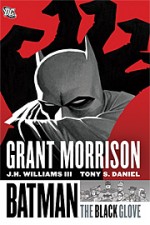
Batman: The Black Glove


By Grant Morrison, J.H. Williams, Tony S. Daniel & various (DC Comics)
ISBN: 978-1-84576-962-8

In all the furore and hype surrounding the death and inevitable resurrection of Batman by Grant Morrison everybody seemed so concerned with what was going to happen next that they appeared to sideline what was actually occurring in the monthly comicbooks they were holding in their hands.

Now with the dust long settled let’s take a look at one of the collected volumes comprising the extended campaign of psychological warfare the Dark Knight faced on the complex and rocky road to his demise and disappearance at the conclusion of Batman R.I.P. (and Final Crisis, if you’re of a nitpicky nature like all us true comics fans…)

In the build-up to that epochal event a sustained and vicious multi-pronged attack was launched against the Gotham Guardian by an all-encompassing criminal hegemony calling itself The Black Glove which succeeded in destabilising the already dubious mental equilibrium of the emotionally and physically burned out Batman.

The Glove’s enigmatic, quixotic leader Dr. Hurt was masterminding every minute aspect of the war and was merrily dredging up long-forgotten foes and cases Bruce Wayne had all but banished from his mind…

This volume collects the contents of monthly Batman comicbooks #667-669 and #672-675; two impressive story-arcs which intensively reference tales included in the associate compilation Batman: the Black Casebook – so you might want to keep that tome handy, even though the new stories herein can readily be enjoyed without it.

The first of these is a delightful play on the hallowed and time-tested “locked-room” mysteries and “ten little Indians” plots of traditional detective thrillers as a group of Batman-inspired heroes from around the world reunite on a desolate isle to mull over the old days and what might have been…

Their original meetings had occurred in ‘The Batmen of All Nations!’ (Detective Comics #215, January 1955 and included in Black Casebook with its sequel ‘The Club of Heroes’ appearing in World’s Finest Comics #89, July-August 1957 – and collected in Showcase Presents World Finest volume 1).

Against his better judgement Batman agrees to a attend a reunion of the club – after a decade of embarrassment and acrimony – on ‘The Island of Mister Mayhew’ the millionaire backer of the original enterprise and a movie producer who’s most notable effort was a thriller entitled “The Black Glove”.

Like a garish High School Reunion, the years have not been kind to many of the B-list champions, but things get much worse when their transport is destroyed and heroes start dying in ‘Now We Are Dead!’ before traitors are uncovered, impostors unmasked and the true culprits get away to menace another day in the spectacular conclusion ‘The Dark Knight Must Die!’

Scripted by Grant Morrison with stunning illustration from J.H. Williams III, this is top-rate, classic Batman fare and some of the survivors of this saga even made it into the later Batman Incorporated storyline…

The four-part drama that follows (the intervening issues having formed chapters of Batman: the Resurrection of Ra’s Al Ghul crossover saga) sees a series of violently degenerate substitute Batmen unleashed on Gotham, beginning in ‘Space Medicine’, as the first ersatz crusader targets cops and their long-suffering chief Commissioner Jim Gordon.

When the real Dark Knight gets involved he soon realises in ‘Joe Chill in Hell’ that an old, nigh-forgotten case not only offers clues to his current dilemma, but might also have sown the seeds of his eventual defeat or victory.

Life-saving hallucinations and deeper explorations reveal that a long-buried contingency plan to protect his sanity might not be enough when ‘Batman Dies at Dawn’ before it all astonishingly comes together when he finally confronts ‘The Fiend with Nine Eyes’ and realises who his true enemy is and always has been…

With astounding art by Tony S. Daniel, Ryan Benjamin, Jonathan Glapion, Mark Irwin, Sandu Florea & Saleem Crawford, this visceral, imaginative and deliciously off-balance frantic psycho-thriller sets the scene for the ultimate showdown in Batman R.I.P. …

© 2007, 2008 DC Comics. All Rights Reserved.

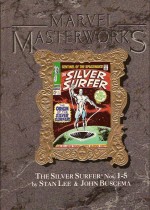
Marvel Masterworks volume 15: Silver Surfer 1-5


By Stan Lee, John Buscema & various (Marvel)
ISBN: 0-87135-631-7

Although pretty much a last minute addition to Fantastic Four #48-50’s ‘Galactus Trilogy’, Jack Kirby’s scintillating creation the Silver Surfer quickly became a watchword for depth and subtext in the Marvel Universe and one Stan Lee kept as his own personal toy for many years.

Tasked with finding planets for space god Galactus to consume and despite the best efforts of intergalactic voyeur Uatu the Watcher, one day the Silver Surfer discovered Earth, where the latent nobility of humanity reawakened his own suppressed morality; causing the shining scout to rebel against his master and help the FF save the world.

In retaliation, Galactus imprisoned his one-time herald on Earth, making him the ultimate outsider on a planet remarkably ungrateful for his sacrifice.

The Galactus Saga was a creative highlight from a period where the Lee/Kirby partnership was utterly on fire. The tale has all the power and grandeur of a true epic and has never been surpassed for drama, thrills and sheer entertainment. It’s not included here: for that treat you’ll need to see Essential Fantastic Four volume 3 or many other Marvel collections…

In 1968, after increasingly frequent guest-shots and even a solo adventure in the back of Fantastic Four Annual #5 (also omitted, but it is in Essential Fantastic Four volume 4) the Surfer finally got his own (initially double-sized) title at long last.

This stellar hardback deluxe edition collects the first five extra-length adventures from August 1968 to April 1969 and begins with ‘The Origin of the Silver Surfer!’ by Lee, John Buscema & Joe Sinnott who, after a prolonged flashback sequence and repeated examples of crass humanity’s brutal callousness and unthinking hostility, detailed how Norrin Radd, discontented soul from an alien paradise named Zenn-La, became the gleaming herald of a planetary scourge.

Radd had constantly chafed against a civilisation in comfortable, sybaritic stagnation, but when Galactus shattered their vaunted million years of progress in a fleeting moment, the dissident without hesitation offered himself as a sacrifice to save the world from the Devourer’s hunger.

Converted into an indestructible gleaming human meteor Radd agreed to scour the galaxies looking for uninhabited worlds rich in the energies Galactus needed to survive, thus saving planets with life on them from destruction. He didn’t always find them in time…

The stories in this series were highly acclaimed – if not commercially successful – both for Buscema’s agonised, emphatic and truly beautiful artwork as well as Lee’s deeply spiritual and philosophical scripts; with the isolated alien’s travails and social observations creating a metaphoric status akin to a Christ-figure for an audience that was maturing and rebelling against America’s creaking and unsavoury status quo.

The second 40 page adventure detailed a secret invasion by extraterrestrial lizard men ‘When Lands the Saucer!’ forcing the Surfer to battle the sinister Brotherhood of Badoon without human aid or even awareness in ‘Let Earth be the Prize!’…

A little side-note for sad nit-picking enthusiasts like me: I suspect that the original intention was to drop the page count to regular 20-page episodes from #2, since in terms of pacing both the second and third issues divide perfectly into two-parters, with cliffhanger endings and splash page/chapter titles that are dropped from #4 onwards.

Silver Surfer #3 is pivotal in the ongoing saga as Lee & Buscema introduced Marvel’s Satan-analogue in ‘The Power and the Prize!’

Mephisto is Lord of Hell and saw the Surfer’s untarnished soul as a threat to his evil influence on Earth. To crush the anguished hero’s spirit the demon abducted Norrin Radd’s true love Shalla Bal from still-recovering Zenn-La and tormented the Sentinel of the Spaceways with her dire distress in his sulphurous nether-realm…

The concluding chapter sees mortal angel of light and devil of depravity conduct a spectacular ‘Duel in the Depths’ wherein neither base temptations nor overwhelming force were enough to stay the noble Surfer’s inevitable triumph.

Just as wicked a foe then attempted to exploit the Earth-bound alien’s heroic impulses in #4’s ‘The Good, The Bad and the Uncanny!’ (inked by new art collaborator Sal Buscema) wherein Asgardian God of Evil Loki offered lies, deceit and even escape from Galactus’ terrestrial cage to induce the Silver Stalwart to attack and destroy the Mighty Thor; resulting in a staggering and bombastic clash that just builds and builds as the creative team finally let loose and fully utilised their expanded story-proportions and page count to create smooth flowing epic action-adventures.

This magical collection concludes with a powerful parable about race, prejudice and shared humanity when the Surfer was befriended by ostracised black physicist Al Harper in ‘…And Who Shall Mourn Him?’

As the two outcasts bonded the scientist realised he might have a way to free the Surfer from his Galactine incarceration, but as they put their plan into operation remorseless alien entity The Stranger turned up, determined to erase the potential threat mankind offered to the rest of the universe. To stop him both Harper and Norrin Radd had to sacrifice everything they cherished most for a world that didn’t care if they lived or died…

The Silver Surfer was always a pristine and iconic character when handled well – and sparingly – and these early forays into a more mature range of adventures, although perhaps a touch heavy-handed, showed that there was far more to comicbooks than cops and robbers or monsters and misfits. That exploratory experience and mystique of hero as Christ allegory made the series a critically beloved but commercially disastrous cause celebré until eventually financial failure killed the experiment.

After the Lee/Kirby/Ditko sparks had initially fired up the imaginations of readers in the early days, the deeper, subtler overtones and undercurrents offered by stories like these kept a maturing readership enthralled, loyal and abidingly curious as to what else comics could achieve if given half a chance and this fabulously lavish tome offers the perfect way to discover or recapture the thrill and wonder of those startlingly different days and times
© 1968, 1969, 1990 Marvel Entertainment Group/Marvel Characters, Inc. All rights reserved.
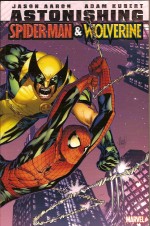
Astonishing Spider-Man & Wolverine


By Jason Aaron, Adam Kubert & various (Marvel/Panini UK)
ISBN: 978-1-84653-476-8

Remember when comic stories were fun, thrilling and, best of all, joyously uncomplicated? Clearly a few people at Marvel still do if the six issue miniseries collected here as Astonishing Spider-Man & Wolverine is anything to go by…

Eschewing mind-boggling continuity-links and crossover overload, writer Jason Aaron and artist Adam Kubert, with the impressive support of inkers Mark Morales, Dexter Vines & Mark Roslan (as well as colourist Justin Ponsor and letterer Rob Steen) simply set out to craft a well-told, action-packed and even poignant time-travel fun-fest that does everything right… and superbly succeed.

Without giving away too much delicious detail – trust me you’ll be grateful once you read the full epic adventure – sixty-five million years ago, as a giant asteroid hurtles towards Earth and an impact which will wipe out the dinosaurs and at least two emergent species of proto-hominid, a warring couple of marooned superheroes from the 21st century sadly make peace with their fate if not each other.

Lost in time for months through the most ridiculous of circumstances, Wolverine and Peter Parker are ready to die. The feral mutant has become leader of the smart but diminutive Small People, leading them to salvation from the predations of their giant evolutionary rivals the Kill People and all other threats, whilst the erstwhile Spider-Man has isolated himself from all contact, terrified of rewriting the future even if he is no longer part of it.

Moreover, Parker’s dreams are haunted by a woman he doesn’t know, but who has become the only thing he cares for…

At a most precipitous moment the pair are snatched from their time zone and returned to what appears to be an utterly devastated present. The Small People have survived humanity’s fall and are new rulers of a shattered society, but now are at risk of losing their own shot as overlords of Earth. A fresh Armageddon from leftover human technology, a time-travelling z-list villain and a terrifying sentient planet with the ghost consciousness of Doctor Doom appears to be about to end civilisation one more time…

After Wolverine saves the day and is brought back from beyond death by Parker, they are separated in time and dumped at significant and harrowing moments of each other’s early life; but all the while sinister forces wielded by a hidden cosmic mastermind are manipulating not just the heroes but time itself…

After literally saving the world and perhaps the universe, the heroes are still hunted and continually assaulted by Temporal Gangstas The Czar and Big Murder, until Spider-Man and Wolverine finally strike back and seemingly triumph, only to be stranded in the American west for years.

At least this time Peter is happily united with the mysterious girl of his dreams.

However the epic is far from finished and heartbreak is just around the chronal corner…

Fast-paced, spectacular, incredibly ingenious and uproariously witty, this tale is a sparkling timeless gem and the perfect antidote for over-angsty costumed drama overload.

™ & © 2011 Marvel & Subs. Licensed by Marvel Characters B.V. through Panini S.p.A., Italy. All rights reserved. A British Edition published by Panini UK, Ltd.

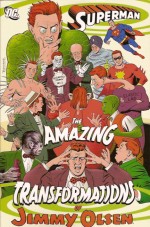
Superman: The Amazing Transformations of Jimmy Olsen


By Otto Binder, Curt Swan, Ray Burnley & various (DC Comics)
ISBN: 978-1-4012-1369-5

Although unnamed, a red-headed, be-freckled plucky kid worked alongside Clark Kent and Lois Lane from Action Comics #6 (November 1938) and was called by his first name from Superman #13 (November-December 1941) onwards. That lad was Jimmy Olsen and he was a major player in The Adventures of Superman radio show from its debut on April 15th 1940; somebody for the hero to explain stuff to for the listener’s benefit and the closest thing to a sidekick the Man of Tomorrow ever needed…

When the similarly titled television show launched in the autumn of 1952 it became a monolithic hit and National Periodicals began cautiously expanding their valuable franchise with new characters and titles. First up were the gloriously charming, light-hearted escapades of the rash, capable but naïve photographer and “cub reporter” from the Daily Planet: new star of Superman’s Pal Jimmy Olsen, which launched in 1954 with a September-October cover date.

The comic was popular for more than two decades, blending action, adventure, broad, wacky comedy, fantasy and science fiction in the gentle manner scripter Otto Binder had perfected a decade previously at Fawcett Comics on the magnificent Captain Marvel. As the feature progressed one of the most popular plot-themes (and most fondly remembered and referenced today by most Baby-Boomer fans) was the unlucky lad’s appalling talent for being warped, mutated and physically manipulated by fate, aliens and even his friends…

The Amazing Transformations of Jimmy Olsen delightfully collects some of the very best and most iconic tales from the series all of which originally appeared in issues #22, 28. 31-33, 41-42, 44, 49, 53, 59, 65, 72, 77, 80, 85 and 105 of the comicbook, as well as the lead story from the giant anthology Superman Family #173, into which Superman’s Pal Jimmy Olsen evolved.

The spellbinding wonderment begins with a selection of beautifully reconfigured covers (from issues 22, 44, 59 and 105) which act as contents and credit pages after which the story segments open with ‘The Super-Brain of Jimmy Olsen’ by Binder, Curt Swan & Ray Burnley, wherein resident crackpot genius Professor Phineas Potter evolved the boy into a man from 1,000,000AD. The seemingly benevolent being seems to have a hidden agenda however and is able to bend Superman to his will…

The same creative team produced ‘The Human Skyscraper’ with another Potter production enlarging Jimmy to monumental size, whilst in ‘The E-L-A-S-T-I-C Lad’ Superman was ultimately responsible for the reporter gaining stretching powers after leaving a chest of alien artefacts with the nosy, accident-prone kid.

‘The Jimmy Olsen from Jupiter’ by Alvin Schwartz, Swan & Burnley saw aliens mutate him into one of their scaly selves, complete with mind reading powers, whilst Binder’s ‘The Human Flame-Thrower!’ saw Potter’s latest experiment cause the worst case of high-octane halitosis in history, after which Robert Bernstein, Swan & John Forte displayed the lad’s negligent idiocy when Jimmy ate alien fruit and became ‘The Human Octopus!’

Craig Flessel inked the hilarious and ingenious ‘Jimmy the Genie!’ in which boy and magical sprite exchanged roles after which ‘The Wolf-Man of Metropolis!’ , by Binder, Swan, Stan Kaye, blended horror, mystery and heart-warming charm in a mini-classic of the genre.

Professor Potter was blamed for, but entirely innocent of, turning Jimmy into ‘The Fat Boy of Metropolis!’ – a daft but clever crime caper from Swan & Forte – whilst sheer mischance resulted in the now-legendary saga of ‘The Giant Turtle Man!’ and his oddly casualty-free rampage (courtesy of scripter Jerry Siegel) before Leo Dorfman, Swan & George Klein collaborated to produce the sparkling tale of alien love gone amiss, which resulted in our boy temporarily becoming ‘Jimmy Olsen, Freak!’

When Jimmy spurned the amorous attentions of supernatural Fifth Dimensional babe Miss Gzptlsnz, she quite understandably turned him into ‘The Human Porcupine’ by Siegel, Swan & Klein, who also crafted the intriguing enigma of ‘The World of Doomed Olsens!’ wherein Jimmy was confronted by materialisations of his most memorable metamorphoses…

‘The Colossus of Metropolis!’ saw Jimmy deliberately and daringly grow into a giant to tackle the rampaging Super-Ape Titano, whilst Siegel, Forte & Klein’s ‘Jimmy Olsen, the Bizarro Boy!’ was a merry comedy of errors with Potter’s cure for the backwards-living Bizarro beings going painfully awry, resulting in the poor lad being ‘Exiled on the Bizarro World!’

The immensely popular Legion of Super-Heroes guest-star in many of these tales and play a pivotal part in ‘The Adventures of Chameleon-Head Olsen!’, a madcap mirth spree as only Siegel, Forte & Klein could make ’em, whilst the far more menacing tale of ‘The World of 1,000 Olsens!’, by Binder, E. Nelson Bridwell & Pete Costanza was a product of changing times and darker tastes; with an actual arch-enemy trapping Jimmy on a murderous planet where everybody looks like but hates the cub reporter…

This fabulously strange brew concludes with a smart thriller set in the Bottled City of Kandor where Jimmy resumed his costumed-hero identity of Flamebird beside Superman to save the last Kryptonians from the ‘Menace of the Micro-Monster!’ …a sharp terrorist shocker by Cary Bates & Kurt Schaffenberger which satisfyingly closes this magically engaging tome.

As well as relating some of the most delightful episodes of the pre angst-drenched, cosmically catastrophic DC, these stories also perfectly depict the changing mores and tastes which reshaped comics from the safe 1950s to the seditious, rebellious 1970s, all the while keeping to the prime directive of the industry – “keep them entertained and keep them wanting more”.

I know I certainly do…

© 1957-1965, 1967, 1975, 2007 DC Comics. All Rights Reserved.

Marvel Masterworks volume 14: Captain America from Tales of Suspense 59-81


By Stan Lee, Jack Kirby & various (Marvel)
ISBN: 0-87135-630-9   second edition 978-0-7851-1176-4

During the earliest days of Marvel Comics Stan Lee and Jack Kirby emulated the same strategy which had worked so tellingly for National Periodicals/DC, but with mixed results. Julie Schwartz had achieved incredible success with his revised versions of DC’s Golden Age greats, so it was only natural to try and revive characters who had dominated the ailing new kids of Timely/Atlas in those halcyon days of yore. A completely new Human Torch had premiered as part of the revolutionary Fantastic Four and in the fourth issue of that title Sub-Mariner resurfaced after a twenty year amnesiac hiatus (everyone concerned had apparently forgotten the initial abortive attempt to revive the superheroes in the mid-1950s).

Torrid Teen Johnny Storm was promptly given his own solo feature in Strange Tales from issue #101 (as collected in Essential Human Torch volume1) where, in #114 the flaming kid fought a malevolent acrobat pretending to be a revived Captain America. An unabashed test-run, the tales was soon eclipsed when the real McCoy promptly surfaced in Avengers #4. After a captivating and centre-stage hogging run in that title the Sentinel of Liberty was quickly awarded his own series as half of the “split-book” Tales of Suspense, beginning with #59 (after another impostor battled titular star Iron Man in the previous issue).

This magnificent full-colour hardback stirringly re-presents those early short sagas which span the period cover-dated November 1964-September 1966), opening with the initial outing ‘Captain America’, scripted by Stan Lee and illustrated by the staggeringly perfect team of Jack Kirby & Chic Stone: an unapologetic all-action romp wherein an army of thugs invades Avengers Mansion since only the one without superpowers is at home… The next issue held more of the same, when ‘The Army of Assassins Strikes!’, this time attempting to overwhelm the inexhaustible human fighting machine at the behest of arch foe Baron Zemo, whilst ‘The Strength of the Sumo!’ was insufficient when Cap invaded Viet Nam to rescue a captured US airman, after which he took on an entire prison’s population to stop the ‘Break-out in Cell Block 10!’

After these gloriously simplistic romps the series took an abrupt turn and began telling tales set in World War II. ‘The Origin of Captain America’, by Lee, Kirby & Frank Ray (AKA Frank Giacoia – one of an increasing wave of DC stalwarts anonymously moonlighting at the House of Ideas) recounted, recapitulated and expanded the way physical wreck Steve Rogers was selected to be the guinea pig for a new super-soldier serum only to have the scientist responsible die in his arms, cut down by a Nazi bullet.

Now forever unique, Rogers was became a living fighting symbol and guardian of America, based as a regular soldier in a boot camp.

It was there he was unmasked by Camp Mascot Bucky Barnes, who blackmailed the hero into making the boy his sidekick. The next issue (Tales of Suspense #64) kicked off a string of spectacular thrillers as the heroes defeated the spies Sando and Omar in ‘Among Us, Wreckers Dwell!’ before Chic Stone returned for the next tale ‘The Red Skull Strikes!’ in which the daring duo foiled the Nazi mastermind’s sabotage plans in America.

‘The Fantastic Origin of the Red Skull!’ saw the series swing into high gear and switch settings to Europe as sub-plots and characterisation were added to the all-out action and spectacle. ‘Lest Tyranny Triumph!’ and ‘The Sentinel and the Spy!’ (both inked by Giacoia) combined espionage and mad science in a plot to murder the head of Allied Command after which the heroic duo stayed in England for ‘Midnight in Greymoor Castle!’ (with art by Dick Ayers over Kirby’s layouts – rough pencils sketches that break down the story elements on a page). The second part ‘If This be Treason!’ had Golden Age veteran and Buck Rogers newspaper strip artist George Tuska perform the same function. The final part (and the last wartime adventure) was ‘When You Lie Down with Dogs…!’ which added Joe Sinnott inks to the mix for a rousing conclusion to this frantic tale of traitors, madmen and terror weapons…

It was back to the present for Tales of Suspense #72 and Lee, Kirby & Tuska revealed that Cap had been telling war stories to his fellow Avengers for the last nine months. ‘The Sleeper Shall Awake!’ began a spectacular contemporary adventure as a Nazi super-robot was activated twenty years after Germany’s defeat to exact a world-shattering vengeance. Continuing its rampage across Europe in ‘Where Walks the Sleeper!’ before concluding in ‘The Final Sleep!’ this masterpiece of tension and suspense perfectly demonstrated the indomitable nature of the ultimate American hero.

Dick Ayers returned with John Tartaglione inking ‘30 Minutes to Live!’ which introduced both Batroc the Leaper and a mysterious girl who would eventually become Cap’s long-term girl-friend, S.H.I.E.L.D. agent Sharon Carter, in a taut 2-part countdown to disaster ending with ‘The Gladiator, The Girl and the Glory’, illustrated by John Romita (Senior). This was the first tale which had no artistic input from Jack Kirby, but he laid out the next issue (TOS #77) for Romita & Giacoia. ‘If a Hostage Should Die!’ again returned to WWII and hinted at both a lost romance and tragedy to come.

‘Them!’ returned Kirby to full pencils and Giacoia to the regular inks-spot as Cap teamed with Nick Fury in the first of the Star-Spangled Avenger’s many adventures as a (more-or-less) Agent of S.H.I.E.L.D. It was followed by ‘The Red Skull Lives!’ as his arch nemesis returned from the grave to menace the Free World again. He was initially aided by the subversive technology group AIM, but stole their ultimate weapon in ‘He Who Holds the Cosmic Cube!’ (inked by Don Heck) – a device which could rewrite reality with but a whim…

This staggeringly fast-paced, rollercoaster collection climaxes with a classic confrontation in ‘The Red Skull Supreme!’ and concludes with one last breathtaking Cap pin-up by Kirby & Ayers.

These are tales of dauntless courage and unmatchable adventure, addictive and superbly illustrated, which rightly returned Captain America to heights his Golden Age compatriots the Torch and the Sub-Mariner never regained – pure escapist magic.

Great, great stuff for the eternally young at heart, perfectly presented in a sturdy deluxe hardcover edition.
© 1963, 1964, 1965, 1990 Marvel Characters, Inc. All rights reserved.
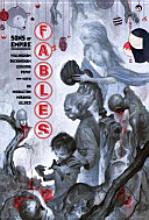
Fables volume 9: Sons of Empire


By Bill Willingham, Mark Buckingham, Michael Allred, Steve Leialoha & various (Vertigo)
ISBN: 978-1-84576-566-8

Written by Bill Willingham, Fables details the exploits of fairytale and storybook characters that humans always believed to be fictional; living secret, immortal lives amongst us, refugees from a monstrous all-consuming Adversary who had long ago conquered their original otherworldly homelands.

Keeping their true nature hidden from humanity Fables created enclaves where their magic and sheer strangeness (all the talking animals are sequestered on a remote upstate New York farm, for example) keep them in luxurious safety. Many wander the human world, but always under strict injunction not to draw attention. These magical, perfect, cynical yet perversely human creatures dream of one day returning to their own homes and interrupted lives. They used to live with the constant threat that their all-consuming foe would one day find them…

However their nemesis has been revealed as the puppeteer Geppetto, who used his gift to carve living, sentient beings out of magic wood to build vast all-powerful armies (supplemented with goblins, monsters and collaborators who joined rather than die when his unstoppable marionette forces came marching in). Ruling in anonymity from behind his greatest creation, The Emperor, Geppetto almost conquered all of Reality, but once his identity was revealed the indomitable refugees of Fabletown exacted a stunning retaliatory strike that completely changed the nature of the previously one-sided conflict…

Collecting issues # 52-59 of the monthly comic this volume brings everybody up to speed with the always-handy ‘Who’s Who in Fabletown’ featurette before the eponymous four-part Sons of Empire opens with ‘Some Ideas Towards the Prospect of a Final Solution for Fabletown’ (illustrated by Mark Buckingham, Steve Leialoha & Andrew Pepoy with colours by Lee Loughridge) in which focus shifts to the otherworldly realm of the Adversary and a Council of War in which the vilest creatures of myth and legend outline their options for retaliation for the indignities recently perpetrated upon them; determined not only to destroy the rebellious Fables but the entire Mundane world as well…

Each chapter is accompanied by a brief vignette starring some of the vast Earth-bound cast beginning with ‘Hair’ (illustrated by Gene Ha) in which the winsome Rapunzel describes her average day, which, since her flowing tresses grow at the rate of four inches per hour is a little different from most fancy-free New York girls…

‘The Four Plagues’ details the Adversary’s final plans whilst at the secluded farm on Earth where non-human Fables must live, newlywed dad Bigby Wolf takes on the task of civilising his and Snow White‘s troublesome brood of shape-shifting cubs, after which a smart and sassy snippet from Joshua Middleton addresses the perennial topic of curse-undoing kisses in ‘Porky Pine Pie’.

The drama switches more fully to Earth in ‘The Burning Times’ as the Evil Empire starts its campaign of doom by opening diplomatic relations with Fabletown, sending one of their own back to them as ambassador.

Once Hansel was a simple, plucky lad outwitting a cannibal sorceress, but as he matured in our world he became a religious maniac, the greatest witchfinder and the most successful serial killer in Earth’s history. …

And what he did to poor Gretel!

Mundy journalist Kevin Thorne almost discovered the secret of Fabletown once, so it’s no real surprise that Hansel and his staff rent his house for their embassy in the Michael & Laura Allred illustrated short feature ‘A Thorn in Their Side?’ and Sons of Empire concludes with ‘Over There’ as Geppetto’s “first-born” Pinocchio inadvertently refines the revenge-scheme until it is infallible and inevitable. The death-drenched scenario is counter-pointed by a delightful whimsy starring the Three Blind Mice on ‘The Road to Paradise’ by Inaki Miranda, with hues by Eva de la Cruz.

Next follows a truly magnificent and revelatory Yule tale as only Fables could present it. ‘Jiminy Christmas’ features Bigby’s Brood learning all there is know about the Big Red Guy at the Pole before this volume digresses into a two-part saga starring the entire Wolf clan. ‘Father and Son’ addresses the family rift between Big Bad Wolf and his sire – the being known as Mr. North or the Great North Wind – with Snow and the cubs along for the tempestuous ride, beginning with ‘A Man’s Home is His Castle’ and concluding in ‘Big Scary Monsters’ as the kids are lost in a forest of ravening beasts with some very uncomfortable and unsavoury family ties, courtesy of Michael & Laura Allred.

The last pages of this fabulous tome are dedicated to more short graphic stories addressing long-asked questions from readers answered in hilarious and terrifying manner by author Willingham and a pantheon of art-stars.

Beginning with ‘Did Hakim Ever Manage to get a Regular Job?’ by M.K, Perker, and ‘How Does Bufkin Keep getting his hands on the Liquor?’ by Jim Rugg, the responses (but not always answers…) come thick and fast.

‘What is Training Like for a new member of the Mouse Police?’ (Mark Buckingham), ‘Did Jack leave anyone messages before he left Fabletown Forever? (Andrew Pepoy), ‘How are the new Three Little Pigs adjusting to being Pigs?’ (JoÑ‘lle Jones), ‘Besides Fly, who else has asked questions of the Magic Mirror?’ (D’Israeli), ‘What is Boy Blue’s Favorite Song?’ and ‘What song was playing when Snow White and Bigby first danced together at the Remembrance Day Ball?’ (both by Jill Thompson), ‘What is Frau Totenkinder knitting?’ (David Lapham), ‘Who was Prince Charming’s first love?’ (John K. Snyder III), ‘How many romantic conquests has Prince Charming had?’ (Eric Shanower) and climaxes with Barry Kitson’s stunning ‘Who caught the bouquet at Snow White’s wedding?’

There is nothing around today that can touch this series for imagination, style and quality, and you’ll never know the real meaning of “happy ever after” until you turn on to this magnificent saga.
© 2006, 2007 Bill Willingham and DC Comics. All Rights Reserved.

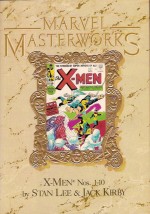
Marvel Masterworks volume 3: X-Men 1-10


By Stan Lee, Jack Kirby & various (Marvel)
ISBN: 0-87135-308-3, second edition 978-0-7851-0845-0 (2002)

In 1963 things really took off for the budding Marvel Comics as Stan Lee & Jack Kirby expanded their diminutive line of action titles, putting a bunch of relatively new super-heroes (including hot off the presses Iron Man) together as the Avengers, launching a decidedly different war comic in Sgt Fury and his Howling Commandos and creating a group of alienated heroic teenagers who gathered together to fight a rather specific, previously unperceived threat to humanity.

The X-Men #1 (September 1963) introduced Cyclops, Iceman, Angel and the Beast: very special students of Professor Charles Xavier, a wheelchair-bound telepath dedicated to brokering peace and integration between the masses of humanity and the emergent off-shoot race of mutants dubbed Homo Superior. The story opens as the students welcome their newest classmate, Jean Grey, aka Marvel Girl, a beautiful young woman with the ability to move objects with her mind.

No sooner has the Professor explained their mission than an actual Evil Mutant, Magneto, single-handedly takes over American missile-base Cape Citadel. A seemingly unbeatable threat, the master of magnetism was nonetheless driven off by the young heroes on their first mission in under 15 minutes…

It doesn’t sound like much, but the gritty dynamic power of Kirby’s art, solidly inked by veteran Paul Reinman, imparted a raw energy to the tale which carried the bi-monthly book irresistibly forward. With issue #2 ‘No One Can Stop the Vanisher!’ a Federal connection was established in the form of FBI Special Agent Fred Duncan, who requested the teen team’s assistance in capturing a teleporting mutant who threatened to steal US military secrets.

These days, young heroes are ten-a-penny, but it should be noted that these kids were the first juvenile super-doers in comics since the end of the Golden Age, so it’s perhaps unsurprising that in this tale of a terrifying teleporter the outmatched youngsters needed a little adult supervision…

Issue #3′s ‘Beware of the Blob!’ displayed a rare lapse of judgement as proselytising Professor X invited a sideshow freak into the team only to be rebuffed by the felonious mutant. Impervious to mortal harm the Blob used his carnival cronies to attack the hidden heroes before they could come after him and once again it was up to teacher to save the day…

With X-Men #4 (March 1964) a thematic sea-change occurred as Magneto returned with ‘The Brotherhood of Evil Mutants!’ intent on conquering a South American country and establishing a political powerbase. Mastermind, Toad, Quicksilver and the Scarlet Witch were very much his unwilling thralls in the bombastic struggle that followed, but from then on the callow champions-in-training were the hunted prey of malevolent mutants. ‘Trapped: One X-Man!’ in issue #5 saw early results in that secret war as the Angel was abducted to Magneto’s orbiting satellite base Asteroid M, and only a desperate battle at the edge of space eventually saved him…

‘Sub-Mariner Joins the Evil Mutants!’ is a self-explanatory tale of gripping intensity elevated to magical levels of artistic quality as the superb Chic Stone replaced Reinman as inker for the rest of Kirby’s tenure and genuine narrative progress was made in ‘The Return of the Blob!’ as their mentor left on a secret mission, but not before appointing Cyclops acting team leader.

Comedy relief was provided as Lee & Kirby introduced Beast and Iceman to the Beatnik inspired “youth scene” but the high action quotient came courtesy of the troubled teaming of the Blob and Magneto’s malign brood.

Another invulnerable mutant debuted in ‘Unus the Untouchable!’ a wrestler with an invisible force field who tried to join the Brotherhood by offering to bring them an X-Man. Also notable is the first real incident of “anti-mutant hysteria” when a mob attacked the Beast, a theme that would become the cornerstone of the X-Men mythos.

X-Men #9 (January 1965) is the first true masterpiece of this celebrated title. ‘Enter, the Avengers!’ reunited the mutants with Professor X in the wilds of Balkan Europe, as the deadly Lucifer attempted to destroy the world with a super-bomb, subsequently manipulating the teens into an all-out battle with the awesome Avengers.

This is still a perfect Marvel comic story today, as is its follow-up ‘The Coming of Ka-Zar!’ a wild excursion to Antarctica, featuring the discovery of the Antediluvian Savage Land and the modern incarnation of one of Marvel/Timely’s oldest heroes (Kazar the Great originated in Marvel Comics #1, November 1939). Dinosaurs, lost cities, spectacular locations, mystery and all-out action: it doesn’t get better than this…

These quirky tales are a million miles removed from the angst-ridden, breast-beating, cripplingly convoluted X-brand of today’s Marvel and many would argue are all the better for it. Well drawn, highly readable stories are never unwelcome or out of favour though, and it should be remembered that everything here informs so very much of the mutant monolith. These are stories for the dedicated fan and newest convert, and never better packaged than in this glorious and lavish hardback edition.

These immortal epics are available in numerous formats (including softcover editions of the luxurious and enticing hardback under review here), but for a selection that will survive the continual re-readings of the serious, incurable fan there’s nothing to beat the substantial full-colour feel of these Marvellous Masterwork editions.
© 1963, 1964, 1965, 1987, 2002 Marvel Entertainment Group, Inc. All Rights Reserved.

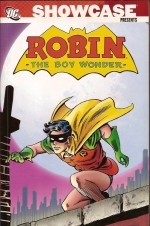
Showcase Presents Robin the Boy Wonder


By Gardner Fox, Mike Friedrich, Frank Robbins, Gil Kane, Irv Novick, Dick Dillin & various (DC Comics)
ISBN: 978-1-84576-814-0

Robin the Boy Wonder debuted in Detective Comics #38 (April 1940), created by Bob Kane, Bill Finger & Jerry Robinson: a juvenile circus acrobat whose parents were murdered by a mob boss. The story of how Batman took the orphaned Dick Grayson under his scalloped wing and trained him to fight crime has been told, retold and revised many times over the decades and still regularly undergoes tweaking to this day.

Grayson fought beside Batman until 1970 when, as an indicator of those turbulent times, he flew the nest, becoming a Teen Wonder college student. His creation as a junior hero for younger readers to identify with has inspired an incomprehensible number of costumed sidekicks and kid crusaders, and Grayson continued in similar innovative vein for the older, more worldly-wise readership of America’s increasingly rebellious youth culture.

Robin even had his own solo series in Star Spangled Comics from 1947 to 1952, a solo spot in the back of Detective Comics from the end of the 1960s wherein he alternated and shared with Batgirl, and a starring feature in the anthology comic Batman Family. During the 1980s he led the New Teen Titans first in his original costumed identity but eventually in the reinvented guise of Nightwing, re-establishing a turbulent working relationship with his mentor Batman.

This broad ranging black and white compilation volume covers the period from Julie Schwartz’s captivating reinvigoration of the Dynamic Duo in 1964 until 1975 with Robin-related stories and material from Batman #184, 192, 202, 213, 227, 229-231, 234-236, 239-242, 244-246, 248-250, 252, 254 and portions of 217, Detective Comics #342, 386, 390-391, 394-395, 398-403, 445, 447, 450-251, Worlds Finest Comics #141, 147, 195, 200, Superman’s Pal Jimmy Olsen #91, 111, 130 and Justice League of America #91-92.

The wonderment begins with the lead story from Batman #213 (July-August 1969) – a 30th Anniversary reprint Giant – which featured an all-new retelling of ‘The Origin of Robin’ courtesy of E. Nelson Bridwell, Ross Andru & Mike Esposito, which perfectly reinterpreted that epochal event for the Vietnam generation. After that the tales proceed in (more or less) chronological order, covering episodes where Robin took centre-stage.

First up is ‘The Olsen-Robin Team versus “the Superman-Batman Team!”’ (World’s Finest #141 May 1964). In this stirring blend of science fiction thriller and crime caper, the underappreciated sidekicks fake their own deaths and undertake a secret mission even their adult partners must remain unaware of… for the very best of reasons of course, whilst the sequel from WF #147 (February 1965, Hamilton, Swan & Klein) delivers an engaging drama of youth-in-revolt as ‘The New Terrific Team!’ quit their assistant roles to strike out on their disgruntled own. Naturally there’s a perfectly reasonable if incredible reason here, too…

Detective Comics #342 (August 1965) featured ‘The Midnight Raid of the Robin Gang!’ by John Broome, Sheldon Moldoff & Joe Giella, wherein the Boy Wonder infiltrated a youthful gang of costumed criminals whilst Superman’s Pal Jimmy Olsen #91 (March 1966) provided ‘The Dragon Delinquent!’ (Leo Dorfman & Pete Costanza) which saw Robin and the cub reporter both, unknown to each other, infiltrate the same biker gang with potentially fatal consequences.

‘The Boy Wonder’s Boo-Boo Patrol!’ originally appeared as a back-up in Batman #184 (September 1966 by Fox, Chic Stone & Sid Greene), showing the daring lad’s star-potential in a clever tale of thespian skulduggery and classy conundrum solving, whilst ‘Dick Grayson’s Secret Guardian!’ from Batman #192 (June 1967: Fox, Sheldon Moldoff & Joe Giella) displayed his physical prowess in one of comicbooks’ first instances of the now over-used exo-skeletal augmentation gimmick.

‘Jimmy Olsen, Boy Wonder!’ (Superman’s Pal Jimmy Olsen #111, June 1968, by Cary Bates & Costanza) saw the reporter try to prove his covert skills by convincing the Gotham Guardian that he was actually Robin whilst that same month in Batman #203 the genuine article tackled the ‘Menace of the Motorcycle Marauders!’ (by Mike Friedrich, Stone & Giella) consequently learning a salutary lesson in the price of responsibility…

Cover-dated April 1969, Detective Comics #386 featured the Boy Wonder’s first solo back-up in what was to become his semi-regular home-spot, alternating with Batgirl. ‘The Teen-Age Gap!’ (Friedrich, Andru & Esposito) depicted a High School Barn Dance which only narrowly escaped becoming a riot thanks to his diligent intervention, but when Gil Kane & Murphy Anderson took over the art-chores for #390’s ‘Countdown to Chaos!’ (August 1969), the series came stunningly alive. Friedrich concocted a canny tale of corruption and kidnapping leading to a paralysing city ‘Strike!’ for the lad to spectacularly expose and foil in the following issue.

Batman #217 (December 1969) was a shattering landmark in the character’s long history as Dick Grayson left home to attend Hudson University. Only the pertinent portion from ‘One Bullet Too Many!’ by Frank Robbins, Irv Norvick & Dick Giordano is included here, closely followed by ‘Strike… Whilst the Campus is Hot’ (Detective #394 from the same month, by Robbins, Kane & Anderson) as the callow Freshman stumbled into a campus riot organised by criminals and radical activists which forced the now Teen Wonder to ‘Drop Out… or Drop Dead!‘ before stopping the seditious scheme…

Detective Comics #398-399 (April and May 1970) featured a two-part spy-thriller where Vince Colletta replaced Anderson as inker. ‘Moon-Struck’ saw lunar rock samples borrowed from NASA apparently cause a plague among Hudson’s students until Robin exposed a Soviet scheme to sabotage the Space Program in ‘Panic by Moonglow’.

The 400th anniversary issue (June 1970) finally teamed the Teen Wonder with his alternating back-up star in ‘A Burial For Batgirl!’(Denny O’Neil, Kane & Colletta): a college-based murder mystery which once more heavily referenced the political and social unrest then plaguing US campuses, but which still found space to be smart and action-packed as well as topical before the chilling conclusion ‘Midnight is the Dying Hour!’ wrapped up the saga.

Never afraid to repeat a good idea, Superman’s Pal Jimmy Olsen #130 (July 1970) saw Bob Haney & Murphy Anderson detail the exploits of ‘Olsen the Teen Wonder!’ as the boy reporter again aped Batman’s buddy to infiltrate an underworld newspaper whilst World’s Finest #195 (August 1970) found Jimmy & Robin targeted for murder by the Mafia in ‘Dig Now, Die Later!’ by Haney, Andru & Esposito.

Simultaneously in Detective #402, ‘My Place in the Sun’ by Friedrich, Kane & Colletta, embroiled Dick Grayson and fellow Teen Titan Roy “Speedy” Harper in a crisis of social conscience, before our scarce-bearded hero wrapped up his first Detective run with the corking crime-busting caper ‘Break-Out’ in the September issue.

Robin’s further adventures transferred to the back of Batman, beginning with #227 (December 1970) and ‘Help Me – I Think I’m Dead!’ (Friedrich, Novick & Esposito) as ecological awareness and penny-pinching Big Business catastrophically collided on the campus, beginning an extended epic which saw the Teen Thunderbolt explore communes, alternative cultures and the burgeoning spiritual New Age fads of the day.

‘Temperature Boiling… and Rising!’ (inked by Frank Giacoia from #229, February 1971) continued the politically charged drama which is uncomfortably interrupted by a trenchant fantasy team-up with Superman sparked when the Man of Steel attempted to halt a violent campus clash between students and National Guard.

‘Prisoners of the Immortal World!’ (World’s Finest #2000 February 1971, by Friedrich, Dick Dillin & Giella) featured brothers on the opposite side of the teen scene kidnapped with Robin and Superman to a distant planet where undying vampiric aliens waged eternal war on each other, before returning to more pedestrian perils in Batman #230 (March 1971) where ‘Danger Comes A-Looking!’ for our young hero in the form of a gang of right-wing, anti-protester jocks and a deluded friend who preferred bombs to brotherhood, courtesy of Friedrich, Novick & Dick Giordano.

‘Wiped Out!’ (#231, May 1971) produced an eye-popping end to the jock gang whilst #234 offered a clever road-trip tale in ‘Vengeance for a Cop!’ when a campus guard was gunned down and Robin tracked the only suspect to a commune. ‘The Outcast Society’ had its own unique system of justice but eventually the shooter was apprehended in the cataclysmic ‘Rain Fire!’ (#235 and 236 respectively).

The Collective experience blossomed into psychedelic and psionic strangeness in Batman #239 as ‘Soul-Pit’ (illustrated by new penciller Rich Buckler) found Dick Grayson’s would be girlfriend, Jesus-freaks and runaway kids all sucked into a telepathic duel between a father and son, played out in the ‘Theatre of the Mind!’ before revealing the ‘Secret of the Psychic Siren!’ culminating in a lethal clash with a clandestine cult in ‘Death-Point!’ in Batman #242 (June 1972).

After that eerie epic we slip back a year to peruse the Teen Wonder’s participation in one of the hallowed JLA/JSA summer team-ups beginning with Justice League of America #91 (August 1971) and ‘Earth… the Monster-Maker!’ as the Supermen, Flashes, Green Lanterns, Atoms and a brace of Hawkmen from two separate Realities simultaneously and ineffectually battled an alien boy and his symbiotically-linked dog (sort of) on almost identical planets a universe apart, whilst painfully patronising the Robins of both until ‘Solomon Grundy… the One and Only!’ gave everybody a brutal but ultimately life-saving lesson on acceptance, togetherness, youthful optimism and lateral thinking.

‘The Teen-Age Trap!’ by Elliot Maggin, Novick & Giordano (Batman #244, September 1972) found Dick Grayson mentoring troubled kids – and finding plenty of troublemakers his own age – whilst ‘Who Stole the Gift From Nowhere!’ was a delightful old fashioned change-of-pace mystery yarn.

‘How Many Ways Can a Robin Die?’ by Robbins, Novick Dillin & Giordano from Batman #246 (December 1972) is actually a Dark Knight story with the Teen Wonder reduced to helpless hostage throughout, but issue #248 began another run of short solo stories with ‘The Immortals of Usen Castle’ (Maggin, Novick & Frank McLaughlin) wherein a deprived-kids day trip turned into an episode of Scooby-Doo, Where are You?, whilst the ‘Case of the Kidnapped Crusader!’ (pencilled by Bob Brown) put the Student Centurion on the trail of an abducted consumer advocate and ‘Return of the Flying Grayson!’ by Maggin, Novick & McLaughlin from #250 painfully reminded the hero of his Circus past after tracking down pop-art thieves.

Batman #252 (October 1973) featured a light-hearted pairing with a Danny Kaye pastiche in the charming romp ‘The King From Canarsie!’ by Maggin, Dillin & Giordano, whilst ‘The Phenomenal Memory of Luke Graham!’ (#254 January/February 1974 and inked by Murphy Anderson) caused nothing but trouble for Robin, college professors and a gang of robbers…

It was a year before the Teen Wonder’s solo sallies resumed with ‘The Touchdown Trap’ in Detective Comics #445 as new scripter Bob Rozakis and guest artist Mike Grell catapulted our hero into a fifty-year old college football feud that refused to die, whilst ‘The Puzzle of the Pyramids’ (#447 illustrated by A. Martinez & Mazzaroli) offered another clever crime mystery.

This magically eclectic monochrome compendium concludes with an action-packed human drama in ‘The Parking Lot Bandit!’ and ‘The Parking Lot Bandit Strikes Again!’ from Detective #450-451, (August and September 1975, drawn by art from Al Milgrom & Terry Austin).

These stories span a turbulent and chaotic period for comicbooks: perfectly encapsulating and describing the vicissitudes of the superhero genre’s premier juvenile lead: complex yet uncomplicated adventures drenched in charm and wit, moody tales of rebellion and self-discovery and rollercoaster, all-fun romps. Action is always paramount and angst-free satisfaction is pretty much guaranteed. This book of cracking yarns something no fan of Fights ‘n’ Tights fiction can afford to miss.

© 1964-1975, 2008 DC Comics. All Rights Reserved.