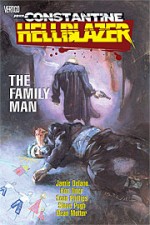
John Constantine, Hellblazer: The Family Man


By Jamie Delano, Ron Tiner, Sean Phillips, Steve Pugh, Dean Motter & others (Vertigo)
ISBN: 978-1-84576-978-9

You’ve either heard of Hellblazer by now or you haven’t, so I’ll be brief. Originally created by Alan Moore during his groundbreaking run on Swamp Thing, John Constantine is a mercurial modern wizard, a morally ambivalent, self-serving trickster, neither friend nor foe to mankind and a hell-addicted chancer who plays with magic on his own terms for his own ends. Or so he’d have you think…

He is not a hero. He is not a nice person. He is nothing like Keanu Reeves. Sometimes though, he’s all there is between us and the void… the magician that is, not the actor…

After years of tackling primordial, unearthly horrors and all manner of thaumaturgic terrors John Constantine finally faced the greatest Bete Noir of modern times when he faced an all-too human killer in one of the most disturbing sagas of the series’ always controversial history…

Collecting the chilling extended epic from Hellblazer #23-24 and #28-33, the first inkling of the terror in store comes with ‘Larger Than Life’ (laid out by Dean Motter and illustrated by Ron Tiner) as the urban mage checks in with an old acquaintance and opens the door on a storm of blood and horror. Jehosophat “Jerry the Dealer” O’Flynn is a trader in arcane artefacts as well as more mundane commodities, but the day Constantine popped in his host was knee deep in novel trouble – in fact he was being hounded by creatures from literature who wanted him to come home…

Devotees of Jasper Fforde’s Bookworld series will feel they’re on familiar ground here but this sag is much more terror-tale than fantasy fable and first saw print in 1989…

Tiner assumed full artistic chores with the next issue as Constantine, living in O’Flynn’s empty house, encountered one of the trader’s nastiest customers. When an old gentleman came calling for his reserved merchandise the shifty sorcerer took a crafty peek and realised Jerry had been sourcing victims for ‘The Family Man’ – a serial killer who slaughters entire households.

What the killer gave Jerry was even more revolting…

In ‘Thicker Than Water’ (illustrated by Tiner and Kevin Walker) the trickster was visited by the ghosts of the Family Man’s latest foray, killed after Constantine handed Jerry’s research to that nice old man. Meanwhile retired policeman Sammy Morris has been thinking.

He’s been thinking he should have killed the man at Jerry’s place: so he taps a few old contacts on the Force and soon has all their files on John Constantine. Now he knows the unsuspecting man’s friends, his habits and that the troublesome loner has a father, sister and niece in Liverpool – a proper little family unit…

Whilst Constantine dealt in his own ruthless manner with the people profiting from the serial killer’s trades to O’Flynn, the monster paid a visit to Constantine’s kin with brutal, bloody results and the unsettled urban mage realised that he must be next on the “to-do” list…

Preparing himself for a completely unfamiliar kind of mortal combat, Constantine turned to old mate Chas Chandler, subsequently turning the cab driver into another target in ‘Sick at Heart’.

Hunted, horrified and knowing the rest of his family are next, the Hellblazer went undercover and on the run, dreading yet keenly anticipating a final confrontation with his relentless nemesis in ‘Fatality’ (Delano, Tiner and Mark Buckingham).

Sean Phillips illustrated the eerie aftermath of that final clash in ‘Mourning of the Magician’ as the surviving members of the Constantine clan gathered for the funeral and the exhausted, emotionally numbed wizard was forced to confront his troubled childhood whilst laying to rest one more unquiet spirit.

‘New Tricks’ is a savage, darkly amusing chiller from guest writer Dick Foreman and artist Steve Pugh as Constantine was dragged into a nasty scrap when a series of disappearances led to a reincarnated feral horror in a junkyard and ‘Sundays are Different’ ends this volume on an uncharacteristically gentle note as Delano, Motter & Mark Pennington provided a surreal moment of rest and contemplation when Constantine travelled to the strangest place he’d ever known before coming back to Earth with a soft bump and a refreshed attitude. Good thing too, because there’s horror aplenty still in store…

Hellblazer has always held up a dark mirror to the times it was written in, whilst somehow consistently maintaining a timeless quality of sublime shock and horror that no fan of suspense could ever resist. If you haven’t experienced the truly British taste of sour fear, sardonic whimsy and nihilistic aplomb under bleak, unrelenting adversity there’s no better time to start. He’s ready when you are…

© 1989, 1990, 2008 DC Comics. All Rights Reserved.

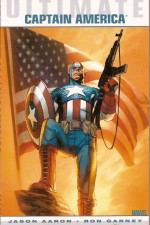
Ultimate Comics Captain America


By Jason Aaron & Ron Garney (Marvel/Panini UK)
ISBN: 978-1-84653-489-8

In 2000, when Marvel hived off portions of their established continuity into a separate, darker, grittier universe more relevant to the video game-playing, movie-watching 21st century readers than the 1960s Lee/Kirby/Ditko ongoing monolith, they started with the most popular characters – Spider-Man and the X-Men – only gradually adding analogues for the remaining characters and trademarks.

Even when the Mighty Avengers finally appeared, renamed the Ultimates in 2002, readers were only sparingly brought up to speed on the assorted back-stories of the alternative heroes and villains – including a remarkably familiar yet staggeringly different “Living Legend of World War II”.

Frail Steve Rogers still underwent radical experimentation to become America’s first super-soldier and after a brief stellar career as the living symbol of his war-beleaguered nation, disappeared in a blazing explosion. He was resurrected from a block of ice in modern times and re-assumed his place at the forefront of masked heroes. However, this Sentinel of Liberty was no costumed boy-scout, but rather a deadly and remorseless warrior: a master strategist and supremely skilled street-fighter always ready to apply the ultimate sanction. In short: a conscienceless killer.

In Ultimate Comics Captain America the eternal soldier is on the trail of rogue states seeking to duplicate the super-soldier serum which created him at the behest of his new government masters, when he is captured and subjected to horrendous torture and indoctrination by a living ghost…

Whilst Steve Rogers slept in the ice, America continued its march to global dominance and when the Vietnam conflict escalated the Military sought to recreate Captain America by transforming starry-eyed patriotic kid Frank Simpson into a living embodiment of the American war machine…

Tragically Vietnam was a different kind of war and Simpson (an iteration of the deeply troubled villain Nuke created by Frank Miller & David Mazzucchelli in Daredevil: Born Again) broke under the weight of the dirty jobs and corrupt missions he was assigned to carry out. One day he walked into the jungle and was never seen again…

Now Simpson is back and has clearly discovered how to duplicate the serum that empowers him; selling it to North Korea, Iran and anybody else dedicated to the downfall of the “the Land of the Free”…

Ignoring official orders to stand down, Steve Rogers hunts his successor – who has already thoroughly defeated him once – only to stumble on the USA’s greatest nightmare. Overmatched, outfought and easily captured by Simpson, Rogers is subjected to a terrifying re-education program that opens his eyes to what his country became whilst he slept and the kind of nation Captain America now stands for…

The stark, savage and nihilistically modern Ultimates Comic universe is well-stocked with dark-and-gritty doppelgangers of the gleaming pantheon crafted by Stan Lee, Jack Kirby and Steve Ditko, but since its inception at the turn of the century, the imprint has resolved into something which can easily stand on its own merits, as seen in this wonderful tale (originally published as Ultimate Comics Captain America #1-4).

With the impending imminent release of the latest Captain America movie, a large number of graphic novel collections starring the Sentinel of Liberty have been commissioned and this brutal, beautiful fable of frustrated idealism and corrupted patriotism is one of the very best of recent vintage, in this, that or any other universe.

Written by Jason (Scalped) Aaron, revisiting the source material of his Vertigo classic The Other Side and stunningly illustrated by Ron Garney, whose art on the mainstream hero (see Captain America: Operation Rebirth) returned the Star-Spangled Avenger to dizzying heights of popularity after decades in the doldrums, Ultimate Comics Captain America is a breathtaking, thought-provoking examination of duty and honour and a fabulously entertaining rollercoaster ride of action and adventure for older readers. It’s also a gloriously accessible tale for anybody approaching the character for the very first time…

Tense, compelling, morally challenging and explosively cathartic, this saga of conjoined yet eternally antagonistic ideologies in savage confrontation is absolute comics gold of the very highest quality: challenging, compelling and wildly satisfying.

™ and © 2011 Marvel Entertainment LCC and its subsidiaries. All rights reserved. A British edition released by Panini UK Ltd.

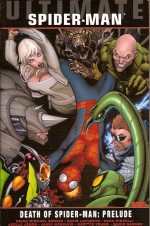
Ultimate Spider-Man: Death of Spider-Man: Prelude


By Brian Michael Bendis, David LaFuente, Sara Picheli, Joёlle Jones, Jamie McKelvie, Skottie Young & Chris Samnee (Marvel/Panini UK)
ISBN: 978-1-84653-486-7

Marvel’s Ultimates sub-imprint began in 2000 with key characters and concepts retooled to bring them into line with the tastes of modern readers – a potentially discrete and fresh new market from the baby-boomers and their descendents content to stick with the universe which had sprung from the fantastic founding talents of Jack Kirby, Steve Ditko and Stan Lee – or most likely – one unable or unwilling to deal with the five decades (seven if you include the Golden Age Timely tales retroactively co-opted into the mix) of continuity baggage that had accumulated around the originals.

Eventually this darkly nihilistic alternate universe became as continuity-constricted as its predecessor and in 2008 the cleansing event “Ultimatum” culminated in a reign of terror which apparently (this is still comics, after all) killed dozens of super-humans and millions of lesser mortals.

Although a huge seller (for modern comics at least) the saga was largely slated by the fans who bought it. The ongoing new “Ultimatum Comics” line quietly back-pedalled on its declared intentions, quietly soldiering on without “mentioning the war…”

The key and era-ending event was a colossal wave that inundated the superhero-heavy island of Manhattan and this latest compendium (assembling issue #15 of the post-Tsunami Ultimate Comics Spider-Man series and #150-155 of the same comicbook after it reverted to its original pre wash-rinse-reset-spin-cycle numbering) continues the superhero soap opera of young survivors readjusting to their altered state.

However time is a great reconciler and now the revitalised imprint is slowly gaining ground and winning favour as this third collection of the other Wallcrawler surely attests.

Peter Parker is fifteen (but looks 12), the perennial hard-luck loser kid: a secretive yet brilliant geek just trying to get by in a world where daily education is infinitely more trouble than beating monsters and villains. Between High School and slinging fast food (Burger Frog is his only source of income since the Daily Bugle drowned) he still finds time to fight crime although his very public heroics during the crisis have made him a beloved hero of police and citizenry alike – which is the creepiest thing he has ever endured.

He lives in a big house with his Aunt May and despite his low self-esteem inexplicably has stellar lovelies such as Gwen Stacy, Mary Jane Watson (his ex-squeeze) and others seemingly hungry for his scrawny bod. He even briefly dated mutant babe Kitty Pride: remember when not having a girlfriend was the very definition of “loser”?

Many kids were made homeless after the deluge and with schools and accommodation stretched to breaking point, May Parker opened her doors to a select band of orphaned super-kids like the Human Torch, Iceman and even the troubled – and tempting – Gwen, all living anonymously in the relatively unaffected borough of Queens.

At the end of the previous volume a shapeshifting villain replaced Parker, virtually assaulting both Mary Jane and Gwen and committing crimes as Spider-Man whilst the real Peter and J. Jonah Jamison languished in captivity. During their eventual escape the ruthless publisher deduced Parker’s Arachnid identity and got shot in the head. Now with super-spy organisation S.H.I.E.L.D taking charge of the aftermath Peter finds his fate in the hands of a bunch of take-charge adults who think they know what’s best for him…

The grown-ups, including Government super-team Ultimates Iron Man, Thor and Captain America, decide to teach him how to be a proper hero, so not only does the poor kid have to untangle the mess the Chameleons made of his turbulent love-life, but Peter has to go to a “summer school” where he’s the only pupil…

Meanwhile at his regular school old enemy Bombshell – another jailbait hottie – enrols in his class, claiming she’s turning over a new leaf just as Mary Jane and Gwen face off resulting in one of them running away from home…

Meanwhile extreme burglar Black Cat and criminal mastermind Mysterio have come to an impasse regarding a piece of property previously owned by the recently murdered Kingpin. Unfortunately the Zodiac Key is an extinction-level artefact activated by thought so as they struggle for it whole chunks of New York are vaporised.

Having drawn the short-straw Iron Man is Spidey’s reluctant mentor when the disaster hits and the two supremely outclassed science-geeks are all that’s available to save the day in a crisis which could end the Earth itself…

In the aftermath Peter and once nemesis Jonah Jamison strike an unexpected deal and all Peter’s girl problems converge as Gwen, Mary Jane and Kitty Pryde attend his sixteenth birthday party. It all ends on a remarkably happy note but this volume is, after all, only a prelude…

As ever these stories are as much about the tribulations of growing up as saving the world and writer Bendis superbly blends comedy, teen angst, melodrama and frantic action in a seamless stream of clever scenes and thrilling set pieces, all superbly illustrated by David LaFuente, Sara Picheli, Joёlle Jones, Jamie McKelvie, Skottie Young & Chris Samnee to produce one of the most enjoyable takes on the wall-crawler in decades.

This series is constantly improving and always offers marvellously compelling and enjoyable costumed drama that easily overcomes its opportunistic origins. An absolute must for every fun-loving jaded superhero fan…

™ and © 2011 Marvel Entertainment LCC and its subsidiaries. All rights reserved. A British edition released by Panini UK Ltd.

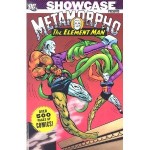
Showcase Presents Metamorpho, the Element Man


By Bob Haney, Ramona Fradon, Joe Orlando, Sal Trapani, Charles Paris & various (DC Comics)
ISBN: 978-1-4012-0762-5

By the time Metamorpho, the Element Man was introduced to the costumed hero-obsessed world the first vestiges of a certifiable boom were just becoming apparent. As such the light-hearted, almost absurdist take struck a right-time, right-place chord, blending far out adventure with tongue-in-cheek comedy.

The character debuted in Brave and the Bold #57 (December 1964-January 1965) and after a follow-up try-out in the next issue catapulted into his own title for an eclectic and oddly engaging 17-issue run. This canny monochrome compendium collects all those eccentric adventures plus team-up tales from Brave and the Bold #66 and 68 and Justice League of America #42

Unlike most of these splendid Showcase editions the team-up stories here are not re-presented in original publication order but closeted together at the back, so if stringent continuity is important to you the always informative credit-pages will enable to navigate the wonderment in the correct sequence…

‘The Origin of Metamorpho’ written by Bob Haney (who created the character and wrote everything except the JLA story) with art from Ramona Fradon & Charles Paris, introduced glamorous he-man Soldier of Fortune Rex Mason, who worked as a globe-trotting artefact procurer and agent for ruthlessly acquisitive scientific genius/business tycoon Simon Stagg. Mason was obnoxious and insolent but his biggest fault as far as his boss was concerned was that the mercenary loved and was loved by the millionaire’s only daughter Sapphire…

Determined to rid himself of Mason, Stagg dispatched him to retrieve a fantastic artefact dubbed the Orb of Ra from the lost pyramid of Ahk-Ton in Egypt, accompanied only by Java, a previously fossilised Neanderthal corpse Rex had discovered in a swamp and which (whom?) Stagg had restored to full life. Mason planned to take his final fabulous fee and whisk Sapphire away from her controlling father forever…

Utterly faithful to the scientific wizard, Java sabotaged the mission and left Mason to die in the tomb, victim of an ancient, glowing meteor. The man-brute rushed back to his master, carrying the Orb and fully expecting Stagg to honour his promise and give him Sapphire in marriage.

Trapped, knowing his time had come; Mason swallowed a suicide pill as the scorching rays of the star-stone burned through him…

Rex did not die but mutated into a ghastly chemical freak capable of shape-shifting and transforming into any of the elements or compounds that comprised the human body: carbon, hydrogen, oxygen, calcium, iron, cobalt and so many others…

Hungry for vengeance, Mason followed and confronted his betrayers but was overcome by the alien energies of the Orb of Ra. An uneasy détente was declared as Mason accepted Stagg’s desperate offer to cure him …if possible.

The rich man was further horrified when Rex revealed his condition to Sapphire and found she still loved him. Totally unaware of Stagg’s true depths of duplicity, Mason began working for the tycoon as a metahuman problem-solver: Metamorpho, the Element Man.

Brave and the Bold #58 (February-March 1965) revealed more of Stagg’s closeted skeletons when old partner Maxwell Tremayne kidnapped the Element Man and later abducted Sapphire in ‘The Junkyard of Doom!’ The deranged armaments manufacturer was once intimately acquainted with the girl’s mother and never quite got over it…

The tryout comics were an unqualified success and Metamorpho promptly debuted in his own title, cover-dated July-August 1965 just as the wildly tongue-in-cheek “High Camp” craze was catching on in all areas of popular culture; blending ironic vaudevillian kitsch with classic movie premises as theatrical mad scientists and scurrilous spies began to appear everywhere.

‘Attack of the Atomic Avenger’ saw nuclear nut-job Kurt Vornak try to crush Stagg Industries only to be turned into a deadly, planet-busting radioactive super-atom, whilst ‘Terror from the Telstar’ pitted the charismatic cast against Nicholas Balkan, a ruthless criminal boss determined to sabotage America’s Space program.

Mad multi-millionaire T.T. Trumbull used his own daughter Zelda to get to Simon Stagg through his heart (accidentally proving to everyone who knew him that the old goat actually had one) as part of his attempt to seize control of America in ‘Who Stole the U.S.A.?’ but the ambitious would-be despot backed up the scheme with an incredible robot specifically designed to destroy Metamorpho. Happily Rex Mason’s guts and ingenuity proved more effective than the Element Man’s astonishing powers…

America saved, the dysfunctional family headed South of the Border becoming embroiled in ‘The Awesome Escapades of the Abominable Playboy’ as Stagg tried to marry Sapphire off to Latino Lothario Cha Cha Chavez. The wilful girl thought she was just making Mason jealous and had no idea of her dad’s true plans and Stagg senior had no conception of Chavez’s real intentions or connections to the local tin-pot dictator…

With this issue the gloriously stylish Ramona Fradon left the series to be replaced by two artists who strove to emulate her unique manner of drawing with varying degrees of success. Luckily veteran inker Charles Paris stayed on to smooth out the rough edges…

First up was E.C. veteran Joe Orlando whose two issue tenure began with the outrageous doppelganger drama ‘Will the Real Metamorpho Please Stand Up?’ wherein eccentric architect Edifice K. Bulwark tried to convince Rex Mason to lend his abilities to his chemical skyscraper project. When Metamorpho declined Bulwark and Stagg decided to create their own Element Man… with predictably disastrous consequences.

‘Never Bet Against an Element Man!’ (#6 May-June 1966) took the team to the French Riviera as gambling grandee Achille Le Heele snookered Simon Stagg and won “ownership” of Metamorpho. The Creepy Conchon’s ultimate goal necessitated stealing the world’s seven greatest wonders (such as the Taj Mahal and Eiffel Tower) and only the Element Man could make that happen…

Sal Trapani took over the pencilling with #7’s ‘Terror from Fahrenheit 5,000!’ as the acronymic super-spy fad hit hard and Metamorpho was enlisted by the C.I.A. to stop suicidal maniac Otto Von Stuttgart from destroying the entire planet by dropping a nuke into the Earth’s core, whilst costumed villain Doc Dread could only be countered by an undercover Metamorpho becoming ‘Element Man, Public Enemy!’ in a diabolical caper of doom and double-cross…

Metamorpho #9 moved into the realm of classic fantasy when suave and sinister despot El Mantanzas marooned the cast in ‘The Valley That Time Forgot!’ to battle cavemen and antediluvian alien automatons before a new catalysing element was added in ‘The Sinister Snares of Stingaree!’ with the introduction of Urania Blackwell – a secret agent who had somehow been transformed into an Element Girl with all Metamorpho’s incredible abilities. Not only was she dedicated to eradicating evil such as the criminal cabal Cyclops, but Urania was also the perfect paramour for Rex Mason… he even cancelled his wedding to Sapphire to go gang-busting with her…

With a new frisson of sexual chemistry sizzling beneath the surface, ‘They Came From Beyond?’ found the conflicted Element Man battling an apparent alien invasion whilst ‘The Trap of the Test-Tube Terrors!’ saw another attempt to cure Rex Mason of his unwanted powers allow mad scientist Franz Zorb access to Stagg Industry labs long enough to build an army of chemical horrors.

The plot thickened with Zorb’s theft of a Nucleonic Moleculizer, prompting a continuation in #14 wherein Urania was abducted only to triumphantly experience ‘The Return From Limbo’…

Events and stories grew increasingly outlandish and outrageous as the TV superhero craze intensified and ‘Enter the Thunderer!’ (#14, September-October 1967) saw Rex pulled between Sapphire and Urania as the extraterrestrial Neutrog terrorised the planet in preparation for the awesome arrival of his mighty mutant master. The next instalment heralded an ‘Hour of Armageddon!’ as the uniquely menacing Thunderer assumed control of Earth until boy genius Billy Barton assisted the Elemental defenders in defeating the mutant horror.

Trapani inked himself for Metamorpho #16; an homage to H. Rider Haggard’s “She” wherein ‘Jezeba, Queen of Fury!’ changed the Element Man’s life forever. When Sapphire Stagg married playboy Wally Bannister, the heartbroken Element Man undertook a mission to find the lost city of Ma-Phoor. Here he encountered an undying beauty who wanted to conquer the world and just happened to be Sapphire’s exact double.

Moreover the immortal empress of a lost civilisation had once loved an Element Man of her own: a Roman named Algon who had been transformed into a chemical warrior two millennia previously. Believing herself reunited with her lost love Jezeba finally launched her long-delayed attack on the outside world with disastrous, tragic consequences…

The strangely appetising series came to a shuddering and unsatisfactory halt with the next issue as the superhero bubble burst and costumed comic characters suffered their second recession in fifteen years. Metamorpho was one of the first casualties, cancelled just as (or perhaps because) the series was emerging from its quirky comedic shell with the March-April 1968 issue.

‘Last Mile for an Element Man!’, illustrated by Jack Sparling, saw Mason tried and executed for the murder of Wally Bannister, resurrected by Urania Blackwell and set on the trail of true killer Algon. Along the way Mason and Element Girl uncovered a vast, incredible conspiracy and rededicated themselves to defending humanity at all costs. The tale ended on a never-resolved cliffhanger: when Metamorpho was revived a few years later no mention was ever made of these last game-changing issues…

The elemental entertainment doesn’t end here though as this tome somewhat expiates the frustrating denouement with three terrific team-up tales beginning with Brave and the Bold #66 (June-July 1966) ‘Wreck the Renegade Robots’ as a mad scientist usurped control of the Metal Men just as their creator Will Magnus was preoccupied turning Metamorpho back into an ordinary mortal.

Two issues later (B& B #68October-November 1966) the still Chemically Active Crime-buster was battling the Penguin, Joker and Riddler as well as a fearsomely mutated Caped Crusader in the thoroughly bizarre ‘Alias the Bat-Hulk!’ – both tales courtesy of Haney, Mike Sekowsky & Mike Esposito.

Sekowsky also drew the last story in this volume. Justice League of America #42 (February 1966) had the hero join the World’s Greatest Superheroes to defeat a cosmic menace deemed “the Unimaginable”. The grateful champions instantly offered him membership but were surprised when and why ‘Metamorpho Says… No!’ in a classic adventure written by Gardner Fox and inked by Bernard Sachs.

The wonderment finally subsides after a lovely pin-up of the Element Man and his core cast by Fradon and Paris.

Individually enticing, always exciting but oddly frustrating in total this book will delight readers who aren’t too wedded to cloying continuity but simply seek a few moments of casual, fantastic escapism.
© 1965-1967, 2005 DC Comics. All Rights Reserved.

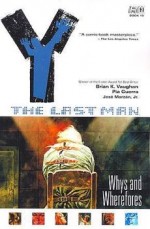
Y: the Last Man volume 10: Whys and Wherefores


By Brian K Vaughan, Pia Guerra & José Marzán Jr. (Vertigo)
ISBN: 978-1-84576-903-1

Some sense of disappointment is probably unavoidable when an acclaimed and beloved serial finally ends, but at least there’s a sense of accomplishment to savour and if you’re lucky perhaps a hint of more to be said and an avenue for further wonderment…

When every male creature on Earth suddenly dropped dead, only student Yorick Brown and his pet monkey Ampersand survived in a world instantly utterly all-girl. Unexpectedly a crucial natural resource, the wilful lad was escorted across the unmanned American continent to a Californian bio-lab by a government super-spy and a prominent geneticist, but all he could think of was re-uniting with his girlfriend Beth, trapped in Australia when the disaster struck.

With his reluctant companions Agent 355 and Dr. Allison Mann – who were trying to solve the mystery of his continued existence – the romantically determined oaf trekked from Washington DC to California, getting ever closer to his fiancée… or so he thought…

Each of his minders harboured dark secrets: Dr. Mann was crucially connected to the plague and the lethally competent 355 had hidden allegiances to organisations far-more far-reaching than the First Ladies of the remaining American government….

Also out to stake a claim and add to the general tension were renegade Israeli General Alter Tse’Elon and a post-disaster cult called “Daughters of the Amazon” who wanted to make sure that there really were no more men left to mess up the planet. Further complications included Yorick’s sister Hero, who stalked him across the ultra-feminised, ravaged and completely dis-United States and the boy’s own desirability to numerous frustrated and desperate women he encountered en route to Oz…

After four years and incredible adventures Yorick (a so-so scholar but a proficient amateur magician and escapologist) reached Australia only to discover Beth had embarked on her own odyssey to Paris. During the trek Dr. Mann discovered the inconvenient truth: Yorick was only alive because his pet Ampersand (an escaped lab-specimen) was immune and had inoculated his owner via his disgusting habit of chucking crap which Yorick didn’t always avoid. He didn’t keep his mouth closed enough either…

With this book, reprinting issues #55-60 of the award-winning series, comes to a final full-stop in ‘Whys and Wherefores’ wherein the various cast members all rendezvous in Paris. As well as Yorick and 355, his sister  Hero is there, having successfully escorted baby boys born in a hidden Space sciences lab to the City of Lights as well as Yorick’s baby daughter and the determined would-be mother who raped him to conceive her…

Also on scene and hungry for blood is General Tse’Elon with a dwindling squad of Israeli commandoes: rapidly diminishing because of their leader’s increasing instability and her habit of killing anybody who crosses her.

At long last the Last Man is reunited with his long lost true love, only to find that she wasn’t…

Tragically though his actual one-and-only is forever lost to him when Tse’Elon captures him and the babies, leading to a shocking final confrontation…

For the last chapter ‘Alas’ the action switches to Paris sixty years later. Thanks to cloning and gene manipulation the human race is secure and other species are returning too. Men are still rarer than hen’s teeth though, as the women seem to prefer girl babies…

The geriatric Yorick is saviour of humanity, but since he keeps trying to kill himself he has to be locked up and constantly guarded. In a desperate attempt to cure his seeming madness the leaders of the matriarchal new world – which suffers just as much from most of the problems and stupidities of the old – have brought in the best of the Last Man’s seventeen viable clones to talk him round and find out what’s bugging him. However the intervention doesn’t go as planned and the old escapologist has one last trick up his straitjacketed sleeve…

Illustrated by Pia Guerra & José Marzán Jr. these concluding adventures are packed with revelation, closures and disclosures plus some moments of genuine painful tragedy, so keep tissues handy if you’re easily moved.

The last of Y the Last Man is as controversial and challenging as ever it was: perfectly providing an ending to everything; lifting you up, breaking your heart and still leaving the reader hungry for more. And that’ just the way it ought to be…

© 2006, 2007 Brian K Vaughan & Pia Guerra. All Rights Reserved.

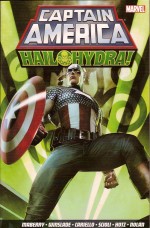
Captain America: Hail Hydra


By Jonathan Maberry, Sergio Cariello, Tom Scioli, Phil Winslade, Kyle Hotz & Graham Nolan (Marvel/Panini UK)
ISBN: 978-1-84653-488-1

Everything changed for a little company called Marvel when, in issue #4 of the Avengers, the assembled heroes recovered the body of US Army Private Steve Rogers floating in a block of ice and consequently resurrected World War II hero Captain America. With this act bridging the years to Timely and Atlas Comics (which had in fact begun with the revival of Sub-Mariner in Fantastic Four #4), Marvel instantly acquired a comforting longevity and potential-packed pre-history: lending an enticing sense of mythic continuance to the fledgling company that instantly gave it the same cachet and enduring grandeur of market leader National/DC.

In 2010, after years of conflicting continuity (and with a movie in the offing), Marvel updated those pivotal events and early future-shocked days in the contemporary world with the stunning re-interpretation Captain America: Man Out of Time before repeating the operation with another generational miniseries: this time following the returned Sentinel of Liberty as he fought an extended campaign against a fearsome and undying foe.

Captain America: Hail Hydra! focuses on five crucial skirmishes fought over the Red, White and true Blue hero’s long years of valiant service wherein the he continually clashed with an organisation of insidious evil and astounding ambition,  with each issue illustrated by a different artist in a pastiche of the relevant time.

The action, illustrated Sergio Cariello, begins in 1944 as Captain America and teen partner Bucky helped German anti-Nazi freedom fighter Trude Lohn smash a plot by the baroquely bonkers, certifiably mad Doctor Geist, who had discovered how to reanimate the dead. During the apocalyptic struggle Cap was injected with the unholy serum and although the triumphant trio succeeded in depriving Hitler of an undead army they had no idea of the sinister scientist’s greater scheme, the ancient society he belonged to or what effect his devil drugs would have on America’s greatest warrior…

Tom Scioli pictured the second instalment in tribute to Jack Kirby, wherein more hints into the history of the cult that would become Hydra were interspersed with Cap’s first days as an Avenger following his half-century enforced hibernation. After reuniting with the now geriatric Trude, he and his new comrades clashed with ex-Nazi Baron Strucker and Geist’s unliving army only to be thoroughly overmatched and outmanoeuvred. The deranged doctor seemed more interested in gathering blood samples from Cap and Thor than winning the battle he had instigated…

A few years later the plan becomes clearer when the Sentinel of Liberty, partner in crime-fighting the Falcon, and African Avenger Black Panther were attacked by an army of zombies attempting to steal the fabled Elixir of Life from a hidden Wakandan repository of knowledge called the Grotto of Solomon. Lavishly rendered by Phil Winslade, the spectacular clash was also lightly dusted with further glimpses of the order’s historic attempts to gather arcane knowledge and artefacts pertaining to their mysterious millennial goal…

For a brief period the US government replaced the Star-Spangled Avenger with a less independent agent and Steve Rogers took the identity of “The Captain”. Kyle Hotz delineates an adventure from those turbulent times as the unencumbered hero tackled Geist’s latest monstrosity and worked with Nick Fury of S.H.I.E.L.D. to get one step ahead of Hydra.

After thwarting a terrifying attack on the heart and soul of America Rogers is forced to consider not only what Geist is truly after but also what his devilish serum might have made of Captain America that fateful night in 1944…

Graham Nolan closes the saga in captivating style as Rogers, now Director of the Avengers, and old partner Bucky (the current Captain America) enlist a garrison of guest stars as they home in on Strucker and Geist just as their incredible seven-thousand year scheme comes to a shocking culmination. Even the World’s Mightiest Heroes would be hard-pressed to overcome the incredible beings Hydra has finally birthed…

This book does have a few niggling plot flaws but nothing so flagrant that it disrupts the overall flow of action and delicious flavour of nostalgia; so unless you’re a dedicated, nit-picking devotee the striking art and rollicking rollercoaster thrills and chills should carry the day nicely, providing a solid dose of immortal, enticing entertainment

Fast-paced, full-on spectacle and clever infilling of the established canon makes Captain America: Hail Hydra! a striking saga that should serve to make many fresh fans for Marvel’s eternally evergreen old soldier.

™ and © 2011 Marvel Entertainment LCC and its subsidiaries. All rights reserved. A British edition released by Panini UK Ltd.

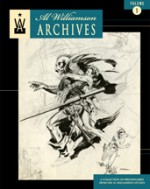
Al Williamson Archives volume 1


By Al Williamson with an introduction by Angelo Torres (Flesk)
ISBN: 978-1-933865-29-4

Al Williamson is one of the greatest draughtsmen ever to grace the pages of comicbooks and newspaper comics sections. He was born in 1931 before his family moved from New York City to Bogota Columbia at the height of the Golden Age of syndicated adventure strips.

The lad’s passion for strips – especially Alex Raymond’s Flash Gordon and Jungle Jim – was broadened as he devoured imported and translated US material as well as the best that Europe and Latin America could provide in such anthology magazines as Paquin and Pif Paf. Aged 12 Williamson returned to America and, after finishing school, found work in the industry that had always obsessed him.

In the early 1950s he became a star of E.C. Comics’ science fiction titles, beside kindred spirits Joe Orlando, Wally Wood, Roy G. Krenkel, Frank Frazetta and Angelo Torres, and drew Westerns Kid Colt and Ringo Kid for Atlas/Marvel. During the business’ darkest days he gravitated to newspaper strips, assisting John Prentice on Rip Kirby – another masterpiece originally created by Alex Raymond.

When comicbooks gradually recovered, Williamson drew Flash Gordon for King Comics and worked on mystery tales and westerns for DC whilst drawing such globally distributed newspaper features as Secret Agent Corrigan plus groundbreaking film adaptations of Bladerunner and Star Wars.

His stunning poetic realism, sophisticated compositions and fantastic naturalism graced many varied tales, but in later years he became almost exclusively a star inker over pencillers as varied as John Romita Jr., Larry Stroman, Rick Leonardi, Mark Bright, José Delbo and a host of others on everything from Transformers to Spider-Man 2099, Daredevil to Spider-Girl.

Al Williamson passed away in June 2010.

Flesk Publications is an outfit specialising in art books and the tomes dedicated to the greats of our industry include volumes on sequential narrative and fantasy illustration starring Steve Rude, Mark Shultz, James Bama, Gary Gianni, Franklin Booth, William Stout and Joseph Clement Coll. The guiding light behind the company is devoted and passionate art lover John Fleskes.

This initial oversized (305 x 232mm) 64 page collection of sketches, working drawings, unused and unfinished pages from one of the stellar creators of our art form stars captivating heroines, lusty barbarians, space heroes, beasts, aliens and so many wonderful dinosaurs, but also presents lesser known western scenes, science fiction tech, character sketches, duels, action sequences, nudes and glamour studies, unfinished pages from Xenozoic tales and John Carter of Mars, religious scenes and delicious unseen excerpts from Rip Kirby, as well as a glimpse into Williamson’s creative process.

The beautifully intimate glimpses of a master at work, with full colour reproduction capturing every nuance of Williamsons’ gorgeous pencil strokes, make this a book a vital primer for anybody dreaming of drawing for a living and the stirring lavish material revealed here will enthral and entice every fan of wondrous worlds and fantastic forgotten realms.

© 2010 Al Williamson. All Rights Reserved.

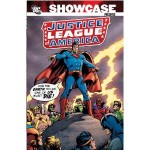
Showcase Presents Justice League of America volume 5


By Mike Friedrich, Len Wein, Dick Dillin & various (DC Comics)
ISBN: 978-0-85768-195-9

After the actual invention of the comicbook superhero – for which read the Action Comics debut of Superman in 1938 – the most significant event in the industry’s progress was the combination of individual sales-points into a group. Thus what seems blindingly obvious to us with the benefit of four-colour hindsight was proven: a number of popular characters could multiply readership by combining forces. Plus, of course, a mob of superheroes is just so much cooler than one (…or one-and-a-half if there’s a sidekick involved…).

And so the Justice Society of America is rightly revered as a true landmark in the development of comicbooks and when Julius Schwartz revived the superhero genre in the late 1950s, the key moment came with the inevitable banding together of the reconfigured mystery men.

That moment came with issue #28 of The Brave and the Bold, a classical adventure title that had recently transformed into a try-out magazine like Showcase. Just before Christmas 1959 the ads began running. “Just Imagine! The mightiest heroes of our time… have banded together as the Justice League of America to stamp out the forces of evil wherever and whenever they appear!”

The rest was history: the JLA captivated the youth of a nation, reinvigorated an industry and even inspired a small family-concern into creating the Fantastic Four, thereby transforming the art-form itself

Following a spectacular rise, TV spin-offs brought international awareness which led to catastrophic overexposure: by 1968 the superhero boom looked to be dying just as its predecessor had at the end of the 1940s. Sales were down generally in the industry and costs were beginning to spiral. More importantly “free” entertainment, in the form of television, was by now ensconced in even the poorest household. If you were a kid in the sixties, think just how many brilliant cartoon shows were created in that decade, when artists like Alex Toth and Doug Wildey worked in West Coast animation studios.

Moreover, comicbook heroes were now appearing on the small screen. Superman, Aquaman, Batman, the Marvel heroes and even the JLA were there every Saturday in your own living room even after the global bubble had burst…

It was a time of great political and social upheaval. Change was everywhere and unrest even reached the corridors of DC. When a number of creators agitated for increased work-benefits the request was not looked upon kindly. Many left the company – not always voluntarily – for other outfits. Some quit the business altogether.

This fifth monochrome volume compellingly reflects the signs of the times as new writers fostered a “new wave” before slowly and safely returning the World’s Greatest Superheroes to the tried and tested Fights ‘n’ Tights arena…

Collecting issues #84-106 (and re-presenting the stirring covers of #85 and 93: giant editions which reprinted issues #10-11and #13 and18, respectively), this tome covers the period when the market changed forever, and comics stopped being a casual, disposable mass-entertainment.

By the end of this volume the publishers had begun the conceptual and commercial transition from a mass-market medium which slavishly followed trends and fashions to become a niche industry producing only what its dedicated fans wanted…

The dramas begin here with Justice League of America #84 (November 1970) and a guest-script from veteran writer Robert Kanigher illustrated by Dick Dillin & Joe Giella. ‘The Devil in Paradise!’ wherein a well-meaning but demented scientist builds his own Eden to escape the world’s increasing savagery before attempting to cleanse the Earth and start civilisation afresh.

With superheroes on the outs the team was severely truncated too. Issue #86 tackled impending global starvation as Mike Friedrich began a run of excellent eco-thrillers with ‘Earth’s Final Hour!’ as businessman Theo Zappa traded away the planet’s plankton (base of our entire food-chain) to a race of aliens with only Superman, Batman, Flash, Aquaman, Atom and Hawkman on hand to thwart him, whilst #87’s ‘Batman… King of the World!’ brought in occasional guest-star Zatanna and the semi-retired Green Lantern to tackle a deadly alien robot raider: a devious and cleverly veiled attack on Big Business and the Vietnam war, most famous these days for introducing a group of alien superheroes mischievously based on Marvels Mighty Avengers…

The human spirit and enduring humanity were highlighted when ancient refugees from the lost city of Mu returned to find us in charge of the planet they had abandoned millennia ago. ‘The Last Survivors of Earth!’ showed that even when superheroes were outmatched by scientifically-instigated global catastrophes, the simple patience, charity and self-confidence of ordinary folks can move mountains and save worlds.

‘The Most Dangerous Dreams of All!’ is one of the oddest tales in JLA history with a thinly disguised Harlan Ellison psychically inserting himself into the consciousness of Superman and Batman to woo the Black Canary with near-fatal repercussions, in a self-indulgent but intriguing examination of the creative process whilst #90’s ‘Plague of the Pale People!’ saw Aquaman’s submerged kingdom of Atlantis conquered by a primitive sub-sea tribe (the Saremites from Flash #109 – for which story check out Showcase Presents the Flash volume 1) using nerve gas negligently dumped in the ocean by the  US military.

In a mordant and powerful parable about lost faith and taking responsibility the JLA were forced to deal with problems much tougher than repelling invaders and locking up bad-guys…

Justice League of America #91 (August 1971) began the hero-heavy first part of the annual JLA/JSA team-up with ‘Earth… the Monster-Maker!’ as the Supermen, Flashes, Green Lanterns, Hawkmen, Atoms and Robins of two separate Realities simultaneously and ineffectually battled an alien boy and his symbiotically-linked dog on two planets a universe apart, until ‘Solomon Grundy… the One and Only!’ gave them a life saving lesson on togetherness and lateral thinking…

Following the cover of reprint giant #93, Neal Adams stepped in to provide additional pencils for the tense mystery ‘Where Strikes Demonfang?’ as ghostly guardian Deadman helped Batman, Aquaman and Green Arrow foil a murder mission by the previously infallible Merlyn and the League of Assassins. The issue ended on a cliffhanger as Flash, Green Lantern and Hawkman were lost in a teleporter accident leaving Batman, Black Canary, Green Arrow and the Atom to fight ‘The Private War of Johnny Dune!’ wherein a disaffected black Vietnam veteran discovered the power and temptation of superpowers. Tragically even the ability to control minds wasn’t enough to change an unjust society two hundred years in the making…

The JLA returned to large-scale cosmic drama with issue #96 as Superman located the lost Leaguers on the distant yet familiar world of Rann (at least if you’ve read Showcase Presents Adam Strange volume 1) battling a planet-killing energy vampire in ‘The Coming of… Starbreaker!’

Their hard-won triumph only brought Earth to the attention of the extinction-event-level villain, leading to #97’s ‘The Day the Earth Screams!’ – a 37-page epic incorporating and recapitulating the team’s origin from #9 – resulting in a positively charged team, aided by Golden Age magician Sargon the Sorcerer, finally crushing the Stellar Leech in the climactic ‘No More Tomorrows!’

Environment-in-extremis was once more the theme in #99’s ‘Seeds of Destruction!’ as two alien Johnny Appleseeds began reseeding Earth with plants irrespective of whether or not humans want – or can survive – their monstrous crop…

Justice League of America #100 (August 1972) heralded the move away from relevancy and hot button social topics and a return to full-on Costumed melodramas beginning with a colossal three way team-up featuring almost every hero in the then-DC pantheon.

Beginning as part of the annual JLA/JSA summer blockbuster ‘The Unknown Soldier of Victory!’ featured the debut of Len Wein as scripter as the assembled champions of two Earths began a monumental hunt through time to retrieve forgotten heroes the Seven Soldiers of Victory; not simply out of common decency but because the vanished vigilantes held the answer to defeating a criminal mastermind literally holding the world of Earth-2 to ransom.

The quest continued in ‘The Hand that Shook the World!’ before ending in one adventurer’s gallant final sacrifice in #102’s ‘And One of Us Must Die!’ (with additional inking from Dick Giordano).

Returned to their own planet the JLA teamed up with and then inducted one of the few mystery men who hadn’t accompanied them to Earth-2 in ‘A Stranger Walks Among Us!’ (Wein, Dillin & Giordano) as the cross-genre horror-hero Phantom Stranger foiled a plot to sorcerously slaughter six Leaguers during the annual Halloween carnival in Rutland, Vermont, after which Green Lantern’s arch-enemy Hector Hammond orchestrated an attack on his old foe by setting an unstoppable monster loose on the League in ‘The Shaggy Man Will Get You if You Don’t Watch Out!’

The “More-the-Merrier” recruitment drive continued in #105 as the Elongated Man signed up to save the day against marauding, malignant putty-men in ‘Specter in the Shadows!’, anonymously aided by a miraculously resurrected robotic Red Tornado who joined up in #106, unaware that he had been reprogrammed into becoming a ‘Wolf in the Fold!’ which neatly concludes this delightful fifth volume of extraordinary exploits.

The Justice League of America has become a keystone of American comics and these tales are still among the most thought-provoking, controversial and purely entertaining episodes in their half-century history.

Just Imagine…

© 1968-1972, 2011 DC Comics. All Rights Reserved.
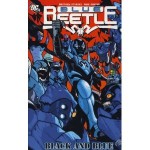
Blue Beetle: Black and Blue


By Matthew Sturges, Will Pfeifer, Mike Norton, David Baldeón, Carlo Barberi & various (DC Comics)
ISBN: 978-1-85768-016-7

At the height of the Infinite Crisis El Paso teenager Jaime Reyes found a strange bug-shaped blue jewel. That night it attached itself to his spine, transforming him into a bizarre insectoid warrior. He was promptly swept up in the universe-rending chaos, aiding Batman and other heroes in a space battle. He was lost for a year…

Finally returned home, he revealed his secret to his family and tried to do some good in El Paso but had to rapidly adjust to some big changes. His best bud Paco had joined a gang of super-powered freaks, the local crime mastermind was the foster-mom of his other best bud Brenda and a really scary military dude named Peacemaker started hanging around, claiming the thing in Jaime’s back was malfunctioning alien tech not life-affirming Egyptian magic…

The Scarabs were designed to pave the way for a full invasion but fortunately the one attached to Jaime had been damaged over the centuries it was buried here and wasn’t working properly. With a little help from his friends and the newly rebellious gem itself Jaime thwarted the rapacious and infinitely patient invaders of The Reach and continued his unlikely mission as protector of El Paso and superhero in training.

The Hispanic Blue Beetle pluckily battled on as a back-up feature in Booster Gold and as a Teen Titan and this final volume (or perhaps not, since rumours of a Blue Beetle TV show still abound…) collects the previously-uncollected issues #27, 28, 35 and 36 of his own comicbook plus the Booster Gold back-ups from volume 2, issues #21-25 and 28-29 for your undoubted approval, courtesy of writers Matthew Sturges and Will Pfeifer and artist Mike Norton, David Baldeón, Carlo Barberi, Steve Bird, Jacob Eguren, Norm Rapmund & Sandra Hope.   J. Torres & Freddie Williams Jr. and battles one of the DC Universe’s gravest menaces in the startlingly powerful change of pace tale ‘Total Eclipso: the Heart’ by Rogers & Albuquerque.

The wonderment commences with ‘Black Magic Woman’ as Jaime and new girlfriend Traci Thirteen stumble onto an out-of-control supernatural vengeance plot instigated by a trio of slacker teens that looks likely to rip El Paso apart. Good thing then that our hero’s significant other is one of the most powerful witches on Earth…

Following that is a superb little yarn of generational evil, forgiveness and redemption guest-starring original Blue Beetle Dan Garrett which perfectly illustrates how much the kid hero had grown in the monstrous parable of ‘Brutus’, after which the continuity jumps to issue #35 (and if you’re a chronology-fiend here’s where Blue Beetle: Boundaries should go, so if you need to, read that before continuing…).

The solo comicbook concluded in a tense, life-changing two-parter ‘Only Change Endures’ which opened with a horde of the second Blue Beetle’s old foes attacking El Paso only to be soundly thrashed by his youthful successor. During the fray Jaime realised something was severely amiss with his scarab: it was becoming increasingly bloodthirsty and constantly urged him to use deadly force options from its vast weapons array…

At school romance was in the air, but when a battalion of other scarab-powered Blue Beetles calling themselves the “Khaji-Da Revolutionary Army” the situation went from hearts and flowers to def-con four …

Apparently when Jaime defeated the all-conquering alien Reach (Blue Beetle: Reach for the Stars) he inadvertently started a dissident movement amongst the interlinked insectoid warriors. Now they want Jaime to lead them in a bloody war of liberation across the galaxies and although the human was appalled by the thought his rebellious scarab was overwhelmingly in favour…

Of course it all ends in a devastating blockbuster battle, but before Jaime can regain control of his symbiotic scarab one of his closest friends pays the ultimate price and life just isn’t so much fun anymore…

After a brief sojourn in funnybook limbo Blue Beetle returned as a supporting strip in Booster Gold and those tales follow here, starting with a reintroduction and recap in ‘The Golden Child’ – part one of the thee-chapter ‘Armour-Plated’ wherein Jaime tackled a succession of robots with daddy-issues, resulting in excessive carnage and destruction in ‘Silver Spoon’ before ‘Thoroughly Modern Maria’ ended the drama on a cliffhanger when future villain Black Beetle turned up to instigate a centuries-long vendetta in the two-part ‘Black and Blue’ by attempting to murder the entire Reyes family…

The saga reached a climactic conclusion when old tutor Peacemaker helped heal the madly malfunctioning scarab in ‘The Beginning of the End’ after which a mission to the ancient Reach pyramid set everything to rights (for the moment at least) in the spectacular ‘The End of the End’.

Although long-gone as a comicbook series the latest incarnation of the undying Blue Beetle brand still survives and thrives in trade paperback collections where you can – and must – experience the frantic, fun, thrill-packed and startlingly moving exploits of a truly ordinary teenager catapulted into the terrifying world of high-level super-heroics.

Hopefully with the TV series apparently completed and awaiting scheduling, a new comicbook series can’t be too far away, so what better time can there be to finally tune in and catch up with all of these addictive super-teen triumphs?

© 2008, 2009 DC Comics. All Rights Reserved.
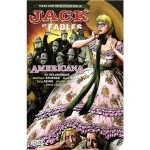
Jack of Fables volume 4: Americana


By Bill Willingham, Matthew Sturges, Russ Braun, Tony Akins, Andrew Pepoy, & Steve Leialoha (Vertigo)
ISBN: 978-1-84856-050-5

Just so you know, Fables are fairytale, storybook and mythical beings hidden on our mundane Earth since their various magical realms fell to a sinister monstrous Adversary. Arriving hundreds of years ago (and still coming) the fantastic refugees hid their true natures from humanity and built isolated enclaves where their immortality and utter strangeness could not endanger the life of uneasy luxury they buried themselves within. Many of these elusive eternals wander the human world, but always under strict and draconian mandate to never get noticed.

In Fables: Homelands the utterly self-absorbed and absolutely amoral Jack of the Tales (basis for such legends as Beanstalk, Giant-killer, Frost, Be Nimble and many more) broke all the rules – because that’s his nature – by stealing Fabletown cash and moving to Hollywood. Once there he set up as a movie producer, created the most popular fantasy film triptych of all time.

A key tenet of the series is that the more “mundies” (that’s mortals like you and me) think about a fable character, the stronger that actual character becomes. Books, TV, songs, all feed their vitality. So when the movies based on Jack’s life ultra-charged him they also brought him much unwelcome attention. The avaricious rat-bag coined vast amounts of filthy lucre in the process, but it all led the Fabletown authorities straight to him.

In Jack of Fables: The (Nearly) Great Escape our irreverent faux-hero was brought to task by the Fables Police, exiled from Hollywood and ordered to disappear, with only a suitcase full of cash to tide him over. He was also banished from all Fable properties and domains. Alone and unprotected he was soon captured by The Golden Bough, a clandestine organisation that had been hunting Fables for centuries.

Jack escaped during a mass break-out of forgotten, adulterated and abridged Fables, all fleeing from a particularly horrific fate – metaphysical and contextual neutering.

He is presently on the run from those selfsame forces (in the distractingly vivacious shape of the Page Sisters, dedicated hunters of everything Fable-ulous) and constantly seeking to restore his cash-flow as this fourth volume – collecting issues #17-21 of the monthly Vertigo comic – commences with first chapter of the eponymous ‘Americana’ as Jack reviews his simple life goals – to be the richest, most powerful and best-looking Fable in the universe – and have lots of really hot sex…

‘On Eggshells’ opens with Jack, Gary, the Pathetic Fallacy and cynical sidekick Native American Raven hiding out in a cheap motel as Hillary Page, with diminished giant Paul Bunyan and Babe (a blue ox with a remarkable imagination), zeroes in on the fugitives.

Things pick up however when Jack reassembles the shell-shocked Humpty Dumpty who has the location of a monolithic treasure drawn on fractured exterior. Such a shame a few fragments are missing, or the daring band of brothers could go directly to the mythic Fable-realm of Americana and plunder the Lost City of Cibola…

As it is, the treasure-seekers have to hop a freight-train in time-honoured legendary manner, but ghostly iron horses are few and far between, so it’s no real surprise that they catch the same one as Hillary and Company…

‘Mind the Zombies’ follows the uneasy allies’ circuitous route via steamboat to the perfectly average, undead-infested picture-perfect little town of Idyll where they meet the utterly sinister Librarian of Americana. His name is Burner, but he considers it more of a job-description…

Narrowly escaping with their legendary, literary lives Jack, Hillary and the rest resume their peripatetic journey to Cibola, unaware that Burner has set the indefatigable Leatherstocking Nathaniel “Natty” Bumppo (that’s Hawkeye to you folks) on their rapidly scampering tails…

‘On the Road’ details the inevitable clash with literature’s greatest tracker and subsequent narrow escape into more trouble amidst the Ganglands of hard-boiled crime fiction. From their it’s an epic trek to the Great White North, mythical New York City and Broadway, Witch-haunted Puritan New England, the Antebellum South and the “Injun” infested Wild West, before finally reaching their ultimate goal in ‘Goldrush’ wherein Jack achieves all his ambitions, fiscal and carnal…

It’s not long before the boom is once more lowered on the obnoxious sap and Americana concludes on a chilling cliffhanger as the Bookburner vacates the United States of Fiction, intending to eradicate all the Fables still interned at the Golden Bough…

However there’s yet one more treat for fans as the metaphysical, engagingly peculiar and trouble-attracting Pathetic Fallacy takes centre-stage for ‘Gary Does Denmark’ wherein the affable, nigh-omnipotent sad-sack recounts his history with Shakespeare’s greatest work, ably hampered by our regular cast and with Jack’s evil prototype Wicked John standing in for the named star of our show…

Written by Bill Willingham & Matthew Sturges, illustrated by Russ Braun, Tony Akins, Andrew Pepoy & Steve Leialoha this tome sees the series develop into a uniquely whimsical and absurdist meta-fictional delight that no fan of reading, high art or low comedy can afford to miss…

This imaginative and breathtakingly bold rollercoaster ride of flamboyant fantasy and snappy street-smarts is a supremely saucy, self-referential, darkly, funny fairytale for adults concocted with much more sly cynical humour and sex than your average funnybook – so po-faced moralistas and societal stickybeaks be warned!

Every enchanting volume should be compulsory reading for jaded imagineers everywhere – and in some as yet unreachable realm they actually are…

© 2007, 2008 Bill Willingham and DC Comics. All Rights Reserved.