Lobo by Keith Giffen & Alan Grant volume 1


By Keith Giffen & Alan Grant with Simon Bisley, Christian Alamy, Denys Cowan, Kevin O’Neill & various (DC Comics)
ISBN: 978-1-4012-7477-1 (TPB/Digital edition)

Win’s Christmas Gift Recommendation: ’Tis the Season To Be Fragged… 8/10

Lobo is an incredibly powerful, inescapably violent, perpetually drunken thug afflicted with a love of space dolphins, an utter disregard for all other life and an unshakable moral code hard for anyone else to grasp. The obnoxious, overbearing, unsanitary intergalactic bounty hunter was first seen in Omega Men #3, cover-dated June 1983. He then cropped up all over the DC universe, even becoming a mainstay of the popular L.E.G.I.O.N. series: indentured by cunning stunt as a (sort of) peacekeeper to the intergalactic commercial police force run by Vril Dox, “son” of one multiversal iteration of cosmic super-villain Brainiac.

He had his own monthly title for a few years as well as multiple miniseries and specials, and was a popular candidate for inter and cross-company team-ups. He’s even been a repeat offender on screen in both live action and animated iterations. In-world, the name Lobo roughly translates as “he who devours your entrails and enjoys it”. Despite being pretty much a one trick pony and increasingly an exercise in outrageous graphic excess, this unstoppable, anarchic force-of-nature exploded in popularity in the decade following debut. He was exactly what many fans wanted.

This collection reprints Lobo #1-4; The Lobo Paramilitary Christmas Special; Lobo’s Back #1-4; Lobo: Blazing Chain of Love; Lobo Convention Special and material from Who’s Who in the DC Universe, collectively spanning all of infinity via cover-dates November 1990 to September 1993.

Without any kind of fair warning, this bloodbath of poor taste and shocking excess opens with initial Limited Series Lobo #1-4: ‘The Last Czarnian’. The skeevy brute always prided himself on being the final survivor of his planet, but here finds to his horror and disgust that he missed someone when he slaughtered his entire race. That lucky survivor is his old fourth grade teacher Miss Tribb, who has unbelievably and unwisely written an unauthorized tell-all biography of “the Main Man” who was her least favourite pupil ever…

Forbidden by his own honour-code from killing her, he must instead escort the snippy snarky old baggage to Dox at L.E.G.I.O.N. HQ with every nut-job in the universe pursuing them, hell-bent on killing one or other or preferably both of them. Subdivided into ‘Part One: Portrait of a Psychopath’, ‘Part Two: Lord of the Dance’, ‘Part Three: Spell or Die’ and ‘Part Four: The Last Last Czarnian’, this blistering bonkers baroque barbarity is plotted and laid out by Giffen, scripted by Grant and outrageously limned by hip headbanger Simon Bisley as colourist; Lovern Kindzierski and letterer Todd Klein aid and abet the cartoon carnage. As usual, despite all the forces ranged against him, The Main Man has the last – albeit misspelled – word…

The Lobo Paramilitary Christmas Special (January 1992) follows with Giffen, Grant, Bisley, Kindzierski and Gaspar Saldino expediting ‘The Lobo Xmas Sanction’ as cash-strapped parents of far-too-many brats look to save on end of year expenses and learn how a certain unsavoury soul and his dog Dawg were hired by The Easter Bunny to take out his biggest rival in the holiday icon game: Santa Claus. The elves were no real problem but old man Kringle was a harder nut to crack and left a surprise Lobo never anticipated…

Beginning in May 1992, and coloured by Danny Vozzo, Lobo’s Back #1-4 comprised ‘The Final Fragdown’, ‘Heaven is… a 4-Letter Word’, ‘If the Jackboot Fits…!’ and ‘The War in Heaven’ then details his return to the private sector after L.E.G.I.O.N. implodes and how he dies trying to bring in the infamous Loo, the most dangerous being in the universe.

What follows is an outrageous, darkly hilarious, blood-soaked spin on a venerable old tale (you’ve probably seen the Bugs Bunny cartoon classic) as Lobo makes himself persona non grata in every aspect of the afterlife. When both Heaven and Hell discover that the Main Man is too much to handle, there’s only one place to go and that’s back here, but nobody said it had to be in his original body…

Fans and the spiritually attuned will want to see what this creative team does with comic guest stars loke The Demon and General Glory and a host of pantheons and holy folk of all denominations…

Behind a cover by Dan Brereton, Lobo: Blazing Chain of Love sees artist Denys Cowan, colourist Noelle Giddings and letterer “Tanya” Klein join Giffen & Grant to explore the Main Man’s other main interest, only to encounter a forced shortage of willing babes of negotiable affection…

You’d think that’s the kind of problem relentless remorseless violence couldn’t fix. You’d be wrong…

This yarn will confound all your expectations as it is in fact a potent, brilliantly-conceived argument for safe sex crafted at the height of the fightback against HIV/AIDS, leading directly into our final furious foray… against Comics fandom itself…

The Lobo Convention Special – with the much-missed Kev O’Neill delivering another inimitable illustration masterclass, and Digital Chameleon adding hues to the queues at ‘Lobo-Con’ – is blackly comedic, ironic, sardonic and manic, as it depicts and cruelly deconstructs the people it depends upon. After skewering the great, good and especially unwashed of the industry, it all ends in carnage but begins with Lobo looking to replace his copy of the Death of Superman and heading to a convention packed with the kind of fanboys we’re all absolutely certain are FAR WORSE than we are…

The carnage concludes with info pages from Who’s Who in the DC Universe

At the height of his popularity the Main Man of Mayhem was a publisher’s dream. There was actual baying from fans and speculators for more product and a largely new and receptive audience which hadn’t seen the unleashed potential of grown up comics. These tales for (im)Mature readers aren’t to everybody’s taste, but Giffen & Grant’s wickedly sharp scripts gave Bisley (assisted by Christian Alamy) and later artists scope for breathtakingly memorable art sequences, and sometimes just going wild is as rewarding as the most intricately balanced craftwork and plot-building.

All that being said, if you’re in the right mood, his kind of gratuitous mayhem can be wonderfully entertaining and has much to recommend it if vicious, sardonic slapstick pushes your buttons. Comics excess at its finest.
© 1990, 1991, 1992, 1993, 2018 DC Comics. All Rights Reserved.
Yakari volume 21: Fury From the Skies


By Derib & Job, coloured by Dominique and translated by Jerome Saincantin (Cinebook)
ISBN: 978-1-80044-019-4 (Album PB/Digital edition)

Win’s Christmas Gift Recommendation: Another Kind of Wonderful Life… 9/10

In 1964 children’s magazine Le Crapaud à lunettes was founded by Swiss journalist André Jobin, who then wrote for it under the pseudonym Job. Three years later he hired fellow Franco-Swiss artist Claude de Ribaupierre AKA “Derib”. The illustrator had launched his own career as an assistant at Studio Peyo (home of Les Schtroumpfs): working on The Smurfs strips for venerable weekly Le Journal de Spirou. Thereafter, together they created the splendid Adventures of the Owl Pythagore before striking pure comics gold a few years later with their next collaboration.

Derib – equally au fait with enticing, comically dynamic “Marcinelle” cartoon style yarns and devastatingly compelling meta-realistic action illustrated action epics – went on to become one of the Continent’s most prolific and revered creators. It’s a crime such groundbreaking strips as Buddy Longway, Celui-qui-est-nà-deux-fois, Jo (first comic to deal with AIDS), Pour toi, Sandra and La Grande Saga Indienne) haven’t been translated into English yet, but we still patiently wait in hope and anticipation…

Over decades, much of Derib’s stunning works have featured his beloved Western themes: magnificent geographical backdrops and epic landscapes. Yakari is considered by fans and critics to be the strip which led him to his deserved mega-stardom. Debuting in 1969, self-contained episodes trace the eventful, nomadic life of a young Oglala Lakota boy on the Great Plains, with stories set sometime after the introduction of horses (by colonising Conquistadores) but before the coming of modern Europeans.

The series – which also generated two separate animated TV series and a movie – is up to 42 albums thus far: a testament to its evergreen vitality and brilliance of its creators, even though originator Job moved on and Frenchman Joris Chamblain took on the writing in 2016.

Abundant with gentle whimsy and heady compassion, Yakari’s life is a largely bucolic and happy existence: at one with nature and generally free from privation or strife. For the sake of dramatic delectation however, the ever-changing seasons are punctuated with the odd crisis, generally resolved without fuss, fame or fanfare by a little lad who is smart and brave – and who can, thanks to a boon of his totem guide the Great Eagle, converse with animals…

In 1996, La fureur du ciel was the 22nd European album, but as always, the content and set-up are both stunningly simple and sublimely accessible, affording new readers total enjoyment with a minimum of familiarity or foreknowledge required…

Fury from the Skies is painfully topical as Yakari’s wandering people are moving into lands occupied by buffalo after an eventful winter. The spring sun has brought further problems with oppressive heat and tempers fray when the adults start arguing. Medicine man He-Who-Knows wants to stop and set up camp, but Yakari’s father Bold Gaze chooses to follow his wise son a little further on. The action incenses self-appointed leader Bold Crow and magnifies bad feeling in all the riders…

As Yakari’s parents ride on, the boy is unhorsed by a plague of biting bugs, but his painful embarrassment is as nothing to the distress of his former companions as they set up camp. Old pals Slow Motion and Eyes-Always-Shut have their own ways of dealing with debilitating heat and ravenous flies, but for the rest – even children Rainbow and Buffalo Seed – stress and petty bickering looks like igniting a war, and He-Who-Knows fears big trouble ahead…

Those worries are confirmed when the sky is suddenly filled with fleeing ravens ahead of a monstrous whirlwind that smashing through, devasting the camp, scattering the tribe and injuring helpless humans and their animals. By the time Yakari and his parents return to the demolished campsite, their shocked friends are in a daze with Slow Motion bewailing the disappearance into the clouds of his large lazy friend. The Medicine Man is also gone, and Bold Crow harshly decrees the search party he forms should seek the wise one, not the fat, sleepy one…

Of course, Yakari has his own ideas and – riding his sarcastic steed Little Thunder – sets off to learn what happened to Eyes-Always-Shut. The answer is astonishing and quite troublesome, but at least the lad has a still-stunned camp dog and some very helpful wild turkeys to help him solve a very tricky and potentially dangerous puzzle.

With the big guy recovered, Yakari can turn his attention to finding out what happened to He-Who-Knows, before the adults all go crazy. They had depended on the wise man for years and are beginning to panic and lash out. This task is far more difficult and requires a long journey over spectacularly-realised terrain, some assistance from the Great Eagle himself and literally changing horses in mid-stream before the boy wonder can save the shaman and his world…

Yakari is one of the most unfailingly absorbing and entertaining all-ages strips ever conceived and should be in every home, right next to Tintin, Uncle Scrooge, Asterix and The Moomins. It’s never too late to start reading something wonderful, so why not get back to nature as soon as you can?
Original edition © Derib + Job – Editions du Lombard (Dargaud – Lombard s. a.) – 2000. All rights reserved. English translation 2023 © Cinebook Ltd.

Master of Kung Fu Epic Collection volume 2: Fight Without Pity


By Doug Moench, Paul Gulacy, Sal Buscema, Keith Pollard, Jim Craig & various (MARVEL)
ISBN: 978-1-3029-0135-6 (TPB/Digital edition)

Win’s Christmas Gift Recommendation: All-Out Action Blockbusterism… 9/10

Comic books have always operated within outworld popular trends and fashions – just look at what got published whenever westerns or science fiction dominated on TV – so when the ancient philosophy and discipline of Kung Fu made its mark on western entertainment, it wasn’t long before all those kicks and punches found their way onto four-colour pages of America’s periodicals. Early starter Charlton Comics added Yang and House of Yang to the pioneering Judo Joe and Frank McLaughlin’s Judomaster; DC debuted Richard Dragon and rebooted Karate Kid; Atlas/Seaboard opened (and as quickly closed again) The Hands of the Dragon and Marvel converted a developing proposed literary adaptation into an ongoing saga about a villain’s son.

A month after it launched, a second orient-inspired hero debuted with Iron Fist: combining combat philosophy, high fantasy and magical forces with a proper superhero mask and costume…

Although largely retrofitted for modern times, inspirational Master of Kung Fu star Shang-Chi originated with a lot of tricky baggage. He launched in the autumn of 1973, cashing in on a contemporary craze for Eastern philosophy and martial arts action that generated an avalanche of “Chop Sockey” movies and a controversial TV sensation entitled Kung Fu. You may recall that the lead in that western-set saga was a half-Chinese Shaolin monk, played – after much publicised legal and industry agitation – by a white actor…

At Marvel, no one at that time particularly griped about the fact that Shang-Chi was designed by editor Roy Thomas and artisans Steve Englehart, Jim Starlin & Al Milgrom as a naive innocent (also half Chinese, with an American mother) thrown into tumultuous modern society as a rebellious but involved counterpoint to his father: an insidious scheming fiend intent on global domination. Back then, securing rights to a major literary property and wrapping new comics in it was an established practise. It had worked spectacularly with Conan the Barbarian and horror stars like Dracula and Frankenstein. The same process also brilliantly informed seminal science fiction icon Killraven in War of the Worlds and plenty more…

These days we comics apologists keep saying “it was a different era”, but I genuinely don’t think anyone in the editorial office paused for a moment of second thoughts when their new Kung Fu book secured the use one of literature’s greatest villains as a major player. Special Marvel Edition #15 (cover-dated December 1973 so Happy 50th Anniversary) launched to great success, and an overarching villain already a global personification of infamy… Fu Manchu.

Arthur Henry Sarsfield Ward AKA Sax Rohmer’s ultimate embodiment of patronising mistrust and racist suspicion had been hugely popular since 1913’s The Mystery of Dr. Fu-Manchu. The prime archetype for mad scientists and the remorseless “Yellow Peril” threatening civilization, the character spread to stage, screen, airwaves and comics (even appropriating the cover of Detective Comics #1, heralding an interior series that ran until #28), but most importantly, became the visual affirmation and conceptual basis for countless evil “Asiatics”, “Orientals” and “Celestials” dominating popular fiction ever since.

In recent years we’ve all (well, mostly all) acknowledged past iniquities and Shang-Chi has been fully reimagined, with that paternal link downplayed and ultimately abandoned – as much for licensing laws as social justice. And cultural respect.

Like most comics companies, Marvel employed plenty of “Yellow Peril” knock-offs and personifications – including Wong Chu; Plan Tzu (AKA the Yellow – or latterly Golden Claw); Huang Zhu; Silver Samurai; Doctor Sun, ad infinitum: all birds of another colour that are still nastily pejorative shades of saffron. Perhaps this is just my white guilt and fanboy shame talking. These stories, crafted by Marvel’s employees were – and remain – some of the best action comics you’ll ever encounter, but never forget what they’re actually about -distrust of the obviously other…

Without making excuses, I should also state that despite the casual racism suggested by legions of outrageously exotic, inscrutable lemon-hued bad guys haunting this series at every level, Master of Kung Fu did sensitively address issues of race and honestly attempt to share non-Christian philosophies and thought whilst, most importantly, offering potently powerful role models to kids of Asian origins. So at least there’s that …

Packed with stunning adventure and compellingly convincing drama, this second collection gathers Master of Kung Fu #29-53 and Master of Kung Fu Annual #1 (collectively spanning June 1975-August 1977). Written entirely by Doug Moench, surrendering to his love of spy fiction it opens without a preamble in the middle of a mighty struggle…

Previously: the series launched in bimonthly reprint title Special Marvel Edition as The Hands of Shang Chi: Master of Kung Fu and by the third issue (April 1974) became exclusively his. Origin episode ‘Shang-Chi, Master of Kung Fu!’ introduced a vibrant, brilliant young man raised in utter isolation in the style and manner of imperial China. Reared by monks and savants, the boy is the result of a match between a physically perfect American woman and “misunderstood patriot” Fu Manchu: a noble hero unfairly hunted and slandered by corrupt western governments and the communist usurpers now blasphemously controlling the world’s greatest empire.

His son was schooled to respect and obey his sire, trained to perfection in martial arts: designed as the ultimate warrior servant and the doctor’s devoted personal weapon against lifelong enemies Sir Dennis Nayland Smith and Doctor Petrie.

On reaching maturity, Shang – whose name means “the rising and advancing of a spirit” – was despatched to execute Petrie. However, after the obedient weapon completes his mission, he subsequently questions his entire life and the worldly benefit of killing an elderly, dying man. An emotional confrontation with Nayland Smith – who endured daily agonies from being maimed at the Devil Doctor’s command – further shakes the boy’s resolve and eventually Shang’s sublime education demands he reassess everything his father has taught him…

After invading the villain’s New York citadel and crushing his army of freaks and monsters, Shang Chi faces his father and rejects all he stands for. The battle lines of an epic family struggle were drawn…

Banished from his cloistered childhood home and environs, the philosophically minded innocent was forced to adapt rapidly to frenetic constant violence in the modern world and eventually accepted shelter with Nayland Smith in return for (espionage) services rendered…

A turning point in his rising and advancement came in MOKF #29 (cover-dated June 1975) as Shang finds a reason to abandon his pacifistic aspirations and become involved in western affairs after seeing firsthand the harm drugs cause. He joins Nayland Smith’s team – Petrie,  Blackjack Tarr and Clive Reston (descendent of a famed “Consulting Detective” and a Double-0 operative “on Her Majesty’s Secret Service”) – to cripple the drug trade.

The entire series was slowly morphing into a James Bond pastiche and with this mission to end effetely urbane drug dealer/ covert nuclear terrorist Carlton Velcro, illustrator Paul Gulacy began a visual progression that would make him one of most watched and admired artists of the era as he referenced movie star and set pieces throughout the saga.

‘The Crystal Connection’ begins with Reston undercover at Velcro’s French coast fortress, playing heroin buyer Mr Blue until Shang and Tarr can infiltrate and secure the dope stocks . Nobody was expecting the massive defences, an army of killers led by deadly assassin Razor-Fist and a nuclear arsenal hidden below ‘A Gulf of Lions’ (#30, inked by Dan Adkins), with the pitched battle ranging far and wide as Razor Fist’s defeat led to Shang clashing with whip-wielding panther woman Pavane before a truly explosive conclusion in ‘Snowbuster’

‘Assault on an Angry Sea!’ was a hasty fill-in illustrated by Sal Buscema & Mike Esposito as Shang returns to London by ship and is drawn into the hunt for an undercover courier who is unaware that counteragents intend to intercept and end them. A proper mystery yarn, Chi has many suspects and can’t tell friend from foe from target, but triumphs nonetheless…

MOKF #33 resumes the Moench/Gulacy filmic fun-fest as ‘Wicked Messenger of Madness’ introduces seductive, conflicted agent Leiko Wu as both romantic interest and wedge between Shang Chi and his colleagues, as a robotic mannequin fails to assassinate Nayland Smith thanks to martial arts mastery but opens the door to a complex web of lies, double-dealing, insane artificial intelligences and a doomsday weapon.

The robot was a tool of agent Simon Bretnor, revealed too late as narcissistic hired killer and would-be world conqueror Mordillo who wants a space weapon using the ozone layer and sunlight to ravage sites on Earth. The plans for it are encoded in Wu’s brain, but by the time she realises her current boyfriend Bretnor is the bad guy Leiko’s his prisoner on a manically murderous version of Fantasy Island

As Shang and Resto race to the madly modified atoll-turned-playground-of-peril, Wu is attempting to reason with the crazed Mordillo, but gets more sense from his Pinocchio-like robot sidekick Brynocki who is trying to mediate the ‘Cyclone at the Center of a Madman’s Crown!’ She does, however, learn her captor had a connection to Pavane and Carleton Velcro and holds Chi responsible for a huge loss of face and fortune…

Another spectacular conclusion comes when manic and martial artist clash in the skies above the island as the villain briefly unleashes his stolen Solar Chute and rains destruction down on the island in ‘Death-Hand and the Sun of Mordillo’

What feels like a reformatted leftover from the Giant-Size Master of Kung Fu era follows in #36 and 37 (January & February 1976, by Moench, Keith Pollard & Sal Trapani) as Shang enters a magical maze of mystery: seeking to defend a carnival of freaks voluntarily living in ‘Cages of Myth, Menagerie of Mirrors!’ from ninjas and their leader Darkstrider who weaves a ‘Web of Dark Death!’

Moench, Pollard, John Tartaglione & Duffy Vohland then continue the fantasy themes in Master of Kung Fu Annual #1 and a team-up with fellow transplanted warrior Iron Fist. Danny Rand and Shang are tricked into entering another dimension and invading ‘The Fortress of S’ahra Sharn!’ by trickster wizard Quan-St’ar, whose true goal is the destruction of immortal city K’un-Lun, but he made one big mistake…

At their creative peak Moench & Gulacy started an epic, ambitious, truly sophisticated and industry-changing run in MOKF #38 (March 1976). Here Shang Chi reluctantly accepts a rescue mission to extract an agent from Hong Kong, meeting lies, passion, disinformation and deadly love in ‘Cat’. Nayland Smith has again orchestrated events to satisfy his own agenda and saving Julia leads Chi into a ‘Fight Without Pity’ against an opponent who might well be his superior in combat ability and also holds the moral high ground…

The landmark clash is simply prologue to an extended, character driven serial that opens at ‘The Murder Agency’ (#40 with Gulacy inking himself) as the on-fire creators pioneer storytelling techniques later employed in Christopher Nolan’s Memento. A traitor in British Intelligence is murdering agents and the information Nayland Smith wanted from Julia should have given them vital advantage. However, as Shang again quits all “games of death and deceit” he, Tarr and Leiko are attacked by apparently Chinese agents masquerading as “Oriental Expediters”.

After helping to defeat the attackers, Wu leaves on a similar extraction mission and suggests that the embattled operatives re-enlist disgraced former agent and current drunken sot James Larner. When they try, he’s got a new pal also boozing himself to death… Reston…

That’s when another well-armed gang burst in guns blazing, laying down their lives simply to bait a trap the agents can’t afford to avoid…

With the spy saga solidly underway everything suddenly screeched to a halt as a deadline crunch necessitated another fill-in moment, with Moench, Sal Buscema & Esposito revealing a childhood moment in ‘Slain in Secrecy, and by Illusion!’ Here Shang recalls reluctant clashes with childhood companion M’nai – AKA Si Fan assassin Midnight – to prove Fu Manchu’s hallowed home harboured a thief and traitor…

Inked by Tom Sutton, the main event resumes in #42 with a welter of flashbacks, cross-cuts and flash forwards as ‘The Clock of Shattered Time’ introduces an electrically enhanced martial arts assassin who almost kills Chi. Shock-Wave has a strong but top-secret connection to Nayland Smith and nearly succeeds in blowing up the spy chief too…

As the MI5 mole and Shock-Wave set more bombs, MOKF #43 sees a changed and vengeful Shang Chi win a rematch with the amplified assassin in ‘A Flash of Purple Sparks’. As Leiko Wu escorted her own living package across Europe with the Oriental Expediters chasing them all the way to an MI5 safehouse in Switzerland, Shang was waiting, but his triumph was short-lived as Leiko’s charge revealed who was behind all the deaths and the Oriental Expediter organisation, and that in London another of his allies had fallen…

The drama kicked into overdrive with a long-anticipated event. Cover-dated September 1976, #44 heralded ‘The Return of Fu Manchu, Prelude: “Golden Daggers (A Death Run)”’ as the scattered British agents head for home under a hail of gunfire and assorted ambushes. At last revealed is how the Devil Doctor’s recalcitrant first-born Fah Lo Suee is at war with their father for control of his empire.

She originally debuted in third novel The Si-Fan Mysteries / The Hand of Fu-Manchu in 1917 (or fourth outing The Daughter of Fu-Manchu in 1931, depending on who you ask) and was a minor character here since Master of Kung Fu #26, but here steps into the spotlight after Nayland Smith is finally downed by his most trusted ally…

On the back foot and losing, Fah Lo Suee seeks alliances and her brother’s aid in ‘Part One (Shang Chi): “The Death Seed!”’ while Fu Manchu is occupied with resurrecting his founding ancestor to be his new – loyal – son/enforcer. In London, Larner saves Nayland Smith even as Reston, Shang and Wu reunite and rebuff the “daughter of the Devil” – and that’s when Clive makes a big mistake and is taken by Fah Lo Suee…

Inked by Pablo Marcos, ‘Part Two (Clive Reston): “The Spider Spell!”’ divides attention between the British agent’s trial and eventual triumph and Fu resurrecting legendary warlord Shaka Kharn, whilst ‘Part Three (Leiko Wu): “Phantom Sand”’ details how she and Shang infiltrate a fantastic city at the north pole in advance of what’s left of the team joining them to destroy the citadel. Before that, though, the final clash between father and daughter again confirms the total mastery of the malevolent mandarin…

The true appalling scope of the Devil Doctor’s ambitions are exposed in ‘Part Four (Black Jack Tarr): “City in the Top of the World”’ as the schemer prepares to leave Earth and cull its population by 90% as Shang duels resurrected revenant Shaka Kharn, and battles his way aboard his sire’s space shuttle even as his companions destroy the base at the cost of another valiant soul in ‘Part Five (Sir Dennis Nayland Smith): “The Affair of the Agent Who Died!”’

The astounding saga – and Gulacy’s interior involvement – ends with #50 with the villain speaking for himself as his plans and perhaps his over-extended life are ended in ‘Part Six (Fu Manchu): “The Dreamslayer!”’

Master of Kung Fu #51 saw Jim Craig join Moench & Marcos, taking over the art for ‘Epilogue: “Brass and Blackness!” (A Death Move!!)’ infilling details of interments and getting back to Earth where the unhappy warrior again quit the spy world…

The final tale here (#52, May 1977) is one more fill-in as Moench & Pollard reintroduce Groucho Marx tribute Rufus T. Hackstabber who invites our baffled battler to ‘A Night at the 1001 Nights!’ in search of family (such as reprobate/WC Fields analogue Quigley J. Warmflash), riches and safety from mercenaries led by Si-Fan general Tiger-Claw

Ernie Chan’s cover to MOKF #53 (which reprinted #20) leads into an extras section including Gil Kane & Adkins’ covers to Savage Fists of Kung Fu tabloid collectors edition, house ads and 10 pages of original art, unused and modified covers. The published ones throughout were crafted by Kane, Adkins, Sal Buscema, Rich Buckler, Dave Cockrum, Marie Severin, Chan, Gulacy, John Romita Jr., Ron Wilson & Jack Abel, Al Milgrom, Esposito, Joe Sinnott, Frank Giacoia and Klaus Janson.

In recent years, Shang Chi’s backstory has been adapted and altered. His father was understandably reinvented as Zheng Zu, Mr. Han, Chang Hu, Wang Yu-Seng and The Devil Doctor so depending on your attitude, you have the ultimate choice and sanction of not buying or reading this material. If you do – with eyes wide open and fully acknowledging that the past is another place that we can now consign to history – your comics appreciation faculties will see some amazing stories incredibly well illustrated: ranking amongst the most exciting and enjoyable in Marvel’s canon.
© 2018 MARVEL.

The Amazing Spider-Man Omnibus volume 1


By Stan Lee & Steve Ditko with Jack Kirby, Art Simek, Sam Rosen, Jon D’Agostino, John Duffy, Ray Holloway & various (MARVEL)
ISBN: 978-1-3029-4563-3 (HB/Digital edition)

Win’s Christmas Gift Recommendation: Utter Entertainment Perfection… 10/10

The Amazing Spider-Man celebrated his 60th anniversary in 2022. However, I’m one of those radicals who feel that 1963 was when he was really born, so let’s close this year with one last acknowledgement of that…

Marvel is often termed “the House that Jack Built” and King Kirby’s contributions are undeniable and inescapable in the creation of a new kind of comic book storytelling. However, there was another unique visionary toiling at Atlas-Comics-as-was: one whose creativity and philosophy seemed diametrically opposed to the bludgeoning power, vast imaginative scope and clean, gleaming futurism that resulted from Kirby’s ever-expanding search for the external and infinite.

Steve Ditko was quiet and unassuming, diffident to the point of invisibility, but his work was both subtle and striking: innovative and meticulously polished. Always questing for affirming detail, he ever explored the man within. He saw heroism and humour and ultimate evil all contained within the frail but noble confines of humanity. His drawing could be oddly disquieting… and, when he wanted, decidedly creepy.

Crafting extremely well-received monster and mystery tales for and with Stan Lee, Ditko had been rewarded with his own title. Amazing Adventures/Amazing Adult Fantasy featured a subtler brand of yarn than Rampaging Aliens and Furry Underpants Monsters: an ilk which, though individually entertaining, had been slowly losing traction in the world of comics ever since National/DC had successfully reintroduced costumed heroes.

Lee & Kirby had responded with The Fantastic Four and so-ahead-of-its-time Incredible Hulk, but there was no indication of the renaissance ahead when officially just-cancelled Amazing Fantasy featured a brand new and rather eerie adventure character…

This compelling compilation re-presents the rise of the wallcrawler as originally seen in Amazing Fantasy #15, The Amazing Spider-Man #1-38, Amazing Spider-Man Annual #1 & 2 plus material from Strange Tales Annual #2 and Fantastic Four Annual #2 collectively spanning cover-dates August 1962-July 1966). It is lettered throughout by unsung superstars Sam Rosen, Art Simek, Jon D’Agostino, John Duffy and Ray Holloway and sadly an anonymous band of colourists. As well as a monolithic assortment of nostalgic treats at the back, this mammoth tome is dotted throughout with recycled Introductions from Stan Lee, taken from the first four Marvel Masterworks editions devoted to the webspinner and includes editorial announcements and the ‘Spider’s Web’ newsletter pages for each original issue to enhance that wayback machine experience…

The wonderment came and concluded in 11 captivating pages: ‘Spider-Man!’ tells the parable of smart but alienated Peter Parker, a kid bitten by a radioactive spider on a high school science trip. Discovering he has developed arachnid abilities – which he augments with his own natural engineering genius – he does what any lonely, geeky nerd would do when given such a gift – he tries to cash in for girls, fame and money.

Creating a costume to hide his identity in case he makes a fool of himself, Parker becomes a minor celebrity – and a vain, self-important one. To his eternal regret, when a thief flees past, he doesn’t lift a finger to stop him, only to find when he returns home that his Uncle Ben has been murdered.

Crazy for vengeance, Parker stalks the assailant who made his beloved Aunt May a widow and killed the only father he had ever known, only to find that it is the felon he couldn’t be bothered with. Since his irresponsibility led to the death of the man who raised him, the boy swears to always use his powers to help others…

It wasn’t a new story, but the setting was one familiar to every kid reading it and the artwork was downright spooky. This wasn’t the gleaming high-tech world of moon-rockets, giant monsters and flying cars – this stuff could happen to anybody…

Amazing Fantasy #15 came out the same month as Tales to Astonish #35 (cover-dated September 1962) – the first to feature the Astonishing Ant-Man in costumed capers, but it was also the last issue of Ditko’s Amazing playground. With this volume you’ll find the ‘Fan Page – Important Announcement from the Editor!’ that completely misled fans as to what would happen next…

The tragic last-ditch tale struck a chord with readers and by Christmas a new comic book superstar was ready to launch in his own title, and Ditko eager to show what he could do with his first returning character since the demise of Charlton action hero Captain Atom.

Holding on to the “Amazing” prefix memories, bi-monthly Amazing Spider-Man #1 arrived with a March 1963 cover-date and two complete stories. It also prominently featured the Fantastic Four and took the readership by storm. The opening tale, again simply entitled ‘Spider-Man!’, recapitulated the origin whilst adding a brilliant twist to the conventional mix.

Now the wall-crawling hero was feared and reviled by the general public thanks in no small part to newspaper magnate J. Jonah Jameson who pilloried the adventurer from spite and for profit. With time-honoured comic book irony, Spider-Man then had to save Jameson’s astronaut son John from a faulty space capsule in extremely low orbit…

Second yarn ‘Vs the Chameleon!’ finds the cash-strapped kid trying to force his way onto the roster – and payroll – of the FF whilst elsewhere a spy perfectly impersonates the webspinner to steal military secrets: a stunning example of the high-strung, antagonistic crossovers and cameos that so startled jaded kids of the early 1960s. Heroes just didn’t act like that and they certainly didn’t speak directly to the fans as in ‘A Personal Message from Spider-Man’ that’s reprinted here…

With his second issue, our new champion began a meteoric rise in quality and innovative storytelling. ‘Duel to the Death with the Vulture!’ catches Parker chasing a flying thief as much for profit as justice. Desperate to help his aunt make ends meet, Spider-Man starts taking photos of his cases to sell to Jameson’s Daily Bugle, making his personal gadfly his sole means of support.

Matching his deft comedy and moody soap-operatic melodrama, Ditko’s action sequences were imaginative and magnificently visceral, with odd angle shots and quirky, mis-balanced poses adding a vertiginous sense of unease to fight scenes. But crime wasn’t the only threat to the world and Spider-Man was just as (un)comfortable battling “aliens” in ‘The Uncanny Threat of the Terrible Tinkerer!’

Amazing Spider-Man #3 introduced possibly the apprentice hero’s greatest enemy in ‘Versus Doctor Octopus’: a full-length saga wherein a dedicated scientist survives an atomic accident only to discover his self-designed mechanical “waldoes”/tentacles have permanently grafted to his body. Power-mad, Otto Octavius initially thrashes Spider-Man, sending the lad into a depression until an impromptu pep-talk from Human Torch Johnny Storm galvanises the arachnid to one of his greatest victories. Also included is a stunning ‘Special Surprise Bonus Spider-Man Pin-up Page!’…

‘Nothing Can Stop… The Sandman!’ was another instant classic wherein a common thug gains the power to transform to sand (in another pesky nuclear snafu), invades Parker’s school, and must be stopped at all costs, after which1963’s Strange Tales Annual #2 featured ‘The Human Torch on the Trail of the Amazing Spider-Man!’

This terrific romp from Lee & Kirby with Ditko inking details how the wallcrawler is framed by international art thief The Fox, instigating an early “Marvel Misunderstanding Clash” and is followed by short story ‘The Fabulous Fantastic Four meet Spider-Man!’: re-examining in an extended re-interpretation that first meeting from the premiere issue of the wallcrawler’s own comic and taken from Fantastic Four Annual #1.

With Ditko on pencils and inks again, Amazing Spider-Man #5 saw the webspinner ‘Marked for Destruction by Dr. Doom!’ – not so much winning as surviving his battle against the deadliest man on Earth. Presumably he didn’t mind too much, as this marked the transition from bi-monthly to monthly status for the series. In this tale Parker’s nemesis, jock bully Flash Thompson, first displays depths beyond the usual in contemporary comicbooks, beginning one of the best love/hate buddy relationships in popular literature…

Eventual mentor Dr. Curtis Connors debuts in #6 when Spidey comes ‘Face-to-face With… The Lizard!’ as the wallcrawler fights far from the concrete canyon comfort zone of New York – specifically in the murky Florida Everglades. Parker was back in the Big Apple in #7 to breathtakingly tackle ‘The Return of the Vulture’ in a full-length action extravaganza.

Fun and youthful hi-jinks were a signature feature of the series, as was Parker’s budding romance with “older woman” Betty Brant, Jameson’s secretary/PA at the Bugle. Youthful exuberance was the underlying drive in #8’s lead tale ‘The Living Brain!’ wherein an ambulatory robot calculator is tasked with exposing Spider-Man’s secret identity before running amok at beleaguered Midtown High, just as Parker is finally beating the stuffings out of bully Flash Thompson.

This 17-page triumph was accompanied by ‘Spiderman Tackles the Torch!’: a 6-page vignette drawn by Kirby and inked by Ditko, wherein a boisterous wallcrawler gate-crashes a beach party thrown by the flaming hero’s girlfriend – with suitably explosive consequences…

Amazing Spider-Man #9 is a qualitative step-up in dramatic terms, as Aunt May is revealed to be chronically ill and adding to Parker’s financial woes. Action is supplied by ‘The Man Called Electro!’ – an accidental super-criminal with grand aspirations.

Spider-Man was always a loner, never far from the streets and small-scale-crime, and with this tale – wherein he also quells a prison riot single handed – Ditko’s preference for tales of gangersterism starts to proliferate: a predilection confirmed in #10’s ‘The Enforcers!’ (AKA Fancy Dan, Montana and The Ox). This is a classy mystery with a masked mastermind known as The Big Man, using a position of trust to organise all New York mobs into one unbeatable army against decency.

Longer plot-strands are also introduced as Betty mysteriously vanishes, although most fans remember this one for the spectacularly climactic 7-page fight scene in an underworld chop-shop that has still never been beaten for action-choreography.

The wonderment intensifies (after a Lee Introduction) with a magical 2-part yarn. ‘Turning Point’ and ‘Unmasked by Dr. Octopus!’ sees the lethally deranged and deformed scientist return and the disclosure of a long-hidden secret which had haunted Parker’s girlfriend Betty Brant for years.

The dark, tragedy-filled tale of extortion and excoriating tension stretches from Philadelphia to the Bronx Zoo and cannily tempers trenchant melodrama with spectacular fight scenes in unusual and exotic locations, before culminating in a truly staggering super-powered duel as only Ditko could orchestrate it.

A new super-foe premiered in Amazing Spider-Man #13 with ‘The Menace of Mysterio!’ as publisher J. Jonah Jameson hires a seemingly eldritch bounty-hunter to capture Spider-Man before eventually letting slip his own dark criminal agenda, whilst #14 offers an absolute milestone in the series as a hidden criminal mastermind manipulates a Hollywood studio into making a movie about the wall-crawler. Even with guest-star opposition The Enforcers and Incredible Hulk, ‘The Grotesque Adventure of the Green Goblin’ is most notable for introducing Spider-Man’s most perfidious and flamboyant enemy.

Jungle superman and thrill-junkie (and modern movie star!) ‘Kraven the Hunter!’ makes Spidey his intended prey at the behest of embittered former-foe the Chameleon in #15, and promptly pops up again in the first Amazing Spider-Man Annual (1964) that follows.

A timeless landmark and still magnificently thrilling battle, tale, the ‘Sinister Six’ begins after a band of villains comprising Electro, Kraven, Mysterio, Sandman, Vulture and Dr Octopus abduct May Parker and Betty, forcing Spider-Man to confront them without his powers – lost in a guilt-fuelled panic attack.

A staggeringly compelling Fights ‘n’ Tights saga, this influential tale featured cameos (or, more honestly, product placement segments) by every other extant hero of the budding Marvel universe.

Also included in the colossal comic compendium were special feature pages on ‘The Secrets of Spider-Man!’ and comedic short ‘How Stan Lee and Steve Ditko Created Spider-Man’ plus a gallery of pin-up pages featuring ‘Spider-Man’s Most Famous Foes!’ – (the Burglar, Chameleon, Vulture, Terrible Tinkerer, Dr. Octopus, Sandman, Doctor Doom, The Lizard, Living Brain, Electro, The Enforcers, Mysterio, Green Goblin and Kraven the Hunter) – as well as pin-ups of Betty and Jonah, Parker’s classmates and house, and even heroic guest stars…

Amazing Spider-Man #16 extended that circle of friends and foes as the webslinger battles The Ringmaster and Circus of Evil, meeting a fellow loner hero in a dazzling ‘Duel with Daredevil’. This delightful diversion segued into an ambitious 3-part saga, beginning in Amazing Spider-Man #17 wherein our rapidly-maturing hero touches emotional bottom before rising to triumphant victory over all manner of enemies in ‘The Return of the Green Goblin!’, as the wallcrawler endures renewed print assaults in the Daily Bugle from its rabid publisher just as his enigmatic veridian archvillain opened a sustained war of nerves and attrition, using The Enforcers, Sandman and an army of thugs to publicly humiliate the hero. To exacerbate matters, Aunt May’s health took a drastic downward turn…

Resuming with ‘The End of Spider-Man!’ and explosively concluding in triumphal big finish ‘Spidey Strikes Back!’ – featuring a turbulent team-up with friendly rival the Human Torch – this extended tale proved fans were ready for every kind of narrative experiment (single issue or two stories per issue were still the norm in 1964) and Stan & Steve were more than happy to try anything.

With ‘The Coming of the Scorpion!’, Jameson let his obsessive hatred for the cocky kid crusader get the better of him: hiring scientist Farley Stillwell to endow a private detective with insectoid-based superpowers. Sadly, the process drove mercenary Mac Gargan mad before he could capture Spidey, leaving the webspinner with yet another lethally dangerous meta-menace to deal with…

That issue closed with pin-up of ‘Peter Parker and Ol’ Webhead’ before #21 highlights a hilarious love triangle in ‘Where Flies the Beetle’ as the Torch’s girlfriend uses Peter Parker to make the flaming hero jealous. Unfortunately, the Beetle – a villain with high-tech insect-themed armour – is simultaneously stalking Doris Evans as bait for a trap. As ever, Spider-Man was simply in the wrong place at the right time, resulting in a spectacular fight-fest.

This issue also offers a stunning and much reprinted Ditko Marvel Masterwork Pin-up of ‘Spider-Man’ before ASM #22 preeeeeeeesents… ‘The Clown, and his Masters of Menace!’: affording a return engagement for the Circus of Crime with splendidly outré action and a lot of hearty laughs provided by increasingly irreplaceable supporting stars Aunt May, Betty Brant and Jameson, before #23 delivers a superb thriller blending the mundane mobster and thugs that Ditko loved to depict with the more outlandish threat of a supervillain attempting to take over all the city’s gangs.

‘The Goblin and the Gangsters’ is both moody and explosive, the supervillain’s plot foiled by a cunning competitor and the driven hero’s ceaseless energy, and this tale is complemented by a Ditko Marvel Masterwork Pin-up of ‘Spidey’ that amazingly features all the supporting cast and every extant villain in his rogue’s gallery…

Another recurring plot strand debuted in #24, as a dark brooding tale had the troubled boy question his own sanity in ‘Spider-Man Goes Mad!’. The sinister stunner sees a clearly delusional wallcrawler seeking psychiatric help, but there’s more to the matter than simple insanity, as an insidious old foe unexpectedly returns, employing psychological warfare…

Amazing Spider-Man #25 once more sees our obsessed publisher take matters into his own hands. ‘Captured by J. Jonah Jameson!’ introduces Professor Smythe – whose dynasty of robotic Spider-Slayers would bedevil the webslinger for years to come – hired to remove Spider-Man for good.

Issues #26 & 27 comprise a captivating 2-part mystery and deadly duel between Green Goblin and an enigmatic new criminal. ‘The Man in the Crime-Master’s Mask!’ and ‘Bring Back my Goblin to Me!’ together form a perfect arachnid epic, with soap-opera melodrama and screwball comedy leavening tense crimebusting thrills and all-out action.

ASM #28’s ‘The Menace of the Molten Man!’ is a tale of science gone bad and remains remarkable today not only for spectacular action sequences – and possibly the most striking Spider-Man cover ever produced – but also as the story in which Peter Parker graduates from High School.

Ditko was on peak form and fast enough to handle two monthly strips. At this time he was also blowing away audiences with another oddly tangential superhero. Two extremely disparate crusaders met in ‘The Wondrous World of Dr. Strange!’: lead story in the second super-sized Spider-Man Annual (released in October 1965 and filled out with vintage Spidey classics). The entrancing fable unforgettably introduced the Amazing Arachnid to arcane other realities as he teamed up with the Master of the Mystic Arts to battle power-crazed mage Xandu in a phantasmagorical, dimension-hopping masterpiece involving ensorcelled zombie thugs and the stolen Wand of Watoomb. After this, it was clear that Spider-Man could work in any milieu and nothing could hold him back…

Also from that immensely impressive landmark are more Ditko pin-ups via ‘A Gallery of Spider-Man’s Most Famous Foes’ – highlighting such nefarious ne’er-do-wells as The Circus of Crime, The Scorpion, The Beetle, Jonah’s Robot and The Crime-Master.

Back in the ever-more popular monthly mag, ASM #29 warned ‘Never Step on a Scorpion!’ as the lab-made larcenous lunatic returned, seeking vengeance on not just the webspinner but also Jameson for turning a disreputable private eye into a super-powered monster…

Issue #30’s off-beat crime-caper then cannily sowed seeds for future masterpieces as ‘The Claws of the Cat!’ depicted a city-wide hunt for an extremely capable burglar (way more exciting than it sounds, trust me!), plus the introduction of an organised gang of thieves working for mysterious new menace The Master Planner.

Sadly, by this time of their greatest comics successes, Lee & Ditko were increasingly unable to work together on their greatest creations. Ditko’s off-beat plots and quirky art had reached an accommodation with the slickly potent superhero house-style Kirby had developed (at least as much as such a unique talent ever could). The illustration featured a marked reduction of signature line-feathering and moody backgrounds, plus a lessening of concentration on totemic villains, but – although still very much a Ditko baby – Amazing Spider-Man‘s sleek pictorial gloss warred with Lee’s scripts. These were comfortably in tune with the times if not his collaborator.

Lee’s assessment of the audience was probably the correct one, and disagreements with the artist over editorial direction were still confined to the office and not the pages themselves. However, an indication of growing tensions could be seen once Ditko began being credited as plotter of the stories…

After a period where old-fashioned crime and gangsterism predominated, science fiction themes and costumed crazies returned full force. As the world went gaga for masked mystery-men, the creators experimented with longer storylines and protracted subplots. When Ditko abruptly left, the company feared a drastic loss in quality and sales but it didn’t happen. John Romita (senior) considered himself a mere “safe pair of hands” keeping the momentum going until a better artist could be found, but instead blossomed into a major talent in his own right, and the wallcrawler continued his unstoppable rise at an accelerated pace.

Change was in the air everywhere. Included amongst the milestones for the ever-anxious Peter Parker collected here are graduating High School, starting college, meeting true love Gwen Stacy and tragic friend/foe Harry Osborn, plus the introduction of nemesis Norman Osborn. Old friends Flash Thompson and Betty Brant subsequently begin to drift out of his life…

‘If This Be My Destiny…!’ in #31 details a spate of high-tech robberies by the Master Planner culminating in a spectacular confrontation with Spider-Man. Also on show is that aforementioned college debut, first sight of Harry and Gwen, with Aunt May on the edge of death due to an innocent blood transfusion from her mildly radioactive darling Peter…

This led to indisputably Ditko’s finest and most iconic moments on the series – and perhaps of his entire career. ‘Man on a Rampage!’ shows Parker pushed to the edge of desperation as the Planner’s men make off with serums that might save May, resulting in an utterly driven, berserk wallcrawler ripping the town apart whilst trying to find them.

Trapped in an underwater fortress, pinned under tons of machinery, the hero faces his greatest failure as the clock ticks down the seconds of May’s life…

This in turn generates the most memorable visual sequence in Spidey history as the opening of ‘The Final Chapter!’ luxuriates in 5 full, glorious pages to depict the ultimate triumph of will over circumstance. Freeing himself from tons of fallen debris, Spider-Man gives his absolute all to deliver the medicine May needs, and is rewarded with a rare happy ending…

Russian exile Kraven returns in ‘The Thrill of the Hunt!’, seeking payback for past humiliations by impersonating the webspinner, after which #35 confirms that ‘The Molten Man Regrets…!’: a plot-light, inimitably action-packed combat classic wherein the gleaming golden bandit foolishly resumes his career of pinching other people’s valuables…

Amazing Spider-Man #36 offers a deliciously off-beat, quasi-comedic turn in ‘When Falls the Meteor!’, with deranged, would-be scientist Norton G. Fester calling himself The Looter to steal extraterrestrial museum exhibits…

In retrospect these brief, fight-oriented tales, coming after such an intricate, passionate epic as the Master Planner saga should have indicated something was amiss. However fans had no idea that ‘Once Upon a Time, There was a Robot…!’ – featuring a beleaguered Norman Osborn targeted by his disgraced ex-partner Mendel Strom, and some eccentrically bizarre murder-machines in #37 and the tragic tale of ‘Just a Guy Named Joe! – wherein a hapless sad-sack stumblebum boxer gains super-strength and a bad-temper – would be Ditko’s last arachnid adventures.

And thus an era ended…

As added enticements – and alone worth the price of this collection of much-reprinted material – is a big gallery of extras beginning with ‘…Does Whatever a Spider Can: A Lee/Ditko Amazing Spider-Man Lexicon’ and a selection of essays by Arlen Schumer, Jon B Cooke and Blake Bell including Lee’s ‘The World’s Best-Selling Swinger’. Also on view is the entire debut tale from AF #15, in original art form, taken from the Library of Congress where it now resides, fully curated and commented upon by historian and scholar Blake Bell. Also on view are unused Ditko covers, sketches, layouts and early monochrome pin-ups (33 pages in total), unretouched cover art for AS #11 & 35, and a barrage of pulse-pounding house ads, “Bullpen Bulletin” pages plus a photo-feature on the Marvel Bullpen circa 1964.

The treats go on with rare Ditko T-shirt designs, posters and ad art, plus a range of Marvel Masterworks covers with Kirby and Ditko’s original images enhanced by painters Dean White and Paul Mounts. Also included are a cover gallery for 1960s reprint vehicle Marvel Tales (#1-28 by Ditko and latterly Marie Severin) as well as Mighty Marvel Masterworks collection covers by Michael Cho and Alex Ross’ Omnibus cover art. Although other artists have inked his narratives, Ditko handled all the art on Spider-Man and these lost gems demonstrate his fluid mastery and just how much of the mesmerising magic came from his pens and brushes…

Full of energy, verve, pathos and laughs, gloriously short of post-modern angst and breast-beating, these fun classics – also available in numerous formats including eBook editions – are quintessential comic book magic constituting the very foundation of everything Marvel became. This classy compendium is an unmissable opportunity for readers of all ages to celebrate the magic and myths of the modern heroic ideal: something no serous fan can be without, and an ideal gift for any curious newcomer or nostalgic aficionado.

Happy Unbirthday Spidey and many, many more please…
© 2022 MARVEL.

Captain Marvel: Shadow Code


By Gilly Segal (Titan Books)
ISBN: 978-1-80336-180-2 (HB) eISBN: 978-1-80336-181-9

Win’s Christmas Gift Recommendation: Compulsive Marvel Madness …8/10

After a few half-hearted and ultimately abortive attempts in the 1960s followed by a more strategic but no more enduring attempt at the close of the 1970’s, Marvel finally secured a regular presence on prose bookshelves in the 1990s with a series of hardback novels. Since then, fans who want to supply their own pictures to gripping MU exploits have enjoyed a successive string of text thrills in all formats.

British publisher Titan Books has been supplying many such powerhouse prose publications and here caters to the interests of fans brought in by movies like Captain Marvel, Avengers: Endgame and The Marvels and lifelong devotees of the ever-enlarging continuity in a gripping yarn set firmly in comic book continuity.

When half-Kree/half human superhero Carol Danvers is asked by token hero guy Tony Stark (in both annoying genius mode and as Iron Man) to investigate a family problem besetting third-generation coding prodigy Mara Melamed, she uncovers a cyber threat to the entire world apparently gamed out by leading braintrust DigiTech and a viper’s nest of family betrayals.

As corporate skulduggery escalates to hostile surveillance, disinformation, blackmail, murder, and indiscriminate attacks by top-secret ordnance, Danvers calls in a team of trusty female super-friends (Jessica Drew/Spider-Woman, Jenn Takeda/Hazmat, Monica Rambeau/Spectrum) and after much dangerous investigation learns an old enemy is behind everything… or is she?

Written by Gilly Segal (I’m Not Dying With You Tonight, Why We Fly) this Titanic tome offers strong, accurate characterisation, fast-paced, non-stop super-powered conflict, perplexing mystery, ever-ratchetting tension and even a few laughs to make Shadow Code an ideal diversion between all those comics and live action adventures…
© 2023 Marvel.

Marsupilami volumes 7 & 8: The Gold of Boavista & The Temple of Boavista


By Yann & Batem, coloured by Cerise and translated by Jerome Saincantin (Cinebook)
ISBN: 978-1-80044-069-2 (Album PB/Digital edition Gold)
ISBN: 978-1 80044-099-9 (Album PB/Digital edition Temple)

Win’s Christmas Gift Recommendation: Mad Monkeyshines with Gallic Aplomb… 9/10

One of Europe’s most popular comic stars is an eccentrically irascible, loyally unpredictable, super-strong, rubber-limbed ball of explosive energy with a seemingly infinite elastic tail. The frantic, frenetic Marsupilami is a wonder of nature and icon of European entertainment originally spun-off from another immortal comedy adventure strip…

When Andre Franquin began crafting eponymous keystone strip Spirou for eponymous flagship publication Le Journal de Spirou, he quickly abandoned the previous format of short complete gags to pioneer longer adventure serials, and began introducing a wide and engaging cast of new characters.

For 1952’s Spirou et les heritiers, he then devised a beguilingly boisterous South American critter and tossed him like an elastic-arsed grenade into the mix. Thereafter – until resigning in 1969 – Franquin constantly added the bombastic little beast to Spirou’s increasingly incredible escapades…

Marsupilami popped up constantly: a phenomenally popular wonder animal who inevitably grew into a solo star of screen, toy store, console games and albums all his own. In 1955 a contractual spat with Dupuis saw Franquin sign up with publishing rivals Casterman for Le Journal de Tintin: collaborating with René Goscinny and old pal Peyo whilst creating raucous gag strip Modeste et Pompon.

Franquin and Dupuis patched things up within days, and he went back to Le Journal de Spirou. In 1957, he co-created Gaston Lagaffe, but was still legally obliged to carry on his Tintin work too. From 1959, writer Greg and background artist Jidéhem assisted, but over the next decade Franquin reached his Spirou limit. In 1969 he quit for good, taking his mystic yellow monkey with him…

Plagued by bouts of depression, Franquin passed away on January 5th 1997, but his legacy remains: a vast body of work that reshaped European comics. Moreover, having learned his lessons about publishers, Franquin retained all rights to Marsupilami and in the late 1980’s began publishing his own adventures of the rambunctious miracle-worker.

He recruited old comrade Greg as scripter and invited commercial artist/illustrator Luc Collin (AKA Batem) to collaborate on – and later monopolise – art duties for the new adventures. In recent years, the commercial world triumphed again and – since 2016 – the universes of Marsupilami and Spirou have reconnected, allowing the old firm to participate in shared exploits of a world created and populated by Franquin.

Graced with a talent for mischief, the Marsupilami is a deviously ingenious anthropoid inhabiting the rainforests of Palombia. One of the rarest animals on Earth, it speaks a language uniquely its own and has a reputation for making trouble and sparking chaos. The species is rare and is fanatically dedicated to its young. Sometimes that takes the form of “tough love”. This behaviour frequently extends to any humans it encounters and “adopts”…

The first of two books telling one tale, L’or de Boavista was released in October 1992. The seventh of 33 solo albums, it was followed a year later by concluding volume Le Temple de Boavista, combining into an edgily gripping comedy drama with much dark and scary social activism underpinning the usual hairy hijinks.

It opens in Palombian capital Chiquito, where children are going missing. No one cared when it was orphans and homeless urchins, but it’s quite different when Donald Maxwell-Trent plays truant and is abducted off the street. He’s spoiled, rich and the son of the US Ambassador…

Tragically, that means nothing to the ruthless thugs who need a constant supply of kids his size and age to work at an illegal, highly polluting goldmine in the jungle upriver. The toxic mess and mercury-made mire these Garimpeiros are creating has incensed and outraged the Marsupilami who now deems them his worst enemies ever…

After another of the yellow terror’s night attacks, overseer Solaria – a slightly older boy with an agenda of his own – helps Donald, now cruelly called “Gordito” by his malnourished comrades, to escape into the green hell. The older boy is only interested in freedom, wealth and returning to the undiscovered tribe he was stolen from, but from his cough may have waited too long to make his break…

Soon brutal gang boss Ingo is in hot pursuit, but his party’s progress is severely hampered by the stalking Marsu – whenever the golden beast isn’t clandestinely helping the fugitives. The furious furry (called by Polombians “El diablo”, and “La catestrofe amarilla”) is then instrumental in linking up the lads with an acceptable resident human…

Transplanted animal trainer Noah keeps his menagerie of friends on a river boat. Appalled by what Solario tells him, Noah resolves to stop the mining but that confrontation does not work out as planned and soon they are all fleeing for their lives up the dreaded Rio Boavista into lethal, legend-drenched “Spatoolah Territory” with dozens of killers on their collective tails…

To Be Concluded…


The dark drama heads into even wilder regions with The Temple of Boavista as relentless pursuit drives our heroes ever deeper into unexplored locales of the mighty tributary. Thankfully the hidden people they meet are mostly friendly, but their heightened state of fear is not ended for long. That night the jungle reverberates with horrific laughter emanating from a gargantuan edifice almost reclaimed by centuries of encroaching trees and vines…

The building is an ancient Zygomaztec temple and in its lee are some very nasty tomb robbers. Zoltan and Zorrino plan on stealing Noah’s floating zoo to carry their latest haul, but haven’t reckoned on the alliance of kids and tribal people, nor whatever is making the dire noises wracking the night with sinister sounds.

… And that’s before Ingo’s Garimpeiros and utterly fed up and furious Marsupilami get involved, or morose millionaire Harold “Buster” Stonelove and his safari guide Rhode Island Smith show up. These “ugly Americans” are looking for the secret of laughter and believe the raucous ruins can supply their answer, when they should be watching the yellow critter with the elastic tail and bad attitude…

As all the competing factions calamitously converge on the temple interior, a remarkable answer to the mirth mystery emerges and in a storm of giggling terror everybody gets jut what they deserve…

These eccentric exploits of the garrulous golden monkey are moodily macabre, furiously funny and pithily pertinent, offering engagingly riotous romps and devastating debacles for wide-eyed kids of every age all over the world. Fancy channelling your inner El Diablo and joining in the fun? It all starts with Hoobee, Hoobah Hoobah…
Marsupilami: The Gold of Boavista Original edition © Dupuis 1992, by Batem & Yann
Marsupilami: Temple of Boavista Original edition © Dupuis, Dargaud-Lombard s.a. 1993, by Batem & Yann, Franquin. All rights reserved. English translations © 2022 Cinebook Ltd.
© Marsu Productions 1992. All rights reserved. English translation © 2022 Cinebook Ltd.

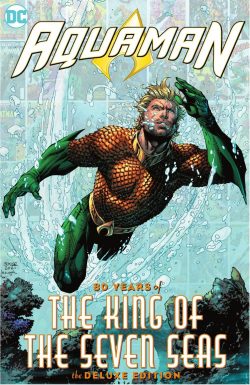
Showcase Presents Aquaman volume 3


By Bob Haney, Nick Cardy, Sal Trapani, Leo Dorfman & Pete Costanza & various (DC Comics)
ISBN: 978-1-4012-2181-2 (TPB)

We’re counting down to what augurs to be another Christmas movie megahit for DC, so let’s take a look at the lengthy history of page, screen, game and giant mutated seahorse…

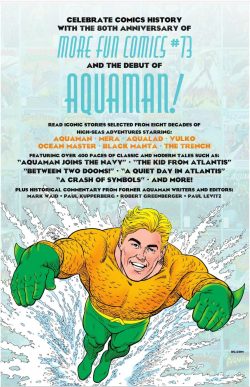
Aquaman was one of a handful of costumed adventurers to survive the superhero collapse at the end of the Golden Age; a rather nondescript and genial guy who solved maritime crimes and mysteries when not rescuing fish and people from sub-sea disasters. Created by Mort Weisinger and Paul Norris, he first launched in More Fun Comics #73 (1941). Strictly a second stringer for most of his career he nevertheless continued on beyond many stronger features, illustrated by Norris, Louis Cazaneuve, Charles Paris, and latterly Ramona Fradon who drew every adventure from 1954 until 1960.

When Showcase #4 rekindled the public’s taste for costumed crimefighters with the advent of a new Flash, DC updated its small band of superhero survivors, especially Green Arrow and Aquaman. Records are incomplete, sadly, so often we don’t know who wrote what, but after the revamp fuller records survive and this third black and white collection starring the King of the Seven Seas has only two creative credit conundrums.

Now with his own title and soon to be featured in the popular, groundbreaking cartoon show Superman/Aquaman Hour of Adventure, the Finned Fury seemed destined for super-stardom. These joyously outlandish tales, reprinting issues #24-39, a Brave and the Bold team-up with The Atom (# 73) and a scarce-remembered collaboration from Superman’s Pal Jimmy Olsen #115 comfortably and rapturously mark the end of the wholesome, affable hero, laying groundwork for a grittily innovative run from revolutionary editor Dick Giordano and hot new talents Steve Skeates, Jim Aparo and Neal Adams…

Those are a treat for another time, but there’s entertainment a-plenty here beginning with Aquaman #24 (November/December 1965) by an uncredited author (Dave Wood, George Kashdan or Jack Miller are strong possibilities) and regular artistic ace Nick Cardy.

In ‘Aquaman: Save Our Seas!’, the titanic tussle with maritime malcontent The Fisherman found the new parents (the Sea King and Mera were the first 1960s superheroes to marry and have kids) almost fatally easily distracted when an alien plot threatens to destroy Earth’s oceans, whilst in #25, ‘The Revolt of Aquaboy!’ by Bob Haney & Cardy sees an ancient Chinese sorcerer rapid-age the proud parents’ newborn into a spiteful ungrateful teenager as part of a plot to subjugate the sunken city of Atlantis.

The entire world went spy-crazy in the first half of the Swinging Sixties and anonymous acronymic secret societies popped up all over TV, books and comics. With #26 (March/April 1966), Aquaman joined the party when seconded by the US government (even though absolute ruler of a sovereign, if somewhat soggy, nation) to thwart the sinister schemes of the Organisation for General Revenge and Enslavement in the still surprisingly suspenseful ‘From O.G.R.E. With Love!’

With Haney & Cardy firmly ensconced as creative team, thrilling fantasy became the order of the day in such power-packed puzzlers as #27’s ‘The Battle of the Rival Aquamen’ – wherein alien hunters unleash devious duplicates of the Sea King and his Queen – before #28’s ‘Hail Aquababy, New King of Atlantis!’ introduces rogue American geneticist Dr. Starbuck. He seeks to steal the throne with subtle charm, honeyed words… and a trained gorilla and eagle modified to operate underwater…

Archenemy Orm the Ocean Master returns to attack America – and the world – in tense undersea duel ‘Aquaman, Coward-King of the Seas!’, which also provides some startling insights into the hero and villain’s shared shadowy pasts as well as the requisite thrills and chills, after which ‘The Death of Aquaman’ proves to be a guest-star-studded spectacular of subterfuge, double-cross and alien intrigue. The very much alive Sea King then finds himself a fish trapped out of water when ‘O.G.R.E. Strikes Back!, attacking the United Nations!

Ocean Master’s obscured family connections clearly struck a chord with readers as he returns in #32 to unleash the ancient leviathan ‘Tryton the Terrible’ whilst the troublesome teenagers get a tacit acknowledgement of their growing importance with the introduction of Aqua-Girl in ‘Aqualad’s Deep-Six Chick!’ (stop wincing; they were simpler, more obnoxious times and the story itself – about disaffected youth being exploited by unscrupulous adults – is a perennial and worthwhile one).

Aquaman #34 featured another evil doppelganger ‘Aquabeast the Abominable’, typifying a new, harsher sensibility in storytelling. Even though the antagonists were still generally aliens and monsters, from now on they were far meaner, scarier aliens and monsters…

The Sea King teamed up with Justice League of America compatriot The Atom in The Brave and the Bold # 73 (August/September 1967) to tackle a microscopic marauder named ‘Galg the Destroyer’ in a taut drama written by Haney and illustrated by always impressive and vastly undervalued Sal Trapani, before returning to his home-title and another deadly clash with Ocean Master and ruthless nemesis Black Manta. Never afraid to tweak the comfort zone or shake up the status quo, Haney’s excellent tale ‘Between Two Dooms!’ epitomises the growing darker sensibilities of the title, resulting in all Atlanteans losing their ability to breathe underwater, leaving Aquaman’s subjects virtual prisoners in their own sub-sea city for years to come…

Now a TV star, Aquaman went from strength to strength as Haney & Cardy pulled out all the creative stops on such resplendent battles tales as ‘What Seeks the Awesome Three?’ – pitting the hero against mechanistic marauders Magneto (no relation), Claw and Torpedo-Man – and chillingly prophetic eco-drama ‘When the Sea Dies!’, due in no small part to villains Ocean Master and The Scavenger.

Closing out his volume are two more dark thrillers and a classic guilty pleasure. Firstly, Aquaman #38 introduced a relentless, merciless vigilante who accidentally set his sights on the Atlantean Ace in ‘Justice is Mine, Saith the Liquidator!’, before ‘How to Kill a Sea King!’ tells a tragic tale of an alien seductress set on splitting up the Royal Couple. The era and this collection end with a charming treat from scripter Leo Dorfman and artist Pete Costanza taken from Superman’s Pal Jimmy Olsen #115 (October 1968).

The greatest advantage of these big value monochrome compendia was the opportunity they offered, whilst chronologically collecting a character’s adventures, to include crossovers and guest spots from other titles. When the star is as long-lived and widely travelled as Aquaman, that’s an awful lot of extra appearances for a fan to find, so the concluding tale here – taken from a title cruelly neglected by today’s fans – is an absolute gold-plated bonus…

‘Survival of the Fittest!’ sees the mystical Old Man of the Sea attempt to replace Aquaman with the far more pliant cub reporter: never realising the lad is made of far sterner and more decent stuff than the demon could possibly imagine…

DC has a long, comforting history of genteel, innocuous yarn-spinning delivered with quality artwork. Haney & Cardy’s Aquaman is an all-but-lost run of classics worthy of far more attention than they’ve received of late. It is a total pleasure to find just how readable they still are. With tumultuous sea-changes in store for the Sea King, the comics industry and America itself, the stories in this book signal the end of one glorious era and the promise – or threat – of darker, far more disturbing days to come.
© 1965-1968, 2009 DC Comics. All Rights Reserved.
Doctor Strange Masterworks volume 4


By Roy Thomas, Stan Lee, Gardner Fox, Barry Windsor-Smith, Archie Goodwin, Gene Colan, Marie Severin, Herb Trimpe, Don Heck, Sam Kweskin, Frank Brunner, P. Craig Russell, Jim Starlin & various (Marvel)
ISBN: 978-0-7851-3495-4 (HB/Digital Edition)

Win’s Christmas Gift Recommendation: Arcane Anniversary Astonishment… 9/10

When the budding House of Ideas introduced a warrior wizard to their burgeoning pantheon in the summer of 1963, it was a bold and curious move. Anthologically, bizarre adventures and menacing aliens were still incredibly popular, but most dramatic mentions of magic or the supernatural (especially vampires, werewolves and their equally eldritch ilk) were harshly proscribed by a censorship panel which dictated almost all aspects of story content – the self-inflicted Comics Code Authority.

That eldritch embargo probably explains writer/editor Stan Lee’s low key introduction of Steve Ditko’s mystic adventurer: an exotic, twilight troubleshooter inhabiting the shadowy outer fringes of society.

Within a year of Fantastic Four #1, long-lived monster-mystery anthology Strange Tales became home for the blazing boy-hero Human Torch (from #101, cover-dated October 1962), launching Johnny Storm on a creatively productive but commercially unsuccessful solo career.

In 1963, Tales of Suspense #41 saw new sensation Iron Man battle a crazed scientific wizard dubbed Doctor Strange, and with the name in copyrightable print (a long-established Lee technique: Thorr, The Thing, Magneto, The Hulk and more had been disposable Atlas “furry underpants monsters” long before they became in-continuity Marvel characters), preparations began for a truly different kind of hero.

The company had already devised a quasi-mystic troubleshooter for a short run in Amazing Adventures (volume 1 #1-4 & #6, spanning June-November 1961). The precursor was balding, trench-coated savant Doctor Droom – retooled in the 1970s as Doctor Druid when his exploits were reprinted. Psychiatrist, sage and paranormal investigator, he tackled everything from alien invaders to Atlanteans (albeit not the ones Sub-Mariner ruled). He was subsequently retro-written into Marvel continuity as an alternative candidate for Stephen Strange’s ultimate role as Sorcerer Supreme.

The man we know debuted in Strange Tales #110 (July 1963). After a shaky start, the Master of the Mystic Arts became an unmissable icon of cool counter-culture kids who saw in Ditko’s increasingly psychedelic art, echoes and overtones of their own trippy explorations of other worlds. That might not have been the authors’ intention but it certainly helped keep the mage at the forefront of Lee’s efforts to break comics out of the “kids-stuff” ghetto.

After Ditko abruptly left the company at the height of his fame and success in early 1967, the feature went through a string of creators before Marvel’s 1968 expansion allowed a measure of creative stability as the mystic master won his own monthly solo title in a neat moment of sleight of hand by assuming the numbering of Strange Tales. Thus, this enchanting full colour compilation gathers Doctor Strange #180-183 (May-November 1969) whereupon he became one of the earliest casualties of a superhero implosion heralding the end of the Silver Age. Also included are guest appearances in Sub-Mariner #22 and Incredible Hulk #126 (both 1970), prior to the sorcerer’s return in Marvel Feature #1 (December 1971) and a second bite of the cherry as star of Marvel Premiere #3-8 (July 1972 through May 1973).

Those complex, convoluted, confusing times are better explained in Roy Thomas’ Introduction before the drama resumes with #180’s ‘Eternity, Eternity!’

Previously, Dr. Stephen Strange had joined Black Night Dane Whitman and assorted Avengers in saving Earth from doom by Asgardian demons Surtur and Ymir and here – thanks to Thomas, Gene Colan & Tom Palmer – suffers nightmares and dire premonitions on New Year’s Eve before learning that the guiding spirit of creation has been enslaved by sadistic dream demon Nightmare

After a Colan pin-up of the good doctor and his closest associates, ‘If a World Should Die Before I Wake…’ follows the mage into the dreamlands and beyond to rescue the lynchpin of reality where he is defeated and despatched to uncharted regions. In the miasma he makes an unlikely ally as concluding episode ‘And Juggernaut Makes Three!’ sees Eternity liberated, Nightmare defeated and Stephen Strange rewarded by the reality-warping over-god by being unmade and recreated in a new identity. In the minds of humanity, Dr. Stephen Sanders is nothing to do with recently outed, publicly vilified masked mystic Dr. Strange…

The radical reset was too little too late and Dr. Strange #183 (November 1969) was the final issue. In ‘They Walk by Night!’, Thomas, Colan & Palmer introduced a deadly threat in the Undying Ones, an elder race of devils hungry to reconquer the Earth.

The story went nowhere until Sub-Mariner #22 (February 1970 by Thomas, Marie Severin & Johnny Craig) as ‘The Monarch and the Mystic!’ brought the Prince of Atlantis into play, as told in a sterling tale of sacrifice wherein the Master of the Mystic Arts seemingly dies holding the gates of Hell shut with the Undying Ones pent behind them.

The extended saga then concluded on an upbeat note with The Incredible Hulk #126 (April 1970) ‘Where Stalks the Night-Crawler!’ by Thomas & Herb Trimpe, wherein a New England cult dispatches helpless Bruce Banner to the nether realms in an attempt to undo Strange’s sacrifice.

Luckily cultist Barbara Norris has last minute second thoughts and her sacrifice frees the mystic, seemingly ending the threat of the Undying Ones forever. At the end of the issue Strange retired, forsaking magic, although he changed his mind before too long as the fates – and changing reading tastes – called him back to duty.

Cover dated December 1971, Marvel Feature #1 bombastically introduced the trio of antiheroes united as The Defenders, and just how Strange resumed his mystic arts mantle was tucked into a heady 10-page thriller at the end, proving that not all good things come in large packages. Crafted by Thomas, Don Heck & Frank Giacoia, ‘The Return’ finds medical consultant Stephen Sanders back in Greenwich Village where his old Sanctum Sanctorum is home to an incredible impostor posing as his former self. It takes the intervention of his sagacious mentor The Ancient One to restore his forsaken skills before the conundrum is solved and a villain unmasked…

Back in arcane action, Dr. Strange took up residence in Marvel Premiere, beginning with #3 (July 1972) as Stan Lee, Barry Windsor-Smith & Dan Adkins employ cunning, misdirection and an ancient enemy to attack the mage in ‘While the World Spins Mad!’

That visual tour de force segued into an epic Lovecraftian homage/pastiche beginning in MP#4 when Archie Goodwin, Smith & Frank Brunner detail how Strange’s attempt to aid embattled Ethan Stoddard remove a ghastly malefic contagion from his New England hometown of Starkesboro goes awry. Shamelessly plundering Lovecraft’s literary lore for a graphic gothic masterpiece attempt leads to a severely weakened Master of the Mystic Arts ambushed by the victims he helped and offered as a sacrifice in ‘The Spawn of Sligguth!’

Written by Gardner F. Fox with art by Sam Kweskin (as Irv Wesley) & Don Perlin, and incorporating themes inspired by Robert E. Howard, the dark tale unfolds as Strange breaks free and learns that ‘The Lurker in the Labyrinth!’ is merely a herald for a greater primordial evil about to reawaken before facing another of its vanguard in #6’s ‘The Shambler from the Sea!’ (Fox, Brunner & Sal Buscema). With faithful allies Wong and Clea drawn into the weird war against now-exposed malignant mega-manipulator Shuma-Gorath, Strange’s latest triumph/close shave directs the secret heroes to Stonehenge…

Marvel Premiere #7 highlights ‘The Shadows of the Starstone!’ courtesy of Fox, P. Craig Russell, Mike Esposito Giacoia & Dave Hunt, as new players Henry Gordon and enigmatic medium Blondine join the human resistance just in time to combat latest horror Dagoth, but quickly enough to save Strange from a thaumaturgical boobytrap…

The serialised shocks pause with #8 (May 1973, by Fox, Jim Starlin, Giacoia & Hunt) as animated mansion Witch House assaults the assembled humans until Strange puts an end to the matter. Resolved to work alone he heads back to Stonehenge and employs ancient forces to defeat an army of devils and follow their trail to another world. However, even after destroying their lord he is marooned there by ‘The Doom that Bloomed on Kathulos!’

To Be Continued…

Although the comics spellbinding ends here, there are still treats and surprises in store, beginning with the first cover to Doctor Strange #180 by Colan & Palmer. It had been lost in the post for years and required fast action to be replaced back in 1968. Also on offer are production art proofs and pre-editorial changes: a fascinating glimpse at the tricks behind the comics wonderment, and maybe the biggest Biographies section you’ve ever seen…

The Wizard of Greenwich Village has always been an acquired taste for superhero fans, but the pioneering graphic bravura of these tales and the ones to come in the next volume left an indelible mark on the Marvel Universe and readily fall into the sublime category of works done “ahead of their time”. Many of us prefer to believe Doctor Strange has always been the coolest of outsiders and most accessible fringe star of the Marvel firmament (and now we have mega-blockbuster movies to back us up, so Yar Boo Sucks to them naysayers!). This glorious grimoire is a miraculous means for fans to enter his world once more and the perfect introduction for recent acolytes or converts created by the movie iteration.
© 2016 Marvel Characters, Inc. All rights reserved.

The Hawk and The Dove: The Silver Age


By Steve Ditko, Gil Kane, Neal Adams, Nick Cardy, John Celardo, Sal Trapani, Wally Wood & various (DC Comics)

ISBN: 978-1401278052 (TPB/Digital edition)
Win’s Christmas Gift Recommendation: For a Season of Heated Family Debates… 9/10

The 1960s changed the world, especially in comics. Fresh ideas, new freedoms, young talents emerging and a growing assurance among established creators that what they were doing mattered and had lasting relevance generated a wave of inspiration and new characters everywhere. Not all of them hit home, but all have lasting significance. Happy Anniversary Hawk & Dove

Steve Ditko was one of our industry’s greatest and most influential talents and – in his lifetime – one of America’s least lauded. Reclusive and reticent by inclination, his fervent desire was always just to get on with his job, telling stories the best way he could: letting his work speak for him. Whilst the noblest of aspirations, that attitude was usually a minor consideration – and even an actual stumbling block – for the commercial interests which controlled all comics production back then and still exert an overwhelming influence upon the bulk of mainstream comic industry output. If you need more biographical background, there are plenty of wonderful books or even that internet stuff to find it. I’m sticking to his wish to have the stories tell you all you need to know…

After his legendary disagreements with Stan Lee led to Ditko quitting Marvel he worked at Warren Publishing and resumed his career-long association with Charlton Comics. Their laissez faire editorial attitudes always offered virtual creative freedom, if not great financial reward, but when their trailblazing editor Dick Giordano was poached by rapidly-slipping industry leader DC Comics in 1968, he brought with him some of his bullpen of key creators.

Whilst Jim Aparo, Steve Skeates, Frank McLaughlin and Denny O’Neil found a new home, Ditko began only a sporadic – if phenomenally fruitful – association with DC.

During this heady, unsettled period, the first strips derived from Ditko’s interpretation of novelist Ayn Rand’s Objectivist philosophy began appearing in fanzines and independent press publications like Witzend and The Collector – an avenue of freer expression the artist wholeheartedly embraced in an era of social rebellion. For the “over-ground” publishing colossus DC, he devised numerous short stories for genre anthologies and a brace of cult classics. Beware The Creeper came first, followed by the superbly captivating concept gathered here: The Hawk and the Dove. Later visits to the house of Superman & Batman generated Shade, the Changing Man, Stalker and The Odd Man, plus truly unique reinterpretations of The Demon, Man-Bat, Legion of Super-Heroes and many more…

This slight but superb compilation gathers every Ditko-drafted episode of a feature very much of its time plus those who took up the task when he left: curating Showcase #75, The Hawk and the Dove #1-6 and Teen Titans #21, covering May/June 1968 to May/June 1969.

The domestic drama of a family at war naturally opens ‘In the Beginning’ (Showcase #75, with Ditko doing everything except dialoguing which was left to relative youngster Steve Skeates) as high school kids Don and Hank Hall resume their heated quarrel about what American society needs to be. Don is left-leaning pacifist and younger brother Hank is savagely reactionary: pro-military, pro-patriot and anti-dissent of any kind. It was a situation played out all over the world at that crucial stage of the Vietnam war as a new generation turned away from what their parents held dear…

The Hall boys’ paternal parent was doctrinaire small town Judge Irwin Hall of Elmond County: handing out harsh but fair pronouncements that were the cause of a minor superhero moment. When he throws the book at convicted racketeer Dargo, it sparks a wave of violent reprisals and assassination attempts that hospitalise the Judge. Constantly arguing their irreconcilable views, Don and Hank follow one gangster they suspect and are trapped in a warehouse, helpless to prevent a follow-up murder attempt. Their mounting panic and frustration ends when a mysterious voice magically grants them superpowers and costumed identities based on their divergent worldviews and allowing them to escape and foil the killers…

The gift only activates “when evil is present” and also magnifies their ability to act out their philosophical standpoint, and in typical Ditko manner is heartily vilified by the Judge who advocates the rule of law and enforcement of elected authority over criminal vigilantism…

Reaction was strong enough to warrant a solo series and cover-dated August/September that year, The Hawk and the Dove #1 (again scripted by Skeates) revealed ‘The Dove is a Very Gentle Bird’ as teen thieves The Drop-outs plunder at will, with Dove Don and Hawk Hank taking very different approaches to stopping them. The concept of the warring brothers was fascinating but extremely flawed in comic book terms.

Hawk happily smashed everything in traditional Fights ‘n’ Tights style whilst Dove second-guessed his own every action, enduring all kinds of permutation to be dynamic and proactive without ever actually hitting anyone: a definition of pacifism that struggled with itself…

The dichotomy clearly affected Ditko, who abandoned his creation after only three stories, although his swansong ‘Jailbreak’ (H&D #2 Ditko & Skeates) is a mini-masterpiece perfectly embodying all those innate contradictions to craft a powerful tale of ideology and redemption. When the Hall family vacation is overtaken by a mass prison escape, crazed killer Harker forces hopeless, despondent career-convict Davis and a genuinely-reformed young parolee to escape with him, intending to sacrifice them to aid his getaway. When Harker takes the Halls hostage, Hawk and Dove manifest, but as the belligerent bird-boy brutalises Davis and the many escapees he brought along, the repentant parolee saves the hostages whilst Dove stubbornly defeats Harker by taking the beating of his life and wearing his opponent down. Here, the true victory belongs to Don and the system that punishes the guilty and rewards the rule-followers: hardly a radical challenge to the social issues the series sought to redress…

The Hawk and the Dove #3 (December 1968/January 1969) brought a big creative change but more thematic confusion as Gil Kane & Sal Trapani joined Skeates for a brace of crime mysteries. ‘After the Cat’ has the heroes hunt a violent costumed burglar, where Dove’s principles directly lead to tragedy and death after which ‘Twice Burned!’ finds the avian avengers helpless when a savage assault and travesty of justice leads an angry teenager into vengeful violence…

Skeates, Kane & Trapani advanced the themes of ideology versus family bonds in #4 as ‘The Sell-Out!’ sees a mayoral run implicate Judge Hall in wrongdoing when Hawk and Dove expose their father’s oldest political ally as a murdering criminal mastermind funding his campaign through forgery and art theft…

The inevitable occurs in #5 when Kane takes over scripting and Wally Wood assumes the inker’s role in ‘Walk With Me O’ Brother… Death Has Taken My Hand!’

A pre-WWII infant immigrant from Latvia born Eli Katz, Gil Kane was a pivotal player in the developing US comics industry, and indeed the art form itself. Working as an artist, and an increasingly more effective and influential one, he drew for many outfits from 1942 on, tackling superheroes, crime, action, war, mystery, romance, animal heroes (Streak, Rex the Wonder Dog!), movie adaptations Westerns and Science Fiction tales.

In the late 1950s he became one of Julie Schwartz’s key artists: regenerating and rebooting the superhero concept. Yet by 1968, at the top of his profession, this relentlessly revolutionary and creative man felt so confined by the juvenile strictures of the industry that he struck out on bold new ventures that jettisoned the editorial and format bondage of comic books for new visions and media. His Name Is Savage was an adult-oriented black & white magazine about a cold and ruthless super-spy in the James Bond/Matt Helm/Man Called Flint mould; co-written by friend and collaborator Archie Goodwin. It was very much a precursor in tone, treatment and subject matter of many of today’s adventure titles.

His other venture, Blackmark (1971, also with Goodwin), not only ushered in the comic book era of Sword & Sorcery, but also became one of the medium’s first Graphic Novels. Technically, as the series was commissioned by fantasy publisher Ballantine as 8 volumes, it was also envisioned as America’s first comic Limited Series. Before them, though, there was Captain Action and The Hawk and The Dove. At this moment Kane was eager to stretch his creative muscles in a period of great change and challenge and editor Dick Giordano was happy to oblige…

The tale of betrayal and rage sees Irwin Hall uncharacteristically intercede when old friend and literal life-saver Sam Hodgins is framed for armed robbery and murder. When Hawk and Dove investigate they discover a shocking truth that leads to Hank Hall being near-fatally injured as Don – losing his mind with grief – betrays his principles in pursuit of vengeance, not justice…

The tale leads into Teen Titans #21 (June 1969) and a landmark guest shot in DC’s other young heroes title. Written by Neal Adams, pencilled by him and Sal Amendola with inks from brush-maestro Nick Cardy – one of the all-out prettiest illustration jobs of that decade – the tale is centrepiece of a triptych tale spanning TT #20-22.

Facing interdimensional invasion spearheaded by a human multinational crime gang, Titans (Kid Flash, Robin, Wonder Girl and Speedy) are briefly joined by our symbolic super-teens for ‘Citadel of Fear’: chasing smugglers, facing evil ETs and ramping up the surly teen angst quotient whilst moving the invaders story-arc towards a stunning conclusion that you’ll have to read elsewhere

The unstoppable superhero recession of the late 1960s generated incredible and bold experiments, but all those groundbreaking advances went unheeded and unheralded – except by the next generation of comic creators who benefitted from them. Back then, costumed hero books fell like dominoes and The Hawk and The Dove died with #6 (June/July 1969, by Kane & John Celardo). ‘Judgment in a Small Dark Place!’ again focusses on Judge Hall as the son of a man he jailed years previously targets the family before kidnapping and torturing the draconian lawgiver.

Unable to cooperate, the boys search for him separately, but in the end it’s Hawk’s mindless violence that solves the problem and – as usual – Hall’s ungrateful response is seeking to arrest the lawless vigilantes…

This little slice of obscure hero history also includes spectacular covers by Ditko, Kane and Cardy.

The Sixties was the era when all assorted facets of “cool-for-kids” ephemera finally started to coalesce into a comprehensive assault on our minds and our parents’ pockets. Music, TV, movies, comics, bubble-gum cards and toys all began concertedly feeding off each other, building a unified and combined fantasy-land no kid could resist, but there was also deep and permanent change to the culture and social consciousness and kids became aware politically active for the first time. Those competing colliding forces have never been more wonderfully expressed than in the stories in this book and you would be mad to miss it.
© 1968, 1969, 2018 DC Comics. All Rights Reserved.
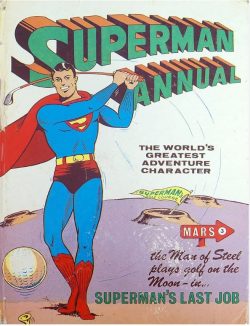
Captain Marvel: The Many Lives of Carol Danvers


By Roy Thomas, Gerry Conway, Chris Claremont, David Michelinie, Howard Mackie & Mark Jason, Kurt Busiek, John Jackson Miller, Brian Reed, Kelly Sue DeConnick, Gene Colan, John Buscema, Carmine Infantino, John Byrne, Dave Cockrum, Tomm Coker, George Pérez, Jorge Lucas, Paulo Siqueira, Adriana Melo, Dexter Soy & various (MARVEL)
ISBN: 978-1-3029-2506-2 (TBP/Digital edition)

Win’s Christmas Gift Recommendation: A Miraculous Ascension to Marvel At… 8/10

In comic book terms, the soubriquet “Marvel” carries a lot of baggage and clout, and has been attached to a wide number of vastly differing characters over many decades. In 2014, it was inherited by comics’ first mainstream first rank Muslim superhero, albeit employing the third iteration of pre-existing designation Ms. Marvel.

Career soldier, former spy and occasional journalist Carol Danvers – who rivals Henry Pym in number of secret identities – having been Binary, Warbird, Ms. Marvel again and ultimately Captain Marvel – originated the role when her Kree-based abilities first manifested. She experienced a turbulent superhero career and was lost in space when Sharon Ventura became a second, unrelated Ms. Marvel. This iteration gained her powers from the villainous Power Broker, and after briefly joining the Fantastic Four, was mutated by cosmic ray exposure into a She-Thing

Debuting in a sly cameo in Captain Marvel (volume 7 #14, September 2013) and bolstered by a subsequent teaser in #17, Kamala Khan was the third to use the codename. She properly launched in full fight mode in a tantalising short episode (All-New MarvelNow! Point One #1) chronologically set just after her origin and opening exploit. We’ll get to her another day soon, but isn’t it nice to see her annoying trolls on screen as well as in print?

Here we’re focusing on Carol Danvers in many of her multifarious endeavours, glimpsed via a wide set of comics snapshots spanning cover-dates March 1968 to September 2012, and comprising Marvel Super-Heroes #13, Ms. Marvel #1, 19, Avengers #183-184, Uncanny X-Men #164, Logan: Shadow Society, Avengers (1998) #4, Iron Man (1998) #85, Ms. Marvel (2006) #32-33, and Captain Marvel (2012) #1.

She began as a supporting character as the House of Ideas pounced on finally vacant property title Captain Marvel and debuted in the second instalment. Marvel Super-Heroes #13 picks up where the previous issue ended. That was ‘The Coming of Captain Marvel!’ – derived directly from Fantastic Four #64-65, wherein the quartet defeated a super-advanced Sentry robot marooned on Earth by a mythical and primordial alien race the Kree. They didn’t stay mysterious for long and despatched a mission to spy on us…

Dispatching a surveillance mission, the Kree had to know everything about us. Unfortunately, the agent they chose – Captain Mar-Vell – was a man of conscience, whilst his commanding officer Colonel Yon-Rogg was his ruthless rival for the love of the ship’s medical officer Una. No sooner has the dutiful operative made a tentative planet-fall and clashed with the US Army from a local missile base than the instalment – and this preamble – ends.

We begin here as Roy Thomas, Gene Colan & Paul Reinman took over for ‘Where Stalks the Sentry!’ as the spy assumes the identity of recently killed scientist Walter Lawson to infiltrate that military base and immediately arouses the suspicions of security Chief Carol Danvers. He is horrified to discover the Earthlings are storing the Sentry defeated by the FF on site. Yon-Rogg, sensing an opportunity, reactivates the deadly mechanoid. As it goes on a rampage, only Mar-Vell stands in its path…

Over many months Mar-Vell and Danvers sparred and shuffled until she became a collateral casualty in a devastating battle between the now-defected alien and Yon-Rogg in Captain Marvel #18 (November 1969). Caught in a climactic explosion of alien technology (latterly revealed to have altered her biology), she pretty much vanished until revived in Ms. Marvel #1 (January 1977). Crafted by Gerry Conway, John Buscema & Joe Sinnott, ‘This Woman, This Warrior!’ heralded a new chapter for the company and the industry…

Here irrepressible and partially amnesiac Danvers has relocated to New York to become editor of “Woman”: a new magazine for modern misses published by Daily Bugle owner J. Jonah Jameson. Never having fully recovered from her near-death experience, Danvers left the military and drifted into writing, slowly growing in confidence until the irascible publisher made her an offer she couldn’t refuse…

At the same time as Carol is getting her feet under a desk, a mysterious new masked “heroine” (sorry, it was the 70s!) started appearing and as rapidly vanishing, such as when she pitches up to battle the sinister Scorpion as he perpetrates a brutal bank raid.

The villain narrowly escapes to rendezvous with Professor Kerwin Korwin of Advanced Idea Mechanics. The skeevy savant promised to increase Scorpion’s powers and allow him to take long-delayed revenge on Jameson – whom the demented thug blames for his freakish condition…

Danvers has been having premonitions and blackouts since the final clash between Mar-Vell and Yon-Rogg and has no idea she transforms into Ms. Marvel during fugue state episodes. Her latest vision-flash occurs too late to save Jameson from abduction, but her “Seventh Sense” does allow her to track the villain before her unwitting new boss is injured, whilst her incredible physical powers and knowledge of Kree combat techniques enable her to easily trounce the maniac.

Danvers eventually reconciles her split personality to become a frontline superhero and is targeted by shape-shifting mutant Mystique in a raid on S.H.I.E.L.D. to purloin a new super-weapon. This triggers a blockbuster battle and features the beginnings of a deadly plot originating at the heart of the distant Kree Imperium…

The scheme culminates with our third tale as ‘Mirror, Mirror!’ (Chris Claremont, Carmine Infantino & Bob McLeod) sees the Kree Supreme Intelligence attempts to reinvigorate his race’s stalled evolutionary path by kidnapping Earth/Kree hybrid Carol Danvers. However, with both her and Captain Marvel hitting hard against his emissary Ronan the Accuser, eventually the Supremor and his plotters take the hint and go home empty-handed…

Avengers #183-184 from May and June 1979 then see her seconded onto the superteam by government spook Henry Peter Gyrich just in time to face The Redoubtable Return of Crusher Creel!’ Courtesy of David Michelinie, John Byrne, Klaus Janson & D(iverse) Hands, a breathtaking all-action extravaganza sees Ms. Marvel replace the Scarlet Witch just as the formidable Absorbing Man decides to leave the country and quit being thrashed by heroes. Sadly, his departure plans include kidnapping a young woman “for company”, leading to a cataclysmic showdown with the heroes resulting in carnage, chaos and a ‘Death on the Hudson!’

Carol was later attacked by young mutant Rogue, and permanently lost her powers and memory. Taken under the X-Men’s wing she went into space with The Starjammers and was eventually reborn as cosmic-powered adventurer Binary: the exact how of which can be seen in Claremont, Dave Cockrum & Bob Wiacek’s ‘Binary Star!’ from Uncanny X-Men #164 (December 1982)…

Jumping to December 1995, one-shot Logan: Shadow Society – by Howard Mackie, Mark Jason, Tomm Coker, Keith Aiken, Octavio Cariello & Christie Scheele – delves into Danvers’ early career as set pre-debut of the Fantastic Four. She links up with a sometime associate to counter a new and growing menace… something called “mutants”. She has no idea about the truth of her savagely efficient partner Logan but certainly understands the threat level of the killed called Sabretooth

Following the Heroes Return event of 1997, a new iteration of The Avengers formed and in #4 (May 1998), Kurt Busiek, George Pérez, Al Vey & Wiacek decree there are ‘Too Many Avengers!’ prompting a paring down by the founders and admission of Carol in her newest alter ego Warbird, just in time to trounce a few old foes, whilst Iron Man #85/430 (August 2004, by John Jackson Miller, Jorge Lucas &Antonio Fabela), sees the beginning of the end in a prologue to the Avengers Disassembled event as Warbird is caught up in the breakdown…

Brian Reed, Paulo Siqueira, Adriana Melo, Amilton Santos, Mariah Benes & Chris Sotomayor then collaborate on a revelatory dip into the early life of USAF officer Major Carol Danvers as a chance encounter with boy genius Tony Stark gets her captured by the Taliban, tortured and turned into a secret agent in ‘Ascension’ and ‘Vitamin’: a brace of epic gung ho Top Gun meets Jason Bourne tales from Ms. Marvel (2006) #32-33 (December 2008 & January 2009), before this collection reaches its logical conclusion with her being officially proclaimed “Earth’s Mightiest Hero” in Captain Marvel #1 (September 2012) as Kelley Sue DeConnick, Dexter Soy & Joe Caramagna depict Carol’s embracing her past lives to accept the legacy, responsibility and rank of her universe-saving Kree predecessor…

With covers and variants by Colan, John Romita & Dick Giordano, John Romita Jr. & Joe Rubinstein, Pérez & Terry Austin, Cockrum & Wiacek, Coker & Aiken, Pérez & Tom Smith, Steve Epting & Laura Martin, David Yardin & Rain Berado, Ed McGuinness, Dexter Vine, Javie Rodriguez and Adi Granov, plus dozens of sketches, layout and original art pages, this epic retrospective is a superb short cut to decades of astounding adventure.

In conjunction with sister volume Captain Marvel vs Rogue (patience!, we’ll get to that one too) these tales are entertaining, often groundbreaking and painfully patronising (occasionally at the same time), but nonetheless, detail exactly how Ms. Marvel in all her incarnations and against all odds, grew into the modern Marvel icon of affirmative womanhood we see today.

In both comics and on-screen, Carol Danvers is Marvel’s paramount female symbol and role model. These exploits are a valuable grounding of the contemporary champion but also stand on their own as intriguing examples of the inevitable fall of even the staunchest of male bastions: superhero sagas…
© 2020 MARVEL.