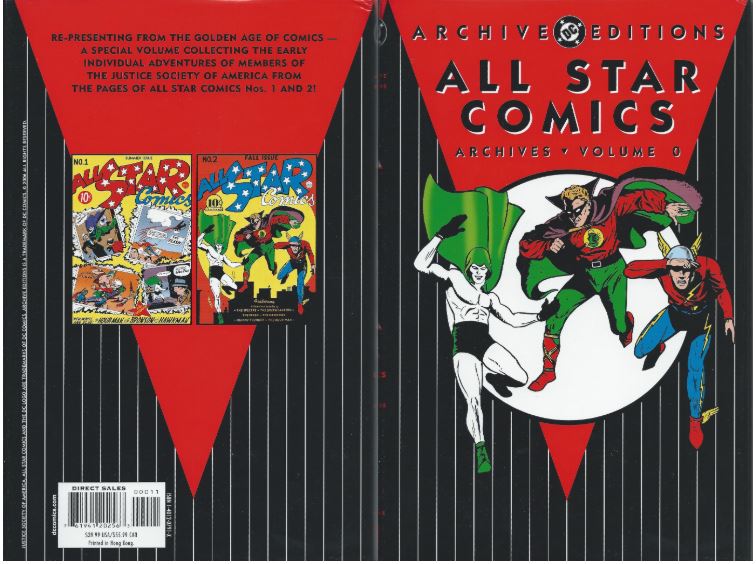
DC Finest Blue Beetle – Blue Beetle Challenges The Red Knight


By Joe Gill, Roy Thomas, Gary Friedrich, Benjamin Smith, Bill Fraccio, Tony Tallarico, Dick Giordano, Steve Ditko, Dan Reed & Bob McLeod, Albert Val, Bill Black & various (DC Comics)
ISBN: 978-1-79950-248-7 (TPB)

This book includes Discriminatory Content produced in less enlightened times

This absorbing yet inarguably eccentric DC Finest compilation offers some of the rarest material ever aquired by the company and probably owes its existence solely to the screen success of the ever-changing titular star. I honestly never expected to see such seminal material in a modern collection and I hope the dated nature of the material finds an appreciative audience and rewards DC for their boldness… 

Sadly as ever, it’s not yet available digitally, but we live in hope…

The Blue Beetle premiered in Mystery Men Comics #1, released by Fox Comics and cover-dated August 1939. The pulp-inspired star was created by Charles Nicholas and possibly initially scripted by Will Eisner. “Charles Nicholas” was a shared pseudonym used by Chuck Cuidera (Blackhawk), Jack Kirby (everything) and Charles Wojtkowski (Blonde Phantom, Young Allies, Nyoka, Iron Corporal) with the last one generally attributed with actually inventing our remarkably resilient Azure Adventurer.

A mystery man in every sense of the term, the Cobalt Crimecrusher was inexplicably popular from the start: translating his comics venues into merchandise, a radio show and even a newspaper comic strip. Constantly acquired and traded by numerous publishers, BB survived the extinction of most of them: blithely undergoing many revisions to his origins and powers. By the mid-1950s he had ended up at Charlton Comics, appearing sporadically in a few long-inventoried tales before seemingly fading away. However, that was only until the early 1960s superhero resurgence when Joe Gill, Bill Fraccio, Tony Tallarico and, latterly, neophyte scripter/devoted Golden Age acolyte Roy Thomas revised and revived the character. It led to a unique 10-issue run spanning June 1964 to March 1966 (technically, two separate 5-issue runs), but you’ll see that it wasn’t quite that simple…

Pulling together many disparate strands from previous incarnations, former cop and valiant troubleshooter Dan Garrett was reshaped into an archaeologist gifted with a mysterious, magical ancient Egyptian scarab. This trinket would transform him into a lightning-throwing, super-sensed flying superman whenever he touched the scarab and uttered trigger phrase “Khaji Dha!”

After another brief sojourn in comic book limbo, Garrett resurfaced when Steve Ditko took on the concept, tweaking it to construct a fresh retooled hero for the gadget-conscious, superhero-savvy society perfect to continually confront a crimeridden culture.

Ditko accepted and acknowledged but sagely set aside all that prior history to utterly recreate a hero he could understand. Ted Kord is an earnest and proudly decent young scientist with a secret tragedy in his past, which Ditko and scripter Gary Friedrich sagely forbore revealing in deference to intrigue and action. The result was a taut, captivating noir thriller that opened the neopgyte’s azure casebook – which we’ll get to in the fullness of time…

Here, though, we open with the venerable veteran bursting back onto newstands courtesy of Gill, Fraccio, & Tallarico.

Cover-dated June 1964 the revival began in Blue Beetle (vol. 1, #1) with the disinterrment of ‘The Giant Mummy Who Was Not Dead’ as prominent visitor Dr. Dan Garrett and comely local egyptologist Professor Luri Hoshid fall foul of a rapidly changing political crisis whilst excavating an ancient site. The tomb of Kha-Ef-Re holds untold discoveries but resident strongman-with-despotic-aspirations – and a private nuclear arsenal – General Amenhotep may well end their dig out of sheer spite. Threatened but perservering, the duo unearth vile Kha-Ef-Re’s remains and a fantastic blue scarab that seemingly acts as a means of imprisoning his mummy.

On touching the gem, Garrett experiences an astounding vision as another ancient Egyptian – “The Great Pharoah” – reveals the scarab is a portal to fantastic power to be used in the service of good…

Transformed, Garrett immediately gets a chance to test it as a nuclear strike by Amenhotep’s forces awakens the mummy which grows to fantastic size and rampages across the nation. Thankfully the powers and abilities of The Blue Beetle are sufficient to defeat and re-entomb the monster and deal with the military maniac who thought to exploit him…

Relentlessly formulaic but somehow ly kitsch and bizarrely appealing, the stage was set for a succession of the same as BB #2’s ‘Hot War in the Arctic’ finds Garrett and sexy accomplice du jour Captain Elaine Norr (USAF) investigating peril in the far north. Here they clash with Red Chinese forces building secret airbases as well as cavemen, lost Goths, extinct big beasts and even dinosaurs from the sanctuary of a lost land… until more hastily applied atomics trigger a disaster…

Alien invasion was the theme of the third adventure as supersonic transport and possibly even the space program were threatened by a man who talked to lightning. ‘Mr. Thunderbolt and the Superstar’ led to a sustained war of nerves and powers narrowly won for humanity before a traditional supervillain arrived in the bright green form of ‘The Praying Mantis-Man’. Aided by Mexican entymologist firecracker Juanita Rivera, Garrett and his alter ego barely survive the efforts of self-mutating chlorophyl addict Hunter Mann to replace humanity with giant bugs. The macabre yarn is supplemented by a pinup of the Cobalt Crusader by Pat Masulli, before #5 finds Gill, Fracchio & Tallarico disclosing how and why ‘Blue Beetle Challenges the Red Knight’

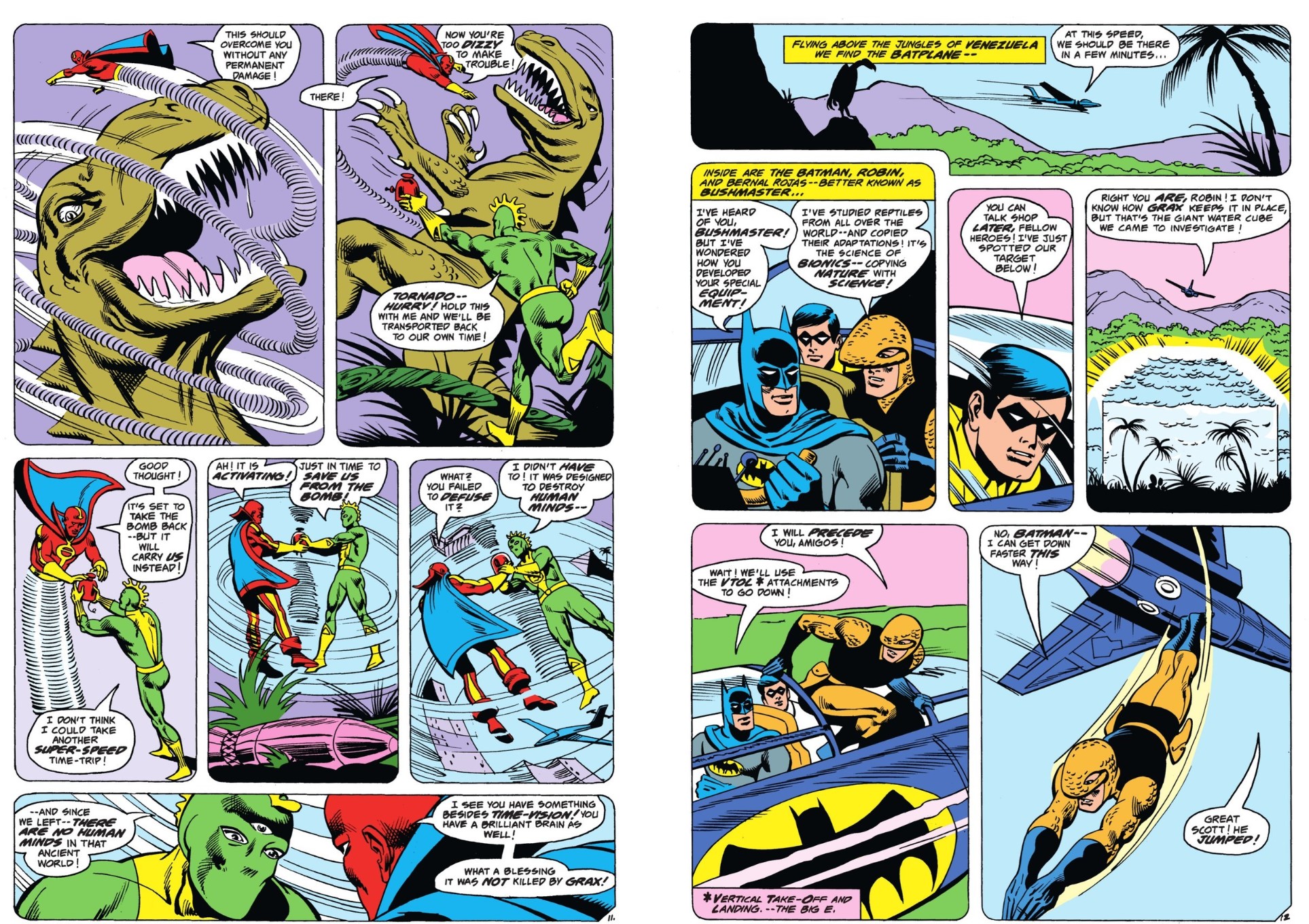
This eerie yarn sees Garrett come to the aid of his friend Lewis Coll after the astrophysicist returns from a space mission strangely altered. Now obsessive and cruel, Coll shuns his fiancee Regina White and transforms himself into a invulnerable crimson armoured tyrant seeking to destroy all aircraft. So tough is his opposition that Blue Beetle must seek aid from the The Great Pharoah himself to end the threat…

The series went on a brief hiatus and returned with a new numbering system as, cover-dated July 1965, Blue Beetle #50 pitted the hero against ‘The Scorpion’ as villainous Mister Crabb sought to control the oil industry with thugs and giant robots, whilst in # 51 deranged incel Dr. Jeremiah Clugg sought to offset his self-perceived physical flaws and failings with women by placing his personality and mentality inside a super-srobot dubbed ‘Mentor the Magnificent’. Unable to reason, the Beetle had to quell his increasing instability with force…

Gill & Tallarico handled #52 as ‘Magno, the Man Who Shakes the World’ finds disgraced anthropologist Louis Forte targeting Garrett for revenge that escalates into shattering the entire planet as tectonic terrorist Magno-Man, after which Praying Mantis-Man returns to bedevil humanity in ‘The People Theives’, with the mantid maniac snatching humans as lab fodder until the Azure Avenger steps in and stomps him…

The last hurrah of the old guard saw aspiring junior Roy Thomas script for Fracchio & Tallarico a deft return to Egypt in final foray (Blue Beetle #54 February/March 1966) as Garrett and Luri Hoshid reunite after her latest find is co-opted by a rival who knows its true power. Sadly even Professor Philipps is unaware of the full force and malign sentience of ‘The Eye of Horus’ Soon the ancient device is enslaving and transforming humans in its quest for dominance, but the Great Pharoah has a plan to aid his new agent defeat it. All the hero has to do is visit the gods in the Land of the Dead and return with a certain weapon…

Despite it being the height of superhero madness in popular culture, Blue Beetle folded then and was left fallow until the end of the year. As stated above, he returned much changed in the back of Captain Atom (#83 November 1966) with Charlton Comics’ biggest gun in the process of his own refit and renewal again courtesy of Ditko.

The remodelling of the Atomic Ace left room for expansion and experimentation so Ditko plunged right in, introducing an acrobatic, technologically armed swashbuckler taking care of business without any extraneous exposition or explanation… and using one of the oldest names in the business.

Here ‘The New Blue Beetle’ displays his modus operandi by stopping a vicious crime-spree by the Killer Koke Gang. The untitled yarn has all classic elements of a Ditko masterpiece: outlandish, intense fight scenes, compact, claustrophobic yet dynamic layouts, innovative gimmickry and a clear-cut battle between Right and Wrong. It’s one of the very best introductory stories of a new hero anywhere in comics – and it’s only 7 pages long…

With a definite feeling of no safety or status quo, next instalment ‘Wanted for Murder’ – scripted by Mike Friedrich with full art from Ditko – pits the new kid against a mysterious Masked Marauder who has invaded ghis own home. However, the real kicker is a bombshell revelation that Homicide Detective Fisher, investigating the disappearance of Garrett, suspects a possible connection to Kord…

Next in the imaginatively entitled ‘Blue Beetle Fights a Submarine’ the vigour and vitality of the hero is again undeniable as a mid-air hijack is foiled before a spy sub and giant killer octopus are given short shrift by the indomitable rookie crusader. Then CA #86 sees the return of ‘The Masked Marauder’ as the cobalt crimebuster confronts a ruthless scientist/industrial spy he’s convinced he has battled before…

This is all preamble to the main event as – cover-dated June 1967 – Blue Beetle (volume 2) #1 launched.with lead tale ‘Blue Beetle Bugs the Squids’; an all-Ditko masterpiece (even scripting it as “D.C. Glanzman”) with the hero in astounding action against a deadly gang of bandits. ‘Blue Beetle… Bugs the Squids’ is crammed with the eccentric vitality that made Amazing Spider-Man such a monster hit, with justice-dispensing joie de vivre balanced by the moody, claustrophobic introduction of Ditko’s most challenging mainstream superhero creation. Sadly, you’ll need a different book to meet this version of The Question

Another all-Ditko affair, Blue Beetle #2 shows the master at his peak. ‘The End is a Beginning!’ at last reveals the origin of the hero as well as the fate of Dan Garrett, and even advances Kord’s relationship with his long-suffering ever-pining assistant Tracey. #3 is another superbly satisfying read, as the troubled warrior routs malevolent, picturesque thugs ‘The Madmen’ in a sharp parable about paranoia and misperception.

Blue Beetle #4 is visually the best of the bunch as Kord follows a somehow-returned Garrett to an Asian backwater in pursuit of lost treasure and a death cult. ‘The Men of the Mask’ is pure strip poetry and bombastic action, cunningly counterbalanced by final outing ‘Blue Beetle Faces the Destroyer of Heroes’ (Blue Beetle #5). It remains a decidedly quirky tale featuring a notional team-up of the azure avenger and The Question wherein a frustrated artist defaces heroic and uplifting paintings and statues. Ditko’s committed if reactionary views of youth culture, which so worried Stan Lee, are fully on view in this charged, absorbing tale…

The Ditko Beetle was sublime but short-lived: an early casualty when the Sixties Superhero boom reversed and horror again ruled the newsstands, Charlton’s “Action Hero” experiment was gone by the close of 1968, preceding a long line of costumed champions into limbo and clearing the decks for a horror renaissance.

Time passed and reading tastes changed again. After the cosmos-consuming Crisis on Infinite Earths re-sculpted DC’s universes in 1986, a host of stars and even second stringers got floor-up rebuilds to fit them for a tougher, uncompromising, straight-shooting, no-nonsense New American readership of the Reagan era. In the intervening years, DC had pursued an old policy: gobbling up the characters and properties of defunct publishers. A handful of Charlton buy-outs had already appeared in Crisis, and now Captain Atom, The Question and two separate Blue Beetles seamlessly slotted into the new DCU, ahead of the rest of the lost contingent…

Before that moment though, there was a final flurry of the old guard.

This collection ends with the rare one-off Charlton Bullseye #1 (June 1981), released as Charlton was finally winding down its business. Written by Bejamin Smith and illustrated by Dan Reed, Albert Val & Bill Black ‘The Enigma’ sees Blue Beetle and The Question officially meet for the first time as someone they just don’t know targets them both for vengeance and assassination. He doesn’t succeed this time but does get away and threaten to return…

With covers by Fraccio, Frank McLaughlin, Vince Colletta, Masulli, Dick Giordano, Tallarico, Ditko, Rocke Mastroserio, Reed & Bob McLeod this a book that is both sublime and ridiculous, but one any lover of Fights ‘n’ Tights fiction just must have.
© 1964, 1965, 1966, 1967, 1968, 1969, 1981, 2025 DC Comics. All Rights Reserved.

Today in 1913 utterly unique UK cartoonist and raconteur Bill Tidy was born. We last bowed before T’ Mastuh with our coverage of The Fosdyke Saga volume 1. In 1949 Jim Starlin entered this world, and you can check out the bajillions he’s created since by using our search box. Ditto for Matt Wagner, who is so much more than just Grendel, Mage, Batman and Sandman Mystery Theatre. He joined us right about…. NOW! back in 1961.

Showcase Presents Dial H for Hero


By Dave Wood, Jim Mooney, George Roussos, Frank Springer, Sal Trapani, Jack Sparling & various (DC Comics)
ISBN: 978-1-4012-2648-0 (TPB)

This book includes Discriminatory Content produced in less enlightened times.

In the mid-Sixties the entire world went crazy for costumed crusaders and every comic book publisher (and some who weren’t) frantically sought new ways to repackage an extremely exciting yet intrinsically limited concept. Perhaps its ultimate expression – for Americans at least as UK comics were always skewing the curves – came with the creation of a teen-aged everyman champion who battled crime and disaster in his little town with the aid of a fantastic wonder-tool…

This slim monochrome paperback compendium collects the entire eclectic run from House of Mystery (#156, January 1966 to #173, March-April 1968), after which the title vanished for a few months, only to re-emerge as DC’s first new anthological supernatural mystery title and next big publishing sensation…

Created by Dave Wood & Jim Mooney, Dial H For Hero detailed the incredible adventures of lonely boy genius Robby Reed who lived with his grandfather in idyllic Littleville: a genial small town where nothing ever happened…

Born in Arlington, Massachusetts on September 5th 1926, Dave Silva worked prodigiously in comics as Dave Wood, as did his brothers Bob Wood and Dick Wood. Their father was a doctor who blotted his copybook so badly that the family had their surname legally changed sometime after 1932.

Dave’s brothers got into making comics early – founding a studio shop with Charles (Airboy, Crime Does Not Pay, The Little Wise Guys) Biro – and Dave joined them before his war service as an army reporter in 1944. He returned and blossomed into a go-to writer in many genres. His prolific output really began in the post-superhero days of AUS comic books and includes such seminal classics – often with artistic legends Jack Kirby and Wally (no-relation) Wood) – as Challengers of the Unknown and seminal Space Race newspaper strip Sky Masters. A skilled jobbing writer, Wood frequently and closely collaborated with brother Dick. They bounced around the industry, scripting mystery, war, science fiction and he-man adventure yarns. Amongst his/their vast credits are stints on Danger Trail, Our Army at War, most Superman family titles, Batman, Detective Comics, World’s Finest Comics, Green Arrow, Rex the Wonder Dog, Tomahawk, Blackhawk, Martian Manhunter and so many more. As well as Dial H For Hero Dave Wood created bizarre sleeper hit Animal Man and the esoteric but fondly regarded Ultra, the Multi-Alien. He was Bob Kane’s ghost writer and co-created eccentric villains Mister Zero/Mr Freeze, Doctor Double X and the Terrible Trio/The Fox, the Shark and the Vulture. He died far, far too young on July 7th 1974

The majority of the illustration was left to capable, unflappable, slick James Noel Mooney. He started his comics career in 1940, aged 21, working for the Eisner & Eiger production shop, and at Fiction House on The Moth, Camilla, Suicide Smith and other B-features. By the end of that year he was a mainstay of Timely Comic’s vast funny animal/animated cartoon tie-in department.

In 1946, he migrated to National/DC to ghost Batman for Bob Kane & Dick Sprang. He stayed until 1968, a regular on a host of key features including Superman, Superboy, Legion of Super-Heroes, World’s Finest Comics and Tommy Tomorrow, as well as many genre short stories for the company’s assorted anthology titles like Tales of the Unexpected and House of Mystery. He famously drew Supergirl from her series debut in Action Comics #253 to #373. He returned to Marvel in the late 1960s, delivering stellar runs on Spider-Man, Marvel Team-up, Omega the Unknown, Man-Thing, Ghost Rider and a host of other features including early adults-only feature Pussycat as both penciller and inker. Prior to that move he was illustrating Dial H For Hero; the only original DC feature he co-created.

Big things were clearly expected of the new feature, which was parachuted in as lead and cover feature, demoting the venerable Martian Manhunter J’onn J’onzz to a back-up role at the rear of each issue. Cover dated January 1966 (and on sale from November 18th 1965) House of Mystery #156 kicked off the strange adventures with an untitled tale that opens in an attack on the local chemical works by super-scientific criminal organisation Thunderbolt. This occurs just as young Robby and his pals are playing in the hills above the site. As they flee, the plucky kid is caught in a landslide and falls into an ancient cave where lies hidden an obviously alien artefact… that looks like an outlandish rotary telephone dial. If these words mean nothing to you, feel free to investigate on-line…

After finding his way out of the cavern Robby becomes obsessed with the device and spends all his time attempting to translate the arcane hieroglyphs on it. Eventually he determines that they are instructions to dial the dial symbols which roughly translate to “H”, “E”, “R” and “O”…

Ever curious, Robby complies and is suddenly transformed into a colossal super-powered Giantboy, just in time to save a crashing airliner and quash another Thunderbolt raid. On returning home, he simply reverses the dialling process and goes to bed…

These were and still are perfect wish-fulfilment stories: uncluttered, uncomplicated yarns concealing no grand messages or themes: just straight entertainment expertly undertaken by experienced and gifted craftsmen who knew how to reach their young-at-heart audiences. After all, what right minded child wouldn’t rush out and DO GOOD if they got superpowers?

Thus, no-one is surprised at the ease with which Robby adapts to his new situation. When Thunderbolt strikes again next morning Robby grabs his dial but is startled to become a different hero – high-energy being The Cometeer. Streaking to the rescue Robby is overcome by the raider’s super weapon and forced dial back into being a boy again. Undeterred, he later tries again and as The Mole finally tracks the villains to their base and crushes them. The leader escapes, however, to become the series’ only returning villain…

Mr. Thunder was back in the next issue as Robby became The Human, Bullet, bestial energy-being Super-Charge and eerie alien Radar-Sonar Man to combat ‘The Marauders from Thunderbolt Island’ after which criminal scientist Daffy Dagan steals the H-Dial after defeating the boy’s next temporary alter ego Quake-Master. Dagan becomes a horrifying multi-powered monster when he learns to ‘Dial… V… For Villain’ but after the defeated hero takes back the artefact, Robby redials into techno-warrior The Squid and belatedly saves the day. Clearly the Mystery in House of… was related to where the Dial came from, what its unknown parameters were and especially who or what Robby would transform into next…

HoM #159 pitted The Human Starfish, Hypno-Man and super-powered toddler Mighty Moppet (wielding weaponised baby bottles) in single combats with a shape-shifting bandit gang dubbed ‘The Clay-Creep Clan’ whilst ‘The Wizard of Light’ played with the format by introducing a potential love-interest for Robby in his best friend’s cousin Suzy. It also saw the return of Giant-Boy, introduction of sugar-based sentinel of justice King Candy and the lad’s only transformation into an already established hero – Golden Age legend Plastic Man.

Cynical me suspects the move was a tester to see if the Pliable Paladin – who had been an inert resource since the company had bought out original publisher Quality Comics in 1956 – was ripe for a relaunch in the new, superhero-hungry environment.

DC’s Plastic Man #1 was released five months later…

House of Mystery #161 featured awesome ancient Egyptian menace ‘The Mummy with Six Heads’ who proved too much for Robby as Magneto (same powers but so very not a certain Marvel villain) and Hornet-Man, but not intangible avenger Shadow-Man who eventually triumphed, whilst in the next issue ‘The Monster-Maker of Littleville’ is proved by Mr. Echo and Future-Man to be less mad scientist than greedy entrepreneur. Then, ‘Baron Bug and his Insect Army’ almost ends Robby’s clandestine career when the boy turns into two heroes at once. However, even though celestial twins Castor and Pollux are overmatched, animated slinky-toy King Coil proves sufficient to stamp out the Baron’s giant mini-beasts. Human wave Zip Tide, living star Super Nova and Robby the Super-Robot are then increasingly hard-pressed to stop the rampages of ‘Dr. Cyclops – the Villain with the Doomsday Stare’, but eventually overcome the outrageous odds – and oddness…

Things got decidedly peculiar in #165 when a clearly malfunctioning H-Dial called up ‘The Freak Super-Heroes’Whoozis, Whatsis and Howzis – to battle Dr. Rigoro Mortis and his artificial thug Super-Hood in a bizarrely captivating romp with what looks like some unacknowledged inking assistance from veteran brush-meister George Roussos (who popped in a couple more times until Mooney’s departure).

Suzy became a fixture and moved into the house next door with ‘The King of the Curses!’ He found his schemes to plunder the city thwarted by The Yankee-Doodle Kid and Chief Mighty Arrow, a war-bonneted “Indian brave” on a winged horse, before in HoM #167, ‘The Fantastic Rainbow Raider’ easily defeated Balloon Boy and Muscle Man but had no defence against returning Radar-Sonar Man. Next ‘The Marauding Moon Man’ easily overmatched Robby as The Hoopster, but had no defence when another glitch turned old incarnations The Mole and Cometeer into a single heroic composite imaginatively christened Mole-Cometeer. The biggest shock of all came when ‘The Terrible Toymaster’ defeats Robby – AKA Velocity Kid – and Suzy cajoles the fallen hero into dialling her into the scintillating Gem Girl to finish the mission.

Of course, as it was the 1960s, plucky Suzy didn’t quite manage on her own, but after Robby transforms into psionically potent Astro, Man of Space they soon closed the case – and toybox – for good. This one was all Mooney and so was the next, which turned out to be the artist’s last hurrah with the Kid of a Thousand Capes. ‘Thunderbolt’s Secret Weapon’ saw the crooks cartel seek to steal a supercomputer, only to be stopped dead by Baron Buzz-Saw, Don Juan (and his magic sword!) and the imposing Sphinx-Man. With House of Mystery #171 a radical new look emerged, as well as a darker tone. The writing was clearly on the wall for exuberant, angst-free adventurers…

‘The Micro-Monsters!’ was illustrated by Frank Springer and saw Robby dial up King Viking – Super Norseman, Go-Go (a fab hipster who utilised the incredible powers of popular disco dances… and how long have I waited to type that line?) and multi-powered Whirl-I-Gig to defeat bio-terrorist Doc Morhar and his belligerent invaders from a sub-atomic dimension. Springer also drew ‘The Monsters from the H-Dial’, wherein the again on-the-fritz gear simultaneously turns Reed’s friend Jim into assorted ravening horrors every time Robby dials up. Luckily the unnamed animated Pendulum, Chief Mighty Arrow and the Human Solar Mirror our hero successively turns into prove just enough to stop the beasts until the canny boy can apply his trusty screwdriver to the incredible artefact once again.

In those distant days series ended abruptly, without fanfare and often in the middle of something… and such was the fate of Robby Reed. HoM #173, by Wood & Sal Trapani, saw the lad solve a mystery in ‘The Revolt of the H-Dial’, wherein the process reshapes him into water-breathing Gill-Man and a literal Icicle Man: beings not only unsuitable for life on Earth but also compelled to commit crimes. Happily by the time Robby dials into Strata Man he’s deduced what outside force is affecting his dangerously double-edged device…

And that was that. The series was gone, the market was again abandoning Fights ‘n’ Tights fantasy and on the immediate horizon lay a host of war, western, barbarian and horror comics…

Exciting, fun, inspirational, imaginatively engaging and silly in equal amounts (heck, even I couldn’t resist a jibe or too and I genuinely revere these daft, nostalgia-soaked gems), Dial H For Hero has been re-imagined many times since these innocent odysseys first ran, but never with the clear-cut, unsophisticated, welcoming charm displayed here.

This was Ben-10 (remember him?) for your granddad’s generation and perhaps your kid’s delectation: and only if they’re at just that certain age. Certainly you’re too grown up to enjoy these glorious classics. Surely you couldn’t be that lucky; could you?
© 1966, 1967, 1968, 2010 DC Comics. All rights reserved.

Today in 1950 comics iconoclast and creative pioneer Howard Chaykin was born. You should track down American Flagg! and his interpretation of The Shadow but don’t miss Ironwolf: Fires of the Revolution. One year later international comics legend Enki Bilal did likewise, before going on to create masterpieces such as Century’s End: The Black Order Brigade & The Hunting Party.

Fantastic Four Marvel Masterworks volume


By Doug Moench & Bill Sienkiewicz, John Byrne, Roger Stern, Joe Sinnott, Al Milgrom, George Pérez, Tom Sutton, Jerome Moore, Chic Stone, Jon D’Agostino, Mike Esposito, Pablo Marcos, Frank Giacoia, George Roussos, Jim Novak, Irving Watanabe & various (MARVEL)
ISBN: 978-1-3029-1027-3 (TPB/Digital edition)

This book includes Discriminatory Content produced in less enlightened times.

For Marvel everything started with The Fantastic Four.

Monolithic modern Marvel truly began with eccentric monster ‘n’ alien filled adventures of a compact superteam as much squabbling family as coolly capable costumed champions. All that Modern Marvel is, company and brand, stems from that quirky quartet and the inspired, inspirational, groundbreaking efforts of Stan Lee & Jack Kirby…

Cautiously bi-monthly and cover-dated November 1961, Fantastic Four #1 – by Stan, Jack, George Klein and/or Christopher Rule – was raw and crude even by the ailing publisher’s standards; but it seethed with rough, passionate, uncontrolled excitement. Thrill-hungry kids pounced on its dynamic storytelling and caught a wave of change beginning to build in America. It and every succeeding issue changed comics a little bit more… and forever. As revealed in that premier issue, maverick scientist Reed Richards, fiancée Sue Storm, close friend Ben Grimm and Sue’s bratty teen brother survived an ill-starred private spaceshot after cosmic rays penetrated their ship’s inadequate shielding.

All were permanently mutated: Richards’ body became elastic, diffident Sue became (even more) invisible, Johnny Storm burst into living flame and tragic Ben shockingly devolved into a shambling, rocky freak. After the initial revulsion and trauma passed, they solemnly agreed to use their abilities to benefit mankind. Throughout the 1960s The Fantastic Four was indisputably the key title and most consistently groundbreaking series of Marvel’s ever-unfolding web of cosmic creation: a forge for new concepts and characters.

Kirby was approaching his creative peak: unleashing his vast imagination on plot after spectacular plot, and intense, incredible new characters whilst Lee scripted some of the most passionate superhero sagas ever seen. Both were on an unstoppable roll, at the height of their powers and full of the confidence only success brings, with The King particularly eager to see how far the genre and the medium could be pushed… which is rather ironic since it was the company’s reticence to give the artist more creative freedom that led to Kirby’s moving to National/DC in the 1970s.

Without Kirby’s soaring imagination the rollercoaster of mindbending High Concepts lost out to traditional tales of characters in conflict, with soap opera leanings and supervillain-heavy Fights ‘n’ Tights forays abounding. With Lee & Kirby long gone but their mark very much still stamped onto every page of the still-prestigious title, this full-colour luxury compendium collects Fantastic Four #219-231 and Annual #15, spanning June 1980-June 1981, wherein editor Jim Salicrup sanctioned a bold new look and direction for the Hallowed team. The call for and upshot of all that is discussed by incoming writer Doug Moench who recalls fan-fright paralysis and jumping in full throttle in his Introduction ‘The Big-Kid Stuff Cold Turkey Fail’ prior to a distinctly spookily toned and frequently supernaturally themed change of pace commencing.

What You Should Know: After being rejuvenated and repowered in an extended space-spanning saga, the Family FF are getting used to being back on earth even with supervillains all over the place. Now Read On…

Penciller John Byrne, having served out his first term of duty on the series he was to soon make his alone was officially and ostensibly only temporarily replaced for FF #219. Ably augmented by Joe Sinnott, stalwart “Guest-Team” Doug Moench & Bill Sienkiewicz were parachuted in for monster mash-up ‘Leviathans’, on the back of huge success and acclaim for their vigilante thriller Moon Knight, bringing with them a whole new look and sensibility, as well as far faster pace to the stories.
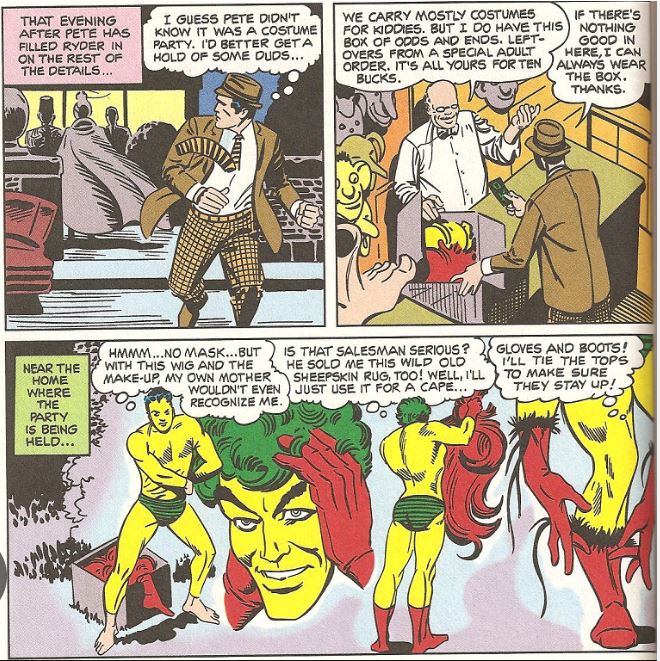
Here, modern day pirate Cap’n Barracuda steal the fabled Horn of Proteus from Atlantis and unleashes a wave of giant monsters on New York City. Thankfully, this is a subject the mighty Sub-Mariner and Mr. Fantastic can agree on and their combined forces are soon stomping beasties and taking names (like Giganto!) to restore order and stop a piratical plunder ploy without peer…

Byrne was back writing & pencilling in #220 as ‘…And the Lights Went Out All Over the World!’ sees the Avengers call in Reed and his team when all of Earth suffers a catastrophic power-outage. Science! soon sends the explorers to the arctic where they encounter an astounding and unbelievable obelisk being constructed by beings of utterly alien appearance…

The story includes an updated origin for the quartet and guest shot for Canada’s finest (that’s Vindicator of Alpha Flight in case you were wondering) and the issue halts with a pinup/possible rejected cover by inker Sinnott (the Torch battling a flaming Skrull) before #221’s concluding chapter ‘Tower of Glass… Dreams of Glass!’ – after the usual misconceptions and rash clashes reveal three aliens shipwrecked for half a million years who just need their myriad mobile mechanisms to reverse the planet’s magnetic poles so that they can return home at last. Thankfully, Reed has a less end of human civilisation-y solution that leaves everyone involved happy and safe…

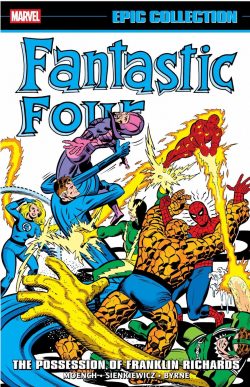
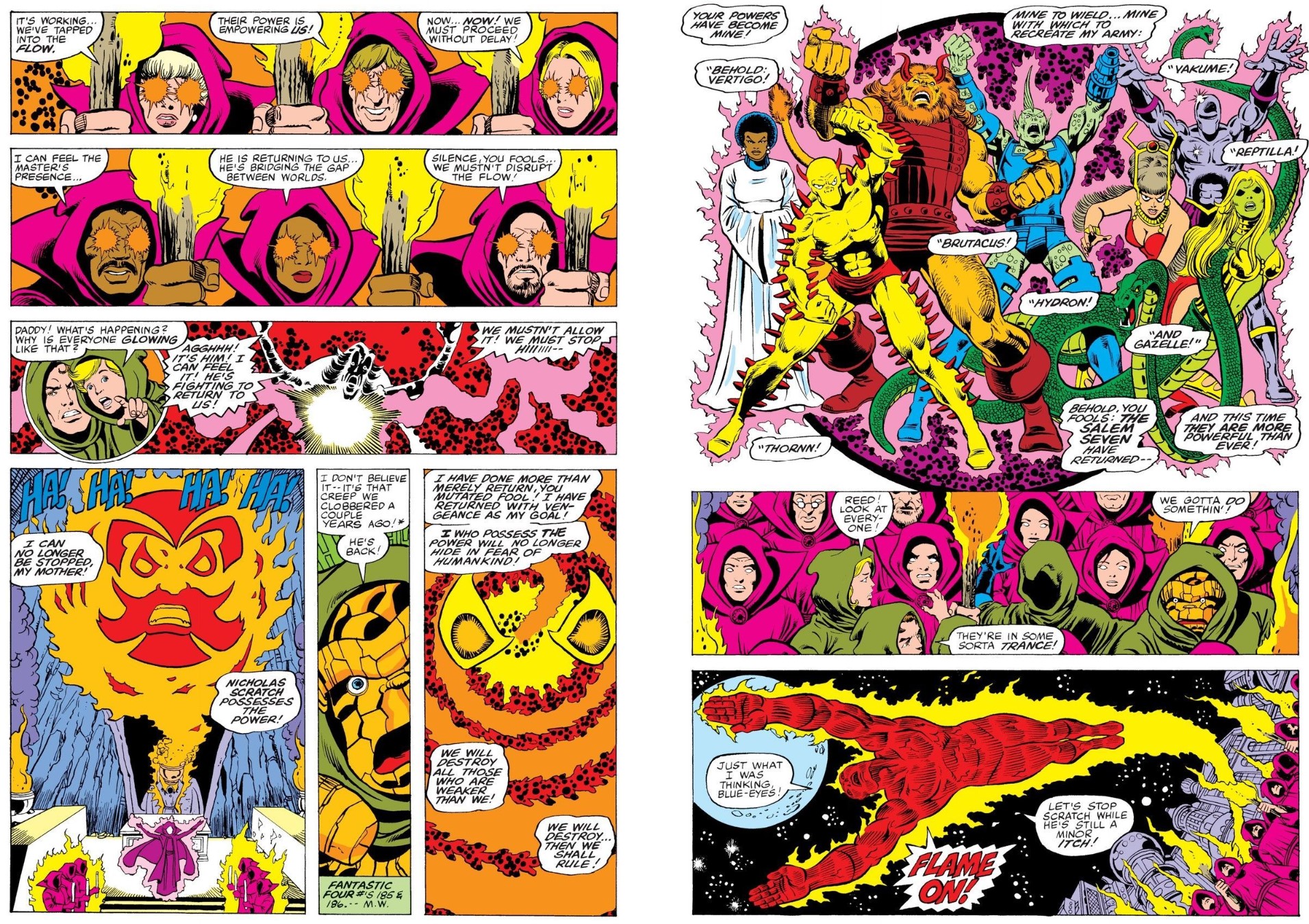
Now officially the latest regular creative team, Moench & Sienkiewicz return to prep for Halloween in FF #222’s ‘The Possession of Franklin Richards!’ as the kid is targeted from beyond the unknown by the exiled soul of Nicholas Scratch, son of Agatha Harkness and the kind of warlock who gives witchcraft a bad name. Having made the boy his conduit back to reality, Scratch terrorises and tortures his hated enemies, who with Doctor Strange unavailable, must call on the dubious gifts of self-doubting failed horror hero Gabriel the Devil Hunter and his sexy morally ambiguous familiar Desadia (as mostly seen in the Marvel monochrome magazine line such as Haunt of Horror and Monsters Unleashed).

Apparently acquiescing, the team agree to liberate the dead diabolist’s minions of magical cult Salem’s Seven in ‘That a Child May Live…’ but their instant assaults on humanity are an acceptable risk and consequence in a long plan that sets the worlds to rights for all but the defeated devil…

Fantastic Four Annual #15 swiftly follows, wherein Moench & George Pérez, abetted by Chic Stone, Jon D’Agostino & Mike Esposito, renew hostilities between the FF and the Skrull empire when the shapeshifters target Reed’s latest energy-casting breakthrough in ‘Time for the Prime Ten!’ Infiltrating the Baxter Building, negating his teammates and almost banishing Mr. Fantastic to the tender mercies of Annihilus in the Negative Zone, the sneaky killers are actually seeking to end their millennial war against stellar rivals The Kree, but have underestimated Reed’s brilliance, his team’s tenacity and the sheer power and cosmic awareness of Earth-loving Kree Exile Captain Mar-Vell…

A back-up tale by Moench & Tom Sutton takes us to recently liberated Latveria for the opening of proposed series ‘The Return of Doctor Doom!’ with only episode ‘The Power of the People!’ showing how restored monarch King Zorba failing to live up to his democratic promise and discovering how excessive taxation really upsets subjects, at around the same moment crazed and catatonic Victor von Doom goes missing from the most secure dungeon in Doomstadt…

Sadly, the impending crisis never materialised and was only addressed by John Byrne in Fantastic Four #247…

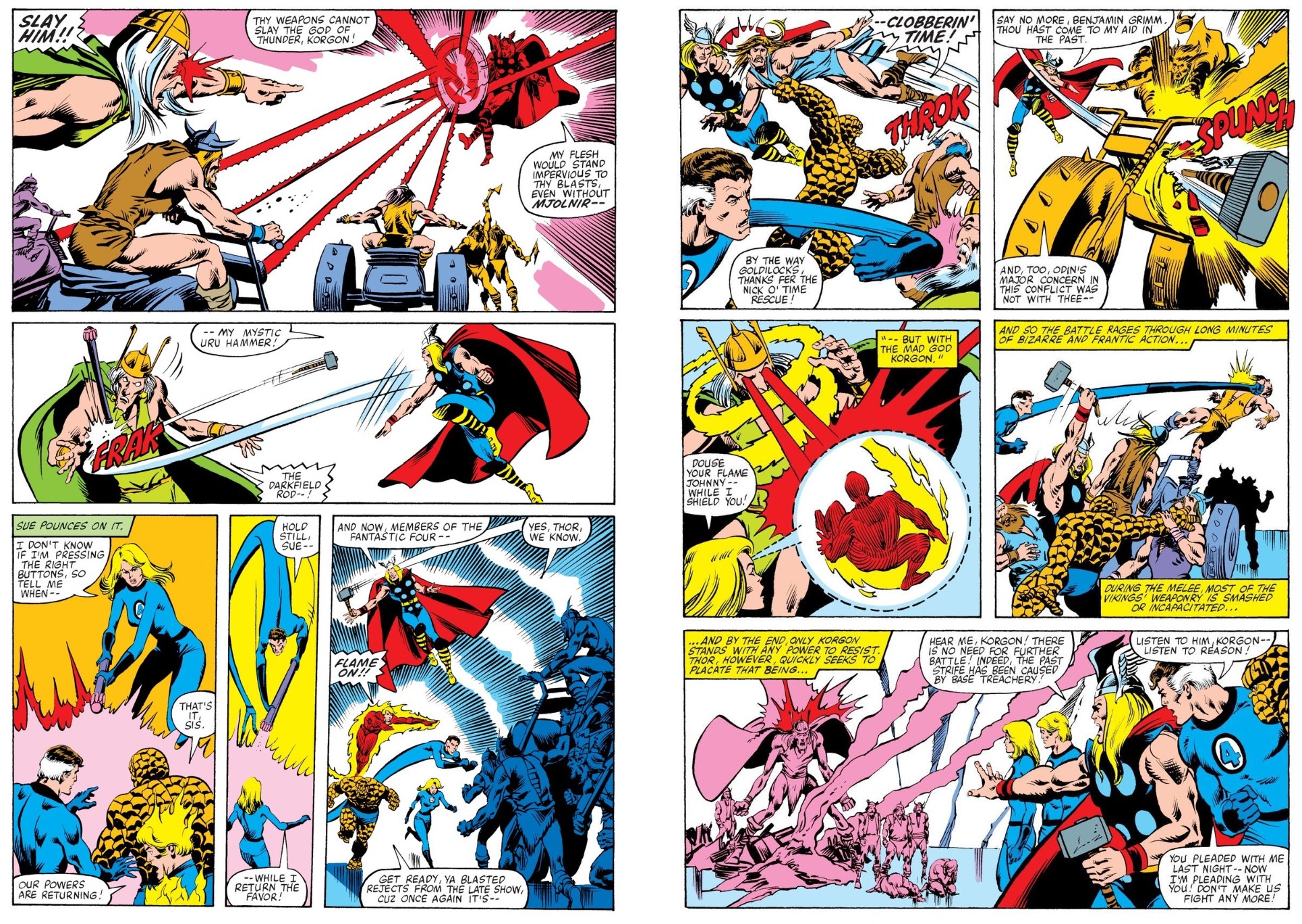
Over in FF #224 & 225, fresh calamity unfolds in Moench, Sienkiewicz & Pablo Marcos’ ‘The Darkfield Illumination’ as an eerie radioactive red mist blankets Manhattan and plays hob with the team’s powers. Tracing the cloud’s origin point to an icy dome in the Arctic, the FF discover a lost colony of technologically advanced Vikings utterly dependent upon a mutated immortal giant. ‘The Blind God’s Tears’ supply heat, light, food materials from the outside world and immortality, but now Korgon is dying and demands the explorers save him and the people who worship him…

Always eager to help, the team strive hard and succeed in saving the God, only to see him betrayed by his most trusted ally. As Korgon rages madly in response, the situation escalates as Thor arrives to investigate Viking worshippers who have abandoned their true god for a false one…

Bruce Patterson joins Marcos inking Sienkiewicz as Moench takes the opportunity to bring closure to fans of his old Shogun Warriors series next. In their own title the former pilots of monster-fighting mega-mecha Dangard Ace, Raydeen and Combatra had been recruited by an ancient order to defend humanity, but had ultimately retired when their machines were destroyed. That epic sacrifice had come when evil enemy Maur-Kon had targeted the Fantastic Four and attempted to kill Reed.

Now a new giant mecha rampages and robs and the teams reunite with Ilongo Savage, Richard Carson and Genji Odashu aiding the battle against ‘The Samurai Destroyer’ and the unworthy soul exploiting its power for profit….

Movie-toned terror in the heartland follows as a meteor crashes in rural Pennsylvania resort Lost Lake just as the FF head out to the Boonies for a break. Their encounter with ‘The Brain Parasites’ infesting hosts and reverting them to earlier evolutionary forms is by-the-books horror fun from Moench, Sienkiewicz & Patterson, and readily fixed by little Franklin’s unreliable mental powers. This sets the scene for the next issue where further tests by professional head shrinkers and brain benders only unleash uncontrollable chaos, possessing bystanders and an adult super-powered version of the lad. Thankfully loving parents and uncles allow Franklin to exorcise his deadly ‘Ego-Spawn’ (Sinnott inks)…

The experiment in alternative tale-telling ends on a 3-part saga that opens with #229’s ‘The Thing From the Black Hole’. After it homes in on Reed’s latest invention, Earth soon totters on the edge of destruction as a living, sentient singularity made of antimatter disrupts physical laws. Desperate Richards makes contact with its cosmic equivalent and uncovers a tale of love lost in service to scientific exploration. The mobile extinction event was once a sentient being whose love for a fellow astronaut turned them both into creatures of uncanny forces. Thankfully ‘Firefrost and the Ebon Seeker’ reach an understanding that saves the world, but as a consequence a section of Manhattan – including the Baxter Building – is marooned inside the Negative Zone.

With panic amongst the hordes of abducted New Yorkers barely suppressed, the FF search for a solution ‘In All the Gathered Gloom!’ (by Moench & Roger Stern with art from Sienkienwisz, Jerome Moore, Sinnott, & Frank Giacoia) even as new antimatter menace Stygorr zeroes in on the intruding enclave. The last thing the FF need is bullying big business plutocrat Lew Shiner telling everyone his money puts him in charge. After his posturing triggers a riot, tragedy is guaranteed, and the heroes barely beat the alien invader in time to return everyone surviving back home…

With covers by Sienkienwicz, Byrne Sinnott & Bob McLeod, the extras here include a Sinnott Thing pinup from FF #219, Sienkievich’s rejected cover-turned-pinup as printed in #224 original art pages/covers inked by Marcos, Bruce Patterson, Sinnott, and original colour-guides painted by George Roussos.

Although never quite returning to the stratospheric heights of the Kirby era, this truly different collection represents a closing of the First Act for the “World’s Greatest Comics Magazine”, and palate cleansing preparation for the second groundbreaking run by an inspired John Byrne. These extremely capable efforts are probably most welcome to dedicated superhero fans and continuity freaks like me, but will still thrill and delight casual browsers looking for an undemanding slice of graphic narrative excitement – especially if this time the movie continues to deliver on its promise…
© 2018 Marvel Characters, Inc. All rights reserved.

To Be Continued…

Today in 1918 artist John Forte was born. He’s most fondly remembered for costumed charm, as best seen in Legion of Super-Heroes: The Silver Age volume 1 . We don’t have nearly enough collected material for UK visionary comics stalwart Ron Embleton who was born today in 1930. If you think you’re old enough, you could look at Oh, Wicked Wanda!.

Indomitable weekly anthology Valiant began its stellar 712 issue run today in 1962. Inside was the magnificent Steel Claw whom we comprehensively covered in The Steel Claw: Invisible Man. Yes. Well done, the modern invisible man could be seen from the start…

The Complete Peanuts volume 1: 1950-1952


By Charles Schulz (Canongate Books/Fantagraphics Books)
ISBN: 978-1-56097-589-2 (Fantagraphics HB) 978-1-60699-763-5 (Fantagraphics TPB) 978-1-84767-031-1 (Canongate)

This book includes Discriminatory Content produced in less enlightened times.

Win’s Christmas Gift Recommendation: All that’s great about cartoon strips… 10/10

Peanuts is unequivocally the most important comics strip in the history of graphic narrative. It is also the most deeply personal. Today in 1950 it all began, and cartoonist Charles M Schulz went on crafting his moodily hilarious, hysterically introspective, shockingly surreal philosophical epic for half a century: 17,897 strips spanning October 2nd 1950 to February 13th 2000.

He died from complications of cancer the day before his last strip was printed.

At its height, Peanuts ran in 2,600 newspapers, in 21 languages and in 75 countries. Many of those venues still run it as perpetual reprints, and have ever since his death. During Schulz’s lifetime, book collections, a merchandising mountain and television spin-offs had made the publicity-shy doodler an actual billionaire at a time when that really meant something…

None of that matters. Peanuts – a title Schulz loathed, but one the syndicate forced upon him – changed the way comics strips were received and perceived: proving cartoon comedy could have edges and nuance and meaning as well as soon-forgotten pratfalls and punchlines.

Following a typically garrulous, charming and informative Introduction from fellow Minnesotan Garrison Keillor, this mammoth (218 x 33x 172 mm) landscape compendium offers the first two and a bit years. Here a prototypical, rather outgoing and jolly Charlie Brown and high-maintenance mutt Snoopy joined with bombastic Shermy and mercurial Patty in hanging out doing kid things.

These include playing, playing pranks, playing sports such as tennis, golf and baseball, playing musical instruments, teasing each other, making baffled observations and occasionally acting a bit too much like grown-ups. Fans of Bill Watterson’s Calvin and Hobbes will feel eerie familiarity with much of the hijinks and larks of these episodes.

As new characters Violet, infant prodigy Schroeder, and Lucy and her strange baby brother Linus were added to the mix, the boisterous rush of the series began to imperceptibly settle into a more contemplative pace. Charlie Brown began to adopt and embrace his eternal loser, singled-out-by-fate persona and the sheer diabolical wilfulness of Lucy began to sharpen itself on everyone around her…

The first Sunday page debuted on January 6th 1952; a standard half-page slot offering more measured fare than the daily. Both thwarted ambition and explosive frustration became part of the strip’s signature denouements…

By the end of 1952, all those the rapid-fire gags had evolved from raucous slapstick to surreal, edgy, psychologically barbed introspection, garnished by crushing judgements and deep rumination in a world where kids – and certain animals – were the only actors. The relationships, however, were increasingly deep, complex and absorbing even though “Sparky” Schulz never deviated from his core message: entertain…

David Michaelis then celebrates and deconstructs ‘The Life and Times of Charles M. Schulz’ after which Gary Groth & Rick Marschall conduct ‘An Interview with Charles M. Schulz’, rounding out our glimpse of the dolorous graphic genius with intimate revelations and reminiscences whilst a copious ‘Index’ offers instant access to favourite scenes you’d like to see again.

Readily available in hardcover, paperback and digital editions, this initial volume offers a rare example of a masterpiece in motion: comedy gold and social glue gradually metamorphosing in an epic of spellbinding graphic mastery which became part of the fabric of billions of lives, and which continues to do so long after its maker’s passing.

Happy ever afters, kids.
The Complete Peanuts: 1950-1952 (volume 1) © 2004 Peanuts Worldwide, LLC. Introduction © 2004 Garrison Keillor. “The Life and Times of Charles M. Schulz” © 2000 David Michaelis. “Interview with Charles M. Schulz” © 2004 Gary Groth and Richard Marschall. All other material copyright its respective owners. All rights reserved.

Today in 1909 Alex Raymond was born. You’ll know him best for stuff like Flash Gordon on the Planet Mongo volume 1: Sundays 1934-1937 (The Complete Flash Gordon Library. In 1916 Bob Powell, was born. He went on to do things like Bob Powell’s Complete Jet Powers.

Ramona Fradon was born in 1926, and Spirou stalwart Janry arrived in Belgium in 1957, whilst Maltese docu-comics journalist Joe Sacco was born in 1960. You can find dozens of books by the first two just by using a search box here, and I’ve almost summoned enough nerve to review Sacco’s Palestine despite – or because of – these febrile times…

Vixen: Return of the Lion


By G. Willow Wilson & CAFU, with Bit, Josh Middleton & various (DC Comics)
ISBN: 978-1-4012-2512-4 (TPB)

This book includes Discriminatory Content produced in less enlightened times.

Welcome to Black History Month UK 2025. The theme this year is “Standing Firm in Power and Pride” and nobody ever accused us of being subtle…

In 1978 fashion model Mari Jiwe McCabe nearly became the first black woman to star in her own American comic book. Sadly, the infamous “DC Implosion” of that year saw the Vixen series cancelled before release. She eventually premiered three years later in Action Comics #521’s ‘The Deadly Rampage of the Lady Fox’ (by creator Gerry Conway and Superman mainstays Curt Swan & Frank Chiaramonte) and thereafter remained, lurking around the DC Universe until she joined a re-booted JLA (latterly dubbed “JLA Detroit”) in Justice League of America Annual #2.

A classic team-player, over intervening decades working within assorted JLA rosters, Suicide Squad, Ultramarine Corps, Checkmate and the Birds of Prey, Vixen’s origin has changed a lot less than most. It even remained mostly un-meddled-with when she made the jump to TV as part of the DC Legends of Tomorrow show.

Mari Jiwe comes from a line of warriors blessed by animist Trickster god Kwaku Anansi. The mythical creator of all stories claims to have designed her abilities – and those of fellow bestial hero Animal Man – allowing Vixen, through use of an arcane artefact dubbed the Tantu Totem, to channel the attributes and signature abilities of every animal that has ever lived.

As a child in M’Changa Province, Zambesi, Mari’s mother was killed by poachers and her missionary father murdered by his own brother over possession of the Totem. To thwart her uncle, the orphan moved to America, eventually becoming a fashion model to provide funding and cover for her mission of revenge…

At first a reluctant superhero, Vixen became one of the most effective crusaders on the international scene and was a key member of the Justice League (the one just before the New 52 Reboot). Previously, when her powers began to malfunction she was forced to confront Anansi himself (for which tales see Justice League of America: Sanctuary and Justice League of America: Second Coming).

Scripted by author, essayist, journalist and comics scribe G. Willow Wilson (Cairo, Air, Ms. Marvel, Wonder Woman) and illustrated by Carlos Alberto Fernandez Urbano AKA CAFU (Action Comics, T.H.U.N.D.E.R. Agents, Imperium, Unity), Vixen: Return of the Lion was originally seen as a 5-part miniseries in 2009. We open here with ‘Predators’ wherein a League operation uncovers a plot by techno-thugs Intergang to fund a revolution in troubled African nation Zambesi.

Amongst impounded files is a record “proving” that 15 years earlier, Vixen’s mother was actually killed by Aku Kwesi, a local warlord working with the American criminal organisation. When Mari learns this truth, not even Superman can stop her from heading straight to her old village to find the man responsible. Africa is not America, however, and the lawless settlement has no time for a woman who does not know her place – even if she does have superpowers. When Kwesi appears, Vixen’s abilities are useless against him and she escapes with her life only because the warlord’s lieutenant Sia intervenes…

In ‘Prey’, broken, gravely wounded Mari is dumped in the veldt by Sia and staggers her way across the war-ravaged plain, battling beasts and hallucinating – or maybe meeting real ghosts – until she is attacked by a young lion and rescued by a holy man.

Alarmed at Vixen’s disappearance and further discoveries connecting Kwesi to Intergang, the JLA mobilise in ‘Sanctuary’ as lost Vixen slowly recuperates in a place where the constant conflicts of fang & claw survival are suspended. Here, saintly Brother Tabo offers Mari new perspective and greater understanding of her abilities. Her JLA colleagues, meanwhile, have exposed Intergang’s infiltration but fallen to a power even Superman could not resist…

As the League struggles against overwhelming odds, ‘Risen’ sees a transcendent Vixen flying to the rescue, and picking up some unexpected allies before facing her greatest challenge in shocking conclusion ‘Idols’, wherein more hidden truths are revealed and a greater mystery begins to unfold…

Featuring a gallery of stunning covers by Josh Middleton, this is an exceptional and moodily exotic piece of Fights ‘n’ Tights fluff to delight devotees of the genre and casual readers alike, and one long overdue for re-release and inclusion in the growing library of environmentally-beneficial digital comics and books. This gem isn’t even available digitally and that’s just a crime against comics consuming nature…
© 2006, 2009 DC Comics. All Rights Reserved.

Today in 1940 was the birthday of groundbreaking comics auteur Richard Corben, creator of Den, although we rather liked his Haunt of Horror: Lovecraft. It also marks the first appearance of Zack Mosely’s Smilin’ Jack newspaper strip, and the passing of Golden Age great Bob Powell, who we most recently lauded via Bob Powell’s Complete Cave Girl.

Predator vs Black Panther


By Benjamin Percy, Chris Allen, Sean Damien Hill, Lee Ferguson, Craig Yeung, Jonas Trindade, Erick Arciniega, VC’s Travis Lanham & various (20th Century Studios/ MARVEL)
ISBN: 978-1-3029-6034-6 (TPB/Digital edition)

Win’s Christmas Gift Recommendation: Purely Perfect Irresistible Primal Pandering… 8/10

Although I’ve striven long and hard(ish) to validate and popularise comics as a true art form here and elsewhere, it’s quite hard to escape one’s roots, and every so often the urge to revel in well-made, all-out mindless violence and crass commercialism confidently assuming it is what the reader wants just takes me over. If there’s a similar little kid inside you, this unchallenging, no-brainer team-up property might just clear the palate for the next worthy treat I’ll be boosting…

Predator was first seen in the eponymous 1987 movie and started appearing in comic book extensions and continuations published by Dark Horse with the 4-issue miniseries Predator: Concrete Jungle spanning June 1989 to March 1990. It was followed by 39 further self-contained outings and (by my count thus far) 14 crossover clashes ranging from Batman and Superman to Judge Dredd, Archie Andrews and Tarzan, keeping the film franchise alive and kicking whilst actual movie iterations waxed and waned. We’ll no doubt be adjusting those figures soon enough, but two of the most recent involve stalwart comic stars with their own movie machismo: Wolverine and Black Panther

The core premise started simply enough. For countless millennia a race of beings that prize hunting, trophy-taking and bragging rights/“honour” over all else have been using Earth – and by extension other worlds and civilisations – as private sports preserves. These “Yautja” – who prefer to stalk hotter climes – come to our world expressly to test themselves and to thrill to the heady rush of killing animals…

The Black Panther rules over a fantastic African paradise which isolated itself from the rest of the world millennia ago. Blessed with unimaginable resources – both natural and not so much – the nation of Wakanda developed unhindered by European imperialism into the most technologically advanced human nation on Earth. It has never been conquered, with the main reason being an unbroken line of divinely-sponsored warrior kings who safeguard the nation. The other is a certain miraculous super-mineral found nowhere else on Earth…

In contemporary times that chieftain is (usually) T’Challa: an unbeatable, physically perfect feline-empowered strategic genius dividing his time between ruling at home and serving abroad in superhero teams such as The Avengers and The Ultimates beside costumed champions like Iron Man, Mr. Fantastic, Thor, Captain Marvel and Captain America. However, in this version he’s a proud and defiant isolationist…

Acclaimed as the first black superhero in American comics and one of the first to carry his own series, the Black Panther’s popularity and fortunes have waxed and waned since he first appeared in the summer of 1966. As originally created by Jack Kirby & Stan Lee T’Challa, son of T’Chaka was an African monarch whose secretive kingdom is the only source of vibration-absorbing wonder mineral Vibranium. The miraculous alien metal – derived from a fallen meteor which struck the continent in lost antiquity – is the basis of Wakanda’s immense power and prosperity, allowing the isolationist nation to become one of the wealthiest and most secretive on Earth. When T’Chaka was assassinated by white invader Ulysses Klaw, these riches enabled the young king to radically remake his country, even more so after leaving Africa to fight as an Avenger.

For much of its history Wakanda was a phantom, utopian wonderland with tribal resources and people safeguarded and led since time immemorial by a warrior-king deriving cat-like physical advantages from secret ceremonies and a mysterious heart-shaped herb. This has ensured the generational dominance of the nation’s Panther Cult and Royal Family. The obsessively secured “Vibranium mound” guaranteed the nation’s status as a clandestine superpower for centuries, but recent times increasingly saw Wakanda a target of incursion, subversion and invasion as the world grew ever smaller. Here however, in a tale notionally removed from mainstream continuity T’Challa and his sister Princess Shuri discover the nation’s borders are not, nor ever have been totally secure…

Scripted by Bejamin Percy, this trans-galactic saga of families at war sees sibling rivalry lead to civil conflict in one of the dominant clans of the Yautja. One prince, physically far weaker than his brother and even missing a limb, survives only because his superior brother heaps further shame upon him, constantly proving to their sire how unworthy the weakling truly is.

A life of woe and degradation seems likely to end in inconceivable agony and shame, but the pariah pursues an ancient prize trophy: a sample of a wonder element dubbed “godmetal” that has utterly reshaped his prospects. The treasured token of a long-ago hunt, it comes from favoured preserve Earth where some of the indigenous prey have fabulously prospered and gained advantage from it. There, they call it Vibranium and he will have it…

Although they’re indisputably barbaric and revel in getting their clawed hands dirty, Yautja are an ancient galaxy-spanning species and the outcast instantly finds new ways to use the miracle metal. Escaping to Earth with his surviving faithful retainers he goes about securing the only known source of his salvation…

On Earth, Black Panther T’Challa bickers with smugly-superior Shuri during a live fire training exercise pitting his bodyguard Dora Milaje against male warrior elite the Hatut Zeraze and everybody against the King. Although good natured, the competition is fierce but everything changes when the renegade arrives and infiltrates. Deftly penetrating the country’s electronic and advanced energy defence shields screening Wakanda from the rest of humanity, the Yautja takes command of human mechanical systems and begins collecting trophies: not just skulls and spines of the greatest warriors in the region, but most crucially all the Vibranium and ordnance the prey have developed from it…

With Wakanda locked down and T’Challa hard-pressed just to survive. it’s a good thing Shuri never lost trust in the ancient mystical ways (or contact with extremely gifted spirit medium Maji Kina), and is, moreover, open to a surprise offer of assistance from visiting American superhero Sam Wilson, the high-flying high-tech Falcon

As the alien renegade musters its newfound resources and Wakandans bloodily strive on, stubborn T’Challa consults his dead ancestors to learn how his grandfather Azzuri the Wise dealt with the last visitation before all the scattered human resistors convene to end the threat… if only for now…

Savage and bloody but with room for character moments and even gallows humour, the tale is visually detailed by Chris Allen, Sean Damien Hill, Lee Ferguson, Craig Yeung, Jonas Trindade and coloured by Erick Arciniega with letters by VC’s Travis Lanham. Ultimately, plot-wise there’s not much to this – and a good thing too as it would get in the way of the action…

Like the films, what’s on offer is a thinly disguised excuse for mindless, cathartic violence and rollercoaster thrills and chills, and it’s all accomplished with compelling style and dedication. Wild, grim, edgy and utterly entertaining, the original  4-part miniseries came with a variety of cover choices and capping the furious fun is an extended gallery with gory stories enshrined in single visual vistas of line, colour, paint & pixels, courtesy of Ken Lashley & Juan Fernandez – AKA Ledkilla, Edwin Galmon & Federico Blee, Chris Allen, Leinil Francis Yu & Romulo Fajardo Jr., Pete Woods, Philip Tan, Mark Morales & Frank Martin, Skottie Young, Doaly, Rahzzah, Rose Besch, Andrei Bressan & Ceci De La Cruz, Junggeun Yoon and Mateus Manhanini.

Hunt this down for simple fun and pure escapist shocks and shudders.
© 2025 20th Century Studios. Marvel, its characters and its logos are ™ Marvel Characters, Inc.

On this day in 1987 master raconteur screenwriter and occasional comics author Alfred Bester died. His visual feasts included lots of DC comics stars such as the first Green Lantern, and newspaper strips The Phantom and Mandrake the Magician. You should consider yourself an incomplete human if you haven’t read The Demolished Man, The Stars My Destination (aka Tiger, Tiger) and Who He?

Vlad the Impaler: The Man Who Was Dracula


By Sid Jacobson & Ernie Colón (Plume/Penguin Group USA)
ISBN: 978-1-59463-058-3 (HB) 978-0-452-29675-2 (PB)

Here’s a handy Heads-Up and Horrible History hint if you’re looking for something to set the tone for the Halloween we’re probably ALL NOT GOING TO ENJOY THIS YEAR. It’s available in hardback, soft cover and digital editions and well worth staying in with.

As writer and editor, Sid Jacobson masterminded the Harvey Comics monopoly of strips for younger US readers in the 1960s and 1970s, co-creating Richie Rich and Wendy, the Good Little Witch among others. He worked the same magic for Marvel’s Star Comics imprint, overseeing a vast amount of family-friendly material, both self-created – such as Royal Roy or Planet Terry – and a huge basket of licensed properties.

In latter years, he worked closely with fellow Harvey alumnus Ernesto Colón Sierra, aka Ernie Colón, on such thought-provoking graphic enterprises as The 9/11 Report: a Graphic Adaptation and its sequel, After 9/11: America’s War on Terror. In 2009 their epic Che: a Graphic Biography was released: separating the man from the myth of Ernesto Guevara de la Serna, universal icon of cool rebellion.

Colón was born in Puerto Rico in 1931: a creator whose work has been loved by generations of readers. Whether as artist, writer, colourist or editor his contributions have benefited the entire industry from the youngest (Monster in My Pocket, Richie Rich and Casper the Friendly Ghost for Harvey, and a ton of similar projects for Star Comics), to the traditional comic book fans with Battlestar Galactica, Damage Control and Doom 2099 for Marvel, Arak, Son of Thunder and Amethyst: Princess of Gemworld, the Airboy revival at Eclipse, Magnus: Robot Fighter for Valiant and so very many others.

There are also his sophisticated experimental works such as underground/indie thriller Manimal and his seminal genre graphic novels Ax and the Medusa Chain. From 2005 until his death in 2019 he created the strip SpyCat for Weekly World News. Working together Jacobson & Colón are a comics fan’s dream come true and their bold choice of biography and reportage as well as their unique take on characters and events always pays great dividends.

Vlad the Impaler is by far their most captivating project: a fictionalised account of the notorious Wallachian prince raised by his mortal enemies as a literal hostage to fortune, only to reconquer and lose his country not once, but many times.

The roistering, bloody, brutal life of this Romanian national hero and basis of Bram Stoker’s Count Dracula is a fascinating, baroque, darkly funny yarn, capturing a troubled soul’s battle with himself as much as the Muslim and Christian superpowers that treated his tiny principality as their plaything.

With startling amounts of sex and violence this book makes no excuses for a patriot and freedom fighter driven by his horrific bloodlust and (justifiable?) paranoia to become a complete beast: clearly the very worst of all possible monsters: a human one.

Sharp, witty, robust and engaging, with a quirky twist in the tale, this is a good old-fashioned shocker that any history-loving gore-fiend will adore.
Text © 2009 Sid Jacobson. Art © 2009 Ernie Colón. All rights reserved.

Today in 1927 graphic novel trailblazer Jack Katz was born. If any of us live, expect us to finally cover his epic First Kingdom sometime soon. Also making their first appearances in 1927 and 1955 respectively were Italian Disney cartoonist Romano Scarpa – as seen in Walt Disney’s Donald Duck Volume 2: The Diabolical Duck Avenger – and the inestimable Charles Burns whose Black Hole is only one of many Must-Read-Before-You-Die classics.

Don’t let anyone tell you that CoVid is done and dusted. The fact that you’re again reading reprint reviews should be a clue that the entire office – except maybe the cats – are down with the most debilitating bug we’ve ever seen… since the last one.

Stop touching each other, use separate air supplies if you can, stay safe and avoid all people until further notice.

G#G$£~!!@&-Dammit, is that cat sneezing or wheezing?

DC Finest: The Spectre – The Wrath of the Spectre


By Gardner F. Fox, Bob Haney, Mike Friedrich, Steve Skeates, Dennis J. O’Neil, Mark Hanerfeld, Jack Miller, Michael L. Fleisher, Paul Kupperberg, Mike W. Barr, Roy Thomas, Murphy Anderson, Carmine Infantino, Ross Andru & Mike Esposito, Neal Adams, Jerry Grandenetti, Jack Sparling, Bernie Wrightson, José Delbo, Jim Aparo, Frank Thorne, Ernie Chan, Michael R. Adams, Rick Hoberg, Jerry Ordway, Richard Howell, Larry Houston, Gerald Forton & various (DC Comics)
ISBN: 978-1-4012-3417-1 (TPB)

This book includes Discriminatory Content produced in less enlightened times

This stunning compilation is another long-awaited full colour chronolgically curated compilation delivering “affordably priced, large- paperback collections” highlighting DC’s past glories. Sadly, none are yet available digitally, as were the last decade’s Bronze, Silver and Golden Age collections, but we live in hope…
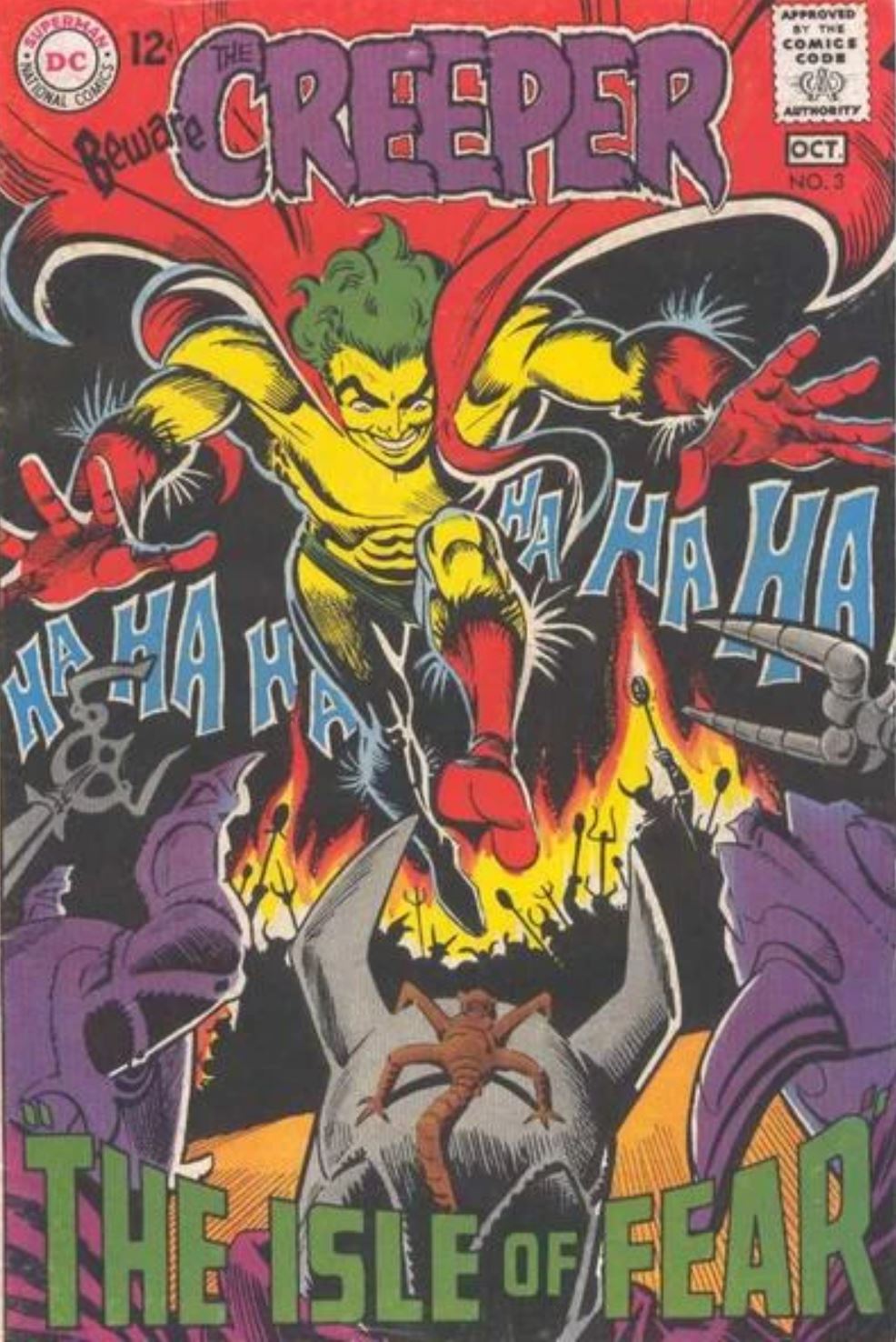
Win’s Christmas Gift Recommendation: Sublime Seasonal Spookfest for Comics Addicts… 10/10

Created by Jerry Siegel & Bernard Baily in 1940 and debuting via a 2-part origin epic in More Fun Comics #52 & 53, The Spectre is one of the oldest characters in DC’s vast character stable. Crucially, just like Siegel’s other iconic creation, the Ghostly Guardian soon began suffering from a basic design flaw: he was just too darn powerful. However, unlike Superman this relentless champion of justice is already dead, so he can’t really be logically or dramatically imperilled. Moreover, in those far off early days that wasn’t nearly as important as sheer spectacle: forcibly grabbing the reader’s utter attention and keeping it stoked to a fantastic fever pitch.

Starting as a virtually omnipotent phantom, the Astral Avenger evolved over various revivals, refits and reboots into a tormented mortal soul bonded inescapably to the actual embodiment of the biblical Wrath of God…

The story is a genuinely gruesome one: police detective Jim Corrigan is callously executed by gangsters before being called back to the land of the living. Commanded to fight crime and evil by a glowing light and disembodied voice, he was indisputably the most formidable hero of the Golden Age. He has been revamped many times, and in the 1990s was revealed to be God’s own Spirit of Vengeance wedded to a human conscience. When Corrigan was finally laid to rest, Hal (Green Lantern) Jordan and murdered Gotham City cop Crispus Allen replaced him as the mitigating conscience of the unstoppable, easily irked force of Divine Retribution. Last time I looked, Corrigan had the job again…

However, the true start of that radically revitalised career began in the superhero-saturated mid-1960s when, hot on the heels of feverish fan-interest in the alternate world of the Justice Society of America and Earth-2 (where all their WWII heroes retroactively resided), DC began trying out solo revivals of 1940’s characters, as a counterpoint to such wildly successful Silver Age reconfigurations as Flash, Green Lantern, Atom and Hawkman

This colossal compilation documents the almighty Man of Darkness’ resurrection in the Swinging Sixties, his landmark reinterpretation in the horror-soaked, brutalised 1970s and even finds room for some later appearances before the character was fully de-powered and retrofitted for the post-Crisis on Infinite Earths DC Universe. As such, this Spectre-acular tome of terror (660 subtly sinister peril-packed pages!) re-presents material from Showcase #60, 61 & 64; team-up tales from The Brave and the Bold #72, 75, 116, 180 & 199; The Spectre #1-10; lead strips from Adventure Comics #431-440: a tryptich serial from horror-anthology Ghosts #97-99 and a wartime-set saga from JSA retro hit All-Star Squadron #27-28: cumulatively channelling January/February 1966 to December 1983.

Back in the Sixties DC had attempted a number of Earth-2 team-iterations (Starman & Black Canary – with Wildcat – in The Brave and the Bold #61-62, whilst Showcase #55 & 56 spotlighted Doctor Fate & Hourman, with a cameo from the original Green Lantern), but inspirational editor Julie Schwartz & scripter Gardner F. Fox only finally achieved their ambition to relaunch a Golden Age hero into his own title with the revival of the Ghostly Guardian in Showcase. It had been hard going and perhaps ultimately happened only thanks to a growing general public taste for supernatural stories…

After three full length appearances and many guest-shots, The Spectre won his own solo series at the end of 1967, just as the superhero craze went into steep decline, but arguably Showcase #60 (cover-dated January/February 1966 but actually on sale from Novenember 25th 1965) anticipated the rise of supernatural comics by re-introducing Corrigan and his phantom passenger in ‘War That Shook the Universe’ by Earth-2 team supreme Fox & illustrator Murphy Anderson. This spectacular saga reveals why the Heroic Haunt had vanished two decades previously, leaving fundamentally human (but dead) Corrigan to pursue his war against evil on merely mortal terms – until a chance encounter with a psychic investigator frees the spirit buried deep within him. A diligent search reveals that, 20 years previously, a supernal astral invader broke into the Earth plane and possessed a mortal, but was so inimical to our laws of reality that both it and the Grim Ghost were locked into their meat shells until now…

Thus began a truly Spectre-acular (feel free to groan, but that’s what they called it back then) clash with devilish diabolical Azmodus that spans all creation and blew the minds of us gobsmacked kids…

Showcase #61 (March/April) upped the ante as even more satanic Shathan the Eternal subsequently insinuates himself into our realm from ‘Beyond the Sinister Barrier’: stealing mortal men’s shadows until he is powerful enough to conquer the physical universe. This time The Spectre treats us to an exploration of the universe’s creation before narrowly defeating the source of all evil…

The Sentinel Spirit paused before re-manifesting in Showcase #64 (September/October 1966) for a marginally more mundane but no less thrilling case after ‘The Ghost of Ace Chance’ takes up residence in Jim’s body. By this time, it was established that ghosts need a mortal anchor to recharge their ectoplasmic “batteries”, with this unscrupulous crooked gambler determined to inhabit the best frame available…

Try-out run concluded, the editors sat back and waited for sales figures to dictate the next move. When they proved inconclusive, Schwartz orchestrated a concerted publicity campaign to further promote Earth-2’s Ethereal Adventurer. Thus The Brave and the Bold #72 (June/ July 1967) saw the Sentinel Spook clash with Earth-1’s Scarlet Speedster in ‘Phantom Flash, Cosmic Traitor’ (by Bob Haney, Carmine Infantino & Charles “Chuck” Cuidera). This sinister saga sees the mortal meteor arcanely transformed into a sinister spirit-force and power-focus for expired but unquiet American aviator Luther Jarvis who returns from his death in 1918 to wreak vengeance on the survivors of his squadron – until the Spectre intervenes…

Due to the vagaries of comic book scheduling, B&B #75 (December 1967/January 1968) appeared at around the same time as The Spectre #1, although the latter had a cover-date of November/December 1967. In this edition it follows the debut of the haunted hero in his own title…

‘The Sinister Lives of Captain Skull’, by Fox & Anderson, divulges how the botched assassination of American Ambassador Joseph Clanton and an experimental surgical procedure allows one of the diplomat’s earlier incarnations to seize control of his body and, armed with mysterious eldritch energies, run amok on Earth. These “megacyclic energy” abilities enable the revenant to harm and potentially destroy the Grim Ghost, compelling the Spectre to pursue the piratical Skull through a line of previous lives until he can find their source and purge the peril from all time and space. Meanwhile over in the Batman team-up tale – scripted by Haney and limned by Ross Andru & Mike Esposito – Ghostly Guardian joins Dark Knight to liberate Earth-One Gotham City’s Chinatown from ‘The Grasp of Shahn-Zi!’: an ancient oriental sorcerer determined to prolong his reign of terror at the expense of an entire community and through the sacrifice of an innocent child, after which the Astral Avenger proceeded on Earth-Two in his own title…

With #2 (January/February 1968) artistic iconoclast Neal Adams came aboard for Fox-scripted mystery ‘Die Spectre – Again’ wherein crooked magician Dirk Rawley accidentally manifests his etheric self and severely tests both Corrigan and his phantom lodger as they seek to end the double-menace’s string of crimes, mundane and magical. At this time, the first inklings of a distinct separation and individual identities began. The two halves of the formerly sole soul of Corrigan were beginning to disagree and even squabble…

Neophyte scripter Mike Friedrich joined Adams for #3’s ‘Menace of the Mystic Mastermind’ wherein pugilistic paragon Wildcat faces the inevitable prospect of age and infirmity even as an inconceivable force from another universe possesses petty thug Sad Jack Dold, turning him into a nigh-unstoppable force of cosmic chaos.

Next, ‘Stop that Kid… Before He Wrecks the World’ was written & illustrated by Adams with a similar trans-universal malignity deliberately empowering a young boy as a prelude to its ultimate conquest, whilst #5’s ‘The Spectre Means Death?’ (all Adams again) appears to show the Astral Adept transformed into a pariah and deadly menace to society, until Corrigan’s investigations uncover emotion-controlling villain Psycho Pirate at the root of the Heroic Haunt’s problems…

Despite the incredible talent and effort lavished upon it, The Spectre simply wasn’t finding a big enough audience. Adams left for superhero glory elsewhere and a hint of changing tastes emerged as veteran horror comics illustrator Jerry Grandenetti came aboard. Issue #6 (September/October 1968) saw his eccentric, manic cartooning adding raw wildness to the returning Fox’s moody thriller ‘Pilgrims of Peril!’ Anderson also re-enlisted, applying a solid ink grounding to the story of a sinister quartet of phantom Puritans who invade the slums of Gateway City, driving out the poor and hopeless as they hunt long-lost arcane treasures. These would allow demon lord Nawor of Giempo access to Earth unless Spectre can win his unlife or death duel with the trans-dimensional horror…

As the back of #7 was dedicated to a solo strip starring Hourman (not included here), The Spectre saga here – by Fox, Grandenetti & Anderson – was a half-length tale following the drastic steps necessary to convince the soul of bank-robber Frankie Barron to move on. As he was killed during a heist, the astral form of aversion therapy used to cure ‘The Ghost That Haunted Money!’ proves not only ectoplasmically effective but outrageously entertaining…

Issue #8 (January/February 1969) was scripted by Steve Skeates and began a last-ditch and obviously desperate attempt to turn The Spectre into something the new wave of anthology horror readers would buy.

As a twisted, time-lost apprentice wizard struggles to return to Earth after murdering his master and stealing cosmic might from the void, on our mundane plane an exhausted Ghostly Guardian neglects his duties and is taken to task by his celestial creator. As a reminder of his error, the Penitent Phantasm is burdened by a fluctuating weakness – which would change without warning – to keep him honest and earnest. What a moment then, for desperate disciple Narkran to return, determined to secure an elevated god-like existence by securing ‘The Parchment of Power Perilous!’

The Spectre #9 completed the transition, opening with an untitled short from Friedrich (illustrated by Grandenetti & Bill Draut) finding the Man of Darkness again overstepping his bounds by executing a criminal. This prompts Corrigan to refuse the weary wraith the shelter of his reinvigorating form and when the Grim Ghost then assaults his own host form, the Heavenly Voice punishes the spirit by chaining him to the dreadful Journal of Judgment: demanding he atone by investigating the lives inscribed therein in a trial designed to teach him again the value of mercy.

The now anthologised issue continued with ‘Abraca-Doom!’ (Dennis J. O’Neil & Bernie Wrightson) as The Spectre attempts to stop a greedy carnival conjurer signing a contract with the Devil, whilst ‘Shadow Show’ – by Mark Hanerfeld & Jack Sparling – details the fate of a cheap mugger who thinks he can outrun the consequences of a capital crime. The Spectre gave up the ghost, folding with #10 (May/June 1969), but not before a quartet of tantalising tales shows what might have been. ‘Footsteps of Disaster’ (Friedrich, Grandenetti & George Roussos) follow a man from cradle to early grave, revealing the true wages of sin, whilst ‘Hit and Run’ (Steve Skeates & Jose Delbo) proves again that the Spirit of Judgment is not infallible and even human scum might be redeemed. Jacks Miller & Sparling asked ‘How Much Can a Guy Take?’ with a shoeshine boy pushed almost too far by an arrogant mobster before the series closed with a cunning murder mystery involving what appeared to be a killer ventriloquist’s doll in Miller, Grandenetti & Roussos’ ‘Will the Real Killer Please Rise?’ With that the Astral Avenger returned to comic book limbo for nearly half a decade until changing tastes and another liberalising of the Comics Code saw him arise as lead feature in Adventure Comics #431 (January/February 1974) for a shocking run of macabre, ultra-violent tales from Michael L. Fleisher, Jim Aparo and friends

‘The Wrath of… The Spectre’ offered a far more stark, unforgiving take on the Sentinel Spirit; reflecting the increasingly violent tone of the times. Here, a gang of murderous thieves slaughter the crew of a security truck and are tracked down by a harsh, uncompromising police lieutenant named Corrigan. When the bandits are exposed, the cop unleashes a horrific green and white apparition from his body which inflicts ghastly punishments horrendously fitting their crimes.

With art continuity (and no, I’m not sure what that means either) from Russell Carley, the draconian encounters continue in #432 as in ‘The Anguish of… The Spectre’ assassins murder millionaire Adrian Sterling and Corrigan meets the victim’s daughter. Although the now-infallible Wrathful Wraith soon exposes and excises the culprits, the dead detective has to reveal his true nature to grieving Gwen. Moreover, Corrigan begins to feel the stirring of impossible, unattainable yearnings…

Adventure #433 exposed ‘The Swami and… The Spectre’ with Gwen seeking spiritual guidance from a ruthless charlatan who promptly pays an appalling price when he finally encounters an actual ghost, whilst #434’s ‘The Nightmare Dummies and… The Spectre’ (with additional pencils by Frank Thorne), reveals a plague of department store mannequins running wild in a killing spree at the behest of a crazed artisan who believes in magic – but cannot imagine the cost of his dabbling. AC #435 introduces journalist Earl Crawford who tracks ghastly fallout of the vengeful spirit’s anti-crime campaign in ‘The Man Who Stalked The Spectre!’ Of course, once he sees the ghost in grisly action, Crawford realises the impossibility of publishing this scoop…

Adventure #436 finds Crawford still trying to sell his implausible story as ‘The Gasmen and… The Spectre’ sets the Spectral Slaughterman on the trail of a gang who kill everyone at a car show as a simple demonstration of intent before blackmailing the city. Their gorily inescapable fate only puts Crawford closer to exposing Corrigan…

Meanwhile elsewhere, Haney & Aparo reunite Batman, Detective Corrigan and a far kinder Spectre for Brave and the Bold #116’s ‘Grasp of the Killer Cult’, as the heroes hunt WWII veterans targetted by the spirits of dead Kali worshippers on a murder spree to generate enough arcane energy to resurrect their goddess, before Adventure #437’s ‘The Human Bombs and… The Spectre’ (pencilled by Ernie Chan with Aparo inks) sees a kidnapper abduct prominent persons – including Gwen – to further a mad scheme to amass untold wealth… until the Astral Avenger ends both financial aspirations and deadly depredations forever.

Despite critical acclaim – and popular controversy – the weird writing was on the wall for the grimmest ghost ever and AC #438 heralded the beginning of the end in Fleischer, Chan & Aparo’s ‘The Spectre Haunts the Museum of Fear’. Here a deranged taxidermist turns people into unique dioramas until the original spirit of vengeance intervenes. The end was in sight again for the Savage Shade and #439’s ‘The Voice that Doomed… The Spectre’ (all Aparo art) turns the wheel of death full circle, as the Heavenly Presence who created him allows Corrigan to fully live again so that he can marry Gwen. Sadly, it’s only to have the joyous hero succumb to ‘The Second Death of The… Spectre’ in the next, last issue (#440, July/ August 1975) before tragically resuming his never-ending mission. This milestone serial set a stunning new tone and style for the Ghostly Guardian which has informed each iteration ever since…

By the early 1980s, the latest horror boom had exhausted itself and DC’s anthology comics were disappearing. As part of the effort to keep them alive, Ghosts featured a 3-part serial starring “Ghost-Breaker” and inveterate sceptic Dr. Terry 13 who at last encounters ‘The Spectre’ in issue #97 (February 1981, by Paul Kupperberg, Michael R. Adams & Tex Blaisdell). Here, terrorists invade a high society séance and are summarily dispatched by the inhuman poetic justice of a freshly-manifested Astral Avenger. Resolved to destroy the sadistic revenant vigilante, recently converted true beliver Dr. 13 returns in #98 when‘The Haunted House and The Spectre’ finds the Ghost-Breaker interviewing Earl Crawford and subsequently discovering the long-sought killer of his own father. Before 13 can act, however, the Spectre appears to hijack his justifiable retribution…

The drama ends in Ghosts #99 as ‘Death… and The Spectre’ (inked by Tony DeZuñiga) sees scientist and spirit locked in one final furious confrontation. Then more team-up classics from Brave and the Bold follow, beginning with ‘The Scepter of the Dragon God’ (by Fleisher & Aparo from #180, November 1980). Although Chinese wizard Wa’an-Zen steals enough mystic artefacts to conquer Earth and destroy The Spectre, he gravely underestimates the skill and bravery of merely mortal Batman, before #199’s ‘The Body-napping of Jim Corrigan’ (June 1983 by Mike W. Barr, Andru & Rick Hoberg), depicts the undead investigator baffled by the abduction and disappearance of his mortal host. Even though he cannot trace his own body, the Spectre knows where the World’s Greatest Detective hangs out…

This staggering compendium of supernatural thrillers concludes with a two-part saga from revivalist treat All-Star Squadron #27 & 28 as Roy Thomas, Jerry Ordway, Richard Howell, Larry Houston & Gerald Forton take us back to embattled 1942 where America’s greatest superheroes strive against the last outbreak of fascist tendencies.
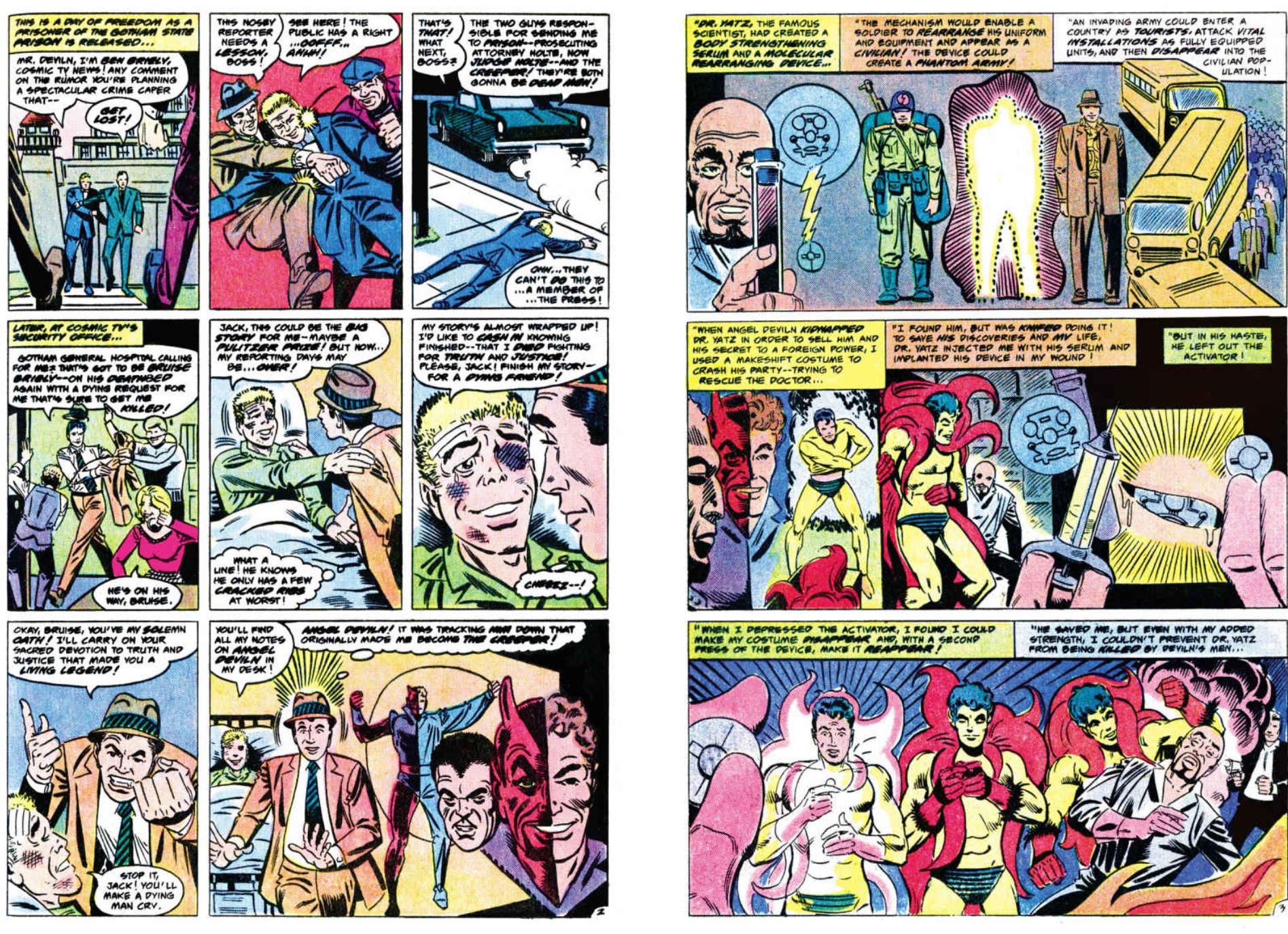
Here the Golden Age Superman, Batman and Robin join Doctor Fate, Tarantula, Firebrand, The Atom, Hawkman, Phantom Lady, Amazing Man, Commander Steel, Dr. Mid-nite, Starman, Sandman, Flash, The Guardian, Johnny Thunder, Green Lantern, Johnny Quick, Liberty Belle and Wonder Woman go in search of a missing ghostly Guardian only to learn ‘A Spectre is Hanting the Multiverse!’ with the mightiest being in creation enslaved to pan-dimensional tyrant Kulak, High Priest of Brztal and facilitating a long-anticipated scheme to eradicate Earth, it’s no small mercy that humanity has other uncanny defenders – such as Sargon the Sorceror – to call upon…

Although an incongruously superhero-heavy tale to end on this compilation covers much of the darlest corners of DC legend and fable. With covers by Anderson, Infantino, Jack Adler, Adams, Grandenetti, Nick Cardy, Aparo, Tatjana Wood, George Tuska, Anthony Tollin & Jerry Ordway, and ranging from fabulously fantastical to darkly, violently enthralling, these comic masterpieces perfectly encapsulate the way superheroes changed over a brief 20-year span, but remain throughout some of the most beguiling and exciting tales of the company’s canon. If you love comic books you’d be crazy to ignore this one.
© 1966, 1967, 1968, 1969, 1974, 1975, 1981, 1983, 2012 DC Comics. All Rights Reserved.

On this day in 1867 strip pioneer Winsor McCay was born. Check out Daydreams and Nightmares – The Fantastic Visions of Winsor McCay for more.

Today in 1938 Belgian giant Raoul Cauvin was born. Bluecoats volume 18: Duel in the Channel was the last book of his we covered, whilst in 1946, the first issue of Le Journal de Tintin went on sale. Stuff from there like Blake and Mortimer is all over this site. Just use the search box and see…

Yoko Tsuno volume 20: The Gate of Souls


By Roger Leloup, coloured by Studio Leonardo & translated by Jerome Saincantin (Cinebook)
ISBN: 978-1-80044-160-6 (Album PB)

This book includes Discriminatory Content produced in less enlightened times.
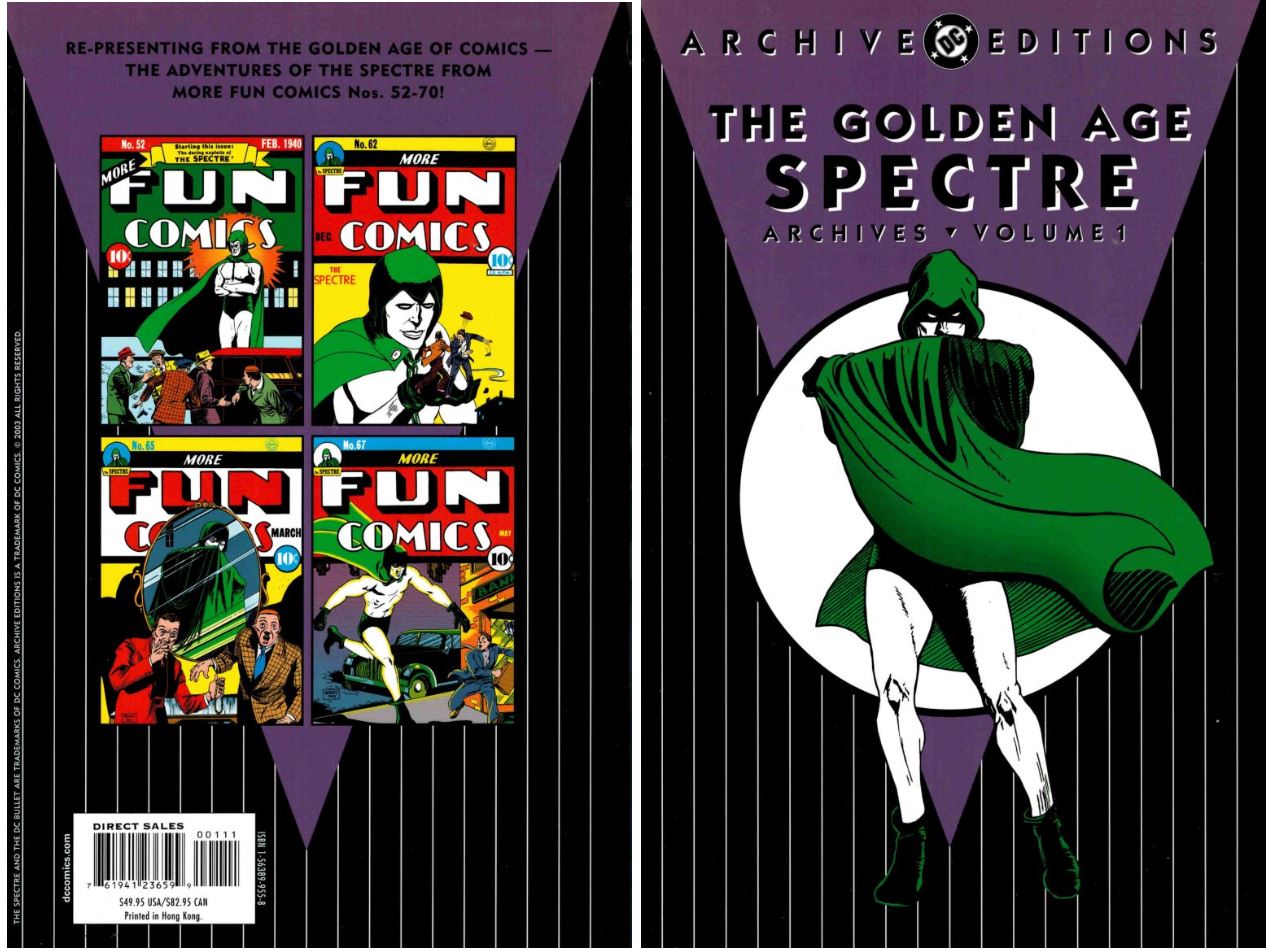
On September 24th 1970, “electronics engineer” Yoko Tsuno first began her troubleshooting career as an indomitable intellectual adventurer. Bon anniversaire, ma brave cherie!

Her debut in Le Journal de Spirou was realised in “Marcinelle style” cartoonish 8 page short ‘Hold-up en hi-fi’ and although she is still delighting readers and making new fans to this day, for a while it looked as if she wasn’t going anywhere soon. Thankfully, her astonishing, astoundingly accessible exploits were revised and she quickly evolved into a paragon of peril: helming a highpoint of pseudo-realistic fantasies numbering amongst the most intoxicating, absorbing and broad-ranging comics thrillers ever created. Her globe-girdling mystery cases and space-&-time-spanning epics are the brainchild of Belgian maestro Roger Leloup who launched his own solo career in 1953 whilst working as studio assistant/technical artist on Hergé’s Adventures of Tintin.

Compellingly told, sublimely imaginative and – no matter how implausible the premise of an individual yarn – always firmly grounded in hyper-authentic settings underpinned by solidly-constructed, unshakably believable technology and unswerving scientific principles, Leloup’s illustrated escapades were at the vanguard of a wave of strips revolutionising European comics. Early in the journey, he switched from loose illustration to a mesmerising, nigh-photo realistic style that is a series signature. The long-overdue sea-change in gender roles and stereotyping he led heralded a torrent of clever, competent, brave and formidable women protagonists taking their rightful places as heroic ideals and not romantic lures. That consequently elevated Continental comics in the process. Such endeavours are as engaging and empowering now as they ever were, none more so than the travails of masterful Miss Tsuno.
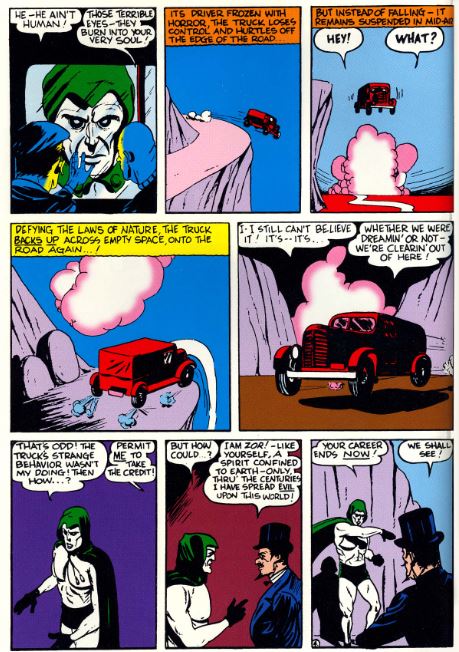
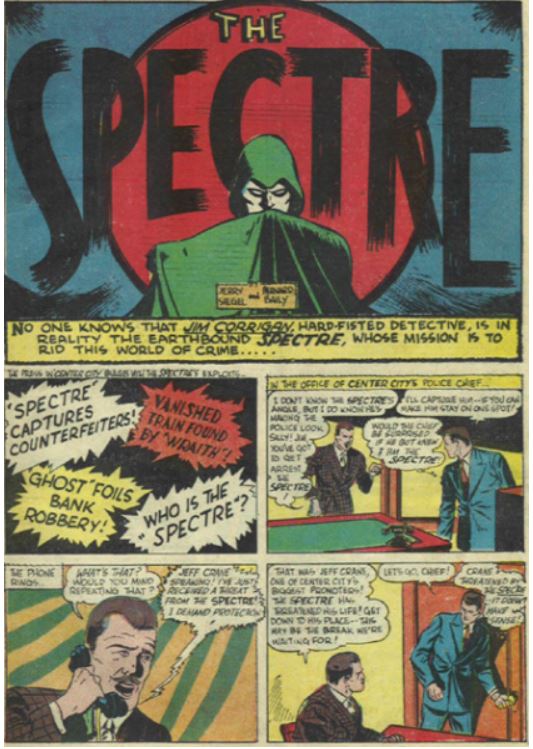
Her first outings (oft-aforementioned, STILL unavailable Hold-up en hi-fi, and co-sequels La belle et la bête and Cap 351) were introductory vignettes prior to epic authenticity taking a firm grip in 1971 when the unflappable problem solver met valiant but lesser (male) pals Pol Paris and Vic Van Steen. Instantly hitting her stride in premier full-length saga Le trio de l’étrange (in LJdS’s May 13th edition), from then on, Yoko’s efforts encompassed explosive exploits in exotic corners of our world, spy and crime capers, time-travelling jaunts and sinister deep-space sagas such as this one. There are 31 European bande dessinée albums to date, with 21 translated into English thus far, albeit – and ironically – none of them available in digital formats…

Initially serialised in LJdS #3033 to 3044, spanning May 29th to 14th August 1996, La Porte des âmes became Europe’s 21st collected Yoko Tsuno album at year’s end. Following chronologically from The Astrologer of Bruges, it returns our terrestrial troubleshooters to their friends in the sky with another momentous visit with the prodigiously reconstructing Vineans.

In a disturbingly philosophical, metaphysically-tinged caper the Earthlings – including Yoko’s adopted daughter Morning Dew and Mieke (Pol’s fiancée from the 16th century) – all toil in deep space beside the disaster-prone lethally pragmatic alien colonists with their most trusted ally when another echo from the distant past changes lives and destines once again.

Their constant guide and companion is Khany: the competent, commanding single mother who combines parenting her toddler Poky and the humans with saving worlds, leading her people, averting continual cosmic catastrophe and – with Yoko – recovering lost knowledge. Frequently that stems from attempts to restore a moral compass to those ancient survivors ruthlessly rebuilding their fallen civilisation and permanently undermining and gaslighting the upstarts who slept out the apocalypse on another planet. Progress is slow and regularly results in uncovered, long forgotten threats that might end the racial resurrection in flaming instants…

In their initial adventure together, Yoko, Vic and Pol had discovered an enclave of dormant aliens hibernating for eons in Earth’s depths. After saving the sleepers from robotic/AI subjugation, the humans occasionally helped the refugees (who had fled their planet two million years previously) to rebuild their lost sciences. Ultimately, the humans accompanied the Vineans on their return to their natal star system and (wrongly presumed) long-dead homeworld. In the years Vineans slept, primary civilisation collapsed, and the world they strive to reclaim is much changed, with isolated pockets of inhabitants evolved beyond recognition. As the re-migrants gradually restore a decadent, much-debased civilisation and culture, the human trio become regular guests and helpers against sabotage, political intrigue and simple skulduggery…

And as seen here, it’s not just people they must beware of…

On a previous visit Yoko had established a unique psychic link with ancient mech-intellect Queen Hegora: one granting her certain technophilic abilities. A later excursion saw her bonded with an equally antediluvian child-rearing toy robot. “Myna” and her kind were constant sentient companions to young children – until parents abruptly deemed them all too smart and dangerous, before subsequently banishing them to distant asteroid. Now that last relic is hastily consulted as another time-lost probe soars back into Vinean territory from out of history and the (currently) unknown…

A constant cause of contemporary strife is piecemeal rediscovery of ancient beings who have endured due to the Vinean practise of digitally encoding living persons into automatons. Now a space salvage effort is interrupted by a probe from the deep past, and the excited explorers confront the possibility of being able to finally penetrate the fabled mysteries of occluded and forbidden lost colony Ultima. Their actions precipitate shocking and tragic discoveries which expose the downside of immortality.

Deadly strife begins as the discoverers plunge down to the revealed world and find another survivor outpost divided into factions indulging in an unending war of technologies and philosophies. An imminent crash and collision makes allies of advance scout Yoko and a bold indigenous pilot named Litsy, and soon the human learns that here vassals are forced to carry the personalities of other deceased servants. Servitude is eternal with useful, knowledgeable “souls” digitally impressed upon successive bodies. All the lower orders can anticipate is forced reincarnation and losing themselves bit by bit to someone else’s soul’s past history…

In a society where biology and mechanisms are less valuable than knowledge and experience, the newcomers are soon caught up in a devilish scheme challenging and undermining the very nature and fine print definition of life on Ultima, as they expose a long unfolding plot by rebel Isora who currently inhabits a menial flying droid. She illicitly made copies of her soul before committing suicide and now she ruthlessly seeks to recover and reunite her fractured personalities in a fresh – and stolen – body. This is over and despite violent objections of its original occupier Ethera, and once morally-outraged Yoko fully grasps the complexities of the situation she is prepared to do whatever is necessary to end this ghastly refinement of intellectual slavery…

Ultimately, overwhelming institutionalised digital malevolence proves inadequate in the face of Yoko Tsuno’s passionate humanity, bold imagination and quick thinking, but her success comes at great cost and cannot truly be called a triumph. Moreover, as the weary explorers return to established Vinean borders, Isora delivers a chilling message revealing nothing is settled yet…

Blending rocket-paced action with shattering suspense and byzantine twists, this deviously twisted, terrifying plausible battle with bigotry is superbly mesmerising, proving once more how smarts and combat savvy are pointless without compassion. As always, the most potent asset of this edgy outer space dramas is its astonishingly authentic setting, as ever benefitting from Leloup’s diligent research and meticulous attention to detail.

The Gate of Souls is a magnificently tense all-action psycho- thriller, taut and compelling, and surely appealing as much to fans of blockbuster space opera as ordinary general purpose comic addicts.

Original edition © Dupuis, 1996 by Roger Leloup. All rights reserved. English translation © 2025 Cinebook Ltd.

Today in 1972, talented wee nipper Jock was born. You can remind yourself how good an artist he is by looking at Green Arrow Year One – The Deluxe Edition.