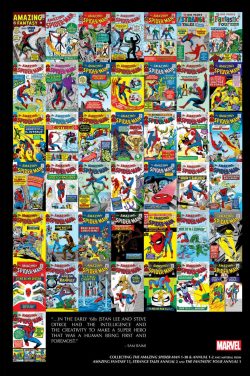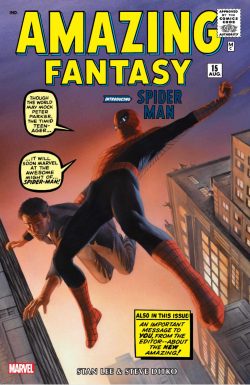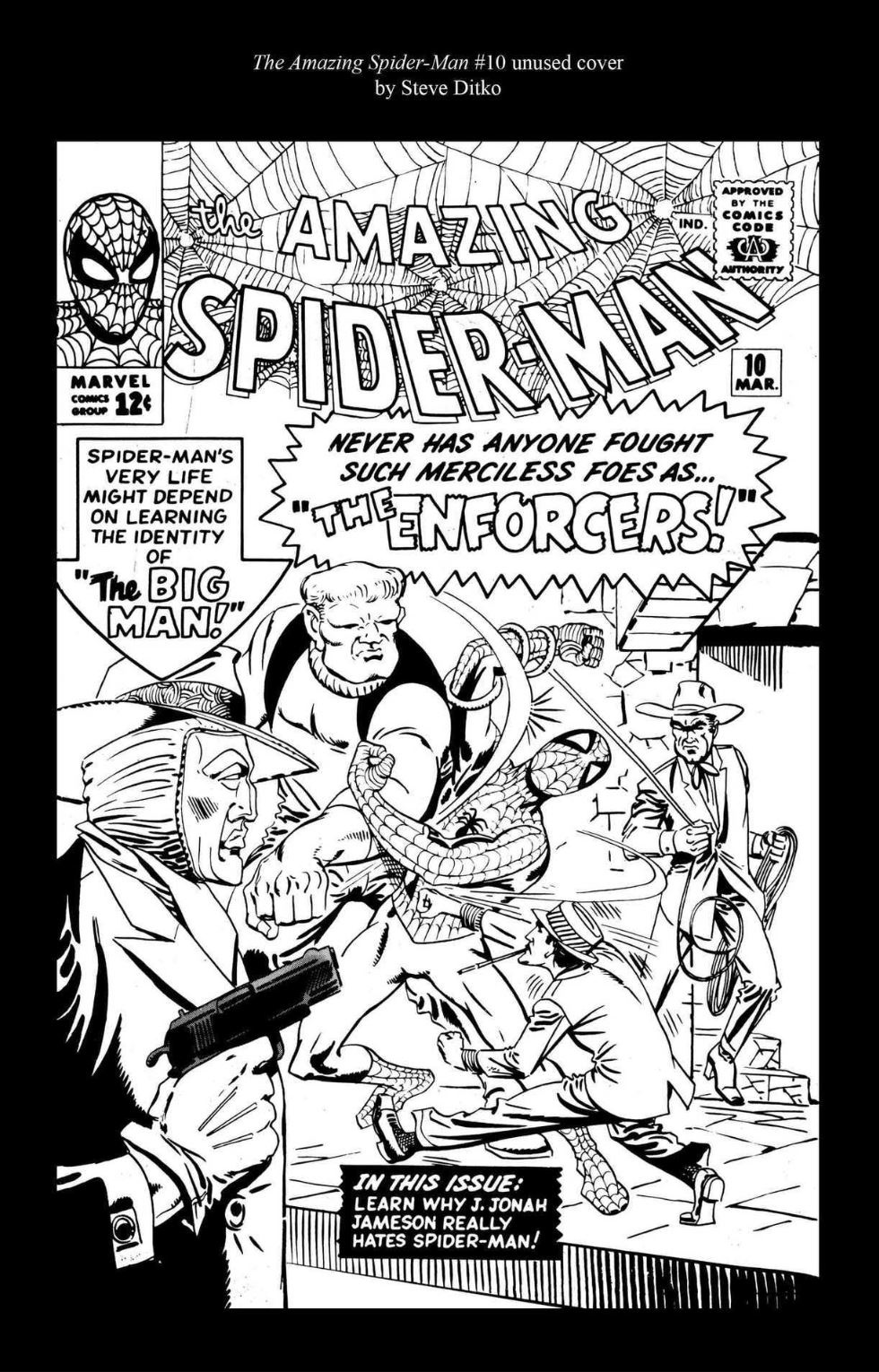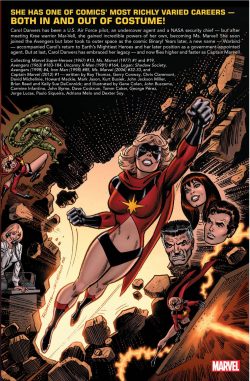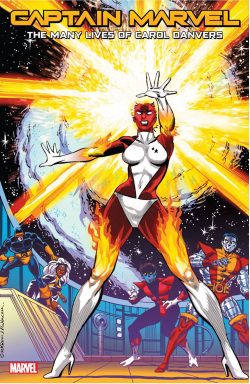
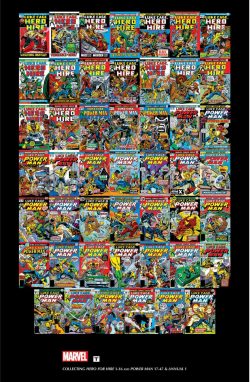
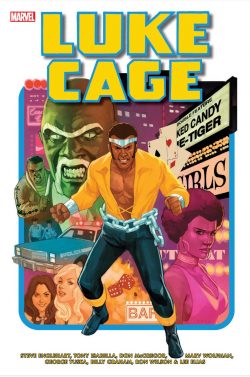
Luke Cage Omnibus (Hero For Hire)


By Archie Goodwin, Steve Englehart, Tony Isabella, Len Wein, Gerry Conway, Billy Graham, Bill Mantlo, George Pérez, Marv Wolfman, Ed Hannigan, Roger Slifer, Chris Claremont, George Tuska, Ron Wilson, Lee Elias, Rich Buckler, Arvell Jones, Sal Buscema, Frank Robbins, Marie Severin, Bob Brown & various (MARVEL)
ISBN: 978-1-3029-4496-4 (HB/Digital edition)

In 1968 the consciousness-raising sporting demonstration of “Black Power” at the Olympic Games galvanised and politicised a generation of youngsters. By this time most comics companies had already made tentative efforts to address what were national socio-political iniquities, but issues of race and ethnicity took a long time to filter through to impressionable young minds avidly absorbing knowledge and attitudes via four-colour pages that couldn’t even approximate the skin tones of African Americans.

As with television, breakthroughs were small, incremental and too often reduced to a cold-war of daringly liberal “firsts”. Excluding a few characters in jungle comic books of the 1940s and 1950, Marvel clearly led the field with a black soldier in Sgt. Fury’s Howling Commandos team – the historically impossible Gabe Jones who debuted in #1, May 1963, and by my reckoning the first recurring African American in comic books. So unlikely a character was ol’ Gabe that he was as a matter of course re-coloured Caucasian at the printers who clearly didn’t realise his ethnicity, but knew he couldn’t be un-white. Jones was followed by actual negro superheroes Black Panther in Fantastic Four#52 (July 1966), and The Falcon in Captain America #117 (September 1969).

America’s first black hero to helm his own title had come (and gone largely unnoticed) in a little remembered or regarded title from Dell Comics. Created by artist Tony Tallarico and scripter D.J. Arneson and debuting in December 1965, Lobo was a gunslinger in the old wild west, battling injustice just like any cowboy hero would. Arguably a greater breakthrough was Marvel’s  Joe Robertson, City Editor of The Daily Bugle; an erudite, brave and proudly ordinary mortal distinguished by his sterling character, not costume or skin tone. He first appeared in Amazing Spider-Man # 51 (August 1967), proving in every panel that the world wouldn’t end if black folk and white folk occupied the same spaces…

This big change had grown slowly out of raised social awareness during a terrible time in American history but things today don’t seem all that different, except the bile and growing taste for violence is turned towards European accents, or health workers and shop staff as well as brown skins…

As the 1960s turned, more positive and inclusive incidences of ethnic characters appeared in the US, with DC finally getting an African America hero in John Stewart (Green Lantern #87, December 1971/January 1972) – although his designation as a replacement Emerald Peacekeeper might be construed as more conciliatory and insulting than revolutionary. DC’s first hero with his own title was Black Lightning, who didn’t debut until April 1977, although Jack Kirby had introduced Vykin in Forever People #1 and The Black Racer in New Gods #3 (March and July 1971) and Shilo Norman as Scott Free’s apprentice (and eventual successor) in Mister Miracle #15 (August 1973).

As usual, it took a bold man and changing economics to really promote change. With declining comics sales intersecting a time of rising Black Consciousness, cash – if not cashing in – was probably the trigger for “the Next Step”. Contemporary “Blaxsploitation” cinema and novels had invigorated commercial interests throughout America, and in that atmosphere of outlandish dialogue, daft outfits and barely concealed – but certainly justified – outrage, an angry black man with a shady past and apparently dubious morals must have felt like a sure-fire hit to Marvel’s bosses. Luke Cage, Hero for Hire launched in the summer of 1972. A year later, The Black Panther finally got his own series in Jungle Action #5 and Blade: Vampire Hunter debuted in Tomb of Dracula #10.

This stunning compendium collects Hero for Hire #1-16, Luke Cage Power Man #17-48 and Annual #1: a landmark breakthrough series cumulatively spanning June 1972 to October 1977 and begins with Lucas, a hard-case inmate at brutal Seagate Prison. Like all convicts, he says he was framed and his uncompromising attitude makes mortal enemies of savage, racist guards Rackham and Quirt, and doesn’t endear him to the rest of the prison population such as genuinely bad guys Shades and Comanche either…

‘Out of Hell… A Hero!’ was written by Archie Goodwin and illustrated by George Tuska & Billy Graham (with initial input from Roy Thomas and John Romita) and sees a new warden arrive promising to change the hell-hole into a properly administered correctional facility. Having heard the desperate con’s tale of woe, prison doctor Noah Burstein convinces Lucas to participate in a radical experiment in exchange for a parole hearing…

Lucas had grown up in Harlem, a tough kid who managed to stay honest even when his best friend Willis Stryker had not. They remained close even though walking different paths – until a woman came between them. To be rid of his romantic rival, Stryker planted drugs and had Lucas shipped off to jail. While he was there his girl Reva – who had never given up on him – was killed when she got in way of bullets meant for up-and-coming gangster Stryker…

With nothing to lose, Lucas undergoes Burstein’s process – experimental cell-regeneration – but Rackham sabotages the process, hoping to kill the con before he can expose their illegal treatment of convicts. The equipment goes haywire and something incredible occurs. Lucas – panicked and now somehow super-strong – punches his way out of the lab and through prison walls, only to face a hail of gunfire. His body plunges over a cliff and is never found.

Months later, a vagrant prowls the streets of New York City and stumbles into a robbery. Almost casually he downs the felon, accepts a reward from the grateful victim and has a bright idea. Strong, bullet-proof, street-wise and honest, Lucas will hide in plain sight while planning his revenge on Stryker. Since his only skill is fighting, he becomes a private paladin – a Hero for Hire…

Making allowances for the colourful, often ludicrous dialogue necessitated by the Comics Code’s sanitising of “street-talking Jive”, this is probably the grittiest origin tale of the classic Marvel years, with the tense action continuing in ‘Vengeance is Mine!’ as the man calling himself Luke Cage stalks his target. Stryker has risen quickly, now controlling a vast portion of the drug trade as the deadly Diamondback, and Cage has a big surprise in store when beautiful physician Claire Temple comes to his aid after a calamitous struggle. Thinking him fatally shot, her surprise is dwarfed by his own when Cage meets her boss. Seeking to expiate his sins, Noah Burstein runs a rehab clinic on the sordid streets of Times Square, but his efforts have drawn the attention of Diamondback, who doesn’t like someone trying to fix his paying customers…

Burstein apparently does not recognise Cage, so even though faced with eventual exposure and return to prison, the Hero for Hire offers to help the hard-pressed medics. Setting up an office above a movie house on 42nd Street, Cage meets a young man who will be his greatest friend – D.W. Griffith: nerd, film freak and plucky white sidekick. However, before Cage can settle in, Diamondback strikes and the age-old game of blood and honour plays out the way it always does…

HFH #3 introduces Cage’s first returning villain in ‘Mark of the Mace!’ as Burstein – for his own undisclosed reasons – keeps Cage’s secret, whilst disgraced soldier Gideon Mace launches a terror attack on Manhattan. With his dying breath, one of the mad Colonel’s troops hires Cage to stop the attack, which he does in explosive fashion. Inker Billy Graham graduated to full art chores for ‘Cry Fear… Cry Phantom!’ in #4, wherein a deranged, deformed maniac carries out random assaults in Times Square. Or is there perhaps another motive behind the vicious attacks?

Steve Englehart took over as scripter and Tuska returned to pencil ‘Don’t Mess with Black Mariah!’ in the next issue: a tale of organised scavengers which also introduced unscrupulous reporter Phil Fox: an unsavoury sneak with greedy pockets and a nose for scandal. In ‘Knights and White Satin’ (Englehart, Gerry Conway, Graham & Paul Reinman) the swanky, ultra-rich Forsythe sisters hire Cage to bodyguard their dying father from a would-be murderer too impatient to wait the week it will take for the old man to die from a terminal illness.

This more-or less straight mystery yarn (if you discount a madman and killer robots) is followed by ‘Jingle Bombs’ – a strikingly different Christmas tale from Englehart, Tuska & Graham, before Cage properly enters the Marvel Universe in ‘Crescendo!’ Here he is hired by Doctor Doom to retrieve rogue androids that have absconded from Latveria. They are hiding as black men among the shifting masses of Harlem and the Iron Dictator needs someone who knows that unfamiliar environment. Naturally, Cage accomplishes his mission, only to have Doom stiff him for the fee. Big mistake…

‘Where Angels Fear to Tread!’ (#9) finds the enraged Hero for Hire borrowing a vehicle from the Fantastic Four to play Repo Man in Doom’s own castle, just in time to get caught in the middle of a grudge match between the tyrant and alien invader the Faceless One. It’s then back to street-level basics in ‘The Lucky… and the Dead!’ as Cage takes on a gambling syndicate led by schizophrenic Señor Suerte, who doubles his fortunes as murderous Señor Muerte (that’s Mr. Luck and Mr. Death to you): a 2-part thriller with rigged games and deathtraps climaxing in ‘Where There’s Life…!’ as Phil Fox finally uncovers Cage’s secret…

HFH #12 featured the first of many clashes with alchemical villain ‘Chemistro!’, after which Graham handled full art duties with ‘The Claws of Lionfang’ – a killer using big cats to destroy his enemies prior to Cage tackling hyperthyroid lawyer Big Ben Donovan in ‘Retribution!’ as the tangled threads of the fugitive’s murky past slowly become a noose around his neck. ‘Retribution: Part II!’ sees Graham and Tony Isabella sharing the writer’s role as many disparate elements converge to expose Cage. The crisis builds as Quirt kidnaps Luke’s girlfriend, and Seagate escapees Comanche and Shades stalking him whilst New York cops hunt him. The last thing the Hero for Hire needs is a new super-foe, but that’s just what he gets in #16’s ‘Shake Hands with Stiletto!’ (Isabella, Graham & Frank McLaughlin): a dramatic finale that literally brings the house down and clears up most of the old business.

Luke Cage, Hero For Hire was probably Marvel’s edgiest series, but after a few years tense action and peripheral interactions with the greater Marvel Universe led to a minor rethink and the title was altered, if not the basic premise. The private detective motif proved a brilliant stratagem in generating stories for a character perceived as a reluctant champion at best and outright antihero by nature. His job allowed Cage to maintain an outsider’s edginess but also meant adventure literally walked through his shabby door every issue. However, following the calamitous clash with his oldest enemies, most old business was settled and a partial re-branding of America’s premier black crusader began in issue #17. The mercenary aspect was downplayed (at least on covers) as Len Wein, Tuska & Graham gave Luke Cage, Power Man a fresh start during tumultuous team-up ‘Rich Man: Iron Man… Power Man: Thief!’

Here the still “For Hire” hero is commissioned to test Tony Stark’s security… by stealing his latest invention. Sadly, neither Stark nor his alter ego Iron Man know anything about it and the result is another classic hero-on-hero duel. Vince Colletta signed on as inker with #18’s ‘Havoc on the High Iron!’, and Cage battles high-tech killer Steeplejack whilst the next two issues offered the wanted man a tantalising chance to clear his name. ‘Call Him… Cottonmouth!’ debuted a crime lord with inside information of the frame-up perpetrated by Willis Stryker. Tragically, hope of a new clean life is snatched away despite Cage’s explosive efforts in the Isabella scripted conclusion ‘How Like a Serpent’s Tooth…’

Isabella, Wein, Ron Wilson & Colletta crafted ‘The Killer With My Name!’ as Cage is ambushed by Avengers villain Power Man, who understandably wants his nom de guerre back. He changes his mind upon waking up from the resultant bombastic battle that ensues, after which psychotic archfoe Stiletto returns beside his equally high-tech balmy brother Discus in ‘The Broadway Mayhem of 1974’ (Isabella, Wilson & Colletta), subsequently revealing a startling connection to Cage’s origins.

All this constant carnage and non-stop tension sent sometime-romantic interest Claire Temple scurrying for points distant, and in LCPM #23, Cage and D.W. go looking for her, promptly fetching up in a fascistic planned community run by old foe deranged military terrorist Mace in ‘Welcome to Security City’ (inked by Dave Hunt). This fed directly into a 2-part premier for another African American superhero as Cage and D.W. track Claire to the Ringmaster’s Circus of Crime in #24’s ‘Among Us Walks… a Black Goliath! (Isabella, Tuska & Hunt)…

Bill Foster was a highly educated black supporting character: a biochemist who worked with Henry Pym (scientist-superhero known as Ant-Man, Giant-Man, Goliath and Yellowjacket over decades of costumed capers). Foster first appeared in Avengers #32 (September 1966), before fading from view when Pym eventually regained his size-changing abilities. Carrying on his own size-shifting research, Foster was now trapped as a giant, unable to attain normal size, and Cage discovered he was also Claire’s former husband. When he became stuck at 15 feet tall, she had rushed back to Bill’s colossal side to help find a cure.

When Luke turned up, passions boiled over, resulting in another classic heroes-clash moment until the mesmeric Ringmaster hypnotised all combatants, intent on using their strength to feather his own three-ring nest. ‘Crime and Circuses’ (Isabella, Bill Mantlo, Wilson & Fred Kida) saw the good guys helpless until Claire came to the rescue, before making her choice and returning to New York with Luke. Foster soon thereafter won his own short-run series, becoming Marvel’s fourth African American costumed hero under the heavy-handed and rather obvious sobriquet Black Goliath…

Timely spoofing of a popular ‘70’s TV show inspired ‘The Night Shocker!’ (Englehart, Tuska & Colletta) as Cage stalks an apparent vampire attacking 42nd Street patrons, after which a touching human drama finds Cage forced to subdue a tragically simple-minded but super-powered wrestler in ‘Just a Guy Named “X”!’ (by Mantlo, George Pérez & Al McWilliams, and paying tribute to Steve Ditko’s classic yarn from Amazing Spider-Man #38).

A new level of sophistication, social commentary and bizarre villainy began in issue 28 as Don McGregor started his run of macabre crime sagas, opening when Cage meets ‘The Man Who Killed Jiminy Cricket!’ (illustrated by Tuska & Colletta).

Hired by a chemical company to stop industrial espionage, Luke fails to prevent the murder of his prime suspect and is somehow defeated by deadly weirdo Cockroach Hamilton (and his beloved shotgun “Josh”). Left for dead in one of the most outré cliffhanger situations ever seen, Cage took two issues to escape as the next issue featured a “deadline-doom” fill-in tale. Courtesy of Mantlo, Tuska & Colletta, Luke Cage, Power Man #29 revealed that ‘No One Laughs at Mr. Fish!’ (although the temptation is overwhelming) as Cage fights a fin-faced mutated mobster robbing shipping trucks for organised crime analogue The Maggia, after which the story already in progress resumes in #30 with ‘Look What They’ve Done to Our Lives, Ma!’ (by McGregor, Rich Buckler, Arvell Jones & Keith Pollard).

Escaping from a deadly deathtrap, Cage hunts down Hamilton, and confronts his erudite, sardonic, steel-fanged boss Piranha Jones just after they succeed in stealing a leaking canister of deadly nerve gas. The dread drama concludes in ‘Over the Years They Murdered the Stars!’ (Sal Buscema & the legion of deadline-busting Crusty Bunkers) as Cage saves his city at the risk of his life before serving just deserts to the eerie evildoers…

Having successfully rebranded himself, the urban privateer made ends meet whilst seeking a way to stay under police radar and clear his name. The new level of sophisticated, social commentary and bizarre villainy when McGregor took over writing led to Cage saving the entire city in true superhero style as #32 opens with the (unlicensed) PI in the leafy suburbs, hired to protect a black family from literally incendiary racist super-villain Wildfire in ‘The Fire This Time!’ (illustrated by Frank Robbins & Colletta). This self-appointed champion of moral outrage is determined to keep his affluent, decent neighbourhood white, and even Power Man is ultimately unable to prevent a ghastly atrocity from being perpetrated…

Back in the comfort zone of Times Square again, Cage is in the way when a costumed manic comes looking for Noah Burnstein, and painfully learns ‘Sticks and Stone Will Break Your Bones, But Spears Can Kill You!’ As shady reporters, sleazy lawyers and police detective Quentin Chase all circle, looking to uncover the Hero for Hire’s secret past in ‘Death, Taxes and Springtime Vendettas!’ (Frank Springer inks), Cage’s attention is distracted from Burstein’s stalker by deranged wrestler dubbed The Mangler, which leads to a savage showdown and near-fatal outcome in ‘Of Memories, Both Vicious and Haunting!’ (plotted by Marv Wolfman, dialogued by McGregor and illustrated by Marie Severin, Joe Giella & Frank Giacoia). Here at last, the reasons for the campaign of terror against the doctor are finally, shockingly exposed…

Power Man Annual #1 (1976) follows with ‘Earthshock!’ – by Chris Claremont, Lee Elias & Hunt – taking Cage to Japan as bodyguard to wealthy Samantha Sheridan. She’s being targeted by munitions magnate and tectonics-warping maniac Moses Magnum, intent on tapping Earth’s magma core, even though the very planet is at risk of destruction. Thankfully, not even his army of mercenaries is enough to stop Cage in full rage…

Next comes the cover for Power Man #36 (cover-dated October 1976) and another casualty of the “Dreaded Deadline Doom”, reprinting #12: the debut of the villain who follows in #37’s all-new ‘Chemistro is Back! Deadlier Than Ever!’ by Wolfman, Wilson & A Bradford. Here the apparently grudge-bearing recreant attacks Cage at the behest of a new mystery mastermind who clarifies his position in follow-up ‘…Big Brother Wants You… Dead!’ (Wolfman, Mantlo, Bob Brown & Jim Mooney). His minions Cheshire Cat and Checkpoint Charlie shadow the increasingly frustrated investigator, before repeated inconclusive and inexplicable clashes with Chemistro lead to a bombastic ‘Battle with the Baron!’ (inked by Klaus Janson) – a rival mastermind hoping to corner the market on crime in NYC. The convoluted clash concludes in ‘Rush Hour to Limbo!’ (Wolfman, Elias & Giacoia) as one final deathtrap for Cage turns into an explosive last hurrah for Big Brother and his crew…

Inked by Tom Palmer, #41 debuts a new vigilante in ‘Thunderbolt and Goldbug!’ as a super-swift masked hero makes a name for himself cleaning up low-level scum. Simultaneously, Cage is hired by a courier company to protect a bullion shipment, but when the truck is bombed and the guards die, dazed and furious Cage can’t tell villain from vigilante and takes on the wrong guy…

Answers if not conclusions are forthcoming in ‘Gold! Gold! Who’s Got the Gold?’ (with Alex Niño on inks) as Luke learns who his real friends and foes are, only to be suckered into a lethal trap barely escaped in #43’s ‘The Death of Luke Cage!’ In the aftermath, with legal authorities closing in on his fake life, Cage flees town and sheds his Power Man persona. However, even in the teeming masses of Chicago he can’t escape his past as an old enemy mistakenly assumes he’s been tracked down by the hero he hates most in all the world. Wolfman plots and Ed Hannigan scripts for Elias & Palmer as ‘Murder is the Man Called Mace!’ sees Luke dragged into the dishonoured soldier’s scheme to seize control of America and – despite his best and most violent efforts – beaten and strapped to a cobalt bomb on ‘The Day Chicago Died!’ (Wolfman & Elias). Sadly, after breaking free of the device, it’s lost in the sewers, prompting a frantic ‘Chicago Trackdown!’ before another savage showdown with Mace and his military madmen culminate in a chilling ‘Countdown to Catastrophe!’ (scripted by Roger Slifer) as a fame-hungry sniper starts shooting citizens whilst the authorities are preoccupied searching for the missing nuke…

With atomic armageddon averted at the last moment, this collection – and Cage’s old life – end on a well-conceived final charge. With issue #48, Cage’s comics title would be shared with mystic martial artist Danny Rand in the superbly enticing odd couple feature Power Man and Iron Fist, but before that there’s still a ‘Hot Time in the Old Town Tonight!’ courtesy of Claremont, Tuska & Bob Smith as Chicago is attacked by brain-sucking electrical parasite Zzzax! Thankfully, our steel-skinned stalwart is more than a match for the mind-stealing megawatt monstrosity…

With all covers – by Romita, Graham, Gil Kane, Wilson, Rich Buckler, Dave Cockrum, Marie Severin, Ernie Chan, Jim Starlin, Mike Esposito, Frank Giacoia, Klaus Janson, Dan Adkins, Tom Palmer, Joe Sinnott & Pablo Marcos – ; retrieved Introductions ‘An Optimistic Time’ by Englehart, ‘Always Forward’ by Isabella and ‘Luke Cage and the Big Bad City’ by McGregor and – from #3 onwards – letters pages ‘Comments to Cage’, the street level drama is augmented by a treasure trove of extra features. Adding value are the cover of reprint one-shot Giant-Size Power Man from 1975; Marvel Bulletins page promo from May 1972; House ads; original art pages and covers by Romita, Graham, Kane, Brown, pre-corrected production photostats, and Cockrum & Romita’s Cage entry from the 1975 Mighty Marvel Calendar (March, in case you were wondering) as well as the same by Sal Buscema from the Mighty Marvel Bicentennial Calendar (1976) and Wilson & Sinnott’s June 1977 Marvel Comics Memory Album Calendar before ending with the cover art for this collection by Phil Noto.

Arguably a little dated now (us in the know prefer the term “retro”), these tales were crucial in breaking down many social barriers across the complacent, intolerant, WASP-flavoured US comics landscape, and their power – if not their initial impact – remains undiminished to this day. These are tales well worth your time and attention.
© 2022 MARVEL.
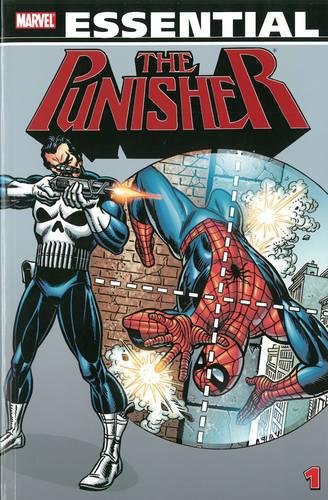
Essential Punisher volume 1


By Gerry Conway, Archie Goodwin, Len Wein, Mike W. Barr, Marv Wolfman, Dennis O’Neil, Roger McKenzie, Frank Miller, Bill Mantlo, Stephen Grant, Jo Duffy, Ross Andru, Tony DeZuniga, Frank Springer, Keith Pollard, Al Milgrom, Greg LaRocque, Mike Zeck, Mike Vosburg & various (MARVEL)
ISBN: 978-0-8571-2375-0 (TPB)

Debuting in 1974 and despite being one of the industry’s biggest hits from the mid-1980s onwards, the obsessed vengeance-taker known as The Punisher was always an unlikely and uncomfortable star for comic books. His methods were excessively violent and usually permanent. It’s intriguing to note that unlike most heroes who debuted as villains (Black Widow or Wolverine come to mind) the Punisher actually became more ruthless, immoral, anti-social and murderous, not less. The Punisher never toned down or cleaned up his act – the buying public simply shifted its communal perspective.

He was created by Gerry Conway, John Romita Sr. and Ross Andru: a (necessarily) toned down, muted response to increasingly popular prose anti-heroes like Don Pendleton’s Mack Bolan: the Executioner and a bloody tide of fictive Viet Nam vets returned from South East Asia who all turned their training and talents to wiping out organised crime in the early 1970s. The story goes that Marvel’s bosses were reluctant to give The Punisher a starring vehicle in the mainstream colour comic-book line, feeling the character’s very nature made him a bad guy, not a good one. Other than the two magazine stories and the miniseries which closes this volume, Frank Castle was not supposed to be the star or even particularly admirable to the impressionable readership.

Therefore these early appearances could disappoint die-hard fans even though they are the formative tales of his success. Perhaps it’s best to remember and accept that when not actually the villain in the tales he was at best a controversial guest and worrisome co-star…

Boy, how times do change.

He was first seen as a villain/patsy in Amazing Spider-Man #129 (cover-dated February 1974 but actually on sale from 30th October 1973 – so even in terms of his anniversary, Castle apparently “jumped the gun” (I’m so weak!). He repeatedly returned thereafter until getting his shot at the big time – just not in newsstand publications but in Marvel’s monochrome, mature magazine line. This initial Essential compilation gathers all those tentative stabs and guest-shots from February 1974 through to the breakthrough 1986 miniseries which really got the ball rolling. These include Amazing Spider-Man #129, 134-135, 162-163, 174-175, 201-202; Amazing Spider-Man Annual #15; Giant-Size Spider-Man #4; Marvel Preview #2; Marvel Super-Action #1; Captain America #241; Daredevil #182-184; Peter Parker, The Spectacular Spider-Man #81-83 and The Punisher #1-5, but many die-hard modern fans may be disappointed in the relative lack of brutality, carnage and even face time contained herein. Just keep in mind that for the greater part of these early appearances the skull-shirted slayer was at best a visitor and usually the villain du jour…

The first case in this mammoth monochrome war journal comes from ASM #129, introducing not only the renegade gunslinger but also nefarious manic mastermind The Jackal in ‘The Punisher Strikes Twice!’ Scripted by Conway, and illustrated by Ross Andru, Frank Giacoia & Dave Hunt, it reveals how a mystery lone gunman is duped by manipulative Professor Miles Warren into hunting the wallcrawler who was wrongly implicated in the deaths of police captain George Stacy and his daughter Gwen and currently a suspect in the death of Norman Osborn. Here he is subsequently set up by The Jackal for the murder of the Punisher’s gunmaker before clearing the air and going their own ways…

The much-misunderstood champions of the oppressed crossed paths again in Amazing Spider-Man #134-135 when a South American bandit – intended to be his oppressive regime’s Captain America – attempts to pillage a Manhattan tour boat in ‘Danger is a Man Named… Tarantula!’ Once again unwilling allies, Spidey and the Punisher’s trails cross when the duo dutifully dismantle the villain’s schemes during a ‘Shoot-Out in Central Park!’

The Punisher played a more central role in Giant-Size Spider-Man #4 (April 1975) when the webslinger forces himself into one of the sinister shootist’s cases in ‘To Sow the Seeds of Death’s Day!’ when ruthless arms dealer Moses Magnum began testing a deadly chemical weapon on randomly kidnapped victims. Tracking down the vile monster in ‘Attack of the War Machine!’, the reluctant allies found themselves infiltrating his ‘Death-Camp at the Edge of the World!’ before seeing summary justice dispensed more by fate than intent…

John Romita Senior’s original concept pencil sketch of The Punisher from 1973 is followed by the vigilante’s first solo role – in black-&-white magazine Marvel Preview #2 (August 1975) – wherein Conway & Tony DeZuñiga pronounced a ‘Death Sentence’ on some of Castle’s old army buddies. They had been tricked into becoming assassins by a millionaire madman who wanted to take over America, as the gritty yarn at last revealed the tragic reasons for The Punisher’s unending mission of vengeance.

Highly decorated Marine Castle saw his wife and children gunned down in Central Park after the carefree picnickers stumbled into a mob hit. When the killers turned on the helpless witnesses, only Castle survived. Recovering in hospital, the bereft warrior dedicated his life to eradicating criminals everywhere. Following a stunning Punisher and Dominic Fortune pin-up by Howard Chaykin, Archie Goodwin, DeZuñiga & Rico Rival’s ‘Accounts Settled… Accounts Due!’ – from Marvel Super Action #1 (January 1976) – draws another matured-themed plot to a close as Castle finally tracks down the gunsels who carried out the shooting and the Dons who ordered it, only to find his bloody vengeance hasn’t eased his heart or dulled his thirst for personal justice…

Castle was reduced to a bit-player in Amazing Spider-Man #162-163 (October & November 1976 by Len Wein Andru & Mike Esposito), as the newly relaunched X-Men were sales-boosted via a guest-clash with the webspinner in ‘…And the Nightcrawler Came Prowling, Prowling’. Here Spider-Man jumps to wrong conclusion when a sniper shoots a reveller at Coney Island and by the time Nightcrawler has explained himself (in the tried-&-true Marvel manner of fighting the star to a standstill) old skull-shirt has turned up to take them both on. Soon however, mutual foe Jigsaw is exposed as the true assassin in concluding episode ‘Let the Punisher Fit the Crime!’

Inked by DeZuñiga & Jim Mooney, November 1977’s ASM #174 declared ‘The Hitman’s Back in Town!’ with Castle hunting a costumed assassin hired to rub out J. Jonah Jameson, but experiencing unusual reticence since the killer is an old army pal who had saved his life in Vietnam. Nevertheless the tale ends in fatality at the ‘Big Apple Battleground!’ in #175.

Captain America #241 (January 1980, by Mike W. Barr, Frank Springer & Pablo Marcos) was a fill in benefitting from the Frank Miller effect – he drew the cover – as ‘Fear Grows in Brooklyn’ depicted the Sentinel of Liberty getting in the way of Castle’s latest mission and refusing to allow The Punisher to go free. Cap wasn’t on hand stop him escaping police custody and Amazing Spider-Man #201-202 (February & March 1980) by Marv Wolfman, Keith Pollard & Mooney. ‘Man-Hunt!’ and ‘One For Those Long Gone!’ reveal how Castle almost uncovers Peter Parker‘s big secret whilst relentlessly stalking a mob boss responsible for the death of a kid who had saved Castle’s life…

Amazing Spider-Man Annual #15 (1981 by Dennis O’Neil, Miller & Klaus Janson) is putatively the genesis of the antihero in his proper form. ‘Spider-Man: Threat or Menace?’ sees maniac fugitive Castle back in the Big Apple and lethally embroiled in a deadly scheme by Doctor Octopus to poison five million New Yorkers. Soon both Parker and his colourful alter-ego are trapped dead-centre of a terrifying battle of ruthless wills in a tense and clever suspense thriller, highlighting and recapturing the moody mastery of Steve Ditko’s heyday.

The Miller connection continued in three landmark issues of Daredevil (#182-184, May-July 1982) which ideally embody everything that made The Punisher a momentous, unmissable, “must-read” character…

It is presaged by an untitled excerpt by Miller & Janson from ‘She’s Alive’ – wherein Castle is extracted from prison by a government spook to stop a shipment of drugs the authorities can’t touch. Meanwhile a shattered Matt Murdock is failing to cope with the murder of his first love Elektra. Of course, once Castle has stopped the drugs and killed the gangsters, The Punisher refuses to go back to jail…

The story proper begins in ‘Child’s Play’ – with Roger McKenzie lending a scripting hand – and deals with school kids using drugs. It was originally begun by McKenzie & Miller but shelved for a year, before being reworked into a stunningly powerful, unsettling tale once Miller & Janson assumed full creative chores on Daredevil. When Murdock visits a high school he is a helpless witness to a little girl high on “Angel Dust” going berserk, attacking staff and pupils before throwing herself out of a third floor window The appalled hero vows to find the dealers and encounters her bereaved and distraught younger brother Billy, determined to exact his own vengeance, and later coldly calculating Castle who has the same idea and far more experience…

The hunt leads inexorably to a certain street pusher and DD, Billy and The Punisher all find their target at the same time. After a spectacular battle a thoroughly beaten Daredevil has Billy, a bullet-ridden corpse and a smoking gun…

The kid is innocent – and so, this time at least, is Castle – and after Murdock proves it in court, the investigation resumes with the focus falling on drug boss Hogman. When DD’s super-hearing confirms the gangster’s claims of innocence, Murdock successfully defends the vile dealer, only to have the exonerated slimeball gloatingly admit to having committed the murder after all! Horrified, shocked, betrayed and resolved to enforce justice, DD finds a connection to a highly-placed member of the school faculty deeply involved with the drug lord in concluding chapter ‘Good Guys Wear Red’, but it’s far too late: Castle and Billy have both decided to end the matter Hogman’s way…

Scripted by Bill Mantlo and illustrated by Al Milgrom & Mooney, Peter Parker, The Spectacular Spider-Man #81-83 (August-October 1983) opens with ‘Stalkers in the Shadows’ as an increasingly crazed Punisher goes after misdemeanour malefactors with the same murderous zeal previously reserved for killers and worse. Spider-Man meanwhile, has his hands full with teen vigilantes Cloak and Dagger who have graduated from tackling street drug pushers to go after Wilson Fisk, The Kingpin of crime.

‘Crime & Punishment!’ sees Castle applying lethal force indiscriminately all over town, culminating in his own crazed attack on Fisk… who beats him to a pulp. Illustrated by Greg LaRoque & Mooney the saga ends with ‘Delusions’ as The Punisher goes on trial and is found to have been dosed with psychosis-inducing drugs…

In 1984 Marvel gave way to the inevitable and commissioned a Punisher miniseries, although writer Steven Grant and penciller Mike Zeck apparently had an uphill struggle convincing editors to let the grim, gun-crazed maniac loose in the shiny world where little kids might fixate on a dangerous role model – and their parents might get all over-protective, litigious and (skull) shirty. A year later the creators finally got the green-light and a 5-issue miniseries – running from January to May – turned the industry on its head. There was indeed plenty of controversy to go around, especially as the tale featured a “hero” who had lots of illicit sex and killed his enemies in cold blood. Also causing problems for censorious eyes were the suicide of one of the major characters and the murder of innocent children. Doesn’t it make you proud to realise how far we’ve since come?

The company mitigated the potential fall-out with the most lacklustre PR campaign in history, but not telling anybody about The Punisher (AKA Circle of Blood) didn’t stop the series becoming a runaway, barnstorming success. The rest is history. Two years later as the graphic novel market was becoming established and with Frank Castle one of the biggest draws in comics (sorry, I’m such a child sometimes), that contentious series was released as a complete book and it remains one of the very best of all his many exploits.

Here, rendered even more stark and uncompromising in gritty moody monochrome, the action begins in ‘Circle of Blood’ as Castle is locked in Ryker’s Island prison where every inmate is queuing up to kill him. Within hours he has turned the tables and terrified the General Population, but knows both old foe Jigsaw and the last of the great mob “Godfathers” have special plans for him…

When a mass breakout frees all the cons, Castle brutally steps in. For this the warden allows his escape and offers him membership in The Trust: an organisation of “right-minded, law-abiding citizens” who approve of his crusade. Castle also learns he’s being stalked by Tony Massera, a good man who thought he had escaped the influences of his crime-family…

Tony must kill Castle to avenge his father – one of Punisher’s many gory successes – but only after the streets have been swept clean of scum like his own relations. ‘Back to the War’ finds Punisher on the streets again, hunting scum, armed and supplied by the Trust… but still not a part of their organisation. After an abortive attempt to blow up The Kingpin, Castle is saved by the enigmatic Angel, and begins a loveless liaison with her. With everybody mistakenly believing the master of New York’s underworld dead, bloody gang-war erupts with greedy sub-bosses all trying to claim the top spot, but by the events of ‘Slaughterday’, Castle realises too many innocents are getting caught in the crossfires.

He also discovers in ‘Final Solution’ that the Trust have their own national agenda as hit men and brainwashed criminals dressed in his costume swarm the streets, executing mobsters and fanning the flames. All the Trust’s plans for this “Punishment Squad” and the country are uncovered in blockbusting conclusion ‘Final Solution Part 2’, when all the pieces fall into place and the surviving players reveal their true allegiances. In a classy final chapter mysteriously completed by the highly underrated Jo Duffy& Mike Vosburg, from Grant’s original plot, The Punisher takes charge in his inimitable manner, leaving God and the cops to sort out the paperwork. We can only speculate as to why the originators fell away at the last hurdle, but I’m pretty sure those same reluctant editors played some part in it all…

This economical Essential edition comes with a plethora of pin-ups, concluding with comprehensive information pages culled from the Marvel Universe Handbook.

These superb, morally ambiguous if not actually ethically challenging dramas never cease to thrill and amaze, and have been reprinted a number of times. Whichever version suits your inclinations and wallet, if you love action, cherish costumed comics adventure and crave the occasional dose of gratuitous personal justice, this one should be at the top of your “Most Wanted” list.
© 1974, 1975, 1976, 1977, 1980, 1981, 1982, 1983, 1986, 2011 Marvel Characters, Inc. All rights reserved.

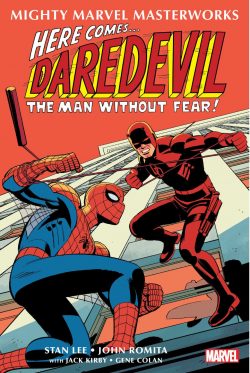
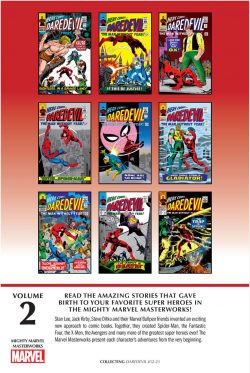
Mighty Marvel Masterworks Daredevil volume 2: Alone Against the Underworld


By Stan Lee, Denny O’Neil, John Romita, Gene Colan, with Jack Kirby, Frank Giacoia, Mike Esposito, Dick Ayers, Bill Everett & various (MARVEL)
ISBN: 978-1-3029-3440-8 (PB/Digital edition)

It’s another year of significant anniversaries so let’s say many happy returns for the swinging sixtieth of the rather tastelessly characterised “Sightless Swashbuckler” and latter-day meanly moody Man Without Fear Daredevil…

As the remnants of Atlas Comics grew in popularity in the early 1960s it slowly replaced its broad variety of genre titles with more and more superheroes. The recovering powerhouse that would be Marvel was still hampered by a crippling distribution deal that limited the company to 16 titles (curtailing their output until 1968), so each new untried book would have to be certain of success.

Moreover, as costumed characters were selling, each new similarly-themed title would limit the breadth of the monster, western, war, humour or girls’ comics that had been the outfit’s recent bread and butter. It was putting a lot of eggs in one basket, and superheroes had failed twice before for Stan Lee. It all worked out in the end though…

Back then, Matt Murdock was a blind lawyer whose remaining senses hyper-compensate, enabling him to perform astonishing acrobatic feats and fight like a demon. A formidable fighter for justice in both identities and a living lie-detector, he was very much a second-string hero for most of his early years.

Daredevil was nonetheless a striking and popular one, due in large part to the roster of brilliant artists who illustrated the strip. He battled thugs, gangsters, a plethora of super-villains and even the occasional monster or alien invasion, quipping and wise-cracking his way through life and life-threatening combat. His civilian life consisted of assorted legal conundra and manfully standing back while quenching his own feelings as his portly best friend and partner Franklin “Foggy” Nelson vainly romanced their secretary Karen Page, With Lee and a rotating line-up of artists plugging on, concocting some extremely engaging tales until the latest Marvel Sensation could find his feet.

That transition forms the meat of this potent compilation: part of a series of Mighty Marvel Masterworks available as kid-friendly digest paperbacks and eBooks. It traces the move from morose masked avenger to wisecracking Scarlet Swashbuckler, gathering Daredevil #12-21 (January 1965-October 1966) into one boldly boisterous package of thrills and spills.

The previous year had seen Golden Age giant Wally Wood leave his own unmistakable mark on the series but with his departure Lee turned to an old pal who had left during the harshest days of the Atlas implosion. He was to eventually become Marvel’s top – and most loyal – superstar…

‘Sightless, in a Savage Land!’ was laid out by Jack Kirby and illustrated by John Romita. The latter had worked for Timely/Atlas in the 1950s before moving to relatively steady work on National/DC’s romance comics, as well as freelance advertising. He returned to take DD on an epic quest, guest-starring Tarzan-tribute act Ka-Zar, ranging from the dinosaur-haunted Savage Land via an extended battle with high-tech pirates led by The Plunderer to Jolly Olde England-land (in #13’s ‘The Secret of Ka-Zar’s Origin!’) and ultimately to a US Early Warning Base (#14, ‘If This be Justice…!’, and with what I’m sure is some un-credited assistance from George Tuska).

With this multi-part, globe-girdling epic, Daredevil began to confirm his persona as a wisecracking one-man war on evil: a front that would carry him all the way to the grim ‘n’ gritty Frank Miller days, far, far in the future. Romita’s graceful, flamboyant style and expressiveness imparted new energy into the character (especially since Frank Ray né Giacoia had been inking the series since #14).

DD #15’s ‘…And Men Shall Call Him… Ox!’ showed the artist’s facility for explosive superhero action as the dim strongman last seen in #6 resurfaced, albeit in a new and sinister fashion as the lummox is made the subject of a macabre brain-swapping experiment…

When a certain webslinger guest-starred in #16, little did anyone suspect how soon Romita would be leaving…

‘Enter… Spider-Man!’ introduces criminal mastermind Masked Marauder who has big plans; the first of which is to get DD and the wallcrawler to kill each other. With follow-up ‘None are so Blind…’, a convoluted a sub-plot began which would lead to some of the highest and lowest moments of the early Daredevil series, beginning after the wondrous wallcrawler accuses Foggy of being the Man Without Fear! Although the webspinner quickly realizes his mistake, others present don’t…

Issue #18’s ‘There Shall Come a Gladiator!’ introduces the manic armoured villain and archetypal super-thug in a tale two-thirds scripted by legend-in-waiting Denny O’Neil. Here Foggy seeks to sway Karen by bolstering the ridiculous idea that he is Daredevil… and almost perishes as a result of his deception.

DD #19 then sees the Masked Marauder ally with Gladiator in action-packed big fight tale ‘Alone… Against the Underworld!’: a fitting farewell for Romita who was moving over to Amazing Spider-Man after Steve Ditko’s abrupt, controversial and utterly unexpected departure.

Originally tipped for a fill-in issue, Gene Colan came aboard as penciller with #20’s ‘The Verdict is: Death!’ and inked by Mike Esposito (as Mickey DeMeo). Colan’s superbly humanistic drawing and facility with expressions was a little jarring at first – since he drew Daredevil in a passable Romita imitation and everything else in his own style – but he soon settled in and this two-part revenge thriller featuring The Owl (concluding with the Giacoia, Dick Ayers & Bill Everett inked ‘The Trap is Sprung!’) is a fine beginning to his long, fabulously impressive run on the series, incorporating the Man Without Fear’s battle against his ferocious arch-foe, an army of thugs, deadly flying robots and even an exploding volcano to keep the readers on their toes…

Augmented by a pulse-pounding house ad, this classy compendium is a nostalgic delight for one and all: a truly magnificent example of Marvel’s compelling formula for success combining smart stories, human characters and magnificent illustration. If you’ve not read these tales before I strongly urge you to rectify that error as soon as superhumanly possible.
© 2023 MARVEL.

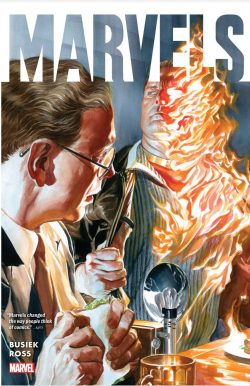
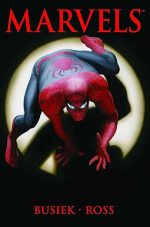
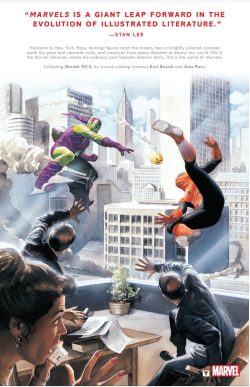
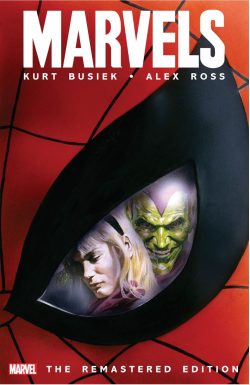
Marvels (25th Anniversary Edition)


By Kurt Busiek & Alex Ross, with Steve Darnall, Mark Braun, Richard Starkings, John Roshell & various (MARVEL)
ISBN: 978-0-7851-4286-7 (TPB) 978-0-7851-1388-1(HC/Digital edition)

Every so often in mainstream comics something comes along that irrevocably alters the landscape of our art-form, if not the business itself. After each such event the medium is never quite the same again. One such work was 4-issue Prestige Format Limited Series Marvels by jobbing scripter Kurt Busiek and just-breaking illustrator Alex Ross. This year that landmark game-changing graphic collection turns 30…

I’m usually quite reticent in suggesting people read stuff I know damn well they’ve almost certainly already seen, but apparently every day is somebody’s first, and as years pile up and more stuff gets made, even certified bona fide “unmissables” get shuffled into touch and forgotten…

This tale is all about history and human perspective, following the working life of photo-journalist Phil Sheldon, whose career paralleled the double dawning of the heroic era; when science, magic, courage and overwhelming super-nature give birth to an Age of Marvels…

The saga opens with Alex Ross’ brief, preliminary retelling of the origin of the Golden Age Human Torch as first seen in Marvels #0 (co-written by Steve Darnall and produced in classicist pic-&-text block format) before the story proper opens in ‘A Time of Marvels’. In 1939 a gaggle of ambitious young newspapermen discuss the “War in Europe”. Brash up-and-comer J. Jonah Jameson is trying to dissuade his shutterbug pal Phil from heading overseas, claiming there’s plenty of news to snap in New York…

Unconvinced, Sheldon heads to his next assignment: a press conference with scientific crackpot Professor Phineas T. Horton. The photographer’s head is filled with thoughts of journalistic fame and glory on distant battlefields and he almost misses the moment Horton unveils his artificial man: a creature that bursts into flame like a Human Torch…

From that moment on Sheldon’s life is transformed forever. His love-hate fascination with the fantastic miracles which rapidly, unceasingly follow in the inflammatory inhumanoid’s fiery wake is used to trace the rise of superhumanity and monstrous menace which comprises the entire canon of what we know as the Marvel Universe….

Soon the android is accepted as a true hero, frequently battling aquatic invader Sub-Mariner like elemental gods in the skies above the city whilst seemingly-human vigilante supermen like The Angel constantly ignore the law and daily diminish Phil’s confidence and self-worth. It’s as if by their well-meaning actions these creatures are showing that mere men are obsolete and insignificant…

Feelings of ineffectuality and inadequacy having crushed the camera jockey’s spirit, Phil turns down a War Correspondent assignment and descends into a funk. He even splits up with fiancée Doris Jaquet. After all, what kind of man brings children into a world with such inhuman horrors in it? Nevertheless, Sheldon cannot stop following the exploits of the singular human phenomena he’s collectively dubbed “Marvels”…

Everything changes with the arrival of patriotic icon Captain America. With the Land of Liberty in World War II at long last, many once-terrifying titans have become the nation’s allies and secret weapons, turning their awesome power against the Axis foe and winning the fickle approval of a grateful public. However, some were always less dutiful than others. When tempestuous Sub-Mariner again battles the Torch, Prince Namor of Atlantis petulantly unleashes a tidal wave against Manhattan. Phil is critically injured snapping the event…

Even after losing an eye, Phil’s newfound belief in Marvels never wavers and he rededicates himself to his job and Doris; going to Europe where his pictures of America’s superhuman Invaders crushing the Nazi threat become part of the fabric of history…

The second chapter jumps to the 1960s where Sheldon, wife Doris and daughters Jenny and Beth are – like most New Yorkers – at the epicentre of another outbreak of metahumanity… a second Age of Marvels…

Two new bands of costumed champions operate openly: A Fantastic Four-some comprising famous scientist Reed Richards and test pilot Ben Grimm plus Sue and Johnny Storm. Another anonymous team who hide their identities call themselves The Avengers. There are also numerous independent mystery men streaking across the skies and hogging headlines, which Jonah Jameson – now owner/publisher of the newspaper he once wrote for – is none too happy about. After all, he has never trusted masks and is violently opposed to this new crop of masked mystery-men. Phil is still an in-demand freelancer, but has a novel idea, signing a deal for a book of his photos just as the first flush of popular fancy wanes and increasing anxiety about humanoid mutants begins to choke and terrify the man in the street…

When the mysterious X-Men are spotted, Sheldon is caught up in a spontaneous anti-mutant race riot: appalled to find himself throwing bricks with the rest of a deranged mob. He’s even close enough to hear their leader dismissively claim “They’re not worth it”…

Shocked and dazed, Sheldon goes home to his nice, normal family, but the incident won’t leave him, even as he throws himself into work and his book. He worries that his daughters seem to idolise Marvels. “Normal” people seem bizarrely conflicted, dazzled and besotted by the celebrity status of the likes of Reed Richards and Sue Storm as they prepare for their upcoming wedding, yet prowl the streets in vigilante packs lest some ghastly “Homo Superior” abomination show its disgusting face…

Events come to a head when Phil finds his own children harbouring a mutant in the cellar. During WWII, Phil photographed the liberation of Auschwitz, and looking into the huge deformed orbs of “Maggie” he sees what he saw in the faces of those pitiful survivors. His innate humanity wins out and Phil lets her stay, but can’t help dreading what friends and neighbours might do if they find such a creature mere yards from their own precious families…

Hysteria keeps growing and the showbiz glitz of the Richards/Storm wedding is almost immediately overshadowed by the catastrophic launch of anthropologist Bolivar Trask’s Sentinels. At first the mutant-hunting robots behave like humanity’s boon but when they override their programming and attempt to take over Earth, it is despised and dreaded mutants who save mankind.

Naturally, the man in the street knows nothing of this and all Phil sees is more panicked mobs rioting and destroying their own homes. In fear for his family, he rushes back to Doris and the girls, only to find Maggie has vanished: the unlovely little child had realised how much her presence had endangered her benefactors. They never see her again…

The third chapter focuses on the global trauma of ‘Judgement Day’ as the shine truly starts coming off the apple. Even though crises come thick and fast and are as quickly dealt with, vapid, venal humanity becomes jaded with the ever-expanding metahuman community and once-revered heroes are plagued by scandal after scandal. Exhausted, disappointed and dejected, Phil shelves his book project, but fate takes a hand when the skies catch fire and an incredible shiny alien on a skyborne surfboard announces the end of life on Earth…

Planet-devouring Galactus seems unstoppable and the valiant, rapidly-responding Fantastic Four are humiliatingly defeated. Phil, along with the rest of Earth, embraces the end and wearily walks home to be with his loved ones, repeatedly encountering humanity at its best and nauseating, petty, defeated worst. However, with the last-minute assistance of the Silver Surfer – who betrays his puissant master and suffers an horrific fate – Richards saves the world, but within days is accused of faking the entire episode. Disgusted with his fellow men, Sheldon explodes in moral revulsion…

Phil’s photobook is finally released in concluding instalment ‘The Day She Died’. Now an avowed and passionate proponent of masked heroes, humanity’s hair-trigger ambivalence and institutionalised rushes to judgement constantly aggravate Phil even as he meets the public and signs countless copies of “Marvels”.

The average American’s ungrateful, ungracious attitudes rankle particularly since the mighty Avengers are currently lost in another galaxy defending Earth from collateral destruction in a war between rival galactic empires – the Kree and the Skrulls – but the most constant bugbear is old associate Jameson’s obsessive pillorying of Spider-Man. Phil particularly despises a grovelling, ethically-deprived young freelance photographer named Peter Parker who constantly curries favour with the Daily Bugle’s boss by selling pictures deliberately making the wallcrawler look bad…

Phil’s book brings a measure of success, and when the aging photographer hires young Marcia Hardesty as a PA/assistant whilst he works on a follow-up, he finds a passionate kindred spirit. Still, everywhere Sheldon looks costumed champions are being harried, harassed and hunted by hypocritical citizens and corrupt demagogues, although even he has to admit some of the newer heroes are hard to like…

Ex-Russian spy Black Widow is being tried for murder, protesting students are wounded by a Stark Industries super-armoured thug and in Times Square a guy with a shady past is touting himself as a Hero for Hire. When respected Police Captain George Stacy is killed during a battle between Spider-Man and Doctor Octopus, Jameson is frantic to pin the death on the webspinner, but hero-worshipping Phil digs deeper. Interviewing many witnesses – including the murderously malign, multi-limed loon himself – Phil consequently strikes up a friendship with Stacy’s daughter Gwen, a truly sublime young lady who is inexplicably dating that unscrupulous weasel Parker…

One evening, hoping for another innocuous chat with the vivacious lass, Phil sees her abduction by the Green Goblin and, desperately giving chase, watches as his vaunted hero Spider-Man utterly fails to save her from death. Her murder doesn’t even rate a headline; that’s saved for industrialist Norman Osborn who is found mysteriously slain that same night…

Gutted, worn out and somehow betrayed, Sheldon chucks it all in, but seeing Marcia still has the fire in her belly and wonder in her eyes, leaves her his camera and his mission…

Although this titanic tale traces the arc of Marvel continuity, the sensitive and evocative journey of Phil Sheldon is crafted in such a way that no knowledge of the mythology is necessary to follow the plot; and would indeed be a hindrance to sharing the feelings of an ordinary man in extraordinary times.

One of Marvel’s – and indeed the genre’s – greatest tales (but you probably already know that and if you don’t what are you waiting for?), I count at least four separate versions available currently and suggest if you have any money left you opt for the 25th Anniversary edition that comes heavily annotated with numerous articles and extras. These include aforementioned prequel ‘Marvels Book Zero’, and the ‘Marvels Epilogue’ short story. The bonus section comprises a 39-page, panel-by-panel comparison of original 1960s Marvel material with the reinterpretations of #0-4 compiled by Jess Harrold: followed by ‘Marvels: The Proposals’ as Ross & Busiek pitched their big idea: four shots to get it just right, aided by an abundance of glorious ‘character studies’ incorporating a vast cast, and supplemented by text articles on the finished product from November 1993’s Marvel Age #130.

Busiek’s full scripts for #1-4 and a wealth of ‘layouts, pencils & Original Art’ (11 pages) follow, before diving deeper in with a 6-page peek ‘Inside Alex Ross’ Marvels Epilogue Sketchbook’. More commentary follows with recovered Introductions, Busiek’s in-story prose pieces ‘Marvels: The Articles’; 8 pages of Ross’ contribution via ‘Marvels: The Artistic Process’, and Harrold’s popular press features courtesy of ‘The Story of Marvels’, ‘Modern-Day Marvels’, ‘Understanding Marvels by Scott McCloud’, ‘McLaurin’s Mark on Marvels’.

Next comes a ‘Mahvels Parody’ by Darnall, Busiek, Ross & artist Mark Braun, accompanied by ‘Posters, Art & Homage Covers’, Ross’ ‘Marvels Collected-Edition Cover Gallery’, and material seen in previous collections, including an ‘Annotated Cover Gallery’; a selection of ‘Marvels 25th Anniversary Variants’, ‘Marvels 25th Anniversary Tributes Variants’ and ‘Marvels Epilogue Variants’: with 5- full page contributions from Paolo Rivera, Michael Cho, Gabriele Dell’Otto, Stephanie Hans, Daniel Acuña, Mark Brooks, David Mack, Julian Totino Tedesco, Mico Suayan & Brian Reber, Inhyuk Lee, Carlos Pacheco, Leinil Francis Yu & Sunny Cho, Adi Granov, Alan Davis, Mark farmer & Matt Hollingsworth, Nick Bradshaw, Gerlad Parel, Greg Smallwood, Marcos Martin, Tomm Coker, Yasmine Putri, Clayton Crain, Phil Noto, Simone Bianchi, Dave Johnson, Ron Lim & Dean White, Remsy Atassi, Dave Cockrum & Edgar Delgado, Fred Hembeck & Felipe Sobreiro, Skottie Young and more.

The epic history lesson ends with a list of ‘Marvels Sources’, citing where each re-envisioned scene first appeared in comics continuity before closing with Stan Lee’s Marvels TPB (1994) Introduction, full Acknowledgements and a final Afterword from Kurt Busiek & Alex Ross.

A truly groundbreaking achievement, Marvels – in whatever form you see it – is a comics tale you must not miss.
© 2020 MARVEL.

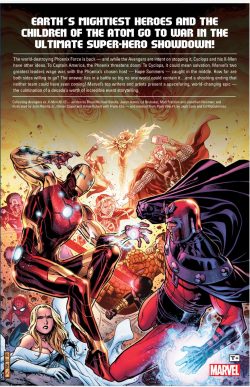
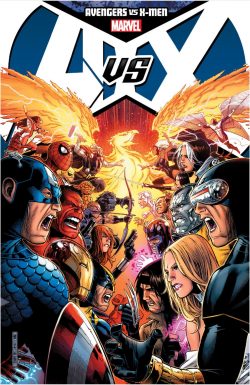
Avengers versus X-Men Compendium


By Jason Aaron, Brian Michael Bendis, Ed Brubaker, Matt Fraction, Jonathan Hickman, John Romita Jr., Olivier Coipel, Adam Kubert, Frank Cho & various (MARVEL)
ISBN: 978-1-84653-518-5 (B/Digital edition)

Despite all of us being sick as dogs, can we let this anniversary year end without revisiting Marvel’s one big idea in perfect execution? Enjoy this prime example of what made Marvel great – heroes pummelling other heroes…

The mainstream comics industry is now irretrievably wedded to blockbuster continuity-sharing mega-crossover events: rashly doling them out like epi-pens to Snickers addicts with peanut allergies, but at least these days, however, if we have to endure a constant cosmic Sturm and extra-dimensional Drang, the publishers take great pains to ensure that the resulting comics chaos is suitably engrossing and always superbly illustrated…

Marvel’s big thing was always extended clashes between mega-franchises such as The Avengers and X-Men, and this one began in Avengers: X Sanction when time-lost mutant Cable attempted to pre-emptively murder a select roster of the World’s Greatest Heroes to prevent an even greater cosmic tragedy.

Hope Spalding-Summers was the first mutant born on Earth after the temporarily insane Avenger Scarlet Witch used her reality-warping powers to eradicate almost all mutants in existence. Considered a mutant messiah, Hope was raised in the future before inevitably finding her way back to the present where she was adopted by X-Men supremo Scott Summers AKA Cyclops. Innumerable signs and portents had indicated that Hope was a reincarnated receptacle for the devastating cosmic entity dubbed The Phoenix…

This mammoth collection gathers the core 12-issue fortnightly miniseries (April – October 2012) which saw humanity and Homo Superior go to war to possess this celestial chosen one, and also includes prequel Avengers vs. X-Men #0 which laid the plot groundwork for the whole blockbusting Brouhaha.

Necessarily preceded by a double-page scorecard of the 78(!) major players, the story begins with a pair of Prologues (by Brian Michael Bendis, Jason Aaron & Frank Cho) as now-sane and desperately repentant Scarlet Witch Wanda Maximoff tries to make amends and restore her links with the Avengers she betrayed and attacked. However, even after defeating an attack by manic mutate MODOK, and a personal invitation from Ms. Marvel to come back, the penitent mutant is sent packing by her ex-husband The Vision and other male heroes she manipulated.

Meanwhile in Utopia – the West Coast island fortress housing the last 200 mutants on Earth – an increasingly driven Cyclops is administering brutally tough love to adopted daughter Hope. She is determined to defy her apparently inescapable destiny as eventual host for the omnipotent Phoenix force on some far future day by regularly moonlighting as a superhero. Sadly, she’s well out of her depth when she tackles the sinister Serpent Society and daddy humiliatingly comes to her rescue.

… And in the depths of space a ghastly firebird of life and death comes ever closer to Earth…

In the first chapter (by Bendis, John Romita Jr. & Scott Hanna) the catastrophically powerful force of destruction and rebirth nears our world and the perfect mortal host it hungers for and needs to guide it, frantically preceded by desperate harbinger of doom Nova, who almost dies delivering a warning of its proximity and intent. Soon, The Avengers and the US government are laying plans, whilst in Utopia Scott Summers pushes Hope harder than ever. If The Phoenix cannot be avoided, perhaps he can make his daughter strong enough to resist being overwhelmed by its promise of infinite power…

At The Jean Grey School for Higher Learning, ex X-Man and current Avenger Wolverine is approached by Captain America and regretfully leaves his position as teacher to once again battle a force that cannot be imagined…

With even his fellow mutants questioning his tactics and brutal pushing of Hope, Cyclops meets Captain America for a parley. On behalf of the world, the Sentinel of Liberty wants to take Hope into protective custody but the mutants’ leader – distrustful of human bigotry and past duplicity – reacts violently to the far-from-diplomatic overtures…

Jason Aaron scripts the second instalment as frayed tempers lead to all-out battle on the shores of Utopia, with past personal grudges fuelling a brutal conflict. As the metahuman war rages, Wolverine and Spider-Man surreptitiously go after hidden Hope, but – even far off in deep space – The Phoenix force has infected her and she blasts them…

Meanwhile in the extra-solar void Thor, Vision, War Machine and a select team of Secret Avengers confront the mindlessly onrushing energy construct…

Scripted by Ed Brubaker, Chapter 3 begins with the recovering Wolverine and Wallcrawler considering how to catch missing hyper-powerful Hope with both Avengers and recently departed X-Men chasing her. When the feral mutant clashes over tactics with Captain America, the resulting fight further divides Avenger forces. In episode 4 (authored by Jonathan Hickman) as the easily defeated space defenders limp back to Earth, Hope and Wolverine meet at the bottom of the world and devise their own plans for her future…

All over Earth heroes are hunting the reluctant chosen one, and clashes between mutants and superhumans are steadily intensifying in ferocity, but the fugitive pair evade all pursuit by stealing a rocket and heading to the ancient “Blue Area of the Moon” where revered mutant Jean Grey first died to save the universe from The Phoenix.

When the former Marvel Girl was originally possessed by the fiery force she became a hero of infinite puissance and a cataclysmic champion of Life, before the power corrupted her and she devolved into Dark Phoenix: a rapacious wanton god of planet-killing appetites…

In a valiant act of contrition, Jean permitted the X-Men to kill her before her rapacious need completely consumed her in the oxygen-rich ancient city on the lunar surface (of course that’s just the tip of an outrageously long and overly-complicated iceberg not germane or necessary to us here: just search-engine the tale afterwards, OK?… or just buy one of many collections of The Dark Pheonix Saga).

When Hope finally reaches the spot of her predecessor’s sacrifice she finds that she’s been betrayed and that the Avengers are waiting – and so are mutants Cyclops, Emma Frost, Colossus, Magik and Namor the Sub-Mariner. With battle set to begin again, the battered body of Thor crashes into the lunar dust and the sky is lit by the blazing arrival of the Phoenix avatar…

Matt Fraction scripts the 5th chapter as the appalling firebird attempts to possess Hope, who realises she has completely overestimated her ability to handle the ultimate force, even as Avengers and X-Men again come to blistering blows.

Some distance away super-scientists Tony Stark and Henry Pym deploy a last-ditch anti-Phoenix invention but it doesn’t work as planned, and when the furious light finally dies down, infernal energy has possessed not Hope but the five elder mutants who turn their blazing eyes towards Earth and begin to plan how best to remake it…

Olivier Coipel & Mark Morales begin a stint as illustrators with the 6th – Hickman scripted – instalment as, 10 days after, old comrades Magneto and Charles Xavier meet to discuss the paradise Earth has become – especially for mutants. Violence, disease, hunger and want are gone but Cyclops, Emma, Sub-Mariner, Magic and Colossus are distant, aloof saviours at best and the power they share incessantly demands to be used more and more and more…

Myriad dimensions away in the mystical city of K’un Lun, kung fu overlord Lei Kung is warned an ancient disaster is repeating itself on Earth and dispatches the city’s greatest hero Iron Fist to avert overwhelming disaster, even as fearful humanity is advised their old bad ways will no longer be allowed to despoil the world. Naturally the decree of a draconian “Pax Utopia” does not sit well with humanity, and soon the Avengers are again at war with the last few hundreds of mutantkind. This time, however, the advantage is overwhelmingly with the underdogs and their five godlike leaders…

A desperate raid to snatch Hope from Utopia goes catastrophically wrong until the long-reviled Scarlet Witch intervenes and rescues the Avengers and Hope. Astounded to realise Wanda’s probability-altering gifts can harm them, the “Phoenix Five” declare all-out, total war on the human heroes…

In the 7th, Fraction-scripted, chapter Avengers are hunted all over the planet and the individual personalities of the possessed X-Men start clashing with each other. As Iron Fist, Lei Kung and Stark seek a marriage of spiritual and technological disciplines, Sub-Mariner defies the Phoenix consensus to attack the African nation of Wakanda…

Adam Kubert & John Dell handle the art from issue #8 with Bendis’ script revealing how an army of Avengers and the power of Wanda and Xavier turn the tide of battle… but not before a nation dies. Moreover, with Namor beaten, his portion of Phoenix-power passes on to the remaining four, inspiring greedy notions of sole control amongst the possessed…

In #9 (by Aaron, Kubert & Dell) as the hunt for heroes continues on Earth, in K’un Lun Hope is being trained in martial arts discipline by the city’s immortal master, and schooled in sheer guts and humanity by Spider-Man. When Thor is captured, the Avengers stage an all-out assault and by a miracle defeat both Magik and Colossus. Tragically, that only makes Scott Summers stronger still and he comes looking for his wayward daughter…

Brubaker writes the 10th chapter as Cyclops invades K’un Lun with horrific consequences whilst on Earth Emma Frost succumbs to the worst aspects of her nature: enslaving friends and foes with her half of the infinite Phoenix force. Simultaneously, Captain America and Xavier lay plans for one last “Hail Mary” assault…

And in the mystic city, Hope finally comes into her power – blasting Cyclops out of that other reality and back to the moon where the tragedy began…

Bendis, Coipel & Morales craft the penultimate instalment as Phoenix’s rapacious destructive hunger causes Cyclops to battle Frost, even as the unifying figure of Xavier unites X-Men and Avengers against the true threat, as with issue #12 (Aaron, Kubert & Dell) Cyclops finally descends into the same hell as his beloved, long-lost Jean by becoming a seemingly unstoppable, insatiable Dark Phoenix with only the assembled heroes and the poor, resigned Hope prepared to stop him from consuming the Earth…

The series generated a host of variant covers (I lost count at 87) by Cho, Jason Keith, Jim Cheung, Laura Martin, Stephanie Hans, Romita Jr., Ryan Stegman, Carlo Barberi, Olivier Coipel, Morales, Skott Young, Arthur Adams, Nick Bradshaw, Carlo Pagulayan, Sara Pichelli, J. Scott Campbell, Jerome Opeña, Mark Bagley, Dale Keown, Esad Ribic, Adam Kubert, Alan Davis, Humberto Ramos, Leinil Francis Yu, Adi Granov and Billy Tan which will undoubtedly delight and astound the artistically adroit amongst you…

Fast, furious and utterly absorbing – if short on plot – this ideal summer blockbuster (don’t you wish movie lawyers moved as fast as comics folk and this was screen ready by now?) remains an extreme Fights ‘n’ Tights funnybook extravaganza that delivers a mighty punch without any real necessity to study beforehand: a comics-continuity both veterans and film-fed fanboys alike can relish.
© 2012 Marvel.

Avengers Omnibus volume 1


By Stan Lee & Jack Kirby, Larry Lieber, Paul Laiken, Larry Ivie, Don Heck, Dick Ayers, Paul Reinman, George Roussos, Chic Stone, Mike Esposito, Wally Wood, John Romita, Frank Giacoia, Sam Rosen, Art Simek, Morrie Kuramoto & various (MARVEL)
ISBN: 978-0-7851-5846-2 (HB/Digital edition)

Win’s Christmas Gift Recommendation: Ironclad Guarantee of Total Wonder… 10/10

Probably Marvel’s biggest global franchise success, The Avengers celebrated their 60th anniversary in September 2023, so let’s close that Birthday Year with acknowledgement of that landmark event and one more grand adventure…

After a period of meteoric expansion, in 1963 the burgeoning Marvel Universe was finally ready to emulate the successful DC concept that had cemented the legitimacy of the Silver Age of American comics. The concept of putting a bunch of all-star eggs in one basket which had made the Justice League of America such a winner also inspired the moribund Atlas outfit – primarily Stan Lee, Jack Kirby & Steve Ditko – into inventing “super-characters” of their own. The result – in 1961 – was The Fantastic Four.

Over 18 months later, the fledgling House of Ideas generated a small but viable stable of costumed leading men (but only sidekick women) so Lee & Kirby assembled a handful of them and moulded them into a force for justice and soaring sales. Seldom has it ever been done with such style and sheer exuberance. Cover dated September 1963, The Avengers #1 launched as part of an expansion package which also included Sgt. Fury and his Howling Commandos and The X-Men…

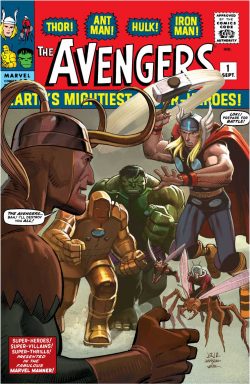
Faithfully compiling the groundbreaking tales from #1-30 of The Avengers (spanning March 1963 to September 196???) and including contemporary pin-ups, letters pages and other hidden delights as well as trio of Stan Lee Introductions from earlier Marvel masterworks collections, the suspenseful action kicks off with ‘The Coming of the Avengers!’ Instead of starting at a neutral beginning Stan & Jack (and inker Dick Ayers) assumed buyers had at least a passing familiarity with Marvel’s other heroes and so wasted no time or space on introductions.

In Asgard, immortal trickster Loki is imprisoned on a dank isle, hungry for vengeance on his noble half-brother Thor. Whilst malevolently observing Earth, the malign god espies the monstrous, misunderstood Hulk and mystically engineers a situation wherein the man-brute seemingly goes on a rampage, simply to trick the Thunder God into battling the monster.

When the Hulk’s teen sidekick Rick Jones radios the FF for assistance, devious Loki scrambles and diverts the transmission and smugly awaits the blossoming of his mischief. Sadly for the schemer, Iron Man, Ant-Man and The Wasp also pick up the redirected SOS. As the heroes all converge in the American Southwest to search for the Jade Giant, they realise that something is oddly amiss…

This terse, epic, compelling and wide-ranging yarn (New York, New Mexico, Detroit and Asgard in 22 pages) is Lee & Kirby at their bombastic best, and remains one of the greatest stories of the Silver Age (it’s certainly high in my own top ten Marvel Tales) and is followed by ‘The Space Phantom’ (Lee, Kirby & Paul Reinman), wherein an alien shape-stealer almost destroys the team from within.

With latent animosities exposed by the malignant masquerader, the tale ends with the volatile Hulk quitting the team in disgust, only to return in #3 as an outright villain in partnership with ‘Sub-Mariner!’ This globe-trotting romp delivers high-energy thrills and one of the best battle scenes in comics history as the assorted titans clash in abandoned World War II tunnels beneath the Rock of Gibraltar.

Inked by George Roussos, Avengers #4 was a groundbreaking landmark as Marvel’s greatest Golden Age sensation returns for another increasingly war-torn era. ‘Captain America joins the Avengers!’ has everything that made the company’s early tales so fresh and vital. The majesty of a legendary warrior returned in our time of greatest need: stark tragedy in the loss of his boon companion Bucky, aliens, gangsters, Sub-Mariner and even subtle social commentary and – naturally – vast amounts of staggering Kirby Action. It even begins with a cunning infomercial as Iron Man unsuccessfully requests the assistance of the company’s other fresh young stars, giving readers a taste of the other mighty Marvels on offer to them.

Reinman returned to ink ‘The Invasion of the Lava Men!’: another staggering adventure romp as the team battle incendiary subterraneans and a world-threatening mutating mountain… with the unwilling assistance of the ever-incredible Hulk. That issue also started a conversion with fans as letters column ‘All About The… Avengers’ began…

However, even that pales before the supreme shift in artistic quality that is Avengers #6.

Chic Stone – arguably Kirby’s best Marvel inker of the period – joined the creative team just as a classic arch-foe debuts. ‘The Masters of Evil!’ reveals how Nazi super-scientist Baron Zemo is forced by his own arrogance and paranoia to emerge from the South American jungles he’s been skulking in since the Third Reich fell, after learning his despised nemesis Captain America has returned from the dead.

To this end, the ruthless war-criminal recruits a gang of previously established super-villains to attack New York City and destroy the Avengers. The unforgettable clash between valiant heroes and vile murdering mercenaries Radioactive Man, Black Knight and The Melter is an unsurpassed example of prime Marvel magic to this day.

Issue #7 found two more malevolent recruits for the Masters of Evil as Asgardian outcasts Enchantress and The Executioner ally with Zemo, just as Iron Man is suspended due to misconduct occurring in his own series. This was the dawning of the close-continuity era where events in one series were regularly referenced and even built upon in others. The practise quickly became a rod for the creators’ own backs and lead to a radical rethink…

It may have been ‘Their Darkest Hour!’, but #8 delivered the team’s greatest triumph and tragedy as Jack Kirby (inked with fitting circularity by Dick Ayers) relinquished his drawing role with the superbly entrancing invasion-from-time thriller which introduced ‘Kang the Conqueror!’ Riffing on the movie The Day the Earth Stood Still, the tale sees an impossibly powerful foe defeated by the cunning of ordinary teenagers and indomitable spirit of Earth’s Mightiest Heroes…

Whenever Kirby left a title he’d co-created, it took a little while to settle into a new rhythm, and none more so than with these collectivised costumed crusaders. Although Lee and the fabulously utilitarian Don Heck were perfectly capable of producing cracking comics entertainments, they never had The King’s unceasing sense of panoramic scope and scale which constantly sought bigger, bolder blasts of excitement.

The Avengers evolved into an entirely different series when the subtle humanity of Heck’s vision replaced Kirby’s larger-than-life bombastic bravura. The series had rapidly advanced to monthly circulation and even The King could not draw the massive number of pages his expanding workload demanded. Heck was a gifted and trusted artist with a formidable record for meeting deadlines and, progressing under his pencil, sub-plots and character interplay finally got as much space as action and spectacle. After Kirby, stories increasingly focused on scene-stealing newcomer Captain America: concentrating on frail human beings in costumes, rather than wild modern gods and technological titans bestriding and shaking the Earth…

Inked by Ayers, Heck’s first outing was memorable tragedy ‘The Coming of the Wonder Man!’, wherein the Masters of Evil plant superhuman Trojan Horse Simon Williams within the heroes’ ranks, only to have the conflicted infiltrator find deathbed redemption by saving them from the deadly deathtrap he creates…

Another Marvel mainstay debuted with the introduction of (seemingly) malignant master of time Immortus, who briefly combined with Zemo’s devilish cohort to engineer a fatal division in the ranks by removing Cap from the field in ‘The Avengers Break Up!’ A sign of the Star-Spangled Sentinel’s increasing popularity, the issue is augmented by a Marvel Masterwork Pin-Up of ‘The One and Only Cap’ courtesy of Kirby & Ayers…

An eagerly-anticipated meeting delighted fans in #11 as ‘The Mighty Avengers Meet Spider-Man!’ A clever cross-fertilising tale inked by Stone, it features the return of time-bending tyrant conqueror Kang who attempts to destroy the team by insinuating a robotic duplicate of the outcast arachnid within their serried ranks. Accompanied by Heck’s Marvel Master Work Pin-up of ‘Kang!’ it’s followed by a cracking end-of-the-world thriller with guest-villains Mole Man and The Red Ghost doing their best avoid another clash with the Fantastic Four.

This was another Marvel innovation, as – according to established funnybook rules – bad guys stuck to their own nemeses and didn’t clash outside their own backyards. ‘This Hostage Earth!’ (inked by Ayers) is a welcome return to grand adventure with lesser lights Giant-Man and The Wasp taking rare lead roles, but is trumped by a rousing gangster thriller of a sort seldom seen outside the pages of Spider-Man or Daredevil, premiering Marvel Universe Mafia analogue The Maggia and another major menace in #13’s ‘The Castle of Count Nefaria!’

After crushingly failing in his scheme to frame the Avengers, Nefaria’s caper ends on a tragic cliffhanger as Janet Van Dyne is left gunshot and dying, leading to a peak in melodramatic tension in #14 – scripted by Paul Laiken/Larry Ivie & Larry Lieber over Stan’s plot – where the traumatised team scour the globe for the only surgeon who can save her.

‘Even Avengers Can Die!’ – although of course she doesn’t – resolves into an epic alien invader tale with overtones of This Island Earth with Kirby stepping in to lay out the saga for Heck & Stone to illustrate. This only whets the appetite for the classic climactic confrontation that follows as the costumed champions finally deal with the Masters of Evil and Captain America finally avenges the death of his dead partner.

‘Now, By My Hand, Shall Die a Villain!’ in #15 – laid-out by Kirby, pencilled by Heck and inked by Mike Esposito – features the final, fatal confrontation between Cap and Zemo in the heart of the Amazon, whilst the other Avengers and the war-criminal’s cohort of masked menaces clash once more on the streets of New York City…

The battle ends with ‘The Old Order Changeth!’ (broken down by Kirby before being finished by Ayers) presaging a dramatic change in concept for the series; presumably because, as Lee increasingly wrote to the company’s unique strengths – tight continuity and strongly individualistic characterisation – he found juggling individual stars in their own titles as well as a combined team episode every month was just incompatible if not impossible…

As Cap and substitute-sidekick Rick Jones fight their way back to civilisation, The Avengers institute changes. The big-name stars retire and are replaced by three erstwhile villains: Hawkeye, Quicksilver and The Scarlet Witch.

Eventually, led by perennial old soldier Captain America, this relatively powerless group with no outside titles to divide the attention (the Sentinel of Liberty did have a regular feature in Tales of Suspense but at that time it featured adventures set during WWII), evolved into another squabbling family of flawed, self-examining neurotics, enduring extended sub-plots and constant action as valiant underdogs; a formula readers of the time could not get enough of and which still works today…

Acting on advice from the departing Iron Man, the neophytes seek to recruit the Hulk to add raw power to the team, only to be sidetracked by the Mole Man in #17’s ‘Four Against the Minotaur!’ (Lee, Heck & Ayers), after which they then fall foul of a dastardly “commie” plot ‘When the Commissar Commands!’ – necessitating a quick trip to thinly-disguised Vietnam analogue Sin-Cong to unwittingly battle a bombastic android…

This brace of relatively run-of-the-mill tales is followed by an ever-improving run of mini-masterpieces: the first of which wraps up this initial Epic endeavour with a 2-part gem providing an origin for Hawkeye and introducing a roguish hero/villain.

‘The Coming of the Swordsman!’ sees a dissolute and disreputable swashbuckler – with just a hint of deeply-buried flawed nobility – seeking to force his way onto the highly respectable team. His immediate rejection leads to him becoming an unwilling pawn of a far greater menace after being kidnapped by A-list would-be world despot The Mandarin.

The conclusion comes in the superb ‘Vengeance is Ours!’ – sublimely inked by Wally Wood – wherein the constantly-bickering Avengers finally pull together as a supernaturally efficient, all-conquering super-team…

By this time the squad – Captain America, Hawkeye, Quicksilver and Scarlet Witch – was a firm fan-favourite. with close attention to character interplay and melodrama subplots, leavening action through compelling soap-opera elements that kept readers riveted.

In Avengers #21 Lee, Heck & Wally Wood – without pausing for creative breath – launched another soon-to-be big name villain in the form of Power Man. ‘The Bitter Taste of Defeat!’ depicted his creation and a diabolical plan hatched with evil Asgardian witch Enchantress to discredit and replace the quarrelsome quartet. The scheme was only narrowly foiled by sharp wits and dauntless determination in the concluding ‘The Road Back.’

An epic 2-part tale follows as the team are abducted into the far-future to battle against and eventually beside Kang the Conqueror. ‘Once an Avenger…’ (Avengers #23, December 1965 and, incidentally, my vote for the best cover Kirby ever drew) is inked by John Romita (senior), pitting the heroes against an army of fearsome future men, with the yarn explosively and tragically ending in ‘From the Ashes of Defeat!’ by Lee, Heck & inker Ayers. The still-learning team then face their greatest test yet after being captured by the deadliest man alive and forced to fight their way out of the tyrant’s kingdom of Latveria in #25’s ‘Enter… Dr. Doom!’

Since change is ever the watchword for this series, the next two issues combined a threat to drown the world from subsea barbarian Attuma with the return of old comrades. ‘The Voice of The Wasp!’ and ‘Four Against the Floodtide!’ (pseudonymously inked by Frank Giacoia as “Frank Ray”) is a superlative action-romp but is merely a prelude to #28’s return of founding Avenger Giant-Man in a new guise as ‘Among us Walks a Goliath!’ This instant classic introduced the villainous Collector whilst extending Marvel’s pet theme of alienation by tragically trapping the size-changing hero at a freakish 10-foot height… seemingly forever…

Avengers #29 features ‘This Power Unleashed!’ and brings back Hawkeye’s lost love Black Widow as a brainwashed Soviet agent attempting to destroy the team. She recruits Power Man and Swordsman as cannon-fodder but is foiled by incompletely submerged feelings for Hawkeye, after which ‘Frenzy in a Far-Off Land!’ sees dispirited colossus Henry Pym embroiled in a futuristic civil war amongst a lost south American civilisation. The conclusion threatened to end in global incineration but that’s a denouement you’ll have to wait for…

To Be Continued…

Augmenting the narrative joys is an abundance of behind-the-scenes treasures such as contemporary house ads, a dozen original art pages and covers by Kirby, Ayers, Heck & Wood, production-stage pencilled page photostats and a fascinating sequence of “tweaked” cover-corrections. Covers for reprint comics Marvel Tales #2, Marvel Super-Heroes #1 & 21 and Marvel Triple Action #5-24, plus 16 previous collections front-&-back covers by Stuart Immonen and Arthur Adams. Still more extras include earlier Kirby Avengers collection covers modified by painters Dean White and another by Alex Ross taken from the 1999 Overstreet Guide to Comics.

Unceasingly enticing and always evergreen, these immortal epics are tales that defined the Marvel experience and a joy no fan should deny themselves or their kids.
© 2019 MARVEL.

Invincible Iron Man Omnibus volume 1


By Stan Lee & Don Heck, Jack Kirby, Larry Lieber, Robert Bernstein, Don Rico, Al Hartley, Steve Ditko, Roy Thomas, Gene Colan & various (Marvel)
ISBN: 978-1-3029-5358-4 (HB/Digital edition)

Win’s Christmas Gift Recommendation: Cast Iron Comics Cheer… 10/10

One of Marvel’s biggest global successes thanks to the film franchise, Iron Man officially celebrated his 60th anniversary in 2023, so let’s again acknowledge that landmark one last time…

Tony Stark is a super-rich supergenius inventor who moonlights as a superhero: wearing a formidable, ever-evolving suit of armour stuffed with his own ingenious creations. The supreme technologist hates to lose and constantly upgrades his gear, making Iron Man one of the most powerful characters in the Marvel Universe. There are a number of ways to interpret Stark’s creation and early years: glamorous playboy, super-rich industrialist, philanthropist, inventor – even when not operating in his armoured alter-ego.

Created in the immediate aftermath of the Cuban Missile Crisis and at a time when “Red-baiting” and “Commie-bashing” were American national obsessions, the emergence of a brilliant new Thomas Edison employing Yankee ingenuity and invention to safeguard and better the World seemed inevitable. Combining that era’s all-pervasive belief that technology could solve any problem with the universal imagery of noble knights battling tangible and easily recognisable Evil, the proposition almost becomes a certainty.

Of course, it might simply be that we kids thought it both great fun and very, very cool…

This fabulous full-colour compendium of the Steel Shod Sentinel’s early days reprints all his adventures, feature pages and pin-ups from Tales of Suspense #39 (cover-dated March 1963 on newsstand from December 10th 1962) through #83 (November 1966), revisiting the dawn of Marvel’s rise to ascendancy.

The collection also offers Introductions by Lee and Tom Field from earlier collections (Marvel Masterworks volumes 1-3 & Son of Marvel Origins) and essays by Bob Layton (‘How Communism Changed My Life for the Better!’) and Nick Caputo (‘Just a Guy Named Don: An Appreciation of Don Heck’s Super Hero Art’) plus assorted other extras.

This period saw the much-diminished and almost-bankrupt former comics colossus begin challenging DC Comics’ position of dominance, but not quite yet become the darlings of the student counter-culture. In these tales, Stark is still very much a gung-ho patriotic armaments manufacturer, and not the enlightened capitalist liberal dissenter he would become…

Scripted by Larry Lieber (over brother Stan Lee’s plot) and illustrated by the criminally unappreciated Don Heck, Tales of Suspense #39 reveals how and why ‘Iron Man is Born!’, with engineering and electronics genius Stark field-testing his latest inventions in Viet Nam before being wounded by a landmine.

Captured by Viet Cong commander Wong-Chu, Stark is told that if he creates weapons for the Reds he will be operated on to remove the metal shrapnel in his chest that will kill him within seven days. Knowing Commies can’t be trusted, Stark and aged Professor Yinsen – another captive scientist – build a mobile iron lung to keep his heart beating. They also equip this suit of armour with all the weapons their ingenuity can covertly construct whilst being observed by their captors. Naturally, they succeed and defeat the local tyrant, but not without a tragic sacrifice.

From the next issue, Iron Man’s superhero career is taken as a given, and he has already achieved fame for largely off-camera exploits. Lee continues to plot but Robert Bernstein replaces Lieber as scripter for issues #40-46 and Jack Kirby pencils for Heck. ‘Iron Man versus Gargantus!’ follows young Marvel’s pattern by pitting the hero against aliens – albeit via a robotic giant caveman intermediary – in an action-heavy, delightfully rollicking romp.

‘The Stronghold of Doctor Strange!’ (Lee, Bernstein, Kirby & Dick Ayers) features a gloriously spectacular confrontation with a wizard of Science (not Lee & Steve Ditko’s later Mystic Master), after which Heck returns to full art for the espionage and impostors’ thriller ‘Trapped by the Red Barbarian’ before Kirby & Heck team again for science-fantasy invasion romp ‘Kala, Queen of the Netherworld!’

Heck goes it alone when Iron Man travels to ancient Egypt to rescue fabled and fabulous Queen Cleopatra from ‘The Mad Pharaoh!’ before new regular cast members – bodyguard “Happy” Hogan and secretary Virginia “Pepper” Potts – and the first true supervillain arrive as the Steel Sentinel must withstand ‘The Icy Fingers of Jack Frost!’ Stark then faces (and converts to Democracy) his Soviet counterpart ‘The Crimson Dynamo!’ after which Tales of Suspense #47 presaged big changes. Lee wrote ‘Iron Man Battles the Melter!’, and Heck inked the unique pencils of Steve Ditko in a grudge match between Stark and a disgraced corporate rival, with the big event coming in the next issue’s ‘The Mysterious Mr. Doll!’

Here Lee, Ditko & Ayers scrapped the old, cool-but-clunky golden boiler-plate suit for a sleek, gleaming, form-fitting red-and-gold upgrade to aid the defeat of a sadistic mystic blackmailer using witchcraft to get ahead. The new suit would – with minor variations – become the symbol and trademark of the character for decades to come.

Paul Reinman inked Ditko on Lee’s crossover/sales pitch for the new X-Men comic book when ‘Iron Man Meets the Angel!’, before the series finally found its feet with Tales of Suspense #50.

Heck became regular penciller and occasional inker as Lee delivered the Armoured Avenger’s first major menace and perpetual nemesis in ‘The Hands of the Mandarin!’: a modern-day Fu Manchu derivative who terrifies the Red Chinese so much that they manipulate him into attacking America, with the hope that one threat will fatally wound the other. The Mandarin would become Iron Man’s greatest foe and remains so even in a more evolved era far removed from the now abhorrent attitudes that were part and parcel of patriotic Americanism back then.

Our ferrous hero made short work of criminal contortionist ‘The Sinister Scarecrow’, and also the Red spy who appropriated a leftover Russian armour-suit to declare ‘The Crimson Dynamo Strikes Again!’ scripted – as was the next issue – by the enigmatic “N. Kurok” who was in truth Golden Age veteran Don Rico. That issue also premiered a far more dangerous threat in the slinky shape of Soviet Femme Fatale The Black Widow.

With ToS #53 she became a headliner when ‘The Black Widow Strikes Again!’: stealing Stark’s new anti-gravity ray but ultimately thwarted in her sabotage mission, after which ‘The Mandarin’s Revenge!’ began a 2-part tale of kidnap and coercion, concluding by disproving in #55 that ‘No One Escapes the Mandarin!’ It’s followed by a “Special Bonus Featurette” by Lee & Heck, revealing ‘All About Iron Man’: detailing how the suit works and even ‘More Info about Iron Man!’ including a ‘Pepper Potts Pin-Up Page’…

‘The Uncanny Unicorn!’ promptly attacked in ToS #56, faring no better as his power-horn proved pointless in the end, but segueing neatly into another Soviet sortie as Black Widow resurfaced to beguile a budding superhero. ‘Hawkeye, The Marksman!’ was gulled into attacking the Golden Avenger in #57 during his debut moment: briefly making him the company’s latest and most dashing misunderstood malefactor.

Another landmark occurred next issue. Formerly, Iron Man had monopolised Tales of Suspense but ‘In Mortal Combat with Captain America!’ (inked by Ayers) depicted an all-out battle between the Avengers allies resulting from a diabolical substitution by evil impersonator The Chameleon. It was a tasty primer for the next issue when Cap would begin his own solo adventures, splitting the monthly comic into an anthology featuring Marvel’s top two patriotic paladins.

Iron Man’s initial half-length outing in #59 was against technological terror ‘The Black Knight!’, and as a result of the blistering clash, Stark was rendered unable to remove his own armour without triggering a heart attack: a situation that hadn’t occurred since the initial injury. Up until this time he had led a relatively normal life by simply wearing the heartbeat regulating breast-plate under his clothes. The introduction of such soap-opera subplots were a necessity of the shorter page counts, as were continued stories, but this seeming disadvantage worked to improve both the writing and the sales. The issue was also notable for the debut of letter column Mails of Suspense which is included here with subsequent features appearing hereafter following each new instalment of IM’s shortened exploits.

With Stark’s “disappearance”, Iron Man was ‘Suspected of Murder!’, a tale boasting the return of Hawkeye & Black Widow, leading directly into an attack from China and ‘The Death of Tony Stark!’ (complete with a bonus pin-up of ‘The Golden Avenger Iron Man’). The sinister ambusher then provided ‘The Origin of the Mandarin!’ before being beaten by Stark’s ingenuity once again.

After that extended epic, a change of pace came as short complete yarns returned. The first was #63’s industrial sabotage thriller ‘Somewhere Lurks the Phantom!’ (by Lee Heck & Ayers), followed by the somewhat self-explanatory ‘Hawkeye and the New Black Widow Strike Again!’ (inked by Chic Stone and with the Soviet agent abruptly transformed from slinky fur-clad seductress into gadget-laden costumed villain), after which ‘When Titans Clash!’ (inked by Mike Esposito as “Mickey DeMeo”) sees a burglar steal the red & gold armour, forcing Stark to defeat his greatest invention with his old suit.

Mike stuck around to see subsea tyrant Attuma as the threat du jour in ‘If I Fail, a World is Lost!’ and crime-lord Count Nefaria use dreams as a weapon in ‘Where Walk the Villains!’ The Maggia’s master resurfaced in the next issue to attack Stark with hallucinations in ‘If a Man be Mad!’: a rather weak tale introducing Stark’s ne’er-do-well cousin Morgan. It was written by Al Hartley with Heck & Esposito in top form as always.

Issues #69-71 form another continued saga: a one of the best of this early period. Inked by Vince Colletta, ‘If I Must Die, Let It Be with Honor!’ sees Iron Man forced to duel a new Russian opponent called Titanium Man in a globally-televised contest national super-powers see as a vital propaganda coup. Both governments are naturally quite oblivious of the cost to the participants and their friends…

DeMeo inks ‘Fight On! For a World is Watching!’ amplifying intrigue and tension as the Soviets, caught cheating, pile on pressure to kill America’s champion if they can’t score a publicity win, and final chapter ‘What Price Victory?’ affords a rousing, emotional triumph and tragedy made magnificent by the inking of troubled artistic genius Wally Wood.

Tales of Suspense #72’s ‘Hoorah for the Conquering Hero!’– by Lee, Heck & Demeo – deals with the aftermath of victory. Whilst the fickle public fête Iron Man, his best friend lies dying, and a spiteful ex-lover hires diabolical super-genius the Mad Thinker to destroy Stark and his company forever before #73 picks up, soap opera fashion, on Iron Man, rushing to the bedside of his best friend Happy Hogan, who was gravely wounded in the battle against the Titanium Man, and is now missing from his hospital bed.

‘My Life for Yours!’ – by a veritable phalanx of creators including Stan Lee, Roy Thomas, Gene Colan & Jack Abel (in Marvel modes as “Adam Austin & Gary Michaels”), Sol Brodsky, Flo Steinberg and Marie Severin – pits the Armoured Avenger in final combat against the Black Knight to rescue Hogan. After this, the creative team stabilised as Lee, Colan & Abel, for ‘If this Guilt be Mine..!’, wherein Stark’s inventive intervention saves his friend’s life but transforms the patient into a terrifying monster.

Whilst in pitched battle against ‘The Fury of… The Freak!’ (who scared the stuffings out of me as a comic-crazed 7-year-old), Iron Man is helpless when The Mandarin attacks again in #76’s ‘Here Lies Hidden,,,…Unspeakable Ultimo!’

The epic expands in ‘Ultimo Lives!’ and closes as the gigantic android goes bombastically berserk in ‘Crescendo!’: dooming itself and allowing our ferrous hero to escape home, only to face a Congressional Inquiry and a battle crazed Sub-Mariner in ‘Disaster!’

The Prince of Atlantis had been hunting his enemy Warlord Krang in his own series, and the path led straight to Stark’s factory, so when confronted with another old foe, the amphibian over-reacts in his customary manner. ‘When Fall the Mighty!’ in #80 is one colossal punch-up, which carries over into Tales to Astonish #82, where Thomas & Colan begin the final chapter before the penciller contracted flu after only two pages. The inimitable Jack Kirby, inked by Dick Ayers, stepped in to produce some of the finest action-art of their entire Marvel career, fully displaying ‘The Power of Iron Man!’ as the battles rages on to a brutal if inconclusive conclusion.

Tales of Suspense #81 trumpeted ‘The Return of the Titanium Man!’ – and Colan – as the Communist Colossus attacks the Golden Avenger on his way to testify before Congress, threatening all of Washington DC in the Frank Giacoia inked ‘By Force of Arms!’ until ultimately succumbing to superior (Yankee) fire power in ‘Victory!’

With the comics wonderment completed, those aforementioned essays lead to bonus features including a house ad promoting two new titles out the same month – Tales of Suspense #39 and Amazing Spider-Man #1 – and another plugging all the heroes extant as of May 1963. That one also announced the company rebrand as “Marvel Comics Group”.

With covers throughout by Kirby, Heck, Ayers, Wood, Colletta & Colan, Abel, we close with a selection of pre-correction original art covers and pages: 17 wondrous treats by Kirby, Heck, Wood, Colletta & Ayers, and a 1965 T-Shirt design by Kirby and Chic Stone. Also on show are the covers of Marvel Collectors’ Items Classics #1, 3-28,and Marvel Super-Heroes #28, 29 (and its unused Marie Severin alternate Cover art), 30 & 37: reprint titles that kept Iron Man’s history alive and accessible to new readers, concluding with a gallery of previous collection covers from Bruce Timm, and classic Kirby covers modified by painters Dean White and Richard Isanove, plus variants by Adi Granov, Ryan Meinerding and Gerald Parel.

Iron Man developed amidst the growing political awareness and consequent social unrest of the Vietnam Generation who were the comic’s maturing readership. Wedded as it was to the American Industrial-Military Complex, with a hero – originally the government’s wide-eyed golden boy – gradually becoming attuned to his country’s growing divisions, it was, as much as Spider-Man, a bellwether of the times. That it remains such a thrilling romp of classic superhero fun is a lasting tribute to the talents of all those superb creators that worked it. The sheer quality of this compendium is undeniable. From broad comedy and simple action to dark cynicism and relentless battle, Marvel Comics grew up with this deeply contemporary series and so could you.
© 2023 MARVEL.

Fantastic Four Omnibus volume 1


By Stan Lee & Jack Kirby with Chrisopher Rule, Steve Ditko, Dick Ayers, Joe Sinnot, George Roussos, Chic Stone, Sam Rosen, Art Simek & various (MARVEL)
ISBN: 978-0-7851-8566-6 (HB/Digital edition)

Win’s Christmas Gift Recommendation: Reliving How it All Began… 10/10

I’ve gone on record as saying that you actually can have too much of a good thing, by which I mean this collection of utter marvels is really, really heavy (and pricey) if you get the paper version. However, if you opt for electric formats, only the second quibble counts and the stories contained herein truly need to be in every home and library, so…

I’m partial to a bit of controversy so I’m going start off by saying that Fantastic Four #1 is the third most important Silver Age comic book ever, behind Showcase #4 – which introduced The Flash – and The Brave and the Bold #28, which brought superhero teams back via the creation of The Justice League of America. Feel free to disagree…

After a troubled period at DC Comics (National Periodicals as it then was) and a creatively productive but disheartening time on the poisoned chalice of the Sky Masters newspaper strip (see Complete Sky Masters of the Space Force), Jack Kirby settled into his job at the small outfit that used to be the publishing powerhouse Timely/Atlas. He churned out mystery, monster, romance and western material in a market he suspected to be ultimately doomed, but as always he did the best job possible and that genre fare is now considered some of the best of its kind ever seen.

But his fertile imagination couldn’t be suppressed for long and when the JLA caught readers’ attention it gave him and writer/editor Stan Lee an opportunity to change the industry forever.

According to popular myth, a golfing afternoon led to publisher Martin Goodman ordering nephew Stan to do a series about a group of super-characters like the JLA. The resulting team quickly took the fans by storm. It wasn’t the powers: they’d all been seen since the beginning of the medium. It wasn’t the costumes: they didn’t have any until the third issue.

It was Kirby’s compelling art and the fact that these characters weren’t anodyne cardboard cut-outs. In a real and recognizable location – New York City – imperfect, raw-nerved, touchy people banded together out of tragedy, disaster and necessity to face the incredible. In many ways, The Challengers of the Unknown (Kirby’s prototype partners in peril for National /DC) laid all the groundwork for the wonders to come, but staid, nigh-hidebound editorial strictures there would never have allowed the undiluted energy of the concept to run all-but-unregulated.

This full-colour compendium collects Fantastic Four #1-30 plus the first giant-sized Annual issues of progressive landmarks (spanning cover-dates November 1961 to September 1964) and tellingly reveals how Stan & Jack cannily built on that early energy to consolidate the FF as the leading title and most innovative series of the era.

Following a typically effusive “found footage” Foreword from Stan – with two more to follow as the many pages turn – we start with Fantastic Four #1 (tentatively bi-monthly by Lee, Kirby, George Klein & Christopher Rule) which is crude, rough, passionate and uncontrolled excitement. Thrill-hungry kids pounced on it.

‘The Fantastic Four’ saw maverick scientist Reed Richards summon his fiancée Sue Storm, their close friend Ben Grimm and Sue’s teenaged brother before heading off on their first mission. They are all survivors of a private space-shot that went horribly wrong when Cosmic Rays penetrated their ship’s inadequate shielding and mutated them all.

Richards’ body became elastic, Sue gained the power to turn invisible, Johnny Storm could turn into living flame and tragic Ben turned into a shambling, rocky freak. In ‘The Fantastic Four meet the Mole Man’ they quickly foil a plan by another outcast who controls monsters and slave humanoids from far beneath the Earth. This summation of the admittedly mediocre plot cannot do justice to the engrossing wonder of that breakthrough issue – we really have no awareness today of how different in tone, how shocking it all was.

“Different” doesn’t mean “better” even here, but the FF was like no other comic on the market at the time and buyers responded to it hungrily. The brash experiment continued with another old plot in #2. ‘The Skrulls from Outer Space’ were shape-changing aliens who framed the FF in the eyes of shocked humanity before the genius of Mister Fantastic bluffed them into abandoning their plans for conquering Earth. The issue concluded with a monstrous pin-up of the Thing, proudly touted as “the first of a series…”

Sure enough, there was a pin-up of the Human Torch in #3, which headlined ‘the Menace of the Miracle Man’ (inked by Sol Brodsky), whose omnipotent powers had a simple secret, but is more notable for the first appearance of their uniforms, and a shocking line-up change, leading directly into the next issue (continued stories were an innovation in themselves) which revived a golden-age great.

‘The Coming of the Sub-Mariner’ reintroduced an all-powerful amphibian Prince of Atlantis and star of Timely’s Golden Age but one who had been lost for years. A victim of amnesia, the relic recovered his memory thanks to some rather brusque treatment by the delinquent Human Torch. Namor then returned to his sub-sea home only to find it destroyed by atomic testing. A monarch without subjects, he swore vengeance on humanity and attacked New York City with a gigantic monster. This saga is when the series truly kicked into high-gear with Mister Fantastic as the pin-up star.

Until now the creative team – who had both been in the business since it began – had been hedging their bets. Despite the innovations of a contemporary superhero experiment, their antagonists had relied heavily on the trappings of popular trends in other media – and as reflected in their other titles. Aliens and especially monsters played a major part in earlier tales but Fantastic Four #5 took a full-bite out of the Fights ‘n’ Tights apple by introducing the first full-blown super-villain to the budding Marvel Universe.

No, I haven’t forgotten Mole Man: but that tragic little gargoyle, for all his plans of world conquest, wouldn’t truly acquire the persona of a costumed foe until his more refined second appearance in #22.

‘Prisoners of Doctor Doom’ (July 1962, and inked by subtly sleek Joe Sinnott) has it all. An attack by a mysterious enemy from Reed’s past; magic and super-science, lost treasure, time-travel, even pirates. Ha-Haar, me ’earties!

Sheer magic! And the creators knew they were on to a winner since the deadly Doctor was back in the very next issue, teamed with a reluctant Sub-Mariner to attack our heroes as ‘The Deadly Duo!’ – and inked by new regular embellisher Dick Ayers.

Alien kidnappers were behind another FF frame-up resulting in the team briefly being ‘Prisoners of Kurrgo, Master of Planet X’: a dark and grandiose off-world thriller in #7 (the first monthly issue), whilst a new returning villain and the introduction of a love-interest for monstrous Ben Grimm were the breakthrough high-points in #8’s ‘Prisoners of the Puppet Master!’ The saga was topped off with a Fantastic Four Feature Page explaining how the Torch’s powers work. The next issue offered another detailing with endearing mock-science ‘How the Human Torch Flies!’

That issue, #9, trumpeted ‘The End of the Fantastic Four’ as Sub-Mariner returned to exploit another brilliant innovation in comic storytelling. When had a supergenius superhero ever messed up so much that the team had to declare bankruptcy? When had costumed crime busters ever had money troubles at all? The eerily prescient solution was to “sell out” and make a blockbuster movie – giving Kirby a rare chance to demonstrate his talent for caricature… and prescience…

1963 was a pivotal year in Marvel’s development. Lee & Kirby had proved their new high concept – human heroes with flaws and tempers – had a willing audience. Now they would extend that ideation to a new pantheon of heroes. Here is where the second innovation would come to the fore.

Previously, superheroes were sufficient unto themselves and shared adventures were rare. Now and here, however, was a universe where characters often and literally stumbled over each other, sometimes even fighting other heroes’ enemies! The creators themselves might turn even up in a Marvel Comic! Fantastic Four #10 featured ‘The Return of Doctor Doom!’ wherein the arch villain used Stan and Jack to lure the Richards into a trap where his mind is switched with the bad Doctor’s. The tale is supplemented by a pin-up of ‘Sue Storm, the Glamorous Invisible Girl’ and another Lee Foreword…

Innovations continued in #11, with two short stories instead of the usual book-length yarn, opening with behind-the-scenes travelogue/origin tale ‘A Visit with the Fantastic Four’ with a stunning pin-up of Sub-Mariner segueing into baddie-free, compellingly comedic vignette. ‘The Impossible Man’ was like superhero strip ever seen before.

Cover-dated March 1963, FF #12 featured an early landmark: arguably the first Marvel crossover as the team are asked to help the US army capture ‘The Incredible Hulk’: a tale of intrigue, action and bitter irony. The argument comes as Amazing Spider-Man #1 (not included here) – wherein the arachnid tries to join the team – has the same release date…  Fantastic Four #13’s ‘Versus the Red Ghost and his Incredible Super Apes!’ is a Cold War thriller pitting the quartet against a Soviet scientist in the race to reach the Moon: and notable both for its moody Steve Ditko inking (replacing Ayers for one glorious month) and the introduction of cosmic voyeurs The Watchers.

‘The Sub-Mariner and the Merciless Puppet Master!’ unwillingly co-star in #14, with one vengeful fiend the unwitting mind-slave of the other, followed by ‘The Mad Thinker and his Awesome Android!’, embarking upon a chilling war of intellects between driven super-scientists but with plenty of room for all-out action. After a notable absence, pin-ups resume with a candid group-shot of the team.

Fantastic Four #16 reveals ‘The Micro-World of Doctor Doom!’ in a spectacular romp guest-starring new hero Ant-Man plus a Fantastic Four Feature Page outlining the powers and capabilities of elastic Mister Fantastic. Despite a resounding defeat, the steel-shod villain returns with more infallible, deadly traps a month later in ‘Defeated by Doctor Doom!’, before FF #18 heralds a shape-changing alien who battles the heroes with their own powers when ‘A Skrull Walks Among Us!’: a prelude to greater, cosmos-spanning sagas to come…

The wonderment intensifies with the first Fantastic Four Annual: a spectacular 37-page epic by Lee, Kirby & Ayers as – finally reunited with their wandering prince – warriors of Atlantis invade New York City (and the world) in ‘The Sub-Mariner versus the Human Race!’.

A monumental tale by the standards of the time, it saw the FF repel the undersea invasion through valiant struggle and brilliant strategy whilst providing a secret history of the secretive race Homo Mermanus. Nothing was really settled except a return to a former status quo, but the thrills were intense and unforgettable…

Also included are rousing pin-ups and fact file features. The Mole Man, Skrulls, Miracle Man, Sub-Mariner, Doctor Doom, Kurrgo, Puppet Master, Impossible Man, The Hulk, Red Ghost and his Super-Apes, and Mad Thinker comprise ‘A Gallery of the Fantastic Four’s Most Famous Foes!’, whilst ‘Questions and Answers about the Fantastic Four’, and a diagrammatic trip ‘Inside the Baxter Building’ evoke awe wonder and understanding. Short story ‘The Fabulous Fantastic Four Meet Spider-Man!’ then reexamines in an extended re-interpretation that first meeting from the premiere issue of the wallcrawler’s own comic. Pencilled this time by Kirby, the dramatic duel benefitted from Ditko’s inking which created a truly novel look.

Cover-dated October 1963, Fantastic Four #19 premiered another of the company’s major villains as the quarrelsome quartet travelled back to ancient Egypt and ‘Prisoners of the Pharaoh!’ This time travel tale has been revisited by so many writers that it is considered one of the key stories in Marvel history introducing a future-Earth tyrant who would evolve into overarching menace Kang the Conqueror.

Another universe-threatening foe was introduced and defeated by brains not brawn in FF#20 when ‘The Mysterious Molecule Man!’ menaced New York before being soundly outsmarted, after which one last Lee Foreword precedes another cross-pollination: this time guest-starring Nick Fury, lead character in Marvel’s only war comic.

Sgt. Fury and his Howling Commandos was another solid hit, but eventually its brusque and brutish star metamorphosed into Marvel’s answer to James Bond. Here, however, he’s a cunning CIA agent seeking the team’s aid against a sinister demagogue called ‘The Hate-Monger’: a cracking yarn with a strong message, inked by comics veteran George Roussos, under the protective nom-de-plume George Bell.

By this juncture the FF were firmly established and Lee & Kirby well on the way to toppling DC/National Comics from a decades-held top spot through an engaging blend of brash, folksy and consciously contemporaneous sagas: mixing high concept, low comedy, trenchant melodrama and breathtaking action.

Unseen since the premiere issue, #22 saw ‘The Return of the Mole Man!’ in another full-on monster-mashing fight-fest, chiefly notable for debuting Sue Storm’s new powers of projecting force fields of “invisible energy.” This advance would eventually make her one of the mightiest characters in Marvel’s pantheon.

Fantastic Four #23 enacted ‘The Master Plan of Doctor Doom!’, by introducing mediocre minions “the Terrible Trio” – Bull Brogin, Handsome Harry and Yogi Dakor – and the uncanny menace of “the Solar Wave” (which was enough to raise the hackles on my 5-year-old neck. Do I need to qualify that with: all of me was five, but only my neck had properly developed hackles back then?)…

In #24’s ‘The Infant Terrible!’ is a sterling yarn of inadvertent extragalactic menace and misplaced innocence, followed by a 2-part tale truly emphasising the inherent difference between Lee & Kirby’s work and everybody else’s at that time.

Fantastic Four #25-26 featured a cataclysmic clash that had young heads spinning in 1964 and led directly to the Emerald Behemoth finally regaining a strip of his own. In ‘The Hulk vs The Thing’ and ‘The Avengers Take Over!’, a relentless, lightning-paced, all-out Battle Royale results when the disgruntled man-monster returns to New York in search of side-kick Rick Jones, with only an injury-wracked FF in the way of his destructive rampage.

A definitive moment in The Thing’s character development, action ramps up to the max when a rather stiff-necked and officious Avengers team horn in, claiming jurisdictional rights on “Bob” Banner (this tale is plagued with pesky continuity errors which would haunt Stan Lee for decades) and his Jaded alter ego. Notwithstanding bloopers, this is one of Marvel’s key moments and still a visceral, vital read.

Stan & Jack had hit on a winning formula by including other stars in guest-shots – especially since readers could never anticipate if they would fight with or beside the home team. FF #27’s ‘The Search for Sub-Mariner!’ again saw the undersea antihero in amorous mood, and when he abducts Sue the boys call in Doctor Strange, Master of the Mystic Arts to locate them. Issue #28 was another terrific team-up, but most notable (for me and many other fans) for the man who replaced George Roussos…

‘We Have to Fight the X-Men!’ sees the disparate super-squads in conflict due to the Mad Thinker and Puppet Master’s malign machinations, but the inclusion of Chic Stone – Kirby’s most simpatico and expressive inker – elevates the illustration to indescribable levels of beauty.

‘It Started on Yancy Street!’ (FF #29) starts low-key and a little bit silly in the slum where Ben Grimm grew up, but with the reappearance of the Red Ghost and his Super-Apes, it all goes Cosmic, resulting in a blockbusting battle on the Moon, with the following issue – and last saga here – introducing evil alchemist ‘The Dreaded Diablo!’ – who briefly breaks up the team while casually conquering the world from his spooky Transylvanian castle….

To Be Continued…

Bolstered by all Kirby’s covers, every ‘Fantastic 4 Fan Page’ (with letters from adoring fans many here will recognise), Lee’s concluding essay ‘Reflections on the Fantastic Four’ and appreciations from Paul Gambaccini, Tom DeFalco and Roy Thomas, the joy concludes with added attractions including Lee’s original synopsis for FF #1, a selection of house ads, unused pages and cover art for #3, #20 and Annual #1.

This is a truly magnificent book highlighting pioneering tales that built a comics empire. The verve, imagination and sheer enthusiasm shines through and the wonder is there for you to share. If you’ve never thrilled to these spectacular sagas then this book of marvels is your best and most economical key to another world and time.
© 2022 MARVEL.

The Amazing Spider-Man Omnibus volume 1


By Stan Lee & Steve Ditko with Jack Kirby, Art Simek, Sam Rosen, Jon D’Agostino, John Duffy, Ray Holloway & various (MARVEL)
ISBN: 978-1-3029-4563-3 (HB/Digital edition)

Win’s Christmas Gift Recommendation: Utter Entertainment Perfection… 10/10

The Amazing Spider-Man celebrated his 60th anniversary in 2022. However, I’m one of those radicals who feel that 1963 was when he was really born, so let’s close this year with one last acknowledgement of that…

Marvel is often termed “the House that Jack Built” and King Kirby’s contributions are undeniable and inescapable in the creation of a new kind of comic book storytelling. However, there was another unique visionary toiling at Atlas-Comics-as-was: one whose creativity and philosophy seemed diametrically opposed to the bludgeoning power, vast imaginative scope and clean, gleaming futurism that resulted from Kirby’s ever-expanding search for the external and infinite.

Steve Ditko was quiet and unassuming, diffident to the point of invisibility, but his work was both subtle and striking: innovative and meticulously polished. Always questing for affirming detail, he ever explored the man within. He saw heroism and humour and ultimate evil all contained within the frail but noble confines of humanity. His drawing could be oddly disquieting… and, when he wanted, decidedly creepy.

Crafting extremely well-received monster and mystery tales for and with Stan Lee, Ditko had been rewarded with his own title. Amazing Adventures/Amazing Adult Fantasy featured a subtler brand of yarn than Rampaging Aliens and Furry Underpants Monsters: an ilk which, though individually entertaining, had been slowly losing traction in the world of comics ever since National/DC had successfully reintroduced costumed heroes.

Lee & Kirby had responded with The Fantastic Four and so-ahead-of-its-time Incredible Hulk, but there was no indication of the renaissance ahead when officially just-cancelled Amazing Fantasy featured a brand new and rather eerie adventure character…

This compelling compilation re-presents the rise of the wallcrawler as originally seen in Amazing Fantasy #15, The Amazing Spider-Man #1-38, Amazing Spider-Man Annual #1 & 2 plus material from Strange Tales Annual #2 and Fantastic Four Annual #2 collectively spanning cover-dates August 1962-July 1966). It is lettered throughout by unsung superstars Sam Rosen, Art Simek, Jon D’Agostino, John Duffy and Ray Holloway and sadly an anonymous band of colourists. As well as a monolithic assortment of nostalgic treats at the back, this mammoth tome is dotted throughout with recycled Introductions from Stan Lee, taken from the first four Marvel Masterworks editions devoted to the webspinner and includes editorial announcements and the ‘Spider’s Web’ newsletter pages for each original issue to enhance that wayback machine experience…

The wonderment came and concluded in 11 captivating pages: ‘Spider-Man!’ tells the parable of smart but alienated Peter Parker, a kid bitten by a radioactive spider on a high school science trip. Discovering he has developed arachnid abilities – which he augments with his own natural engineering genius – he does what any lonely, geeky nerd would do when given such a gift – he tries to cash in for girls, fame and money.

Creating a costume to hide his identity in case he makes a fool of himself, Parker becomes a minor celebrity – and a vain, self-important one. To his eternal regret, when a thief flees past, he doesn’t lift a finger to stop him, only to find when he returns home that his Uncle Ben has been murdered.

Crazy for vengeance, Parker stalks the assailant who made his beloved Aunt May a widow and killed the only father he had ever known, only to find that it is the felon he couldn’t be bothered with. Since his irresponsibility led to the death of the man who raised him, the boy swears to always use his powers to help others…

It wasn’t a new story, but the setting was one familiar to every kid reading it and the artwork was downright spooky. This wasn’t the gleaming high-tech world of moon-rockets, giant monsters and flying cars – this stuff could happen to anybody…

Amazing Fantasy #15 came out the same month as Tales to Astonish #35 (cover-dated September 1962) – the first to feature the Astonishing Ant-Man in costumed capers, but it was also the last issue of Ditko’s Amazing playground. With this volume you’ll find the ‘Fan Page – Important Announcement from the Editor!’ that completely misled fans as to what would happen next…

The tragic last-ditch tale struck a chord with readers and by Christmas a new comic book superstar was ready to launch in his own title, and Ditko eager to show what he could do with his first returning character since the demise of Charlton action hero Captain Atom.

Holding on to the “Amazing” prefix memories, bi-monthly Amazing Spider-Man #1 arrived with a March 1963 cover-date and two complete stories. It also prominently featured the Fantastic Four and took the readership by storm. The opening tale, again simply entitled ‘Spider-Man!’, recapitulated the origin whilst adding a brilliant twist to the conventional mix.

Now the wall-crawling hero was feared and reviled by the general public thanks in no small part to newspaper magnate J. Jonah Jameson who pilloried the adventurer from spite and for profit. With time-honoured comic book irony, Spider-Man then had to save Jameson’s astronaut son John from a faulty space capsule in extremely low orbit…

Second yarn ‘Vs the Chameleon!’ finds the cash-strapped kid trying to force his way onto the roster – and payroll – of the FF whilst elsewhere a spy perfectly impersonates the webspinner to steal military secrets: a stunning example of the high-strung, antagonistic crossovers and cameos that so startled jaded kids of the early 1960s. Heroes just didn’t act like that and they certainly didn’t speak directly to the fans as in ‘A Personal Message from Spider-Man’ that’s reprinted here…

With his second issue, our new champion began a meteoric rise in quality and innovative storytelling. ‘Duel to the Death with the Vulture!’ catches Parker chasing a flying thief as much for profit as justice. Desperate to help his aunt make ends meet, Spider-Man starts taking photos of his cases to sell to Jameson’s Daily Bugle, making his personal gadfly his sole means of support.

Matching his deft comedy and moody soap-operatic melodrama, Ditko’s action sequences were imaginative and magnificently visceral, with odd angle shots and quirky, mis-balanced poses adding a vertiginous sense of unease to fight scenes. But crime wasn’t the only threat to the world and Spider-Man was just as (un)comfortable battling “aliens” in ‘The Uncanny Threat of the Terrible Tinkerer!’

Amazing Spider-Man #3 introduced possibly the apprentice hero’s greatest enemy in ‘Versus Doctor Octopus’: a full-length saga wherein a dedicated scientist survives an atomic accident only to discover his self-designed mechanical “waldoes”/tentacles have permanently grafted to his body. Power-mad, Otto Octavius initially thrashes Spider-Man, sending the lad into a depression until an impromptu pep-talk from Human Torch Johnny Storm galvanises the arachnid to one of his greatest victories. Also included is a stunning ‘Special Surprise Bonus Spider-Man Pin-up Page!’…

‘Nothing Can Stop… The Sandman!’ was another instant classic wherein a common thug gains the power to transform to sand (in another pesky nuclear snafu), invades Parker’s school, and must be stopped at all costs, after which1963’s Strange Tales Annual #2 featured ‘The Human Torch on the Trail of the Amazing Spider-Man!’

This terrific romp from Lee & Kirby with Ditko inking details how the wallcrawler is framed by international art thief The Fox, instigating an early “Marvel Misunderstanding Clash” and is followed by short story ‘The Fabulous Fantastic Four meet Spider-Man!’: re-examining in an extended re-interpretation that first meeting from the premiere issue of the wallcrawler’s own comic and taken from Fantastic Four Annual #1.

With Ditko on pencils and inks again, Amazing Spider-Man #5 saw the webspinner ‘Marked for Destruction by Dr. Doom!’ – not so much winning as surviving his battle against the deadliest man on Earth. Presumably he didn’t mind too much, as this marked the transition from bi-monthly to monthly status for the series. In this tale Parker’s nemesis, jock bully Flash Thompson, first displays depths beyond the usual in contemporary comicbooks, beginning one of the best love/hate buddy relationships in popular literature…

Eventual mentor Dr. Curtis Connors debuts in #6 when Spidey comes ‘Face-to-face With… The Lizard!’ as the wallcrawler fights far from the concrete canyon comfort zone of New York – specifically in the murky Florida Everglades. Parker was back in the Big Apple in #7 to breathtakingly tackle ‘The Return of the Vulture’ in a full-length action extravaganza.

Fun and youthful hi-jinks were a signature feature of the series, as was Parker’s budding romance with “older woman” Betty Brant, Jameson’s secretary/PA at the Bugle. Youthful exuberance was the underlying drive in #8’s lead tale ‘The Living Brain!’ wherein an ambulatory robot calculator is tasked with exposing Spider-Man’s secret identity before running amok at beleaguered Midtown High, just as Parker is finally beating the stuffings out of bully Flash Thompson.

This 17-page triumph was accompanied by ‘Spiderman Tackles the Torch!’: a 6-page vignette drawn by Kirby and inked by Ditko, wherein a boisterous wallcrawler gate-crashes a beach party thrown by the flaming hero’s girlfriend – with suitably explosive consequences…

Amazing Spider-Man #9 is a qualitative step-up in dramatic terms, as Aunt May is revealed to be chronically ill and adding to Parker’s financial woes. Action is supplied by ‘The Man Called Electro!’ – an accidental super-criminal with grand aspirations.

Spider-Man was always a loner, never far from the streets and small-scale-crime, and with this tale – wherein he also quells a prison riot single handed – Ditko’s preference for tales of gangersterism starts to proliferate: a predilection confirmed in #10’s ‘The Enforcers!’ (AKA Fancy Dan, Montana and The Ox). This is a classy mystery with a masked mastermind known as The Big Man, using a position of trust to organise all New York mobs into one unbeatable army against decency.

Longer plot-strands are also introduced as Betty mysteriously vanishes, although most fans remember this one for the spectacularly climactic 7-page fight scene in an underworld chop-shop that has still never been beaten for action-choreography.

The wonderment intensifies (after a Lee Introduction) with a magical 2-part yarn. ‘Turning Point’ and ‘Unmasked by Dr. Octopus!’ sees the lethally deranged and deformed scientist return and the disclosure of a long-hidden secret which had haunted Parker’s girlfriend Betty Brant for years.

The dark, tragedy-filled tale of extortion and excoriating tension stretches from Philadelphia to the Bronx Zoo and cannily tempers trenchant melodrama with spectacular fight scenes in unusual and exotic locations, before culminating in a truly staggering super-powered duel as only Ditko could orchestrate it.

A new super-foe premiered in Amazing Spider-Man #13 with ‘The Menace of Mysterio!’ as publisher J. Jonah Jameson hires a seemingly eldritch bounty-hunter to capture Spider-Man before eventually letting slip his own dark criminal agenda, whilst #14 offers an absolute milestone in the series as a hidden criminal mastermind manipulates a Hollywood studio into making a movie about the wall-crawler. Even with guest-star opposition The Enforcers and Incredible Hulk, ‘The Grotesque Adventure of the Green Goblin’ is most notable for introducing Spider-Man’s most perfidious and flamboyant enemy.

Jungle superman and thrill-junkie (and modern movie star!) ‘Kraven the Hunter!’ makes Spidey his intended prey at the behest of embittered former-foe the Chameleon in #15, and promptly pops up again in the first Amazing Spider-Man Annual (1964) that follows.

A timeless landmark and still magnificently thrilling battle, tale, the ‘Sinister Six’ begins after a band of villains comprising Electro, Kraven, Mysterio, Sandman, Vulture and Dr Octopus abduct May Parker and Betty, forcing Spider-Man to confront them without his powers – lost in a guilt-fuelled panic attack.

A staggeringly compelling Fights ‘n’ Tights saga, this influential tale featured cameos (or, more honestly, product placement segments) by every other extant hero of the budding Marvel universe.

Also included in the colossal comic compendium were special feature pages on ‘The Secrets of Spider-Man!’ and comedic short ‘How Stan Lee and Steve Ditko Created Spider-Man’ plus a gallery of pin-up pages featuring ‘Spider-Man’s Most Famous Foes!’ – (the Burglar, Chameleon, Vulture, Terrible Tinkerer, Dr. Octopus, Sandman, Doctor Doom, The Lizard, Living Brain, Electro, The Enforcers, Mysterio, Green Goblin and Kraven the Hunter) – as well as pin-ups of Betty and Jonah, Parker’s classmates and house, and even heroic guest stars…

Amazing Spider-Man #16 extended that circle of friends and foes as the webslinger battles The Ringmaster and Circus of Evil, meeting a fellow loner hero in a dazzling ‘Duel with Daredevil’. This delightful diversion segued into an ambitious 3-part saga, beginning in Amazing Spider-Man #17 wherein our rapidly-maturing hero touches emotional bottom before rising to triumphant victory over all manner of enemies in ‘The Return of the Green Goblin!’, as the wallcrawler endures renewed print assaults in the Daily Bugle from its rabid publisher just as his enigmatic veridian archvillain opened a sustained war of nerves and attrition, using The Enforcers, Sandman and an army of thugs to publicly humiliate the hero. To exacerbate matters, Aunt May’s health took a drastic downward turn…

Resuming with ‘The End of Spider-Man!’ and explosively concluding in triumphal big finish ‘Spidey Strikes Back!’ – featuring a turbulent team-up with friendly rival the Human Torch – this extended tale proved fans were ready for every kind of narrative experiment (single issue or two stories per issue were still the norm in 1964) and Stan & Steve were more than happy to try anything.

With ‘The Coming of the Scorpion!’, Jameson let his obsessive hatred for the cocky kid crusader get the better of him: hiring scientist Farley Stillwell to endow a private detective with insectoid-based superpowers. Sadly, the process drove mercenary Mac Gargan mad before he could capture Spidey, leaving the webspinner with yet another lethally dangerous meta-menace to deal with…

That issue closed with pin-up of ‘Peter Parker and Ol’ Webhead’ before #21 highlights a hilarious love triangle in ‘Where Flies the Beetle’ as the Torch’s girlfriend uses Peter Parker to make the flaming hero jealous. Unfortunately, the Beetle – a villain with high-tech insect-themed armour – is simultaneously stalking Doris Evans as bait for a trap. As ever, Spider-Man was simply in the wrong place at the right time, resulting in a spectacular fight-fest.

This issue also offers a stunning and much reprinted Ditko Marvel Masterwork Pin-up of ‘Spider-Man’ before ASM #22 preeeeeeeesents… ‘The Clown, and his Masters of Menace!’: affording a return engagement for the Circus of Crime with splendidly outré action and a lot of hearty laughs provided by increasingly irreplaceable supporting stars Aunt May, Betty Brant and Jameson, before #23 delivers a superb thriller blending the mundane mobster and thugs that Ditko loved to depict with the more outlandish threat of a supervillain attempting to take over all the city’s gangs.

‘The Goblin and the Gangsters’ is both moody and explosive, the supervillain’s plot foiled by a cunning competitor and the driven hero’s ceaseless energy, and this tale is complemented by a Ditko Marvel Masterwork Pin-up of ‘Spidey’ that amazingly features all the supporting cast and every extant villain in his rogue’s gallery…

Another recurring plot strand debuted in #24, as a dark brooding tale had the troubled boy question his own sanity in ‘Spider-Man Goes Mad!’. The sinister stunner sees a clearly delusional wallcrawler seeking psychiatric help, but there’s more to the matter than simple insanity, as an insidious old foe unexpectedly returns, employing psychological warfare…

Amazing Spider-Man #25 once more sees our obsessed publisher take matters into his own hands. ‘Captured by J. Jonah Jameson!’ introduces Professor Smythe – whose dynasty of robotic Spider-Slayers would bedevil the webslinger for years to come – hired to remove Spider-Man for good.

Issues #26 & 27 comprise a captivating 2-part mystery and deadly duel between Green Goblin and an enigmatic new criminal. ‘The Man in the Crime-Master’s Mask!’ and ‘Bring Back my Goblin to Me!’ together form a perfect arachnid epic, with soap-opera melodrama and screwball comedy leavening tense crimebusting thrills and all-out action.

ASM #28’s ‘The Menace of the Molten Man!’ is a tale of science gone bad and remains remarkable today not only for spectacular action sequences – and possibly the most striking Spider-Man cover ever produced – but also as the story in which Peter Parker graduates from High School.

Ditko was on peak form and fast enough to handle two monthly strips. At this time he was also blowing away audiences with another oddly tangential superhero. Two extremely disparate crusaders met in ‘The Wondrous World of Dr. Strange!’: lead story in the second super-sized Spider-Man Annual (released in October 1965 and filled out with vintage Spidey classics). The entrancing fable unforgettably introduced the Amazing Arachnid to arcane other realities as he teamed up with the Master of the Mystic Arts to battle power-crazed mage Xandu in a phantasmagorical, dimension-hopping masterpiece involving ensorcelled zombie thugs and the stolen Wand of Watoomb. After this, it was clear that Spider-Man could work in any milieu and nothing could hold him back…

Also from that immensely impressive landmark are more Ditko pin-ups via ‘A Gallery of Spider-Man’s Most Famous Foes’ – highlighting such nefarious ne’er-do-wells as The Circus of Crime, The Scorpion, The Beetle, Jonah’s Robot and The Crime-Master.

Back in the ever-more popular monthly mag, ASM #29 warned ‘Never Step on a Scorpion!’ as the lab-made larcenous lunatic returned, seeking vengeance on not just the webspinner but also Jameson for turning a disreputable private eye into a super-powered monster…

Issue #30’s off-beat crime-caper then cannily sowed seeds for future masterpieces as ‘The Claws of the Cat!’ depicted a city-wide hunt for an extremely capable burglar (way more exciting than it sounds, trust me!), plus the introduction of an organised gang of thieves working for mysterious new menace The Master Planner.

Sadly, by this time of their greatest comics successes, Lee & Ditko were increasingly unable to work together on their greatest creations. Ditko’s off-beat plots and quirky art had reached an accommodation with the slickly potent superhero house-style Kirby had developed (at least as much as such a unique talent ever could). The illustration featured a marked reduction of signature line-feathering and moody backgrounds, plus a lessening of concentration on totemic villains, but – although still very much a Ditko baby – Amazing Spider-Man‘s sleek pictorial gloss warred with Lee’s scripts. These were comfortably in tune with the times if not his collaborator.

Lee’s assessment of the audience was probably the correct one, and disagreements with the artist over editorial direction were still confined to the office and not the pages themselves. However, an indication of growing tensions could be seen once Ditko began being credited as plotter of the stories…

After a period where old-fashioned crime and gangsterism predominated, science fiction themes and costumed crazies returned full force. As the world went gaga for masked mystery-men, the creators experimented with longer storylines and protracted subplots. When Ditko abruptly left, the company feared a drastic loss in quality and sales but it didn’t happen. John Romita (senior) considered himself a mere “safe pair of hands” keeping the momentum going until a better artist could be found, but instead blossomed into a major talent in his own right, and the wallcrawler continued his unstoppable rise at an accelerated pace.

Change was in the air everywhere. Included amongst the milestones for the ever-anxious Peter Parker collected here are graduating High School, starting college, meeting true love Gwen Stacy and tragic friend/foe Harry Osborn, plus the introduction of nemesis Norman Osborn. Old friends Flash Thompson and Betty Brant subsequently begin to drift out of his life…

‘If This Be My Destiny…!’ in #31 details a spate of high-tech robberies by the Master Planner culminating in a spectacular confrontation with Spider-Man. Also on show is that aforementioned college debut, first sight of Harry and Gwen, with Aunt May on the edge of death due to an innocent blood transfusion from her mildly radioactive darling Peter…

This led to indisputably Ditko’s finest and most iconic moments on the series – and perhaps of his entire career. ‘Man on a Rampage!’ shows Parker pushed to the edge of desperation as the Planner’s men make off with serums that might save May, resulting in an utterly driven, berserk wallcrawler ripping the town apart whilst trying to find them.

Trapped in an underwater fortress, pinned under tons of machinery, the hero faces his greatest failure as the clock ticks down the seconds of May’s life…

This in turn generates the most memorable visual sequence in Spidey history as the opening of ‘The Final Chapter!’ luxuriates in 5 full, glorious pages to depict the ultimate triumph of will over circumstance. Freeing himself from tons of fallen debris, Spider-Man gives his absolute all to deliver the medicine May needs, and is rewarded with a rare happy ending…

Russian exile Kraven returns in ‘The Thrill of the Hunt!’, seeking payback for past humiliations by impersonating the webspinner, after which #35 confirms that ‘The Molten Man Regrets…!’: a plot-light, inimitably action-packed combat classic wherein the gleaming golden bandit foolishly resumes his career of pinching other people’s valuables…

Amazing Spider-Man #36 offers a deliciously off-beat, quasi-comedic turn in ‘When Falls the Meteor!’, with deranged, would-be scientist Norton G. Fester calling himself The Looter to steal extraterrestrial museum exhibits…

In retrospect these brief, fight-oriented tales, coming after such an intricate, passionate epic as the Master Planner saga should have indicated something was amiss. However fans had no idea that ‘Once Upon a Time, There was a Robot…!’ – featuring a beleaguered Norman Osborn targeted by his disgraced ex-partner Mendel Strom, and some eccentrically bizarre murder-machines in #37 and the tragic tale of ‘Just a Guy Named Joe!’ – wherein a hapless sad-sack stumblebum boxer gains super-strength and a bad-temper – would be Ditko’s last arachnid adventures.

And thus an era ended…

As added enticements – and alone worth the price of this collection of much-reprinted material – is a big gallery of extras beginning with ‘…Does Whatever a Spider Can: A Lee/Ditko Amazing Spider-Man Lexicon’ and a selection of essays by Arlen Schumer, Jon B Cooke and Blake Bell including Lee’s ‘The World’s Best-Selling Swinger’. Also on view is the entire debut tale from AF #15, in original art form, taken from the Library of Congress where it now resides, fully curated and commented upon by historian and scholar Blake Bell. Also on view are unused Ditko covers, sketches, layouts and early monochrome pin-ups (33 pages in total), unretouched cover art for AS #11 & 35, and a barrage of pulse-pounding house ads, “Bullpen Bulletin” pages plus a photo-feature on the Marvel Bullpen circa 1964.

The treats go on with rare Ditko T-shirt designs, posters and ad art, plus a range of Marvel Masterworks covers with Kirby and Ditko’s original images enhanced by painters Dean White and Paul Mounts. Also included are a cover gallery for 1960s reprint vehicle Marvel Tales (#1-28 by Ditko and latterly Marie Severin) as well as Mighty Marvel Masterworks collection covers by Michael Cho and Alex Ross’ Omnibus cover art. Although other artists have inked his narratives, Ditko handled all the art on Spider-Man and these lost gems demonstrate his fluid mastery and just how much of the mesmerising magic came from his pens and brushes…

Full of energy, verve, pathos and laughs, gloriously short of post-modern angst and breast-beating, these fun classics – also available in numerous formats including eBook editions – are quintessential comic book magic constituting the very foundation of everything Marvel became. This classy compendium is an unmissable opportunity for readers of all ages to celebrate the magic and myths of the modern heroic ideal: something no serous fan can be without, and an ideal gift for any curious newcomer or nostalgic aficionado.

Happy Unbirthday Spidey and many, many more please…
© 2022 MARVEL.

Captain Marvel: The Many Lives of Carol Danvers


By Roy Thomas, Gerry Conway, Chris Claremont, David Michelinie, Howard Mackie & Mark Jason, Kurt Busiek, John Jackson Miller, Brian Reed, Kelly Sue DeConnick, Gene Colan, John Buscema, Carmine Infantino, John Byrne, Dave Cockrum, Tomm Coker, George Pérez, Jorge Lucas, Paulo Siqueira, Adriana Melo, Dexter Soy & various (MARVEL)
ISBN: 978-1-3029-2506-2 (TBP/Digital edition)

Win’s Christmas Gift Recommendation: A Miraculous Ascension to Marvel At… 8/10

In comic book terms, the soubriquet “Marvel” carries a lot of baggage and clout, and has been attached to a wide number of vastly differing characters over many decades. In 2014, it was inherited by comics’ first mainstream first rank Muslim superhero, albeit employing the third iteration of pre-existing designation Ms. Marvel.

Career soldier, former spy and occasional journalist Carol Danvers – who rivals Henry Pym in number of secret identities – having been Binary, Warbird, Ms. Marvel again and ultimately Captain Marvel – originated the role when her Kree-based abilities first manifested. She experienced a turbulent superhero career and was lost in space when Sharon Ventura became a second, unrelated Ms. Marvel. This iteration gained her powers from the villainous Power Broker, and after briefly joining the Fantastic Four, was mutated by cosmic ray exposure into a She-Thing…

Debuting in a sly cameo in Captain Marvel (volume 7 #14, September 2013) and bolstered by a subsequent teaser in #17, Kamala Khan was the third to use the codename. She properly launched in full fight mode in a tantalising short episode (All-New MarvelNow! Point One #1) chronologically set just after her origin and opening exploit. We’ll get to her another day soon, but isn’t it nice to see her annoying trolls on screen as well as in print?

Here we’re focusing on Carol Danvers in many of her multifarious endeavours, glimpsed via a wide set of comics snapshots spanning cover-dates March 1968 to September 2012, and comprising Marvel Super-Heroes #13, Ms. Marvel #1, 19, Avengers #183-184, Uncanny X-Men #164, Logan: Shadow Society, Avengers (1998) #4, Iron Man (1998) #85, Ms. Marvel (2006) #32-33, and Captain Marvel (2012) #1.

She began as a supporting character as the House of Ideas pounced on finally vacant property title Captain Marvel and debuted in the second instalment. Marvel Super-Heroes #13 picks up where the previous issue ended. That was ‘The Coming of Captain Marvel!’ – derived directly from Fantastic Four #64-65, wherein the quartet defeated a super-advanced Sentry robot marooned on Earth by a mythical and primordial alien race the Kree. They didn’t stay mysterious for long and despatched a mission to spy on us…

Dispatching a surveillance mission, the Kree had to know everything about us. Unfortunately, the agent they chose – Captain Mar-Vell – was a man of conscience, whilst his commanding officer Colonel Yon-Rogg was his ruthless rival for the love of the ship’s medical officer Una. No sooner has the dutiful operative made a tentative planet-fall and clashed with the US Army from a local missile base than the instalment – and this preamble – ends.

We begin here as Roy Thomas, Gene Colan & Paul Reinman took over for ‘Where Stalks the Sentry!’ as the spy assumes the identity of recently killed scientist Walter Lawson to infiltrate that military base and immediately arouses the suspicions of security Chief Carol Danvers. He is horrified to discover the Earthlings are storing the Sentry defeated by the FF on site. Yon-Rogg, sensing an opportunity, reactivates the deadly mechanoid. As it goes on a rampage, only Mar-Vell stands in its path…

Over many months Mar-Vell and Danvers sparred and shuffled until she became a collateral casualty in a devastating battle between the now-defected alien and Yon-Rogg in Captain Marvel #18 (November 1969). Caught in a climactic explosion of alien technology (latterly revealed to have altered her biology), she pretty much vanished until revived in Ms. Marvel #1 (January 1977). Crafted by Gerry Conway, John Buscema & Joe Sinnott, ‘This Woman, This Warrior!’ heralded a new chapter for the company and the industry…

Here irrepressible and partially amnesiac Danvers has relocated to New York to become editor of “Woman”: a new magazine for modern misses published by Daily Bugle owner J. Jonah Jameson. Never having fully recovered from her near-death experience, Danvers left the military and drifted into writing, slowly growing in confidence until the irascible publisher made her an offer she couldn’t refuse…

At the same time as Carol is getting her feet under a desk, a mysterious new masked “heroine” (sorry, it was the 70s!) started appearing and as rapidly vanishing, such as when she pitches up to battle the sinister Scorpion as he perpetrates a brutal bank raid.

The villain narrowly escapes to rendezvous with Professor Kerwin Korwin of Advanced Idea Mechanics. The skeevy savant promised to increase Scorpion’s powers and allow him to take long-delayed revenge on Jameson – whom the demented thug blames for his freakish condition…

Danvers has been having premonitions and blackouts since the final clash between Mar-Vell and Yon-Rogg and has no idea she transforms into Ms. Marvel during fugue state episodes. Her latest vision-flash occurs too late to save Jameson from abduction, but her “Seventh Sense” does allow her to track the villain before her unwitting new boss is injured, whilst her incredible physical powers and knowledge of Kree combat techniques enable her to easily trounce the maniac.

Danvers eventually reconciles her split personality to become a frontline superhero and is targeted by shape-shifting mutant Mystique in a raid on S.H.I.E.L.D. to purloin a new super-weapon. This triggers a blockbuster battle and features the beginnings of a deadly plot originating at the heart of the distant Kree Imperium…

The scheme culminates with our third tale as ‘Mirror, Mirror!’ (Chris Claremont, Carmine Infantino & Bob McLeod) sees the Kree Supreme Intelligence attempts to reinvigorate his race’s stalled evolutionary path by kidnapping Earth/Kree hybrid Carol Danvers. However, with both her and Captain Marvel hitting hard against his emissary Ronan the Accuser, eventually the Supremor and his plotters take the hint and go home empty-handed…

Avengers #183-184 from May and June 1979 then see her seconded onto the superteam by government spook Henry Peter Gyrich just in time to face ‘The Redoubtable Return of Crusher Creel!’ Courtesy of David Michelinie, John Byrne, Klaus Janson & D(iverse) Hands, a breathtaking all-action extravaganza sees Ms. Marvel replace the Scarlet Witch just as the formidable Absorbing Man decides to leave the country and quit being thrashed by heroes. Sadly, his departure plans include kidnapping a young woman “for company”, leading to a cataclysmic showdown with the heroes resulting in carnage, chaos and a ‘Death on the Hudson!’…

Carol was later attacked by young mutant Rogue, and permanently lost her powers and memory. Taken under the X-Men’s wing she went into space with The Starjammers and was eventually reborn as cosmic-powered adventurer Binary: the exact how of which can be seen in Claremont, Dave Cockrum & Bob Wiacek’s ‘Binary Star!’ from Uncanny X-Men #164 (December 1982)…

Jumping to December 1995, one-shot Logan: Shadow Society – by Howard Mackie, Mark Jason, Tomm Coker, Keith Aiken, Octavio Cariello & Christie Scheele – delves into Danvers’ early career as set pre-debut of the Fantastic Four. She links up with a sometime associate to counter a new and growing menace… something called “mutants”. She has no idea about the truth of her savagely efficient partner Logan but certainly understands the threat level of the killed called Sabretooth…

Following the Heroes Return event of 1997, a new iteration of The Avengers formed and in #4 (May 1998), Kurt Busiek, George Pérez, Al Vey & Wiacek decree there are ‘Too Many Avengers!’ prompting a paring down by the founders and admission of Carol in her newest alter ego Warbird, just in time to trounce a few old foes, whilst Iron Man #85/430 (August 2004, by John Jackson Miller, Jorge Lucas &Antonio Fabela), sees the beginning of the end in a prologue to the Avengers Disassembled event as Warbird is caught up in the breakdown…

Brian Reed, Paulo Siqueira, Adriana Melo, Amilton Santos, Mariah Benes & Chris Sotomayor then collaborate on a revelatory dip into the early life of USAF officer Major Carol Danvers as a chance encounter with boy genius Tony Stark gets her captured by the Taliban, tortured and turned into a secret agent in ‘Ascension’ and ‘Vitamin’: a brace of epic gung ho Top Gun meets Jason Bourne tales from Ms. Marvel (2006) #32-33 (December 2008 & January 2009), before this collection reaches its logical conclusion with her being officially proclaimed “Earth’s Mightiest Hero” in Captain Marvel #1 (September 2012) as Kelley Sue DeConnick, Dexter Soy & Joe Caramagna depict Carol’s embracing her past lives to accept the legacy, responsibility and rank of her universe-saving Kree predecessor…

With covers and variants by Colan, John Romita & Dick Giordano, John Romita Jr. & Joe Rubinstein, Pérez & Terry Austin, Cockrum & Wiacek, Coker & Aiken, Pérez & Tom Smith, Steve Epting & Laura Martin, David Yardin & Rain Berado, Ed McGuinness, Dexter Vine, Javie Rodriguez and Adi Granov, plus dozens of sketches, layout and original art pages, this epic retrospective is a superb short cut to decades of astounding adventure.

In conjunction with sister volume Captain Marvel vs Rogue (patience!, we’ll get to that one too) these tales are entertaining, often groundbreaking and painfully patronising (occasionally at the same time), but nonetheless, detail exactly how Ms. Marvel in all her incarnations and against all odds, grew into the modern Marvel icon of affirmative womanhood we see today.

In both comics and on-screen, Carol Danvers is Marvel’s paramount female symbol and role model. These exploits are a valuable grounding of the contemporary champion but also stand on their own as intriguing examples of the inevitable fall of even the staunchest of male bastions: superhero sagas…
© 2020 MARVEL.