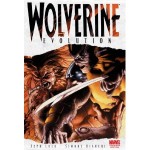
Wolverine: Evolution


By Jeph Loeb, Simone Bianchi & Andrea Silvestri (Marvel)
ISBN: 978-0-7851-2256-5-2

Debuting as an foe for the Incredible Hulk in a tantalising teaser-glimpse at the end of issue #180 (October 1974) before indulging in a full-on scrap with the Jade Giant in the next issue, the semi-feral Canadian mutant with fearsome claws and killer attitude rode – or perhaps caused – the meteoric rise of the AllNew, All Different X-Men before gaining his own series, super-star status and silver screen immortality; a tragic, brutal, misunderstood hero cloaked in mysteries and contradictions.

Logan’s come a long way since then; barely surviving chronic over-exposure in the process and now finds himself a solid star of the Marvel firmament. However that status is not without its own peculiar pitfalls, as such A-List players find themselves afflicted with a particularly tedious modern curse: Pernicious Recurrent Re-Origining…

A separate condition from actually retconning (where characters and continuity are dialed back to a specific point and the character is redesigned, PRR-O consists of infilling perceived cracks or gaps in the canonical history to reveal previously concealed or forgotten information.

Certainly some of these tales are utterly wonderful: Miller’s introduction of Elektra in the 1980s totally revolutionised and revitalised Daredevil and Batman probably started the whole process in 1956’s Detective Comics #235 when Bruce Wayne discovered he had seen father in a Bat-costume whilst still a toddler, but personally I cannot think of anything more pointless than constantly revising a character’s backstory rather than crafting new adventures or developments. I’m obviously in a minority on that score…

Wolverine has had a whole bunch of secret origins and revelatory disclosures in his extended, conveniently brainwashed and amnesiac life but this tome (which originally appeared as Wolverine volume 3, issues #50-55, November 2007-March 2008), at least tacks this latest round of really, honestly, for-gosh-sakes-I-mean-it true surprises to a fast-paced and engrossing recap and (purportedly) final clash between the miniscule mutant and his manic homicidal analogue Victor Creed: Sabretooth.

Scripted by Jeph Loeb and beautifully illustrated by the stunningly talented Simone Bianchi the story begins at fully gory pelt and just races on regardless…

The two fast-healing Mutant furies have clashed over and again and here Wolverine decides to end his enemy once and for all. However, his determination is somewhat distracted by recurring hallucinations and sense-memories of primeval pasts and a strangely familiar race of werewolf-like creatures that he feels a haunting kinship with…

Logan drags Sabretooth from the protective custody of his former X-Men associates in ‘First Blood’ and as new, lost memories constantly assault him, spectacularly battles Creed across half the globe, past clashes blending with current blows and fantastic images of primordial race wars in ‘Deja Vu’.

In ‘Blood on the Wind’ the murderous mutants, unable to permanently harm each other, nevertheless persist in their bloody vendetta until they reach the Black Panther’s hidden African kingdom, where old X-comrade Storm now resides as queen of Wakanda…

A temporary truce in ‘Insomnia’ only results in Sabretooth killing yet more innocents but reveals a possible solution to Wolverine’s delusions, as well as a name for the hidden foe he has sensed at the back of it all. An immortal monster named Romulus…

Moreover, there would seem to be conclusive evidence that rather than mutated humans many “homo superior” might well belong to a completely discrete, ancient species…

With a band of bestial clawed heroes (Sasquatch, Wolfsbane, Thornn and Feral) in tow, Wolverine once more tracks Creed as suppressed memories come thick and fast. In ‘Wake the Dead’ Logan recalls a Second World War exploit with Captain America excised from his consciousness by “Romulus” before Sabretooth attacks again, killing one of his hairy heroic companions…

In the inconclusively chaotic conclusion ‘Quod Sum Eris’ one blood-feud ends and another begins as Wolverine, unsure of anything, prepares to face his hidden foe. Some time somewhere, someday…

These tales are great as vicarious, gratuitous eye-candy, but to simultaneously unwrite a major portion of character history without offering context or conclusion is just inviting new and returning readers to buy different graphic novels with their rapidly diminishing mad-money.

Let’s see any healing factor fix that…

© 2003 Marvel Characters, Inc. All Rights Reserved.

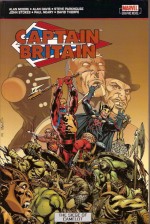
Captain Britain: the Siege of Camelot


By various (Marvel/Panini UK)
ISBN: 978-1-84653-433-1

This fourth wonderful volume collecting the complete adventures of Marvel’s Greatest British super-hero gathers together the remaining black and white episodes of The Black Knight strip from Hulk Comic (# 42-55 and 57-63, 1979) in which Captain Britain co-starred, before going on to his peripatetic wanderings through a number of UK titles beginning with Marvel Super Heroes #377-389 and continuing in The Daredevils #1-11. Eventually he got his own second short-lived title, but that’s a bunch of tales for another time and hopefully a future graphic novel review…

The Lion of Albion was in character limbo until March 1979, when a new British weekly, Hulk Comic, launched with an eclectic, if not eccentric, mix of Marvel reprints the editors felt better suited the British market. There were some all-new strips featuring Marvel characters tailored, like the reprints, to appeal to UK kids.

The Hulk was there because of his TV show, Nick Fury (drawn by the incredibly young Steve Dillon) – because Brits love their spies, and the all-original period pulp thriller Night Raven by David Lloyd, John Bolton and Steve Parkhouse. Hidden deep within and almost trying not to be noticed was The Black Knight.

The Knight was a sometime member of the super-team The Mighty Avengers but in this engrossing epic, costumed shenanigans were replaced by a classical fantasy quest which began in modern Britain but soon evolved into a desperate search through the Tolkien-esque (or perhaps Alan Garner derived) myth-scape of legendary England in a last ditch attempt to save the soul of the land by locating the spirit of our Arthurian/Celtic roots. At that time the addled wits and broken soul of Captain Britain would also be restored…

This comprehensive volume continues and concludes the quest with the discovery of Camelot, the rebirth of the legendary King (originally seen in issues #42-55 and #57 through 63 at which time Hulk Comic folded) and a cataclysmic last battle with the forces of evil. These two and three page episodes are a truly classy act executed with great panache by writer Steve Parkhouse and John Stokes (with occasional penciling from the multi-talented Paul Neary) which captured the imagination of the readership, becoming the longest-running original strip in the comic (even The Hulk itself reverted to reprints by #28) and often stole the cover spot from the lead feature.

After a brief informative afterword and some impressive colour covers – including a pin-up of Captains Britain and America by Jack Kirby – the drama resumes with the return of Captain Britain, revamped and redesigned by Editor/plotter Neary and a new creative team; neophytes writer Dave Thorpe and artist Alan Davis for the monthly reprint anthology Marvel Super-Heroes (#377, September 1981).

Lost in the gaps between alternate worlds the hero and his elf sidekick Jackdaw are drawn back to Earth but upon arrival they discover it is a hideous parody of Britain, bleak, distressed, hopeless and depressed – a potent analogue of the country Margaret Thatcher was then dismantling. Thorpe’s desire to inject some subversive social realism into the feature – and the resistance he endured – is documented in his commentary in this volume but suffice to say that although the analogies and allegories are there to be seen, pressure was exerted to keep the strip as escapist as possible, and avoid any controversy…

That’s not to say that the awkward-but-improving-with-every-page tales weren’t a dynamic, entertaining breath of fresh air, with striking superhero art delivering a far more British flavour of adventure. In short order the confused Captain met anarchic bandits The Crazy Gang, reality-warping mutant Mad Jim Jaspers, British Nazis and a truly distressed population in ‘Outcasts’ (MSH #378), an animated rubbish monster (‘The Junkheap that Walked Like a Man’ (#379), and was introduced to the pan-Reality colossus The Dimensional Development Court and its sultry, ruthless operative Opal Luna Saturnyne, who intended to compulsorily evolve the whole dimension, beginning with ‘In Support of Darwin!’, ‘Re-Birth!’, ‘Against the Realm’ and ‘Faces of Britain!’ #380-383).

‘Friends and Neighbours’ is a pretty-looking and thoroughly de-clawed examination of sectarianism and racism (see Thorpe’s commentary for clarification) which was followed in #385 by an “untold tale” by Neary and Davis. To get the saga back on track this diversion related an event that occurred in Limbo – the ‘Attack of the Binary Beings!’

Now deeply involved in Saturnyne’s plan to make humanity evolve (just like forcing Rhubarb) Captain Britain was trapped in a clash between the underclasses and the government in Thorpe’s last story ‘If the Push Should Fail?’ which heralded the beginning of Alan Moore’s landmark tenure on the character.

Marvel Super-Heroes #387 is the first of the full-colour tales in this volume (presumably thanks to the frequent reprinting of these stories in America), and instantly kicks the series into high gear with ‘A Crooked World’ as the dying dimension unleashes its greatest weapon: a relentless, unstoppable artificial killer called the Fury.

Killing Jackdaw, reintroducing Jim Jaspers and setting the scene for a monolithic epic in ‘Graveyard Shift’ by vaporising Captain Britain, the series then folded.

After a brief text interlude from Mr. Moore (from Marvel Super-Heroes #389) the saga started again in a new home, as the lead feature in The Daredevils #1, with a revelatory new origin ‘A Rag, a Bone, a Hank of Hair…’ and a rebuilt hero returned to his own Earth just in time to see that world assaulted by another reality-warping Jim Jaspers intent on destroying all superbeings in ‘An Englishman’s Home…’

In issue #3 Brian Braddock’s sister Betsy reappeared in ‘Thicker than Water’ a purple-haired telepath being hunted by an assassin destroying all the old esper-agents recruited by British covert agency S.T.R.I.K.E – and yes she is the girl who became Psylocke of the X-Men. The battle against the killer Slaymaster concluded in a spectacular in-joke clash among the shelves of the Denmark Street Forbidden Planet – in 1982 arguably the country’s best fantasy store – so any old fans might want to try identifying the real staff members who “guest-star” – in ‘Killing Ground.’

Keen on creating a cohesive Marvel UK universe the Alan’s brought back another creation for their next tale. The Special Executive was a team of time-travelling mercenaries introduced in Dr. Who Monthly #51 (April, 1981), and in ‘Target: Captain Britain – Recommendation: Executive Action’ saw the legion of super-weirdoes dispatched to Braddock Manor to forcibly bring the hero as a witness in the trial of Saturnyne by the Supreme Omniversal Tribune in ‘Judgement Day’.

Meeting a number of alternate selves such as Captains Albion and England was disturbing enough but the trial was a sham, merely rubber-stamping the accession of Saturnyne’s successor Mandragon. His first act was to destroy the tainted universe that failed to evolve in The Push. Unfortunately for everybody the Fury survived, falling into another universe where it began again to eradicate all heroes…

Issue #7 ‘Rough Justice’ found Britain and the Special Executive in the middle of a pan-dimensional brawl to save Saturnyne whilst back on (his own) Earth, a woman was plagued by dreams of the Fury and Jaspers. In ‘Rivals’ the defenders finally escape back home to find the woman – Captain UK of the recently destroyed alternate universe – waiting with a warning and a prediction…

The Daredevils #9, ‘Waiting for the End of the World’ begins the final story-arc in this volume (and starts a plot picked-up by Chris Claremont for about ten years worth of X-Men and Excalibur storylines), a fascinating compelling war against an invincible, implacable foe, which was truly shocking at the time and still carries a potent emotional punch now, as cast-members and fan-favourites were slaughtered in the Fury’s unstoppable onslaught.

‘The Sound and the Fury’ continues the murderous mayhem before a surprise hero saves the day in the epic ‘But They Never Really Die’ to perfectly wrap up the story just in time for the Captain and his surviving crew to return in his own comic.

With the inclusion of some insightful and elucidating text pieces and plenty of cover reproductions this fourth volume of the chronicles of Captain Britain sees the character finally reach the heights of his potential. Here is not only a wonderful nostalgic collection for old-timers and dedicated fans but also a book full of the best that comics can offer in terms of artistry, imagination and gripping creative energy.

Some of the very best material produced by Marvel, this is a book every reader must have…

© 1979, 1980, 1981, 1982, 1983, 2009 Marvel Entertainment, Inc. and its subsidiaries, licensed by Marvel Characters, Inc. All Rights Reserved. (A British edition from PANINI UK LTD)

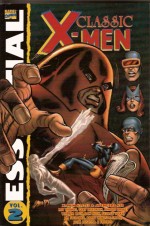
Essential X-Men volume 2


By Roy Thomas, Werner Roth, Don Heck, Steranko & various (Marvel)
ISBN: 978-0-7851-2116-9

X-Men was never one of young Marvel’s top titles but it did secure a devout and dedicated following, with the freakish energy of Jack Kirby’s heroic dynamism comfortably translating into the sheer, sleek prettiness of Werner Roth as the blunt tension of hunted outsider kids settled into a pastiche of the college and school scenarios so familiar to the students who were the series’ main audience.

The core team still consisted of tragic Cyclops, ebullient Iceman, wealthy golden boy Angel and erudite brutish geek Beast in training with Professor Charles Xavier, a wheelchair-bound telepath dedicated to brokering peace and integration between the masses of humanity and the gradually emerging race of mutant Homo Superior. But by the time of this massive black and white tome (collecting issued #25-53 and the crossover Avengers #53) change was definitely in the air.

Jean Grey, Marvel Girl had recently left the team to attend university – although she still managed to turn up in every issue – and since Roy Thomas had replaced Stan Lee as writer a much younger atmosphere permeated the stories. ‘The Power and the Pendant’ (X-Men #25, October 1966, with inking by Dick Ayers) found the boys tracking a new menace, El Tigre; a South American hunter visiting New York to steal an amulet which granted him god-like powers, before returning to the Amazonian San Rico with the mutant heroes in hot pursuit for a cataclysmic showdown in ‘Holocaust!’

Issue #27 saw the return of some old foes in ‘Re-enter: The Mimic!’ as the mesmerising Puppet Master pitted the power-duplicating Calvin Rankin against a team already split by dissention, whilst in ‘The Wail of the Banshee!’ Rankin joined the X-Men in a tale which also introduced the sonic-powered mutant (eventually to become a valued team-mate and team-leader) as a deadly threat in the opening instalment of an ambitious extended epic which featured the global menace of the sinister organisation Factor Three.

John Tartaglione inked the bright and breezy thriller ‘When Titans Clash!’ as a power duplicating Super-Adaptoid nearly absorbed the entire team before ending the Mimic’s career, whilst Jack Sparling and Tartaglione illustrated ‘The Warlock Wakes’ wherein Merlin (an old Thor foe) got a stylish upgrade to malevolent mutant menace, and #31 (Roth and Tartaglione) had Marvel Girl and the boys tackle an Iron Man clone who was also an accidental time bomb in ‘We Must Destroy… the Cobalt Man!’

A somewhat watered down version of the counter-culture had been slowly creeping into these tales of teenaged triumph and tragedy, mostly for comedic balance, but they were – along with Peter Parker in Amazing Spider-Man – some of the earliest indications of the changing face of America. ‘Beware the Juggernaut, My Son!’ and its conclusion ‘Into the Crimson Cosmos!’ (guest-starring Doctor Strange and his mentor the Ancient One) extended that experience when the Professor was abducted by Factor Three and the kids were forced to stand alone against an unstoppable mystic monster.

Dan Adkins in full Wally Wood appreciation mode memorably illustrated #34’s ‘War… In a World of Darkness!’ as the team’s search for Xavier took them into the middle of a subterranean civil war between Tyrannus and the Mole Man, and he also inked Werner Roth on ‘Along Came A Spider…’ as everybody’s favourite wall-crawler was mistaken for a Factor Three flunky by the increasingly desperate X-Men. ‘Mekano Lives’ (with art from Ross Andru and George Roussos, nee Bell) found the team delayed in their attempts to follow a lead to Europe by a troubled rich kid with a stolen exo-skeleton super-suit…

Don Heck stepped in as inker over Andru’s pencils with #37, ‘We, the Jury…’ when the mutants finally found Factor Three – allied to a host of their old mutant foes – and ready to trigger an atomic war. Heck assumed the penciller’s role for ‘The Sinister Shadow of… Doomsday!’ (inked by “Bell”), before concluding the saga with the Vince Colletta embellished ‘The Fateful Finale!’

Werner Roth had not departed the mutant melee: with issue #38 a classy back-up feature had commenced, and his slick illustration was perfect for the fascinating Origins of the X-Men series. Inked by John Verpoorten ‘A Man Called… X’ began the hidden history of Cyclops, also revealing how Xavier began his relationship with FBI agent Fred Duncan… The second instalment ‘Lonely are the Hunted!’ displayed humanity in mob mode as terrified citizens rioted and stalked the newly “outed” mutant Scott Summers: scenes reminiscent of contemporary race-riots that would fuel the racial outcast metaphor of the later Chris Claremont team.

Thomas, Heck and George Tuska ushered in a new era for the team with #40’s ‘The Mask of the Monster!’ as, now clad in individual costumes rather than superhero school uniforms, they tackled what seemed to be Frankenstein’s unholy creation whilst in the second feature Scott Summers met ‘The First Evil Mutant!’

‘Now Strikes… the Sub-Human!’ and the sequel ‘If I Should Die…’ introduced the tragic Grotesk, whose only dream was to destroy the entire planet, and who introduced the greatest change yet. I’m spoiling nothing now but when this story first ran the shock couldn’t be described when the last page showed the death of Charles Xavier. I’m convinced that at the time this was an honest plot development – removing an “old” figurehead and living deus ex machina from a “young” series, and I’m just as certain that his subsequent “return” a few years later was an inadvisable reaction to dwindling sales…

From the rear of those climactic issues ‘The Living Diamond!’ and ‘The End… or the Beginning?’ (this last inked by neophyte Herb Trimpe) signalled the beginning of The Xavier School for Gifted Children as the Professor took the fugitive Scott Summers under his wing and began his Project: X-Men. Issue #43 began the reinvention of the mutant team with ‘The Torch is Passed!’ (Thomas, Tuska & Tartaglione) as arch-nemesis Magneto returned with reluctant confederates Toad, Quicksilver and Scarlet Witch to ensnare the bereaved heroes.

This was supported by a back-up tale ‘Call Him… Cyclops’ which revealed the secrets of his awesome eye-blasts, whilst the next issue ‘Red Raven, Red Raven…’ saw the Angel escape and encounter a revived Golden Age Timely Comics hero in a stirring yarn from Thomas, Gary Friedrich, Heck, Roth and Tartaglione. This was accompanied by the opening of the next Origins chapter-play when ‘The Iceman Cometh!’ courtesy of Friedrich, Tuska and Verpoorten.

X-Men #45 led with ‘When Mutants Clash!’ as Cyclops also escaped only to encounter the highly conflicted Quicksilver; a battle that concluded with Magneto’s defeat in Avengers #53 ‘In Battle Joined’ by Thomas, John Buscema and Tuska, whilst back in #45 Iceman’s story continued in ‘And the Mob Cried… Vengeance!’

‘The End of the X-Men!’ occurred in issue #46, with the reading of Charles Xavier’s will. Agent Duncan reappeared and ordered the team to split-up, to monitor different parts of the country for mutant activity just as the unstoppable Juggernaut turned up once more, and Iceman’s origin concluded with ‘…And Then There were Two!’

Friedrich was joined by Arnold Drake to script Beast and Iceman’s adventure ‘The Warlock Wears Three Faces!’ as the ancient mutant Merlin once more re-branded himself: this time as the psychedelic guru Maha Yogi, and Drake, Roth and Verpoorten explained the cool kid’s powers in the info feature ‘I, the Iceman.’ As full scripter Drake penned The Cyclops and Marvel Girl tale, ‘Beware Computo, Commander of the Robot Hive’, a pacy thriller with a surprise guest villain, whilst ‘Your’s Truly the Beast’ wrong-footed everybody by explaining his powers before actually telling his origin epic.

X-Men #49 gave a tantalising taste of things to come with a startling and stylish Jim Steranko cover, behind which Drake, Heck, Roth and Tartaglione revealed ‘Who Dares Defy… the Demi-Men?’: nominally an Angel story but one which reunited the team to confront the assembled mutant hordes of Mesmero and Iceman’s new girlfriend – the daughter of Magneto! This shocker was supplemented by ‘A Beast is Born.’

Drake, Steranko and Tartaglione reached incredible heights with the magnificent ‘City of Mutants’ in #50; a visual tour de force that remains as spectacular now it did in 1968, but which was actually surpassed by Magneto’s return as ‘The Devil had a Daughter’ in #51 before the saga concluded in the disappointing ‘Twilight of the Mutants!’

Don’t misunderstand me, however: This isn’t a bad story, but after two issues of Steranko in his creative prime, nobody could satisfactorily end this tale, and I pity Heck and Roth for having to try.

The Beast origin chapters in those issues were ‘This Boy, This Bombshell’, ‘The Lure of the Beast-Nappers!’ and ‘The Crimes of the Conquistador!’, and that particular epic of child exploitation and the isolation of being different ended in #53’s ‘Welcome to the Club, Beast!’ but that issue’s main claim to notoriety was the lead feature which was drawn by another superstar in the making.

Hard to believe now, but in the 1960s X-Men was a series in perpetual sales crises, and a lot of great talent was thrown at it back then. ‘The Rage of Blastaar!’ was illustrated by a young Barry Smith – still in his Kirby appreciation phase – and his unique interpretation of this off-beat battle-blockbuster from Arnold Drake, inked by the enigmatic Michael Dee, is memorable but regrettably brisk.

These tales perfectly display Marvel’s evolution from quirky action tales to the more fraught, breastbeating, convoluted melodramas that inexorably led to the monolithic X-brand of today. Well drawn, highly readable stories are never unwelcome or out of favour though, and it should be remembered that everything here informs so very much of today’s mutant mythology. These are stories for the dedicated fan and newest convert, and never better packaged than in this economical tome. Everyone should own this book.

© 1966, 1967, 1968, 1969, 2006 Marvel Characters, Inc. All Rights Reserved.

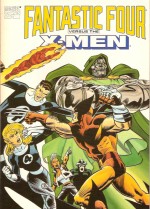
Fantastic Four versus the X-Men


By Chris Claremont, John Bogdanove & Terry Austin (Marvel)
ISBN: 0-87135-650-3

Here’s a good solid yarn from simpler times which serves as the perfect introduction to two fully developed franchises, but still won’t leave you reeling under an avalanche of new names and concepts. Originally released as a four issue miniseries in 1987, this intriguing mystery looks deep into the character of possibly the oldest character in the Marvel universe and turns its most trusted hero into a potential monster.

Everybody knows that Reed Richards is the smartest man on the planet, and how he took his three most trusted companions on a trip into space. Once there the ever-present cosmic rays mutated the quartet into the super-powered freaks now known as the Fantastic Four. How could such a colossal intellect forget something as basic as radiation shielding?

This tale takes place at a time when the mutant heroes and public fugitives called X-Men are being led by Magneto, and is the culmination to a story-arc where young Kitty Pryde is dying: her ability to pass through matter out of control and her body gradually drifting to unconnected atoms.

When Sue Richards finds an old journal belonging to her husband the trust and loyalty that bind the FF together is shattered. The book reveals that the younger Reed had in fact deduced the transformative power of cosmic rays and manufactured the entire incident to create a team of super-warriors. All the years of misery and danger have been a deliberate, calculated scheme by a ruthless mind that could only see life in terms of goals and outcomes.

When the X-Men bring their medical emergency to the FF, Reed, protesting his innocence to a family and team who no longer trust him and with his confidence shattered, falters. He knows that he didn’t plan to mutate his team, but he did make a mistake that altered their lives forever. What if he makes another blunder with Pryde’s cure?

And then Doctor Doom steps in…

This is a superb adventure stuffed with guest-stars that moves beyond gaudy costumes and powers to display the core humanity of Reed Richards and the true depths of evil his greatest enemy can sink to. As an example of sensitive character writing it has few equals and the stylish illustration of Jon Bogdanove is captivating to behold. Long overdue for reprinting this is a tale for all drama lovers, not just the fights ‘n’ tights crowd.
© 1987, 1990 Marvel Entertainment Group, Inc. All Rights Reserved.

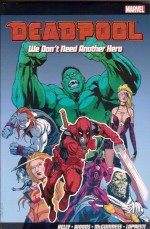
Deadpool: We Don’t Need Another Hero


By Joe Kelly, Ed McGuiness & various (Marvel/Panini UK)
ISBN: 978-1-84653-427-0

Bloodthirsty and stylish killers and mercenaries have long made for popular protagonists. Deadpool is Wade Wilson (and yes he is a thinly disguised knockoff of DC’s Slade Wilson AKA Terminator: get over it – DC did), a hired killer and survivor of genetics experiments that has left him a scarred, grotesque bundle of scabs and physical unpleasantries but practically invulnerable and capable of regenerating from any wound.

The wisecracking high-tech “merc with a mouth” was created by Rob Liefeld and Fabian Nicieza and first appeared in New Mutants #97, another product of the Canadian “Weapon X” project that created Wolverine and so many other second-string mutant and cyborg super-doers. He got his first shot at solo stardom with a couple of miniseries in 1993 (see Deadpool: the Circle Chase & Sins of the Past) but it wasn’t until 1997 that he finally won his own title.

This collection gathers the first ten outrageous fun and fury filled issues (#1-9 plus issue minus 1) as well as the combination Daredevil & Deadpool Annual 1997) and features a frenetic blend of light-hearted, surreal, fighting frolics and incisive, poignant relationship drama that is absolutely compulsive reading for dyed-in-the-wool superhero fans who might be feeling just a little jaded with four-colour overload.

It all kicks off with a extra-sized spectacular ‘Hey, It’s Deadpool!’ by Kelly, McGuiness, Nathan Massengill and Norman Lee which reintroduces the mouthy maniac, his “office” and “co-workers” at the Hellhouse where he picks up his contracts and also affords us a glimpse at his private life in San Francisco where he has a house and keeps a old, blind lady as a permanent hostage. This is not your average hero comic…

The insane action part of the tale comes from the South Pole where the Canadian government has a super-secret gamma weapon project going, guarded by the Alpha Flight strongman Sasquatch. Somebody is paying good money to have it destroyed…

‘Operation: Rescue Weasel or That Wacky Doctor’s Game!’ finds the slightly gamma-irradiated hitman still mooning over lost love Siryn (barely legal mutant hottie from X-Force) when his only friend and tech support guy Weasel goes missing, snatched by ninjas working for super-villain Taskmaster – and just when Deadpool’s healing ability is on the fritz, whilst #3’s ‘Stumped! Or This Little Piggie Went… Hey! Where’s the Piggy?!’ ramps up the screwball comedy quotient as Siryn convinces the merciless merc to turn his life around, which he’ll try just as soon as he tortures and slowly kills the doctor who experimented on him all those years ago…

The turnabout storyline continues in ‘Why is it, to Save Me, I Must Kill You?’ featuring a hysterically harrowing segment where Wilson has to get a blood sample from the Incredible Hulk, and concludes in #5’s ‘The Doctor is Skinned!’ wherein T-Ray, his biggest rival at Hellhouse, moves to become the company “top gun”…

Flashback was a company-wide publishing event wherein Marvel Stars revealed an unknown tale from their past, with each issue that month being numbered # -1. Deadpool’s contribution was a darker than usual tale from Kelly, Aaron Lopresti and Rachel Dodson, focusing on para-dimensional expediter Zoe Culloden, a behind the scenes manipulator who has been tweaking Wilson’s life for years. ‘Paradigm Lost’ looks at some formative moments from the hitman’s past and possibly reveals the moment when – if ever – the manic murderer started to become a better man…

Another extended story arc begins with Deadpool #6 and ‘Man, Check Out the Head on that Chick!’ as the gun (sword, grenade, knife, garrote, spoon…) for hire accepts a contract to spring a woman from a mental asylum. Of course it’s never cut-and-dried in Wade’s World, and said patient is guarded by the distressingly peculiar villainess the Vamp (who old-timers will recall changes into a giant, hairy naked telepathic cave-Man when provoked… cue poor taste jokes…).

It just gets worse in ‘Typhoid… It Ain’t Just Fer Cattle Any More or Head Trips’ as the captive chick turns out to be the murderous multiple personality psycho-killer Typhoid Mary (extra inking support from Chris Lichtner) whose seductive mind-tricks ensnare Deadpool and drag him into conflict with the Man Without Fear in the concluding Daredevil & Deadpool Annual 1997.

Did I say “concluding”? Typhoid isn’t that easy to get rid of and Deadpool #8 (by Kelly, Pete Woods, McGuiness, Shannon Denton, John Fang, Massengill and Lee) found her still making things difficult for Wilson in ‘We Don’t Need another Hero…’ as the merc is forced to confront true madness… or is it true Evil?

There’s a return to lighter, but certainly no traumatic fare in the last tale ‘Ssshhhhhhhhhh! or Heroes Reburned’ (with ancillary pencils by Shannon Denton) as Deadpool reassumes his pre-eminent position at Hellhouse just in time to be suckered into a psychological ambush by utterly koo-koo villain Deathtrap – clearly a huge fan of Tex Avery and Chuck Jones cartoons…

Although staying close to the X-franchise that spawned him, Deadpool is a welcome break from the constant sturm und drang of his Marvel contemporaries: weird, wise-cracking, and profoundly absurd on a satisfyingly satirical level. This is a great reintroduction to comics for fans who thought they had outgrown the fights ‘n’ tights crowd.

© 1997, 2009 Marvel Entertainment, Inc and its subsidiaries. All Rights Reserved. A British Edition Released by Panini UK Ltd.

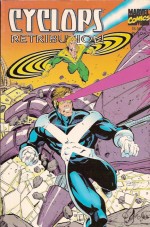
Cyclops: Retribution


By Bob Harras, Ron Lim, Jeff Albrecht, Carol Reim & Bruce Patterson (Marvel)
No ISBN

Do you love every TV show you watch? Do you carry on with series, soaps and serials long after they’ve started to pall? Most of us do – especially in comics. The time invested in favourite characters and scenarios is non-returnable and any relationships you’ve developed with even fictional persons and places – ones utterly unaware of your existence – are terribly hard to abandon.

And in comics there’s always the possibility that a mediocre or sub-par tale will one day be pivotal to something brilliant that you will adore and appreciate. So your continued consumption perforce becomes an investment in good times to come…

Which isn’t to say that this solo adventure (at least that’s how it starts) of quintessential X-Man Cyclops is utterly dire, but that it’s just an average mutant superhero yarn adequately produced for the dedicated consumer: a fillip for the faithful but no breakthrough phenomenon that will convert the unread masses or summon home all those wayward apostates who have stopped collecting funny-books.

Originally presented as the lead strip in the fortnightly anthology Marvel Comics Presents #17-24 (following stellar runs starring Wolverine and Colossus respectively) this tale sees the leader of X-Factor – as he then was – visiting the Scottish island where Moira MacTaggert runs a medical research facility for mutants, only to discover that the somnambulistic medic has been creating bio-weapons at the hypnotic behest of seemingly unkillable menace the Master Mold.

This amalgam of human xenophobe Scott Lang and a super-Sentinel has plans to eradicate mutantkind, but may have overplayed his hand by extracting his conscience and giving it a body of its own…

Intriguing concept, enthusiastic art and lots of action make this so close to a memorable outing that it’s only fair to err on the side of generosity: not as bad as I remembered and certainly worth a moment of any X-Fan’s time and budget…
© 1994 Marvel Entertainment Group. All rights reserved.

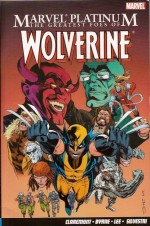
Marvel Platinum: the Greatest Foes of Wolverine – UK Edition


By various (Marvel/Panini Publishing UK)
ISBN: 978-1-84653-422-5

The Wolverine juggernaut rolls confidently on with this bulky yet absorbing compendium of bombastic battles starring a selection of worthy adversaries as rendered by some of the biggest names in comics.

The carnage begins with a sleekly impressive turn from illustrators Paul Smith and Bob Wiacek, as the feral mutant Logan goes wild in Japan after the X-Men are poisoned at his wedding. With fellow mutant powerhouse Rogue in tow Wolverine carves a bloody trail to the Yakuza mercenary Silver Samurai and the deadly mastermind Viper in Chris Claremont’s ‘To Have and Have Not’ (from Uncanny X-Men # 173, September 1983).

This is followed by the concluding episode of the six part miniseries Kitty Pryde and Wolverine (April, 1985). ‘Honor’ by Claremont and Allen Milgrom features a big battle between Logan and an immortal Ninja magician named Ogun, but unless you’ve actually read the preceding five issues somewhere else, that’s about all you’ll comprehend plot-wise from this underrated saga which completely rewrote the character of the youngest X-Man and her relationship to the Canadian crazyman.

‘Wounded Wolf’ is a visceral, visual masterpiece from Uncanny X-Men # 205, (May 1986), courtesy of Claremont and Barry Windsor-Smith as Wolverine faces the vengeance-crazed cyborg Lady Deathstrike in a compelling tale guest-starring little Katie Power from Power Pack.

Marc Silvestri and Dan Green illustrated the first part of a classic clash with ex-Hellfire Club villain Donald Pierce (‘Fever Dream’ Uncanny X-Men # 251, November 1989) and his band of cyborg assassins the Reavers, whilst Rick Leonardi and Kent Williams finished Claremont’s brutal tale in the concluding ‘Where’s Wolverine?!?’

There’s no let-up in the extreme action and bloodletting in the untitled tale that follows as Peter David and Sam Kieth introduce the grotesque and decidedly warped Adamantium Assassin Cyber in an eight chapter, 64 page saga that originally ran in the fortnightly anthology Marvel Comics Presents (1991) whilst John Byrne, Jim Lee and Scott Williams pit the old Canuckle-head (albeit incredibly briefly and please don’t make explain that peculiarly inept nick-name) against toxic Cold War living weapon Omega Red in the first part of a much longer tale that begins in ‘The Resurrection and the Flesh’ from X-Men #4 (January 1992).

From the same month in Wolverine #50, Larry Hama, Marc Silvestri and Dan Green’s ‘Dreams of Gore: Phase 3’ reveals tantalizing snippets from Logan’s past life as secret agent when he fights a rogue computer program and a past lover in a choppy but oddly satisfying tale, whilst ‘The Dying Game’ (Wolverine #90, February 1995) by Hama, Adam Kubert, Mark Farmer and Dan Green, although not the final battle between Logan and his arch-foe Sabretooth it was proclaimed, is certainly one of the most cathartic and impressive.

‘Better than Best’ by Tom DeFalco, Denys Cowan and Bill Sienkiewicz (Wolverine #123, April 1998) finds a physically depleted Logan imprisoned and tortured by two of his oldest foes Roughouse (a giant troll) and Bloodscream (a vampire) in an unusually insightful tale of perseverance and the grudge matches conclude – once more unsatisfactorily I’m afraid – with parts one and two of the three part epic ‘Bloodsport’ by Frank Tieri, Dan Fraga and Norm Rapmund (Wolverine #167 and 168, October-November 2001). Herein the mutant mite competes in a gory martial arts/superpowers tournament against such second-raters as Taskmaster, Puma and the Terrible Toad just so he can confront Viper and the man he cannot defeat, the telepathic serial killer Mr. X.

The old, old plot still has plenty of punch here but I find it incomprehensible to have 18 pages of data-files and biographies of Wolverine’s foes pad out the book whilst omitting the 20 or so pages that would end the story! Visually this book contains some of Wolverine’s best moments, but I’ll never understand sacrificing story-content for pictures and punches…

© 1983, 1985, 1986, 1989, 1991, 1992, 1995, 1998, 2001, 2009 Marvel Entertainment Inc. and its subsidiaries. All Rights Reserved.

Wolverine/Ghost Rider: In Acts of Vengeance


By Howard Mackie, Mark Texeira & Harry Candelario (Marvel)
ISBN: 0-7851-0022-9

From that dubious period of “Grim ‘n’ Gritty” super-heroics in the early 1990s comes this slight but entertaining fast-paced pairing of Marvel’s (then) most savage champions which originally ran as the lead series in the fortnightly anthology Marvel Comics Presents #64-70, although dyed-in-the-wool continuity buffs should be warned that the connection to the company’s crossover event Acts of Vengeance is oblique – if not downright tenuous.

From his insalubrious bar on the pirate stronghold of Madripoor the globe-trotting mutant Wolverine is lured back to New York by a blatantly inept attack carried out by ninjas belonging to vampiric super-villain Deathwatch. Meanwhile Dan Ketch, human host of the fearsome Ghost Rider, finds one of his oldest friends also the target of similar ninjas.

The heroes’ paths cross with a karate instructor whose family also has a grudge against the criminal mastermind and all converge on the life-leech’s skyscraper headquarters for a surprise or two and a climactic showdown…

This yarn is just a stylish excuse for a big chase and huge fight – and that’s not necessarily a bad thing – so on those terms, this is a visceral, vicarious, effective use of the creators’ talents, with the added bonus of the introduction of yet another mutant superstar-in-waiting (I think he’s still waiting, even now) in the form of the unstoppable martial arts manhunter code-named Brass.

Sometimes no-frills cathartic comics combat is all you want from graphic narrative, and if you ever get that feeling this might be the book to buy…
© 1990, 1991, 1993 Marvel Entertainment Group. All rights reserved.

Colossus: God’s Country


By Anne Nocenti, Rick Leonardi & P Craig Russell (Marvel Comics)
No ISBN:

The world of the X-Men has always been a broad canvas for telling stories and exploring issues and in this collected tale from the always intriguing Marvel Comics Presents (volume 1, issues #10-17) writer Anne Nocenti explores Cold War politics, Free Speech, unthinking patriotism, combative ideology and family dynamics as the Russian mutant Peter Rasputin goes walkabout in America’s heartland.

Bruce fought in Viet Nam but now lives a precarious existence in a ramshackle house with his wife, father-in-law and young son Zackery. Life is tough, the neighbours are snide and unfriendly, but at least they all live free in a proud country…

They’re on a picnic when Zackery stumbles into an execution by cyborg warriors. Luckily Colossus is on hand to prevent the witnesses from becoming collateral damage, but the danger is not over. The killers belong to a clandestine group of US Government “patriots”, agents who defend their country by ignoring its laws, ethics and morals. They can’t afford public scrutiny – especially from the kind of citizens they’re sworn to protect…

Now all Bruce can rely on to save his family is a monstrous commie agent from the “Empire of Evil”…

Action packed and thought-provoking this slim tome (64 pages) is engaging enough mind-candy but as illustrated by the brilliant pairing of grand art stylists Rick Leonardi and P Craig Russell it’s also a visual wonder that few other X-Yarns can touch. Still available from numerous online retailers, and it’s worth every penny…

© 1984 Marvel Entertainment Group, Inc. All Rights Reserved.

Wolverine Battles the Incredible Hulk


By Len Wein, Herb Trimpe, Jack Abel & various (Marvel Comics)
ISBN: 0-87135-612-0

A little while ago I reviewed Marvel Platinum: the Definitive Wolverine (ISBN: 978-1-84653-409-6), and I rather went off on one about incomplete stories. In a spirit of placatory fairness I feel I should mention this lovely little compilation from 1989 which reproduced the full first adventure of the manic mutant with the unbreakable bones.

It all starts with ‘And the Wind Howls… Wendigo!’ (from Incredible Hulk #180, October 1974) wherein the Jade Giant bounces across the Canadian Border to encounter a witch attempting to cure her lover of a bestial curse which has transformed him into a rampaging cannibalistic monster. Unfortunately that cure meant the Hulk had to become the Wendigo in his stead…

It was while the big Green and Giant White monsters were fighting that Wolverine first appeared – in the very last panel – and that’s what leads into the savage fist, fang and claw fest that follows. ‘And Now… the Wolverine!’ (from Incredible Hulk #181 November 1974) by Len Wein, Herb Trimpe & Jack Abel, captivatingly concluded the tragic saga of both Canadian monsters, and there’s even room for the obligatory behind-the-scenes featurette. But that’s not all…

Also included is a rarely seen and wonderfully light-hearted meeting between the off-duty mutant Logan and the fun-loving godling Hercules which originally appeared in Marvel Treasury Edition #26. ‘At the Sign of the Lion’ is by Mary Jo Duffy, Ken Landgraf and a young George Perez, and shows exactly why most pubs and bars reserve the right to refuse admission…

This is a cracking little read, and shows why sometimes a little forethought is better than a big budget…
© 1986, 1989 Marvel Entertainment Group. All Rights Reserved.