
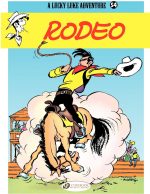
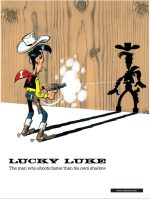
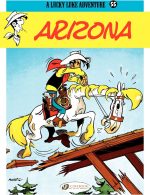
By Morris, with Louis De Bevere translated by Jerome Saincantin (Cinebook)
ISBN Rodeo: 978-1-84918-259-1 (Album PB), 978-1-84918-833-3 (Digital edition)
ISBN Arizona: 978-1-84918-268-3 (Album PB), 978-1-84918-739-8 (Digital edition)
These book includes Discriminatory Content produced in less enlightened times.
Our Continental cousins have a mature relationship with comics, universally according them academic and scholarly standing as well as nostalgic value and the validation of acceptance as an art form. These particular tomes collect one long lived western hero’s earliest material: stories that shaped that accepting, and formative yarns of a fictional wonder who is certainly a national treasure in Belgium and France if not America…
Fair warning, there are images (very few but nonetheless…) here that utilise the ubiquitous, unreconstructed and casually racist narrative shorthand seen in so many areas of popular media – and actual history books – of this post-war era. Thus, here is where informed consent and parental responsibility are required. This does not mean knee-jerk overreactions. This is history. It can’t and must not be painted over and if such matters are important to you, please look at the material here and make a reasoned judgement (in this instance and in all others) before someone perilously impressionable does.
As we know him now, Lucky Luke is a rangy, good-natured, lightning-fast cowboy roaming the mythic Old West, enjoying light-hearted adventures with and astride his super-smart, hyper-sarcastic steed Jolly Jumper whilst interacting with a host of historical and legendary figures of the genre.
His unceasing exploits over 80 years (Happy Birthday Lucky and Jolly Jumper!) have made him one of the best-selling comic characters in Europe (83 albums, at least 13 spin-off books and more than 300 million albums in at least 31 languages thus far), with a mega-mesa of merchandise: posters, toys, computer games, apparel, animated cartoons, TV shows and live-action movies.
He was created in 1946 by Belgian animator, illustrator and cartoonist Maurice de Bévère (“Morris”). For years we all believed it was for Le Journal de Spirou Christmas Annual (L’Almanach Spirou 1947), before being launched into his first weekly adventure ‘Arizona 1880’ on December 7th 1946. However, scholarly research and rereading old comics with a calendar at hand have revealed that I’ve been inadvertently lying to you all these years…
In fact, the strip debuted in the multinational weekly comic, but without a title banner or logo and only in the edition released in France…
Morris was a precocious, westerns-&-art-mad kid unhappily educated by Jesuits, but who escaped via pranks at school and who sought out “useless” work after leaving. His pre-comics cartooning led into film animation before he settled into his true vocation. Working at the CBA cartoon studio, Morris met future comics superstars Franquin & Peyo, and toiled for weekly magazine Le Moustique as a caricaturist. Morris became one of la Bande des quatre – The Gang of Four – comprising Jijé, Will and old comrade Franquin – all leading proponents of the loose-limbed, free-wheeling art style dubbed the “Marcinelle School” which soon dominated Le Journal de Spirou. This was in aesthetic contention with the “Ligne Claire” style utilised by Hergé, EP Jacobs and other artists in Le Journal de Tintin.
In 1948 said Gang (all but Will) visited America, meeting US creators and sightseeing. Morris stayed for six years, meeting fellow traveller René Goscinny, scoring commissions from newly-formed EC sensation Mad and making copious notes and sketches of the swiftly vanishing Old West. That research would resonate on every page of his life’s work.
Working solo (with script assistance from his brother Louis De Bevere) until 1955, Morris produced ten albums worth of affectionate sagebrush parody before reuniting with Goscinny, who became regular wordsmith as Luke attained the dizzying heights of superstardom, commencing with Des rails sur la Prairie (Rails on the Prairie), which began serialisation in LJdS on August 25th 1955. In 1967 the 6-gun straight-shooter switched teams, transferring to Goscinny’s own magazine Pilote with La Diligence (The Stagecoach).
Goscinny produced 45 albums with Morris before his death, from whence Morris continued both singly and with fresh collaborators. Morris died in 2001, having drawn 70 books worth of adventures, plus spin-off sagebrush sagas of Rantanplan (“dumbest dog in the West”) whilst Achdé, Laurent Gerra, Benacquista & Pennac took on the franchise, producing another five tales to date.
Lucky Luke first appeared in Britain in the fifties, syndicated to weekly anthology comic Film Fun and again in 1967 in Giggle where he was renamed Buck Bingo. In all these venues – as well as the numerous attempts to follow the English-language successes of Tintin and Asterix albums from Brockhampton and Knight Books – Luke had a trademark cigarette hanging insouciantly from his lip. In 1983 Morris, amidst both pained howls and muted mutterings of “political correctness gone mad”, substituted a piece of straw for the much-travelled dog-end, which garnered him an official tip of the hat from the World Health Organization. The most recent and successful attempt to bring Lucky Luke to our shores and shelves comes from Cinebook who have rightly restored the foul weed to his lips on the interior pages if not the covers and also recently translated every last official album into our mother tongue…
Lucky Luke volume 54: Rodeo
Originally seen in Europe in 1951 as second collected hardback album Rodéo, the material contained within were extended simplistic romps and western movie riffs from the cowboy’s youngest, brashest moments.
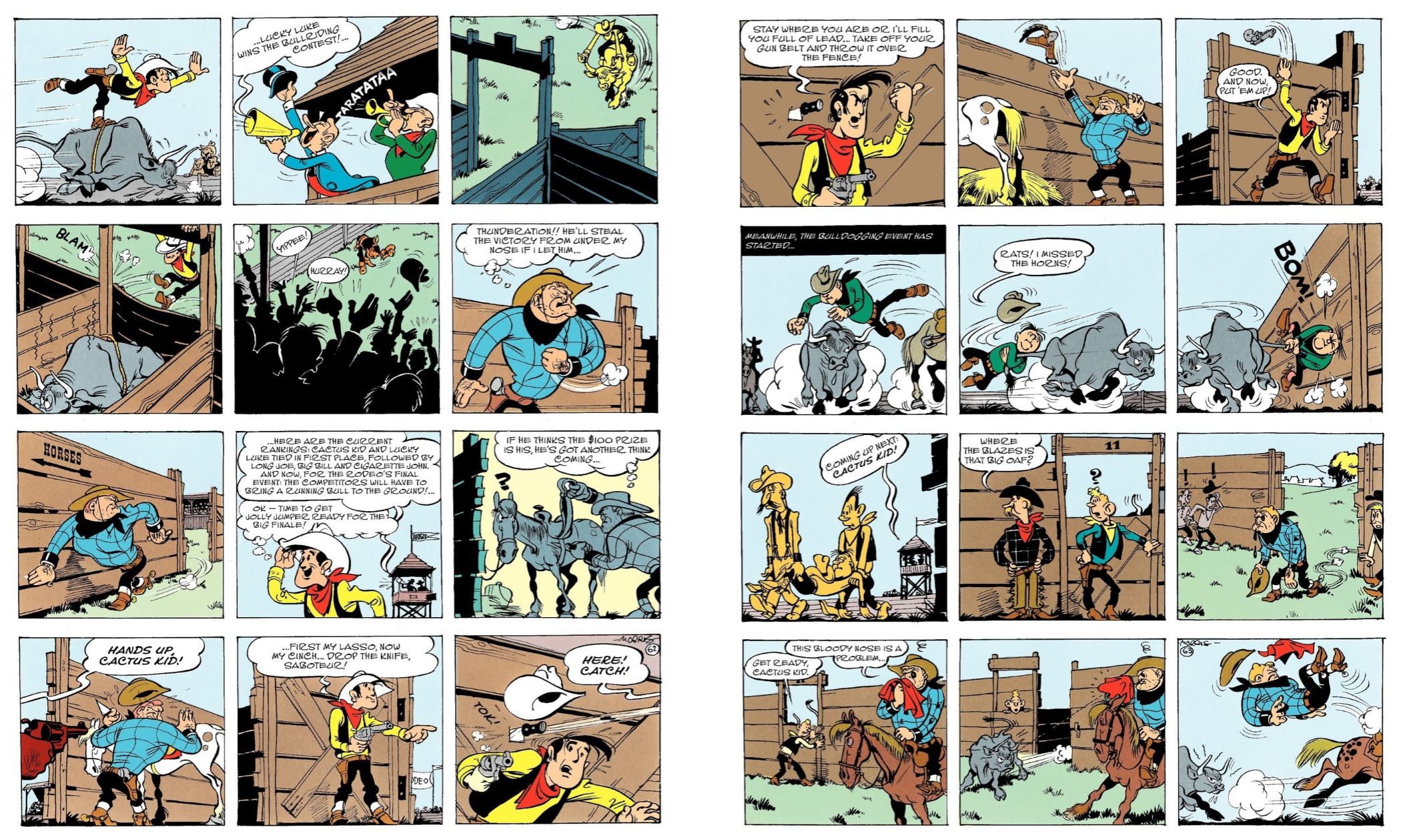
It opens with ‘Grand Rodeo’ which first ran in Le Journal de Spirou #528-545, ending in September 1948. The art took a major upturn towards what we are familiar with today as Lucky arrives in Navajo City to compete in a legendary competition and uncovers both skulduggery and poor sportsmanship. Most of that comes from cheating scoundrel and poor loser turned prize-money bandit Cactus Kid, but Lucky – and his steed – soon teach him the meaning of sportsmanship…
Without a pause, fresh escapade ‘Lucky Luke in Desperado City’ followed on (LJdS #546-566, ending 17th February 1949), as Lucky becomes sheriff of an embattled frontier town to defeat tyrannical owlhoots The Pistol Brothers. They prove to be far tougher to stop than expected, implicating the lone rider in stage coach robberies and even nearly having him lynched. Eventually, however, they are caught and exposed as the stooges of a hidden criminal mastermind posing as decent, law-abiding citizen.
When the dust settles and smoke clears, our hero rides off into the sunset bidding farewell to newly tamed town Justice City…
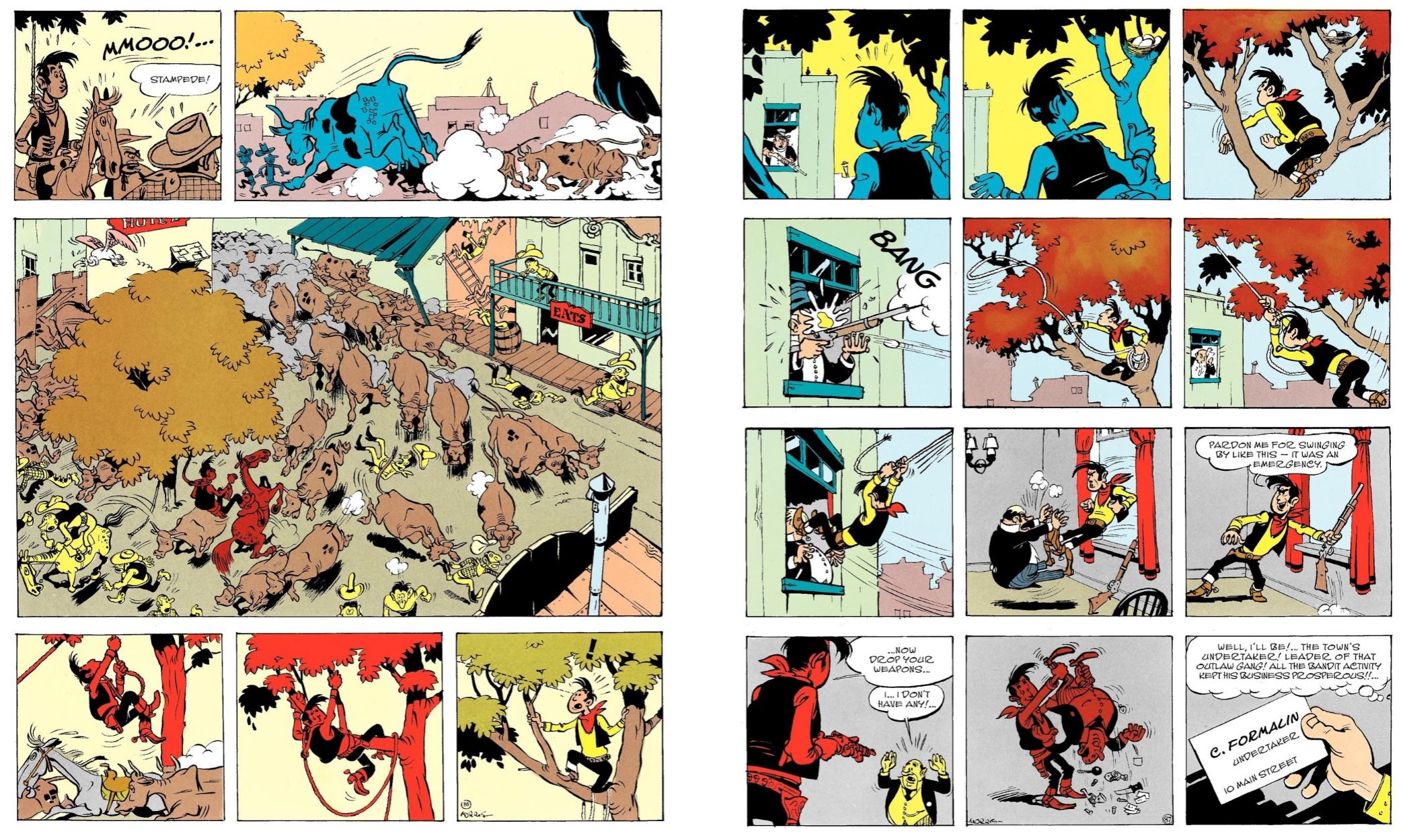
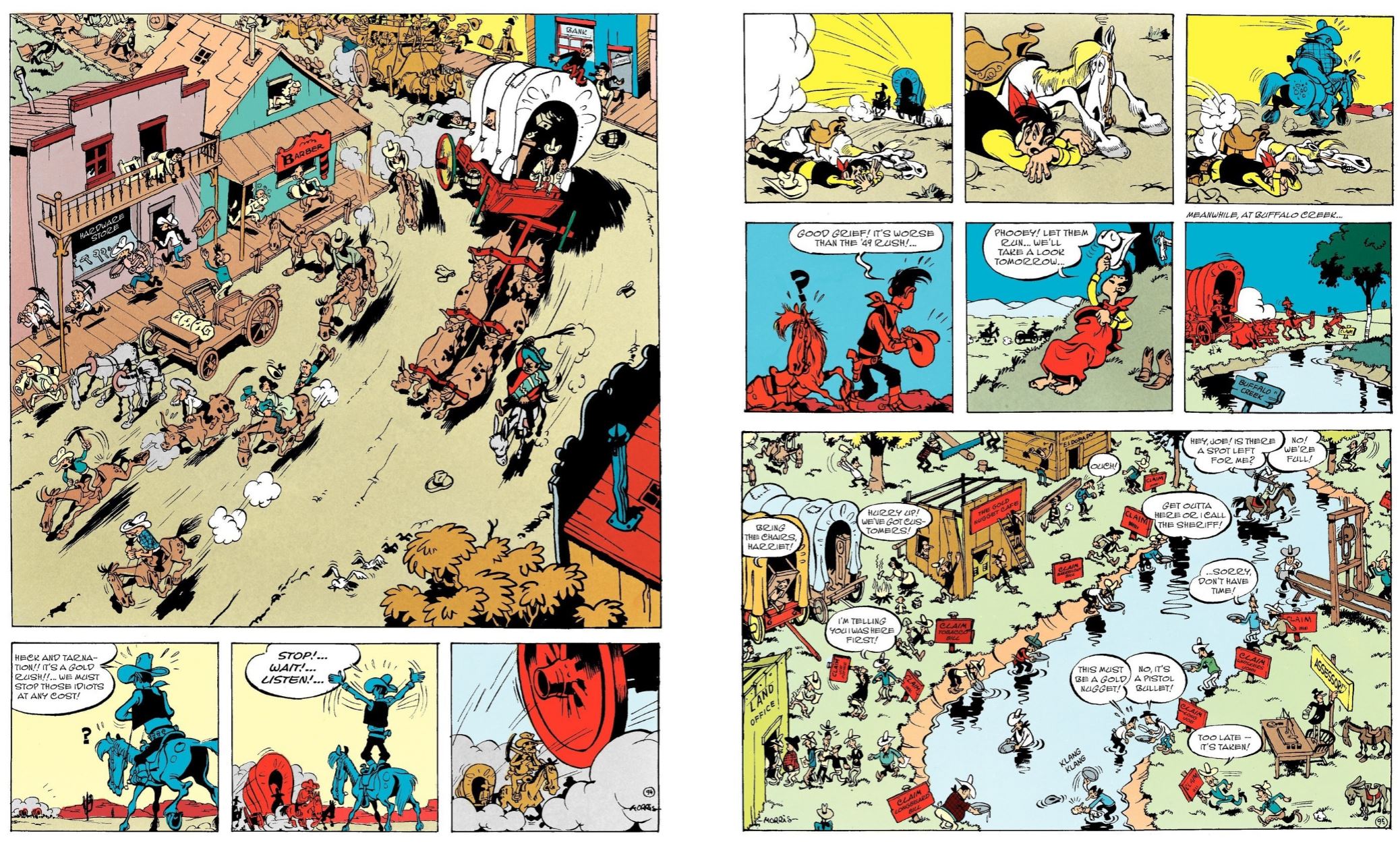
‘The Buffalo Creek Goldrush’ (serialised in LJdS #567-584 as La ruée vers l’or de Buffalo Creek, and ending 23rd June 1949), filled out the tome with a delicious satire on greed as a supposedly harmless prank on Lucky’s part goes horribly wrong. Surreptitiously dropping a gold nugget into the pan of a down-on-his luck prospector proves to be huge mistake as greed and wild rumours grip the entire region, turning a barren wasteland into an ephemeral metropolis of miners – until the penny finally drops and reality is painfully restored…
Lucky Luke volume 55: Arizona (& Lucky Luke Versus Cigarette Cesar)
Although the third album (published in November 1951), Arizona re-presents the very first exploit from 1946 and another primal perambulation across the mythic wild west.
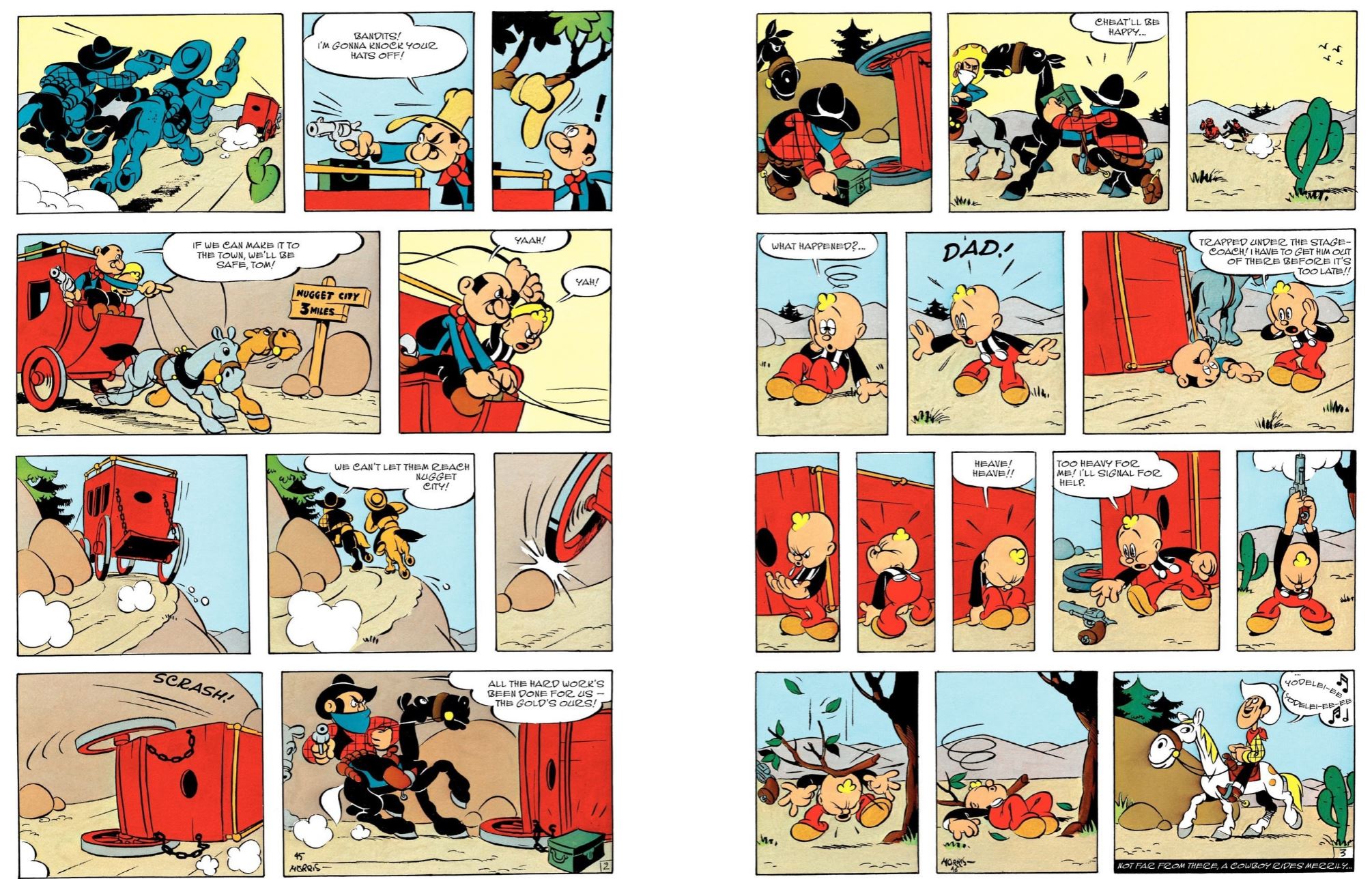
Still very much delivered in all action mode as most similarly seen in Fleischer Popeye, Warner Brothers and MGM cartoons of the era, the original untitled debut tale was re-designated Arizona 1880 (LJdS #443-462) and details an archetypical wandering cowboy tenaciously tracking down stagecoach bandits Big Belly and Cheat.
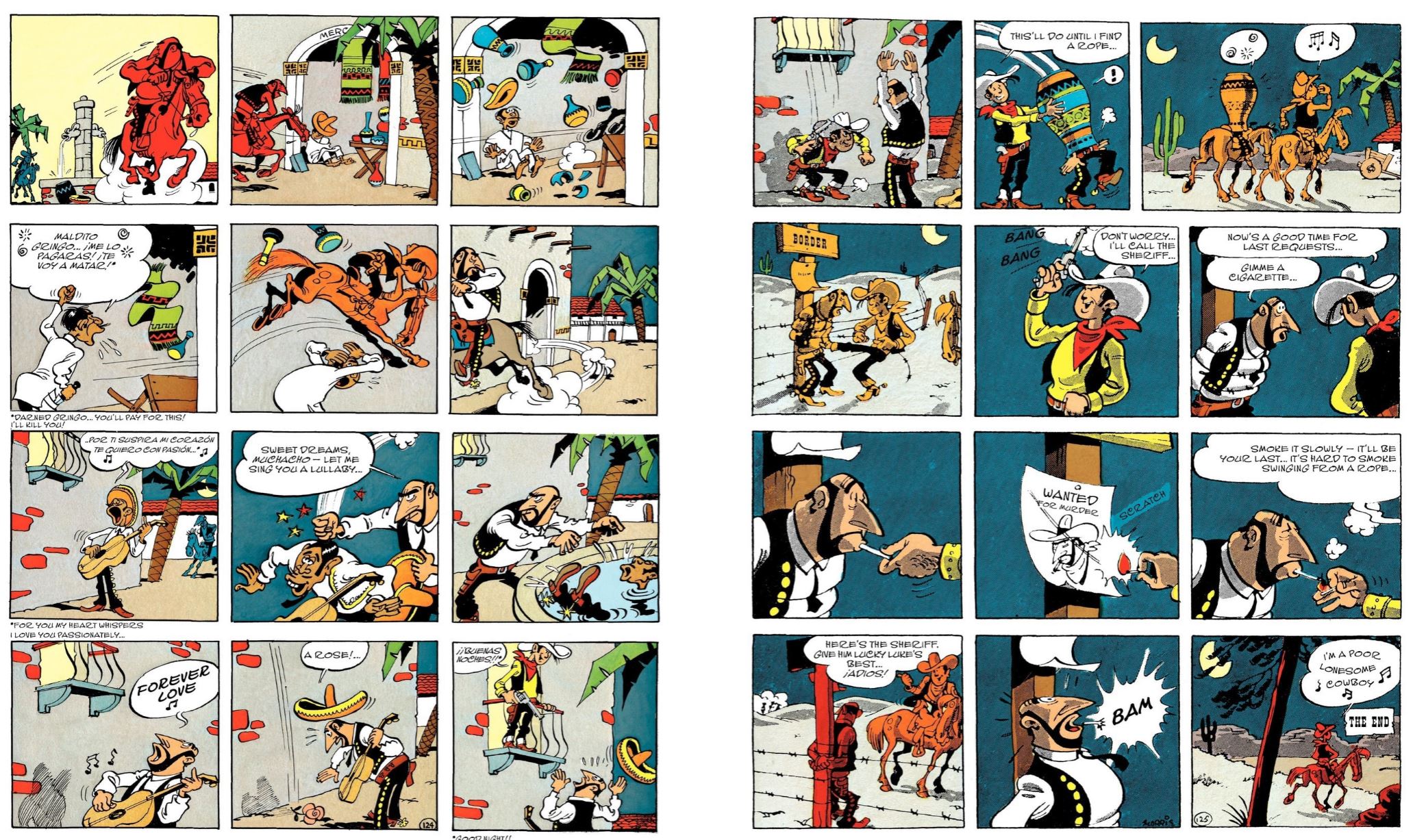
Le Journal de Spirou #585- 601 revisited the fourth saga, by which time the Lonesome Cowboy was clearly here to stay. It was back to outright villains for ‘Lucky Luke versus Cigarette Cesar’ (ending October 20th 1949), as Lucky trails a deadly and devious escaped convict south of the border and indulges in the kind of animal cruelty gags we just don’t tolerate these days where and when bullfighting is largely discredited (please consider that a gentle warning…)
This book restores many serial pages that were edited out of the first albums for brevity and comes with extras including a Lucky pin-up, recurring cast crowd shot and a colourised contemporary woodcut print of a stage coach robbery.
Packed with contemporaneous extras, commentary, creator biographies and more, these will delight older kids with a bit of perspective and historical understanding, although the action and comedy set pieces are no more contentious than any Laurel and Hardy film (perfectly understandable as Morris was a devout fan of the bumbling duo).
The first forays of an indomitable hero, these grand old hoots stand in the tradition of Destry Rides Again and Support Your Local Sheriff, superbly executed by a master storyteller finding his feet, and are splendid introductions to a unique genre for modern kids who might well have missed the romantic allure of the Wild West that never was…
Rodeo © Dargaud Editeur Paris 1971 by Morris. © Lucky Comics. English Translation © Cinebook Ltd.
Arizona © Dargaud Editeur Paris 1971 by Morris. © Lucky Comics. English Translation © Cinebook Ltd.