Liebestrasse


By Greg Lockard, Tim Fish, Héctor Barros, Lucas Gattoni & various (Dark Horse/Greg Lockard-ComiXology Originals)
ISBN: 9781506724553 (TPB/Digital edition)

As we’re all mindful of D-Day, WWII and how the world changed after that, here’s a poignant fable set in those distant days about one of the things they were all fighting for – the right to love and be loved by whoever you choose…

The story opens covertly in the Land of the Free. It’s 1952 and an aging, wealthy man seeks solace and the company of “his own kind” in a very special bar…

The next day, Sam Wells visits a modern art exhibition where a brief encounter with a young man of similar tastes and disposition triggers memories and a potent flashback to an old friend. Soon after, Wells is flying to Berlin to establish new business contacts and, hopefully, relive some of the better moments of his past.

As he moves around the divided city, Wells’ mind flits back to 1932 when, as a young Mover & Shaker, he was posted to Germany to set up an overseas office for his company. For a young man of wealth and his particular proclivities, the Weimar Republic offered many opportunities and temptations. Crucially, it also allowed freedom from dangerous oversight. Nevertheless, there was also an inescapable sense of oppressive menace, especially after meeting audacious, outspoken Philip Adler and falling madly, passionately, head over heels in love.

Philip’s sister Hilde was already in the sights of the rising National Socialists for creating un-Aryan art, but his constant challenging of the party in words, and especially with his “degenerate” lifestyle, soon painted a target on all their backs, as well as on the numerous doomed-and-dancing-on-the-volcano’s-edge liberals Sam met at endless parties and in the music clubs…

As months passed, the affair intensified – as did the danger – and inevitably, the hammer fell. For Sam that meant a beating and deportation, but for Philip there was no such callous leniency. Now decades later, Wells is back and has to face Hilde again…

Set firmly in the footsteps of the Berlin Stories by Christopher Isherwood, Liebestrasse is a tale of regret, thwarted love and “might-have-beens ” from writer Greg Lockard and artist Tim Fish, aided and abetted by Héctor Barros on colours with Lucas Gattoni providing letters and calligraphy. Forceful, frantic, passionate and deeply moving, it is a powerful testament to the abiding power and wonder of passion but also a sobering reminder of how far we’ve come: an irrefutable argument for live and let love…
LIEBESTRASSE © 2019 Greg Expectations, LLC & Timothy Poisson. All rights reserved.

Battle Stations – War Picture Library


By Hugo Pratt & Don Avenell (Rebellion Studios)
ISBN: 978-1-78108-752-7 (HB/Digital Edition)

Born in Rimini, Ugo Eugenio Prat, AKA Hugo Pratt (June 15th 1927 – August 20th 1995) was wandered the world in his early life, whilst becoming one of its paramount comics creators. His enthralling graphic inventions since Ace of Spades (whilst still a student at the Venice Academy of Fine Arts in 1945) were many and varied. His signature character – based in large part on his own exotic formative years – is mercurial soldier (perhaps sailor is more accurate) of fortune Corto Maltese.

Pratt was a consummate story-teller with a unique voice and a stark graphic style that should not work, but so wonderfully does: combining pared-down, relentlessly modernistic narrative style with memorable characters, always complex whilst still bordering on the archetypical. By placing a modern, morally ambivalent anti-hero in a period where old world responsibilities should make him a scoundrel and villain, yet keeping him true to an utterly personal but iron-clad ethical integrity that goes beyond considerations of race, class or gender, he has created a yard-stick with which we cannot help but measure all heroes. As empires fade and colonies fall Corto Maltese deals with and is moved by people, not concepts or traditions. He is also a whimsical man of action and a faithful humanist with a talent for being in the wrong place at the right time. We’ll return to him another time…

After working in both Argentinean and – from 1959 – on English comics like top gun Battler Briton, plus combat stories for extremely popular digest novels in assorted series such as War Picture Library, Battle Picture Library, War at Sea Picture Library and others – Pratt returned to and settled in Italy and later France in the 1960s. In 1967 with Florenzo Ivaldi he produced a number of series for monthly comic Sgt. Kirk.

In addition to the Western lead star, he created pirate strip Capitan Cormorand, detective feature Lucky Star O’Hara, and a moody South Seas adventure called Una Ballata del Mare Salato (A Ballad of the Salty Sea). When it folded in 1970, Pratt took one of Una Ballata’s characters to French weekly, Pif Gadget before eventually settling in with legendary Belgian periodical Le Journal de Tintin. Corto Maltese proved as much a Wild Rover in reality as in his historic and eventful career…

In Britain the ubiquitous delights of the mini-books also included Super Picture Library, Air Ace Picture Library, Action Picture Library and Thriller Picture Library: uniformly half-sized, 64-page monochrome booklets with glossy soft-paper covers and presenting complete stories in 1-3 panels per page, with yarns that were regularly recycled and reformatted. The story featured here was printed twice – as War at Sea #34, June 1963 and in War Picture Library #1078, June 1975 – with the painted covers and fascinating, well-annotated features on art changes as inflicted on the tale with each iteration making a compelling fact-feature at the end. Rebellion boss Ben Smith even offers an informative Introduction to launch the whole affair…

During his sojourn in British comics Pratt crafted all unheralded a number of mini-masterpieces like this one. Rescued and suitably repackaged by Rebellion Studios in their Treasury of British Comics imprint, Battle Stations was written by national hero and unsung legend Donne Avenell, who began his own strips career before WWII in the editorial department of Amalgamated Press – which evolved into Fleetway and eventually IPC. Avenell’s starter was anthological household name Radio Fun.

Born in Croydon in 1925, he served with the Royal Navy during the war, before returning to publishing: editing an AP architectural magazine whilst pursuing writing for radio dramas and romances under a slew of pseudonyms. He returned to comics in the 1950s, with many contributions to childhood icons like War Picture Library and Lion, directing the sagas of The Spider, The Phantom Viking, Oddball Oates, Adam Eterno and more. He co-wrote major international features like Buffalo Bill, Helgonet (The Saint) and The Phantom for Swedish publisher Semic, and devised the strip Django and Angel whilst also toiling on assorted licensed Disney strips.

In 1975, with Norman Worker, he co-wrote Nigeria’s Powerman comic which helped launch the careers of Brian Bolland and Dave Gibbons. Avenell was equally at home on newspaper strips such as Axa (1978-1986, drawn by Enrique Romero), Tiffany Jones and Eartha (illustrated by John M. Burns). He also worked in television, writing series like The Saint and their subsequent novelisations. He died in 1996.

This story concerns just another small battle lost in the bigger war as three sailors on convoy escort duty in June 1942 endure the sinking of their anti-sub trawler off the coast of the USA. When the vessel they were guarding goes down too, their shipmates and the merchant marine survivors are all machined gunned in the water at the command of the German U-boat captain, and an implacable bond of undying hatred grips Stoker First Class Scully, Lieutenant Rayner and Leading Seaman Ford

Months later, rescued, recuperated and reassigned to Light Cruiser H.M.S. Vengeful, the trio are looking for payback and clearly suffering what we today know as Post Traumatic Stress Disorder when their ship again encounters the ruthless enemy. A savage battle then leaves all ships gone and sailors stuck in a drifting lifeboat. Scully, Rayner and Ford are still alive, but due to the exigencies of combat they’re lost in the Atlantic with an equal number of despised Germans in the lifeboat…

What happens next is powerful, shocking and not at all what you’d expect from a kid’s comic crafted to sell in the heyday of UK war films commemorating the conflict their parents lived through.

A powerful psychological thriller that beaks the rules of comics combat, Battle Stations is

subtly subversive, straightforwardly told and startlingly compelling, far from the bread & butter war stories that sustained British comics readers for decades; and few have ever looked so good doing it. If you’re a connoisseur of graphic thrills and dramatic tension, don’t miss these salty sagas.
© 1963, 2019 Rebellion Publishing IP Ltd. All rights reserved.

Anarchy Comics – The Complete Collection


By Jay Kinney, Paul Mavrides, Clifford Harper, Gerhard Seyfried, Spain Rodriguez, Melinda Gebbie, Gilbert Shelton, Épistolier, Volny, Michel Troblin, John R. Burnham, Ruby Ray, Steve Stiles, Sharon Rudahl, Peter Pontiac, Guy Colwell, Matt Feazell, Gary Panter, Donald Rooum, Albo Helm, Adam Cornford, Norman Dog, Greg Irons, Steve Lafler, David Lester, brooke Lydbrooke, Pepe Moreno, Harry S. Robins, R. Diggs, S. Zorca, Byron Werner, & various, compiled and edited by Kinney (PM Press)
ISBN: 978-1-60486-531-8 (TPB/Digital edition)

During the “anything goes” 1960s and early1970s issues of personal freedom, sexual liberation, mind-altering self-exploration, questioning of authority and a general rejection of the old ways gripped the young and terrified the establishment. Artists and cartoonists especially began creating the kind of comics and art they wanted and an “Underground Commix movement” became the forefront for “radicalisation” (that’s “The Man’s” terms not mine) of many young intellectuals in America and throughout the world. It consequently led to the rise of and acceptance of comics narrative for adults.

Whenever anybody discusses the history and influence of the Underground and Counter-Culture movements, focus is generally on the exuberant and often racially or sexually offensive expressions of comedic or violent excess – especially in regard to sex and drugs – but that’s a rather cruel and biased oversimplification. The whole phenomenon stemmed from rebellion and the exercise of new-found freedoms. Equally apparent was a striving for new ways of living one’s life – and that’s Politics, Baby, pure and simple…

By 1978 that unchecked artistic flourishing had died back in every sphere – especially the wholesale creation of comics – and the mainstream world, having assimilated what it liked of the explosively fresh thought and deeds, appropriated or adopted some of the tone and tenets of the movement before getting back to making money and suppressing masses in a “new normal”…

However, once creative passions have been aroused and stoked they are hard to suppress. There is no more powerful medium of expression or tool of social change than graphic narrative – although music and poetry come close – and some kids found it harder to surrender their ideals than others. In 1977, as Disco, indolence, hedonism and the pursuit of money increasingly obsessed media and populace, a bunch of left-leaning liberal intellectual cartoonists got together in San Francisco. They wanted to create a comics anthology dedicated to propounding ideals of willing co-operation, personal responsibility and a rejection of unwanted oppressive authority – governmental, religious or corporate. By entertaining and educating through cartoons they intended to highlight issues of inequality and iniquity: in short, they went to bat for Anarchy…

Just as the global Punk movement began to take hold in a new generation of angry, powerless and disenfranchised Youth, West Coast cartoonist, satirist designer, editor and socialist political activist Jay Kinney – who had co-created the seminal underground title Young Lust (and yes that was a pun; so sue me!) – reached out to like-minded old associates like Paul Mavrides with the intention of creating an international comic book to promulgate their world view.

Kinney had been corresponding with British Anarchist artist Clifford Harper (Class War Comics) and had similarly-inclined West German cartoonist Gerhard Seyfried kipping on his floor at that time, so the idea of a forum for graphic expression of political ideas must have seemed like a no-brainer…

Of course, there’s no such thing as slavish doctrinaire consensus in Anarchist idealism – that’s pretty much the whole point – and the comic was envisioned more as a platform to present wide-ranging Left-Libertarian ideas through satire and historical reportage as a basis for further debate.

How the project developed from there and its ultimate effects and influence is fully described in author/historian Paul Buhle’s ‘Anarchy Comics Revisited’ and Kinney’s own expansive, evocative ‘Introduction’ before the entire 4-issue, 9-year run is re-presented in all its monochrome glory. beginning with Anarchy Comics #1 from 1978. It sports a witty cover by Kinney and deliciously wry intro page Inside Cover by Kinney & Seyfried. The editor then opened the attack with ‘Too Real’: using collage images from comic book ads to spoof the American Dream of prosperity and suburban bliss, after which counterculture legend Spain Rodriguez recounts the story of ‘Nestor Makhno’ whose fight for independence led to his betrayal by his Soviet allies in the early days of their Revolution.

Kinney’s ‘Smarmy Comics’ presents a decade of strip spoofs dedicated to exposing ‘Fascism: the Power to Finance Capital Itself’, after which the amazing Melinda Gebbie constructs a strident feminist call to arms against female oppression in educational diatribe ‘The Quilting Bee’ before Spain returns with a brutal true tale of the Spanish Civil War ‘Blood and Sky’ and an Underground superstar offers a frightening prognostication in ‘Gilbert Shelton’s Advanced International Motoring Tips’

For someone with no appreciable budget or resources, Kinney was astonishingly successful in securing international contributions. From France’s L’echo Des Savannes #29 came a translated tale of more Bolshevik perfidy in ‘Liberty Through the Ages: Kronstadt’ by Épistolier (Yves Frémion) & Volny (Françoise Dupuy) wherein a local dispute escalates into an horrific early instance of merciless repression in the People’s Paradise, before Bay area cartoonist John R. Burnham challenges the future with his polemical ‘What’s the Difference?’

True Brit Clifford Harper offers a moving and witty account of grass roots resistance in the tale of ‘Owd Nancy’s Petticoat’ (set in the aftermath of the Peterloo Massacre), after which Kinney delivers wry Comic Strip parodies ‘Safehouse’, ‘On Contradiction’ and ‘Today’s Rhetoric’ – complete with faux ad – before Mavrides hilariously attacks the utopian/dystopian debate with ‘Some Straight Talk about Anarchy’. The issue ends with a stylish ad for like-minded publications from Kinney & Seyfried, which last also crafted a humorous depiction of a mass anarchist demonstration in Tiananmen Square 11 years before the tragic, monstrous real thing…

Issue #2 didn’t appear until 1979 and opened with a photographic punk cover by Ruby Ray & Kinney, with the latter & Seyfried collaborating on another hilarious introductory page before the fireworks kicked off with Steve Stiles’ chilling account of his brush with Military Intelligence. Once the brass realised he might have had associations with turn-of-the-century Labour Movement The Industrial Workers of the World, the baffled soldier-boy found himself suspected of crimes he didn’t know existed. How the ‘Wobblies!’ could subvert a hapless GI in 1967 is still unclear to the author of this smart but scary tale…

‘Believe It!’ by Sharon Rudahl exposes true but crazy beliefs from history whilst

‘Kultur Dokuments’ (Kinney & Mavrides) brilliantly blends styles and metaphors to harangue the working world in a clever tale that starts as pictograms and ends as a vicious swipe at Archie Comics. Harper then adapts “Bert” Brecht’s grim ballad ‘The Black Freighter’ (perhaps better known in English as “Pirate Jenny” via Kurt Weill’s Threepenny Opera), Spain details the life of Civil War freedom-fighter Buenaventura ‘Durruti’ and Dutch artist Peter Pontiac exposes sexual fantasy and other anti-spontaneity heresies in ‘Romantic! Anarchy’ before Kinney dryly restores order with spoof talk-show ‘Radical Reflections’.

Épistolier & Michel Trublin relate how radicals Jerry Rubin and Abbie Hoffman changed the smugly complacent nature of Wall Street in ‘Liberty Through the Ages: The Yippies at the Exchange’ before Gebbie potently limns illustrated ‘Quotes from Red Emma’ (Goldman) after which ‘The Bizarre yet Familiar World of Commodity Fetishism!’ (Kinney) embellishes a Seyfried Inside back-cover ad with the glorious whole finished off in a painted Black Velvet portrait of Chairman Mao by Mavrides.

Anarchy Comics #3 arrived in 1981, sporting a traditional anarchic rampaging rogue by Pontiac & Guy Colwell and – after a clever introduction by Kinney & Mavrides – proceeds with the duo’s hilariously dark time-travel tale ‘No Exit’ showing how even the perfect future can’t please some activists. Next is Épistolier & Trublin’s trenchant examination of Church repression of workers in ‘Anarchy in the Alsace: The Revolt of the Rustauds’ and a welcome appearance for Donald Rooum’s iconic feline thought-experiment Wildcat.

Rooum was a spectacularly talented, gentle, fiercely pacifist freedom-fighter, educator and eternal knowledge seeker who contributed brilliant cartoons to British comics, magazines and the Anarchist press for over 60 years. His Wildcat cartoons have been collected continually and are a must have item whatever your political leaning…

The merriment continues in ‘The Act of Creation According to Bakunin’ by Dutch cartoonist Albo Helm, giving the genesis myth a thorough re-evaluation, after which Harper interprets French politician/philosopher Pierre-Joseph Proudhon’s pointed ‘What is Government?’ with telling graphic savagery.

More of Kinney’s ‘Radical Reflections’ follow before Spain (with Adam Cornford & Kinney) examines the rise of the Red Brigade through Italian labour agitation and student unrest via ‘Roman Spring’, whilst Steve Laffler restores much-needed absurdity through deployment of rude, anti-Capitalist superhero the ‘Naked Avenger’.

Seyfried crafts a sharp display of police mentality in ‘Walkie Talkie’ before then relative newcomer Gary Panter plays with traditional bomb-throwing view of anarchists in his vicious comedy ‘Awake, Purox, Awake!’, whilst Gebbie & Cornford collaborate on a psychedelic tribute to ‘Benjamin Peret: Poet as Revolutionary and Rudahl supplies a slyly effective castigation of workers’ children-turned-capitalists in ‘The Treasure of Cabo Santiago’.

Comix iconoclast Greg Irons is represented here with moodily scary tale ‘Who’s in Charge Here?’ and Canadian cartoonist David Lester tackles sexual politics and the New Man in ‘Men Strips: Men March On’, ‘The Amazing Colossal Men’ and ‘The March of Men’ before Marian (now just brooke) Lydbrooke spoofs marital oppression in ‘At Home With…’ with Kinney exploring similar territory in ‘New Age Politics’.

Matt (Amazing Cynicalman) Feazell debuted here with an impressive bug-eyed view of class warfare and divisive manipulation by the bosses in the excellent ‘Pest Control’ before Kinney & Seyfried cobble together an inside back-cover ‘Bulletin Board’ and the garrulous German ends the issue with a classy spoof ad touting ‘New! Improved! Anarchy’ to end all our global pest woes…

After this issue Kinney’s time was increasingly taken up with other projects, and it wasn’t until 1987 that new editor Mavrides released Anarchy Comics #4, with both cover and introduction page products of his sublimely prolific satirist’s pen. He nonetheless joined with Kinney on apocalyptic parody on the End of Days ‘Armageddon Outahere! before the always challenging Harper contributes a terrifyingly true case regarding British poet Jimmy Heather-Hayes’ death in police custody at Ashford Prison, Kent ‘On the Night of March 3, 1982’.

Norman Dog creates a choose-your-own-ending role-playing strip in ‘You Rule the World!’ and Spain details the fall of Emperor Napoleon III, the entire Franco-Prussian War and the meteoric coming and going of the Communards in ‘1871’, after which Gebbie relates her own clash with British censorship in magically metaphoric fable ‘Public Enemy’.

‘Mr. Helpful’ is a more traditional cartoon quandary posed by Norman Dog whilst S. Zorca’s prose vignette ‘Executive Terrorism’ take a hefty swipe at Presidential Privilege and R. Diggs goes for the jugular in his logical extension of economic Darwinism ‘Korporate-Rex’.

The final issue closes with Harry S. Robins tapped into his Church of the SubGenius roots, addressing the apparent dichotomy of the philosophy in ‘Anarchy = Panarchy’ before Byron Werner’s ‘One-page strip’ suggests the only way we can rationally deal with intelligent extraterrestrial life, Mavrides & Kinney clashwith the Military-Industrial Complex in ‘Cover-up Lowdown’ and a final Back Cover offers a photo of Hiroshima after all the dust settled…

As you’d expect, this fabulous collection doesn’t stick to tradition, and after a standard section of contributing Cartoonist Biographies, and a sumptuous colour section including all covers, Outtakes, Sketches Roughs and a fulsome photographic Anarchy Comics Family Album, a New Comix addendum features a stunning new strip which would certainly have been in a fifth issue… if there had been one.

‘The Amazing Tale of Victoria Woodhull’ by Rudahl depicts the life of the most incredible woman you’ve never heard of: a libertine, suffragette, opportunist and crusader for women’s rights and female emancipation who started out as an American white trash huckster and died the wife of a British aristocrat.

This is followed by Sketchbook Drawings and Outtakes from Kinney, revealing abortive ideas and graphic dead ends such as Anarchy Chic, Shoot-Out at the Circle A Ranch, Revolt, Sectarianism, Marx my Words, spoof political mags, the Amazing Rhetoric Translator and the marvellous Oppressive Dichotomies – all strips that might well have found fans… if…

A stunning reminiscence of a time when we thought the world could still be changed and, hopefully, a stark example for the current generation who just won’t take it anymore, Anarchy Comics is still, funny, powerful, inspirational and out there.

And that’s not up for debate…
© 2013 Jay Kinney, Paul Mavrides and respective writers & artists. All rights reserved.

Lucky Luke volume 22 – Emperor Smith


By Goscinny & Morris, translated by Jerome Sanicantin (Cinebook)
ISBN: 978-1-84918-026-9 (Album PB/Digital edition)

Far be it for me to publish a book recommendation that somehow impacts upon current events or hints at the fallibility of popular leaders, but…

Doughty, dashing and dependable cowboy “good guy” Lucky Luke is a rangy, implacably even-tempered do-gooder able to “draw faster than his own shadow”. He amiably ambles around the mythic Old West, having light-hearted adventures on his petulant and rather sarcastic wonder-horse Jolly Jumper. For nearly 80 years, his exploits have made him one of the top-ranking comic characters in the world, generating upwards of 85 individual albums and spin-off series like Kid Lucky and Ran-Tan-Plan, with sales thus far totalling upwards of 300 million in 30 languages. That renown has translated into a mountain of merchandise, toys, games, animated cartoons, TV shows and live-action movies and even commemorative exhibitions. No theme park yet, but you never know…

Originally the brainchild of Belgian animator, illustrator and cartoonist Maurice de Bévère (AKA “Morris”) and officially first seen in Le Journal de Spirous seasonal Annual L’Almanach Spirou 1947, Luke actually sprang to (un-titled) laconic life in mid-1946 in the popular periodical before ambling into his first weekly adventure ‘Arizona 1880’ on December 7th of that year.

Morris was one of “la Bande des quatre”– The Gang of Four – also comprising Jijé, Will and Franquin: leading proponents of a fresh, loosely free-wheeling artistic style known as the “Marcinelle School”. The compelling cartoon vision came to dominate Le Journal de Spirou in aesthetic contention with the “Ligne Claire” style favoured by Hergé, E.P. Jacobs and other artists in rival publication Le Journal de Tintin. In 1948 said Gang (all but Will) visited America, meeting US creators and sightseeing. Morris stayed for six years, befriended René Goscinny, scored some work at newly-formed EC sensation Mad and constantly, copiously noted and sketched a swiftly disappearing Old West.

Working solo until 1955 (with early script assistance from his brother Louis De Bevere), Morris crafted nine albums – of which today’s was #7 – of affectionate sagebrush spoofery before teaming with old pal and fellow transatlantic émigré Goscinny. With him as regular wordsmith, Luke attained dizzying, legendary heights starting with Des rails sur la Prairie (Rails on the Prairie) which began serialisation on August 25th 1955.

In 1967, the six-gun straight-shooter switched sides, joining Goscinny’s own magazine Pilote in La Diligence (The Stagecoach). Goscinny co-created 45 albums with Morris before his untimely death, whereupon Morris soldiered on both singly and with other collaborators. He went to the Last Roundup in 2001, having drawn fully 70 adventures, plus numerous sidebar sagebrush sagas crafted with Achdé & Laurent Gerra, Benacquista & Pennac, Xavier Fauche, Jean Léturgie, Jacques Pessis and more, all taking their own shot at the venerable vigilante.

Lucky Luke has a long history in Britain, having first pseudonymously amused and enthralled young readers during the late 1950s, syndicated to weekly anthology Film Fun. He later rode back into comics-town in 1967 for comedy paper Giggle, using nom de plume Buck Bingo. And that’s not counting the many attempts to establish him as a book star starting with Brockhampton Press in 1972 and continuing via Knight Books, Hodder Dargaud UK, Ravette Books and Glo’Worm, until Cinebook finally found the right path in 2006.

As so often seen the taciturn trailblazer regularly interacts with historical and legendary figures as well as even odder fictional folk in tales drawn from key themes of classic cowboy films – as well as some uniquely European notions, and interpretations. That principle is smartly utilised to sublime effect in Emperor Smith (first seen au continent in1976 as 45th tome Lucky Luke: L’Empereur Smith) which became Cinebook’s 22nd album in 2010.

Since Europeans take their comics seriously – especially the funny ones (and you know I mean the strips not the readers!) – they aren’t afraid to be bold or brave in content. This riotous romp cheekily employs some creative anachronism to carry an edged – if not actually barbed – account of whimsy and pride going before a fall and why people with vision should really be careful of who they share them with or make their advisors…

One day, as the lone rider is pleasantly roaming, he encounters a fancy foreign army battalion escorting a royal coach and just has to know what’s going on. Hot pursuit brings him to typical frontier hamlet Grass Town, Texas, where he learns its citizens are making a mint by humouring local rancher Dean Smith. The magnate’s head was turned by sudden immense wealth, and he anointed himself Emperor of the United States, rehiring his cattle workers and other toilers as an extremely highly paid army, cabinet and personal staff.

Decked out in swishy colourful gold braided uniforms, sparkly medals, big hats with feathers and titles like Baron of Abilene or Duke of Fort Worth, and huge regular wages it’s not surprising they all play along. Some of the bigger wigs of the court even had their heads turned too…

The story is inspired by famed historical San Francisco eccentric Joshua Abraham Norton (1818-1880) who in 1859 declared himself “Norton I, Emperor of the United States” and (in 1863) “Protector of Mexico”, but here the fable offers a funnier and far darker extrapolation of what the world saw…

Lucky catches up to the cortege just as the royal party enter the town saloon, and sees a succession of normal folk bow and kowtow to a fancily attired little man. The situation is explained by local Judge Barney but overheard by villainous drifter Buck Ritchie who thinks he can have a little fun by baiting the looney. Sadly, he underestimates Lucky’s tolerance for gunplay and bullying and is humiliated and forcibly ejected…

The act deeply impresses the Emperor – if not his obsequious former cook “Colonel” Gates – and the genial gunslinger is summoned by decree to visit the palace. As a reward for foiling an assassination attempt…

After complying and again graciously declining joining the Court or being made Grand Officer of the Golden Buffalo, Marshall of the Empire, Prince of the Rio Grande and Duke of Houston, Lucky comes away a little shaken. Smith might be harmlessly crazy, with an unhealthy admiration for Napoleon Bonaparte, a loyal private army and enough cannon and other military ordinance to conquer the state if not the country, and seems content to play his games and write letters to all the other monarchs in the world, but the same isn’t necessarily true of Gates and the other inner courtiers…

Matters take a deep downturn when Lucky shares his experiences with Judge Barney, newspaper editor Whitman and Sheriff Linen. Eavesdropping, Buck Ritchie hears of the big guns and soon bamboozles the Emperor into invading Grass Town and razing it… because they don’t really believe he’s an Emperor…

Promoted to Minister for Foreign Affairs, Prince of Phoenix, Duke of Tucson, and Imperial Plenipotentiary, Ritchie just wants the contents of the bank and whatever cash he can grab, but finds himself unable to stop – or escape – the stampede of war and idiocy he has started. With Grass Town equal parts cowed and embracing aristocratic madness, curfews in place and grand balls at the saloon, Smith makes the hamlet his capital and lays plans to oust Grant and the rebels in Washington DC, impose direct imperil rule and Make America His Again…

Convicted of treason, Lucky and Barney escape and make their own plans to restore order. All they need do is to kidnap Smith, scuttle his useless, greedy hangers-on, wage financial war on the hirelings and have a little showdown with Buck. Of course, now the desperado is packing artillery as well as a six-gun…

Wry, savvy and heavy on action, this is another wildly entertaining all-ages confection by unparalleled comics masters, affording an enticing glimpse into a unique genre for today’s readers who might well have missed the romantic allure of an all-pervasive Wild West that never was…
© Dargaud Editeur Paris 1976 by Goscinny & Morris. © Lucky Comics. English translation © 2010 Cinebook Ltd.

Lone Wolf and Cub volume 6: Lanterns for the Dead


By Kazuo Koike & Goseki Kojima, translated by Dana Lewis (Dark Horse Manga)
ISBN: 978-1-56971-507-9 (TPB/digital edition)

Best known in the West as Lone Wolf and Cub, the vast Samurai saga created by Kazuo Koike & Goseki Kojima is without doubt a global classic of comics literature. An example of the popular Chanbara or “sword-fighting” genre of print and screen, Kozure Okami was first serialised in Weekly Manga Action from September 1970 until April 1976. It was an immense and overwhelming Seinen (“Men’s manga”) hit. The tales prompted thematic companion series Kubikiri Asa (Samurai Executioner – which ran from 1972-1976) but the major draw – at home and, increasingly, abroad – was always the nomadic wanderings of doomed feudal noble Ogami Ittō and his solemn, silent child Daigoro as they were framed by family rivals, dishonoured by the Shōgun and condemned to death by his peers. Breaching all etiquette the court executioner refused to suicide quietly and instead opted to vengefully walk the bloody road to Meifumadō: the hell of Buddhist legend…

Revered and influential, Kozure Okami was – after years of supplication by fans and editors – followed by sequel Shin Lone Wolf & Cub (illustrated by Hideki Mori) and even spawned – through Koike’s indirect participation – science fiction homage Lone Wolf 2100 (by Mike Kennedy & Francisco Ruiz Velasco) The original saga has been successfully adapted to most other media, spawning movies, plays, TV series (plural), games and merchandise. The property is infamously still in Hollywood pre-production…

The several thousand pages of enthralling, exotic, intoxicating narrative art produced by these legendary creators eventually filled 28 collected volumes, beguiling generations of readers in Japan and, inevitably, the world. More importantly, their philosophically nihilistic odyssey – with its timeless themes and iconic visuals – has influenced hordes of other creators. The many manga, comics and movies, TV and animated versions these stories have inspired around the globe are utterly impossible to count. Frank Miller, who illustrated the cover of this edition, referenced the series in Daredevil, his dystopian opus Ronin, The Dark Knight Returns and Sin City. Max Allan Collins’ Road to Perdition is a proudly unashamed tribute to the masterpiece of vengeance-fiction. Stan Sakai has superbly spoofed, pastiched and celebrated the wanderer’s path in his own epic Usagi Yojimbo, and even children’s cartoon shows such as Samurai Jack are direct descendants of this astounding achievement of graphic narrative. The material has become part of a shared global culture.

In the West, we first saw the translated tales in 1987, as 45 Prestige Format editions from First Comics. That innovative trailblazer foundered before getting even a third of the way through the vast canon, after which Dark Horse Comics acquired the rights, systematically reprinting and translating the entire epic into 28 tankōbon-style editions of around 300 pages each. Once the entire epic was translated – between September 2000 and December 2002 – it was all placed online through the Dark Horse Digital project.

Following cautionary warning on stylistic interpretation ‘A Note to Readers’, this moodily morbid monochrome collection truly gets underway, keeping in text many terms and concepts western readers may find unfamiliar. Thankfully on offer at the close is a Glossary providing detailed context on the term used in the stories. The endless journey resumes in Lanterns for the Dead with 29th exploit ‘Floating Spirits’ as the wanderer buys two bamboo boats as a votive offering, even as elsewhere extremely low-placed yakuza foot-soldiers Kinpachi and Kotomi make a life-changing mistake that costs both their dignity and one his life.

As the heartsick survivor seeks redress of deadly killer Kyōjō Isogitabi and vengeance upon his gang of brutal killers, the petty thug is inexorably drawn into the orbit of the Lone Wolf. The hell-bound wanderer is undertaking his latest commission and already pursues Kyōjō, with that inevitable clash granting Kinpachi and Kotomi deferred but suitably bloody vengeance of a kind…

When a gang of criminal fraudsters attempt their riskiest con after intercepting a client of the Lone Wolf and impersonating Ogami Ittō, the cost to the scurrilous ‘Deer Chaser’ gang is full and fatal. However, the delivery of their fate does not come from the mimicked hitman but from a trusted source turned traitor…

A rather shocking (Absolutely not for the squeamish!) tale – to western sensibilities at least – follows as famine blights the region. The lord of Kigaru Castle’s favourite sport is hunting and torturing dogs and when he does so at ultimate cost to his serfs in ‘Hunger Town’, Wolf and Cub exploit his obsession at great personal cost (especially little Daigoro, who has never had a pet before). With both assassin and deranged noble oblivious to a rural revolt, it all plays out exactly as Ogami expects…

Steeped in Buddhist lore and mythology, ‘The Soldier is the Castle’ sees the grim nomad tested by desperate men before agreeing to become an unlikely saviour. Uncovering a plot to destroy their homeland of Iwakidaira Han by subterfuge, they ask the Wolf to foil a sham gold robbery intended to disgrace and dismantle a region long-coveted by the Shōgun. The impossible task is not just to stop the robbery ever happening but also destroy with notice an army of warriors and the Court’s relentless Kurokuwa Ninjas. Proud to die for the treasured outmoded principle of “Kanjō” (literally The Soldier is the Castle), Ogami Ittō manufactures a miracle, but again only at terrible personal cost…

A potent change of pace concludes the adventure here at ‘One Stone Bridge’ as little Daigoro seeks to care for his grievously wounded father despite the predations of a gang of bullying older kids. His efforts charm and latterly astound a wealthy childless couple who consider adopting the waif.

When they find the child is caring for an adult they seek to help – but only until the assassin drags himself from what should be his deathbed to face Kurokuwa Ninjas who have – due to his actions against the Shōgun rescinded their previous neutrality and declared war on the killer bound for Hell. When Ogami again overcomes all, the couple are still keen to help, if only to get father and child away from them as soon as possible…

Closing with ‘Creator Profiles’ of author Koike Kazuo & illustrator Kojima Goseki plus a tonal ‘Art Gallery’ of powerfully moving images by the latter, this is another classic volume in a series of Japanese imports which utterly changed the nature of American comics and a saga no lover of historical fiction should be without.
Art and story © 1995, 2001 Kazuo Koike & Goseki Kojima. All other material © 2000 Dark Horse Comics, Inc. Cover art © 2001 Frank Miller. All rights reserved.

George Sand: True Genius, True Woman


By Séverine Vidal & Kim Consigny, translated by Edward Gauvin (SelfMadeHero)
ISBN: 978-1-914224-20-1 (TPB/Digital edition)

It’s a sad but inescapable fact that throughout history men have constantly belittled, gaslit, constrained, oppressed, repressed and sabotaged women, presumably in some misguided, malign and apparently pointlessly dick-fuelled campaign to keep them in their place and at our beck and call. It’s also a wonderful truism that over and again, despite personal danger and inevitable pain of consequences endured, many remarkable women have found ways to escape the trap.

Quite a few have done it by guile: simply pretending to one of the guys…

One such was Amantine Lucile Aurore Dupin de Francueil (1st July 1804 – 8th June 1876) who defied, dodged and practically avoided almost all the arbitrary constraints of being a rich, propertied heiress in a strictly codified society where women (just like minors, criminals and imbeciles) had no rights.

Employing her brains, innate diplomatic acumen and passion for storytelling, Aurore made her own way all her life: writing books, plays, articles, literary criticism, and memoires whilst employing her growing influence and ever-expanding net of contacts to fight for social equality – and generally scandalise Europe – as “George Sand”.

She was also bold a pioneer in Gender Expression, defiantly smoking in public and drinking, dressing and acting as a man – an actual legal offense from 1800 onwards, albeit one typically ignored by the Parisian intelligentsia. This wilful civil disobedience won Sand access to many venues expressly barring women, as she also flouted the nation’s ethical foundations with “libertine” behaviour: exploring true sexual liberation and parity through a reputed “host” of male and female partners…

Daughter of a flighty Bohemian, raised by her autocratic paternal grandmother and married off to an appallingly typical rich husband (Baron Casimir Dudevant), Aurore rebelled and lived her own way. She became a staunch proponent of radical ideas, especially women’s rights to full equality under law, and freedom to love as they chose. She even claimed everyone had a right to self-declare a preferred gender and railed against Church-sanctioned strictures of marriage and over tumultuous decades, publicly risked everything to champion social freedoms. She battled bourgeois reactionary governments and sought to elevate the lower classes during the most politically volatile time in France’s history.

Internationally revered and reviled, but – partially – insulated by wealth and position, Sand only wanted to tell stories and live free, but – because that right was universal – became a powerful social commentator, agitator, noteworthy journalistic gadfly. An effective player of power politics at a time when women were relegated to a decorative but always submissive role (generally a means of transferring property and wealth from one man to another) Sand was a tireless reformer who at heart just wanted to live an unshackled life.

Aurore ceaselessly challenged the system: using as example the way she lived; employing rabble-rousing tactics and direct action; instigating subtle intrigue and debate amongst her intellectual peers, and in any other way that came to her – all whilst living a s guilt-free, hedonistic existence. Meanwhile, a steady stream of groundbreaking books and plays confronted these issues and made converts one reader at a time…

First released in Europe as George Sand, fille du siècle in 2019 and as closely detailed and diligently depicted by author Séverine Vidal (A Tale Off the Top of My Head, Le Manteau, J’ai une maison) and illustrated by frequent collaborator Kim Consigny (Forte, À l’orée du monde, L’été de mes 17 ans), this compelling and charming monochrome biography reads far more like a sprawling generational dramatic saga in the manner of Wuthering Heights, Vanity Fair or Le Colonel Chabert rather than a dusty historical tract. Interleaved with excerpts from her own “tell-all” book Story of My Life: The Autobiography of George Sand, her books and other scholarly sources such as The George Sand-Gustave Flaubert Letters, the epic chronologically traces her torrid life, agonising mistakes, family struggles, literary and political successes: a riches to rags to riches story arc peppered with a tantalising smattering of enemies made at a time when France struggled against cultural annihilation and civil chaos.

Along the way George Sand wrote 70 novels, 13 plays, and 50 volumes worth of collected writings and speeches that are more relevant today than ever…

What’s most significant here is just how contemporaneous and readable modern audiences will find this true story. The subject and narrative are a treat for fans of racy modern bodice ripper dramas like Bridgerton or Succession – with a healthy helping of Les Misérables seasoning the mix. Incidentally, Victor Hugo numbered amongst her many intellectual – if not amatory – conquests. Other “close friends” and/or foes guest starring in these pages include Chopin, Liszt, Delacroix, Balzac, Baudelaire, the Emperor Louis Napoleon, Jules Sandeau, Prosper Mérimée, Marie Dorval, Flaubert and more. However, amidst trauma and tragedy are many moments of lasting true love and rewarding contentment – such as George’s idyllic 15-year relationship with adored partner “Mancel” – which counter any notion of this being a moralistic warning tale.

Although Sand’s astounding life was filled with enough drama, setbacks, family feuding, skulduggery, glamour, global travel and sheer celebrity cachet to make her a proper modern icon, with the added allure of being absolutely true and shaped by iniquity, inequality, triumph and heartbreak, this is ultimately the history of a winner beating the system and whose uncompromising life was lived triumphantly on her own terms: confirming that life doesn’t have to be endured on any terms but your own…
© Editions Delcourt 2019. All rights reserved.

Frank: The Incredible Story of a Forgotten Dictatorship


By Ximo Abadía, translated by Esther Villardón Grande (Europe Comics)
No ISBN (digital-only edition)

In these days of escalating crisis, relentless harrowing of democratic principles and the seeming triumph of imbecilic venality, it’s perhaps of some comfort to realise that, in so many ways, it’s always been like this…

On view today is another digital-only edition from pan-continental collective imprint Europe Comics, which has brought a wealth of fresh and sublimely innovative material to English-speaking fans – at least those in the know. Moreover, if you like your books solid and substantial, it’s a happy note to discover many adventures are being picked for English translation by companies like Cinebook, Top Shelf and IDW.

Not this one, though. At least not yet…

Illustrator Ximo Abadía Pérez was born in Alicante in 1983, and reared in both that bucolic countryside rural idyll and the (seasonally) cosmopolitan resort metropolis of Benidorm. Upon reaching 18 years of age, Abadía migrated to Madrid for his further education. His first graphic novel – Cartulinas de colores – was published in 2009. Two years later follow-up CLONK saw him nominated for the Best New Author Prize at the Barcelona Comics Festival. That was topped a year later by La Bipolaridad del chocolate

In 2018, he turned his masterful eye for stunning visuals and compelling symbolic design onto a period in his ancient country’s recent history that seems to have been carefully, wilfully and voluntarily whitewashed from history. That book earned Abadía the Best Illustrated Album award at the 2018 Heroes Comic Con.

Feeling like a seditiously subtle and subversive children’s primer, Frank: La increble historia de una dictadura olvidada examines with garish glee and irresistible simplicity, the rise and demise of Generalíssimo Francisco Franco Bahamonde and his Nazi/Italian National Fascist Party-backed totalitarian reign as “Caudillo of Spain” from 1939-1945. In strident imagery the author also asks why nobody in the country today is willing to or even comfortable about discussing those lost years when the country seemingly vanished from the wider world…

Stunningly evocative, and brain-blasting potent, the parade of iconic images deftly presents events and synthesises opinion: making no judgements but nevertheless delivering shattering testimony and an awe-inspiring appraisal of the depths some men may descend to, and how entire populations and nations can be complicit in cover-ups in the name of an easy life…

This not a history book. It’s a giant, irritant question mark no one should be comfortable acknowledging. And as we all know: things left to fester don’t get better, they erupt in poison and spread further…
© 2019 DIBBUKS EDICIONE – Abadía. All rights reserved.

Pride of Baghdad


By Brian K Vaughan & Niko Henrichon & various (DC/Vertigo)
ISBN: 978-1-4012-0314-6 (HB) 978-1-4012-0315-3 (PB) 978-1-4012-4894-9 (Deluxe Edition)

It’s a stomach-turning truism that war is a political tool of many modern leaders. It would be beyond crass to suggest that anything good at all came out of the monstrous debacle of the Iraq invasion (or any other proxy war for blatant political gain of grudge-settling) but trenchant-critique-masquerading-as-parable Pride of Baghdad derived from that pocket conflict and at least offered a unique perspective on a small, cruel and utterly avoidable moment of bloody history. Joe Sacco’s Safe Area Goražde (2000) and Joe Kubert’s Fax from Sarajevo (1996) worked in a similar vein for the last Balkan conflict of the previous century. I wonder what will become the fictions and dramas of the catastrophes we’re not stopping now in Ukraine, parts of Africa and Gaza; and what effect – if any – they might have on future generations?

In Pride of Baghdad, author and screenwriter Brian K. Vaughan (Y: The Last Man, Ex Machina, Runaways, Paper Girls, Saga, Lost) and Niko Henrichon (Barnum!, Fables, Sandman, Spider-Man), combined the narrative tools of Walt Disney and George Orwell to reconstruct an anthropomorphised tale of a family of lions. These mighty innocent bystanders were unwillingly liberated from the city zoo during the taking of Baghdad, and left to run loose in those deadly streets until their tragic end. Throughout the entire debacle the beasts were scared, hungry, under constant attack but utterly convinced that everything would be great because now they are free…

This is not a spoiler. It is a warning. This inexplicably out-of-print book is a beautiful, uncompromising, powerful tale with characters you will swiftly come to love and they die because of political fecklessness, commercial venality and human frailty. It’s a story that’s happening again right now but with different victims…

The seductively magical artwork makes the inevitable tragedy that results a confusing and wondrous experience: Vaughan’s script could make a stone – and perhaps even a right-wing politician – cry. In 2014 a deluxe edition was released containing a trove of developmental sketches, commentary and other materials.

The original comic story was derived from a random news item which told of escaped zoo lions roaming war-torn Baghdad streets, and throughout readers are made to see the invasion in terms other than those of commercial news-gatherers and governmental spin-doctors, and hopefully we can use those off-message opinions to inform our own. This is a lovely, haunting, brutally sad story: a modern masterpiece showing why words and pictures have such power that they can terrify bigots and tyrants of all types. Brace yourself for a wave of similar material from contemporary condemnatory cartoonists. It’s the very least that we can do.
© 2006 Brian K Vaughan & Niko Henrichon. All Rights Reserved.

Asterix Omnibus volume 1: Asterix the Gaul, Asterix and the Golden Sickle, Asterix and the Goths


By René Goscinny & Albert Uderzo, translated by Anthea Bell & Derek Hockridge (Orion)
ISBN: 978-0-75289-154-5(HB) 978-1-44400-423-6(TPB)

Asterix the Gaul is probably France’s greatest literary export. The feisty, wily little warrior who fought the iniquities and viewed the myriad wonders of Julius Caesar’s Roman Empire with brains, bravery and – whenever necessary – a magical potion imbuing the imbiber with incredible strength, speed and vitality, is the go-to reference all us non-Gallic gallants when we think of France.

The diminutive, doughty darling was created at the close of the 1950s by two of our artform’s greatest masters, with his first official appearance being October 29th in Pilote #1, even though he had actually debuted in a pre-release teaser – or “pilot” – some weeks earlier. Bon Anniversaire mon petit brave!

René Goscinny was arguably the most prolific – and remains one of the most read – writers of comic strips the world has ever known. Born in Paris in 1926, he grew up in Argentina where his father taught mathematics. From an early age René showed artistic promise. He studied fine arts and graduated in 1942. Three years later, while working as junior illustrator at an ad agency, his uncle invited him to stay in America, where he worked as a translator.

After National Service in France, he returned to the States and settled in Brooklyn, pursuing an artistic career and becoming, in 1948, an assistant in a small studio which included Harvey Kurtzman, Will Elder, Jack Davis & John Severin, as well as European giants-in-waiting Maurice de Bévère (Morris, with whom from 1955-1977 Goscinny produced Lucky Luke) and Joseph Gillain (Jijé).

Goscinny also met Georges Troisfontaines, head of World Press Agency, the company that provided comics for the French magazine Le Journal de Spirou. After contributing scripts to Belles Histoires de l’Oncle Paul and Jerry Spring, Goscinny was promoted to head of World Press’ Paris office. Here he met his ultimate creative collaborator Albert Uderzo. In his spare time, René also created Sylvie and Alain et Christine with Martial Durand (“Martial”) and Fanfan et Polo, drawn by Dino Attanasio. In 1955, Goscinny, Uderzo, Charlier & Jean Hébrad formed independent syndicate Édifrance/Édipresse, creating magazines for business and general industry like Clairon for the factory union and Pistolin for a chocolate factory. With Uderzo, René spawned Bill Blanchart, Pistolet and Benjamin et Benjamine, whilst illustrated his own scripts for Le Capitaine Bibobu.

Under nom-de-plume Agostini, he wrote Le Petit Nicholas (drawn by Jean-Jacques Sempé), and in 1956 began an association with revolutionary periodical Le Journal de Tintin, writing for various illustrators including Attanasio (Signor Spagetti), Bob De Moor (Monsieur Tric), Maréchal (Prudence Petitpas), Berck (Strapontin), Globule le Martien and Alphonse for Tibet; as well as Modeste et Pompon for André Franquin, and with Uderzo fabulously funny adventures of inimitable Indian brave Oumpah-Pah. Goscinny also wrote for the magazines Paris-Flirt and Vaillant.

In 1959, Édifrance/Édipresse launched Pilote, and René went into overdrive. The first issue featured re-launched versions of Le Petit Nicolas, Jehan Pistolet/Jehan Soupolet, new serials Jacquot le Mousse and Tromblon et Bottaclou (drawn by Godard), plus a little something called Astérix le gaulois: inarguably the greatest achievement of his partnership with Uderzo.

When Georges Dargaud bought Pilote in 1960, Goscinny became Editor-in-Chief, still making time to add new series Les Divagations de Monsieur Sait-Tout (with Martial), La Potachologie Illustré (Cabu), Les Dingodossiers (Gotlib) and La Forêt de Chênebeau (Mic Delinx). He also wrote frequently for television, but never stopped creating strips like Les Aventures du Calife Haroun el Poussah for Record – illustrated by Swedish artist Jean Tabary. A minor success, it was re-tooled as Iznogoud when it transferred to Pilote. Goscinny died far too young, in November 1977.

Alberto Aleandro Uderzo was born on April 25th 1927, in Fismes on the Marne, a child of Italian immigrants. As a boy reading Mickey Mouse in Le Pétit Parisien, he showed artistic flair from an early age. Alberto became a French citizen at age seven and dreamed of being an aircraft mechanic, but at 13 became an apprentice of the Paris Publishing Society, learning design, typography, calligraphy and photo retouching. When WWII came, he spent time with farming relatives in Brittany, joining his father’s furniture-making business. Brittany beguiled Uderzo: when a location for Asterix’s idyllic village was being decided upon, the region was the only choice…

In France’s post-war rebuilding, Uderzo returned to Paris to become a successful illustrator in the country’s burgeoning comics industry. His first published work – a pastiche of Aesop’s Fables – appeared in Junior and, in 1945, he was introduced to industry giant Edmond- Françoise Calvo (The Beast is Dead). Young Uderzo’s subsequent creations included indomitable eccentric Clopinard, Belloy, l’Invulnérable, Prince Rollin and Arys Buck. He illustrated novels, worked in animation, as a journalist, as illustrator for France Dimanche and created vertical comic strip ‘Le Crime ne Paie pas’ for France-Soir. In 1950, he drew a few episodes of the franchised European version of Fawcett’s Captain Marvel Jr. for Bravo!

Another inveterate traveller, the young artist met Goscinny in 1951. Soon fast friends, they decided to work together at the new Paris office of Belgian Publishing giant World Press. Their first collaboration was in November of that year; a feature piece on savoir vivre (how to live right or gracious living) for women’s weekly Bonnes Soirée, after which an avalanche of splendid strips and serials poured forth.

Jehan Pistolet and Luc Junior were devised for La Libre Junior and they produced a comedy Western starring a very Red (but not so American) Indian who evolved into Oumpah-Pah. In 1955, with the formation of Édifrance/Édipresse, Uderzo drew Bill Blanchart for La Libre Junior, replacing Christian Godard on Benjamin et Benjamine before, in 1957 adding Charlier’s Clairette to his bulging portfolio. The following year, he made his Tintin debut, as Oumpah-Pah finally found a home and rapturous audience. Uderzo also illuminated Poussin et Poussif, La Famille Moutonet and La Famille Cokalane.

When Pilote launched in October 1959, Uderzo was its major creative force, limning Charlier’s Tanguy et Laverdure and a humorous historical strip about Romans…

Although Asterix was a massive hit from the start, Uderzo continued working with Charlier on Michel Tanguy, (subsequently Les Aventures de Tanguy et Laverdure), but soon after the first historical serial was collected in a single volume as Astérix le gaulois in 1961, it was clear the series would demand most of his time – especially as the incredible Goscinny never seemed to require rest or run out of ideas (after the writer’s death, the publication rate of Asterix tales dropped from two per year to one volume every 3-to-5).

By 1967, Asterix occupied all Uderzo’s time and attention. In 1974 the partners formed Idéfix Studios to fully exploit their inimitable creation, and when Goscinny passed away three years later, Uderzo had to be convinced to continue the adventures as writer and artist. Happily, he gave in and produced a further ten volumes before retiring in 2009. According to UNESCO’s Index Translationum, Uderzo is the 10th most-often translated French-language author in the world and 3rd most-translated French language comics author – right behind his old mate René and the grand master Hergé.

So what’s it all about?

Like all the best entertainments the premise works on two levels: as an action-packed comedic romp of sneaky and bullying baddies coming a-cropper for younger readers and as a pun-filled, sly and witty satire for older, wiser heads, transformed here by the brilliantly light touch of master translators Anthea Bell & Derek Hockridge (who played no small part in making the indomitable little Gaul so very palatable to the English tongue).

Originally serialised in Pilote #1-38 (29th October 1959 – 4th July 1960, with the first page appearing a week earlier in a promotional issue #0 distributed from June 1st 1959), the story is set in the year 50 BC (not BCE!) on the outermost tip of Uderzo’s beloved Brittany coast. Here a small village of redoubtable warriors and their families frustrate every effort of the immense but not so irresistible Roman Empire to complete the conquest of Gaul.

Unable to defeat these Horatian hold-outs, the Empire resorts to a policy of containment, leaving the little seaside hamlet hemmed in by heavily fortified permanent garrisons – Totorum, Aquarium, Laudanum and Compendium. The Gauls don’t care: they daily defy the world’s greatest military machine by just going about their everyday affairs, protected by a magic potion provided by the resident druid and the shrewd wits of a rather diminutive dynamo and his simplistic best friend…

In Asterix the Gaul, this immaculate comedy-drama scenario is hilariously demonstrated when Centurion Crismus Bonus – fed up with his soldiers being casually beaten up by the fiercely free pre-Frenchmen – sends reluctant spy Caligula Minus to ferret out the secret of their incredible strength. The affable insurgents take the infiltrator in and, soon dosed up with potion, the perfidious Roman escapes with the answer – if not the formula itself…

Soon after, wise and wily Druid Getafix is captured by the invaders and the village seems doomed, but crafty Asterix is on the case. Breaking into Compendium and resolved to teach the Romans a lesson, he drives them crazy for ages by resisting all efforts at bribery and coercion, until abruptly wizard and warrior seemingly capitulate. They make the Romans a magic potion… but not the one the rapacious oppressors were hoping for…

Although comparatively raw and unpolished, the good-natured, adventurous humour and sheer energy of the yarn barrels along, delivering barrages of puns, oodles of insane situations and loads of low-trauma slapstick action, all marvellously rendered in Uderzo’s seductively stylish bigfoot art-style. From the second saga on, the unique and expanding cast would encroach on events, especially the unique and expanded, show-stealing sidekick Obelix – who had fallen into a vat of potion as a baby – and became a genial, permanently superhuman, eternally hungry foil to our little wise guy…

Asterix and the Golden Sickle originally unfolded in Pilote #42-74, recounting disastrous consequences after Getafix loses his ceremonial gold sickle just before the grand Annual Conference of Gaulish Druids. Since time is passing and no ordinary replacement will suffice to cut ingredients for magic potion, Asterix offers to go all the way to Lutetia (you can call it Paris if you want) to find another.

Since Obelix has a cousin there – Metallurgix the Smith – he volunteers for the trip too and the punning pair are swiftly away, barely stopping to teach assorted bandits the errors of their pilfering ways, but still finding a little time to visit many roadside inns and taverns serving traditional roast boar. There is concurrently a crisis in Lutetia: a mysterious gang is stealing all the Golden Sickles and forcing prices up. The Druid community is deeply distressed and, more worrying still, master sickle-maker Metallurgix has gone missing too.

When Asterix and Obelix investigate the dastardly doings in their own bombastic manner they discover a nefarious plot that seems to go all the way to the office of the local Roman Prefect…

The early creative experiment was quickly crystallizing into a supremely winning format of ongoing weekly episodes slowly building into complete readily divisible adventures. The next epic cemented the strip’s status as a popular icon of Gallic excellence.

Asterix and the Goths ran from 1962-1963 and followed a dangling plot-thread of the Druid Conference as Getafix, brand new sickle in hand, sets off for the Forest of the Carnutes to compete. However, on Gaul’s Eastern border savage Goths – barbarians who remained unconquered despite the might of the Empire – have crossed into pacified Roman territory. These barbarians are intent on capturing the mightiest Druid and turning his magic against the rule of Julius Caesar

Although non-Druids aren’t allowed into the forest, Asterix & Obelix had accompanied Getafix to its edge, and as the Conference competition round ends in victory for him and his power-potion, the Goths strike, abducting him in his moment of triumph. Alerted by fellow Druid Prefix, our heroic duo track the kidnappers, but are mistaken for Visigoths by Roman patrols, allowing the Goths to cross the border into Germania. Although Romans are no threat, they can be a time-wasting hindrance, so Asterix & Obelix disguise themselves as Romans to invade the Barbarian lands…

By now well-used to being held prisoner, Getafix is making himself a real nuisance to his bellicose captors and a genuine threat to the wellbeing of his long-suffering appointed translator. When Asterix & Obelix are captured dressed as Goths, they concoct a cunning plan to end the ever-present threat of Gothic invasion – a scheme that continues successfully for almost two thousand years…

Astérix is one of the most popular comics in the world, translated into 111 languages, with a host of animated and live-action movies, games and even his own theme park (Parc Astérix, near Paris). Approaching 400 million copies of 40 Asterix books and a handful of spin-off volumes have been sold worldwide, making Goscinny & Uderzo France’s bestselling international authors. This is sublime comics storytelling and you’d be as Crazy as the Romans not to increase those statistics by finally getting around to acquiring your own copies of this fabulous, frolicsome French Folly.
© 1961-1963 Goscinny/Uderzo. Revised English translation © 2004 Hachette. All rights reserved.

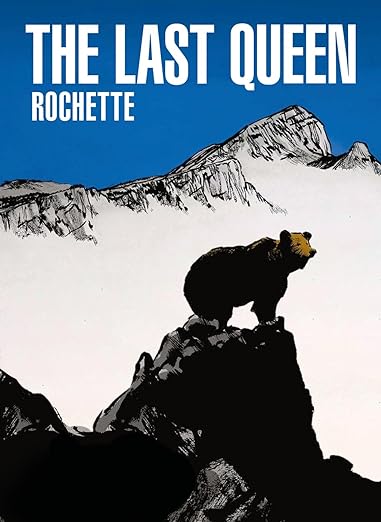
The Last Queen


By Jean-Marc Rochette, translated by Edward Gauvin (SelfMadeHero)
ISBN: 978-1-914224-19-5 (HB)

In conjunction with scripters such as Jacques Lob, Matz, Oliver Bocquet, Bejamin Legrand and others, painter/illustrator Jean-Marc Rochette (Altitude, Bestiaire des alpes, Les loup, Les Aventures Psychotiques de Napoléon et Bonaparte, Le Transperceneige/Snowpiercer sequence) rapidly became one of the key bande dessinée artists to watch.

In 2022 he confirmed that status and surmounted it with the release of La Dernière Reine: a self-contained naturalist epic which quickly garnered many major awards. It was named “Book of the Year” by Lire Magazine Littéraire and Elle Magazine, was radio station RTL’s Grand Prix for Comics winner and was an Official Selection of the lauded Angoulême Festival 2023.

As can be seen in this new translation from SelfMadeHero, even in English, it’s a bloody good read.

Rendered in moody colour washes and stark line, The Last Queen took Rochette three years to complete and explores all the passions of its creator: love of wilderness, scaling mountains, contemplative solitude and the balance between humanity and nature.

Those fascinations are expressed here in the millennial history and last gasp of a clan of red-headed outsiders living on the Vercors Massif of the French Prealps since neolithic times. Often regarded as witches, the ancestors of doomed outcast Édouard Roux have lived with and in the wilds throughout history. His kind enjoyed a particular affinity for the great bears that were indisputable masters of the range for all of time, until as a child he witnesses the end of the last mighty monarch of the peaks.

As the 19th century closed, a she-bear dubbed “the Last Queen” is killed by a shepherd and her carcass gloatingly desecrated by villagers. The other kids cruelly call little Édouard “son of the bear” and say vile things about his mother, but he’s used to it.

When war comes in 1914, Roux marches off and is a hero of the Somme trenches. All it costs is the lower part of his face…

In 1920, the despondent pensioned-off warrior is on his uppers: a despised, pitiable gueule cassée – “broken face” – shrouding his disfigurement and shame beneath a sack-like hood. He is but one of thousands…

When Roux hears of a woman artist who helps injured soldiers, he travels to Paris and meets Jeanne Sauvage who builds a new lower face for Roux based on the visage of a Greek god. Based on actual sculptor and proto-feminist Marie Marcelle Jane Poupelet, Sauvage has been making supple, lifelike masks for France’s defaced heroes and – refusing payment he cannot afford – does the same for Édouard.

Soon they are lovers and she introduces him to her circle of artist friends in Montmartre …more dangerously disruptive outsiders in a world increasingly governed by inconspicuous wealth, covert prestige and urbane uniformity: one that simultaneously tolerates, despises and exploits them all.

When the city life grinds them down and spits them out, Roux takes Jeanne to the mountains and shows her the secrets of the massif and a long-held family secret: stone age cave paintings and a neolithic carved bear lost from human knowledge for hundreds of years. The bounty of wonders inspire her great artistic breakthrough but Jeanne’s creative triumph is swindled from her by the elegant, cultured elite of modern civilisation. She and Édouard retreat from the emerging world for a timeless natural idyll that is paradise on Earth, but their days of true happiness are already numbered…

Uncompromising, deeply poignant and painfully sad, this is a saga of love and extinction: a testament to the passing of the past, with raw nobility lost to greed, crushing conformity and rise of mass mediocrity. It’s a struggle with no room for mercy or grace allowed for the unconventional or out-of-step. A paean to the fading call of the wild, uncomfortable or troublesome heritage, these lovers’ loss encapsulates and symbolises so many small wonders destroyed by progress, with revenants and outsiders pushed beyond even the few oases of fringe and margins not taken from them yet…

In a world that has no place for so much any longer, The Last Queen is a powerful call to cherish and preserve what can so easily die and never be regained…
La Dernière reine © Casterman, 2022. All rights reserved.