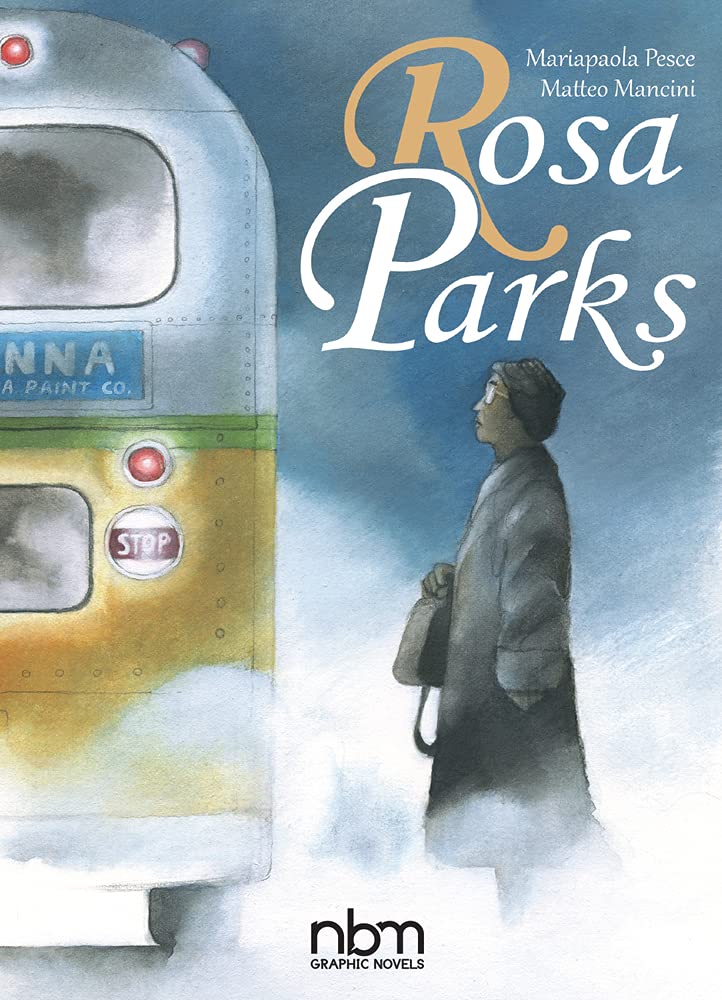
Rosa Parks


By Mariapoala Pesce & Matteo Mancini, translated by Nanette McGuiness (NBM)
ISBN: 978-1-68112-291-5 (HB) eISBN: 978-1-68112-292-2

It must be quite hard to say something new – or even get under the accumulated skin – of a legend, and doubly so when the single act the entire world knows them for is not the beginning or end, but rather a middle moment in a long life of impassioned exceptionalism…

On December 1st 1955, “negro” seamstress Rosa Parks rode the bus home. She had taken said public transport vehicle many times before and until that moment had always followed the rules. This was in Montgomery, Alabama, where “Jim Crow” laws had been steadily snatching back every vestige of freedom and liberty won with shot and shell during the War Between the States, almost from the moment the shooting stopped…

Thus, on those commuter routes – as everywhere else – white people had priority, and if a black person was seated, they had to get up and literally move to the back of the bus to let “their betters” sit down.

On that evening, weary Rosa Parks refused to give up her seat, even when told to by the white bus driver. She knew there would be consequences, anticipated them and was ready for them. Perhaps she wasn’t so sure where that act of passive defiance would take her and the entire country…

That moment is as much part of mythology as history, but here – via some intriguing extrapolation from writer Mariapoala Pesce (Angela Davis; Alice in Austenland; La Fattoria Degli Animali) and illustrator/designer Matteo Mancini (Una divisa per nino) – we take a look at what made the moment: who Rosa Parks was before and what she became after that act of wanton lawbreaking…

Preceded by thoughtful author’s preface ‘Does it still make sense to talk about Rosa Parks?’ the story is then told through a distant lens, beginning in a taxicab on December 1st 2014, where a hot young rapper frets and slowly gets acquainted with the elderly blue collar driver. They’re different generations of black man, but as the ride progresses, conversation shows how much has changed and how much they’re still alike…

The star is wearing an “I Can’t Breathe” shirt and that cause celebre sparks talk of another more distant time…

And thus is told an intimate tale of the thoughtful family woman who weathered instant infamy and dangerous notoriety to become an eternal activist, iconic institution and tireless campaigner for employment equality, civil rights education, literacy and an end to sexual abuse and exploitation of black women and girls.

The captivating tale within a tale is augmented by ‘Martin Luther King’s Letter to Citizens of Montgomery, AL’; an essay by Stephanie Brooks detailing ‘Rosa Parks After’; a bibliography of Further Reading and a beautiful, capacious and extensive sketch and design section.

Intriguing and entertaining, Rosa Parks offers a powerful and enriching approach to a much-lauded but little known example of humanity at its very best.
© Mariapoala Pesce 2020 for the text. © Matteo Mancini 2020 for the illustrations. © for the original Italian EditionBeccoGiallo S.r.l. 2020. All rights reserved.

Rosa Parks will be published on February 17th 2022 and is available for pre-order now. For more information and other great reads see http://www.nbmpub.com/

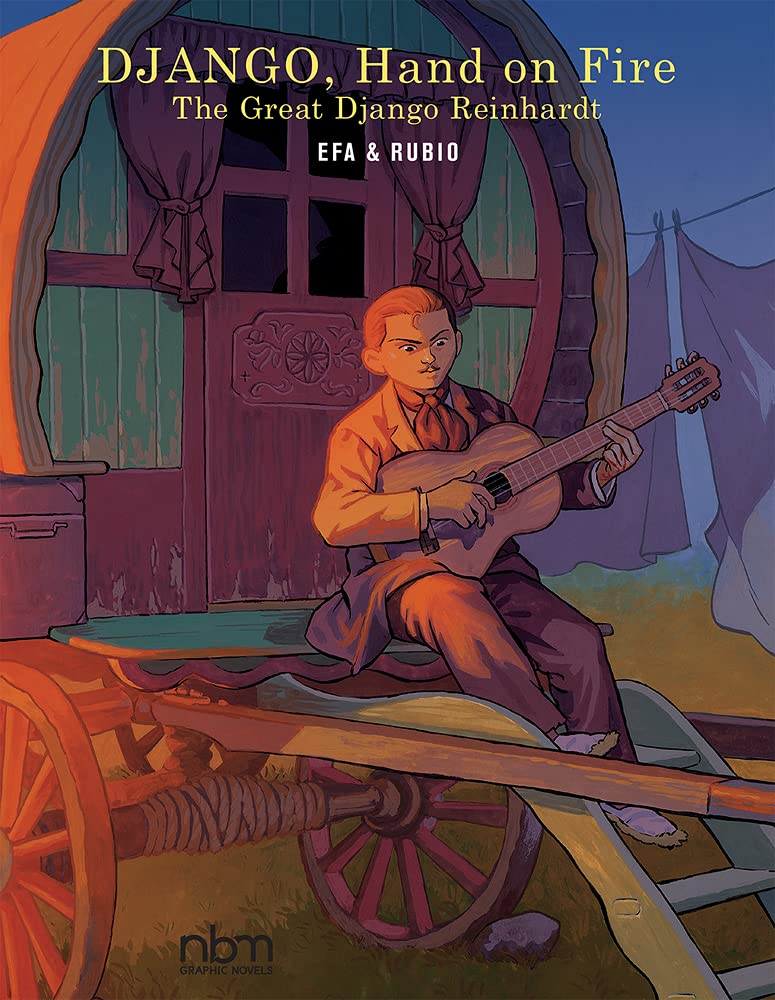
Django, Hand on Fire: The Great Django Reinhardt


By Salva Rubio & Efa, translated by Matt Madden (NBM)
ISBN: 978-1-68112-287-8 (HB) eISBN: 978-1-68112-288-5

Publisher NBM’s line of European-originated biographies never fails to delight, and this new oversized luxury hardcover (also available in digital formats) is one of the most engaging yet: skilfully deconstructing – when not actually aiding and adding to – the myths and legends surrounding a top contender for the title of greatest guitar player of all time…

Django, Hand on Fire happily reunites award-winning screenwriter, historian and novelist Salva Rubio (Max; The Photographer of Mauthausen) with animator and illustrator Ricard Fenandez AKA “Efa” (Les Icariades; Rodriguez; L’Âme du Vin; Le Soldat) – whose other collaborations are also beautiful biographies – Monet: Itinerant of Light and the as yet untranslated Degas: La danse del la solitude.

Originally released in France, the translated Django, main de feu is preceded here by an introductory prose appraisal from Thomas Dutronc. This stunning confection of painterly images traces the life of the troubled and unfortunate Roma musician from his fraught birth in a frozen field in Belgium to his second birth and reunion with the true love he threw away and found again…

That natal moment was in 1910 as his father and the other itinerant performers of their tribe were eking out a wage entertaining outworlders.

By 1922, the troupe were resident in Paris’ “Zone”: an enclave for his sort where social outcasts could reside until posh folks found a use for them. The lad was cocky and troublesome, an arrogant illiterate born for mischief but blessed with astounding musical skill…

His life turned around when his mama acquired a six-string banjo for him and all his energies refocussed on mastering music. Soon he was making money – and losing it gambling – even before he was considered a man…

Still an emotional child, he became the star of a professional (adult) band but his actions and attitude lost him many friends and family and ultimately the girl who adored him: Irma AKA Naguine. She faithfully trailed in his wake as producers and record publishers tracked the young man and watched in resignation as he succumbed to the shining blonde glory of artificial flower maker Florine/Bella. Naguine left the Zone entirely when Django and the flower girl wed, but swore to return…

The musician’s meteoric rise stalled only as he awaited his first child’s birth. As they slept in their wagon, it caught fire and although Bella got out, Django was badly burned on his legs and left hand…

How – driven by his mother – he battled back to overcome his life-changing injuries and, by changing his style, mastered another instrument, found undying fame and finally realized where his true love lay is a fabulous – if not strictly accurate – tale to warm the heart and gladden the eyes…

The pictorial paean to persistence and testament to passion is supported by a Bibliography and Creator Biographies plus ‘Django Reinhardt, from mystery to legend… In the light of History’: a fulsome, copiously-illustrated essay detailing the author’s factual choices and path to this particular truth, categorised and examined in ‘A mythical birth’, ‘The Zone’, ‘An interloper in the world of bal-musette’, ‘J’ai deux amours: Naguine and “le jass”‘, ‘The Cross of Blood…’, ‘…and the fiery flowers’, ‘Hospital for the Poor’ and ‘Hand on fire’…

Sparkling and inspirational, this is destined for the reading list of every music historian and intrigued dilettante: a beguiling magic window into another world and one you should seek out tout de suite…
© DUPUIS 2020 by Rubio, Efa. All rights reserved.

Django, Hand on Fire: The Great Django Reinhardt will be published on January 18th 2022 and is available for pre-order. For more information and other great reads see http://www.nbmpub.com/

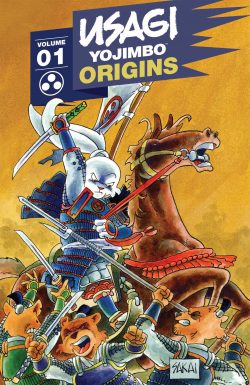
Usagi Yojimbo Origins volume 1: Samurai


By Stan Sakai, with colours by Ronda Pattison (IDW)
ISBN: 978-1-68405-740-5 eISBN: 978-1-68406-955-2

One of the very best and most adaptable survivors of the 1980s black-&-white comics explosion/implosion is a truly bizarre and wonderful synthesis of historical Japanese samurai fiction and anthropomorphic animal adventure: a perfect example of the versatility and strengths of a creator-owned character.

Usagi Yojimbo (which translates as “rabbit bodyguard”) first appeared as a background character in multi-talented creator Stan Sakai’s peripatetic comedy feature The Adventures of Nilson Groundthumper and Hermy, which launched in furry ‘n’ fuzzy folk anthology Albedo Anthropomorphics #1 (1984). He subsequently appeared there on his own terms as well as in Critters Amazing Heroes, Furrlough and a Munden’s Bar back-up in Grimjack.

Sakai was born in 1953 in Kyoto, Japan before the family emigrated to Hawaii in 1955. He attended the University of Hawaii, graduating with a BA in Fine Arts, and pursued further studies at Pasadena’s Art Center College of Design after moving to California.

His first comics work was as a letterer, most famously for the Groo the Wanderer, before his nimble pens and brushes, coupled with a love of Japanese history, legend and the films of Akira Kurosawa and his peers, combined to turn a proposed story about a historical human hero into one of the most enticing and impressive – and astonishingly authentic – fantasy sagas of all time.

The deliciously rambling and expansive period fantasy series is nominally set in a world of sentient animals (with a few unobtrusive human characters scattered about) and specifically references the Edo Period of Feudal Japan around the beginning of the 17th century. It simultaneously samples contemporary cultural icons from sources as varied as Lone Wolf and Cub, Zatoichi and even Godzilla. The saga details the life of Miyamoto Usagi, a ronin or masterless samurai, making an honourable living as a Yojimbo or bodyguard for hire. As such, his fate is to be drawn constantly into a plethora of incredible situations.

And yes, he’s a rabbit; a brave, sentimental, gentle, artistic, long-suffering, conscientious and heroic bunny who just can’t turn down any request for help or ignore the slightest evidence of injustice…

The Lepine Legend later appeared in Albedo #2-4, The Doomsday Squad #3 and seven issues of Critters (1, 3, 6-7, 10-11 & 14) before leaping into his own long-running series. It was the first of many, relating his adventures and mirrored Sakai’s real-world peregrinations from publisher to publisher.

The Sublime Swordsbun has shifted homes frequently, but has been in continuous publication since 1987 – with more than 40 graphic novel collections and books to date. He’s also guest-starred in numerous other series, such as Teenage Mutant Ninja Turtles (and its TV incarnation) and even almost made it into his own small-screen show but there’s still time yet and fashions can revive as quickly as they die out…

There are high-end collectibles, art prints, computer games and RPGs, a spin-off sci-fi comics serial and lots of toys.

Sakai and his creation have won numerous awards both within the Comics community and amongst the greater reading public, and now, as a venerable mainstay of the American comics landscape, the monochrome wanderer’s early exploits got a modern makeover in 2020. Not strictly chronologically ordered, Usagi Yojimbo Color Classics #1-7 are gathered here to hopefully bring him to a new generation…

Following a brief ‘Introduction’ recapping major characters and scenario, ‘Samurai!’ sees the rabbit ronin again meet money-mad bounty-hunter Gennosuké after a deadly duel of honour leaves a warrior named Gunichi a bloody corpse at the Yojimbo’s feet. Pressed by the newly-arrived and curious Rhino, the moodily moved and uncharacteristically loquacious rabbit shares some of the events of his boyhood…

Once, Miyamoto Usagi was simply the son of a small-town magistrate, dispatched with his friend Kenichi to train at the prestigious Dogora Fencing School in Sendai. As the boys make their journey they encounter a lone, aged warrior beset by a pack of bullies from that self-same school, determined to prove their institution’s martial superiority.

Despite all efforts to placate the hotheads, old Katsuichi is – most reluctantly – compelled to slay the toughs. The stunned witnesses start bickering and – whilst Kenichi wants to follow orders and go on to the (clearly honourless) Dogora School, little Usagi seeks out the old man to be his Sensei…

The elder was finished with teaching but eventually sees something in the defiant, determined little rabbit and grudgingly accepts his exceptional young charge…

Usagi spends years learning the Way of Bushido from his stern, leonine master: not just superior technique and tactics, but also a philosophy of justice and restraint to serve him all his days…

The revelations of Usagi’s boyhood training continue in short, revelatory vignettes – nine in all – as the elder Yojimbo and his surly companion continue towards shelter, highlighting the peculiar relationship of Sensei and Student. At the disciple’s first tournament, the scurrilous, vengeful Dogora adherents scheme to “accidentally” cripple the boy and thus humiliate his teacher, but don’t anticipate his innate ability.

After besting the entire Fencing School contingent in duels with Bokken (wooden swords) the boy at last faces his old friend Kenichi and triumphs. His prize is a Wakizashi “Young Willow” and Katana “Willow Branch”. The short and long swords are the soul of a samurai, marking his graduation to martial maturity, but Usagi is blithely unaware of what his victory has cost his childhood companion…

Mere months later, the graduate warrior is challenged by a masterful, mysterious swordsman who was bodyguard to the Great Lord MifunÄ—. Their duel is interrupted when a band of Dogora assassins attack, determined to avenge their school’s humiliation by a single stick-wielding student. The cowards are no match for the steel of Usagi and the mighty Gunichi, and the victors part as friends, with the bodyguard promising to recommend the rabbit for future service to his Lord.

Still assessing his options, the young Samurai encounters Kenichi once more. The disgraced youth has left the Dogora School and is trying to drink himself to death, but when he and Usagi hear their home village is threatened by bandits, the former friends reconcile to save their loved ones…

By holding Usagi’s childhood love Mariko hostage, the brigands successfully neutralise his magistrate father and are stripping the hamlet of its provisions and meagre treasures when Usagi and Kenichi challenge them. None of the villains survive the vengeance of the outraged villagers…

In the aftermath, although Mariko clearly wants Usagi to stay, she says nothing and the Samurai leaves to join Lord MifunÄ—’s service. Kenichi stays…

The young warrior advances quickly as MifunÄ—’s vassal and is soon a trusted bodyguard, serving beside indomitable Gunichi. It is a time of great unrest and war is brewing, and in Usagi’s third year of service, the Lord’s castle is attacked by Neko Ninja assassins. Although the doughty warriors save their master, his wife Kazumi and heir Tsuruichi are murdered. Realising ambitious rival Lord Hikiji is responsible, MifunÄ— declares war…

The struggle ends on the great Adachigahara plain when MifunÄ—’s general Toda switches sides. The Great Lord falls and at the crucial moment Gunichi also breaks, fleeing to save his own skin and leaving outnumbered Usagi to preserve the fallen Lord’s head – and Honour – from shameful desecration…

The story comes full circle now, when after two years as a purposeless, masterless Ronin, the wandering Yojimbo meets Gunichi again…

After the epic origin, short, pithy vignettes cleanse the dramatic palate, beginning with a delicious traditional horror story. In ‘Kappa’ the wanderer encounters a deadly marsh troll at dusk and barely escapes with his life by offering the foul beast some wild cucumbers he has picked. Exhausted, the Ronin finds shelter with an old woman for the night, but when she hears of his adventure she becomes hysterical.

The cucumbers were planted so that her own son – returning that night – would have something to buy off the voracious Kappa. Horrified by his inadvertent error, Usagi dashes back to the marsh to save the son, but after overcoming the monster, shockingly experiences one final sting in the tale…

Moments of peace and contemplation are few in the Yojimbo’s life but, even when a drunken horde interrupt ‘A Quiet Meal’, the rabbit’s patience takes plenty of rousing. Some rude fellows, however, really don’t know when to stop boozing and leave well enough alone…

‘Blind Swords-Pig’ is a sublime comedic parody that sets up future conflicts as the landless lepus meets a formidable companion on the road; one whose incredible olfactory sense more than compensates for his useless eyes. How tragic then that the affable Ino is also a ruthless, blood-spilling outlaw who won’t let comradeship affect his hunger for freedom or carnage…

Closing this collection, ‘Lone Rabbit and Child!’ also sets up major plot threads as the Ronin is hired by beautiful swordswoman Tomoe Ame to protect her Lord Noriyuki. The callow royal child has been travelling to the capital to ratify his role as leader of the prestigious Geishu Clan following the death of his father, but the party has been repeatedly attacked by ninjas working for infamous Hikiji – now risen high in the Emperor’s hierarchy.

The insidious schemer is determined to foil the investiture and appropriate Geishu properties for himself, but has not reckoned on fate and the prowess of the lethally adept Usagi…

Burnished with cover gallery, character sketches and a biography of Stan Sakai, this is a fast-paced yet lyrical compilation; funny, thrilling and simply bursting with veracity and verve. Usagi Yojimbo‘s life story is a magical saga of irresistible appeal to delight devotees and make converts of the most hardened hater of “funny animal” stories. If that’s you, why not try some sheer comicbook poetry by a True Master?
Usagi Yojimbo™ © 2020 Stan Sakai. All rights reserved.

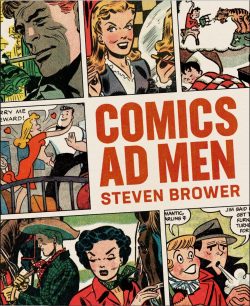
Comics Ad Men


By Many & various, written and compiled by Steven Brower (Fantagraphics Underground Press)
ISBN: 978-1-68396-307-3 (TPB)

Win’s Christmas Gift Recommendation: A Catalogue of Cartoon Nostalgia… 8/10

From its earliest inception, cartooning has been used to sell: initially ideas or values but inevitably actual products too. In newspapers, magazines and especially comic books the sheer power of narrative – with its ability to create emotional affinities – has been linked to the creation of unforgettable images and characters. When those stories affect the daily lives of generations of readers, the force that they can apply in a commercial arena is almost irresistible…

Any ad exec worth their salt knows instinctively how to catch and hold public attention so as comics developed its star characters and top creators became invaluable resources and many accounts rose and fell on the force of celebrity Brand spokes-doodles rendered by the best artists around – often the very cartoonists creating strips and comic books. Ultimately, many of comics’ greatest were seduced away from the harsh deadlines of strips for the better-paid environs of the marketing moguls. That’s where this delightful collation from design wizard, Creative Director, Educator, art lover and comics afficionado Steven Brower (From Shadow to Light: The Life and Art of Mort Meskin; Golden Age Western Comics; Astounding, Mysterious, Weird and True: The Pulp Art of Comic Book Artists) comes in: a fascinating picture-packed directory of top comics creators leasing their talents to sell stuff…

It’s a guaranteed nostalgia-fest: I know of many – including star industry folk and Plain Old me – who have bought assorted Golden Age comics just because they carry CC Beck Captain Tootsie ad pages or Twinkies shills concocted and populated by Marvel and DC’s top guns…

Delivering an effusive and erudite essay and lecture on the history and development of the phenomenon – liberally accompanied by dozens of captivating illustration examples – Brower makes a compelling case for further study and successfully jingles the heartstrings of comics devotees with a delicious roster of astoundingly impressive artists clandestinely operating in the real world of commerce. Did you know that Golden Age Green Lantern originator Martin Nodell also created the Pillsbury Doughboy? You do now, and so much more can be yours to bemuse your chums…

The big draw is a carefully curated and stunning Gallery of historical examples comprising star turns and their famous creations. Here Sydney Smith co-opts The Gumps to sell “Funy Frostys”, E.C. Segar’s Popeye crew tout Mazda Lamp lightbulbs and Al Capp’s Li’l Abner recommends Cream of Wheat.

The parade of stars continues with Mel Graf (Secret Agent X-9; Captain Easy), Frank Robbins (Jonny Hazard; Batman, The Invaders), Vic Herman (Little Dot; Elsie the Cow), Clifford McBride (Napoleon and Uncle Elby), Sheldon Moldoff (Hawkman; Batman), Basil Wolverton (Spacehawk; Powerhouse Pepper; Mad), Noel Sickles (Scorchy Smith) and  Jacob Landau (Military Comics; Captain America).

Some artists’ styles were perfect for changing times and were in high demand. Otto Soglow (The Little King) and Dik Browne (Hagar the Horrible; Hi and Lois) were highly sought after with Browne being represented here by solo strips and in collaboration with Gill Fox (Torchy; Hi and Lois) and Roland Coe (The Little Scouts), VIP – AKA Virgil Partch – (Big George), Bill Williams (Henry Aldrich; Millie the Model), Hank Ketcham (Dennis the Menace – the American one), Marvin Stein (Justice Traps the Guilty; Young Love) and Paul Fung (Dumb Dora).

There were even agencies repping many illustrators, and a copious sampling of Young & Rubicam and Johnstone & Cushing alumni precede beguiling work from Stan Drake (The Heart of Juliet Jones; Blondie; Kelly Green), Lou Fine (Doll Man; The Ray; The Spirit; Black Condor), Creig Flessel (The Sandman, Detective Comics; Pep Morgan; Superboy), Jack Betts (Britannia Mews), Bob Bugg (The New Neighbors; Popular Comics), Kelly Freas (assorted covers), Alex Kotzky (Blackhawk; Apartment 3-G), George Roussos (Air Wave; Batman; Crypt of Terror; Fantastic Four) and Tom Scheuer (Flash Gordon; My Love Story).

Neal Adams (Batman; X-Men; Ben Casey) actually set up his own agency Continuity Associates, employing many contemporaries such as Dick Ayers (Human Torch, Ghost Rider; Sgt. Fury  and his Howling Commandos) and talented newcomers but there was always a demand for older veterans like Mort Meskin (Sheena; Johnny Quick; Vigilante; Mark Merlin), Joe Simon (Captain America; The Fly; Fighting American; Boy Commandos) and Wallace Wood (T.H.U.N.D.E.R. Agents; Daredevil; Weird Science; Mad; Witzend), all seen here in a wealth of amazing art.

Wrapping up the with a final push of superb selling points are briefs filled by Ken Penders (Sonic the Hedgehog), some Twinkies moments courtesy of John Romita Snr. (Amazing Spider-Man) and Ross Andru & Mike Esposito (Wonder Woman; The War that Time Forgot; The Metal Men; Amazing Spider-Man), a drinks campaign designed to reach modern youth featuring Daniel Clowes (Lloyd Llewellyn; Eightball; Ghost World; Patience) and an abundance of superb stuff from the mightily prolific Jack Davis (Mad; Frontline Combat; Rawhide Kid).

Available in paperback or instantly gratifying digital editions and stuffed with astounding images, fascinating lost ephemera and mouth-watering bouts of nostalgia, Comics Ad Men is an absolute visual delight no fan of pop culture, comics or narrative illustration will be able to resist.
© 2019 Steven Brower and Fantagraphics Books. All art and trademarks © & ™ & their respective copyright and trademark holders. Essay © Steven Brower. All rights reserved.

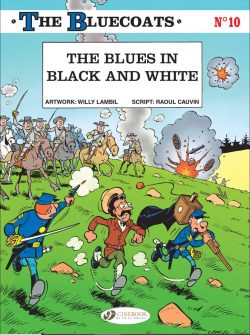
The Bluecoats volume 10: The Blues in Black and White


By Willy Lambil & Raoul Cauvin, translated by Jerome Saincantin (Cinebook)
ISBN: 978-1-84918-341-3 (Album PB)

Win’s Christmas Gift Recommendation: Read Some Pictures: It’ll Last Longer… 8/10

The myths and legends of the cinematic American West have fascinated Europeans virtually since the actual days of stagecoaches and gunslingers. Hergé and Moebius were passionate devotees and the wealth of stand-out Continental comics series ranges from Italy’s Tex Willer to such Franco-Belgian classics as Blueberry and tangential all-ages classics such as Yakari. Even colonial dramas such as Pioneers of the New World and Milo Manara & Hugo Pratt’s Indian Summer fit the broad-brimmed bill.

As devised by Louis “Salvé” Salvérius & Raoul Cauvin – who scripted the first 64 best-selling volumes until his retirement in 2020 – Les Tuniques Bleues (The Bluecoats) debuted at the end of the 1960s, specifically created to replace Lucky Luke when the laconic maverick defected from weekly anthology Le Journal de Spirou to rival publication Pilote.

The substitute swiftly became one of the most popular bande dessinée series in Europe.

Salvé was a cartoonist of the Gallic big-foot/big-nose humour school, and when he died suddenly in 1972, his replacement, Willy “Lambil” Lambillotte slowly introduced a more realistic – but still overtly comedic – illustrative tone and manner. Lambil is Belgian, born in 1936 and, after studying Fine Art in college, joined publishing giant Dupuis in 1952 as a letterer.

Born in 1938, scripter Cauvin is also Belgian and – before entering Dupuis’ animation department in 1960 – studied Lithography. He soon discovered his true calling – comedy writing – and began a glittering and prolific career at Spirou. In addition to Bluecoats he scripted dozens of long-running, award winning series including Cédric, Les Femmes en Blanc and Agent 212: more than 240 separate albums. The Bluecoats alone has sold more than 15 million copies of its 65 (and counting) album sequence.

Our sorry, long-suffering protagonists are Sergeant Cornelius Chesterfield and Corporal Blutch; a pair of worthy fools in the manner of Laurel & Hardy: hapless, ill-starred US cavalrymen posted to the wild frontier and various key points of fabled America during the War Between the States.

The original format featured single-page gags set around an Indian-plagued Wild West fort, but from the second volume – Du Nord au Sud – the sad-sack soldiers were situated back East, fighting in the American Civil War. All subsequent adventures – despite ranging far beyond the traditional environs of America and taking in a lot of genuine and thoroughly researched history – are set within the timeframe of the Secession conflict.

Blutch is your run-of-the-mill, whinging little-man-in-the street: work-shy, mouthy, devious and especially critical of the army and its inept commanders. Ducking, diving, even deserting whenever he can, he’s you or me – except sometimes he’s quite smart and heroic if no easier option is available.

Chesterfield is a big, burly professional fighting man; a career soldier who has passionately bought into all the patriotism and esprit-de-corps of the Military. He is brave, never shirks his duty and wants to be a medal-wearing hero. He also loves his cynical little troll of a pal. They quarrel like a married couple, fight like brothers and simply cannot agree on the point and purpose of the horrendous war they are trapped in…

The Blues in Black and White was the 10th translated Cinebook album (chronologically the 11th European volume) and as Les Tuniques Bleues: Des bleus en noir et blanc was first seen on the continent in 1975, serialised in Le Journal de Spirou #1965 to #1975 before becoming an album collection two years later.

It opens with another spectacular yet pointless battle, with Blutch in fine whining form after a string of horrific near-death experiences. His mood is further tested when he finds a civilian prowling about, pointing a weird box at casualties and other scenes of horror…

The oblivious, self-absorbed stranger is Matthew Brady, who has been sent by President Lincoln to record the war through the strange new medium of photography. After becoming an unwilling subject and accidental laughing stock, Chesterfield is deeply suspicious and, soon after, resentfully resistant as his vain superiors and battle-weary comrades embrace the technological marvel. Before he can react, he and Blutch are appointed bodyguards and dogsbodies: compelled to escort the oblivious, practically-suicidal snapper anywhere and everywhere he wants…

Soon, however, the surly sergeant has all the combat his warrior’s heart can cope with – and even the long-desired prospect of a gong – whilst the sly, shirking corporal has found a way to utterly avoid battle by becoming the photographer’s assistant. He even dresses like a civilian now!

As the daily carnage continues, Chesterfield becomes increasingly irked at the effect of the picture maker. Almost everyone wants to be captured for posterity, to the detriment of actual fighting. While Brady is gone, Blutch “immortalises” everyone, and the sergeant teeters on the brink of madness. He even takes charge of charging whilst his officers are too busy preening and primping for their next heroic pose…

The lethal status quo returns with a bump when the President shows up to decorate Chesterfield. Brady is with him and ready to take his own shots again, meaning Blutch can get back to fighting – just as the Confederate forces rally to retake all the ground they’ve lost while the Sarge was secretly in command…

Things go from bad to worst, as the Rebel response swiftly overwhelms the Union forces. When Lincoln and Brady are almost captured, Blutch and Chesterfield show just what they’re made of… and pay a heavy price…

A shade darker than usual, this wry treatise on fame and pride is a hugely amusing poke at the glory boys of history, deftly delivering an anti-war saga cleverly targeting younger, less world-weary audiences. Historically authentic, and always in good taste despite an uncompromising portrayal of violence, the attitudes expressed by our down-to-earth pair never make battle anything but arrant folly. These are comedic tales whose very humour makes the occasional moments of shocking verity doubly powerful and hard-hitting.

Funny, thrilling, beautifully realised and eminently readable, Bluecoats is the kind of war-story and Western that appeals to the best, not worst, of the human spirit.
© Dupuis 1977 by Lambil & Cauvin. All rights reserved. English translation © 2017 Cinebook Ltd.

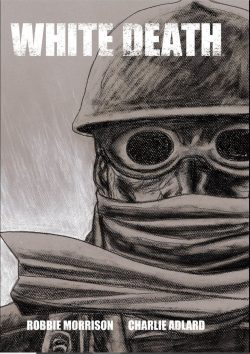
White Death


By Robbie Morrison & Charlie Adlard (Image Comics)
ISBN: 978-1-632151-42-1 (HB)

Win’s Christmas Gift Recommendation: Unmissable and Unforgettable… 9/10

More than a century after the conflict ended, the First World War still has a terrifying grip on public consciousness and remains culturally relevant.

For years I’ve been declaring that Charley’s War is the best story about the Great War ever created but while I remain convinced of that fact, there are plenty of strong contenders for the title and it’s always worth seeking out fresh viewpoints and visualisations. This particular moody masterpiece originally emerged as kind of transcontinental self-published venture by writer Robbie Morrison (Nikolai Dante; Judge Dredd; Doctor Who; Batman) and illustrator Charlie Adlard (Judge Dredd; X Files; Astronauts in Trouble; Batman; The Walking Dead) who initially crafted the international bestseller under the guise of Les Cartoonistes Dangereux in 1998.

It was subsequently rereleased in 2002 by AiT/Planet Lar before becoming this luxurious hardback and digital tome in 2014. It presents a stunning and moving saga of a largely overlooked theatre of that conflict and offers in addition commentary; biographies; a short vignette created as a prelude to the main story and used as a promotional device in French comics magazine Bo Dois, plus a feature detailing the process from original script to finished art. This last is a particularly fascinating inclusion as illustrator Adlard devised a whole new way of delivering comics narrative for the story…

The tale itself is simple and straightforward: based on truly horrific events during what was known as “the White War” and fully contextualised in Morrison’s introductory notes.

It’s 1916 and on the Italian Front, the war against the forces of the Austro-Hungarian Empire (allied with Germany) is as stalled, tedious and horrifically murderous as the trench warfare in France and Belgium, even though it’s being fought across the Alighieri plateau in the mountains of Trentino.

Added to the usual horrors of the conflict are crushing cold, constant mist, fog and snow and the extreme likelihood of being crushed and smothered once the bright sparks shelling each other realise they can also trigger avalanches just by aiming a little bit higher…

Into this mess trudges new recruit Pietro Aquasanta. He grew up in these mountains, but sees little to engender fond feelings or happy memories. Firstly, his status is suspect since he used to soldier for the other side, thanks to the Empire’s conscription policies and the Allies’ habit of taking absolutely anybody – even enemy combatants – who can point a gun.

Secondly, even though he’s now an Italian fighting for his homeland, most of Aquasanta’s comrades are fools, the generals are callous idiots and his immediate superior – sergeant major Orsini – is a fanatical war-loving bastard who will do anything to keep the killing going. Still and all, even solitary outsiders like Pietro can’t help seeking companionship when life is so visibly brief and death looms over everything like a million-ton white shroud…

And as the campaign progresses the turncoat advances simply by not dying…

Leavened through mordant trench humour (I guess the clue is in the name), peppered with painfully human moments of tragedy or unwavering friendship and capturing the numbing horror of ceaseless struggle against the elements, environment, other humans and one’s own self-destructive demons, White Death is a compelling comics classic to be savoured and shared.
© 2014 Robbie Morrison & Charlie Adlard. All rights reserved.

The Chagos Betrayal – How Britain Robbed an Island and Made Its People Disappear


By Florian Grosset (Myriad Editions)
ISBN: 978-1-912408-67-2 (TPB) eISBN 978-1-912408-93-1

Win’s Christmas Gift Recommendation: Because Knowledge is Power and Shame is a Weapon… 9/10

Words wedded to images have long been a cheap and reliable tool of the functionally powerless in addressing injustice. When used to craft potent and damning testaments of authoritarian oppression and atrocity, they stand a pretty good chance of shifting balances of power, changing the course of events and auditing history. Let’s hope it’s still the case here…

Comics and Graphic Novels carry a powerful ability to whip up empathy, deliver damaging detail, summarise complex issues and events without lessening emotional impact, and visually embed nuance that dry reports and impassioned novels cannot, at a fraction of the cost of a live action documentary. That’s exactly what graphic designer and first person witness Florian Grosset has achieved here as she details how successive British governments have displaced, lied to and fatally ignored some of their poorest, weakest and most trusting subjects, simply to curry favour with foreign allies and obtain discount weapons systems…

The uprooting and forced relocation of thousands of mostly brown-skinned, generally poor and universally uneducated British citizens by the British government in London to lease America a strategically advantageous naval base in the Indian Ocean has been a shameful ongoing affair since 1965. The plight of the displaced people of the Chagos archipelago as they perpetually petition British and International Courts and struggle to return to their ancestral homes on the island of Diego Garcia is still a slowly unfolding current affair, not a done and dusted historical footnote.

Utilising beautiful imagery, blunt facts and beguiling personal testimonies Grosset has assembled a grimly unforgettable argument, detailing how the Chagos litigants were belittled, lied to, discounted, ignored and ultimately stalled in hope that they would die out or go away.

A tragically effective tactic still in use – especially by civilised First World governments – is to rewrite the terms rules and definitions. Great Britain is a past master of this: even today glibly changing the status of any troublesome citizen from “British” to “Somebody Else’s Problem, Now”.

In the case of the former Chagos Archipelago islanders, redefining their centuries-old home as the British Indian Ocean Territory (BIOT) and its British-citizen inhabitants as “migrant workers” before summarily shipping them off against their will to imminently independent Mauritius probably seemed a “cunning wheeze”, but what it was – and remains – is damning proof of how elites regard the rest of us…

This staggeringly moving account – broken down into understated but powerfully enthralling chapters ‘You must leave and never return’, ‘Life in the slums’, ‘A troubled history’, ‘We must be very tough about this…there will be no indigenous population except seagulls..’, ‘There may be times when we are powerless to prevent injustice, but there must never be a time when we fail to protest.’ And ‘…any person who enters BIOT without permission may be liable to imprisonment for three years and/or a fine of £10,000…’ – summarises the current state of play and offers a chance for us all to make ourselves heard about the things done in our name but without our knowledge or consent.

Fully backed up by a ‘Sources’ section and grateful ‘Acknowledgements’ this is a superbly designed weapon of enlightenment no concerned citizen of our dying Earth should miss.
© 2021 Florian Grosset. All rights reserved.

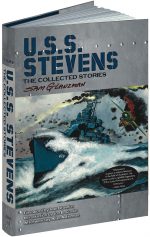
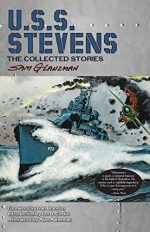
U.S.S. Stevens – The Collected Stories


By Sam Glanzman (Dover Comics & Graphic Novels)
ISBN: 978-0-486-80158-2 (HB)

To the shame and detriment of the entire comics industry, for most of his career Sam Glanzman was one of the least-regarded creators in American comicbooks. Despite having one of the longest careers, most unique illustration styles and the respect of his creative peers, he just never got the public acclaim his work deserved. Thankfully that all changed in recent years and he lived long enough to enjoy the belated spotlight and bask in some well-deserved adulation.

Glanzman drew and wrote comics since the Golden Age, most commonly in classic genres ranging from war to mystery to fantasy, where his work was – as always – raw, powerful, subtly engaging and irresistibly compelling.

On titles such as Kona, Monarch of Monster Island, Voyage to the Deep, Combat, Jungle Tales of Tarzan, Hercules,The Haunted Tank, The Green Berets, The Private War of Willie Schultz, and especially his 1980s graphic novels A Sailor’s Story and Wind, Dreams and Dragons – which you should buy in a single volume from Dover – Glanzman produced magnificent action-adventure tales which fired the imagination and stirred the blood. His stuff always sold and at least won him a legion of fans amongst fellow artists, if not from the small, insular and over-vocal fan-press.

In later years, Glanzman worked with Tim Truman’s 4Winds outfit on high-profile projects like The Lone Ranger, Jonah Hex and barbarian fantasy Attu. Moreover, as the sublime work gathered here attests, he was also one of the earliest pioneers of graphic autobiography; translating personal WWII experiences as a sailor in the Pacific into one of the very best things to come out of DC’s 1970s war comics line…

U.S.S. Stevens, DD479 was a peripatetic filler-feature which bobbed about between Our Army at War, Our Fighting Forces, G.I. Combat, Star Spangled War Stories and other anthological battle books; quietly backing-up the cover-hogging, star-attraction glory-boys. It provided wry, witty, shocking, informative and immensely human vignettes of shipboard life, starring the fictionalised crew of the destroyer Glanzman had served on. It was, in most ways, a love story and tribute to the vessel which had been their only home and refuge under fire.

In 4- or 5-page episodes, the auteur recaptured and shared a kind of comradeship we peace-timers can only imagine and, despite the pulse-pounding drama of the lead features, us fans all knew these little snippets were what really happened when the Boys went “over there”…

A maritime epic to rank with Melville or Forester – and with stunning pictures too – every episode of this astounding unsung masterpiece is housed in one stunning hardback compilation (also available digitally for limp-wristed old coots like me) and if you love the medium of comics, or history, or just a damn fine tale well-told, you must have it…

That’s really all you need to know, but if you’re one of the regular crowd needful of more of my bombastic blather, a much fuller description follows…

As I’ve already stated, Glanzman belatedly enjoyed some earned attention, and this tome opens by sharing Presidential Letters from Barack Obama and George Herbert Walker Bush for his service and achievements. Then follows a Foreword from Ivan Brandon and a copious and informative Introduction by Jon B. Cooke detailing ‘A Sailor’s History: The Life and Art of Sam J. Glanzman’.

Next comes a brace of prototypical treats; the initial comic book appearance of U.S.S. Stevens from Dell Comics’ Combat #16 (April-June 1965) and the valiant vessel’s first cover spot from Combat #24, April 1967.

The first official U.S.S. Stevens, DD479 appeared after Glanzman approached Joe Kubert, who had recently become Group Editor for DC’s war titles. He commissioned ‘Frightened Boys… or Fighting Men’ (appearing in Our Army at War #218, April 1970), depicting a moment in 1942 as boredom and tension are replaced by frantic action when a suicide plane targets the ship…

A semi-regular cast was introduced slowly throughout 1970; fictionalised incarnations of old shipmates including skipper Commander T. A. Rakov, who ominously pondered his Task Force’s dispersal, moments before a pot-luck attack known as ‘The Browning Shot’ (Our Fighting Forces #125, May/June) proved his fears justified…

Glanzman’s pocket-sized tales always delivered a mountain of information, mood and impact and ‘The Idiot!’ (OAaW#220, June) is one of his most effective, detailing in 4 mesmerising pages not only the variety of suicidal flying bombs the Allies faced, but also how appalled American sailors reacted to them.

Sudden death was everywhere. ‘1-2-3’ (OFF #126, July/August) details how quick action and intuitive thinking saves the ship from a hidden gun emplacement whilst ‘Black Smoke’ (Our Army at War #222, from the same month) shows how a know-it-all engineer causes the sinking of the Stevens’ sister-ship by not believing an old salt’s frequent, frantic warnings…

All aboard ship were regularly shaken by the variety of Japanese aircraft and skill of the pilots. ‘Dragonfly’ (OFF #127, September/October) shows exactly why, whilst an insightful glimpse of the enemy’s psychological other-ness is graphically, tragically depicted in the tale of ‘The Kunkō Warrior’ (OAaW #223, September).

A weird encounter with a wooden WWI vessel forces a ‘Double Rescue!’ (Star Spangled War Stories #153, October/November) before OFF #128’s (November/December) ‘How Many Fathoms?’ again counts the human cost of bravery with devastating, understated impact. ‘Buckethead’ (OAaW #225, November) then relates one swabbie’s unique reaction to constant bombardment.

‘Missing: 320 Men!’ (G.I. Combat #145, December 1970-January 1971) debuted Glanzman-avatar Jerry Boyle who whiled away helpless moments during a shattering battle by sketching cartoons of his astonished shipmates. ‘Death of a Ship!’ (OAaW #227, January 1971) then deals with classic war fodder as submarine and ship hunt each other in a deadly duel…

A military maritime mystery was solved by Commander Rakov in ‘Cause and Cure!’ (Our Army at War #230, March) whilst the next issue posed a different conundrum as the ship loses all power and sticks ‘In the Frying Pan!’ (April 1971).

The vignettes were always less about warfare than its effect – immediate or cumulative – on ordinary guys. ‘Buck Taylor, You Can’t Fool Me!’ (OAaW #232) catalogues his increasingly aberrant behaviour but posits some less likely reasons, after which old school hero Bos’n Egloff saves the day during the worst typhoon of the war in ‘Cabbages and Kings’(OFF #131, July/August) whilst ‘Kamikaze’ (OAa #235 August) boldly and provocatively tells a poignant life-story from the point of view of the pilot inside a flying bomb…

An informative peek at the crew of a torpedo launch station in ‘Hip Shot’ (G.I. Combat #150 October/November) segues seamlessly into the dangers of shore leave ‘In Tsingtao’ (OFF #134, November/December) whilst ‘XDD479’ (Our Army at War #238 November) reveals a lost landmark of military history.

The real DD479 was one of three destroyers test-trialling ship-mounted spotter planes. This little gem explains why that experiment was dropped…

Buck pops back in ‘Red Ribbon’ (G.I.C #151 December 1971-January 1972), sharing a personal coping mechanism for making shipboard chores less “exhilarating”, whilst ‘Vela Lavella’ (OAaW #240, January 1972) captures the claustrophobic horror of night time naval engagement before ‘Dreams’ (G.I.C #152 February/March) peeps inside various heads to see what the ship’s company would rather be doing. ‘Batmen’ (OAaW #241, February) uses a lecture on radar to recount one of the most astounding exploits of the war…

Every U.S.S. Stevens episode was packed with fascinating fact and detail, culled from the artist’s letters home and service-time sketchbooks, but those invaluable memento belligeri also served double duty as the basis for a secondary feature.

The debut ‘Sam Glanzman’s War Diary’ appeared in Our Army at War #242 (March 1972): a compendium of pictorial snapshots sharing quieter moments, such as the first passage through the Panama Canal, sleeping arrangements or K.P. duties peeling spuds, and precedes an hilarious record of the freshmen sailors’ endurance of an ancient naval hazing tradition inflicted upon every “pollywog” crossing the equator for the first time in ‘Imperivm Neptivm Regis’ (OFF #136 (March/April 1972).

A second ‘Sam Glanzman’s War Diary’ (OAaW #244, April) reveals the mixed joys of “Liberty in the Philippines” after which a suitably foreboding ‘Prelude’ (Weird War Tales #4 (March/April 1972) captures the passive-panicked tension of daily routine whilst a potentially morale-shattering close shave is shared during an all-too-infrequent ‘Mail Call!’ (G.I. Combat #155, April/May)…

A thoughtful man of keen empathy and insight, Glanzman often offered readers a look at the real victims. ‘What Do They Know About War?’ (OAaW #244, April) sees peasant islanders trying to eke out a living, only to discover far too many similarities between Occupiers and Liberators, whilst the next issue focussed on the sailors’ jangling nerves and stomachs. ‘A Funny Thing Happened on the Way to the War!’ (#245, May) reveals what happened when DD479 was mistakenly declared destroyed and, thanks to an administrative iron curtain, found it impossible to refuel or take on food stores…

Cartoonist Jerry Boyle resurfaced in a ‘Comic Strip’ in OFF #138 (July/August) after which Glanzman produced one of the most powerful social statements in an era of tumultuous change.

Our Army at War #247 (July 1972) featured a tale based on decorated Pearl Harbor hero Doner Miller who saved lives, killed the enemy and won medals, but was not allowed to progress beyond the rank of shipboard domestic because of his skin. ‘Color Me Brave!’ was an excoriating attack on the U.S. Navy’s segregation policies and is as breathtaking and rousing now as it was then…

‘Ride the Baka’ (OAaW #248 August) revisits those constant near-miss moments sparked by suicide pilots after which Glanzman shares broken sleep in ‘A Nightmare from the Beginning’ (OFF #139, September/October) whilst ‘Another Kunkō Warrior’ (OFF #140, November/December) sees marines taking an island and encountering warfare beyond their comprehension.

1973 began with a death-dipped nursery rhyme detailing ‘This is the Ship that War Built!’ (G.I.C #157 December 1972-January 1973) before ‘Buck Taylor’ (OFF #141 January/February) delivers an impromptu lecture on maritime military history. Glanzman struck an impassioned note for war-brides and lonely ships passing in the night with ‘The Islands Were Meant for Love!’ (Star Spangled War Stories #167 February)…

Terror turns to wonder when sailors encounter the ‘Portuguese Man of War’ (OAaW #256 August), a shore leave mugging is thwarted thanks to ‘Tailor-Mades’ (OFF #143 June/July) and letters home are necessarily self-censored in ‘The Sea is Calm… The Sky is Bright…’ (OAaW #257 June), but shipboard relationships remain complex and bewildering, as proved in ‘Who to Believe!’ (SSWS #171, July).

The strife of constant struggle comes to the fore in ‘The Kiyi’ (OAaW #258 July) and is seen from both sides when souvenir hunters try to take ‘The Thousand-Stitch-Belt’ (SSWS #172 August), but, as always, it’s non-combatants who truly pay the price, just like the native fishermen in ‘Accident…’ (OAaW #259, August).

Even the quietest, happiest moments can turn instantly fatal as the good-natured pilferers swiping fruit at a refuelling station discover in ‘King of the Hill’ (SSWS #174, October).

An unlikely tale of a kamikaze who survives his final flight but not his final fate, ‘Today is Tomorrow’ (OAaW #261, October) precedes a strident, wordless plea for understanding in ‘Where…?’ (OAaW #262 November 1973) before the sombre mood is briefly lifted with a tale of selfishness and sacrifice in ‘Rocco’s Roost’ from OAaW #265, February 1974.

The following issue provide both a gentle ‘Sam Glanzman’s War Diary’ covering down-time in “The Islands” and a brutal tale of mentorship and torches passed in ‘The Sorcerer’s Apprentice’, after which a truly disturbing tale of what we now call gender identity and post-traumatic stress disorder is recounted in the tragedy of ‘Toro’ from the April/May Our Fighting Forces #148…

‘Moonglow’ from OAaW #267 (April 1974) reveals how quickly placid contemplation can turn to blazing conflagration, whilst – after a chilling, evocative ‘Sam Glanzman’s War Diary’ (OAaW #269 June) – ‘Lucky… Save Me!’ (OAaW #275, December 1974) shows how memories of unconditional love can offset the cruellest of injuries…

‘Heads I Win, Tails You Lose!’ (OAaW #281, June 1975) explores how both friend and foe alike can be addicted to risk, after which the next issue’s ‘I Am Old Glory…’ sardonically transposes a thoughtful veneration with the actualities of combat before ‘A Glance into Glanzman’ by Allan Asherman (Our Army at War #284, September 1975) takes a look at the author’s creative process.

Then it’s back to those sketchbooks and another peep ‘Between the Pages’ (OAaW #293, June 1976) before ‘Not Granted!’ (OAaW #298, November 1976) discloses every seaman’s most fervent wish…

Stories were coming at greater intervals at this time and it was clear that – editorially at least – the company was moving on to fresher fields. Glanzman, however, had saved his best till last as a stomach-churning visual essay displayed the force of tension sustained over months in ‘…And Fear Crippled Andy Payne’ (Sgt. Rock #304, May 1977) before an elegy to bravery and stupidity asked ‘Why?’ in Sgt. Rock #308 from September 1977.

And that was it for nearly a decade. Glanzman – a consummate professional – moved on to other ventures. He was, however, constantly asked about U.S.S. Stevens and eventually, nearly a decade later, returned to his spiritual stomping grounds in expanded tales of DD479: both in his graphic novel memoirs and comic strips.

The latter appeared in anthological black-&-white Marvel magazine Savage Tales (#6-8, spanning August to December 1986) under the umbrella title ‘Of War and Peace – Tales by Mas’.

First up was ‘The Trinity’ blending present with past to detail a shocking incident of a good man’s breaking point, whilst a lighter tone informed ‘In a Gentlemanly Way’, as Glanzman recalled the different means by which officers and swabbies showed their pride for their ships. ‘Rescued by Luck’ than concentrated on a saga of island survival for sailors whose ship had sunk…

Next comes the hauntingly powerful black-&-white tale of then and now entitled ‘Even Dead Birds Have Wings’ (created for the Dover Edition of A Sailor’s Story from 2015) after which a chronologically adrift yarn (from Sgt. Rock Special #1, October 1992) evokes potently elegiac feelings, describing an uncanny act of gallantry under fire and the ultimate fate of old heroes in ‘Home of the Brave’…

A few years ago, by popular – and editorial – demand, Glanzman returned to the U.S.S. Stevens for an old friend’s swan song series; providing new tales for each issue of DC’s anthological 6-issue miniseries Joe Kubert Presents (December 2012- May 2013).

More scattershot reminiscences than structured stories, ‘I REMEMBER: Dreams’ and ‘I REMEMBER: Squish Squash’recapitulate unforgettable moments seen through eyes at the sunset end of life; recalling giant storms and lost friends, imagining how distant families endured war and absence and, as always, balancing funny memories with the tragic, like that time when the stiff-necked new commander…

‘Snapshots’ continues the reverie, blending a veteran’s war stories with cherished times as a kid on the farm whilst ‘The Figurehead’ delves deeper into the character of Buck Taylor and his esoteric quest for seaborne nirvana…

Closing that last hurrah were ‘Back and Forth 1941-1944’ and ‘Back and Forth 1941-1945’: an encapsulating catalogue of war service as experienced by the creator, mixing facts, figures, memories and reactions to form a quiet tribute to all who served and all who never returned…

With the stories mostly told, the ‘Afterword’ by Allan Asherman details those heady days when he worked at DC Editorial, and Glanzman would unfailingly light up the offices by delivering his latest strips, after which this monolithic milestone offers a vast and stunningly detailed appendix of ‘Story Annotations’ by Jon B. Cooke.

This is a magnificent collection of comic stories based on real life and what is more fitting than to end it with ‘U.S.S. Stevens DD479’ (coloured by Frank M. Cuonzo & lettered by Thomas Mauer): one final, lyrical farewell from Glanzman to his comrades and the ship which still holds his heart after all these years…?

This is an extraordinary work. In unobtrusive little snippets, Glanzman challenged myths, prejudices and stereotypes – of morality, manhood, race, sexuality and gender – decades before anybody else in comics even thought to try.

He also brought an aura of authenticity to war stories which has never been equalled: eschewing melodrama, faux heroism, trumped-up angst and eye-catching glory-hounding to instead depict how “brothers in arms” really felt and acted and suffered and died.

Shockingly funny, painfully realistic and visually captivating, U.S.S. Stevens is phenomenal and magnificent: a masterpiece by one of the very best of “The Greatest Generation”. I waited 40 years for this and I couldn’t be happier: a sublimely insightful, affecting and rewarding graphic memoir every home, school and library should have and one every reader will return to over and over.
Artwork and text © 2015 Sam Glanzman. All other material © 2015 its respective creators.

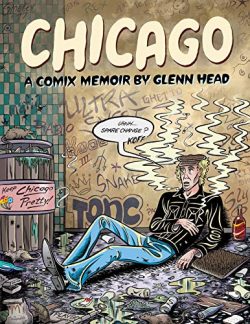
Chicago – A Comix Memoir


By Glenn Head (Fantagraphics Books)
ISBN: 978-1-60699-878-6 (HB)

One of the things comics can do better than almost any other medium is autobiography. Words are immensely potent, but when wed to the images a confessor wants you to see and has devised especially for that purpose, the response is always immediate, visceral and permanent.

Cartoonist, illustrator and editor Glenn Head (Hot Wire, Snake Eyes, Weirdo) studied under Art Spiegelman at the School for Visual Art in the early 1980’s but bided his time in commercial illustration for publications like Advertising Age, Screw, Sports Illustrated and The Wall Street Journal, and with comix such as Guttersnipe and Head Shots before releasing his first graphic novel in 2015.

It was worth the wait…

In monochrome hardback Chicago – available in sturdy hardback and trustworthy digital formats – Head turned a harsh, stark spotlight on his own life, literally baring all and detailing how a troubled teenaged virgin from New Jersey turned his back on the American Dream and his own personal hopes and aspirations before touching bottom and courting madness to reach his current (still tenuous) state.

Following an incisive Introduction from Phoebe Gloeckner, the history lesson begins in a graveyard in the Garden State. “Glen” is nineteen and troubled, but not necessarily unhappy: he’s just painfully aware that he doesn’t fit in.

It’s the summer of 1977 and he’s obsessed with the cartoons and paraphernalia of the hippie Counterculture then experiencing its death-throes. Dad works on Wall Street and desperately wants to understand why his son seems at such a loss. The boy doesn’t even seem happy to be going to Art School in Cleveland, even though he claims that’s what he wants…

What Glenn actually wants most is Sarah: his best friend and a girl appallingly emotionally scarred by the treatment she has received from her Holocaust-Survivor parents. She’s already well down the road to dissolution though: pregnant, a runaway and being used to turn tricks by her latest scumbag boyfriend…

The season turns and Glen reluctantly reports to the Cleveland Institute of Art, his intolerant, abrasive attitude winning him few friends amongst staff or students. There’s something indefinably wrong inside his head and before long he drops out and starts panhandling to survive.

A casual conversation with another student attains the status of a sign from God and Glen – who we’re starting to think might suffer from bipolar disorder – abruptly hitchhikes to Chicago, determined to sell cartoons to Playboy magazine…

And thus begins an intense period of privation, hallucination, harassment by hustlers, constant danger and creeping horror, all punctuated by unexpected kindnesses from strangers, rejections, connections and moments of incomprehensible good fortune as chance meetings with Muhammad Ali and Robert Crumb begin turning the street-meat’s life around…

‘Decompression’ sees Glen in January 1978, back in comfortably suburban Madison, N.J. thanks to his amazingly understanding yet still-uncomprehending father. Although the threat of imminent starvation and murder have faded, the boy is still at risk – from his own actions after a telephone conversation with idealised inamorata Sarah’s manic mother and his own father’s poorly hidden handgun…

The final section of this diary occurs in 2010 as Brooklyn-dwelling single-dad Glen gets an email one morning. Sarah, the one that got away, the great missed opportunity, has tracked him down and wants to meet up. Is this his chance to stop being that painful, pathetic, unresolved 19-year-old virgin at last?

Breathtakingly candid, intoxicatingly forthright and irresistibly visually exhilarating, Chicago is a startling examination of the power of obsessions and memories: a potential roadmap to finding your own identity… as long as you have the nerve and stomach to try…
Chicago © 2015, Glenn Head. This edition © 2015 Fantagraphics Books, Inc.

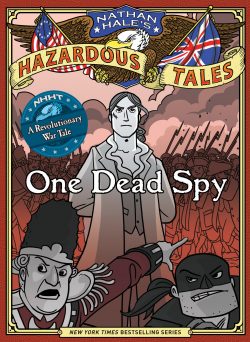
Nathan Hale’s Hazardous Tales: One Dead Spy


By Nathan Hale (Abrams/Amulet Books)
ISBN: 978-0-4197-0396-6 (HB)

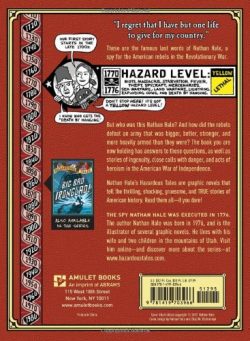
Author/cartoonist Nathan Hale has a famous namesake and has been riffing on him, with great effect, for nearly a decade now. I don’t know if he – and his familial collaborators – have any genealogical connection to the American undercover operative and war hero of the same name, but the lightly comedic cartoon history books – such as Alamo All-Stars, Big Bad Ironclad and more bearing their shared name – are a sheer, educative treat. They make some pretty tough and harrowing material palatable and memorable by mixing fact and happenstance with a witty veneer of whimsy. You might also want a peek at more of his general fiction fun stuff like Rapunzel’s Revenge, One Trick Pony and Apocalypse Taco…

Debuting the series in 2012, One Dead Spy sets the scenario on a surreal yet jolly note as September 22nd 1776 sees a dim but jolly executioner and British Army Provost bring an earnest young man to the Hanging Tree on Manhattan Island. The eager crowd of spectators soon leave after learning the day’s entertainment is not the arsonist plaguing the district but only a spy. Moreover, even he can’t be dealt with promptly because no one’s brought the official orders…

With time to kill, Hangman and Nathan Hale strike up a conversation: discussing last words, possible regrets, sandwiches and – eventually – just how a meek school teacher became America’s “first” spy. As is duly noted, Nathan Hale really wasn’t a very good one…

The delay is then further extended by a bizarre event involving a magic tome (“The Big Huge Book of American History”) that shows him all his nascent nation’s years to come – a key factor in future volumes – and Hale becomes a revolutionary era Scheherazade, spinning yarns to extend his last moments on Earth…

Rendered in welcoming, comfortable but fact-intense muted color and monochrome cartoon strips with beguiling overtones of the Horrible History books, “unlucky” Hale’s own unremarkable life unfolds, tracing the build-up to and key moments of the War of Independence through his acquaintance with figures such as George Washington, Ben Tallmadge, Henry Knox,

Major battles like Bunker Hill, Winter Hill and the siege of Boston are demythologised and legendary figures such as Ethan Allen (and his Green Mountain Boys), traitorous Major Robert Rogers and Colonel Thomas Knowlton are reassessed. It was Knowlton who convinced the obsessively honest and utterly out of his depth Hale to take up the shameful role of clandestine information-gatherer in his one and only espionage mission…

And as this book closes with the promise of more gallows’ yarns to come, there-even an illustrated section offering ‘A Little More Biographical Info About…’ Hale Knox, Knowlton, Allen, Benedict Arnold, Rogers, Stephen Hempstead, Benjamin Tallmadge and the actual execution of our spy star as well as map of North America showing which nations owned what in 1775; a full bibliography; a Q&A feature and ‘First to Defy, First to Die!‘ – an 8-page mini-comic tale of African American Revolutionary and former slave Crispus Attucks who died during the 1770 Boston Massacre.

Charming, wittily informative, extremely funny and delightfully compelling, Hale’s cartoon tales detail incredible exploits that will enthral you and your kids and – like the other volumes of this wonderful series – ought to be a treasured part of every school library… if we ever have those again…
Text and illustrations © 2012 Nathan Hale. All rights reserved