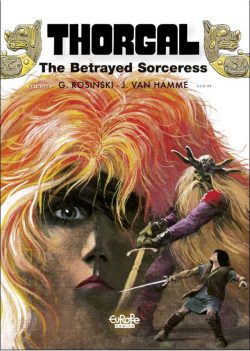
Thorgal volume 0: The Betrayed Sorceress & Almost Paradise


By Rosiński & Van Hamme, translated by Jerome Saincantin (Europe Comics/Cinebook)
No ISBN (Europe Comics digital-only edition)
ISBN: 978-1-84918-443-4 (Cinebook PB Album)

One of the very best and most celebrated fantasy adventure series of all time, Thorgal accomplishes the seemingly impossible: pleasing critics and selling in vast quantities.

The prototypical Game of Thrones saga debuted in iconic weekly Le Journal de Tintin in 1977 with album compilations beginning three years later. A far-reaching and expansive generational saga, it has won a monolithic international following in fourteen languages and dozens of countries, generating numerous spin-off series, and thus naturally offers a strong presence in the field of global gaming.

In story-terms, Thorgal offers the best of all weird worlds, with an ostensibly historical milieu of bold Viking adventure seamlessly incorporating science fiction elements, dire magic, horrendous beasts, social satire, political intrigue, soap opera, Atlantean mystique and mythically mystical literary standbys such as gods, monsters and devils.

Created by Belgian writer Jean Van Hamme (Domino, XIII, Largo Winch, Blake and Mortimer) and Polish illustrator Grzegorz RosiÅ„ski (Kapitan Å»bik, Pilot ÅšmigÅ‚owca, Hans, The Revenge of Count Skarbek), the feature grew unstoppably over decades with the creative duo completing 29 albums between 1980 and 2006 when Van Hamme moved on. Thereafter the scripting duties fell to Yves Sente who collaborated on a further five collections until 2013 when Xavier Dorison wrote one before Yann became chief scribe. In 2019, he and RosiÅ„ski released the 37th epic-album L’Emite de Skellingar.

By the time Van Hamme departed, the canon had grown to cover not only the life of the titular hero and his son Jolan, but also other indomitable family members through a number of spin-off series (Kriss de Valnor, Louve, La Jeunesse de Thorgal) all clustered under the umbrella title Les Mondes de Thorgal – with all eventually winning their own series of solo albums.

In 1985, US publisher Donning released a brief but superb series of oversized hardcover translations, but Thorgal never really found an English-speaking audience until Cinebook began its own iteration in 2007.

The original Belgian series meandered back and forth through the hero’s life and Cinebook’s translated run began with the 7th and 8th albums combined in a double-length premiere edition. By that time the saga of wandering enigma Thorgal Aegirsson had properly gelled, but there were a few books before then, with the hero still finding his literary and graphic feet…

What you’ll learn from later volumes: Thorgal was recovered as a baby from a ferocious storm and raised by Northern Viking chief Leif Haraldson. Nobody could possibly know the fortunate foundling had survived a stellar incident which destroyed a starship full of super-scientific aliens…

Growing to manhood, the strange boy was eventually forced out of his adopted land by ambitious usurper Gandalf the Mad who feared the young warrior threatened his own claim to the throne.

For his entire childhood Thorgal had been inseparable from Gandalf’s daughter Aaricia and, as soon as they were able, they fled together from the poisonous atmosphere to live free from her father’s lethal jealousy and obsessive terror of losing his throne…

Danger was always close but after many appalling hardships, the lovers and their new son finally found a measure of cautious tranquillity by occupying a small island where they could thrive in safety… or so they thought…

Here, however, in these harder-hitting, initial escapades from 1980, the largely unexplained and formulaic Viking warrior is simply a hero in search of a cause. La Magicienne Trahie becomes eponymous debut book The Betrayed Sorceress, opening with a full-grown Thorgal tortured and left to die of exposure and drowning by arch enemy Gandalf.

He is fortuitously rescued by a red-haired woman who demands he work in her service for a year…

Accompanied by a loyal wild wolf, formidable mystic matron Slive is consumed with a hunger for vengeance and orders her reluctant vassal to undertake an arduous quest and great battles to retrieve a hidden casket and its mystical contents. Only after succeeding, does the warrior discover that the target of her ire is Gandalf…

The complex scheme almost succeeds but the witch’s plans eventually lead to bloodshed, calamity, an unsuspected connection to the hero’s beloved Aaricia and the exposure of long-hidden secrets.

As the final clash climaxes, Gandalf is near death and the lovers witness the sorceress’ last voyage into the coldest regions on Earth in a dragonship made of ice…

Follow-up exploit ‘Almost Paradise’ continues the saga and completes the first volume with Thorgal living again amongst Gandalf’s band, but only on sufferance and in constant daily hardship.

Here, a lone ride through winter snows leads to his being hunted by ravening wolves before plummeting into a fantastic time-lost and timeless enclave at the bottom of an icy crevasse. In that tropical Eden he finds a trio of mysterious maidens. Two vie for his attention and argue the seductive benefits of eternal life in a vast garden free of want and danger, but youngest girl Skadia secretly craves the freedom of the outside world and is willing to lead the homesick warrior into horrendous peril to achieve her ends. Desperate to return to his true love, Thorgal escapes with the third immortal, suffering a nightmare journey back to the real world, but not without paying a painful price…

Second collected album L’lle des Mers gelées is also included here as The Island of the Frozen Seas, and begins in spring as Aaricia readies herself to wed Thorgal and leave Gandalf’s lands forever. Those dreams are suddenly shattered when a brace of giant eagles fly down and snatch her away. Soon the entire band of warriors are pursuing in their Drakkars (dragonships), heading ever northwards…

The chase leads to fractious moments aboard ship and imminent mutiny is only forestalled when the Vikings encounter a fantastic vessel that moves without oars or sails. Despite valiant resistance, the barbarians are soon all captives beside Aaricia. All, that is, save for Thorgal and future brother-in-law Bjorn Gandalfson who escaped capture by taking to a lifeboat…

At the top of the world, they meet strange tribes-folk perfectly adapted to arctic existence and Thorgal continues his hunt for his intended bride, meeting and defeating her abductor, discovering an incredible secret citadel and uncovering an incredible story about his long-occluded origins before he can bring his beloved back home to her people…

Although lacking the humour of later tales these works in progress are fierce, inventive and phenomenally gripping: cunningly crafted, astonishingly addictive episodes gradually building towards a fully-realised universe of wonder and imagination whilst offering insight into the character of a true, if exceedingly unwilling hero.

Thorgal is every action fan’s ideal dream of unending adventure. What fanatical fantasy aficionado could possibly resist such barbaric blandishments?

This Europe Comics volume is a digital-only edition from the pan-continental collective imprint which collaborates to bring a wealth of fresh and classic material to English speaking fans. Many of their selections are picked up by established print publishers such as Top Shelf or Cinebook. In fact, this volume will be added to Cinebook’s stable of titles at the end of the year, under special enumeration as Thorgal volume 00: The Betrayed Sorceress, so if you’re already a fan you can wait until then to add the book to your collection. If you can’t wait, though, the past awaits you, only a few keystrokes away…

© Editions du Lombard (Dargaud-Lombard s.a.) 1980 Rosiński & Van Hamme. English translation © 2018 Cinebook Ltd.
Thorgal volume 00: The Betrayed Sorceress is scheduled for a November 2019 release by Cinebook.
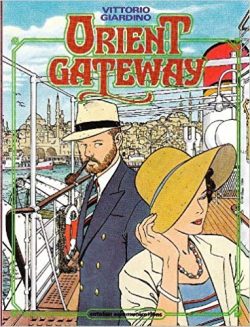
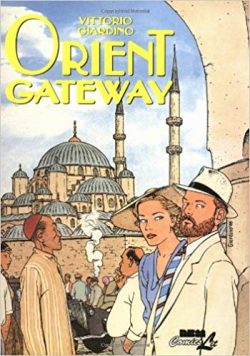
Orient Gateway


By Vittorio Giardino (Catalan Communications/NBM)
ISBN: 978-0-87416-041-3 (Catalan PB Album) 978-1-56163-184-1 (NBM PB Album)
Born on Christmas Eve 1946, Vittorio Giardino was an electrician who switched careers at age 30. He initially worked for a number of comics magazines before his first collection – Pax Romana – was released in 1978. Giardino has toiled, slowly but consistently, on both feature characters such as the detective Sam Pezzo, saucy Winsor McKay homage Little Ego and cold-war drama Jonas Fin, as well as general fiction tales, producing over 43 albums to date.

Way back in 1982 as the Cold War tottered to an end, he began the tale of a quiet, bearded fellow recalled by the Deuxieme Bureau (the French Secret Service) to investigate the slaughter of almost every agent in the cosmopolitan paradise of Budapest. The series ran in four parts in the magazine Orient Express before being collected as Rhapsodie Hongroise. It was Giardino’s 13th book and in no way unlucky for him. In it, reluctant yet competent spy Max Fridman (transliterated into Max Friedman for the English-speaking world), was dragged back into the “Great Game” in the years of uneasy peace just before the outbreak of World War II…

Within three years he returned to the subtly addictive pre-war drama with follow-up La Porta d’Oriente – Orient Gateway to you and me.

Summer 1938: All the espionage agencies in the world know war is coming and nothing can stop it. Frantically jockeying for the most favourable position, they’re all seeking every advantage for when the balloon goes up. Soviet engineer Mr. Stern has become just such a preferred asset of too many rival organisations, so he runs, losing himself in the teeming, mysterious city of Istanbul.

Once again diffident, canny operative Max is drawn into the murky miasma of spycraft, but now, beside exotic, bewitching Magda Witnitz, is he the only one to ask why so many dangerous people want to acquire Stern?

And why are they so willing to kill for him?

Subtle, entrancing and magnificently illustrated, this is an entrancing, slow-boil thriller with all the beguiling nostalgic panache of Casablanca and labyrinthine twists and turns of Tinker, Tailor, Soldier, Spy which no fan of the genre, let alone comics aficionado, can afford to miss.

Over the course of a decade, the masterful Italian graphic novelist crafted two further individual tales and in 1999 added a stunning triptych of albums. No Pasarán! detailed a key moment during the conflict in Republican Spain and dying days of the Civil War, revealing many clues into the life of the unassuming antihero. Two more volumes were added to the canon in 2002 and 2008, and I’m declaring they are all now long past due to be revived and revisited…

Giardino is a smart and confident writer who makes tone and nuance carry a tale and his art – a more representational derivation of Hergé’s ligne claire (clean line) – makes the lovingly rendered locations as much a character as any of the stylish operatives in a dark, doomed world on the brink of holocaust.

Although still largely an agent unknown in the English-speaking world, Max Friedman is one of espionage literature’s greatest characters, and Giardino’s work is like honey for the eyes and mind. This is another graphic novel every fan of comics or the Intelligence Game should know.
© 1986 Vittorio Giardino. All rights reserved.

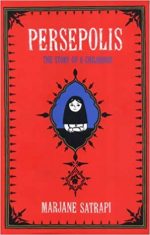
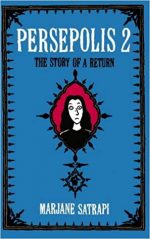
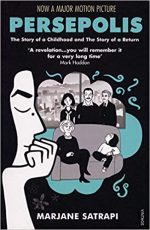
Persepolis – The Story of a Childhood and Persepolis 2 – the Story of a Return


By Marjane Satrapi translated by Anjali Singh (Jonathan Cape/Vintage)
ISBN: 978-0-22406-440-8 (volume 1 HB); 978-0-22407-440-7 (volume 2 HB); 978-0-0-9952-399-4 (TPB)

No comics celebration of non-fictional women could be complete without acknowledging Marjane Satrapi’s astounding breakout memoirs, so let’s revisit her Persepolis books (also available in a complete paperback edition released to coincide with an animated movie of the tale)…

The imagery of a child, their unrefined stylings and shaded remembrances all possess captivating power to enthral adults. Marjane Satrapi grew up during the Fundamentalist revolution that toppled the Shah of Iran and replaced him with an Islamic theocracy.

For cartoon reminiscence Persepolis – The Story of a Childhood, she opted to relate key incidents from her life with the stark direct drawings and sharp, unleavened voice and perceptions of the young girl she was. This simple, direct reportage owes as much to Anne Frank as Art Spiegleman whilst she relates the incidents that shaped her life and her identity as a free-thinking female in a society that increasing frowned on that sort of thing…

Persepolis is the kind of graphic novel that casual and intellectual readers love, focusing on the content of the message and decrying or at best ignoring the technical skill and craft of the medium that conveys it. Yet graphic narrative is as much an art form of craft and thought as it is the dustbin of sophomoric genre stereotypes that many critics relegate it to. Satrapi created a work that is powerful and engaging, but in a sorry twist of reality, it is one that comics fans, and not the general public, still have to be convinced to read.

In the sequel Persepolis – The Story of a Return, the primitivist reminiscences of a girl whose childhood spanned the fall of the Shah and the rise of Iran’s Fundamentalist theocracy, Satrapi continues sharing her personal history, but now concentrates more fully on the little girl growing into a woman.

This idiosyncratic maturation unfortunately acts to somewhat diminish the power of simple, unvarnished observation that was such a devastating lens into the political iniquities that shaped her life, but does transform the author into a fully concrete person, as many of her experiences more closely mirror those of an audience which hasn’t grown up under a cloud of physical, political, spiritual and sexual oppression.

The story recommences in 1984 where 15-year old Marjane is sent to Vienna to (ostensibly) pursue an education. In distressingly short order, the all-but-asylum-seeker is rapidly bounced from home to home: billeted with Nuns; distanced acquaintances of her family; a bed-sit in the house of an apparent madwoman and eventually is reduced to living on the streets, in a catastrophic spiral of decline before returning to Iran in four years later. It is now 1988.

Her observations on the admittedly outré counter-culture European students, and her own actions as she grows to full womanhood seem to indicate that even the most excessive and extreme past experience can still offer a dangerously seductive nostalgia when faced with the bizarre concept of too much freedom too soon.

When she returns to her homeland, her adult life under the regime of the Ayatollah is still a surprisingly less-than-total condemnation than we westerners and our agenda-slanted news media would probably expect. The book concludes with her decision to move permanently to Europe in 1994…

The burgeoning field of autobiographical graphic novels is a valuable outreach resource for an industry desperately seeking to entice new audiences to convert to our product. As long as subject matter doesn’t overpower content and style, and we can offer examples such as Persepolis to the seekers, we should be making real headway.
© Marjane Satrapi 2004. Translation © 2004 Anjali Singh.

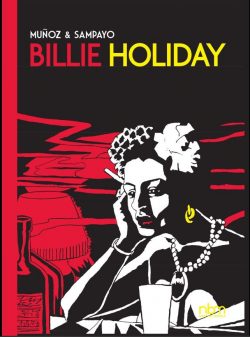
Billie Holiday


By José Muñoz & Carlos Sampayo, translated by Katy MacRae, Robert Boyd & Kim Thompson (NBM)
ISBN: 978-1-68112-093-5 (HB)

Argentinian José Antonio Muñoz was born on July 10th 1942 in Buenos Aires and studied at the prestigious Escuela Panamericana de Arte de Buenos Aires, under comics geniuses Hugo Pratt and Alberto Breccia. He then joined the prolific and prestigious Francisco Solano Lopez studio at the age of 18. Soon his work was appearing in Hora Cero and Frontera Extra whilst he ghosted episodes of the legendary serial Ernie Pike for his old tutor Pratt.

Through the Argentine-based Solano Lopez outfit, he began working on material for British publishing giant Amalgamated Press/IPC, but had no real feeling for the material he was producing. Moreover, like so many others, he was increasingly uncomfortable living in his homeland. Eventually, he was compelled to leave Argentina (in December 1972) as the military junta tightened its totalitarian grip on the country and clamped down on free expression and the arts, as well as all forms of overt or covert dissent.

Moving to England, Spain and later Italy, Muñoz met again fellow émigré and creative soul-mate Carlos Sampayo in Barcelona in 1974 and convinced the poet, music critic, copywriter and author to try his hand at comics. The result was the stunning expressionistic noir Private Detective masterpiece of loss and regret Alack Sinner…

Born in 1943, the poet Sampayo grew up with all the same formative experiences as his artistic comrade and, after a similar dispiriting start (he’d tried writing and being a literary editor before resigning himself to work in advertising), moved to Spain in 1972.

The pair were first introduced in 1971 when mutual friend Oscar Zarate left Argentina in the forefront of the creative exodus sparked by the rise of “the Colonels”…

Urgently urged by mentor Hugo Pratt to “do something of your own”, the pair started producing the grimly gritty adventures of an ex-New York cop-turned-shamus haunting the shadows of the world’s greatest, darkest city, and encountering the bleak underbelly of the metropolis and all the outcasts, exiles and scum thrown together at its margins.

Alack Sinner debuted in experimental Italian anthology Alter Linus, was picked up by Belgian giant Casterman (for A Suivre) and compiled in a number of albums across the continent. The feature was set solidly in history, confronting issues of prejudice, bigotry and corruption head-on through shocking words and imagery. In one of their stories Sinner played merely a bit part as the pages examined the life and times and fate of one of the most ill-starred women in the history of Jazz and modern America.

And that’s where this powerfully moving biography finds us…

Originally translated and published by Fantagraphics in the early 1990s, NBM’s Billie Holiday takes us into the heart and soul of the doomed and self-destructive nightingale whose incredible voice was all-but-lost to the world for decades before kinder, more evolved ears of all colours rescued her works from oblivion…

This epic hardcover – and digital – volume examines her life and influence through the eyes of distant observers and opens with essay ‘Billie Holiday: Don’t Explain’ by Francis Marmande, which provides a fact and photo-packed biographical appreciation of the singer in her heyday.

Eleanora Holiday – also known as Billie and “Lady Day” – was born April 7th 1915, and died July 17th 1959. In between those dates she won many fans and earned tons of money, but it never bought her acceptance in a world where black skin provoked revulsion, cruelty and smug superiority. It didn’t even buy her protection from New York cops who considered her a prostitute made good, an uppity subhuman who never knew her place…

Billie lost money as quickly as she earned it: to unscrupulous friends and management, or corrupt officials, although most of it was frittered away by the succession of cheating, brutal men she was perpetually drawn to and whom she could never resist…

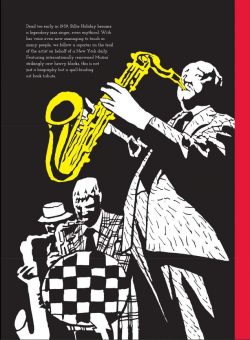
A short, stark story of graphic flair offering many powerful full-page images, the tale begins in 1989 as a journalist is assigned to write a feature piece commemorating the thirtieth anniversary of a Jazz singer. He’s never heard of Billie Holiday but is good at his job and starts digging.

He reads about a poor black girl raped as a child and forced into child prostitution who almost escaped that trap by singing. She became successful, but never dodged the traps and pitfalls of her life: booze, drugs, sleazy men, manipulative bosses and a seeming hunger for conflict. Even so, the way she sang was uniquely hers and changed lives forever. She called herself Billie and always performed with a flower in her hair…

For a while the great and good came to watch and hear her and other jazz greats such as Louis Armstrong and Lester Young, whose gifts gave them limited entry to the privileged life, but never acceptance.

This intensely personal interpretation is less a biography and more a heartfelt paean of appreciation, channelling and exploring the hard, harsh tone of those troubled times where talented, dogged souls fought for recognition and survival in a world determined to exploit and consume them. In that respect, no one was more exploited than Lady Day…

Also included here, ‘Jazz Sessions’ offers a stunning gallery of 12 stark, chiaroscuric and powerfully evocative images based on scenes from Holiday’s short, stark life and dedication to the freedom of the musical form of Blues and Jazz that she graced and transformed through her vocalisations.

Moving, angry and sad, this tale holds the singer up to the light and must be read. Just remember, there’s no Happy Ever After here…
© 1991 Casterman All rights reserved. © 2017 NBM for the English version

With Only Five Plums


By Terry Eisele & Jonathon Riddle (CreateSpace)
ISBNs: 978-1-48399-114-6 (TPB); 978-1-48399-123-8 (TPB) and 978-1-48399-127-6 (TPB)

As any long-time reader will attest, I’m a huge advocate of doing it yourself when it comes to making comics, and this collection – three books of an epic historical exposé of one of modern humanity’s greatest atrocities thus far – shows just why, as it spectacularly blends harsh fact with high drama to reveal the tragic story and eventual small triumph of Anna Nesporova whose family was targeted in error by the Nazis occupying Czechoslovakia…

Sadly unavailable in digital formats yet, but still readily available in trade paperbacks, the testament is divided into three quietly understated, deeply evocative volumes of ambitiously oversized monochrome memoirs, crafted by historian Terry Eisele & illustrator Jonathon Riddle from Nesporova’s own words, dramatizing the horrific story of the Nazi atrocity at Lidice in Czechoslovakia.

The memories are not merely those of a survivor but come from a woman whose entire family was intimately connected with the cause of the tragedy…

The history opens in With Only Five Plums: The Time Before as an elderly woman is encouraged by an interviewer to talk of times long past but never forgotten. She cautiously relates the idyllic life in the nondescript hamlet of Lidice before specifically concentrating on the expansive Horak family and her life as innocent, ordinary Anna Horakova during increasingly trying times.

Relating instances of village life, childhood experiences and the early days of her marriage, Anna’s story takes a dark turn when describing Christmas customs. In 1941, a cherished family meal tradition presaged disaster for the entire Horak clan…

In June 1938, European leaders trying to appease Hitler allowed Germany to annexe part of Czechoslovakia and, as a consequence, Anna’s brother Josef fled to Britain, joining the growing émigré/refugee population. He dutifully wrote home that he numbered amongst his new friends Edvard Benes and Jan Masaryk: the leaders of the government-in-exile…

The next stage in the tragedy came when Nazi aristocrat Reinhard Heydrich – a sadistic monster eagerly expediting Hitler’s pogrom against the Jews – was assassinated. The Horak family were mistakenly implicated in the plot.

Nazi retaliation was astoundingly disproportionate: the village where they lived – almost universally Christian – was eradicated from the Earth; the male population massacred and the women sent to concentration camps in a display of calculated butchery as bad as anything visited upon the Romani, Jews or any other ethnicity the Nazis deemed “subhuman”.

Heavily pregnant at the time, Anna – along with other expectant mothers – was separated from the rest. As the children were delivered, they were taken away. Those that passed certain tests were removed to be brought up German, whilst the mothers joined their sister villagers in packed cattle-cars at rail marshalling yards. The destination was Ravensbruck Concentration Camp…

The tale resumes in With Only Five Plums Book 2: This Dark Age where, following a brief recap, Anna details the appalling journey, paying especial detail to an elderly Jewish woman’s attempts to cheer up younger girls with the story of Rabbi Loew’s Golem. That fabulous avenger was created to protect the Jews of Prague during a previous wave of persecution…

After many days and hundreds of miles, the train arrives in Fürstenberg from where the survivors are force-marched to the camp. Anna’s record of daily humiliations and the slow, piecemeal destruction of bodies and spirits covers three years, but she considered herself lucky. At least she had a skill the Germans found useful (professional-standard sewing) and wasn’t part of a group considered genetically inferior such as the Roma “gypsies”.

Heartbreaking memories of Romani inmate Florica (and her folktale of the origins of blonde-haired people) poignantly counterpoints a diary of privation and desperation and serves to underline the horrific accounts of the scientist-torturers Ernst-Robert Grawitz and Ludwig Stumpfegger who used women as guinea pigs for their horrendous experiments…

The captivity suddenly ended in spring. The panicked Germans were in retreat: burning files and dismantling buildings. The women were led out of the gates with a few guards and ordered to march. They staggered through Germany and other countries shattered by bombs and, as the days passed, many died. Soon they were not enough soldiers and Anna and some other women slipped away, heading always towards a home that no longer existed.

Avoiding the “liberating” Russian soldiers, the group finally reached Czechoslovakia, battered but once more a free nation. Here Anna met Mrs. Kubrova; wife of her husband’s employer, who took her in and eventually drove her to Lidice… or at least where it had once been…

The chronicle concludes in With Only Five Plums Book 3: Life in the East is Worthless, which describes the aftermath of the war. Throughout all her trials and torments, Anna had been utterly oblivious to the fate of her family and her home. Now she learns that both had been eradicated with devastating efficiency. All that was left was the daughter taken from her at birth and lost seemingly forever somewhere in Germany…

From Kubrova, Anna discovers what the Nazis had done to turn a thriving, bustling village into a barren featureless field and of other survivors – mostly stolen children. These scenes are more harrowing in their understated simplicity than anything else in this grim graphic report…

However, there is a slight moral victory to be seen as aged Anna then relates how Lidice was rebuilt and repopulated (despite the Soviet Union’s absorbing the newly liberated nation into their Warsaw Pact-enforced alliance) before the saga concludes with an emotional Epilogue wherein Anna finally reveals the fate of her stolen daughter…

Slipping back and forth in time, conversationally adding depth and historical background to a remarkably restrained, tightly controlled and shatteringly effective examination of human nature at its worst and best, With Only Five Plums (a Czech expression akin to “with only the clothes on your back”) focuses on one of the most depraved and appalling acts in human history and manages to extract a message of hope and triumphant perseverance from the tragedy.

This triptych is a superb example of pictorial reportage and graphic memoir, with each big (280 x 216mm) book also offering poetry written about the atrocity (The Far-off Village by Mazo de la Roche, Lidice by C. Day Lewis and To Lidice by George England respectively); text features and extensive, fascinating excerpts from ‘Jonathon’s Sketchbook’.

Anna Nesporova passed away in 2006, before these books were completed, but the sense remains that the brooding, painfully oppressive and achingly moving story related would have made her proud. As with all accounts of Atrocity, the tale of Lidice needs to be told and retold, if there’s to be any hope of stopping such things from happening again and as always, such accounts work best when they come from the hearts and mouths of those who were there.

With Only Five Plums is a powerful story of inhumanity, stupidity and endurance that will certainly impress fans of war stories and devotees of fine storytelling, but hopefully it will most appeal to history teachers; professional and not…

© 2013 Terry Eisele. All rights reserved.
For more information and to obtain your own copies check out www.terryeisele.com

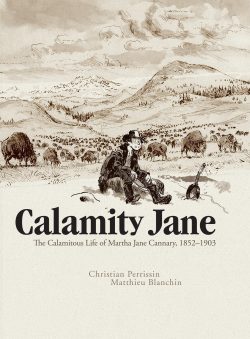
Calamity Jane: The Calamitous Life of Martha Jane Cannary, 1852-1903


By Christian Perrissin & Matthieu Blanchin, translated by Diana Schutz & Brandon Kander (IDW Publishing)
ISBN: 978-1-63140-869-4 (HB)

Other people’s lives are fascinating. Just check out any TV schedule to affirm that watching what neighbours or strangers are have done, are doing or want to do is a major drive for us nosy hairless apes. And it’s even more enticing if we’re allowed a smidgen of comparison and an ounce of judgement, too.

One problem with famous dead people though is that we’re forced to make those assessments at a remove – because they’re dead – and only have records or, worse, myths and legends to construct our portrait from. Thankfully, we’re pretty imaginative monkeys too and have drama to help us fill in the gaps and flesh out the characters.

Those gifts proved immensely valuable to author Christian Perrissin and illustrator Matthieu Blanchin in the creation of a 3-volume graphic biography demythologising one of the Wild West’s most enigmatic icons. The result was the award-winning Martha Jane Cannary: La vie aventureuse de celle que l’on nommait Calamity Jane (Martha Jane Cannary: The Calamitous Life of Calamity Jane).

Perrissin studied Fine and Applied Arts before moving into Bande dessinée, and from 1987 to 1990 apprenticed with Yves Lavandier before going solo with his Hélène Cartier series (co-created with cartoonist Buche). He has since scripted TV shows and film, written epic sagas such as El Niño and Cape Horn and inherited the scripting of venerable comics classic Redbeard.

Co-creator Blanchin started out as a storyboard artist and illustrator at the turn of the century, before moving into comics, producing work for a host of companies and titles. Eventually he moved into historical and autobiographical material such as Blanche and Le Val des ânes and the Les années series. In 2002 he was hospitalised by a brain tumour and languished in a coma for ten days. After convalescence and relapse he ultimately (in 2015) turned the experience into the hugely influential and celebrated Quand vous pensiez que j’étais mort: Mon quotidien dans le coma (When You Thought I was Dead: My Daily Life in a Coma).

This monochrome, duo-toned hardback (and digital) translation offers their collaboration in one titanic tome, blending the often-sordid facts of outrageous adventures, unflagging spirit and astonishing determination into a tapestry that shows the underbelly of the American dream.

With great warmth and humour, they construct a true masterpiece of the very real and strong woman behind all the stories – many of them concocted by Martha Jane herself – as she survived against impossible odds, doing whatever was necessary to survive and protect her family.

The tale begins with a graphic note from the creators, citing their sources and contextualising her life and times in ‘The Mormon Trail…’, before the unforgettable life story begins in an overcrowded cabin in the desolate prairie region of Utah…

In her life, Martha Jane Cannary worked hard for little reward, met scoundrels and scalawags, gunslingers and heroes, lived on her wits and determination and was forced far too often to compromise her principles to preserve others as well as herself. She knew many famous men in many infamous places but I’m not naming them. This is her book, not theirs.

Calamity Jane was present throughout much of the most infamous moments of American history in the most iconic locations. She had far more enemies than friends and was more often despised and ostracised than honoured, but always carried on, living her life her way. It was often tainted by tragedy, but she also scored her share of triumphs and experienced joy and love – and always on her terms.

This is a compelling and utterly mesmerising chronicle of authentic western principles and achievement that will enthuse and enthral anyone with a love of history and appreciation of human strength and weakness.
Calamity Jane: The Calamitous Life of Martha Jane Cannary, 1852-1903 Translation and Art © 2017 IDW Publishing. Story © 2017 Futuropolis. All rights reserved.

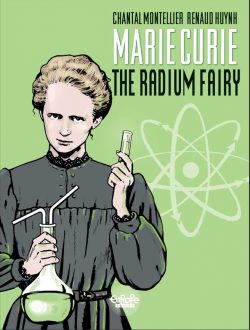
Marie Curie – The Radium Fairy


By Chantal Montellier & Renaud Huynh translated by Lara Vergnaud (Europe Comics)
No ISBN: digital-only publication

I’ve waited ages (well, since March 2017, but I’m old and my days are limited) for this superb book to be picked up by a print publisher, but now I’m just going to review it anyway and assume that as you’re reading this on a computer, you can make the leap to seeing comics that way too. And yes, I know all about the smell and feel of proper books. I feel that way too, but we’re killing more trees than we really need to, guys. Just think of it as portable fun you can’t fold, or tear…

Originally released across Europe in 2011, Marie Curie La Fée du Radium was produced in collaboration with the Curie Museum and the Cité des sciences et del ‘industrie (part of Universcience), with educator, illustrator and bande dessinée creator Chantal Montellier (Odile et les crocodiles, Les Damnés de Nantes) summarising and dramatizing in graphic narrative a most astounding life, after which research scientist, educator and museum curator Renaud Huynh (La fantastique histoire du radium) provides an extensive and copious Timeline, tracing the triumphs, tribulations and legacy of Marie Sklodowska-Curie (1867-1934): thus far, the only woman to ever be awarded two Nobel Prizes.

The crucial comics component kicks off in Stockholm on September 4th as aging Marie Curie works on a speech; preparing to receive that second cherished accolade…

Thinking back, she pictures her departed husband Pierre Curie. Their joint isolation of the element they named Polonium after her place of birth was a grand achievement but doesn’t make up for her years of struggle for acceptance or his tragic accidental death so early in their marriage…

And so, briefly, concisely and without fanfare unfolds a true epic of brilliance applied, adversity overcome and persistence rewarded. Today Curie is credited with adding two elements to the Periodic Table – Radium was the other one – and venerated for her researches. She was also the first woman allowed to teach at the prestigious Sorbonne, but for much of her life had to overcome entrenched patriarchal attitudes and oppression whilst being vilified in the media and by wider society for her “scandalous” personal life and generally just for being an uppity female who didn’t know her place. Isn’t it great how much everything has changed since then? (I am of course waiting for my own Nobel for the isolation of Sarcastium™…).

This small but powerful digital only tome concludes with a large and detailed Timeline. Huynh’s pictorial essay is packed with photographic illustrations, cartoons and clippings; encapsulating and clarifying Curie’s life and achievements and précised in chapters entitled ‘1867/1895 Warsaw-Paris’, ‘1896/1905 A Scientific Dream’, ‘1906/1911 Hardships and Success’, ‘1912/1921 The Radium Institute’ and ‘1922/1934 An International Figure’, and closes with an ‘Epilogue’ revealing how sixty years after her death, Marie Curie’s ashes were transferred to the Pantheon (resting place of the nation’s greatest citizens). She was the first woman to be accorded this honour based solely on her own merits…

Making learning fun, Marie Curie – The Radium Fairy is a potent and powerful inspiration, venerating one of histories most dedicated scientists, and one every youngster should read.
© 2016 – DUPUIS – Chantal Montellier & Renaud Huynh. All rights reserved.

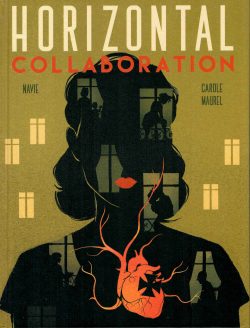
Horizontal Collaboration


By Navie & Carole Maurel, translated by Margaret Morrison (Korero Press)
ISBN: 978-1-91274-001-7

World War II – with its world-shaking reordering of society and all the consequent, still-felt repercussions – is very much in people’s minds at the moment and I’d like to offer up this new translated European tale as a counterpoint to the commemorative bombast, and the much-delayed honours finally being paid to the ever-dwindling last of “The Few”.

At least now, as well as the valiant men, we’re finally acknowledging the commonly disregarded contributions of women also caught up in the conflict, not to mention the unsung heroes of all nations who were drawn into the horror.

This particular hardcover, however, is not about heroes. Horizontal Collaboration deals with people: civilians and fugitives, women and invading occupiers: the ones who are seldom celebrated but who also confronted the triumph of global darkness, all in their own small, unnoticed ways…

France fell to the Germans in 1940. The country was occupied and partitioned on June 22nd, with the Germans holding the industrial north and central regions whilst Marshal Philippe Pétain‘s puppet protectorate Régime de Vichy was allowed to govern the south and pacified colonies such as Algeria. When the nation was liberated in September 1944, a vicious wave of retaliation began against those who cooperated with the conquerors in ways great and small.

A sordid time of scores settled (real, imagined or fabricated) and cruel abuses almost arbitrarily inflicted on guilty and innocent alike plagued France for years afterwards. The most telling indignities were perpetrated upon women – wives, mothers, sisters or strangers – accused of fraternising with or giving comfort to the enemy.

Such liaisons were called “Collaboration Horizontale” and even the most nebulous or unfounded accusation of such betrayals carried a heavy and immediate price…

Just about now, a grandmother listens to her granddaughter unload about her current amour and her mind drifts back to the war and a secret she has never shared with anyone…

In 1942, a large apartment house on Passage de la Bonne-Graine is filled with families, all dealing with the German conquerors in their own way. Despite the change in their fortunes, they have not found any way to overcome the petty grudges and ingrained social difficulties that kept them at odds with each other even before war broke out…

Surly aged crone Madame Flament is rude to everybody, and spends all her time complaining or disappearing into the cellars to feed her cats. What secret is she really hiding?

Old Camille is deemed the man of the house, but he is gentle, ineffectual and blind; blithely letting life go on around him and apparently noticing nothing. His wife is the building’s concierge. Brusque matron Martine Andrée is a snooping busybody loudly championing decency and family values, but her home life is nothing to envy and her sharp tongue scores points off family, friends and foes indiscriminately.

She despises the younger women and their families in the building, especially pretty Joséphine Borgeon who makes ends meet through her theatre act. Everybody knows what she really does to survive…

Also viewed with suspicion is young mother Rose. Her husband Raymond has been taken away to work for the Nazis, so his friend and neighbour Leon – a gendarme – has been keeping a “friendly” eye on her, even though his own pregnant wife Judith keeps clumsily falling and hurting herself and surely needs proper supervision…

Strangely boyish artist Simone keeps to herself as much as she can and – originally – there was also a Jewess called Sarah Ansburg and her son Anaël. They somehow disappeared before the Germans could find them. That must be the reason Abwehr intelligence officer Mark Dinklebauer spends so much time in the building. It couldn’t possibly be that he has fallen in love with one of the occupants, or that this most forbidden of passions is dangerously, illegally reciprocated, can it?

Crafted with deft incisiveness by media writer and historian (Mademoiselle) Navie and rendered in a beguiling style (powerfully reminiscent of Will Eisner in his later years) by seasoned illustrator and author Carole Maurel (Luisa: Now & Then, Waves, L’apocalypse selon Magda), this is a meditative and uncompromising glance at ordinary lives under relentless pressure: an ensemble piece of human drama that takes as its heart and centre point an unlikely flowering of true but doomed love…

Moving, beguiling and evocatively rewarding, Horizontal Collaboration is a beautiful tragedy and potent reminder that love takes no prisoners while enslaving all it touches.
© Editions Delcourt – 2017. All rights reserved.

Horizontal Collaboration will be released on 18th June 2019 and is available for pre-order now.

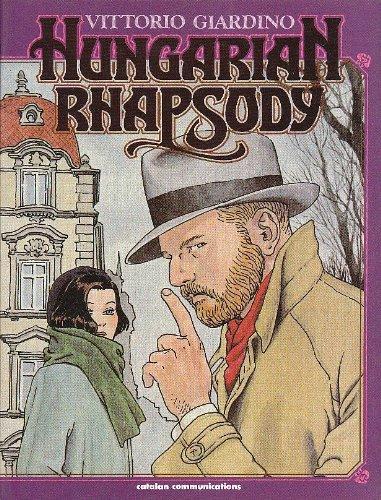
Hungarian Rhapsody


By Vittorio Giardino (Catalan Communications)
ISBN: 978-0-87416-033-8 (TPB Album)

Born on Christmas Eve 1946, Vittorio Giardino was an electrician who switched careers at age 30. He initially worked for a number of comics magazines before his first collection – Pax Romana – was released in 1978. Giardino has toiled, slowly but consistently, on both feature characters such as the detective Sam Pezzo, saucy Winsor McKay homage Little Ego and cold-war drama Jonas Fin, as well as general fiction tales, producing over 43 albums to date.

In 1982 he began the tale of a quiet, bearded fellow recalled by the Deuxieme Bureau (the French Secret Service) to investigate the slaughter of almost every agent in the cosmopolitan paradise of Budapest. The series ran in four parts in the magazine Orient Express before being collected as Rhapsodie Hongroise Giardino’s thirteenth book and in no way unlucky for him. Reluctant spy Max Fridman (transliterated into Max Friedman for the English-speaking world), was dragged back into the “Great Game” in the years of uneasy peace just before the outbreak of World War II: a metaphor for the nations of Europe…

Over the course of ten years, the masterful Italian graphic novelist crafted two more individual tales and in 1999 added a stunning triptych of albums. The three volumes of No Pasarán! detailed a key moment during the conflict in Republican Spain and the dying days of the Civil War which revealed many clues into the life of the diffident and unassuming hero. Two further volumes have been added to the canon in 2002 and 2008, and I’m declaring they are all now long past due to be revived and revisited…

In Hungarian Rhapsody, Friedman debuts as a troubled, cautious man with a daughter he adores and a nebulous past that somehow stems from undisclosed experiences in the Spanish Civil War where he fought as a Republican in the International Brigades against Franco’s Nationalists.

He is no ideologue or man of action, but still, somehow, is convinced – call it blackmailed – to leave his idyllic home in Switzerland to investigate the plague of assassinations for his devious French taskmasters….

Friedman is a hero in the mould of John le Carré’s George Smiley: a methodical thinker and the very antithesis of such combat supermen as James Bond, Napoleon Solo or Jason Bourne. Arriving in Budapest, Friedman gently prods and pokes about, swiftly becoming the target of not just the mysterious killers, but seemingly every rabid faction in a city crammed full of spies of every type and description, from Soviet agitators to Nazi plotters.

In a city of stunning, if decadent, beauty and cultural extremes where East meets West, Friedman finds that like the spy-game itself, nobody and nothing can be trusted…

Somebody somewhere has a master-plan but who it is and what it is..?

That’s a mystery that could get even the most cautious agent killed…

Giardino is a powerfully subtle writer who lets tone and shaded nuance carry a tale, and his captivating art – a semi-representational derivation of Hergé’s “Ligne Claire” style – makes the lovingly rendered locations as much a character in this smart, gripping drama as any of the stylishly familiar operatives of a dark, doomed world on the brink of holocaust.

Although largely an agent unknown in the English-speaking world, Max Friedman is one of espionage literature’s greatest characters. Giardino’s work is like honey for the eyes and mind. Hungarian Rhapsody is a graphic novel any fan of comics or the Intelligence Game should know.

© 1986 Vittorio Giardino. All rights reserved.

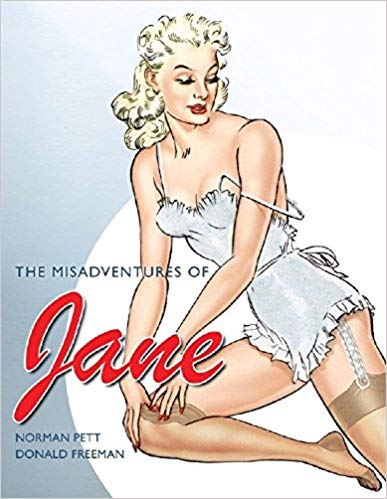
The Misadventures of Jane


By Norman Pett & J.H.G. (“Don”) Freeman (Titian Books)
ISBN: 978-1-84856-167-0 (HB)

Once upon a time, Jane was one of the most important and well-regarded comic strips in British, if not World, history. It debuted on December 5th 1932 as Jane’s Journal: or The Diary of a Bright Young Thing: a frothy, frivolous gag-a-day strip in the Daily Mirror, created by (then) freelance cartoonist Norman Pett.

Originally a nonsensical comedic vehicle, it consisted of a series of panels with cursive script embedded within to simulate a diary page. It switched to more formal strip frames and balloons in late 1938, when scripter Don Freeman came on board and Mirror Group supremo Harry Guy Bartholomew was looking to renovate the serial for a more adventure- and escape-hungry audience. It was also felt that a continuity feature such as Freeman’s other strip Pip, Squeak and Wilfred would keep readers coming back; as if Jane’s inevitable – if usually unplanned – bouts of near nudity wouldn’t…

Jane’s secret was skin. Even before war broke out there were torn skirts and lost blouses aplenty, but once the shooting started and Jane became an operative for British Intelligence, her clothes came off with terrifying regularity and machine gun rapidity. She even went topless when the Blitz was at its worst.

Pett drew the strip with verve and style, imparting a uniquely English family feel: a joyous lewdness-free innocence and total lack of tawdriness. The artist worked from models and life, famously using first his wife, his secretary Betty Burton, and editorial assistant Doris Keay but most famously actress and model Chrystabel Leighton-Porter – until May 1948 when Pett left for another newspaper and another clothing-challenged comic star…

His art assistant Michael Hubbard assumed full control of the feature (prior to that he had drawn backgrounds and mere male characters), and carried the series – increasingly a safe, flesh-free soap-opera and less a racy glamour strip – to its conclusion on October 10th 1959.

This Titan Books collection added the saucy secret weapon to their growing arsenal of classic British comics and strips, and paid Jane the respect she deserved with a snappy black and white hardcover collection, complete with colour inserts.

Following a fascinating and informative article taken from Canadian paper The Maple Leaf (which disseminated her adventures to returning ANZAC servicemen), Jane’s last two war stories (running from May 1944 to June 1945) are reprinted in their entirety, beginning with ‘N.A.A.F.I, Say Die!’, wherein the hapless but ever-so-effective intelligence agent is posted to a British Army base where somebody’s wagging tongue is letting pre “D-Day” secrets out. Naturally (very au naturally), only Jane and her new sidekick and best friend Dinah Tate can stop the rot…

This is promptly followed by ‘Behind the Front’ wherein Jane and Dinah invade the continent, tracking down spies, collaborators and boyfriends in Paris before joining a ENSA concert party, and accidentally invading Germany just as the Russians arrive…

As you’d expect, the comedy is based on classic Music Hall fundamentals with plenty of drama and action right out of the patriotic and comedy cinema of the day – but if you’ve ever seen Will Hay, Alistair Sim or Arthur Askey at their peak you’ll know that’s no bad thing – and this bombastic book also contains loads of rare goodies to drool over.

Jane was so popular that there were three glamour/style books called Jane’s Journal for which Pett produced many full-colour pin-ups, paintings and general cheese-cake illustration. From these lost gems, this tome includes ‘The Perfect Model’, a strip “revealing” how the artist met his muse Chrystabel Leighton-Porter; ‘Caravanseraglio!’, an 8-page strip starring Jane and erring, recurring boyfriend Georgie Porgie plus 15 pages of the very best partially and un-draped Jane pin-ups.

Jane’s war record is frankly astounding. As a morale booster she was reckoned worth more than divisions of infantry and her exploits were cited in Parliament and discussed with actual seriousness by Eisenhower and Churchill. Legend has it that The Daily Mirror‘s Editor was among the few who knew the date of D-Day so as to co-ordinate her exploits with the Normandy landings.

In 1944, on the day she went full frontal, the American Service newspaper Roundup (provided to US soldiers) went with the headline “JANE GIVES ALL” and the sub-heading “YOU CAN ALL GO HOME NOW”. Chrystabel Leighton-Porter toured as Jane in a services revue – she stripped for the boys – during the war and in 1949 starred in the film The Adventures of Jane.

Although the product of simpler, less enlightened, and indubitably more hazardous, times, the charming, thrilling, innocently saucy adventures of Jane, patient but dedicated beau Georgie Porgie and especially her intrepid Dachshund Count Fritz Von Pumpernickel are incontestable landmarks of the art-form, not simply for their impact but also for the plain and simple reason that they are superbly drawn and huge fun to read.

After years of neglect, don’t let’s waste the opportunity to keep such a historical icon in our lives. You should find this book, buy your friends this book, and most importantly, agitate to have her entire splendid run reprinted in more books like this one. Do your duty, lads and lassies…
Jane © 2009 MGN Ltd/Mirrorpix. All Rights Reserved.