Redcoats-ish: Jeff Martin’s War of 1812


By Jeff Martin (Renegade Arts Entertainment)
ISBN: 978-0-9921-5086-0

Win’s Christmas Gift Recommendation: Perfect for Making History Fun… 8/10

In recent years there seems to have been a glorious renaissance of Canadian mass culture. Being Erica, Rookie Blue, Orphan Black, Republic of Doyle, Murdoch Mysteries and a host of other intriguing TV shows all offer a slightly skewed look at entertainment standbys and standards – and that’s not even counting the hordes of individual Canucks who’ve made their mark in what we provincial Brits lazily consider the American monopoly of populist literature, movies, music, and assorted dramatic arts…

Comics and strips too have become reinvigorated, with scribes and pen-pushers producing some of the most interesting stuff since the mid-1980s when Cerebus the Aardvark was the undisputed acme of Indie publishing, Puma Blues invented a strikingly different aesthetic sensibility and a different Renegade Press put out such spellbindingly novel fare as Normalman, Neil the Horse, The Spiral Cage and a host of other off-kilter gems to liven up the world of cartoons and funnybooks.

Following on yesterdays review here’s an intriguing sidebar to one of the most badly-handled wars in history, which officially ended in December 1814, courtesy of well-fed diplomats in Ghent, but carried on killing folk and cocking up lives in the New World until somebody finally got around to telling the actual combatants in 1815…

During its bi-centennial those times of trans-border trouble were wittily reassessed by cartoon and illustrator Jeff Martin via a weekly webcomic and are now cunningly compiled here through the auspices of Renegade Arts Entertainment.

In ‘A Note from the Frontline’ author Martin describes his long interest in the source material of this clash of incompetents, after which comics maven – and self-confessed liquor-lover – Jay Bardyla offers some insightful perspective into the creator’s career and process in ‘Forward March!’

Then the raucous rounds of slapstick shot and snark-filled sarcasm bombs are unleashed when a couple of ill-prepared, reluctant and self-preservation-obsessed citizens find themselves somehow marching off to war with the Canadian militia…

At least stout and surly baker George is initially keen to serve, rushing off with no thought of danger (really… none at all…) but he insists on dragging wisely reluctant trapper and frustrated bread buyer John Pink with him into the woods in search of the front lines.

In truth nobody made them go, nobody really wants them there and, after tramping through the brush for a good long time, they realise that they have no idea what the invading Americans even look like.

When they finally encounter some strangers by a river George and John spend so much time arguing what to do that their targets walk up and attack them first…

And so it goes as folk on both sides – none of whom have ever been trained to fight – shamble through the dense countryside, missing each other and only inflicting harm accidentally, whilst simultaneously wishing they’d never started the affair…

As our hapless halfwits stumble into more and more trouble, not particularly participating in the all-but forgotten Battle of Maguaga and being on hand but no help at all during the daft-but-true exploit of the fall of unconquerable American stronghold Fort Detroit, other incongruous characters are introduced such as the dryly laconic native Joseph and a barking mad-alcoholic serving British Sergeant, all contributing greatly to the aura to the fiasco.

However the real delights and most incisive jabs are reserved for actual personalities of the conflict: Indian messiah Tecumseh, charismatic Canadian Major-General Isaac Brock, staggeringly inept American commander General William Hull and venal Washington war hawk Henry Clay…

Fast, funny and surprisingly informative, Redcoats-ish provides smart laughs, sharp observation and stylishly splendid cartoon comedy capers that no lover of history or hilarity will want to miss.
Redcoats-ish: Jeff Martin’s War of 1812 © 2014 Renegade Arts Entertainment.

The Loxleys and the War of 1812 (second edition)


By Alan Grant, Claude St. Aubin, Lovern Kindzierski, Todd Klein & Mark Zuehlke (Renegade Arts Entertainment)
ISBN: 978-0-9921508-0-8

Win’s Christmas Gift Recommendation: Beautiful, Educational and Fun, the perfect gift… 10/10

America’s been in lots of wars since it won Independence and has, in fact, started a goodly proportion of those for less than noble reasons. To be fair, Britain’s much longer record is no better, but most people here have never even heard of the brutal and frankly stupid conflict now known as The War of 1812.

Two centuries after the fact a small independent creative outfit known as Renegade Arts Entertainment (generally Alexander Finbow, Alan Grant, Doug Bradley, John Finbow, Nick Wilson and Jennifer Taylor: originators of comics and audio books, movies, animation, prose and graphic novels, merchandise and games) put their heads together and commemorated the story of the forgotten clash of political intransigents and empire-building politicians as a pictorial tome for youngsters featuring a multi-generational family caught up in the conflict.

The book won a number of prestigious awards and the narrative was later adapted into an animated motion comic (with the assistance of Arcana Studios and the Department of Canadian Heritage), iPad and digital PDF iterations and numerous other online formats as well as a wealth of educational materials for use in conjunction with the piece.

Author Alan Grant rewrote his comics saga as a prose novel and Oscar-nominated screen writer Tab Murphy remade the original story into both a screenplay and school play performed by students across Canada. There is even an 1812timeline.com you can follow whilst reading the version of your choice…

Hopefully that will be this brand new, fully updated and upgraded second edition, a stunning 175 page full-colour hardback tome which marries the powerful and enthralling graphic narrative with an abundance of fascinating extras.

Packed with additional illustrations, Alexander Finbow’s background-packed Foreword and the moving Acknowledgements page whets the appetite for the rollercoaster tale of ‘The Loxleys and the War of 1812’ by writer Grant, illustrator Claude St. Aubin, colourist Lovern Kindzierski and letterer Todd Klein.

Matriarch Aurora Loxley is justifiably proud of her extended family, three generations living and working together to build a farm and a life in a welcoming land. Originally from Pennsylvania she and her departed husband Abraham migrated to Canada after the War of Independence to the far side of the Niagara River where their burgeoning clan prospered near the Canadian town of York.

Extracts from her journal begin with the harvest of 1811 where well-earned celebrations are only slightly marred by talk amongst the men of war with America. Britain is currently battling Napoleon all over the world and the Royal Navy has been raiding American ships and ports, impressing men they claim are British deserters to serve in their embattled vessels. The practise outrages their southern neighbours the other side of the river, but many leaders in Washington DC act just as badly as the former regal masters they despise. The “War Hawks” in Congress are rapacious expansionists: wanting to wipe out the Indian peoples and believing it is their destiny to rule the entire continent.

As the idle party talk continues frail William takes a moment to capture the entire family (a dozen happy souls and their dog Duke) in a pencil portrait that depicts their last time as a happy, united family…

Everything changes on the night of November 11th when the Loxleys invite a frantic messenger into their home. He brings news that the main settlement of visionary Chief Tecumseh‘s “nation within a nation” has been destroyed by a force of Americans in a night of massacre.

Tecumseh and his brother The Prophet have worked long to create a federation of disparate tribes as a bulwark against American westward expansion. Now the Yankees have taken the opportunity to move north as well and intend to drive the British out of Canada…

And so begins a deeply moving, informative, even-handed and intensely exciting tale of ordinary people moved to defend themselves against greed and aggression set against the backdrop of possibly the most ineptly handled, poorly executed war in history.

Despite being born of common greed and ruthless ambition by a few and ignorance and intolerance by a multitude, the haphazard, cravenly executed conflict nonetheless bought misery and death to thousands of serving soldiers, sailors and militia volunteers on both sides and domestic atrocity to an uncounted number of innocent civilians over the following two years and eight months.

Even America’s greatest victory, one of pitifully few in an overcautious, criminally mismanaged string of campaigns, was a ludicrous farce. Despite being considered a stunning triumph and affirmation at the time, the Battle of New Orleans occurred weeks after the war officially ended and nobody except the dead, maimed and missing really cared…

As the Locksley family splinters, the story powerfully covers the role of militias on both sides – as well as the valiant French-speaking citizens we know as Quebeçois today – and examines the crucial part played by and eventual betrayal of the native peoples.

Also seen through innocent eyes are the machinations of the politicians on both sides and the aftermath of the war…

For old fuddy-duddies like me who like their facts and analysis printed on paper there’s historian Mark Zuehlke’s epic, fascinating and lavishly illustrated essay ‘The War of 1812: Historical Summary’ – preceded by a stunning painting of ‘The White House in Flames’ by John M. Burns – to enjoy before a range of follow-up features offer further information through ‘Creator Biographies’ and alluring details on the other strands of the project such as ‘The Loxleys and the War of 1812 School Play’ and ‘The Loxleys and the War of 1812 Novel by Alan Grant’ both of which include excerpted passages and a piece on the ‘The Interactive iPad and Android Tablet app’ before everything concludes with a wealth of delightful ‘Initial Character Designs by Claude St. Aubin’

Despite the panoply of interactive iterations listed above, this sterling and compulsively readable chronicle ably proves one of my most fervently held beliefs: the comics medium is the perfect means to marry learning with fun and a well made graphic treatise is an unbeatable mode with which to Elucidate, Educate and Enjoy.

So buy this and do so…
The Loxleys and the War of 1812 © 2012 Renegade Arts Entertainment.

The Bluecoats volume 3: The Skyriders


By Willy Lambil & Raoul Cauvin, translated by Erica Jeffrey (Cinebook)
ISBN: 978-1-84918-014-6

The glamour of the American Experience has fascinated Europeans virtually since the actual days of owlhoots and gunfighters.Hergé was a devotee, and the spectrum of memorable comics ranges from Italy’s Tex Willer to such French and Belgian classics as Blueberry and Lucky Luke,and even colonial dramas such as Pioneers of the New World or Milo Manara and Hugo Pratt’s Indian Summer.

‘Les Tuniques Bleues’ orThe Bluecoats began at the end of the 1960s, created by Louis “Salvé” Salvérius & Raoul Colvin – who has written every best-selling volume since. The strip was created to replace Lucky Luke when the laconic gunslinger defected from weekly anthology Spirou to rival comic Pilote, and his replacement swiftly became one of the most popular bande dessinée series on the Continent.

Salvé was a cartoonist of the Gallic big-foot/big-nose humour style, and when he died suddenly in 1972 his replacement, Willy “Lambil” Lambillotte slowly introduced a more realistic – although still comedic – illustrative manner. Lambil is Belgian, born in 1936 who, after studying Fine Art in college, joined publishing giant Dupuis as a letterer in 1952.

Born in 1938, scripter Raoul Cauvin is also Belgian and before joining Dupuis’ animation department in 1960 studied Lithography. He soon discovered his true calling – comedy writing – beginning his glittering and prolific career at Spirou.

In addition to Bluecoats he has written dozens of other long-running, award winning series including Cédric, Les Femmes en Blanc and Agent 212: more than 240 separate albums. Bluecoats alone has sold more than 15 million copies.

The sorry protagonists of the series are Sergeant Cornelius Chesterfield and Corporal Blutch: a pair of worthy fools in the manner of Laurel and Hardy, two hapless, ill-starred US cavalrymen posted to the wild frontier and various key points of mythic America.

The original format was single-page gags about an Indian-plagued Wild West fort, but with the second volume ‘Du Nord au Sud’ (‘North and South‘) the sad-sack soldiers went back East to fight in the American Civil War (this tale was rewritten in the 18th album ‘Blue rétro’ to describe how the chumps were drafted into the military during the war). All subsequent adventures, although ranging far beyond America and taking in a lot of genuine and thoroughly researched history, are set within the timeframe of the Secession conflict.

Blutch is your average whinging little-man-in-the street: work-shy, mouthy, devious and especially critical of the army and its inept commanders. Ducking, diving, even deserting whenever he can, he’s you or me – except sometimes he’s quite smart and heroic if no other easier option is available.

Chesterfield is a big burly man; a career soldier who has passionately bought into all the patriotism and esprit-de-corps of the Military. He is brave, never shirks his duty and wants to be a hero. He also loves his cynical little pal. They quarrel like a married couple, fight like brothers but simply cannot agree on the point and purpose of the horrendous war they are trapped in…

The Skyriders is the third album of the translated Cinebook series (chronologically the eighth French volume ‘Les cavaliers du ciel’) and opens with Chesterfield dashing to see his severely wounded pal. However, when he finds out Blutch has bribed a surgeon to declare him unfit for duty, the doughty sergeant goes through the roof…

Dragging Blutch back to the Front lines, the sergeant is just in time to be ordered by frankly quite mad Captain Stark to join him in another heroic cavalry charge against the massed Rebel infantry. The division has suffered a few losses recently so the unstoppable wave of valiant Union horsemen will number exactly three…

The assault naturally fails and the deranged officer is captured, with Blutch and the deeply shaken Chesterfield making it back to their own lines more by luck than skill.

The Union generals are in a bit of a tizzy. They have plenty of artillery and ground troops but are being worn down by the swift-moving Confederate cavalry’s harrying tactics. What they need is some method of observing the enemy’s position. Also, with the news of Stark’s capture comes the apprehension of his revealing key positions so the strategists are forced into trying something new.

All they need are a big balloon and a couple of expendable idiots…

The first observation flight is a huge success, so much so that the generals go up themselves after the principle is proved. Sadly, the Brass are far better fed than Blutch and Chesterfield and the wicker basket they crowd into proves painfully insufficient to their needs…

Broken and battered the big bosses choose to keep their bandaged feet on the ground from then on and our Bluecoats remain the army’s only airborne soldiery, enduring shot and shell as they spy on the enemy from above…

Stark meanwhile has not talked and the Confederates are beginning to lose traction in the battle. Correctly blaming the balloon for their reversals of fortune, the Gray commanders determine to destroy their aerostatic nemesis at all costs and a daring sortie on the observation post enables them to cut the balloon free from its moorings…

Adrift in the sky the hapless duo try everything to get down safely – consequently causing great consternation to the Rebel forces – before finally crashing to earth on top of their own already balloon-damaged commanding officers.

Ordered to rescue Captain Stark or face a firing squad, Chesterfield then devises an audacious, suicidal plan: using the balloon at night, he and Blutch will infiltrate the Confederate camp and bust their mad boss out.

What could possibly go wrong?

As always their manic midnight misadventures result in pain, humiliation and not a few explosions and, incredibly, victory and success – of a sort…

This is another hugely amusing anti-war saga targeting young and less cynical audiences. Historically authentic, always in good taste despite its uncompromising portrayal of violence, the attitudes expressed by the down-to-earth pair never make battle anything but arrant folly and, like the hilarious yet insanely tragic war-memoirs of Spike Milligan, these are comedic tales whose very humour makes the occasional moments of shocking verity doubly powerful and hard-hitting.

Fun, informative, beautifully realised and eminently readable, Bluecoats is the sort of war-story that appeals to the best, not worst, of the human spirit.
© Dupuis 1976 by Lambil & Cauvin. English translation © 2009 Cinebook Ltd. All rights reserved.

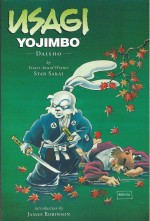
Usagi Yojimbo book 9: Daisho


By Stan Sakai (Dark Horse Comics)
ISBN: 978-1-56971-259-7

Despite changing publishers a few times the Roaming Rabbit has been in continuous publication since 1987, with more than 30 collections and books to date. He has guest-starred in many other series (most notably Teenage Mutant Ninja Turtles and its TV incarnation) and even almost made it into his own small-screen show.

There are high-end collectibles, art prints, computer games and RPGs, a spin-off sci-fi comics serial and lots of toys. Author Sakai and his creation have won numerous awards both within the Comics community and amongst the greater reading public.

Usagi Yojimbo (which translates as “rabbit bodyguard”) first appeared as an extra in anthropomorphic comedy The Adventures of Nilson Groundthumper and Hermy which premiered in 1984 amongst assorted furry ‘n’ fuzzy folk in Albedo Anthropomorphics #1.

He subsequently graduated to a solo-starring act in Critters, Amazing Heroes, Furrlough and the Munden’s Bar back-up series in Grimjack.

In 1955, when Stan Sakai was two years old, his family moved to Hawaii from Kyoto, Japan. He left the University of Hawaii with a BA in Fine Arts, and pursued further studies at Pasadena’s Art Center College of Design in California.

His early forays into comics were as a letterer – most famously for the inimitable Groo the Wanderer – before his nimble pens and brushes found a way to express his passion for Japanese history, legend and the works of Akira Kurosawa and his peers, after which Sakai transformed a work-in-progress about a human historical hero into one of the most enticing and impressive fantasy sagas of all time.

Its engaging protagonist is a Bushido bunny and it’s still more educational, informative and authentic than any dozen Samurai sagas you can name…

Although the deliriously peripatetic and expansive period epic stars sentient animals and details the life of a wandering Samurai eking out as honourable a living as possible by selling his sword as a Yojimbo (bodyguard-for-hire), the milieu and scenarios all scrupulously mirror the Feudal Edo Period of Japan (roughly the 17th century AD by our Christian reckoning) whilst simultaneously referencing other cultural icons from sources from Zatoichi to Godzilla.

Miyamoto Usagi is brave, noble, industrious, honest, sentimental, gentle, artistic, empathetic, long-suffering and conscientious: a born soldier whose master has been murdered, now devoted to the spiritual tenets of Bushido. He simply cannot turn down any request for help or ignore the slightest evidence of injustice. As such, his destiny is to be perpetually drawn into an unending panorama of incredible situations.

The title was as much a nomad as its star. This guest-star-stuffed eighth monochrome masterpiece marshals yarns released by Mirage Publishing as Usagi Yojimbo volume 2, #7-14, and comes with an Introduction from writer James Robinson, after which the medieval mystery play resumes with ‘The Music of Heaven’ wherein Miyamoto and a wandering flock of tokagé lizards (ubiquitous, omnivorous reptiles that populate the anthropomorphic world, replacing scavenger species like rats, cats and dogs in the fictitious ecosystem) encounter a gentle, pious priest whose life is dedicated to peace, music and enlightenment…

When their paths cross again later, the ronin is almost murdered by a ruthless assassin who has killed and impersonated the holy man Komuso in an attempt to catch Usagi off guard…

Evocative and movingly spiritual, this classic of casual tragedy perfectly displays the vast range of storytelling Sakai can pack into the most innocuous of tales.

More menaces from the wanderer’s past reconnect in ‘The Gambler, The Widow and the Ronin’ as a professional gambler who fleeces villagers with rigged samurai duels plies his shabby trade in just another little hamlet.

Unfortunately this one is home to his last stooge’s wife, and whilst his latest hired killer Kedamono is attempting to take over the business, to make matters worse the long-eared nomad who so deftly dispatched his predecessor Shubo has just strolled into town looking for refreshments…

Again forced into a fight he doesn’t want, Miyamoto makes short work of blustering Kedamono, leaving the smug gambler to safely flee with the entire take. Slurping back celebratory servings of Saké, the villain has no idea that the inn where he relaxes employs a vengeful widow and mother who knows just who really caused her man’s death…

‘Slavers’ then begins a particularly dark journey for the ronin as Usagi stumbles across a boy in chains escaping from a bandit horde. Little Hiro explains how the ragtag rogues of wily “General” Fujii have captured an entire town and are making the inhabitants harvest all their crops for the scum to steal…

Resolved to save them the rabbit infiltrates the captive town as a mercenary seeking work, but is soon exposed and taken prisoner.

‘Slavers Part 2’ finds Miyamoto stoically enduring the General’s tortures until the boy he saved bravely returns the favour, after which the Yojimbo’s vengeance is awesome and terrible.

However even as the villagers rebel and take back their homes and property, chief bandit Fujii escapes, taking Usagi’s daishō (matched long and short swords) with him.

As previously seen, to take a samurai’s swords is to steal his soul, and the monster not only has them but continually dishonours them by slaughtering innocents as he flees the ronin’s relentless pursuit.

‘Daisho – Part One’ opens with a hallowed sword-maker undertaking the holy methodical process of crafting blades and the harder task of selecting the right person to buy them. Three hundred years later, Usagi is on the brink of madness as he follows the bloody trail of Fujii, remorselessly picking off the General’s remaining killers whilst attempting to redeem those sacred dispensers of death…

The chase leads him to another town pillaged by Fujii where he almost refuses to aid a wounded man until one of the women accuses him of being no better than the beast he hunts…

Shocked back to his senses Miyamoto saves the elder’s life and in gratitude the girl Hanako offers to lead him to where Fuji was heading…

‘Mongrels’ then changes tack as erstwhile ally and hard-to-love friend Gennosuké enters the picture. The irascibly bombastic, money-mad bounty-hunter and conniving thief-taker is on the prowl for suitably profitable prospects when he meets the Stray Dog: his greatest rival in the unpopular profession of cop-for-hire.

After some posturing and double-dealing wherein each tries to edge out the other in the hunt for Fujii they inevitably come to blows and are only stopped by the fortuitous intervention of the rabbit ronin…

‘Daisho – Part Two’ sees the rugged individualists come to a shaky truce in their overweening hunger to tackle the General. Mistrustful of each other they nevertheless cut a swathe of destruction through Fujii’s regrouped band, but even after the furious ronin regains his honour swords there is one last betrayal in store…

Older, wiser and generally unharmed, Gen and Usagi then part company again as ‘Runaways’ once more takes a peek into Usagi’s past. Stopping in a town he hasn’t visited in years, the rabbit hears a name called out and his mind goes back to a time when he was a fresh young warrior in the service of Great Lord MifunÄ—.

Young princess Takani Kinuko had been promised as bride to trustworthy ally Lord Hirano and the rabbit had been a last-minute replacement as leader of the “babysitting” escort column to her impending nuptials.

When an overwhelming ambush destroyed the party, Usagi was forced to flee with the stuck-up brat, both masquerading as carefree, unencumbered peasants as he strove to bring her safely to her husband-to-be through a seeming army of ninjas killers.

The poignant reverie concludes in ‘Runaways – Part 2’ as valiant hero and spotless maid fell in love whilst fleeing from the pitiless, unrelenting marauders on their heels. Successful at last, their positions naturally forced them apart once she was safely delivered.

Shaken from his memories the ronin moves on, tragically unaware that he was not the only one recalling those moments and pondering what might have been…

This emotional rollercoaster ends on a note of portentous foreboding with ‘The Nature of the Viper’, opening a year previously when a boisterous, good-hearted fisherman pulled a body out of the river and nursed his amazingly not dead catch slowly back to health. If he expected gratitude or mercy the peasant was sadly mistaken, as the victim explained whilst killing as soon as he was able.

Jei is a veritable devil in mortal form, believing himself a “Blade of the Gods”; singled out by the Lords of Heaven to kill the wicked. The maniac makes a convincing case: when he stalked Usagi the monster was struck by a fortuitous – or possibly divinely sent – lightning bolt and is still keen to continue his quest…

This medieval monochrome masterwork also includes a gallery of covers to charm and delight one and all.

Fast-paced yet lyrical, informative and funny, and always astoundingly action-packed, Usagi Yojimbo alternately bristles with tension and thrills and frequently breaks your heart with irresistible tales of pride, triumph and tragedy.

Simply bursting with veracity and verve, this is a perfect comics experience: monolithic, magical tales of irresistible appeal that will delight devotees and make converts of the most hardened hater of “funny animal” stories.
Text and illustrations © 1994, 1995, 1998 Stan Sakai. All other material and registered characters are © and™ their respective owners. Usagi Yojimbo and all other prominently featured characters are registered trademarks of Stan Sakai. All rights reserved.

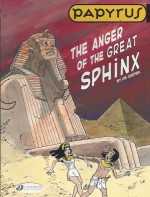
Papyrus volume 5: The Anger of the Great Sphinx


By Lucien De Geiter, coloured by Georges Vloeberghs & translated by Erica Jeffrey (Cinebook)
ISBN: 978-1-84918-115-0

Papyrus is the rapturously beguiling masterwork of Belgian cartoonist Lucien de Gieter. It premiered in 1974 in legendary weekly Spirou, running to more than 30 albums and consequently spawned a wealth of merchandise, a television cartoon show and a video game.

De Gieter was born in 1932 and studied at Saint-Luc Art Institute in Brussels before going into industrial design and interior decorating. He made the jump into sequential narrative in 1961, first through ‘mini-récits’ (fold-in, half-sized booklets) inserts for Spirou, starring his jovial cowboy ‘Pony’, and later by writing for art-star regulars such as Kiko, Jem, Eddy Ryssack and Francis.

He later joined Peyo’s studio as inker on ‘Les Schtroumpfs’ (The Smurfs) and took over the long-running newspaper strip ‘Poussy’.

In the 1960s De Gieter launched mermaid fantasy ‘Tôôôt et Puit’ whilst Pony was promoted to the full-sized pages of Spirou, deep-sixing the Smurfs to expand his horizons by going to work for Tintin and Le Journal de Mickey.

From 1972-1974 he assisted cartooning legend Berck on ‘Mischa’ for Germany’s Primo, whilst his newest project: a historical confection which would occupy his full attention and delight millions of fervent fans for the following four decades.

The annals of Papyrus encompass a huge range of themes and milieux, mixing Boy’s Own adventure with historical fiction, fantastic fantasy and interventionist mythology: the epic yarns gradually evolving from traditional “Bigfoot” cartoon style and content towards a more realistic, dramatic and authentic iteration. Moreover each tale readily blended light fantasy escapades with the latest historical theories and discoveries.

Papyrus is a fearlessly forthright young fisherman favoured by the gods who quickly rises to become a hero of Egypt and friend to Pharaohs. As a youngster the plucky Fellah was singled out and given a magic sword courtesy of the daughter of crocodile-headed Sobek.

The youthful champion’s first task was to free supreme deity Horus from imprisonment in the Black Pyramid of Ombos thereby restoring peace to the Double Kingdom, but his most difficult and seemingly never-ending duty is to protect Pharaoh’s wilful, high-handed and insanely danger-seeking daughter Theti-Cheri – a princess with an astounding knack for finding trouble …

The Anger of the Great Sphinx is the fifth Cinebook translation (20th album of the series and originally released in 1997 as La Colère du grand Sphinx); a spooky testing of faith through vile supernatural villainy eventually thwarted by unflinching daring and honest devotion…

The eerie escapade opens when restless Papyrus discovers the princess sleepwalking in the corridors of Pharaoh’s great Palace in Memphis. Cautiously following, he trips over court jester Puin and by the time he recovers his feet Theti-Cheri has seized a waiting chariot and hurtled into the dark desert beyond the gates.

Extremely alarmed, the lad leaps astride Puin’s phenomenally intelligent donkey Khamelot and rushes after her…

In the bleak wastes Papyrus is attacked by a living sandstorm threatening to end the line of Pharaohs, but successfully drives it off with his magic sword, just as terrified Puin catches up. As the sun rises they see that they are near the venerable complex of pyramids and Re Harmakhis, Guardian of the Horizon.

The mighty monuments and the Great Sphinx are all but buried under the eternally shifting sands…

Nervous Puin wants to return to the city, leaving such great concerns to Pharaoh and the gods, but Papyrus refuses to abandon the mesmerised princess who can be seen between the paws of the great statue. As he approaches, the stone beast roars that Theti-Cheri now belongs to him because her father has broken an ancient pact to keep the sands from covering him and his temples.

As assign of his dissatisfaction, the princess will die at sunset…

Desperate for a solution, the boy hero agrees to give the insidious sandstorm his magic sword if it will save the princess and the swirling devil advises the lad to find Anty, the Divine Ferryman and seek passage to the Island of the Gods where he can petition the Divinities for merciful intervention…

Dashing to the Nile with Puin and Khamelot in hot pursuit, Papyrus is forced to match wits with the duplicitous Ferryman – a conniving talking crocodile boat with a grudge against the boy from previous encounters.

Once again the rogue vessel tries to cheat and bamboozle the boy. Whilst ostensibly taking the trio to the gods’ home, Anty plies the humans with a hallucinogenic drink (resulting in a stunning and baroque display of the author’s spectacular imagination and artistic virtuosity) before leaving them unconscious in a bed of reeds.

Here they are discovered by trio of sibling dotards – dubbed Pepi I, Pepi II and Pepi III – who minister to them. They are in turn saved by Papyrus when bullying brigands try to rob their hovel. The elders are fishermen now but once they were paid by Pharaoh to keep the Sphinx and pyramids clear of sand.

In recent years though they appear to have been forgotten…

With horror the boy realises they have been left back near the Sphinx and the day is fast fading. With ho hope left of gaining the gods’ aid he rushes off to find Anty and teach the conniving Ferryman the error of his wicked ways before returning to hand his wonderful sword over to the smugly triumphant sandstorm…

At his most despondent moment, through the roaring sand Papyrus sees the Pepis. The elderly janitors have organised the entire village: young and old alike are toiling amid the storm to clear the Sphinx for the sake of their beloved princess.

When Khamelot inadvertently reminds the frantically labouring peasants of a tried-and-true way to dampen down the swirling grains and make them more manageable, the furiously screaming storm devil is at last beaten and blows away…

In the quiet still morning the Sphinx is again free from obstruction and obscurity, but Papyrus is heartbroken to see that it is all too late.

Carrying the corpse of Theti-Cheri into the desert he denies his faith, screaming at the gods who have been so unfair… and they answer, revealing the foolish mistake the passionate, impatient lad has made…

With the princess joyously restored and Re Harmakhis gleaming in all his golden glory Pharaoh at last arrives in a blare of trumpets to reaffirm his dynasty’s obligations and devotion to the gods, elevating the three Pepis to the exalted station of Eternal Guardians of the Sphinx. The newly appointed opponents of the shifting sands have recently taken possession of a certain magic sword and gratefully return it to the boy who restored their family fortunes…

Epic, chilling, funny, enthralling and masterfully engaging, this is another amazing adventure to thrill and beguile lovers of wonder from nine to ninety-nine, again proving Papyrus to be a sublime addition to the family-friendly pantheon of continental champions who wed heroism and humour with wit and charm, and anybody who has worn out those Tintin and Asterix albums would be wise beyond their years to add these classic chronicles to their dusty, wellbeloved bookshelves.
© Dupuis, 1997 by De Gieter. All rights reserved. English translation © 2012 Cinebook Ltd.

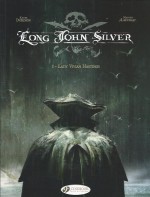
Long John Silver volume 1: Lady Vivian Hastings


By Xavier Dorison & Mathieu Lauffray, translated by Jerome Saincantin (Cinebook)
ISBN: 978-1-84918-062-7

British and European comics have always been much more comfortable and imaginative with period piece strips than our American cousins and far more comfortable when reinterpreting classical fiction for jaded comicbook audiences. The happy combination of familiar exoticism, past lives and world-changing events blended with drama, action and, most frequently, broad comedy has resulted in a uniquely narrative art form suited to beguiling readers of all ages and tastes.

Our Franco-Belgian brethren in particular have made an astonishing success out of repackaging days gone by and this particularly enchanting older-readers yarn forgoes the laughs whilst extending the adventures of literature’s greatest rogue into a particularly engaging realm of globe-girdling thriller.

Robert Louis Stevenson’s Treasure Island was originally serialised from 1881-1882 in Young Folks magazine as Treasure Island or, the mutiny of the Hispaniola, written by the pseudonymous Captain George North.

It was collected and published as a novel on May 23rd 1883 and has never been out of print since. A landmark of world storytelling it has been dramatised innumerable times and adapted into all forms of art. Most significantly the book created a metafictional megastar – albeit at best an anti-hero – as immortal as King Arthur, Sherlock Holmes, Tarzan or Superman.

Almost everything the public “knows” about pirates devolves out the book and its unforgettable, show-stealing star Long John Silver…

Writer Xavier Dorison (Le Troisième Testament, Prophet, Sanctuaire, W.E.S.T.) was born in Paris in 1970 and graduated business school before moving into storytelling. He works as author, film writer, lecturer and movie script doctor. He began the award-winning Long John Silver in conjunction with Prophet collaborator Mathieu Lauffay (Oath of Amber, Axis Mundi) in 2006, with the fourth volume released in 2013.

Lauffay is also a Parisian born in 1970. He spends his days illustrating, drawing comics, crafting RPGs and working as a concept designer for movies. His art has graced such international items as Dark Horse Comics’ Star Wars franchise, games like Alone in the Dark, the album Lyrics Verdun, February 21, 1916 – December 18, 1916, Tarzan and much more…

Their continuation of the piratical prince is a foray into much darker, more mature fare which begins some years after the affair of the Hispaniola; opening in 1785 in the vast inner recesses of the Amazon.

Far upriver, the expedition of treasure-hunting Lord Byron Hastings appears to have finally foundered after years searching for the lost city of Guiana-Capac at the very moment of his greatest triumph.

Meanwhile in England, Hastings’ profligate and wanton wife Lady Vivian is pondering the shameful, daily growing evidence of her dalliance with wealthy and so-very-generous neighbour Lord Prisham. With a baby in her belly and a husband gone for three years, she is considering having Byron declared dead and a hasty remarriage…

Suddenly shattering all her plans is her despised brother-in-law who turns up at the door with an old native named Moxtechica bearing a message – and a map – apparently from her long-lost husband.

Prudish Royal Naval officer Edward Hastings delights in telling the scheming strumpet he abhors that his brother has succeeded but now needs more funds. She is to sell everything – including all the treasured family possessions, manor house and lands she brought to the marriage – to raise £100,000.

To ensure this the absentee Lord has named Edward as sole Proxy and the martinet delights in giving the high-born trollop her marching orders. He strongly urges her to confine herself to a convent and save them all further shame and disgrace…

Raging in front of her conniving maid Elsie, Lady Vivian considers a number of retaliatory tactics before settling upon the most bold and dangerous. After announcing to the stunned Edward that she will accompany him to South America and reunite with her beloved husband, the fallen noblewoman seeks out a doctor to take care of the “problem” she is – for the moment, still secretly – carrying…

Dr. Livesay is a decent god-fearing soul who has led a quiet, prosperous life since his adventures on Treasure Island. However it is not her current condition which has brought Vivian to the learned man’s door, but rather persistent tales of his scurrilous former acquaintance: a formidable, peg-legged rogue with a reputation for making life’s difficulties disappear…

Against his better judgement, Livesay capitulates to the Lady’s urgings and takes her to Bristol to meet retired sea-cook and owner of the Spy Glass tavern, John Silver.

Amidst the (alleged) former pirate’s inner circle of scary-looking confederates she relates the story of the Spaniard Pizarro‘s discovery of a City of Gold and how, centuries later, her husband has found it.

The rest of her sorry tale tumbles out and her plans to travel there with a few capable men – and the far from willing Elsie – to make the riches her own…

All she needs is for Silver and his colleagues to infiltrate Edward’s crew, seize the ship he intends to charter and complete the voyage under her command…

Livesay is outraged but, unable to convince Vivian to desist or Silver to reject her offer, the chivalrous sage joins them in a vain hope that he can keep the debased woman from mortal harm.

Edward has meanwhile commissioned a ship from the unsavoury Samir Razil. “The Ottoman” has his own plans in play but old associate Silver soon bloodily scuppers them. The sea-cook has never had any time or pity for slavers – even in the debilitated condition he strives so desperately to conceal from everyone around him…

With the Neptune now secretly under his control and having forced Lady Vivian to sign a sacrosanct Pirates Contract, the sinister scheme and the ramshackle vessel get underway with Captain Edward Hastings none the wiser. Livesay is increasingly concerned about Vivian’s pregnancy but the savage Moxtechica seems able to help her with strange brews that he concocts…

With all the players in place the Good Ship Neptune casts off into the icy channel under stormy skies, setting sail for the doom-laden Americas…

To Be Continued…

Moody, suspenseful and startlingly gripping, the further exploits of Long John Silver are a masterpiece of adventure fiction worthy of Stevenson’s masterpiece and might even convince a few more folks to actually read the original novel.
© Darguad, Paris, 2007 by Dorison & Lauffray. All rights reserved. English translation © 2010 Cinebook Ltd.

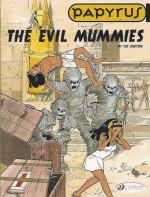
Papyrus volume 4: The Evil Mummies


By Lucien De Geiter, coloured by Georges Vloeberghs & translated by Luke Spear (Cinebook)
ISBN: 978-1- 905460-84-000000

Papyrus is the masterfully evocative magnum opus of Belgian cartoonist Lucien de Gieter. It premiered in 1974 in legendary weekly Spirou, running to more than 30 albums, consequently spawning a wealth of merchandise, a television cartoon show and a video game.

De Gieter was born in 1932 and studied at Saint-Luc Art Institute in Brussels before going into industrial design and interior decorating. He made the jump into sequential narrative in 1961, first through ‘mini-récits’ (fold-in, half-sized booklets) inserts for Spirou, starring his jovial little cowboy ‘Pony’, and later by writing for art-star regulars such as Kiko, Jem, Eddy Ryssack and Francis.

He later joined Peyo’s studio as inker on ‘Les Schtroumpfs’ (The Smurfs) and took over the long-running newspaper strip ‘Poussy’.

In the 1960s De Gieter launched South Seas mermaid fantasy ‘Tôôôt et Puit’ whilst Pony was promoted to the full-sized pages of Spirou, deep-sixing the Smurfs gig to expand his horizons working for Tintin and Le Journal de Mickey.

From 1972-1974 he assisted cartooning legend Berck on ‘Mischa’ for Germany’s Primo, whilst applying the finishing touches to his latest project: a historical confection which would occupy his full attention and delight millions of fervent fans for the next forty years.

The annals of Papyrus encompass a huge range of themes and milieux, blending Boy’s Own adventure with historical fiction and interventionist mythology: the epic yarns gradually evolving from traditionally appealing “Bigfoot” cartoon style and content towards a more realistic, dramatic and authentic iteration, through means of light fantasy romps always leavened and flavoured with the latest historical theories and discoveries.

The named star is a fearlessly forthright peasant boy (more accurately a fisherman) favoured by the gods who rose to become a hero of Egypt and friend to Pharaohs.

As a youngster the plucky Fellah was blessed by the gods and given a magic sword courtesy of the daughter of crocodile-headed Sobek. The lad’s first task was to free supreme god Horus from imprisonment in the Black Pyramid of Ombos thereby restoring peace to the Double Kingdom, but his most difficult and seemingly never-ending duty was to protecting Pharaoh’s wilful, high-handed and insanely danger-seeking daughter Theti-Cheri – a princess with an unparalleled gift for seeking out trouble…

The Evil Mummies is the fourth Cinebook translation (19th album in the run and originally released in 1996 as Les Momies maléfiques); a riotous rollercoaster of all-action fearsome fantasy which begins in the rocky fastnesses of the deep sands where Pharaoh’s headstrong daughter impatiently leads an expedition to retrieve the revered mummies of the fabled Ten Archers of Sekenenre Taa from the lost Hammamat mines where they fell defending the nation from the invading Hyksos.

The bodies are to be returned in honour and interred in Thebes, but first they have to find them…

Amongst Theti-Cheri, her protector Papyrus and all the assorted, hurrying specialists is sometime court jester Puin in charge of the precious pack animals – although it would be more accurate to say that his phenomenally intelligent donkey Khamelot is actually guiding all those reins…

In their haste to finish the mission the party are shamefully negligent and forget to make proper obeisance to divine Seth, Master of the Desert Wastes. Soon a furious cloud image warns of the dark overlord’s wrath. Nervously shrugging it off, the expedition prepares for sleep but is suddenly devastated by a terrifying flash-flood which manifests from nowhere to scatter the impious intruders.

Papyrus awakes battered and bruised over a lofty precipice. He has been saved from crushing doom by a great silver falcon, favoured beast of mighty Horus…

In trying to retrieve his magic sword the boy-hero triggers a flaming omen which points him a certain direction. Setting off into the scorching desert he slowly follows a treacherous trail and with the falcon’s timely aid uncovers a deep crevice and shaft into a deep, long-forgotten mine.

In a chamber far within the abandoned workings is a golden statue of Seth and ten roughly hewn coffins in a makeshift temple…

Curiosity overcoming caution, Papyrus uncovers a ghastly, poorly preserved mummy in one but the second – already opened – box holds Theti-Cheri herself: alive but bound and gagged.

When he cuts her loose she descends into utter panic, frantically warning that she had been captured by walking corpses: the angry archers of Sekenenre Taa…

He is suddenly saved from a lethal arrow by the ever-present falcon but in his panicked flight is separated from the princess, before plunging into open air and landing in the mine’s ancient water-filled well.

Recovering his wits, he trails Theti and finds her on and the bird on a rooftop. She claims to have been saved by Horus himself.

Sadly the awakened mummies are determined and unstoppable. With his magic sword useless against the already dead, the boy is about to be crushed by the restless revenants and is only rescued when the princess plunges one of the monsters’ own arrows into a dusty body…

Before long though, the buried temple is crawling with revived and raging mummy murderers and the terrified youths are again racing in panic…

Spotting a trickle of water on a stony rock face Papyrus smites the wall with his sword and a watery tumult catapults them to relative safety in the well.

With the water flooding away, however, the pair can see two huge golden statues of Horus at the bottom and reason that they must restore them to the temple to quiet the still marauding mummies…

Seth unleashes more magical mischief to deter the already overwhelmed children, but Papyrus’ defiance and the lucky appearance of Khamelot quickly turn the tables. The unthinking dead things mistake the donkey for their own ghastly long-eared, long-nosed dark lord and rapidly retreat…

With aid from the faithfully following pack animals the Horus statues are quickly restored to their rightful stations but Theti insists that the now-dormant archer mummies must be respectfully gathered up and transported to their to proper resting place in Thebes as per her father’s plans…

As the bizarre entourage makes its laborious way back across the burning sands, a number of further strange encounters plunges both princess and protector into another hidden tomb. This one holds the real, sacredly interred Ten Archers of Sekenenre Taa. But if that’s the case, who or what then have they been shipping back at such tremendous, exhausting effort?

Solving that enigma, the pair still have to defeat an army of bandits and pillagers but the battle leads them to the impossible plain where the lost members of the original expedition have been enduring the slow punishment of Seth…

Epic, funny, enthralling and masterfully fast-paced, this is another amazing adventure to thrill and beguile lovers of wonder from nine to ninety-nine, again proving Papyrus to be a sublime addition to the family-friendly pantheon of continental champions who wed heroism and humour with wit and charm, and anybody who has worn out those Tintin and Asterix albums would be wise beyond their years to seek out all these classic chronicles.
© Dupuis, 1996 by De Gieter. All rights reserved. English translation © 2010 Cinebook Ltd.

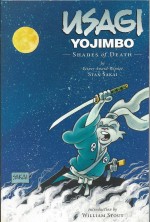
Usagi Yojimbo book 8: Shades of Death


By Stan Sakai (Dark Horse Comics)
ISBN: 978-1-56971-259-7

Usagi Yojimbo (which translates as “rabbit bodyguard”) first appeared as a background character in anthropomorphic comedy The Adventures of Nilson Groundthumper and Hermy, which premiered in 1984 amongst the assorted furry ‘n’ fuzzy folk in Albedo Anthropomorphics #1. He subsequently graduated to a solo act in Critters, Amazing Heroes, Furrlough and the Munden’s Bar back-up series in Grimjack.

In 1955, when Stan Sakai was two years old, his family moved to Hawaii from Kyoto, Japan. He left the University of Hawaii with a BA in Fine Arts, and pursued further studies at Pasadena’s Art Center College of Design in California.

His early forays into comics were as a letterer – most famously for the inimitable Groo the Wanderer – before his nimble pens and brushes found a way to express his passion for Japanese history, legend and the filmic works of Akira Kurosawa and his peers, and transformed a proposed story about a human historical hero into one of the most enticing and impressive fantasy sagas of all time.

And it’s still more educational, informative and authentic than any dozen Samurai sagas you can name…

Although the deliriously peripatetic and expansive period epic stars sentient animals and details the life of a Lord-less wandering Samurai eking out as honourable a living as possible by selling his sword as a Yojimbo (bodyguard-for-hire), the milieu and scenarios all scrupulously mirror the Feudal Edo Period of Japan (roughly the 17th century AD by our reckoning) whilst simultaneously referencing other cultural icons from sources as varied as Zatoichi and Godzilla.

Miyamoto Usagi is brave, noble, industrious, honest, sentimental, gentle, artistic, empathetic, long-suffering and conscientious: a rabbit devoted to the spiritual tenets of Bushido.  He simply cannot turn down any request for help or ignore the slightest evidence of injustice. As such, his destiny is to be perpetually drawn into an unending panorama of incredible situations.

The title was as much a nomad as its star. This guest-star stuffed eighth monochrome masterpiece marshals yarns released by Mirage Publishing as Usagi Yojimbo volume 2, #1-6, and also offers some short tales from #7-8.

Following an evocative Introduction from legendary illustrator and Dean of dinosauria William Stout, the medieval mystery play continues with the 3-part crossover epic ‘Shades of Green’ wherein Usagi and his crusty companion Gennosuké (an irascibly bombastic, money-mad bounty-hunter and conniving thief-taking rhino with a heart of gold) are recruited by Kakera: a ratty shaman in dire need of protection from the dwindling remnants of the once-mighty Neko Ninja clan.

The former imperial favourites have fallen upon hard times since they and the Ronin Rabbit crushed the Dragon Bellow plot of rebel Lord Takamuro. Now, the bat assassins of the Komori Ninja clan are constantly harrying, harassing and actively trying to replace them in patron Lord Hikiji‘s service…

Chunin (deputy leader) Gunji believes the rodent wizard would make a mighty slave, and is scheming to usurp the new – female – clan chief Chizu whilst acquiring him…

With the Neko’s trap closing around them all, the sensei summons the spirits of four fantastic fighters to aid Usagi and Gen. The phantoms promptly posses a quartet of little Kamé (tortoises) and are reshaped into adolescent amphibian Ninja Turtles, identifying themselves as Leonardo, Raphael, Michelangelo and Donatello.

Usagi has fought beside one of their number before…

The subsequent battles go badly and eventually Gunji’s forces make off with Kakera-sensei. As Usagi leads the remaining heroes in relentless pursuit, the conniving chunin makes his move. Gunji’s attempt to assassinate Chizu is bloodily and efficiently ended by the late-arriving Rabbit Ronin who is astounded to be told by the lady he has saved that the Neko’s lethal interest in him is now at an end…

With the shaman rescued and Gunji dead, the adventure closes with the turtle spirits returned to their own place and time, leaving Gen and Usagi to follow their own (temporarily) separate roads…

‘Jizo’ then offers a delightful interlude as a grieving mother dedicates a roadside shrine to her murdered child and mysterious Karma places the killers in the path of a certain justice-dispensing, long-eared wanderer before 2-part tale ‘Shi’ leads Usagi to the assistance of a valley of poor farmers under constant attack by bullies and brigands seeking to make them leave their impoverished homes.

The thugs are secretly employed by a local magistrate and his ruthless brother who have discovered gold under the peasants land and want to extract it without attracting the attention of the local Lord’s tax collectors.

When the Ronin’s formidable opposition stalls the brothers’ scheme they hire a quartet of assassins whose collective name means “death”, but the killers are far less trouble than the head farmer’s daughter Kimie who has never seen someone as glamorous or attractive as the soft-spoken samurai…

Although there are battles aplenty for Usagi, the remorseless greed of the brothers finishes them before the yojimbo can…

A delightful silent comedy follows as ‘The Lizard’s Tale’ sees the Ronin play unwilling Pied Piper and guardian to a wandering flock of tokagé lizards (ubiquitous, omnivorous reptiles that populate the anthropomorphic world, replacing scavenger species like rats, cats and dogs in the fictitious ecosystem). The rambunctious trouble-magnets then repay the favour when the wanderer is ambushed in the snow-drowned mountains by an army of vengeful bandits…

The remainder of the stories offer elucidating glimpses of the rabbit’s boyhood. Once, Miyamoto Usagi was simply the son of a small-town magistrate sent to spend his formative years learning the Way of Bushido from a gruff and distant leonine hermit named Katsuichi.

The stern sensei taught not just superior technique and tactics, but also an ironclad creed of justice and restraint which would serve the Ronin well throughout his turbulent life.

In ‘Usagi’s Garden’ the pupil rebels against the arduous and undignified task of growing food until the lion delivers a subtle but life changing lesson, whilst in ‘Autumn’ a painful fall propels the lad into a nightmare confrontation with a monster who has trapped the changing of the seasons in a bamboo cage…

The 3-chapter fable ‘Battlefield’ then discloses a key moment and turning point in the trainee warrior’s life.

It begins when a mind-broken, fleeing soldier shatters the boy’s childish dreams of warrior glory. The fugitive is a survivor of the losing side in a mighty battle and his sorry state forces Usagi to rethink his preconceptions of war.

Eager to ram home the lesson, Katsuichi takes his student to the battlefield where peasants and scavengers are busy snatching up whatever they can from the scattered corpses. Usagi is horrified. To take a samurai’s swords is to steal his soul, but even so a little later he cannot stop himself picking up a fallen hero’s Wakizashi (short sword).

However, after concealing the blade in safe place, the boy is haunted by visions of the unquiet corpse and sneaks off to return the stolen steel soul.

He is caught by soldiers who think him a scavenger and looter. About to lose his thieving hands he is only saved by the intervention of victorious Great Lord MifunÄ—.

The noble looks into the boy’s face and sees something honest, honourable and perhaps, one day, useful…

This medieval monochrome masterwork also includes a gallery of covers to charm and delight one and all.

Despite changing publishers a few times the Roaming Rabbit has been in continuous publication since 1987, with more than 30 collections and books to date. He has guest-starred in many other series (most notably Teenage Mutant Ninja Turtles and its TV incarnation) and even almost made it into his own small-screen show.

There are high-end collectibles, art prints, computer games and RPGs, a spin-off sci-fi comics serial and lots of toys. Sakai and his creation have won numerous awards both within the Comics community and amongst the greater reading public.

Fast-paced yet lyrical, informative and funny, the saga alternately bristles with tension and thrills and often breaks your heart with astounding tales of pride and tragedy.

Simply bursting with veracity and verve, Usagi Yojimbo is a perfect comics experience: a monolithic, magical saga of irresistible appeal that will delight devotees and make converts of the most hardened hater of “funny animal” stories.

Sheer comicbook poetry by a sublime Comicbook Sensei…
Text and illustrations © 1993, 1994, 1997 Stan Sakai. All other material and registered characters are © and™ their respective owners. Usagi Yojimbo is a registered trademark of Stan Sakai. All rights reserved.

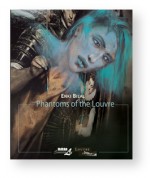
Phantoms of the Louvre


By Enki Bilal translated by Joe Johnson (NBM ComicsLit/Louvre: Musée du Louvre Éditions)
ISBN: 978-1-56163-841-3

A few years ago the legendary Louvre Museum in Paris began an intriguing and extremely rewarding collaboration with the world of comics, and their latest beguiling translated bande dessinée is now available in English courtesy of those fine folks at NBM.

Phantoms of the Louvre is a lush and beautiful, oversized hardback graphic art book which reproduces the stunning results of master storyteller Bilal’s creative response to the collected treasures and even architecture of the prestigious institution.

The origins and details of the project are described in his Preface and the 22 artworks which resulted had their own exhibition in the Louvre in 2013.

The premise is delightfully simple: each item and place in the galleries is blessed or afflicted by a ghost somehow attached to an item which affected their lives or passing, and Bilal incorporates a photo of each artefact with an image of the ghost.

The story of every phantom is then told in poetic prose augmented by photos, sketches and designs of the revenant in question…

Enes Bilalović AKA Enki Bilal was born in Belgrade in 1951, breaking into French comics in 1972 with Le Bal Maudit for Pilote. Throughout the 1970s he grew in skill and fame, and achieved English-language celebrity once his work began appearing in America’s Heavy Metal magazine.

Best known for his self-scripted Nikopol Trilogy (Gods in Chaos, The Woman Trap and Cold Equator) his other bleakly beguiling and ferociously contemplative works include Ship of Stone, The Town That Didn’t Exist, Exterminator 17, Four?, Magma, Julia & Roem and many, many more. In recent years Bilal returned to contemporary political themes with his much-lauded, self-penned Hatzfeld Tetralogy…

As always, the work is produced in close collaboration with the forward-looking authorities of the Musée du Louvre, but this is no gosh-wow, “Night-at-the-Museum”, thinly-concealed catalogue of contents from a stuffy edifice of public culture. Rather, here is a gripping, intense, informative and insightful glimpse into the power of art and history as engines of imagination and personal obsession.

Weaving fact into an imaginary tapestry of fictions detailing the putative lives of those affected by or affecting the creation of the inspirational treasures, the stunning procession of lost souls leads off with ‘Aloyisias Alevratos’ inspired by The Winged Victory of Samothrace, detailing an ancient sculptor’s history whilst ‘Antonio Di Aquila’ recounts the short, tragic life of one of Leonardo da Vinci’s assistants/models during the period when the master painted the Portrait of Lisa Gherardini, wife of Francesco Del Giocondo, called Mona Lisa, La Gioconda or La Joconde…

‘Enheduana Arwi-A’ was a remarkable woman who engraved part of the tablet containing The Code of Hammurabi whilst ‘Arjuna Asegaff’ turned a troubled life around to become a popular model who posed for Baron Pierre-Narcisse Guérin’s The return of Marcus Sextus and ‘Analia Avellaneda’ developed a new pigment which fascinated Doménikos Theotókopoulous, called “El Greco” during the creation of Saint Louis, King of France and a Page, but cost the tragic lady her life…

‘Ahmose Chepseset’ was a crazed vandal in ancient Egypt whose actions despoiled much of the relic dubbed Man’s Head, vengeful half-caste ‘Djeynaba’ was a near-supernatural blight who tainted the Red Rooms and unrepentant Nazi ‘Colonel Markus Dudke’ killed himself in The Grand Gallery…

‘Lantelme Fouache’ was the brutal father whose murder inspired Eugene Delacriox’ The Orphan Girl at the Cemetery whilst fisherman ‘Jacobus Grobbendoeke’ was recovered from the sea and incorporated into The Fish Market (after) Frans Snyders, whilst illicit woman warrior ‘Hecuba’ wore the Corinthian-style helmet as part of her imposture of a male hoplite seven centuries before Christ.

A doomed childhood love touched ‘Melencoloia Hrasny’ and Albrecht Dürer which resulted in a famed Portrait of the Artist whereas ill-fated Janissary ‘Zvonimir Karakasevic’ suffered a slow death which led to his becoming a forgotten component of sculptor Jean-Baptiste Pigalle’s Voltaire Nude. Poor farm boy ‘Lakshek’ had more affinity for the bovines which inspired the Human-headed Winged Bull than the cruel, callous men who carved it…

Roman soldier ‘Longinus’ used his spear to wound the crucified Messiah depicted as Christ Dead, the Amazon ‘Marpada’ adored her equine companions – as exemplified by the marble Horse Head – far more than men and ‘Gaius Livius Maximus’ was a doctor of Rome who ended his own life upon the ancient Bed on display here.

‘Bella De Montefalco’ was the childish accidental instigator of a grotesque crime of passion hinted at in The Shadows of Francesca da Rimini and Paolo Malatesta Appear to Dante and Virgil by Ary Scheffer, but professional duellist ‘Lyubino Nuzri’ was a willing killer who met his fate in the forever after haunted Alcove Room, and the ‘The Regodesebes Twins’ mere tools of destiny whose cruel deaths only tangentially affected The Countess Del Carpio, Marquessa de La Solana as portrayed by Francisco de Goya y Lucietes shortly before her own demise…

A criminal and beast in human form, butcher ‘Willem Tümpeldt’ provided The Slaughtered Ox immortalised by Rembrandt Harmenszoon Van Rijn but Muslim artist ‘Doura Ximenez’ had to dress as a man and remain unknown to craft the anonymous Supposed Portrait of Gabrielle d’Estrées and her sister the Duchess de Villars which concludes this tour of the night galleries…

With detailed floor plan maps showing where the art works, rooms and artefacts referenced are displayed, this is a truly magical collection that no art lover or devotee of the medium can afford to miss…

© 2012 Futuropolis/Musée du Louvre Éditions. © NBM 2014 for the English translation by Joe Johnson. All rights reserved.

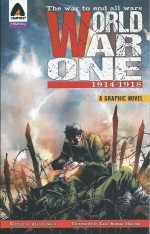
World War One: 1914-1918


By Alan Cowsill, Lalit Kumar Sharma, Jagdish Kumar & various (Campfire)
ISBN: 978-93-80741-86-4

In 1914 following thirty years of empire building and politicking by wealthy nations, Europe was a tinderbox sitting atop a powder-keg. On June 28th in the city of Sarajevo a bomb was thrown, shots were fired and a spark set everything off…

There have been many graphic novels set in and about the Great War, but very few that have been brave enough to offer a comprehensive overview of the entire conflict. This compelling primer by writer Alan Cowsill and illustrators Lalit Kumar Sharma & Jagdish Kumar pulls off the neat trick of bullet-pointing the key events whilst simultaneously personalising the conflict through the unfolding fortunes of a number of ordinary “Tommies” who enlisted at the very start…

The account begins on The Somme in 1916 where George Smith and his brother Joe prepare to go “Over the Top”. As the attack commences he recalls how they all got there, beginning with a review of the initially botched assassination by a dying Serbian Nationalist in an inconspicuous little town in Bosnia-Herzegovina – and how German military ambition and Austro-Hungarian indignation slowly, inexorably kindled the flames of conflict on a continent enmeshed in a convoluted web of complex alliances…

The tale then switches to idyllic England where anti-German sentiment was the backdrop to the introduction of the Smith boys. Older brother Joe was part of the first wave – the British Expeditionary Force – dispatched to France in August 1914 for the hellish wake-up call that was the Battle of Mons…

Back home underage George and his pal Fred Cowsill had little problem enlisting and were soon coping with basic training as focus shifts to the Central Powers where German plans were explored and the appalling rate of attrition meant younger and younger soldiers were being ferried to the front…

And so it continues: the Smith’s experience of mud, mayhem and crippling tedium interspersed with incisive examinations and overviews of the military and political forces at play,

Whilst the boys slogged through mud, dug trenches and dodged bullets and gas, the narrative explores the role of other advantage-seeking countries such Japan, naval engagements and the supremacy of submarine combat, the war in Africa, Germany’s role in the Russian Revolution and the foolish mistakes which led America to surrender its neutrality and join the Allied Powers…

Also touched upon are the achievements of T.E. Lawrence (“…of Arabia”), Wilfred Owen, the Christmas Day football match, the creation of Tanks and development of aerial combat, the disproportionate and astounding contributions of the Australian and New Zealand contingents, the bombing of Britain, the vile executions of deserters and psychologically scarred “shellshock” victims and how, but for political intransigence, the war might have ended in 1916…

Quite understandably for a book from an Indian publisher, some long-delayed attention is paid to the crucial contributions of the Empire’s Asian soldiery, such as Sepoy Khudadad Khan Minhas (first soldier of the Indian Army to win the Victoria Cross) whom Joe meets in a field hospital, and there are some damning views of the folks at home, smugly doling out white feathers to any men they consider shirkers or cowards…

Peppered with significant factual titbits and landmarks, the report continues, following the disastrous campaigns, the technological advancements, the battles, the global involvement and implications and how, even after the Armistice, the killing continued, whilst George and his comrades fall one by one by one…

Superbly précising the entire conflict, smartly mixing factual overview with eyewitness perspective at home and abroad and never straying far from action and bloodletting, this is a captivating introduction to the “War to End All Wars” (although I might quibble on the art side and wish for a little more diligent use of photo reference in certain places) and is ably augmented by fact-features such as ‘Was it Really a World War?’ and a truly heartbreaking illustrated essay on ‘Silent Soldiers’: the astounding animals who were awarded incredible honours for their incomprehensibly valiant deeds in the human Armageddon…

© 2014 Kalyani Navyug Media Pvt Ltd. All rights reserved.