Elvis


By Fabrice Le Hénanff & Philippe Chanoinat, translated by Joe Johnson (NBM)
ISBN: 978-1-68112-076-8

Win’s Christmas Gift Recommendation: A Perfect Present for the One who won’t read comics… Yet 10/10

If I have to explain who Elvis Presley was this book is not going to be of much interest to you.

So… ready now? Let’s Rock…

A glorious full-colour hardback addition to NBM’s magnificent line of graphic novel biographies, this is less a critical or revelatory expose of the musician’s existence away from the cameras and microphones and more of a captivating visual celebration of the King’s life, achievements and influence.

Painted with superb design sensibilities by historical comics specialist Fabrice Le Hénanff (Les Caméleons, H. H. Holmes, Ostfront, Westfront, Amedeo Modigliani) this truncated tour from scripter Philippe Chanoinat touches all the bases – high points and low – in tracing the rise, levelling off and post-demise ascendance of Elvis Aaron Presley.

A stunning graphic aide memoir, it follows his parents’ humble beginnings through Elvis’ early days of strife and struggle. As fame came you can see the cascade of breaking cultural taboos and social barriers, experience the thrill of each record released, movie made, original bluesmen buddied-up with and mega-star met.

A joyous and surprisingly moving nostalgia ride, this beautiful book also includes a large and captivating section of Le Hénanff’s roughs, sketches, reference layouts, preliminary paintings and storyboards venerating and revealing the creation of ‘Elvis: the King’.

Ephemeral fun giving sturdy solidity through the beautiful illustration, this book is also available as an e-book, should you be making the transition to a less physical existence, so you can even store on a digital device beside your music downloads and give yourself an appropriate soundtrack whilst reading.
© 2015 Jungle. © 2016 NBM for the English translation.

For more information and other great reads see http://www.nbmpub.com/

Taxes, the Tea Party and Those Revolting Rebels: A History in Comics of the American Revolution


By Stan Mack (NBM)
ISBN: 978-1-56163-697-6

It has long been a truism of the creative arts that the most effective, efficient and economical method of instruction and training has been the comic strip. Advertising mavens have, for over a century, exploited the easy impact of words wedded to evocative pictures, and public information materials frequently use sequential narrative to get hard messages over quickly and simply.

Additionally, since World War II, carefully crafted strips have been constantly used as training materials in every aspect of adult life from school careers advice to various branches of military service – utilising the talents of comics giants as varied as Milton Caniff, Will Eisner (who spent decades producing reams of comic manuals for the US army and other government departments), Kurt Schaffenberger and Neil Adams.

These days the educational value and merit of comics is a given. Larry Gonick in particular has been using the strip medium to stuff learning and entertainment in equal amounts into the weary brains of jaded students with such tomes as The Cartoon History of the Universe, The Cartoon History of the United States and The Cartoon Guide to… series (Genetics, Sex, Computers, Non-Communication, Physics, Statistics, the Environment and more).

Japan uses a huge number of manga text books in its schools and universities and has even released government reports and business prospectuses as comic books to get around the public’s apathy towards reading large dreary screeds of public information.

So do we, and so do the Americans. I’ve even produced one or two myself, back in my freelancing years…

Here the medium has been used by an acclaimed master to comprehensively recapitulate the most pivotal period in the history of democracy in a manner both inviting and astoundingly effective – as is clear by the pages of testimonials from satisfied teachers…

Former art director for the New York Times Sunday Magazine, Stan Mack is also a writer, artist and cartoonist with a long history of turning strips into documentary, commentary and reportage: see for example his controversial Stan Mack’s Real Life Funnies (Village Voice), Stan Mack’s Out-takes (Adweek) and books like Fight for Freedom, Hard Time, Janet & Me, The Road to Revolution, and The Story of the Jews: A 4,000-Year Adventure.

In 1994 he released a stunningly addictive pictorial treatment of those convoluted times, characters and events which explosively combined to create the libertarian utopia of the United States of America. The recently re-released saga examined background and context, laid out key events and the causes of them: tracing the tricky path from sidelined and dissatisfied colonial possession to new nation and it was done with wit, understanding and a determined effort to demystify and desanctify the affair, undoing two centuries of spin and revisionism…

It all starts with a charming Introduction, explaining the origins of this superb monochrome hardback tome (164 mm x 240 mm) and tale: laying out the ground rules for use and the ethos behind the project.

Thereafter the fact-packed fun unfolds in section one ‘1761-1775 Monarchy and Mobs’ which covers – in smart, snappy, efficiently short and phenomenally memorable vignettes – ‘1761 The Writs of Assistance’ and ‘1763 The Colonies’ setting the scene whilst the heinous money-making schemes of English bean-counting Prime Minister George Grenville (whose swingeing taxes and tariffs kickstart the rebellion) are seen in action through ‘1764 Sugar Act’ and ‘1765 Stamp Act’ before his successor ramped up the grief with ‘1767 Townsend Duties’ resulting in ‘1770 Boston Massacre’…

Thus we come to the truth about the ‘1773 Boston Tea Party’, and the ‘1774 1st Continental Congress’ before at last shedding blood at ‘1775 Lexington & Concord’…

Throughout the chapter and the book Mack is scrupulous in pointing out that all the talk of equality, liberty and self-determination only applies to white males, not slaves (or freed Africans), Indigenous people and women; the results of which we are still living through and something that still needs addressing…

The second section then counts down ‘1775-1781 Redcoats & Guerrillas’, ‘1775’s ‘2nd Continental Congress’, ‘Bunker Hill’, ‘George Washington’ and the potential escalations at ‘Ticonderoga/Canada’ as well as 1776’s ‘Declaration of Independence’, before following the war from ‘Long Island to Trenton’.

A catalogue of battles follows: ‘1777 Saratoga’ and ‘1778 Valley Forge’; ‘1779 Trouble at Home’, ‘1781 West Point’ before examining ‘1780 War in the South’ and ‘1781 Yorktown’.

The third and final section explores how the war was won but victory led only to factional infighting: a cold war for hearts and minds between Federalists and Constitutionalists such as Washington, Alexander Hamilton and James Madison Jr. on one side and conservative Anti-Federalists on the other. Seeing as all the familiar names are on one side; guess who won?

Apparently each faction was as concerned with wealth as well-being and freedom…

In ‘1782-1789 Profit & Virtue’ explores the changing state of world trade with the new nation, as the architects of America focussed on consolidation in ‘1782 The Confederation’, almost having their work undone by ‘1786 Shay’s Rebellion’ finally leading to ‘1786 Constitutional Convention’ and ultimately the ‘1789 Bill of Rights’…

Potently enthralling, beguiling succinct and astoundingly matter-of-fact, Mack offers an eyes-wide-open account of events and motives that make this book an absolute must-have for any student, political exponent or tub-thumping pub expert.

And it’s bloody well drawn and rather funny too…
© 1994, 2012 Stan Mack.

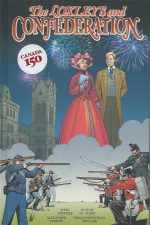
The Loxleys and Confederation


By Mark Zuehlke, Alexander Finbow, Niigaanwewidam James Sinclair, Claude St. Aubin, Christopher Chuckry & Todd Klein & (Renegade Arts Entertainment)
ISBN: 978-0-9921508-89-1

Win’s Christmas Gift Recommendation: An Ideal Gift for comic lovers and history buffs… 10/10

The Dominion of Canada officially came into existence on July 1st 1867 and with that anniversary rapidly approaching, what better time to look at how that event came to be…

A couple of years ago a superb graphic novel came out from a small independent creative outfit called Renegade Arts Entertainment which commemorated the anniversary and captivatingly explored how America and the British colonies clashed. The book was The Loxleys and the War of 1812: a pictorial tome for youngsters examining the facts of the clash through the eyes and experiences of a family caught up in the conflict.

After reading our review – or better yet the book itself – you simply must indulge yourself with this magnificent full-colour hardback sequel which explores the fateful first European incursion into the vast northern regions, the (mostly) shameful interactions with the native peoples there and the complex, dramatic campaign which resulted in a disparate aggregation of fiercely independent colonies finally accepting that they were all stronger together…

Written by Canadian military historian Mark Zuehlke, with story contributions from Alexander Finbow and scholar, commentator, author, and advocate on Indigenous Issues Niigaanwewidam James Sinclair, the compulsively engaging tale is illustrated by Claude St. Aubin with colours courtesy of Christopher Chuckry and lettering from Todd Klein.

The show opens with a character gallery of both the fictitious Loxleys plus notable historic personages of the period and includes an impassioned Foreword by co-writer Finbow, before the graphic elucidation begins with a Prologue set in 1534 when French explorer Jacques Cartier sails up will be later known as the St. Lawrence River and acts rather rudely towards the natives he finds there.

After that rather inauspicious start, grudging trades are made but when Cartier eventually leaves it is with the two sons of chief Donnacona. The explorer still wants treasure and intends for the native boys to direct him to a priceless valuable they call “Kanata”…

Skipping ahead then to 1864 we find the Loxley family has grown in numbers, prosperity and influence. It is August 1st and 13-year old Lillian is recording in her journal the event of the clan’s first great gathering in many a year.

Amidst the family chat of aging, absences and ailments, the elders are preoccupied with a thorny political problem. The United States has been at war with itself for four years but that struggle is almost won, and the feeling is that many Yankee warhawks are eager to continue fighting; using the deplorable political tenet of “Manifest Destiny” to conquer and possess the entire continent, not only from East to West but also from South to North…

The only solution to such bald empire-building is a unified nation to resist them rather than the loose association of independent British colonies that now exists, but talk of Confederation has been in the air for quite awhile with little headway made in each colony’s obstinate, insular ruling assemblies…

Now, with invasion from the USA a serious prospect once more and economic pressures also working against the disunited and isolated enclaves, the move to a grand union of the regions and territories is more vital than ever and politicians are actually talking to each other.

The prospect is of particular interest to young Lillian, who is invited to accompany her illustrator mother and journalist grandfather as they journey first to Prince Edward Island, then Quebec and eventually all over the scattered colonies and even to England itself: following the movers and shakers seeking to build a safe, strong and resilient nation.

As the little group follows the torturous efforts to unify the imperilled regions, drama (and romance in the case of young Lillian) is never far off. The debates perpetually seem to take one step forward and two back as regional issues and grudges hold back the urgent drive to combine and the outer world also constantly impinges on what might seem to be a strictly colonial issue.

The Loxleys are in Washington and actual witnesses to the assassination of President Lincoln – the strongest voice against an invasion of Canada. They later witness for themselves the extent of anti-Canadian feeling which exhibits as the annulment of trade deals in the Capitol, aggression and bombast in New York which culminates in a raid on New Brunswick. The invasion is by radical activist Fenians who believe they can trade attacks on British possessions into independence for Ireland…

Of course such an invasion can be seen only one way by the colonies previously against an official union…

And thus unfolds an enchanting history lesson which traces a largely marginalised section of history, couched in absorbing human terms and rendered totally irresistible by being seen through the lens of an idealistic child’s eyes: a girl becoming a woman whilst her little home became a mighty nation…

Also woven into the tale – thanks to the input of Niigaanwewidam James Sinclair – is a telling examination and assessment of the shameful Official Policy of assimilation which legitimised the maltreatment of indigenous people throughout Canada’s history: a trend more fully probed in the Afterword: Looking for Kanata.

That sobering discussion follows further historically pertinent extracts ‘From the Dairy of Lillian Stock 1867’ which encapsulate events personal and national following the establishment of Canada as a nation state.

Informative, engaging, even-handed and intensely gripping, this account of ordinary people at the core of grand historical accomplishments is an astonishingly readable chronicle which again proves one of my most fervently held beliefs: comics are the perfect means to marry learning with fun and a well-made graphic treatise is an unbeatable mode with which to Elucidate, Educate and Enjoy.

So buy this and do so…
The Loxleys and Confederation © 2015 Renegade Arts Canmore Ltd.

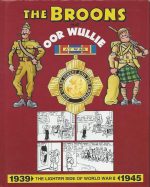
The Broons and Oor Wullie 1939-1945: The Lighter Side of World War II


By R.D. Low & Dudley D. Watkins & various (DC Thomson)
ISBN: 978-0-85116-651-3

The Broons and Oor Wullie are, singly or in eternal conjunction, one of the longest running newspaper cartoon features in British history, having appeared continuously in Scotland’s The Sunday Post since their debut in the March 8th 1936 edition.

Both boisterous wee boy and eccentrically engaging working class clan were co-created by journalist, writer and Editor Robert Duncan Low and DC Thomson’s greatest artist Dudley D. Watkins. Once their addictively engaging strips began to be collected in reprint editions as Seasonal Annuals – with solo books or each star-feature appearing in alternate years, right up to the present day – the Broons and Oor Wullie became an international milestone, beloved by Scots far from home and all devotees of cartooning mastery.

Low (1895-1980) began at DC Thomson as a journalist, rising to the post of Managing Editor of Children’s Publication and launching, between 1921 and 1933, the company’s “Big Five” story papers for boys: Adventure, The Rover, The Wizard, The Skipper and The Hotspur.

In 1936 his next brilliant notion was the Fun Section: an 8-page comic-strip supplement to the publishing giant’s most popular national newspaper. This illustrated accessory launched on 8th March and from the outset The Broons and Oor Wullie were its standout stars…

Low’s shrewdest notion was devising both strips as domestic comedies played out in the charismatic Scottish idiom and vernacular. Supported by features such as Auchentogle by Chic Gordon, Allan Morley‘s Nero and Zero, Nosey Parker amongst others, they laid the groundwork for the company’s next great leap. In December 1937 Low launched the very first DC Thomson weekly comic. The Dandy was cautiously followed by The Beano in 1938 and an early-reading title entitled The Magic Comic a year later.

War-time paper shortages and post-war rationing strictures curtailed this budding strip periodical revolution, and it was 1953 before the next wave of groundbreaking picture paper releases. The Topper started the ball rolling again (with Oor Wullie in the logo and masthead but not part of the magazine’s regular roster) and in that same year Low and Ken Reid created Roger the Dodger for The Beano…

Low’s greatest weapon in those early days was his prolific illustrator Dudley Dexter Watkins, whose style shaped the look of DC Thompson’s comics output until the bombastic arrival of Leo Baxendale shook things up in the mid-1950s.

Watkins (1907-1969) had started life in Manchester and Nottingham as a genuine artistic prodigy before entering Glasgow College of Art in 1924. It wasn’t long before he was advised to get a job at burgeoning, Dundee-based DCT, where a 6-month trial illustrating boys’ stories led to comic strip specials and some original cartoon creations.

Percy Vere and His Trying Tricks and Wandering Willie, The Wily Explorer made him a the only choice for both lead strips in the new Fun Section and, without missing a beat, in 1937 Watkins added Dandy‘s Desperate Dan to his weekly workload and Beano‘s placidly outrageous Lord Snooty seven months later.

Watkins soldiered on in unassailable magnificence for decades, drawing some of the most lavishly lifelike and winningly hilarious strips in comics history. He died at his drawing board on August 20th 1969.

For all that time he had unflaggingly crafted a full captivating page each for Oor Wullie and The Broons every week as well as his many comics pages. His loss was a colossal blow to the company. DC Thomson reprinted old episodes of both strips in the newspaper and Annuals for seven years before a replacement was settled upon, whilst The Dandy reran Watkins’ Desperate Dan stories for twice that length of time.

A rock-solid facet of Scottish popular culture from the start, the first Broons Annual (technically Bi-Annual) had appeared in 1939, re-presenting the best of the Sunday strips; followed and replaced with Oor Wullie the next Christmas. However, as wartime paper restrictions increasingly began to bite, no annuals were published between 1943 and 1946.

Here you have a chance to scrutinise the rare strips of the war years in a sublime collection of pages tracking the cartoon icons’ experiences as typical folk getting by in the worst of all possible times…

Need a Mission Briefing?

Most of the multigenerational Brown family inhabit a tenement flat at 10 Glebe Street, in the timelessly metafictional Scottish industrial everytown of Auchentogle (sometimes alternatively dubbed Auchenshoogle and based on working-class Glasgow district of Auchenshuggle). It was and still is an ideal setting in which to tell gags, comment on events, spoof trends and fossilise the deepest and most reassuring cultural archetypes for sentimental Scots, wherever in the world they might actually be residing.

As is always the case, the adamant, unswerving keystone of any family feature is long-suffering, understanding Maw, who puts up with cantankerous, cheap, know-it-all Paw, and their battalion of stay-at-home kids – comprising in descending order of age and military preparedness – hunky, husky Joe, freakishly tall and thin Hen (Henry), sturdy Daphne, pretty Maggie, brainy Horace, mischievous twins Eck and the unnamed “ither ane” and a wee toddler referred to only as “The Bairn”.

Not officially billeted there but always hanging around is gruff patriarchal buffoon Granpaw – a comedic gadfly who spends more time at Glebe Street than his own cottage, constantly striving to impart decades of hard-earned if outdated experience to the kids…

Offering regular breaks from inner city turmoil and another chance to simultaneously sentimentalise, spoof and memorialise more traditional times, the family often repair to their But ‘n’ Ben (a dilapidated rustic cottage in the Highlands), always falling afoul of the weather, the countryside and all its denizens: fish, fowl, farm-grown and farm-folk…

In these wartime strips that formula was naturally disrupted as the entire family found different ways to contribute to the war-effort.

As able-bodied patriots, Joe and Hen instantly joined up but frequently found time to pop back to share tantalising tastes of the army game. Paw became an ARP (Air Raid Precautions) Warden – as did Granpaw – revealing exhausting nights on fire watch and days working at the ship yards, Maw worked with the Red Cross whilst the older girls joined the V.A.D. (Volunteer Aid Detachment). Was it merely joshing when their siblings reckoned it was just to meet more men in uniform…?

Even the fractious and boisterous young ‘uns found ways to “contribute”…

Oor Wullie also soldiered on, giving a splendidly childlike boost to morale with his own version of “chin up and carry on, regardless”. His basic set-up has always been sublimely simply and eternally evergreen: the lad is just an overly-imaginative, good-hearted scamp with a talent for finding trouble and no hope of ever avoiding parental retribution when it becomes appropriate…

Wullie – AKA William MacCallum – is an archetypal rascal with time on his hands. He can usually be found ruminatively sitting on an upturned tin bucket at the start and finish of his page-a-week exploits.

His regular cast includes Ma and Pa, local copper P.C. Murdoch, assorted embattled teachers, relatives and other interfering adults who lavish gifts or inflict opprobrium upon the little pest and his pals Fat Bob, Soapy Joe Soutar, Wee Eck et al.

During this period Wullie’s world was heavily populated with adults always ready to apply some corporal punishment and thuggish bullies equally eager to prove their physical superiority – a fact repeatedly explained away and apologised for by the embarrassed and more-evolved editors of our more civilised age…

The Lighter Side of World War II was released in 1997: part of a concerted drive to keep the earlier material available to fans. This lavish and sturdy hardback compilation (still readily available through internet vendors) offers a captivating selection of strips from April 30th 1939, with the conflict still brewing far away, and includes the entire war era before concluding in December 1945 as servicemen all over the Empire – including Hen and Joe – readied themselves for demobilisation and life on Civvie Street.

These mostly monochrome memos of mirth-under-fire begin with – and are periodically punctuated by – full-colour cover adaptations of early Annual frontispieces. In attendance are atmospheric and informative year-by-year photo-features, period editorial cartoons, fact pages and excerpted headlines from The Sunday Post and other newspapers of the time, all combining to create a chronological chronicle of the Second World War through warm, funny and indomitably defiant eyes…

The endless escapades begin in 1939 with a few pre-Hostilities traditional teasers starring Oor Wullie before The Broons kick off the “Big Show” with a strip from October 1st reflecting everyone’s sudden concern over food supplies and the draconian discipline of The Blackout. The situation soon becomes a new normal and the cartoon stars slip back into familiar gag territory enlivened by recurring themes such as Hen and Joe coming a cropper after getting the lasses to launder their uniforms…

Bonus feature ‘Oor Wullie’s War Effort’ offers a colourful perspective on the wee lad’s morale-boosting capers (with plenty of superbly cruel caricaturing of Axis leaders Hitler and Mussolini) and is followed by fact-filled asides revealing how a major publishing house accommodated the public drive to cut paper use and recycle whilst still plugging sales for Dandy, Beano and the rest…

Many Wullie strips dealt with the boisterous boy’s attempts to dodge school and join any branch of the Services who would take him, whilst, not to be outdone, Paw Broon became obsessed with spies, suspiciously bulging bags and foreign accents…

The New Year dawned with a comedy poem from the Oor Wullie 1940 Annual plus a photo-feature explaining how the conflict had progressed, after which the usual subject-matter – gleeful goofs, family frolics and slapstick tomfoolery – are augmented by gas-mask gags, bomb shelter shenanigans and childish war-games involving young and old alike, as well as strips addressing the perennial problem of how to throw parties under government restrictions. Moreover, you can’t spit (or polish) without hitting some posh officer in need of taking down a peg and all involved are constantly collecting scrap to Hurt the Hun…

A similar eccentric ode – ‘The Broons’ Hoose’ – culled from their 1941 Annual with attendant news-based picture-feature leads into that tumultuous year as an aura of artistic anarchy returned, with tales of good-natured poaching, calamitous make-do-and-mend moments, brief encounters with spivs, conmen and black marketeers as well as increased emphasis on making your own entertainment and growing your own food.

Every so often, however, the strips became a vehicle for public information as when Maw Broon uses her Co-Op “Divvy” to buy Government Savings Certificates. Every war brings out blowhards and know-it-alls, but the ones here always regret their windy pontificating whether the unwilling audiences contain Wullie or the Broon clan…

A selection of headlines, full-colour reproductions of the painted covers for 1941’s Broons and 1942’s Oor Wullie Annuals (the last ones until 1946) and the by-now traditional photo-piece precede a range of strips from the key year of the conflict, with rationing and privation now an accepted part of daily life.

It only made the strips more imaginative and funny as Watkins’s style matured into a mesmerising melding of smooth caricature with slickly realistic slapstick as morale-boosting sporting fixtures and brief forays into the countryside countered the grim or gloomy news in the rest of The Sunday Post. The year concludes with ‘At the Barber’s’: a Wullie strip from 1944 deconstructing the artist’s skill with line and form…

The 1943 photo-feature deals with good news from North Africa and Southern Italy and leads directly into yet more graphic goonery; but although specific events are never mentioned it’s clear that growing optimism is infecting all the cartoon characters. Many Wullie strips in particular could be happening before or after the conflict and no one would be any the wiser.

Men in uniform are far more common in the Broons segments, but here too they’re having fun, playing pranks and chasing lassies again…

‘Domestic Bliss’ is another deconstructed exploration of Dudley Watkins’ astounding facility with comedy staging and characterisation and precedes the 1944 photo-feature which concentrates naturally enough on D-Day.

What follows is a splendid succession of classic gag outings, with sweets back in stock, eggs aplenty, holiday outings, hospital visits and parties taking the attention away from the real world. Proper Toffs are regularly embarrassed again, officious policemen outraged and teachers are once more hard-pressed to keep control as Wullie returns to japes, misguided helpfulness and get rich-quick schemes, whilst the Glebe Street irregulars go back to teasing Daphne and Maggie over thwarted romances, finding new definitions for Paw’s cussedness, embarrassing Maw in front of guests and indulging in all sorts of uproarious bad behaviour…

After a selection of Sunday Post headlines from 1943-1945, the accompanying history photo concentrates on V.E. Day 1945 showing renewed exuberance, focusing on servicemen and loved ones coming home and funny business very much back getting back to normal.

Most individual years are especially celebrated with their specific memorable and joy-inducing Christmas/Hogmanay strips and the collection concludes with Wullie’s May 13th celebration of the European war’s ending whilst The Broons episode for December 2nd 1945 shows Joe and Hen still in uniform but unable to tell the difference between home chores when On Leave and Jankers when back in Camp…

Crammed with all-ages fun, rambunctious hilarity and comfortably domestic warmth, these inspirational examples of enviable disgrace and wit under fire celebrate a mythic lost life and time are a sure cure for post-modern glums… and you can’t say fairer than that, can you?
© D.C. Thomson & Co., Ltd. 1997.


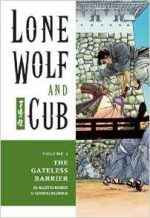
Lone Wolf and Cub volume 2: The Gateless Barrier


By Kazuo Koike & Goseki Kojima, translated by Dana Lewis (Dark Horse Manga)
ISBN: 978-1-56971-503-1

Best known in the West as Lone Wolf and Cub, the epic Samurai saga created by Kazuo Koike & Goseki Kojima is without doubt a global classic of comics literature.

An example of the popular “Chanbara” or “sword-fighting genre of books and cinema, Kozure Okami was serialised in Weekly Manga Action from September 1970 until April 1976 and was an immense hit. Those tales soon prompted a thematic companion series, Kubikiri Asa (Samurai Executioner) which ran from 1972 to 1976, but the major draw at home – and increasingly abroad – was always the nomadic wanderings of doomed noble ÅŒgami Ittō and his solemn child.

Revered and influential, Kozure Okami was followed after years of supplication by fans and editors by sequel Shin Lone Wolf & Cub (illustrated by Hideki Mori) and even spawned – through Koike’s indirect participation – science fiction homage Lone Wolf 2100 by Mike Kennedy & Francisco Ruiz Velasco with.

The original saga has been successfully adapted to many other media, spawning six movies, four plays, two TV series, games and merchandise. The property is notoriously still in pre-production as a big Hollywood blockbuster.

The several thousand pages of enthralling, exotic, intoxicating narrative art produced by these legendary creators eventually filled 28 tankobon volumes, beguiling generations of readers in Japan and, inevitably, the world. More importantly, their philosophically nihilistic odyssey with its timeless themes and iconic visuals has influenced hordes of other creators.

The many manga, comics and movies these stories have inspired are impossible to count. Frank Miller, who illustrated the cover of this edition, referenced the series in Daredevil, his dystopian opus Ronin, The Dark Knight Returns and Sin City. Max Allan Collin’s Road to Perdition is an unashamed tribute to this masterpiece of vengeance-fiction. Stan Sakai has superbly spoofed, pastiched and celebrated the wanderer’s path in his own epic Usagi Yojimbo and even children’s cartoon shows such as Samurai Jack can be seen as direct descendants of this astounding achievement of graphic narrative.

We in the West first saw the translated tales as 45 Prestige Format editions from First Comics beginning in 1987. That innovative trailblazer foundered before getting even a third of the way through the vast canon, after which Dark Horse Comics assumed the rights, systematically reprinting and translating the entire epic into 28 tankobon-style editions (petite 153 x 109 mm monochrome trade paperbacks, of about 300 pages each) between from September 2000-December 2002. When the entire translated epic had run its course it was all placed online through the Dark Horse Digital project.

A certain formula informs the early episodes: the acceptance of a commission to kill an impossible target, a cunning plan and inevitable success, all underscored with bleak philosophical musings alternately informed by Buddhist teachings in conjunction with or in opposition to the unflinching personal honour code of Bushido. The protagonist is also – probably – the most dangerous swordsman in creation…

The foredoomed killer-nomad was once Kōgi Kaishakunin: the Shogun’s official executioner, capable of cleaving a man in half with one stroke. An eminent individual of esteemed imperial standing, elevated social position and impeccable honour, ÅŒgami Ittō lost everything through the machinations of enemies at court and now roams feudal Japan pushing his toddler son in a tricked-out weaponised pram; two doomed souls hell-bent for the dire, demon-haunted underworld of Meifumado.

ÅŒgami’s wife was murdered and his clan eternally dishonoured due to the machinations of the politically ambitious Yagyu Clan, and the Emperor ordered ÅŒgami to commit suicide. Instead he rebelled, choosing to become a despicable Ronin (masterless samurai) and assassin, pledging to revenge himself on the Yagyus until they were all dead or Hell claimed him.

Although little more than a baby, his son Daigoro also chose the way of the sword, and together they now tread the grim and evocative landscapes of feudal Japan, one step ahead of destruction with death behind and before them.

This second magnificent monochrome volume – set in the depths of Japan’s legendary winters – again offers a grimly compelling combination of vengeful fable and addictive action-adventure which resumes here with ‘Red Cat’ as ÅŒgami leaves Daigoro with his client’s maid and engineers his own capture.

He wants to be incarcerated in the brutal, Fukuyama Han Prison where he can at last reach his target. Frequently the infallible assassin’s best ploy was to allow himself to be taken prisoner, endure unimaginable torture and then fight his way out having slaughtered his target: perhaps a self-induced penance for his failings…

Akaneko Shinsuke is an arsonist who once burned down the jail; effecting the escape of many criminals and causing the death and dishonour of the client’s father who was the warden at the time. Now “Red Cat” is back inside the rebuilt prison and on Death Row, but that is not punishment enough for the client.

He must not die impersonally, and the mastermind who truly created the shameful tragedy must be exposed and ended too…

Enduring appalling treatment and leaving a stack of corpses behind him, the Lone Wolf manoeuvres himself onto Death Row beside Shinsuke and learns the truth of that terrible night and the great fire, before rekindling the conflagration and bringing hell back to earth for final retribution…

Another aspect of ÅŒgami’s methodology re-emerges in ‘The Coming of the Cold’. The assassin always insists on a personal interview with his client and demands not only who is to die, but why. Perhaps the cautious killer only wants to know the extent of what he’s getting into, but we know he’s judging: seeing whether the target deserves death… or if the client does…

Upon accepting his latest job, ÅŒgami is proud to despatch the man who hired him before plunging into arctic conditions to complete his commission. The client’s retainers also happily sacrifice their lives to allow the Lone Wolf to infiltrate the fortified town of Oyamada and its impenetrable castle. As this scheme unfolds, little Daigoro sits in a cave in the midst of a blizzard fully aware that unless his father returns within five days, he will freeze or starve.

But that was before the avalanche…

Believing his son dead, Ōgami continues his mission, drawing ever closer to the traitor Lord who has chosen to rebel against the Shogun and forced his most loyal retainer to hire an assassin to cleanse the honour of the Han and remind his corrupted comrades of the purity of the beliefs they have forsaken…

His task accomplished, the assassin is replaced by the grieving father, but there is a miracle awaiting the weary warrior on his path to hell…

‘Tragic O-Sue’ begins as Daigoro gets into a fight with older children. When he wounds the son of the local Lord he is arrested and savagely beaten until the Lord realises the silent child is the son of the infamous and terrifying Lone Wolf.

ÅŒgami meanwhile is semi-conscious in a deserted temple, recovering from the fever and wounds earned during his last job. As he struggles back to health and sanity, little Daigoro is locked up with only the lowliest servant of the great house caring whether he lives or dies.

When the O-Sue’s charity is discovered, the Lord – convinced ÅŒgami has been sent to kill him – deals brutally with her and nearly dies for his callous brutality when enraged Daigoro escapes. Following the fugitive boy though the snow, the Lord intends to find the hidden assassin but doesn’t survive the success of his plan…

Delving deeply into Buddhist lore, ‘The Gateless Barrier’ sees ÅŒgami travel to desolate Wolf Mountain in search of spiritual clarity. However, although the animal predators find a way to live in harmony with him, his fellow humans are not so inclined. Cleansed and prepared, ÅŒgami proceeds with his latest job…

Strife between church and state over taxes in a famine-afflicted Han leads civil officials to hire the assassin to kill a “living Buddha” stirring up trouble. Before he can succeed in this sacrilegious assignment, however, the Wolf must be schooled in the proper procedures… by his victim…

This potently beautiful compendium of philosophic bloodletting concludes with an absorbing and fabulously off-kilter mystery as a highborn Samurai woman turned prostitute (a licensed and regulated profession in the Tokugawa Shogunate) proudly ends her life.

Elsewhere at the same time, the high-living head of the Han secretariat and his wife are murdered in almost impossible circumstances. Beside their bodies is a local blossom known as the ‘Winter Flower’ and the local criminal investigator wonders if there can be any connection. When an informant reveals that one of the prostitute’s last clients was a wandering ronin pushing a baby carriage, wheels begin to turn in the mind of the inspector…

Solid police work leads to a ramshackle hut in temple grounds, but the battalion of deputies and soldiers are loath to storm the shack since the local priest warned them that the warrior inside is dying of a highly contagious and revolting disease…

As metsuke (Police Inspector/Regional Spy Chief) Takariki Jinbei shouts through the closed door, the dying assassin tells him the shameful, shocking reasons the Han Chief and his bride had to die before igniting the hut and ending his tortured existence…

However, the metsuke is a remarkably astute, honourable and dedicated man. Seeing Daigoro, he wonders if he can trust his eyes and returns later: a move that results in a most enlightening confrontation with the devious Ōgami…

These stories are deeply metaphorical and work on a number of levels most of us Westerners just can’t grasp on first reading – even with the contextual help provided by bonus features such as the copious Glossary, providing detailed clarification and context on the terms used in the stories.

That only makes them more exotic and fascinating. Also, a little unsettling is the even-handed treatment of women in the tales. Within the confines of the incredibly stratified culture being depicted, females – from servants to courtesans, prostitutes to highborn ladies – are all fully-rounded characters, with their own motivations and drives. ÅŒgami’s female allies are valiant and dependable, and his foes, whether ultimate targets or mere enemy combatants in his path, are treated with professional respect by the Lone Wolf. He kills them just as if they were men…

A breathtaking tour de force, these are comics classics you simply must read.
© 1995, 2000 Kazuo Koike & Goseki Kojima. Cover art © 2000 Frank Miller. All other material © 2000 Dark Horse Comics, Inc. All rights reserved.

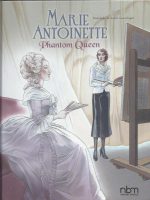
Marie Antoinette: Phantom Queen


By Rodolphe & Annie Goetzinger translated by Peter Russella (NBM)
ISBN: 978-1-68112-029-4

As I’ve previously stated, like so much European art and culture, French language comics (I’m controversially including Belgium and Swiss strips in this half-baked, nigh-racist, appallingly sweeping statement) often appear as a triumph of style over content.

That doesn’t mean they’re bad – far, far from it – but rather that sometimes the writing and plotting isn’t as important to the creators – or readers – as the way it looks on a page and in a book, and complex characterisation isn’t always afforded the same amount of room that scenery, players, fighting or sex gets.

That is not the case in this sublimely evocative and eerily placid episode by eminent Bande Dessinée scenarist Rodolphe D. Jacquette (Le Conservateur, Raffini, Cliff Burton) and former fashion artist turned comics creator supreme Annie Goetzinger (Girl in Dior, Casque d’Or, Aurore, L’Agence Hardy) which seamlessly blends the tone and timbre of two iconic eras in French history in a tale of mystery, imagination and rather indolent intrigue…

First seen in 2011 as Marie Antoinette, La Reine Fantome the translated wonderment follows an enlightening Introduction from Rodolphe, describing the origins and provenance of the story before co-writer and sole illustrator Goetzinger introduces us to artist Maud as she sits in the gardens of the Petit Trianon at Versailles.

It’s October 5th 1934 and her sketching of the scene is a brief yet welcome escape from her problems. Her beloved but far older husband is recently dead, leaving her a vast fortune which her stepson son covets.

Remy constantly pesters her to marry him, but she knows he’s as likely to kill as wed her to get his hands on the inheritance…

Things take a strange turn when her dog breaks loose and scampers away. He is quite the hit with the ladies of the Court when he bounds into a grand building, just as a frantic footman warns Queen Maria Antoinette that they must all retreat to the castle before the peasants besieging Versailles find them. It is still October 5th, but also so very long ago…

As her stepson’s attentions become more obnoxious and intolerable, Maud’s dreams are hunted by potent, tangible glimpses of the dead queen’s final days and close friends Suzy and Maggie convince her to try an oh-so-fashionable séance.

Also attending the affair is attractive psychiatrist Dr. Maurice D’Octrobre, a man of great charm and learning, possessed of a remarkably open mind…

Good thing too, as the ceremony allows Marie Antoinette to manifest, imploring Maud to find her remains and re-inter her so that the tragic queen might rest at last…

And so begins an utterly beguiling and entrancingly sophisticated, classically constructed ghost story with clever plot twists, genteel suspense and even a vile villain who sees his stepmother’s unsuspected psychic gifts as a stepping stone to having her committed and stealing her fortune…

Maud’s path is unswerving and her triumph never in doubt, but she never expected that in addition to the satisfaction of a job well done and a soul saved there would be such tangible rewards for her good deed…

Eerily comfortable and superbly satisfying; balancing melancholy shades of The Ghost and Mrs Muir with the poesy of Daphne Du Maurier’s Rebecca, Marie Antoinette: Phantom Queen is a superb step back into a lost world of elegant mystery and imagination: one no fantasy lover or mature comics reader should miss.
© Dargaud 2011. All rights reserved.

Marie Antoinette: Phantom Queen will be released on August 18th 2016. It can be pre-ordered now and is also available in all e-book formats.For more information and other great reads see http://www.nbmpub.com/

Garth Ennis’ Complete Battlefields volume 2


By Garth Ennis, P. J. Holden, Russ Braun, Carlos Ezquerra, Hector Ezquerra & various (Dynamite Entertainment)
ISBN: 978-1-60690-222-6

Garth Ennis is a devout aficionado of the British combat comics he grew up reading. He’s also a writer with a distinct voice and two discrete senses of humour.

In Battlefields the cruel, surreal ultra-violent gross-out stuff that made Hitman and The Boys such guilty pleasures are generally sidelined to make room for the far more blackly sardonic ironies of Preacher and True Faith.

Ennis practically resurrected the combat genre in US comics through a sequence of superb War Stories co-created with the industry’s top illustrative talent for DC’s mature reader Vertigo imprint, and later crafted more of the same for Dynamite Entertainment through the themed-anthology series Battlefields, beginning in November 2008. Here he continued blending a unique viewpoint (pro-warrior but savagely anti-war) with his love of those British comics strips, and this second Complete Edition gathers three more triptychs set in World War II, all digging deep beyond big-screen glamour glitz to expose the grimy guts of life during wartime in self-contained arenas most of us never gave a second thought to…

Illustrated by P. J. Holden, the horrific madness resumes in 1942 as ‘Happy Valley’, highlights the outrageous behaviour and doomed camaraderie of airmen ‘From a Land Down Under’.

When not pulling stupid pranks or rowdily carousing, the Australians of 444 Squadron spend their nights pounding the German industrial heartland of the Ruhr Valley in their Vickers Wellington bombers…affectionately known as “Wimpys”.

However, one particular crew is more than a bit upset when their top-notch pilot is replaced by fresh-faced Ken Harding; a kid straight out of flight school. However, after the first mission the frequent fliers have cause to reassess the weird little sprog and his raw skill or incredible luck.

The magic happens again after dull times and enforced grounding ‘In Pomgolia’ leads to more nights of sheer terror and exhilaration before the inevitable finally happen in the breathtaking conclusion ‘Who’ll Come on Ops in a Wimpy With Me?’…

In volume one Ennis and his venerable old collaborator Carlos Ezquerra (artistically aided, abetted and inked by his son Hector) introduced a work-shy, callow crew of Londoners manning a Churchill Tank who had to adapt to a new commander in the short squat shape of a foul-mouthed Geordie, who babbled orders in his bizarre northern jibber-jabber no normal bloke could understand…

Now Sergeant Stiles returns in ‘The Firefly and His Majesty’. It’s February 1945, and, riding a brand new Sherman Firefly, he’s part of a push deep into enemy territory. Sadly, a fanatical old adversary piloting Germany’s last super-weapon is ready to offer the invaders a lethal ‘Welcome to the Fatherland’…

Stiles is now part of the Fourth Royal Tank Regiment, having fought his way from Africa all the way up into Italy and fully intends on killing a few more smug “Jormans” before he’s done.

Soon he and his new squad come upon the remains of an American tank column that has been obliterated by two King Panzers. As Stiles tracks one of them he thanks his lucky stars the monster tanks weren’t around until the war was almost won. Still, his Firefly isn’t exactly standard issue either…

As they cautiously hunt for the enemy, the crew share the story of why Stiles hates Tigers so much and why he’s looking for one German tank commander in particular. ‘Soldiers of the Reich’ then sees the over-eager sergeant finally make a mistake which – he judges – makes him no better than the scum he’s hunting…

Filled with righteous fury, Stiles at last confronts his hated enemy in the ruins of a bombed-out cathedral, but after all modern innovations of butchery are exhausted the final terrible battle in the ‘Kingdom of Dust’ is fought and won with the most primitive of weapons…

The final tale in this turbulent tome also features a returning character.

‘Motherland’ is drawn by Russ Braun and returns to the Soviet theatre of war to chart the further exploits of female flyer Anna Borisnova Kharkova. She began defending her country as a night bomber harassing the German invaders as one of the all-woman squadrons dubbed Nachthexen or Night Witches…

Now a Captain, she is part of a vast Flight of fighter pilots harassing the enemy as they retreat from Stalingrad, pushed back by the sheer volume if not quality of the massed Russian war machine. The Soviets are now building up to a mass attack to liberate Kursk, but female pilots still struggle to earn the respect of their arrogant male comrades.

Although she has an ally in Commander Colonel Golovyachev and a friend in her timid mechanic Private Meriutsa (AKA “Mouse”) she has also picked up a ruthless enemy in Political Officer Major Merkulov of the NKVD, whom she caught in a moment  of arrant cowardice under fire…

Anna contents herself with killing Germans whenever she can and is astounded after a spectacularly disastrous sortie to be made a Hero of the Soviet Union for her efforts. The award results in her being removed from combat missions and ordered to school more hopelessly ineffective girls in the intricacies of aerial warfare, but her attempts to protect them are wasted once new Political Officer Captain Bobrov orders the untrained novices into combat…

Rushing after her defenceless charges Anna suddenly finds herself in the greatest and most important battle of her life…

Packed with blistering action, horrific human experiences and breathtaking gallows humour, these amazing tales of ordinary people in extraordinary circumstances come with a fascinating and informative Afterword from the author, script excerpts, recommended further reading, covers by Garry Leach, plus extensive sketchbook sections featuring character designs, layouts, pencils and finished art from Braun, Holden and the Ezquerras.

These are not stories for children. Due to Ennis’s immense skill the carefully constructed moments of tension, terror and relief strike home and strike hard; whether he is aiming for stress-releasing belly laughs,, lambasting the Powers That Be always ready to send fodder to slaughter or, as seen most frequently here, examining in excoriating detail how the acts of war makes mortals into monsters.

These hyper-authentic yarns reek of grim veracity and are a tribute to the spirit of people at their very best and worst. This is war as I fear it actually is, and it makes bloody good reading.
© 2010, 2011 Spitfire Productions, Ltd. All Rights Reserved.

Small Press Sundays

Like so many others I started out in the business making minicomics, collaborating on fanzines and concocting stripzines with fellow weirdoes, outcasts and addicts. Even today, seeing the raw stuff of creativity in hand-crafted paper pamphlets – or better yet professionally printed packages which put dreamers’ money where their mouths are – still gets me going in ways which endanger my tired old heart…

With that in mind here are two more superb offerings from one of my favourite independent publishers of the moment…

Wolf Country #5

By Jim Alexander, Will Pickering, Jim Campbell & Liz Howarth (Planet Jimbot)

Go read this review then come back here.

As well as stunning graphic novels, anthologies and one-shots, independent publisher Planet Jimbot (likely lads Jim Alexander & Jim Campbell) also produce proper periodical comicbooks, and damned good ones. Vying for the accolade of their very best of the moment (neck and neck with GoodCopBadCop, depending on which one I’m actually holding) is their eerie otherworld socio-political saga blending the most evocative and captivating genre tropes of Westerns with supernatural horror stories: Wolf Country.

Complementing the recent release of the first WC trade paperback collection, this latest instalment in the expanding saga returns us to The Settlement where a dwindling congregation of devout vampires prove their faith daily by eking out a peril-fraught existence in the midst of their unnatural, pagan enemies; assorted tribes of bestial werewolves.

The ferocious, uncontrollable Lycanthropes infest the badlands surrounding the enclave as well as the distant city-state carved out by their forward-looking, progressive vampire brethren who are increasing, leaving the faith in favour of temporal comfort and scientific progress. Sides are being drawn in an inevitable clash of belief systems…

The Settlement has just survived the latest full-moon assault by another pack, this time employing a giant monster wolf. They only survived because of the intervention of heavily-armed Kingdom troops who have imposed their own draconian style of martial law. In the days following, brutal Sergeant Urquhart has tortured settler-scout Carmichael, convinced he knows where the missing boy celebrity Luke – famed in the city as the prophesied “Boy Who Killed Wolf” as gone…

Temporary leader Natasha is in turmoil. Her husband Halfpenny would not stand for these atrocities, but he has been spirited away to the Kingdom on some mystery mission for The High Executor…

Her tensions only increase after she contacts Luke through dreams and discovers he has discarded all notions of his foretold destiny and made a life for himself amongst the wolves, humans and lycanthropes in the vast unknown wilds…

Halfpenny would be unable to help even if he knew. His time in civilisation has found him used as a Judas Goat to get close to radical, rebel vampires in a no-go zone dubbed Free State. The attempt led to death, a carefully instigated riot and even greater submersion in the fetid swamp of City politics, but also a tantalising glimpse at a true sacrament of faith and mystery that he must pursue…

Back at the Settlement, Natasha does the only thing she can to spare Carmichael’s agonies and offers to lead Urquhart to where the fugitive Luke and his new family enjoy a life of wild freedom…

To Be Continued…

After a thoroughly beguiling and meticulous stage setting and plot seeding process, Wolf Country is gearing up to a fantastic second act that promises drama, action, suspense and even more mystery. Don’t wait for the next book compilation, climb aboard the feral express right now…
Story © 2016 Jim Alexander (story) & Will Pickering (art).
https://www.etsy.com/uk/listing/266647799/wolf-country5

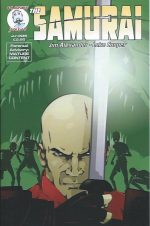
The Samurai

By Jim Alexander, Luke Cooper, Jim Campbell & Ed Murphy (Planet Jimbot)

Clearly men of broad and wide-ranging tastes in term of comics adventure, Jim Alexander and regular collaborator Luke Cooper have turned their creative juices loose on the venerable sub-genre of itinerant Bushido warriors with this deceptively enthralling one-shot.

A nameless, weary swordsman, The Samurai is first seen returning home after faithful service in the wars against Mongol invaders. Tragically, a longed-for reunion with his family is forever forestalled when he finds their dismembered corpses in his burned-out village. Implacably he begins stalking the vile bandits who killed them…

However, in his righteous rage he underestimates his foes and is nearly despatched to join his loved ones until fate monstrously intervenes…

A broken, brooding nomad, his hunt for the remaining marauders takes him to a wooded region and another ravaged house in a ‘Burning Forest Clearing’. His decision to search the dwelling for survivors is a grave mistake as he is ambushed by diabolical cannibals and left for dead, but when a little girl comes to his aid he finally finds the strength to overcome.

Good thing too, as the flesh eaters have returned for their next meal…

An iconic blend of exotic action and philosophy liberally dosed with classic supernatural elements and overtones, this is a no-nonsense romp to delight the senses and fire the hearts of all lovers of ancient oriental excitement.
© 2016 Jim Alexander (story) & Luke Cooper (art)
https://www.etsy.com/uk/listing/273712752/the-samurai

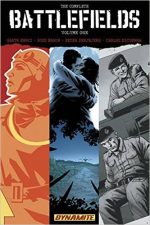
Garth Ennis’ Complete Battlefields volume 1


By Garth Ennis, Russ Braun, Peter Snejbjerg, Carlos Ezquerra, Hector Ezquerra & various (Dynamite Entertainment)
ISBN: 978-1-60690-255-4

Garth Ennis is the best writer of war comics in America today. In fact, if you disregard the marvellous Commando Picture Library series published by DC Thomson (which you shouldn’t – but no one admits to reading them in my circle), he may well be the only creator regularly contributing to the genre in the entire English language.

After crafting an occasional sequence of superb War Stories with the industry’s top illustrative talent for DC’s mature reader Vertigo imprint, he then moved on to craft more of the same for Dynamite Entertainment through themed-anthology series Battlefields, which began publication in November 2008.

Here he continued to blend his unique viewpoint with his love of the British comics combat strips he read as a lad. This first Complete Edition (available in both hardback and softcover editions as well as a digital release) gathers the first nine issues – comprising three separate triptychs set in World War II – which all delve below the standardised Hollywood glitz of a conflict we all think we have a passing familiarity with to reveal the grimy guts of combat in self-contained arenas most of us never knew existed…

Illustrated by Russell Braun, the first offering is a tale told from two opposing viewpoints, with both inexorably destined to ultimately and finally clash. Kurt Graf is a young German soldier on the Eastern Front; clinging to life and increasingly appalled by the behaviour of his comrades as they strive to crush the dogged resistance of the Soviets defending their homeland.

Elsewhere, the Russians are about to unleash their latest counter-weapon… women pilots…

Despite being despised by their male counterparts and generally saddled with the worst equipment, these dedicated warriors – especially the night-bomber squadron to which diminutive Lieutenant Anna Kharkova belongs – quickly begin to take a toll on the war-weary invaders, earning the name Nachthexen… ‘The Night Witches’…

As the months pass we follow both narrators deeper into hell, where all passions are temporary but overwhelmingly ferocious. And then, as the continually mounting toll of atrocities seems more than any could possibly bear, the protagonists at last meet under the most inauspicious conditions and the inevitable happens…

The pulse-quickening pitched cinematic battles of the Russian Front are replaced with more sedate but no less sinister and horrifying scenes in ‘Dear Billy’ – limned by Peter Snejbjerg – which beguilingly examines other repercussions of love in wartime. Carrie Sutton is a British nurse who barely survived the wanton slaughter and worse which the Japanese inflicted following their conquering Singapore.

After a frankly miraculous escape Carrie is taken to hospital in Calcutta where, after her body has recuperated, she is pressed into service on the wards. Here, even if she cannot forget what was done to her, she can strike back by helping heal the soldiers, sailors and airmen who will eradicate the inhuman enemy.

Her dreary half-life changes after meeting pilot William Wedgewood. Despite the appalling injuries inflicted upon him by the oriental devils he remains upbeat, and upon recovery is eager to get back in the air and punish the enemy. Meanwhile, Carrie too has found an occasional yet deeply personal way to get back at the foe…

The torrid relationship lasts the length of the war; with each prosecuting the conflict in their own way, but when Hiroshima and Nagasaki end hostilities and it’s time to put away weapons and make friends again, one traumatised soul realises the vengeance-taking can never end…

Spectacularly uproarious and doused with Ennis’s signature coal-black humour, ‘The Tankies’ is drawn by venerable old collaborator Carlos Ezquerra and inked by his son Hector. Set in the days immediately after the Normandy Landings in June 1944, the saga follows the crew of a British Churchill Tank after their upper class commander is killed in a most grotesque manner.

The work-shy, callow Londoners are at a bit of an impasse until taken in hand by a battle-hardened tank-man Non-Com who has fought his way from Africa all the way up into Italy and now intends to kill a few more foes here.

If only he wasn’t a bloody Geordie, babbling his bizarre northern jibber-jabber wot no normal bloke could understand…

Still, with Corporal Stiles in charge, the unlikely lads are soon rumbling forward to support the rapidly-diminishing ranks of British and Canadian infantry. Everything will be fine just as long as they don’t meet any Panzers or Tiger Tanks…

Emphatically highlighting with gory attention to detail the idiocy of command and incredible bravery of the under-trained allied soldiers inexorably forcing back the entrenched German veterans, this is prime Ennis: ghastly, hilarious and unforgettable…

Also included are a fascinating and informative Afterword from the author, recommended further reading, covers and variants by John Cassaday & Garry Leach, plus extensive sketchbook sections featuring character designs, layouts, pencils and finished art from Braun, Snejbjerg and the Ezquerras.

These are not stories for children. Due to Ennis’s immense skill as a scripter and his innate understanding of ordinary people in extraordinary circumstances, the carefully constructed moments of tension, terror and relief strike home and strike hard; whether he is aiming for gallows humour, lambasting the Powers That Be always ready to send fodder to slaughter or, as seen most frequently here, examining in excoriating detail how the acts of war makes mortals into monsters.

These hyper-authentic yarns reek of grim veracity and are a tribute to the spirit of people at their very best and worst. This is war as I fear it actually is, and it makes bloody good reading.
© 2009, 2011 Spitfire Productions, Ltd. All Rights Reserved.

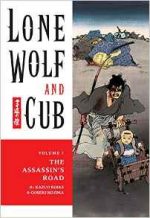
Lone Wolf and Cub volume 1: The Assassins Road


By Kazuo Koike & Goseki Kojima, translated by Dana Lewis (Dark Horse Manga)
ISBN: 978-1-56971-502-4

Whichever English transliteration you prefer – Wolf and Baby Carriage is what I was first introduced to – the grandiose, thought-provoking hell-bent Samurai tragedy created by Kazuo Koike & Goseki Kojima is without doubt one of those all too rare breakthrough global classics of comics literature.

The epic Kozure Okami began as a serial in Weekly Manga Action, running from September 1970 to April 1976, and was immediately followed by a direct sequel (Shin Lone Wolf & Cub) as well as science fiction offshoot Lone Wolf 2100. The story has broken out into other media, spawning six movies, four plays, two TV series, games and merchandise. The property is notoriously still in pre-production as a big Hollywood blockbuster.

The 7000 thousand pages of staggeringly beautiful black and white narrative art produced by these gifted creators eventually filled 28 tankobon volumes, gripping and captivating generations of readers around the world. More importantly, the sensitively nihilistic saga, with its timeless themes and iconic visuals, has influenced hordes of other creators.

The many manga, comics and movies the stories have inspired are impossible to count. Frank Miller, who illustrated the cover of this particular edition, has referenced the series in his science fiction saga Ronin, The Dark Knight Returns, and Sin City. Max Allan Collin’s Road to Perdition is an unashamed tribute to this Japanese masterpiece. Even children’s cartoons such as Samurai Jack can be seen as direct descendants of this astounding achievement in graphic literature.

We in the West first saw the series as 45 Prestige Format editions from First Comics beginning in 1987. The company foundered before getting even a third of the way through the canon. Then, from September 2000 to December 2002, Dark Horse Comics assumed the rights, systematically reprinting and translating the entire epic into 28 tankobon-style editions (petite 153 x 109 mm monochrome trade paperbacks, about 300-ish pages per), before recently putting the entire sequence online through its Dark Horse Digital project.

This initial lean, mean, martial edition offers a Glossary providing detailed context on the term used in the stories, plus profiles of author Koike Kazuo and illustrator Kojima Goseki and the first instalment of ‘The Ronin Report’: an occasional series of articles offering potted history essays on the period of the Tokugawa Shogunate.

Of course the true meat is the captivating, grimly compelling combination of revenge fable and action-adventure which opens here with intriguing episodes of stripped-down mystery, gripping intensity and galvanic bloodletting as the first tale introduces a scruffy indigent pushing a homemade bamboo pram with a 3-year-old boy in it.

A banner on the contraption proclaims ‘Son for Hire, Sword for Hire’ and as the man stoically ignores mockery and derision from louts on the road, his advert soon attracts the attention of four deadly men who have been warned of an assassin carrying his baby boy with him…

A certain formula informs all the early episodes: the acceptance of a commission to kill an impossible target, a cunning plan and inevitable success, all underscored with bleak philosophical musings alternately informed by Buddhist teachings in conjunction with or in opposition to the unflinching personal honour code of Bushido. The protagonist is also possibly the most dangerous swordsman in the world…

You won’t learn it until the end of this tome, but the fore-doomed killer-wanderer was once the Shogun’s official executioner, capable of cleaving a man in half with one stroke. An eminent individual of esteemed imperial standing, elevated social position and impeccable honour, ÅŒgami Ittō lost it all and now roams feudal Japan as a doomed soul hellbent for the dire, demon-haunted underworld of Meifumado.

When the nomad’s wife was murdered and his clan dishonoured due to the machinations of the treacherous and politically ambitious Yagyu Clan, the Emperor ordered ÅŒgami to commit suicide. Instead, he rebelled, choosing to become a despised Ronin (masterless samurai) and assassin, pledging to revenge himself on the Yagyus until they were all dead or Hell claimed him. His son, the toddler Daigoro, also chose the way of the sword and together they roamed the grim and evocative landscapes of feudal Japan, one step ahead of doom and with death behind and before them.

Frequently the infallible assassin’s best ploy is to allow himself to be captured, endure unimaginable torture and then fight his way out having slaughtered his target…

The tactic is again employed in ‘A Father Knows His Child’s Heart, as Only a Child Can Know His Father’s’ as the wolf sends willing Daigoro to penetrate the unyielding defences of Takai Han so that Papa can kill a dishonourable usurper…

Another aspect of ÅŒgami’s methodology emerges in ‘From North to South, From West to East’. The assassin insists on a personal interview with all his clients and demands not only who is to die, but why. Perhaps the cautious killer only wants to know the extent of what he’s getting into, but we know he’s judging: seeing whether the target deserves death… or if the client does…

The legend of the Lone Wolf and Cub quickly spreads and when faithful guards briefly hire Daigoro to help their beloved mistress, it is with full knowledge of what the boy’s father is. In ‘Baby Cart on the River Styx’ that knowledge is crucial to ÅŒgami’s plan for quashing a gang turf-war before it begins even whilst bringing down a corrupt yet untouchable lord…

Shocking to us is the accepted conceit that the father is fully prepared to sacrifice his son to achieve his mission and fulfil his promises. In ‘Suio School Zanbato’ little Daigoro willingly becomes a hostage to fortune so that his dad can lure a swords-master – and all his honourless students – into an officially sanctioned duel, and kill with no legal ramifications or repercussions…

A lyrical twist on the theme of star-crossed lovers, ‘Waiting for the Rains’ then sees the little boy befriending a dying woman even as his father waits to carry out his next commission – expunging the man she so patiently awaits…

These stories are deeply metaphorical and work on a number of levels most of us westerners just won’t grasp on first reading – even with the contextual help provided by the bonus features. That only makes them more exotic and fascinating. Also, a little unsettling is the even-handed treatment of women in the tales. Within the confines of the incredibly stratified culture being depicted, females – from servants to courtesans, prostitutes to highborn ladies – are all fully-rounded characters, with their own motivations and drives. His female allies are valiant and dependable, and his foes, whether ultimate targets or mere enemy combatants in his path, are treated with professional respect by ÅŒgami. He kills them just as if they were men…

In ‘Eight Gates of Deceit’ the indomitable killer is ambushed by an octet of female assassins hired by the wolf’s latest client who foolishly chooses to discount the professional honour of his hireling in favour of clearing up loose ends. That’s his last mistake…

‘Wings to the Birds, Fangs to the Beast’ finds the tireless wanderer stumbling into a hot-spa village recently taken over by bandits. To their eternal cost, and despite the newcomer’s every forbearing effort, the human animals refuse to believe the man with the baby-carriage wants no trouble…

This first stunning collection ends with some of the answers the reader has been looking for as the scene shifts to the recent past and Shogun’s palace in Edo for an origin. There, thanks to the political manoeuvrings of ambitious Lord Yagyu, the Shogun’s Executioner ÅŒgami Ittō has been ousted and his clan disgraced. With wife Asami dead, the austere warrior outfoxes his opponent – who thought an honourable suicide the only option he’d left his enemy – by opting to travel ‘The Assassin’s Road’ with his baby son momentously choosing to follow him to Meifumado or victory…

A breathtaking tour de force, these are comics classics you must not miss.
© 1995, 2000 Kazuo Koike & Goseki Kojima. All other material © 2000 Dark Horse Comics, Inc. Cover art © 2000 Frank Miller. All rights reserved.