Chronicles of Fear – Tales of Woe


By Nathalie Tierce (Indigo Raven)
ISBN: 978-1-7341874-5-8 (PB)

Win’s Christmas Gift Recommendation: Cruel Truths for Crazy Days… 9/10

Allying words to pictures is an ancient, potent and – when done right – irresistibly evocative communications tool: one that can simultaneously tickle like a feather, cut like a scalpel and hit like a steam-hammer. As such, repeated visits to a particular piece of work will even generate different responses depending on the recipient’s mood. If you’re a multi-disciplined, muti-media artist like Nathalie Tierce, fresh challenges must be a hard thing to find, but rewards for successfully breaking new ground are worth the effort… and the viewer’s full attention.

Tierce is a valued and veteran creator across a spectrum of media, triumphing in film and stage production for everyone from the BBC to Disney and Tim Burton to Martin Scorsese. She has crafted music performance designs for Andrew Lloyd Webber and The Rolling Stones, all the while generating a wealth of gallery art, painted commissions and latterly, graphic narratives such as Fairy Tale Remnants and Pulling Weeds From a Cactus Garden.

Perpetually busy, she still finds time to stop and stare; thankfully, human-watching is frequently its own reward, sparking tomes like this slim, enthrallingly revelatory package forensically dissecting human nature in terms of cultural landmarks as scourged by the inescapable mountain of terrors large, small, general and intensely personal.

On show in this portable night gallery are stunning paintings in a range of media, rendered in many styles and manners whilst channelling the artist’s own fear-mongering childhood entertainer-influences. These include Edward Gorey, Maurice Sendak, Heinrich Hoffman (Der Struwwelpeter) and other dark fairy tales, as well as compellingly mature comic creators such as Aline Kominsky Crumb & R. Crumb, Will Eisner and Claire Bretecher.

The artworks explore shades of anxiety, alienation, frustration, longing, disappointment, despondency, hopelessness, instant gratification, loss of confidence, purposelessness, racism, toxic masculinity, neurosis, death and loneliness by suborning cultural touchstones like Popeye, Donald Duck and other Disney icons, mass-media mavens like Bowie and King Kong, beloved childhood toys and even modern lifestyle guru Homer Simpson.

Bracketed by revelatory insights and sharing context in Introduction and Biography, the pictorial allegories When Shock and Horror Collide, Forest Nymph, Capitolina and the Dubious Superhero, The Genie and the Swimmer, Bad Fishing Trip, Slapstick Brawl, Undateable, Crazy Rooster Man, Strange Leader, My Favorite Aliens, The Queen of Hearts Goes Shopping, Acrobat, Fear of Death, Running, What Killed the Dodo?, The Bore, 3am, Pussy Cat, Barfly, Alice in Waitingland (my absolute personal favourite!), Beginning and End, Rascal Dog, Spiraling, Lonely Soldier, Homer Gone Bad, Jittery and utterly appalling endpiece Bathtime, connecting forensic social observation with everyday paranoias we all experience. The result is a mad melange of bêtes noire and unsettled icons du jour, with each condemnatory visual judgement deftly wedded to frankly terrifying texts encapsulating contemporary crisis points, delivered as edgy epigrams and barbed odes.

Chronicles of Fear – Tales of Woe is a mordantly mature message of mirth-masked ministrations exposing the dark underbellies we’re all desperately sucking in and praying no one notices.

A perfect dalliance for thinking bipeds at the end of civilisation, aimed at victims of human nature with a sharp eye and unforgiving temperament – and surely, isn’t that all of us?
© 2023 Indigo Raven. © 2023 Nathalie Tierce. All rights reserved.

A Spirou and Fantasio Adventure volume 20: The Dark Side of the Z


By Fabien Vehlmann & Yoann, designed by Fred Blanchard, colored by Hubert & translated by Jerome Saincantin (Cinebook)
ISBN: 978-1-80044-103-3 (Album PB/Digital edition)

Boyish hero Spirou (which translates as both “squirrel” and “mischievous” in the Walloon language) was created by French cartoonist Françoise Robert Velter AKA Rob-Vel. This was before the Second World War for Belgian publisher Éditions Dupuis in response to the phenomenal success of Hergé’s Tintin at rival outfit Casterman.

Soon-to-be legendary weekly comic Le Journal de Spirou launched on April 21st 1938 with a rival red-headed lad as lead feature in an anthology which bears his name to this day. The eponymous hero was a plucky bellboy/lift operator employed in the Moustique Hotel – a sly reference to the publisher’s premier periodical Le Moustique. His improbable adventures with pet squirrel Spip gradually evolved into far-reaching, surreal comedy dramas.

Spirou and his chums have helmed the magazine for most of its life, with a cohort of truly impressive creators carrying on Velter’s work, beginning with his wife Blanche “Davine” Dumoulin who took over the strip when her husband enlisted in 1939. She was assisted by Belgian artist Luc Lafnet until 1943, when Dupuis purchased all rights to the property, after which comic-strip prodigy Joseph Gillain (Jijé) took the helm. In 1946, his assistant André Franquin assumed the creative reins: gradually ditching the well-seasoned short gag vignettes format in favour of epic adventure serials. He also expanded the cast, introducing a broad band of engaging regulars and eventually creating phenomenally popular magic animal Marsupilami.

Franquin was followed by Jean-Claude Fournier who updated the feature over nine stirring adventures tapping into the rebellious, relevant zeitgeist of the times: offering tales of environmental concern, nuclear energy, drug cartels and repressive regimes.

By the 1980s, however, the series seemed outdated and lacking direction, so three separate creative teams alternated on it. Eventually overhauled and revitalised by Philippe Vandevelde (writing as Tome) and artist Jean-Richard Geurts – AKA Janry – adapting, referencing and in many ways returned to the beloved Franquin era, the strip found its second wind.

Their sterling efforts revived the floundering feature’s fortunes, generating 14 wonderful albums between 1984 and 1998. As the strip diversified into parallel strands (Spirou’s Childhood/Little Spirou and Guest-Creator Specials A Spirou Story By…), the team on the core feature were succeeded by Jean-David Morvan & José-Luis Munuera. Then Yoann & Vehlmann took over the never-ending procession of amazing adventures…

Multi-award-winning French comics author Fabien Vehlman was born in 1972, began his comics career in 1996 and has been favourably likened to René Goscinny. He’s probably still best known for Green Manor (illustrated by Denis Bodart), Seven Psychopaths with Sean Phillips, Seuls (drawn by Bruno Gazzotti and available in English as Alone), Wondertown with Benoit Feroumont and Isle of 1000,000 Graves with Jason.

Yoann Chivard was born in October 1971 and was drawing non-stop by age five. With qualifications in Plastic Arts and a degree in Communication from the Academy of Fine Arts in Angers, he became a poster advertising artist whilst just dabbling in comics. His creations include Phil Kaos and Dark Boris for British Indie publications Deadline and Inkling, Toto l’Ornithorynque, Nini Rezergoude, La Voleuse de Pere-Fauteuil, Ether Glister and Bob Marone and he has contributed to Trondheim & Sfar’s Donjon.

In 2006, Yoann was the first artist to produce a Spirou et Fantasio one shot Special. It was scripted by Vehlmann…

Cinebook have been publishing Spirou & Fantasio’s exploits since 2009, alternating between the various superb reinterpretations of Franquin and earlier efforts from the great man himself.

When Jijé handed Franquin the strip part-way through Spirou et la maison préfabriqué (LJdS #427, June 20th 1946), the new guy ran with it. Over two decades he enlarged the scope and horizons until it became purely his own. Almost every week fans would meet startling new characters like loyal comrade and rival Fantasio or crackpot inventor and Merlin of mushroom mechanics Pacôme Hégésippe Adélard Ladislas de ChampignacThe Count of Champignac

Spirou and Fantasio became globe-trotting journalists, travelling to dangerously exotic places, uncovering crimes, exploring the fantastic and clashing with a coterie of exotic arch-enemies such as Fantasio’s deranged and wicked cousin Zantafio and that maddest of scientists, Zorglub.

This old school chum and implacable rival of Champignac is an outrageous Bond-movie-tinged villain constantly targeting the Count. A brilliant engineer, his incredible machines are far less dangerous than his mind-controlling “Zorglwave” and his apparently unshakable hunger to conquer Earth and dominate the solar system from a base on the Moon…

This tale – originally in 2011 La face cachée du Z – opens with our happily argumentative chums repairing the collaterally damaged Champignac chateau yet again. Exhausted, they go to indoors to sleep… and wake up in a horrific and tawdry casino resort. Compounding the shocks are weird, painfully unpredictable tricks of gravity, as it’s apparently built only for the super-rich and on the moon!

Worst of all, explaining the transition is smugly sanctimonious old enemy Zorglub…

Still agonisingly hungry for his rival’s approval, the evil genius blathers on about his triumphs and his Great Masterwork since last seen (in volume 18’s Attack of the Zordolts): escaping from dirty, dying Earth to the stars with hot Swedish science students Astrid and Lena. Now they’ve gone off together, leaving the science troll to carve out his interplanetary empire alone.

At least, he would be, if certain funding shortfalls hadn’t forced him into bed with One-percenters who think his citadel could be the most exclusive resort off Earth…

Zorglub still needs to be the virtuous Architect of Humanity’s Future, but the people he has are nothing like the ones he wants: bold Fantasio, ingenious Spirou and brilliant ethically pristine Pacôme de Champignac…

That’s why – for the most logical and moral reasons – he drugged and abducted them…

Without question, the lunar outpost is a technological wonder, with advances and advantages even the kidnapped admire, but the beloved holy Science is being increasingly sidelined, for bigger and better gambling rooms, ski slopes, surfing beaches, sports complexes, nature sideshows and glitzy restaurants.

It does not go down well when Spirou points out that Zorglub could have cleaned up and saved Earth for less money and effort…

Further debate is forestalled when a solar flare is announced and Spirou refuses to join everyone else in radiation-shielded shelters until he recovers his wandering wild pal Spip. Locked out, our hero spectacularly finds a way to survive the cosmic storm, but it’s not for a while that we realise it’s come at a severe mutagenic cost…

The pauper lad’s suicide run across the resort’s attractions was televised and has made him a minor celebrity amongst the movie stars like Blythe Prejlowieky (who soon seduces the kid for her own shocking purposes!), overly-competitive sporting gods like Mike Adibox, faceless money-moguls and flagrantly ostentatious oligarchs such as Igor. Not so much impressed as cautious is the investors’ appointed fixer and ultimate mercenary Poppy Bronco. He’s recognized something in the survivor that bodes badly for all…

The sun starts setting on the project after Champignac chides Zorglub for the worthlessness of his achievements and surrendering of his principled dreams. It coincides with a series of potentially lethal sabotage attempts and – defined by true devotion to their precious skins – the one-percenters commandeer the transport back to Earth, with only few such as Blyth and Igor choosing to stay behind with the peons and paid staff…

Finally rid of his annoying paymasters, Zorglub then executes his long-term plans but is completely unprepared for what happens to Spirou when the lunar night begins. Bronco isn’t though and organises a monster-hunt through the abandoned resort and across the moon…

The outcome is tense, gripping unexpected and so very To Be Continued.

Rocket-paced, action-packed, compellingly convoluted and with just the right blend of perfectly blending helter-skelter excitement and sheer daftness, The Dark Side of the Z is a terrific witty romp to delight devotees of easy-going adventure, drawn with beguiling style and seductive energy. This is pure cartoon gold, truly deserving of reaching the widest audience possible.
Original edition © Dupuis, 2011 by Vehlmann & Yoann. All rights reserved. English translation 2023 © Cinebook Ltd.

Suburban Nightmares: The Science Experiment


By Larry Hancock, Michael Cherkas, John Van Bruggen & various (NBM)
ISBN: 978-0-91834-880-7 (Album PB)

Anticipating the imminent release – and upcoming review of Michael Cherkas’ Red Harvest – I thought I’d put in a plug/request for another of the stunningly different comics he and his creative partners pioneered in the antediluvian 80s and neurotically self-absorbed 90s. Here you go…

During the vast expansion of opportunity and outpouring of innovation that graced comics during the 1980s, much of the “brain-rotting trash” or “silly kid’s stuff” stigma that had plagued the medium was finally dispelled. America started catching up to the rest of the world: acknowledging sequential narrative as an actual Capital “A” Art Form, and their doors opened wide open for foreigners to make a few waves too…

One of the era’s most critically acclaimed and inescapably intoxicating features sprang from semi-Canadian Renegade Press which set up shop in the USA at the start of the black & white comics bubble in 1984. They quickly established a reputation for excellence, offering a strong line of creator-based properties including some genuinely remarkable series such as Ms. Tree, Journey: The Adventures of Wolverine MacAlistaire, Flaming Carrot, Normalman, and a compulsively backwards-looking Cold War/UFO/paranoia-driven delight: The Silent Invasion.

That last was a stunningly stylish conspiracy saga, bolting 1950s domestic terrors (invasion by Reds; invasion by aliens; invasion by new ideas…) onto Film Noir chic: and employing 20-20 hindsight to produce phenomenally fresh, enticing delights for the so-similar Reagan era. From here and now, it’s never seemed more distressingly likely that politics, if not all history, is cursed to repeat certain cycles and strategies…

The series was collected in four monochrome tomes, re-presenting the lead story wherein inspired co-creators Michael Cherkas & Larry Hancock concocted a cunning confection combining all the coolest genre elements of classic cult sci-fi, horror, spy, conspiracy theory, crime, romance and even situation comedies…

Of equal if not greater interest (to me at least) were the ancillary back-up tales utilising the same milieu and themes. These proved popular enough to springboard into their own short-lived title and ultimately two collections of their own…

Recently, just as the world teetered even further and faster on the edge of a multiple-choice test of imminent dooms – and with America once more enduring internecine struggle amongst the citizenry, corruption, cover-ups at every level of government and the press under attack from the people and traditions it seeks to inform and safeguard – The Silent Invasion was remastered, revised, re-released and continued in a quartet of so-collectible tomes…

1950s America was a hugely iconic and paradoxical time. Incomparable scientific and cultural advancements, great wealth and desperate, intoxicating optimism inexplicably arose amidst an atmosphere of immense social, cultural, racial, sexual and political repression with an increasingly paranoid populace seeing conspiracy and subversive attacks in every shadow and corner of the rest of the world.

Such an insular melting pot couldn’t help but be fertile soil for imaginative outsiders to craft incisive, evocative tales dripping with convoluted mystery and taut tension, especially when wedded to the nation’s fantastic – and ongoing – obsessions with rogue science, flying saucers, gangsterism and conspiracies…

They were also ridiculously obsessed with hot babes and bust sizes, but that’s not really a mystery, is it?

In 1983 the temptation for a little mischief was clearly too much for the USA’s less panicky northern neighbours, and Larry Hancock, Michael Cherkas & John Van Bruggen brilliantly mined the era for these stunning, stylish and clever yarns, subsequently pulling off the impossible trick of re-capturing a fleeting zeitgeist…

This first superbly oversized and inexplicably out-of-print monochrome tome (a whopping 280 x 205mm) gathers that stand-alone support material from The Silent Invasion and Suburban Nightmares comic books. Hancock, Cherkas & Van Bruggen playfully swap jobs and – with a few invited guests – pilfer and homage other stylisations and forms to produce a wicked wealth of twisted tales and shocking stories that will, even now, astound fans of classic genres cited above…

The macabre, mirth, mood and menace commences with eponymous 4-part thriller ‘The Science Experiment’ (script by Hancock, pencils Van Bruggen, inks & letters from Cherkas) set in the early 1950s boom years, wherein an idyllic new town built on the edge of an operational government atomic bomb testing site slowly reveals its terrible secret…

In ‘Welcome to Green Valley’, the latest ultra-modern planned community in Nevada accepts new school science teacher Sam Donaldson and his wife Ruth with open arms. They’re the perfect nuclear family, with son Rusty already making friends at Hoover High and another baby on the way. Soon, they’re all getting on famously with everybody – or at least the adults are…

However, soon after flirtatious neighbour Theresa Morrow confides to Ruth that she’s also expecting, the poor thing has a minor fall. When the concerned Donaldsons warn the doctor, they receive the tragic but impossible news that Theresa has inexplicably died… and was “never pregnant”…

In the shadow of a fresh mushroom cloud, ‘An Ill Wind blows in Green Valley’ finds bereft Barry Morrow turning to drink whilst Sam meets Hospital Administrator Dr. Stewart Carver: a keen fan and follower of the regular nuclear spectacle occurring 50 miles beyond his office window…

Still unsettled, Sam heads for the local library and checks out some books about radiation, unaware that by doing so he’s made it onto a very special secret list…

His concern increases after inadvertently learning his predecessor at Hoover High consulted the same tomes before mysteriously quitting and disappearing, but it’s Principal Daniels who panics when Donaldson finds that some of old Charlie Simmer’s notes and journals are languishing at school secretary Madge’s house…

Too busy and wrapped up to help Rusty with his science project, Sam goes to Madge’s house only to find she’s been burgled. Although the place has been ransacked, all that’s missing are Simmer’s journals, but before he can process it all, Barry attacks him, accusing Donaldson of having an affair with Theresa…

‘Dark Secrets of Green Valley’ sees Sam barracked by Principal Daniels, another atomic apologist who can’t contemplate any thought that radioactive fallout might be harmful. As Ruth has an ante-natal check-up, Carver confronts Sam, accusing him of scaremongering, and confides that the hospital has been running a government-sponsored survey into radiation. For years.

And has decreed atomic tests as categorically harmless…

Sam is unconvinced, especially as he has noticed how few young kids live in the bustling town. Obsessing over the fact that the Hospital’s huge maternity unit has only one baby in it, he leaves with Ruth, but all such thoughts are driven from him when Barry tries to run them down in the parking lot…

Horrific answers come in the shocking conclusion when now rational and repentant Barry meets Sam: explaining his own part in a shocking conspiracy to cover up what radiation does to foetuses and the outrageous, draconian steps taken by a panicking government desperate not to lose face… especially after spending so much building their City of Tomorrow…

The mysteriously low conception rate is explained at last, but when Sam points out how Barry is still deluding himself and underestimating the lengths Carver has gone to, ‘The Fate of Green Valley’ inevitably culminates in a welter of blood and death…

After the compelling tension and trauma of the title tale, ‘Be Home Before it gets Dark!’ (scripted by Hancock and printed from Van Bruggen’s unlinked pencils) switches tone if not time-period. Here a little lad desperate to prove his bravery stays out late with the big kids and learns that sometimes there really are monsters in the night…

‘Buster Takes a Nap’ describes problems occurring when a provident, prudent and friendly family promise too many friends and neighbours a place in their brand-new bomb shelter. Of course, they’ll never really have to honour those pledges, will they?

With Cherkas tackling all the art chores, ‘The Inheritance’ recounts a little lad’s tale of the scary man next door. We all know about those grouches: shouting, cursing, destroying kid’s toys and digging the gardens in the middle of the night, but this one is REALLY mean. Perhaps that’s why so many kids run away from home and are never seen again?

Stanley Morrison was ‘Just another Joe’ (script by Hancock, pencils Van Bruggen, inks Cherkas): a decent, loyal American in suburban Apple Hill who sold insurance and spent his spare time denouncing colleagues and neighbours to the FBI for un-American activities. Surely it’s just coincidence that they all happen to be more successful or popular than him? Of course, a guy like that is really hard to live with, but his abused, long-suffering wife is a decent, loyal American too…

Veteran inker Bob Smith joined Van Bruggen & Hancock for the paranoid tribute to the earth-shattering advent of Rock ‘n’ Roll as Mrs. Ellen Nelson ruminates on why her son is acting so weird. What makes him hide in his room for hours at a time? Might it be Martian abduction, atomic mutation, government meddling, commie mind-manipulation or something even worse ‘For all we Know’?

Bob Nevin always took the 7:13 train to his job in the city but his tidy, happy life began to instantly and inexplicably unravel the day he caught ‘The Seven-Thirty-Three’ – a surreal and chilling homage to The Twilight Zone, pencilled by Cherkas & inked by Van Bruggen, whilst edgily sardonic ‘Suburban Blight’ sees the illustrators trading places to recount all-out war between a man and the dandelions that desecrate his otherwise perfect lawn…

This superbly incisive and trenchant initial collection concludes with Hancock & Cherkas’ fantasy ‘June 1953’, wherein diligent, hard-working Larry Hillman doesn’t come home one night. When he turns up a day later, Larry is a changed man. Inexplicably happy, calm and friendly, he quits his job, ignores all responsibilities and begs his family to come with him when the aliens who abducted him return in a month to take them all to the perfect world of Alpha Centauri…

Crafted in a boldly adventurous range of visual styles and long overdue for revival, these beguiling and enthralling Suburban Nightmares (and the follow-up from 1996) comprise a sublimely witty gateway to an eerily familiar yet comfortably exotic era: one no fan of thriller fiction can afford to ignore.
Suburban Nightmares: The Science Experiment © 1990 Michael Cherkas, Larry Hancock and John van Bruggen. Other stories © 1986, 1987, 1988 Michael Cherkas, Larry Hancock and John van Bruggen. All rights reserved. NBM Publishing.

Bad Magic – A Skullduggery Pleasant Graphic Novel


By Derek Landy, PJ Holden, Matt Soffe, Rob Jones & Pye Parr (HarperCollins Children’s Books)
ISBN: 978-000-858-5785 (TPB/Digital edition)

Have you heard of Skulduggery Pleasant? What about his biographer Derek Landy?

The latter is an occasional comics writer (All-Out Avengers, Iron Man, Captain America) who moonlights as a best-selling Irish author, thanks mostly to the addictive exploits of the former. Since 2007, Landy has detailed the training of mystic troubleshooter Valkyrie Cain by a veteran spook chooser/animated skeleton calling himself… Skulduggery Pleasant

Other than my heartfelt recommendation, what more do you need to go get some of that? By my count there’s 15 novels thus far, with another due early next year. Technically, it was all supposed to end after three trilogies, but the only thing that can’t die or be killed is soaring success…

With snippets, novellas, sidebar stories and the like popping up when least expected (surely the best time?) it was inevitable that the haunt-hunters would migrate to comics too, and it’s fair to say that the result is a real cracker…

Scripted by Landy, limned by P.J. Holden (Rogue Trooper, Judge Dredd, Warhammer Monthly, The Moon Looked Down and Laughed, coloured by Matt Soffe and lettered by Rob Jones, the story opens in rural Termoncara, a rustic outpost that just happens to be the unsung murder capital of Ireland. Somehow, though, nobody outside seems to notice…

Inside the idyllic enclave of ordinary folk, all is not happy – especially for young Jamie, who truly regrets saying to Ethan what he did. Now Jamie’s despised: kept out of school and accused of killing his best friend. Moreover, he’s become the focus of enough hate, spite, hostility and intolerance to move mountains…

One month later, two flashy strangers arrogantly breeze into town, ruffling feathers, poking under stones and asking questions that better… beings… have died for. Soon, Valkyrie and Skulduggery are baiting and beating up a succession of racist, homophobic louts of all ages. Refusing to learn, these decent folk regularly confront them, but it’s just useful for misdirection as the strangers continue the actual task of finding out what kind of monster has turned a sleepy hamlet into the mystic equivalent of the Somme…

The root cause of all the grief is a deep mystery going back twenty years, and as the eerie investigators probe deeper and dodge multiple mundane and magical murder attempts, it becomes clear that it might be more than even Pleasant can handle…

Sadly, when they do unearth toxic, mystic agent provocateur Mr Friendly and his thuggish thaumaturgic pals, that proves all too true, but this kind of buried trauma can generate unlikely friends as well as appalling foes and in the end it’s all up to Jaimie to make a life- and reality-changing choice…

Fun, thrilling, smartly scripted and powerfully making a stand for diversity and inclusion in the face of intimidation and ignorance, even if this is your first encounter with the worlds of Skulduggery Pleasant, it one you will adore and never forget…
Text © Derek Landy 2023. Art © P.J. Holden 2023. Skulduggery Pleasant™ Derek Landy. Skulduggery Pleasant logo™ HarperCollinsPublishers. All rights reserved.

Bad Magic will be published 28th September 2023 and is available for pre-order now. If you’re of a sociable bent, there is a series of nine meet-&-greet events – such as a signing at Forbidden Planet Megastore London on 28th September and Henley Literary Festival on October 1st – so why not check out www.skulduggerypleasant.co.uk for precise details, hmm?

The Baker Street Peculiars


By Roger Langridge, Andrew Hirsh & Fred Stresing (KaBOOM!)
ISBN: 978-1-60886-928-2 (PB) eISBN: 978-1-61398-599-1

Roger Langridge is a very talented gentleman with a uniquely beguiling way of telling stories. He has mastered every aspect of the comics profession from lettering (Dr. Who) to writing (Thor: The Mighty Avenger) to illustration (Knuckles the Malevolent Nun, Zoot!). When combining his gifts – as Fred the Clown, Popeye, Abigail and the Snowman – the approbation, accolades and glittering prizes such as Eisner and Harvey Awards can’t come fast enough.

He is also a bloody genius at making folk laugh…

The Baker Street Peculiars started life as an all-ages comicbook miniseries before being gathered in a titanic detective tome and craftily references a glittering reservoir of cool concepts encompassing the mythology of Sherlock Holmes, 1930s London, cosy crime mysteries, kid gangs and rampaging monster movies. Moreover, thanks to Langridge’s keen ear for idiom and slang, every page resonates with hilarious dialogue any lover of old films or British sitcoms will find themselves helplessly chortling over – if not actually joining in with…

Blimey, Guv’ner!

Illustrated by Andy Hirsch (Science Comics: Dogs, Varmints, Adventure Time, Regular Show) and coloured by the inestimable Fred Stresing, ‘The Case of the Cockney Golem’ opens in foggy old London Town circa 1933, currently enduring an odd spot of bother. Exceedingly odd…

‘A Beast in Baker Street’ reveals that famous landmark statues are going missing. Now, with one of the bronze lions in Trafalgar Square coming to life and bolting away down Charing Cross Road – unlike the crowds rushing about in panic – three wayward tykes (and a dog) chase after it. Soon they are all embroiled in the story of a lifetime… perhaps several lifetimes…

Tailor’s granddaughter Molly Rosenberg, orphan street thief Rajani Malakar and neglected filthy rich posh-boy Humphrey Fforbes-Davenport (and his canine valet Wellington) are all out long after bedtime and keen on a spot of adventure. Having individually chanced upon the commotion, they spontaneously unite to doggedly track the animated absconder to Baker Street where they enjoy a chance encounter with a legendary investigator…

Molly is especially intrigued: she’s read every exploit of the famous consulting detective. When he roundly rubbishes their claim of moving statues – and claims to be too busy with other cases – she angrily suggests that they act as his assistants. The detective quite quickly complies, but only to conceal an incredible secret not even his fanciful new deputies could ever imagine…

As Molly’s grandpa suffers another visit from thugs running an extortion racket for the nefarious Chippy Kipper – “the Pearly King of Brick Lane” – the kids’ bizarre quest continues in ‘The Lion, the Lord and the Landlady’ after the junior sleuths meet up at 221B Baker Street. Although consoled with a fine meal, they are disappointed to find their hoped-for mentor absent.

Receiving further instructions from the great detective’s elderly cook Mrs. Hudson, the youthful team learn that Mr Holmes believes the statues are simply being stolen and that he wishes the dauntless children to post guard on Boadicea at Westminster Bridge and Lord Nelson in Trafalgar Square…

Their sentinel duties bear strange fruit, however, as East End thugs perform a strange and dangerous ritual and the beloved tourist attractions come to menacing life. As the kids follow the ambulatory landmarks back to Kipper’s hideout, Molly strives to recall a story her grandfather used to tell her: a fable about a Rabbi in old Prague who used a scroll to bring a giant avenging clay statue to life…

As the colossal Chippy shares his own unique origins with his cohort of thugs and sculptures, the youngsters sneak in. Swifty captured and stuck in a dungeon, they can only watch in horror as Kipper uses ancient magic to make a new kind of monster. ‘The Old, Hard Cell’ brings the plot to a bubbling boil as the terrified tykes swallow simmering resentments and work together. Even as they escape their current predicament, elsewhere, other, more mature truth-seekers are compelled to change their stubbornly-held opinions…

Someone else with a keen eye and suspicious mind is enterprising lady journalist Hetty Jones of The Mirror. Her own patient, diligent enquiries have brought her to Baker Street in time to collaborate with the aged detective-in-charge. With all eventualities except the impossible exhausted, the grown-ups must accept the truth and soon track down the missing lion. It’s probably too late, however, as an army of animated marble and bronze artefacts rampage through London towards the East End, with only three nippers (and a dog) ready to confront them…

With Chippy Kipper in the vanguard, the chilling regiment invades Molly’s home turf but ‘The Battle of Brick Lane’ is no one-sided affair. One plucky minor has remembered the secret of the Rabbi’s Golem and conceived a daring stratagem to immobilise the monstrous invaders. As for Kipper’s human thugs, they’ve severely underestimated the solidarity of hundreds of poor-but-honest folk pushed just a bit too far, one time too many…

When the dust settles, Sherlock Holmes has one last surprise for his squad of juvenile surrogates…

Adding to the charm and cheer is a cover-&-variants gallery by Hirsch & Hannah Christenson, sketch and design feature ‘Meet the Peculiars’ and a delirious sequence of all-Langridge strips starring his unique interpretation of the Great Detective Himself in ‘The Peculiar Adventures of Sherlock Holmes’.

Reverently refencing and spoofing beloved old films and our oh-so-idiosyncratic manners and parlance with a loving ear for an incongruous laugh, The Baker Street Peculiars is a sheer triumph of spooky whimsy, reinventing what was great about classic British storytelling. Fast, funny, slyly witty and with plenty of twists, it is an absolute delight from start to finish and another sublime example of comics at its most welcoming.
™ & © 2016 Roger Langridge & Andrew Hirsch All rights reserved.

A Guest in the House


By Emily Carroll (Faber & Faber)
ISBN: 978-0-571-35545-7 (HB)

It’s perhaps a little odd to be looking at terrifying tales of supernatural darkness at the height of summer, but as Emily Carroll proves here, sunny skies and enticingly gleaming lake waters don’t always equate with idyllic rests and restorative downtimes…

Born in 1983 in London, Ontario, Carroll now hails from Stratford (still Ontario): studying animation before redirecting her talents in 2010. The immediate beneficiaries of the career change are we comics fans and horror devotees, as her webcomic His Face All Red became a hot sensation on Halloween and went – as the kids and their grandparents say – viral.

Since then Carroll has got even better, working her dark magic for video game Gone Home (2013) and assorted publishers whilst contributing to numerous books and anthologies, garnering Ignatz, Eisner and British Fantast Awards among many others for first book Through the Woods – an anthology of scary comics stories.

Throughout she has continued crafting chilling webcomics like The Hole the Fox Did Make, Margot’s Room, Baba Yaga’s Assistant, Speak, When I Arrived at the Castle and Some Other Animal’s Meat (adapted in 2022 as “The Outside” for Guillermo del Toro’s Cabinet of Curiosities on Netflix).

A Guest in the House is her second book and first full novel; and I don’t want to tell you very much about it. Narrated by dowdy, introspective, uninspired Abigail, it plays on the institutionalised uncertainty and self-doubt of women and offers a fantastic, ferocious dreamscape to outline a creepy, uneasy slice of domestic tragedy in what should be an idyllic retreat from care.

Abby lives by a beautiful lake in a sedate town with nice new husband David and Crystal, his daughter by a previous marriage. Abby’s not happy but she is settled, and if her husband seems a bit harsh or intolerant it’s only because he works so hard and his first wife Sheila died so tragically. The biggest bone of contention between them is his extreme reactions to Crystal getting near the lake…

When not working at the Valu-Save, Abby inhabits a rich fantasy life filled with knights, dragons and princesses, but as summer progresses she becomes increasingly concerned about the real-world inconsistencies in David’s stories of vivacious, clever, talented Sheila. Even before one of his work colleagues accidentally reveals how her predecessor really died, Abby starts seeing ghosts and talking to what remains of Sheila…

Whatever you think happens next is probably wrong. Cunning, twisty plotting fuels intense and expressive fantasmagoria blended with powerfully understated, almost documentarian narrative illustration as all concerned – especially the reader – are forced to confront and question everything thus far. Soon the tale heads into unexplored country and comprehension…

In so many ways this story acts as like an inverted take on Daphne Du Maurier’s Rebecca, with an all-powerful past presence not just imprinted but actually working on and communicating with an embattled and distraught protagonist. However, even that’s not what’s really going on in this haunting tale of grief, ghosts, quiet desperation, suspicion and identity – submerged or otherwise. In the end it’s all-beguiling moments clouding the big question: is this materialised internal monologue or actual spiritual infestation?

Chilling and unforgettable, this is a summer storm that demands your full attention.

© Emily Carroll, 2023. All rights reserved.

A Guest in the House is published on August 17th 2023 and available for pre-order now.

Werewolf by Night Marvel Masterworks volume 1


By Gerry Conway, Len Wein, Roy & Jean Thomas, Mike Ploog, Werner Roth, Ross Andru, & various (MARVEL)
ISBN: 978-1-3029-3346-3 (HB/Digital edition)

Now a star of page and screen, Werewolf by Night could be described as the true start of the Marvel Age of Horror. Now technically supplanted by modern Hopi/Latino lycanthrope Jake Gomez – who’s shared the designation since 2020 – these trials of a turbulent teen wolf opened the floodgates to a stream of Marvel monster stars and horror antiheroes.

Inspiration isn’t everything. In 1970, as Marvel consolidated its new position of market dominance – even after losing their two most innovative and inspirational creators, Steve Ditko and Jack Kirby – they did so employing a wave of new young talent, but less by experimentation and more by expanding proven concepts and properties. The only real exception to this was a mass-move into horror titles (or more accurately “monster titles” – the CCA still vetoed “horror”): a response to an industry down-turn in superhero sales, and a move expedited by a rapid revision in the wordings of the increasingly ineffectual Comics Code Authority rules.

Almost overnight scary monsters became again acceptable fare on four-colour pages and whilst a parade of 1950s pre-code reprints made sound business sense (so they repackaged a bunch of those too), the creative aspect of the revived fascination in supernatural themes was catered to by adapting popular cultural icons before risking whole new concepts on an untested public.

As always, the watchword was fashion: what was hitting big outside comics would be incorporated into the print mix and shared universe mix as readily as possible. When proto-monster Morbius, the Living Vampire debuted in Amazing Spider-Man #101 (October 1971) and the sky failed to fall in, Marvel launched a line of sinister superstars – beginning with a werewolf and a vampire…

Werewolf by Night debuted in Marvel Spotlight #2 (preceded by western-era hero Red Wolf in #1, and followed by Ghost Rider). In actuality, the series title, if not the actual character, was recycled from a classic pre-Comics Code short suspense-thriller from Marvel Tales #116, July 1953. Marvel always favoured using old (presumably already copyrighted) names and titles when creating new series and characters. The Hulk, Thor, Magneto, Doctor Strange and many others all got nominal starts as hairy underpants monsters or throwaways in some anthology or other.

Accompanied by an introductory reminiscence from Roy Thomas, this copious compendium collects the early adventures of a young West Coast wild one by re-presenting the contents of Marvel Spotlight #2-4, Werewolf by Night volume 1 #1-8 and a guest-shot from Marvel Team-Up #12 cumulatively covering February 1972 to August 1973.

The moonlit madness begins with that landmark first appearance, introducing teenager Jack Russell, who is suffering some sleepless nights…

Cover-dated February 1972 and on sale as 1971 closed, ‘Werewolf by Night!’ (Marvel Spotlight #2) was written by Gerry Conway and moodily, magnificently illustrated by Mike Ploog in the manner of his old mentor Will Eisner. The character concept came from an outline by Roy & Jeanie Thomas, describing the worst day of Jack’s life – his 18th birthday – which began with nightmares and ends in something far worse.

Jack’s mother and little sister Lissa are everything a fatherless boy could hope for, but new stepdad Philip and creepy chauffeur Grant are another matter. Try as he might, Jack can’t help but see them as self-serving and with hidden agendas…

At his party that evening, Jack has an agonising seizure and flees into the Malibu night, transforming for the first time into a ravening vulpine man-beast. At dawn, he awakes wasted on a beach to learn his mother has been gravely injured in a car crash. Something had happened to her brakes…

Sneaking into her hospital room, the distraught teen hears her relate the story of his birth-father: an Eastern European noble who loved her deeply, but locked himself away three nights every month…

The Russoff line is cursed by the taint of Lycanthropy: every child doomed to become a wolf-thing under the full-moon from the moment they reach 18 years of age. Jack is horrified on realising how soon his sister will reach her own majority…

With her dying breath Laura Russell makes her son promise never to harm his stepfather, no matter what…

Scenario set, with the traumatised wolf-boy uncontrollably transforming three nights every month, the weird, wild wonderment begins in earnest with the beast attacking the creepy chauffeur – who had doctored those car-brakes – but refraining – even in vulpine form – from attacking Philip Russell…

The second chapter sees the reluctant nocturnal predator rescue Lissa from a rowdy biker gang (they were everywhere back then) and narrowly escape the cops, only to be abducted by a sinister dowager seeking knowledge of a magical tome dubbed the Darkhold. This legendary spell-book is the apparent basis of the Russoff curse, but when Jack can’t produce the goods, he’s left to the mercies of ‘The Thing in the Cellar!’

Surviving more by luck than power, Jack’s third try-out issue fetches him up on an ‘Island of the Damned!’: introducing aging Hollywood screenwriter Buck Cowan, who will become Jack’s best friend and affirming father-figure as they jointly investigate the wolf-boy’s evil stepdad.

Russell had apparently sold off Jack’s inheritance, leaving the kid nothing but an old book. Following a paper trail to find proof Philip had Laura Russell killed leads them to an offshore fortress, a dungeon full of horrors and a ruthless mutant seductress…

The episode ended on a cliffhanger, presumably as an added incentive to buy Werewolf by Night #1 (cover-dated September 1972), wherein Frank Chiaramonte assumed inking duties with ‘Eye of the Beholder!…

Merciless biological freak Marlene Blackgar and her monstrous posse abduct the entire Russell family whilst looking for the Book of Sins, until – once more – a fearsome force of supernature awakes to accidentally save the day as night falls…

With ‘The Hunter… and the Hunted!’ Jack and Buck deposit the trouble-magnet grimoire with Father Joquez, a Christian monk and scholar of ancient texts, but are still hunted because of it. Jack quits the rural wastes of Malibu for a new home in Los Angeles, trading forests and surf for concrete canyons but life is no easier.

In #2, dying scientist Cephalos seeks to harness Jack’s feral life-force to extend his own existence, living just long enough to regret it. Meanwhile, Joquez successfully translates the Darkhold: an accomplishment allowing an ancient horror to possess him in WbN #3, in ‘The Mystery of the Mad Monk!’

Whilst the werewolf is saddened to end such a noble life, he feels far happier dealing with millionaire sportsman Joshua Kane, who craves a truly unique head mounted on the wall of his den in the Franke Bolle inked ‘The Danger Game’. Half-naked, exhausted and soaked to his now hairless skin, Jack must then deal with Kane’s deranged brother, who wants the werewolf for his pet assassin in ‘A Life for a Death!’ (by Len Wein & Ploog) after which ‘Carnival of Fear!’ (Bolle inks again) finds the beast – and Jack, once the sun rises – a pitiful captive of seedy mystic Swami Calliope and his deadly circus of freaks.

The wolf was now the subject of an obsessive police detective too. “Old-school cop” Lou Hackett is an old buddy of trophy-hunter Joshua Kane – and every bit as cruelly savage – but his off-the-books investigation hardly begins before the Swami’s plans fall apart in concluding part ‘Ritual of Blood!’ (inked by Jim Mooney).

The beast is safely(?) roaming loose in the backwoods for #8’s quirky and penultimate monster-mash when an ancient demon possesses a cute little bunny in Wein, Werner Roth & Paul Reinman’s ‘The Lurker Behind the Door!’, after we which we pause for now with a slight but stirring engagement in Marvel Team-Up #12, where Wein, Conway, Ross Andru & Don Perlin expose a ‘Wolf at Bay!’

As webspinning wallcrawler meets wily werewolf, they initially battle each other – and ultimately malevolent mage Moondark – in foggy, fearful San Francisco before Jack heads back to LA for more feral fury in a future issue…

With covers by Neal Adams& Tom Palmer, Ploog, Gil Kane and John Romita, this collection is supplemented with an unused Ploog cover for Marvel Spotlight#4; a gallery of original Ploog art pages and a previous collection cover by Arthur Adams & Jason Keith. A moody masterpiece of macabre menace and all-out animal action, this tome shares some of the most under-appreciated magic moments in Marvel history: tense, suspenseful and solidly compelling chillers to delight any fear fan or drama addict. If you crave a few fun frightmares, go get your paws on this.
© 2022 MARVEL.

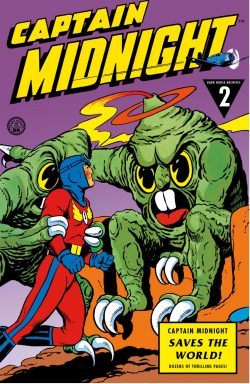
Frankenstein: The Mad Science of Dick Briefer


By Dick Briefer with Bruce Elliott & various (Dark Horse Comics)
ISBN: 978-1-61655-688-4 eISBN: 978-1-63008-186-7

The Golden Age of American comic books is usually associated with the blockbusting birth and proliferation of the Superhero, but even at the headiest heights of costumed crusader craziness other fantastic fantasy fashions held their own. Some of the very best – like Jack Cole’s Plastic Man and the unlikely weird warrior under discussion here – managed to merge genres and surmount their origins through astounding graphic craft, a healthy helping of comedic legerdemain and a deft dose of satire…

Richard Briefer was born in Washington Heights, Manhattan on January 9th 1915. He was a pre-Med student who also studied at the Art Student League in New York City and got into the fledgling funnybook business in 1936, working for the Will Eisner/Jerry Iger shop after selling early work to Wow, What a Magazine! and others.

He adapted literary classics like the Hunchback of Notre Dame and – as Dick Hamilton – created early super-team Target and the Targeteers for Novelty Press. Briefer wrote and drew Rex Dexter of Mars, Dynamo, Biff Bannon, Storm Curtis, Crash Parker and more for a range of publishers. For Timely he co-created The Human Top and, as Dick Flood, produced anti-Nazi strip Pinky Rankin for The Daily Worker – the newspaper of the American Communist Party.

Another criminally near-forgotten master craftsman, Briefer is best remembered amongst we fading comics cognoscenti for Frankenstein; a suspense strip that debuted in Prize Comics #7 (cover-dated December 1940) before gradually evolving into a satirical comedy-horror masterpiece offering thrills and chills whilst ferociously sending up post-war America.

A truly unique vision, Briefer’s Frankenstein ran intermittently until 1954 when the toxic paranoiac atmosphere of the anti-communist, anti-comics witch hunt killed it. The author moved into advertising and latterly portraiture and, despite numerous attempts to revive the strip, never published any more of his absurd and acerbic antic…

Dick Briefer died in December 1980.

Here, however, as part of the wonderful and much missed Dark Horse Archives series (please bring ‘em back guys!), you can enjoy the superbly surreal strip in all its manic glory from the horrible heydays…

Re-presented for your delectation are the contents of Frankenstein #1-7 (January 1945-May 1947) with Briefer at the peak of his powers, writing and drawing deliciously demented delights that made him a legend amongst comics creators if not the general public.

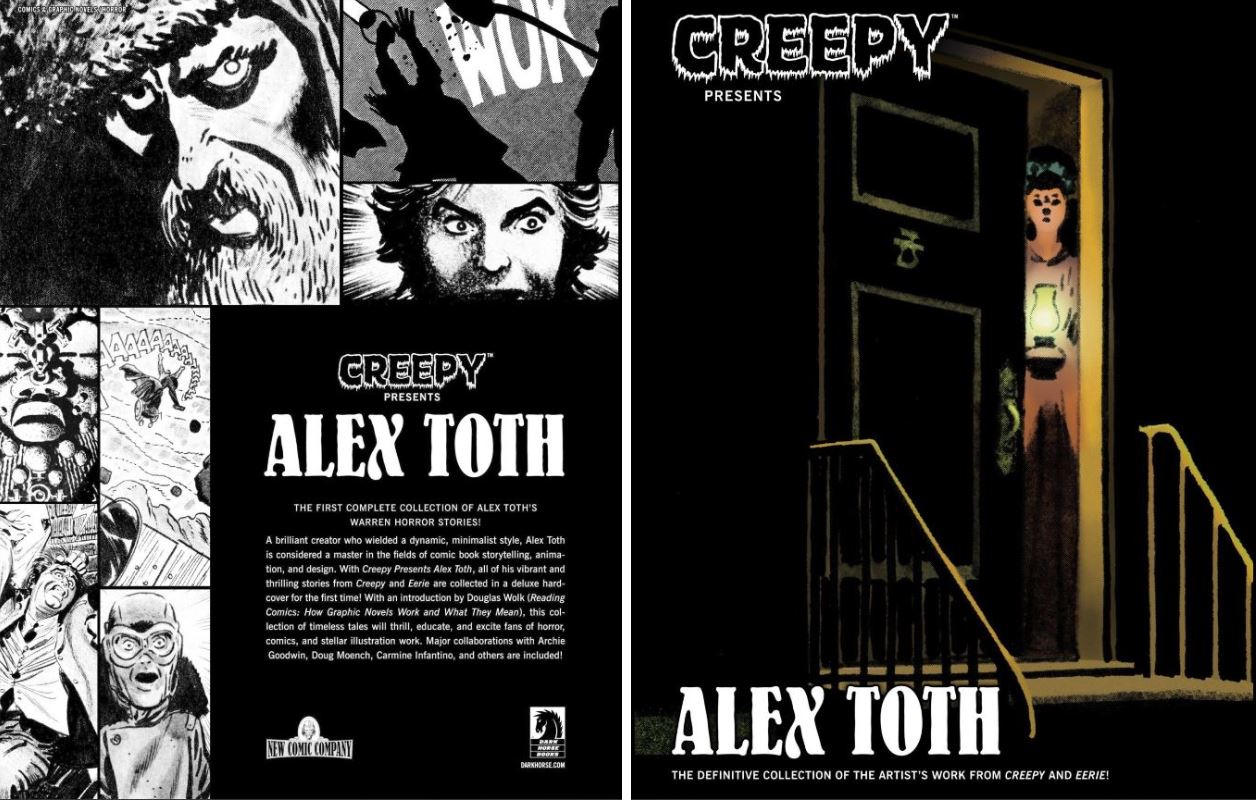
After gleaning a few salient facts from appreciative devotee John Arcudi in his Foreword, and relishing some ultra-rare original art from Briefer and Alex Toth, the merry madness begins with #1 as we reveal ‘Frankenstein’s Creation

After a bored mad scientist reads an old book, he decides to create his own version of the infamous creature. Sadly, despite scrupulously following the recipe, the malevolent modern Prometheus’ secret formula only manifests a loving, protective nature in his super-strong homunculus, and the hulking “Frankenstein monster” soon becomes a boon to his community and embarrassment to his malignant maker.

Left to his own devices, our artificial Adam is then drawn to the quiet little everytown of Mippyville where the populace are fighting off a supernatural invasion of atrocious arcane predators. ‘Frankenstein and the Ghouls and Vampiressees the creature – originally mistaken for a “Bobbysox” pop singer by the town’s screaming teenagers – hilariously clean up the infernal infestation before setting up home in a ramshackle abandoned mansion.

Only one thing is missing to complete his dreams of domestic bliss until a brief dalliance with the local spider saleswoman results in her becoming ‘Frankenstein’s Wife. The mild man-monster soon learns why a hasty marriage often leads to repentance at leisure…

Mippyville is a place that just attracts weirdness, and the first issue concludes with another mad doctor, as deranged surgeon Professor Hugo von Hoogenblotzen kidnaps Frankie and attempts to graft him to an elephant in ‘Frankenstein and the Manimals’

The second issue begins with ‘Frankenstein!– a quick recap of past events – before our unlikely star tracks down a mad mass-murderer who wants others to suffer for his art in ‘Frankenstein and the Statue Maker, after which the animal-loving oaf is accidentally mistaken for a mere beast and purchased by a moody millionairess.

She puts him on a leash to one-up her pals in the Exotic Pets Club but ‘Frankenstein’s Jobsoon teaches all and sundry the true value of animal companionship…

Eventually restored to his own home, ‘Frankenstein’s Arkfinds the towering twit re-enacting the building of the fabled lifeboat to save his animal chums, but still ending up clashing with a hoarding hermit and his mutant allies…

Issue #3 (July/August 1946 and with scripting assistance from Bruce Elliott) introduced ‘Frankenstein’s Familyas the big guy secures gainful employment as a junk man, whilst his new boss tinkers with salvaged machines from a devil doctor’s lab. This results in an army of molecularly-unstable juvenile duplicates of Frankie and a great deal of gross chaos…

A legion of escaped horrors attack Mippyville in ‘Frankenstein and the Monsters’, only to find the town’s ghastly defender too much to handle before ‘Frankenstein and the Mummiesaffords a quick jaunt to Egypt where the monster befriends a quartet of ancient, entombed pharaohs…

‘Frankenstein and the Time Machineapparently sends the credulous colossus into the furious future and perilous past, but all is not as it seems…

The regular cast expanded in the next issue (September/October 1946) as ‘Frankenstein and Awful Anniefinds the mellow fellow aiding the local purveyor of potions and charms to the city’s supernatural community when her long-lost son wants to come home for a visit. After that debacle, he then makes another odd acquaintance in ‘Frankenstein Meets the (Terrible) Werewolfwhich debuts the gentlest magical man-eater on earth…

Another whirlwind romance goes awry after ‘Frankenstein Sees the Effect of the Youth Restorerand makes an amorously ill-advised move on a once-elderly neighbour, before his mystic mates throw the monster a birthday party in ‘Frankenstein and the Sorcererand start a magic war that only subsides after the gentle giant accidentally lands a job as a photographic model…

Briefer was an inveterate tinkerer, always looking for innovative new ways to present mirthful material, and Frankenstein #5 (November/December 1946) trialled a new format of interlinked yarns beginning with ‘Act 1: How I Rehabilitated Maladjusted Ghostsas the creature becomes troubleshooter for the restless dead and unmasks a murderer.

In ‘Act 2: How I Had (and Lost) a Pet Dinosaur’, he accidentally hatches an antediluvian egg and manages to switch it with a parade-balloon doppelganger, whilst ‘Act 3: How I Became a Genii in a Magic Bottle, sees the monster mysteriously abducted by a street-corner hustler before escaping to save the town from a malicious malady in concluding ‘Act 4: How I Conquered a Terrible Plague. The experiment was dropped for a more traditional anthological format in the sixth (March/April 1947) issue…

Here the madcap merriment opens with ‘The Last Smileas Frankie is mistaken for a fugitive murderer and placed on death row, after which he hunts down ‘The Ghostnapper who abducts spirits and steals their big white sheets…

The rising cost of funerals informed the riotous case of ‘One Small Bieras the monster tries a new career as a mortician before heading into the country to investigate accursed, self-propagating automobiles going on an uncanny ‘Joyride

The final issue comes from May/June 1947 #7, opening with ‘Silas Grunch Gets His– co-written with Ed Goggin – as a conniving miser tortures kids by building a funfair children can’t get into… until the Big Guy steps in…

The monster plays cupid and brings two bizarre, lonely people together in ‘The Strange Love of Shirley Shmool’ with romance also informing Frankenstein’s laying of ‘The Curse of the Flying Dutchman’ Here the giant goof opens a Lonely Hearts Agency and matches the immortal wandering mariner with the girl of his nightmares! This leads to a clash with atom-age seductress ‘The Lorelei’ and a frankly hideous trading of jobs and gender roles before politics rears its ugly (multiple) heads as Frankenstein is convinced to run for President of the Magician’s Guild and endures the voodoo ‘Pins and Needles’ of a frustrated rival…

A truly unique treat from a singular and utterly eccentric creative force, Dick Briefer’s Frankenstein is remarkable work by a one-of-a-kind creator. If you groove on the grotesque, love to be scared, love to laugh and love comics, this is a book for you…
Frankenstein: The Mad Science of Dick Briefer. Dark Horse Books ® and logos are registered trademarks of Dark Horse Comics, Inc. All rights reserved.
The Jack Kirby Omnibus volume 2 – starring The Super Powers


By Jack Kirby, with Mike Royer, D. Bruce Berry, Wally Wood, Pablo Marcos, Adrian Gonzalez, Greg Theakston, Alex Toth, Vince Colletta, Joe Simon, Denny O’Neil, Martin Pasko, Steve Sherman, Michael Fleisher, Joey Cavalieri, Paul & Alan Kupperberg, Bob Rozakis & various (DC Comics)
ISBN: 978-1-4012-3833-9 (HB)

Famed for larger-than-life characters and gigantic, cosmic imaginings, Jack Kirby was an astute, imaginative, spiritual man who lived through poverty, gangsterism, the Depression, Post-War optimism, Cold War paranoia, political cynicism and the birth and death of peace-seeking counter-cultures. He was open-minded and utterly wedded to the making of comics stories on every imaginable subject. He always believed that sequential narrative was worthy of being published as real books beside mankind’s other literary art forms.

History has proved him right, and showed us just how ahead of the times he always was.

There’s a magnificent abundance of Kirby commemorative collections around these days (though still not all of it, so I remain a partially disgruntled dedicated fan). This particular magnificent hardback compendium re-presents most of the miscellaneous oddments of the “King’s DC Canon”; or at least those the company still retains rights for. The licenses on stuff like his run on pulp adaptation Justice Inc. (and indeed Marvel’s 2001: A Space Odyssey comic) will not be forthcoming any time soon…

Some of the material here is also available in 2019’s absolutely monster DC Universe Bronze Age Omnibus by Jack Kirby, but since it isn’t available digitally either (yet), you’d best have strong wrists and a sturdy desk at hand for that one.

Happily, this less massive tome from 2013 is less of a strain physically or financially. It opens with pages of hyper-kinetic Kirby pencil pages and a moving ‘Introduction by John Morrow’ before hurtling straight into moody mystery with a range of twice told tales.

On returning from WWII, Kirby reconnected with long-term creative partner Joe Simon. National Comics/DC was no longer a welcoming place for the reunited dream team supreme and by 1947 they had formed their own studio. Subsequently enjoying a long and productive relationship with Harvey Comics (Stuntman, Boy’s Ranch, Captain 3-D, Lancelot Strong, The Shield, The Fly, Three Rocketeers and more) the duo generated a stunning variety of genre features for Crestwood/Pines supplied by their “Essankay”/ “Mainline” studio shop.

Triumphs included Justice Traps the Guilty, Fighting American, Bullseye, Police Trap, Foxhole, Headline Comics and especially Young Romance amongst many more: a veritable mountain of mature, challenging strip material in a variety of popular genres.

One was mystery and horror, and amongst the dynamic duo’s Prize Comics concoctions was noir-informed, psychologically-underpinned supernatural anthology Black Magic – and latterly, short-lived yet fascinating companion title Strange World of Your Dreams.

These comics anthologies eschewed traditional gory, heavy-handed morality plays and simplistic cautionary tales for deeper, stranger fare, and – until the EC comics line hit their peak – were far and away the best mystery titles on the market.

When the King quit Marvel for DC in 1970, his new bosses accepted suggestions for a supernatural-themed mature-reading magazine. Spirit World was a superb but poorly received and largely undistributed monochrome magazine. Issue #1 – and only – appeared in the summer of 1971, but editorial cowardice and backsliding scuppered the project before it could get going.

Material from a second, unpublished issue eventually appeared in colour comic books Weird Mystery Tales and Forbidden Tales of Dark Mansion, but with his ideas misunderstood, ignored or side-lined by the company, Kirby reverted to more traditional fare. Never truly defeated though, he cannily blended his belief in the marketability of the supernatural with flamboyant superheroics to create another unique and lasting mainstay for the DC universe. The Demon only ran a couple of years but was a concept later talents would make a pivotal figure of the company’s continuity.

Jack’s collaborations with fellow industry pioneer Joe Simon always produced dynamite concepts, unforgettable characters, astounding stories and huge sales, no matter what genre avenues they pursued, blazing trails for so many others to follow and always reshaping the very nature of American comics with their innovations and sheer quality.

As with all their endeavours, Simon & Kirby offered stories shaped by their own sensibilities. Identifying a “mature market” gap in the line of magazines they autonomously packaged for publishers Crestwood and Prize, they realised the sales potential of high-quality spooky material. Thus superb, eerily seminal Black Magic debuted with an October/November 1950 cover-date; supplemented in 1952 by boldly obscure psychological drama anthology The Strange World of Your Dreams. This title was inspired by studio-mate Mort Meskin’s vivid and punishing night terrors: dealing with fantastic situations and – too frequently for comfort – unable or unwilling to provide pat conclusions or happy endings. There was no cosmic justice or calming explanations available to avid readers. Sometimes The Unknown just blew up in your face and you survived – or didn’t. No one escaped whole or unchanged…

Thus, this colossal compendium of cult cartoon capers commences with DC’s revival of Black Magic as a cheap, modified and toned down reprint title.

The second #1 launched with an October/November 1973 cover-date, offering crudely re-mastered versions of some astounding classics. Benefitting from far better reproduction technology here is ‘Maniac!’ (originating in Black Magic #32 September/October 1973): an artistic tour de force and a tale much “homaged” by others in later years, detailing how and why a loving brother stops villagers taking his simple-minded sibling away. This is followed by ‘The Head of the Family!’ (BM #30 May/June 1954, by Kirby & Bruno Premiani) exposing the appalling secret shame of a most inbred clan…

DC’s premier outing ended with a disturbing tale first seen in Black Magic #29 (March-April 1954). Specifically cited in 1954’s anti-comic book Senate Hearings, ‘The Greatest Horror of them All!’ told a tragic tale of a freak hiding amongst lesser freaks…

Cover-dated December 1973/January 1974, DC’s second shot opened with ‘Fool’s Paradise!’ (BM #26, September/October 1953) as a petty thug stumbles into a Mephistophelean deal and reveals how ‘The Cat People’ (#27 November/December 1953) mesmerised and forever marked an unwary tourist in rural Spain before ‘Birth After Death’ (#20 January 1953) retold the true tale of how Sir Walter Scott’s mother survived premature burial, and ‘Those Who Are About to Die!’ (#23 April 1953) sketched out how a painter could predict imminent doom…

‘Nasty Little Man!’ (#18 November 1952) fronted DC’s third foray and gets my vote for creepiest horror art job of all time. Here three hobos discover to their everlasting regret why you shouldn’t pick on short old men with Irish accents. ‘The Angel of Death!’ (#15 August 1952) then details an horrific medical mystery far darker than mere mystic menace…

In the 1950s, as their efforts grew in popularity, S & K were stretched thin. Utilising a staff of assistants and crafting fewer stories themselves meant they could keep all their deadlines.

The ‘Cover art for Black Magic #4, June/July 1974’ swiftly segues into ‘Last Second of Life!’(Black Magic volume 1 #1, October-November 1950 and their only narrative contribution to that particular DC issue) wherein a rich man, obsessed over what the dying see at their final breath, soon regrets the unsavoury lengths he went to in finding out…

There were two in the next issue. ‘Strange Old Bird!’(courtesy of Black Magic #25 June/July 1953) is a gently eerie thriller of a little old lady who gets the gift of renewed life from her tatty and extremely flammable feathered old friend and ‘Up There!’ from the landmark 13th issue (June 1952) – the saga of a beguiling siren stalking the upper stratosphere and scaring the bejabbers out of a cool test pilot…

DC issue #6 reprises ‘The Girl Who Walked on Water!’ (BM #11 April 1952), exposing the immense but fragile power of self-belief whilst the ‘Cover art for Black Magic #7, December 1974/January 1975’ (originally #17 October 1952) provides a chilling report on satanic vestment ‘The Cloak!’ (BM #2 December 1950/January 1951) and ‘Freak!’ (also from #17) shares a country doctor’s deepest shame…

DC’s #8 revisited The Strange World of Your Dreams, beginning with “typical insecurity nightmare” ‘The Girl in the Grave!’ (#2, September/October 1952). The Meskin-inspired anthology of oneiric apparitions eschewed cheap shocks, mindless gore and goofy pun-inspired twist-ending yarns in favour of dark, oppressive suspense, soaked in psychological unease and tension over teasing…

Following up with ‘Send Us Your Dreams’ from the same source (requesting readers’ ideas for spokes-parapsychologist Richard Temple to analyse), DC’s vintage fear-fest concludes with # 9 (April/May 1975) and ‘The Woman in the Tower!’ as originally seen in SWoYD #3, (November/December 1952) detailing the symbolism of oppressive illness…

When his Fourth World Saga stalled, Kirby continued creating new material with Kamandi – his only long-running DC success – and explored WWII in The Losers whilst creating the radical, scarily prophetic, utterly magnificent Omac: One Man Army Corps, but still could not achieve the all-important sales the company demanded. Eventually he was lured back to Marvel and new challenges like Black Panther, Captain America, 2001: A Space Odyssey, Devil Dinosaur, Machine Man and especially The Eternals.

Before that though, he unleashed new concepts and even filled in on established titles. As previously moaned about, however, his 3-issue run on Justice Inc. – adapting 1930s’ licensed pulp star The Avenger – is not included here, but at least his frankly astounding all-action dalliance with martial arts heroics is…

Inked by D. Bruce Berry and debuting in all-new try-out title 1st Issue Special #1 (April 1975), ‘Atlas the Great!’ harked back to the dawn of human civilisation and followed the blockbusting trail of mankind’s first super-powered champion in a blazing Sword & Sorcery yarn.

1st Issue Special #5 (August 1975, Berry) highlighted the passing of a torch as a devout evil-crusher working for an ancient justice-cult retired and tipped his nephew – Public Defender Mark Shaw – to become the latest super-powered ‘Manhunter’, after which a rare but welcome digression into comedy manifested as ‘The Dingbats of Danger Street (1st Issue Special #6, September 1975). With Mike Royer inking, Kirby unleashed a bizarre and hilarious revival of his Kid Gang genre, starring four multi-racial street urchins united for survival and to battle surreal super threats…

Kirby – and Berry – limned the third issue of troubled martial arts series Richard Dragon, Kung Fu Fighter (August/September 1975). Scripted by Denny O’Neil, the savage shocker pits the lone warrior against an army of assassins in ‘Claws of the Dragon!’

‘Fangs of the Kobra!’ comes from Kobra #1, released with a February/March 1976 cover-date. The tale is strange in both execution and delivery, with Kirby’s original updating of Dumas’ tale The Corsican Brothers reworked by Martin Pasko, Steve Sherman and artists Pablo Marcos & Berry.

It introduces brothers separated at birth. Jason Burr grew up a normal American kid whilst his twin – stolen by an Indian death cult – was reared as Kobra, the most dangerous man alive. Sadly for the super-criminal, young adult Jason is recruited by the authorities because of a psychic connection to the snake lord: a link allowing them to track each other and also feel and experience any harm or hurt the other experiences…

When Simon & Kirby came to National/DC in 1942 one of their earliest projects was revitalising the moribund Sandman strip in Adventure Comics. Their unique blend of atmosphere and dynamism made it one of the most memorable, moody and action-packed series of the period (as you can see by reading their companion volume The Sandman by Simon & Kirby).

The band was brought back together for The Sandman #1 (cover-dated Winter 1974): a one-shot project which kept the name but created a whole new mythology. Scripted by Simon and inked by Royer, ‘General Electric’ revealed how the realm of dreams was policed by a scarlet-&-gold super-crusader dedicated to preventing nightmares escaping into the physical world. With unwilling assistants Glob and Brute, the Sandman also battled real world villains exploiting the unconscious Great Unknown. The heady mix was completed by frail orphan Jed, whose active sleeping imagination seemed to draw trouble to him.

The proposed one-off was a minor hit at a tenuous time in comics publishing, and DC kept it going, even though the originators were not interested. Kirby & Royer did produce the ‘Cover art Sandman #2, April/May 1975’ and ‘Cover art Sandman #3, June/July 1975’ before the King returned to the series with #4.

‘Panic in the Dream Stream’ – August/September 1975 – was scripted by Michael Fleisher, and revealed how a sleepless alien race attempted to conquer Earth through Jed’s fervent dreams: a traumatic channel that also allowed them to invade Sandman’s Dream Realm. The next issue (October/November 1975) heralded an ‘Invasion of the Frog Men!’ into an idyllic parallel dimension whilst the next reunited a classic art team. Wally Wood inked Jack for Fleisher’s ‘The Plot to Destroy Washington D.C.!’. Here mind-bending cyborg Doctor Spider subverted and enslaved Glob and Brute in his eccentric ambition to take over America…

Although Sandman #6 (December 1975/January 1976) was the last published issue, another tale was already completed. It finally appeared in reprint digest Best of DC #22 (March 1982). ‘The Seal Men’s War on Santa Claus’ with Fleisher scripting and Royer handling the brushwork was a sinister seasonal romp with Jed’s wicked foster-family abusing him in classic Scrooge style before the Weaver of Dreams summons him to help save Christmas from bellicose well-armed aquatic mammals…

During the 1980s costumed heroes stopped being an exclusively print cash cow. Many toy companies licensed Fights ‘n’ Tights titans and reaped the benefits of ready-made comic book spin-offs. DC’s most recognizable characters morphed into a top-selling action figure line and were inevitably hived off into a brisk and breezy, fight-frenzied miniseries.

Super Powers launched in July 1984 as a 5-issue miniseries with Kirby covers and his signature characters prominently represented. Jack also plotted the stellar saga with scripter Joey Cavalieri providing dialogue, and Adrian Gonzales & Pablo Marcos illustrating a heady cosmic quest comprising numerous inconclusive battles between agents of Good and Evil.

In ‘Power Beyond Price!’, ultimate nemesis Darkseid despatches four Emissaries of Doom to destroy Earth’s superheroes. Sponsoring Lex Luthor, The Penguin, Brainiac and The Joker the monsters jointly target Superman, Batman & Robin, Wonder Woman, The Flash, Aquaman and Hawkman

The combat escalates in #2’s ‘Clash Against Chaos’ with the Man of Steel and Scarlet Speedster tackling Luthor, whilst Aquaman and Green Lantern pummel the Penguin as Dark Knight and Winged Wonder confront a cosmically-enhanced Harlequin of Hate…

With Alan Kupperberg inking, an inconclusive outcome leads to a regrouping of evil and an attack by Brainiac on Paradise Island. With the ‘Amazons at War’ the Justice League rally until Superman is devolved into a brutal beast who attacks his former allies. All-out battle ensues in ‘Earth’s Last Stand’, before Kirby stepped up to write and illustrate the fateful finale: cosmos-shaking conclusion ‘Spaceship Earth – We’re All on It!’  (November 1984, with Greg Theakston suppling inks)…

A bombastic Super Powers Promotional Poster leads into a nostalgic reunion as DC Comics Presents #84 (August 1985) reunited Jack with his first “Fantastic Four”. ‘Give Me Power… Give Me Your World!’ – written by Bob Rozakis, Kirby & Theakston (with additional art by the legendary Alex Toth) – pits Superman and the Challengers of The Unknown against mind-bending Kryptonian villain Zo-Mar, after which the ‘Cover art for Super DC Giant S-25, July/ August 1971’ (inked by Vince Colletta) segues into the Super Powers miniseries, spanning September 1985 to February 1986.

Scripted by Paul Kupperberg the Kirby/Theakston saga ‘Seeds of Doom!’ recounts how deadly Darkseid despatches techno-organic bombs to destroy Earth, requiring practically every DC hero to unite to end the threat.

With squads of Super Powers travelling to England, Rome, New York, Easter Island and Arizona the danger is magnified ‘When Past and Present Meet!’ as the seeds warp time and send Aquaman and the Martian Manhunter back to days of King Arthur

Issue #3 (November 1985) finds Red Tornado, Hawkman and Green Arrow plunged back 75 million years in ‘Time Upon Time Upon Time!’ even as Doctor Fate, Green Lantern and Wonder Woman are trapped in 1087 AD, battling stony-faced giant aliens on Easter Island.

Superman and Firestorm discover ‘There’s No Place Like Rome!’as they battle Darkseid’s agent Steppenwolf in the first century whilst Batman, Robin and Flash visit a future where Earth is the new Apokolips for #5’s ‘Once Upon Tomorrow’, before Earth’s scattered champions converge on Luna to spectacularly squash the schemes-within-schemes of ‘Darkseid of the Moon!’

Rounding out the astounding cavalcade of wonders is a selection of Kirby-crafted Profiles pages from Who’s Who: The Definitive Directory of the DC Universe 1985-1987: specifically, Ben Boxer, the Boy Commandos, Challengers of the Unknown, Crazy Quilt, Etrigan the Demon, Kamandi, The Newsboy Legion, Sandman (the Dream Stream version from 1974), Sandy, the Golden Boy and Witchboy Klarion.

Kirby was and remains unique and uncompromising. His words and pictures comprise an unparalleled, hearts-and-minds grabbing delight no comics lover can possibly resist. If you’re not a fan or simply not prepared to see for yourself what all the fuss has been about then no words of mine will change your mind.

That doesn’t alter the fact that his life’s work from 1937 to his death in 1994 shaped the entire American comics scene – and indeed the entire comics planet – affecting the lives of billions of readers and thousands of creators in all areas of artistic endeavour for generations and is still winning new fans and apostles every day, from the young and naive to the most cerebral of intellectuals. His work is instantly accessible, irresistibly visceral, deceptively deep and simultaneously mythic and human.

He is the King and will never be supplanted.
© 1971, 1973, 1974, 1975, 1976, 1984, 1985, 1986, 1987, 2013 DC Comics. All Rights Reserved.

(The Tragedie of) Macbeth


By William Shakespeare, adapted by K. Briggs (Avery Hill Publishing)
ISBN: 978-1-910395-73-8 (HB)

Depending on how you liken it, William Shakespeare may be one of the most prolific comic scripters in the business. His mighty works have been staged and adapted as graphic narratives for decades in every language you might consider, and frequently allow contemporary artistic collaborators opportunity to be bold, experimental and vibrantly daring.

This is certainly the case with the lovingly crafted vision of American illustrator, performer and educator K. Briggs (Resistance, The New Chapter Tarot) who opts for colour-blind and gender-balanced casting to recount a visually striking and vivid interpretation which makes Scotland itself a player in the mix. Combining the full text with an abundance of mixed media including collage, paints, markers and pure linework, in a procession of nature-informed, magically-motif-ed page designs referencing ancient charts and maps, Illuminated manuscripts, tapestries, Tarot iconography, medical grimoires, nigh-abstract mood-enhancing tableaux and found historical artworks. These function as a moving backdrop to the actors unfolding the tale before your eyes.

What you already know: valiant general Macbeth meets three witches after saving the kingdom of his liege lord Duncan, and comes away with the notion that he will be King instead. Egged on by greed, ambition and his wife, the Thane of Cawdor personally kills the King whilst the monarch graces them with a visit. The red trail includes framing the guards and heirs and then progressively removing all threats to his reign.

However, both he and his Lady cannot escape their own consciences and the witches’ prophecy leads to delusion, disaster, derangement and death, but never glory…

As far as we can tell, Macbeth was first performed in 1606, written for Shakespeare’s patron King James I of England/VI of Scotland. It is an epic tragedy of ill-starred political ambition, the psychological costs of guilt, the consequences of betrayal and inevitability of tyranny, all wrapped up in veneer of supernatural horror.

The story is one of the greatest in world literature, but also a studied hatchet job, with the Bard shamelessly currying favour by ignoring facts and bigging up James’ distant ancestor and antecedent Macduff. The text first appeared in print in the Folio of 1623, but there have been plenty of editions since then.

The immortal story has frequently made it into comics form. If you’re one of the precious few people unfamiliar with the tale in its intended format (firstly, shame on you and secondly, go watch it right now; there are many excellent filmed versions in every possible language), this imaginatively welcoming rendition is extremely enthralling and powerful…

Moreover, the plot lends itself to many eras and milieux. You may even have already enjoyed it in epics as varied as Joe MacBeth (UK 1951), Throne of Blood (Japan 1957), Teenage Gang Debs (USA 1966), Men of Respect (USA 1991), and Mandaar (India 2021), amongst so many more interpretations – or even thematically as Blackadder Season 1…

Maybe you have seen it all before, but this is better….

Or if you will permit, “By the pricking of my thumbs, Something Wicked your way comes…”
© K. Briggs, 2023. All rights reserved.

Macbeth will be published on 23rd July 2023 and is available for pre-order now.