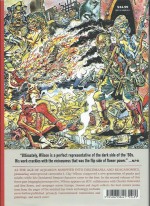
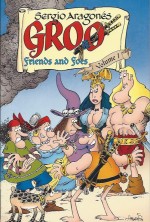
Groo: Friends and Foes volume 1


By Sergio Aragonés, Mark Evanier, Stan Sakai & Tom Luth (Dark Horse)
ISBN: 978-1-61655-814-7

Win’s Christmas Gift Recommendation: A welcome wave of nostalgic nonsense and comic craziness… 8/10

Groo is the smelliest, ugliest, stupidest, unluckiest mercenary in the world – but he’s also the best swordsman in creation and far too stupid to be harmed. He is always hungry and wanders because most places he pauses in burn down, wash away or crash into rubble soon after his arrival.

He loves to fight and entire nations and navies reel at the mention of his name. Of course they do the same when they stand downwind of him too…

Produced in a unique traditional fashion by storyteller Sergio Aragonés, wordsmith Mark Evanier, colourist Tom Luth – with assistance from Michael Atiyeh – and letterer Stan Sakai (yeah, that Usagi Yojimbo guy), the Itinerant Imbecile’s adventures form one of the longest running comicbook humour series in America and there seems to be no chance of stopping his creators as long as we keep buying these incredible, hilarious sagas…

Both in comic narrative and the infinitely tougher field of gag-cartooning, Aragonés has produced vast volumes of incomparable work. His darkly skewed sensibilities and instinctive grasp of the cosmically absurd, wedded to his anarchically meticulous drawing style and frankly terrifying professional discipline, have made his pantomimic doodles vibrant proof of the maxims that laughter is universal and one picture is worth a thousand words.

In 1981, after years working for Mad Magazine whilst also producing gags for DC’s horror titles (plus the occasional full strip), he joined with Mark Evanier (who writes lots of stuff and Writes it Good), Sergio crafted a madcap 4-page parody of Sword-&-Sorcery yarns as a contribution to Eclipse Comics’ Creators Rights benefit comic Destroyer Duck.

Following a second outing in Mike Grell’s Starslayer (#5), Pacific Comics launched Groo the Wanderer in his own title. After 8 issues (December 1982-April 1984) the troubled company folded but the unsinkable barbarian (that’s a joke you’ll understand later) resurfaced in the Groo Special one-shot from Eclipse (October 1984), before finding a home at Epic Comics: Archie Goodwin’s creator-owned corner of the Marvel Universe.

Aragonés had first devised his witless warrior in the 1970s but no publisher would take on the property unless he surrendered all rights – an almost universal situation in the comics industry until the advent of the Direct Sales market transferred power from companies and distributors to creators and consumers.

With ownership issues settled to his maker’s satisfaction, Groo bedded in for an uproarious 120 issue run at Epic – resulting in loads of graphic novel compilations – until the imprint died, after which the witless wonder moved on to Image and Dark Horse Comics. They haven’t sunk yet…

In fact, the latter (gluttons for punishment) have even let the bumbling bladesman loose with new 12-issue miniseries Groo: Friends and Foes; each issue revisiting one of the silly saga’s regular cast who had inconceivably escaped being slaughtered by the star. This tawdry tome is but the first of four trade paperback collections and this first compilation collects issues #1-4, finding the perpetually puzzled peripatetic poltroon meeting again merchant mariner Captain Ahax, who has good reason to dread the consequences…

That sinking thing? Among his other lack of abilities Groo cannot travel by ship. He’s not sea-sick or anything, it’s just that his mere physical presence on a nautical apparatus of any sort causes it to founder and plunge into the fearsome fathoms below. Knowing that fact and unable to get rid of the affable oaf, Ahax surrenders to fate and opts to replace the crew with drunks, sell his ship and even his clients’ cargoes. Then he over-insures the vessel, confident that at least this time when she goes down he’ll actually profit from it.

But this time his ship comes in, despite Groo constantly waving sharp objects about, an attack by pirates and Ahax’s own increasingly desperate efforts to scuttle his livelihood. Perhaps it’s the calming influence of the sweet little girl who befriends the woeful warrior’s adoring dog Rufferto? She’s a fellow passenger all alone, searching for her long-lost father…

As disaster finally strikes – far too late for Ahax – the smelliest, ugliest, stupidest mercenary in the world shambles off and soon encounters a band of gypsies who seem familiar. They ought to: they’re led by his calculating grandmother Granny Groo. How fondly the weary wanderer remembers the way she used to beat him and his sister Grooella before selling him. Of course, being the kind of kid he was, Granny had to sell him many times before it finally stuck…

Now that he’s become the most terrifying person on Earth, however, she decides on a different plan to get rid of him before he brings calamity upon them all: raffling him off to greedy villagers who think they might profit from “controlling” the most dangerous man alive…

Baffled Rufferto gamely sticks with his master and soon discovers that the little girl from the ship has joined the gypsies too…

When that brief debacle ends as all Groo gigs do, the dog and his hero head further inland and soon encounter a magic-blighted region controlled by old enemies and devilish witches Arba and Dakarba.

The female fiends have good reason to fear the innocently intruding idiot and decide to get their retaliation in first by conjuring up the scariest thing they can think of to destroy him. Sadly, a marauding 50-foot Groo – even backed up by a hundred normal-sized facsimiles – are no match for the sheer force of destructive stupidity the real McCoy can muster and the witches inevitably fail, leaving their noodle-nosed nemesis to saunter off accompanied by a little girl he thinks he might have met before…

Groo’s initial outings end after a frantic reunion with Legendary Hero and shameless fraud Arcadio whom our pack of peregrinators stumble across as he tries to train a brace of dragons. The crafty champion plans on using them to gull villagers into hiring him, but when good-natured Groo offers his help, the plan – and the villagers – soon go up in smoke…

Closing this inaugural volume is a quartet of wordless strips starring Rufferto and a captivating cover-gallery by Aragonés adding to the wonderfully wonky misshapen madness and grand display of confusions, contusions, conflagrations, conflicts, pratfalls, pitfalls, punch-lines and punch-ups…

These are true masterpiece of mirth comedy addicts will love and the great strength of the series is that new readers can start practically anywhere – and still be none the wiser…
© 2015 Sergio Aragonés. Groo, all related characters and the distinctive likenesses thereof are trademarks of Sergio Aragonés. All rights reserved.
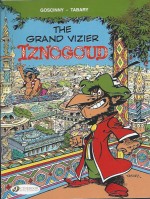

The Grand Vizier Iznogoud


By Goscinny and Tabary, translated by Jerome Saincantin (Cinebook)
ISBN: 978-1-84918-131-0

For the greater part of his far-too-short lifetime (1926-1977), René Goscinny was one of the most prolific and most-read writers of comic strips the world has ever seen. He still is.

Amongst his most popular and enduring comic collaborations are Lucky Luke, Le Petit Nicolas, Signor Spaghetti and, of course, Asterix the Gaul, but there were so many others, such as the despicably dark deeds of a dastardly usurper whose dreams of diabolical skulduggery perpetually proved to be ultimately no more than castles in the sand…

In the wake of the Suez crisis, the French returned – at least in cartoon form – to the hotly contested deserts when Goscinny teamed with sublimely gifted Swedish émigré Jean Tabary (1930-2011) – who numbered Richard et Charlie, Grabadu et Gabaliouchtou, Totoche, Corinne et Jeannot and Valentin le Vagabond amongst his other hit strips – to detail the innocuous history of imbecilic Arabian (im)potentate Haroun el-Poussah.

However as is so often the case, it was the strip’s villainous foil, power-hungry vizier Iznogoud who stole the show… possibly the conniving little blackguard’s only successful insurrection.

Les Aventures du Calife Haroun el Poussah was created for Record; the first episode appearing in the January 15th issue of 1962. A minor hit, the feature subsequently jumped ship to Pilote – a new comics magazine created and edited by Goscinny – where it was artfully refashioned into a starring vehicle for the devious little Tuareg toe-rag who had increasingly been hogging all the laughs and limelight.

Like all great storytelling, Iznogoud works on two levels: for the youngsters it’s a comedic romp with adorably wicked baddies invariably hoisted on their own petards and coming a-cropper, whilst older, wiser heads can revel in pun-filled, witty satires and marvellously surreal antics.

This same magic formula made its more famous cousin Asterix a monolithic global phenomenon and, just like the saga of that indomitable Gaul, the appallingly addictive Arabian Nit was first adapted into English by master translators Anthea Bell & Derek Hockridge who made those Franco-Roman Follies so very palatable to British tastes.

In 1977 after Goscinny’s death, Tabary began scripting his own superbly stylish tales, switching to book-length complete adventures, rather than compilations of short, punchy vignettes which typified his collaborations.

As always the deliciously malicious whimsy is heavily dosed with manic absurdity, cleverly contemporary cultural critiques and brilliantly delivered creative anachronisms which serve to keep the assorted escapades bizarrely fresh and hilariously inventive.

Insidious anti-hero Iznogoud is Grand Vizier to affable, easy-going Caliph of Ancient Baghdad Haroun Al Plassid, but the sneaky little second-in-command has loftier ambitions, or as he is always declaiming “I want to be Caliph instead of the Caliph!”…

The retooled rapscallion re-debuted in Pilote in 1968, quickly becoming a massive European hit, with 29 albums to date (carried on by Tabary’s children Stéphane, Muriel and Nicolas), his own solo comic, a computer game, animated film, TV cartoon show and even a live-action movie.

Les grand Vizier Iznogoud was originally released in 1966, the very first of Dargaud’s album compilations, but here it’s the ninth exotically outrageous Cinebook tome, offering a fistful of trend-setting tales as the ambitious autocrat schemes to seize power from his gentle – but far from wise – sublimely oblivious Lord and Master.

Following the traditional introductory page introducing the regulars the devious deceptions resume with the Caliph planning a party, inspiring Iznogoud to visit a Magical Item Merchant in search of mystic booby-traps to get rid of the roadblock to his domination of Baghdad. What he finds is ‘The Genie’ inhabiting a pair of slippers and, convinced his mundane life as a minion is finally ended, the putrid plotter brings the fantastic footwear back to the palace.

Unfortunately the Genie is brutally literal and extremely quick off the mark, so when the slippers are lost amidst the hundreds of pairs already in situ, chaos and calamity ensue…

The next opportunity to overthrow his rightful master occurs when an invitation arrives from a neighbouring nabob: the incredible short-tempered and excessively violent Sultan Pullmankar…

That terrifying tyrant wants the Caliph to come visit on an ‘Official Trip’ and Iznogoud sneakily senses how little it would take to make the petrifying Pullmankar blow his top and topple Haroun.

The scheme is wickedly simple: by taking charge of the visit, the vile Vizier can easily orchestrate an unforgivable gaffe for which the Sultan will destroy Al Plassid, leaving his deputy to take over.

Typically however each carefully organised act of sabotage goes awry and before long Iznogoud’s short temper and quick mouth makes him the Sultan’s preferred object of retribution…

Throughout all his Machiavellian machinations the Vizier is assisted (let’s be charitable and call it that…) by his bumbling, brutish flunky crony Wa’at Alahf, but when that hulking worthy takes his annual vacation the contemptible Caliph-in-waiting finds himself in need of truly thuggish assistance and hires ‘The Strong-Arm Men’ to kidnap Haroun Al Plassid.

Sadly the nature of basic skulduggery doesn’t attract too many smart men – just single-minded, greedy ones – and a frustrating comedy of errors soon devolves into life or death for the wily weasel who thought he was in charge…

Broad slapstick gives way to pun-filled pandemonium when ‘The Horde’ of fearsome, all-conquering Genghis Khan fetches up at the border and triggers a wave of panic. Intrigued by the urban unrest that results the Vizier, through nefarious means, raises the greatest army in Baghdad’s history – with the intention of instantly surrendering rather than fighting – and letting the conqueror take the Caliph away in chains…

This plan would certainly have succeeded if only his opposite number Blujin (who wanted to be Khan instead of the Khan) hadn’t had the same idea…

Another normal day with Iznogoud petulantly plotting suddenly perks up when long-suffering Wa’at Alahf ushers in ‘A Lookalike’ of the despised Caliph. Merchant Aristides Kingsizos is the spitting image of Baghdad’s boss – except for a black eye – and food and money soon convince him to stick around until that heals and he can (albeit temporarily) replace the sublime ruler.

Cue a succession of appearance-altering manic mishaps which have the plotters playing frantic physiological catch-up whilst Haroun’s litany of ailments take their toll on the health and patience of the increasingly unhappy doppelganger…

These ancient antics conclude with a fantastic nautical voyage as the Vile Vizier meets mad mariner Cymbal the Sailor and learns of a terrifying destination that would truly be the answer to all his problems. It all seems perfect and just for once the Caliph is even eager to join him on a quiet fishing trip, utterly unaware that his faithful servants Iznogoud and Wa’at Alahf plan to maroon him on ‘The Giants’ Island’…

Of course it ends badly with all of them stuck in the forbidding monsters’ paradise but the fabled colossi are not quite what one would expect and harbour very different intentions for the schemers and the Caliph…

Such witty, fast-paced hi-jinks and craftily crafted comedy set pieces have made this addictive series a household name in France where “Iznogoud” is common parlance for a certain kind of politician: over-ambitious, unscrupulous – and frequently insufficient in inches (or should that be centimetres?).

Desiring to become “Caliph in the Caliph’s place” is a popular condemnation in French, targeting those perceived as overly-ambitious, and since 1992 the Prix Iznogoud is awarded annually to “a personality who failed to take the Caliph’s place”.

Nominees are chosen from prominent French figures who have endured spectacular failures in any one year and been given to the likes of Édouard Balladur (1995) and Nicolas Sarkozy (1999). The jury panel is headed by politician André Santini, who gave himself one after failing to become president of Île-de-France in regional elections in 2004.

When first released in Britain during the late 1970s and 1980s (and again in 1996 as a periodical comicbook) these tales made little impression, but at last this wonderfully beguiling strip has deservedly found an appreciative audience among today’s more internationally aware, politically jaded comics-and-cartoon savvy connoisseurs…
Original edition © Dargaud Editeur Paris, 1966 by Goscinny & Tabary. All rights reserved. This edition published 2012 by Cinebook Ltd.

Evil Emperor Penguin


By Laura Ellen Anderson (David Fickling Books)
ISBN: 978-1-910200-51-3

Win’s Christmas Gift Recommendation: Outrageous Antics and Brilliant Buffoonery… 8/10

In January 2012 Oxford-based family publisher David Fickling Books launched an “old school” weekly comics anthology (aimed at girls and boys between 6 and 12) which revelled in reviving the good old days of British picture-story entertainment intent whilst embracing the full force of modernity in its style and content.

In October 2015 The Phoenix will release its landmark 200th issue – the first British comic publication to reach that milestone since 2000AD – and as always each enchanting instalment offers humour, adventure, quizzes, puzzles and educational material in a joyous parade of cartoon fun and fantasy.

In the years since its premiere, the periodical has gone from strength to strength, winning praise from the Great and the Good, child literacy experts and the only people who really count – the totally engaged kids and parents who read it…

The magazine’s pantheon of superbly engaging strips inevitably led to a line of superbly engaging graphic novel compilations, the latest of which is a riotous romp starring a gloriously malign arch-wizard of scientific wickedness who will delight all readers with a profound sense of mischief and unbridled imaginations.

Conceived and created by children’s book illustrator and author Laura Ellen Anderson (Kittens, Snow Babies, My Brother is a Superhero {with David Solomons}), Evil Emperor Penguin lives in a colossal fortress beneath the Antarctic, working tirelessly towards total world domination, assisted by his stylish, erudite administrative lackey Number 8 and a cute, fuzzy, loyal, endlessly inventive little abominable snowman clone named Eugene. EEP had whipped up a batch of 250 but none of the others are quite like Eugene…

EEP appointed the hairy, bizarrely inventive tyke his Top Minion but somehow never managed to instil him with the proper degree of evilness. He is, however, a dab-hand with spaghetti hoops so it’s not a total loss…

Following a pin-up info page ‘EEP’s Evil Underground Headquarters (Top Secret!)’ which discloses all you’ll need to know before an assortment of vile vignettes begins with ‘A Stitch in Time’ wherein the cape-clad malcontent megalomaniac unleashes his Evil Emperor-bot of Icy Doom at the annual World Leaders’ Picnic.

Unfortunately, due to a totally typical cock-up with the plans by oafish underlings, the titanic tin-can terror’s ice-laser eyes have somehow been replaced by instant knitting machines…

The next invention doesn’t even get out of the lab before malfunctioning. ‘Have No Fear’ sees a nasty device that manifests personal terrors run amok in the lab, unleashing EEP’s domineering mother and sweet Eugene’s incredible, ghastly secret phobia before the inventors can reach the Emergency Self-Destruct Button, after which ‘Cat-astrophe’ introduces a terrifying rival in the Word Domination stakes who infiltrates the bad bird’s base as a cute and fluffy feline pet for Number 8…

When EEP’s giant spider robot immobilises the entire Earth in its ‘World Wide Web’ even Evil Cat is caught off guard and only Eugene’s unwholesome preoccupation with shiny, sparkly unicorns prevents total disaster.

The top-hatted, moustachioed, perfidious puss then attempts an amnesty with ‘The Truce: Part 1’. The fuzzy fiend is, of course, shamming friendship and the floral gift he proffers is in fact a deadly animated booby-trap which is only just defeated thanks to Eugene’s usual ineptitude in concluding episode ‘The Truce: Part 2’…

Would-be World Dictators are not a particularly forgiving bunch and when the fuzzy tyke accidentally unleashes the full force of EEP’s Ferocious And Really Terrible machine, ‘The Stinking Truth’ released in a Nuclear Stench Cloud prompts EEP to fire the Top Minion. His loss is Evil Cat’s gain though and Eugene soon settles in with an Evil Master who really appreciates him.

‘Please Alight for the Domination Station: Part 1’ soon finds them quashing the chilly, Caped Fiend’s scheme to transform Britain’s seat of government into the Houses of Penguinment but a pitched battle between super-science cat and brilliant gadget bird swiftly escalates beneath London streets in ‘Please Alight for the Domination Station: Part 2’ and Eugene’s cuteness-filled ultimate weapon sadly takes out his new boss by mistake…

As a result of that debacle the little snowman is briefly evaporated by Evil Cat and ends up floating wistfully over Antarctica as a ‘Head in the Clouds’ even as Evil Emperor Penguin faces his greatest challenge when his little sister Ruth – she prefers “Ruth-less” – pays a visit, sees what big brother is up to and decides that she too is going to rule the world in ‘Sibling Rivalry: Part 1’…

Things get even worse when Evil Cat interferes, holding Ruth-less hostage in ‘Sibling Rivalry: Part 2’ but everybody involved has foolishly forgotten that little turncoat Eugene is afflicted with niceness and a powerful conscience…

This initial outing exploring cartoon evil and daft depravity then concludes with an epic 4-part saga detailing ‘The Return’ when sweet-natured Eugene’s continual bodges at last force Evil Cat to fire him with extreme prejudice.

Hopeless, homeless and homesick, the shaggy savant is on his last legs when he’s taken in by jolly unicorn Keith, who nurses him back to health and flies him to Antarctica just in time for them both to become embroiled in the final fateful clash between Penguin and Cat. Naturally such devoted do-gooders can only get stuck in and engineer a magical reconciliation…

Rollercoaster-paced, hilariously inventive and happy to be silly when it counts, this is a captivating spree of smart, witty adventure, which will delight readers of all ages.
Text and illustrations © Laura Ellen Anderson 2015. All rights reserved.

Evil Emperor Penguin will be released on October 1st 2015 and is available for pre-order now.

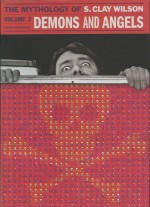
The Mythology of S. Clay Wilson volume 2: Demons and Angels


By S. Clay Wilson, edited by Patrick Rosenkranz (Fantagraphics Books)
ISBN: 978-1-60699-844-1

This book is filled with dark, violent sexual imagery and outrageous situations intended to make adults laugh and think. Please be aware that means nudity, images of extreme violence, sexual intimacy, excess of every kind and language commonly used in the privacy of the bedroom, drunken street brawls and – I suspect – school playgrounds whenever supervising adults aren’t present.

If the thought of it all offends you, read no further and don’t buy the book. The rest of us will enjoy some of the most groundbreaking cartoon experiences ever created without you.

Steve Clay Wilson was a pioneering trailblazer within America’s transformative Underground Commix movement: an uncompromising, controversial, in-your-face architect of the counterculture, constantly challenging attitudes and sensitivities whilst telling the kind of cartoon tales he wanted (or perhaps had) to. Something of a contradiction to those who knew him, charming, charismatic Wilson lived life to the full and took his art seriously.

And what art! Stark, complex, shocking, incredibly detailed tableaux jumping with modern Rabelaisian content: mesmerising scenes packed with intense multi-layered busyness, crammed with outrageous, iconic characters in constant surging motion – mostly combative, lewdly licentious and hilariously violent.

The manly hedonistic exuberance of frantic fighters rejoicing in the wild freedom as exemplified by bikers, cowboys, pirates, bull dykes and devils, augmented by other violent ne’er-do-wells, grotesques, human-scaled beasts and things which could be drawn but never described…

His work seethed and abounded with excess: monsters, mutilations, booze- and drug-fuelled romps populated with priapic plunderers and ravening beasts, dangerous and disturbed women and always, always unsettling scenes of society’s biggest taboos – sex and personal freedom.

Americans already worshipped violence; Wilson simply pushed the optics for that sacrament as far as he could, straight into surreal parody. Everybody who knew Wilson adored him, but around him they were usually a little nervous and stepped lightly…

The contemporary successor to Peter Bruegel and Hieronymus Bosch moved on to other artistic arenas when the Underground movement foundered but he never toned down or curbed his visions. In 2008 he suffered massive brain damage in mysterious circumstances and has been undergoing full-time palliative care ever since.

This second intimate, informative oversized (286 x 202 mm) hardback biography/graphic overview is compiled from previous writings and extensive interviews with the people he grew up with and who shared his eventful life.

Moreover each telling anecdote and reminiscence is augmented with photos, paintings, illustrated letters and private or previously unpublished artworks, with each chapter offering a wealth of strips, comprising most of his output from the decline of the counterculture in the mid 1970s to the graphic renaissance of the 1980s.

Before our hagiography of horrors resumes, fellow cartoonist, bosom buddy and contemporary fun-seeker Joe Schenkman paints a torrid word-picture in his Introduction: Where Eagles Soar, after which ‘From Underground to Alternative’ describes the slow painful end of Underground Commix and subsequent downturn in the massive sales its iconoclastic cartoonists enjoyed during the 1960s, whilst relating how the true survivors moved into other areas of expression and more legitimate publishing arenas.

The cultural pendulum swing actually benefited the most dedicated and talented artistic visionaries like R. Crumb, Gilbert Shelton, Spain Rodriguez and Wilson, and this section looks at our wayward rebel’s easy shuffle into commissioned art, gallery-shows, covers and commercial illustration as well as his return to comicbook notoriety in the 1980s after being sought out by Steve Bissette and John Totleben for their horror anthology Taboo. “Wil-sin” more than lived up to his reputation…

Jam-packed with illustrations, this history is rounded off with more astounding strips and his manic, hyper-complex tableaux-spreads (he called them “Deep Scenes”) including ‘Angels & Devils’ and ‘Wanda and Tillie featuring Jesus’ from Zap Comix #6, (1973), as well as ‘Rough Trade Lib’, the apocalyptic ‘Futuristic Glimpses’ and convoluted shock-spreads ‘Dyke Pirates Rescue Their Captain from the Diabolic Doctors of Dover’, ‘Maarooouufffaaolloo’ from the following year’s Zap #7, whilst 1975’s 2 (Two), originally housed ‘Brutal Youths Trounce Lawful Citizens for Ticket Money’, ‘Suds Smut’, ‘Un Acte’, ‘The Possessed, Exorcists, Demons and Gurus in a Free-for-All’ and ‘The Captain Died Twice’ before the same productive year’s 2² (Two Squared) delivers the epic examination of social atrocity ‘Lester Gass – the Midnight Xenophobe’…

The next essay concentrates on the legendary artistic collaborations of Wilson, Spain, Robert Crumb, Gilbert Shelton, Victor Moscoso, Robert Williams and Rick Griffin who periodically and competitively reunited through the 1970s and 1980s to release new material in an occasional anthology like no other.

Zap Forever!’ offers history and insight supplemented by a wealth of Wilson’s stunning and controversial material beginning with ‘Riot in Cell Block Number Nine’ assorted short tales of ‘The Checkered Demon’, ‘Travelin’ Assassin’ and ‘The Sawbones Sews on the Captain’s Ear Following the Fray’ from Zap Comix #9 (1978), ‘The Swap’ and ‘Star-Eyed Stella’ from #8 in 1975, whilst issue #10 (1982) featured the haunting ‘Bums and the Bird-Spirit’ and ‘Captain Pissgums and his Pervert Pirates Sail Again!’

Also rousing ire and poking gorges are vivid Deep Scenes ‘Vampires with Their Dates and Victims Peruse Count von Sangre’s Basement Exhibition of Satanic Icons’, ‘The Checkered Demon and a Couple of Friends Relax in a Rustic Pub’, ‘Rotting Zombies Take Vengeance Upon the Pirates Who Had Shang-Haid Them’ from Zap Comix #11, (1985) offering the artist’s latest obsession and newest entries to his repertoire of grisly characters: zombies!

Back in educational mode ‘Wilson Abroad’ covers the artist’s life in beloved San Francisco bars and forays into book illustration – most notably covers and interiors for archival German editions of writers like William Burroughs – as well as the maverick’s European tours and booze-soaked trips to England and Scotland, augmented by a plethora of fascinating photos and commercial images.

This section includes a barrage of brilliant comics pieces which begin with the infamous Checkered Demon adventure-strip originally serialised in The Berkeley Barb newspaper from 1976-77 and later collected as The Checkered Demon #1 from Last Gasp.

These sordid sorties are followed by ‘The Checkered Demon Meats the Rotting Zombies Countess!’ (Weird Smut 1985), ‘The Checkered Demon Searches for the Perfect Pint!’, (Knockabout #2, 1981), ‘Captain Rosy Namrooth and her Crew Attempt to Prevent the Checkered Demon from Rescuing Star-Eyed-Stella and her Witch Sister through a Hole in the Hull’ (Boiled Owl #3 1981), ‘Give Me Them Pills’ (Jump Start #1, 1983), ‘A Gluetette and her Rotting Zombie Beau Discover the Little Syringe that Nobody Wanted’ (Jump Start #2, 1987), ‘The Checkered Demon and Deke the Blade Find the Dealer Dead in his Dank Little Room’ (Blatch #13. 1986), ‘Last Call!’ (Heck 1989), ‘Gems and Junk’ (Jump Start #2, 1987) and ‘Psycho Fat Boys’ from Too Fun Too Huge #2 1988.

A peek at the frequently controversial coterie of ‘Wilson’s Characters’ grants access to many unseen private works and unpublished material, neatly segueing into a mostly full-colour selection of works including ‘Babbs Crabb and Her Friend Bernice Meet the Male Chauvinist Peg!’ (Barbarian Women #2, 1977), the cover to Barbarian Women #2, front and back covers for The Checkered Demon #1, II (1978) and III (1979), Britain’s Knockabout #2 cover, The Ugly Head 1981 cover plus The Ugly Head from Yama Yama/The Ugly Head, the cover of Zap Comix #9 and front & back covers for both 2 (Two) and 2² (Two Squared) before this eclectic collection concludes with an invitation to view the artist’s middle years of ‘Domestic Tranquility’.

These social interactions are all accompanied by fascinating, rare illustrations such as fliers for ‘St. Pat’s Bash at Dick’s Bar’ (1984) and ‘Dicknic!’ (1987), plus 17 stunning Private Commissions, the cover to crime novel Blind Pig, and an album cover for ‘More Fun Than an Open Casket Funeral’ by The Accüsed from 1989, before the lesson endeth with a copious listing of Selected Works by S. Clay Wilson…

Erudite, intimately informative yet utterly engaging, this superb collation, contrived and shepherded by the informationally insatiable Patrick Rosenkranz, offers unmissable insights into of one of the most important cartoonists in American history. Just like its precursor, this is a book no serious lover of the art form or devotee of grown-up comics can afford to miss.
The Mythology of S. Clay Wilson Volume Two: Demons and Angels © 2015 Fantagraphics Books. All comics and images by S. Clay Wilson © 2015 S. Clay Wilson. All biographical text © 2015 Patrick Rosenkranz. All other material © 2015 its respective creators and owners. All rights reserved.

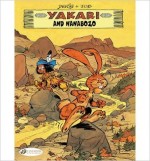
Yakari and Nanabozho


By Derib & Job, coloured by Dominque and translated by Jerome Saincantin (Cinebook)
ISBN: 978-1-84918-177-8

Children’s magazine Le Crapaud à lunettes was founded in 1964 by Swiss journalist André Jobin who began writing stories for it under the pseudonym Job. Three years later he hired fellow French-Swiss artist Claude de Ribaupierre who had begun his own career as an assistant at Studio Peyo (home of Les Schtroumpfs), working on Smurfs strips for venerable weekly Spirou. Together they created the well-received Adventures of the Owl Pythagore and two years later struck pure gold with their next collaboration.

Launching in 1969, Yakari detailed the life of a young Sioux boy on the Great Plains; sometime after the introduction of horses by the Conquistadores and before the coming of the modern White Man.

Overflowing with gentle whimsy, the beguiling strip celebrates a bucolic existence in tune with nature and free of strife, punctuated with the odd crisis generally resolved without fame or fanfare by a little lad who is smart, compassionate, brave… and can converse with all animals…

As “Derib”, de Ribaupierre – equally excellent in both the enticing, comically dynamic “Marcinelle” cartoon style and a devastatingly compelling meta-realistic action illustration form – went on to become one of the Continent’s most prolific, celebrated and beloved creators through such groundbreaking strips as Celui-qui-est-né-deux-fois, Jo (the first comic on AIDS ever published), Pour toi, Sandra and La Grande Saga Indienne).

Many of his stunning works over the decades feature his beloved Western themes, magnificent geographical backdrops and epic landscapes and Yakari is considered by most fans and critics to be the feature which catapulted him to deserved mega-stardom.

First serialised in 1978, Yakari et Nanabozo was the forth European album – released as the strip transferred to prestigious Tintin magazine – but was only translated by Cinebook in 2013, making it officially the 11th UK album.

That’s not going to be a problem for chronology or continuity addicts as the tale is both stunningly simple and effectively timeless…

It all begins one bright sunny day as the little wonder wanders out to the Rock of the Bear to meet his friend Rainbow. When he arrives there’s no sign of her but he does meet a gigantic and extremely voluble desert hare claiming to be Trickster Spirit Nanabozho – a statement he proves by making some astounding adjustments to the little lad’s own height.

The Great Rabbit claims to be Rainbow’s totem animal, much like Great Eagle watches over and protects Yakari, and the loopy lepine wants the boy to accompany him on a quest. Ever since a travelling tale-teller arrived in camp, recounting shocking stories of the far north where it’s so cold the bears are snowy white, headstrong Rainbow has wanted to see the amazing creatures for herself and, eager to please his protégé, the Brobdingnagian bunny agreed to help her, even supplying magic walking moccasins to reduce the hardships of the journey.

Unfortunately the impatient tyke couldn’t wait for the Trickster and Yakari to join her and has put them on unsupervised. Unable to resist the enchanted slippers, Rainbow has started her trek not knowing where she’s going or how to stop…

Now with boy and bunny transforming into giants and tiny mites as circumstances demand, they set out to catch their impetuous friend, following the path of a magic talisman dubbed ‘the Straight Arrow’ and assisted by such beneficial creatures as a night moose.

And when they at last find Rainbow, the travellers decide that as they’ve come so far, they might as well complete the journey to the Land of the White Bears, aided by a fabulous flying canoe…

Always visually spectacular, seductively smart and happily heart-warming, Job’s sparse plot here affords Derib an unmissable opportunity to go wild with the illustrations; creating a lush, lavish and eye-popping fantasy wonderland which is breathtaking to behold.

Really Big Sky storytelling with a delicious twist in its colossal fluffy tail…

The exploits of the valiant little voyager who speaks to animals and enjoys a unique place in an exotic world is a decades-long celebration of joyously gentle, marvellously moving and enticingly entertaining adventure, honouring and eulogising an iconic culture with grace, wit, wonder and especially humour.

These gentle sagas are true landmarks of comics literature and Yakari is a strip no fan of graphic entertainment should ignore.
Original edition © 1978 Le Lombard/Dargaud by Derib & Job. English translation 2013 © Cinebook Ltd.

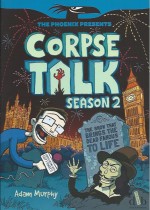
The Phoenix Presents… Corpse Talk Season 2


By Adam Murphy (David Fickling Books)
ISBN: 978-1-910200-49-0

The educational power of comic strips has been long understood and acknowledged: if you can make the material memorably enjoyable, there is nothing that can’t be better taught with pictures. The obverse is also true: comics can make any topic or subject come alive… or at least – as here – outrageously undead…

The conceit in Adam Murphy’s wonderful Corpse Talk is that famous personages from the past are exhumed for a chatty, cheeky This Was Your Life talk-show interview that, in Reithian terms, simultaneously “elucidates, educates and entertains”. It also often grosses one out, which is no bad thing for either a kids’ comic or a learning experience…

Another splendid album release culled from the annals of The Phoenix (courtesy of those fine saviours of weekly comics at David Fickling Books) opens with some ‘Introductory Remarks’ from your scribbling, cartooning host macabre Adam Murphy before the creepy contents section ‘In the Guest Graveyard This Season’ runs down the disinterred interviewees on show this time…

Before the inspirational post-mortem autobiographies commence there’s also a splendidly informative archaeological burial-map entitled ‘Digging up the Bodies’ providing an effectively contextual visual timeline for the likes of saucy ‘Queen Victoria’ and foolish ‘Guy Fawkes’ to discuss their successes and failures before we learn the gory truth about ‘William the Conqueror’, which last is supplemented by a grotesque, ghastly glimpse of what happened at his shocking state funeral in double-page spread ‘William the Honk-eror’…

Heading further back in time – and perhaps into fiction rather than fact – comes an intimate investigation into the truth behind Greek poet ‘Homer’ and far more confirmable confabs with engineering phenomenon ‘Isambard Kingdom Brunel’ and infamous Russian ruler ‘Catherine the Great’ which comes with a fact feature on the plague of impostors who tried to unseat her in ‘Tsars in their Eyes!’

Game-changing artistic iconoclast ‘Henri Matisse’ shares the spotlight with true life inspiration for Robinson Crusoe ‘Alexander Selkirk’, after which a thorough expose of ‘Elizabeth I’ is rounded off with a ‘A Killer Look!’ at the vast array of clothing gimmicks, fashion accessories and make-up marvels she employed to stay at the height of her power, whilst at the other end of the spectrum fun-crushing ‘Oliver Cromwell’ stands proudly on his reputation for dour and dismal progress…

I for one will be forever grateful for learning for the first time ever (!) about ‘Maria Sibylla Merian’, a grossly misused scientific pioneer who founded the principles of entomology before being written out of history by male historians and scientists. Let this light-hearted examination be just the first of her many mentions please…

No suspicious suppression for the next star spectre as ‘William Shakespeare’ tells it like it was, accompanied by a short summary of his acting career in ‘Ghost Writer!’ after which the page-count temporarily doubles to encompass the American exploits of ‘Leif Erikson (and Family)’ – papa Erik the Red, mother Thjodhild, and siblings Thorvald, Thorsten & Freydis – before dropping back to normal for party favourite ‘Charles II’ who cockily details his fall, exile, return and rise to adored majesty.

The truth about ‘Pocahontas’ is followed by more telling Native American facts in ‘Sad Ending, Continued…’ whilst the glorious career of ‘Stan Laurel and Oliver Hardy’ serves to cheer us all up and the personalised revelations of ‘Sir Francis Drake’ clarify the very, very slim difference between privateer and pirate.

The astounding achievements of polymath and scientific everyman ‘Sir Christopher Wren’ is followed by a bold and brilliant depiction of ‘The Great Fire of London’ which allowed him to cement his place in history whilst the stellar career and cruelly embarrassing end of female aviator ‘Amy Johnson’ precedes a chilling conclusion when ‘Vlad the Impaler’ recounts his favourite things and how much pain they caused everyone else…

This second star-stuffed catalogue of comedy cadaver chronicles then concludes with a little game-segment as ‘The End of the Season’ sees all the guests going walkabout, requiring a ‘Rotting Remains Roll-Call’ for the reader to locate and return them to their places of rest

Smart, irreverent, funny and splendidly factual throughout, The Phoenix Presents… Corpse Talk Season 2 cleverly but unflinchingly deals with history’s more tendentious moments whilst personalising the great and the good for coming generations.

It is also a fabulously fun read no parent or kid could possibly resist. Don’t take my word for it though, just check with the spirits in question…
Text and illustrations © Adam Murphy 2015. All rights reserved.

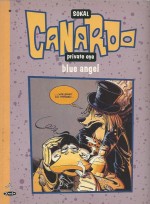
Canardo, Private Eye: Blue Angel


By Benoít Sokal (Xpresso Books/Fleetway)
ISBN: 978-1-85386-267-0

Artist, writer and games designer Benoít Sokal (Sanguine, Syberia, Amerzone, Kraa) was born in Brussels in 1954. He studied at the École Supérieure des Arts Saint-Luc De Bruxells, the prestigious art school where legendary creator Claude Renard (Belles Histoires de l’Oncle Paul, Aux Médianes de Cymbiola, Le Rail, Ivan Casablanca) taught and nurtured many students who would become Belgium’s modern masters of comics.

Sokal joined that select band of professionals in 1978, selling humorous strips and characters to À Suivre and striking gold early. He had been producing short, blackly comedic tales featuring anthropomorphic animals living in a world of contemporary humanity. Amongst the vast cast was a tawdry, unscrupulous, hard-drinking private detective named Inspector Canardo. Although never a true protagonist in those days, the dour duck was always around when events inevitably spiralled out of control…

The occasional series struck a chord with European audiences and soon Canardo was headlining his own series of albums. The first, in 1979, gathered those early shorts into an “Album #0” entitled Premières enquêtes and was followed by 22 more to date: the latest, Le vieux canard et la mer being released in 2013.

Dividing his time between his mallard megastar and more realistic dramas such as police thriller Silence, on Tue! (with François Rivière) and Le Vieil homme qui n’écrivait plus, by the end of the 1990s Sokal had made the sideways jump from comics to videogames creation, leaving artist Pascal Regnauld to handle most of the illustration for his foul-feathered fowl.

The series toys with the internal consistency of storytelling: Canardo and other cast regulars have died several times, timescales are largely irrelevant, early tales have humans, anthropomorphic animals and regular critters cautiously coexisting side by side, science and magic happily co-mingle with the seedily traditional elements of sex, violence, depression and existential isolation and some of the players occasionally refer to themselves inhabiting a comics story.

Although a huge hit on the continent, Canardo struggled to find a place amongst English-speaking audiences. Sporadically released in translation between 1989 and 1991 by Rijperman and NBM for the American continent and through Fleetway’s Xpresso books in the UK, Sokal’s patently adults-only, philosophically nihilistic and bleakly moody homage to film noir came and went largely unnoticed and it’s high time some savvy publisher took another shot…

The third collected volume, La Mort Douce (literally The Suave Death, released in 1981), became Canardo: The Blue Angel – the second British release from Xpresso, the experimental division of publishing monolith Fleetway – when the home of Judge Dredd, Charlie’s War, Johnny Red and Roy of the Rovers sought to catch a pan-Atlantic wave of interest in comics for grown-ups.

Sampling and deliciously channelling the brittle hopelessness of Weimar Germany the tale opens in a bar as singer Lili Niagara – a chanteuse with a life-ending-illness – takes her final job at seedy dive Freddo’s Bar.

Wry drama stoops to the level of Shakespearean tragedy when the duck in the trenchcoat wets his whistle there just as hulking addle-witted bear Bronx wanders in. The loathsome patrons quickly indulge in another bout of savagely teasing and abusing the seemingly oblivious, emotionally unreachable simpleton, but when the far-from-divine Miss Niagara begins singing Lili Marlene (in the original German) the placid victim suddenly turns into a raging terror and kills his chief tormentor.

As previously mentioned, in the earliest escapades the dowdy duck dick is little more than a disinterested spectator; an éminence grise perfectly capable of shaping events and preventing tragedies but always unwilling to get involved unless there’s a direct benefit for him. That starts to change with this cruel investigation into exploitation, greed and past sins paid for at the last…

Whilst Canardo dickers with the owner over a fee for piling in, manic Bronx snatches up the startled singer in one hairy paw before vanishing into the wasteland beyond town. Finally settling upon a month’s free whisky to return the disappeared Diva, the PI slouches off next morning and fruitlessly interviews the aged gypsy crone the bear usually lives with.

His quarry meanwhile has returned to his usual dormant state, and doesn’t notice when his captive sneaks off only to land in real trouble, stumbling into a pack of riverside-dwelling degenerates who want more than just a tune from the ailing performer. They do begin her abuse by making her sing first though, but as the strains of Lili Marlene leak out of their grimy shack, Bronx, once more gripped by a psychotic rage, comes crashing through the wall.

As the singer gratefully thanks her again quiescent rescuer they are approached by sleazy fight-promoter Wes Disposal who wants to make the bear a superstar and before long the big brute is facing off against a true mauler in a makeshift arena.

Sadly no amount of punishment can make Bronx respond and the big lug is being cruelly, savagely taken apart when Canardo steps out of the shadows, advising Lili to sing a certain song. When she grudgingly complies she at last comprehends the cause-and-effect at work as Bronx ends the one-sided bout with horrific efficiency…

The singer is in a bad way. Illness is ravaging her and Lili is prepared to do anything and use anyone to get the “medicine” that eases her agonising symptoms, but the shabby sleuth seems more interested in the pitiful war stories of an old soldier propping up the bar. The bedraggled veteran’s sodden antics are hilarious but a terrified clarity enters his rheumy eyes when he overhears the duck ruminating on why hearing Lili Marlene turns Bronx into a berserker…

When Wes tries to abscond with the bear and all the winnings he meets the fate of all cheating chiselers, and as day breaks Canardo and the concerned-despite-herself Lili are heading deep into a swampy wasteland in search of the blood-stained innocent.

What they find is a troop of old soldiers hidden for decades who share responsibility for the hideous crimes and atrocities which created Bronx and who have been waiting ever since for their deserved doom to return and claim them…

The finale is spectacularly operatic in nature: one of those grim Russian ones where everybody dies…

Stark, wry, bleak, outrageously amusing and almost Brechtian in tone and execution, the saga of Carnardo is a powerful antidote to traditional adventure paladins and a supreme example of the antihero taken to its ultimate extreme. It’s also beguilingly lovely to look upon in a grim, traffic accident, bunny-in-the-headlights manner.

Let’s hope some publisher with a little vision agrees…
La Mort Douce © 1981 Casterman. English Translation and UK edition © 1991 Xpresso Books. All rights reserved.

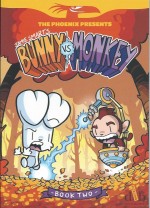
The Phoenix Presents… Bunny vs. Monkey Book Two


By Jamie Smart (David Fickling Books)
ISBN: 978-1-910200-47-6

In January 2012 Oxford-based family publisher David Fickling Books launched a weekly comics anthology for girls and boys which revelled in reviving the grand old days of British picture-story entertainment intent whilst embracing the full force of modernity in style and content.

Each issue offers humour, adventure, quizzes, puzzles and educational material: a joyous parade of cartoon fun and fantasy. Since its premiere, The Phoenix has gone from strength to strength, winning praise from the Great and the Good, child literacy experts and the only people who really count – the totally engaged kids and parents who read it…

Inevitably the publishers have branched out into a wonderful line of superbly engaging graphic novel compilations, the latest of which is a second engagement in the dread conflict gripping a once-chummy woodland waif and interloping, grandeur-obsessive simian…

Concocted with gleefully gentle mania by Jamie Smart (Fish Head Steve!), Bunny vs. Monkey has been a fixture in The Phoenix from the first issue: a madcap duel of animal arch-enemies set amidst an idyllic arcadia which is a more-or-less ordinary English Wood.

With precious little unnecessary build-up The Phoenix Presents… Bunny vs. Monkey volume 2 continues where its predecessor left off, detailing the ongoing war of wits and wonder-weapons spread over a year in the country. The obnoxious anthropoid intruder was originally the subject of a disastrous space shot. Having crash-landed in Crinkle Woods – a scant few miles from his lift-off site – he now believes himself the rightful owner of a strange new world, whereas sensible, genteel, contemplative Bunny considers the idiot ape a obnoxious, noise-loving, chaos-creating troublemaker…

With battle reports spanning July to December hostilities recommence as Monkey and his devious ally Skunky (a brilliant inventor with a bombastic line in animal-inspired atrocity weapons and a secret agenda of his own) fail to make proper use of ‘The Wish Cannon!’ The reality-warping gun could change the world but also makes really good cakes…

A much better terror-tool is colossally ravening robot ‘Octo-blivion!’ which ruins Bunny’s boating afternoon, but sadly the tentacled doom-toy becomes an irresistible object of amorous intent for irrepressible cyber crocodile Metal Steve before it can complete its nefarious machinations…

A hot day inspires Monkey to demand bonkers boffin Skunky whip up some volcanoes but their ‘Journey to the Centre of the Eurg-th!’ only uncovers chilly regions and crazily cool creatures before the scene shifts to those not-so-smart but astonishingly innocent bystanders Pig and Weenie Squirrel.

When their afternoon playing with crayons results in a lovely drawing of a crown, soon everybody is bowing down and obeying ‘King Pig’ after which surly radical environmentalist and possessor of a big, bushy tail and French accent ‘Fantastique Le Fox!’ finds time to share his incredible origin stories with the dumbfounded woodland denizens. Yes that’s right: stories, Plural…

Hyperkinetic carnage is the order of the day when a cute little dickens turns up in spiffy running-toy ‘Hamsterball 3000!’, providing Skunky with the perfect power source for his latest devastating mechanical marauder: the horrendous Hamster Mobile…

Puns, peril and a stinging hidden moral inform proceedings when all the animals celebrate ‘Bee-Day!’ whilst a happily brain-battered, bewildered former stuntman turns into a tormented super-genius when he accidentally falls under the influence of Skunky’s Smarty Helmet in ‘Action Beever2. Happily for everyone, before it wears off the increased cognition – in conjunction with a handy lemon puff – demolish an unleashed Doomsday Device which might just have ended everything…

From September onwards the stories drop to two pages a pop and ‘Gone with the Wind!’ finds Pig and Weenie making trouble with their windsurfing cart after which ‘I, Robot Crocodile!’ sees Metal Steve on a destructive rampage until Bunny and Monkey team up to show the steel berserker the simple joys of dance…

‘There’s a Moose Loose!’ has Skunky back on bad form and trying to fool his enemies with a vast Trojan Elk before Monkey spoils everyone’s September by going big after being introduced to a sweet childhood game in ‘Conkers Bonkers!’ and – with the Beaver bedridden – the perfidious pair of animal evildoers employ the rather dim ‘Action Pig!’ to test pilot their devilish Dragonfly 5000. Such a bad idea…

Tidy-minded Bunny has no hope of sweeping up all autumn’s golden detritus in ‘Leaf it Alone!’ once friends and enemies start helping and an extended sub-plot opens in ‘Duck Race!’ as impetuous Monkey pries into Skunky’s most deadly and diabolical secret behind a locked door. In a frantic attempt to deflect attention, the smelly scientist then unleashes the colossal Lord Quack-Quack!

The saga sequels in a surprisingly downbeat follow-up as Bunny, Pig and Weenie dare the fiend’s lair to check out ‘Door B’ before scheduled insanity resumes as ‘Hypno-Monkey!’ finds the hirsute horror misusing a memory ray and briefly assuming godlike power…

Who doesn’t like igniting marshmallows and telling scary stories around a campfire? Not Bunny, Pig and Weenie after hearing the tale of ‘Monster Pants!’ after which the local idiots decide to join Monkey’s gang in ‘Bad Influence!’

The monkey is no role model – except perhaps for painful ineptitude – as seen in ‘Lost in the Snow!’ but the winter fun expands to encompass everyone when Skunky’s ‘Chemical X!’ unleashes a cold tidal wave of blancmange leading to seasonal silliness as ‘The Small Matter of the End of the World!’ reveals time-travelling madness as the true story of the demise of the Doomsday Device is finally exposed in an extra-length yarn.

Everything changes when ‘Merry Christmas Mr. Monkey!’ sees peace and goodwill grip the woods – or perhaps it’s just that the simian seditionist has gone missing? When the innocent inhabitants go looking for Monkey they find him far beyond the forest associating with strange two-legged beings, singing carols and swiping mince pies, but nobody realises just how dangerous the ‘Hyooomanz!’ can be as the year ends with plans found proclaiming the demolition of Crinkle Wood and the coming of a new motorway…

To Be Continued…

Endlessly inventive, sublimely funny and outrageously addictive, Bunny vs. Monkey is the kind of comic parents beg kids to read to them. Don’t miss out on the next big thing.
Text and illustrations © Jamie Smart 2015. All rights reserved.

Snakepit Gets Old: Daily Diary Comics 2010-2012


By Ben Snakepit (Microcosm Publishing)
ISBN: 978-1-62106-596-8

If you’ve ever made your own comics or art or music you probably know how addictive that act of creation can become. Pity then poor Ben Snakepit; a bass-playing DIY punk living in Austin, Texas…

He attended Virginia Commonwealth University as a graphic arts major and in 2000 after living his life for a bit began documenting his day. He has done so ever since, three panels per diem, rain or shine, in sickness or in health; immortalising his dire, dreary day-jobs, the bands he’s in and out of (Ghost Knife, Modok, Shit Creek, Shanghai River, J-Church, The Sword), his romantic life, meals, the war against expanding waistlines, sundry friendships, an apparent addiction to computer games, various Star Trek iterations and so many movies and comics. The irresistible making and selling and reading of funnybooks…

The journal cartoons are all delivered in a raw yet deliciously engaging, self-deprecating manner that is impossible to resist, and at the start of this collection he explains why, even though he swore to only draw the strip for ten years (beginning in the summer of 2000), he just can’t stop, before going on to delineate some of the most important moments of his life so far in a non-stop parade of funny, sad, sweet, pitiable and enviable inky snapshots…

Constantly decrying his ability to draw the simplest or most familiar things, he has shared his life in the strips (previously progressively gathered as The Snakepit Book, My Life in a Jugular Vein, Snakepit 2007, Snakepit 2008, Snakepit 2009 and the tome under review here).

As this sublimely readable tome proves, there are actually no unremarkable lives and Snakepit Gets Old is an experience celebrating simple happiness and everyday contentment which you won’t soon forget by a very special author who doesn’t know how to quit…

You can’t see it, but this volume includes a second invisible cover overprinted on the first and only to be seen by holding the book up to the light in a skewed manner. Cool…
He hasn’t said it but I’m guessing © 2015 Ben Snakepit.

Green Manor volume 2: The Inconvenience of Being Dead


By Bodart & Vehlmann, translated by Luke Spear (Cinebook Expresso)
ISBN: 978-1-905460-64-9

The French are generally considered more passionate than us Brits and always eager to dole out grandiose appellations and epithets about creators, but they’re very seldom wrong in their acclamations. Writer Fabien Vehlmann was only born in 1972 yet his prodigious canon of work (from 1998 to the present) has earned him the soubriquet of “the Goscinny of the 21st Century”.

Vehlmann entered the world in Mont-de-Marsan and grew up in Savoie, studying business management before taking a job with a theatre group. In 1996, after entering a writing contest in Spirou, he caught the comics bug ands two years later published – with illustrative collaborator Denis Bodart – a quirky, mordantly dark and sophisticated portmanteau period crime comedy entitled Green Manor.

The blackly funny pastiche of Victoriana’s seamy underside appeared sporadically until 2005 (and was revived in 2011), whilst the author spread his wings with a swathe of other features such as Wondertown (with Benoît Feroumont) and hugely popular children’s thriller Seuls (with artist Bruno Gazzotti) before undertaking a high-profile stint on prestigious all-ages adventure strip Spirou et Fantasio.

Vehlmann continues to craft enticing, engaging tales for kids (Samedi et Dimanche) but is equally at home with more mature fare like Sept psychopathes (with Sean Phillips). For a while he even drew his own strip Bob le Cowboy…

Partner-in-perfidy on Green Manor Denis Bodart studied at the Saint Luc academy in Brussels before taking up teaching. He too soon descended into a life in comics, debuting in 1985 with Saint-Germaine des Morts (scripted by Streng) for publisher Bédéscope.

Three years later he co-created – with writer Yann (Yannick Le Pennetier) – Célestin Speculoos for Circus and Nicotine Goudron for l’Écho des Savanes whilst earning a crust as a jobbing freelance comics artist with work regularly appearing in Spirou and elsewhere.

Following his highly acclaimed turn here he moved on to succeed Jean-Maire Beuriot as artist of Casterman’s prestigious Amours Fragiles.

This double-length compact Cinebook edition compiles the final pair of original volumes – De l’inconvénient d’être mort and Fantaisies meurtrières – which saw Green Manor’s continual catalogue of high society crime, calumny and depravity lead to its inevitable sorry conclusion…

The premise is deliciously simple and wickedly palatable. As seen in the first collection, prominent alienist Dr. Thorne has become obsessed with an inmate known as Thomas Below currently incarcerated in the infamous Bethlehem Psychiatric Hospital.

That poor unfortunate had served as a discreet domestic in a private Gentleman’s Club for his entire life and became violently delusional mere days before retirement. Thorne questions the madman and realises the sorry soul before him believes he is Green Manor incarnate. He has certainly been privy to all that strange place’s secrets, surprises and hushed-up scandals, but can the horrific and bizarre tales he shares possibly be true in whole or in part?

The Inconvenience of Being Dead resumes the unconventional interviews in 1899 as Thorne is dragged from his bed to attend Below once again, but this time the need is most urgent. The old retainer has escaped, broken into a house and taken a family hostage.

Hesitantly the healer makes his approach and engages the affable maniac in conversation and all too readily Below begins telling more tales of rich, powerful and ostensibly honourable men at their most excessive and unbearable…

The macabre menu of skits and sketches begins with ‘Child’s Play’ from March 1871 wherein cruel Lord Virgil observes and is incensed by a passive, gentle servant with the patience of Job instantly resolving to turn the saint into a murdering thing of evil.

Admitting to possessing a foolproof, infallible and much proven method of killing-by-proxy to a roomful of The Great and the Good gathered around, Virgil determines to drive good-natured George into eternally debasing and damning himself by using the process to save himself from torment.

Sadly one man’s torment is another man’s test of faith and the good George is far from predictable…

In 1885 dilettante supernaturalist Joseph Sharp returned from Prague after a fruitless shopping trip for magical spells and objects to find his best friend Mark Abbott languishing under the force of a family curse. However, detailed investigation of ‘The mark of the beast’ and a ghastly family secret in a crypt only proved once again that the unknown has very little force or impact when measured against a mother’s hate, the infinite patience of the tormented and a victim’s fevered imagination…

One night in 1876 Lord Justice Sherman realised he had condemned an innocent man to death, even though not a shred of evidence existed to confirm his opinion. With one night remaining to save his man, the elderly jurist took to the streets of London to find the true culprit and succeeded, utterly unaware that the malefactor involved had already taken vengeance for the judge’s noble act in advance of its completion and Sherman’s ‘Last Wishes’…

In 1897 bombastic, belligerent General Miller gloated at the Club that he had at last come into possession of the fabled Spear of Longinus. The military martinet had no fear of the legends and many deaths laid upon the artefact or ‘The Centurion’s Shadow’, but was beguiled by its repute as a tool to make great men all-conquering.

Nevertheless he was soon one more corpse attributed to the talisman – and not the last – until a pair of the Club’s armchair investigators applied learning and logic, exposing a deadly trap constructed by one of history’s greatest thinkers…but just a little too late…

With the hostage crisis coming to end Below tells his most shocking epigram as ‘Voodoo Night’ finds the gathered gentlemen casually dissecting a juicy murder one night in December 1870 over cigars and brandy.

With irreconcilable facts and impossible assumptions heatedly flying about, soon only absurdity or the supernatural are left as answers to the mystery of the slaying of boorish lout Lord Killian, but in another room the genteel conversation of the closeted Ladies married to the assemblage of tobacco-smoking idiots soon reveals a so-simple truth…

The last legends of the Club are gathered in Murderous Fancies as the increasingly obsessed Thorne receives word that Below has passed away. Briefly thinking himself free at last, it is with mixed feeling that the doctor takes custody of the illegible scrawls of the troubled retainer and wearily, warily begins to decipher them…

‘Endgame’ relates an incident from June 1871 when the Club was driven to distraction by the will of recently paralysed Lord Wyatt. It was in the form of a nonsense riddle and the first to solve it would win all Wyatt’s prodigious wealth…

At the same time the executor secretly consults with dementia expert Dr. Sheffer over the mental state of his master. The aristocrat claims his parlous condition is the result of a murder attempt and this riddle might well be a trap to catch the assailant. Sheffer knows better but soon has every reason to regret his rash conclusions…

‘A Small Crime Serenade’ finds an aged and innocuous gentleman in garrulous mood one night in 1867, sharing with a dutiful Club servant his great gift and passion: a life-long ability to get away with murder. Sadly his boast of capping his career with one final killing is derailed by a most unanticipated event…

In 1827 talk at Green Manor was of only one matter: the recent demise of a radical libertarian poet. Especially fervent was young devotee Dr. Daniel Ballantyne who promptly fell for a cruel prank when the Club grandees purportedly offered him a chance to autopsy the body and look ‘In the Head of William Blake’. They had arranged that what he saw would be like nothing he had ever experienced…

Ballantyne disappeared that night and in the cold light of day an inexorable campaign of terror began as the japesters were slowly driven mad by notes threatening vengeance from the “Tygers of Wrath”…

In lighter vein, ‘Fight to the Finish’ related how two bored big game hunters invented an imaginative game in May 1859. Their aim was to determine who exactly was the absolute best. The prey was to be each other but, although the rules of the competition were strict and fair, as the days progressed it seemed that neither Lord Bennett nor Lord Turner were as able or as gentlemanly as they claimed…

The dead man’s tales ended with a chilling homily from 1872 wherein the cream of society discussed the strange case of Lord Sanders who had blighted his own financial empire and destroyed his greedy heirs by cruelly and carefully tying the purse-strings of their inheritances.

The dominating oligarch had left a vast list of tasks for his four children to fulfil in ‘The Testament’; far too many for any person or persons to complete before getting their undeserving hands on his ill-gotten gains.

Of course even he could not predict how and where greed and frustration could take a desperate man…

And with that final story shared, Below no longer plagued the good doctor’s days, but his influence remained long after he was gone…

Wry, witty, wickedly funny and sublimely entertaining, The Inconvenience of Being Dead offers a supremely damning glimpse at High Society’s low morals which will delight and astound lovers of sly crime fiction, rich black comedy and classy comics confabulations.
Original edition © Dupuis 2005 by Vehlmann & Bodart. All rights reserved. English translation 2008 by Cinebook Ltd.