Velveteen & Mandala


By Jiro Matsumoto (Vertical)
ISBN: 978-1-935654-30-8

Civilisation has radically changed. What we knew is no longer right or true, but disturbing remnants remain to baffle and terrify, as High School girl Velveteen and her decidedly off-key classmate and companion/enemy Mandala eke out an extreme existence on the banks of a river in post-Zombie-Apocalypse Tokyo.

Here, using an abandoned tank as their crash-pad, the girls while away the days and nights slaughtering roaming hordes of zombies – at least whenever they stop squabbling with each other.

From the very outset of this grim, sexy, gratuitous splatter-punk horror-show there is something decidedly “off” going on: a gory mystery beyond the usual “how did the world end this time?”

On the surface, Velveteen and Mandala (Becchin To Mandara in its original release in the periodical Manga Erotics f, between 2007-2009) is a Buffy-style monster-killing yarn beginning at ‘The Riverside’ with the pair awaking from dreams to realise and remember the hell they now inhabit whilst ‘Smoke on the Riverside’ reveals a few of the nastier ground-rules of their new lives and especially Velveteen’s propensity for arson and appetite for destruction…

‘Sukiyaki’ finds the girls on edge as food becomes an issue whilst the introduction of ‘The Super’ who monitors their rate of zombie dispatch leads to more information (but not necessarily any answers) in this enigmatic world, whilst ‘The Cellar’ amps up the uncertainty when Velveteen steals into her new boss’s ghastly man-cave inner sanctum.

In a medium where extreme violence is commonplace, Matsumoto increasingly uses unglamorised nudity and brusque vulgarity to unsettle and shock the reader but the flashback events of … ‘School Arcade, Underground Shelter’ – if true and not hallucination – indicate that this society this debased might not be worth saving from the undead…

In ‘Omen’ and ‘Good Omen (Whisper)’ the mysteries begins to unravel as B52 bombers dumps thousands more corpses by the Riverside, adding to the “to do” roster of the walking dead that the girls must deal with once darkness falls…

Throughout the story Matsumoto liberally injects cool artefacts of fashion, genre and pop-culture seemingly at random, but as the oppressive horrors get ever closer to ending our heroines in ‘Genocide’ and ‘Deep in the Dark’, a certain sense can be imagined, so that when the Super is removed and Velveteen is promoted to his position in ‘Parting’ the drama spirals into a hallucinogenic but perhaps utterly untrustworthy climax in ‘Mandala’s Big Farewell Party’ and ‘Nirvana’ before the revelations of ‘Flight’…

Deliberately obfuscatory and strictly aimed at over 18s, this dark, nasty and scatologically excessive tale graphically celebrates the differences between grotesque, flesh-eating dead-things and the constantly biologically mis-functioning still-living (although the zombie “Deadizens” are still capable of cognition, speech and rape…), all wrapped up in the culturally acceptable and traditional manner of one blowing the stuffings out of the other…

Young Jiro Matsumoto is probably best known in Japan for the dystopian speculative sci-fi revenge thriller Freesia, but here his controversial yet sublime narrative gifts are turned to a much more psychologically complex – and almost meta-fictional – layering of meaning upon revelation upon contention that indicates that if you have a strong enough stomach the very best is still to come…

© 2009 Jiro Matsumoto. All right reserved. Translation © 2011 Vertical, Inc.

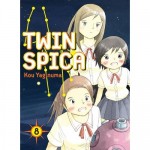
Twin Spica volume 8


By Kou Yaginuma (Vertical)
ISBN: 978-1-935654-13-1

The hungry fascination, hopeful imagination and cocksure anticipation of space travel which was an integral component of post-World War II society is the driving narrative engine for this inspiring manga epic from Kou Yaginuma, who first began capturing hearts and minds with his poignant short story ‘2015 Nen no Uchiage Hanabi’ (‘2015: Fireworks’), published in Gekkan Comics Flapper magazine, June 2000).

The author happily expanded and enhanced the subject, themes and characters into a major narrative epic combining hard science and humanist fiction with lyrical mysticism and traditional tales of school-days and growing up.

To recap: diminutive teenager Asumi Kamogawa has always dreamed of going into space. From her earliest moments the lonely child gazed up at the stars with her imaginary friend Mr. Lion, especially at the twinkling glow of Virgo and the alluring binary star Spica. An isolated, serious girl, she lived with her father, a common labourer who once worked for the consortium which built the rockets for Japan’s Space Program.

In 2010, when Asumi was a year old, the first Japanese space-launch ended in utter catastrophe when rocket-ship Shishigō (“The Lion”), exploded: crashing to earth on the city of Yuigahama. Hundreds were killed and many more injured, including Asumi’s mother. Maimed and comatose, the matron took years to die. The shock crushed her grieving husband and utterly traumatised infant Asumi.

In response to the disaster, Japan set up an Astronautics and Space Sciences Acadamy. After years of struggle, in 2024 Asumi was accepted to the Tokyo National Space School and slowly began making real friends like Shinnosuke Fuchuya (who used to bully her as child in Yuigahama), jolly Kei Oumi, chilly Marika Ukita and spooky, ultra-cool style-icon and fashion victim Shu Suzuki. Every day Asumi moved closer to her unshakable dream of going to the stars.

Small, physically weak and very poor, Asumi endures and triumphs. She still talks with Mr. Lion… who might be the ghost of an astronaut who died on the Shishigō…

The individual stories are broken up into “Missions” and this particularly tender and thoughtful eighth volume begins with #39 as the still somewhat aloof Asumi undertakes a devout daily personal ritual – absorbing the wonder of the Heavens at the local Planetarium. Times are changing, however and the venerable old edifice is about to close forever, a victim of economic cuts and dwindling public interest…

Later she rejoins classmates Oumi and Ukita on the school roof for more stargazing. Excitement rises when they think they might have discovered a new supernova…

Mission: 40 concentrates on the rapidly approaching end of semester and exams. Oumi is ill and might not pass, whilst enigmatic Shu reveals yet another hidden talent after being given the shocking news that he is confidentially considered for participation in an American Shuttle mission. Meanwhile, Christmas is coming and Asumi is inexplicably growing closer to a shy and extremely diffident boy from the local orphanage, just when she can least afford distractions. With her workload and part-time job she hardly has time to think as it is…

Mission: 41 continues her concentration-busting whilst we learn some tragic secrets regarding the abusive home life of Mr. Perfect Shu Suzuki and the other girls begin to notice physical evidence of her “imaginary friend”. When the orphan boy reveals he is leaving Japan, Asumi has to make a choice between her current emotions and her life’s dream and it takes a dramatic intervention by rival and “frenemy” Fuchuya to set her straight on what she really needs in the truly heartbreaking Mission: 42…

The orphan boy’s history and astonishing secret is examined in #43 whilst #44 amps up the school pressure and the conflicted Fuchuya recalls an pivotal moment when his fireworks-maker grandfather sparked his own interest in the stars – and Asumi…

The offer to send a Japanese astronaut up with the US shuttle becomes public in Mission: 45 and a fierce competition for the single placement ensues counter-pointed by more agonising reminiscences from Shu and the main storyline concludes in #46 as the previously isolated Asumi realises her life is changing and she has friends she might soon lose…

The going is getting tougher and now that they are all nearing the end of their training, it becomes increasingly, painfully clear to the determined students that the bonds so painstakingly forged are on the verge of being severed. After only one more year, final selections will be made and most of the class will fail and vanish from each other’s lives. A countdown clock is ticking…

Also included here a couple of ancillary tales: ‘Giovanni’s Ticket’ returns to the early years following the Shishigō crash and explores Asumi and Fuchuya’s formative relationship whilst the poignant ‘Guide to Cherry Blossoms’ follows the path to love and examines roads not taken by Kasumi Suzuki (presumably Shu’s tragic other if the dates hidden in the art work are anything to go by) during the highly symbolic spring festival.

The book ends with a wistfully autobiographical ‘Another Spica’ vignette from author Yaginuma’s days as a part-time server on a soft-drink stand in a theme park; one more charming insight into creative minds and unrequited passions…

These deeply moving marvels originally appeared in 2005 as Futatsu no Supika 8 and 9 in the Seinen manga magazine Gekkan Comics Flapper, targeted at male readers aged 18-30, but this ongoing, unfolding beguiling saga is perfect for any older kid with stars in their eyes…

Twin Spica ran from September 2001-August 2009: sixteen volumes tracing the trajectories of Asumi and friends from callow students to competent astronauts and the series has spawned both anime and live action TV series.

This delightful serial has everything: plenty of hard science to back up the informed extrapolation, an engaging cast, mystery and frustrated passion, alienation, angst and true friendships; all welded seamlessly into a joyous coming-of-age drama with supernatural overtones and masses of sheer sentiment.

Hopefully rekindling the irresistible allure of the Final Frontier for the next generation (and the last ones too) Twin Spica is quite simply the best…

These books are printed in the Japanese right to left, back to front format.
© 2011 by Kou Yaginuma/MEDIA FACTORY Inc. Translation © 2011 Vertical, Inc. All Rights Reserved.

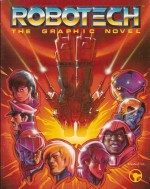
Robotech: the Graphic Novel


By Mike Baron, Neil D. Vokes, Ken Steacy & various (Comico)
ISBN: 978-0-93896-500-8

Robotech was a minor comics phenomenon of the 1980s based on some rather deft marketing of assorted Japanese fantasy exports. Whilst American TV company Harmony Gold was cobbling together and re-editing three separate weekly science fiction anime series (Super Dimension Fortress Macross, Super Dimension Cavalry Southern Cross and Genesis Climber MOSPEADA) US model-kit company Revell was selling Japanese mecha kits based on the aforementioned Fortress Macross, Super Dimension Century Orgus and Fang of the Sun Dougram as Robotech Defenders, complete with an all-new English language tie-in comic produced by DC Comics.

A copyright clash resulted in the DC title being killed after two issues after which TV produced Carl Macek and Revell went into limited partnership in a Macross co-licensing deal which saw three shows translated into an 85-episode generational saga wherein Earth was rocked by successive alien invasions decades apart and only saved from annihilation by a fortuitous spaceship crash which had allowed humans to master extraterrestrial Robotechnology.

The American TV hybrid and mecha toy range naturally led to Role Playing Games, novels, an animated movie, art books and comicbooks which have been semi-continuously in print since 1984.

The premise revolved into The Macross SagaFirst Robotech War a desperate conflict with giant Zentraedi warriors seeking to retrieve a crashed space craft; Robotech MastersSecond Robotech War wherein Terrans battled a fresh wave of Zentraedi, come to discover what happened to their lost fleet and Robotech Masters or Third Robotech War, with enemies becoming allies to confront an even greater foe: the horrendous Invid – from whom the Robotech Masters originally stole the near-magical, cataclysmic, semi-spiritual power source Protoculture, reverentially worshipped as the Flower of Life and the motivating force behind all Robotechnology….

Comico produced separate titles set twenty years apart (Robotech Macross Saga, Robotech Masters and Robotech the New Generation) from 1984-1989, after which Eternity Comics, Academy Comics, Antarctic Press and WildStorm took up the perennial favourites in their turn.

In 1986, at the height of the furore Comico produced an original oversized 48 page European album format graphic novel plotted by Carl Macek which filled in the heretofore unknown backstory; telling the story of that fateful First Contact when a starship crashed on the island of Macross. It was scripted by Mike Baron, illustrated by Neil D. Vokes & Ken Steacy (with painted colour by Tom Vincent and lettering by Bob Pinaha)…

In ‘Genesis: Robotech’ far away on the other side of the universe SDF-1, a two kilometre long spacecraft is seeding desolate worlds with a unique plant. Unconventional and rebellious Philosopher-Scientist Zor is attempting to grow the energy-rich Flower of Life in soil not sanctioned by his Robotech Masters, over the protests of dutiful warrior-commander Dolza.

This allows the insidious Invid to track them and attack, fanatically attempting to wipe out the Zentraedis who stole their sacred bloom and daily desecrate its holy purpose…

Although temporarily driven off, the Invid fatally wound Zor but not before he dispatches the ship on a pre-programmed jaunt across the universe to a world only he knows of…

On orders from the enraged Masters Dolza returns Zor’s body to the homeworld so any useful information can be extracted from his cells whilst Field Comander Breetai is ordered to take a fleet and follow SDF-1. If Zor has been seeding worlds in secret both the ship and its destination must be found…

It is 1999 on planet Earth and a third global conflict is about to erupt. Brush-wars, resource squabbles and border-skirmishes are occurring everywhere. In the sky above the Pacific fighter pilot Roy Fokker is engaged in another deadly dogfight with mercenary T.R. Edwards which once more ends inconclusively…

Returning to the aircraft-carrier Kenosha Roy meets Senator Russo, Admiral Hayes and his own Commander Gloval who have an intriguing plan to end the faux-war before it ends humanity…

Meanwhile in America a little boy named Rick Hunter is learning flying tricks with his grandfather that will one day save the world when the sky is set ablaze by a vast object. Destined to crash far out in the North Pacific, in its thunderous passing the “meteor” triggers storms and earthquakes, disrupts electronic communications and causes global panic…

All over Earth hostilities cease and a military task force led by Gloval and Fokker, with arch enemy Edwards representing the once-opposition, explore the downed SDF-1, which has crashed on a barren rock once used for atomic testing.

On board the humans discover wonder, horror and the potential to create a golden age on Earth, but unbeknownst to them Breetai’s pursuing force is closing in…

Although designed as an in-filling prequel this is a classy traditional sci-fi romp which happily stands on its own merits for new readers whilst providing added narrative value to any readers – or indeed viewers – familiar with the greater saga it introduces.

Fun and adventure in the grand old space opera manner and superbly easy on the eye, it’s about time these 1980s epics were revisited by a more comics friendly readership.
“Robotech” ™ Revell, Inc. © 1986 Harmony Gold, USA, Inc./Tatsunoko Production Company, Ltd. All rights reserved.

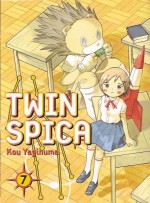
Twin Spica volume 7


By Kou Yaginuma, translated by Maya Rosewood (Vertical)
ISBN: 978-1-935654-12-4

The yearning, imagination and anticipation of space travel, such a critical component of post-World War II society, is paramount to this inspiring manga series from Kou Yaginuma, who first captured the hearts and minds of the public with his poignant short story ‘2015 Nen no Uchiage Hanabi’ (‘2015: Fireworks’, published in Gekkan Comics Flapper magazine, June 2000).

Since then he has expanded and enhanced the subject, themes and characters into a major epic combining hard science and humanist fiction with lyrical mysticism and traditional tales of school-days and growing up.

2024AD: teenaged Asumi Kamogawa has always dreamed of going into space. From her earliest moments the lonely child gazed up at the stars with her imaginary friend Mr. Lion, especially at the twinkling glow of Virgo and the alluring binary star Spica. An isolated, serious child, she lived with her father, a common labourer who once worked for the consortium which built the rockets for Japan’s Space Program.

In 2010, when Asumi was a year old, the first Japanese launch ended in utter catastrophe when rocket-ship Shishigō (“The Lion”), exploded: crashing to earth in the city of Yuigahama. Hundreds were killed and many more injured, including Asumi’s mother. Maimed and comatose, the matron took years to die. The shock crushed her grieving husband and utterly traumatised infant Asumi.

In response to the disaster Japan set up an astronautics and space sciences training facilty and after years of struggle Asumi was accepted by the Tokyo National Space School. Slowly making friends like Shinnosuke Fuchuya (who used to bully her as child), jolly Kei Oumi, chilly Marika Ukita and spooky, ultra-cool style-icon and fashion victim Shu Suzuki, she daily moved closer to her unshakable dream of going to the stars.

Against all odds – she is small, physically weak and very poor – Asumi endures. She still talks with Mr. Lion, who might be the ghost of an astronaut who died on the Shishigō…

I blinked and somehow missed a couple of volumes of this supremely moving saga, so by way of experiment I’m reviewing this seventh book without knowing all that’s recently occurred, and I’m delighted to announce that there’s been progress but not enough to confuse new or lax readers…

The story begins as the still quite formal classmates join Asumi on a vacation to her childhood home in Yuigahama and uncover a mystery about standoffish Marika, who has discovered an unsuspected connection to the rebuilt city. She is doubly plagued by an illness she hides from her comrades and teachers as well as phantom memories which increasingly draw her to a secluded shrine dedicated to the disaster.

When Marika succumbs to her inner torment and wanders away to find the isolated commemoration she becomes dangerously lost and Asumi, pushed by her own ghosts, tracks her down just in time…

As they wait together to be found, deeper bonds are forged, some secrets are revealed and we are afforded a glimpse into the events prior to and just following the crash of the Shishigō. It becomes clear that both girls are afflicted with the same unquenchable need to escape the Earth…

Asumi’s father Tomoro Kamogawa is a no fan of the space program, having lost his wife, his engineering job and his pride to the race for space. In the wake of the catastrophe he was assigned by his bosses at the corporation who built the ship to lead the reparations committee.

Guilt-wracked and himself bereaved, the devastated widower had to visit and apologize to each and every survivor and victim’s grieving family. He raised his daughter alone, working two and often three menial jobs at a time for over a decade.

Now, his old engineering colleague Takahito Sano is one of Asumi’s Professors at the Space School and the men’s previous history and relationship is revealed. A possible cause of the crash is mooted as the five astronaut trainees bond in an atmosphere of unravelling secrets and too many persistent ghosts and memories…

The second half of the book concentrates on the students’ return to school and their next semester of training. Asumi has struck up a more than casual relationship with a boy in a park. He volunteers at a hospice and is trying to learn the harmonica so that he can play to an old woman with dementia. He reminds Asumi of a sickly High-school friend named Shimazu…

Diffidently bonding, the boy tells her of a Sunday concert he’s playing at a week hence and she promises to be there…

Meanwhile at school the latest test of strength, ingenuity and fortitude finds the class divided into teams and transported to a decommissioned prison. Their task: to break free within seven days. Asumi convinces the teachers to drive them back to the city early if they all finish the task before Sunday…

However, even with things working her way there’s a hitch and only terse, unpredictable Fuchuya can help the girl he spends so much time studiously annoying and ignoring – if he can be bothered…

This volume also contains two more bittersweet autobiographical ‘Another Spica’ vignettes from author Yaginuma’s days as a part-time server on a soft-drink stand in a theme park; both delightfully painful accounts of amorous timidity, deep yearning, over-thinking and unrequited young love

All these gloriously heady confections initially appeared in 2004-2005as Futatsu no Supika 7 and 8 in the Seinen manga publication Gekkan Comics Flapper, targeted at male readers aged 18-30, but this ongoing, unfolding beguiling saga is perfect for any older kid with stars in their eyes…

Twin Spica ran for eight enchanting years (September 2001-August 2009): sixteen volumes tracing the orbits of Asumi and her friends from callow students to competent astronauts and the series has spawned both anime and live action TV series.

This delightful serial has everything: plenty of hard science to back up the savvy extrapolation, an ever-more engaging cast, enduring mystery, tender moments, isolation and teen angst and true friendships; all wrapped up in a joyous coming-of-age drama with supernatural overtones and masses of sheer sentiment.

Utterly defining the siren call of the Starry Reaches for a new generation (and the older ones too) Twin Spica is quite simply too good  to miss…

These books are printed in the Japanese right to left, back to front format.

© 2011 by Kou Yaginuma/Media Factory. Translation © 2011 Vertical, Inc. All Rights Reserved.

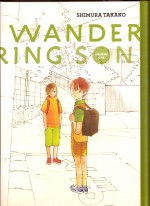
Wandering Son Book 1


By Shimura Takako, translated by Matt Thorn (Fantagraphics Books)
ISBN: 978-1-60699-416-0

Huge fan though I am of the ubiquitous digest-sized monochrome format that makes up the greatest part of translated manga volumes, there’s a subtle enhanced superiority to these hearty and satisfyingly substantial oversized hardback editions from Fantagraphics’ new manga line (see also Moto Hagio’s A Drunken Dream and Other Stories) that just adds extra zest to any work of pictorial narrative. Especially effective is this second intriguing offering which follows two youngsters experiencing the most difficult times of their lives…

Shuichi Nitori is a boy freshly transferred into a new school. He’s starting Fifth Grade and on the cusp of puberty. He’s also in a bit of a quandary. Slim, androgynous and, let us be frank, rather pretty, he is constantly thinking about wearing girls clothes…

On his first day he is befriended by Yoshino Takatsuki; a tall, burly tomboy who harbours similar secret yearnings. Her instinctive friendliness towards Shuichi is shared by pretty Saori Chiba, who is happy with her own gender but troubled in almost everything else. Always over-eager to please, she is a ball of inexplicable guilty feelings and even at her young age is considering becoming a Christian…

From the start both girls encourage Shuichi to submit to his urges. Yoshino’s clueless mother keeps buying dresses which the despairing daughter gives to her confused new pal, whilst Saori, also acutely aware of the Nitori boy’s underlying otherness, actively encourages him to cross-dress, even buying him an extravagant frock for his birthday, which almost kills their budding friendship stone-dead.

It is Saori who successfully suggests that the unsuspecting class perform The Rose of Versailles as their end-of-term play with all the girls playing the male roles – and vice versa…

(The Rose of Versailles is a monumentally popular Shōjo manga tale and later, movie and musical, by Riyoko Ikeda which tells the story of Lady Oscar: a girl raised as a man by her soldier father who eventually became a dashing Palace Guard and the darling of Marie Antoinette’s Court.)

Both Shuichi and Yoshino are hard-pressed to deny their overwhelming mutual need: boy wants to be girl and girl, boy. Inevitably the need proves too great and both succumb. Yoshino has her hair cut and goes out in her brother’s school uniform only to be chatted up by an older woman in a burger bar. Shuichi’s periodic capitulations are less public, but increasingly important to his happiness and wellbeing – and to be honest – he does make an astonishingly pretty little girl, more even than Roger Taylor in that Queen Video – but utterly pure, innocent and raunch-free…

Nevertheless, no matter how much Shiuchi and Yoshino wish they could exchange gender, time and biology inexorably march on and the changes of puberty are causing their treacherous bodies to horrifyingly betray them…

From any other culture this type of story would be crammed with angst and agony: gratuitously filled with cruel moments and shame-filled subtext, but Takao Shimura’s genteel and winningly underplayed first volume in this enchanting school saga (which began in Comic Beam monthly in December 2002, has been collected in eleven volumes and is still going strong) is resplendent with refined contentment, presenting the history in an open-minded spirit of childlike inquiry and accepting optimism that turns this book into a genuine feel-good experience.

But of course there is more to come in the distressingly-difficult futures of Shuichi and Yoshino…

This moving and gently enticing volume also includes a helpful watercolour character chart, a pronunciation guide for Japanese speech and ‘Snips and Snails, Sugar and Spice’, a fantastically useful guide to Japanese honorifics as used in Wandering Son, by translator Matt Thorn which explains the social, gender and age ranking and positions so ingrained in the nation’s being. Trust me, in as hide-bound and stratified a culture as Japan’s, this background piece is a complete necessity…

The comics portion of this volume is printed in the traditional back-to-front, right-to-left format.

© 2003 Takako Shimura. All rights reserved.

Speed Racer Classics


By Tatsuo Yoshida, translated by Nat Gertler (Now Comics)
ISBN: 0-70989-331-34

During the 1960s when Japanese anime was first starting to appear in the West, one of the most surprising television hits in America was a classy little cartoon series entitled Speed Racer. It first aired in 1967-1968 (52 high velocity episodes) and back then nobody knew the show was based on and adapted from a wonderful action/science fiction/sports comic strip created by manga pioneer Tatsuo Yoshida in 1966 for Shueisha’s Shōnen Book periodical.

The comic series was itself a recycled version of Yoshida’s earlier racing hit ‘Pilot Ace’.

The original title ‘Mach Go Go Go’ was a torturously multi-layered pun, and played on the fact that boy-racer Gō Mifune – more correctly Mifune Gō – drove the super-car Mach 5. “Go” is the Japanese word for five and a suffix applied to ship names whilst the phrase Gogogo is the usual graphic sound effect for “rumble”. All in all, the title means “Mach-go, Gō Mifune, Go!” which was adapted on US screens as “Go, Speed Racer, Go!”

In 1985 Chicago-based Now Comics took advantage of the explosion in comics creativity to release a bevy of full-colour licensed titles based on popular nostalgic icons such as Astro Boy, Green Hornet, Fright Night and Ghostbusters, but started the ball rolling with new adventures of Speed Racer.

The series was a palpable hit and in 1990 the company released this magical selection of Yoshida’s original stories in a beautiful monochrome edition graced with a glorious wraparound cover by Mitch O’Connell. It was probably one of the first manga books ever seen in American comic stores.

Although the art and stories are relatively untouched the large cast, (family, girlfriend, pet monkey and all) are called by their American identities, but if you need to know the original Japanese designations and have the puns, in-jokes and references explained, there are many Speed Racer websites to consult.

Pops Racer is an independent entrepreneur and car-building genius estranged from his eldest son Rex, a professional sports-car driver. Second son Speed also has a driving ambition to be a pro driver (we can do puns too, you know) and the episodes here follow the family concern in its rise to success, all peppered with high drama, political intrigue, criminal overtones and high octane excitement (whoops!: there I go again)…

The action begins with ‘The Return of the Malanga’ as, whilst competing in the incredible Mach 5, Speed recognises an equally unique vehicle believed long destroyed whilst running this same gruelling road-race. The plucky lad becomes hopelessly embroiled in a sinister plot when he learns that the driver of the resurrected car crashed and died in mysterious circumstances years ago and now all the survivors of that tragic incident are perishing in a series of fantastic “accidents”…

Are these events the vengeance of a restless spirit or is there an even more sinister explanation…?

In ‘Deadly Desert Race’ the Mach 5 is competing in a trans-Saharan rally when Speed is drawn into a personal driving duel with spoiled Arab prince Kimbe of Wilm. When a bomb goes off young Racer is accused of attempting to assassinate his rival and has to clear his name and catch the real killer by traversing the greatest natural hazard on the planet in a spectacular competition and a blistering military battle…

After qualifying for the prestigious Eastern Alps competition the young ace meets the mysterious Racer X: a masked driver with a shady past who has a hidden connection to the Racer clan. ‘This is the Racer’s Soul!’ reveals the true story of Pops’ conflict with Rex Racer when criminal elements threatened to destroy everything the inventor stood for.

After the riveting race action and blockbusting outcome, this volume concludes with a compelling mystery yarn as in ‘The Secret of the Classic Car’ Speed foils the theft of a vintage vehicle and is sucked into a criminal plot to obtain the lost secret of automotive manufacture hidden by Henry Ford.

When ruthless thugs kidnap Speed, Pops launches into action and the saga culminates in a devastating duel between rival super-cars…

These are delightfully magical episodes of grand, old-fashioned adventure, perfectly rendered by a master craftsman and worthy of any action fan’s eager attention, so even if this particular volume is hard to find, other editions and successive collections from WildStorm and Digital Manga Publishing are still readily available.

Go, Fan-boy reader! Go! Go! Go!
Speed Racer ™ and © 1988 Colour Systems Technology. All rights reserved. Original manga © Tatsuo Yoshida, reprinted by permission of Books Nippan, Inc.

Kingdom Hearts: Chain of Memories


Adapted by Shiro Amano translated by (TokyoPop)
ISBN: 978-1-59816-67-37-8

Regular readers (if any of you are still alive out there and not bored to death by my pithy ramblings) will already know that I am utterly immune to computer and video games. Nevertheless the industry has generated some intriguing comics material and occasionally I’ll take a peek at what you youngsters are spending your cash on…

Kingdom Hearts is a series of games which stars a new young hero named Sora working in combination with characters and scenarios from Disney’s globe-girdling cinematic canon and elements of the Fighting Fantasy electronic franchise.

This plucky lad travelled to different realms trying to rescue his two best friends Riku and Kairi who had fallen into the cracks between worlds after a wave of Darkness enveloped all the myriad worlds of creation and wicked creatures named The Heartless were unleashed on the kid’s idyllic land of Destiny Islands.

Once the many Realms were separate; barred to each other by Dark Doorways, with a single Chosen One who carried an ultimate key to all locks, able to pass easily between them.

In his quest Sora was joined by Donald Duck, Goofy and Jiminy Cricket who were similarly searching for their lost King Mickey. During the saga Sora came into possession of the fabled Keyblade which can hurl back the Heartless and unlock all doors…

The comic tie-in Kingudamu Hātsu began in 2003 as a serial in Square Enix’s Japanese Monthly Shōnen Gangan before making the inevitable jump to book collections. Subsequent game releases have been similarly incorporated into the print adventures.

Kingdom Hearts: Chain of Memory – which bridges the gap between the first and second games – opens with Riku and Mickey having sacrificed themselves to keep Ansem, the mastermind behind the chaos, sealed behind the  Doorway to Darkness (trapping themselves there as well) and Sora, Jiminy, Donald and Goofy still searching for a way to rescue them.

In their travels the questers encounter a mysterious stranger who directs them to the Castle Oblivion, but on entering they find that the eerie citadel is stealing their memories, making the shadowy stranger’s confusing predictions and warnings even harder to decipher…

Unaware that they are being manipulated by a shady cabal called Organization XIII, the assembled heroes travel to more incredible worlds with the aid of “Memory Cards” arriving in seedy Traverse Town where the heroic Leon helps them defeat a marauding band of Heartless, after which they are accosted and tested by the sinister Axel before arriving in the Arabian town of Agrabah just in time to assist Aladdin and Princess Jasmine in their struggle against the nefarious Jaffar…

Meanwhile on the other side of the Dark Divide Riku is being tempted and tested by the forces of Evil, but at least he has the indomitable strength of the ghostly King Mickey to help him resist the terrors and seductions of the Disney witch Maleficent and the charismatic Ansem…

Fast-paced and engaging, this tale offers some fascinating moments for fans of classic Disney movies and the Fighting Fantasy universe, but generally it reads like a computer game (probably, to be fair,  Shiro Amano’s intention and brief) so if you’re a narrative purist the ride is likely to feel confused, bumpy and little information-intense in all the wrong places.

If you’re open-minded and clear-headed there’s joy to be gleaned from this peculiar all-ages tome but I rather suspect that more traditional fans might prefer to leave their assorted media unalloyed and sedately separated…
Original manga by Shiro Amano/Enterbrain Inc. © Disney. Characters from Final Fantasy © 2005 Square Enix Co., Ltd. All Rights Reserved. English translation © 2006 TokyoPop Ltd.

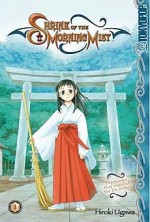
Shrine of the Morning Mist volume 1


By Hiroki Ugawa, translated and adapted by Jeremiah Bourque & Hope Donovan(TokyoPop)
ISBN: 978-1-59816-343-4

Most manga can be characterised by a fast, raucous and even occasionally choppy style and manner of delivery but the first volume of Hiroki Ugawa’s atmospheric supernatural thriller and moody saga of young love takes its time to get all the elements in play rather than simply steaming in all guns blazing.

Set in the city of Miyoshi in Hiroshima Prefecture (noted for its shrines and beautiful mist-draped landscapes) Asagiri no Miko or Shrine of the Morning Mist first appeared as a serial in the monthly periodical Young King Ours, running eventually to five volumes of eerie mystery, romance comedy and demonic action.

The saga opens here in traditional portentous manner and carefully unfolds the story of young Yuzu Hieda, one of three sisters who are hereditary Miko (a combination of shamans, mediums and priestesses attached to Shinto shrines and temples) attending to the local places of worship.

The sisters are especially gifted with special powers to combat the supernatural threats that menace the locality.

Little more than a teenager herself, schoolgirl Yuzu is troubled by the return of her childhood sweetheart and cousin Tadahiro Amatsu who, after five years away, has come home only to be targeted by evil forces. Despite being teased by sisters Tama and Kurako Yuzu accompanies them to the railway station just in time to save the lad from a sinister, sorcerous old man obsessed with the boy’s blood.

Invited to stay in the Miko’s home the withdrawn boy is disquieted by the teasing and references to his past relationship with Yuzu, but the father of the house proves to be a far-more unforgiving prospect…

Mystic forces are gathering round the introspective, solitary boy – with repercussions felt as far away as Tokyo – and over their dad’s objections Tadahiro is pressured into staying at the Hieda home where he can be properly protected. However next morning when the girls are at school a monolithic, cyclopean demon attacks the house. The assault is instantly perceived by Yuzu who dashes back to save him only to find her long-absent mother already there, having driven off the dark “kami”.

Well, one of them, at least…

Typically even Mother Miyuki thinks Tadahiro and Yuzu are a perfect, predestined couple…

With questions swirling about him, such as “why is everybody so interested in his blood” and “whatever happened to his own parents” the shell-shocked Tadahiro is blissfully unaware that the Miko are forming a protective Council around him, but even he knows something is up when the dark newcomer Koma introduces herself and reveals that she intimately knew his long-departed father…

To be continued…

This uncharacteristically slow-paced, contemplative and almost elegiac tale mystery was partially inspired by a classical tale recorded on the Inō Mononoke scroll and Hiroki Ugawa’s beautiful illustration perfectly captures a sense of brooding ancient powers at war, even during the most juvenile set-piece moments of awkward young romance and generational embarrassment comedy.

A slightly off-beat but intriguing tale for older readers, this black and white volume is printed in the Japanese right-to-left, back to front format.
© 2001 Hiroki Ugawa. All rights reserved. English text © 2006 TokyoPop inc.

The Agents


By Ben Dunn & Kevin Gunstone (AP Pocket Manga)
ISBN: 1-932453-64-4

After decades of homegrown comics product America finally began to grow aware of other country’s graphic treasures through of all things television, when in the late 1960s imported cartoons from Japan first began appearing as part of Saturday morning programming. With shows like Astroboy, Marine Boy, Speed Racer and others reshaping a nation’s most malleable minds, it wasn’t too long before Western anime lovers also branched out into the scrupulously stylised world of manga too…

By the 1980s translated works were increasingly dominating the US and world markets and devotees also found a burgeoning and impressive subgenre market of cross-cultural, fan-turned-pro material we now know as OEL (“Original English Language”) or Amerimanga.

Probably the most adept and successful of these new creators is Ben Dunn, who was born in Taiwan in 1964, where he was exposed early and often to the fabulous alternatives of the East, before returning to Kentucky and Texas. He founded his own publishing house Antarctic Press in 1984 during the first days of the black and white comics boom, and with both timing and raw talent on his side created a series of wonderful trans-Pacific series which combined the best of American and Japanese art style and storytelling philosophy.

Among his best known creations are Ninja High School and Warrior Nun Areala and Marvel tapped his expertise when they launched their own “Mangeverse” sub-imprint in 2000.

A man of diverse interests, Dunn also cites the fabulous Film and TV fantasy adventures of the Swinging Sixties as a major interest and influence, as can be seen in this pocket collection of a six-issue miniseries he produced with writer Kevin Gunstone for Image in 2004.

The Agents is set in an alternative future: a glorious and outrageous homage to Thunderbirds, Joe 90, Captain Scarlet, The Prisoner, Green Hornet, and such superspy stalwarts as Derek Flint, James Bond, John Steed & Emma Peel and Lady Penelope CreightonWard as well a dozens of lesser lights from that unforgettable age of heroes…

The action opens in ‘You Only Live Once’ as thirty years from now veteran agent Nigel Cord is called back to active service when the only super-villain to have ever outwitted him makes the world an incredible offer.

Three decades ago criminal mastermind Professor Daedalus nuked Washington DC and Moscow and took over Paraguay in the aftermath. With both global Super Powers reeling Great Britain stepped in to assume the role of World Policeman and civilisation has been in a spiral of escalating scientific terrorism ever since. Now the dying megalomaniac is offering his technological marvels in return for one last confrontation with his arch nemesis…

Meanwhile irreplaceable Boy Savant Mike 70 has gone missing and masked sidekick Haiku, without the fortifying influence of his mentor the Red Wasp is losing his edge in the unceasing battle to reclaim the streets of New York from gangsters and anarchists whilst spymaster Lady Pippa seems intent only on drinking herself to death and bedding the new recruits ‘On His Majesty’s Secret Agency’…

There are other factors in play such as the deadly C.A.B.A.L. assassin Kristal Veil and her increasingly erratic paymasters, whilst secretive crisis-management organisation the Tomahawks use advanced technology to fight disasters but do nothing to fix the political inconsistencies which cause them.

‘The Spy Who Saved Me’ finds Cord and Veil as guests of the dying Daedalus whilst the C.A.B.A.L. war among themselves and ‘Her Majesty’s Secret Agent’ reveals that the New World Order is riddled with moles and traitors…

With global Armageddon minutes away the action and intrigue accelerates to a fatal climax in ‘Thundercrack’ before ‘Our Man Cord’ finally saves the day – if not the status quo…

With all such nostalgic pastiches of bygone glories there’s an overwhelming temptation to tweak the source material for modern consumption – or perhaps just to show how clever we all are these days – but The Agents generally resists that urge, preferring to present a full-on, exuberant and magically honest appreciation of great times gone by.

Drawn in monochrome manga style but still genuinely Vista-Visioned and happily Super-Marionated, this lost delight might just be the best paean to lost days any wistful, thrill-starved baby-boomer could desire… and it’s even available as an ebook.

Story © Kevin Gunstone. Art © Ben Dunn. All rights reserved.

The Story of Lee volume 1


By Seán Michael Wilson & Chie Kutsuwada (NBM/ComicsLit)
ISBN: 978-1-56163- 594-8

Here’s a lovely simple treat for romantics everywhere and manga fans in particular and, like the subject matter itself, the product of more than one country. Written by British émigré and current resident of Japan Seán Michael Wilson and illustrated by Manga Shakespeare artist Chie Kutsuwada, The Story of Lee follows the budding romance of a dedicated but restless Hong Kong girl as she meets and falls for a young Scottish poet and teacher.

Lee is a young woman with frustrated dreams dutifully working in her father’s shop in Hong Kong. The situation is uncomfortable: the elder means well, but he disapproves of almost everything she does and is not reluctant to tell her so. Even as he chides and disparages Lee his constant pushing for her to achieve something whilst staying true to his old-fashioned ideas is pulling her apart. Moreover, Wang, the nice, proper Chinese boy he perpetually and insistently forces upon her, is creepy and just turns her off.

Lee has a secret: she is a closet poet and besotted with western culture, particularly pop music. In these unwelcome fascinations she is clandestinely supported by her frail and aging grandmother and her unconventional Uncle Jun, a globe-trotting playboy who long ago abandoned convention and tradition to follow his dreams to America.

Lee is 24 and being gradually worn away when the gorgeous temporary teacher Matt MacDonald wanders into the store. He is Scottish; polite, charming, exotic and, as Lee discovers when empting the wastepaper basket, a sensitive and talented poet…

Soon Lee is defying her father as her relationship with Matt inexorably deepens, but when tragedy strikes her life is further complicated as Matt prepares to leave for home. And then he drops the bombshell and asks her to go with him…

Never strident but compellingly seditious, this charming tale uses the powerful themes of cultural differences, mixed-race-relationships, family pressures and the often insurmountable barrier of generational gulf warfare to weave an enchanting tale of desire, duty and devotion.

It all ends on a gentle cliffhanger and I can’t wait to see how it all resolves in the next volume… So will you when you pick up on this mature, addictive story.

©Seán Michael Wilson & Chie Kutsuwada.