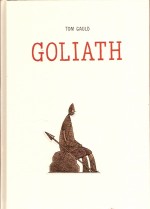
Goliath


By Tom Gauld (Drawn & Quarterly)
ISBN: 978-1-77046-065-2

Everybody knows the story of David and Goliath. Big, mean evil guy at the head of an oppressive army terrorising the Israelites until a little boy chosen by God kills him with a stone from his slingshot.

But surely there’s more to it than that…?

In this supremely understated and gentle retelling we get to see what the petrifying Philistine was actually like and, to be quite frank, history and religion have been more than a little unkind…

Like most really big guys Goliath of Gath is a shy, diffident, self-effacing chap. The hulking man-mountain is an adequate administrator but fifth worst swordsman in the army, which has been camped in opposition to the Hebrew forces for months. Moreover, the dutiful, contemplative colossus doesn’t even have that much in common with the rough-and ready attitudes of his own friends…

When an ambitious captain gets a grand idea he has the towering clerk outfitted in terrifying brass armour and orders him to issue a personal challenge to the Israelites every day.

“Choose a man, let him come to me that we may fight.

If he be able to kill me then we shall be your servants.

But if I kill him then you shall be our servants.”

The plan is to demoralise the foe with psychological warfare: grind them down until they surrender. There’s no reason to believe that Goliath will ever have to actually fight anybody…

Elegiac and deftly lyrical this clever reinterpretation has literary echoes and overtones as broadly disparate as Raymond Briggs and Oscar Wilde and as it gently moves to its sad and inescapable conclusion the deliciously poignant, simplified line and sepia-toned sturdiness of this lovely hardback add a subtle solidity to the sad story of a monstrous villain who wasn’t at all what he seemed…

Tom Gauld is a Scottish cartoonist whose works have appeared in Time Out and the Guardian. He has illustrated such children’s classics as Ted Hughes’ The Iron Man and his own books include Guardians of the Kingdom, 3 Very Small Comics, Robots, Monsters etc., Hunter and Painter and The Gigantic Robot. You can see more of his work at www.tomgauld.com
© 2012 Tom Gauld. All rights reserved.
This book is scheduled for release in mid-March 2012. For book signing/tour dates please consult our Noticeboard or the author’s own website.

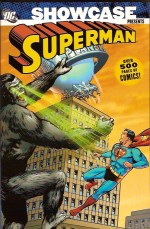
Showcase Presents Superman volume 2


By Otto Binder, Jerry Siegel, Jerry Coleman, Bill Finger, Wayne Boring, Al Plastino, Curt Swan & various (DC Comics)
ISBN: 978-1-4012-1041-0

Although we all think of Jerry Siegel and Joe Shuster’s iconic creation as the epitome of comicbook creation, the truth is that very soon after his launch in Action Comics #1 Superman became a fictional multimedia star in the same league as Mickey Mouse, Popeye, Tarzan and Sherlock Holmes.

Far more people have seen or heard the Man of Steel than have ever read him – and yes, that does include the globally syndicated newspaper strips. By the time his 20th anniversary rolled around he had been a regular on radio, starred in a series of astounding animated cartoons, a novel by George Lowther and two movies, He was a perennial success for toy and puzzle manufacturers and had just ended his first smash live-action television serial. In his future were three more (Superboy, Lois & Clark and Smallville), a stage musical, a franchise of stellar movies and an almost seamless succession of games, bubblegum cards and TV cartoons beginning with The New Adventures of Superman in 1966 and continuing ever since. Even Krypto got in on the small-screen act…

However, that’s not all there is to these gloriously engaging super-sagas culled from the Metropolis Marvel’s lead feature in Action Comics #258-277 and the all-star sagas from Superman #134-145 (reliving the period November 1959 to May 1961 and including selected snippets from Superman Annuals #1& 2) presented in crisp, clean black and white for this sterling second Showcase Presents collection.

During the 1950s, even as his back-story was expanded and elaborated, Superman had settled into an ordered existence. Nothing could really hurt him, nothing ever changed, and pure thrills seemed in short supply. With the TV show concentrating on the action, the Comics-Code-hamstrung funnybook writers increasingly concentrated on supplying wonder, intrigue, imagination and, whenever possible, a few laughs as well…

The wholesome intrigue and breathtaking fantasy commence here with Action Comics #258’s ‘The Menace of Cosmic Man’ a sharp mystery written by Bill Finger and illustrated by Wayne Boring & Stan Kaye, wherein an impoverished European dictatorship suddenly announced it had its own all-powerful costumed champion; drawing Lois Lane and Clark Kent into a potentially deadly investigation, whilst #259 featured the hallucinogenic thriller ‘The Revenge of Luthor!’ by Jerry Siegel & Al Plastino with a seemingly impossible clash between the Man of Tomorrow and his own younger self which almost led to certain death for Lois and school sweetheart Lana Lang…

Superman #134 (January 1960) was a full-length epic from Binder, Boring & Kaye as ‘The Super-Menace of Metropolis’ saw the Caped Kryptonian apparently undertake a concerted attack upon humanity, leading to shocking revelations in ‘The Revenge Against Jor-El!’ before a blockbusting final battle against an unsuspected Kandorian foe in ‘Duel of the Supermen!’

There was the usual heartbreak for Lois when Superman and Supergirl perpetrated a romantic hoax on the world to thwart a potential alien attack in ‘Mighty Maid!’ (Action #260, Binder & Plastino), whilst Superman #135 offered three Siegel stories beginning with the Untold Tale ‘When Lois First Suspected Clark was Superman!’, illustrated by Plastino, after which ‘Superman’s Mermaid Sweetheart!’ (Boring & Kaye) reintroduced Clark Kent’s college love Lori Lemaris in another superbly effective, bittersweet tear-jerker and ‘The Trio of Steel!’ found the Man of Steel again battling his most impossible foe in a classy conundrum (art by Plastino again).

Action #261 revealed the secret history of ‘Superman’s Fortress of Solitude!‘ by unravelling a cunning criminal plot against the indomitable hero in a clever yarn from Siegel, Boring & Kaye after which ‘When Superman Lost his Powers!’ (#262, Robert Bernstein, Boring & Kaye) saw the Daily Planet staff trapped in another dimension where the Man of Tomorrow was merely mortal and Lois’ suspicions were again aroused…

Superman #136 began with ‘The Man who Married Lois Lane!’ by Bernstein, Boring & Kaye wherein the frustrated reporter finally gave in and settled for a superman from the future – with tragic results – after which another Untold Tale revealed how the World first learned ‘The Secret of Kryptonite!’ (Jerry Coleman & Plastino) and how, as ‘The Super-Clown of Metropolis!’, Superman was blackmailed into attempting to make a millionaire misanthrope laugh in a smart character-driven yarn from Siegel & Plastino.

Action #263 introduced ‘The World of Bizarros!’ (Binder, Boring & Kaye) wherein the ghastly doppelganger used an imperfect duplicator machine to create an entire race in his broken image, whilst Superman #137, ‘The Super-Brat from Krypton!’, (Siegel, Curt Swan & John Forte) revealed how an energy duplicate of baby Kal-El was raised by criminals to become ‘The Young Super-Bully’ before finally confronting his noble counterpart in ‘Superman vs. Super-Menace!’

In Action Comics #264 a clash with the newly-minted artificial race culminated in the Caped Kryptonian almost becoming ‘The Superman Bizarro!’ in a tense thriller from Binder, Boring & Kaye whilst ‘The “Superman” from Outer Space!’ in #265 (Binder, Swan & Forte) recounted the tragically short career of Hyper-Man, planetary champion of Earth-like world Oceania, after which Superman #138 debuted ‘Titano the Super-Ape!’: a chimpanzee mutated into a Kryptonite-empowered King Kong clone with a devotion to Lois and big hatred for the Man of Steel: a beloved masterpiece by Binder, Boring & Kaye combining action, pathos and drama to superb effect.

‘Superman’s Black Magic!’ (Siegel & Plastino) balanced that epic tear-jerker with a clever yarn wherein the Action Ace instigated a devilish sting to catch superstitious crooks whilst ‘The Mermaid from Atlantis!’ by Siegel Boring & Kaye, saw the newlywed Lori Lemaris attempt to trick Superman into finally proposing to Lois.

Action #266 found the heroic hunk trapped on another world, ‘The Captive of the Amazons.’ Their queen wanted the Man of Tomorrow for her sixth husband and was prepared to destroy Earth to make her dreams come true…

Superman #139 began with ‘The New Life of Super-Merman!’ as the Caped Kryptonian and Lori schemed to marry Lois off to a nice, safe multi-millionaire who really loved her in a rather dated and potentially offensive tale from Siegel, Boring & Kaye, whereas ‘The Jolly Jailhouse!’ (Coleman & Plastino) is safe and solid entertainment, providing a light-hearted clash between a would-be dictator and the World’s Most Uncooperative political prisoner Clark Kent; after which ‘The Untold Story of Red Kryptonite!’ (Binder, Boring & Kaye) offered a dramatic dilemma, a redefinition of the parameters of the deadly crimson mineral, and plenty of thrills with the Man of Steel forced to risk deadly danger and lots of informative flashbacks to rescue a sunken submarine…

Binder, Boring & Kaye produced the spectacular two-part clash ‘Hercules in the 20th Century!’ and ‘Superman’s Battle with Hercules!’ (Action #267-268, and separated here by the cover of Superman Annual #1) as Luthor brought the Hellenic demi-god to Metropolis to battle the “evil king” Superman. Events turned even more serious when the legendary warrior fell for Lois and marshalled all the magical powers of the Olympians to destroy his unwitting rival…

Although later played for laughs, most of the earlier appearances of Superman‘s warped double were generally moving comi-tragedies, such as issue #140 which featured Binder, Boring & Kaye’s ‘The Son of Bizarro!’ wherein the fractured facsimile and his wife Bizarro-Lois had a perfect, human baby. The fast growing tyke had super-powers but was shunned by the populace of the world of monsters.

His simple-minded, heartbroken father had no choice but to exile his son in space where chance brought the lad crashing to Earth as ‘The Orphan Bizarro!’. Sent to the same institution where Supergirl resided, “Baby Buster” soon became a permanent headache for the Girl of Steel until a tragic accident seemingly mutated him and his distraught father came looking for him at the head of an angry army of enraged Superman duplicates. A devastating battle was narrowly avoided and a happy ending only materialised with the introduction of ‘The Bizarro Supergirl!’…

Action Comics #269 told a clever tale of identity-saving when Lois tricked Clark into standing before ‘The Truth Mirror!’ (Siegel, Swan & George Klein), whilst Superman #141 again showed the writer’s winning form in ‘Superman’s Return to Krypton!’ Illustrated by Boring & Kaye the epic Grand Tragedy revealed in ‘Superman Meets Jor-El and Lara Again!’ how an accident marooned the adoptive Earth hero in the past on his doomed home-world. Reconciled to dying there with his people, in ‘Superman’s Kryptonian Romance’ Kal-El found love with his ideal soul-mate Lyla Lerrol, only to be torn from her side and returned to Earth against his will in concluding chapter ‘The Surprise of Fate!’

This bold saga was a fan favourite for decades thereafter, and remains one of the very best stories of the period.

In Action #270 Binder, Swan, Forte provided a whimsical interlude in ‘The Old Man of Metropolis!’ as the Metropolis Marvel glimpsed his own twilight years whilst ‘Voyage to Dimension X!’ by Binder & Plastino in #271 saw him narrowly escape his greatest foe’s latest diabolical plot.

Superman #142 opened with ‘Lois Lane’s Secret Helper!’ by Binder & Kurt Schaffenberger, as faithful Krypto tried to play matchmaker whereas ‘Superman Meets Al Capone!’ saw the time-lost Man of Tomorrow clash with the legendary mobster (Binder, Boring & Kaye) before battling a wandering ‘Flame-Dragon from Krypton!’ with some helpful assistance from his best super-buddies in a sharp yarn from Siegel, Boring & Kaye.

Another prototype team-up featured in Action #272’s ‘Superman’s Rival, Mental Man!’ a clever criminal-sting caper by Siegel, Swan & Kaye, which centred around Lois’ unsuspected talents as comic strip creator, whilst over in Superman #143 ‘The Great Superman Hoax!’ (Bernstein, Boring & Kaye) saw a criminal try to convince Lois that he was actually the Man of Might. ‘Lois Lane’s Lucky Day!’ (Siegel & Forte) found the daring reporter busting a crooked carnival – with a little covert Kryptonian help – before ‘Bizarro Meets Frankenstein!’ by Binder, Boring & Kaye saw the befuddled duplicate invade Earth to prove he was the scariest monster of all time…

Action #273 had Superman turn the table on the pestiferous 5th Dimensional pixie by invading ‘The World of Mxyzptlk!’ in a light-hearted romp from Siegel & Plastino and next issue lose his abilities to Lois in ‘The Reversed Super-Powers!’ (Siegel & Schaffenberger.

Superman #144 led with the combative thriller ‘The Super-Weapon!’ by Siegel, Swan & Kaye, after which Siegel & Plastino revealed the Untold Tale of ‘Superboy’s First Public Appearance!’ before going on to describe the terrifying plight of Superman, Supergirl and Krypto as ‘The Orphans of Space!’

Action #275 saw a classic clash with alien marauder Brainiac whose latest weapon was ‘The Menace of Red-Green Kryptonite!’ (Coleman, Boring & Kaye) after which Superman #145 opened with a salutary fable by Siegel, Swan & Kaye proving why Lois couldn’t be trusted with ‘The Secret Identity of Superman!’ ‘The Interplanetary Circus!’, by Bernstein & Plastino, then held Earth hostage until the Man of Steel agreed to join them, but even after outwitting those scoundrels Superman was utterly flummoxed by the incredible events of ‘The Night of March 31st!’ – a deliciously surreal, whimsical and bizarre mystery-puzzle from Siegel, Swan & Sheldon Moldoff.

This second superb collection concludes with the stirring cover of Superman Annual #2 and the scintillating double-page Map of Krypton by Siegel & Plastino which enflamed the imagination of every kid who ever saw it…

Superman has proven to be all things to all fans over his decades of existence, and with the character undergoing another radical overhaul at this time, these timeless tales of charm and joy and wholesome wit are more necessary than ever: not just as a reminder of great tales of the past but as an all-ages primer of the wonders still to come…

© 1959, 1960, 1961, 2006 DC Comics. All Rights Reserved.

Explorer – The Mystery Boxes


By various, edited by Kazu Kibuishi (Amulet)
ISBNs: HB 978-1-4197-0010-1   PB 978-1-4197-0009-5

Here’s another superb entry into the burgeoning Young Adults graphic novel market that offers a wonderful alternative to Fights ‘n’ Tights furores and interminable extended storylines that will appeal to fans of the art form and fantasy freaks alike.

Edited by Kazu Kibuishi who created the impressive sorcerous saga Amulet, this captivating anthology collection offers seven thought-provoking and decidedly different tales by a coterie of animators and comics-creators all turning their fertile imaginations and illustrative talents to expanding and elucidating upon the core concept of an enigmatic container…

The wonderment begins with a spooky fable by Emily Carroll wherein a solitary and much put-upon girl discovers a very special doll and far more than she bargained for ‘Under the Floorboards’…

‘Spring Cleaning’ by Dave Roman & Raina Telgemeier is a wry and jolly escapade with lazy Oliver finally picking up his toys and discovering a puzzle box he didn’t know he owned. When he tries to sell the thing online all manner of very strange and insistent people start making outrageous and impossible offers…

Jason Caffoe follows a more tradition route as his young warrior overcomes all manner of fantastic odds to win ‘The Keeper’s Treasure’. Of course not everybody agrees on what constitutes fabulous wealth…

‘The Butter Thief’ by Rad Sechrist sees a little girl discover her grandmother’s ineffable wisdom and magical practicality after freeing a thieving spirit from a kitchen trap and undergoing a startling metamorphosis whilst ‘The Soldier’s Daughter’ (by Stuart Livingston with Stephanie Ramirez) reveals the true cost of vengeance as young Clara picks up her murdered father’s sword and mission. Mercifully a mysterious stranger shows her another path in his enthralling cask of wonders…

Johane Matte & Saymone Phanekham display stunning comic timing and astounding fast-paced imagination in the wicked tale of ‘Deet’; a much-maligned junior intergalactic shipping clerk dealing with workplace bullying in the most effective manner conceivable after which editor Kazu Kibuishi brings the perplexing odyssey of a spectacular close with ‘The Escape Option’ as a troubled boy finds an incredible artefact and is presented with an impossible, life-changing, world altering choice…

These dark, beguiling, funny and enticing adventures blend traditional story elements with an inspired eye for the contemporary kid’s broad spectrum of fascinations: warriors, aliens, robots, cartoon animals, rocket-ships, monsters, isolation, alienation, magical quests and glorious battles; all delivered with sly wit and breathtaking exuberance to create a splendid portmanteau rollercoaster ride of laughter, tears, terrors and triumphs.

This a perfect introduction or reintroduction to comics for kids of all ages looking for something beyond the ordinary and hopefully the start of a long line of thematic sequels…

Explorers is scheduled for a March 2012 release in the UK but available for pre-order now in both hardback and paperback editions.

Cover and The Escape Option © 2012 Kazu Kibuishi. Under the Floorboards © 2012 Emily Carroll. Spring Cleaning © 2012 Dave Roman & Raina Telgemeier. The Keeper’s Treasure © 2012 Jason Caffoe. The Butter Thief © 2012 Rad Sechrist. The Soldier’s Daughter © 2012 Stuart Livingston. Whatzit © 2012 Johane Matte. Published by Amulet Books, an imprint of Abrams. All rights reserved.

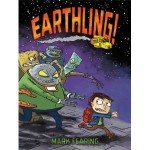
Earthling!


By Mark Fearing, with Tim Rummel; coloured by Ken Min (Chronicle Books)
ISBNs: HB 978-0-81187-106-8   PB 978-1-45210-906-0

In the past I’ve banged on about the dearth of good comics for kids – as opposed to the vibrant and thriving children’s prose book markets or the slavish and impenetrable dead-end niche-genres and daunting cross-marketing of contemporary comicbooks – and at last, some interesting developments in strip-book publishing look like setting that imbalance to rights…

Earthling! is the first graphic novel by animator Mark Fearing (with some initial creative input from TV producer Tim Rummel) and tells the tale of solitary, nerdy lad Bud, dragged by his astronomer dad to the literal middle of nowhere to take up residence at the vast Von Lunar Radio Telescope Array in the dry wilds of New Mexico.

The place is weird and a little spooky, but with his Mum gone and his father preoccupied with work Bud’s getting used to coping on his own…

The real trouble starts the next morning when he dashes for the school bus. Late and in the middle of a storm Bud inadvertently stumbles into the wrong vehicle and finds himself stuck on a malfunctioning intergalactic shuttle taking a bunch of alien students to Cosmos Academy where all the kids in the Galactic Alliance are educated.

Being the new kid in school is always bad news, but when you’re the only one of your species…

Luckily geeky pariah Gort GortGort McGortGort takes Bud under his wing and steers him through the worst of the culture shock, but the human’s urgent desire to go home is countered by one overwhelming fact: Earth is the most feared planet in the Galaxy, its inhabitants are despised and reviled by every sentient race in creation and its spatial coordinates are a closely guarded secret…

Thinly disguised as a sporty, athletic Tenarian, Bud tries desperately to fit in and luckily fellow outcast Gort is determined to help him return home, but the Academy is almost as dangerous as an Earth school.

There are jocks and bullies and cliques everywhere, the cool sapients run everything and snarky sarcasm is a deadly threat at all times. Although there are some decent and friendly teachers, the robots, rogue or escaped science experiments and especially the cafeteria make daily life an incredible and potentially lethal prospect.

Moreover, Principal Lepton and his administration are brutal bureaucrats with an excessive punishment regime (this is one deep-space satellite school you do not want to be “expelled” from) who have a pretty cavalier attitude to student safety – or even survival – and a hidden agenda which involves using Academy resources to build super-weapons for use against Bud’s lost or hidden home-world…

Gradually though, the boy adjusts, even finding an unexpected flair for the terrifying null-gravity sport of ZeroBall, which is lucky as Gort has deduced that the immensely prestigious championship Tournament is being held tantalisingly close to the diabolical Planet Earth – close enough that a stolen space-pod could reach it, if by some miracle Bud’s team qualified for the finals…

Funny, thrilling, wildly imaginative and utterly engrossing, Earthling! blends elements of Tom Brown’s Schooldays with Joe Dante’s Explorers and Harry Potter’s best bits with the anarchic wit of Rocko’s Modern Life or Camp Lazlo to produce a delightfully compelling adventure yarn with endearing characters and a big, big payoff.

This is a book any sharp, fun-loving kid can – and should – read… and so should the rest of you…

Earthling! is scheduled for release in the UK February 2012 but available for pre-order right now in both hardback and paperback editions.

© 2012 by Mark Fearing. All rights reserved.

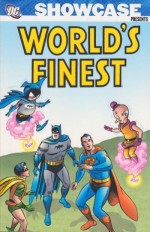
Showcase Presents World’s Finest volume 2


By Jerry Coleman, Bill Finger, Edmond Hamilton, Jim Mooney, Curt Swan, Dick Sprang & various (DC Comics)
ISBN: 978-1-84856-053-6

For decades Superman and Batman were the quintessential superhero partners: the “World’s Finest” team. They were friends as well as colleagues and the pairing made sound financial sense since DC’s top heroes could cross-pollinate and cross-sell their combined readerships.

This most inevitable of Paladin Pairings first occurred on the Superman radio show in the early 1940s, whilst in comics the pair had only briefly met whilst on a Justice Society of America adventure in All-Star Comics #36 (August-September 1947) – and perhaps even there they missed each other in the gaudy hubbub…

Of course they had shared the covers on World’s Finest Comics from the outset, but never crossed paths inside; sticking firmly to their specified solo adventures within. However once that Rubicon was crossed thanks to spiralling costs and dwindling page-counts the industry never looked back…

This second blockbusting black and white chronicle gathers their cataclysmic collaborations from World’s Finest Comics #112-145, spanning September 1960 to November 1964, just as the entire planet was about to go superhero crazy and especially Batman mad…

Issue #112 by Jerry Coleman, Dick Sprang & Sheldon Moldoff featured a unique and tragic warning in ‘The Menace of Superman’s Pet’ as a phenomenally cute teddy bear from space proved to be an unbelievably dangerous menace and unforgettable true friend. Bring tissues you big baby…

In an era when disturbing menace was frowned upon, many tales featured intellectual dilemmas and unavoidable pests. Both Gotham Guardian and Man of Steel had their own magical 5th dimensional gadflies and it was therefore only a matter of time until ‘Bat-Mite Meets Mr. Mxyzptlk’ in a madcap duel to see whose hero was best… with America caught in the metamorphic middle.

WF #114 found Superman, Batman and Robin shanghaied to the distant world of Zoron as ‘Captives of the Space Globes’ where their abilities were reversed but justice was still served in the end, after which ‘The Curse that Doomed Superman’ saw the Action Ace consistently outfoxed by a scurrilous Swami with Batman helpless to assist him…

Curt Swan & Stan Kaye illustrated #116’s thrilling monster mash ‘The Creature From Beyond’ as a criminal alien out-powered Superman whilst concealing an incredible secret, and all the formula bases were covered as Lex Luthor used ‘Super-Batwoman and the Super-Creature’ to execute his most sinister scheme against the World’s Finest heroes.

In #118 Sprang & Moldoff illustrated ‘The Creature that was Exchanged for Superman’ as the Man of Tomorrow was hijacked to another world so that a transplanted monster could undertake a sinister search and leaving the Dynamic Duo to fight a desperate holding action whilst ‘The Secret of Tigerman’ in #119 (and inked by Stan Kaye) found a dashing new hero in charge as the valiant trio attempted to outwit a sinister new criminal mastermind.

Veteran artist Jim Mooney began illustrating Coleman’s scripts in #120 starting with ‘The Challenge of the Faceless Creatures’ as amorphous monsters repeatedly siphoned off Superman’s powers for nefarious purposes after which the Gotham Gangbuster was eerily transformed into a destructive horror in the trans-dimensional thriller ‘The Mirror Batman’ and #122 (inked by Kaye) saw an alien lawman cause a seeming betrayal by the Dark Knight, leading to ‘The Capture of Superman’…

Zany frustration and magical pranks were the order of the day in #123 as ‘The Incredible Team of Bat-Mite and Mr. Mxyzptlk’ (Sprang & Moldoff) returned to again determine whose hero was greatest, whilst ‘The Mystery of the Alien Super-Boy’ (#124, illustrated by Swan & Moldoff) pitted the heroes against a titanic teenager with awesome powers and a deadly hidden agenda whilst ‘The Hostages of the Island of Doom’ (Mooney & John Forte) saw Batman & Robin used as pawns to compel Superman’s assistance in a fantastic criminal’s play for ultimate power…

Luthor’s eternal vendetta inadvertently created an immensely destructive threat in ‘The Negative Superman’ (#126, scripted by Ed Herron for Mooney & Moldoff) which stretched Batman and Robin’s ingenuity to the limit before ‘The Sorcerer From the Stars’ (by Coleman) challenged the heroes to stop his plundering of Earth’s mystic secrets whilst ‘The Power that Transformed Batman’ (#128, Coleman & Mooney) temporarily made the Caped Crusader an unstoppable menace.

Dave Wood, Mooney & Moldoff pitted the World’s Finest team against their greatest enemies in #129’s ‘Joker-Luthor, Incorporated!’ whilst Coleman & Mooney posed an intergalactic puzzle with devastating consequences for the heroes in ‘Riddle of the Four Planets!’ and Bill Finger, Sprang & Moldoff presented a stirring action thriller when the team inexplicably added a surplus and incompetent fourth hero to the partnership in ‘The Mystery of the Crimson Avenger’ from #131.

With Finger the new regular scripter, tense mysteries played a stronger part in the dramas, such as when Superman was forced to travel back in time to rescue ‘Batman and Robin, Medieval Bandits’ (art by Mooney) and clear their names of historical ignominy, whilst #133 found ‘The Beasts of the Supernatural’ (Mooney & Moldoff) leeching the Man of Steel’s power and the Gotham Guardians hard-pressed to fool the mastermind behind the attacks after which the heroes battled for their lives against an alien dictator and ‘The Band of Super-Villains’ (Mooney)

World’s Finest Comics #135 (August 1963, inked by Moldoff) was Dick Sprang’s last pencil job on the series and a great swansong as ‘Menace of the Future Man’ saw the heroes valiantly and vainly battling a time-tossed foe who knew their every tactic and secret, after which ‘The Batman Nobody Remembered’ (Mooney & Moldoff) offered a paranoid nightmare wherein the Dark Detective faced a hostile world which thought him mad, whilst ‘Superman’s Secret Master!’ (#137, Finger & Mooney) seemingly turned the Action Ace into a servant of crime until Batman deduced the true state of affairs…

Finger bowed out in #138 with ‘Secret of the Captive Cavemen’ as an alien spy’s suicide led the heroes back 50,000 years to stop a plot to conquer Earth after which Dave Wood provided an eerie sci fi thriller in ‘The Ghost of Batman’ (Mooney & Moldoff) and a classic clash of powers in #140’s ‘The Clayface Superman!’ (Mooney) as the shape-shifting bandit duplicated the Metropolis Marvel’s unstoppable abilities…

A new era dawned in World’s Finest Comics #141 (May 1964) as author Edmond Hamilton and artists Curt Swan & George Klein ushered in a more realistic and less whimsical tone in ‘The Olsen-Robin Team vs. “the Superman-Batman Team!”’ wherein the junior partners rebelled and set up their own crime-fighting enterprise: however there was a hidden meaning to their increasingly wild escapades…

In #142 an embittered janitor suddenly gained all the powers of the Legion of Super-Heroes and attacked the heroes out of frustration and jealousy in ‘The Composite Superman!’ after which the Dark Knight suffered a near fatal wound and nervous breakdown in ‘The Feud Between Batman and Superman!’ a condition cured only after a deadly and disastrous recuperative trip to the Bottle City of Kandor.

Super-villains were becoming more popular and #144 highlighted two of the worst when ‘The 1,000 Tricks of Clayface and Brainiac!’ almost destroyed the World’s Finest team forever and this stellar second collection ends on an enthralling high note when Batman was press-ganged to an alien ‘Prison For Heroes!’: not as a cell-mate for Superman and other interplanetary champions, but as their sadistic jailer…

These are gloriously clever yet uncomplicated tales whose dazzling style has returned to inform if not dictate the form for much of DC’s modern television animation – especially the fabulous Batman: the Brave and the Bold series – and the contents of this tome are a veritable feast of witty, charming thrillers packing as much punch and wonder now as they always have.
© 1960-1964, 2008 DC Comics. All Rights Reserved.
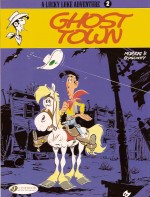
Lucky Luke volume 2: Ghost Town


By Morris & Goscinny, translated by Luke Spear (CineBook)
ISBN: 978-1-905460-12-0

It’s hard to think of one of Europe’s most beloved and long-running comics characters being in any way controversial, but when the changing times caught up with the fastest gun in the West (“so fast he can outdraw his own shadow”) and the planet’s most laconic cowboy moved with them, the news made headlines all over the world.

Lucky Luke is a rangy, good-natured, lightning fast cowboy who roams the fabulously mythic Old West, having light-hearted adventures with his horse Jolly Jumper and Rantanplan (“dumbest dog in the West” and a charming spoof of cinema canine Rin-Tin-Tin), interacting with a host of historical and legendary figures of the genre.

His continued exploits over more than 66 years have made him one of the best-selling comic characters in Europe, (78 collected books and more than 300 million albums in 30 languages thus far), with spin-off games, computer games, animated cartoon and even a plethora of TV shows and live-action movies.

He was created in 1946 by Belgian animator, illustrator and cartoonist Maurice de Bévère – AKA Morris – for the 1947 Annual (L’Almanach Spirou 1947) of Le Journal de Spirou, launching into his first weekly adventure ‘Arizona 1880′ on December 7th 1946.

Before then, while working at the CBA (Compagnie Belge d’Actualitiés) cartoon studio Morris met future comics super-stars Franquin and Peyo, and worked for weekly magazine Le Moustique as a caricaturist (to my eyes Lucky Luke looks uncannily like the young Robert Mitchum who graced so many mid-1940s B-movie Westerns).

He quickly became one of “la Bande des quatre”, or Gang of Four, which comprised the creators Jijé, Will and his old comrade Franquin, and who were the leading proponents of the loose and free-wheeling artistic style known as the “Marcinelle School” which dominated Spirou in aesthetic contention with the “Ligne Claire” style used by Hergé, EP

Jacobs and other artists in Tintin Magazine.

In 1948 the Gang (all but Will) visited America, meeting US creators and sightseeing, and Morris stayed for six years, meeting René Goscinny, scoring some work from the newly-formed EC sensation Mad and making copious notes and sketches of the swiftly vanishing Old West. That research would resonate on every page of his life’s work.

Working alone until 1955 when he reunited with Goscinny, Morris produced another nine albums worth of affectionate sagebrush parody before, working in perfect unison, Luke attained the dizzying heights of superstardom, commencing with ‘Des rails sur la Prairie’ (Rails on the Prairie), which began in Spirou on August 25th 1955.

In 1967 the straight-shooter switched teams, transferring to Goscinny’s own magazine Pilote with ‘La Diligence’ (The Stagecoach). Goscinny produced 45 albums with Morris before his death, from when Morris continued both alone and with fresh collaborators.

Morris died in 2001 having drawn fully 70 adventures, plus the spin-off adventures of Rantanplan, with Achdé, Laurent Gerra, Benacquista & Pennac taking over the franchise, producing another five tales to date.

Moreover, apart from that very first adventure Lucky, to appropriate a quote applied to the thematically simpatico Alias Smith and Jones “in all that time he never shot or killed anyone”…

Lucky Luke first appeared in Britain syndicated in the weekly comic Film Fun and again in 1967 in Giggle where he was renamed Buck Bingo. In all these venues as well as the numerous attempts to follow the English-language successes of Tintin and Asterix albums from Brockhampton and Knight Books, Luke had a trademark cigarette hanging insouciantly from his lip, but in 1983 Morris – no doubt amidst both pained howls and muted mutterings of “political correctness gone mad” – substituted a piece of straw for the much-travelled dog-end, which garnered him an official tip of the hat from the World Health Organization.

The most recent attempt to bring Lucky Luke to our shores and shelves comes from Cinebook, with Ghost Town the second of the 28 (and counting) available albums, originally collected in 1965 as La Ville fantôme, the 25th adventure and Goscinny’s 16th collaboration with the artist.

As Luke rides the range he encounters two tarred-and-feathered gamblers Denver Miles and Colorado Bill. Despite instantly assessing their scurrilous natures – and of course they do try to rob him – he gives them assistance and a ride to the nearest outpost of civilisation.

That happens to be the deserted mining town of Gold Hill where they encounter an embittered old miner dubbed Old Powell who chases them off at gunpoint.

A little further on they reach Bingo Creek where they discover the mad old coot was once the victim of a gold-salting scheme (hiding gold on worthless land and getting a sucker to buy it) but stubbornly refused to quit, convinced that somewhere in his mountain the motherlode still lay hidden…

Denver and Colorado are incorrigible crooks and after Lucky exposes their fleecing of the townsfolk the bent gamblers try to backshoot him, only to fall foul of Powell’s skill with a rifle…

Eternally grateful Lucky determines to befriend and assist the irascible old coot, despite his surly protests, whilst Denver and Colorado plan the perfect revenge by attempting to steal his mine and then re-salt it before selling it to some other sucker…

To this end they try buy up the claim, have Old Powell hanged for witchcraft, frame him for cattle-rustling and even plant the stolen cash-register from the saloon in his mine.

But they haven’t reckoned on the ingenuity of Lucky Luke; a man so swift and sharp that he can outdraw his own shadow… Against the masterful wits and wicked wits of our indomitable hero the gamblers are ultimately helpless in this splendidly intoxicating blend of all-ages action, slapstick and wry cynical humour.

Although the dialogue is still a bit dry in places, this is a grand old hoot in the tradition of Destry Rides again and Support Your Local Sheriff (or perhaps Paint Your Wagon, Evil Roy Slade or Cat Ballou are more your style?) superbly executed by master storytellers and a wonderful introduction to a unique genre for modern kids who might well have missed the romantic allure of the mythical Wild West.

And in case you’re worried, even though the interior art still has our hero chawin’ on that ol’ nicotine stick, trust me, there’s very little chance of anyone craving a quick snout, but quite a high probability that they’ll want more Lucky Luke Albums…
© Dargaud Editeur Paris 1971 by Goscinny & Morris. © Lucky Comics. English translation © 2006 Cinebook Ltd.

Captain Eo – Eclipse 3-D special

(The official 3-D comic book adaptation of the George Lucas 3-D musical motion picture directed by Francis Coppola)

By Tom Yeates (Eclipse)
No ISBN; ASIN: B00071AU66

With all this foofaraw and tarradiddle about 3D at the moment I thought I’d shamelessly cash in by reminding fans about the multi-dimensional comics venture Eclipse, Disney, the King of Pop and an absolute swarm of high-profile creative types worked on in this weird but undeniably spectacular item from the 1980s.

Speaking charitably, this is a comics adaptation of the 17-minute science fiction film designed to be shown in “4-D” (then cutting edge stereoscopic cinematography combined with in-theatre special effects such as teeth-rattling rigged seats, smoke, lasers and explosions) at Disney theme-parks around the world.

However, what you had in those theatres and pre-Imax venues (the film ran from 1986 into the 1990s and was briefly reinstated when Michael Jackson died in 2009) is a straight but incredibly expensive (apparently $30 million to produce at a cost-per-screen-minute of $1.76m) music video: a puff-piece, song-and-dance mini-musical designed to emulate and recapture the buzz the Thriller promo generated around the world – complete with a brace of songs and killer formation dance numbers – substituting star-ships for graveyards and cute aliens for zombies.

The film’s creative credits are formidable: produced by George Lucas, it was choreographed by Jeffrey Hornaday and Jackson, photographed by Peter Anderson, produced by Rusty Lemorande and written by Lemorande, Lucas & Francis Ford Coppola, who directed. Anjelica Huston played the villain…

Let’s talk about the 30-page comic…

The less than stellar Captain Eo and his anthropomorphically engaging crew of robots and cuddly extraterrestrials are tasked with delivering a gift to the ghastly tyrant Supreme Leader on her dystopian hell-world, a task complicated by their chummy ineptitude and her tendency to turn all visitors into trash cans and torture projects…

When Eo and Co. are seized, the ultra-cool hipster sees something decent buried within the evil queen and after defeating her Whip Warriors in highly stylised combat transforms her into a thing of serene beauty with the redemptive power of a perfectly choreographed interpretative rock-dance number…

Tom Yeates’ staggeringly beautiful art makes the very best of the weak story and derivative characters – even if he did have to draw an entire seven-page big musical closer – and whether you see the 3D package formatted by the genre’s guru Ray Zone as the blockbusting 432x282mm (or 17inches by 11 for all you Imperial Stormtroopers out there) tabloid format available at the theme parks and theatres or the regulation comicbook issue distributed to stores, if you can work the glasses you’re in for a visual treat of mind-blowing proportions. There was talk of a straight, monochrome non-3D version too but if it exists I’ve never seen it.

Gloriously flamboyant, massively OTT, but as great a piece of drawing as came out of the over-egged Eighties, Captain Eo is a truly intriguing book that might just grab any jaded reader who thinks there’s nothing new or different left to see…
Published by Eclipse Comics August 1987. Captain Eo ™ and © 1987 The Walt Disney Company. All rights reserved.

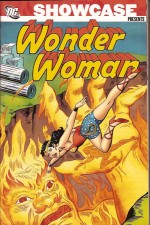
Showcase Presents Wonder Woman volume 3


By Robert Kanigher, Ross Andru & Mike Esposito (DC Comics)
ISBN: 978-1-84856-474-9

Wonder Woman was created by psychologist and polygraph pioneer William Moulton Marston – apparently at the behest of his formidable wife Elizabeth – and uniquely realised by Harry G. Peter just as the spectre of World War II began to affect America.

She debuted as a bonus in All Star Comics #8 (December 1941) before vaulting into her own cover-featured series in Sensation Comics a month later. An instant hit, she quickly won her own title (cover-dated Summer 1942).

Using the pen-name Charles Moulton, Marston scripted all her adventures until his death in 1947, whereupon Robert Kanigher took over the writer’s role. Venerable co-creator H. G. Peter continued on as illustrator until his death in 1958. Wonder Woman #97, in April of that year, was his last hurrah and the end of an era.

With the exception of Superman, Batman, Wonder Woman and a few anodyne back-up features, costumed heroes had all but died out at the end of the 1940s, replaced by merely mortal champions in a deluge of anthologised genre titles but Showcase #4 rekindled the public’s interest in costumed crime-busters with a new iteration of The Flash in 1956 and the fanciful floodgates opened wide once more…

Whilst re-inventing Golden Age Greats such as Green Lantern, Atom and Hawkman, National/DC gradually updated those hoary survivors who had weathered the backlash and the ever-resilient Amazing Amazon …

Artists Ross Andru & Mike Esposito, who illustrated every script in this all-ages compendium, had debuted as cover artists from #95, but with Wonder Woman #98 (May 1958) they took over the interiors as writer/editor Kanigher reinvented much of the original mythos, tinkering with her origins and unleashing her on an unsuspecting world in a fanciful blend of girlish whimsy, rampant sexism, strange romance, alien invasion, monster-mashing and utterly surreal (some would say-stream-of-consciousness) storytelling…

By the time of this collection, re-presenting issues #138-156 (May 1963-August 1965) of the Amazing Amazon’s adventures, the Silver Age revival of the superhero genre was in full swing and despite individual stories of stunning imagination and excellence the format and timbre of Wonder Woman was looking tired and increasingly out of step with the rest of National/DC’s gradually gelling shared continuity.

While all the other champions and defenders were getting together and teaming up at the drop of a hat – as indeed was the Princess of Power in Justice League of America – within the pages of her own title a timeless, isolated fantasy universe was carrying on much as it always had.

Increasingly however, the Amazon was being sidelined by imaginary stories starring her younger selves Wonder Tot and Wonder Girl and even her mother Hippolyta was regularly stealing the show and the limelight.

With this volume though, the tide finally began to turn back in Diana’s favour…

‘The Kite of Doom! (#138) presented another spectacular “Impossible Day” adventure starring the entire Wonder Woman Family (that would be Princess Diana at three different ages acting in concert with her mother in tales which where outside even the amorphous and negligible continuity of the series, where internal consistency and logic were always notional and extremely mutable) and found the four faces of Wonder Woman again battling nuclear nemesis Multiple Man, alien invaders and the daily blazing fireball of doom…

‘The Day Wonder Woman Revealed her Secret Identity!’ saw the goddess Aphrodite inflict the Amazon with amnesia whilst meddling in her stalled romance with pilot Steve Trevor whilst WW #140 was another Impossible Tale with Wonder Woman transformed into ‘The Human Lightning!’ as Morpheus, god of dreams tested the entire Wonder Family before ‘The Academy of Arch-Villains!’ offered a reward for the destruction of the heroine and had to face the sinister machinations of Angle Man, the Human Fireworks and the diminutive but deadly Mouse Man.

The whole family were imperilled by terrifying trans-dimensional duplicates in ‘Captives of the Mirage Giants!’ another implausible Impossible Tale whilst issue #143 offered two tales, beginning with an alien invasion which could only be foiled by a mystic sword hidden within ‘The Terror Trees of Forbidden Island’, after which Wonder Woman was reduced to helplessness by the malignant Mouse Man and locked in ‘The Amazon Mouse Trap!’

Another brace of yarns featured in #144: the impressively clever ‘Revolt of Wonder Woman!’ wherein the tireless crusader suffered a stress-related breakdown until a blind girl restored her faith and determination and ‘Mer-Boy vs. Bird-Boy!’ with Wingo, an avian rival for Wonder Girl’s affections ,complicating an already busy day as the Teen Titan tackled invading aliens, enemy atomic submarines and the ever-deadly fireball from space…

The Wonder Woman Family were impossibly back to confront bad dreams and time-plunderers in ‘The Phantom Sea-Beast!’ but only Wonder Woman and Diana Prince were on hand to fight the ‘War of the Underwater Giants!’ and win thousands of dollars – for charity, of course – from a story-obsessed millionaire…

WW #147 featured an impossible tale from the Amazon’s teenage years as ‘Bird-Girl – Fish-Girl!’ her sea and sky boyfriends were given their heart’s desire by Athena and Aphrodite and both wished for a more physically compatible inamorata, whilst ‘The Olympics of the Doomed’ celebrated the 1964 Games with a stirring action romp in which the dread Duke of Deception captured Wonder Woman and compelled her to compete in a sudden-death competition on Mars…

In ‘The Last Day of the Amazons!’ the impossible Wonder Family almost triggered the destruction of Paradise Island when Queen Hippolyta’s passion for her long-lost lover causes his statue to come to life in a land where the presence of all males is severely proscribed by the goddesses…

Wonder Woman #150 offered ‘The Phantom Fisher-Bird!’ – a strange but thrilling yarn wherein the Wonder Family were hunted by giant man-birds from another plane of existence and ‘Wonder Girl vs. the Teenage Monster!’ (#151, January 1965) saw the Daring Damsel dogged and desired by a cosmic Glop which absorbed and mimicked anything: machinery, atomic weapons, Rock ‘n Roll records, juvenile delinquency…

With #152 the lass even took cover billing becoming Wonder Woman Presents Wonder Girl and featured another Impossible Tale with the young heroine resisting dinosaurs, mythological demons, invaders from Mars, disastrous weather and the importunate advances of Mer-boy and Bird-Boy in ‘Wonder Girl’s Decision of Doom!’ and found herself adopted by a deranged and traumatised trapeze artist who just knew that he was ‘Wonder Girl’s Mysterious Father!’

A far darker delusion haunted her in #153 as the Duke of Deception engineered ‘Wonder Girl’s Stolen Face!’ and turned her into an uncontrollable beast until Wonder Tot, Hippolyta and Wonder Woman found a face-saving solution…

‘Battle of the Boiling Man!’ in #154 saw the title revert to the mature iteration of the Female Fury in the penultimate Impossible Tale wherein wilful deities, mythical beasts and an ambulatory volcano all conspired to test the Amazons to destruction…

‘I Married a Monster!’ was a take on Beauty and the Beast wherein Wonder Woman, fed up with the constant badgering, bickering and marriage proposals of Steve Trevor, Manno and Wingo, swore off men for good and promptly fell in love with a brooding bad-boy brute trapped in a floating castle…

Just when it seemed the series could sink no lower Wonder Woman #156 changed everything with ‘The Brain Pirate of the Inner World!’ – a stylish adventure written and drawn in an effective and charming pastiche of Moulton & Peter’s glorious Golden Age Amazon.

When Wonder Woman visited the comics emporium of the Dream Merchant she was totally immersed and drawn into one of her past cases: “re-experiencing” a battle with other-dimensional buccaneers who had stolen the mentalities and enslaved the bodies of Steve and her old sidekicks the Holliday Girls…

Wild, bold, action-packed and thrilling, with all that mushy multi-species romance stuff dropped and her younger selves forgotten, a new kind of Wonder Woman was coming…

But not in this eclectic, eccentric collection which ends on this welcome high note.

Always delightful yet often mind-boggling and practically incomprehensible by modern narrative standards, these exuberant, effulgent fantasies are usually illogical and occasionally just plain bonkers, but in those days adventure in the moment was paramount and if you could put rationality and consistency aside for a moment these utterly infectious romps simply sparkled then and now with fun, thrills and sheer spectacle.

Wonder Woman is rightly revered as a focus of female strength, independence and empowerment, but the welcoming nostalgia and easy familiarity of such innocuous imaginative fairytales must be a magical escape for open-minded readers, whilst the true, incomparable value of these stories is the incredible quality entertainment they still offer.

© 1963, 1964, 1965, 2009 DC Comics, Inc. All Rights Reserved.

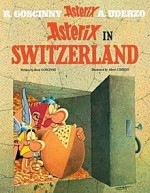
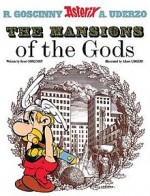
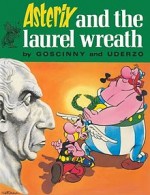
Asterix in Switzerland, The Mansions of the Gods & Asterix and the Laurel Wreath


By Goscinny & Uderzo, translated by Anthea Bell & Derek Hockridge (Orion Books)
ISBNs: 978-075286-628-4, 978-0-75286-630-7 and 978-0-75286-632-1

One of the most-read comics strips in the world, the collected chronicles of Asterix the Gaul have been translated into more than 100 languages since his debut in 1959, with animated and live-action movies, TV series, assorted games, toys and even a theme park outside Paris (Parc Astérix, unsurprisingly…) all stemming from his glorious exploits.

More than 325 million copies of 34 Asterix books have sold worldwide, making his joint creators France’s bestselling international authors.

The diminutive, doughty, potion-powered paragon of Gallic Pride was created by two of the industry’s greatest masters, René Goscinny & Albert Uderzo. Although their inspirational collaborations ended in 1977 with the death of the prolific scripter, the creative wonderment continued until relatively recently from Uderzo and assistants – albeit at a slightly reduced rate.

The wonderment works on multiple levels: ostensibly, younger readers revel in the action-packed, lavishly illustrated comedic romps where sneaky, bullying baddies get their just deserts, whilst we more worldly readers enthuse over the dry, pun-filled, sly satire, especially as enhanced for English speakers by the brilliantly light touch of translators Anthea Bell & Derek Hockridge, who played no small part in making the indomitable Gaul and his gallant companions so palatable to the Anglo-Saxon world. (Moi, I still rejoice in a perfectly produced “Paf!” to the phizzog as much as any painfully potent procession of puns or sardonic satirical sideswipe…)

The stories were set on Uderzo’s beloved Brittany coast, where a small village of warriors and their families resisted every effort of the Roman Empire to complete the conquest of Gaul, or alternately, anywhere in the Ancient World, circa 50BC, as the Gallic Gentlemen wandered the fantastic lands of the Empire and beyond…

When the heroes were playing at home, the Romans, unable to defeat this last bastion of Gallic insouciance, resorted to a policy of containment. Thus the little seaside hamlet is permanently hemmed in by the heavily fortified garrisons of Totorum, Aquarium, Laudanum and Compendium.

The Gauls don’t care: they daily defy the world’s greatest military machine simply by going about their everyday affairs, protected by the magic potion of resident druid Getafix and the shrewd wits of the rather diminutive dynamo and his simplistic, supercharged best friend…

Firmly established as a global brand and premium French export by the mid-1960s, Asterix the Gaul continued to grow in quality as Goscinny & Uderzo toiled ever onward, crafting further fabulous sagas; building a stunning legacy of graphic excellence and storytelling gold. Moreover, following the civil unrest and nigh-revolution in French society following the Paris riots of 1968, the tales began to increasingly show signs of trenchant satire and more directed social commentary…

Asterix in Switzerland was the sixteenth saga, originally running in Pilote #557-578 throughout 1970 and first translated into English in 1973. It opens with the attempted murder of Roman official Quaestor Vexatius Sinusitus; dispatched to Gaul to audit the corrupt, embezzling and utterly decadent Governor Varius Flavus.

The poisoning only fails due to the efforts of the Druid Getafix, but to keep the Roman alive – and further thwart Flavus – the sage needs a rare flower which only grows in the mountains of neighbouring country Helvetia (and that’s Switzerland, mein kinder).

Always keen for a road-trip, Asterix and Obelix quickly volunteer to fetch the fabled “silver star” or Edelweiss …

With Sinusitus sheltered in the village of the indomitable Gauls, Flavus’ only hope is to stop the happy voyagers and to that end he sends his most unscrupulous man to warn the equally repugnant and devious Curius Odus, Governor of Helvetia, to stop the Gauls at all costs…

Although a far darker tale than most previous escapades, all the familiar gentle spoofing of national characteristics, cartoon action and hilarious lampoonery is incorporated into this splendid and beautifully rendered yarn.

Asterix and Obelix cannily avoid Roman sabotage plots, beat up many, many thugs and bullies, whilst marvelling at the quirkiness of their newfound Helvetian friends, with their mania for cleanliness, yodelling, passion for melted cheese, tidy, solicitous brand of medical treatments, cultured beverages, cultivated villages, lakes and banks and their fruit-based archery training programs for the young…

The search for the silver-star is, of course ultimately successful, despite an entire battalion of troops racing up a mountain after them, with a stunning alpine climax and an exceptionally different kind of ending…


Translated that same year was The Mansions of the Gods (from Pilote #591-612, in 1971) wherein Caesar, determined to eradicate the last remnant of Gaulish resistance, tries to win by social planning and cultural imperialism. To that end he plans to cut down the great forest which surrounds the village and build a new town of lavish Roman apartments in the stylish, modern Roman manner.

Whiz kid architect Squaronthehypotenus leads the project, but his immigrant army of slave labourers soon founders when boar-loving Obelix strenuously objects to having his hunting preserve torn down and paved over…

However the massed might of Rome is insurmountable and eventually many mighty oaks are felled. To counter this Getafix simply grows instant new ones whilst Asterix shares his magic potion with the increasingly fed up slaves…

This stalemate is only overcome when the wily Gauls seemingly surrender and allow the “Mansions of the Gods” to be built and stocked with middle-class colonists from Rome. After a rapid bump in trade as the villagers become tourist-trappers, the complacent property developers make their greatest mistake and rent an apartment to the Gaul’s uniquely gifted bard Cacofonix, leading to an exodus of tenants and an inevitable and breathtaking final clash with the garrison of Aquarium, who had moved into the luxurious vacant apartments…

Drenched in trenchant observation of and jibes at the industrial relations conflicts, the then runaway speculation in new developments in France and the inexorable growth of “planning blight” (still painfully relevant today anywhere in the industrialised world), this tremendously effective satire is packed with gags and action and displays artist Uderzo’s sublime gift for caricature and parody – especially in the wonderful spoofs of real estate advertising campaigns…


Asterix and the Laurel Wreath was serialised in issues #621-642, in 1971 and given the fabulous Bell/Hockridge treatment in 1974. It begins in Rome where Asterix and Obelix are arguing…

During a visit to Chief Vitalstatistix‘s wealthy, snobbish, city-dwelling brother-in-law Homeopathix the doughty old warrior gets too drunk and boasts that he can get something which all the merchant’s money cannot buy – a stew seasoned with Caesar’s fabled wreath of office.

Sober now and in dire danger of eternal embarrassment and the unflinching approbation of his sharp-tongued wife Impedimenta, the Chief has no option but to allow his two best men – the larger of whom had drunkenly egged him on at the family gathering and then volunteered to fetch the leafy headpiece – to travel to the heart of Caesar’s power and attempt the impossible…

At least Asterix knows it’s impossible; Obelix is quite happy to storm the Imperial Palace and just grab the wreath…

Luckily reason prevails and the wily little warrior determines their only chance is infiltration, to which end Asterix sells them both as slaves. Unfortunately they are bought by the wrong Roman…

Osseus Humerus is an innocuous Patrician with a troublesome family, but as Asterix tries every trick to get their unsuspecting owner to return them to the Slave Auctioneer, he only endears himself even more to very satisfied customer. So much so in fact, that Humerus entrusts them with a message to be delivered to Julius Caesar himself…

Jealous major-domo Goldendelicius then accuses them of planning assassination and the heroes are locked in the dungeons – leaving them complete access to the entire palace…

Before long the indomitable duo are wreaking havoc in the Imperial Court and playing hob with the usually predictable proceeding in the Arena of the Circus Maximus.

Seemingly untouchable but no nearer the Laurel Wreath, the despondent Gauls finally seize their chance when they encounter again the recently promoted Goldendelicius. Rewarded by Caesar, the major-domo now holds a position of great responsibility: holder of the triumphal floral arrangement at Caesar’s next public engagement…

Sharp and deeply intriguing this comedy of errors is spectacularly illustrated by Uderzo at the very top of his game, whilst Goscinny’s dry, wry script seamlessly rockets from slapstick set-piece to penetrating observational comedy and magnificently engaging adventure, with, as always our unlikely heroes inevitably, happily victorious in every  instance.

Asterix epics are always packed with captivating historical titbits, soupcons of healthy cynicism, singularly surreal situations and amazingly addictive but generally consequence-free action, illustrated in a magically enticing manner. These are perfect comics that everyone should read over and over again.
© 1970-1972-3 Goscinny/Uderzo. Revised English translation © 2004 Hachette. All rights reserved.

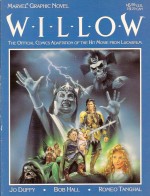
Willowâ„¢ – A Marvel Graphic Novel


Adapted by Jo Duffy, Bob Hall & Romeo Tanghal (Marvel)
ISBN: 978-0-87135-367-2

In the early 1980s Marvel led the field in the development of high quality original graphic novels: mixing out-of-the-ordinary Marvel Universe tales, new series launches, creator-owned properties, movie adaptations and the occasional licensed asset, such as the adaptation of the fantasy film favourite under review here.

Released in lavishly expansive packages (a squarer page of 285 x 220mm rather than the now customary elongated 258 x 168mm) which felt and looked instantly superior to the standard flimsy comicbook no matter how good, bad or incomprehensible the contents might be. With the season upon us and in the sure and certain knowledge that this family fantasy epic will be screened somewhere, I thought I’d point some comic fans in a direction they might not have travelled otherwise…

In a fully-formed fantasy scenario where any Tolkein fan or Dungeons and Dragons player will feel completely at home, the eternal war between Light and Darkness finds a few unconventional warriors when a messianic baby is born…

The graphic adaptation opens with the demonic sorceress Bavmorda’s attempts to kill the newborn which has been dispatched Moses-like down river, fetching up in the custody of Willow Ufgood, a good-hearted Nelwyn (don’t call them Hobbits – these littluns all wear shoes) who dreams of being a great sorcerer one day…

The human baby is clearly trouble, so the callously cautious and insular villagers want rid of it as soon as possible, dispatching Willow and a few true-hearted friends on a quest to deliver her to the first human they find.

However chaos, calamity and Bavmorda’s warriors follow the child everywhere and the first man they find is Madmartigan: a mighty warrior but also a lying, shiftless, drunken womaniser hanging from a cage on a gibbet…

Bavmorda’s army, led by her conflicted daughter Sorsha, has invaded the land and all the nobler humans – or “Daikini” – are busy fighting to save their lives, so when the pixie-like Brownies steal the baby, subsequently revealing her destiny as the Chosen One Elora Danan; for reasons inexplicable even to himself, Madmartigan joins Willow in a spectacular and death-drenched quest to free her destined guardian and mentor Fin Raziel…

Ultimately they both are driven by events and their own better natures to become the unlikeliest heroes in their world’s history: crucial components in the fight to end Bavmorda’s threat forever…

The final movie release was overly concerned with fight scenes and chases at the expense of plot and character (an understandable flaw which marred all three Lord of the Rings films too, in my humble opinion) but this classy and fun-filled ensemble-cast yarn manages to rattle along full-pelt with all-out fantastic battle-action and still find some room for extra helpings comedy and romance…

The movie Willow, from a screenplay by Bob Dolman, was conceived by George Lucas, directed by Ron Howard and released on May 20th 1988 in the United States, but if you’d bought and read this canny little tome before that (it was published at the beginning of that year) you’d have seen many extra pieces of shtick that sadly didn’t make it into the final cut…

An enticing, appetising change of pace for the usual comics crowd, this enticing sorcerous saga might well win a few fans amongst the dedicated Fights ‘n’ Tights fraternity too.
Willow: ™ and © 1988 Lucasfilm Ltd. (LFL). All Rights Reserved.