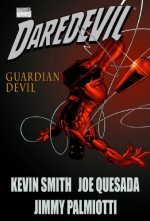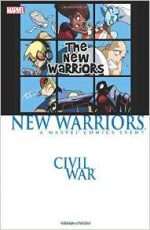
Civil War Prelude: New Warriors


By Zeb Wells, Skottie Young & various (Marvel)
ISBN: 978-0-7851-9361-6

After a TV reality show starring superheroes went hideously wrong and resulted in the deaths of hundreds in Stamford, Connecticut, popular opinion turned massively against masked crusaders. The Federal government quickly instituted and mandated a scheme to licence, train and regulate all metahumans but the plan split the superhero community.

A terrified and indignant merely mortal populace quivered as a significant faction of their former defenders, led by the ultimate icon of Liberty, Captain America, refused to surrender their autonomy and, in many cases, anonymity to the bureaucratic vicissitudes of the Superhuman Registration Act.

The Avengers and Fantastic Four, bedrock teams of the Marvel Universe, fragmented in scenes reminiscent of America’s War Between the States, with “brother pitted against brother”. As the conflict escalated it became clear to all involved that the increasingly bitter fighting was for souls as much as lives.

Both sides battled for love of Country and Constitution and both sides knew they were right…

So just how did that all come to pass?

A few years earlier – at least in comicbook time – a team of super-powered teenagers had got together to do good their way. Created by Tom DeFalco & Ron Frenz (before being assigned to Fabian Nicieza & Mark Bagley to spectacularly develop), the New Warriors consisted of a bunch of failed young super-doers led by Dwayne Taylor; a grim ‘n’ gritty kid millionaire with a grudge, a battle suit and tricked-out skateboard who called himself Night Thrasher (I still wince at the name…).

At inception, his select squad consisted of hyper-kinetic Speedball, mutant Firestar, telekinetic Vance Astrovic/Marvel Boy/Justice, a re-invigorated Nova, the Human Rocket, and Sub-Mariner’s niece Namorita: a line-up seemingly designed to flop, but one which swiftly proved the old adage about there being no bad characters, only bad handling…

They made their first appearance in Thor #411-412 before storming straight into their own title, and took the world by storm. However, over the following years their popularity waxed and waned as the membership roster changed. Eventually they broke up and went their separate ways.

In the summer of 2005 writer Zeb Wells and cartooning wunderkind Skottie Young (with some colouring assistance from Jean-Francois Beaulieu and letterer Randy Gentile) took the quirkily unconventional kid cadre in a whole new direction…

Collecting New Warriors volume 3 #1-6 (from August 2006 to February 2006) this wild and witty romp opens with ‘Pilot’ and sees the heroes on the road, bringing metahuman justice to the American hinterland.

It’s not their idea. As part of a Taylor Foundation refinancing deal, Night Thrasher has licensed his team to a Reality-TV company who are with them every moment as they voyage through the nation.

Although certain they’re sitting on Ratings-Gold, the producers have still insisted on a few changes to shore up the shaky demographics. So joining Thrasher, Nova, Namorita and Speedball is hulking, sweaty, pitiable nerd Microbe – a germ empath who has the strange ability to communicate with infinitesimal and single-celled life forms…

He also won’t shower in case he harms his little friends…

The show’s premise is simple. Lots of small towns have metahuman problems but no superheroes to tackle them. The Warriors will come to you and viewers get a fabulous intimate peek inside the glamorous world of costumed crusading…

Their first stop is Fairbury, Illinois where ferocious villains Tiger Shark and Armadillo have been quietly hiding since breaking out of super penitentiary the Vault. Opening the door to the strange new spandex-clad pizza delivery guy was their big mistake, but the camera crew’s constant demand for retakes is almost as fraught with peril…

In Salinas, Kansa everything seemed pretty hunky-dory until eccentric millionaire John Burrow decided to free the entire contents of his private zoo. By the time the Warriors roll up, the city is under siege by beasts acting far smarter than they should…

Plan A for dealing with the problem is then summarily scuppered by officious TV censor Erika Hopson whose strident efforts on behalf of S.P.O.T.A. (Society for the Protection of Television Animals) ensures the hairy escapists are treated with dignity and respect…

Vetoing Thrasher and Nova entirely, Erika ensures only the gentler-seeming members tackle the liberated critters in Burrow’s ‘Animal House’, but nobody told her the real cause of all the problems was the Red Ghost‘s cosmically empowered Super-Apes…

Driving their outside broadcast van through Kansas in ‘How Many Superheroes Does It Take…?’ the screen stars are fifty miles from Wichita when the next crisis erupts. With the bus broken the team are just chilling in the middle of nowhere and relating how they got sucked into this latest embarrassing idiocy, blithely unaware that elsewhere corporate Movers-&-Shakers are sharing secrets about Microbe and planning their next move to make the New Warriors the perfect team for their purposes…

That step materialises when demographically-ideal but appallingly obnoxious addition Debrii is foisted on the Warriors as they reach Nüponder, Minnesota in search of a strange creature stealing pets. The little paradise is a company town servicing a German-based automobile manufacturer but from the start the kids realise something isn’t right in ‘Nütown, Nücar, Nümember…’

Then, after the team barely survive an attack by their oldest enemy Terrax, Microbe’s little friends expose the true secret of the adoring, so-very-normal citizens, leading to a cataclysmic clash with the Machiavellian mechanoids of the Mad Thinker in ‘The New Warriors’ Excellent Adventure Episode 105: Nüponder, Michigan’…

The TV Show went on indefinite hiatus with a blockbusting finale in ‘The Valley of the Jerks: Episode 106: Smyrna, Delaware’ as the sadder, disgruntled but no wiser Warriors reached the East Coast in the middle of a snow storm, just in time to free a rustic rural hamlet from their own amplified bad attitudes and the malign shenanigans of the Corruptor as he schemes to extend his power-range by weaponising, exporting and disseminating his own mind-bending bodily fluids…

Fast, furious and outrageously funny, this book has precious little to do with the ponderous, po-faced and decidedly apocalyptic mega event Civil War, other than that their revived TV show trigged the Stamford massacre. It is, however, a hilariously clever and splendidly light-hearted peek at the sillier side of the Marvel experience and one both tried-&-true fans and fresh faced neophytes can enjoy equally… so go do that.
© 2005, 2006, 2015 Marvel Characters, Inc. All rights reserved.
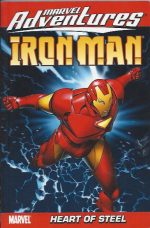
Marvel Adventures Iron Man volume 1: Heart of Steel


By Fred Van Lente, James Cordeiro, Ronan Cliquet, Scott Koblish, Amilton Santos, Gary Erskine & various (Marvel)
ISBN: 978-0-7851-2644-7

In 2003 the ever-expanding House of Ideas instituted the Marvel Age line: an imprint updating classic original tales and characters for a new and younger readership.

The enterprise was tweaked in 2005, with core titles morphing into Marvel Adventures: Fantastic Four and Marvel Adventures: Spider-Man. The tone was very much that of the company’s burgeoning TV cartoon franchises, in delivery if not name. Supplemental series included Super Heroes, The Avengers, Hulk and Iron Man. These all chuntered along merrily until 2010 when they were all cancelled and replaced by new volumes of Marvel Adventures: Super Heroes and Marvel Adventures: Spider-Man.

Most of the re-imagined tales have since been collected in gleefully inviting digest-sized compilations such as this one which features the first four forays starring the gadget-laden Golden Avenger.

In original mainstream continuity, supreme survivor Tony Stark has changed his profile many times since his 1963 debut when, as a VIP visitor in Vietnam, observing the efficacy of weaponry he’d designed, the arch-technocrat wünderkind was critically wounded and captured by a local warlord.

Put to work with the spurious promise of medical assistance upon completion, Stark instead built an electronic suit to keep his heart beating and deliver him from his oppressors. From there it was a small jump into a second career as a high-tech hero in Shining Super-Armour…

Conceived in the wake of the Cuban Missile Crisis at a time when the economy was booming and “Commie-bashing” was America’s favourite national pastime, the emergence of a suave new Edison using Yankee ingenuity, wealth and invention to safeguard the Land of the Free and better the World seemed an obvious development.

Combining the then-sacrosanct tenet that technology and business in unison could solve any problem with the universal imagery of noble paladins battling evil, the Invincible Iron Man seemed an infallibly successful proposition.

Over the subsequent decades Tony Stark has been depicted as a liberal capitalist, eco-warrior, space pioneer, civil servant, statesman, and even spy-chief: Director of the world’s most scientifically advanced spy agency, the Strategic Hazard Intervention Espionage Logistics Directorate.

For most of that period his best friend and frequent stand-in was James Rhodes, a former military man who acted as pilot, bodyguard, advisor, co-conspirator and occasional necessary conscience. “Rhodey” even replaced Iron Man when Stark succumbed to alcoholism and eventually carved out his own chequered career as remorseless mechanised warrior and weapon of last resort War Machine…

Here Rhodey is again reduced to a technical support role and joined by a supporting cast member of a much earlier vintage. Secretary and hyper-efficient factotum Pepper Potts has been in the picture since the seventh adventure (way back in October 1963), evolving from love-struck typist into a businesswoman and hero in her own right. Here a middle ground is struck and she’s Stark’s trusted Executive Administrator, confidante and general dogsbody…

Culled from Marvel Adventures Iron Man #1-4 (July-October 2007) this machine-tooled, perfect packet of explosive yarns is written throughout by Fred Van Lente, with colours from Studio F’s Martegod Gracia and letters by Blambot’s Nate Piekos and also includes a Cover Gallery supplied by Comics legend Michael Golden.

As ever, these stories are intended to bring newcomers up to speed on key points and characterisation whilst updating the material and begins with ‘Heart of Steel’ – winningly illustrated by James Cordeiro & Scott Koblish – which once again modifies the technological wizard’s origin in tune with modern sensibilities…

It all begins as a huge robotic monster attacks Manhattan and Stark suits up in his latest miracle-armour to tackle the beast. The clash sends his mind racing back six months to the moment when the spoiled multi-billionaire idol and smug was publicly challenged by esteemed scientist Gia-Bao Yinsen. The venerable sage accused Stark of selling his war-weapons to anybody with money and thereby letting them be used to destroy the island of Madripoor…

Upset by the confrontation, the young genius shrugged it off until he was summarily abducted by techno-terrorists Advanced Idea Mechanics. They wanted him to build more death-toys for them and were pretty sure he would cooperate. Tony’s heart was grievously damaged in their attack and only AIM’s doctors could keep him alive…

Dumped in a top-of the line lab/workshop, Tony found old Yinsen was also a prisoner and together they devised mobile, weaponised life-support units to fight their way to freedom. Although Yinsen didn’t make it, his final words changed Stark’s life forever…

As also illustrated by Cordeiro & Scott Koblish, Iron Man’s greatest enemy is then reintroduced in ‘Enter the Dragon’. When Stark’s Chinese factory is suddenly depleted of its entire workforce, he charges to the rescue and clashes with supreme tech-genius the Mandarin: a descendent of Genghis Khan who intends topping his ancestor in the world-conquest stakes.

Employing his monumental mechanical wyrm to attack the Great Wall, the maniac makes a pretty good start until Iron Man gets heavy…

Pepper takes centre-stage in ‘The Creeping Doom’ (with art by Ronan Cliquet & Amilton Santos) as the Stark jet touches down in a desert wilderness to interview genetic engineer and botanist Samuel Smithers who has a few radical ideas about revolutionising global Agribusiness. Sadly, by the time they arrive, Sam has moved beyond the need for investors: having merged with his creations to become a marauding Plantman intent on seizing the world for the floral kingdom.

The only use he has for meaty organic matter is for mulch and compost, but he has reckoned without the sheer cunning of his adversaries…

Wrapping up this collection is ‘Hostile Takeover’ (with Cordeiro & Gary Erskine making the pictures) as Stark Board member Justin Hammer tries to manipulate stock and gain control of the company.

His method is flawless. Hire the infallible Spymaster to hack Iron Man’s armour, sending Tony’s “bodyguard” on a destructive rampage through the city – with Stark helpless inside it – and just watch the stock price fall until it’s time to make his killing. Hammer’s big mistake was assuming Pepper and Rhodey were the sort of servile flunkies he preferred to hire at Hammer Industries…

Rocket-paced, spectacularly exciting and enthralling with plenty of sharp wit to counterpoint the drama and suspense; these riotous super-sagas are a splendid example of Iron Man’s versatility that will delight Fights ‘n’ Tights fans of all ages and vintage.
© 2007 Marvel Characters, Inc. All rights reserved.
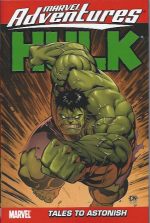
Daredevil Season One


By Antony Johnson, Wellinton Alves, Nelson Pereira & various (Marvel)
ISBN: 978-0-7851-5643-7

Much as I’d love to believe otherwise, I accept that the Cold War era, transistor-powered, pre-cellphone masterpieces of my youth are often impenetrable to younger fans – even when illustrated by graphic gods like Jack Kirby, Steve Ditko, Bill Everett, Joe Orlando or Wally Wood.

Perpetual renewal – or at least the constant tweaking of the background ephemera which passes for it in our business – is the irresistible force driving modern comics. There must be a constant changing of the guard, a shifting of scene and milieu and, in latter times, a regular diet of death, resurrection and rebirth – all grounded in relatively contemporary terms and situations.

Even for minor or secondary stars the process is inescapable, with increasing supra-comicbook media adjuncts (films, TV, movies, games, Films and FILMS) dictating that subjects be constantly updated because the powers-that-be believe goldfish-minded consumers of today apparently can’t understand or remember anything that’s more than one week or three cinematic releases old.

Alternatively, one could argue that for popular characters or concepts with a fifty-year pedigree, all that dogmatic back-history can be a creative deadweight and readership-daunting deterrence, so radical reboots are a painful but vital periodic necessity like a conceptual thinning of the herd…

Publishing ain’t no democracy, however, so it’s comforting to realise that many of these retrofits are exceptionally good comics tales in their own right and anyway, the editors can call always claim that it was an “alternate Earth” story the next time the debut saga is modernised…

Released in 2012, Daredevil: Season One was part of an all-new hardback graphic series intended to renovate, modify and update classic origin epics (accompanying Fantastic Four, X-Men, and Spider-Man): all clearly intended as background story-bibles for newer, movie-oriented fans and readers.

Written by Anthony Johnson (Dead Space, Wasteland, the Alex Rider graphic novels) with competent, workmanlike art from Wellinton Alves & Nelson Periera (Nova, Incredible Hulks, Red She-Hulk) it was far more of an in-filling exercise than radical restoration or reconstruction, leaving most of the canon untouched, and using signature battles against super-foes as background to tell a more contemporary story of City Hall corruption, as young lawyers Matt Murdock and Franklin “Foggy” Nelson fought to save a place of worship from civil malfeasance and racketeering depredations.

Young Matt grew up in the slums, raised by his father Battlin’ Jack Murdock; a second-rate prize-fighter. Determined that the boy would amount to something, Jack extracted a solemn promise from his boy never to fight. Mocked by other kids, who called him “Daredevil”, Matt stuck to his vow, but secretly trained his body to physical perfection.

One day he saved a blind man from a speeding truck, only to be struck in the face by its radioactive cargo. His sight was burned away but his other senses were super-humanly enhanced and he gained a sixth, “radar-sense”.

He told no-one, not even his dad…

Key events are all visited in swift, economic manner before jumping to Daredevil’s first night when the adult Matt donned a distinctive mask and costume to hunt down his father’s killers…

Battlin’ Jack was a boxer in dire financial straits. As his career declined he signed with The Fixer, knowing full well what the corrupt promoter expected from his fighters. Yet somehow his career blossomed. Never aware that he was being set up, Murdock got a shot at the Big Time, but when ordered to take a dive, he adamantly refused. Winning was the proudest moment of his life and when his bullet-riddled corpse was found, the cops had suspicions but no proof…

Heartbroken Matt graduated college with a law degree and set up in business with his room-mate Foggy. They hired a lovely young secretary named Karen Page and opened an office in Murdock’s childhood-home district of Hell’s Kitchen. With his life on track Matt now had time to resolve his father’s murder.

A old promise and his new limits as an officer of the Court stopped him from acting as Murdock…but what if he became “somebody else”…?

In the climactic clash the Fixer perished and the fresh revelations begin here as Daredevil lights a candle in St. Finnian of Clonard Catholic Church. Now that his mission of vengeance has concluded, serious doubts begin to bedevil him, but unbeknownst to the neophyte Man Without Fear, his accidental midnight meeting with the new priest are the start of a critical new relationship.

Just how much so he doesn’t realise it until after meeting the Fantastic Four and defeating high-voltage villain Electro. The next day Father Mullen hires Nelson and Murdock to save St. Finnian’s from being closed down by the City’s corrupt Land Board…

A further distraction occurs when Karen is kidnapped by Leland Owsley – the infamous Owl – and the city almost succumbs to the pheromone-fuelled mental-domination of Killgrave, the Purple Man…

Daredevil still feels he hasn’t got to grips with his superhero persona and is oblivious as diligent Foggy proceeds with the case, uncovering an odd connection between Mullen, the Land Board and golden boy Mayoral candidate Councilman William Doyle. Whilst Daredevil and the media are distracted by the Mysterious Masked Matador, a hitman starts making Doyle’s problems go away, and, finally forced to use his brains instead of his fists, Matt finally starts connecting the dots of a criminal tragedy that goes back decades and spans the continent…

Despite pressure mounting from all directions to drop the St. Finnian’s case, Matt and Foggy persist, until Daredevil is again diverted, this time by the mighty-muscled Ox and electrified bandit the Eel, working for mad menace Zoltan Drago in a Fellowship of Fear…

After that climactic battle Matt finally realises his true place in the city’s superhero pantheon and makes some drastic changes to his modus operandi, but it might be too late as Foggy, Karen and Mullen have vanished. With no time to spare Matt swings into action, ready to give the Devil his Due…

Also included in this enticing, compelling hardback is the lead story from the then-latest reboot of the Man Without Fear: (Daredevil #1, 2011, by Mark Waid, Paulo Rivera & Marcos Martin), returning the grim Avenger to his swashbuckling roots in a bombastic battle against teleporting terror The Spot plus ‘A Bonus Tale’ by Waid & Martin, charmingly detailing how his super-senses work.

Fast-paced and action-packed, this entire package rips along like a TV show recap, spartan, on-point and tantalising, and despite poor response from comics aficionados remains a solid primer for newcomers looking for a little brief background to the history and the characters.
© 2011 and 2012 Marvel Characters, Inc. All rights reserved.
Marvel Adventures Hulk volume 4: Tales to Astonish


By Peter David, Juan Santacruz, Raul Fernandez & various (Marvel)
ISBN: 978-0-7851-2981-3

In 2003 the ever-expanding House of Ideas instituted the Marvel Age line: an imprint updating classic original tales and characters for a new and younger readership.

The enterprise was tweaked in 2005, evolving into Marvel Adventures with core titles morphing into Marvel Adventures: Fantastic Four and Marvel Adventures: Spider-Man. The tone was very much that of the company’s burgeoning TV cartoon franchises, in delivery if not name. Supplemental series included Super Heroes, The Avengers, Iron Man and Hulk. These ran until 2010 when they were cancelled and replaced by new volumes of Marvel Adventures: Super Heroes and Marvel Adventures: Spider-Man.

Most of the re-imagined tales have been collected in cheerfully inviting digest-sized compilations such as this one which features the final four mini-epics from the Green Giant’s own short-lived series. In the original mainstream continuity Bruce Banner was a military scientist accidentally caught in a gamma bomb blast of his own devising. As a result he would unexpectedly transform into a giant green monster of unstoppable strength and fury when distressed or surprised.

Alternating between occasional hero and mindless monster, he rampaged across the Marvel Universe for years, finally finding his size 700 feet to become one of young Marvel’s most resilient stars.

A hugely popular character both in comics and greater global media beyond the printed page, he has often undergone radical changes in scope and direction to keep his stories fresh and his exploits explosively compelling…

Culled from Marvel Adventures Hulk #13-16 (covering September to December 2008) this quirky quartet of tales features Banner and the Hulk in essentially the same roles older fans will remember: a brilliant scientist and hunted man who turns into a fury-fuelled green gargantuan when provoked. The major difference of this version – other than the updating to modern times – is that here former juvenile delinquent Rick Jones was his lab-assistant when the gamma blast hit Banner and joins in his fugitive flight across America bringing a lab monkey (dubbed “Monkey”) which he stole before escaping from the army units of general Thaddeus “Thunderbolt” Ross…

For months the tortured trio have been making their way across the country staying below the radar, seeking a cure for Bruce’s condition and somehow always stumbling across rampaging villains and conflicted heroes who don’t know whether to help the Hulk or fight him…

If you’re of a compulsive disposition continuity-wise, these breezily bombastic blockbusters all take place on Marvel’s Earth-20051 but you should also be aware of one other thing: outrageous humour – from broad slapstick to surreal whimsy to bitingly sharp continuity in-jokes – plays a big part in the proceedings…

Written throughout by Peter David, winningly illustrated by Juan Santacruz & Raul Fernandez, with colours from Angel Marin and letters by Dave Sharpe, events kick off with ‘Are You My Mummy?’ as Bruce, Rick and Monkey sneak into New York City only to find the populace have been turned into shambling zombies wrapped in rotting bandages – even the Silver Surfer, Fantastic Four, X-Men and Mighty Avengers…

When the enwrapped heroes attack Bruce “Hulks out” and battles his way to Central Park, leaving Rick to be chased into a museum. Here the terrified teen discovers mutant maniac the Living Pharaoh is behind the catastrophe, but after Monkey swipes the villain’s control wand the mutant uncontrollably shifts into cosmic powerhouse the Living Monolith.

This only gives the frustrated Hulk a better, bigger target to smash…

The fugitives are in town to surreptitiously use the Gamma-tech and atomic devices of Bruce’s old mentor Professor Trimpe in their quest for a cure, but as they break into his lab in ‘Small Doubts’ they are disturbed by janitor Sam Sterns and, in the melee that follows, the machinery goes wild and Banner goes green and the trio are sucked through a wormhole into a subatomic world.

Before long they’re battling to save its benighted, downtrodden masses from the emotion-warping tyrant Psycho-Man…

Eventually catapulted back to their own size and situation, they’re just in time to rescue the United Nations’ delegates and diplomats from ‘Following the Leader’. The release of all that gamma energy had turned floor-sweeper Sterns into an evil, giant-headed super-genius able to grow androids in instants and mind-control humans (especially politicians) who knew he could rule the world more efficiently that self-serving humans…

Thankfully Trimpe’s all-purpose accelerator in conjunction with Hulk’s unreasoning anger and pummelling fists are enough to handle the crisis and, after dumping megalomaniac and his plastic minions into the Microverse, Rick, Bruce and Monkey can finally try to sort out that cure…

Tragically that’s not to be as a sudden anti-nuclear protest upsets the applecart. Although the distraction allows our heroes to sneak into the lab, they are caught by sadistic spy Emil Blonsky. Impersonating a security guard, the killer had planned on swiping some plutonium, but now he’s prepared to settle on simply blowing up the nuclear plant…

In the resulting struggle Trimpe’s machines trigger again and Bruce is mutated to ‘The 7th Level’ into an ever more monstrous Hulk.

Blonsky fares even worse, metamorphosed into a ghastly gamma-spawned Abomination able to pound the Hulk to pulp and still determined to turn the entire state into a radioactive hole in the ground…

Fast-paced, enthralling and deliciously witty, these riotous super-sagas are augmented by a pulse-pounding cover gallery by Sean Gordon Murphy, David Nakamura & Guru eFX, Santacruz & Vicente Cifuentes, Tom Grummett, Gary Martin & Moose Bauman.

Never the success the company hoped, Marvel Adventures was superseded in 2012 by specific comics tied to Disney XD TV shows designated “Marvel Universe cartoons”, but these kid-friendly comics collections are still an intriguing, astonishingly entertaining and more culturally accessible means of introducing long-established stars and concepts to newcomers and represent a fantastic reservoir of fresh and entertaining Fights ‘n’ Tights fun for all lovers of the genre.
© 2008 Marvel Characters, Inc. All rights reserved.
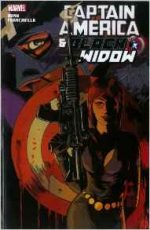
Captain America and Black Widow


By Cullen Bunn, Francesco Francavilla & various (Marvel)
ISBN: 978-0-7851-6528-6

The Star-Spangled Avenger was created by Joe Simon & Jack Kirby at the end of 1940, confidently launched straight into his own title. Captain America Comics #1 was cover-dated March 1941 and made the flag-draped hero an unstoppable, overwhelming overnight success.

The absolute and undisputed star of Timely Comics’ “Big Three” (the other two being Human Torch and Sub-Mariner), Cap was also amongst the very first to fade as the Golden Age ended.

With the Korean War and Communist aggression gripping the American psyche, freedom fighting Steve Rogers was revived in 1953 – along with Torch and Subby – for another brief tour of duty before quickly sinking back into obscurity…

A resurgent Timely – now calling itself Marvel Comics – drafted him again in Avengers #4. It was March 1964 and Vietnam was just beginning to pervade the minds of the American public. This time he stuck around. Whilst perpetually bemoaning the tragic, heroic death of his young sidekick (James Buchanan Barnes AKA Bucky) during the final days of World War II, the resurrected Sentinel of Liberty stole the show; promptly graduating to his own series and title as well.

He waxed and waned through the most turbulent period of social change in US history, struggling to find an ideological niche and stable footing in a precarious and rapidly changing modern world. After decades of vacillating and being subject to increasingly frantic attempts to keep the character relevant, in the last years of the 20th century a succession of stellar writers finally established his naturally niche: America’s physical, military and ethical guardian…

In continuity terms, Cap is a rough contemporary of Natasha Romanoff (sometimes Natalia Romanova): a Soviet Russian spy who came in from the cold and stuck around to become one of Marvel’s most successful female stars.

The Black Widow started life as a svelte, sultry honey-trap during Marvel’s early “Commie-busting” days, battling against Iron Man in her debut exploit (Tales of Suspense #52, April, 1964).

She was subsequently redesigned as a torrid tights-&-tech super-villain before defecting to the USA, falling for an assortment of Yankee superheroes – including Hawkeye and Daredevil – and finally becoming an agent of SHIELD, freelance do-gooder and occasional leader of the Avengers.

Throughout her career she has always been considered ultra efficient, coldly competent, deadly dangerous and yet somehow cursed to bring doom and disaster to her paramours. As her backstory evolved, it was revealed that Natasha had undergone experimental processes which enhanced her physical capabilities and lengthened her lifespan, as well as assorted psychological procedures which had messed up her mind and memories…

Despite always being a fan-favourite, the Widow only truly hit the big time after the release of the Iron Man, Captain America and Avengers movies, but for us unregenerate comics-addicts her printed-page escapades have always offered a cool yet sinister frisson of dark delight.

This particular all-action pairing collects Captain America (… and the Black Widow) #636-640 from November 2012 to February 2013, during which time Cap’s own title had become a team-up vehicle, with previous part-time partners including Bucky/Winter Soldier, Hawkeye, Iron Man and Namor.

A good deal of that period had been spent thwarting the schemes of a mysterious villain with incredible resources and astoundingly grandiose schemes. Her name was Kashmir Vennema and this book describes how she was finally brought low…

The tale opens in Central Park as the Black Widow meets a mole to secure crucial intel. Although she was apparently incarcerated by Cap weeks ago, Vennema is still murderously active and the files reveal her secret. “Kash” is a high-end broker: supplying arms, tech, information, people or whatever her elevated clientele desire. Her motto is “Infinite profit in infinite worlds” and her organisation plunders the entire multiverse for suitable wares, before selling them to the worst despots of an uncountable number of Earths.

Moreover, the reason for her success is that everyone who works for her is a Kashmir doppelganger recruited from every alternate world…

Even as the Widow absorbs the implications of these revelations, in some other place a Doctor Doom dies whilst conducting business with a Vennema: their meeting ending in bloody assassination at the hands of infallible sniper Natasha Romanoff. This implacable Black Widow is working for an unknown client who plans to end the Vennema scourge forever…

And on our Earth at maximum detention centre The Raft, Hawkeye and Captain America interview the captive Kashmir and realise she is not of this Earth…

Acting on information received the Sentinel of Liberty later interrupts another buy between a Vennema and a terrorist group. The Secret Empire are looking to buy enslaved metahumans from other Americas but are driven off by the fighting-mad super-soldier. Tragically Cap is totally unprepared for the Black Widow to show up and murder Kashmir. Only after she tries to kill him too does he realise that she’s not his Black Widow…

Things look pretty bleak until she is suddenly taken out by her own counterpart, but the ‘Superhero Horror’ only increases when Vennema Multiversal HQ realises the deal has gone sour and the supreme “Kash” orders all evidence dumped. That involves a dimensional transport trap which lands Cap, Natasha and the killer Widow in a dustbin dimension where all Vennema’s failures and embarrassments end up…

Forging an uneasy alliance with the other Natasha, Cap goes scouting and walks into a catastrophic war amidst the ruins…

‘Tripod Terror’ sees the heroes ferociously battling crazed survivors of other cover-ups, unaware that Kash has despatched her metahuman Hunt Squad – culled from numerous worlds – to ensure their destruction, but the tables are about to be turned thanks to the ‘Raging Reptiles’ of alternate Earth inmate Curt Connors.

This plane’s Lizard is also its Doctor Octopus and he has redemption in mind. He only thought to help his people after a great war but his meddling resulted in a planet of monsters…

Now as the Hunt Squad attacks, Connors buys time for Cap and the Widows to escape, plunging into uncontrolled inter-dimensional chaos and fetching up on a myriad of incredible alternates before finally finding the mystery client who ordered the hits on the assorted Kashmirs.

She has her own team of oddly familiar metahuman champions and wants to dismantle Vennema Multiversal. With Captain America and two Black Widows ‘Taking it to the House’, the hostile takeover is brief and very bloody…

But when the dust at last settles is the convoluted interconnected web of Realities actually a better, safer place?

A dazzling display of pure Fights ‘n’ Tights razzamatazz, this short, sharp and super-heroically sweet team-up tale from scripter Cullen Bunn and illustrator Francesco Francavilla captivatingly capitalises on the popularity of the filmic iterations of these particularly long-lived metahuman marvels whilst playing delicious games with the established comics continuity. The end result is a fast and furious treat all action addicts will be unable to resist.
© 2012, 2013 Marvel Characters, Inc. All rights reserved.
Incredible Hulk: Boiling Point


By Bruce Jones, Lee Weeks, Tom Palmer & various (Marvel)
ISBN: 978-0-7851-0905-1

Bruce Banner was a military scientist accidentally caught in a gamma bomb blast of his own devising. As a result he would unexpectedly transform into a giant green monster of unstoppable strength and fury when distressed or surprised. As both occasional hero and mindless monster he rampaged across the Marvel Universe for years, finally finding his size 700 feet and a format that worked, becoming one of young Marvel’s most resilient features.

A hugely popular character both in comics and greater global media beyond the printed page, he has often undergone radical changes in scope and direction to keep his stories fresh and his exploits explosively compelling…

One of the most impressive runs of was by noted thriller and horror writer Bruce Jones (see especially his impressive Hitchcock pastiche Somerset Holmes or sci fi sagas Arena and Silverheels) who injected some long-neglected suspense and a sense of building menace back into the saga, by referencing both classic 1960s cult TV series The Fugitive and the Jade Juggernaut’s own small screen hit from the 1970s…

This slim tome (re-presenting issues #40-44 of the second Incredible Hulk comicbook volume from July to October 2002) combines his moody, humanistic writing with the understatedly workmanlike yet potently effective illustration of Lee Weeks & Tom Palmer to stunning effect in this beguiling middle-sequence of a shocking extended saga of shadowy conspiracies and government malfeasance.

Previously: perpetually running from the authorities and himself, Banner had finally lost all hope in the aftermath of one of the Hulk’s bouts of mindless destruction which devastated Chicago and resulted in the death of a little boy, Ricky Myers. However, as the dejected scientist fled across America, one faltering step ahead of the authorities and his own battered conscience, he became aware of an incredible conspiracy and realised all was not as it seemed.

For one thing, a warring team of professional assassins were hunting him for an as-yet unknown client…

Both Slater and his rival/partner Sandra Verdugo had been co-opted by a cabal of Men in Black with an unspecified interest in ramping up anti-Hulk hysteria. They also wanted Banner taken alive and had gifted their agents with the power of resurrection…

Their exhausted target meanwhile had found a way to keep his rampaging Other under control and away from the world, even though his pursuers had often pushed him to the very brink…

The relentless pursuit resumes in rural Miser, Colorado where a tense hostage situation suddenly becomes a major crisis. It’s bad enough that a pink-slip has turned one overstressed wage-slave into a gun-toting nut-job holding a group of terrified citizens in the town’s only convenience store. It’s a potential problem that shell-shocked big city ex-cop and former SWAT-negotiator Sally Riker is a suicidal burnout with PTSD. It’s a terrifying prospect that one cop is down and bleeding out, with only an eerily calm drifter keeping the deranged gunman talking.

However, ‘Boiling Point’ is only reached when a taskforce of Feds inexplicably invade the town… As they brusquely take charge, in side the Ready-Mart, the strangely-placid stranger uses his pre-arranged safe-word code to tell Sally that they’re all impostors…

‘Poker Face’ opens with imposing FBI Agent Pratt briefing his shadow team to trigger Banner’s change to the Hulk, whilst “allowing” Sally to enter the store to negotiate all the captives’ release. With all his ducks in place, Pratt thinks he can end any witness problems with a Waco-style “accidental” exchange of gunfire, but has not taken into account Riker’s paranoia or Banner’s instincts…

When the Hulk at last manifests in ‘All Fall Down’, Pratt breaks out the futuristic weaponry he’s been hiding; primed to get a gamma-ray blood-sample before taking the beast captive…

With Miser razed by the Green Gargantuan and Pratt’s team killed by their murderous boss, the exultant agent then heads off to meet his mysterious masters, with a heavily tranquilised Banner in tow. The triumphant operative is confident his crimes will never be reported, but has not counted on Sally Riker’s survival skills and hunger for vengeance and answers…

Before too long she freed the Hulk and Pratt is faced with the cost of his sins as Sally, Banner and the Beast teach him the danger of unleashing ‘The Beast Within’…

These tension-packed tales focus primarily on Banner and judiciously limit the use of the Jade Juggernaut to the point that the monster almost becomes a ghost: terrifying, dreaded but largely unseen. This Hulk is an oppressive force of calculated salvation and last resort rather than mere reader-friendly graphic destruction and gratuitous gratification.

Like all great monsters he lurks in the shadows, waiting for his moment…

One of the most underrated and impressive Hulk yarns of all, this book is the middle of three self-contained volumes which utterly reinvigorated the character of both Banner and his Altered Ego, cleverly refocusing the series for the 21st century. If you’re new to the series or looking for an excuse to jump back on, this book – and its companions – are for you…
© 2002, 2003 Marvel Characters Inc. All rights reserved.

Marvel Adventures Avengers: Captain America


By Scott Gray, Roger Langridge, Todd Dezago, Roger Stern, Craig Rousseau, Matteo Lolli, Lou Kang, John Byrne & various (Marvel)
ISBN: 978-0-7851-4562-3

Since its earliest days Marvel always courted the youngest comicbook consumers. Whether animated tie-ins such as Terrytoons Comics, Mighty Mouse, Super Rabbit Comics, Duckula, assorted Hanna-Barbera and Disney licenses and a myriad of others, or original creations such as Millie the Model, Homer the Happy Ghost, Li’l Kids and Calvin – or as in the 1980s Star Comics line – an entire imprint for originated or licensed comics targeting peewee punters, the House of Ideas has always understood the necessity of cultivating the next generation of readers.

These days, however, general kids’ interest titles are all but dead and, with Marvel characters all over screens large and small, the company usually prefers to create child-friendly versions of its own proprietary pantheon, making that eventual hoped-for transition to more mature comics as painless as possible.

In 2003 the company instituted a Marvel Age line which updated and retold classic original tales by Stan Lee, Jack Kirby & Steve Ditko, mixing it with the remnants of the manga-based Tsunami imprint, all intended for a younger readership.

The experiment was tweaked in 2005, evolving into Marvel Adventures with core titles transformed into Marvel Adventures: Fantastic Four and Marvel Adventures: Spider-Man. The tone was very much that of the company’s burgeoning TV cartoon franchises, in delivery if not name. Additional Marvel Adventures series included Super Heroes, The Avengers and Hulk. These iterations ran until 2010 when they were cancelled and replaced by new volumes of Marvel Adventures: Super Heroes and Marvel Adventures: Spider-Man.

Those tales have all been collected in welcoming digest-sized compilations such as this one which gathers a selection of yarns starring the Sentinel of Liberty. This particular patriotic play-list comprises three all-ages tales – taken from Marvel Adventures Super Heroes #8 and 12, plus an early outing from Marvel Age Spider-Man Team-Up #2 and rounded out with a mainstream continuity yarn from Captain America volume 1 #255 from March 1981.

The Sentinel of Liberty was created by Joe Simon & Jack Kirby at the end of 1940 and launched straight into his own Timely Comics’ (Marvel’s earliest iteration) title. Captain America Comics #1 was cover-dated March 1941 and was a monster smash-hit. Cap was the absolute and undisputed star of Timely’s “Big Three” – the other two being the Human Torch and Sub-Mariner. He was also one of very the first to fall from popularity at the end of the Golden Age.

When the Korean War and Communist aggression dominated the American psyche in the early 1950s Cap was briefly revived – as were his two fellow superstars – in 1953 before sinking once more into obscurity until a resurgent Marvel Comics once more needed them. When the Stars-&-Stripes Centurion finally reappeared he finally found a devoted following who stuck with him through thick and thin.

Soon after taking over the Avengers, he won his own series and, eventually, title. Cap waxed and waned through the most turbulent period of social change in American history but always struggled to find an ideological place and stable footing in the modern world, plagued by the trauma of his greatest failure: the death of his boy partner Bucky…

If you’re of a slavish disposition continuity-wise, the first three Star-Spangled sagas all occur on Marvel’s Earth-20051 whilst the last is situated in the regulation Earth-616.

It opens with an updated origin – in keeping with the later filmic iteration – as ‘The Legend Reborn’ (by Scott Gray & Craig Rousseau as seen in MASH #8, April 2009) sees World War II’s greatest hero decanted from an arctic iceberg by agents of SHIELD.

Future-shocked and mistrusting, Steve Rogers breaks out of protective custody and explores the 21st century beside teen-rebel and street-performer Rick Jones, until secret society Hydra try to “recruit” him and Cap is finally forced to pick a side…

The introductory epic is augmented by an enticing war-time tale. ‘Spy for the Cameras!’ (Roger Langridge & Rousseau) finds Cap and annoyingly plucky reporter Rosalind Hepburn exposing an undercover plot in Hollywoodland…

Issue #12 (August 2009) saw Cap and Rick return in ‘Web of Deceit’ by Gray & Matteo Lolli. Here the time-lost hero is transported into Hydra’s digital domain to face unimaginable and lethally implausible peril, until Rick’s buddies in the Online Brigade log in to save the day…

This is followed by another deliciously wry WWII romp from Langridge & Rousseau, with news-hen Rosalind, Cap and Bucky battling a prototype mutant cyborg in ‘If This Be P.R.O.D.O.K.!’

‘Stars, Stripes and Spiders!’ is by Todd Dezago, Lou Kang & Pat Davidson (originally debuting in Marvel Age Spider-Man Team-Up #2, December 2004 and inspired by Len Wein and Gil Kane’s tale from the original Marvel Team-Up #13).

When a certain wall-crawling high-school student and part-time hero stumbles into Captain America tackling an AIM cadre stealing a super-soldier serum, the nervous lad learns a few things about the hero game from the guy who wrote the book. Not making that lesson any easier is petrifying super-villain the Grey Gargoyle…

Closing out this fast-paced primer of patriotic action is a classic retelling of Cap’s early career by Roger Stern & John Byrne. The story was the finale in a superb run by the duo: a mini-renaissance of well-conceived and perfectly executed yarns epitomising all the fervour and pizzazz of Captain America in his glory days. ‘The Living Legend’ is a moody, rocket-paced origin saga which was the definitive version of the hero’s nativity for decades…

Never the success the company hoped, the Marvel Adventures project was superseded in 2012 by specific comics tied to those Disney XD television shows designated as “Marvel Universe cartoons”, but these collected stories are still an intriguing, amazingly entertaining and superbly accessible means of introducing characters and concepts to kids born sometimes three generations or more away from the originating events.

Beguiling, enthralling and impressive, these riotous super stories are extremely enjoyable yarns, although parents should note that some of the themes and certainly the violence might not be what everybody considers “All-Ages Super Hero Action” and might perhaps better suit older kids…

© 1981, 2000, 2009, 2011 Marvel Characters, Inc. All rights reserved.
Annihilation Classic


By Todd Dezago, Stan Lee, Larry Lieber, Marv Wolfman, Mark Gruenwald, Bill Mantlo, Doug Moench, Scott Edelman, Roy Thomas, Derec Aucoin, Jack Kirby, John Buscema, Paul Ryan, Mike Mignola, Tom Sutton, Mike Zeck, Gil Kane & various (Marvel)
ISBN: 978-0-7851-3410-7

Annihilation was another of those company-wide publishing events that “Changed the Marvel Universe Forever” (and don’t they all?) which ran for most of 2006, involving most of the House of Ideas’ outer space outposts and cosmic characters. Among the stalwarts in play were Silver Surfer, Galactus, Firelord, Moondragon, Quasar, Star-Lord, Thanos, Super-Skrull, Gamora, Ronan the Accuser, Nova, Drax the Destroyer, Watchers and a host of alien civilisations such as the Kree, Skrulls, Xandarians, Shi’ar et al., all falling before a invasion of rapacious Negative Zone bugs and beasties unleashed by the insectoid horror Annihilus.

If you’re new to the Marvel universe and that bewildering list of daunting data didn’t leave you screaming in frustration, then please read on…

As is usual in these public thinnings of the herd, a number of good guys and bad died and had their trademark assumed by newer, glitzier models whilst some moribund careers got a successful and overdue shot in the arm…

The event spawned a number of specials, miniseries and new titles, (subsequently collected as three volumes plus this Annihilation Classic compilation which reprinted key and origin appearances of some major players) and led to follow-up event Annihilation: Conquest. Of particular interest to fun-loving screen-watchers should be early appearances of Galaxy Guardians Rocket Raccoon and Groot…

This smart selection comprises of and contains pertinent material from Bug #1, (March 1997), Tales to Astonish #13, (December 1960), Nova #1, (September 1976), Quasar #1 (October 1989), Rocket Raccoon #1-4 (May-August 1995) Marvel Spotlight #6 (May 1980), Logan’s Run #6 (June 1977) and Marvel Premiere #1 (April 1972) and opens with the frenetic and light-hearted solo outing for Galactic Warrior Bug (originally a cheeky stalwart from the 1970’s toy-license phenomenon Micronauts)…

Here in ‘Apples and Oranges’ by Tod Dezago, Derec Aucoin, Rich Farber & Ralph Cabrera, the insectivorid from the Microverse accidentally clashes with all-consuming cosmic menace Annihilus and gets stuck in a time/space warp.

Bounced around the history of the Marvel Universe, the warring weirdoes reveal their unheralded contributions to the origin stories of a number of the company’s greatest stars before Bug finally triumphs…

With accompanying pinup by Pat Broderick and hilarious game pages by Fred Hembeck including ‘Bug’s Brain -Tik- lers’, ‘The Help Bug Right the Time/Space Continuum Board Game’, ‘What’s Wrong with This Picture?’ and ‘Bug’s Catch-All Activity Page’, this is a splendidly engaging and irreverent treat, followed by an absolute classic of the gloriously whacky “Kirby Kritter” genre as a humble biologist saved earth from a rapacious walking tree in ‘I Challenged Groot! The Monster from Planet X’ (from Tales to Astonish #13 by Stan Lee/Larry Lieber, Jack Kirby & Dick Ayers).

Next to grab the spotlight is The Man Called Nova who was in fact a boy named Richard Rider. A working class nebbish in the tradition of Peter Parker – except he was good at sports and bad at learning – Rich attended Harry S. Truman High School, where his strict dad was the principal. His mom worked as a police dispatcher and he had a younger brother, Robert, who was a bit of a genius. Other superficial differences to the Spider-Man canon included girlfriend Ginger and best friends Bernie and Caps, but Rich did have his own school bully, Mike Burley…

An earlier version, “Black Nova” had apparently appeared in the author Marv Wolfman’s fan-mag Super Adventures in 1966 (produced with fellow writer Len Wein), but with a few revisions and an artistic make-over by the legendary John Romita (Senior) the Human Rocket was launched into the Marvel Universe in his own title, beginning in September 1976, ably supported by the illustration A-Team of John Buscema & Joe Sinnott.

‘Nova’– which borrowed heavily from Green Lantern as well as Spider-Man’s origin, was structured like a classic four-chapter Lee/Kirby early Fantastic Four tale, and rapidly introduced its large cast before quickly zipping to the life-changing moment in Rider’s life when a star-ship with a dying alien aboard transferred to the lad all the mighty powers of an extraterrestrial peacekeeper and warrior.

Rhomann Dey had tracked a deadly marauder to Earth. Zorr had already destroyed the idyllic world of Xandar, but the severely wounded vengeance-seeking Nova Prime was too near death and could not avenge the genocide. Trusting to fate, Dey beamed his powers and abilities towards the planet below where Richard Rider was struck by the energy bolt and plunged into a coma. On awakening Rich realised he had gained awesome powers and the responsibilities of the last Nova Centurion…

Wendell Vaughn had debuted at the end of 1977 as SHIELD super-agent Marvel Boy in Captain America #217, graduating to Quasar during a stint as security chief of Project Pegasus during the early 1980. He finally got an origin with his own title Quasar #1 in October 1989. He learned ‘The Price of Power!’ courtesy of Mark Gruenwald, Paul Ryan & Danny Bulanadi in a stirring tale wherein he washed out of agent training for lack of a killer instinct. Whilst acting in a security detail Wendell donned alien quantum wrist-bands to stop them falling into the hands of AIM, even though they had vaporised every SHIELD operative who had test-piloted them. As well as not dying he gained incredible powers and began his brief but glorious career as Avenger and Protector of the Universe…

Rocket Raccoon was a minor character who appeared in brief backup sci fi serial ‘The Sword in the Star’ (specifically Marvel Preview #7 in 1976). He won a larger role in Incredible Hulk #271 (May 1982), and like Wolverine years before refused to go away quietly.

Reprinted here in its entirety is the 4-issue Rocket Raccoon miniseries (cover-dated May to August 1985 as crafted by Bill Mantlo, Mike Mignola, Al Gordon & Al Milgrom): a bizarre and baroque sci-fi fantasy which blended the charm of Pogo with the biting social satire of One Flew Over the Cuckoo’s Nest, all whilst ostensibly describing a battle between Good and Evil in a sector of space completely crazy even by comicbook standards.

Rocket was one of many talking animals in the impenetrable, inescapable Keystone Quadrant; a Ranger in charge of keeping the peace as robots and anamorphic beasties went about their holy, ordained task of caring for the distinctly odd and carefree humans known as The Loonies on their idyllic, sybaritic planet Halfworld.

However when a brutal shooting war between voracious apex toymakers Judson Jakes and Lord Dyvyne led to Rocket’s girlfriend Lylla Otter being kidnapped, the planet went wild, or more accurately… ‘Animal Crackers’.

In rescuing her, Rocket and his faithful deputy Wal Rus had to contend with a murderous army of mechanised Killer Clowns, face an horrific, all-consuming bio-weapon at ‘The Masque of the Red Breath’, and even team up with arch-foe and disreputable mercenary bunny Blackjack O’Hare before uncovering the horrendous truth behind the mad society he so tirelessly defended in ‘The Book of Revelations!’

The final chapter then shook everything up as ‘The Age of Enlightenment’ saw the end of The Loonies, allowing Rocket and his surviving companions to escape the confines of the eternally segregated Keystone Quadrant into the greater universe beyond…


Starlord (without the hyphen) premiered in monochrome mature-reader magazine Marvel Preview # 4 in 1976, appearing thrice more – in #11, 14 and 15 – during the height of a Star Wars inspired Science Fiction explosion.

Years previously, a warrior prince of an interstellar empire was shot down over Colorado and had a fling with solitary Earther Meredith Quill. Despite his desire to remain in idyllic isolation, duty called the starman back to the battle and he left, leaving behind an unborn son and a unique weapon. A decade later, the troubled boy saw his mother assassinated by alien lizard men. Peter Jason Quill vengefully slew the creatures with Meredith’s shotgun, before his home was explosively destroyed by a flying saucer.

The newly-minted orphan awoke in hospital, his only possession a “toy” ray-gun his mother had hidden from him his entire life. Years later his destiny found him, as the half-breed scion was elevated by the divinity dubbed the “Master of the Sun”, becoming StarLord. Rejecting both Earth and his missing father, Peter chose freedom, the pursuit of justice and the expanse of the cosmos…

Here, from Marvel Spotlight volume 2 #6 Doug Moench & Tom Sutton revisit and clarify that origin saga as the pacifistic Quill and his sentient starship return to Sol and discover the truth about his nativity and ascension as well as the true nature of The Master of the Sun…

Logan’s Run was a short-lived licensed property tie-in and #6 incongruously featured a 5-page short starring mad Titan Thanos in battle against his precision-crafted nemesis Drax the Destroyer: a typically inconclusive out-world clash over ‘The Final Flower’ by Scott Edelman & Mike Zeck before this star-studded compilation concludes with an allegorical masterpiece by Roy Thomas, Gil Kane & Dan Adkins from Marvel Premiere #1.

During a time of tremendous social upheaval Thomas transubstantiated an old Lee/Kirby Fantastic Four throwaway foe into a potent political and religious metaphor. Debuting as a dreaded mystery menace, the character dubbed Him was re-imagined as a contemporary interpretation of the Christ myth and placed on a world far more like our own than the Earth of Marvel’s unique universe.

‘And Men Shall Call Him… Warlock’ adroitly recapitulated the artificial man’s origins as a lab experiment concocted by rogue geneticists eager to create a superman they could control for conquest. After facing the FF, Him subsequently escaped to the stars and later initiated a naive clash with Thor over the rights to a mate before returning to his all-encompassing cocoon to evolve a little more.

Now that stellar shell was picked by the moon-sized ship of self-created god the High Evolutionary who was wrapped up in a bold new experiment. The hand-made hero observed as the evolutionary created a duplicate Earth on the far side of the sun, running through billions of years of evolution in mere hours. The man-god’s intent was to create a civilisation without aggression or rancour, but the Evolutionary collapsed from exhaustion just as proto-hominid became Homo Sapien and his greatest mistake took instant advantage of the fact…

Years previously Man-Beast had been hyper-evolved from a wolf and instantly became his creator’s nemesis. Now he and his equally debased minions invaded the ship and interfered with the experiment: reintroducing evil to the perfect creatures below and, in fact, making them just like us. At incredible speed Earth’s history re-ran with the creature in the cocoon afforded a ring-side seat to humanity’s fall from grace…

When the High Evolutionary awoke and fought Man-Beast’s army, Him broke out his shell and helped rout the demons, who fled to the despoiled Counter-Earth. With calm restored, the science-god prepared to sterilise his ruined experiment: a world now indistinguishable from our own. No superheroes; disease and poverty rampant; injustice in ascendance and moments away from nuclear Armageddon… but the cosmic newborn begged him not to.

He claimed the evil tide could be turned and begged the Evolutionary to stay his hand. The grieving, despondent creator agreed… but only until the rechristened Adam Warlock should admit that humanity was beyond redemption…

And this ends a magnificent compendium of genuine magical Marvel moments: an eclectic but hugely entertaining procession of thrills, spectacle and laughs no comic fan or interested neophyte could possibly resist.
© 1960, 1972, 1976, 1977, 1980, 1985, 1989, 1997, 1997, 2009 Marvel Characters, Inc. All Rights Reserved.

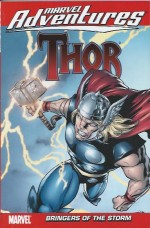
Marvel Adventures: Thor – Bringers of the Storm


By Tony Bedard, Jeff Parker, Louise Simonson, Shannon Gallant, CAFU, Rodney Buchemi, Jon Buran & various (Marvel)
ISBN: 978-0-7851-5197-5

Since its earliest days the company we know as Marvel always courted the youngest comicbook consumers. Whether animated tie-ins such as Terrytoons Comics, Mighty Mouse, Super Rabbit Comics, Duckula, assorted Hanna-Barbera and Disney licenses and a myriad of others, or original creations such as Millie the Model, Homer the Happy Ghost, Li’l Kids and Calvin, or in the 1980s Star Comics – an entire imprint for originated or licensed comics targeting peewee punters – the House of Ideas has always understood the necessity of cultivating the next generation of readers.

These days, however, general kids’ interest titles are all but dead and, with Marvel’s proprietary characters all over screens large and small, the company usually prefers to create child-friendly versions of its own proprietary pantheon, making that eventual hoped-for transition to more mature comics as painless as possible.

In 2003 the company instituted the Marvel Age line which updated and retold classic original tales by Stan Lee, Jack Kirby & Steve Ditko, mixing it in with the remnants of the manga-based Tsunami imprint, all intended for a younger readership.

The experiment was tweaked in 2005, becoming Marvel Adventures with the core titles transformed into Marvel Adventures: Fantastic Four and Marvel Adventures: Spider-Man and reconstituted classics supplanting original stories. The tone was very much that of the company’s burgeoning TV cartoon franchises, in delivery if not name.

Additional Marvel Adventures series included Super Heroes, The Avengers and Hulk. These iterations ran until 2010 when they were cancelled and replaced by new volumes of Marvel Adventures: Super Heroes and Marvel Adventures: Spider-Man.

This digest-sized collection re-presents some the yarns associated with – if not starring – the ever-popular Prince of Asgard, culled from Marvel Adventures: Super Heroes (volume 1) #7 & 11 and Marvel Adventures: The Avengers #5 & 15 – gathered to accommodate the Thunderer’s transition to the live-action silver screen in 2011.

If you’re of a slavish disposition continuity-wise, these epic illustrated Eddas all occur on Marvel’s Earth-20051 and begin with ‘The Trickster and the Wrecker’ – by Tony Bedard, Shannon Gallant & John Stanisci from Marvel Adventures: The Avengers #5 (November 2006) – with the Thunder God notably absent as a new team of Earth’s Mightiest tackle the insidious threat of someone who claims to be Norse god Loki for the very first time.

Although Captain America, Storm, Iron Man, Hulk, Spider-Man, Giant-Girl and Wolverine initially drive off the magical mischief-maker, they are subsequently unable to stop the trickster investing a crowbar-wielding petty thug with the blockbusting might of an unstoppable juggernaut…

Next up are Jeff Parker, CAFU & Terry Pallot who introduce us to Thor in ‘Bringers of the Storm’ (Marvel Adventures: The Avengers #15, October 2006) wherein the team follow mystic ravens Hugin and Munin to Asgard to battle Malekith the Dark Elf and an army of Frost Giants to save the ensorcelled gods from petrification and slavery…

As written by Louise Simonson, the final brace of tales are both starring vehicles for the Storm Lord emphasising humour as much as action.

‘Lip Service’ (Marvel Adventures: Super Heroes #7, March 2009 and illustrated by Rodney Buchemi) sees Thor in his mortal identity of Dr. Don Blake taking his beloved nurse Jane Foster and precocious kid to a herpetology show at the zoo. As if a clash with the cunning Cobra was not peril enough, the doughty hero is unaware that crafty Loki has hexed Jane’s lips in anticipation of the thunder god stealing a kiss that will change his life – and appearance – forever…

The mythical madness then bombastically ends in ‘Fire and Ice’ (Marvel Adventures: Super Heroes #11, July 2009, with art from Jon Buran & Jeremy Freeman) as the trickster inveigles a young Frost giant to attack Thor on Earth before further stacking the deck with a crazed fire demon. The mischief-maker foolishly assumed that Giants are creatures without honour or morals and is foiled when the little colossus proves that even bad guys have lines they won’t cross…

Never the success the company hoped, the Marvel Adventures project was superseded in 2012 by specific comics tied to those Disney XD television shows designated as “Marvel Universe cartoons”, but these collected stories are still an intriguing, amazingly entertaining and more culturally accessible means of introducing characters and concepts to kids born sometimes three generations or more away from the originating events.

Fast-paced, enthralling and impressive, these riotous super stories are extremely enjoyable yarns, although parents should note that some of the themes and certainly the violence might not be what everybody considers “All-Ages Super Hero Action” and might perhaps better suit older kids…
© 2006, 2007, 2009, 2011 Marvel Characters, Inc. All rights reserved.
Daredevil: Guardian Devil


By Kevin Smith, Joe Quesada & Jimmy Palmiotti (Marvel Comics)
ISBN: 978-0-7851-4143-3

Up until that moment merely an upstart wünderkind film-maker who’d also written Pop Culture essays and a few Indy comics (Jay and Silent Bob, Clerks, Chasing Dogma, Bluntman and Chronic), Kevin Smith generated a lot of excitement when he was announced as writer of the Daredevil relaunch in 1998.

That translated into big sales when the comics finally appeared.

Unlike Frank Miller’s legendary tenures, Smith wasn’t about tearing down and rebuilding as much as shining light on dusty forgotten corners; reminding jaded fans just why they liked the character whilst presenting him afresh to new readers.

This edition of Guardian Devil comes from 2010; an anniversary re-release of Daredevil volume 2 #1-8 (November 1998-June 1999) and celebrating a key moment in one of Marvel’s most malleable stars as well as the launching of the prestigious Marvel Knights mature reader imprint.

‘And a Child Shall Lead Them All’ sets the game in play as the sightless swashbuckler reels from the news that long-time lover Karen Page has left him for a broadcasting job on the West Coast.

Six months later Matt Murdock is still coming to terms with being abandoned. Daredevil is marking time dealing with the criminal scum of Hell’s Kitchen when he takes Gwyneth under his wing. The fifteen year old has just given birth and gone on the run.

It’s not so much the fact that she’s being inexplicably, relentlessly pursued by the thugs who murdered her parents which make her so fascinating. It’s not even that she completely believes she’s undergone an immaculate conception and delivered the new Messiah. The truly hard to rationalise bit is that angels told Gwyneth to trust complete stranger Matt because he’s secretly Daredevil…

Gwyneth soon vanishes, leaving Matt in possession of the putatively holy infant. World-weary and flabbergasted he consults former partner the Black Widow in ‘The Unexamined Life’. At least she’s a woman and knows how to care for kids…

Things take a sinister turn when incomprehensibly sinister Nicholas Macabes comes to the office with an astounding proposition. He also knows of Matt’s other life and, on behalf of an ancient benevolent organisation, politely requests the lawyer hand over the child. According to him, it is the Antichrist and as long as it’s alive evil and misfortune will grow in the world. He even gives the bewildered hero a crucifix to ward off harm…

Confused and bewildered, with his super-senses telling him nothing whilst his innate faith and logical advocate’s training war over the issue, Matt’s disorientation grows when Karen unexpectedly returns. She’s just been diagnosed with AIDS…

Tensions grow in ‘Dystopia’ when best friend Foggy Nelson is charged with murder. He’d been cheating on his fiancée with a client when she turned into a demon and he was only defending himself and…

As a frustration-wracked Man without Fear hits the rooftops and falls into a cunning trap, Karen receives a visitor. Macabe explains how the baby is responsible for all Earth’s increasing evils – including Karen’s condition – and her only hope of salvation is to kill it…

Daredevil meanwhile awakens in a white room, confronted by a demon named Baal who also has good and sound reasons to want the baby. Matt barely escapes with his life…

Pushed to breaking point, he deliriously reclaims the child from the Widow. Savagely brushing aside her probing questions and reminders that not all his enemies wear spandex or wave guns, Matt blunders through the night away from ‘The Devil’s Distaff’. Cripplingly unsure whether he should kill or shield the infant in his arms, Daredevil rages on and collapses on holy ground. A nun who is also his mother is there…

And across town, cunning men realise their schemes are not progressing satisfactorily. Nicholas Macabes makes a decision and contracts the infallible assassin Bullseye…

Restored to rationality by his brush with true faith, Daredevil leaves the child at the Clinton Mission Shelter to consult an expert in ‘Devil’s Despair’.

Sorcerer Supreme Stephen Strange learns a few pertinent facts after an interview with satanic overlord Mephisto and confirms that although the baby is clean of all evil taint, Matt himself is drugged to the non-functioning eyeballs…

Dashing back to the Mission, Daredevil finds nuns and volunteers alike have been brutalised by his most twisted enemy. In the horrific battle that follows Bullseye takes the infant and leaves the hero mourning the woman he loved most in the world…

Emotionally shattered and tormented by memories of the good times, Matt stews, frets and finally fights back in ‘The Devil Divested’ as the sadistic mastermind behind a most malign endeavour gloatingly reveals himself, his convoluted plan and the Machiavellian hidden ally in ‘The Devil’s Demon‘ before launching one last all-out assault on the hero’s mind, body and conscience…

When the dust settles and the bodies are all accounted for, nothing remains but recriminations, apologies and slow, painful attempts to regain the trust of betrayed friends during the ‘The Devil’s Deliverance’…

Packed with guest-stars and illustrated with florid excess and potent appeal by Joe Quesada and Jimmy Palmiotti, Smith’s tale combines stunning scenes of trademark action with a powerful emotional and ethical undercurrent. Tasking responsibility-obsessed Matt Murdock with the fate of all humanity whilst simultaneously conflicting him over the apparently utterly necessary destruction of an innocent was a truly diabolical idea which paid off with stunning effect.

Despite living day-to-day among monsters and magicians, the Man Without Fear was always the most rational of champions but these events cut straight to his primal core, affecting his deeply held Catholic beliefs, whilst challenging him – and us – to look at evil in another way…

Guardian Devil is a perfect example of an inspired idea properly executed. Smith chooses to embrace all Daredevil’s long and quixotic history rather than re-tailor the hero to fit his vision, and the highly design-oriented art is garish but oddly appropriate to this moody tale.

And it’s still a devilishly great read.
© 2001, 2005, 2010 Marvel Characters, Inc. All rights reserved.