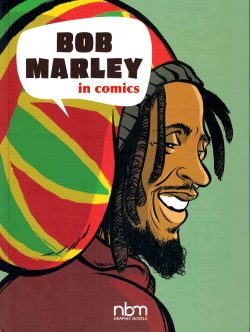
Bob Marley in Comics


By Gaets & Sophie Blitman, illustrated by Olivier Desvaux, Ammo, Didier Millotte, Tanguy Pietri, Matthieu Beaulieu, Jena, Efix, Domas, Simon Léturgie, Sarah Williamson, Cyrille Brégère, Julien Modde, Moh, Armel Ressot, Lu-K, Clément Baloup, Joël Alessandra, Julien Atika, Gil & various: translated by Montana Kane (NBM)
ISBN: 978-1-68112-250-2 (HB)

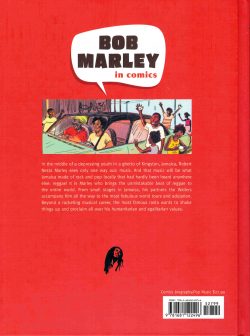
Graphic biographies are all the rage at the moment and this one – originally released on the continent in 2018 – is another cracker likely to appeal to a far larger mainstream audience than comics usually reach. It certainly deserves to as it captivatingly deconstructs the life of a truly unique force in music and popular culture…

If you’ve never heard of Bob Marley or don’t like reggae, you might still want to check this out. The singer was deeply spiritual and it’s never too late to see the light and convert or, failing that, just buy a record…

Gathered in this fetching hardback (or eBook) edition are context-providing essays backing up individual comics sections; each chronological article and comics vignettes written by the ever-informative comics scribe Gaets and journalist/children’s author Sophie Blitman, supported by a veritable legion of illustrators providing vivid and vibrant strips, beginning with ‘From Nesta to Robert’ – limned by Olivier Desvaux.

The early life of the musician introduces us to his mother Cedella Malcolm and the old white soldier she married. With Norval Marley disinherited and promptly absconding, Nesta Robert Marley spent his early years in the rural farming community of Nine Miles in Jamaica until at age six, when he was whisked away to Kingston by his dad… who simply dumped him with another woman and vanished again…

Happily, a few years later Cedella joined the boy who was already showing promise as both a fortune telling mystic and award-winning singer. Rendered in stark monochrome by Ammo, ‘The Rude Boys of Trenchtown’ exposes the appalling poverty Nesta endured and the lasting friendships that privation engendered as they played, made music and hung out together: relationships expanded upon in the essay ‘Growing Up Between Worlds’.

Working in muted full colour, Didier Millotte explores ‘Reggae in the Ghetto’ as Robert Marley – now working as a full-time (14-year-old) welder – and his mates Peter Tosh and Bunny Wailer are taken under the wing of pro musician Joe Higgs who teaches young Marley to play guitar…

‘Making Friends in Trenchtown’ details the development of the musical genre Reggae from Ska and Marley’s growing influence after which Tanguy Pietri illuminates sordid conditions and lack of opportunities which compel him to make music his life in ‘A Ray of Light in the Dark’…

Matthieu Beaulieu reveals the unique way poor Jamaicans consumed pop music in ‘Sound Systems, Ska & Studio One’, how the blossoming star is ripped off for the first – of many – times and how he meets wife-to-be Rita Anderson: a relationship which grows in Jena’s vignette ‘Is This Love?’

Efix delineates Marley’s spiritual growth in historical lecture ‘The Roots of the Rasta Movement’, whilst Domas’ ‘Tuff Gong in Nine Miles’ follows his musical journey to America – until the threat of being drafted into Vietnam – and ultimately to London, where The Wailers become stranded…

Essay ‘The Path to Success’ concentrates upon Marley’s song-writing and musical self-determination which led to the critical meeting with British Producer Chris Blackwell in ‘The Reggae Wave’ (art by Simon Léturgie) and the release of first album Catch a Fire. Now a growing global sensation among young white music fans – as detailed in essay ‘An “International Reggae”’ – Bob Marley and The Wailers retire to Blackwell’s ‘Villa Rasta’ (illustrated by Sarah Williamson), to make more music and bask in fame in their own country whilst enjoying a few rock star trappings of success…

One such is covered in ‘Bob Marley, Rita… And All the Other Women’, recounting the numerous affairs and children the singer indulged in even as the parade of mega-hits began. Cyrille Brégère encapsulates the tone of the times in ‘The Sheriff Died Tonight’ with the financial sharks already circling, as seen in ‘Around the World’ (Julien Modde), leading to the breakup of the founding members…

Throughout this period, Jamaica was descending into political chaos and gangsterism fuelled by economic disparity. This was something no amount of interviews or comments from the pacifist, life-loving musician could affect, but did result in the assassination attempt depicted by Moh in ‘Panic in the Hen House’.

The spark was believed to be proposed peace and reconciliation concert Smile Jamaica, but despite being wounded, three days later the show went on with Marley proudly in the spotlight…

Following more history in ‘The Price of Fame’, Armel Ressot graphically caters a ‘Punk Reggae Party’ as the leading proponents of two landmark musical movements meet and cross pollinate, despite falling foul of British Law, after which ‘From Exile to Exodus’ covers the creation of the classic album before ‘Red Card’ (art by Lu-K) heralds the beginning of the end after an impromptu kickabout in Paris leads to a shocking discovery…

The star’s obsessive passion for the sport of the ghettos is examined in ‘Bob Marley and His Love of Soccer’, as is his refusal to compromise his Rastafari principles by accepting medical treatments unacceptable to his faith. Clément Baloup then pictorially details the escalating civil war in Kingston and Marley’s controversial pre-election solution of a One Love Peace Concert in ‘Ablaze’.

Knowing his end was near, Marley finally visited Ethiopia in 1978 before finishing the album Survival and discovering yet another friend and manager had been stealing from him and his fans. He played controversial concerts in Africa – including the independence ceremony of recently liberated and newly-created Zimbabwe – twice in fact, as the authorities cut the first one short through force of arms – as seen Joël Alessandra’s ‘Roots’.

Penultimate essay ‘For Peace and Unity Among Peoples’ shares his philosophies, awards and legacy, via the peace concerts he headlined, backed up by a moving strip of his final days in ‘All the Way’ (by Julien Atika), after which closing essay ‘Death of the “Pope of Reggae”’ fills in the detail of his passing and ‘What Next?‘ by Gil closes the show with the events of the Tuff Gong’s state funeral and his musical legacy, courtesy of his many children.

Bob Marley in Comics is an astoundingly readable and beautifully rendered treasure for comics and music fans alike: one that resonates with anybody who loves to listen and look. Without it, you’re simply nowhere, man…

© 2016 Petit as Petit. © 2018 NBM for the English translation.
Bob Marley in Comics will be released in the UK in February 2020 and is available for pre-order now. NBM books are also available in digital formats. For more information and other great reads go to NBM Publishing at nbmpub.com

King: A Comics Biography of Martin Luther King – The Special Edition


By Ho Che Anderson (Fantagraphics Books)
ISBN: 978-1-60699-310-1 (HB)

There are books to read, books you should read – and some perhaps, more controversially, that you shouldn’t – and there are important books. The still relatively new field of graphic novels has many of the first but precious few really important books yet.

It’s hard enough to get noticed within the industry (simply excelling at your craft is not enough) but when we do generate something wonderful, valid, powerful, true to our medium yet simultaneously breaking beyond into the wide world and making a mark, the reviews from that appreciative greater market come thick and fast – so I’m not going to spend acres of text praising this superbly comprehensive examination of the man that lived beside – not “behind” or “within” – the modern myth of Martin Luther King, Jr.

Over the course of ten years (1993-2002) Canadian cartoonist Ho Che Anderson struggled to produce three comics books propounding a less hagiographic perspective of a man who was as much sinner as saint, but whose determination, passion, energy and often sheer luck (or divine inspiration?) drove a cleansing wedge into a rotting, repressive, stifled society and succeeded in opening enough doors for America’s racial underclass, so that forty years later a black American could be elected to govern the World’s greatest superpower.

Not that four decades is so brief an interlude. But then again, how many European or white Commonwealth countries can boast that their highest echelons of power have made even that much progress?

In both stark black & white and mesmerising colour, Anderson uses all the strengths and tools of sequential narrative to reveal, relate, question and challenge the oft-recounted facts of the Georgia Pastor’s life in this magnificent volume (available in luxurious hard cover and all-purpose digital editions) which was originally released to celebrate Barack Obama’s – and the American people’s – landmark achievement. From here and now he’s looking to have been the last Great – or even Sane – chief of the Land of the Free

Gathered into one compelling tome is this hard-crafted triptych of issues, including restored extra and deleted scenes; the thematically linked one-shot Black Dogs plus many bonus features, as well as a fascinating overview from Anderson; sketches and reminisces, a treatise on his working practises and a gallery of related art.

This is an authentic historical examination and a perfect example of the comics medium at its most effective – incisive biography not pictorial puff piece – and as important a landmark achievement for our art-form as Maus, American Splendor, Watchmen, Pride of Baghdad and Persepolis.

Whenever and wherever we have to defend our Art from decriers and peddlers of prejudice, King will be one of the handful of examples which cannot be refuted, contradicted or ignored. It’s a book no thinking fan or socially responsible human being can afford to miss.
King: The Special Edition © 2010 Fantagraphics Books. All content © 2010 Ho Che Anderson. All rights reserved.

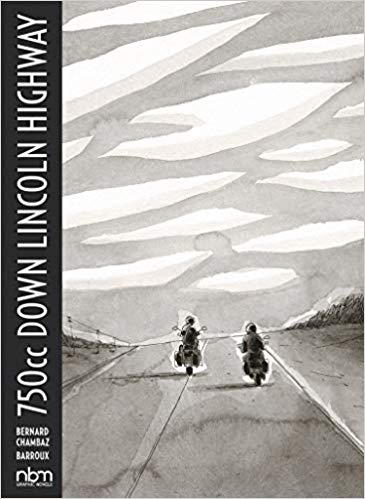
750cc Down Lincoln Highway


By Bernard Chambaz & Barroux, translated by Joe Johnson (NBM)
ISBN: 978-1-68112-245-8 (TPB)

For such a young country, there’s an astounding amount of vibrant – almost self-perpetuating – mythology underpinning America. Cowboys, Indians, colonialism, Manifest Destiny, gangsterism, Hollywood, food, Rock ‘n’ Roll and even names and places have permeated the imagination of the world. This last even created its own sub-genre: tales of travel and introspection ranging from Kerouac’s On the Road to Thelma and Louise via almost half the “Buddy movies” ever made.

Somehow, these stories always seem to particularly resonate with non-Americans. Scottish, French and Italian consumers are especially partial to westerns and Belgians adore period gangster and tales set in the golden age of Los Angeles. I must admit that during my own times stateside there was always a little corner of my head that ticked off places I’d seen or heard of in film, TV or comics (Mann(Grauman)’s Chinese Theatre, Central Park, Daly Plaza, Empire State Building) or uniquely American moments and activities (pretzel cart, bag of potato chips bigger than my head, bar fight) as I experienced them myself. That’s the true magic of modern legends.

It’s also the theme driving this beautiful travelogue depicting life imitating art…

Available in oversized (288 x 214 mm) paperback and digital formats, 750cc Down Lincoln Highway reveals how a French competitor in the New York Marathon takes a cathartic life detour after getting a “Dear John” text from his apparently no-longer significant other an hour before the start.

Understandably deflated, he hits a bar, discovers bourbon and strikes up a conversation with one of life’s great survivors…

Ed‘s barfly philosophy hits home – as does his description and potted history of the Lincoln Highway – and before long our narrator has hired a motorbike and decided to cross the USA down the historic route from East Coast to West…

Rendered in a dreamy, contemplative wash of greytones, his ride becomes a shopping list of transitory experiences confirming – and occasionally debunking – the fictive America inside his head and his preconceptions of the people who live there.

Putting concrete sounds, tastes, sights and smells to such exotic ports of call as Weehawken, Princeton, Trenton, Philadelphia, Gettysburg, Pittsburgh, Zulu, Fort Wayne, Chicago, Dekalb, Mississippi, Central City, Cheyenne, Salt Lake City, Eureka, Reno, Lake Tahoe, Berkeley and so many other places before reaching the highway’s end at Poteau Terminus, the rider regains his life’s equilibrium and gets on with the rest of his life, happy that the trip and the anonymous people he met have rewarded him with perspective and fresh hope…

Backed up by an extensive map of the trip and garnished with suitable quotes from Abraham Lincoln, this is quite literally all about the journey, not the destination…

Written by award-winning novelist, poet and historian Bernard Chambaz (L’Arbre de vies, Kinopanorama), this beguiling excursion is realised by multimedia artist and illustrator Barroux (Where’s the Elephant?, In the Mouth of the Wolf) and serves as a potent reminder of the power names and supposition can exert on our collective unconsciousness.

It’s also a superbly engaging, warmly inviting graphic meander to a mutual destination no armchair traveller should miss.
750cc Down Lincoln Highway is published on February 17th 2020 and is available for pre-order now. For more information and other great reads go to NBM Publishing at nbmpub.com
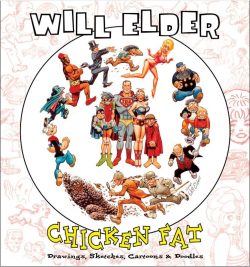
Chicken Fat: Drawings, Sketches, Cartoons and Doodles


By Will Elder (Fantagraphics Books)
ISBN: 978-1-56097-704-9 (PB)

Wolf William Eisenberg was born in The Bronx on September 22nd 1921, and you probably have never heard of him. He became a cartoonist, illustrator and commercial artist after changing his name to Will Elder.

Tragically, for many of you, that name won’t ring any bells either, even though he was one of the funniest and most influential cartoonists of the 20th century. Another of those slum kids who changed comics, “Wolfie” studied at New York’s High School of Music and Art – as did future comrades in comedy Al Jaffee, Al Feldstein, John Severin & Harvey Kurtzman.

An artist of astounding versatility, he served in WWII as part of the 668th Engineer Company (Topographical) of the US First Army, instrumental in assuring the success of the Normandy landings. After returning to America, he changed his name and set up the Charles William Harvey Studio with Charles Stern and Kurtzman, operating as a comics shop providing strips and other material for Prize Comics and other publishers.

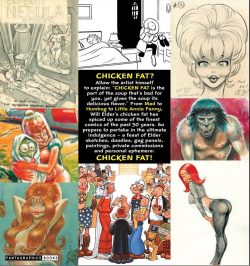
Elder inked old pal John Severin at EC, and in 1952 when Kurtzman created satire comic Mad, he became a regular contributor of pencils and inks. The spoofs and parodies he crafted for the landmark comic book and sister publication Panic were jam-packed with a host of eye-popping background gags and off-camera shtick, all contributing to the manic energy of the work. He called those extras “chicken fat” and to learn why you should pick up this slim yet satisfying companion collection to comprehensive bio-tome Will Elder: The Mad Playboy of Art. On offer here is a delightful peek at his working process (and outrageous, never-suppressed sense of humour) through roughs, sketches, architectural studies, test runs and abortive strip projects (such as The Inspector, Luke Warm and Adverse Anthony) for numerous clients over the decades, rendered in every medium from loose pencils to charcoal portraits to fully painted finished works, all supplemented by a fulsome Foreword from his son-in-law Gary Vandenbergh and even art from his grandson and successor Jesse Vandenbergh.

A certified touchstone for budding artists, here you’ll see technical illustrations and colour studies, landscapes and murals, as well as candid photos. There are EC model sheets, pop studies confirming Elder’s status as a cultural sponge and perfect mimic of other artist’s styles – a gift Jaffe claimed could have made the cartoonist the “world’s greatest forger”…

Straight magazine illustration lies with a host of sketch research on hundreds of subjects but what most comes out is a never-ending parade of gags and jests, many of which turned up in general interest magazines such as Pageant or Playboy. Elder loved to laugh and he had a very broad and earthy sense of humour so be careful to always swallow what you’re drinking before turning pages here…

As a jobbing cartoonist, Elder was always looking for the next gig and included here are a wonderful assortment of mock – and racy – sci fi pulp covers, star caricatures, political portraits, Time and Newsweek cover roughs and a section devoted to his and Kurtzman’s Goodman Beaver and scathing satirical masterpiece Little Annie Fanny – which Elder limned for 24 years, as well  as wealth of spoofs starring the great and good of comics and the media from Dick Tracy to Popeye to Prince Charles and Lady Diana…

A visual tour de force, this is a perfect illustration of how and why cartoonists are and why we’re so lucky to have them.

All material, unless otherwise noted, is © 2006 Will Elder. Little Annie Fanny © 2006 Playboy Enterprises, Inc. Text © 2006 Gary Vandenbergh. All rights reserved.

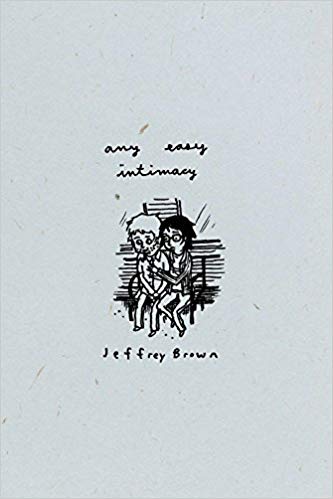
AEIOU or Any Easy intimacy


By Jeffrey Brown (Top Shelf Productions)
ISBN: 978-1891830716 (PB)

If you’re a fan of Jeffrey Brown’s cartoon exploits you might understandably admit to a small degree of confusion. In 2012 he scored his first global best-seller with a hilarious spin on the soft and nurturing side of the Jedi experience in Darth Vader and Son, following up with equally charming and hilarious sequels Vader’s Little Princess, Star Wars: Jedi Academy and others. He followed that up by contributing to the franchise’s dramatic comics canon with Star Wars Jedi Academy; Star Wars Jedi Academy: Return of the Padawan and Star Wars Jedi Academy: The Phantom Bully (2013-2015).

He has also directed music videos, created film posters, worked for public radio and co-written the feature film Save the Date.

Before that another Jeffrey Brown was the sharply sparkling wit who crafted slyly satirical all-ages funny stuff for The Simpson’s Treehouse of Horror, Marvel’s Strange Tales, Incredible Change-Bots and similar visual venues.

There is yet another Jeffrey Brown: instigator and frequent star and stooge of such quirkily irresistible autobiographical Indy comics classics as Sulk, Kids Are Weird, Bighead, Little Things, Funny, Misshapen Body, Undeleted Scenesand the four-volume “Girlfriend Trilogy” (of which this is the third), comprising Clumsy, Unlikely, AEIOU and Every Girl is the End of the World for Me…

Whichever Brown’s your preferred choice, he’s a cartoonist of rare insight and unflinching integrity who still makes you laugh out loud when not prompting you to offer a big consoling hug…

Brown was raised in Michigan; relocating to Chicago in 2000 to attend the School of the Arts Institute and study painting. Before graduating he had switched to drawing comics and in 2002 Clumsy was released. A poignant and uncompromising dissection of a long-distance relationship, it quickly becoming a surprise hit with fans and critics alike.

In both paperback and digital formats AEIOU describes a succession of painful torments, frustrations and moments of unparalleled ill-considered anticipation as Brown cherry-picks graphic mementos from another doomed relationship. Still it’s times like that which make us all who we are today…

The material is both delicious and agonising in its forthright simplicity: a sequence of pictorial snippets and vignettes detailing how a meek, directionless, horny, inoffensively average film-fan graduate art-student cautiously navigates his first grown-up intimate relationship after finally losing his virginity: that state of confused and constant longing for the “one and only” we all go through and never successfully navigate…

As is always the case, his prospective partner comes with baggage that is at first beguiling and acceptable but which soon becomes an increasingly major sticking point. Of course, what Jeffrey learns about himself in the process is also exceedingly illuminating…

Everyone who’s had itches to scratch and gone for broke with head and heart befuddled by longing and loneliness has been through this, and for every torrid romance that makes it, there are a million that don’t. Those would be you, me and him…

Drawn in his deceptively effective Primitivist monochrome style with masterful staging, a sublime economy of phrase and a breathtaking gift for generating in equal amounts belly-laughs and those poignant lump-in-throat moments we’ve all experienced and regretted forever-after, this is another potent procession of crystallised moments which establish one awful truth. There might not ever be a “The One”…

Through dozens of individual episodes with titles like We Think You’d Have A Lot of Fun Together’, But Does She LIKE ME Like Me’, ‘The Long Pause Before a First Kiss’,Prettiness’,Grass is Greener’,Between Lovers’, ‘The Difference Between Us’, Anybody Can Draw’, Did You’, Broken’, and Nothing Says I Love You Like’ or ‘Lingering’ we follow an eventful half year and a few portentous aftershocks and the life story moments come with a revelatory suggested Soundtrack Side ‘A’ and Soundtrack Side ‘B’ …

Brimming with remarkable discovery, hopeful confirmation and the shattering angst us oldsters can barely remember now let alone understand, Any Easy Intimacy is a powerful delight for everybody who has confused raging hormones, intimate physical contact and impatient wistfulness with love, and a sublime examination of what makes us human, hopeful and perhaps wistfully incorrigible…
© 2005 Jeffrey Brown. All rights reserved.

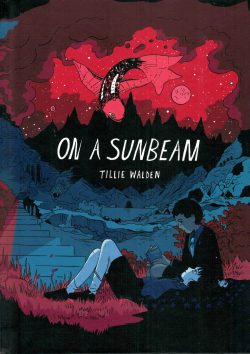
On a Sunbeam


By Tillie Walden (Avery Hill)
ISBN: 978-1-910395-37-0 (HB)

Win’s Christmas Gift Recommendation: Epic and Groundbreaking Space Saga… 10/10

Just for a change, here’s a short review and recommendation for a lengthy but unmissable treat. You could just buy it now and not bother with what follows…

No matter its trappings or content, Science Fiction is about human relationships. The genre is the perfect vehicle to explore them and test the limits of what it means to be human – often to the point of destruction, beyond and even back again.

That said, it’s truly heartening to see that even after more than a century of categorisable SF in prose, comics, film and other art forms it’s still possible to say something fresh in a distinct and moving way.

After all, once you accept the premise that technology is not what it’s all about, you can ask some truly searching questions…

Tillie Walden is a relative newcomer – albeit a prolific one – who has garnered heaps of acclaim and awards. Whether through her fiction or autobiographical works, she always presents a feeling of absolute wonder, combined with a fresh incisive view and measured, compelling delivery in terms of both story and character. Her artwork is a sheer delight.

After turning heads with shorter pieces such as The End of Summer, I Love This Part, A City Inside and Spinning, in 2018 her webcomic On a Sunbeam made the jump to print in a massive and monumental tome that might well be one of the most intriguing and engaging sci fi yarns I have ever read.

Vast and complex but easily accessible, it tells of pensive outsider Mia, who roams the stars with a collective of artisans, repairing dilapidated homes, buildings, space stations and other magnificent structures as a kind of celebration of communal past glories. Each of the workers has their own occluded backstory, but Mia’s is the one we share through a series of flashbacks detailing her time at an intergalactic boarding school.

A girl tainted with rebellion and destined for trouble, her life turned around after meeting exotic new student Grace: an actual princess from a fabled and troubled lost interstellar kingdom known as The Staircase…

Now, years after their slowly-developing relationship was abruptly curtailed by cruel fate, Grace returns to Mia’s life, compelling her and her comrades to undertake a hazardous rescue mission to a terrifying and uncanny forbidden planet…

Blending romance, soul-searching, the innate hunger to see what’s over the next horizon and drive to belong into a miraculous voyage filled with wonders and imagination, On a Sunbeam is a warm, sensitive, funny and ultimately gratifying excursion, mercifully free of pointless action and manufactured conflict, that will delight any mature reader whose sense of longing has remained somehow unfulfilled, even after all these years…
© Tillie Walden 2018. All rights reserved.

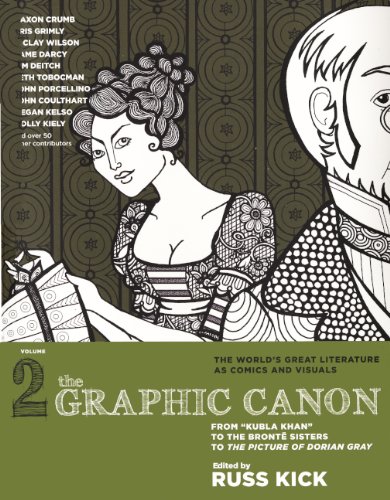
The Graphic Canon volume 2: From “Kubla Khan” to the Brontë Sisters to The Picture of Dorian Gray


By many and various, edited by Russ Kick (Seven Stories)
ISBN: 978-1-60980-378-0 (TPB)

Win’s Christmas Gift Recommendation: A “Worthy” Present That’s Actually a Joy to Receive and Devour… 10/10

Once upon a time in the English-speaking world, nobody clever, educated or in any way grown-up liked comics. Now we’re an accredited really and truly art form and spectacular books like this can be appreciated…

The Graphic Canon is an astounding literary and art project instigated by legendary editor, publisher, anthologist and modern Renaissance Man Russ Kick, which endeavours to interpret the world’s great books through the eyes of masters of crusading sequential narrative in an eye-opening synthesis of modes and styles.

The project is divided into three periods, roughly equating with the birth of literature and its evolution up to the rise of the modern novel. Debut volume From the Epic of Gilgamesh to Shakespeare to Dangerous Liaisons covers literature from ancient times to the end of the 1700s in stories and poetry, and this sequel edition takes us up to the end of the 19thcentury and the rise of mass-market fiction and (nigh) universal literacy…

Much of the material for the project has been taken from already extant or ongoing projects: as editor Russ Kick explains in his Introduction, it was the realisation that so many creative individuals were attempting to publish their own graphic responses to global heritage literature that led him to initiate this mammoth project in the first place…

Rather than simply converting the stories, the artists involved have enjoyed the freedom to respond to texts in their own way, producing graphics – narrative or otherwise, monochrome or something else, sequential or not – to accompany, augment or even offset the words before them and the result is simply staggering…

Make no mistake: this is not a simple bowdlerising “prose to strip” exercise like generations of Classics Illustratedcomics, and you won’t pass any tests on the basis of what you see here. Moreover, these images will make you want to re-read the texts you know and hunger for the ones you haven’t got around to yet. You will of a certainty marvel at the infinite variety of the artistic responses the canonical works inspired.

Available in mammoth paperback and digital formats, each piece here is preceded by an informative commentary page by Kick, and the wonderment is presaged by a barrage of micro-comic ‘Three Panel Reviews’ by Lisa Brown (specifically Charles Dickens’ A Tale of Two Cities; Gustav Flaubert’s Madame Bovary; Louisa May Alcott’s Little Women and Nathaniel Hawthorne’s The Scarlet Letter) before Alice Duke sets the ball properly rolling with a stunning painted interpretation of Samuel Taylor Coleridge’s ‘Kubla Khan’.

National treasure Hunt Emerson has already wonderfully and hilariously adapted the poet’s Rime of the Ancient Mariner and here loans ‘Part the Second’ to this tome wherein the foolish sailor realises why he shouldn’t have shot that damn sea bird…

Straight text-&-picture juxtapositions by Aidan Koch of William Blake’s ‘Auguries of Innocence’, lead to a formal and most mannerly adaption in ‘A Selection from Jane Austen’s Pride and Prejudice: Chapter 2’ by Huxley King with designer Terrence King, after which George Gordon, Lord Byron reminds us ‘She Walks in Beauty’, courtesy of David Lasky.

The period poesy corner continues and briefly concludes with Percy Bysshe Shelley and ‘Ozymandias’ as interpreted by Anthony Ventura, William Wordsworth’s ‘I Wandered Lonely as a Cloud’ via a futuristic vision from PMurphy before enjoying another Hunt Emerson gem re-examining John Keats’ ‘O Solitude’…

The novel makes its first appearance here with a gothic classic as Jason Cobley & Declan Shalvey precis a key moment from Mary Shelley’s ‘Frankenstein’ after which, a selection of Fairy Tales begins with text-heavy original extracts from ‘The Valiant Little Tailor’, ‘Hansel and Gretel’ and ‘Little Snow White’ by the Brothers Grimm, all deliriously illuminated by S. Clay Wilson.

The Grimm kids’ stuff then translates to comic strip form as Shawn Cheng adapts ‘How Six Made Good in the World’before Neil Cohn pictorializes Keats’ ‘La Belle Dame Sans Merci’ and William Blake’s own words and images are combined to bring to life ‘Jerusalem: The Emancipation of the Giant Albion’.

‘The Confessions of Nat Turner’ is a contemporary account of a southern slave rising as narrated, prior to his execution, by Turner himself to lawyer Thomas R. Gray, adapted by controversial artist John Pierard, whilst Lance Tooks devilishly tackles a lost classic by Mary Shelley in ‘The Mortal Immortal’ before another tranche of Fairy Tales commences with more original text limned by S. Clay Wilson.

Here Hans Christian Andersen is represented by ‘The Emperor’s New Clothes’, ‘The Nightingale’ and ‘The Little Match Girl’ after which Ellen Lindner presents ‘Rondeau (Jenny Kiss’d Me)’ as first conciev’d and craft’d by James Henry Leigh Hunt.

Hysterical history cartoonist Kevin Dixon concocts a beautifully bonkers snippet from Dickens’ ‘Oliver Twist’, a delightful prelude to a dose of Victorian nonsense as seen in Hunt Emerson’s depiction of Edward Lear’s ‘The Jumblies‘ and Sanya Glisic’s bombastic treatment of a selection from Heinrich Hoffman’s moralizing cautionary tales collection Der Struwwelpeter: specifically ‘Struwwelpeter: the Story of Shock-Headed Peter’, ‘The Story of the Inky Book’ ‘The Story of the Man that went out Shooting’ and ‘The Story of Little Suck-A-Thumb’.

Literary giant Edgar Allen Poe is celebrated in a haunting Poe Montage by Gris Grimly and fuller adaptations such as‘The Raven’ by Yien Yap as well as original text extracts from ‘The Tell-Tale Heart’, ‘The Raven’, ‘The Bells’, ‘The Pit and the Pendulum’ and ‘The Masque of the Red Death’ – all grotesquely illustrated by Maxon Crumb – before we switch themes and tone for Elizabeth Watasin to open a Brontë section with stylish interpretation of Charlotte’s ‘Jane Eyre’, whilst Tim Fish adapts Emily’s ‘Wuthering Heights’, after which Ali J in one image encapsulates Hawthorne’s ‘The Scarlet Letter’ and Matt Kish offers a post-futurist and quite disturbing vision of Herman Melville’s ‘Moby-Dick’…

John Porcellino offers a compelling and effective cartoon analogue of Henry David Thoreau’s ‘Walden’ after which Walt Whitman is addressed through two vastly different depiction of ‘Leaves of Grass’: one by Tara Seibel’s and Dave Morice’s cheeky ‘Leaves of Grass: The Adventures of Walt Whitman’.

Tinges of literary modernism coincide with John Pierard’s hallucinatory adaptation of Fitz Hugh Ludlow’s ‘The Hasheesh Eater’ after which Michael Keller & Nicolle Rager Fuller lavishly and magnificently illuminate and interpret Chapter 4 from Charles Darwin’s ‘On the Origin of Species’ (or if you’re a pedant like me On the Origin of Species by Means of Natural Selection, or the Preservation of Favoured Races in the Struggle for Life) and Seth Tobocman re-delivers former slave, equal rights advocate and freedom fighter Frederick Douglass’ thoughts on the Nature of Power from ‘The Message from Mount Misery’.

More exploration of social justice issues comes via Tara Seibel’s lengthy treatment of portions of Victor Hugo’s ‘Les Misérables’, before Dame Darcy leads off a brace of entries celebrating Emily Dickinson with ‘Because I Could Not Stop for Death’. Diana Evans then responds visually to ‘I Taste a Liquor Never Brewed’, before Corinne Mucha adapts Gustave Flaubert’s Letter to George Sand ‘Dear Master’ and Darcy returns to delineate a wild interpretation of Lewis Carroll’s ‘Alice’s Adventures in Wonderland and Through the Looking Glass’ and Eran Cantrell compellingly details his monstrous epic ‘Jabberwocky’.

Such is the impact of Carroll (AKA Charles Lutwidge Dodgson) – on artists and creators, if not the entire wider world – that a host of submissions led to the ‘Alice Gallery’ that follows, with inclusions by Alice and Mad Bill Carman, Kim Deitch, John Coulthart, May Ann Licudine, Andrea Femerstrand, Olga Lopata, Natalie Shau, Emerson Tung, Peter Kuper, John Ottinger, David W. Tripp, Christopher Panzer, Jasmine Becket-Griffith and Molly Kiely: all letting their imaginations run wild and proving the infinite power of a good book…

Another one such is Fyodor Dostoevsky’s ‘Crime and Punishment’, starkly and paranoically envisioned here by Kako, before Molly Keilly delivers details from Leopold von Sacher-Masoch’s long-forbidden classic ‘Venus in Furs’ and Arthur Rimbaud’s pioneering drama ‘The Drunken Boat’ is adapted by Julian Peters…

Shifting to more sedate climes and themes, Megan Kelso deliciously delves into George Elliot’s ‘Middlemarch’ before Carroll pops up again, thanks to Mahendra Singh’s treatment of The Hunting of the Snark in ‘Fit the Second: The Bellman’s Speech’, before Ellen Lindner channels Leo Tolstoy with stylish extracts from ‘Anna Karenina’ whilst J. Ben Moss offers a key moment from Mark Twain’s ‘Adventures of Huckleberry Finn’…

Laurence Gane & Piero impressively summarize Friedrich Nietzsche’s ‘Thus Spake Zarathustra’ in a sequence of short, sharp graphic lectures after which we enter the first moments of modernity with the accent on suspense and terror as Danusia Schejbal & Andrzej Klimowski open Robert Louis Stevenson’s ‘The Strange Case of Dr. Jekyll and Mr. Hyde’, whilst Sandy Jimenez effectively and chillingly recounts Ambrose Bierce’s ‘An Occurrence at Owl Creek Bridge’ before John Coulthart epically and experimentally ends our literary excursions by uniquely adapting Oscar Wilde’s ‘The Picture of Dorian Gray’.

Wrapping up the elucidatory experience are background, context and suggestions in ‘Further Reading’ from Jordyn Ostroff, regarding all the works contained herein, a full list of ‘Contributors’, details of ‘Credits and Permissions’ and an ‘Index to Volume 2’.

Although no replacement for actually reading as much of the source material as you can find, this astonishing agglomeration of visual interpretations is a magnificent achievement and one every fan of the comics medium should see: a staggering blend of imperishable thoughts and words wedded to and springing from sublimely experimental pictures.

This type of venture is just what our art form needs to grow beyond our largely self-imposed ghetto, and anything done this well with so much heart and joy simply has to be rewarded.
© 2012 Russ Kick. All work © individual owners and copyright holders and used with permission. All rights reserved.

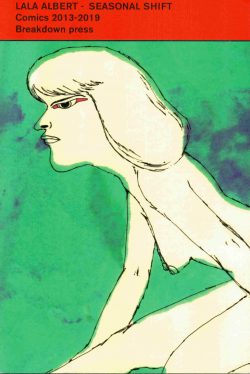
Lala Albert: Seasonal Shift – Comics 2013-2019


By Lala Albert (Breakdown Press/The Library of Contemporary Comics)
ISBN: 978-1-911081-09-8 (TPB)

Win’s Christmas Gift Recommendation: Because Not All Beautiful Things are Pretty… 9/10

All right-thinking people know that graphic narrative is the most expressive and expansive medium to work in, right? The range of themes explored, stories told and varieties of delivery are pretty near infinite if created by an inspired artisan.

The act of stringing pictures and/or words together is something almost everybody has done at some stage of their lives. It’s a key step in the cognitive path of children and, for an increasing number of us, that compulsive, absorbing euphoria never goes away.

Whilst many millions acquiesce to the crushing weight of a world which stifles the liberation of creativity, turning a preponderance of makers into consumers, a privileged, determined few carry on: drawing, exploring, and in some cases, with technology’s help, producing and sharing.

That emotional and creative volatility has never been better realised than in the modern crop of storymakers, many of whom are being rightly-celebrated in collections of minicomics and collections such as this compilation of works by Brooklyn-based Lala Albert as part of the Library of Contemporary Comics, which is collecting shorter works by the best cartoonists currently working in the medium right now.

Opening with a forthright ‘Interview’ conducted by Michael DeForge, this sequence of tales, vignettes and self-publications addresses body issues, human relationships, and most especially interactions with society and the ever more imperilled environment through terse short stories, generally framed in science fictional, fantasy and horror terms of reference.

Gathered from Albert’s last six years, the raw, primitivist, questing revelations begin with ‘Morning Dew’: a self-published moment of luxurious hedonism in natural circumstances from 2019 that lapses into a glimpse at the inevitable, if improbable, consequence of plastic saturation, first seen in Future Shock #7 (2014), before ‘Starlight Local’ – part of Alien Invasion volume 3, 2013 – details the disturbing outcome of a casual hook-up during an interstellar commute…

Consumerism and self-determination get a handy heads-up when a girl orders a ‘nu device’ (Trapper Keeper volume 4, 2016) after which a new kind of surveillance society dystopia is explored and overturned in ‘R.A.T.’ (crafted for Latvia’s KuÅ¡ Comics in 2015).

These tales are delivered in a range of styles and palettes, but for me, pure stark monochrome is always a blessing, so the ferocious attitude of ‘Brainbuzz’ (Weird Magazine volume 5, 2014) only intensifies the disturbing exploration of bodily invasion undertaken here…

Masks and the mutability of personas are thoroughly, forensically questioned in kJanus”:a voyage of intense personal discovery first released by Breakdown Press UK in 2014, before a distressing fascination of what lurks under our skins is displayed in ‘Flower Pot’! courtesy of Marécage, Revue Lagon, France, 2019.

An epic of ecological combat and fairy survival is revealed in multi-chapter saga of survival ‘Wet Earth’ (Sonatina, 2017), pitting ethereal pixies against the lower ends of an uncaring food chain, before a modicum of sanity – but never safety or true security – returns via comforting self-assessment in ‘Pinhole’ (Over the Line, Sidekick Books UK, 2015). After everything, it’s always good to check back in with your own skin…

Dark but never hopeless, and always avoiding slick, glib professional sheen, these tales bore right in to the heart, asking questions we all have. Whether you find any answers truly depends on you…
All work © Lala Albert 2019. This edition © Breakdown Press 2019. All rights reserved.

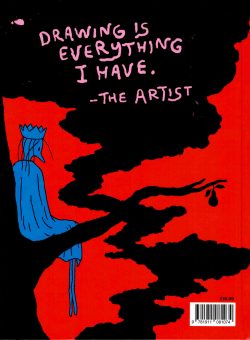
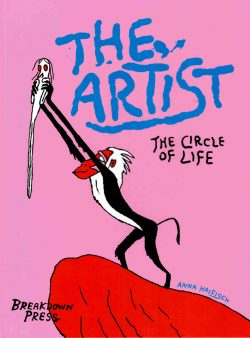
The Artist: The Circle of Life


By Anna Haifisch (Breakdown Press)
ISBN: 978-1-91108-107-4 (HB)

Win’s Christmas Gift Recommendation: Picture Perfect Grown Up Fun… 9/10

Like Norwegian émigré and cartoon superstar Jason, Anna Haifisch is a compulsive visualiser and raconteur with a devastating touch of whimsy that is impossible to resist.

Born in 1986 in Leipzig, the illustrator and screen printer is a truly dedicated purveyor of captivating comics that exude charm and wit whilst tackling big issues in accessible ways. She’s also very sly, and very funny. It’s made her something of an international celebrity…

In 2017 her book The Artist introduced an effete intellectual avian utterly in love with the fashionable concept of being a creator and this long-awaited sequel delivers another clutch of wry, vainglorious, heartfelt, pompous and charming episodes detailing how tough it is to dedicate one’s life to the Muse… especially if you only want to draw birds and snakes…

A vivid hardback collation, sequel volume The Circle of Life collects strips from 2016 that first appeared online at Vice.Com and shares even more insights in powerful line and flat colour combinations, beginning with an eponymous self-deprecating introduction…

Delivered as short 2-3 page cartoon colloquies, the drama dioramas open on a wearying, pharmaceutical-fuelled night out with Owl, leading to an origin of sorts and a challenging confrontation with that bane of all artists, the wealthy but clueless collector/sponsor…

Most episodes are brief and untitled but some earn themselves notoriety and utility through names such as ‘Art Rap’ which follows a deliriously engaging vignette about St. Luke (Patron Saint of artists). After that blending of imagery with devious street patter, an idealised day segues into a faux documentary on lost painter Edzard Fünfhauser, an incident of excoriating self-recrimination, a visit to the psych ward and a restorative trip down memory lane…

A fanciful sojourn amidst Art’s Great Ones and a historically significant moment of letter-writing leads to a temporary abandonment of dreams and principles before a sordid session of tool fetishism restores equilibrium via a period of Japanese impressionism and Haiku drafting.

There follows and Interlude: On Birds enquiring ‘What Happened to All the Aspiring Cartoon Birds‘ (such as Donald, Woodstock and Tweety), after which a dissertation on being online and painful interactions with a non-artistic relative lead to a re-examination of favourite themes and a brief commission in frozen Greenland.

A sad tryst with a cage bird triggers ‘3 Jolly Autumn Strips’; a visit to the Jail built for Artists and the horrors of tawdry commercialism and hawking your work to the public (so clearly autobiographical, as Haifisch is co-founder of Germany’s The Millionaires Club Indie Comics Festival in Leipzig) before concluding on an uplifting high note with an illustrative paean to creativity and a singalong tribute to ‘Sorority’…

Outrageous and charming, these exploration of the fabled life and anxiety-drenched traps of the creative spirit are a delight for everyone who’s ever picked up a pencil or looked at a masterpiece and thought “I can do that”…
© Anna Haifisch Breakdown Press 2019.

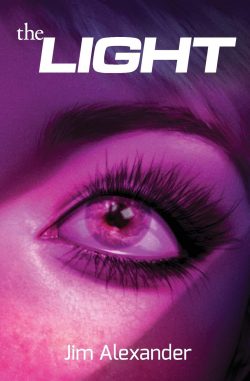
The Light


By Jim Alexander, edited by Kirsten Murray (Planet Jimbot)
ISBN: 978-1-9164535-2-4 (PB) eISBN: 978-1-9164535-3-1

Win’s Christmas Gift Recommendation: A Decidedly Different Spooky Saga for the Season… 9/10

Apparently tireless raconteur and comics veteran Jim Alexander is back with another prose novel (available in paperback and a variety of eBook formats).

His pictorial back-catalogue includes Star Trek the Manga, Calhab Justice and other strips for 2000AD, licensed properties such as Ben 10 and Generator Rex as well as a broad variety of comics and strips for The Dandy, DC, Marvel, Dark Horse Comics, Metal Hurlant Chronicles, and loads of other places including his own publishing empire Planet Jimbot. He’s imminently due back in the mainstream too, with a forthcoming Marvel Graphic Novel in the offing…

Everyone dies. That’s biology. How they die isn’t as important as how they lived, right?

That’s an assumption that is devilishly challenged in The Light as a world so very much our own takes a path less travelled after a global catastrophe in 1998.

Here and now, twenty years after the event, humanity has gained an eerie new ability: unfailing certainty in the knowledge of when your time is up.

It’s not a proper super power: decedents only know from the moment they wake up that it’s their Last Day and not everyone is sure – or convinced – until they place a palm on the ubiquitous domestic device (also available on all street corners and in every lamp post) and a purple hue tells them its time…

Socially, things haven’t changed much: Capitalism has devised new ways to monetise the change and the elites and powers-that-be have found fresh ways to restrict the thinking and spending of the masses. Someone has turned Last Day into the world’s most debauched, powerful and unavoidable religion, and on dark fringes of the planet, outsiders try to live beyond the newly-established margins and avoid collaborating with the system that demands that all citizens test their light every day…

The rest of us? We just comply, testing ourselves every 24 hours and going about our lawful business until it’s that day and we have a decision to make: lie down and die or rebel and act out…

Told through a string of narrative viewpoints from the highest and mightiest to the most excluded and lowly, how The Light works – and how it ultimately fails – is beguilingly exposed in a wry and mordant, satire-saturated tale that delves like a forensic exam into the nature of what it means to be human and truly alive…

And when this has sufficiently blown your mind, you really should really read the author’s first novel GoodCopBadCop and track down the superb comics by Alexander and his confederates Luke Cooper, Gary McLaughlin, Will Pickering, Aaron Murphy, Chris Twydell & Jim Campbell.

The Jims – Alexander & Campbell – have been providing challenging, captivating and enthralling graphic narratives for ages now and you owe it to yourself to catch them too.
© 2019 Jim Alexander.

Planet Jimbot has a splendid online shop so why not check it out? Conversely why not go to:

UK
Amazon (print) (ebook)
Kobo

US
Amazon (print) (ebook)
Kobo
Barnes & Noble