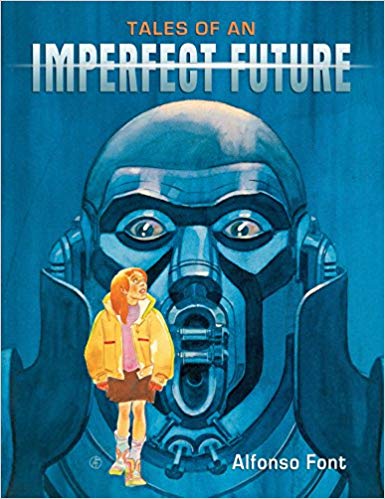
Tales of an Imperfect Future


By Alfonso Font (Dark Horse Books)
ISBN: 978-1-61655-494-1

As the end of March turgidly approaches and I confront the prospect of having my European citizenship stripped from me I’m feeling a mite confused, upset and just a bit passive aggressive (surprisingly that’s a term the Germans don’t have a word for…). Thus, I’m reliving a few of the best comics our Continental comrades have crafted and shared with the ungrateful Anglo-Saxon world…

Barcelona-born creator Alfonso Font Carrera was born on August 28th 1946. He studied Fine Arts and worked as an illustrator before slipping into comics in the 1960s with western tales in Hazañas del Oeste and Sioux for Ediciones Toray.

He quickly graduated to horror stories and historical crime dramas about infamous criminals for the Selecciones Illustradas Agency and, in 1970, began contributing material to British publisher Fleetway on strips such as Black Max in Thunder and Lion. Soon he gravitated to America with work for mature magazine publishers Warren and Skywald.

With writer Carlos Echevarría, he created ‘Géminis’ (AKA Phil Jackson) before moving to Paris in 1975 to work for major comics magazine Pif Gadget, devising ‘Sandberg, Père et Fils’ with Patrick Cothias and ‘Les Dossiers Mystère’ (written by Solet, and sharing art chores with Carlos Giménez and Adolfo Usero) as well as the Roger Lécureux-scripted ‘Les Robinsons de la Terre’.

From 1976-1982 he also freelanced for Scoop, Tousse Bourin and Super-As. Incensed by publishers reprinting his work without permission or payment, he became active in Creators Rights issues and worked with Giménez, Victor Mora and Usero as the “Workshop Premia” seeking to create a union for comics professionals.

In the mid-1980s, Font returned to Spain, contributing to new, home-grown publications like Cimoc, À Tope, and Circus whilst creating (with Mora) ‘Sylvestre’ and ‘Tequila Bang’.

For the Spanish iteration of 1984 he created signature sci fi gadabouts Clarke & Kubrick – who subsequently appeared in Cimoc and Rambla – and began a series of self-scripted, mordantly cynical, sardonic science fiction tales under the umbrella title ‘Cuentos de un futuro imperfecto’ which we see here as Tales of an Imperfect Future…

Seemingly never sleeping, Font went on to create parody-laced aviation hero ‘Frederico Mendelssohn Bartholdy’, ‘El Prisionero de las Estrellas’, and classical adventure serial ‘Jann Polynésia’ – which evolved into the iconic ‘John Rohner’ for Cimoc and ‘Carmen Bond’ for À Tope.

In 1987 he started a fruitful association with French publications Pilote and Charlie Mensuel with his series ‘Taxi’ and, after a brace of independent albums for Planeta publishers, revived John Rohner at Norma publishers.

Always occupied, he went on to create ‘Privado’ and medieval warrior ‘Bri D’Alban’ for Cimoc, whilst collaborating on cop series ‘Negras tormentas’ (‘Black Storms’) with writer Juan Antonio De Blas. Font even began occasionally illustrating Italy’s venerable western superstar Tex for Bonelli. In 1996, he returned to American pages with his erotic series ‘Dra, Dare’ for Penthouse Comix.

A major force in European graphic storytelling, Font has won numerous awards including The Grand Prize at Comic Barcelona and a Haxtur prize.

His artwork is loose, fluid, intricate and utterly electrifying: and Dark Horse’s translation of original European collection of Tales of an Imperfect Future into this stunning oversized (287x224mm) monochrome hardback edition is a sheer delight for fans of grittily fantastic fiction.

Any Brit who grew up reading the short complete sagas exemplified and perfected in 2000AD‘s Tharg’s Future Shocks, Pulp Sci-Fi or Tales from Beyond Science will be right at home – unless casual (human and robot) nudity is a problem…

Written and illustrated by Font throughout, the anthological nature of the tales is linked by the simple bridging device of a grotesque alien directly telling us that humanity is simultaneously a threat and embarrassment to the universe. No argument here, mate…

However, rather than go to the time and expense of eliminating us, the Great Powers are offering us one last chance to change our ways and, by way of inducement, have provided some stories taken from our most probable futures to illustrate just why we’re so much of a problem…

The hard science hagiography commences with ‘Tanatos-1 Comes Home’ as the smug hierarchal rulers of Earth gloat over the news that the AI super-weapon they created to destroy the alien fleets of Kloron has spectacularly succeeded.

As boffin Commander Grenh describes to the xenophobic top Bankers, Clerics and Military leaders how his programming compels the indestructible Tanatos-1 to unceasingly and implacably seek out all life in the universe and eradicate it, veteran General Alto Kervis asks himself why it has turned around and now nears Earth…

‘Rain’ introduces hard-working, long suffering blue-collar spacers Stanley Kubrick and Arthur C. Clarke, stuck on a sodden world, going slowly mad…

When the incessant deluge apparently causes a malfunction, hated computer Hal 2001 insists they go outside to fix the problem, but Stanley is convinced the useless metal martinet is trying to kill its human masters…

Barbed satirical humour gives way to barbarian fantasy in ‘Day of Glory’ as valiant John Smith battles devils and monsters to save his princess and his people. Tragically, the wonder warrior is in for disappointment and shock once he impossibly defeats the sinister Overlord of Klaarn…

Cracks appear in the foundations of the Military-Industrial complex when a vile capitalist proves to the government why the war they’re fighting must never end in ‘Stocks’, whilst

‘The Hunt’ prophetically takes the Hunger Games trope and ongoing war between “One-Percenters” and the rest of us to its logical conclusion…

Originally crafted in the mid-1980s, it follows two super-rich brats who stalk each other with lethal weapons through the dystopian wastelands inhabited by the poor. Of course, even when they’re killing each other for sport on a reality show, the oligarchs still find a way to bloodily exploit the despised discarded millions…

‘“Like a Plague”’ then offers an excoriating morality tale about our suicidal ecological irresponsibility before Stanley and Arthur return in ‘Cyberratic’.

Having finally escaped the rain-drenched hellhole and creepily disturbing electronic taskmaster, our unlikely heroes hit the Welcome Satellite for some R&R but stumble into a major mechanical malfunction on the totally-automated resort.

Luckily a small droid keeps pulling their fat out of the robotic fire, but you’d think such passionate machine-haters would stop for a moment to ask why and how their little saviour escaped the malfunction plague…

‘The Final Enemy’ affords a bleak glimpse at the thinking behind the soldiers who will fight in the final atomic Armageddon, whilst black humour informs a tale of Earth explorers who land on paradise and destroy it forever with ‘The Kiss’…

Similar silliness informs the trash-inundated post-apocalyptic world of ‘The Cleaner’ when humanity’s last survivors activate a miraculous device to get rid of the cause and effects of the pollution which destroyed the world…

Although meant as a comedic interlude, the next vignette sadly comes across as dated and just a touch homophobic by today’s elevated standards, detailing the shock and peril a solitary explorer endures when he discovers his government-mandated and supplied robotic sexual companion is not a “Betty” but an over-zealous ‘Valentino’…

Far more safe and salutary territory finds ‘Earth Control at Your Service, Sir’ addressing a version of the The Cold Equations quandary as two astronauts bringing an end to global famine realise that they won’t reach Earth if both men keep breathing the rapidly diminishing oxygen supply.

As they struggle to make an impossible decision, they have no inkling that the authorities on a starving world have their own ideas…

‘The Siege’ bloodily traces the rampage of a merciless murderous maniac as a fractured city endures police martial law and the ceaseless hunt for society’s greatest menace before the tormented tomorrows tumble to a close with a bleak sad tale of a doomed and dying spacer’s escape into fantasy and one last passionate rendezvous with beloved ‘Green Eyes’…

Scary, topically pointed, suspenseful and superbly intoxicating, Tales of an Imperfect Future offers a potent panoply of graphic pleasures for every lover of comics adventure and science fiction wonders from a master of art long overdue for fame in the English-speaking world.
Tales of an Imperfect Future © 2014 SAF Comics, www.safcomics.com. All rights reserved.

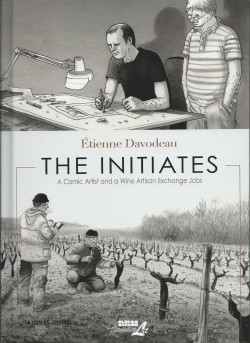
The Initiates – A Comic Artist And a Wine Artisan Exchange Jobs


By Étienne Davodeau, translated by Joe Johnson (NBM/Comics Lit)
ISBN: 978-1-56163-703-4 (HB)

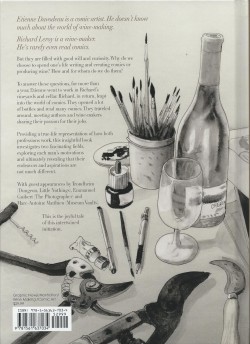
Throughout 2010 Bande Dessinée author/artist Étienne Davodeau (Friends of Saltiel, Lulu femme Nue, Un monde si tranquille, The Poor People: A History of Activists), noted for both brilliant fiction and moving factual comicbook novels, participated in a fascinating life (or perhaps vocation) swap experiment.

The artist, writer and designer was born in 1965 and, whilst studying art at the University of Rennes, founded Psurde Studios with fellow comics creators Jean-Luc Simon and Marc Le Grand, AKA “Joub”. His first album The Man Who Did Not Like Trees was released in 1992.  He is a leader and integral part of the modern graphic auteur movement in French and Belgian comics.

Released as Les Ignorants in October 2011, this lyrical and beguiling cartoon documentary reveals the year when the artist and independent specialist wine-maker Richard Leroy shared the secrets and mundane realities of each other’s insular, introspective and fearsomely philosophical solitary professions.

Davodeau knew absolutely nothing of the ferocious demands of the elite, experimental grape-growing game nor the oenophilic secrets and mysteries of tasting wine, but similarly the bluff, irascible son of the soil had barely read a comic in his entire life. The journal of discovery opens with ‘To Pruning, Then (Plus One Belgian Printing)’ as the artist is put to work in icy winds on the terroir of Montbenault, cutting and shaping the lianas which hold such glorious potential. Then Leroy is taken on an eye-opening tour of a Belgian print-works where Davodeau is summoned to sign off his latest album…

In ‘Wood’ a trip to a cooperage dissects the role of barrels in the slow fermentation process, as the new friends discuss the imponderables of judgement. It’s hard to define, but in their own fields each knows right and wrong, good and bad and most especially “not perfect yet”…

Leroy’s extra-curricular work includes reading lots of comics and graphic novels, as well as being introduced to the peripheral joys such as signings, collectors fads and so forth, but when he is introduced to major creator Gibrat a fascinating discourse on the aesthetics of the medium ensues in ‘Jean-Pierre (and Jimi, and Wolfgang Amadeus and a Few Others)’, liberally lubricated by the vintner’s ever-present samples of his own form of creative expression…

A charming interview and guest appearance with Lewis Trondheim graces ‘The Art of the Portrait and its Vicissitudes, or “The Theory of the Beak”’ even as the spring brings terror, confusion and greater back-breaking toil as the artist has his first brush with tractors and even more obscure specialist technologies, ‘What Goes Without Saying’ offers personal history and raking in the hot sun, after which ‘In Praise of Manure’ focuses on subjectivity as he learns the pros and cons of the controversial vintners’ heresy of “Biodynamics”…

Ploughing and accidental self-immolation features in ‘A Question of Proximity’, whilst the arrival of the world’s most influential wine critic opens a whole new area of discourse in ‘New York/Montbenault/New York’, and the tables are satisfactorily turned in ‘Saying Something Stupid: (Sometimes) a Good Idea’ as Richard attends an editors’ meeting in Paris in July before a little break at a Bistro reveals the true depth of the naïve comic-consuming artisan’s liquid gifts…

Wine-making is a 24/7 occupation and as storm season hits the terroir ‘The Blunder’ offers moments of genuine tension and apprehension for this year’s crop before a successful “disbudding” of the vines leaves time for a taste-training session for the novice drinker and reluctant reader alike.

In ‘Blacks and Whites’ the never-shy Leroy meets a creator whose work deeply affected him, and the pleasant hours spent with author/artist Marc-Antoine Mathieu lead to deep thoughts all round before ‘Wherein, When Certain Vintners Suffer Sulphur’ covers the raging debate in the wine industry on the use of elemental additives to “manage” fermentation, which leads inevitably to the frantic camaraderie of the grape-picking and constant cry for another ‘Bucket!’

October, and with the year’s harvest pressed and in barrels there’re a few quiet moments to disparage foolish ‘Label Drinkers’ at Wine Exhibitions, happily contrasting the snobs with Leroy’s first experience of a Comics Festival, before November brings the first tentative tastings of the new vintage and a long-awaited epiphany moment for reluctant reader Leroy in ‘Montbenault/Paris/Kabul’…

The Photographer (“Into War-Torn Afghanistan with Doctors Without Borders”, by Emmanuel Guibert, Didier Lefèvre and Frédéric Lemercier) was the book the vintner responded to on a purely, frighteningly visceral level, so Davodeau takes the bemused convert to meet the lead creator and consequently discovers a tenuous connection between his life-swap partner and the documentary graphic novel’s subjects…

In ‘A Teetering Statue’ the quiet winter weeks allow breathing space to learn the travails of shipping and export, as well as encompassing a visit to the Paris Cartier Foundation’s Moebius Exhibition and some deliciously piquant home truths for comics cognoscenti before returning again to pruning vines, whilst ‘Savagnins, Poulsards, and Company’ takes us almost full circle as Leroy takes the artist to the vintner’s own personal promised land and a fellow elite wine maverick, whilst a trip to Corsica takes in the Bastia Comics Convention and the unique vineyard of the “Patrimonio Arena” in ‘Nielluccio, Vermentinu, Bianco Gentile and Oubapo’…

The magnificently elegiac and languorously evocative account wraps up in genteelly seductive manner with one final excursion as The Initiates head for the Dordogne to follow up on Emmanuel Guibert’s introduction to the survivors of The Photographer. One last gracious day of cross-fertilised booze and books conversation in ‘Final Revelations under a Cherry Tree‘ then leads inevitably back to where and how it all began for both participants…

Of course all I care about is comics, but even on my terms this rapturous, studious yet impossibly addictive account of two open-minded, deeply dedicated artists’ tentative exploration of each other worlds – at once tediously familiar and utterly unknown – is a masterpiece of subtle education, if not benevolent propaganda and, like good wine or a great book, takes its own sweet time to hook you.

Also included in this surprisingly compelling hardback chronicle is ‘Drunk/Read’ – a list of wines and graphic novels introduced to each novitiate; an intriguing bucket list for readers to aspire to and complete our second hand education into the greatest arts on Earth…

This dazzling display of harsh fact and the theosophical fervour of the grape-growers art, seamlessly blended with an outsider’s overview of our whacky, cosy world of cartoons and funnybooks, is enchanting beyond measure and should figure high on any fan’s list of books to seduce comics non-believers with. It might also be the perfect gift for all those people you thought you couldn’t buy a graphic novel present for…

Europeans excel at making superb comics - Lord, how I’m going to miss them all come April when we’ve built our own Exclusion Wall and domed ourselves in our Den of National Insularity - which simultaneously entertain and educate (check out the sublime On the Odd Hours or The Sky over the Louvre to see what I mean) and the seductive, evocative, eclectically human monochrome illustration and dialogue perfectly capture the sensorial effect of wine and work and weather, and the backbreaking, self-inflicted artisan toil and ineffable rewards of making comics or creating wine…

This elegiac documentary of a bizarrely fitting experiment is a book you must savour.
© Futuropolis 2011. © 2013 NBM for English translation.

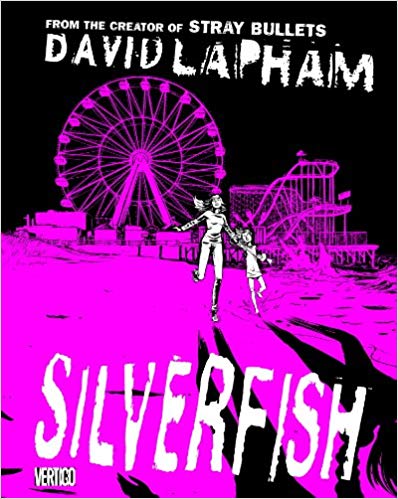
Silverfish


By David Lapham (Vertigo)
ISBN: 978-1-4012-1048-9 (HB)                    978-1-4012-1049-6 (TPB)

Although far-travelled and adept with all genres of graphic narrative David Lapham is inextricably linked to Crime stories: a discipline that elevated him to comics’ top rank (see for example Stray Bullets and Murder Me Dead) with this superbly evocative all-original yarn for the creator-owned Vertigo imprint, tailor-made to become a major motion picture. Yet somehow, even after a decade, it hasn’t yet, or even made it to more accessible eBook formats yet. As ever, we live in hope…

Troubled teenager Mia Fleming doesn’t like her new stepmom, Suzanne. That’s not uncommon. However, when the sulky brat steals Suzanne’s diary, makes prank calls and snoops in her closet, she sets in motion a storm of bloody violence and terrifying consequences for her friends, her family, and ultimately the entire town of Seaside Heights, New Jersey.

Lapham has always had a chillingly direct line to contemporary America and his skill in exploring and exhibiting the simmering violence in that too-often dysfunctional society is put to efficient and engrossing effect in this fascinating blend of psycho-thriller and teen-slasher tale, drawn with simple, provocative clarity in moody, powerful monochrome tones.

If you’re a comics missionary and ardent advocate of adventures other than superheroic, this is an ideal book to recommend to crime-fans, thriller-aficionados, and all other acquaintances. You’ll also want a copy for yourself.
© 2007 David Lapham. All Rights Reserved.

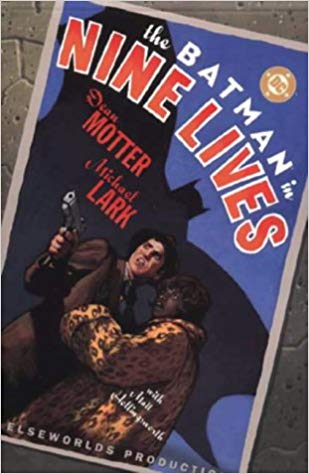
Batman: Nine Lives


By Dean Motter, Michael Lark & Matt Hollingsworth (DC Comics)
ISBN: 978-1-56389-853-2 (HC)                    978-1-84023-358-2 (Titan Books HC edition)

This March sees the 80th anniversary of the Bat-Man’s debut and gosh-by-golly I’m getting pretty stoked with all the anticipation. I trust there to be some fuss about the event. I’m also getting my Nerd on by indulging myself in a few fond looks back. Here’s another taste of the amazing influence the Dark Knight has exerted over the decades, and one more tome just begging for a new edition and some digital exposure…

The depictions and narrative signatures of the post-war genre “Film Noir” are powerful and evocative, celebrating a certain weary worldliness as much as stark lighting and visual moodiness ever did. That said, this murky world seems a natural milieu for Batman tales, but there are precious few that make the effort, and so very few of those successfully carry it off.

This superb alternative adventure published under DC’s Elseworlds imprint (wherein the company’s key characters are translated out-of-continuity for adventures that don’t really count) is a magnificent exception, combining hard-boiled detective yarning with the icons of gangster movies.

1946: Selina Kyle was a woman everybody wanted, and who exploited that fact fully. When The Batman finds her ravaged corpse in the sewers, there’s no shortage of suspects. Was she murdered by a high-society big-shot like Oliver Queen, Harvey Dent or Bruce Wayne, desperate to keep her quiet, or was one of her more sinister consorts-du-crime to blame?

Gangsters like jilted embezzler Eddie Nigma, mob-boss ‘Clayface’ Hagen, The Poker Joker, The Penguin or even the stone-cold hit-man Mr Freeze might have snuffed her in an instant if expedient, and seedy gumshoe Dick Grayson knows that he’ll be just as expendable if he digs too deep into the private affairs of the Highest and Lowest denizens of Gotham. But somehow, he just can’t let go…

Reconfiguring key figures of the venerable mythos as such recognisable archetypes – although perhaps obvious – is still a wonderfully effective way to revitalize them. The plot is as engrossing as any movie masterpiece and the human analogues of the bizarre and baroque Bat-cast are just as menacing even without outlandish powers and costumes. And through it all lurks a bizarre vigilante dressed as a bat, once again a mad element of relentless chaos that he can no longer be in his regular mainstream comic outings…

Although a pastiche derived from many sources, Nine Lives is a brilliant and engrossing read, seamlessly and stylishly blending mystery, crime-caper and sophisticated suspense thriller with moody visuals and a cynical tone that will show any hold-out naysayer that comics have as much to offer as any other creative medium.

Hunt this down and make it yours or pray that it’s due for a fresh release ASAP.
© 2002 DC Comics. All Rights Reserved.

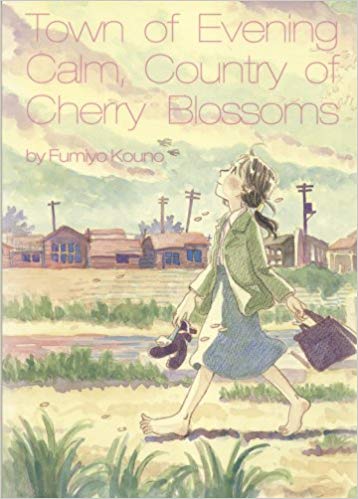
Town of Evening Calm, Country of Cherry Blossoms


By Fumiyo Kouno (jaPress/Last Gasp)
ISBN: 978-0-86719-721-1 (HB)

First published in 2003/2004 in Japan’s Weekly Manga Action YÅ«nagi no Machi, Sakura no Kuni (Town of Evening Calm, Country of Cherry Blossoms) is an award-winning (2004 Grand Prize for manga, Japan Media Arts Festival and the 2005 Tezuka Osamu Cultural Prize Creative Award) collection of interlinked, generational short stories. The compelling stories deal with the aftermath of the atom bombing of Hiroshima, and particularly the treatment of bomb-affected survivors (“hibakusha”) by a culture that has traditionally shunned imperfection and studiously ignored unpleasant truths.

The book was made into an award-winning feature film and radio serial in 2007.

The project was instigated by her editor rather than Fumiyo Kouno (or Kōno Fumiyo, if you’d like to acknowledge her actual name): a native of modern Hiroshima and manga maker (Kokko-san; In a Corner of This World), who apparently never considered herself as being affected by the ghastly events of August 6th 1945.

The first story – ‘Town of Evening Calm’ – is set in 1955 and follows teenager Minami Hirano as she goes about her daily life in the slowly-recovering city. She lives with her ailing mother and sister in a seedy shack and ruminates on those she’s lost: father and two sisters to the bomb and baby brother Asahi who was mercifully staying with rural relatives when the bomb hit.

She hasn’t seen him since that day. Her aunt thought it best to keep the healthy boy away, and subsequently adopted him. The surviving family bravely struggle as seamstresses and clerks, trying to save enough money to visit him. Minami has an admirer; a shy young man named Yutaka Uchikoshi, who tries bombarding the quietly independent girl with presents, but ten years after the bomb, the explosion is inexorably still claiming victims. As tragedy looms, Minami is unaware that her long-lost brother is coming to see her…

Follow-up ‘Country of Cherry Blossoms’ is divided into two separate tales. The first is set in Tokyo in 1987 with tomboy schoolgirl Nanami Ishikawa railing against her life. She is Asahi’s daughter – a second-generation victim – and has never met her hibakusha relatives, but when her brother Nagio is hospitalised she sneaks into his room with new friend Toko Tone and showers him with cherry blossom petals to show him the spring he’s missing, unaware that his asthmatic condition is considered by many to be the taint of the bomb…

Admonished by her grandmother, she goes on about her life but as the family moves nearer the hospital, she abruptly loses touch with Toko…

Part Two takes up the story in 2004. Asahi has recently retired and moved in with Nanami, when medical graduate Nagio mentions that he has seen Toko at the hospital where he works. Nanami has other things to worry about: Asahi is disappearing for days at a time and she thinks he might be senile…

One day she follows him, and – just as years before with Nagio – Toko, a virtual stranger, appears and shares her journey and revelations. The troubled old man is travelling to the rebuilt Hiroshima, driven by an irresistible impulse, and as they follow him Nanami discovers that real reason Toko stopped seeing her family…

Pensive, serene and deftly sensitive, almost elegiac, this book deals with uncomfortable issues by advocating tolerance, understanding and endurance rather than the bombastic unyielding defiance of Keiji Nakazawa’s landmark Barefoot Gen, and the message hits home all the harder for it.

Initially reluctant to produce a work about Hiroshima, Ms. Kōno discovered a strong voice within – and her own unrealised, unexpressed attitudes – when faced with the behaviour still directed toward hibakusha more than five decades later. As she states in the Afterword of this superb commemorative hardcover, it was “unnatural and irresponsible for me to consciously try to avoid the issue” and she decided that “drawing something is better than drawing nothing at all.”

As far as I can tell this moving portmanteau is still only available in paperback form but it’s well worth tracking down: a quietly magnificent tribute to the truism that “Life goes on” and the proposition that even polite and passive intolerance should always be resisted. This is a book every politician in the world should read. It also holds a harsh lesson every cosy, comfortable family in existence needs to absorb… and it needs to be back in print and available digitally, too.
© 2003, 2009 Fumiyo Kouno. All Rights Reserved.

Top 10


By Alan Moore, Gene Ha, Xander Cannon & various (Vertigo)
ISBN: 978-1-4012-5493-3

Let’s start the New Year with a fresh look at a much-neglected gem of mature-reader Fights ‘n’ Tights fun courtesy of the grandmaster of the sub-genre. These tales first appeared at the turn of the century under the America’s Best Comics banner – and are still available in those editions should you be so minded to seek them out – but this hefty paperback (or eBook) gathers the first dozen award-winning issues in one nifty pack, so that’s convenient, if nothing else…

Following his usual avuncular introduction in ‘Powers of Arrest: Precinct Ten and Social Super-Vision’ Alan Moore effortlessly welds superteam dynamics to the modern world’s fascination with police procedural dramas in this series based on the premise of everyday life in a universe where Super-Nature is accepted and common place.

Neopolis is a city entirely populated by super-beings. Heroes, villains, gods, robots and monsters, the city is a vast dumping ground for copyright-confounding analogues of everything that ever appeared in a comicbook, cartoon or movie since the genre and industry began.

Such a city needs really special policing and the beat cops are based at Precinct Ten – or Top 10 to you and me. In the mid-1980s this city joined a pan-dimensional league of worlds and came under the jurisdiction of the security organisation based on “Grand Central”. That morsel of data will play a large part in the overarching storyline, but the nature of this fascinating ensemble piece is to build a longer narrative by seeming disconnected snippets and increments of daily drudgery.

Robyn Slinger is the new rookie at Top 10 and we start on her first day as a “real Police”. Her dad was a respected officer, but her own talent – controlling tiny robotic toys (like General Jumbo if you’re a doddery old Beano reader like me) – doesn’t instil her with any great confidence as she is gently ushered into the routine by the affable desk-sergeant Kemlo Caesar. Nor, really, does the realisation that he’s an actual talking dog in a mecha suit.

Adapting to the banter, routine and teasing of her fellow officers is daunting, but not as much as being partnered with the surly, invulnerable blue giant Smax.

In short order, whilst going about their regular duties, which include sorting out super-powered “domestics” (no, not housekeepers – spousal confrontations), crowd control at robotic murder scenes, rousting hookers and generally keeping the peace, they become embroiled in an unsolved – now potentially ongoing – serial killer case and a drug investigation that will eventually reach to the highest levels of their own organisation (‘Blind Justice’ and ‘Internal Affairs’).

By adopting the “day-in-the-life” approach, Moore and Gene Ha cover a lot of character ground and fill in back-story history whilst showing us “The Job”. As the method is used so effectively in TV Cop shows, readers not only get the same benefits of tone, texture and information value, but the added bonus of making the super-heroic elements more “real” and authentic seeming: a huge advantage when your protagonists deal every day with the most outlandish concepts comics have devised in the last 80 years.

For example: When – in ‘Eight Miles High’ – a reptilian gangbanger is arrested his dad wants to bust him out, and even the cops have to think twice when a foul-mouthed, 300-foot drunken lizard comes calling… Or how do you bust up a rave-party when all the revellers are dancing so fast they can’t be seen? Perhaps your apartment has been invaded by hyper-intelligent UltraMice? Check out ‘Great Infestations’ for a truly bizarre sit-rep…

When the serial killer case finally breaks it exposes an alien monster whose real identity will bring nothing but trouble…

Before that though, the guys have to deal with the usual Seasonal problems brought on by the Yule Holidays as ‘You Better Watch Out, You Better Not Cry…’ leads to murder and other ‘Mythdemeanors’ in a bar frequented by the gods of Asgard and other pantheons…

Like any good cop story, cases run in parallel, at different rates and often in opposition, and the large cast all have their own lives which are impossible to completely divorce from “The Job”. That’s epitomised by more “one-day-at-a-time” storytelling and ‘The Overview’, as a major traffic accident draws most of the day-shift’s resources.

A couple of teleporting extra-dimensional travellers have catastrophically intersected, but by the end of the clear-up it’s clear the tragedy wasn’t a simple accident. Meanwhile, influential friends are trying to quash the case against the monstrous serial killer known as Libra, and Voodoo-powered officer King Peacock is sent to Grand Central, the head office of the police force…

‘Rules of Engagement’ finds him being given a particularly deadly form of the old run-around whilst the war between the UltraMice and the AtomCats in the apartment Duane shares with his ghastly mother has escalated to cosmic levels, in a brilliant swipe at comicbook mega-crossovers. Moreover, a long-running investigation is starting to look like a case for Internal Affairs…

‘Music for the Dead’ then sees the death of one of the key cast members as those corruption suspicions are horribly confirmed in a brutal incident that also closes the Libra killer case for good.

‘His First Day on the New Job’ introduces Joe Pi, the new (robotic) rookie experiencing some rather unsettling prejudice from his fellow officers as well as the funeral of the beloved colleague he’s replacing. The volume – in fact, the original series – concludes with ‘Court on the Street’, with an atypical clear win for the Good Guys when they go after the influential cronies of the deceased Libra Killer…

Superbly sardonic, this blend of low-key action and horror coupled with dark, ironic and occasionally surreal humour, is drawn in a super-realistic style by Gene Ha, leavened by the solid inks of Zander Cannon, and the drama is supplemented by a Top 10 Gallery (artists’ designs and commentary by Moore) of the huge cast of characters, plus a Precinct Layout and floor plans.

This cross-genre mix is immensely entertaining reading and the subtle shades of the writing are matched in full by Gene Ha’s beautiful, complex, detail-studded art, but in truth this seductive blend of police procedural drama and the whacky world of full-on superhero universes isn’t really about the narrative: its joys are to be found in the incidentals, the sidebars and the shared in-jokes.

This is a must-read series for jaded fans and newcomers with an open, imaginative mind.
© 1999, 2000, 2001 DC Comics. All Rights Reserved.

The Graphic Canon of Children’s Literature


By Many and various, Edited by Russ Kick (Seven Stories)
ISBN: 978-1-60980-530-2

Win’s Christmas Gift Recommendation: Amazing Recollections for Every Kid of Voting Age… 10/10

If you are of a certain age, you will remember that Christmas when you got The Book. What it was varies and you may not even have it now (probably not, in truth), but the getting of it, the cherishing of it in that moment, and the nostalgic debilitation recalling it brings now shaped your life. This book might well be it for someone you know and can’t think of a gift for…

Swallow the lump in your throat, grab a tissue and we’ll begin…

Once upon a time in the English-speaking world, nobody clever, educated or in any way grown-up liked comics. Now we’re an accredited really and truly art form and spectacular books like this can be appreciated…

The Graphic Canon is an astounding literary and art project, instigated by legendary crusading editor, publisher, anthologist and modern Renaissance Man Russ Kick. It seeks to interpret the world’s great books through the eyes of masters of crusading sequential narrative in an eye-opening synthesis of modes and styles. The project was initially divided into three periods roughly equating with the birth of literature and the rise of the modern novel.

Such was the success and impact of the feat that a number of side projects grew from the original, such as this startling confection celebrating the uniquely dual-purpose arena of stories for Children.

Make no mistake: this is not a simple bowdlerising “prose to strip” exercise like generations of Classics Illustrated comics, and you won’t pass any tests on the basis of what you see here. Moreover, these images will make you want to re-read the texts you know and hunger for the ones you haven’t got around to yet. Even those you think you’ve known for your entire life…

They certainly did for me…

Following the fascinating and agenda-setting ‘Editor’s Introduction’ the reimagination of centuries of wonder begins with a selection of Aesop’s immortal fables. Deliciously concocted by Roberta Gregory ‘The Miller, His Son, and the Donkey’ and ‘The Eagle, The Cat, and The Sow’ are followed by Peter Kuper’s refreshing interpretations of ‘The Ape and the Fisherman’ and ‘The Wasp and the Snake’.

Lance Tooks then takes torrid liberties but still makes magic with ‘The Lion in Love’, ‘The Fox and the Grapes’ and ‘The City Mouse and the Country Mouse’ before we move on to another timeless tale…

David W. Tripp offers a psycho-sexual take in his silent reworking of European fairy tale ‘Little Red Riding Hood’ after which Andrice Arp beguilingly details the saga of the ‘The Mastermaid’. Following that Norse fairy tale we head further north and east for Lesley Barnes’ iconic celebration of Russian folk tale ‘The Firebird’ before Miguel Molina offers a brace of scenes from Peruvian fairy tale ‘The Shepherdess and the Condor’.

The unfailingly entertaining Rachel Ball adapts a British yarn of abduction in ‘The Weardale Fairies’ after which Maëlle Doliveaux applies astounding collage and cut-paper acumen to ‘Four Fables’ by French mediaeval poet Jean de La Fontaine before a selection of Brothers Grimm tales opens with Kevin H. Dixon applying his studied blend of cultural appropriation and mordant insubordination to the ‘Town Musicians of Bremen’…

Chandra Free – with technical assistance from BLAM! Ventures – then scrupulously documents ‘A Tale of One who Travelled to Learn what Shivering Meant’ before Noah Van Sciver adapts ‘Star Dollars’ and ‘The Water-Sprite’.

E.T.A. Hoffman’s ‘The Nutcracker and the Mouse King’ is translated into pictorial beats by Sanya Glisic and Dame Darcy revels in the full horror of ‘The Little Mermaid’ by Hans Christian Andersen whilst Isabel Greenberg concentrates the old master’s imaginative whimsy for ‘The Tinderbox’.

Billy Nunez reinvigorates British fairy tale ‘Goldilocks and the Three Bears’ by transposing it to rural China before Frank M. Hansen has wicked fun updating Mark Twain’s shockingly wry ‘Advice to Little Girls’.

Vicki Nerino liberally updates ‘Alice’s Adventures in Wonderland’ – by Lewis Carroll in case you don’t know – and Keren Katz illustrates a triptych of ‘Fables for Children’ by Leo Tolstoy (The Birds in the Net, The Duck and the Moon, The Water Sprite and the Pearl, The Mouse Under the Granary and The Falcon and the Cock) after which Sandy Jimenez adds a sheen of Glam Rock iconoclasm to an extract of Jules Verne’s ‘20,000 Leagues Under the Sea’.

Nabob of Nonsense Edward Lear is celebrated in ‘The Owl and the Pussycat’ by Rick Geary and doubly so by Joy Kolitsky who colourfully interprets ‘Calico Pie’ and ‘The New Vestments’, after which R. Sikoryak stunningly reduces Twain’s ‘The Adventures of Tom Sawyer’ to a quartet of symbolically eventful maps.

Lost story master George McDonald is represented by Dasha Tolstikova’s moving treatment of ‘At the Back of the North Wind’ and Molly Brooks adapts the first tantalising chapter of Johanna Spyri’s ‘Heidi’ before Eric Knisley redeems the fabulous and unfairly embargoed sagas of Joel Chandler Harris with a vivid take on ‘The Tar Baby (From Tales of Uncle Remus)’.

Molly Colleen O’Connell adapts Carlo Collodi’s ‘The Adventures of Pinocchio’ and Robert Louis Stevenson’s ‘Treasure Island’ is given a meta-textual going over by Lisa Fary, Kate Eagle & John Dallaire before Tara Seibel gives a modern spin to Oscar Wilde’s heartbreaking ‘The Nightingale and the Rose’.

Caroline Picard ambitiously and simultaneously covers four tales from ‘The Jungle Book’ by Rudyard Kipling – specifically ‘Rikki Tikki Tavi’, ‘Toomai of the Elephants’, ‘Kaa’s Hunting’, and ‘The White Seal’ – whilst Matthew Houston adds a graphically futuristic spin to his treatment of H.G. Wells’ ‘The Time Machine’.

Shawn Cheng adapts L. Frank Baum’s ‘The Wonderful Wizard of Oz’ in a single colour-splashed page and then does the same for the remaining 13 novels in ‘The Oz Series’ after which Sally Madden silently shows a key scene from ‘Peter Pan’ by J.M. Barrie and Andrea Tsurumi delicately details the retaking of Toad Hall from the end of Kenneth Grahame’s ‘The Wind in the Willows’ before Juliacks turns in a most dramatic reinterpretation of Frances Hodson Burnett’s ‘The Secret Garden’…

Kate Glasheen adapts and modifies ‘The Velveteen Rabbit’ by Margery Williams, after which C. Frakes adapts ‘How the Potato Face Blind Man Enjoyed Himself on a Fine Spring Morning’ from Carl Sandburg’s ‘Rootabaga Stories’ and Matt Wiegle offers his rebus-filled silent take on Franklin W. Dixon’s ‘The Tower Treasure (A Hardy Boys Mystery)’ whilst Katherine Hearst goes wild with an eerie examination of ‘Peter and the Wolf’ as never imagined by Serge Prokofiev…

Astrid Lindgren’s immortal ‘Pippi Longstocking’ inhabits a decidedly off-kilter world thanks to Emelie Östergren, balanced by a sobering snippet from Anne Frank’s ‘The Diary of a Young Girl’ from mainstream comicbook royalty Sid Jacobson & Ernie Colón, after which John W. Pierard treats us to a selection of contemporaneous (and Rude) ‘Schoolyard Rhymes’.

Hitting the home stretch of modernity, we close with a chilling and wordless adaption from Tori Christina McKenna of Richard Adams’ ‘Watership Down’ and a stunning recapitulation by Lucy Knisley J.K. Rowling’s ‘The Harry Potter Series’ – all of it. Really. In 8 pages…

Complementing the childhood obsessions is a ‘Gallery’ by 58 more artists, and ‘Contributors’, ‘Acknowledgments’, ‘Credits and Permissions’ and even an ‘Index’.

Each piece is preceded by an informative commentary page by Kick, and this sort of book is just what the art form comics needs to grow beyond our largely self-imposed ghetto, and anything done this well with so much heart and joy simply has to be rewarded.
© 2014 Russ Kick. All work © individual owners and copyright holders and used with permission. All rights reserved.

The Beatles in Comics


By Michels Mabel, Gaet’s, Lu-K, Vox, Anne-Sophie Servantie, Ludivine Stock, Amandine Puntous, Romuald Gleyse, Julien Lamanda, Efix, Pierre Braillon, Ben Lebègue, Anthony Audibert, Bloop, Victor Giménez, Akita, Laurent Houssin, Richard Di Martino, Piero Ruggeri et Filipo Neri, Martin Trystram, Clément Baloup, Edwina Cosme et Christophe Billard, Patrick Lacan, Virginie de Lambert, Joël Alessandra, Odile Santi & various: translated by Joe Johnson (NBM)
ISBN: 978-1-68112-187-1 (HB)

Win’s Christmas Gift Recommendation: A Magical Mystery Tour for All… 10/10

Graphic biographies are all the rage at the moment and this one – originally released on the continent in 2016 – is one of the best I’ve seen and the most likely to appeal to a far larger mainstream audience than comics usually reach. It certainly deserves to…

If you’ve never heard of the Beatles there’s very little point in you carrying on any further.

Still with us? Okay then…

As if cannily repackaged popular culture factoids and snippets of celebrity history – accompanied by a treasure trove of candid photographs, song lyrics, posters and other memorabilia – aren’t enough to whet your appetite, this addition to the lore of the Fab Four adds a vital and enticing extra element.

The individual chronological articles and the comics vignettes they each precede are all written by Michels Mabel & Gaet’s, with an army of illustrators providing vivid and vibrant mini-strips, beginning with the meeting of ‘John, Paul and George’, as envisioned by Lu-K.

Vox details the euphoria of the first gigs in ‘Hamburg’ before Anne-Sophie Servantie details the iconic contribution of photographer ‘Astrid Kirchherr’ to the band’s growing mystique after which the crucial contribution of their tragedy-marked manger is explored in ‘Mister Epstein’ with vivid illustration from Ludivine Stock.

A tone of smug schadenfreude tinges Amandine Puntous’ ‘The Man Who Refused to Sign the Beatles!’ before Romuald Gleyse recalls the moment the magic finally gelled as a proper music producer takes the rowdy kids in hand with ‘George Martin’s Wager’.

With the world at their feet, a close brush with respectability and civil honours are covered in

‘The Queen’s Rebels’ by Julien Lamanda after which Efix encapsulates conquest of the New World and ‘The Beginning of Beatlemania’; with Pierre Braillon tackling key appearances on ‘The Ed Sullivan Show’ and Ben Lebègue depicting ‘Shea Stadium and the American Tour’.

Once they started getting successful, tensions began to fracture the band’s enthusiastic solidarity. The creation of the song ‘Yesterday’ (Anthony Audibert art) and an anticlimactic meeting of giants, as seen in Bloop’s ‘The Beatles and Elvis’ starts tracing the cracks, whilst movie sensation ‘A Hard Day’s Night’ – by Victor Giménez – and Akita’s visualisation of ‘John’s Opinion’ reinforce the tensions.

Courtesy of Laurent Houssin, ‘New Musical Horizons’ are explored, and Richard Di Martino celebrates ‘The Triumph of Sgt. Pepper’s Lonely Hearts Club Band’ before the hammer falls with the death of their protective manager. ‘Goodbye Brian’ by Piero Ruggeri et Filipo Neri signals a creative explosion and the beginnings of financial disaster as conmen target the band resulting in a fractious ‘Trip to India’ (by Martin Trystram), the advent of ‘Yoko Ono’ (from Clément Baloup) and the musical masterpiece that is ‘The White Album’ as depicted by Edwina Cosme & Christophe Billard.

Patrick Lacan then visually traces the insane and inane conspiracy theories claiming ‘Paul is Dead’ before more artistic triumphs are balanced by incipient catastrophe in Virginie de Lambert’s ‘Abbey Road/Let it Be’.

From there it’s all about ‘The Break-up’ (Joël Alessandra) after which Odile Santi scrapbooks 1971 to now in the postscriptive ‘Post Beatles’ section…

The compelling and remarkable biography concludes on a deliciously whimsical note as ‘Do you want to know a secret?’ offers 18 absurd anecdotes to delight everyone who loves to hear classic absurdism. The Beatles in Comics is an astoundingly readable and beautifully rendered treasure for comics and music fans alike: one that resonates with anybody who loves to listen and look. Without it, you’re simply nowhere, man…

© 2016 Petit as Petit. © 2018 NBM for the English translation.
NBM books are also available in digital formats. For more information and other great reads see http://www.nbmpub.com/
Follow Me In


By Katriona Chapman (Avery Hill Publishing)
ISBN: 978-1-910395-38-7 (HB)

Win’s Christmas Gift Recommendation: The Perfect Holiday Getaway… 10/10

I read a lot of graphic novels. Some are awful, many are so-so and the rest I endeavour to share with you. Of that remaining fraction most can be summarised, plot-pointed and précised to give you a clue about what you might be buying if I’ve done my job right.

Sometimes, however, all that fuss is not only irrelevant but will actually impede your eventual enjoyment. This is one of those times…

Katriona Chapman is a story-maker based in London, from where she’s been crafting superb tales in Small Press titles like Tiny Pencil (which she-cofounded), Comic Book Slumber Party, Ink & Paper, Save Our Souls, Deep Space Canine and her own award-winning Katzine. She draws beautifully and knows how to quietly sneak up, grab your undivided attention and never let go… and she hasn’t spent all her life in the Smoke either…

Follow Me In is her first novel-length tale and combines recollections of a particularly troubling time in her life with clearly the most life-affirming and inspirational events one could hope to experience.

At the station, a young woman meets up with an old boyfriend. He’s a writer and she draws. It’s been years and they’re still awkward and uncomfortable in each other’s presence. They talk about the time in 2003 when they decided to trek the entire country of Mexico, north to south east to west. Back then they were looking for themselves. As her mind goes back, she realizes she’s a lot closer to answers than he is…

This magnificently hefty, pocket-sized (165 x 216 mm) hardcover then follows that voyage with exquisite detail, relating history, culture, the sights, and most especially the actual, non-screaming headlines, bad-movie images of a young nation with thousands of years of history, architecture and archaeology: a nation that proudly boasts dozens of indigenous cultures living in relative harmony, speaking at least 68 legally recognised languages and constantly being reshaped by political turmoil. Moreover, no traveller should miss this tome, if only for the advice on bugs, minibeasts and illnesses…

Follow Me In is slyly lyrical and enchantingly enticing; a moving and intoxicating graphic assessment of a crucial time in the illustrator’s life, filled with facts, warmth and conflict, offering fascinating data on such varied topic as ‘A Selection of Mexican Foods’, ‘Learning Spanish’, ‘Travel Sketching’, ‘What’s in our Bags?’ and ‘The Conquests’, all equally compelling and useful to know. And through it all, you’ll want to know what happened to our travellers as they transition from kids to grown-ups as much as what they’ll see next in this magnetic story within a story.

Refreshing, redemptive and rewarding, this is a book to chase away all winter blues and existential glums and a reading experience you must not deprive yourself – or your family – of.
© Katriona Chapman 2018. All rights reserved.

Black Dahlia


By Rick Geary (NBM)
ISBN: 978-1-68112-178-9

Win’s Christmas Gift Recommendation: Thrills and Chills for the Holiday Leisure Season… 9/10

Sometimes you just can’t get enough of a good thing. I’ve never wavered in my admiration for the work of Rick Geary and having two of his best both back in time for Christmas is splendid thinking on the part of publisher NBM.

First read our review of The Terrible Axe-Man of New Orleans from last week for the usual peroration and guidance. then hunker down here for a briefing on one of the most infamous and culturally significant unsolved murder mysteries in American – if not world – history.

Geary’s unique gifts have never been better utilised than here in this graphic reprise and documentary deconstruction from his ongoing series Treasury of XXth Century Murder: focusing on the Noir-informed, post-war scandal of Elizabeth Short: forever immortalised as the Black Dahlia…

Delivered as always in stark, uncompromising monochrome (in luxurious collectors’ hardback, accessible eBook or this welcome new paperback edition), his deliberations diligently sift fact from mythology to detail one of the most appalling murders in modern history.

Opening with the traditional bibliography of sources and detailed maps of Downtown Los Angeles, Hollywood Boulevard (1944-1946) and the body-dump site, Geary diligently unpicks fact from surmise, clue from guesswork beginning with ‘Part One: The Vacant Lot’. Los Angeles California, 1947; on January 15th at around ten o’clock a mother pushes her baby’s stroller past open ground in Downtown’s Leimert Park neighbourhood. When she spots the two halves of a discarded mannikin lying in the grass, something makes her look again…

Soon the scene is a hotbed of activity, with cops (the notoriously corrupt LAPD of Police Chief Clemence B. Horrall) and headline-hungry reporters racing each other to glean facts and credit in a truly sensational killing. After a botched beginning, proper forensic procedure identifies the posed and much-mutilated victim and a call goes out to Medford, Massachusetts. Sadly, the distraught mother is talking to a canny, scruples-shy reporter rather than a police representative…

The history of the victim is deftly précised in ‘Part Two: The Life of Elizabeth Short’ describing a small-town girl from a broken home, gripped by big dreams, a penchant for men in uniform and unverifiable morals…

Flighty, with connections to notable underworld characters and night clubs, Elizabeth has a gift for finding Samaritans to help her out, but as detailed in ‘Part Three: Her Last Days’, with unspecified trouble following her, she walks out of the Biltmore Hotel at 10:PM on January 9th 1947. No one ever sees her again, except presumably her killer…

With attention-seekers of every type climbing on the bandwagon, ‘Part IV: The Investigation’ relates how Captain Jack Donahoe of Central Homicide employs 700 LAPD officers, 400 County Sheriff’s deputies, hundreds of other law-enforcement professionals and even private detectives to trace and interview the hundreds of men connected with Short. In the end there are 150 suspects but not one arrest and despite building a solid picture, he achieves nothing substantive. The case gets even further muddied and sensationalised when – just as public interest is waning – a series of anonymous letters and some of her personal possessions are sent to the press by someone claiming to be the killer…

Of course, those articles and knick-knacks might have already been in journalists’ possession from the first moment they identified her, long before the LAPD did…

The case remains active for years until it’s subsumed in and sidelined by a city-wide gang-war and resultant house-cleaning of corrupt cops in 1949. ‘Part V: Wrap-Up’ details prevailing theories – such as the fact that Short’s death might be part of a string of serial killings the police never connected together, or that she was linked to city officials with the case subsequently covered up from on high. Many more false trails and dead-end leads have come and gone in the decades since. The Black Dahlia murder remains unsolved and the LAPD case files have never been made public.

These grisly events in the tainted paradise of Tinseltown captivated public attention and became part of Hollywood’s tawdry mythology. The killing spawned movies, books and TV episodes, and one tangible result. In February 1947 Republican State Assemblyman C. Don Field responded to the case by proposing a state-wide Registry of Sex Offenders – the first in America’s history. The law was passed before the year ended.

Rick Geary is a unique talent not simply because of his manner of drawing but because of the subject matter and methodology employed in telling his tales. He thrives on hard facts, but devotes time and space to all theories and even contemporary minutiae with absorbing pictorial precision, captivating clarity and devastating dry wit, re-examining each case with a force and power Sherlock Holmes would envy.

He teaches with chilling graphic precision, captivating clarity and devastating dry wit, a perfect exemplar of how graphic narrative can be so much more than simple fantasy entertainment. This merrily morbid series of murder masterpieces should be mandatory reading for all comic fans, mystery addicts and crime collectors.
© 2010 Rick Geary. All Rights Reserved.

Black Dahlia will be published on December 15th 2018 and is available for pre-order now. For more information and other great reads see http://www.nbmpub.com/