The White Room of the Asylum


By Luke Melia, David Anderson, Zev Zimmerman, Bobby Peñafiel, Kat Farjado, Omaik Neiv & Vinny Smith
ISBN: 978-1-50035-876-1

What really happens in our mental institutions?

Who really knows what occurs within troubled minds sequestered for their own good and too frequently at their own request?

Some answers are too appalling to stomach but thankfully political ideology, fiscal neglect and societal disinterest play no part in this inspired dark fantasy of pristine pale reflection…

As I’ve frequently proclaimed, I’m a huge fan of creators with the drive and dedication to take control of their own destinies and that’s never been more splendidly affirmed than with the chilling collaboration between writer (and letterer) Luke Melia and his six illustrative collaborators in this inventively macabre and movingly spooky psycho-drama.

When the police are called to a suicide in a quiet house, it’s just another day for most of them. However for Officer Bardy, tasked with checking the contents of six old audio cassette tapes left with the sad old geezer’s farewell note, the case soon starts to resonate and she finds herself drawn into an incredible story impossible to let go of…

The contents of each tape forms a chapter in a terrifying testament (every one uniquely rendered here by a different artist) and the fantastic voyage begins with David Anderson in ‘The Wicked Relative of the Dreamer’ as the policewoman hears recently deceased Steve describe how he was sectioned in 1982 and admitted to Soraberg Asylum displaying symptoms of paranoid schizophrenia.

Steve recounts dreams of being chased by a ferocious, distinctly female monster down an endless accusatory corridor and the relentless waking hours spent mixing with or avoiding the other strange residents.

Terrified of facing the horror again, Steve began hurting himself to stay awake but therapist Maggie stepped in and forced the issue and his inevitable return to sleep…

The tone abruptly changes as the recently deceased describes an incredible, impossible phenomenon.

One night when Steve once more found himself pursued by the monster, he was saved by a superhero who revealed himself as taciturn, unfriendly Ralph. In the outside world he was the weird, standoffish cove who had committed himself to Soraberg and spent all day playing chess with withdrawn Julia…

In the dream space Ralph became open and amiable and as they conversed both realised that the featureless limbo was a resource which they could visit at will: a communal landscape to be reshaped by every fleeting whim. Further discourse led them to conclude that the environment was the subject to a cumulative effect: the more you slept, the easier it was to access.

Steve however, as the first to discover it, harboured a strong sense of possessiveness for his “White Room” and didn’t want to share it with any other inmates…

The second tape continues the record with ‘The Suppressed Desires of the Depressive’ (with art by Zev Zimmerman) as idyllic nights of joyous shared adventure in the pale playground were disrupted by the arrival of John the Vegetable who was as loquacious and smart inside as he was comatose and inert in the physical world…

The newcomer was accommodated into the dreamscape but everything changed when Ralph created a simulacrum of Julia as a sexual plaything. After “harmlessly” slaking his desires with the construct in the White Room, the astonished and ashamed Ralph was attacked and nearly killed in the actual asylum by furious Julia, who had somehow experienced every agonising moment of his assault on her proxy…

‘The Relentless Taunting of the Saviour’ (Bobby Peñafiel), begins with another inmate finding his baffled way into the dream world. Persecuted Tim suddenly saw himself in a strange place and able to talk to Steve. The shocked newcomer recounted how Julia suddenly, inexplicably attacked Ralph but was more concerned that here at least he seemed free of the brutal incarnation of Jesus that dictated his every move in the real world: a vicious, man-sized, foul-mouthed, priapic tyrannosaur with impulse issues and a propensity for extreme violence…

When Ralph joined them from his distant hospital bed things seem to settle until Julia suddenly materialised threatening to tell the carers what Ralph had done. In a fit of fury Steve then attacked her for threatening his White World and in the real world her sleeping body died…

‘The Flawed Operation of the Condemned’ (Kat Farjado) found Steve in complete denial as more and more inmates begin continually leaking over into “his” dream world. Soon suppressed hostilities began to manifest, and after John defeated Steve in a spectacular duel of imaginations, the furious schizophrenic threatened to kill the vegetable’s immobile physical form when he went back to the real world.

The act resulted in a schism in the White Room. As everyone else avoided him and played, Steve made plans to escape Soraberg, using the psychoactive landscape to construct a facsimile asylum to practise in…

His big mistake was working with Minefield Frank whose aggressive imagination kept changing the set-up, but before he could get away everything changed again as the first member of staff made his astounded way into the fantasy zone…

With Omaik Neiv handling the art, ‘The Uncertain Conclusion of the Thinker’ saw Steve tortured by helplessness as the medical professionals took charge; methodically transforming the plasmic wonderland into a vast therapeutic environment. Despite his furious insistence that they were all trespassing on his property, the staff began an accelerated program which quickly reaped immense dividends amongst the troubled detainees.

With everyone against him Steve had no choice but to strike back in ‘The Broken Opportunity of the Vegetable’ (illustrated by Vinny Smith), but even against such a remorseless, merciless adversary some of the inmates were not willing to go down without a fight…

Available as a trade paperback and in a kindle edition, the startling events of The White Room of the Asylum are judiciously rendered in a range of palettes from full colour to black & red to overwhelmingly stark monochrome, uniting to highlight the moody power of the narrative and the mesmerising power of the shocking mystery’s conclusion.

Gripping, compulsive and unforgettable, here is a terrifying tale you’d be absolutely crazy to miss.

© 2014 Luke Melia. All rights reserved.

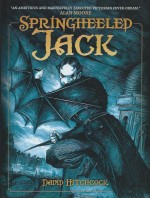
Springheeled Jack


By David Hitchcock (Titan Comics)
ISBN: 978-1-78276-129-7

Win’s Christmas Gift Recommendation: an Xmas scary story in the Grand Tradition… 9/10

Britain can lay claim to impressive and ingenious achievements far too numerous to mention, but the ones I’m honing in on here are our prodigious appetite for inventing myths, our gift for telling scary stories and our plucky tendency to want things done right and thus often Doing-It-Yourself…

In 2005 cartoonist, antiquarian and fright fan David Hitchcock (Spirit of the Highwayman, Whitechapel Freak, Gothic) crafted an intense and beguiling small press yarn in three chapters which went on to win the Eagle Award for Favourite Black & White Comic Book.

Originally released under the Full Circle banner, Springheeled Jack was subsequently released as a collection from Black Boar Press and is now available in a luxurious oversized (295 x 222mm) definitive monochrome hardback from Titan Comics.

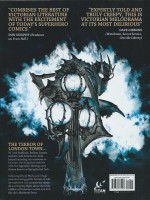
The astounding suspense is handily preceded by the author’s introduction, recapitulating the historical reports of the original Urban Legend from the first sightings and police reports in 1838 in ‘At the Heels of the Devil’ before the dark graphic enchantment opens in 1861 with an arcane monstrosity roaming the foul, begrimed rooftops of London to the accompaniment of excerpts from the journal of Sir Jack Rackham.

Although still not without influence, the esteemed Sole Benefactor of Bethlehem Lunatic Asylum has been a broken man since his beloved Evelina was snatched from his helpless arms one foggy night by a monstrous insectoid fiend from Hell…

The thing’s depredations still continue but the authorities scoff at the administrator’s suppositions and ignore his protestations, leading the nigh-deranged Rackham and the few allies he has made to take matters into their own hands.

Although the red-eyed thing primarily snatches women, its malevolent, toxic influence, unbeknownst to all, has seeped into the highest echelons of the empire and the monarchy itself is currently in the greatest peril imaginable…

One person Rackham believes he can count upon is Dr. Henry Jekyll, whose own incredible metamorphic discoveries also stem from encounters with the beast – or, as they speculate, perhaps some being from beyond the stars – but when the physician visits his old comrade he is appalled to se how far Sir Jack has fallen into despair and madness.

Jekyll can do nothing for his friend, however, as he has been summoned as a matter of utmost urgency to the side of the mysteriously ailing Prince Consort…

In an attempt to keep pace with the monstrous leaping travesty of nature, Rackham has constructed a bat-winged suit which allows him the glide after the beast when he eventually finds it, and now he waits for his opportunity.

In Windsor, upon examining Prince Albert, Jekyll sees something which shakes him to his soul and the doctor consequently dashes back to Rackham to join in his pursuit.

The thing has been going about its secret purposes incessantly, and its influence now even extends deep inside Rackham’s troubled Bedlam Hospital where confined savant Professor Graham claims to have discerned all there is to know about the threat…

That night Jekyll and Sir Jack rendezvous in a graveyard and lay a trap for the horror. The plan apparently works and they follow it to its lair, discovering the shattering secret of its depredations. They set to derailing its plans, but in the struggle a hero is infected and a shocking mutation begins to take hold…

The saga then kicks into ghastly high gear as a game of cat-and-mouse finds the police unjustly hunting the wrong “man”, as all over the capital nature itself rebels from the hideous and almost completed incursion…

The tension rises to fever pitch in ‘The Last Chapter’ which sees a final desperate roll of the dice and a good man is seemingly lost forever before ‘Transmogrify’ finds humanity itself on the verge of its greatest triumph or defeat…

Also included in this titanic tome is a copious 22 page ‘Sketchbook’ section which comprises roughs, layouts, previous covers, physical models and constructions, plus an exploration of Hitchcock’s unique art style which involves preliminary pencils, full inks and a final layer of moody, mediating pencil tones on top of it all to capture the grimy sooty atmosphere of Victorian London.

Stark, gripping and chillingly compelling, Springheeled Jack is a grand, old-fashioned fearsome fantasy no lover of dark tales can afford to miss.

Springheeled Jack © 2014 David Hitchcock & Black Boar Press.

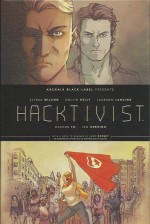
Hacktivist


By Alyssa Milano, Jackson Lanzing, Collin Kelly, Marcus To, Ian Herring & Deron Bennett (Archaea Black Library)
ISBN: 978-1-60886-409-6

Win’s Christmas Gift Recommendation: Because Sharing is Everything… 8/10

The world is radically altering every minute but some things never change: eternal verities like oppression and the hunger for freedom, greed and idealism, friendship and betrayal…

Following ‘A Note to the Reader’ from Twitter co-founder Jack Dorsey, an astounding tale begins when a band of desperate dissidents narrowly avoids capture by the draconian Tunisian military. It seems the latest outbreak of popular democracy is doomed to failure until the last rebels of the “Arab Spring” improbably receive a wireless signal from the most notorious hacker collective on Earth.

The message to “.sve_Urs3lf” is accompanied by the updated facility to penetrate the oppressive government’s firewalls, enabling Sirine and her fellow fugitives to break through the dictatorship’s isolating cyber-borders and communicate with other dissidents as well as the outside world…

In San Francisco, the Robin Hoods behind the message allow themselves a glow of pride. Prodigies Nate Graft and Ed Hiccox sit back and watch as the Tunisian people rise, before getting back to their day jobs as the billionaire boy wonders who created and own YourLife: Earth’s most successful and ubiquitous decentralised social network…

Although to the public flashy Nate is cool corporate aplomb and shy Ed the diffident brain-box problem-solver, both young men share the dream of forcing through true and fair social evolution… only these days Graft seems increasingly distracted by the glamour and wealth whilst earnest Mr. Hiccox acts ever-more dissatisfied and impatient with the rate of progress…

As Nate parties at gala benefits and shows off his latest technological tricks, Ed sits alone, tapping keys and making progress on the big picture. Both are utterly unaware that their world is about to spin crazily out of control…

The first move is made by gorgeous Brynn Ori who targets Graft at a party. Her seductive soft-soap come-on soon fades though when Graft refuses to bite. That’s when she reveals her position in the CIA’s Cyber Command and makes Nate a truly tempting offer he really should not decline…

The story she tells is most convincing and soon Nate has even convinced his deeply suspicious partner to accept the offer – and the immense amount of cash Brynn is offering.

Also on the table is full amnesty for their illicit activities and the complete backing of the Government and its formidable resources in a noble mission to truly free Tunisia.

Despite a pointed confrontation between Ed and Brynn the endeavour soon gets underway and before long the military regime is on the verge of collapse thanks to a concerted cyber-attack and the rising of the people…

Unfortunately that’s when Brynn and the US government show their true colours and Nate finds himself at odds with everything he ever believed in.

Not so for his best friend, though, as Ed has already vanished. Despite a world-wide manhunt for America’s “Number One Threat”, he shows up in Tunis, joins Sirine and starts using his unique gifts the way he always dreamed of…

As the uprising gets its second wind, what follows is a tense, diamond-hard and laser sharp confrontation between the old system and the world that’s coming as two friends clash and finally prove which is best – ambition or expediency…

Fraught with action, tragedy, hope and a crazily cathartic conclusion that will delight starry-eyed young idealists and jaded old drama addicts alike, Hacktivist is a truly cooperative effort: the idea of actress, producer, philanthropist and UNICEF Ambassador Alyssa Milano given form by screen writers Jackson Lanzing and Collin Kelly, illustrator Marcus To, colourist Ian Herring and letterer Deron Bennett whose compelling and groundbreaking miniseries has been lovingly gathered into a superb and luxurious hardcover compilation.

This absorbing, beguiling chronicle comes stuffed with valued added extras such as ‘Hackers on Hactivist’ – an interview with inventor and actual campaigning hacker Pablos Holman – and behind-the-scenes features ‘Building YourLife’ and ‘On Site in Tunisia’ as well as the now-standard biographical info in ‘About the Creators’.

A stunning piece of fictive brilliance work, this yarn might even tempt your mum and dad to dabble about on the web…

Hacktivist is ™ & © 2014 Alyssa Milano. All Rights Reserved.

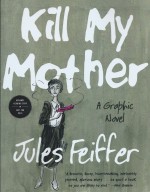
Kill My Mother (Advance Reading Copy)


By Jules Feiffer (Liveright/W.W. Norton)
ISBN: 978-0-87140-314-8

Win’s Christmas Gift Recommendation: Smart, Sharp and Perfectly Put Together… 9/10

Jules Ralph Feiffer has always been much more than “just a comic-book guy” even though his credits in the field are sound and suitably impressive. As well as working with Will Eisner on The Spirit, he created his own Sunday strip ‘Clifford’ (1949-51) before settling at the Village Voice for a Pulitzer Prize winning run.

Novelist, playwright, animator, children’s book creator (why isn’t there a single word or term for those guys?), teacher and screenwriter, he turned his back on cartooning in 2000, but the 42-year run of his satirical comic strip in The Village Voice ranks as some of the most telling, trenchant, plaintive and perspicacious narrative art in the history of the medium.

The strip, originally entitled Sick, Sick, Sick, then Feiffer’s Fables, before simply becoming Feiffer was quickly picked up by the Hall Syndicate and garnered a devoted world wide following, with many collections appearing over the years since the first book in 1958.

His incisive examination of American society and culture, as expressed through politics, art, television, cinema, work, philosophy, advertising and most especially in the way men and women interact, informed and shaped opinions and challenged accepted thought for generations. They were bloody funny and wistfully sad too – and still are today.

However his creative credits extend far beyond the world of print: he was one of the playwrights on stage revue Oh! Calcutta! (with Kenneth Tynan, Edna O’Brien, Sam Shepard, Leonard Melfi, Samuel Beckett & John Lennon) and has created 35 plays, books and screenplays including Carnal Knowledge and Little Murders. In 1961 his animated short feature Munro won an Oscar.

In 1965 he kickstarted acedemic American comic fandom with his celebratory evaluation The Great Comic Book Heroes and in 1979 he was at the forefront of the creation of graphic novels with Tantrum before scripting Robert Altman’s much-undervalued Popeye movie (released a year later).

He has a Lifetime Achievement Award from the Writers Guild of America, was elected to the American Academy of Arts and Letters in 1995, and 2004 saw him inducted into the Comic Book Hall of Fame and simultaneously receive the National Cartoonists Society’s Milton Caniff Lifetime Achievement Award, and 2006 saw him awarded the Creativity Foundation’s Laureate.

Now after years as a cartoonist, illustrator, pundit and educator, at the age of 85 (having been born in the Bronx on 26th January 1929) he has returned to his primary role of storyteller with another gripping and innovative graphic novel.

…And what a yarn he’s spun…

Spanning ten turbulent years, Kill My Mother is a supremely classy tribute to Film Noir, Hollywood Babylon, sexual politics and family secrets, blending the trappings of Dashiell Hammett with the tone, pacing and spark of Preston Sturges and Billy Wilder to tell an extended story of love, murder, jealousy and revenge.

It all begins in ‘Bay City Blues’. It’s 1933 and times are tough. Fifteen year old Annie Hannigan is cutting up, constantly leading poor, gullible sap Artie Folsom into trouble, whilst the mother she despises works all hours for dissolute, dipsomaniac and exceedingly cheap private investigator Neil Hammond.

The odd arrangement developed after the shamus agreed to investigate the murder of Elsie Hannigan‘s husband, whom he constantly refers to as the wrong sort of honest cop.

Events take a dark turn when stylish, exceedingly tall man-eater Mae Longo walks in offering outrageous sums if the shamus can track down a certain woman. The photo she gives him shows a woman remarkably like his coolly aloof new client…

Eddie “the Dancing Master” Longo is a rising star of the fight game who usually employs shady and capable gorilla Tiny Tim Gaffney to handle the more unsavoury problems in his life but Neil claims he knows how to handle him…

In the course of her mean-spirited, casual rebellions Annie gets poor Artie into real trouble when a shoplifting binge results in a pursuit by a store detective far faster than he looks. A very nasty beating is only avoided when an exceptionally tall derelict in an alley lays out the private cop with her carefully concealed baseball bat…

The rattled teen takes the tramp back to the apartment and cleans her up even as Elsie, very much against her will and better judgement, is dragged by soused-as-ever Neil to the Big Fight to see the Dancing Master.

The escapade almost costs her everything…

Her drunken boss’ plan to draw his tall target out of the woodwork also involves poor Elsie and leads to a lot of pain, trouble and strife, whilst Hammond, clearly a dipsomaniac with a death wish, starts dogging mysterious client Mae instead of doing the job he was hired for.

The result is a murder unsolved and unexplained for a decade…

The concluding half of the story resumes in 1943 with ‘Hooray for Hollywood’ as we return to our cast and find them all greatly advanced.

Goonish Artie is a Captain of Marines, successfully battling the Japanese in the Green Hell of the Pacific whilst Annie Hannigan is a writer and media darling. Her sensational hit comedy “Shut Up, Artie” is the most popular radio show in America and broadcast wherever Yanks are posted.

Eddie Longo has made the transition to B-Movie star and Ellen – when not babysitting her obstreperous grandson Sammy – is “Executive Vice President of Pinnacle Studios in charge of Image Security and Maintenance”…

The scary indigent little Annie met in an alley has also cleaned up and moved on. Now she sings torch songs in the Reno Roost as the enigmatic Lady Veil…

Eddy hates his life. The former hard-man boxer is trapped as a song-and-dance hoofer in big, morale-boosting musicals but dreams of major stardom like glamorous He-Man Hugh Patton or even an Academy Award, but is typecast and more under the thumb of the formidable Mae than ever.

The fraught status quo changes after Annie meets the dashing Patton at the Hollywood Canteen, but her romantic elation is crushed soon after when the sponsors call her in to discuss a crisis.

A genuine war hero is suing the show, claiming his life is being made a mockery. Unless she can fix things up with her old pal Artie, the show and her career are over…

Eddie is also near breaking point and Mae is forced to call in the thuggish Gaffney as a minder.

Events begin to spiral to a shocking conclusion when Longo joins a USO tour to the war-torn Pacific Islands. Patton is going too and Annie takes the opportunity to join him, as does her mother in the role of “image maintainer”…

The first port of call is Tarawa; the hellhole where Captain Arthur Folsom is almost single-handedly repulsing the Jap advance…

On the island Artie is overseeing the building of the stage for the visiting stars and marvelling at the stupidity of putting on a show in battleground still hotly contested by enemy forces. In the air above him Ellen has a sharp confrontation with Mae Longo and “bodyguard” Gaffney. The events of ten years ago are still painfully fresh in every participant’s mind.

By the time all the players debark on the island, a devious and supposedly foolproof plan to commit another perfect murder has been hatched, using the Japanese as ideal scapegoats, but intimate killing is far harder than mass slaughter and the scheme soon begins to unravel…

Complex, beguiling, smartly sophisticated, devastatingly witty and peppered with casual shocking violence as every noir thriller has to be, this is a spectacular yarn – available in both hardback and mass market paperback editions – packed with twists and surprises, where nobody is telling the truth and no-one is playing on the side of the angels.

A masterpiece of cool suspense, mature ingenuity and graphic dexterity, Kill My Mother offers a timeless, hearty slice of bravura storytelling that gets better with every re-reading.

If you love crime yarns, comic tales, nostalgia and having your intelligence respected, this is the book for you.
© 2014 Liveright Publishing Corporation.

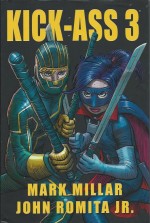
Kick-Ass 3


By Mark Millar, John Romita Jr., Tom Palmer & various (Titan Books)
ISBN: 978-1-78329-072-7

Once upon a time, perennial High School no-hoper Dave Lizewski – a pitifully average and unhappy teenager who loved comicbooks – realised that he had no chance of being part of the school in-crowd. He hung out with the other geeks, talking TV, movies, funnybooks and wished he could have a perfect life and trophy girlfriend.

Then one day he had his big inspiration – he was going to be a masked superhero. All he needed was a costume and a gimmick. Oh, and a codename too…

Clad in a wetsuit bought online and filled with hope, Dave started patrolling the streets and promptly got beaten into a coma by three kids tagging a wall…

After months in hospital and with three metal plates in his skull, Dave eventually returned to school, but the compulsion had only grown stronger. Soon he was prowling the city again. This time a chance encounter was recorded on witnesses’ camera-phones and uploaded to YouTube…

An overnight internet sensation and supremely overconfident, Dave – or Kick-Ass – inspired a wave of copycats, got the most unwanted attention of organised crime and met the closest thing to real superheroes the world had ever seen…

Dave’s life went into deadly overdrive when he met diminutive Mindy McCready – AKA Hit-Girl – and her burly, brutish, utterly insane partner Big Daddy: cool, efficient ninjas of justice and everything he’d aspired to be but could never approach in a million years…

These armoured, gun-toting urban vigilantes were utter ciphers, stalking and destroying the operations of brutal Mafia boss Johnny Genovese with remorseless efficiency and in complete attention-shunning anonymity.

Before long Dave was drawn into their war and met fellow adventurer Red Mist, who turned out to be Genovese’s abused, geeky, psychotic son Chris: a bastard maniac in his own right.

Things got really out of hand and lots of people died. Mostly scumbags but some good people and a few innocent civilians too…

Now the saga comes to an explosive close as Kick-Ass 3 collects the final 8-part miniseries (originally published through Marvel’s Icon imprint) from Mark Millar, John Romita Jr, Tom Palmer and Dean White in one shattering deluxe hardback edition.

Previously, Red Mist had evolved into a truly psychotic and blood-drenched super-villain to counter a wave of costumed champions. In the aftermath superheroes were outlawed in New York, Dave and faithful masked pals Todd and Marty went undercover and the totally OTT Hit-Girl was arrested and sent to prison…

As the saga resumes the lads are reviewing a letter from the deadly tyke and planning to bust her out with the aid of a few costumed associates. However, life is not as clear cut as comicbooks and the scheme fails.

Life goes and the boys graduate, seeping into dead-end jobs whilst spending nights patrolling and training for their next attempt. Soon, though, tensions begin to rise as skeevy new hero The Juicer takes over the once-communal lair which was Mindy’s old tricked-out HQ. The gloating sod even moves in a girlfriend…

Disgusted, undeterred and resolved not to spoil things, Dave gets back to the streets. When a posse of gangbangers attempt to mug Kick-Ass the battle goes badly wrong before he is rescued by witness – and nurse – Valerie.

Greater events are afoot. Brutally maimed Chris Genovese is stuck in prison hospital awaiting trial when his uncle Rocco pays a visit. With the established hierarchy of organised crime decimated by Hit-Girl, the aged Don has returned from exile in Sicily.

He had been shipped off years ago when his deviant tastes and merciless depredations proved to be too much even for the Mafia.

Now he’s back and making a move to unite all the criminals in America under his rule – and he plans to make Chris his heir…

The self-proclaimed super-villain is a changed boy and wants no part of it, but Rocco has the police force on his payroll. Nobody ever says no to the Don…

The boy’s mother has had enough too, but when she sneaks into his room determined to execute her crazy child she catches some one else with the same idea…

Dave meanwhile has organised another attempt to spring Hit-Girl but even as he preps his motley crew the lass in question is facing down her latest psychiatrist.

The malevolent kid has spent the intervening months terrorising and pacifying the entire prison around her, whilst psychologically breaking a string of mental health professionals assigned to her, but Dr. Alex White is made of sterner stuff. The ruthless, remorseless headshrinker is determined to crush not cure the waif-like homicidal maniac, whatever it takes…

Dave is a man distracted. Although he has planned a raid on the mob as they fête the recently released Chris, his attention is mostly on Valerie. Thus the consequent attack is a disaster and the badly-scared mystery men barely get away with their lives…

In the cold light of day the heroes have a bitter falling-out at Justice Forever HQ and Dave adds The Juicer to his growing list of arch enemies. It’s hard to care, though, as he and Val are dating now and he’s getting sex regularly…

The only thing he hasn’t given up on is Hit-Girl. He will get her out, somehow, someday…

He doesn’t know it, but he’s on a clock. Rocco is firmly in the driving seat now and is obsessed with the tiny titan too. He wants her out of jail so that he can smash his treasured golden ice-pick right into her brain…

As Dr. White plays the latest card in his duplicitous bag of brain-bending tricks, at Vic Gigante‘s place the bent cop – and Rocco’s most influential agent on the NYPD – has an interesting idea. With three trusted pals he’s devised a way to make even more money in a foolproof manner.

Soon a quartet of “Robin Hood” masked heroes are brutally raiding all of Rocco’s places of business; killing mooks and confiscating cash. The Skull & Bones boys claim it’s all being passed on to the poor and naturally everybody believes them…

Lost in a lustful daze, not even a timely intervention by Todd can shake Dave up enough to get back in costume and on track, but the increasingly bold raids of the Skull & Bones gang is driving Rocco crazy. Only when the deviant Don declares war on every masked hero in the city and despatches hit squads to gun them down wherever they are does Dave finally rouse himself from a besotted haze and get back on the streets…

The psychological campaign against Hit-Girl is also starting to work. The formerly indomitable Mindy is retreating into memories of training with her dad and sharing those episodes with the exultant White.

Unfortunately the cocky doctor overplays his hand and seems to lose everything, but before he can reassess the situation Rocco Genovese has his family’s nemesis abducted from the penitentiary so that he can slaughter her in style.

Ferrying her to a big party at his estate, the Don thinks he’s won but is utterly unprepared for betrayal from within, the incomprehensible inability of Kick-Ass to give up and the sheer determination and total, sociopathic verve which inspires Hit-Girl in her holy mission to eradicate criminal scum…

Building to a cataclysmic, graphically hyper-violent, ferociously cathartic conclusion, the saga of simple soul Dave and the atrociously foul-mouthed Hit-Girl wraps up in unforgettable manner with plenty of shocking twists and surprises in a blockbusting clash which answers all the questions in a fashion fitting, furious and final…

The blackly comedic and ultra-violent comedy quartet of tales which comprise the Kick-Ass saga are the ultimate extension of the modern trend for “realistic” superhero stories whilst simultaneously forming a brilliantly engaging and cynically hilarious examination of boyhood dreams and power fantasies, delivered with dazzling aplomb, studied self-deprecation and spellbinding style.

Here Millar’s mesmeric script skilfully dances on the very edge of possibility and credibility, whilst the stunning art collaboration of John Romita Jr., Tom Palmer and colourist Dean White afford a vision of New York life that ranges from Paradise to Hell on Earth.

Bracketed by a pithy Introduction from screen writer Geoff Wadlow and Afterword Acknowledgements from writer and artist, this majestically wide-screen extravaganza is a sharp, superb and stunning tale not just for comics fans but a genuine treasure for all followers of frantic fun and fantasy in any medium.
© 2013 and 2014 Millarworld Limited and John S. Romita. All rights reserved.

Alien Legion: Dead and Buried


By Carl Potts, Chuck Dixon, Alan Zelenetz Larry Stroman, Mark Farmer & various (Titan Books)
ISBN: 978-0-84023-811-2

Win’s Christmas Gift Recommendation: Above and Beyond and Captivating… 8/10

During the 1980s the American comics scene experienced an astounding proliferation of new titles and companies in the wake of the creation of the Direct Sales Market. With publishers able to firm-sale straight to retail outlets rather than overprint and accept returned copies from non-specialised shops, the industry was able to support less generic titles and creators could experiment without losing their shirts.

In response Marvel developed a line of creator-owned properties at the height of the subsequent publishing explosion, launching a number of idiosyncratic, impressive series in a variety of formats under the watchful, canny eye of Editor Archie Goodwin. The delightfully disparate line was dubbed Epic Comics and the results reshaped the industry.

One of the earliest hits was a darkly compelling science fiction serial with a beautifully simple core concept: the Foreign Legion of Space (and no, it isn’t at all similar to Jack Williamson’s epochal 1934 creation the Legion of Space).

Created by Carl Potts, Alan Zelenetz and Frank Cirocco, Alien Legion debuted in its own on-going series in April 1984, running for 20 issues (until 1987) plus an oversized Marvel Graphic Novel (see Alien Legion: A Grey Day to Die), before re-booting into a second, 18 issue volume spanning October 1987 to August 1990.

After that the tales were told in intermittently released miniseries and one-shots (long-since collected in one volume as Alien Legion Tenants of Hell).

The “Bloody Bospors” have come and gone ever since, jumping from Checker Books to Dark Horse Comics and Titan – who will be carefully compiling the series into collected omnibuses – and there is, of course, a movie in the pipeline…

This particular pocket-sized compendium re-presents the first dozen dark sagas from volume two and comes with a handy ‘Rollcall’ of key characters before recounting The Story So Far in ‘Alien Legion Unit History: Hellscape’.

The saga resumes in ‘Dead and Buried’ by writers Carl Potts, Alan Zelenetz and Chuck Dixon, illustrated by Larry Stroman & Randy Emberlin…

The Legion was founded to keep the peace of the Tophan Galactic Union, a million worlds spread over three galaxies, policed by a broad brotherhood of outcast militant sentients united by a need to belong and a desire to escape their pasts. For such beings honour and tradition are (purportedly) the only things holding them together in a ruling system riven with political intrigue and double-dealing, and where ordinary decent citizens universally despise the battalions of death-dealing outcasts.

After years of holding back the forces of chaos and anarchy across the stellar regions united into an overarching Galarchy, Nomad Squadron were dispatched as part of a vast Legion armada to “pacify” the Quaalians; a warlike and unpredictable culture perpetually causing trouble from their strategically critical star-system midway between the Tophan Union and its ideological opposite the Harkilon Empire.

The mission went tragically wrong and thousands of troops were trapped on a planet of raving maniacs dubbed “Hellscape” and expediently written off by the Legion.

Now, as the story opens two years later, Major Sarigar can stand the situation no longer and resigns his commission so that he can go after the Legionnaires he was ordered to abandon. After a violent period of readjustment he finally makes contact with fabulously wealthy businessman Guy Montroc – whose son Torie is amongst the missing – and gains enough resources to sneak into the embargoed border regions…

When he finds evidence of survivors and is almost murdered, Sarigar realises he has no choice but to break the Legion quarantine and go to Quaal itself…

Dixon assumes the role of sole scripter in ‘Fragments’ which flashes back to the disastrous raid and details the fall of the Legion forces before focusing on serpentine seeker Sarigar as he begins covertly exploring the deadly tinderbox world with the reluctant assistance of a Quaalian guide sold to him by a corrupt Legion prison officer.

The horrific trek across the barren landscape proves miraculously successful as Sarigar eventually finds the younger Montroc and grifting ne’er-do-well Jugger Grimrod in a cave complex where, against all odds, they have survived for two years. Implausibly united again, the comrades search together but their next discoveries are appalling and unhappy.

Falling into dejection, Sarigar is reinvigorated when he receives a psychic call from telepathic medic Meico but after one final day of hunting the former Major reluctantly prepares to take his exhausted, traumatised charges off-planet when a final scan reveals two more survivors: hulking amazon Tamara and cruelly maimed aging veteran Zeerod.

Tamara has reverted to pure ferocious savagery and, as Meico dutifully attempts to psionically restore her mental balance, a band of ravaging Quaalians find them…

Forced to fight for their lives again, the lost Legionnaires brutally answer the ‘Call to Battle’ and win their way off world. In the aftermath however the returned warriors are not considered heroes but an extreme embarrassment and only deft political manoeuvring by Sarigar and maverick general Gokk keep them out of jail or worse.

A solution is found when the re-instated major and his five pitiful survivors are designated the core of a rapid-deployment penal battalion styled Force Nomad: a suicide squad to be peopled by the worst and most incorrigible, expendable troublemakers in the Galarchy…

With no where else to go and no one else they trust, the battered coterie of sociopaths all sign on and soon ‘The Lucky and the Dead’ (inked by new permanent embellisher Mark Farmer) are assessing their newest comrades in arms before being dispatched to stop a colossal asteroid tricked out as a cataclysmic gun platform by the Harkilons and aimed at the heart of the Ophides system…

Although ultimately successful, Force Nomad lists its first fatalities before the mission concludes…

‘The Ditch’ finds the squad attempting a lightning-strike against a particle gun on a small fortified moon when the mission goes wrong and Grimrod is again left behind. Left to his own devices the despicable reprobate infiltrates the Harkilon fortress and uncovers a treacherous alliance between the terrorist empire and the Galarchy’s most upstanding trader nation, the Orestans.

In the subsequent battle, Jugger’s frantic fight to save his own skin leads to him accidentally capturing the entire installation and, as shining hero of the hour, securing the worst fate he can possibly imagine: promotion to Captain…

It a situation he cannot tolerate and in ‘Xenos’, whilst executing his first command mission, he takes the opportunity to rectify the situation when a Harkilon bio-weapon his ship is ferrying to a science centre breaks. After it destroys his crew and he again saves the day, Grimrod punches out the general who congratulates him…

Demoted and sentenced to prison, Jugger rots all but forgotten as, on training world Arrios IX, Torie, Tamara and new Nomad Tonk begin drilling the latest Force candidates in ‘The Bite’. The work is hard enough but takes a deadly turn when an infiltrator rigs the automated assault course with lethal ordnance.

…And in the Legion lock-up Line Star III, more assassins target new inmate Grimrod, but have utterly underestimated his survival instincts and appetite for destruction…

Having survived the carnage on Arrios, Tamara and Torie recuperate on his father’s high security estate, but the mystery assassins follow and nearly kill Montroc senior in ‘Duty Elsewhere’ before lethally capable Tamara ends them.

Realising the scope of the conspiracy and the reason why Nomad personnel are all targets, the wounded plutocrat engages his top industrial spy to get to the bottom of the plot.

Nakhira Doomhar is a cyber-enhanced super-thief who loves a challenge and soon she is hot on the trail of the would-be killers’ employers…

As Grimrod is posted back to Force Nomad, Nakhira meets with Torie and Tamara, leading them to an Orestan deep-space data relay for a spot of espionage. The staggering results reveal not a few rogue traders dealing with the enemy, but a wholesale treaty alliance which could tear apart the Union…

Not knowing who to trust, Torie and Sarigar contact General Gokk in ‘Scalpel’, hoping his eminence and political connections will get the information to the right people without causing a disaster. Instead the old warrior takes executive action and launches a massive covert raid on an Orestan trade planet near the Harkilon border.

The surgical strike for proof is compromised from the start and the Legion forces easily repulsed…

Whilst Tamara and Nakhira take their data-raiding act into the very heart of the Orestes homeworld, their comrades are being shot down over Braal VII by a heavy force of Harkilons and the treacherous Orestans are filing charges against Gokk in the Galarchy courts…

‘Biology Lesson’ finds ultimate survivor Grimrod and the remains of Force Nomad prisoners of both the Orestans and Harkilons, used as playthings and slave labour. However, the gloating horrors have vastly underestimated their captives and placed far too much faith in the monster watchdogs they have set over the Legionnaires. Before long the brutal scrapper has led his troops back into Galarchy space and straight into the trial of the millennium…

The conniving Orestans have forced a public hearing with Gokk on trial for violating the War Charters of the Tophan Union, and Jugger is a very nervous and ‘Hostile Witness’. As the only living being to have seen Harkilons dealing with Orestans, he is a crucial defence component and knows there’s a great big target painted on his back…

Whilst Jugger sweats in the palaces of cosmic justice, Torie and Tamara lead a picked team into the bowels of Harkilon space to capture evidence that will clear the Legion stalwarts and expose the conspiracy forever. All they have to do is take it and get back to safety whilst an entire evil empire tries to stop them…

With the multipart intrigue finally resolved, this splendidly manic chronicle concludes on a lighter note with some ‘Dorty Fighting’ as Grimrod humiliates the wrong recruit during a training session on unfair unarmed combat and is soon running for his life from a sustained succession of attempted murders…

Rocket-paced, wryly sardonic, exotic and powerfully funny in the classic 2000AD manner, this captivating collection is crammed to the gills with explosive action and includes a cover gallery and creator biographies to complete the perfect package of mayhem-laced cynical space opera – which renders this chronicle “unmissable” in my book. Alien Legion is ® & © 2014 Carl Potts. All rights reserved.

Void


By Herik Hanna & Sean Phillips, with colours by Hubert; translated by Nora Goldberg (Titan Comics)
ISBN: 978-1-78276-084-9

Win’s Christmas Gift Recommendation: A Proper Seasonal Shocker… 8/10

Dedicated to diversity from its earliest days, Titan has in the past published kids comics, resurrected and preserved classic newspaper strips, brought crucial manga tales to Albion and, most importantly, shared some of Europe’s best graphic narratives with a jaded British readership.

That tradition continues to this day and one of their most impressive recent additions is a slim but oversized (282 x 206 cm) deluxe hardback edition featuring chilling deep space psycho-chiller Void by Herik Hanna and our own Sean Phillips.

Originally published by French publisher Guy Delcourt in 2012, this bleakly absorbing tale is a dark psychological horror yarn in the manner of Ridley Scott’s Alien, set in the most claustrophobic and hostile environment imaginable…

The terror commences in the silent, blood-splashed observation bay of Goliath 01, a colossal prison transport spaceship wrecked by astronomical mischance and human frailty.

Battered and terrified survivor John pauses to take stock of his precarious position. With ears pricked for any hint of danger he reviews how, following a mass penetration by a storm of micro-meteorites, the monolithic penal vessel suffered a massive systems failure.

That however was not the real problem. In the aftermath of the one-in-a-billion accident, iconic war-hero and infallible mission commander Colonel “No Mercy” Mercer suffered some kind of breakdown and began stalking the corridors, indiscriminately executing prisoners and crew alike with a space axe…

Now, as John keeps frantically moving in a desperate cat-and-mouse gamble to stay ahead of the maniac, he starts experiencing vivid hallucinations: reliving the deaths of his comrades and helpless charges, conversing with food and animals and even arguing with long-gone ex-girlfriend Nancy…

Can it simply be pressure and appalling peril, or is there some unfathomable aspect to the nature of space that drives everyone to madness? More importantly, will he be able to find an escape route before the relentless, remorseless Mercer catches up to him?

…And then Nancy suggests that he should stop running and kill the colonel first…

Rendered in a compulsive style reminiscent of the most powerful work of Richard Corben, this sharp, suspenseful, astoundingly atmospheric explosive tale unfolds in a grimy, gritty intoxicating manner, but cunningly holds in reserve a devastating double twist…
Void and all contents © 2012 Guy Delcourt Productions. Translated edition © 2014 Titan Comics.

Megahex


By Simon Hanselmann (Fantagraphics Books)
ISBN: 978-1-60699-743-7

Win’s Christmas Gift Recommendation: laugh-out-loud, falling-down-daft, crying from the heart … 8/10

Simon Hanselmann is a well-travelled cartoonist of Tasmanian origin who has been, since 2009, producing one of the best cartoon strips of all time.

Although mostly found on his girlmountain.tumblr site, other episodes of his engagingly deceptive, inappropriately pigeon-holed “stoner comedy” Megg, Mogg & Owl have appeared in places as varied as Kus, Smoke Signal, Gangbang Bong and assorted minicomics, but can now all be found in a sturdy, full colour hardback compilation which also boasts a further 69 pages of new and previously unseen material.

Hanselmann’s signature characters – loosely based on childhood memories of a series of British children’s books, filtered through a druggy haze and a desperate deadline – are Megg, a depression-afflicted druggie witch who lives with her mean-spirited feline familiar Mogg and sensitive, insecure, affection-starved Owl.

When not confronting or testing each other or hanging with the wrong crowd, they spend most of their time in a post-modern haze of self-inflicted ennui or on dope-fuelled junk-food binges in the apartment or in front of the TV…

They probably don’t like each or themselves much but dwell in a fug of dangerous co-dependency and their strange adventures have finally been collected into a sturdy and most improper tribute to a life lived more wryly through chemistry and sarcasm.

This book is packed with drug references, violent sexual imagery and outrageous situations intended to make adults laugh and think.

If the copy above hasn’t clued you in, please be warned that this book uses potentially disturbing images of abuse, sexual intimacy, excess and language commonly used in the privacy of the bedroom, drunken street brawls – and probably school playgrounds whenever supervising adults aren’t present – to make its artistic and narrative points.

If the mere thought of all that appals and offends you, read no further and don’t buy it. The rest of us will just have to enjoy some of the most astounding cartoon experiences ever created without you.

Lethargically anarchic and cruelly hilarious, the escapades of insecure Megg, malicious, experience-craving Mogg and their poor, pitiful companion open with ‘Fire’ as the pharmacologically paralysed Owl tries to dissuade his flatmates from testing his potential flammability after which ‘Beach’ finds Megg & Mogg defeated by the tantalising ever-expanding expanse between sand and surf…

‘Kate Bush’ reveals the embarrassment arising from catching someone in the act of singing along to something naff whilst ‘Horrible Party’ introduces wizard Mike and manic hedonist Werewolf Jones who will clearly go to obscene lengths to get noticed after which ‘Found Pills’ portrays some distressing transformations.

A first hint of darker intent is seen in ‘Drive Through’ when Owl passes out and his “friends” treat his body with an extreme lack of consideration and affection, whilst ‘Water’ goes straight to the gross-out core of slapstick before witch and familiar try to gatecrash a childrens’ show audition in ‘Theatre’ and Owl daydreams whilst passing through ‘Ham Parade’…

Things get cattily scatological with an unattended plate of ‘Spaghetti’ and escalate when caught-short Owl is barred from the toilet and remanded to the ‘Yard’ after which Megg wires up her cat for an evocative rendition of ‘Mogg’s Noise Show’.

More casual cruelty ensues in ‘Taut Psychological Thriller’ when the flatmates palm off Owl with bogus drugs after which a rendezvous at the ‘Mall’ allows cat and conjuress to ruin the long-suffering dupe’s latest sexual conquest. This petty meanness is capped by the thrilling showboating of ‘Werewolf Jones’ Excitebike’ extravaganza…

‘Owl’s Birthday’ is as bad as the poor sap fears and his party ends with shocking abuse and assault, but even after he has moved on – without the intervention or apology of his buddies – a meeting with girl of his dreams ‘Peyote’ again leads to a situation of personal shame and legal terror…

Even fetching a ‘Sandwich’ can lead to unthinking humiliation for the avian also-ran, whilst for ‘Werewolf Jones & Friends’ every night is a party – but not one you’d want to attend…

After losing an appreciable amount of their lives to an iCarly marathon, Megg & Mogg head for the ‘Video Store’, utterly ignoring Owl’s cry for help regarding his AA meetings, and subsequently spike his health smoothie.

Owl is unfortunately a belligerent drunk and can’t understand why he’s abusing the other store patrons…

When “the munchies” hit, food crazed Megg & Mogg burgle a kebab shop but the guilt and fear engendered by the ‘Heist’ soon drives them to near madness, whilst ‘Scene Politics’ scares the crap out of everybody as Werewolf lays down his law.

‘Silver Sequin Mini-Skirt’ exposes Megg’s vulnerability after she receives some bad news, leading to an extended and keenly focused exploration of mental illness beginning with ‘Megg’s Depression’, ricocheting manically into ‘Megg’s Good Mood’, an interlude with her concerned house-sharers in ‘Bad Brains’ and a swingeing attack on mental health professions in ‘Megg’s Therapy’…

After an odd encounter passing a ‘Graveyard’ Megg’s obsession with ‘Pregnancy’ kicks in again, but not in time to stop her friends tampering with her testing kits and, whilst reeling with indecision, she capitulates to her cat’s bizarre predilections in ‘Rimming’.

Seeking change she doses Mogg with ginger ‘Hair Dye’ which alters his look but sadly not his temperament after which a possible visit by the landlords provoke a hearty bout of ‘Paranoia’ that lasts until Werewolf arrives with a huge quantity of ‘Acid’ which takes everyone on the trip of their lives…

Change is in the air and when Owl tries to sort out his life with a real job Mogg & Megg have no choice but to tamper with the ‘Alarm Clock’ and other accoutrements of his longed-for normal life. As the shamed jobseeker simmers, Mogg returns to his own dark desires and ruins the concept of ‘Cinnamon’ for everybody else…

Events come to a life-changing head in ‘Cocktails’ when all the neurosis, blasé fronting, passive-aggression, negative feelings, overwhelming love, depression, drugs, sexual profligacy and cycles of dependency boil over and the gang break up forever…

Despite its similarity to some kind of no-harm, no-foul adult situation comedy – and believe me there are outrageous laughs by the bucketful – there is a strong, often overwhelming narrative progression to these quirky beguiling stories and Megahex navigates with easy confidence the tightrope between sordid and surreal, hilarity and horror, survival and sinking away.

Dark, affecting and unforgettable, this is a book no lover of truly mature fiction will be able to ignore.
Megahex © 2014 Simon Hanselmann. This edition © 2014 Fantagraphics Books, Inc.

Jim – Jim Woodring’s Notorious Autojournal


By Jim Woodring (Fantagraphics Books)
ISBN: 978-1-60699-752-9

Win’s Christmas Gift Recommendation: A beguiling glimpse into the early thoughts of a narrative master … 9/10

There are a few uniquely gifted and driven comics creators who simply defy categorisation or even description. There’s a pantheon of artisans: Kirby, Ditko, Hergé, Eisner, Clowes, Meskin, Millionaire and a few others who bring something utterly personal and universally effective to their work just beyond the reviewer’s skills (mine certainly) to elucidate, encapsulate or convey. They are perfect in their own way and so emphatically wonderful that no collection of praise and analysis can do them justice.

You just have to read the stuff yourself.

At the top of that distinguished heap of graphic glitterati is Jim Woodring. It’s a position he has maintained for years and clearly appears capable of holding for generations to come.

Woodring’s work has always been challenging, spiritual, grotesque, philosophical, heartbreaking, funny, beautiful and extremely scary. Moreover, even after reading that sentence you will still be absolutely unprepared for what awaits the first time you encounter any of his books – and even more so if you’ve already seen everything he’s created.

Cartoonist, fine artist, toy-maker and artistic Renaissance man, Woodring’s eccentric output has delighted far too small and select an audience since his first mini-comics forays in 1980. Even though the reader may have avidly adored his groundbreaking oneirically autobiographical Fantagraphics magazine Jim (1986 and cherry-picked for this collection), its notional spin-off series Frank (of which the volume Weathercraft won The Stranger 2010 Genius Award for Literature), maybe Tantalizing Stories, Seeing Things or more mainstream features such as his Star Wars and Aliens tales for Dark Horse Comics, there is still never anything but surprise waiting when his next story appears…

An accomplished storytelling technician these days, Woodring grows rather than constructs solidly surreal, abstractly authentic, wildly rational, primal cartoon universes, wherein his meticulous, clean-lined, sturdily ethereal, mannered blend of woodblock prints, R. Crumb landscapes, expressionist Dreamscapes, religious art and monstrous phantasmagoria all live and play and often eat each other.

His stories follow a logical, progressional narrative – often a surging, non-stop chase from one insane invention to the next – layered with multiple levels of meaning but totally devoid of speech or words, boldly assuming the intense involvement of the reader will participate and complete the creative circuit.

Such was not always the case and this superb and sumptuous oversized (292 x 228mm) hardcover compilation – which gathers his earlier formative and breakthrough efforts in colour and monochrome – offers the very best of his strips, paintings, poems and stories from breakthrough autobiographical magazine JIM and other (sadly unnamed) sources between 1980 and 1996.

This compulsive collection also includes a new 24-page strip starring the artist’s hulking, bewhiskered, aggressively paranoid, dream-plagued family man/cartoonist alter ego, and certainly cements his reputation as a master of subconscious exploration, surreal self-expression and slyly ironic comedic excoriation – and it’s still almost impossible to describe.

You really, really, really have to dive in and discover for yourself…

Packed with hallucinatory spot-images and cover illustrations from JIM, the furtive fruits of Woodring’s ever-present dream-recording “autojournal” are prefaced by a beguiling and informative ‘Author’s Note’ before the wonderment begins with ‘Jim #1 in its entirety’: the complete contents of his very first self-published fanzine from 1980.

A master of silent expressive cartooning, Woodring’s playfully inventively fascination with and love of words and tale-making shines through in such laboriously hand-lettered, illustrated epigrammatic vignettes as ‘Lozenge’ and ‘Jim Today’ as well as witty iconographic concoctions like ‘Tales of Bears’ and ‘Troutcapper Hats’ before the first strip saga details a doomed fishing trip in ‘Seafood Platter from Hell’ and a moment of early silent psychedelia reveals how ‘Two Children Inadvertently Kill an Agent of the Devil Through an Excess of Youthful High Spirits’…

Another personal true story and painful brush with disability and imperfection is disclosed in ‘Invisible Hinge’ whilst ‘The Hour of the Kitten’ returns to distressed, disturbed prose before the first of many outrageous faux-ads offers those indispensable conscience-pets ‘Niffers’, preceding another text-trek in ‘A Walk in the Foothills’.

Cats play a large part in these early strips and ‘Big Red’ is probably the cutest bloody-clawed, conscienceless killer you’ll ever meet whilst ‘Enough is Enough’ offers graphic pause before an ad for the home ‘Dreamcorder’ segues into a disturbing poster of rural excess in ‘A Lousy Show’.

‘Particular Mind’ provides a strip encapsulating life-drawing, relationships and hallucinations after which the tempting services provided by ‘Jim’s Discipline Camp’ are counterbalanced by a paean to pharmacopoeia in ‘Good Medicine’.

More savage exploits of ‘Big Red’ lead to a commercial presentation in ‘This is the Meat (…That Changed Me, Dad!)’, whilst ‘Horse Sinister’ describes in prose and pictures another disturbing dream dilemma and ‘At the Old Estate’ introduces a sophisticated loving couple whose wilderness paradise is forever altered by an unwelcome visitor’s incredible revelation. Thereafter a worried young child describes how life changed after he found his parents’ ‘Dinosaur Cage’…

The truly eccentric tale of ‘Li’l Rat’ (from a 1965 story by John Dorman) is followed by a visual feast of images from ‘Jim Book of the Dead’ and a surreal flyer for ‘Rolling Cabine’, after which ‘What the Left Hand Did’ captures in strip form the horrors of mutilation and malformation before the macabre tone-painting ‘Almost Home’ leads to an epic strip of father and son fun beginning with ‘Let’s Play!’…

Jim’s jaunt soon transports him to ‘Powerland’ where dad meets himself, whilst ‘Nidrian Gardner’ revisits a couple of suave swells whilst ‘Looty’ offers consumers a toy they just shouldn’t own…

‘The Hindu Marriage Game’ leads our unhappy bearded fool to a place where his lack of judgement can truly embarrass him whilst ‘Quarry Story’ explores a debilitating recurring dream about the nature of artistic endeavour and ‘This House’ explains how you can live life without ever going outside again…

The first inklings of the mature creator emerge in absurdist romp ‘The Birthday Party’ after which prose shaggy-dog story ‘The Reform of the Apple’ leads to a dark and distressing cartoon confrontation with doom on ‘The Stairs’ before the largely monochrome meanderings give way to stunning full-colour surreal reveries in ‘Screechy Peachy’.

The radiant hues remain for galvanic image ‘Vher Umst Pknipfer?’ and pantomimic rollercoaster romp ‘Trosper’ before bold black & white introspection resumes with a naked lady and a garrulous frog in ‘Dive Deep’.

A ghostly Hispanic condition of drunkenness haunts a bunch of cruelly playful kids in ‘Pulque’ after which young Max asks dad a leading question in ‘Echo’ and radio rebels Chip and Monk meet some girls and risk the wrath of civic authority with illegal broadcasting in ‘A Hometown Tale’, after which an ideal wife has a bad-tempered off-day in ‘Obviously Not’.

As the years progressed many of Woodring’s later spiritual and graphic signature creatures had slowly begun to appear in his strips. Old met new in ‘His Father Was a Great Machine’ wherein strident Jim has an encounter with a phantasmagorical thing, after which little Susan and a determined slug shaped up for an inevitable collision in the prose fable ‘When the Lobster Whistles on the Hill’.

Sheer whimsy informs ‘Cheap Work/Our Hero is a Bastard’ and the bizarre offerings of ‘Jimland Novelties’ whilst ‘The Smudge-Pot’ shows what all magazine letters pages should be like, after which ‘Pulque’ – in full colour strip mode – returns with a message for the dying before ‘Boyfriend of the Weather’ wraps up the surreal voyages with a homey homily and reproductions of Jim #1, volume 2 back cover and Jim #2, volume 2 cover bring this festival of freakish fun to the finale with style, aplomb and oodles of frosting…

Woodring’s work is not to everyone’s taste or sensibilities – otherwise why would I need to plug his work so earnestly – and, as ever, these astounding drawings have the perilous propensity of repeating like cucumber and making one jump long after the book has been put away, but the artist is an undisputed master of graphic narrative and an affirmed innovator always making new art to challenge us and himself.

He makes us love it and leaves us hungry for more and these early offerings provide the perfect starter course for a full bodied feast of fantasy…

Are you feeling peckish yet…?
© 2014 Jim Woodring. All rights reserved.

Michael Moorcock’s Elric volume 1: The Ruby Throne


By Julien Blondel, Didier Poli, Robin Recht & Jean Bastide, translated by Nora Goldberg (Titan Comics)
ISBN: 978 -1-78276-124-2

Michael Moorcock began his career as a comics creator aged 15; writing and editing such classic strips as Tarzan, Dogfight Dixon, Jet Ace Logan, Captain Condor, Olac the Gladiator and many, many other British stalwarts before making the jump to prose fiction, where he single-handedly revitalised a genre in 1961 with the creation of Elric and the high-concept notion of the Eternal Champion.

Elric is a landmark of the Sword and Sorcery genre: fore-doomed last ruler of the pre-human civilisation of Melniboné, a race of cruel, nigh-demonic sorcerers.

These arrogant, dissolute creatures are in a slow, decadent decline after millennia of dominance over the Earth.

An albino, Elric is physically weak and of a brooding, philosophical temperament, caring for nothing save his beautiful cousin Cymoril, who will die one day soon whilst he battles her loathsome usurping brother Prince Yyrkoon.

The White Wolf doesn’t even really want to rule, but it is his duty, and he is the only one of his debased race to see the (comparatively) freshly evolved race of Man as a threat to the Empire.

He owns or is possessed by a black sword called Stormbringer: a magical blade that steals the souls of its victims and feeds their life and vitality to the pale and pallid physical weakling.

Moreover, Elric is a tragic incarnation of the restless Eternal Champion, reincarnated in every time, place and alternate dimension. His life is blood and tragedy, exacerbated by his dependence on that soul-drinking black sword and his sworn allegiance to the chimerical Lords of Chaos.

Everybody knows all that, right?

Now, however, the creator of the iconic wanderer – and arguably a whole sub-genre of fantasy fiction – has allowed his premiere paladin to undergo a moody, spectacular and enchanting make-over under the auspices of a team of premiere French graphic masters. Tasking themselves to re-adapt, augment and expand Moorcock’s tales and novels (with his willing and eager permission and supervision), writer Julien Blondel, penciller Didier Poli, inker Robin Recht and colour-artist Jean Bastide – with some preliminary design input from Jean-Baptiste Hostache – in 2013 released Elric: Le Trône De Rubis…

As Moorcock avers in his Author’s Introduction and recapitulation of previous adaptations by the truly stellar artists who have worked on his bony warrior since he and the wonderful James Cawthorn first imagined him, the result is magnificent. Following that hearty endorsement the chance to see how far modern latitude and Continental sensibilities have taken the appalling empire of decadence begins…

Deep in the unholy exquisite fastnesses of the Dreaming City Imrryr, the recent history of the casually sadistic Melnibonéans plays out. The birth of flawed albino prince Elric cost the life of his mother and broke his once relentless, remorseless father Sadric, but now that young Emperor sits on the Ruby Throne of office; buoyed up by drugs, blood and dark magic administered by his consort-cousin Cymoril.

Across the vast court chamber her brother Yyrkoon gazes with undisguised hate. He longs for the throne and a return to the days when Melnibonéans scourged the other races of the world for profit and pleasure. Knowing it will mentally vex and physically tax his hated overlord, the dissident goads Elric into performing a summoning: a call to the patron gods of Chaos whose power first made the city great.

However, before the covert challenge can amount to anything, military commander Dyvim Tvar breaks in with urgent news. The supposedly impenetrable Sea Maze which protects the island city has been breached by ships of the upstart humans. Captives interrogated by macabre Doctor Jest speak of mercenaries, invasion and possibly a traitor…

The timing could not be worse: the deadly dragons employed as skyborne defenders by Melniboné for millennia are all in their crucial sleep cycle and so Elric has no choice but to call on the golden battle barges of his navy. First though he must replenish his energies through Cymoril’s eldritch ministrations and physical charms…

Even though she is his true love and closest ally, he refuses to listen to her entreaties that her vile brother Yyrkoon be permanently dealt with…

When the navy intercepts the human invaders the carnage is incredible and Elric, powered by sacrificial magic, fights like a true emperor of devils, invoking an army of dead warriors to rise from the sea and destroy the upstart monkey people who would challenge their betters.

However, at the moment of victory, a vengeful straggler tips the fully armoured Elric into the bloody waters and Yyrkoon, the only witness, turns away…

With the Emperor drowned Yyrkoon wastes no time in declaring himself the successor to the Ruby Throne and exultantly plans a bloodbath against the lower kingdoms, but Elric is not dead. Deep beneath the sea he has been snatched up by ferocious sea god Straasha, who honours an ancient contract with the rulers of Melniboné and hints of imminent dooms and endings to come…

Yyrkoon’s debauched celebrations are interrupted by Elric’s appalling surprise entrance and cool reclaiming of his exalted position, but the albino again scorns Cymoril’s advice to kill her incorrigible brother quickly and painfully. It is a mistake that will cost Elric dear as later, pent in a dank cell, the usurper summons demonic Aaven’Kar, Devourer of the Depths.

The hungry hellbeast rampages through the palace and by the time the Emperor confronts his challenger, Yyrkoon has fed the thing Cymoril…

As the gloating villain flees, enraged and helpless Elric breaks, calling out to prime Chaos Lord Arioch in his pain and fury.

…And after a chilling, anticipatory moment, the callous, calculating, so very patient dark deity replies…

To Be Continued…

This sumptuous oversized (284x212mm), painted colour hardback album also includes a stunning behind-the-scenes look at the unique (for France) creative process from origination in ‘Genesis’, through pages of design sketches (Elric, Stormbringer, Cymoril, Yyrkoon, Dyvim Tvar, The Melnibonéans, Arioch and Doctor Jest), and a glimpse at preliminary artwork by Hostache in ‘Lavishness and Excess’.

Topping things off are intriguing first imaginings of ‘Dragon Isle’ and ‘Palace of Imrryr’, a feature on ‘Collaborative Development’; creator biographies and a tantalising peek at the next volume…

Elric is a primal character whose sheer imaginative force has inspired a host of superb graphic interpretations – and probably daunted many eager movie producers – with the astonishing complexity and emotional power of his dying, dawning world. This latest tremendously dark and deeply engaging graphic extravaganza again raises the creative bar and proves why he is the leading star of fantasy fiction.

Elric: Le Trône De Rubis and all contents are © 2013 Éditions Glénat. This Translated Edition © 2014 Titan Comics. Adapted from the works of Michael Moorcock related to the character of Elric of Melniboné © 2013, Michael & Linda Moorcock. Introduction © 2014, Michael Moorcock. All characters, the distinctive likenesses thereof and all related indicia are ™ and © Michael Moorcock and Multiverse Inc.