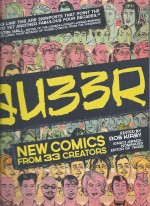
QU33R


By various and edited by Rob Kirby (Northwest Press)
ISBN: 978-1-9387203-6-9

It’s long been an aphorism – if not cliché – that Gay (or the more contemporary term LGBTQ) comics have long been the only place in the graphic narrative business to portray real romance.

It’s still true: an artefact, I suppose, of a society which seems determined to demarcate and separate sex and love as two utterly different – and possibly even opposite – things. I prefer to think that here in the 21st century – in most places – we’ve outgrown the juvenile, judgemental, bad old days and can simply appreciate powerful, moving and funny comics about people of all sorts without any kind of preconception, but that battle’s still not completely won yet. Hopefully, compendia such as this will aid the fight…

Nevertheless, at least in this superb anthology with contributions from 33 Lesbian, Gay, Bisexual, Transgender and/or Queer (or Questioning their sexual identity) craftspeople and creators, love stories are not all that’s on offer. The authors and artists cajoled and shepherded by Rob Kirby (Curbside Boys, The Books of Boy Trouble) have produced revelatory ponderings, satires, comics-reportage, pastiches, comedies, thrillers, horror stories and superhero adventures, plus many superb pictorial narrative diaries and autobiographical pieces to complement the wild, heady romances inescapably on offer.

Oh, and there’s sex and swearing: rather a lot and sometimes a bit graphic, so if you’re the kind of person liable to be upset by words and pictures of an adult nature (such as joyous, loving fornication between two people separated by age, wealth, social position and race who happily possess and constantly employ the same type of naughty bits on each other) then go away and read something else.

In fact, just go away.

Following a Foreword by Justin Hall (No Straight Lines: Four Decades of Queer Comics, Glamazonia, True Travel Tales, Hard to Swallow) recapitulating just how far the industry and society have come since Mary Wings self-published Come Out Comix in 1973, opening the doors for thousands of other non-hetero creators, Editor Rob Kirby’s Introduction places this contemporary compendium of excellence by a broad contingent of cartoonists and writers self-identifying as proponents of “Alt/Queer comics” in its contextual place leaving nothing for us to do except enjoy the cartoons and comics…

It all begins with ‘Porno’ by Eric Orner, wherein the artist beguilingly relates key moments and situations from his past whilst ruminating upon his relationship with his dad, after which ‘Mother’s Sisters’ by Annie Murphy offers similar family insights by searching through the pages of a faux-photo-album.

MariNaomi then beautifully explains how, if not why, ‘Three’s a Crowd’ for a date-shy lass, whilst Ed Luce’s dance hall days in a Death-Metal mosh pit are hilariously described in ‘Wuvable Oaf presents Kindness of Strangers’.

‘The Transformers – a True Story’ (by Dylan Edwards) is a moving and memorable account of growing up “different”; an oft-repeated experience recapitulated in Diane DiMassa’s girlish tale of young love ‘Born Qu33r’.

Always compelling and challenging, Justin Hall hits home hard here with ‘Seductive Summer’ and the doomed affair of two young men with very different causes for their feelings of attraction, isolation, alienation despair and doom, after which ‘Just Another Night in Carbon City’ (Jennifer Camper) tells a grimly witty noir crime tale with not a Tough Guy in sight.

‘Sissy That Walk’ by Eric Kostiuk Williams incisively relates the fan reaction to RuPaul’s Drag Race show before a meaningful conversation occurs between two old friends in Kris Dresen’s ‘Chop Suey’ and Tyler Cohen presents us with one enigmatic possible tomorrow in ‘Flux’…

‘So Young, So Talented, So What?!’ is an engaging and often scary comic jam by Jennifer Camper & Michael Fahy, couched in the cautionary tale of a young artistic boy lost even before he reached the Big City, and is followed by a triptych of Fahy’s narrative gallery images and strips entitled ‘Found’, ‘O’Hara Song’ and ‘Hazily Remembered Drag Queens’.

Edie Fake then plays coy and arch at the ‘Sex Club’, whilst José-Luis Olivares indulges in ‘Online Fantasy’ and Steve MacIsaac lets his mind wander back into thoughts of unpleasant school days in ‘Vacant Lots’ before wishful thinking and wistful hope poignantly meet in ‘For Fletch and Ruski, Spooner, and Calico’ by Rick Worley.

‘Life’s But a Walking Shadow’ (Christine Smith) silently scours the college scene with a couple of kids who haven’t found their way yet whilst ‘Political Will’ by Carlo Quispe reveals the inescapable highs and lows of the party scene

Do you remember Private Manning? The young soldier was an intelligence analyst in Iraq in 2009 and leaked thousands of classified documents to the horrified world. The records were leaked via a hacker named Lamo and the then transgender Bradley was communicating via electronic media. Here Andy Hartzell imaginatively and mesmerising illustrates those game-changing chat logs in ‘Manning/Lamo Project’ to create possibly the most engrossing piece in this wonderful book.

‘Toot Toot Heyyyyyyy Beep Beep’ by Carrie McNinch describes a first emotional connection and the fall of Skylab before Rob Kirby recounts his own dating dilemma in ‘Music for No Boyfriends’ and local London lad Sina Sparrow proves there’s no such thing as carefree love in ‘If You Want Me To I Will Be The One Who Is Always Good’…

Superheroes and wry humour inform Ivan Velez, Jr.’s  ‘Oso Oro – the night I got my hero card…’ with the protagonist falling foul of the masked community’s precarious pecking order after which ‘Coming Out With the Bunksteads’ (by Arch-Bishop of Gay Comics Howard Cruse) hilariously turns venerable family strip Blondie on its head with a little coming-out confession, whilst author and “Officially Out” professional wrestler Terrance Griep relates ‘The Second Most Asked Question’ about his grappling career with Rob Kirby supplying the excruciating visual details…

A different type of “tension and differences in the band” are disclosed in Craig Bostick’s ‘Guitar  Bass  Drums’ before ‘Burger Meister: a Story of Love and Loss’ by Amanda Verwey focuses on a tragic miscommunication and Comedy of desperate-dating Errors, and Nichole J. Georges describes just another date in the whimsically wonderful ‘Grief’.

David Kelly helpfully shares a few very sensible ‘Tips to a Teen-Age Me’ whilst Marian Runk offers some captivating memories and suggestions of her own in ‘This Winter, I Practiced Being Alone’…

‘Miss Sasha Velour’ (by Sasha Steinberg) then shows that you don’t need to be armed to be Fabulous and Jon Macy graphically examines his relationship with his heroes in a powerful and self-searching untitled graphic musing on Oscar Wilde, Frankenstein’s Monster, Djuna Barnes, Raymond Chandler and Charles Mingus before ‘Confession’ by L. Nichols rounds off the comics cavalcade with a light-hearted affirmation about finding yourself…

Situated between pin-up Drag in 1969 (Sasha Steinberg), and untitled pieces from MariNaomi and L. Nichols – plus one last strip starring ‘School Girls’ by Camper – About the Creators then briefs you on the talented story-makers and where else to find their work whilst a copious Special Thanks section gratefully name-checks the contributors and the investors on KickStarter who paid to make the project happen, ending this glorious rainbow-hued book of bright ideas and colourful yarns on an exceedingly positive and life-affirming note.

QU33R is a superb example of comics celebrating determination and difference: sensitive, evocative, romantic and humorously engaging “people stories” which any open-minded fan can’t help but adore. There’s not much fighting but plenty of punch, and in an ideal world this book would be readily available in every school and library for any confused kid in need of inspiration, comfort, understanding, encouragement and hope.
QU33R, the collection is © 2014 Rob Kirby. The individual art and writing contributions are © 2014 the original artists and writers. All rights reserved.

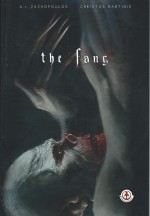
The Fang


By K.I Zachopoulos & Christos Martinis (Markosia)
ISBN: 978-1-909276-10-9

These cold, damp, excessively dark post-Christmas days and tempestuous nights just naturally lend themselves to spooky stories and here’s one of the most impressive from the tail end of last year, published by up-and-coming international publisher Markosia; courtesy of creative fear-meister Kostas Zachopoulos (Mon Alix, Mr. Universe, Misery City) and illustrated by gifted newcomer Christos Martinis.

Executed in stark and lavish painted colours reminiscent of Jon J. Muth, The Fang offers a fascinating possible postscript to the end of Bram Stoker’s epochal novel Dracula, wherein the weary but triumphant survivors of the battle against ultimate evil realise that their job is far from over…

The doom-drenched drama begins in ‘The story of Dracula’ aboard a battered sailing ship carrying gunpowder to America. The vessel is fatally cursed with a monstrous stowaway systematically slaughtering crewmen as she shudders through storm-wracked seas towards ‘A New World?’…

Back in England, Abraham Van Helsing, Quincey Morris and Jonathan Harker grudgingly accept that their battle against Dracula is not done. Now the long cold trail of the monster leads to New York.

However, by the time they reach the glittering “city of tomorrow” the ancient beast is firmly entrenched and feeding off a naive people, too smug and forward-looking to acknowledge the possibility of demons from ancient European history…

They’re all far too busy enjoying the tawdry delights of passing fancies such as the enigmatic Man-Devil in the travelling Freak Show, or the commercial war between those rival peddlers of electric light Tesla and Edison…

As the vampire hunters arrive, the newspapers are full of lurid tales concerning “the New York Ripper”, but as the determined trio stalk their supernal foe, the eagerly anticipating Nosferatu is keenly watching them…

The end, when it inevitably comes, in ‘Old Enemies are Forever’ is fierce, ferocious and catastrophically brutal… but is it truly final?

Blending moody lyricism with shocking bloodletting and brooding tension, this stark and striking short shocker offers all the chills lovers of classic horror demand and the striking imagery comics fans crave…
The Fang ™ & © 2013 Kostas Zachopoulos, Christos Martinis and Markosia Enterprises, Ltd. All rights reserved.

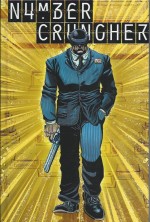
Numbercruncher


By Simon Spurrier & P.J. Holden with Jordie Bellaire (Titan Comics)
ISBN: 978-1-78276-004-7

I’ve made a resolution to be more terse and concise in my reviews. Let’s see how long that lasts…

Sometimes a story just cries out to be told – especially if your tastes run to the sentimentally cynical, soppily savage or wide-eyed and jaded. If that’s you, Numbercruncher is just what you need to confirm all your suspicions about life whilst having a really good time.

The tale – by Simon Spurrier (Judge Dredd, X-Men: Legacy, Six-Gun Gorilla and others) & P.J. Holden (that man Dredd again, Rogue Trooper, Battlefields, Terminator/Robocop and more) – began as a creator-owned project in Judge Dredd Megazine before being expanded into a 4-issue miniseries from Titan Comics. Now it’s available as a splendid hardback packed with clever, controversial notions that will delight and astound lovers of metaphysical whimsy, romantic fantasy and unnecessarily extreme violence.

Like The Wizard of Oz and especially A Matter of Life and Death, this story is told on two separate levels of existence and differentiated by full-colour earthly sections and black-&-white views of the Afterlife. Unlike them, it’s a nasty and wittily vicious piece of work; just like handy geezer Bastard Zane, operative #494 employed by The Divine Calculator to enforce the Karmic Accountancy and keep souls circulating through the great cosmic all.

The Universe is just numbers and God is a mean, pedantic bean-counter, only concerned with the smooth running of his Grand Algorithm. Unfortunately, it all starts to fall apart when Zane is tasked by the weaselly Big Boss with stopping an in-love and dying young mathematician from gaming the system.

Genius Richard Thyme, in his final seconds of mortal life, has a Eureka moment and divines the true and exact nature of everything – and how to manipulate it…

Armed with such inspirational knowledge, Thyme’s soul arrives before the Writer in the Grand Ledger and wheedles another spin on the Karmic Wheel – Reincarnation.

Brilliant Richard had been utterly in love with a dippy hippy chick named Jessica Reed, and bargains for another chance at a life with her, and mean, petty-minded Divine Calculator gleefully accepts the proposition.

Thyme will be reborn, with all memories intact, but when this second life ends his soul will be employed by the Karmic Accountancy Agency as a collector just like Zane. The standard term of employment is for eternity – unless he can convince somebody to take his place. The indentured operatives call it “Recirculation”…

There is only one get-out: a “Zero-clause” which means that if Thyme can live a life completely and totally without sin, his contract is null and void. But who could possibly live a mortal life without the slightest transgression…?

Of course, The Accountant doesn’t play fair: stacking the deck so that reborn Richard is unable to even get near his lost love until it’s too late. However when Zane finally shows up in 2035AD, eagerly expecting to close the case-file and retire with Thyme taking his long-suffering place in The Register, the frustrated, cheated genius plays his own trump card.

He’d always expected to be short-changed and made his own Karmic deal. By selling his contract to another Accountancy operative, he had bought another life. And as the psychotically furious Bastard Zane soon sees, Thyme has pulled the trick over and over again. No matter how often Richard dies, he’s already being born again somewhere else…

With the mathematician’s sold-and-resold soul promised to practically every agent in the Afterlife, Zane’s only hope of retirement rests in killing the kid’s each and every reincarnation whilst simultaneously slaughtering all the Karmic operatives who have been suckered into a deal with the lovesick little sod…

And on Earth, despite perpetual setbacks, each brief existence inches Richard slowly closer to Jess. That should make his eventual capture inevitable – but even here the genius has an incredible Plan B in operation which even the Supreme Architect of the Cosmos didn’t see coming… one which could well undo the Algorithm underpinning Everything That Is…

Poignant, funny, outrageously gory, gloriously rude and wickedly clever, this is a ferociously upbeat and hilariously dark black comedy no insufferable incurable romantic could possibly resist.

Moreover, for all us dyed-in-the-wool comics freaks, there’s a host of background features included,

Interspersed between a gallery of covers and variants – plus unused iterations – and loads of original art, roughs and sketches, the ‘Author’s Note’ takes us behind the genesis of the tale, which is further expanded upon in ‘A Comic for Talking to God – an interview with Brian Truitt of USA Today’.

A discussion and explanation of Jordie Bellaire’s colouring process is the focus of ‘Working Flat-Out’ and ‘Birth Placement’ details the procedure for creating a cover, before the usual Creator’s Biographies ends things on a knowledgeable note.

Love, Death, Sex, more Death, Rebirth, lots of Death and Numbers: there’s your Meaning of Life right there…
™ & © 2013 Simon Spurrier & P.J. Holden. All rights reserved.

Numbercruncher is scheduled for release in January 2014.

X-Men Noir: the Mark of Cain


By Fred Van Lente & Dennis Calero (Marvel)
ISBN: 978-0-7851-4437-3

When fictional heroes and villains become really popular – to the point where fans celebrate their births and deaths and dress up like them at the slightest opportunity or provocation – eventually a tendency develops to explore other potential character facets that the regular, cash-cow continuity might normally prohibit.

DC invented a whole company sub-strand of “Imaginary Stories” and Marvel asked “What If…?” sharing glimpses of alternate realities. Even television series got into the act with shows like Star Trek, Roswell and Stargate SG-1 offering coolly jarring, different takes on their established stars and scenarios.

The little dark gem of alternate continuity on offer today comes from an intriguing experiment in 2009 wherein Marvel took many of their biggest stars and reconfigured them for a universe drenched in the tone, lore and ephemera of pulp fiction and Film Noir: a dark land where shiny gleaming super-powered heroes were replaced by bleakly paranoid, deeply flawed and self-serving individuals just trying to get by as best they could…

X-Men Noir: the Mark of Cain is actually a sequel to the initial foray and benefits from not having to explain or differentiate the so-similar seeming stars from the bastions of the regular continuity. It ran as a 4-issue miniseries from February-May 2010 offering a moody glimpse of a world with no heroes, only shades of villainy. Nevertheless it still provides a satisfying slice of suspenseful entertainment for Fights ‘n’ Tights fans in search of something genuinely edgier than their regular fare. After all, the big draw for the jaded is that these folks might actually die and stay that way…

What You Need to Know: situated in the 1930s, these X-Men are not mutants with incredible, science-defying powers but rather a gang of mentally disturbed juvenile delinquents. They had been lab rats for rogue psychiatrist Charles Xavier in his School for Gifted Youngsters, where he strove to exacerbate rather than cure their various anti-social behaviours.

The batty boffin believed that sociopathy was the next stage in human behavioural development and spent his days training and refining the criminal talents and tendencies of his disturbed charges – until he was exposed and thrown in jail on Riker’s Island Prison.

The truth came out after the body of one of his “students” was washed up on the shore, covered in odd, three bladed knife slashes…

There is one costumed mystery man on the scene during these parlous times. Nosy, troublesome reporter Tom Halloway is not-so-secretly also a violent vigilante dubbed The Angel and the hunt for him preoccupied many familiarly different characters such as corrupt Chief of Detectives Eric “Magnus” Magnisky, his troubled children Peter and Wanda, casino owner Remy LeBeau, mobster Unus the Untouchable and drug runner Sean Cassidy…

This sequel volume opens with a public scandal as the government’s secret prison camp at Genosha Bay is exposed. Charges of torture and Applied Eugenics are levelled against the operators but despite rising protests the prison still carries on its inhumane treatments on the legion of sociopaths held there without Due Process or Representation.

In other news: due to lack of evidence, “Professor of Crime” Xavier is freed from Riker’s, arrogantly swearing to track down the killer of his recently assassinate “friend” Magnus…

A continent and ocean away, some of his former successes are cutting their way through the jungles of Madripoor and hordes of berserk headhunters as they try to find the lost temple of Cyttorak and retrieve a fabulous gem.

Sharpshooter Scott “Cyclops” Summers and unpredictable seagoing brawler Captain Logan are temporarily with the Angel, following a map provided by bootlegger and mercenary Cain Marko. They don’t give much credence to the native legends of vengeance inflicted on transgressors by Cyttorak’s “Juggernaut” but that soon changes when Marko is found in the no-man’s land around GenoshaBay, crushed to pulp. Of the enormous jewel there is no trace…

Peppered with evocative flashbacks, the story and trail leads Angel – who learned most of his nasty bag of tricks from Cain – to the USA’s extraterritorial prison and the shocking revelation that Xavier is secretly in charge…

Despite being captured and subjected to the Professor X’s methods of persuasion – administered by the warped woman Warden Frost – Halloway soon breaks free and begins pursuing the how and the who of Marko’s murder.

Fighting his way past the Professor of Crime’s newest protégés, a big burly Russian and an exotic black woman with a white Mohawk haircut, he is recaptured before he can reach Logan’s boat and sometime allies Cyclops and Eugene “Puck” Judd.

Undergoing more of Xavier’s “treatments”, the Angel is then confronted with the scientist’s secret weapon: his own thoroughly crazy – sociopathic – twin brother Robert Halloway…

The period drama and sinister suspense kick into compelling overdrive as the various parties hunting the Gem clash when the action shifts from noir detective to pulp sci-fi and the Professor’s true plan emerges. With the government’s covert connections exposed, and all surviving participants trapped aboard a huge flying battleship, the real value of the Gem of Cyttorak is revealed and, amidst flying fists, double- and triple-crosses abound.

As the agendas of all interested parties crash together thousands of feet above Manhattan, only antisocial violence works and at last a kind of justice is won…

Bleak, cynical and trenchantly effective, this excellent thriller by scripter Fred Van Lente and illustrator Dennis Calero provides a huge helping of thrills and chills that would work equally well even if you had never heard of Marvel’s mighty mutants.

This pocketbook sized collection also includes a covers and variants gallery by Calero as well as a dozen original art pages shot prior to the digital colouring stage.
© 2009, 2010 Marvel Characters, Inc. All rights reserved.

Love and Rockets: New Stories volume 6


By The Hernandez Brothers (Fantagraphics Books)
ISBN: 978-1-60699-679-9

It’s nearly Christmas again so it must be year since the last annual instalment of Love and Rockets: New Stories. Yep, there it is and about time too…

With this volume the most iconic, transcendent and formative force of the American independent comics movement enters its 40th year of publication. Love and Rockets was an anthology magazine featuring the slick, intriguing, sci-fi-tinged hi-jinx of punky young things Maggie and Hopey – las Locas – and heart-warming, gut-wrenching soap-opera epics set in a rural Central American paradise called Palomar.

The Hernandez Boys (three guys from Oxnard, California: Jaime, Gilberto and Mario), gifted synthesists all, captivated the comics cognoscenti with incredible stories sampling and referencing a host of influences – everything from Comics, TV cartoons, masked wrestlers and the exotica of American Hispanic pop culture to German Expressionism.

There was also a perpetual backdrop displaying the holy trinity of youth: Sex and Drugs and Rock and Roll – also alternative music, hip hop and punk.

The result was dynamite then and the guys have only got better with the passing years. Mario only officially contributed on rare occasions, but Jaime’s slick, enticing visual forays explored friendship and modern love by destroying stereotypes of feminine attraction through his fetching coterie of Gals Gone Wild, whilst Gilberto created a hyper-real landscape and playground of wit and passion created for his extended generational saga Heartbreak Soup: a quicksilver chimera of breadline Latin-American village life with a vibrant, funny and fantastically quotidian cast.

The shadows cast by Palomar still define and inform his latest tales both directly and as imaginative spurs for ostensibly unaffiliated stories.

This masterful anthology of wonders simultaneously runs a string of contiguous story strands, opening with Jaime’s evocative ‘Fuck Summer’ wherein young Tonta Agajanian is losing her battle with boredom. The older, cooler kids don’t want to hang with her or her charming associate Gomez, and for some reason Coach Rivera is chasing her all over town, cutting into her precious vacation time and pushing her to join the swim team…

With no other resort they head to the swimming hole where wild girl Gretchen keeps finding “presents” from a forest spirit.

Gilbert then offers ‘Song of Our Sad Girl’ as Doralis “Killer” Rivera apparently quits her cinema career before heading back to Palomar to visit her distanced family. With flashbacks inter-cutting to the grandmother she’s playing in her new movie Maria M, the story primarily focuses on the starlet’s latest crisis.

She’s fleeing rumours that she’s pregnant and just wants some peace and a normal life. At least that’s what she’s telling herself…

‘Wrench World’ (Jaime again) finds Tonta the recipient of some shocking news: her step-father has been shot and her far-from-normal mother is the prime suspect. Even her older brothers and sisters believe the old bitch did it…

Killer’s star shines in ‘Willow, Weep No More’ (by Beto) as her quest for understanding the family – and especially her grandmother – turns up an old tape of shocking content…

Jaime then begins a series of revelatory vignettes filling in detail and character on Tonta’s extended, unconventional family of half-siblings in ‘Crimen Uno’ before the surly girl and BFF Gomez stalk Coach Rivera to some quirkily engaging ‘Tarzana Adventures’.

Thereafter Tonta’s little sisters need some surly-styled comforting in ‘Urchins’ whilst ‘Crimen Dos’ covers the elders’ discussion of their mother’s other (alleged) victims.

Gilbert’s firm grasp of the Hollywood rumour mill is shown in ‘…Killer’s Dad – Grampa Hector?’ and ‘Killer in the Mix’ sees the busty phenomenon head back to the USA in time for the release of the Directors Cut of Maria M, garnering grief from her friends about keeping the (alleged) baby she may or may not be carrying…

‘Crimen Tres’ continues with Tonta’s family simultaneously reminiscing and planning to get rid of their embarrassing surviving parent, whilst in ‘Pack Mules’ our girl and Gomez steal a car and head off to finally uncover Coach’s big secret…

It’s a doozy – seen in ‘Crestfallen Angel’ – but does break the ice, and, after ‘Crimen Cuatro’, Tonta at last begins to change her opinions…

An incongruous and lewdly fantastic untitled monster yarn from Gilberto segues into Jaime’s ‘Familylimaf’ wherein Tonta’s older sisters invade gym class and expose an unsuspected – an immensely humiliating – connection to Rivera after which ‘Crimen Cinco’ delivers one more shock to the girl and her constantly expanding family, before a reconciliation of sorts materialises in ‘Dogs Follow Dogs’…

There are further familial secrets disclosed and generational ties uncovered for Killer in ‘Willow, Weep No More 2’ and ‘Willow, Weep No More 3’ after which Jaime hits the home stretch with ‘Crimen Seis’ – wherein the progeny get a good telling off – and Tonta gives in and joins the swimming squad in ‘Go! Go! Go!’ before ‘Crimen Final’ resolves the courtroom dilemma.

Gilbert ends his stint with a ghostly visitation in ‘And Palomar Again’ and Jaime takes us back to the beginning as Tonta heads back, back, back  to the swimming hole for more telling glimpses of her compelling family life in ‘Rrrregresamos’…

Warm-hearted, deceptively heart-wrenching, subtly shocking, challenging, charming and irresistibly addictive, Love and Rockets: New Stories is a grown up comics fan’s dream come true and remains as valid and groundbreaking as its earlier incarnations – the diamond point of the cutting edge of American graphic narrative.
© 2013 Gilbert and Jaime Hernandez. This edition © 2013 Fantagraphics Books. All rights reserved.

Couch Tag


By Jesse Reklaw (Fantagraphics Books)
ISBN: 978-1-60699-676-8

In recent years there’s been an utterly irresistible upsurge of graphic novels which combine autobiography with a touch of therapy as they recount the lives of their authors. Such “tragicomics” are both immensely appealing and frequently painfully unforgettable

One of the most moving and impressive comes from veteran Indie cartoonist and mini comics self-publisher Jessie Reklaw: an artist who’s been generating thought-provoking and unmissable strips and stories since 1995 when he was working towards his doctorate in Artificial Intelligence.

Born in Berkley, California in 1971, he grew up in Sacramento before attending

UC Santa Cruz and Yale, and his earliest publications – just like most of his modern output – delved into the phenomena and imagery of dreams. The experimental Concave Up led to syndicated weekly strip dream-diary Slow Wave, which uses readers’ contributions as the basis of the episodes. It has run continuously since 1995 in both printed periodicals and as a webcomic.

His long-awaited graphic autobiography is just as beguiling: a life reduced to brief vignettes serially grouped into five innocuous-seeming chapters which, through cleverly layered and carefully tailored reminiscences, describe Jess Recklaw’s strangely unconventional (if not actually dysfunctional) family and struggle for stability.

Primarily crafted in monochrome wash, the history sessions begin with ‘Thirteen Cats of My Childhood – which some readers will recognises from Houghton Mifflin’s Best American Comics 2006, where it was previously published – wherein succinct and ferociously functional recollections of a succession of ill-starred family pets serves as a splendid and powerfully effective narrative conceit to introduce the far from ordinary Walker clan.

Following the brief lives of ‘Black Star’, ‘Frosty’, ‘The Triplets’, ‘Mischief’, ‘Figgy Pudding’, ‘Gene’, ‘Survivor’, ‘Tiger’, ‘Boots’ and ‘Harry’ shows us a family of decidedly alternative outlook and also describes the rules of the furniture-based children’s game which gives this book its title.

There follows ‘A Note About Names Part One’ which reveals more about the sensibilities of the author’s parents, after which ‘Toys I Loved’ continues the amazingly instructive anecdotes about formative influences with games and playthings acting as keys to memory in increasingly unsettling, discordant and disturbing tales beginning in infancy with cuddly toy ‘Ruff-Ruff’ and skipping through a childhood dotted with sibling rivalries and sporadic best friendships.

Jess, Sis, Mom and “Daddy Bill” are all defined courtesy of ‘The Mask’, ‘Me’s’, ‘Blankie’, ‘Sprinkler’, ‘Play-Doh’, ‘Stretch Armstrong’, ‘Six-Million-Dollar Man’, ‘The Hulk’, ‘Firecrackers’, ‘Green Cup’, ‘Diecast Robots’, ‘Drawers’, ‘Comic Books’, ‘Action Figures’, ‘Dirt Pile’, ‘Doll House’ and ‘Barbies’ before the life-changing advent of ‘Dungeons & Dragons’…

‘The Fred Robinson Story’ details the potentially obsessive nature of teenage pranks when Jess and like-minded buddy Brendan over a number of years bombarded a complete stranger with a barrage of creative celebration; turning a random name in a phone book into the recipient of odd gifts and star of music and handmade comicbooks in ‘The Box’.

The lads developed their musical tendencies in ‘Los Angeles’ and penchant for creative vandalism in ‘Batsigns’ before returning to their lengthy cartooning crusade in ‘Fred Robinson X-ing’: detailing how the prank publishing campaign mushroomed and how Brendan’s girlfriend Kristin changed the status quo, after which Jess got a ‘Letter from Norway’ and ‘Better Fred’ revealed how things eventually ended…

‘The Stacked Deck’ recounts the educational episodes and memorable moments resulting from the entire extended family’s passion for card games and compulsive behaviour, as seen in ‘War’, ‘Go Fish’, ‘Spades’, ‘Pinochle’, ‘Crazy Eights’, ‘Speed’, ‘Poker’, ’31’, ‘Rummy’, ‘Solitaire’, ‘Spite & Malice’ and ‘Ascension’, after which the final chapter ‘Lessoned’ is delivered in a succession of distressed colour-segments: raw and disturbing pages of evocative collage and experimental narrative dealing out a unique tarot set of A to Z insights and revelations beginning with ‘Adults , ‘Birth’ and ‘the Crash’.

Ranging between early days and contemporary times, the alphabetical summary and keen self-diagnosis continues with ‘Disease’, ‘Earache’, ‘Family’, ‘Gifted’, ‘Humor’ and ‘Invulnerability’, turning a corner towards understanding with ‘Joint’, ‘Kiersey Test’, ‘Legal Guardian’, ‘Melancholic’, ‘Number’ and ‘Obsession’.

After cleverly addressing the revelations of the author’s bipolar mood disorder and explosive determination to take control of his life by rejecting sickness and weakness, ‘Phlegmatic’, ‘Question’, ‘Role-Playing’, ‘Sanguine’, ‘Tests’ and ‘Unconscious’ carry the tale to a new normal with ‘the Vandal’, ‘Walker’, ‘X-Mas’, ‘Yesterday’ and ‘Zero’.

Bleak and uplifting, nostalgic and distressing, harsh and blackly funny, Couch Tag is a devastatingly moving account of coping with adverse heredity, sexual deviancy, social nonconformity and familial discord which could only be told in comics.

This is not a book everyone will like, but it’s definitely a story that will resonate with anyone who has felt alone or odd or different.

And surely that’s all of us at some time…
© 2013 Jesse Reklaw. This edition © 2013 Fantagraphics Books, Inc. All rights reserved.

Maria M. Book One


By Gilbert Hernandez (Fantagraphics Books)
ISBN: 978-1-60699-719-2

In addition to being part of the graphic/literary revolution of Love and Rockets (where his astonishingly addictive tales of rural Palomar first garnered overwhelming critical acclaim), Gilbert Hernandez has produced stand-alone books such as Sloth, Birdland, Grip and Girl Crazy, all marked by his bold, compellingly simplified artwork and inspired adaptation of literary techniques used by Magical Realist writers such as Carlos Fuentes and Gabriel García Márquez: techniques which he has amplified and, visually at least, made his own.

Hernandez also frequently acknowledges such outré mainstream influences as filmmakers Roger Corman and John Cassavetes, and crime writers Elmore Leonard and Jim Thompson as he entered new territories and reforms the cultural influences which shaped all us baby-boomers.

In Luba we glimpsed the troubled life of the lead character’s half-sister Rosalba “Fritzi” Martinez: a brilliant, troubled woman, speech-impaired psychotherapist, sex-worker, belly-dancer and “B-movie” starlet of such faux screen gems as We Love Alone, Seven Bullets to Hell, Chest Fever, Blood is the Drug and Lie Down in the Dark.

Although Fritzi only had a bit part in it, Hernandez “adapted” one of those trashy movies into a graphic novel (Chance in Hell, 2007) and repeated the story-within-a-story- within-a-story gimmick in 2009 with The Troublemakers – a frantic, hell-bent pulp fiction crime thriller which was part of the screen queen’s canon – and did it again in 2011 with Love From the Shadows.

Now he’s turned up the tension and doubled down on the plundering of his own mythologies. Maria M delves even deeper into the labyrinthine coils and onion-skin layers of meta-reality as the filmic biography of Fritzi’s long-absconded grandmother becomes a revelatory expose of the turbulent life of a beautiful, competent immigrant fugitive; carving out her own slice of the American Dream after escaping the rustic drudgery of Palomar.

Deftly mimicking a compelling-but-trashy post-Noir gangster thriller and sordid Fifties B-Picture melodrama, this first volume of Maria M sees a lovely Amazonian Latin beauty hit Everytown, USA in 1957, promptly befriended and taken in by couple of sympathetic working girls…

It’s all a huge mistake. Maria is actually the girlfriend of a mobster who has expedited her passage into the country. Unfortunately, by the time the mix-up is sorted and she finds his place, the poor guy is staring down the barrel of a rival’s gun.

Witness to murder and with no other place to go, the pneumatic stranger heads back to Trixie and Pam and begins her career in the men’s entertainment industry: “hostessing”, photo-shoots and – inevitably for someone with her looks – stag films…

Every attempt to go legit is frustrated by lustful men wanting her, and inevitably she settles for her new life. She still sees people from the Old Country, but they’re usually gangsters, hoodlums or worse…

She makes some friends along the way: other girls in the shady world of men’s movies, film critic Clyde and even bought cop Valdez, but her life only really turns around when she catches the eye of gang boss Luis Cienfuegos. The older man is so smitten with his sex kitten that he marries her…

His sons – both older than Maria – are dutiful and pay her every respect, but whereas taciturn, brutal Gorgo is clearly fascinated with his new stepmother, slick, businesslike, modern Herman makes no effort to conceal his distaste.

It’s a time of great turmoil for the Latino gangs in the USA. Tenuous alliances and collaborations are commonplace, but the assorted leaders have very different views on the rise of Communism in their homelands: beliefs which will inevitably lead to disagreements and bloodshed. And of course everybody plans on eventually being the only game in town…

Maria keeps herself insulated from her husband’s business, but does develop a passionate affinity for guns. It’s just as well. Over the next few years Luis barely survives numerous assassination attempts.

…And always silent, staring Gorgo waits in the background, watching her as his father’s employees, allies and enemies circle, drawn to her voluptuous beauty like moths to a flame…

In such a murky, dangerous world it’s impossible for Maria to keep completely apart from her husband’s affairs and when she is abducted by supposed allies Gorgo allows his true feelings to show in a savagely horrific manner, after which she divorces her man for the best possible motives…

Dark, evocative and astoundingly compelling, this perfect pastiche of a beloved genre and fabled time-period is a stunning graphic rollercoaster ride of sex, violence, greed, obsession and outlaw antiheroes: a mesmerising read jam-packed with Hernandez’s coolly understated narrative suspense, intoxicating illustration, brutally raw tension and sly elements of filmic surrealism which carry the reader through to the low-key cliffhanger ending in classic style.

And please, don’t get too het up over the convolutions and continuity provenances that resulted in this book. If you need to see the “True Story” of Maria, just check out the story ‘Poison River’ in the Heartbreak Soup collection Beyond Palomar, but otherwise why not just revel in a grim and gripping, saga of love and hope and inescapable doom…

Every adult lover of top-notch drama should snap up Maria M immediately to revel in the sheer brilliance of a master storyteller at the peak of his prowess, and open-minded comics fans should be advised to step beyond the costumes and chains of continuity to take a heady shot of pure imagination at work.
© 2013 Gilbert Hernandez. This edition © 2013 Fantagraphics Books, Inc. All rights reserved.

Black is the Color


By Julia Gfrörer (Fantagraphics Books)
ISBN: 978-1-60699-717-8

There’s never been a better time to find dark and imaginative horror comics tales and the genre has seldom been better represented than with this eerie yet elegiac historical fantasy from Julia Gfrörer.

The relative newcomer hails from Portland, Oregon – having been born in 1982 and raised in historic Concord, New Hampshire. She studied Painting and Printmaking at Seattle’s CornishCollege of the Arts and first began turning heads a few years ago with her thoughtfully terrifying comicbooks Flesh and Bone and Too Dark to See as well as appearances in Thickness, Arthur Magazine, Black Eye, Study Group Magazine and Best American Comics.

The author brings a gift for sensitive emotional scrutiny and quirkily macabre understatement to this slim monochrome tome detailing the last days of a marooned mariner and the strange creature who temporarily adopts him…

It begins in the middle of the ocean as sailors Xavier and Warren are approached by the Captain’s Mate. The voyage is going badly. Storms have battered the frail wooden vessel and provisions are low.

As they were the last to join the ship’s company, the crew expects the pair to calmly get into the dinghy and drift away, giving the rest some slim chance of survival…

Xavier is already quite ill and Warren enquires why they can’t just be shot, but nobody wants a murder on their already benighted souls…

Cast adrift and enduring harsh exposure, the pair float aimlessly. Hardship and privation soon ends Xavier, but as angry, resentful Warren languishes in the boat awaiting his own death, he thinks he hears singing in the night and is soon conversing with a woman who seems to know impossible things – such as how and what his far away wife and child are doing…

More than half convinced he’s gone mad he continues his strange delirious conversations with her, all the while certain that his life is slowly ebbing away…

She won’t save Warren but the sea siren is quite content to stay with him as he expires, sharing intimate memories. And far away across the waves, his former shipmates sail helplessly into another storm as mermaids gather to watch…

Bleak, beautiful and lyrically elegant, this oddly mesmerising, gently scary, utterly visual yarn tellingly explores pride and loneliness but is cunningly underpinned by wry, anachronous humour and a cleverly memorable conclusion which will delight fans of mystery and imagination and lovers of beguiling illustration.
© 2013 Julia Gfrörer. This edition © 2013 Fantagraphics Books, Inc. All rights reserved.

Gold Pollen and Other Stories


By Seiichi Hayashi edited & translated by Ryan Holmberg (Picturebox)
ISBN: 978-1-939799-07-4

When talking about Japanese comics most fans are generally thinking of the mainstream mass-entertainment form which began with Osamu Tezuka in the years following the end of World War II, and which within a generation had grown into a multi-genre print phenomenon adored and compulsively consumed by the greater part of Japan’s population.

However where there’s a mainstream there are always fringes, and the all-pervasive success of commercial manga naturally threw up experimental and alternative publications: the sort of forums and arenas where the most interesting and challenging works of every art form usually first begin…

A companion to the “Ten-Cent Manga” collections, this superlative hardback begins a series celebrating “Masters of Alternative Manga”, with resident Editor, historian and translator Ryan Holmberg offering comprehensive background and fascinating insights into one of the most respected envelope-pushers in the business and presenting a tantalising selection of shorter pieces by a compelling master of evocative sequential narrative.

Avant-garde illustrator, poster artist, filmmaker and poet Seiichi Hayashi was born in 1945 and became a star of Japan’s counterculture movement in the Swinging Sixties. He also created a number of comic strips for alternative periodical Garo during the turbulent late 1960s and early 1970s and four of them grace this captivating collection. His most well known work is probably the wildly experimental romance Red Colored Elegy.

The artist’s flawed and tragic relationship with his mother informed many of his stories and reprinted his insightful personal memoir ‘Azami Light: Childhood Remembrances (1972)’ as well as Holmberg’s contextualizing essay ‘Momoko and Manga: Seiichi Hayashi’s Maternal Roots’.

Each is copiously illustrated with photos, illustrations, covers and formative artworks, providing documentary and commentary to augment the striking strips which make up the largest portion of this volume.

Created at a time of rising Right Wing Nationalism and with Western popular influences such as comicbooks, TV shows and pop music seemingly inundating the nation’s kids, the tales reprinted here also display a broad flavour of cross-cultural contact and pollination, albeit with a ferocious undercurrent of intellectual criticism…

The powerful, deeply moving stories begin with the full, flat-colour ‘Dwelling in Flowers’ (1972): a sly, lyrically wistful examination of fragmenting relationships, followed by the charmingly sinister monochrome ‘Red Dragonfly’ from 1968: an apparently rustic and nostalgic fable of a child’s experience playing at war and observing his mother’s clandestine liaisons…

‘Yamanba Lullaby’ (also 1968) features many anomalous and anachronistic pop culture intruders as it allegorically ponders American influences whilst relating some explosive exploits of legendary heroic “Golden Boy” super-baby Kintarō, his horrific supernatural mater and a host of quirky opponents (giant robots, mad scientists, DC comics superheroes) – all rendered in stark black and white with gory red splashed on as appropriate…

This intriguingly appealing primer ends with the sadly unfinished ‘Golden Pollen’ from 1971. Printed in indigo and red, this is another allegorical foray investigating Nationalism and again co-opts traditional Japanese legends and Buddhist tales: updating the raucous saga of heroic newborn Hinomaru (also the name of the WWII Rising Sun flag) and his demon brother Jaki in their battles against a vast skeletal monster mother…

Holmberg describes in fascinating and forensic detail the origins of the assorted stories, the state of political and social play in Japan and the emotional turmoil which drove the artist to produce such eye-catching, earnest comics but the real draw is the sheer graphic escapism, spectacular storytelling and astoundingly skewed views of a driven, inspired craftsman.

Not for the squeamish, nor the naïve, Gold Pollen and Other Stories is a challenging ride no serous lover of comics will want to miss.

This book is printed in ‘read-from-back-to-front’ manga format.
© 2013 Seiichi Hayashi. Translation and essay © 2013 Ryan Holmberg. All rights reserved.

Betty Blues


By Renaud Dillies, translated by Joe Johnson (NBM/ComicsLit)
ISBN: 978-1-56163758-4

Renaud Dillies belongs to that cool school of European artists who are keenly aware of the visual power imbued by using anthropomorphic characters in grown up stories – a notion we’ve all but lost here in Britain and one primarily used for kiddie comics and pornography in the USA and Asia.

Dillies was born in Lille in 1972, the inveterate dreamer, artist and storyteller in a brood of five kids. Music was a big part of his parents’ lives: British Pop – especially The Beatles and John Lennon – and Jazz, mostly Big Band, Swing and Satchmo, and the lad listened and learned…

After college – studying Humanities, Graphic and Decorative arts at Saint-Luc School of Fine Arts in Tournai – he began his comics career, like so many others, at Spirou, drawing backgrounds for prolific cartoonist Frédéric Jannin (Rockman, Germain et Nous and many more) and also inking Frédéric “Clarke” Seron on sorceress comedy Mélusine.

The young author blended his twin passions for comics and music in his first solo work and Betty Blues – published by Paquet in 2003 – took the “Best Debut” award at that year’s Angoulême Comics Festival.

He followed up with Sumato, Mister Plumb (with Régis Hautière) and Mélodie du Crépuscule (Melody of Twilight) before moving to Darguad in 2009 to and create Bulles et Nacelle with Christophe Bouchard (available in English as Bubbles and Gondola) and, in 2011, Abélard (again with Hautière and also available in translation from NBM/ComicsLit).

During this period he still toiled as a jobbing Bande Dessinées creator. Under the pen-name “Jack” he drew comedy sports features Les Foot Maniacs and Tout sur le Rugby for Bamboo and illustrated some Arboris’ erotic short stories for the series Salut les coquinas.

Coming from the same dark place and cultural sources as Benoît Sokal’s wry, bleak and witty Inspector Canardo detective duck tales, Betty Blues is both paean and elegy to the unholy trinity of Modern Cool and Shattered Idealisms: Noir, Jazz and Lost Love, all focused through the mythologizing lens of cinematic Fifties Americana.

The tragic, flawed star of this intoxicating fable is Little Rice Duck, possibly the greatest bird ever to blow a trumpet in the seedy clubs and wild environs of the West Wood. Starring at the nightspots and making music are his life but his hot girlfriend Betty is getting pretty tired playing second fiddle to his art.

She’s a pretty bird who needs lots of loving attention, the Good Life and Expensive Champagne, so on one more tedious night when Rice is deep in the spotlight blowing hot and loud, she calamitously listens to an unctuous, sleazy fat cat at the bar who offers her plenty of all three before sneaking off with him…

Her disappearance hits Rice as hard as he subsequently hits the bottle, and his too-late regrets shake him to the core. Going downhill fast, the always-angry little guy throws his magnificent trumpet – which has cost him true love – off a high bridge and hops a train heading “anywhere but here”…

The Horn hits a boat-riding sap and thus begins to affect the lives of a succession of other poor schnooks whilst, elsewhere uptown, Betty begins to reconsider her hasty decision as the downsides of being a rich guy’s trophy – or pet – start to become apparent…

For Rice, the end of the line finds him deep in a forested nowhere-land dubbed “Kutwood” where he is befriended by the owl Bowen who is both lumberjack and radical environmental terrorist.

Slowly he is drawn into the affable agitator’s world of violence, sabotage and anti-capitalist polemic, but all he is really thinking about during so many late night conversations is the tatty old trumpet nailed high up out of reach on Bowen’s cabin wall…

And Jazz: sweet, hot Jazz music…

Back in city Betty starts to fear for life, soul and sanity on the chubby arm of her mercurial plutocrat-cat, as the portentous trumpet begins to reshape the lives of many ordinary folk innocent and venal. And then one day Betty meets an old friend of Rice’s who tells her he’s gone missing…

Sad, grim, brooding and surprisingly suspenseful, this captivating riff on complacency, ill-considered aspirations and lost chances is beguilingly constructed and subtly realised, with a smart undercurrent of bleakly cynical humour counter-pointing the Noir flavour and motif of inescapable doom.

Betty Blues will delight mature readers with a well-honed sense of the absurd and an abiding taste for the dark…
© 2003 Editions Paquet. English translation © 2013 NBM.