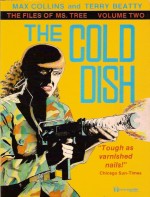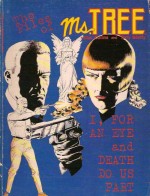
The Files of Ms. Tree volume 2: The Cold Dish


By Max Collins & Terry Beatty with Gary Kato (Renegade Press)
No ISBN: 0-919359-05-1

Despite being one of the most popular genres in literature and the fact that most fiction books are bought and read by women, Private Eye crime stories are desperately short of female protagonists. Marry that with the observation that “gum-shoe” comics are also as rare as hen’s teeth and it’s a wonder that a series such as Ms. Tree ever got off the drawing board.

The secret – as always – is quality.

The black widow of detective fiction first appeared in 1981 as a serial in the groundbreaking black-and-white anthology comic Eclipse Magazine, produced by crime novelist and new writer of the Dick Tracy, Max Allan Collins with young humour cartoonist Terry Beatty.

She soon won a solo title, Ms. Tree’s Thrilling Detective Stories (later simply Ms. Tree), and although the marketplace was not friendly to such a radical concept the series ran for 50 issues, and 2 specials, from three publishers (Eclipse, Aardvark-Vanaheim and Renegade Press, before finally dying in 1989. She was promptly revived as a DC comic in 1990 for another 10 giant-sized issues as Ms. Tree Quarterly/ Ms. Tree Special; three more blood-soaked, mayhem-packed, morally challenging years of pure magic.

Astonishingly, there are no contemporary collections of her exploits – despite Collins’ status as a prolific and best-selling author of both graphic novels (Road to Perdition, CSI and prose sequences featuring his crime-creations Nathan Heller, Quarry, Nolan, Mallory and a veritable pantheon of others).

In 2007 Collins released a classy prose novel, “Deadly Beloved” about his troubled troubleshooter, but thus far the Files of Ms. Tree volumes are the only place to find the collected exploits of this superb crime-stopper.

In the first volume I, For an Eye and Death Do Us Part we briefly met Mike Tree, a legendary private detective who married his secretary and partner Mike Friday, only to be murdered on their wedding night.

The new Mrs. Tree hunted down his killer, setting herself on a path of vengeance and blood. On the way she uncovered a vast web of corruption and made an eternal enemy of Mob boss Dominic Muerta, becoming locked in a bloody vendetta. She also discovered her dead husband’s previous wife and a son who was painfully like his departed dad…

This second volume, released in 1985 and reprinting her adventures from issues #4-8, has fewer behind-the-scenes extras and commentary but does include another colour cover gallery and an all-new and nasty illustrated prose short story, ‘The Little Woman’ to supplement the darkly engaging title tale.

Gary Kato joined the team as letterer and art assistant Beatty’s drawing took on a seductively Steve Ditko-like appearance whilst the drama became increasingly terse in ‘The Right to Remain Silent…’ and ‘No Use Crying’ as Mike Tree’s other wife briefly returns, begging Ms Tree to take her son into protective custody. She is murdered days later and as the detective spirits Mike Jr. away his grandparents violently disapprove, and Dominic Muerta sends an unmistakable message …

‘Paying Respects’ and ‘Forgive Her Trespasses’ introduces a new cast member, ex-SAS child protection expert Mr. Hand, to baby-sit the resentful boy whilst Ms Tree delivers a message of her own to Muerta, and the mystery deepens in ‘To the Slaughter’ as another viable suspect to Anne Tree’s murder appears – and bloodily expires, whilst in ‘Urbane Renewal’ the body count and suspect list rises again.

The action intensifies when Ms. Tree’s closest ally is blown up in ‘Visiting Hours’ and a vigil by his bedside leads to another grisly attempt on her life. ‘Knee-Deep in Death’ and ‘Accounts Payable’ finally provides the missing motive for the ongoing bloodbath, but with Mr. Hand attacked and Mike Jr. missing it might be all too late…

After all the Hitchcockian suspense the carnage and conundrums brilliantly culminate in ‘Murder-Go-Round’, a spectacular showdown that would do Sam Peckinpah proud…

Despite the tragic scenarios, ruthless characterisations and high body-count, this is another clever, funny affair steeped in the lore of detective fiction, stuffed with in-jokes for the cognoscenti (such as the unspoken conceit that the heroine Mike Friday is the daughter of legendary TV cop Joe “Dragnet” Friday or that in fiction absolutely no one can be trusted) and dripping in the truly magical gratification factor that shows complete scum finally get what’s coming to them…

Ms. Tree is the closest thing the American market has ever produced to challenge our own Empress of Adventure Modesty Blaise: how she can be left to languish in graphic obscurity is a greater mystery than any described in this compelling collection. Track down these superb thrillers and pray someone has the street smarts to bring her back for good…
© 1983, 1984, 1985 Max Allan Collins and Terry Beatty. All Rights Reserved.

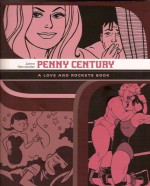
Penny Century (Las Locas volume 4)


By Jaime Hernandez (Fantagraphics Books)
ISBN: 978-1-60699-342-2

Please pay attention: this book contains stories and images of an extremely adult nature, specifically designed for adult consumption and the kind of coarse and vulgar language that most kids are fluent in by the age of ten. If reading about such things is likely to offend you, please stop now and go away. I’ll be back with far more wholesome, family friendly and acceptable violence and explosions tomorrow. So come back then.

Love and Rockets is an anthology comics publication that originally featured slick, intriguing, sci-fi-ish larks, heart-warming, terrifying, gut-wrenching soap-opera fantasies and bold experimental comic narratives that pretty much defied classification, all wrapped up in the ephemera of the LA Hispanic and punk music scene. The synthesistic Hernandez Bros joyously plundered their own relatively idyllic childhoods to captivate with incredible stories that sampled a thousand influences conceptual and actual – everything from comics and TV through alternative music to German Expressionism and masked wrestlers.

Jaime Hernandez was always the most visible part of the graphic and literary revolution that is Love and Rockets, his slick, seductive, clean black line and beautiful composition, not to mention impeccably rendered heroes and villains and the comfortingly recognisable comic book iconography, being particularly welcomed by readers weaned on traditional Marvel and DC superheroes.

However his love of that material, as well as the best of Archie Comics cartoonists (I often see shades of the great Sam Schwartz and Harry Lucey in his drawing and staging), accomplished and enticing as it is, often distracted from the power of his writing, especially in his extended saga of Maggie Chascarillo and Hopey Glass – Las Locas.

Palomar was the conceptual and cultural playground of brother Gilberto, whilst Jaime initially began with a fantasy-tinged adventure serial (as seen in volume #1 ‘Maggie the Mechanic’) which eventually evolved into a prolonged examination of love and friendship as Maggie and Hopey, chums since childhood and occasional lovers, drifted into and away from each other over the years. The later stories also yielded focus to an increasing number of truly unique friends and acquaintances…

This volume ostensibly stars Hopey’s lifelong friend and wild child Beatriz Garcia who meticulously reinvented herself as the cosmic starlet and ambiguous super-heroine Penny Century, but the whole utterly magnetic cast are on board for a series of revelatory tales, casting light on both the shadowy histories and portentous futures as Maggie and Hopey approach middle age – still beautiful, still feisty but not really that much wiser…

Collected from the spin-offs and miniseries ‘Whoa Nellie!’, ‘Maggie and Hopey Color Fun’ and ‘Penny Century’ produced between 1996 and 2002, the pageant of wonders begins with a disturbingly compelling side-trip into the world of women’s wrestling, following the lives and glory-days of two women as they strive to become tag-team champions: a visually mesmeric and touchingly poignant dissection of an extraordinary friendship.

The spotlight lands squarely on Hopey in the second extended tale as the older but no wiser wildcat revisits her good old days with Maggie, before the main event, told through a succession of short stories, commences. Beginning with two instalments of ‘Locas’, and three of ‘Penny Century’ the narrative is interspersed with nineteen fascinating complementary vignettes and sidebars such as ‘La Pantera Negra’, ‘Hopey Hop Sacks’, ‘Look Out’, ‘Chiller!’, ‘C’Mon Mom!’, and ‘Loser Leave Oxnard’ – the secret origins of most of the extended cast are laid bare in progressively more funny and tragic tales of missed opportunities and lost last chances…

Every bit as surreal and meta-fictional as brother Beto’s incredible tales of Luba and Palomar, Jaime’s continuing development as a writer both stirring and meaningful is a delight to experience, whilst his starkly beautiful drawing – even when he affectionately dabbles with other styles – is an utter joy. It’s an amazing trick to tell such wistful, insightful and even outright sad stories with so much genuine warmth and slapstick humour but this book easily pulls it all off.

You’ll laugh, you’ll cry, and you’ll own one hell of a good book when you buy Penny Century… and you may regret it forever if you don’t.
© 2010 Gilbert Hernandez. All Rights Reserved.

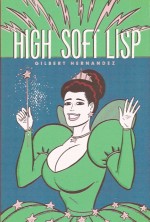
High Soft Lisp


By Gilbert Hernandez (Fantagraphics Books)
ISBN: 978-1-60699-318-7

Please pay attention: this book contains stories and images of an extremely adult nature, specifically designed for adult consumption and the kind of coarse and vulgar language that most kids are fluent in by the age of ten. If reading about such things is likely to offend you, please stop now and go away. Tomorrow I’ll write about something with violence and explosions, so come back then.

In addition to being part of the graphic and literary revolution that is Love and Rockets (where his astonishingly compulsive tales of Palomar and the later stories of those characters collected as Luba gained such critical acclaim) Gilbert Hernandez has produced stand-alone tales such as Sloth, Grip and Girl Crazy, all marked by his bold, instinctive, simplified line artwork and a mature, sensitive use of the literary techniques of Magical Realist writers Carlos Fuentes and Gabriel García Márquez: techniques which he has added to and made his own.

Love and Rockets is an anthology comics publication that features slick, intriguing, sci-fi-ish larks, heart-warming, terrifying, gut-wrenching soap-opera fantasy and bold experimental comic narratives that pretty much defy classification. The synthesistic Hernandez Bros still captivate with incredible stories that sample a thousand influences conceptual and actual – everything from Archie Comics and alternative music to German Expressionism and masked wrestlers.

Palomar was the conceptual and cultural playground of Gilberto, created for the extended serial Heartbreak Soup: a poor Latin-American village with a vibrant, funny and fantastically quotidian cast. Everything from life death, adultery, magic, serial killing and especially gossip could happen in the meta-fictional environs of Palomar, and did, as the artist explored his own post-punk influences, comics, music, drugs, comics, strong women, gangs, sex, family and comics, in a style that seemed informed by everything from Tarzan comics to Saturday morning cartoons and the Lucy Show.

Beto, as he signs himself, returns to Palomar constantly, usually with tales involving the formidable matriarch Luba, who ran the village’s bath house, acted as Mayor and sometimes police chief – as well as adding regularly and copiously to the general population. Her children, brought up with no acknowledged fathers in sight, are Maricela, Guadalupe, Doralis, Casimira, Socorro, Joselito and Concepcion.

Luba eventually migrated to the USA and reunited with her half-sisters Petra and the star of this volume, Rosalba “Fritz” Martinez. This collection was compiled from assorted material that first appeared in Love and Rockets volume II and Luba’s Comics and Stories, with some new pages and many others redrawn and rewritten.

Fritz is a terrifyingly complex creature, a psychiatrist, therapist, B-Movie actress, belly dancer, drunk, gun-fetishist, sexually aggressive and a manipulative serial spouse. Beautiful, enticingly damaged, with a possibly intentional speech impediment she sashays from crisis to triumph and back again, and this moving, shocking, funny chronicle uses the rambling recollections of one of her husbands, motivational speaker Mark Herrera, to follow her life from punkette outsider at High-School through her various career and family ups and downs.

Under the umbrella title of ‘Dumb Solitaire’ what purports to be the memoir of Senor Herrera reveals in scathing depth the troubled life of the woman he cannot stay away from, in an uncompromising and sexually explicit “documentary” which pulls no punches, makes no judgements and yet still manages to come off as a feel-good tale.

High Soft Lisp is the most intriguing depiction of feminine power and behaviour since Flaubert’s Madame Bovary – and probably just as controversial – with the added advantage of Beto’s intoxicating drawing adding shades of meaning that mere text just cannot impart.

Very funny, very moving, remarkable and unmissable: no mature fan of the medium can afford to miss this treat.

© 2010 Gilbert Hernandez. All Rights Reserved.

The Files of Ms. Tree volume 1: I, For an Eye and Death Do Us Part


By Max Collins & Terry Beatty (Aardvark-Vanaheim)
ISBN: 0-919359-05-1

Despite being one of the most popular genres in literature and the fact that most fiction books are bought and read by women, Private Eye crime stories are desperately short of female protagonists. Marry that with the observation that “gum-shoe” comics are also as rare as hen’s teeth and it’s a wonder that a series such as Ms. Tree ever got off the drawing board.

The secret – as always – is quality.

The black widow of detective fiction first appeared in 1981 as a serial in the groundbreaking black-and-white anthology comic Eclipse Magazine, along with a number of other quirky alternatives to the East Coast superheroes that had a stranglehold on American comics in the 1970s and early 1980s. Besides such gems as Sax Rohmer’s ‘Dope’ (adapted by Trina Robbins), Steve Englehart and Marshal Rogers’ ‘I Am Coyote’, Don McGregor & Gene Colan’s ‘Ragamuffins’, B.C. Boyer’s wonderful ‘Masked Man’ and a host of other gems from the industry’s finest, Max Allan Collins, crime novelist and new writer of the venerable Dick Tracy newspaper strip, with young humour cartoonist Terry Beatty introduced a cold, calculating and genuinely fierce avenger who put new gloss on the hallowed imagery and plot of the hard-bitten, hard-boiled shamus avenging a murdered partner…

She was one of the first features to win a solo title, Ms. Tree’s Thrilling Detective Stories which became simply Ms. Tree with the fourth issue. Although the marketplace was not friendly to such a radical concept the series ran for 50 issues, and 2 specials, from three publishers (Eclipse, Aardvark-Vanaheim and Renegade Press) before finally dying in 1989. Gone but not quickly forgotten she was promptly revived as a DC comic in 1990 for another 10 giant-sized issues as Ms. Tree Quarterly/ Ms. Tree Special; three more blood-soaked, mayhem-packed, morally challenging years of pure magic.

Astonishingly, as far as I know there are no contemporary collections of her exploits – despite Collins’ status as a prolific and best-selling author of both graphic novels (Road to Perdition, CSI, and prose sequences featuring his crime-creations Nathan Heller, Quarry, Nolan, Mallory and a veritable pantheon of others).

In 2007 Collins released a classy prose novel, “Deadly Beloved” about his troubled troubleshooter, but thus far the Files of Ms. Tree volumes are the only place to find the collected exploits of this superb crime-stopper.

The first volume I, For an Eye and Death Do Us Part gathers the introductory tale from Eclipse Magazine #1-6 (May 1981-July 1982) and the first story-arc from Ms. Tree’s Thrilling Detective Stories #1-3 (August-December 1982), two chilling tales of regret and revenge, perfectly delivered as fair-play mystery tales. You might not be able to extract your own retribution, but if you’re smart enough you can solve the clues as fast as our heroine does…

In ‘I, For an Eye’ we briefly meet Mike Tree, a true icon of the detective profession: hard, tough, sharp and fair: an ex-cop who set up for himself and did well. At the peak of career he met Mike Friday, a feisty, clever, pistol-packing, two-fisted dame who quickly moved from secretary to full partner. They fell in love…

On their wedding night her husband was gunned down and the new Mrs. Tree set out to find his killer. Assuming control over their detective agency she used part of the staff to keep the business going but placed her husband’s… her… best people onto finding out why her man died. Together they uncovered a web of corruption and lies which included the fact that she was not the first Mrs. Tree. Mike had a previous wife and a son who’s painfully like his departed dad…

Gritty, witty and darkly relentless this tale of corruption and twisted friendship set the pace for all the ensuing adventures; a brilliant odyssey which peels like an onion, always showing that there’s still more to uncover…

Even after finding Mike’s killer and delivering the traditional vengeance in great style, the investigation revealed a higher mastermind behind it all, in the shape of mob boss Dominic Muerta, and the second tale ‘Death Do Us Part’ deals with the repercussions of Ms. Tree’s crusade against that psychotic grandee’s operations.

The unrelenting death and misery has taken its toll on the traumatised widow: she is in therapy but when that doesn’t work she takes a holiday to a distant honeymoon resort. She even finds a new lover. However when the newlyweds in the next cabin are murdered by a hit-man Tree realises that she is trapped on a path that can only lead to more death…

Adult, astute, and enchantingly challenging, this second drama is full of plot twists and clever set-pieces that will charm and enthrall crime fans of every persuasion and the art by Beatty is a sheer revelation. Static and informative, remorselessly matter-of-fact and deadly in its cold efficiency – a quality which might be off-putting to some but which so perfectly matches the persona of its pitiless star that I can’t imagine any other style working at all.

This volume, released in 1984, is stuffed with behind-the-scenes extras and commentary from both creators, including a colour cover gallery, and as an added bonus, an original illustrated prose short-story ‘Red Light’, a terse thriller that perfectly supplements the grim mood of the book.

Despite the tragic scenarios, ruthless characterisations and high body-count, this is a clever, funny affair steeped in the lore of detective fiction, stuffed with in-jokes for the cognoscenti (such as the unspoken conceit that the heroine Mike Friday is the daughter of legendary TV cop Joe “Dragnet” Friday) and dripping in the truly magical gratification factor that shows complete scum finally get what’s coming to them…

Ms. Tree is the closest thing the American market has ever produced to challenge our own Queen of Adventure Modesty Blaise: how they can let her languish in graphic obscurity is a greater crime than any described in this compelling classic collection. Hunt it down for your pleasure and pray somebody has the great good sense to bring back Ms. Tree.
© 1980, 1981, 1982, 1983, 1984 Max Collins and Terry Beatty. All Rights Reserved.

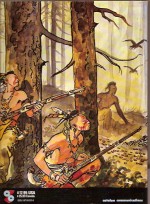
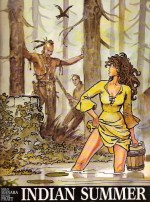
Indian Summer


By Milo Manara & Hugo Pratt, translated by Jeff Lisle (Catalan Communications)
ISBN: 0-87416-030-2-8

Hugo Eugenio Pratt (June 15th 1927 – August 20th 1995) was one of the world’s paramount comics creators, and his inventions since ‘Ace of Spades’ (whilst still a student at the Venice Academy of Fine Arts) in 1945 were both many and varied. His most famous character, based in large part on his own exotic early life, is the mercurial soldier - perhaps sailor would be more accurate – of fortune, Corto Maltese.

After working in both Argentinean and English comics for years Pratt returned to Italy in the 1960s. In 1967 he produced a number of series for the monthly comic Sgt. Kirk. In addition to the Western lead character, he created a pirate strip Capitan Cormorand, the detective strip Lucky Star O’Hara, and a moody South Seas adventure called Una Ballata del Mare Salato (A Ballad of the Salty Sea). The magazine folded in 1970, but Pratt took one of Ballata‘s characters to the French weekly, Pif, before eventually settling into the legendary Belgian comic Tintin. Corto Maltese proved as much a Wild Rover in reality as in his historic and eventful career.

However a storyteller of such vast capabilities as Pratt was ever-restless, and as well as writing and illustrating his own tales he has written for other giants of the industry. In 1983 he crafted a steamy tale of sexual tension and social prejudice set in the New England colonies in the days before the Salem Witch Trials.

Tutto ricominciò con un’estate Indiana (released and known as Indian Summer – although a more appropriate and illustrative translation would be “All things begin again with an Indian Summer”) was brought to stunning pictorial life by fellow Italian graphic raconteur Milo Manara.

Maurilio Manara (born September 12th 1945) is best known for his wry, controversial erotica – but that’s more an indicator of the English-speaking comics market than any artistic obsession; an intellectual, whimsical craftsman with a dazzling array of artistic skills ranging from architecture, product design, painting and of course an elegant, refined, clear-clean line style with pen and ink.

He studied painting and architecture before becoming a comic artist in 1969, beginning with the Fumetti Neri series Genius, worked on the magazine Terror and in 1971 began his erotic career illustrating Francisco Rubino’s Jolanda de Almaviva. In 1975 his first major work Lo Scimmiotto (‘The Ape‘ – a reworking of the Chinese tales of the Monkey King) was released.

By the end of the decade he was working for the Franco-Belgian markets where he is still regarded as a first-rank creator. It was while working for Charlie Mensuel, Pilote and L’Écho des savanes that he created his signature series HP and Giuseppe Bergman – which saw print in A Suivre. The “HP” of the title is his good friend Hugo Pratt…

New England in the 17th century: the Puritan village of New Canaan slowly grows in placid, if uneasy, co-existence with the natives who have fished and hunted these coastal regions for centuries. When young Shevah Black is raped by two young Indians, outcast Abner Lewis kills them both. Taking the “ruined” girl back to his mother’s cottage in the woods the girl meets the entire family – mother Abigail, siblings Jeremiah, Elijah and Phyllis – a whole brood of damned sinners banished by her uncle the Reverend Pilgrim Black.

The mother was once a servant in the Black household, but has lived in the woods for twenty years, ever since Pilgrim Black’s father raped her. When Abigail fell pregnant she was cast out for her sin. Her face bears a sinner’s brand. Aided by the Indians the mother built a cabin, and over the years had three further children. Her progeny are all wild creatures of nature; healthy, vital and with many close ties both to the natives (from choice) and the truly decadent Black family (by sordid, unwelcome history).

Now blood has spilled and passions are roused: none of those ties can prevent a bloodbath, and as the day progresses many dark secrets come to light as the intolerance, hypocrisy and raw, thwarted lust of the upstanding Christians leads to an inexorable clash with the Indians – by far the most sensible and decent individuals in the place – with the pitifully isolated, ostracized and alienated Lewis clan stuck in middle and betrayed by both…

Beautiful, disturbing and utterly compelling, this thoroughly adult examination of sexual tension, attitudinal eugenics and destructive, tragic love is played out against the seductive heat and primitive glories of a natural, plentiful paradise which only needs its residents to act more like beasts and less like humans to achieve a perfect tranquility. Sadly, every Eden has serpents and here there are three: religion, custom and pride…

Pratt’s passion for historical research is displayed by the graphic afterword in which he not only cites his extensive sources – including a link to Nathaniel Hawthorne’s classic novel The Scarlet Letter – but adds some fascinating insights and speculations on the fates of the survivors of New Canaan massacre…

Although there is a 1994 NBM edition readily available I’m reviewing from my 1986 Catalan copy principally because I own that one, but also because the Catalan copy has a magnificent four-page foldout watercolour cover (which I couldn’t fit onto my scanner no matter how I tried) and some pretty amazing sketches and watercolour studies gracing Javier Coma’s insightful introduction.

This is a classic tale of humanity frailty, haunting, dark and startlingly lovely. Whatever version you find, you must read this superb story.
© 1986 Milo Manara & Hugo Pratt. English language edition © 1986 Catalan Communications. All Rights Reserved.

Vatican Hustle


By Greg Houston (NBM)
ISBN: 978-1-56163-571-9

The zeitgeist of the moment seems to be nostalgia, and especially a post-modern re-examination of some of our most unfortunate cultural milestones, but at least the graphic novels that are coming out of these historic plunderings are varied and readable if not universally palatable…

Another sparkling example of the phenomenon is the potentially controversial little gem under review here from cartoonist, caricaturist, designer, educator, actor and big fan of old movies Greg Houston.

This baroque, grotesque and immensely appealing pastiche of Blaxploitation movies and the no-nonsense, in your face attitudes of the early 1970s introduces Baltimore’s coolest private eye Boss Karate Black Guy Jones, who is reluctantly commissioned by Lumpy Fargo, the city’s biggest crime boss, to rescue his wayward, dim daughter from the sticky clutches of Geech Bradford, the White Pimp…

The sordid trail leads inevitably to Rome, porn capital of the world, and, after a brief brush with the legitimate, inclusive end of skin-flicks, directly to the Vatican, long perceived among industry insiders as the source of all the really nasty freaky stuff…

Meanwhile the Pope is getting horny and anxious. Chickee Falzbar his official drug dealer and wingman is late, and the brutish, two-fisted, leather-jacketed Pontiff is looking to score some tail, kick some butt and raise a little Hell. There’s a ba-aad hassle coming and Jones is gonna need all his skills to rescue Brandi Fargo from the callous hands of God’s chosen representative on Earth…

Beneath the outrageous parody and shockingly impious (nigh slanderous) treatment of Catholic tenets and icons is a witty mystery and genuinely funny adult romp which pokes bad-tasting fun at everything from Lepers to Clowns to Hobos, college girls, the sex trade and even rock ‘n’ roll, all rendered in a busy, buzzy, black and white line that appeals and appals in equal amounts.

If you’re of a religious mien and likely to take offence at religion mocked don’t buy this book.

If you are a fan of frantic fisticuffs of fury and martial arts mayhem this ain’t the book for you neither as there practically isn’t none, but if you’re eligible to vote, open (and broad) minded, can whistle the theme to Shaft and love to laugh, this might just be your favourite book of the year…

© 2009 Greg Houston. All rights reserved.

Sand & Fury – a Scream Queen Adventure


By Ho Che Anderson (Fantagraphics Books)
ISBN: 978-1-60699-321-7

After the groundbreaking graphic journalism of his examination of Martin Luther King (see King – a Comic Biography: the Special Edition) Ho Che Anderson has turned his talents to pure fiction in a startling and visceral re-interpretation of the legend of the banshee (or Bien Sidhe) transplanted to the cold nights and inhospitable deserts of the American west.

Against a backdrop of a serial killer stalking the area a stranded young woman is picked up by a striking woman in a fancy car. Despite her misgivings the girl soon warms to her rescuer, sharing her life and dreams. She has no idea that her life will soon end.

Whilst seeking answers to her own obscured past the driver instinctively knows she is an Angel of Death drawn to the side of people soon to die. Is she a cursed witness or somehow the facilitator? As she discovers some truths in rapid, slashes of flashbacks and jumps forward she zeroes in on the killer: someone she knew intimately.

However, when she meets another of her kind the secrets revealed only lead to a greater mystery; one infinite in scope and terrifyingly ancient in execution…

Citing Dario Argento, David Lynch, Richard Sala and Charles Burns as inspiration and with hints and overtones of Trashy Road Movies, Celtic mythology, the cosmology of H.P. Lovecraft and the modern bogeyman of Serial Killers this is a scary, sexy, gory story that heeds your full attention but delivers a devastating punch. Anderson is as much designer as illustrator and both his art and his stories are stark, powerfully arresting, even challenging concoctions.

The art, jagged black and white with judicious doses of red, isn’t prettied up and the narrative isn’t spoon fed. The reader will have to work to glean the meaning here, but the end result is more than worth the effort.

Sand & Fury © 2010 Fantagraphics Books. All content © 2010 Ho Che Anderson. All rights reserved.

Unlovable volume 2


By Esther Pearl Watson (Fantagraphics Books)
ISBN: 978-1-60699-314-9

This arrived cold: I had never heard of the strip nor the magazine Bust where it has run for years, but as I’m always up for something new I sat down and lost myself in the world of Tammy Pierce, Texas Teen…

Ostensibly based on an actual diary the artist found in a gas-station restroom in 1995, this concluding volume resumes with the innermost thoughts, dreams and experiences of a dumpy, utterly ordinary girl surgically displayed for our examination in a catchy, breathless, effusive warts ‘n’ all style as she endures her Sophomore year of High School, from Christmas Eve 1988 to the Summer of 1989.

When you’re a teenager some things are truly timeless and universal: parents are unreasonable and embarrassing, siblings are scum and embarrassing and your body is embarrassingly finding new and horrifying ways to betray you almost daily… Your friends can’t be trusted, you’re attracted to all the wrong people and sometimes you just know that no one will ever love you…

Drawn in a two colour, faux-grotesque manner (you can call it intentionally primitive and ugly if you want) the page by page snapshots of a social hurricane building to disaster is absolutely captivating. Although this is a retro-comedy experience, behind her fatuous obsession with fashion, boys, music (equal parts Debbie Gibson and The Smiths!), social acceptance and traitorous bodily functions, Tammy is a lonely bewildered child that it’s hard not to feel sorry for. Actually it’s equally hard to like her (hell, its difficult to curb the urge to slap her at times) but that’s the point after all…

If you live long enough you’ll experience the pop culture keystones of every definitive era of your life at least twice more. The base, tasteless and utterly superficial aspects of the 1980s are currently in vogue for the current generation, which is too young to remember them – but you and I can get all nostalgic for the good bits and blithely ignore all the bad stuff: this big little hardback (408 pages, and about 15x15cm) is a delightful and genuinely moving exploration of something eternal given extra punch with the trappings of that era of tasteless self-absorption.

Like those other imaginary diarists Nigel Molesworth, Bridget Jones and Adrian Mole Tammy Pierce’s ruminations and recordings have something concrete to contribute to the Wisdom of the Ages and this book is humorous delight tinged with gentle tragedy – although that’s more in the readers apprehension of how her life eventually turned out…

Modern and Post-Ironic, Unlovable is unmissable.  Now please excuse me, I’ve got to put on my legs warmers and chunky sweater and hunt down a copy of volume 1…

© 2010 Esther Pearl Watson. All rights reserved.

Joe and Azat


By Jesse Lonergan (NBM/ComicsLit)
ISBN: 978-1-56163-570-2

Here’s a wonderful little waste of time: cartoonist Jesse Lonergan drew upon his youthful experiences as an American Peace Corps volunteer in the nation of Turkmenistan in the days after the fall of the Berlin Wall when the Soviet collapse released many countries from seventy years of iron repression…

Granted autonomy and self-rule virtually overnight, a lot of Warsaw Pact countries didn’t fare well with instant democracy and Free Market Capitalism. In Turkmenistan, their new leader Turkmenbashy (with 99½ % of the vote because “everybody likes him”) was a real pip, renaming the days of the week after himself and using the nation’s entire budget to send a book of his poetry into space. In a pitifully arid country, he built a river through his capital city – because all great cities have rivers running through them. Images of the ruthless potentate are everywhere: it’s a shame nobody ever found oil in the country…

This is a charmingly subtle tale of culture shock and national misapprehensions as young Joe grapples with the outrageous differences between his liberal and wealthy homeland and the rules, laws and ingrained prejudices of a newly liberated society.

Nervous and alone the Yankee lad slowly finds a friend in the astonishingly upbeat and forward looking Azat: an ambitious convert and zealot for “The American Way”, although most of Joe’s time is spent futilely apologising and explaining that what that actually means is as far removed from the US Movies Azat is addicted to as the decades of Russian propaganda he grew up with.

Becoming almost part of the family (as complex and dysfunctional as any western one) he is caught in the tidal wave of Azat’s enthusiastic aspirations and daily frustrations, but never seems able or willing to staunch or crush them, even though he knows how hopeless they ultimately are…

Poignant, bittersweet, with an end but no conclusion, this is a superbly understated dissertation on the responsibilities and power of friendship, the poison of unattainable dreams and the unthinking cruelty of cultural imperialism, illustrated in a magically simplistic and irresistibly beguiling manner: a delight for any fan searching for more than simple jokes and action. Reading this would actually be time very well spent…

© 2009 Jesse Lonergan. All rights reserved.

The Year of Loving Dangerously


By Ted Rall & Pablo G. Callejo (NBM/ComicsLit)
ISBN: 978-1-56163-565-8

If you live long enough you’ll experience the pop culture keystones of every definitive era of your life at least twice more. The base, tasteless and utterly superficial aspects of the 1980s are currently doing the rounds again as the current generation – which was too young to remember them – get all nostalgic for the good bits and blithely ignore all the bad stuff: same as it ever was…

…Except for Ted Rall. The contemporary essayist and American political cartoonist, like everybody who was actually there, also recalls the decade that most tellingly shaped his life and has now written a largely autobiographical graphic novel memoir for rising comics star Pablo G. Callejo to beautifully illustrate.

For us Brits it was Union-Bashing, loads-a-money, poverty, excess, daft hair and Thatcher, whilst America endured trickle-down Reaganomics, insider dealing, covert warfare and poodle rock – so nobody really got off lightly either side of the pond…

In 1984, through a series of concatenating disasters and no fault of his own (well, not too much) college student Ted Rall was expelled from Columbia University, lost his apartment and was dumped onto the streets of New York with only a couple of dollars in his pocket.

Homeless and desperate in a land with no safety-net (not much different from Britain in the 80’s, in all honesty) he faced a short, bleak future, with very few options, the best of which was jumping off the dormitory building roof…

His happy salvation came as he sat in a diner. Accidentally picking up a young woman he spent a night at her pad and discovered a new career. For nearly a year he bounced from pick-up to assignation to one-night-stand, not for cash but only bed and board.

This book follows his narrowest of escapes from poverty, addiction, sexual infection and extreme loss of self-respect as, with the dubious aid of the luckiest dope-fiend in the city, Ted claws his way back to semi-respectability and security (as a stock market trader!) by means he clearly still doesn’t quite understand decades later.

What ought to be a salutary parable about the wages of sin is actually a sincere, sensitive and immensely humane tale of triumph over adversity, free from bragging, tawdry prurience or sordid machismo and truly funny in a heartwarming manner. Rall the student gigolo is a charming, if hapless, protagonist and the non-judgemental treatment of casual sex is wonderfully refreshing, as is the good hard look at the heart and soul rather than the surface veneer of the decade.

Not a book for everybody, but rational adults with an eye to an endearing human drama will love it.

© 2009 Ted Rall & Pablo G. Callejo. All rights reserved.