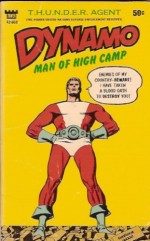
Dynamo


By Wally Wood & various (Tower Books)
ISBN: 42-660

I’ve often harped on about the mini-revolution in the “Camp-superhero” crazed 1960s that saw four-colour comicbook classics migrate briefly from flimsy pamphlet to the stiffened covers and relative respectability of the paperback bookshelves, and the nostalgic wonderments these mostly forgotten fancies still afford (to me at least), but here’s one that I picked up years later as a marginally mature grown man.

Although the double-sized colour comicbooks T.H.U.N.D.E.R. Agents, its spin-offs Undersea Agent, Dynamo, NoMan and the magnificent war-comic Fight the Enemy were all distributed in Britain (but not, I believe comedy title Tippy Teen) these monochrome, resized book editions, to the best of my knowledge, were not.

It doesn’t matter: to my delight, it seems that even today the format and not the glow of childhood days recalled is enough to spark that frisson of proprietary glee that apparently only comic fans (and Toy collectors) are preciously prone to.

Of course it doesn’t hurt when the material is as magnificent as this…

The history of Wally Wood’s immortal spies-in-tights masterpiece is convoluted, and once the mayfly-like lifetime of the Tower Comics line ended, not especially pretty as the material and rights bogged down in legal wrangling and petty back-biting, but that doesn’t diminish the fact that the far-too brief careers of The Higher United Nations Defense Enforcement Reserves was a benchmark of quality and sheer bravura fun for fans of both the reawakening superhero genre and the 1960s spy-chic obsession. Their sheer imaginative longevity is attested to by the fact that they’re back again now, courtesy of that Costumed Cut-ups Clearing House, DC Comics…

In the early 1960s the Bond movie franchise went from strength to strength, with action and glamour utterly transforming the formerly understated espionage vehicle. The buzz was infectious: soon Men like Flint and Matt Helm were carving out their own piece of the action as television shanghaied the entire bandwagon with the irresistible Man From U.N.C.L.E. (beginning in September 1964), bringing the whole genre inescapably into living rooms across the world.

Creative maverick Wally Wood was approached by veteran MLJ/Archie Comics editor Harry Shorten to create a line of characters for a new distribution-chain funded publishing outfit – Tower Comics. He, in turn called on many of the industry’s biggest names to produce material for the broad range of genres the company envisioned: Samm Schwartz and Dan DeCarlo handled Tippy Teen – which outlasted all the others – whilst Wood, Larry Ivie, Len Brown, Bill Pearson, Steve Skeates, Dan Adkins, Russ Jones, Gil Kane and Ralph Reese all contributed to the adventure series.

With a ravenous public appetite for super-spies and costumed heroes exponentially growing the idea of blending the two concepts seems a no-brainer now, but those were far more conservative times, so when T.H.U.N.D.E.R. Agents #1 appeared with no fanfare or pre-publicity on newsstands in August 1965 (with a cover off-sale date of November) thrill-hungry readers like little me were blown away. It didn’t hurt either that all Tower titles were in the beloved-but-rarely-seen 80 Page Giant format: there was a huge amount to read in every issue!

All that being said the strips would not be so revered if they hadn’t been so superbly crafted. As well as Wood, the art accompanying the compelling and generally mature stories was by some of the greatest talents in the business: Reed Crandall, Gil Kane, George Tuska, Mike Sekowsky, Dick Ayers, Joe Orlando, Frank Giacoia, John Giunta, Steve Ditko and others.

This slim, seductive digest stars the UN Agency’s Ace troubleshooter and all-round Ordinary Guy Len Brown in five staggering spy thrillers featuring a winning combination of cloak-and-dagger danger, science fiction shocks and stirring super-heroics which also includes the origins of aforementioned fellow operatives NoMan and Menthor.

It all starts with a simple fast-paced introductory tale ‘First Encounter’ by Ivie & Wood, wherein UN commandos failed to save brilliant scientist Professor Emil Jennings from the attack of the mysterious Warlord, but at least rescued some of his greatest inventions, including a belt that increases the wearer’s density until the body becomes as hard as steel, an invisibility cloak and an enigmatic brain-amplifier helmet.

For security purposes these prototype weapons were divided between several agents to create a unit of superior fighting men and counter the increasingly bold attacks of global terror threats.

First chosen was affable file-clerk Len Brown who was, to everyone’s surprise, assigned the belt and the codename Dynamo in a delightfully light-hearted adventure ‘Menace of the Iron Fog’ (written by Len Brown, who had no idea illustrator/editor Wood had prankishly changed the hero’s civilian name as a last-minute gag) which gloriously depicted every kid’s dream as the not-so-smart nice guy got the irresistible power to smash stuff. This cathartic fun-fest also introduced Iron Maiden, a sultry villainess clad in figure-hugging steel who was the probable puberty trigger for an entire generation…

‘T.H.U.N.D.E.R. Agent NoMan Battles the Spawns of the Devil’ follows: the eerie saga of aged Dr. Anthony Dunn who chose to have his mind transferred into an android body, then equipped with the invisibility cape. The author is unknown but the incredible Reed Crandall (with supplemental Wood inks) drew this breathtaking rollercoaster adventure which also found time and space to include a captivating clash with sinister mastermind Demo and his sultry associate Satana who had unleashed a wave of bestial sub-men on a modern metropolis. NoMan had one final advantage: if his artificial body was destroyed his consciousness could transfer to another android body. As long as he had a spare ready, he could never die…

The third agent was chosen in ‘The Enemy Within’ (also with no script credit and illustrated by Gil Kane, Mike Esposito and George Tuska). However here the creators stepped well outside comic-book conventions: John Janus was the perfect UN employee – a mental and physical marvel who easily passed all the necessary tests and was selected to wear the Jennings helmet. Sadly, he was also a deep-cover mole for the Warlord, poised to betray T.H.U.N.D.E.R. at the earliest opportunity…

All plans went awry once he donned the helmet and became Menthor. The device awakened the potential of his mind, granting him telepathy, telekinesis and mid-reading powers – and also drove the capacity for evil from his mind whilst he wore it. When the warlord attacked with a small army and a giant monster, Menthor was compelled by his own costume to defeat the assault. What a dilemma for a traitor to be in…

All the tales in this diminutive paperback gem were taken from the first comicbook issue of T.H.U.N.D.E.R. Agents and although some features were left out, the spectacular old-fashioned team-up of the disparate forces of the Agency, assembled to rescue their prime agent who was ‘At the Mercy of the Iron Maiden’ (by Brown, Wood & Dan Adkins) remains, a magnificent battle blockbuster that still takes the breath away, even resized reformatted and in black and white.

To be honest the sheer artist quality of the creators is actually enhanced by removing the often hit-or-miss colour of 1960s comics, and these truly timeless tales only improve with every reading – and there’s precious few things you can say that about…
© 1965, 1966 Tower Comics, Inc. All rights reserved.

Merry Christmas, Boys and Girls!

In keeping with my own self-created Christmas tradition here’s another selection of British Annuals that contributed to making me what I am today, selected not just for nostalgia’s sake but because they are still eminently palatable and worthy of your attention, even under here in the disconcertingly futurist 21st Century.

After decades when only American comics and nostalgia items were considered collectable, recent years have seen a resurgence of interest in home grown product. If you’re lucky enough to stumble across a vintage volume, I hope my words can convince you to acquire it. However, if I can also create a groundswell of publishers’ attention, maybe a lot of magical material out there in print limbo will resurface in affordable new collections…

Great writing and art is rotting in boxes and attics or the archives of publishing houses, when it needs to be back in the hands of readers once again. On one level the tastes of the public have never been more catholic than today and a sampling of our popular heritage will always appeal to some part of the mass consumer base. Let’s make copyright owners aware that there’s money to be made from these slices of our childhood. You start the petition… I’ll certainly sign it.

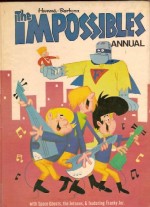
Hanna-Barbera’s The Impossibles Annual

By various (Atlas Publishing & Distributing Co.)
No ISBN

British Comics have always fed from other media and as television grew during the 1960s – especially the area of children’s shows and cartoons – those programmes increasingly became a staple source for the Seasonal Annual market. There would be a profusion of stories and strips targeting not readers but young viewers and more and more often the stars would be American not British.

Much of this stuff wouldn’t even be as popular in the USA as here, so whatever comic licenses existed usually didn’t provide enough material to fill a hardback volume ranging anywhere from 64 to 160 pages. Thus many Annuals such as Champion the Wonder Horse or Lone Ranger and a host of others would require original material or as a last resort, similarly themed or related strips. The Impossibles Annual was one of these and used both solutions…

Frankenstein, Jr. and the Impossibles debuted in America in Fall 1966, an early entry in Hanna-Barbera’s line of spoof superheroes cartoons (preceded by Atom Ant and followed by the likes of Captain Caveman and Hong Kong Phooey) and led to a string of straight adventures heroes like Birdman, Johnny Quest and the magnificent Alex Toth-designed Space Ghost.

Frankenstein Jr. was an affable giant robot built by the rather recondite Professor Conroy who went crimefighting with his builder’s spunky son Buzz, whilst The Impossibles were a trio of superheroes who travelled the world defeating evil at the behest of their mysterious handler “Big D”. Their cover was a pop group of the same name, and, since television and comics producers love to hedge their bets, Multi Man Fluid Man and Coil Man bore a more than coincidental resemblance to a certain band from Liverpool who were currently taking the world by storm…

The show ran for two seasons, but Hanna-Barbera’s comicbook connection Gold Key only ever released one issue of Frankenstein Jr. (which included an Impossibles back-up) and the contents of that are all included here, so the British publisher found themselves having to reprint other H-B adaptations as well as paying for new material – in the traditional form of text stories and features.

With typical British eccentricity the B-feature got top billing here so the titular stars don’t actually appear too often in this 64 page nostalgia goldmine, which opens with just such an illustrated prose story (sadly uncredited and anonymous). ‘The Impossibles Cure a Doctor’ is an impressively clever duel with a mad scientist, promptly followed by a Gold Key strip ‘The Impossibles vs. The Mirror-Man’ (probably drawn by unsung genius of cartoon comics Pete Alvarado – but I’m only guessing).

Next up is the first associative fill-in; one of two rewritten strips featuring future family The Jetsons. ‘Auto-Pappy’ (and the subsequent ‘How to Mine a Moon!’ might actually be The Rogue Robot and The Wild Moon Chase from #22 of their own Gold Key comic series, but again I’m positing not positive), after which Big Franky and little Buzz tackled ‘The Image Invasion’.

Next up is a stunning show-stealer from artist Dan Spiegle whose Space Ghost thriller ‘Zorak’s Revenge’ blew my mind over forty years ago and still does the business now. It originally appeared in a one-shot from Christmas of 1966 (cover-dated March 1967, because that’s the way the Americans did things). The all-out action against aliens and monsters is followed by another comedy romp when ‘Frankenstein Jr. Meets the Flea Man’ and that aforementioned Jetsons retread, after which a crossword featuring those fabulous future folks gives us all pause for thought.

The Impossibles Annual ends as it began with another prose piece, but one starring Franky and the boy Buzz as they faced ‘A Spook in his Wheel.’

A lost bauble probably only recalled by increasingly doddery dotards, this book is packed with solid family entertainment from simpler times – and possibly created for simpler kids – but I’d love to be proved wrong..

All other material ™ and © 1968 Hanna Barbera Productions Inc. The Jetsons ™ 1968 Screen Gems, Inc. All rights reserved.

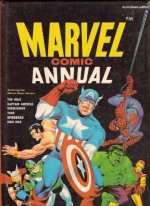
Marvel Comic Annual 1969

By various (World Distributors, Ltd.)
No ISBN

When Stan Lee rejuvenated the American comic-book industry in the early 1960s, his biggest advantage wasn’t the small but superb talent pool available, but rather a canny sense of marketing and promotion. DC, Dell/Gold Key and Charlton all had limited overseas licenses (usually in dedicated black-and-white anthologies liked the much beloved Alan Class Comics such as Suspense) but Lee – or his business managers – went further, sanctioning Marvel’s revolutionary early efforts in regular British weeklies like Pow!, Wham!, Smash! and even the venerable Eagle.

There were two wholly Marvel-ised papers, Fantastic! and Terrific! which ran from 1967 to 1968. These slick format comics featured a number of key Marvel properties, and, appearing every seven days, soon exhausted the back catalogue of the company.

After years of being a guest in other publications Marvel finally secured their own UK Annuals through the publishing arm of World Distributors and this sparkling collection is one of the very best. Completely gone are the text pieces, quizzes and game pages that filled out British Christmas books, replaced with cover-to-cover superhero action produced by the emergent House of Ideas at the very peak of their creative powers and even includes a few almost Golden Age classics. Moreover it’s in full colour throughout – almost unheard of at the time.

A closer look by Marvel scholars would ascertain that all of the strips published here were actually taken from the wonderful 25¢ giants (Marvel Tales, Marvel Collectors Item Classics and Marvel Superheroes) released during the previous year, perfectly portioned out to fit into a book intended for a primarily new and young audience.

Behind the delightful painted cover the enchantment commences with a John Romita drawn Captain America tale from 1954, as the Sentinel of Liberty and Bucky lay waste to a scurvy gang of Red Chinese dope smugglers in ‘Cargo of Death’, promptly followed by a spectacular Thor saga from Lee, Jack Kirby & Chic Stone as the Thunder God tackled ‘The Cobra and Mr. Hyde’ complete with cameo from the mighty Avengers.

The first of two Hulk shorts comes next, another commie-busting classic with science fiction overtones Lee, Kirby & Dick Ayers’s ‘The Gladiator from Outer Space’ is a terrific all-action mini-blockbuster, perfectly complimented by the superbly Lee & Steve Ditko sinister crime Shocker wherein Spider-Man finds himself trapped between ‘The Goblin and the Gangsters!’

Unsung genius Bill Everett provided two superb Sub-Mariner tales, both from the fabulous 1950s, and the secret origin saga ‘Wings on his Feet’ is the first and undeniable best of these, his magical line-work wonderfully enhanced by the bold colour palette and crisp heavy white paper of this comfortingly sturdy tome.

He is followed by a masterful clash of titans as ‘Iron Man Faces Hawkeye the Marksman’ by Lee & Don Heck, before ‘The Hulk Triumphant’ (concluding chapter of the very first appearance wherein the Green Goliath ended the menace of Soviet mutation The Gargoyle) and this Annual ends with an enthralling Everett Sub-Mariner epic as the Prince of Atlantis defeated mad scientists and monsters ‘On a Mission of Vengeance!’

These oft-reprinted tales have never looked better than on the 96 reassuringly solid pages here: bold heroes and dastardly villains running riot and forever changing the sensibilities of a staid nation’s unsuspecting children. Magic, utterly Marvellous Magic!
© 1969 Perfect Film & Chemical Corporation, Marvel Comics Group. All rights reserved.

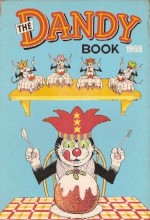
The Dandy Book 1968


By various (D.C. Thomson & Co.)
No ISBN

For many British fans Christmas means The Beano Book (although Scots worldwide have a pretty fair claim that the season belongs to them with collections of The Broons and Oor Wullie making every December 25th magical) but I’ve done one of those so this year I’m concentrating on a another Thomson cracker that made me the man wot I am. As usual my knowledge of the creators involved is woefully inadequate but I’m going to hazard a few guesses in the hope that someone with better knowledge will correct me when I err.

The Dandy comic actually predated the Beano by eight months, completely revolutionising the way children’s publications looked and most importantly how they were read. Over the decades it too produced a bevy of household names that delighted generations and the end of year celebrations were bumper bonanzas of the comic’s weekly stars in brief and extended stories.

The action here begins on the inside front cover as seminal star Korky the Cat (by Charles Grigg?) got the ball rolling – wrapped up the show at the end – before unique cowboy superman Desperate Dan suffers a prank from his equally rambunctious nephew and niece which literally brings the house down and hard-pressed squaddie Corporal Clott (by Dennis the Menace originator Davy Law or possibly his successor David Sutherland) finds guard duty in the snow a little chilly, taking ludicrous steps to warm up. He was equally ill-considered in his other two appearances this year…

D.C. Thomson were extremely adept at combining anarchic, clownish comedy with solid fantasy adventure tales such as ‘The Island of Monsters’ (illustrated by Paddy Brennan or perhaps Ron Smith) a thrilling castaway yarn as two boys find themselves marooned on a tropical paradise where all the animals suddenly grow to incredible size. He/they might also be the artist on the other science fiction thriller in this volume. ‘Captain Whoosh’ was a jet-pack wearing thief constantly foiled by plucky paperboy Terry Ball who here foils the rocket rogue’s attempts to plunder Moortown’s extremely well-stocked Art Gallery and museum. These picture thrillers usually came in the old-fashioned captioned format, with blocks of typeset text rather than lettered word balloons.

These annuals were traditionally produced in the wonderful “half-colour” that many British publishers used to keep costs down whilst bringing a little spark into our drab and gloomy young lives. This was done by printing sections of the books with two plates, such as blue/Cyan and red/Magenta: The versatility and palette range this provided was astounding. Even now this technique screams “Holidays” to me and my contemporaries, and this volume uses the technique to stunning effect.

The Smasher was a lad from the same mould as Dennis the Menace and in the four episodes here (by Hugh Morren) he carves a characteristic swathe of anarchic destruction, whilst a great deal of material was based on school as seen by both teachers and pupils. ‘Greedy Pigg’ (by George Martin), featured a voracious teacher always attempting to confiscate and scoff his pupils snacks. He fails miserably three times in this book… After a giant rebus crossword quiz by Eric Roberts (or perhaps Tom Williams), Dan returns only to fall foul of tomato growers, whilst Korky accidentally talks himself into a duel and ends up soundly thrashed. The immortal cat fares far better in his spats with be-kilted Highland strongmen, a beach inspector and in an angling competition but comes painfully second to boxing organisers when he tries to view without paying…

There’s one more extra-long Desperate Dan tale (wherein he paints the town red, but not in a good or gentle way) at the end of the book, but before then the magnificent Eric Roberts does double-duty this year with five strips starring perennial bath-dodger Dirty Dick and an extended seasonal saga of Boarding School bright-spark Winker Watson, and still found time and energy to illustrate five giant puzzle-spreads, whilst the inevitable outcomes of the four clashes between Bully Beef and Chips (drawn by Jimmy Hughes) invariably found the underdog’s brain always trumps brutal brawn.

This book is not short on drama or comedy adventure either. ‘Spunky and his Spider’ is the delightful rustic tale of an affable, truanting kid and his devoted, amiable apple-loving, giant antediluvian arachnid by the fabulous Bill Holroyd, who also crafted a hilarious school Christmas party romp starring schoolboy Charley Brand and his robotic pal ‘Brassneck’ and a cheeky sci fi giggle-fest starring alien visitor ‘Super Sam’ and his humongous minder Big Boris on a fact-finding mission to a town near you… As with the thrillers these yarns also came typeset, allowing more of the fabulous artwork to shine through.

‘Randall’s Vandals’, by an artist I don’t recognise, is the story of a canny gamekeeper’s son seeing off a bunch of rowdy big city poachers and everybody’s favourite sheepdog Black Bob tugs at the heartstrings in the book’s only prose story as a wilful lad playing with fireworks renders the legendary Border Collie a (temporarily) ‘Blind Bob!‘ The beautiful illustrations are, as ever, by the great Jack Prout.

Stuffed with activity and gag-pages, and bursting with classic kid’s comedy and adventure this is a tremendously fun book, and even in the absence of the legendary creators such as Dudley Watkins, Leo Baxendale and Ken Reid, there’s still so much merriment on offer I can’t believe this book is over four decades old. If ever anything needed to be issued as commemorative collections it’s such D.C. Thomson annuals as this…

© 1968 D.C. Thomson & Co., Ltd. All rights reserved.

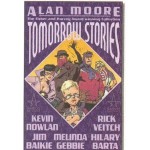
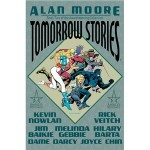
Tomorrow Stories Books 1 & 2


By Alan Moore & various (America’s Best Comics)

ISBN: 978-1-56389-985-0 and 978-1-4012-0166-1

Alan Moore revolutionised American Comics with a series of stunningly well-crafted series and shorter stories featuring characters created by others and in the late 1990s began working for Jim Lee’s Wildstorm outfit. Initially writing for the imprint’s reductive and post-modern line of superheroes (see Alan Moore’s Complete WildC.A.T.s and Alan Moore: Wild Worlds) he gradually began constructing his own universe, loosely based on a number of perennial concepts, genre archetypes and the visual likenesses of some Golden-Age characters long unused – and unclaimed – by copyright farmers…

In 1999 he deftly injected some fun back into a medium plagued and overwhelmed by grim tales of assorted vengeances and mind-numbing violence. The stories also found room to intellectually challenge as well as play with the readership. Moore and a selection of his very talented friends employed all the vast benefits of a shared continuity without getting bogged down in histrionics and shallow bombast, producing a line of clever, witty, beautifully illustrated adventures aimed at those adults grown from the Baby-boomers who had fed the Silver-Age comics revolution and only to be somehow deprived of their fundamental fascination by an industry increasingly devoted to fads and short-term profits.

The most perfect example of this erudite graphic philosophy was undoubtedly Tomorrow Stories, a series designed as a themed anthology title and the greater part of which has been collected in two splendidly whacky volumes of action, suspense, adventure, mystery and imagination.

Volume one, fully scripted throughout by Moore, led with the introduction of Jack B. Quick – Boy Inventor illustrated by the incredibly talented Kevin Nowlan who introduced a junior Edison in ‘Smalltown Stardom.’ The juvenile super-genius, resident on a farm in rural Queerwater Creek, rashly created a miniature sun in the back pasture and had to deal with the diminutive solar system that develops – causing traffic chaos and concomitant conniptions amongst the townsfolk and livestock…

Blending cutting edge science with wondrous surreality this feature always concealed an uplifting laugh amongst its conceptually challenging wonders…

Rick Veitch illustrated Greyshirt (a fulsome tribute to Will Eisner’s urbane detective the Spirit) and the feature began here with ‘Amnesia’ a tale of stylish murder whilst Jim Baikie slipped comfortably into broad parody and biting satire with the patriotic wonders The First American and U.S.Angel; battling Nazis, aliens and daytime television audiences in ‘Dumbsday!’

The first issue closed with ‘The Cobweb’ an exotic pastiche of such (scantily) costumed Golden-Age mystery women as Phantom Lady and Tarpe Mills’ Miss Fury in a plethora of artistic styles provided by Melinda Gebbie. This crusading feminist Lady of the Night starred in a thought-provokingly whimsical yet sinister tale of scandalous delights and forbidden horrors wherein the Amorous Avenger battled a mad scientist who literally turned women into toys and playthings…

Issue #2 opened with Greyshirt in a visually arresting generational yarn of four stories in a building’s life. ‘How Things Work Out’ (illustrated by Veitch) played with Time, Space and vertical altitude to define how crime affects people over the course of decades whilst physics got another well-honed kicking from Jack B. Quick in ‘The Unbearableness of Being Light’ as the brainy boy determined that photons in Queerwater had been over-imbibing intoxicants…

It was ‘Waltztime’ for Cobweb when she encountered dancing alien phantoms in the asteroid belt whilst the First American crushed a backwards-looking felon wielding a deadly Nostalgitator in ‘The Curse of the Reverse!’ to close the proceedings.

Quick’s ‘Pet Theory’ is a triumph of bad-taste: an animal-testing black comedy that tips a cocky hat to Orwell’s Animal Farm; the ever experimental Moore & Gebbie pulled off an illustrated prose thriller-tragedy in the Cobweb fragment ‘Eurydice: A Retrospective’ and First American took a painful look at youth culture and juvenile crime in ‘The Peril of the Pediatric Perpetrators’ before the smoke-coloured man of mystery once more stole the show in ‘The Making of Greyshirt’: a different kind of origin from Moore & Veitch.

The President Clinton/Ken Starr clash got a jovial shout-out in #4’s First American micro-saga as ‘The Bitter Crumbs of Defeat!?!’ almost saw the Patriotic Poltroon investigated and legislated out of business whilst ‘Li’l Cobweb’ married the innocent charms of childhood with a more sordid look at modern relationships and ‘Tempus Fugitive’ pitted Greyshirt against a conceptually inept time-bandit, after which Jack B. Quick hilariously, confoundingly also got the chronal itch as he underwent ‘A Quick Geography of Time’.

Musical explorer ‘Dr. Crescendo!’ paid an ultimate price for his virtuosity in the Greyshirt tale that opened issue #5 whilst Cobweb slipped into moody old territory with the fabulous old Romance fragment ‘La Toile dans le Chateau des Larmes’ a gothic triumph hinting at the true vintage of the spidery siren and first American got in the festive spirit just in time for ‘A Christmas Cop-Out’.

The premiere volume closed with #6 and a Greyshirt saga entitled ‘Day Release’ wherein the supernatural supplanted the grimly urban blight of crime and First American manfully resisted any urge to get all “Touchy-Feely” in the impressively brusque ‘Lo! There Shall Come a Closeness and Commitment!’ with the ever-ambivalent U.S.Angel dragged along for the ride, after which Cobweb found herself distressingly confined with an arachnid opponent who left her ‘Shackled in Silk!’

The final tale is a debut, as an old champion awakened to a world that had pretty much outgrown him. Inky Idol Splash Brannigan: Indelible Avenger made a long-overdue first reappearance in ‘The Return of the Remarkable Rivulet!’ by Moore and Hilary Barta, wherein a downtrodden comics artist accidentally freed an ebullient liquid asset to fight crime and crush her intolerable deadlines…

The hardcover tome under review here also includes all the covers, a selection of sketches and artwork by Nowlan, Veitch, Gebbie and Barta and a copious informative biographies section.

The second volume (reprinting issues #7-12) was also fully written by Moore and riotously opened with the Barta limned Splash Brannigan romp ‘A Bigger Splash!’ as the Dark Stain and Miss Daisy Screensaver stumbled into the atrocity of the modern art market, after which Melinda Gebbie revealed the Maid of Mysteries’ flower-power experiences in the trippy flashback ‘Grooveweb’ and First American selectively recalled recent history from an ideal perspective in ‘The 20th Century: My Struggle’ before Veitch again stole the show with the compulsive Greyshirt thriller ‘How’s My Driving?’

First American muffed the chance to tell his story as a docu-soap in the biting ‘Justice in Tights!’, that Brannigan chap endured horror beyond description when he attended a comics convention and battled ‘Testostor the Terrible!’, Cobweb fans got a rare treat with the uncovering of rare (and faux) newspaper strips featuring her and bosom buddy Clarice clashing with a lost tribe of jungle women, and Greyshirt’s ever-varying cast examined their own interior monologues in the innovative ‘Thinx’.

Alternative Comics darling Dame Darcy illustrated Cobweb’s hardboiled fairytale detective yarn ‘Farewell, My Lullabye’, but series regular Jim Baikie stayed the course to mistreat us to ‘The Origin of the First American’ and Rick Veitch went for the gusto in the show-stopping ‘Greyshirt: The Musical!’ before Splash Brannigan ended the issue with a heartfelt parody parable in ‘Splash of Two Worlds!’

Jack B. Quick triumphantly returned in #10 to solve the mystery of Manure Circles in an alien extravaganza of bovine bombast ‘Why the Long Face?’, ably complimented by the fast-paced Greyshirt thriller ‘…For a Blue Lady’ whilst First American was inaugurated for his ultimate role in the uproarious ‘What We Probably Inhaled at the Toilet’s Last Cleaning!’ and Dame Darcy again enthralled in the quirky travelogue ‘Cobweb of the Future!’.

Splash Brannigan left an inky residue on the pristine world of Pop music in ‘Splash City Rocker!’, Greyshirt went all monster-hunter in the cleverly crafted ‘Vermin’ and we had a behind-the-scenes glimpse of super-patriotic life in ‘Being the First American’ before Joyce Chin illustrated the eerie Cobweb period-piece ‘Bedsheets & Brimstone!’.

This volume and the original series concluded with #12 (although a couple of Specials were later released) so Moore and Veitch celebrated the wind-up in grand style with a Greyshirt/Cobweb team-up ‘Strands of Desire’ wherein the Sultry Sleuth and Man of Smoke and Mirrors set out to catch the sinister, sexy Moneyspider, concluding in the evocative ‘Shades of Grey’ after which Jack B. Quick took one last chance to shock and amaze with the hilariously straight-faced vignette ‘The Facts of Life!!’, leaving the Flag-Draped Fool to close the comics experimentation with an audacious homage to the breadth of comics imagination in ‘The Death/Marriage/Son of the First American of the Future!’ neatly revering and skewering it and ourselves in one swell foop.

Bold, insightful, witty and not at all precious Tomorrow Stories was a brave attempt at being fresh with archetypes whilst asking audiences to respond with brain as well as gut. Comics fans alternatively love it, hate or don’t get it: I really hope you get it (them, they, whatever…)

© 1999, 2000, 2001, 2002, 2004 America’s Best Comics, LLC. All rights reserved.

Heroes volume 1


By various (WildStorm/Titan Books)
ISBN: 978-1-84576-706-8

Some people are never satisfied. When I was a kid constantly defending or even hiding my reading preferences, I and so many others, used to dream of a day when “normal” people – especially grown-ups and girls – would appreciate and love the superheroes, pulp fiction and space-opera that we devoured in comics. One day, I muttered, they’ll get it too…

These days not only are the concepts and traditions of my childhood inamoratas common currency, but actual favourite characters have been shared with the general populace to such a broad extent and with such ruthless commercial interpretation that often I can’t recognise the cheery costumed champions I once longed for others to partake of…

The world’s Batman isn’t mine, the celluloid (do we even use celluloid anymore?) Spider-Man is a complete stranger and I won’t have Daredevil or the X-Men in my house… Moreover I cringe inside when “the comicbook plot” appears in any cop or fantasy show: Nobody in the industry actually considers themselves “graphic novelists” – nobody I know would be that poncey…

So I was understandably a little nervous when a prime-time TV series debuted steeped in the fictive concepts of meta-humanity and attempted to bring the fringe experience and continuity shenanigans of the empowered outsider to the wider audience of soap fans and armchair sportsmen…

Tim Kring’s pedigree is admittedly quite good. He has worked extensively with fantasy concepts and clever adventure heroes on TV: Knight Rider, Strange World, Crossing Jordan, Teen Wolf Too (which he co-wrote with long-time collaborator Jeph Loeb) and the spectacularly under-appreciated Misfits of Science, an earlier and wittily cool attempt at a silver screen super-team.

Heroes ran for four controversial seasons, beginning in 2006, initially garnering huge audience figures and critical acclaim but gradually tapering off in popularity and direction before being finally euthanised by NBC in February 2010.

Recounting the secret history and evolution of a broad and disparate offshoot of superhumans amongst us the series attempted to transfer comicbook sensibilities to the television audience, following up to dozen separate metahumans as they came to terms with their abilities in a dangerously out of kilter world.

An overarching narrative thread was provided by Indian scientist Mohinder Suresh who had inherited his dead biologist father’s secret research into and fascination with these hidden but rapidly evolving beings, whilst constant menace was provided by a covert organisation hunting the paranormals and a rogue superhuman dubbed Sylar, who also stalked them – but only to kill them and steal their powers.

The concept’s lowly pop culture origins were coyly and constantly referenced in the show by including a meta-fictional comic, Ninth Wonder, written and drawn by a future-gazing character, into the ongoing plots. There was also a weekly webcomic produced to supplement the series and those webisodes are compiled in this book, comprising a stream of sidebar stories to enhance the overall experience, crafted by some of our industry’s leading talents.

Obviously if you never saw or didn’t like the show this would be the time to stop reading this review, but as I’m going to carry on regardless feel free to accompany me as I attempt to weigh the merits of the comics strips collection on its own terms…

Numbered as Ninth Wonder #1-34 these short stories – averaging 4-6 pages and a cover per instalment – begin with ‘Monsters’ by Aron Eli Coleite and artists Michael Turner & Koi Turnbull, wherein Mohinder moves to America, reintroducing the core concepts to us whilst investigating his father’s death, after which time-bending Japanese salaryman Hiro offers a peek into his own past with ‘The Crane’ by Coleite, Micah Gunnell & Mark Roslan.

Flying politician Nathan Petrelli experiences an eye-opening ‘Trial by Fire’ (Chuck Kim, Marcus To & Roslan)’ whilst invulnerable cheerleader Claire realises how much her life has changed after teaching a date-rapist a brutal lesson in ‘Aftermath’ (Joe Pokaski, Gunnell & Roslan). In ‘Snapshot’ by Pokaski, To & Peter Steigerwald, intangible convict DL Sanders breaks out of jail, unaware that his wife Niki is also abhuman and currently beginning a part-time career as a violent criminal in ‘Stolen Time’ (Pokaski, To & Roslan)…

Telepathic cop Matt Parkman feels his orderly life slipping away in ‘Control’ (Oliver Grigsby, Gunnell & Roslan) and that aforementioned precog artist discovers his powers in Coleite, Gunnell & Roslan’s ‘Isaac’s First Time’. Then Pierluigi Cothran, To & Roslan introduce a very special, irresistible little girl in ‘Life Before Eden’.

The tenth episode featured the sinister Sylar in ‘Turning Point’ (Christopher Zatta, Gunnell & Roslan), we got a look into the life of the chief agent hunting paranormals in ‘Fathers and Daughters’ (Andrew Chambliss, Travis Kotzebue, Gunnell & Steigerwald), power-magnet Peter Petrelli dreamed of ‘Super-Heroics’ (Harrison Wilcox, Gunnell & Steigerwald) before the format got an overdue upgrade with a continued story and an all new character.

‘Wireless’ (Coleite, Pokaski, Gunnell, Phil Jimenez & Roslan) introduced Israeli soldier Hana Gitelman who had the ability to interact with computers and electronic data-streams and recounted how she was recruited by the agency that hunts Heroes, a four-part tale of frustrated vengeance, fraud and disillusionment, followed in #17-18 with ‘How Do You Stop an Exploding Man?’ (Jesse Alexander, Coleite, Travis & Jordan Kotzebue & Roslan) as Hana tracks down the tragic Ted Sprague, fugitive paranormal cursed with the ability to explode like a nuke…

DL and Niki have a son and little Micah also has an ability – controlling machinery, but that’s not a great deal of help in ‘Bully’ (Kim, Gunnell & Roslan), whilst Sylar experiences a setback of his own in ‘Road Kill’ (Pokaski & Jason Badower). Hana returns in ‘The Path of the Righteous’ (Coleite & Staz Johnson), protecting the innocent from internet predators whilst cheerleader Claire’s unorthodox adoption is examined in Jesse Alexander & Michael Gaydos’ ‘Hell’s Angel’.

Episode #23 ‘Family Man’ (Alexander & Staz Johnson) deals with the aftermath of Claire’s exposure as a metahuman as her adoptive father, chief agent for the organisation that hunts her kind, makes a life changing decision, before another extended saga opens with ‘War Buddies: The Lonestar File’ (Mark Warshaw & Steven Lejeune).

Deep undercover Hana discovers the story of a previous generation of superhumans in ‘Unknown Soldiers’ (Chambliss, Cothran, DJ Doyle, Wilcox, Adam Archer, Roslan & Badower) detailing the story of a special ops mission in the Mekong Delta in 1968.

After incalculable horror the two survivors of the US team realise they are both more than mortal and lay plans that will eventually shake the world: a scheme that comes closer to fruition in ‘War Buddies: Call to Arms’ (Warshaw & Johnson)…

Time traveler Hiro Nakamura meets himself in the portentous ‘String Theory’ (Pokaski & Johnson) and events spiral to a climax – or more accurately Season Finale – with the 2 parter ‘Walls’ from Pokaski, Tom Grummett & Gaydos, as the heroes of a possible future strive to change their past. This volume then closes with a final 2-part thriller ‘The Death of Hana Gitelman’ by Coleite & Badower. It’s not what you think…

The book also contains a number of extra text features, the webisode covers and TV show art by Tim Sale and others such as Jim Lee and Alex Ross and despite my initial misgivings does actually present a fairly cohesive picture that most readers should enjoy and appreciate even with no prior experience of the primary material. And of course with Boxed set DVDs make ideal presents – almost as good as graphic novels, in fact…

© 2007 Universal Studios. Heroes is ™ & © NBC Studios, Inc. All rights reserved.

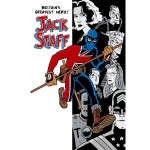
Jack Staff: Everything Used to Be Black and White


By Paul Grist (Dancing Elephant/Image)
ISBN: 978-1-5824-0335-9

Growing up a comic fan in 1960s and 1970s Britain was an oddly schizophrenic situation. Not only were we bombarded and enthralled by our own weirdly eclectic mix of TV stars, Empire jingoism and military bluster, fantastic anti-establishment fantasy, science-fiction and sport yarns – augmented by the sheer inspired, madcap anarchy of the gag strips that always accompanied such adventure serials in our anthology weeklies, but from 1959 we also had unfettered access to the exotic worlds and thinly veiled cultural imperialism of American comicbooks, bulk-imported as ballast in cargo ships and readily available in glorious full colour…

And don’t even get me started on the few, but classy European wonders such as Tintin, Lucky Luke and Asterix that also filtered into the funnybook gestalt brewing in our fevered little heads. All this pictorial wonderment tended to make us young disciples a tad epicurean in our tastes and broad-minded, eccentric synthesists about our influences…

I’ve followed Paul Grist’s work since the small press days of Burglar Bill and St. Swithin’s Day and his brilliantly refined design sense and incisive visual grasp of character have made his interpretations of Grendel, Judge Dredd and other commercial properties an excellent example of why individuality always trumps house-style. However, when he writes his own material, he steps into a creator class few can touch, always blending and refining the key elements of genre and shared public consciousness into a stunningly inviting new nostalgia. For a perfect example check out what he accomplished with hard-boiled detective archetypes in his splendid Kane (see Kane: Welcome to New Eden among others).

He established his own company, Dancing Elephant Press, to produce the kind of works big-time publishers lacked the imagination to support and in 2002 returned to the childhood delights of superhero comics with the creation of Jack Staff, who began life as a proposed Union Jack story for Marvel.

When they pulled the plug, Grist, unable to let a good idea go and now freed of the usual creative restraints that come from playing with other people’s toys, went wild and produced a purely British take on the superhero phenomenon that is simultaneously charming, gripping and devilishly clever.

I usually go into laborious (most would say tedious) detail about the events in these graphic novel reviews but this first Jack Staff collection (gathering the first 12 issues) will be an exception as Grist’s captivating style here – based on and mimicking the anthology format of British Weeklies such as Lion and Valiant – mean that each issue feels like seven stories in one. As my intention is to convince to buy this book I’m sacrificing detail for brevity… you lucky people.

Becky Burdock is a feisty girl reporter for trashy newspaper The World’s Press in a nondescript British city.  In ‘Yesterday’s Heroes’ whilst hunting down a serial killer scoop on the “Castletown Slasher” she accidentally stumbles onto the identity of Jack Staff (Britain’s greatest costumed hero since WWII, but a man missing since the 1980s) when local builder John Smith saves her from a collapsing billboard.

This precipitates memories of a wartime international superhero team’s The Freedom Fighters and a battle against a centuries old vampire and strangely involves the British Q Branch (investigating un-rational or weird crimes) and US superhuman Sgt. States, Staff’s opposite number and another seemingly immortal patriotic hero.

Marvel Zombies will rightly identify this tale has echoes of the Roy Thomas & Frank Robbins “Baron Blood” storyline from the 1970s comic The Invaders and if Marvel had been more accommodating this would indeed have been a classy sequel to that saga. However they missed their chance and this magically tongue-in-cheek pastiche is the magnificent result.

There are still superhumans in this world such as heroic Tom Tom, the Robot Man and the villainous Doc Tempest and even mortal champions such as Albert Bramble and his son Harold who battle dark forces as Vampire hunters, but even they cannot prevent Becky from becoming a victim of the killer stalking the city. John Smith is clearly reluctant to rejoin the masked hero community but events keep pushing him until he uncovers an international conspiracy of sanctioned atrocity that naturally gets hushed up by the powers that be…

These stories are rife with references and cameos from fifty years of popular culture – and not just comics: thinly disguised TV icons such as Steptoe and Son, Dad’s Army and The Sweeney jostle alongside purely comicbook stars such as Captain America and Dr. Strange and members of our own uniquely bizarre pantheon such as Robot Archie, Zip Nolan, Kelly’s Eye, Jason Hyde, Adam Eterno and even relatively real people such as Alan Moore and Neal Gaiman.

A far larger part is played by incomparable poacher turned gamekeeper The Spider in the second story-arc ‘Secrets, Shadows and the Spider!‘ as things go quirkily cosmic when Becky Burdock, Vampire Reporter and the increasingly intriguing Q cops stumble into real X Files territory and we get some welcome background into recent history when a 1960s super-criminal starts stealing again.

Or does he? The Spider never shot anybody before…

The mystery is cleared up when elderly Alfred Chinard (it’s a partial anagram – work it out…) hires builder John Smith and springs a trap on his old foe before they notionally team up to stop the real thief. Of course it doesn’t really go Jack’s way and he is literally left holding the bag. After a full length Q adventure ‘Quotations’ involving a meta-fictional serial killer, ‘Out of Time’ rounds out the book.

Here, Victorian showman and escapologist Charlie Raven (a canny reworking of the superb Janus Stark) enters the picture, encountering a Dorian Gray-like mystery and losing a battle to a foe who consumes time itself. As a result the charismatic Raven endures an Adam Adamant moment and ends up in 21st century Castletown, where his enemy is still predating the human populace. Also causing trouble is Ben Kulmer – the invisible bandit known as The Claw (lovingly homaging Ken Bulmer, Tom Tully and Jesús Blasco’s astounding antihero The Steel Claw).

When that nice Mr. Chinard turns up again the stage is set for a spectacular time-rending chronal clash involving the entire expansive cast that is spectacular, boldly bewildering and superbly satisfying

The stark yet inviting black and white design, refined, honed and pared down to a minimalist approachability has an inescapable feeling of Europe about it. If ever anyone was to create a new Tin Tin adventure, Grist would be the ideal choice to draw it. Not because he draws like Hergé, but because he knows his craft as well as Hergé did. However I’m deliriously happy that he has so brilliantly assimilated the essences of the cherished keystones of my beloved comics-consuming past and given them such a vital and compelling new lease of life.

Thrilling, funny, fabulous. Buy this Book!

™ & © Paul Grist. All rights reserved.

Siegel and Shuster’s Funnyman: the First Jewish Superhero


By Thomas Andrae, Mel Gordon, Jerome Siegel & Joe Shuster (Feral House)
ISBN: 978-1-932595-78-9

The comics industry owes an unpayable debt to two Jewish kids from Cleveland who were in the right place at the right time and were able to translate their enthusiasm and heartfelt affection for beloved influences and delight in a new medium into a brand new genre which took the world by storm.

Writer Jerome Siegel and artist Joe Shuster were a jobbing cartoonist team just breaking into the brand new but ailing comic-book business with strips such as ‘Henri Duval’, ‘Doctor Occult’ and ‘Slam Bradley’ when they rejigged a constantly rejected newspaper strip concept into the greatest sensation of the Age.

Superman captivated depression-era audiences and within a year had become the vanguard of a genre and an industry. In those early days the feature was both whimsical and bombastic, as much a gag strip as an adventure serial, and it was clear the inspired whiz kids were wedded to laughs just as much as any wish-fulfilling empowerment fantasies.

Siegel and Shuster were not well-served by their publishers and by 1946 no longer worked for National Periodicals (today’s DC Comics). In fact they were in acrimonious litigation which led to the originators losing all rights to their creation and suffered years of ill-treatment until an artist-led campaign at the time of the 1978 Superman movie shamed the company into a belated reversal and financial package (consisting mostly of having their names returned to the character’s logo and company medical benefits).

Before this however the pair produced an abortive “Last Hurrah”: another unique character based on early influences, but one who sadly did not catch the public’s attention in those post war years when the first super-heroic age was ending. Based broadly on Danny Kaye, Funnyman was a stand-up comedian who dressed as a clown and used comedy gimmicks to battle criminals, super-villains and aliens: first in six issues of his own comic-book and then as a Daily and Sunday newspaper strip.

A complete antithesis to the Man of Steel, Larry Davis was a total insider, no orphan or immigrant, wealthy, successful, accepted and revered by society but who chose to become a ridiculous outsider, fighting for not the common good but because it gave him a thrill nothing else could match. The series was light, beautifully audacious, tremendous fun and sunk like a concrete-filled whoopee cushion.

Here social historians Thomas Andrae and Mel Gordon re-examine the strip in the much broader context of Jewish Identity and racial character, (especially as it applies to Jewish-Americans), and make some fascinating observations and postulates. Following an intriguing preface by author, writer, editor and comics historian Danny Fingeroth this book dissects the history and psychology of the Judaic experience in a compelling series of astoundingly illustrated essays gathered under the umbrellas of Gordon’s ‘The Farblondjet Superhero and his Cultural Origins’ and Andrae’s ‘The Jewish Superhero’.

The former (and Farblondjet translates as “mixed up” or “lost”) probes ‘The Mystery of Jewish Humor’, ‘The Construct of Humor in Everyday Jewish Life’, ‘The Old Theories: ‘Laughter-Through-Tears’; ‘A Laughing People’; ‘Outside Observer’ and ‘The Badkhn Theory’ (Badkhn being performers hired to insult, offend and depress guests and celebrants at social gatherings such as weddings or funerals).

‘Characteristics of Modern Jewish Humor’ are subdivided and explored in ‘Aggression’, ‘The Yiddish Language’, ‘Self-Mockery’, ‘Inversion and Skepticism’, ‘Scatology’, ‘Gallows Humor’ and ‘Solipsism and Materialism’ and Gibson’s compelling, contextual  potted-history concludes with ‘American- Jewish Comedy Before 1947’ ( when Funnyman debuted) with ‘Weber and Fields’, ‘On the Boards’, ‘The Borscht Belt’, ‘Cartoons and Jokebooks’ and ‘Hollywood Talkies and Syndicated Radio’.

In ‘The Jewish Superhero’ Andrae examines Siegel and Shuster’s possible influences; everything from German expressionist cinema masterpiece ‘The Golem: How He Came into This World’ to the real-life strongman Sigmund Breitbart, a Polish Jew who astounded the world with his feats in the early 1920s. On his American tour he appeared in Cleveland in October 1923. Siegel, a local resident, would have been nine years old…

‘Funnyman, Jewish Masculinity and the Decline of the Superhero’ then explores the psychology and landscape of the medium through the careers and treatment of Siegel and Shuster in ‘The Birth of Funnyman’, ‘The Body Politic’, ‘The Schlemiel and the Tough Jew’, ‘The Decline of the Superhero’ and ‘Comic Book Noir’ before going on to recount the story of the newspaper strips in ‘The Funnyman Comic Strip’ and ‘Reggie Van Twerp’ (a last ditch attempt by the creators to resurrect their comic fortunes) before the inevitable ‘End Game’…

So far this book has been a compulsive and hugely informative academic work, but in ‘Funnyman Comic Book Stories’ the resplendent fan fun really begins with a full colour section reproducing a selection of strips from the six issue run. ‘The Kute Knockout!’ (Funnyman #2, March 1948) pits the Hilarious Hero against a streetwalker robot built to seduce and rob Johns whilst ‘The Medieval Mirthquake’ (Funnyman #4, May 1948) propels the Comedy Crusader back to the time of Camelot. From the same issue comes ‘Leapin’ Lena’ as Funnyman tackles a female bandit who can jump like a kangaroo and #5 (July 1948) has him chasing a worrying new crime gimmick in ‘The Peculiar Pacifier’.

Also included are the striking covers of all six issues, the origin of Funnyman from #1, lots of splash pages and a selection of Shuster’s Superman art, but the most welcome benefit for collectors and collectors is a detailed précis of the entire run’s 20 tales.

The same consideration is offered for the newspaper strips. As well as similar synopses for the Sundays (12 adventures spanning October 31st 1948 to the end of October 1949) and the Dailies (another dozen larks beginning October 18th 1948 and ending September 17th 1949) there are 11 pages of full colour Sunday sections and the complete black and white ‘Adventure in Hollywood’ (December 20th to January 12th 1949) to adore and marvel over.

Like Funnyman this book is an odd duck. Whereas I would have loved to see the entire output gathered into one volume, what there is here is completely engrossing: a wonderful appreciation and compelling contextualization of genuine world-altering pioneers. This is a fabulous book with an appeal that ranges far beyond its possibly limited comic-fan audience.

Siegel and Shuster’s Funnyman © 2010 Thomas Andrae and Mel Gordon. All rights reserved.

NoMan


By various (Tower Books)
ISBN: 42-672

I’ve often harped on about the mini-revolution in the “Camp-superhero” crazed 1960s that saw four-colour comicbook classics migrate briefly from flimsy pamphlet to the stiffened covers and relative respectability of the paperback bookshelves, and the nostalgic wonderments these mostly forgotten fancies still afford (to me at least), but here’s one that I picked up years later as a marginally mature grown man.

Although the double-sized colour comics T.H.U.N.D.E.R. Agents, its spin-offs Undersea Agent, Dynamo, NoMan and the magnificent war-comic Fight the Enemy were all distributed in Britain (but not, I think their youth-comedy title Tippy Teen) these monochrome, re-sized book editions, to the best of my knowledge, were not.

It doesn’t matter: to my delight, it seems that even today the format and not the glow of childhood days recalled is enough to spark that frisson of proprietary glee that apparently only comic fans (and Dinky Toy collectors) are preciously prone to.

Of course it doesn’t hurt when the material is as magnificent as this…

The history of Wally Wood’s immortal spies-in-tights masterpiece is convoluted, and once the mayfly-like lifetime of the Tower Comics line ended, not especially pretty: bogged down in legal wrangling and petty back-biting, but that doesn’t diminish the fact that the far-too brief careers of The Higher United Nations Defense Enforcement Reserves was a benchmark of quality and sheer bravura fun for fans of both the reawakening superhero genre and the 1960s spy-chic obsession.

In the early 1960s the Bond movie franchise went from strength to strength, with action and glamour utterly transforming the formerly understated espionage vehicle. The buzz was infectious: soon Men like Flint and Matt Helm were carving out their own piece of the action as television shanghaied the entire bandwagon with the irresistible Man From U.N.C.L.E. (beginning in September 1964), bringing the whole genre inescapably into living rooms across the world.

Creative maverick Wally Wood was approached by veteran MLJ/Archie Comics editor Harry Shorten to create a line of characters for a new distribution-chain funded publishing outfit – Tower Comics. Woody called on many of the industry’s biggest names to produce material for the broad range of genres the company envisioned: Samm Schwartz and Dan DeCarlo handled Tippy Teen – which outlasted all the others – whilst Wood, Larry Ivie, Len Brown, Bill Pearson, Steve Skeates, Dan Adkins, Russ Jones Gil Kane and Ralph Reese all contributed to the adventure series.

With a ravenous public appetite for super-spies and costumed heroes exponentially growing the idea of blending the two concepts seems a no-brainer now, but those were far more conservative times, so when T.H.U.N.D.E.R. Agents #1 appeared with no fanfare or pre-publicity on newsstands in August 1965 (with a cover off-sale date of November) thrill-hungry readers like little me were blown away. It didn’t hurt either that all Tower titles were in the beloved-but-rarely-seen 80 Page Giant format: there was a huge amount to read in every issue!

All that being said the tales would not be so revered if they hadn’t been so superbly crafted. As well as Wood, the art accompanying the compelling, rather more mature stories was by some of the greatest talents in the business: Reed Crandall, Gil Kane, George Tuska, Mike Sekowsky, Dick Ayers, Joe Orlando, Frank Giacoia, John Giunta, Steve Ditko and others.

This slim, seductive digest stars the UN Agency’s number two troubleshooter (after the iconic Dynamo) in four stirring spy thrillers featuring a winning combination of cloak-and-dagger danger, science fiction shocks and stirring super-heroics. Although UN commandos failed to save brilliant Professor Jennings from the mysterious Warlord, they rescued some of the scientist’s greatest inventions, including a belt that could increase the density of the wearer’s body, a brain-amplifier helmet and a cloak of invisibility.

These prototypes were divided between several agents, creating a unit of superior fighting men to counter the increasingly bold attacks of global terror threats such as the aforementioned Warlord.

Inexplicably, the origin tale ‘T.H.U.N.D.E.R. Agent NoMan’ which told how aged Dr. Anthony Dunn had his mind transferred into an artificial android body equipped with the invisibility cape is not included here, but the book’s back cover features a Wood pin-up “file page” which distils the powers and background into a handy recap. In those long-ago days kids didn’t much care for long-winded and endless reworkings of past detail: origins just weren’t as important as beating bad-guys….

Incredibly strong, swift and durable, NoMan had one final advantage: if his artificial body was destroyed his consciousness could transfer to another android body. As long as he had a spare ready, he could never die.

The action starts with ‘In the Warlord’s Power’ (by Bill Pearson, Dick Ayers, Joe Orlando and Wood) as the artificial agent has to defend an entire Missile Base from an assault by an army of Zombie-men, swiftly followed by ‘NoMan Faces the Threat of the Amazing Vibraman’ (Pearson, John Giunta, Wood & Tony Coleman) wherein the threat was far les esoteric but no less deadly: a freelance villain who used devastating sound weapons.

Next the Invisible Agent tackled a fiendish Mastermind equipped with his own android army in ‘The Synthetic Stand-Ins’ by Steve Skeates, Mike Sekowsky & Frank Giacoia, and the explosive adventures rush to a classy climax in ‘The Caverns of Demo’ (astoundingly illustrated by Gil Kane, Wood and Dan Adkins) wherein NoMan faced an entire island of Neanderthal Beast-Men controlled by an arch criminal who had stolen his cloak of invisibility! Sheer magic!

Supplemented by an exciting ‘NoMan in Action’ fact-feature this is a book that would have completely blown away pre-teen me and still has all the impact of a blockbuster bomb. These are truly timeless comic tales that improve with every reading and there’s precious few things you can say that about…
© 1966 Tower Comics, Inc. All rights reserved.

Thunder Agents Archives volume 1


By Wally Wood & various (DC Comics)
ISBN: 1-56389-903-5

The history of Wally Wood’s immortal comics masterpiece is convoluted, and once the mayfly-like lifetime of the Tower Comics line ended, not especially pretty: wrapped up in legal wrangling and not a little petty back-biting, but that doesn’t diminish the fact that the far-too brief careers of The Higher United Nations Defense Enforcement Reserves was a benchmark of quality and sheer bravura fun for fans of both the still-reawakening superhero genre and the popular media’s spy-chic obsession.

In the early 1960s the Bond movie franchise was going from strength to strength, with action and glamour utterly transforming the formerly understated espionage vehicle. The buzz was infectious: soon Men like Flint and Matt Helm were carving out their own piece of the action as television shanghaied the entire bandwagon with the irresistible Man From U.N.C.L.E. (premiering in September 1964), bringing the whole genre inescapably into living rooms across the world.

Wildly creative maverick Wally Wood was approached by veteran MLJ/Archie Comics editor Harry Shorten to create a line of characters for a new distribution-chain funded publishing outfit – Tower Comics. Woody called on some of the biggest names in the industry to produce material in the broad range of genres the company wanted (as well as T.H.U.N.D.E.R. Agents and its spin-offs Undersea Agent, Dynamo and NoMan there was the magnificent war-comic Fight the Enemy and the youth-comedy Tippy Teen).

Samm Schwartz and Dan DeCarlo handled the funny book – which outlasted all the others – whilst Wood, Larry Ivie, Len Brown, Bill Pearson, Steve Skeates, Dan Adkins, Russ Jones Gil Kane and Ralph Reese all contributed scripts for themselves and the industry’s  top talents to illustrate on the adventure series.

With such a ravenous public appetite for super-spies and costumed heroes steadily rising in comic-book popularity the idea of blending the two concepts seems a no-brainer now, but those were far more conservative times, so when T.H.U.N.D.E.R. Agents #1 appeared with no fanfare or pre-publicity on newsstands in August 1965 (with a cover off-sale date of November) thrill-hungry readers like little me were blown away. It didn’t hurt either that all Tower titles were in the beloved-but-rarely-seen 80 Page Giant format: there was a huge amount to read in every issue!

All that being said the tales would not be so beloved of we baby-boomer fans if they hadn’t been so superbly crafted. As well as Wood, the art accompanying the compelling, far more mature stories was by some of the greatest talents in comics: Reed Crandall, Gil Kane, George Tuska, Mike Sekowsky, Dick Ayers, Joe Orlando, Frank Giacoia, John Giunta, Steve Ditko and others.

This initial lush and lustrous compilation collects issues #1-4 and covers the first golden year of the series. It all starts with a simple four page tale ‘First Encounter’ by Ivie & Wood, wherein UN commandos failed to save brilliant scientist Professor Emil Jennings from the attack of the mysterious Warlord, but at least rescued some of his greatest inventions, including a belt that can increase the density of the wearer’s body until it becomes as hard as steel, a cloak of invisibility and an enigmatic brain-amplifier helmet.

These prototypes were to be divided between several agents to create a unit of superior fighting men and counter the increasingly bold attacks of many global terror threats such as the aforementioned Warlord.

First chosen was affable file clerk Len Brown who was, to everyone’s surprise, assigned the belt and the codename Dynamo in a delightfully light-hearted adventure ‘Menace of the Iron Fog’ (written by Len Brown, who had no idea illustrator/editor Wood had prankishly changed the hero’s civilian name as a last-minute gag) which gloriously pandered to every kid’s dream as the nice guy got the power to smash stuff. This cathartic fun-fest also introduced the Iron Maiden, a sultry villainess clad in figure-hugging steel who was the probable puberty trigger for an entire generation of boys…

‘T.H.U.N.D.E.R. Agent NoMan’ came next, the eerie saga of aged Dr. Anthony Dunn who chose to have his mind transferred into a specialised android body, then equipped with the invisibility cape. The author’s name is unknown but the incredible Reed Crandall (with supplemental Wood inks) drew the first episode which also found time and space to include a captivating clash with sinister mastermind Demo and his sultry associate Satana who had unleashed a wave of bestial sub-men on a modern metropolis. NoMan had one final advantage: if his artificial body was destroyed his consciousness could transfer to another android body. As long as he had a spare ready, he could never die…

Larry Ivie filled in some useful background on the war against the Warlord in the prose adventure ‘Face to Face’ before the third agent was chosen in ‘The Enemy Within’ (also with no script credit and illustrated by Gil Kane, Mike Esposito and George Tuska). However here is where the creators stepped well outside the comic-book conventions. John Janus was the perfect UN employee: a mental and physical marvel who easily passed all the tests necessary to wear the Jennings helmet. Sadly he was also a deep cover mole for the Warlord, poised to betray T.H.U.N.D.E.R. at the earliest opportunity…

All plans went awry once he donned the helmet and became Menthor. The device awakened the potential of his mind, granting him telepathy, telekinesis and mid-reading powers – and also drove all evil from his mind whilst he wore it. When the warlord attacked with a small army and a giant monster, Menthor was compelled by his own costume to defeat the assault. What a dilemma for a traitor to be in…

‘T.H.U.N.D.E.R. Squad’ by Ivie, Mike Sekowsky & Frank Giacoia, is a rip-roaring yarn featuring an elite team of non-powered specialist operatives – which predated TV’s Mission: Impossible outfit by almost two years – who tackled cases the super-agents were too busy or unsuited for. In this initial outing the Squad rushed to defend their Weapons Development Center from a full paramilitary assault only to discover that it’s a feint and Dynamo had been captured by the Warlord…

The first issue ended with a big old-fashioned team-up as all the forces of T.H.U.N.D.E.R. converged to rescue their prime agent who was ‘At the Mercy of the Iron Maiden’ (by Brown, Wood & Dan Adkins) a spectacular battle blockbuster that still takes the breath away…

Issue #2 led again with their strongman star when ‘Dynamo Battles Dynavac’ (Brown, Wood & Richard Bassford) another colossal combat classic as the hapless hero got a severe kicking from a deadly automaton. Once again a narrative thread stretched through the disparate tales as the hero’s girlfriend and fellow agent Alice was kidnapped…

NoMan was ‘In the Warlord’s Power’ (Bill Pearson, Dick Ayers, Joe Orlando and Wood) when an army of Zombie-men attacked a Missile Base and Menthor again defied his master to defeat a Warlord scheme to destroy T.H.U.N.D.E.R. HQ (again no script credit but amazingly illustrated by Sekowsky & Giacoia) before ‘D-Day for Dynamo’ (with art from Wood, Adkins & Tony Coleman) pitted the assembled heroes, reunited to rescue Alice, against Demo, the Dynavac and the Warlord in an all-out war with atomic consequences.

The series took a fantastic turn as the Warlord was revealed to be an agent of a subterranean race of conquerors, but before that the second issue still held another prose piece, ‘Junior T.H.U.N.D.E.R. Agents’, whilst the T.H.U.N.D.E.R. Squad responded ‘On the Double’ to a South American crisis, involving mutant monsters, Communist insurgents and bloody revolution in a classy thriller illustrated t Sekowsky/Giacoia team.

‘Dynamo Battles the Subterraneans’ drawn by Adkins, Wood & Coleman opened the third issue, as the Warlord’s macabre mole-men masters attacked Washington DC, whilst

‘NoMan Faces the Threat of the Amazing Vibraman’ (Pearson, John Giunta, Wood & Coleman) saw a far more plebian but no less deadly menace ended by the undying agent, before Dynamo almost became a propaganda victim of Communist agitator ‘The Red Dragon’ (Adkins, Wood & Coleman) and the T.H.U.N.D.E.R. Squad battled a madman who manufactured his own ‘Invaders from the Deep’ (another uncredited script pictured by Sekowsky & Giacoia) before the main event ‘Dynamo vs. Menthor’ (Wood, Adkins & Coleman) posed a terrifying mystery as a trusted agent almost destroyed the entire organisation. With captivating pin-ups by Wood & Adkins featuring Dynamo, NoMan, the Thunderbelt, T.H.U.N.D.E.R. Squad and Menthor the visual excitement in this issue is beyond price.

The Dynamo tale ‘Master of Evolution’ (written by Brown, illustrated by Wood, Adkins & Coleman) opened the fourth issue with a dinosaur bashing extravaganza, whilst the fiendish Mastermind arrayed his own android armies against the Artificial Agent in ‘The Synthetic Stand-Ins’ by Steve Skeates, Sekowsky & Giacoia, and the same art team debuted the latest super-agent in the T.H.U.N.D.E.R. Squad saga ‘The Deadly Dust’ wherein a Nazi scientist used his time-retarding dust for evil and the heroes responded with a super-speed suit.  This first case for hyper-fast Lightning was followed by a Dynamo milestone ‘The Return of the Iron Maiden’ (drawn by Crandall, Wood & Adkins) which saw the Armoured Amorata betray her latest employer Dr. Death for the man sent to arrest her.

Finally the mystery of Menthor was partially resolved in the fast-paced thriller ‘The Great Hypno’ (illustrated by Giunta, Wood & Coleman), and of course there were more fantastic art extras in the form of NoMan and The Origin of T.H.U.N.D.E.R. pin-up pages.

These are truly timeless comic tales that improve with every reading, and there’s never been a better time to add these landmark superhero sagas to your collection of favourites.

© 1965 John Carbonaro. All rights reserved. This edition © 2002 DC Comics.

Shadowman


By Steve Ditko, Steve Englehart, Jim Shooter, Bob Hall, David Lapham & various (Valiant)
No ISBN

The 1990s were a slow period in terms of comics creativity: the industry had become infested with collector/investors and was increasingly market-led, with spin-offs, fad-chasing, shiny gimmicks and multiple-covers events replacing imagination and good story-telling in far too many places. One notable exception was a little outfit with some big names that clearly prized the merits of well-told stories illustrated by artists immune to the latest mis-proportioned, scratchy poseur styles, but one with enough business sense to play the industry at its own game.

Eschewing most of the more crass profiteering stunts Valiant revived some old characters and proved once more that the basics never go out of fashion. As Editor-in-Chief, Jim Shooter had made Marvel the most profitable and high-profile they had ever been, and after his departure he used that writing skill and business acumen to transform some almost forgotten Silver-Age characters into contemporary gold.

Western Publishing had been a major player since comics’ earliest days, blending a huge tranche of licensed titles with a few home-grown heroes like Brain Boy, Turok, Son of Stone and M.A.R.S. Patrol Total War (created by Wally Wood). The company’s most notable stars were Dr. Solar, Man of the Atom and Russ Manning’s magnificent science fiction cautionary tale Magnus, Robot Fighter. When the parent company closed its original comic division in 1984 these masterful sagas soon faded from comic fans’ memory.

As the 1990s opened and with an agreement to revive some, any or all of these four-colour veterans, Shooter and co-conspirator Bob Layton came to a bold decision and made those earlier adventures part-and-parcel of their refit: acutely aware that old fans don’t like having their childhood favourites bastardized, and that revivals need all the support they can get. Thus the old days were canonical: they “happened” and the new company was off and running with an interested, older fan-base already in place.

But the upstarts were not content to simply revive and retrofit past glories: a growing legion of new characters was gradually added to the pantheon. One such was a Voodoo-tainted, New Orleans based wild man daredevil named Jack Boniface – Shadowman.

After a truly seminal cameo in X-O Manowar #4 musician Boniface was properly introduced in 1992 his own title. Shadowman premiered with ‘Jazz’, written by Shooter and Steve Englehart, illustrated by David Lapham and Joe Rubinstein.

The credits are a lot more complex that they might appear. Shooter famously used a communal brainstorming system to create characters and stories. The full credits for the graphic novel under review – gathering issues #1-3 and 6 (the un-included chapters being part of the company’s first braided cross-over event Unity) of the first Shadowman run read Plotters: Steve Ditko, Mark Moretti Don Perlin & Shooter, Writers: Englehart, Bob Hall, Faye Perozich, Shooter, Pencillers: Ditko, Lapham, Moretti and Inkers Charles Barnett III, Gonzalo Mayo, Rubinstein & Tom Ryder.

In that eerie introduction Boniface was a struggling session saxophonist trying to strike it rich in the Big Easy when he was seduced by Lydia, a mysterious woman he picked up in a club. Her sinister, trysting assault left him unconscious, amnesiac and forever altered by a bite to his neck. Unknown to Jack, Lydia was an agent of the Spider Aliens who form a covert keystone of the Valiant Universe, preying on humanity for millennia and responsible for creating many of the paranormal humans who secretly inhabit the world.

Alone in the morning light Boniface discovered that Lydia’s home was filled with half-digested corpses. Clearly he was to be her next meal – but now has no idea how he survived or where she went. He cannot conceive of how her bite has altered him…

He flees but later as darkness falls he feels agitated, restless, aggressive: he roams the streets and finds himself drawn back to Lydia’s home and stumbles upon a voodoo sacrifice. Attacked by the priest the once docile musician dons a Mardi Gras mask found at his feet and fights back with brutal abandon. Lydia’s has somehow turned him into a violent driven maniac, hungry for conflict – but only when the sun goes down…

In ‘Spirits Within’ (Perozich, Shooter, Lapham & Ryder) Jack’s own hunger for answers takes him to both experts in medicine and Obeah magic before his Shadowman self drags him into a confrontation with a Bayou axe murderer, whilst ‘The Beast and the Children’ (Perozich, Moretti & Barnett III) finds the increasingly off the rails music-man tackling mobsters and hit-men before destroying a well-connected super-powered child abuser.

There’s a big change in the character seen in the fourth and final tale here. It begins with Shadowman’s return from the far future and a distant dimension where the combined Valiant heroes experienced “Unity”. Whilst there Boniface fell in love and learned exactly when he would die…

Written by Shooter, Ditko, Don Perlin and Moretti with art by Ditko, Moretti and Gonzalo Mayo ‘The Family That Slays Together’ pitted the Shadowman against a murderous clan of degenerate swamp-dwellers stealing women and children from local communities. Bitter, merciless and now completely reckless since he believes he cannot die – yet – Shadowman had become a relentless, remorseless, punishing force of nature. What a pity Jack Boniface was a helpless witness to everything his night-self did…

Combining the best elements of conflicted lone vigilantes and dark avengers such as Batman and Daredevil with an exotic locale and traditional horror elements, Shadowman offers a tense, dark underbelly to the super-science and shining heroism of Valiant’s other titles, and despite the committee-like nature of its creation still delivers heaping helpings of moody mystery and arcane excitement. Well worth reviving and definitely a different action hero you will love to read…
© 1994 Voyager Communications Inc. All rights reserved.

The Incredible Hulk: What Savage Beast


By Peter David, illustrated by George Pérez (Boulevard/Putnam Books)
ISBN: 0-399-14104-9

After a few abortive attempts in the 1960s and a more strategic attempt at the end of the 1970’s Marvel once more tried to move onto the prose bookshelves in the 1990s with a select series of hardback novels. To my mind the most successful of these was this hefty tome from Peter David, who had the advantage of being a prolific genre novelist (most notably of Star Trek adventures) and the current scripter for the Incredible Hulk comicbook.

The plot actually spun out of and referenced contemporary Hulk continuity and featured a Green Goliath that possessed Bruce Banner’s intellect, married to his long-term sweetheart Betty, and on the run from the US military. Whilst in hiding an aged psychologist “cures” the monster-afflicted scientist and Betty falls pregnant with twins, but when they are delivered their benefactor is revealed as the Maestro, a sick and twisted version of Banner from an apocalyptic future (first seen in the 1992 miniseries Hulk: Future Imperfect) who kidnaps one of the infants and returns to his Ghastly world of Tomorrow.

Desperate and traumatised, Banner turns to his friend Doctor Strange, Sorcerer Supreme, who provides a way to follow, but due to unforeseen circumstances he arrives two decades late: his son is now a heartless brute in the manner of the Maestro, and worse yet the abortive rescue mission has given the sadistic monster a method of plundering the time stream and alternate dimensions. Not only is Banner too late but now he must face an army of Hulks from divergent timelines to stop his future self from ravaging all of time and space…

Sharp and well-crafted, this tale is constructed in such a way that continuity-addicts can easily slot it into their preferred universal construct, whilst casual readers can simply enjoy an above-average time-travel yarn featuring a character they may or may not know from TV. Moreover this page turner is liberally illustrated by George Pérez, who drew the aforementioned Hulk miniseries. This is a solid example of how comics books can transfer to prose and perhaps a reason why they should…
© 1995 Marvel Entertainment Group, Inc.  All Rights Reserved.