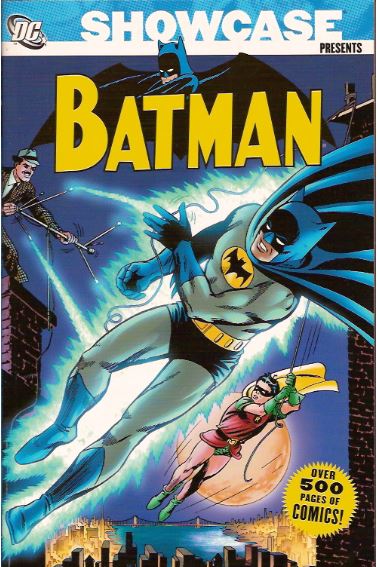
Showcase Presents Batman volume 1


By John Broome, Gardner Fox, Ed Herron, Bill Finger, Carmine Infantino, Bob Kane, Sheldon Moldoff, Joe Giella, Sid Greene & various (DC Comics)
ISBN: 978-1-4012-1086-1 (TPB)

Although cover-dated May 1939, Detective Comics #27 was on sale from March 30th. Happy Anniversary, Dark Knight! Because we like being us, let’s look at a perennial comics incarnation too long overdue for re-evaluation and re-inclusion in the greater Batty-verse…

I’m assuming everybody here loves comics and that we’ve all had the same trying experience of attempting to justify that passion to somebody not genned up or tuned in. Excluding your partner (who is actually right – the living room floor is not the place to leave your D*&$£! funnybooks), many people STILL have an entrenched and erroneous view of narrative strip art, resulting in a frustrating and futile time as you seek to dissuade them from that opinion.

If so, this collection might be the book you want next time that confrontation occurs. Collected here in stark and stunning monochrome are tales which reshaped the Dynamic Duo and set them up for global Stardom – and subsequent fearful castigation from fans – as the template for the Batman TV show of the 1960s. It must be noted, however, that the canny producers and researchers of that landmark derived their creative impetus from stories and especially movie serials of the era preceding the “New Look Batman”, as well as the prevailing tone of those socially changeable times…

So what’s going on here?

By the end of 1963, editor Julius Schwartz had revived much of DC’s science fiction and fantasy line – and the entire industry – with his deft reinterpretation and modernization of the Superhero. He was then asked to work his magic with the creatively stalled, nigh-moribund Caped Crusader franchise of titles. Bringing his usual team of top-notch creators with him, Schwartz stripped down the core-concept, downplaying aliens, outlandish villains and daft transformation tales, to bring a cool modern take to the pursuit and capture of criminals, and even overseeing a streamlining rationalisation of the art style itself.

The most apparent change readers was a yellow circle around the Bat-symbol on his chest, but far more importantly, the stories also changed. A subtle aura of genuine menace re-entered the comfortable, absurdly abstract world of Gotham City….

This initial Showcase Presents Batman compendium collects all the Bat-Sagas (STILL the only place to find them reprinted in full and in chronological order) as seen in Detective Comics #327-342 and Batman #164-174: 38 stunning stories that reshaped a legend and spanning cover-dates May 1964 to September 1965. The revolution began with the lead yarn in Detective #327, written by John Broome and illustrated by Carmine Infantino & Joe Giella at the very peak of their creative powers and collaborative partnership, before the Big Change was fully formalised with two tales from Batman #164.

‘The Mystery of the Menacing Mask! was a cunning “Howdunnit?” long on action and peril, as hints of a criminal “underground railroad” led the Dynamic Duo to a common thug seemingly able to control the heroes with his thoughts. The venerable title was clearly refocusing on its descriptive, evocative title for the foreseeable future, and to ram the point home, a new back-up feature was introduced – “Stretchable Sleuth” The Elongated Man. This comic book was to be a suspenseful brain-teaser from now on…

In the eponymous Batman title, action and adventure became paramount. Two-Way Gem Caper!’ pitted Batman & Robin against slick criminal Dabblo, but the thief wasn’t the true star of this tale. Almost as an aside, a new Batcave and refashioned Wayne Manor were introduced, plus a sleek, compact new Batmobile – more sports-car than super-tank. This story was written by Ed “France” Herron and drawn by “Bob Kane”. Veteran inker Giella was tasked with finishing the contents of both Bat-books in a bid to generate uniformity in all stories. The inker would ultimately perform the same role when the Batman syndicated newspaper strip was revived, beginning on May 29th 1966…

A new semi-regular feature debuted in that issue. “The Mystery Analysts of Gotham City” was a private club of detectives, criminologists and crime-writers who met to discuss their cases. Somehow the meetings always resulted in an adventure such as ‘Batman’s Great Face-Saving Feat!’ (Herron & Kane), wherein eager applicant Hugh Rankin applied his Private Eye talents to discovering the Gotham Gangbuster’s true identity in an effort to win a seat at the sleuths’ table. Suffice it to say, he had to reapply…

‘Gotham Gang Line-Up!’ completed the transformation of Batman. Written by original co-creator Bill Finger and pencilled by Kane, this rather mediocre crime-caper from Detective #328 is most remarkable for the plot-twist wherein long-serving butler Alfred sacrificed his life to save the heroes, prompting Dick Grayson’s Aunt Harriet to move into Wayne Manor.

From this point, the process fell into a pattern of top-of-the-line tales punctuated by utterly exceptional occasional epics of drama, mystery and action. These would continue until the infamous TV show’s success became so great it actually began to inform – or taint – the style of story in the comics. And while I’m into editorial asides: whenever the credits read “Bob Kane” the artist usually doing the drawing was unsung hero Sheldon Moldoff.

Written by Broome and pencilled by Infantino, Detective #329’s ‘Castle with Wall-To-Wall Danger!’ was a captivating international thriller seeing the heroes braving deadly death-traps in Swinging England whilst pursuing a dastardly thief, before eerie science fiction saga ‘Man Who Quit the Human Race!’ (Gardner Fox, Kane & Giella) led in Batman #165 finding fantastic fantasy still had a place in the Gotham Guardian’s new world. A potential new love-interest debuted in back-up tale ‘The Dilemma of the Detective’s Daughter!’, courtesy of Herron & Kane, as student policewoman Patricia Powell left cop-college for the mean streets of the city.

Over in Detective #330, Broome & Kane detailed a new kind of crime in ‘The Fallen Idol of Gotham City!’, wherein a mysterious phenomenon turned ordinary citizens into blood-hungry mobs on command. In Batman #166, ‘Two-Way Deathtrap!’ sees a pair of petty thugs set up the perfect ambush after finding a pipeline into the Batcave whilst, ‘A Rendezvous with Robbery!’ pictured a return engagement for Pat Powell during a frantic crime caper with both tales by Herron & Kane. A rare full-length story in Detective #331 guest-starred Elongated Man as the ‘Museum of Mixed-Up Men’ (Broome & Infantino) united costumed sleuths against a super-scientific felon, after which a Rogues Gallery super-villain finally appeared in #332’s ‘The Joker’s Last Laugh’ (Broome & Kane), set on switching places with the Caped Crimebusters in his own manic manner…

In Batman #167 Finger & Kane declared ‘Zero Hour for Earth!’ as international espionage pulled the Titanic Team from Gotham into a global manhunt for secret society Hydra prior to Detective #333 pitting the heroes against a faux goddess and real telepaths in the ‘Hunters of the Elephants’ Graveyard!’, courtesy of Fox & Infantino. Then ‘The Fight That Jolted Gotham City!’ opened Batman #168 with a blockbusting battle between the Masked Manhunter and temporarily deranged circus strongman Mr. Muscles after which the Mystery Analysts resurfaced to close the book, explaining ‘How to Solve the Perfect Crime… in Reverse!’ (both tales by Herron & Moldoff).

The opening shot in an extended war against an incredible new foe dubbed The Outsider came with Detective #334 and the introduction of Grasshopper‘The Man Who Stole from Batman!’ (Fox & Moldoff), whilst Fox & Infantino’s ‘Trail of the Talking Mask!’ in #335 gave the Caped Crimebusters opportunity to reinforce their sci-fi credentials in a classy high-tech thriller guest starring PI Hugh Rankin.

Wily, bird-themed badman The Penguin popped up in Batman#169 (Herron & Moldoff), making the heroes his unwilling ‘Partners in Plunder!’, after which inker Sid Greene made his debut delineating ‘A Bad Day for Batman!’, wherein he overcomes many vicissitudes of cruel coincidence to nab a determined thief. Detective #336 (Fox, Moldoff & Giella) featured ‘Batman’s Bewitched Nightmare’ as a broom-riding crone attacks the Dynamic Duo at the Outsider’s behest. In later months the witch was revealed to be sultry sorceress Zatanna, but most comics cognoscenti agree this was not the original plan, but rather cannily back-written during the frantic months of “Batmania” that followed the debut of the TV show (for a fuller explanation see JLA: Zatanna’s Search).

An intriguing new foe made his modest mark in Batman #170 with highly professional thief Roy Reynolds running rings around the Gotham Gangbusters – at least initially – as the ‘Genius of the Getaway Gimmicks!’ (Fox & Moldoff) with Finger providing a captivating, human-scaled drama in ‘The Puzzle of the Perilous Prizes!’ enabling Giella to show off his pencilling as well as inking skills. ‘The Deep-Freeze Menace!’ (Detective #337, Fox & Infantino) focuses on captivating fantasy, pitting Batman against a super-powered caveman encased in ice for 50,000 years, before the caped crimebuster gains his own uncanny advantage in #338 as a chemical accident renders ‘Batman’s Power-Packed Punch!’ too dangerous to be near…

After an absence of decades, ‘Remarkable Ruse of The Riddler!’ reintroduced the Prince of Puzzlers in Batman # 171: a clever book-length mystery from Fox & Moldoff which did much to catapult the previously forgotten villain to the first rank of Bat-Baddies, after which DC’s inexplicable (but deeply cool) long-running love-affair with gorillas resulted in a cracking doom-fable as ‘Batman Battles the Living Beast-Bomb!’ (Fox & Infantino in Detective #339) highlighting the hero’s physical prowess in a duel of wits and muscles against a sinister super-intelligent simian. Broome came back to script the eerie conundrum drawn by Moldoff which opened Batman #172. ‘Attack of the Invisible Knights!’ proved to be wicked science not ancient magic, whilst Batman’s own technological advances played a major role part in backup ‘Robin’s Unassisted Triple Play!’ (Fox, Moldoff & Greene), giving the Boy Wonder plenty of scope to show his own skills against a gang of murderous bandits.

Detective #340 saw the war against Batman escalate when ‘The Outsider Strikes Again!’ (Fox & Moldoff), offering further clues to the hidden foe’s incredible abilities by animating everyday objects – and the Batmobile – to attack the Caped Champions, before Broome & Infantino detailed a cinema-inspired catastrophic campaign in #341’s ‘The Joker’s Comedy Capers!’ Criminal mastermind/blackmailer Mr. Incognito then offered ‘Secret Identities For Sale’ in Batman #173’s lead tale and Broome, Moldoff and inker Sid Greene depicted ‘Walk Batman – To Your Doom!’: a sinister psychological murder-plot years ahead of its time.

Broome & Moldoff’s ‘The Midnight Raid of the Robin Gang!’ (Detective #342) hinted at the burgeoning generational unrest of the 1960s as the faithful Boy Wonder seemingly sabotaged his mentor before signing up with costumed juvenile delinquents, before this collection of Caped Crusader Chronicles concludes with Fox & Moldoff’s Batman #174: a brace of blockbusters comprising a brutal story of street-fighting as the Gotham Guardian is ambushed and becomes The Human Punching Bag!’ before the Mystery Analysts find themselves the intended victims of a “Ten Little Indians” murder-scheme in ‘The Off-Again, On-Again Lightbulbs!’ (inked by Greene).

No matter how much we might squeal and foam about it, to a large portion of the world Batman will always be the “Zap! Biff! Pow!”, affably lovable, caped buffoon of that 1960s television show. It really was that popular. Whether you tend towards the anodyne light-heartedness of then, commercially acceptable psychopathy of the current day or actually just like the comic book character in all eras, if you sit down, shut up and actually read these wonderful adventures for all (reasonable) ages, you will find the old adage “Quality will out” still holds true. And if you’re actually a fan who hasn’t read this classic stuff, you have an absolute treat in store…
© 1964, 1965, 2006 DC Comics. All Rights Reserved.
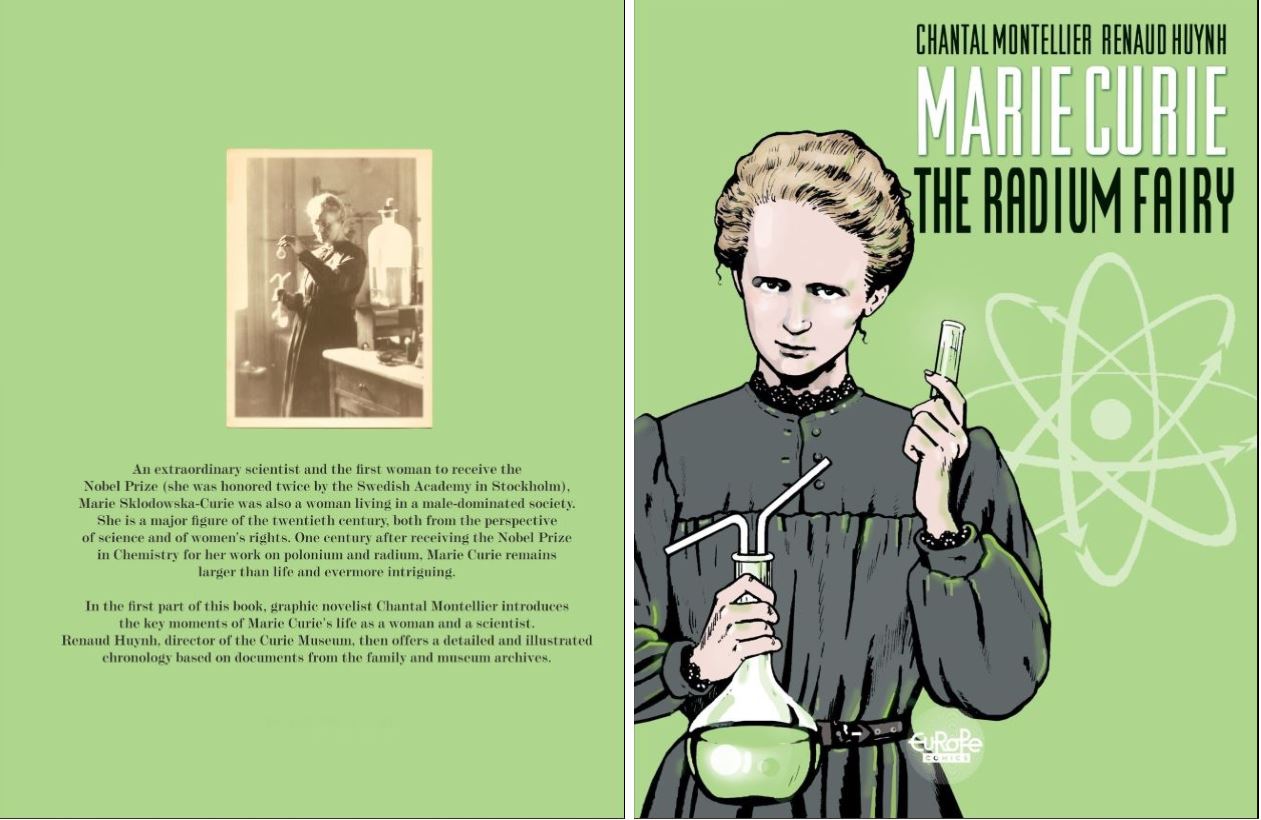
Marie Curie – The Radium Fairy


By Chantal Montellier & Renaud Huynh translated by Lara Vergnaud (Europe Comics)
No ISBN: digital-only publication

I’ve waited ages (well, since March 2017, but I’m old and joyless and my days are clearly pretty limited now) for this superb book to be picked up by a print publisher, but now I’m just going to plug it again it anyway and assume that as you’re reading this on a computer, you can make the leap to seeing comics that way too.

And yes, I know all about the smell and feel of proper books. I feel that way too, but we’re killing more trees than we need to. Just think of it as portable fun you can’t crumple or rip…

Originally released across Europe in 2011, Marie Curie La Fée du Radium was produced in collaboration with the Curie Museum and the Cité des sciences et del ’industrie (part of Universcience), with educator, illustrator and bande dessinée creator Chantal Montellier (Odile et les crocodiles, Les Damnés de Nantes).

The book summarises and dramatizes via graphic narrative a most astounding life, prior to research scientist, educator and museum curator Renaud Huynh’s (La fantastique histoire du radium) extensive and copious Timeline which traces the triumphs, tribulations and legacy of Marie Sklodowska-Curie (1867-1934): thus far the only woman to win two Nobel Prizes.

The critical comics component kicks off in Stockholm on September 4th as aging Marie Curie works on a speech; preparing to receive that second cherished accolade. Thinking back, she pictures her departed husband Pierre Curie. Their joint isolation of the element they named Polonium after her place of birth was a grand achievement but doesn’t make up for her years of struggle for acceptance or his tragic accidental death so early in their marriage…

And so, briefly, concisely and sans fanfare unfolds a true tale of brilliance applied, adversity overcome and persistence rewarded. Today, Curie is credited with adding two elements to the Periodic Table – Radium was the other one – and venerated for her unceasing researches. She was also the first woman allowed to teach at the prestigious Sorbonne, but for much of her life had to overcome entrenched patriarchal attitudes and oppression whilst being vilified in the media and by wider society for her “scandalous” personal life… and generally just for being an uppity female who didn’t know her place.

Isn’t it great how much everything has changed since then? (I am of course waiting for my own Nobel for the isolation of Sarcastium…)

This small but powerful digital-only tome concludes with that large and detailed Timeline. Huynh’s pictorial essay is packed with photographic illustrations, cartoons and clippings combining to encapsulate and clarify Curie’s life and achievements. It is all deconstructed and précised in chapters entitled 1867/1895 Warsaw-Paris’, ‘1896/1905 A Scientific Dream’, ‘1906/1911 Hardships and Success’, ‘1912/1921 The Radium Institute’ and ‘1922/1934: An International Figure’, before concluding with an ‘Epilogue’ revealing how 60 years after her death, Marie Curie’s ashes were transferred to the Pantheon (resting place of the nation’s greatest citizens). She was the first woman to be accorded this honour based solely on her own merits…

Making learning fun, Marie Curie – The Radium Fairy is a potent and powerful inspiration, venerating one of history’s most dedicated scientists: one every youngster of any age should know.
© 2016 – DUPUIS – Chantal Montellier & Renaud Huynh. All rights reserved.

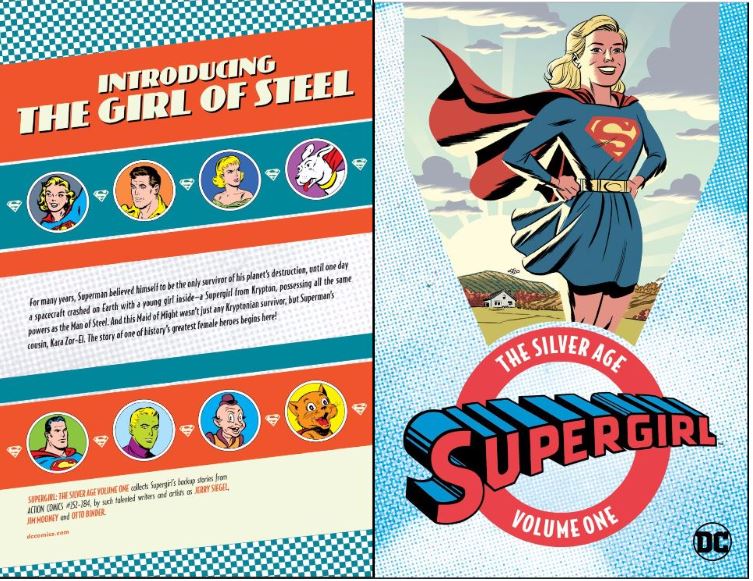
Supergirl: The Silver Age volume 1


By Otto Binder, Al Plastino, Jerry Seigel, Jim Mooney & various (DC Comics)
ISBN: 978-1-4012-7292-0 (TPB/Digital edition)

Superhero comics seldom do sweet or charming anymore. Narrative focus nowadays concentrates on turmoil, angst and spectacle and – although there’s nothing intrinsically wrong with that – sometimes the palate just craves a different flavour.

Such was not always the case as this superb compendium of the early career of Superman’s cousin Kara Zor-El of Argo City – gathering material from Action Comics #252-284 and spanning May 1959-January 1962 – joyously proves. Also included to kick off proceedings is the delightful DC House Ad advertising the imminent arrival of a new “Girl of Steel”. Sadly missing, however, is the try-out story ‘The Three Magic Wishes’ – written by Otto Binder and illustrated by Dick Sprang & Stan Kaye from Superman #123, August 1958 – which told how a mystic totem briefly conjured up a young girl with super powers as one of three wishes made by Jimmy Olsen. Such was the reaction to the plucky distaff hero that within a year a new version was introduced to the Superman Family…

Here, then, the drama commences with ‘The Supergirl from Krypton!’, the third story from Action Comics #252 introducing Superman’s cousin Kara, who had been born on a city-sized fragment of Krypton, which was somehow hurled intact into space when the planet exploded. Eventually Argo City turned to Kryptonite like the rest of the giant world’s debris, and Kara’s dying parents, having observed Earth through their scanners and scopes, sent their daughter to safety as they perished.

Crashing on Earth, she is met by Superman who creates the cover-identity of Linda Lee whilst hiding her in an orphanage in small town Midvale allowing her to learn about her new world and powers in secrecy and safety. This groundbreaking tale was also written by Binder and drawn by the hugely talented Al Plastino.

Once the formula was established Supergirl became a regular feature in Action Comics (starting with #253), a residency that lasted until 1969 when she graduated to the lead spot in Adventure Comics. In ‘The Secret of the Super-Orphan!’, at her new orphanage home she makes the acquaintance of fellow orphan Dick Wilson (eventually Malverne) who would become her personal gadfly (much as the early Lois Lane was to Superman), a recurring romantic entanglement who suspects she has a secret. As a young girl in far less egalitarian times, romance featured heavily in our neophyte star’s thoughts and she frequently met other potential boyfriends: including alien heroes and even a Merboy from Atlantis.

Many early tales involved keeping her presence concealed, even whilst performing super-feats. Jim Mooney became regular artist as Binder remained chief scripter for the early run. In Action #254’s ‘Supergirl’s Foster-Parents!’ sees an unscrupulous couple of con-artists easily foiled, after which Linda meets a mystery DC hero when ‘Supergirl Visits the 21st Century!’ in #255. Her secret is nearly exposed in ‘The Great Supergirl Mirage!’ before she grants ‘The Three Magic Wishes!’ to despondent youngsters and teaches a mean bully a much-needed lesson.

The Man of Steel often came off rather poorly when dealing with women in those far less enlightened days, always under the guise of “teaching a much-needed lesson” or “testing” someone. When she ignores his secrecy decree by playing with super dog Krypto, cousin Kal-El banishes the lonely young heroine to an asteroid in ‘Supergirl’s Farewell to Earth!’ but of course there’s paternalistic method in the madness…

‘The Cave-Girl of Steel!’ sees her voyage to Earth’s ancient past and become a legend of the Stone Age before AC #260 finds her transformed by the mystical Fountain of Youth into ‘The Girl Superbaby!’ The next tale introduced feline fan-favourite Streaky the Super-Cat in ‘Supergirl’s Super Pet!’ after which ‘Supergirl’s Greatest Victory!’ supplies a salutary lesson in humility to the Girl of Steel. Binder moved on after scripting ‘Supergirl’s Darkest Day!’ in which the Maid of Might rescues an alien prince before incoming Jerry Siegel began his own tenure by scripting ‘Supergirl Gets Adopted!’: a traumatic yet sentimental tale which ends with the lonely lass back at Midvale orphanage.

I’ve restrained myself so please do likewise when I say the next adventure isn’t what you think. ‘When Supergirl Revealed Herself!’ (Siegel & Mooney, Action #265) is another story about nearly finding a family, after which Streaky returns in ‘The World’s Mightiest Cat!’ as prelude to Supergirl finding fantastic fellow super-kids in Action #267’s ‘The Three Super-Heroes!’ She narrowly fails to qualify for the Legion of Super Heroes through the cruellest quirk of fortune, but – after picking herself up – exposes ‘The Mystery Supergirl!’ prior to Siegel & Mooney introducing fish-tailed Mer-boy Jerro as ‘Supergirl’s First Romance!’

Packed with cameos like Batman & Robin, Krypto and Atlantean Lori Lemaris, ‘Supergirl’s Busiest Day!’ sees her celebrating a very special occasion, after which Streaky enjoys another bombastic appearance as the wonder child builds ‘Supergirl’s Fortress of Solitude!’ before Binder wrote ‘The Second Supergirl!’ – an alternate world tale too big for one issue. Sequel ‘The Supergirl of Two Worlds!’ appeared in Action #273 – as did a novel piece of market research. ‘Pick a New Hairstyle for Linda (Supergirl) Lee!’ involved eager readers in the actual physical appearance of their heroine and provided editors valuable input into who was actually reading the series…

Siegel & Mooney soundly demonstrated DC dictum that “history cannot be changed” in ‘Supergirl’s Three Time Trips!’ before ‘Ma and Pa Kent Adopt Supergirl!’ offered a truly nightmarish scenario: rapidly followed by a return visit to the Legion of Super Heroes in ‘Supergirl’s Three Super Girl-Friends!’, whilst Action #277 featured an amazing animal epic in ‘The Battle of the Super-Pets!’

The next five tales form an extended saga, taking the Girl of Steel in totally new directions. On the eve of Superman announcing her existence to the world, Supergirl loses her powers and – resigned to a normal life – is adopted by the childless Fred and Edna Danvers. Sadly, it’s all a cruel and deadly plot by wicked Lesla-Lar, Kara’s identical double from the Bottle City of Kandor. This evil genius wants to replace Supergirl and conquer Earth…

This mini-epic – ‘The Unknown Supergirl!’, ‘Supergirl’s Secret Enemy!’, ‘Trapped in Kandor!’, ‘The Secret of the Time-Barrier!’ and (following the results of the Hair Style competition) ‘The Supergirl of Tomorrow!’ ran in Action #278-282: solidly repositioning the character for a more positive, effective and fully public role in the DC universe. The saga also hinted of a more dramatic, less paternalistic, parochial and even reduced-sexist future for the most powerful girl in the world, over the months to come; although the young hero is still very much a student-in-training, her existence still kept from the general public as she lives with adoptive parents who are completely unaware the orphan they have adopted is a Kryptonian super-being.

The accent on these stories generally revolves around problem-solving, identity-saving and loneliness, with both good taste and the Comics Code ensuring readers weren’t traumatised by unsavoury or excessively violent tales. Plots akin to situation comedies often pertained, as in ‘The Six Red “K” Perils of Supergirl!’ Peculiar transformations were a mainstay of Silver Age comics, and although a post-modern interpretation might discern some metaphor for puberty or girls “becoming” women, I rather suspect the true answer can be found in author Seigel’s love of comedy and an editorial belief that fighting was simply unladylike…

Red Kryptonite, a cosmically-altered isotope of the radioactive element left when Krypton exploded, caused temporary physical and sometimes mental mutations in the survivors of that doomed world. It was a godsend to writers in need of a challenging visual element when writing characters with the power to drop-kick planets. Here the wonder-stuff generates a circus of horrors, transforming Supergirl into a werewolf, shrinking her to microscopic size and making her fat. I’m not going to say a single bloody word…

The drama continues and concludes – like this initial Silver Age compilation – with ‘The Strange Bodies of Supergirl!’ wherein Linda Lee Danvers’ travails escalate after she grows a second head, gains death-ray vision (ostensibly!) and morphs into a mermaid. This daffy holdover to simpler times presaged a major change in the Girl of Steel’s status… but that’s a volume for another day.

Throughout her formative years Kara of Krypton underwent more changes than most of her confreres did in 20 years, as editors struggled to find a niche the buying public would appreciate, but for all that, these yarns remain exciting, ingenious and utterly bemusing.

Possibly the very last time a female super-character’s sexual allure wasn’t equated to sales potential and freely and gratuitously exploited, these tales are a link and window to a far less crass time, displaying one of the few truly strong and resilient female characters parents can still happily share with even their youngest children.
© 1959, 1960, 1961, 1962, 2017 DC Comics. All Rights Reserved.
Shaft volume 2: Imitation of Life


By David F. Walker, Dietrich Smith & various (Dynamite Entertainment)
ISBN: 978-1-52410-260-9 (TPB/Digital edition)

For most of modern history black consumers of popular entertainments in what used to be called the “Free West” have found far too few fictive role models. In the English-speaking world that began changing in the turbulent 1960s as America’s Civil Rights Movement gained traction and truly took hold during the decade that followed. Many characters stemming from those days come from a commercially-led cultural phenomenon called Blaxploitation.

Although criticised for seedy antecedents, stereotypical situations and extreme violence, the films, books, music and art were the first mass-market examples of minority characters in charge and in leading roles, rather than as fodder, flunkies or flamboyant villains. One of the earliest movie icons of the genre was the man called Shaft. His filmic debut in 1971 was scripted by journalist and screenwriter Ernest Tidyman (The French Connection; High Plains Drifter; A Force of One) adapting his own 1970 novel. Tidyman authored six more between 1972 and 1975, with his urbane urban warrior simultaneously starring in numerous films and a (far, far tamer) TV series. He even had in his own retro-themed, adults-only comic book.

An eighth prose novel – Shaft’s Revenge – was released in 2016, written by David F. Walker. Amongst his many talents – you should hunt down his online culture-crunching ’zine BadAzzMoFo and you won’t be sorry – Walker numbers writing intriguing, hard-edged comics (Occupy Avengers, Cyborg, Red Sonja, Tarzan on the Planet of the Apes and many more), so in 2014 it was probably inevitable he be invited to write that long-overdue comics iteration…

Blockbusting premier miniseries Shaft: A Complicated Man – relating the lone wolf’s origins – led to this sequel, illustrated by Dietrich Smith and coloured by Alex Guimarães, with Walker himself lettering the series. Whereas that comic book took its look, settings and tone from the novels more than the Richard Roundtree (whom we tragically lost in October last year) films, this one carefully refocuses and aims for a satisfactory blending of prose and film iterations.

Originally released as a 4-issue miniseries, Imitation of Life finds the detective ‘Before and After’, regretting his life choices, successes and recent notoriety as the highly publicised rescue of an abducted girl suddenly make him a famous – if not actually notorious – man. It’s nothing he wanted: Shaft was literally forced to take the job by a major mobster no one in their right mind ever refuses, and now, after sorting the problem in his inimitably pitiless manner, the gumshoe is slowly drinking himself to death on the huge fee he also couldn’t safely turn down…

Eventually guilt and boredom compel him to get back in the game and, free of money worries, he can pick and choose from a big list of inquiries. That said, Shaft can’t explain just why he takes on the pointless problems of the Prossers: a hick white couple desperate to find their son. Mike is 18; a good-looking homosexual kid (we say “gay” today, apparently) swallowed up by the sleaze-peddlers of 1970s Times Square. The kid’s legal and not even a real missing person, but there’s something Shaft can’t get out of his head about this particular runaway…

Convinced it’s all pointless, Big John hits appropriate bars and clubs but no one knows anything: they never do. And then a kid named Tito recognizes him and just like that, the violence starts coming.

Surviving a homophobic attack – and teaching a few bigots the cost of intolerance – Shaft finds his case abruptly stalled just as shady wannabe filmmakers seeks to hire him to consult on their new (blaxsploitation) flick “The Black Dick”. It promises to be an easy gig, but they never are…

Before long, Shaft is writhing in discomfort as the script ludicrously bastardises his career and reputation, but when Tito turns up and bamboozles the detective into facing off with a Mafia pornographer just as the secret moneyman behind his own filmic fiasco starts demanding an early return on his investment, it all stops being a laugh and becomes deadly serious again. Once more, he remembers there’s no such thing as ‘Easy Money’

As fictional and real worlds increasingly intersect, Vice cops contact Shaft and he sees that somehow all his irons seem to be stacked in the same fire. When the ludicrous leading man is abducted and troublemaking Tito pops up again with some very perilous photographs from his own incessant snooping, Shaft discovers in penultimate chapter ‘Love & Loss’ just what happened to Mike Prosser before tooling up to rescue one bad actor while invading a film set where pornos and snuff films are the preferred hot product…

The strands all pull together in a typically cathartic climax as ‘All the World’s a Stage’ sees order restored, bad guys righteously dealt with and even sets up a delicious funny ending to usher us out…

Revisiting a legendarily foetid cesspool of civic corruption, warring mobsters and get-rich-quick chancers, this tour of a mythic milieu is another wry and intoxicating crime thriller no fan of the genre should miss.
Shaft is ™ & © 2016 Ernest Tidyman. All rights reserved.

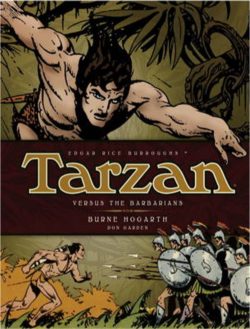
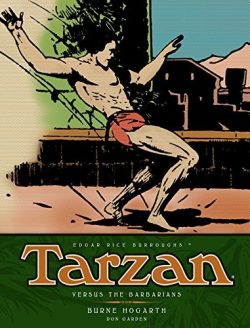
Tarzan versus The Barbarians (Complete Burne Hogarth Comic Strip Library volume 2)


By Burne Hogarth & Don Garden (Titan Books)
ISBN: 978-1-78116-318-4 (Album HB)

Modern comics and graphic novels evolved from newspaper comic strips. These pictorial features were – until quite recently – overwhelmingly popular with the public and highly valued by publishers who used them as a powerful tool to guarantee and increase circulation and profits. From the earliest days humour was paramount; hence the terms “Funnies” and, of course, “Comics”…

The full blown dramatic adventure serial began with Buck Rogers on January 7th 1929 – and Tarzan which debuted the same day. Both were adaptations of pre-existing prose properties and their influence changed the shape of the medium forever. The 1930s saw an explosion of such fare, launched with astounding rapidity and success. Not just strips but actual genres were created in that decade which still impact on today’s comic-books and, in truth, all our popular fiction forms. In terms of sheer artistic quality, adaptations of Edgar Rice Burroughs’ novels starring jungle-bred John Clayton, Lord Greystoke by Canadian commercial artist Harold “Hal” Foster were unsurpassed, and the strip soon became a firm favourite of the masses, supplementing movies, books, a radio show and ubiquitous advertising appearances. As fully detailed in the previous volume of this superb oversized (330 x 254mm), full-colour hardback series, Foster initially quit the strip at the end of the 10-week adaptation of the first novel Tarzan of the Apes. He was replaced by Rex Maxon, but returned (at the insistent urging of Edgar Rice Burroughs) when the black-&-white daily was expanded to include a lush, full colour Sunday page featuring original adventures.

Leaving Maxon to capably handle the Monday through Saturday series of novel adaptations, Foster produced the Sunday page until 1936 (233 consecutive weeks) after which he moved to King Features Syndicate to create his own momentous weekend masterpiece Prince Valiant in the Days of King Arthur which debuted on February 13th 1937.

Once the four month backlog of material he had built up was gone, Foster was succeeded by a precociously brilliant 25-year-old artist named Burne Hogarth: a young graphic visionary whose superb anatomical skill, cinematic design flair and compelling page composition revolutionised the entire field of action/adventure narrative illustration. The galvanic modern dynamism of the idealised human figure in today’s comicbooks can be directly attributed to Hogarth’s pioneering drawing and, in later years, educational efforts…

This second sublime collection begins with fascinating original art examples peppering the ‘Introduction’ by former Tarzan and Prince Valiant illustrator Thomas Yeates, who shares memories of and commentary upon Hogarth the man, the exemplar and the educator. The visual virtuosity then resumes with ‘Tarzan and the Peoples of the Sea and the Fire’ (episodes #478-527-8, spanning 5th May 1940 to April 20th 1941) wherein the ape-man, incessantly journeying across fantastic, unexplored Africa, discovers an inland sea and stumbles into an ages-old war between two lost races.

On one side are water-worshipping mariners called the Sea People whose vile Prince Jagurt captures Tarzan whilst beautiful maiden Leecia is falling for him. Sadly, the real problem is arch-priest Molocar, who takes an instant dislike to the newcomer and tries to feed him to the Demon-fish…

Escaping antediluvian ichthyosaurs, the jungle lord stumbles upon secret subterranean caverns where the priesthood perfect their seemingly supernatural tricks to cow the populace. These superstition-peddlers try to make him a slave. Within the compound Tarzan meets a warrior of the city’s ancestral enemies, the volcano-worshipping Fire People, befriending a crippled boy named Prince Tanny. The child is heir to the lava-lovers’ throne and Molocar intends to brainwash and torture him into switching faiths…

The ape-man cannot abide cruelty and in a fit of righteous rage frees the boy and breaks out of the den of iniquity. Eluding the prowling demon-fish, Tarzan swims the lagoon with his frail prize, moving into the city, where – after sustained pursuit – he elicits Leecia’s aid. After many savage battles they flee together into the dense jungle.

The plan had been to take Tanny home, but since the boy’s capture his father has been murdered and Towrit the Cruel now rules the Fire People. When the fugitive trio are intercepted by the usurper’s soldiers, only Tarzan and Tanny escape, but after hiding in a cave the jungle lord is ambushed by a ferocious giant who turns out to be the boy’s faithful guardian Jaxie

Resolved to free Leecia and restore Tanny to the throne, Tarzan’s herculean efforts are thwarted as all-out war begins. The implacable religious hatred of each faction for him and each other results in unceasing battle, but as Jagurt, Molocar and Tawrit all strive for supremacy, nature itself rebels and the entire region is devastated when the volcano erupts, imperilling all dwellers around the inland sea…

Lost World romance gave way to modern militaristic mayhem in ‘Tarzan Against Dagga Ramba’ (#529-581, running from 27th April 1941 to 26th April 1942). Having sailed a river to a great desert, the regal wanderer encounters a camel caravan in time to save an Arabian princess from a stalking leopard, although it leaves him grievously injured. Haughty Ta’ama much prefers the wild man saviour to her own (arranged) affianced man, something rapacious Sheik Numali is not going to allow. The caravan continues with comatose Tarzan guarded by the Princess, but Numali knows that sooner or later her attention will lapse and accidents can be made to happen…

Happily, the white god recovers before any untoward occurrences but frustratingly agrees to remain with them until the Great Desert is crossed. Into that simmering bath of tension and suspicion a greater menace soon intrudes as ambitious army sergeant Dagga Ramba abandons the war currently engulfing North Africa. Declaring himself General, he convinces a band of Askari deserters they can carve out their own kingdom in the sands…

When the caravan is captured by Ramba’s band, Tarzan escapes and stumbles upon old ally Kamur and his mountain-living Ibek Nomads. The doughty warrior is tracking the Askaris -who have stolen his wife Nikotris – but that noble woman is in far greater danger from her fellow captive Ta’ama than the self-appointed warlord. The mountain dwelling elder has idly expressed her (platonic) admiration for Tarzan in the cell they share and the ruthless Arabian princess has wrongly deduced she has a rival for the ape-man’s affections…

Thankfully, a daring raid of the warlord’s fortress by Tarzan liberates Kamur’s bride before Ta’ama can act, but in the melee he is trapped and – despite soundly thrashing Dagga Ramba – is sentenced to hang. Spectacularly escaping the gallows, the hero rapidly returns to the mountains unaware the warlord has subtly suborned noxious Numali…

Soon a guerrilla war is underway at great cost to the Ibeks, whose bows and raw courage are no match for machine guns and armoured cars. Tarzan volunteers to re-cross the desert and try to recruit the normally impartial Soufara into a grand alliance against Ramba. His brief time with nomadic Bedouins garners no support but their initial refusal only allows the upstart warmonger to mount a surprise attack on the desert dwellers.

Racing out into a sandstorm on a stolen camel, Tarzan heads for the Soufara with Numali in hot pursuit. When his mount expires the indomitable ape-man continues his epic trek on foot, eventually reaching their forbidden city, only to find gloating Numali waiting for him.

The sheik’s attempts to assassinate jungle-man are forestalled by the Emir (Ta’ama’s father), but the potentate is disdainful of the warning Tarzan brings. Only Numali is aware Ramba’s army is approaching and will soon attack the complacently overconfident walled metropolis…

With his daughter hostage, the Emir is helpless to resist a mechanised assault and names Tarzan his War Sheik. The noble savage’s ideas on what we now call asymmetrical warfare rapidly stem the tide and when he abandons the battle to call the Ibeks into the fray, it spells the beginning of the end for Dagga Ramba’s dreams…

Job done, Tarzan slips away, crossing the mountains until washed by a tumult into a lush, isolated valley where two unlikely westerners are exploring. ‘Tarzan and the Fatal Mountain’ (#582-595, 3rd May – 2ndAugust 1942) returns to high fantasy as murderous dwarf Kalban Martius takes an instant dislike to the tall, clean-limbed Adonis, whilst his reluctant companion and unwitting target object d’amour Olga finds her heart all a-flutter…

These unwelcome Europeans were exploring the valley with Olga’s scientist father who had discovered the place was rife with oversized lifeforms. Even the generally peaceful white natives dubbed Kolosans average eight feet tall. In fact, almost everything there was bigger yet more passive…

After Martius fires a few shots at Tarzan and is easily eluded and subdued, the ape-man is befriended by Olga who explains they are looking for the secret of the Kolosans’ immensity. Later, the giants take him into their confidence whilst explaining that he can never escape the steep encircling escarpments back to his own world. The big men also reveal an ancient temple where a lizard-shaped “forbidden fountain” spews forth a vile liquid. This tribal secret is unfortunately exposed by Martius who covertly joined the party. When he stole some of the evil water it instantly transformed him into a brutal gargantuan twice the size of Kolosans…

Crazed with dreams of power, the beast-man flees taking a canteen full of the liquid. Soon the gentle valley is filled with his aggressive army of super-giants and Tarzan must lead the Kolosans in a final cataclysmic battle for survival. Eventually the carnage subsides and Olga reveals how they will leave the hidden valley. She, her father and Kalban had arrived by airplane and Tarzan can return with them. Sadly, one final catastrophe looms as their take-off is interrupted by a super-ape altered by Martius’ stolen growth toxin…

Following a stupendous duel on the ship’s wing Tarzan returns to the relative safety of the cockpit, but as they fly on the voyagers encounter an RAF plane in a death-spiral over a murky island as ‘Tarzan and the Barbarians’ (#596-659, 9th August 1942 to 24th October 1943) opens with the ape-man parachuting out of Olga’s plane (and life) to assist the downed pilot.

Wing Commander Jonathan is badly injured, but before Tarzan can administer aid he is interrupted by a bizarre stranger. Nahro the Hermit wants them gone and has decided to hunt the pair for sport. The swampy terrain proves the madman’s downfall, after which Tarzan carries his ailing charge across lethal trees through mire and past deadly beasts until they are captured by brutal warriors who look like Vikings…

The barbarians are dismissive of their captives as they carry them up a huge mesa to their stony citadel. Although threatened with death Tarzan eschews easy escape by refusing to marry one of the warrior’s women and earns the undying enmity of the shamed Hilsa.

Penned with other captives, he meets the slave Leeta and learns the mesa-marauders have preyed on the region’s inhabitants for centuries. When Tarzan tries to carry her away to safety, Hilsa is waiting and ambushes them…

Forced to flee alone, Tarzan heads for Leeta’s village seeking men to mount a rescue mission for her and the aviator but the chieftain’s wizard ignores his entreaties and instead prepares to undertake a venerable custom. The Berian people have always sacrificed the strongest heroes in their midst so the warrior could travel to the departed ancestors and beseech supernatural aid. Tarzan ferociously suggests they stop killing the best fighters and use them to actually fight the barbarians. To aid their assault he even introduces them to the concept of aerial warfare, engineering a giant balloon from sewn animal hides…

The skyborne blitzkrieg fails and Tarzan plunges into a vast cave in the centre of the mesa, which fortuitously exposes the citadel’s great weakness… a secret tunnel leading to the plains below, big enough for a small force of men to use in a sneak attack…

After much travail and bloodshed the plan succeeds but even in victory Tarzan finds no peace. Ferrying Jonathan back to civilisation leads to another primitive city, another lusty lass and one more jealous suitor. Soon the ape-man is embroiled in a brutal conflict where the balance of power rests with the side that can muster the most mastodons! The most worrying aspect of the war is that it is being fought for ownership of a huge jewel which can cause instant death…

Although the battle eventually goes to the just, it exposes Jonathan’s true colours as he tries to seize the lethal death-ray device for his country and especially himself. Exasperated and fed up with humans, Tarzan heads back to the wild woods only, to encounter old “friends” when arboreal amazon Tibeela ambushes the man who once eluded her amorous advances. This time she takes no chances, knocking him unconscious before making her move…

Her scheme might have worked had not a band of roving buccaneers chosen that moment to come to the forest hunting women for slaves, leading to another uncanny escapade against a decadent king in a debased kingdom as well as three uncanny reunions… with an ape, a lion and a Boer beside whom Tarzan had battled before…

These tales are full of astounding, unremitting, unceasing action with Hogarth and scripter Don Garden spinning page after page of blockbuster Technicolor epics over months of non-stop wonder and exotic adventure. Plot was never as important as generating a wild rush of rapt and rousing visceral response and every Sunday the strip delivered that in spades.

Edgar Rice Burroughs was a master of populist writing and always his prose crackled with energy and imagination. Hogarth was an inspired intellectual and, as well as gradually instilling his pages with ferocious, unceasing action, layered panels with subtle symbolism. Heroes looked noble, villains suitably vile and animals powerful and beautiful. Even rocks, vegetation and clouds looked spiky, edgy and liable to attack at a moment’s notice…

These vivid visual masterworks are all coiled-spring tension or vital, violent explosive motion, stretching, running, fighting: a surging rush of power and glory. It’s a dream come true that these majestic exploits exist – especially in such lavish and luxurious editions for generations of dedicated fantasists to enjoy.

Magnificent, majestic and awe-inspiring.
Tarzan ® & © 2014 Edgar Rice Burroughs, Inc. All Rights Reserved. All images copyright of Edgar Rice Burroughs, Inc 2014. All text copyright of Edgar Rice Burroughs, Inc 2014.

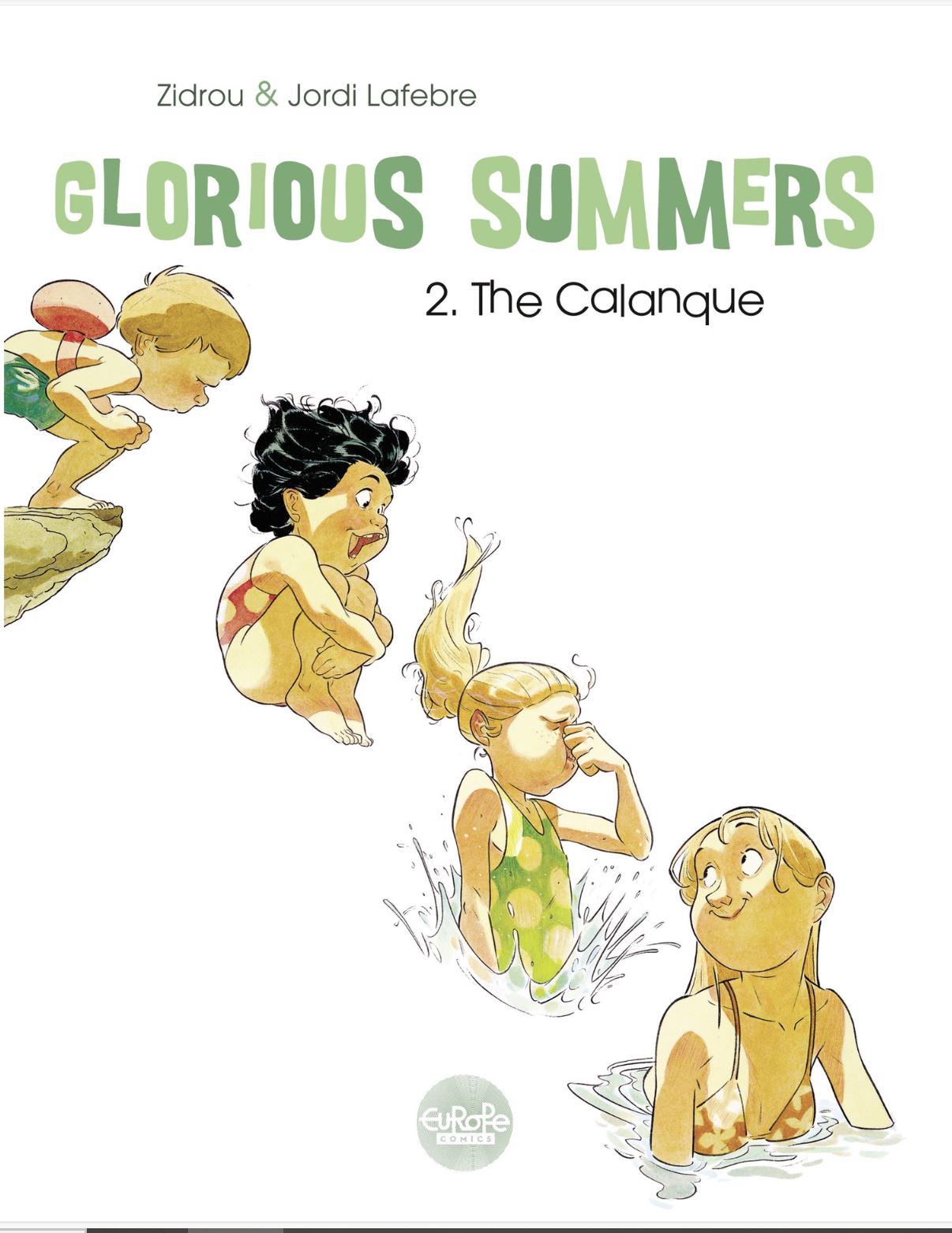
Glorious Summers volume 2: The Calanque 1969


By Zidrou & Jordi Lafebre, with additional colour by Mado Peña, translated by Lara Vergnaud (Europe Comics)
No ISBN: Digital edition only

It’s close (OMG! LESS THAN A WEEK!) to the most stressful and commercialised event of the singleton calendar for unattached people who wish they weren’t, so let’s look at what all that amorous manoeuvring and romantic strategizing is supposed to lead to as perfectly depicted in a sublime and delightful family feast of “Happy Ever Afters”…

Until comparatively recently, comics in the English-speaking world mostly countenanced comedic or numerous adventure sub-genres (crime, superhero, horror, sci fi), with only a small but vital niche of “mundane world” ventures, usually depicted via graphic biographies and autobiographies like They Called Us Enemy, Breakwater, Love on the Isle of Dogs, Wage Slaves or Sour Pickles offering a different feel and flavour. Even historical sagas were treated as extraordinary moments with larger-than-life characters whenever possible.

What we have never had – and still largely don’t – is a comics equivalent to general fiction, drama and melodrama. That’s not so in Japan, South Korea or Europe, where a literal “anything goes” attitude has always accommodated and nurtured human-scaled, slice-of-life tales depicting ordinary people in as many quiet as extraordinary moments. Surely it can’t be that hard to tell engaging stories in pedestrian, recognisably ordinary settings? Medical traumas, love stories, school tales and family tragedies about common folk seem to play well on various-sized screens around the world, so why not in English language comics? The closest we seem to get are comedies like John Allison’s superb Giant Days (which I really must review soon)…

People being people is more than enough for Europeans. There apparently is an insatiable appetite for everyday events aimed at properly “mature readers”, joyfully sans vampires, aliens or men in tights. These even have sub-genres of their own. For example, there’s a wealth of superb material just about going on holiday. So, since our own Government-in-Absentia have ensured that it’s now all-but-impossible for any UK-based citizens to pop across and have une petite vacances in Europe, let’s stare & glare covetously at them having a good time. After all, over there holidays are an inalienable right, and they have some simply fabulous tales about a simple break. This one is probably amongst the best you’ll ever see…

An absolute exemplar of fantasy vacations made real, Glorious Summers: Southbound! (1973) was a nostalgia-drenched confection by Zidrou and regular collaborator Jordi Lafebre: a sublime example of idyllic group memory made into graphic sorcery in an everyday account utterly unafraid to temper humorous sweetness and light with real-world tragedy and suspense.

Perhaps some context is in order. Summer holidays – “Midi” – are a big deal in France and Belgium. The French divide into two tribes over the annual rest period, which generally lasts an entire month. Juilletistes only vacation in July, wielding dogmatic facts like rapiers to prove why it’s the only way to take a break. They are eternally opposed, heart, soul, and suntan lotion, by majority faction the Aoûtiens, who recharge their batteries in August whilst fully reciprocating the suspicion, disdain and baffled scorn of the early-leavers. Many European sociologists claim the greatest social division today is not race, religion, gender, political affiliation or whether to open boiled eggs from the top or the bottom, but when summer holidays begin and end…

Les Beaux Étés 1: Cap au Sud! was first in a string of family visits that began in 2015 courtesy of scripter Benoît “Zidrou” Drousie and Spanish illustrator Jordi Lafebre. Drousie is Belgian, Brussels-born in 1962 and was a school teacher prior to quitting marking books in 1990 to begin making them. His main successes include school dunce series L’Elève Ducobu, Petit Dagobert, Scott Zombi, La Ribambelle, Le Montreur d’histoires, the revival of Ric Hochet, African Trilogy, Léonardo, Shi and many more. His most celebrated and beloved stories are this memorable sequence and 2010’s Lydie, both illustrated by Lafebre.

That gifted, empathically sensitive illustrator and art teacher was born in Barcelona in 1979 and has created comics professionally since 2001, first for magazines like Mister K, where he limned Toni Font’s El Mundo de Judy. He found regular work at Le Journal de Spirou, creating the romance Always Never and collaborated with Zidrou on La vieille dame qui n’avait jamais joué au tennis et autres nouvelles qui font du bien, Lydie, and La Mondaine.

A combination of feel-good fable and powerful comedy drama, Glorious Summers depicts memories of an aging couple recalling their grandest family moments, beginning with a momentous vacation in 1973 where their four kids nearly lost their parents….

Here however, second volume The Calanque focuses on August 1969 as pregnant Maddie Faldérault (soon to deliver precociously hyperactive Paulette AKA Peaches) tries to amuse her three impatient kids whilst hubby Pierre frantically puts finishing touches to his latest comic strip. It’s a regular ritual before his month off, but this time less annoying as it’s also his first work as a named creator rather than an anonymous ghost artist for others. Apparently the world is finally ready for a four-armed cowboy gunfighter…

Their kids are immune to bedtimes and indulge in time-honoured holiday rituals like shouting, fighting and singing odd songs, before Pierre downs his brushes. Now the annual Faldérault escape from gloomy Brussels for a month in sun-drenched France can start.

Only… on the way they need to see his dad. Pépé Buelo moved to Brussels when General Franco took over Spain. He made a good life as bricklayer and husband, but now he’s on his own and a little lonely…

Eventually, the family set off with introspective toddler Louis reading, drawing and constantly sharing his far from limited knowledge of where babies come from, even as self-conscious oldest girl Jolly-Julie anxiously ponders life without bathrooms and in-betweener Nicole tells everyone they meet that mummy is going to be a mummy again. As they motor south in the dark – they left really, really late – they play their annual game of deciding where they’re going by solving riddles because planned destinations and pre-booked rooms are for wimps…

True free spirits, they pick up a hippie hitchhiker and scare him witless with their laid back attitudes – especially teasing Jolly-Julie’s reticence to use nature as a restroom. When he drops out they resume southern roaming and finally decide to camp in a shady wood for the night. In the morning the family Faldérault realise their error as elderly French couple Rufus and Ramona discover they have Belgians in the back garden…

After a few lovely days as guests who can’t politely escape, Pierre and Maddie learn that Rufus knows the perfect spot for travellers to enjoy their break, directing them to a hidden cove on the sea coast. It’s beautiful: an idyllic cliff-screened rustic paradise with a ramshackle fishing hut just ready to be temporarily occupied. Rufus even provides a guide in the form of his exuberant older brother – aging fisherman Marius.

What follows is timeless weeks of wonder and unforgettable explorations on endlessly sunny days, with local villagers taking the wanderers to heart and welcoming them to a taste of rustic heaven. Even the Americans landing on the moon or the Tour de France victory of Belgian Eddie Merckx can’t compare…

Ultimately the real world calls them back and the holidaymakers pack up for home. Awaiting them is bad news for Pierre, a new job for Maddie and a rainy grey hometown. One clear sign of normality resuming comes as they find a dog abandoned by the roadside, but brilliantly and boldly they turn that traumatic event into a lasting positive…

This tale is another beautifully rendered and realised basket of memories stitched seamlessly together. It’s funny, sweet and charming whilst delivering painful blows you never see coming. There aren’t any spectacular events and shocking crises and that’s the whole point…

If you’re British – and old enough – this series (six translated albums thus far, plus a French omnibus edition) will echo revered family sitcoms like Bless This House or Butterflies and generational ads starring the “Oxo Family”. (If that description doesn’t fit you, I pity your browsing history if you look up any of that…). The rest of you in need of an opening (but unfair) comparator could break out the Calvin and Hobbes collections and re-examine the bits with his embattled parents when the kid’s out of the picture…

Lyrical, laconic, engagingly demure, and debilitatingly nostalgic, this holiday romance is sheer visual perfection wrapped in sharp dialogue and a superbly anarchic sense of mischief. Vacations are built of moments and might-have-beens, packaged here in compelling clips making the mundane marvellous.
© 2018 -DARGAUD BENELUX (Dargaud-Lombard s.a.) – ZIDROU & LEFEBRE, LLC. All rights reserved.

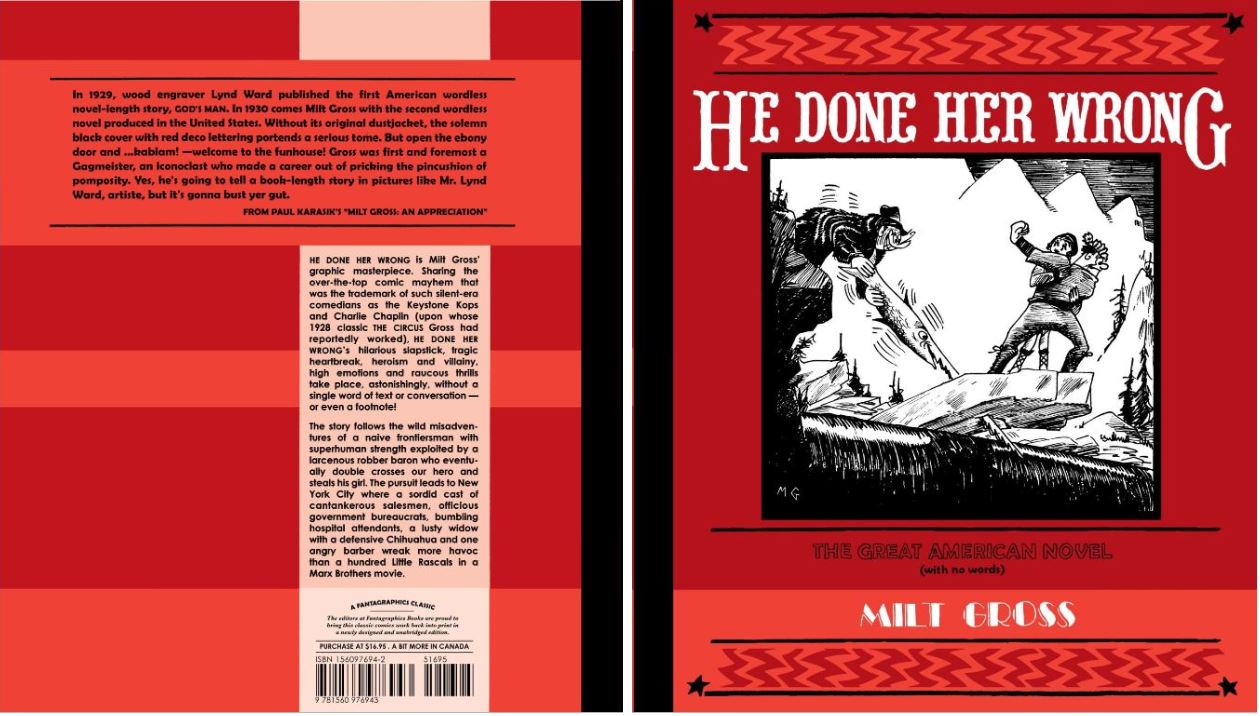
He Done Her Wrong


By Milt Gross (Fantagraphics Books)
ISBN: 978-1-56097-694-3 (TPB/Digital edition)

The power of comics comes not just from wedding text to image but also in the power of illustration. You can have comics without words but if you leave the letters and subtract the pictures what you have is just a book…

Bronx-born Milt Gross (March 4th 1895 – November 29th 1953) was a trailblazing pioneer in both cartooning and the wider arena of popular comedy, specialising in vernacular while refining and popularising Yiddish folk humour and slang into a certified American export to world culture: “Yinglish”. You should really look him up…

Gross was also an early adept in the animation field, bringing his cartoon characters to silent life in numerous short filler features for John R. Bray Studios, Universal and MGM. Far too few of his many books are in print now, but happily this astounding landmark is one of them and is even available digitally. He made his mark in comics, working for William Randolph Hearst’s newspaper chain on many syndicated strips including Banana Oil, Pete the Pooch, Dave’s Delicatessen, Count Screwloose from Tooloose, Babbling Brooks, Otto and Blotto, The Meanest Man, Draw Your Own Conclusion, I Did It and I’m Glad! And That’s My Pop! (which was promptly adapted into a popular radio show).

Released in 1930, He Done Her Wrong (The Great American Novel and Not a Word in It – No Music, Too) lampooned – and exploited – a notable trend of those troubled times: wordless novels. The woodcut-crafted parables derived from the German Expressionist art movement, offered (generally left-leaning) pictorial epigrams addressing social injustice. The first was Belgian Frans Masereel’s 25 Images of a Man’s Passion (1918), and American Lynd Ward followed suit 11 years later with God’s Man. Among many similar efforts they inspired (like Giacomo Patri’s White Collar) was Gross’ spoof of silent movie serials like The Perils of Pauline, pitched perfectly for pathos, bathos and pitiless hilarity…

A facsimile edition first released in 2005 by Fantagraphics, this edition is a completely unabridged restoration – which means the re-inclusion of some images, depictions and scenes that might appear a little controversial to modern sensibilities. It also offers a fascinating picture-packed Introduction by Craig Yoe (a devoted friend and patron of all comics vintage and fabulous) plus a closing Appreciation by eminent cartoonist, writer/editor Paul Karasik. What lies between them is a stunning masterclass in comedy staging, gag timing, timeless melodrama, delivered as a succession of wordless pantomimic pages. It all begins after a decent, hearty and trustworthy young woodsman, trapper and prospector falls in love with a virtuous barroom singer. True Love is thwarted by a dirty villain who swindles our hero and absconds to New York with his heartbroken, “abandoned” ingenue paramour.

As hero and victim both fall foul of the lures of the Big Bad City and vice unstoppably mounts in the woman’s benighted life, the Good Man overcomes all obstacles to find his darling: battling his way from the wilderness into far more savage civilisation where he will set things right no matter what the cost…

It all works out in the end of course, but only after an astoundingly convoluted course of action, buckets of tears, some well-earned vengeance and a little forgiveness… and plenty of near-misses and lethally close calls. That sounds like a great thriller – and it is – but Gross played it strictly for laughs, crafting a tale ranking with the best of his closest contemporary comedy peers: Charley Chaplin and Buster Keaton. He Done Her Wrong is a superb yarn and perfect picture into a world that only seems simpler and less complicated than today, and if you love classics stories and crave romance, you should “Dun’t Esk” and just buy it…
He Done Her Wrong © 2005 Fantagraphics Books. All rights reserved. Introduction © 2005 Craig Yoe. An Appreciation © 2005 Paul Karasik.

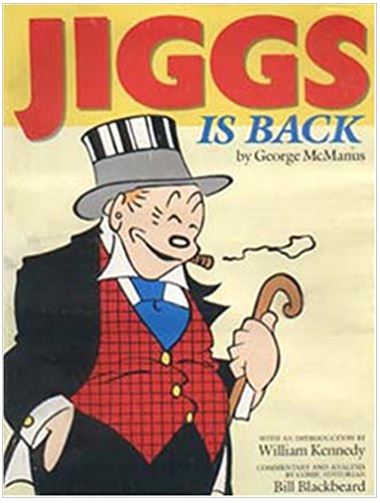
Jiggs is Back


By George McManus (City Lights/Celtic Book Company)
ISBN: 978-0-91366-682-1 (Album PB)

Variously entitled Maggie and Jiggs or Bringing Up Father, the comedic magnum opus of George McManus ranks as one of the best and most influential comic strips of all time: a brilliant blend of high satire and low wit that drapes the rags-to-riches American dream with the cautionary admonition to be careful of what you wish for…

Increasingly obscure as years go by, relatively recently this magnificent series was celebrated with a lavish hardcover collection reprinting the strip’s captivating beginnings (see George McManus’s Bringing Up Father: Forever Nuts – Classic Screwball Strips) but that book, wonderful though it is, only prints black and white daily episodes, whilst this colossal softcover (from 1986 and well overdue for re-issue) concentrates on the exceptionally beautiful Sunday colour pages – a perfect proving ground for the artist’s incredible imagination to run wild with slapstick set-pieces, innovative page design and a near-mystical eye for fashion and pattern.

McManus was born on January 23rd in either 1882 or 1883 and drew from a very young age. His father, realising his talent, found him work in the art department of the St. Louis Republic newspaper. At thirteen, George swept floors, ran errands and drew when ordered to. In an era before cheap, reliable photography, news stories were supplemented by drawn illustrations; usually of disasters, civic events and executions: McManus claimed he had attended 120 hangings (a national record!) but still found time to produce cartoons: honing his mordant wit and visual pacing. His first sale was Elmer and Oliver. He hated it.

The jobbing cartoonist had a legendary stroke of luck in 1903. Acting on a bootblack’s tip, he placed a $100 bet on a 30-1 outsider and used his winnings to fund a trip to New York City. The young hopeful splurged his cash reserves but on his last day got two job offers: one from the McClure Syndicate and a lesser bid from Joseph Pulitzer’s New York World.

He took the smaller offer, went to work for Pulitzer and created a host of features for the paper including Snoozer, The Merry Marceline, Ready Money Ladies, Cheerful Charlie, Panhandle Pete, Let George Do It, Nibsy the Newsboy in Funny Fairyland (one of the earliest Little Nemo knock-offs) and, in 1904, his first big hit The Newlyweds.

This last brought him to the attention of Pulitzer’s arch rival William Randolph Hearst who, acting in tried-&-true manner, lured him away with big money in 1912. In Hearst’s papers, The Newlyweds became Sunday page feature Their Only Child, and soon – supplemented by Outside the Asylum, The Whole Blooming Family, Spare Ribs and Gravy – at last, Bringing Up Father.

At first it alternated with other McManus domestic comedies in the same slot, but eventually the artist dropped Oh, It’s Great to be Married!, Oh, It’s Great to Have a Home and Ah Yes! Our Happy Home! (as well as a second Sunday strip Love Affairs of a Muttonhead) to concentrate on the story of Irish hod-carrier Jiggs whose sudden and vast newfound wealth brings him no joy, whilst his parvenu wife Maggie and (flouting all laws of genetics) their inexplicably comely and cultured daughter Nora constantly seek acceptance in “Polite” society.

The strip turned on the simplest of premises: as Maggie and Nora perpetually fete wealth and aristocracy, Jiggs – who only wants to booze and schmooze and eat his beloved corned beef and cabbage – will somehow shoot down their plans… usually with severe personal physical consequences.

Maggie might have risen in society but she never lost her devastating accuracy with crockery and household appliances…

Bringing Up Father launched on January 12th 1913, originally appearing three times a week, then four and eventually every day. It made McManus two fortunes (the first lost in the 1929 Stock Market crash), spawned a radio show, a movie in 1928 – with five more between 1946-1950 as well as an original Finnish film in 1939 – and 9 silent animated short features. There was also all the assorted marketing paraphernalia that fetch such high prices in today’s antique markets.

McManus died in 1954, and other creators continued the strip until May 28th 2000: its unbroken 87 years making it the second longest running newspaper strip of all time.

McManus said that he got the basic idea from The Rising Generation, a musical comedy he’d seen as a boy, but the premise of wealth not bringing happiness was only the foundation of the strip’s success. Jiggs’ discomfort at his elevated position, his yearnings for the nostalgic days and simple joys of youth are something every one of us is prey to. However, the deciding factor and real magic at work here is an entrancing blend of slapstick, social commentary, sexual politics and flashy fashion, all cannily composted together and delivered by a man who lived and breathed comedy timing and could draw like an angel with the propensities of a devil.

His incredibly clean simple lines and the superb use – and implicit understanding – of art nouveau and art deco imagery as well as Jazz Age philosophy – especially proffered in full colour as here – make this book a stunning treat for the eye. The glorious rainbow of mirth includes an introduction from Pulitzer-winning author William Kennedy and an incisive analytical commentary from comics historian Bill Blackbeard for those that need or desire a grounding for their reading, but of course what we all want is to revel in the 48 magnificent, full-page escapades; thoughtfully divided into palatable sections starting with ‘The Joys of Poverty’ from 1923, wherein the family suffers a reversal of fortune and became once more poor, but happy.

It’s followed by ‘The Vacation’ (December 9th 1939 to July 7th 1940), a visually spectacular epic following the wealthy-once-more family – complete with spiffingly new aristocratic English Twit son-in-law – on a city-by-city tour of America, and ‘Maggie, Do You Remember When…’ (picked from the feature’s peak period between 1933 and 1942): a shamelessly sentimental, dryly witty occasional series of bucolic recollections culled from “the good old days” which generated some of the most heart-warming and inventive episodes in the series’ entire history…

An added surprise for a strip of this vintage is the great egalitarianism of it. Although there is an occasional unwholesome visual stereotype to swallow and excuse, what we regard as racism is practically absent. The only thing to watch out for is the genteel sexism and class (un)consciousness, although McManus clearly pitched his tent on the side of the dirty, disenfranchised and downtrodden – as long as he could get a laugh out of it.

This wonderful, evocative celebration of the world’s greatest domestic comedy strip is a little hard to find but well worth the effort. Hopefully some sagacious entrepreneur will eventually get around to giving Bringing Up Father the deluxe reprint treatment it so richly deserves or at least create a digital collection for modern-minded, old-fashioned comedy mavens to relish and revel in.
© 1986 Celtic Book Company.

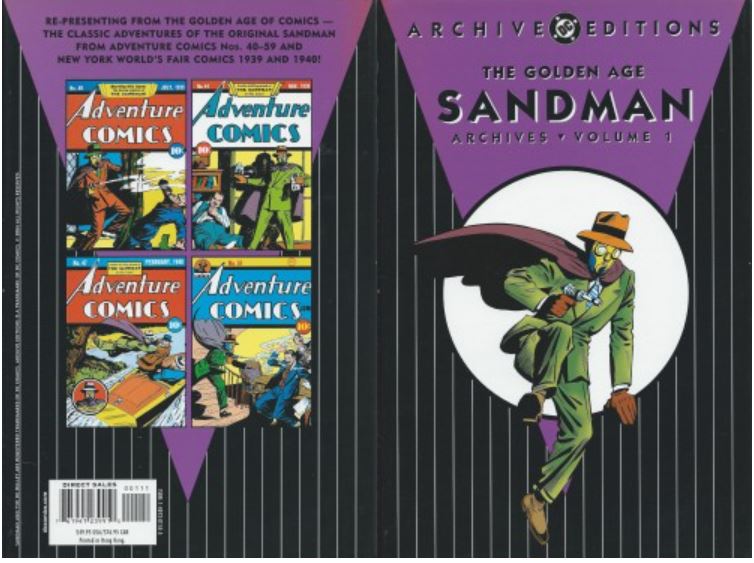
The Golden Age Sandman Archives volume 1


By Bert Christman, Gardner F. Fox, Creig Flessel, Chad Grothkopf, Ogden Whitney & various (DC Comics)
ISBN: 978-1-4012-0155-5 (HB)

Probably illustrated, scripted and created by multi-talented all-rounder Bert Christman (with the assistance of young scripting star Gardner F. Fox), The Sandman premiered in either Adventure Comics #40 July 1939 (two months after Batman’s debut in Detective Comics #27) or two weeks earlier in New York World’s Fair Comics 1939 – depending on whose distribution records you choose to believe. Intriguingly, the Dark Knight didn’t make the cut for the legendary commemorative comic book and only appeared in New York World’s Fair Comics #2 in Summer 1940…

Head obscured by a gas-mask and slouch hat; caped, business-suited millionaire adventurer Wesley Dodds was cut from the radio drama/pulp fiction mystery-man mould that had made The Shadow, Green Hornet, Lone Ranger, Phantom Detective, Black Bat, Spider, Avenger and so many more into household names of early mass-entertainment and periodical publication. Wielding a sleeping-gas gun and haunting the night to hunt a host of killers, crooks and spies, he was eventually joined and accompanied by plucky paramour Dian Belmont, before gradually losing readers’ interest and slipping from cover-spot to last feature in Adventure Comics, just as the shadowy, morally ambiguous avengers he emulated slipped from popularity in favour of more flamboyant, true-blue fictional fare.

This splendidly sturdy, moodily atmospheric Archive edition gathers those landmark early appearances from New York World’s Fair Comics 1939 & 1940 and the rip-roaring exploits from Adventure Comics #40-59, spanning July 1939 to February 1941: a period when Detective Comics Incorporated frantically sought to follow up Superman and Batman with the “Next Big Thing in comic books”…

Following an erudite appreciation from historian and comics all-star Jim Amash, the dramas begin with the fast-paced thriller from the groundbreaking, pioneering comics premium New York World’s Fair Comics #1 as Christman & Fox introduced ‘Sandman at the World’s Fair’. In those long-lost days, origins and back story were not as important as action and spectacle so we quickly plunge into a fast-paced yarn as wealthy, rugged playboy scientist Dodds visits the global festival with plans for a new ray-gun. En route he encounters spies and a traitor within his own company. Already active as The Sandman – and sought by the cops for it – the vigilante tracks down and deals with the pre-war enemies of America…

Over in Adventure Comics #40, at about the same time, the cover-featured crusader saves kidnapped actress Vivian Dale when ‘The Tarantula Strikes’ (Christman & Fox) in a rousing romp reminiscent of the High Society hi-jinks of movie marvels The Saint, Falcon or Lone Wolf: prowling allies and moonlit rooftops, breaking into criminals’ lairs, rifling safes and dealing as much death as dream gas. He also utilised a unique calling card, sprinkling sand to proclaim and terrify wherever he has silently been and gone…

Christman wrote and drew many of the early thrillers such as #41’s ‘On the Waterfront’, wherein plucky reporter Janice Blue inadvertently stumbles into a dockside narcotics ring just as murderous seadog Captain Wing makes a fateful takeover bid. Luckily for Janice, the stealthy Sandman is already on the case…

Adventure #42 highlighted Christman’s love of aviation in ‘The Three Sandmen’, as Dodds met up with former Navy Flying Corps buddies to solve a string of murders. Somebody was rubbing out all the members of the old squadron…

Allen Bert Christman first came to public attention by following near-mythic Noel Sickles on seminal newspaper strip Scorchy Smith. A dedicated patriot and flyer, Christman entered the Naval Air School in 1940 and joined Claire Lee Chennault’s 1st American Volunteer Group, known as the legendary fighter squadron The Flying Tigers. These volunteers began fighting the Japanese in China long before America officially entered WWII on December 8th 1941, and Christman – officially designated a Colonel in the Chinese Air Force – used his artistic talents to personalise and decorate many of the planes in his Flight. He was shot down and died in horrific circumstances on January 23rd 1942.

Issue #43 saw his last official story as Dodds went on a South Seas flying vacation and was embroiled in an ‘Island Uprising’: spectacularly saving embattled white pearl hunters from natives enraged to fury by latter-day pirate Red Hatch

In Adventure #44 (November 1939), Fox & Creig Flessel stepped into the breach left by Christman when ‘The Sandman Meets the Face’. Here the playboy was back in civilisation and aiding a down-&-out friend against a mercurial disguise artist and mob boss terrorising the city. This splendid blood-&-thunder caper also saw the page count rise from 6 to 10 as The Sandman finally found his lurking, moody metier…

‘The Golden Gusher’ (#45 by Fox & Flessel) was nightclub singer Gloria Gordon, threatened with kidnap or worse until the Master of Sleep intervened, whilst #46’s ‘The Sandman Meets with Murder’ saw rising talent Ogden Whitney step into the artistic hot seat when the slaying of another old Dodds chum led into a deliciously convoluted murder-mystery involving beautiful twins, counterfeiting and a macabre cross-dressing killer…

A huge step in continuity occurred in #47 as District Attorney Belmont agreed to an unofficial truce with The Sandman following the assassination of a prominent banker. Simultaneously, Wesley caught a wily thief trying to crack his safe and became unwilling partner to the ‘Lady in Evening Clothes’ (Fox & Whitney) after she uncovered his secret identity. A celebrated cat-burglar, the sophisticated she-devil was plagued by not knowing who her parents were, but happily went straight(ish) in return for Dodd’s pledge to help her…

Eventually revealed as long-lost Dian Belmont, she became a regular cast addition in #48 as ‘Death to the D.A.’ found her newly-found father under threat from gangsters and far less obvious killers on a palatial island retreat, after which ‘Common Cold – Uncommon Crime’ (#49 by Fox, Flessel & perhaps Chad Grothkopf on inks) sees the mystery-man tracking killers who were eradicating scientists who refused to hand over their cure for one of our most unforgiving ailments.

With a year gone by and global war looming, the “World of Tomorrow” exhibition was slowly closing, but there was still time for New York World’s Fair Comics #2, where this time ‘Sandman Goes to the World’s Fair’ (by Fox & Grothkopf) delivered a blistering crime caper as Wesley and Dian are stuck babysitting her maiden Aunt Agatha around the Fair and targeted by ambitious but exceedingly unwise kidnapper Slugger Slade

In Adventure Comics #50 ‘Tuffy and Limpy’s Revenge Plot’ – by Fox & Flessel – covered similar ground as a murderous campaign of apparently unrelated deaths points to another scheme to remove the dauntless DA, drawing Sandman and Dian into a blockbusting battle against ruthless rogues, whilst #51’s (June 1940, by Fox & Flessel and previously reprinted elsewhere as ‘The Pawn Broker’) ‘The Van Leew Emeralds’ provided a fascinating mystery romp for the romantically inclined crimebusters to solve in fine style and double-quick time.

A burglary at the Belmont residence only netted a pair of gloves in #52’s ‘Wanted! Dead or Alive’, but inexorably led to a perplexing scavenger hunt with sinister overtones and a deadly pay-off when scandalous Claudia Norgan framed her best gal-pal Dian for the Amber Apple Gang‘s crimes, after which in #53, ‘The Loan Sharks’ unwisely aroused the dynamic dream-maker’s ire after graduating from simple leg-breaking to murder to enforce their demands. They almost ended the Sandman too before he finally got the better of them…

Adventure #54’s ‘The Case of the Kidnapped Heiress’ saw Wes and Dian witness a bold snatch-&-grab, but their frenzied pursuit only resulted in both the DA’s daughter and millionairess Nana Martin being abducted together. Fury-filled and frantic, Sandman tracked down the ransoming rogues only to find himself in the unexpected role of Cupid.

When the legendary jewel ‘The Star of Singapore’ was stolen in #55, the trail led to an ever increasing spiral of death and destruction until the Man of Dreams finally recovered it, whilst next issue, ‘The Crook Who Knew the Sandman’s Identity’ (Fox, Flessel & Grothkopf) learned to his regret it just wasn’t so, thanks to Dian’s imaginative improvisation…

Mystery and general skulduggery gave way to world-threatening science fiction in #57 when The Sandman battled a mad scientist who had devised a deadly atom-smasher for blackmail and ‘To Hammer the Earth’, after which more macabre murders point the dream-team to spies and killers profiting from ‘Orchids of Doom’. This stylish selection of outré crime-thrillers concludes with Adventure #59’s ‘The Story of the Flaming Ruby’ as a cursed gem enables a hypnotic horror to turn honest men into thieves and Dian into a mindless assassin…

Possessing an indefinable style and charm but definitely dwindling pizzazz, the feature was on the verge of cancellation when The Sandman abruptly switched to a skin-tight yellow-&-purple bodysuit – complete with billowing cape for two issues – and gained boy-sidekick, Sandy the Golden Boy (in Adventure Comics #69, December 1941, courtesy of Mort Weisinger & Paul Norris), presumably to emulate the overwhelmingly successful Batman and Captain America models then reaping such big dividends. It didn’t help much at first but when Joe Simon & Jack Kirby came aboard with #72 it all spectacularly changed.

A semi-supernatural element and fascination with the world of dreams (revisited by S&K a decade later in their short-lived experimental suspense series The Strange World of Your Dreams) added a moody conceptual punch to equal the kinetic fury of their art, as Sandman and Sandy became literally the stuff of nightmares to the bizarre bandits and murderous mugs they stalked. Those spectacular but decidedly different adventures can be found in The Sandman by Joe Simon & Jack Kirby… if you dare…

With covers by Sheldon Mayer, Jack Burnley and Flessel, these raw, wild and excessively engaging early comics capers are some of the best but most neglected thrillers of the Golden Age. Modern tastes have moved on and these yarns are far more in tune with contemporary mores, making this a truly unmissable treat for fans of mystery, murder and stylish intrigue…
© 1939, 1940, 1941, 2004 DC Comics. All Rights Reserved.
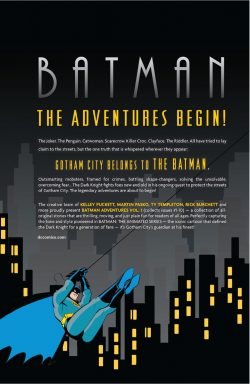
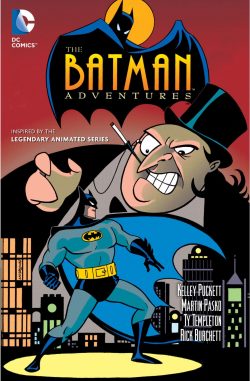
The Batman Adventures volume 1


By Kelly Puckett, Marty Pasko, Ty Templeton, Rick Burchett, Brad Rader, Mike Parobeck, Rick Taylor, Tim Harkins & various (DC Comics)
ISBN: 978-1-4012-5229-8 (TPB/Digital)

Batman: The Animated Series aired in America from September 5th1992 until September 15th 1995. Ostensibly for kids, the TV cartoon show was devised and designed by Paul Dini, Bruce Timm and Eric Radomski (with writer Paul Dini). Its success utterly revolutionised the image of the Dark Knight, resulting in some of the absolute best comic book tales in his decades-long publishing history as the series spawned a print spinoff and eventually a niche genre.

Employing a timelessly elemental and primal visual tone (dubbed “Dark Deco”) TV episodes mixed iconic elements from all comic iterations of the character and, without diluting the power and mood of the premise, perfectly honed the grim avenger and his team into a wholly accessible, thematically memorable form even the youngest of readers could enjoy, whilst adding shades of exuberance and noir style that only most devoutly obsessive Batmaniac could possibly find fault with.

The comics version became a cast-iron certainty for collection in the newly-emergent trade paperback market which stormed into and out of shops in the mid-1990s. Here the first ten titanic all-ages exploits (October 1992 to July 1993) from The Batman Adventures comic book are rediscovered and gathered with tales in a smashing, straightforward sampler of Fights ‘n’ Tights fantasy.

With colourist Rick Taylor, and letterer Tim Harkins on duty throughout, the moodily magnificent action opens with ‘Penguin’s Big Score’ by writer Kelly Puckett, and artists Ty Templeton & Rick Burchett. Each story was divided into three chapters and ‘Charm School Dropout!’ sees the Bird of Ill Omen taking tips on how to rehabilitate his nefarious reputation from The Joker, whilst in ‘Top of the World, Ma!’ the Foul Fowl’s new standing as a philanthropist has all Gotham agog. The sinister scheme is finally exposed by Batman in climactic third act ‘Power of the Press’, but the hero has no idea the real winner is the Clown Prince of Crime…

For #2, Puckett, Templeton & Burchett deliver ‘Catwoman’s Killer Caper’, kicking off with a gem heist before – at Joker’s insistent urging – sultry Selina Kyle visits England’s Tower of London to swipe ‘The Family Jewels!’ In hot pursuit, the Gotham Gangbuster pops across The Pond to quell ‘Panic over Londontown’ and solve an apparently impossible theft in ‘Midnight Madness’ …but not before the Harlequin of Hate snatches the real prize…

The crafty conniving culminates in ‘Joker’s Late-Night Lunacy!’ (#3 by Puckett, Templeton & Burchett), with Gotham’s airwaves hijacked and Commissioner Gordon kidnapped by the larcenous loon and made himself literally unmissable viewing in ‘A Star is Born!’

‘I Want My JTV!’ depicts District Attorney Harvey Dent make it onto the Joker’s inhospitable guest list, but Batman is still one step ahead of the game and lowers the boom in explosive finale ‘Flash in the Pan!’

Writer Marty Pasko and penciller Brad Rader joined inker Burchett for a gripping 2-issue terror tale guest starring Robin as ‘Riot Act’ describes ‘Panic in the Streets’ after a strange plague caused citizens to lose the ability to read. Even with complete chaos gripping Gotham the Teen Wonder’s ‘Help on the Wing’ results in a huge step forward but when ‘Robin Takes a Fall’, the hidden culprit reveals himself before the drama intensifies in #4 with ‘Riot Act: Johnny Can’t Read!’ as The Scarecrow steps up his campaign to teach slackers of the modern world a harsh lesson. In fact, the Dynamic Duo are well aware of the ‘Hi-Fi Hijinx’ at the root of the problem and, with the help of a repentant henchman, crush the crisis in ‘Those Who Can’t Do!’

A crafty change of pace finds Bruce Wayne is arrested for murder in ‘The Third Door!’ as crafted by Puckett, Rader & Burchett. The cunning locked-room mystery opens with ‘The Party’s Over’ as the prime suspect details the facts of the case to young Dick Grayson, before being locked up with a mob of dangerous thugs in ‘Crime and Punishment’, leaving the wonder kid to ferret out the real killer in tense conclusion ‘War and Peace’

After a mere half-dozen superb stories the comic book adventures took a step towards total perfection when then-rising star Mike Parobeck assumed the pencilling duties. Although his professional comics career was tragically short (1989 to 1996, when he died, aged 31, of complications from Type 1 Diabetes) his gracefully fluid, exuberant, kinetically fun-fuelled animation-inspired style was a revelation. Parobeck revolutionised superhero action drawing and sparked a resurgence of kid-friendly comics and merchandise at DC and everywhere else in the comics publishing business.

Here his tenure began with ‘Raging Lizard!’, which sees shady pro wrestler Killer Croc confront a long dark night of the soul. In ‘Requiem for a Mutant!’ Croc’s scheduled to fight Masked Marauder – a grappler who humiliated and broke him in their last bout. Batman meanwhile is searching for Mandrake: a Chicago mobster planning on taking over Gotham City by ousting reigning crime czar Rupert Thorne in ‘Eye of the Reptile!’

Naturally all those trajectories converge in the third act for a major throw-down ‘Under the Waterfront!’

TBA #8’s ‘Larceny, My Sweet’ begins with the hunt for an unstoppable thief who can ‘Break the Bank!’ with his bare hands, whilst TV reporter Summer Gleeson divides her time between chasing scoops and being romanced by a dashing stranger in ‘Love’s Lost Labours’. Sadly, when the Gotham Gangbuster crushes the crime-wave he also exposes monstrous old muck menace Clayface and accidentally ends the affair of ‘Beauty and the Beast!’

Next issue ‘The Little Red Book’ everyone’s chasing holds all Thorne’s dirty secrets and Commissioner Gordon is presiding over a ‘Gangster Boogie!’ With the cops and entire underworld looking to win out over ‘The Big Boss’, it takes all Batman’s energy and wits to bring the diary to DA Dent for the beginning of ‘Rupert’s Reckoning!’

Ending the all-ages action is ‘The Last R?ddler Story’ which details ‘Nygma’s Nadir!’ as the perpetually frustrated Prince of Puzzlers considers retirement. Dispirited and despondent because the Caped Crusader always solves his felonious games, the villain grudgingly accedes to a faithful hench-person’s pleas to give it one more try in ‘Days of Wine and Riddles!’

How upset would Eddie Nygma be if he knew Batman isn’t even aware of him, absorbed as he is in apprehending infamous trio Mastermind, Mr. Nice and The Perfesser in ‘Triumph or Tragedy…?’

Breathtakingly written and iconically illustrated, these stripped-down rollercoaster-romps are quintessential Bat-magic: treasures every fan of any age and vintage will adore.

Pure, unadulterated delight!
© 1992, 1993, 2014 DC Comics. All Rights Reserved.